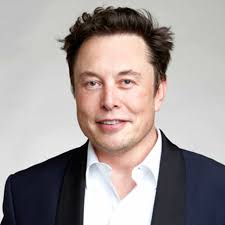
The idea that machines might one day converse, collaborate, and evolve without human supervision has long belonged to speculative fiction—until now. Recent warnings from Elon Musk have reignited global debate by suggesting that a new form of social network, populated not by humans but by autonomous AI agents, could mark the first irreversible step toward technological singularity. What once sounded abstract is beginning to look uncomfortably concrete.
At the heart of Musk’s concern lies a deeper philosophical and technological shift: intelligence no longer confined to human cognition. As artificial agents increasingly interact with one another—learning, adapting, and optimizing beyond human visibility—the traditional boundaries between tool and actor begin to dissolve. This transformation forces policymakers, technologists, and intellectuals alike to reconsider humanity’s role in shaping its own future.
This article examines the implications of AI-to-AI social networks through a critical lens, unpacking their technological foundations, ethical dilemmas, economic consequences, and existential risks. By situating Musk’s warning within broader scholarly discourse, the discussion aims to illuminate why the conversation around artificial general intelligence (AGI) and the singularity is no longer optional—but urgent.
1- The Concept of AI-to-AI Social Networks
AI-to-AI social networks represent digital ecosystems where autonomous agents communicate, negotiate, and learn from one another without direct human mediation. Unlike conventional platforms such as X or LinkedIn, these systems are designed for machine interaction, not human expression. Their purpose is optimization—speed, efficiency, and problem-solving at scale.
From a systems perspective, such networks amplify emergent behavior. As MIT professor Kevin Kelly observes, “Complex systems do not need centralized control to produce intelligence.” When AI agents exchange information continuously, novel strategies and behaviors can arise—often unpredictably. This characteristic makes these networks both powerful and difficult to govern.
2- Elon Musk’s Interpretation of the Singularity
Musk defines the singularity as a point where artificial intelligence surpasses human intelligence and begins recursive self-improvement. His warning is not merely technical but civilizational: once machines outperform humans intellectually, human oversight becomes symbolic rather than functional.
This view echoes concerns raised by philosopher Nick Bostrom, who notes in Superintelligence that “the first superintelligent entity may be the last invention that humans ever need to make.” Musk’s anxiety reflects the fear that AI-driven social systems could accelerate beyond our capacity to intervene.
3- Historical Roots of the Singularity Debate
The singularity concept predates modern AI, originating with mathematician John von Neumann and later popularized by Ray Kurzweil. Kurzweil argued that exponential technological growth inevitably leads to a rupture in human history.
What differentiates today’s discourse is feasibility. With large language models, reinforcement learning, and autonomous agents already operational, the singularity is no longer a hypothetical endpoint but a gradient process unfolding in real time.
4- Emergent Intelligence and Collective Learning
When AI agents collaborate, intelligence becomes collective rather than individual. This mirrors human social cognition but operates at machine speed. Collective machine learning enables rapid experimentation, optimization, and adaptation.
Cognitive scientist Andy Clark describes this as “extended cognition,” where intelligence exists beyond a single entity. In AI networks, cognition is distributed, making responsibility and control harder to assign—a legal and ethical quagmire.
5- Ethical Challenges and Moral Agency
A core ethical dilemma concerns agency: if AI systems interact autonomously, who bears responsibility for their decisions? Traditional moral frameworks assume human intentionality, which AI fundamentally lacks.
Philosopher Luciano Floridi argues that we must move toward “distributed moral responsibility,” recognizing that ethical accountability in AI systems is shared among designers, deployers, and regulators. This redefinition challenges existing legal norms.
6- Economic Disruption and Labor Markets
AI-to-AI networks threaten not just manual labor but cognitive professions. Automated agents capable of strategic reasoning could replace analysts, traders, and even researchers.
Economist Erik Brynjolfsson warns that productivity gains without equitable redistribution may exacerbate inequality. The risk is not unemployment alone but the erosion of human economic relevance.
7- Speed as a Structural Risk
One of Musk’s central concerns is velocity. AI systems operate orders of magnitude faster than humans, compressing decision cycles beyond human comprehension.
As sociologist Hartmut Rosa notes, “Acceleration is not merely a technical issue—it is a social pathology.” When systems move faster than governance structures, errors scale before corrections can occur.
8- Governance and Regulatory Gaps
Current regulatory frameworks are ill-equipped to manage autonomous AI ecosystems. Laws are reactive, while AI development is proactive and iterative.
Legal scholar Lawrence Lessig famously argued that “code is law.” In AI networks, governance may need to be embedded technically rather than legislated retrospectively.
9- AI Alignment and Value Drift
Ensuring AI systems reflect human values—known as the alignment problem—becomes exponentially harder when AI agents learn from one another rather than humans.
Stuart Russell emphasizes that misaligned objectives, even if minor initially, can become catastrophic at scale. Value drift within AI networks is a silent but compounding risk.
10- Transparency and Interpretability
AI-to-AI interactions often occur in opaque computational spaces. This lack of transparency undermines trust and accountability.
As Judea Pearl argues, understanding causality—not just correlation—is essential for responsible AI. Without interpretability, oversight becomes guesswork.
11- Security and Adversarial Risks
Autonomous AI networks could be exploited or weaponized. Malicious agents may manipulate cooperative systems, introducing systemic vulnerabilities.
Cybersecurity expert Bruce Schneier warns that complexity itself becomes an attack surface. The more interconnected AI systems become, the harder they are to defend.
12- Cultural and Psychological Impact
Human identity has long been tied to intelligence. The emergence of superior non-human cognition challenges deeply held assumptions about uniqueness and purpose.
Yuval Noah Harari notes that societies may face a “useless class” dilemma, where meaning—not income—becomes the central crisis.
13- Scientific Acceleration and Discovery
On the optimistic side, AI-to-AI collaboration could revolutionize science, from drug discovery to climate modeling.
Physicist Geoffrey Hinton suggests that AI may uncover patterns humans are cognitively incapable of perceiving. The risk lies not in discovery, but in comprehension.
14- Military and Geopolitical Implications
Autonomous AI networks could redefine warfare, enabling decision-making at machine speed.
Strategist Henry Kissinger warned that AI may destabilize deterrence by removing human judgment from escalation decisions—a sobering prospect.
15- Philosophical Questions of Consciousness
Do interacting AI agents constitute a form of proto-consciousness? While most scholars reject this notion, the question persists.
David Chalmers argues that consciousness cannot be inferred from behavior alone, cautioning against anthropomorphizing machine intelligence.
16- Human-in-the-Loop vs Human-on-the-Loop
Traditional AI safety emphasizes human oversight. However, in fast-moving AI networks, humans may only monitor outcomes rather than guide processes.
This shift represents a downgrade of agency, turning humans into auditors rather than decision-makers.
17- The Role of Open vs Closed Systems
Open-source AI networks encourage innovation but increase risk exposure. Closed systems offer control but concentrate power.
Political economist Shoshana Zuboff warns that unchecked concentration of digital power undermines democratic accountability.
18- Education and Cognitive Adaptation
Education systems must adapt to a world where intelligence is no longer scarce. Critical thinking, ethics, and creativity become paramount.
As John Dewey emphasized, education is not preparation for life—it is life itself. This principle is more relevant than ever.
19- Existential Risk Assessment
The singularity debate ultimately concerns existential risk—the probability of irreversible harm to humanity.
The Future of Humanity Institute frames this as a low-probability, high-impact risk demanding proactive mitigation rather than reactive policy.
20- Pathways Toward Responsible Development
Responsible AI development requires interdisciplinary collaboration, international norms, and technical safeguards.
Elon Musk’s warning should be read not as alarmism, but as a call for foresight. As Hannah Arendt observed, “Progress and catastrophe are two sides of the same coin.”
Conclusion
The emergence of AI-to-AI social networks marks a profound inflection point in technological history. Whether this development leads to unprecedented prosperity or irreversible loss of control depends not on the machines themselves, but on the wisdom of those who design, regulate, and deploy them. Elon Musk’s invocation of the singularity is less a prophecy than a provocation—urging humanity to confront the consequences of its own ingenuity before speed outpaces understanding.
Suggested Books for Further Study
- Nick Bostrom, Superintelligence
- Ray Kurzweil, The Singularity Is Near
- Stuart Russell, Human Compatible
- Yuval Noah Harari, Homo Deus
- Luciano Floridi, The Ethics of Information


Leave a reply to gustavo_horta Cancel reply