Weight loss advice is everywhere, but few approaches are as naturally effective and sustainable as boosting your fiber intake. While trendy diets may come and go, dietary fiber remains a trusted ally in managing appetite, improving digestion, and promoting lasting satiety. Its ability to support weight loss without extreme restrictions makes fiber a powerful yet often underutilized nutritional tool.
Fiber works by slowing down digestion, regulating blood sugar levels, and fostering a healthy gut microbiome—all of which are critical for shedding excess pounds and keeping them off. Harvard’s School of Public Health notes that “fiber not only supports a healthy digestive system but plays a significant role in disease prevention and weight management.” High-fiber foods tend to be low in calories but high in volume, which helps create a feeling of fullness with fewer calories.
The connection between fiber and weight loss is backed by scientific consensus. According to Dr. David Ludwig, a professor of nutrition at Harvard, “Eating more fiber-rich foods is one of the simplest and most impactful ways to control hunger.” This post will delve into 20 fiber-rich food categories that help accelerate weight loss and optimize health outcomes—each section exploring not just the food itself, but also the science, benefits, and practical ways to integrate them into your lifestyle.
1 – Legumes: Nature’s Protein-Rich Powerhouses
Legumes like lentils, black beans, chickpeas, and kidney beans are among the most fiber-dense foods available. These plant-based proteins are incredibly satiating due to their high fiber and complex carbohydrate content, which slow digestion and keep hunger pangs at bay. A single cup of cooked lentils, for instance, provides nearly 16 grams of fiber. Moreover, legumes have a low glycemic index, which helps stabilize blood sugar levels—an essential aspect of sustainable weight management.
Nutrition expert Dr. Joel Fuhrman, in his book Eat to Live, emphasizes that “legumes are central to every long-living culture’s diet and are key for effective, long-term weight control.” Rich in resistant starch, legumes also fuel beneficial gut bacteria, which play a role in metabolism regulation and fat oxidation. Including them in soups, salads, or even making legume-based patties can seamlessly increase fiber intake while promoting a balanced, low-calorie diet.
2 – Whole Grains: Fiber-Rich Foundations
Whole grains such as oats, quinoa, barley, and brown rice are rich in dietary fiber, particularly soluble fiber, which forms a gel-like substance in the digestive tract. This gel slows the emptying of the stomach, thereby prolonging feelings of fullness. Unlike refined grains, whole grains retain the bran and germ, where most of the fiber and nutrients reside, making them invaluable for weight-conscious individuals.
According to The Whole Grain Council, consumption of whole grains is linked to reduced abdominal fat and better weight maintenance over time. The soluble fiber beta-glucan in oats, in particular, has been studied for its cholesterol-lowering and appetite-reducing effects. Swapping out white rice or pasta for quinoa or bulgur can significantly enhance the fiber content of meals while supporting lean body composition.
3 – Cruciferous Vegetables: Low-Calorie, High-Impact
Cruciferous vegetables like broccoli, cauliflower, Brussels sprouts, and kale offer a unique combination of fiber, phytochemicals, and antioxidants. Their high water and fiber content means they provide volume and satiety without a calorie load. A cup of cooked broccoli delivers about 5 grams of fiber and is packed with sulforaphane, a compound linked to fat-burning pathways.
Dr. Michael Greger, author of How Not to Diet, notes that “cruciferous vegetables uniquely aid in weight loss through their ability to modulate hormones and detoxification enzymes.” Incorporating these veggies into daily meals—whether steamed, roasted, or raw—helps reduce overall caloric intake while supporting metabolic efficiency.
4 – Berries: Sweet, Fiber-Filled Antioxidant Bombs
Berries like raspberries, blackberries, and blueberries are not only rich in antioxidants but also surprisingly high in fiber. A cup of raspberries offers about 8 grams of fiber with minimal calories. Their natural sweetness can curb sugar cravings while improving digestive health.
Harvard researchers have found that higher consumption of flavonoid-rich berries is associated with less weight gain over time. This is partly due to the fiber’s ability to slow sugar absorption and regulate insulin. Berries are excellent in smoothies, with oatmeal, or as a topping on Greek yogurt, serving as a fiber-dense snack or dessert.
5 – Chia Seeds: Tiny Seeds with Huge Benefits
Chia seeds are a fiber goldmine, offering about 10 grams of fiber per ounce. These hydrophilic seeds absorb water and expand in the stomach, creating a gel that slows digestion and enhances satiety. This expansion not only helps control portion sizes but also stabilizes blood sugar levels.
Registered dietitian Cynthia Sass, in Slim Down Now, explains that “chia seeds provide an ideal fiber-to-fat ratio that promotes weight loss while supporting heart health.” Add them to smoothies, puddings, or sprinkle them over salads and cereals to effortlessly boost fiber intake and manage appetite.
6 – Avocados: Creamy and Fiber-Filled
Often misunderstood due to their fat content, avocados are in fact a potent source of fiber, with one medium fruit delivering around 10 grams. They contain both soluble and insoluble fiber, helping to maintain bowel regularity and fullness. The fat in avocados also contributes to satiety, reducing the likelihood of overeating.
Dr. Walter Willett from Harvard notes in Eat, Drink, and Be Healthy that “the combination of healthy fats and fiber in avocados makes them an exceptional food for weight management.” Use avocado as a spread, add to salads, or blend into smoothies to benefit from its dual action on hunger control and gut health.
7 – Apples and Pears: Portable Fiber Snacks
Apples and pears are excellent grab-and-go snacks rich in pectin, a type of soluble fiber that promotes satiety and regulates blood sugar. Eating these fruits with the skin increases fiber intake substantially. A medium pear provides about 6 grams of fiber, primarily aiding digestion and appetite control.
A study published in Appetite journal found that subjects who consumed apples before meals consumed fewer calories overall. Their natural crunch and hydrating qualities also contribute to a psychological feeling of satisfaction. Including apples or pears as part of a meal or snack can help curb the desire for high-calorie treats.
8 – Nuts and Seeds: Fiber with a Crunch
Almonds, walnuts, sunflower seeds, and flaxseeds are rich in both fiber and healthy fats. Although calorie-dense, their fiber content supports satiety, helping reduce overall food intake. A handful of almonds, for example, offers about 3.5 grams of fiber along with protein and monounsaturated fats.
According to Dr. David Katz, director of Yale University’s Prevention Research Center, “nuts are paradoxical in weight loss—they’re calorie-rich but help people eat less overall.” Including a moderate portion of nuts in your diet can provide long-lasting energy, blunt hunger, and support gut health through both fiber and prebiotic compounds.
9 – Leafy Greens: Low-Calorie Nutrient Boosters
Spinach, Swiss chard, arugula, and romaine are fiber-rich leafy greens that are also low in calories. They bulk up meals without increasing calorie density, making them ideal for weight-conscious diets. A cup of cooked spinach delivers about 4 grams of fiber and is loaded with iron and folate.
Leafy greens also contain thylakoids—plant compounds that have been shown to suppress hunger hormones like ghrelin. In The Science of Slim, Dr. Michael Moreno states, “Leafy greens are among the most metabolism-enhancing, appetite-suppressing foods you can eat.” Use them as the base of meals or blend into smoothies for a nutrient-rich fiber boost.
10 – Sweet Potatoes: Fiber and Flavor
Sweet potatoes offer a delicious way to increase fiber intake, with a medium tuber containing about 4 grams of fiber. Rich in beta-carotene and complex carbohydrates, they digest slowly, keeping you full for hours. The fiber in sweet potatoes also nourishes gut bacteria, aiding metabolic function.
The resistant starch in cooled sweet potatoes contributes to satiety and has been linked to reduced fat storage. Nutritionist Joy Bauer, in her book Slim & Scrumptious, recommends sweet potatoes as a staple in a healthy diet due to their satiating fiber and blood sugar-balancing effects.
(Continued in next message…)
(Continuation)
11 – Artichokes: Digestive Enhancers
Artichokes are one of the most fiber-rich vegetables available, boasting around 10 grams of fiber per medium artichoke. Particularly high in inulin, a type of prebiotic fiber, artichokes nourish gut bacteria and improve digestive efficiency—both crucial to weight control.
In Fiber Fueled by Dr. Will Bulsiewicz, artichokes are highlighted as a “gut-hero” food that enhances satiety and supports a diverse microbiome. Whether steamed, grilled, or added to salads, incorporating artichokes can help reduce cravings and stabilize hunger hormones naturally.
12 – Popcorn: The Surprising Snack
Air-popped popcorn is a low-calorie, high-fiber whole grain that can be a smart snack for weight loss. Three cups of air-popped popcorn contain about 3.5 grams of fiber and fewer than 100 calories, making it far more filling than many processed alternatives.
Dr. Lisa Young, in Finally Full, Finally Slim, notes that “volumetric eating—focusing on foods with low energy density and high fiber—can help people lose weight without feeling deprived,” and popcorn is a prime example. Avoid butter-drenched varieties and opt for air-popped with herbs or spices for a satisfying, guilt-free treat.
13 – Carrots: Crunchy Satiety Aids
Carrots are rich in fiber, particularly insoluble fiber, which helps with regularity and creates a sense of fullness. One medium carrot provides about 2 grams of fiber with minimal calories. Their firm texture also requires more chewing, which slows eating and enhances satiety.
The slow absorption of natural sugars in carrots helps stabilize blood glucose, reducing insulin spikes that can lead to fat storage. As Dr. Dean Ornish states in The Spectrum, “simple lifestyle and dietary shifts—like adding fiber-rich vegetables—can profoundly impact weight and overall health.” Snack on raw carrots or add them to stews for a crunchy, nutritious boost.
14 – Bananas: Fiber and Resistant Starch Combo
Bananas, especially when slightly green, are a rich source of resistant starch and pectin—two fibers known for promoting fullness and improved metabolism. A medium banana offers about 3 grams of fiber and is ideal for pre- or post-workout fuel due to its potassium content.
Nutritionist Keri Glassman highlights in her book The O2 Diet that “bananas help reduce bloating, improve gut function, and regulate appetite through their unique fiber profile.” Pair them with protein sources like nut butter or yogurt to slow digestion and amplify their slimming benefits.
15 – Peas: Small but Mighty
Green peas provide an impressive 9 grams of fiber per cooked cup. They’re also a good source of plant-based protein and essential micronutrients like vitamin C and iron. Their high fiber-to-calorie ratio makes them an ideal ingredient in weight management diets.
According to Nutrition and Metabolism journal, diets high in legumes like peas are linked to improved insulin sensitivity and reduced body fat percentage. Try adding peas to soups, grain bowls, or even pureeing them into spreads for a simple fiber enhancement.
16 – Figs: Natural Sweetness with Fiber
Figs—both fresh and dried—are rich in both soluble and insoluble fiber. One medium fresh fig contains about 1.5 grams of fiber, and dried figs can offer even more. Despite their natural sugars, their fiber content helps moderate blood sugar spikes.
Author Ellie Krieger in Small Changes, Big Results advises using figs as a healthy substitute for processed desserts: “The combination of sweetness and fiber curbs sugar cravings while promoting digestive health.” Use them in salads or oatmeal for a flavorful, fiber-rich addition.
17 – Beets: Gut-Friendly and Satiating
Beets are high in fiber, antioxidants, and dietary nitrates that support blood flow and stamina. One cup of cooked beets provides around 4 grams of fiber. Their natural sweetness and earthy flavor make them versatile for both savory and sweet dishes.
A study in The American Journal of Clinical Nutrition suggests that beets may reduce inflammation and support metabolic function—key factors in sustainable weight loss. Roast, pickle, or blend them into smoothies to gain their full gut-friendly and weight-control benefits.
18 – Prunes: Digestive Boosters
Prunes, or dried plums, are well-known for their laxative effect, but their benefits extend to satiety and appetite control. With over 3 grams of fiber per five prunes, they help maintain regular bowel movements and prevent bloating.
In The Microbiome Solution, Dr. Robynne Chutkan notes that “prunes provide both bulk and fermentable fiber, which help regulate appetite through gut-brain signaling.” Use prunes as a natural sweetener or pair them with nuts for a filling, fiber-rich snack.
19 – Pumpkin: High-Fiber, Low-Calorie
Pumpkin is a fiber-dense, low-calorie food rich in beta-carotene and potassium. One cup of canned pumpkin contains about 7 grams of fiber and can be added to both sweet and savory recipes. Its creamy texture is ideal for soups, oatmeal, and smoothies.
Nutritionist Lisa Drayer in The Beauty Diet calls pumpkin “a perfect diet food—high in fiber and nutrients, but light on calories.” Its fiber content supports blood sugar balance, while its high water content increases meal volume, making it ideal for weight management.
20 – Cabbage: Versatile Weight-Loss Ally
Cabbage is a cruciferous vegetable with impressive fiber content and very few calories. One cup of cooked cabbage contains about 4 grams of fiber, which aids in satiety and supports a healthy gut lining. It’s also rich in glucosinolates, compounds linked to fat metabolism.
Dr. Mark Hyman in Food: What the Heck Should I Eat? emphasizes cabbage’s role in weight loss: “Fermented or fresh, cabbage improves gut health and regulates appetite hormones.” Incorporate it raw in slaws, cooked in stir-fries, or fermented as kimchi for maximum benefits.
21 – What is Fiber?
Dietary fiber refers to the indigestible parts of plant foods that pass through our digestive system relatively intact. It comes in two primary types: soluble fiber, which dissolves in water and helps regulate blood sugar and cholesterol, and insoluble fiber, which adds bulk to stool and supports bowel regularity. Though it isn’t digested like fats or proteins, fiber plays an essential role in satiety, metabolic health, and weight regulation.
According to Nutrition and Metabolism, fiber is associated with reduced risk of obesity, type 2 diabetes, and cardiovascular disease. Its ability to delay gastric emptying and ferment in the gut contributes to the production of satiety hormones like GLP-1, which curb appetite. In essence, fiber acts as a silent regulator, balancing digestive rhythms and energy intake.
22 – Recommended Dose
Health authorities such as the USDA recommend 25 grams of fiber per day for women and 38 grams for men, though the average intake in most Western diets falls significantly below this benchmark. Children and older adults have slightly different needs, but the principle remains: more whole, plant-based foods mean more fiber.
Dr. Joanne Slavin, a fiber expert and professor at the University of Minnesota, stresses in her academic work that “meeting the daily fiber requirement significantly improves digestive health, weight control, and disease prevention.” For best results, gradually increase fiber intake and hydrate adequately to support smoother digestion.
23 – High-Fiber Foods
High-fiber foods span across various categories—fruits (apples, pears, berries), vegetables (broccoli, spinach, carrots), legumes (lentils, chickpeas, beans), whole grains (quinoa, oats), seeds (chia, flaxseeds), and nuts. These foods not only enhance satiety but also promote a balanced gut microbiome and lower inflammation.
The key is variety. Different fibers offer distinct benefits, and incorporating a spectrum of fiber sources ensures optimal results. Refer to The Plant-Based Diet for Beginners by Gabriel Miller for meal ideas that incorporate diverse fiber-rich options into your weekly menu.
24 – Quinoa
Quinoa is a gluten-free pseudo-grain that’s rich in both protein and fiber—offering around 5 grams of fiber per cooked cup. Unlike refined grains, quinoa retains its natural germ and bran, which contain essential nutrients and fiber.
Its low glycemic index and high satiety make it ideal for weight management. Use it in salads, stir-fries, or as a base for grain bowls. Its complete protein profile also supports muscle repair, which is critical when combined with weight loss programs that include exercise.
25 – Avocado
Avocados are not only rich in heart-healthy monounsaturated fats but also deliver a whopping 10 grams of fiber per fruit. The combination of soluble and insoluble fiber supports digestion while keeping you full for hours.
Use avocados in savory or sweet dishes. Mash them over whole-grain toast, add them to smoothies for creaminess, or incorporate them in wraps and salads. Their fiber-fat synergy is excellent for controlling appetite and improving nutrient absorption.
26 – Berries
Berries like blackberries, raspberries, and strawberries are packed with soluble fiber and polyphenols. One cup of raspberries contains 8 grams of fiber, while being low in calories and high in antioxidants.
The fiber in berries slows glucose absorption and helps regulate insulin. Incorporate them into breakfast bowls, parfaits, or eat them as snacks to satisfy sweet cravings in a weight-friendly way.
27 – Nuts
Nuts such as almonds, pistachios, and walnuts are dense in both fiber and protein, helping to curb hunger and stabilize blood sugar. An ounce of almonds contains about 3.5 grams of fiber and supports cardiovascular health.
Despite being calorie-dense, studies in The American Journal of Clinical Nutrition show that moderate nut consumption is linked to lower body mass index (BMI). Use them as snacks or as crunchy additions to salads and oatmeal.
28 – Okra
Okra contains both soluble and insoluble fiber, offering about 3 grams per cup. It also forms a mucilaginous gel when cooked, which aids digestion and supports cholesterol control.
It’s ideal for stews, soups, or grilled side dishes. Its prebiotic fiber supports gut bacteria and enhances satiety, making okra an underrated weight-loss food.
29 – Peas
Green peas offer an impressive 9 grams of fiber per cooked cup. They are rich in plant protein and are naturally sweet, making them palatable for most people.
Peas can be added to rice dishes, pastas, or blended into dips. Their fiber and starch composition helps stabilize energy levels and extend satiety, reducing the urge for frequent snacking.
30 – Coconut
Coconut meat contains about 7 grams of fiber per cup, mainly in the form of insoluble fiber. While high in fat, it promotes fullness and supports gut motility.
Opt for unsweetened shredded coconut in smoothies or as toppings, and enjoy coconut milk in curries and soups. Its fiber slows digestion and offers a rich, indulgent flavor without excessive sugar.
31 – Black Beans
Black beans are fiber giants, offering 15 grams of fiber per cooked cup. They’re low in fat and high in complex carbohydrates, which are digested slowly and support metabolic health.
Use black beans in soups, burritos, or as burger patties. Their fiber helps manage appetite and reduce spikes in blood sugar, making them a mainstay for those aiming to lose weight healthily.
32 – Asian Pears
Asian pears have a juicy, crunchy texture and about 4 grams of fiber per fruit, especially when consumed with the skin. They’re low in calories and help support hydration due to their high water content.
Include them as snacks or in salads for a refreshing crunch that supports satiety and digestion. The blend of water, fiber, and natural sweetness makes them a dieter’s delight.
33 – Split Peas
Split peas, like green and yellow varieties, are among the most fiber-rich legumes, offering 16 grams per cooked cup. They are also a great source of plant protein and essential minerals.
Prepare them in soups or stews to create hearty, filling meals. Their high fiber content supports blood sugar control and reduces cravings—key to long-term weight loss.
34 – Figs
Figs—especially dried—are sweet, chewy, and full of fiber. One dried fig contains around 1.5 grams of fiber, making them ideal for digestion and curbing sweet cravings.
Chop them into cereals or pair with cheese for a gourmet snack. Their blend of soluble and insoluble fiber helps regulate hunger while supporting gut health.
35 – Lentils
Lentils are a staple in many cultures and offer 15 grams of fiber per cooked cup. Their high protein and fiber profile makes them uniquely satisfying.
Use them in stews, curries, or cold salads. According to The Blue Zones Kitchen, lentils are central to many long-living cultures and are instrumental in healthy aging and weight control.
36 – Chia Seeds
Chia seeds swell into a gel-like substance when soaked, providing about 10 grams of fiber per ounce. This slows digestion, supports hydration, and enhances satiety.
Use chia in puddings, smoothies, or oatmeal. Its fiber and omega-3 content support a healthy gut and reduce systemic inflammation, aiding weight management.
37 – Acorn Squash
Acorn squash contains about 9 grams of fiber per cup and is rich in vitamins A and C. It adds bulk to meals without excess calories.
Roast it or stuff it with grains and legumes. Its slightly sweet flavor makes it versatile for both sweet and savory dishes aimed at weight loss.
38 – Turnips
Turnips offer about 3 grams of fiber per cup, along with compounds that may enhance fat metabolism. Low in calories and versatile, they can be mashed, roasted, or used in soups.
According to Healing Foods by DK Publishing, turnips support liver detoxification, which is essential for efficient fat processing and weight control.
39 – Chickpeas
Chickpeas (garbanzo beans) offer 12.5 grams of fiber per cooked cup. They are a powerful appetite suppressant due to their fiber-protein combo.
Make hummus, roast them for snacks, or toss them into salads. Their versatility and nutritional profile make them a cornerstone of high-fiber, weight-loss diets.
40 – Artichokes
Revisited for emphasis: artichokes offer 10 grams of fiber and are loaded with prebiotics like inulin. They are among the highest fiber vegetables.
Grill them, steam them, or use them in dips. Their digestive benefits and ability to increase satiety justify their place on every high-fiber list.
41 – Lima Beans
Lima beans provide 13 grams of fiber per cup and are excellent sources of slow-digesting carbs and protein.
Cook them into stews or pair with grains for a complete meal. Their fiber helps regulate insulin and keeps you full for extended periods.
42 – Brussels Sprouts
Brussels sprouts contain 4 grams of fiber per cup, plus powerful phytochemicals like kaempferol. They’re particularly effective at enhancing gut health and reducing inflammation.
Roast them for best flavor and digestibility. Their fiber boosts fullness, while their antioxidant properties support detoxification and metabolism.
43 – Flaxseeds
Flaxseeds offer 8 grams of fiber per ounce, including both soluble and insoluble types. They’re also rich in lignans, which have hormonal balancing properties.
Grind them before use to improve absorption. Add to oatmeal, smoothies, or baked goods to harness their full digestive and metabolic benefits.
44 – High-Fiber Meal Ideas
Smart meal planning is crucial. Focus on whole foods: oatmeal with berries and flaxseeds for breakfast; lentil soup with whole grain bread for lunch; quinoa with roasted vegetables and chickpeas for dinner.
Snacks can include fruit with nut butter, roasted edamame, or a handful of almonds. Refer to The Fiber Effect by Nichole Dandrea-Russert for additional meal planning strategies.
45 – Green Smoothie with Leafy Greens
A green smoothie is a fast, efficient way to flood your system with fiber and nutrients. Blend kale, spinach, banana, chia seeds, and a scoop of protein powder for a filling, fat-burning meal.
Leafy greens are rich in thylakoids which may suppress appetite. Drink this as a breakfast or meal replacement to maximize fiber intake and stay full longer.
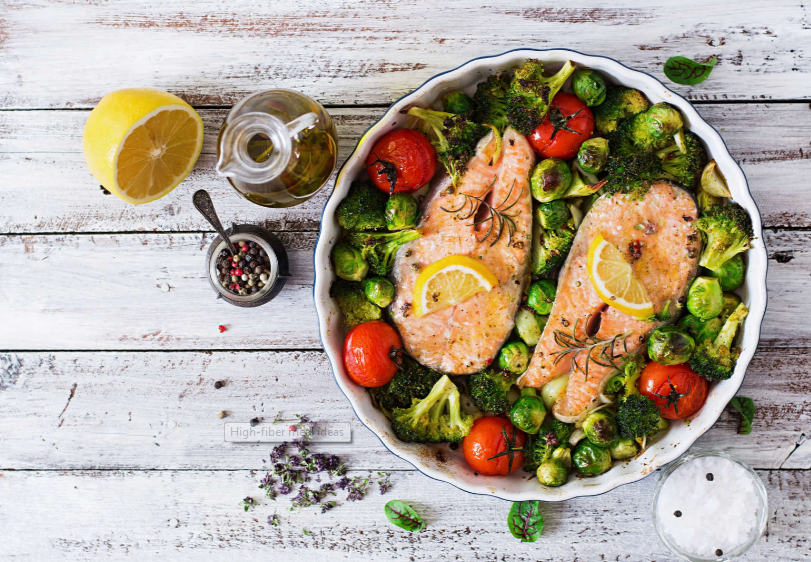
46 – Oven-Baked Salmon with Vegetables
Pairing lean protein like salmon with fiber-rich vegetables such as broccoli and carrots provides a synergistic effect—fiber fills you up, while protein supports muscle mass and metabolism.
Add a side of quinoa or a chickpea salad for a fiber-protein power combo. This balanced meal is ideal for dinner on a high-fiber weight-loss plan.
47 – Lentil and Tomato Salad
Combine cooked lentils with cherry tomatoes, parsley, olive oil, and lemon for a refreshing, fiber-rich salad. Lentils offer bulk while tomatoes bring hydration and antioxidants.
This dish is low in calories but rich in satiety-promoting compounds—perfect for lunch or a light dinner.
48 – Grilled Chicken and Quinoa
This high-protein, high-fiber duo helps regulate appetite and supports muscle repair. Add spinach or steamed broccoli for extra fiber.
This meal supports blood sugar stability and satisfies cravings without excess calories—ideal for weight-conscious individuals.
49 – Black Bean and Avocado Wrap
Use a whole-grain wrap filled with black beans, avocado, shredded cabbage, and salsa. This provides fiber, healthy fat, and complex carbs in one go.
This portable meal is nutrient-dense and filling, making it perfect for busy days or post-workout refueling.
50 – Grilled Artichokes
Grilled artichokes with a squeeze of lemon and olive oil are a flavorful, low-calorie side. They enhance digestion and promote satiety.
Perfect as an appetizer or part of a fiber-focused Mediterranean dinner, this dish offers both gourmet appeal and gut-friendly benefits.
Conclusion
A high-fiber diet is a cornerstone of sustainable weight loss and holistic health. By incorporating a wide variety of fiber-rich foods—from lentils and legumes to fruits, seeds, and vegetables—you not only nourish your body but also optimize metabolism and satiety. As leading nutritionist Dr. Walter Willett advises, “Your best defense against chronic disease and obesity starts on your plate.” Let fiber be your everyday ally—one meal at a time.
A high-fiber diet is not merely a trend but a scientifically-backed strategy for sustainable weight loss and optimal health. The foods listed above offer a natural way to curb appetite, regulate digestion, and nourish the gut—an approach aligned with both ancient wisdom and modern nutrition science.
As Hippocrates famously said, “Let food be thy medicine.” Choosing fiber-rich foods doesn’t just help in shedding pounds—it fosters a relationship with food rooted in balance, longevity, and wellness. For further study, explore The Fiber Fueled by Dr. Will Bulsiewicz, Eat to Live by Dr. Joel Fuhrman, and How Not to Diet by Dr. Michael Greger. Let fiber be your silent partner in the journey toward better health.
Bibliography
1. Slavin, Joanne L. (2005). “Dietary fiber and body weight.” Nutrition, 21(3), 411–418.
A key scholarly article explaining the physiological mechanisms of fiber in relation to weight control.
2. Willett, Walter C. (2017). Eat, Drink, and Be Healthy: The Harvard Medical School Guide to Healthy Eating. Free Press.
Offers a comprehensive overview of balanced diets with strong emphasis on fiber and chronic disease prevention.
3. Miller, Gabriel (2020). The Plant-Based Diet for Beginners: 75 Delicious, Healthy Whole Food Recipes. Rockridge Press.
Includes practical, high-fiber meal ideas based on whole foods for sustainable weight loss.
4. Dandrea-Russert, Nichole (2021). The Fiber Effect: Stop Counting Calories and Start Counting Fiber for Better Health. Hatherleigh Press.
Focuses on fiber as the primary metric for healthy eating and effective weight loss strategies.
5. Lustig, Robert H. (2012). Fat Chance: Beating the Odds Against Sugar, Processed Food, Obesity, and Disease. Hudson Street Press.
Discusses the metabolic effects of sugar versus fiber, and how fiber serves as a natural antidote to obesity.
6. Buettner, Dan (2019). The Blue Zones Kitchen: 100 Recipes to Live to 100. National Geographic.
Explores dietary patterns of long-living populations, many of which consume fiber-rich diets.
7. Anderson, James W., et al. (2009). “Health benefits of dietary fiber.” Nutrition Reviews, 67(4), 188–205.
Provides a broad scientific overview of the health impacts of fiber, including weight control.
8. Mozaffarian, Dariush, et al. (2011). “Changes in diet and lifestyle and long-term weight gain in women and men.” New England Journal of Medicine, 364(25), 2392–2404.
This large-scale study links increased intake of fiber-rich foods like fruits, vegetables, and whole grains with weight reduction over time.
9. DK Publishing (2016). Healing Foods: Eat Your Way to a Healthier Life. DK.
Visually rich reference guide on the nutritional value of fiber-dense foods like turnips, lentils, and figs.
10. Trowell, Hugh, and Burkitt, Denis P. (1986). Western Diseases: Their Dietary Prevention and Reversibility. Edward Arnold.
A foundational text on fiber’s role in preventing lifestyle diseases commonly seen in Western diets.

By Amjad Izhar
Contact: amjad.izhar@gmail.com
https://amjadizhar.blog
Affiliate Disclosure: This blog may contain affiliate links, which means I may earn a small commission if you click on the link and make a purchase. This comes at no additional cost to you. I only recommend products or services that I believe will add value to my readers. Your support helps keep this blog running and allows me to continue providing you with quality content. Thank you for your support!


Leave a reply to Amjad Izhar Cancel reply