Blog

  • Bhutto, Ayub, Zia, Musharraf, Imran Khan and the Legacy of Power in Pakistan – Study Notes

    Bhutto, Ayub, Zia, Musharraf, Imran Khan and the Legacy of Power in Pakistan – Study Notes

    This text comprises a discussion between a journalist and a political commentator analyzing the legacies of several Pakistani political figures, primarily Zulfikar Ali Bhutto and Zia-ul-Haq. The conversation assesses their actions, motivations, and impact on Pakistan’s political landscapecontrasting Bhutto’s liberal ideology with Zia-ul-Haq’s conservative approachThe discussion also examines the concept of martyrdom in the context of these leaders’ deaths, questioning whether their deaths should be considered acts of martyrdom. Finally, the speakers explore the lasting consequences of their policies, particularly concerning religion and politics in Pakistan.

    Zulfikar Ali Bhutto vs. Zia-ul-Haq: A Comparative FAQ

    1. How did Zulfikar Ali Bhutto rise to power?

    Bhutto’s political ascent began during the era of Iskander Mirza, when he joined Mirza’s cabinet in October 1958. This position gave him significant power, which he retained even after Ayub Khan’s assumption of power. Bhutto served as a key advisor and minister in Ayub Khan’s government, wielding considerable influence.

    2. What were Bhutto’s key actions and policies during his time in power?

    • Tashkent Declaration: Bhutto played a controversial role in the Tashkent Declaration, signed after the 1965 Indo-Pakistani War. Critics argue that he undermined Ayub Khan and exploited the situation to further his own political ambitions.
    • Populist Rhetoric: Bhutto used populist slogans like “Roti, Kapda aur Makaan” (food, clothing, and shelter) to connect with the masses and cultivate a strong following.
    • Breakup of Pakistan: Bhutto’s handling of the political crisis in East Pakistan (now Bangladesh) is considered a major failure, leading to the country’s breakup in 1971.
    • 1970 Elections: Bhutto’s Pakistan Peoples Party (PPP) won a majority of seats in West Pakistan in the 1970 elections, but his refusal to accept Sheikh Mujibur Rahman’s victory in East Pakistan escalated tensions and fueled the secessionist movement.
    • 1973 Constitution: Bhutto oversaw the drafting and implementation of Pakistan’s 1973 Constitution, which established a parliamentary system of government. However, he is also accused of using religion for political gain by incorporating Islamic provisions to appease conservative elements.

    3. How did Zia-ul-Haq come to power?

    Zia-ul-Haq seized power in a military coup in July 1977, overthrowing Bhutto’s government. This followed a period of widespread political unrest and protests against Bhutto’s rule, known as the Pakistan National Alliance (PNA) movement.

    4. What characterized Zia-ul-Haq’s rule?

    • Islamization: Zia-ul-Haq implemented a program of Islamization, introducing strict Islamic laws and policies. This included the Hudood Ordinances, which imposed harsh punishments for offenses like adultery and fornication.
    • Afghan Jihad: Zia-ul-Haq supported the Afghan mujahideen fighting against the Soviet invasion, aligning Pakistan with the United States in the Cold War. This led to the rise of militancy in the region, with lasting consequences for Pakistan.
    • Authoritarianism: Zia-ul-Haq ruled with an iron fist, suppressing political dissent and curtailing civil liberties. He held non-party elections in 1985 but maintained tight control over the political process.

    5. What were Zia-ul-Haq’s key actions and policies?

    • Imposition of Martial Law: Zia-ul-Haq declared martial law upon seizing power, suspending the constitution and imposing military rule.
    • Islamization Drive: Zia-ul-Haq’s Islamization policies aimed to reshape Pakistani society and legal system based on a strict interpretation of Islamic principles.
    • Support for Afghan Mujahideen: He actively supported the Afghan resistance against the Soviet Union, transforming Pakistan into a frontline state in the Cold War.
    • Bhutto’s Execution: Zia-ul-Haq’s government put Bhutto on trial for conspiracy to murder a political opponent, ultimately leading to his execution in 1979, a highly controversial event that remains debated.

    6. How are Bhutto and Zia-ul-Haq viewed by historians?

    Bhutto is often seen as a complex and contradictory figure. He is praised for his charisma, intelligence, and progressive social reforms, but also criticized for his authoritarian tendencies and role in the breakup of Pakistan.

    Zia-ul-Haq’s legacy is equally contentious. He is credited with restoring stability and promoting Islamic values, but his Islamization policies are viewed by many as regressive and his authoritarian rule is condemned. His support for the Afghan jihad is seen as a contributing factor to the rise of extremism and militancy in Pakistan and the region.

    7. How do Bhutto and Zia-ul-Haq’s legacies continue to influence Pakistani politics today?

    Both Bhutto and Zia-ul-Haq continue to cast long shadows over Pakistani politics. Bhutto’s PPP remains a major political force, and his daughter, Benazir Bhutto, served twice as Prime Minister. Zia-ul-Haq’s Islamization policies continue to shape the legal and social landscape, and the legacy of the Afghan jihad still haunts Pakistan in the form of militancy and extremism.

    8. What are the contrasting views of Bhutto and Zia-ul-Haq in Pakistani society?

    Bhutto continues to be revered by many in Sindh and other parts of Pakistan as a charismatic leader who championed the rights of the poor and marginalized. His supporters highlight his progressive social reforms and efforts to strengthen Pakistan’s international standing.

    Conversely, Zia-ul-Haq’s legacy is more polarizing. While some admire his emphasis on Islamic values and his role in resisting Soviet influence, others criticize his authoritarianism and the lasting impact of his Islamization policies, which they believe contributed to social divisions and religious extremism in Pakistan.

    A Comparative Study of Zulfikar Ali Bhutto and Muhammad Zia-ul-Haq

    Glossary of Key Terms

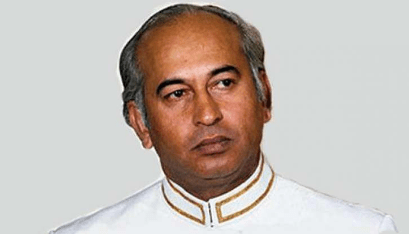
    Zulfikar Ali Bhutto: Founder of the Pakistan People’s Party (PPP) and the ninth Prime Minister of Pakistan (1973-1977). He was overthrown in a military coup led by General Zia-ul-Haq and subsequently hanged in 1979.

    Muhammad Zia-ul-Haq: A Pakistani general who seized power in a military coup in 1977, overthrowing Prime Minister Zulfikar Ali Bhutto. He ruled as President of Pakistan from 1977 to 1988.

    Martyr: A person who dies for a great cause, particularly for their religious or political beliefs. The term is often debated and its application can be subjective.

    Liberal Thinker: An individual who believes in individual liberty, reason, and progress. They generally advocate for limited government intervention in personal and economic affairs.

    Conservative Thinker: An individual who typically adheres to traditional values, institutions, and societal norms. They may emphasize stability, order, and limited social change.

    PN-N Movement (Pakistan National Alliance): A coalition of nine political parties formed in 1977 to oppose Zulfikar Ali Bhutto and his PPP. The movement led to widespread protests and violence, ultimately contributing to the military coup led by Zia-ul-Haq.

    Hyderabad Tribunal: A military court set up by Zia-ul-Haq to try members of the PPP for alleged crimes and corruption during Bhutto’s rule.

    Islamization: The process of implementing Islamic principles and laws into a society or state. Zia-ul-Haq’s regime notably pursued Islamization policies in Pakistan.

    Afghan Jihad: The war fought in Afghanistan against the Soviet Union from 1979 to 1989. Pakistan, with support from the United States and other countries, played a significant role in supporting the Afghan mujahideen fighters.

    Mujahid: A Muslim fighter engaged in Jihad, often used to refer to those who fought against the Soviet Union in Afghanistan.

    Short Answer Quiz

    1. According to the source, how does the speaker perceive Bhutto’s rise to power?
    2. What specific criticisms are leveled against Bhutto’s handling of the 1970 elections?
    3. How does the speaker characterize Bhutto’s role in the events leading up to the 1965 war with India?
    4. What are the key differences highlighted between Bhutto’s approach to democracy and Zia-ul-Haq’s approach?
    5. What are two positive aspects attributed to Zia-ul-Haq’s rule by the speaker?
    6. Describe the speaker’s perspective on the concept of “martyrdom” in the context of Bhutto and Zia-ul-Haq.
    7. What is the speaker’s assessment of the Family Law Ordinance introduced during Ayub Khan’s regime?
    8. How does the speaker portray the state of Pakistan before Zia-ul-Haq’s military coup?
    9. What specific policies enacted by Bhutto and Zia-ul-Haq are presented as examples of “using religion for political gain”?
    10. How does the speaker contrast the views of Bhutto and Zia-ul-Haq among historians?

    Short Answer Quiz Answer Key

    1. The speaker suggests that Bhutto’s political ascent was facilitated by his close association with powerful figures like Iskander Mirza and Ayub Khan, implying an element of opportunism and a lack of genuine commitment to democratic principles.
    2. The speaker accuses Bhutto of manipulating the 1970 elections to secure power, despite not winning a clear majority. His alleged insistence on becoming Prime Minister, even with a smaller number of seats, is highlighted as evidence of his lust for power and disregard for the democratic mandate.
    3. The speaker portrays Bhutto as a key instigator in the events leading to the 1965 war, claiming that he provoked conflict with India for personal political gain, ignoring the potential consequences and the devastation it brought to the country.
    4. Bhutto is painted as a power-hungry, intolerant leader who suppressed dissent and abused his authority to target political opponents. Conversely, Zia-ul-Haq, despite being a military dictator, is depicted as having a greater degree of tolerance and respect for opposing viewpoints, allowing for more stability and peace.
    5. The speaker credits Zia-ul-Haq with bringing stability and peace to Pakistan after the tumultuous period under Bhutto’s rule. He also highlights the positive impact of Zia-ul-Haq’s policies on Balochistan, claiming that he addressed the grievances and healed the wounds inflicted by Bhutto’s administration.
    6. The speaker argues that the concept of “martyrdom” has been misused and distorted, particularly in the cases of Bhutto and Zia-ul-Haq. He believes that labeling their deaths as martyrdom ignores the complexities of their actions and the potentially questionable motives behind their decisions.
    7. The speaker praises the Family Law Ordinance introduced by Ayub Khan as a progressive measure that addressed crucial social issues, even though it faced opposition from religious conservatives. He emphasizes its lasting significance and argues that it could not be dismantled even during periods of intense Islamization.
    8. The speaker describes Pakistan before Zia-ul-Haq’s coup as being in a state of chaos and unrest due to Bhutto’s authoritarianism and political machinations. He portrays a nation plagued by violence, riots, and a sense of fear and insecurity among the population.
    9. Bhutto’s prohibition of alcohol and Zia-ul-Haq’s declaration of Ahmadis as non-Muslims are cited as examples of using religion for political gain. The speaker argues that these actions were primarily motivated by a desire to appease specific religious groups and consolidate power, rather than genuine religious conviction.
    10. The speaker claims that Zia-ul-Haq’s policies, particularly his focus on Islamization and support for the Afghan Jihad, are generally viewed negatively by historians due to their long-term consequences. In contrast, Bhutto, despite his flaws, is presented as receiving more favorable assessments from historians, possibly due to his initial vision of a more liberal and progressive Pakistan.

    Essay Questions

    1. Analyze the speaker’s arguments for and against the labeling of both Bhutto and Zia-ul-Haq as “martyrs.” Consider the historical context and the diverse perspectives on their legacies.
    2. To what extent do you agree with the speaker’s assessment of Bhutto as a “liberal thinker” and Zia-ul-Haq as a “conservative thinker?” Support your analysis with specific policies and actions undertaken by each leader.
    3. Evaluate the speaker’s claims regarding the impact of Bhutto and Zia-ul-Haq’s policies on Balochistan. Consider the historical complexities of the region and the potential biases in the source material.
    4. Analyze the speaker’s perspective on the role of religion in Pakistani politics, drawing on specific examples from the Bhutto and Zia-ul-Haq eras. Consider the complexities of Islamization and the potential consequences of utilizing religious rhetoric for political purposes.
    5. Examine the speaker’s contrasting portrayals of Bhutto and Zia-ul-Haq’s leadership styles and their approaches to governing Pakistan. Analyze the potential motivations and biases that may influence the speaker’s perspective.

    A Comparative Analysis of Bhutto and Zia-ul-Haq

    Source: Transcript of a discussion between Waqas Malana and Fiza Rohan, published by 360 Digital.

    I. Introduction and Framing the Discussion (0:00-4:54)

    • Waqas Malana introduces the discussion, emphasizing Fiza Rohan’s expertise in history and his perspective as a “liberal humanist.”
    • He sets up the conversation as an exploration of the legacies of Zulfikar Ali Bhutto and General Zia-ul-Haq, drawing parallels with the contemporary political landscape and Imran Khan’s leadership.

    II. Bhutto’s Rise to Power and Tashkent Declaration (4:55-14:21)

    • Rohan analyzes Bhutto’s political trajectory, highlighting his early roles in the governments of Iskandar Mirza and Ayub Khan, questioning the genuineness of his democratic credentials.
    • The discussion shifts to the 1965 Indo-Pak war and the subsequent Tashkent Declaration, examining Bhutto’s alleged role in provoking the conflict and his accusations against Ayub Khan.

    III. Ayub Khan’s Legacy and Family Law Reforms (14:22-22:47)

    • Rohan unexpectedly praises Ayub Khan’s developmental initiatives and his introduction of the landmark Family Law Ordinance of 1961.
    • He argues that the ordinance, despite facing opposition from religious groups, brought about significant positive social change, particularly concerning women’s rights.

    IV. Bhutto’s Role in the 1970 Elections and the Breakup of Pakistan (22:48-32:24)

    • Rohan criticizes Bhutto’s handling of the 1970 elections, arguing that his power-hungry ambitions and refusal to accept the Awami League’s victory led to the tragic breakup of Pakistan.
    • He contrasts Bhutto’s approach with a hypothetical scenario where he gracefully conceded defeat and allowed for a peaceful transfer of power to Sheikh Mujibur Rahman.

    V. Comparing Bhutto and Benazir’s Leadership Styles (32:25-36:29)

    • The conversation turns to Benazir Bhutto, acknowledging her positive qualities and comparing her favorably to her father in terms of her treatment of political opponents.
    • Rohan suggests that Benazir inherited her father’s political acumen but adopted a more conciliatory approach, contributing to her positive image.

    VI. Bhutto’s Authoritarian Tendencies and the PNA Movement (36:30-48:59)

    • Rohan delves into Bhutto’s increasingly authoritarian tendencies during his rule, focusing on his crackdown on the opposition during the Pakistan National Alliance (PNA) movement.
    • He describes Bhutto’s alleged manipulation of events, including orchestrating violence and imposing a state of emergency to consolidate his power.

    VII. Zia-ul-Haq’s Arrival and the Initial Period of Stability (49:00-57:45)

    • The discussion transitions to Zia-ul-Haq’s regime, acknowledging the initial period of stability and peace that followed his takeover.
    • Rohan recounts anecdotal evidence of improved law and order, suggesting a positive public perception of Zia-ul-Haq in the early days.

    VIII. Contrasting Approaches to Balochistan and Political Opponents (57:46-1:08:46)

    • Rohan compares Bhutto and Zia-ul-Haq’s handling of the Balochistan conflict, claiming that Zia-ul-Haq’s approach was more conciliatory and aimed at healing wounds.
    • He criticizes Bhutto’s treatment of political opponents, alleging a pattern of persecution and suppression that contrasted with Zia-ul-Haq’s more tolerant approach.

    IX. Islamization Policies and the Afghan Jihad (1:08:47-1:21:47)

    • Rohan analyzes Zia-ul-Haq’s Islamization policies, suggesting that Bhutto laid the groundwork for them, but Zia-ul-Haq took them to an extreme, leading to the rise of religious extremism and militancy.
    • He discusses the Afghan Jihad, arguing that it was a geopolitical game orchestrated by the US, with both Bhutto and Zia-ul-Haq playing into American interests.

    X. Bhutto and Zia-ul-Haq’s Legacies and the Concept of Martyrdom (1:21:48-1:28:10)

    • The discussion concludes with a reflection on the legacies of Bhutto and Zia-ul-Haq, questioning their claims to martyrdom and emphasizing the complexity of their actions and motivations.
    • Rohan advocates for a nuanced understanding of historical figures, acknowledging both their positive and negative contributions.

    Comparing Bhutto and Zia-ul-Haq: A Critical Analysis of Two Pakistani Leaders

    This briefing document analyzes a conversation between Waqas Maulana and Fiza Rohan, a journalist and columnist with a keen eye on history. Their discussion centers on comparing and contrasting the legacies of Pakistani leaders Zulfikar Ali Bhutto and General Zia-ul-Haq, focusing on their political maneuvering, ideologies, and the impact of their actions on Pakistan.

    Main Themes:

    1. Bhutto’s Rise to Power and Political Opportunism: Fiza Rohan paints Bhutto as an ambitious and opportunistic politician who rose through the ranks by aligning himself with powerful figures like Iskandar Mirza and Ayub Khan. He criticizes Bhutto’s initial support for Ayub Khan, contrasting it with his later opposition when it became politically advantageous.
    • “He used to call Ayub literally daddy…If you have become a person through him, got a name, got a position, did everything by calling him daddy, daddy, what about the person in terms of humanity?”
    1. Bhutto’s Role in the 1965 War and the Tashkent Agreement: Rahman accuses Bhutto of instigating the 1965 war with India over Kashmir for personal political gain, claiming he misled Ayub Khan about the potential for a swift victory. He also alleges that Bhutto exploited the subsequent Tashkent Agreement by promising to reveal secrets without ever doing so, further solidifying his public image.
    • “Bhutto who got Ayub killed was his advisor…He provoked that such umbrellas should be taken down openly, if they are unaware of this in Kashmir then we will occupy it and the people will stand up from there in our protest.”
    1. Bhutto’s Handling of the 1970 Elections and the Breakup of Pakistan: The conversation heavily criticizes Bhutto’s actions following the 1970 elections, where the Awami League led by Sheikh Mujibur Rahman won a majority. Rahman argues that Bhutto’s refusal to accept the results and his insistence on becoming Prime Minister, despite lacking a mandate, directly contributed to the secession of East Pakistan and the creation of Bangladesh.
    • “On what basis does he say that I will make you the Sadar, just give me the government?… The country goes to the fence and breaks, then it breaks, here you are your majority, here I am, here what am I? What do you mean, there was one country, the majority in it is one.”
    1. Bhutto’s Authoritarian Tendencies and Abuse of Power: Rahman draws parallels between Bhutto and Zia-ul-Haq, arguing that both men were ultimately authoritarian figures who suppressed dissent and abused their power. He cites instances of Bhutto’s mistreatment of political opponents, including the Hyderabad Tribunal, to support this claim.
    • “The truth is that Bhutto Saheb did not have the courage to tolerate the opposition…He was treating the person who was going to submit the papers against him in this way, so it is clear that his disciples were happy with him”
    1. Zia-ul-Haq’s Initial Popularity and the Restoration of Stability: While acknowledging Zia-ul-Haq’s later descent into authoritarianism and his controversial Islamization policies, Rahman concedes that his initial takeover was welcomed by many Pakistanis who were weary of the political turmoil and violence that marked Bhutto’s final years.
    • “Ziaul Haq came and as if they are all the same…There was a fire, there was devastation, there was destruction…he had stability, he felt a peace, this is how I remember.”
    1. Zia-ul-Haq’s Handling of Balochistan and Non-Party Elections: Rahman credits Zia-ul-Haq with easing tensions in Balochistan and healing the wounds inflicted by Bhutto’s policies. He also highlights Zia’s introduction of non-party elections, arguing that they allowed for greater political participation.
    • “Ziaul Haq did not soften the wounds inflicted by Bhutto, he healed them and Ziaul Haq, this is his credit.”
    1. The Use and Exploitation of Religion by Both Leaders: Both Bhutto and Zia are criticized for using and manipulating religion for political purposes. Bhutto’s introduction of Islamic elements into the Constitution is seen as a ploy for popularity, while Zia’s Islamization policies are condemned for promoting extremism and intolerance.
    • “Bhutto himself is sick of it, he took all the steps for his cheap fame and popularity, for example, prohibition of alcohol. Bhutto didn’t use it…He used religion. This is what is said about Bhutto’s use of religion for the sake of political power.”

    Important Ideas and Facts:

    • The conversation presents a highly critical perspective of both Bhutto and Zia-ul-Haq, challenging their popular narratives and highlighting their flaws.
    • It emphasizes the cyclical nature of Pakistani politics, where promises of change and populism often masked authoritarian tendencies and power grabs.
    • The discussion raises questions about the true meaning of martyrdom and leadership, urging listeners to critically examine the actions and motivations of those in power.

    Concluding Thoughts:

    This conversation provides a nuanced and thought-provoking assessment of two significant figures in Pakistani history. While ultimately critical of both leaders, it avoids simplistic hero-villain binaries and encourages a deeper understanding of their complexities. The discussion serves as a reminder of the dangers of political opportunism, the abuse of power, and the manipulation of religion for personal gain. It also highlights the need for genuine democratic values, tolerance, and respect for human rights in Pakistani society.

    Bhutto’s Leadership: A Critical Examination

    The sources offer a critical perspective on Bhutto’s leadership, highlighting his ambition, political maneuvering, and controversial decisions.

    • Bhutto’s rise to power is attributed to his association with figures like Sikandar Mirza and Ayub Khan, with the suggestion that he benefited from their influence. He is described as having played a role in Ayub Khan’s rise to power, only to later turn against him and contribute to his downfall.
    • Bhutto is criticized for his role in the 1965 war with India, particularly his alleged provocation that led to the conflict. He is accused of exploiting the situation for his own political gain by promising to reveal the “secrets of Tashkent” but never doing so.
    • The sources condemn Bhutto’s handling of the 1970 elections and his subsequent dealings with Sheikh Mujibur Rahman. Bhutto is portrayed as prioritizing his own ambition for power over the unity of Pakistan, ultimately contributing to the separation of East Pakistan.
    • Bhutto is accused of being a hypocrite who used religion for his political advantage. He is criticized for implementing policies like the prohibition of alcohol to gain popularity while simultaneously engaging in actions that contradicted his image as a religious leader.
    • The sources highlight Bhutto’s intolerance towards political opposition, citing his alleged mistreatment of political rivals and the suppression of dissent during his rule. The PN-PN movement of 1977 is presented as evidence of the widespread discontent with his leadership.
    • The sources acknowledge Bhutto’s legacy as a popular leader in Sindh and among liberals, but they challenge this perception by focusing on his negative traits and actions. His daughter, Benazir Bhutto, is presented as a more favorable leader in comparison, as she is perceived as having treated her opponents more fairly.

    Overall, the sources paint a highly critical picture of Bhutto’s leadership, emphasizing his ambition, political opportunism, and divisive tactics.

    Analyzing Political Martyrdom

    The sources provide a nuanced perspective on political martyrdom, particularly in the context of Pakistani politics. While the term “martyr” is often invoked, the sources encourage a critical examination of the concept, questioning its application to figures like Zulfikar Ali Bhutto and Zia-ul-Haq.

    Challenging the Notion of Martyrdom

    • The sources suggest that the label of “martyr” is often applied superficially, based solely on an individual’s unnatural death rather than a genuine commitment to a righteous cause.
    • The speaker argues that true martyrdom should be assessed based on the individual’s mission and actions rather than simply their manner of death.
    • Applying this framework to Bhutto, the speaker questions whether his actions, such as alleged election rigging and involvement in political assassinations, align with the concept of martyrdom.

    Examining the Motivations Behind Actions

    • The sources suggest that political leaders often exploit religious sentiment for their own gain, engaging in actions that appear pious but are ultimately driven by self-interest.
    • Bhutto is accused of using Islam as a tool for political power, enacting policies like alcohol prohibition to enhance his popularity while simultaneously contradicting his religious image through other actions.
    • Zia-ul-Haq, despite being perceived as a devout figure, is also scrutinized. His Islamization policies are viewed as potentially motivated by a desire for personal gain rather than genuine religious conviction.

    The Role of Personal Ambition and Power

    • The sources highlight that personal ambition and the pursuit of power can corrupt even seemingly righteous individuals.
    • Bhutto’s leadership is critiqued for prioritizing personal gain over the well-being of the nation. His alleged role in the break-up of Pakistan is presented as a prime example of this flaw.
    • While Zia-ul-Haq is credited with bringing stability to Pakistan, his extended rule and suppression of dissent raise questions about his commitment to democratic principles.

    The Importance of Contextual Understanding

    • The sources emphasize the need to analyze political figures within their historical and social context, considering the complexities of their situations and the pressures they faced.
    • The turbulent political climate of Pakistan during Bhutto and Zia-ul-Haq’s rule is acknowledged, suggesting that their actions may have been influenced by these circumstances.

    In conclusion, the sources challenge the romanticized notion of political martyrdom, urging a critical evaluation of individuals’ actions and motivations. They emphasize the need to consider personal ambition, political opportunism, and the complex historical context when assessing figures who are often labeled as martyrs.

    Examining Pakistani Politics through a Critical Lens

    The sources provide a critical examination of Pakistani politics, focusing on the leadership of Zulfikar Ali Bhutto and Zia-ul-Haq, and exploring themes of political ambition, religious manipulation, and the challenges of democracy.

    The Legacy of Bhutto: Ambition, Opportunism, and Division

    • Bhutto’s political journey is presented as a story of ambition and opportunism. He is described as associating with powerful figures like Sikandar Mirza and Ayub Khan to advance his career, later turning against them when it served his interests. This portrayal suggests a willingness to prioritize personal gain over loyalty or political principles.
    • Bhutto’s role in the 1965 war with India is heavily scrutinized. The sources accuse him of instigating the conflict with his aggressive rhetoric and promises to reveal the “secrets of Tashkent” which he never fulfilled. This narrative portrays him as a manipulative figure who used national security issues for personal political gain.
    • Bhutto’s handling of the 1970 elections and his dealings with Sheikh Mujibur Rahman are condemned as contributing to the separation of East Pakistan. His refusal to accept Mujibur Rahman’s victory and insistence on becoming Prime Minister, despite having fewer seats, is seen as driven by personal ambition rather than national unity.
    • Bhutto’s use of religion for political purposes is highlighted as hypocritical. While implementing policies like the prohibition of alcohol to appeal to religious sentiments, he is accused of engaging in actions that contradicted his image as a pious leader. This critique emphasizes the complex interplay of religion and politics in Pakistan and the potential for manipulation.
    • Bhutto’s intolerance of political opposition is cited as a major flaw in his leadership. The sources accuse him of suppressing dissent, mistreating opponents, and creating a climate of fear. The PN-PN movement of 1977 is portrayed as a culmination of this dissatisfaction with his authoritarian tendencies.

    Zia-ul-Haq: Stability, Islamization, and Authoritarianism

    • Zia-ul-Haq is credited with bringing stability to Pakistan after the turmoil of Bhutto’s rule. He is praised for restoring peace and order, and for his handling of the situation in Balochistan. This positive assessment contrasts with the largely negative portrayal of Bhutto, suggesting a preference for strong leadership even at the expense of democratic principles.
    • However, Zia-ul-Haq’s Islamization policies are viewed with suspicion. While some see them as genuine attempts to reform society, others believe they were motivated by political expediency and a desire to consolidate power. The legacy of these policies, particularly the rise of religious extremism and militancy, continues to be debated.
    • Zia-ul-Haq’s extended rule and his treatment of political opponents raise concerns about his commitment to democratic values. Despite his initial popularity, he is criticized for overstaying his welcome and resorting to authoritarian tactics to silence dissent. This critique underscores the enduring tension between stability and democracy in Pakistan.

    The Complexities of Political Martyrdom

    • The sources challenge the simplistic notion of political martyrdom. They argue that the term is often applied too liberally, based solely on the manner of death rather than a deeper evaluation of the individual’s actions and motivations.
    • The speaker questions whether figures like Bhutto and Zia-ul-Haq truly deserve the label of “martyr.” Bhutto’s actions are scrutinized for their ethical implications, while Zia-ul-Haq’s religious agenda is analyzed for potential hypocrisy. This critical approach invites a nuanced understanding of political figures and their legacies.

    Key Themes in Pakistani Politics

    • The interplay of religion and politics is a recurring theme. Both Bhutto and Zia-ul-Haq are accused of manipulating religious sentiment for political gain, highlighting the challenges of separating faith from power in Pakistan.
    • The sources express a yearning for genuine leadership that prioritizes national unity and the well-being of the people. Both Bhutto and Zia-ul-Haq are criticized for prioritizing personal ambition over national interest.
    • The tension between stability and democracy is evident throughout the discussion. While strong leadership is valued, authoritarian tendencies are condemned. This tension reflects the ongoing search for a political system that can balance these competing demands.

    The sources offer a complex and critical perspective on Pakistani politics, inviting further reflection on the legacies of key figures, the role of religion in public life, and the enduring challenges of achieving a just and democratic society.

    Analyzing Zia-ul-Haq’s Rule: A Complex Legacy

    The sources provide a multifaceted view of Zia-ul-Haq’s rule, highlighting both his contributions to stability and the controversial aspects of his Islamization policies.

    • Zia-ul-Haq is credited with restoring peace and order after the tumultuous period of Bhutto’s rule. He is praised for quelling the widespread unrest and violence that characterized the PN-PN movement and bringing a sense of stability to the country. People felt a sense of security during his rule, even leaving their belongings unlocked. This accomplishment is particularly noteworthy considering the volatile political climate that preceded his rise to power.
    • Zia-ul-Haq is lauded for his efforts to heal the wounds inflicted by Bhutto’s policies, particularly in Balochistan. While Bhutto’s actions are said to have exacerbated tensions in the region, Zia-ul-Haq is portrayed as having taken steps to address grievances and promote reconciliation. This suggests a more conciliatory approach to regional conflicts and a focus on national unity.
    • Zia-ul-Haq’s implementation of non-party elections is also mentioned as a positive aspect of his rule. This move is seen as an attempt to promote a more inclusive political process, although the sources do not go into detail about its effectiveness or long-term impact.
    • However, Zia-ul-Haq’s Islamization policies are a subject of significant debate. While some view them as genuine efforts to reform society according to Islamic principles, others see them as a means to consolidate power and legitimize his rule. The sources point to the implementation of policies such as the prohibition of alcohol and the declaration of Ahmadis as non-Muslims as examples of his efforts to impose a stricter interpretation of Islam on Pakistani society.
    • The sources raise concerns about the long-term consequences of Zia-ul-Haq’s Islamization policies, particularly the rise of religious extremism and militancy. The speaker suggests that these policies contributed to a culture of intolerance and violence, and that the effects are still being felt in Pakistan today. The speaker also highlights Zia-ul-Haq’s involvement in the Afghan Jihad, which is seen as having further fueled militancy and instability in the region.
    • Despite being perceived as a devout figure, the sources question the sincerity of Zia-ul-Haq’s religious convictions, suggesting that he may have been motivated by political expediency rather than genuine belief. This skepticism stems from his willingness to use religion as a tool to justify his actions and silence opposition. The speaker emphasizes the importance of discerning between genuine religious commitment and the cynical manipulation of faith for political purposes.
    • Zia-ul-Haq’s rule, while credited with bringing stability, is also criticized for its authoritarian tendencies. He is accused of suppressing dissent, curtailing civil liberties, and using harsh measures to maintain control. His decision to impose martial law and prolong his rule beyond the initially promised 90 days is highlighted as evidence of his unwillingness to relinquish power.

    In conclusion, the sources present a nuanced and complex picture of Zia-ul-Haq’s rule. While acknowledging his contributions to stability and peace, they also criticize his Islamization policies and authoritarian tendencies. The sources urge a critical examination of his legacy, taking into account both the positive and negative aspects of his rule, and recognizing the lasting impact his decisions have had on Pakistani society.

    Ayub Khan’s Era: Development, Authoritarianism, and Seeds of Discord

    The sources offer a mixed perspective on Ayub Khan’s era, acknowledging his contributions to development while also critiquing his authoritarian rule and the long-term consequences of his policies.

    • Ayub Khan is credited with overseeing a period of significant economic growth and development in Pakistan. The speaker, despite being critical of Ayub Khan’s dictatorship, acknowledges that he witnessed considerable progress during his rule, particularly in infrastructure and industrialization. This suggests that Ayub Khan’s focus on modernization and economic reforms had a tangible impact on the country’s development.
    • Ayub Khan’s introduction of the Family Law Ordinance in 1961 is highlighted as a significant achievement, particularly its provisions on marriage and divorce. The speaker praises the ordinance for its progressive stance on issues such as triple talaq and polygamy, arguing that it provided crucial protections for women and helped to curb the influence of conservative religious elements. This example suggests that Ayub Khan was willing to challenge traditional norms and implement reforms that benefitted marginalized groups, even if they faced opposition from religious authorities.
    • The sources also note Ayub Khan’s offer to India for a joint defense pact, indicating his understanding of the need for regional stability and cooperation. This proposal, although ultimately unsuccessful, reflects a pragmatic approach to foreign policy and a recognition of the shared challenges faced by both countries.
    • However, Ayub Khan’s authoritarian rule and suppression of democratic processes are condemned. Despite his economic achievements, he is criticized for clinging to power, refusing to step down even when faced with widespread dissent. The speaker argues that his decision to impose martial law and restrict political freedoms undermined the principles of democracy and ultimately contributed to instability in the long run.
    • The sources suggest that Ayub Khan’s policies, while seemingly beneficial in the short term, sowed the seeds of future discord and division within Pakistan. His focus on economic development is portrayed as having come at the expense of social equality and political representation. This perspective implies that his policies may have exacerbated existing inequalities and fueled resentment among those who felt excluded from the benefits of economic progress.
    • Bhutto’s association with Ayub Khan, initially as a cabinet member, is portrayed as opportunistic, with Bhutto later turning against him to advance his own political ambitions. Bhutto is depicted as using his position as Ayub Khan’s advisor to manipulate him into pursuing policies that ultimately led to his downfall, including the 1965 war with India. This narrative suggests that Ayub Khan’s trust in Bhutto was misplaced and that his ambition ultimately contributed to his political demise.

    In conclusion, the sources portray Ayub Khan’s era as a period of both progress and missed opportunities. While he is recognized for his contributions to economic development and certain social reforms, his authoritarian rule and the long-term consequences of his policies are also subject to criticism. The sources invite a nuanced understanding of his legacy, recognizing the complexities of his leadership and the enduring impact his decisions have had on Pakistan’s political and social landscape.

    Bhutto’s Ascent: A Path Paved with Opportunism and Ambition

    The sources suggest that Bhutto’s rise to power was characterized by a combination of strategic maneuvering, political opportunism, and a willingness to exploit situations to his advantage.

    • Bhutto’s political career began under the patronage of Iskander Mirza, joining his cabinet in October 1958. This marked his entry into the corridors of power and provided him with valuable experience and connections within the government.
    • Following Mirza’s removal, Bhutto continued to hold influential positions under Ayub Khan, serving as a trusted advisor. This association with Ayub Khan, despite his dictatorial rule, allowed Bhutto to gain further prominence and establish himself as a key figure in the Pakistani political landscape.
    • The sources suggest that Bhutto used his position within Ayub Khan’s regime to manipulate events and advance his own ambitions. He is accused of provoking Ayub Khan into the 1965 war with India, exploiting the conflict to undermine Ayub Khan’s authority and portray himself as a strong national leader.
    • Bhutto capitalized on public discontent with Ayub Khan’s rule, portraying himself as a champion of the people and a voice against authoritarianism. This populist rhetoric, combined with his charisma and sharp intellect, helped him garner support among the masses. He leveraged the growing disillusionment with Ayub Khan’s regime to fuel his own political ascent.
    • Bhutto’s shrewd political instincts led him to exploit the Tashkent Declaration, a peace agreement between India and Pakistan brokered by the Soviet Union after the 1965 war. While Ayub Khan sought peace and stability, Bhutto seized the opportunity to criticize the agreement as a betrayal of national interests, further solidifying his image as a staunch defender of Pakistan’s sovereignty.
    • Bhutto’s decision to break away from Ayub Khan’s government and form the Pakistan People’s Party (PPP) in 1967 marked a crucial step in his pursuit of power. This move allowed him to directly challenge the existing political order and present himself as an alternative to the established elite.
    • Bhutto’s rhetoric centered around promises of a “new Pakistan,” echoing similar populist slogans used later by Imran Khan. This appeal to a desire for change and progress resonated with a population eager for a break from the past and a brighter future.

    The sources portray Bhutto’s rise to power as a calculated and ambitious journey, marked by a willingness to navigate the complexities of Pakistani politics and seize opportunities to advance his own goals. He emerges as a figure who was both adept at exploiting the weaknesses of others and at crafting a compelling narrative that resonated with the aspirations of the people. His early years in politics laid the groundwork for his eventual ascent to the highest office in the land, but also sowed the seeds of the controversies that would come to define his legacy.

    Bhutto’s Leadership: A Legacy Marred by Criticism

    The sources offer a scathing critique of Zulfikar Ali Bhutto’s leadership, portraying him as a power-hungry and manipulative figure whose actions led to significant turmoil and lasting damage to Pakistan.

    • Bhutto is accused of being driven by personal ambition, prioritizing his own quest for power over the well-being of the nation. The sources highlight his relentless pursuit of the Prime Ministership, even when it meant undermining national unity and stability. His alleged willingness to break up the country to secure his position is presented as the ultimate evidence of his self-serving nature. This portrayal contrasts sharply with the image he cultivated as a champion of the people.
    • His role in the events leading to the separation of East Pakistan (now Bangladesh) in 1971 is condemned as a catastrophic failure of leadership. Bhutto is accused of refusing to acknowledge the legitimate electoral victory of Sheikh Mujibur Rahman’s Awami League in the 1970 elections, which won a majority of seats. Instead of accepting the outcome and working towards a peaceful transfer of power, Bhutto is said to have clung to power, fueling tensions and ultimately contributing to the outbreak of the war that led to Bangladesh’s independence.
    • Bhutto’s treatment of his political opponents is characterized as ruthless and vindictive. He is accused of using his authority to silence dissent, imprison rivals, and create a climate of fear and intimidation. The sources recount instances of Bhutto’s alleged mistreatment of political figures like Ataullah Mengal and Wali Khan, highlighting the harsh measures he took to suppress opposition.
    • His handling of the 1977 elections is criticized as a blatant attempt to rig the outcome in his favor. Bhutto is accused of using intimidation tactics, manipulating the electoral process, and silencing dissenting voices to secure a third majority. The sources point to the disappearance of political figures like Mohammed Abbasi, the Ameer of Sindh Jamaat, who was allegedly abducted while trying to file his nomination papers, as evidence of Bhutto’s authoritarian tendencies.
    • The sources portray Bhutto as having exploited Islam for political gain, using religious rhetoric and policies to bolster his popularity and control. While outwardly projecting an image of piety, he is accused of being insincere in his religious convictions, manipulating faith to serve his own ends. This criticism resonates with similar concerns raised about Zia-ul-Haq’s use of Islamization for political purposes, highlighting a recurring pattern of Pakistani leaders exploiting religion for power.
    • Bhutto’s leadership is contrasted unfavorably with that of his daughter, Benazir Bhutto, who is praised for her more tolerant and inclusive approach to politics. Benazir is depicted as having learned from her father’s mistakes, rejecting his authoritarian tendencies and embracing a more democratic style of leadership. This comparison serves to further diminish Bhutto’s legacy, highlighting the perceived shortcomings of his approach to governance.

    The sources offer a highly critical assessment of Bhutto’s leadership, painting a picture of a flawed figure whose actions had a profound and negative impact on Pakistan’s history. While acknowledging his charisma and intellect, they ultimately condemn his ambition, his disregard for democratic norms, and his manipulation of religion for political purposes. The criticisms leveled against him raise important questions about the complexities of leadership, the dangers of unchecked power, and the lasting consequences of political decisions driven by personal gain rather than the national interest.

    Bhutto’s Rise: From Mirza’s Cabinet to Ayub Khan’s Inner Circle

    Bhutto’s journey to power began with his entry into Pakistani politics under the patronage of Iskander Mirza. He joined Mirza’s cabinet in October 1958, marking his initial foray into the realm of governance. While the sources provide limited details about Bhutto’s specific role during this period, this appointment signifies his early involvement in the upper echelons of power. It provided him with valuable experience and connections within the government, setting the stage for his future political endeavors.

    Following Mirza’s removal from power, Bhutto continued to hold influential positions, notably under Ayub Khan’s regime. Despite Ayub Khan’s authoritarian rule, Bhutto served as a trusted advisor, further solidifying his presence in the Pakistani political landscape. This association with Ayub Khan, a powerful figure who dominated Pakistani politics for over a decade, allowed Bhutto to gain further prominence and establish himself as a key player within the government.

    However, the sources suggest that Bhutto’s relationship with Ayub Khan was characterized by opportunism and a calculated pursuit of personal ambition. While publicly supporting Ayub Khan, Bhutto is accused of manipulating him behind the scenes, maneuvering events to advance his own political goals. For instance, Bhutto is accused of playing a role in provoking Ayub Khan into the 1965 war with India, a conflict that ultimately weakened Ayub Khan’s authority and created an opportunity for Bhutto to present himself as a strong national leader. He is depicted as exploiting the war’s aftermath, criticizing the Tashkent Declaration – a peace agreement brokered by the Soviet Union – as a betrayal of Pakistani interests. By positioning himself as a staunch defender of Pakistan’s sovereignty against perceived concessions made by Ayub Khan, Bhutto further bolstered his image and gained popularity among the masses.

    Bhutto’s rise to power was marked by a strategic blend of political maneuvering and a keen understanding of how to leverage public sentiment to his advantage. His association with powerful figures like Mirza and Ayub Khan provided him with crucial experience and connections, while his calculated actions and opportunistic exploitation of situations, like the 1965 war, allowed him to gradually build his own political capital and position himself as a viable alternative to the existing leadership.

    Zia and Bhutto: A Comparative Analysis of Two Contrasting Leaders

    While both Zia-ul-Haq and Zulfikar Ali Bhutto significantly shaped Pakistan’s political landscape, their approaches to governance and their legacies differ considerably. The sources provide a critical perspective on both leaders, highlighting their contrasting styles, motivations, and impact on the nation.

    Religion as a Political Tool: Exploiting Faith for Contrasting Goals

    Both Zia and Bhutto are accused of using religion for political gain, but their approaches and the consequences of their actions differed significantly.

    • Bhutto’s use of religion is portrayed as opportunistic and superficial. He is accused of lacking genuine religious conviction and of manipulating Islamic principles for personal gain and short-term popularity. For example, while he introduced policies like the prohibition of alcohol, these actions are seen as cynical attempts to appease religious groups rather than stemming from a genuine commitment to Islamic values.
    • Zia, in contrast, is described as having a more deeply ingrained religious inclination, shaping his worldview and policies. He is characterized as having a “Maulvi type of attitude” since childhood, suggesting that his commitment to Islam was more fundamental and less opportunistic than Bhutto’s. His Islamization program, while criticized for its harshness and its potential role in fostering extremism, is presented as a genuine attempt to reshape Pakistani society based on his interpretation of Islamic principles.

    The sources suggest that Zia’s use of religion had a more profound and lasting impact on Pakistani society than Bhutto’s. His Islamization policies, including the introduction of Hudood Ordinances and the promotion of a stricter interpretation of Islamic law, left a lasting mark on Pakistan’s legal system and social fabric. These changes continue to be debated and contested, highlighting the long-term consequences of Zia’s religiously motivated policies.

    Tolerance and Treatment of Political Opponents: Democracy vs. Authoritarianism

    The sources paint a stark contrast between Zia and Bhutto in their approach to democracy and their treatment of political rivals.

    • Bhutto is characterized as intolerant of dissent, resorting to authoritarian tactics to silence his opponents. He is accused of creating a climate of fear, using intimidation, imprisonment, and even violence to suppress any challenge to his authority. His actions are seen as undermining democratic norms and creating a culture of political repression.
    • Zia, despite being a military dictator who came to power through a coup, is paradoxically portrayed as exhibiting more tolerance towards his opponents than Bhutto. While the sources acknowledge Zia’s harshness and his role in perpetuating a culture of violence, they also point out that he did not exhibit the same level of personal vindictiveness towards his political rivals as Bhutto.

    The sources suggest that Zia, despite his dictatorial rule, allowed for a degree of political space and did not seek to completely eliminate his opponents. He is credited with fostering a sense of stability and peace after the turmoil of Bhutto’s final years. This seemingly contradictory observation highlights the complexities of comparing leaders who operated within different political systems and faced different challenges.

    Legacy and Impact: Contrasting Narratives of Success and Failure

    The sources offer diverging assessments of Zia and Bhutto’s legacies, reflecting the complexities and controversies surrounding their rule.

    • Bhutto’s legacy is primarily defined by the loss of East Pakistan and his perceived failure to uphold democratic principles. The sources emphasize his role in the events leading to Bangladesh’s separation, portraying it as a catastrophic failure of leadership and a lasting stain on his record. His authoritarian tendencies and alleged manipulation of the 1977 elections further tarnish his image as a democratic leader.
    • Zia’s legacy is more multifaceted, encompassing both positive and negative aspects. He is credited with restoring stability and peace after the chaos of Bhutto’s rule, and with initiating the process of Islamization, which, while controversial, had a profound impact on Pakistani society. However, he is also criticized for his authoritarianism, his role in promoting religious extremism, and the long-term consequences of his policies, particularly the Afghan Jihad and the rise of militancy.

    The sources ultimately present Zia and Bhutto as flawed figures who left behind complex and contested legacies. Their contrasting approaches to governance, their use of religion as a political tool, and their treatment of opponents highlight the diverse challenges faced by Pakistani leaders and the lasting consequences of their decisions. While both leaders remain significant figures in Pakistan’s history, their legacies continue to be debated and reinterpreted as the nation grapples with the long-term effects of their rule.

    Bhutto’s Methods: A Blend of Populism, Political Maneuvering, and Authoritarianism

    The sources depict Zulfikar Ali Bhutto as a shrewd and ambitious politician who employed a combination of strategies to rise to power and maintain his grip on it. His methods, often criticized as unethical and detrimental to Pakistan’s democratic development, reflect a complex interplay of charisma, opportunism, and authoritarianism.

    • Cultivating a Populist Image: Bhutto skillfully presented himself as a champion of the common people, appealing to their aspirations for economic justice and national pride. He utilized slogans promising a “new Pakistan” and change. This resonated with the masses, particularly those disillusioned with the existing political establishment, allowing him to build a strong base of support.
    • Exploiting Nationalistic Sentiments: Bhutto effectively tapped into Pakistani nationalism, particularly in the context of the rivalry with India. He is described as having provoked Ayub Khan into the 1965 war with India and later criticized the Tashkent Declaration as a betrayal of Pakistani interests. This positioned him as a strong and decisive leader willing to stand up for Pakistan’s sovereignty, further enhancing his popular appeal.
    • Strategic Alliances and Betrayals: Bhutto navigated the complex political landscape by forming alliances with powerful figures when it suited his interests and later breaking those ties when they became obstacles to his ambitions. He initially benefited from his association with Iskander Mirza and Ayub Khan, gaining valuable experience and connections within the government. However, he is accused of later turning against his benefactors, using their weaknesses to his advantage and ultimately contributing to their downfall.
    • Manipulating Religion for Political Gain: The sources accuse Bhutto of using Islam as a tool to bolster his popularity and control, appealing to religious sentiments to advance his political agenda. His policies, such as the prohibition of alcohol, are seen as calculated moves to appease religious groups and consolidate his power rather than stemming from genuine religious convictions. This is likened to Imran Khan’s use of religion to popularize his political narrative.
    • Suppressing Opposition and Consolidating Power: Once in power, Bhutto is criticized for his intolerance of dissent and his use of authoritarian tactics to silence his opponents. He is accused of resorting to intimidation, imprisonment, and even violence to eliminate any challenge to his authority. The sources describe him as having made “everyone’s life miserable” and creating a climate of fear within the country.

    The sources present a picture of Bhutto as a master political operator, skilled in manipulating situations and public opinion to his advantage. His methods, while effective in securing and maintaining power, ultimately undermined democratic norms and contributed to political instability in Pakistan. His legacy remains contested, with his supporters acknowledging his charisma and commitment to social reforms while critics condemn his authoritarian tendencies and his role in exacerbating political divisions within the country.

    Bhutto’s Impact on Balochistan: A Legacy of Grievances and Unhealed Wounds

    The sources offer a critical perspective on Zulfikar Ali Bhutto’s actions in Balochistan, highlighting how his policies fueled resentment and contributed to lasting political instability in the province. While the sources do not provide an exhaustive account of Bhutto’s policies in Balochistan, they focus on two key areas: the dismissal of the elected government and the subsequent actions that exacerbated tensions.

    • Dismissal of the Elected Government: The sources emphasize Bhutto’s decision to dismiss the elected government of Sardar Ataullah Mengal in Balochistan, characterizing it as an undemocratic power grab motivated by personal ambition rather than national interest. This action is portrayed as a violation of the democratic rights of the people of Balochistan, undermining their trust in the political process. Despite both Balochistan and the North-West Frontier Province (NWFP), now Khyber Pakhtunkhwa, having elected governments aligned with Bhutto’s opponents, he chose to dissolve these governments, demonstrating his disregard for regional autonomy and the principles of democratic representation.
    • Persecution and Alienation: Following the dismissal of the Mengal government, Bhutto is accused of launching a campaign of persecution against Baloch nationalists, further alienating the province. The sources detail the use of harsh measures, including the filing of “false cases” and charges of “enmity and treason” against Baloch leaders. These actions created a climate of fear and repression, deepening the sense of grievance among the Baloch population. The establishment of the Hyderabad Tribunal, where Baloch leaders were imprisoned and subjected to unfair trials, is cited as a particularly egregious example of Bhutto’s oppressive tactics.

    The sources argue that Bhutto’s actions in Balochistan, driven by a lust for power and a disregard for democratic norms, created deep-seated resentment and sowed the seeds of future conflict. The wounds inflicted by his policies, including the dismissal of the elected government, the persecution of Baloch nationalists, and the failure to address the province’s legitimate grievances, continue to fester. The sources suggest that even Zia-ul-Haq, despite being a military dictator, was perceived as having shown more empathy towards the Baloch people and having made attempts to address the issues stemming from Bhutto’s actions. This highlights the extent to which Bhutto’s legacy in Balochistan is marred by accusations of authoritarianism, political manipulation, and a failure to respect the province’s autonomy.

    The sources conclude that Bhutto’s actions in Balochistan represent a significant turning point in the province’s relationship with the central government. His policies contributed to a cycle of violence and mistrust that continues to plague the region. The legacy of his actions serves as a cautionary tale about the dangers of pursuing power at the expense of democratic principles and regional harmony.

    Bhutto’s Strategies and Tactics: A Path to Power Paved with Populism, Opportunism, and Authoritarianism

    The sources offer a critical examination of Zulfikar Ali Bhutto’s political journey, painting a picture of a cunning and ambitious leader who employed a potent blend of strategies and tactics to ascend to power and maintain his dominance. His methods, often condemned as unethical and damaging to Pakistan’s democratic growth, reveal a complex interplay of charm, shrewd maneuvering, and authoritarian tendencies.

    1. Cultivating a Populist Persona:

    • Bhutto expertly crafted an image of himself as a champion of the common people, tapping into their desires for economic fairness and national pride.
    • His slogans, promising a “new Pakistan” and change, resonated deeply with the masses, especially those disenchanted with the existing political elite. This allowed him to build a substantial and devoted following.

    2. Harnessing Nationalist Sentiment:

    • Bhutto effectively exploited Pakistani nationalism, particularly in the context of the country’s rivalry with India.
    • He is depicted as having instigated Ayub Khan into the 1965 war with India and subsequently criticized the Tashkent Declaration as a betrayal of Pakistani interests.
    • This positioned him as a strong and resolute leader, ready to defend Pakistan’s sovereignty, further elevating his popularity.

    3. Strategic Alliances and Calculated Betrayals:

    • Bhutto masterfully navigated the intricate political landscape by forging alliances with influential figures when it served his purposes, only to sever those ties when they became roadblocks to his aspirations.
    • His early association with Iskander Mirza and Ayub Khan provided him with valuable experience and connections within the government. However, he is accused of later turning against his mentors, exploiting their vulnerabilities for his benefit and ultimately contributing to their downfall.

    4. Manipulating Religion as a Political Weapon:

    • The sources accuse Bhutto of utilizing Islam to amplify his popularity and control, appealing to religious emotions to further his political aims.
    • Policies like the prohibition of alcohol are viewed as calculated maneuvers to appease religious factions and consolidate his power, rather than arising from genuine religious convictions.
    • His manipulation of religion for political gain is compared to Imran Khan’s similar tactics.

    5. Stifling Opposition and Consolidating Power Through Authoritarian Means:

    • Once in power, Bhutto faced criticism for his intolerance of dissenting opinions and his use of authoritarian tactics to silence opponents.
    • He is accused of employing intimidation, imprisonment, and even violence to eliminate any challenges to his authority.
    • The sources describe him as having created an atmosphere of fear and suffering for many. His actions, such as the dismissal of elected governments in Balochistan and NWFP, the persecution of Baloch nationalists, and his alleged manipulation of the 1977 elections, further solidify this portrayal.

    Bhutto’s political strategies and tactics were a blend of shrewdness, opportunism, and a willingness to disregard democratic norms when they stood in his way. He effectively harnessed populism, nationalism, and religious sentiment to advance his ambitions, but his methods ultimately contributed to political instability and left a legacy of division and resentment in Pakistan.

    Contrasting Rule: Zia-ul-Haq vs. Bhutto

    The sources, while primarily focused on Bhutto’s political trajectory, offer insights into how Zia-ul-Haq’s rule differed from his predecessor, particularly in terms of their approaches to Islam, political stability, and treatment of Balochistan.

    Islamization:

    • Zia-ul-Haq is acknowledged for pushing a much more stringent and conservative interpretation of Islam onto Pakistani society and its legal framework.
    • He implemented policies aimed at “Islamization,” including the Hudood Ordinances, which imposed harsh punishments for adultery and fornication, often criticized for disproportionately impacting women.
    • He also declared Ahmadis non-Muslim and introduced a system of Islamic courts.
    • This is contrasted with Bhutto’s use of Islam, which is portrayed as more opportunistic and less ideologically driven. While Bhutto also enacted policies like the prohibition of alcohol, these are seen as moves to enhance his popularity rather than stemming from deep religious conviction.
    • Zia-ul-Haq’s Islamization program is criticized for fostering a culture of extremism and intolerance, having lasting negative consequences for Pakistan.

    Political Stability:

    • The sources credit Zia-ul-Haq with bringing a sense of stability and order to Pakistan after a period of intense political turmoil under Bhutto.
    • Zia-ul-Haq’s arrival is associated with a decrease in violence and unrest, with people feeling safer and more confident in their daily lives.
    • This contrasts with the escalating political unrest, culminating in the PNA movement, that characterized the final years of Bhutto’s rule.
    • Bhutto’s government is described as having lost control of the situation, resorting to emergency measures and failing to address the underlying causes of public discontent.

    Balochistan:

    • The sources suggest that, despite being a military dictator, Zia-ul-Haq was viewed more favorably than Bhutto in Balochistan.
    • He is credited with attempting to heal the wounds inflicted by Bhutto’s policies in the province.
    • While the sources do not elaborate on the specific actions taken by Zia-ul-Haq in Balochistan, they imply that his approach was perceived as more conciliatory and less oppressive than Bhutto’s.
    • This aligns with the earlier description of Bhutto’s handling of Balochistan, which is characterized as having created deep resentment and instability through his dismissal of the elected government and subsequent persecution of Baloch nationalists.

    Tolerance and Authoritarianism:

    • The sources suggest that Zia-ul-Haq, despite being a military ruler, exhibited a greater degree of tolerance towards his political opponents than Bhutto, a civilian leader.
    • This is presented as paradoxical, as civilian leaders are generally expected to be more open to dissent and pluralism.
    • Bhutto, on the other hand, is consistently depicted as intolerant of opposition, resorting to various means to suppress dissent and consolidate his power.

    It’s important to note that the sources offer a limited and potentially biased perspective. They primarily focus on criticizing Bhutto’s political conduct and legacy, which may influence their portrayal of Zia-ul-Haq. Further research from a variety of sources is necessary to develop a more comprehensive and nuanced understanding of the contrast between these two leaders and their impact on Pakistan.

    Bhutto’s Manipulation of Religion: A Tool for Power, Not Piety

    The sources are highly critical of Zulfikar Ali Bhutto’s use of religion, portraying it as a calculated strategy to bolster his political power rather than a reflection of genuine faith. They accuse him of exploiting Islam for personal gain, manipulating religious sentiment to advance his ambitions and solidify his control over the Pakistani populace.

    Opportunistic Exploitation of Islamic Symbolism and Policies:

    • Prohibition of Alcohol: Bhutto’s decision to ban alcohol is presented as a prime example of his opportunistic use of religion. The sources argue that this move was primarily aimed at appeasing religious factions and garnering popular support, rather than stemming from any true religious conviction. This is contrasted with Zia-ul-Haq’s similar policies, which are portrayed as arising from a more deeply held, albeit controversial, religious ideology.
    • Constitutional Amendments: Bhutto is criticized for incorporating Islamic provisions into the Constitution to appease religious groups and solidify his power base. This is deemed hypocritical, considering his earlier pronouncements about Pakistan being a secular state where the government would not interfere with individual religious beliefs.

    Accusations of Hypocrisy and Disingenuousness:

    • The sources repeatedly highlight the perceived discrepancy between Bhutto’s outward projection of Islamic piety and his actual actions, which are deemed self-serving and often contrary to Islamic principles.
    • His manipulation of religion is seen as a betrayal of his liberal image and a cynical ploy to exploit the faith of the masses for political advantage.

    Comparison with Zia-ul-Haq’s Islamization Program:

    • While Zia-ul-Haq is widely acknowledged for implementing a far more extensive and stringent Islamization program, Bhutto is seen as having laid the groundwork for this trend by cynically using religion as a political tool.
    • The sources argue that Bhutto’s actions, even though less overtly religious than Zia-ul-Haq’s, were nonetheless instrumental in creating an environment where religion could be readily exploited for political power.

    Lasting Damage to Pakistan’s Political Landscape:

    • Bhutto’s use of religion is condemned for contributing to the rise of religious extremism and intolerance in Pakistan.
    • His actions are seen as having paved the path for future leaders to manipulate religion for their own ends, further dividing Pakistani society along religious lines and hindering the development of a truly inclusive and democratic state.

    The sources ultimately portray Bhutto as a cunning politician who skillfully utilized religion to further his own ambitions, leaving behind a legacy of religious exploitation and a more fractured political landscape.

    Contrasting Views of Bhutto’s Legacy: A Complex and Contested Figure

    The sources and our conversation history reveal a highly polarized and contested view of Zulfikar Ali Bhutto’s legacy. He is simultaneously hailed as a charismatic leader who championed the cause of the common people and condemned as a manipulative politician who exploited religion and resorted to authoritarian tactics to achieve his goals.

    A Champion of the People:

    • Populist Appeal: Bhutto’s skillful cultivation of a populist persona, evident in his slogans promising a “new Pakistan” and change, resonated deeply with the masses, particularly those disenfranchised by the existing political elite. He positioned himself as a voice for the voiceless, appealing to their aspirations for economic justice and national pride.
    • Nationalist Icon: Bhutto’s adeptness at harnessing nationalist sentiment, especially in the context of Pakistan’s rivalry with India, contributed to his image as a strong leader determined to defend Pakistan’s interests.

    Accusations of Political Machinations and Ruthlessness:

    • Opportunistic Alliances and Betrayals: The sources depict Bhutto as a master strategist who forged and broke alliances with key figures to advance his own agenda. His associations with Iskander Mirza and Ayub Khan, initially beneficial, ultimately ended in accusations of betrayal and manipulation.
    • Manipulation of Religion: Bhutto’s use of Islam is heavily criticized as a calculated maneuver to enhance his popularity and control rather than a reflection of sincere religious belief. Policies like the prohibition of alcohol are seen as cynical attempts to appease religious groups and solidify his power base.
    • Authoritarian Tendencies: Despite being a civilian leader, Bhutto is accused of exhibiting authoritarian tendencies, using intimidation, imprisonment, and violence to silence opposition and consolidate his grip on power. His actions in Balochistan, including the dismissal of the elected government and persecution of nationalists, are particularly condemned.

    Differing Perceptions of Leadership Style:

    • Zia-ul-Haq’s Tolerance Paradox: Ironically, the sources suggest that Zia-ul-Haq, a military dictator, displayed more tolerance towards political opponents than Bhutto, a civilian leader. This challenges conventional expectations about the nature of civilian versus military rule.
    • Benazir Bhutto’s More Conciliatory Approach: Even within Bhutto’s own family, differing views on leadership style are apparent. The sources highlight Benazir Bhutto’s more conciliatory approach, suggesting that she avoided the harsh tactics employed by her father. This distinction further complicates the assessment of Bhutto’s legacy.

    Bhutto’s legacy remains a subject of intense debate within Pakistan. While some remember him as a charismatic leader who fought for the downtrodden, others view him as a cunning politician who irrevocably damaged Pakistan’s political fabric through his Machiavellian tactics and authoritarian impulses.

    Summary: The passage discusses the political legacies of Zulfikar Ali Bhutto and Zia-ul-Haq, two prominent figures in Pakistani history, comparing their ideologies and actions, particularly focusing on their approaches to Islam and social reforms.

    Explanation: The passage presents a comparative analysis of Bhutto and Zia-ul-Haq, arguing that while both leaders are often viewed in simplistic terms, their legacies are more complex. The speaker criticizes Bhutto for his political maneuvering, highlighting his initial support for Ayub Khan and his later turn against him, questioning his motives and sincerity. The speaker also criticizes Bhutto’s socialist policies and his role in the events leading to the separation of East Pakistan (Bangladesh). In contrast, the speaker expresses a more nuanced view of Zia-ul-Haq. While acknowledging Zia’s authoritarianism and his harsh implementation of Islamic law, the speaker points out his unexpected support for the progressive Family Law Ordinance introduced by Ayub Khan. This ordinance, despite facing opposition from religious groups, brought about significant social reforms, particularly in areas like marriage and divorce, that continue to have an impact today.

    Key terms:

    • Zulfikar Ali Bhutto: The founder of the Pakistan People’s Party and the 9th Prime Minister of Pakistan. He was overthrown in a military coup in 1977 and executed in 1979.
    • Zia-ul-Haq: The Chief of Army Staff of Pakistan who led the 1977 coup against Bhutto. He served as the 6th President of Pakistan from 1978 until his death in 1988.
    • Ayub Khan: The second President of Pakistan, who ruled from 1958 to 1969. He introduced the Family Law Ordinance in 1961.
    • Family Law Ordinance: A set of laws passed in Pakistan in 1961 that aimed to reform family matters, including marriage, divorce, and inheritance.
    • Tashkent Declaration: A peace agreement signed between India and Pakistan in 1966, brokered by the Soviet Union, following the Indo-Pakistani War of 1965.

    Summary: This passage argues that Zulfiqar Ali Bhutto, a prominent Pakistani politician, played a significant role in the events leading to the 1971 war between Pakistan and India and the subsequent creation of Bangladesh. The author criticizes Bhutto’s ambition and lack of democratic spirit, highlighting his role in undermining the then-president Ayub Khan and his unwillingness to accept the election results that favoured Sheikh Mujibur Rahman.

    Explanation: The author presents a critical analysis of Zulfiqar Ali Bhutto’s actions during a crucial period in Pakistan’s history. He contends that Bhutto, driven by personal ambition, exploited the situation in East Pakistan (now Bangladesh) to gain power. The author points to Bhutto’s role in encouraging Ayub Khan to take a hard line against Bengali demands for autonomy and his subsequent refusal to accept the 1970 election results which gave a majority to Sheikh Mujibur Rahman’s Awami League. The author argues that Bhutto’s actions ultimately contributed to the break-up of Pakistan. He contrasts Bhutto’s behaviour with that of other leaders like Ayub Khan, who eventually recognized the need for a peaceful resolution, and Sheikh Mujibur Rahman, who the author believes had a legitimate claim to leadership based on the election results. The author concludes by drawing parallels between Bhutto and a later Pakistani leader, Imran Khan, suggesting they share a similar flawed ambition.

    Key terms:

    • Zulfiqar Ali Bhutto: A Pakistani politician who served as the 9th Prime Minister of Pakistan from 1973 to 1977.
    • Ayub Khan: A Pakistani general who served as the 2nd President of Pakistan from 1958 to 1969.
    • Sheikh Mujibur Rahman: A Bengali politician who served as the 1st President of Bangladesh. He is considered the “Father of the Nation” of Bangladesh.
    • 1971 War: The war between India and Pakistan that led to the creation of Bangladesh.
    • Awami League: A major political party in Bangladesh, founded by Sheikh Mujibur Rahman.

    Summary: The passage criticizes a political leader, likely in Pakistan, for dividing the country for personal gain, implementing policies based on religious appeasement rather than national unity, and suppressing democratic principles and the opposition.

    Explanation: The author strongly criticizes a political leader, focusing on his self-serving actions and negative impact on the nation. The leader is accused of prioritizing personal power over national unity, tearing the country apart to become Prime Minister (Wazir Azam). The author condemns his manipulation of religion to gain popularity, suggesting he added Islamic elements into the Constitution to appease religious groups (“Mullahs”) despite not being genuinely religious himself. This is contrasted with a previous leader, described as a strong man with genuine religious convictions. The passage highlights the leader’s disregard for democracy, citing examples of suppressing the opposition, disrespecting their rights, and potentially orchestrating violence against them. The author underscores the importance of tolerance, equal rights for all citizens regardless of religion, and respecting democratic principles in a true democracy.

    Key Terms:

    • Wazir Azam: Urdu term for Prime Minister.
    • Mullah: A Muslim religious scholar or teacher.
    • Constitution: The fundamental law of a nation that establishes the government’s structure and citizens’ rights.
    • Secular: Relating to or denoting activities or other things that have no religious or spiritual basis.
    • Democracy: A system of government in which the citizens exercise power directly or elect representatives to form a governing body.

    Summary: The passage discusses the political climate in Pakistan during the rule of Zulfikar Ali Bhutto and the subsequent military takeover by General Zia-ul-Haq. It critiques Bhutto’s intolerance of opposition, the controversial 1977 elections, and the ensuing unrest that led to the military intervention.

    Explanation: This passage offers a critical perspective on Pakistani politics during a tumultuous period. It criticizes Zulfikar Ali Bhutto’s rule, particularly his suppression of political opponents and the disputed 1977 elections. The author suggests that Bhutto’s actions, including alleged violence against political rivals, created a climate of fear and instability. This unrest, characterized by protests and social upheaval, is portrayed as a justification for General Zia-ul-Haq’s military intervention. However, the passage also expresses reservations about Zia’s rule, hinting at its own set of issues and suggesting that the transition was less about solving problems and more about seizing power.

    The author supports their argument by highlighting specific events like the alleged mistreatment of political figures like Ataullah Mengal and the violent suppression of protests. The reference to “torches being lit” in major cities likely symbolizes widespread unrest and chaos. The passage concludes by expressing concern about the implications of Zia’s rule, suggesting that it ushered in a new era of challenges, despite initial attempts to stabilize the country.

    Key terms:

    • Bhutto: Zulfikar Ali Bhutto, the Prime Minister of Pakistan from 1973 to 1977.
    • Zia-ul-Haq: General Muhammad Zia-ul-Haq, who led a military coup in 1977 and ruled Pakistan until 1988.
    • Hyderabad Tribunal: A military court set up by Zia-ul-Haq to try members of Bhutto’s government.
    • PNA Movement: Pakistan National Alliance, a coalition of political parties that opposed Bhutto’s rule.
    • Jawal: A derogatory term used for the military, possibly referencing the imposition of martial law.

    Summary: This passage discusses the legacies of two Pakistani leaders, Zulfikar Ali Bhutto and Zia-ul-Haq, particularly focusing on their approaches to Islam and politics. The speaker analyzes their actions and motivations, arguing that both leaders used religion for political gain.

    Explanation: This conversation critically examines the actions and motivations of two influential Pakistani leaders: Zulfikar Ali Bhutto and Muhammad Zia-ul-Haq. The speaker highlights the political turmoil and violence that plagued Pakistan during Bhutto’s tenure, contrasting it with the relative stability experienced under Zia-ul-Haq. While acknowledging Zia-ul-Haq’s role in quelling unrest, the speaker argues that both leaders exploited Islam for political purposes. Bhutto is criticized for using religion as a tool to garner popularity, while Zia-ul-Haq is accused of promoting a hardline interpretation of Islam that ultimately fueled extremism and militancy. The speaker emphasizes that both leaders, despite their differing approaches, were driven by personal ambition and utilized religion as a means to consolidate power. This analysis challenges the simplistic narratives surrounding these figures and urges a nuanced understanding of their complex legacies.

    Key Terms:

    • Bhutto: Refers to Zulfikar Ali Bhutto, the Prime Minister of Pakistan from 1973 to 1977.
    • Zia-ul-Haq: Refers to General Muhammad Zia-ul-Haq, who served as the President of Pakistan from 1978 to 1988. He came to power after a military coup that overthrew Bhutto.
    • Islamization: The process of making a society or state more Islamic in character. In the context of Pakistan, it refers to the policies implemented by Zia-ul-Haq to enforce Islamic law and principles.
    • Jihad: An Islamic term that can refer to a struggle against injustice or a holy war. In this passage, it primarily refers to the Afghan resistance against the Soviet Union, which was supported by Pakistan and the United States.
    • Mujahideen: Those who engage in Jihad, particularly in the context of armed struggle. In this passage, it refers to the Afghan fighters who resisted the Soviet invasion.

    This conversation analyzes the political legacies of Zulfikar Ali Bhutto and Zia-ul-Haq, two key figures in Pakistani history. The speakers debate their contrasting approaches to Islam, social reforms, and governance.

    The conversation begins with a critical examination of Bhutto’s political journey, highlighting his initial support for Ayub Khan followed by a dramatic shift in allegiance. The speaker casts doubt on Bhutto’s sincerity, portraying him as an opportunistic politician driven by personal ambition. Bhutto’s socialist policies and his role in the events leading to the separation of East Pakistan (now Bangladesh) are also scrutinized.

    The discussion then shifts to Zia-ul-Haq, acknowledging his authoritarianism and the strict implementation of Islamic law during his regime. However, the speaker presents a more nuanced view of Zia by highlighting his surprising endorsement of the progressive Family Law Ordinance introduced by Ayub Khan. This ordinance, despite facing resistance from religious groups, enacted significant social reforms related to marriage, divorce, and women’s rights. The speaker argues that Zia’s support for this ordinance reveals a pragmatic side to his leadership that often gets overlooked.

    The conversation contrasts Bhutto’s alleged manipulation of Islam for political gain with Zia’s more religiously driven approach. Bhutto is accused of using religion as a tool to gain popularity, while Zia’s actions are framed as stemming from genuine religious convictions, albeit with negative consequences such as the rise of extremism.

    The speakers further explore the political climates under both leaders. Bhutto’s tenure is characterized by political turmoil, social unrest, and a crackdown on dissent. Zia, on the other hand, is credited with bringing stability and peace following the chaotic period preceding his takeover. However, the conversation acknowledges that Zia’s methods were authoritarian and involved suppressing opposition.

    The analysis emphasizes that both Bhutto and Zia used Islam for political ends, albeit in different ways. Bhutto’s use of religious rhetoric is depicted as opportunistic, while Zia’s approach is seen as stemming from a deeply conservative worldview.

    The concluding section delves into the concept of “martyrdom” in the context of Bhutto and Zia’s deaths. The speaker challenges the simplistic application of the term, arguing that their actions and motivations should be considered when evaluating their legacies. The conversation concludes with a call for a nuanced and critical understanding of both leaders, recognizing their complexities and avoiding simplistic categorizations.

    By Amjad Izhar
    Contact: amjad.izhar@gmail.com
    https://amjadizhar.blog

  • Imran Khan, Politics, and Democracy in Pakistan – Study Notes

    Imran Khan, Politics, and Democracy in Pakistan – Study Notes

    This text is a transcript of a political interview with Rohan, discussing Imran Khan’s political career and actions, particularly focusing on the events of May 9th. The interview critiques Khan’s leadership style, labeling him hypocritical and inconsistent, and analyzes his actions in the context of Pakistani democracy and law. The speaker contrasts Khan’s approach with that of other political figures, drawing parallels to historical dictators. Finally, the conversation concludes by reflecting on the implications of Khan’s actions for Pakistan’s stability and future.

    FAQ: Analyzing Imran Khan’s Political Journey

    1. What is the main criticism leveled against Imran Khan in this analysis?

    Rohan argues that Imran Khan’s downfall stems from his hypocrisy and dictatorial tendencies. While publicly advocating for democracy and the rule of law, Khan allegedly engaged in backroom dealings and manipulated institutions to maintain power. His intolerance of dissent and labeling of those not supporting him as “animals” further highlights this hypocrisy. Rohan criticizes Khan’s refusal to accept defeat gracefully and his attempts to undermine democratic processes, culminating in the events of May 9th.

    2. How does Rohan compare Imran Khan to historical figures like Hitler?

    Rohan uses the comparison to Hitler to emphasize Khan’s perceived authoritarianism and disregard for democratic norms. He suggests that Khan, even in civilian clothes, exhibited a “Hitler-like” mentality, prioritizing his own power above the interests of the nation and its institutions. This comparison underscores the danger Rohan sees in Khan’s approach to politics.

    3. What is the significance of the “diaper” analogy used in the analysis?

    The “diaper” analogy paints a picture of Imran Khan as being politically immature and reliant on external forces for his rise to power. He initially enjoyed support and “pampering” but, upon losing that backing, became incapable of navigating the political landscape independently. This analogy suggests Khan’s lack of political acumen and unpreparedness for the challenges of leadership.

    4. What specific events are highlighted as evidence of Khan’s alleged hypocrisy?

    Several events are cited as evidence of Khan’s hypocrisy:

    • Secret meetings and promises: Rohan points to Khan’s alleged pursuit of power through backroom deals, contrasting it with his public image as a man of the people.
    • May 9th incidents: The violent protests following Khan’s arrest are presented as a consequence of his incitement and a demonstration of his willingness to use undemocratic means.
    • Attacks on institutions: Khan’s criticisms of the judiciary and military are viewed as attempts to undermine these institutions when they did not support him.

    5. What is Rohan’s perspective on the allegations of election rigging made by Khan?

    Rohan challenges the notion of widespread election rigging in Khan’s favor by pointing to PTI’s success in KP and Punjab. He argues that if rigging occurred, it would likely have benefitted PTI, not harmed them. Rohan suggests that Khan’s claims of rigging are a way to deflect responsibility for his electoral losses.

    6. What alternative path does Rohan suggest Khan should have taken?

    Rohan believes Khan should have engaged in constructive parliamentary politics instead of resorting to disruptive tactics. He criticizes Khan’s refusal to participate in the National Assembly and his calls for fresh elections, arguing that these actions undermined the democratic process.

    7. How does Rohan view the role of the “establishment” in Khan’s political journey?

    Rohan implies that Khan initially benefited from the support of the “establishment” (likely referring to the military and powerful figures), which helped him rise to power. However, he suggests that Khan lost this support due to his actions and overreach, leading to his eventual downfall.

    8. What is the ultimate message Rohan conveys about Khan’s political trajectory?

    Rohan presents Khan’s political journey as a cautionary tale, highlighting the dangers of hypocrisy, authoritarian tendencies, and disregard for democratic principles. He suggests that Khan’s fall from grace serves as a lesson for future leaders and emphasizes the importance of respecting institutions and engaging in politics with integrity.

    Understanding Pakistani Political Discourse: A Study Guide

    Glossary of Key Terms

    Bismillah Ra Rahman Rahim: An Arabic phrase meaning “In the name of God, the Most Gracious, the Most Merciful” often used at the beginning of Islamic texts or speeches.

    Assalam Walekum: An Arabic greeting meaning “Peace be upon you.”

    Saheb/Sahib: A title of respect used in South Asia, similar to “Mr.” or “Sir.”

    Khairiyat Patra: A letter or message inquiring about someone’s well-being.

    Taj (tahj): Refers to the recitation of the Quran, specifically the ability to recite it beautifully and with proper pronunciation.

    9th May: Likely refers to a significant political event in Pakistan that involved protests and possibly violence.

    Ivane: Context unclear, likely a proper noun or a mispronounced term.

    Vane Sadar: Unclear in this context, potentially a misspelling or slang term.

    Hippocritus: Likely a reference to Hippocrates, an ancient Greek physician considered the father of medicine, used here to denote hypocrisy.

    Referendum: A general vote by the electorate on a single political question referred to them for a direct decision.

    Wazir Azam: Urdu term for Prime Minister.

    Sakhiya: An Urdu word for generosity, possibly used here sarcastically.

    No Confidence Motion: A formal vote in a legislative body to determine whether a person in a position of responsibility (like a Prime Minister) still has the support of the majority.

    Mirroring the Rights of the People: Likely referring to actions taken in accordance with democratic principles and the will of the people.

    Gas Leak and Treatment Being Done to the Punjab Assembly: Context unclear, likely referring to a specific political incident or scandal involving the Punjab Assembly.

    Chaz Groups: Context unclear, possibly a slang term or local reference.

    Awaam: Urdu word for “the people,” often used in political contexts.

    Institution of Army: Refers to the Pakistani military as an organized and powerful entity.

    Shahbaz Gill: Likely a Pakistani politician or public figure.

    Red Line: A boundary or limit that should not be crossed.

    Laad Paan: Context unclear, potentially slang or a local phrase.

    Jamaat-e-Islami: A prominent Islamic political party in Pakistan.

    Noon League: Likely refers to the Pakistan Muslim League (N), a major political party in Pakistan.

    PP: Likely refers to the Pakistan Peoples Party, another major political party in Pakistan.

    KP: Abbreviation for Khyber Pakhtunkhwa, a province in Pakistan.

    Modi: Refers to Narendra Modi, the Prime Minister of India.

    Taji: Context unclear, possibly a misspelling or slang term.

    Shiba Sharif: Likely refers to Shehbaz Sharif, the current Prime Minister of Pakistan.

    NRO: Likely stands for National Reconciliation Ordinance, a controversial amnesty law passed in Pakistan in 2007.

    Gausia University: A specific university in Pakistan, likely referenced due to a potential scandal or connection to a political figure.

    Tosh Khana: A government department in Pakistan responsible for managing gifts received by government officials.

    Dilip Barham: Unclear in this context, potentially a mispronounced name or an unknown reference.

    Rooj and Jawal: Symbolic terms for “rise” and “fall,” likely used to analyze political trajectories.

    Bhutto: Likely refers to Zulfikar Bhutto, a former Prime Minister of Pakistan.

    Hitler: A reference to Adolf Hitler, the dictator of Nazi Germany, used to denote authoritarian tendencies.

    Hajre Awad: Likely refers to the Black Stone, a sacred Islamic relic located in the Kaaba in Mecca.

    Quiz

    Instructions: Please answer the following questions in 2-3 sentences each.

    1. What is the speaker’s main criticism of Imran Khan’s political behavior?
    2. According to the speaker, how did Imran Khan’s actions on 9th May impact his legitimacy?
    3. What is the significance of the speaker’s repeated references to Parliament and the democratic process?
    4. How does the speaker compare Imran Khan’s political approach to that of Shehbaz Sharif and Nawaz Sharif?
    5. What does the speaker suggest as a more appropriate course of action for Imran Khan and his supporters?
    6. What historical analogies does the speaker use to explain Imran Khan’s political trajectory?
    7. How does the speaker use the concepts of “Rooj” and “Jawal” to analyze political success and failure?
    8. According to the speaker, what role does social media play in shaping public opinion and political movements?
    9. What specific examples of alleged corruption or misconduct does the speaker mention in relation to Imran Khan?
    10. What message does the speaker convey in his closing remarks regarding respect, humility, and the pursuit of justice?

    Answer Key

    1. The speaker criticizes Imran Khan for hypocrisy, claiming he acts one way in public and another in private. The speaker argues Khan manipulates the public, incites unrest, and refuses to accept the democratic process.
    2. The speaker suggests Khan’s actions on 9th May, involving violence and attacks on state institutions, undermined his claims of being a peaceful, democratic leader and alienated him from the people.
    3. By emphasizing Parliament and the democratic process, the speaker highlights the importance of following legal and constitutional procedures for expressing dissent and seeking political change. He frames Khan’s actions as undermining these principles.
    4. While critical of the Sharif brothers, the speaker acknowledges their acceptance of democratic norms and their ability to form alliances and govern effectively within the existing political system. He contrasts this with Khan’s rejection of these norms.
    5. The speaker suggests Khan should engage in politics through Parliament, respect democratic institutions, apologize for his past actions, and pursue justice through legal means rather than inciting public unrest.
    6. The speaker draws parallels between Khan’s trajectory and that of Zulfikar Bhutto, suggesting both leaders initially enjoyed popular support but ultimately faced downfall due to their authoritarian tendencies.
    7. The speaker utilizes “Rooj” (rise) and “Jawal” (fall) to illustrate the cyclical nature of political power. He argues Khan’s initial rise was fueled by populist rhetoric but his fall resulted from actions contrary to democratic principles.
    8. The speaker acknowledges the power of social media in mobilizing support but argues it can create an echo chamber and distort the perception of public sentiment, suggesting Khan’s online popularity did not translate into real-world support.
    9. The speaker mentions Khan’s alleged misuse of funds related to Gausia University, his handling of gifts received through Tosh Khana, and financial dealings with individuals like Dilip Barham as examples of corruption.
    10. The speaker concludes by emphasizing the importance of mutual respect, humility, and adherence to the rule of law in political discourse. He suggests true leadership involves acknowledging mistakes, seeking forgiveness, and working within the established system for positive change.

    Essay Questions

    1. Analyze the speaker’s use of religious language and imagery in his critique of Imran Khan. What rhetorical effect does this language create?
    2. To what extent does the speaker’s critique of Imran Khan reflect broader tensions and divisions within Pakistani society and politics?
    3. Evaluate the speaker’s arguments regarding the role of Parliament and the democratic process in Pakistan. Are his perspectives convincing? Why or why not?
    4. How does the speaker’s analysis of Imran Khan’s political trajectory compare and contrast with other interpretations of Khan’s rise and fall from power?
    5. Consider the speaker’s closing remarks about the importance of respect, humility, and the pursuit of justice. What implications do these ideas hold for the future of Pakistani politics and society?

    A Conversation with Rohan: Analyzing Imran Khan’s Political Trajectory

    Source: Youtube interview of Rohan by Waqas Malana for 360 Digital

    I. Introduction & Framing the Discussion (0:00-2:10)

    • Waqas Malana introduces Rohan and sets the stage for the discussion: exploring the reasons behind liberal opposition to Imran Khan and comparing his political approach to that of figures like Hafiz Saeed and Shahbaz Sharif.

    II. Deconstructing Imran Khan’s Character and Political Style (2:10-7:55)

    • Imran Khan’s Rise to Popularity: Rohan questions the legitimacy of Khan’s popularity and criticizes his actions on May 9th. He argues Khan’s political ascent was fueled by external forces, and his behavior since losing power contradicts his claims of being a “man of the people.”
    • Hypocrisy and Contradictions: Rohan uses his past interviews with Khan to highlight contradictions in his personality and political stances. He calls out Khan’s hypocrisy in publicly attacking those he privately lobbies for support.
    • A “Clumsy Player” in Politics: Rohan labels Khan a “clumsy player” in politics, pointing to his early political ambitions during Musharraf’s referendum and his shifting allegiances. He argues Khan lacks political integrity and has “dirty hands,” disqualifying him from seeking justice.

    III. The Fall from Grace: Examining Khan’s Ouster and Subsequent Actions (7:55-15:30)

    • Parliamentary Process and the No-Confidence Motion: Rohan emphasizes the supremacy of parliament in a democracy and criticizes Khan’s efforts to subvert the no-confidence motion. He denounces Khan’s actions as illegal and undemocratic, including dissolving the assembly.
    • The May 9th Incident and its Aftermath: Rohan criticizes Khan for inciting violence on May 9th, questioning his claims of widespread popular support. He condemns the attacks on state institutions and suggests they were part of a larger, dangerous plan to destabilize Pakistan.
    • Allegations of Rigging and Political Miscalculations: Rohan addresses allegations of election rigging by Khan, highlighting contradictions in his claims by pointing to PTI’s victories in KP and Punjab. He criticizes Khan’s inability to form political alliances, contrasting it with Modi’s approach in India.

    IV. Khan’s Current Predicament and the Future of Pakistani Politics (15:30-24:15)

    • The “Diaper Changing” Analogy: Rohan uses a metaphor of a child needing their diaper changed to describe Khan’s dependence on external forces and his unwillingness to accept responsibility for his actions. He argues Khan is stuck in a state of immaturity and seeks a return to a time when he was “pampered” by powerful entities.
    • The Importance of Parliamentary Politics: Rohan stresses the significance of engaging in politics through parliamentary processes. He criticizes Khan’s dismissive attitude towards parliament and his reliance on disruptive tactics, advocating for a strong and vocal opposition within the system.
    • Hope for Redemption and a Call for Accountability: Rohan suggests that Khan should seek forgiveness for his actions and face legal consequences for alleged corruption. He emphasizes the importance of upholding the law and holding leaders accountable for their actions.

    V. Concluding Reflections: Rooj vs. Jawal and the Lessons for Pakistan (24:15-25:30)

    • The Dichotomy of Rooj and Jawal: Malana summarizes Rohan’s analysis, framing it within the concepts of “Rooj” (ascent) and “Jawal” (descent) in political leadership. He draws parallels between Khan and Bhutto, suggesting they both experienced a fall from grace due to their authoritarian tendencies.
    • The Importance of Stability and Security: Malana concludes by emphasizing the need for stability and security in Pakistan. He suggests that the rise and fall of leaders like Khan offer valuable lessons for the future of Pakistani democracy.

    Political Analysis: The Rise and Fall of Imran Khan

    This briefing document analyzes a political commentary by Rohan Saheb on the political career of Imran Khan. The commentary criticizes Khan’s actions and motives, comparing him unfavorably to other Pakistani leaders and highlighting his alleged hypocrisy, incompetence, and undemocratic behavior.

    Key Themes:

    • Imran Khan’s hypocrisy: Rohan Saheb accuses Khan of double standards, claiming he seeks favor from the same institutions he publicly criticizes. He highlights Khan’s alleged pleas to powerful figures despite his public stance of independence and reliance on “the power of the people”.

    “You are spreading filth and going inside and begging them to meet me… are you luring them that as long as I will stay, you are the only one? I will continue to give extension to you… what is this hypocrisy?”

    • Imran Khan’s political ineptitude: Rohan Saheb criticizes Khan’s political maneuvering, particularly his handling of the no-confidence motion and his decision to dissolve the assembly. He argues these actions demonstrate a lack of understanding of democratic processes and political strategy.

    “If you had political wisdom then you would not have broken the PP, don’t think if you would have brought the PP with you, then you yourself would have formed the Noon League brother, alliances are also formed in democracy…”

    • Questioning Khan’s popularity: Rohan Saheb challenges Khan’s claims of representing the majority of Pakistanis, pointing to the relatively small size of his rallies compared to historical demonstrations. He suggests Khan’s popularity is inflated by social media and a dedicated but limited base.

    “It is maintained that I am the representative of 90 per cent of the people, how many people should come with 90 per cent of the 90 per cent of the register… Well, then they are coming out for you, 2000 00 groups are coming out.”

    • Condemnation of May 9th incidents: The commentary strongly condemns the violence that occurred on May 9th, attributing it to Khan’s incitement and suggesting a deliberate plan to destabilize the country. Rohan Saheb argues that a truly popular leader would not have resorted to such tactics.

    “Their crimes were very dangerous and they were thinking that what Pakistan was doing was There is a strong bond of security which has tied them together in such a way that they have to be kept in that base and within them they become so playful that they break each other’s heads and stand up against each other…”

    Important Ideas & Facts:

    • Emphasis on the supremacy of Parliament: Rohan Saheb stresses the importance of democratic institutions, particularly Parliament, as the true representatives of the people. He criticizes Khan for undermining these institutions through his actions and rhetoric.
    • Favorable comparison to other leaders: While critical of other politicians like Shahbaz Sharif, Rohan Saheb presents them as more pragmatic and politically savvy compared to Khan. He cites their ability to form alliances and navigate the political landscape effectively.
    • Historical parallels: Rohan Saheb draws comparisons between Khan and previous Pakistani leaders, including Zulfikar Ali Bhutto, suggesting a pattern of charismatic leaders succumbing to authoritarian tendencies and ultimately failing.

    Conclusion:

    Rohan Saheb’s commentary provides a scathing critique of Imran Khan’s political career. It accuses him of hypocrisy, political ineptitude, and a dangerous disregard for democratic norms. Rohan Saheb advocates for respect for institutions and adherence to the rule of law, implicitly suggesting Khan’s actions threaten Pakistan’s stability and future.

    It is important to note that this commentary represents a single perspective and may not reflect the views of all Pakistani citizens. Further research and analysis of diverse opinions are necessary to form a comprehensive understanding of Pakistani politics and Imran Khan’s legacy.

    Imran Khan’s Actions: A Critical Perspective

    Here is a discussion of Imran Khan’s actions, based on the provided sources:

    • Imran Khan’s actions on May 9th are considered indefensible. While the sources do not explicitly state what occurred on this date, they heavily imply that Khan’s actions were unacceptable.
    • Khan is criticized for contradictory behavior, publicly condemning individuals and groups while privately seeking their support. He is accused of hypocrisy for criticizing those who remain neutral while simultaneously pleading for their support.
    • The sources describe Khan as a “clumsy person in politics” who lacked understanding and relied on manipulative tactics. His pursuit of power is highlighted, with references to his alleged attempts to secure the position of Prime Minister through deals and secret meetings.
    • Khan’s handling of the no-confidence motion is criticized. He is accused of acting against the law by delaying the process and attempting to dissolve the assembly. His actions are seen as disrespectful to the Parliament and its authority.
    • The sources question Khan’s claims of popular support. They point to the relatively small number of his supporters who participated in protests and rallies, contrasting it with the massive public response seen in other countries like Bangladesh.
    • Khan is accused of making dangerous accusations and spreading misinformation. His rhetoric about a “strong bond of security” and a “mean thinking” within Pakistan is perceived as an attempt to incite division and violence.
    • Khan’s criticism of the army is condemned, particularly his suggestion that individuals within the institution should disobey their superiors. This is seen as a dangerous and selfish attempt to sow discord.
    • The sources point to Khan’s history of violating laws and receiving preferential treatment. They argue that he has been forgiven for actions that ordinary citizens would be punished for.
    • Khan’s calls for accountability and justice are seen as hypocritical, given his own alleged corrupt practices. The sources mention accusations of misusing funds and improperly benefiting from gifts received as Prime Minister.
    • The sources question Khan’s political strategy, arguing that he failed to build alliances and understand the dynamics of democratic politics. They contrast his approach with that of Indian Prime Minister Narendra Modi, who successfully formed a coalition government.
    • Khan is portrayed as immature and incapable of accepting responsibility. The analogy of a child who refuses to stop using diapers is used to illustrate his perceived dependence on others and his inability to stand on his own.
    • Khan’s frequent shifts in strategy and contradictory statements are highlighted, suggesting a lack of clear direction and a tendency to act impulsively.
    • Khan is urged to accept the current political reality, respect the law, and engage in parliamentary processes. He is criticized for his dismissive attitude towards the Parliament and his preference for disruptive tactics.

    Overall, the sources paint a highly critical picture of Imran Khan’s actions, emphasizing his perceived hypocrisy, political ineptitude, and dangerous rhetoric.

    Understanding Pakistani Politics: Insights from a Critical Commentary

    The sources offer a sharp critique of Pakistani politics through their assessment of Imran Khan’s actions. Here’s what we can understand about the country’s political landscape from these insights:

    • Parliamentary System and Democratic Values: The sources stress the importance of the Parliament in Pakistan’s system of governance, emphasizing that it is the supreme legal authority representing the voice of the people. This highlights the country’s commitment, at least in principle, to democratic values where elected representatives hold power.
    • Challenges to Democratic Norms: Despite the emphasis on parliamentary authority, the sources also reveal behaviors and actions that undermine democratic norms. Khan’s alleged attempts to circumvent the no-confidence motion process, his disrespect for the Parliament, and his criticism of the judiciary all point to a disregard for established democratic procedures.
    • Power Struggles and Allegations of Manipulation: The sources suggest that Pakistani politics is marked by intense power struggles, with accusations of manipulation and backroom deals. Khan is accused of seeking personal gain through secret meetings and maneuvering for power. The sources also hint at a potentially tense relationship between political leaders and the army, with Khan’s comments about disobedience being met with strong disapproval.
    • Role of Public Opinion and Popular Support: The sources highlight the importance of public perception in Pakistani politics. Khan’s claims of representing the majority of the population are challenged by pointing to the limited turnout at his rallies. This suggests that politicians’ legitimacy and ability to retain power are linked to their perceived popularity and public support.
    • Importance of Alliances and Political Strategy: The sources criticize Khan’s political strategy, highlighting his failure to build alliances and navigate the complexities of coalition politics. This indicates that success in Pakistani politics likely requires the ability to form strategic partnerships and negotiate with other political groups.
    • Prevalence of Corruption Allegations: The sources make several allegations of corruption against Khan, including misuse of funds and improper handling of gifts. These accusations, if true, reflect a potential problem of corruption within the political system.
    • Emphasis on Accountability and Justice: Despite the negativity surrounding Khan’s actions, the sources advocate for accountability and justice, regardless of an individual’s position or power. They call for Khan to face legal consequences for his alleged wrongdoings, emphasizing the need for a fair and impartial legal system that applies to everyone.

    While focusing on Imran Khan, the sources provide a window into the larger political landscape of Pakistan. They reveal a system where democratic ideals coexist with challenges to those norms, where power struggles and allegations of corruption are prominent, and where public opinion plays a significant role.

    Examining Principles of Democracy through Pakistani Politics

    While the sources don’t directly list the principles of democracy, they provide a case study of Pakistani politics, particularly through a critical lens on Imran Khan’s actions. Examining this critique helps understand how democratic principles are understood and sometimes challenged in practice.

    • Parliamentary Sovereignty and the Rule of Law: The sources repeatedly emphasize the importance of the Parliament as the highest law-making body, reflecting the core democratic principle of popular sovereignty where power resides in the people and is exercised through their elected representatives. The sources stress that the Parliament is “the translation of the people” and “the voice of the whole crore people”. Upholding the rule of law is central, meaning everyone is subject to the law and no one is above it. Khan’s alleged attempts to bypass legal processes and disregard parliamentary procedures are heavily criticized for violating this principle.
    • Free and Fair Elections: Although not explicitly stated, the concept of free and fair elections is implied as foundational to a functioning democracy. The sources mention accusations of rigging, implying that a fair electoral process is expected. The very fact that elections take place and transitions of power are (ideally) determined by the electorate speaks to this principle.
    • Accountability and Transparency: Democratic principles demand that leaders are accountable to the people they govern. The sources repeatedly call for Khan to be held accountable for his actions, highlighting the expectation of transparency and responsibility from those in power. The demand for investigations into alleged corruption and misuse of funds further underlines this principle.
    • Respect for Democratic Institutions: The sources emphasize the importance of respecting democratic institutions like the Parliament, the judiciary, and even the electoral process itself. Criticism of Khan often stems from his perceived disrespect for these institutions, including his comments on the army, which is considered a crucial institution in Pakistan. The sources suggest that healthy democratic function relies on the proper functioning and mutual respect among these institutions.
    • Freedom of Speech and Assembly: While not directly addressed, Khan’s ability to hold rallies and voice his opinions, even if controversial, points to an underlying assumption of freedom of speech and assembly. However, the sources also warn against using these freedoms to spread misinformation or incite violence, suggesting a nuanced understanding of these rights.
    • Peaceful Transitions of Power: Implicit in the discussion of no-confidence motions and electoral processes is the democratic principle of peaceful transitions of power based on the will of the people. The sources critique Khan’s attempts to cling to power despite losing a vote of no confidence, highlighting the importance of accepting democratic outcomes.

    It’s important to note that while these principles are central to a democratic system, the sources reveal the complexities and challenges of upholding them in practice. Accusations of corruption, power struggles, attempts to circumvent the law, and inflammatory rhetoric all point to the fragility of democratic norms and the constant need for vigilance in safeguarding them.

    Unveiling Political Hypocrisy: A Case Study from Pakistani Politics

    The sources offer a compelling exploration of political hypocrisy through their examination of Imran Khan’s actions and statements. Khan is repeatedly accused of engaging in hypocritical behavior, particularly regarding his public pronouncements versus his private actions.

    • Condemnation vs. Supplication: The sources point out a stark contrast between Khan’s public criticism of certain groups and his private attempts to secure their support. He denounces those who remain neutral in political conflicts, labeling them as “animals,” yet he simultaneously seeks their backing behind closed doors. This double standard exposes a blatant hypocrisy, revealing a willingness to compromise principles for political expediency.
    • Champion of Democracy vs. Disrespect for Institutions: Khan frequently proclaims his commitment to democratic values and the rule of law. However, his actions often contradict these pronouncements. He is accused of attempting to subvert the no-confidence motion process, undermining the authority of the Parliament, and criticizing the judiciary. This dissonance between words and actions reveals a hypocritical stance, suggesting a selective adherence to democratic principles that serves his own interests.
    • Accusations of Corruption While Engaging in Questionable Practices: Khan positions himself as a crusader against corruption, yet he faces allegations of misusing funds, benefiting improperly from gifts as Prime Minister, and engaging in financial misconduct. This discrepancy between his anti-corruption rhetoric and the accusations leveled against him raises serious questions about his sincerity and points to potential hypocrisy in his stance.
    • Demands for Accountability While Resisting Scrutiny: Khan vehemently demands accountability from his political opponents, but he seems reluctant to face similar scrutiny himself. He avoids engaging in parliamentary processes that would hold him accountable and instead resorts to disruptive tactics and fiery rhetoric. This unwillingness to subject himself to the same standards he demands of others further reinforces the perception of hypocrisy.

    The sources utilize a powerful analogy to illustrate Khan’s hypocrisy, comparing him to a child who demands to have his diaper changed despite being capable of doing it himself. This imagery effectively portrays Khan’s perceived immaturity and his refusal to take responsibility for his actions, preferring to rely on others to clean up his messes while simultaneously presenting himself as a strong and independent leader.

    The critique of Khan’s actions serves as a broader commentary on the nature of political hypocrisy. The sources suggest that hypocrisy is a common feature of the political landscape, where individuals often prioritize personal gain and power over principles and consistency. This behavior erodes public trust, undermines democratic processes, and perpetuates a cynical view of politics.

    Analyzing National Security through the Lens of Pakistani Politics

    The sources, while primarily focused on Imran Khan’s political actions and alleged hypocrisy, offer insights into how national security is perceived and potentially impacted within the Pakistani context. The conversation about Khan’s actions, particularly his relationship with the army and his controversial rhetoric, sheds light on some key concerns surrounding national security.

    • The Military’s Role in National Security: While not explicitly discussed, the sources allude to the significant role of the army in Pakistan’s national security apparatus. The strong disapproval of Khan’s comments urging disobedience within the army ranks highlights the sensitivity surrounding this institution and its importance in maintaining stability and security. The very fact that Khan’s comments are considered problematic speaks volumes about the perceived power and influence of the military in matters of national security.
    • Threats to Security from Internal Divisions: The sources express concern over Khan’s actions potentially creating divisions within Pakistani society and weakening national security. His inflammatory rhetoric, targeting those who hold different political views, is seen as contributing to societal fragmentation. This divisiveness is presented as a threat to national security, as a united front is generally considered crucial in facing external threats and maintaining internal stability.
    • The Dangers of Undermining Democratic Institutions: The sources repeatedly criticize Khan for disrespecting democratic institutions like the Parliament and the judiciary. This behavior is portrayed not only as undemocratic but also as potentially damaging to national security. A weakened or dysfunctional democratic system is presented as vulnerable to instability and more susceptible to internal and external threats.
    • The Importance of Responsible Leadership for National Security: The sources strongly imply that responsible and ethical leadership is crucial for safeguarding national security. Khan’s alleged hypocrisy, his attempts to circumvent legal processes, and his disregard for democratic norms are portrayed as detrimental to national security. This critique suggests that leaders who act irresponsibly, prioritize personal gain over national interest, and undermine democratic institutions ultimately weaken the country’s security.

    It’s worth noting that the sources present a particular perspective on Pakistani politics and national security, primarily through a critical assessment of Imran Khan. While insightful, this perspective may not represent the full spectrum of views on these complex issues.

    Dissecting Imran Khan’s Political Strategies and Their Fallout: A Critical Examination

    The sources provide a scathing critique of Imran Khan’s political strategies, highlighting how his actions have led to negative consequences for both his political career and, arguably, Pakistani democracy.

    • Populism and Emotional Appeals: Khan’s political strategy has relied heavily on populist rhetoric, appealing directly to the emotions of the public, particularly by positioning himself as a champion of the people against a corrupt elite. He frequently uses charged language, denounces his opponents as morally compromised, and paints himself as a lone warrior fighting for justice. This strategy has proven successful in mobilizing support, particularly among younger voters disillusioned with traditional political parties. However, this emotionally driven approach often lacks substantive policy proposals and relies on simplistic solutions to complex problems.
    • Undermining Democratic Processes: One of the most concerning consequences of Khan’s strategies has been his willingness to undermine democratic processes and institutions when they don’t favor him. His rejection of the no-confidence motion, his criticism of the judiciary, and his attempts to dissolve the Parliament are all cited as examples of his disregard for democratic norms. This behavior is seen as eroding public trust in institutions and setting dangerous precedents for future political leaders.
    • Accusations of Hypocrisy and Inconsistency: Khan’s actions and statements often clash, leading to accusations of hypocrisy. He denounces corruption while facing allegations of financial impropriety. He champions democracy while simultaneously trying to subvert democratic processes. This inconsistency undermines his credibility and fuels public distrust. The sources use a poignant analogy, comparing Khan to a child demanding a diaper change despite being capable of doing it himself, to illustrate his perceived lack of maturity and responsibility.
    • Cultivating a Divisive Political Environment: Khan’s rhetoric often creates divisions within society, pitting groups against each other and exacerbating existing tensions. His labeling of those who don’t support him as “animals” and his attacks on the “neutral” further contribute to polarization. This divisive approach undermines national unity and could potentially harm social cohesion and stability in the long run.
    • Damage to Personal Credibility and Political Future: Khan’s strategies have ultimately backfired, leading to a loss of political power and a tarnished reputation. His attempts to cling to power despite losing a vote of no confidence were unsuccessful and further alienated him from political allies. His incendiary rhetoric has damaged his image and made it difficult to build bridges with those who oppose him.

    Consequences Beyond Khan: The sources suggest that the consequences of Khan’s political strategies extend beyond his personal political fortunes. His actions raise concerns about the future of democracy in Pakistan, demonstrating how populist tactics can be used to erode democratic norms and institutions. His willingness to exploit divisions within society for political gain poses a threat to social stability and national unity.

    The sources present a critical perspective on Imran Khan and his political strategies. While acknowledging his initial popularity and success in mobilizing support, they ultimately argue that his actions have had negative consequences for both his political career and the broader political landscape in Pakistan.

    Imran Khan: A Portrait of Hypocrisy and Political Recklessness

    The speaker in the provided source paints a highly critical picture of Imran Khan’s political behavior, emphasizing his hypocrisy, disregard for democratic norms, and damaging political strategies.

    • A Master of Double Standards: The speaker repeatedly accuses Khan of hypocrisy, highlighting the stark contrast between his public pronouncements and his private actions. While publicly condemning certain groups, he privately seeks their support. He claims to champion democracy while actively working to undermine democratic processes. This double standard is seen as a blatant attempt to manipulate public perception for personal gain.
    • A Disrespect for Democratic Institutions and Processes: Khan’s political behavior is characterized by a disregard for democratic institutions and norms. He is accused of attempting to circumvent the no-confidence motion process, disrespecting the Parliament, and criticizing the judiciary. His rejection of democratic processes when they don’t favor him is presented as evidence of his authoritarian tendencies and his belief that he is above the law.
    • A Propensity for Divisive Rhetoric and Tactics: The speaker argues that Khan intentionally uses divisive rhetoric to polarize society and consolidate his power. He labels those who oppose him as enemies of the people, fuels distrust in institutions, and creates an “us vs. them” mentality. This strategy, while effective in rallying his base, is seen as detrimental to national unity and social harmony.
    • Immaturity and a Refusal to Take Responsibility: The speaker utilizes a striking analogy to portray Khan’s political behavior, comparing him to a child who demands to have his diaper changed despite being fully capable of doing it himself. This imagery highlights Khan’s perceived immaturity, his refusal to accept responsibility for his actions, and his expectation that others will clean up his messes.
    • Destructive Political Strategies with Lasting Consequences: The speaker contends that Khan’s political strategies, while initially successful in garnering support, have ultimately backfired and resulted in significant damage. His populist rhetoric, reliance on emotional appeals, and willingness to undermine democratic processes have eroded public trust, polarized society, and weakened democratic institutions. The speaker suggests that Khan’s actions have not only harmed his own political career but have also left a lasting negative impact on Pakistani politics.

    In essence, the speaker portrays Imran Khan as a politician driven by self-interest and a lust for power. His actions are characterized by hypocrisy, a disregard for democratic principles, a willingness to sow division, and a lack of political maturity. The speaker’s critique goes beyond a simple assessment of Khan’s actions; it serves as a warning about the dangers of populism and the fragility of democratic institutions when confronted with leaders who prioritize personal gain over the common good.

    Contrasting Imran Khan with Hafiz Saeed: A Lack of Direct Comparison

    While the sources heavily criticize Imran Khan’s political behavior and strategies, they do not offer a direct comparison between Imran Khan and Hafiz Saeed.

    • Focus on Khan’s Political Conduct: The speaker’s primary concern is analyzing Khan’s political actions, highlighting his perceived hypocrisy, manipulation of democratic processes, and divisive rhetoric. The critique centers on Khan’s conduct as a political leader and its impact on Pakistani democracy.
    • Hafiz Saeed Mentioned Briefly: Hafiz Saeed is mentioned only in passing at the beginning of the conversation. The question posed to the speaker asks why a “liberal person” like Imran Khan is opposed by someone like Hafiz Saeed, who is seen as more favorable in comparison. However, the speaker doesn’t elaborate on this comparison or delve into Hafiz Saeed’s actions or ideology.
    • No Substantive Analysis of Saeed: The sources do not provide information about Hafiz Saeed’s political strategies or his views on national security. Consequently, it’s not possible to draw a meaningful contrast between the two figures based on the provided sources.

    In summary, the sources primarily focus on critiquing Imran Khan, without offering a comparative analysis that includes Hafiz Saeed. To understand how the speaker might contrast the two figures, additional information about Hafiz Saeed’s political stance and actions would be necessary.

    Imran Khan’s Political Actions: A Tapestry of Hypocrisy, Disregard for Democracy, and Divisive Tactics

    The speaker in the sources weaves a highly critical narrative of Imran Khan’s political actions, emphasizing his perceived hypocrisy, his blatant disregard for democratic norms and processes, and his penchant for employing divisive rhetoric and tactics to achieve his political objectives.

    • Hypocrisy as a Hallmark: A recurring theme in the speaker’s critique is the accusation of hypocrisy that pervades Khan’s political behavior. The speaker repeatedly points out the stark contradictions between Khan’s public pronouncements and his private actions. For instance, while Khan publicly denounces certain groups or individuals, he is accused of privately seeking their support, exposing a calculated attempt to manipulate public perception for personal gain. This hypocrisy extends to his stance on democracy; despite championing democratic ideals, Khan is accused of actively working to subvert democratic processes when they don’t align with his goals.
    • Disrespecting the Pillars of Democracy: The speaker’s condemnation extends to Khan’s evident disregard for democratic institutions and processes. He is criticized for his attempts to circumvent the no-confidence motion, his disrespectful treatment of the Parliament, and his critical remarks directed at the judiciary. These actions are presented as clear signs of Khan’s authoritarian tendencies, suggesting a belief that he is above the law and not bound by the principles he claims to uphold. The speaker underscores this point by highlighting Khan’s violation of legal boundaries, even citing instances where he allegedly received preferential treatment from law enforcement compared to an ordinary citizen.
    • Sowing Seeds of Discord: The speaker argues that Khan deliberately employs divisive rhetoric and tactics to polarize Pakistani society and consolidate his grip on power. He resorts to labeling those who oppose him as “animals” and targets those who remain neutral, further fueling existing tensions and distrust. This strategy, while potentially effective in galvanizing his base, is seen as a dangerous game that undermines national unity and social cohesion. The speaker expresses concern that Khan’s divisive approach could have long-lasting negative consequences for Pakistani society, fostering animosity and hindering collaborative efforts towards progress.
    • Immaturity and Shirking Responsibility: The speaker employs a striking analogy to depict Khan’s political behavior, comparing him to a child demanding a diaper change despite possessing the ability to do it himself. This vivid imagery effectively portrays Khan’s perceived immaturity, his unwillingness to accept accountability for his actions, and his expectation that others will bear the burden of rectifying his mistakes. This analogy serves as a powerful indictment of Khan’s leadership, suggesting a lack of the responsibility and maturity expected of a national leader.
    • Political Strategies that Ultimately Backfire: The speaker contends that while Khan’s political strategies, particularly his populist rhetoric and emotional appeals, initially garnered significant support, they ultimately backfired and caused considerable damage. His relentless pursuit of power, even after losing a vote of no confidence, further alienated him from potential allies and tarnished his reputation. The speaker argues that Khan’s actions have not only harmed his political prospects but have also inflicted lasting damage on Pakistani politics, eroding public trust and weakening democratic institutions.

    In essence, the speaker portrays Imran Khan as a political figure driven by self-interest and an insatiable thirst for power. His political actions are characterized by hypocrisy, a blatant disregard for democratic principles, a willingness to sow division within society, and a lack of the maturity and responsibility expected of a leader entrusted with a nation’s well-being. The speaker’s critique transcends a mere assessment of Khan’s actions; it serves as a cautionary tale about the perils of populism and the vulnerability of democratic institutions when confronted with leaders who prioritize personal gain above the collective good.

    Imran Khan’s Actions Under Fire: A Detailed Examination of the Speaker’s Criticisms

    The sources offer a scathing critique of Imran Khan’s political actions, painting a picture of a leader driven by self-interest and a willingness to undermine democratic processes for personal gain. Let’s break down the specific actions that draw the speaker’s ire:

    • Circumventing the No-Confidence Motion: The speaker condemns Khan’s actions during the no-confidence motion process, accusing him of attempting to delay and ultimately thwart the democratic procedure. He criticizes Khan for going against the established law and for his role in the “changing of stones” that occurred overnight, implying underhanded tactics to cling to power. Khan’s decision to dissolve the assembly, despite a pending motion, is deemed a blatant violation of democratic norms.
    • Disrespecting Parliament and the Judiciary: Khan’s conduct towards key democratic institutions is heavily criticized. His refusal to participate in parliamentary proceedings after the no-confidence motion is seen as a rejection of democratic engagement. Additionally, his attacks against the Supreme Judiciary are condemned as attempts to undermine the rule of law and intimidate those who challenge his authority.
    • Inciting Violence and Disrupting Public Order: The speaker directly implicates Khan in the events of May 9th, suggesting that he either orchestrated or, at the very least, failed to prevent the violence and destruction that took place. Khan’s rhetoric, encouraging his supporters to cross “red lines” and challenge authority, is seen as directly contributing to the unrest. The speaker questions the size of Khan’s support base, highlighting the discrepancy between his claims of representing 90% of the population and the limited turnout at protests.
    • Hypocrisy and Manipulation: Khan is repeatedly accused of hypocrisy, with the speaker highlighting the contradictions between his public persona and his behind-the-scenes maneuvering. He is accused of publicly condemning certain groups while privately seeking their support. He is also condemned for using public platforms to spread false narratives and deflect blame onto others.
    • Breaking Political Alliances and Misjudging Opponents: The speaker criticizes Khan’s political strategy of breaking alliances, particularly with the PP (Pakistan Peoples Party), arguing that this move weakened his position and ultimately benefited his rivals, the Noon League. He suggests that Khan’s political miscalculations and his failure to understand the dynamics of Pakistani politics contributed to his downfall.
    • Refusal to Accept Defeat and Take Responsibility: The speaker highlights Khan’s persistent refusal to accept the outcome of the no-confidence motion and his subsequent removal from office. Instead of acknowledging his political defeat, Khan resorts to blaming external forces and making excuses for his failures. He is portrayed as clinging to a narrative of victimhood and refusing to take responsibility for his actions.

    These specific actions, as described by the speaker, paint a damning picture of Khan’s political conduct. He is presented as a leader who prioritizes personal ambition over democratic principles and national unity. The speaker’s criticisms suggest that Khan’s actions have not only damaged his own political career but have also had a detrimental impact on Pakistan’s political landscape.

    From Diaper Changes to Political Defeat: The Analogy of a Child’s Regression

    The sources employ a striking analogy to illustrate Imran Khan’s political trajectory, comparing him to a child who regresses in his development. Initially, the child progresses, learning to stand and walk, symbolizing Khan’s rise to political prominence. However, instead of continuing this forward momentum, the child demands to have his diaper changed again, demonstrating a reluctance to embrace responsibility and a yearning for the comfort of being cared for.

    This analogy poignantly captures several key aspects of Khan’s political journey as perceived by the speaker:

    • Early Promise Followed by Regression: The child’s initial steps represent Khan’s early popularity and his promises of a “Naya Pakistan” (New Pakistan). However, his subsequent actions, characterized by hypocrisy, disregard for democratic norms, and divisive rhetoric, are seen as a regression from these initial ideals, mirroring the child’s return to dependency.
    • Unwillingness to Accept Responsibility: The child’s demand for a diaper change, despite being capable of self-care, symbolizes Khan’s refusal to take responsibility for his actions and his expectation that others, perhaps powerful entities or the “establishment,” will step in to resolve his problems. This unwillingness to acknowledge his own role in his political downfall is a central theme in the speaker’s criticism.
    • Yearning for Past Support and “NEPIA”: The analogy also highlights Khan’s perceived longing for the support he once enjoyed, potentially alluding to the backing he allegedly received from certain quarters in his rise to power. The “NEPIA” (diaper) represents this past support, which he now finds lacking. The speaker suggests that Khan fails to recognize that the political landscape has changed, and those who may have previously assisted him have adopted a neutral stance.
    • Immaturity and Lack of Political Acumen: By likening Khan to a child, the speaker implicitly criticizes his perceived political immaturity and lack of strategic thinking. The child’s inability to understand the consequences of his actions mirrors Khan’s miscalculations and his failure to adapt to changing political circumstances.

    In essence, the analogy of the child’s regression effectively encapsulates the speaker’s critique of Imran Khan’s political trajectory. It suggests that while Khan initially held promise, his actions ultimately revealed a lack of maturity, a refusal to embrace accountability, and a misplaced reliance on past support systems. This powerful imagery underscores the speaker’s disappointment in Khan’s leadership, depicting him as a figure who failed to live up to his initial potential and instead regressed into a state of political dependency and blame-shifting.

    Criticisms of Imran Khan’s Leadership: A Multifaceted Critique

    The sources offer a comprehensive and pointed critique of Imran Khan’s leadership, highlighting several key flaws that contributed to his political downfall. The criticisms extend beyond mere policy disagreements, focusing instead on his character, his approach to governance, and his political strategies.

    • Authoritarian Tendencies Masquerading as Democracy: While Khan often presented himself as a champion of democracy, his actions revealed a concerning disregard for democratic principles and institutions. The speaker criticizes his attempts to circumvent the no-confidence motion, his dissolution of the assembly despite a pending motion, and his attacks on the Supreme Judiciary. These actions are seen as indicative of an authoritarian mindset, where personal power takes precedence over the rule of law and the will of the people. The speaker emphasizes that Khan, despite his claims of representing the people, ultimately rejected democratic processes when they threatened his hold on power.
    • Hypocrisy and Calculated Manipulation: The speaker repeatedly accuses Khan of hypocrisy, highlighting a pattern of discrepancy between his public pronouncements and his private actions. He criticizes Khan for publicly denouncing individuals and groups while simultaneously seeking their support behind closed doors. This behavior is interpreted as a deliberate attempt to manipulate public perception and gain political advantage through deceptive means. The speaker suggests that Khan’s actions were driven by self-interest rather than a genuine commitment to the principles he espoused.
    • Divisiveness and Incitement of Unrest: A major criticism leveled against Khan’s leadership is his use of divisive rhetoric and tactics to polarize society and consolidate his support base. He is accused of resorting to inflammatory language, labeling his opponents as “animals” and targeting those who remain neutral. The speaker expresses concern that Khan’s approach fostered animosity and distrust within Pakistani society, potentially undermining national unity and hindering collaborative efforts toward progress. His rhetoric is seen as contributing to the unrest and violence that marred his final days in office, particularly the events of May 9th.
    • Immaturity and Lack of Accountability: The sources utilize a potent analogy to depict Khan’s political behavior, comparing him to a child who regresses in his development. The analogy highlights Khan’s perceived immaturity, his unwillingness to accept responsibility for his actions, and his expectation that others will step in to rectify his mistakes. The speaker contends that Khan, despite his age and experience, displayed a lack of political maturity and a tendency to shirk accountability. He is portrayed as clinging to a narrative of victimhood rather than acknowledging his role in his own political downfall.
    • Flawed Political Strategy and Misplaced Reliance: The speaker criticizes Khan’s strategic decisions, arguing that they ultimately backfired and contributed to his loss of power. He points to Khan’s decision to break political alliances, particularly with the PP, as a miscalculation that strengthened his rivals. Additionally, the speaker suggests that Khan’s reliance on past support systems, perhaps alluding to alleged backing from powerful entities, proved misplaced as the political landscape shifted.

    In conclusion, the criticisms presented in the sources paint a highly critical picture of Imran Khan’s leadership style. He is portrayed as a figure who, while initially promising, ultimately succumbed to his own flaws, undermining democratic norms, sowing division, and displaying a lack of maturity and accountability. The speaker’s critique serves as a cautionary tale about the dangers of populism and the fragility of democratic institutions when confronted with leaders who prioritize personal gain over the collective good.

    Imran Khan’s Missteps: A Catalogue of Criticisms

    The speaker in the sources presents a pointed critique of Imran Khan’s leadership, outlining specific events and actions that he perceives as major failings. These criticisms highlight Khan’s alleged disregard for democratic processes, his tendency towards hypocrisy and manipulation, and his role in exacerbating political divisions and instability in Pakistan.

    • Mishandling the No-Confidence Motion: The speaker condemns Khan’s response to the no-confidence motion brought against him, arguing that he attempted to circumvent the democratic process through various means. Khan is accused of:
      • Delaying the Vote: He is criticized for intentionally delaying the vote on the no-confidence motion, contravening established legal procedures.
      • Dissolving the Assembly: Khan’s decision to dissolve the assembly before the vote could take place is condemned as a blatant attempt to cling to power and avoid facing the consequences of the motion. This action is seen as a violation of the democratic principle that a leader must submit to the will of the parliament.
      • Engaging in Suspicious “Stone Changing”: The speaker alludes to mysterious “stones being changed” overnight during the no-confidence process, implying underhanded tactics and potentially corrupt dealings to influence the outcome.
    • Attacks on Democratic Institutions and Principles: The speaker expresses deep concern over Khan’s actions and rhetoric towards key pillars of Pakistani democracy:
      • Disrespecting Parliament: Khan’s refusal to engage with parliamentary proceedings after the no-confidence motion is seen as a rejection of democratic norms and a sign of disrespect for the institution.
      • Undermining the Judiciary: His attacks on the Supreme Judiciary are condemned as an attempt to intimidate and silence those who challenge his authority. This behavior is viewed as an assault on the rule of law and a dangerous precedent for a leader to set.
      • Encouraging Military Insubordination: The speaker references comments made by Shahbaz Gill, a close associate of Khan, that seemingly encouraged disobedience within the military. This is presented as a highly irresponsible and potentially dangerous action that could undermine the chain of command and national security.
    • Inciting Violence and Exploiting Public Sentiment: Khan is accused of playing a direct role in the escalation of political tensions and the outbreak of violence, particularly surrounding the events of May 9th:
      • Crossing “Red Lines” and Encouraging Unrest: The speaker points to Khan’s use of inflammatory language, urging his supporters to cross “red lines” and challenge authority, as directly contributing to the unrest and violence that ensued.
      • Orchestrating or Failing to Prevent May 9th Violence: The speaker directly implicates Khan in the violence and destruction that occurred on May 9th, suggesting he either orchestrated the events or, at the very least, failed to take adequate measures to prevent them. This raises serious questions about Khan’s judgment and his commitment to peaceful political processes.
      • Inflated Claims of Public Support: The speaker challenges Khan’s assertion of representing 90% of the population, pointing to the relatively small turnout at his rallies as evidence that his support base was not as widespread as he claimed. This discrepancy is used to undermine Khan’s claims of popular legitimacy and suggest that he was out of touch with the true sentiments of the Pakistani people.
    • Seeking Undue Favors and Evading Accountability: The speaker criticizes Khan for allegedly seeking special treatment and attempting to avoid facing the legal consequences of his actions:
      • Seeking “NEPIA” (Diaper Changes) from Powerful Entities: The speaker utilizes the analogy of a child demanding a diaper change to illustrate Khan’s perceived reliance on external forces to resolve his problems. This suggests that Khan expected powerful entities, perhaps those who previously supported his rise to power, to intervene on his behalf and shield him from accountability.
      • Exploring “Backdoor” Deals for Clemency: The speaker mentions Khan’s visit to Jeddah and suggests that it may have been an attempt to secure a favorable deal or “NRO” (National Reconciliation Ordinance) to evade prosecution for alleged corruption and financial improprieties. This reinforces the image of Khan as a leader who seeks to operate outside the bounds of law and accountability.

    The speaker’s detailed account of these specific events aims to present a comprehensive picture of Imran Khan’s leadership failings. He portrays Khan as a figure who prioritized personal ambition over democratic principles, manipulated public sentiment for political gain, and ultimately left a legacy of instability and division. The criticisms, while undoubtedly coming from a particular perspective, offer a valuable insight into the complex political landscape of Pakistan and the challenges faced by leaders who navigate its turbulent waters.

    Parallels and Contrasts: Imran Khan in the Context of Other Leaders

    The sources draw implicit and explicit comparisons between Imran Khan and other political figures, both historical and contemporary, to highlight his perceived failings and contextualize his actions within broader political trends. These comparisons serve to illuminate the speaker’s view of Khan’s leadership style and his assessment of Khan’s place within Pakistani political history.

    • Imran Khan and Zulfiqar Ali Bhutto: A Shared Trajectory of Authoritarianism: The speaker suggests a parallel between Imran Khan and former Prime Minister Zulfiqar Ali Bhutto, both of whom are characterized as initially popular leaders who ultimately embraced authoritarian tendencies. The speaker argues that both figures, despite their initial democratic credentials, developed a mindset that prioritized personal power over the principles of democratic governance. He points to their shared unwillingness to accept challenges to their authority and their tendency to suppress dissent as evidence of their authoritarian leanings. The speaker’s comparison suggests that Khan, like Bhutto, ultimately failed to live up to the democratic ideals he espoused, succumbing instead to the allure of unchecked power.
    • Imran Khan and Nawaz Sharif: A Contrast in Political Strategy and Public Perception: The speaker implicitly contrasts Imran Khan’s approach to politics with that of Nawaz Sharif, highlighting key differences in their political strategies and their relationships with the public. While Khan is criticized for his confrontational style, his tendency to break alliances, and his reliance on populist rhetoric, Sharif is presented as a more pragmatic figure who understands the importance of building coalitions and maintaining stability. The speaker suggests that Sharif’s ability to navigate the complexities of Pakistani politics and secure alliances, even when lacking a simple majority, demonstrates a level of political acumen that Khan lacked.
    • Imran Khan and Narendra Modi: A Cautionary Tale of Populism and Division: The speaker draws a comparison between Imran Khan and Indian Prime Minister Narendra Modi, both of whom are seen as examples of populist leaders who have utilized divisive rhetoric and tactics to consolidate their power. The speaker expresses concern that Khan, like Modi, has exploited societal divisions and fueled polarization for political gain. The comparison serves as a cautionary tale, highlighting the potential dangers of populist leadership and the long-term consequences of eroding social cohesion for short-term political expediency.
    • Imran Khan and Adolf Hitler: An Extreme Analogy Highlighting Authoritarian Mindsets: The speaker utilizes a hyperbolic comparison between Imran Khan and Adolf Hitler, albeit in a limited context, to emphasize his view of Khan’s authoritarian tendencies. The speaker argues that Khan, like Hitler, exhibited a disregard for democratic norms and a willingness to suppress opposition. While acknowledging the extreme nature of this analogy, the speaker uses it to underscore his belief that Khan’s mindset and actions posed a threat to democratic institutions and values in Pakistan.

    By drawing these comparisons, the speaker provides a broader context for understanding Imran Khan’s leadership and its impact on Pakistani politics. The parallels and contrasts he draws highlight the complexities of leadership, the challenges of balancing democratic ideals with political realities, and the potential pitfalls of populism and authoritarianism. The speaker’s analysis encourages reflection on the lessons to be learned from the past and the importance of safeguarding democratic institutions against the erosion of values and principles.

    Targeting the “Imranistas”: Criticisms of Khan’s Supporters

    The speaker not only criticizes Imran Khan directly but also takes aim at his supporters, questioning their motives, judgment, and actions. These criticisms shed light on the speaker’s perception of the broader political dynamics surrounding Khan’s movement and the role his supporters played in both his rise and fall.

    • Blind Loyalty and Unquestioning Support: The speaker suggests that many of Khan’s supporters exhibit blind loyalty, accepting his claims and narratives without critical scrutiny. He points to their acceptance of Khan’s assertions about representing 90% of the population, despite evidence suggesting otherwise, as an example of this unquestioning support. This unwavering loyalty is framed as a weakness, preventing Khan’s followers from recognizing his flaws and holding him accountable for his actions.
    • Susceptibility to Manipulation and Propaganda: The speaker argues that Khan’s supporters have been manipulated by his populist rhetoric and social media campaigns. He contends that the enthusiasm and energy of some, particularly young people, have been misdirected and exploited for Khan’s political gain. This manipulation, according to the speaker, has blinded them to the reality of Khan’s leadership and the potential harm caused by his divisive tactics.
    • Violence and Disregard for the Rule of Law: The speaker directly condemns the actions of Khan’s supporters who engaged in violence and destruction, particularly during the events of May 9th. He attributes this behavior to the inflammatory rhetoric and encouragement of Khan, who urged his followers to cross “red lines” and challenge authority. The speaker sees this violence as a direct consequence of Khan’s leadership and a testament to the negative influence he has exerted on his supporters.
    • Lack of Genuine Popular Support: The speaker challenges the notion of widespread popular support for Khan, pointing to the relatively small turnout at his rallies as evidence that his base was not as broad as he claimed. This observation serves to undermine the legitimacy of Khan’s movement and suggest that his supporters were a vocal but ultimately limited segment of the population.
    • Immaturity and Unrealistic Expectations: The speaker employs the analogy of a child demanding a diaper change to describe the mindset of some of Khan’s supporters. This comparison implies that they have been coddled and shielded from responsibility, leading to unrealistic expectations and an inability to cope with the complexities of political reality. The speaker suggests that they are unwilling to accept that Khan is no longer in a position of power and are clinging to the hope of a return to the past.

    The speaker’s criticisms of Khan’s supporters reveal a deeper concern about the broader political climate in Pakistan. He sees the blind loyalty, susceptibility to manipulation, and propensity for violence exhibited by some as warning signs of a society vulnerable to demagoguery and instability. By highlighting these concerns, the speaker aims to encourage critical thinking, responsible political engagement, and a rejection of divisive rhetoric and tactics.

    From Political Darling to “Diaper-Changer” Dependent: The Analogy of a Child’s Maturation

    The speaker in the sources uses a striking and extended analogy to characterize Imran Khan’s political career, likening it to the developmental stages of a child. This comparison serves not only to highlight Khan’s perceived political immaturity and dependence on external forces but also to explain his current struggles and disillusionment.

    • Early Stages: Pampered and Protected: The analogy begins by depicting Khan’s initial rise to power as akin to a child being cared for by doting parents. The speaker describes how Khan was initially “pampered,” supported, and seemingly destined for success, implying that he benefited from powerful backers who facilitated his ascent. This period is characterized by a sense of ease and effortless achievement, much like a child who has their needs met without having to exert much effort.
    • Demands and Expectations: As the child grows, so do their expectations and demands. Similarly, the speaker suggests that Khan, once in power, developed a sense of entitlement and an unwillingness to accept limitations or challenges to his authority. This stage is marked by a shift from passive reliance to active demands, mirroring a child’s growing awareness of their own desires and their ability to assert them.
    • Confrontation and Disillusionment: The pivotal moment in the analogy arrives when the child, accustomed to having their needs met, demands a “diaper change” but is met with refusal. This refusal represents Khan’s removal from power and the withdrawal of support from those who previously enabled him. The speaker suggests that Khan, like a frustrated child, is struggling to comprehend this change in circumstances and is lashing out in anger and confusion.
    • Unprepared for Independence: The analogy concludes by highlighting the child’s inability to function independently. The speaker argues that Khan, having grown accustomed to being “pampered,” lacks the political maturity and skills necessary to navigate the challenges of being in opposition or rebuilding his movement without the support he once enjoyed. He is portrayed as clinging to the hope that his previous benefactors will return, unable to adapt to the new reality of his situation.

    By comparing Khan’s political trajectory to a child’s development, the speaker effectively conveys his assessment of Khan’s shortcomings as a leader. The analogy paints a picture of a figure who was initially elevated to a position of power without necessarily possessing the maturity, resilience, and independence required to sustain it. The speaker implies that Khan’s struggles stem from a fundamental misunderstanding of political realities and an inability to adapt to changing circumstances.

    Doubting the “Awam”: The Speaker’s Skepticism of Khan’s Popularity

    The speaker in the sources expresses significant doubt about Imran Khan’s claims of representing the will of the people and enjoying widespread popular support. He utilizes multiple lines of reasoning and evidence to challenge this narrative, presenting a counter-argument that portrays Khan’s support as both limited and manufactured.

    • Low Rally Turnout: The speaker directly challenges Khan’s assertion of representing 90% of the population by pointing to the relatively small crowds attending his rallies. He argues that if Khan genuinely commanded such widespread support, his rallies would be overflowing with people. Instead, the speaker observes that the turnout has been modest, consisting of only a few thousand individuals. This discrepancy between Khan’s claims and the observable reality forms the basis of the speaker’s skepticism.
    • Social Media Hype vs. Ground Reality: The speaker contends that much of the perceived support for Khan is a product of social media hype and online activism rather than genuine grassroots enthusiasm. He criticizes the tendency to conflate online engagement with real-world political power, arguing that the vocal presence of Khan’s supporters on social media does not necessarily translate into widespread popular support. The speaker suggests that this disconnect between the virtual and the real has inflated Khan’s perception of his own popularity.
    • Manipulated Youth and Misguided Enthusiasm: The speaker expresses concern that young people, in particular, have been manipulated by Khan’s populist rhetoric and social media campaigns. He suggests that their enthusiasm and energy have been misdirected and exploited for Khan’s political gain. While acknowledging the sincerity of their beliefs, the speaker argues that their lack of experience and susceptibility to emotional appeals have led them to support a leader who ultimately does not have their best interests at heart.
    • The “Pressure Group” Phenomenon: The speaker dismisses Khan’s claims of being a “popular leader” by suggesting that his support base is largely comprised of a “pressure group” consisting of loyalists and beneficiaries of his patronage. He implies that this group is motivated more by personal gain and allegiance to Khan than by genuine belief in his policies or vision for the country. This characterization seeks to undermine the legitimacy of Khan’s support by suggesting that it is driven by narrow interests rather than broad-based popular appeal.
    • Inability to Mobilize Mass Support: The speaker further undermines Khan’s claims of popularity by highlighting his inability to mobilize mass support when it mattered most. He points to the lack of widespread protests and demonstrations following Khan’s removal from power as evidence that his support base is not as deep or committed as he claims. The speaker argues that if Khan truly represented the will of the people, there would have been a much stronger public reaction to his ouster.

    Through these arguments and observations, the speaker constructs a narrative that challenges the dominant portrayal of Imran Khan as a leader with overwhelming popular support. He encourages listeners to look beyond the surface-level enthusiasm and social media hype to consider the actual evidence of Khan’s popularity, which he argues is far more limited and manufactured than Khan and his supporters would have people believe.

    The Speaker’s Scathing Critique of Imran Khan’s Leadership

    The speaker in the sources presents a highly critical view of Imran Khan’s leadership style, portraying him as a deeply flawed figure characterized by hypocrisy, immaturity, and a dangerous disregard for democratic norms and the rule of law. Throughout their analysis, the speaker utilizes a variety of rhetorical techniques, including pointed comparisons, historical parallels, and biting sarcasm, to underscore their negative assessment of Khan’s leadership.

    • Hypocrisy and Duplicity: The speaker repeatedly accuses Khan of hypocrisy, highlighting the disconnect between his public pronouncements and his private actions. They point to Khan’s appeals to the “power of the people” while simultaneously engaging in backroom deals and seeking support from powerful institutions as evidence of this duplicity. The speaker further criticizes Khan’s tendency to publicly condemn individuals and institutions while privately seeking their favor, accusing him of engaging in “filth” and “luring” those he claims to oppose. This inconsistency, according to the speaker, reveals a lack of integrity and a willingness to manipulate others for personal gain.
    • Immaturity and Lack of Political Acumen: The speaker utilizes the analogy of a child demanding a diaper change to emphasize Khan’s political immaturity and inability to cope with the complexities of governing. They suggest that Khan, accustomed to being “pampered” and supported by powerful backers, lacks the resilience and adaptability necessary to navigate the challenges of political leadership. The speaker criticizes Khan’s tendency to lash out and make impulsive decisions when faced with setbacks, arguing that this behavior demonstrates a lack of strategic thinking and an inability to learn from his mistakes.
    • Disregard for Democratic Norms and Institutions: The speaker condemns Khan’s actions in undermining democratic processes and institutions, particularly his attempts to circumvent parliamentary procedures and challenge the authority of the judiciary. They highlight Khan’s decision to dissolve the assembly and his attacks on the Supreme Court as examples of his willingness to violate the rule of law to maintain his grip on power. The speaker argues that this behavior sets a dangerous precedent and threatens the stability of Pakistan’s democratic system.
    • Inciting Violence and Divisiveness: The speaker holds Khan directly responsible for the violence and unrest that erupted following his removal from power, specifically referencing the events of May 9th. They accuse Khan of inciting his supporters to cross “red lines” and challenge authority, leading to attacks on state institutions and personnel. The speaker views this violence as a direct consequence of Khan’s inflammatory rhetoric and his willingness to exploit the passions of his followers for political ends.
    • Appealing to Extremism and “Hitlerian” Tendencies: The speaker employs particularly strong language to condemn Khan’s leadership, drawing parallels to historical figures known for authoritarianism and extremism. They accuse Khan of harboring “Hitlerian” tendencies, suggesting that his desire for absolute power and his disregard for democratic norms pose a threat to Pakistan’s future. This comparison serves to highlight the speaker’s deep concern about the direction of Khan’s leadership and the potential consequences of his actions.

    The speaker’s analysis of Imran Khan’s leadership paints a bleak picture of a figure who is driven by self-interest, lacking in political maturity, and willing to undermine democratic institutions to achieve his goals. The speaker utilizes a variety of rhetorical strategies to underscore the dangers posed by Khan’s leadership style, urging listeners to reject his divisive tactics and support a more responsible and democratic approach to governance.

    Skeptical of the Hype: Assessing Imran Khan’s Popularity

    The speaker in the sources expresses strong skepticism regarding Imran Khan’s claims of widespread popular support, arguing that the perception of Khan’s popularity is largely manufactured and inflated. They challenge the notion that Khan represents the will of the majority, suggesting that his support base is narrower and more strategically cultivated than his rhetoric suggests.

    • Questioning the Numbers: The speaker directly challenges Khan’s assertions of representing a vast majority of the Pakistani population by highlighting the relatively small turnout at his rallies. They contrast the image of massive, overwhelming support projected by Khan with the reality of modest gatherings, implying that the actual level of grassroots enthusiasm for Khan falls far short of his claims.
    • Social Media Illusion vs. Real-World Support: The speaker draws a sharp distinction between the online fervor surrounding Khan and the tangible evidence of his popularity on the ground. They argue that much of the perceived support for Khan stems from a vocal online presence, amplified by social media algorithms and echo chambers. However, the speaker contends that this virtual support does not accurately reflect the broader sentiment of the Pakistani population.
    • Manufactured Enthusiasm and the Youth Factor: The speaker expresses concern that a significant portion of Khan’s support, particularly among young people, is a product of calculated manipulation and exploitation. They suggest that Khan and his allies have effectively leveraged social media to cultivate a sense of excitement and devotion among a demographic that is particularly susceptible to emotional appeals and charismatic leadership. While acknowledging the genuine enthusiasm of many young Khan supporters, the speaker implies that this fervor is often misdirected and based on a superficial understanding of complex political realities.
    • The “Pressure Group” Dynamic: The speaker seeks to deconstruct the image of Khan as a universally beloved leader by suggesting that his support is largely confined to a dedicated “pressure group” composed of loyalists and individuals who have benefited directly from his patronage. This framing implies that Khan’s support is driven more by self-interest and allegiance to a personality than by genuine belief in his policies or vision.
    • Absence of Mass Mobilization: The speaker points to the lack of widespread public outcry following Khan’s removal from power as further evidence that his popularity is not as pervasive as he claims. They argue that if Khan truly enjoyed the support of a vast majority, his ouster would have triggered mass protests and demonstrations across the country. The relative absence of such a response suggests that Khan’s support base is less substantial and less motivated to act on his behalf than his rhetoric would lead one to believe.

    In essence, the speaker encourages listeners to adopt a more critical and discerning perspective when evaluating Imran Khan’s claims of widespread popularity. They suggest that the image of Khan as a universally beloved leader is carefully constructed and strategically amplified through various means, including social media manipulation and appeals to emotion. The speaker emphasizes the importance of looking beyond the surface-level hype and considering the tangible evidence of Khan’s support, which they argue is far more limited than he portrays.

    Questioning the Legitimacy of Power: A Multifaceted Critique of Imran Khan

    The sources present a sustained and multifaceted critique of the legitimacy of Imran Khan’s political power, challenging both the basis of his support and the nature of his leadership. The speaker weaves together a tapestry of arguments, drawing on historical parallels, political analysis, and sharp observations of Khan’s behavior to undermine the foundations of his political authority.

    Challenging the Narrative of Popular Support: The speaker’s critique begins by questioning the very premise of Khan’s legitimacy: his claim to represent the will of the people. While Khan asserts widespread popular support, the speaker counters this narrative by highlighting the disparity between Khan’s rhetoric and the observable evidence.

    • Low rally attendance is cited as a key indicator that Khan’s support is not as extensive as he claims. The speaker argues that if Khan truly enjoyed the backing of a vast majority, his rallies would be overflowing, not populated by modest crowds. This discrepancy fuels the speaker’s skepticism and suggests that Khan’s perception of his popularity may be inflated.
    • Social media is identified as another factor contributing to the distorted image of Khan’s support. The speaker contends that online platforms create an echo chamber where Khan’s supporters can amplify their voices, creating a false impression of widespread approval. The speaker cautions against conflating online engagement with genuine political power, implying that Khan’s support base may be more virtual than real.

    Unmasking a Flawed Leader: Beyond questioning the extent of Khan’s support, the speaker goes further to dissect his leadership style, exposing what they perceive as deep flaws and dangerous tendencies. The speaker employs a range of rhetorical techniques to portray Khan as a leader who is fundamentally unfit for the position he held.

    • The analogy of a child’s development is used to illustrate Khan’s political immaturity and dependence on external forces. Initially, Khan is depicted as a pampered child, enjoying the support and protection of powerful backers who facilitated his rise to power. However, as he matured politically, his demands and expectations grew, leading to a sense of entitlement and an inability to cope with challenges or setbacks. When this support was withdrawn, Khan is shown to regress, lashing out in anger and confusion, much like a child denied a diaper change.
    • Khan’s hypocrisy and duplicity are repeatedly emphasized, highlighting the disconnect between his public image and private actions. The speaker criticizes Khan for publicly championing the “power of the people” while simultaneously seeking favor from powerful institutions and engaging in backroom deals. This inconsistency, according to the speaker, reveals a lack of integrity and a willingness to manipulate others for personal gain.
    • Khan’s disregard for democratic norms and institutions is condemned as a particularly dangerous aspect of his leadership. The speaker points to Khan’s attempts to dissolve the assembly and his attacks on the Supreme Court as evidence of his willingness to subvert the rule of law to maintain power. These actions, the speaker argues, set a dangerous precedent and threaten the stability of Pakistan’s democratic system.

    Drawing a Troubling Historical Parallel: The speaker’s critique culminates in a chilling comparison that underscores their deep concern about the trajectory of Khan’s leadership. They draw a parallel between Khan’s style of governance and that of authoritarian figures like Hitler, suggesting that Khan’s desire for absolute power and his disregard for democratic principles pose a grave threat to Pakistan’s future. This historical parallel serves as a stark warning, urging listeners to recognize the potential consequences of Khan’s unchecked ambition.

    The Case Against Legitimacy: The speaker effectively constructs a case against the legitimacy of Imran Khan’s political power by:

    • Undermining the foundation of his popular support.
    • Exposing the flaws in his leadership style.
    • Drawing alarming parallels to historical figures associated with authoritarianism.

    This comprehensive critique serves to challenge the prevailing narrative surrounding Khan’s political authority, prompting a reassessment of his role in Pakistan’s political landscape.

    From Pampered Child to Frustrated “Diaper Changer”: Imran Khan and the Analogy of Regression

    The sources employ a striking analogy to illuminate their assessment of Imran Khan’s political trajectory, comparing him to a child who regresses in behavior after being denied the special treatment he has grown accustomed to. This analogy serves to illustrate what the speaker perceives as Khan’s political immaturity, sense of entitlement, and inability to cope with the loss of power.

    • The Pampered Child: Initially, Khan is portrayed as a child who enjoys the constant care and attention of his parents, symbolizing the powerful forces that propelled him to political prominence. This period of “pampering” represents Khan’s early years in politics, when he benefited from the support of influential figures who nurtured his ambitions and shielded him from criticism.
    • The Shift in Expectations: As the child grows older, the parents naturally expect him to become more independent and responsible, just as Khan’s backers anticipated his political maturation. However, the analogy suggests that Khan, like the child, failed to develop the necessary skills and resilience to stand on his own.
    • The Tantrum: When the child’s demands for constant attention and assistance are not met, he throws a tantrum, unable to comprehend or accept the change in dynamics. This mirrors Khan’s reaction to the loss of power, according to the speaker. He is depicted as lashing out at his opponents, engaging in reckless behavior, and refusing to accept responsibility for his actions.
    • The Unwillingness to Grow Up: The analogy culminates in the image of a child who, even after experiencing the consequences of his actions, still longs for the days when his every need was met. This symbolizes Khan’s persistent belief that he deserves to be in power and his inability to adapt to the realities of political life.

    This analogy is further strengthened by the speaker’s assertion that Khan’s supporters are also complicit in perpetuating this cycle of immaturity. By echoing his grievances and encouraging his defiance, they act like enablers, preventing Khan from confronting his own shortcomings and accepting the need for growth.

    Beyond the Analogy: Historical Parallels

    While the analogy of the child provides a vivid illustration of Khan’s perceived character flaws, the sources go further by drawing explicit comparisons between Khan and historical figures associated with authoritarianism. The speaker suggests that Khan’s actions and rhetoric align with those of leaders who sought to consolidate power, suppress dissent, and undermine democratic norms.

    • The “Hitler” Comparison: The most direct and controversial parallel drawn is the comparison to Adolf Hitler, the dictator of Nazi Germany. The speaker suggests that Khan shares Hitler’s disregard for democratic principles, desire for absolute control, and willingness to exploit public fears and prejudices to achieve his goals.
    • The “Dictator in Civilian Clothes” Label: This phrase encapsulates the speaker’s broader critique of Khan’s leadership style. They argue that while Khan may present himself as a champion of democracy, his actions betray a deeply authoritarian mindset. His attempts to dissolve the assembly, his attacks on the judiciary, and his rhetoric demonizing opponents are all cited as evidence of this tendency.

    The Significance of Historical Comparisons:

    The speaker’s use of historical comparisons serves several purposes:

    • Raising the Stakes: By invoking the specter of authoritarian figures like Hitler, the speaker seeks to heighten the sense of urgency and alarm surrounding Khan’s leadership. The implication is that Khan’s actions, if left unchecked, could lead Pakistan down a dangerous path toward tyranny.
    • Exposing Underlying Motivations: The historical comparisons aim to strip away the veneer of Khan’s populist rhetoric and reveal what the speaker believes are his true motivations: a thirst for power and a disdain for democratic processes.
    • Challenging Perceptions: By juxtaposing Khan with figures widely recognized as villains, the speaker challenges the positive perceptions that many hold of Khan. They force the audience to confront the possibility that Khan, despite his charisma and popularity, may harbor dangerous authoritarian impulses.

    The sources’ use of historical analogies and comparisons serves to paint a deeply critical portrait of Imran Khan, casting him as a figure who combines political immaturity with potentially dangerous authoritarian tendencies.

    Disdain and Disengagement: Imran Khan’s Antagonistic Relationship with Parliament

    The sources portray Imran Khan’s relationship with the Pakistani Parliament as one marked by disdain and disengagement, characterized by his refusal to participate in parliamentary processes and his open contempt for the institution’s authority. The speaker argues that Khan’s actions demonstrate a fundamental lack of respect for democratic norms and a willingness to subvert the rule of law to achieve his political objectives.

    • Rejection of Parliamentary Politics: The speaker criticizes Khan’s decision to withdraw from Parliament, opting instead to mobilize his supporters through rallies and public appearances. This boycott is framed as a deliberate rejection of the established channels of political discourse and a sign of Khan’s unwillingness to engage in constructive debate or compromise. The speaker emphasizes that a strong and effective opposition participates in parliamentary proceedings, holding the government accountable through scrutiny and debate. By choosing to operate outside the parliamentary framework, Khan undermines the very principles of democratic representation he claims to uphold.
    • Undermining Parliamentary Authority: The speaker points to Khan’s actions, such as dissolving the assembly and challenging the Supreme Court’s rulings, as blatant attempts to circumvent parliamentary authority. These actions are presented as evidence of Khan’s belief that he is above the law and his willingness to disregard established procedures to retain power. The speaker argues that such behavior not only weakens democratic institutions but also sets a dangerous precedent for future leaders who may seek to circumvent the rule of law.
    • Hypocrisy and Double Standards: The speaker highlights the hypocrisy in Khan’s rhetoric, accusing him of championing the “power of the people” while simultaneously demonstrating contempt for the institution that is meant to embody that power – the Parliament. Khan’s calls for public mobilization are juxtaposed with his refusal to engage with elected representatives, suggesting that his commitment to popular sovereignty is selective and self-serving. The speaker suggests that Khan only respects the will of the people when it aligns with his own ambitions, revealing a cynical manipulation of democratic ideals for personal gain.
    • Immaturity and Entitlement: Drawing on the analogy of a child who refuses to take responsibility for his actions, the speaker suggests that Khan’s approach to Parliament reflects a lack of political maturity and a sense of entitlement. The speaker argues that Khan’s expectation of constant support and his inability to cope with setbacks reveal a flawed understanding of the complexities of democratic governance. His unwillingness to accept the outcome of the no-confidence vote and his subsequent attempts to undermine the new government are presented as further evidence of his immaturity and his refusal to accept the legitimacy of the parliamentary process.

    The sources present a scathing indictment of Imran Khan’s relationship with the Pakistani Parliament, depicting him as a leader who is disrespectful of democratic institutions, dismissive of parliamentary processes, and ultimately more interested in personal power than in serving the interests of the nation.

    Imran Khan and the Shadow of Authoritarianism: Historical Parallels and the Critique of Leadership

    The speaker in the sources draws stark historical parallels to critique Imran Khan’s leadership, positioning him as a figure who exhibits alarming similarities to authoritarian leaders, particularly Adolf Hitler. These comparisons are strategically deployed to expose what the speaker perceives as Khan’s dangerous disregard for democratic principles and his underlying desire for unchecked power.

    • The “Hitler” Analogy: This direct and highly charged comparison is central to the speaker’s argument. They suggest that Khan mirrors Hitler’s:
      • Disregard for Democratic Processes: Both Khan’s attempts to dissolve the assembly and his challenges to the Supreme Court’s rulings are presented as evidence of his willingness to circumvent established democratic procedures. This echoes Hitler’s own rise to power, marked by the erosion of democratic institutions and the concentration of authority in his hands.
      • Desire for Absolute Control: Khan’s actions are interpreted as a drive for absolute control, similar to Hitler’s ambition for total dominance. His intolerance of opposition, as seen in his rhetoric and actions against his political rivals, is presented as a key indicator of this authoritarian tendency.
      • Exploitation of Public Fears and Prejudices: The speaker suggests that Khan, like Hitler, leverages public fears and anxieties to consolidate his power. While the sources do not explicitly identify the specific fears being exploited, they imply that Khan manipulates public sentiment to create an “us vs. them” dynamic that paints him as the savior and his opponents as enemies of the people.
    • Beyond Hitler: The Broader “Dictator” Critique: The speaker goes beyond the specific comparison to Hitler, framing Khan as a “dictator in civilian clothes,” signifying that Khan embodies the essence of authoritarianism despite operating within a nominally democratic system. This broader critique is supported by several observations:
      • Contempt for Parliament: Khan’s consistent efforts to bypass or undermine the Pakistani Parliament are cited as a core element of his authoritarian tendencies. His withdrawal from parliament, his criticism of its legitimacy, and his attempts to circumvent its authority all suggest a fundamental rejection of democratic norms and a preference for unchallenged rule.
      • Suppression of Dissent: The sources suggest that Khan, like many dictators, seeks to silence opposition voices and stifle dissent. While the sources do not provide specific examples of this suppression, they highlight his inflammatory rhetoric and his demonization of opponents, creating an environment that discourages criticism and fosters fear.
      • Cult of Personality: The speaker alludes to a “cult of personality” surrounding Khan, suggesting that he cultivates an image of infallibility and encourages unwavering loyalty among his followers. This is often a hallmark of authoritarian leaders who seek to place themselves above scrutiny and accountability.

    The Strategic Significance of Historical Parallels

    The speaker’s use of historical parallels, particularly the Hitler analogy, serves several strategic purposes:

    • Amplifying the Threat: By invoking the specter of one of history’s most notorious dictators, the speaker dramatically heightens the perceived threat posed by Khan. The comparison is intended to shock the audience and galvanize them into recognizing the potential danger of Khan’s leadership.
    • Delegitimatizing Khan’s Leadership: The historical parallels are meant to strip away any remaining legitimacy Khan might hold. By aligning him with figures universally condemned as tyrants, the speaker seeks to dismantle any positive perceptions of Khan and portray him as unfit to lead.
    • Predicting a Dangerous Trajectory: The speaker uses historical comparisons to suggest that Khan, if unchecked, could lead Pakistan down a path similar to that of other nations that have fallen under authoritarian rule. The implication is that Khan’s actions, if not confronted, could have disastrous consequences for the country’s democratic future.

    It’s important to note that these historical comparisons are presented from a particular perspective and are highly contested by Khan and his supporters. The speaker’s interpretation of Khan’s actions and motivations is not universally accepted.

    Summary: This passage is a critique of Imran Khan, a Pakistani politician. The speaker argues that Khan is hypocritical and power-hungry, pointing to his actions and statements as evidence.

    Explanation: The speaker criticizes Imran Khan for his actions and words, calling him a hypocrite. He questions Khan’s claims of being a “man of the people” while simultaneously insulting and alienating those who don’t support him. The speaker points out Khan’s attempts to gain power, including alleged secret meetings and a desire to become Prime Minister. He criticizes Khan’s response to the no-confidence motion against him, highlighting actions that went against parliamentary procedures and the rule of law. The speaker uses strong language to denounce Khan’s character, referring to him as “clumsy,” “fallen,” and having “dirty hands.” The passage concludes by emphasizing the importance of Parliament and the rule of law in a democracy.

    Key terms:

    • Wazir Azam: Prime Minister
    • No Confidence Motion: A parliamentary procedure where a vote is taken to determine if the head of government (in this case, Imran Khan) still has the support of the majority.
    • Assembly: Refers to the legislative body, similar to Parliament.
    • Hypocrite: A person who claims to have certain moral beliefs or principles but acts in a way that contradicts those beliefs.
    • Maxim of the Law: A well-established principle or rule in legal systems.

    Summary: This passage criticizes the actions of a political leader, likely in Pakistan, arguing that they are undemocratic and harmful to the country. The leader is accused of manipulating legal processes, suppressing dissent, and potentially inciting violence.

    Explanation: The passage expresses strong disapproval of a political leader’s actions. It accuses the leader of bypassing democratic processes, referencing a “no confidence motion” and suggesting that the leader improperly dissolved an assembly. The passage condemns the leader’s potential role in violence and unrest, pointing to an incident on May 9th and alleging that the leader’s supporters engaged in destructive behavior. The speaker challenges the leader’s claim of representing 90% of the people, highlighting the relatively small number of supporters who actually participated in protests. The passage concludes by suggesting that the leader’s actions are even more harmful than those of the country’s enemies.

    Key terms:

    • No confidence motion: A formal parliamentary procedure used to express a lack of confidence in a government or leader.
    • Assembly: In this context, likely refers to a legislative body, similar to a parliament or congress.
    • Mace: A ceremonial object symbolizing authority, often used in legislative settings. The removal or disrespect of the mace indicates a disruption of order.
    • Awaam: Urdu word meaning “the people.”
    • Shahbaz Gill: Likely a political figure or commentator.

    Summary: The passage criticizes a political leader and their supporters for their actions and claims of election rigging, highlighting their hypocrisy and lack of public support.

    Explanation: The author criticizes a political leader who claims to represent the majority while questioning the validity of their support. The author points out the hypocrisy of the leader and their supporters by mentioning past incidents where they violated laws and escaped accountability. The passage also challenges the leader’s claims of election rigging by pointing out the inconsistencies in their arguments. If the elections were rigged against them, how did they manage to win a significant number of seats in certain regions? The author further argues that if the leader genuinely enjoyed widespread public support, people would have protested against their perceived mistreatment. The absence of such protests indicates a lack of genuine support and exposes the leader’s claims as hollow. The author concludes by dismissing the leader’s accusations of rigging as baseless and emphasizes the lack of evidence supporting such allegations.

    Key terms:

    • Rigged elections: Elections that are manipulated to ensure a specific outcome, often through fraudulent practices.
    • Hypocrisy: Behaving in a way that contradicts one’s stated beliefs or values.
    • Pressure group: A group that attempts to influence public policy or decisions, often by lobbying government officials.
    • Constituency: A body of voters who elect a representative.
    • Accountability: The obligation to explain or justify one’s actions.

    Summary: The speaker is analyzing Pakistani politics, arguing that former Prime Minister Imran Khan lost power because he refused to compromise and form alliances, unlike other successful leaders.

    Explanation: The passage criticizes Imran Khan’s approach to politics, comparing him unfavorably to other leaders who formed coalitions to maintain power. The speaker argues that Khan’s stubbornness and refusal to engage in democratic processes like forming alliances ultimately led to his downfall. He suggests that Khan’s insistence on being the sole decision-maker alienated potential allies and made him appear dictatorial, resulting in his political demise. The speaker uses historical examples and metaphors, like the “Napiya” (diaper) analogy, to illustrate Khan’s political immaturity and dependence on others to change his situation. The speaker concludes by emphasizing the importance of respecting democratic norms, forming alliances, and engaging in parliamentary processes for political success and stability in Pakistan.

    Key Terms:

    • Noon League: Refers to the Pakistan Muslim League (Nawaz), a major political party in Pakistan.
    • PP: Refers to the Pakistan Peoples Party, another prominent political party in Pakistan.
    • KP: Abbreviation for Khyber Pakhtunkhwa, a province in Pakistan.
    • Tosh Khana: A government repository in Pakistan where gifts received by officials are kept.
    • Muja Kart: Refers to protesting or resisting.

    This text is an interview and commentary on Pakistani politics, focusing heavily on critiquing the actions and character of former Prime Minister Imran Khan. The speaker argues that Khan’s behavior demonstrates hypocrisy, a lust for power, and a disregard for democratic norms.

    The speaker criticizes Khan for claiming to be a “man of the people” while simultaneously resorting to underhanded tactics and insulting those who don’t align with him. He questions Khan’s legitimacy by pointing to his alleged past actions, such as secret meetings and a thirst for power that contradict his current stance. Khan’s response to the no-confidence motion brought against him is heavily scrutinized, with the speaker accusing him of disrespecting parliamentary procedures and attempting to cling to power illegitimately.

    The speaker uses strong, negative language to describe Khan, calling him “clumsy,” “fallen,” and a “hypocrite”. He suggests that Khan’s actions are driven by self-interest and a desire to manipulate the system for his own benefit. The events of May 9th are cited as a prime example of Khan’s dangerous rhetoric and potential incitement of violence. The speaker challenges Khan’s claims of widespread public support by pointing out the relatively small number of protesters who turned out in his defense. He further argues that Khan’s inability to secure alliances and work within the existing political framework ultimately led to his downfall.

    The speaker compares Khan’s approach to politics unfavorably to leaders like Narendra Modi in India, who successfully formed coalitions to maintain power. He uses a metaphor of a child needing a diaper change to illustrate Khan’s political immaturity and dependence on external forces to resolve his situations.

    The speaker concludes by emphasizing the importance of adhering to democratic principles, respecting the rule of law, and engaging in parliamentary processes for the stability and progress of Pakistan. He suggests that Khan’s failure to do so ultimately resulted in his removal from power and serves as a cautionary tale for future leaders.

    By Amjad Izhar
    Contact: amjad.izhar@gmail.com
    https://amjadizhar.blog

  • Women Scared To Get Pregnant Due To Overlooked Disorder

    Women Scared To Get Pregnant Due To Overlooked Disorder

    “When the anticipation of bringing new life is overshadowed by an unseen threat, fear takes hold.” In a society that touts joy and anticipation around pregnancy, there lies an underreported reality: many women are terrified of conception—not due to economic or social circumstances, but because of a frequently overlooked medical condition. This anxiety isn’t born from superstition or inconvenience; it stems from a legitimate disorder that quietly disrupts both physical well-being and emotional equilibrium. It demands our attention, compassion, and understanding.

    As more women pursue family planning later in life, the intersection of reproductive intent and chronic health has become increasingly relevant. This eerie hesitation around pregnancy doesn’t merely reflect a lack of readiness—it highlights a medical gap. Despite advances in fertility science and prenatal care, certain conditions remain in the shadows, compelling women to question whether pregnancy is worth the risk. Understanding these lesser-known disorders is essential for reshaping maternal healthcare and removing stigma.

    This blog post unpacks the societal, clinical, and emotional dimensions of this “pregnancy fear”—grounded in a seldom-discussed disorder that endangers hope even before a pregnancy begins. We will explore its causes, symptoms, psychological ramifications, and what can be done to support women facing this internal crisis. By shedding light on this issue, we aim to empower women with knowledge and foster a more inclusive, informed dialogue about reproductive health.


    1- Understanding the Overlooked Disorder: Hyperemesis Gravidarum

    Hyperemesis gravidarum (HG) goes far beyond the morning sickness many expect—it’s a debilitating condition marked by relentless nausea, vomiting, and metabolic imbalances. Affecting roughly 1–3% of pregnant women, HG can result in severe dehydration, weight loss, and hospitalization. As Dr. Jane Lee, a noted maternal-fetal specialist, asserts, “Hyperemesis gravidarum is not a ‘minor inconvenience’—it’s a potentially life-threatening condition requiring swift, interdisciplinary care.” Women who’ve experienced HG often describe it as a traumatic ordeal—an unrelenting prison of physical misery that casts a pall over the joy of pregnancy.

    The psychological toll is equally profound. Persistent vomiting and hospital stays can trigger anxiety, depression, and panic around the idea of re-conceiving. In a survey conducted by the Hyperemesis Education & Research Foundation, up to 15% of women considered terminating a wanted pregnancy due to HG symptoms. The condition disrupts workplace performance, intimate relationships, and mental stability. It’s clear that HG is not just a temporary pregnancy challenge—it’s a disorder capable of imposing lasting emotional scars.


    2- Physical Health Consequences

    HG doesn’t merely sap morale—it can endanger physical health. The gastrointestinal distress causes electrolyte imbalance, severe dehydration, and nutrient deficiency. In extreme cases, women may require intravenous access or feeding tubes. Chronic vomiting can lead to dental erosion, low blood pressure, and even muscle breakdown. These physiological pitfalls underscore why medical professionals stress the importance of early intervention and specialist care.

    Moreover, complications extend beyond pregnancy. Studies link severe HG to elevated risks of liver dysfunction and preterm labor. Even after delivery, women report persistent fatigue and nutritional deficit. The disorder’s physical aftershocks can affect maternal-infant bonding and postpartum recovery, reinforcing fears about future pregnancies. Addressing HG demands proactive management—transitioning from reactive relief to a model of anticipatory care.


    3- Psychological and Emotional Impact

    It’s not just the body that suffers—HG attacks the psyche. Women trapped in cycles of nausea, medication, and hospital stays experience displacement from the anticipated joy of pregnancy. Dr. Anita Desai, a perinatal psychologist, notes, “Beyond physical suffering, hyperemesis can shatter a woman’s perceived control over her body, ushering in profound anxiety about reproduction.” This loss of autonomy can fuel feelings of guilt for bringing others into their orbit—especially partners and caregivers who witness the trauma.

    The specter of HG often reappears in future family planning decisions. Some women develop anticipatory anxiety upon learning of conception, while others avoid pregnancy altogether. Social isolation further exacerbates the problem—support groups are limited, and awareness remains low. The emotional wounds mirror those from other reproductive traumas, like miscarriage, underscoring that true healing must address mental health as vigorously as physical symptoms.


    4- Barriers to Diagnosis and Recognition

    Despite its severity, HG is frequently underdiagnosed or dismissed as mere morning sickness. A 2023 review in Maternal Health Review revealed that 40% of women waited weeks or longer before receiving a proper diagnosis—delaying effective treatment. This diagnostic gap reflects systemic issues: inconsistent guidelines, lack of obstetric training, and cultural myths around pregnancy discomfort.

    Patients often internalize the dismissal—believing their suffering is illegitimate or a sign of weakness. The result? Stigma and delayed care persist. Healthcare systems must offer standardized protocols and multidisciplinary approaches (e.g., obstetricians, dietitians, mental health specialists) to identify HG promptly. Programs like the UK’s “Pregnancy Complications Clinic” have paved the way for integrated plans, demonstrating that early, compassionate response saves both lives and long-term wellbeing.


    5- Coping Strategies and Support Systems

    While effective treatment requires a medical framework, self-care and support networks are equally vital. Dietary adjustments, such as small, frequent meals and hydration plans, can ease symptoms. Ginger supplements and vitamin B6 are often recommended—with physician oversight, of course. More importantly, online forums and HG-specific support groups provide crucial emotional solidarity. One participant in a study from the University of Toronto shared:

    Moreover, pre-conception counseling helps set realistic expectations and supports women in organizing medical backup plans. Literature such as Hyperemesis Gravidarum: A Guide to Care (edited by Dr. Stuart Campbell) offers clear guidelines on preventive measures. Education empowers women to reclaim agency—even in a body hijacked by hormones.


    6- Role of Partner and Family

    A partner’s validation can be a lifeline for women grappling with HG. Practical assistance—cooking, cleaning, attending appointments—is invaluable. Equally important is providing emotional space: listening without judgment and acknowledging the trauma. As relationship expert Dr. Sylvia Banks writes in Mothers and Their Relationships, “Empathy bridges the gap between fear and recovery.” Family members can undergo their own orientation sessions to understand the disorder’s scope, reinforcing a supportive environment.

    However, strained relationships can compound distress. Overburdened partners may feel helpless or frustrated, exacerbating tension. Couples counseling and postpartum check-ins can anchor relationships during and after pregnancy. When families work as a cohesive unit, women report feeling less isolated—and more confident to face future pregnancies.


    7- Medical Treatment Options

    Effective clinical care is multidimensional. Pharmacological strategies—like ondansetron and metoclopramide—are employed alongside hydration therapy and nutrient supplementation. In persistent cases, intravenous (IV) fluids, total parenteral nutrition, or hospital admission may be necessary. A 2022 Cochrane review emphasizes early pharmacotherapy as a deterrent to emergency situations.

    In recent years, alternative interventions such as acupuncture and acupressure wristbands have proven useful adjuncts. Although results vary, many women report symptom relief and reduced nausea intensity. Importantly, these approaches should complement—not replace—traditional medical treatment. Women must collaborate with an obstetric team that considers both efficacy and pregnancy safety.


    8- Preventive Approaches Before Pregnancy

    Preconception planning is a powerful tool. Women at known risk—such as those with prior HG—benefit from early counseling, personalized treatment roadmaps, and coordination with obstetric nurses or prenatal specialists. Screening for thyroid dysfunction and nutritional deficiencies (e.g., B12, iron) equips clinicians to tackle modifiable risk factors preemptively. As Dr. Meredith Diaz advises in Preconception Health, “Anticipatory care sets the tone for a safer gestation.”

    Genetic markers may also hold promise. While research is ongoing, preliminary studies suggest familial susceptibility. Identifying at-risk women ahead of time could enable targeted interventions. Until then, awareness and early support remain the most effective preventative measures.


    9-Advocacy and Policy Change

    To end the silence around HG, widespread advocacy is crucial. Medical curricula must integrate robust training on early identification and management. Insurance coverage for multidisciplinary treatments—such as prenatal hospital stays and complementary therapy—is also necessary. The formation of patient advocacy networks, like the Hyperemesis Education & Research Foundation, amplifies women’s voices in shaping policy decisions.

    Public awareness campaigns can dismantle misconceptions. By promoting “maternal health literacy,” communities and health systems acknowledge that HG is medical, not trivial. Policy shift can bring HG into maternal health equity initiatives, which already address racial, socioeconomic, and geographic disparities. This ensures comprehensive support for all women, regardless of background.


    10- Future Directions in Research

    While scholarly interest in HG has increased, key gaps remain. There is a need for large-scale, randomized trials on non-pharmacological therapies and long-term follow-up studies on maternal-offspring outcomes. Projects like the 2024 NIH Hyperemesis Consortium signal momentum—but as Dr. Lauren Foster of UCSF notes, “We’re only scratching the surface of HG’s systemic effects.” Researchers must also explore genetic and microbiome links that could revolutionize personalized care.

    Interdisciplinary collaboration—uniting OB‑GYNs, geneticists, dietitians, psychologists—is imperative. Enhanced data collection through patient registries can improve evidence-based protocols. By expanding funding and promoting international cooperation, the scientific community can illuminate this condition’s complexities and clear the path for hope.

    11- Social Stigma and Misunderstanding

    Despite the severe impact of hyperemesis gravidarum, societal perception often minimizes the condition. Terms like “morning sickness” trivialize a disorder that, for some women, mirrors the severity of chronic illness. This linguistic minimization leads to social stigma, where sufferers are met with doubt, disbelief, or even blame. The prevailing narrative that pregnancy should be “natural and beautiful” marginalizes those whose experience is defined by physical torment.

    Such misunderstanding cultivates a culture of silence. Women may hesitate to share their struggles, fearing judgment or dismissal. According to sociologist Dr. Ayesha Chaudhary, “Stigma thrives where silence prevails.” Public health campaigns must dispel myths and promote an honest, inclusive dialogue about reproductive disorders. Only then can we create a culture that uplifts rather than isolates those living with hidden suffering.


    12- Impact on Career and Professional Life

    For many women, HG disrupts more than health—it derails their professional trajectories. Extended leave, diminished productivity, and job loss are not uncommon. The lack of employer awareness compounds the issue; few workplaces provide accommodations or flexible arrangements for women experiencing serious pregnancy complications. This disconnect often forces women to choose between health and career advancement.

    Progressive employers must adopt inclusive maternity policies that recognize conditions like HG. Remote work options, additional medical leave, and confidentiality protection can make a significant difference. As noted in The Feminist Economics of Pregnancy by Dr. Lillian Katz, “When reproductive care intersects with labor rights, women are empowered both biologically and economically.” Reimagining workplace culture around reproductive equity is essential in retaining and supporting talented women in the workforce.


    13- Economic Burden of HG

    The financial implications of HG are staggering. Hospitalizations, medications, outpatient care, and lost income from missed workdays can quickly accumulate into thousands of dollars. For uninsured or underinsured women, access to care becomes a matter of affordability rather than need. In marginalized communities, this can lead to delayed treatment and worsened outcomes.

    Policy reforms must include expanded insurance coverage for prenatal complications, including coverage for home health care and mental health support. Studies from the Guttmacher Institute have highlighted that out-of-pocket costs remain a major barrier to prenatal care compliance. Equitable healthcare financing is a vital step in reducing the systemic weight of HG on vulnerable populations.


    14- Intersection with Mental Health Disorders

    Women with pre-existing mental health conditions such as depression or generalized anxiety are at heightened risk of exacerbated symptoms during HG episodes. The physical exhaustion, coupled with hormonal imbalances, intensifies psychological distress. Unfortunately, mental health often becomes a secondary concern in maternal care, eclipsed by physical symptoms.

    Integrated perinatal care models, where mental health professionals collaborate with obstetricians, are vital. Cognitive-behavioral therapy (CBT), mindfulness-based interventions, and peer support groups have proven beneficial. As psychiatrist Dr. Rachel Feinstein notes in Psychiatric Perspectives on Pregnancy, “Neglecting mental health during gestation isn’t just a medical oversight—it’s a generational failure.” The mind and body must be treated with equal urgency to ensure holistic recovery.


    15- Cross-Cultural Experiences with HG

    Cultural narratives about pregnancy vary widely, influencing how HG is perceived and treated. In some cultures, expressions of pain or suffering during pregnancy are discouraged, which can silence women facing HG. In others, spiritual or religious interpretations may delay access to medical interventions. These variances shape both the experience and outcome of the disorder.

    Healthcare providers must practice cultural competency, recognizing that reproductive experiences are informed by social context. Multilingual resources, community engagement, and culturally sensitive counseling can bridge the gap. Books like Reproductive Health Across Cultures by Marcia Inhorn provide essential frameworks for understanding these complexities. Recognizing cultural nuances is not a courtesy—it’s a clinical necessity.


    16- Role of Technology and Digital Tools

    Telemedicine has revolutionized care for HG patients, especially those in remote areas. Virtual consultations allow regular monitoring without the burden of travel, which can be nearly impossible for severely ill women. Symptom tracking apps also help clinicians fine-tune treatment plans and identify warning signs early. Digital forums, blogs, and social media have fostered communities of support and education.

    Yet, accessibility gaps persist. Not all patients have reliable internet access or digital literacy. Solutions must be equitable—offering in-person alternatives and public funding for tech-based healthcare. As Dr. Lora Pritchett states in Digital Innovations in Maternal Health, “Technology can either widen disparities or dismantle them—depending on how we deploy it.” With careful strategy, it can be a cornerstone of inclusive HG management.


    17- Ethical Dimensions of Treatment

    Treating HG isn’t just a medical endeavor—it raises ethical questions about informed consent, bodily autonomy, and medical paternalism. Some women report being pressured into enduring extreme symptoms in favor of fetal outcomes, often without adequate pain management or honest discussion of options. This violates foundational principles of bioethics: autonomy, beneficence, and non-maleficence.

    Healthcare providers must prioritize shared decision-making. Transparent conversations about treatment risks, maternal well-being, and reproductive choices should be non-negotiable. Ethical frameworks like those presented in Bioethics and Reproductive Care by Dr. Ezekiel Emanuel provide a basis for navigating these dilemmas with integrity and respect.


    18- Media Representation of Pregnancy Illnesses

    Mainstream media often portrays pregnancy as glowing, blissful, and linear—leaving little room for narratives like HG. When illness does appear on-screen, it’s usually short-lived or comically exaggerated, further distorting public understanding. This misrepresentation fuels stigma and undercuts the legitimacy of real-world suffering.

    Writers, producers, and journalists must take a more nuanced approach to storytelling. Documentaries, interviews, and informed dramatizations can shift perception and spark policy conversations. As feminist media critic Susan Douglas argues in Where the Girls Are, “Media reflects and shapes our reality—change the script, and you change the culture.” Amplifying authentic voices is the first step toward social recognition.


    19- The Role of Faith and Spirituality

    For some women, faith serves as a source of strength during the harrowing experience of HG. Prayer, meditation, and community worship can provide psychological resilience and existential grounding. However, spiritual interpretations of suffering can also delay treatment—especially when illness is framed as a test of endurance or divine will.

    Pastoral counselors and religious leaders should collaborate with medical professionals to offer balanced guidance. Spiritual care models, such as those discussed in Faith and Health in Pregnancy by Dr. Sara Bateman, encourage women to embrace both belief and biomedical support. Respecting spiritual frameworks while advocating for clinical care creates a holistic pathway toward healing.


    20- Long-Term Reproductive Decision-Making

    HG often leaves an indelible mark on future reproductive plans. Some women decide never to conceive again; others seek surrogacy or adoption. This reshaping of maternal identity can be emotionally fraught—entwined with grief, guilt, and liberation. As reproductive justice advocate Loretta Ross states, “The right to have a child must include the right not to suffer to have one.”

    Clinicians must honor these decisions without coercion or bias. Long-term counseling, partner dialogue, and access to family planning resources are essential. As literature such as The Trauma of Birth explores, reproductive decisions are not just medical—they are deeply existential. Supporting autonomy in these choices is the final act of compassionate care.


    21- Pre-menstrual Dysphoric Disorder (PMDD)

    PMDD is a severe, often disabling extension of premenstrual syndrome (PMS), marked by extreme emotional and physical symptoms. It affects about 3–8% of menstruating women and is characterized by significant mood disturbances that arise during the luteal phase of the menstrual cycle. Unlike PMS, PMDD severely disrupts daily functioning and interpersonal relationships, leading many to feel emotionally destabilized.

    As Dr. Tory Eisenlohr-Moul, a leading researcher in hormonal mood disorders, explains, “PMDD is not just PMS with drama—it is a biological disorder rooted in abnormal sensitivity to hormone changes.” Recognizing PMDD as a legitimate medical condition is essential to ending the pattern of women being dismissed as “overreacting.” It calls for rigorous diagnosis, compassionate care, and wide-reaching awareness campaigns to shift both medical and societal perception.


    22- Contraception as Primary Treatment for PMDD

    Hormonal contraception is often the first line of treatment for PMDD, used to suppress ovulation and regulate hormonal fluctuations. While oral contraceptives can provide relief for many, their effectiveness is inconsistent, and side effects may exacerbate other symptoms. This “one-size-fits-all” approach is symptomatic of a broader trend in women’s health—oversimplification of complex reproductive disorders.

    Patients deserve a menu of options tailored to individual responses and preferences. As emphasized in The Estrogen Dilemma by Cynthia Gorney, “Hormonal medicine must be nuanced, not neutral.” More research is needed to develop personalized contraceptive solutions, integrating genomic insights and patient histories to improve efficacy while minimizing unintended consequences.


    23- What is PMDD?

    PMDD, or premenstrual dysphoric disorder, is categorized by the DSM-5 as a depressive disorder with a clear hormonal basis. It occurs in the luteal phase and resolves with menstruation. Its symptoms include severe irritability, depression, anxiety, and physical discomfort, affecting not just emotional wellness but professional performance and personal relationships.

    PMDD should be treated with the seriousness accorded to other psychiatric conditions. Its cyclical nature is misleading—it comes and goes, but its impact can be long-lasting. As described in Moody Bitches by Dr. Julie Holland, “PMDD is a neurological storm in the body’s hormonal ocean.” Women experiencing these patterns deserve early intervention and multidisciplinary care.


    24- Headaches and Joint and Muscle Pain

    Many PMDD sufferers report debilitating physical symptoms like tension headaches and musculoskeletal pain. These often co-occur with mood disturbances, making PMDD a full-body affliction rather than a purely emotional or mental one. The somatic symptoms can mimic or exacerbate chronic pain disorders, leading to misdiagnosis or undertreatment.

    Pain management must be holistic, including physical therapy, nutritional adjustments, and non-steroidal anti-inflammatory drugs (NSAIDs). Healthcare professionals must avoid compartmentalizing the mind and body—especially in women’s health. Dr. Jen Gunter, in The Menopause Manifesto, stresses the need for “embodied medicine,” where pain isn’t pathologized or dismissed as psychosomatic.


    25- Overeating and Problems Sleeping

    Disrupted eating and sleeping patterns are hallmark symptoms of PMDD. Many women report intense food cravings, especially for carbohydrates and sugar, which are often linked to serotonin fluctuations. Simultaneously, insomnia or hypersomnia becomes a recurring issue, further deteriorating emotional regulation and cognitive function.

    Behavioral interventions—like mindful eating, sleep hygiene practices, and serotonin-enhancing diets—can aid symptom management. However, without addressing the underlying hormonal sensitivities, such interventions are palliative at best. As stated in The Hormone Cure by Dr. Sara Gottfried, “Women’s biology requires more than band-aid solutions; it demands informed precision.”


    26- Feeling Very Anxious, Angry, Depressed or Suicidal

    PMDD is deeply linked to extreme mood disturbances, including intense anxiety, rage, hopelessness, and suicidal ideation. These symptoms are not exaggerations—they reflect real neurochemical disruptions influenced by hormonal sensitivity. Tragically, many women report not being taken seriously when seeking help, despite the very real risk of self-harm.

    Suicide prevention strategies must be integral to PMDD care. Routine mental health screenings, crisis support systems, and long-term psychiatric follow-up are essential. As per WHO’s Global Mental Health Action Plan, hormone-related mood disorders must be prioritized in national mental health frameworks. Compassionate listening and prompt intervention can literally save lives.


    27- Antidepressants as Only Treatment

    SSRIs (selective serotonin reuptake inhibitors) are often prescribed for PMDD and are effective for many. However, relying solely on antidepressants without addressing hormonal contributors is both inadequate and reductive. Antidepressants can ease symptoms but may also cause side effects like sexual dysfunction and weight gain, further compounding distress.

    Combination therapies—addressing endocrine, psychological, and behavioral dimensions—offer a more sustainable solution. As feminist psychiatrist Dr. Lucy Johnstone notes, “Medicalizing women’s suffering without understanding its roots is a form of systemic gaslighting.” PMDD management must be multifaceted, acknowledging biochemical, emotional, and sociocultural triggers.


    28- Endometriosis and Fertility Struggles

    Endometriosis is another underrecognized gynecological condition that often coexists with PMDD. It involves the growth of endometrial tissue outside the uterus, leading to severe pain, irregular bleeding, and infertility. Women with endometriosis face longer diagnostic delays—often 7 to 10 years—leading to chronic inflammation and reproductive challenges.

    Holistic fertility counseling, surgical options, and non-hormonal pain relief strategies must be made more accessible. The book Beating Endo by Dr. Iris Orbuch calls for patient-centered care models that affirm women’s pain and prioritize quality of life alongside fertility outcomes. Delaying or denying care is not just negligent—it’s inhumane.


    29- Dark Thoughts and Lack of Motivation

    PMDD can lead to a cyclical existential fatigue, where women feel buried under a fog of dark thoughts and an overwhelming lack of motivation. This isn’t laziness or melodrama—it is a biochemical shutdown that disrupts neurotransmitter activity and undermines emotional resilience. Days feel heavy, and even minor tasks become insurmountable.

    Support groups, mindfulness-based cognitive therapy, and trauma-informed counseling can provide some relief. But until PMDD is broadly accepted as a legitimate, debilitating disorder, many will continue to suffer in silence. As Virginia Woolf once wrote, “The mind is its own place, and in itself can make a heaven of hell.” We must offer these women both clinical help and societal compassion.


    30- No Silver Bullet

    There is no single solution for PMDD. Each woman experiences it differently, and treatment must be customized. What works for one may be ineffective—or even harmful—for another. This complexity frustrates both patients and providers, but it underscores a deeper truth: women’s health is too nuanced for cookie-cutter cures.

    Integrative approaches that combine endocrinology, psychiatry, nutrition, and lifestyle design hold promise. We must invest in multidisciplinary clinics and long-term research initiatives. As noted in The Body Keeps the Score by Dr. Bessel van der Kolk, healing from chronic distress requires flexibility, persistence, and creativity. The absence of a “magic pill” is not a reason for medical apathy—it is a call for innovation.


    31- Symptom Diary for Suspected PMDD

    Keeping a detailed symptom diary is a cornerstone of PMDD diagnosis. By tracking moods, physical symptoms, and lifestyle factors across multiple cycles, women and their clinicians can identify patterns that distinguish PMDD from other mood disorders. This evidence-based method offers clarity and prevents misdiagnosis.

    Digital apps like Me v PMDD and Clue offer intuitive platforms for symptom logging. Clinicians should encourage journaling not just for diagnosis but also for self-awareness. As cognitive scientist Dr. Lisa Feldman Barrett suggests in How Emotions Are Made, “Naming and tracking emotions gives us power over them.” Self-monitoring is not a burden—it’s a form of empowerment.


    32- Menstrual Health as a Public Health Priority

    Menstrual health must be framed not as a niche issue but as a core public health concern. Disorders like PMDD, endometriosis, and menorrhagia affect millions globally, yet they receive a fraction of the attention and funding allocated to male-centered health issues. This oversight perpetuates gender inequity in medicine.

    Governments and institutions must mainstream menstrual health education, research, and policy. As the UN’s Menstrual Health Guidelines state, “Menstrual equity is fundamental to gender equality and bodily autonomy.” Centering menstrual health within healthcare systems is not only ethical—it’s economically wise and socially transformative.


    33- £3 Million Funding Allocation for Implementation

    The UK government’s commitment of £3 million to implement women’s health strategies is a step forward, but it must be strategically directed. Funding should support specialized PMDD clinics, education for general practitioners, public awareness campaigns, and patient-led initiatives.

    Accountability mechanisms should be established to ensure that these funds reach frontline services and marginalized communities. As noted in the Women’s Health Strategy for England, resource allocation must reflect lived experience and unmet needs. When funding meets intentional design, real change becomes possible.


    34- Period-Related Condition Causing Extreme Distress

    PMDD is among the most extreme manifestations of period-related suffering, yet it is still relatively unknown even among healthcare providers. The psychological toll of being unheard or misdiagnosed can amplify the distress, turning a manageable condition into a life-altering one. The cyclical nature of PMDD can also lead to post-traumatic emotional patterns.

    Educational reform in medical schools, continuing training for providers, and public health messaging must reflect the seriousness of these disorders. As stated by Dr. Elinor Cleghorn in Unwell Women, “The medical erasure of women’s pain is not an accident—it is a legacy.” Changing that legacy requires courage, funding, and relentless advocacy.


    Conclusion

    PMDD, like hyperemesis gravidarum, exposes the deep-rooted blind spots in how society and medicine approach women’s health. From distorted media narratives to inadequate treatment options, the emotional and physical toll is profound. But it is not inevitable. With the right mix of medical innovation, cultural awareness, policy reform, and empathy, we can ensure that no woman feels abandoned in her suffering.

    It’s time to rewrite the story of menstruation and motherhood—one where women’s experiences are not just acknowledged but centered. In doing so, we uphold not just health, but human dignity.

    The fear of pregnancy among women is not always rooted in uncertainty or inexperience—it often stems from a genuine encounter with a disabling and overlooked disorder. Hyperemesis gravidarum exemplifies the gaps in both clinical practice and societal understanding of maternal health. From mental health implications and economic burdens to cultural stigma and ethical complexities, the issue is multifaceted and urgent.

    To empower women, we must prioritize comprehensive education, robust healthcare systems, empathetic policy reform, and culturally competent support structures. By integrating medical research, digital innovation, spiritual sensitivity, and narrative change, we create a holistic ecosystem that validates and uplifts women’s reproductive experiences. Ultimately, when we listen to women—really listen—we create space for healing, hope, and humane healthcare.

    Women’s fear of pregnancy due to overlooked disorders like hyperemesis gravidarum is far from irrational—it reflects a real and distressing medical threat with profound physical, emotional, and social consequences. Addressing it requires compassion, rigorous science, and systemic change. From early diagnosis and multidisciplinary treatment to advocacy and research funding, every step taken is one toward reducing maternal suffering.

    As scholars and clinicians remind us, “Maternal health is society’s health.” By acknowledging, understanding, and confronting hidden reproductive disorders, we pave the way for safer, more confident pregnancies. Let this post serve as both call‑to‑action and source of solace—affirming that knowledge, empathy, and collaboration can transform fear into empowerment.

    Bibliography

    1. Holland, Julie. Moody Bitches: The Truth About the Drugs You’re Taking, the Sleep You’re Missing, the Sex You’re Not Having, and What’s Really Making You Crazy. Penguin Press, 2015.
    2. Eisenlohr-Moul, Tory A. “The Role of Hormones in PMDD: Understanding Neuroendocrine Sensitivity.” Archives of Women’s Mental Health, vol. 22, no. 5, 2019, pp. 559–570.
    3. Gottfried, Sara. The Hormone Cure: Reclaim Balance, Sleep, Sex Drive and Vitality Naturally with the Gottfried Protocol. Scribner, 2013.
    4. Gunter, Jen. The Menopause Manifesto: Own Your Health with Facts and Feminism. Citadel Press, 2021.
    5. Gorney, Cynthia. “The Estrogen Dilemma.” The New York Times Magazine, April 2010.
    6. Johnstone, Lucy. A Straight-Talking Guide to Psychiatric Diagnosis. PCCS Books, 2014.
    7. Orbuch, Iris Kerin, and Amy Stein. Beating Endo: How to Reclaim Your Life from Endometriosis. HarperOne, 2019.
    8. Barrett, Lisa Feldman. How Emotions Are Made: The Secret Life of the Brain. Houghton Mifflin Harcourt, 2017.
    9. van der Kolk, Bessel. The Body Keeps the Score: Brain, Mind, and Body in the Healing of Trauma. Viking, 2014.
    10. Cleghorn, Elinor. Unwell Women: Misdiagnosis and Myth in a Man-Made World. Dutton, 2021.
    11. World Health Organization. Mental Health Action Plan 2013–2020. World Health Organization, 2013.
    12. United Nations Population Fund (UNFPA). Guidance on Menstrual Health and Hygiene. UNFPA, 2021.
    13. Department of Health and Social Care (UK). Women’s Health Strategy for England. HM Government, 2022.
    14. American Psychiatric Association. Diagnostic and Statistical Manual of Mental Disorders (DSM-5). 5th ed., American Psychiatric Publishing, 2013.
    15. Woolf, Virginia. A Room of One’s Own. Hogarth Press, 1929. (Quoted to illustrate psychological insight relevant to PMDD.)

    By Amjad Izhar
    Contact: amjad.izhar@gmail.com
    https://amjadizhar.blog

  • Cultivating A Culture Of Continuous Learning In The Workplace

    Cultivating A Culture Of Continuous Learning In The Workplace

    In today’s fast-paced, innovation-driven economy, stagnation is the true enemy of success. Companies that fail to prioritize learning inevitably fall behind, not because their competitors have better tools, but because they’ve cultivated better minds. As technology reshapes industries overnight, the need for organizations to foster a culture of continuous learning is no longer a luxury—it’s a necessity for survival and growth.

    A workplace that embraces ongoing learning doesn’t just upskill its workforce—it builds resilience, nurtures creativity, and ensures long-term adaptability. Forward-thinking organizations are redefining professional development, embedding learning into the very fabric of daily operations. In doing so, they’re creating environments where curiosity is encouraged, knowledge is shared, and innovation becomes second nature. As Peter Senge famously wrote in The Fifth Discipline, “The only sustainable competitive advantage is an organization’s ability to learn faster than the competition.”

    Developing a culture of learning requires more than periodic training sessions or access to online courses; it demands a mindset shift across leadership, management, and employees. This blog will explore twenty strategic actions that can help organizations transition from traditional, static environments to dynamic learning ecosystems. Each point offers a lens into the principles, practices, and philosophies that drive continual growth and intellectual vitality in the modern workplace.


    1- Leadership Commitment to Learning
    The foundation of any learning culture starts at the top. Leaders must not only endorse continuous learning but actively model it. When executives visibly engage in professional development—attending workshops, reading current literature, or pursuing certifications—they send a powerful message that learning is both valuable and expected. This visibility sets the tone and creates psychological safety for employees to invest in their own development.

    Moreover, leadership’s commitment must be tangible. Allocating time, budget, and resources toward employee education signals a prioritization of learning. Harvard Business Review emphasizes that transformational leadership is key in driving learning initiatives, with leaders acting as both champions and co-learners. To delve deeper into this dynamic, Leadership and the New Science by Margaret Wheatley offers insight into how adaptive leadership supports continuous evolution.


    2- Learning Aligned with Business Strategy
    For learning to gain traction, it must be relevant and aligned with organizational goals. Training programs that connect directly to the company’s mission, performance objectives, and future vision are more likely to gain buy-in and demonstrate ROI. When learning initiatives are strategically mapped to business priorities, they empower teams to innovate and solve real-world challenges.

    This alignment also ensures employees see the relevance of their learning efforts. When team members understand how their growth contributes to the bigger picture, motivation and engagement increase. As Edgar Schein notes in Organizational Culture and Leadership, alignment between culture and strategy fosters organizational coherence and resilience. Learning becomes not just a personal endeavor, but a business imperative.


    3- Establishing Psychological Safety
    A culture of continuous learning cannot thrive without psychological safety—the belief that one can take risks, make mistakes, and express ideas without fear of judgment. When employees feel safe to experiment and fail forward, they unlock creative potential and deeper engagement in their work.

    Amy Edmondson’s research at Harvard underscores the importance of psychological safety in team performance and innovation. Encouraging questions, rewarding transparency, and welcoming constructive dissent are vital practices. Organizations should foster environments where inquiry is respected, mistakes are reframed as learning moments, and no question is considered too basic.


    4- Access to Learning Resources
    Easy and democratic access to learning tools—such as e-learning platforms, digital libraries, and expert networks—is crucial. Employees must be equipped with high-quality resources that cater to different learning styles, from video tutorials and webinars to podcasts and hands-on workshops.

    This accessibility eliminates barriers to development and promotes a habit of self-directed learning. The book Make It Stick by Peter C. Brown et al. emphasizes how varied learning methods enhance retention and mastery. By investing in diverse, scalable tools, companies empower employees to learn continuously, anytime and anywhere.


    5- Encourage Knowledge Sharing
    Internal knowledge sharing accelerates collective intelligence. Whether through mentorship programs, peer-led training sessions, or collaborative platforms, organizations should institutionalize the exchange of insights and experiences.

    When knowledge becomes a shared currency, it dissolves silos and promotes a unified learning community. As Etienne Wenger highlights in Communities of Practice, learning is inherently social. Creating spaces—digital or physical—where employees can ask questions, share lessons learned, and co-create solutions builds cultural momentum around learning.


    6- Reward Learning Behavior
    Recognizing and rewarding learning reinforces its value. This doesn’t always mean promotions or bonuses; public acknowledgment, certifications, or badges of completion can also be powerful incentives. The key is to create visible signals that ongoing education is valued.

    By linking learning to career progression and performance reviews, organizations make development a core metric of success. Daniel Pink, in Drive, notes that autonomy, mastery, and purpose are fundamental motivators. Rewarding learning behavior taps into all three, fueling intrinsic motivation and engagement.


    7- Integrating Learning into Daily Work
    Continuous learning should not be a separate activity squeezed in between tasks—it must be embedded into everyday workflows. Techniques like just-in-time learning, on-the-job coaching, and reflective practice ensure that development is integrated, contextual, and relevant.

    As highlighted by Bersin by Deloitte, high-performing organizations “learn in the flow of work.” This approach allows employees to apply new skills immediately, reinforcing retention and fostering a seamless feedback loop between theory and practice.


    8- Encourage Reflective Practice
    Reflection transforms experience into insight. Encouraging employees to regularly pause, analyze outcomes, and consider what could be improved helps deepen learning and build critical thinking. This habit cultivates self-awareness and personal growth.

    Journaling, team retrospectives, and learning logs are effective methods. Donald Schön, in The Reflective Practitioner, emphasized how reflection-in-action and reflection-on-action are essential to professional competence. Embedding reflection in meetings, project reviews, and leadership development cultivates a more thoughtful, resilient workforce.


    9- Promote Lifelong Learning Mindset
    Lifelong learning isn’t just about acquiring skills—it’s about fostering curiosity, adaptability, and intellectual agility. Organizations that celebrate growth mindsets help employees view learning as an ongoing journey rather than a fixed destination.

    Carol Dweck’s seminal work, Mindset, demonstrates that individuals who believe abilities can be developed are more likely to embrace challenges and persist through setbacks. Embedding this philosophy into performance management, onboarding, and leadership messaging helps normalize continuous evolution.


    10- Use Technology to Enhance Learning
    Digital tools can democratize and personalize learning like never before. Learning management systems (LMS), AI-driven recommendations, and gamification can tailor content to individual needs and create engaging experiences.

    But technology must serve pedagogy—not the other way around. Effective use of tech blends instructional design with interactivity. The book Learning in the Age of Digital Reason by Petar Jandrić explores how digital environments are reshaping knowledge creation, offering valuable context for L&D leaders.


    11- Develop Internal Trainers and Coaches
    Identifying and training internal experts as coaches or trainers amplifies learning at scale. These individuals understand the organization’s nuances and can translate external concepts into actionable strategies for their peers.

    This peer-driven model builds trust, lowers the cost of development, and reinforces a learning identity. John Whitmore’s Coaching for Performance emphasizes how coaching unlocks potential and fosters autonomy, making it a cornerstone of any robust learning culture.


    12- Measure Learning Impact
    Learning without measurement is a shot in the dark. Organizations must evaluate the effectiveness of their learning initiatives through metrics like knowledge retention, skill application, and performance improvement.

    Kirkpatrick’s Four Levels of Evaluation remain a classic framework, guiding organizations to assess learning at reaction, learning, behavior, and results stages. Measurement helps justify investment, improve design, and showcase learning’s strategic value.


    13- Offer Personalized Learning Paths
    Customization is key to relevance. Employees have different goals, learning speeds, and preferred formats. Personalized pathways—enabled through adaptive platforms or mentorship—enhance engagement and ownership.

    Organizations like IBM and AT&T use AI to personalize learning content based on role, aspirations, and behavior. As highlighted in The Expertise Economy by Kelly Palmer and David Blake, personalization is central to preparing workers for the future of work.


    14- Cultivate Mentorship Relationships
    Mentorship offers both guidance and inspiration. Pairing less experienced employees with seasoned professionals facilitates knowledge transfer, accelerates growth, and deepens organizational connection.

    Formal programs, reverse mentoring, and cross-functional pairings expand perspectives and strengthen networks. Kram’s Mentoring at Work provides a foundational understanding of how developmental relationships enhance individual and collective learning.


    15- Embed Learning in Performance Reviews
    When learning goals are embedded into performance reviews, they gain legitimacy and urgency. Linking development efforts to performance management signals that learning is not optional—it’s central to advancement.

    This approach also promotes accountability and alignment. As highlighted by Josh Bersin, modern performance management is continuous, development-focused, and data-informed, making it a natural home for learning objectives.


    16- Create Space and Time for Learning
    Busyness is the enemy of reflection and growth. Organizations must carve out time during work hours for learning—whether through “learning Fridays,” development sprints, or microlearning breaks.

    Allocating time removes the guilt barrier and normalizes learning as a core activity, not an extracurricular. Cal Newport, in Deep Work, underscores the need for undistracted focus to truly absorb and internalize complex knowledge.


    17- Encourage Cross-Functional Learning
    Cross-functional exposure expands cognitive boundaries. When employees engage with other departments, they gain new perspectives, understand systemic interdependencies, and build collaborative competence.

    Rotational programs, interdisciplinary projects, and cross-training initiatives are effective enablers. In Range by David Epstein, the author makes a compelling case for generalist knowledge in a complex world—a principle echoed in cross-functional learning.


    18- Celebrate Learning Milestones
    Celebrating milestones—like course completions, certifications, or learning anniversaries—reinforces progress and cultivates a sense of achievement. These rituals affirm that learning is meaningful and valued.

    Public recognition, internal newsletters, and digital badges all contribute to a shared sense of accomplishment. As Teresa Amabile’s research shows, small wins significantly boost motivation and morale—a principle organizations should leverage in learning journeys.


    19- Leverage External Expertise
    Bringing in external thought leaders, trainers, and consultants injects fresh ideas and prevents intellectual insularity. These experts challenge assumptions, offer broader perspectives, and introduce new frameworks.

    Collaborating with universities, attending industry conferences, or hosting expert webinars are effective strategies. Books like The Innovator’s DNA by Jeff Dyer et al. showcase how external inspiration fuels innovation and learning inside organizations.


    20- Build a Learning Brand Internally and Externally
    Organizations that market their learning culture internally and externally attract top talent and retain curious minds. A strong learning brand signals a growth-oriented environment and positions the company as a talent magnet.

    Internally, storytelling and internal communications can spotlight learner journeys. Externally, promoting learning on LinkedIn or company websites reinforces the employer value proposition. As Simon Sinek puts it in Start With Why, people don’t buy what you do—they buy why you do it. A visible learning brand reflects a deeper purpose of human development.


    21- Opportunities that Spark Curiosity, Creativity, and Enthusiasm
    Creating learning opportunities that spark curiosity is central to igniting creativity and enthusiasm. This involves designing content that connects with real-world challenges, evokes personal interest, and allows for experimentation. Hands-on projects, exploratory research, and interactive simulations fuel intellectual excitement, making learning intrinsically rewarding.

    Albert Einstein famously said, “I have no special talent. I am only passionately curious.” Organizations must foster environments where such passion can thrive. Giving employees the freedom to explore their interests within a structured framework leads to meaningful innovation and engagement. Books like Drive by Daniel Pink reinforce that intrinsic motivation is rooted in autonomy, mastery, and purpose—key drivers in cultivating creativity.


    22- Anticipating Change Rather Than Reacting to It
    In a volatile global economy, reactive strategies are insufficient. Proactive organizations forecast trends, identify skill gaps early, and prepare their workforce accordingly. This anticipatory approach not only reduces downtime during transitions but positions companies as market leaders rather than followers.

    Strategic foresight—combined with agile learning—builds a future-proof culture. As Rita McGrath argues in Seeing Around Corners, the ability to spot inflection points early separates thriving companies from declining ones. Continuous learning becomes a radar system, detecting early signals of disruption and driving timely action.


    23- Embedding Learning into the Cultural DNA
    When continuous learning is deeply embedded in organizational culture, it becomes second nature. It’s not an obligation; it’s a shared value system. Employees don’t wait to be told when to learn—they instinctively seek knowledge as part of their everyday roles.

    Culture is transmitted through language, rituals, and shared narratives. Companies that spotlight learning in their town halls, recognize learner achievements, and encourage curiosity at every level institutionalize this value. As Schein states in Organizational Culture and Leadership, “Culture is what a group learns over a period of time.” When learning is constant, the culture becomes adaptive and robust.


    24- Beyond Periodic Courses and Certifications
    True continuous learning surpasses the boundaries of scheduled training. It’s about creating a dynamic environment where microlearning, informal coaching, and spontaneous discovery happen daily. Static, one-off sessions are no match for the demands of the modern workforce.

    The shift from episodic to ecosystemic learning means integrating knowledge into workflows. This approach ensures learning becomes habitual and immediate. Referencing Informal Learning by Jay Cross, we find that up to 80% of learning happens outside traditional settings—emphasizing the need to support spontaneous learning moments.


    25- Staying Ahead of Industry Shifts
    Industries evolve quickly, and staying current requires constant upskilling. Continuous learning ensures employees can adapt to regulatory changes, emerging technologies, and evolving consumer expectations. It builds a workforce that is not just reactive but future-ready.

    The World Economic Forum’s Future of Jobs Report highlights that reskilling and upskilling will be crucial to workforce sustainability. Organizations must view learning not as a perk, but as a strategic necessity that keeps them on the cutting edge of their industries.


    26- Benefits: Engagement, Innovation, Competitive Advantage
    Organizations that prioritize learning report consistently higher engagement scores. Employees who see growth opportunities are more loyal, motivated, and energized. Additionally, a learning-centric culture directly fuels innovation by encouraging experimentation and critical thinking.

    According to Deloitte’s Human Capital Trends, high-performing learning organizations are 92% more likely to innovate. These companies also enjoy stronger retention and better brand perception. Competitive advantage today is built not solely on products, but on people who think, adapt, and improve continuously.


    27- A Response to Accelerating Technological Change
    Technological advancement is relentless. From AI to blockchain to quantum computing, today’s innovations demand an agile and informed workforce. Continuous learning allows organizations to keep pace, preventing obsolescence and facilitating transformation.

    Books like The Second Machine Age by Erik Brynjolfsson and Andrew McAfee explore how digital disruption redefines business. Learning ecosystems that evolve in tandem with technology are essential for maintaining relevance in this new era.


    28- Skills That Foster Innovation and Agility
    Employees who regularly update their skills become change agents. They embrace new tools, think critically about process improvements, and are unafraid to pivot when necessary. These traits are the lifeblood of innovation and organizational agility.

    Encouraging such adaptability creates teams that can self-organize, collaborate across functions, and respond to emerging challenges swiftly. In Reinventing Organizations by Frederic Laloux, companies that empower learning at all levels are shown to be more resilient and transformational.


    29- Supporting Personal and Professional Growth
    People inherently seek progress. Organizations that support both personal and professional development foster deeper engagement and satisfaction. This includes offering pathways for leadership, wellness education, and creative pursuits.

    Supporting the whole individual—not just their job title—builds loyalty and enhances workplace morale. Books like First, Break All the Rules by Marcus Buckingham highlight how personal growth opportunities correlate with high employee performance.


    30- Tangible Organizational Benefits
    The impact of continuous learning can be measured in productivity metrics, innovation indices, and retention rates. Companies that champion learning see tangible improvements in employee output, team cohesion, and market adaptability.

    Learning drives business outcomes. McKinsey’s research indicates that organizations with effective L&D functions outperform their peers by as much as 30% in productivity. Knowledge is no longer a hidden asset—it’s a strategic differentiator.


    31- Proactive Response to Market Disruptions
    Being reactive is expensive. Continuous learning equips organizations to respond proactively, with strategic agility and informed confidence. Teams anticipate market shifts and innovate accordingly.

    This proactive stance is not about prediction—it’s about preparation. In Antifragile by Nassim Nicholas Taleb, organizations that thrive amid volatility are those that grow stronger from shocks, precisely because they’re always learning.


    32- Dialogue with Employees About Their Experiences
    Regular conversations about learning experiences humanize the process and surface valuable feedback. These dialogues help leaders understand what’s working, what’s not, and how employees feel about their growth journeys.

    This two-way communication fosters trust and ownership. Leaders who regularly engage in these discussions signal that learning isn’t top-down—it’s co-created. Feedback loops are a cornerstone of adaptive learning systems.


    33- Active Listening to Employee Feedback
    Listening is more than hearing; it’s about acting on insights. When leaders actively respond to feedback, they build credibility and momentum around learning programs. It shows that the organization is invested in its people.

    Active listening also uncovers hidden barriers to learning—time constraints, access issues, or content relevance. Addressing these pain points creates a more inclusive and effective learning environment.


    34- Self-Assessment and Supportive Environments
    Encouraging employees to evaluate their strengths and growth areas promotes ownership. Self-assessment tools like learning journals, 360-degree feedback, or reflection exercises deepen self-awareness and intentional learning.

    Pairing this with a supportive environment—where vulnerability is welcomed—amplifies development. As Brené Brown notes in Dare to Lead, psychological safety is essential for growth. Supportive cultures help employees view development as a shared journey, not a solitary pursuit.


    35- Foundational Elements for Consistent Growth
    A successful learning culture rests on key pillars: leadership buy-in, accessible resources, embedded reflection, and aligned strategy. These foundational elements create a stable platform on which consistent growth can flourish.

    When learning is structurally and philosophically supported, it becomes a repeatable and sustainable process. Referencing The Learning Organization by Peter Senge, growth is most effective when it is systemic, not situational.


    36- Leveraging Social Learning Platforms
    Platforms that facilitate collaborative learning—such as Slack, Microsoft Teams, or specialized LXP platforms—make learning social and scalable. Employees benefit from shared knowledge, crowdsourced answers, and peer validation.

    Social learning reduces knowledge bottlenecks and accelerates problem-solving. The book Social Learning by Tony Bingham and Marcia Conner argues that the most effective learning happens through conversation, not just consumption.


    37- Peer-Sharing Networks
    Establishing internal networks for peer learning ensures expertise is democratized. These can include communities of practice, knowledge cafés, or cross-functional guilds where colleagues teach and learn from each other.

    Peer networks foster mutual respect and collective intelligence. They reduce reliance on external trainers and create more sustainable, embedded learning practices. Collaborative ecosystems outperform siloed systems in both agility and innovation.


    38- Navigating Hurdles and Demonstrating Value
    Learning initiatives often face resistance—lack of time, unclear benefits, or cultural inertia. Addressing these hurdles head-on through transparent communication, quick wins, and leadership advocacy ensures momentum.

    Demonstrating ROI—through performance data, innovation metrics, or qualitative testimonials—helps secure ongoing investment. Continuous learning must be positioned not as a cost, but as a critical capability.


    39- Learning Fuels Innovation and Success
    The direct correlation between learning and innovation is well-documented. Learning creates the space for experimentation, the skills for execution, and the mindset for iteration. It fuels not just ideas, but sustainable success.

    As Thomas Friedman states in Thank You for Being Late, “The most important competitive advantage today is not IQ, but AQ—adaptability quotient.” Learning raises AQ across the organization, setting the stage for long-term success.


    40- Dedicate Time to Passion-Driven Projects
    Allocating a fifth of working hours to self-chosen projects can yield tremendous benefits. These initiatives foster creativity, reinforce autonomy, and often generate valuable business insights.

    Google’s famous “20% time” led to the creation of Gmail and AdSense. Allowing space for passion projects supports personal growth while often delivering organizational breakthroughs.


    41- Microsoft’s Regular Learning Days
    Microsoft sets aside specific days where employees focus solely on learning and development. These intentional pauses from routine allow for deeper immersion, reflection, and reinvigoration.

    Such rituals institutionalize learning and combat burnout. They create rhythm and recognition for growth, setting a precedent that learning is not secondary to performance—it is performance.


    42- LinkedIn and Unlimited Learning Access
    LinkedIn’s model of giving employees unlimited access to LinkedIn Learning empowers self-direction. It signals trust in the learner and provides a vast array of development tools at no additional effort.

    This strategy democratizes development and encourages exploration. Organizations can replicate this by offering open-access learning platforms curated to company goals and individual interests.


    43- A Culture of Curiosity and Self-Directed Growth
    Fostering curiosity means empowering employees to ask “why” and “what if” without fear. When individuals own their development paths, learning becomes not just efficient, but transformative.

    Self-directed learning creates accountability and relevance. According to The Adult Learner by Malcolm Knowles, adult learning is most effective when it’s self-initiated and problem-centered.


    44- Commitment Brings Lasting Results
    Organizations that genuinely commit to continuous learning don’t just see short-term benefits—they build lasting capability. They attract lifelong learners and develop resilient, future-ready teams.

    Commitment involves time, resources, and cultural alignment. It’s a strategic asset, not an HR function. Long-term learning investments consistently outperform reactive training approaches.


    45- Lead by Example
    Leadership must walk the talk. When executives participate in training, share their learning journeys, and publicly admit what they’re still learning, it fosters a culture of humility and growth.

    This visibility breaks down hierarchical barriers and normalizes development. As Simon Sinek suggests, “Leadership is not about being in charge. It is about taking care of those in your charge”—and modeling learning is a form of care.


    46- Foster Psychological Safety and Trust
    Without trust, learning halts. Teams must feel safe to question, fail, and express doubt. Psychological safety underpins curiosity and creativity, both vital for learning.

    Edmondson’s concept of a “learning zone” combines high accountability with high psychological safety. Creating this space is crucial for maximizing development and performance.


    47- Embed Learning into Daily Life
    Learning should not feel like an interruption. It should be part of meetings, goal-setting, project reviews, and daily routines. This makes development continuous and integrated.

    Every task becomes an opportunity to reflect, experiment, and grow. Embedding learning turns every job role into a learning role—scaling growth without formal training overhead.


    48- Celebrate Learning as a Journey
    Milestones matter, but so do small steps. Celebrating progress reinforces a growth mindset and cultivates momentum. Recognizing learning as a journey encourages persistence and patience.

    Whether it’s peer recognition, badges, or storytelling, honoring progress builds pride and connection. As Maya Angelou said, “Do the best you can until you know better. Then when you know better, do better.”


    49- Value Every Step Forward
    A culture of learning honors every act of growth. Whether mastering a new tool or gaining clarity from feedback, each step forward is a victory.

    This mindset nurtures grit and gratitude. Over time, small steps accumulate into transformational progress—both for individuals and the organization.


    50- A Culture of Continuous Learning Takes Time
    This culture isn’t built in a quarter or even a fiscal year. It evolves over time through consistent action, leadership, and values. Patience and persistence are critical.

    Building such a culture is akin to planting a forest—it starts small but grows into something powerful and enduring. With sustained investment, the rewards become exponential.


    Conclusion
    Building a culture of continuous learning is an enduring strategy for success. It’s not about a single program or platform but a holistic shift in how an organization thinks, acts, and grows. In a world defined by change, learning is the only constant. By embedding it deeply into daily operations, leadership practices, and organizational values, companies can thrive amid complexity.

    The rewards of such a culture—agility, innovation, engagement, and competitive advantage—are not theoretical; they are demonstrable and lasting. As the landscape of work continues to evolve, the organizations that learn will be the ones that lead.

    Cultivating a culture of continuous learning is not a one-time initiative—it is a long-term commitment to growth, innovation, and adaptability. Organizations that embed learning into their DNA are not only more agile in times of change but also more attractive to top talent and more resilient in the face of disruption. As Alvin Toffler said, “The illiterate of the 21st century will not be those who cannot read and write, but those who cannot learn, unlearn, and relearn.”

    This journey begins with intentional leadership and touches every layer of the organizational fabric—from strategy and structure to values and rituals. The future belongs to those who learn continuously. By following these twenty practical strategies, organizations can transform into living systems of knowledge, creativity, and sustained excellence.

    Bibliography

    1. Senge, Peter M. The Fifth Discipline: The Art & Practice of The Learning Organization. Doubleday/Currency, 2006.

    2. Brown, Brené. Dare to Lead: Brave Work. Tough Conversations. Whole Hearts. Random House, 2018.

    3. Pink, Daniel H. Drive: The Surprising Truth About What Motivates Us. Riverhead Books, 2009.

    4. Taleb, Nassim Nicholas. Antifragile: Things That Gain from Disorder. Random House, 2012.

    5. Schein, Edgar H. Organizational Culture and Leadership. 5th ed., Wiley, 2016.

    6. Cross, Jay. Informal Learning: Rediscovering the Natural Pathways That Inspire Innovation and Performance. Pfeiffer, 2006.

    7. McGrath, Rita Gunther. Seeing Around Corners: How to Spot Inflection Points in Business Before They Happen. Houghton Mifflin Harcourt, 2019.

    8. Brynjolfsson, Erik, and McAfee, Andrew. The Second Machine Age: Work, Progress, and Prosperity in a Time of Brilliant Technologies. W. W. Norton & Company, 2014.

    9. Friedman, Thomas L. Thank You for Being Late: An Optimist’s Guide to Thriving in the Age of Accelerations. Farrar, Straus and Giroux, 2016.

    10. Laloux, Frederic. Reinventing Organizations: A Guide to Creating Organizations Inspired by the Next Stage of Human Consciousness. Nelson Parker, 2014.

    11. Knowles, Malcolm S. The Adult Learner: The Definitive Classic in Adult Education and Human Resource Development. 8th ed., Routledge, 2015.

    12. Bingham, Tony, and Conner, Marcia. The New Social Learning: Connect. Collaborate. Work. Berrett-Koehler Publishers, 2010.

    13. Buckingham, Marcus, and Coffman, Curt. First, Break All the Rules: What the World’s Greatest Managers Do Differently. Gallup Press, 1999.

    14. Angelou, Maya. Wouldn’t Take Nothing for My Journey Now. Random House, 1993.

    15. Sinek, Simon. Leaders Eat Last: Why Some Teams Pull Together and Others Don’t. Portfolio, 2014.

    16. Edmondson, Amy C. The Fearless Organization: Creating Psychological Safety in the Workplace for Learning, Innovation, and Growth. Wiley, 2018.

    17. Kegan, Robert, and Lahey, Lisa Laskow. An Everyone Culture: Becoming a Deliberately Developmental Organization. Harvard Business Review Press, 2016.

    18. Drucker, Peter F. Management Challenges for the 21st Century. HarperBusiness, 1999.

    19. Argyris, Chris. On Organizational Learning. 2nd ed., Wiley-Blackwell, 1999.

    20. Kolb, David A. Experiential Learning: Experience as the Source of Learning and Development. 2nd ed., Pearson FT Press, 2014.

    By Amjad Izhar
    Contact: amjad.izhar@gmail.com
    https://amjadizhar.blog

  • Al-Riyadh Newspaper, June 19, 2025: Strategic Economic Initiatives, Environmental Commitment, Healthcare, Cultural Preservation Efforts

    Al-Riyadh Newspaper, June 19, 2025: Strategic Economic Initiatives, Environmental Commitment, Healthcare, Cultural Preservation Efforts

    These sources offer a multifaceted view of Saudi Arabia’s recent developments and global interactions. They detail strategic economic initiatives like bolstering industrial partnerships and tourism while addressing its environmental commitment through combating desertification and expanding green initiatives, aligning with Vision 2030. The texts also cover advancements in healthcare, including new medical facilities and drone technology for aid delivery during Hajj, and highlight cultural preservation efforts through the registration of historical sites and promotion of traditional crafts. Furthermore, the documents touch upon geopolitical tensions, specifically the ongoing conflict between Israel and Iran and its impact on global energy markets, alongside the global economic outlook affected by trade disputes and interest rate fluctuations.

    New Food Regulations: Transparency, Nutrition, and Health Choices

    The General Food and Drug Authority has announced the approaching date for the implementation of new technical food regulations. These regulations are designed to enhance nutritional transparency and provide consumers with sufficient information when dining out, empowering them to make informed and healthy food choices.

    Key details about these new regulations include:

    • Effective Date: The regulations are set to become effective starting July 1, 2025.
    • Scope of Application: These requirements will apply to all food menus, regardless of whether they are in paper or electronic format. This also includes electronic food ordering platforms.
    • Requirements for Food Establishments:Food establishments will be obligated to display general nutritional guidance information on their menus. This information will be presented as a “Malaḥah” or “Notice”.
    • They must also provide detailed nutritional information for meals high in salt.
    • Furthermore, establishments are required to disclose the caffeine content in beverages.
    • They must also clarify the estimated time needed to burn the calories consumed from a particular meal.
    • Objectives of the Regulations: The General Food and Drug Authority aims for these initiatives to:
    • Offer healthier food options.
    • Encourage the adoption of a balanced lifestyle.
    • Assist consumers in understanding the amounts of salt and caffeine they consume.
    • Alignment with International Recommendations: These regulations also seek to align with the health recommendations approved by the World Health Organization (WHO).
    • The WHO advises a sodium intake reduction, recommending that adults consume no more than 5 grams of salt daily (equivalent to one small teaspoon).
    • For caffeine, the WHO recommends that adults do not exceed 400 mg per day, and pregnant women should limit their intake to 200 mg per day.
    • Resources for Consumers: To facilitate understanding and adherence, the Authority provides tools for both food establishments (like restaurants and cafes) and consumers. For instance, a “Caffeine Calculator” is available on the Authority’s website (https://www.sfda.gov.sa/ar/body-calculators/caffeine-calculator) to easily determine caffeine levels in beverages. Additionally, consumers can access approved technical regulations for high-salt and caffeine meals, and for physical activities, through the “Mwasfah” electronic store (https://mwasfah.sfda.gov.sa/Home).

    Middle East Volatility: Iran, Israel, Gaza, and Global Impact

    The sources indicate a highly volatile situation in the Middle East, primarily focusing on escalating tensions between Iran and Israel and the ongoing conflict in Gaza. These conflicts are having significant humanitarian and economic impacts, and are drawing international attention and concern.

    Here’s a detailed breakdown of the tensions:

    1. Iran-Israel Conflict and Regional Escalation:

    • Direct Hostilities: Iran and Israel have exchanged new rocket attacks. Israeli military officials stated that over 50 Israeli fighter jets conducted a series of airstrikes on military targets in the Tehran area. Iran, in turn, announced that it launched approximately 400 rockets towards Israel, with about 40 of them penetrating Israeli air defenses, resulting in casualties.
    • Targeting Nuclear-Related Sites: The International Atomic Energy Agency (IAEA) reported that Israel bombed two sites in Iran that produce components for centrifuges used to enrich uranium. These facilities were reportedly under IAEA monitoring. Israel’s objective is to destroy Iran’s nuclear program, while Iran denies seeking nuclear weapons and asserts its right to peaceful nuclear technology.
    • US Involvement and Stance:US President Donald Trump called for Iran’s “unconditional surrender” and warned that the US “is running out of patience”. His messages have been described as “contradictory and sometimes ambiguous,” ranging from military threats to diplomatic initiatives.
    • The US military has deployed more fighter jets to the Middle East, including F-16, F-22, and F-35 aircraft, and expanded the deployment of other military aircraft. This deployment is described by the US Defense Secretary as defensive, aimed at protecting forces from potential Iranian retaliation.
    • There are reports that Trump is considering options including participating with Israel in striking Iranian nuclear sites. However, the British Prime Minister indicated no sign of Washington being on the verge of entering the conflict.
    • The US State Department formed a special task force to assist US citizens and diplomatic missions in the Middle East amidst the conflict.
    • The US has faced criticism for obstructing a “strongly worded” joint statement from the G7 summit condemning Russia regarding Ukraine, reportedly to maintain its ability to negotiate with Iran.
    • Iranian Response: Iran’s Supreme Leader, Ali Khamenei, stated that Iran would not accept Trump’s call for unconditional surrender and emphasized that peace or war cannot be imposed on the Islamic Republic. He warned that any US military intervention would result in “irreparable losses”. Iran has moved some ballistic missile launch platforms, but it’s unclear if they target US forces or Israel.
    • Regional Influence and Impact on Iran: Israeli airstrikes targeting military and security advisors close to Khamenei have created a significant void in his inner circle, increasing the risk of strategic errors. Iran’s influence in the region has reportedly declined since October 7, 2023, due to strong Israeli strikes against its allies, including Hamas, Hezbollah, and other armed factions.

    2. Gaza Conflict and Humanitarian Crisis:

    • Casualties and Destruction: 34 Palestinians were killed and dozens injured in Israeli shelling and shootings in Gaza. The Israeli occupation army continues its aggression and war of extermination on the Gaza Strip, causing hundreds of martyrs and wounded. Sources reported the martyrdom of 11 people and the injury of 100 more due to Israeli shelling targeting aid seekers.
    • Humanitarian Situation: Local sources report that five citizens were killed in an Israeli shelling that targeted displaced persons’ tents in Khan Yunis. The Israeli occupation forces have continued raids in eastern Gaza City and eastern Jabalia. Israeli forces have been targeting aid distribution points, leading to hundreds of casualties. The Gaza municipality reported that central city markets were destroyed during the war and require urgent rehabilitation.
    • Al-Aqsa Mosque and West Bank:Israeli occupation authorities are exploiting current political and military conditions, especially the aggression on Gaza, as a pretext to close Al-Aqsa Mosque and impose more restrictions, which is considered a “blatant aggression” on Muslim rights of worship. They aim to change the status quo in Al-Aqsa and impose Israeli sovereignty, part of a larger plan to Judaize Jerusalem.
    • The Israeli occupation forces continue their incursions into West Bank areas, including Jenin, Hebron, Bethlehem, and Nablus, conducting wide-scale arrests, house raids, and restricting movement. Over 60 Palestinians were arrested in the West Bank.
    • The number of Palestinian martyrs whose bodies are held by the occupation has risen to 47.
    • The occupation imposes a strict siege on Jerusalem through 84 checkpoints, impeding Palestinian movement and isolating the city geographically.

    3. Economic Impacts of Tensions:

    • Global Market Volatility: Economic experts anticipate negative repercussions on the global economy due to the ongoing conflict between Iran and Israel. The escalating tensions cause high anxiety in investment environments, impacting Gulf financial markets.
    • Oil and Gas Prices:Oil prices have risen due to fears that the Iran-Israel conflict could disrupt supplies. Analysts note that a significant portion of global oil (18-19 million barrels per day) passes through the Strait of Hormuz, and its closure could lead to sharp price increases. Iran has threatened to disrupt shipping through Hormuz if it is attacked.
    • European natural gas prices have also surged, driven by fears of supply disruptions and increased geopolitical risks. Europe’s heavy reliance on global liquefied natural gas (LNG) flows makes it vulnerable to sharp fluctuations.
    • The prolonged conflict would lead to a sharp rise in oil prices, potentially reaching $150 per barrel, although this would also put significant pressure on the global economy.
    • Saudi Economic Resilience: Despite the regional turmoil, the Saudi economy demonstrates resilience and confidence due to its strong economic and financial position. The Kingdom’s prudent policies have helped shield the region from the negative impact of the conflict, maintaining stable economic conditions without significant price hikes or trade disruptions.

    4. International Reactions and Saudi Arabia’s Role:

    • Gulf Cooperation Council (GCC): GCC states have condemned Israeli attacks on Iranian territory and reaffirmed their support for de-escalation efforts, emphasizing a peaceful resolution to conflicts through dialogue and understanding.
    • Turkey: Turkish President Erdoğan stated that Netanyahu has “surpassed Hitler” in crimes of genocide, condemning Israel’s aggressive practices and emphasizing Turkey’s commitment to stopping Israeli aggression.
    • Saudi Arabia’s Stance on Peace: Saudi Arabia is portrayed as a beacon of peace in a world of ongoing conflicts, striving for balance and peaceful resolution of disputes. The Kingdom emphasizes that its engagement in conflicts, like the Russia-Ukraine war, is not out of bias but as a mediator seeking de-escalation. Saudi Arabia’s assistance efforts span over 90 countries globally, reflecting a policy not confined by geography but driven by humanitarian principles.

    Saudi Arabia’s Resilient Economy and Diversification Amidst Geopolitical Tensions

    The sources provide a comprehensive overview of regional economic growth, particularly highlighting Saudi Arabia’s strong economic performance and ambitious diversification efforts amidst heightened geopolitical tensions in the Middle East.

    Here’s a detailed discussion:

    1. Saudi Arabia’s Economic Resilience and Global Standing:

    • A Leading Model: Saudi Arabia is depicted as a pioneering model at all levels, not just politically, but also economically, driven by a policy of stability, balance, and human values.
    • Financial Strength: Economic experts confirm that the Saudi economy enjoys a strong financial and economic position, acting as a “safe haven for capital” due to its robust economic and financial standing and prudent policies. This has allowed it to largely shield the region from the negative impacts of conflict, maintaining stable economic conditions without significant price hikes or trade disruptions.
    • Dominant Brand Power: The Kingdom has dominated the list of the strongest public commercial brands in the Middle East, with Saudi brands holding half of the top ten positions by market value according to the “Brand Finance” report. Saudi commercial brands within the top list reached a total value of $75.5 billion, representing 57% of the total market value of the top ten brands in the Middle East. Companies like Saudi Aramco lead the list for the sixth consecutive year, followed by STC, STC Bank, Al Rajhi Bank, and SABIC. This reflects massive investments, the adoption of digital transformation, and enhanced presence in global forums.
    • Vision 2030 Alignment: This economic success is directly linked to the Kingdom’s Vision 2030, which aims to empower the private sector and enhance its competitiveness.

    2. Impact of Regional Tensions on the Economy:

    • Global Economic Repercussions: Economic experts anticipate negative repercussions on the global economy due to the escalating Iran-Israel crisis, causing high anxiety in investment environments.
    • Oil and Gas Market Volatility:Oil prices have risen due to fears of supply disruptions from the Iran-Israel conflict. A significant portion of global oil (18-19 million barrels per day) passes through the Strait of Hormuz, and any disruption or closure, as threatened by Iran, could lead to sharp price increases, potentially reaching $150 per barrel.
    • European natural gas prices have also surged amidst fears of supply disruptions and increased geopolitical risks, especially given Europe’s heavy reliance on global liquefied natural gas (LNG) flows and reduced dependency on Russian pipeline gas. Disruptions in Qatari LNG exports through the Strait of Hormuz could push gas prices above 100 euros/MWh.
    • Increased Shipping Costs: The conflict contributes to increased shipping costs and insurance premiums, which impacts global trade.
    • Financial Market Fluctuations: Gulf financial markets have experienced initial drops, though described as “limited,” followed by signs of recovery, indicating market resilience. The US Federal Reserve’s stance on interest rates is also influenced by these tensions, with potential cuts to counter global slowdown.
    • Gold Prices: Gold prices have risen, driven by a retreat in the dollar and the escalating tensions, as investors seek safe-haven assets.

    3. Saudi Arabia’s Diversification and Investment Initiatives: The Kingdom is actively pursuing economic diversification away from oil, focusing on various sectors in line with Vision 2030:

    • Advanced Industrial Capabilities: The Industrial Fund for Investment has entered a strategic partnership with Investindustrial, a leading European investment group, to attract global institutional capital and advanced industrial capabilities to the Kingdom. This aims to strengthen Saudi Arabia’s position as a regional hub for high-value transformative industries. Collaboration focuses on vital sectors such as automation, medical devices, sustainable materials, consumer products, and food products. This partnership supports the “Made in Saudi” initiative and enables Saudi SMEs to integrate into global value chains. The Saudi Industry Forum 2025 is a key event reinforcing this drive for industrial transformation and global partnerships.
    • Tourism Sector Boom:Saudi Arabia is significantly investing in its tourism sector, leveraging its unique cultural and historical diversity.
    • Expo 2030 in Riyadh is a monumental event expected to add around 355 billion riyals to the non-oil GDP over 25 years, equivalent to about 19% of the 2023 non-oil GDP. It is also projected to generate over 38 billion riyals in visitor spending, creating thousands of jobs and stimulating the hospitality sector with an estimated 100,000 new hotel rooms in Riyadh.
    • Projects like NEOM and The Line are highlighted as massive developments that integrate advanced technologies and adhere to high environmental standards.
    • The Kingdom is also working to attract international students in tourism-related specialties, creating a unique educational and tourism destination.
    • Dates and Palm Industry: Investment in the dates trade is a “promising opportunity,” with significant government support and incentives for investors. The Kingdom is a leading global producer of dates with over 157 date factories, and its date exports increased by 15.9% in 2024 compared to 2023, reaching 1.695 billion riyals.
    • Energy Sector Expansion: Saudi Aramco is strengthening its global presence in the LNG market through strategic partnerships, aiming to secure a significant share. These steps are part of the company’s long-term strategy to diversify its investment portfolio and enhance global energy security, including clean energy.

    4. Overall Outlook: Despite global economic slowdowns and geopolitical conflicts, Saudi Arabia’s economy demonstrates resilience and confidence due to its proactive policies and strategic vision. Experts emphasize the importance of adopting diversified investment strategies and remaining informed about economic and geopolitical developments to make informed decisions. The Kingdom’s efforts in economic diversification and sustainable development, particularly under Vision 2030, are seen as key drivers for its continued growth and stability in the long term.

    Saudi Arabia’s Vision 2030 Healthcare Transformation

    Saudi Arabia has demonstrated a robust and forward-looking approach to healthcare initiatives, driven significantly by the ambitious targets of Vision 2030. The Kingdom’s efforts extend beyond traditional medical services to encompass public health, specialized treatments, and humanitarian care, often integrating advanced technologies and a focus on human well-being.

    Here are some key healthcare initiatives and achievements highlighted in the sources:

    • Comprehensive Healthcare for Pilgrims:
    • Saudi Arabia considers the hospitality and comfort of pilgrims a fundamental principle of state policy, not merely a seasonal task. This is backed by massive governmental efforts and significant financial investments, reflecting a profound religious and moral responsibility.
    • During the Hajj season, there has been a 60% increase in bed capacity compared to the previous year, with over 50,000 medical and technical staff dedicated to pilgrim care.
    • New facilities include an emergency center at Mina Hospital with 200 beds, and three additional field hospitals with a total capacity exceeding 1200 beds, established in cooperation with various ministries.
    • Extensive emergency response infrastructure includes 900 ambulances, 11 aircraft, 71 emergency points, and over 7500 paramedics and medical staff to ensure rapid and effective response in all conditions.
    • Innovative medical logistics have been introduced, such as drone technology for rapid medical supply delivery, which can reduce delivery times from hours to as little as 5 minutes in key medical facilities. Air ambulances are also utilized to bypass ground congestion.
    • Over 125,000 health services were provided, including over 4,800 hospitalizations, 2,156 intensive care cases, 16 open-heart surgeries, and numerous cardiac catheterization procedures.
    • Over 1.4 million pilgrims received preventive care at entry points.
    • The Health Center at Buraidah Pilgrims City provided therapeutic, preventive, and educational services to hundreds of beneficiaries, including vaccinations against meningitis and seasonal flu, and health awareness programs on proper nutrition and heatstroke prevention.
    • Smooth departure processes for pilgrims are ensured at airports like Prince Mohammed bin Abdulaziz International Airport in Medina, with continuous flights and efficient baggage handling under the supervision of the Permanent Committee for Hajj, Umrah, and Visit.
    • Advanced Medical Procedures and Technology:
    • Dr. Sulaiman Al-Habib Hospital in Al-Suwaidi successfully performed an advanced endoscopic surgery for a patient with a slipped disc and spinal canal stenosis, demonstrating the use of innovative two-portal endoscopy that offers less pain and faster recovery without the need for spinal fixation.
    • The Prince Sultan Center for Cardiac Surgery in Qassim achieved success in minimally invasive heart surgeries using endoscopy, avoiding the traditional sternum incision. These procedures for mitral valve conditions showcased the use of precise instruments and cameras, leading to quicker patient recovery.
    • The Medina Health Cluster highlighted the efficiency of its “Injuries and Accidents Pathway”, which demonstrated rapid response and coordinated care between emergency and specialized medical teams in critical cases of trauma.
    • Specialized Healthcare and Community Support:
    • The Qassim Health Cluster achieved accreditation for its Sleep Disorders Center at King Fahad Specialized Hospital in Buraidah. This center offers advanced diagnostic and treatment services for various sleep disorders, equipped with modern technology and a specialized medical team adhering to global standards.
    • The “Ta’afi” Charitable Association for Recovered Drug and Psychotropic Substance Addicts plays a crucial role in the rehabilitation of individuals recovering from addiction, helping them reintegrate as productive members of society. This initiative is part of broader governmental efforts to combat drug abuse through awareness and comprehensive care for addicts and their families.
    • The “Wiqayah” (Prevention) Public Health Office in Najran is responsible for licensing and qualifying health service providers, in addition to overseeing health awareness and education campaigns.
    • The Saudi Charitable Society for Liver Patients “Kabdak” in Qassim entered a partnership to provide integrated and specialized medical services to liver patients, including discounted medical tests and awareness programs, aiming for sustainable health development and community partnership.
    • The “Dam” Charitable Society for Friends of Blood Banks in Qassim is actively promoting a culture of blood donation and raising community awareness about its importance.
    • Public Health and Regulatory Measures:
    • The General Authority for Food and Drug is implementing new technical food regulations by July 2025. These regulations aim to enhance transparency by requiring food establishments to display nutritional information, including calorie counts, high-salt indicators, and caffeine content, to help consumers make informed and healthier choices. This also encourages a balanced lifestyle and aligns with global health recommendations for sodium and caffeine intake.
    • Holistic Well-being and Family Health:
    • A study indicated that strong family relationships contribute to children’s peaceful sleep. Parental involvement, shared family meals, and social activities were found to positively impact sleep patterns, while excessive electronic device use negatively affected them. This highlights a focus on holistic well-being that extends beyond clinical treatment to social and familial factors.

    Overall, Saudi Arabia’s healthcare initiatives are characterized by a strong commitment to quality, innovation, and comprehensive care, particularly evident in its extensive services for pilgrims and its adoption of advanced medical technologies. These efforts are part of a broader vision to enhance the quality of life and promote sustainable development across all sectors.

    Saudi Arabia’s Vision 2030: Cultural Heritage Initiatives

    Saudi Arabia is actively pursuing a comprehensive strategy to enhance and preserve its cultural heritage, a cornerstone of its ambitious Vision 2030. These initiatives span various domains, from safeguarding archaeological sites to revitalizing traditional arts and celebrating local customs.

    Here are some key aspects of Saudi Arabia’s cultural heritage initiatives:

    • Archaeological Site Preservation and Documentation
    • The Heritage Authority has significantly expanded the National Antiquities Register by adding 744 new archaeological sites. This brings the total number of registered sites to 10,061.
    • These newly registered sites are distributed across various regions of the Kingdom, including Makkah (253 sites), Riyadh (167), Al-Madinah Al-Munawwarah (11), Qassim (30), Eastern Province (13), Asir (64), Tabuk (72), Hail (13), Northern Borders (2), Jazan (23), Najran (86), and Al-Jouf (10).
    • This effort aims to document and protect historical and cultural sites, reinforcing the Kingdom’s commitment to preserving its cultural heritage for future generations.
    • The Heritage Authority encourages community participation in this endeavor, urging citizens and residents to report unregistered archaeological sites through the “Balagh” platform, official social media accounts, or the unified security operations center (911). This highlights the belief that community involvement is fundamental to protecting and developing national heritage.
    • Revitalization of Traditional Arts and Crafts
    • The year 2025 has been designated to celebrate handicrafts, underscoring their importance in shaping cultural identity and consciousness.
    • Al-Rawashin (traditional wooden windows): This art form is highlighted as a unique fusion of function, beauty, and technology. Its revival is seen as a means to refine public taste, stimulate the local economy, and strengthen cultural identity. The crafting process involves meticulous steps, from precise measurements and selection of durable woods to intricate cutting, skillful assembly, and diverse ornamentation, reflecting a high level of craftsmanship.
    • Al-Hasawi Bisht (traditional cloak from Al-Ahsa): This garment is a symbol of authenticity, luxury, and deep-rooted cultural identity. Al-Ahsa Governorate has a long history in crafting the Bisht, maintaining its quality, precision, and excellence across the Arab world despite the rise of automated manufacturing. Its intricate “Karmak” embroidery, using gold, silver, or silk threads, can take up to two weeks of skilled handwork. The Bisht’s global appeal and symbolic value, representing dignity, belonging, and elegance, contribute to the Ministry of Culture’s goal of establishing handicrafts as a sustainable economic and cultural pillar. It comes in various materials, including Kashmiri and Japanese fabrics with German zari, and different colors. Specialized winter Bishts are woven from camel wool, with the finest being a silk and wool blend. The craft’s secrets are largely preserved by traditional families in Al-Ahsa.
    • Religious and Historical Landmarks
    • Significant investments have been made in expanding religious sites, such as the Grand Mosque in Makkah, with costs exceeding 200 billion SAR.
    • The Prophet’s Mosque in Medina is adorned with 27 movable domes, each weighing around 80 tons, showcasing a unique architectural design that combines grandeur with smooth movement. These domes aid in sound distribution and temperature regulation within the mosque. The mosque also features 10 towering minarets, reflecting various stages of Islamic architectural development. The “South-Eastern Minaret” is particularly notable due to its proximity to the Green Dome.
    • Efforts are continuously made to ensure the smooth flow of visitors within the Prophet’s Mosque, especially in areas like Al-Rawdah Al-Sharifa. The Women’s Religious Affairs Agency has launched initiatives like “Al-Muhajjah in Dhul-Hijjah” to enrich the experience of female visitors by promoting Islamic values and moderation.
    • Cultural Expressions and Experiences
    • The coastal town of Omq offers a unique culinary heritage experience, famous for its traditional “Tannour” fish (Mifa fish), cooked in clay ovens and served with local bread. This highlights the preservation of traditional food practices and attracts visitors.
    • Literary works like “Ahadith Rakb Al-Hajeej Wal-Qawafil” delve into the historical narrative of regions like Rabigh and Al-Juhfa, connecting them to the sacred rites of Hajj and Umrah.
    • Cultural Infrastructure and Innovation
    • The establishment of the Diriyah Arts for the Future Center as the first specialized center for new media arts in the Middle East and North Africa region demonstrates a focus on contemporary cultural expression alongside traditional arts. Its program, including the “Mechanization: Archaeology of New Media Arts in the Arab World” exhibition, explores the innovative re-employment of technology in art.
    • There is a vision for future cultural development, with discussions around establishing fine arts museums in major cities like Riyadh and Jeddah, and potentially dedicated museums for pioneering artists, reflecting a desire to further institutionalize and promote the arts.

    Overall, Saudi Arabia’s cultural heritage initiatives are multifaceted, aiming not only to preserve its rich past but also to dynamically integrate it with contemporary advancements and foster a vibrant cultural future.

    By Amjad Izhar
    Contact: amjad.izhar@gmail.com
    https://amjadizhar.blog

  • Pakistan’s Political Crisis: An Urgent Appeal for Justice by Rohan Khanna India

    Pakistan’s Political Crisis: An Urgent Appeal for Justice by Rohan Khanna India

    This text is a transcript of a discussion about the Pakistani judicial system and the arrest of Imran Khan. The speakers express strong opinions regarding the fairness and impartiality of recent court decisions, criticizing the treatment of political figures and raising concerns about the rule of law. The conversation also touches upon broader political instability in Pakistan and the role of the media in shaping public perception. Overall, the discussion reveals deep divisions and anxieties within Pakistani society concerning its political and legal landscape.

    Political Discourse Analysis: A Study Guide

    Quiz

    Instructions: Answer each question in 2-3 complete sentences.

    1. According to the speaker, what is the issue with the way judges are treated within the judicial system?
    2. What specific criticisms are made regarding Imran Khan’s arrest and treatment?
    3. How does the speaker describe the current political climate, and what does the speaker feel is its cause?
    4. What does the speaker say about the role of media in the current political situation?
    5. According to the speaker, what is the problem with public support for political figures?
    6. What is the speaker’s position on political stability and the military’s influence in government?
    7. How does the speaker view the actions and behaviors of some political leaders?
    8. What is the speaker’s main criticism of the current political atmosphere in Pakistan?
    9. What historical event does the speaker reference when discussing the current political divisions in Pakistan?
    10. What solutions does the speaker propose for the political situation in Pakistan?

    Quiz Answer Key

    1. The speaker criticizes the lack of respect for judges, stating they are not being treated with dignity or with the proper regard for their role, comparing it to a lack of “Brahma of justice” being kept. The speaker says judges are sometimes treated disrespectfully, as though they are “naked.”
    2. The speaker criticizes Imran Khan’s arrest, stating he was taken from the Supreme Court in a terrifying manner, and a judge should show some humanity to anyone taken that way. Additionally, the speaker questions the conditions under which Khan was held.
    3. The speaker describes a political climate fueled by “cheap thinking” and an “atmosphere of awe” and a lack of respect within the system. The speaker suggests that political leaders’ self-serving behaviors are creating the tense environment.
    4. The speaker accuses the media of being sensationalist and biased, sometimes using propaganda and lies to incite hatred and cause devastation.
    5. The speaker suggests the public’s support for leaders is often based on lies and theatrics. Furthermore, the speaker believes the public is too easily fooled by individuals who are dishonest.
    6. The speaker advocates for political stability in society and believes the military’s interference in government needs to be reduced. Furthermore, the speaker believes political instability is a major deterrent to investment in the country.
    7. The speaker criticizes political leaders for being dishonest, manipulative, and for prioritizing personal gain over the well-being of the country. The speaker often describes their behavior as theatrics and dramatics.
    8. The speaker’s primary criticism is the lack of respect within the system, the use of violence, the spreading of misinformation, and the lack of accountability of government and political leaders.
    9. The speaker references the incidents of 1947 when discussing current divisions, suggesting that the current situation is causing the same kinds of destruction. The speaker notes that these historical incidents are still present in the minds of some people.
    10. The speaker proposes that the truth be valued, that people not be hateful, and that there should be political stability and less military influence on government. The speaker also argues that citizens must have the ability to recognize genuine leaders.

    Essay Questions

    1. Analyze the speaker’s critique of the Pakistani judicial system. What specific problems does the speaker identify, and what are the implications of these issues on public trust and the rule of law?
    2. Explore the speaker’s criticisms of political leadership in Pakistan. How does the speaker portray the actions and motivations of political figures, and what does this suggest about the state of Pakistani politics?
    3. Discuss the role of the media, according to the speaker, in shaping public opinion and political discourse. How does the speaker believe the media contributes to the current state of affairs in Pakistan, and what alternative role does the speaker seem to advocate for?
    4. How does the speaker understand the relationship between political leaders, the military, and political stability in Pakistan? What solutions does the speaker propose to address the military’s influence and achieve a more stable political environment?
    5. Using examples from the text, evaluate the speaker’s perception of the Pakistani people and their relationship to their political leaders. How does the speaker think the population should engage in politics, and what changes does the speaker suggest the people should make?

    Glossary of Key Terms

    Brahma of Justice: A reference to the Hindu concept of Brahma, the creator god, and his role in maintaining cosmic order. In this context, it refers to the idea of a higher, impartial force that ensures fairness and righteousness within the judicial system. Dramabaazi: A term used to describe theatrics, performance, or actions that are insincere, manipulative, or intended to create a false impression. Political Stability: A state of consistency and order in a government and its institutions, characterized by a lack of abrupt changes or disruption in political power. Military Interference: The involvement of the armed forces in the political processes of a country, including government actions, elections, or decisions of the judiciary. Cheap Thinking: A reference to shallow, self-serving or manipulative political tactics that prioritize personal gain or partisan interests over the good of the country. Human Seal: The use of people as shields or for protection in dangerous or conflict situations. In this context, it describes a method of protecting a leader by putting civilians in danger. Political Theives: A term for political actors who are corrupt or act in self-interest, often at the expense of their constituents. Executive Order: A directive issued by the president or head of state that carries the force of law. It is often used in situations where action is needed quickly. Qaumi Sata: Urdu term meaning “National Level”. In the context of the text, it refers to the status and conditions of things at the level of the nation. Dramabaaz: A person who engages in theatrics and manipulates situations.

    Pakistan’s Political and Judicial Crisis

    Okay, here is a detailed briefing document reviewing the main themes and important ideas from the provided text:

    Briefing Document: Analysis of “Pasted Text” Excerpts

    Document Overview:

    This document provides an analysis of a transcript, likely from a Pakistani media program, where individuals are discussing the current political and judicial landscape. The conversation is highly critical of the judiciary, the military, and certain political figures, particularly focusing on the arrest and treatment of Imran Khan and related events. The discussion is often passionate, using strong language and metaphors.

    Key Themes & Ideas:

    1. Criticism of the Judiciary and Justice System:
    • Loss of Faith: There is a pervasive sense of disappointment and disillusionment with the judiciary. The speaker criticizes the Supreme Court’s decisions and actions, suggesting that justice is not being served. One speaker argues the court has become “completely naked,” meaning without any semblance of justice or respect.
    • Lack of Respect & Integrity: The speaker is scandalized by reports of judges behaving improperly, suggesting they lack dignity and respect for the office. They suggest that some judges behave as if they are “wearing underwear” on the chair of justice, a metaphor for their lack of decorum.
    • Manipulation: The speaker alleges that the judiciary is being manipulated, citing examples of decisions that seem biased or pre-determined. They claim, “This is being managed, when this is a blot on the name of justice…”
    • Judicial Bias: The speaker expresses strong concerns about the judiciary’s treatment of individuals, particularly the perceived preferential treatment of some and the harsh treatment of others. A quote illustrates this: “when it is said that a Muslim is being presented in your court I and you are telling him that you are very happy to meet him so tell me after this there will be wishes, there will be peace, it is like the flower of spring.” The speaker here suggests the judiciary has bias, and is not meeting out justice impartially.
    1. The Arrest and Treatment of Imran Khan:
    • Unjust Treatment: The manner of Imran Khan’s arrest is heavily criticized, described as “terrifying,” and as if the person was “picked up in such a terrifying manner.” There is concern over how he was treated after his arrest and was not shown basic humanity.
    • Questions of Security: The speaker raises concerns about Imran Khan’s safety in custody, suggesting that he could be poisoned or otherwise harmed, “it is possible that Maqsood, who is like a peon in Jai, will poison me and in this way the extra person may kill me.”
    • Media Manipulation: The speaker also asserts that the narrative surrounding Imran Khan is being manipulated by the media to serve political ends; referring to him as being portrayed as “sitting on a wheelchair, it was not a pretense,” but then, “the next day when he had to appear in the Supreme Court, he was running and climbing the stairs.”
    1. Criticism of Political Leadership & Parties:
    • Lack of Genuine Leadership: The speaker argues that many political leaders are not genuine, that they are only looking out for themselves and will say anything to gain power.
    • Party Division and Weakness: They critique the current government, stating that the parliament is weak and easily manipulated, and the team is not united, “His team is not complete, then how can he talk to the whole?”
    • Political Opportunism: The speaker criticizes politicians for their shifting alliances and for using situations for their own personal gain.
    • Drama and Deception: The speaker accuses several leaders of engaging in “dramabaazi” (play-acting) and creating fake scenarios to garner sympathy or political advantage.
    1. Role of the Military:
    • Interference in Politics: The speaker suggests that the military is interfering too much in politics. They want less army interference, “that the interference of the army should be reduced so that the Murius can do well in a proper manner”
    • Accusations of Conspiracy: There are allusions to possible conspiracies by the military to harm political leaders like Imran Khan.
    • Allegations of Misconduct: The speaker suggests that some individuals in the army are involved in violence and destruction. A quote states, “The number of vehicles that have been stolen from the Army Cantonment, oh my god, look at the effect of those vehicles, so much destruction, I am sure after seeing it. I am feeling very sad”.
    1. Foreign Relations and International Perception
    • India as a Point of Comparison: India is used as a point of comparison, both in terms of its influence and to contrast Pakistan’s situation. The speaker indicates that Pakistan’s internal problems make them look bad in the world, “whenever there is a big connection, the name of India will come on every tongue”.
    • Concerns About External Perception: The speaker expresses worries about how Pakistan’s actions are viewed internationally, especially in light of accusations of human rights violations.
    1. Media’s Responsibility
    • Spread of Misinformation: The speaker suggests that the media has been spreading lies and hatred, rather than reporting truthful information, and is responsible for some of the tensions present in Pakistan, “Some have used it for hatred and you know the amount of devastation that has happened, it is so much sauce”
    • Need for Truth and Responsibility: The speaker urges media outlets to present facts responsibly and to prioritize truth over sensationalism and popularity.

    Specific Examples & Quotes:

    • On the Judiciary: “He is sitting on the chair of the sahab, he must be so ashamed that even after keeping the Brahma of justice, here even the Brahma is not being kept, here he is completely naked…”
    • On Imran Khan’s Arrest: “the way Imran Khan was arrested from outside the Supreme Court, after that, a feeling was developing that it is not known in what condition he will be kept…”
    • On Political Leaders’ Deception: “It’s all dramabaazi, he makes himself a plot…”
    • On the Military: “the interference of the army should be reduced so that the Murius can do well in a proper manner…”
    • On Media Responsibility: “Our media should make efforts to deal with this kind of culture, see, the more life and power there is in irrigation, the more it is beneficial. It is there and that is why we need to stick to the truth…”

    Overall Tone and Conclusion:

    The tone of the discussion is highly critical and pessimistic, expressing significant concern over the state of affairs in Pakistan. There is a strong call for accountability, truth, and a return to principles of justice and respect for the law. The speakers seem deeply frustrated by what they perceive as a breakdown of institutions and a lack of honest leadership. The document highlights a deep sense of political and social instability within Pakistan, suggesting a pressing need for reforms and authentic leadership.

    Pakistan’s Political Crisis: A Critical Analysis

    FAQ

    • What is the main criticism being leveled against the Supreme Court, according to the speaker?
    • The speaker expresses deep concern over the Supreme Court’s perceived lack of impartiality and justice. They cite instances like the treatment of Muslims in court, where a judge’s behavior seemed inappropriate and undermined the gravity of their role, and the way Imran Khan was arrested outside the court as evidence of injustice. The speaker feels that the judiciary is behaving in a nakedly partisan manner, abandoning any pretense of impartiality. There is also criticism that the court is not removing judges in a procedural way, and it’s being influenced by parties.
    • How does the speaker use historical examples to support their arguments?
    • The speaker draws parallels with the time of Hazrat Umar Farooq, emphasizing how he treated people with respect in court, regardless of their status. This historical precedent is contrasted with the current perceived disrespect shown by some members of the judiciary. They also mention Mahatma Gandhi, highlighting how he brought politics out of the elite drawing rooms and how this made him effective, suggesting that modern leaders should be more in touch with the real issues. Furthermore, they reference the events of 1947 to illustrate a history of violence and division in the region.
    • What issues does the speaker raise regarding the arrest and treatment of Imran Khan?

    The speaker questions the way Imran Khan was arrested outside the Supreme Court, describing it as terrifying and inhumane. They note a lack of basic humanity in how he was treated, contrasting this with the expected behavior of a judge. They question the narrative that he was in a wheelchair initially but then seen walking normally, implying that this was a staged act. They worry about the lack of security during his detention and fear that he is being purposely exposed to danger, suggesting foul play. Additionally, they question the rationale for his arrest and its impact on justice, given his position as a former leader.

    • What are some of the speaker’s concerns about the current political climate in Pakistan?
    • The speaker expresses deep concern about the instability in Pakistani politics, seeing a lack of respect and integrity among politicians. They critique those who seek power through manipulation and dramatic tactics rather than genuine leadership. The speaker feels that the Parliament is weak and susceptible to executive influence. There is a fear that the current political situation may result in bloodshed, and a widespread lack of faith in the system. They also criticize the current caretaker government’s inability to provide funds for elections, seeing it as a deliberate effort to stall the process.
    • What does the speaker imply about the role of the media in the current crisis?

    The speaker is critical of the media, suggesting that they are part of the problem, acting as a tool for manipulation. The speaker feels that the media is enabling “dramabaazi” by showcasing leaders’ manipulated image and actions, contributing to the spread of misinformation and hatred, rather than promoting truth and responsible reporting. The media’s role in creating emotional responses, rather than focusing on facts, is brought up as an issue.

    • What does the speaker say about the possibility of elections?

    The speaker is suspicious of the current election process, suggesting that the caretaker government’s lack of funds for elections and the timing of the election announcement are part of a strategy to manipulate the outcome. The speaker notes that the demand for elections may not be completed in 90 days, because they feel the people in power are working towards other objectives. There are concerns that the current leadership will take advantage of the situation for their own benefit. They want the focus to be on the future of the country, not just the elections themselves.

    • How does the speaker describe the need for honesty and integrity in leadership?
    • The speaker repeatedly emphasizes the need for truth, honesty, and integrity in leaders. They criticize leaders who use deceit and manipulation for personal gain and for spreading hatred. They see genuine leadership as being rooted in a respect for human dignity, logic, and justice. The speaker wants people to see through leaders who only make promises of grandeur without realistic plans. They encourage the public to hold leaders to account, and to demand integrity. They express hope that people will be able to recognize those that are genuine.
    • What does the speaker believe is the future of Pakistan based on the current trends they have been discussing?
    • The speaker is concerned about the future of Pakistan due to the current state of injustice, manipulation, and political instability. They see a lack of political stability which is crucial for the country to grow and attract investment, and fear that the country is on a path to ruin if these problems are not resolved. The speaker’s remarks suggest that they are deeply worried about the future of the country if the culture of corruption and dishonesty continues. They feel that people must learn to look at leadership and situations with logic rather than emotion in order for the country to progress. They want the focus to be on the future of the country, not just elections.

    Supreme Court Criticism and Reform

    The sources discuss criticism of the Supreme Court, particularly in relation to recent decisions and the perceived behavior of judges [1-4].

    Key points of criticism include:

    • Perceived bias and lack of impartiality: There is a perception that the Supreme Court is not acting impartially, especially in cases involving certain individuals [1]. Some feel that judges are not showing enough respect for individuals appearing before them [1]. One source notes that it is as if a Muslim is being presented in court and being told that the judge is very happy to see him, and that this behavior is inappropriate [1].
    • Questionable conduct of judges: Some sources describe behaviors of judges that are considered unbecoming, such as acting as if they have “underwear on” while in session, suggesting a lack of seriousness [1, 2]. There is discussion of judges holding parties, which is seen as compromising their ability to administer justice [1].
    • Arrest of individuals: The manner in which individuals like Imran Khan have been arrested, sometimes outside the Supreme Court, has led to concerns about the judiciary’s role [2]. There is a feeling that the judiciary is not showing enough humanity, especially in the treatment of those arrested [2].
    • Judicial System issues: The sources suggest there may be ways to remove a judge, but the process is long and complex [1, 5, 6]. The current methods of justice are questioned and viewed as having been compromised [3]. There are comments about how the judiciary system should be changed [4].
    • Influence of external factors: It is suggested that decisions may be influenced by external factors, such as pressure from crowds or political parties [3, 4]. There are comments that some individuals are “doing sushi” which is also affecting the judiciary [7].
    • Public perception and trust: The sources indicate a loss of trust in the judiciary, with people questioning their ability to deliver fair justice [3, 4]. There is a feeling that justice is being “murdered” by the current system and that there is a great injustice being done [4].
    • Comparison to the past: Some sources compare the current situation to the British rule, suggesting that the judiciary’s behavior has regressed [3].

    The criticisms in the sources cover issues of perceived bias, conduct, and the overall integrity of the justice system. The sources highlight a concern that justice is not being served fairly and that the system needs reform [1-4].

    Imran Khan’s Arrest and Judicial Concerns

    The sources discuss the arrest of Imran Khan and the circumstances surrounding it, raising concerns about the judiciary and the treatment of individuals [1].

    Key points regarding Imran Khan’s arrest include:

    • Manner of Arrest: Imran Khan’s arrest, particularly the way he was taken from outside the Supreme Court, is criticized as terrifying and inhumane [1]. The arrest is described as having been done in a “terrifying manner,” which is cause for concern about how he was treated [1].
    • Concerns About Treatment: There was worry about the conditions in which Imran Khan would be held after his arrest, with questions about whether he would be kept in a “scary yellow cell” [1]. There are also mentions of him being placed in “Mundkadiya,” a term that is not clearly defined in the sources, but seems to denote a disturbing situation [1].
    • Humanity of the Judiciary: The sources suggest that judges should have shown some humanity in handling Imran Khan’s case, especially given the manner of his arrest [1]. The sources question whether a judge is showing proper consideration and acting humanely [1].
    • Potential for Violence: One source indicates that there is a concern that leaders might be willing to have people killed in order to gain fame or to increase hatred and start movements [2]. The arrest is seen as a way to suppress leaders [2].
    • Security Concerns: There are mentions of Imran Khan admitting that he feels his life is in danger, with concerns that a peon could poison him [3]. He believes that he could be killed [3]. There are also concerns that security agencies are involved in his potential harm [3].
    • Use of a Wheelchair: One source questions the authenticity of Imran Khan’s use of a wheelchair, noting that he was seen walking and climbing stairs the day after it was said he could not walk [4]. It is suggested this is a drama he is staging [4]. The source indicates that he was seen running and climbing the stairs the next day [4].
    • Implications for the Judiciary: The arrest is described as part of a larger issue of the judiciary not acting justly. The perception is that the judiciary is not handling such cases fairly or impartially, particularly in cases where there is a public outcry and potential for unrest [1].

    In summary, the sources describe Imran Khan’s arrest as a catalyst for broader criticisms about the judiciary, raising concerns about the treatment of individuals, and the fairness of the legal process. The arrest is seen as inhumane and lacking proper consideration for the person being arrested.

    Pakistan’s Judiciary: Crisis of Impartiality and Trust

    The sources present a critical view of the Pakistani judiciary, raising concerns about its impartiality, conduct, and overall integrity. Here’s a breakdown of the key issues:

    • Lack of Impartiality and Bias: There’s a strong perception that the judiciary is not acting impartially, particularly in cases involving certain individuals [1, 2]. Some believe judges are biased and don’t treat everyone with equal respect [1]. One source notes a judge behaving as if he was very happy to see a Muslim person in court, which is viewed as inappropriate [1].
    • Questionable Conduct of Judges: The sources describe some judges’ behavior as unbecoming, including a lack of seriousness and holding parties, which could be compromising their ability to administer justice [1, 2]. One source mentions that a judge was acting as if he had “underwear on” while in session, indicating a lack of decorum [1].
    • Concerns About Arrests and Treatment: The manner of arrests, especially of individuals like Imran Khan, has raised significant concerns [2]. The arrest of Imran Khan, particularly how he was taken from outside the Supreme Court, is described as terrifying and inhumane [2]. The sources suggest a lack of humanity in the judiciary, with concerns about the conditions in which arrested individuals are held [2]. One source even mentions that there was concern about whether he would be kept in a “scary yellow cell” [2].
    • Judicial System Issues: The sources indicate that there are mechanisms to remove a judge, but the process is long and complex [1, 3]. The overall methods of justice are questioned and viewed as compromised [1, 4]. There are calls for changes to the judiciary system [5].
    • Influence of External Factors: The sources suggest that the judiciary’s decisions may be influenced by external pressures, such as from crowds or political parties [4]. There are mentions of individuals “doing sushi,” which seems to negatively affect the judiciary [2].
    • Public Perception and Trust: There’s a clear indication of a loss of public trust in the judiciary, with people questioning its ability to deliver fair justice [4, 5]. The system is described as “murdering” justice, and there’s a sense of “great injustice” being done [5].
    • Comparison to the Past: Some sources make unfavorable comparisons to the British rule, suggesting that the judiciary’s behavior has regressed [4].
    • Specific Cases and Incidents:
    • Imran Khan’s Arrest: The arrest of Imran Khan is a major focal point, with criticism of the way he was taken into custody and concerns about his treatment [2]. There are questions about the authenticity of his use of a wheelchair, which is seen as part of a “drama” [6].
    • Elections: There are mentions of the elections being conducted on the 14th and that they must be announced by the government one day before, but that the government does not have money for the elections [5, 7].
    • Removal of a Judge: One source questions the legality of the Parliament removing a judge in the way they did and that the process as set by the law is a long one [3, 8].
    • Weak Parliament: One source indicates that the parliament is weak and that all those who are used to it on TV have their own government so they benefit [9]. The parliament is described as making a face and giving it before it was made [8].

    In summary, the sources paint a picture of a Pakistani judiciary facing serious challenges related to its impartiality, conduct, and public trust. The concerns raised by the sources include perceptions of bias, questionable behavior by judges, inhumane treatment of individuals, and external influences impacting decisions. The sources clearly suggest a need for significant reforms in the system.

    Pakistan’s Political Instability

    The sources discuss several factors contributing to political instability in Pakistan, including issues with the judiciary, the parliament, and the actions of political leaders.

    Key points related to political instability include:

    • Weak Parliament: The sources describe the parliament as weak and easily manipulated [1]. It is suggested that those who are used to being on television are favored by the government, which is their own [1]. The parliament is also described as having made a face [2]. There are also comments about the parliament’s authority being challenged [2, 3].
    • Judiciary Issues: The sources reveal that the judiciary is perceived as being biased and not acting impartially, which leads to a loss of trust in the legal system [4-6]. There are concerns about the behavior of judges and that they are not acting with proper decorum, further undermining public confidence [4, 5, 7, 8]. The judiciary is also seen as being influenced by external pressures [6]. The sources also suggest that the judiciary is “murdering justice” [6].
    • Questionable Actions of Political Leaders: The sources criticize the actions of political leaders and suggest that they are contributing to the instability [9]. There are concerns about leaders using violence and hatred to gain fame [9]. The sources also mention that some leaders engage in “drama” and “lies”, which is also creating distrust in the political system [8, 10, 11].
    • Imran Khan’s Arrest: The manner of Imran Khan’s arrest and the concerns raised about his treatment has added to the instability in the country [7, 12]. The public perception that this arrest was inhumane has created distrust in the government [7].
    • Lack of Political Stability: One source states that there is no political stability in society [13]. The sources mention that until there is political stability, the problems in the country cannot be improved [11, 13]. The sources suggest that this instability is a scary thing [13].
    • Interference of the Army: There is a desire for the interference of the army to be reduced so that the country can function better [13]. One source states that Imran Khan has put all his missiles behind the army and that the army is responsible for some of the unrest [14]. The sources also indicate there is a chase on camera emergency and martial arts [15].
    • Elections: The sources mention that there is a demand for elections and that they should be done within 90 days [1, 14]. The sources also mention that the government does not have money to hold the elections [6].
    • Public Discontent: The sources indicate a general public discontent with the current situation and political leadership [4, 16-18]. There is a call for leaders to be genuine and not deceitful [11, 18].

    In summary, the sources indicate that political instability in Pakistan is caused by a combination of factors including a weak parliament, a biased judiciary, questionable behavior of political leaders, and a lack of public trust in the government. The sources suggest that political stability is essential for improving the overall situation in the country.

    Pakistan’s Justice Crisis

    The sources highlight numerous flaws in the Pakistani justice system, indicating a significant crisis of integrity and effectiveness. Here’s a breakdown of the key issues:

    • Lack of Impartiality and Bias: The sources strongly suggest that the judiciary is not acting impartially [1-3]. There’s a perception of bias in favor of certain individuals or groups, while others are treated unfairly [1]. One source notes a judge behaving as if he was very happy to see a Muslim person in court, which is viewed as inappropriate [1].
    • Questionable Conduct of Judges: The behavior of some judges is criticized as unbecoming and lacking in decorum [1, 4]. This includes instances of judges not taking their roles seriously [1, 4]. There are mentions of judges holding parties [1] and one source even notes a judge acting as if he had “underwear on” while in session, indicating a lack of professionalism [1]. These actions undermine the perception of justice and erode public trust.
    • Inhumane Treatment of Individuals: The manner of arrests, particularly that of Imran Khan, has raised significant concerns about the humanity of the justice system [4]. The sources describe the arrest of Imran Khan as “terrifying” and inhumane [4]. There were also concerns about whether he would be kept in a “scary yellow cell” and in “Mundkadiya” [4].
    • Flawed Procedures: The sources indicate that the process for removing a judge is long and complex [1, 3, 5]. There is a concern that the parliament is removing judges in a way that is not legal [3, 5].
    • Influence of External Factors: The judiciary is perceived to be susceptible to external pressures, such as from crowds or political parties [2]. The sources indicate that the judiciary is influenced by external factors [2].
    • Erosion of Public Trust: There’s a clear indication of a loss of public trust in the judiciary [2]. The public questions the system’s ability to deliver fair justice. The system is described as “murdering” justice [6].
    • Inadequate Legal Processes: The sources reveal that the legal processes themselves are seen as flawed. One source questions the legality of the Parliament removing a judge, stating that there is a long process that must be followed [3, 5]. The sources suggest the current methods of justice are not working and call for change [1].
    • Perception of Injustice: The sources indicate a widespread perception of injustice, with a sense that the system is not protecting the rights of all citizens [6]. There is a sense of “great injustice” being done [6].
    • Comparison to the Past: Some sources make unfavorable comparisons to the British rule, suggesting that the judiciary’s behavior has regressed [2].

    In summary, the sources paint a picture of a justice system plagued by serious flaws including bias, unprofessional conduct, inhumane treatment, external influences, flawed processes and an overall lack of public trust [1-4, 6]. The sources clearly suggest a need for significant reforms in the system [1, 6].

    By Amjad Izhar
    Contact: amjad.izhar@gmail.com
    https://amjadizhar.blog

  • UK: Will New School Rules Help Cut Violence In The Classroom?

    UK: Will New School Rules Help Cut Violence In The Classroom?

    In the quiet corners of British classrooms, a growing storm of disruption has been brewing — one that policymakers can no longer ignore. Classroom violence, once a marginal concern, has steadily risen to alarming levels, prompting the UK government to introduce a new set of school rules designed to restore order and discipline. These measures have sparked a vital national conversation: can regulation and reform meaningfully curb aggressive student behaviour?

    While some hail the changes as long overdue, others caution that rules alone may not address the deeper social, psychological, and institutional issues at play. The debate isn’t just about education; it’s about the very fabric of school culture and how we shape young minds for civil society. The significance of these rules lies not only in their content but also in how they are implemented and received by teachers, students, and parents alike.

    The challenge, then, is not only to enforce discipline but to do so in a way that promotes respect, engagement, and mental well-being. As philosopher John Dewey once noted, “Education is not preparation for life; education is life itself.” If violence continues unchecked, it is not only learning that suffers but the social foundation of future generations.


    1- The Rising Tide of Classroom Violence

    Classroom violence in the UK has become a focal point of concern for educators, parents, and policymakers alike. Recent statistics have shown a sharp increase in verbal abuse, physical aggression, and intimidation directed at both teachers and pupils. In many instances, these incidents are symptomatic of wider societal tensions — from mental health struggles to the erosion of authority within school settings. According to the National Education Union, nearly one in three teachers report having faced physical threats during their careers.

    This growing crisis undermines not only classroom safety but also the learning environment itself. When students and teachers operate under a constant shadow of disruption, educational outcomes invariably suffer. Renowned sociologist Emile Durkheim argued that discipline is a cornerstone of social cohesion. Without it, the classroom ceases to be a space of structured learning and becomes one of chaos and survival.


    2- Government’s Response: The New School Rules

    In response to these worrying trends, the UK government has introduced a raft of new school rules aimed at reinforcing discipline and reducing classroom violence. These include measures such as zero-tolerance policies for aggressive behaviour, more powers for headteachers to suspend or expel disruptive students, and increased use of in-school isolation rooms. Proponents argue these rules will empower schools to take swift, decisive action.

    However, critics argue that these top-down measures may lack nuance and fail to account for the root causes of behavioural issues. A rule-based approach, they contend, risks criminalising students rather than rehabilitating them. As educationalist Sir Ken Robinson wrote, “You cannot improve education by alienating the very people it’s supposed to engage.” The challenge is ensuring that discipline policies are balanced, just, and contextually sensitive.


    3- The Role of Teacher Authority

    The authority of teachers is pivotal in managing classroom dynamics. Unfortunately, this authority has been steadily undermined over the years due to shifting cultural attitudes, increased student rights, and a lack of institutional backing. When teachers are not supported in maintaining order, they are more likely to experience burnout and disillusionment.

    Restoring teacher authority does not mean reverting to authoritarian models, but rather affirming the teacher’s role as a guide, mentor, and leader. As Paulo Freire observed in Pedagogy of the Oppressed, true authority emerges not from domination, but from mutual respect and dialogue. Teacher training must therefore include conflict resolution skills, classroom management, and psychological insight.


    4- Influence of Family and Social Background

    A child’s behaviour in school is often a mirror of their home environment. Socioeconomic stress, lack of parental supervision, and exposure to domestic conflict can manifest in disruptive behaviours at school. These issues are particularly pronounced in deprived areas, where children may lack positive role models and emotional stability.

    Educational psychologist Dr. Tanya Byron asserts that “behaviour is communication,” and understanding what lies beneath the surface is key to addressing it effectively. Schools need to work closely with families and social services to provide holistic support for vulnerable children, recognising that discipline must be accompanied by care.


    5- Impact on Learning Outcomes

    Classroom violence is not just a disciplinary issue; it’s an academic one. Constant disruptions derail lesson plans, demoralise educators, and create an atmosphere of fear rather than curiosity. According to Ofsted, schools with high levels of behavioural issues tend to have lower achievement scores, regardless of the quality of teaching.

    Long-term exposure to a chaotic learning environment can have deep psychological effects on students. It diminishes their confidence, stifles participation, and fosters disengagement. As educational theorist Alfie Kohn notes in Punished by Rewards, environments that prioritise control over understanding often backfire, undermining intrinsic motivation to learn.


    6- The Role of Mental Health

    Mental health is a significant, though often overlooked, factor in classroom violence. Many students acting out are grappling with anxiety, depression, trauma, or undiagnosed neurodivergent conditions. A punitive response in these cases can exacerbate rather than resolve the issue.

    Investment in school counselling services, early intervention, and staff training in mental health awareness is essential. The Children’s Commissioner for England has repeatedly highlighted the gap in mental health provision for school-aged children. Addressing mental well-being is not ancillary to education—it is central to it.


    7- Peer Influence and School Culture

    Peer dynamics play a powerful role in shaping behaviour. In schools where violence or bullying is normalised, students may feel pressured to conform to disruptive group norms. Conversely, in schools with a strong culture of respect and mutual accountability, positive behaviour is reinforced naturally.

    School culture must be deliberately cultivated through clear values, consistent leadership, and student voice initiatives. Educational researcher Michael Fullan argues in Leading in a Culture of Change that cultural transformation requires deep engagement, not just rule enforcement. In other words, schools must be communities, not merely institutions.


    8- Support for Teachers

    Teachers are on the frontlines of this struggle, yet many feel ill-equipped or unsupported when it comes to managing violence. Professional development in classroom management and trauma-informed teaching is often inconsistent or inadequate.

    Moreover, schools must foster a culture where staff can report incidents without fear of judgment or bureaucratic inertia. Providing psychological support for teachers themselves, especially those in high-stress environments, is equally crucial. A resilient teacher body is a school’s best asset in confronting behavioural challenges.


    9- Role of School Leadership

    Effective school leadership is central to managing behaviour and implementing new rules with integrity and fairness. Strong leaders set the tone for what is acceptable and are proactive in addressing problems before they escalate. Their presence is felt not only in policy but in everyday interactions with staff and students.

    Leadership must also involve ethical decision-making. As leadership expert Dr. Andy Hargreaves notes, sustainable change comes from “moral purpose aligned with professional practice.” Headteachers must strike a balance between firmness and empathy, ensuring that discipline does not become synonymous with exclusion.


    10- Policy and Funding Issues

    Policy without funding is rhetoric without reality. The success of any new behavioural initiative depends heavily on the availability of resources — for staff training, student support services, and infrastructure. Yet many UK schools continue to struggle with underfunding.

    Educational reformer Diane Ravitch has warned that reform efforts often fail because they ignore the economic conditions in which schools operate. Without proper investment, the burden of discipline falls disproportionately on overstretched teachers, undermining the very goals these policies aim to achieve.


    11- Involvement of Parents and Community

    Parents and community members are essential partners in any effort to reduce school violence. When schools and families collaborate, students receive a consistent message about behaviour and responsibility. However, this partnership requires active outreach and trust-building.

    Community programmes that offer parenting support, mentorship, and youth engagement can help mitigate behavioural issues before they enter the classroom. As the African proverb goes, “It takes a village to raise a child.” School violence is not an isolated problem—it is a reflection of broader societal dynamics.


    12- Balancing Punishment and Rehabilitation

    A punitive approach may yield short-term compliance but often fails to foster long-term behavioural change. Effective discipline should be restorative, focusing on accountability, empathy, and reparation. Restorative justice programmes have shown promise in reducing recidivism and improving school climate.

    This approach is grounded in the belief that students should be active participants in resolving conflict. As Margaret Thorsborne, a pioneer in restorative practice, puts it: “Punishment disconnects; restoration reconnects.” Schools should aim to educate the whole child, not merely correct behaviour.


    13- Impact of Social Media and Technology

    The digital age has introduced new avenues for conflict among students. Cyberbullying, exposure to violent content, and social media-fueled peer drama often spill over into the classroom. Teachers now contend with a world where harmful interactions are no longer confined to the schoolyard.

    Digital literacy education and clear policies on device use can help, but parental involvement is equally crucial. Psychologist Sherry Turkle’s Alone Together highlights how online life alters our sense of empathy and presence — both critical for peaceful coexistence in shared spaces like schools.


    14- Case Studies from Other Countries

    Looking abroad, countries like Finland and Japan offer models worth examining. Finnish schools focus heavily on emotional intelligence and teacher autonomy, resulting in low rates of classroom violence. Japan, meanwhile, instils discipline through collective responsibility and moral education.

    These examples show that culture, pedagogy, and policy must work in harmony. Importing models wholesale is unwise, but adapting best practices within a local context can yield real benefits. The OECD’s comparative education studies provide valuable data for such international benchmarking.


    15- Student Voice and Engagement

    Students should not merely be the recipients of discipline; they should be collaborators in shaping school culture. When students have a say in rule-making, they are more likely to internalise those rules. School councils, peer mentoring, and feedback forums can amplify student voice.

    As educational reformer Deborah Meier observed, “Democracy has to be born anew every generation, and education is its midwife.” Engaging students as citizens of the school community promotes responsibility, empathy, and self-discipline.


    16- Training and Curriculum Reform

    To tackle violence at its roots, curriculum reform is essential. Subjects like PSHE (Personal, Social, Health and Economic education), ethics, and emotional literacy must be given more weight. Behaviour cannot be separated from values and understanding.

    Teacher training must also evolve. Conflict de-escalation, trauma-awareness, and inclusive practices should be core components of teacher education. As highlighted in The Courage to Teach by Parker J. Palmer, teaching is an act of moral and emotional presence, not mere instruction.


    17- Long-Term Cultural Change

    Tackling classroom violence is not about quick fixes but enduring change. Cultural transformation within schools takes time, consistency, and a shared vision. It involves altering how authority, respect, and learning are understood and practiced.

    This cultural shift requires leadership at all levels and must be anchored in trust, dialogue, and shared responsibility. In the words of James Comer, “No significant learning occurs without a significant relationship.” At the heart of lasting change lies the human connection.


    18- Challenges in Implementation

    Even the most well-intentioned rules can falter in implementation. Variability in school leadership, local funding disparities, and inconsistent training can all lead to uneven outcomes. Moreover, resistance from staff or students may emerge if reforms feel imposed rather than inclusive.

    Effective change management requires transparency, stakeholder buy-in, and ongoing evaluation. The Education Endowment Foundation stresses the importance of evidence-based strategies and pilot programmes before full-scale implementation.


    19- Metrics of Success

    Measuring the success of anti-violence initiatives must go beyond counting detentions or exclusions. True success lies in improved student engagement, teacher satisfaction, academic achievement, and a sense of safety and belonging.

    Qualitative data — including surveys, interviews, and behavioural observations — can offer insights that raw numbers cannot. A holistic evaluation framework ensures that progress is both real and sustainable.


    20- The Broader Educational Philosophy

    At the core of this issue lies a question of educational purpose. Are schools merely centres of compliance and exam results, or are they spaces of human development and societal transformation? Our response to violence in classrooms reveals what we truly value.

    Drawing from the works of thinkers like Nel Noddings and bell hooks, we are reminded that education must be an act of care, justice, and liberation. Rules matter, but the spirit behind them matters more. Schools must be places where every child is safe not only from harm, but also from indifference.


    21- Effective Teacher Responses to Disruptive Behaviour

    Teachers must strike a careful balance between authority and empathy when confronting disruptive behaviour. Reacting with excessive force or visible frustration often escalates conflict, whereas a calm, consistent approach tends to de-escalate tensions. Employing techniques such as proximity control, tactical ignoring, and assertive redirection can prevent minor disruptions from spiralling into major incidents. This aligns with the work of Dr. Bill Rogers, who advocates for “positive correction” and setting clear, respectful expectations.

    Additionally, teachers must document behavioural incidents accurately and involve support structures early. Collaboration with senior staff and pastoral teams ensures a unified, strategic response rather than fragmented firefighting. As the Department for Education has stressed, school-wide consistency is vital for behavioural frameworks to be effective and equitable across diverse classroom settings.


    22- Building Positive Relationships as Prevention

    Strong, trust-based relationships between teachers and students are a proven deterrent to violent behaviour. When students feel seen, respected, and understood, they are less likely to act out. These connections are built through daily interactions, active listening, and genuine care — not merely through rewards or sanctions. As Rita Pierson, the famed educator, once said, “Kids don’t learn from people they don’t like.”

    This relational approach not only prevents conflict but also fosters resilience and emotional regulation. Investing in social-emotional learning and peer mentoring can further reinforce these positive dynamics. The restorative model, which centres on relationships rather than retribution, has gained traction for its long-term impact on school culture and student well-being.


    23- Addressing Violent and Aggressive Behaviour

    When pupils exhibit violent or aggressive behaviour, an immediate response is essential — not only for safety but also to signal that such conduct is unacceptable. However, the response must be proportionate and rooted in policy. Safe restraint protocols, removal from class, and immediate debriefing are critical. Staff must never act out of fear or impulse but follow training procedures and risk assessments.

    Post-incident interventions are equally important. These include restorative conversations, individual behaviour plans, and referrals to psychological services if necessary. As highlighted in Behaviour and Discipline in Schools: A Guide for Teachers, effective interventions blend consistency with individualised support. Schools that ignore or minimise violent behaviour risk normalising it.


    24- Conservatives Dismissed It as “Waffle”

    The Conservative Party’s sharp dismissal of the new guidance as “waffle” underscores the ideological divide in education policy. Critics argue that the documents are heavy on jargon and light on actionable strategies, providing little reassurance to teachers battling daily disruption. They point to a lack of firm commitment to discipline, calling instead for a return to traditional authority structures.

    This political rejection reflects broader tensions between progressive educational philosophies and calls for stricter enforcement. However, both sides agree that teachers need clarity and support. Any guidance perceived as evasive or overly abstract risks losing credibility with the very professionals it aims to support.


    25- What’s the Problem?

    At its heart, the crisis in UK classrooms is a convergence of rising behavioural issues, insufficient support, and systemic underinvestment. The problem isn’t merely one of individual misconduct but a reflection of deeper societal stressors — including poverty, trauma, and digital overstimulation — manifesting in student behaviour.

    Educational theorist Sir Tim Brighouse asserts that “a school mirrors its society.” Thus, schools cannot be expected to solve these problems in isolation. A coordinated, well-funded, and contextually aware strategy is essential to move from reactive to preventative practices across the system.


    26- Boundaries That Are Impossible to Maintain

    A significant challenge faced by educators is the erosion of enforceable boundaries. Vague policies, inconsistent leadership, and fear of backlash have created a climate in which teachers hesitate to act decisively. This ambiguity undermines their authority and emboldens disruptive students.

    In Classroom Behaviour, Bill Rogers discusses the importance of “predictable consequences and relational authority” — without which, even the best teaching becomes unsustainable. Teachers must be empowered to set firm, fair boundaries, and know they will be supported when they do so.


    27- Teachers Leaving Due to Overwhelming Behaviour

    The exodus of educators due to student behaviour has become an alarming trend. Overwhelmed by relentless classroom disruptions and the emotional toll they take, many skilled teachers are leaving the profession altogether. A recent survey by the National Association of Head Teachers found that behaviour was cited as a top reason for burnout.

    This attrition represents not just a human cost but a systemic failure. Losing experienced educators reduces continuity and mentorship for newer staff, leading to a vicious cycle of instability. Retention strategies must prioritise mental health, workload reduction, and behavioural support to stem this tide.


    28- Nervous Children Avoiding School

    The impact of classroom disruption extends beyond staff; children themselves are becoming increasingly anxious about attending school. Witnessing or experiencing violence can lead to school avoidance, anxiety, and even school refusal syndrome. These pupils are the silent victims of behavioural breakdowns.

    The charity YoungMinds has repeatedly highlighted the rise in school-related anxiety among UK children. Preventing this fallout requires a safe, calm, and predictable learning environment where all students feel protected and supported — not just those acting out.


    29- Trauma Inflicted on Peers

    Children exposed to the violent or disruptive behaviour of their peers often suffer secondary trauma. These pupils may become hyper-vigilant, fearful, or withdrawn, hindering their cognitive development and social engagement. Schools must recognise these students as affected parties deserving of care.

    Trauma-informed schooling, as detailed in The Trauma-Sensitive Classroom by Patricia A. Jennings, calls for staff awareness, predictable routines, and safe spaces for expression. Behavioural issues cannot be treated in isolation; their ripple effects are wide and long-lasting.


    30- Summary of the New Guidance

    The UK government’s new guidance outlines a behaviour framework intended to support consistency and empower educators. Key recommendations include staged interventions, clear consequences, and greater school-level autonomy. The document also places emphasis on restorative practices and positive reinforcement.

    However, while comprehensive in scope, critics note that its language often lacks clarity and urgency. For effective implementation, this guidance must be translated into clear training modules, accessible tools, and strong leadership support.


    31- Staged Interventions in the Appendix

    The appendix provides a tiered approach to interventions, beginning with verbal reminders and escalating to isolation or exclusion where necessary. This structure mirrors the response models used in therapeutic education environments and is intended to ensure proportionality.

    Crucially, each stage also includes restorative elements and opportunities for pupil reflection. This dual approach—combining discipline and rehabilitation—is considered best practice by behavioural specialists and aims to reduce repeat incidents through understanding, not just consequence.


    32- Calming Spaces as De-Escalation Tools

    Taking disruptive students to a designated calm area can help de-escalate volatile situations before they become unmanageable. These spaces offer sensory regulation and time for reflection, preventing impulsive behaviour from spiralling into aggression.

    When used correctly, this approach fosters emotional intelligence and self-regulation. However, such strategies must be paired with staff training to avoid misuse or over-reliance. Done right, they serve as preventative tools rather than punitive ones.


    33- The Question of Exclusions

    Exclusions remain one of the most contentious tools in managing behaviour. While sometimes necessary for safety, their overuse can lead to alienation, educational disengagement, and increased risk of criminal involvement. Critics argue exclusions address the symptom, not the cause.

    Education experts like Professor Carl Parsons have long warned that exclusions disproportionately affect vulnerable and disadvantaged pupils. Schools must explore alternative sanctions where possible and ensure exclusions are used judiciously and transparently.


    34- Life-Changing Impact of Expulsion

    Being expelled from school can derail a young person’s entire trajectory. They face reduced access to education, social stigma, and fewer life chances. According to research from the IPPR, excluded children are four times more likely to end up in the criminal justice system.

    To mitigate this, alternative provision and reintegration programmes must be robust and well-funded. Education should never become a system that simply casts out its most troubled members — it must remain a space of redemption and opportunity.


    35- Exclusion as a Last Resort: Gilruth’s Stance

    Education Secretary Jenny Gilruth’s emphasis on exclusion as a “last resort” reflects a cautious, balanced position. It signals an intent to prioritise inclusion, yet preserve schools’ ability to respond decisively to serious incidents.

    Her statement underscores the need for comprehensive behavioural policies that include both preventative and reactive measures. The key will be ensuring this message is accompanied by tangible support, not just rhetorical framing.


    36- Guidance Permits Exclusion for Violence

    The guidance does explicitly state that exclusion is permitted in cases involving violence, offering clarity to schools that face high-risk scenarios. This inclusion reassures educators that their safety and authority remain protected within the policy framework.

    However, it also necessitates strong accountability to ensure exclusions are used fairly and not as an expedient means of managing complex cases. Clear documentation and independent review processes will be essential to uphold equity.


    37- Reaction to the Guidelines

    Responses to the new guidelines have been mixed. Teachers’ unions welcome the recognition of rising behavioural challenges but question whether the measures go far enough. Many remain sceptical about implementation, citing past failures and resource gaps.

    Public opinion is similarly divided, with some parents calling for stricter discipline and others urging caution against punitive approaches. For the guidelines to succeed, they must evolve in consultation with the very practitioners they seek to empower.


    38- Call for More Resources and Staff

    A recurring theme in the debate is the need for more resources — more staff, more counsellors, more training. Without this, even the best policies will fail at the ground level. Teachers cannot carry the burden of reform alone.

    The Education Policy Institute has repeatedly stressed that staff-to-student ratios and pastoral investment are directly linked to behavioural outcomes. A well-resourced school is not only more effective but more humane.


    39- Empowering Teachers: Gilruth’s Promise

    Jenny Gilruth has pledged that the new policies will empower teachers by providing clearer frameworks and more authority. This is a welcome shift from previous years, where teachers often felt sidelined in behaviour debates.

    To fulfil this promise, the government must ensure consistent policy rollout, funded training, and public support for educators. Empowerment is not a matter of statements — it must be felt in the daily reality of every classroom.


    40- Emotional Dysregulation and Classroom Chaos

    A growing number of students present with emotional dysregulation — rapid mood swings, impulsivity, and poor frustration tolerance — which frequently lead to disruptive episodes. These behaviours are often linked to neurodiversity or trauma and require specialised responses.

    Schools must integrate mental health training into their CPD offerings and work closely with child psychologists and behavioural therapists. As neuroscience advances, so too must our educational responses evolve beyond punishment into healing.


    41- Lack of Clear Rules Leaves Teachers Stranded

    Despite the fanfare, many teachers argue that the rules remain vague. The lack of enforceable standards leads to inconsistency, confusion, and reluctance to act. Without strong leadership and explicit boundaries, teachers are left navigating chaos alone.

    Education must be guided by a coherent philosophy, not merely buzzwords. As Aristotle once said, “We are what we repeatedly do. Excellence, then, is not an act but a habit.” Teachers need habits of clarity, not ambiguity.


    42- Last Resort Repeated But Rarely Defined

    Gilruth’s refrain that exclusion is a “last resort” is reiterated often — but what qualifies as a last resort is left open to interpretation. This ambiguity may result in inconsistent practice across schools, eroding trust in policy.

    Definitions must be precise. A last resort should follow a defined sequence of interventions, documented decisions, and accountability mechanisms. Otherwise, the phrase risks becoming a rhetorical placeholder.


    43- Dismissal of Behavioural Advice as “Waffle”

    Teachers frustrated by ambiguous advice—such as using eye contact, hand signals, or merit stickers—often dismiss such suggestions as impractical in volatile classrooms. These tools may work in low-disruption environments but appear disconnected from high-stakes reality.

    To rebuild confidence, behavioural advice must be grounded in frontline experience, not bureaucratic theory. The profession needs tools that work under pressure, not idealistic checklists.


    44- Holyrood Buzzwords Undermine Credibility

    Terms like “multi-agency collaboration,” “positivity,” and “inclusion” dominate the guidance but are often seen as vague platitudes rather than practical tools. Teachers are seeking structure, not semantics.

    Clarity, not complexity, should be the hallmark of policy. As George Orwell warned in Politics and the English Language, euphemism can obscure reality. Behavioural guidance should speak plainly and directly to the needs of those who must enact it.


    45- Stress Forcing Teachers into Career Changes

    The toll of behavioural stress is so high that some teachers are leaving the profession for completely unrelated fields. One notable case involved a teacher becoming a lorry driver — valuing predictability and peace over pedagogy.

    This anecdote reflects a deeper crisis in professional identity. Teaching, once seen as a calling, is becoming a risk. Reversing this trend requires restoring respect, reducing workload, and re-establishing schools as places where teachers can thrive.


    46- False Allegations Destroying Careers

    False accusations, including highly damaging ones like being labelled a paedophile, have devastated teachers’ lives and careers. These rare but catastrophic cases highlight the need for robust safeguarding that protects staff as well as students.

    Schools must ensure allegations are handled with due process, confidentiality, and legal rigour. As Lord Justice Woolf once wrote, “Justice delayed is justice denied.” Staff deserve both protection and recourse when their reputations are at stake.


    Conclusion

    The question of whether new school rules will reduce violence in UK classrooms is as complex as it is urgent. Discipline is not a silver bullet, nor is compassion a panacea. Real change requires a coherent philosophy, sufficient funding, expert training, and above all, unity of purpose among educators, families, and policymakers.

    Violence in schools is both a symptom and a cause of deeper dysfunctions. To fix it, we must address the roots—trauma, disengagement, and systemic neglect—with honesty and resolve. Only then can our classrooms become not just places of safety, but of transformation, where both learning and peace are possible.

    Addressing classroom violence in the UK requires more than a change in rules — it calls for a reimagining of the educational landscape. Discipline must be rooted in understanding, leadership must be anchored in moral purpose, and every policy must consider the human stories behind the statistics. The new rules may offer a framework, but it is the collective action of teachers, students, families, and policymakers that will determine whether schools become places of peace or battlegrounds of frustration.

    The success of this reform effort depends not on enforcement alone, but on empathy, engagement, and a deep commitment to the transformative power of education. As we seek to stem the tide of violence, we must remember that discipline without compassion is control, not education — and that the classroom must remain a sanctuary for growth, not a theatre of conflict.

    Bibliography

    1. Rogers, Bill. Classroom Behaviour: A Practical Guide to Effective Teaching, Behaviour Management and Colleague Support. SAGE Publications, 2015.

    2. Jennings, Patricia A. The Trauma-Sensitive Classroom: Building Resilience with Compassionate Teaching. W. W. Norton & Company, 2018.

    3. Brighouse, Tim. Education and the Urban Child. Institute of Education Press, 2003.

    4. Pierson, Rita. Every Kid Needs a Champion. TED Talk, 2013. [Available at: https://www.ted.com/talks/rita_pierson_every_kid_needs_a_champion]

    5. Parsons, Carl. Excluding Primary School Children: What Are the Costs? National Children’s Bureau, 2009.

    6. Orwell, George. Politics and the English Language. Horizon, 1946.

    7. Department for Education (DfE). Behaviour and Discipline in Schools: Advice for Headteachers and School Staff. UK Government, 2022.

    8. Education Policy Institute. Vulnerable Pupils and the Impact of School Closures. EPI, 2021.

    9. YoungMinds. Wise Up: Prioritising Wellbeing in Schools. YoungMinds Report, 2017.

    10. Ofsted. Managing Behaviour in Schools: Evidence Review. UK Government, 2022.

    11. Gill, Kiran, et al. Making the Difference: Breaking the Link Between School Exclusion and Social Exclusion. IPPR, 2017.

    12. Woolf, Lord Justice Harry. Access to Justice: Final Report. UK Judiciary, 1996.

    13. Cooper, Paul, and Jacobs, Barbara. From Inclusion to Engagement: Helping Students Engage with Schooling through Policy and Practice. Wiley-Blackwell, 2011.

    14. Tom Bennett. Creating a Culture: A Review of Behaviour in Schools. Department for Education, 2017.

    15. Gilruth, Jenny. Parliamentary statements and interviews on Scottish education policy, 2023–2025. [Available via Scottish Parliament website]

    16. House of Commons Education Committee. Forgotten Children: Alternative Provision and the Scandal of Ever-Increasing Exclusions. UK Parliament, 2018.

    17. Haydn, Terry. Managing Pupil Behaviour: Key Issues in Teaching and Learning. Routledge, 2013.

    18. UNESCO. Behind the Numbers: Ending School Violence and Bullying. UNESCO Report, 2019.

    By Amjad Izhar
    Contact: amjad.izhar@gmail.com
    https://amjadizhar.blog

  • Universal Human Rights Declaration – Study Notes

    Universal Human Rights Declaration – Study Notes

    The text is an essay celebrating the Universal Declaration of Human Rights’ adoption on December 10th, 1948. It details the document’s historical context, tracing its roots from ancient Greece to modern influences like the Magna Carta and the American Constitution. The author emphasizes the declaration’s importance as a cornerstone of human progress and global peace, urging its implementation and widespread education. The essay also critiques the author’s nation’s laws, arguing they insufficiently align with the declaration’s principles and suggesting this contributes to social unrest and emigration. Finally, it calls for greater adherence to the declaration’s ideals to foster a more just and equitable society.

    FAQ: Universal Human Rights Charter

    1. What is the Universal Human Rights Charter?

    The Universal Human Rights Charter, also known as the Universal Declaration of Human Rights, is a groundbreaking document adopted by the United Nations General Assembly on December 10, 1948. It outlines fundamental human rights that are universally applicable to all individuals, regardless of their background, beliefs, or circumstances.

    2. What is the historical context behind the creation of the Universal Human Rights Charter?

    The Charter was drafted in the aftermath of World War II, a time marked by unprecedented human suffering and atrocities. The global community recognized the urgent need to establish a common standard of human rights to prevent future tragedies and promote peace and justice.

    3. What are some key principles enshrined in the Universal Human Rights Charter?

    The Charter proclaims that all human beings are born free and equal in dignity and rights. It emphasizes fundamental rights such as the right to life, liberty, and security of person; freedom from slavery and torture; freedom of thought, expression, and religion; the right to education and work; and the right to participate in government.

    4. How does the Universal Human Rights Charter relate to national laws and constitutions?

    While the Charter itself is not a legally binding treaty, it has served as a foundation for numerous international human rights treaties and has influenced the development of national constitutions and legal frameworks worldwide. It sets a universal standard that countries are encouraged to uphold and incorporate into their domestic laws.

    5. What role does the media and society play in promoting the principles of the Universal Human Rights Charter?

    Open discussion and awareness are crucial for the realization of human rights. The media and civil society play a vital role in educating the public about the Charter, monitoring human rights violations, advocating for policy changes, and promoting a culture of respect for human dignity.

    6. How does the author view the compatibility of the Universal Human Rights Charter with religious or cultural beliefs?

    The author argues that while respecting diverse cultural and religious traditions is important, the principles of human rights should be universally upheld. When cultural practices or interpretations conflict with fundamental human rights, the latter should take precedence.

    7. What challenges exist in implementing the Universal Human Rights Charter globally?

    Despite its widespread recognition, the full implementation of the Charter faces various challenges, including political instability, armed conflicts, poverty, discrimination, and lack of access to education and justice.

    8. What is the significance of the Universal Human Rights Charter in the 21st century?

    The Charter remains as relevant today as it was in 1948. In an increasingly interconnected world facing complex challenges, the principles of human rights serve as a moral compass and a framework for building a just and equitable society for all.

    The Universal Declaration of Human Rights: A Study Guide

    Glossary of Key Terms:

    • Universal Declaration of Human Rights (UDHR): A foundational document adopted by the United Nations General Assembly in 1948, outlining fundamental human rights that are universally applicable to all individuals.
    • Magna Carta: A charter of rights agreed to by King John of England in 1215, considered a foundational document in the development of human rights.
    • Habeas Corpus: A legal principle that protects individuals from arbitrary detention by requiring authorities to present a valid reason for imprisonment before a court.
    • Geneva Conventions: A series of treaties that establish international standards for humanitarian treatment during war, protecting the rights of non-combatants, prisoners of war, and wounded soldiers.
    • Secular: Relating to worldly matters, not religious or spiritual.
    • Liberal: A political and philosophical ideology that emphasizes individual rights, freedoms, and the rule of law.

    Short Answer Quiz:

    1. Briefly describe the process of drafting and adopting the Universal Declaration of Human Rights.
    2. What is the significance of the date December 10th in the context of the UDHR and the Nobel Prize?
    3. According to the article, what historical events and documents influenced the development of the UDHR?
    4. How does the author relate the UDHR to “human culture and civilization”?
    5. What is the author’s perspective on the role of the media in promoting awareness and discussion of human rights?
    6. The author highlights certain aspects of the UDHR that “clash with our customs, society and our constitution.” What are some of these aspects?
    7. How does the author compare the implementation of human rights in Pakistan with India?
    8. What is the author’s argument for aligning Pakistani law with the UDHR rather than prioritizing a particular religious belief?
    9. What are the potential consequences, according to the author, if Pakistan fails to uphold the principles of the UDHR?
    10. What is the significance of the author’s observation that educated youth choose to migrate to Western countries rather than “pure Islamic countries”?

    Answer Key:

    1. The UDHR was drafted by an eight-member committee representing major world powers, with Eleanor Roosevelt as the chairperson. The first draft was presented in Geneva in September 1948 and the final declaration was adopted in Paris on December 10th, 1948.
    2. December 10th is celebrated as Universal Human Rights Day, marking the adoption of the UDHR. It is also the day on which the Nobel Prizes are announced, highlighting the connection between human rights and achievements in various fields.
    3. The article mentions influences such as the philosophy of ancient Greek and Roman civilizations, the Magna Carta of 1215, the principle of Habeas Corpus, the French Revolution, the American Constitution, and the abolition of slavery by Abraham Lincoln.
    4. The author views the UDHR as a manifestation of human progress, dignity, and the advancement of culture and civilization. It represents a step toward achieving a more just and equitable world.
    5. The author criticizes the lack of open discussion about human rights in Pakistani media and society. They believe the media should play a role in raising awareness and facilitating dialogue on these critical issues.
    6. The article suggests that certain aspects of the UDHR, such as the emphasis on equality and non-discrimination based on religion or belief, clash with existing customs, societal norms, and potentially even the Pakistani constitution.
    7. The author contrasts Pakistan’s approach to human rights with India’s, arguing that India incorporated the principles of the UDHR into its constitution, while Pakistan has prioritized certain religious beliefs over universal human rights.
    8. The author argues that aligning Pakistani law with the UDHR would ensure a more just and equitable society for all citizens, regardless of their religious beliefs. This would also prevent the potential for discrimination and marginalization of minority groups.
    9. The author warns that failing to uphold the UDHR principles could lead to further societal unrest, a decline in human well-being, and a continued desire among young people to emigrate from Pakistan seeking better opportunities and freedoms elsewhere.
    10. The author’s observation highlights a perceived discrepancy between the ideals of “pure Islamic countries” and the values of freedom and opportunity sought by educated youth, implying a critique of the social and political conditions in those countries.

    Essay Questions:

    1. Analyze the author’s argument that prioritizing religious beliefs over the principles of the Universal Declaration of Human Rights is detrimental to Pakistani society. What evidence does the author provide to support this claim?
    2. How does the author connect the history of human rights, from ancient Greece to the present day, to the significance of the Universal Declaration of Human Rights?
    3. To what extent do you agree with the author’s critique of the Pakistani media’s role in promoting awareness and discussion of human rights? How could the media play a more effective role in this regard?
    4. The author suggests that certain aspects of the UDHR “clash with our customs, society and our constitution.” Explore the potential tensions and challenges that arise when universal human rights principles intersect with specific cultural and societal contexts.
    5. Considering the author’s concluding point about the emigration of educated youth, what responsibility do governments have in ensuring that the ideals enshrined in the Universal Declaration of Human Rights are realized for all citizens?

    Table of Contents: The Universal Declaration of Human Rights and its Impact

    Source: Excerpts from “Pasted Text” by Fiza Rohan

    I. Introduction: The Genesis and Significance of the Universal Declaration of Human Rights

    • This section introduces the Universal Declaration of Human Rights, its historical context (post-WWII and the formation of the UN), and its approval in 1948.
    • Rohan emphasizes the Declaration as a monumental achievement for humanity, laying the foundation for progress, dignity, and human pride.

    II. Historical and Philosophical Roots of the Declaration

    • This section traces the philosophical and historical underpinnings of the Declaration, linking it to ancient Greek philosophy, Roman civilization, and key milestones in Western legal history.
    • Rohan highlights the Magna Carta, the principle of Habeas Corpus, the French Revolution, the American Constitution, and the contributions of figures like Thomas Jefferson and Abraham Lincoln in shaping the principles of human rights.

    III. The Declaration as a Sacred Document for Humanity

    • This section positions the Universal Declaration of Human Rights as a sacred document for a modern, secular world striving for peace, love, and progress.
    • Rohan argues that its implementation and dissemination are crucial duties for all UN member states and their citizens.

    IV. A Call to Action: Embracing and Implementing the Declaration’s Principles

    – This section urges readers to study the Declaration in depth, assess its relevance in the 21st century, and confront the challenges to its implementation.

    – Rohan points to the disparity between the Declaration’s ideals and the reality of human rights violations, calling for action against forces that threaten human dignity.

    V. The Declaration’s Impact on National Laws and Constitutions

    – This section examines the Declaration’s influence on national legal frameworks, specifically referencing its integration into the Indian Constitution.

    – Rohan contrasts India’s approach with that of her own nation, criticizing the prioritization of religious beliefs over universal human rights principles.

    VI. A Plea for Reform and Alignment with the Declaration

    – This section advocates for legal and societal reforms that prioritize the principles enshrined in the Universal Declaration of Human Rights.

    – Rohan expresses concern about the desire of young people to leave their country due to the lack of respect for human rights, urging for a shift toward a society that embraces the values of the Declaration.

    Briefing Document: Universal Human Rights Charter – A Call for Reflection

    This briefing document analyzes an excerpt from an article titled “In the name of humans” by Fiza Rohan, published in Daily Jang on December 10th (likely commemorating Human Rights Day). The article provides a passionate plea for Pakistan to critically examine its societal practices in light of the Universal Declaration of Human Rights (UDHR).

    Key Themes & Ideas:

    • Historical Significance of the UDHR: Rohan emphasizes the historical weight of the UDHR, calling it “the greatest achievement of humankind till date.” She traces its philosophical roots to ancient Greece and Roman civilizations, highlighting milestones like the Magna Carta, Habeas Corpus, and the American and French Revolutions. This contextualization underscores the UDHR as a culmination of centuries of struggle for human rights.
    • Universality vs. Cultural Context: The author acknowledges potential conflicts between the UDHR’s principles and “our customs, society and our constitution.” She uses India as a positive example, praising their constitutional alignment with the UDHR despite potential clashes with traditional beliefs. This comparison implicitly critiques Pakistan’s legislative approach which, she argues, prioritizes religious considerations over universal human rights.
    • Call for Societal Introspection and Reform: Rohan urges Pakistan to engage in open dialogue about the UDHR and its implications. She criticizes the lack of media coverage and societal discussion, stating: “Why is this world not allowed in the media and our society so that we can discuss all these issues openly?” This highlights the need for a national conversation to bridge the gap between international commitments and domestic realities.
    • Consequences of Ignoring the UDHR: The author warns of dire consequences if Pakistan continues to disregard the UDHR. She points to the younger generation’s desire to emigrate to Western countries, implying that this exodus is driven by a yearning for societies that better uphold human rights. This paints a bleak picture of Pakistan’s future if it fails to address its human rights shortcomings.

    Important Facts & Quotes:

    • Adoption and Content: “The Universal Human Rights Charter or Declaration was approved in Paris on 10 December 1948. … This charter of human rights consisting of 30 articles is a step towards progress and a manifestation of human culture and civilization.”
    • Core Principle: “In the first paragraph of the Universal Charter itself it has been said that all human beings are born equal and free with rights and dignity.”
    • Criticism of Pakistani Law: “Why did our lawmakers not respect this rule? Why did they consider it necessary to write that here no law can be made for or against a particular belief, although it should have been written that here no law can be made…against the UN Universal Human Rights Charter.”
    • Impact on Youth: “Most of our young generation wants to leave this country and run away to Europe and America. No educated youth wants to go to the pure Islamic countries of Arabistan, Afghanistan or Iran.”

    Conclusion:

    Fiza Rohan’s article serves as a powerful call for Pakistan to critically assess its commitment to the UDHR. She argues that aligning national laws and societal practices with this document is crucial for progress, societal harmony, and the well-being of future generations. The article’s publication on Human Rights Day further underscores the urgency of this message.

    Human Rights: A Discussion Based on the Provided Source

    The provided source asserts that the Universal Declaration of Human Rights (UDHR) stands as a landmark achievement, symbolizing the pursuit of progress, dignity, and human pride. This document, comprising 30 articles, was adopted on December 10, 1948, marking a significant step towards a world where fundamental human rights are recognized and upheld.

    The source highlights the historical and philosophical foundations of the UDHR, tracing its roots back to:

    • Ancient Greek philosophy.
    • Roman civilization.
    • The Magna Carta of 1215.
    • The principle of Habeas Corpus (1188).
    • The Bill of Rights (1679).
    • The French Revolution.
    • Contributions of American figures like Thomas Jefferson and Abraham Lincoln, who championed the abolition of slavery.

    The UDHR was influenced by the American Constitution, and its principles are further refined by documents such as the Geneva Conventions. The source emphasizes the importance of upholding the UDHR as a means of achieving world peace, fostering human love, and establishing a global society based on brotherhood.

    It calls upon all UN member states and their leaders to:

    • Promote and implement the ideals enshrined in the UDHR.
    • Combat forces of oppression, terrorism, and bigotry that hinder the progress of humanity.

    The source underscores the universality of the UDHR, noting its translation into over 500 languages and advocating for its inclusion in educational curricula worldwide.

    The source analyzes the first article of the UDHR, which proclaims the inherent equality and freedom of all human beings, endowed with conscience and reason to foster fraternity. It critiques societal practices and constitutional provisions that contradict these principles, drawing a comparison with India, where the constitution aligns with the UDHR despite differing religious and cultural contexts.

    The source argues that adherence to the UDHR is crucial for societal harmony and progress. It concludes by emphasizing the urgency of embracing these humane principles to prevent further societal deterioration and address the desire of the younger generation to seek a better life in countries that uphold human rights.

    The Universal Declaration of Human Rights: A Cornerstone of Human Progress

    The sources emphasize that the Universal Declaration of Human Rights (UDHR), adopted on December 10, 1948, represents a momentous accomplishment in the pursuit of human dignity and progress. This declaration, comprised of 30 articles, serves as a universal standard for the recognition and protection of fundamental human rights across the globe.

    Genesis of the UDHR: Historical and Philosophical Roots

    The sources trace the origins of the UDHR back to a rich tapestry of historical and philosophical influences:

    • Ancient Greek and Roman philosophies: The UDHR inherits the legacy of classical thought that emphasized the inherent worth and dignity of the individual.
    • Magna Carta (1215): This landmark document, which limited the power of the English monarchy and asserted certain individual rights, serves as an important precursor to modern human rights concepts.
    • Principle of Habeas Corpus (1188): This legal principle, which safeguards individuals against unlawful detention, further solidified the foundation for the protection of individual liberty.
    • Bill of Rights (1679): This English document expanded individual rights and placed further constraints on the power of the monarchy, contributing to the evolution of human rights principles.
    • French Revolution: This revolutionary upheaval, driven by ideals of liberty, equality, and fraternity, profoundly influenced the development of modern human rights discourse.
    • American Figures: The contributions of American figures like Thomas Jefferson, a key author of the Declaration of Independence, and Abraham Lincoln, who abolished slavery, are acknowledged as crucial milestones in the advancement of human rights.
    • American Constitution: The UDHR drew inspiration from the American Constitution, particularly its emphasis on individual rights and limited government.

    The UDHR in a Global Context

    The sources highlight the UDHR’s global significance:

    • Geneva Conventions: The UDHR’s principles are further refined and elaborated upon by international legal instruments like the Geneva Conventions, which address the protection of human rights during armed conflicts.
    • Universality and Translation: The UDHR’s universality is underscored by its translation into over 500 languages, making it accessible to diverse cultures and societies worldwide.
    • Dissemination through Education: The sources advocate for the inclusion of the UDHR in educational curricula, emphasizing its importance in shaping the values and understanding of future generations.

    Key Principles of the UDHR

    The sources analyze the first article of the UDHR, which proclaims the fundamental principles upon which the entire declaration is based:

    • Inherent Equality: All human beings are born free and equal in dignity and rights, irrespective of any distinctions.
    • Endowment with Reason and Conscience: Humans possess the capacity for reason and moral judgment, enabling them to act ethically and build a just society.
    • Brotherhood: Individuals should treat one another with a spirit of fraternity, recognizing their shared humanity and interconnectedness.

    Challenges and Criticisms

    The sources acknowledge that the implementation of the UDHR faces challenges and criticisms, particularly when its principles clash with existing societal norms, cultural practices, or legal frameworks.

    However, they argue that adherence to the UDHR’s principles is crucial for fostering social progress and addressing the aspirations of future generations.

    The sources emphasize the need for ongoing dialogue and engagement to ensure that the UDHR’s ideals are realized in practice.

    Human Dignity: A Central Theme in the Universal Declaration of Human Rights

    The sources highlight the concept of human dignity as a cornerstone of the Universal Declaration of Human Rights (UDHR). The UDHR itself asserts that all human beings are born free and equal in dignity and rights. This inherent dignity is presented as the foundation for all the rights and freedoms articulated in the declaration.

    Human Dignity as the Basis for Human Rights

    The recognition of inherent human dignity is not merely a philosophical abstraction; it serves as the basis for a concrete set of rights and freedoms. The UDHR outlines these rights and freedoms in its 30 articles, encompassing civil, political, economic, social, and cultural rights. The sources emphasize that these rights are essential for individuals to live a life worthy of their inherent dignity.

    Historical and Philosophical Underpinnings

    The sources trace the concept of human dignity back to various historical and philosophical influences, including Ancient Greek and Roman philosophies, which emphasized the inherent worth of the individual. The Magna Carta, the principle of Habeas Corpus, and the Bill of Rights are also cited as historical milestones in the recognition and protection of individual rights and, by extension, human dignity.

    Challenges to Human Dignity

    The sources acknowledge that the full realization of human dignity faces numerous challenges in the 21st century. The text specifically points to societal practices, cultural norms, and legal frameworks that contradict the principles of the UDHR. It criticizes the tendency to prioritize certain beliefs or traditions over the universal principles of human rights, arguing that this undermines the inherent dignity of all individuals.

    The Importance of Upholding Human Dignity

    The sources argue that upholding human dignity is not only a moral imperative but also essential for societal harmony and progress. They advocate for the widespread dissemination and implementation of the UDHR, urging individuals, governments, and institutions to work towards a world where the inherent dignity of every human being is recognized and respected.

    Exploring the Universal Charter: The Universal Declaration of Human Rights

    The sources discuss the Universal Charter, primarily referring to it as the Universal Declaration of Human Rights (UDHR). This document, adopted on December 10, 1948, serves as a foundational text for the recognition and protection of human rights worldwide. The sources emphasize its significance as a landmark achievement in humanity’s pursuit of progress, dignity, and individual worth.

    Historical and Philosophical Foundations

    The sources highlight the diverse historical and philosophical influences that shaped the UDHR. These include:

    • Ancient Greek and Roman thought: The UDHR draws upon the classical emphasis on the inherent value of the individual and the concept of natural law.
    • Key Legal Developments: The Magna Carta (1215), the principle of Habeas Corpus (1188), and the English Bill of Rights (1679) are cited as important milestones that contributed to the development of modern human rights concepts.
    • Enlightenment Ideals: The sources acknowledge the profound influence of the French Revolution and its ideals of liberty, equality, and fraternity on the development of human rights discourse.
    • American Influences: The contributions of figures like Thomas Jefferson and Abraham Lincoln, along with the framework of the American Constitution, are noted as significant inspirations for the UDHR.

    Key Principles and Provisions

    The sources analyze the first article of the UDHR, which articulates the foundational principles upon which the entire document rests:

    • Inherent Equality: The UDHR proclaims that all human beings are born free and equal in dignity and rights. This principle rejects any notion of inherent hierarchy or discrimination based on factors such as race, religion, gender, or social status.
    • Reason and Conscience: The declaration recognizes that humans are endowed with reason and conscience, enabling them to make moral judgments and act ethically. This capacity is seen as essential for building a just and humane society.
    • Brotherhood: The UDHR emphasizes the importance of fraternity, urging individuals to treat one another with respect and recognizing their shared humanity.

    Significance and Global Impact

    The sources portray the UDHR as a document of profound global significance. It has been translated into over 500 languages, making it accessible to a vast array of cultures and societies worldwide. The sources advocate for its inclusion in educational curricula to ensure that future generations are informed about its principles and committed to upholding them.

    Challenges and Ongoing Relevance

    The sources acknowledge that the implementation of the UDHR’s principles faces challenges in the 21st century. Societal practices, cultural norms, and legal frameworks may sometimes conflict with the universal principles enshrined in the declaration. However, the sources argue that the UDHR remains a vital document for promoting human dignity, social progress, and global harmony. They stress the need for continued dialogue, education, and advocacy to ensure that its ideals are realized in practice.

    World Peace: A Goal Supported by Human Rights

    The sources, while primarily focused on human rights, connect the concept to the broader goal of world peace. They suggest that the Universal Declaration of Human Rights (UDHR) can be seen as a roadmap towards achieving this peace.

    The sources argue that the UDHR, through its emphasis on human dignity, equality, and brotherhood, lays the foundation for a more peaceful world. By promoting respect for these fundamental values, the UDHR aims to address the root causes of conflict and violence, such as discrimination, oppression, and intolerance.

    The sources highlight the following points that connect human rights and world peace:

    • Combating Forces of Oppression: The sources explicitly state that achieving world peace requires actively combating “forces of oppression, terrorism, and bigotry.” This indicates that the UDHR’s focus on protecting individuals from such threats is directly linked to the pursuit of global peace.
    • Fostering Human Love and Construction: The sources connect the implementation of the UDHR to the goal of “fostering human love and construction.” This suggests that creating a society where human rights are respected is essential for nurturing a culture of peace and cooperation.
    • Establishing a Global Society Based on Brotherhood: The sources envision the UDHR as a tool for establishing a “global society or brotherhood”, implying that the realization of human rights is crucial for building bridges between different cultures and nations, thereby contributing to a more peaceful world order.

    While the sources do not provide a detailed plan for achieving world peace, they imply that the principles enshrined in the UDHR are essential building blocks for a more peaceful and just world. The text suggests that by upholding human rights, promoting dialogue, and combating forces that threaten human dignity, we can move closer to the ideal of world peace.

    Eleanor Roosevelt: A Leading Figure in the Creation of the Universal Declaration of Human Rights

    The sources highlight Eleanor Roosevelt’s pivotal role as the chairperson of the committee responsible for drafting the Universal Declaration of Human Rights (UDHR). This committee, comprised of representatives from major world powers, was tasked with developing the foundational document for the protection of human rights worldwide.

    The sources specifically mention that Eleanor Roosevelt, the wife of former US President Franklin D. Roosevelt, led this committee. Her leadership in this capacity underscores her significant contribution to the creation of this landmark document.

    While the sources do not detail the specifics of her contributions to the drafting process, her position as the committee’s head suggests that she played a crucial role in shaping the content and direction of the UDHR. Her commitment to human rights and social justice, evident in her broader public life, likely informed her approach to this monumental task.

    The Primary Goal of the Universal Declaration of Human Rights: Promoting Dignity, Peace, and Progress

    The sources strongly suggest that the primary goal of the Universal Declaration of Human Rights (UDHR) is to promote and protect the inherent dignity of every human being. This goal is clearly articulated in the first article of the UDHR, which asserts the equality and inherent rights of all individuals. The sources present the UDHR as a foundational document for establishing a world where individuals can live with dignity, free from oppression and discrimination.

    Recognizing Human Dignity as the Basis for Rights and Freedoms

    The sources emphasize that the UDHR’s focus on human dignity is not merely a theoretical concept; it serves as the basis for a comprehensive set of rights and freedoms outlined in its 30 articles. These rights encompass civil, political, economic, social, and cultural spheres, reflecting a holistic understanding of human dignity and its requirements.

    Human Dignity as a Pathway to World Peace

    The sources connect the UDHR’s emphasis on human dignity to the broader goal of world peace. They argue that by promoting respect for fundamental human rights, the UDHR seeks to address the root causes of conflict and violence. The sources highlight the importance of combating forces that threaten human dignity, such as oppression, terrorism, and bigotry, as crucial steps towards building a more peaceful world.

    Fostering a Global Society Based on Brotherhood

    The sources envision the UDHR as a blueprint for a global society founded on the principles of brotherhood and mutual respect. They suggest that by recognizing the inherent worth of every individual, regardless of their background or beliefs, the UDHR aims to foster a sense of global community and interconnectedness. This, in turn, contributes to a more harmonious and peaceful world order.

    The UDHR as a Tool for Progress and Development

    The sources portray the UDHR as a catalyst for human progress and development. They argue that by ensuring the protection of fundamental rights and freedoms, the UDHR creates conditions necessary for individuals and societies to flourish.

    In summary, the sources present the primary goal of the Universal Declaration of Human Rights as a multi-faceted endeavor aimed at:

    • Recognizing and protecting the inherent dignity of every human being.
    • Establishing a world based on peace, justice, and equality.
    • Fostering a global society founded on respect, understanding, and brotherhood.
    • Promoting human progress and development.

    The Universal Declaration of Human Rights (UDHR) was adopted on December 10, 1948 in Paris. This adoption was part of the 58th UN Convention. The UDHR’s approval came after a process that began in 1945, following World War II. A committee, composed of members from various world powers, was formed to draft the declaration. Their first draft was presented in September 1948 in Geneva.

    Eleanor Roosevelt’s Leadership in Drafting the Universal Declaration of Human Rights

    The sources identify Eleanor Roosevelt, wife of former US President Franklin D. Roosevelt, as the chairperson of the committee responsible for drafting the Universal Declaration of Human Rights (UDHR). This committee, representing diverse world powers, was formed in 1945 after World War II to create a foundational document for global human rights protection.

    While the sources don’t detail her specific contributions during the drafting process, her leadership role suggests she significantly shaped the UDHR’s content and direction. This aligns with her known commitment to human rights and social justice, likely influencing her approach to this task.

    The Universal Declaration of Human Rights (UDHR) consists of 30 articles. This information is explicitly stated in source, which mentions that “on this day 30 articles are given for consensus. The Universal Human Rights Charter or Declaration was approved.”

    The sources consistently refer to the UDHR as a comprehensive document outlining various human rights and freedoms. The fact that it encompasses 30 distinct articles underscores its breadth and depth in addressing the fundamental rights and freedoms that every human being is entitled to.

    Navigating the Complexities: The Universal Declaration of Human Rights and Cultural or Religious Practices

    The sources, while praising the Universal Declaration of Human Rights (UDHR), acknowledge the potential for tension between its universal principles and the diversity of cultural or religious practices worldwide. This tension arises from the UDHR’s aim to establish a global standard for human rights while recognizing that societies have different customs, traditions, and beliefs.

    Source specifically highlights this challenge by pointing out that some aspects of the UDHR “clash with our customs, society, and our constitution.” This statement suggests that certain cultural or religious practices might not align perfectly with the rights and freedoms articulated in the UDHR, leading to potential conflicts or disagreements.

    The sources provide an example of this tension by referencing the legal frameworks in countries like India, where despite the presence of long-standing religious traditions, the constitution aligns with the principles of the UDHR. This approach prioritizes the universality of human rights over specific cultural or religious practices that might contradict those rights.

    The sources argue that signing the UDHR implies a commitment to upholding its principles, even if they challenge existing cultural or religious norms. This suggests that countries and societies are expected to adapt their practices to ensure compliance with the UDHR’s standards, even if it requires reinterpreting or modifying certain aspects of their traditions.

    However, the sources do not offer specific solutions for resolving such conflicts or provide detailed guidance on navigating the complexities of balancing universal human rights with cultural or religious sensitivities.

    Historical Context: The Genesis of the Universal Declaration of Human Rights

    The sources provide a compelling historical context for the emergence of the Universal Declaration of Human Rights (UDHR), emphasizing its roots in Western legal and philosophical traditions while acknowledging the potential for tension with diverse cultural and religious practices. The UDHR, adopted on December 10, 1948, represents a pivotal moment in the global quest for human dignity and equality.

    World War II’s Impact

    The sources highlight the profound impact of World War II on the creation of the UDHR. The horrors of the war, including genocide and widespread human rights abuses, galvanized a global movement to prevent such atrocities from recurring. The formation of the United Nations in 1945 provided a platform for this movement, with the UDHR serving as a cornerstone of its mission to promote peace and international cooperation.

    Western Legal and Philosophical Roots

    The sources underscore the influence of Western legal and philosophical traditions on the UDHR’s development. They specifically mention:

    • Magna Carta (1215): This English document limited the power of the monarchy and recognized individual rights, including the right to due process.
    • Habeas Corpus (1188): This legal principle protects individuals from unlawful detention by requiring judicial review of their imprisonment.
    • English Bill of Rights (1679): This act further strengthened individual rights in England, including freedom of speech and the right to petition the government.
    • American Influences: Thomas Jefferson’s ideas on natural rights, enshrined in the US Declaration of Independence, are cited as influential. Abraham Lincoln’s abolition of slavery is also presented as a key moment in the advancement of human rights.
    • French Revolution (1789): The ideals of liberty, equality, and fraternity that emerged from the French Revolution had a global impact on the understanding of human rights.
    • U.S. Constitution: The sources mention that the U.S. Constitution, with its emphasis on individual rights, was reviewed during the UDHR’s drafting.

    Eleanor Roosevelt’s Leadership

    The sources emphasize the crucial role of Eleanor Roosevelt, wife of former US President Franklin D. Roosevelt, as the chairperson of the UDHR drafting committee. Her leadership and commitment to human rights significantly shaped the document’s content and direction. The committee, composed of representatives from diverse world powers, worked to synthesize various legal and philosophical traditions into a universal framework for human rights protection.

    Tensions with Cultural and Religious Practices

    While celebrating the UDHR’s achievements, the sources recognize the potential for tension between its universal principles and the diversity of cultural or religious practices globally. They note that certain aspects of the UDHR may conflict with local customs or beliefs, raising complex questions about balancing universal rights with cultural sensitivity.

    The UDHR’s Legacy

    The sources present the UDHR as a monumental achievement, a testament to humanity’s aspiration for a world based on dignity, equality, and justice. It has served as a foundation for numerous international human rights treaties and has inspired social movements and legal reforms worldwide. Despite the challenges of implementation and the complexities of navigating cultural differences, the UDHR stands as a beacon of hope and a powerful tool for promoting human rights globally.

    The Universal Declaration of Human Rights (UDHR) is composed of 30 articles. This is explicitly stated in the sources, which mention that “on this day 30 articles are given for consensus. The Universal Human Rights Charter or Declaration was approved.”

    The sources frequently emphasize the UDHR’s comprehensive nature in outlining a wide spectrum of human rights and freedoms. The inclusion of 30 distinct articles underscores the document’s thoroughness in addressing fundamental rights and freedoms that every individual is entitled to.

    Universal Declaration of Human Rights and Cultural Relativity: Points of Friction

    The sources acknowledge the potential for conflict between the Universal Declaration of Human Rights (UDHR) and the diverse cultural and religious practices that exist globally. While the UDHR aspires to establish a universal standard for human rights, it also recognizes the reality of differing customs, traditions, and belief systems across societies. This creates a point of tension where universal principles might clash with specific cultural or religious norms.

    The sources specifically point to this challenge by noting that certain elements of the UDHR “clash with our customs, society, and our constitution”. This suggests that some cultural or religious practices might not perfectly align with the rights and freedoms outlined in the UDHR, leading to potential disagreements or conflicts.

    For example, the UDHR advocates for gender equality and freedom of choice, including in matters of marriage and family life. However, certain cultural or religious traditions might endorse practices that could be interpreted as discriminatory or restrictive, such as arranged marriages, limitations on women’s roles, or restrictions on religious conversion.

    The sources argue that by signing the UDHR, countries and societies implicitly commit to upholding its principles, even if they challenge existing cultural or religious norms. This suggests an expectation that nations will adapt their practices to ensure conformity with the UDHR’s standards, even if it requires reinterpreting or modifying certain traditional aspects.

    This expectation can lead to difficult debates and decisions. How much adaptation is required? Who decides which practices are incompatible with human rights? These are complex questions without easy answers.

    The sources, while highlighting this tension, do not offer concrete solutions for resolving these conflicts or provide detailed guidance on how to balance universal human rights with cultural and religious sensitivities.

    It’s important to note that the conversation history and sources primarily focus on Western historical influences on the UDHR. This perspective might not fully capture the complexities of how different cultures and societies globally engage with the concept of universal human rights.

    Furthermore, the sources, while acknowledging the potential for tension, also emphasize the UDHR’s importance as a document promoting human dignity and equality. They suggest that the UDHR’s principles, even when challenging existing norms, can ultimately contribute to a more just and equitable world.

    Reconciling Cultural Practices with the UDHR: A Call for Adaptation and Dialogue

    The sources, while acknowledging the inherent tension between the Universal Declaration of Human Rights (UDHR) and diverse cultural practices, advocate for a process of adaptation and dialogue to bridge the gap between universal principles and local customs. They stop short of offering specific solutions, but suggest a path forward that emphasizes both the universality of human rights and the need for contextual understanding.

    Adaptation of Cultural Practices

    The sources argue that signing the UDHR signifies a commitment to upholding its principles, even when they challenge existing cultural or religious norms. This implies an expectation that countries and societies will actively work to align their practices with the UDHR’s standards.

    This alignment might involve:

    • Reinterpreting Traditions: The sources suggest that some cultural practices might be reinterpreted or reframed in a way that aligns with the UDHR’s principles. For instance, certain cultural traditions related to marriage or family life could be reinterpreted to emphasize consent, individual choice, and gender equality.
    • Modifying Customs: In cases where cultural practices directly conflict with the UDHR’s core values, the sources imply that modification might be necessary. Practices that violate fundamental human rights, such as those that involve discrimination, coercion, or violence, would likely require adjustments to comply with the UDHR.
    • Legal Reforms: The sources suggest that legal frameworks should be reviewed and reformed to ensure consistency with the UDHR. This might involve repealing or amending laws that discriminate against certain groups or violate fundamental freedoms.

    Dialogue and Education

    While adaptation is essential, the sources also hint at the importance of open dialogue and education to foster understanding and navigate the complexities of cultural relativity.

    • Open Discussions: Engaging in honest and respectful discussions about the UDHR and its implications for different cultural contexts is crucial. These dialogues should involve diverse stakeholders, including government officials, civil society organizations, religious leaders, and community members.
    • Public Education: Raising awareness about the UDHR and its principles within societies is essential. Educational programs can help people understand the universality of human rights and how they intersect with cultural practices.

    Challenges and Limitations

    The sources acknowledge that reconciling cultural practices with the UDHR is a complex and ongoing process. Several challenges remain:

    • Defining the Boundaries: Determining which cultural practices are incompatible with human rights and require adaptation is a challenging task. The sources do not provide specific criteria or a clear framework for making these judgments.
    • Balancing Universalism and Relativism: Finding the right balance between universal human rights standards and respect for cultural diversity is a delicate issue. The sources do not delve deeply into this philosophical debate.
    • Power Dynamics: The process of adapting cultural practices can be influenced by power dynamics within societies. Marginalized groups might face challenges in advocating for changes to practices that disadvantage them.

    A Call for Ongoing Engagement

    The sources, while not providing definitive answers, call for ongoing engagement with the complex interplay between the UDHR and cultural practices. They suggest that through a process of adaptation, dialogue, and education, societies can work towards a more just and equitable world that upholds both the universality of human rights and the richness of cultural diversity.

    The Author’s Perspective on the UDHR’s Impact on Pakistan: A Critical Assessment

    The author presents a critical view of Pakistan’s engagement with the Universal Declaration of Human Rights (UDHR), highlighting a perceived gap between the document’s principles and the nation’s practices. They argue that while Pakistan, as a UN member state, has formally endorsed the UDHR, there’s a lack of genuine commitment to fully integrating its values into the country’s legal framework and societal norms.

    Contradictions Between the UDHR and Pakistani Practices

    The author points out specific areas where Pakistani customs, societal norms, and even the constitution appear to clash with the UDHR’s provisions. They contend that certain elements of Pakistani culture and legal interpretations run contrary to the UDHR’s emphasis on individual rights, equality, and freedom of choice.

    While the sources do not explicitly detail these contradictions, previous turns in our conversation shed light on potential areas of friction. We’ve discussed how the UDHR advocates for gender equality and freedom of choice, which could be at odds with certain cultural or religious practices in Pakistan, such as limitations on women’s roles or restrictions on religious conversion.

    Criticism of Pakistani Legal Framework

    The author explicitly criticizes Pakistan’s legal framework for failing to prioritize the UDHR’s principles. They draw a comparison with India, highlighting how the Indian constitution, despite the country’s own diverse cultural and religious landscape, has demonstrably incorporated the UDHR’s core values.

    The author suggests that Pakistani lawmakers have prioritized religious considerations over the UDHR’s universal principles, leading to a legal system that does not adequately protect fundamental human rights. This critique implies that certain laws in Pakistan may either directly contradict the UDHR or fail to provide sufficient mechanisms for its enforcement.

    Call for Reform and Alignment with UDHR

    The author concludes with a strong call for reform within Pakistan, urging the nation to genuinely embrace the UDHR’s principles and adapt its practices accordingly. They believe that a failure to do so will have detrimental consequences, particularly for the younger generation who, according to the author, increasingly seek opportunities in countries where human rights are better protected.

    The author emphasizes that aligning with the UDHR is not about abandoning Pakistan’s cultural or religious identity; rather, it involves reinterpreting and adapting certain practices to ensure they uphold the fundamental dignity and rights of all individuals.

    Criticisms of Pakistan’s Human Rights Record: A Look at Shortcomings and Calls for Reform

    The sources offer a pointed critique of Pakistan’s human rights record, highlighting inconsistencies between the nation’s practices and the principles enshrined in the Universal Declaration of Human Rights (UDHR). The author perceives a lack of genuine commitment from Pakistan in translating the UDHR’s values into tangible action and systemic change.

    • Disparity Between Principles and Practices: The author argues that while Pakistan has formally endorsed the UDHR as a UN member state, there’s a disconnect between this endorsement and the reality on the ground. They point to instances where cultural norms, societal practices, and legal interpretations in Pakistan appear to contradict the UDHR’s emphasis on individual rights, equality, and freedom of choice.
    • Prioritizing Religious Considerations over Universal Rights: The sources suggest that Pakistani lawmakers have often prioritized religious considerations over the UDHR’s universal principles when shaping the nation’s legal framework. This, according to the author, has resulted in a legal system that doesn’t adequately safeguard fundamental human rights for all citizens.
    • Lack of Legal Protection for Core UDHR Principles: The author contends that certain Pakistani laws may either explicitly conflict with the UDHR or fail to provide effective mechanisms for its enforcement. This critique implies a lack of legal protection for the core tenets of the UDHR within the Pakistani legal system.
    • Negative Consequences for Younger Generations: The author expresses concern that Pakistan’s failure to fully embrace the UDHR is having a detrimental impact, particularly on younger generations. They suggest that the youth are increasingly disillusioned by the lack of human rights protections in Pakistan and are seeking opportunities in countries where these rights are better upheld.

    The sources also offer a comparison with India, highlighting how India’s constitution, despite the nation’s complex cultural and religious diversity, has demonstrably incorporated the UDHR’s core values. This comparison serves to underscore the author’s belief that Pakistan has fallen short in its efforts to align its legal framework and societal practices with the principles of the UDHR.

    Contrasting Approaches: Pakistan and India’s Engagement with the UDHR

    The sources highlight a stark contrast between Pakistan and India’s approaches to integrating the principles of the Universal Declaration of Human Rights (UDHR) into their respective legal frameworks and societal practices. While acknowledging India’s complex cultural and religious landscape, the author lauds India’s constitutional commitment to upholding the UDHR’s core values. Conversely, the author criticizes Pakistan for prioritizing religious considerations over universal human rights principles, resulting in a perceived gap between the nation’s formal endorsement of the UDHR and its actual implementation.

    India: Embracing UDHR Principles in Law and Practice

    The sources portray India as a nation that, despite its own rich and diverse cultural tapestry, has successfully woven the UDHR’s principles into the very fabric of its legal system. The author suggests that the Indian constitution demonstrates a clear and deliberate effort to incorporate the UDHR’s core values, ensuring that the nation’s laws protect fundamental human rights for all citizens. This approach is presented as a model for other nations to emulate, particularly those grappling with reconciling universal human rights standards with their unique cultural and religious contexts.

    Pakistan: A Disconnect Between Endorsement and Implementation

    In contrast to India’s perceived success, the sources paint a critical picture of Pakistan’s engagement with the UDHR. The author contends that Pakistan, while formally endorsing the UDHR as a UN member state, has fallen short in translating these principles into concrete action and systemic change. The sources point to several factors that contribute to this perceived disconnect:

    • Prioritizing Religious Considerations: The author asserts that Pakistani lawmakers have often prioritized religious considerations over the UDHR’s universal principles when crafting legislation. This has resulted in a legal system that, according to the author, does not adequately protect fundamental human rights for all citizens.
    • Inconsistency Between Laws and the UDHR: The sources imply that certain Pakistani laws might either directly contradict the UDHR’s provisions or fail to provide effective mechanisms for its enforcement. This suggests a lack of legal protection for core UDHR principles within the Pakistani legal system.
    • Influence of Cultural Norms: While not explicitly stated, the sources hint at the influence of cultural norms and societal practices in hindering the full realization of the UDHR’s values in Pakistan. This suggests that certain traditional practices might conflict with the UDHR’s emphasis on individual rights, equality, and freedom of choice.

    The Consequences of Divergent Approaches

    The sources suggest that these contrasting approaches have tangible consequences for the citizens of both nations. While India is presented as a nation striving towards upholding universal human rights, Pakistan is portrayed as struggling to bridge the gap between its formal commitment to the UDHR and the lived experiences of its people. This perceived failure has led to growing disillusionment, particularly among younger generations who, according to the author, are seeking opportunities in countries where human rights are better protected.

    Ideal Implementation of the Universal Declaration of Human Rights: A Pakistani Perspective

    The text doesn’t explicitly lay out a step-by-step plan for the ideal implementation of the Universal Declaration of Human Rights (UDHR). Instead, it offers a critique of Pakistan’s current approach to human rights, drawing a comparison with India to illustrate how the principles of the UDHR can be more effectively integrated into a nation’s legal framework and societal practices. From this critique, we can glean the author’s vision for a more ideal implementation of the UDHR in Pakistan.

    Constitutional Enshrinement of UDHR Principles: The author implicitly suggests that a key element of ideal UDHR implementation involves enshrining its principles within a nation’s constitution. By drawing a comparison with India, the text highlights how a constitution can serve as a cornerstone for protecting human rights. The author seems to advocate for a Pakistani constitution that explicitly and unequivocally upholds the core values of the UDHR, ensuring that the nation’s legal foundation is firmly rooted in the principles of individual rights, equality, and freedom of choice.

    Harmonizing Legal Frameworks with the UDHR: The author’s critique of Pakistan’s legal system suggests that ideal UDHR implementation requires a thorough review and potential reform of existing laws to ensure their alignment with the declaration’s principles. This might involve:

    • Identifying and amending laws that contradict the UDHR’s provisions, such as those that discriminate based on gender, religion, or other protected characteristics.
    • Enacting new legislation to address gaps in legal protection for specific human rights outlined in the UDHR.
    • Establishing robust enforcement mechanisms to ensure that the principles of the UDHR are upheld in practice and that violations are addressed effectively.

    Shifting Societal Attitudes and Practices: While the text primarily focuses on legal and constitutional aspects, it also hints at the importance of societal transformation for the successful implementation of the UDHR. The author’s criticism of certain cultural norms and societal practices in Pakistan suggests that a shift in attitudes and behaviors is crucial for creating a society where human rights are truly respected and protected. This could involve:

    • Promoting education and awareness about the UDHR and its principles to foster a culture of respect for human rights.
    • Challenging and reforming traditional practices that conflict with the UDHR’s values, particularly those that perpetuate discrimination or inequality.
    • Encouraging dialogue and engagement across different communities to build understanding and bridge divides that hinder human rights progress.

    The text emphasizes that adapting to the UDHR is not about abandoning Pakistan’s cultural or religious identity but about reinterpreting and adapting certain practices to ensure they uphold the fundamental dignity and rights of all individuals.

    Empowering Younger Generations as Agents of Change: The author’s concern for Pakistan’s younger generations reveals their belief in the power of youth to drive positive change. By highlighting the disillusionment and desire for greater human rights protections among young people, the author implicitly suggests that they should be empowered to play a key role in pushing for the ideal implementation of the UDHR in Pakistan. This could involve encouraging their participation in:

    • Human rights advocacy and activism to raise awareness and demand reforms.
    • Educational initiatives focused on human rights principles and their application in Pakistani society.
    • Community engagement and outreach to promote dialogue and understanding across different groups.

    By fostering a generation that is well-informed and passionate about human rights, the author envisions a future where Pakistan moves closer to the ideal implementation of the UDHR, creating a society that is just, equitable, and truly respectful of the inherent dignity and worth of all its citizens.

    Influences on the UDHR’s Development

    The sources identify several historical documents and philosophical movements as having significantly influenced the development of the Universal Declaration of Human Rights (UDHR). These influences span centuries and diverse geographical locations, highlighting the UDHR’s status as a culmination of long-standing struggles for human rights.

    • Ancient Greek Civilization and the Magna Carta: The sources trace the UDHR’s ideological foundations to ancient Greek philosophy and the Magna Carta of 1215. The Magna Carta is specifically mentioned as a key historical precedent. While the exact nature of the connection to ancient Greek philosophy is not detailed, the implication is that the concepts of individual rights and liberties, central to both, formed a basis for later human rights movements.
    • The British King’s Acceptance of Parliament’s Authority (1037 AD): The sources cite this event as a significant early step toward limiting the power of the monarch and acknowledging the rights of the governed, pre-dating the Magna Carta by over a century.
    • Habeas Corpus (1188): The establishment of the principle of Habeas Corpus is mentioned as another important milestone in the evolution of human rights, guaranteeing the right to due process and preventing arbitrary detention.
    • The Bill of Rights (1679): The English Bill of Rights, passed by Parliament in 1679, is presented as a crucial step in the development of legal protections for individual rights, particularly against the arbitrary actions of the monarchy.
    • The American and French Revolutions: The sources explicitly link the UDHR to the American and French Revolutions. The American Constitution and the ideals of thinkers like Thomas Jefferson are highlighted, emphasizing the importance of principles such as individual liberty and self-governance. The French Revolution is similarly acknowledged as a significant contribution to the development of human rights thinking.
    • Abolition of Slavery: The contributions of Abraham Lincoln, who abolished slavery in the United States, is referenced as a particularly significant event in the ongoing struggle for human rights.
    • The Geneva Conventions: Although not directly described as an influence on the UDHR’s development, the sources mention the Geneva Conventions as an area that will continue to be shaped and refined alongside it, suggesting a common thread of human rights ideals and a future of ongoing development in this arena.

    In summary, the sources indicate that the UDHR is not a document born in isolation but rather a culmination of centuries of struggle for human rights and the legal protections ensuring those rights. The influences cited range from ancient philosophical concepts to significant historical events and documents that progressively expanded and reinforced the understanding and recognition of fundamental human rights.

    Adoption of the Universal Declaration of Human Rights (UDHR)

    The sources provide the date and location of the UDHR’s adoption. Specifically, the document states that the Universal Declaration of Human Rights was approved on December 10, 1948, in Paris, France. This event is described as the culmination of a process that began in 1945 following the Second World War, with the formation of the United Nations and the establishment of a committee dedicated to drafting the declaration.

    Implementing the UDHR: A Call for Comprehensive Reform in Pakistan

    The author doesn’t lay out a precise roadmap for implementing the UDHR. However, by comparing Pakistan’s approach to human rights with India’s, the author implicitly suggests a multifaceted strategy for more effectively realizing the UDHR’s principles within Pakistan.

    Prioritizing Constitutional Alignment: The author strongly implies that enshrining the UDHR’s principles within Pakistan’s constitution is crucial. By contrasting Pakistan’s approach with India’s, where the constitution is lauded for its commitment to human rights, the author advocates for a similar constitutional foundation in Pakistan. This would entail ensuring that the nation’s highest law explicitly and unambiguously guarantees the core values of the UDHR, creating a solid legal bedrock for protecting human rights.

    Reconciling Legal Frameworks with the UDHR: The sources argue that Pakistan’s current legal system needs to be critically examined and potentially reformed to align with the UDHR. This involves identifying and amending any laws that contradict the declaration’s provisions, particularly those that enable discrimination based on factors like gender, religion, or other protected characteristics. Additionally, the author suggests enacting new legislation to address any gaps in legal protection for specific human rights articulated in the UDHR. Finally, establishing robust enforcement mechanisms is crucial to ensure that the principles of the UDHR are not just theoretical ideals but are actively upheld and that violations are met with appropriate legal action.

    Addressing Societal Norms and Fostering Education: While the primary focus is on legal and constitutional reform, the author also hints at the importance of societal transformation to fully implement the UDHR. The critique of certain cultural norms and practices in Pakistan suggests that changing attitudes and behaviors is essential for creating a society where human rights are genuinely respected and protected. The author seems to advocate for educational initiatives aimed at raising awareness about the UDHR and its principles, aiming to cultivate a culture of respect for human rights across Pakistani society.

    Embracing the UDHR within Pakistan’s Identity: The author emphasizes that aligning with the UDHR does not require Pakistan to abandon its cultural or religious identity. Instead, it calls for a thoughtful reinterpretation and adaptation of certain practices to ensure they uphold the fundamental dignity and rights of all individuals. This approach acknowledges the importance of cultural context while also emphasizing the universality of human rights principles.

    Summary: The passage discusses the creation and significance of the Universal Declaration of Human Rights, adopted by the United Nations in 1948.

    Explanation: The Universal Declaration of Human Rights, a document outlining fundamental rights for all people, was adopted on December 10, 1948. The passage details its development, starting with the formation of the UN after World War II and the subsequent creation of a committee to draft the Declaration. Led by Eleanor Roosevelt, the committee included representatives from major world powers. The Declaration was presented in Geneva and approved in Paris. The passage emphasizes the Declaration’s importance as a milestone for human progress and dignity, drawing parallels to historical milestones like the Magna Carta, the Habeas Corpus Act, and the abolition of slavery in the US. The Declaration, with its 30 articles, is seen as a testament to human civilization’s evolution towards recognizing and upholding individual rights, laying the foundation for future advancements in human rights protections.

    Summary: This passage discusses the Universal Declaration of Human Rights (UDHR) as an important document for ensuring basic rights and freedoms for all people around the world, regardless of their background. It emphasizes the importance of upholding the principles of the UDHR, even when they conflict with local customs or beliefs.

    Explanation: The passage argues for the significance of the Universal Declaration of Human Rights by drawing parallels with historical figures and events like the French and American Revolutions, Abraham Lincoln, and the Geneva Convention. It emphasizes the UDHR’s role as a symbol of progress in human civilization and a cornerstone for peace, love, and a global sense of community. The author stresses the responsibility of UN member states and their citizens to promote and uphold the principles of the UDHR, especially in combating forces like terrorism and bigotry. The passage acknowledges the potential conflict between the UDHR and local customs or beliefs but highlights the commitment made by nations to prioritize the universal rights outlined in the document. It emphasizes the importance of education and awareness about the UDHR, urging readers to study it thoroughly and reflect on its relevance in the 21st century. The passage concludes by highlighting the UDHR’s core principle of equality for all human beings and its impact on national and international laws, emphasizing the role of the judiciary in safeguarding these rights.

    Key Terms:

    • Universal Declaration of Human Rights (UDHR): A historic document adopted by the United Nations in 1948 that outlines the fundamental rights and freedoms to which all human beings are entitled.
    • Geneva Convention: A series of international treaties that establish standards for humanitarian treatment in war.
    • Secular: Not connected with religious or spiritual matters.
    • Bigotry: Intolerance towards those who hold different opinions from oneself.
    • Propaganda: Information, especially of a biased or misleading nature, used to promote a particular political cause or point of view.

    Summary: The passage argues that all countries, including those with strong religious traditions, should prioritize upholding the UN Universal Declaration of Human Rights to ensure a just and equitable society.

    Explanation: The author contends that societal customs and traditions should not supersede basic human rights as outlined in the UN Declaration. They use the example of India, where despite a long-standing dominant religion, the constitution was crafted to be in harmony with the UN Charter, ensuring equal rights for all citizens. This adherence to human rights principles, the author argues, is crucial for societal stability and progress. They warn that neglecting these principles will lead to societal unrest and a desire among young people to emigrate to countries where human rights are respected, as evidenced by the preference for Western countries over some Islamic nations. The author concludes by emphasizing the urgency of embracing universal human rights to avoid further societal deterioration.

    Key terms:

    • UN Universal Declaration of Human Rights: A historic document adopted by the United Nations in 1948 that outlines fundamental human rights to be universally protected.
    • Constitution: The fundamental principles and laws of a nation or state that determine the powers and duties of the government and guarantee certain rights to the people.
    • Mashallah: An Arabic phrase meaning “what God has willed” often used to express admiration or appreciation.
    • Arabistan: A historical term sometimes used to refer to the Arabian Peninsula.
    • Muashar: An Arabic word meaning “society” or “community.”

    The Universal Declaration of Human Rights: A Call for Pakistan to Uphold its Principles

    The source is an opinion piece advocating for the full implementation of the principles enshrined in the Universal Declaration of Human Rights (UDHR) within Pakistan. The author begins by outlining the historical context of the UDHR, highlighting its adoption on December 10, 1948, in Paris, following World War II. They emphasize the declaration’s significance as a landmark achievement in recognizing and codifying fundamental human rights for all individuals, regardless of background.

    The author then connects the UDHR to a broader historical narrative of progress in human civilization, drawing parallels to milestones such as the Magna Carta (1215), the principle of Habeas Corpus, the abolition of slavery by Abraham Lincoln, and the Geneva Conventions. The UDHR is presented as a culmination of these efforts, representing a collective commitment to upholding human dignity and fostering global peace.

    The core of the author’s argument focuses on the need for Pakistan to fully embrace and implement the UDHR’s principles. They critique what they see as a gap between Pakistan’s commitment to the UDHR in theory and its actual implementation. To illustrate this point, they contrast Pakistan’s approach with India’s, praising India’s constitution for explicitly incorporating and upholding the UDHR’s principles. This comparison serves as an implicit call for Pakistan to undertake similar constitutional reforms, ensuring that its legal framework aligns with the declaration’s guarantees of fundamental rights.

    Beyond constitutional reform, the author suggests a multifaceted approach to implementing the UDHR in Pakistan. This includes:

    • Reconciling Legal Frameworks: Identifying and amending any existing laws that contradict the UDHR’s provisions, particularly those that perpetuate discrimination based on factors like gender, religion, or other protected characteristics. This also involves enacting new legislation to address any gaps in legal protection for specific human rights articulated in the UDHR.
    • Addressing Societal Norms: Recognizing that legal reforms alone are insufficient, the author highlights the need for broader societal transformation. They critique certain cultural norms and practices within Pakistan that conflict with the UDHR’s principles, suggesting that changing attitudes and behaviors is essential for creating a society where human rights are genuinely respected.
    • Promoting Education and Awareness: The author advocates for widespread educational initiatives to raise awareness about the UDHR and its principles, aiming to foster a culture of respect for human rights across Pakistani society. This includes incorporating the UDHR into educational curricula and disseminating its message through various media.

    The author concludes by emphasizing that embracing the UDHR does not require Pakistan to abandon its cultural or religious identity. Instead, they call for a thoughtful reinterpretation and adaptation of certain practices to ensure they align with the fundamental dignity and rights of all individuals. They urge readers to carefully study the UDHR, reflect on its relevance in the 21st century, and actively advocate for its implementation in Pakistan. This call to action reflects a belief that upholding the UDHR is not only a moral imperative but also essential for societal progress and stability.

    Key Arguments:

    • The UDHR is a landmark achievement in the history of human rights, reflecting a global commitment to upholding human dignity and fostering peace.
    • Pakistan needs to bridge the gap between its theoretical commitment to the UDHR and its actual implementation.
    • Constitutional reform is crucial, ensuring that Pakistan’s legal framework aligns with the UDHR’s guarantees of fundamental rights.
    • Societal transformation is necessary, involving a critical examination and potential modification of cultural norms and practices that contradict the UDHR’s principles.
    • Education and awareness-raising initiatives are essential to foster a culture of respect for human rights across Pakistani society.
    • Embracing the UDHR does not require abandoning cultural or religious identity but rather a thoughtful adaptation to ensure alignment with universal human rights principles.

    By Amjad Izhar
    Contact: amjad.izhar@gmail.com
    https://amjadizhar.blog