Blog

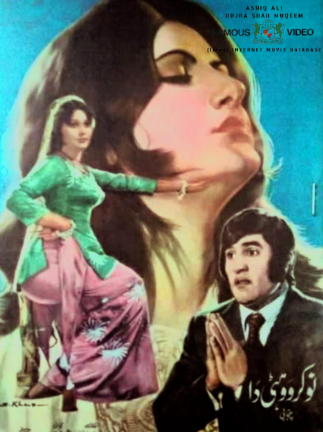
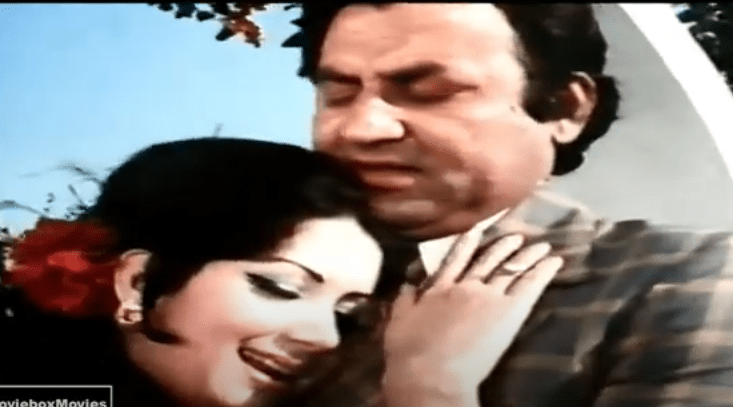
  • Aurat Ek Paheli Pakistani (1975) Super Hit Movie Muhammad Ali Zeba

    Aurat Ek Paheli Pakistani (1975) Super Hit Movie Muhammad Ali Zeba

    Film, Culture, and Performance: A Study Guide

    Quiz

    Instructions: Answer each question in 2-3 sentences.

    1. What was the significance of the film Chirag Jalta Raha to the Pakistani film industry, according to the first speaker?
    2. How did the government officer help promote the film Chirag Jalta Raha?
    3. According to the speaker, why did Zeba leave the film industry?
    4. What reason did Mohammad Ali give for not producing more films after being initially successful?
    5. What was Mohammad Ali’s opinion of the kinds of films being made at the time of the interview?
    6. How does the interviewee use the example of a flood in Lahore to comment on a change in the film industry?
    7. What was Arsh Munir’s initial experience with radio, and how did her family feel about it?
    8. According to Arsh Munir, what kind of “war” is needed to correct contemporary radio and television programs?
    9. Why did Moin Akhtar say he never worked in films?
    10. What is the topic of the song “Dupatta” that the Benjamin Sisters sing at the end of the interview?

    Quiz Answer Key

    1. The film Chirag Jalta Raha is significant because it launched the careers of four great artists: Zeba, Mohammad Ali, Deeba, and Kamali Rani. The industry is indebted to the film for introducing these talents.
    2. The government officer used his influence as an elder and officer to encourage people to watch the film, bringing his children and relatives, filling the cinema house. He emphasized it was a “clean” film suitable for the whole family.
    3. The speaker states that Zeba did not leave the film industry; rather, she was busy with other work and never believed in leaving her art. She only paused her career to pursue family or other interests.
    4. Mohammad Ali explains that he stopped producing films because he realized it was a full-time job. He suggests that the government needs to be more involved to offer creative freedom to filmmakers.
    5. Mohammad Ali expresses concern that films had become too focused on copying trends in action, violence, and sex. He laments the loss of good stories, highlighting a shift away from the types of films he and his wife used to make.
    6. The speaker compares how he and Zeba would help with donations during a flood in the past to the actors today. He does this to suggest that the film industry has lost touch with its audiences.
    7. Arsh Munir’s family was initially very angry about her working in radio. She was the only one in her family to take up the profession and they viewed it as scandalous for women in those days.
    8. Arsh Munir says that current radio and TV programs are so bad that they need a “third war” to be fixed. This is hyperbole used to emphasize the depth of her displeasure with the programs.
    9. Moin Akhtar states he was always afraid of films. When he was offered a role, the role turned out to be an unimpressive, silent part in a hospital scene, solidifying his fear and aversion to the film industry.
    10. The song “Dupatta” is about loss and longing. It speaks of the pain of separation and lost love.

    Essay Questions

    Instructions: Answer each essay question in a well-developed essay format.

    1. Analyze the ways in which the interview uses anecdotes to construct a narrative about the history of the Pakistani film and entertainment industry.
    2. Discuss the changing roles and expectations of women in Pakistani society as they are presented in the interviews with Zeba and Arsh Munir.
    3. Explore the different perspectives on artistic integrity and commercial success as presented by Mohammad Ali and Moin Akhtar.
    4. Compare and contrast the depiction of the radio and the film/television industries.
    5. Analyze the way the interview utilizes humor, song, and personal anecdotes to create a complex portrait of Pakistani society and culture.

    Glossary of Key Terms

    • Chirag Jalta Raha: A Pakistani film, significant for launching the careers of several prominent actors.
    • Fazal Ahmed Karim Fazli sahab: A well-respected writer and poet who directed Chirag Jalta Raha.
    • Garara: A traditional South Asian outfit, commonly worn by women, consisting of a long, flowing skirt, a top, and a scarf.
    • VCR: Video Cassette Recorder, a device used to record and play videos.
    • Aag: A Pakistani movie, also the name of a song, and used to describe a type of performance by one of the actors.
    • Postmortem: A medical procedure used to determine the cause of death.
    • Top: A slang term, used to refer to the small illnesses people get.
    • Agha Hashar saheb: A celebrated Pakistani playwright and theater artist whose work is referenced to show a past contrast to present drama.
    • Charlie Chaplin & Peter Sellers: Comedians and actors referenced to show how tastes and styles have evolved.

    A Life in Service and Showbiz

    The text is a rambling, unedited transcript of a conversation, possibly an interview, featuring numerous tangents and anecdotes. The speaker discusses various philanthropic endeavors, including providing free medical care and education. They also recount experiences in the Pakistani film industry, touching on challenges and successes. Personal reflections on relationships, career, and spirituality are interwoven throughout, creating a disjointed narrative. The overall impression is one of a passionate individual sharing a multifaceted life story lacking clear structure or focus.

    Study Guide: Analyzing a Spoken Discourse

    Quiz

    Instructions: Answer each question in 2-3 sentences.

    1. What are some of the charitable activities mentioned in the text that the speaker is involved in?
    2. According to the speaker, how is the free treatment for thalassemia funded?
    3. What does the speaker suggest about the current state of the film industry and its connection to revenue?
    4. What specific suggestion does the speaker have regarding the types of films that production houses should make?
    5. What challenge does the speaker mention regarding the expansion of their charitable work?
    6. What does the speaker say about the media and the types of programming being made?
    7. What example does the speaker give to explain the level of dedication with which people used to work?
    8. What anecdote does the speaker use to illustrate that it’s important to try even when you don’t believe you will succeed?
    9. What was the contest question asked on the program, and who won?
    10. What does the speaker mention about his relationship with Qureshi bhai in terms of making appearances on TV programs?

    Answer Key

    1. The speaker mentions providing free blood tests, fever treatment, and free medicine to children with thalassemia. They also operate an ambulance service for children in need of blood.
    2. The speaker states that the free thalassemia treatment is funded by them without any public donations. They are not receiving funds from individuals.
    3. The speaker believes the film industry’s content is uninspired and that people are not watching the films. He feels that if the industry can improve the quality of its films, it could help generate revenue.
    4. The speaker suggests that production houses should make films that are different from current trends. Clean films would be better received and would help the industry.
    5. The speaker says that one challenge for expanding their charitable work is the need for stamps and search checks, as these things are required in many places.
    6. The speaker mentions that much of the media being produced was primarily about animals and did not provide much substance, and that it should be educational as well.
    7. The speaker shares the story of Alim Bhai, who had a passion for being a pilot but was never able to become one, and how he still worked in other ways. They had the dedication to try, even if they didn’t succeed.
    8. The speaker tells the anecdote of sitting with arrested robbers and joking that “every man does not let go” while he himself is pursuing big ambitions, demonstrating that success comes from trying, despite doubts.
    9. The contest question was about how many films Mohammad Ali had worked in, and the winner was Maryam from Lahore. The answer was approximately two and a half films.
    10. The speaker states that Qureshi bhai would only attend certain programs if the speaker was also going, and that Qureshi bhai’s presence at a program was an endorsement.

    Essay Questions

    Instructions: Answer each question in a well-organized essay format. Do not supply the answers.

    1. Analyze the speaker’s apparent motivations and values based on the activities and concerns they express in the text. What does the speaker seem most passionate about? Provide specific examples from the text to support your claims.
    2. Examine the speaker’s perspective on the film industry. What problems do they identify, and what solutions do they propose? How do they believe film could be a means for positive change?
    3. Discuss the speaker’s self-presentation. How do they portray themselves, and what kind of relationship do they appear to have with their audience? Use specific examples from the text to support your argument.
    4. Analyze the structure and flow of the speaker’s discourse. How do they move between different topics and ideas? How does this impact the overall message of the piece?
    5. How does the speaker address the social and economic contexts of their community? Consider the speaker’s work, comments about the community, and the state of the film industry to create a compelling argument.

    Glossary of Key Terms

    • Thalassemia: An inherited blood disorder that causes the body to have less hemoglobin than normal, leading to anemia.
    • Faisalabad, Sargodha, Hyderabad: Cities in Pakistan, locations where the speaker appears to have connections or where their charitable work is active.
    • Imran Khan: A former Pakistani cricketer and Prime Minister; mentioned in the context of doing “a great job,” implying positive action.
    • Geeta: Likely a reference to a specific screenplay or production the speaker did not subscribe to, indicating changing tastes in the media.
    • Dabangg: A reference to a popular film, used to highlight the talent of children who consume such media.
    • PTB (Pakistan Television Corporation): Pakistan’s state-owned television network; mentioned in relation to the speaker and Mohammad Ali.
    • Radhe Radhe: A religious phrase, used in a context that implies a recurring or regular engagement with religious themes or programs.
    • Hybrid SIM: Likely a reference to technological developments, mentioned in an unusual context that implies a need for this technology in daily work.
    • Muhurat: A ceremony to begin an auspicious occasion, used here in relation to a broadcast, suggesting that the broadcast was starting in a meaningful or planned way.
    • Jubilee: A special anniversary, implies that the speaker remembers milestones with fondness.

    Philanthropy, Film, and Community in Pakistan

    Okay, here is a briefing document summarizing the key themes and ideas from the provided text:

    Briefing Document

    Subject: Analysis of Excerpted Text

    Date: October 26, 2023

    Introduction:

    This document provides an analysis of the provided text excerpt, which appears to be a transcription of a spoken discourse. The text is highly conversational and covers a wide range of topics, making it somewhat fragmented and difficult to follow linearly. However, several recurring themes and key ideas emerge that are worth highlighting.

    Key Themes & Ideas:

    1. Philanthropic Efforts & Community Service:
    • Thalassemia Treatment: A significant portion of the discourse centers on a community initiative providing free treatment and medication for children with thalassemia. The speaker emphasizes the self-funded nature of this work: “we do not get any donation from anyone, nor do the public give us any donation for an hour.” They highlight their proactive approach: “first of all you do a blood test of them and tell them what problems they are having, treat their fever, this treatment of it starts.”
    • Ambulance Service: They operate an ambulance service to transport blood to children in need: “our ambulance goes to the desks where those children need blood.”
    • Expanding Reach: The speaker describes expanding their services to multiple locations (“four places in Sargodha”) and receiving requests to expand further (“I get so many calls from Hyderabad”).
    1. Education & Development:
    • Focus on Education: Beyond healthcare, they are also focusing on education (“so now we are trying to do education as well”). They mention children going to worship and others going to school.
    • “Foundation time bag”: They mention something called a “foundation time bag,” which seems to be some kind of program for children. It’s not entirely clear what this entails from the text, but it seems important to their work.
    1. Film Industry & Media Critique:
    • Critique of Current Film Content: The speaker expresses concern about the quality and relevance of current films, stating that “the inventive vision of the film industry has become disgusted and people are not ready to watch his films.” They believe that films have become too focused on romantic elements (“only and romantic”) at the expense of more meaningful content.
    • Call for Change: They urge production houses to create “different” films that resonate with the current situation, emphasizing that “in these conditions when a clean film comes, it will click.”
    • Mention of Old Films: The speaker also mentions their own involvement in the film industry at some point, referencing “video songs of our film Dabangg”
    • Critique of Past practices They seem to suggest there were a lot of people who are being exploited or taken advantage of in the industry, stating “taking dozens of rude Khans and the newly appointed Noor Jahan under her and as many people as they have what mines follow him in the industry – if you start counting in this film industry from so many big mines you have payments that others are minors, those people drown measurement crying directors.”
    1. Community & Relationships:
    • Emphasis on Love & Affection: The speaker discusses the importance of love and affection, referring to the love they receive from people: “God, now you get so much love, people love you so much, so this is the best way of the party, that love and that Friends, you have expressed your love by doing this.”
    • Importance of Collaboration: They highlight the value of collaboration and express gratitude to those who have supported them. The mention of their brother and friends and how they have supported them suggests that relationship building is important to the speaker.
    1. Personal Reflections & Experiences:
    • Personal Anecdotes: The speaker shares various personal anecdotes, ranging from past experiences in school to interactions with others in the community. They reflect on their past and the changes they have undergone.
    • Appreciation for others They express deep appreciation for those who they have worked with and talk fondly of many other people.
    • Commitment to Work: The speaker demonstrates a commitment to their work and a desire to make a positive impact. They talk about putting in “efforts” and having “fasts and prayers for our classmates” indicating a dedication and seriousness about their projects.

    Quotes of Note:

    • “we will not do anything more and then we will definitely try as usual, our efforts are going on, our saliva is set on fire, in our efforts we had a lot of efforts in our eyes, we had fasts and prayers for our classmates” (Highlights their dedication and hard work).
    • “we do not get any donation from anyone, nor do the public give us any donation for an hour” (Emphasizes the self-funded nature of their thalassemia work).
    • “first of all you do a blood test of them and tell them what problems they are having, treat their fever, this treatment of it starts” (Demonstrates a proactive approach to healthcare).
    • “the inventive vision of the film industry has become disgusted and people are not ready to watch his films” (Expresses criticism about the state of the film industry).
    • “now is the time, so after all If we thirdly and this is very important time that the production houses again should make films that they should become different because the IT sector staff too, I will say and listen that the current situation is that with the people etc. everyone knows how much restlessness is there during Rocky Sadhu period, so in these conditions when a clean film comes, it will click” (Suggests a desire for more relevant and appropriate content). *”I remember that no matter how many difficulties you face, you always see a smile on your face, if there was a lot of pain, there used to be a wave in the eyes, isn’t it, and if that form was possible, we used to request a record of it, if it was positive, then the moon would be fine” (This quote suggests that they feel the need to be positive, but do feel the pain when it is there)

    Conclusion:

    The provided text offers a glimpse into a multifaceted individual deeply engaged in community work, education, and media. They are a person who appears to be committed to making a difference in the lives of others, both through direct action and by advocating for change in the film industry. The speaker’s dedication to their community work is clear, and they are very passionate about it. The text is fragmented and difficult to fully understand, however, the themes and key ideas paint a picture of an active, involved individual working to make a positive impact on their community.

    Charitable Works, Film, and Community Engagement

    FAQ: Key Themes and Ideas

    1. What are the primary charitable activities described in the text, and how are they funded?
    2. The primary charitable activity described is providing free treatment, including blood tests and medications, for children suffering from thalassemia. This initiative includes an ambulance service that delivers blood to children in need. Notably, these services are funded entirely by the organization, without relying on external donations from the public or other sources. They emphasize that their efforts have been ongoing for two to three years and that they are trying to improve their process. They do get medicine shipments from other organizations as well.
    3. What other community-focused work is being undertaken besides healthcare, and what challenges are faced?

    Beyond healthcare, the organization is also focused on education. They provide school bags and encourage children to attend school and worship. They also face challenges, particularly with the need for official stamps and search checks, which make it difficult to expand their work to new locations. The text mentions numerous requests to expand their operations to other areas but there are issues with bureaucracy. They intend to meet with these people when they visit.

    1. What is the speaker’s view on the film industry, and what changes are proposed?
    2. The speaker critiques the current state of the film industry, stating that its inventive vision has become “disgusted” and that people are not eager to watch current films or songs. They call for production houses to make diverse and impactful films, suggesting that “clean” films could resonate with audiences and noting the current sense of restlessness and a need for positivity. They believe there is a market for films that are different from the current offerings. They imply that the current state of the industry is focused on only romantic and shallow offerings. They also think IT industry workers are looking for a change in entertainment.
    3. How does the speaker describe the importance of dedication and commitment, and how does this relate to their own work?
    4. The speaker emphasizes the importance of dedication and commitment, highlighting how such values were central to the initial revival of the film industry and have been passed down through generations. They believe in hard work and personal commitment to their goals, as seen in their own activities related to charity and community work. They talk about their ancestors making them capable to carry on their work, that this work is not in the vein of getting money or fame, but rather about doing good and being committed to these values. They feel the current generation must continue this tradition of passion and hard work.
    5. What is the significance of the story about the man who wanted to become a pilot?
    6. The story about Alim Bhai, who had a passion for becoming a pilot, serves as a cautionary example. It suggests that even those with strong passions can struggle to achieve their dreams and should not stray from their chosen career if they are succeeding at it. The story is used to emphasize the importance of pursuing one’s goals and to not let them pass you by without trying. It also indicates that perhaps some goals are too lofty and it’s important to be realistic about our career choices.
    7. What personal qualities and relationships does the speaker highlight as important in their work and life?
    8. The speaker emphasizes the importance of love, affection, and maintaining a positive attitude. They mention a strong bond with their peers and the importance of relationships with those they work with. There is also an emphasis on gratitude for support from those around them and how they have been treated. They seem to value being there for others and maintaining those relationships and bonds.
    9. How does the speaker view their own role and impact, particularly in contrast to others?
    10. The speaker acknowledges that many people care for them, suggesting they have a strong presence in their community. This care goes beyond what someone like Mohammad Ali Sahib would have received. They describe themselves as someone who doesn’t participate in a lot of things, but they do have a big impact in the areas they choose to work. This is a humble but firm self-assessment.
    11. What role does the media play according to the speaker, and how should it be used?
    12. The speaker reflects on the impact of the media, mentioning a period where British media was being made, as well as the shift in current day media. The speaker advocates for the media to be more interactive and not shallow or simply romantic in its messaging. There are suggestions that the media is capable of offering more meaningful interactions than it currently does.

    Thalassemia Treatment in Sargodha

    The sources discuss Thalassemia treatment in the context of a specific organization’s efforts. Here’s a breakdown of the information:

    • Free treatment and medicines: An organization provides free treatment and medicines for children suffering from thalassemia. This initiative has been ongoing for two to three years.
    • Blood tests: The organization conducts blood tests for people who come to them to identify their problems and initiate treatment, including fever management.
    • Ambulance service: The organization uses its own ambulance to deliver blood to children who need it, going directly to their locations.
    • No public donations: The organization does not receive donations from the public for this service, indicating it is self-funded.
    • Efforts are ongoing: Despite challenges, the organization is actively working to improve their Thalassemia treatment services.
    • Locations: This work is being carried out in four locations in Sargodha. The organization receives calls from people in other areas, like Hyderabad, and there is a rise in protests from people who want these services extended to other areas.

    The Crisis of the Film Industry

    The sources discuss several issues within the film industry, including:

    • Revenue and Treatment: The film industry needs revenue to address issues, but the “inventive vision” of the film industry has become “disgusted” and people are not interested in watching films.
    • Production Houses: There is a call for production houses to make different kinds of films because of the current “restlessness” and desire for “clean” films. There’s a suggestion that “clean” films will be popular.
    • Media Content: There’s a discussion about the kind of media being made, including how a British media company was making content, and how that has evolved to content focused on naming animals in their productions. There’s a desire for more children to “subscribe” to media.
    • Talent and Opportunities: There are talented people, like “Ghanshyam Arya’s children,” who watch video songs and are waiting for opportunities. The source mentions many individuals and their involvement in the film industry, including “rude Khans” and “Noor Jahan,” and how some people are considered major players (“mines”) and others are “minors”. There is a focus on the difficulties faced by directors.
    • Dedication and Revival: There’s a sense that a revival of the film industry requires dedication and commitment. This refers to past generations who made the industry “capable of continuing further”.
    • Past and Present Comparison: There is a comparison between older films and newer films, noting that the newer films are not as good as they used to be.
    • Financial Issues: There are mentions of money and production costs, and that filmmakers should talk to the environment before beginning work. There is a reference to a 15 crore film, and a discussion of payments and how some people are paid more than others in the film industry.
    • Changes in Content: The kind of content being produced has shifted, and this may be a problem. The source notes that there used to be songs that would not say “I want that I did not subscribe to Geeta’s home screenplay”. There is also a mention of “sexual speech” being used in films.

    The sources highlight the need for change in the film industry, and suggest that new approaches are needed for content creation and revenue generation. The sources suggest the industry is facing issues in terms of public interest and financial stability.

    Sargodha Thalassemia Charity

    The sources describe charitable work focused on providing free Thalassemia treatment, and mention other community-focused efforts.

    Here’s a breakdown:

    • Thalassemia Treatment: An organization provides free treatment and medicines to children suffering from thalassemia. This includes blood tests to identify problems, fever management, and blood delivery via their own ambulance service. This service has been ongoing for two to three years.
    • Self-Funded: This charitable work is self-funded, with no public donations.
    • Multiple Locations: The work is being carried out in four locations in Sargodha. The organization receives calls from other areas and there is a rise in protests requesting these services to be extended to other areas.
    • Community Support: The organization is focused on helping people in their community, with services that include efforts to educate, and provide school bags for children, as well as medicine to those in need.
    • Motivation: The organization is motivated by a desire to help others, and they are making the effort themselves.
    • Education: There is an effort to provide education as well as material support, as the source mentions efforts to educate children.
    • Prayer: The source mentions fasts and prayers for classmates.

    The charitable work described is focused on providing essential medical care to children with Thalassemia. It is a self-funded, community-based effort and there are efforts to expand its reach.

    Television Appearances and Impact

    The sources discuss a few aspects of television programs, including their production, content, and the people involved. Here’s a breakdown:

    • TV Program Appearances: The source mentions that the speaker does not generally do TV programs, except for “Shivaay Ali’s Basti”. This suggests the speaker has some involvement in television, but is selective about their appearances.
    • Program Content: The source references a 2-hour program that is “full of elements,” and mentions “Yadav Sehrawat,” whose presence in the program is viewed positively. This suggests that the programs are diverse and include interviews and other segments.
    • Guest Appearances: The speaker notes that they were called to be chairman of PTV and had to go. The source also mentions that people ask for 10 minutes of the speaker’s time for interviews. These details show the speaker is a sought-after guest.
    • Program Interactions: The source discusses the interactions between the speaker and others during television programs, such as Qureshi bhai who would call the speaker and go to the program if the speaker was going, but would not go if the speaker did not. This highlights how important the speaker is to those programs.
    • Program Timing and Scheduling: The speaker mentions that a dance class was done well, along with “such old things”. This suggests programs may include a variety of elements, possibly educational content. The source also notes that they have to do dance class 9 maths, which could be a specific segment within a program or a different program entirely.
    • Program Impact: The source reflects on how they have spent a lot of time on TV and acknowledges that it has been a meaningful experience. The speaker also notes that they have been on TV, but they don’t do it often. The source also notes that the speaker has been recognized more and has been taken care of by more people than Mohammad Ali.
    • Program Production: The source includes some remarks on the production of programs, mentioning the “muhurat” of a broadcast. This shows that the production of programs is also a topic of discussion in the source.

    In summary, the sources discuss TV programs in terms of production details, content variety, the speaker’s selective involvement, and the impact of TV appearances on both the speaker and their audience.

    A Life in Anecdotes

    The sources contain several personal anecdotes that offer insights into the speaker’s experiences and perspectives. Here’s a breakdown of these anecdotes:

    • Thalassemia Treatment Initiative: The speaker shares that the idea to start a free Thalassemia treatment program came from them. This includes conducting blood tests and providing free medicine, and using an ambulance service to deliver blood to children in need. This highlights the speaker’s initiative and commitment to helping others.
    • Film Industry Observations: The speaker recalls being afraid while in school and waiting in a studio. They also mention having written in “kavita kosh” and receiving money for it. The speaker also notes that people used to come to them when they were at the studio. These anecdotes offer a glimpse into the speaker’s past experiences and involvement in creative spaces. The source also mentions that the speaker was with arrested robbers and would joke with them, noting that everyone wants to be successful.
    • TV Program Involvement: The speaker states they don’t do TV programs, except for “Shivaay Ali’s Basti”. This anecdote emphasizes the speaker’s selective involvement in television and perhaps a preference for certain types of content. The speaker also notes that they were called to be chairman of PTV, which they did not want to do, but had to. This shows the speaker’s importance and recognition in the media. The speaker also discusses the experience of being in a program with “Yadav Sehrawat”, and mentions a dance class. The speaker also notes that they have been recognized more and have been taken care of more than Mohammad Ali.
    • Relationships and Interactions: The speaker discusses their interactions with Qureshi bhai, who would only attend programs if the speaker was also attending. This anecdote illustrates the close relationships and loyalty the speaker inspires in others. The speaker also notes that many people take care of them, noting they are taken care of “in every way”.
    • Personal Growth and Reflections: The speaker shares that they feel more connected to people and talk to them more in the morning than before. This anecdote indicates the speaker is reflecting on their own personal growth and connection with others. The speaker also notes that no matter how many difficulties they face, they always have a smile on their face, but “there used to be a wave in the eyes”, and they used to request a record of it. The speaker also notes that they have spent so much time on TV, and that it has been a meaningful experience.

    These personal anecdotes reveal different facets of the speaker’s personality, including their compassion, their creative experiences, their connections with others, and their personal reflections. The anecdotes paint a picture of someone who is deeply involved in their community, is reflective of their past, and is both humble and aware of their position in the community and in media.

    Tribute to mohd ali – zeba m qurashi – u perzada – samina perzada – s sulaman – part – 6
    AURAT EK PAHELI (1975) – MOHAMMAD ALI, ZEBA, SANGEETA, NANHA, KAVEETA – OFFICIAL PAKISTANI MOVIE

    Nostalgia of Pakistani Cinema and Radio

    This text is a transcript of a Pakistani radio or television program featuring interviews with several veteran entertainers. The discussion centers on their careers, spanning film and radio, touching upon the evolution of the industry, societal changes, and personal anecdotes. Nostalgia for the “golden age” of Pakistani cinema and radio is a prominent theme, contrasted with observations about contemporary media. The interviews reveal personal stories and reflections on their work and lives, offering a glimpse into the cultural landscape of Pakistan. Musical interludes and praise punctuate the conversations.

    Pakistani Entertainment Legends: A Conversation

    Okay, here is a detailed briefing document reviewing the provided text:

    Briefing Document: Analysis of Pakistani Entertainment Industry Discussion

    Date: October 27, 2023

    Subject: Review and Analysis of a Discussion Involving Key Figures in Pakistani Film, Radio, and Theatre

    Sources: Excerpts from a transcribed audio recording featuring conversations with Pakistani actors and media personalities, including Zeba, Mohammad Ali, Arsh Munir, and Moin Akhtar.

    Overview:

    This document analyzes a transcribed conversation involving several prominent figures in Pakistani entertainment. The conversation covers a wide range of topics, including the early days of Pakistani cinema, the changing landscape of the entertainment industry, the role of artists, personal experiences, and societal changes. The overall tone is informal and conversational, allowing for a candid and revealing look into the lives and perspectives of these artists.

    Key Themes and Ideas:

    1. The Legacy of Early Pakistani Cinema:
    • “Chirag Jalta Raha” as a Pivotal Film: The discussion begins with the film “Chirag Jalta Raha,” which, despite not being a major commercial success, is credited with introducing four prominent artists to the industry: Zeba, Mohammad Ali, Deeba, and Kamali Rani.
    • Fazal Ahmed Karim Fazli’s Influence: Fazli, described as “the best writer, the best poet of our place,” is lauded for his contribution to the film.
    • Community Support and Clean Entertainment: A government officer’s efforts to promote the film by encouraging families to attend are highlighted. This suggests a time when films were expected to be family-friendly and community-supported.
    • Quote: “When the film was released, he started calling people and said, “Brother, you must come to see our film and definitely bring your children along because this is a very clean film.”
    1. The Role of Women in the Industry and Society:
    • Zeba’s Career and Marriage: Zeba’s decision to seemingly step back from acting after marrying Mohammad Ali is discussed, and she explicitly says she did not leave the industry but was simply busy with other work. She states she would take good roles offered to her in the future, rejecting the notion she had left her craft permanently.
    • Quote: “I do not believe in leaving because how can an artist leave his art or something like that? […] I have never even thought of leaving it but I have always said that whenever I am offered a good role, a good story, I will definitely work”
    • Traditional Gender Roles: The conversation touches upon the cultural expectation that wives do not criticize their husbands publicly.
    • Quote: “…wives don’t speak ill of their husbands in front of them, that is why we have called you alone first…”
    • Changing Perceptions of Women in Radio: Arsh Munir recounts being scolded by a stranger for wearing “gararas” (traditional attire) when going to work at the radio, and told she should wear a sari like Hindu women. This provides a sense of gender and religious expectations in the past.
    1. Mohammad Ali’s Career and Views on Filmmaking:
    • From Negative Roles to Comedy: The conversation traces Mohammad Ali’s career from negative roles to producing films and experimenting with comedy.
    • Disappointment with the Modern Industry: He expresses dissatisfaction with the contemporary film industry, which he believes is overly focused on “copy films, action, violence, and sex.” He contrasts this with the “good stories” they used to produce.
    • Quote: “when we both made films, at that time there was not so much craze for making copy films and action and violence and sex as you get in films today. When we produced films, we got very good stories.”
    • Government Support and Artistic Freedom: He advocates for government involvement in funding films while also stressing the need for artistic freedom and the expression of “noble thoughts.”
    • Quote: “if the film industry and the government also associate themselves with the film, then at least they should give the film maker the liberty to produce their noble thoughts with their best and direct their best, then only something good would happen.”
    1. Social Responsibility of Artists and the Industry:
    • Philanthropy and Social Connection: There’s a comparison between the past, where actors like Mohammad Ali and Zeba would actively participate in public causes (like collecting donations after floods), and a perceived lack of such involvement today.
    • Concern over Vulgarity and Violence: There is a call to move away from films with “oppression and vulgarity” and to consider the needs of the country by promoting content with better values.
    • Quote: “At this time, the need of our country is to keep the other side in mind. Keeping this in mind, we should try to move away from the style of films that are being made, and keep a little away from the films of oppression and vulgarity that are coming from different groups.”
    • The Impact of Media Content: The conversation highlights a concern about the impact of vulgarity and violence on the public.
    1. Arsh Munir’s Radio Career and Longevity:
    • Early Radio Work: Arsh Munir, a seasoned radio artist since 1938, is showcased. She mentions her programs even being listened to by Hitler.
    • Dislike of Modern Radio and TV: Munir expresses a strong dislike for modern radio and television programs, humorously stating that “there is a need for a third war” to correct them.
    • The Evolution of Radio Culture She shares anecdotes about family disapproval of her radio work in the past, highlighting the changing cultural landscape.
    1. Moin Akhtar’s Comedy and Reflections on Theatre:
    • A Performer’s Journey: Moin Akhtar discusses his 21 years in the entertainment industry, marked by consistent efforts to entertain the public.
    • Audience Change: He notes that the audience has changed since the days of Agha Hashar’s dramas, stating that the audience has “gone a little wrong” instead of theatre itself, as tastes have changed over time and are constantly evolving.
    • Reluctance Toward Films: He mentions his aversion to working in films due to a bad experience.
    1. Personal Anecdotes and Humor:
    • Humorous Exchanges: The conversational tone is punctuated with humor and personal stories, providing a glimpse into the personalities and relationships between the artists. These include stories of Mohammad Ali’s boxing past, playful ribbing and Moin Akhtar’s comedic style.
    • Home Life: There are also insights into their home life, such as Zeba’s unusual sleep schedule and Mohammad Ali’s early morning routine.

    Important Facts:

    • “Chirag Jalta Raha” is remembered as an important film in the careers of Zeba, Mohammad Ali, Deeba, and Kamali Rani.
    • Fazal Ahmed Karim Fazli was a key figure in early Pakistani cinema.
    • Mohammad Ali and Zeba were involved in both acting and production.
    • Arsh Munir began her radio career in 1938.
    • Moin Akhtar is a renowned comedian and theatre artist.
    • The conversation took place after 21 years of Moin Akhtar’s work in the industry.
    • There’s a shift in the industry noted by older artists, a move towards more violent or vulgar content and a lack of positive messaging.
    • There are mentions of government involvement in the entertainment industry with money being provided to create good TV content and dramas, indicating some possible need or desire to have film and radio content also be government-sponsored.

    Conclusion:

    The transcribed conversation offers a valuable insight into the Pakistani entertainment industry, highlighting its evolution, key figures, and their perspectives on the changing landscape of media and society. The discussion reflects a sense of nostalgia for the past, a concern about the present, and a desire to promote positive and meaningful content in the future. The personal anecdotes and humor provide depth and context, making it a rich resource for understanding the cultural and social dynamics of the time.

    Nostalgia and Evolution of Pakistani Entertainment

    FAQ: Themes and Insights from the Provided Text

    • What was the significance of the film Chirag Jalta Raha according to the speaker, and what were the primary factors contributing to its success?
    • Chirag Jalta Raha is considered a very important film for the industry, not for its financial success, but because it introduced four significant artists: Zeba Mohammad Ali, Deeba, and Kamali Rani. The film’s success is attributed to two factors: the strong performances of these four actors, and the writing and poetic skills of Fazal Ahmed Karim Fazli, the film’s maker. The film also received a boost from an elderly government officer who promoted it by encouraging families, especially children, to come see it in theaters, often filling seats before the filmmaker even arrived at the venue.
    • How did the relationship between Zeba and her husband, Mohammad Ali, impact her acting career?
    • Zeba clarifies that she didn’t “leave” the industry after marrying Mohammad Ali, contrary to some perceptions. Instead, she says she was occupied with other work for a few years and has never considered abandoning her art. She expresses that she will return to acting when the right role comes along. The interview also touches on a cultural idea that wives shouldn’t speak ill of their husbands in front of them, but she confirms she would express the same opinions whether her husband was present or not.
    • What are Mohammad Ali’s views on the current state of the film industry?
    • Mohammad Ali expresses concern about the shift in the industry towards copy films, excessive action, violence, and sex. He contrasts this with the earlier times when good stories were the priority. He states that there is less focus on producing quality and unique stories and there needs to be more creative freedom for filmmakers to produce their best works. He believes that a positive change can be brought about if the government and the film industry work together. He also notes there was a time when the film industry had a strong connection with the people where actors would openly participate in community relief and charitable causes. He notes this has diminished.
    • Mohammad Ali mentions a desire to work in Punjabi films under certain conditions. What are these conditions?
    • Although he mentions being requested to act in Punjabi films for 22 years, Mohammad Ali asserts he is not part of any movement to defame Punjab. He would be willing to act in a Punjabi film as long as the story is good and does justice to the cultural heritage and people of Punjab.
    • What were some of the difficulties Arsh Munir and others faced working in the radio industry in the past?
    • Arsh Munir describes that in the past, being a radio artist was often looked down upon by families, which sometimes caused rifts between the family members. For example, she recounts how her own family was displeased and how some of her relatives still did not acknowledge her for working on the radio. She also mentions an encounter where she was criticized for wearing a garara while traveling to the studio. She notes that the programs of today on TV and radio are often not to her liking, and she jokingly states that it would take a third world war to correct them.
    • What is the significance of the reference to the old radio artist, Arsh Munir, and her career?
    • Arsh Munir’s inclusion highlights the historical aspect of the entertainment industry. Having started on radio in 1938, her presence spans a great deal of change, and she is revered for her longevity and experience. She is also known to have had programs listened to even by the likes of Hitler. Her segment also pokes fun at time, as the speakers playfully reference her age and past experiences. She represents a bridge to a different era of the industry and provides a critical perspective on modern changes.
    • What views are expressed about the changing nature of theater and audiences?
    • The text suggests that the issues with the theater may not be with the art, but with the audience that has changed over time. The older audiences were receptive to different kinds of drama, whereas the modern audience seeks different entertainment with different trends, as with comedians such as Charlie Chaplin and Peter Sellers. This shows the entertainment styles have evolved and the viewers are looking for other things. The shift highlights that the theater should continue to adapt to the changing times.
    • What is highlighted by the comedic anecdotes throughout the program?
    • The comedic anecdotes are used to showcase the playful nature of the personalities. They are often used to emphasize a point or to poke fun at societal expectations of the entertainment industry. The comedic anecdotes throughout the program serve multiple purposes, including entertaining the audience, showing the personalities and relationships of the people in the industry, and also highlighting the changing landscape of how these individuals are perceived in the entertainment field. They also demonstrate the informal style and close relationships within the industry at the time.

    The Evolution of Pakistani Cinema

    The sources provide insights into the history of the film industry, particularly focusing on the experiences and perspectives of artists involved in the industry. Here’s a breakdown of key aspects:

    • Early Film Success: The film “Chirag Jalta Raha” is highlighted as a significant film that was not very successful but is credited with bringing four great artists to the industry: Zeba, Mohammad Ali, Deeba, and Kamali. The film’s success is attributed to the acting of these four artists and the direction of Fazal Ahmed Karim Fazli.
    • Writer and Poet: Fazal Ahmed Karim Fazli was considered the best writer and poet of his time.
    • Promotional Strategies: The film’s promotion involved a government officer who encouraged people to watch the “clean film” with their children, which helped to fill cinema houses.
    • Challenges and Changes in Film Production: There was a time when the industry had a very deep connection with the people. However, with time, the industry started to focus on copy films with action, violence, and sex. Earlier, filmmakers focused on good stories.
    • Government and Film Industry: It is suggested that the government should support filmmakers so that they can produce noble thoughts and direct them in the best possible way.
    • Evolution of Film Content: The sources note a shift in the type of films being made, moving away from more thoughtful and comedic stories to those focused on action and violence.
    • Impact of TV: The popularity of TV dramas is also mentioned, with the speaker expressing happiness at the praise received for dramas from his country. There is also a comparison of TV content with radio programs, with a statement that current programs need a “third war” to correct them.
    • Artist’s Career Choices: One artist, Mohammad Ali, began his career with “Chara Chalta Raha” and played negative roles before starting his own production company. Another artist mentions she has always been afraid of films.
    • Changing Audience Tastes: The discussion touches on the evolution of audience preferences, noting how tastes have changed from dramas to liking Charlie Chaplin and Peter Sellers.
    • Comparison of Film eras: The sources mention that films used to be made very quickly, unlike the current trend where heroines take much longer for makeup than the old entire movie production time.
    • The Role of Radio: There is a discussion about radio, with one artist having been on radio since before World War II. It is noted that in the past, there was anger against working in radio. However, the radio is also presented as a medium where some artists were noticed by important figures. The content of the programs, as well as the speaking styles of radio and TV artists, are also discussed.

    The sources also include personal anecdotes and experiences of various artists, providing a nuanced view of the film industry during the time periods discussed. These anecdotes add depth to the understanding of the industry’s history by capturing individual experiences within the broader context.

    Pakistani Cinema: A Retrospective

    The sources provide several insights into Pakistani cinema, focusing on its history, key figures, and the changes it has undergone. Here’s a breakdown:

    • Early Influential Films: The film “Chirag Jalta Raha” is highlighted as a significant early film, even though it was not a major success. This film is credited with introducing four important artists to the industry: Zeba, Mohammad Ali, Deeba, and Kamali. The success of this film was attributed to the acting of the four artists, as well as the direction by Fazal Ahmed Karim Fazli, who is described as the best writer and poet of the time.
    • Promotional Strategies: In the early days, film promotion relied on community figures and word of mouth. A respected government officer would encourage people to watch “clean films” like “Chirag Jalta Raha,” bringing their families to the cinema, which helped fill seats.
    • Changing Content and Production:
    • The sources note a shift in the kind of films produced over time. Initially, there was a focus on good stories and comedy, as exemplified by the film “Faraar”. However, the industry shifted toward copy films with action, violence, and sex. This change is viewed negatively by at least one of the speakers in the source.
    • Mohammad Ali mentions that when he and his wife produced films, there wasn’t as much focus on copied films and action as there is now.
    • The time taken for film production has also changed. In the past, the entire film could be completed in the time it now takes for heroines to do their makeup.
    • Challenges in the Industry:
    • The sources indicate that filmmakers did not always have the freedom to produce the kind of films they wanted. There were times when the industry had a very deep connection with the people.
    • There is also a discussion about the need for government support to enable filmmakers to produce meaningful content.
    • Key Figures and Their Contributions:
    • Mohammad Ali is noted for starting his career with “Chara Chalta Raha,” playing negative roles and eventually starting his own production company. He also starred in the film “Aag,” which apparently took a long time to watch on VCR. He is also mentioned as a tenant who punched someone for asking for rent.
    • Zeba, also an important figure in the industry, is mentioned as having taken a break from the industry for a few years, but she states that she has never thought of leaving her art.
    • Themes and Issues:
    • The sources mention that some Pakistani films were made in the Punjabi language.
    • There is some concern expressed about the negative influence of vulgarity and oppression in films.
    • There’s also discussion of the need for films to reflect the needs of the country.
    • Relationship with the Audience:
    • The sources suggest that there was a time when the film industry had a deep relationship with the people.
    • The sources also note a change in audience tastes over time. Initially, audiences appreciated dramas, but they then started to appreciate figures like Charlie Chaplin and Peter Sellers.
    • Comparison with Other Media:
    • The discussion contrasts the film industry with the television industry, where there is praise for TV dramas from the country.
    • There is a humorous criticism of current TV and radio programs, with one speaker stating that a “third war” would be needed to correct them.

    In summary, the sources present a view of Pakistani cinema that highlights its early successes, the shift in its content and production styles, and the challenges it faced. They also touch on the importance of key figures and the changing relationship between the industry and its audience. The emphasis on the need for meaningful content and government support suggests a desire to see the industry return to a place of significance and relevance.

    Radio Artists and the Rise of Broadcasting

    The sources provide several insights into radio artists, their experiences, and their role in the entertainment landscape:

    • Early Radio Artists: The sources mention a radio artist who has been on the radio since before World War II, highlighting the long history of radio as a medium. This artist is said to be the only radio artist in the area whose programs were listened to by Hitler.
    • Experiences of Radio Artists:
    • One radio artist recounts how her family was very angry about her working on the radio in the past. She mentions that some relatives still do not acknowledge her as a relative because of her radio work.
    • This same artist also shares a story about being confronted by a man who criticized her attire while she was on her way to work at the radio station.
    • The sources note that radio artists in the past were often looked down upon by their families.
    • Radio vs. Television: There is a discussion about the differences between radio and television. One person claims that the current radio and TV programs are so bad that a “third war” is needed to correct them. This suggests that there are perceived differences in the quality of content between these two media.
    • Speaking Styles:
    • The sources discuss how radio and TV artists have different speaking styles. One artist is said to speak very loudly, which is a trait she claims is encouraged by the radio and TV people.
    • Another artist notes that even when the radio is switched off, you can still hear the voice of a particular radio artist, indicating a strong and distinct presence.
    • Interaction with the film industry: Although the radio industry is discussed, the discussion also notes that some radio artists have crossed over into television and film. One artist is said to have been afraid of films.
    • The Value of Radio: Despite the challenges and changes in media, the sources also convey the value of radio as an artistic and cultural medium. The artist who has worked since before WWII is described as being a well-known artist. There is a comment from one of the speakers in the dialogue who notes how proud they are to be in the presence of the veteran radio artist. This suggests that despite changes in media, the contributions of radio artists are valued and have impacted other artists.
    • Radio as an important medium: The radio was an important medium during earlier times, and radio artists were well-known and were able to influence audiences. However, the sources also indicate that radio was a controversial medium with some cultural and societal groups.

    In summary, the sources highlight that radio artists have played a significant role in the entertainment industry, but their careers have not been without challenges and controversies. The sources also note the important role that the radio played in the past. The sources underscore the significance of radio artists, their influence, and their unique place in the media landscape.

    Evolution of Pakistani Film Production

    The sources offer a detailed look into film production, covering various aspects such as the creative process, challenges, and changes over time. Here’s a breakdown of key themes related to film production:

    • Early Film Successes: The film “Chirag Jalta Raha” is presented as an example of a film that was not very successful, but was important for launching the careers of several artists. The success of this film was attributed to the acting of its four lead artists, as well as the direction by Fazal Ahmed Karim Fazli.
    • The Role of the Writer/Poet: Fazal Ahmed Karim Fazli was considered the best writer and poet of the time, which indicates the importance of storytelling and creative writing in film production.
    • Promotional Strategies: In the early days, film promotion relied on word of mouth and community figures. For example, a government officer encouraged people to watch “clean films” with their families, which helped fill cinema houses.
    • Changes in Film Content:There was a shift in the type of films being made. Initially, the industry focused on good stories and comedy, as seen in the film “Faraar”.
    • However, over time, the industry shifted towards producing copy films with action, violence, and sex. This change is presented as a negative development.
    • One of the speakers noted that when they produced films, there wasn’t as much focus on copied films and action as there is now.
    • Creative and Production Challenges:Filmmakers did not always have the freedom to produce the kind of films they wanted.
    • One speaker expressed a desire for the government to support filmmakers so they can produce noble thoughts and direct them in the best possible way.
    • The sources suggest there was a time when the industry had a very deep relationship with the people, but this changed over time.
    • Time Taken for Production: The sources mention that films used to be made very quickly in the past. In contrast, the time it takes for heroines to do their makeup today is longer than it used to take to complete an entire film.
    • The Producer’s Role: One of the speakers, Mohammad Ali, started his own production company with his wife after acting in films such as “Chara Chalta Raha” and “Aag Ka Dariya”. He notes that when he and his wife produced films, there wasn’t as much focus on copied films and action as there is now. He also mentions that the experience of producing films was a full-time job.
    • Themes and Issues:The sources mention that some Pakistani films were made in the Punjabi language.
    • There is concern about the negative influence of vulgarity and oppression in films.
    • There’s also discussion about the need for films to reflect the needs of the country.
    • An Artist’s PerspectiveOne of the artists was afraid of films. She shares a story about how a director came to her early in the morning to offer her a role in a film, and she was so overwhelmed she was unable to accept. She states that the role was so small and insignificant that she was very disappointed.

    In summary, the sources illustrate film production as a complex process involving creative storytelling, promotional efforts, and significant changes in content over time. The discussions also highlight the challenges and evolution of filmmaking, from a focus on original stories to a greater emphasis on action and copied plots. The sources also reveal the importance of government support and creative freedom to enhance the quality of film production.

    Television Dramas in India

    The sources provide several insights into television dramas, offering a perspective on their quality, impact, and production, while also comparing them to other forms of entertainment, such as films and radio:

    • Positive Reception of TV Dramas: The sources suggest that television dramas are well-regarded, particularly in contrast to the film industry. One of the speakers mentions that they were very happy to hear praise for the beautiful dramas on TV from the streets of Hindustan, and that it made them proud. This indicates that TV dramas were seen as having a positive impact and were appreciated by audiences.
    • Government Support for TV: The speaker notes that one of the reasons for the success of TV dramas is that the government provides funding to support them. This suggests that financial backing from the government has been crucial for the production and quality of these dramas.
    • Contrast with Film Industry: There’s a clear contrast between television dramas and films. While there’s criticism about the current state of films, especially their content and production styles, TV dramas are viewed more favorably. This suggests that the television industry was seen as a space for quality and meaningful content.
    • Comparison to Radio: The discussion also touches upon the differences between television and radio programs. One of the speakers states that the current programs on radio and TV are so bad that they need a “third war” to fix them. This suggests a critical view of both mediums, implying that they have declined in quality.
    • Talent Crossover: Some individuals worked in both television and other media. For example, one artist has worked in radio, theater, and television. This suggests that there was some talent crossover between these entertainment industries, but that it was not always smooth. For example, one of the artists is mentioned as having been afraid of films.
    • The Role of Actors: One of the speakers notes that an actor has been trying to keep people happy for 21 years, and has done 150 dramas and thousands of shows.
    • The Influence of Television: One of the speakers notes that they have produced beautiful dramas on TV. This indicates that television dramas are an important medium with the ability to influence and inspire audiences.
    • A Need for Change: The sources indicate that while there is positive feedback regarding television dramas, the state of television (and radio) is viewed as problematic and in need of improvement. This is conveyed through the comment about the need for a “third war” to correct current radio and TV programs.

    In summary, the sources paint a picture of television dramas as a medium that has been successful and well-regarded, particularly when compared to the film industry. Government support seems to be a key factor in the quality of TV dramas. There is some discussion of television with respect to other forms of media like radio and film, suggesting a complex relationship between all three forms of media.

    Mohammad Ali: A Pakistani Film Legend

    This text is a biography of Mohammad Ali, a legendary Pakistani film actor. It details his life, from his birth in India to his later years, including his career in film, radio, and theatre, his philanthropic work, and his personal life. The biography also highlights his significant contributions to Pakistani cinema and his enduring legacy. His relationship with Zeba Begum, his wife, and his struggles with illness are also mentioned.

    Mohammad Ali: A Study Guide

    Quiz

    Instructions: Answer each question in 2-3 complete sentences.

    1. Describe Mohammad Ali’s early life and family background, including his religious upbringing.
    2. What circumstances led Mohammad Ali to pursue a career in radio and how did his voice contribute to his success in the medium?
    3. Explain how Mohammad Ali’s career path changed from radio to acting, including the early roles he portrayed and his first film as a hero.
    4. Discuss the significance of the film Khamosh Raho in Mohammad Ali’s career and the recognition he gained for his performance.
    5. What was the significance of the film Aag Ka Dariya in Mohammad Ali’s career and what was unique about his character?
    6. Describe the circumstances surrounding Mohammad Ali’s marriage to Zeba and the public reaction to their union.
    7. Describe Mohammad Ali’s political affiliations and how they impacted his career.
    8. What is known about Mohammad Ali’s charitable activities and the institutions he helped establish?
    9. Besides acting, what other roles did Mohammad Ali pursue in the film industry (e.g. director, assistant director, etc.)?
    10. What is the legacy of Mohammad Ali in the Pakistani film industry and what are some of the ways he is remembered?

    Quiz Answer Key

    1. Mohammad Ali was born into a religious family, with his father being the Imam of a mosque. He was the youngest of four siblings and had a close family that called him Munna. His early education included learning the Holy Quran.
    2. Mohammad Ali’s career in radio began when his family moved to Hyderabad where his “thunderous” voice made him popular as a preacher. He began working on Radio Bahawalpur and his “funny career” began in radio.
    3. After gaining attention for his voice, Mohammad Ali was called to Karachi, where he was taught the techniques of using the microphone and voice modulation. He was cast initially in villainous roles before becoming a lead actor in the film Shararat.
    4. Khamosh Raho was a significant film in Mohammad Ali’s career and resulted in the title of “Shahenshah Jazbaat,” meaning “Emperor of Emotions”. His performance was particularly powerful in the court scene, showcasing his skill in emotional depth.
    5. Aag Ka Dariya was another key film where Mohammad Ali portrayed the character of Dilawar Daaku with intensity. The film is considered one of the most significant of his career, further establishing his reputation as a versatile and powerful actor.
    6. Mohammad Ali and Zeba married in a private ceremony with few present and the news was widely disseminated by the Akh Baraat (newspapers). The public reaction to their marriage was one of intrigue and widespread attention.
    7. Mohammad Ali supported Zulfikar Ali Bhutto, which led to a ban on his work during General Zia-ul-Haq’s regime, and he was even imprisoned for several days. However, his relationship with General Zia later improved.
    8. Mohammad Ali dedicated his time to charitable work after leaving the film industry, establishing the Ali Javed Foundation and Blood Transfusion Services in several cities to help thalassemia patients. He was also involved with the Fatmi Foundation.
    9. In addition to acting, Mohammad Ali worked as an assistant director in Chirag Jalta Raha and also took on roles of radio producer and Munsh of Sada in Hyderabad. He also helped establish the first open-air theatre in the city.
    10. Mohammad Ali is remembered as an iconic figure in Pakistani cinema with his legendary acting skills and significant social contributions. His memorable performances and dedication to philanthropy have made him an enduring figure.

    Essay Questions

    Instructions: Develop a well-organized essay for each of the following questions.

    1. Analyze Mohammad Ali’s transition from villainous roles to becoming a lead actor and how it shaped his career trajectory and lasting legacy.
    2. Discuss the impact of Mohammad Ali’s personal life, including his marriage to Zeba and his political associations, on his career and public perception.
    3. Explore the socio-cultural context of Mohammad Ali’s films, especially concerning his portrayal of emotion, societal injustice, and the prevailing attitudes of the times.
    4. Evaluate Mohammad Ali’s role as a philanthropist, including the significant charitable organizations he created and his legacy of giving.
    5. Assess Mohammad Ali’s overall contributions to the Pakistani film industry, considering his versatile acting, his professional collaborations, and his lasting influence.

    Glossary of Key Terms

    • Azadi: The term refers to the independence of Pakistan in 1947.
    • Maulana: A religious title given to a person with religious knowledge and wisdom.
    • Silsila Naqshbandi: A Sufi spiritual lineage and order.
    • Pesh Imam: A person who leads prayers in a mosque.
    • Radio Bahawalpur: Radio Station in Pakistan where Mohammad Ali started his career.
    • Nasiya: A primitive experiment of TV in Pakistan using close circuit cameras.
    • Akh Baraat: Refers to the newspapers in the region where his marriage to Zeba was publicized.
    • Mehr: A mandatory payment by a groom to a bride in Islamic marriage.
    • Nigar Award: A prestigious Pakistani film award.
    • Shahenshah Jazbaat: An honorific title given to Mohammad Ali, meaning “Emperor of Emotions,” recognizing his emotional depth in acting.
    • Thalassemia: A blood disorder that requires regular blood transfusions.
    • Munsh: A clerk or secretary, especially in a traditional context.
    • Cantt Qasim Bela Road: An area in Multan where Mohammad Ali bought land to start a hospital.
    • Ali Zeb House: The historic house in Lahore that served as a place of residence, political gathering place, and social discussions.
    • Zulfikar Ali Bitto: Former Prime Minister of Pakistan, whom Mohammad Ali supported.

    Mohammad Ali: A Life in Pakistani Cinema

    Okay, here’s a detailed briefing document based on the provided text about Mohammad Ali, a prominent figure in Pakistani cinema:

    Briefing Document: Mohammad Ali – A Life in Pakistani Cinema

    Overview:

    This document provides a comprehensive overview of the life and career of Mohammad Ali, a highly celebrated actor in the Pakistani film industry. It covers his early life, his journey into acting, his rise to stardom, his personal life, his political involvements, and his later dedication to philanthropy. The document aims to highlight key themes and important facts about his life and impact.

    Main Themes:

    • From Humble Beginnings to Stardom: The text traces Mohammad Ali’s life from his birth in a religious family in India, his move to Pakistan, and his early struggles before becoming a renowned actor. It showcases his initial work in radio, his transition into theatre, and eventually, his entry into the film world, initially playing villainous roles.
    • The “Shahenshah Jazbaat” (Emperor of Emotions): A recurring theme is Mohammad Ali’s reputation for portraying intense, emotional characters. His ability to bring depth and passion to his roles earned him this title, highlighting the powerful impact he had on audiences.
    • A Journey of Resilience and Hard Work: The narrative emphasizes Mohammad Ali’s struggles, from his family’s financial constraints to initial rejections in the film industry, showcasing his perseverance in pursuing his goals.
    • A Love Story On and Off Screen: His marriage to Zeba, a fellow actress, is presented as a major part of his life, a love story compared to that of an “emperor and queen.” Their on-screen partnership is described as highly successful, cementing their place in Pakistani cinema history.
    • Philanthropic Legacy: The text details Mohammad Ali’s shift towards philanthropy in his later years, establishing institutions to help thalassemia patients, demonstrating his commitment to social service after his film career.
    • The Evolution of Pakistani Cinema: Mohammad Ali’s career is intricately tied to the evolution of Pakistani cinema itself, highlighting the transition of the film industry from Karachi to Lahore. The challenges and achievements of the industry are presented alongside the actor’s own experiences.

    Key Facts and Ideas:

    • Early Life and Religious Background: Born in Rampur, India, in 1931, to a religious family. His father was an Imam. His family migrated to Pakistan following independence.
    • Early Career in Radio: Before films, he worked in Radio Bahawalpur, showcasing his vocal talent. He was trained in voice modulation by Zulfiqar Ahmed Bukhari.
    • Initial Struggles in Film: He faced initial setbacks, including a film that was not released and another where he felt mentally incompatible.
    • Debut as a Villain: Mohammad Ali’s film debut was in a villainous role in Chirag Jalta Raha (1962), after being cast by Fazal Ahmed Karim Fazli.
    • Rise to Hero Status: His role as a hero in Shararat (1963) marked a turning point.
    • The Move to Lahore: Mohammad Ali relocated to Lahore as the city was becoming the center of the Pakistani film industry.
    • Ali Zeb House: The historic bungalow he shared with his wife, Zeba, in Lahore became a hub for political and social gatherings.
    • Political Involvement and Setbacks: He was banned in 1977 for supporting Zulfikar Ali Bhutto and briefly imprisoned. He later developed a relationship with General Zia-ul-Haq.
    • Brief Foray into Indian Cinema: Following a request by Indira Gandhi, he and Zeba worked in the Indian film Clerk.
    • Marriage to Zeba: They married in 1966 in a dramatic fashion, quickly gaining public attention.
    • Awards and Recognition: He received numerous Nigar Awards for his performances, including Khamosh Raho and Sayekha.
    • Memorable Roles and Films: His notable films include Aag Ka Dariya, where he played a menacing bandit, Insaan aur Aadmi, Afsana Zindagi, Daman aur Chingari, and Salaakh. He’s noted for his powerful portrayals and emotional depth, earning the title “Shahenshah Jazbaat.”
    • Philanthropy: He established the Ali Javed Foundation and Blood Transfusion Services, reflecting a deep commitment to social service, particularly for thalassemia patients.
    • Death: He died in 2006 and was buried in the courtyard of the tomb of Sufi saint Hazrat Mian Mir.

    Key Quotes:

    • “Mohammad Ali, the jewel on the forehead of Pakistani film industry, a timeless actress…” – This opening statement immediately positions him as a central figure in Pakistani cinema.
    • “…time made fun of me but who made this joke? Who did this injustice? You, not me, the society or the people who made the society.” – A powerful line from his film “Khamosh Raho”, showing his emotional range.
    • “Tayf, the only punishment for your insolence is that you cut your tongue and throw it away, or move your feet, dance so much that your bones start ringing like gurus.” – A line from Aag Ka Dariya which underscores his intense, often dramatic roles.
    • “Give me my 12 years of life back. Give me my answer. Give me my desire and my wish back.” – A dialogue from “Insaaf aur Kanoon”, highlighting his signature dramatic delivery.
    • “Mohammad Ali and Zeba’s pair is considered to be one of the few beautiful and highly successful film pairs of Pakistan cinema.” – This statement acknowledges the impact and significance of their on-screen relationship.
    • “He left this world leaving his ancestors sad, but Mohammad Ali’s charitable service and his immortal characters on the silver screen will keep him alive and alive forever.” – This concluding remark summarizes his lasting legacy, a blend of artistic achievement and philanthropic efforts.

    Conclusion:

    Mohammad Ali’s life and career reflect a significant chapter in the history of Pakistani cinema. He is remembered not just for his impactful acting and emotionally charged performances but also for his dedication to philanthropic work. The document showcases him as a resilient individual, a celebrated actor, and a compassionate human being whose contributions extend beyond the entertainment industry.

    Mohammad Ali: A Life in Film and Philanthropy

    FAQ: The Life and Career of Mohammad Ali

    1. What were some of the key formative experiences of Mohammad Ali’s early life? Mohammad Ali was born in Rampur, India, into a religious family; his father was a mosque Imam. His early life was marked by the loss of his mother when he was three years old and a subsequent migration to Pakistan following India’s independence. He received religious education, initially studying the Quran and then attended schools in Multan. His family’s religious background and the subsequent move to Pakistan greatly shaped his early experiences. While he initially considered a career in the air force he was unable to due to financial hardships. He found work at a claim office. He later joined radio in Hyderabad where he was known for his powerful voice, initially doing children’s programs and dramas.
    2. How did Mohammad Ali transition from radio to the film industry? Mohammad Ali’s powerful voice, initially used for radio programs and religious preaching, caught the attention of Zulfiqar Ahmed Bukhari, the Director General of Radio Pakistan, who brought him to Karachi. Bukhari trained him in voice modulation, emotional expression, and microphone techniques. He initially faced setbacks with unreleased film projects, but his career launched when he was cast as a villain in Chirag Jalta Raha (originally Shakir). He quickly established himself as a formidable talent, transitioning to hero roles.
    3. What were some of Mohammad Ali’s significant roles and films throughout his career? Mohammad Ali is renowned for both villainous and heroic roles. His breakthrough came with Khamosh Raho, where he played a complex, morally conflicted character, earning him the title “Shahenshah Jazbaat” (“Emperor of Emotions”). He also delivered memorable performances in Aag Ka Dariya (as a ruthless dacoit), Sayekha, and Insaan aur Aadmi. Afsana Zindagi showed his versatility through the portrayal of a mentally ill man and was very successful. He was also praised for his work in Daman aur Chingari and Salaakhein. He is also know for costume dramas like Haider Ali. He played many difficult roles during his career, and was known for versatility, being able to play characters from young to old.
    4. How did Mohammad Ali and Zeba Begum’s relationship develop, and what was its impact on their careers? Mohammad Ali and Zeba Begum became one of Pakistan’s most celebrated and iconic couples, both on and off-screen. They married dramatically while working on the film Tum Mile Pyar Mila, with a simple Nikah ceremony. Their partnership was notable as they were successful as hero and heroine in 59 films, and overall starred in 70 films together, making them a legendary screen pairing. Their real-life relationship greatly impacted their careers, cementing their status as a beloved couple in Pakistan’s film industry. Ali Zeb House in Lahore was named after them and was testament to the love they shared.
    5. What were the key themes and subject matter that defined many of Mohammad Ali’s films? Mohammad Ali’s films often tackled social issues and moral dilemmas. Many of his roles explored themes of justice, injustice, social conflict, and the complexities of human nature. His films were known for addressing issues relevant to Pakistani society and his characters were often portrayed with emotional depth and intensity.
    6. How did Mohammad Ali engage with politics and social issues, and what were some consequences? Mohammad Ali was politically active, supporting Zulfikar Ali Bhutto’s political party. This led to a ban and imprisonment during General Zia-ul-Haq’s regime. However, later, he developed a friendship with General Zia, who often sought his input on film industry matters. He and Zeba were also offered to star in a film in India to promote good will and human rights between the two countries. It was accepted and he later starred in the film Clerk. His political engagements underscore his willingness to use his platform to advocate and be part of his society.
    7. Beyond acting, what significant charitable work did Mohammad Ali undertake? After leaving the film industry, Mohammad Ali dedicated himself to charity. He established the Ali Javed Foundation and Blood Transfusion Services in five cities, and his charity work focused on thalassemia treatment and care. His philanthropic efforts after his acting career highlight his commitment to community welfare. His institutions continue to provide care for thalassemia patients without compensation.
    8. What is the lasting legacy of Mohammad Ali, and how is he remembered? Mohammad Ali is remembered as an iconic actor, philanthropist, and a cultural figure in Pakistan. He earned the title “Shahenshah Jazbaat” for his emotive acting and is considered a legend for his versatility, powerful performances, and social impact. Despite not having children of his own, he left behind a legacy of charitable institutions that continue his work in service of humanity. His characters on screen remain culturally important and his charitable service ensures he is remembered as someone who contributed to his society both artistically and philanthropically.

    Mohammad Ali: Jewel of Pakistani Cinema

    Mohammad Ali, known as a “jewel on the forehead of the Pakistani film industry,” was born on April 19, 1931, in Rampur, India. His father, Syed Murshid Ali, was an Imam. Mohammad Ali was the youngest of his siblings and was called “Munna” by his family. His mother died when he was three years old, and his father did not remarry.

    • Early Life and Education:Mohammad Ali’s family was religious, and he initially studied the Holy Quran.
    • In 1949, he enrolled in Islamia School Multan and later attended Millat High School, where he passed his matriculation in 1954.
    • He attended Government Emerson College Multan but his family later moved to Hyderabad.
    • Career Beginnings:Mohammad Ali’s career started with his voice work on Radio Bahawalpur.
    • He moved to Hyderabad in 1955, working at Firdaus Cinema, where his father also became an Imam.
    • He completed his Intermediate examination at City College, Hyderabad.
    • He initially wanted to join the Air Force but financial constraints prevented this. He then worked in the Claim Office and the Department of Abad Kari.
    • He participated in radio dramas alongside artists like Mustafa Qureshi and Rubina Qureshi.
    • He established the first open-air theatre in Hyderabad.
    • He was called to Karachi by the Director General of Radio Pakistan, Zulfiqar Ahmed Bukhari, who trained him in voice modulation and microphone techniques.
    • Film Career:Mohammad Ali was initially cast in the film Aankh aur Khoon, which was never released.
    • He refused a role in Fanoos due to a lack of compatibility.
    • He was cast as a villain in Chirag Jalta Raha (originally titled Shakir), which was released in 1962.
    • His first film as a hero was Shararat (1963), where he sang his first song, sung by Masood Rana.
    • He moved to Lahore after working on the film Khamosh Raho.
    • He gained recognition for his role in Khamosh Raho, and never looked back, achieving great success in the Pakistan film industry.
    • Marriage and Personal Life:Mohammad Ali married Zeba on September 19, 1966, in a dramatic fashion at actor Azad’s house in Nazimabad.
    • Their Nikah was conducted by Qazi Syed Ehtesham, with Mehr set at Rs. 7500.
    • The couple, known as Ali-Zeba, worked together in 70 films, with 59 of those films featuring them as the lead pair.
    • They were considered a beautiful and highly successful film pair.
    • Despite a life full of joy, they were saddened by their lack of children.
    • Political Involvement and Recognition:He was banned in 1977 for supporting Zulfikar Ali Bitto.
    • He was imprisoned and his films were targeted.
    • He later became friends with General Zia-ul-Haq, who often acted on issues related to the film industry at Mohammad Ali’s request.
    • General Zia-ul-Haq told him to work in Indian films.
    • He and Zeba agreed to work in the Indian film Clerk.
    • Philanthropy and Later Life:He bought land in Multan with the intention of building a hospital for children with thalassemia, though this was not fulfilled.
    • He established the Ali Javed Foundation and Blood Transfusion Services in five cities of Pakistan.
    • He suffered from a kidney disease in 1977, requiring the removal of one kidney, after which he developed diabetes.
    • After leaving the film industry in 1995, he suffered a heart attack in 1998 and underwent bypass surgery in America.
    • He became heavily involved in charitable works, including the Fatmi Foundation and the Ali J Foundation, which treats thalassemia patients.
    • Death and Legacy:Mohammad Ali died on March 19, 2006, and was buried at the tomb of Hazrat Mian Mir.
    • He is remembered for his social service, and his “immortal characters” on screen.
    • Mohammad Ali acted in 268 films: 251 Urdu, 15 Punjabi, two double version films, and one Hindi film, Clerk.

    Mohammad Ali’s career spanned various roles, showcasing his versatility and solidifying his status as a legendary actor in Pakistani cinema. He was also known for his charitable work, leaving a lasting impact both on and off the screen.

    Mohammad Ali: A Pakistani Film Legend

    Mohammad Ali’s film career began with some initial challenges before he rose to prominence in Pakistani cinema.

    • Early Roles: He was first cast in the film Aankh aur Khoon, but it was never released. He declined a role in Fanoos due to a lack of mental compatibility with the project. His first film role was as a villain in Chirag Jalta Raha (originally titled Shakir), released in 1962. Following this, he played villainous roles in films such as Daal Mein, Kala Dil Ne Tujhe Maan Liya, and Bahadur.
    • Breakthrough as a Hero: His first film as a hero was in Shararat (1963), which also featured his first song, sung by Masood Rana. He gained significant recognition for his role in Khamosh Raho. After that, he moved to Lahore and achieved great success in the Pakistan film industry.
    • Key Films and Roles:Khamosh Raho (1964): In this film, Mohammad Ali played a challenging character that he made memorable, earning him the title “Shahenshah Jazbaat” from his parents. The film’s story revolves around a child separated from his mother during the partition of India and brought up by a promiscuous woman. The court scene of this film was a highlight.
    • Aag Ka Dariya (1966): Here, Mohammad Ali played the character of Dilawar Daaku, a role for which he was highly praised. This film is considered a very important one in his career.
    • Sayekha (1968): Mohammad Ali won the Nigar Award for Best Actor for his role as an emotional youth in this film.
    • Insaan aur Aadmi (1970): This was the first film where Mohammad Ali and Zeba played both young and old characters.
    • Insaaf aur Kanoon (1971): This film is remembered for Mohammad Ali’s powerful performance as well as a popular dialogue.
    • Afsana Zindagi (1972): Mohammad Ali played the role of a mentally ill person in this film, which is also a memorable one in his career.
    • Daman aur Chingari (1973): This film, directed by Shabab Kiran, was also successful with well-received songs.
    • Salaakh (1977): Mohammad Ali played a complex character in this film, based on Victor Hugo’s novel Les Misérables. Film critics believe that no other actor could have played this role as effectively.
    • Haider Ali: This film is a costume film based on a historical character.
    • Dooriyan (1984): In this film, Mohammad Ali played both young and old characters.
    • Move to Lahore: Lahore was becoming a major film hub while Karachi’s film industry was declining, which is why Mohammad Ali made Lahore his permanent home. He first lived in a flat in Model Town and later moved to a historic bungalow in Gulbarga, known as Ali Zeb House, which was a hub for political and social discussions.
    • Collaboration with Directors: Mohammad Ali worked with many legendary directors, each showcasing his talent in their own way. Some of his notable collaborations include:
    • Hasan Tariq
    • Shabab Kiran
    • S. Suleman
    • Raza Mar
    • Zafar Shah Bukhari
    • Khalid Khurshid
    • Luqman
    • Pervez Malik
    • Anwar Kamal Pasha
    • Iqbal Yusuf
    • Hasan Askari
    • Pairings with Heroines: He is known for his on-screen pairing with Zeba, with whom he starred in 70 films (59 as lead pair). He also had popular pairings with Shabnam, Deeba, Saloni, Shami Mara, Sangeeta, and others.
    • Number of Films: Mohammad Ali acted in a total of 268 films, including 251 Urdu films, 15 Punjabi films, two double-version films, and one Hindi film, Clerk.

    Mohammad Ali’s career was marked by diverse roles and memorable performances. His ability to portray both heroes and villains, his versatility, and his collaborations with top directors and actresses contributed to his legendary status in Pakistani cinema.

    Mohammad Ali: A Life in Film and Philanthropy

    Mohammad Ali’s personal life was marked by significant relationships, personal challenges, and a strong commitment to philanthropy.

    • Family Background: He was the youngest of his siblings and was called “Munna” by his family. His mother passed away when he was just three years old. His father, Syed Murshid Ali, an Imam, did not remarry and raised him. Mohammad Ali was from a religious family and initially studied the Holy Quran.
    • Marriage to Zeba: Mohammad Ali married Zeba on September 19, 1966, in a dramatic fashion at actor Azad’s house in Nazimabad. Their Nikah was conducted by Qazi Syed Ehtesham, and the Mehr was set at Rs. 7500. Mohammad Ali and Zeba were a famous on-screen and off-screen couple, often referred to as Ali-Zeba. They starred together in 70 films, with 59 of those films featuring them as the lead pair. Their love story is compared to that of an emperor and a queen, with their home, Ali Zeb House, becoming a symbol of their love.
    • Home Life in Lahore: After moving to Lahore, Mohammad Ali initially lived in a flat in Model Town. He later moved to a historic bungalow in Gulbarga, known as Ali Zeb House, which became a hub for political and social discussions. The house was named in honor of both Mohammad Ali and Zeba.
    • Desire for Children and Health Issues: Despite a life full of joy, Mohammad Ali and Zeba were saddened by the fact that they had no children. In 1977, Mohammad Ali suffered from a serious kidney disease, which required the removal of one kidney. Following this surgery, he developed diabetes.
    • Political Challenges: In 1977, Mohammad Ali faced a ban for supporting Zulfikar Ali Bitto and his party. He was imprisoned and his films were targeted. However, he later developed a friendship with General Zia-ul-Haq.
    • Philanthropic Work: After leaving the film industry in 1995, Mohammad Ali suffered a heart attack in 1998 and underwent bypass surgery in America. He then dedicated himself to charitable works. He established the Ali Javed Foundation and Blood Transfusion Services in five cities of Pakistan. He was also heavily involved with the Fatmi Foundation, and the Ali J Foundation, which treats thalassemia patients. He also intended to build a hospital for children with thalassemia in Multan but was not able to fulfill this wish.
    • Death and Burial: Mohammad Ali passed away on March 19, 2006, and was buried in the courtyard of the tomb of Hazrat Mian Mir.
    • Legacy: Despite his personal challenges, Mohammad Ali’s legacy is one of love, generosity and commitment to his craft. He is remembered for his social service, and his “immortal characters” on screen.

    Mohammad Ali: A Legacy of Philanthropy

    Mohammad Ali was deeply committed to philanthropy, particularly in his later life, and made significant contributions to social causes.

    • Hospital for Thalassemia Patients: Mohammad Ali bought land in Multan with the intention of establishing a hospital for the treatment of children suffering from thalassemia. Although he was unable to fulfill this wish, his dedication to this cause remained a driving force in his later charitable work.
    • Ali Javed Foundation and Blood Transfusion Services: One of Mohammad Ali’s most notable achievements was the establishment of the Ali Javed Foundation and Blood Transfusion Services. These institutions are present in five cities of Pakistan: Faisalabad, Sargodha, Sahiwal, Mianwali, and Gujranwala.
    • Work with Charitable Organizations: Mohammad Ali was heavily involved with the Fatmi Foundation as well as the Ali J Foundation. Through his hard work and dedication, these institutions provide free treatment to thalassemia patients.
    • Dedication to Charitable Work: After leaving the film industry in 1995, and after undergoing heart bypass surgery in America in 1998, Mohammad Ali became fully dedicated to charitable endeavors. His commitment was not just about financial contributions, but also about actively working to improve the lives of others. He was moved by the needs of those suffering from illness, especially children, and his concern for those in need became a focus of his life.
    • Legacy of Service: Even after his death on March 19, 2006, Mohammad Ali is remembered for his social service and his charitable work. His efforts to provide care and treatment for thalassemia patients through his foundations demonstrate his deep sense of responsibility towards his community.

    Mohammad Ali’s philanthropic efforts were a significant part of his life, reflecting his deep-seated desire to make a positive impact on society. He is not only remembered as a legendary actor but also as a compassionate humanitarian who dedicated his resources and energy to helping those in need.

    Mohammad Ali: A Life of Philanthropy

    Mohammad Ali was deeply committed to philanthropy, particularly in his later life, and made significant contributions to social causes.

    • Hospital for Thalassemia Patients: Mohammad Ali bought a piece of land in Multan with the intention of establishing a hospital for the treatment of children suffering from thalassemia. Though he was unable to fulfill this wish, this cause remained a driving force in his later charitable work.
    • Ali Javed Foundation and Blood Transfusion Services: One of Mohammad Ali’s most notable achievements was the establishment of the Ali Javed Foundation and Blood Transfusion Services. These institutions are present in five cities of Pakistan: Faisalabad, Sargodha, Sahiwal, Mianwali, and Gujranwala.
    • Work with Charitable Organizations: Mohammad Ali was heavily involved with the Fatmi Foundation as well as the Ali J Foundation. Through his hard work and dedication, these institutions provide free treatment to thalassemia patients.
    • Dedication to Charitable Work: After leaving the film industry in 1995 and after undergoing heart bypass surgery in America in 1998, Mohammad Ali became fully dedicated to charitable endeavors. His commitment was not just about financial contributions but also about actively working to improve the lives of others. He was moved by the needs of those suffering from illness, especially children, and his concern for those in need became a focus of his life.
    • Legacy of Service: Even after his death on March 19, 2006, Mohammad Ali is remembered for his social service and his charitable work. His efforts to provide care and treatment for thalassemia patients through his foundations demonstrate his deep sense of responsibility toward his community.

    Mohammad Ali’s philanthropic efforts were a significant part of his life, reflecting his deep-seated desire to make a positive impact on society. He is not only remembered as a legendary actor but also as a compassionate humanitarian who dedicated his resources and energy to helping those in need.

    Mohammad Ali: Film Icon and Humanitarian

    Mohammad Ali’s career was marked by numerous awards and a lasting legacy as a celebrated actor and humanitarian.

    Awards:

    • Mohammad Ali received the first Nigar Award for his role in the film Khamosh Raho. This award was for the “excellent character Nigar”. The film was released in 1964 and is based on a story about a child separated from his mother during the partition of India and raised by a promiscuous woman.
    • He won the Nigar Award for Best Actor for his performance as an emotional youth in the film Sayekha. Sayekha, a social romantic film released in 1968, was also shown at the Munakta Film Festival in Russia, where it won an award.
    • Mohammad Ali received many awards [accolades] for his work.

    Legacy:

    • Film Icon: Mohammad Ali is remembered as a legendary actor in Pakistani cinema. His ability to portray diverse characters, both heroes and villains, contributed to his iconic status.
    • Versatility: He was known for his versatility, which was showcased through his work with many legendary directors, each of whom utilized his talents differently.
    • “Shahenshah Jazbaat”: After his performance in Khamosh Raho, Mohammad Ali’s parents gave him the title “Shahenshah Jazbaat”.
    • On-Screen Pairings: He formed a popular on-screen couple with Zeba, starring together in 70 films, 59 of which featured them as the lead pair. Their pairing is considered one of the most successful in Pakistan cinema. The couple’s home, Ali Zeb House, became a symbol of their love.
    • Philanthropic Contributions: Beyond his acting career, Mohammad Ali is also remembered for his philanthropy. He established the Ali Javed Foundation and Blood Transfusion Services which are present in five cities of Pakistan. He also worked with the Fatmi Foundation and the Ali J Foundation, which provide free treatment to thalassemia patients.
    • Social Service: Mohammad Ali’s legacy is also built on his social service. He dedicated his time and resources to charitable causes after leaving the film industry.
    • Enduring Impact: His charitable work and his “immortal characters” on screen will keep him alive in the hearts of many.

    Mohammad Ali’s legacy is marked by his impactful contributions to both the film industry and the humanitarian sector. He is not just remembered as a great actor but also as a compassionate individual who used his position to help those in need.

    Silver Jubilee – M.Ali, Zeba, Moin Akhter – 1983
    MERA IK KAAM KARDO NA – SANGEETA – PAKISTANI FILM AURAT IK PAHELI
    HUMSE CHURA KE DAAMAN KAHIN AUR JANE WALAY – PAKISTANI FILM AURAT IK PAHELI
    TUMHARA PYAR NA MILTA TOU – PAKISTANI FILM AURAT IK PAHELI
    SHARAB TERA KHANA KHARAB – SANGEETA – PAKISTANI FILM AURAT IK PAHELI

    By Amjad Izhar
    Contact: amjad.izhar@gmail.com
    https://amjadizhar.blog

  • You Broke My Heart, But I Am Forever Thankful by Marisa Donnelly

    You Broke My Heart, But I Am Forever Thankful by Marisa Donnelly

    The provided text is an excerpt from Marisa Donnelly’s “The Art of Letting Go,” specifically pages 17 and 62. The excerpt details a past romantic relationship characterized by intense passion and subsequent heartbreak. The author reflects on both the painful and joyful aspects of the relationship, ultimately expressing gratitude for the experience despite its challenges. The narrative shifts between moments of intense conflict and tender intimacy, revealing a complex emotional journey. Themes of love, loss, and forgiveness are central to the excerpt, culminating in an acceptance of the past.

    The Art of Letting Go: A Study Guide

    Quiz

    1. What are some of the initial qualities the speaker attributes to their former partner?
    2. What does the speaker mean by the line “I never meant to kiss so deeply”?
    3. How did the speaker and their partner initially view their relationship, according to the first paragraph?
    4. Describe the moment when the speaker’s feelings seemed to shift towards their partner.
    5. What imagery is used to describe the relationship falling apart?
    6. What was the speaker’s emotional state after the breakup, and how did it change over time?
    7. How does the speaker describe their own transformation after the relationship?
    8. What does the speaker say they are thankful for, even after the breakup?
    9. What specific sensory details are evoked in the second half of the text?
    10. How does the speaker’s final statement reveal their present feelings about their former partner?

    Quiz Answer Key

    1. The speaker describes their former partner as having “dangerous eyes” and being “argumentative and stubborn,” but also “wonderfully compassionate.” They were seen as having a “quick temper”
    2. The line suggests that the kiss wasn’t planned or meant to be significant. It marks a turning point where their feelings became more intense.
    3. Initially, the speaker and their partner were just having fun, and they viewed their relationship as lighthearted and playful. There were no serious intentions, and everything was “happy.”
    4. The moment where the speaker’s feelings changed was when they were dancing in a bar, and they suddenly felt “the world around [them] all melting away.” This suggests that their surroundings fell away as their emotions came into focus.
    5. The relationship is described as “shattered into tiny pieces,” which were “too difficult to put back together.” This implies that the break was abrupt and completely destroyed the relationship.
    6. After the breakup, the speaker was hurt and broken. However, over time they have come to a place of acceptance and even gratitude.
    7. The speaker describes themselves as having been “unraveled into little threads,” which suggests the breaking apart that happened and then transformed into something new. They also describe their capacity to love as a source of strength.
    8. The speaker is thankful for specific memories and details, like the laughter, the kisses, and the lessons learned about what they “deserve.” They also say they have learned how to let go.
    9. Sensory details like the “smell of your deodorant,” “poolside drinks,” and the image of “the sun on a new day” and “arms around me” evoke intimate, personal moments and contribute to the emotional resonance of the text.
    10. The speaker’s final statement that they “hope you know that you are forgiven” shows they hold no resentment toward the partner. And the statement, “I still hope when you kiss her, you taste me,” suggests a complex mixture of lingering feelings, nostalgia, and a sense of impact on the former partner.

    Essay Questions

    1. Analyze how the author uses specific language and imagery to express the complex emotions of love, heartbreak, and forgiveness. Consider how these devices contribute to the overall tone of the piece.
    2. Explore the theme of personal transformation in the text. How does the speaker evolve and what does this transformation suggest about their understanding of love and relationships?
    3. Discuss the significance of the non-linear structure of the text. How does the author use flashbacks and reflections to deepen the reader’s understanding of the relationship’s journey?
    4. Consider the role of sensory details and specific memories in conveying the impact of the relationship on the speaker. How do these details contribute to the emotional resonance of the narrative?
    5. Compare and contrast the feelings of anger and gratitude within the text, and consider how they coexist in the speaker’s experience. What does this say about the complex nature of breakups?

    Glossary of Key Terms

    • Argumentative: Characterized by a tendency to engage in debates or disputes, often in a confrontational way.
    • Stubborn: Having or showing dogged determination not to change one’s attitude or position on something.
    • Compassionate: Feeling or showing sympathy and concern for others, and often showing a desire to help alleviate their suffering.
    • Invitable: Certain to happen; unavoidable.
    • Unraveled: To come apart; to be broken apart into threads or pieces.
    • Resentment: Bitter indignation at having been treated unfairly.
    • Nostalgia: A sentimental longing or wistful affection for the past, typically for a period or place with happy personal associations.
    • Sensory Details: Words that describe what can be experienced through the five senses: sight, hearing, touch, smell, and taste.
    • Impermanence: The state of not lasting forever; being transient or fleeting.
    • Letting go: The act of releasing or relinquishing a connection, emotion, or attachment to something or someone.

    The Art of Letting Go: Heartbreak and Gratitude

    Okay, here’s a briefing document summarizing the key themes and ideas from the provided source:

    Briefing Document: “You Broke My Heart, But I Am Forever Thankful”

    Source: Excerpt from Marina Donnelly’s “The Art of Letting Go” (Pages 60-62 of the Kindle edition).

    Overall Theme: This excerpt focuses on the complex and often contradictory emotions involved in processing a painful romantic breakup. The narrator acknowledges both the hurt caused by the relationship’s end (“You broke my heart”) while simultaneously expressing profound gratitude for the experience and the lessons learned (“but I am forever thankful”). This dual perspective highlights the complicated nature of human relationships and personal growth.

    Key Ideas and Facts:

    1. Unexpected Love and an Inevitable Breakup:
    • The relationship began unexpectedly, described as a quick and somewhat tumultuous connection: “I wasn’t supposed to fall in love with you. You were dangerous eyes and a quick temper.”
    • The narrator acknowledges an underlying element of instability or incompatibility: “You were argumentative and stubborn and so wonderfully compassionate. I got lost in those eyes and felt safe in those arms.”
    • The breakup was not entirely surprising, but still painful: “But then came the heartbreak. It was unexpected, yet a part of me knew it was inevitable.”
    1. The Intensity and Intimacy of the Relationship:
    • The relationship was characterized by physical closeness and shared experiences: “We began as nothing. I told myself we were just having fun. That smiles were because we enjoyed each other’s company. That kisses were playful. That we were happy, not falling.”
    • There was a deep emotional connection, built slowly over time: “Maybe it was when we explored each other’s minds on a couch in your living room, confessing secrets we’d been too afraid to share. Opening slowly, learning to trust again.”
    • The level of intimacy is reflected in the image of sharing vulnerable secrets and finally saying “I love you”: “Layer by layer. And I think you did, too. It happened exactly like the world says, slowly, then all at once. Suddenly we were sharing pillows and paychecks and dreams. Suddenly those three words, the ‘I love you’ whispered at night, in the morning, as I dropped you off, when you picked me up, carried incredible weight.”
    • This level of intimacy also leads to deep disappointment when things fall apart. “Then we unfolded, as beautiful things often do. We were both at fault, maybe more than we wanted to admit. We fought hard. Me with words. You with those dangerous eyes, that quick temper. We cracked, shattered into tiny pieces that were too difficult to put back together, but a part of me still believed.”
    1. The Pain of the Breakup:
    • The breakup is described as shattering: “We cracked, shattered into tiny pieces that were too difficult to put back together, but a part of me still believed.”
    • It highlights the feeling of change: “And you had transformed into someone I no longer knew, someone I didn’t think you were anymore, someone I never thought you could be. It broke me. It unraveled me into little threads of myself.”
    • The narrator acknowledges the impact of the breakup, admitting it “broke” her and caused a significant emotional unraveling.
    • Despite the hurt, there’s an immediate sense of forgiveness: “But I forgive you.”
    1. Growth and Gratitude Despite Pain:
    • After the initial pain, the narrator experiences a sense of freedom and new beginnings: “After tears, I woke to the sun on a new day and saw the freedom, the lifted weight on my heart, in forgiving you.”
    • The breakup becomes a catalyst for self-discovery and growth: “You broke my heart with dangerous eyes, with arms that sheltered me. You were the one that I disconnected, where my heart loved most. You had held my bare heart in his hands. Together we had re-learned how to love, how to let someone in when you are still fragile, still scared. We had fallen in love. And because of this, I am forever thankful.”
    • The narrator expresses specific gratitude for moments shared, both big and small: “I am thankful for poolside drinks, for dog walks, for drives with the windows down, I am thankful for the swing you built me in the backyard, for the smell of your deodorant, for the picture frame in your room with the photos of us, laughing, smiling, dancing, spinning, spinning.”
    • The narrator demonstrates a mature understanding of how to learn from both the positive and negative aspects of the relationship: “For what I learned in losing you: what I deserve, the immensity of my strength, my capacity to love, to let go.”
    1. Lingering Feelings and Acceptance:
    • Despite the resolution, there remains an acknowledgment of lingering connection: “I hope you know that you are forgiven. But I still hope when you kiss her, you taste me. And maybe one day you’ll forgive yourself.”
    • The narrator shows acceptance of the situation and a willingness to move on: “For you, I hope you know that you are forgiven…You broke my heart, but I am forever thankful.”

    Conclusion:

    This excerpt from “The Art of Letting Go” offers a powerful and nuanced portrayal of heartbreak and healing. It moves beyond simple bitterness, instead focusing on finding meaning and growth in painful experiences. The author’s ability to articulate the complex emotions of love, loss, and gratitude provides a compelling account of the process of letting go and moving forward. The use of concrete imagery and emotional language allows the reader to empathize with the narrator’s journey.

    Gratitude After Heartbreak

    • What is the central paradox presented in the text?
    • The central paradox is that the speaker is both heartbroken and grateful for the experience of a past relationship. While the relationship ended with a “broken heart,” the speaker expresses thankfulness for the various moments, both joyful and painful, that they shared. The text explores the idea that even painful experiences can be valuable for growth.
    • How does the speaker describe the beginning of the relationship?
    • The relationship began unexpectedly, with the speaker acknowledging that they weren’t “supposed to fall in love.” They describe their early interactions as playful, fun and argumentative, but also note that there was an intensity and quickness to the relationship’s development, almost as if they were “dancing” before inevitably crashing. They were drawn in by the other person’s “dangerous eyes and a quick temper” alongside a “wonderfully compassionate” nature.
    • What caused the relationship to end, according to the speaker?
    • The breakup was described as sudden and unexpected. The speaker says, “I wasn’t supposed to be in love with you, I wasn’t supposed to be hurt,” emphasizing that they did not foresee the relationship’s end. They acknowledge that both partners were partially at fault, engaged in arguments and hurtful language. The relationship ultimately “shattered into tiny pieces” due to a combination of factors.
    • What is the process of healing described in the text?

    The healing process involves acknowledging the hurt, letting go of the relationship, and finding freedom on the other side of the experience. It wasn’t an immediate process, with the speaker initially feeling like the “little fragments of my heart that I knew would take so long to mold back together.” It involves reflection and forgiveness, as well as the understanding that the relationship transformed them and allowed them to learn important lessons. There’s a sense of embracing the pain as part of the process.

    • What does the speaker say they have learned from the relationship?

    The speaker learned about the immensity of their strength and their capacity to love, even when things don’t work out. They express gratitude for what they learned in losing the other person: the ability to let go. Furthermore, they acknowledge that the experience taught them how to let someone in even though they are “still fragile, still scared” after the heartbreak.

    • What are some specific things that the speaker expresses gratitude for?
    • The speaker expresses gratitude for a variety of specific things, including the moments, the memories, the kisses, and even the accidental events. They are thankful for the “poolside drinks,” “dog walks,” “drives with the windows down,” and the swing that was built for them in the backyard. They are even grateful for small details like the other person’s deodorant and a specific picture frame. The list highlights the importance of both big and small moments in shaping their experience and understanding of love.
    • How does the speaker’s perspective evolve throughout the text?
    • The speaker begins with an acknowledgement of the heartbreak and a description of the relationship’s beginnings. Over the course of the text, the perspective shifts towards gratitude, and a recognition of personal growth that emerged from the pain. The speaker moves from being a heartbroken individual to one who appreciates the lessons learned and the strength gained from the experience. There is acceptance of the relationship’s outcome as well as an appreciation of what the person taught them.
    • What does the speaker mean by “the art of letting go”?
    • “The art of letting go” implies a conscious and difficult process of moving on from a significant relationship. It encompasses not only releasing the other person but also releasing the hurt and the expectations associated with that relationship. It involves acknowledging the impact of the relationship without clinging to it, instead transforming the hurt into something valuable and letting it evolve into a catalyst for personal growth. The ability to recognize and feel thankfulness for what was experienced is also part of the process of letting go.

    A Broken Heart’s Gratitude

    The sources discuss a broken heart and the experience of a relationship ending. Here are some key points:

    • The relationship was intense and passionate: The speaker says they weren’t supposed to fall in love, but did. They describe their partner as having “dangerous eyes and a quick temper,” and themselves as “argumentative and stubborn,” but also “wonderfully compassionate” [1]. The speaker says they lost themselves in the relationship [1].
    • There was a sense of inevitability to the breakup: The speaker says that the heartbreak “was inevitable,” and that a part of them knew it was going to happen. They also say that they were “not supposed to be in love” with the person and were hurt by it [1].
    • The breakup was painful: The speaker says the relationship “cracked, shattered into tiny pieces that were too difficult to put back together” [1]. They also state that the person they loved “transformed into someone I no longer knew, someone I didn’t think you were anymore” [1].
    • The speaker experienced a transformation: The speaker felt “unraveled into little threads of myself” [1]. They say it took a long time to mold back together [1].
    • There is a sense of acceptance and gratitude: The speaker is grateful for the moments, the memories, the kisses, and the “accidental falling that happens when you close your eyes, when you let it” [2]. They also recognize the “immensity of my strength, my capacity to love, to let go” and the lessons they learned from the experience [2].
    • The speaker has forgiven but is still affected: The speaker states, “I have forgiven you” but “I still hope when you kiss her, you taste me” [1, 2]. They also express being “still fragile, still scared” and “fallen in love” [1].
    • Despite the pain, the speaker is thankful: The speaker says, “You broke my heart, but I am forever thankful” [1, 2]. They express gratitude for many things from the relationship, including “poolside drinks,” “dog walks,” “the swing you built me in the backyard,” and “the smell of your deodorant” [2].

    Letting Go: A Journey Through Heartbreak

    The sources discuss the process of letting go after a painful breakup. Here are some key points:

    • Acceptance of the breakup: The speaker acknowledges that the breakup was inevitable and that they were not supposed to be in love with the person [1]. They recognize that the relationship “cracked, shattered into tiny pieces that were too difficult to put back together” [1]. The speaker accepts that they have been hurt but does not harbor resentment. They even acknowledge their own part in the breakup when they say, “We were both at fault” [1].
    • Forgiveness: The speaker states, “I have forgiven you” which indicates a key step in letting go [1]. This act of forgiveness is a conscious choice to move beyond the pain and resentment associated with the breakup. However, they also express a lingering emotional connection when they say, “I still hope when you kiss her, you taste me” [1, 2].
    • Gratitude: The speaker expresses thankfulness for the experiences and memories they had with their former partner [2]. This includes “poolside drinks,” “dog walks,” “the swing you built me in the backyard,” and “the smell of your deodorant,” and “the moments, the memories, the kisses” [2]. This shows a shift in focus from the pain of the breakup to the value of the relationship, which can be helpful in the process of letting go [2]. They also recognize the strength they gained from the experience: “the immensity of my strength, my capacity to love, to let go” [2].
    • Recognizing personal growth: The speaker also says, “I have re-learned how to love, how to let someone in when you are still fragile, still scared. We had fallen in love. And because of this, I am forever thankful” [1]. This highlights the importance of recognizing personal growth and the ability to learn from past experiences as part of the process of moving forward [1].
    • Moving on is a process: The speaker notes that they felt “unraveled into little threads of myself” after the breakup and it took a long time to “mold back together” [1]. They are also “still fragile, still scared,” indicating that moving on is not a linear process [1].

    In summary, letting go, as described in the sources, involves acceptance, forgiveness, gratitude, recognizing personal growth, and understanding that the healing process is not immediate.

    Thankfulness and Heartbreak

    The sources emphasize the importance of thankfulness in the process of healing from a broken heart and letting go of a past relationship. Here are some key aspects of thankfulness discussed in the sources:

    • Thankfulness despite pain: Despite the pain of the breakup, the speaker states, “You broke my heart, but I am forever thankful” [1, 2]. This highlights that it’s possible to experience deep hurt and still find reasons to be grateful.
    • Gratitude for memories and moments: The speaker is thankful for “the moments, the memories, the kisses” [2]. They also mention specific shared experiences, such as “poolside drinks, for dog walks, for drives with the windows down”, and “the swing you built me in the backyard” [2]. The speaker also expresses gratitude “for the smell of your deodorant, for the picture frame in your room with the photos of us, laughing, smiling, dancing, spinning, spinning” [2]. These specific details demonstrate that the speaker values the positive aspects of the relationship, even after it ended.
    • Thankfulness for lessons learned: The speaker recognizes that they “re-learned how to love” and “how to let someone in when you are still fragile, still scared” [1]. They see the relationship as a learning experience that has contributed to their personal growth. They are also thankful “for what I learned in losing you: what I deserve, the immensity of my strength, my capacity to love, to let go” [2]. This suggests a focus on self-discovery and empowerment that comes from the experience of heartbreak.
    • Thankfulness as a part of letting go: The act of expressing gratitude is linked to the speaker’s ability to let go [2]. It demonstrates a shift in focus from the pain and loss to the positive aspects of the relationship and what they gained from it. This shift can facilitate the healing process.

    In summary, the sources portray thankfulness not as a denial of pain, but as a powerful tool for healing and growth. It allows the speaker to acknowledge both the good and the bad aspects of the relationship and to move forward with a sense of appreciation for the experience and the lessons it has taught them.

    Forgiveness and Healing After Heartbreak

    The sources discuss forgiveness as a key component of healing and moving on from a broken heart. Here’s a breakdown of how forgiveness is presented:

    • Explicit Forgiveness: The speaker states directly, “I have forgiven you” [1]. This is a clear and conscious act of forgiveness, indicating a decision to release the anger, resentment, and pain associated with the breakup.
    • Forgiveness as Part of Letting Go: Forgiveness is presented as an essential part of the process of letting go [2]. By forgiving, the speaker is able to move forward from the pain of the breakup and focus on their own healing and personal growth [2].
    • Forgiveness is not forgetting: While the speaker has forgiven, they still feel the emotional impact of the relationship [1]. This is shown when they express, “I still hope when you kiss her, you taste me” [1]. This indicates that forgiveness doesn’t mean the pain disappears entirely, but it allows the person to process the hurt and not be consumed by it.
    • Forgiveness and Gratitude: Forgiveness is closely tied to the theme of gratitude [2]. The speaker is thankful for the experiences, memories, and lessons they gained from the relationship, and this thankfulness is intertwined with the act of forgiveness [2]. By focusing on the positive aspects of the past, the speaker can more readily forgive any hurt caused by the relationship.
    • Forgiveness and Healing: The act of forgiving is presented as an important step in the speaker’s personal healing and transformation [1, 2]. The speaker says they “re-learned how to love, how to let someone in when you are still fragile, still scared” [1]. Forgiveness is crucial to emotional recovery by allowing the speaker to heal from the experience.

    In summary, the sources portray forgiveness as a deliberate act and a vital step in the journey of healing after a painful breakup. Forgiveness is not about forgetting the hurt but rather choosing to release the negative emotions associated with it and make space for personal growth and transformation. It is also linked with gratitude for the experience and lessons learned [1, 2].

    Lost Love: Heartbreak, Healing, and Gratitude

    The sources explore the experience of lost love through the lens of a painful breakup, focusing on themes of heartbreak, letting go, thankfulness, and forgiveness. Here’s a breakdown of how lost love is depicted in the sources:

    • Initial Intensity and Inevitable End: The relationship began with a strong, almost forbidden attraction [1]. The speaker states, “I wasn’t supposed to fall in love with you,” which suggests a sense of something unavoidable. They describe the relationship as intense with “dangerous eyes and a quick temper” and note that the heartbreak felt “inevitable” [1]. A part of the speaker even knew it was going to happen [1]. This implies that the lost love was not just about the end of the relationship, but also about the recognition that it may have never been meant to last.
    • Painful Breakup: The breakup is described as a shattering experience [1]. The relationship “cracked, shattered into tiny pieces that were too difficult to put back together,” leaving the speaker feeling “unraveled into little threads of myself” [1]. The person the speaker loved “transformed into someone I no longer knew” [1]. The deep hurt and sense of loss are evident in the language used to describe this period.
    • Transformation and Growth: Despite the pain, the speaker undergoes a personal transformation [1]. They describe the need to “mold back together” after feeling unraveled, indicating a process of self-reconstruction [1]. This suggests that the lost love, although painful, facilitated personal growth and self-discovery.
    • Letting Go: Letting go is a central theme in the context of lost love [1, 2]. The speaker accepts the breakup, recognizing that they “were not supposed to be in love” [1]. The speaker engages in forgiveness, stating, “I have forgiven you,” which is an important step towards moving on [1]. The speaker also focuses on the positive aspects of the relationship.
    • Gratitude: The speaker expresses thankfulness for the experiences and memories shared, despite the breakup [2]. This includes “poolside drinks,” “dog walks,” “the swing you built me in the backyard,” and “the smell of your deodorant” [2]. The speaker says, “You broke my heart, but I am forever thankful”, indicating the ability to feel gratitude alongside pain [1]. This emphasis on gratitude suggests a conscious effort to reframe the experience and find meaning in the lost love.
    • Lingering Feelings: While forgiveness and thankfulness are key aspects of the healing process, the speaker acknowledges that they are still emotionally affected [1, 2]. They say, “I still hope when you kiss her, you taste me” and express being “still fragile, still scared” [1]. These lines demonstrate that lost love is not simply a matter of moving on completely but also about accepting the lingering emotions and the vulnerability that comes with having loved and lost.
    • Re-learning Love: The speaker states they “re-learned how to love, how to let someone in when you are still fragile, still scared” [1]. This shows that the experience of lost love, though painful, has taught the speaker about their capacity to love and their ability to be vulnerable again.

    In summary, the sources present lost love as a complex experience that involves intense emotions, pain, but also growth, forgiveness, and thankfulness. The speaker does not shy away from the hurt caused by the lost love, but also emphasizes the importance of finding positive meaning in the experience to be able to move forward.

    By Amjad Izhar
    Contact: amjad.izhar@gmail.com
    https://amjadizhar.blog

  • President Musharraf address to World Economic Forum 2008 on the State of the Nation

    President Musharraf address to World Economic Forum 2008 on the State of the Nation

    This transcript features an interview with President Musharraf of Pakistan. He discusses Pakistan’s pivotal role in the 1971 US-China rapprochement, its strategic geopolitical location, and its economic progress under his leadership. He also addresses the ongoing fight against terrorism and extremism, emphasizing a multi-pronged approach, and details plans for upcoming free and fair elections. The interview concludes with a hopeful outlook for Pakistan’s future stability and prosperity. Significant attention is given to dispelling misconceptions about Pakistan’s nuclear arsenal and its handling of internal political challenges.

    Pakistan: A Review of President Musharraf’s Address

    Quiz

    Answer the following questions in 2-3 sentences each.

    1. What significant historical event did Pakistan facilitate in 1971, and why was it important?
    2. According to President Musharraf, what is Pakistan’s strategic geographic importance in the region?
    3. What steps has President Musharraf’s government taken to empower the people of Pakistan?
    4. How does President Musharraf describe the state of Pakistan’s economy during his time in office?
    5. What is President Musharraf’s justification for Pakistan’s nuclear program?
    6. According to the speaker, how is Pakistan addressing terrorism, specifically al-Qaeda and the Taliban?
    7. What measure of success has Pakistan achieved against cross-border movement of militants?
    8. Why does President Musharraf emphasize the fairness and transparency of Pakistan’s electoral system?
    9. How does the President explain the different roles of the Prime Minister and President in Pakistan’s governmental system?
    10. What are the three courses that President Musharraf believes Pakistan must follow to ensure its future stability?

    Answer Key

    1. Pakistan facilitated a secret trip to China by Henry Kissinger in 1971, which led to the breaking of the divide between the United States and China and potentially prevented a longer Cold War. This event is important because it is an example of Pakistan serving as a bridge between different entities.
    2. Pakistan is strategically located between the East Gulf, Middle East, Afghanistan, Central Asian republics, China, India, and South Asia, allowing it to act as a trade and energy corridor. This position is significant because any interaction between those regions is likely to require Pakistan’s participation.
    3. The government empowered people through the introduction of a local government system, reserved seats for women in parliament, and joint electorates for minorities. These measures aimed to give a broader base of people more influence within the nation.
    4. President Musharraf states that Pakistan’s economy was in a failed state in 1999 but has since experienced an upsurge with a 7% growth rate for the past five years, which he also confirms with positive growth forecasts from other institutions.
    5. Pakistan went nuclear because of defensive compulsions, as a means to balance the threat it perceived. The President believes it was necessary to ensure the nation’s security when threats evolved beyond the conventional.
    6. Pakistan is fighting terrorism with a multi-pronged approach that includes military action, political engagement, and socioeconomic development. They are using this approach against al-Qaeda and the Taliban, with military force against the former, and working to wean the population away from the latter.
    7. Pakistan’s efforts to address cross-border movement between Afghanistan and Pakistan have led to a 42% reduction, and the government has successfully eliminated hundreds of militants in cities and valleys. These actions have also resulted in the movement of remaining militant groups into the mountains in smaller numbers.
    8. He emphasizes the fairness and transparency by noting that bugs have been removed, a caretaker government is in place for the election, that there is an elimination of gerrymandering, all polling locations are public, electoral rolls are on the internet, and results are declared at the returning officer level, and transparent ballots and boxes are used.
    9. The President states that in Pakistan’s parliamentary system, the President has specific powers but does not run the government, and that the Prime Minister is the chief executive. The Prime Minister, not the President, is responsible for forming a coalition government.
    10. The three courses are that the democratic transition and elections must lead to a stable, reconciled government, the economic growth must be maintained, and the fight against terrorism and extremism must continue.

    Essay Questions

    Consider the following questions for a more in-depth analysis.

    1. Analyze President Musharraf’s portrayal of Pakistan’s role in the global war on terror. To what extent does he present Pakistan as a victim and to what extent as a key player?
    2. Discuss the internal and external factors that contributed to the political instability in Pakistan, as described by President Musharraf. In your response, consider the various levels at which instability manifests in his descriptions.
    3. Compare and contrast President Musharraf’s view of Pakistan’s political and economic progress with potential criticisms of his governance. How does the speech both defend and present challenges to his own leadership?
    4. Evaluate President Musharraf’s strategy for addressing extremism and terrorism. What are the strengths and limitations of his approach, as described in his speech? How might this approach be viewed in the West?
    5. To what extent does President Musharraf’s emphasis on democracy and transparent elections address the core issues of political unrest in Pakistan? In your response, consider the various roles that the various parts of the Pakistani government play, according to Musharraf.

    Glossary of Key Terms

    • Al-Qaeda: A global militant Islamist organization founded by Osama bin Laden, known for its role in terrorist attacks.
    • Cold War: A period of geopolitical tension between the United States and the Soviet Union and their respective allies from the mid-1940s until the fall of the Soviet Union in 1991.
    • Democracy: A system of government where power is vested in the people, typically through elected representatives.
    • Extremism: The holding of extreme political or religious views; fanaticism.
    • Gerrymandering: The manipulation of electoral district boundaries to favor one political party or group over another.
    • ISAF (International Security Assistance Force): A NATO-led security mission in Afghanistan authorized by the United Nations Security Council to provide security and support Afghan authorities.
    • Islamic Bomb: A term often used to describe Pakistan’s nuclear weapons program, though President Musharraf argues against this term.
    • Militant Taliban: Armed groups that have splintered from the original Taliban organization, often engaging in violence.
    • Multi-Prong Strategy: A multifaceted approach that addresses a problem from multiple angles (military, political, socioeconomic).
    • Pragmatists: People who are primarily concerned with practical solutions, rather than ideological ones.
    • Radicals: People who hold extreme political views, often supporting significant change within society.
    • Taliban: An Islamic fundamentalist political movement in Afghanistan.
    • Terrorism: The use of violence and intimidation in the pursuit of political aims.

    Musharraf on Pakistan: Challenges and Future

    Okay, here’s a detailed briefing document based on the provided text, focusing on the key themes and ideas:

    Briefing Document: Analysis of President Musharraf’s Remarks

    Date: October 26, 2023

    Subject: Analysis of President Musharraf’s remarks on Pakistan’s domestic and foreign policy challenges and future trajectory.

    Sources: Excerpt from the provided “Pasted Text” of a speech/discussion involving President Musharraf.

    Executive Summary:

    This document analyzes President Musharraf’s remarks regarding the situation in Pakistan, his government’s policies, and his vision for the future. He emphasizes Pakistan’s strategic importance, its economic progress, and his efforts to foster democracy. He also addresses the challenges of terrorism and extremism while defending Pakistan’s nuclear program and his own actions. He stresses the need for a stable, democratic government after the upcoming elections. He makes the case that Pakistan has played a vital role in global affairs, such as its facilitating of the US-China rapprochement in 1971.

    Key Themes and Ideas:

    1. Strategic Importance and Geopolitical Role:
    • Pakistan’s location at the crossroads of South Asia, the Middle East, and Central Asia is strategically vital. “Pakistan is strategically located in the East Gulf and Middle East in the north Afghanistan and Central Asian republics Northeast China and East is India and South Asia so this strategic location actually gives Pakistan the the capability of acting as a trade and Energy Corridor.”
    • Pakistan has historically played a crucial role in international relations, particularly in facilitating the 1971 secret visit of Henry Kissinger to China. “In July 1971, Pakistan facilitated a very important event at that time that is the breaking of Thor between United States and China … that was the time when there was a tussle in China between pragmatists and radicals.”
    • The instability in the region has global implications: “anything that happens in the region in Afghanistan in Pakistan in the borders of Afghanistan and Pakistan has an impact on the whole region and may I also dare to say may have an impact in the streets of Europe.”
    1. Economic Progress and Reforms:
    • Musharraf highlights Pakistan’s economic turnaround, claiming significant growth rates: “today Pakistan’s economy from that failed state level is on an upsurge where we’ve had a 7% growth every year since the last 5 years.”
    • He emphasizes positive macroeconomic indicators and international projections of continued growth. “meril Lynch for this year projects a growth of 6.8%…The Economist the last page they show Pakistan growth this year is 7%.”
    1. Democratization and Empowerment:
    • Musharraf emphasizes reforms made during his administration to strengthen democracy: “…we have introduced the essence of democracy in Pakistan.”
    • He points to the local government system, reserved seats for women in parliament, joint electorates for minorities, and an independent media as evidence of these reforms. “we have empowered the women of Pakistan by give them giving them reserved seats at every tier of the parliament…we have liberated the media and I take pride in saying that there used to be only one Pakistan television channel in Pakistan today today there are 50 channels operating and the media the electronic and print media is totally independent.”
    • He defends the electoral system as free and transparent, outlining steps taken to eliminate flaws such as gerrymandering, ghost polling stations, and manipulation of results. “…inherently that this system is free and fair… we have not allowed any limitation of constituencies… all polling stations have been notified and they are on the internet…”
    1. The Fight Against Terrorism and Extremism:
    • Musharraf emphasizes Pakistan’s efforts to combat terrorism and extremism, particularly al-Qaeda and the Taliban, while addressing the unique challenges posed by each group. “we are fighting the alqaeda and we are fighting the militant Taliban through this strategy.”
    • He describes a multi-pronged strategy involving military, political, and socioeconomic measures. “…we are fighting terrorism on a multi-prong strategy multi-prong being military political and socioeconomic”
    • He claims successes in eliminating Al Qaeda from cities and valleys, and reducing cross-border movement into Afghanistan. “on the Pakistan side while the al-Qaeda was in our cities in hundreds and and we succeeded in almost eliminating them about 6 700 of them have been eliminated no more in our cities… the success is in the fact that isaf says that the crossborder movement from Pakistan into Afghanistan has reduced by 42 %”
    • He notes that the Taliban are their “own people” and the strategy with them must be to “wean away the population” while continuing to militarily strike those who are militant.
    1. Nuclear Program and Security:
    • Musharraf defends Pakistan’s nuclear program as a response to a perceived security threat, refuting the notion of it being an “Islamic bomb”. “This was because of our defensive compulsions…we had to balance out that threat again and that is how Pakistan went nuclear.”
    • He asserts the security of Pakistan’s nuclear arsenal and the establishment of multi-layered custodial controls to prevent the weapons from falling into the wrong hands. “we have multi-layered custodial controls established in accordance with the best International practices and there is no way that these assets can fall into the hands of the terrorists”
    1. Political Instability and Extraordinary Measures:
    • Musharraf acknowledges the recent political turmoil in Pakistan, while claiming that his actions have been within the boundaries of Pakistan’s laws and Constitution. “I have always upheld the law and the constitution of Pakistan”
    • He explains that extraordinary measures had to be taken when the government was paralyzed, law enforcement was demoralized, and the democratic transition was derailed. “when one is faced with an extraordinary circumstance…Extraordinary Measures that to be taken and I’m very proud of the fact that we put everything back on rail.”
    1. Future Vision and the Upcoming Elections:
    • Musharraf stresses the importance of the upcoming elections on February 18th, asserting they will be fair, free, and transparent. “the elections will be held on 18th February they will be free Fair transparent and peaceful”
    • He emphasizes the need for a stable and politically reconciled government emerging from the elections. “this democratic transition and the elections on 18 February must lead to a very stable government a politically reconciled government”
    • He emphasizes the need to maintain economic progress and to continue the fight against terrorism and extremism. “…that the economic upsurge in Pakistan must be maintained and lastly we must carry on our fight against terrorism and extremism”

    Conclusion:

    President Musharraf’s remarks present a picture of a Pakistan that is both strategically important and facing complex challenges. He defends his government’s record on economic growth, democratic reforms, and the fight against terrorism. He also articulates a vision for the future focused on political stability, economic progress, and continued counter-terrorism efforts. His address is also a defense of his own actions, and serves to put forward his rationale for his own policies. While his claims of success can be assessed and examined, his remarks offer a clear insight into the Musharraf regime’s perspective at that particular moment in time.

    Pakistan: Geopolitics, Reforms, and the Path Forward

    • What role did Pakistan play in the 1970s relationship between the United States and China, and why is this significant?
    • In 1971, Pakistan facilitated a secret trip for Dr. Henry Kissinger to China using a Pakistan International Airlines flight. This was a crucial event that helped thaw the Cold War tensions between the U.S. and China and allowed for the emergence of pragmatists like Mr. Zhou Enlai to come into power in China. This act was pivotal in altering the course of international relations at the time, and it was viewed as a bridge between the two nations. However, the speaker notes that this role was largely forgotten by the 1990s, highlighting a perceived lack of recognition for Pakistan’s contributions.
    • What is the strategic importance of Pakistan’s geographical location?
    • Pakistan’s location is strategically vital, as it lies at the intersection of the East Gulf, the Middle East, Afghanistan, Central Asian republics, China, and India. This geographic position gives Pakistan the potential to act as a trade and energy corridor. Also, any security-related issues in the region, especially near the Afghanistan-Pakistan border, can have far reaching effects, potentially even impacting Europe. This emphasizes the importance of stability in Pakistan for the region as a whole.
    • What economic and democratic reforms has Pakistan undertaken in recent years?
    • Pakistan has made significant strides in its economy, boasting 7% annual growth over the past 5 years, a vast improvement from a previously “failed state” position. The nation has empowered its people through a local government system, reserved seats for women in parliament, and joint electorates for minorities. A free media has also been established in Pakistan with a proliferation of channels as well as independent print media. The government has also worked to implement election systems that are transparent and fair, which the speaker explains in detail.
    • What is Pakistan’s approach to fighting terrorism and extremism, and how successful has it been?
    • Pakistan is fighting terrorism and extremism through a multi-pronged approach involving military, political, and socioeconomic strategies. Militarily, they have targeted al-Qaeda and militant Taliban, leading to successes in eliminating many terrorists in their cities and in reducing cross-border movement with Afghanistan. They are addressing extremism with the goal of changing the mindsets of those who support terrorism, which is viewed as a longer term process. Pakistan has emphasized cooperation with the United States in intelligence and tactical areas.
    • Why does Pakistan consider the term “Islamic bomb” to be unfair?
    • The speaker asserts that the term “Islamic bomb” is discriminatory because it does not reflect the necessity of the nuclear program for defensive purposes. He questions why the term is specific to Islam, rather than identifying other religious or ethnic associations with their nuclear programs, and asserts that the bomb was a direct response to threats to the nation.
    • What “extraordinary circumstances” did Pakistan face that led to “extraordinary measures,” and what does the speaker consider the ultimate measure of judging a country?
    • According to the speaker, “extraordinary circumstances” included a paralyzed government, demoralized law enforcement agencies, a derailing democratic transition, and economic instability caused by terrorism. In response, “extraordinary measures” were taken to bring things back on track. The speaker believes that the ultimate gauge of judging a country should be its economic performance, socioeconomic progress, and political stability via a well-considered democratic process.
    • How does the speaker believe the upcoming elections will be fair and transparent?
    • The speaker argues that the upcoming elections will be fair and transparent due to several systemic changes. There’s a caretaker government overseeing the process, which is a new measure. There has been no gerrymandering of constituencies. All polling stations are notified and accessible online. The electoral rolls have been published online. Returning officers now declare the results, which prevents manipulation from the election commission. Also, there are polling agents present in polling stations and the election boxes are transparent. These steps seek to ensure that there is no way to manipulate or tamper with the election process.
    • What is the anticipated political evolution of Pakistan following the upcoming elections?
    • The elections on February 18th are expected to lead to a stable and politically reconciled government. If a party wins with a simple majority, they will form the government and appoint a Prime Minister. In a hung parliament, a coalition government will form. The president of Pakistan will not run the government, instead he will coexist with whomever wins to ensure stability and prosperity for Pakistan.

    Pakistan’s Economic Resurgence

    Pakistan’s economy has seen significant growth and positive macroeconomic indicators.

    • Economic Growth: The economy of Pakistan has experienced an upsurge, with a 7% growth rate annually for the past 5 years. Even with turmoil in the region, a growth of 6.8% is projected by Merill Lynch. The Economist has also reported a 7% growth for Pakistan this year.
    • Previous Economic State: Pakistan was previously considered a “failed or defaulted state”. However, the country’s economy has been successfully turned around.
    • Positive Macroeconomic Indicators: All macroeconomic indicators for Pakistan are currently positive.

    In addition to the strong economic performance, the sources note that the government has prioritized the well-being and progress of the nation.

    Pakistan’s Political Transition

    Pakistan’s political landscape is characterized by a transition towards democracy, challenges with extremism and terrorism, and a focus on maintaining stability.

    • Democratic Reforms: The government has introduced reforms to empower the people. These include:
    • A local government system.
    • Reserved seats for women in parliament.
    • Joint electorates for minorities.
    • An independent media with 50 channels operating.
    • A functioning election commission with a fair and transparent election system.
    • A caretaker government in place to ensure fairness.
    • Electoral Process:
    • The election system is described as inherently fair and transparent.
    • Measures have been taken to prevent gerrymandering of constituencies, ghost polling stations, and tampering of electoral rolls.
    • Polling stations are now transparent, with polling agents present to monitor the process.
    • Results are to be declared by the returning officers.
    • Elections were scheduled for February 18th, after a delay due to the assassination of Benazir Bhutto.
    • Government Structure:
    • Pakistan has a parliamentary system where the president has certain powers, but the government is run by the Prime Minister.
    • The President is elected by the Parliament, including the Senate, National Assembly, and four provincial assemblies.
    • The Prime Minister is the chief executive and is chosen after the elections.
    • If no single party wins a majority, a coalition government will be formed.
    • Challenges:
    • The country faces challenges with terrorism and extremism, requiring a multi-pronged strategy involving military, political, and socioeconomic elements.
    • There is a need to address the mindset that spawns terrorism, which is seen as a long-term strategy.
    • The presence of Taliban and Al-Qaeda forces on Pakistan’s territory remains a concern.
    • The government has implemented strategies to counter cross-border movement of militants and eliminate their presence in cities and valleys.
    • The government has faced extraordinary circumstances including paralysis, demoralized law enforcement agencies and the stalling of the economy
    • Political Stability: The government emphasizes the importance of political stability, a reconciled government, and maintaining the economic upsurge. The ultimate gauge of judging a country should be based on how the economy and socio-economic sector are performing and the progress and well-being of the people.
    • Future Outlook: The focus is on a democratic transition that leads to a stable and politically reconciled government, continued economic growth, and the ongoing fight against terrorism.

    Pakistan’s War on Terror: Alliances and Challenges

    Pakistan is positioned as a key ally in the war on terror, yet it faces internal challenges related to extremism and terrorism. The country’s approach to combating terrorism is multifaceted, involving military, political, and socioeconomic strategies.

    Here’s a breakdown of Pakistan’s role and challenges in the war on terror:

    • Strategic Alliance: Pakistan has been a key ally of the United States in the war on terror.
    • Combating Extremism: The Pakistani government is actively fighting against both Al-Qaeda and the militant Taliban, using a multi-pronged strategy. This includes military action, political measures, and socioeconomic programs.
    • Military Operations: Military force is used against militant groups. There is also cooperation with the United States at strategic and tactical levels, including intelligence sharing.
    • Successes: The Pakistani government claims to have eliminated hundreds of Al-Qaeda members from cities and valleys. They have also acted against the spread of Talibanization in settled districts.
    • Addressing Extremism: In addition to military action, the government aims to change the mindsets that lead to terrorism, acknowledging that this is a long-term process.
    • Border Control: Efforts are being made to control cross-border movement between Afghanistan and Pakistan. This includes establishing border posts and fencing in certain areas.
    • Challenges:
    • Taliban Presence: Despite efforts to combat them, there are still Taliban forces present on Pakistani territory.
    • Cross-Border Movement: While the government has seen success, the cross-border movement of militants remains a challenge.
    • Extremist Mindsets: Addressing the underlying causes of extremism in society is an ongoing challenge.
    • Internal Perspective: There are segments of the Pakistani population that hold different views on the war on terror, which presents an internal challenge for the government.

    Overall, Pakistan’s role in the war on terror is complex, with the country simultaneously acting as a key ally and facing internal challenges related to extremism and terrorism. The government has undertaken significant efforts to combat these challenges using a multi-faceted approach that includes military, political and socioeconomic strategies.

    Pakistan’s 2008 Democratic Elections

    Pakistan’s democratic elections are a key focus of the government, with significant efforts made to ensure fairness and transparency. The election system has been reformed to address past issues and build trust in the process.

    Here’s a breakdown of the key aspects of the democratic elections in Pakistan:

    • Commitment to Democracy: The government has emphasized its commitment to democratic processes, with the goal of a stable and politically reconciled government. The elections are seen as a crucial step in the democratic transition of the country.
    • Fair and Transparent System: The election system is described as inherently fair and transparent.
    • Measures have been taken to prevent gerrymandering of constituencies, ghost polling stations, and tampering of electoral rolls.
    • Electoral rolls have been notified and made available on the internet for public scrutiny.
    • Polling stations have been made transparent, with polling agents from every candidate present to monitor the process. The ballot boxes are shown empty and then sealed in front of the polling agents. Ballot papers are counted in front of the agents as well.
    • The election results are declared by the returning officers, adding another level of transparency to the process.
    • A caretaker government is in place to oversee the elections, a measure that was not in place before.
    • Election Details:
    • Elections were initially scheduled for January 8th but were postponed to February 18th due to the assassination of Benazir Bhutto.
    • The government has given assurances that the elections will be free, fair, transparent, and peaceful.
    • Government Structure Post-Election:
    • The president of Pakistan, who is elected by the Parliament, does not run the government. The government is run by the Prime Minister.
    • Following the elections, if any party wins a majority, they will form the government and select a Prime Minister. If no single party wins a majority, a coalition government will be formed.
    • The president may facilitate a coalition for the sake of harmony in Pakistan.
    • Emphasis on Stability: The government has stressed that the democratic transition and elections must result in a stable government. The well-being, progress and development of the country and its people are the main priority.

    In summary, Pakistan has made significant efforts to ensure the democratic elections are fair and transparent, with measures in place to prevent manipulation. The focus is on a stable and reconciled government, and the government has urged everyone to see the elections within the context of the laws and constitution of the country.

    Securing Pakistan’s Nuclear Assets

    Pakistan is a nuclear state and has taken measures to ensure the security of its nuclear assets. There is concern that these assets could fall into the wrong hands, particularly those of terrorists, but the government has put measures in place to prevent such a scenario.

    Here’s a breakdown of the key points regarding Pakistan’s nuclear assets:

    • Nuclear Capability: Pakistan developed nuclear weapons due to “defensive compulsions,” as a way to balance a perceived threat that had gone beyond conventional levels. The government states that this is not an “Islamic bomb,” and there is no other designation for other countries with nuclear capabilities.
    • Custodial Controls: The government has established multi-layered custodial controls over its nuclear assets, following the best international practices. These controls ensure that the assets cannot fall into the hands of terrorists.
    • Stability Concerns: There are concerns that Pakistan’s nuclear assets could fall into the wrong hands due to instability, but the government has taken steps to ensure such a scenario does not happen.
    • International standards: The custodial controls are in accordance with the best international practices
    President Musharraf address to World Economic Forum 2008

    By Amjad Izhar
    Contact: amjad.izhar@gmail.com
    https://amjadizhar.blog

  • America, Europe, and the Israeli-Palestinian Conflict

    America, Europe, and the Israeli-Palestinian Conflict

    The text explores the complex relationship between religion, politics, and the Israeli-Palestinian conflict. It analyzes the strong influence of Christian evangelicalism in American politics, particularly during the George W. Bush administration, and its impact on U.S. foreign policy regarding Israel. The author questions the disparity between American and European support for Israel, suggesting a stronger religious motivation in the U.S. Furthermore, the text advocates for a secular, multi-religious state in the region as a solution to the conflict, emphasizing the need to transcend religious divisions for peace. Ultimately, it calls for a more inclusive and equitable approach to resolving the conflict.

    Understanding Religion, Politics, and Geopolitics: A Study Guide

    Quiz

    Answer the following questions in 2-3 sentences each:

    1. According to the source, what is the author’s main point regarding why America is more actively supportive of Israel than Europe?
    2. How does the source describe the role of the Bible in American politics, particularly concerning Presidents?
    3. What is the author’s view of the increasing influence of religion on politics, and how does it relate to the concept of a secular society?
    4. What does the author suggest about the potential dangers of religious movements, regardless of the religion?
    5. How does the source present the concept of “Crusade,” and what are the implications of using this term?
    6. According to the source, how did President Bush’s religious views impact his policies?
    7. What is the author’s view of a religiously-based national kingdom?
    8. How does the author describe their own perspective regarding the Israeli-Palestinian conflict?
    9. What alternative solution to the dual-state view in the region does the author propose?
    10. What is the author’s opinion on the separation of church and state?

    Answer Key

    1. The author suggests that America’s greater support for Israel stems from a stronger influence of religion in both the American government and society, demonstrated by higher rates of religious worship compared to Europe and also the strong Christian identity of many American political leaders. The source emphasizes that religion plays a more significant role in US politics than European politics.
    2. The source indicates that the Bible is deeply embedded in American politics, with many presidents, including Bush and Carter, openly referencing it in their speeches, and the White House even having formal Bible study circles. Many American leaders express their faith and use Biblical references publicly.
    3. The author is critical of the increasing influence of religion on politics, arguing it undermines the separation of church and state and can lead to exclusionary policies. The author believes that religiously motivated political movements can be detrimental to diverse societies.
    4. The source argues that all religious movements, whether Islamic, Hindu, Jewish, or Christian, can be harmful to all communities due to their exclusionary nature. Such movements also can create unrest in societies with different religions and cultures.
    5. The source presents “Crusade” as a term that can be used to describe a struggle for goodness but also can be misconstrued as a religiously motivated conflict. The source notes the negative reaction from Muslim leaders regarding Bush’s use of the term.
    6. President Bush’s religious views are shown to have influenced his policies, especially concerning population control and his support for Israel, which the source argues can be seen through a Christian lens. He is described as having very strong Christian faith that impacted his policies.
    7. The author believes that nationalism based solely on race or religion is not suited for the 21st century and prefers a more inclusive approach. The author notes that a unified nation might have been possible if the strong religious views had been less entrenched.
    8. The author identifies as a secular Muslim who understands the Quranic basis for the Jewish claim to Israel. The author also feels a strong sense of human connection to the Palestinian people and wants to see both sides have a safe and just homeland.
    9. The author proposes a single, secular state in the region that includes Israelis, Palestinians, Muslims, and Christians with shared access to holy sites and no use of religion in politics. The author believes it will be a model for a positive multi-cultural future.
    10. The author sees value in secularism to ensure all people are treated equally and calls for the separation of church and state while recognizing that religion will always be an important aspect of human society.

    Essay Questions

    Consider the following essay prompts, drawing from the source material.

    1. Analyze the author’s perspective on the relationship between religion and politics, using examples from the text, and explore the tensions inherent in this relationship.
    2. Discuss the author’s proposed solution to the Israeli-Palestinian conflict. What are the strengths and weaknesses of the author’s proposal? How feasible is their suggestion, given the context of the conflict?
    3. Evaluate the author’s critique of American religious influence on politics. How does the author use European experiences as a counterpoint? How might the differences be explained?
    4. The author discusses a potential threat to a “Jadid Universal Culture.” What evidence does the author provide that this culture is being threatened, and why does the author see this as a negative outcome?
    5. Examine the author’s concept of the secular, and how it relates to their views on nationalism, religious movements, and global politics.

    Glossary of Key Terms

    • Secular: The principle of separation of the state from religious institutions; also the principle of treating all people and cultures equally, regardless of religious views.
    • Crusade: Historically referring to a series of religious wars, but used in this context, a struggle for a religious, moral, or righteous cause.
    • Arz (Arz-e-Muqaddas): A term referring to the holy or sacred land, often used in the context of Israel/Palestine.
    • Jadid Universal Culture: Modern and universal culture, typically implying a multicultural, interconnected, secular, and progressive society.
    • OIC (Organization of Islamic Cooperation): A group of 57 member states that represents the collective voice of the Muslim world.
    • Bani Israel: A Quranic term referring to the “Children of Israel,” commonly understood as the Jewish people.
    • Maghrib: A term in Arabic for the “West” or Western countries, typically Europe and the United States.
    • Kayam: A term meaning “established,” in this context referring to the strong or established nature of the power of Israel.
    • Khwaja Policy: A reference to the policies established or administered by the powerful, in this context the Christian leaders.
    • Tashdood: A word with several meanings, but in this context refers to strong or intense actions or beliefs.

    Religion, Politics, and the Israeli-Palestinian Conflict

    Okay, here is a briefing document summarizing the main themes and important ideas from the provided text.

    Briefing Document: Analysis of “Pasted Text”

    Date: October 26, 2023 Subject: Analysis of Religious and Political Dynamics in the Middle East and the West

    Executive Summary: The provided text delves into a complex analysis of the intersection of religion, politics, and national identity, particularly concerning the Israeli-Palestinian conflict. It examines the varying levels of religious influence in American and European politics, the impact of this influence on foreign policy, and the author’s perspective on a potential solution for the Israeli-Palestinian conflict rooted in a secular, multicultural state. The piece critiques the politicization of religion and advocates for a more inclusive and tolerant approach to international relations. It also reflects on the dangers of religiously motivated nationalism.

    Key Themes and Ideas:

    1. The Question of the Jewish Homeland and International Involvement:
    • The author questions the strong American support for a Jewish homeland, specifically asking why it is so much more pronounced than that of European nations, given shared Christian beliefs related to the Bible.
    • The author uses a rhetorical question: “Why do we become so emotional and narrow-minded while talking about only one national homeland for the Jews…if America and Britain has deprived an oppressed community of their rights that had been snatched away for centuries, so what wrong has it done?”
    • There is an emphasis on the need for Palestinian rights and the idea of “live and let live.” The author says, “We should ensure that our Palestinian brothers also get their birth rights.”
    • The text suggests that the question of support is tied to relative power and influence and not solely religion: “…this fact proves that not only the American people but also the American government has been more powerful than the European governments.”
    1. Religious Influence in American Politics:
    • The piece asserts that the US is more religiously inclined than Europe, with a higher percentage of the population actively participating in religious worship, using survey data as evidence: “According to a survey, now this number has increased to 70 [in America]… only 20 European people are They claim to participate in religious worship”.
    • American presidents, from Harry Truman to George W. Bush, are cited as examples of leaders who have publicly expressed their deep religious connections, with the text stating, “Harry Truman, an American leader who still enjoys great prestige in Israel, can also be presented in this context as a staunch Israelite.”
    • The author highlights the role of the Bible in American political life, noting that Bible study circles exist within the White House, and that President George W. Bush claimed he read a portion of the Bible daily and referred to it as his favorite book.
    • There’s a suggestion that this increased religious emphasis in American politics has had an impact on the nation’s foreign policy.
    • The author states, “In fact, Sadar Bush is a part of the religious group that is getting affected on a large scale in the American culture, which is also influencing the politics.”
    • The author points to Bush’s use of the term “Crusades” after 9/11 as evidence of the intertwining of religious sentiment and political rhetoric.
    1. The Role of Secularism:
    • The text argues that secularism should not be interpreted as anti-religion.
    • The author notes: “Ma Kabal has been in a dilemma that today’s modern world is very liberal from the religious point of view but Bil Amom is completely secular…the Maghrib people are certainly liberal and secular in terms of religion.”
    • There’s a recognition that Europe is more secular than America, and the impact of that secularism.
    • The piece highlights the importance of separating religious and administrative matters, noting the American tradition of “the wall built by Thomas Jefferson between the church and the world.”
    • The author argues that the world is moving towards a “jadid universal culture” and that religious based division could disrupt this progress: “The status of religion has been decided by humans after bitter and harsh talks.”
    1. Critique of Religious Nationalism:
    • The author raises concerns about the dangers of religious nationalism, which “prove to be harmful to all communities,” noting “some of whose negative consequences have already been exposed to the world, while others will be exposed in a worse form in the future.”
    • The text suggests that such movements create problems in multi-religious societies and even threaten human rights: “due to these strong-willed movements, multinational, multi-religious and multicultural societies are being given a tough time”.
    • The author calls for individuals within religious groups to speak out against movements that promote division: “those who like these political parties or such groups of culture should rise up and move ahead and speak out against such movements of their own religion.”
    • Nationalism based solely on race or religion is considered outdated in the 21st century.
    1. Proposed Solution for the Israeli-Palestinian Conflict:
    • The author proposes a secular, multicultural state in the Holy Land that would include both Israelis and Palestinians, along with Christians, instead of focusing on separate states.
    • The author suggests that such a state should “be such a multi-cultural and multi-religious secular jadid public state in which religion It should not be used for political purposes and all the maqamas should be open to all the religions.”
    • The author states this would be a solution that could become a model for the future.
    • The author acknowledges the current reality and suggests if dual state is necessary then the “world powers, especially America, Europe, and OIC, should ensure that the issue is resolved by including the entire Jordan and some parts of Syria, such as Gulan Heights and some parts of Sidai”.
    • This idea includes a state for the people, not only Jewish, Arab, or Palestinian.

    Analysis and Conclusion:

    The author offers a critical perspective on the role of religion in shaping international politics, especially in the context of the Israeli-Palestinian conflict. The document argues that the strong religious influence on American policy has contributed to a lack of a balanced approach to the conflict. The author proposes a secular state solution as an alternative to current models and advocates for a more inclusive and tolerant approach to world affairs. The text highlights the dangers of unchecked religious nationalism and emphasizes the importance of secularism to ensure that people of all religions and cultures can coexist peacefully. The piece also implicitly critiques the tendency of some to frame complex political issues in simplistic religious terms.

    Further Considerations:

    • The text reveals the author’s unique perspective as a Muslim scholar who is also a secularist.
    • The sources suggest a high degree of nuance and are not simply pro- or anti- a particular position.
    • The text’s call for a secular state as a solution might be considered controversial or even utopian.

    This document provides a foundation for understanding the complex themes and ideas presented in the source material and further discussion of them.

    Religion, Politics, and the Israel-Palestine Conflict

    Frequently Asked Questions

    1. Why does the author question the emotional response to a Jewish homeland when many other groups have suffered injustices?
    2. The author points out a perceived hypocrisy: while many Muslims are deeply invested in the idea of a Palestinian homeland, they seem to readily accept or are even silent about the historical injustices faced by the Jews. The author argues that if the global community recognizes the rights of Palestinians, a similar standard should be applied to the Jewish people’s claim to a homeland. The author suggests a consistent “live and let live” policy and is challenging the selective outrage towards Jewish aspirations.
    3. What is the author’s main concern regarding America’s strong advocacy for Israel compared to Europe’s apparent lack of zeal?
    4. The author observes a striking difference in the level of support for Israel between the United States and Europe, even though both regions have Christian populations who are generally understood to support the biblical importance of the Land of Israel. The author suggests that the reason for the stronger American advocacy isn’t necessarily purely religious or spiritual. It is rooted in the greater political power of the American government and the greater involvement in religious life of the American people, both ordinary citizens and leaders, compared to Europe, where secularism is stronger.
    5. How does the author characterize the relationship between religion and politics in America, particularly during the Bush presidency?
    6. The author describes a strong intertwining of religion and politics in America, especially during the Bush administration. They note that prominent figures like President George W. Bush were openly expressing their Christian faith and that Bible study had become a common practice in the White House. The author suggests that this blending of religious beliefs with political policy decisions was a departure from the established separation of church and state. It also explains in part the U.S. support for Israel.
    7. How does the text interpret President Bush’s “Crusades” rhetoric after 9/11, and how was it received?
    8. The author acknowledges that President Bush’s use of the term “Crusades” in the context of fighting terrorism was widely criticized, particularly within the Muslim world. However, the author also offers an alternative view, suggesting that “crusade” can simply mean any struggle for goodness and is not inherently negative. Despite this, the author acknowledges that such language heightened tension and misunderstanding.
    9. What is the author’s perspective on the impact of religiously driven movements (Islamic, Hindu, Jewish, or Christian) on society?
    10. The author views religiously driven movements negatively, regardless of their specific faith. The text argues that such movements, while potentially starting with good intentions, can lead to societal harm, divisions, and threats to human rights and freedoms, which go against the needs of a modern multi-cultural and multi-religious world. The author cautions against zealous religious campaigns and their impact on established peaceful societies and is critical of the political use of religion.
    11. Why does the author believe a secular state is the best solution for the region of Israel/Palestine, rather than separate religious states?

    The author advocates for a secular, multi-cultural, multi-religious state in the region of Israel and Palestine. They believe this solution avoids the conflict and division that would arise from separate, religiously based states. A secular framework would ensure that religion is not used for political purposes and that all people have equal access to holy sites regardless of their faith. This proposal seeks to promote peace and inclusion and is a direct counterpoint to the rise of religious conflict the author observes.

    1. How does the author reconcile their Muslim faith with their desire for both the safety of the Jewish people and the rights of the Palestinian people?

    The author experiences an internal conflict between their religious understanding and their humanitarian beliefs. As a Muslim who has studied the Quran and Islam, the author recognizes the biblical and religious claim of the Jewish people to Israel. However, as a secular person and a human, the author feels compassion for the Palestinian people and their desire for a homeland. Ultimately, the author hopes to harmonize these positions by imagining a secular state where all groups can co-exist peacefully.

    1. What is the author’s hope for the future regarding the role of religion in the region, and how does it relate to current affairs?

    The author hopes for the establishment of a modern, secular state where religion is not exploited for political gain, where different religions co-exist peacefully, and where there is respect for human rights and freedoms. The author suggests this solution should be pursued in the Israel/Palestine conflict and serve as a model for other places, where the tendency is for religion to divide rather than unify. The author believes that this approach is necessary to avoid further conflict and division.

    Religion and Politics in the United States and the Middle

    Okay, here’s the timeline and cast of characters based on the provided text:

    Timeline of Main Events and Ideas

    • Ancient Times (Implied): The text refers to the Bible and historical claims related to the “Arz” (sacred land) of Israel, referencing the origin of the idea of a homeland for the Jews, and the historical context that the Jews had been “deprived of their rights that had been snatched away for centuries”. This is the backdrop to much of the discussion.
    • Early to Mid 20th Century (Implied): The text highlights the historical precedence for the involvement of American politicians in the area of religion and their support of Israel, by referring to President Harry Truman, a staunch supporter of Israel. The historical influence on the rise of the American political system that places importance on religion is also discussed and dated to the 1740s and 1800s.
    • 1959: A Pakistani leader visits the United States during the Jimmy Carter era, and President Carter references his deep connection with religion while welcoming him.
    • Jimmy Carter Presidency (Specific Period): President Carter is noted for his strong religious convictions, including leading Bible study classes and giving ten Bible lessons. It is stated that 85% of Americans identify with a specific religion.
    • Late 20th/Early 21st Century (Implied): The text speaks of the secularism in the modern world and how religion has become increasingly significant. It is stated that the wall of separation between Church and State is weakening, due to the rise of religious influence in politics.
    • Ronald Reagan Era (Implied): The text notes that religious influence in the US presidency started before George Bush, going as far back as Ronald Reagan.
    • Bill Clinton Era (Implied): President Clinton is mentioned as making reference to “Anjali Mukhsa” and for wanting to have the White House “thoroughly cleaned and cleaned” referencing his Monica Lewinsky scandal, perhaps to emphasize how politicians have tried to seem religious.
    • George W. Bush Presidency (Specific Period): This period is a major focus. President Bush is presented as a particularly religious president: he is a fourth-generation church member, starts his day with prayer, mandates Bible studies for White House staff, reads the Bible daily, and views the world through a religious lens.
    • Post-9/11: Bush uses “crusades” rhetoric which is criticized by Muslim leaders. The text notes that the U.S. population shows an increase in religious observance, while Europe’s participation is declining.
    • Ongoing Debate: The text discusses the tension between the desire for a Jewish state, a Muslim identity, and secular principles and how people see the issue from many different perspectives.
    • Proposed Solution: The author proposes a unified, secular, multi-cultural state in the “Muqaddas” (holy land) for all faiths (Muslims, Christians and Jews) where religion is not used for political gain, and all sacred sites are open to all. The author notes that the existing political division between religious communities is currently complicating these plans and further emphasizes the need for secularism.
    • Discussion of Nationalism: The author states that nationalism based on racial or religious beliefs is not compatible with current world demands and notes that there has been a historical push to isolate Muslims, which has resulted in hatred and violence.
    • OIC (Implied): The Organization of Islamic Cooperation is mentioned as a global power alongside the US and Europe that should help resolve the conflict in the Middle East.

    Cast of Characters

    • Mumtaz Safi: A person from Pakistan who questioned the United States’ singular enthusiasm for Israel, considering that Christians live all over the world. He appears to be a catalyst for discussion in the provided text.
    • George W. Bush: President of the United States. Described as a staunchly religious leader who incorporated his Christian faith into his presidency. This included mandating Bible study, and having a worldview based on Christian religious ideas.
    • Ronald Reagan: Mentioned as a preceding president to George W. Bush, who also had a part to play in religion’s rise in American politics.
    • Harry Truman: Former U.S. President. Described as a strong supporter of Israel, further emphasizing the historical involvement of American politicians in religion and their support of Israel.
    • James Harding: Washington Bureau in-charge for the Financial Times. He wrote a report detailing the differences between American and European religious observance, highlighting the significant difference in the number of people who participate in religious observance.
    • Jimmy Carter: Former U.S. President. He is presented as a president with a deep connection to religion, known for his Bible studies while in office.
    • Billy Graham: Evangelical preacher. He is referenced as having stated that Jesus Christ is the “greatest political leader,” and credits the Bible for his sobriety from alcohol and tobacco.
    • Bill Clinton: Former US president. Mentioned briefly as someone who referenced religion in his career, especially following the Monica Lewinsky scandal.
    • Thomas Jefferson: One of the Founding Fathers of the United States, who the text notes had built a wall between Church and State, that has weakened over time due to modern political events.
    • Unnamed Pakistani Leader: A Pakistani leader who visited the US during the Carter presidency.
    • Unnamed Muslim Leaders: Refers to Muslim leaders who criticized Bush’s use of “crusade” rhetoric.
    • Unnamed “People of Maghreb”: Refers to Western people who are deemed strangers to religion by some, despite their strong belief in religious values.
    • Unnamed Religious and Spiritual People: Refers to those who have described their religious struggles in a sacred manner.
    • “The Dervish” The author of the text, a Muslim person with secular leanings, interested in understanding the perspectives of all sides of the religious argument.

    This detailed breakdown should provide a good understanding of the information in your source. Let me know if you have any other questions.

    Religion, Politics, and the Israeli-Palestinian Conflict

    The sources discuss the Israeli-Palestinian conflict, focusing on the religious and political dimensions, and suggest potential solutions. Here’s a breakdown of key points:

    Religious and Historical Perspectives:

    • Some believe that Arz (the sacred homeland of Israel) is mentioned in the Bible, leading to support for a Jewish homeland [1]. However, the sources note that not all Christians share the same level of enthusiasm for this cause, with American advocacy appearing stronger than that of Europe [1].
    • The sources mention a desire to ensure that Palestinians also get their birth rights, advocating for a “live and let live” policy [1].
    • The idea of a national kingdom of Jews existing alongside Muslims and Christians was once a possibility, but was thwarted by strong religious preferences [2].
    • There is a view that the claim of the Jews to a homeland is unique and incomparable from a religious perspective, but from a secular and human standpoint, there is an affinity for the Palestinian people as well [2].
    • The text recognizes the desire of Prophet Musa (Moses) for the Jewish people to have their own national homeland [2].
    • The sources suggest that religious movements can be harmful to all communities [3].

    The Role of the United States:

    • The United States, particularly under presidents like George W. Bush, has been more active and enthusiastic in supporting Israel than European countries [1, 4].
    • This increased support is attributed to a larger percentage of religious people in America compared to Europe [4].
    • American leaders, including presidents like Ronald Reagan, Harry Truman, Jimmy Carter and George W. Bush, have expressed their faith and referenced the Bible frequently [4, 5].
    • Some US leaders and their administrations view their nation’s mission as divinely given [6].
    • The Bush administration, in particular, has emphasized a need to control population growth and has a pro-Israel policy rooted in Christian beliefs [5, 7].
    • President Bush’s use of the term “crusade” after 9/11 was controversial, though the sources suggest that “crusade” can also mean a struggle for good [7].

    Potential Solutions and Challenges:

    • The sources mention a need for a multi-cultural and multi-religious secular state in the sacred land where religion is not used for political purposes [8].
    • One proposal suggests a single secular Israeli state that includes Palestinians, Muslims, and Christians, with all religious sites open to everyone [2, 8].
    • This unified state could become a model for others, but it may require a long time to achieve [8].
    • The sources also suggest that a dual-state view with the inclusion of Jordan and parts of Syria could be another path for resolution [2].
    • It is noted that any nationalism based solely on race or religion does not conform to the demands of the 21st century [2].
    • The sources highlight that the world is living in fear of Israeli residents and that there is an effort to specifically separate Arabs and Muslims [2].

    Secularism and Religious Influence:

    • The sources discuss the tension between secularism and religious influence in politics, noting that America has a strong religious influence in politics [1, 5].
    • There is a concern that religious leaders are confusing people who believe in humanity [6].
    • It is also noted that some Americans view the mixing of religious and political platforms with suspicion [6].
    • The separation of church and state is a point of contention, with some leaders pushing for a more prominent role for religious values in government [4-6].
    • The text mentions a secular attitude should not be abandoned [6].

    Global Implications:

    • The sources suggest that changes in one community can have ripple effects in others [7].
    • It is noted that the issue has impacted Muslim, Christian and Hindu communities [3].
    • The text emphasizes that movements tied to a specific religion can cause issues for multi-national and multi-religious societies [3].
    • The sources advocate for people to speak out against such movements and support humanity through love and respect for people of all religions and cultures [3].

    In summary, the sources depict the Israeli-Palestinian conflict as deeply rooted in religious beliefs and political actions, particularly those of the United States. While the conflict presents complex challenges, the sources suggest potential solutions involving a secular, multi-religious state and a move away from nationalism based solely on race or religion.

    Religion, Politics, and the Israeli-Palestinian Conflict

    The sources discuss the complex relationship between religion and politics, particularly in the context of the Israeli-Palestinian conflict and the role of the United States [1-3]. Here’s a breakdown of the key points:

    Religious Influence on Politics:

    • The sources highlight that religious beliefs significantly influence political actions and policies [2, 3]. For example, the strong support for Israel in the United States is partly attributed to the large number of religious people in the country, and the fact that many American leaders have expressed their faith and referenced the Bible frequently [1, 2].
    • Some American leaders view their nation’s mission as divinely ordained, which further intertwines religious and political motivations [3]. The Bush administration, for example, is noted to have emphasized a pro-Israel policy rooted in Christian beliefs [3].
    • The sources indicate that religious groups have been increasingly affecting American culture and influencing political leaders [3].
    • The sources note that religious movements can be harmful to all communities and that movements tied to a specific religion can cause issues for multi-national and multi-religious societies [4].

    Secularism vs. Religious Influence:

    • There’s a tension between secularism and religious influence in politics, particularly in America [4, 5]. While some leaders push for a more prominent role for religious values in government, others are wary of this and emphasize the separation of church and state [2, 5].
    • A significant portion of the American community believes that religious and administrative matters should be kept separate [5].
    • The sources also note that a large number of Europeans view the use of the political platform as a religious platform with suspicion [5].
    • The text indicates that some American people are fearful of the mixing of church and state [5].
    • The sources mention that religious leaders are confusing people who believe only in humanity [5].
    • Despite the growing religious influence in America, the sources emphasize that a secular attitude should not be abandoned [5].

    Examples of Religious Influence in Politics:

    • The sources mention several US presidents who have openly expressed their religious beliefs, including Ronald Reagan, Harry Truman, Jimmy Carter, and George W. Bush [2]. For example, Jimmy Carter is noted for giving Bible lessons during his presidency [2].
    • President George W. Bush’s use of the term “crusade” after 9/11, while controversial, highlights the influence of religious rhetoric in political discourse [6].
    • The text notes that the Bush administration has emphasized abstinence from physical addictions and controlling the population based on their religious beliefs [6].
    • The sources describe how the Bible Study Circle has been occupying a part of the White House for many years [3].

    The Israeli-Palestinian Conflict:

    • The Israeli-Palestinian conflict is portrayed as having religious roots and being influenced by religious ideologies [1, 7]. Some believe in a divine right to the land for the Jewish people, while others advocate for the rights of the Palestinians based on secular or humanistic principles [1, 7].
    • The sources present the idea of a secular state as a potential solution where all religions can coexist without religious nationalism dominating [7, 8].

    Global Implications:

    • The sources indicate that the intersection of religion and politics in one country can have ripple effects globally [4, 6]. Changes in one community can influence others, impacting multi-national and multi-religious societies [4, 6].
    • The sources emphasize the need for people to speak out against movements that use religion to divide people and instead support humanity through love and respect for all religions and cultures [4].

    In conclusion, the sources demonstrate that religion and politics are deeply intertwined, especially in the context of the Israeli-Palestinian conflict and American foreign policy. The sources highlight the ongoing tension between secularism and religious influence, and advocate for a balance that respects all religions while preventing religious nationalism from dominating the political sphere.

    Religion and American Foreign Policy

    The sources discuss American foreign policy, particularly in relation to the Israeli-Palestinian conflict, and highlight the significant influence of religion on these policies [1-3]. Here’s a breakdown of key aspects of American foreign policy as depicted in the sources:

    • Support for Israel: The sources indicate a strong and consistent support for Israel within American foreign policy [1, 3]. This is attributed to several factors, including a larger percentage of religious people in the United States compared to Europe [1]. The American government, as well as its people, are described as more powerful than European governments in their support for Israel [1].
    • Religious Influence: The sources emphasize that American foreign policy is notably influenced by religious beliefs [1, 2].
    • Several American presidents, including Ronald Reagan, Harry Truman, Jimmy Carter, and George W. Bush, have openly expressed their faith and frequently referenced the Bible [1].
    • Some American leaders and their administrations view their nation’s mission as divinely given [2].
    • The Bush administration, for example, is noted to have had a pro-Israel policy rooted in Christian beliefs [2, 3].
    • The sources describe the Bible Study Circle that has been present in the White House for many years and how Bible study has become a part of the White House staff’s routine [1, 2].
    • The “Crusade” Rhetoric: President George W. Bush’s use of the term “crusade” after the 9/11 attacks is presented as an example of how religious rhetoric can influence foreign policy [3]. This was controversial and criticized by many Muslim leaders, but the sources also suggest that “crusade” can mean a struggle for good [3].
    • Population Control: The sources mention that the Bush administration has emphasized the need to control population growth, with a focus on abstinence from physical addictions, which is also rooted in their religious beliefs [3].
    • Comparison with Europe: The sources contrast American foreign policy with that of European countries, noting that America is more active and enthusiastic in its support for Israel [1, 4]. This difference is attributed to the higher percentage of religious people and the greater influence of religion on politics in the US compared to Europe [1].
    • Secularism and Religious Influence: The sources highlight a tension within American society between secularism and religious influence in politics, while noting a strong religious influence on politics [5, 6]. Despite the growing religious influence, the sources indicate a need for a secular attitude that should not be abandoned [6].
    • Global Impact: The sources suggest that American foreign policy, particularly in the Middle East, has global implications and affects the Muslim, Christian and Hindu communities [3, 5]. The sources note that changes in one country, such as the US, can have ripple effects, impacting multi-national and multi-religious societies [3, 5].
    • Support for a Secular State: While there is strong religious influence on American foreign policy, the sources also suggest that a secular state could resolve many issues in the Middle East, with the United States playing a legal role to get documentation certified [7, 8].

    Religion and American Politics

    The sources discuss religious influence, particularly in the context of American politics and foreign policy, and how it relates to the Israeli-Palestinian conflict [1-3]. Here’s a breakdown of key points regarding religious influence, as presented in the sources:

    • Strong Religious Beliefs in America: The sources highlight the prevalence of strong religious beliefs in the United States, with a significantly larger percentage of people participating in religious worship compared to Europe [1, 4]. This is presented as a key factor in understanding the influence of religion on American politics and policy [1].
    • Influence on Political Leaders: American political leaders, including presidents, have openly expressed their faith and frequently referenced the Bible [1, 2]. Examples include:
    • Ronald Reagan [1]
    • Harry Truman, who is described as a staunch Israelite [1]
    • Jimmy Carter, who gave Bible lessons during his presidency [1].
    • George W. Bush, who is described as a symbol of the fourth generation of the church and who began his day with prayer [1].
    • Divine Mission: Some American leaders and administrations view their nation’s mission as divinely given [1, 2]. This belief intertwines religious and political motivations, leading to policies that align with their faith-based views [2].
    • Pro-Israel Policy: The sources indicate that the strong support for Israel in American foreign policy is partly rooted in Christian beliefs [1, 3]. The Bush administration, in particular, is noted to have had a pro-Israel stance based on their religious convictions [1-3].
    • Religious Rhetoric: The use of religious language in political discourse is evident, with President George W. Bush’s use of the term “crusade” after 9/11 being a prime example [3]. While controversial, the term is also interpreted as a struggle for good [3].
    • Bible Study: The presence of a Bible Study Circle in the White House for several years highlights the formal integration of religious practices into the political sphere [2]. The sources note that Bible study has become a routine for the White House staff [2].
    • Social and Moral Policies: The sources mention that the Bush administration emphasized abstinence from physical addictions and population control based on their religious beliefs [2, 3]. This further illustrates the influence of religion on domestic policy [3].
    • Growing Religious Influence: The sources indicate that religious groups have been increasingly affecting American culture and influencing political leaders [2].
    • Tension with Secularism: Despite the growing religious influence, the sources also highlight the tension between secularism and religious influence in politics. Some Americans and Europeans are wary of mixing church and state, while others push for a more prominent role for religious values in government [4-6].
    • Concerns about Religious Division: The sources note that religious movements can be harmful to all communities and that movements tied to a specific religion can cause issues for multi-national and multi-religious societies [5]. Religious leaders are also described as confusing people who believe in humanity [6].
    • Call for Balance: The sources emphasize that a secular attitude should not be abandoned, advocating for a balance that respects all religions while preventing religious nationalism from dominating the political sphere [6].

    In summary, the sources portray a significant religious influence on American politics and foreign policy. This influence is evident in the actions and rhetoric of political leaders, the policies they enact, and the strong support for Israel. At the same time, there is an ongoing tension between those who seek to integrate religious values into the political sphere and those who support secularism and the separation of church and state. The sources ultimately advocate for a balance where all religions are respected without allowing religious nationalism to dominate political discourse.

    Secularism vs. Religious States: A Comparative Analysis

    The sources discuss the tension and complexities between secular and religious states, particularly in the context of the United States and the Israeli-Palestinian conflict. Here’s a breakdown of the key points:

    • Definition of Terms: The sources do not explicitly define “secular state” or “religious state,” but they imply the following distinctions:
    • A religious state is characterized by a close integration of religious principles and governance, where religious beliefs significantly influence political actions, policies, and laws [1-3].
    • A secular state, on the other hand, is characterized by a separation of religious and administrative matters, where the government remains neutral on matters of religion [4, 5]. In a secular state, all religions can coexist without any one dominating the political sphere [6, 7].
    • Tension Between Secularism and Religious Influence: The sources emphasize the tension between secularism and religious influence in politics, particularly within the United States [1, 5, 8].
    • While some leaders push for a more prominent role for religious values in government, others are wary of this and emphasize the separation of church and state [4, 8].
    • A significant portion of the American community believes that religious and administrative matters should be kept separate [5, 8].
    • The sources also note that a large number of Europeans view the use of the political platform as a religious platform with suspicion [4, 8].
    • Some American people are fearful of the mixing of church and state [4, 8].
    • Religious Influence in the U.S.: The sources highlight the significant religious influence in American politics [1-3].
    • American political leaders have openly expressed their faith and frequently referenced the Bible [1, 2].
    • Some American leaders view their nation’s mission as divinely ordained [2].
    • The Bush administration, for example, is noted to have had a pro-Israel policy rooted in Christian beliefs [2, 3].
    • The sources describe the Bible Study Circle that has been present in the White House for many years [2].
    • The sources mention that the Bush administration emphasized abstinence from physical addictions and controlling the population based on their religious beliefs [3].
    • Concerns about Religious States: The sources raise concerns about the negative consequences of states that are too closely tied to a specific religion [3, 5].
    • Religious movements can be harmful to all communities and cause issues for multi-national and multi-religious societies [5].
    • Religious leaders are described as confusing people who believe only in humanity [8].
    • The sources indicate that when a special thing grows in any one community, its negative or positive effects are felt elsewhere [3].
    • The sources state that a nation solely based on racial or religious basis does not conform to the current demands of the 21st century [6].
    • Support for Secular States: The sources also express support for secular states as a way to avoid conflict and promote equality [6, 7].
    • A secular state is presented as a potential solution to the Israeli-Palestinian conflict where all religions can coexist without religious nationalism dominating [6, 7].
    • The sources suggest that all people, regardless of religion, should be equal [6, 7].
    • The sources indicate that a secular attitude should not be abandoned [8].
    • The sources call for a balance that respects all religions while preventing religious nationalism from dominating the political sphere [5].
    • Global Implications: The sources indicate that the relationship between religion and politics in one country can have ripple effects globally [3, 5]. Changes in one community can influence others, impacting multi-national and multi-religious societies [3, 5].
    • The Need for Balance: The sources emphasize the need for a balance between religious values and secular governance [5, 8]. They advocate for a system that respects all religions while preventing religious nationalism from dominating the political sphere. The sources indicate that religious and administrative matters should be separate and that secular attitudes should not be abandoned [5, 8].

    In summary, the sources present a complex view of the relationship between secular and religious states. While the sources acknowledge the strong religious influence in the United States and its impact on both domestic and foreign policy, they also highlight the potential dangers of religious nationalism and the benefits of secular governance. Ultimately, the sources advocate for a balance where all religions are respected, and religious nationalism does not dominate political discourse.

    By Amjad Izhar
    Contact: amjad.izhar@gmail.com
    https://amjadizhar.blog

  • Nokar Wohti Da (1974) Super Hit Punjabi Classic Pakistani Old Film Manawar Zarif Mumtaz

    Nokar Wohti Da (1974) Super Hit Punjabi Classic Pakistani Old Film Manawar Zarif Mumtaz

    The provided text offers biographical information on Pakistani actress Mumtaz, detailing her career spanning Urdu and Punjabi films from 1971 to 1997, including a filmography and awards received. It also includes excerpts from the Punjabi-language film Naukar Wohti Da (1974), which features Mumtaz, providing a synopsis of the plot and a list of cast and crew. The text further presents dialogue from Naukar Wohti Da, offering a glimpse into its narrative and themes of family, love, and societal expectations. Finally, there’s a brief discussion on the political and cultural factors leading to the Bangladesh Liberation War, highlighting the parallels between that conflict and current tensions in Balochistan.

    Film & Culture Study Guide: Naukar Wohti Da and Mumtaz

    Short Answer Quiz

    1. What is the basic plot of the film Naukar Wohti Da? Naukar Wohti Da revolves around a young man who was betrothed as a child to a girl who, as they grew older, became wealthy and educated. She then refuses the marriage, leading the young man to find a way to win her back.
    2. When was Naukar Wohti Da released, and what was its reception in Pakistan? Naukar Wohti Da was released on July 26, 1974, and it celebrated a Platinum Jubilee at Pakistani cinemas. It was a box office hit and featured popular music.
    3. What are some of the key characteristics of Mumtaz’s acting career in the 1970s? Mumtaz was known for her lead roles in both Urdu and Punjabi films during the 1970s. She was often recognized for her dancing skills and played a range of characters, from modern women to dramatic roles.
    4. How did Mumtaz become famous in Pakistani cinema? Mumtaz gained overnight fame through her dance performance in the Punjabi film Banarsi Thug (1973) to a song sung by Noor Jehan, specifically the song “Ankh Lari Badu Badi.” This hit song established her as a prominent figure.
    5. What role did dance play in Mumtaz’s on-screen performances? Dance was a central element of Mumtaz’s performances, with many of her songs being very well known for her dancing. She would often have musical numbers highlighting her skills, further adding to her popularity.
    6. What are some of the languages in which Mumtaz acted in films? Mumtaz acted primarily in Urdu and Punjabi films during her career. She also appeared in some Pashto films.
    7. Describe Mumtaz’s early life before acting in Lollywood films. Before appearing in films, Mumtaz was known for dancing at social events in Karachi. Her father had moved to Pakistan from Agra following the partition of India.
    8. What are some of the notable awards that Mumtaz has received? Mumtaz has won 5 Nigar Awards during her cinema career, including a special award for her role in Haidar Ali.
    9. What was Mumtaz’s relationship to film producer Chaudhry Ajmal, and when was she married to Bari Malik? Mumtaz was reportedly in a relationship with film producer Chaudhry Ajmal in the late 1970s, although they were never married. She was married to film studio owner Bari Malik for a short period and had a son before they separated in the early 1980s.
    10. What are some of the social issues that are evident in the provided film script? Social issues such as class differences, the roles of men and women in Pakistani society, and forced marriage are all apparent in the film script. There also appears to be a critique of social norms and tradition.

    Answer Key

    1. Naukar Wohti Da revolves around a young man who was betrothed as a child to a girl who, as they grew older, became wealthy and educated. She then refuses the marriage, leading the young man to find a way to win her back.
    2. Naukar Wohti Da was released on July 26, 1974, and it celebrated a Platinum Jubilee at Pakistani cinemas. It was a box office hit and featured popular music.
    3. Mumtaz was known for her lead roles in both Urdu and Punjabi films during the 1970s. She was often recognized for her dancing skills and played a range of characters, from modern women to dramatic roles.
    4. Mumtaz gained overnight fame through her dance performance in the Punjabi film Banarsi Thug (1973) to a song sung by Noor Jehan, specifically the song “Ankh Lari Badu Badi.” This hit song established her as a prominent figure.
    5. Dance was a central element of Mumtaz’s performances, with many of her songs being very well known for her dancing. She would often have musical numbers highlighting her skills, further adding to her popularity.
    6. Mumtaz acted primarily in Urdu and Punjabi films during her career. She also appeared in some Pashto films.
    7. Before appearing in films, Mumtaz was known for dancing at social events in Karachi. Her father had moved to Pakistan from Agra following the partition of India.
    8. Mumtaz has won 5 Nigar Awards during her cinema career, including a special award for her role in Haidar Ali.
    9. Mumtaz was reportedly in a relationship with film producer Chaudhry Ajmal in the late 1970s, although they were never married. She was married to film studio owner Bari Malik for a short period and had a son before they separated in the early 1980s.
    10. Social issues such as class differences, the roles of men and women in Pakistani society, and forced marriage are all apparent in the film script. There also appears to be a critique of social norms and tradition.

    Essay Questions

    1. Analyze the character of Mumtaz as portrayed in the film excerpts and the provided biographical information, discussing her agency, social position, and challenges she faced as a woman in Pakistani society in that era.
    2. Discuss the role of music and dance in Naukar Wohti Da and how they contribute to both the entertainment and the cultural commentary within the film.
    3. How does the film’s narrative address themes of social class, education, and tradition, and what might this reveal about the values and conflicts of Pakistani society in the 1970s?
    4. Using both the provided film script and Mumtaz’s biography, discuss how Naukar Wohti Da and its star reflect the cultural and societal tensions within Pakistan during the 1970s.
    5. Compare and contrast the social and cultural issues highlighted in Naukar Wohti Da with the socio-political factors discussed in the provided text related to the formation of Bangladesh, identifying any relevant parallels.

    Glossary of Key Terms

    • Platinum Jubilee: A special celebration marking the 75th anniversary, often used in the context of film successes to denote a long run in cinemas.
    • Lollywood: The name given to the Pakistani film industry based in Lahore.
    • Nigar Awards: A prestigious film award ceremony in Pakistan, recognizing excellence in various aspects of filmmaking.
    • Urdu/Punjabi/Pashto Cinema: Regional film industries in Pakistan, each with its own language and cultural influences.
    • Social Film: A film genre that focuses on social issues, often highlighting conflicts and norms within society.
    • Diamond Jubilee: A celebration marking a 60th anniversary. In film, it would denote a film’s 60 week run in cinemas.
    • Silver Jubilee: A celebration marking a 25th anniversary. In film, it would denote a film’s 25 week run in cinemas.
    • Mujra: A traditional dance performance, often characterized by elaborate costumes and music.
    • Qaumi Zabaan: A national language. This term is used within the text to discuss the political context surrounding the formation of Bangladesh.
    • Doli: A palanquin or covered litter used in South Asia to carry a bride during wedding processions.

    Pakistani Cinema: “Naukar Wohti Da,” Mumtaz, and a Film Script

    Okay, here’s a detailed briefing document based on the provided text, which includes a synopsis of the movie “Naukar Wohti Da,” information about the actress Mumtaz, and a detailed transcript of a film:

    Briefing Document: Pakistani Cinema, “Naukar Wohti Da,” and Mumtaz

    I. Introduction

    This document provides an overview of three interconnected subjects within the context of Pakistani cinema: the 1974 Punjabi film Naukar Wohti Da, the career of actress Mumtaz, and a detailed script excerpt that appears to be from a separate film production (which may or may not include Mumtaz). The sources provide insight into the themes, social issues, and entertainment landscape of Pakistan during the 1970s and beyond.

    II. “Naukar Wohti Da” (1974) Film Analysis

    • Plot Synopsis: The core premise of Naukar Wohti Da revolves around a pre-arranged marriage between a boy and a girl. However, as they grow up, their paths diverge significantly. The boy becomes poor and uneducated, while the girl becomes wealthy and educated. Consequently, she refuses to marry him, leading the young man to find a way to win her back. This plot explores themes of social class, education, and the challenges to traditional marriage practices.
    • Production Details:Director: Haider Chaudhry
    • Language: Punjabi
    • Release Date: July 26, 1974 (Pakistan)
    • Production Company: Shadman Productions
    • Success: The film was a major success, achieving “Platinum Jubilee” status in Pakistani cinemas, a testament to its popularity. It is noted to have had “many hit film songs and superb music of Wajahat Attre.”
    • Themes:Social Mobility and Class Conflict: The film highlights the stark contrast between the lives of the initially betrothed couple, emphasizing the impact of social class and access to education. The girl’s rise in status challenges the traditional hierarchical order.
    • Traditional vs. Modern Values: The arranged marriage, a traditional practice, clashes with the girl’s modern outlook and independence gained through education. This reflects a changing societal landscape.
    • Perseverance and Resourcefulness: The boy’s need to “find a way” showcases the theme of perseverance and resourcefulness in the face of adversity, likely leading to a humorous and engaging narrative.

    III. Mumtaz (Pakistani Actress) Biography and Career

    • Early Life and Background:Born as Riffat Qazalbash in Karachi on October 7, 1952.
    • Her father migrated from India after partition.
    • Before entering the film industry, she was known for her dancing performances at social events in Karachi.
    • Film Career:Early Roles: Her film debut was in Dil Aur Dunya (1971). She had small roles in Ehsaas and Umrao Jaan Aada.
    • Breakthrough: Her dance performance in the song “Ankh Lari Badu Badi” in Banarsi Thug (1973) made her famous overnight. The song was a “huge super hit.”
    • Lead Roles: Intezaar (1974) was her first lead role. Shikaar released soon after, solidified her position. She went on to dominate the Pakistani film industry.
    • Dancing: “Dancing was the central attraction in Mumtaz’s screen performances” . She was known for her dance in “Tut Turu Tara Tara” from Mohabbat Zindagi Hai.
    • Filmography: She acted in over 200 Urdu and Punjabi films from the 1970s to the 1990s. Notable films include Pyaar Ka Mausam (1975), Mohabbat Zindagi Hai (1975), Jab Jab Phool Khile (1975), and Amber (1978). Her last film was Ghail (1997).
    • Awards and Recognition: She won 5 Nigar Awards during her career. She won Nigar Awards for her roles in Jaadu (1975), Haidar Ali (1978), Nizam Daku (1979), Sohra Te Jawai (1980), and Dhee Rani (1985).
    • Personal Life:Was in a relationship with producer Chaudhry Ajmal.
    • Married and divorced film studio owner Bari Malik with whom she had a son.
    • Later remarried a businessman and moved to Canada.
    • Return to Acting: After a long hiatus, she returned to acting in films and television. In 2023, she appeared on television in Star & Style Season 4.

    IV. Script Excerpt Analysis

    This lengthy script excerpt provides significant insight into the complexities of relationships, societal expectations, and the challenges of love, power and class in what appears to be another Pakistani film:

    • Characters & Relationships:
    • Jagirdar Hashmat Khan: A patriarchal figure, head of a household with strong views on tradition and honor.
    • Anwar: Hashmat’s son
    • Razia: A young, educated woman who is initially engaged to marry Anwar but who refuses to honor the engagement.
    • Munawar: A man from a poorer background who seems to take on an almost servant role in the household but later marries Razia.
    • Baba Peeru: An elder advisor, respected by the family.
    • Various other characters including mothers, a film director (Sahab Ji), and a police inspector.
    • Themes and Plot Points:
    • Conflict Between Tradition and Modernity: The central conflict stems from the clash between the traditional arranged marriage system and the independent thinking of Razia, who refuses to marry Anwar, the man initially chosen for her. Razia’s education and modern outlook empowers her to question these traditions. She later marries a man of her own choosing.
    • Social Hierarchy and Class: The script explores the power dynamics of a hierarchical society. The Jagirdar’s influence, the respect demanded from elders, and the status differences between characters are central to the narrative. The film explores the experiences of those lower in social status and their struggles for recognition and agency. Munawar’s journey is particularly poignant in this regard.
    • Love and Choice: The characters grapple with love, duty, and personal choice. Razia’s determination to choose her own partner and the film’s depiction of Munawar’s love for her highlights the importance of personal autonomy in relationships.
    • Honor and Respect: Issues of family honor and respect are consistently at the forefront. The Jagirdar’s strong views on preserving family honor and tradition contribute significantly to the plot’s conflict.
    • Film Industry Metanarrative: A significant portion of the script follows Munawar’s journey as an aspiring actor, providing an insight into the film industry itself. This reveals both the glamour and challenges of the industry.
    • Musical Numbers: The script contains lyrics of multiple songs. The lyrics often directly related to the themes and tensions of the narrative and express the characters’ emotional states.
    • Notable Plot Developments
    • Razia initially refuses the arranged marriage with Anwar, declaring that she will not marry anyone against her will.
    • Munawar enters into a near servitude situation in the house, but is gradually revealed to be an intelligent, determined, and resourceful man who is in love with Razia.
    • Munawar becomes an actor and has a “makeover” from “servant” to “hero”.
    • Razia’s eventual marriage to Munawar.
    • The script culminates in a musical sequence and a confrontation of a love triangle and a showdown where Munawar stands up for Razia and confronts those who would disrespect her.
    • The film also has a side story about Razia’s friend and fellow actress Mumtaz and the film world.
    • Quotes:
    • Jagirdar on Tradition: “Every new person coming in this family will be chosen by the elders. Anwar’s son too will come as per his wish… The elder is giving the orders.” – This highlights the patriarchal control and emphasis on tradition.
    • Razia’s Independence: “I am not in need of your favor… I am not a habitual master, I don’t suit Bahadur… I am an educated girl, I do n’t have money, I will die under a beggar but I will not get married.” – This reveals her strong will and rejection of pre-determined paths.
    • Munawar on Love: “I want to find you in my temple if you become the shore, listen my heart is your lover only.” – A heartfelt expression of his devotion.
    • Munawar’s determination: “For a crazy person, nothing is difficult, for a crazy person, everything is easy, every difficulty is easy…” – Highlighting his persistent and optimistic approach to life and the challenges in front of him.
    • Munawar’s pride despite his hardships: “If you are insulted then I will lay my head down at your feet. I have not given up my demands, look at your pride, you have the status of a city of your own…” – Despite being in a subordinate position he does not compromise his self-respect or dignity.
    • Razia in response to disrespect: “I am not a servant!” – Refusal to comply with demands that treat her as less than the powerful people around her.

    V. Analysis of the Script’s Ending

    The script ends with a musical performance that is meant to be an act within the movie that Munawar is shooting, as well as a scene where Razia is dressed in what she calls a shroud as she leaves the house of the Jagirdar. These final moments indicate a turn away from the expected ending as Razia’s independence and her choice of husband is put front and center.

    • The final dramatic scene involves a showdown between several characters, a demonstration of Razia’s power in her agency and her choices and the ability to overcome some of the traditions that have oppressed her.

    VI. Conclusion

    These sources offer a glimpse into the Pakistani film industry during a pivotal period. Naukar Wohti Da, Mumtaz’s career, and the script excerpt all reveal a society grappling with the tensions between tradition and modernity, class distinctions, and the quest for personal freedom and love. They provide valuable insight into the cultural, social, and artistic landscape of Pakistan during this era. The use of music and dance as integral storytelling elements in the films also showcases their significance in engaging the audience and delivering complex emotions.

    Naukar Wohti Da: Pakistani Cinema, Society, and Mumtaz

    FAQ: Naukar Wohti Da and the Context of Pakistani Cinema and Society

    • What is the basic plot of the film Naukar Wohti Da?
    • Naukar Wohti Da centers around a couple whose marriage was arranged in their childhood. However, as they grow, their circumstances change drastically; the boy becomes poor and uneducated, while the girl becomes wealthy and educated. This leads to the girl refusing the marriage, and the boy has to find a way to win her back. The story explores themes of class difference, societal expectations, and the struggle for love against these odds.
    • When was Naukar Wohti Da released, and what was its reception? The movie was released in Pakistan on July 26, 1974. It was a major success, celebrating a Platinum Jubilee run in Pakistani cinemas, which indicates a very high level of popularity. It also featured many hit songs, contributing to its widespread appeal and cultural impact. The film’s success highlighted the public’s interest in Punjabi cinema and music at the time.
    • Who is Mumtaz, and what is her significance to Pakistani cinema? Mumtaz, born Riffat Qazalbash in 1952, is a prominent Pakistani actress who worked primarily in Urdu and Punjabi films from the 1970s through the 1990s. She is known for her lead roles in popular movies such as Pyaar Ka Mausam and Mohabbat Zindagi Hai. Mumtaz was celebrated for her dancing skills, and her performances were a major draw for audiences. She won five Nigar Awards, underscoring her talent and impact on the film industry. Mumtaz started her career with dancing at various social events, before transitioning to films. Her dance performance in Banarsi Thug became a huge hit and propelled her to stardom. Her characters were diverse, portraying both modern and traditional roles.
    • What are some of the other films Mumtaz has acted in and when did she return to acting? Mumtaz starred in over 200 Urdu and Punjabi films. Some of her notable films include Intezaar (1974), where she played a modern girl, Shikaar (1974), where she played a mute girl, and Dushman (1974), a golden jubilee hit. After a break of almost 25 years following her marriage, Mumtaz returned to acting, first in films and later in television, showcasing her continued relevance and versatility.
    • How did Mumtaz’s personal life intersect with her career? Mumtaz was reportedly in a relationship with a film producer in the late 1970s, and was married briefly to a film studio owner with whom she had a son. She later remarried and moved to Canada for many years before returning to Pakistan. Her personal life, including her marriages and relationships, has been a part of the public discourse surrounding her career. Her decision to take a 25-year break from the film industry due to her marriage highlights the challenges and choices faced by female actors.
    • What themes are explored in the film besides the central romance?
    • Beyond the central romantic plot, the film touches on issues of class disparity and the strict traditions and social hierarchies present in Pakistani society, such as arranged marriages, family expectations and the role of elders in decision-making. The film also shows the cultural norms regarding honor, respect, and familial obligations. The narrative highlights the conflicts that arise when traditional values clash with individual desires and aspirations, particularly when a woman achieves greater independence and education.
    • How does the movie use the cultural setting to explore the tensions between tradition and modernity? The film uses a mansion and its occupants as a representation of tradition where the old ways are rigidly followed. This is contrasted with characters like the educated female lead, who is portrayed as modern and independent. The tensions arise when the traditional elders force a marriage, the female character refuses it, and the male lead needs to win her over. This shows the societal tension at the time with old traditions clashing with new ones, particularly surrounding women’s rights and agency.
    • What broader socio-political issues were happening in Pakistan at the time the movie was released, and how do these connect to the content of the film? The film was released in 1974, which was a few years after the separation of Bangladesh from Pakistan. The source text briefly discusses issues that contributed to this split, such as language differences and perceived economic and political marginalization of East Pakistan (now Bangladesh). Although not a direct focus of Naukar Wohti Da, the socio-political climate of the time, which included debates about national identity, linguistic diversity, and power imbalances, provides a backdrop against which the film’s focus on societal hierarchies and resistance can be understood. Specifically, the issues of language and identity are highlighted as being central to the political tension within Pakistan. The movie may reflect these tensions in a smaller, microcosm kind of way.

    Forced Marriage in “Naukar Wohti Da”

    The sources provide several examples and perspectives on forced marriage, particularly within the context of the film “Naukar Wohti Da” and its themes. Here’s a breakdown of the key points:

    • Initial Arrangement vs. Changed Circumstances: The movie’s plot centers around a couple who were betrothed as children, but the girl becomes wealthy and educated while the boy becomes poor and uneducated, leading her to refuse the marriage. This highlights how arranged marriages can clash with individual aspirations and changing social status.
    • Refusal and Resistance: The woman’s refusal to marry the man underscores her agency and resistance against a pre-determined path. This is a central conflict of the movie. This resistance is shown again by Razia, who states that she will die a beggar but will not get married to the man her grandfather has chosen for her.
    • Family Pressure: Despite the woman’s refusal, the family elders, particularly the grandfather, attempt to enforce the marriage. This demonstrates the powerful influence of family and tradition in forcing marriages. The grandfather asserts his authority and views the marriage as a matter of family honor and tradition, rather than the individual’s happiness.
    • The Role of Elders: The film depicts the older generation as being insistent on upholding the traditional ways of arranged marriage, often disregarding the wishes of the younger generation. The grandfather’s character is presented as someone who wants to finalize the marriage to uphold family principles.
    • Economic and Social Disparity: The difference in wealth and education between the betrothed couple is a key factor in the woman’s refusal, suggesting that forced marriages may overlook compatibility and individual growth. This also underscores how social mobility and education can empower women to challenge traditional norms.
    • The Woman’s Perspective: The film showcases the woman’s desire for choice and agency in marriage, highlighting the emotional distress and conflict caused by forced unions. Razia voices her desire to not marry the man chosen for her and that she would rather die a beggar than marry him. She also expresses that she wants to marry someone that she chooses herself.
    • Manipulation and Control There are several instances where men are attempting to manipulate and control women. One example is when a man tells a woman that her screaming cannot be heard and that he is the one in control. The grandfather in the movie is also shown to have an authoritative and controlling manner.
    • Consequences of Forced Marriages: The movie portrays the distress and unhappiness caused by the attempt to force a marriage, where the woman feels trapped and unheard. Additionally, the unhappiness caused by an unwanted marriage is illustrated in several scenes of the film. For instance, Razia is shown saying that the marriage is her compulsion and that she does not want to listen to her grandfather.

    In summary, the sources showcase forced marriage as a conflict between tradition and personal autonomy. It depicts the power of family pressure and the resistance of the younger generation, with a focus on women’s agency and the need for choice in marriage.

    Poverty, Illiteracy, and “Naukar Wohti Da”

    The sources highlight the themes of poverty and illiteracy, particularly in the context of the film “Naukar Wohti Da,” and how these factors contribute to the central conflicts of the plot. Here’s a breakdown of how poverty and illiteracy are portrayed and their implications:

    • Poverty as a plot device: In “Naukar Wohti Da,” the male character is described as having become poor and illiterate, while the female character becomes wealthy and educated. This contrast is the catalyst for the central conflict of the movie, which revolves around the female character’s refusal to marry the male character because of this disparity.
    • Social Disparity: The movie highlights the social gap created by poverty and illiteracy. The woman’s education and wealth empower her, giving her agency to reject the marriage, while the man’s lack of these things puts him at a disadvantage. This disparity challenges traditional norms of arranged marriage where such factors were often overlooked.
    • Illiteracy as a disadvantage: The male character’s illiteracy is presented as a drawback that makes him unsuitable in the eyes of the woman. This underscores how lack of education can be seen as a barrier to social mobility and acceptance. Illiteracy is presented as a weakness that makes a person less desirable in marriage. The movie demonstrates how education and literacy empower women to make choices that were not traditionally available to them.
    • Poverty and loss of status: The male character’s poverty has led to a loss of social standing, as he is not considered an equal match to the woman who has become wealthy. This challenges the notion that childhood betrothals are always binding, especially when circumstances change drastically.
    • Challenging Traditional roles: The plot of “Naukar Wohti Da” and the characters’ changing fortunes showcase how economic and educational status can challenge traditional roles. The woman’s rejection of the marriage is a direct result of her social mobility and education, which contrasts with her betrothed’s lack of these. This implies that traditional arranged marriages do not always consider important social and economic factors.
    • Class Consciousness: The text illustrates the complex dynamics of class and education as barriers that are difficult for some to overcome. The woman in “Naukar Wohti Da” rejects the man due to his poverty and lack of education. Razia similarly states she would rather be a beggar than marry the man her family has chosen, because he does not have the same status as her.
    • Motivation for Change: The man’s impoverished and illiterate state motivates him to seek ways to win the woman back, though it is not explicitly detailed how he plans to do so. This situation could potentially show how poverty and illiteracy can be motivating factors for personal change.

    In summary, the sources use the themes of poverty and illiteracy to highlight social inequalities and to serve as key plot drivers. The movie shows how these factors can dramatically affect relationships and individual choices, particularly in the context of traditional marriage arrangements.

    Pakistani Cinema: Mumtaz and the Golden Age

    The sources offer several insights into Pakistani cinema, particularly through the lens of the film “Naukar Wohti Da” and the career of actress Mumtaz. Here’s a comprehensive look at Pakistani cinema based on the provided material:

    • Film Industry Activity: The sources indicate a thriving film industry in Pakistan during the 1970s, 1980s and 1990s. The actress Mumtaz was actively working in films during this time, with a large filmography that includes 202 Urdu and Punjabi movies.
    • Genres and Languages: Pakistani cinema includes both Urdu and Punjabi language films. Mumtaz is noted for her work in both Urdu and Punjabi movies, demonstrating the linguistic diversity of the industry. Some Pashto films are also mentioned in her filmography, demonstrating the range of languages in Pakistani cinema.
    • Popularity and Success: “Naukar Wohti Da” (1974) is cited as having celebrated its Platinum Jubilee in Pakistani cinemas, highlighting the film’s popularity. Several of Mumtaz’s films are mentioned as having been “jubilee hits” (e.g., “Sidha Raasta,” “Intezaar,” “Dushman”), which demonstrates their commercial success.
    • Music and Dance: Music and dance are presented as essential components of Pakistani films. “Naukar Wohti Da” is noted for its hit songs and music by Wajahat Attre. Mumtaz’s dance performances are described as a central attraction in her screen performances. A song from the movie “Banarsi Thug” is mentioned as making Mumtaz famous overnight due to its popularity.
    • Themes and Storylines: The sources indicate that Pakistani films explore a range of social issues and personal dramas. “Naukar Wohti Da” addresses the issue of forced marriage and changing social dynamics. Other films are noted to feature themes of love, family, and social change.
    • Key Figures: The director of “Naukar Wohti Da” is mentioned as Haider Chaudhry. Several actors are also mentioned in the cast lists, such as Aasia, Afzaal, Abdul Karim Baloch, and Mumtaz herself. The actress Mumtaz is a key figure, with a long and successful career spanning multiple decades. Her filmography highlights the volume of films produced during her active years.
    • Awards: Mumtaz is noted as having won 5 Nigar Awards for her work in Pakistani cinema, indicating a formal system of recognition and achievement within the industry. The awards she received include Best Actress for several of her films, and a special award for “Haidar Ali”.
    • Film Production and Distribution: The source mentions Shadman Productions as the production company behind “Naukar Wohti Da”, which gives some insight into how films were produced. The mention of films being “diamond jubilee” and “silver jubilee” hits implies a system of film distribution and box office success measurement.
    • Evolution of Career: Mumtaz’s career demonstrates a transition from dance performances to supporting roles and eventually leading roles. Her return to acting after a 25-year break indicates a continued interest in the industry. She also transitioned to television later in her career, reflecting changing media landscapes.
    • Social Commentary: The plot of “Naukar Wohti Da” seems to offer some social commentary on the changing dynamics of society, particularly with regard to women’s education and their social status. The movie addresses traditional arranged marriages and their relevance in changing social circumstances, and challenges the authority of elders over marriage decisions.

    In summary, the sources reveal a vibrant Pakistani film industry with a diverse range of films, actors, and themes, that explores issues of forced marriage, social status and the changing roles of women in society. The industry has a rich history of music, dance, and dramatic storytelling.

    Mumtaz: A Pakistani Cinema Icon

    The sources provide a detailed overview of Mumtaz’s extensive filmography, highlighting her career in Pakistani cinema during the 1970s, 1980s, and 1990s. Here’s a breakdown of her work:

    • Active Years: Mumtaz worked in films from 1971 to 1997, with a return to acting later in her career. After a break of 25 years, she resumed her acting career in films, and then later transitioned to television.
    • Languages: She acted in both Urdu and Punjabi films, demonstrating her versatility and popularity in different regional markets. Her filmography also includes some Pashto films, showcasing the linguistic diversity of Pakistani cinema.
    • Total Films: Mumtaz acted in a total of 202 Urdu and Punjabi films.
    • Early Career:
    • Her first film was Dil Aur Dunya (1971).
    • She had a small role in Ehsaas (1972) and Umrao Jaan Ada (1972).
    • Her dance performance in the Punjabi film Banarsi Thug (1973) to the song “Ankh Lari Badu Badi” made her famous overnight.
    • Breakthrough: After Banarsi Thug, her social film Sidha Raasta (1974) became a diamond jubilee hit, establishing her as a popular actress.
    • Lead Roles:
    • Her first lead role was in Intezaar (1974), where she played a modern girl. The film became a silver jubilee in Karachi.
    • Shortly after, she appeared as the main heroine in Shikaar (1974), playing a dumb girl.
    • Dushman (1974), also became a golden jubilee hit at the end of 1974.
    • Popular Films: Some of her notable films include:
    • Pyaar Ka Mausam (1975)
    • Mohabbat Zindagi Hai (1975)
    • Jab Jab Phool Khile (1975)
    • Amber (1978)
    • Sheeshay Ka Ghar (1978)
    • Dancing Roles: Dancing was a major part of her screen presence, with the song “Tut Turu Tara Tara” from Mohabbat Zindagi Hai being a particularly praised performance.
    • Later Career: Her last film was Ghail (1997).
    • Awards: Mumtaz won 5 Nigar Awards during her career:
    • 1975: Best Actress for Jaadu
    • 1978: Special Award for Haidar Ali
    • 1979: Best Actress for Nizam Daku
    • 1980: Best Actress for Sohra Te Jawai
    • 1985: Best Actress for Dhee Rani
    • Variety of Roles: Her filmography includes films across genres, showcasing her versatility as an actress. She played a variety of roles, from modern women to characters with disabilities. She also did numerous dance performances in her films.
    • Television: She also transitioned to television, appearing in Star & Style Season 4 (2023).

    In summary, Mumtaz had a very successful career in Pakistani cinema, and her filmography showcases her talent and versatility. Her work includes a wide array of roles in both Urdu and Punjabi films, and she is remembered for her dancing and dramatic performances, along with the many awards that she received during her career.

    The Genesis of Bangladesh

    The sources discuss the topic of Bengali separatism in the context of the separation of East Pakistan and the creation of Bangladesh. Here’s a breakdown of the key points regarding Bengali separatism, as presented in the provided text:

    • Cultural and Linguistic Differences: The text highlights that while both East and West Pakistan shared Islam as a unifying force, significant cultural and language differences existed between the two regions from the beginning. These differences were consistently ignored, which led to feelings of marginalization among Bengalis.
    • Language Crisis: A major issue that fueled Bengali separatism was the language crisis. Bengalis demanded that their language, Bengali, receive the status of a national language, but this was not agreed upon by the powerful figures in Pakistan. The imposition of Urdu as the sole national language was seen as a disregard for the cultural identity of East Pakistan.
    • Economic Disparity: Bengalis felt that they were not getting their due economic share and that their issues were not being addressed by the government. They felt that the economic benefits and foreign exchange from resources in East Pakistan were primarily benefiting West Pakistan. This economic disparity contributed to their sense of being treated unfairly.
    • Political Marginalization: The text mentions that Bengalis felt cornered. They believed that they were being politically marginalized, with the bureaucracy largely being run by people from West Pakistan. Bengalis felt that they were being treated as if they were inferior and incapable of running their own province or Pakistan itself. This resulted in a desire to assert their superiority.
    • Shifting of Capital: The decision to shift the capital from Karachi to Islamabad, without considering the aspirations of the people in East Pakistan, served as a further source of grievance. The Bengalis had wished for the capital to be in Dhaka, but this did not happen.
    • Six-Point Formula: A six-point formula was presented, which was similar to the demands of Sheikh Mujibur Rahman, that called for the bureaucracy of West Pakistan to be immediately called back from East Pakistan, and East Pakistan’s officers should be posted in East Pakistan. However, the people in West Pakistan and Khan did not accept the proposal.
    • Discrimination: The text specifically mentions discrimination against Bengalis with the statement that a “four feet tall Bengali” could not join the army. This discrimination led to further feelings of alienation and the desire for separation.
    • Desire for Superiority: The text indicates that when a group of people are made to feel inferior, they have a desire to feel superior. The Bengalis, feeling inferior to people in West Pakistan, wanted to prove their superiority, which further contributed to the separatist movement.

    In summary, Bengali separatism was fueled by a combination of cultural, linguistic, economic, and political factors. The consistent disregard for the identity and grievances of the Bengali people in East Pakistan ultimately led to their desire for separation and the formation of Bangladesh. The text emphasizes that the failure to recognize and address the unique needs and desires of the Bengali population was a major contributing factor to the conflict.

    Comparative Film Review: Naukar Wohti Da

    This text is a film review by Zaheer Ahmad Nazrin of the Pakistani film Naukar Voti Da, comparing it scene-by-scene to an Indian film. Nazrin analyzes the acting, particularly Dharmendra’s performance, and discusses the film’s surprising success. He highlights the cinematic techniques and differences in the way the scenes are presented, arguing that the Pakistani film’s success surpasses expectations. The review also touches on the historical context of the film’s release and its long run at the Imperial Cinema in Rawalpindi. Finally, Nazrin contrasts the critical reception of the Pakistani and Indian films, noting a double standard in how they were perceived.

    Film Analysis: A Deep Dive into Naukar Wohti Da and its Indian Counterpart

    Quiz

    Answer the following questions in 2-3 sentences each.

    1. What is the primary film being discussed in the source material, and what is its significance in the context of the speaker’s analysis?
    2. What is the name of the cinema in Rawalpindi where Naukar Wohti Da initially ran, and why is it significant to the discussion?
    3. Who directed Naukar Wohti Da, and who wrote its dialogues and story?
    4. According to the source, how does the success of Naukar Wohti Da compare to other films that ran at the Imperial Cinema?
    5. What are the names of the actors mentioned in the review who played roles in the Indian remake or comparison film?
    6. What specific scenes from both the original and the remake are compared and contrasted in the source material, and what aspect of the acting is the speaker focused on?
    7. What is the specific scene where the character played by Dharmendra had to “read at his mother’s feet,” according to the speaker, and why is this scene significant to the analysis?
    8. How does the speaker use the example of Om Prakash in his analysis of acting in the two versions of the scene?
    9. What does the speaker say about how people in Pakistan and India view each other’s film industries and the practice of making similar movies?
    10. What does the speaker say about Dharmendra’s own assessment of his work in the movie he made that was similar to Naukar Wohti Da?

    Answer Key

    1. The primary film being discussed is Naukar Wohti Da, which is being analyzed in comparison to an Indian film with a similar story. The speaker emphasizes its significance as a major hit and a point of comparison in Pakistani and Indian cinema.
    2. The cinema was called Imperial, and it is significant because the film ran there for a long time (almost six months) which is the benchmark for a hit film, highlighting the film’s popularity in Rawalpindi and proving its success.
    3. Naukar Wohti Da was directed by Haider Chaudhary sahab; its dialogues were not written by Sheikh Abhishek Nyas and its story was written by Sheikh Iqbal.
    4. The source indicates that Naukar Wohti Da ran for 20 weeks at Imperial cinema, a rare feat. Usually, if a film ran for more than 10 weeks it was considered a superhit, so 20 weeks was highly unusual and signifies great success.
    5. The actors mentioned in the Indian remake are Dharmendra, who played the lead role of a Bajri; Anita Raj played Asia’s role; and Vinod Mehra played Habib. Om Prakash also appeared as Sakhi.
    6. The source primarily compares scenes where a dacoit character (first played by Kim, then by Dharmendra) visits his mother, focusing specifically on how each actor portrays the scene (fear vs. confidence) and the emotional depth, or lack of depth, in their performance.
    7. The scene where the character, played by Dharmendra, has to “read at his mother’s feet” is the one where he apologizes after removing his mask. This scene is crucial to the speaker’s comparison as he feels the actor does not do as well as the performer in the Pakistani version of the movie.
    8. The speaker uses Om Prakash’s portrayal in the Pakistani film as an example of a natural, authentic performance. He says that in the Indian version, the actor was trying too hard to be the character.
    9. The speaker believes that there is a double standard where India’s films are taken more seriously than Pakistan’s, even when they do the same thing. He finds the Pakistani film industry is made fun of unnecessarily.
    10. The speaker says that Dharmendra had acknowledged that he did not live up to the character the way he should have, and regretted that he didn’t perform the scene well.

    Essay Questions

    1. Analyze the speaker’s methodology in comparing Naukar Wohti Da and the Indian film. What are the strengths and weaknesses of his comparative approach?
    2. Discuss the significance of the Imperial Cinema in the context of the film’s reception. How does the historical context of the cinema affect the analysis of Naukar Wohti Da‘s success?
    3. Explore the themes of cultural appropriation or adaptation presented in the speaker’s comparison of the Pakistani and Indian film industries. How does the speaker view the relationship between these industries?
    4. How does the speaker’s evaluation of the actors in Naukar Wohti Da and the Indian version reflect his views on the art of acting itself?
    5. To what extent does the speaker’s analysis rely on nostalgia and cultural pride? How does this influence his judgment of the films?

    Glossary

    Assalam waaleikum: A common Islamic greeting that means “Peace be upon you.”

    Bajri: A character’s name, as well as a social class from some regions of India and Pakistan.

    Dacoit: A member of a gang of robbers, in this context a bandit character type.

    Aafat ki pudiya: A colloquial term (in Urdu) referring to a “pack of trouble” or someone who causes a lot of problems.

    Maula Jat: A famous Pakistani Punjabi film that the speaker references because the actor, Dharmendra, was asked about it during an interview.

    Pindi: A colloquial name for Rawalpindi, a city in Pakistan.

    Simpu Simp: A nickname that is used for the character of the dacoit in the film.

    Satyanashi: A derogatory term (in Urdu) that means to ruin or destroy something.

    Zaheer: The name of the speaker in the source text.

    Comparative Analysis: “Naukar Wohti Da” and its Indian Remake

    Okay, here’s a briefing document analyzing the provided text, focusing on the main themes and key points:

    Briefing Document: Analysis of Zee Entertainment Review

    Source: Excerpt from a Zee Entertainment review (transcribed text)

    Date: Not specified in source, but mentions the film’s release date as 26th July 1974.

    Subject: Comparative film analysis of Pakistani film “Naukar Wohti Da” and an alleged Indian remake/copy.

    Presenter: Zaheer Ahmad Nazrin

    Main Themes and Key Ideas

    1. Plagiarism and Copycat Accusations: The central theme is the accusation that the Indian film industry copied the Pakistani movie “Naukar Wohti Da.” Zaheer Ahmad Nazrin repeatedly states that India “completely destroyed” the original film by creating a scene-by-scene copy. This accusation drives the entire review and comparison.
    • Quote: “we had given a review of a movie 3 years ago with that scene by scene copy of that movie by India and we had told you how it was completely destroyed.”
    1. Detailed Scene-by-Scene Comparison: The reviewer doesn’t just make broad accusations; he meticulously breaks down specific scenes, comparing the acting, camera angles, and overall execution. He shows scenes side-by-side to illustrate his points. The focus is particularly on the scene where the “dacoit” (a robber) comes to his mother, and later how Dharmendra handles the scene in the Indian adaptation.
    • Quote: “you can see both the scenes parallel and the purpose of showing this science is only that there are at least 15 angles of the camera, some dialogue, some little placement that He has grated some scenes of some characters from his side”
    1. Critique of Indian Adaptation: Zaheer is highly critical of the Indian version of the scene, especially Dharmendra’s acting. He contrasts it with the performance in “Naukar Wohti Da,” highlighting what he sees as a lack of authenticity and naturalness in the Indian film. He argues that Dharmendra’s portrayal was unconvincing and “over-acted” and that he didn’t do justice to the role. He emphasizes that the character was not a good fit for him.
    • Quote: “there forgive me maa, it is clearly evident that it is not his personality, he just liked the film because he could make it, he made the film but you will see the difference in the way he ruled 17”
    1. Emphasis on the Success of the Original Pakistani Film: The presenter emphasizes the massive popularity of “Naukar Wohti Da” in its time, particularly its long run (20 weeks) at the Imperial Cinema in Rawalpindi. This highlights how well it was received in its region. He uses its success as a way of showing the level of talent that was present in Pakistani cinema at the time, and also to emphasize that the Indian remake was, in his eyes, inferior.
    • Quote: “there is no such movie which ran in Imperial for 20 weeks, some 16 and side means If we see, a lot of films used to run in Lahore, Karachi, and in Pindi, if a film used to run for 10 weeks, I know about old films, then any film which ran for more than 10 weeks was considered a superhit”
    1. Nationalism and Cultural Pride: There’s a strong current of national pride throughout the review. Zaheer Ahmad Nazrin seems to take offense at the perceived plagiarism, viewing it as an insult to Pakistani cinema. He expresses the need to recognize the quality of Pakistani films, and not treat it as inferior to Indian productions.
    • Quote: “we consider our chicken to be equal to dal and see that the Indian industry is very big, if he is doing the same scene, then we take it seriously that India is doing it, and if Pakistan had done the same scene before, then we try to make fun of it”
    1. Analysis of Acting Styles: The reviewer differentiates between the acting styles of Om Prakash (Indian) and the actor in the Pakistani version of the same role, and states that Om Prakash’s acting could not hold up to the acting in “Naukar Wohti Da.” He analyzes both the delivery, and the physical performance, concluding that it wasn’t just the words themselves, but the performance behind it that made the Pakistani performance better.
    2. Personal Anecdote and the Actor’s Regret: The reviewer mentions meeting Dharmendra and that Dharmendra expressed regret about the way he played the character in the Indian remake. This is used to further bolster the argument that the Indian remake was not as good as the original and that even the actor himself was aware of this.
    • Quote: “I mean you are very grateful to me, but I could not do that character which I should have done, I also realized it later”

    Key Facts & Information

    • Film Title (Pakistan): “Naukar Wohti Da” (1974)
    • Director: Haider Chaudhary
    • Story: Sheikh Iqbal
    • Release Date: July 26, 1974 (Imperial Cinema, Rawalpindi)
    • Actors: Asia Mumtaz Shahid, Sheikh Iqbal
    • Film Title (India – implied): Not explicitly named, but inferred to be a copy/remake starring Dharmendra, Anita Raj, and Vinod Mehra (likely also called “Naukar” or related name)
    • Indian Actors: Dharmendra, Anita Raj, Vinod Mehra, Om Prakash, Pran
    • Cinema: Imperial (Rawalpindi)

    Conclusion

    This review is not just a simple film critique; it is a passionate defense of Pakistani cinema and a harsh criticism of what the presenter views as an unacknowledged and inferior copy by the Indian film industry. The review uses the detailed comparisons and the alleged self-admitted failures of the Indian actors to bolster the argument that Pakistani films and actors of the time were of a very high caliber, and shouldn’t be overlooked simply because they come from a smaller industry. The reviewer’s nationalistic tone is evident, as is his clear disappointment in what he perceives as a lack of originality and an affront to Pakistan’s filmmaking efforts.

    Naukar Wohti Da: A Pakistani Film’s Enduring Legacy

    Okay, here’s an 8-question FAQ based on the provided text, formatted using markdown:

    FAQ

    1. What is the main focus of the film review being discussed?
    2. The film review primarily focuses on a comparison between the Pakistani film Naukar Wohti Da (released in 1974, also sometimes referred to as Naukar Vote Da) and how the Indian film industry allegedly copied specific scenes and elements of the film, particularly with Dharmendra’s films. The reviewer also provides some plot elements from Naukar Wohti Da.
    3. Who directed Naukar Wohti Da and who wrote the story and dialogue?
    4. The movie Naukar Wohti Da was directed by Haider Chaudhary. The dialogues were written by Sheikh Abhishek Nyas, and the story was written by Sheikh Iqbal, who also acted in the movie.
    5. Why is the film Naukar Wohti Da considered significant?
    6. Naukar Wohti Da is considered significant because of its long run in the Imperial Cinema of Rawalpindi, running for 20 weeks. This is described as an exceptionally long run for any film at that time, even surpassing many hits in Lahore and Karachi. The reviewer suggests it was a massive hit and a benchmark for success in the local film industry.
    7. What are the key scenes and character comparisons made in the review?
    8. The review draws comparisons between how Pakistani actor Sharif played a dacoit being confronted by his mother and then apologising and how Indian actor Dharmendra played a similar scene. The reviewer believes that the Indian version lacks the natural emotion of the Pakistani version, calling Dharmendra’s acting unnatural. Other comparison points include Om Prakash’s performance vs. Dharmendra’s in a scene of being dismissed from a house by a grandfather and scenes of a servant interacting with his wife.
    9. How does the reviewer perceive the Indian film industry’s alleged copying of Naukar Wohti Da?
    10. The reviewer is critical of the Indian film industry’s alleged copying of Naukar Wohti Da. He views it as a sign of the Indian industry’s lack of originality and claims it proves the quality of the Pakistani film. He also criticizes how Pakistanis might readily acknowledge the quality of an Indian film while devaluing a Pakistani film that does the same.
    11. What is the reviewer’s take on Dharmendra’s performance in the supposedly copied scene?
    12. The reviewer believes Dharmendra’s performance lacks the authenticity and naturalness seen in the Pakistani version. He argues that Dharmendra’s acting in the scene appears forced and doesn’t fit his usual persona, implying he might have taken on the role only to make the film rather than because of the character. He states that Dharmendra himself acknowledged the limitations of the role in a later encounter.
    13. What other movie of Dharmendra is mentioned and how does it relate to the discussion?
    14. The reviewer mentions Dharmendra’s movie, “Naukar Bibi” where Dharmendra plays the role of Bajri, the role of Asia was played by Anita Raj and Vinod Mehra played Habib. Om Prakash plays Saki in this movie, a role also played by Pran. The reviewer suggests there is a relationship between the characters in this movie and the discussion around Naukar Wohti Da. He mentions Dharmendra doing the “Maula Jat” song, as being part of a similar trend.
    15. What is the reviewer’s overall message to the audience regarding Pakistani films?
    16. The reviewer urges viewers to be more appreciative of Pakistani films and not to dismiss them simply because they are from Pakistan. He emphasizes that Naukar Wohti Da‘s success demonstrates the potential of the local film industry and should be recognized. He advocates for a more balanced perspective when comparing Pakistani and Indian films, rather than automatically considering Indian films superior.

    Naukar Wohti Da: A Comparative Film Review

    This movie review focuses on a comparison between the Pakistani film Naukar Wohti Da and an Indian film, with a particular emphasis on how similar scenes were handled.

    Here are the key points of the review:

    • The Pakistani film Naukar Wohti Da was directed by Haider Chaudhary, with dialogues not by Sheikh Abhishek Nyas and a story by Sheikh Iqbal.
    • The movie Naukar Wohti Da was released on July 26, 1974, and ran for an extended period of 20 weeks at the Imperial Cinema in Rawalpindi.
    • The reviewer notes that in the past, a movie running for 10 weeks was considered a superhit, thus highlighting the success of Naukar Wohti Da.
    • The review compares a scene from Naukar Wohti Da with a scene from a Bollywood movie, noting similar plot points. The reviewer does not mention the name of the Indian film.
    • The reviewer discusses how the actors, in particular Dharmendra in the Indian version and an actor in the Pakistani version, played the scenes.
    • In the Pakistani film, the character is a dacoit who initially appears threatening to his mother, but the reviewer notes that he displays a natural performance.
    • In the Bollywood film, the reviewer suggests that Dharmendra’s portrayal in the corresponding scene felt forced and was not as natural as the Pakistani actor’s.
    • The reviewer points out that Dharmendra himself admitted that he did not do the character as well as he should have.
    • The review also touches on how some people tend to criticize Pakistani films even without seeing them, while praising similar content from the Indian film industry.
    • The review suggests that the success of Naukar Wohti Da proves how good the film was despite some people making fun of it.
    • The reviewer presents a side-by-side comparison of the scenes, analyzing camera angles, dialogue, and character placement.
    • The reviewer implies that the way Dharmendra played the scene did not match his level of skill, and he just made the film because he could make it.
    • The reviewer believes the Pakistani film’s acting was more polished and nuanced.

    The reviewer emphasizes that the comparison is meant to highlight the quality of the Pakistani film and challenges the notion that Indian films are automatically superior.

    Naukar Wohti Da: A Comparative Film Analysis

    The film comparison focuses on the Pakistani film Naukar Wohti Da and an unnamed Indian film, drawing attention to the differences in how similar scenes were portrayed. The reviewer uses a scene-by-scene comparison of the two films to illustrate the strengths of the Pakistani film, Naukar Wohti Da.

    Key aspects of the film comparison include:

    • Scene Analysis: The reviewer highlights a specific scene where a character, disguised as a dacoit, interacts with his mother. In the Pakistani film, the reviewer suggests that the character’s portrayal was natural and convincing. In contrast, Dharmendra’s performance in the Indian film felt forced, lacking the naturalism seen in the Pakistani version.
    • Acting Styles: The review emphasizes the difference in acting styles between the two films. The Pakistani actor’s performance was considered more polished and nuanced. Dharmendra, who played a similar role in the Indian version, admitted that his portrayal was not up to par. The reviewer believes that Dharmendra’s performance did not suit his standard and that he only made the film because he was able to.
    • Camera Angles and Dialogue: The reviewer mentions the use of camera angles, dialogue, and character placement as part of the analysis, suggesting a detailed comparison.
    • Nationalistic undertones: The review emphasizes that despite the success of Naukar Wohti Da, some people dismiss Pakistani films without viewing them, while celebrating similar content from the Indian film industry. The reviewer implies that this comparison is meant to highlight the quality of the Pakistani film and challenge the notion that Indian films are always superior.
    • Historical Context: The review notes that Naukar Wohti Da was a major success in its time, running for 20 weeks at the Imperial Cinema in Rawalpindi, which was a very long run at the time. This context underscores the film’s popularity and quality, despite the negative views of some critics.
    • The reviewer also compares the performances of Om Prakash and another actor in the same scene, stating that Om Prakash’s acting was better and more polished.
    • The comparison also notes that the Pakistani film was made earlier, but the Indian film took the same scene and did not execute it as well.

    Ultimately, the film comparison aims to showcase the quality of Naukar Wohti Da by comparing it with a similar film from the Indian film industry, highlighting the nuances in acting, directing and character development.

    Bollywood’s Inferior Copy of Naukar Wohti Da

    The review discusses how a Bollywood film copied a scene from the Pakistani film Naukar Wohti Da, and then did not execute it as well as the original.

    Here’s a breakdown of the “Bollywood copy” aspect:

    • Scene Replication: The reviewer explicitly states that the Indian film copied a scene from Naukar Wohti Da. This scene involves a character, disguised as a dacoit, interacting with his mother. The review presents a side-by-side comparison of the two scenes.
    • Inferior Execution: The reviewer argues that the Bollywood version of the scene was inferior to the original Pakistani version. Specifically, the acting in the Bollywood copy, particularly by Dharmendra, was considered less natural and more forced compared to the Pakistani performance.
    • Dharmendra’s Admission: The review mentions that Dharmendra himself acknowledged that he did not perform the character as well as he could have. This admission supports the reviewer’s assessment of the Indian film’s execution of the scene.
    • Acting Style: The reviewer emphasizes that the acting style in the Pakistani film was more polished and nuanced, whereas the Bollywood version seemed less refined.
    • Camera Angles and Dialogue: The reviewer uses the analysis of camera angles, dialogue and character placement to further support the argument that the Bollywood version of the scene was poorly executed.
    • Nationalistic undertones: The review uses this example of a Bollywood copy to highlight a tendency to unfairly criticize Pakistani films while praising similar content in Indian films. The reviewer also notes that there is a tendency to take Indian films more seriously even when the content is copied from Pakistani films.

    In summary, the review suggests that the Bollywood film not only copied a scene from Naukar Wohti Da but also failed to match the quality of the original in terms of acting, direction, and overall execution.

    Pakistani Cinema: A Comparative Review

    The provided source material focuses on a review of the Pakistani film Naukar Wohti Da, using it as a basis to discuss several aspects of Pakistani cinema, particularly in comparison to Bollywood.

    Here’s a breakdown of the key points about Pakistani cinema that can be gleaned from the review:

    • Quality of Filmmaking: The review suggests that Pakistani cinema is capable of producing high-quality films, using Naukar Wohti Da as a prime example. The reviewer highlights the film’s success, noting it ran for 20 weeks in Rawalpindi, a feat that was considered exceptional at the time. The reviewer also praises the acting in Naukar Wohti Da as more natural, nuanced, and polished than the acting in the Bollywood copy.
    • Originality: The review implies that Pakistani cinema can produce original content, as the scene in Naukar Wohti Da was copied by an unnamed Bollywood film. This suggests that Pakistani filmmakers had innovative ideas that were later adopted by the Indian film industry.
    • Underrated: The review suggests that Pakistani cinema is often unfairly criticized and dismissed, even when it produces quality content. The reviewer points out a tendency to praise similar work in Indian films, while disparaging Pakistani films without even watching them.
    • National Identity: The reviewer uses this comparison as a way of promoting Pakistani cinema and its contributions, and as a way of challenging the assumption that Indian cinema is always superior.
    • Audience Reception: The review notes that Naukar Wohti Da was very well received by the audience, which indicates that Pakistani films can be successful and popular within their own country. The success of Naukar Wohti Da is presented as proof of its quality, despite some people making fun of it.

    In summary, the review of Naukar Wohti Da provides insight into Pakistani cinema, highlighting its potential for quality, originality, and success, while also noting the challenges it faces in terms of unfair criticism. The comparison with a Bollywood copy underscores the reviewer’s argument that Pakistani cinema is worthy of recognition and respect.

    Dharmendra’s Performance in Bollywood’s “Naukar Biwi Ka” Copy

    The review of Naukar Wohti Da includes a critique of Dharmendra’s acting in a Bollywood film that copied a scene from the Pakistani movie. Here’s a breakdown of the reviewer’s comments on Dharmendra’s performance:

    • Forced and Unnatural: The reviewer suggests that Dharmendra’s portrayal of a dacoit in the copied scene felt forced and was not as natural as the Pakistani actor’s performance in Naukar Wohti Da.
    • Lack of Nuance: The reviewer notes that Dharmendra’s acting lacked the nuance and polish that was present in the Pakistani film’s acting.
    • Self-Admitted Shortcoming: Dharmendra himself admitted that he did not perform the character as well as he could have, which supports the reviewer’s assessment of his performance.
    • Mismatched Standard: The reviewer believes that Dharmendra’s performance did not suit his standard and that he only made the film because he was able to. The reviewer implies that Dharmendra should have realized that the role was not a good fit, given his acting abilities.
    • Comparison with Pakistani Actor: The reviewer makes a direct comparison between Dharmendra’s acting in the Bollywood film and the performance of the actor in the Pakistani film Naukar Wohti Da, highlighting the difference in quality and naturalism. The reviewer repeatedly emphasizes that the Pakistani actor gave a more nuanced and natural performance.
    • Scene Analysis: The reviewer contrasts Dharmendra’s acting with the acting in the Pakistani version through a scene analysis, citing specific actions and expressions. The reviewer also notes that the way Dharmendra performed the scene did not match his level of skill.

    In summary, the review portrays Dharmendra’s acting in the Bollywood copy as a failure compared to the original performance in Naukar Wohti Da, noting that his performance was forced, unnatural, and lacked the nuance of the Pakistani actor.

    Nokar Wohti Da (1974) | Super Hit Punjabi Classic | Full HD Pakistani Old Film | Manawar Zafar
    New punjabi nukar wohti da comedy
    Naukar Wohti Da – 1974 | MOVIE REVIEW | Blockbuster Pakistani Movie Punjabi
    AFSHAN ZINDAGI TAMASHA BANI | NOUKAR WOHTI DA
    CHUP KAR DAR WAAT JA MALE MASOOD RANA FILM NAUKAR WOHTI DA
    Noukar Wohti Da Vs Naukar Biwi Ka | Munawar Zarif Vs Dharmendra | Indian Copied Movies | Om Parkash
    Naukar Vahuti Da (Title Song) | Gippy Grewal | Binnu Dhillon | Rohit Kumar| Kulraj Randhawa
    Naukar Biwi Ka (1983) Full Hindi Movie | Dharmendra, Anita Raj, Reena Roy, Vinod Mehra

    By Amjad Izhar
    Contact: amjad.izhar@gmail.com
    https://amjadizhar.blog

  • President Musharraf interview with Talat Pakistan: Crisis, Politics, and the Path Forward

    President Musharraf interview with Talat Pakistan: Crisis, Politics, and the Path Forward

    This text comprises excerpts from an interview featuring a high-ranking Pakistani official. The interview covers a wide range of topics, including political instability in Karachi, the role of political parties in inciting violence, and the challenges of counterterrorism efforts. The official discusses the complexities of governing Pakistan, navigating ethnic tensions, and addressing extremism, while also offering insights into foreign policy challenges concerning Afghanistan and Kashmir. The interview reveals internal political struggles and anxieties regarding national security, highlighting the difficulties in finding consensus on crucial issues. Significant portions of the interview are highly critical of the current government’s handling of critical issues.

    Comprehensive Study Guide: Analysis of “Pasted Text”

    Quiz

    Instructions: Answer each question in 2-3 sentences.

    1. According to the speaker, what is the media focusing on instead of reporting more serious issues?
    2. What does the speaker mean when he says the city was “mafed?”
    3. What is the speaker implying when they discuss helicopters being offered?
    4. What does the speaker mean when discussing “political answers” in various cities?
    5. What is the speaker’s critique of political rallies and public opinion?
    6. What is the main point of the speaker’s discussion about his role and that of the Prime Minister?
    7. According to the speaker, what is the root cause of increasing extremism?
    8. What are the speaker’s views on how to deal with Al-Qaeda and the Taliban?
    9. What does the speaker mean when he says “We are Pakistan versus Pakistan?”
    10. What does the speaker say is the biggest concern of America?

    Quiz Answer Key

    1. The speaker claims that the media is focusing on minor incidents, such as someone being hit with a stick during a cricket match, instead of covering the more critical violence and casualties occurring in the city. This is framed as a distraction from the real issues at hand.
    2. When the speaker states that the city was “mafed,” they are implying that the city was in a state of chaos, likely due to violence. This is connected to the idea that the media is downplaying the extent of the issues.
    3. The speaker is implying that the government is trying to bribe or persuade individuals, likely leaders or influential figures, by offering them helicopters instead of addressing the issues they are raising in a genuine way. This shows a lack of seriousness in resolving the actual issues.
    4. By “political answers,” the speaker means that actions and events in various cities like Islamabad and Karachi are being driven by political agendas rather than genuine attempts to solve existing issues. This suggests a pattern of politicization that avoids real solutions.
    5. The speaker is critical of political rallies, suggesting they are primarily for political parties to showcase strength and manipulate public opinion. The speaker implies that this use of political rallies distracts from the real issues and is used to show they are not weak and rally support.
    6. The speaker emphasizes that their role is to facilitate the government, contributing views and strategies, but not to run it. They make it very clear that they are not trying to take over, and that the Prime Minister and the cabinet is running the government.
    7. The speaker identifies the root cause of increasing extremism as the war in Afghanistan starting in 1979. They claim the training and support of the Mujahideen led to the current state of affairs with the rise of radical groups.
    8. The speaker advocates for a strategic approach to dealing with Al-Qaeda and the Taliban. This includes intelligence gathering, political instrument development, and engaging with local leaders rather than simply using military force. They emphasize learning from the ground truth rather than from outside sources.
    9. By “we are Pakistan versus Pakistan,” the speaker refers to the internal conflict and divides within the country and the fact that Pakistan is fighting against itself with a lack of unity. He claims that it is not a matter of outsiders, but of the Pakistani people.
    10. The speaker says that America is most concerned about the Taliban’s growing influence in the region. The speaker is implying that their main concern is the possibility of them using this to create instability in the region and attack the U.S.

    Essay Questions

    Instructions: Develop a well-structured essay for each question, incorporating evidence and analysis from the source material.

    1. Analyze the speaker’s perspective on the role of the media, using specific examples from the text to support your argument. How does the speaker view the media’s portrayal of events and its impact on society?
    2. Discuss the various political forces and power dynamics described by the speaker. How do these dynamics affect the speaker’s analysis of current events, and what solutions are proposed in the text?
    3. Explore the speaker’s stance on the causes and implications of extremism, paying particular attention to the historical context given. How do these arguments connect to their critique of political leadership and governance?
    4. Compare and contrast the speaker’s role as he states it, and what can be implied from his overall comments. How does this understanding shape their critique of the government and political system?
    5. Evaluate the speaker’s analysis of the relationship between Pakistan, America, and the Taliban, focusing on the speaker’s suggested solutions. How does this analysis fit into a broader understanding of the region?

    Glossary of Key Terms

    • MKM: Likely refers to the Muttahida Qaumi Movement, a political party in Pakistan.
    • PML: Likely refers to the Pakistan Muslim League, a political party in Pakistan.
    • Gairfal: This term means “illegal” or “not following procedure” in Urdu, implying actions were done outside the legal framework.
    • Langar: A community kitchen in South Asia that serves free food to all, regardless of background or status.
    • Madrasas: Religious schools that can vary significantly in curriculum and viewpoint.
    • Al-Qaeda: A militant Sunni Islamist organization founded by Osama bin Laden.
    • Taliban: A fundamentalist Islamic movement that governed Afghanistan from 1996-2001 and has been in conflict with U.S. and Afghan forces.
    • Sharia: Islamic law based on the Quran and the teachings of the Prophet Muhammad.
    • Mujahideen: Muslim fighters or those who engage in jihad; often used to refer to those involved in the Afghanistan-Soviet War.
    • Biometric System: Automated systems used to identify individuals based on unique biological traits.
    • Consensual Building: A process in which people work together to achieve agreement with the various viewpoints.
    • Micromanagement/Micromax: This term is used to mean focusing on the details of things rather than the overall big picture.
    • CBC: In this context it is a reference to a broadcasting corporation.

    Pakistan’s Political and Social Crisis

    Okay, here’s a detailed briefing document summarizing the main themes and important ideas from the provided text:

    Briefing Document: Analysis of Excerpts

    Date: October 26, 2023 Subject: Analysis of Political and Social Issues in Pakistan Sources: Excerpts from “Pasted Text”

    Executive Summary:

    This document analyzes a complex and often rambling discourse on the political, social, and security landscape of Pakistan. The speaker, likely a person of significant influence and experience, discusses a wide array of interconnected issues, including: political polarization, ethnic tensions, media bias, government dysfunction, the rise of extremism, the challenges of counter-terrorism, and the complexities of the Kashmir dispute. The discourse is marked by a sense of frustration with the current system and a desire for a more effective and unified approach to governance and nation-building. The speaker often emphasizes the need for consensus building and a departure from political gamesmanship.

    Key Themes and Ideas:

    1. Political Polarization and Dysfunction:
    • Cricket Match Analogy: The speaker uses the analogy of a “fruitless cricket match” between India and Pakistan to describe the unproductive and often repetitive nature of political conflict and media coverage.
    • Quote: “Right and truth are being sidelined and there is a fruitless game of cricket match going on between India and Pakistan”
    • Political Gamesmanship: The speaker criticizes political parties for prioritizing their own agendas and vote banks over national interest. There is a sense that political actions are often performative, designed to sway public opinion and demonstrate power, rather than address real issues.
    • Quote: “this political action was done by a political party and now this question is asked in us”
    • Dominant Parties and Opposition: The text highlights the tension between dominant parties and opposition, with accusations that both sides are engaging in political maneuvering.
    • Quote: “now here that political party is doing this with them, that opposition political party dominates the opposition, for they should also do this, they are doing politics”
    • Challenging the Government: The speaker questions the legitimacy of the existing system, implying the current government is not effective, which seems connected to the idea that the current government is being challenged politically for their power.
    • Quote: “now why are you converting this bangle into politics and why is this opposition expecting the major political, why are you challenging PML and the coalition party which is in the government, why are they being challenged in this way”
    • Lack of Consensus: A recurring theme is the lack of consensus in political decision-making, which the speaker believes is detrimental to progress.
    • Quote: “if you have to get it, you should be consensual and finally whatever happens, everyone should pay for it, but consensus building is something that I am not kind of open minded”
    1. Media Bias and Misinformation:
    • Sensationalism: The speaker criticizes media for sensationalizing events, particularly focusing on violence in certain areas, thereby creating a distorted picture of reality and exacerbating tensions.
    • Quote: “if someone from the north has been hit by a stick or something has happened or he has fallen, they are showing it again and again, from morning till night”
    • Lack of Nuance: There’s an undercurrent in the text that suggests media is failing to convey the complexity of events and the multiple viewpoints involved.
    • Quote: “the people who had caused disturbance to an event, it got hidden, the effect of which was hid”
    1. Ethnic and Sectarian Tensions:
    • Ethnic Coloring of Issues: The speaker expresses concern that political issues are often given an “ethnic color,” potentially leading to further divisions within society.
    • Quote: “the politician who is doing it, number two, who is giving it an ethnic color”
    • Sectarian extremism: The text talks about the impact of the rise of extremist forces in Pakistan, and how their rise goes back to 1979 with the war in Afghanistan, which could be a reason why it is so difficult to combat today.
    • Quote: “In 1979, when we started the war in Afghanistan, we took the Mujahideen for 10 years.”
    1. Government Ineffectiveness and Corruption:
    • Government Offers vs. Reality: There is a critique of government offers of aid that are perceived as empty gestures.
    • Quote: “they are being offered helicopters, do you want to take the helicopter, we will give you the helicopter, but they don’t want it”
    • Lack of Action: The speaker implies that the government struggles to implement effective policies, and can’t seem to keep track of who is in power, as demonstrated by the speaker pointing out that those they caught were released later by ministers.
    • Quote: “then in front of me the media person, we caught hold of them to release them, so the ministers and governors, those Taliban, they have released them, so this is our country”
    • Systemic Issues: The speaker is concerned that a systemic crisis is unfolding, not just an issue of individual leadership.
    • Quote: “the system which you have been building and running for the last 8 years, its crisis has started and you see all these same things”
    1. Rise of Extremism and Counter-Terrorism Challenges:
    • Roots of Extremism: The speaker identifies the war in Afghanistan in the 1970s as a starting point for the current issues with extremism, which lead to the rise of the Taliban and Al-Qaeda. The madrasas are criticized for spreading extremist teachings.
    • Quote: “From there all the Al-Kayda came over us, they all shifted here, its impact on Afghanistan is full now after 911”
    • Failed Counter-Terrorism Efforts: The speaker implies that current counter-terrorism efforts are not effective, despite significant investments from international partners.
    • Quote: “the byanaat that comes from Pentagon is quite soft that despite the investment of 6 billion in Pakistan, as per the report of Congress and so much help, it is still taking root and they are saying that maybe Pakistan is not combining it in the right way and you use this, I’m frankly I would like to share that thing this is not working”
    • Border Control Issues: The porous borders with Afghanistan are seen as a major challenge in controlling the movement of extremists.
    • Quote: “there are 50 crossing places, we don’t have that much resources, so they come and go”
    1. Kashmir Dispute and International Relations:
    • Need for Compromise: The speaker acknowledges the need for compromise on both sides to resolve the Kashmir dispute, but points out the difficulty in achieving consensus on this issue.
    • Quote: “The fact is that if we have to arrive at a solution, both have to give up something, and when both give up, then in the opposition of both of them in their countries, then again the same consensus issue has come up”
    • Backroad Diplomacy: The speaker talks about backroad diplomacy being used to prepare the basic contract for Kashmir, which suggests there is a quiet dialogue and diplomacy happening on this issue.
    • Quote: “the basic contract for Kashmir has been prepared through backroad diplomacy”
    1. Personal Authority and Influence
    • Acknowledging Authority: The speaker makes a point about his personal influence in Pakistani society, implying that he has influence beyond his title or position. He also criticizes people who only acknowledge his authority when he is in uniform.
    • Quote: “You are coming to me because of uniform I think I have crossed this stage maybe in one, two, three years that was the uniform time pack when and I will be in the country and the people were coming to me because of my coming to me because of my father’s but they nine they recognize me today as a person talking about myself”

    Conclusion:

    The excerpts reveal a deeply troubled picture of Pakistan, characterized by political infighting, social divisions, the threat of extremism, and ineffective governance. The speaker’s tone is often critical, but it is also infused with a desire for change. There is a strong emphasis on the need for unity, consensus-building, and a more strategic approach to addressing the complex challenges facing the nation. This text should be read as a call for introspection, critical analysis, and a genuine commitment to improving the lives of all Pakistanis.

    Further Research:

    • Investigate the specific political parties and personalities referenced in the text (e.g., PML, MKM).
    • Examine the history of the conflict in Afghanistan and its impact on Pakistan.
    • Analyze the role of the media in shaping public opinion and political discourse in Pakistan.
    • Research the complexities of the Kashmir dispute and potential solutions.
    • Research the specific counter-terrorism policies that the speaker is discussing.
    • Examine the relationship between Pakistan and the United States.
    • Consider the historical context of the conversation, including potential time periods.

    This briefing document provides a starting point for understanding the complex issues raised in the text, and hopefully provides a useful lens for future research on these topics.

    Pakistan’s Unrest: A Critical Analysis

    Frequently Asked Questions

    1. What are some of the major issues highlighted regarding the media’s coverage of events in Pakistan? The media is criticized for prioritizing sensationalism and focusing on specific incidents (e.g., a person being hit by a stick) over more serious issues like violence and casualties. It’s accused of repetitive coverage, potentially exacerbating tensions. Additionally, there are implications that the media might be influenced by political and ethnic narratives rather than presenting a balanced view of events. There are also suggestions that the media isn’t giving proper attention to the underlying causes of the violence happening.
    2. How are political parties and political activity contributing to the unrest and violence? Political parties are frequently mentioned as a major source of the issues, manipulating events and public perception to gain support. They are accused of using rallies and public demonstrations to showcase their strength, playing political games, and focusing on vote bank politics. The sources point to the use of ethnic and political division to create tension. There is a feeling that political leaders use their power for personal gain and are not focused on the good of the country.
    3. What is the role of the military and security forces in these conflicts? There is a complex relationship between the military, security forces, and the political landscape. The military leadership is acknowledged to hold significant power, with some believing that people are attracted to them due to their uniform. The role of the military is described as facilitating the government, not actually running it. Additionally, the source references intelligence agencies being involved in violence, implying a lack of transparency and a potential abuse of power. The involvement of security forces in the release of captured Taliban members further complicates the situation.
    4. What are some of the concerns raised about extremism and its growth in Pakistan? Extremism is presented as a significant challenge, with its roots traced back to the Afghan war in 1979. The sources cite the growth of Madrassas and their role in fostering extremism. The proliferation of extremist literature and support networks is also highlighted. The sources also imply that previous attempts to counter extremism haven’t been effective. Some people point to the fact that the extremists are being supported by people within the country as well as across the border.
    5. How does the speaker describe the relationship between Pakistan and the United States, particularly in the context of the War on Terror? The United States’ perspective is described as concerned, noting that despite significant investment and assistance to Pakistan, extremism continues to take root. The speaker implies that the US sees Pakistan as not effectively utilizing the aid they receive and possibly even inadvertently contributing to the problem. The speaker also notes that the US is particularly concerned about the Taliban and its potential to pose a threat.
    6. What are the key arguments about the importance of consensus building and open discussion? The speaker repeatedly emphasizes the importance of open-mindedness, open discussion, and consensual building as essential for effective leadership. They criticize the tendency for leaders to impose their views and highlights the need for collaboration and consensus in decision making, arguing that everyone should pay attention and contribute to the resolution of these issues.
    7. What is the speaker’s stance on transparency and accountability? The speaker strongly advocates for transparency and against cover-ups. They emphasize the importance of acknowledging reality and using it to inform decision-making. They believe they understand the reality of the situation, and do not want to be told about the situation by outside forces. The speaker is critical of those who do not engage with the reality of the situation. There is a belief that when you are in the right, there is nothing to be afraid of.
    8. What are the ideas suggested for resolving complex issues like Kashmir? The speaker acknowledges the difficulty in resolving long-standing issues like Kashmir and emphasizes the need for both sides to make concessions. They highlight the limitations of solely relying on solutions from other parts of the world. Self-governance and joint management are mentioned as potential solutions, but the need for finding solutions unique to the dynamics of the region is stressed. They argue that people offer criticism, but not solutions.

    Political Turmoil and Instability

    Political turmoil is discussed extensively throughout the sources, with various factors contributing to the instability. Here’s a breakdown of the key points:

    • Political Parties and Power Struggles: The sources highlight a constant struggle for power between political parties. Parties are accused of using rallies and public displays of strength to demonstrate dominance and gain support. The sources mention that political actions are often taken by parties to challenge the ruling government, and this is seen as a normal part of politics. There’s a sense that political parties are more interested in maintaining their power than in resolving issues. One source mentions that the opposition challenges the ruling party and coalition, which contributes to the turmoil.
    • Ethnic Tensions: The sources suggest that some political actors are giving an “ethnic color” to situations, which exacerbates the turmoil. There’s a mention of different ethnic backgrounds and how these differences can be used to create division.
    • Government Instability and Lack of Legitimacy: One source notes that there was no proper government in Karachi at a certain time, which contributed to violence. A crisis of legitimacy within the democratic system is mentioned. There is concern that the existing system, which has been in place for eight years, is failing.
    • Role of Media: The media is described as focusing on less important issues, such as a cricket match, rather than the real issues, such as violence and casualties. The media is also mentioned as reporting that guns were coming out from all sides.
    • Violence and Unrest: The sources make multiple references to violence, including shootings, killings, and general unrest. A specific event is mentioned where Karachi was blocked, followed by widespread violence. Rallies are mentioned as sites of violence and firing.
    • Systemic Issues: The sources suggest that the political turmoil is not just about individual leaders or events, but also about systemic issues within the country. There’s a discussion about the need for a national consensus on a broad agenda. There are also references to a crisis in the existing democratic system and the need for reforms.

    Overall, the sources paint a picture of a politically volatile environment characterized by power struggles, ethnic tensions, government instability, and violence. There is a sense that the political system itself is in crisis, with a lack of consensus and trust between different political actors. The sources also point to the influence of media in shaping public opinion and the impact of external factors, like the war in Afghanistan, on the internal political landscape.

    Media Bias and Violence Reporting

    The sources discuss media bias, particularly in relation to how certain events are covered and the focus given to different issues. Here’s a breakdown of the key points:

    • Focus on Less Important Issues: One source indicates that the media is focusing on less important issues, such as a cricket match between India and Pakistan, instead of focusing on more serious issues, such as violence and casualties. This suggests a bias towards sensationalism or perhaps a lack of interest in covering more complex and challenging topics. The source states that while people in the north are being hurt by sticks, the media is showing it repeatedly instead of focusing on more serious violence.
    • Ignoring the Scale of Violence: The media is criticized for not accurately portraying the scale of violence and casualties. The source claims that the media is understating the number of casualties, which are said to be “very high,” and that the city is in a “mafed” (likely meaning “paralyzed” or “chaotic”) state. This suggests a bias towards downplaying the severity of the situation, possibly due to government pressure or a desire to avoid panic.
    • One-Sided View of Events: There is mention of the media presenting a “one side view” of events. This indicates a lack of objectivity, where the media may be favoring a particular narrative or perspective. The source also mentions how the media hid the actions of those who caused a disturbance.
    • Role in Shaping Public Opinion: The media’s role in shaping public opinion is implied, although not explicitly stated. By focusing on certain stories and downplaying others, the media can influence how the public perceives events and issues. The sources suggest that the media’s role is not objective and could serve to maintain power and promote certain political actions.
    • Media as a Source of Information About Violence: Despite the bias, the media is also mentioned as a source of information about violence. One source mentions that “guns were coming out from all sides and all these reports were present in the media”. This suggests that while the media may not be unbiased, it still plays a role in reporting what is happening.
    • Lack of Coverage of Critical Information: One source states that “this media does not give any information” about Pakistani hand grenades and intelligence agencies firing. This suggests that the media is not reporting on all aspects of the violence and political unrest in the country.

    Overall, the sources portray the media as biased and not fully reporting on the truth. The media is criticized for prioritizing less important issues, understating the scale of violence, and presenting a one-sided view of events. This bias is seen as contributing to the political turmoil by not fully informing the public.

    Ethnic Tensions and Political Turmoil

    The sources discuss ethnic tensions as a contributing factor to political turmoil. Here’s a breakdown of how the sources address this issue:

    • “Ethnic Color” of Situations: One source mentions that some political actors are giving an “ethnic color” to situations. This suggests that political actors are using ethnic differences to further their own agendas or to create division and tension. By framing events along ethnic lines, they may be trying to mobilize support from specific ethnic groups, or to create conflict with other groups.
    • Ethnic Backgrounds and Division: The source indicates that there are different ethnic backgrounds present, implying that this diversity is a factor in the tensions. The text suggests that these ethnic differences can be manipulated to create division and further political instability. This also indicates that ethnic identity is an important factor in the political landscape.
    • Rallies and Ethnic Identity: One source mentions that in 2019, a political party, the MKM, took out a very large rally, and they mention that “we are of whatever ethnic background”. This shows that the rallies are organized in part along ethnic lines, and the use of the phrase “whatever ethnic background” may suggest an attempt to unite people across ethnic groups, but it also highlights the importance of ethnic identity.
    • Impact on Political Landscape: The sources do not explicitly detail specific instances of ethnic clashes or violence, but the implication is that the manipulation of ethnic differences is a dangerous thing and is contributing to political instability. The sources suggest that the ethnic tensions are being used to gain political advantage.

    Overall, the sources suggest that ethnic tensions are a significant factor in the political turmoil. Political actors are accused of using ethnic differences to create divisions and mobilize support. The sources indicate that this manipulation of ethnic identity contributes to the instability and is a dangerous factor that should be addressed.

    Government Response to Political Turmoil

    The sources discuss the government’s response to the political turmoil and other issues, highlighting several key aspects:

    • Offers of Assistance: The government is described as offering assistance, such as helicopters, to people in certain situations. However, these offers are sometimes rejected, indicating a lack of trust or a perception that the government is not genuinely trying to help.
    • Lack of Proper Governance: One source notes that there was a period when there was no proper government in Karachi, which contributed to violence. This suggests a failure of the government to maintain order and stability in the region. This lack of governance also implies a lack of proper response to the turmoil.
    • Political Actions and Instability: The government’s actions are often seen as political moves rather than genuine attempts to address issues. The sources suggest that the government’s response to rallies and political actions is often politically motivated. This approach is seen as contributing to the instability rather than resolving it.
    • Systemic Issues and Lack of Legitimacy: There’s a concern that the government is facing a crisis of legitimacy within the democratic system. The sources suggest the government has been building a system for 8 years and the crisis has now started. This points to a deeper problem with the way the government is structured and the way it functions, which affects its ability to respond effectively to crises.
    • Focus on Power and Control: The sources indicate that the government’s focus is often on maintaining power rather than addressing the root causes of the problems. One source states that the government is trying to show its political strength by gathering people for rallies. There is a perceived lack of genuine concern for the issues themselves.
    • Response to Extremism: The government is noted as having made short and long term plans for army meetings in response to extremism. However, there is also a discussion of how extremism has increased despite efforts by the government and international banks. This suggests that the government’s response to extremism may not be effective or may be facing deep seated challenges.
    • Media Control: Although not explicitly stated as a government action, the lack of media coverage of critical information may be a result of government influence or pressure. One source mentions that the media doesn’t report on all aspects of violence, which could suggest that the government is controlling the narrative by limiting information available to the public.

    Overall, the sources portray the government’s response as inadequate, politically motivated, and ineffective in addressing the political turmoil and other issues. The government is criticized for its lack of proper governance, its focus on maintaining power, and its failure to address the root causes of the problems. There is a lack of trust between the government and the people and an ineffective response to crises and violence.

    Kashmir Conflict: Compromise and Solutions

    The sources discuss the Kashmir conflict, highlighting some key aspects of the issue and potential solutions:

    • Need for Compromise: The sources state that if a solution to the Kashmir conflict is to be reached, both sides must be willing to give up something. This implies that a peaceful resolution requires a willingness to compromise and make concessions, which is often difficult due to opposition in both countries. The sources highlight that consensus is difficult to achieve on this point.
    • Backroad Diplomacy: The sources mention that a basic contract for Kashmir has been prepared through “backroad diplomacy”. This suggests that there are ongoing, informal negotiations and discussions aimed at resolving the conflict. This indicates that despite public tensions, there are efforts to find common ground through discreet channels.
    • Self-Governance and Joint Management: The sources mention ideas for potential solutions, such as “self-governance” and “joint management”. These ideas suggest a possible framework where Kashmir would have a degree of autonomy while being jointly managed by both sides.
    • Lack of Public Solutions: The sources note that many people have criticized the proposed solutions, but few have offered their own ideas. When asked, very few people provide solutions to this conflict. This highlights the complexity of the issue and the challenge of finding a resolution that is acceptable to all parties. This also implies that despite many ideas being offered, a consensus has not been reached.
    • Unique Environment and Dynamics: The sources point out that the environment of every place is different, and that the dynamics of the Kashmir conflict are also unique. This suggests that solutions must be tailored to the specific context of Kashmir, and that lessons from other conflicts may not be directly applicable. A completely different generation with different dynamics requires a different approach.
    • Ongoing Study and Research: The sources indicate that the issue is being studied from all angles, with documents from various places being examined. This suggests a thorough approach to understanding the complexities of the conflict.
    • Rejection of Solutions: The sources imply that if the leaders do not like the offered solutions, they will reject them. It is also stated that the people who are already in favor of solutions must also let others leave out of the electoral process. These factors further complicate the search for an acceptable solution.

    Overall, the sources portray the Kashmir conflict as a complex issue requiring compromise and a tailored solution. The sources highlight the ongoing efforts to find a solution, including backroad diplomacy, and the need for innovative approaches like self-governance and joint management. However, they also acknowledge the difficulties in achieving a consensus, the unique dynamics of the conflict, and the lack of public solutions.

    President Musharraf interview with Talat

    By Amjad Izhar
    Contact: amjad.izhar@gmail.com
    https://amjadizhar.blog

  • Petticoat Junction Season 1 Episode 3 – The President Who Came to Dinner The Hooterville Cannonball

    Petticoat Junction Season 1 Episode 3 – The President Who Came to Dinner The Hooterville Cannonball

    The text is a transcript from a television show, likely a sitcom, centered around the threat of a railroad line’s closure in the fictional town of Hooterville. The story follows the townspeople’s efforts to save their beloved “Hooterville Cannonball” train, encountering obstacles and humorous situations with railroad officials. A recurring theme is the contrast between the small-town charm and the corporate machinations attempting to modernize the railroad. The narrative also includes a subplot featuring a down-on-his-luck hobo who finds temporary refuge and kindness with the townsfolk. Ultimately, the episode showcases themes of community, resilience, and the clash between tradition and progress.

    Hooterville Cannonball Study Guide

    Quiz

    Answer each question in 2-3 sentences.

    1. Why is the family initially worried about their mother?
    2. What is the Hooterville Cannonball, and why is it important to the community?
    3. What is Mr. Bedlow’s plan for the Hooterville branch line and what are his justifications for it?
    4. Why does the man known as “Norman Curtis” come to Hooterville?
    5. What does Kate Bradley offer Norman upon meeting him?
    6. What do Kate and the family learn about Mr. Curtis while he is staying at the hotel?
    7. What job does Mr. Curtis seek upon leaving Hooterville?
    8. How does the railroad president react to Mr. Bedlow’s plan?
    9. What do the Hooterville residents think about Mr. Bedlow and the CNFW railroad?
    10. What surprise do the Hooterville residents have for Mr. Curtis after he returns to town?

    Quiz Answer Key

    1. The family is initially worried because their mother was walking the floor all night, didn’t eat breakfast, and left for town without telling them, which is out of character. They also suspect she is worried about the train.
    2. The Hooterville Cannonball is a local train that runs through the area, and it is important to the community because it seems to be the main mode of transportation and is an integral part of their daily lives.
    3. Mr. Bedlow plans to modernize the Hooterville branch line by connecting it to the main line, straightening curves, leveling hills, and building new trestles, believing it will save the CNFW time and money.
    4. Norman Curtis arrives in Hooterville as a hitchhiker on the Cannonball. He claims his secretary forgot to put money in his clothes, making him seem like a penniless traveler.
    5. Kate offers Norman food and a place to stay at the Shady Rest Hotel after noticing that he looked like he was in need. She also shows him kindness because she thinks he is down on his luck.
    6. They learn that Mr. Curtis is a very good eater, an eloquent and gracious guest, and a hard worker. They come to like him and are fond of his company.
    7. Mr. Curtis plans to go to the CNFW main office and seek any job he can get, hoping that the railroad can be his new career path.
    8. The railroad president rejects Mr. Bedlow’s plan, deeming it unfeasible, ill-advised, and unpatriotic. He states that Bedlow is bankrupting the railroad.
    9. The residents view Mr. Bedlow as a troublesome “skunk” and distrust the CNFW railroad. They believe the CNFW is run by “a bunch of nuts” and they are particularly concerned about the railroad president, whom they see as heartless.
    10. The Hooterville residents give Mr. Curtis a musical surprise, singing “Wish I Was A Wooly Boogie Bee,” demonstrating their genuine affection for him and their appreciation of his stay.

    Essay Questions

    1. Explore the theme of community in the text. How do the residents of Hooterville rely on and support each other? How does this sense of community contrast with the values and goals of the CNFW railroad?
    2. Analyze the character of Norman Curtis. What are the various facets of his personality, and how do they evolve over the course of the text? What is the significance of his transformation from “hobo” to potential employee?
    3. Discuss the symbolism of the Hooterville Cannonball. What does the train represent to the residents of Hooterville, and why is its fate so important to them? What conflict does it represent?
    4. Compare and contrast the characters of Mr. Bedlow and the railroad president. How do their actions and decisions impact the plot and the lives of the Hooterville residents? What does each character represent?
    5. Examine the role of social class and economic disparity within the text. How do these themes shape the relationships and conflicts between the characters, particularly those in Hooterville and those associated with the CNFW railroad?

    Glossary of Key Terms

    • Hooterville Cannonball: A local train line that serves as an essential mode of transportation and community symbol for the residents of Hooterville.
    • CNFW Railroad: The Central Northern & Western Railroad Company, a larger, more powerful entity that threatens to disrupt the established way of life in Hooterville.
    • Shady Rest Hotel: A small, family-run hotel that serves as a central gathering place and symbol of hospitality in Hooterville.
    • Mr. Bedlow: An ambitious and somewhat bumbling railroad executive who is trying to modernize the Hooterville branch line.
    • Norman Curtis: A man who initially appears as a down-on-his-luck hobo but is revealed to be of higher social class, with a different purpose for his travels.
    • Kate Bradley: The kind and compassionate owner of the Shady Rest Hotel and matriarch of the family.
    • Sam Drucker: A resident of Hooterville who is familiar with the law and offers legal advice to the community in regards to the CNFW railroad.
    • Trestle: A bridge-like structure that supports railroad tracks, particularly in this text, the trestles of the Hooterville Cannonball.
    • Hobo: A term for a transient or homeless person, especially one who travels by rail; used to describe Mr. Curtis early in the text.
    • Incognito: To conceal one’s identity to observe or survey without being recognized, as Mr. Bedlow plans to do to the Hooterville Valley.

    Hooterville Cannonball: Community vs. Corporate Greed

    Okay, here’s a detailed briefing document analyzing the provided text, which appears to be a transcript of a television episode or play:

    Briefing Document: Hooterville and the CNFW Railroad

    Introduction

    This document analyzes the key themes, characters, and plot points present in the provided text. The narrative centers on a community in Hooterville and their struggle against the CNFW railroad, which is threatening to dismantle their beloved “Hooterville Cannonball” train line. The story explores themes of community, resistance, corporate greed, and the unlikely redemption of a seemingly down-on-his-luck individual.

    Key Themes

    • Community vs. Corporate Greed: The core conflict arises from the CNFW railroad’s desire to modernize and maximize profits, even at the expense of a quaint and valued local institution, the Hooterville Cannonball. The residents of Hooterville are portrayed as a tight-knit community deeply attached to their train and way of life, while the railroad is depicted as a ruthless, profit-driven entity.
    • Quote: “gentlemen i tell you the hooterville cannonball is through but it’s such a quaint little train the cnfw doesn’t have room for quaint little trains”
    • Resistance and Resilience: The residents actively resist the railroad’s plans. They are initially worried but quickly rally to protect the Cannonball. They use delaying tactics, seek legal advice, and, surprisingly, gain the support of someone initially appearing as a down-and-out hobo.
    • Quote: “we’ll bring them on the bigger they come the harder they fall”
    • Appearances vs. Reality: Many characters are not what they initially seem. Mr. Curtis, initially a down-and-out hobo, turns out to be Norman P. Curtis, the railroad’s president. Mr. Bedlow, the railroad’s representative sent to assess the route, is initially portrayed as a threatening figure, but is later revealed to be somewhat incompetent and easily intimidated by the community.
    • The Power of Kindness and Acceptance: Despite Curtis’s initial appearance, the community welcomes him with open arms. Kate Bradley’s kindness and belief in Curtis is pivotal, showcasing the positive impact of empathy and acceptance.
    • Quote: “you’re very kind maybe i will stay on for a while”

    Key Characters and Their Roles

    • Kate Bradley: The owner of the “Shady Rest” hotel, she is the heart of the community, displaying kindness and compassion to all. She is also a strong advocate for the Cannonball. Her faith in Norman Curtis is central to his transformation.
    • Quote: “norman you got it in you you set your mind to it and in five or ten years you’ll go right to the top”
    • Norman P. Curtis: The president of the CNFW Railroad, he initially disguises himself as a hobo to assess the situation in Hooterville firsthand. His experience in the community changes his perspective, and he ultimately advocates for saving the Cannonball. He demonstrates a capacity for growth and kindness that contrasts with the typical corporate antagonist.
    • Mr. Bedlow: The railroad’s initial representative sent to survey Hooterville. He is portrayed as overly confident and dismissive. His attempts to handle the residents backfire, and he is recalled to the main office.
    • Quote: “you see that’s where you made your mistake you told them who you were and they ganged up on you”
    • Uncle Joe: A resident of Hooterville. He acts as a comedic sidekick and provides a sense of community to the story.
    • Quote: “well if he don’t stop eating our hard times are going to be asking his hard times to move over”
    • Betty Joe and Billie Joe: The daughters of Kate. Betty Joe is shown to be capable at running the train, while Billie Joe is more worried about the train possibly being scrapped.
    • Sam Drucker: A local lawyer who provides legal advice to the Hooterville residents. He is seen as knowledgeable about the railroad and its potential tactics.

    Plot Summary

    1. Initial Threat: The episode begins with the community expressing concern about the potential scrapping of the Cannonball train, especially with Mrs. Bradley worried enough to not sleep or eat well.
    2. Bedlow’s Arrival: The CNFW Railroad sends Mr. Bedlow to assess the situation. His arrogance and lack of understanding of the community quickly alienate him.
    3. Curtis’s Incognito Arrival: Norman P. Curtis, the railroad president, arrives in Hooterville disguised as a hobo to conduct a personal survey.
    4. The Community’s Acceptance: Curtis is welcomed by the community, particularly by Kate. He is fed and housed and even asked to help with chores. He starts doing things, like chopping wood, that he has not done in many years.
    5. Curtis’s Transformation: Curtis experiences the charm and community of Hooterville, which fundamentally alters his perspective. He experiences the community’s kindness, enjoys good meals, and even participates in fishing and singing. He realizes he is not happy with his position as head of the railroad, and seeks a job instead.
    6. Curtis’s Decision: After leaving Hooterville, Curtis goes to his main office to argue against his initial plan for a quicker route that would eliminate the Cannonball.
    7. Unexpected Twist: Curtis reveals himself to be the president of the railroad at the end. He is shown to be trying to preserve the train, not destroy it.

    Key Facts and Ideas

    • The “Hooterville Cannonball” is a local train line that is important to the community.
    • The CNFW Railroad wants to modernize its lines, which threatens the Cannonball’s existence.
    • The main conflict is between the desire for profit and the preservation of community values.
    • The episode uses humor and heart to present the conflict.
    • The story shows how community spirit and kindness can change even the most hardened of hearts.
    • Curtis’s transformation underscores that even the most powerful corporate leaders can be influenced by the positive values found in small, close-knit communities.

    Conclusion

    The provided text offers a snapshot of a community fighting against corporate encroachment. It is an exploration of the power of community, the possibility of redemption, and the importance of valuing human connection over profit. The story uses a blend of humor and genuine emotion to deliver a message about preserving local values in the face of change.

    The Hooterville Cannonball

    Frequently Asked Questions: The Hooterville Cannonball & the CNFW Railroad

    1. Why is there so much concern about the Hooterville Cannonball train? The Hooterville Cannonball is a small, local train line that is beloved by the residents of Hooterville. It’s not just transportation, it’s a part of their community identity and daily routine. The railroad is being threatened with being scrapped by the larger CNFW Railroad company who wants to upgrade their main line by cutting through the Hooterville area. The fear that it will be scrapped is creating anxiety and causing community members to take action to try and save it.
    2. What is the CNFW Railroad’s plan for Hooterville? The CNFW Railroad aims to connect their main line from Hooterville to Pixley, which will enable them to cut 30 minutes off their passenger schedule. This involves “straightening” curves, leveling hills, and filling swamps in the Hooterville valley, which would greatly disrupt the current landscape and require the destruction of the existing train line and trestles. Essentially, the CNFW wants to modernize and streamline their service at the expense of Hooterville and its beloved Cannonball.
    3. Who is Norman P. Curtis, and what is his initial role in the story? Norman P. Curtis is first introduced as a “hobo” or a down-on-his-luck individual who hitches a ride on the Hooterville Cannonball. He is well-mannered and polite, quickly winning over some of the townspeople, who notice he has a refined air. He is treated with kindness at the Shady Rest Hotel and becomes a temporary helper on the property. Initially, he appears as an outsider without money or prospects.
    4. How does Norman’s identity evolve throughout the story? As the story progresses, it’s revealed that Norman P. Curtis is not just a hobo, but he is actually the president of the CNFW Railroad. He went incognito in order to perform his own personal survey of the Hooterville area to get a better understanding of the situation and learn the impact of his company’s actions on the people who would be affected.
    5. What is the significance of the Shady Rest Hotel and its proprietor, Kate Bradley?
    6. The Shady Rest Hotel, run by the kind and openhearted Kate Bradley, serves as a central hub for the Hooterville community. Kate is a warm, hospitable, and strong woman who embodies the spirit of the town. The Shady Rest is a place of refuge and community, where people come together to eat, discuss their lives, and in this case, address the issues with the CNFW. Her kindness to Norman Curtis despite his initial appearance highlights her strong character and makes her an integral member of the Hooterville community.
    7. What are some of the conflicts faced by the characters? The characters face several conflicts. First, there is the external conflict with the CNFW railroad, who want to modernize at the cost of the Hooterville area. They also face the potential loss of the Cannonball, and their anxiety about the future. Second, there is the internal conflict that Norman faces, as his job and the company he runs are in direct conflict with his personal feelings as he gets to know the residents of Hooterville. Lastly there are conflicts among the characters as the townspeople argue over whether or not they can trust Norman.
    8. How does the theme of community impact the storyline? The theme of community is very important to the storyline. The residents of Hooterville are close-knit and fiercely protective of their way of life. They value the Cannonball and the traditions they hold dear and are not willing to give them up easily. They help each other out, as is evident in their treatment of Norman, and band together to try and face the threat from the CNFW Railroad.
    9. What does the ending suggest about the future of the Hooterville Cannonball? The ending is somewhat optimistic. While the CNFW was initially portrayed as a threat to the town of Hooterville, Norman was revealed as the president, who cares about the town and seeks to make changes within his company to support the people of the town. He promises to help save the railway, thus hinting that the Cannonball may continue to be used for travel within the community. It also suggests that personal understanding and a commitment to the people in a community can lead to better outcomes than the cold pursuit of profit.

    Hooterville Cannonball’s Uncertain Future

    The fate of the Hooterville Cannonball train is uncertain, but there are several factors at play that impact its future. Here’s a breakdown of the situation:

    • The railroad company, CNFW, wants to modernize and cut costs: They see the Hooterville Cannonball as an obstacle to their goal of faster and more profitable service.
    • CNFW plans to connect the Hooterville branch line with the main line: This would involve straightening curves, leveling hills, and filling swamps. They also want to replace the old trestles with new ones.
    • The Hooterville residents are worried the train will be scrapped: They are concerned the railroad will get rid of the train.
    • There is a strong local attachment to the train: It is a beloved part of their community. The locals have a deep personal connection to the train, with Betty Joe even being the engineer.
    • Mr. Bedlow initially tried to force the issue, but failed: He was sent to assess the line and try to push through the modernization plan, but he was not successful because the locals ganged up on him. He was told that his plan was “unfeasible, ill-advised, and unpatriotic”.
    • The President of the railroad is involved: The president initially seems like a threat, but it turns out that he wants to save the railroad. He is sympathetic to the Hooterville Cannonball. However, his actions are also influenced by the board of directors and stockholders who are focused on profits.
    • Norman Curtis, who is actually the president of the railroad: He spent some time in Hooterville, and was treated very kindly, and he now understands the people and their affection for the train. He is now trying to save the train and the branch.
    • The locals are ready for a fight: They have said “the bigger they come the harder they fall”.
    • Sam Drucker advises the locals to lay low: He advises them to wait and see what the railroad does next.

    The sources suggest that the future of the Hooterville Cannonball is precarious. The railroad company is focused on modernization and profits, but the locals are determined to protect their train. However, Norman Curtis, the president of the CNFW, has now made an emotional connection with the town, and this is likely to influence the final outcome.

    Norman Curtis and the Hooterville Job Hunt

    The sources describe two different job searches: one by Norman Curtis, and one by the locals of Hooterville.

    Norman Curtis’ Job Search:

    • Norman Curtis, who is revealed to be the president of the CNFW railroad, initially arrives in Hooterville as a hobo.
    • After spending time with the residents and experiencing their kindness, he decides he needs a steady job.
    • He states that he will go to the main office of the CNFW railroad and ask for a job, saying he’d take “any kind of a job oiling wiping walking track”.
    • Kate believes that Norman has the ability to work his way up in the company, telling him “you set your mind to it and in five or ten years you’ll go right to the top”.
    • Later it is mentioned that Norman did go to the railroad office to find work.
    • Ultimately, Norman does not get a job at the railroad.
    • The locals, especially Kate, feel bad that he did not get a job and are concerned about what he will do next.
    • It is later revealed that Norman is actually the president of the railroad and is in a position of power. He is now trying to help save the Hooterville Cannonball.

    Hooterville Locals’ Perspective on Work:

    • The sources suggest that the locals are hardworking and value contributing to the community.
    • They initially think of Norman as a “freeloader” because he is eating their food.
    • However, they come to appreciate that he contributes his labor and feel a sense of duty to help him.
    • There is some discussion of Norman doing chores to “work out his keep”.
    • Kate is seen assigning chores to other people and then complaining that they are not getting done.

    Hooterville Railroad Conflict

    The railroad company, CNFW, has specific plans for the Hooterville branch line, which involve modernizing and connecting it to the main line, primarily to increase efficiency and profits. These plans are met with resistance from the Hooterville community.

    Here are the key aspects of the CNFW’s plans, according to the sources:

    • Modernization: The CNFW aims to modernize the branch line to accommodate the “Fence City Flyer,” a faster train. This involves significant changes to the existing infrastructure.
    • Connecting to the Main Line: The primary goal is to connect the Hooterville branch line to the main line. This would allow the “Fence City Flyer” to run through the area, cutting 30 minutes from its schedule and increasing profits for the railroad.
    • Infrastructure Changes:Straightening Curves: The plan involves straightening the curves in the valley to allow for faster travel.
    • Leveling Hills: The railroad intends to level the hills along the right-of-way.
    • Filling Swamps: Swamps along the route are to be filled in, presumably using material from the leveled hills.
    • Replacing Trestles: The current trestles are considered too old, narrow, or ruined and are to be replaced with new ones made of concrete and steel.
    • Initial Assessment: Mr. Bedlow was initially sent to Hooterville to assess the line and push through the modernization plan. However, he failed to convince the locals and was sent back to the main office.
    • Resistance to Plans: The Hooterville residents are not in favor of these plans because they threaten the existence of their beloved Hooterville Cannonball train.
    • The President’s Involvement: The president of the CNFW, Norman Curtis, initially appears to be a threat to the Hooterville Cannonball. He even initially sends Mr. Bedlow to Hooterville to try to implement the company’s plans. However, Norman is touched by the kindness of the locals and is now working to save the branch and the Hooterville Cannonball.
    • The President’s Change of Heart: Despite the railroad’s official plans, the president’s personal experience in Hooterville leads him to want to protect the train. He now understands the community’s strong connection to it.
    • The Board’s Influence: It is mentioned that the president is accountable to the board of directors and stockholders who are focused on profits, and are more likely to approve the initial plans to modernize the branch line and abandon the Hooterville Cannonball.

    In summary, the CNFW’s initial plans involve a significant overhaul of the Hooterville branch line to increase speed and profits. However, the local community is strongly opposed to these changes, and now the president of the railroad wants to save the line and the Hooterville Cannonball. The conflict between modernization and community attachment is a central theme in the sources, and the outcome remains uncertain due to the different factors at play.

    Shady Rest Hotel Guests and the Hooterville Cannonball

    The sources provide details about the guests at the Shady Rest Hotel, highlighting the interactions between them and the hotel’s owner, Kate Bradley. Here’s a summary of the hotel guests and their significance:

    • Norman Curtis: He initially arrives as a hobo on the Hooterville Cannonball. He is a guest at the Shady Rest Hotel. Kate and the others are very kind to him and take him in. Kate offers him food, a place to stay, and encourages him to work. He is initially thought of as a “freeloader,” but later they come to value his contributions. It is later revealed that Norman Curtis is actually the president of the CNFW railroad. This is significant because it means he has the power to make decisions about the Hooterville Cannonball’s future. His stay at the hotel and his interaction with Kate and the others leads to a change of heart, as he was initially going to implement the railroad’s plans to modernize the branch line, but now he wants to save it.
    • Mr. Bedlow: Although he doesn’t stay at the hotel, he does stop in Hooterville while assessing the railroad line. He is not a guest at the hotel. He initially comes to the area to try to force the locals to accept the CNFW’s plan to modernize the railway. He is presented as an adversary to the Hooterville community. He is sent back to the main office after his efforts fail and the locals “ganged up on him”.
    • Other train passengers: There is mention of other people who ride the train. It is mentioned that Kate, her daughters, and Uncle Joe ride the train for free. The train stops for a short period for fishing.

    The sources highlight the way the hotel acts as a center of the community, and a place where people from different backgrounds come together. The interactions at the Shady Rest Hotel have a significant impact on the story, particularly Norman Curtis’ change of heart regarding the future of the Hooterville Cannonball.

    Hooterville Character Judgments

    The sources reveal a great deal about how the characters judge each other, often based on first impressions and evolving as they learn more about each other. Here’s a breakdown of character judgments:

    • Initial Judgment of Norman Curtis:When Norman first arrives in Hooterville, he is seen as a “hobo” and a “freeloader”. The locals initially judge him based on his appearance and the fact that he doesn’t have money and is eating their food.
    • Kate, however, believes that he is a “gentleman” despite his appearance. She also thinks that he “hasn’t been keeping me busy” and encourages him to work.
    • The locals initially are skeptical of Norman, with one character saying “I ain’t seen the color of his money” and calling him a freeloader.
    • Evolving Perception of Norman:As Norman spends time with the Hooterville residents, their opinions begin to change. They come to value his contributions and see him in a more positive light..
    • Kate believes in his potential, saying, “with your brain you could work up in no time” and “in five or ten years you’ll go right to the top”. This reveals her optimistic and trusting nature.
    • Later it is revealed that Norman is actually the president of the railroad, and this recontextualizes all of his actions and statements.
    • Judgment of Mr. Bedlow:Mr. Bedlow is judged negatively by the Hooterville community from the moment he tries to force the railroad’s plans on them. They “ganged up on him” and sent him packing.
    • He is seen as an adversary to the community.
    • He is initially presented as “mean,” with one character stating that “the president of this railroad makes Mr. Benvo look like a sunday school teacher”.
    • Judgment of the Railroad President:Initially, the president is perceived as a threat, as it is believed he is going to scrap the train.
    • The Hooterville residents initially think he is “awful hard-hearted” and “a terror”.
    • However, it is later revealed that the president, Norman Curtis, is actually a “pretty good looking fella and rather nice when you get to know him”.
    • This reveals that initial assumptions and stereotypes can be misleading.
    • Kate’s Character Judgments:Kate is said to be a poor judge of character by several people in the town.
    • However, her initial judgment of Norman Curtis is correct, as he turns out to be a “gentleman”.
    • She is very trusting and kind and sees the best in people.
    • General Observations on Character Judgments:The sources demonstrate how first impressions can be deceiving.
    • Characters tend to judge others based on their social status and appearance.
    • Experiences and interactions can lead to significant shifts in how characters perceive each other.
    • The characters’ judgments are often influenced by their own values and biases.

    In summary, character judgment in the sources is often quick and based on appearances or first impressions, but these judgments can evolve as the characters interact. The evolving perception of Norman Curtis from a “hobo” to a respected figure, and the reveal that he is actually the president of the railroad highlights the sources’ emphasis on the potential for misjudgment and the importance of looking beyond the surface. The sources demonstrate that initial judgments are not always accurate and that people can surprise you.

    Petticoat Junction Season 1 Episode 3 – The President Who Came to Dinner

    By Amjad Izhar
    Contact: amjad.izhar@gmail.com
    https://amjadizhar.blog

  • The Merman King’s Bride: A Fairytale Romance by Mona Black Chapter 8 – Adar

    The Merman King’s Bride: A Fairytale Romance by Mona Black Chapter 8 – Adar

    Excerpts from “combinepdf.pdf” present a section of a fantasy romance novel, “The Merman King’s Bride,” focusing on a pivotal scene between the protagonist, Seline, and a fae king. Seline, a human woman, is forced into an uncomfortable situation and experiences intense emotions, physical and emotional distress. The extracted text highlights Seline’s struggle with her feelings, her interactions with the king, and her ultimate decision regarding their relationship. The passages emphasize the themes of coercion, emotional turmoil, and self-discovery within a magical setting. The excerpts show Seline’s internal conflict and the intensity of her emotions as she navigates a difficult choice.

    The Merman King’s Bride: A Study Guide

    Quiz

    1. What is Adar’s initial reaction to holding Selina? How does he describe the feeling of holding her?
    2. How does Adar describe the way Selina makes him feel in contrast to his typical interactions with others?
    3. When Selina asks why Adar saved her life, what reason does he give? What is implied or revealed about him by his answer?
    4. How does Adar react when he realizes he has injured Selina? What is his response to her claim that he is a “healer”?
    5. What is the nature of the “curse” referenced throughout the text, and how does it seem to affect Adar?
    6. What is Selina’s reaction to Adar’s statement that she “can’t be saved”? What is revealed by this?
    7. Describe the internal conflict that Adar experiences as he tries to decide what to do with Selina.
    8. What specific act does Adar take to demonstrate his devotion to Selina in the final pages of the text?
    9. How does Adar’s perspective on his curse shift from the beginning of the provided text to the end?
    10. What feelings or states of mind does the text associate with being in the water? How is this significant?

    Answer Key

    1. Adar describes holding Selina as the “greatest pleasure I’ve felt in a long time.” He notes she is warm, alive, and that everything he needs is in her.
    2. Adar feels like he is all “soft curves and silken dark hair” when he holds her. Selina’s gentleness is in stark contrast to his usual existence as a cursed, and therefore hardened, individual.
    3. Adar initially states that he saved Selina because of his “pride.” This implies that he is motivated by ego and a desire to not give in to the fate he believes was set for him.
    4. Adar is distraught after he cuts her and becomes consumed with guilt. He strongly refutes the idea that he is a healer, claiming that the thought that he can be is “a place deep inside of me that hurts almost as much as the wound.”
    5. The curse is not fully explained, but it turns the cursed person into an animal that cannot have any intimate relationships. It seems to drive Adar to self-loathing and violent impulses.
    6. Selina denies the idea that she can’t be saved and wants to fight for him. She says that she does not want to cause him any pain, and she doesn’t care about fate.
    7. Adar fluctuates between wanting to push Selina away and fiercely protecting her, struggling to reconcile his cursed nature with his growing affection. He also struggles with the idea of giving in to fate.
    8. Adar undoes the knot on the bag around his head to get closer to Selina, which he previously said he could not do because he is cursed. He uses the ribbon in her hair to tie the bag back, suggesting a symbolic bond.
    9. Adar’s perspective shifts from believing he is forever doomed and beyond help to finding some peace in his decision to fight for Selina. He embraces his love for her as a counterweight to the curse.
    10. The text associates water with the curse and the pain of his existence. It is initially something he tries to escape and now, by the end, he is choosing to stay in the water with her.

    Essay Questions

    1. Analyze the symbolism of water in “The Merman King’s Bride,” exploring how it represents both danger and transformation.
    2. Discuss the theme of fate versus free will in the text. How do Adar and Selina’s actions challenge or reinforce the idea of a pre-determined destiny?
    3. Examine the concept of “curse” in the text. How does it function as a metaphor for self-destructive behavior, and how does Adar’s understanding of it evolve throughout the story?
    4. Compare and contrast Adar’s treatment of Selina with his described past actions toward others. What do these differences reveal about the change in his character?
    5. Explore the text as a subversion or retelling of classic fairy tale tropes. How does the story both adhere to and defy expectations of the genre?

    Glossary of Key Terms

    • Fae: A supernatural being, often associated with nature, magic, and trickery. In this story, it refers to the race to which Adar belongs.
    • Curse: A magical spell or affliction that brings misfortune or negative consequences. In this text, it refers to the condition that Adar suffers from which affects his behavior and relationships.
    • Lesser Faeries: The beings who are smaller in size and generally perceived as less powerful than other Fae. Adar mentions wanting to use the lesser fae for their power.
    • Fate: The pre-determined course of events believed to be inevitable and beyond human control. The idea that Adar’s life is set, and that he will always be a monster who can’t love, is his idea of fate.
    • Cursed Fae: A reference to the supernatural beings cursed to be monstrous animals as a punishment for past deeds. This is how Adar defines himself.
    • Pride: A sense of one’s own worth or superiority that can lead to arrogance or hubris. Pride is Adar’s initial motivation, but it doesn’t last throughout the text.
    • Transformation: A marked change in form, appearance, character, or condition. Adar goes through a transformation by the end of the text.
    • Metaphor: A figure of speech in which a word or phrase is applied to an object or action to which it is not literally applicable. Adar describes himself and the curse through various metaphors.
    • Symbolism: The use of objects, people, or ideas to represent something else. The water is a symbol that is used throughout this text.
    • Internal Conflict: A struggle within the mind of a literary character, such as a dilemma, or struggle with feelings or beliefs. Adar struggles against his curse.

    The Merman King’s Bride: A Cursed Romance

    Okay, here’s a briefing document summarizing the key themes and ideas from the provided excerpts of “The Merman King’s Bride: A Fairytale Romance (Cursed Fae Kings)”:

    Briefing Document: “The Merman King’s Bride” Excerpts

    I. Overview

    This document summarizes excerpts from a fantasy romance novel, “The Merman King’s Bride,” focusing on the internal conflict and developing relationship between Adar, the Merman King, and Selina, a human woman. The narrative explores themes of self-sacrifice, forbidden love, acceptance, and the struggles of a cursed individual.

    II. Key Themes and Ideas

    • Forbidden Love & Sacrifice: A central theme is the forbidden nature of the relationship between Adar (a Fae/merman king) and Selina (a human). They are from different worlds and Adar is cursed, which complicates the connection. Adar initially sees Selina as a “prize,” but quickly comes to care for her, willing to put her needs before his own. He even thinks, “I protect what is mine and I never realized that in my mind she already belonged to me.” His actions, especially in rescuing her from drowning, demonstrate a growing selflessness: “You saved my life,” she whispers. “Is that so hard to believe?” I shake my head at her. “You wound my pride.”
    • The Curse and Internal Conflict: Adar is depicted as battling his cursed nature. He’s portrayed as both powerful and internally tormented, struggling with his identity as a “beast” due to his curse. He admits, “I’m cursed and desperate, with nothing to offer. I’m a feral animal living in a lake, more beast than man.” His inability to let Selina go is directly tied to his curse, creating a painful paradox for him, “Something was pulling me into the deep.” He is deeply conflicted between wanting her and feeling it might be best for her if he leaves.
    • Acceptance vs. Resistance: Both Adar and Selina grapple with accepting the situation they find themselves in. Initially, Selina is confused and questioning, “To me. How it happened to me.” She comes to terms with how things have developed. Adar’s struggle is more internal, fighting with what he feels he deserves versus what he truly desires. He is caught between his duty and longing, “And yet here you are. Why?” and ultimately it is his desire for her happiness that he focuses on, “I should be glad. She’s better off without me.”
    • Growth and Transformation: Both characters experience growth throughout these passages. Adar starts off as rather possessive and seeing Selina as a possession. Through the course of their interactions he grows more gentle and caring for her needs over his own. Selina begins very confused and questioning of her position, and by the end of the provided pages, she has a strong awareness of her feelings and how she is impacting Adar.
    • Duty vs. Desire: Adar’s position as a king is highlighted. His responsibilities as ruler clash with his personal desires and the love he feels for Selina. The text emphasizes his responsibility to his people: “Up and think I can be a human. Not to ignore the curse. Not to let go.” He feels he must fulfill his duty to his realm and to the curse, and not allow his desire for Selina to impact it.
    • Emotional Turmoil and Despair: The excerpts frequently showcase the characters’ internal turmoil. Adar’s anger and despair, such as when he is tearing at the lake shore, “Tearing through the lake, hitting logs and rocks as I approach the opposite bank, I pull myself up on the shore and slam my fists into the ground.” is contrasted with his concern for Selina, “I don’t think my fate has anything to do with you.” He cycles between the two, emphasizing the complexity of their situation.
    • The Nature of Love: The text explores the power of love to challenge assumptions and transcend boundaries. For Adar, it seems to be a new experience, causing inner turmoil and a questioning of himself and what he deserves. For Selina, her feeling of obligation and guilt for Adar saving her seems to quickly transform into real care and affection. Her statement that “I never felt this way before, I told you, I wasn’t playing,” showcases that her feelings are genuine and her development through her interactions with Adar.

    III. Significant Character Interactions & Quotes

    • Adar’s Internal Monologue: The text provides great insight into Adar’s thoughts:
    • “I’m cursed and desperate, with nothing to offer. I’m a feral animal living in a lake, more beast than man.” This shows his self-perception as a cursed being.
    • “I should be glad. She’s better off without me. She can’t save me, and even if she could, I am Fae and she is human. She’ll marry her prince, have pretty children, live happily ever after. Why should I even want to get in the way of that?” This reveals his inner conflict and willingness to sacrifice his happiness for hers.
    • Adar and Selina’s Interactions: Their dialogues showcase a mix of tenderness, tension, and conflict:
    • “You saved my life,” she whispers. “Is that so hard to believe?” I shake my head at her. “You wound my pride.” This reveals their developing care and also Adar’s own pride.
    • “Adar…” My name is a gush of warm air against my skin where her head rests. “I’m here,” I say, petting her hair. “It’s okay. You will be fine.” This demonstrates his growing protectiveness and tenderness toward her.
    • “I care about you,” I say and I know she can’t hear me anymore, but the words come out anyway. It’s like lancing a wound. “I’ve never felt this way before. I told you, I wasn’t playing.” This confirms his genuine feelings for Selina.
    • “That’s sweet and unexpected.” “I’m fine, and I should go back,” I tell her, “quickly. You’re wet and it’s cold. Don’t fall sick and blame me for it.” This shows Adar’s genuine care for her.

    IV. Conclusion

    The excerpts from “The Merman King’s Bride” present a complex narrative about forbidden love, personal sacrifice, and internal conflict. The interplay between Adar and Selina highlights a relationship built on deep care, while also navigating the curse that binds them. The themes of duty versus desire, acceptance, and emotional turmoil create a compelling portrait of a love story set within a fantastical world. The ending of the provided excerpts leaves the reader questioning the fate of these two characters and the future of their relationship.

    A Mer-King’s Cursed Love

    Frequently Asked Questions:

    1. What is the central conflict the main character is struggling with?
    2. The main character, a Mer-King cursed to be a Fae, is grappling with a powerful inner conflict stemming from his growing love for a human woman, Selina, versus his ingrained belief that he should not love or care for anyone due to his cursed nature. He struggles between the instinct to protect and nurture her and the self-inflicted emotional barrier that tells him he must be alone and that she is “better off” without him. This internal struggle is further intensified by his knowledge that as a Fae, his very presence is dangerous to her.
    3. How does the Mer-King view himself, and why?
    4. The Mer-King views himself as a monster, a creature “cursed and desperate,” and “more beast than man.” This negative self-perception is rooted in the curse he carries which has turned him into a Fae. This curse causes him to act against his own better judgment, and has created a deep self-loathing, believing he doesn’t deserve love or happiness. He constantly expresses the idea that he is a threat to anyone he cares for.
    5. Why does the Mer-King initially distance himself from Selina?
    6. The Mer-King initially distances himself from Selina out of a twisted sense of protection. He believes his love for her is inherently dangerous and that by pushing her away, he will be safeguarding her from the potential harm his cursed nature might inflict. He reasons that as a Fae, he is not capable of true affection and will inevitably hurt her, so it is better to let her go. He also appears to have low self-worth, thinking he is inherently bad for her.
    7. What kind of relationship is portrayed between the Mer-King and Selina?
    8. The relationship between the Mer-King and Selina is complex and emotionally charged, marked by deep tenderness but also hindered by the Mer-King’s self-imposed barriers. Despite his attempts to distance himself, their connection is incredibly powerful. Selina’s kindness and unwavering concern towards him cut through his defenses, and his desire to protect her contradicts his fear of getting close. The relationship is shown to be very intense and meaningful to both parties.
    9. How does the idea of “fate” influence the Mer-King’s actions and thoughts?
    10. The Mer-King feels as if he is bound by fate and cursed to a life of loneliness and despair. This idea of fate heavily influences his actions, often leading him to believe he has no choice but to push Selina away. He feels as if he’s always been and will always be cursed. This notion of an unchangeable fate prevents him from freely accepting happiness and his own love for Selina, adding to his inner conflict and his belief that he is dangerous to those around him.
    11. What role does the act of caring and kindness play in the narrative?
    12. The act of caring and kindness acts as a catalyst in this story, challenging the Mer-King’s negative self-perception. Selina’s unwavering compassion and gentle actions consistently show the Mer-King that he is not, perhaps, irredeemable. Her kindness pierces his guarded heart, forcing him to question his assumptions about himself and his destiny. The kindness is a source of confusion and longing for the Mer-King, as it forces him to face his desires rather than his self-loathing.
    13. What is the significance of the Mer-King’s physical transformation and curse?
    14. The Mer-King’s physical transformation into a Fae is more than just a physical change. It represents his inner turmoil and emotional state. His curse forces him to contend with the dangerous side of his nature, adding to his feelings of being monstrous and unworthy of love. The curse is also an external representation of his negative self-view, providing him with the validation that he can’t be loved. It also shows the dangers of the Fae world.
    15. How does the story end and what themes are highlighted in the ending?
    16. The story concludes with the Mer-King deciding to fight for his relationship with Selina and the possibility of change. He recognizes that he doesn’t have to follow the path he’s laid out for himself. Despite acknowledging his curse is still upon him, the Mer-King vows to not let it stop him from being with her. Themes of hope, the power of love to challenge fate and self-perception, and a tentative embrace of change are highlighted in the final moments of the text, leaving the reader with a sense of hope and the idea that love can still conquer all, even when a person is their own biggest obstacle.

    The Merman’s Bride

    The Merman’s bride is a character in a story who is part of a “cursed fae kings”. Here’s what the sources reveal about her:

    • Her physical description: The Merman’s bride has dark hair, hazel eyes, and red-rimmed lips. Her hair is often described as having ribbons woven in it. She is also described as small with a soft and silky feel.
    • Her relationship with the Merman: The Merman feels a strong connection with her, stating that she is “mine”. He is described as being “cured and desperate” to be with her and that she is the reason he is still alive. He refers to her as his “sweetness”. He also says that she “belongs to me” and that he thought she was “easy prey”. She is the only one he would trust to give his life for. The Merman states that he would drag her out of the water to keep her from harm.
    • Her feelings: The Merman’s bride experiences confusion about how she feels. She is described as having a “gut-wrenching feeling of needing her, wanting her, making sure she’s safe”. She feels a strong sense of guilt, believing she is to blame for the Merman’s wounds. She also shows kindness towards the Merman.
    • Her actions: She is described as being gentle and warm to the Merman. She tries to give him a way to keep his “pride”. She also seems to have been taken to the Merman through deception. It is said that she is a human, and it seems that there may be other humans with her. She is described as trying to get the Merman to stop his self-destructive behavior. She also has the ability to elicit different feelings from those around her.
    • The story suggests that she is a key figure: She may be the reason that the Merman is cursed and she is someone he cares very deeply for, but it seems he may not be good for her. It is also revealed that she has a kindness about her that could break the Merman’s curse.
    • She is seen as a source of hope for the Merman. She is described as being the one he can fight for, and the one who can help him change.

    A Twisted Fairy Tale Romance

    The sources present elements of a fairy tale romance, but with a dark and complex twist. Here’s a breakdown of the fairy tale romance aspects and the ways in which the story challenges those tropes:

    Elements of a Traditional Fairy Tale Romance:

    • A Cursed King: The Merman is a cursed Fae King, which aligns with the classic trope of a royal figure being under a magical enchantment.
    • A Damsel in Need: The Merman’s bride is presented as someone who is in need of protection. She seems to have been taken to the Merman through some form of deception.
    • A Powerful Connection: The Merman is intensely drawn to her. He believes she is “his” and feels desperate to be with her. He also states that she “belongs to me” and he thought she was “easy prey”.
    • The Promise of Love and Devotion: The Merman is deeply devoted to the Merman’s bride. He says that she is the only one that he would give his life for. He also says that he will pull her out of the water to protect her from harm.

    Subversion of Fairy Tale Tropes:

    • The Dark Side of Possession: The Merman’s intense feelings of possession over the Merman’s bride add a darker tone to the romance. He thinks of her as “easy prey”.
    • Forced Connection: The Merman’s bride appears to have been brought to him through deception, which is not a typical element of a traditional fairy tale romance. This suggests a lack of agency on her part, making the romance not entirely consensual.
    • Guilt and Confusion: The Merman’s bride does not seem to embrace the romance wholeheartedly. She feels guilt and confusion over her situation and the feelings she has. This subverts the idea of instant, reciprocal love common in fairy tales.
    • The Merman’s Unstable Nature: The Merman is not portrayed as a stable romantic lead. He is described as being “cured and desperate” and “a feral animal living in a lake, more beast than man”. His self-destructive behavior and anger suggest he may not be the ideal partner for the Merman’s bride.
    • A Potential for Change: Although the Merman is portrayed as a problematic romantic lead, it seems the Merman’s bride may be the key to breaking the curse and potentially changing him. She is seen as a source of hope and it seems she is the one he will fight for. This introduces a dynamic not always seen in fairy tale romances, where the female character has such an important role in the male character’s arc.

    In summary, the story uses the framework of a fairy tale romance, including a cursed king and a damsel in distress, but it complicates these elements with darker themes of possession, forced connection, and a potentially toxic relationship. It seems there is potential that she may be able to change his curse but it is not certain. The Merman’s bride’s feelings of confusion and guilt, along with the Merman’s unstable nature, challenge the typical “happily ever after” trope of traditional fairy tales.

    The Cursed Fae Kings

    The sources present a complex view of the “cursed fae kings,” focusing primarily on the Merman and hinting at the broader implications of their cursed state. Here’s a breakdown of what the sources reveal about the cursed Fae Kings:

    • The Merman’s Condition: The Merman is explicitly identified as a cursed Fae King. His curse seems to have transformed him, as he refers to himself as “a feral animal living in a lake, more beast than man”. This suggests the curse has not only changed his physical being, but also his behavior and emotional state. He is described as “cured and desperate”.
    • Consequences of the Curse:
    • Emotional Instability: The curse seems to have led to significant emotional instability in the Merman. He is described as being desperate and angry. His feelings of possession and the need to protect the Merman’s bride could be seen as symptoms of the curse, highlighting how it affects his relationships and behavior.
    • Self-Destructive Behavior: The Merman appears to be self-destructive, as he is described as going against his better judgment. He says, “I’ve fucked up like I’ve done with everything else in my life”. This adds another dimension to the impact of the curse, indicating it affects his decision making.
    • Loss of control: The Merman shows lack of control, and is described as being unable to control the rage he feels.
    • The Merman’s Connection to the Merman’s Bride: The Merman’s curse appears to be intertwined with his relationship with the Merman’s bride. He says she “belongs to me”. The Merman believes she is the reason he is still alive, suggesting that his connection to her might be a key aspect of his curse or potential salvation. The text hints that the Merman’s bride is his “sweetness”, and that she may have the potential to break the curse. He also thinks that she was “easy prey”.
    • Potential for Change: The sources imply that the curse is not necessarily permanent. The Merman’s bride is described as a source of hope. It is said that she has the kindness to break the curse. It seems the Merman may be able to change with her help. The sources suggest a possibility of breaking the curse, especially since the Merman expresses his desire to change and fight for the Merman’s bride.
    • The Nature of the Fae: The phrase “Fae King” implies that the cursed kings are not human. It is mentioned that the Merman is of the Fae, but the Merman’s bride is human. This could suggest a conflict between the Fae and humans. The Merman states, “I am Fae and she is human”. This highlights the distinction between the Merman’s nature and the Merman’s bride’s.

    In summary, the “cursed fae kings,” as exemplified by the Merman, are characterized by emotional instability, self-destructive behavior, and a strong, perhaps obsessive, connection to the Merman’s bride. The curse seems to have transformed him both physically and mentally, making him less than human. However, there are hints of hope, as it seems that the Merman’s bride may be the key to breaking the curse and bringing about change. The concept of the Fae and their interactions with humans is also relevant to understanding the nature of the curse.

    A Merman’s Forced Marriage

    The sources suggest a scenario that resembles a forced marriage, although it is not explicitly stated as such. Here’s a breakdown of the elements that indicate a forced connection:

    • Deception and Lack of Agency: The Merman’s bride appears to have been brought to the Merman through deception. This suggests a lack of agency on her part, indicating that she did not willingly enter the relationship. She does not seem to have a say in being with him, and it is something that happened to her.
    • Possessive Language: The Merman repeatedly uses possessive language when referring to the Merman’s bride, stating that she “belongs to me”, that she is “mine” and that he thought she was “easy prey”. This language suggests that he views her as property rather than a partner with her own desires and feelings, which is characteristic of a forced relationship.
    • Merman’s “Need”: The Merman is described as having a “gut-wrenching feeling of needing her, wanting her, making sure she’s safe”. While this could be interpreted as care, when combined with his possessiveness, it suggests that his need for her is rooted in his own desires and not necessarily her well-being or wishes.
    • The Merman’s Unstable Nature: The Merman is not portrayed as a stable romantic lead. He is described as being “cured and desperate” and “a feral animal living in a lake, more beast than man”. His self-destructive behavior and anger suggest he may not be the ideal partner for the Merman’s bride. This adds to the notion that this may not be a relationship based on equal footing.
    • Merman’s Bride’s Confusion: The Merman’s bride experiences confusion about her feelings and her situation. This lack of clarity is often associated with situations where one person feels pressured or forced into a relationship.
    • The Story Implies a Lack of Consent: The story does not show the Merman’s bride agreeing to be with him, or that she was given a choice to be with him. It can be inferred by his possessiveness and her confusion and guilt that she is forced into the relationship.

    While the term “forced marriage” is not directly used, these elements within the story strongly imply a scenario where the Merman’s bride is not entering the relationship of her own free will and that she has had her agency taken away. This challenges the traditional fairy tale romance trope of a consensual relationship built on mutual love and desire. The Merman’s actions and the Merman’s bride’s confusion allude to a situation that seems to be a forced relationship.

    The Merman’s Unwanted Bride

    The sources strongly suggest an unwanted union between the Merman and the Merman’s bride, though the term “unwanted union” is not explicitly stated. Several aspects of their relationship indicate that the Merman’s bride does not willingly participate in the union.

    Here are some key points supporting the idea of an unwanted union:

    • Lack of Agency: The Merman’s bride appears to have been brought to the Merman through some form of deception, suggesting a lack of agency on her part. She does not seem to have had a say in being with him, and it is implied that this situation happened to her against her will. This is not characteristic of traditional fairy tale romance where both characters willingly enter the relationship.
    • Possessive Language: The Merman uses possessive language, such as stating she “belongs to me” and that she is “mine” and that he thought she was “easy prey”. This language is indicative of a lack of respect for the Merman’s bride as an individual with her own desires and feelings. This possessiveness is a characteristic of a forced relationship where one person sees the other as property rather than a partner.
    • Merman’s Need: The Merman is described as having a “gut-wrenching feeling of needing her, wanting her, making sure she’s safe”. While this could be interpreted as care, when combined with his possessiveness, it suggests that his need for her is rooted in his own desires and not necessarily her well-being or wishes.
    • Merman’s Instability: The Merman is described as “cured and desperate” and “a feral animal living in a lake, more beast than man”. His self-destructive behavior and anger suggest he may not be the ideal partner, and that this relationship may not be founded on equal terms.
    • Merman’s Bride’s Confusion: The Merman’s bride experiences confusion about her feelings and her situation. She also feels guilt over being with the Merman. This confusion and guilt are often associated with situations where one person feels pressured or forced into a relationship. She also states, “I’ve never felt this way before. I told you, I wasn’t playing”.
    • Implied Lack of Consent: The story does not depict the Merman’s bride agreeing to be with the Merman, or having any choice in the matter. Instead, it can be inferred from his possessiveness and her confusion and guilt that she is forced into the relationship. The Merman states, “I am Fae and she is human”, further emphasizing the power imbalance and the possibility of force.

    These factors indicate that the union between the Merman and the Merman’s bride is not based on mutual desire or consent. It seems the Merman’s bride has been forced into this situation, making it an unwanted union from her perspective. The story challenges the traditional fairy tale trope of a loving relationship built on mutual respect by portraying a scenario where the female character’s agency is absent, and she is essentially forced into a relationship with the Merman.

    By Amjad Izhar
    Contact: amjad.izhar@gmail.com
    https://amjadizhar.blog

  • Temporalis Muscle Size and Dementia Risk

    Temporalis Muscle Size and Dementia Risk

    A Johns Hopkins study found a correlation between smaller temporalis muscles and a 60% increased risk of dementia in over 600 participants tracked for five years. This research suggests temporalis muscle size could be an early predictor of dementia, potentially allowing for preventative interventions like exercise and improved nutrition. However, an outside expert cautions that more research is needed to determine if muscle loss causes dementia or is a symptom. While the link requires further investigation, maintaining muscle mass through healthy lifestyle choices is widely considered beneficial for overall health and may help slow cognitive decline. The study, presented at a radiology conference but not yet published, highlights the potential for inexpensive, early dementia detection.

    Dementia Risk & Muscle Size: A Study Guide

    Short Answer Quiz

    1. What specific muscle did the Johns Hopkins study focus on and why?
    2. According to the study, what is the correlation between the size of the temporalis muscle and the risk of developing dementia?
    3. Why are researchers interested in identifying predictors of dementia that can be detected early on?
    4. What types of interventions do researchers suggest may help prevent or slow down muscle loss and potentially reduce the risk of dementia?
    5. How was muscle mass measured during the Johns Hopkins study?
    6. Besides muscle mass, what other methods were used to monitor the participants in the Johns Hopkins study?
    7. According to the study, what is the approximate percentage of increased risk of dementia for those with smaller temporalis muscles?
    8. What is the difference between the perspectives of the study authors and Dr. Wintermark on whether the temporalis muscle is a good predictor of dementia risk?
    9. What type of exercise does the 2024 University of Washington study suggest may be beneficial in making brain tissue more robust into old age?
    10. What does Dr. Wintermark say is beneficial for maintaining one’s muscle mass and overall health?

    Short Answer Quiz – Answer Key

    1. The study focused on the temporalis muscle, which runs from the side of the skull to the jaw joint because past research suggested it could be a good indicator of muscle health across the body.
    2. The study found that individuals with smaller temporalis muscles were 60% more likely to develop dementia compared to those with larger muscles.
    3. Researchers want to identify early predictors to allow for timely interventions such as exercise and better nutrition to possibly slow the disease’s progress or prevent its onset.
    4. Researchers suggest resistance training, exercise and better nutrition to help prevent muscle loss and potentially reduce the risk of cognitive decline and dementia.
    5. Muscle mass was measured using MRI scans, which provide detailed images of bones, muscles, and blood vessels, allowing the researchers to see muscle structure.
    6. Participants were monitored using MRI scans to track muscle structure and by regular cognitive tests to observe any signs of brain tissue loss.
    7. According to the study, those with a smaller temporalis muscle have a 60 percent increased likelihood of developing dementia, even after adjusting for age.
    8. The study authors believe the temporalis muscle shows a causal link to dementia risk while Dr. Wintermark is unsure if the muscle loss is a cause or simply a consequence of the dementia process.
    9. The University of Washington study suggests that both cardio and resistance training may help make brain tissue more robust into old age.
    10. Dr. Wintermark notes that a healthy lifestyle including appropriate exercise is beneficial for maintaining muscle mass and overall health, even though it may not halt dementia’s progression.

    Essay Questions

    1. Discuss the implications of the Johns Hopkins study for early diagnosis and potential interventions for dementia. What are the benefits and limitations of using temporalis muscle size as a predictor of dementia risk?
    2. Compare and contrast the perspectives of Dr. Demehri and Dr. Wintermark on the significance of muscle loss and its relationship to dementia. What are the key points of contention and agreement?
    3. Given the findings of the study and other research, discuss what lifestyle changes could be recommended to help maintain muscle mass and reduce the risk of cognitive decline? Why is it important to address this during the aging process?
    4. Analyze the methods used in the Johns Hopkins study. What are the strengths and weaknesses of using an MRI to measure muscle mass and conducting longitudinal studies to monitor the development of dementia?
    5. Explore the broader context of dementia research. How does this study on the temporalis muscle fit into the ongoing search for ways to understand, prevent, and treat this disease?

    Glossary of Key Terms

    • Temporalis Muscle: A thin muscle located on the side of the skull, running from the temple to the jaw joint, involved in chewing.
    • Dementia: A general term for a decline in cognitive function, characterized by memory loss and difficulty with thinking and reasoning.
    • Longitudinal Study: A research study that involves repeated observations of the same variables over a period of time, often used to study long-term effects or changes.
    • MRI (Magnetic Resonance Imaging): A medical imaging technique that uses magnetic fields and radio waves to create detailed images of the organs and tissues in the body, including muscle and brain tissue.
    • Cognitive Decline: A decrease in cognitive abilities such as memory, attention, and thinking skills.
    • Resistance Training: A form of exercise that involves working against resistance to build and maintain muscle strength and mass.
    • Cardio: Short for cardiovascular exercise, which includes activities that raise the heart rate and increase blood flow.
    • Neuroradiologist: A doctor who specializes in using medical imaging techniques such as MRI to diagnose and monitor diseases and conditions related to the nervous system.
    • Skeletal Muscle: A type of voluntary muscle tissue that is attached to bones and enables movement.

    Temporalis Muscle Size and Dementia Risk

    Okay, here’s a briefing document summarizing the key themes and ideas from the provided text about the link between temporalis muscle size and dementia risk:

    Briefing Document: Temporalis Muscle Size and Dementia Risk

    Date: October 26, 2023

    Subject: Review of a study linking temporalis muscle size to dementia risk.

    Source: Excerpt from an article describing a study presented at the Radiological Society of North America’s annual meeting.

    Main Themes:

    1. Potential for Early Dementia Prediction: The central theme is the exploration of a novel, easily measurable biomarker – the size of the temporalis muscle – as a potential predictor of dementia risk. This is crucial as dementia is typically diagnosed when it’s already advanced, limiting intervention opportunities.
    • Quote: “Normally, the disease is diagnosed after it’s become so advanced that doctor’s can do little to intervene.”
    1. Muscle Loss as an Indicator: The study focuses on the observation that people with dementia tend to lose muscle mass more rapidly than those without the disease. The research investigates whether this muscle loss can serve as an early warning sign.
    • Quote: “As people age, they naturally lose some amount of their muscle volume, but people with dementia tend to lose muscle mass quicker than people without the memory-robbing disease.”
    1. Temporalis Muscle as a Proxy: The temporalis muscle, a thin muscle in the jaw, is highlighted as a potentially useful indicator of overall muscle health throughout the body.
    • Quote: “Separate studies had suggested that the temporalis muscle can be a good predictor of how muscles will fare all over the body.”
    1. Need for Early Intervention: The research emphasizes the importance of identifying at-risk individuals early to enable preventative interventions, such as resistance training, exercise, and improved nutrition.
    • Quote: “These interventions may help prevent or slow down muscle loss and subsequently reduce the risk of cognitive decline and dementia.”
    1. Lifestyle Factors and Brain Health: While this study focuses on muscle mass, the broader context emphasizes the positive impact of a healthy lifestyle, including exercise and maintaining muscle mass, on brain health and the potential to delay the progression of dementia.
    • Quote: “In general, having a healthy lifestyle with appropriate exercise is beneficial in many ways, including maintaining one’s muscle mass.”

    Key Facts and Ideas:

    • Study Methodology: Researchers at Johns Hopkins measured the temporalis muscle in 621 healthy adults around age 70 using MRI scans. Participants were followed over an average of five years, during which they were monitored for the development of dementia, including measures of tissue loss from the brain and cognitive testing.
    • Key Finding: Participants with smaller temporalis muscles were found to be 60 percent more likely to develop dementia, even after accounting for age.
    • Quote: “Doctors found that those with a smaller temporalis muscle were 60 percent more likely to develop dementia, even after adjusting for factors like age.”
    • Longitudinal Study: This research is considered the first longitudinal study demonstrating the potential link between skeletal muscle loss and the development of dementia.
    • Quote: “This is the first longitudinal study to demonstrate that skeletal muscle loss may contribute to the development of dementia.”
    • Dementia Prevalence: The document notes the substantial number of Americans currently living with dementia, around 7 million, with predictions of that number reaching 12 million by 2040.
    • Controversy and Further Research: While the study is promising, some experts, like Dr. Max Wintermark, urge caution, pointing out that more research is needed to determine if muscle loss is a cause or consequence of the processes that lead to dementia.
    • Quote: “In this particular case, it is hard to know if muscle loss is truly a risk factor for dementia or the consequence of the processes that lead to dementia.”
    • Intervention Strategies: The document also refers to recent research suggesting that cardio and resistance training may help strengthen brain tissue, potentially slowing the progression of dementia.
    • Importance of Exercise: Experts agree that maintaining muscle mass through exercise is a prudent strategy for overall health and may play a role in reducing dementia risk.

    Implications:

    • The study suggests a readily accessible and non-invasive method to identify individuals at a higher risk of developing dementia, offering potential for early intervention.
    • It reinforces the importance of healthy lifestyle choices and maintaining muscle mass as individuals age.
    • It highlights the need for further investigation into the relationship between muscle loss and dementia, to confirm the findings and refine our understanding of the underlying mechanisms.

    Conclusion:

    This research presents compelling evidence for a correlation between temporalis muscle size and dementia risk. It serves as a foundation for further study into preventative strategies that may delay or reduce the prevalence of dementia. It also highlights the critical importance of muscle health and maintaining it in older age.

    Temporalis Muscle Size and Dementia Risk

    FAQ on the Link Between Muscle Size and Dementia Risk

    • What is the key finding of the recent Johns Hopkins study regarding muscle size and dementia? The study found that individuals with smaller temporalis muscles, a thin muscle running from the side of the skull to the jaw joint, were 60% more likely to develop dementia compared to those with larger temporalis muscles. This was observed over a five-year period in a group of healthy adults around the age of 70.
    • Why is the temporalis muscle being investigated as a potential indicator for dementia risk? Research suggests that the temporalis muscle can be a good predictor of muscle health throughout the body. Since people with dementia often experience rapid muscle loss, scientists are exploring whether changes in this muscle’s size can serve as an early marker for the disease, potentially allowing for earlier intervention.
    • How was the study conducted? The researchers at Johns Hopkins used MRI scans to measure the temporalis muscle size in 621 healthy participants around age 70. They tracked these participants for an average of five years, monitoring for both brain tissue loss and cognitive decline through cognitive tests. They then correlated these findings with the size of the temporalis muscles at the start of the study.
    • Does this study mean that muscle loss directly causes dementia? While the study showed a strong association between smaller temporalis muscles and an increased risk of dementia, it doesn’t definitively prove that muscle loss is a direct cause. Some experts suggest that muscle loss could be a consequence of the same processes that lead to dementia, or that both could be linked to an underlying factor. More research is needed to establish a causal link.
    • What kind of interventions or lifestyle changes might help mitigate dementia risk based on this research? The study suggests that maintaining muscle mass through activities like resistance training, exercise, and better nutrition may help prevent or slow down muscle loss and reduce the risk of cognitive decline and dementia. Studies also suggest that both cardio and resistance training may help make brain tissue more robust into old age.
    • Is it possible to diagnose dementia early using muscle size measurements? The study’s findings suggest that measuring the temporalis muscle could be a potentially simple and inexpensive method for early dementia risk assessment. Researchers emphasize the need to find early diagnostic tools to intervene before the disease progresses too far. However, further research is needed before this method is clinically adopted.
    • Are there any criticisms or concerns regarding the study’s conclusions? Some experts, not involved in the research, caution that it’s still unclear whether muscle loss is a true risk factor for dementia or a consequence of dementia-related processes. They emphasize that while maintaining muscle mass is likely beneficial, it may not be the definitive factor in determining dementia risk.
    • What is the significance of diagnosing dementia earlier, even if it doesn’t stop the disease altogether? Even though there is not currently a cure for dementia, early diagnosis is critical because it allows individuals and their doctors to start interventions, like lifestyle changes and cognitive exercises, which may slow the progression of the disease, improve quality of life, and allow individuals and their families to prepare for the future.

    Temporalis Muscle Size and Dementia Risk

    A recent study suggests a link between the size of the temporalis muscle and the risk of developing dementia. Here’s a breakdown of the key findings:

    1. Temporalis Muscle Size and Dementia Risk: The study found that individuals with smaller temporalis muscles were 60% more likely to develop dementia. The temporalis is a thin muscle that runs from the side of the skull to the jaw joint.
    2. Muscle Loss as a Predictor: Researchers are exploring whether muscle loss can be used as a predictor of dementia. People with dementia tend to lose muscle mass faster than those without the disease. The temporalis muscle may be a good indicator of overall muscle health throughout the body.
    3. Study Methodology: Researchers from Johns Hopkins measured the temporalis muscle in over 500 healthy adults. They monitored these participants over five years, tracking them for signs of dementia. The participants were around age 70 and healthy when the study began. Muscle structure was monitored using MRI scans. The participants were divided into two groups: those with large temporalis muscles (131 participants) and those with small temporalis muscles (488 participants). The researchers tracked the amount of tissue lost from the brain and administered cognitive tests.
    4. Early Diagnosis and Intervention: The goal of the research is to find a cheap and easy way to diagnose dementia before symptoms become severe. Early diagnosis may allow for interventions like resistance training, exercise, and better nutrition. These interventions may help prevent or slow down muscle loss, potentially reducing the risk of cognitive decline.
    5. Muscle Loss and Dementia: It is known that people with dementia lose muscle rapidly. The study suggests that skeletal muscle loss may contribute to the development of dementia.
    6. Need for Further Research: While the study suggests a link, more research is needed to determine if muscle loss is a risk factor for dementia or a consequence of dementia. It is also not clear if the temporalis muscle is a good predictor of dementia risk.
    7. Lifestyle Factors: Maintaining muscle mass and cardiovascular health is likely beneficial in staving off dementia. Exercise, especially cardio and resistance training, may help make brain tissue more robust. A healthy lifestyle with appropriate exercise is beneficial for overall health and muscle mass.
    8. Dementia Statistics: Approximately 7 million Americans currently live with dementia, and this number is predicted to nearly double by 2040, reaching 12 million people.

    In summary, while more research is needed, the study suggests a possible link between temporalis muscle size and dementia risk, highlighting the importance of maintaining muscle mass for overall health.

    Temporalis Muscle Size and Dementia Risk

    The size of the temporalis muscle may be linked to the risk of developing dementia. Here’s a summary of the key points regarding this connection:

    1. Temporalis Muscle Size and Dementia Risk: A study found that individuals with smaller temporalis muscles were 60% more likely to develop dementia. The temporalis muscle is a thin muscle that extends from the side of the skull to the jaw joint.
    2. Muscle Loss as a Predictor: Researchers are investigating whether muscle loss can serve as a predictor of dementia. People with dementia tend to lose muscle mass more rapidly than individuals without the condition. The temporalis muscle may be a useful indicator of muscle health throughout the body.
    3. Study Details: Researchers from Johns Hopkins studied over 500 healthy adults around age 70. They monitored these individuals for five years, tracking signs of dementia. Participants underwent MRI scans to monitor muscle structure. Participants were divided into two groups: a large muscle group (131 participants) and a small muscle group (488 participants). The study tracked brain tissue loss and administered cognitive tests.
    4. Early Diagnosis: The research aims to find a cost-effective and easy method to diagnose dementia before symptoms worsen. Early diagnosis could enable interventions like resistance training, exercise, and improved nutrition. These interventions may help to prevent or slow down muscle loss, which may reduce the risk of cognitive decline.
    5. Muscle Loss and Dementia: It is known that people with dementia experience rapid muscle loss. The study suggests that skeletal muscle loss may contribute to the development of dementia.
    6. Further Research Needed: More research is needed to confirm if muscle loss is a risk factor for dementia or a consequence of the processes that lead to dementia. It is not yet certain if the temporalis muscle is a reliable predictor of dementia risk.
    7. Lifestyle Factors: Maintaining muscle mass and cardiovascular health may be beneficial in staving off dementia. Exercise, particularly cardio and resistance training, may contribute to more robust brain tissue. A healthy lifestyle that includes appropriate exercise benefits overall health and muscle mass.
    8. Dementia Statistics: Approximately 7 million Americans are currently living with dementia, and that number is predicted to nearly double to 12 million by 2040.

    In summary, the size of the temporalis muscle may be a factor in predicting dementia risk, however more research is needed to confirm this link. Maintaining muscle mass through exercise and a healthy lifestyle may be beneficial for overall health.

    Early Dementia Diagnosis: Muscle Loss as a Predictor

    Early diagnosis of dementia is a key focus of current research, as it may allow for interventions to slow the progression of the disease. Here’s a breakdown of what the sources say about early dementia diagnosis:

    1. Need for Early Diagnosis: Currently, dementia is often diagnosed after it has become advanced, limiting the potential for effective intervention. Researchers are seeking methods to diagnose dementia early, before symptoms become severe. This would allow individuals to take steps to potentially slow or prevent some changes associated with the disease.
    2. Muscle Loss as a Predictor: Scientists are exploring muscle loss as a potential early indicator of dementia. People with dementia tend to lose muscle mass more quickly than those without the disease. A recent study investigated the temporalis muscle as a predictor for dementia. The temporalis muscle, which runs from the side of the skull to the jaw joint, may be a good indicator of muscle health throughout the body.
    3. Temporalis Muscle Study: A study conducted by researchers at Johns Hopkins found that individuals with smaller temporalis muscles were 60 percent more likely to develop dementia. The study followed over 500 healthy adults around age 70 for five years, monitoring them for signs of dementia. Muscle structure was assessed using MRI scans. The participants were divided into two groups, based on the size of their temporalis muscles. Researchers also tracked brain tissue loss and administered cognitive tests.
    4. Potential Interventions: Early diagnosis could enable interventions such as resistance training, exercise, and improved nutrition. These interventions may help to prevent or slow down muscle loss, potentially reducing the risk of cognitive decline.
    5. Affordable Diagnostic Methods: Researchers are looking for cheap and easy ways to diagnose dementia early. This would allow for more widespread screening and earlier intervention.
    6. Further Research: More research is needed to confirm whether muscle loss is a risk factor for dementia or a consequence of the disease. It also remains unclear if the temporalis muscle is a reliable predictor of dementia risk.

    In summary, early diagnosis of dementia is critical for potential intervention and management of the disease. The size of the temporalis muscle may be a predictor, however, more research is required.

    Dementia Prevention Strategies

    While there’s no known way to completely halt dementia, research suggests that certain interventions and lifestyle changes may help reduce the risk or slow its progression. Here’s what the sources indicate about dementia prevention methods:

    1. Early Intervention: The sources emphasize the importance of early diagnosis to allow for timely interventions. Since dementia is often diagnosed when it is already advanced, identifying individuals at risk before symptoms become severe may make a significant difference in slowing the progression of the disease.
    2. Maintaining Muscle Mass: Research suggests a link between muscle loss and dementia. Specifically, the size of the temporalis muscle may be a predictor of dementia risk, with a smaller muscle size correlating with a higher risk. Interventions aimed at maintaining or increasing muscle mass may be beneficial.
    3. Exercise: The sources highlight exercise as an important factor in maintaining overall health and potentially reducing dementia risk. Both cardio and resistance training may help make brain tissue more robust. In general, a healthy lifestyle with appropriate exercise is beneficial in maintaining muscle mass.
    4. Nutrition: Better nutrition is also mentioned as a potential intervention that could be beneficial in slowing the progression of dementia. However, the sources don’t specify particular dietary guidelines.
    5. Lifestyle Changes: Early studies suggest that making lifestyle changes can reduce someone’s risk and symptoms of dementia. Working to maintain muscle mass is likely helpful in staving off dementia.
    6. Further research needed: It is important to note that more research is needed to understand the exact relationship between muscle mass and dementia, and whether interventions that increase muscle mass can be truly effective in preventing or slowing down the disease.

    In summary, the sources suggest that a combination of early diagnosis, maintaining muscle mass through exercise and good nutrition, and making other positive lifestyle changes may help in reducing the risk of dementia or slowing its progression.

    Muscle Loss and Dementia Risk

    The sources suggest a link between muscle loss and cognitive decline, particularly in the context of dementia. Here’s a summary of the key points:

    1. Muscle Loss and Dementia: People with dementia tend to lose muscle mass more rapidly than those without the disease. Researchers are investigating whether this muscle loss can be a predictor for dementia.
    2. Temporalis Muscle: A study focused on the temporalis muscle, a thin muscle running from the side of the skull to the jaw joint. The study found that individuals with smaller temporalis muscles were 60% more likely to develop dementia. This suggests that the temporalis muscle could be a good indicator of overall muscle health in the body.
    3. Skeletal Muscle Loss: The study also suggests that skeletal muscle loss may contribute to the development of dementia. This highlights a broader connection between muscle health and cognitive function.
    4. Muscle Loss as a Predictor: Researchers are exploring whether muscle loss can be used as a predictor of dementia because the disease is typically diagnosed after it has become advanced, limiting intervention.
    5. Early Diagnosis and Intervention: The goal of the research is to find an easy way to diagnose dementia early, before symptoms become severe. If muscle loss can serve as an early indicator, interventions like resistance training, exercise, and improved nutrition could be started sooner. These interventions may help prevent or slow down muscle loss and, subsequently, reduce the risk of cognitive decline and dementia.
    6. Study Findings: A study from Johns Hopkins measured the temporalis muscle in over 500 healthy adults around age 70. Over a period of five years, those with smaller temporalis muscles were more likely to develop dementia. Researchers monitored participants for signs of dementia, including brain tissue loss and cognitive tests.
    7. Further Research Needed: While the study suggests a link between muscle loss and dementia risk, further research is needed. It’s not yet clear if muscle loss is a risk factor for dementia, or simply a consequence of the disease. It also remains unclear if the temporalis muscle is a reliable predictor of dementia risk.
    8. Lifestyle Factors: Maintaining muscle mass through exercise and a healthy lifestyle may be beneficial in staving off dementia. Both cardio and resistance training are suggested as potentially helpful for maintaining brain health.

    In summary, the sources suggest that there’s a relationship between muscle loss and cognitive decline, particularly in relation to dementia. While more research is needed to fully understand the connection, the study of the temporalis muscle and the benefits of maintaining muscle mass and overall health seem promising avenues for early detection and prevention of dementia.

    By Amjad Izhar
    Contact: amjad.izhar@gmail.com
    https://amjadizhar.blog

  • Pakistan’s Islamic Reforms and Challenges

    Pakistan’s Islamic Reforms and Challenges

    This text excerpt discusses the speaker’s efforts to promote a peaceful and prosperous interpretation of Islam. The speaker details charitable initiatives, such as distributing Zakat funds, and emphasizes the importance of adhering to Islamic principles while addressing social and political issues. The narrative also highlights conflicts with those perceived as opposing these efforts, focusing on instances of alleged conspiracy and disruption. The overarching theme is the speaker’s vision for a just and equitable society guided by their understanding of Islamic teachings. Specific examples include resolving internal conflicts and promoting religious harmony within Pakistan.

    Understanding the Source Text: A Study Guide

    Short Answer Quiz

    Instructions: Answer each question in 2-3 complete sentences.

    1. What does the speaker claim about the relationship between Pakistan and peace efforts?
    2. According to the speaker, what tangible progress has been made in the area of Zakat in Nidra?
    3. What specific actions were taken to reduce the influence of “original Salat in Nidra”?
    4. How does the speaker describe the Islam they are referring to in their speech?
    5. What reforms does the speaker attribute to Islam regarding laborers and women?
    6. What does the speaker say about the nature of Islamic guidance and monopoly?
    7. What does the speaker identify as the need of the “laughter urine” or enzyme in relation to the Islamic work?
    8. What specific event in August 1983 does the speaker refer to, and how does it relate to democratic principles?
    9. What conspiracy is the speaker referring to, and who does he accuse of plotting against Pakistan?
    10. What does the speaker claim about politicians who use funerals as an excuse to travel?

    Answer Key for Short Answer Quiz

    1. The speaker states that Pakistan is pursuing a policy of peace without compromising on important issues, despite past mistakes. They imply that a significant shift has occurred, with a renewed focus on both internal and external peace, while not conceding any national integrity.
    2. The speaker mentions that 360 crore rupees have been given to lakhs of orphans and poor people in the form of opium for businesses. The speaker also indicates that investigations are underway to identify the original recipients of Zakat in Nidra to ensure proper distribution.
    3. The speaker says the importance of the “original Salat in Nidra” has been reduced to a great extent and that it has been purified. They are investigating who the original recipients of the Zakat are and the program is running successfully.
    4. The speaker identifies the Islam they are talking about as the one brought by Prophet Muhammad, emphasizing its relevance to both past and future. They further highlight its role in enlightenment, human rights, and providing solutions for different situations.
    5. The speaker mentions that Islam gave importance to the rights of laborers, and transformed women (Fatima) into prosperous and useful members of society. This also included providing housing to minorities and guaranteeing their rights.
    6. The speaker claims that Islamic guidance is flexible and can be applied in all kinds of situations, and that there is no specific monopoly over its interpretation, besides the Quran and Sunnah. This shows that this interpretation is not solely held in the hands of a few.
    7. The speaker identifies the need of the “laughter urine” as a need to test and take the “infrared Islam” forward and that it is needed to get people working together on “Islamic work.”
    8. The speaker references an event on August 12, 1983, when they introduced a new political practice that they claim adhered to both Islamic principles and the demands of the people. It is presented as an attempt to uphold democratic principles while observing the Islamic limits of democracy.
    9. The speaker alleges a conspiracy by unnamed individuals, led by a figure named Nasir, to create chaos in Pakistan with the help of foreign powers. They also imply that this conspiracy was designed to undermine the safety of the country.
    10. The speaker implies that some politicians use participation in the funeral prayers of relatives as a cover to travel to meet and conspire. He implies this is a misuse of these situations and that they do not have pure intentions.

    Essay Questions

    Instructions: Please choose one or more of the following questions to answer in essay format. Your essay should include a thesis statement, supporting arguments, and proper evidence from the text.

    1. Analyze the speaker’s use of Islamic rhetoric. How does the speaker attempt to connect their policies and actions to religious ideals? What effect does this have on the overall message of the speech?
    2. Examine the speaker’s attitude towards the opposition. How do they portray their opponents, and what strategies do they use to discredit them? How does this contribute to the overall goals of the speaker?
    3. Discuss the theme of internal versus external threats to the country, as presented in the speech. What is the speaker’s emphasis and how do they justify that focus?
    4. Analyze the connections that the speaker makes between religion and governance and democracy. How does the speaker define Islamic democracy and what arguments are made to support this?
    5. Considering that this text is an excerpt from a speech, what are some of the ways that this text is impacted by its speech format? What does that mean for the analysis of the text?

    Glossary of Key Terms

    • Zakat: One of the five pillars of Islam, referring to the practice of charitable giving, often a percentage of one’s wealth, to help the poor and needy.
    • Nidra: As used in this context, it is a specific location or entity associated with Zakat, though its broader meaning is ambiguous in the provided text.
    • Salat: The ritual prayer performed by Muslims five times a day.
    • MashaAllah: An Arabic phrase meaning “what God has willed” and used to express appreciation, joy, or admiration.
    • Azan: The Islamic call to prayer, recited from a mosque by a muezzin.
    • Namaaz: The Persian and Urdu term for Salat, the Islamic prayer.
    • Hazrat Mohammad Mustafa Sallallahu Alaihi Wasallam: The complete name of the Prophet Muhammad in Arabic, invoking blessings upon him.
    • Ehsan Pranav: A term of unknown origin, and used to describe someone or something that has been enlightened.
    • Sunnah: The traditions and practices of the Prophet Muhammad, which serve as a model for Muslims.
    • Quran: The holy book of Islam, believed to be the word of God as revealed to the Prophet Muhammad.
    • Banyan Tree: Used metaphorically, it likely refers to the vast and deep-rooted nature of Islamic teachings or guidance.
    • Qazi: An Islamic judge who applies Islamic law (Sharia) in legal cases.
    • Mashad Mohalla Ward: A place of unknown location or a political district.
    • Lakhisarai: As used in this context, it is a specific location in which there was illegal activity taking place.
    • Sharia: Islamic law based on the Quran and the teachings of the Prophet Muhammad.

    A Pakistani Islamic Leader’s Address

    Okay, here’s a briefing document analyzing the provided text, focusing on key themes and important ideas:

    Briefing Document: Analysis of Excerpted Text

    Document Overview:

    This document analyzes a transcribed text, which appears to be a speech or address, likely given by a person of authority within a Pakistani context. The speech focuses heavily on religious (Islamic) themes interwoven with political and social commentary. The speaker details achievements, outlines future plans, and denounces opposition. The language is often passionate and accusatory, reflecting a strong ideological stance.

    Key Themes and Ideas:

    • Religious Justification and Authority:
    • Emphasis on a Specific Interpretation of Islam: The speaker repeatedly invokes “that Islam” brought by Prophet Muhammad, emphasizing its comprehensive nature, its focus on social justice (labor rights, women’s rights), and its universality. They contrast this “true” Islam with other, presumably distorted interpretations.
    • Quote: “I am talking about that Islam which the great man of the world Hazrat Mohammad Mustafa Sallallahu Alaihi Wasallam brought to us, that I am talking about that Islam which is not only of the past but also of the future…”
    • Divine Mandate and Blessings: The speaker attributes their successes to “the blessings of Allah Taala” and presents their work as divinely ordained (“duty and deeds”).
    • Islamic Governance and Law: The speaker emphasizes the implementation of Islamic principles and the establishment of systems aligned with these principles. The concepts of Zakat (charity), eliminating interest, and legal frameworks like “the law of Qazi course” are highlighted.
    • Quote: “Now, MashaAllah, the time for Zakat in Nidra has come…it has been purified and a strong program is being implemented with satisfaction for the complete elimination of interest…”
    • Political and Social Transformation:
    • Domestic Policy Achievements: The speaker details specific achievements, such as providing aid to orphans and the poor through Zakat, investigating and addressing issues related to land ownership, reducing the power of “original Salat” (potentially a landholding class), and setting the “future of the entire team including Marks Rai right”.
    • Reassertion of Islamic Identity and Practice: The speaker celebrates a perceived change in public attitudes, highlighting that people no longer “hesitate on hearing the Azan” or feel “ashamed of offering Namaaz” or “to be called a Pakistani”. This suggests a push towards greater public display of Islamic devotion and national identity.
    • Future Plans for Religious Implementation: The speaker mentions plans to implement “Mashad Mohalla Ward” (possibly an Islamic outreach program) and to make the work of “Bindas Islam” more famous. They aim to use time effectively (“Islamic Masha time”) and finalize the “law of Qazi course”.
    • Denunciation of Opposition and “Enemies”:
    • Internal Threats: The speech identifies internal opposition figures who are accused of “trying to create disturbance in the construction” and “throwing many innocent people into the fire of his lust and lust”. This group seems to be associated with earlier, opposing policies and actions.
    • External and Internal Conspiracies: The speaker accuses unnamed individuals of working with foreign powers, illegally transferring money to Pakistan, and trying to spread chaos within the country. These individuals are labeled as traitors who “spew venom against his own country.”
    • Use of Strong Language: The rhetoric employs loaded terms like “conspiracy,” “lust,” “obstinacy,” “venom,” “smell and terror,” and “chopped” to portray opposition as actively malicious and destructive. This demonstrates an ‘us vs them’ mentality.
    • Quote: “Now preparations are also being made that after the Indian limit, not only will they be finely chopped, their religion will be helped, that is, it is a matter of extreme need that if this should not be allowed to happen at any cost, then they will be destroyed through smell and terror.”
    • Emphasis on Unity and National Identity:
    • Pakistani Pride: The speaker frequently mentions being Pakistani and promoting a specific brand of Islamic national pride.
    • Peace without Compromise: While striving for peace, they clarify they will not compromise on key issues, suggesting a desire for a strong national stance that does not bend in the face of pressure.
    • Quote: “And but we and Pakistan have done a lot wrong and we are going ahead with the policy of peace without compromising on issues.”
    • Rejection of ‘Hollow’ Arguments: The speaker criticizes those who “make fun of this volume cost” and “hollow out the roots of this volume cost.” This suggests they are speaking about deeply rooted values and national or religious principles that they see as fundamental and others are trying to undermine.

    Key Conclusions:

    • The speaker presents a vision of Pakistan deeply rooted in a specific, powerful, and active interpretation of Islam.
    • The text reflects a strong desire for societal reform, aligned with religious law, and a dedication to Islamic identity and national unity.
    • There’s a clear emphasis on the speaker’s authority, their accomplishments, and a relentless drive to implement their vision, often using harsh criticism against perceived enemies.
    • The tone is passionate, and the language implies a belief in a right way of doing things and that other competing ideologies are corrupt and destructive.

    Further Analysis:

    To further understand this document, it would be beneficial to:

    • Identify the Speaker: Knowing who made the speech would greatly contextualize it.
    • Determine the Audience: Knowing who the speaker was addressing would help us gauge their intent.
    • Establish the Date: Understanding the historical context of the speech (specific time in 1983) would deepen our insight.
    • Clarify Terminology: Understanding specific terms like “Nidra,” “Salat,” and “Bindas Islam” would offer clarity to the speaker’s claims.

    This analysis provides a foundation for further study of the text and its implications.

    Pakistan’s Vision: Peace, Progress, and Islamic Reform

    Frequently Asked Questions

    1. What is the speaker’s primary focus regarding Pakistan’s current situation and future?
    2. The speaker emphasizes a policy of peace without compromising on core issues, with an equal focus on internal and external matters. They highlight advancements in addressing poverty through initiatives like Zakat distribution and efforts to purify the system by eliminating interest, while also focusing on national identity. The speaker believes significant progress has been made, which had not been accomplished in previous decades. A strong emphasis is placed on the positive changes that are being made to better society and the lives of the people.
    3. How does the speaker define the type of Islam they advocate for?

    The speaker clarifies that they advocate for the Islam brought by Prophet Muhammad (Hazrat Mohammad Mustafa Sallallahu Alaihi Wasallam), which is not confined to the past but relevant to the future. This Islam, according to the speaker, emphasizes removing ignorance, promoting human enlightenment, championing the rights of laborers, and empowering women. It includes protecting the rights of minorities and is seen as flexible enough to address various situations, rejecting any specific monopoly, except for the Quran and Sunnah of Allah. The speaker considers this a model that should be tested and implemented.

    • What specific actions have been taken to address economic and social issues under this vision?

    The speaker mentions the allocation of 360 crore rupees to orphans and the poor through Zakat, a program aimed at eliminating interest from the economy, and initiatives to secure the future of the team, including Marks Rai. Moreover, efforts are underway to purify the system and reduce the importance of the original Salat, which is deemed detrimental. There are also measures to provide housing to minorities and to safeguard their rights, which highlight the practical approach taken to ensure that the vision is actualized.

    • What kind of opposition has this vision faced, and how has it been dealt with?
    • The speaker recounts an incident on August 12, 1983, where a person named Nasir created disturbance by opposing a speech that outlined both Islamic principles and the demands of the people. Despite the speech’s democratic and time-bound nature, Nasir was adamant in his opposition and his actions fueled conflict, leading to the shedding of innocent blood. The speaker indicates that the public was able to see through this opposition and that the “nameless person” met their demise, but that there is a constant threat of internal and external forces trying to derail progress. The speaker also expresses concern that those who hate their country want to spread chaos and destruction with the aid of foreign powers.
    • What is the significance of the Zakat program mentioned in the text?

    The Zakat program is presented as a significant effort to support the needy, with 360 crore rupees already allocated to orphans and the poor. It is part of a broader initiative to not only provide immediate financial assistance but also to reform the economic system by eliminating interest and ensuring that the program itself is free from corruption through ongoing investigations and purifications of the system. The aim is not only to distribute money but to create systems that serve society and those in need.

    • Who are the speaker’s primary opponents and what are their motivations?

    The speaker’s primary opponents seem to include those who sow discord, create chaos, and oppose the vision that is being put forth. There are also those who are accused of conspiring with foreign powers to spread chaos in Pakistan and undermine its security. Specific individuals are accused of spewing venom against their own country. Additionally, there are those who abuse the system and exploit it to their own advantage, engaging in illegal activities and being motivated by greed and power. The motivations of these opponents are varied, but consistently involve undermining the country or undermining the progress that is being made.

    • What is the speaker’s stance on the role of Islamic leaders and the application of Islamic law?
    • The speaker states that an Islamic leader has become a “legal martyr for the field” and that the law of Qazi is ready. However, the text also mentions that efforts are being made to mold people according to Islamic principles. The preparations for Islamic work are underway, but it’s emphasized that the current moment is early in the process. They also note the goal of making the “work of other horses Bindas Islam more famous,” which hints at a desire to promote an understanding of Islam as comprehensive and a way of life, not just adherence to a set of rules. The speaker’s overall approach seems to be one of implementing Islamic principles in a practical way that is both progressive and inclusive.
    • What are the long-term goals and challenges outlined in the text?
    • The long-term goals include establishing a more just and peaceful society rooted in Islamic principles, where the rights of all citizens are protected and economic disparities are reduced. This involves a continuous effort to purify existing systems, eliminate practices like interest, and promote an enlightened understanding of Islam. The challenges include combating opposition from internal and external forces, as well as those who seek to disrupt peace and stability. There’s also an ongoing battle to prevent the spread of corruption and ensure the safety of the country.

    Islamic Peace and Pakistani Politics

    The source discusses the concept of Islamic peace within the context of Pakistani politics and society, emphasizing the importance of adherence to the principles of Islam while also promoting peace and progress. Here’s a breakdown:

    1. The speaker advocates for a policy of peace without compromising on core issues. This suggests a commitment to peaceful relations but not at the expense of fundamental beliefs or principles.
    2. The speaker emphasizes that the version of Islam they adhere to is one that is inclusive and promotes justice. They refer to the Islam brought by Prophet Muhammad, which they say enlightened humanity, gave importance to the rights of laborers, and empowered women, citing the example of Fatima. This indicates a commitment to social justice as part of Islamic practice.
    3. The speaker highlights the flexibility of Islam. They argue that Islam can guide people in all kinds of situations and is not restricted by specific monopolies. This suggests an interpretation of Islam that is adaptable to different contexts.
    4. The speaker describes efforts to eliminate interest and implement a strong program, along with the distribution of zakat to orphans and the poor. This suggests the speaker believes the economic principles of Islam are important for a peaceful and just society.
    5. The source links the concept of peace with adherence to Islamic principles and the needs of the people. The speaker describes how they have promoted peace by following Islam wholeheartedly while also meeting the demands of the people.
    6. The speaker notes that some people accuse them of using Islam as an excuse to exaggerate their character. However, they claim they have worked to promote peace while following Islam and have achieved great success in this regard.
    7. The speaker also criticizes those who seek to create chaos and instability in Pakistan. They emphasize that such actions go against the principles of Islam.
    8. The speaker references a specific incident on August 12, 1983, where they introduced a new practice for the political field, emphasizing both Islamic principles and the demands of the people. This again highlights the intertwining of Islamic principles with practical governance for peace.
    9. The source emphasizes that Islam is not only a religion of the past but also of the future. This perspective underscores the relevance of Islamic teachings for contemporary society and for long term peace.
    10. The speaker mentions how people are no longer ashamed of being Pakistani and do not hesitate to offer prayers. This is presented as a sign of the success of their efforts to promote peace and a positive Islamic identity.

    Zakat Distribution in Nidra

    The source discusses Zakat distribution as a part of a larger effort to promote Islamic principles and social justice. Here’s a breakdown of how Zakat is addressed:

    1. Zakat is being distributed to orphans and the poor. The source mentions that 360 crore rupees have been given to “lakhs of orphans and poor people” in the form of opium (which seems to be a misinterpretation of the word used in the text, possibly “aid” or “funds”) in businesses. This suggests a large-scale effort to use Zakat funds to support vulnerable populations.
    2. Zakat is linked to economic justice. The text states that efforts are underway to eliminate interest, along with the distribution of Zakat. This suggests an understanding of Zakat as part of a broader system of Islamic economics aimed at fairness and social welfare.
    3. The distribution is being done under a program in Nidra. The source mentions “the time for Zakat in Nidra has come”. This indicates a specific program or initiative within a region or organization that is responsible for the Zakat distribution.
    4. There are efforts to ensure proper allocation and prevent misuse of Zakat funds. The courts and other groups are investigating who the original recipients of Zakat in Nidra are. This suggests an attempt to purify the distribution process and ensure that funds reach those who are intended to receive them.
    5. The speaker views the successful Zakat distribution as a sign of progress. The speaker sees the Zakat distribution as part of a larger set of efforts which have led to positive changes in society.

    In summary, the source presents Zakat distribution as an important part of a larger effort to implement Islamic principles and promote social justice. The speaker emphasizes the scale of the distribution, the efforts to ensure its proper allocation, and its link to other economic reforms.

    Political Islam in Pakistan

    The source discusses political Islam in the context of Pakistani society and governance, emphasizing the integration of Islamic principles into political life while also addressing challenges and criticisms. Here’s a breakdown of the key aspects:

    1. Emphasis on Islamic Principles in Governance: The speaker advocates for a political approach rooted in Islamic principles, stating they are moving ahead with a policy of peace without compromising on issues. They believe that Islam, as brought by Prophet Muhammad, provides a framework for social justice, equality, and progress. This version of Islam, they argue, is not only relevant to the past but also to the future.
    2. Rejection of Extremism: The speaker rejects interpretations of Islam that promote chaos or instability. They criticize those who use Islam as an excuse to exaggerate their character or incite violence, instead promoting an Islam that is flexible and can guide people in all kinds of situations.
    3. Implementation of Islamic Practices: The source details efforts to implement specific Islamic practices, such as the distribution of Zakat to orphans and the poor, and the elimination of interest. These are presented as concrete steps towards building a more just and equitable society based on Islamic values. The distribution of 360 crore rupees to the needy is specifically highlighted as an achievement.
    4. Link Between Islam and the Needs of the People: The speaker connects adherence to Islamic principles with meeting the demands of the people, suggesting that the two are not in conflict. The speaker describes the introduction of a new political practice on August 12, 1983 which is an example of how the basic principles of Islam can be integrated with the demands of the people.
    5. Defense Against Criticism: The speaker addresses criticism against their approach to Islam, saying they have not tried to exaggerate their character by making Islam an excuse, but have rather promoted peace by following Islam wholeheartedly. This suggests an awareness of differing views and an effort to defend their actions and intentions.
    6. Internal and External Challenges: The source also discusses challenges to this vision of political Islam. It mentions internal elements that seek to disrupt stability by spreading chaos and violence, and also foreign influences that are attempting to destabilize the country. There are individuals who the speaker feels do not hesitate to spew venom against Pakistan in their implementation of Islam.
    7. Focus on National Identity: The speaker mentions how people are no longer ashamed of being Pakistani and do not hesitate to offer prayers, which suggests that their political Islam is associated with strengthening national identity and pride.
    8. Islamic Law: The speaker mentions the law of Qazi course is ready and that the Islamic leader has become a legal martyr for the field, however, they note that it is still too early to begin the work.

    In summary, the source portrays a political Islam that seeks to integrate Islamic principles into all aspects of governance and society, with a focus on promoting peace, justice, and national unity, while actively confronting internal and external threats.

    Islamic Tolerance in Pakistan

    The source discusses religious tolerance within the context of promoting an inclusive Islamic society in Pakistan, emphasizing the protection of minority rights while also addressing challenges to this approach.

    1. Protection of Minority Rights: The speaker explicitly mentions that their version of Islam gives houses to minorities and guarantees their rights. This indicates a commitment to protecting religious minorities within the society, ensuring they are not marginalized or discriminated against. The speaker argues that Islam is not just for the past, but for the future and emphasizes that their interpretation of Islam promotes the rights of all people, suggesting that this includes those who are not Muslim.
    2. Emphasis on Inclusivity: The speaker presents an interpretation of Islam that is flexible and not restricted by specific monopolies, stating that it can guide all people in all kinds of situations. This suggests that the speaker’s vision of Islam is inclusive and does not seek to impose a rigid or exclusionary set of rules or beliefs.
    3. Criticism of Intolerance: The speaker criticizes those who seek to create chaos and instability in Pakistan, and states that these actions are against the principles of Islam. This suggests that the speaker views religious intolerance and violence as a perversion of true Islamic principles.
    4. Promoting Peaceful Coexistence: The speaker emphasizes that they have worked to promote the peace of Islam and have achieved success in this regard. The speaker also notes that people are no longer ashamed of being Pakistani and do not hesitate to offer prayers, which is presented as a positive development. This suggests that the speaker’s approach aims to create a society where different religious groups can coexist peacefully and practice their faith without fear of discrimination or persecution.
    5. Challenges to Tolerance: The source notes that there are internal and external challenges to the speaker’s vision of a tolerant society. This suggests that promoting religious tolerance is an ongoing struggle, and there are forces that seek to undermine these efforts. Specifically, the speaker mentions that there are individuals who do not hesitate to “spew venom” against their own country and promote the destruction of Pakistan and a different implementation of Islam.

    In summary, the source portrays a view of Islam that is inherently tolerant, emphasizing the protection of minority rights, promoting inclusivity, and condemning violence and discrimination, while also acknowledging challenges to implementing this vision in practice.

    Pakistan’s National Security: Internal and External Threats

    The source addresses national security within the context of Pakistan, focusing on both internal and external threats and emphasizing the role of Islam in maintaining stability and unity. Here’s a breakdown of the key aspects:

    1. Internal Threats: The source highlights internal elements that seek to destabilize the country by spreading chaos and violence. The speaker criticizes individuals who, in their view, misuse Islam as an excuse to promote their own agendas and incite conflict.
    2. External Threats: The source also discusses external forces that are attempting to undermine Pakistan’s security. The speaker mentions foreign powers that are allegedly conspiring with internal actors to spread chaos and destabilize the country.
    3. Response to Threats: The speaker emphasizes the need to confront these threats decisively. The speaker mentions plans to deal with those who are seen as enemies of the state after the Indian limit, suggesting a strong response against both internal and external threats. They also reference a plan to “destroy through smell and terror” those who are seen as working against the interests of the country. The speaker notes that these individuals also have invented a special minister, Ajwain, and that this minister and other criminals are being brought illegally into Pakistan from Lakhisarai.
    4. Role of Islam in National Security: The speaker believes that adherence to the true principles of Islam is essential for maintaining national unity and security. The speaker argues that their interpretation of Islam promotes peace, justice, and social harmony, which are crucial for national stability. They also present their efforts to implement Islamic practices, such as Zakat distribution and the elimination of interest, as steps towards building a stronger and more secure society.
    5. Promotion of National Identity: The source notes that people are no longer ashamed of being Pakistani and do not hesitate to offer prayers, which is seen as a sign of positive national identity and unity. This suggests that the speaker views the promotion of a strong Islamic identity as a key component of national security.
    6. Criticism of those who oppose National Security: The speaker criticizes individuals who “spew venom” against their own country and promote the destruction of Pakistan. They mention that such people are willing to spread chaos and cause innocent people to suffer. They also note that there are politicians who travel a long distance to attend funerals, but do not work to protect the country.
    7. Systemic Threats: The speaker notes that there are people who do not see the sun during the day, and pass tehsil dates on their neighbors, which has resulted in the loss of countless lives. The speaker also states they will not allow anyone to play with the example and safety of the country in the name of system.

    In summary, the source presents national security as a multifaceted challenge involving both internal and external threats, and emphasizes the role of a particular interpretation of Islam in promoting peace, unity, and stability, while also highlighting the need to confront those who seek to undermine the country’s security.

    General Zia Ul Haq Shaheed Ki Wo Speech Jisy Sunny K Liay Sarkain Viran Ho Gai Theen
    Zia ul Haq’s Martial Law Speech • With English Translation
    President General Muhammad Zia Ul Haq Shaheed memorable and great interview …
    General Zia ul Haq Speech on 23 march 1988 Rawalpindi
    General Zia-ul-Haq meeting with Saddam Hussein in Iraq ||
    Zia Ul Haq Speech Against Ahmadiyyat

    By Amjad Izhar
    Contact: amjad.izhar@gmail.com
    https://amjadizhar.blog