The text appears to be a passionate, fragmented speech or transcript concerning a conflict, possibly a war, between India and Pakistan. A speaker rallies their countrymen, emphasizing the importance of fighting for their rights and religious identity against perceived oppression. The narrative includes references to religious figures, military actions, and international relations, expressing both defiance and a plea for support from fellow Muslims and international allies. The overall tone is one of fervent patriotism and a sense of being unjustly attacked. The text lacks clarity and coherence, suggesting it may be an incomplete or poorly transcribed recording.
Understanding a Complex Speech
Quiz
Answer the following questions in 2-3 sentences each.
What is the speaker’s primary concern?
Who does the speaker identify as the primary enemy?
What specific actions does the speaker condemn?
What is the speaker’s attitude towards the Muslim community?
How does the speaker depict the role of international actors?
What historical context is implied in the speaker’s statements?
What specific event does the speaker reference regarding a date?
What call to action is made by the speaker at the end of the speech?
How does the speaker portray the resilience of their community?
What tone or emotion does the speaker primarily convey?
Quiz Answer Key
The speaker’s primary concern is the ongoing conflict and perceived oppression faced by Muslims in Pakistan, who are presented as being under attack by an aggressor. They express deep concern for the atrocities suffered by Pakistani Muslims and the potential loss of territory.
The speaker identifies India and its “war gods” as the primary enemy, accusing them of perpetrating violence against Pakistani Muslims. They refer to the aggressor as those who attack Mecca and Safa, further associating them with a perceived threat to Islamic faith.
The speaker condemns various actions, including attacks on Pakistani territory, indiscriminate bombings, and the suffering caused to civilian populations, including the deaths of those in job markets. They condemn the attacks on faith and the forced suffering of Muslims.
The speaker has a very strong sense of solidarity with the Muslim community and views them as oppressed, while simultaneously expressing their own community’s commitment to fight. The speaker calls for unity among all Muslims in the cause of justice and liberation.
The speaker portrays international actors as somewhat complicit or ineffective, referencing China and America as initially having been resistant to helping in the conflict. They commend the support they have received from Islamic and Afro-Asian countries, demonstrating the need for solidarity amongst these nations.
The speaker implies a historical context of past conflicts and oppression, referencing previous instances of inaction by world powers. The mentions of Mecca and Safa and references to imperialism and colonialism invoke historical contexts of Islamic struggles.
The speaker references the date 20th of December, stating that on that date, unspecified individuals will be charged with A-FLYING, the specific meaning of which remains somewhat unclear, but has something to do with bringing awareness to the suffering they are experiencing.
The speaker issues multiple calls to action, urging their audience to stand with them in solidarity, and promising to continue their fight until justice is served and the enemy is defeated. The speaker wants their audience to take up arms, advocate on their behalf, and show resolve.
The speaker portrays their community as incredibly resilient, emphasizing their determination to fight despite facing overwhelming odds, drawing from the faith and collective strength of Muslims. They highlight their long history of facing similar challenges and emerging victorious, a history that encourages them to keep fighting.
The speaker primarily conveys a tone of righteous anger, determination, and resilience, mixed with urgency and a sense of victimhood. Despite the challenges, there is a distinct undertone of hope and confidence in ultimate victory.
Essay Questions
Analyze the use of religious and nationalist rhetoric in the speech, and discuss how it contributes to the speaker’s message.
Examine the speaker’s portrayal of the conflict, focusing on the specific grievances and the strategies they advocate.
Compare and contrast the speaker’s depiction of their own community with their portrayal of the enemy, highlighting the rhetorical devices used to create these distinctions.
Discuss the potential historical and political contexts surrounding the speech and how they influence the speaker’s perspective.
Evaluate the overall effectiveness of the speech in mobilizing support and inspiring action among its intended audience.
Glossary of Key Terms
Jhaal: Likely a reference to a style of speech or a formal address, possibly originating from the speaker’s cultural background.
Assalam Walekum: An Arabic greeting meaning “Peace be upon you,” commonly used by Muslims.
Lal Suthar Tham Sai: A name, possibly of a leader, mentor, or historical figure, but difficult to identify due to a lack of further information from the document.
Kailash: A reference to Mount Kailash, a sacred mountain in Tibet, possibly used here to symbolize something sacred or important.
Kishanganj: A city in the state of Bihar, India, possibly mentioned for strategic or symbolic reasons.
Jai Ho Om: A Hindu devotional phrase expressing victory and reverence.
Dawat-e-Unlock: An invitation to a movement or event, potentially related to a change in the current situation, or perhaps the initiation of resistance.
Insha Allah: An Arabic phrase meaning “God willing,” expressing hope that something will happen.
Apriori Hum and Lo Re Mari: Possibly a slogan, the exact meaning of which is difficult to know from the source, but likely having significance in the context of their struggle.
Putti Lodge: A reference to a location, perhaps a meeting place or institution, the significance of which is obscure from the text alone.
Alamin Roy: Likely a religious phrase or name, but difficult to definitively interpret from the provided document.
Ghoshal Masha Camp: A reference to a location or program related to a specific figure, but the significance of which remains unclear in this source.
Kalma John Ilaha Illallah Muhammad Rasool: The first part of the Islamic creed, declaring “There is no god but Allah, and Muhammad is his messenger,” a core statement of the Muslim faith.
A Muslim Call to Resistance
Okay, here’s a briefing document analyzing the provided text:
Briefing Document: Analysis of “Pasted Text”
Date: October 26, 2023
Subject: Analysis of a Speech/Statement Regarding Conflict and Identity
Introduction:
This document analyzes a transcribed speech or statement (hereafter referred to as “the text”) filled with strong rhetoric and passionate declarations related to conflict, identity, and geopolitical tensions. The speaker appears to be addressing a predominantly Muslim audience and referencing a complex situation involving India and Pakistan, though specifics are often obscured by strong pronouncements and appeals to faith. The language is often fragmented and interspersed with religious references and cultural markers.
Key Themes and Ideas:
Conflict and Struggle:
Ongoing Battle: The speaker repeatedly emphasizes a state of ongoing conflict, referring to enemies and attacks. “We will continue to fight with the enemy for the sake of our rights.” This is not seen as a minor skirmish, but a fundamental struggle for survival and justice.
Historical Perspective: The conflict is presented as a long-standing one, referencing past defeats and the need to persevere. “But this body of Muslims has faced this trick of ban many times before and they have suffered a crushing defeat in the political arena and on the warships everywhere.” This suggests a historical narrative of struggle and oppression.
Resilience: The text suggests that, despite setbacks, the community remains resilient. “It has happened that in spite of much more difficulties than this, by the grace of Allah Ta’ala, we have always been alert on this.”
Religious and Communal Identity:
Muslim Identity: The speaker frequently invokes Muslim identity with phrases like “Assalam Walekum”, “Muslim voice”, “Islamic tradition”, and references to Mecca. This establishes a strong sense of in-group solidarity based on religious affiliation.
Defense of Islam: The speaker frames the conflict as a defense of Islam and its followers, stating, “we have to clear our faces that we are fighting for the protection of our country for the sake of our community and for the coming generations”.
Appeal to Faith: There’s a repeated reliance on Islamic faith for strength and assurance: “Insha Allah, it will be ours” and “we have great faith in Kalma John Ilaha Illallah Muhammad Rasool”. This suggests that the fight is not just political but also spiritual.
India-Pakistan Tensions:
Accusations Against India: India is clearly identified as an enemy, accused of atrocities and oppression. “At this time our sympathy is with our Pakistani brothers who are enduring various kinds of atrocities at the hands of India’s war gods.”
Pakistan as a Victim: Pakistan is portrayed as a victim state, suffering attacks and needing defense. There’s reference to “saving the country of ten million Muslims of Pakistan from the enemy’s fire”.
Call to Unity with Pakistan: The speaker calls for support and unity with Pakistani brethren. “Our sympathy is with our Pakistani brothers who are enduring various kinds of atrocities.”
Calls to Action and Resistance:
Continued Struggle: The text emphasizes that retreat is temporary and the fight will continue. “But retreating temporarily does not mean that the fight is over. When we are in the war for our rights, the last battle will be ours, Insha Allah.”
Sacrifice: The speaker invokes the idea of sacrifice for the cause, referencing past sacrifices. “That we have done this after thousands of people sacrificed animals and have endured great difficulties for this, to save the country of ten million Muslims of Pakistan from the enemy’s fire, we should also be ready to sacrifice our lives.”
Opposition to Imperialism: There are references to “imperialist designs of Pakistan” suggesting an anti-colonial stance. The speaker claims the group is “doing this against the imperialist designs of Pakistan and for a better society of India”.
Active Resistance: The text describes resistance as an active, multi-faceted fight. It includes not just battle, but also advocating against enemies, attempting to solve problems created by the enemy, and maintaining morale.
Geopolitical Concerns:
Global Conflict: The speaker expresses concerns that the ongoing war might encompass the entire world. “the danger from which this The time is 24 hours that Pakistan will cover the entire Asian map and in this twentieth century this world has been engulfed in riots twice.”
International Support: The speaker highlights the importance of international support and solidarity. “This gives us great strength that the Islamic countries have become our brothers and our friends in the Afro-Asian countries have also strongly supported us, which has boosted our morale.”
Fragmented Narrative and Language:
Non-linear Delivery: The text appears to be a transcription of spoken words and lacks linear coherence.
Figurative Language: The speaker employs vivid metaphors and symbolic language such as “lit the lamp of the MLA with the words ‘Apriori Hum’ and ‘Lo Re Mari’,” and “we people in the name of worship will make airplanes”.
Incoherence and Disjointedness: There are moments when the narrative becomes difficult to follow due to sudden changes in subject and non-standard English usage which may be a product of translation or transcription error.
Quotes of Importance
“When we are in the war for our rights, the last battle will be ours, Insha Allah…”
“That we have done this after thousands of people sacrificed animals and have endured great difficulties for this, to save the country of ten million Muslims of Pakistan from the enemy’s fire, we should also be ready to sacrifice our lives.”
“This gives us great strength that the Islamic countries have become our brothers and our friends in the Afro-Asian countries have also strongly supported us, which has boosted our morale.”
“That our fight is with the enemies of Mecca, whatever we take, it is now done, brother.”
Conclusion:
The text represents a passionate and highly charged speech advocating resistance and perseverance in a conflict that appears to be primarily religious and ethnic in nature, involving India and Pakistan. It mobilizes strong communal and religious identity, and calls for solidarity and action. The fragmented nature of the text highlights the emotional intensity behind the message, suggesting a sense of urgency and desperation. The speaker frames the struggle as a fight for justice and survival against what are perceived as powerful and oppressive enemies, both domestic and international. The message aims to inspire, motivate, and unify the audience in a common cause.
Further Considerations:
Context is Crucial: Without additional context (source of the speech, speaker’s identity, specific events referenced), a full understanding is difficult.
Potential for Misinterpretation: The strong rhetoric and generalizations could be easily misinterpreted or used for propaganda purposes.
Urgency and Mobilization: The text’s main purpose seems to be mobilization of a specific population group for engagement in an ongoing and evolving conflict.
This briefing document aims to present a comprehensive analysis of the provided text. Additional context or data is needed for a full assessment of the situation.
Pakistan Conflict Analysis
FAQ: Analysis of the Provided Text
Q1: What is the primary conflict described in this text?
A: The text describes a conflict between the speaker’s group, identified as Muslims and aligned with Pakistan, and their perceived enemies, primarily India, though references to Western powers and ‘enemies of Mecca’ suggest broader opposition. It portrays a struggle for their rights and the protection of their community within Pakistan, who they claim are facing atrocities by the Indian “war gods.”
Q2: What are some of the specific grievances and claims made by the speaker?
A: The speaker expresses several key grievances: the alleged atrocities committed against Pakistani Muslims by India; the blockade imposed on their people restricting sea, air, and land access; and the belief that their community is under threat. They assert their right to defend their country, and the larger Muslim community. They also claim that international support has boosted their morale and they see themselves as part of a broader Islamic community.
Q3: How does the speaker justify their actions and the ongoing conflict?
A: The speaker justifies their actions as necessary for the protection of their country and their community. They portray it as a fight for justice and their rights. They emphasize past sacrifices and claim that they are fighting to save the Muslim people of Pakistan from their enemies. The conflict is also framed within a religious context, invoking the name of Allah. They highlight the historical context of conflict and how powerful nations are ignoring the plight of Muslims.
Q4: What is the speaker’s opinion of India, and how does it affect the perceived conflict?
A: The speaker views India as the primary aggressor, responsible for atrocities against Pakistani Muslims. They refer to Hindu deities “war gods” associated with India as the oppressors. This portrayal of India as an enemy justifies the speaker’s group’s actions and fuels the conflict. The speaker mentions a desire to “break Pakistan into pieces,” suggesting a deeper historical conflict with strong geopolitical implications.
Q5: What is the speaker’s appeal for international support, and who do they identify as allies?
A: The speaker appeals to “all our friends” to stand with them. They claim they have received strong support from Islamic countries and Afro-Asian nations, which gives them courage. This appeal seeks to legitimize their cause and garner backing against their perceived enemies.
Q6: How does the speaker’s group view the sacrifices they’ve endured in this conflict?
A: The speaker emphasizes the sacrifices made by their group. This includes “thousands of people sacrificed animals,” and enduring great hardships. They present these sacrifices as necessary for their cause, highlighting their commitment to their beliefs and their people.
Q7: What specific actions are attributed to the speaker’s side or the enemy, and what impact do these have?
A: The text describes various actions: their side has been fighting with force for months, and are not intimidated by attacks; the enemy has gained dominance in West Pakistan. The speaker mentions having faced the “trick of ban” by the enemy and faced defeat. They also claim the enemy uses tactics such as blockades and potential violence, which justifies their defensive actions. The speaker refers to a need to organize meetings, indicating continued efforts at strategy and planning.
Q8: What is the overall tone and perspective conveyed in the text?
A: The tone of the text is highly charged with religious and nationalistic fervor. It conveys a sense of urgency, desperation, and determination. The perspective is clearly biased towards the speaker’s group, portraying them as victims of injustice and righteous warriors fighting for their rights and for Islam. There is a strong emphasis on faith, sacrifice, and perseverance in the face of overwhelming odds.
Pakistan Conflict: A Struggle for Rights
The source describes an ongoing conflict involving Pakistan, with various factions and international actors involved. Here’s a breakdown of the key points:
The conflict is framed as a fight for rights and protection: It is presented as a struggle for the rights of the community, the protection of their country, and for future generations. The speaker asserts that the conflict is a necessary fight for the protection of Pakistan and its Muslim population.
Key actors and groups involved:Pakistani Muslims are portrayed as the primary group fighting for their rights and enduring hardships.
India is identified as the primary enemy, and is described as attacking and oppressing Pakistani Muslims.
The speaker seems to represent a group within Pakistan that is actively fighting against India.
Other international actors are also mentioned, such as China and America, who have been involved in some way, and Islamic and Afro-Asian countries that have offered support.
Religious elements: The conflict has a strong religious aspect, with references to Islam, Mecca, and the need to protect the Muslim community. The phrase “Kalma John Ilaha Illallah Muhammad Rasool” is mentioned, emphasizing the religious aspect of the struggle.
The nature of the conflict:
The conflict has involved violence and attacks, with the speaker referencing attacks by the “enemy”.
The speaker discusses the enemy’s attempts to block access by sea, air, and land, suggesting a blockade.
The speaker also mentions the enemy’s use of “blind bombs” on populations, hospitals, and mines, indicating a level of indiscriminate attacks.
The speaker asserts that his side has faced the enemy’s tricks and suffered defeats but has always remained alert.
The speaker believes that the enemy has gained dominance in West Pakistan, but he also believes that the fight will eventually result in victory.
International support: The speaker states that Islamic countries and Afro-Asian countries support their cause.
Future actions and goals: The speaker says that the fight will continue until the enemies are driven out and justice is served. The speaker mentions that they will continue to advocate against the enemy with all their might. They have a goal to organize a meeting to provide justice to those affected.
The speaker expresses a willingness to sacrifice everything: The speaker indicates that they and their followers are ready to sacrifice their lives for their cause. The speaker calls on their countrymen to believe in the truth of their purpose. They also plan to use any means necessary for victory including factories and homes.
Specific incidents and details: The source mentions a specific date, December 20th, and refers to an “A-FLYING” charge, though the context is unclear. The speaker mentions that he was given bail and that the issue has been discussed, possibly in connection with these charges.
In summary, the source portrays a complex and intense conflict in Pakistan involving various factions, religious elements, and international actors. It highlights the determination of the speaker’s group to fight for their rights and protect their community despite great challenges.
Islam’s Role in the Conflict
The source emphasizes the Islamic faith as a central element in the ongoing conflict described. Here’s a breakdown of how Islam is portrayed:
The conflict is framed as a fight for the Muslim community: The speaker emphasizes that they are fighting for the protection of the “country of ten million Muslims of Pakistan”. The conflict is presented as a struggle to protect Muslims from oppression.
Religious language and references: The speaker uses phrases such as “Assalam Walekum,” “Insha Allah,” and “Allah Ta’ala”. These phrases are commonly used in Islamic contexts and highlight the speaker’s Muslim faith.
Importance of religious figures and places: There is a mention of “Mecca” and the speaker refers to their enemies as “the enemies of Mecca”. This suggests that the conflict is perceived as a fight against those who oppose the values and principles associated with Islam.
Religious conviction as a source of strength: The speaker expresses strong faith in their cause and says that they will continue to fight. The speaker also mentions “Kalma John Ilaha Illallah Muhammad Rasool,” a declaration of faith in Islam. This suggests that their religious beliefs provide them with a source of motivation and courage in the conflict.
Islamic tradition and justice: The speaker mentions a desire to get justice according to “Islamic tradition”. This indicates that the speaker wants to operate within the framework of Islamic law and principles.
Islamic countries as allies: The speaker notes that “Islamic countries have become our brothers and our friends”. This highlights the importance of religious solidarity in the conflict.
In summary, the source portrays Islam not just as a personal faith, but also as a key component of identity, a motivating force, and a framework for justice in the conflict being described.
Pakistan’s War Against India
The source describes an ongoing conflict, framing it as a war against an enemy, with several key aspects:
Identification of the enemy: The primary enemy is identified as India, and the conflict is presented as a fight against their aggression and oppression of Pakistani Muslims. The speaker also refers to “the enemies of Mecca”, which broadens the scope of the conflict to those perceived as opposing the values and principles of Islam.
Nature of the war: The conflict is characterized by violence and attacks. The speaker references attacks by the enemy. The speaker also mentions the enemy’s attempts to block access by sea, air, and land, indicating a blockade. The speaker describes the enemy using “blind bombs” on populations, hospitals, and mines, which suggests a level of indiscriminate attacks.
The speaker’s side in the conflict: The speaker represents a group within Pakistan actively fighting against the enemy. This group sees itself as fighting for the rights and protection of their community, country, and future generations. Despite facing difficulties, the group is determined to continue fighting.
Religious motivation: The conflict has a strong religious aspect with references to Islam, Mecca, and the need to protect the Muslim community. The speaker’s group is motivated by religious conviction and the belief that their struggle is just in the eyes of God. They invoke Islamic phrases and concepts to emphasize the religious dimensions of the fight.
Strategies and tactics: The speaker’s side has faced many challenges, and suffered defeats. They have been fighting the attacks of the enemy for several months with great force. They have faced blockades, but have not been deterred by the enemy’s attacks. They are preparing to use any means necessary for victory, including turning homes and factories into sites of struggle.
International Dimension: The conflict has international elements including Islamic and Afro-Asian countries that have offered support. The speaker notes that they have support of Islamic countries and the Afro-Asian countries, boosting their morale. Other international actors, such as China and America, were also mentioned.
Future goals and aims: The speaker asserts that they will continue the fight until the enemies are driven out and justice is served. They are advocating against the enemy with all their might. They plan to organize meetings to achieve justice for those affected. The speaker also expresses willingness to sacrifice their lives for the cause.
Specific incidents and details: There is mention of a specific date, December 20th, and an “A-FLYING” charge, though the context is not entirely clear. This suggests that legal actions might be part of the overall conflict.
The speaker conveys a sense of urgency and determination, viewing this conflict as a crucial battle for the survival and rights of their community. They are committed to fighting until victory is achieved, no matter the cost.
A Struggle for Justice and Rights
The source emphasizes the importance of justice and rights within the context of the described conflict. Here’s a breakdown of how these concepts are portrayed:
The conflict is framed as a fight for rights: The speaker asserts that they are fighting for their rights, the protection of their country, and for future generations. The speaker portrays the conflict as a necessary struggle for the protection of the Muslim population and their rights.
Justice as a key objective: The speaker mentions a desire to get justice according to Islamic tradition. They state that they will continue to fight until justice is served. The pursuit of justice is a central motivation in the conflict.
Injustices suffered: The speaker describes various atrocities suffered at the hands of the “enemy,” which include attacks on populations, hospitals, and mines, the use of blind bombs and blockades. The speaker says that their Pakistani brothers are enduring various kinds of atrocities. These injustices suffered fuel the determination to fight for their rights and to seek justice.
Advocacy for rights: The speaker states they will continue to advocate against the enemy with all their might. The speaker says they have raised their voice for justice in the state. This indicates an active effort to assert their rights and seek redress for grievances.
International support: The speaker notes that the support from Islamic and Afro-Asian countries boosts their morale and their cause. The speaker states that the support of others gives them strength in their fight for justice.
Efforts to achieve justice: The speaker mentions a plan to organize a meeting to provide justice to those affected by the conflict. This shows they are also looking for ways to bring about a just resolution to the conflict.
Sacrifice for the cause: The speaker indicates that they and their followers are ready to sacrifice their lives for their cause. This willingness to sacrifice everything highlights the importance of their rights and justice.
Future aspirations: They want to solve problems created by the enemy in the country. They believe that they will achieve their goals, including ensuring justice for their people.
In summary, the source presents a conflict driven by the need for justice and the defense of rights. The speaker and their followers are determined to fight against the injustices they have experienced, advocating for their rights, seeking justice, and aiming to create a more equitable future for their community.
Pakistan’s Fight for Survival
The source emphasizes the theme of a country’s protection as a central motivation for the conflict being described. Here’s a breakdown of how this is presented:
Protection as a primary goal: The speaker explicitly states that they are fighting for the protection of their country. This indicates that the conflict is not just about individual or community rights, but also about the sovereignty and security of the nation. The speaker states that they are fighting for the protection of “the country of ten million Muslims of Pakistan”.
Threats to the country: The speaker identifies India as the primary enemy, describing them as aggressors and oppressors of Pakistani Muslims. The speaker also refers to the “enemies of Mecca”, which expands the scope of the threat to those perceived as being against Islam. The speaker discusses the enemy’s attempts to block access by sea, air, and land, suggesting a siege, as well as the enemy’s use of “blind bombs”.
Sacrifice for the country: The speaker and their followers are ready to sacrifice their lives to save the country. This willingness to make the ultimate sacrifice underscores the importance of protecting the country and its people from the perceived threats.
Defense of borders: The speaker states that they will not rest until they drive the enemies from the borders of their country. This highlights their determination to defend the territorial integrity of their nation against external aggression.
Intergenerational responsibility: The speaker says they are fighting for the coming generations, suggesting that the fight is also about securing a safe and prosperous future for their country. They are fighting for the protection of their country and for the coming generations.
Justification for the fight: The speaker states that they have endured great difficulties and made many sacrifices to save the country, thus justifying their actions and mobilizing support for their cause. They say that “we have done this after thousands of people sacrificed animals and have endured great difficulties for this, to save the country of ten million Muslims of Pakistan from the enemy’s fire”.
Internal challenges: They also intend to solve problems created by the enemy within the country. They want to solve the problems that have been created by the enemy, highlighting the multi-faceted nature of protecting their country.
In summary, the source presents the protection of the country as a vital cause, driving the speaker’s actions. The conflict is portrayed as a struggle for the nation’s survival, with the speaker and their followers demonstrating their willingness to make significant sacrifices to defend their country from external and internal threats.
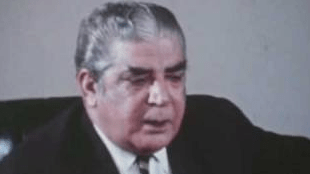
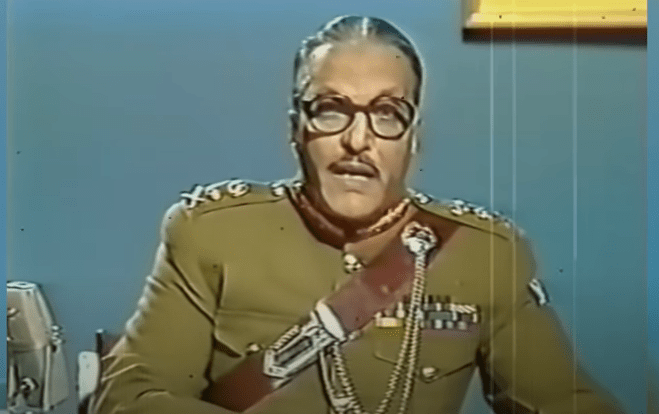
General Yahya Khan’s speech when Dhaka Fell in 1971, With English Translation
Affiliate Disclosure: This blog may contain affiliate links, which means I may earn a small commission if you click on the link and make a purchase. This comes at no additional cost to you. I only recommend products or services that I believe will add value to my readers. Your support helps keep this blog running and allows me to continue providing you with quality content. Thank you for your support!
The text appears to be a highly emotional and nationalistic account of a conflict between Pakistan and India, possibly relating to the Kargil War. It uses strong religious and patriotic rhetoric to portray India as the aggressor and depicts Pakistan as bravely defending itself. The narrative is filled with religious invocations and boasts of Pakistani military strength, while simultaneously expressing anxieties about the conflict’s outcome. The writing style is disorganized and lacks clarity, making it difficult to fully comprehend the specific events described. Overall, the excerpt presents a highly biased and passionate perspective on a historical conflict.
Study Guide: Pakistan and India Conflict Analysis
Short Answer Quiz
According to the text, what event triggered the escalation of tensions between Pakistan and India?
What specific actions did India take, according to the text, that were considered aggressive?
How does the text portray the Indian military? Provide at least two descriptors.
What does the speaker believe is the underlying motive of India’s actions?
According to the text, what is the significance of the “instructions of Lahe Lahe Gaon, Mohammad ur Rasool Allah”?
What does the text suggest about the Pakistani people’s resolve in the face of conflict?
Who or what is “Hindustani Om Prakash Rai” according to this text? What did they demand?
What is the speaker’s expectation of the Pakistani forces in this situation?
According to the text, what are the “foul smelling girls” doing?
What assurance does the speaker provide regarding the success of Pakistan?
Answer Key
The text indicates that the escalation was triggered by a series of Indian attacks and the capture of Pakistani territory. Specifically, the capture of three squares in the Kargil area is mentioned as a key event, along with other border incursions and post captures.
According to the text, India captured Pakistani posts, shelled Pakistani territory intensely, and pushed constables into the area. The text alleges they captured territories multiple times.
The text portrays the Indian military as aggressive, as well as indiscriminate and deceitful. They are described as having “nefarious intentions” and engaged in actions deemed “attacks.”
The speaker believes India’s underlying motive is to attack Pakistan and to wage war, driven by a long-standing hatred against Pakistan. The speaker seems to suggest this attack is a culmination of ill intentions.
The instructions, as they are called, are presented as a spiritual and motivational force, echoing in the hearts of the Pakistani people. This appears to imply that Pakistanis are divinely inspired in their cause.
The text suggests that the Pakistani people are resolute and will not rest until they defeat the enemy, displaying bravery and faith that they are fighting a just war.
“Hindustani Om Prakash Rai” is a figure (possibly a person or a representation of the enemy) who demanded schools be opened in Pakistani territory.
The speaker expects the Pakistani forces to be fully prepared, use all available weapons, and to defeat the enemy with care and discipline, believing that Allah will give them success.
The “foul smelling girls” are believed to be part of a “deep conspiracy of this society,” along with the “habitual drunkards,” who are using murder, according to the text.
The speaker assures that those fighting for justice have never failed and that Allah will grant them success, suggesting that their cause is righteous and victory is inevitable.
Essay Questions
Analyze the rhetorical devices employed in the text to create a sense of urgency and galvanize support for Pakistan.
Discuss the role of religious and historical references in shaping the speaker’s arguments and perceptions of the conflict.
Examine the portrayal of India in the text, considering the potential biases and historical context that might contribute to such a perspective.
How does the text employ concepts of honor, justice, and divine will to justify Pakistan’s actions and position in the conflict?
Based on the text, what are the apparent long-term goals and concerns of the speaker regarding the relationship between Pakistan and India?
Glossary of Key Terms
Assalam Walekum: A common greeting in Islamic culture meaning “Peace be upon you.” It is used in the text to perhaps create the image of a solemn and significant address.
Hazrat Sadar-e-Mohammad: A respectful title and name, likely a reference to a leader or figure of importance. In this context, the act of bowing down to him seems to convey reverence and devotion.
Kargil: A specific area, likely a border region between India and Pakistan that has historically been a site of conflict. Mentioned as a site where an area was captured by India, triggering a response.
Hindustani: A term referring to India. Here, it is used with a negative connotation, highlighting the antagonistic relationship between the two entities.
Lahore: A major city in Pakistan, mentioned in the context of “brave people” who will defeat the enemy.
Lahe Lahe Gaon, Mohammad ur Rasool Allah: A phrase that appears to combine a place name (“Lahe Lahe Gaon”) with a common Islamic phrase (“Mohammad ur Rasool Allah,” meaning “Muhammad is the messenger of God”). This appears to suggest a connection between faith and national resolve.
Allah Ta’ala: An Arabic phrase meaning “God the Most High,” referring to the supreme God in Islam. The text suggests this god is on their side.
Inshallah: An Arabic phrase meaning “God willing” or “if God wills.” Used to express hope that a plan or desire will be fulfilled.
Mithila farmers: These individuals are given a heroic role as they help the army defeat the enemy.
Indo-Pakistani Conflict: A Rhetorical Analysis
Okay, here’s a briefing document analyzing the provided text:
Briefing Document: Analysis of “Pasted Text”
Date: October 26, 2023 Subject: Analysis of Rhetorical Text on Indo-Pakistani Conflict Source: “Pasted Text” (Provided)
Executive Summary:
This document analyzes a highly charged and rhetorically fervent text concerning the conflict between India (referred to as “Hindustan” or “the Indians”) and Pakistan. The text is characterized by strong nationalistic fervor, religious undertones, and accusations of aggression and conspiracy against India. It paints a picture of Pakistan as a righteous defender under attack, calling for unwavering resolve and faith in their struggle. The text is emotionally driven, lacking specific details or verifiable claims, and seems to be intended to rally support and incite action.
Key Themes and Ideas:
Aggression by India: The central theme is the accusation that India is aggressively attacking Pakistan and its territory. Specific allegations include:
“Hindustani has made the sub-continent the target of its attacks”
“the Indians captured [our] posts in the areas of football”
“Now they have attacked the land of Pakistan”
“the real motive of the Indian attacks in Kashmir was to attack Pakistan”
The text claims that India has “captured three squares in the area of Kargil”, and that India made 1440 moves “on the basis of Arti” but “captured them again” in August.
Indian Conspiracy and “Nefarious Intentions”: The text asserts that the Indian attacks are not isolated incidents but part of a long-term, malevolent plan against Pakistan. There is a strong emphasis on India’s hidden motives and sinister aims, that India is engaging in “nefarious intentions which were entering their hearts against Pakistan from the very beginning”.
“Muslims have been hating Pakistan from the very beginning. Today they have never even imagined them from their heart.”
“In the last eighteen years they have been working against Pakistan.”
“the evil intentions of Hindustani are behind it”
Pakistan as a Righteous Defender: Pakistan is portrayed as a victim of unprovoked aggression, forced to defend itself and its people. This victimization narrative serves to bolster support for the war effort.
“We are fighting the war of truth.”
“The instructions of Lahe Lahe Gaon, Mohammad ur Rasool Allah are echoing in the heartbeat of 10 crore people of Pakistan.”
“Oh Allah, the Mithila farmers of his Pakistan have got a chance to show their talent.”
Religious Undercurrent: The text incorporates religious language and references to God (“Allah Ta’ala”, “Inshallah”, “God”) to frame the conflict as a holy struggle. This implies divine support for Pakistan’s cause and reinforces the idea that they are fighting a just war, “We will face the enemy with the whole history. Allah Ta’ala is the pride of the world.”
Call to Action and Unity: The text is a call for all Pakistanis to unite against the perceived threat from India. It calls for unwavering resolve, faith, and action.
“We will not sit in peace till then. We will be defeated forever.”
“Go ahead now face the enemy.”
“Akram is fully prepared to face the situation in Pakistan and all the weapons will be used against the attackers.”
Internal Elements: The text mentions some internal matters such as “habitual drunkards” and “foul smelling girls” being used in a “deep conspiracy” against the Pakistani society. This highlights a feeling of internal threat alongside the external conflict. “According to the seventh point of the charter, habitual drunkards are using murder and the foul smelling girls are using the deep conspiracy of this society”.
Most Important Ideas/Facts (or Claims):
Pakistan is under direct attack from India: The text repeatedly alleges India is attacking Pakistani territory.
India has long-term malevolent intentions towards Pakistan: The attacks are framed as part of a conspiracy, not isolated incidents.
Pakistan is engaged in a “war of truth”: This justifies the conflict as a righteous battle.
The conflict has religious significance: The invocation of God and Islamic figures implies divine support.
All of Pakistan is expected to unite and fight: There’s a strong call to action for all citizens.
The text includes internal issues: It suggests that internal societal problems are linked to the external conflict.
Quotes from the Source:
“Hindustani has made the sub-continent the target of its attacks”
“the Indians captured our posts in the areas of football”
“the real motive of the Indian attacks in Kashmir was to attack Pakistan”
“Muslims have been hating Pakistan from the very beginning”
“We are fighting the war of truth.”
“We will not sit in peace till then. We will be defeated forever.”
“Oh Allah, the Mithila farmers of his Pakistan have got a chance to show their talent.”
Analysis:
The text is clearly not a neutral report but a piece of impassioned rhetoric designed to galvanize support for Pakistan and against India. It uses strong language, accusations, and religious appeals to create a sense of urgency and righteous indignation. The text lacks specific details or evidence to support its claims, relying instead on emotional appeals and generalized accusations. There are also elements that are hard to parse, such as “the Indians had made these 1440 on the basis of Arti” and references to people like “Hindustani Om Prakash Rai.” These could be important details, or simply nonsense.
Conclusion:
The “Pasted Text” is a propaganda piece aimed at inciting nationalistic fervor in Pakistan against India. The themes of aggression, conspiracy, and righteous defense are deployed to create a unified and determined front against the perceived enemy. The text should be viewed within the context of the Indo-Pakistani conflict, understanding that it is a product of highly charged emotions and historical tensions. This document should help understand the rhetoric in the “Pasted Text” and to understand the context in which it could have been created.
India’s War Against Pakistan: A Call to Arms
Okay, here’s an 8-question FAQ based on the provided text, formatted using markdown:
FAQ
What is the central claim being made about India’s actions?
The speaker accuses India of launching attacks on Pakistan with the ultimate goal of undermining and potentially destroying the country. They claim these actions stem from a long-standing hatred of Pakistan harbored by India and their “nefarious intentions” to wage war. The attacks are framed as a continuation of a history of aggression and subversion.
What specific incidents are mentioned as evidence of Indian aggression?
Several incidents are cited, including the capture of territory in the Kargil region, specifically mentioning that Indians had made claims of 1440 (possibly referring to some territorial marker) based on “Arti”, and then recaptured them in August. The text also refers to Indians capturing Pakistani posts in the “areas of football” (possibly a figurative term for contested areas) and using “intense shelling” of Pakistani territory. These actions are viewed as a deliberate attempt to provoke war.
How are the Indian actions framed in terms of their motives?
The actions are framed as a deliberate and long-planned effort to weaken Pakistan. According to the speaker, India’s “evil intentions” are to attack Pakistan and they have always hated the country from the beginning, using the pretext of education reforms (bringing “free education from Delhi to schools”) as cover for their true aim. They claim India is not acting based on recent events, but rather as part of an 18-year history of working against Pakistan.
What is the speaker’s message to the people of Pakistan?
The speaker’s message is one of rallying against the Indian threat. They call for unity and strength, asserting that Pakistanis will not rest until the “enemy” is defeated. They invoke religious fervor and highlight that they are in a “war of truth”, and that “Allah Ta’ala is the pride of the world”. The message includes an exhortation to fight against the enemy, and not give up, in spite of the heavy pressure.
What role does religion play in the speaker’s narrative?
Religion is used to galvanize support and frame the conflict as a battle between good and evil. The speaker references “Mohammad ur Rasool Allah” and emphasizes the “war of truth” to connect the struggle to religious principles and to evoke a sense of righteous duty among Pakistanis. The ultimate success and the ultimate destruction of the enemy are tied to the will of Allah.
How does the speaker describe the Pakistani response to the Indian attacks?
The speaker describes a coordinated effort between the military and the people to respond to the perceived threat. They highlight the bravery and preparedness of Pakistani forces, claiming they have already “destroyed the enemy” with discipline and care. The text indicates that Pakistan is ready to use “all the weapons” against the attackers, which makes clear they are taking the threat very seriously and will push back with force.
What is the significance of the reference to “habitual drunkards” and “foul smelling girls”?
This passage is less clear and seems to be a segment referencing internal problems within Pakistan and using them to call for a more puritanical society. They seem to be pointing to moral issues and using them as an indirect attack of their own society which is being undermined by internal problems and conspiracies. The speaker encourages their audience to expose such conspiracies and “great things” with “peace of mind” and through “justice” so that they can be successful.
What is the overall tone and purpose of the text? The overall tone is one of urgency, anger, and resolve. The speaker aims to rally the Pakistani population against what is portrayed as an existential threat from India. The purpose is to create a sense of national emergency, unite the population, demonize India, and mobilize the people towards a united front against an enemy they portray as motivated by age-old hatred and a thirst for destruction.
Indo-Pakistani Conflict: Accusations and Escalation
The provided text details a conflict between Pakistan and India, highlighting a series of escalating events and accusations. Here’s a breakdown of the key points:
Accusations of Indian Aggression: The text claims that India has been continuously attacking Pakistan and the sub-continent. It specifically mentions that India made the sub-continent a target of its attacks. There are accusations that the Indians captured three squares in the area of Kargil, as well as 1440 posts.
Escalation of Conflict: The conflict is described as having escalated over time, with India allegedly increasing their internal movement and capturing Pakistani posts in various areas. The text states that the shelling of Pakistani territory by India was intense.
Indian Motives: The text alleges that India’s real motive behind the attacks in Kashmir is to attack Pakistan. The author claims that India has harbored ill intentions against Pakistan from the beginning and is using the conflict to wage war. According to the text, Muslims have been hating Pakistan from the very beginning.
Historical Context: The text mentions that for the last eighteen years, Muslims have been working against Pakistan and have created a ruckus out of frustration. The author also claims that India used the former MLA to attack Pakistan and that they had known from the very beginning that this was the case.
Pakistani Response: The text depicts Pakistan as working in coordination with the world and viewing it as their duty to stop the Indian attack. There is a declaration that the instructions of Lahe Lahe Gaon, Mohammad ur Rasool Allah are echoing in the heartbeat of 10 crore people of Pakistan. The author expresses that Pakistan will not sit in peace until the enemy is defeated. They believe they are fighting a war of truth. The text indicates that Pakistan is fully prepared to face the situation and will use all weapons against the attackers.
Call to Action: The text includes calls for the people of Pakistan to be ready to face the enemy, suggesting that Pakistan will be victorious. The text urges them to expose every great thing and states that those who fight for justice have never failed.
Allegations of Conspiracy and Moral Depravity: The text also includes accusations against India and its people, claiming that “habitual drunkards are using murder and the foul smelling girls are using the deep conspiracy of this society.
Divine Will: The text includes strong religious language, and claims that “Allah will definitely give you success”. It also states that Allah Ta’ala is the pride of the world.
Pakistan’s Military Posture Against India
The provided text offers some insights into the Pakistani military during a conflict with India, though it doesn’t provide a detailed overview of its structure or capabilities. Here’s what can be gleaned from the text:
Preparedness: The text suggests that the Pakistani military is fully prepared to face the situation and will use all available weapons against the attackers. This indicates a state of readiness and a willingness to engage in combat.
Motivation and Resolve: The text claims that the instructions of Lahe Lahe Gaon, Mohammad ur Rasool Allah are echoing in the heartbeat of 10 crore people of Pakistan. This indicates a strong sense of national unity and religious conviction among the Pakistani populace, which presumably also includes the military. The text also states that Pakistan “will not sit in peace until the enemy is defeated”.
Coordination and Duty: The text states that Pakistan is “working in coordination with the world” and views stopping the Indian attack as its duty. This suggests that the Pakistani military is not operating in isolation and is seeking support from other nations.
Fighting a “War of Truth”: According to the text, the conflict is framed as a “war of truth”. This suggests a strong moral component to the Pakistani military’s actions, implying they believe they are fighting for a just cause.
Faith in Victory: The text expresses confidence in the Pakistani military’s ability to defeat the enemy, stating, “Inshallah we will do this”. This indicates a belief in the will of God and the strength of their forces.
Use of All Weapons: The text explicitly states that “all the weapons will be used against the attackers”, which suggests that the Pakistani military is prepared to use its full arsenal.
Relationship with the People: The text claims that the “Mithila farmers of his Pakistan have got a chance to show their talent” and that “with their care and discipline, our army has destroyed the enemy”. This suggests a strong relationship between the Pakistani military and the people.
The text depicts the Pakistani military as a motivated force, prepared to use all available means to defend its territory against India. It highlights the military’s perceived moral justification for the conflict.
Indo-Pakistani Conflict: Allegations of Indian Aggression
The provided text focuses heavily on accusations of Indian aggression against Pakistan. Here’s a breakdown of the key points regarding this topic:
Continuous Attacks: The text asserts that India has been continuously attacking Pakistan and the broader sub-continent. It is claimed that India has made the sub-continent the target of its attacks.
Kargil and Border Post Captures: The text specifically mentions that India captured three squares in the area of Kargil. It further alleges that the Indians had made 1440 posts on the basis of Arti and later captured them again in the month of August. Additionally, it is claimed that India captured Pakistani posts in other areas, including the areas of football.
Escalating Internal Movement: The text accuses India of increasing its “internal movement,” which led to the capture of Pakistani posts and suggests an escalation of the conflict.
Intense Shelling: The text describes the shelling of Pakistani territory by India as being very intense. This suggests a significant and forceful military action.
Motives Behind Attacks: The text alleges that India’s true motive behind the attacks in Kashmir is to ultimately attack Pakistan. It claims that India has held nefarious intentions against Pakistan from the very beginning and seeks to wage war.
Historical Basis for Conflict: The text presents a historical narrative where Muslims have been harboring hatred towards Pakistan and working against it for the past eighteen years. It claims that India has used a former MLA against Pakistan, which was known from the beginning.
Goal of Indian Aggression: According to the text, a goal of Indian aggression is to bring free education from Delhi to schools. This suggests that the perceived Indian aggression might also be an effort to exert influence over education in Pakistan.
In summary, the text depicts India as the aggressor in the conflict, constantly attacking Pakistan, capturing territory, and harboring ill intentions. It claims India’s actions are part of a larger plan to undermine and ultimately attack Pakistan, stemming from historical animosity and a desire to exert influence.
Indo-Pakistani War: A Narrative of Conflict
The provided text presents a narrative of conflict where war is the dominant theme, with little emphasis on peace. Here’s a breakdown of the war-related aspects and limited references to peace:
War:
Aggression and Attacks: The text is primarily focused on accusations of Indian aggression and attacks against Pakistan. India is described as continuously attacking Pakistan and the sub-continent, capturing territories like Kargil and other posts.
Escalating Conflict: The conflict is portrayed as escalating, with India increasing its “internal movement” and intensifying its shelling of Pakistani territory. The text suggests that India’s actions are designed to provoke a full-scale war.
Motives for War: The text claims that India’s real motive behind attacks in Kashmir is to attack Pakistan, and that India has harbored ill intentions against Pakistan from the beginning. It suggests that the war is a culmination of long-standing animosity.
Pakistani Preparedness: Pakistan is depicted as being fully prepared for war, with its military ready to use all weapons against the attackers. The text emphasizes the resolve and unity of the Pakistani people to fight. The text also claims the “Mithila farmers of his Pakistan have got a chance to show their talent” and “with their care and discipline, our army has destroyed the enemy.”
Religious Justification: The conflict is framed as a “war of truth,” with religious undertones. The text suggests that Pakistan is fighting for a just cause, with Allah’s support.
Call to Action: The text includes calls for the people of Pakistan to be ready to face the enemy. It is stated that “We will not sit in peace till then. We will be defeated forever.” This indicates a determination to fight until victory.
Peace:
Peaceful Freedom: The text mentions that Pakistani soldiers believe in “peaceful freedom,” but this is within the context of facing the enemy. This reference to peace appears to be secondary to the emphasis on war and defense.
Working in Coordination: The text states that Pakistan is working in coordination with the world, suggesting diplomatic efforts to stop the Indian attack. This hints at a desire to resolve the conflict, but the main focus remains on the need to defend against Indian aggression.
Peace of Mind: The text encourages people to be ready with peace of mind. However, this is in the context of being prepared to “expose every great thing” and fight for justice, which further ties back to the idea of conflict.
Justice: The text indicates that those who fight for justice have never failed and that justice will give them success. This suggests that Pakistan believes in a form of peace that is achieved through victory and justice in their conflict.
In summary, the text overwhelmingly emphasizes war, portraying it as a necessary response to Indian aggression. The references to peace are limited and are often framed within the context of the ongoing conflict. While there is a suggestion that Pakistan seeks international cooperation to stop the attacks and there is a claim that Pakistani soldiers believe in peaceful freedom, the primary focus of the text is the need to fight and defend against what is perceived as an existential threat from India. The narrative does not suggest an immediate possibility or path towards peace beyond a decisive victory in the war.
Pakistan’s Islamic Identity and the India Conflict
The provided text does not directly discuss Muslim unity in a broad sense, but it does touch upon themes related to religious identity and its role in the context of the conflict between Pakistan and India. Here’s a breakdown of what the text suggests about Muslim identity and its implications:
Religious Conviction and National Unity: The text implies that the instructions of Lahe Lahe Gaon, Mohammad ur Rasool Allah are echoing in the heartbeat of 10 crore people of Pakistan. This suggests a strong sense of national unity rooted in Islamic faith. It can be interpreted that this religious conviction is a unifying force among the Pakistani people and, presumably, the military.
Pakistan as a Muslim Nation: The text frames the conflict as a struggle for the survival of Pakistan, implicitly presenting the nation as a Muslim entity under threat from India. This suggests a strong connection between national identity and religious identity.
Historical Narrative of Muslim Grievances: The text claims that Muslims have been hating Pakistan from the very beginning, and that for the last eighteen years, they have been working against Pakistan and creating a ruckus out of frustration. This suggests a narrative of long-standing grievances and a belief that Muslims have been historically targeted.
The Conflict as a “War of Truth”: The text portrays the conflict as a “war of truth,” which implies a religious or moral dimension. This suggests that Pakistan sees its actions as being divinely supported or morally justified within a religious framework.
Divine Support: The text expresses confidence in victory, stating, “Allah will definitely give you success” and “Allah Ta’ala is the pride of the world”. This reflects the belief that God is on their side and that victory is assured.
No Mention of Broader Muslim Unity: While the text highlights the Muslim identity of Pakistanis and their perceived struggle, it does not explicitly discuss unity with other Muslim communities or nations beyond stating that Pakistan “worked in coordination with the world”. The focus remains on the specific conflict with India, within the context of Pakistan.
In summary, the text uses Muslim identity as a key element in framing the conflict between Pakistan and India, emphasizing the religious unity within Pakistan, as well as their perceived moral and divine support for their cause. The text does not offer any explicit discussion of unity among Muslims beyond the borders of Pakistan. The strong emphasis is on the religious identity of the Pakistani people, their conviction in their struggle, and a belief that their cause is just. However, the text doesn’t extend this to a broader idea of global Muslim unity.
President Ayub Khan Speech | 6 September | 1965 War | Happy Defence Day | Wisdom Bank
Affiliate Disclosure: This blog may contain affiliate links, which means I may earn a small commission if you click on the link and make a purchase. This comes at no additional cost to you. I only recommend products or services that I believe will add value to my readers. Your support helps keep this blog running and allows me to continue providing you with quality content. Thank you for your support!
The provided text is an excerpt from the book The Art of Letting Go by Ellen Nguyen. It focuses on the author’s explanation for ceasing contact with someone. She emphasizes that this decision wasn’t intended to be hurtful but rather a necessary step for her own well-being and self-preservation. Nguyen explains that she needs time and space to prioritize herself, suggesting that maintaining contact would be detrimental. Ultimately, the passage reveals a personal journey of self-discovery and the importance of setting boundaries.
Study Guide: The Art of Letting Go
Short-Answer Quiz
Why does the author state she doesn’t contact the reader anymore?
What does the author mean when she says, “I don’t want to give in to that temptation to get it in the end”?
According to the author, what is the problem with instant gratification?
What does the author feel she needs more time for now and what is her priority?
What does the author mean by, “I’m capable of keeping and turning them into real actions”?
Why does she say she doesn’t mind keeping her phone quiet?
What did she do at 4am after a party that she regrets?
What does the author mean when she says, “I’m not ready for a ‘we’”?
Why does she wish someone would break her walls?
What is the author willing to wait for now?
Answer Key
The author states she doesn’t contact the reader anymore because she doesn’t want to misinterpret her intention. In fact, she had no intention other than she didn’t think of them and it would be genuinely great to hear from them.
She means that she does not want to give in to the urge to reconnect with the person, even though she knows that that is something she might want in the moment.
The author indicates that instant gratification is something that would potentially ruin her. She is trying to avoid the short-term high in order to not undo her progress.
The author feels she needs more time for herself and for her future. Her priority is herself and not focusing on getting involved with someone.
The author means that she is capable of turning her thoughts and feelings into tangible actions and she wants to be intentional about the choices she makes.
The author feels like she doesn’t need to be readily available and the quiet allows her time to focus on what is important for her.
She states she treated the reader poorly after a party at 4am and she says that it was something she would completely throw away.
She’s indicating that she’s not ready to be in a romantic relationship, emphasizing her need for independence and self-discovery.
She wishes someone would break down her walls because it would help show her how wrong her stubborn mind is and what she might be missing out on.
The author is willing to wait for things that are truly important and are not readily available. She is focused on patience and self-control.
Essay Questions
Analyze the author’s use of personal experience to explore the themes of self-discovery and growth. How does her narration support her claims?
Discuss the role of boundaries and self-preservation in the author’s decision to detach from past connections. How does the concept of “letting go” factor into her self-care?
Explore the author’s internal conflict regarding wanting connection while needing independence. How does she balance the need for both in her process?
How does the author use the theme of time to convey her growth and understanding? Refer to specific instances of the author’s discussion of the past, present, and future in relation to her self-development.
Consider the audience the author may be trying to reach. What are some possible takeaways for other people who read this material?
Glossary of Key Terms
Instant Gratification: The desire to experience fulfillment or pleasure immediately, without delay or effort.
Self-Preservation: The act of protecting oneself from harm or negative experiences, whether physical, emotional, or mental.
Boundaries: Limits or guidelines that individuals establish to define what is acceptable or unacceptable in relationships and interactions.
Self-Discovery: The process of exploring and understanding one’s own identity, values, beliefs, and motivations.
Patience: The ability to accept delays and difficulties without becoming upset or frustrated.
Self-Control: The ability to manage one’s own actions, feelings, and impulses, especially in the face of temptation or difficulty.
Intent: A mental state of aiming or planning to do something.
“We”: Refers to a romantic relationship.
“Not having my cake and eating it too”: The concept that you can’t have everything you want.
“Keeping my door closed”: The idea that she is emotionally unavailable.
The Art of Letting Go: Self-Growth and Boundaries
Okay, here’s a briefing document summarizing the key themes and ideas from the provided source, with relevant quotes:
Briefing Document: Analysis of “The Art of Letting Go” Excerpts
Document: Excerpts from “combinepdf.pdf” (Pages 63 and 65) Source Author: Ellen Nguyen Date: 2023/01/27
Overall Theme: The core theme explored in this excerpt is the author’s conscious decision to withdraw from a specific relationship and her justifications for doing so. The piece examines themes of self-preservation, the need for personal growth, and the challenge of breaking established patterns of communication and behavior in intimate connections. The author uses this specific relationship as a lens through which to discuss broader themes of personal growth and self-discovery.
Key Ideas & Facts:
Intentional Disconnection:
Nguyen states explicitly that her lack of contact is not a misunderstanding; it is a deliberate choice. She asserts, “I didn’t contact you because I didn’t want you to misinterpret my intention. In fact, I had no intention other than I thought of you and it would be genuinely great to hear from you. But I knew you would read between the lines, looking for a deeper meaning underneath my hello.” This reveals a calculated approach aimed at preventing misinterpretation.
She clarifies it is not an act of playing games: “And if I must be honest, I’m really not in a place to deliver any of those things in any shape or form. Nor could I take responsibility for the “I miss you” that I might slip out on the spur of the moment.” This is a further explanation and justification of her chosen disconnection as a way of maintaining healthy personal boundaries.
Past Patterns and “The Game”:
The author implies a history of problematic communication patterns, specifically the need for interpreting “lines”, “deeper meanings” and a general dynamic of “the game.”
She hints that these interactions led to dissatisfaction: “Like last time when I texted you at 4 o’ clock after a dead party and you told me I could come over, I would’ve totally thrown away all my rationale and found my way back into your arms and probably your bed if it hadn’t been for some circumstantial inconvenience.” This demonstrates a pattern of impulsive reaction that she seeks to break.
Focus on Self-Growth & Time for Reflection:
A significant part of her decision comes from a need for personal space and time: “I now need time for myself. It doesn’t matter how great someone is – at this stage of life, I’m not ready for a ‘we’ and I’m happy being on my own. There are so many things I would like to do for myself and my future and I wouldn’t be able to give it my best if my time and energy were invested elsewhere.” She prioritizes her own well-being and goals above the demands of the relationship.
She emphasizes her dedication to personal development: “Moreover importantly, I have no clue where I will be in a year or two, I don’t want to get involved with someone and have to shut my door while pursuing them. I like the fact of going through all of this alone and I don’t want to burden it with the people I like.” This reinforces her desire to focus internally rather than get drawn into external commitments.
She concludes that she must take time to be “grounded for the life I aspire to lead”. This implies a longer term vision of personal progress.
The Importance of Honesty and Realistic Expectations:
The author acknowledges her past tendency to fall back into unhealthy patterns. She openly admits her struggle: “So tell me. What if it happens again? How do I resist your intent, invitation and plan? How could I keep being stupid and making decisions that do me no good? Obviously, I can’t and I won’t.”
She wants to take an honest approach now: “I won’t give you the intensity and the dreamy, very very well aware that would be the easiest to get lost in the end. But I’m 21 now and I don’t want trouble any more. I’m no longer thrilled by the sign of danger and moments that give me instant gratification but would ultimately ruin me. I’ve been through enough to see our ending before we even begin again so please let me save us the hassles.” This suggests she is learning from past experiences.
The Need for Self-Control and Patience:
Nguyen articulates the importance of self-control and a longer view: “It’s all right, though, I’m 21 now and if there’s anything worthwhile I have learned, it must be about patience and self-control. I will wait and stay grounded for the life I aspire to lead and because I know the things I truly want are not readily available. It takes time. For now, I don’t mind having my phone quiet.” This points to maturity and a willingness to forgo immediate gratification.
She explicitly states she won’t be breaking her silence: “If there’s no response from me, it doesn’t mean my heart has been immune to human affection. Many times, I have thought and have deleted a text half-way through. Many times, I have waited”.
Ambivalence and a Desire for Connection (Yet, With Boundaries):
Nguyen demonstrates a struggle with conflicting desires. While she has made a clear decision to withdraw, she does acknowledge a deep-seated wish to be pursued in a particular way: “Many times, I have wished that someone would try to break my walls and show my stubborn mind how wrong it could be. Because my door might be closed but it’s not locked yet.” This implies an ongoing internal conflict.
She reveals a desire to be desired and pursued in a traditional sense, “After all, I’m still a woman and sometimes a woman wants to have a man by her side and her womanly desires fulfilled, but I guess, unfortunately, I can’t have my cake and eat it too.” This shows that while she has made this decision for herself, it was not a simple one without conflicting feelings.
Conclusion:
These excerpts from Ellen Nguyen’s “The Art of Letting Go” reveal a complex and thoughtful process of self-examination and boundary-setting. She moves beyond the typical tropes of relationship drama and instead provides a rationale that is rooted in personal growth, the need for self-control, and the recognition that some patterns of relating are detrimental. Her reflections provide valuable insight into the choices involved in creating healthy personal boundaries and prioritizing one’s own well-being.
Prioritizing Self-Growth: A Period of Solitude
FAQ
Why has the author chosen not to contact people anymore? The author explains that their lack of contact is not intended to misinterpret their feelings or indicate ill will. Rather, it’s driven by a desire for self-focus and personal growth. They recognize their need for time alone, to focus on themselves and their future, and to avoid getting pulled back into patterns of behavior or relationships that they aren’t ready for. The author is at a stage where they need to prioritize their own needs and well-being.
What does the author mean by “paltry items having no self-respect whatsoever”? The phrase “paltry items having no self respect whatsoever” is used to describe the feelings and behaviors the author wishes to avoid, specifically the urge to reach out to someone for comfort or validation, which they consider a pattern that is not self-respectful. It implies giving in to temporary desires rather than adhering to a path that is better for them in the long run.
The author mentions “giving in to instant gratification”. How does this relate to their lack of contact? The author relates giving in to instant gratification to their past patterns of contact. They recognize that reaching out to someone in the past was often driven by a desire for immediate comfort or attention, rather than a genuine need for connection. Now, they’re consciously choosing to delay those impulses and not give in to the easy but ultimately unhealthy path of instant gratification that can derail their plans.
What does the author mean by “I’m not ready for a “we””? When the author says they’re “not ready for a “we””, they’re referring to a commitment or shared existence with another person or even the idea of a relationship. They acknowledge that they need to grow as an individual first, that their own personal development is the priority. They can’t fully give to or receive from a partnership until they are more established and settled in their own life. They are on a path to prioritize self growth, and are not in a space to prioritize another person in their life.
What does the author mean by ” I have to shut my door while I am doing this and that isn’t to hurt anyone”? The “shutting my door” metaphorically refers to the author’s need to create boundaries and isolate themselves for a time to fully concentrate on their own life and goals. They’re acknowledging that their need for space might be misconstrued as intentional hurt, but clarifying that it is a crucial part of their personal growth process and not a reflection of their feelings for others. They understand that being intentional with their time and energy and not giving in to outside influences is a necessary form of self-care.
How does the concept of time relate to the author’s current choices and mindset? Time is a central theme. The author emphasizes the need for patience and self-control, understanding that their goals won’t be achieved instantly and that they must trust the process of life unfolding at its own pace. They realize that some things worth pursuing require time and effort and will not always come easy. They are focused on a long-term vision for themselves and are not rushing to be anywhere or with anyone they aren’t ready for.
What does the author mean when they say their phone is “quiet”? The phrase “my phone quiet” signifies that they have detached from the constant communication, validation, and distractions that are often a part of modern life. It suggests that they are actively avoiding the urge to respond to texts or calls, seeking a more peaceful existence by distancing themselves from instant digital interactions. This quietness helps to cultivate the space they need to prioritize self growth.
The author mentions their “stubborn mind”. What does this imply about their communication with others? The author mentions their “stubborn mind” as a barrier to connection and external influence and recognizes the need to be open to having their stubbornness challenged. This acknowledges that the author is not always right and that other people may be able to add value to the author’s life by challenging their current state. They recognize that while maintaining their boundaries is important, they should be open to the possibility that external perspective could be valuable at the right time.
No Contact: A Deliberate Choice
The source discusses the reasons why the author does not contact someone anymore [1].
The author states that the lack of contact is not meant to be misinterpreted, but rather, it is because they do not want to contact the person [1].
The author does not want to have any more of the “lines, looking for meaning, morning underneath my lids” [1]. They would prefer to avoid “an active interest, an initiation, a plan” with this person [1].
The author admits they might slip up on the spur of the moment [1].
The author is currently not ready for a relationship and is “happy being on my own” [1]. They want to “do for myself and my future” and feel they can not give their best energy and time to someone else [1].
The author also feels that they have “to have no clue where I will be in a year or two” and doesn’t want to get involved with someone who will have to wait while they figure things out [1].
The author states they are “not ready to get involved with the people I like” [1]. They state that they “want to make promises when I’m capable of keeping and turning them into real actions” [1].
The author mentions that they have thought about contacting the person, but has deleted many messages [1].
The author reflects that it is “all right” that the things they want are not readily available, and they will wait and stay grounded [2].
The author acknowledges that they are still stubborn and acknowledges that someone could break down their walls, but they are not ready for that yet [2].
The author feels that sometimes, “a woman wants to have a man by her side and her womanly desires fulfilled, but I guess, unfortunately, I can’t have my cake and eat it too” [2].
Ultimately, the author does not mind having their phone quiet [2].
Emotional Exhaustion and Avoidance
The source discusses the author’s emotional state and reasons for avoiding contact, which can be linked to emotional exhaustion [1, 2].
The author states they do not want to have any more of the “lines, looking for meaning, morning underneath my lids” [1]. This suggests a weariness with the emotional labor involved in maintaining a connection and trying to interpret its meaning.
They mention they are not ready for a “a ‘we’” and are happy being on their own [1]. This indicates they are emotionally drained from past experiences and want to focus on their own well-being.
The author wants to “do for myself and my future” and feels they can not give their best energy and time to someone else [1]. This reveals that they are currently prioritizing self-care due to emotional fatigue.
The author feels they have “to have no clue where I will be in a year or two” and doesn’t want to get involved with someone who will have to wait while they figure things out [1]. This could imply that they don’t want to be responsible for another person’s emotional well-being while they are uncertain of their own path, suggesting an emotional exhaustion that prevents them from being fully available.
The author states they are “not ready to get involved with the people I like” [1]. They want to “make promises when I’m capable of keeping and turning them into real actions” [1]. This points to an awareness of their own limitations and an avoidance of making commitments they might not be able to fulfill due to emotional depletion.
The author acknowledges that they have thought about contacting the person, but has deleted many messages [1]. This internal struggle suggests the emotional difficulty of deciding what to do, and potentially suggests emotional exhaustion from the mental effort of managing these feelings.
The author states they are still stubborn and acknowledges that someone could break down their walls, but they are not ready for that yet [2]. This suggests an emotional reserve and a need to protect themselves, possibly due to past experiences or a current state of exhaustion.
The author also acknowledges the desire to have a partner, but recognizes they are currently unable to fulfill those desires [2]. This could be seen as emotionally draining to have these wants but not the ability to act on them.
The author does not mind having their phone quiet [2]. This could be related to emotional exhaustion or the need to have time and space to recover.
Setting Boundaries: Prioritizing Self-Discovery
The source provides insights into the author’s process of setting boundaries, particularly in the context of a past relationship or connection.
The author’s decision not to contact someone is a way of setting a clear boundary. This action is not to be misinterpreted, but rather is a conscious choice made by the author [1].
The author states they do not want “an active interest, an initiation, a plan” with the other person [1]. This indicates a boundary they’ve set to avoid the emotional labor and commitment that comes with those types of interactions.
The author also explicitly states they are “not ready for a ‘we’” and are happy being on their own [1]. This highlights a boundary they’ve set around their personal space and emotional availability for a relationship.
The author is prioritizing their own needs by saying they want to “do for myself and my future,” which also shows a boundary in place [1]. They recognize that giving their time and energy to someone else would hinder their current self-focused goals.
The author also sets boundaries by not wanting to get involved with someone while they are still figuring out where they will be in the near future [1]. They are not willing to involve someone else in their uncertain future.
The author’s statement that they are “not ready to get involved with the people I like,” further demonstrates a boundary around emotional involvement [1]. They are self-aware enough to understand their limitations and avoid making promises that they can’t keep.
The act of deleting text messages instead of sending them shows another boundary in place [1]. The author is actively managing their impulses and maintaining distance.
The author notes that, while someone could break down their walls, they are not yet ready for that [2]. This indicates a firm boundary set around their emotional vulnerability.
The author acknowledges their desire for a relationship, but recognizes that they “can’t have my cake and eat it too” [2]. This acceptance is a boundary to balance desires with the ability to fulfill those desires.
The author does not mind having their phone quiet, which signals a boundary of comfort in solitude [2]. This is a conscious choice to distance and not be available.
The author’s statements overall highlight a theme of setting boundaries to protect themselves from emotional exhaustion and to prioritize self-discovery [1, 2].
Self-Preservation in Action
The source demonstrates several instances of the author engaging in self-preservation.
The author’s primary act of self-preservation is their decision not to contact the other person. They explicitly state this is a conscious choice, not a misinterpretation [1]. This active choice is intended to protect the author from potential emotional strain or entanglement.
The author’s desire to avoid “an active interest, an initiation, a plan” demonstrates their attempt to avoid the emotional labor of maintaining a connection [1]. This is an act of self-preservation by limiting their emotional exposure and potential stress.
The author’s acknowledgment that they are not ready for a “we” is a significant step in self-preservation [1]. By prioritizing their own space and emotional well-being, they protect themselves from the potential demands and complexities of a relationship.
The author’s desire to focus on “doing for myself and my future” is another indication of self-preservation [1]. They are directing their energy and attention towards their own development and goals rather than being drained by external factors.
The author’s statement that they need to have “no clue where I will be in a year or two” and do not want to involve someone else in this uncertainty is another way of putting their needs first [1]. This protects them from the added pressure of another person’s expectations while they are still navigating their own path.
The author’s recognition that they are not ready to get involved with people they like is a clear act of self-preservation [1]. They are aware of their emotional limitations and protect themselves and others by not making promises they can’t keep.
The author also engages in self-preservation by deleting messages they have written rather than sending them [1]. This prevents impulsive actions and protects them from potentially difficult or emotionally draining situations.
The author acknowledges their stubbornness and resistance to letting someone break down their walls [1, 2]. This emotional reserve is a form of self-preservation, as it shields them from vulnerability until they are ready.
The author’s recognition that they “can’t have my cake and eat it too,” highlights a balanced understanding between their wants and their capacity, which is a self-preservative action [2].
The author’s acceptance of a quiet phone indicates self-preservation by choosing solitude and space for themselves [2]. This choice allows for rest and recovery, ultimately contributing to their emotional well-being.
Overall, these points reveal that the author is actively making choices to protect their emotional and mental health. These choices help them to avoid emotional exhaustion, while prioritizing self-discovery, and ultimately demonstrating a commitment to self-preservation.
Prioritizing Well-being
The source emphasizes the author’s active prioritization of their well-being through various actions and statements.
The author’s decision not to contact the other person is a primary example of prioritizing their well-being. The author states this decision is a conscious choice, not a misinterpretation, to protect themselves from potential emotional strain or entanglement [1].
The author’s desire to avoid “an active interest, an initiation, a plan” shows that they want to avoid the emotional labor of maintaining a connection, and that they are prioritizing their own well-being by limiting emotional exposure and potential stress [1].
By stating they are “not ready for a ‘we’” and are happy being on their own, the author is prioritizing their own space and emotional well-being and protecting themselves from the potential demands and complexities of a relationship [1].
The author’s focus on “doing for myself and my future” clearly indicates they are prioritizing their personal development and goals rather than being drained by external factors [1].
The author’s acknowledgement that they need to have “no clue where I will be in a year or two” and not wanting to involve someone else is another way of putting their needs first. They are protecting themselves from the added pressure of another person’s expectations while still navigating their own path [1].
By stating that they are not ready to get involved with people they like, the author is prioritizing their well-being by being aware of their emotional limitations and avoiding making promises they can’t keep [1].
The author engages in self-preservation by deleting messages they have written rather than sending them, which prevents impulsive actions and protects them from potentially difficult or emotionally draining situations [1].
The author’s acknowledgement of their stubbornness and resistance to letting someone break down their walls indicates a desire to protect their emotional vulnerability until they are ready [2].
The author also understands that they “can’t have my cake and eat it too,” highlighting a balanced understanding between their wants and their capacity, and therefore, they prioritize their well-being over fleeting desires [2].
The author’s acceptance of a quiet phone indicates they are prioritizing self-preservation by choosing solitude and space for themselves [2]. This choice allows for rest and recovery, and contributes to their overall emotional well-being [2].
The author demonstrates an understanding of the need for patience and self-control and the desire to stay “grounded” while they work toward their goals and the things they want, which shows that the author is prioritizing their long-term well-being [2].
Overall, the author’s choices and statements demonstrate a commitment to protecting their emotional and mental health, avoiding emotional exhaustion, and prioritizing self-discovery.
Affiliate Disclosure: This blog may contain affiliate links, which means I may earn a small commission if you click on the link and make a purchase. This comes at no additional cost to you. I only recommend products or services that I believe will add value to my readers. Your support helps keep this blog running and allows me to continue providing you with quality content. Thank you for your support!
This document is a tutorial on Microsoft Excel, covering fundamental and advanced features. It explains basic Excel operations like formatting, saving files, and creating custom lists, then moves on to formulas, functions (including the “Big Six”), and order of operations. The tutorial also explores advanced concepts such as absolute and relative referencing, named ranges, Excel Tables, and data manipulation techniques including sorting, filtering, and using Power Query to combine data from multiple files. Finally, it shows how to handle errors and use conditional formatting to enhance spreadsheets.
Excel Study Guide
Quiz
What is the advantage of saving an Excel template to the custom templates folder? Saving to the custom templates folder allows you to easily access your template from File > New under the personal tab, which makes it convenient to create new files based on that template.
What does ‘hardcoding’ mean in the context of Excel formulas and why should it be avoided? Hardcoding refers to directly typing numbers into a formula instead of using cell references and it should be avoided because if the original numbers change, hardcoded formulas won’t update automatically.
What is the difference between functions and formulas in Excel? Functions are built-in operations in Excel, while a formula is an expression that performs a calculation. Formulas can include one or more functions and other operations.
What is the BODMAS/PEMDAS rule and why is it important when using Excel formulas? BODMAS (Brackets, Orders, Division, Multiplication, Addition, Subtraction) or PEMDAS (Parentheses, Exponents, Multiplication, Division, Addition, Subtraction) is a rule outlining the order of operations in a calculation, and it is crucial because Excel uses this rule when evaluating formulas.
What does the SUM function do, and how can cell ranges be used within it? The SUM function adds up a range of numbers and instead of adding individual numbers, cell ranges, like C6:C25, can be used to easily add all the values in those cells to produce a total.
How do the COUNT and COUNTA functions differ? The COUNT function only counts cells containing numeric data, while COUNTA counts cells that contain any type of data—numbers or text.
Briefly explain what the MIN and MAX functions do. The MIN function returns the smallest numeric value in a given range of cells, whereas the MAX function returns the largest value.
Why is it useful to use cell styles in Excel? Cell styles help improve the readability of spreadsheets and create consistency, particularly when sharing with colleagues, by allowing you to highlight cells for calculations, inputs, titles, and other uses.
How does data validation with a drop-down list help ensure data accuracy? Data validation with a drop-down list allows users to select from a pre-defined list, which prevents spelling errors and other input mistakes, thus ensuring consistency.
What is a nested IF statement? A nested IF statement is one or more IF statements used inside another IF statement, which allows you to perform more complex conditional tests and actions.
Answer Key
Saving to the custom templates folder allows you to easily access your template from File > New under the personal tab, which makes it convenient to create new files based on that template.
Hardcoding refers to directly typing numbers into a formula instead of using cell references and it should be avoided because if the original numbers change, hardcoded formulas won’t update automatically.
Functions are built-in operations in Excel, while a formula is an expression that performs a calculation. Formulas can include one or more functions and other operations.
BODMAS (Brackets, Orders, Division, Multiplication, Addition, Subtraction) or PEMDAS (Parentheses, Exponents, Multiplication, Division, Addition, Subtraction) is a rule outlining the order of operations in a calculation, and it is crucial because Excel uses this rule when evaluating formulas.
The SUM function adds up a range of numbers and instead of adding individual numbers, cell ranges, like C6:C25, can be used to easily add all the values in those cells to produce a total.
The COUNT function only counts cells containing numeric data, while COUNTA counts cells that contain any type of data—numbers or text.
The MIN function returns the smallest numeric value in a given range of cells, whereas the MAX function returns the largest value.
Cell styles help improve the readability of spreadsheets and create consistency, particularly when sharing with colleagues, by allowing you to highlight cells for calculations, inputs, titles, and other uses.
Data validation with a drop-down list allows users to select from a pre-defined list, which prevents spelling errors and other input mistakes, thus ensuring consistency.
A nested IF statement is one or more IF statements used inside another IF statement, which allows you to perform more complex conditional tests and actions.
Essay Questions
Discuss the importance of data validation in Excel and provide specific examples of how it can be used to ensure accuracy and consistency in a spreadsheet.
Compare and contrast the use of nested IF statements with the IFS function in Excel. Discuss situations where one may be more beneficial than the other.
Explain how you can use logical functions like AND, OR, and NOT, in combination with other Excel formulas, and describe their impact on data analysis.
Discuss the differences between the COUNTIF, SUMIF, AVERAGEIF and the COUNTIFS, SUMIFS, AVERAGEIFS functions, and provide examples of scenarios where you might choose one over the other.
Explore the use of dynamic array functions in Excel and discuss how functions like UNIQUE, SORT, and FILTER can improve the analysis and presentation of data, compared to older approaches.
Glossary of Key Terms
Cell Reference: A reference to a cell or a range of cells on a worksheet that can be used in a formula.
Hardcoding: Directly typing numbers or text into a formula instead of using cell references.
Function: A built-in operation in Excel that performs a specific task, such as SUM, AVERAGE, or COUNT.
Formula: An expression in Excel that calculates a value, often using functions, cell references, and operators.
BODMAS/PEMDAS: The order of operations: Brackets, Orders, Division, Multiplication, Addition, Subtraction or Parentheses, Exponents, Multiplication, Division, Addition, Subtraction.
Cell Range: A group of two or more cells on a worksheet, usually specified by the first and last cell (e.g., A1:A10).
Cell Style: A predefined set of formatting attributes that can be applied to cells, for example a particular font size, border, and background color.
Data Validation: A feature that allows you to control the type of data that can be entered into a cell using lists, numbers, and other options.
Dynamic Array: A formula that returns results that spill into multiple cells, automatically updating as data changes (e.g., UNIQUE, SORT).
Nested IF Statement: One or more IF statements used within another IF statement to allow for complex conditional logic.
Logical Functions: Functions that perform tests and return a TRUE or FALSE result, (e.g., AND, OR, NOT).
Conditional IFs: Functions that perform calculations only if specific conditions are met, (e.g., COUNTIFS, SUMIFS, AVERAGEIFS).
Error Handling: Using functions to manage and correct errors in formulas (e.g., IFERROR, IFNA).
Array: A collection of data (values, text, etc.) that can be used in formulas.
Mean: The average value of a set of numbers.
Median: The middle value in a set of numbers when they are ordered.
Mode: The value that appears most frequently in a set of numbers.
Rounding: Adjusting the value of a number to a specified number of decimal places or nearest whole number.
Custom Formatting: Formatting that allows users to control how a value is displayed (e.g., currency, dates).
Variable: In formulas, a named entity that acts as a placeholder for value, range or text string.
Lambda: An Excel feature that allows users to create their own custom, reusable functions.
Advanced Excel Techniques
Okay, here’s a detailed briefing document summarizing the main themes and important ideas from the provided Excel training transcript:
Briefing Document: Advanced Excel Techniques
Overview:
This document summarizes key concepts and techniques from an extensive Excel training resource, focusing on advanced formulas, data manipulation, and automation. The training covers topics ranging from fundamental formula principles to sophisticated functions, custom formatting, and data analysis tools.
Key Themes and Concepts:
Mastering Formulas:
Formula Fundamentals:
The training emphasizes the crucial distinction between functions (pre-built tools) and formulas (expressions using functions and operators).
It highlights the importance of using cell references (e.g., A1) instead of hardcoding numbers to ensure dynamic updates when data changes.
Order of Operations (BODMAS/PIDMAS): The importance of understanding the order of operations (Brackets, Orders/Indices, Division, Multiplication, Addition, Subtraction) is explained using examples, highlighting how Excel follows this rule.
Common Functions:
The training introduces six core functions: SUM, COUNT, COUNTA, AVERAGE, MIN, and MAX.
It emphasizes COUNT only works with numeric values while COUNTA counts text and numbers, showcasing their differences.
Logical Functions:
IF Statements: The core functionality of IF statements is explained, allowing for meaningful outputs based on logical tests, for example returning “yes” or “no” based on data.
AND, OR: The training details how these function enable evaluating multiple logical tests using AND (both conditions must be true) or OR (at least one condition must be true).
Nested IF Statements: It demonstrates how IF statements can be nested to handle multiple conditions and output appropriate results.
IFS Function: It shows how the IFS function can be used as a more streamlined and modern alternative to nested IF statements, simplifying complex logical checks.
Conditional Aggregations:
The training explores COUNTIFS, SUMIFS, and AVERAGEIFS, which are powerful tools for performing calculations based on multiple criteria.
Error Handling
IFNA and IFERROR: The training illustrates using these functions to deal with errors in formulas and output blank cells if an error occurs.
Data Manipulation and Control:
Data Validation: The training demonstrates using data validation drop-down lists to control input and prevent data entry errors.
Quote: “…the method that I would use to to ensure that people are inputting the correct names every single time is to use a data validation drop-down list…”
Cell Styles: The use of cell styles to improve spreadsheet readability is explained.
Quote: ” …cell styles to improve the readability of your spreadsheets…particularly if you’re going to be sharing your spreadsheets with colleagues or other people…”
Filter Function: The function is explored as a method for filtering data and outputting results in the spreadsheet.
Quote: “The Filter function allows us to filter data sets in our worksheet and output results.”
It demonstrates the use of AND, OR, and equals operators within a filter, providing versatile filtering options.
Advanced Data Analysis and Extraction:
UNIQUE Function: The training emphasizes that this function is used to extract a unique list of items from a column. The lesson goes into more detail about it’s two key operations, distinct and unique and clarifies that distinct is the default of the function. It also highlights the functions ability to select rows or columns.
SORT and SORTBY Functions: It demonstrates how to sort a data set or a single column using these functions.
LARGE and SMALL Functions: These functions are shown to extract the largest or smallest values from a dataset based on given parameters.
RANK.EQ and RANK.AVG Functions: The use of these functions are detailed and are shown to be effective when ranking data.
MODE.MULT and MODE.SNGL Functions The lesson explains the use of these functions, clarifying the difference between them and when it is best to use either.
SUBTOTAL and AGGREGATE Functions The use of these functions and their importance are explored. The key difference between them is explained, focusing on AGGREGATE and it’s ability to ignore errors.
Statistical Functions and Rounding
The training touches on the fundamentals of statistical analysis, focusing on AVERAGE, MEDIAN and MODE.
Rounding Functions: It covers ROUND, ROUNDUP, and ROUNDDOWN functions for general rounding, along with MROUND for rounding to multiples and CEILING and FLOOR for always rounding up or down.
Custom Formatting * The course touches on the power of custom formatting, highlighting it’s use in manipulating the look of numbers and text in the worksheet.
LET and LAMBDA Functions:
LET: The training highlights the LET function’s ability to declare variables within a formula, improving readability and efficiency. It provides an example using a complex file name extraction calculation.
Quote: “The LET function can simplify complex calculations in your worksheets by assigning names to calculation results or ranges.”
LAMBDA: It demonstrates how LAMBDA can create reusable custom functions with named parameters, that you can use as you would any other Excel formula.
Quote: “Lambda allows us to create our own functions that we can reuse throughout the workbook.”
Pivot Tables with Multiple Data Sources * The training highlights how to create pivot tables using data from multiple files, highlighting its use in analyzing larger data sets.
Key Quotes:
“Formulas are the backbone of excel.”
“The number one rule of creating formulas is to always make sure that wherever possible… you use the cell reference as opposed to hardcoding the number.”
Important Ideas/Facts:
Excel provides a vast array of built-in functions categorized in the ‘Formulas’ tab.
Dynamic array functions (like UNIQUE, SORT, FILTER) output results that automatically adjust based on the source data, impacting multiple cells.
Custom formatting allows for extremely granular control over the display of numbers and text.
LET and LAMBDA functions provide tools to enhance formula readability, efficiency, and reusability.
Conclusion:
This training material offers a comprehensive look at advanced Excel techniques. It covers core and more complex formulas, data control and error handling, and enhanced analysis tools, showcasing a holistic approach to improving Excel skills. This training aims to empower users to effectively manage, analyze, and automate their data using Excel.
Mastering Microsoft Excel
Excel FAQ
1. Why is it advantageous to save a template file in the custom templates folder? Saving a template file in the custom templates folder makes it easily accessible when creating a new file. Instead of navigating through different folders, you can go to File > New and find your template under the Personal tab, allowing for quick creation of new files based on that template. This is different from saving a template in a personal folder.
2. How do you create a custom list in Excel, and why is it useful? To create a custom list, go to File > Options > Advanced and scroll down to the Edit Custom Lists button. You can import a list from selected cells within your worksheet. Custom lists are useful for auto-filling cells with predefined sequences, like names of students or months of the year, by simply typing the first entry and dragging the autofill handle, saving you from typing the entire list each time.
3. What is the difference between a formula and a function in Excel? Formulas are calculations or expressions that perform operations in Excel. Functions are pre-built operations that are used within a formula to perform specific tasks, like SUM, AVERAGE, or IF. Functions are tools you use to build a formula.
4. What is the BODMAS/PEMDAS rule and why is it important in Excel? BODMAS (Brackets, Orders, Division, Multiplication, Addition, Subtraction) or PEMDAS (Parentheses, Exponents, Multiplication, Division, Addition, Subtraction) represents the order of operations that Excel follows when evaluating a formula. This rule ensures that calculations are performed in the correct sequence, giving you the accurate result you expect by prioritizing brackets (parentheses) first, followed by exponents, then division and multiplication (from left to right), and finally, addition and subtraction (from left to right).
5. What is the difference between COUNT and COUNTA functions in Excel? The COUNT function only counts cells that contain numerical data, while the COUNTA function counts all cells that are not empty, whether they contain numbers, text, dates, or other values. Thus, you would use COUNTA to count a range of text and number entries and COUNT only when a range contains purely numerical values.
6. How can cell styles improve the readability and usability of Excel spreadsheets, and how can these be applied? Cell styles enable you to apply a set of formatting options (font, color, number format, etc.) to cells with one click, enhancing readability and ensuring consistency. Cell styles can be applied to create headings, input cells, calculation cells and more. By creating distinct styles, users can easily understand the purpose of each cell (e.g., input cells have a particular color, while calculated cells are locked) and easily make changes in a consistent manner. Additionally, using styles allows you to automatically copy cell styles when adding new rows or columns.
7. How can Data Validation be used to prevent data entry errors? Data Validation allows you to restrict the type of data that can be entered into a cell, preventing errors and ensuring consistency. You can create drop-down lists to ensure people select from a predefined list of values (such as employee names) and you can also add restrictions on number or date format. This reduces spelling errors, data inconsistencies, and the chance that a formula will not run properly as it is relying on incorrect data.
8. How do IF, AND, OR, and nested IF statements work in Excel, and what are some practical uses?
IF statements: Evaluate a logical test and return one value if true and another if false. They are used to apply logic to a cell’s content.
AND function: Tests multiple conditions and returns TRUE only if all conditions are true.
OR function: Tests multiple conditions and returns TRUE if at least one condition is true.
Nested IF statements: Embed IF statements inside other IF statements, allowing for more complex, multi-layered logical evaluations, where multiple criteria require varying outcomes. These functions are crucial for performing conditional calculations and actions based on data in your spreadsheets, allowing for complex decision-making within formulas.
Microsoft Excel 365: A Comprehensive Guide
Microsoft Excel 365 is an updated version of Excel that is part of the Microsoft 365 subscription service. It is an evergreen version, which means users always have the latest version with the newest features, without needing to purchase a new version.
Key aspects of Excel include:
Online Access: Excel 365 can be accessed via an online portal using any browser with an internet connection, allowing users to work on files from any location.
Interface:The Excel interface includes a start page that appears when the application is first opened, where users can create a new blank workbook, use a template, or access recent or pinned documents.
The main interface contains a title bar, tabs and ribbons, a quick access toolbar, a name box, a formula bar, and the worksheet area.
Commands are organized into logical groups within the ribbons.
The worksheet itself is a grid of columns (labeled with letters) and rows (labeled with numbers), which creates cells where data is entered.
The bottom of the interface contains tabs for different worksheets, scroll bars, a status bar, view options, and a zoom slider.
Workbooks and Worksheets:A worksheet is the grid structure within Excel, and a workbook is the file that contains one or more worksheets.
Data Entry and Editing:Data can be entered directly into cells.
Contextual menus appear when right-clicking on a cell, with options specific to the type of data selected.
The autofill handle can be used to copy data or formulas down a column.
Formulas:Formulas are used to perform calculations.
Formulas must begin with an equals sign (=).
Cell references are used in formulas rather than hardcoding numbers directly.
The order of operations, often remembered by the acronym BODMAS (or PEMDAS), dictates how calculations are performed in formulas, with operations in parentheses/brackets performed first.
Common mathematical operators include addition (+), subtraction (-), multiplication (*), and division (/).
Functions are pre-built formulas that can be used in calculations, and can be found in the formulas tab.
The sum function is commonly used to add a range of numbers [6].
Relative and Absolute Referencing:Relative referencing means that cell references in a formula will automatically adjust when the formula is copied to another cell.
Absolute referencing locks a cell reference to a specific cell, preventing it from changing when the formula is copied, and is indicated by using a dollar sign ($) before the column letter and row number (e.g. $A$1).
Basic Functions:SUM: Adds up a range of numbers.
COUNT: Counts the number of cells in a range that contain numerical data.
COUNTA: Counts the number of non-blank cells in a range (including text and numbers).
AVERAGE: Calculates the average of a range of numbers.
MIN: Returns the smallest value in a range of numbers.
MAX: Returns the largest value in a range of numbers.
Excel Tables:Tables are a way to format data in Excel that add structure to the data and allow for more efficient analysis.
Tables have a table design contextual ribbon that provides options for formatting.
When using formulas on data in a table, table references are used, which include the table name and column name, rather than cell references.
Tables can be named.
Total rows can be added to tables to quickly calculate totals for columns.
Rows and Columns:The width of columns or the height of rows can be autofitted.
Columns and rows can be inserted, deleted, and hidden.
Cell Formatting
Cell formatting can be changed using options on the home ribbon.
You can use the format painter to copy formatting.
Cell Styles can be used to apply specific formatting consistently and identify different types of cells (input, calculation, etc.).
Gridlines can be removed to create a cleaner looking spreadsheet.
You can use merge and center to combine cells and center the text or the “center across selection” to center the text in a range of cells, but maintain the individual cells.
ThemesExcel themes affect the overall look and feel of a spreadsheet, controlling the colors, fonts, and effects used.
You can choose from predefined themes or customize your own theme.
Data Input and ValidationData Validation can be used to create drop-down lists, limit the type of data entered, and create custom error messages to prevent errors.
Worksheet protection can be used to prevent changes to formulas and other parts of the worksheet.
NavigationHyperlinks can be used to link to other worksheets, websites, or locations within the current worksheet.
A summary sheet provides instructions, keys, or legends to assist users in navigating and understanding a workbook.
Forms can be used to simplify the data entry process and can be added to the quick access toolbar.
Dynamic Array Functions:These functions allow for a single formula to generate multiple results.
SEQUENCE: Generates a list of sequential numbers.
RANDARRAY: Generates a list of random numbers.
UNIQUE: Extracts a list of unique values from a range of cells.
SORT: Sorts a range of cells.
SORTBY: Sorts a range of cells based on another range of cells.
FILTER: Filters a range of cells.
XLOOKUP: Performs lookups across columns, can be used as an alternative to INDEX and MATCH.
XMATCH: Returns the position of an item in a range of cells.
Power QueryPower Query is a tool that is used to import and transform data from multiple sources.
It uses an applied steps area to record all data transformations.
Mastering Excel Formulas
Excel formulas are a key component of the application, allowing users to perform calculations, analyze data, and manipulate information.
Key aspects of formulas include:
Initiation: Formulas always begin with an equals sign (=). This tells Excel that the content of the cell is a calculation, not just text or numbers.
Cell References: When creating formulas, cell references are used rather than directly typing in or “hardcoding” the numbers. For example, instead of typing “=6+3”, a user would type “=A1+A2” if the numbers 6 and 3 were in cells A1 and A2. Using cell references allows a formula to update automatically if the values in those cells change.
Order of Operations: Calculations in formulas follow a specific order, often remembered by the acronym BODMAS or PEMDAS, which dictates the order in which mathematical operations are performed:
Brackets (or Parentheses)
Orders (or Exponents)
Division
Multiplication
Addition
Subtraction
If the order of operations is not correct, the formula will give an incorrect result, but this can be corrected by using brackets.
Mathematical Operators:
Addition is represented by the plus sign (+).
Subtraction is represented by the dash (-).
Multiplication is represented by the asterisk (*).
Division is represented by the forward slash (/).
Functions: Functions are pre-built formulas that can be used to perform specific tasks.
They can be found in the formulas tab of the ribbon.
Functions are organized into categories such as financial, logical, text, date and time, lookup and reference, math and trig, and more.
The insert function button, or the keyboard shortcut Shift + F3, can be used to search for and insert a function.
A function’s arguments are the values or cell ranges that the function uses to perform its calculation.
A function typically requires an open bracket after the function name, then the arguments separated by commas, and then a closing bracket.
Excel’s Intellisense feature provides a list of functions that match what a user is typing, with a brief explanation of each.
Common Functions
SUM adds up a range of numbers.
COUNT counts the number of cells in a range that contain numerical data [2].
COUNTA counts the number of non-blank cells in a range, including both numbers and text.
AVERAGE calculates the average of a range of numbers.
MIN returns the smallest value in a range of numbers.
MAX returns the largest value in a range of numbers.
Cell Referencing:
Relative referencing is the default in Excel. When a formula is copied to another cell, the cell references in the formula will automatically adjust based on their relative position.
Absolute referencing locks a cell reference to a specific cell, which means when a formula with an absolute reference is copied to another cell, the reference will not change. An absolute reference is created by adding a dollar sign ($) before the column letter and before the row number (e.g., $A$1).
Table References: When using formulas with data in a table, table references are used instead of cell references. Table references use the table name and column name in the formula (e.g., employee_data[salary]). This can make formulas easier to understand.
Dynamic Array Formulas:
These functions allow for a single formula to generate multiple results.
Examples include SEQUENCE, RANDARRAY, UNIQUE, SORT, SORTBY, FILTER, XLOOKUP, and XMATCH.
Logical Functions: These functions perform tests on data, returning results of true or false.
The IF function performs a test and returns one value if the result is true and another if the result is false.
IFS allows for multiple logical tests in one function.
AND returns true if all conditions are met, while OR returns true if at least one condition is met.
IFERROR and IFNA handle errors in formulas. IFERROR will handle any type of error while IFNA will only handle #NA errors.
Lookup Functions:
VLOOKUP is a lookup function that searches for a value in the first column of a table and returns a corresponding value from another column in the same row. It can do an exact match or an approximate match.
XLOOKUP is a newer lookup function that is more versatile than VLOOKUP and does not have the same limitations.
SUMIFS, COUNTIFS, and AVERAGEIFS: These functions allow for calculations based on multiple criteria.
LET allows users to define variables within a formula and use those variables in calculations. This can make complex formulas easier to read and more efficient.
Mastering Excel Functions
Excel functions are pre-built formulas that perform specific tasks, and they are a key component of using Excel for calculations and data analysis. Functions can be found in the Formulas tab of the ribbon, and are organized into categories such as financial, logical, text, date and time, lookup and reference, math and trig, and more. The Insert Function button, or the keyboard shortcut Shift + F3, can be used to search for and insert a function.
Here’s a breakdown of key aspects of Excel functions:
Structure: A function typically requires an open bracket after the function name, then the arguments separated by commas, and then a closing bracket. Arguments are the values or cell ranges that the function uses to perform its calculation.
Intellisense: Excel’s Intellisense feature provides a list of functions that match what a user is typing, with a brief explanation of each.
Common Functions
SUM adds up a range of numbers. It is a math and trig function that can be used to add a single column or a range of cells. The sum function is often found under the “Recently Used” functions.
COUNT counts the number of cells in a range that contain numerical data.
COUNTA counts the number of non-blank cells in a range, including both numbers and text.
AVERAGE calculates the average of a range of numbers.
MIN returns the smallest value in a range of numbers.
MAX returns the largest value in a range of numbers.
Logical Functions: These functions perform tests on data, returning results of true or false.
The IF function performs a test and returns one value if the result is true and another if the result is false.
IFS allows for multiple logical tests in one function.
AND returns true if all conditions are met, while OR returns true if at least one condition is met.
IFERROR and IFNA handle errors in formulas. IFERROR will handle any type of error while IFNA will only handle #NA errors.
Lookup Functions:
VLOOKUP is a lookup function that searches for a value in the first column of a table and returns a corresponding value from another column in the same row. It can do an exact match or an approximate match.
XLOOKUP is a newer lookup function that is more versatile than VLOOKUP and does not have the same limitations.
SUMIFS, COUNTIFS, and AVERAGEIFS: These functions allow for calculations based on multiple criteria.
SUMIFS sums values in a range that meet multiple criteria.
COUNTIFS counts cells in a range that meet multiple criteria.
AVERAGEIFS calculates the average of values in a range that meet multiple criteria.
Dynamic Array Functions: These functions allow for a single formula to generate multiple results, and can be combined with other functions.
Examples include SEQUENCE, RANDARRAY, UNIQUE, SORT, SORTBY, FILTER, XLOOKUP, and XMATCH. UNIQUE extracts a list of unique values from a range of cells. SORT sorts a range of cells. SORTBY sorts a range of cells based on another range of cells.
LET allows users to define variables within a formula and use those variables in calculations. This can make complex formulas easier to read and more efficient.
When using functions, it is also important to keep in mind the following:
Formulas must begin with an equals sign (=).
Cell references are used in formulas rather than hardcoding numbers directly.
The order of operations (BODMAS or PEMDAS) dictates how calculations are performed in formulas.
Relative and absolute referencing determine how cell references change when a formula is copied to another cell.
Table references are used when using formulas with data in a table, using the table and column name in the formula.
Functions are fundamental to using Excel for data management and analysis.
Data Formatting in Excel
Data formatting in Excel involves how data is displayed in cells, which can greatly affect the readability and interpretation of the information. Formatting can be applied to text, numbers, and dates, and it can control aspects such as font, alignment, colors, and number styles.
Key aspects of data formatting in Excel include:
Text vs. Numbers: Text in a cell is aligned to the left by default, while numbers are aligned to the right.
Number Formatting:
Excel has various number formats including General, Number, Currency, Accounting, Short Date, and Long Date.
The General format has no specific format.
The Currency format displays a currency symbol and two decimal places by default.
Number formatting can be applied using the Number group under the Home tab.
Dates are treated as numbers by Excel, with the date of January 1, 1900, being day zero. When a date is entered, it is actually a number with date formatting applied.
If a date is typed into a cell, but it looks like a number, it means that the cell has the wrong number formatting applied. This can be corrected by selecting the Short Date or Long Date format.
When entering numbers that start with zero, Excel will remove the leading zeros. To prevent this, an apostrophe can be entered before the number, which will turn the number into text.
Cell Alignment: Text in a cell is aligned to the left by default, while numbers and dates are aligned to the right.
Copying Formats:
The Format Painter tool can be used to copy formatting from one cell or a range of cells to another.
When using the format painter, the entire column of formatting can be copied to another column.
Clearing Formats:
Formatting can be cleared from selected cells using the Clear menu in the Editing group under the Home tab.
Options include:
Clear All, which removes everything from the cell, including text, numbers, and formatting.
Clear Formats, which removes all formatting while keeping the content.
Clear Contents, which removes the text and numbers from cells but retains the formatting.
Clear Comments and Notes, which clears comments and notes. This is grayed out if there are no comments or notes in the worksheet.
Clear Hyperlinks, which removes hyperlinks from selected cells.
Remove Hyperlinks, which removes hyperlinks from selected cells and removes the underline.
Cell Styles:
Cell styles are predefined sets of formatting that can be applied to cells.
Cell styles can be found on the Home tab.
Cell styles can be used to quickly and consistently apply formatting to a range of cells.
When adding data to a table, the cell style formatting carries through, and it’s not necessary to do anything extra to apply it.
Some styles include Normal, Bad, Good, Neutral, Calculation, Input, Heading, and Title.
Adding a legend or a key is important to clarify what the cell styles mean.
Custom Formatting:Custom formatting can be used to define how numbers, text, and dates are displayed.
Custom formatting is divided into four parts, with each part separated by a semicolon.
The first part defines how positive values are displayed.
The second part defines how negative values are displayed.
The third part defines how zero values are displayed.
The fourth part defines how text is displayed.
Placeholders are used to specify how numbers are displayed.
The hash symbol (#) is a variable placeholder.
The zero (0) is a fixed placeholder.
Colors can be included in custom formats by using the color name in square brackets (e.g., [red]).
Symbols can be included in custom formats, and these can be inserted using the keyboard shortcut Alt + 30 for an up arrow or Alt + 31 for a down arrow.
By using different formatting options, users can make their data more readable and understandable and can help to control and standardize the way information is presented in a worksheet.
Mastering Excel Tables
Excel tables are a way to format data in a structured manner, and they offer many benefits when it comes to managing and analyzing data. They are different from just entering data into cells and can be identified by a contextual “Table Design” ribbon that appears when a cell within the table is selected.
Here’s a breakdown of key aspects of Excel tables:
Creation:
To create a table, select the data, go to the Insert tab, and click on Table, or use the keyboard shortcut Ctrl + T.
Excel will attempt to identify the data range, and you must confirm that the selection is correct and indicate whether the table has headers.
When using the keyboard shortcut Ctrl+T, the default table style will be applied, although this can be changed later.
You can also create a table by going to the Home tab and choosing Format as Table.
Table Styles:
Once a table is created, various table styles can be applied from the Table Design ribbon.
Table style options include:
Banded rows, which alternate row colors to improve readability.
Banded columns which alternate column colors.
Header row, which can be toggled on or off.
Filter buttons, which allow for filtering of data.
Total row, which can quickly calculate totals, averages, and other functions.
Formatting of the first column or last column.
The theme of a table can be changed by changing the theme of the Excel workbook, which will then change the available table styles.
Naming Tables:It is important to give tables a meaningful name, which can be done in the Properties group on the Table Design tab.
Table names cannot contain spaces, so an underscore is used between words.
Table References:When using formulas with data in a table, table references are used rather than cell references.
Table references use the table name and column name in the formula rather than cell references.
For example, instead of using “F4:F23” to sum a range of salaries in a table called “employee data”, the formula would be “=SUM(employee data[salary])”.
When selecting data in a table for use in a formula, you can hover over the column header until you see a downward pointing arrow, and then click to select all the data in that column.
You can also type the table name into a formula, followed by an open square bracket, and then a list of columns will appear.
Table references make formulas easier to understand because they use meaningful labels rather than cell references.
Adding Data:
When data is added to the bottom of a table, the table will automatically expand to include the new data.
Any formatting, such as cell styles, will carry through to the new data.
Removing Tables:
Tables can be converted back to a normal range by selecting Convert to Range on the Table Design tab.
This will remove the table formatting and features but will keep the data and any formatting.
Excel tables are an effective way to manage data, and are an important feature to understand in order to use Excel effectively.
Affiliate Disclosure: This blog may contain affiliate links, which means I may earn a small commission if you click on the link and make a purchase. This comes at no additional cost to you. I only recommend products or services that I believe will add value to my readers. Your support helps keep this blog running and allows me to continue providing you with quality content. Thank you for your support!
The provided text excerpts are from a play or screenplay, seemingly focusing on a murder mystery intertwined with themes of reincarnation and past lives. A central character, Chandramukhi, experiences flashbacks and visions possibly related to a past life as Paro, whose murder is the core of the legal investigation. The plot explores the investigation into Paro’s death, possibly involving Chaudhary Janak Singh, while also weaving in personal relationships and the emotional turmoil of the characters. Elements of romance, family drama, and courtroom proceedings are also present. The narrative uses fragmented dialogue and scene descriptions to build suspense.
YouTube Link for Kudrat Movie 1981
Memory, Love, and Justice
FAQ: Exploring Themes of Memory, Love, and Justice in “New Note”
1. Why does the family in “New Note” return to Shimla after many years? The family returns to Shimla primarily because their daughter, Chandramukhi, has been repeatedly asking to visit. She was born there and they had moved away when she was only two months old. The visit also seems to stir up buried memories and connections for other family members.
2. What is the significance of the “Sky Residence” (formerly Dimple Cottage) and the story of Tom Saab? The “Sky Residence” is the house the family rents in Shimla. It carries a historical weight, as it used to be called Dimple Cottage and was once inhabited by an English soldier named Officer Tom Saab, who had a beautiful garden. This history adds to the sense of past and memory that permeates the story. It also becomes significant to Chandramukhi’s past life connection.
3. How does the story explore the theme of past lives or reincarnation? Chandramukhi experiences vivid memories and sensations that she believes belong to a past life where she was named Paro. This leads to a complex situation involving love, loss and a murder in 1945. The story explores the possibility of past life experiences impacting the present and the ways these memories are triggered, adding a mystical dimension to the narrative.
4. What is the significance of the tree in the forest with the names “Madho” and “Paro” engraved on it? The tree in the forest acts as a crucial symbol of love and fate. Local lore suggests that lovers who come to the tree and pray for their love to be true will be blessed, linking it to the past love of Madho and Paro. Chandramukhi’s emotional connection to the tree, after visiting it with Mohan, is a trigger for her past life memories.
5. How does Dr. Naresh’s character contribute to the story? Dr. Naresh is a psychiatrist who returns from America. He attempts to treat Chandramukhi through hypnosis, accessing her past life memories as Paro. His scientific approach clashes with the more mystical and emotional elements of the story, creating tension. He also acts as a catalyst for revealing secrets of the past life.
6. What is the mystery surrounding Paro’s disappearance in 1945, and how is it revealed? Paro’s disappearance is a murder concealed by Chote Sarkar, revealed through Jagatram’s drunken recollections, and by the fact that Paro’s necklace is found at the home of Chaudhary Janak Singh. Jagatram, a former police officer who investigated her disappearance, had taken a bribe to stop the investigation in 1945. The revelation is intertwined with Chandramukhi’s hypnotic regressions and her recovered memories.
7. What are the legal and ethical dilemmas explored in the courtroom scenes? The courtroom scenes explore ethical dilemmas of using a mentally unstable witness (Chandramukhi) in a murder trial. There are arguments about putting a patient in danger, the reliability of recovered memories through hypnosis, and the impact of power on justice. The story questions whether the law is equipped to deal with cases that involve elements beyond the scientific, such as past lives.
8. How does the story resolve the complex issues of love, memory, and justice presented? The story resolves these issues by having Mohan confess to the murder of Paro, driven by remorse and love for Chandramukhi. His confession brings justice to the past and allows both Chandramukhi and her father to have peace. Chandramukhi accepts the justice, but also has to reckon with the knowledge of past trauma, acknowledging the enduring impact of love and injustice across lifetimes. This suggests a possible acceptance and catharsis for her.
Study Guide for “New Note”
Quiz Questions
Why is Chandramukhi’s family visiting Shimla? Chandramukhi’s family is visiting Shimla because their daughter has been repeatedly saying, “Let’s go to Shimla” for the past year. This is a place where she was born and lived for the first two months of her life.
What is the significance of Mall Road? Mall Road is significant because it is where Chandramukhi’s mother and father first met. Additionally, it is a place where many marriages take place, according to one of the characters.
Describe the history of the house “Sky Residence” and its previous name. The house “Sky Residence” was originally called Dimple Cottage. It was once inhabited by an English soldier named Tom Saab, who had a garden full of red flowers and a cedar tree.
Who is Chaudhary Janak Singh, and what is his relationship to the family? Chaudhary Janak Singh is described as a very rich man of Shimla and the father of Mohan. The family is staying at his rented property and he has also offered Mohan a position as a government lawyer.
What are some of the symptoms Chandramukhi is experiencing that lead her to seek help from Dr. Naresh? Chandramukhi is experiencing anxiety, terrible dreams, and feeling as though she has met Mohan before. Additionally, she claims to be having memories of a past life.
Explain the significance of the old tree in the forest. The old tree in the forest is said to be a place where lovers come to pray. It is thought to be where two lovers, Madho and Paro, used to meet and their names are engraved on it.
What is revealed about Paro and Madho through the hypnosis and other clues? Paro and Madho were lovers in 1945. Paro was the daughter of a gardener, and Madho was her fiancé. During a hypnotic regression, Chandramukhi claims she was Paro and has memories of being murdered.
Who is Jagatram, and what role does he play in the past and present of the storyline? Jagatram is a former police officer who worked in Shimla. In 1945, he was involved in the investigation of Paro’s disappearance. Later, he is discovered to have taken a bribe to stop the investigation and to be a key witness in the case.
What key piece of evidence is found at Chaudhary Janak Singh’s house? A necklace belonging to Paro is found at Chaudhary Janak Singh’s house, providing evidence connected to her murder.
How does the story conclude and what is revealed about the events of the past? The story concludes with Mohan confessing to the murder of Paro and being sentenced to life in prison. It is revealed that Mohan was the spoilt son of a rich father who murdered his house owner’s daughter after becoming sexually obsessed with her.
Essay Questions
Analyze the role of past lives and reincarnation in “New Note,” and discuss how these themes contribute to the plot and character development.
Explore the social commentary present in “New Note” and discuss how the text addresses issues such as class, gender, and justice.
Discuss the representation of trauma and mental health in “New Note” and how characters grapple with the effects of past and present experiences.
Analyze the different types of relationships (romantic, familial, and platonic) in “New Note,” exploring the ways in which they support or hinder character growth.
Examine the use of symbolism in “New Note,” and consider how recurring images and motifs contribute to the overall meaning of the text.
Glossary of Key Terms
Shimla: A city in India where the story is primarily set. It serves as a location of both the present story and the past lives of the characters.
Mall Road: A central area in Shimla, significant as the place where Chandramukhi’s parents met and a setting for key events.
Sky Residence: The name of the rented house where Chandramukhi’s family stays; previously known as Dimple Cottage and owned by Officer Tom Saab.
Officer Tom Saab: A former English soldier who once lived in Dimple Cottage. He had a garden with red flowers and a cedar tree.
Chaudhary Janak Singh: A wealthy man in Shimla, Mohan’s father, and the owner of the house Chandramukhi’s family is renting.
Mohan Kapoor: A lawyer, the son of Chaudhary Janak Singh, and the object of Chandramukhi’s infatuation. In a past life, it is revealed that he was a murderer.
Dr. Naresh Gupta: A psychiatrist treating Chandramukhi’s mental distress.
Paro: Chandramukhi’s past life persona, who was in love with Madho and murdered by Mohan.
Madho: Paro’s past-life fiancé and lover.
Haveli: The mansion where Paro lived. It is the location of her murder and a key symbol in Chandramukhi’s memories.
Jagatram: A corrupt former police officer who was part of Paro’s disappearance case and took a bribe.
Hypnosis: A method used by Dr. Naresh to access Chandramukhi’s past life memories.
Past Life Regression: The practice of accessing past life memories through hypnosis or other means.
Bhadon: A month in the Hindu calendar where key events in the past timeline take place.
Reincarnation, Love, and Murder in Shimla
Okay, here is a detailed briefing document analyzing the provided sources, focusing on the main themes, key ideas, and facts, with relevant quotes:
Briefing Document: Analysis of “New Note” Excerpts
Overall Theme: The excerpts tell a complex story involving reincarnation, forbidden love, a past murder, and social class conflict, all centered around the town of Shimla, India. It is a tale of a woman, Chandramukhi, whose past life as Paro, a servant girl, begins to bleed into her present, setting off a series of events involving her family, a past lover, and a present suitor.
Key Characters & Their Relationships:
Chandramukhi: A young woman experiencing vivid memories and emotions from a past life, believing herself to be “Paro,” a servant girl from 1945. She is betrothed to Mohan, but is drawn to Naresh, who treats her condition.
Naresh: A doctor who has returned from America and begins treating Chandramukhi. He believes in past lives and is trying to help her.
Mohan: A lawyer, friend of Chandramukhi’s family and is slated to marry Chandramukhi, he believes that her talk of a past life is madness.
Chaudhary Janak Singh: A wealthy and influential figure in Shimla, he is seen as very kind and is the father of Chandramukhi. He was a benefactor to Mohan, funding his education.
Kanta: An old friend of Chandramukhi’s mother, Sarla, and mother of Naresh.
Sarla: Chandramukhi’s mother.
Jagatram: A former police officer who was involved in the original investigation into Paro’s disappearance, and was dismissed for being drunk on duty.
Paro: A servant girl from 1945 who was murdered. Chandramukhi believes that she is the reincarnation of Paro.
Madhav: Paro’s love in 1945. Chandramukhi believes that Mohan is Madhav from her past life.
Tom Saab (Thomas Walters): An English soldier who lived in the house (Dimple Cottage/Sky Residence) where Chandramukhi’s family now resides and whom Chandramukhi’s mother saw in a photo in the house and also when they were in the forest and became worried. His past is tied to the murder and he was close with Madhav.
Key Ideas and Facts:
Reincarnation & Past Lives: A central theme revolves around the idea of reincarnation, with Chandramukhi experiencing vivid memories, emotions, and even physical sensations from a past life as Paro. The doctor Naresh uses hypnosis to help her delve into her past memories:
“Now you are your stepping into a part of past life will you go are you 15 years old…Age what is the age what is the age Is [music] 20 20 what is the name cross Paro where are you Haveli”
This concept is treated with some skepticism by some, including the law and Chandramukhi’s father, who says:
“I do not believe, I am taught this in childhood that there is a second birth but on growing up After studying, after praising, confidence Your belief about your past life breaks down”
Forbidden Love & Social Class: The past life narrative reveals Paro and Madhav’s love, which was likely hindered by social class differences, she is portrayed as a servant who is “from the garden.” Paro is murdered, seemingly by “Chhote Sarkar,” who it is revealed is Mohan in this life.
“I see Fata flying in the sky, making her miserable in the same manner the culprit also gave away his house After controlling the owner’s daughter, I had sex with her body Own The savagery was tainted and then when poor Paro when the attack took place then the culprit who at that time One was drowned in the zeal and passion of youth The spoilt son of a rich father committed a crime To hide it, he committed another crime and He murdered his house owner’s daughter”
Mystery of the Past Murder: The investigation into Paro’s disappearance was abruptly stopped due to bribery and corruption by the police in 1945. Jagatram, the police officer who initially investigated Paro’s disappearance, was bribed to stop the investigation and kept silent about it for many years. He is then brought forth as a witness again in this life:
“Where did you go? What did you get from the mansion? Y…the culprit also gave away his house”
The Power of Love and Loss: There is a recurring motif of loss and love, from the past lives to the current. There is a tree in the forest that is a spot that lovers go to and is said to have the names Paro and Madhav on it, which Chandramukhi and Mohan find in the present life.
“Lovers are the ones who come here they stand near the tree and say Oh tree, if our love is true Sanu please shower your blessings with flowers”
The “Sky Residence” & “Dimple Cottage”: The house where Chandramukhi’s family is staying, initially called “Dimple Cottage,” has connections to the English soldier, Tom Saab, whose photograph was found in the house and causes Chandramukhi’s mother to feel anxious. It is the same house where the 1945 murder happened, and which was owned by Paro’s family. It is now named the “Sky Residence,” and is not owned by Chandramukhi’s family, but is instead rented from Chaudhary Janak Singh.
“The name of this house was Dimple Cottage An English soldier lived here Officer Tom Saab Tom Saab was his name him photos I was fond of making a garden outside this house It was full of red flowers and a lonely one There was a cedar tree and a rickshaw in the house would have been Tom Walters Temple Cottage”
The Necklace: The necklace, which was discovered in the past by Jagatram, plays a part in the story. It is the necklace that connects to Jagatram and Paro. This necklace is used to help prove the murder.
“Was lizzie what got a necklace is this the same necklace Is [music] Yes”
The Priest: Chandramukhi goes to see the priest who gives her some information on past lives and the “weapon,” which is a book of prophecies.
“Priest ji, yes son there would have been a second birth It definitely happens, it is not a matter of birth Then how can the weapon turn out to be true?”
Conflict and Tension:
Chandramukhi’s mental state is a source of conflict, with some dismissing her experiences as madness, while others try to understand her and her past life.
The pending marriage between Chandramukhi and Mohan creates tension given Chandramukhi’s growing attraction to Naresh and her belief that Mohan is the murderer from her past life, Chhote Sarkar.
The truth of Paro’s murder is a major source of conflict, with the past and present colliding to uncover the truth. The main conflict ends up being the accusation that Mohan is the murderer.
Ending Note: The excerpts culminate in a dramatic courtroom scene, where the truth of Paro’s murder comes to light, implicating Mohan and his family, who had previously been shown as generous benefactors to the protagonist. This culminates with Mohan confessing in court that he was the person who murdered Paro, and therefore he is sentenced to life in prison.
Overall Impression:
These excerpts suggest a story rich with drama, mystery, and romance. The themes of reincarnation, social injustice, and the enduring power of love and loss add depth and complexity to the narrative. The setting of Shimla, with its old houses and surrounding forests, provides a fitting backdrop for a story that spans multiple generations and lives. The story ultimately appears to be about seeking the truth, with the present life uncovering the truth from a previous life.
Chandramukhi’s Past Life Mystery
Okay, here’s a detailed timeline and cast of characters based on the provided sources:
Timeline of Events:
Present Day (Starts with a family vacation):
Annual Trip: A family, including parents and their daughter Chandramukhi, go to Kashmir every year, but this year Chandramukhi is fixated on Shimla.
Return to Shimla: The family travels to Shimla. This is Chandramukhi’s first time there since she was a baby, when they moved to Mumbai.
Meeting Kanta: They meet Kanta, an old family friend of Chandramukhi’s mother, along with Kanta’s son Naresh. This happens on Mall Road, where Chandramukhi’s parents met for the first time.
Sky Residence: The family stays at “Sky Residence,” a house they have rented, formerly called Dimple Cottage, where an English soldier, Tom Walters, lived many years ago.
Meeting the Landlord: The house is rented from Chaudhary Janak Singh, a rich man in Shimla, who is also the father of Karuna.
Chaudhary’s Wish: Chaudhary expresses a desire for his daughter, Karuna, to marry.
Mohan Arrives: Mohan, a lawyer, arrives. He was a friend from the past and helped by Karuna’s father.
Mohan Gets Job: Mohan is appointed as the government lawyer of Shimla.
Chandramukhi’s Anxiety: Chandramukhi experiences sudden anxiety and sadness, which she cannot explain.
The Temple Visit: Chandramukhi visits her ancestral temple and discusses the possibility of past lives with the priest. It is mentioned that the priest’s family has also served the temple for generations.
Chandramukhi’s Past Life Regression:
Nightmares: Chandramukhi starts having nightmares connected to a past life.
Hypnosis: Naresh, a psychiatrist, uses hypnosis on Chandramukhi, leading her to recall a past life. She identifies as Paro, a 20-year-old woman from 1945.
Paro’s Past: Chandramukhi recalls being Paro from the village of Barai, engaged to Madhav. Her father was the gardener on the Haveli estate.
Naresh’s Concern: Naresh becomes concerned about Chandramukhi’s mental state, believing her to be experiencing a genuine past life recall.
Haveli Visit: Naresh takes Chandramukhi to a site believed to be the Haveli to help her recall the past. She has memories of her life as Paro.
The Lovers’ Tree: Chandramukhi and Mohan visit a tree in the forest. Lovers would write on it and ask for blessings for their love.
Mohan’s Proposal: Mohan and Chandramukhi confess their feelings for each other and Mohan speaks of wanting to marry Chandramukhi.
The Priest and the Prophecy: Chandramukhi visits the priest again and learns about the “Shastra” (scripture), which predicted past and present events.
The Murder Mystery & Court Case:
The Engagement Party: Mohan’s parents organize an engagement party between Mohan and Chandramukhi.
Chandramukhi’s Breakdown: During the engagement party, Chandramukhi has a mental breakdown and accuses Mohan of murder.
Jagatram’s Testimony: Jagatram, a former police officer, is brought in as a witness. Jagatram is also a drunk. He reveals his memory of a missing girl from 1945, and that he accepted a bribe to stop the investigation. He also states that Paro had been murdered.
Chaudhary’s Testimony: Chaudhary Janak Singh is forced to testify and opens the doors of his mansion to further investigation.
The Necklace Evidence: The necklace Paro was wearing is found in the Haveli.
Tom Walters’ Testimony: Tom Walter’s, the English soldier, photograph and testimony confirm the murder in 1945.
Naresh’s Testimony: Naresh gives testimony regarding Chandramukhi’s mental state, past life recall, and his concerns for her.
Mohan’s Confession: Faced with mounting evidence, Mohan confesses to the murder of Paro in his past life.
The Aftermath:
Mohan’s Sentence: Mohan is sentenced to life imprisonment.
Chandramukhi’s Wish: Chandramukhi wishes for her parents to be happy despite the circumstances. The film closes with a repeat of a past scene where the family is on vacation, highlighting that they will return to a normal life again.
Cast of Characters:
Chandramukhi: The central character, a young woman who is experiencing a past life regression and struggles with her identity. She is also referred to as “moon-faced”. In her past life, she is known as Paro, a 20 year-old woman who was a gardener’s daughter.
Naresh: Kanta’s son, a psychiatrist, just returned from America, who attempts to treat Chandramukhi using hypnosis and past life regression, which helps uncover the past.
Sarla: Chandramukhi’s mother. She is close friends with Kanta.
Sarla’s Husband (Unamed): Chandramukhi’s father.
Kanta: An old family friend of Sarla and her husband. Kanta is Naresh’s mother.
Mohan Kapoor: A lawyer who is being considered for marriage with Chandramukhi. In Chandramukhi’s past life, he is Madhav, her fiancé. He is also the spoiled son of a rich father.
Chaudhary Janak Singh: A wealthy man in Shimla who is also Karuna’s father and the landlord for “Sky Residence.”
Karuna: The daughter of Chaudhary Janak Singh, and a lawyer. She is a friend of Mohan and becomes the public prosecutor.
Priest: A priest at the ancestral temple, who speaks of past lives and prophecies.
Jagatram: A former police officer who was the first to investigate the murder in 1945. He was dismissed from the police for drinking on duty. He took a bribe to cover up the murder.
Tom Walters: A retired English Major who had lived in the house now called “Sky Residence” where Chandramukhi is staying. He is also a witness to the murder from 1945.
Saraswati Bai: A woman Karuna and Mohan go to see early in the morning, and then are tasked with bringing her to court. She has the gift of song.
Badshah: A friend of Mohan’s, an artist/actor.
This timeline and character list should provide a comprehensive overview of the events and people involved in the provided narrative.
Affiliate Disclosure: This blog may contain affiliate links, which means I may earn a small commission if you click on the link and make a purchase. This comes at no additional cost to you. I only recommend products or services that I believe will add value to my readers. Your support helps keep this blog running and allows me to continue providing you with quality content. Thank you for your support!
Several news articles and opinion pieces from Saudi Arabian sources are compiled here. One cluster of articles details strong Arab condemnation of recent Israeli statements regarding Palestine and Saudi sovereignty. Another section focuses on the record profits of Saudi banks and their implications for the economy, along with analyses of global food prices and Saudi mining investments. Further articles cover the formation of a new Lebanese government, a Saudi urology conference, and various sports and astronomical events. Finally, several opinion pieces discuss the importance of transparency, the distortion of Saudi sports history, the need for improved driving culture, and the controversy surrounding Al Hilal football club.
Source Material Review Guide
Quiz
Instructions: Answer each question in 2-3 sentences.
How did Saudi Arabia respond to the recent Israeli statements concerning Palestine?
What was the primary focus of the Saudi Minister of Industry and Mineral Resources’ meetings with Indian mining companies?
What were the main factors contributing to the decline in global food commodity prices in January?
According to Hussein bin Hamad Al-Raqib, what is the potential downside of Saudi banks achieving record profits?
What are the key priorities of the newly formed government in Lebanon, as stated by Prime Minister Nawaf Salam?
What was the main purpose of the 36th Urology Conference held in Riyadh?
What activities did the Saudi Boxing Federation engage in during the “Sports for All Expo” and the “Riyadh Marathon”?
What does the article by Nasser Al-Jedaie suggest about a recent reclassification of Saudi football championships?
How does the author Abdulrahman Al-Sultan characterize the driving culture in Saudi Arabia?
According to Badr bin Saud, what is a common misunderstanding about learning disabilities such as dyslexia?
Quiz Answer Key
Saudi Arabia responded with a firm rejection of the Israeli statements, condemning any attempt to alter the map of Palestine or displace its people. They also criticized what they described as “ethnic cleansing” in Gaza, signaling a political escalation in their stance towards Israel.
The meetings focused on exploring mining investment opportunities in both countries, specifically in areas of critical mineral exploration, production, and processing. They also aimed to enhance joint cooperation, exchange expertise, and transfer knowledge within the mining sector.
The decline was mainly due to sharp decreases in sugar and vegetable oil prices, attributed to improved supply prospects. Sugar prices fell because of favorable weather in Brazil and India, while vegetable oil saw declines in palm and rapeseed oil.
Al-Raqib argues that while the profits are positive for the banks, they are negative for the Saudi economy. The high profits are achieved at the expense of companies, which face high costs for debt servicing, leading to postponed expansion plans and decreased overall profits.
The Lebanese government’s main priorities are financial reforms, reconstruction, and the implementation of UN Resolution 1701, which is crucial for maintaining stability on the Lebanese-Israeli border and the ceasefire agreement.
The conference served as a platform to enhance cooperation and the exchange of advanced knowledge and expertise in the field of urology, attracting experts from around the world to discuss the latest developments and challenges in the field.
The Saudi Boxing Federation participated by creating an informational booth about the sport of boxing and created an interactive “Try it without friction” corner where the public could learn and engage in the sport.
The author suggests that a recent reclassification of Saudi football championships has improperly re-written history, suggesting a lack of competence and bias among the documentation team and distorting the legacy of Saudi football.
The author suggests there are significant gaps in the Kingdom’s driving culture. This is evidenced by actions such as excessive speed, disregard for pedestrians and cyclists, and use of mobile phones while driving.
The article suggests that people often mistake learning disabilities for mental disabilities. They are not the same. Those with learning disabilities have a normal IQ but struggle with memorization, a key component of typical education systems.
Essay Questions
Instructions: Respond to each question in a well-organized essay with a clear thesis statement, supporting evidence from the source material, and effective analysis.
Analyze the various responses to the Israeli statements regarding Palestine, focusing on the degree of unity and the underlying motivations of different Arab nations, and explain the historical context of the unified Arab stance, noting Saudi Arabia’s role in this political landscape.
Discuss the interplay between Saudi Arabia’s economic aspirations, specifically Vision 2030, and its mining sector partnerships with India, focusing on the potential benefits and challenges of this international collaboration. How does it tie into the Kingdom’s long-term economic goals and the challenges to that strategy?
Examine the relationship between governmental/institutional transparency and individual narcissism, citing examples from both the articles provided and real-world events, and analyze the short-term and long-term effects that a lack of transparency or excessive narcissism can have on organizational culture and performance.
Compare and contrast the impacts of infrastructure development in the 19th century (railroads) with the current advancements in AI technology, paying special attention to the roles of both private enterprise and government support, and project what the long-term impact might be on the socioeconomic landscape, both in Saudi Arabia and on the global stage.
Discuss the concept of “open-ended local urbanism” in relation to Riyadh, analyzing how the city’s architectural landscape has evolved and the interplay between independent structures and the overall urban fabric, examining how the concept of place influences architectural development and innovation within Saudi Arabia, in general.
Glossary of Key Terms
Ethnic Cleansing: The systematic and forceful removal of an ethnic or religious group from a territory by another group, often involving violence or displacement.
UN Resolution 1701: A United Nations Security Council resolution that called for the cessation of hostilities between Israel and Hezbollah, mainly concerned with the border between Israel and Lebanon.
Vision 2030: Saudi Arabia’s strategic plan to diversify its economy, reduce dependence on oil, and develop various public service sectors.
Money Supply (M3): A measure of the total amount of money in an economy, including cash, checking accounts, and some savings and money market accounts.
Saibor: The Saudi Interbank Offered Rate, which is the benchmark interest rate at which banks lend to each other in Saudi Arabia.
Basis Points: A unit of measure used in finance to describe the change in an interest rate, with one basis point equal to 0.01 percent.
Learning Difficulties: A range of conditions that affect a person’s ability to learn, including dyslexia, dyspraxia, and dyscalculia.
Dyslexia: A learning disorder that affects reading, writing, and spelling abilities, often related to differences in processing language.
IQ: Intelligence Quotient, a score derived from standardized tests designed to assess human intelligence.
Organizational Narcissism: A condition where an organization overly focuses on past successes and achievements, becoming resistant to change, outside evaluation, or objective feedback.
Star Architecture: Refers to buildings that are designed by famous architects and intended to be iconic and stand out, often with unique and attention-grabbing designs.
Open-Ended Local Urbanism: An approach to urban design that emphasizes the creation of flexible and adaptable spaces and incorporates local cultural and historical context.
Gibbous Moon: A phase of the moon in which more than half but less than the entire disc is illuminated.
Conjunction (Astronomical): A celestial event where two or more astronomical objects appear close to each other in the sky.
Tariff: A tax or duty to be paid on a particular class of imports or exports.
Trade Deficit: An economic measure where a country’s imports exceed its exports.
Post-Brexit: Refers to the period following the United Kingdom’s withdrawal from the European Union.
Cereals: Grains such as wheat, corn, and rice that are used as food.
Saudi Arabia: A Nation in Transition
Okay, here is a detailed briefing document synthesizing the main themes and important ideas from the provided sources:
Briefing Document: Review of Recent Saudi Arabian News and Related Topics
Date: February 11, 2025 (based on the dates mentioned in the articles)
Overview: This document provides a synthesis of various news articles and opinion pieces, focusing on key themes impacting Saudi Arabia, including its foreign policy, economic activities, social trends, and internal affairs. The information spans a range of topics, from international relations and trade to sports and social commentary.
Key Themes and Ideas:
Saudi Arabia’s Firm Stance on Palestine and Rejection of Israeli Statements:
Theme: A strong and unified Arab response against perceived Israeli provocation regarding Palestinian land and rights.
Key Points: Saudi Arabia has issued a firm condemnation of Israeli statements seen as attempting to “redraw the map of Palestine or displace its people.” This response was not merely a political statement but also included strong condemnation of Israeli actions in Gaza, described as “ethnic cleansing” that resulted in a large number of Palestinian casualties, including women and children.
Quote: “this extremist occupying mentality does not understand what the Palestinian land means to its people, and does not recognize their historical and legal rights.”
Quote: “the ethnic cleansing that the Palestinians are being subjected to in Gaza,” noting that the Israeli occupation “completely destroyed the Strip, killing and injuring more than 160,000 people, the majority of whom were women and children.”
Arab Support: The Kingdom received widespread support from Arab and Islamic countries, including the Gulf Cooperation Council, Egypt, Jordan, Iraq, and the Organization of Islamic Cooperation, all rejecting the Israeli statements and reasserting their support for the Palestinian cause. They viewed the Israeli statements as “a desperate attempt to impose illegal solutions at the expense of Arab countries”
Quote: The Gulf Cooperation Council… completely rejected the Israeli statements, noting that they reflect “Israel’s disrespect for international laws,”
Saudi Position: This strong stance underscores Saudi Arabia’s consistent support for a two-state solution based on the 1967 borders, with East Jerusalem as the Palestinian capital. The Kingdom is positioning itself as a leader in defending Palestinian rights and rejects attempts to undermine the cause.
Quote: “The message that came out of Riyadh, Cairo, Amman, Abu Dhabi, Baghdad, and all the Arab capitals was clear: Palestine is not a land for displacement, and the sovereignty of Arab countries is not an area for bargaining.”
Saudi Arabia’s Growing Mining Investment and Cooperation with India:
Theme: Strategic partnerships and investments in the mining sector to diversify the Saudi economy in line with Vision 2030.
Key Points: The Minister of Industry and Mineral Resources met with major Indian mining companies to explore investment opportunities in copper, iron, and aluminum, among other metals. India, with a 170-year history and significant mineral wealth, is seen as a key partner. Saudi Arabia is aiming to develop its $2.5 trillion mineral reserves to establish mining as a third pillar of its industry.
Quote: “The Republic of India has a long history in the mining and minerals sector spanning more than 170 years, and unique expertise in all areas of mining…it and the Kingdom, which is going through a transformational phase in the mining sector, to develop it and exploit the latent mineral wealth in its lands estimated at about $2.5 trillion, to achieve the goals of Vision 2030”
Focus: The meetings revolved around cooperation in mineral exploration, production, processing, technology transfer, and innovation.
Global Food Commodity Price Declines:
Theme: A report on the recent drop in global food prices, signaling potential relief after a period of inflation.
Key Points: The FAO index reported a decrease in global food prices in January, driven by significant drops in sugar and vegetable oil prices due to improved supply conditions, particularly in Brazil and India.
Quote: “Global food commodity prices fell in January, led by sharp declines in sugar and vegetable oil prices”
Exceptions: Cereal prices rose slightly, but were still lower than the previous year. Dairy prices also rose.
Overall Trend: Despite the recent decline, the index remains above the previous year’s levels, highlighting a continued concern for global food affordability.
Saudi Banks’ Record Profits and Economic Implications:
Theme: Analysis of Saudi banks’ record profits and its potential impact on the broader economy.
Key Points: Saudi banks have achieved record profits of nearly 80 billion riyals. While these profits seem positive for the banking sector, it comes at a cost to the broader economy. Companies face higher costs for debt servicing, impacting their profits and leading them to postpone expansion plans. There was a significant increase in loan portfolios, outpacing deposit growth, which led to loans exceeding deposits by 105%.
Central Bank Data: The Saudi Central Bank states that with its calculations the loan to deposit ratio was 83.24% in December 2024
Quote: “The latest statistical bulletin of the Central Bank showed that the ratio of loans to deposits in December 2024 was 83.24%.”
Liquidity & Saibor: Increase in the money supply (M3) may bring liquidity to banks and support the decline of Saibor, impacting interest rates and loan pricing
Profit Distribution: Al-Ahli Bank and Al-Rajhi Bank accounted for more than half of the profits, the loan portfolio, deposits, and net special commission income.
Credit Loss Provisions: Some banks have reduced provisions for credit losses, a potentially risky move considering the growth of their loan portfolios.
Quote: “Some banks’ resorting to reducing the provision for credit losses may be due to improving the financial statements at the expense of maximizing creditworthiness, even if the coverage ratios of provisions for non-performing loans exceed 150%, but this does not justify the banks’ resorting to reducing their provisions in light of the growth of their financing portfolios.”
Al-Rajhi Bank Advantage: Al-Rajhi Bank benefited from increased demand deposits, reduced time deposits, and maintained high interest rates on individual loans, thereby increasing profits.
Quote: “First: The bank succeeded in increasing demand deposits by 27%, while reducing time deposits by 20%, which are the deposits on which the bank pays returns.”
Lebanon’s New Government and Reform Priorities:
Theme: The formation of a new Lebanese government tasked with financial reforms and regional stability.
Key Points: The newly formed government, led by Prime Minister Nawaf Salam, has prioritized financial reforms, reconstruction, and the implementation of UN Resolution 1701, which is central to the ceasefire agreement with Israel. The government faces the daunting task of reforming the country after a political and financial crisis.
Quote: “Now that we have announced the government, which I hope will be a government of reform and rescue… I would like to emphasize… that reform is the only path to real rescue.”
Saudi Urology Conference:
Theme: A platform for medical professionals to discuss the latest advances in urology.
Key Points: The 36th Urology Conference in Riyadh aims to foster international cooperation, exchange advanced knowledge and expertise, and showcase modern robotic surgical technologies. It involves both international and local experts with more than 150 scientific papers presented. The conference will feature an exhibition of medical devices, including surgical robots.
Saudi Sports Events and Activities
Theme: Promotion of sports and community engagement.
Key Points: The Saudi Boxing Federation participated in the “Sports for All Expo” and the “Riyadh Marathon,” aiming to raise awareness about boxing and engage the community in sporting events.
Saudi-Argentinian Bilateral Relations:
Theme: Diplomatic efforts to strengthen relations and cooperation between Saudi Arabia and Argentina.
Key Points: The Foreign Ministers of Saudi Arabia and Argentina met to discuss enhancing bilateral relations and cooperation in various fields.
Astronomical Phenomenon:
Theme: The conjunction of the moon and Mars, visible in the night sky.
Key Points: A gibbous moon will be in conjunction with Mars, offering a visually appealing sight that can be observed with the naked eye. It highlights the dynamic nature of the solar system.
Oman Rejects Israeli Statements:
Theme: Oman’s strong show of support for Saudi Arabia and the Palestinian cause.
Key Points: The Sultanate of Oman expressed solidarity with Saudi Arabia by rejecting the statements made by the Israeli Prime Minister and reiterated support for the establishment of an independent Palestinian state with East Jerusalem as its capital.
Somalia’s Fight Against Al-Shabaab:
Theme: Military operations against Al-Shabaab in central Somalia.
Key Points: The Somali army has reportedly killed around 100 Al-Shabaab militants, including leaders, in the Hiraan region and liberated towns and villages in the region.
Quote: “the Somali army and clan militias inflicted heavy losses on Al-Shabaab, killing about 100 militants, including leaders, pointing to the liberation of towns and villages located on the banks of the Shabelle River in Hiraan region in central Somalia.”
Saudi Stock Market Closure:
Theme: A brief summary of market activity at close
Key Points: The Saudi Stock Market Main Index closed higher, with an increase of 35.56 points, and the Saudi Parallel Stock Index (Nomu) also closed higher. Trading volume is reported to be high
Debate Over Reclassification of Saudi Football Championships:
Theme: Controversy surrounding the reclassification of past football tournaments.
Key Points: A team tasked with documenting Saudi football championships has caused controversy by reclassifying past King’s Cup tournaments as league championships. This move has been met with criticism, with many fans and analysts accusing the team of altering historical facts. The debate revolves around the proper recognition of championships and whether to keep King’s Cup and League titles separate and how to define the beginning of the official Saudi league.
Quote: “This inventive team was right when it ignored the demands of some evaluators to count the regional qualifiers as league championships; but it surprised everyone with this new invention that made it no less fanatical, distorting and tampering with sports history than those!”
Need for Improved Driving Culture in Saudi Arabia:
Theme: Analysis of driving habits and a call for better safety measures and increased traffic regulations.
Key Points: There is a noted disregard for traffic regulations, including speeding, ignoring pedestrians, and using mobile phones while driving. This requires a multi-pronged approach which involves reactivating traffic awareness programs, enforcing strict traffic laws, increasing smart camera monitoring, creating point systems to track violations, and leveraging technological advancements in vehicles to improve safety.
Quote: “However, the most important thing is the need to tighten the regulations and implement them strictly, with high fines imposed on serious violations, such as running a red light and dangerous overtaking.”
Trade Tensions Between the US and Other Countries:
Theme: The impact of US tariff policies on global trade relationships.
Key Points: President Trump’s decision to impose new customs duties has led to retaliatory measures from countries such as China and the EU. There is a fear that these policies could disrupt economic stability by increasing prices, raising business costs, and impacting the competitiveness of US exports.
Quote: “It is true that customs duties may create opportunities for a certain local industry, but at the same time they may raise prices for the American consumer and increase business costs, which may ultimately lead to higher inflation and slower economic growth”
Learning Difficulties, Including Dyslexia:
Theme: Understanding the challenges and potential of individuals with learning difficulties and the need for educational reform.
Key Points: Learning difficulties, such as dyslexia, are not mental disabilities and often exist in individuals with above-average intelligence. Traditional educational systems based on memorization are not suitable for them, highlighting a need for more appropriate educational methods that nurture their unique talents (inventing, creativity). The article also cites statistics for students with learning disabilities and dyslexia from around the globe. A study from Cambridge University suggests that these individuals have advanced skills in discovery, invention, and creativity. The existing systems in Saudi Arabia measure performance based solely on the curriculum, with a noted lack of standardized measurements. The author argues for more robust educational opportunities in Saudi Arabia for these individuals either through specific institutions or specialized sections in existing schools.
Quote: “Learning difficulties, including dyslexia, are not considered mental disabilities, and the IQ of those with them in IQ tests is not less than 100, and mental disabilities are those whose scores fall below 70, but as a result of their weak memory, they do not fit into educational systems based on indoctrination and memorization…”
Quote: “a study conducted by the University of Cambridge in Britain in 2022 showed that people with dyslexia have advanced skills in discovery, invention and creativity, and that they are comprehensive in their vision of things, and their thinking is futuristic…”
Transparency vs. Narcissism in Organizations:
Theme: The importance of transparency in organizational culture and the pitfalls of organizational narcissism.
Key Points: Transparency is essential for organizational growth and effectiveness; it is also crucial for individual development. Narcissism is defined as an organization or individual that is overly satisfied with past achievements and resists evaluation or new ideas. True transparency involves welcoming external feedback. Narcissism leads to a lack of participation, communication, and change.
Quote: “The common factor between organizational narcissism and individual narcissism is the failure to apply the principle of transparency, in other words, the failure to accept evaluation from outside and to be satisfied with self-evaluation or self-transparency, which in some organizations and individuals reaches the level of narcissism, which means stopping at the ruins of previous achievements and not welcoming anything new or evaluation.”
Historical Parallels Between Railroads and AI:
Theme: Drawing parallels between the impact of 19th-century railroads and 21st-century AI technologies
Key Points: The article compares the transformative effects of railroads in the 19th century to the potential impact of AI in the present day. Private enterprise and government support were critical for railroad development and might be needed for the successful growth of AI. Just as the Pacific Railroad Act connected the United States from coast to coast, AI may be a similar unifying transformational technology.
Quote: “Just as railroads redefined communication and commerce in the nineteenth century, AI today is poised to reshape the socioeconomic landscape.”
Urbanism and Architecture in Riyadh:
Theme: Examination of the relationship between urban planning and architectural design in the city of Riyadh
Key Points: The article explores the role of independent places in shaping architectural ideas. Historically, Riyadh’s unique architectural character developed in specific areas like the Diplomatic Quarter, due to their independence from general urban fabric. The article raises a question about whether this trend continues in the current century and also raises the issue of “star architecture”. The focus on iconic buildings may be limiting interaction with surrounding space, and the author asks if this new approach will lead to an open-ended local architecture.
Quote: “Can we say that the beginnings of open-ended local architecture were formed through spatial experiences similar to what happened in Riyadh in Al-Murabba, Al-Malaz, the Diplomatic Quarter, the Government Palace area, and the King Abdulaziz Historical Center?”
Quote: “It seems that the large projects that presented an architecture that was harmonious with each other and at the same time worked to confirm a specific intellectual trend are no longer present in the new architectural experiments, especially with the dominance of star architecture that made individual iconic buildings an important goal.”
Protecting Al-Hilal Football Club from Internal Conflict:Theme: A plea to protect the Al-Hilal football club from internal conflicts.
Key Points: Calls for unity within the Al-Hilal community, including players, management, and the media, to avoid internal conflict, which may affect the team’s performance. The author emphasizes that the team’s culture is one of solidarity and that the focus should be on supporting players and not inciting controversy, particularly at a critical stage in the season.
Quote: “We are with Al Hilal, whether it is unjust or wronged.. and with its players, whether they are creative or negligent..!”
Conclusion:
These articles provide a snapshot of Saudi Arabia’s current landscape, from its firm stance in international politics to its active engagement in economic diversification and internal development. The documents highlight the tensions and opportunities in the modern era, the importance of the Kingdom’s international role, the ambition to move into the future, and a desire for thoughtful evolution. The breadth of topics underscores the complexity of the issues facing Saudi Arabia as it navigates the global stage.
Global Affairs and Economic Trends
FAQ:
What is Saudi Arabia’s stance on recent Israeli statements regarding Palestine, and how has the Arab world responded? Saudi Arabia has firmly rejected recent Israeli statements that it views as provocative attempts to alter the Palestinian issue, including redrawing borders and displacing people. The Kingdom has condemned what it describes as ethnic cleansing in Gaza. This stance has garnered significant support from across the Arab and Islamic world, with countries like Egypt, Jordan, and others, along with organizations like the Gulf Cooperation Council and the Organization of Islamic Cooperation, expressing their categorical rejection of the Israeli position and support for Saudi Arabia. This unified response underscores a strong Arab consensus in defense of Palestinian rights and a rejection of attempts to undermine the established framework for a resolution based on international law.
What are some key areas of focus in the growing economic partnership between Saudi Arabia and India? The economic partnership between Saudi Arabia and India is expanding, particularly in the mining sector. Discussions are centered on joint investment opportunities in mining exploration, production, and processing of critical minerals like copper, iron, and aluminum. Both countries aim to exchange expertise and knowledge, given India’s long history and expertise in the mining sector, as well as Saudi Arabia’s rich mineral wealth. This partnership also aims to achieve Saudi Vision 2030 goals of diversifying the national economy by making the mining sector a third pillar of its industry.
What are the current trends in global food commodity prices, according to the FAO? Global food commodity prices experienced a decrease in January, primarily driven by significant drops in sugar and vegetable oil prices. However, despite this monthly decline, the overall index remains higher than the previous year but below the peak it reached in March 2022. Sugar prices fell due to improved global supplies, while vegetable oil prices saw a decline in palm and rapeseed oils. Cereal prices increased slightly, with maize prices rising due to production issues in the U.S., while rice prices fell due to ample supply. Dairy prices, particularly cheese, rose.
What concerns have been raised regarding the recent record profits of Saudi banks, and the loan-to-deposit ratio? While Saudi banks have achieved record profits, there are concerns that this comes at the expense of the wider economy. The high profits are driven by significant lending, resulting in large costs for companies to service their debts and leading to some companies postponing expansion plans. The rapid growth of loans, exceeding the growth of deposits, is also a cause for concern, with loans exceeding deposits, though the Saudi Central Bank’s calculations show a more controlled loan to deposit ratio. There are also concerns that some banks are reducing provisions for credit losses to improve financial statements, which could impact the long term financial health of these institutions.
What are the main goals of the new Lebanese government, and how will it address the country’s challenges? The newly formed Lebanese government, led by Prime Minister Nawaf Salam, has prioritized financial reforms and reconstruction as its main goals. It is also committed to implementing UN Resolution 1701, which is crucial for stability on the Lebanese border with Israel. The government emphasizes that reform is the only path to true recovery, and it aims to secure security and stability in Lebanon through these measures.
How is the understanding and treatment of learning difficulties evolving, particularly in the context of dyslexia? Learning difficulties, such as dyslexia, are increasingly being recognized as a cognitive difference rather than a mental disability. Research suggests that individuals with dyslexia often possess advanced skills in areas like discovery, invention, and creative thinking. Despite their challenges with rote learning and memory, common in many educational systems, it is important to identify and accommodate their unique needs by developing systems that cater to how these individuals learn and provide support beyond simply measuring performance based on the traditional curriculum. In western countries it is now recognized that standard diagnostic tools need to be used to help these students, while this is not currently the case in Saudi Arabia.
What is the concept of “organizational narcissism,” and how does it relate to transparency and development? Organizational narcissism refers to an organization’s tendency to rely on past achievements and to reject external evaluations, hindering its ability to adapt and develop. It’s characterized by a lack of transparency and a resistance to change, fueled by a focus on self-flattery. This, combined with individual narcissism within the organization can be detrimental as both hinder genuine participation, communication, and the acceptance of criticism that are necessary for growth.
What is the significance of the historical comparison between the 19th-century railroad expansion and modern investments in AI? The article draws a parallel between the 19th-century railroad expansion and today’s investments in AI to highlight the transformative potential of innovation in both eras. Just as the railroads reshaped communication and commerce, AI is poised to redefine the socioeconomic landscape. The Pacific Railroad Act of 1862, with government support through financial incentives and land grants, is likened to the Stargate AI project, underscoring the role of both private enterprise and government support in fostering transformative progress.
Saudi Arabia: Recent Developments
Saudi Arabia has recently been active in several areas, including international relations, economic development, and cultural events.
International Relations and Diplomacy:
Saudi Arabia has firmly responded to what it considers offensive Israeli statements, which were seen as attempts to alter the Palestinian issue. The Saudi response included a rejection of any attempts to redraw the map of Palestine or displace its people, and it condemned what it described as the “ethnic cleansing” of Palestinians in Gaza.
This firm stance by Saudi Arabia was supported by many Arab and Islamic countries, including the Gulf Cooperation Council, Egypt, Jordan, Iraq, and the Organization of Islamic Cooperation. These countries expressed their rejection of the Israeli statements, with some describing them as incitement and a violation of international law.
The unified Arab response, particularly the Saudi position, was intended to send a message that such attempts will not be tolerated, and that Palestinians have a right to their land. Saudi Arabia has consistently supported the Palestinian cause, advocating for a two-state solution based on the 1967 borders with East Jerusalem as its capital.
The Sultanate of Oman also expressed solidarity with Saudi Arabia, rejecting Israeli statements against the Kingdom and its territorial integrity.
Saudi Arabia’s Minister of Foreign Affairs met with the Argentine Foreign Minister to discuss bilateral relations and regional and international developments.
Economic Development and Investment:
Saudi Arabia is exploring mining investment opportunities with India, focusing on cooperation in exploration, production, and processing of critical minerals. Meetings were held with Indian mining companies to discuss opportunities in copper, iron, and aluminum.
The Kingdom is undergoing a transformational phase in its mining sector, with the goal of developing its mineral wealth, estimated at $2.5 trillion, to diversify its economy.
Saudi banks have achieved record profits, but there are concerns about the high costs for companies to service their debts, which has led to some companies postponing expansion plans. The demand for bank financing was very large in 2024, with loans outpacing the growth in deposits.
The Saudi Central Bank has its own calculation ratio for loans to deposits, which includes long-term bank debts, and the ratio of loans to deposits was within the permissible range.
Cultural and Social Activities:
The Saudi Boxing Federation concluded its participation in the “Sports for All Expo” and the “Riyadh Marathon” events, which attracted a large turnout of participants. The federation also provided information about boxing and offered an opportunity for visitors to try the sport in a safe environment.
The Saudi Urology Association is scheduled to hold its 36th Urology Conference in Riyadh, which will serve as a platform for exchanging expertise and advanced technologies. The conference will feature scientific lectures, discussion panels, and workshops on modern robotic surgeries, among other topics.
A new government has been formed in Lebanon, which will prioritize financial reforms, reconstruction, and implementing a UN resolution to ensure stability on the Lebanese border with Israel.
Other Points:
Global food commodity prices fell in January, with sugar and vegetable oil prices declining due to improved supply prospects. Cereal prices slightly rose, while meat and rice prices fell.
The Saudi Stock Market Main Index closed higher at 12469.14 points.
The sky of the Kingdom and the Arab world will witness the conjunction of the waxing gibbous moon with the planet Mars, which will be visible with the naked eye.
There is discussion about the documentation of Saudi sports history, specifically around the King’s Cup and league championships, with some concern that a documentation team is inventing history instead of documenting it accurately.
There is a need to improve driving culture in Saudi Arabia and to implement stricter traffic regulations, while also utilizing new technologies to improve road safety.
There are global tariff tensions arising from US President Donald Trump’s decisions to impose new customs duties.
There is a discussion about learning difficulties, including dyslexia, which are not considered mental disabilities. There are calls for better educational support for students with learning difficulties.
Transparency is an important value for organizations and individuals, but it can be undermined by narcissism, which prevents evaluation and change.
The concept of “open-ended local urbanism” and its impact on the architectural identity of Riyadh is discussed.
There are discussions in the media about internal conflicts and the need for unity to protect Al-Hilal, a major football team.
Arab and Islamic Support for Saudi Arabia on Palestine
Saudi Arabia has received significant support from Arab and Islamic countries in response to what they view as offensive Israeli statements. This support reflects a broad consensus on the importance of the Palestinian issue and the need to protect the sovereignty of Arab nations.
Key aspects of this support include:
Categorical rejection of Israeli statements: Numerous Arab and Islamic countries have explicitly rejected the Israeli statements, viewing them as a provocation and an attempt to undermine the Palestinian cause.
Condemnation of actions in Gaza: The Saudi response included a strong condemnation of “the ethnic cleansing that the Palestinians are being subjected to in Gaza,” which reflects a shift in the Saudi approach towards Israel.
Support for Palestinian rights: There is a strong emphasis on the rights of the Palestinian people to their land and a rejection of any attempts to displace them.
Rejection of altering the map of Palestine: Arab nations have united in their opposition to any attempts to redraw the map of Palestine or displace its people, emphasizing the historical and legal rights of the Palestinians.
Emphasis on a unified Arab position: The support for Saudi Arabia is intended to demonstrate a unified Arab stance against Israeli actions and to ensure that attempts to disrupt a just solution to the Palestinian issue will fail.
Specific expressions of support:The Gulf Cooperation Council completely rejected the Israeli statements and emphasized Saudi Arabia’s role in defending the Palestinian cause.
Egypt viewed the statements as a violation of diplomatic norms and an infringement on the rights of the Palestinian people, considering any tampering with Saudi sovereignty a “red line”.
Jordan described the Israeli statements as incitement and a clear violation of international law.
The Organization of Islamic Cooperation labeled the Israeli statements as “dangerous incitement and a flagrant violation of the sovereignty of states”.
The UAE, Kuwait, and Iraq also expressed their categorical rejection of the Israeli statements, seeing them as a political maneuver aimed at disrupting a just solution to the Palestinian issue.
Oman expressed its full solidarity with Saudi Arabia and rejected the Israeli statements.
Support for a Two-State Solution: Many Arab countries are aligned with Saudi Arabia’s stance that the only solution to the Palestinian issue is the establishment of an independent Palestinian state on the 1967 borders, with East Jerusalem as its capital.
Rejection of Displacement: Arab capitals have made it clear that Palestine is not a land for displacement, and the sovereignty of Arab countries is not up for negotiation.
Palestinian support: The Palestinian Foreign Ministry responded in support of the Kingdom, condemning the Israeli statements as a “desperate attempt to impose illegal solutions at the expense of Arab countries”.
In conclusion, the sources highlight a strong and unified Arab and Islamic support for Saudi Arabia’s stance on the Palestinian issue, underscoring a commitment to Palestinian rights, rejection of Israeli actions, and a unified front against attempts to alter the status quo.
Saudi Arabia Condemns Israeli Statements on Palestine
The sources discuss Israeli statements that have provoked strong reactions from Saudi Arabia and other Arab and Islamic countries. These statements are viewed as offensive and a challenge to the established understanding of the Palestinian issue. Here’s a breakdown of the key points:
Provocative Nature: The Israeli statements are not considered mere slips of the tongue or political viewpoints, but rather a “provocative attempt to change the course of the Palestinian issue”. They are seen as an attempt to redraw the map of Palestine and displace its people.
Rejection of Actions: The Saudi response included a strong condemnation of “the ethnic cleansing that the Palestinians are being subjected to in Gaza,” and noted that the Israeli occupation “completely destroyed the Strip, killing and injuring more than 160,000 people, the majority of whom were women and children”.
Saudi Arabia’s Firm Response: Saudi Arabia responded to the Israeli statements with a clear and unambiguous rejection. The Ministry of Foreign Affairs affirmed its absolute rejection of any attempt to redraw the map of Palestine or displace its people, stating that the “extremist occupying mentality does not understand what the Palestinian land means to its people, and does not recognize their historical and legal rights”.
Condemnation and Shift in Approach: The Saudi response was not limited to rejection, but also included a strong condemnation of what it described as “the ethnic cleansing that the Palestinians are being subjected to in Gaza”. This strong language reflected a shift in the Saudi approach towards Israel, indicating that the Kingdom was moving towards political escalation in confronting the occupation.
Arab and Islamic Support: Saudi Arabia’s position received broad support from Arab and Islamic countries. The Gulf Cooperation Council, Egypt, Jordan, Iraq, and the Organization of Islamic Cooperation, among others, all expressed their categorical rejection of the Israeli statements.
Violation of International Norms: Many countries view the Israeli statements as a violation of diplomatic norms, an infringement on the rights of the Palestinian people, and a violation of international law. Some have described them as “dangerous incitement” and a “flagrant violation of the sovereignty of states”.
Attempts to disrupt a just solution: The statements are seen as a political maneuver aimed at disrupting a just solution to the Palestinian issue.
Testing Arab Cohesion: Some analysts believe that Israel may be seeking to test the Arab position and its cohesion towards the Palestinian issue. However, the unified Arab response, particularly the decisive Saudi position, sent a strong message that such attempts would not succeed, and that the Palestinians have a right to their historical land.
Distraction from Gaza: The statements may be an attempt to redirect attention from the crimes committed in Gaza and the increasing international condemnation Israel faces due to its military escalation in the Strip.
Rejection of Displacement: The Arab nations have made it clear that “Palestine is not a land for displacement, and the sovereignty of Arab countries is not an area for bargaining”.
Commitment to a Two-State Solution: Arab nations are aligned with Saudi Arabia’s stance that the only solution to the Palestinian issue is the establishment of an independent Palestinian state on the 1967 borders, with East Jerusalem as its capital. Oman also expressed its support for this solution.
In summary, the Israeli statements are seen as a serious provocation, leading to a unified and strong response from Saudi Arabia and other Arab and Islamic nations, who view these statements as an attempt to undermine Palestinian rights and disrupt a just resolution to the conflict. The situation has highlighted the importance of the Palestinian cause for the Arab world and the need to maintain a unified front against any actions that are seen as a threat to regional stability.
Global Food Commodity Price Report: January 2024
Global food commodity prices experienced a decline in January, according to the United Nations Food and Agriculture Organization (FAO). Here’s a breakdown of the changes:
Overall Decrease: The FAO index, which tracks the prices of the world’s most traded food commodities, averaged 124.9 points in January, down from 127 points in December.
Year-on-Year Increase: Despite the monthly decline, the index remained 6.2 percent higher than a year earlier, but was still 22 percent below its peak in March 2022.
Sugar Prices:Sugar prices fell significantly, by 6.8 percent month-on-month and 18.5 percent year-on-year. This decline was primarily due to improved global supply prospects, including favorable weather conditions in Brazil and India, which have resumed sugar exports.
Vegetable Oil Prices:Vegetable oil prices also decreased, falling 5.6 percent last month, with global palm and rapeseed oil prices falling, while soy and sunflower oil prices remained stable. Despite the January decrease, the index for vegetable oils remained up 24.9 percent year-on-year.
Meat Prices:Meat prices saw a decrease of 1.7 percent last month.
Cereal Prices: In contrast to the other categories, cereal prices rose slightly by 0.3 percent from December. However, they remained 6.9 percent lower than in January 2024.
While wheat export prices eased slightly, maize prices increased due to lower revised production and stock forecasts in the United States.
Rice prices fell by 4.7 percent, reflecting ample export supplies.
Dairy Prices:Dairy prices increased by 2.4 percent month-on-month and 20.4 percent year-on-year, driven by a monthly rise in cheese prices, which offset declines in butter and milk powder prices.
In summary, global food commodity prices experienced a general decrease in January, primarily driven by declines in sugar and vegetable oil prices, while cereal and dairy prices showed mixed trends. Despite the recent monthly decline, the food commodity index remains higher than the previous year.
Saudi Banks: Record Profits and Economic Concerns
Saudi banks have achieved record profits, but there are concerns about the health of the economy. Here’s a breakdown of the key points:
Record Profits: Saudi banks achieved historic profits of nearly 80 billion riyals by the end of 2024. This amount accounts for more than half of the profits of companies, excluding Aramco, listed on the Saudi financial market.
Impact on the Economy: While these profits are positive for banks, they may be negative for the Saudi economy. The high profits of the banks are correlated to large costs borne by companies to service their debts, leading to a decline in their profits. Additionally, many companies have been forced to postpone expansion plans due to weak economic feasibility amid high interest rates.
Shift in Investment: Companies with cash liquidity have shifted it to investments in debt instruments or kept it as term deposits.
Increased Demand for Financing: There was a very large demand for bank financing in 2024, with the banks’ loan portfolio increasing by more than 354 billion riyals, compared to 236 billion riyals in 2023.
Loans Exceeding Deposits: The growth in deposits did not keep pace with the growth in loans, causing loans to exceed deposits by 105%, compared to 99% in 2023. The gap between loans and deposits widened by about 158 billion riyals. However, the Saudi Central Bank has a different calculation ratio that includes long-term bank debts, which places the ratio of loans to deposits within the permissible range of 90%. The latest statistical bulletin from the Central Bank showed that the ratio of loans to deposits in December 2024 was 83.24%.
Liquidity Injection Needed: There is a suggestion that banks need to inject liquidity from the Central Bank in line with monetary policy. The money supply at the end of January 2025 exceeded 2,957 billion riyals, which may indicate new liquidity entering the Saudi economy. This could potentially lead to a decrease in the interest rate between Saudi banks (Saibor) and may lead to a reduction in interest rates on loans.
Profit Concentration: Al-Ahli Bank and Al-Rajhi Bank accounted for 51% of the banks’ combined net profits, 48% of the loan portfolio, 45% of deposits, and 47% of net special commission income.
Credit Loss Provisions: Six banks reduced their provisions for credit losses despite the growth of their financing portfolios by 23%. Some banks reduced provisions for credit losses, potentially due to improving financial statements at the expense of maximizing creditworthiness. However, the coverage ratios of provisions for non-performing loans exceed 150%. Al-Rajhi Bank increased their credit loss provisions by 41% and Al-Ahli Bank increased theirs by 11%.
Net Special Commission Income: This is the main source of banks’ income, constituting 78% of their revenues. Al Rajhi Bank achieved the highest growth rate of 17% in 2024, while other banks combined had a growth rate of 4.8%. This is due to the bank’s success in increasing demand deposits by 27% while reducing time deposits by 20%, which helped in not increasing costs to customers. The bank also maintains loans to individuals with financing rates of up to 7%.
Impact of Interest Rates: Al Rajhi Bank benefited from reducing interest rates by 100 basis points in the last quarter, and interest rates will support the bank’s profits if they continue to decline over the next two years, because individual financing constitutes 69% of the total financing portfolio. Banks exposed to companies, whose loans are mostly at variable interest, will have income affected by lower interest rates.
In summary, while Saudi banks are experiencing high profits, there are concerns about the economic impact, including increased debt for companies and the potential need for liquidity injection from the central bank. The relationship between loan growth and deposit growth is also a point of concern.
The Original Text
Summary
This text is a compilation of news articles and opinion pieces from various Saudi Arabian publications. The main themes revolve around Saudi Arabia’s strong condemnation of Israeli statements concerning Palestine, demonstrating a unified Arab response and a shift in Saudi policy toward Israel. Another key theme is the exceptional profitability of Saudi banks in 2024, prompting discussion about its economic implications and potential future adjustments in monetary policy. Further articles cover diverse topics including mining investments with India, a decline in global food prices, the formation of a new Lebanese government, a urology conference in Riyadh, and various sports and cultural events. A recurring sub-theme is the importance of transparency and the dangers of narcissism in both organizational and individual contexts. Finally, the collection includes analyses of Saudi sports history revisions, concerns regarding driving culture, US-China trade tensions, and a debate surrounding player criticism at a prominent Saudi football club. The overall purpose seems to be to provide a snapshot of current events and opinions within Saudi Arabia, touching upon both domestic and international issues.
The Kingdom faces the Israeli statements firmly and enjoys broad Arab support
In a firm and clear position, the Kingdom responded strongly to the offensive Israeli statements, which were not just a slip of the tongue or a political vision, but a provocative attempt to change the course of the Palestinian issue, which Saudi Arabia faced with a strict response, supported by a wave of broad Arab and Islamic condemnations.
From the first moment the Israeli statements appeared, the Saudi response was clear and unambiguous, as the Ministry of Foreign Affairs issued a statement in which it affirmed its absolute rejection of any attempt to redraw the map of Palestine or displace its people. The statement indicated that “this extremist occupying mentality does not understand what the Palestinian land means to its people, and does not recognize their historical and legal rights.”
The Saudi response was not limited to rejection, but included a strong condemnation of what it described as “the ethnic cleansing that the Palestinians are being subjected to in Gaza,” noting that the Israeli occupation “completely destroyed the Strip, killing and injuring more than 160,000 people, the majority of whom were women and children.” This strong language reflected a shift in the Saudi approach towards Israel, as it became clear that the Kingdom was no longer content with condemning the occupation’s violations, but was moving towards political escalation in confronting it.
Arab consensus: categorical rejection and unconditional support
Saudi Arabia was not alone in this diplomatic battle, as it received an unprecedented wave of support from Arab and Islamic countries. The positions came in succession, starting with the Gulf Cooperation Council countries, passing through Egypt, Jordan and Iraq, and reaching the Organization of Islamic Cooperation, which described the Israeli statements as “dangerous incitement and a flagrant violation of the sovereignty of states.”
The Gulf Cooperation Council, through its Secretary-General Jassim Mohammed Al-Badawi, completely rejected the Israeli statements, noting that they reflect “Israel’s disrespect for international laws,” and stressed that Saudi Arabia plays a major role in defending the Palestinian cause, and that these attempts will not succeed in dispersing the unified Arab position.
In Palestine, the Palestinian Foreign Ministry responded in support of the Kingdom, condemning the Israeli statements and describing them as “a desperate attempt to impose illegal solutions at the expense of Arab countries,” stressing that “the Palestinian people will not be victims of the occupation’s policies, and will not be displaced from their land.”
As for Egypt, it saw these statements as “a violation of all diplomatic norms, and an infringement on the rights of the Palestinian people,” stressing that tampering with Saudi sovereignty is “a red line that cannot be crossed.” For its part, Jordan stressed that the Israeli statements are “incitement, and represent a clear violation of international law,” considering that the occupation government “continues its provocative escalation that reflects an exclusionary ideology hostile to peace.”
The positions of the UAE, Kuwait, Iraq, and the Organization of Islamic Cooperation were similar, as they all expressed their categorical rejection of the Israeli statements, considering them a “political maneuver aimed at disrupting a just solution to the Palestinian issue,” and renewed their commitment to support Saudi Arabia in the face of any threats to its sovereignty.
Dimensions and repercussions of the Israeli position
The Israeli statements were not just a diplomatic slip, but perhaps an attempt to provoke Arab reactions, or to redirect attention from the crimes committed in Gaza. While Israel is facing increasing international condemnation due to its military escalation in the Strip, this strange proposal came to try to create a new crisis in the region, perhaps to distract attention from the deteriorating conditions in the occupied territories.
Some analysts believe that Israel may be seeking to test the Arab position and its cohesion towards the Palestinian issue. However, the unified Arab response, especially the decisive Saudi position, sent a strong message that such attempts will not pass easily, and that the Palestinians will not be “guests” in any other country, but rather have a right to their historical land.
Saudi Arabia: A Consistent Voice in Support of Palestine
For decades, the Kingdom of Saudi Arabia has been a major supporter of the Palestinian cause, and its position has not changed despite regional and international political challenges. This position is not new, but rather an extension of a clear Saudi approach, which is based on the fact that the only solution to the Palestinian issue must be in accordance with international legitimacy resolutions, and the two-state solution that guarantees the Palestinians the establishment of their independent state on the 1967 borders with East Jerusalem as its capital.
The Saudi position this time was not just a political statement, but rather carried a clear message that the Kingdom will not accept any projects aimed at liquidating the Palestinian cause or displacing its people, and that it will remain at the forefront of countries defending the rights of the Palestinians.
In light of the ongoing Israeli escalation, the Saudi position came to confirm that the Palestinian issue remains at the heart of Arab priorities, and while Israel is trying to find new outlets to escape the requirements of a just peace, the unified Arab position has proven that any solutions outside the framework of international legitimacy will not succeed.
The message that came out of Riyadh, Cairo, Amman, Abu Dhabi, Baghdad, and all the Arab capitals was clear: Palestine is not a land for displacement, and the sovereignty of Arab countries is not an area for bargaining.
The Kingdom and India discuss mining investment opportunities
His Excellency the Minister of Industry and Mineral Resources, Mr. Bandar bin Ibrahim Al-Khorayef, held a series of fruitful bilateral meetings with leaders of the most prominent Indian mining companies, focusing on discussing promising mining investment opportunities in the two countries, enhancing joint cooperation in the field of mining exploration, production and processing of critical minerals, in addition to exchanging expertise, transferring knowledge and innovation in the mining sector, in the presence of the CEO of the Local Content and Government Procurement Authority, Mr. Abdulrahman Al-Samari, and the CEO of the National Center for Industrial Development, Eng. Saleh Al-Salmi.
His Excellency discussed with “Vedanta” company, investment opportunities in the value chains of copper metal, which opens new horizons for cooperation in developing this vital metal, while he discussed with “BAHARAT Forge” company, promising investment opportunities in the iron sector.
In a meeting with Aditya Birla, a copper and aluminum company, the Minister of Industry discussed opportunities for cooperation in the field of exploration and processing of important minerals. During the meeting, the Indian company expressed its desire to establish a framework that defines areas of joint cooperation between the two sides in the sectors of natural resources and mineral wealth. The meeting also discussed mutual opportunities in aluminum manufacturing. The meeting of Minister Al-Kharif with Essar Company also witnessed a review of joint opportunities in the iron and steel sector, and developments in the company’s project in the Kingdom to produce iron plates used in construction and building. The Republic of India has a long history in the mining and minerals sector spanning more than 170 years, and unique expertise in all areas of mining. It has a rich and diverse mineral wealth, ranking second in the world in aluminum production, and fourth in iron ore production. It is considered one of the five major countries that have coal reserves, which opens up broad prospects for building a strategic partnership in the sector between it and the Kingdom, which is going through a transformational phase in the mining sector, to develop it and exploit the latent mineral wealth in its lands estimated at about $2.5 trillion, to achieve the goals of Vision 2030 for mining to become a third pillar of Saudi industry and an important tributary to diversifying sources of income in the national economy.
Global food commodity prices fall in January
Global food commodity prices fell in January, led by sharp declines in sugar and vegetable oil prices, the United Nations Food and Agriculture Organization (FAO) said on Friday.
The FAO index, which tracks the prices of the world’s most traded food commodities on a monthly basis, averaged 124.9 points in January, down from 127 points in December.
Despite the monthly decline, the index remained 6.2 percent higher than a year earlier but still 22 percent below its peak in March 2022.
Sugar prices fell 6.8 percent month-on-month and 18.5 percent year-on-year. The decline was largely due to improved global supply prospects, including favorable weather in Brazil and India, which have resumed sugar exports.
Vegetable oil prices fell 5.6 percent last month, with global palm and rapeseed oil prices falling, while soy and sunflower oil prices remained stable. Despite the January decline, the index remained up 24.9 percent year-on-year.
Meat prices also fell 1.7 percent last month.
By contrast, cereal prices rose slightly by 0.3 percent from December but remained 6.9 percent lower than in January 2024. While wheat export prices eased slightly, maize prices rose due to lower revised production and stock forecasts in the United States. Rice prices fell 4.7 percent, reflecting ample export supplies.
Dairy prices rose 2.4 percent month-on-month and 20.4 percent year-on-year, driven by a monthly rise in cheese prices, which offset declines in butter and milk powder prices.
What is the impact of loans exceeding deposits on future bank results?
Saudi banks achieve record profits.. Is it healthy for the economy?
Hussein bin Hamad Al-Raqib
Saudi banks achieved historic profits of nearly 80 billion riyals by the end of 2024. This number recorded for 10 banks listed on the Saudi financial market constitutes more than half of the profits of companies without Aramco. These numbers may be positive for banks, but they are actually negative for the Saudi economy, because in return for these gains achieved by banks, there are large costs borne by companies to service their debts and caused a decline in their profits. Not only that, but many companies were forced to postpone their expansion plans due to weak economic feasibility in light of high interest rates. Also, companies that had cash liquidity transferred it to investment in debt instruments or kept it as term deposits. The demand for bank financing was very large in 2024, as the banks’ loan portfolio increased by more than 354 billion riyals compared to 236 billion riyals in 2023. The growth in deposits did not keep pace with the growth in loans, as the gap widened by about 158 billion riyals, causing loans to exceed deposits by 105% compared to 99% in 2023. These percentages It is a comparison between loans and deposits only and does not include debt instruments issued by banks. The Saudi Central Bank has a different calculation ratio that includes long-term bank debts that are added to deposit figures and also weights deposits and loans according to their time periods, which leads to a completely different reading that places the ratio of loans to deposits within the permissible range of 90%. The latest statistical bulletin of the Central Bank showed that the ratio of loans to deposits in December 2024 was 83.24%. With our full confidence in the Central Bank’s figures and our knowledge of its keenness to apply the highest regulatory standards to maintain the financial safety of Saudi banks, we believe that banks need to inject liquidity from the Central Bank in line with monetary policy. The money supply at the end of January 2025 recorded a historic number according to Central Bank data that showed that the money supply (M3) exceeded 2,957 billion riyals. This number is an indication that there is new liquidity entering the Saudi economy, perhaps some of the government debt instrument issues in US dollars. If expectations are correct, the liquidity of banks will rise and support the decline (Saibor) is the interest rate between Saudi banks, which is usually affected by the decline in liquidity and the need for banks to borrow among themselves to cover their obligations. Saibor is the indicator on which banks base the pricing of their loans, which may push banks in the coming months to reduce interest rates on loans. Al-Ahli Bank and Al-Rajhi Bank accounted for 51% of the banks’ combined net profits, 48% of the loan portfolio, 45% of deposits, and 47% of net special commission income. These percentages give us an indication of the banks’ ability to achieve profits from banking services fees, currency exchange, and other operations, despite the increase in the provision for credit losses by 41% at Al-Rajhi Bank and 11% at Al-Ahli Bank. Six banks reduced their provisions for credit losses despite the growth of their financing portfolios by 23%. Some banks’ resorting to reducing the provision for credit losses may be due to improving the financial statements at the expense of maximizing creditworthiness, even if the coverage ratios of provisions for non-performing loans exceed 150%, but this does not justify the banks’ resorting to reducing their provisions in light of the growth of their financing portfolios. Net special commission income is the difference between what banks receive in interest on loans and what they pay for their debts, time deposits and savings, which is the main source of banks’ income, as it constitutes 78% of banks’ revenues. Therefore, monitoring the growth of this item is important for investors to know the impact of interest rates on banks. In 2024, Al Rajhi Bank achieved the highest growth rate of 17%, while the other banks combined had a growth rate of 4.8%. This is due to two reasons: First: The bank succeeded in increasing demand deposits by 27%, while reducing time deposits by 20%, which are the deposits on which the bank pays returns. This reduction contributed to not increasing the costs of returns it pays to customers. Second: The bank maintains loans to individuals with financing rates of up to 7% according to the annual financing costs (ABR). The bank benefited from reducing interest rates by 100 basis points in the last quarter, and interest rates will support the bank’s profits if they continue to decline over the next two years, because individual financing constitutes 69% of the total financing portfolio, while banks exposed to companies Most of its loans are at variable interest and its income will be affected by lower interest rates.
Lebanon: Salam announces formation of reform and rescue government
Lebanon announced the formation of a new government on Saturday, and new Prime Minister Nawaf Salam told reporters from inside the presidential palace: The government, which includes 24 ministers, will prioritize financial reforms, reconstruction, and implementing a UN resolution that is considered the cornerstone of stability on the Lebanese border with Israel.
In his speech, he said, “Now that we have announced the government, which I hope will be a government of reform and rescue… I would like to emphasize… that reform is the only path to real rescue.”
He added that the government will work to “secure security and stability in Lebanon by completing the implementation of Resolution 1701 and the ceasefire agreement.”
The announcement came after more than three weeks of talks with political parties in Lebanon, where government positions are distributed according to a quota system.
The Lebanese presidency said in a statement yesterday that President Joseph Aoun signed a decree accepting the resignation of the caretaker government headed by Najib Mikati.
On January 13, the Lebanese president tasked Nawaf Salam with forming the Lebanese government, after he won the confidence of the Lebanese parliament.
Urology Conference … A platform for exchanging expertise and advanced technologies
Riyadh – Turki bin Mansour
The Saudi Urology Association intends to hold its 36th Urology Conference in Riyadh at the Crowne Plaza Hotel, Digital City, during the days of February 12-14, 2025.
Dr. Ahmed Yahya Al-Zahrani, Chairman of the Conference and the Organizing Committee, explained that this conference is a platform to enhance cooperation and exchange advanced knowledge and expertise, as it brings together leading experts in the field of urology from all over the world who are united by a common commitment to developing urology care.
It is worth noting that the conference includes scientific lectures and discussion panels on the latest developments, challenges and opportunities in the field of urology. The conference is attended by more than (25) doctors from outside the Kingdom of Saudi Arabia and more than (100) local speakers participate, in addition to more than (150) doctors participating with scientific papers, and workshops are held on modern robotic surgeries, scientific research and other branches of the specialty.
The conference is accompanied by an exhibition that includes, for the first time in the Kingdom of Saudi Arabia, more than one surgical robot and modern medical devices and supplies in various branches of urology.
The Saudi Boxing Federation concludes its participation in the “Sports for All Expo” and the “Riyadh Marathon”
Yesterday, the Saudi Boxing Federation concluded its participation in the “Sports for All Expo” and the “Riyadh Marathon” events, in cooperation with the Sports for All Federation, as the events continued for four days, from February 5 to 8, 2025.
The events witnessed great turnout and enthusiasm from participants and athletes, amid an atmosphere full of passion, as thousands of people of different ages and nationalities participated in one of the most prominent sporting events that attract sports fans from inside and outside the Kingdom.
The Federation’s participation was represented in an introductory pavilion for boxing, through which comprehensive information about this sport and its importance was provided, in addition to an interactive corner entitled “Try it without friction”, which gave visitors the opportunity to try boxing and learn its basics in a fun and safe way, which contributes to raising awareness of this sport and expanding the base of its practitioners.
Foreign Minister receives Argentine Foreign Minister
His Highness Prince Faisal bin Farhan bin Abdullah, Minister of Foreign Affairs, received at the Ministry’s headquarters in Riyadh today, His Excellency the Minister of Foreign Affairs, International Trade and Religions of the Argentine Republic, Gerardo Verthin.
During the reception, they discussed strengthening bilateral relations between the two countries, ways to develop areas of joint cooperation, in addition to discussing the most prominent developments on the regional and international arenas, and the efforts made in this regard.
The reception was attended by the Undersecretary of the Ministry of Foreign Affairs for Political Affairs, Ambassador Dr. Saud Al-Sati.
Gibbous conjunction with Mars today
The sky of the Kingdom and the Arab world will witness the conjunction of the waxing gibbous moon with the planet Mars this evening. It can be seen with the naked eye, as Mars appears as a red dot of light next to the moon. It can be seen more clearly using binoculars or a small telescope, but it is not necessary to enjoy the beauty of this event.
The head of the Jeddah Astronomical Society, Eng. Majed Abu Zahra, said: “Although the moon and Mars are physically far apart, they appear close to each other from our perspective, making it a beautiful sight. The moon is 383,000 kilometers away from us, while Mars is 109 million kilometers away, or about 280 times,” noting that Mars is known as the red planet, one of the brightest objects in the night sky due to the red color resulting from the iron oxide on its surface. During this conjunction, Mars and the moon will be separated by only 0.5 degrees.
Abu Zahra considered this conjunction as part of the moon’s monthly journey across the sky, and such conjunctions are exciting for observers, as the moon moves quickly through its orbit, while Mars takes longer to cross the sky. He added that the conjunctions highlight the dynamic nature of the solar system, as the moon revolves around the Earth and Mars revolves around the sun.
The Sultanate of Oman expresses its rejection of Israeli statements against the Kingdom
The Sultanate of Oman expressed its full solidarity with the Kingdom of Saudi Arabia, and its rejection of the statements of the Israeli Prime Minister against the Kingdom of Saudi Arabia and its territorial integrity.
In a statement issued by the Ministry of Foreign Affairs, it affirmed its firm and supportive position for the establishment of an independent Palestinian state on all its sovereign lands in Palestine with East Jerusalem as its capital and on the 1967 borders in accordance with international resolutions and the principles of international law and in a manner that ensures the achievement of permanent stability in the region.
About 100 Al-Shabaab militants killed in central Somalia
About 100 Al-Shabaab militants were killed in Hiraan region in central Somalia, after clashes that the army fought against the movement’s militants in recent days.
Somali Deputy Minister of Information Abdirahman Yusuf Al-Adala said in a press conference in the capital Mogadishu yesterday that the Somali army and clan militias inflicted heavy losses on Al-Shabaab, killing about 100 militants, including leaders, pointing to the liberation of towns and villages located on the banks of the Shabelle River in Hiraan region in central Somalia.
Abdulrahman Yusuf pointed out that the Somali government defeated the movement in the media after blocking its platforms and media outlets.
Saudi Stock Market Closes Higher at 12469 Points
The Saudi Stock Market Main Index closed today higher by 35.56 points to close at 12469.14 points, with trades worth 4.7 billion riyals.
The volume of traded shares – according to the Saudi Press Agency’s daily economic bulletin for the Saudi Stock Market – amounted to 227 million shares, in which the shares of 94 companies recorded an increase in their value, while the shares of 134 companies closed in decline.
The shares of Burgerizer, Raoum, Rasen, Nice One, and Al-Babtain companies were the highest risers, while the shares of Leva, Nama Chemicals, Investment REIT, Solutions, and Sinomi Centers companies were the lowest in the transactions, as the percentages of increase and decrease ranged between 5.62% and 3.31%.
While the shares of Al Baha, Anaam Holding, Shams, Americana, and Baazeem were the most active in terms of quantity, the shares of Nice One, Al Rajhi, Maaden, Al Ahli, and Saudi Aramco were the most active in terms of value. The Saudi Parallel Stock Index (Nomu) closed today up 28.38 points to close at 31414.65 points, with trades worth 45 million riyals, and the volume of traded shares exceeded 6 million shares.
Documenting history or inventing it?!
Nasser Al-Jedaie
After more than 67 years of the first King’s Cup in Saudi sports, the Al-Wehdawi fan discovered that his team did not win the King’s Cup, but rather won the league that his fathers and grandfathers did not mention to him and were not happy about, and the successive Al-Wehdawi generations did not boast about it; the same happened to the Al-Ahly fan who went to sleep with (3 leagues) and woke up at dawn to find that they had become 9 league championships; as for the Ittihad fan, he was happy overnight with 5 league championships added to his team, so that the total league championships achieved by Al-Ittihad became 13 leagues instead of 8, and the Al-Hilal fan discovered that his team is (the fortress of cups) and his team is not only the most successful in achieving championships in general, as it was and still is, and not only the most successful in achieving league championships as it was and still is; but it is also the most successful in achieving King’s Cup championships!.
Imagine that there are teams that have a (league championship) consisting of two teams and one match, with no promotion or relegation, and you will be counted as a number in the list of Saudi league championships alongside the Premier League championships that were officially launched, as all wise people and history trustees know, in 1976 AD, and Al-Hilal won its first edition!
Thus, the Championship Documentation Team submitted its recommendations; and decided after 7 decades to invent history rather than document it as it is and as the great historians of the Saudi sports movement recorded it, and to change the name of the King’s Cup championships that were held before the official launch of the Saudi League in 1976 AD to league championships, so that this team, which included 11 members, including 6 Ittihad fans, turned into a team of inventions and innovations instead of its real mission, which is to document the championships as they are and as stated in the official documents and decisions issued by the sports authorities that succeeded in supervising the Saudi football championships, starting with the Ministry of Interior in the fifties of the last century, and ending with the Ministry of Sports in our current era!
This inventive team was right when it ignored the demands of some evaluators to count the regional qualifiers as league championships; but it surprised everyone with this new invention that made it no less fanatical, distorting and tampering with sports history than those!
The recommendations that the team raised, blessed by the foreign (fingerprinters), are tampering in the true sense of the word with the history of our sports championships, and approving it by the current Football Association would be an unforgivable mistake, and silence about it is either weakness, ignorance, fanaticism, or indifference; and every silent person should choose for himself from these or those what he wants!
The King’s Cup Championship was launched in 1957 and continued until 1990, then returned in 2008. These championships were, are, and will remain (King’s Cup) championships, whether they were played in a league system at the beginning or mostly in a knockout format. As for the Saudi Premier League Championship, it was launched in 1976, and will remain a league championship, whether it was played in a league system and decided by points, or even when it was decided in the (Golden Square) period in a semi-final and final and in a knockout format. These are axioms that should not be tampered with or touched, and do not accept diligence or invention, especially when it comes from a documentation team that was formed by nomination and voting, not by competence, ability, and CV!
Hunting
Driving Culture
Abdulrahman Al-Sultan
From driving at crazy speeds to disregarding pedestrians and cyclists, and from the lack of traffic discipline to the continued use of mobile phones while driving, some people reveal their continued disregard for traffic regulations, and their lack of awareness of the danger of this to them and to us!
It is not new to say that there are gaps in our driving culture, and that many people do not realize the danger of what they do not adhere to! There may be social and economic reasons for this, whether from the easy availability of cars, especially sports cars, and the habit of driving at an early age, or the failure of young drivers to adhere to the regulations, because they believe that they are restrictive for them, such as fastening the seat belt, or overtaking cars and not giving priority.
It is important to reactivate what we have succeeded in previously, in terms of enhancing traffic culture and raising community awareness, such as the Gulf TV program for traffic awareness “Stop”, which was broadcast on Gulf TV stations forty years ago, provided that it is compatible with the social and technical changes of the present era, while enhancing the role of influencers in spreading the culture of responsible driving, not to mention intensifying traffic safety information, importance and applications in school curricula.
However, the most important thing is the need to tighten the regulations and implement them strictly, with high fines imposed on serious violations, such as running a red light and dangerous overtaking. This includes intensifying the monitoring of smart cameras on the most important axes and roads. Adopting the concept of recording violation points for those who hold a driver’s license may help, as activating the points that lead to the withdrawal of the license when violations are repeated will prevent many from violating, and lead them towards strict commitment, and intensifying monitoring using smart cameras and mobile patrols.
The wonderful thing is that the future holds tremendous development in technology applications to improve safety, such as the widespread use of vehicles with advanced safety systems such as automatic brakes and smart warnings, and the development of applications that help drivers improve their behavior, such as applications that limit the use of the phone while driving, and the exploitation of artificial intelligence applications, including the development of smart systems for violations that link the vehicle to the mobile phone.
Although the greatest responsibility lies with us, the drivers ourselves, improving the driving culture requires a joint effort between the regulatory authorities, community members, and relevant parties, and it is not a luxury, but rather necessary to reduce accidents and protect lives.
Article
Tariff Tensions
Fahd bin Saad Al-Qathami
Last week was indeed full of reactions between the United States and some countries, regarding US President Donald Trump’s decisions to impose new customs duties that caused the countries concerned to take countermeasures, as it is clear that Trump sees these duties as a means through which he can achieve his goal of reducing the trade deficit and regaining economic dominance.
China did not need much time to respond, as it imposed counter-tariffs, and the European Union did not stand by as a spectator, as European Commission President Ursula von der Leyen confirmed that Europe would not hesitate to defend its economic interests, stressing that imposing any arbitrary duties would be met with a firm response.
Britain, despite its close alliance with Washington, is trying to avoid slipping into that, and this was clearly evident in the statements issued by London that reflected its desire to maintain trade relations with the United States without entering into an open conflict. It seems that the British government realizes that any escalation could lead to disruption in its economy, which is already suffering from post-Brexit challenges.
The US moves are not limited to China and Europe only, as even Canada and Mexico found themselves under unprecedented pressure, while Washington succeeded in pushing the governments of the two countries to make concessions in exchange for temporarily suspending customs duties, which reflects the maximum pressure strategy adopted by Trump. However, these concessions may be just a short-term calm before things escalate again.
But the question is, do these policies achieve what Trump aspires to? The answer, from my point of view, is not that simple. It is true that customs duties may create opportunities for a certain local industry, but at the same time they may raise prices for the American consumer and increase business costs, which may ultimately lead to higher inflation and slower economic growth. In addition, the affected countries will not stand idly by, and will look for alternatives to American goods, which may weaken the competitiveness of American exports in the long term.
What concerns us from this is to monitor global markets carefully, as these tensions may contribute to reshaping trade relations between countries, which opens the way for new opportunities and challenges at the same time, which requires flexibility in adapting to global economic changes.
Their difference is required. Badr bin Saud
Learning difficulties, including “dyslexia”, are not considered a mental disability, and the IQ of those with them in the (IQ) tests is not less than 100 degrees, and mental disability is in those whose scores fall below 70 degrees, but as a result of their weak memory, they do not fit into educational systems based on indoctrination and memorization, which is a method used in many Arab countries, including the Kingdom..
In a Saudi study published by King Saud University in 2021, Dr. Ibrahim Abu Nayan stated that the percentage of those suffering from learning difficulties in the Kingdom reaches about 7%, and in 2018, the King Salman Center for Disability Research revealed the presence of 200,000 children suffering from these difficulties, in more than 28,000 schools, and Saudi specialists confirm that their percentage currently reaches 46% of the total disabilities in Saudi Arabia, and I did not understand the absence of numbers from the Saudi Statistics Authority on the subject, despite its importance, but it is not the first time, as it has previously recorded its absence in similar cases.
The number of students with this problem, aged between three and 21 years, is estimated, based on data from the American Center for Learning Statistics for the years 2019 and 2020, at about seven million and 300 thousand students, in all American states, and in Australia and France, 10% suffer from dyslexia specifically, according to figures from 2018 and 2019, while in Canada, they are estimated at 3.5% of public education students, and 11% of university students, in 2015 and 2016, and the suffering is global in the opinion of specialists, as there is one in five children who suffer from dyslexia, or about a billion people around the world, which is a large number that requires special treatment, and for your information, all the statistics related to them only represent students enrolled in programs to treat learning difficulties, meaning that those outside this circle do not enter it. Dyslexia is not new, and it was taken from two Greek words, the first (dis) meaning difficulty, and the second (lexia) meaning the word read, and the first to use this term was the French neuroscientist Rudolf Berlin in 1872, and a study conducted by the University of Cambridge in Britain in 2022 showed that people with dyslexia have advanced skills in discovery, invention and creativity, and that they are comprehensive in their vision of things, and their thinking is futuristic, and I believe in the validity of this result, and examples include Leonardo da Vinci, who presented a schematic drawing of a helicopter, four hundred years before the invention of the airplane, or in the fifteenth century AD, although he has severe difficulties in reading and writing, and writes a sentence in reverse, and with him Pablo Picasso, the famous cubist artist and painter, and his difficulty in understanding the number seven, because it resembles his uncle’s nose upside down, and even the author and writer Agatha Christie, the author of detective novels, could not write and read in her childhood, in addition to the chef The dazzling British Jamie Oliver, whose learning difficulties did not prevent him from completing more than thirty cookbooks, at the age of forty-eight.
Dyslexia is not a single form, and its forms include dyspraxia or difficulty coordinating movements, and dyscalculia or difficulty performing mathematical operations from memory. In Western countries, public schools do not provide free diagnostic services, the reason being its cost, estimated at $700, although it is important and necessary in determining the student’s path in life, the most appropriate way to deal with him, and the educational assistance he needs, especially since 40% of these people have difficulty making friends, even within their family circles.
Learning difficulties, including dyslexia, are not considered mental disabilities, and the IQ of those with them in IQ tests is not less than 100, and mental disabilities are those whose scores fall below 70, but as a result of their weak memory, they do not fit into educational systems based on indoctrination and memorization, which is a method used in many Arab countries, including the Kingdom. There are certainly attempts to change this reality at the local level, but it may take time, and therefore it is unlikely to soon obtain innovators of the previous types, because the educational system stands against them, or sometimes deprives them of the opportunity to learn under the pretext that they are lazy, stubborn or negligent, and bullies them in the school environment, while in reality they think outside the box, and understand more than memorizers, whose information expiration date is linked to specific purposes such as tests, and the idea of reducing the mind to memory needs to be reviewed, because it does not provide pioneers and innovators, but rather imitators. There is no dispute that what a healthy person accomplishes in two minutes may take someone with a learning disability 30 minutes, but the quality of the output in the second case is not comparable to the first, especially in the secondary and university stages. In America, there are standardized measures for dealing with people with learning disabilities, which work to test their academic, social and emotional performance, their linguistic and cognitive abilities, and their motor functions, regardless of who bears the cost. In contrast, the Saudi Ministry of Education only measures their academic performance based on the curriculum alone, and a consensus formula must be approved to fix what is happening, either by establishing educational institutions for people with learning disabilities, or by allocating classes and sections for them in schools and universities, in a way that prevents them from being excluded from the educational process entirely, or forcing them to travel to neighboring countries that provide learning opportunities that respect their difficulties.
Transparency and Narcissism
Yousef Al-Qablan
Transparency is one of the values that organizations adhere to as part of their organizational culture. It is working in an environment that is clear in terms of culture, goals, procedures and systems. It is the principle that contributes to motivation and objective evaluation. The absence of transparency opens the door to rumors.
Transparency is also important for individuals as it is important for organizations. It is a principle that helps in evaluation and development.
The organization benefits from transparency in self-evaluation and identifying strengths and aspects that need development. However, if it relies on the past and the successes and achievements achieved in it and drawing a positive mental image in society without changing to adapt to changing circumstances, this is a situation that can be called organizational narcissism. This narcissism is present in the individual when he stands in front of the mirror all the time and flatters himself.
Narcissism does not welcome evaluation from the outside. The narcissistic organization feeds on success from the past and therefore does not take a step towards the future. Individual narcissism is the lukewarm relationship between the individual and self-evaluation. The narcissist demands transparency and does not apply it to himself.
The common factor between organizational narcissism and individual narcissism is the failure to apply the principle of transparency, in other words, the failure to accept evaluation from outside and to be satisfied with self-evaluation or self-transparency, which in some organizations and individuals reaches the level of narcissism, which means stopping at the ruins of previous achievements and not welcoming anything new or evaluation.
Transparency in the work environment means trust and applying the principle of participation and welcoming comments, suggestions and objective criticism. If narcissism is present, participation, communication, interaction and harmony in the work environment are absent, and the result is the absence of change towards development. The narcissistic individual will turn the organization into a narcissistic organization.
Transparency is of great importance in the world of education. Educational narcissism means the absence of transparency. Then the children or students form that the father or teacher is a human case without mistakes.
Contexts
The Nineteenth Century Railroad
Dr. Ziad bin Abdulaziz Al-Sheikh
In the paleness of dawn, you hear the rhythm of steam engines striking the rugged terrain where the iron rails meandered, changing their course and the course of history forever. The spirit of bold innovation that was behind the hustle and bustle of early railroads, today pulsates in the quiet hum of modern data centers. Today’s massive AI investments reflect the ambition of eternal transformation as pioneers like their predecessors build new paths paved with electronic circuits into the future. Just as railroads redefined communication and commerce in the nineteenth century, AI today is poised to reshape the socioeconomic landscape.
The construction of railroads in the United States was one of the most important infrastructure projects in its history. Private enterprise was crucial to building and operating railroad networks, and government involvement was essential in providing financial support, land grants, and regulatory oversight. Over time, the relationship between railroads and government evolved, from stimulating their expansion to regulating their monopolistic tendencies and later trying to revive them in the face of competition from other modes of transportation.
In the early 19th century, transportation in the United States relied on canals, which, while effective in some areas, were slow and expensive. Inspired by the British experience, American entrepreneurs and policymakers began to consider the potential of railroads to connect the country’s vast regions. The first American railroad, the Granite Railroad, was built in Massachusetts in 1826, followed a year later by the Baltimore and Ohio Railroad, chartered in 1827, which became the first combined railroad to carry passengers and freight. State governments played an important role during this period, granting charters and in some cases directly funding railroad projects. However, many state-funded projects failed due to poor management, leading to a shift toward private investment. The railroad network expanded rapidly in the 1850s, especially in the North and Midwest. The real breakthrough came when Abraham Lincoln signed the Pacific Railroad Act of 1862, a project that would connect the United States from coast to coast. The law provided federal bonds and large land grants to private railroads, primarily the Federal Pacific Railroad, building west from Nebraska, and the Central Pacific Railroad, building east from California. For each mile of track, the railroads received thousands of acres of federal land that they could sell to settlers and businesses to finance construction. Donald Trump’s announcement of the Stargate project seems like a historic moment reminiscent of President Lincoln’s decision in the Pacific Railroad Act. With Biden’s decision to reverse the export restrictions on artificial intelligence technologies and launch Stargate, the future of government support looks bright, albeit fraught with reservations that still cast doubt on the feasibility of the project.
Questions of place and future architecture.. Riyadh as an example
Dr. Mishari Al-Naeem
If we agree that there is what we can call “open-ended local urbanism” presented by some projects that “surpassed the box” and presented new concepts of place, then we can say that Riyadh can present a controversial urban experience and perhaps it will drag behind it Saudi cities and cities of neighboring countries..
Is the correlation between the creation of independent places and the development of new architectural ideas a necessity for the city of Riyadh? The city was in the process of creating its modern identity, and the places independent of the general urban fabric represented special experiences for the maturation of new architectural ideas.
In our opinion, they were unique experiences, especially those that developed from the seventies until the end of the last century, and the correlation represented special cases in which urbanism was linked to architecture at the level of the modern city. One of the phenomena that we can link to the mechanism of forming the urban mental image in the city of Riyadh is that the general urban fabric of the city was unable to generate architectural trends that are reliable except in independent places such as the embassy district and some other places, and the architectural discourse was often linked to the other independent place that always formed the architectural and urban laboratory in which the architectural ideas that distinguished Riyadh were matured. This result directs a direct question to the local architectural activity and to the local architectural practice that seems to have been unable to form intellectual transformations independent of the governmental and semi-governmental architectural activity, and to a lesser extent some projects presented by the private sector. Did this correlation between architecture and “possible” urbanism continue in the current century, or did the city of Riyadh begin to develop parallel urban and architectural trends? Can we say that the beginnings of open-ended local architecture were formed through spatial experiences similar to what happened in Riyadh in Al-Murabba, Al-Malaz, the Diplomatic Quarter, the Government Palace area, and the King Abdulaziz Historical Center? This question constitutes an important detail for understanding the relationship between architecture, as an intellectual discourse, and new urbanism in the first quarter of the third millennium in the city of Riyadh. The question about the connection of any architectural discourse that develops in the city of Riyadh with governmental architectural experiences and not private projects remains valid and raises controversy about the future of architectural practice in Saudi Arabia and the extent of its ability to provide local experiences outside governmental architectural experiences. It can be said that the relationship between place and open-ended local architecture is not clear enough in Riyadh, the twenty-first century. It seems that the large projects that presented an architecture that was harmonious with each other and at the same time worked to confirm a specific intellectual trend are no longer present in the new architectural experiments, especially with the dominance of star architecture that made individual iconic buildings an important goal. It is very difficult to see the King Abdullah Center for Petroleum Studies within an urban complex linked to it. Even the metro station in the King Abdullah Financial District seems independent and separate from the urban mass of the center. The station is located on the edge of the complex and is not linked to it architecturally but spatially. However, we cannot say that a divorce has occurred between architecture and place. However, we must point out here that star architecture does not tend to be linked to the urban fabric. It is a “sculptural, showy” architecture. When it is isolated and independent from its surroundings, it becomes at its best. The question is to what extent does this separation between star architecture and the urban environment affect the discourse of open-ended localism? To what extent can this intellectual discourse develop within the general urban fabric of the city and become a “way of thinking” and not just a “way of formation”? Answering these two questions requires continuing to diagnose the state of architecture and urbanism in the city of Riyadh in recent years, and perhaps raising some questions about the outcomes of the architectural and urban initiatives launched by the state in recent years. Because this discourse is in the process of formation and may mature in the coming years, some hypothetical theoretical proposals can be put forward that monitor the urban and architectural movement in the city of Riyadh with great care and caution at the same time. We must also point out that the separation of the architecture of stars from its urban surroundings is an expression of this architecture’s desire to appear as a work of art that is supposed to be seen at a 360-degree angle. This architecture, in fact, creates its own urban surroundings that make those who see it move around it. It needs an open space that allows movement around it because its visual composition changes with movement, and its attractiveness depends on the changing or moving form with the movement of people around it. If we know that some of Riyadh’s most contemporary architecture belongs to this architecture that depends on the movement of people around it, this will increase our study of the characteristics of the open-ended locality that worked to employ all these features that characterize the architecture of stars to create an architecture with initially free forms. But with its freedom, it is an architecture with forms that change with the movement around it, and some of it has pentagonal facades, meaning that its upper surfaces are part of the moving visual system of this architecture. This means that there is an increasing trend to separate architecture from the spatial urban fabric so that the place becomes an arena for viewing rather than interaction. We can also draw attention to the fact that the open-ended local architecture does not necessarily consist of independent iconic buildings. There are examples, such as the King Abdullah Financial Center and “Via Riyadh” that can be understood as open-ended “potential foci” that provide new interpretations of the local place that differ from the traditional urban thinking system. The system of ideas that the open-ended local places refer to enhances the spatial environment, at the level of spatial organization and at the level of visual formation. This result is still early, but it can be relied upon to understand and analyze the architecture and urban development of Riyadh in the last two decades. If we agree that there is a
Opinion
Who protects Al Hilal from this bickering..?!
Khaled Al Batli
In the midst of the media bickering, and amidst the noise of conflicting voices, Al Hilal stands tall as we have known it, not shaken by storms or affected by stumbling blocks. However, we need a wise man to come out and stop all this fighting, as Al Hilal’s culture and environment are too noble and greater to be swept away by the vortex of controversy that never helps or enriches..!
We are with Al Hilal, whether it is unjust or wronged.. and with its players, whether they are creative or negligent..!
Al Hilal has never been just a team, but a large entity, whose glories are built by the solidarity of everyone, and their belief that the blue shirt is above all considerations.
What happened to player Ali Al Bulayhi in more than one match is unfortunate, and does not resemble the culture of Al Hilal fans.
We may criticize inside the Blue House, reproach, and demand more, but when we are facing competitors, we are one hand, we do not allow anyone to break one of our pillars, and we do not be a pressure tool on our players at the moments when they need support more than ever.
We are now in an important time, and we do not need anything to spoil our strength on the field, as the real battle is decided on the field, not in the media corridors or through platforms.
Jesus must put an end to his statements, as Al Hilal does not need justification or incitement, but rather needs work that befits the size of its ambitions. The management is required to be more firm in controlling the Al Hilal scene, as nothing should disturb the focus at this critical stage. And Ali Al-Bulaihi, whom we have known as brave and whose famous focus forgives him for his past and future shortcomings in his game, must come out to the fans and restore confidence between him and them, as he is from them and for them, and they are happier and more accomplished with him..
As for the Al-Hilal media, it must support the team, not a burden on it. Support does not come through useless pressure, but by rallying around the team, protecting it, and standing behind it so that it always remains at the top, where it belongs..
Al-Hilal is not defeated except when its sons are divided.. So be of one heart, and let the team move towards glory as we are used to from it!
Affiliate Disclosure: This blog may contain affiliate links, which means I may earn a small commission if you click on the link and make a purchase. This comes at no additional cost to you. I only recommend products or services that I believe will add value to my readers. Your support helps keep this blog running and allows me to continue providing you with quality content. Thank you for your support!
The provided text is an excerpt from a fairytale romance novel titled The Merman King’s Bride: A Fairytale Romance (Cursed Fae Kings). The excerpt focuses on a young woman, Selina, and her interactions with a prince. Their relationship develops amidst family pressures and magical elements. A significant portion of the excerpt details their courtship and growing feelings. The overall narrative suggests a blend of romance, fantasy, and perhaps some family drama.
The Merman King’s Bride: A Study Guide
Quiz
What does Lily say about Selina’s prospective marriage to Iason?
What is the significance of the mirror scene at the beginning of the excerpt?
How does Selina describe Iason’s physical appearance?
What is Iason’s stated reason for his sudden proposal?
What token does Iason present to Selina after his proposal, and what material is it made from?
What does Iason say in response to Selina’s declaration of trust in him?
How does Selina initially react to Iason’s first kiss?
What does Iason’s smile signal, according to Selina’s thoughts?
What does Selina resolve to do about her feelings towards Iason?
How does Selina view Iason’s position in comparison to her own feelings about him?
Answer Key
Lily describes Iason as someone who “wants a woman” and that he may not be the best match for Selina. She also says he has a “reputation on the line.”
The mirror scene is significant because it shows Selina reflecting on her appearance, relationship with Iason, and identity as she contemplates her future with a prince. It is a moment of contemplation and self-awareness.
Selina describes Iason as handsome, with eyes that are sharp and hot, and a trim beard. She notices that his looks are “princely” and that he is “tall and slender, elegant in his formal starched shirt.”
Iason states that he has “promised to propose in a week” and is acting quickly to fulfill that promise. He also implies that their parents are putting pressure on them.
Iason presents Selina with a bracelet, which he claims is made from silver or platinum and has a bird in flight hanging from it.
In response to Selina’s declaration of trust, Iason says, “Good.” He then presents her with the bracelet and tells her that he had it made for her.
Selina finds that his kiss is a “bitter and awful” feeling; however, she recognizes that this is because it’s not like her kiss with Adar. She is surprised by her own emotional response.
Selina notes that Iason’s smile is “still distracted, his gaze distant”, signaling that he is not fully engaged in their interactions.
Selina resolves to trust him and believe that he loves her. She hopes that she can make him happy as well, despite her initial reservations.
Selina initially sees his actions as “trying too hard” to win her over, and she worries that he might be doing this to impress the court and his parents and not because of genuine affection.
Essay Questions
Explore the theme of societal expectations and duty in “The Merman King’s Bride.” How do the characters’ choices reflect or challenge these expectations?
Analyze the role of first impressions in the excerpt. How do Selina’s initial perceptions of Iason evolve throughout the passage?
Compare and contrast the two types of relationships presented in the excerpt: Selina’s relationship with Iason and her feelings for Adar. What are the implications of these contrasting dynamics?
Discuss the use of internal monologue in the excerpt. How does it enhance the reader’s understanding of Selina’s emotional and psychological journey?
Examine the symbolism of the gifts and tokens in the story. How do they contribute to the themes of power, love, and manipulation?
Glossary of Key Terms
Fae: A mythical being often associated with magic and enchantment, typically of non-human origin in this context.
Chignon: A hairstyle where the hair is gathered and styled at the back of the head.
Brocade: A rich, decorative fabric, often woven with raised patterns in gold or silver thread.
Breeches: A type of pants that covers the legs to the knees.
Tiara: A decorative head ornament, typically worn by royalty or brides.
Internal Monologue: A character’s inner thoughts or spoken aloud as if to oneself to reveal their feelings and motives to the reader.
Token: A symbol or object that represents a relationship or commitment (in the context of this excerpt, given as a sign of affection or betrothal).
Cursed Fae: A supernatural being that is bound or afflicted by a curse and whose powers and nature might be affected.
Betrothal: A formal promise or agreement to marry.
Manipulation: A skill that uses deception or control over another individual with the purpose of controlling the outcome for personal gain or a hidden objective.
The Merman King’s Bride: A Fairytale Romance
Okay, here is a detailed briefing document reviewing the provided excerpts from “The Merman King’s Bride: A Fairytale Romance (Cursed Fae Kings)”:
Briefing Document: “The Merman King’s Bride” Excerpts
Date: October 15, 2024
Source Material: Excerpts from “The Merman King’s Bride: A Fairytale Romance (Cursed Fae Kings)” – Pages 76-84 (Kindle)
Overview:
These excerpts depict key scenes in a fantasy romance novel, focusing on the main character, Selina, and her complicated relationship with Prince Iason, a Fae. The narrative is told from Selina’s first-person perspective and explores themes of forced marriage, deception, hidden identities, familial pressure, and the burgeoning of a conflicted romantic relationship. Selina is betrothed to Prince Iason and these pages track the beginning of the engagement process and the initial development of feelings (and complications) between the two.
Key Themes and Ideas:
Forced Marriage and Lack of Agency: Selina is being pressured into marrying Prince Iason despite her own feelings, which she clearly expresses as resistance. Her mother and father appear to be making decisions for her, despite her open reluctance:
“We have time,” Iason’s father leans back in his chair. “Don’t we? Let’s not pressure our children.” Her mother immediately overrules him “Let’s put our cards on the table, Prince Iason. You gave my daughter your token and a ring. She is waiting for you to move forward with your proposal. It’s not proper for a young princess to be kept waiting.”
“’Excellent,’ my mother is saying. ‘I’m very pleased to hear that, prince Iason. I shall inform my husband of your intentions. When will you be proposing?’”
Selina’s thoughts express her lack of control over the process: “Maybe as dangerous as venturing into the haunted woods on my own. What am I doing with a man who can hide what he thinks and feels, while knowing every single thought and emotion going through me?”
“‘Yes. Thank you.’ I pause to bob a small curtsy. This is a little awkward. I don’t know how I am supposed to act with a prince who has promised to propose to me in a week, a prince I barely know. And he hasn’t answered my question. ‘Have you made up your mind, Prince Iason?’”
Deception and Hidden Identities:
Iason’s true nature as a Fae is a central conflict. Selina expresses awareness that he is a Fae but is having trouble truly accepting this or understanding what this means. This is not something that is known by everyone.
“A half Fae, just like a full-blooded Fae, is not a human,” Lily said firmly, “so don’t you feel pity for her. I’m only saying… if you’re not careful, you’ll lose it all.”
“‘The accursed Fae,’ Prince Iason mutters, his jaw clenched. ‘Not all of them are bad,’ I whisper.”
Selina is aware that Iason can read her thoughts.
There are hints that things are not what they seem and of a dark history: “‘I’m not seeing anyone else. Now stop worrying. I have to go or I’ll be late,’ I take a deep breath. ‘We don’t want to leave my future husband waiting.’”
Conflicting Feelings and Romantic Tension: Selina is experiencing conflicting feelings towards Iason. She expresses dislike and suspicion of him at times, but also acknowledges a pull towards him that she struggles to understand.
Initial attraction is mentioned but Selina pushes back against the idea. “His eyes are flat, devoid of emotion. His face doesn’t express what he’s thinking. He’s like a closed book. I like my books open and full of words. That’s how I am, unable to hide anything. That’s how I like the people around me. It unsettles me, this imbalance. This is dangerous.”
She admits that her feelings towards him change throughout their interactions. She notes “And it feels wrong. All wrong, bitter and sour and awful. It’s not like Adar’s kiss. It doesn’t grip me, doesn’t melt me, doesn’t set me on fire.”
“I care about you, I’ve never felt this way before.”
Family Dynamics and Pressure: Selina’s family plays a significant role in driving the plot and generating conflict. Her mother is a strong and rather pushy presence, pushing the engagement and pressuring Selina to move forward, and her father is largely ineffectual. They do not seem particularly concerned with Selina’s own desires.
“‘Pressure them?’ My mother cocks her head to the side. ‘Let’s put our cards on the table, Prince Iason. You gave my daughter your token and a ring. She is waiting for you to move forward with your proposal. It’s not proper for a young princess to be kept waiting.’”
Internal Conflict and Self-Reflection: Selina engages in significant internal dialogue, grappling with her feelings, insecurities, and the choices forced upon her.
“Why am I doubting myself now? I had decided not to worry about this, that I didn’t need to work at looking older just because Iason seemed to prefer it, and yet here I am. All in gold. All serious.”
“Maybe as dangerous as venturing into the haunted woods on my own. What am I doing with a man who can hide what he thinks and feels, while knowing every single thought and emotion going through me?”
Key Facts and Details:
Characters:Selina: The protagonist, a princess, betrothed to Prince Iason. She is observant, intelligent, and conflicted about her circumstances.
Prince Iason: A Fae prince, her betrothed, who can read minds. He is reserved and hard to read, yet seems to have some degree of care for Selina.
Lily: A close friend of Selina and a trusted confidant.
Selina’s mother: Pressures her into marriage.
Selina’s father: Largely ineffectual.
Setting: A royal court and palace, with hints of a larger, more dangerous world beyond.
Plot Points:Iason has given Selina a token and ring and he is expected to propose to her within a week.
Iason gives her a bracelet.
A kiss between them seems to confirm that she does not feel the same way she felt when she kissed her previous love, Adar.
Concluding Remarks:
These excerpts provide a glimpse into a complex and engaging fantasy romance, establishing compelling characters, a high-stakes conflict, and a web of secrets. The narrative sets the stage for a relationship built on intrigue, reluctant attraction, and the challenges of navigating a world where not everything (and everyone) is as they seem. The power dynamics, the hidden identities, and the internal conflict of the protagonist all suggest that there is much more to the story that will likely unravel as the plot continues.
Selina and the Fae Prince
Questions
What is Selina’s initial reaction to the idea of marrying Prince Iason, and what are some of her reservations?
What does Selina’s family, particularly her mother, believe about the necessity of marrying Prince Iason? What motivations drive their push for this union?
What are some of the key differences between Iason and the “fae” and how does that difference impact Selina’s understanding of Iason?
How does Selina describe her feelings for Iason throughout the provided text? How does she come to terms with and express her feelings for him by the end?
What is the significance of the tokens or gifts Iason gives to Selina? How do they impact their relationship?
What is the nature of the “curse” mentioned in the book title, and how might this influence the relationship between Iason and Selina?
What is the significance of the conversation between Selina and Lily about her engagement? How does that conversation reveal Lily’s perspective of Fae?
How does the text suggest an evolving power dynamic between Selina and Iason throughout the text, specifically in terms of agency?
Answers
Initially, Selina is not enthusiastic about marrying Prince Iason. She questions the necessity of marrying him, particularly because it seems her family is pressuring her into it, despite her not wanting to marry just for social or political reasons. She also expresses that she is being treated as a pawn rather than a person with her own choices. She feels it is too soon and wonders what his intentions are.
Selina’s family, particularly her mother, views the marriage to Prince Iason as a necessity for societal advancement and financial stability. Her family is also concerned about her future and wants to make sure she has a place. They want Selina to marry Iason because he is a prince and holds power and wealth. Selina’s mother pushes the proposal by implying that time is of the essence and that Selina is a “young princess” that has to be engaged.
The text reveals that Iason is not a fae. There is a clear distinction between humans and fae in the book that suggests a different biological make up. The fact that Iason is not fae comes as a surprise to Selina and explains why she had such a negative reaction to the idea of marrying a fae, especially in regards to their life spans and general nature, which is implied to be deceitful, cruel, and cold.
Selina’s feelings for Iason are complex and evolve throughout the text. She begins with resistance and doubt, influenced by the idea of marrying for strategic reasons and the worry about marrying a fae. As time goes on, however, she develops a level of trust in Iason, and by the end of the provided excerpts, she admits to caring for him and even says, “I’ve never felt this way before.” She also decides she wants to trust in him and be with him, even though she is still worried about what it all means.
The tokens or gifts from Iason are significant symbols in their developing relationship. The bracelet serves as proof of his intentions and commitment, and it gives Selina proof of his love, even if she’s still working through her initial reservations. They represent Iason’s intention to pursue the marriage not just for political or societal advancement but also to establish an emotional bond with her, but also, they are symbolic for the start of the rest of their lives together.
The nature of the “curse” is left ambiguous in the provided text, but it’s tied to the “Cursed Fae Kings” mentioned in the title. The curse could suggest that the Fae Kings have been cursed in a way that negatively impacts their lives or relationships with humans, or that the entire relationship between fae and humans is built on a curse of some kind. The curse is hinted to be something that would cause people to “die” for loving the fae. This implied curse adds to the tension of the narrative and will likely influence the characters’ relationship going forward.
The conversation between Selina and Lily highlights their contrasting viewpoints and expectations of Faes. Lily is clearly fearful of the Fae and has a negative perception of them and the prospect of marrying one. This difference showcases how humans view Fae, as opposed to someone like Iason who is not a Fae but a human with different powers, which she did not realize until later on.
Initially, Selina is presented as somewhat passive and is being pressured by her family to marry Iason. However, as the text progresses, she begins to assert her own agency. She questions the situation, seeks to understand Iason, and expresses her own needs and desires, though not without apprehension. Iason also displays a change, initially presenting as a formal prince but later on showing vulnerability and expressing his desire for Selina. He seems to change his way of interacting with Selina and tries to understand her more, making her more of a full person than a pawn in the relationship.
The Merman King’s Bride
The Merman King’s Bride is a “fairytale romance” involving cursed Fae kings. The story includes a character named Selina, who is considering marriage to Prince Iason.
Selina’s thoughts and feelings:
Selina is aware that Iason is a Fae. She notes that he seems both wicked and powerful.
Selina initially states she feels she shouldn’t care about Iason. She also says that she didn’t want to look at him because she seemed to prefer it, but she’s “here. All in gold”.
Selina admits she has never felt this way before.
She thinks about how Iason makes her feel, and she realizes that he can make her happy.
She feels she needs to have more time to think before agreeing to marry Iason.
Selina finds herself drawn to Iason, even though she knows she should be more cautious. She describes his touch as feeling “wrong, bitter and sour and awful,” yet she is also aware that it does not feel like Adar’s touch.
She decides to trust Iason.
Iason’s character and actions:
He is referred to as Prince Iason.
Iason is a Fae.
Iason is described as “handsome” with “his blond hair turning to silver, shining brighter than the gold of his tiara”. He is also said to be “tall and slender, elegant in his formal starched shirt and velvet frock, his tall boots and brocade breeches”.
He proposes to Selina.
Iason gives Selina a bracelet and says that it is made for her.
Iason tells Selina that she is the only woman in his life.
He wants to marry Selina and make her happy.
He tries to be charming and affectionate with her.
He appears to be hiding some feelings or thoughts from her.
Other details:
Selina’s mother pressures her to marry Iason. She thinks it isn’t appropriate for a young princess to be kept waiting.
Selina’s mother is very pleased with Iason’s proposal.
A few months ago, Selina was given a pair of gold earrings by her father.
There is some conflict with a character named Adar. Selina notes that Iason’s kiss doesn’t feel like Adar’s kiss. Selina is also concerned that Iason may be the one who gives away “candies and visits brothels for fun”.
The story includes some discussion of Fae and their characteristics. A character notes that the Fae aren’t human. Another character is described as a “half Fae”.
It seems that Fae are not supposed to be with humans.
The setting appears to be a castle, as a mention is made of “the maze ahead”.
Fairy Tale Romance
The Merman King’s Bride is a “fairytale romance” that includes elements of fantasy and the supernatural, specifically involving Fae. The narrative centers on Selina, who is a princess, and Prince Iason, who is a Fae, and their developing relationship, and potential marriage. The story includes common fairytale themes such as a handsome prince, a beautiful princess, and a magical world, but it also contains more complex issues of duty, desire, and the nature of love.
Key elements of the fairytale romance:
A central romance: The story revolves around the romantic relationship between Selina and Iason. Their interactions, both the positive and the negative, are a main focus of the narrative.
Magical elements: The presence of the Fae, along with the descriptions of their powers and nature, adds a magical and fantastical dimension to the story. The fact that Iason is a Fae and that they are not supposed to be with humans adds a layer of conflict and intrigue to the romance.
A sense of destiny: Selina appears to be pushed towards a marriage with Iason, by her mother and by circumstance, which is a common trope in fairytales. However, she does question her feelings.
Obstacles and challenges: Selina is not sure about her feelings for Iason, and has to decide to trust him despite her misgivings. Iason also appears to have some secrets, which further complicates the story. These obstacles create tension and add to the romantic drama.
Emotional exploration: The story delves into Selina’s inner thoughts and feelings about Iason. Her conflicting emotions—attraction, doubt, fear, and hope—are a significant part of the narrative.
Selina’s Perspective:
Selina is initially unsure of her feelings for Iason. She notes that she did not want to look at him but feels compelled to.
She experiences physical reactions to him, both positive and negative, as she describes his touch as both “wrong, bitter and sour and awful,” and that it doesn’t feel like the touch of someone else she knows, named Adar.
She is aware of the dangers of becoming involved with a Fae, but she is also drawn to Iason.
Selina’s internal struggle is a central element of the romance. She needs to decide whether to follow her head or her heart.
Selina chooses to trust Iason, despite her doubts.
Iason’s Perspective:
Iason is presented as a powerful and handsome Fae prince.
He actively pursues Selina and wants to marry her.
He attempts to charm her and make her happy. He states that she is the only woman in his life.
It is suggested that he may be hiding some feelings or secrets.
He seems determined to make her his bride and seems to want to make her happy.
Overall, The Merman King’s Bride blends classic fairytale elements with more complex character development and emotional depth. The romance between Selina and Iason is the core of the story, and their journey is full of challenges, uncertainties, and the promise of love, characteristic of the fairytale romance genre.
Cursed Fae Kings
The Merman King’s Bride features cursed Fae kings as a central element of its “fairytale romance”. The Fae are presented as a magical, non-human race that is both powerful and dangerous.
Key points about the Fae and their role:
Non-human nature: The Fae are not human. One character points out that a “half Fae, just like a full-blooded Fae, is not a human”.
Power and danger: The Fae are described as “wicked and powerful”. It is suggested that relationships between Fae and humans are forbidden.
Cursed status: While the sources don’t explicitly state that all Fae kings are cursed, the title of the story, The Merman King’s Bride: A Fairytale Romance (Cursed Fae Kings), strongly suggests that the Fae kings in this particular narrative are cursed.
Prince Iason’s Fae nature: Prince Iason, a central character, is identified as a Fae. This is a key aspect of his identity and plays a role in the story’s conflict.
Physical characteristics: Iason is described as having “blond hair turning to silver,” and being “tall and slender, elegant,” suggesting a non-human, or perhaps magically altered, appearance.
Implications of the Fae’s nature:
Conflict and tension: The fact that Iason is a Fae creates conflict in the story. The sources suggest that relationships between Fae and humans are not the norm and that such relationships can be dangerous.
Selina’s dilemma: Selina is drawn to Iason, but she is also aware of the risks of being involved with a Fae. Her internal struggle is a key part of the story.
Magical elements: The presence of the Fae and their powers adds a magical and fantastical element to the story.
Uncertainty and suspense: The reader knows that the Fae are not human and that there may be negative consequences, which adds suspense to the narrative.
The cursed nature of the Fae kings is implied to add a layer of complexity to the romance, making it not just a love story, but also a tale of potential danger and conflict arising from the supernatural nature of the characters involved.
Engagement Proposal
In The Merman King’s Bride, the engagement proposal is a significant event, filled with both romantic gestures and underlying tensions.
Key aspects of the proposal:
Iason’s proposal: Prince Iason proposes to Selina, and it is clear he wants to marry her. He tells her that he wants to make her happy. He appears eager to proceed, stating, “We will be ready” when Selina asks if he will be ready in a week.
Timing of the proposal: The proposal is not entirely unexpected, as Selina’s mother is pushing for the marriage. Her mother notes, “We have time,” but also states, “Let’s not pressure our children” before directing her attention to Iason and his proposal.
The proposal itself: The actual proposal is not overly elaborate. Iason asks, “Will you be ready?”, and when Selina asks, “Will we?”, Iason responds, “We will be ready.”. Following this exchange, he presents her with a bracelet.
Iason’s words: Iason tells Selina, “I trust you”. He also tells her she is the only woman in his life.
Selina’s reaction: Selina is conflicted about the proposal. She acknowledges that she has never felt this way before, but she also realizes that she needs more time to think. She states, “I need more time to think,” when Iason tries to move too quickly. She is aware of the dangers of marrying a Fae but chooses to trust Iason despite her doubts. She also thinks, “I care about you, I’ve never felt this way before.”
A bracelet as a gift: Iason gives Selina a bracelet as part of the proposal. It is described as “fine, made from silver or platinum, and has a bird in flight hanging from it.” Iason tells her, “They are important to you. So I had it made for you.”
Push from Selina’s mother: Selina’s mother is happy with Iason’s proposal. She tells Selina, “I’m very pleased to hear that, prince Iason. I shall inform my husband of your intentions.” She believes that it is not appropriate for a young princess to be kept waiting for a proposal.
Underlying tensions and implications:
Forced timeline: Selina’s mother’s eagerness for the marriage, along with Iason’s wish to get married within a week, puts pressure on Selina.
Uncertainty and doubt: Selina is not completely sure about her feelings for Iason. She needs more time to process and decide, and she also needs time to know him better.
The Fae element: Selina is aware that Iason is Fae, and this influences her reaction to the proposal. She is aware of the potential dangers of marrying a Fae.
Lack of emotional intimacy: While Iason says he wants to make her happy, their interactions don’t show deep emotional intimacy. Instead, their interactions are often described as having a hidden undercurrent of tension, suggesting that Iason is not fully revealing his thoughts or feelings.
Secrecy: Iason’s statements, “We’re not engaged yet,” and, “I know, but we will be, soon. It’s just… You are very beautiful. And I thought now that I promised to propose…” suggest an ambiguity regarding his feelings and intent. He also has a “closed book” face that keeps Selina from understanding him.
Overall, the engagement proposal in The Merman King’s Bride is a key event, but it is not presented as a purely joyful occasion. Instead, it is a complex moment filled with conflicting emotions, external pressures, and the inherent risks of a relationship with a Fae, particularly a cursed Fae king.
Forbidden Love
In The Merman King’s Bride, the theme of forbidden love is a significant aspect of the fairytale romance, primarily due to the relationship between Selina, a human princess, and Iason, a Fae prince. The sources suggest that relationships between humans and Fae are not the norm and can be dangerous.
Key elements that contribute to the theme of forbidden love:
Fae are not human: The sources emphasize that Fae are not human. This distinction is crucial to understanding the forbidden aspect of the relationship. One character states, “A half Fae, just like a full-blooded Fae, is not a human”.
Danger of Fae: The Fae are described as “wicked and powerful”. This implies a risk associated with engaging with them, especially in a romantic relationship. The fact that Iason is a Fae adds an element of danger and uncertainty to his relationship with Selina.
Implied societal restrictions: While the sources don’t explicitly state a formal law forbidding relationships between humans and Fae, there is an underlying implication that such relationships are not acceptable or are at least unusual. Selina’s internal conflict about her feelings for Iason stem partly from her awareness that he is a Fae.
Selina’s internal conflict: Selina struggles with her feelings for Iason partly due to his Fae nature. She is drawn to him, but is also aware of the risks and uncertainties involved. She wonders if she should trust him.
Lack of understanding: Selina says about Iason, “His face doesn’t express what he’s thinking. He’s like a closed book.” This implies that she doesn’t fully know him or the full implications of being with a Fae.
Suspense and uncertainty: The reader is aware that the Fae are not human, and that there may be negative consequences for Selina. This adds an element of suspense to the narrative.
Examples of the forbidden nature of the love:
Selina’s comment: “I’m not seeing anyone else. Now stop worrying. I have to go or I’ll be late,” is a reference to her previous relationship with a man named Adar, who she compares Iason to when she says, “It doesn’t feel like Adar’s kiss. It doesn’t grip me, doesn’t melt me, doesn’t set me on fire.”. This shows that she knows that a relationship with a Fae will be different, and the “forbidden” nature adds to the intensity of her feeling.
Selina’s thought: “This is dangerous” highlights the risk she feels in pursuing this relationship.
Iason’s secrecy: The fact that Iason is not fully open and honest with Selina also adds to the theme of forbidden love.
Overall, the theme of forbidden love in The Merman King’s Bride is driven by the fact that the romantic relationship between Selina and Iason crosses the boundaries between humans and Fae, with all the inherent risks and conflicts that entails. The supernatural aspect makes their love unconventional, adding a layer of tension, danger, and uncertainty to their developing relationship.
Affiliate Disclosure: This blog may contain affiliate links, which means I may earn a small commission if you click on the link and make a purchase. This comes at no additional cost to you. I only recommend products or services that I believe will add value to my readers. Your support helps keep this blog running and allows me to continue providing you with quality content. Thank you for your support!
Several news articles detail recent events in Saudi Arabia, including economic growth, investments in venture capital, and participation in international events. Other articles cover condolences from Saudi leadership following the death of an Algerian prime minister and Saudi Arabia’s steadfast support for Palestinian rights. Additionally, the sources discuss a proposed US plan for Gaza, the rising impact of social media influencers and the potential of virtual influencers, and the importance of translation in cultural exchange. Finally, legal and ethical considerations regarding the principle of innocence and the role of conscience are explored.
Source Material Review Guide
Quiz
Instructions: Answer each question in 2-3 sentences.
What was the primary subject of the cables sent by King Salman and Crown Prince Mohammed bin Salman to the President of Algeria?
What was the total value of bank credit granted in Saudi Arabia by the end of 2024, and what was the percentage growth from 2023?
According to the report issued by Saudi Venture Capital (SVC), how much has the company invested since its establishment and what has been the estimated impact of total committed investments?
What is Saudi Arabia’s firm position regarding the establishment of a Palestinian state, as stated by the Ministry of Foreign Affairs?
What weather conditions are expected to impact the northern border region of Saudi Arabia, according to the National Center of Meteorology?
What was the purpose of the “Spears of Victory 2025” exercise, and which entities participated in it?
What actions has Israel begun to take regarding the residents of Gaza, according to the provided sources?
What is the Public Investment Fund’s (PIF) current global ranking and what is its brand value?
What is the role of translation in cultural cross-pollination, and what is Saudi Arabia doing in this field?
What are some of the examples of artificial intelligence applications mentioned in the source text?
Quiz Answer Key
The cables sent by King Salman and Crown Prince Mohammed bin Salman expressed condolences to the President of Algeria on the death of former Algerian Prime Minister Sid Ahmed Ghazali. The messages conveyed sympathy and prayers for the deceased and his family.
The total value of bank credit in Saudi Arabia by the end of 2024 reached 2,955,550 million riyals, representing a 14.4% growth compared to 2023. This signifies a substantial increase in lending activity within the Kingdom.
Saudi Venture Capital (SVC) has invested 3.7 billion riyals since its establishment, and the estimated impact of total committed investments, including partners’ commitments, is around 18.1 billion riyals. This demonstrates the significant leverage and financial activity spurred by SVC.
Saudi Arabia’s position is that it will not establish diplomatic relations with Israel without the establishment of an independent Palestinian state with East Jerusalem as its capital. The Kingdom also insists on an end to the Israeli occupation of Palestinian territories.
A cold wave with temperatures expected to range from zero to 3 degrees Celsius below zero, accompanied by the formation of frost, is predicted for the northern border region, including Arar, Tarif, and Al-Uwaiqiliyah.
The “Spears of Victory 2025” exercise was aimed at enhancing integration and joint coordination between the Royal Saudi Armed Forces, the Ministry of National Guard, the Presidency of State Security, the National Cybersecurity Authority, along with 15 other countries. It focused on applying air tactics and demonstrating readiness.
Israel has announced that it has begun developing a plan to facilitate the “voluntary departure” of Gazans, including options for exiting through land, sea, and air. However, this plan has been met with opposition and concern.
The Public Investment Fund (PIF) is ranked fifth globally, with assets worth $940.26 billion and a brand value of $1.1 billion. Its brand also received an A+ rating in terms of brand strength.
Translation acts as a bridge connecting peoples, allowing the transfer of sciences, arts, and philosophies from one language to another. The Saudi Ministry of Culture has established the Authority for Literature, Publishing and Translation to promote this cultural exchange.
Some of the artificial intelligence applications mentioned include ChatGPT, Gemini, Copilot, Meta Ai, Grok, Qwen, Deepseek, Midjourney, runway, pika, and Sora, which specialize in various tasks from chatbots to creative applications. The Saudi AI company also has its own platform called ALLAM.
Essay Questions
Analyze the ways in which Saudi Arabia is seeking to achieve its Vision 2030 goals, as demonstrated by the various initiatives and policies described in these articles. Consider economic development, technological innovation, and cultural initiatives in your answer.
Discuss the complexities of the Israeli-Palestinian conflict as presented in the source material, focusing on Saudi Arabia’s position, international reactions, and the potential impact of proposed solutions. How does this situation reflect broader regional and global tensions?
Evaluate the role and impact of social media influencers, particularly in the context of advertising and economic activity, and discuss strategies proposed to regulate and mitigate their potential for negative influence.
Examine the significance of the concept of “cultural cross-pollination” through translation in the modern world. How can it enhance understanding between different cultures and what is Saudi Arabia’s specific strategy in supporting this initiative?
Assess the importance of the rule of “innocence of conscience” in law and governance. How is this principle integral to a fair legal system, and how does it apply in the Saudi context according to the text?
Glossary of Key Terms
Asian Cycling Congress: An annual meeting of cycling federations in Asia to discuss administrative, financial, and developmental topics within the sport.
Cyber Warfare: Warfare conducted in cyberspace, involving attacks on computer systems and networks to disrupt or damage critical infrastructure or military capabilities.
Cultural Cross-Pollination: The exchange of influence between cultures, leading to the development of each through interaction, trade, human communication, study of texts, literature, and arts.
Generative AI: A type of artificial intelligence that can create new content, such as text, images, and music.
Hashemite Kingdom of Jordan: The official name of the country of Jordan in the Middle East.
Public Investment Fund (PIF): Saudi Arabia’s sovereign wealth fund which aims to be influential worldwide, in line with the Kingdom’s Vision 2030.
Saudi Vision 2030: A strategic framework in Saudi Arabia to reduce the country’s dependence on oil, diversify its economy, and develop public service sectors.
Sovereign Wealth Fund: A state-owned investment fund composed of money generated by the government, often from a country’s surplus reserves.
Shura Council: A formal consultative body in Saudi Arabia.
Venture Capital: A form of private equity financing that is provided by venture capital firms or funds to small, early-stage, emerging companies that are deemed to have high growth potential, or which have demonstrated high growth.
Saudi Arabia: Domestic and Foreign Policy in 2024
Okay, here’s a detailed briefing document summarizing the main themes and important ideas from the provided sources:
Briefing Document: Saudi Arabia & Regional Developments
Date: October 26, 2024 (Based on source date references)
Summary: This briefing document analyzes a collection of news articles and opinion pieces focusing on Saudi Arabia’s domestic and foreign policies, economic activities, technological advancements, and cultural initiatives. The themes span from leadership condolences and diplomatic engagements to economic growth, investments in technology, cultural preservation, sports achievements, and perspectives on key regional issues, particularly the Palestinian cause. Additionally, the document explores the impact of social media influencers and the potential of virtual influencers.
I. Political and Diplomatic Activities:
Condolences on the death of Sid Ahmed Ghazali: King Salman and Crown Prince Mohammed bin Salman expressed their condolences to Algerian President Abdelmadjid Tebboune following the passing of former Algerian Prime Minister Sid Ahmed Ghazali. The messages emphasized sympathy and prayers for the deceased.
Quote: “We learned of the news of the death of former Algerian Prime Minister Sid Ahmed Ghazali… and as we send to Your Excellency and the family of the deceased our deepest condolences and sincere sympathy…”
Dialogue with Jordan on Regional Security: Crown Prince Mohammed bin Salman held a phone call with King Abdullah II of Jordan, discussing regional developments and efforts to ensure stability. King Abdullah expressed his support for Saudi Arabia’s firm stance on Palestinian rights.
Quote: “His Majesty the King welcomed the Kingdom’s firm and supportive positions on the rights of the Palestinian people.”
Unwavering Support for Palestinian Rights: Saudi Arabia reiterated its unwavering commitment to the establishment of an independent Palestinian state with East Jerusalem as its capital. The Kingdom stated it will not establish diplomatic relations with Israel without this. They also condemn any attempts to undermine Palestinian rights.
Quote: “The Saudi position on the Palestinian issue is firm and steadfast… the Kingdom will not establish diplomatic relations with Israel without that.”
Quote: “The Kingdom affirms that this firm position is not subject to negotiation or outbidding, and that a lasting and just peace cannot be achieved without the Palestinian people obtaining their legitimate rights…”
Rejection of Displacement of Gazans: Saudi Arabia firmly opposes any attempts to displace Palestinians from their land, denouncing any plans for “voluntary departure” or US-led relocation efforts in Gaza, aligning with international consensus.
Quote: “The Kingdom also stresses what it has previously announced regarding its absolute rejection of infringement on the legitimate rights of the Palestinian people, whether through Israeli settlement policies, annexation of Palestinian lands, or seeking to displace the Palestinian people from their land.”
II. Economic Developments and Investments:
Significant Growth in Bank Credit: Saudi Arabia’s total bank credit to public and private sectors reached a peak of 2,955,550 million riyals by the end of 2024, showing a 14.4% annual growth. Long-term credit constitutes a significant portion, highlighting the focus on sustainable development.
Quote: “The total bank credit granted to the public and private sectors in the Kingdom reached its highest peak at 2,955,550 million riyals by the end of 2024, achieving an annual growth of 14.4%…”
Saudi Venture Capital (SVC) Investments: SVC has invested 3.7 billion riyals since 2018, with a total impact of committed investments reaching 18.1 billion riyals. SVC has invested in 54 funds and over 800 startups, contributing to the Kingdom’s leading position in venture capital in the MENA region.
Quote: “The report indicated that SVC’s total investments since its establishment through all its programs amounted to 3.7 billion riyals… The number of funds in which the company invested amounted to 54 investment funds…”
Public Investment Fund (PIF): The PIF is recognized as a major global player, ranking 5th globally with assets worth $940.26 billion and exceeding the Kuwait Investment Authority. It has a brand value of $1.1 Billion and a positive outlook from Moody’s. The Fund’s success and its contribution to economic growth were highlighted.
Quote: “US President Donald Trump’s praise of the size of the Kingdom’s sovereign fund confirms the prestigious global position that the Public Investment Fund occupies among sovereign funds worldwide…”
Quote: “The Fund also received an A+ rating in terms of brand strength…”.
III. Technological Advancements and Digital Initiatives:
Focus on Artificial Intelligence: The Kingdom is actively involved in developing AI applications, including the Saudi smart chat robot application “ALLAM”. Aramco’s launch of “Aramco Meta Brain” and the UAE’s development of AI models “Falcon 2” and “Jays” highlight regional efforts. There’s also a global competition among tech companies on AI chat bots.
Quote: “In our beloved country, we find the ALLAM application of the Saudi Artificial Intelligence Company ‘Sky’ owned by the Public Investment Fund, as the first Saudi smart chat robot application that will compete, God willing, with global artificial intelligence applications…”
Digital Marketing and Influencer Landscape: The digital advertising market in Saudi Arabia is substantial, with influencers playing a significant role. However, there is also a growing interest in virtual influencers as a way to manage costs and enhance brand reach.
Quote: “The profits of the global advertising market on social media in 2023 reached more than 207 billion dollars. In contrast, advertising profits inside Saudi Arabia… are no less than 18 billion riyals…and the share of digital advertising in it is 45%.”
Quote: “The quick solution…is to acquire one of the major players in the global digital advertising market, and invest in artificial intelligence and virtual influencers…”
IV. Cultural and Social Developments:
Emphasis on Translation: The Ministry of Culture is actively promoting translation as a crucial element of cultural cross-pollination, aiming to showcase Saudi Arabia’s creative and intellectual output to the world.
Quote: “Translation is a cultural cross-pollination between civilizations…The Authority for Literature, Publishing and Translation… [aims] to present what we have of creativity and diverse intellectual and cultural production, which is what made some publishing houses, and some companies… take on this matter and make this important effort, which is translation…”
Preservation of History and Culture: The book “Night Passengers” is highlighted for its portrayal of life in Saudi villages and cities more than 80 years ago, promoting understanding of the Kingdom’s past and its trajectory of progress.
Quote: “Whoever from the current generation wants to learn about the life of villages and cities in the Kingdom more than 80 years ago… this book we are talking about is one of the books that provides the answer and enjoyment…”
Focus on Education and University Development: Vision 2030 emphasizes education as a pillar of development. King Saud University’s aim to be among the top 30 universities globally is highlighted, as is the push for excellence.
Quote: “The vision of goodness and development came; the Kingdom’s Vision 2030 is comprehensive, with the aim of advancing the nation and finding a suitable place for it in the contemporary global system, and education was… one of the most important pillars of this Saudi vision…”
The Principle of Innocence: The concept that “the origin is innocence of conscience” is explained as an important principle in Islam and Saudi Arabia’s legal system and that this protection can only be overcome with clear and convincing evidence.
Quote: “A person is protected by law and the system… The Muslim’s conscience is part of his comprehensive infallibility. It is protected and others cannot occupy it.”
V. Sports and Leisure:
Al Hilal’s Success: Al Hilal football club’s impressive record in various competitions is noted, along with the importance of star player Salem Al-Dawsari. However, criticism was raised at the coach for comments about fan loyalty.
Quote: “In short, it’s awesome, Al Hilal.”
Formula E Race in Jeddah: The closure of certain roads in Jeddah for the Formula E race was announced.
Gulf Legends Championship: The upcoming Gulf Cup Legends Championship was previewed for its opportunity to see stars from the past.
Saudi Cycling Federation: The Saudi Cycling Federation participated in the 2025 Asian Cycling Congress.
VI. Military Preparedness and Security:
“Spears of Victory 2025” Exercise: The “Spears of Victory 2025” exercise was sponsored by the Air Force Commander, showcasing the high level of readiness and integration among different branches of the armed forces and participating countries, including cyber warfare elements.
Quote: “The activities witnessed the application of many air tactics, with distinguished coordination and participation from the branches of the participating forces…”
Expansion of Air Warfare Center: The inauguration of the first expansion of the Air Warfare Center further underscores the commitment to strengthening military capabilities. *Quote: “His Highness the Commander of the Royal Saudi Air Force also inaugurated and laid the foundation stone for the first expansion of the Air Warfare Center.”
VII. Regional Concerns and Humanitarian Issues:
Urgent Aid for Gaza: The World Food Programme (WFP) appealed for aid to feed Gaza and rebuild the enclave. *Quote: “We call on the international community and all donors to continue to support WFP’s life-saving assistance at this pivotal moment.”
Rejection of Trump Plan for Gaza: Multiple international players including Saudi Arabia are in opposition to Donald Trump’s plan to have Gazans displaced and the territory be under control of the USA.
Quote: “However, Trump returned on Thursday to emphasize the seriousness of his proposal, stressing that ‘the United States will take over the Gaza Strip from Israel after the fighting ends’.”
VIII. Social Media Influencer Issues:
Controversy over Influencer Earnings: The high earnings of social media influencers were highlighted, causing concern regarding how much they earn versus those in other key professions such as medicine and education. The article points to the use of influencers as “actors” and points to the need to control such advertising.
Virtual Influencers as Solution: Virtual influencers are presented as a viable solution and competitor to human influencers, with their projected growth and cost-effectiveness.
Conclusion: The sources paint a picture of Saudi Arabia as a nation actively pursuing economic diversification, technological advancement, cultural preservation and regional influence, all within the context of its Vision 2030. The Kingdom remains firm in its support for Palestinian rights and plays a crucial role in regional diplomacy and stability. The articles also highlight the changing dynamics of digital media and the role of social media influencers, prompting a discussion about their impact and the potential of virtual alternatives. The sources indicate Saudi Arabia is a complex state, not only concerned with itself but also with world affairs and the overall wellbeing of people throughout the region.
Saudi Arabia: Progress and Perspectives
Frequently Asked Questions
What is the significance of the growth in Saudi bank credit and how does it align with Vision 2030? The substantial growth in bank credit, reaching 2,955,550 million riyals by the end of 2024 with a 14.4% annual increase, signifies strong economic activity and financial sector expansion. This growth is specifically channeled towards various economic activities, as it supports the goals of the Kingdom’s Vision 2030 by boosting both public and private sectors and promoting comprehensive and sustainable economic development. The distribution of this credit, with a notable portion allocated to long-term projects, underscores a focus on sustained economic progress.
How has Saudi Venture Capital (SVC) contributed to the Kingdom’s private investment ecosystem? SVC has played a crucial role in the development of the private investment ecosystem in Saudi Arabia. Since 2018, SVC’s total investments have reached 3.7 billion riyals, with a total impact of committed investments estimated at around 18.1 billion riyals, including partners’ commitments. Investing in 54 funds and over 800 startups and SMEs across sectors like e-commerce, fintech, and healthcare, SVC has helped the Kingdom maintain its top ranking in the Middle East and North Africa in terms of venture capital investments for two consecutive years and encourages both local and international investment in Saudi companies.
What is Saudi Arabia’s stance on the Palestinian issue, and how does it impact diplomatic relations with Israel? Saudi Arabia maintains a firm and unwavering position that supports the establishment of an independent Palestinian state with East Jerusalem as its capital, based on the 1967 borders. This position is non-negotiable and not subject to outbidding. The Kingdom has stated clearly that it will not establish diplomatic relations with Israel without the establishment of the Palestinian state, emphasizing that peace cannot be achieved without a just solution that respects the rights of the Palestinian people. This stance is clearly explained in public addresses by the Crown Prince and through official government statements.
What are the key developments in Saudi Arabia’s technological landscape, particularly in artificial intelligence? Saudi Arabia is witnessing a major technological advancement, especially in AI. The launch of the ALLAM application by the Saudi Artificial Intelligence Company “Sky” is a significant step in competing with global AI apps. Furthermore, Aramco’s development of the world’s first generative AI model in the industrial sector (Aramco Meta Brain) showcases the Kingdom’s commitment to AI advancement, with other models like “Falcon 2” and “Jays” developed in the UAE serving as regional examples. This AI advancement is part of the Vision 2030 goal to elevate the Kingdom’s position in modern technologies.
How is the Kingdom promoting cultural exchange through literature and translation? Recognizing that civilizations evolve through interactions, the Saudi Ministry of Culture is actively promoting cultural exchange via literature and translation. The establishment of the Authority for Literature, Publishing and Translation aims to facilitate a system where Saudi literary works are translated and presented to a global audience. This effort helps to showcase the country’s intellectual and cultural diversity, promoting a better understanding of Saudi culture and fostering cultural cross-pollination, and further supports the role of translation as a “bridge” between peoples.
What measures are being taken to enhance the Royal Saudi Air Force’s capabilities and readiness? The Royal Saudi Air Force is committed to enhancing its capabilities through training and strategic investments, as demonstrated by the “Spears of Victory 2025” exercise. This exercise, which involved the participation of 15 nations, integrates various branches of the Armed Forces, as well as forces from allied and friendly countries. Moreover, the expansion of the Air Warfare Center, inaugurated by Crown Prince Mohammed bin Salman in 2019, includes cyber warfare dimensions, reflecting a commitment to evolving the Air Force’s capabilities and readiness through advanced training and strategic partnerships.
What is the issue surrounding social media influencers and how are virtual influencers being considered as an alternative? There is a growing concern surrounding social media influencers due to their often exorbitant earnings and potential to promote content that may not align with societal values. The practice of staging or manipulating content for greater engagement also raises ethical concerns. Virtual influencers, powered by AI, are increasingly seen as a potential alternative as they offer a more controlled and cost-effective solution. These digital personalities are being utilized by major brands for advertising, demonstrating their growing acceptance in the market. The Saudi government is also investing in the digital space to promote local content and potentially lessen dependence on foreign platforms.
What is meant by the “rule of innocence of conscience” and how does it operate within the legal system? The principle of the “rule of innocence of conscience” is a foundational jurisprudential rule stating that a person’s conscience is assumed to be innocent unless proven otherwise through clear and legitimate evidence. This rule ensures protection against baseless accusations, safeguarding individual dignity and promoting social stability. This concept is deeply rooted in both transmitted (religious texts) and rational (logical) sources and it places a responsibility on the plaintiff to present proof of guilt, rather than requiring the defendant to prove innocence. Saudi legal systems uphold this principle as a key element in maintaining human dignity and fairness within the justice system.
Saudi Condolences for Sid Ahmed Ghazali
King Salman bin Abdulaziz Al Saud, the Custodian of the Two Holy Mosques, sent a cable of condolences to Algerian President Abdelmadjid Tebboune on the death of former Algerian Prime Minister Sid Ahmed Ghazali. In the message, the King expressed his deepest condolences and sympathy to the President and the family of the deceased and prayed for God’s mercy and forgiveness for the former Prime Minister.
His Royal Highness Prince Mohammed bin Salman bin Abdulaziz Al Saud, the Crown Prince and Prime Minister, also sent a cable of condolences and sympathy to President Tebboune on the death of Sid Ahmed Ghazali. The Crown Prince conveyed his deepest condolences to the President and the family of the deceased and prayed that God bestows his mercy and forgiveness upon the former Prime Minister.
These messages of condolences highlight the respect and sympathy extended by the Saudi Arabian leadership to Algeria upon the death of a former Prime Minister.
Saudi Arabia’s Economic Growth: 2024 Update
The Saudi economy has shown significant growth in several sectors, according to the sources. Here’s a breakdown:
Bank Credit: Total bank credit granted to the public and private sectors in the Kingdom reached 2,955,550 million riyals by the end of 2024, the highest it has ever been. This represents a 14.4% annual growth, an increase of over 371,851 million riyals compared to 2023.
Bank credit also saw a 4% quarterly growth at the end of the fourth quarter of 2024, an increase of approximately 102,411 million riyals compared to the end of the third quarter of the same year.
Monthly growth of nearly 1% was achieved by the end of December 2024, with an increase of over 23 billion riyals compared to the end of November.
Comparing credit levels from January to December 2024, there was a 12.7% growth, with an increase of about 333,824 million riyals.
Bank credit was distributed across more than 17 economic activities to support comprehensive and sustainable economic growth, aligning with the goals of the Kingdom’s Vision 2030.
Long-term bank credit (more than 3 years) constituted 48.7% of total credit, valued at 1,439,383 million riyals by the end of 2024, while short-term bank credit (less than one year) represented 36.3% of total credit, valued at 1,071,741 million riyals.
Venture Capital: Saudi Venture Capital (SVC) has played a role in the growth of private investment in the Kingdom.
SVC’s total investments since its establishment in 2018 amount to 3.7 billion riyals.
The total impact of committed investments, including partners’ commitments, is estimated at around 18.1 billion riyals.
SVC has invested in 54 investment funds and over 800 startups and small and medium enterprises across multiple sectors.
The Kingdom has maintained its first place in the Middle East and North Africa region for the second year in a row in terms of total value of venture capital investment in 2024.
Public Investment Fund (PIF): The PIF has grown to become a major global investment force.
The PIF has advanced to fifth place globally with assets worth $940.26 billion, surpassing the Kuwait Investment Authority.
The PIF has increased the value of its assets under management by about 3 times, reaching approximately 1.5 trillion Saudi riyals by the end of 2020.
The Fund’s brand has topped the list of most valuable brands among sovereign wealth funds with a value of $1.1 billion.
The PIF has created over 1.1 million jobs and established 99 companies operating in 13 economic sectors.
Digital Advertising: The digital advertising sector is also experiencing growth.
Advertising profits inside Saudi Arabia are no less than 18 billion riyals annually, with digital advertising accounting for 45%, or about two billion and 100 million dollars.
Influencers’ share of electronic advertising reaches one billion and 200 million riyals annually.
Vision 2030: The Kingdom’s Vision 2030 is a key driver of economic growth, with initiatives aimed at enhancing the national economy.
The Saudi education budget for 2025 exceeds 200 billion riyals.
These figures indicate a strong and diverse economic growth trend in Saudi Arabia, driven by both public and private sector initiatives and in alignment with the Kingdom’s Vision 2030.
Saudi Arabia and the Palestinian Issue
The sources emphasize a firm and consistent Saudi Arabian position regarding the Palestinian issue, focusing on the establishment of an independent Palestinian state and the rights of the Palestinian people. Here’s a breakdown:
Support for Palestinian Rights: The Kingdom of Saudi Arabia maintains a firm and unwavering stance in support of the rights of the Palestinian people. This position is not open to negotiation or outbidding.
Establishment of an Independent Palestinian State: The Kingdom is committed to the establishment of an independent Palestinian state with East Jerusalem as its capital. This position was explicitly stated by Crown Prince Mohammed bin Salman.
Rejection of Normalization without Palestinian State: Saudi Arabia will not establish diplomatic relations with Israel without the establishment of an independent Palestinian state.
Rejection of Infringements on Palestinian Rights: The Kingdom absolutely rejects any actions that infringe upon the legitimate rights of the Palestinian people. This includes Israeli settlement policies, annexation of Palestinian lands, and attempts to displace Palestinians from their land.
International Recognition: Saudi Arabia urges more peace-loving countries to recognize the State of Palestine and emphasizes the importance of mobilizing the international community to support Palestinian rights, as expressed in United Nations General Assembly resolutions.
Efforts to End Occupation: The Kingdom continues to work towards ending the Israeli occupation of Palestinian territories, specifically the 1967 borders, with East Jerusalem as its capital.
Emphasis on a Just Solution: The Kingdom stresses that lasting peace cannot be achieved without the Palestinian people obtaining their legitimate rights in accordance with international resolutions.
Rejection of Displacement: Egypt and Saudi Arabia, among other nations, reject any proposal that aims to displace the Palestinian people from their land.
The sources also note that the Saudi position on the Palestinian issue has been clearly communicated to both previous and current US administrations. The Kingdom’s stance is deeply rooted in its commitment to justice and the rights of the Palestinian people.
Additionally, the sources indicate other countries have also rejected proposals to displace the people of Gaza:
International Rejection of Displacement: Various countries such as Jordan, the United Arab Emirates, Saudi Arabia, the Arab League, the European Union, and France, as well as the UN Secretary-General, have rejected any forced displacement of the Palestinian people.
Hamas Opposition: Hamas considers proposals to displace the population of Gaza as unacceptable and a “declared will to occupy the Strip”.
UN Warning: The UN Secretary-General has stressed the need to avoid any form of ethnic cleansing.
Egypt’s Position: Egypt has warned of the repercussions of displacement on the fragile truce and has rejected any proposal that aims to liquidate the Palestinian cause through displacement.
In summary, the sources present a strong and unified stance from Saudi Arabia, and other countries, in support of Palestinian rights and the establishment of an independent state, while firmly rejecting actions that would undermine those rights.
The Rise of AI: Global Impact and Saudi Initiatives
The sources highlight the significant rise and impact of artificial intelligence (AI) applications across various sectors, including the development of smart chatbot applications and the use of AI in digital marketing. Here’s a breakdown of the key points:
Technological Revolution: The world is experiencing a major technological revolution driven by artificial intelligence, which is now influencing many aspects of life from simple daily tasks to complex industrial processes.
AI Capabilities: AI applications demonstrate capabilities that simulate human mental abilities, using a variety of technologies based on artificial intelligence algorithms. These are used in smartphones, social media, search engines, e-commerce, and self-driving cars, as well as in fields such as medicine, education, industry, banking, entertainment, and digital marketing.
Smart Chatbot Applications: There is significant development in smart chatbot applications that use generative AI and deep learning to understand and respond to user interactions in a way that mimics human communication. Leading technology companies are competing to release such applications.
Examples include ChatGPT (OpenAI), Gemini (Alphabet/Google), Copilot (Microsoft), Meta AI (Meta), and Grok (X).
Chinese applications such as Qwen (Alibaba) and Deepseek are also entering the competition.
AI in Content Creation: AI is used to convert texts into images, videos, and music, with applications such as Midjourney, Runway, Pika, and Sora. There are also applications for writing programming codes, presentations, mind maps, and reports.
Saudi Initiatives in AI: Saudi Arabia is also making strides in the field of AI.
The ALLAM application by the Saudi Artificial Intelligence Company “Sky” is the first Saudi smart chat robot application, designed to compete with global AI applications.
Aramco has launched the world’s first generative AI model in the industrial sector, called Aramco Meta Brain.
The Public Investment Fund owns the Saudi Artificial Intelligence Company “Sky”.
Other Arab Achievements: The United Arab Emirates has also made contributions with open-source models for generative AI, Falcon 2 and Jays.
Future of AI: AI applications are expected to become more intelligent, capable of understanding human emotions, handling different dialects and complex phrases, and understanding context more accurately, while maintaining user privacy. This will lead to more realistic and effective experiences in various sectors.
AI in Digital Marketing: AI and virtual influencers are being used in marketing.
Companies are using digital personalities to market their products. For example, the virtual influencer Lil Bikila has 2.6 million followers on Instagram.
The profits of virtual influencers are expected to reach $200 billion by 2032.
Saudi Vision 2030: The development of AI is within the framework of the Kingdom’s Vision 2030 which aims to enhance the Kingdom’s leading position globally in modern technologies and artificial intelligence.
Digital Advertising Market: The digital advertising market is growing, with profits of the global market on social media reaching over $207 billion in 2023. The share of digital advertising in Saudi Arabia is 45% of the approximately 18 billion riyals annual advertising profits.
In summary, the sources indicate a rapid and broad rise in AI applications, impacting various sectors and driving innovation, with significant investments and developments in Saudi Arabia.
Human & Virtual Influencers: Marketing & Control
The sources discuss the role and impact of influencer marketing, both with human and virtual influencers, highlighting key trends and concerns. Here’s a breakdown of the information:
Human Influencers:Social media influencers are described as skilled actors who carefully study and arrange their content, including emotional displays and personal stories, to create trends, increase followers, and boost their advertising value.
They often have an integrated team working behind them.
Some influencers’ actions are seen as unacceptable and provocative to their societies. For example, a North African influencer’s high earnings were compared to those of professionals like university professors, government doctors, and engineers.
A Saudi influencer’s reported daily earnings of $104,000 were also mentioned, which is an “exaggerated number” when compared to the average family income in the Kingdom. This influencer was later summoned by the Saudi Media Regulatory Authority.
However, the earnings of these influencers are not comparable to those of global celebrities such as Cristiano Ronaldo and Neymar da Silva.
A study showed the average number of ads per influencer is four per month with an average value of 268 thousand riyals, or 68 thousand dollars.
Virtual Influencers:Virtual or digital influencers are being seen as a way to compensate for human influencers. One example is Lil Bikila, a virtual influencer with 2.6 million followers on Instagram.
Companies such as Chanel, Givenchy, Prada, Calvin Klein, Cartier, IKEA, Samsung, and Nike have used digital personalities for marketing.
Statistics indicate that 35% of consumers in America bought a product or service in 2022 after it was promoted by a digital influencer.
The profits of virtual influencers are expected to reach $200 billion by 2032, with the fashion and beauty sector being the primary beneficiaries due to their lower cost.
An advertising agency has hired a virtual influencer named (Atiana) to promote its products and there is a digital influencer from the Maghreb named (Kenza Lily) who has been used to promote a car.
Digital Advertising Market:The global advertising market on social media reached over $207 billion in 2023.
Advertising profits in Saudi Arabia are no less than 18 billion riyals annually, with digital advertising accounting for 45%.
Influencers’ share of electronic advertising in Saudi Arabia reaches 1.2 billion riyals annually, which is equivalent to about 320 million dollars.
The most used platforms for advertising in the Kingdom include Snapchat (48%), Instagram (29%), X (23%), and YouTube (9%).
Government Initiatives:The Saudi government has a project called Ignite managed by the Ministry of Communications, which aims to increase national content in audio, video, and digital ads, as well as in electronic games and their localization, and to increase Saudi digital exports.
The project seeks to increase the localization of digital ads to over 7% and decrease reliance on American or Chinese platforms.
A proposed solution is to acquire a major player in the global digital advertising market and invest in artificial intelligence and virtual influencers to better control the digital advertising market and limit the negative impacts of influencers.
Concerns and Control:The sources highlight the need to control the “advertising encroachment” by influencers so that things do not get out of control.
There are concerns about the exaggerated earnings of some human influencers and the potential for them to negatively impact their societies.
There are concerns about the potential for influencers to act without oversight and that they must be neutralized.
In summary, the sources depict a rapidly evolving landscape of influencer marketing with human influencers who may generate negative attention, but also highlight a growing trend of virtual influencers and the potential for them to revolutionize the industry, while emphasizing the need for regulation and control in the digital advertising market.
The Original Text
Leadership offers condolences to Algerian President on death of former Prime Minister
The Custodian of the Two Holy Mosques, King Salman bin Abdulaziz Al Saud, sent a cable of condolences and sympathy to His Excellency President Abdelmadjid Tebboune, President of the People’s Democratic Republic of Algeria, on the death of former Algerian Prime Minister Sid Ahmed Ghazali.
The King said: “We learned of the news of the death of former Algerian Prime Minister Sid Ahmed Ghazali – may God have mercy on him – and as we send to Your Excellency and the family of the deceased our deepest condolences and sincere sympathy, we ask God Almighty to bestow His mercy and forgiveness upon him, and to grant him a place in His spacious gardens, and to protect you from all harm. To God we belong and to Him we shall return.”
His Royal Highness Prince Mohammed bin Salman bin Abdulaziz Al Saud, Crown Prince and Prime Minister, also sent a cable of condolences and sympathy to His Excellency President Abdelmadjid Tebboune, President of the People’s Democratic Republic of Algeria, on the death of former Algerian Prime Minister Sid Ahmed Ghazali.
His Highness the Crown Prince said: “I received the news of the death of the former Algerian Prime Minister, Sid Ahmed Ghazali – may God have mercy on him – and I send to Your Excellency and the family of the deceased my deepest condolences and sincere sympathy, asking God Almighty to bestow upon him His vast mercy and forgiveness, and to grant him a place in His spacious gardens, and to protect you from all harm, for He is the All-Hearing, All-Answering.”
King Abdullah: The Kingdom’s positions are firm and supportive of the rights of the Palestinian people
Crown Prince and King of Jordan discuss regional developments
His Royal Highness Prince Mohammed bin Salman bin Abdulaziz Al Saud, Crown Prince and Prime Minister, received a phone call yesterday from His Majesty King Abdullah II bin Al Hussein, King of the Hashemite Kingdom of Jordan.
During the call, they discussed regional developments and exchanged views on the latest developments and efforts made to achieve security and stability.
His Majesty the King welcomed the Kingdom’s firm and supportive positions on the rights of the Palestinian people.
371 billion riyals growth in Saudi bank credit in a year
The total bank credit granted to the public and private sectors in the Kingdom reached its highest peak at 2,955,550 million riyals by the end of 2024, achieving an annual growth of 14.4%, and an increase of more than 371,851 million riyals, compared to 2023, when it amounted to 2,583,698 million riyals, and the total bank credit recorded a quarterly growth at the end of the fourth quarter of 2024 by 4%, and an increase of about 102,411 million riyals, compared to the end of the third quarter of the same year, which amounted to 2,853,139 million riyals, according to what was stated in the monthly statistical bulletin issued by the Saudi Central Bank for the month of December 2024.
Total bank credit also achieved a monthly growth of nearly 1% by the end of December 2024, with an increase of more than 23 billion riyals, compared to the end of November of the same year, when it amounted to 2,932,460 million riyals. Comparing the levels of bank credit from January to the end of December 2024, the total recorded a growth of 12.7%, with an increase of about 333,824 million riyals, when it amounted to 2,621,726 million riyals by the end of January. Bank credit granted to the public and private sectors was distributed over more than 17 diverse economic activities to support and enhance the achievement of comprehensive and sustainable economic growth, and contribute to the goals of the Kingdom’s Vision 2030. Long-term bank credit (for more than 3 years) constituted 48.7% of total credit, with a value of 1,439,383 million riyals by the end of 2024, while short-term bank credit (less than one year) represented 36.3% of total credit, with a value of 1,071,741 million riyals.
Saudi Venture Capital invests in 54 funds
The “Impact Report”, issued today by Saudi Venture Capital (SVC), revealed its contribution to achieving record growth rates. The report highlighted SVC’s most important achievements and its impact on the development of the private investment system (venture investment, private equity, venture debt, private debt) in the Kingdom since its establishment in 2018.
The report indicated that SVC’s total investments since its establishment through all its programs amounted to 3.7 billion riyals, while the total impact of committed investments, including partners’ commitments, was estimated at about 18.1 billion riyals. The number of funds in which the company invested amounted to 54 investment funds, while the number of startups and small and medium enterprises invested in exceeded 800 companies, covering several sectors, most notably e-commerce, financial technology, healthcare, education technology, transportation and logistics services.
The report explained that the company’s strategy contributed to the Kingdom maintaining its first place in the Middle East and North Africa region, for the second year in a row, in terms of the total value of venture capital investment in 2024, reflecting the development witnessed by the Kingdom in various economic and financial sectors in light of the Kingdom’s Vision 2030 and its goals to enhance the national economy.
It is noteworthy that the company’s strategy has been able, over the past six years, to increase the number of investors in Saudi startups and small and medium enterprises, encourage financial market institutions to establish funds specialized in venture capital and private equity, and stimulate regional and global funds to invest in Saudi companies. The company has launched several development initiatives to develop the private investment sector in the Kingdom, including implementing educational programs with local and international partners to develop the skills of fund managers and fund investors and support the development of reports that highlight the investment landscape in the Kingdom, which enables reliance on data in making investment decisions.
No negotiations or outbidding on the rights of the Palestinian people
The Saudi position on the Palestinian issue is firm and steadfast
The Ministry of Foreign Affairs confirmed that the position of the Kingdom of Saudi Arabia on the establishment of the Palestinian state is a firm and steadfast position that is unwavering. His Royal Highness Prince Mohammed bin Salman bin Abdulaziz Al Saud, Crown Prince and Prime Minister – may God protect him – confirmed this position in a clear and explicit manner that does not allow for interpretation under any circumstances during the speech he delivered at the opening of the first year of the ninth session of the Shura Council on 15 Rabi` al-Awwal 1446 AH corresponding to September 18, 2024 AD, where His Highness stressed that the Kingdom of Saudi Arabia will not stop its tireless work towards the establishment of an independent Palestinian state with East Jerusalem as its capital, and that the Kingdom will not establish diplomatic relations with Israel without that.
His Highness – may God protect him – also expressed this firm position during the extraordinary Arab-Islamic summit held in Riyadh on 9 Jumada Al-Awwal 1446 AH corresponding to November 11, 2024 AD, where His Highness stressed the continuation of efforts to establish the Palestinian state on the 1967 borders with East Jerusalem as its capital, and the demand to end the Israeli occupation of the Palestinian territories. His Highness urged more peace-loving countries to recognize the State of Palestine and the importance of mobilizing the international community to support the rights of the Palestinian people, which were expressed in the resolutions of the United Nations General Assembly considering Palestine eligible for full membership in the United Nations.
Permanent peace cannot be achieved without a just solution
The Kingdom also stresses what it has previously announced regarding its absolute rejection of infringement on the legitimate rights of the Palestinian people, whether through Israeli settlement policies, annexation of Palestinian lands, or seeking to displace the Palestinian people from their land.
The Kingdom affirms that this firm position is not subject to negotiation or outbidding, and that a lasting and just peace cannot be achieved without the Palestinian people obtaining their legitimate rights in accordance with international legitimacy resolutions, and this is what was previously explained to the previous and current US administrations.
Cold wave on the northern border starting Friday
The National Center of Meteorology warned today that the northern border region will be affected by a cold wave and a drop in temperatures starting next Friday.
It includes the city of Arar and the governorates of Tarif and Al-Uwaiqiliyah, according to the report issued by the National Center of Meteorology.
The minimum temperatures are expected to range from zero to 3 degrees Celsius below zero, accompanied by the formation of frost.
The Kingdom participates in the 2025 Asian Cycling Congress
The Kingdom of Saudi Arabia, represented by the President of the Saudi Cycling Federation, Abdulaziz bin Ali Al-Shahrani, participated in the 2025 Asian Cycling Congress, held in the Thai capital, Bangkok, with the attendance of more than 40 national federations, coinciding with the 2025 Asian Road Championship.
During the meeting, the President of the Asian Cycling Federation, Dato Amarjit, was elected for the new term 2025-2029.
The meeting also reviewed the administrative and financial reports of the Asian Federation for 2024, and discussed the topics on the agenda.
For his part, Al-Shahrani congratulated the President of the Asian Cycling Federation on his election for the period 2025-2029, wishing him success in his new term, and completing efforts to serve Asian cycling, which is witnessing remarkable development and great leaps in the development of the game.
In the same context, the President of the Saudi Cycling Federation held a series of meetings on the sidelines of the Congress, where he met with the President of the International Federation, the President of the Asian Federation, and several member federations, during which he reviewed the future goals of Saudi cycling, joint programs, and its development for further development and presence internationally and in Asia.
Inauguration of the first expansion of the Air Warfare Center…
Air Force Commander Sponsors the Closing of the “Spears of Victory 2025” Exercise Maneuvers
His Royal Highness Lieutenant General Turki bin Bandar bin Abdulaziz, Commander of the Royal Saudi Air Force, sponsored today the closing day of the “Spears of Victory 2025” exercise, which was held at the Air Warfare Center, with the participation of the branches of the Armed Forces, the Ministry of the National Guard, the Presidency of State Security, and the National Cybersecurity Authority, along with forces from 15 sisterly and friendly countries, within the framework of enhancing integration and joint coordination between the participating forces.
His Highness the Commander of the Royal Saudi Air Force also inaugurated and laid the foundation stone for the first expansion of the Air Warfare Center.
The activities witnessed the application of many air tactics, with distinguished coordination and participation from the branches of the participating forces, announcing a high level of readiness in planning, preparation and implementation, and achieving a major shift in the method of joint air and naval work, among all branches of the participating armed forces. The forces participating in the exercise demonstrated high and distinguished qualitative capabilities, and the high professionalism of the armed forces and their efficiency in facing challenges.
His Highness the Commander of the Royal Saudi Air Force explained that the Air Force was honored in 2019 by the inauguration of the Air Warfare Center by His Royal Highness Prince Mohammed bin Salman bin Abdulaziz Al Saud, Crown Prince and Prime Minister – may God protect him – and during that inauguration, His Highness directed that the center reach the ranks of advanced centers worldwide.
His Highness stated that today we are hosting 8 countries participating in the exercise using the highest air tactics and implementing the most important professional exercises, while 7 countries are participating as observers to participate in the Victory Spears exercise in the coming years, noting that the participating countries are constantly increasing, and this indicates that the Air Force is seeking to develop its air capabilities through training at all levels.
His Highness added that the Air Force, through this exercise, added a new dimension represented by cyber warfare, stressing that the Air Force is determined to develop this center.
His Highness noted the support and guidance that the Air Force receives from the wise leadership – may God support it – to bring it to the highest levels of combat capability and readiness.
On the occasion of the Formula E race…
Traffic: Closure of the Corniche branch road and Ahmed Al-Nisa’i Street in Jeddah until February 22
Jeddah Governorate Traffic Department announced today, Thursday, the closure of the Corniche branch road and Ahmed Al-Nisa’i Street towards the Jeddah Corniche Circuit; On the occasion of the Formula E race, during the period from February 6 to 22, 2025.
WFP calls on donors to feed Gaza, rebuild the enclave
The United Nations World Food Programme (WFP) on Thursday appealed to the international community and “all donors” to help feed Gaza and rebuild the enclave devastated by the war between Israel and Hamas.
“We call on the international community and all donors to continue to support WFP’s life-saving assistance at this pivotal moment,” said WFP Deputy Executive Director Karl Skau after visiting the enclave.
Trump confirms seriousness of his proposal
Israel reveals its plan to facilitate the “voluntary departure” of Gazans
Israel announced on Thursday that it has begun developing a plan to facilitate the “voluntary departure” of Gazans, while US President Donald Trump reiterated his proposal that his country would control the Palestinian Strip after deporting its residents, despite widespread disapproval of this proposal.
As soon as Israel announced on Thursday morning its intention to facilitate the departure of Gazans from the Strip, Hamas rushed to call for an emergency Arab summit to confront Trump’s “displacement” project, while Egypt warned of the repercussions of these developments on the fragile truce in effect in the Strip.
Israeli Defense Minister Yisrael Katz said in a statement, “I have instructed the army to prepare a plan that will allow any resident of Gaza who wishes to leave to do so, to any country that wishes to receive him.”
He added, “The plan will include options for exiting through land crossings, in addition to special arrangements for leaving by sea and air.”
Gazans are currently unable to leave the enclave, which is under Israeli blockade and largely destroyed by the war between the Jewish state and Hamas that broke out after the movement attacked Israel on October 7, 2023. A truce has been in effect in the Strip since January 19.
On Tuesday, during his reception of Israeli Prime Minister Benjamin Netanyahu at the White House, Trump proposed a strange and unprecedented idea that the United States would take control of Gaza in order to rebuild and develop it economically after the Palestinian residents of the Strip would be deported to Egypt and Jordan, which were quick to reject this idea, as did the Palestinians themselves and many countries around the world.
On Wednesday, US administration officials tried to downplay the impact of this idea, as White House spokeswoman Caroline Levitt said that Trump “did not pledge to deploy troops on the ground in Gaza” at least “for the time being”, while US Secretary of State Marco Rubio confirmed that the Republican president wants the Palestinians to leave their Strip temporarily while Washington undertakes its reconstruction.
However, Trump returned on Thursday to emphasize the seriousness of his proposal, stressing that “the United States will take over the Gaza Strip from Israel after the fighting ends” and that “there will be no need for American soldiers” to implement this idea. The Republican billionaire added in a post on his social media platform “Truth Social” that the Palestinians of the Strip will be displaced so that they can be “relocated to much safer and more beautiful communities, with new and modern homes in the area.”
Hamas warns –
However, Hamas saw Trump’s statements as “a declared will to occupy the Strip,” calling for an urgent Arab summit to “confront the displacement project.”
Hazem Qassem, spokesman for the Palestinian movement, said that “Trump’s statements are absolutely unacceptable, and Gaza belongs to its people and they will not leave it.”
He added that the movement “demands an emergency Arab summit to confront the displacement project” and “to confront Trump’s pressures and to stick to its positions rejecting displacement.”
For its part, Cairo warned that the Israeli government’s support for Trump’s proposal could “weaken negotiations on a ceasefire agreement and destroy it (…) and incite a return to fighting” between Israel and Hamas.
The Egyptian Foreign Ministry said in a statement that Cairo “rejects any proposal or vision that aims to liquidate the Palestinian cause through displacement,” warning of the dangers of this “for the entire region and for the foundations of peace.”
She added that Cairo “completely rejects any proposal or vision” based on “displacing the Palestinian people from their historical land and seizing it, whether temporarily or permanently,” stressing that “Egypt will not be a party to it.”
According to Vincent Chetay, professor of international law at the Graduate Institute of International and Development Studies in Geneva, “it is not realistic to imagine that this large number of people,” meaning more than two million Palestinians living in the Gaza Strip, “will leave of their own free will. If they do, it will inevitably be under duress, whether direct or indirect.”
“A great idea” –
In an interview with Fox News on Wednesday evening, Netanyahu described Trump’s idea as “great” and said that it should be “studied… and implemented.”
He pointed out that the initiative does not necessarily mean that the Palestinians will leave the Strip permanently.
His far-right ally, Finance Minister Bezalel Smotrich, welcomed on Thursday the army’s readiness “to play its role in the migration plan” for Gaza residents “to host countries.”
UN Secretary-General Antonio Guterres stressed that “it is essential to avoid any form of ethnic cleansing,” recalling “the right of Palestinians to live simply as human beings on their own land.”
While Trump also said he wanted to make the Palestinian sector the “Riviera of the Middle East,” the White House made it clear that the United States would not fund the “reconstruction of Gaza,” but would work toward this goal with “its partners in the region.”
French President Emmanuel Macron and Egyptian President Abdel Fattah al-Sisi warned that “any forced displacement of the Palestinian people in Gaza or the West Bank would be unacceptable.”
Jordan, the United Arab Emirates, Saudi Arabia, the Arab League, and the European Union rejected the American plan.
For its part, Iran considered Thursday the proposal to “forcefully displace” the population of Gaza “shocking.”
10,000 aid trucks –
At the same time, indirect negotiations on the second phase of the ceasefire in Gaza resumed, while the first phase, which began on January 19, will last six weeks.
Hamas announced on Tuesday that these negotiations “have begun.” Israel said it would send a delegation to Qatar, one of the three mediating countries along with the United States and Egypt, “at the end of the week.”
The first phase has so far resulted in the release of 18 hostages held in Gaza and some 600 Palestinian prisoners held by Israel, the flow of humanitarian aid and the return of more than half a million displaced people to the north of the Strip.
More than 10,000 aid trucks have crossed the border into the Gaza Strip since the ceasefire went into effect on January 19, UN humanitarian coordinator Tom Fletcher said on Thursday.
The second phase is expected to see the release of the last living hostages and an end to the war, before a final third phase dedicated to rebuilding Gaza.
During the Hamas attack on October 7, 251 people were taken hostage and 1,210 people were killed on the Israeli side, most of them civilians, according to an AFP count based on official Israeli data.
The Israeli assault on the Gaza Strip has killed at least 47,583 people, most of them civilians, women and children, according to data from the Hamas-run health ministry that the United Nations considers reliable.
Outside the brackets
The US President and our sovereign fund
Talat Hafez
While US President Donald Trump signed an executive order to establish a US sovereign wealth fund managed by the government, he praised the size of the Public Investment Fund (PIF) as a large fund, indicating a desire to join it.
US President Donald Trump’s praise of the size of the Kingdom’s sovereign fund confirms the prestigious global position that the Public Investment Fund occupies among sovereign funds worldwide, in terms of financial strength on the one hand and the strength of the fund’s investment portfolio on the other hand, as the fund has been able since its administrative and organizational restructuring in 2015 to become affiliated with the Council of Economic and Development Affairs headed by His Royal Highness Crown Prince Mohammed bin Salman bin Abdulaziz Al Saud – may God protect him – to become a national and global investment icon that is pointed to with the finger.
Since then, the Public Investment Fund has achieved impressive financial and investment results. According to Al Arabiya.net, and based on data issued by the Swiss Institute for Sovereign Wealth Funds, the fund has advanced to fifth place globally with assets worth $940.26 billion, surpassing the Kuwait Investment Authority, whose total assets amounted to $923.45 billion.
Since its transformation, the Public Investment Fund has worked within the programs of Saudi Vision 2030, and also during the period between (2018-2020); To address many of the challenges it faced, and during which it contributed to achieving a noticeable impact at the local and global levels, as it was able to increase the value of assets under management by about 3 times by the end of 2020, with a value of approximately 1.5 trillion Saudi riyals compared to 570 billion Saudi riyals in 2015. The fund also achieved a very large increase in the total shareholder return, as the return doubled during the period 2014-2016 from 3% to 8% during the period 2018-2020. Thanks to the Fund’s wise leadership and management, and its conscious investment strategy, the Public Investment Fund has topped global sovereign wealth funds in terms of brand value, according to an independent study conducted by Brand Finance, the world’s leading brand valuation consultancy, which revealed the level of trust in the Fund and the very strong awareness of its brand, and its work as a catalyst for promoting development, as the Fund’s brand topped the list of the most valuable brands among sovereign wealth funds in the world with a value of $1.1 billion. The Fund also received an A+ rating in terms of brand strength and also ranked sixth globally in terms of the ratio of assets it manages to its brand value among asset management companies worldwide. This superiority of the Fund’s brand is another indicator among many strong indicators and credit ratings issued by prestigious and well-known credit agencies, such as Moody’s, which changed its future outlook for the Public Investment Fund from stable to positive, while confirming the Fund’s credit rating at (A1). The Fund also obtained a score of (Aa2) in the performance evaluation card, and a rating of (Aaa.sa) in the local scale, which is the highest local rating that any institution in the Kingdom can obtain. The US President’s praise for the size of the Public Investment Fund not only enhances its global standing, but also confirms its success and tireless efforts to build a huge investment portfolio covering various sectors outside and inside the Kingdom to be influential worldwide, in line with the Kingdom’s Vision 2030.
Without a doubt, the Public Investment Fund has succeeded since its inception in 1971 and for more than 50 years, to be a national economic tributary that has contributed to the growth of the national economy and the establishment of many major national companies operating in vital economic fields, in addition to creating hundreds of thousands of jobs for Saudi citizens of both genders, as the number of jobs created by the Fund has reached more than 1.1 million jobs, and it has established 99 companies operating in 13 targeted vital economic sectors, thus making the Fund a huge engine for the growth of the national economy, and a driver and supporter of development through its financing of many strategic projects for the national economy, in addition to enabling the Kingdom’s economy to advance at rapid pace that qualified it to join the G20, which includes the strongest economies in the world
Cognitive Space
Translation is a cultural cross-pollination between civilizations
Dr. Khaled Al-Khudari
Throughout history, civilizations have not been isolated entities, but have intertwined, interacted, and exchanged ideas and knowledge in various ways, in what is known as cultural cross-pollination.
This cross-pollination would not have occurred in the way we know it today had it not been for the role of translation, which represented the bridge that connects peoples and allows the transfer of sciences, arts, and philosophies from one language to another.
So, cultural cross-pollination is the process of exchanging influence between two or more cultures, leading to the development of each through give and take. This exchange may be direct through trade and human communication, or indirect through the study of texts, literature, and arts that are transmitted between societies. Through this interaction, new civilizations emerge or existing civilizations are renewed, absorbing what is consistent with their identity and developing their vision of the world.
There is no doubt that translation from one language to another has an important role in cultural cross-pollination, especially the translation of texts and creative works of writers and authors.
This is what the Saudi Ministry of Culture is doing, which has recently established a special authority for this matter called: The Authority for Literature, Publishing and Translation. It has made this authority an integrated work system, each linked to the other, where the writer writes, the publisher publishes the creative product, and then comes the role of translating those works and presenting them to the world so that we can present ourselves in a good way, and present what we have of creativity and diverse intellectual and cultural production, which is what made some publishing houses, and some companies – literary agents – take on this matter and make this important effort, which is translation, to select distinguished works that represent Saudi culture, and the intellectual and cognitive growth that our country is witnessing to present them to the world.
Indeed, these are creative and distinguished efforts that deserve praise, especially if we know that translation was, and throughout history, and still is, the cornerstone in developing sciences and transferring them between nations.
In short, it’s awesome, Al Hilal. Ahmed Al Shammari. Between the brilliance of the Asian giants in the face of Persepolis, and the brilliance of the blue battalion, especially the captain Salem Al Dawsari, Al Shaqrdia continued as usual this week in the Asian Elite League. As for Al Hilal’s tally during the recent period, it was 24 goals for the leader in 7 matches in Asia, 57 goals in 18 matches in the league, 7 goals in 3 matches in the King’s Cup, and 5 goals in two Super Cup matches, in addition to 93 goals in 30 matches, which is difficult, if not impossible, for anyone other than the leader to achieve.
As for the legend Salem Al-Dawsari’s numbers in the AFC Champions League historically, he is the player who played the most matches (100) matches, and he is the historical scorer for Al-Hilal (29 goals), and the Saudi player who made the most (22 assists), and he also contributed (51) contributions.
In general, how wonderful is the leader and how wonderful is the legend Salem, who settled the controversy, confirming that he will continue with the leader until the end, and how wonderful is the blue battalion and before them the blue wave, this terrifying audience that spares no effort in supporting this great entity, away from the voices of the discordant who cannot be counted among the leader’s fans.
Jesus’ statement
As the praise was present for the leader and his fans, the reproach is great for the Portuguese coach Jesus who spoke about the leader’s fans during the press conference, when he asked those who chant against his team not to attend, and it was more appropriate for the coach to know that the leader’s fans are the title of loyalty and that when he blames or even criticizes, it is for the sake of correction and putting things back in their proper place.
A dual race
The race has become confined to the Kuwaiti league and largely between Kuwait and Al-Arabi While Al-Qadisiyah is 13 points away, which is difficult to compensate for, although what remains in the tournament allows for that, the determination and level of the White and Green confirms one fact, that they are the most eager and determined to advance in the standings and win the tournament title, and the confrontation between the two teams in the second and third rounds may be decisive and to a large extent in the tournament’s journey.
Gulf Legends
The Gulf Legends are in full swing putting the final touches on the upcoming confrontations in the Gulf Cup Legends Championship scheduled in Kuwait on February 20, and the tournament will be an opportunity to watch the legends despite the long time that has passed since they left the stadiums.
Warm Memories
Yousef Al-Qablan
The book (Night Passengers) by its author, Professor Muhammad bin Fahd Al-Farih, is a book that Professor Muhammad bin Abdullah Al-Farih says in the introduction that it is a window through which the reader looks at an era of the past and sees that memories with all their details and dimensions are a storehouse of inspiration and giving whenever they are interpreted and dealt with well.
In the introduction, Professor Muhammad bin Abdullah borrows a phrase from the Russian novelist and philosopher Fyodor Dostoyevsky, who says: Winter will be very harsh for those who do not have warm memories.
The author begins the introduction with verses of poetry:
The past that has passed is the happiest battery
May God be with his memory in all circumstances
And I must take care of my feelings and manage them
If the worries of the beloved come to mind
The caravan is passing and the nights compete with it
And each of us is waiting for the turn of the traveler
Whoever from the current generation wants to learn about the life of villages and cities in the Kingdom more than 80 years ago, learn about the shape of the houses, their size and the cost of building them, schools and teaching methods, means of transportation, health services, means of entertainment, customs, life before electricity, radio and television, before the telephone and technology, and before “Google” and artificial intelligence, whoever wants to learn about organizing wedding occasions and holidays, family and social relations, raising and herding livestock, the season of hunting migratory birds, whoever wants to learn about the above and more, this book we are talking about is one of the books that provides the answer and enjoyment and explains to the young reader the path of this country that does not accept stagnation.
The book includes the author’s educational and professional biography, his travels inside and outside the Kingdom, his memories and the situations he went through in this biography, which contains many funny situations. It also includes a description of Riyadh fifty years ago.
What was the status of education? The author says that when the General Presidency for Girls’ Education opened Al-Attar Elementary School for Girls in 1388 AH, at that time, there were no girls in the village or even neighboring villages who were qualified to teach.
The young man reads this information about girls’ education at that time and opens the page of the present to find Saudi women as teachers, doctors and leaders who actively participate in various fields in the development system and the nation’s progress.
(Night Passengers) is an enjoyable book that is worth reading about the biography of a citizen in the different stages of his life, which reflects – like the biography of the people of this country in various villages and cities – the extent of change and development in the Kingdom in all fields.
I wish that this book and many others like it would be read by students in different educational stages for the cognitive, educational and cultural benefits they contain.
Awareness
University and Leadership Vision
Prof. Dr. Fahd Mutlaq Al-Otaibi
The vision of goodness and development came; the Kingdom’s Vision 2030 is comprehensive, with the aim of advancing the nation and finding a suitable place for it in the contemporary global system, and education was – and it has the right to be – one of the most important pillars of this Saudi vision, but Saudi education in the philosophy of the Kingdom of Saudi Arabia’s Vision 2030 differs from Saudi education in previous periods of time.. This vision emphasized the necessity of the Saudi education outputs being compatible with the very large budgets allocated to it, as it exceeded, for example, the education allocations in the Saudi budget for the year 2025 AD exceeded 200 billion riyals.. In the face of this generous support from the leadership – may God protect it – there were aspirations for global scientific leadership.
One aspect of these aspirations is the emphasis on the necessity of some of our Saudi universities entering the leading global academic club, and here the bride of Saudi higher education (King Saud University) stands alone in two aspects: the first is the aspirations of the rulers – may God protect them – for this university to be among the thirty leading universities in the world by 2030. The second aspect is the distinction of this university and its national and regional leadership.
While it is difficult to go into the details of this distinction here, one of its most important manifestations is the university ranking first among Saudi universities, and 90th in the world according to the Shanghai classification for the year 2024. For example, student Sarah Al-Sheikh from the College of Medicine achieved first place in the research competition at the first international conference on neuroimmunology organized by King Faisal Specialist Hospital in early March 2024. As well as the entry of the medical city into the global classification of academic health institutions SCIMAGO concerned with health research in the year 2023. And many other aspects of creativity and distinction.
The unprecedented movement that the university is currently witnessing, led by the Chairman of its Board of Directors, His Excellency the Minister of Education, Professor Yousef Al-Bunyan, and under the supervision of His Excellency the President, Dr. Abdullah Al-Salman, and all university employees of both genders, aims to achieve the vision of the blessed leadership in having the university occupy this global position that is appropriate for it and for our dear country. I have no doubt at all that this will be achieved.
Digital Marketing
Competition of Artificial Intelligence Applications
Ali bin Mohammed Al-Ghamdi
Our world today is witnessing a huge technological revolution, most notably artificial intelligence, which has come to touch all aspects of our lives, from simple daily details to complex industrial processes, through tremendous capabilities that simulate human mental capabilities, based on a variety of technologies that rely on artificial intelligence algorithms, which are embodied in our smartphones, social media, search engines, e-commerce, and self-driving cars, in addition to its role in the fields of medicine, education, industry, banking, entertainment, art, filmmaking, programming, digital marketing, and others, all for the purpose of saving time, increasing efficiency and productivity, supporting correct decision-making, and improving the quality of life.
Among the most prominent developments in artificial intelligence are smart chatbot applications that rely on generative artificial intelligence and deep learning technologies, capable of understanding natural language and user interactions and responding to them in a way that mimics human communication, as leading technology companies compete globally to release such applications, most notably the ChatGPT application provided by OpenAI, the pioneer in launching this type of application, the Gemini application provided by Alphabet, the owner of Google, the Copilot application from Microsoft, the Meta Ai application from Meta, the owner of Facebook and WhatsApp, the Grok application from X (formerly Twitter), and the recent entry of Chinese applications into the competition, the most important of which is the Qwen application from Alibaba and the Deepseek application funded by the Chinese hedge fund “HiFlyer”, in addition to many other applications for artistic and design work such as “Midjourney, runway, pika, Sora” that convert texts into images, videos and music, as well as other applications specialized in writing programming codes, presentations, mind maps, reports and others, as these applications differ from each other in terms of their usage price or availability Free as well in terms of making it available as an open or closed source, in addition to what is specialized in a specific field and what is comprehensive for many of these tasks.
In our beloved country, we find the ALLAM application of the Saudi Artificial Intelligence Company “Sky” owned by the Public Investment Fund, as the first Saudi smart chat robot application that will compete, God willing, with global artificial intelligence applications, as a national achievement within the framework of the ambitious Saudi Vision 2030 that aims to enhance the Kingdom’s leading position globally in modern technologies and artificial intelligence.
Also, what Aramco previously announced about launching the world’s first generative artificial intelligence model in the industrial sector (Aramco Meta Brain), in addition to the distinguished Arab achievement from the United Arab Emirates in presenting two open source models for generative artificial intelligence, “Falcon 2” and “Jays”, which was named after the largest mountain in the UAE.
As the field of artificial intelligence continues to develop rapidly, these robots are expected to become more intelligent and able to understand human emotions and interaction naturally, and will be able to handle different dialects, complex phrases, and understand context more accurately, while maintaining user privacy, which will make them able to provide more realistic and effective experiences in various sectors as an integral part of our daily lives.
Rule: The origin is innocence of conscience
Prof. Dr. Hamza bin Suleiman Al-Tayyar
The conscience is not built by a claim without valid evidence. As for the reasonable, it is not hidden that people are not free from competing in rights, and many of them, if they found a way to what is in the hands of others, would take it. If merely claiming to build people’s consciences was enough, it would be easy for these people to claim whatever they wanted, and whoever they wanted. This was taken care of by making the conscience protected from building unless proven otherwise.
A person is protected by law and the system, and this is a comprehensive protection that does not enter into any specialization unless he makes a way for himself, by bearing a consequence that results in a right to God Almighty, or a right to the servants, general or specific. If none of these consequences exist, then the general rule is what is stated in the hadith of Abu Hurairah, may God be pleased with him, who said: The Messenger of God, may God’s prayers and peace be upon him, said: (Every Muslim is upon The Muslim’s blood, his wealth, and his honor are sacred to him. Narrated by Muslim. The Muslim’s conscience is part of his comprehensive infallibility. It is protected and others cannot occupy it. It is like a tightly locked safe, and it has no key except the actions of its owner or his representative. If his hands acquire something that occupies this safe, it will be occupied to the extent that he has loaded it with. Otherwise, the innocence of the individual’s conscience is the prevailing principle that cannot be transferred except with clear evidence. This legislation is a great measure without which people cannot coexist. The systems of our blessed country, the Kingdom of Saudi Arabia, are clear in their commitment to this rule. As it is one of the foundations of respecting human dignity, which the Kingdom’s systems spare no effort in providing and maintaining, I have some pauses regarding the originality of innocence:
First: The original rule of innocence is a fixed jurisprudential rule, and it is included under one of the major jurisprudential rules, which is: (Certainty is not removed by doubt), so every piece of evidence from the evidence of this major rule extends in its generality to its branch: (the original is innocence), and this subsidiary rule has evidence that states it from the transmitted and rational, so from the transmitted is the hadith of Ibn Abbas, may God Almighty be pleased with them, that the Prophet, may God bless him and grant him peace, said: “If people were given what they claim, people would claim the blood and money of men, but The oath is upon the defendant,” narrated by Muslim. The hadith is evidence that the conscience is not filled with a claim without valid evidence. As for the rational, it is not hidden that people are not free from competing over rights, and many of them, if they found a way to what is in the hands of others, would take it. If merely claiming to fill people’s consciences was enough, it would be easy for these people to claim whatever they wanted, and whoever they wanted. This was taken care of by making the conscience protected from being filled unless the opposite was proven. It is rooted in the nature of rational people that there is a pressing need for an argument by which the right is proven, and the wise men of the Arabs in the pre-Islamic era were aware of this and expressed it. Zuhair said:
The truth is divided into three parts… an oath, or aversion, or clarification
He means: the oath, or aversion to a judge who rules with evidence, or clarification of the right, which is an admission.
Second: Considering that the principle of innocence is a shared responsibility between the plaintiff, the witnesses, and the judge. As for the plaintiff, he must take this rule into account and respect it. In this way, he will sense that accusing his brother of something that he is innocent of is a breach of his infallibility and an assault on his sanctity. This assault is not justified by the possibility of proving the claim with skillful style, experience in litigation procedures, or teaching the witnesses what is not correct, or other illegitimate means. These are matters that may cause the judge to become confused, so he rules based on the appearance of what he heard. Since he is not aware of the unseen, but that does not justify the claimant taking what he took from the right of another, on the authority of Umm Salamah, may God Almighty be pleased with her: The Messenger of God, may God bless him and grant him peace, said: “You bring your disputes to me, and perhaps some of you are more eloquent in their argument than others. So whoever I rule in his favor with something of his brother’s right based on his words, then I am only giving him a piece of fire, so he should not take it.” Agreed upon. As for the witnesses, they must not deviate from the truth in any way. As for the judge, his duty is to exhaust all his efforts in investigating, so that he does not remove the innocence of the conscience established with certainty except with the legitimate arguments that are valid to remove that certainty. And those jurists who expanded it mentioned that it is either: evidence, admission, oath, or refusal to do so, or blood money, or clear indications that make the matter within the realm of what is certain, and in some of them there is talk that is known in its place.
Third: If there is any of the arguments that rule on the occupation of the conscience, this occupation becomes continued; to protect the rights of others, so just as the conscience is innocent until its construction is proven, likewise if it is occupied with certainty, it does not leave the responsibility of this occupation except with a legitimate argument, and doubt, guesswork and possibility are not taken into account in that; Because its construction becomes an origin after it is proven, whoever knows that his conscience is inhabited must comply with what is required of him by law and the system to enable the owner of the right to collect his right, so he acknowledges what is in his conscience to the guardian of the right according to the procedures of the system, whether it is a public or private right, and benefits from the mechanisms approved by the systems of the Kingdom to help him clear his conscience if the right is public.
Influencers of Negligence
Dr. Badr bin Saud
The popular human influencer on social media is simply a skilled actor, and what he does is carefully studied and subject to an organized scenario, including crying, screaming, conflicts, absence, and turning his personal battles or part of his daily life into a trend, and the above works constantly in his interest, and in a way that achieves the reminder of him, and increases the numbers of his followers and views, and thus increases his advertising value.. And each of these people does not move alone, but rather there is an integrated team behind him..
The actions of some social media influencers in the Arab region are unacceptable, and they provoke their societies. Examples include what was recently said by an influencer from North Africa, who is followed by ten million people on the TikTok platform, as she mentioned that she takes six thousand and 500 dollars per hour of advertising, while the university professor in her country has a monthly salary of 800 dollars, and the government consultant doctor and the engineer do not exceed 1200 dollars, and in contrast, a well-known Saudi influencer on Snapchat, who is followed by seven million people, mentioned that she implements four advertisements per day, and the limit The minimum advertising value is 70 thousand riyals, or 26 thousand dollars, with a total of 104 thousand dollars per day, and 37 million and 440 thousand dollars annually, or the equivalent of 100 million and 800 thousand riyals, which is an exaggerated number, considering the average family income in the Kingdom, which is estimated at about 36 thousand dollars annually, or 120 thousand riyals, and I will not comment to avoid misunderstanding, and the influencer was summoned by the Saudi Media Regulatory Authority and reached an understanding with her, and to be honest, her revenues are not comparable to the profits of actual celebrities in social media, such as Cristiano Ronaldo and Neymar da Silva, as the first takes three million and 200 thousand dollars for each post on Instagram, and the second’s price is one million and one hundred thousand dollars. In a study conducted by the Saudi company (DRC) for market research and data analysis in 2024, it was found that the average number of ads per influencer is four per month, not weekly, at a value of 268 thousand riyals, or 68 thousand dollars. What the Saudi influencer said is theoretically possible, and if it happens, the one who actually bears it is the one who values her influence financially. The most prominent platforms used for advertising in the Kingdom are led by Snapchat with 48%, followed by Instagram with 29%, X with 23%, and YouTube with 9%. The profits of the global advertising market on social media in 2023 reached more than 207 billion dollars. In contrast, advertising profits inside Saudi Arabia, according to figures from the General Authority for Audiovisual Media, are no less than 18 billion riyals, or four billion and 800 million dollars annually, and the share of digital advertising in it is 45%, or about two billion and 100 million dollars. In a study conducted on 12 Saudi companies working in the field of influencer management, it was found that the influencers’ share of electronic advertising reaches one billion and 200 million riyals, or 320 million dollars annually. This advertising encroachment needs to be controlled, so that things do not get out of control.
The popular human influencer on social media is simply a skilled actor, and what he does is carefully studied and subject to an arranged scenario, including crying, screaming, conflicts and absence, and turning his personal battles or part of his daily life into a trend. The above works constantly in his interest, and in a way that achieves a reminder of him, and increases the number of his followers and views, and thus increases his advertising value, and each of these people does not act alone, but rather stands behind an integrated team.
The most important thing is that what human influencers offer can be compensated for, and this is by replacing them with a virtual or digital influencer. One example is a virtual influencer named Lil Bikila, who was able to reach 2.6 million followers on Instagram, even though she is just a robot that works with artificial intelligence. Companies such as Chanel and Givenchy, in addition to Prada, Calvin Klein and Cartier, have benefited from her advertisements, in addition to IKEA, Samsung and Nike using digital personalities to market their products. According to statistics from Statista in 2022, 35% of consumers in America bought a product or service in the same year after it was promoted by a digital influencer. According to figures from the American data company Allied Market Research, it is expected that the profits of virtual influencers, specifically in 2032, will reach $200 billion, and the fashion and beauty sector is the first to benefit from them, because their cost is not comparable to that of a human influencer. Agence France-Presse reported that the Spanish advertising agency (The Clueless) hired a virtual influencer named (Atiana) to promote its products, and there is a digital influencer from the Maghreb with 166 thousand followers on Instagram, named (Kenza Lily), who filmed an advertisement for a car from Hyundai.
The Kingdom has a government project known as Ignite, managed by the Saudi Ministry of Communications, which aims to accomplish a number of things in 2030, the most important of which are: Triple the national content in audio and podcasts, and in video ads by 200%, in addition to electronic games and their localization, and raising Saudi digital exports from 4% to 20%, and with it the level of localization of digital ads to an acceptable percentage exceeding 7%, and cutting an additional part of the 93% cake, which goes as digital ads on American or Chinese platforms and not Saudi, and the quick solution, in my opinion and through my readings, is to acquire one of the major players in the global digital advertising market, and invest in artificial intelligence and virtual influencers, as they are important factors in resolving this issue and governing it, and in neutralizing the influencers of negligence.
Affiliate Disclosure: This blog may contain affiliate links, which means I may earn a small commission if you click on the link and make a purchase. This comes at no additional cost to you. I only recommend products or services that I believe will add value to my readers. Your support helps keep this blog running and allows me to continue providing you with quality content. Thank you for your support!
The text presents a complex political discourse, seemingly from a political leader, grappling with upcoming elections. It expresses concerns about opposition parties, election interference, and the need for a fair process. The leader weighs different approaches, including compromise with opponents, enforcing existing rules, and potentially postponing the elections. The narrative interweaves political strategy with religious and cultural references, reflecting a deeply interwoven social and political landscape. Ultimately, the text showcases a struggle to balance competing political pressures and maintain social harmony.
Review and Study Guide: “Pasted Text”
Quiz
Instructions: Answer each question in 2-3 sentences.
What does Zia feel about using excuses by Oponents?
What is the speaker’s opinion regarding those who oppose elections?
What is the speaker’s stance on the political parties’ involvement in elections?
What are the various qualifications and disqualifications the speaker mentions for election candidates?
What is the speaker’s position on the declaration of August 12, 1983, and the date of the next elections?
What point does the speaker make about “peace of mind” and everyday life?
What metaphor does the speaker use to describe the political situation?
What are the speaker’s ideas on how the democratic government should be set up?
What does the speaker suggest about the situation with Muktanagar headquarters?
What is the fundamental dilemma the speaker identifies between “Micro democracy” and “Islamic democracy”?
Quiz Answer Key
Ajay feels that “No Problem Fridays” may exist, but it’s unacceptable to use them as an excuse for inaction. He condemns using them to avoid understanding and forcing issues.
The speaker believes those who oppose elections and create obstacles to democracy are not friends of democracy. They believe these individuals should be seen as a threat to the democratic process.
The speaker believes that political parties should be allowed to participate in the elections and that a ban should be lifted. However, they also want the registration of political parties to be done according to their own wishes.
The speaker mentions some new qualifications and disqualifications for candidates should be made for the next elections. They also suggest that only those people whose partner was Asaf Suthra should be eligible.
The speaker supports the declaration of August 12, 1983, and wants the next elections to be held before March 23, 1985, to restore the old atmosphere with public representatives.
The speaker argues that unlimited talk is ruining peace of mind in everyday life, suggesting there should be limits and consideration in what is being said.
The speaker describes Pakistan as a “boiling geography,” highlighting the volatile and intense nature of the situation in the country.
The speaker believes that the democratic government cannot be a “smart statement,” and it should learn from history. They argue for a system that aligns with Islamic values.
The speaker suggests that they might accept the headquarters in Muktanagar and agree to their terms to expedite the required talks and leave everything to the elected representatives.
The speaker identifies a critical crossroads between micro democracy and Islamic democracy. The implication is that one must be chosen over the other at any given time.
Essay Questions
Instructions: Develop an essay response to each question using the source material.
Analyze the speaker’s conflicting viewpoints regarding elections, political parties, and democratic processes. How do these inconsistencies reflect the broader political climate of the time?
Discuss how the speaker uses religious and historical references to legitimize their political positions. What does this suggest about the role of religion and history in the political discourse of the time?
Evaluate the speaker’s attitude toward political negotiation and compromise. How do the different courses of action outlined reveal their approach to political strategy and problem-solving?
Examine the speaker’s concern for public opinion and the people’s role in decision-making. How does the speaker balance their view of public participation with their own political agenda and desires?
Interpret the broader themes of political instability, social unrest, and competing visions of democracy that emerge from the source material. What conclusions can you draw about the societal challenges addressed within the text?
Glossary of Key Terms
No Problem Fridays: A term indicating a time or situation when problems are ignored or avoided, suggesting a lack of seriousness or urgency in addressing issues.
Asaf Suthra: A name associated with qualifications for election candidates. This association seems to indicate a specific person or group whose association is seen as advantageous.
12th August 1983 Declaration: A reference to a specific declaration made on this date. This declaration seems politically significant, and there are implications about it that affect current politics.
23rd March 1985: A specific date on whinch the elections will be held.
Khasta: A term used to describe the old order and can be considered a reference to something worn out or damaged.
Brahmin Bania: References to two specific social groups in a religious context. In the text they are used as a measure of social power in that context.
Micro democracy: This references a type of democracy that is at the local or individual level.
Islamic democracy: This references the notion of a democracy that adheres to the teachings of Islam.
Jaziya: Historically a tax imposed on non-Muslims living under Islamic rule. In this context, it is a metaphor to indicate an offering or cost that must be paid for political or societal reasons.
Quran-e-Hakeem and the Sunnah of Rasul Sallallahu Alaihi: References to the Holy Quran and the traditions of the Prophet Muhammad, which are sources of guidance in Islam. The speaker suggests that political matters should be decided by this reference point.
Ulema-e-Kiram: Refers to Islamic scholars or religious leaders.
Deen-e-Islam: Means the religion of Islam. The text suggests this should be the guiding principle.
A Struggle for Islamic Democracy
Okay, here’s a briefing document analyzing the provided text. It’s important to note that the text is highly fragmented, seemingly a transcription with some errors, making a completely cohesive interpretation challenging. However, we can identify several key themes and ideas.
Briefing Document: Analysis of “Pasted Text”
I. Overall Impression:
The text appears to be a passionate and somewhat disjointed speech or series of thoughts, likely delivered in a political context. The speaker grapples with complex issues surrounding elections, democracy, religious identity, and historical precedent. It oscillates between specific demands and broader philosophical musings. The language is highly charged and often uses symbolic or metaphorical phrasing, making a precise interpretation difficult.
II. Key Themes & Ideas:
Elections and Democracy:
The central concern revolves around upcoming elections and the conditions surrounding them. The speaker is deeply concerned about the fairness, inclusivity, and potential for manipulation.
There is strong criticism of those who would “create obstacles in the path of democracy” and a fear that these actions would not be tolerated by “our countrymen.”
There’s a tension between a desire for free and fair elections and a distrust of certain actors, along with the suggestion that their demands are undermining the process.
Quote:“I strongly condemn the words and the old incidents of the last date and the fresh preparations and hope that our countrymen will never let these actions succeed and they will understand the true test of those who oppose the elections…”
There’s a clear rejection of attempts to use a “No Problem Fridays” approach as an excuse to avoid addressing important issues, and a specific denunciation of the idea that political parties should be barred from elections and only allowed participation on specific conditions: “wherever No Problem Fridays reside, there will definitely be a venue somewhere, but it is not tolerable in any way to make this venue an excuse and get down to the task of understanding and force.”
Historical Precedent and the Past:
The speaker makes frequent references to historical dates and events (e.g., 1990, 1983, 1985, 1978). These references suggest a belief that past mistakes should inform the present and that a cycle of injustice or flawed processes might be repeating. There is a desire to avoid repeating “the game of last year.”
Quote:“It is number one again we have gone back 35 years and it does not mean that the businessmen are in danger of our registration…”
There is a desire to adhere to a particular understanding of Islamic law and apply it in the present, referring to the Quran-e-Hakeem and Sunnah, indicating a desire to incorporate Islamic guidance in shaping future laws.
Religious Identity and Islamic Democracy:
The speaker frames many of the issues in the context of Islamic values and principles. They frequently invoke “MashaAllah” and other religious phrases.
Quote:“the reality which has been achieved by the Islamic viewpoint should end or the peace of Islam should be jolted…”
There is a concept of “Islamic democracy” that is presented as distinct from “opposition democracy,” implying the existence of an alternative approach that is distinct from the Western view, where “the head stuck in the hand is not the public but the caste of Allah Taala” and that the laws and guidance come from the Quran and Sunnah.
The call to raise voices from mosques and invoke the name of “Deen-e-Islam” suggests a desire to mobilize religious sentiments for political goals.
Quote:“I am sure that when If any voice is raised from the mosque in the path of Allah’s religion, then certainly the entire S and E will be united.”
Political Actors and Power Dynamics:
The speech includes specific named individuals and groups, including “Bhai Ji,” “Asaf Suthra,” “Akhilesh,” “Mukhtar” and references to “Brahmins,” “Bania,” and political parties. The language implies a complex web of political relationships and potential power struggles.
There are indications of political maneuvering and attempts to impose conditions on elections for narrow purposes, where “the registration of political parties should be done as per his wish”. The desire that they “should be allowed to participate in the next elections, otherwise he will not let the elections happen at all” is strongly condemned.
Public Opinion and Representation:
The speaker claims to be acting in the interests of the public and seeks their support.
There is also a discussion of whether to “leave everything to the representatives who will come” after talks are done and acknowledging the traditional processes of public input, where the speaker also says they are “hardly the last caste” and yet the original praise is “probably that the Muslim community has always tried to demonstrate everything about India”.
Quote:“When I tell you that my vote is with the public, it means that I have left the decision of the right path on this matter to the public and I am sure that when I have left this decision on us…”
They appear to suggest that they have consulted “scholars, politicians and experts” as part of their deliberations.
Disqualification and Qualification of Candidates:
The text describes an idea that “some kind of new qualification and dish qualification should be made for the candidates”
The suggestion that “only those people should get a chance to become candidates whose partner was Asaf Suthra” indicates a level of manipulation in the process of elections.
The Role of Judges:
The text references “the power of the judges” not being present now and that the demand of the “original price” is the “original judges” don’t have that power.
III. Ambiguities and Unclear Elements:
The fragmented nature of the text makes it challenging to understand the speaker’s precise position on every issue.
The use of symbolic language and references to specific individuals and events that are not fully explained requires further context to fully interpret.
There are contradictions and seemingly opposing viewpoints presented which might be indicative of a personal internal struggle in the speaker’s mind as they evaluate various potential pathways, or perhaps it is a recording of a series of speeches by several actors.
IV. Potential Implications:
The text suggests a volatile political environment where competing factions are vying for power and control over the electoral process.
The emphasis on religious identity and Islamic values indicates the potential for religiously charged rhetoric to influence political discourse and mobilization.
The references to past events and injustices suggest that historical grievances are playing a significant role in shaping the present political landscape.
The speaker’s actions and decisions will have a strong impact and can change the trajectory of the country.
V. Conclusion:
This text provides a glimpse into a complex political situation, with significant tensions surrounding elections, democracy, religion, and historical precedent. The fragmented and at times unclear nature of the text requires further investigation to provide a more complete understanding of the situation. The speaker’s passion and clear desire to protect democracy from the actors they do not trust indicates they are at a major crossroads and their decisions will be transformative. The frequent references to historical precedent indicate that understanding the past is vital to interpret the present.
Recommendations:
Further analysis of the historical context surrounding the dates and names mentioned in the text is needed.
More research is needed to understand the specific political factions mentioned in the text.
Consideration of the social and cultural background of the speaker would enrich the analysis.
Cross referencing the information in the text with additional source documents is advised.
This document provides an initial overview. Further investigation and analysis are required to fully understand the complex issues and events described in this document.
A Nation’s Crossroads: Elections and the Struggle for Democracy
Okay, here’s an 8-question FAQ based on the provided text, formatted with markdown:
FAQ
What is the central issue regarding elections that Ajay is concerned about? Ajay is deeply concerned about the conditions and potential manipulation surrounding upcoming elections. He opposes using the electoral process as an excuse to exert force or impose specific agendas. He emphasizes the importance of free and fair elections without pre-determined outcomes, rejecting calls for restrictions and qualifications on candidates that serve a particular agenda. He also condemns any actions that create obstacles in the path of democracy. He highlights the need for democratic governance which is not just a facade but also includes the will of the people.
What demands or proposals are being made by some groups regarding the political landscape and elections? Some groups are demanding an immediate return to the political conditions of 1990, including the lifting of the ban on political parties, allowing their participation in elections, and registering them according to their preferences. There are also calls for new qualifications and disqualifications for candidates, and for elections to be held quickly under their terms. One group even suggested boycotting the elections if their demands aren’t met, advocating that the 1983 declaration be reinstated and elections occur by 1985. They also want candidates chosen based on the opinion of the public and free of pressure, and want to restrict who can become a candidate to certain circles.
What concerns are raised about potential chaos and unrest in the nation? There’s a significant fear that lawlessness and unrest could take hold, disrupting daily life and jeopardizing the nation’s stability. The text mentions that the boiling geography of the nation makes it susceptible to chaos. There are specific worries that manipulating the electoral process might provoke a repeat of past conflicts and violence, potentially undoing recent strides toward peace and stability. Concerns about the peace of Islam and the safety of the country are paramount, with calls to preserve the current environment.
What is the debate surrounding different forms of democracy? The text raises the fundamental question of what kind of democracy should be followed; that is, whether to follow the traditional form of democracy or an Islamic form. There is a debate about Islamic democracy versus other democratic models. The text mentions the idea of “Micro democracy” versus “Islamic democracy.” The Islamic version is characterized by the idea that the head of state is not answerable to the people, but to Allah. This approach emphasizes the authority of Islamic law (Quran and Sunnah) as the basis for decision-making, rejecting the idea that public opinion should solely determine decisions. This is contrasted with the idea that laws are made by “fools” using the Western model of democracy.
What are the different paths of action being considered in this situation? Several paths of action are being considered: Firstly, to adhere strictly to the previously announced election program of August 12th, 1988; Secondly, to accept the demands of the political opposition; Thirdly, to engage with government and political leaders to find a universally agreeable path; and Fourthly, to yield to the opposition’s demands, fast-tracking negotiations, and leaving the final decision to representatives. These options range from sticking to the established plan, potentially risking further unrest, to finding a negotiated solution that respects the demands of the opposition while ensuring a peaceful transition of power. A further path mentioned is to hold elections with a specific agenda of making it Islamic, or holding them within a deadline.
What role does the author see for the public in resolving this political crisis? The author sees the public as the ultimate decision-maker and the best arbiters of what constitutes the right path. The author emphasizes that their vote is with the people and leaves the crucial decisions on the political issues to the judgment of the public. They also advocate for the public to champion a specific mission by being aware of events that influence the nation. The text also suggests that the public’s participation is integral to resolving the crisis effectively and that people should turn out in large numbers to vote. The author believes that the public can best steer the nation’s course by using their votes to decide the path for the country.
How do religious and cultural elements influence the political landscape? Religious and cultural factors strongly influence the political landscape. The text discusses the views of religious scholars and political leaders as part of their analysis. The references to “Radhe-Radhe,” “Brahmins,” “Islamic democracy,” and “Deen-e-Islam” demonstrate the intertwining of religious beliefs with political ideologies and agendas. There is a clear attempt to align political goals with religious values and to mobilise religious communities in support of their objectives. The text suggests that some want to use their religious affiliation as justification for their demands.
What recurring themes and challenges are highlighted in the text? Recurring themes include the importance of democracy, concerns about manipulation and unrest, and differing ideologies about what democratic path is best for their country. The challenges are the struggle to create stability and peace while holding fair elections, the conflict between traditional and Islamic forms of governance, and the influence of different groups with competing demands. The text expresses worry that the country may not have learned from its past leaders, that it needs to establish the importance of Islamic law in the governance and decision-making processes, and that these challenges could lead to chaos or violence. The tension between different paths to a just and stable future for the country also dominates the text.
Obstacles to Free and Fair Elections
Several obstacles to elections are discussed in the sources, including disagreements about the timing and conditions of the elections, as well as concerns about who should be eligible to participate.
Key points include:
Timing of Elections: There is disagreement regarding the timing of the elections, with some advocating for the restoration of the 1990 readiness without any issues. Others propose holding elections before March 23, 1985, as a way to restore the old atmosphere. Additionally, a proposal to double the election program from March 23, 1985, exists. There is also a mention of a program announced for August 12, 1983.
Conditions for Elections: Some groups want the ban on political parties to be lifted and for them to be allowed to participate in elections. There is a demand for the registration of political parties to be done according to certain wishes, and for elections to be held soon to free them based on political parties. Also, some want to ensure that only people whose past records are acceptable are allowed to become candidates, seemingly tied to the Asaf Suthra case.
Eligibility of Candidates: There are calls for new qualifications and disqualifications for candidates. Some suggest that only candidates who were partners with Asaf Suthra should be given a chance to become candidates. There is also a mention that candidates should be non-bailable and only those that have the support of the people should be allowed to participate.
Threats and Boycotts: There are threats to boycott the elections, and a claim that the election box is “up to the other world,” which is also supported by others. Some are willing to use every option to stop elections.
External Influences and Concerns: There are concerns about the potential for lawlessness and the possibility of spoiling the achieved peace. There is a stated desire to avoid actions that could repeat issues from the past year. There is also a call to learn from past leaders and not repeat their mistakes.
Conflicting Ideologies: The text reveals a conflict between “micro democracy” and “Islamic democracy”. It also mentions a concern about the influence of “Brahmin Bania”. Some are pushing for implementation of Islamic principles in the elections.
Opposition to Existing Programs: There is opposition to the program announced for August 12, 1988, from political parties and leaders.
The sources highlight a complex and contentious political landscape with numerous obstacles to holding free and fair elections. There are conflicting viewpoints on the process and who should be eligible to participate. The sources suggest that overcoming these obstacles will require finding a path acceptable to all.
Political Parties and Electoral Obstacles
The sources discuss political parties in the context of the obstacles to holding elections, as well as the differing views on their role and participation.
Key points regarding political parties include:
Lifting Bans: There is a demand to lift the ban on political parties and allow them to participate in the next elections. This suggests that at some point there was a ban on political parties, and some groups want that ban removed to facilitate elections.
Registration of Parties: Some want the registration of political parties to be done according to their wishes. This indicates a desire for control over which parties are allowed to participate in the electoral process.
Freedom of Parties: There is a call for elections to be held soon so that political parties can be freed, and then power can be handed over to them. This suggests that some political parties may be under some kind of restriction or control and that the goal of some groups is to allow these parties to be free to participate in governance.
Opposition to Programs: The program announced for August 12, 1988, faces opposition from important political parties and political leaders. This highlights a division between those who support the established programs and those who are against them.
Political leaders and Parties as Obstacles: Some political leaders and parties are seen as obstacles to the elections. Some leaders have objections to the programs.
In summary, the sources indicate that political parties are central to the election process, yet there is considerable disagreement about their role, registration, and freedom. These disagreements create obstacles to holding elections and reflect a complex political landscape.
Contested Futures of Democracy
The sources present a complex and uncertain view of democracy’s future, with significant disagreements about how it should function and who should participate.
Key points regarding democracy’s future include:
Conflicting Visions of Democracy: There is a clear conflict between different ideas of democracy, specifically “micro democracy” and “Islamic democracy”. This indicates a fundamental disagreement about the principles and values that should guide the political system. One source emphasizes that Islamic democracy does not oppose opinion polls or elections, but sees the head of state as divinely appointed rather than the public.
Obstacles to Democratic Processes: The sources outline numerous obstacles to holding fair and free elections, including disputes over the timing, conditions, and eligibility of candidates. These challenges suggest a fragility in the democratic process and a lack of consensus about how it should function.
Concerns about External Influences: There are concerns that actions might “spoil the game” of the past year, or that the “blood of the phone” might again get spoiled. The sources express fears of lawlessness and a desire to maintain peace. These concerns highlight external factors that could destabilize the democratic process.
Calls for Specific Outcomes: Some groups are pushing for the implementation of Islamic principles in the electoral process. This suggests a desire to reshape the political system according to a particular religious and ideological framework. There is also a suggestion of using the power of the judges in the past as a basis for future actions.
Uncertainty and Instability: The sources reveal a sense of uncertainty about the future. There is a debate about whether to hold elections without any amendments or to follow the programs of the past. One source suggests that many judges are in a state of uncertainty.
Potential for Boycotts and Opposition: There are threats to boycott the elections, indicating significant opposition to the current process. Some groups are willing to use any option to stop the elections, which points to a risk of instability and disruption.
Influence of Past Events: The sources refer to past events, such as the year 1990, 1973, 1983, and 1985, as references for current actions. This suggests that historical events and precedents play a significant role in shaping current viewpoints and actions.
Seeking a Solution: There are calls for finding a way that is acceptable to all, indicating a desire to resolve the conflicts. However, the sources also suggest that some groups may be unwilling to compromise or accept a solution that does not align with their specific interests.
Overall, the sources suggest that democracy’s future is contested and uncertain. The sources demonstrate a struggle to define what democracy should look like, and the presence of numerous obstacles and conflicting views make the path forward unclear. The future of democracy depends on whether a path can be found that is acceptable to all involved parties, or if one vision will prevail over others.
Public Opinion on Elections and Political Participation
The sources reveal a complex picture of public opinion, with various groups holding differing views and desires regarding the political landscape. Here’s a breakdown of public opinion as presented in the sources:
Desire for Participation and Representation: There is a clear desire among some segments of the population for the public to have a say in who their representatives are. This is evidenced by calls for elections to be held so that representatives can be chosen based on the people’s opinion. The sources also indicate that some people believe that only those candidates with the support of the people should be allowed to participate.
Divergent Views on Election Conditions: Public opinion is not monolithic when it comes to elections. Some want the 1990 readiness to be restored without any hassle. Others want elections to be held by a specific date. Some want the ban on political parties to be lifted. These varying demands demonstrate that there is not a consensus in the public about the how or when elections should be held.
Influence of Religious and Ideological Factors: There is evidence of a strong influence of religious beliefs and ideologies on public opinion. Some are advocating for the implementation of Islamic principles in the electoral process. There is also a mention of the influence of Brahmin Bania, which suggests a concern about the dominance of certain social groups. Radhe Maa is said to have her own art in praising the model of Islam. These influences show how different sections of the public are seeing the political future through the prism of their ideologies.
Concerns about Stability and Past Mistakes: The sources reveal that the public is concerned about maintaining peace and avoiding lawlessness. There’s a fear of repeating past mistakes and a desire to learn from past leaders. The public is also concerned about the potential for things to “get spoiled,” referencing possible political instability. These concerns show a public that is wary of actions that could lead to chaos and a public that has learnt lessons from past mistakes.
Distrust of Certain Groups: There is a distrust of political parties and leaders. Some view certain leaders and parties as obstacles to elections. Some are also concerned about the role of Brahmins. This indicates that public opinion is not only divided on the issue of democracy, but that there are specific leaders and groups that are not trusted.
Support for Specific Actions: Public opinion is also behind certain actions, as indicated when people expressed that useful things were given to them, and the spirits of people who were separated were boosted. There is also a sense of public support for maintaining peace and harmony, which also highlights a section of the public that support efforts to bring about such harmony.
The Public as the Final Arbiter: There’s a point in the text where a decision is left to the public, which reflects a desire to have the public decide on the path forward. The cabinet also gives its approval to decisions, implying that such decisions are also made with the support of the public. This shows that ultimately, there is public support for the idea that the public should decide the way forward.
In conclusion, public opinion is not a single entity but a collection of various viewpoints, influenced by religious beliefs, ideologies, historical events, and specific group interests. Some seek more participation and representation in government, and others are concerned about chaos and repeating past mistakes. The sources highlight a complex interplay of different views, indicating that reaching a consensus will be a difficult challenge.
Contested Decisions: Power, Ideology, and the Pursuit of Consensus
The sources reveal a complex and multi-layered approach to decision-making, where various actors and factors influence the process, and where there is not a single clear path forward. Here is a breakdown of the decision-making processes discussed in the sources:
Conflicting Views and Lack of Consensus: A primary challenge in decision-making stems from the presence of conflicting viewpoints among different groups and stakeholders. There are disagreements regarding the timing and conditions of elections, the role of political parties, and the very definition of democracy itself. These differing opinions make it difficult to arrive at decisions that are universally accepted.
Influence of Ideologies: Ideological differences play a significant role in shaping decision-making. The conflict between “micro democracy” and “Islamic democracy” reveals a fundamental disagreement about the principles that should guide the political system. Some groups advocate for the implementation of Islamic principles in the electoral process, indicating that religious ideology is a key factor in their decision-making process. The mention of the influence of Brahmin Bania also highlights the role of social hierarchies and ideologies in shaping decisions.
Role of Leaders and Political Parties: Political leaders and parties are significant actors in the decision-making process. However, their role is not always seen as positive. Some leaders and parties are viewed as obstacles to the electoral process. There are objections to specific programs from certain political leaders. This suggests that the decision-making process is often influenced by the interests and agendas of these parties and leaders.
Consideration of Public Opinion: Despite the influence of leaders and ideologies, there is also a recognition of the importance of public opinion. Some decisions are left to the public to decide, indicating an awareness that public support is important for the legitimacy of any decision. There is also a desire to implement policies that are seen as beneficial to the public.
Reference to Past Events: Past events and historical precedents significantly influence current decision-making. Decisions are often made in reference to previous years, such as 1990, 1973, 1983, and 1985, suggesting a tendency to rely on past experiences when making choices. This indicates that decision-making is not just about the present, but is heavily influenced by the lessons and events of the past.
Emphasis on Maintaining Stability: A recurring theme in the sources is the emphasis on maintaining stability and avoiding actions that could lead to chaos or lawlessness. There is a concern about repeating past mistakes, which suggests that the desire for stability is a major factor in decision-making.
Search for a Mutually Acceptable Path: Despite the various conflicts and challenges, there is also a desire to find a way that is acceptable to all. There is a call to find a middle path, which indicates that there is some willingness to compromise and find common ground.
Use of Consultations and Discussions: Decision-making involves consultations with scholars, politicians, and experts, as well as discussions in meetings. This indicates an effort to incorporate different perspectives in the decision-making process, even though reaching a consensus might be difficult.
Use of Threats and Force: Some actors in the decision-making process use threats and force. There are indications that some are willing to use any option to stop the elections. This highlights a lack of democratic consensus and that the use of force and threats are a method of decision-making in the scenarios described in the sources.
Ultimately, the people decide: There is a consistent thread that ultimately the decision will be left up to the people as a whole. Some decisions are left to the public, some are approved by cabinet, and some are expected to be followed by the public. There is also a sense that it is important that the decision align with the spirit of the people and not leave some people behind.
In summary, the decision-making processes described in the sources are complex, shaped by conflicting ideologies, political maneuvering, the weight of past events, and a desire to maintain stability. Although there is a desire to reach a consensus, the use of threats and force highlights a lack of democratic consensus and the complexities in decision-making. The ultimate decision is in the hands of the people, but how that decision is reached is anything but simple.
General Zia Ul Haq Shaheed Speech HD | جنرل ضیاء الحق شہید
Affiliate Disclosure: This blog may contain affiliate links, which means I may earn a small commission if you click on the link and make a purchase. This comes at no additional cost to you. I only recommend products or services that I believe will add value to my readers. Your support helps keep this blog running and allows me to continue providing you with quality content. Thank you for your support!
The provided text is a series of excerpts from a course on building smart contracts using Viper, a Python-like language for Ethereum. The course progressively teaches smart contract development, starting with basic concepts and gradually introducing more advanced topics like testing and deployment using tools like Remix, Anvil, Titanoboa, and Moccasin. The instruction includes detailed code examples for various smart contract projects, such as a “Buy Me a Coffee” contract and an ERC-20 token. The lessons emphasize best practices, including secure key management and thorough testing methodologies, such as unit and fuzz testing. The final section introduces the concept of building a decentralized stablecoin smart contract.
Smart Contract & Development Study Guide
Quiz
What does a revert in a smart contract do, and what happens to the gas spent? A revert undoes any state changes that occurred before the revert, effectively rolling back the transaction. The remaining gas that was allocated to the function call is sent back to the caller, though the gas used to reach the revert will still be paid for.
Why do failed transactions on the blockchain still cost gas? Even if a transaction fails due to a revert, the Ethereum nodes still had to do work to process the transaction up to the point of the revert, including any state changes. This work requires computation, and so gas is still spent.
How are oracles used in smart contracts? Oracles provide external data, such as price feeds, to smart contracts. Smart contracts cannot directly access external information, so oracles are used to bring real-world data onto the blockchain.
Explain the difference between hiding and deleting the terminal in VS Code. Hiding the terminal with the ‘X’ or a keyboard shortcut maintains the current state and history of the terminal. Deleting the terminal with the trash can icon clears the history, removes all the previous lines, and kills the active terminal session.
What are Linux commands and what are some common examples? Linux commands are instructions used to interact with the operating system from a command-line interface. Common examples include pwd (print working directory), cd (change directory), mkd (make directory), and ls (list directory contents).
What is the purpose of the pyproject.toml file? The pyproject.toml file is used in Python projects to declare dependencies and other settings required for the project. It tells tools like moccasin and pip how to install and interact with the python project.
How does the UV tool help manage different Python versions? UV allows you to easily switch between Python versions by pinning a version to your project via the python version file. This helps avoid compatibility issues between various scripts and packages that require specific Python versions.
What are mock contracts and why are they used? Mock contracts are simulated versions of real smart contracts used for local testing, where complex logic or real-world dependencies can be replaced with simplified versions. They allow testing of smart contract logic in isolation.
What is the difference between unit tests and integration tests? Unit tests are designed to test individual functions or small parts of a code in isolation, whereas integration tests check how different systems or contracts interact with one another.
What is the basic idea behind fuzz testing? Fuzz testing involves throwing random data at your contract or system multiple times to discover bugs, vulnerabilities, and edge cases that might not be caught by traditional unit testing.
Essay Questions
Discuss the importance of using a development environment like VS Code for smart contract development. Explain how VS Code and its plugins can improve developer efficiency.
Explain the “DRY” (Don’t Repeat Yourself) principle in the context of smart contract development. Provide specific examples from the source material of how the principle was applied and why it is important.
Compare and contrast stateful and stateless fuzz testing, and explain how each type of fuzzing is used to discover different categories of vulnerabilities in smart contracts.
Describe the concept of decentralized storage and the role that IPFS plays in it. Compare and contrast IPFS with traditional data storage methods and provide examples of where it is used in smart contract applications.
Explain the fundamental concept of a stablecoin and some of the different design methodologies including the trade-offs of each. How is this achieved and what challenges are inherent to its design?
Glossary of Key Terms
Revert: An operation in a smart contract that cancels any state changes within a transaction, sending gas back and rolling back updates.
Gas: A unit of computation cost in Ethereum, used to pay for executing smart contract code.
Oracle: A service or entity that provides external data, like price feeds, to smart contracts.
Linux commands: instructions used to interact with the operating system from a command-line interface.
pyproject.toml: used in Python projects to declare dependencies and settings.
UV: A Python tool for managing different Python versions.
Mock Contracts: Simplified versions of smart contracts used for local testing and development.
Unit Test: A type of test designed to verify small, individual pieces of code.
Integration Test: A test that verifies how different parts of a system or contract interact with each other.
Fuzz Testing: The process of testing a system or program with random data to discover potential errors and vulnerabilities.
Stateless Fuzzing: A type of fuzz test where each run is independent and does not depend on previous runs’ outcomes.
Stateful Fuzzing: A type of fuzz test where the tests can depend on the state or results of prior tests, allowing for more complex interactions to be tested.
IPFS (InterPlanetary File System): A decentralized storage system that allows files to be accessed through a content-addressing scheme rather than a centralized server.
CID: (Content Identifier) A unique identifier of data on the IPFS network, obtained by hashing the data.
SVG (Scalable Vector Graphics): A format for vector-based graphics that can be displayed within web browsers and directly encoded in URLs.
Base64: A binary-to-text encoding scheme used to encode data for transport over channels that only support text.
Merkle Root: A single hash representing a collection of data, used in Merkle trees to verify data integrity efficiently.
Defi (Decentralized Finance): A financial system that leverages blockchain and smart contract technology to disintermediate traditional financial structures.
Stablecoin: A cryptocurrency that attempts to maintain a stable value, often pegged to a fiat currency or another asset.
Airdrop: The distribution of a cryptocurrency or token to multiple wallet addresses.
Code Coverage: A measure of the amount of code that has been executed or tested by test suites.
Health Factor: A metric used to measure the collateralization of a position within a decentralized lending protocol.
Smart Contract Development: A Comprehensive Guide
Okay, here’s a detailed briefing document summarizing the provided sources, including key themes, important ideas, and relevant quotes:
Briefing Document: Smart Contract Reverts, Development Environment Setup, Testing, and Advanced Concepts
I. Source Overview
The provided documents consist of a collection of excerpts from a course, likely aimed at training smart contract developers. The content covers several important areas including how reverts work in smart contracts, setting up a local development environment, how to write different types of tests, and more advanced concepts such as oracles, dependency management, fuzzing, NFTs and DeFi.
II. Key Themes and Ideas
Reverts and Transaction Costs:Reverts undo any actions in a transaction before the revert was triggered. “anytime you see a revert anytime you see an assert like this that gets reverted it means it undoes any actions that happened before.”
Even if a transaction fails (reverts), gas is still spent because the Ethereum nodes have to do the work of executing the transaction and then undoing the state. “in the blockchain world if you send a transaction and it reverts essentially you’ve updated nothing…but you’ve spent money.”
Blockchain applications often include checks to prevent transactions that are likely to revert.
Smart Contract Funding and Assertions:Contracts can be funded by sending Ether (or other tokens), and logic can ensure a minimum amount is sent.
Assertions can be used to require that a condition is met otherwise a revert is triggered. The example shows using assert to ensure the msg.value is greater than a minimum amount.
The sources move from strict equality (==) asserts to greater than or equal (>=) asserts which increases flexibility.
Oracles and Chainlink:Oracles are essential for smart contracts to interact with real-world data, like USD prices of other assets. “this is the part where oracles and chain link come into play and oracles are an incredible important part of your smart contract developer Journey”
Chainlink is mentioned as a solution for getting external price information.
Development Environment Setup (VS Code & Terminal):The importance of a well-organized folder structure to keep projects separated. A new folder mo-cu (or similar) is created to hold files for this course. “for all the cyphon updraft course I recommend you making a brand new folder specifically to hold all of your files and folders for this curriculum”
Instructions for using the terminal within VS Code, including shortcuts to hide/show (Ctrl + ~ or Cmd + ~) and create a new terminal (Ctrl+Shift+~)
Use of Linux commands (e.g. pwd, cd, mkdir, ls) within the terminal to navigate the file system.
The use of code . to open the current folder in VS Code from the terminal is also mentioned as a shortcut.
The importance of saving files (Cmd + S on macOS) to avoid losing changes. A small dot next to the filename indicates an unsaved file.
Python Version Management and uv:uv is introduced as a tool for managing Python environments and dependencies.
uv can pin the project’s python version in a file named python-version, ensuring that it will run with the correct version. This helps avoid version conflicts. “UV is a great tool for actually automatically very easily switching between Python versions all you got to do is update this python version”
uv allows direct installation of python versions (uv python install 3.12)
Virtual environments can be created and activated using uv venv and then activating the shell.
Dependency Management
Moccasin can install packages from GitHub (MOX install <org>/<repo>) or PyPi (MOX install <package-name>).
pyproject.toml keeps track of project dependencies.
The lib directory is where all dependencies are installed.
You must activate a virtual environment before installing Pypi dependencies.
Moccasin Configuration and Manifest Filesmox.toml contains configurations for different networks. The networks.contracts section allows specification of deploy scripts for specific networks.
Top-level network contracts can be set up so that a default mock contract is deployed if an address is not specified.
The manifest_named function will check for an address in a network config, database, or finally, a deploy script.
Moccasin can track contract deployments in a database deployments.db.
You can access the most recently deployed contract with get latest contract unchecked or get latest contract checked.
Testing Methodologies:Unit tests test individual functions or code components.
Integration tests test different systems or contracts working together.
Fuzz tests use random inputs to attempt to break code. It is a way of checking invariants. “The basic idea behind fuzzing is just throwing random data at your contract in order to find a bug.”
“Stateless” fuzzing involves throwing random data at single function calls.
“Stateful” fuzzing involves running through complex sequences of transactions.
Hypothesis for Fuzzing:Hypothesis is a Python library used for writing fuzz tests.
The @given decorator specifies a range of random values for a variable.
Strategy is a type used to specify more complex inputs to tests such as a uint256.
The @settings decorator allows setting additional options on your test, including suppressing function-scoped fixture warnings.
Max examples can increase how many random test cases are run.
Hypothesis reports a “falsifying example” upon test failure, which can be used to recreate the bug.
NFTs:The source material goes over a basic NFT using a token URI stored on IPFS.
A dynamic NFT is created where the metadata is dynamically changed between a happy or sad SVG based on a variable on-chain.
SVGs can be encoded into a data URI, allowing them to be displayed directly in the browser.
IPFS (InterPlanetary File System)IPFS is a decentralized data storage network. “it’s this distributed decentralized data structure that’s not exactly a blockchain but it’s it’s similar to a blockchain”
Data is hashed on IPFS and then pinned by nodes.
Nodes choose which data to pin, unlike blockchains that replicate everything.
IPFS nodes communicate with each other to locate data based on the hash.
IPFS can be run through your local machine.
Merkle Trees and Airdrops:
A Merkle root is a compact way of encoding a large list of users.
The Merkle root can be used to authorize claims in an airdrop.
This reduces gas costs compared to using a large on-chain mapping.
Decentralized Stablecoins:A decentralized stablecoin is created.
Collateral can be deposited to mint the stablecoin.
The source goes over the key concepts such as:
Collateral types.
Exogenous vs endogenous.
The minting and burning process.
Health factors.
Liquidations.
The importance of using price feeds from chainlink is reemphasized.
The stablecoin relies on a health factor to determine if a user can mint or must be liquidated.
Liquidations occur if the price of collateral drops below a threshold.
Scripting:Scripts are used to interact with contracts, similar to devops.
A deploy.py file is used to deploy the contracts and interact with the blockchain.
Formatting:VS code extensions and command-line formatters, such as Ruff, help to format your code.
Section headers can make code more readable. This is implemented using the vhe-header tool.
Advanced ToolsJust is a command-line tool that allows developers to create compound commands.
MocksMock contracts are used in tests to simulate other contracts and services, such as price feeds.
III. Important Quotes
On reverts: “anytime you see a revert anytime you see an assert like this that gets reverted it means it undoes any actions that happened before.”
On failed transactions: “in the blockchain world if you send a transaction and it reverts essentially you’ve updated nothing…but you’ve spent money.”
On the importance of oracles: “this is the part where oracles and chain link come into play and oracles are an incredible important part of your smart contract developer Journey”
On folder organization: “for all the cyphon updraft course I recommend you making a brand new folder specifically to hold all of your files and folders for this curriculum”
On uv: “UV is a great tool for actually automatically very easily switching between Python versions all you got to do is update this python version”
On fuzzing: “The basic idea behind fuzzing is just throwing random data at your contract in order to find a bug.”
On IPFS: “it’s this distributed decentralized data structure that’s not exactly a blockchain but it’s it’s similar to a blockchain”
IV. Conclusion
The sources provide a comprehensive introduction to smart contract development concepts and practices, covering everything from basic transaction handling to more complex topics such as testing strategies, dynamic NFTs, and building a decentralized stablecoin. The emphasis on testing, modular design, and practical use cases provides a good foundation for becoming a proficient smart contract developer.
Smart Contracts, Testing, and Oracles
1. What is a revert in the context of smart contracts, and what happens when it occurs?
A revert in a smart contract is like an undo button. It cancels all actions that happened within the current function call and sends back any unused gas. For example, if a function updates a variable and then encounters a revert due to a failed assertion, the variable will revert to its original value as if the update never happened. All gas that wasn’t used by the function is returned to the sender.
2. If a transaction fails due to a revert, does it still cost gas?
Yes, even if a transaction fails due to a revert, you still pay gas. The Ethereum nodes have to perform work to execute the transaction up to the point of the revert, which includes updating the state of the contract before reverting it. Therefore, it is good practice to test and validate transactions before sending them to the blockchain.
3. How can you prevent transactions that are likely to revert?
Many applications in the blockchain space have built-in checks to see if a transaction is likely to revert before sending it. Remix and Metamask will often give you a warning and popup, asking you if you’re sure you want to send the transaction. You should do this before sending to avoid wasting gas.
4. What are oracles and why are they important for smart contracts?
Oracles are external data feeds that connect smart contracts to real-world information. This is important because smart contracts themselves cannot directly access information outside of the blockchain. Oracles allow for smart contracts to incorporate off-chain information such as prices, weather data, and other real-world data into their logic. In the example, chainlink is mentioned as a popular source for oracles providing price information for a smart contract.
5. What is the purpose of the UV tool in the Python development environment?
UV is a tool used to manage Python environments and dependencies. It allows developers to easily switch between different Python versions, making sure that scripts run with their intended versions. It handles the installation and management of Python packages within a specific project or environment. This ensures that the project runs consistently regardless of the global python installed, and removes any ambiguity when multiple versions are in place.
6. What is the Manifest Named system and why is it useful?
The Manifest Named system is a way to create a contract and define how it gets used, by letting you specify contracts by their name. If a specific network has a given contract at a specific address the contract will use that, otherwise, the contract can use a mock or deploy a new contract. This is helpful when using smart contracts that may exist on different networks or when you’re working in a test environment using a mock. This removes manual config and ensures you can switch between any network and the correct dependencies will be loaded.
7. What is the difference between unit tests and integration tests, and which is better?
Unit tests test individual functions or components of code. Integration tests are used to verify how multiple components work together. Both are necessary and have their own function. They are two different tests, with unit tests testing more fine-grained logic while integration tests test overall interactions and workflows.
8. What is fuzz testing, and why is it a useful testing strategy?
Fuzz testing involves supplying random, or “fuzz”, data to a program in an attempt to break it. This is especially important in smart contract development as it allows you to find edge cases and vulnerabilities that you might not have accounted for during standard testing. Fuzzing can help discover bugs that are caused by unexpected inputs or interactions in complex systems. In smart contracts, fuzzing is especially helpful because it can help catch security vulnerabilities.
Smart Contracts: A Comprehensive Guide
Smart contracts are a set of instructions executed in a decentralized, autonomous way without the need for a third party or centralized body to run them [1]. They are written in code and embodied on decentralized blockchain platforms [1].
Smart contracts have several advantages over traditional contracts:
Decentralization: They have no centralized intermediary. Thousands of node operators running the same software and algorithms make the network decentralized [2, 3].
Transparency and Flexibility: Since all node operators run the software, everyone can see what is happening on the chain [2, 3].
Speed and Efficiency: Transactions happen instantly on the blockchain, without the need for clearing houses and settlement days [2, 3].
Security and Immutability: Once a smart contract is deployed, it cannot be altered or tampered with [2, 3]. Hacking a blockchain is also more difficult than hacking a centralized server [3].
Reduced Counterparty Risk: Smart contracts remove the risk of a party altering the terms of a deal because the code cannot be changed [3, 4].
Smart contracts are used for a variety of applications, including:
Decentralized Finance (DeFi): DeFi gives users the ability to engage with finance and markets without a centralized intermediary [4].
Decentralized Autonomous Organizations (DAOs): DAOs are groups that are governed in a decentralized way by smart contracts [4].
Non-Fungible Tokens (NFTs): NFTs are unique digital assets [4].
Hybrid smart contracts combine on-chain decentralized logic with off-chain decentralized data and computation [1, 2]. To accomplish this, they use decentralized oracle networks [1, 2].
Layer 1 (L1) refers to any base-layer blockchain implementation, such as Bitcoin or Ethereum [5]. Layer 2 (L2) is any application built on top of a layer 1 [5]. Rollups are a type of L2 scaling solution that increases the number of transactions on Ethereum without increasing gas costs [5].
Solidity is a popular programming language for writing smart contracts [6]. Viper is another smart contract programming language that is designed to be pythonic [6, 7].
Other important concepts in smart contract development include:
Function visibility: external functions can be called by anyone outside the contract, whereas internal functions can only be called by other functions within the contract [8].
view functions are read-only but can read state and global variables, whereas pure functions are read-only and cannot read any state or global variables [9].
payable functions can receive ether [10, 11].
static call is a type of call that ensures that the called function cannot modify the state of the blockchain [11].
Interfaces define how a contract interacts with other contracts [11].
Constructors are functions that automatically run when a contract is deployed [12].
Fallback functions are triggered when no function is called in the contract [12].
Dynamic arrays can change in size, whereas fixed-size arrays cannot [12].
Mappings use keys to look up values, whereas arrays and lists are ordered [12].
Merkle trees use hashing to compress data [13].
Signatures are used to verify the authenticity of a message or transaction [13].
Proxies allow for upgradeable smart contracts via a delegatecall function [13].
Smart contracts, blockchains, and cryptocurrencies can be used to create trust-minimized agreements or unbreakable promises [2].
Viper Smart Contract Programming
Viper is a smart contract programming language that is designed to be easy to learn, read, and write [1]. It is also intended to be easily understood by AI and security researchers, which can help reduce bugs [1]. Viper is designed to be pythonic, meaning it shares similar syntax with the Python programming language [1].
Key features of Viper smart contracts include:
Trust-minimized agreements: Viper smart contracts allow for the creation of “trust-minimized agreements” or “unbreakable promises” [2]. Once created, smart contracts cannot be altered, thereby removing counterparty risk [2].
Transparency: The code of smart contracts can be viewed on the blockchain [2]. This provides transparency about how the contract will execute [2].
Decentralized Finance (DeFi): Viper smart contracts enable users to interact with finance and markets without a centralized intermediary, allowing them to engage with money markets and sophisticated financial products securely and efficiently [2].
Decentralized Autonomous Organizations (DAOs): DAOs, which are groups governed in a decentralized way by smart contracts, use Viper to define rules and make governance transparent [2].
Non-Fungible Tokens (NFTs): Viper smart contracts can be used to create NFTs, or unique digital assets, which can be used for art, collectibles, and more [2].
Interactions: Interactions with smart contracts are designed to be user-friendly, allowing users to interact without fear of being exploited [2].
EVM Compatibility: Viper smart contracts can be deployed on any EVM (Ethereum Virtual Machine) compatible blockchain or layer 2 (L2) solution [2, 3]. Some examples of EVM compatible chains are Ethereum, Arbitrum, Optimism, Polygon, and ZK sync [3].
Compiler: The Viper compiler is used to compile Viper code down to machine-readable code that can be executed by the EVM [3].
Interfaces: Viper uses interfaces to define how contracts interact with other contracts [4, 5]. An interface contains the names of functions and their parameters, but not the implementation of those functions [4].
Visibility: Functions can be declared as external, meaning they can be called by anyone outside of the contract, or internal, meaning they can only be called by other functions within the contract [4, 6].
Read-only functions: Functions can be declared as view or pure. Both are read-only, meaning that they cannot modify the state of the blockchain. However, a view function can read state and global variables, while a pure function cannot read any state or global variables [3].
Payable functions: Functions can be marked as payable, which allows them to receive ether [6].
Static Calls: A static call is a type of call that ensures that the called function cannot modify the state of the blockchain [5].
Constants and Immutables: Constants and immutables can save gas, and they are different than storage variables [5].
Constructors: Constructors, or init functions, are automatically called when a smart contract is deployed [5].
Fallback functions: Fallback functions are triggered when a contract receives ether and no function is called [5].
Arrays: Viper has both fixed-size and dynamic arrays. Fixed-size arrays have a defined size and cannot be changed, whereas dynamic arrays can change in size up to a maximum [5].
Mappings: Mappings use keys to look up values. Mappings are hard to reset, while dynamic arrays are easy to reset [5].
Viper smart contracts can be written using a text editor and then compiled using the Viper compiler. Remix is a browser-based IDE that can be used for writing, compiling, and deploying Viper smart contracts [6, 7]. Smart contracts can also be deployed using command line tools such as Viper or Moccasin [8].
Additional concepts in Viper include:
Modules: Viper smart contracts can use modules to organize and reuse code [9].
Libraries: Viper smart contracts can use libraries, such as snackmate, to import useful functions and contracts [10].
Events: Smart contracts can emit events that can be used to track activity on the blockchain [5].
Merkle Trees: Merkle trees use hashing to compress data [11]. They can be used to verify if an address is part of a list without having to store all the addresses on-chain [12].
Signatures: Signatures can be used to verify that a transaction was authorized by a specific address [13]. Viper uses the EIP-712 standard for structured data hashing and signing, which prevents replay attacks [12, 14].
Proxies: Proxies enable smart contracts to be upgraded by using a delegatecall [11].
Ethereum Development
Ethereum development involves creating and deploying applications on the Ethereum blockchain. These applications can range from simple transactions to complex decentralized applications (dApps) [1]. Ethereum is a popular platform for developing smart contracts and other decentralized applications due to its versatility and large community [1].
Key aspects of Ethereum development include:
Smart Contracts: Ethereum enables the creation of smart contracts, which are self-executing contracts with the terms of the agreement written directly into code [1].
EVM: Smart contracts on Ethereum are compiled down to machine readable code for the Ethereum Virtual Machine (EVM) [2]. The EVM defines a set of rules or standards for how smart contract code should look [2].
EVM Compatibility: Many other blockchains and L2 solutions are also EVM-compatible, meaning that smart contracts written for Ethereum can be deployed on these other networks with little or no modification [2]. Some popular EVM compatible chains include Arbitrum, Optimism, Polygon, and ZK sync [2].
Transactions: All interactions with the Ethereum blockchain, whether deploying a contract, calling a function that updates the state of the blockchain, or transferring value, are done via transactions [3]. A transaction is a signed data package that contains information such as the sender’s address, the recipient’s address, a signature, the amount of ether to transfer, input data, and gas limits [4]. Each transaction has a unique identifier called a nonce [4].
Wallets: In order to interact with the Ethereum blockchain, users need a wallet such as Metamask [5]. Wallets store the user’s private keys and allow them to sign transactions.
Gas: Every transaction on the Ethereum network requires a certain amount of gas to be paid to the network for computation [6].
Testnets: Developers use test networks to test their smart contracts before deploying them to the main Ethereum network [5]. Test networks include Sepolia [7].
Virtual testnets: Developers can use virtual testnets to test smart contracts without using testnet tokens [7].
Development tools for Ethereum include:
Remix: A browser-based IDE that can be used for writing, compiling, and deploying smart contracts [8].
Viper: A pythonic smart contract programming language that is designed to be easy to learn, read, and write, and it can be compiled with the Viper compiler [9, 10].
Moccasin: A Python-based framework for building and deploying smart contracts, as well as for testing and interacting with them [3, 10].
Tenderly: A platform for testing and monitoring smart contracts that can be used to create virtual testnets [7].
Web3.py: A Python library for interacting with the Ethereum blockchain [3].
Smart contract development is critical for creating dApps, DeFi applications, DAOs, and NFTs [1, 9].
Security Considerations
It is important for developers to be aware of security considerations when developing on Ethereum, as there are risks of private key leaks [11]. Developers should:
Never store private keys or secret phrases in a .env file [11].
Use different wallets for testing and development than for real funds [11].
Encrypt private keys before storing them [11].
Smart Contracts
Smart contracts have many benefits over traditional contracts [1]:
Decentralization: Smart contracts have no centralized intermediary, and the network is decentralized due to thousands of node operators running the same software [9].
Transparency: Since all node operators run the same software, everyone can see what’s happening on the blockchain [9].
Speed and efficiency: Transactions occur instantly on the blockchain, eliminating the need for clearing houses and settlement days [9].
Security and immutability: Once a smart contract is deployed, it cannot be changed, and hacking a blockchain is more difficult than hacking a centralized server [9].
Reduced counterparty risk: Because the code cannot be altered, smart contracts remove the risk of a party altering the terms of a deal [9].
Decentralized Applications (dApps)
Ethereum can be used to create decentralized applications (dApps). These dApps are programs that run on a decentralized network, and they can be used for a wide variety of purposes [1, 9].
Decentralized Finance (DeFi): DeFi applications use smart contracts to enable users to interact with financial markets without intermediaries, offering services like lending, borrowing, and trading [1, 9].
Decentralized Autonomous Organizations (DAOs): DAOs are groups that are governed in a decentralized way by smart contracts [1, 9].
Non-Fungible Tokens (NFTs): NFTs are unique digital assets that can be used to represent a variety of items [1, 9].
Hybrid smart contracts combine on-chain decentralized logic with off-chain decentralized data and computation by using decentralized oracle networks [1].
Blockchain Technology Fundamentals
Blockchain technology is a revolutionary system that enables secure, transparent, and decentralized transactions and agreements [1-3]. It is the foundation for cryptocurrencies and smart contracts and has the potential to transform many industries [3].
Key concepts of blockchain technology include:
Decentralization: Blockchains operate on a network of independent nodes, rather than a centralized authority [4]. This makes the system more resistant to censorship and single points of failure [2, 5].
Immutability: Once data is added to the blockchain, it cannot be changed or tampered with [3-5]. This is achieved through the use of cryptographic hashing and consensus mechanisms [3].
Transparency: All transactions on the blockchain are publicly visible to anyone on the network [4, 6]. This promotes accountability and trust [3].
Cryptography: Blockchain technology uses cryptographic hashing to secure transactions and data [2, 3, 7-9]. This ensures that transactions are valid and that data cannot be altered without detection [2, 3].
Consensus Mechanisms: Blockchains use consensus mechanisms to ensure that all nodes agree on the state of the blockchain [5]. Proof of work and proof of stake are common consensus mechanisms that are used by different blockchains [5].
Here are some additional aspects of blockchain technology:
Blocks: Data is organized into blocks, which are chained together to create a chronological record of all transactions [7]. Each block contains a hash of the previous block, which ensures the integrity of the chain [7, 8].
Hashing: A hash is a unique, fixed-length string that identifies a specific piece of data [7, 9]. It’s created by putting data through a hash function or algorithm [7-9]. Even a small change in the input data will result in a drastically different hash [7]. This process is used in blockchains to ensure that data is not tampered with [7-9].
Nodes: A blockchain network consists of many independent nodes [4, 5]. Each node maintains a copy of the blockchain and participates in verifying new transactions [4, 5].
Mining: In proof-of-work systems, mining is the process of finding the solution to a difficult problem, often requiring significant computational power [7, 9]. Miners are rewarded for verifying and adding new blocks to the blockchain [5, 9].
Layer 1 (L1): A layer 1 blockchain is the base layer of the blockchain ecosystem [10]. Examples of L1 chains include Bitcoin and Ethereum [10].
Layer 2 (L2): A layer 2 blockchain is built on top of a layer 1 to provide additional features and scalability [10, 11]. Rollups are a type of layer 2 solution that increases the number of transactions on a layer 1 without increasing gas costs [10].
Blobs: Blobs are a new transaction type that allows for storing data on-chain for a short period of time [12]. Blobs are used by L2s such as ZK Sync to reduce costs by making transaction data available without storing it on the L1 [12].
Smart Contracts
Blockchains can be used to execute smart contracts, which are self-executing agreements with the terms of the agreement written into code [1-3]. Smart contracts have many advantages over traditional contracts:
Trust-minimized agreements: Smart contracts create agreements that do not require trust between parties [1, 3].
Immutability: Once deployed, smart contracts cannot be altered or tampered with [3-5].
Transparency: Smart contract code is publicly visible on the blockchain [4, 6].
Speed and Efficiency: Transactions are executed instantly [3, 4].
Applications of Blockchain
Blockchain technology is used in a variety of applications:
Cryptocurrencies: Bitcoin and Ethereum are examples of cryptocurrencies that use blockchain technology to enable decentralized transactions [2, 3].
Decentralized Finance (DeFi): DeFi applications use smart contracts to enable users to interact with financial markets without intermediaries [13, 14].
Decentralized Autonomous Organizations (DAOs): DAOs are groups that are governed in a decentralized way by smart contracts [13].
Non-Fungible Tokens (NFTs): NFTs are unique digital assets that can be used to represent a variety of items [13].
Algorithmic trading: Smart contracts and blockchain technology can be used for algorithmic trading, enabling automated portfolio rebalancing and trades [14].
Challenges Despite the many benefits of blockchain, there are also some challenges. One challenge is the scalability of blockchains. Layer 2 solutions such as rollups are one approach to address this scalability problem [3, 10-12]. Also, blockchain technology has a learning curve, so training developers is necessary to continue advancing the technology [1, 11].
Smart Contract Testing Frameworks and Best Practices
Testing frameworks are essential tools for smart contract developers to ensure their code functions correctly and securely [1, 2]. Testing is a critical part of smart contract development because bugs can lead to significant financial losses [2]. Several frameworks are available, each with different features and approaches to testing.
Here are some key aspects of testing frameworks:
Unit Tests: These tests focus on individual functions or modules within a smart contract [3]. They verify that each part of the contract works as expected in isolation [3].
Integration Tests: These tests check how different parts of the system work together [3]. This involves testing the interactions between multiple smart contracts, or between a smart contract and other components of a system.
Testnets: These are simulated blockchain environments that mimic the real main network but use fake currency [1, 4]. Developers can use testnets to deploy and interact with their smart contracts in a realistic setting without risking real funds [1, 4]. Popular testnets include Sepolia [4].
Virtual or Local Networks: These are local or virtual blockchain networks that can be used for fast and efficient testing without using testnet tokens [1]. These can be set up to simulate the behavior of the main network [5].
Forked Networks: These are virtual networks that are forked from the main network, allowing developers to test smart contracts with real-world data and contract interactions, but without spending real money [3, 6]. They make API calls to the real blockchain for contract and data information that is not present on the local or virtual network [6].
Staging Tests: These tests involve deploying contracts to a production-like environment, such as an actual testnet, and calling the functions of those contracts on the network [3, 6].
Fuzzing: This is a type of automated testing where a large amount of random data is input into a program to find edge cases or security vulnerabilities [3, 7].
Invariant Testing: This involves defining properties of a smart contract that should always hold true, and then writing tests that check whether these properties are violated [7].
Code Coverage: Code coverage is a metric that shows how much of the codebase is being tested by the test suite [8, 9]. A high percentage of code coverage is an indication that the code has been thoroughly tested.
Popular Testing Frameworks
Moccasin: This Python-based framework is used for building, deploying, testing, and interacting with smart contracts [2]. It includes features such as fixtures for setting up test environments, and it uses py test for organizing and running tests [2, 10]. Moccasin can be used to simulate various network conditions and interactions to achieve high-quality code and more effective testing [5]. Moccasin allows for tests to be written using Python, and it includes built-in cheat codes to easily test smart contract functionality [11]. It also supports forked tests, staging tests, and test coverage reports [6, 8].
Foundry: This is a smart contract development framework that includes a tool called Anvil which can be used to run a local or virtual blockchain [5]. It also has built-in fuzzing and invariant testing features [7].
Brownie: This is a Python-based framework for deploying and interacting with smart contracts, which includes testing tools [12].
Pytest: This is a general-purpose testing framework for Python that is used by Moccasin [2, 10]. It looks for the test keyword on different functions in a test folder [2].
Tenderly: This is a platform for testing and monitoring smart contracts [1]. Tenderly can be used to create virtual testnets, and it allows developers to simulate transactions and debug issues [1].
Test Organization
Tests are often organized into folders, such as unit, integration, fuzz, and staging [3].
Fixtures: Fixtures are functions that set up a test environment, such as by deploying contracts or setting balances [10]. Fixtures can be scoped to run before each test function, or before an entire test session [10].
Configuration files: Configuration files, such as conf test.py in Moccasin, are used to share fixtures and other configurations across test files [3, 10].
Key Testing Concepts
Assertions: Assertions are used to check that a test passes if a condition is met, and fails if it is not. [2].
Reverts: Smart contracts are expected to revert if a function is called with invalid parameters or under invalid conditions [11]. Tests should verify that functions revert correctly when they are expected to [11].
Pranking: This is a feature that enables tests to simulate different users or conditions [6, 11].
Mocking: Mocking is a way to simulate a dependency, so a smart contract can be tested even when that dependency is not available [6]. Mocking involves replacing real dependencies with simulated ones to test contract logic in isolation.
Gas Profiling: Some frameworks such as Moccasin allow developers to analyze how much gas a contract is using [8].
Logging: Smart contracts can write events or logs to a special data structure in the EVM that cannot be accessed by other smart contracts [12, 13]. These events are important for indexers and off-chain applications that need to track changes to smart contracts, and they can be used in tests to verify contract behavior [12, 13].
Best Practices
Write unit tests first to test individual functions [3].
Use fixtures to set up common test environments and share test configurations [10].
Use forked networks to test with real world data [3, 6].
Write fuzz tests to identify unexpected inputs or edge cases [3, 7].
Always test that functions revert when they are expected to [11].
Aim for high code coverage [8].
Always run tests before deploying to a live network [6].
Consider multiple audits for your smart contracts by different auditors [14].
By using these testing frameworks and following these best practices, developers can significantly improve the quality and security of their smart contracts [2].
Vyper and Python Smart Contracts on Blockchain – Full Course for Beginners
Affiliate Disclosure: This blog may contain affiliate links, which means I may earn a small commission if you click on the link and make a purchase. This comes at no additional cost to you. I only recommend products or services that I believe will add value to my readers. Your support helps keep this blog running and allows me to continue providing you with quality content. Thank you for your support!