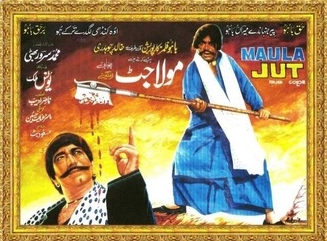
The provided text appears to be a dramatic script or a transcription of a performance, possibly a play or a film, centered around a complex conflict involving a powerful figure, Maula Jatt, and those who oppose him. The narrative is rich with intense emotions, violence, and revenge, unfolding through dialogue and interspersed musical elements. The story explores themes of honor, justice, and social hierarchies within a seemingly rural or village-based setting. Several characters are involved in a web of interconnected relationships, leading to multiple confrontations and dramatic events. The language used suggests a particular cultural context, likely South Asian.
Source Material Review: Study Guide
Quiz
Answer the following questions in 2-3 sentences each.
What is the significance of the mark on the nose in the text?
What are some of the ways in which the text portrays the power dynamics between men and women?
What is the role of revenge in the narrative? Provide an example of revenge in the text.
Describe the social position of the “Jatt” as it is represented in the text.
What role does music and dance play within the world of the text?
What is Noori’s relationship to the law and to concepts of justice?
What are some of the major conflicts that the characters struggle with in the story?
How is the concept of honor or shame used in the text to influence characters’ actions?
What does it mean for a character to be “a vehicle” and how is this term used in the text?
Identify two instances in the text where religious or spiritual concepts are referenced.
Quiz Answer Key
The mark on the nose is a symbol of humiliation and shame. It’s a physical manifestation of disgrace, imposed on individuals who have crossed certain social boundaries or been defeated, and also a symbol of the lasting consequences of revenge.
Men in the text often exert power over women through violence, control over their bodies, and dictating their social roles. Women’s agency is often suppressed, and they are frequently subjected to humiliation and violence, such as the threat of forced marriage.
Revenge is a significant motivator for many characters. For example, Noori seeks revenge for the wrongs done to her and her family. Characters take matters into their own hands, leading to cycles of violence.
The “Jatt” is portrayed as a powerful and often stubborn figure, deeply rooted in rural village life. They are associated with physical strength, pride, and a strong sense of honor, but also prone to rash actions and violence, such as the character who is buried in a grave as a drunkard.
Music and dance are utilized in varied ways within the text. They can accompany both joyful events like weddings, but also be associated with mourning, or acts of defiance. Dance is often used as a way to express emotions or to challenge power structures.
Noori is frequently at odds with the law, often finding it incapable of achieving true justice, and is seen operating in opposition to it as she seeks her own justice. She spends a great deal of time in jail, but she also defies it and creates her own forms of justice.
The text has many major conflicts, such as clashes between individuals seeking revenge, challenges to social structures and power imbalances, and questions about justice, both legal and personal. The narrative also shows the conflict between personal desires and community expectations.
Concepts of honor and shame are central motivators for characters’ actions. Characters will engage in violence or acts of defiance in order to protect their honor or avenge shame brought upon them, such as the conflict between the families and the mark placed on the nose.
The term “vehicle” is used to describe someone who is seen as being used by another for their purposes. For example, one character reflects on how they have been seen as a “vehicle” rather than as a person by another, which speaks to themes of autonomy.
God’s will is referenced and questioned, especially in relation to suffering and injustice. The text also references spiritual practices, such as the Nafl prayers performed in the mosque, within the context of daily life.
Essay Questions
Analyze the text’s representation of justice, contrasting the formal justice system with personal and community-driven forms of retribution. How does the text challenge or support the idea of “an eye for an eye”?
Discuss how the text uses symbolism, specifically the mark on the nose and other motifs, to convey themes of power, shame, and identity.
Explore the complex relationships between men and women in the text. How are traditional gender roles depicted, and to what extent do characters challenge these expectations?
Examine the role of violence in the text. How does violence function as both a destructive force and a means of communication or resistance?
Analyze how the text utilizes local, historical, and cultural markers to establish its unique setting. How do these markers shape the narrative and characters?
Glossary of Key Terms
Caliphate: Refers to a system of Islamic governance led by a caliph, often implying a claim to religious and political authority. In the text, the speaker mentions a “burden of my caliphate,” alluding to a sense of divine responsibility and power.
Jat: A specific community or caste, often associated with rural life, agriculture, and martial traditions, within the cultural context the text is in. In the text, Jats are portrayed with characteristics of honor, pride, stubbornness and power.
Maul: A village leader or elder, often looked to for wisdom, judgment, and decision making, who has a particular significance in the text as a source of community power.
Naga: In this text the meaning is not clear, but it refers to a person, possibly an outcast, which makes use of the shroud particularly charged.
Chadar: A cloth covering, often used as a veil or shawl, which can carry symbolic meanings depending on the context, often used to denote modesty.
Panchayat: A village council or assembly, which serves as a platform for community decision-making, social justice, and dispute resolution, and a site of community conflict.
Bani: A term that appears to be derogatory or insulting in the text, possibly linked to an ethnic or religious group, which represents a social conflict in the text.
Gidal: A term used in the text as a derogatory description of an enemy, such as a jackal.
Ghadasa: A type of axe or bladed weapon, often associated with physical strength and rural or traditional violence, used in the text as a symbol of the Jatt’s power and a marker of physical force.
Nafl prayers: Voluntary or non-obligatory prayers performed by Muslims to seek God’s favor or express gratitude, shown in the text as a way for the characters to relate to the religious context.
Doli: A palanquin or carriage used to carry a bride in a wedding procession, a cultural symbol of marriage traditions and family expectations, and also of the position of women in the narrative.
Noori’s Revenge
Okay, here is a detailed briefing document based on the provided text, outlining the main themes and important ideas:
Briefing Document: Analysis of “Pasted Text”
Date: October 26, 2023
Subject: Analysis of a Dramatic Narrative Text
1. Overview:
This text is a highly dramatic narrative, likely a script or transcript from a play, film, or performance, filled with intense emotions, violent acts, themes of revenge, justice, honor, and societal structures. It presents a complex world centered around the characters of Jatts, a community often associated with rural Punjab, and a central figure named Noori, whose actions and fate drive much of the narrative. The dialogue is fragmented, poetic, and often violent, suggestive of an oral storytelling tradition. The use of music cues throughout the text indicates a performative nature.
2. Key Themes and Ideas:
Revenge and Violence: The narrative is saturated with violence and the pursuit of revenge. Actions are often justified by a cycle of retribution.
Quote: “Revenge is not revenge. This revenge is mine.” This suggests a personal vendetta rather than a just or measured response.
Honor and Shame: Concepts of honor and shame are central. Actions are often motivated by a need to restore personal or communal honor or to avoid public humiliation.
Quote: “By marrying the girl whom you have humiliated in the village, you will have to earn your respect, you will have to guard your life.” This illustrates how a marriage is used to restore honor.
Social Hierarchy and Power: The text highlights a rigid social structure. Jatts, are presented as a dominant, if somewhat violent, group, and figures like ‘Maulana’ and ‘Jail Sahib’ wield considerable authority.
Quote: “I am only a Jatta in this village. I’m not afraid of my own fear.” This quote reinforces the Jatt’s sense of power.
Justice vs. Lawlessness: There’s a clear tension between formal legal systems and personal notions of justice. Characters often take matters into their own hands, dismissing the legal route as slow or ineffective.
Quote: “It was the law’s job to punish him. She came to cut him. She did not read the law.” This showcases a conflict between personal justice and the law.
Female Agency and Oppression: Female characters, particularly Noori, are both victims and agents of action within the narrative. They are subjected to violence and societal constraints, but also initiate revenge and wield power.
Quote: “Diana, whoever covers his head with a veil gets killed, and whoever takes it, what is his name?” Shows the danger of veiling/unveiling for women.
Fate and Destiny: The idea that characters are bound by destiny and past actions is present, influencing their present and future behavior.
Quote: “Your death line is written on my hand.” Implies a predestined fate.
Family Loyalty vs. Individual Action: While loyalty to family and community is a strong theme, individuals sometimes break from those expectations.
Quote: “Even if I become your brother’s enemy, I will still be your brother.” Shows that familial connections persist even with individual conflicts.
Critique of Power: Despite characters with power, there is a strong sense of rebellion against it.
Quote: “Since then, no one has found a soul with whom I have also come.” The line illustrates the lack of heroes and critique of authority.
Religious undertones: Though not explicitly dominant, there’s a subtle undercurrent of religious undertones, with references to God and concepts of destiny, punishment, and justice, indicating a backdrop of faith within the cultural context.
Quote: “The stick of God always has a voice” reinforces a belief in divine justice
3. Characters and Relationships:
Noori: A central female figure. She is strong-willed, a target of violence, and a perpetrator of violence. She appears to be in prison. She is also described as “stubborn” and does not shy away from challenging powerful figures. She appears to carry out actions related to revenge and also seeks to rectify the mistakes she has made.
Jatt: A member of a powerful group, often portrayed as aggressive, proud, and bound to traditions. The Jatt men are shown as being proud and violent, but also bound by their own codes of honor. The Jatt community as a whole is shown as powerful and fearsome.
Maula: A figure of authority who seems to be both respected and feared. He represents the structure of authority and tradition. There is mention of Maula Jatt being a courageous figure.
Mala: Seems to be someone who takes part in the revenge cycles, and is related to Noori.
Jail Sahib: The person who runs the jail and tries to handle Noori.
Soniya: Another important character whose fate is interwoven with Noori’s. She appears to be in prison with Noori, but it is also implied that she is outside. She is described as Noori’s sister in one part, but her relationship is somewhat unclear.
Other Characters: The narrative includes various secondary figures, such as village elders, family members, and law enforcement figures, all contributing to the complex web of relationships and conflicts.
4. Narrative Style:
Fragmented and Poetic: The text is not linear and flows between different voices and perspectives. The language is rich with metaphors and local idioms, indicating a specific cultural context.
Dramatic Dialogue: The use of exclamations, questions, and short, sharp sentences creates a sense of urgency and drama. The use of repetitive phrasing like “You are so tired, you’re so tired,” underscores the psychological and emotional states of the characters.
Music and Performance: The constant breaks for musical cues suggest that this text is meant for performance rather than reading. It indicates the importance of oral tradition in storytelling.
5. Potential Interpretations:
Social Commentary: The text may serve as a commentary on the social dynamics and power structures within a specific rural setting. It shows the tension between individual agency and societal expectations.
Exploration of Violence and Justice: The cycle of revenge raises questions about the nature of justice and the devastating consequences of unchecked violence.
Cultural Narrative: The specific references to Jatts and other local elements point to a specific cultural context, possibly from the Punjab region.
A Woman’s Struggle: The text provides a glimpse into the struggles of women to have a voice in a patriarchal society.
6. Conclusion:
This text presents a compelling, if sometimes brutal, narrative exploring themes of revenge, honor, and social conflict within a specific cultural context. The use of dramatic dialogue, music cues, and poetic language makes it ideal for performance. The complexities of the characters and their relationships, particularly the actions of female figures, add layers of meaning to the story, raising questions about justice, power, and the human cost of violence. The text has potential for a deeper reading in terms of socio-cultural analysis of the Punjab region.
Let me know if you need any further analysis or clarification on a specific aspect of the text.
Power, Justice, and Revenge in the Jatt Narrative
FAQ: Exploring Themes of Power, Justice, and Revenge
Who is the speaker referencing when they say “I created creation”? What does this suggest about their perception of themselves and their role in the world?
The speaker’s claim of creating creation implies a belief in their own divine or god-like power and status. This statement positions them as a primary force of origin and control, suggesting a possible inflated ego or a belief in a divinely appointed mission. The following statements about being “the light of the earth” and having the “burden of my caliphate” further reinforce this grand self-perception. This perspective contrasts with other characters who are shown to be flawed and vulnerable.
The text frequently mentions “Jatt”. What is the significance of this term, and how is it portrayed within the narrative?
The term “Jatt” seems to refer to a specific group or identity, likely a social or tribal affiliation. The Jatts are depicted as both flawed individuals and as representatives of a larger societal power structure. Characters identify with being a Jatt as a point of pride, as well as it being a source of conflict and conflict. At times, they are presented as stubborn, violent, and prone to feuds, as well as people who are committed to their honour and tradition. The varying portrayals of Jatt characters shows that the identity is complex and not a single, monolithic entity, highlighting varying degrees of adherence to these perceived characteristics.
What role does the concept of ‘shame’ or ‘honour’ play in the actions and decisions of the characters?
Shame and honour are central motivators for many characters, driving their actions and shaping the narrative. Many acts of violence and revenge are explicitly tied to protecting or restoring family honor. Characters are shown to be deeply concerned with how they are perceived by others within their community, especially when it comes to maintaining social standing. The threat of public shame is used as a potent weapon, and the pursuit of honor fuels cycles of violence and retribution.
How are women portrayed in this narrative, and what power dynamics do they navigate?
Women in this narrative are depicted as having limited agency in a patriarchal society, often being subject to the decisions and actions of men. Their bodies and honour are frequently used as currency in feuds and social conflicts, evidenced by arranged marriages and the humiliation of women as a means of insult. However, some female characters show surprising strength and defiance, taking action into their own hands and seeking revenge, despite the social constraints placed upon them. This suggests that even within a rigid societal framework, women find ways to exert influence and challenge the established power structure.
What is the significance of the “mark on the nose” that is mentioned multiple times?
The “mark on the nose” acts as a potent symbol of shame, humiliation, and power. This physical mark is not just a personal disfigurement, but also carries social implications, acting as a public sign of defeat and disgrace. It becomes a method of branding and dehumanization. It indicates a lasting impact of a conflict and serves as a constant reminder of injustice, while simultaneously becoming a symbol of triumph for the perpetrator of this act.
What commentary does the text provide on the nature of justice and law?
The text presents a cynical view of justice and law, showing that formal legal systems are often ineffective at delivering real justice and are often out of alignment with the social understanding of justice and honor. The story shows that characters often turn to personal revenge and vigilante justice because they are unsatisfied with the legal processes, or because their sense of justice is outside of the law. The cycle of violence is often portrayed as a consequence of an inability to achieve justice through proper legal channels, suggesting a breakdown of social order and a deep mistrust of authority. The corruption of power by local authority figures is another criticism highlighted in the text.
How does the theme of revenge contribute to the central conflicts in the story?
Revenge is a powerful driving force in this narrative, fueling the central conflicts and perpetuating a cycle of violence. Characters are consistently motivated by the desire to avenge past wrongs and to regain a sense of honor or to achieve a personal understanding of justice, or to even the score. This relentless pursuit of revenge creates an atmosphere of perpetual conflict and escalation, showing that this type of violent resolution is deeply corrosive.
What role does tradition and the past play in shaping the present conflicts of the characters?
Tradition and the past heavily influence the present conflicts, as characters are bound by long-standing customs, feuds, and perceived obligations. The text suggests that many of the present-day conflicts are rooted in past grievances and that these events continue to shape the identities and actions of current generations. Characters struggle to break free from the constraints of these traditions, suggesting that history and past actions create an unending cycle of violence.
Tribal Conflict and Cycles of Revenge
The sources depict a community with significant internal conflict, often involving violence and revenge, that could be characterized as tribal. Here’s a breakdown of the conflict based on the sources:
Honor and Revenge: A major theme is the emphasis on honor and the taking of revenge. Actions like humiliating someone or causing a death often lead to retaliatory actions, including murder. This cycle of revenge seems to perpetuate the conflict, as seen in the statement, “Revenge is not revenge. This revenge is mine”.
Family and Kinship: Family ties are strong, but they also fuel conflict. The death of a brother leads to a sister seeking revenge. There is also conflict within families, with brothers killing brothers. Additionally, the sources indicate a patriarchal society where the honor of the family is closely tied to the actions of its members, particularly women.
Community Divisions: The community is divided into groups, such as the “Jatts” and others. There are instances where individuals are identified by their community, such as “I am a Jat,” which seems to denote a specific social identity. There are also references to “the village” as a source of identity, and the actions of individuals can reflect on the reputation of their village.
Disputes over Women: There are several instances where conflicts arise from actions involving women. These include a woman being humiliated, a woman killing her brother, and a woman being forced into marriage. These situations are not simply individual matters, but escalate into community-wide feuds.
Power and Authority: There are clear power dynamics, with figures like “the master” and “the maul” holding authority and influence. The sources also show resistance against this authority, with individuals standing up against established norms. The role of law enforcement, such as the police, is also present, but often seems ineffective at preventing or resolving the underlying conflicts.
Insults and Humiliation: Insults and public humiliation seem to be powerful triggers for conflict. Actions such as covering a woman’s head with a shroud or marking someone’s nose can result in violent responses. The act of placing a mark on someone’s nose is mentioned several times, suggesting that it is a significant form of humiliation.
Cycles of Violence: There are recurring patterns of violence. For example, when one person is killed, another will seek revenge, often escalating into wider conflicts. This creates a cycle of violence that is difficult to break.
In summary, the sources suggest a community marked by deep-seated tribal conflicts driven by issues of honor, revenge, family ties, community divisions, and power struggles, often involving violence, humiliation, and an ongoing cycle of revenge.
Revenge Killings: Honor, Family, and Cycles of Violence
The sources describe several instances of revenge killings, highlighting their significance within the community and the cycle of violence they perpetuate.
Motivations for Revenge: The primary motivation for revenge killings stems from a perceived loss of honor or an act of violence against a family member. For example, the killing of a brother leads a sister to seek revenge. Additionally, humiliation, such as marking someone’s nose, can incite violent retribution. The desire to avenge these acts is a driving force in the community.
Perpetuation of Violence: Revenge killings contribute to an ongoing cycle of violence. The sources demonstrate that when one person is killed, another is compelled to seek revenge, and this action can then lead to further retaliatory acts. This creates a continuous loop of violence that is hard to break.
Family Involvement: The concept of family honor is deeply connected to revenge. The sources show that the responsibility to avenge a family member’s death often falls on the remaining family members, particularly siblings, and that revenge killings are not just individual acts but also part of a larger family dynamic.
Methods of Revenge: Revenge killings are not always direct. In some cases, the act of revenge involves humiliating the offender or their family, such as by marrying a family member after humiliating her. Other forms of revenge can include marking someone’s nose or desecrating a dead body. These actions indicate that revenge isn’t just about death but also about inflicting suffering and dishonor.
Escalation of Conflict: The act of seeking revenge often escalates conflicts within the community. Actions motivated by revenge can cause conflict to spread across villages and families, moving beyond the original offense. This escalation shows the tribal nature of the conflict, where an individual’s actions can have wider implications.
Acceptance of Violence: The concept of revenge killings seems to be an accepted part of the social order, or at least, the sources do not depict any effective challenge to the tradition. Instead, it is presented as an almost inevitable response to certain situations. Even when law enforcement is present, revenge killings persist.
Examples of Revenge Killings One source states, “Revenge is not revenge. This revenge is mine”. Another source details a woman who seeks revenge for her brother’s death. Also, there are multiple references to taking the “body of the Jatt”. These examples demonstrate that the need for revenge is a powerful motivation in the community.
Symbolic Acts of Revenge The sources describe acts like putting a mark on the nose as a form of symbolic revenge. These are not always about physical harm, but are also about social humiliation. The act of putting a mark on someone’s nose is meant to be a lasting symbol of disgrace.
In summary, revenge killings are a central aspect of conflict in the community described in the sources, driven by honor, family ties, and cycles of violence. These killings are not isolated acts, but are part of a larger social and cultural system where revenge is seen as a necessary response to perceived injustices and dishonor.
Family Honor and Violence
Family honor is a critical concept in the sources, deeply intertwined with themes of revenge, violence, and social standing. The sources reveal that family honor dictates the actions and responsibilities of individuals, and the concept is a major driver of conflict.
Family as a Unit of Honor: The family is portrayed as a cohesive unit where the actions of one member can reflect on the entire family’s honor and reputation. The concept of family honor appears to extend beyond the nuclear family to include the wider community or clan. This means that the actions of an individual can have broad implications for their family’s standing.
Responsibility for Revenge: When a family member is harmed or killed, the responsibility to seek revenge often falls on the remaining family members. This duty is particularly seen in the case of a sister avenging her brother’s death. The sources illustrate that the failure to avenge a family member’s death can bring shame and dishonor to the entire family.
Women and Family Honor: The honor of women is closely tied to the honor of their families. The actions of women, whether they are victims or perpetrators of violence, have a direct impact on their family’s reputation. For instance, a woman being humiliated or a woman committing a murder can bring shame upon her family. This means that women’s behavior is strictly policed because of its perceived impact on family honor.
Protection of Family Reputation: The need to protect family honor can lead to extreme actions, including violence and murder. The sources show that maintaining the family’s reputation often trumps individual safety or well-being. This demonstrates how deeply ingrained the concept of family honor is within the community’s social fabric.
Humiliation and Dishonor: Actions that bring humiliation or dishonor upon a family are considered serious offenses. Such actions can trigger violent responses and long-lasting feuds. The act of putting a mark on someone’s nose is mentioned multiple times as a form of dishonor and can lead to calls for violent retaliation.
Marital and Family Ties: Marital relationships are also deeply connected to the concept of family honor. Conflicts often arise when there are disputes over women or when a family member’s marriage is disrespected. These disputes are not simply individual matters, but rather affect the honor and standing of the families involved.
Intergenerational Impact: Family honor is a concept that can extend across generations. The need to avenge a past wrong or maintain a family’s standing can be passed down through generations, continuing cycles of violence and conflict. This indicates that the concept of family honor can shape the lives of individuals for years.
In conclusion, family honor is a fundamental concept that shapes the behavior and interactions of individuals within the community. It is a powerful force that can drive violence, revenge, and intense conflict, but also provides a sense of identity and social standing. The need to protect and avenge family honor is a major theme in the sources, and is closely linked to other themes such as tribalism and cycles of violence.
Justice Denied: Violence and Inequality in a Stateless Community
The sources present a complex view of social justice, or rather the lack thereof, within the community, highlighting several themes related to injustice, inequality, and the struggle for power.
Absence of Formal Justice: There is no clear, consistent system of formal justice in the sources. Instead, conflicts are often resolved through personal revenge and community pressure, rather than through an impartial legal system. While there are mentions of law enforcement like the police, they are frequently portrayed as ineffective, corrupt, or as instruments of power rather than protectors of justice. This contributes to a situation where people take the law into their own hands and where violence is a common way to settle disputes.
Cycles of Revenge: The community is caught in a cycle of revenge where acts of violence lead to retaliatory violence. This constant cycle undermines any possibility of a just resolution to conflict, as it focuses on retribution rather than fairness or reconciliation. The concept of “an eye for an eye” dominates, leading to ongoing suffering and instability. The idea that “Revenge is not revenge. This revenge is mine” illustrates the personal nature of justice in the community.
Unequal Power Dynamics: There are clear power imbalances present in the community. Figures like “the master” and “the maul” wield significant influence, while others have little to no agency. This creates a system where some are able to manipulate justice to their advantage, and others are subjected to abuse and unfair treatment. The sources also show the powerful using violence and intimidation to maintain control.
Humiliation as a Form of Injustice: Humiliation is frequently used as a tool to demean and control others, and it also serves as a significant trigger for conflict. Actions such as marking someone’s nose or publicly shaming individuals are used to strip them of dignity and power, creating situations that demand violent retribution. This shows that justice is not just about legal proceedings or retribution, but is also deeply tied to social standing and respect.
Gender Inequality: Women in the sources are often treated as possessions or symbols of family honor, and they are subjected to significant injustices. They are often victims of violence, are forced into marriages, or are humiliated, and these acts against women are considered affronts to family honor, which in turn leads to more conflict. Women’s actions are closely monitored, not for their own safety but for the reputation of their families.
Lack of Empathy and Forgiveness: The sources frequently show a lack of empathy and forgiveness. Individuals are quick to seek revenge and very few attempts are made to de-escalate conflicts peacefully. This lack of empathy reinforces the cycles of violence and prevents the community from achieving a state of social justice or peace.
Resistance and Defiance: Despite the injustices, there are also acts of resistance and defiance. Some individuals, such as Noori, challenge the established norms and fight back against oppressive forces. This resistance, although met with violence, indicates a desire for justice and equality. The idea that “the stick of God always has a voice” could be interpreted as a belief in eventual justice, even if not readily seen in their community.
Symbolic Justice and Retribution: The act of putting a mark on someone’s nose can be seen as a symbolic act of justice, where the perpetrator is punished with lasting humiliation. These acts show that the community has its own standards of justice, though they do not necessarily align with a more formal or empathetic model. Additionally, certain characters will seek justice by “taking the body” of their enemies to their own village.
The Idea of Divine Justice: There are references to God and divine justice, suggesting that some in the community believe in a higher power that will ultimately deliver justice. However, this belief does not seem to significantly impact the community’s day-to-day violence and injustices, which indicates the strong hold of local customs and cultural norms.
In summary, the sources reveal a community where social justice is largely absent due to a lack of a formal justice system, unequal power dynamics, and deep-rooted cycles of violence. The themes of revenge, honor, and humiliation, along with significant gender inequality, all contribute to a society that is far from just. However, the sources also show resistance and a longing for a better, more just world, even if that is not always expressed directly.
Imprisonment: Power, Resistance, and Justice
Imprisonment in the sources is portrayed as a complex experience, encompassing themes of punishment, power, and resistance, while also highlighting the limitations of formal justice systems. The sources suggest that imprisonment is not just a physical confinement but a place where social dynamics and personal struggles play out.
Punishment and Control: Imprisonment serves as a form of punishment for crimes committed within the community, although it’s not always clear what constitutes a crime. Characters are imprisoned for acts such as murder and other forms of violence. The sources describe imprisonment as a means to control individuals who have disrupted social order or challenged authority. However, the effectiveness of imprisonment as a deterrent is questionable, given the continued violence.
Power Dynamics within Prison: The prison is not an isolated space, but a microcosm of the larger society, where existing power dynamics are mirrored. The jailer and other authorities hold considerable power over the prisoners, yet the prisoners also find ways to assert their own influence. For example, when Noori is moved within the prison, the other prisoners become agitated. The sources also show instances of the jailer apologizing to prisoners, suggesting that the hierarchy of power is not absolute.
Resistance and Defiance: Imprisonment does not always break the spirit of the incarcerated. The sources reveal that prisoners can exhibit resistance and defiance, even within the confines of jail. Noori’s character, for example, demonstrates a continued willingness to challenge authority and societal norms, even from behind bars. The character of Noori comes to the jailer and demands to be locked up because “the jails are empty” and they have not found anyone worthy to take their place.
Limitations of Formal Justice: The depiction of imprisonment also underscores the limitations and failures of the formal justice system. The police are not always seen as agents of justice, but rather as instruments of power, and the prisons are not necessarily places of rehabilitation or reform. The recurring theme of revenge and violence, even after imprisonment, highlights the ineffectiveness of incarceration in breaking cycles of conflict. Also, the police are often seen as corrupt.
Imprisonment as a Social Space: The sources show that the prison is a social space where prisoners interact with each other, share stories, and develop relationships. These interactions demonstrate that prison is not merely a place of punishment but also a community of its own, complete with social dynamics. Prisoners from different backgrounds and social standings, like the Jatt, are forced to occupy the same space.
Imprisonment as a Temporary State: In some cases, imprisonment is not viewed as a permanent state. Characters will mention getting out of prison or finding ways to be released. There are examples of characters seeking bail and negotiating their release, which indicates the limitations of the system.
Imprisonment and Family Honor: The concept of family honor is still relevant even when individuals are imprisoned. The shame and dishonor that come with imprisonment can affect not just the prisoner, but their entire family, which can lead to conflict and retaliation. The need to protect family honor extends even to situations where a family member is incarcerated.
Symbolic Significance of Imprisonment: The sources portray imprisonment as a symbolic space, where individuals are stripped of their freedom and placed under the control of a larger authority. There is a symbolic connection between imprisonment and the cycles of violence. Characters will seek to imprison their enemies and humiliate them even after they have already been imprisoned by law enforcement.
In summary, imprisonment in the sources is not a straightforward concept, but a multi-layered experience that reflects the social and political realities of the community. Imprisonment is shown as a form of control, but is also a place of resistance. The limits of formal justice, power dynamics, and the continuation of violence within the prison all contribute to a bleak picture of the criminal justice system. The act of seeking imprisonment can also be used as a form of self-sacrifice.
Affiliate Disclosure: This blog may contain affiliate links, which means I may earn a small commission if you click on the link and make a purchase. This comes at no additional cost to you. I only recommend products or services that I believe will add value to my readers. Your support helps keep this blog running and allows me to continue providing you with quality content. Thank you for your support!
The emergence of DeepSeek, a low-cost, high-performing AI chatbot from a Chinese startup, has sent shockwaves through the American tech industry. DeepSeek’s surprisingly low development cost ($6 million) compared to its American competitors’ billions, coupled with its competitive performance, challenges established assumptions about AI development. This event has prompted concerns about US competitiveness and a reassessment of investment strategies, while also sparking debate over the implications of open-source AI models versus closed-source approaches. The situation highlights the intensifying global AI race and raises questions regarding data handling, bias, and the potential for protectionist reactions.
AI Race: Deep Seek & Global Implications
Quiz
Instructions: Answer each question in 2-3 sentences.
What is Deep Seek and why has it caused concern in the US tech industry?
How did Deep Seek manage to develop its AI model at a fraction of the cost compared to US companies?
What does it mean that Deep Seek’s model is “open source,” and what are the implications for data and censorship?
How has the emergence of Deep Seek impacted Nvidia, a major chip manufacturer in the US?
What is AGI, and why is Deep Seek’s model being seen as a potential step towards it?
What is the “Stargate” project proposed by Donald Trump, and what is its goal?
According to the text, how does the Chinese government’s approach to AI regulation compare to that of the US?
How does Deep Seek’s approach to AI model development challenge the traditional approaches used by US companies?
Besides AI, in what other technological fields is China showing significant advancement?
How are the US sanctions on China potentially impacting China’s technological development in the long run?
Quiz Answer Key
Deep Seek is a Chinese AI startup that has developed a highly capable AI chatbot at a significantly lower cost than US competitors. This has caused concern because it suggests that the US dominance in AI could be challenged, and that high costs associated with AI development may not be necessary.
Deep Seek was able to develop its model at a fraction of the cost by utilizing less powerful, older chips (due to US export controls) and leveraging open-source technology, which allowed for more efficient development and a different approach. This innovative process challenged the existing US industry assumptions.
Being “open source” means that the code for Deep Seek’s model is publicly available, allowing others to modify and build on it, and creating more opportunities for innovation. However, the user-facing app is censored to align with Chinese regulations, which filters politically sensitive information.
The emergence of Deep Seek has had a negative impact on Nvidia, as it has caused investors to reconsider the cost of the chips needed for AI, which had been the primary driver for Nvidia’s success. This led to a substantial decrease in the company’s market value, showing that expensive chips may not be necessary for cutting edge AI.
AGI, or Artificial General Intelligence, refers to an AI that can think and reason like a human being. Deep Seek’s model is seen as a step toward AGI because its ability to learn from other AIs suggests the potential for AI to improve itself, leading to a “liftoff” point where AI capabilities increase exponentially.
The “Stargate” project is a $500 billion initiative proposed by Donald Trump to build AI infrastructure in the US. It aims to strengthen US competitiveness in AI, and it is a direct response to China’s advancements in the field.
The Chinese government has strict regulations and laws regarding how AI models should be developed and deployed, specifically concerning how AI answers politically sensitive questions. These regulations are described as more restrictive than those in the US and in line with national security interests.
Deep Seek’s approach challenges the US approach by utilizing open source technology and more efficient methods for model development. This is in contrast to most US companies which have relied on expensive and proprietary technology and the notion that AI development required large investments.
Besides AI, China is also showing significant advancement in fields such as 5G technology (with companies like Huawei), social media apps (like TikTok and Red Note), and electric vehicles (with brands like BYD and Nio), and nuclear fusion technology. These fields highlight China’s growing tech self-sufficiency and strategic tech goals.
The US sanctions on China, intended to slow down technological advancements, may have ironically backfired. By cutting off the supply of the latest chips, the restrictions have actually forced Chinese companies to innovate and find more efficient ways to develop AI, thus accelerating their technological progress and reducing reliance on US tech.
Essay Questions
Instructions: Write an essay addressing one of the following prompts.
Analyze the political and economic implications of Deep Seek’s emergence, considering its impact on US tech dominance and the global AI race.
Explore the technological innovations and development strategies behind Deep Seek’s low-cost AI model and how it challenges established norms in the AI industry.
Discuss the ethical concerns surrounding AI development and deployment, focusing on issues such as censorship, data handling, and bias in the context of Deep Seek’s model.
Evaluate the potential long-term effects of US sanctions on China’s technology sector, considering their impact on global AI competition and the pursuit of self-sufficiency.
Assess the role of open-source technology in the AI race and how the open sourcing of AI models such as Deep Seek can affect AI development.
Glossary of Key Terms
Artificial Intelligence (AI): The capability of a machine to imitate intelligent human behavior, often through learning and problem-solving.
Artificial General Intelligence (AGI): A hypothetical type of AI that possesses human-level intelligence, capable of performing any intellectual task that a human being can.
Open Source Technology: Software or code that is available to the public, allowing for modification, distribution, and development by anyone.
Censorship: The suppression of words, images, or ideas that are considered objectionable, offensive, or harmful, particularly in a political or social context.
Export Controls: Government regulations that restrict or prohibit the export of certain goods or technologies to specific countries or entities.
Nvidia: A major US technology company that designs and manufactures graphics processing units (GPUs), which are essential for AI development.
Deep Seek: A Chinese AI startup that developed a powerful AI chatbot at a much lower cost than its competitors.
Stargate Project: A proposed $500 billion US initiative to build AI infrastructure as announced by former US President Donald Trump.
Liftoff: A term used in the AI context to describe a point where AI learning and development becomes exponential due to AI learning from other AI models.
Data Bias: Systematic errors in data that can result in AI models making unfair or discriminatory decisions.
DeepSeek: A Wake-Up Call for the AI Industry
Okay, here is a detailed briefing document analyzing the provided sources about the DeepSeek AI chatbot:
Briefing Document: DeepSeek AI Chatbot – A Wake-Up Call
Executive Summary:
The emergence of DeepSeek, a Chinese AI chatbot, has sent shockwaves through the global tech industry, particularly in the US. Developed at a fraction of the cost of its Western counterparts, DeepSeek rivals leading models like ChatGPT in performance, while using less computational power and older chip technology. This breakthrough challenges long-held assumptions about AI development and has sparked debate about competition, open-source technology, and the future of AI dominance. The situation is further complicated by the fact that the model is open-source while the user app is heavily censored in its responses.
Key Themes and Ideas:
Disruption of the AI Landscape:
DeepSeek’s emergence has disrupted the established AI landscape, where US tech giants have historically dominated.
The cost-effectiveness of DeepSeek’s development challenges the belief that expensive, cutting-edge hardware and massive investment are necessary to create top-tier AI models. As Daniel Winter states, “it proves that you can train a cutting-edge AI for a fraction of a cost of what the latest American models have been doing.”
Stephanie Harry adds, “Until really about a week ago most people would have said that AI was a field that was dominated by the United States as a country and by very big American technology companies as a sector we can now safely say that both of those assumptions are being challenged.”
Cost-Efficiency and Innovation:
DeepSeek was developed for a reported $6 million, a fraction of the hundreds of millions spent by US companies like Open AI and Google. Lisa Soda remarks that this low cost “made investors sit up and panic.”
DeepSeek’s development was achieved by using older chips, highlighting innovative approaches that optimized efficiency, in a situation where they were unable to use the latest chips due to export controls from the US. As Harry stated: “That design constraint meant that they had to innovate and find a way to make their models work more efficiently…necessity is the mother of invention.”
This cost-effectiveness challenges US AI companies’ assumptions that more resources and the latest hardware always translate to better AI. According to Harry: “for them they didn’t have to focus on being efficient in their models because they were just doing constantly to be bigger.”
Open Source vs. Closed Source:
DeepSeek’s model is open source which means its code can be accessed, used, and built upon by others, while many US companies except Meta have used closed-source technology. This model promotes collaboration and potentially faster innovation globally. According to Harry: “they have opened up their code, developers can take a look in experiment with it and build on top of it and that is really what you want in the long-term race for AI, you want your tools and your standards to become the global standards.”
This contrasts with the closed source model favored by many US companies where the internal workings of their technology are kept private. The US approach has created a perception of them trying to build “walls around itself” while China seems to be “tearing them down”, as M. Jang observes.
The “Lift Off” Moment:
The ability of DeepSeek’s model to learn from other AI models, combined with open-source access, leads to the possibility of “liftoff” in the AI industry, where the models can improve rapidly. As Winter said: “once you get AIS learning from AIS they can improve on themselves and each other and basically you’ve got what they call liftoff in the AI industry”
This could lead to dramatic advancements at an accelerated rate.
US Tech Industry Reaction:
The emergence of DeepSeek has caused major market disruptions, most notably the nearly $600 billion loss in market value for chip giant Nvidia.
Donald Trump has called the release of DeepSeek a “wake-up call” for US tech companies, underscoring the need for America to be “laser focused” on competing to win.
Experts suggest that the US tech industry may have become complacent and that this new competition will drive innovation and healthy competition.
Data Censorship and Political Implications:
While the DeepSeek model itself is open-source and uncensored once downloaded directly, the DeepSeek app and website are subject to Chinese government censorship. Users of the app will receive filtered information and cannot inquire about politically sensitive topics like the Tiananmen Square Massacre. This demonstrates that the application of AI is still subject to political influence.
China’s AI laws and regulations are far stricter than Western ones, especially concerning output, as Lisa Soda mentions: “questions that might pose a threat to National Security or the social order um in China um they can’t really answer these things so”.
Geopolitical Implications:
The development of DeepSeek is viewed as a significant step in China’s strategy of technological self-sufficiency.
This strategy has deep roots, as Professor Jang states, noting “China has long believed in technological self-efficiency”. China is working to not be dependent on Western technology in many key areas.
The success of DeepSeek may have inadvertently resulted from US export controls, forcing Chinese companies to innovate. M. Jang notes “US sanctions may have backfired”.
Quotes of Significance:
Daniel Winter: “They’re rewriting the history books now as we speak because this model has changed everything.”
Stephanie Harry: “That design constraint meant that they had to innovate and find a way to make their models work more efficiently.”
Lisa Soda: “it is estimated that the training was around $6 million US dollar which is compared to the hundred of million dollars that the companies right now are putting into these models really just a tiny fraction”.
M. Jang: “The US is building up its walls around itself China seems to be tearing them down”
Donald Trump: “The release of deep seek AI from a Chinese company should be a wakeup call for our industries.”
Conclusion:
DeepSeek’s emergence is not just another tech story; it’s a potential paradigm shift in the AI industry. Its success in developing a competitive model at a fraction of the cost of its Western counterparts, combined with its open-source nature, challenges established norms. While questions remain about censorship and political influence, the impact of DeepSeek is clear. It is a “wake up call” for the US tech industry, showing that innovation and access are not solely reliant on vast resources and cutting-edge hardware. It underscores that the AI race is truly global, and the future of AI is far from settled.
DeepSeek AI: A New Era in Artificial Intelligence
FAQ: DeepSeek AI and the Shifting Landscape of Artificial Intelligence
What is DeepSeek AI and why is it causing so much buzz in the tech industry? DeepSeek is a Chinese AI startup that has developed a new AI chatbot that rivals leading platforms like OpenAI’s ChatGPT at a significantly lower cost, reportedly around $6 million. This has shocked the industry, especially US tech giants that have invested billions in AI, as it demonstrates that cutting-edge AI can be trained for a fraction of the previous cost. It has also disrupted the AI landscape by using older chips and open-source technology, challenging the dominance of expensive, closed-source models. The app became the most downloaded free app in the U.S., shaking the markets and prompting a significant drop in the value of Nvidia.
How did DeepSeek manage to create such a powerful AI model for so little money? Several factors contributed to DeepSeek’s cost-effectiveness. First, they were forced to innovate due to US export controls restricting access to the newest chips. They managed to use less powerful but still capable older chips to achieve their breakthrough. Second, they built their model using open-source technology and distilled their model for greater efficiency, which contrasts with the closed-source approach of many US companies. This allowed them to reduce costs while maintaining high performance, proving that expensive hardware and proprietary code are not always necessary for advanced AI. This “necessity is the mother of invention” approach highlights that design constraints can force innovation.
What does the emergence of DeepSeek mean for the AI competition between the US and China? DeepSeek’s emergence has significantly challenged the US’s assumed dominance in AI. It shows that China is not only capable of creating powerful AI models, but also doing so with greater efficiency. This has led to a reevaluation of the investments being made by American tech companies and the overall strategy for AI development. The US is now faced with the reality of a strong competitor, potentially needing to shift from a focus on bigger and more expensive models towards more efficient methods. Also the open source nature of DeepSeek challenges the US tendency to build closed systems.
How does DeepSeek’s model compare to other AI chatbots like ChatGPT in terms of performance and capabilities? DeepSeek is comparable in performance to models like ChatGPT, with the capability to reason through problems step-by-step like humans. According to experts, DeepSeek is on par with the best Western models, and in some cases, may even perform slightly better. This demonstrates a significant advancement in Chinese AI technology. While it may have some bugs, this is common in all new AI models, including those from the US. The significant difference lies in the development costs and efficiency of DeepSeek.
What are the data privacy and censorship concerns associated with DeepSeek? There are significant data privacy and censorship concerns related to DeepSeek, especially its app. If users download the DeepSeek app they will receive censored information regarding events like the Tiananmen Square massacre and any other topics considered sensitive by the Chinese government. However, the actual AI model itself is open-source and can be downloaded and used without such censorship. This means that individuals and businesses can develop their own applications using the model, but users may receive a very filtered and biased version of information if using the app directly.
How does DeepSeek’s open-source approach differ from most US tech companies’ AI strategies? DeepSeek’s open-source approach is a significant departure from the more proprietary, closed-source strategies used by most US tech companies (except for Meta). By making their code available, DeepSeek is allowing for greater collaboration, experimentation, and innovation within the global tech community. This is a key aspect of China’s AI strategy, aiming for their tools and standards to become global standards and for innovation to proceed at a much faster rate by fostering this collaborative nature. This contrasts sharply with the US focus on protecting intellectual property and maintaining a more closed and controlled approach.
What impact could DeepSeek have on the future direction of AI development and investment? DeepSeek’s success has profound implications for the future of AI development. It demonstrates that AI advancements do not necessarily require massive investments or reliance on the most cutting-edge hardware. This may lead to a more diverse and competitive landscape, with smaller players entering the market, as it lowers the barrier to entry. It could also push companies to focus on developing more efficient and cost-effective AI models, shifting the emphasis from big and expensive models to more practical and sustainable approaches. This has already caused a re-evaluation of companies like Nvidia and a shock to the market.
What are the potential long-term implications of China’s advancements in AI, as exemplified by DeepSeek? China’s advancements in AI, particularly the open-source and low-cost nature of models like DeepSeek, reinforce its commitment to technological self-reliance. In the long term, this could establish a new paradigm in technology development, moving away from reliance on Western tech, as well as showing the power of open source in driving innovation. This could result in a shift in the global balance of power, not only in technology but also in geopolitics. The open source model is an attempt to establish Chinese standards as global standards. This may also force the US to reconsider it’s protectionist approach as it may be hurting themselves in the long run.
Deep Seek: China Challenges US AI Dominance
The sources discuss the competition in the AI industry, particularly between the United States and China, and how a new Chinese AI model called Deep Seek is challenging the existing landscape. Here’s a breakdown:
Deep Seek’s Impact: Deep Seek, a Chinese AI startup, has developed an AI chatbot that rivals those of major US companies, but at a fraction of the cost [1-4]. This has shocked the tech industry and investors [1-3, 5].
Cost Efficiency: Deep Seek’s model was developed for approximately $6 million, compared to the hundreds of millions spent by US companies [1, 4, 5]. They achieved this by using less powerful, older chips (due to US export bans), and by utilizing open-source technology [2, 3, 5]. This challenges the assumption that cutting-edge AI requires the most expensive and advanced hardware [2, 5].
Open Source vs. Closed Source: Deep Seek has made its AI model open source, allowing developers to experiment and build upon it [3, 6]. This contrasts with most US companies, with the exception of Meta, which use closed source technology [3]. The open-source approach has the potential to accelerate the development of AI globally [3, 6].
Challenging US Dominance: The emergence of Deep Seek is challenging the US’s perceived dominance in the AI field [3]. It’s forcing American tech companies and investors to re-evaluate their strategies and investments [3]. The US might have been complacent with the “Magnificent Seven” companies that had unconstrained access to resources [4].
AGI and Liftoff: There’s a suggestion that AI is approaching AGI (Artificial General Intelligence), where AI can learn from other AI and improve upon itself [2]. This is referred to as “liftoff” in the AI industry [2].
US Reactions: The release of Deep Seek has been seen as a “wake up call” for the US [1, 7]. Former President Trump has called for the US to be “laser-focused on competing to win” in AI [1]. Some analysts suggest that US sanctions might have backfired, accelerating Chinese innovation [8, 9].
Chinese Tech Strategy: The development of Deep Seek aligns with China’s strategy of technological self-sufficiency [8]. China has been working towards this for decades, including in other tech areas such as 5G, social media, and nuclear fusion [8]. The fact that Deep Seek is open source is a significant departure from the US model [8].
Data and Bias: While the Deep Seek app censors information, the model itself is uncensored and can be used freely [6]. This opens up the possibility for companies worldwide to use and build on the model [6].
Global Competition: Competition in the AI sector is a global phenomenon, and breakthroughs can come from unexpected places [9]. The focus shouldn’t be on a US versus them mentality, but rather on learning from others [9].
Impact on AI industry The emergence of Deep Seek is lowering the barrier to entry in the AI market, allowing more players to enter [5]. It remains unclear how the AI industry will be impacted, given that the industry is changing rapidly [5].
In summary, the sources paint a picture of an increasingly competitive AI landscape where the US is facing a strong challenge from China. Deep Seek’s model, developed with less resources and using open-source technology, is forcing a re-evaluation of existing assumptions about AI development and the role of different countries and technologies in the AI race.
Deep Seek: A Chinese AI Chatbot Disrupts the Global AI Landscape
The sources provide considerable information about the Deep Seek chatbot, its impact, and the implications for the AI industry [1-9]. Here’s a comprehensive overview:
Development and Cost: Deep Seek is a Chinese AI chatbot developed by a startup of the same name [1]. What’s remarkable is that it was developed for around $6 million, a tiny fraction of the hundreds of millions of dollars that US companies typically invest in similar models [1, 6]. This cost-effectiveness has shaken the tech industry [1, 6].
Technological Approach:Chip Usage: Deep Seek managed to create its model using less powerful, older chips, due to US export bans that restricted their access to the most advanced chips [2, 4]. This constraint forced them to innovate and develop more efficient models [4].
Open Source: The company built its technology using open-source technology, allowing developers to examine, experiment, and build upon their code [4]. This is in contrast to most US companies that use closed-source technology, with the exception of Meta [4]. The open-source nature of the model allows for global collaboration and development [3, 4, 8].
Performance and Capabilities:Sophisticated Reasoning: Deep Seek’s model demonstrates sophisticated reasoning chains, which means it thinks through a problem step by step, similar to a human [5, 7].
Comparable to US Models: The chatbot is considered to be on par with some of the best models coming out of Western countries, including those from major US companies, like OpenAI’s ChatGPT [4, 5, 7].
Efficiency: Deep Seek’s models are also more efficient, requiring less computing power than many of its counterparts [7].
Impact on the AI Industry:Challenging US Dominance: Deep Seek’s emergence is challenging the perceived dominance of the US in the AI sector [4]. It has caused US tech companies and investors to re-evaluate their strategies and investments [4, 5]. It has been described as a “wake-up call” for the US [1, 8].
Lowering Barriers to Entry: The fact that a high-performing AI model was developed at a fraction of the cost has lowered the barrier to entry in the AI market, potentially allowing more players to participate [6].
Re-evaluation of Existing Assumptions: Deep Seek has challenged the assumption that cutting-edge AI development requires the most advanced and expensive technology and that it must be built using closed-source software [2, 4, 6].
Competition and Innovation: The competition that Deep Seek is bringing to the AI sector is considered healthy [5]. The company’s success is seen as a sign that breakthroughs can come from unexpected places [9]. It has been noted that the US might have been too complacent with the “Magnificent Seven” companies that have been leading the AI sector and not focused on efficient models [5].
Censorship and Data Handling:
App vs. Model: It’s important to distinguish between the Deep Seek app and the underlying AI model. The app censors information on politically sensitive topics, particularly those related to China, like Tiananmen Square or any negative aspects of Chinese leadership [3, 6].
Uncensored Model: However, the model itself is uncensored and can be downloaded and used freely [3]. This means that companies worldwide can potentially use and build upon this model [3].
Political and Geopolitical Implications:Technological Self-Sufficiency: Deep Seek’s development aligns with China’s strategy of technological self-sufficiency, which has been a long-term goal for the country [8].
US Reaction: The US has seen Deep Seek as a competitive threat, and there have been calls for a “laser focus” on competing in the AI sector [1, 8]. Some analysts suggest that US sanctions have backfired, accelerating China’s innovation [8, 9].
Global Competition: The sources emphasize that the AI competition is a global phenomenon and that breakthroughs can come from unexpected places [9]. Instead of a US vs. them mentality, there is much to be gained by learning from others [9].
In conclusion, Deep Seek’s chatbot is a significant development in the AI landscape. It is not only a high-performing model, but its cost-effectiveness and open-source nature are causing a re-evaluation of existing assumptions about AI development and the competitive landscape.
Low-Cost AI: Deep Seek and the Future of AI Development
The sources highlight the emergence of low-cost AI as a significant development, primarily through the example of the Chinese AI startup Deep Seek and its chatbot [1]. Here’s a breakdown of the key aspects:
Deep Seek’s Breakthrough: Deep Seek developed a sophisticated AI chatbot that rivals those of major US companies but at a fraction of the cost [1, 2]. This achievement challenges the assumption that cutting-edge AI development requires massive financial investment [3].
Cost Efficiency:Development Cost: The Deep Seek AI model was developed for approximately $6 million, compared to the hundreds of millions of dollars that US companies typically spend [1, 3]. This difference is a major factor contributing to the shock in the tech industry [1].
Efficient Resource Use: Deep Seek achieved this cost efficiency by using less powerful, older chips, and by using an open source approach [2, 4].
Distillation of Models: Deep Seek has used techniques to distill and create more efficient approaches in the training and the inference stage [3].
Challenging Assumptions: The low cost of Deep Seek’s model has challenged the prevailing assumptions about AI development in several ways:
Hardware Requirements: It demonstrates that high-performing AI doesn’t necessarily require the most expensive and advanced hardware [4]. The fact that Deep Seek could build its model using less powerful chips is a major revelation [2, 4].
Closed Source Approach: Deep Seek’s use of open-source technology, rather than closed source, has also challenged the idea that AI development must be proprietary. [2]
Barriers to Entry: The fact that Deep Seek built a sophisticated AI model for so little money has lowered the barrier to entry in the AI market [3]. It suggests that more players can now participate in AI development, potentially democratizing access to the technology [3].
Impact on the AI Industry:Re-evaluation: The success of Deep Seek has forced the US and other players to re-evaluate their strategies and investments in AI [2, 5].
Competition: The emergence of low-cost AI models is intensifying competition in the AI sector [1, 6]. This has been noted as a positive thing because it can force companies to focus on efficiency rather than relying on large amounts of funding [5].
Open Source Acceleration: Deep Seek’s open-source model has the potential to accelerate AI development globally, as it enables collaboration and innovation [2, 4].
Global Implications:Technological Self-Sufficiency: China’s development of low-cost AI is seen as part of its broader strategy of technological self-sufficiency and reducing its reliance on Western technology [6].
Potential for other countries: The possibility that models can be built at lower cost opens opportunities for other countries, including Europe, to develop their own AI models [4, 7].
Global Benefit: Rather than an “us versus them” scenario, the sources suggest that the world has much to benefit from a global AI competition with breakthroughs coming from unexpected places [6, 8].
Censorship and Data Handling: While the Deep Seek app censors information, the actual underlying model is uncensored [7]. This means that even if the average user will receive filtered information, the model itself may be used by companies and developers globally.
In summary, the sources present low-cost AI as a disruptive force in the industry, challenging established norms and assumptions, and changing the competitive landscape significantly. Deep Seek’s model demonstrates that cutting-edge AI can be developed at a fraction of the cost previously assumed, using more efficient methods, and open source technology. This development has significant implications for the future of AI and the way it is developed and deployed globally.
Deep Seek: A Wake-Up Call for US AI
The sources describe the reaction of the US tech industry to the emergence of Deep Seek’s AI chatbot as one of shock, concern, and a need for re-evaluation [1-5]. Here’s a breakdown of the key aspects of that reaction:
Wake-up call: The release of Deep Seek has been widely characterized as a “wake-up call” for the US tech industry [1, 5]. It has forced American companies and investors to recognize that their dominance in AI is being challenged by a Chinese competitor that has developed a comparable model at a fraction of the cost [1, 3, 5].
Re-evaluation of strategies and investments: Deep Seek’s low-cost AI model has led to a re-evaluation of strategies and investments in the US tech sector. The sources suggest that the US may have been too focused on pouring massive amounts of money into AI development without focusing on efficient models, and may have become complacent with the “Magnificent Seven” companies that were leading the AI sector [3, 4].
Market impact: The news of Deep Seek’s AI capabilities has significantly impacted the stock market, with Nvidia, a major chip manufacturer for AI, experiencing a massive loss in market value [1, 2]. This is because Deep Seek has demonstrated that cutting-edge AI can be built using less powerful and cheaper hardware [2, 3]. This suggests that the projections and valuations of companies involved in AI might have to be revised to account for the possibility of low-cost AI alternatives [2].
Challenging assumptions: The US tech industry is having to confront the fact that its previous assumptions about AI development are being challenged. The belief that high-performing AI requires the most expensive and advanced hardware, and that it must be developed using closed source software, are being questioned [2, 3, 6]. The fact that a Chinese company developed a very sophisticated AI model for around $6 million has been a major shock to US companies that have invested hundreds of millions of dollars in AI development [1, 6].
Competition and innovation: The emergence of Deep Seek is seen as a catalyst for healthy competition in the AI sector [3, 4]. The US is now facing a strong competitor and has to “be laser-focused on competing to win” [1]. This competition could lead to further innovation and different approaches to AI development that might benefit the world [7].
Open Source vs Closed Source: The fact that Deep Seek is open source, in contrast to the proprietary approach of most US companies, is a significant point of discussion [3]. There is a suggestion that US companies may have to consider making their own models open source to accelerate scientific exchange in the US [2].
US Government response: The sources mention that former President Trump has called the emergence of Deep Seek a “wake-up call” [1]. Trump has also announced a $500 billion project to build AI infrastructure, which could be a reaction to this development [1, 3].
Possible protectionist reactions: There is some speculation about the possibility of protectionist reactions from the US, but one source argues that “a zero sum I win you lose Cold War mentality is really unproductive” [8].
In summary, the US tech industry’s reaction to Deep Seek’s AI chatbot is one of concern and a realization that it needs to adapt to a new, more competitive AI landscape. The low-cost AI model has challenged existing assumptions about technology development and is forcing US companies to rethink their strategies, investments, and approaches to AI innovation.
Deep Seek: Redefining AI Development
The sources offer a detailed perspective on AI development, particularly in light of the emergence of Deep Seek and its low-cost AI model. Here’s a comprehensive discussion:
Cost of Development: The most significant aspect of recent AI development, highlighted by Deep Seek, is the dramatic reduction in cost. Deep Seek developed a sophisticated chatbot for approximately $6 million, a fraction of the hundreds of millions typically spent by US companies [1, 2]. This development has challenged the assumption that cutting-edge AI requires massive financial investment [2].
Efficient Resource Use: Deep Seek’s cost-effectiveness stems from a few key factors:
Older Chips: They utilized less powerful, older chips, in part due to US export restrictions, demonstrating that advanced hardware is not necessarily essential for cutting-edge AI [3, 4].
Open Source: Deep Seek’s open-source approach to development contrasts with the closed source approach used by most US companies [4]. The open-source strategy allows for community contribution and can potentially accelerate innovation.
Model Distillation: They employed techniques to distill the model, making it more efficient during both training and inference stages [2].
Challenging Conventional Wisdom: Deep Seek’s success has challenged several conventional assumptions in AI development [2]:
Hardware Dependence: The notion that high-performing AI requires the most advanced and expensive hardware is being questioned [3, 4].
Proprietary Models: The idea that AI development must be proprietary is being challenged by Deep Seek’s open-source model [4].
High Barriers to Entry: The development of a sophisticated AI model for just $6 million has lowered the barrier to entry in the AI market, suggesting that more players can now participate in AI development [2].
Impact on the AI Industry:
Re-evaluation: Deep Seek’s emergence has prompted a re-evaluation of strategies and investments in the US and other places [4, 5].
Competition: The increased competition is seen as a positive force that will drive innovation and efficiency in the industry [5].
Global Development: Deep Seek’s open-source model may facilitate faster development of AI globally by enabling collaboration and building on existing work [4].
Technological Self-Sufficiency: China’s development of Deep Seek is a part of its strategy for technological self-sufficiency. China has long strived for technological independence [6]. The sources note that China is quickly catching up and even pulling ahead in several advanced technology areas [6].
Open Source vs Closed Source:
Deep Seek’s Approach: Deep Seek’s open-source model allows developers to take a look, experiment with it, and build upon it [4].
US Approach: Most US companies use closed-source technology, with the exception of Meta [4]. It has been suggested that the US might need to adopt open-source strategies to accelerate development [3].
US Reaction:
Wake-up Call: Deep Seek is viewed as a “wake-up call” for the US tech industry [1, 4].
Investment Reassessment: There is a need for US companies to be “laser-focused on competing to win” [1], and to re-evaluate their investments and strategies [4].
Competition: It’s seen as a healthy challenge that could lead to more innovation and different approaches to AI development [5].
Global Competition: The sources make it clear that AI development is now a global competition with potential for breakthroughs to occur in unexpected places [7]. Rather than an “us versus them” mentality, the world has much to benefit from a global collaboration and competition [7].
In conclusion, the sources show that the landscape of AI development is changing rapidly. The emergence of low-cost models like Deep Seek is forcing a re-evaluation of established norms. The focus is shifting towards more efficient development, open-source models, and a global approach to innovation. The future of AI is increasingly looking like a global competition with lower barriers to entry and the possibility of new and unexpected players leading the way [2].
Chinese AI app DeepSeek shakes tech industry, wiping half a trillion dollars off Nvidia | DW News
Affiliate Disclosure: This blog may contain affiliate links, which means I may earn a small commission if you click on the link and make a purchase. This comes at no additional cost to you. I only recommend products or services that I believe will add value to my readers. Your support helps keep this blog running and allows me to continue providing you with quality content. Thank you for your support!
This text offers excerpts from The Daily Stoic, a book applying ancient Stoic philosophy to modern life. The excerpts present daily meditations based on the writings of Seneca, Epictetus, and Marcus Aurelius, focusing on practical applications of Stoicism. The book aims to make Stoicism accessible as a tool for self-improvement, not just an academic pursuit. Meditations cover topics like managing emotions, overcoming addiction, finding contentment, and developing resilience. The authors use anecdotes and contemporary examples to illustrate Stoic principles.
Stoic Study Guide
Quiz
What are the three disciplines of Stoicism, and how are they related? The three disciplines are Perception, Action, and Will. They are overlapping but critical, representing how we understand things, how we act, and how we choose to approach life. They are intertwined, and training is required in each area for clarity and success.
According to the Stoics, what causes most of our trouble? Stoicism asserts that our perceptions of things, rather than the things themselves, are the root of most of our trouble. Our reactions and judgments significantly impact our experience of the world.
What is a Stoic mantra, and how does it help? A Stoic mantra is a phrase or thought intended to provide clarity or guidance when we feel overwhelmed by false impressions or distractions. It helps by focusing the mind and blocking out external disturbances, allowing one to see the truth.
What does it mean to “cut the strings that pull your mind?” It means understanding that you have an inner power stronger than your bodily passions and that you can control the thoughts that occupy your mind. This process requires you to recognize fear, suspicion, desire, and other such impulses.
Explain the concept of “Amor Fati”. “Amor Fati,” or “love of fate,” is the acceptance of everything that happens as necessary and good. It involves embracing all aspects of life, even the difficult ones, and recognizing that external circumstances are beyond our control.
What is the importance of “reasoned choice” in Stoicism? Reasoned choice is the ability to use our reason to choose how we categorize, respond to, and reorient ourselves to external events. It’s where the Stoics believe true good and evil reside, as it reflects the choices we make.
What does it mean to “do your job,” according to the Stoics? “Do your job” means fulfilling your purpose and doing your duty to be a good human being. It involves acting with virtue and fulfilling your role in the interconnected whole of the universe.
What are some of the qualities a Stoic strives to develop? A Stoic seeks to cultivate qualities like self-control, courage, justice, and wisdom, as well as honesty, dignity, endurance, chastity, contentment, frugality, kindness, and freedom from gossip. These virtues are the essence of a “good person.”
How does Stoicism view obstacles in life? Stoicism teaches that obstacles can be used as opportunities for growth and the practice of virtue. Instead of seeing them as hindrances, Stoics believe that they can be converted into a means of achieving a goal.
What is the concept of sympatheia, and how does it relate to living a good life? Sympatheia is the notion of an interconnected cosmos, where everything is part of a larger whole. It encourages individuals to view themselves as a bee within the hive, emphasizing that what benefits the whole benefits the individual.
Answer Key
The three disciplines are Perception, Action, and Will. They are overlapping but critical, representing how we understand things, how we act, and how we choose to approach life. They are intertwined, and training is required in each area for clarity and success.
Stoicism asserts that our perceptions of things, rather than the things themselves, are the root of most of our trouble. Our reactions and judgments significantly impact our experience of the world.
A Stoic mantra is a phrase or thought intended to provide clarity or guidance when we feel overwhelmed by false impressions or distractions. It helps by focusing the mind and blocking out external disturbances, allowing one to see the truth.
It means understanding that you have an inner power stronger than your bodily passions and that you can control the thoughts that occupy your mind. This process requires you to recognize fear, suspicion, desire, and other such impulses.
“Amor Fati,” or “love of fate,” is the acceptance of everything that happens as necessary and good. It involves embracing all aspects of life, even the difficult ones, and recognizing that external circumstances are beyond our control.
Reasoned choice is the ability to use our reason to choose how we categorize, respond to, and reorient ourselves to external events. It’s where the Stoics believe true good and evil reside, as it reflects the choices we make.
“Do your job” means fulfilling your purpose and doing your duty to be a good human being. It involves acting with virtue and fulfilling your role in the interconnected whole of the universe.
A Stoic seeks to cultivate qualities like self-control, courage, justice, and wisdom, as well as honesty, dignity, endurance, chastity, contentment, frugality, kindness, and freedom from gossip. These virtues are the essence of a “good person.”
Stoicism teaches that obstacles can be used as opportunities for growth and the practice of virtue. Instead of seeing them as hindrances, Stoics believe that they can be converted into a means of achieving a goal.
Sympatheia is the notion of an interconnected cosmos, where everything is part of a larger whole. It encourages individuals to view themselves as a bee within the hive, emphasizing that what benefits the whole benefits the individual.
Essay Questions
Discuss the role of perception in Stoic philosophy. How can Stoic practices, like using a mantra or practicing unbiased thought, help individuals manage their perceptions more effectively?
Analyze the Stoic concept of “duty” and its significance in living a virtuous life. How does this concept influence Stoic actions, and what are the practical implications of adhering to it?
Explain the relationship between “reasoned choice” and “virtue” in Stoicism. How do the Stoics believe that the development of reason leads to a more ethical and fulfilling existence?
Examine the Stoic approach to emotions, including passions and desires. What specific techniques do Stoics use to manage strong emotions, and how do they distinguish between helpful and harmful desires?
Explore the Stoic perspective on adversity and the concept of Amor Fati. In what ways do Stoics suggest that individuals accept and even benefit from negative circumstances, and how does this perspective differ from other philosophical approaches?
Glossary of Key Terms
Adiaphora (ἀδιάφορα): Indifferent things; neither good nor bad in an absolute moral sense. In Stoic thought, all things outside our sphere of reasoned choice are indifferent. Amor Fati: Love of fate; the acceptance of everything that happens as necessary and good. Aretê (ἀρετή): Virtue, goodness, and human excellence; the source of absolute value. The four cardinal virtues are self-control, justice, courage, and wisdom. Daimon: The divine spark within each individual; inner conscience or guiding spirit. Diairesis (διαίρεσις): Analysis, division into parts. Used when distinguishing what is subject to our power of choice from what is not. Dianoia (διανοία): Thought, intelligence, purpose, faculty of mind. Dikaiosunê (δικαιοσύνη): Justice, righteousness. Dogma (δόγμα): That which seems to one; opinion or belief. Philosophically, dogmata are principles or judgments established by reason and experience. Dokimazein (δοκιμάζω): To assay; to put to the test; to thoroughly examine. Eph’ hêmin (ἐφ’ ἡμῖν): What is up to us; what is in our control; our correct use of impressions, impulses, and judgments. Epistêmê (ἐπιστήμη): Certain and true knowledge, over and above that of katalêpsis. Ethos (ἔθος): Custom or habit. Hêgemonikon (ἡγεμονικόν): Ruling or guiding reason; ruling principle. Heimarmenê (εἱμαρμένη): Fate, destiny. Hexis (ἕξις): A state of mind or habit, disposition toward something. Hormê (ὁρμή): Positive impulse or appetite toward an object that leads to action. Logos: The guiding reason of the world, an all-powerful force that governs the universe. Oiêsis: False conceptions responsible for disturbances in the soul and chaotic lives. Prohairesis (προαίρεσις): Reasoned choice, the ability to use reason to choose how we respond to external events. Psychê (ψυχή): State of mind, soul, life, living principle. Sophos (σοφός): Wise person, virtuous sage, and the ethical ideal of a practicing Stoic. Sympatheia: The notion of an interconnected cosmos, where everything is part of a larger whole. Technê (τέχνη): Craft, art in the sense of profession or vocation. Telos (τέλος): The end goal or objective of life. Theôrêma (θεώρημα): General principle or perception, a truth of science. Theos (θεός): God; the divine, creative power that orders the universe and gives human beings their reason and freedom of choice. Tonos (τόνος): Tension, a principle in Stoic physics accounting for attraction and repulsion.
The Daily Stoic: A Guide to Living
Okay, here is a detailed briefing document summarizing the main themes and ideas from the provided excerpts of “The Daily Stoic”:
Briefing Document: The Daily Stoic
Introduction:
This document provides a review of key themes and concepts presented in the provided excerpts from “The Daily Stoic: 366 Meditations on Wisdom, Perseverance, and the Art of Living.” This book, rooted in the ancient philosophy of Stoicism, aims to offer daily guidance for navigating life’s challenges and cultivating a virtuous existence. The core tenets of Stoicism, derived from the writings of figures like Marcus Aurelius, Seneca, and Epictetus, are broken down into daily meditations, emphasizing the importance of perception, action, and will.
Core Themes and Disciplines:
The book is structured around three core, overlapping disciplines:
The Discipline of Perception: This area focuses on how we interpret the world around us and the impressions we receive. Stoicism posits that our perceptions, rather than external events themselves, are the primary source of our distress.
Clarity: The goal is to achieve clear and unbiased thinking, free from false assumptions (oiêsis) that lead to chaotic and dysfunctional lives. “When your efforts are not directed at a cause or a purpose, how will you know what to do day in and day out?” This involves using reason to understand situations and not being pulled by passions like a puppet.
Passions and Emotions: Recognizing and managing the passions is a key theme. Stoics believe that strength comes from controlling emotions rather than being controlled by them. “A real man doesn’t give way to anger and discontent, and such a person has strength, courage, and endurance—unlike the angry and complaining.”
Awareness: Being aware of our thoughts and identifying negative feelings such as fear, suspicion, or desire is crucial. Marcus Aurelius suggests asking, “What thoughts now occupy my mind? Is it not fear, suspicion, desire, or something like that?”
Unbiased Thought: The practice involves seeing things as they are, without personal judgment or interpretation. “The cause of my irritation is not in this person but in me.” This requires actively managing our internal responses to external events.
The Discipline of Action: This area focuses on our conduct and how we interact with the world.
Right Action: Stoics emphasize acting for the common good, aligning our deeds with reason, and focusing on our own responsibilities. As Marcus Aurelius says, “Whatever anyone does or says, for my part I’m bound to the good.”
Problem Solving: This involves using our reason to address problems, adapting to obstacles, and taking responsibility for our own actions. The concept of a ‘reverse clause’, having backup options, is presented as useful. “While it’s true that someone can impede our actions, they can’t impede our intentions and our attitudes, which have the power of being conditional and adaptable.” The idea that ‘the obstacle is the way’ highlights that challenges can be opportunities for growth.
Duty: Stoics place importance on fulfilling our duties, without getting carried away by external factors. “Never shirk the proper dispatch of your duty, no matter if you are freezing or hot, groggy or well-rested, vilified or praised, not even if dying or pressed by other demands.” Doing the right thing because it is the right thing to do is emphasized over seeking external praise.
Pragmatism: Focus is placed on what is in front of us, “Do your job,” not getting lost in distractions, while also thinking ahead. “Having an end in mind is no guarantee that you’ll reach it…but not having an end in mind is a guarantee you won’t.” Planning and purpose are important in guiding action.
The Discipline of Will: This area focuses on what we choose to desire and how we react to circumstances.
Fortitude and Resilience: Developing inner strength to withstand adversity and focusing on what is within our control is paramount. Stoics believe that “no one is crushed by Fortune, unless they are first deceived by her” and that “no one can thwart the purposes of your mind.”
Virtue and Kindness: Stoics view virtue – particularly the cardinal virtues of wisdom, justice, courage, and self-control – as the source of true happiness. Kindness is also presented as a strength. “Most rudeness, meanness, and cruelty are a mask for deep-seated weakness. Kindness in these situations is only possible for people of great strength.”
Acceptance/Amor Fati: This key principle is about accepting what we cannot control and embracing our fate. “Just as we commonly hear people say the doctor prescribed someone particular riding exercises, or ice baths, or walking without shoes, we should in the same way say that nature prescribed someone to be diseased, or disabled, or to suffer any kind of impairment. In the case of the doctor, prescribed means something ordered to help aid someone’s healing. But in the case of nature, it means that what happens to each of us is ordered to help aid our destiny.” It also involves being grateful for the present and finding joy even in unfavorable circumstances. This includes not judging the actions of others. “Leave the past behind, let the grand design take care of the future, and instead only rightly guide the present to reverence and justice.”
Meditation on Mortality: Recognizing the impermanence of life and the inevitability of death is crucial for focusing on what truly matters and living each day with purpose. “This is the mark of perfection of character—to spend each day as if it were your last, without frenzy, laziness, or any pretending.” It encourages us not to cling to things, but live a purposeful life.
Key Ideas and Quotes:
The Big Three: “All you need are these: certainty of judgment in the present moment; action for the common good in the present moment; and an attitude of gratitude in the present moment for anything that comes your way.” This encapsulates the core principles of Stoicism – perception, action, and will.
Internal Power: “Understand at last that you have something in you more powerful and divine than what causes the bodily passions and pulls you like a mere puppet.” Emphasizing the power of reason and our internal strength, not external factors.
The Three Areas of Training: “There are three areas in which the person who would be wise and good must be trained…desires and aversions…impulses to act…freedom from deception and composure and the whole area of judgment.”
Simplicity: “At every moment keep a sturdy mind on the task at hand, as a Roman and human being, doing it with strict and simple dignity, affection, freedom, and justice…” Doing our job well and not getting lost in distractions.
Control of Passions: “Keep this thought handy when you feel a fit of rage coming on—it isn’t manly to be enraged. Rather, gentleness and civility are more human, and therefore manlier.” This idea stresses that true strength lies in controlling one’s passions.
Planning to the end: “By planning to the end you will not be overwhelmed by circumstances and you will know when to stop.”
Don’t Seek Strife: “The wise person will endure that, but won’t choose it—choosing to be at peace, rather than at war.” Seeking peace is emphasized over engaging in conflicts.
Pleasure as Punishment: “Whenever you get an impression of some pleasure…let it await your action, give yourself a pause.” The importance of resisting impulse and considering long-term consequences.
The Grand Parade of Desire: “Robbers, perverts, killers, and tyrants—gather for your inspection their so-called pleasures!” Examining the results of unchecked desires.
Wish Not, Want Not: “Remember that it’s not only the desire for wealth and position that debases and subjugates us, but also the desire for peace, leisure, travel, and learning.” Emphasizing that attachment to desires, even seemingly positive ones, can lead to suffering.
Focus on what is yours alone: “if you deem as your own only what is yours, and what belongs to others as truly not yours, then no one will ever be able to coerce or to stop you, you will find no one to blame or accuse, you will do nothing against your will, you will have no enemy, no one will harm you, because no harm can affect you.” This focuses on what we control internally.
Character over Display: “For philosophy doesn’t consist in outward display, but in taking heed to what is needed and being mindful of it.” Stoicism is reflected through actions and character.
The Good and Evil: “Where is Good? In our reasoned choices. Where is Evil? In our reasoned choices.”
Habit Building: “Every habit and capability is confirmed and grows in its corresponding actions, walking by walking, and running by running…” The importance of building positive habits.
The Mind as the Asset: “According to the Stoics, your mind is the asset that must be worked on most—and understood best.”
The Obstacle is the Way: “That which is an impediment to action is turned to advance action. The obstacle on the path becomes the way.” Seeing obstacles as opportunities for growth.
Always have a mental reverse clause: “…in every course of action, it has retained “a reverse clause.” What’s that? It’s a backup option.”
It’s not on them, it’s on you: “If someone is slipping up, kindly correct them and point out what they missed. But if you can’t, blame yourself—or no one.” Taking responsibility for interactions with others.
Follow the Logos: “The person who follows reason in all things will have both leisure and a readiness to act—they are at once both cheerful and self-composed.” Aligning with the natural order of the universe.
You were born good: “The human being is born with an inclination toward virtue.”
Conclusion:
The excerpts from “The Daily Stoic” provide a valuable framework for living a more deliberate and meaningful life. By emphasizing the control we have over our perceptions, actions, and will, Stoicism empowers us to navigate life’s inevitable challenges with greater resilience, wisdom, and compassion. The daily meditations encourage constant self-reflection and practical application of these principles, fostering personal growth and ethical conduct. The ideas presented are intended to be a starting point, encouraging deeper reflection and learning about Stoicism.
Stoicism: A Practical Guide
What is Stoicism and where did it originate?
Stoicism is an ancient philosophy founded in Athens by Zeno of Citium in the early third century BC. The name derives from the Greek word “stoa,” meaning porch, where Zeno first taught his students. It asserts that virtue, defined primarily by the four cardinal virtues of self-control, courage, justice, and wisdom, is happiness, and that our perceptions of things, rather than the things themselves, cause most of our trouble. It emphasizes what is within our “reasoned choice”—our ability to use our reason to choose how we categorize, respond, and reorient ourselves to external events.
What are the three disciplines of Stoicism?
The three core, overlapping disciplines of Stoicism are perception, action, and will. The discipline of perception focuses on clarity and unbiased thought, helping us interpret events objectively. The discipline of action pertains to right and pragmatic action, problem-solving, and duty. Finally, the discipline of will involves building fortitude, resilience, kindness, acceptance, and meditating on mortality. These areas are interconnected, with our judgment affecting what we desire, our desires affecting how we act, and our judgment influencing how we act.
How does Stoicism view emotions and desires?
Stoicism emphasizes the importance of controlling our passions and emotions rather than being controlled by them. It teaches that strong emotions arise when we fail in our desires and aversions. It encourages us to train ourselves to resist impulsive reactions and to instead think before we act. The philosophy cautions against seeking out strife and reminds us that pleasure can become punishment, urging self-control and moderation. It also encourages us to analyze our desires, recognizing that excessive attachment to anything external, even seemingly good things, can subjugate us. Stoicism sees desire for externals as a source of unhappiness, and advocates for contentment with what is within our control.
What is the role of “reasoned choice” in Stoic thought?
“Reasoned choice” (prohairesis) is central to Stoic philosophy. It refers to our ability to use reason and judgment to choose our responses to external events, thus influencing our emotions and actions. Stoicism emphasizes that we cannot control what happens to us, but we can control how we perceive and react to it. It teaches that our reasoned choices, or our “ruling reason” (hêgemonikon), are the only things that can hinder or harm us, and our choices, not external events, are the true source of our good and bad. This inner control provides freedom and resilience even in the face of adversity.
What is the Stoic view on external events and obstacles?
Stoicism teaches that external events are indifferent (adiaphora), meaning they are neither inherently good nor bad. Our judgments and interpretations of these events determine their impact on us. It proposes that we can view obstacles as opportunities for growth and practice. By using our reason, we can transform any impediment into a means of advancing action. Rather than fighting or complaining about what is out of our control, we should focus on our responses, using situations to practice patience, forgiveness, or other virtues.
How does Stoicism define virtue and what are the primary virtues to strive for?
Stoicism defines virtue (aretê) as human excellence and the source of absolute value, which is synonymous with happiness. The four cardinal virtues are self-control (sôphrosunê), justice (dikaiosunê), courage (andreia), and wisdom (phronêsis). These virtues are not theoretical; they are meant to be actively embodied in our daily lives. Stoicism argues that by consistently practicing these virtues, we can live a life of purpose, meaning, and true well-being, becoming more than just outwardly beautiful, and making ourselves into good and moral people.
What is the Stoic perspective on duty and contributing to society?
Stoicism emphasizes the importance of fulfilling our duty and acting for the common good. It teaches that every person has a purpose in nature, and our job as humans is to be good human beings, regardless of external circumstances. It highlights that the most important aspect of life is to strive to be good, even when it is hard. Further, Stoics believe in sympatheia, or interconnectedness of all things, and that what is good for the whole is also good for the individual, promoting empathy and social responsibility.
How does Stoicism approach death and mortality?
Stoicism advocates for meditating on mortality, reminding us that life is finite. This perspective helps us focus on what is truly important, and not be distracted by fleeting pleasures or fears. It encourages us to use each day wisely and live it as if it were our last, without frenzy or laziness. By accepting our mortality and the nature of impermanence, Stoicism seeks to reduce the fear of death, helping us to embrace life fully while we are here.
A Stoic Timeline and Character Guide
Okay, here is a detailed timeline and cast of characters based on the provided text from “The Daily Stoic”:
Timeline of Main Events and Concepts
This timeline focuses on the development of Stoic philosophy and its core ideas. It’s important to note that the provided text is structured as daily meditations, not a chronological history; thus the timeline is organized by concepts and the figures associated with them, not as a traditional historical account.
Ancient Greece
Early 3rd Century BC: Zeno of Citium founds the Stoic school of philosophy in Athens. He teaches from the Stoa (porch), which gives the philosophy its name. Stoicism emphasizes virtue as happiness and that our perceptions cause our problems. The school focused on what we can control- our reason and choice.
Zeno’s ship sinks, and while in a bookstore, he is introduced to the philosophy of Socrates, leading him to become a philosopher.
Early Philosophical Development: Early Stoicism emphasizes that the four cardinal virtues: self-control, courage, justice, and wisdom, lead to happiness. These virtues become an area of training for the Stoics, also important is training the areas of desire, action and judgement.
Development of the Stoic concept of sympatheia, the interconnectedness of the cosmos, and the concept of being a citizen of the world.
Further development of the concept of logos as the divine guiding reason of the universe.
Also introduced is the concept of adiaphora, or indifferent things- things that are neither good nor bad in an absolute moral sense.
Zeno states that his mind remains with his teacher Stilpo, even though his body may be harmed, indicating the importance of reason and inner strength.
The philosophy is later refined to include training of impressions, impulses and judgement.
Roman Stoicism (Key figures)
Seneca: A Roman playwright, power broker, and Stoic philosopher. He believes philosophy is for all, not only the wise, but also the lazy and those “hindered by bad habits.”
Seneca talks of virtus and how virtue is in ‘true and steadfast judgment’.
Seneca states, ‘to bear trials with a calm mind robs misfortune of its strength and burden’.
His writings focus on using philosophy to strip away the wrong ideas and return to our natural state. He emphasizes that it’s better to have someone whose example can make the inner sanctum inviolable, even when not present.
Epictetus: A former slave turned influential teacher, whose lectures form the basis of Stoicism. He focuses on reasoned choice, what is ‘up to us’, and training the way we react to external impressions.
Epictetus states that the right thing to do comes from reasoned choice and how most meanness and cruelty are a mask for weakness.
His philosophy emphasizes controlling impulses and thinking before you act, asking ‘Who is in control here?’.
He stresses the need to test impressions, comparing it to how merchants test coins.
He uses the term dogmata to describe opinions or beliefs, which should be rooted out by reasoned choice.
He encourages us to use a ‘contrary habit’ against a bad habit, making the habit weak and then eventually obliterated.
His teachings use the term eph’ hemin to denote the things that are in our control, and that worrying over things that are not in our control leads to anxiety.
He also uses horme to describe the positive impulses that lead to action and to remind us that we have the ability to choose those actions.
Marcus Aurelius: A Roman emperor and Stoic philosopher, famous for his private diaries called Meditations. Marcus advocates training the hegemonikon, our ruling reason, for clarity and strength.
Marcus highlights the importance of an attitude of gratitude for anything that comes your way, and emphasizes Perception, Action and Will as core to stoicism.
His Meditations frequently uses the term psychê to denote ‘state of mind, soul, life’.
He also uses dianoia to describe thought, purpose, or our minds faculties.
He repeatedly reminds himself about stoicism and focuses on acting for the common good and embracing everything nature assigns.
He emphasizes the need to do what is in front of us and to make character your loudest statement.
He states that we should follow the Logos, or the guiding reason of the world, and that those who follow the logos have both leisure and a readiness to act.
He encourages the concept of amor fati or acceptance of everything that occurs as if it were specifically willed for you.
He states that the human mind should be treated as sacred because it is given from the gods.
Cato the Younger: Roman politician known for his self-discipline, used as an example of strong and noble character.
Key Stoic Concepts and Themes
The Three Disciplines: Perception, Action, and Will, which are areas of training in the path to virtue.
Virtue as the Sole Good: Stoics believe that external factors (wealth, health, reputation) are indifferent and only virtue is truly good.
Reasoned Choice (Prohairesis): The ability to use reason and make choices based on virtue.
Control vs. Lack of Control: Stoicism is about focusing on what you can control (your thoughts and actions) and accepting what you cannot.
The Power of Perception: The belief that our interpretations of events, not the events themselves, cause our emotions. We should try to see the truth.
Negative Visualization: A technique that includes imagining setbacks, which serves to appreciate current blessings and prepare for challenges.
Amor Fati: The love of fate; accepting and embracing everything that happens.
Self-Control: The ability to manage one’s passions and desires.
Present Moment Focus: Concentrating on the task at hand, and taking each action as if it were your last.
Duty: Fulfilling one’s roles and responsibilities, and being a good person above all.
Cosmopolitanism: The idea that we are all citizens of the world and interconnected.
The Use of Mantras Using short phrases, words, or thoughts to help maintain clarity in the face of distractions and problems.
Habit Formation: The understanding that habits grow from constant practice, and that to break bad habits, one must replace them with good ones.
Turning Obstacles into Opportunities: The idea that even negative circumstances can be used to advance action.
Impermanence: The awareness that all things are in a constant state of change.
Preparation for the Inevitable: Preparing for tough times, even when times are good.
Inner Strength: The development of the ability to find your own power and freedom in your reason and choice.
The use of philosophical teaching: The need for those who understand philosophy to share it with others so they may be lifted up.
Cast of Characters and Brief Bios
Zeno of Citium: (c. 334-c. 262 BC) – Founder of the Stoic school of philosophy in Athens. He was originally a merchant before becoming a philosopher and believed it is our perceptions that cause trouble, and virtue that is happiness.
Stilpo– The teacher of Zeno who influenced his thinking.
Seneca (Lucius Annaeus Seneca, c. 4 BC-65 AD): A Roman Stoic philosopher, statesman, dramatist, and in one period, an advisor to Emperor Nero. He is known for his writings on ethics and morality, he believed in working to return to our true nature.
Epictetus (c. 55-c. 135 AD): A Greek Stoic philosopher, who was a former slave. His teachings, preserved in Discourses and Enchiridion, emphasize the importance of using reason to control emotions and focusing on what we can control, he heavily emphasizes the importance of prohairesis or reasoned choice.
Marcus Aurelius (121-180 AD): Roman Emperor and Stoic philosopher, most famous for his private writings Meditations. His writings emphasize the idea of acceptance and the importance of training the mind, or hegemonikon, and a strong focus on action towards the common good.
Cato the Younger (Marcus Porcius Cato Uticensis, 95-46 BC) A Roman politician noted for his self discipline and defense of the Republic against Julius Caesar. He is used as an example of a noble and strong character, an example that the other Stoics encouraged.
Heraclitus: An ancient Greek philosopher known for his concept of constant change and flow, “No man steps in the same river twice,” a concept used by Marcus Aurelius.
Socrates: Greek philosopher who influenced the early Stoics, especially in regards to his focus on ethics and virtue.
Crates: Athenian philosopher who influenced Zeno.
Diogenes Laertius: Ancient biographer who preserved many of the Stoic philosophical ideas by recording the lives and thoughts of the ancient philosophers.
Musonius Rufus: A Roman Stoic philosopher who believed that we are all born with an inclination towards virtue.
Publilius Syrus: A former slave, who believed that self control was more important than ruling over an empire.
Plato: Ancient Greek philosopher, his idea of four cardinal virtues had a large impact on the teachings of the Stoics.
John D. Rockefeller: Wealthy industrialist who believed that wealth was determined by the relation of desires and expenditures to ones income.
Alexander the Great: Historical figure used as a contrast to how Stoics should live, known for his ambition and quest for legacy which the Stoics saw as meaningless.
Rubin “Hurricane” Carter: Boxer wrongly convicted of homicide, who maintained the concept of an inner mind not contained by his physical incarceration.
This detailed timeline and cast of characters should provide a good overview of the Stoic philosophy as presented in your provided source. Let me know if you have any more questions!
Stoicism: A Practical Guide to Virtue and Happiness
Stoicism is an ancient philosophy that was once a popular civic discipline in the West, practiced by people of all social classes in the pursuit of a good life [1, 2]. The core texts of Stoicism are derived from the private diaries of Roman Emperor Marcus Aurelius, the personal letters of the playwright and political advisor Seneca, and the lectures of the former slave turned teacher Epictetus [1]. Although Stoicism was once essential to many, knowledge of it has faded over time, and the term “stoic” has become shorthand for “emotionlessness,” a mischaracterization of the vibrant, action-oriented philosophy [2].
The goal of Stoicism is to provide a practical tool for self-mastery, perseverance, and wisdom [3]. Many historical figures have studied and admired the Stoics including George Washington, Walt Whitman, and Theodore Roosevelt [3]. Those who have found value in Stoicism are often “doers of the world” who found that it provides strength and stamina for challenging lives [4]. Stoicism seems particularly well-suited for the field of battle, as leaders like Captain James Stockdale and General James Mattis have carried Stoic texts with them into combat [5].
Stoicism was founded in Athens in the early third century BC by Zeno of Citium [6]. The philosophy asserts that virtue is happiness and that our perceptions, rather than the things themselves, cause most of our trouble [6]. Stoicism teaches that we can’t control or rely on anything outside our “reasoned choice”—our ability to use reason to choose how we categorize, respond, and reorient ourselves to external events [6].
Early Stoicism was a comprehensive philosophy, but as it progressed from Greece to Rome, it became more practical [7]. The Stoics address questions such as, “What are my obligations to my fellow human beings?”, “How can I deal with difficult situations?”, and “How should I handle success or power?” [8] The Stoics framed their work around three critical disciplines [8]:
The Discipline of Perception: How we see and perceive the world around us [8].
The Discipline of Action: The decisions and actions we take, and to what end [8].
The Discipline of Will: How we deal with the things we cannot change, attain clear judgment, and understand our place in the world [8].
By controlling our perceptions, we can find mental clarity [9]. Directing our actions properly and justly will lead to effectiveness. Utilizing and aligning our will allows us to find the wisdom and perspective to deal with anything the world presents [9]. The Stoics believed that by strengthening themselves in these disciplines, they could cultivate resilience, purpose, and even joy [9]. The Stoics also used morning and nightly rituals: preparation in the morning, and reflection in the evening [10].
The Stoics seek steadiness, stability, and tranquility by filtering the outside world through the lens of reasoned judgement [11]. They are not monks in quiet solitude, but are equally at peace in the marketplace or the battlefield [12]. Serenity is a result of your choices and judgment, not your environment [12].
Other important Stoic ideas include:
The importance of differentiating between what we can change and what we cannot, focusing on what is within our control [13].
The idea of the “inner citadel”: a fortress that protects our soul. While we may be physically vulnerable, our mind is protected by philosophy [14, 15].
The concept of adiaphora, or “indifferent” things: things outside our sphere of reasoned choice that are neither good nor bad in an absolute moral sense [16]. Some of these things may be preferred (proêgmena) or dispreferred (aproêgmena) [16, 17].
The understanding that impulses will come, and our job is to control them using justice, reason, and philosophy [18].
The notion that there is no such thing as an objectively good or bad occurrence, but that situations require our participation, context, and categorization to be “bad” [19].
The importance of finding a role model or mentor, who can provide a good example for our own development [20].
The idea that we must focus on the effort, activity, and choices that lead to something, not just how it appears [21].
The concept that our problems are not caused by external circumstances, but by our assumptions [21].
The belief that the mind is the asset that must be worked on most and understood best [22].
The idea that philosophy is something we apply, not just something to aspire to, and that it’s a process of making incremental progress [23].
The necessity of turning words into works and using actions to illustrate knowledge [24].
The concept that our human essence and purpose is found in the joy of our proper human work [25].
The practice of accepting what happens and adapting and changing with circumstances [26].
The understanding that we always have some opportunity to practice our philosophy and make a contribution [27].
The idea that we each have a duty, a specific job; the most important of which is to be good and wise [28, 29].
The concept of a deep, internal joy, as opposed to surface level cheerfulness [30].
The understanding that virtue is the only good and is found in our rational part, which manifests as “true and steadfast judgment” [31, 32].
The practice of eliminating the inessential from our lives [33].
The idea that endless pleasure becomes its own form of punishment [34].
The concept that what doesn’t harm the community can’t harm the individual, and that good for the individual is naturally carried by the good of the whole [35].
The importance of focusing inward to make ourselves better rather than focusing on the faults of others [36].
The notion that we have two essential tasks in life: to be a good person and to pursue the occupation that we love [37].
The concept of amor fati – to not just accept, but to love everything that happens [38].
The idea that change isn’t good or bad; these labels are our opinions. The goal is to make the most of everything [39].
The Stoics were not monks or ascetics, but people who lived and worked in the world [33]. The ultimate goal of Stoicism is to live a better life by practicing these principles daily [10].
Stoic Self-Mastery
Self-mastery is a key concept in Stoic philosophy, involving the control of one’s thoughts, actions, and reactions to external events [1-3]. The practice of self-mastery involves a focus on what is within one’s control, while accepting what is not [1, 4].
Key aspects of self-mastery according to the sources include:
Distinguishing between what can and cannot be controlled [1, 4]. According to Stoics, only one’s mind is truly within one’s circle of control [3]. This includes one’s opinions, choices, desires, and aversions, or everything of one’s own doing [4]. Things not within one’s control include one’s body, property, reputation, position, and anything not of one’s own doing [4].
Focusing on the mind as the primary area for self-mastery [3, 5]. The mind is the only thing a person truly possesses [6]. Managing one’s choices, will, and mind is the single responsibility of the Stoic [3].
Controlling impulses and emotions [7-9]. Rather than being controlled by emotions, a person should be in control of them [9]. Strong emotions arise when desires and aversions are not properly managed [10]. By exercising one’s guiding reason, one can question emotions and beliefs [11].
Training in three areas [10, 12]. These areas are desires and aversions, impulses to act or not act, and freedom from deception and composure [10]. The most urgent of these is the first, dealing with passions, because strong emotions arise when we fail in our desires and aversions [10, 12].
Recognizing that external events are not inherently good or bad, but are only the raw material for our reasoned choices [5]. The essence of good and evil is found in our reasoned choices [5, 13].
Understanding that the only path to happiness is giving up what is outside one’s sphere of choice [6].
Avoiding self-deception and having an accurate self-assessment [14, 15]. One must cultivate the ability to judge oneself accurately and honestly [16]. Self-deception is the enemy of one’s ability to learn and grow [15].
Cultivating inner strength and self-awareness [17, 18]. Without focusing on internal integration and self-awareness, a person risks external disintegration [18].
Practicing self-reliance [13]. Self-reliance is the ultimate form of self-mastery [13].
Developing character by accepting responsibility for one’s own life [19]. By developing character, one will gain self-respect [19].
Using philosophy as a cure for the self, addressing negative characteristics [20]. Philosophy helps to remove our faults [21].
Understanding that true freedom is achieved not by fulfilling desires, but by removing them [22].
Controlling one’s desires, and shifting one’s aversions to what lies within one’s reasoned choice [23]. One must also avoid anger, resentment, envy, or regret [23].
Taking responsibility for one’s own actions, rather than blaming others [24]. If someone slips up, blame yourself or no one [24].
Focusing inward and not on the faults of others [21]. The proper direction of philosophy is inward [21].
Understanding that you are always the one in control; the cause of irritation comes from within [25].
Maintaining a hold of oneself [8]. Strength is the ability to maintain a hold of oneself, and to not be controlled by one’s passions [8].
Using reason to navigate situations [26]. This gives us the ability to alter our circumstances [26].
Persisting in what is virtuous and resisting what is not [27].
Practicing self-control, justice, courage, and wisdom, the four cardinal virtues [28].
According to Stoics, self-mastery is not an easy task, but it can be achieved through consistent effort, practice, and training [29, 30]. The Stoics believed that by developing these practices, one can achieve a state of tranquility and freedom from the passions [6, 24, 31]. They also saw that it was important to apply these concepts to everyday life [22, 32].
Stoic Wisdom: A Practical Guide
Wisdom is a central theme in Stoic philosophy, representing the ultimate goal of a life well-lived [1]. It is considered one of the four cardinal virtues, along with self-control, courage, and justice [2, 3]. According to the sources, wisdom is not just theoretical knowledge, but a practical understanding that informs how we live and make decisions [4, 5].
Key aspects of wisdom in Stoicism include:
The use of reason: Stoics believe that wisdom is derived from the proper use of reason [6]. This means using our rational faculty to make sound judgments and to understand our place in the world [2]. It involves being able to analyze one’s own mind, question emotions and beliefs, and not take things for granted [7].
Clarity of judgment: Wisdom involves the ability to see things clearly and properly [6]. It means having certainty of judgment in the present moment [8]. It also involves the ability to discern what is truly good or bad, which is found only in our reasoned choice [5, 9]. True and steadfast judgment is the essence of virtue [3, 5].
Understanding what is within our control: A wise person knows what is inside their circle of control and what is outside of it [10]. They focus their efforts on what they can influence, accepting what they cannot [2, 9].
Deep understanding: Stoics value deep understanding over superficial knowledge [11]. They believe that one should not be satisfied with a rough understanding of the whole but should strive for clarity [11]. This involves reading carefully, not agreeing too quickly, and questioning assumptions [11, 12].
Humility: To gain wisdom, one must be humble and willing to learn [13, 14]. A person cannot learn what they think they already know [13]. This means recognizing that we are not as smart or wise as we think we are [14].
Self-awareness: Wisdom involves being aware of one’s own thoughts, beliefs, and emotions [15]. It means having the ability to analyze one’s own mind [7]. It also involves understanding that one’s own assumptions can be harmful [16].
Learning from others: Wisdom is gained by observing the actions of wise people [17]. This can include philosophers, writers, thinkers, or anyone who provides a good example [17]. It also involves being willing to learn from anyone, regardless of their station in life [18].
Application of knowledge: Stoic wisdom is not just about acquiring knowledge, but about applying it to one’s daily life [19]. It is about turning words into works and letting actions illustrate knowledge [19, 20]. It also involves training and practicing the principles of philosophy [20].
Inner peace and tranquility: Wisdom leads to inner peace and tranquility [21, 22]. This is because the wise manage their expectations, consider both best- and worst-case scenarios, and act with a “reverse clause,” seeing challenges as opportunities for virtue [23]. They do not seek out strife, but rather choose to be at peace [21].
Freedom from deception: Wisdom involves freedom from deception and the ability to make clear judgments [24, 25]. This includes avoiding self-deception, conceit, and arrogance [26].
Ability to see the world clearly: A wise person can see the world with clarity and find harmony in places others overlook [27]. They do not see the world as a dark place, but find joy and grace in it [27].
Using experience to make good judgments: Wisdom comes from using our experience and knowledge to make better judgments [12]. This also means avoiding acting on biases, stereotypes, and assumptions [12]. It involves questioning our impressions and putting them to the test [12].
Understanding the value of things: Wisdom involves understanding the true value or worth of things [22]. It means not trading things of great value for things of little value [22].
Ultimately, Stoic wisdom is about living in accordance with nature and using reason to guide our thoughts, actions, and judgments [2, 6]. It is a practical approach to life that enables us to deal with whatever comes our way with clarity, strength, and tranquility [15]. A moment of wisdom can be just as valuable as an eternity of exercising virtue [3, 28].
Stoic Philosophy: Perception, Action, and Will
The concepts of perception, action, and will are central to Stoic philosophy, representing three critical disciplines for navigating life and achieving virtue [1, 2]. These disciplines are interconnected and form a framework for how Stoics approach the world, make decisions, and handle challenges [2, 3].
Perception
Control of perceptions: The discipline of perception involves how we see and perceive the world around us [1]. It’s about how we interpret and make sense of our experiences [1, 2]. Stoics emphasize that our perceptions are not always accurate, and we must actively work to control them [2, 4].
Not trusting the senses: The senses can be deceptive [5]. Stoics believe that our senses can lead us astray [5, 6]. It is important to question our instincts and assumptions [5]. We should not trust our initial impressions without testing them [7, 8].
Testing impressions: Stoics advocate for examining and testing our impressions by applying rules and principles [8]. The first rule is to determine whether something is within or outside of our control [8]. If it’s outside our control, we must accept it [4, 8].
Avoiding self-deception: Self-deception is considered an “awful disease” [5]. We must be able to objectively evaluate ourselves and not hold unchallenged opinions [5]. A true self-estimate is necessary to avoid over or underestimating our abilities [9, 10].
Seeing things as they are: Stoics believe we should strive to see things as they really are, not how we wish them to be [11]. They emphasize separating facts from our judgments of them, and only accepting what is true [12, 13].
Maintaining perspective: We should avoid adding to our initial impressions and stick to the facts [12]. This helps prevent negative emotions and allows us to respond more rationally.
Understanding that it is not the things themselves that disturb us, but our judgments about them [14, 15]. We have the power to wipe out those judgments at a moment’s notice [14].
Protecting peace of mind: Constant guard over perceptions is needed to protect one’s peace of mind, freedom from pain and fear, and freedom [16].
Action
Right action: The discipline of action focuses on the decisions and actions we take [1]. Stoics believe that actions must be directed toward a specific end [4]. The goal of our actions should be the common good [2].
Acting deliberately for good reasons: Stoics emphasize acting deliberately, and not carelessly [17, 18]. We should act with good intentions [4]. The focus is not on whether something is rewarded or successful, but whether it is the right thing to do [19].
Understanding duty: The Stoics believed that everything has a purpose, and we should fulfill our duties [20]. We should not shirk our duty no matter the circumstance [21]. Our duty is usually the harder choice but is still important [22].
Putting principles into practice: The goal is not just to know the principles of philosophy, but to practice them in daily life [23, 24]. It’s not enough to have knowledge, one must apply that knowledge [25]. Actions demonstrate what we know [25].
Focusing on the present: Stoics emphasize living in the present moment and making the most of each day [19]. We must set out with a single purpose and not be distracted [19]. We should seize what flees [19].
Showing, not telling: Rather than just talking about philosophical theories, one should show through action how the theories have been digested [25]. Actions should be aligned with principles [26].
Thinking before acting: Stoics emphasize thinking before acting [27]. One should ask who is in control and what principles are guiding their actions [28].
Being a leader: Leaders should do good deeds without expecting anything in return [23].
Making a plan: Rather than making things up on the fly, Stoics emphasize having a plan [29].
Using reason to make decisions: Stoics believe that we should use reason to make decisions [7]. We should not be guided by our emotions, but by our rational mind [6, 30].
Always doing what is right: Right action is not about external rewards but about making the right choice, regardless of the outcome [19].
Will
Acceptance of what is outside of our control: The discipline of will is about how we deal with things we cannot change [1]. This involves attaining clear judgment and understanding our place in the world [1]. Stoics believe we must willingly accept what is outside our control [4].
Focusing on what we can control: Stoics emphasize that the only thing we can truly control is our own mind [31]. We must focus on what is in our power and not waste energy on what is not [32].
Embracing fate: The Stoics believed in embracing fate and accepting what is meant to be [13]. They saw that challenges and difficulties can be opportunities for growth and virtue [33]. We should accept with good cheer that we have been chosen for our path [34].
Inner strength: Self-awareness and inner strength are critical for the discipline of will [16]. We should value inner strength, self-awareness, and a sense of justice [16].
Flexibility of the will: Stoics believe it is ok to change our minds when necessary [35]. It is important to be open to correction and to not be a prisoner of our determination [35].
Overcoming obstacles: Stoics see obstacles as opportunities [20]. Obstacles can be converted into raw material for our own purpose [33].
The three disciplines of perception, action, and will are not separate areas, but are interconnected [3]. Our perceptions influence our actions, and our actions are guided by our will. By developing our skill in each of these areas, we can live a more fulfilling and virtuous life [3]. These disciplines provide a framework for self-mastery and for living in accordance with nature and reason.
Stoic Strength: Cultivating Inner Resilience
Internal strength, as described in the sources, is a crucial element of Stoic philosophy, essential for navigating life’s challenges and achieving a state of tranquility and virtue [1]. It is not about physical prowess but rather a deep-seated resilience and control over one’s thoughts, emotions, and actions [1].
Key components of internal strength include:
Control over Passions: A core aspect of internal strength is the ability to control one’s passions rather than being controlled by them [1]. This involves not giving way to anger or discontent [2], and maintaining a calm mind even in difficult situations [1].
Reasoned Choice: Internal strength stems from the power of reasoned choice, which is the ability to use reason to make decisions and guide actions [3, 4]. This means not being swayed by external events or the opinions of others, but by one’s own internal compass of reason and virtue [5, 6].
Inner Citadel: The Stoics used the concept of an “Inner Citadel” as a metaphor for the mind as a fortress [7]. This fortress is protected not by physical barriers, but by the strength of one’s judgments and principles [7, 8]. Internal strength involves protecting this inner space from fear, greed, and other negative influences [8].
Self-Awareness: Internal strength requires a deep understanding of oneself [9, 10]. This involves self-reflection and examining one’s own thoughts, beliefs, and emotions [10-12]. It also means understanding one’s capabilities and what it takes to unlock potential [13].
Resilience: Internal strength equips a person to be resilient, able to endure hardship and persevere through life’s difficulties [14-16]. This resilience is developed through training and preparation [15]. Like a wrestler who trains for a match, one must train their mind to prevail in life [17].
Independence: Internal strength is a form of self-reliance and does not depend on external factors [4, 18, 19]. It involves having one’s own resources, rather than relying on possessions, relationships, or other external assets [20]. It is about finding goodness within oneself [21].
Virtue: The Stoics believe that true strength is found in virtue [22, 23]. Virtue, comprising traits such as justice, honesty, discipline, and courage, is considered its own reward and is the only thing worth striving for [22]. A person who possesses virtue is seen as beautiful [24].
Acceptance: Internal strength also encompasses the ability to accept what is outside of one’s control, recognizing that the only thing we can truly control is our own mind [6, 25]. This involves understanding the nature of the universe and one’s place within it [26, 27]. It means not being miserable in advance of misery and focusing on the present rather than fearing the future [28].
Overcoming Obstacles: Internal strength is what allows us to transform obstacles into opportunities for growth [6, 29]. We are able to turn any obstacle into raw material for our own purpose [30].
Focus on inward change: True internal strength results from inward change [28]. Outward transformations may feel important but are superficial compared to the inward work, which is where our focus should be [28].
Integrity: Internal strength is about being a unified human being and striving for self-coherence [10, 13, 31]. One should prioritize internal integration to prevent external disintegration [10]. It is about making a commitment to your principles and your values [26].
The importance of habit: Internal strength is built through repeated actions and habits [32]. Good habits strengthen the mind, while bad habits weaken it [33]. One should make an effort to choose good habits over bad habits [33].
Training: The Stoics compare the training needed for internal strength to that of an athlete or soldier [16, 17]. Such training prepares us for any circumstance and strengthens our resolve [15, 17]. This includes mental exercises like reviewing actions, thoughts, and areas for improvement [34].
Inner power: Acquiring power inwardly is better than acquiring it externally [27]. Internal power is the kind that allows us to rule ourselves [27].
Freedom: Internal strength is linked to freedom. A person who lives as they wish, unconstrained by external forces, is free [10].
Objectivity: We must cultivate the ability to judge ourselves accurately and honestly [13]. We must not overestimate ourselves or other’s abilities, and strive to find a middle ground [13].
The most valuable asset: Seneca believed that the wise person stores up everything for themselves by being virtuous and developing inner strength [19]. He said this asset cannot be diminished or increased, which is why it is the most valuable [19, 20].
In essence, internal strength is the cornerstone of the Stoic approach to life, enabling individuals to cultivate virtue, maintain their composure, and respond effectively to whatever life presents [1, 9]. It is not an innate quality but a developed capacity achieved through continuous self-examination, practice, and commitment to living a life guided by reason [1, 12, 13, 15, 32].
Affiliate Disclosure: This blog may contain affiliate links, which means I may earn a small commission if you click on the link and make a purchase. This comes at no additional cost to you. I only recommend products or services that I believe will add value to my readers. Your support helps keep this blog running and allows me to continue providing you with quality content. Thank you for your support!
These texts present a comprehensive guide to understanding and mastering English tenses. The series focuses on both basic and advanced tenses, providing step-by-step instructions and practical exercises. Rebecca, the instructor, emphasizes clear explanations of when and how to use each tense, along with common mistakes to avoid. The materials cover the nuances of the present simple and present continuous tenses, highlighting differences in usage related to permanent vs. temporary actions, routines, facts, and schedules. Spelling changes, contractions, and short answers are also addressed for practical application. Overall, the goal is to provide learners with the structure needed to communicate fluently and confidently in English.
Mastering English Tenses: A Study Guide
Quiz: Short Answer Questions
What is the main purpose of understanding English tenses, according to the source?
How many tenses are there in the English language?
What are the six basic tenses that Rebecca refers to in the text?
What does the present simple tense generally describe? Give an example.
What does the present continuous tense generally describe? Give an example.
According to the text, what are the five situations in which we can use the present simple tense?
How do you form the present simple tense in positive sentences for the subjects he, she, and it?
When is the present continuous tense also called the present progressive tense?
What is the difference between an action verb and a stative verb? Give one example of each.
When is it acceptable to use a present simple tense to speak of something in the future?
Quiz Answer Key
According to the source, the main purpose of understanding English tenses is to make a big improvement in English by being able to communicate more fluently and confidently. It allows you to use the right tense to convey when something happened.
In the English language, there are twelve different tenses. They are often divided into basic and advanced tenses.
The text does not specifically name the six basic tenses. Instead, it indicates that they are the ones usually learned first when starting to learn English.
The present simple tense generally describes something that is true in general, more or less permanent, or a routine activity. An example is “I work at the bank.”
The present continuous tense generally describes something that is happening right now or something temporary. An example is “I am teaching.”
The five situations in which we can use the present simple tense are to talk about things which are permanent, routines, facts, schedules, and to use adverbs of frequency.
In positive present simple sentences, for the subjects he, she, and it, you need to add an “s” to the end of the verb (e.g., he works, she works, it works).
The present continuous tense is also called the present progressive tense because both names refer to the same grammatical concept and can be used interchangeably.
An action verb describes an action, such as “run,” while a stative verb describes a state or condition, such as “understand”. The use of stative verbs is generally limited in continuous tenses.
It is acceptable to use the present simple tense to speak of something in the future when referring to a regularly scheduled event. In such cases, a time indicator like ‘tomorrow’ is necessary for clarity.
Essay Questions
Discuss the importance of mastering English tenses for effective communication. Use examples from the provided text to support your argument.
Explain the differences between the present simple and present continuous tenses, providing specific examples of when each should be used and when errors are commonly made.
Outline Rebecca’s suggestions for successfully completing the English tenses program. How do these recommendations align with effective language learning strategies?
Analyze the role of “stative verbs” in the English language, discussing their impact on tense usage, particularly concerning the present continuous tense.
Compare and contrast the uses of the present simple and present continuous tenses, explaining how the choice of tense affects the meaning and interpretation of a sentence.
Glossary of Key Terms
Tense: A grammatical category that expresses time reference, indicating when an action or state occurs (past, present, or future).
Present Simple: A verb tense used to describe habits, general truths, permanent situations, and regularly scheduled events.
Present Continuous (Progressive): A verb tense used to describe actions happening at the moment of speaking, temporary situations, or trends.
Verb “To Be”: A verb that functions as a main verb or an auxiliary (helping) verb; its forms (am, is, are, was, were, being, been) are essential for constructing various tenses and sentences.
Adverb of Frequency: A word or phrase that indicates how often an action occurs (e.g., always, never, sometimes, often, rarely).
Contraction: A shortened form of a word or phrase, where letters are omitted and replaced with an apostrophe (e.g., “don’t” for “do not,” “I’m” for “I am”).
Action Verb: A verb that describes a physical or mental action (e.g., run, jump, think, read).
Stative Verb: A verb that describes a state, condition, feeling, or mental process, rather than an action (e.g., know, like, have, understand).
Routine: A sequence of actions regularly followed, often habitual or customary.
Schedule: A plan that indicates when events or activities are set to occur.
Mastering English Tenses: A Comprehensive Guide
Okay, here’s a briefing document summarizing the key themes and ideas from the provided text excerpts about English tenses.
Briefing Document: Mastering English Tenses
Subject: Understanding and Utilizing English Verb Tenses (Present Simple vs. Present Continuous)
Source: Excerpts from “Pasted Text” (engVid series on English verb tenses)
Overview: The provided text focuses on English verb tenses, particularly the present simple and present continuous tenses. It emphasizes the importance of mastering tenses for clear and fluent communication and offers a structured approach to learning them. The presenter, Rebecca Ezekiel, highlights common mistakes and provides practical tips for effective learning and practice.
Main Themes & Ideas:
Importance of Tenses: Tenses are fundamental to English communication. “Tenses tell us when something happened, and whenever you communicate in English, you’re using an English tense.” A strong grasp of tenses provides structure and clarity. “If your structure is weak, your English will be weak. But if your structure is strong, your English will be strong.”
Structured Learning Approach: The material promotes a systematic learning process, breaking down the 12 English tenses into basic and advanced categories. The approach focuses on understanding when and how to use each tense, with ample practice. “In this program, you will learn how to use each of the English tenses, step by step, so that you can communicate more powerfully and correctly and confidently in English.”
Present Simple vs. Present Continuous (Progressive): A significant portion of the text is dedicated to differentiating between the present simple and present continuous tenses, highlighting their distinct uses and common points of confusion.
Present Simple: Used for general truths, permanent situations, routines, facts, and schedules. Example: “I work at the bank” (permanent job). “The sun rises in the east” (fact). “Our class starts at 9:00.” (Schedule).
Present Continuous: Used for actions happening right now or temporary situations. Example: “I am working” (happening now). “We are staying at a hotel” (temporary). The use for a trend, describing a change or development, is also described: “The prices of homes are increasing”. It can also be used to complain about something “They’re always making noise.” It can sometimes be used to describe future events when a future time is specified “She’s flying to Mexico next week.”
Forming Tenses: The text provides detailed explanations on how to form the present simple and present continuous tenses, covering positive, negative, and question structures.
The “to be” verb is essential to the present continuous. “In order to use this tense correctly, you need to know two things: you need to be sure that you know the verb “to be” perfectly, and then you need to know how to add the verb + ing and any changes you need to make in spelling.”
Contractions: Contractions are used extensively in informal speaking.
“So, in English, sometimes, instead of saying, for example, “I am learning”, we shorten it or contract it and say, “I’m learning”. So, why do we do that? Usually, it’s faster, it’s easier, and we use it a lot in informal conversation and also in informal writing.”
However, contractions are inappropriate for use in formal business writing or academic writing.
Spelling Rules: Specific spelling rules are outlined for adding “-s,” “-es,” and “-ing” to verbs, including changes required for verbs ending in “e,” “ie,” and CVC (consonant-vowel-consonant) patterns.
Short Answers: Proper short answers are taught for real conversation, without unnecessary repetition of the full question. For example: “If someone says, “Do they need help?”, then you can just say, in short, either “Yes, they do” or “No, they don’t”.” “Is he working late?” you could simply say “Yes, he is”, or “No, he isn’t.” “
Common Mistakes: The material addresses common errors, such as confusing present simple and present continuous, incorrect verb forms, spelling mistakes, missing words, and using stative verbs in the continuous tense.
“So usually the mistakes are of four different kinds. Sometimes, the mistake is in the tense itself.”
“And with this tense, we cannot use stative verbs, and in fact, in any continuous tense in English, you cannot use stative verbs.”
Stative Verbs vs. Action Verbs: It is critical to be aware of Stative Verbs, which describe states of being, conditions, emotions or senses, rather than an action. Stative verbs cannot be used in continuous tenses.
Learning Tips: The presenter recommends making a plan/schedule, actively participating in lessons (taking notes, repeating phrases), and reviewing material regularly. “Really, it’s not just about wishing that you get better, or hoping that you get better in English. It’s about making a decision and then taking the actions.”
Limitations of the Present Continuous: This should not be used to describe permanent situations, like where someone lives, which should be present simple.
Key Quote:
“Remember, tenses give structure to the language. If your structure is weak, your English will be weak. But if your structure is strong, your English will be strong.”
Target Audience: English language learners of all levels, particularly those struggling with English verb tenses.
Call to Action: Begin with the first tense (present simple) and progress systematically through the series. Practice frequently and apply the rules to real-life situations.
English Tenses: A Comprehensive Question and Answer Guide
Frequently Asked Questions About English Tenses
1. Why is mastering English tenses important?
Mastering English tenses is crucial for clear and effective communication. Tenses provide the structure of the language and indicate when an action occurs (past, present, or future). A strong grasp of tenses allows you to express yourself fluently and correctly, avoiding misunderstandings. Without it, your English could appear weak or confusing.
2. How many English tenses are there, and how are they categorized?
There are twelve English tenses. These are often categorized into six basic tenses (usually learned first) and six advanced tenses. They can also be categorized as simple or continuous/progressive tenses. This categorization helps learners understand the patterns and rules that apply across the tense system.
3. What is the difference between the present simple and the present continuous tenses?
The present simple (e.g., “I work”) is used to describe things that are generally true, permanent situations, routines, facts, and schedules. The present continuous (e.g., “I am working”) is used to describe actions happening right now, temporary situations, and trends. The key difference is that present simple refers to general or habitual actions, while present continuous focuses on actions in progress or temporary states.
4. Can the present continuous tense ever be used to talk about the future?
Yes, the present continuous can be used to talk about the future, but only when you specify a time in the future (e.g., “She’s flying to Mexico next week“). Without a future time marker, the present continuous implies that the action is happening now.
5. What are “stative verbs,” and how do they affect tense usage?
Stative verbs describe a state, condition, mental state, emotion, or possession (e.g., “know,” “like,” “have”). These verbs generally cannot be used in continuous tenses, including the present continuous. So, it’s incorrect to say “I am needing help”; you should say “I need help.” However, stative verbs can be used in the present simple tense. Action verbs, on the other hand, can generally be used in both present simple and present continuous.
6. What are some common mistakes that learners make when using the present simple tense?
Common mistakes include:
Confusing it with the present continuous (using present continuous for permanent situations).
Incorrect verb forms (especially forgetting the “-s” for he/she/it).
Spelling errors (particularly with verbs ending in -s, -sh, -ch, -x, or -y).
Missing essential helping verbs (“do” or “does” in questions and negative sentences).
7. What are some common mistakes that learners make when using the present continuous tense?
Common mistakes include:
Missing the verb “to be”.
Using the incorrect form of the verb “to be.”
Using stative verbs.
Incorrect spelling when adding “-ing.”
Using it to describe permanent actions or activities.
8. What is the best way to practice and improve my understanding of English tenses?
To effectively learn and practice English tenses:
Create a study schedule and stick to it.
Take your time with each lesson.
Take detailed notes and review them regularly.
Think of and create examples that apply to your own life.
Repeat example sentences aloud.
Pay close attention when reading and listening to spoken English.
Practice making positive sentences, negative sentences, and questions to test yourself.
Understanding English Present Simple and Continuous Tenses
English tenses indicate when an event occurs, whether in the past, present, or future. There are twelve tenses in English, which can seem daunting, but they can be divided into six basic and six advanced tenses. Recognizing patterns in the English tense system can make learning easier.
The source material highlights two basic tenses to describe the present in English:
Present Simple: Describes something that is generally true or more or less permanent. It can also describe routines, facts, and schedules.
Present Continuous: Describes something happening now or something temporary. It can also describe something happening around now or a trend.
Here’s how to form the present simple and present continuous tenses:
Present Simple:
Use the base form of the verb for subjects I, you, we, and they (e.g., I work).
For he, she, and it, add an “s” to the base form of the verb (e.g., he works).
To make a negative sentence, add “do not” before the verb (e.g. I do not work). With he/she/it, use “does not” (e.g. He does not work).
To ask a question, use “do” before the subject (e.g., Do you work?). With he/she/it, use “does” (e.g. Does he work?).
Present Continuous:
Use a form of the verb “to be” (am, is, are) + the verb + “-ing” (e.g., I am working).
To make a negative sentence, add “not” after the verb “to be” (e.g. You are not working).
To ask a question, reverse the order of the subject and the verb “to be” (e.g. Are you working?).
When learning the present continuous tense, it’s important to understand that stative verbs (verbs that describe a state or condition) generally cannot be used in the continuous form.
To improve English tenses, the source suggests creating a study plan, watching lessons, participating actively by taking notes, repeating pronunciation, answering questions, doing exercises, and reviewing material.
Present Simple Tense: Usage, Formation, and Common Mistakes
The present simple tense is a basic English tense used to describe various situations. It is important to understand when to use it, how to use it, and what mistakes to avoid.
When to use the present simple tense:
Permanent situations: Use the present simple to describe situations that are generally true or more or less permanent. For example, “We live in New York” or “He works at a bank”.
Routines: Use it to talk about regular activities or routines. For example, “I wake up at 6:00 every day”.
Facts: Use it to state facts or scientific truths. For example, “The sun rises in the east”.
Schedules: Use it to refer to regularly scheduled events. For example, “Our class starts at 9:00”.
Adverbs of frequency: Use it with adverbs of frequency to describe how often something happens. Examples of adverbs of frequency include always, never, sometimes, rarely, and often. For example, “She always takes the bus”.
How to form the present simple tense:
Positive sentences: For the subjects I, you, we, and they, use the base form of the verb (e.g., I work). For he, she, and it, add an “s” to the base form of the verb (e.g., he works).
Negative sentences: For the subjects I, you, we, and they, use “do not” before the verb (e.g., I do not work). The contraction of “do not” is “don’t” (e.g. I don’t work). For the subjects he, she, and it, use “does not” before the verb (e.g., He does not work). The contraction of “does not” is “doesn’t” (e.g. He doesn’t work).
Questions: For the subjects I, you, we, and they, use “Do” before the subject and the base form of the verb (e.g., Do you work?). For the subjects he, she, and it, use “Does” before the subject and the base form of the verb (e.g., Does he work?). Question words (who, what, when, where, why, how, etc.) can be added at the beginning of the question (e.g. Where do you work?).
Spelling changes in the present simple tense (for he, she, it):
Generally, add an “s” to the base form of the verb (e.g., dance becomes dances).
If the verb ends in s, sh, ch, or x, add “es” (e.g., kiss becomes kisses).
For verbs ending in a consonant and y, drop the y and add “ies” (e.g., study becomes studies).
Irregular verbs have different endings; for example, go becomes goes, do becomes does, and have becomes has.
Short answers in the present simple tense:
If a question starts with “Do,” the short answer will include a form of “do” or “don’t,” depending on whether it’s a positive or negative answer (e.g., “Do they need help?” “Yes, they do” or “No, they don’t”).
If a question starts with “Does,” the short answer will include a form of “does” or “doesn’t” (e.g., “Does he speak French?” “Yes, he does” or “No, he doesn’t”).
In the affirmative or positive answer, do not use a contraction. In the negative form, it is common to use a contraction.
Common mistakes to avoid:
Confusion between present simple and present continuous tenses. Present simple is for something permanent, and present continuous is for something temporary.
Incorrect verb form.
Spelling mistakes.
Missing words, such as a helping verb.
Present Continuous Tense: Usage, Formation, and Common Mistakes
The present continuous tense is a basic English tense that is often one of the first tenses learned by English students. It is also called the present progressive tense. The present continuous tense may not exist in all languages, so it is important to understand how to use it correctly.
When to use the present continuous tense:
Something happening right now: For example, “The baby is sleeping” or “It’s raining outside”.
Something happening around now: The action may not be happening this minute but is happening around this time. For example, “He is writing a book” or “He’s working on a project”.
Something temporary: It is not something that happens all the time, but something temporary. For example, “We are staying at a hotel”.
A trend: Something that’s changing or developing. For example, “The prices of homes are increasing”.
Repeated action (usually negative): Used to complain about something. For example, “They’re always making noise”.
The future (in a special way): Use the present continuous to talk about something in the future by including a specific time, such as “next week,” “tomorrow,” or “next year”. For example, “She’s flying to Mexico next week”.
How to form the present continuous tense:
Use the subject (I, you, we, they, he, she, it) + the verb “to be” (am, are, is) + the verb + “-ing”. For example, “I am working,” “You are working,” or “He is working”.
To make the sentence negative, add “not” after the verb “to be”. For example, “You are not working” or “He is not working”.
To form a question, reverse the order of the subject and the verb “to be”. For example, “Are you working?” or “Is he working?”. Question words (when, where, how long, why, etc.) can be added to the beginning of the question while keeping the same word order.
Contractions in the present continuous tense:
| Affirmative | | Negative | | | :————- | :——— | :———————– | :——— | | I am | I’m | I am not | I’m not | | You are | You’re | You are not | You’re not | | | | | You aren’t | | He is | He’s | He is not | He’s not | | | | | He isn’t | | She is | She’s | She is not | She’s not | | | | | She isn’t | | It is | It’s | It is not | It’s not | | | | | It isn’t | | We are | We’re | We are not | We’re not | | | | | We aren’t | | They are | They’re | They are not | They’re not| | | | | They aren’t|
Spelling changes when adding “-ing”:
For most verbs, add “-ing” to the end of the verb (e.g., eat becomes eating).
For verbs ending in “e”, drop the “e” and add “-ing” (e.g., use becomes using).
For verbs ending in “ie”, drop the “ie” and add “y” and then “-ing” (e.g., lie becomes lying).
For some verbs ending in a consonant-vowel-consonant (CVC) pattern, double the last letter (e.g., clap becomes clapping).
Short answers in the present continuous tense:
Answers take their cues from the question itself. For example, if someone asks, “Is he working late?” you can reply, “Yes, he is” or “No, he isn’t”.
In a positive answer, do not use a contraction. In a negative answer, it is acceptable to use a contraction.
If someone asks, “Are you studying?” you can reply, “Yes, I am” or “No, I’m not”.
When NOT to use the present continuous tense:
Do not use the present continuous tense to talk about any permanent actions or activities.
Do not use the present continuous tense with stative verbs, which describe a state or condition. Action verbs can be used in the present continuous tense.
Common Mistakes to Avoid:
Missing the verb “to be”.
Using the incorrect form of the verb “to be”.
Using the main verb incorrectly.
Making spelling mistakes.
Using a stative verb.
Using the present continuous tense to describe permanent situations.
English Verb Tenses and Forms: A Comprehensive Guide
Here’s a discussion of verb forms, drawing on information from the sources:
English tenses rely on different verb forms to indicate when something happens.
Present Simple Tense:
Base Form: For I, you, we, and they, use the base form of the verb. For example, “I work”.
Adding “s”: For he, she, and it, add an “s” to the base form of the verb. For example, “He works”. This is the only instance where an “s” is added to the verb.
Negative Form: Use “do not” (or “don’t”) before the base form for I, you, we, and they (e.g., “I don’t work”). Use “does not” (or “doesn’t”) for he, she, and it (e.g., “He doesn’t work”).
Question Form: Use “Do” before the subject for I, you, we, and they (e.g., “Do you work?”). Use “Does” before the subject for he, she, and it (e.g., “Does he work?”).
Present Continuous Tense:
Formation: This tense combines a form of the verb “to be” (am, is, are) with the present participle (base form + “-ing”). For example, “I am working,” “You are working,” “He is working”.
Negative Form: Add “not” after the verb “to be”. For example, “You are not working”.
Question Form: Invert the subject and the “to be” verb. For example, “Are you working?”.
Spelling Changes with -ing:
Generally, add “-ing” to most verbs (e.g., eat becomes eating).
Drop the “e” for verbs ending in “e” (e.g., use becomes using).
Replace “ie” with “y” then add “-ing” for verbs ending in “ie” (e.g., lie becomes lying).
Double the final letter for some verbs with a consonant-vowel-consonant (CVC) pattern (e.g., clap becomes clapping).
Irregular Verbs:
Some verbs, especially irregular verbs, have unique forms in the present simple tense. Examples include “go” becoming “goes,” “do” becoming “does,” and “have” becoming “has”.
Stative Verbs:
Stative verbs describe a state or condition, not an action. They often relate to mental or emotional states, possession, or senses.
Avoid using stative verbs in continuous tenses. For example, rather than saying “I am needing help?”, use “Do you need help?”.
Common Present Simple and Continuous Tense Mistakes
Here’s a discussion of common mistakes, drawing on information from the sources:
Present Simple Tense Common Mistakes:
Confusion with present continuous: Mixing up present simple (for permanent situations) with present continuous (for temporary situations). For example, saying “I am living in Tokyo” when Tokyo is your permanent residence is incorrect; instead, say “I live in Tokyo”.
Incorrect verb form: Using the wrong verb form in positive, negative, or question sentences. For example, saying “We likes to travel” is incorrect; the correct form is “We like to travel”.
Spelling: Errors in spelling, particularly with the addition of “s,” “es,” or “ies” to verbs for he, she, and it. For example, writing “She trys to save money” is incorrect; the correct spelling is “She tries to save money”.
Missing words: Leaving out essential helping verbs. For example, “What time you finish work?” is missing the helping verb “do”; the correct question is “What time do you finish work?”.
Present Continuous Tense Common Mistakes:
Missing the verb “to be”: Omitting “am,” “is,” or “are”. For example, “My brother watching the news” is incorrect; it should be “My brother is watching the news”.
Incorrect form of “to be”: Using the wrong form of “to be” (am, is, are). For example, “Bob and Maria is driving home” should be “Bob and Maria are driving home”.
Incorrect main verb: Using the main verb incorrectly. For example, “She is do her homework” is incorrect; it should be “She is doing her homework”.
Spelling: Making errors in spelling when adding “-ing” or changing the verb form.
Using stative verbs: Using stative verbs in the present continuous tense. For example, saying “I am needing some water” is incorrect because “need” is a stative verb; the correct sentence is “I need some water”.
Permanent situations: Using this tense to describe permanent situations. For example, “We are manufacturing cars” is incorrect if it’s not a temporary activity; the correct tense would be present simple: “We manufacture cars”.
General Advice for Avoiding Mistakes:
Differentiate permanent and temporary: Remember that present simple is for permanent or general situations, while present continuous is for what is happening now or is temporary.
Know verb forms: Understand how to form positive, negative, and question sentences in both tenses.
Practice spelling: Pay attention to spelling changes when adding suffixes like “-s,” “-es,” or “-ing”.
Master “to be”: Ensure you know how to use the verb “to be” correctly as it is essential for the present continuous tense.
Recognize stative verbs: Learn to identify stative verbs and avoid using them in continuous tenses.
Review: Regularly review the rules and practice to reinforce correct usage.
Learn all the Tenses in English: Complete Course
The Original Text
Do you want to make a big improvement in your English? One of the best ways to do that is by mastering English tenses. This means understanding the difference between saying “I work” or “I am working”, “I have worked”, or “I had worked”, and so on. Tenses tell us when something happened, and whenever you communicate in English, you’re using an English tense. The only question is, are you using the right tense? In this series, you will learn all of the English tenses. These are full, complete classes for anyone who wants to speak, write, or understand English more easily and clearly. With each tense, we will go step by step from beginning to end. We’ll also go through the program from beginner level to the advanced level of tenses. And we’ll do lots of practice along the way. In addition, I will show you a special way to understand these tenses, so you can really start to use them more easily and quickly. Remember, tenses give structure to the language. If your structure is weak, your English will be weak. But if your structure is strong, your English will be strong. So, join me in this program to master the English tenses so that you can communicate fluently and confidently in English. Hi, I’m Rebecca, and welcome to this series on English tenses. In this program, you will learn how to use each of the English tenses, step by step, so that you can communicate more powerfully and correctly and confidently in English. Now, when we say English tenses, what does that mean? Tenses are simply the way we talk about time in any language. So, for example, when we want to say when something happened, we’re using tenses. If we’re talking about the past, the present, or the future, we need to use tenses. And in English, there are twelve tenses. Don’t let that frighten you. I’m going to explain it to you in a way that makes it much easier for you to understand and start to use each of these tenses. And that’s how you will progress in your English. Okay? So, first, I’ve divided the tenses into six basic tenses and six advanced tenses. And I’m going to show you exactly the kind of patterns that exist throughout this tense system, so that as you go forward, many parts of it will become easier and easier. Okay? Alright. That’s first of all. Now, in terms of what are these lessons actually like? In terms of the content – these are not short lessons. These are full, complete classes on each tense. Alright? Just as if – if you were in a language school in North America or England or Australia. That’s the kind of class it’ll be. A solid class on each tense. So, in these classes, I will explain, for each tense, when to use it and how to use it. We will do lots of practice so that you really feel comfortable using that tense correctly in terms of the grammar, in terms of when to use it. And also, we’ll look at some common mistakes that students often make so that you don’t make those mistakes. I’ve also created some bonus lessons where we compare different tenses. Because sometimes the confusion is not within the tense but between tenses. So, I’ve got some comparison lessons that will help you understand the differences. Okay? Next – so, how could you do this course? Here are my suggestions. First, make a plan, alright? Make a schedule for yourself. When are you going to watch them? And then, like any school, show up for class. Really, it’s not just about wishing that you get better, or hoping that you get better in English. It’s about making a decision and then taking the actions. So, you’ve already made the decision, because you’re watching this, and that’s amazing. Now, make the plan so you can take the action steps you need to reach your goal. Okay? That’s first. Next – watch the lesson. Alright? Take your time with it. Don’t rush through it, even if some part seems easy, watch it anyway. Let your brain get really comfortable and completely knowledgeable in that area, okay? And while you’re watching, participate. What does that mean? Be an active learner. Make notes. Go get a special notebook, a special binder, just for this course, this program, alright? Take notes as you go along. Participate and repeat after me when I’m – when we’re doing the pronunciation sections. Answer me when I’m asking questions, work on the exercises with me so that you are fully engaged and learning fully throughout that time, alright? Next – review. Whenever you have time or during the week or something like that, between your classes, review what you’ve learned. Go back – if there’s any particular part you’re not sure about, go back over it and just learn it again. Review it so that you’ll feel really sure as you go forward into the other tenses. And it will make everything so much easier for you, okay? I know that this program will work for you. Just stay with it and show up and keep going through it, step by step, and I know that it will lead you to a higher level of English. How do I know that? Let me take just a few seconds to tell you a little bit about myself. My name’s Rebecca Ezekiel. I’ve been teaching English for more than 30 years, and I’ve worked with thousands of students from all over the world to help them improve their English for academic purposes, business purposes, and all kinds of other reasons. Alright? I’ve also created lots of training programs for corporations and governments and schools and colleges. So, I assure you, you’re in good hands. I understand you. I understand your challenges, but also your hopes and dreams in improving your English to really expand your life. So, let’s go on this journey together and, most important, let’s get started! In this video, I’m going to give you an overview of all of the English tenses. And I’m going to show you a special way to understand them so that you can learn them more easily. So, this video is part of the http://www.engvid.com series on English verb tenses. But what are tenses anyway? Tenses are just the way we refer to time in a language. We could be talking about the past or the present or the future. In English, there are twelve different tenses, and they can be explained in many different ways, but I’m going to show you a simple way that I think will make it much easier for you to learn, understand, and start using them. So, let’s have a look. So, on the board, I’ve written the twelve tenses. In red are the names of the tenses, and in black is an example each time of that tense. Alright? But right now, you don’t have to worry about that. This is just to give you the big picture, alright? But don’t worry if you don’t know the names of these tenses or the examples. It doesn’t matter at all. Once we begin the program, you will be learning one tense at a time and you’ll learn everything you need to know when you get to that tense. Alright? So, what do we need to see here, though, that is helpful to us? So, even though there are twelve tenses, I’ve divided them in a particular way. The first six are what I call the basic tenses. Because usually, these are the ones you learn first when you start learning English. The second part, the second six tenses are more advanced tenses. Usually, you start learning those a little bit later. That’s the first part. Now, let’s look at it this way. On this side, we see simple tenses. On this side, we see continuous tenses, which are sometimes called progressive tenses. But all those names, simple, continuous, doesn’t matter right now. Because when you get to that tense, you’ll understand it. What is important, though, is that many of the patterns and rules that you’ll learn here will help you throughout this part of the tenses. And many of the rules and patterns about grammar, pronunciation, and spelling that you learn right here with this continuous tense will help you all the way through to the most advanced tense. What does that mean for you? It means that, as you go forward in this program, from the beginner tenses and the more basic tenses to the more advanced tenses. It’s not – everything is not going to get harder. Many of the points will actually become easier, because you will already have learned them up here in the basic tenses, or here, because many of these, as you can see – actually all of them have some sort of continuous aspect, which you will understand completely when you get there. Okay? So, that’s the most important points that I think you should take away right now from this. All you need to do at this point now is to begin the program with the first tense, which is the present simple tense. So I wish you all the best. Hi, I’m Rebecca. Welcome to this series on English tenses. In this class, we will look at the present simple tense. I’ll show you exactly when to use it, how to use it, and also what mistakes to be careful of when you’re using this tense. We’ll also go through lots of practice exercises together, so you’ll learn exactly how to use this tense correctly and confidently. Are you ready? Let’s get started. This series is about English tenses. But what are tenses anyway? Tenses are simply the way we talk about time in English. What do we mean by time? We mean the past, the present, the future, right? These are all different times and we have different tenses to express or talk about those times. So, in this lesson, we’re going to look at the two basic ways that you – we can speak about the present in English and they are: the present simple and the present continuous, or present progressive as it’s also called. Now, although we are focusing on the present simple, I want to give you a little overview so you understand the basic differences between these two simple tenses, alright? So, let me give you an example. In present simple, we would say “I work”. And in present continuous, we would say “I am working”. So, what’s the difference? What’s the difference between these two sentences? What’s the difference, is there a difference? I don’t know, what do you think? Well, I do know. And there is a difference. Perhaps, in your language, there isn’t any difference because in many languages, there is no difference between the way that these two ideas are expressed, but in English, there is a difference in the idea and the way that we say it. So, let me explain what that difference is. When we say “I am working”, which is that other tense, present continuous, which we can learn later, that is talking about something that is happening now, or something temporary. What do I mean by now? For example, I am teaching. You are listening, right? All these things are happening right now. So, when we are saying that, when I’m saying that, I’m using present continuous. But when I say “I work”, that is in general. For example, I may not be working at this moment, but I work somewhere. I have a job. So, when we talk about something that’s true in general, that’s present simple. Also, present simple is for something that’s more or less permanent. For example, if you have a job, of course, no job or thing in life is necessarily permanent. What does permanent mean, that it lasts all the time, but let’s say you’re not changing jobs every day. So, more or less, this is the job you’ll always have. This is your permanent job. So then, for those kind of activities, we use present simple and we say “I work at the bank”. “I work in the store” etc. But, “I am working” would just be right now, or it could also be for something temporary. “Temporary” means only for a short period of time. This is for always, this is for a short period of time. This is true in general, and this one is true for something happening now. So, those are some basic differences between these two tenses. Now, let’s focus on the tense that we’re working on today, which is present simple. So, how does it sound? How does it actually work? It’s like this – so these are the different subjects, and this is the verb and the way we use it. So just repeat it after me: I work. You work. We work. They work. He works. She works. And: It works. “It” meaning the air conditioner, or the computer. “It” is for something which is not a person but it’s for a thing. And we saw some differences there. Don’t worry about those changes now. We’re going to learn all about that in a later part of this lesson, okay? So that’s what it sounds like. This is a basic description of these two differences which you can keep in mind as we now move forward with the present simple tense. Now, let’s look at when we use the present simple tense, okay? So, we have five different situations in which we can use this tense. Let’s go through them one by one. First of all, we can use the present simple tense to talk about things which are permanent. Which are more or less always true, okay? For example: “We live in New York”. So, let’s suppose that this is where you live, right? Not just for a short time, but for a long time, and more or less, it’s a permanent situation. It’s always true for you. It doesn’t mean it’s completely true always, but most of the time, this is where you live. So, that’s what we consider permanent. So, we could say “We live in New York”, “He works at a bank”, so when we say, “He works at a bank”, it means that’s his permanent regular job, okay? It’s not a temporary job, it’s not a job that he has just for a little while, that’s where he works most of the time, okay? So, we use this for permanent situations. Think about yourself, okay? Whenever you’re trying to learn a tense, one of the great things you can do is to think of an example that applies to your life, or to people that you know. What is permanent for you? So, you could say a sentence right now, such as “I live in “, whichever city you live in. Or, if you’re working somewhere, and then you could say “I work _“, okay? So, you, by making these sentences are already using the present simple tense. It’s that simple. Okay. So, let’s look at another situation in which you can use the present simple tense. For routines. So, what’s a routine? A routine is something you do regularly, okay? For example, “I wake up at 6:00 every day.”, okay? “I go to sleep at 11:00”. So, wake, go, these verbs are in the present simple tense because they’re talking about a regular activity, a routine. We can also use this tense to talk about facts. For example: “The sun rises in the east”. It’s just a fact, it’s something that’s a scientific truth. It’s not something that I decided or you decided, it’s just true. We could also say “The sun sets in the west”, okay? Next, we can use this tense to talk about schedules, because think about it, what is a schedule? A schedule tells us when something is going to happen, and that’s kind of connected to this point, right? A regularly scheduled event. So, for example, we could say “Our class starts at 9:00.” Why are we using present simple? Because our class always starts at 9:00, alright? It’s kind of permanent, it’s kind of a routine, it’s a schedule. Or, the flight leaves at noon. Not just this time, but the flight always leaves at noon. It has a schedule and therefore we’re using the present simple tense with the words “starts” and “leaves”. Okay, got that? Now, let’s look at one other situation. There are some words in English, and they’re called adverbs of frequency, to describe how often something is happening. And these words are shown down here, but let’s look at this sentence first. “She always takes the bus”. So, always is a word that tells us how often something happens, and all of these words down here are just like that. So, if always is like 100% of the time, we have other words. We have the word “never”, which is 0%, it never happens. It doesn’t happen at all. So, we could say he or she never takes the bus. We could also say, let’s say, 50% of the time, okay, she takes the bus. So, we could say “She sometimes takes the bus”. Or, once in a while, okay, “She rarely takes the bus”. Or, “She often takes the bus”. So, when you see one of these words, which are called adverbs of frequency, that also tells you that you should be using the present simple tense, along with these other situations. So, if you want to learn it really well, as I said, apply it to yourself. Say something about your routine. Say something about what you always do, or what you never do, and that way, you are already using the present simple tense. Now, let’s look at how to form the present simple tense. So, I’ve divided the board into three sections. For positive sentences, negative sentences, and for questions. And we’ll go through each one step by step, okay? So, for these subjects, I, You, We, and They, we just say “work”. For example, “I work”. You can say it after me, that way, you will remember the grammar, you’ll also get the pronunciation, and it’ll help you to learn and remember. So, repeat after me: I work, you work, we work, they work. Good. Now, look what happens here. When it comes to he, she, and it, we need to add an “s”, okay? That’s all. We need to add an “s” for he, she, and it, not because it’s plural, it’s not plural, but from a grammar point of view, in the present simple, we need to add an “s” here. So, say it after me: He works, she works, and it works. Okay? Very good. So, that’s for a positive or affirmative sentence. Now, let’s look at a negative sentence. So, what we would say is “I don’t work” if we’re shortening it, or we would say “I do not work”. So, what happened here? How did we make it negative? First, we have to add this word “do”, and down here, we have to add the word “does”. So, this is a helping verb that we have to use in this negative form, alright? So just learn it the way it is and then you’ll understand it and you’ll get used to it. So, we say “I do not work”. The “do not”, when we shorten it, becomes “don’t”, and how does that happen? We take out the “o” here and then we squeeze these words together, we join them together, and it becomes “don’t”. So, first, let’s say it with the contraction, with the short form, because that’s how we usually speak. It is correct to say, “I do not work”, but usually we’ll say “I don’t work”, alright? But the most important thing to remember is here we say, “I do not work” but here it becomes “He does not work”, and “does not” when we shorten it, when we contract it, becomes “doesn’t”. So, what happened here? We cancelled the “o” and again, we joined these two words “does” and “not” and it became “doesn’t”, and you can always know how to spell this contraction or this short form because of where we put the apostrophe. We put the apostrophe, this little comma that’s in the in the air, in the place where we take out a letter. So, we put it here instead of the “o” and we put it here instead of the “o”. So, let’s go through these. I don’t work, You don’t work, We don’t work, They don’t work. Now, let’s go to he, she, and it. Remember, he, she, and it is always going to be a little bit different. Let’s hear it and say it: He doesn’t work, She doesn’t work, It doesn’t work. Let’s say the phone, the computer, it doesn’t work, okay? Now, let’s go to the questions. So, what happens in the questions? In the question, we also have to use that helping verb: “do”. “Do” here, and “does” down here, and we have to change the order, so instead of saying “I do”, we say “Do I?”, alright? So, repeat it after me: Do I work? I don’t know, I don’t remember. Do you work? Do we work? Do they work? Down here, you would say, with he, she, and it: Does he work? Does she work? Does it work? Alright? Now usually, of course, you’re not just going to say “Do you work?” You might say something more than that. Do you work on Fridays? Do you work Monday to Friday? Do you work at the bank? Alright? So usually there’s something more, but I’ve just put the basic form here so that you understand the structure of how to use this tense. Now, another important point is that sometimes, when we ask questions, we don’t just start with “do” or “does”, but we need to add a question word, right? So, maybe you want to say “where”. What are the question words, first of all: who, what, when, where, why, how, how much, how many, how often, okay? These are all what are called question words, but if you have one of these question words, all you have to do, it’s really easy, the only thing you have to do is to put that question word right before this structure. So, “Where do you work?”, right? When do you work? Why do you work? How much do you work? How often do you work? But we’re keeping the same structure and we still need to have that helping verb “do”. The same down here: Where does he work? When does she work? Okay? So, keep that structure and even if you have a question word, don’t worry, just put it at the beginning. So, here we have some examples: Where do you live? What do you do? Okay? But the most important thing to remember is this part, okay? He works. She works. It works. This is the only place in the entire board where we’re adding an “s” to the verb itself. Everywhere else, we’re just using the base form of the verb, right? So, let’s say our verb is “to work”. So, here it’s “work”. I work, I don’t work, Do you work? He works, here it’s different, but after that, it goes back to the base form of the verb, right? He doesn’t work. Does he work? So even though with he, she, and it in the positive sentence we add the “s”, but here in the negative, no, go back to the base form and in the question, go back to the base form of the word “work”, but you do need to remember that in that positive sentence, add the “s”, okay? So, that’s the structure of the present simple tense. It’s really pretty straightforward, you just need to practice it and you will get it. Now, let’s look at some of the spelling changes we need to make in the present simple tense. We only need to make those changes, as I mentioned earlier, when we’re using he, she, or it, because, for example, we say “I work” but “He works”, right? So what was the spelling change we needed there? We had to add an “s”. And most of the time, with most verbs, all you need to do is add that “s”. For example, dance becomes dances. You can say it after me as well, okay? Cook – cooks. Sleep – sleeps. Alright? So there, all we did, we just added the “s” for the he, she, or it. Next, if the verb ends with an s, or an sh, or a ch, or an x, then we need to add “es”. And we can almost hear it, okay? Just listen. For example, kiss – kisses. You see that we’re hearing “kisses” “es” a little bit – it’s a little bit longer, so that tells us we need to add an “es”. The next one, wash becomes washes. Teach – teaches. Fix – fixes. Okay? So, that’s another change. Another one is verbs ending in a consonant and y. What do I mean by that? If we look at this verb: study, it ends with a y, right? And just before the y, we have a consonant. What’s a consonant? Anything that’s not a vowel is a consonant. So, what’s a vowel? A vowel in English is a, e, i, o, or u. Everything else: b, d, g, x, etc., these are all consonants. So, d is a consonant. Or here, in the word try, we have a y and before that, we have a consonant, right? So, what happens in those cases? We have to drop that last y and we have to add “ies”. You’ve probably seen this lots of times, okay, but this is actually what’s happening. So, study becomes studies. Try becomes tries, okay? You’ll get it, you’ll see. Fry – fries, right? Like French fries, okay? Alright. So, then, last of all, there are some other verbs. They’re usually irregular verbs, okay? These are the most common patterns, but there are a few verbs where the ending might be different in one way or another, okay? Sometimes the verb really changes and you have to pay attention to that. You may be familiar with many of these already, but here are a few examples. Go becomes like “I go”, “He goes”. “I do”, “She does”. “I have”, “It has”. So you see that in some cases, the verb changed completely, okay? So these are the most common patterns for spelling changes in the present simple tense. Now, let’s look at how to give short answers in English. See, in real conversation, when someone asks you a question, we don’t usually repeat the whole question in our answer. We just give what’s called like a short answer. Let me give you an example. If someone says, “Do they need help?”, then you can just say, in short, either “Yes, they do” or “No, they don’t”. So, we do not have to say “Yes, they need help”, right? You don’t have to repeat that whole question. You just give what’s called the short answer. And how do you know how to shorten it? It’s really easy. So, if the question starts with “Do”, like this, right? Then your answer will include some form of “do” or “don’t”, depending on if it’s a positive sentence or a negative one. So, we see here “Do they need help?” “Yes they do.”, right? Or “No, they don’t.” Alright? So, the “do”, the way the question starts is the way you will be able to answer it, alright. It’s really pretty simple, it really is. The important thing to remember is that in the affirmative or positive answer, we cannot shorten it, okay? There is no way to shorten that correctly. So here, we have to say “Yes, they do”, but here we can use the short form, or that contraction that we learned, and you can say “No, they don’t”. Alright? Let’s look at another example. This time, I think you’ll be able to apply the principle yourself. So, the question is “Does he speak French?”. So, how did it start? With “does”. So, what are our options? “Yes, he does.”, right? Or “No, he doesn’t.” Okay? Again, the “does” is used in the short answer. “Yes, he does.” “No, he doesn’t.” Got it? Alright. So, based on that, you can see that you could answer any question that someone’s asking you in present simple by just listening carefully to the question, but you do have to pay attention also to the subject here. So for example, in this last one, “Do you like this song?”, somebody asks you, “Do you like this song?”. So your answer – they’re asking you, so you can’t say “Yes, you”, you have you say “Yes, I”. “Yes, I do”, the “do” comes into play again, or “No, I don’t.” So again, you do see the same principle applied all the way. And again, remember, in the positive form, you cannot shorten it, but in the negative form you can and you should shorten it because that’s how we normally speak, and these short answers are used a lot in normal conversation, so it would be a good idea for you to learn them and it’s really pretty fast and I think you might have already learned them. So, do you understand? You could say “Yes, I do!” I hope that’s what you said, okay? Alright. Now, let’s look at some common mistakes that students often make when they start using the present simple tense, and this way you’ll know what to be careful of so that you don’t make these kind of mistakes, alright? Let’s look. So usually the mistakes are of four different kinds. Sometimes, the mistake is in the tense itself. So remember we mentioned at the beginning that there can be present simple and present continuous, and that present simple is for something permanent and present continuous is for something temporary. So sometimes, learners get mixed up between these two tenses. So, let’s say in this example that this person lives in Tokyo, right? It’s not just for a little while, it’s where that person lives. So, if that person said “I am living in Tokyo”, that would be wrong. If that’s where the person stays permanently, he or she should say “I live in Tokyo”. They could say “I am living in Tokyo” only if it’s something temporary, alright? So, that is one mistake that’s sometimes made with the present simple, that confusion between it and present continuous. Now, let’s look at another kind of mistake. That’s when a mistake is made with the verb form. You’ll find it because now you’re good at this, okay? Ready, let’s read. These are all mistakes, okay, so these are all wrong, we’re going to correct them together. The sentence right now says “We likes to travel.” So, the verb is wrong. What should it be? “We like to travel”. Say it after me: We like to travel. Good. Here’s a mistake, the same thing in the verb form, but in a negative sentence: “They doesn’t eat vegetables.” That’s wrong, you know that. What should it be? “They don’t eat vegetables”. Say it after me: “They don’t eat vegetables”. Good. And here’s a mistake in the question: “Does you talk to him often?” That’s wrong. We can’t say that. We need to say what? “Do you”. Say it after me: “Do you talk to him often?” Good. Alright? So those are verb form kind of mistakes. Another mistake that’s possible is in spelling. We looked at the many kinds of spelling, right, and you need to make the changes. So here, the person wrote “She trys to save money”, but the spelling of the verb is incorrect, because here it’s a y and before that it’s a consonant, remember? So what should it be? “Tries”. They had to drop that “y” and add “ies”. So, you’ll pick up those spelling changes, okay? Just pay attention when you’re reading and so on and it’ll come to you unnaturally. Next, sometimes an entire word is missing. So, let’s look at this one. This is a question: “What time you finish work?”. It almost sounds right, but it’s not. It’s wrong. Grammatically in English, that’s wrong. Can you understand it? Yes, you can understand it, but it’s still wrong. So, how do we correct it? Did you find the mistake? So we should say “What time do you finish work?”. So, what was missing was that helping word, okay, that helping verb, remember, we do have to add that even if you have a question word here like “what time”, alright? “What time do you finish work?”. So, these are the four main kinds of mistakes that you have to be careful of. In tense, using the wrong tense, using the wrong verb form, making any kind of spelling mistakes, or leaving out an essential verb or helping verb. Alright? That’s it! You’ve been learning a lot, so now it’s time to practice. Let’s get started. Number 1: I take, but he . What would you say in present simple? I take, he takes, right? You have to add that “s” there, right? Very good. Now, let’s work it the other way. Number 2: She does, We . Do you know it? We do. Very good. Number 3: You enjoy. She . Yes, I can hear you. She enjoys. Very good. Alright Now, let’s make some phrases negative, alright, so we’re going from positive to negative. Number 4: They study. They _________. Use the contraction. They don’t study. Right? “Don’t” being short for what? Do not. Right, you’ve got it. Number 5: The next one. He sings. Make it negative. He ____. Yes, He doesn’t sing. “Doesn’t” is short for what? Does not. Very good. Now, let’s make some questions. So, let’s read the sentence first. Number 6: She wants to buy a new phone. How would we ask the question? What’s the helping verb you have to use, helping word? Do, or does, giving you a clue there. Here, it’s “She”, so we have to say, “Does she want to buy a new phone?” Okay, so remember, we come back to the base form of the verb and we have to use “do” or “does”, but because it’s she, we’re saying “does”. “Does she want to buy a new phone?” Okay? Good. Let’s do the last one. Number 7: They sell books online. Ask a question about that. Again, what are you going to start with? “Do” this time, right. “Do they sell books online?”, right? Okay? Why “do”? Because now we’re talking about they. And why “does” here? Because we were talking about “she”, alright. So, if you got those right, that’s great! If you got any wrong, maybe you can go back later and check those parts, but we’re going to practice some more, we’re going to learn a little bit more, and you’ll get it for sure by the end of this, okay. Stick with me. To review: you know the present simple tense when you know when you use it, which we talked about, and how to use it. And how do you know that you know how to use it? When you can do these things: you can make a positive sentence, a negative sentence, and a question. For example, you should be able to say easily “They live in Amsterdam.” or “They don’t live in Amsterdam.” or “Do they live in Amsterdam?”. You should be able to switch easily and comfortably and quickly and correctly between these three sentences, okay? So, remember, this is the present simple tense, but this is an entire series that we have of English tenses, so from the present simple, you can go to the next class which is on the present continuous tense, and that way you can take your English forward step by step, alright? And if you’d like a little more practice on this tense, the present simple tense, go to http://www.engvid.com , alright? Thank you very much for watching, I know you’re a serious student, and I know you’re going to make good progress. Hi, I’m Rebecca, and welcome to this class on the present continuous tense, which is also called the present progressive tense. Now, this class is part of the engVid series on English verb tenses. So, the present continuous tense is a basic tense. It’s usually one of the first tenses that you start to learn when you start studying English. However, it doesn’t exist in every language, and it might not exist in your language. So, it’s possible to make mistakes very easily and it’s a basic tense, so we really don’t want to make those kind of mistakes. So, just stay with me. We’re going to go through it step by step. I’ll show you exactly how to use it, we’ll do lots of practice together, and you will understand and be able to use it. So, are you ready? Let’s start. So, there are two basic tenses, first, to start to talk about the present. They are the present simple and the present continuous, okay? We know it has two names, I’m just going to use one name. So, what’s the difference? Let’s look at some examples in each of these tenses. So, in the present simple, I would say “I work”. In the present continuous, I would say “I am working”. So, what is the difference between these two? “I am working” talks about something that’s happening right now. For example, I am teaching. You are watching. You are listening. Or, it can also talk about something temporary, like you’re watching this lesson this moment, but also for a short time. Short is a general idea, okay? So, it could be something that’s happening now, or something temporary. However, we use “I work” in present simple to talk about things that are true in general. I work in this company, but I’m working now. Or, I work in this company, but I’m not working now. I’m having lunch. See the difference, okay? We also use present simple to talk about things that are more permanent, like your job, right? You don’t change your job usually every day. It’s more or less permanent; where you work, where you live. This is more permanent and general, present simple, and this is more temporary and now. So, that’s the basic overview and the basic idea. And, how do we actually form this tense? We form it by using the subject like I, you, we, they, he, she, it, plus the verb “to be”, plus the verb, plus -ing. Let’s look at an example: “I am working”. So, we have the subject and the verb “to be” and each form of the verb “to be”. I am working, You are working, We are working, They are working, He is working, She is working, It’s working, okay? Like the computer, the air conditioner, whatever, okay? So, that’s the basic overview of this tense. Now, let’s look at when we use the present continuous tense. So, as we saw earlier, we can definitely use it to talk about something that’s happening right now. For example, “The baby is sleeping”, don’t make noise, okay? Or for example, “Oh, it’s raining outside”, alright? So those are examples of something happening right now. We can also use this tense to talk about something that’s happening around now. For example, “He is writing a book”. So, he might not be writing it this minute, but he’s writing it around now. We don’t know how long it’ll take, but it’s happening around this time. So, we can use it in that context. For example, we could also say “He’s working on a project”. Maybe the project is going to take one week and maybe it’ll take one year, or ten years, we don’t know, but it’s happening around now, okay? Next, we can also use it to talk about something temporary. Not something that happens all the time, but something temporary. For example, that book, right? We don’t know, maybe it’s going to take him three years to write the book, but in his mind, it’s not something that’s going to last forever. It’s something temporary, okay? So, this is more about how you look at what is happening. Or, this example, something temporary, “We are staying at hotel”. We live in our home, that’s permanent, but right now, while we’re in this city, while we’re travelling, we are staying at a hotel. That’s something temporary. Okay? Next, we can also use it to talk about a trend. A trend is something that’s changing, okay? Something that’s developing. For example, “The prices of homes are increasing”. Let’s say the prices were here, and now the prices are going up, so we can say the prices are increasing. Some sort of changes that are happening. And we can also talk about a trend in terms of something that’s popular. Often, we talk about things – fashion trends, for example, right? People are wearing a certain color. People are wearing bright colors this summer, or people are wearing certain kinds of shoes. So, we can talk about trends using this present continuous tense, alright? So, those are the basic ways in which we use this tense, but I just want to let you know that there are also two slightly more advanced ways in which we can use this tense. So, let’s look at what they are. The first one is to talk about some kind of repeated action, but it’s usually something negative. So, we’re using it to kind of – when we want to complain about something. For example, if you say, “They’re always making noise”, that’s a negative remark, right? So, we can use “always” in this context with the present continuous tense. Usually, we use words like always, never, sometimes, frequently, and so on, to talk about present simple. Something that’s true in general. For example, “They always help us”, or just to talk about facts. But when you’re talking about something negative, then very often we can use this present continuous tense, but that’s a slightly more advanced way to use it, so don’t worry about it too much, but you might hear people using it that way. And, another point, I know that I said this is called the present continuous, and it talks about the present, not the past, not the future, the present, however, sometimes we can actually use it to talk about the future, but only in a special way. So, let’s look at what that is. If I say, “She’s flying to Mexico next week.”, now, if I didn’t say “next week”, if I only said, “She’s flying to Mexico”, what does it mean? It’s happening right now. So, when I want to use this tense to talk about the future, I have to say something like this. I have to say next week, tomorrow, next summer, next year, I have to give it some kind of time in the future and then you can use present continuous for the future in a slightly more advanced way, okay? So, those are the basic ways in which we use this tense. Now, let’s look at when not to use the present continuous tense. So, first of all, everything here, all these examples, these are all wrong, okay? And we’re going to understand why. So, we cannot use the present continuous tense to talk about any permanent actions or activities. For example, for most people, where they live, where they work, these are more or less permanent. They don’t change every day. They’re not temporary, right? So, if I live in Canada all the time, then it would be wrong to say, “I am living in Canada”. That would only be okay if it was something temporary. Similarly, if I work at ABC company, and that’s my permanent job, it would be wrong to say, “I am working at ABC Company”. I would need to say, “I work at ABC Company”. That would be a difference tense, the present simple tense. And similarly here, if I live in Canada, I need to say “I live in Canada” and not “I am living”, because that would be temporary. So, that’s the most common kind of mistake that people make, so be really careful of that. Similarly, we have stative verbs. This is another area that you have to be really careful about. Why? Because in English, there are two kinds of verbs: action verbs and what are called stative verbs. So, action verbs are your normal verbs that you know most of the time like work, run, play, jump, okay? And stative verbs describe a state, or a condition. It could be a mental state. It could be an emotional state, okay? And with this tense, we cannot use stative verbs, and in fact, in any continuous tense in English, you cannot use stative verbs. Let me give you some examples of stative verbs. For example, it would be wrong to say, “I am understanding English”. No. You cannot say that, because “understand” is a stative verb, to do with your mind, so it’s wrong to say that, okay? This is all wrong, okay. It would be wrong to say, “We are liking this show”. Liking is wrong because “like” is a stative verb. So, we would need to say, “We like this show”. “I understand English”, okay? Similarly, here, when you talk about verbs that refer to what you own, what you possess, what you have, we cannot use those verbs in the stative form with this tense. So, it would be wrong to say, “They are having a car”. You would need to say, “They have a car”. Similarly, again, there’s a long list of stative verbs, but the verb “need” and the verb “want” are very common verbs which are usually stative verbs and therefore you can’t use them in this tense. So, it would be wrong to say, “Are you needing help?”. You would need to say, “Do you need help?”, okay? So, whether you have learned the present simple or not, don’t worry right now, just understand that with the present continuous, you cannot use stative verbs, so everything here is wrong. Now, let’s look at how we form the present continuous tense. Let’s start by looking at a sample sentence. “I am working”. So, we saw that there are three parts: I, which is the subject, am, in this case, which is a form of the verb “to be”, then we have the verb “work”, right, and then we have “-ing”, alright? So, in order to use this tense correctly, you need to know two things: you need to be sure that you know the verb “to be” perfectly, and then you need to know how to add the verb + ing and any changes you need to make in spelling. So, what I’ve done is I’ve divided this lesson. First; into just looking into the verb “to be” to make sure that you’re using it correctly, because if you have mistakes in the verb “to be”, this central part, then you will make mistakes in this tense. But if you’ve got it right, then you’ll be absolutely fine. So, let’s just take a minute to review the verb “to be”, alright? And then we’ll move on to the next part. So, in a positive sentence, it would be I am. You are. We are. They are. He is. She is. It is. Now, when we say the verb “to be”, the verb “to be” is one of the most common verbs, but it is used in two ways. One is by itself. For example, I can say “I am a teacher.”, or we can also use the verb “to be” as a helping verb, as it’s being used in this tense. Then, I could say “I am teaching”. Now, the verb “to be” became a helping verb, but one way or the other, whether I’m using the verb “to be” by itself or I’m using it in this context, then I still need to know exactly how to use the verb “to be”. So now, let’s look at the negative. I am not. You are not. We are not. They are not. What do you notice? We’re just adding “not”, right? Let’s do it a little bit more. He is not. She is not. It is not. Okay? Right now, don’t worry about this last part. We’re going to add that soon, okay? Let’s just get this part right, the verb “to be”, alright? Next, let’s look at when we have the verb “to be” in a question or in our tense. So, what do we do? Instead of saying “I am”, we say “Am I?”. If you had the verb after that, you’d say, “Am I working?” and so on, but we’ll look at that in a minute. Right now, just master this part. It’s a critical part of understanding and using this tense correctly. Are you? Are we? Are they? Right? The same at the bottom here: Is he? Is she? Is it? Alright? So, make sure that you can use the verb “to be” so that you can use the present continuous tense correctly. Now, let’s look at how we form the full present continuous tense. You already know the verb “to be”, now we’ll say a positive sentence, a negative sentence, and a question. So you can repeat after me, it will be very good practice to also hear the correct form. I am working. You are working. We are working. They are working. He is working. She is working. It is working. Okay, got that? Good. For the negative, it’s very easy, you just add “not” before the verb, plus the -ing, so “not working”, right? You are not working. He is not working. They are not working. Like that, okay? It’s very simple, just take this and add “not working”. Now, for the question, we have to reverse the order. So, instead of saying “I am”, we say “Am I?”, right? Just like with the verb “to be”, same thing, that’s why I told you the verb “to be” is so important, it’s part of this tense. So, repeat after me, the questions: Am I working today? Are you working? Are we working? Are they working? Is he working? Is she working? Is it working? So, that’s your basic question form. Now remember, you can always add a question word before that. For example, you could say “When are you working?”. Where are you working? How long are you working? But what’s important – what’s important if you do that is to keep this same order. Keep your question order. Don’t turn it back into a sentence. Just add the question word, like when, or how long, or why, or something like that, and keep this structure. When are you working? Where are you working? Why are you working? And so on, okay? And that’s how you form the present continuous tense. Now, let’s look at how we use contractions in the present continuous tense. So, in English, sometimes, instead of saying, for example, “I am learning”, we shorten it or contract it and say, “I’m learning”. So, why do we do that? Usually, it’s faster, it’s easier, and we use it a lot in informal conversation and also in informal writing. We do not usually use contractions like these in formal business writing or in academic writing, but we use them a lot on an everyday basis. So, let’s see how to spell them and how to pronounce them. So, I am becomes I’m. What happened here? We took away the A and put an apostrophe where we took away the letter and we joined those two words. I’m. You are becomes you’re. We are becomes we’re. They are becomes they’re. He is becomes he’s. She is — she’s. And it is — it’s. Okay? Alright, so let’s say a sentence, a really short sentence, with these contractions, so you can learn how to say them easily and naturally. I’m learning. You’re learning. We’re learning. They’re learning. He’s learning. She’s learning. It’s learning. Okay? Good. Now, we can do the same thing when it’s negative. So, instead of saying “I am not”, we can shorten it in one way only, we can say “I’m not”. So basically, we just took the “I’m” and added “not”, alright? So, we just got rid of this and then we joined these two, okay? Sorry, we didn’t join them, but we used them, one after the other, okay? I’m not. So, let’s say a sentence: I’m not watching. Are you watching TV? No, you can put it off, I’m not watching, okay? Next: You are not becomes what? There are two possibilities here. First, let’s just add “not”. So, “you are not” can become you’re not, we’re not, they’re not. Or, “You are not” can be contracted in a different way. Here, we’re just going to take away the O here and put an apostrophe and combine these two. What we did here is we took this one and we got rid of this letter and combined this one. So, let’s look at it for a second. “You are not here” became “You’re not”. We contracted these two words. “You are not here”, we got rid of the o and we joined these two words: are not. So, the other possibility is “You aren’t”. Say it after me: You aren’t watching. We aren’t watching. They aren’t watching. Okay? Very good. The same here – “He is not” can become “He’s not”, right? We got rid of this one. She’s not, It’s not. Or, we can get rid of the o here and join this and we can say “He isn’t”, She isn’t watching. It isn’t watching. So that’s how we spell and pronounce the contractions. Now, let’s look at some spelling changes we need to make to the verb when we’re using the present continuous tense. So, with all of the verbs, you need to add “-ing”. And to most of the verbs, that’s all you need to do. You just need to add “ing”. For example, eat becomes eating. Walk – walking, right? All we did was add that “ing”, but with some verbs you need to make a few small other changes. For verbs ending in E, we need to drop the E and then add “ing”. For example, use becomes using, so we dropped or cancelled this E and added ing. Take becomes taking. Again, we dropped or cancelled the e, alright? Good. For verbs ending in “ie”, we need to drop the ie and add y and then add the ing. For example, lie, right, l-i-e, cancel ie, add y, then ing. Lying. Tie becomes tying, okay? That’s it! Now, for some verbs, ending in a C-V-C pattern, we have to double the last letter. What does that C-V-C? C stands for consonant, V for vowel, and C again for consonant. A vowel in English is A,E,I,O or U and a consonant is any other letter. So, what you do is look at the verb, alright, you look at the verb from the end, it will be easier, and if it follows that pattern, right, C, a p is a consonant, an a is a vowel, and then the l is a consonant, so if it follows that pattern, C-V-C, then double that last letter. Now, there are some special circumstances, it doesn’t always apply, but it often applies. There are patterns in English spelling and sometimes there are exceptions. So, in this case, clap becomes clapping. Sit becomes sitting. Okay? And those are the major spelling changes you need to make. Now, let’s look at how to give short answers in the present continuous tense. So, in English, if someone asks you a question and your basic answer is “Yes” or “No”, we don’t usually just say “Yes” or “No”. We usually say a little bit more than that. But, at the same time, we don’t have to repeat everything they asked us in the question in our answer. So, what we do is something like this. If someone says, “Is he working late?” you could simply say “Yes, he is”, or “No, he isn’t.” And how do you know what to say here? You just take it from here, right? So, is he? Yes, he is. Or, no, he isn’t. Alright, so, what’s important to notice is that in the positive answer, you cannot use any contraction. You cannot shorten it and say “Yes, he’s”. No, that’s wrong. But in the negative, you can definitely use the contraction. You can say “No, he is not”, it’s not wrong, but usually we’ll just use the contraction. The same thing here: “Are they going to the meeting?” So, we could say what? Yes, they are, or no, they aren’t, okay? So, you’re basically taking your answer clues from the question itself. And again, no contraction possible in the positive answer. Here’s another one. “Are you studying?” So here, it’s going to be a little bit different. Why? Because they’re asking, “Are you” and they’re – you have to answer with “I”, right? So here, you cannot use it, but you will simply say “Yes I am” or “No, I’m not”. Got it? You can’t take it from there, but you can still just give a short answer. You don’t have to say “Yes, I am studying”, “No, I am not studying”, just say “Yes, I am”, “No, I’m not”. In fact, it’s a good thing to just know this phrase, alright? Yes, I am. No, I’m not. So, for example, if I ask you “Are you learning the present continuous tense?” “Yes, I am.” “Are you making progress in your English?” “Yes, I am”. “Are you feeling happy?” I hope you’re saying “Yes, I am.” Now, let’s practice what you’ve been learning. So, we have some positive sentences we’re going to work with, some negative ones, and some questions. So, first, we’ll take a sentence which is in present simple and we’re going to change it to present continuous, okay? Number 1 — “I go” becomes what? “I am going.” Or “I’m going.” Alright? You can also contract it or shorten it. “We wait”. Let’s use the contracted form and turn it into the present continuous form. “We wait” becomes what? “We’re waiting”, right? We’re waiting. We are waiting. We’re waiting. Good. “They play” – again, let’s use the contraction just so you can practice the spelling, also where to put that apostrophe and so on and pay attention to it. “They play.” becomes “They’re playing.”, okay? Very nice. Alright. Now, we have a sentence that’s already in present continuous. What we want to do is to change it to the negative form in present continuous. “She’s calling.” How can we make that negative? There are two ways. She’s calling – make it negative – She’s not calling, this is one way, and the other way – She isn’t calling, right? Those were the two ways that we learned. She’s not calling. She isn’t calling. Alright? Very good. “We’re cooking”. Make it negative. First, the easy way, you can always just use the easy way too, if you’re unsure – We’re not cooking. I call this one the easy way, because you just need to add “not” and it’s 100% right. It’s not like that one is better than this one, no, everything is equally correct. We’re not cooking, or what’s the other way though? We aren’t cooking. Okay? So again, pay attention to the spelling there. Next, number 6 – “I’m reading”. Make it negative. What will it become? I’m not reading, and in this case, that’s the only form that we can make it negative. Alright. Now, the questions. So, right now, it’s just a sentence. Let’s see how we can make it into a question. “They are buying a new car.” Make it a question, it’s really easy. Got it? Yes, just move these around. Are they buying a new car? And of course, the first word will be capitalized, and the second word will not. “She is doing her homework.” Make it a question, what is it? The same thing. Is she doing her homework? Good. And if you’re writing it, again, it would be capital for the first letter and then not capital after that. “We are leaving at 8:00.” Make it a question – same thing. Are we leaving at 8:00? And of course, at the end of each of these, we would have a question mark if you’re writing it down. So, how did you do? Hope everything is going well, and I’m sure it is. Let’s look at a little bit more. Now, let’s look at some common mistakes that are made with the present continuous tense, and you can help me correct them. The first kind of mistake – sometimes the verb “to be” is missing. For example, “My brother watching the news”. So, what did that student need to say? What did that person want to say? What’s missing? The verb “to be”? So, we have to say “My brother is watching the news”, okay? Remember, we have the subject, the verb “to be”, and then the verb + ing. Sometimes, the same thing can happen but in a negative sentence. For example, this person wrote “John not helping”. How can we correct that? “John” – the easy way to correct it is to say “John is not helping” or you can always contract it and say “John’s not helping”. Okay? Or we can say “John isn’t helping”. Alright. Sometimes, the verb “to be” is missing in a question. Instead of saying “She going?”, what’s wrong there? What should we be saying? We should be saying “Is she going?”. Is she going, right? Again, we needed that verb “to be”. We can’t have this tense without the verb “to be”, right? That’s why we looked at it so many times, so make sure that you don’t forget it. Next, sometimes the verb “to be” is there, but it’s incorrect. There’s an incorrect form of it being used. For example, this person wrote “Bob and Maria is driving home”. That’s not right. They have the verb “to be” but it’s not in the right form because “Bob and Maria” is like “they”, right, so it should be “Bob and Maria are driving home”, okay? And here, this person wrote “He ain’t studying.” Now, “ain’t” is actually slang. You might hear it a lot in songs or in music or in movies, okay, but in academic English, in correct grammar, it’s not acceptable, so if you’re doing an exam or if you’re writing a paper for university or if you’re trying to impress a client, it’s probably not such a good idea to use it. Instead of that, you should use the correct version which is what? “He isn’t studying”, okay? That doesn’t mean you can never use slang, you can certainly use slang with your friends or casually whenever you want to, but just be aware – what is slang, and what is not slang. Next, sometimes the verb, the main verb, not the verb “to be”, but the verb in the sentence is used incorrectly. For example, this person wrote “She is do her homework”. How can we fix that? “She is doing her homework”. And this one wrote “The game is start now”. It should be “The game is starting now”, okay? There we go, good. See, I’m sure you can find these now yourself, right? And that’s the way. Now you’ve learned, you know the rules, you’re able to apply the words, whether you’re reading something or whether you’re looking at something or whether you’re writing it yourself or whether you’re speaking, it will come out right. Next, sometimes mistakes are made in spelling. For example, there are several mistakes here. “She’s lieing” but this should be what? Not lie, lying. This was one of those verbs also, “She’s siting”, but it’s consonant, vowel, consonant, so we need to double the last letter, sitting, and here, “writeing”, ends with an E, the verb “write”, so we need to get rid of that E, okay? So be careful of those spelling changes that we talked about. Also, here’s a spelling mistake. This person wrote “Were going to the mall.” That’s what they wanted to say, but what’s missing here? The apostrophe, good. So, that goes right here, okay? Instead of “We are” it became “We’re”. “We’re going to the mall”. Okay? Next, sometimes people forget, and they use a stative verb anyway in this tense and they might say something like “I am needing some water.”, but can we say that? No. In correct English, you cannot say that, because “need” is one of those stated verbs. So, you’d need to change that and just say “I need some water”. The same here, “I’m wanting to visit Hawaii”. No, “want” is another stated verb, so we just say, “I want to visit Hawaii”, okay? And last of all, remember what I told you, what we talked about earlier, that we don’t and should not be using this tense to talk about permanent situations. So, for example, somebody asked this person “What does your company do?” and he said, “We are manufacturing cars.” But that’s not right, because it’s not something they do just temporarily, it takes a lot of work and organization to do this work, so it should be not “We are manufacturing cars.”, but just “We manufacture cars.”, okay? So, in that case, using the present continuous tense would be incorrect. You just needed there – the other present simple tense. So, these are some of the common mistakes, and I think you see that once you know the rules, the rules actually make it easier for you. They free you to speak and communicate more correctly. So, we’ve covered a lot in this class. Let’s review now, just one last time. You know this tense when you can make, what? A positive sentence, a negative sentence, and a question. For example: “David is making coffee.” A positive. “David is not making coffee.” A negative sentence. “Is David making coffee?” A question, or to add question words to that, for example, “When is David making coffee?” “Why is David making coffee?”, and so on. Okay? So, what can you do from here? To practice this tense, try to think of examples in your own life. Talk to yourself as you’re going through your day. What are you doing at that moment? I’m waking up, I’m brushing my teeth, I’m taking a shower, I’m having breakfast, there are so many things that you can say as you’re walking around. You don’t have to say them aloud, you can also say them in your mind, okay, but try to use the tense that you’ve learned so well right now, okay? Now, when you feel that you know this tense, then you can go on to the next lesson in this series, because this is a series of the verb tenses. Next, after that, you can also practice a little bit more, if you wish, by taking a quiz on http://www.engvid.com . Thanks very much for watching, and all the best with your English. In this lesson, you will learn the difference between the present simple tense and the present continuous tense, which is also called the present progressive tense. In other words, you’ll learn the difference between saying “I work” or “I am working”. So, this lesson is part of a series created by engVid to help you learn all of the English verb tenses. Now, I have created lessons on each of these tenses separately, and maybe you have already watched them, and now you’re watching this, which is great, or you can watch this lesson and then you can go on and watch the other separate lessons so that you can go into more detail if you wish. So, both of these tenses are basic tenses. However, they don’t exist in all languages, and maybe they don’t exist in your language, so pay a little more attention and as you do, you will understand easily the differences between these tenses. So, shall we begin? Let’s go! So, the present simple tense sounds like this: I work. The present continuous tense sounds like this: I am working. So, what’s the very basic difference? The basic difference is that “I am working” talks about something that’s happening right now, or something temporary that happens for a short time. “I work”, present simple, talks about something that’s true in general, or something more permanent, something that lasts for a long time. That’s the very basic difference, but we’re going to be looking at all of the really specific differences between these two tenses. But first, let’s see, what does this tense even look like? What does it sound like? Let’s see that. So, with present simple, we basically take the subject + the verb. In this case, our sample verb is “work”. So, it would sound like this – you can say it after me if you like. It’s good to repeat things out loud, helps you to feel more comfortable and get used to using it yourself. So, we would say: I work. You work. We work. They work. But here we have a difference: He works. We have to add an “s” there. She works. It works, okay? Again, once you’ve studied this tense in detail, you’ll know all of these changes perfectly, but I’m just giving you an overall view. When it becomes negative, it becomes “He does not work.”, or, if it becomes a question, it would say “Does he work?”, alright? So, that’s the basis of the present simple. Now, let’s look at present continuous. Now here, what happens? We have a subject: I, he, you, they, etc., + the verb “to be”, we need that helping verb here, + our basic verb, which in this case is “work”, + “-ing”, so it’s a little bit longer because we have that helping verb in the middle, plus we have “-ing” at the end, okay? So, how does this sound? I am working. You are working. We are working. They are working. He is working. She is working. And, it is working, alright? So, that’s the basic positive form of it. The negative form would be just to add a “not”. “You are not working”. He is not working. And if we shorten that, it becomes “He isn’t working”. And if we make it into a question, change the order, we would say “Is he working?” Are you working? Are they working? And so on, okay? So, that’s the basic structure of the two tenses, and next we will be looking at when to use them. So, we use these two tenses in different ways. Let’s understand now what they are. So, in the present simple, we would say, for example, “I live in this building”. This is my permanent residence. This is where I live all the time. So, we use present simple: “I live”. In present continuous, we might say “I am staying at a hotel.” This is something temporary. It’s not all the time, it’s only for some time. So, here, we have “I am staying”, which is present continuous, here we have “I live”, which is present simple. Permanent, temporary. Next, we could say “He plays the guitar.” This is true in general. It means he knows how to play the guitar. He plays. Present simple. Here, we could say “He is playing the guitar.” That means he’s doing that right now. He is playing now. As soon as we say, “He is playing”, even if we don’t use the word “now”, this tense already means that it’s happening right now, okay? So, he plays in general, but he is playing the guitar means it’s happening right now. Another example, “We watch the news at 9:00pm.” “We watch”, okay? This is to talk about a routine, every day we watch the news at 9:00pm. Alright? So that’s to describe a routine, something that happens regularly. Or, we could say here “We are watching the news.” “We are watching” means what? In this case again, it’s happening right now, okay? We’re watching the news, call us later, we’re just watching the news, happening now. But, every day, we watch the news at 9:00, okay? So that’s a routine, that’s again something that’s happening now. See the difference? Let’s look at another one. “The sun sets in the west.” “The sun sets”, okay? The sun rises in the morning, the sun sets in the evening. This is just a fact, okay? So, we use present simple to talk about facts. But, here, we could say “Look, how beautiful, the sun is setting! The sky is all orange and pink and lovely colors”. So, this means the sun “is setting” means it’s happening right now, alright? So here, it was a fact, the sun sets in the west, it’s just a fact, and here, it’s happening now. So, these are the first few differences between these two tenses. Now, here are some more differences. In present simple, we would say “The price rises every year.” This is something that happens in general. In present continuous, we might say “The price is rising this year.” This is a trend, this is the general direction in which things are changing, so here, the price “is rising” this year, but the price “rises every year”, okay? This is present simple. Next, suppose we want to talk about a habit. We might say “She always takes the bus.” She always takes – but here, we might say “She is always complaining about the bus.” So, when you’re talking about a negative habit, then we can use present continuous, but if you’re just talking about a regular habit, then you would use present simple. Alright? Next, we could say, in present simple, “The flight leaves at 7:00pm.” Now, why do we use present simple for that? Because it’s a regularly scheduled event, right? The flight leaves at 7:00pm, that’s the schedule. It always leaves at 7:00pm. But in present continuous, we might say “The flight is leaving.” The flight is leaving means what? The flight is leaving right now, okay? And we know that because we have “is leaving”. Here, we had just “leaves”. Okay. And now here’s something where both of these tenses can actually be used for the same purpose, but in different ways, with different language. So, we could say, for example, even though this is the present simple, and even though this is the present continuous, until now we have been talking about present uses, but let’s look at this example, this is different. “The flight leaves at 7:00pm tomorrow.” What, Rebecca, really? Leaves, present simple, and tomorrow? Yes, we could say that, and we do say that sometimes. Why? Because it’s kind of connected with this one because it’s a regularly scheduled event, right? Then we could use it to talk about tomorrow, okay? And sometimes we do. So, we could say “The flight leaves at 7:00pm tomorrow.” and it’s kind of connected to this idea of the schedule, alright? But similarly, you could also say “The flight is leaving at 7:00pm tomorrow.” Again, you’re saying, “Rebecca, really, this is present continuous, why are we using it to talk about the future?” Because we can! It has a special use where we can say – use present continuous to talk about something in the future but you have to say something like tomorrow, next week, next Monday, next year. You have to give the time, because if you say, “The flight is leaving at 7:00pm.”, what does it mean? It’s leaving right now. But – or, a little bit in the future – but if we say the flight is leaving at 7:00pm tomorrow, then we know for certain it’s in the future and yes, we can also use present continuous along with a few other ways to talk about the future. There’s one other really important difference between the present simple tense and the present continuous tense, and that has to do with the kind of verbs we can use with each tense. So, one way to divide verbs in English is to see whether it’s an action verb or whether it’s a stative verb. An action verb is something that has action. For example, run or jump, or sing and dance, read and write. These are all action verbs. And action verbs, we can use in the present simple tense and we can also use them in the present continuous tense. For example, I could say “She runs”, as in, she runs every day, or “She is running”, like she’s running right now, but stative verbs are different. Stative verbs describe a state or condition. It could be a mental state, it could be an emotional state, it could talk about possession, it could talk about certain senses, and there is a list of stative verbs which you need to learn when you’re studying English grammar, because most of the time, we cannot use the stative verbs in the continuous tenses. But, with the present simple, you can use all the verbs. You can use the action verbs and you can use stative verbs, no problem, alright? So, for example, we can definitely say “He knows them.” or “We like them.”, knowing being something mental, and like being something emotional, alright? So, with present simple, use any verb you like. With present continuous, be careful, definitely you can use the action words, but if you are not sure about the stative verbs, avoid them. As a general rule, be careful of using any stative verbs with the present continuous tense.
Affiliate Disclosure: This blog may contain affiliate links, which means I may earn a small commission if you click on the link and make a purchase. This comes at no additional cost to you. I only recommend products or services that I believe will add value to my readers. Your support helps keep this blog running and allows me to continue providing you with quality content. Thank you for your support!
This news segment from Iran International covers a range of pressing issues. It reports on peace talks in Riyadh between US and Russian officials regarding the war in Ukraine and the Iranian nuclear program, alongside European nations struggling to form a unified support strategy for Ukraine. Domestically, Iran faces economic turmoil, marked by a currency crisis, rising medicine costs and shortages, and labor strikes. The report also touches on human rights concerns, including the imprisonment of activists, restrictions on gatherings, and a human rights conference in Geneva addressing these issues. Additionally, the segment reviews Iranian newspapers, noting diverse opinions on potential negotiations with the US amid internal political tensions.
Iran International News Review Study Guide
Quiz
Answer each question in 2-3 sentences.
What is the main topic of discussion between the White House and Kremlin representatives in Riyadh?
Why are Iranian officials reportedly concerned about the talks between Putin and Trump?
What was the primary outcome of the informal meeting of European leaders regarding Ukraine?
What specific charges were brought against the poet Faramarz Sedehi?
Why was the artist Khosro Azarbeh arrested?
What was the stated reason for Alireza Nassari’s opposition to the impeachment of the Minister of Economy?
What is the current status of Ahmad Reza Jalali, and what symbolic action was taken in Geneva regarding his situation?
According to the news report, how has the economic crisis impacted Iranian pharmacies and pharmacists?
What are some of the key issues raised by Iranian nurses that have led many to leave their jobs?
What is the general sentiment of Iranian newspapers regarding the possibility of negotiations with the United States, as discussed in the news segment?
Quiz Answer Key
The main topic of discussion is ending the war in Ukraine, with Russian and American foreign ministers engaging in negotiations. The meetings are being held in Riyadh.
Iranian officials are concerned that Russia, particularly Putin, may sacrifice Iran’s interests in discussions with Trump regarding Iran’s nuclear program. This concern stems from a perceived history of Russia prioritizing its own interests over those of Iran.
The meeting ended without any tangible results, though they agreed to increase defense spending and reduce dependence on the United States. The leaders failed to reach an agreement on sending peacekeeping forces to Ukraine.
Faramarz Sedehi was charged with three counts: insulting the leadership, insulting the sanctities of Islam, and propagandizing against the regime. These charges were made without a lawyer present.
Khosro Azarbeh was arrested for allegedly insulting former Syrian President Bashar al-Assad. This accusation stemmed from a video critical of the Islamic Republic’s economic aid to Assad.
Alireza Nassari opposed the impeachment of the Minister of Economy because he believed that it would cause the dollar to immediately surge to 100,000 Tomans. This was due to the fragile state of the economy.
Ahmad Reza Jalali is an Iranian researcher imprisoned in Iran for about 9 years. An empty seat was reserved for him at the Geneva conference as a symbol of his unjust imprisonment.
Iranian pharmacies are facing bankruptcy due to non-payment of insurance claims and the high cost of medicine, leading to shortages. This is also contributing to increased violence between patients and staff.
Key issues include low salaries and difficult working conditions, including long hours and mental stress. Many nurses prefer to stay home rather than continue working under these conditions.
Many newspapers are reporting the necessity of negotiations with the US under any circumstance, while others repeat Khamenei’s position and consider it irrational and dishonorable. The discussion is still a key topic in the news.
Essay Questions
Analyze the potential roles of Saudi Arabia in facilitating negotiations between Russia, the United States, and Iran, as suggested by the news report. What factors might contribute to Saudi Arabia’s influence, and what challenges might it face in this role?
Discuss the interconnectedness of the Iranian nuclear program, the war in Ukraine, and international relations, as portrayed in the news segment. How do these issues influence one another, and what are the potential implications for Iran?
Evaluate the reporting on the economic crisis in Iran, focusing on the causes and consequences. How is the crisis affecting the lives of ordinary Iranians, and what solutions are proposed or considered in the news segment?
Analyze the significance of the Geneva Human Rights Conference, focusing on Iran. What issues are being raised, who are the key participants, and what impact might the conference have on human rights in Iran?
Discuss the challenges facing healthcare professionals in Iran, as depicted in the news segment. What are the primary issues affecting pharmacists, nurses, and other medical staff, and what are the potential consequences for the Iranian healthcare system?
Glossary of Key Terms
Kremlin: The official residence of the President of the Russian Federation, often used as a shorthand term for the Russian government.
Riyal (Toman): The official currency of Iran. The Toman is a unit equal to 10 rials.
Islamic Republic: The official name of the government in Iran, established after the 1979 revolution.
IRNA: The Islamic Republic News Agency, the official news agency of Iran.
Evin Prison: A prison located in Tehran, Iran, known for housing political prisoners and prisoners of conscience.
Geneva Conference: Refers to the Geneva Summit for Human Rights and Democracy.
National Development Fund (of Iran): A sovereign wealth fund established in Iran to invest surplus oil revenues.
Bakhtar Petrochemical: A petrochemical company in Iran.
Kayhan: A conservative Iranian newspaper known for its hardline political views and support of the Supreme Leader.
Setareh Sobh: An Iranian reformist newspaper.
Central Bank (of Iran): The central bank of Iran responsible for maintaining the value of the Iranian currency.
Dirham: The currency of the United Arab Emirates. It is an important currency in Iran because of its role as a stable currency for trade.
UN Human Rights Council: An inter-governmental body within the United Nations system responsible for strengthening the promotion and protection of human rights around the globe.
Prince Reza Pahlavi: The son of the last Shah of Iran, often seen as a figurehead for the Iranian opposition movement.
Iran International News: Crisis and Geopolitics
Okay, here’s a detailed briefing document summarizing the main themes and ideas from the provided Iran International news excerpts:
Briefing Document: Iran International News Analysis
Date: October 26, 2023 (Based on context clues within the text)
Source: Excerpts from Iran International News Broadcast (Pasted Text)
Overall Themes:
Geopolitical Tensions and Negotiations: The news heavily focuses on international negotiations involving Russia, the US, and Iran, particularly concerning the war in Ukraine and Iran’s nuclear program. There is a sense of anxiety within Iran regarding these negotiations and the potential for Iran to be “victimized” or sidelined.
Economic Crisis in Iran: The Iranian economy is portrayed as being in deep crisis, with a rapidly devaluing currency, soaring prices (especially for medicine), and widespread hardship. Public dissatisfaction and anger are evident, along with criticism of the government’s economic policies.
Human Rights Concerns: The broadcast highlights human rights issues in Iran, including the imprisonment of activists, restrictions on freedom of expression, and the suppression of dissent. The Geneva Summit for Human Rights and Democracy serves as a platform for these concerns to be voiced.
Domestic Unrest and Discontent: Reports of strikes, protests, and growing tensions between the public and authorities paint a picture of widespread discontent within Iran.
Key Ideas and Facts:
Riyadh Negotiations:
US and Russian officials (including Sergei Lavrov and Marco Rubio) are meeting in Riyadh, Saudi Arabia, to discuss ending the war in Ukraine. Saudi Arabia is attempting to play a “trans-regional role” as a mediator due to its good relations with both countries.
These talks also encompass the Iranian nuclear program. Russia has stated its willingness to help resolve the issue diplomatically, causing concern within the Iranian government.
Quote: “US and Russian officials began peace talks with Ukraine in Saudi Arabia an hour ago. Russian Foreign Minister Sergei Lavrov, along with Vladimir Putin’s assistant for foreign affairs, have been in Riyadh to conduct these talks since yesterday. US Secretary of State Marco Rubio and Steve Votka, Trump’s special envoy for the Middle East, are also representatives of the US government who traveled to the Saudi capital for these talks.”
Iran’s Nuclear Program and International Pressure:
There’s a fear that Russia might prioritize its own interests over Iran’s in these negotiations, potentially leading to unfavorable outcomes for Iran.
The Iranian government is worried about a repeat of the situation in February 2022, when Russia’s invasion of Ukraine disrupted nuclear negotiations in Vienna.
Quote: “These talks that are currently underway in Riyadh have various dimensions. One of its dimensions will naturally be the issue of Iran’s nuclear program… it seems that now they are worried that the Russian officials and Mr. Vladimir Putin personally will once again victimize them.”
European Disunity on Ukraine:
European leaders failed to reach a consensus on sending peacekeeping forces to Ukraine.
They are increasing defense spending to gain “some independence from the United States,” but ultimately need US military and air support.
There are internal divisions within the EU regarding the approach to the conflict.
Quote: “Yes, exactly after eight and a half hours, we can say that they did not reach the desired result. The only thing they can say now is that they have agreed to increase their defense spending so that they can be stronger than before and have some independence from the United States and reduce their dependence on this country.”
Iranian Economic Crisis:
The Iranian currency is in freefall, with the dollar exceeding 92,600 Tomans (and potentially rising to 95,000 Tomans).
The government’s attempts to manage the economic crisis are seen as ineffective and lacking a clear plan.
Rising medicine costs and shortages are causing severe hardship, with some people unable to afford essential treatments. Pharmacies are facing bankruptcy due to unpaid insurance claims.
Quote: “Turmoil in the Iranian land market after the government and parliament meeting to review the currency crisis. The dollar became 00 Tomans more expensive. People are unable to buy medicine due to shortages and skyrocketing prices. Many Iranian pharmacies are on the verge of bankruptcy due to non-payment of insurance.”
Human Rights Abuses and Political Repression:
Poet Faramarz Sedehi was temporarily released on bail after being charged with “insulting the leadership,” “insulting the sanctities of Islam,” and “propagandizing against the regime.”
Artist Khosro Azarbeh was arrested for criticizing the Islamic Republic’s economic aid to Bashar al-Assad.
Ahmad Reza Jalali, an Iranian researcher imprisoned in Iran, was commemorated at the Geneva Summit for Human Rights and Democracy.
Quote: “Faramarz Sedehi, a poet from Khuzestan and a member of the Iranian Writers’ Association, was temporarily released after being charged with 800 million tomans of bail. The Iranian Writers’ Association announced this news by writing that Sedehi was charged with three counts of insulting the leadership, insulting the sanctities of Islam, and propagandizing against the regime without a lawyer present.”
Growing Social Unrest:
Employees of several petrochemical companies are on strike due to unpaid wages.
Nurses are quitting their jobs due to low salaries and difficult working conditions.
There are reports of increased violence between patients and pharmacy staff due to medicine shortages and high costs.
Quote: “Today, the employees of the Kimia Sanat-e-Mabna Company, affiliated with Bakhtar Petrochemical, went on strike and gathered in the compound of this complex in protest against the disregard for their five months of back wages.”
Geneva Summit for Human Rights and Democracy:
The summit addresses human rights violations and struggles for freedom and democracy worldwide, with a particular focus on Iran.
Prince Reza Pahlavi was a key speaker, addressing the suppression of protests, the situation of political prisoners, and the future of democracy in Iran.
The summit awarded prizes to human rights activists, including two women from Afghanistan.
Quote: “This conference for human rights and democracy is being held today in Geneva with the presence of activists, political figures, and victims of repression from all over the world. This conference is taking place at the same time as the United Nations Human Rights Council meeting. It will examine human rights violations and people’s struggles for freedom and democracy.”
Debate over Negotiations with the US:
Despite the Supreme Leader’s opposition, there is a growing discussion in Iranian newspapers about the necessity of negotiations with the United States.
Some analysts believe that negotiations are unavoidable, while others (like Kayhan newspaper) accuse proponents of being “the fifth column of America.”
Quote: “While the Leader of the Islamic Republic has denied any negotiations with the United States and considered it irrational and dishonorable, the discussion of America and negotiations in the newspapers is still hot, and some analysts consider negotiations a necessity from which there is no group that can avoid them. On the other hand, the government newspapers are repeating Khamenei’s position”
Conclusion:
The Iran International news excerpts paint a concerning picture of Iran facing a confluence of internal and external pressures. The country is grappling with a severe economic crisis, human rights abuses, and growing social unrest, all while navigating a complex geopolitical landscape with high-stakes negotiations involving key global powers. There is internal division about the appropriate response to these challenges, making unified action even more difficult. The broadcast suggests a potentially volatile situation with significant challenges ahead for the Iranian government and its people.
Global Affairs: Ukraine, Iran, and Human Rights
Here is an 8-question FAQ based on the provided text:
1. What are the key topics being discussed in international news?
The main topics include negotiations between the White House and the Kremlin in Riyadh regarding the war in Ukraine, the turmoil in the Iranian land market due to the currency crisis, medicine shortages and rising prices in Iran, and the Geneva Conference for Human Rights and Democracy in 2025. Discussions also revolve around Iran’s nuclear program and the potential for a resolution through diplomacy.
2. What is Saudi Arabia’s role in the Russia-Ukraine conflict?
Saudi Arabia is attempting to play a trans-regional role by facilitating dialogue between Moscow and Washington to end the war in Ukraine. It leverages its good relations with both Ukraine and Russia, built on its position as an influential international economic power and its Arab and Islamic importance. They have used this relationship in the past for prisoner exchanges.
3. What is the concern of Iranian officials regarding the talks between Russia and the United States?
Iranian officials are concerned that Russia might sacrifice Iran’s interests during negotiations with the US, particularly concerning Iran’s nuclear program. They fear a repeat of the events in February 2022, when Russia’s war in Ukraine disrupted potential sanctions relief for Iran. They are concerned that they will once again be “victimized.”
4. What are the challenges faced by European countries in supporting Ukraine?
European countries are facing internal divisions regarding the deployment of peacekeeping forces to Ukraine and are heavily reliant on the United States and NATO for military and air support. While they have provided more aid than the US so far, they worry about a ceasefire without a peace agreement. Differences among EU member states also hinder a unified approach.
5. What are the main economic problems facing Iran, according to the source?
The Iranian economy is experiencing turmoil due to a currency crisis, with the dollar becoming increasingly expensive. This is leading to soaring prices, shortages of medicine, and potential bankruptcy for pharmacies due to non-payment of insurance. There’s inflation despite government claims, and temporary government policies are criticized for their ineffectiveness.
6. What are some of the human rights issues highlighted in the news from Iran?
The human rights issues include the temporary release of a poet from Khuzestan after being charged with insulting leadership, insulting the sanctities of Islam, and propagandizing against the regime, the arrest of an artist for criticizing economic aid to Bashar al-Assad, and concerns over the imprisonment of Iranian researcher Ahmad Reza Jalali. The Geneva Human Rights Conference addresses these and other violations.
7. What is the state of healthcare and the medical system in Iran?
The Iranian healthcare system is facing severe challenges. People’s share of treatment costs has risen dramatically, medicines are increasingly expensive, and shortages are prevalent. Many nurses are quitting due to low salaries and difficult working conditions. Pharmacies are facing bankruptcy due to non-payment of insurance, and some require police presence due to patient frustration over medicine shortages and high costs.
8. What are the conflicting views on negotiations with the United States within Iran?
While the Supreme Leader has publicly opposed negotiations with the United States, considering them irrational and dishonorable, many Iranian newspapers are actively discussing the necessity of such negotiations. Some analysts believe negotiations are unavoidable. This conflict in viewpoints is reflected in the press, with some outlets accusing others of being pro-American.
Ukraine War: US-Russia Talks in Riyadh
The sources discuss talks related to the war in Ukraine in the following ways:
Negotiations between White House and Kremlin representatives are beginning in Riyadh to discuss ending the war in Ukraine. Russian and American foreign ministers are participating in these discussions.
Saudi Arabia is trying to play an influential role in ending the war by creating “bridges of contact and dialogue” between Moscow and Washington. The Saudi kingdom has maintained good relations with both Ukraine and Russia and was able to use these relations even in the field of prisoner exchanges between the two sides.
US and Russian officials began peace talks regarding Ukraine in Saudi Arabia. Russian Foreign Minister Sergei Lavrov, along with Vladimir Putin’s assistant for foreign affairs, is conducting these talks. US Secretary of State Marco Rubio and Steve Votka, Trump’s special envoy for the Middle East, are representing the US government.
An informal meeting of European leaders to create a united front to support Ukraine ended without any tangible results. The heads of seven European countries failed to reach an agreement on sending peacekeeping forces to Ukraine. Some leaders say that security guarantees for Ukraine depend on the level of US support.
Europeans are worried that a ceasefire will be formed without a peace agreement being reached, and they want a peace agreement and a ceasefire at the same time. However, the Europeans are not present at the Riyadh talks between the US and Russia and do not know the conditions. There are many differences among the European countries themselves.
The US Secretary of State and the Russian Foreign Minister are engaged in talks that will last for 15 days after a short break.
Iran Nuclear Program: Russian Perspective and Diplomatic Efforts
The sources address the Iran nuclear program in the following ways:
Moscow is seeking to resolve the Iranian nuclear issue, according to the Russian government spokesman. Dmitry Peskov, the Kremlin spokesman, told the IRNA news agency that the issue of Iran’s nuclear program can and should be resolved diplomatically if there is political will from all parties involved.
These talks currently underway in Riyadh have various dimensions, and one of them is naturally the issue of Iran’s nuclear program.
Vladimir Putin and Donald Trump discussed the issue of Iran’s nuclear program in a telephone conversation. After this news was published, officials of the Islamic Republic became concerned about their own situation and are worried that Russian officials and Vladimir Putin personally will once again victimize them.
The Islamic Republic News Agency asked Mr. Peskov if Mr. Trump had a specific request in the telephone conversation that took place between Mr. Trump and Mr. Putin. Trump and the White House officials have clearly stated that they are ready to discuss the Iranian nuclear issue if the Islamic Republic abandons its entire nuclear program.
Mr. Peskov stated that Russia is ready to help diplomatically resolve the Iranian nuclear program, and this shows that it seems that a new smell is coming, like what happened in February 2022, while the Islamic Republic officials were reaching an agreement with Western officials in Vienna and it was about time that the sanctions were lifted to a large extent and the Iranian people could at least breathe.
The Islamic Republic officials are concerned that talks with Moscow, namely between Putin and Trump, will lead to Moscow separating from its friends with whom it has had difficult times and with whom it has strategic relations.
Mr. Peskov believes that Moscow is willing and wants to continue its comprehensive relations with Iran but does not talk about the Islamic Republic being a strategic partner. He believes that the Iranian nuclear issue will be resolved if all parties have the political will to resolve it.
Iran Economic Crisis: Currency, Medicine Shortages, and Market Turmoil
The sources discuss the economic crisis in Iran in the following ways:
Turmoil in the Iranian land market followed a meeting between the government and parliament convened to review the currency crisis.
The price of the US dollar increased by more than 100 tomans. Reports from Tehran exchange offices indicated the price of the US dollar in the open market reached 92,600 tomans. Later, the dollar approached 93,000 tomans, with buying and selling rates around 92,900 tomans. At one point, the dollar exchange rate exceeded 95,000 tomans.
People are unable to buy medicine due to shortages and skyrocketing prices. Many Iranian pharmacies are on the verge of bankruptcy due to non-payment of insurance.
The people’s share of treatment costs has reached 70%. There has been a staggering increase in medicine prices, up to five times the previous price, with saline solution prices tripling. People are falling below the poverty line with a simple illness.
Following a closed-door meeting between the parliament and the government, Mohammad Baqer Qalibaf announced that “good decisions” had been made regarding land. However, a member of the parliament’s civil engineering commission noted the government is aware that the conditions are not suitable and that the situation and its fluctuations must be addressed.
Ali Reza Nassari commented on the possible impeachment of the Minister of Economy, stating that the dollar will immediately become 100,000 Tomans if Hemmati is impeached.
Farshad Momeni, a faculty member at Allameh Tabatabaei University, criticized the government’s temporary policies.
The focus of a recent meeting was the inflammation in the markets, specifically the food market, which has had consequences for other markets and food products. No specific outcome was announced from this meeting.
The market and the people have moved past news therapy and speech therapy, and experience has shown that if the officials of the Islamic Republic, the government, and the parliament each have a specific plan, they will clearly announce it so that they can control prices with the psychological burden they create. Announcing vague news and a sentence that good decisions have been made shows that the government has lost control and there is no specific plan. The market is receiving this message, understanding it, and acting naturally.
The government basically does not have the complete and necessary tools to control and manage the market and plan. The Pezdikian government has not announced any other specific plan for the economy, except for the single exchange rate, which it has repeatedly insisted on.
Pharmacists are facing problems due to the high cost and shortage of medicines, and they are in debt to insurance companies. The debt of pharmacies is more than 30 trillion tomans. Some pharmacies are requesting to change their use or close down because they cannot afford to pay.
There are increasing reports and criticisms of the high cost and shortage of medicines. Some pharmacists have asked for police presence to protect their safety and their employees’ safety.
At least 50,000 nurses have quit their jobs and are staying home due to low salaries and hardships.
Market activists are considering foreign policy, international pressures, and news coming from all corners of the region about Iran and are concluding that there is no bright future, and some people who are looking to preserve the value of their assets will naturally tend to convert their rial assets into gold and foreign currency.
Geneva Human Rights Conference: Freedom and Democracy Summit, 2025
The sources discuss a human rights conference in Geneva in the following ways:
A Geneva conference for Human Rights and Democracy in 2025 is being held with the presence of activists, political figures, and victims of repression from all over the world.
The conference is taking place at the same time as the United Nations Human Rights Council meeting and will examine human rights violations and people’s struggles for freedom and democracy.
Prince Reza Pahlavi is one of the main speakers at this conference and will speak, along with other Iranian activists, about the suppression of protests, the situation of political prisoners, and the future of democracy in Iran.
The summit started with a speech by Garry Kasparov, a political activist against the Putin regime. The part after the session of this summit is dedicated to Iran. Prince Reza Pahlavi’s speech is named the struggle for the freedom of Iran.
There will be a panel about Iranian protesters and the inappropriate treatment of protesters in Iran by the Islamic Republic government.
Iranians from all over the world came to Geneva to celebrate the prince’s presence at this conference and held a rally in front of the UN headquarters in Europe.
An empty seat has been reserved for Ahmad Reza Jalali at this conference. Jalali is an Iranian researcher who has been imprisoned in Iran for about 9 years.
Two women from Afghanistan received human rights awards at the conference.
The most important award is the Courage Award, which was given to Iran International last year. This year, it will be given to two Venezuelan opposition leaders.
Iran: Medicine Costs and Shortages
The sources discuss medicine costs and shortages in Iran in the following ways:
People are unable to buy medicine due to shortages and skyrocketing prices.
Many Iranian pharmacies are on the verge of bankruptcy due to non-payment of insurance.
The people’s share of treatment costs has reached 70%.
There has been a staggering increase in medicine prices, up to five times the previous price, with saline solution prices tripling.
People are falling below the poverty line with a simple illness.
Pharmacists are facing problems due to the high cost and shortage of medicines, and they are in debt to insurance companies.
The debt of pharmacies is more than 30 trillion tomans. Some pharmacies are requesting to change their use or close down because they cannot afford to pay.
There are increasing reports and criticisms of the high cost and shortage of medicines.
Some pharmacists have asked for a police presence to protect their safety and their employees’ safety.
One Iranian citizen reported having to pay 30 million tomans a month for chemotherapy and injections for their fiancé who has cancer, and every three months, 17 million tomans for the treatment package, which they are unable to afford.
Another Iranian citizen reported that four types of medicine cost 290,000 tomans, with one medicine alone costing 43,000 tomans.
The spokesman for the Iranian Medical System Organization described the absolute recklessness of health system officials as the reason for the critical situation in the drug market.
The Original Text
Greetings to you, I am Elnaz Kiani. Welcome to this news section of Iran International. Headlines of news. Negotiations between the White House and the Kremlin begin in Riyadh. Russian and American foreign ministers are discussing ending the war in Ukraine. Turmoil in the Iranian land market after the government and parliament met to review the currency crisis. The dollar became 00 Tomans more expensive. People are unable to buy medicine due to shortages and skyrocketing prices. Many Iranian pharmacies are on the verge of bankruptcy due to non-payment of insurance. The Geneva Conference for Human Rights and Democracy in 2025. The International Prize for Women’s Rights will be awarded to two Afghan political activists. Also, in the continuation of this news section, negotiations or not negotiations with the United States are the main topics of the newspapers. Kayhan wrote that supporters of negotiations with Trump, the blackmailer, reached out to bin Salman. Setareh Sobh called for direct talks with Washington. US and Russian officials began peace talks with Ukraine in Saudi Arabia an hour ago. Russian Foreign Minister Sergei Lavrov, along with Vladimir Putin’s assistant for foreign affairs, have been in Riyadh to conduct these talks since yesterday. US Secretary of State Marco Rubio and Steve Votka, Trump’s special envoy for the Middle East, are also representatives of the US government who traveled to the Saudi capital for these talks. Masoud Al-Fak, an expert on Middle East affairs, says that the Saudi kingdom has always had very good relations with Ukraine and Russia and is now trying to play an influential role. The Saudi kingdom is playing a trans-regional role based on its capabilities as an effective international economic power on the one hand and the Arab and Islamic importance that this country has. Let’s not forget that the Saudi king maintained good relations with both Moscow and Kiev in relation to the Ukrainian war and was able to use these relations even in the field of prisoner exchanges between the two sides. Today, he is trying to expand this role on the international level to end this war by creating bridges of contact and dialogue between Moscow and Washington and at the same time, he can present its role as an influential international country. The Russian government spokesman said that Moscow is seeking to resolve the Iranian nuclear issue. Dmitry Peskov told the IRNA news agency that we believe If there is political will from all parties involved, the issue of Iran’s nuclear program can and should be resolved diplomatically. My colleague Ahmad Samadi from Berlin has joined me in the conversation. Let’s hear more about the details of the Kremlin spokesman’s statements from you. Ahmad, well, Elnaz. These talks that are currently underway in Riyadh have various dimensions. One of its dimensions will naturally be the issue of Iran’s nuclear program, because according to the news that was published a few days ago, Mr. Vladimir Putin and Mr. Donald Trump, the Presidents of Russia and the United States, discussed the issue of Iran’s nuclear program in a telephone conversation. After this news was published, the officials of the Islamic Republic naturally became concerned about their own situation and it seems that now they are worried that the Russian officials and Mr. Vladimir Putin personally will once again victimize them. The questions that the IRNA news agency, the Islamic Republic News Agency affiliated with the government of the Islamic Republic, asked the Kremlin spokesman show that I am very concerned and the type of questions also show this. For example, they asked Mr. Peskov, well, in the telephone conversation that took place between Mr. Trump and Mr. Putin, did Mr. Trump have a specific request? We know that Mr. Trump and the White House officials have clearly stated that they are ready to discuss the Iranian nuclear issue if the Islamic Republic abandons its entire nuclear program, and Mr. Peskov has stated that we are ready to help diplomatically resolve the Iranian nuclear program, and this shows that it seems that a new smell is coming, like what happened in February 2022, while the Islamic Republic officials were reaching an agreement with Western officials in Vienna and it was about time that the sanctions were lifted to a large extent and the Iranian people could at least breathe, then Russia started its war with Ukraine and forced the Tehran officials to side with them and even came out of that difficult winter in order to calm the people down. And we saw that 3 years have passed and what happened was difficult for the Iranian people and the continuation of the sanctions and the current economic situation where the prices are clear. The next question that has been clarified is that it again shows the concern of the Islamic Republic officials and that they raised this issue that some thought They ask, “Who are these people? It is obvious who are the officials of the Islamic Republic whose talks with Moscow, namely Mr. Putin and Mr. Trump, will lead to Moscow separating from its friends with whom it has had difficult times and with whom it has strategic relations. Again, Mr. Pasgaf is right in his response and believes that Moscow is willing and wants to continue its comprehensive relations with Iran. He does not talk about the Islamic Republic being a strategic partner and believes that the Iranian nuclear issue will be resolved if all parties have the political will to resolve it. Thank you, Ahmad Samadi from Berlin with me. The informal meeting of the leaders of European countries to create a united front to support Ukraine ended without any tangible results. The heads of the seven European countries at the Elysee Palace yesterday failed to reach an agreement on sending peacekeeping forces to Ukraine. Some of these leaders say that security guarantees for Ukraine depend on the level of US support. My colleague Nirufar Pour-Ebrahim joined us in Paris in this regard. The Europeans were hoping that a They came together to support Ukraine, but it seems that the differences between them have become more prominent. Let’s hear more from you. Yes, exactly after eight and a half hours, we can say that they did not reach the desired result. The only thing they can say now is that they have agreed to increase their defense spending so that they can be stronger than before and have some independence from the United States and reduce their dependence on this country. However, they did not reach a conclusion regarding the deployment of peacekeeping forces, which they had been talking about before. Before the meeting, some countries, including Germany, had criticized it, saying that when peace has not yet been achieved and the conditions are not clear, it is not the right place to talk about deploying peacekeeping forces. We also had the same conversation with Italian Prime Minister George Melanie, who also mentioned the same issue and said that he does not agree with such an initiative that is now being proposed by Britain or France. Britain itself announced after this meeting that the deployment of forces will be subject to guarantees. There is security that the United States is providing. We know that the European Union and Canada have provided more aid to Ukraine than the United States so far. Now they say they will provide even more. But the truth is that they cannot do much without the United States. The NATO Secretary General and the British Prime Minister have mentioned this issue. Without the military and air support of NATO, which is led by the United States in a way, they will not be able to achieve anything even if they send forces. Another issue that seems to have been discussed in this meeting that was less discussed before, Reuters quoted a European official as saying, was the issue of ceasefire and peace. They say that they are worried that a ceasefire will be formed without a peace agreement being reached, and they want a peace agreement and a ceasefire to be at the same time, and they cannot accept that. But the thing is, they are not at the negotiating table right now. We see that right now in Riyadh, the US Secretary of State and the Russian Foreign Minister are talking to each other. Their talks, after a short break, will last for 15 days. It has resumed for a minute and the Europeans are not present at this meeting and do not know the conditions, so it is very difficult for them. Another issue is that there are many differences among the European countries themselves. Many of them, such as the Czech Republic, Slovenia, and other countries, criticized that they were not invited to this meeting. Even Italy, which was present, said why other countries were not invited, and Hungary, for example, is completely against it. Therefore, the differences within the European Union itself are becoming more and more. Thank you. Nino Farpour Ibrahim, my colleague from Paris, joins us here. Let’s look at some short news from Iran. [Music] Faramarz Sedehi, a poet from Khuzestan and a member of the Iranian Writers’ Association, was temporarily released after being charged with 800 million tomans of bail. The Iranian Writers’ Association announced this news by writing that Sedehi was charged with three counts of insulting the leadership, insulting the sanctities of Islam, and propagandizing against the regime without a lawyer present. Iran’s Deputy Minister of Health has warned of the increasing risk of the polio virus entering the country. Alireza Raisi has warned that the number of people infected with the polio virus is multiplying. Children in Afghanistan and Pakistan in recent years and official and unofficial contacts with these two countries have been cited as the reason for the increased risk of the virus entering Iran. Protesting artist Khosro Azarbeh was arrested in Tehran on Monday evening. Attorney Amir Raisian wrote on X Network that the accusation of this tambourine player insulting former Syrian President Bashar al-Assad has been made. A video critical of Khosro Azarpeik regarding the Islamic Republic’s economic aid to Bashar al-Assad was previously released. Following the turmoil in the Iranian land and gold markets, a closed-door meeting was held between the parliament and the government today to examine the country’s economic and livelihood crisis, and at the same time, the price of the US dollar in the open market increased by more than 100 tomans. According to reports from Tehran’s exchange offices, the price of the US dollar in the open market reached 92,600 tomans in this morning’s trading. Mohammad Baqer Qalibaf announced after today’s meeting that we have made good decisions regarding land. A member of the parliament’s civil engineering commission also said about today’s parliament meeting with doctors that the government is aware that the conditions are not suitable and we must deal with this situation and its fluctuations. Ali Reza Nassari on The possible impeachment of the Minister of Economy also said that with Hemmati’s impeachment, the dollar will immediately become 100,000 Tomans, and that is why we are against impeachment. He added that the head of the Central Bank claimed in this meeting that inflation has decreased, but people do not feel this issue at their desks. Farshad Momeni, a member of the faculty of Allameh Tabatabaei University, also strongly criticized the government’s temporary policies, saying that with this situation, the reputation of the government and the government is at stake. Look at the words of the current Minister of Economy during the Raisi administration and see what he said about the affair of playing with the exchange rate. So if you understand these things and then raise vulgar words like he said, “We are doing this to control inflation and control it,” it is very shameful, God is witness. You want to control inflation by increasing the land rate. You were born in this country yesterday. You do not have the experience of the past 35 years in front of you. Now you do not know those experiences or do not want to know. At least go and review your own words. They really talk so much nonsense. They did not give the government institution any credit. With all this contradiction, irregularity, and nonsense, Reza Qobi, an economic journalist, joined us. Mr. Ghaibi, let’s hear more about the latest news from today’s events in the parliament and the market from you. Yes, the meeting that was held was the focus of the same inflammation that has occurred in the markets, specifically the food market, whose consequences have reached other markets and food products. However, no specific outcome has been announced from this meeting. Only the one sentence that Ghalibaf said, good decisions have been made and we saw the backstop. The inflammation in the market is still ongoing. The dollar is approaching 93,000 tomans as we speak. 92,900 tomans were also bought and sold. A few minutes ago, the dollar exchange rate exceeded 95,000 tomans. And when we look back at the dirham rate, which is also considered the basis for pricing the dollar in Iran, we see that there has been an increase in prices in that sector as well. Based on the parity of the dirham and the dollar, if we want to estimate the dollar rate in the Iranian market right now, Let’s say it’s around 93,500 tomans, and given this rate, it can be predicted that the dollar will surpass 93,000 tomans today and reach new records today. Mr. Ghaibi, how can we evaluate this price increase in the land market? Why, despite the statements of officials, including Ghalibaf, that the government has made good decisions to manage the market, we are still witnessing a price increase? See, the market and the people have basically moved past that news therapy and speech therapy discussion, and experience has shown that if the officials of the Islamic Republic, the government, and the parliament each have a specific plan, they will clearly announce it so that they can control prices with the psychological burden they create. Just announcing vague news and a sentence that good decisions have been made shows that the government has basically lost control and there is no specific plan. The market is receiving this message well, understanding it, and acting naturally. We are now witnessing a price increase of more than 100 tomans immediately after Ghalibaf’s speech in the market. So, the talks This is unsupported and shows the lack of a plan. If there was a plan, the government today basically does not have the complete and necessary tools to control and manage the market and plan. The Pezdikian government has not announced any other specific plan for the economy, except for the single exchange rate, which it has repeatedly insisted on. Market activists put all of this together. Foreign policy, international pressures, and news coming from all corners of the region about Iran put all of this together and come to the conclusion that there is no bright future, and some people who are looking to preserve the value of their assets will naturally tend to convert their rial assets into gold and foreign currency. Thank you, Reza Ghaibi, an economic journalist with us. Well, we have live images from the Geneva conference, which is a human rights conference. We know that an empty seat has been reserved for Ahmad Reza Jalali at this conference. Ahmad Reza Jalali is an Iranian researcher named Saadi, who has been imprisoned in Evin Prison in Iran for about 9 years. These images you see are live images from the conference. Geneva A moment ago, you saw an empty chair in the corner of these pictures. A student is also speaking at this meeting [music]. Mohammad Hossein Azizi, the head of the judicial district of Mehdi Shahr, called on Semnan province to stop any gatherings in connection with the killing of a resident of this city. Azizi explained that the four main suspects in connection with the killing of Maziar Turanian are in temporary detention. After the news of the killing of this young man was published by the police chief of Semnan province, some people gathered in front of the governorate and the city level to demand their expulsion. The police support the enemy of the Yuri tribes, the enemy of the Haruri tribes, the enemy of the Hururi tribes, the enemy of the Free Buzuri, the enemy of the army The score is in Mahdi Night, the second is that those whose census cards expire at the end of 1403, we have reflected this, we will reflect it, Tehran, the Ministry of Interior is following me, the governor is not the one who so-called bans this, but we are following that in the first step, let’s end it, we ban some of these. The third issue, the third issue, whoever the law, whoever rents a house to a foreigner, must introduce Flaco to the police. God forbid, how many of us now have doctors in our own neighborhoods, so to speak, buying a house, renting a house, and whether we were aware of it or not, from now on we must implement this law. You are the viewers and listeners of Iran National. Let’s take a look again at the headlines. The beginning of negotiations between the White House and the Kremlin representatives in Riyadh. The Russian and American foreign ministers are discussing ending the war in Ukraine. Turmoil in the Iranian land market after the government and parliament meeting to review the currency crisis. The dollar became 00 tomans more expensive. Reports received by Iran International show that non-payment of insurance and the high cost of medicine are causing problems for pharmacists. Many pharmacies in Tehran are on the verge of bankruptcy. Pharmacists also expressed concern about the increase in violence between patients and staff due to the lack of medicine. Some pharmacists have asked the police and law enforcement officers to appear in front of their workplace pharmacies to protect their own and their employees’ safety. At the same time, the spokesman for the Iranian Medical System Organization announced that the people’s share of treatment costs has reached 70%. Reza Laripour also said that the staggering increase in medicine, up to 5 times the previous price. Referring to the tripling of the price of saline solution, he described the absolute recklessness of health system officials as the reason for the critical situation in the drug market. The spokesman for the Medical System Organization also said that people fall below the poverty line with a simple illness. The Secretary General of the Nursing Home reported that at least 50,000 nurses have quit their jobs and are staying home. Mohammad Sharifi Moghadam said that 4,000 nurses prefer to stay home and not work due to the low salaries and hardships of this job. Sharif Moghadam also added that officials withdrew money from the National Development Fund in the name of nurses, but the money went elsewhere. A large number of Iranian audiences International has been reporting and criticizing the high cost and shortage of medicines in the country by sending messages. Greetings to Iran International TV. I am an Iranian citizen calling from Iran. I wanted to talk about the issue of medicines. Unfortunately, my fiancé has cancer and has to pay 30 million tomans a month for chemotherapy and injections. And every three months, 17 million tomans for the treatment package, which unfortunately, we are not doing now. This is due to lack of finances. Death to the Islamic Republic. Death to Ali Khamenei. Curse on Khomeini. I hope that the Iranian people will one day be free from the hands of these executioners and these demons. Greetings to the officials of the International Network. Today, we went to buy 4 types of medicine. It cost 290,000 tomans. Taking one medicine alone cost 43,000 tomans. We, the disabled people of the society, are spending this money on us. When we ask for financial assistance to purchase medicines, they say that we do not have a budget and that the budget does not apply to life at all. And the help of donors. It’s been a long time, God willing, that we will see your death one of these days, Ali Khamenei, and we will hold a big celebration for your death. My colleague Niki Mahjoub is here with me in the studio. Niki, I know that the videos that you send to us, the audience, especially now regarding pharmacies and what you are following, say what the situation of pharmacies is like in Iran. Look at what has happened now, considering that there are problems with the high cost of medicines and the shortage of medicines. On the other hand, pharmacies are in debt to insurance companies and they expect to be paid because they are also working. According to official statistics, the debt of pharmacies is more than 30 trillion tomans, which means that these pharmacies throughout Iran have debts, but these debts have not been paid to them. These pharmacies are not Aban 13 and the Red Crescent. They are private pharmacies that have been requesting since the beginning of the year to either change their use or close down because they cannot afford to pay. This continues. On the other hand, pharmacists say that due to the high cost of medicine, on the one hand, insurance is a problem. On the other hand, people are patients. They get angry and upset. Not only do they want to fight or get into a fight with the pharmacists, but because the medicine they want is not available because they do not have the financial means to pay for it. This psychological pressure sometimes causes them to take measures, such as calling the police in some pharmacies in Tehran. In some cases, they have to take responsibility for the security of the pharmacy so that these conflicts can be minimized. On the other hand, we know that nurses and medical staff are facing various problems. We know that the protests of nurses are nothing new. On the one hand, the salaries are very low, and on the other hand, the working hours are very long. What more can you say about nurses? Look at what they say about nurses, and it is painful that according to the nursing home itself, there are more than thousands of nurses who prefer not to work and stay at home because of both their low salaries and difficult working conditions . The same thing we say about pharmacists applies to nurses and medical staff. When a patient is in the hospital, they need a number of facilities anyway. They may not be able to afford them or the nurse may be tired at all. A nurse who works 72 hours a day with very short breaks and low pay is both mentally and physically damaged. A percentage of these nurses, if they can, will emigrate. A percentage are forced to work in these conditions. And what happens is that the nurses’ protests have not gotten anywhere so far. They promise them that their salaries will increase. In any case, they reduce their benefits and protests. Then they don’t keep this promise. They say we don’t have the budget. The nurse has to go to work under the same conditions. The patient may be angry. We saw the news that the medical staff has been attacked. The mental stress of these nurses is not controlled by anyone. The Ministry of Health is not responsible. My home is a nursing home, and all it does is give statistics about the poor condition of nurses. Thank you. Where is Nikah Mahjoob in the studio with me? Thank you. We have live images from the Geneva conference, which is a human rights conference. You are watching these live images. Minutes ago, two women from Afghanistan received human rights awards. One of the women is speaking at this conference. We know that an empty prison for Ahmad Reza Jalali, an Iranian researcher. Saadi, who has been imprisoned in Iran for about 9 years, has also been considered at this conference. [Music] This conference for human rights and democracy is being held today in Geneva with the presence of activists, political figures, and victims of repression from all over the world. This conference is taking place at the same time as the United Nations Human Rights Council meeting. It will examine human rights violations and people’s struggles for freedom and democracy. We know that Prince Reza Pahlavi is also one of the main speakers at this conference and will speak, along with other Iranian activists, about the suppression of protests, the situation of political prisoners, and the future of democracy in Iran. You are watching live images from the Geneva Human Rights Conference, where one of the women, who is a human rights activist and received an award minutes ago, along with another woman from Afghanistan, is speaking at this conference. [Music] There are live images that you were watching from the Geneva Summit for Human Rights and Democracy, which is being held today with the participation of activists, political figures, and victims of repression from all over the world. As I said, this summit will be held simultaneously with the United Nations Human Rights Council to examine human rights violations and people’s struggles for freedom and democracy. Prince Reza Pahlavi is one of the main speakers of this summit. Along with other Iranian activists, he will discuss and deliver speeches on the suppression of protests, the human rights situation, political prisoners, and the future of democracy in Iran. My colleague Mehran Abbassian has joined me from the summit in Geneva. Mehran, let’s hear more from you. This is the 17th session of this summit. Let’s hear more about the programs of this session. And we know that every session of the Geneva summit also receives awards, meaning that someone does. Will the winners be announced now or not? Well, I must say that the summit started at 10:00 AM with a speech by the famous chess player Garry Kasparov, who is a political activist and against the Putin regime. Well, the part after the session of this summit is entirely dedicated to Iran. Prince Reza Pahlavi as the main speech of the struggle for the freedom of Iran is the name of his speech. He is going to give a speech after that. There will be a panel about Iranian protesters and the inappropriate treatment of protesters in Iran by the Islamic Republic government. Four people from the Women’s Uprising of Freedom are present on this panel. They say that they are concerned about the poor human rights situation in Iran. Iranians from all over the world came to Geneva to celebrate the prince’s presence at this conference. Except that they are now registering in the conference hall. They want to be there when Prince Reza Pahlavi speaks. They also held a rally in front of the UN headquarters in Europe. I was inside the rally, but because of the loud noise and the songs that were being sung, the slogans that were being raised, and we could not properly interview our guest, I actually came to the back of the rally. Next to me is Ms. Tabatabaei, who came here from Denmark. Ms. Tabatabaei. How much impact can such meetings in human rights organizations in the world have on the process of the Iranian people’s struggles? Greetings to my compatriots in Iran in the next 46 years after we lost our late Shah, unfortunately. Our people have suffered 46 years of oppression, torture, poverty, and lack of political freedom. Therefore, we can be your voice. Wherever there is talk about Iran and oppression of our compatriots, it is our national and patriotic duty, as the leader of our national movement, Reza Shah II, declared and we elected him. For this leadership, we consider it our duty to always and everywhere be present where human rights and the rights of the Iranian people are discussed, and to try to be the voice of the voiceless. Ms. Tabatabaei, please be very brief. You said that you also went to Munich. When you are present, you see your compatriots who have come from all over the world and are chanting slogans for freedom and democracy. How do you feel? Mr. Abbassian. I have been forced to emigrate for many years because of what happened in Iran in 1979. I lost my homeland, I lost my people, I lost my culture, but I tried to carry all these things in my heart until the day we return the leader of our national movement to Iran, and we return our identity to Iran. We will return and certainly these movements, although we still have shortcomings and shortcomings, we must practice democracy, we must respect all the movements that are active, and the only way to save Iran is unity under the leadership of Reza Shah II, or as they like to call him, our father, because I really consider him a father. We, the female soldiers of Elnaz, will continue from noon to noon. The program section related to Iran will continue in the afternoon. There will be awards at this summit for the winners. The most important award is the Courage Award, which was given to Iran International last year. This year, it will be given to two Venezuelan opposition leaders, Machado, who has been expelled from Venezuela and is participating in this summit via video conference. My dear Mehran Abbasian from the Geneva summit, my colleague, with us. Today, the employees of the Kimia Sanat-e-Mabna Company, affiliated with Bakhtar Petrochemical, went on strike and gathered in the compound of this complex in protest against the disregard for their five months of back wages. The Bandar Petrochemical personnel Imam also held a strike and protest rally today regarding his temporary wages and demands. Today, 30 Today, Tuesday, 30 Tower 11 403 Counting the personnel of the Brenner Imam Holding to realize their rights for their demands. The zealous personnel of the Bandar Mam Petrochemical Complex to realize their rights for their demands. While the Leader of the Islamic Republic has denied any negotiations with the United States and considered it irrational and dishonorable, the discussion of America and negotiations in the newspapers is still hot, and some analysts consider negotiations a necessity from which there is no group that can avoid them. On the other hand, the government newspapers are repeating Khamenei’s position [music]. Here in the studio to review the newspapers, we are with my colleague Mohammad Rahbar Mohammad. We know that negotiations have now become the keyword in all speeches of all officials, and this has continued in the newspapers in the same way. Many newspapers are now talking about the fact that negotiations must take place under any circumstances. Of course, Kayhan can also have a different position. They say, “What’s the fuss about? This shameless debate is still going on. Let’s look at the first of our days. The newspaper Setareh Sobh, which very openly and bluntly said that we should negotiate directly with America because Trump and Putin are becoming friends with each other anyway. And this statement will definitely be a lie to us. Nothing is a trump card in Iran’s game. A very important point is what Rome said. Look, you have left Ukraine and Europe out of your business and are making decisions about Ukraine without Ukraine being there and the Europeans who supported Ukraine being in those meetings. The same thing will happen to Iran. That is, we have found a situation where others sit and decide on the fate of another country without us being present. With all this arguing about America, I am reminded of the situation at the end of the Safavid era. When Mahmud the Afghan attacked, he had reached Isfahan. The fight in the court was about who could have the honor of going and defeating Mahmud the Affan and so on. They threw this honor at each other and did not let each other go. In any case, there was no coordination at all. The other side came and occupied Isfahan and that was it. The next newspaper is Kayhan. Today, Kayhan has accused all the other newspapers, almost all the newspapers that are part of the chain, of being the fifth column of America. And yesterday, they fell for the rumor that Saudi Arabia wanted to come and mediate between Iran and America. So they all came to the front page. Yesterday, several newspapers were talking about this. Today, Kayhan has come to their senses and said that they are going to find a middleman and pay him a ransom. With such topics and the current situation, how can an agreement be formed in Iran or can there be any coordination in governance at all? Because those other newspapers also came from Mars. They are from different political factions that play a role in governance and it shows what kind of blue-washing is going on behind the scenes and that is reflected in the newspapers in this way. But Kayhan’s job is to come and see what the newspapers said the other day, come and take care of them, as you said, so the next newspaper will also focus on America, but I won’t focus on America anymore. Everyone, the main topic of Iran right now is America. That is, really, as much as the Iranian newspapers talk about this, there is no talk in America itself about what Trump wants to do in the world and all that. And as you can see, how well they did the picture of the US Secretary of State on the front page. But the article that Amy wrote is interesting. Yesterday, Ashei said that the murderer of that young student in Tehran should be identified as soon as possible, and they certainly didn’t know about it yesterday. Today, it seems that he has been identified, several people have been arrested, and we can say that he will probably be executed in the next ten months, and it will be over. Well, today, he has come to my country and said that these are criminals or victims. These are the ones you arrested, meaning that the government has no responsibility for someone committing a crime. All crimes are the responsibility of the party that committed the crime. For example, you have forces to suppress the people, that’s what you wrote about suppression. The students are doing it, but there is no force around for their safety. And he said, “This time, if you want to continue, let these psychologists and sociologists and all that, let’s see what’s happening in society. And let’s look at the last one, the Jahan Sanat newspaper, where Mr. Jen Safad wrote a note and completely ignored the idea that anyone can fix the dollar situation and prevent the collapse of the rial. He said, “Anyone else can come and fix the dollar situation and prevent the collapse of the rial.” Yes, yes, nothing will happen and it will get worse. As one of the members of parliament had said, if you do this, the dollar price will go to 100,000 tomans. Very good. Thank you, Mohammad Rahbar, my colleague, here in the studio with me reviewing the press this morning in Tehran. And thank you for being a viewer of Iran International up until this moment. Good evening.
Affiliate Disclosure: This blog may contain affiliate links, which means I may earn a small commission if you click on the link and make a purchase. This comes at no additional cost to you. I only recommend products or services that I believe will add value to my readers. Your support helps keep this blog running and allows me to continue providing you with quality content. Thank you for your support!
“The Merman King’s Bride: A Fairytale Romance (Cursed Fae Kings)” seems to be a paranormal romance novel featuring explicit content. The book features a human/merman relationship. It appears to include elements of the reverse harem genre, with a character named Mia Solana involved with multiple “magical boys.” Other books by the author, Mona Black, include series like “Pandemonium Academy” and “Unlikely Omega,” which deal with themes of omegaverse and paranormal romance. The author is a changeling who lives in the human world.
The Merman King’s Bride: A Study Guide
I. Review of Key Plot Points
The Epilogue focuses on Selina and her interactions with the titular Merman King.
There is a clear emphasis on the physical and sensual aspects of their relationship.
The text heavily implies a power dynamic and potential discomfort on Selina’s part despite the intimacy.
The text makes several overtures to the Reverse Harem romance sub-genre.
The author includes several references to other books in the same shared world, including “Unlikely Omega” and “Brutal Never Boys.”
The Author presents a shared universe of interconnected stories.
II. Key Characters
Selina: The protagonist of the epilogue and presumably a key character throughout the novel. She appears to be human, and possibly an Omega.
The Merman King: A powerful, non-human entity. He is the romantic interest in the epilogue and based on the title, a central character.
Mona Black: The author.
III. Themes and Motifs
Power Dynamics: The interactions between Selina and the Merman King highlight power imbalances in their relationship.
Sensuality and Intimacy: The text is filled with explicit descriptions of physical intimacy.
Fate and Destiny: Selina seems to be resigned to a fate beyond her control.
Genre Conventions: The text clearly plays with and embraces the conventions of reverse harem romance, paranormal romance, and fantasy.
Shared World: The author makes several overtures to other books in the same shared world, including “Unlikely Omega” and “Brutal Never Boys.”
IV. Quiz
Instructions: Answer the following questions in 2-3 sentences each.
Describe the initial encounter between Selina and the Merman King in the epilogue.
What does the Merman King whisper to Selina about her body?
What are some indications that Selina may not be entirely comfortable with the Merman King’s advances?
What genre(s) does Mona Black primarily write in?
What other works by Mona Black are mentioned or hinted at?
What is a “Reverse Harem?”
What is the title of Book 1 that Mona Black is using to test the RH Omegavese genre?
What is the “Anchor Empire?”
What is the name of the school in the “Of Boys and Beasts” series?
Where does Peter and the Lost Boys live?
V. Quiz Answer Key
Selina is on a royal bed when the Merman King rips her shirt off. They begin a passionate and somewhat forceful encounter, with the king taking the lead. The initial encounter is characterized by physical intimacy but also a sense of Selina’s hesitation.
He whispers repeatedly about her “beautiful curves,” indicating his attraction to her body. He also calls her, “So, so woman.”
Her internal monologue expresses discomfort and a sense of being overpowered. The phrase “torture device around your body” further indicates a lack of full consent or pleasure.
Mona Black primarily writes fantasy romance and reverse harem paranormal books. She writes in the human world.
The text mentions or hints at other works including, “Unlikely Omega,” “Brutal Never Boys,” “Golden Cage Omegas,” and “Of Boys and Beasts.”
A Reverse Harem is a subgenre of romance in which one female character has multiple male romantic interests. These books often center around the male love interests, and can be sensual.
The title of book 1 that Mona Black is using to test the RH Omegavese genre is “Caged.”
The Anchor Empire wants every Fae-blooded man or woman eliminated to avoid any chance of the Lost Race returning. Selina is apparently the Empire’s worst fear.
The name of the school in the “Of Boys and Beasts” series is Pandemonium Academy.
Peter and the Lost Boys live on an island where the mermaids sing and the creatures named beds roam the land.
VI. Essay Questions
Analyze the power dynamics between Selina and the Merman King. How are these dynamics portrayed in the text, and what do they suggest about their relationship?
Discuss the use of sensory language in the epilogue. How does it contribute to the overall tone and atmosphere of the scene?
Explore the themes of fate and destiny in the provided excerpts. How do these themes affect Selina’s agency and choices?
Analyze how this excerpt uses tropes of the paranormal romance genre.
Discuss the effectiveness of Mona Black’s marketing strategy, especially in her allusions to the wider universe of books she has written.
VII. Glossary of Key Terms
Epilogue: A section or speech at the end of a book or play that serves as a conclusion to what has gone before.
Reverse Harem (RH): A subgenre of romance where one female character has multiple male romantic interests.
Paranormal Romance: A subgenre of romance that blends elements of romance with paranormal or supernatural elements.
Omegaverse: A subgenre that often features a hierarchical social structure based on biological classifications (Alpha, Beta, Omega), often used in romance and erotica.
Fae: Mythical beings, often associated with magic and the supernatural.
The Merman King’s Bride: A Fairytale Romance
Okay, here’s a briefing document based on the provided excerpts from “The Merman King’s Bride: A Fairytale Romance (Cursed Fae Kings)”:
Briefing Document: “The Merman King’s Bride: A Fairytale Romance (Cursed Fae Kings)”
Overview:
This document provides a summary of the main themes and key details presented in the excerpts from “The Merman King’s Bride: A Fairytale Romance (Cursed Fae Kings)” by Mona Black. The excerpts suggest a paranormal romance involving themes of fantasy, power dynamics, and potentially dark/cursed elements, with strong emphasis on explicit sexual content.
Main Themes and Ideas:
Paranormal Romance with Dark/Cursed Elements: The title itself indicates a fairytale romance, but the subtitle “(Cursed Fae Kings)” hints at darker undertones and possibly a non-traditional fairytale. The author Mona Black is described as writing “fantasy romance and reverse harem.” The mentions of “dark paranormal romance” and “fairytale retellings” further confirm this genre.
Explicit Sexual Content: The provided excerpts contain graphic descriptions of sexual acts and intimate encounters between characters. Phrases like “He yanks my undergarments down, seams screeching and popping” and “thrusting, throating, opening me up” leave no room for ambiguity regarding the nature of the relationship.
Power Dynamics and Control: The interactions between the characters suggest a power dynamic. The male character (presumably the Merman King) seems to exhibit dominant behavior. The female character, Selina, experiences a mix of desire and vulnerability. Consider the lines, “Just undress me, I whisper. ‘Husband.’” and “Too many layers,” he mutters with a curse. He yanks my undergarments down, seams screeching and popping; then he leans over me to deal with the corner.”
Fae/Merman World and Lore: The title suggests a world where mermen and fae exist. Other included blurbs indicate an expansive world with Omegas, Betas, and Alphas which also influence the characters.
“Unlikely Omega” Tropes The book is tagged as containing omegaverse content, meaning the heroine and hero will likely be in an established power dynamic. As suggested on page 175, the protagonist is not prophesied but rather the result of a curse/accident to the surprise of the Empire.
Key Characters (based on excerpts):
Selina: The female protagonist. She is referred to by name in the epilogue.
The Merman King/Husband: The male protagonist. He is described as having a chiseled chest and is referred to as her husband.
Notable Quotes and Analysis:
“Too many layers,” he mutters with a curse. He yanks my undergarments down, seams screeching and popping; then he leans over me to deal with the corner. “What in the hells is this?” he mutters, obviously torn between frustration and laughter. “Why are you wearing this torture device around your body?” This quote exemplifies the dominant nature of the male protagonist and the non-consensual removal of the female protagonist’s clothing.
“Gods. Look at you. So sexy. So… woman.” This quote expresses the protagonist’s desire for the heroine and his view of her womanhood.
“I can’t… I’ve never been so…” His panting. When he lifts his lashes to look at me, they’re spangled with tears. “Selina…” This quote suggests the power of the love connection.
Other Books/Series Mentioned:
Pandemonium Academy (“Of Boys and Beasts”)
The Candyverse (“Bee and the Honey Crew”)
Brutal Never Boys trilogy (“King of Nothing”)
Caged
Unlikely Omega
Author Information:
Mona Black writes fantasy romance and reverse harem. She is described as “a changeling living in the human world.”
Overall Impression:
The excerpts portray a highly sensual and potentially dark fantasy romance. The story appears to explore themes of power, desire, and potentially forbidden love within a fantastical setting. The inclusion of omegaverse and fairytale retellings suggests a focus on non-traditional dynamics and familiar tropes with a darker twist.
The Merman King’s Bride: Themes, Premise, and Reader Recommendations
What are the main themes explored in “The Merman King’s Bride: A Fairytale Romance (Cursed Fae Kings)”?
The primary themes appear to be romance (specifically a fairytale and possibly erotic romance), power dynamics, destiny, and the supernatural. There are suggestions of themes such as non-human relationships (with fae and mermen), and potentially themes surrounding identity (as suggested by the characters like the changeling and the omega). The series seems to explore the darker side of these themes.
What is the premise of “The Merman King’s Bride” series, and who is the author?
“The Merman King’s Bride” seems to be a paranormal reverse harem romance, possibly with darker or more violent elements. The author is Mona Black, who also writes fantasy and reverse harem fiction.
What other series or books are recommended for readers who enjoy “The Merman King’s Bride”?
Several series and books are recommended for those who like “The Merman King’s Bride,” including “Pandemonium Academy,” “The Honey Crew,” and “Brutal Never Boys.” These suggestions indicate a focus on reverse harem, paranormal, omegaverse, and dark fairytale themes.
What is an “omegaverse” and how does it relate to the books mentioned?
Omegaverse is a genre that typically involves a hierarchical social structure with alpha, beta, and omega classifications, often explored with romance and power dynamics. The recommendation of “Caged” indicates the series explores similar themes of power and hierarchy within the context of a dystopian omegaverse.
What are some of the character types present in the books mentioned?
The books feature a variety of character types, including werewolves, vampires, demons, fae, mermen, and omegas. Some of these characters may be paired together in reverse harems.
What does it mean to be a “changeling” in the context of Mona Black’s writing?
In Mona Black’s writing, a changeling is someone living in the human world but is not entirely human. Mona Black herself is described as a changeling.
What are some of the conflicts or challenges faced by the characters in these stories?
Characters face conflicts related to their identities (being non-human in a human world, or an omega in a world ruled by alphas), societal pressures, and romantic relationships. There is also a suggestion of characters being hunted or exploited.
What social media channels does the author use to communicate with fans about future releases?
Mona Black can be found through Facebook, Newsletter, Facebook Group, and TikTok.
Mona Black: Fantasy Romance and Reverse Harem Author
Mona Black writes fantasy romance and reverse harem. Her first fantasy romance is The Sapphire Throne. The Merman King’s Bride is described as a fairytale romance with cursed fae kings.
Omegaverse in Paranormal Romance and Fantasy
The sources mention Omegaverse in the context of paranormal romance and fantasy.
Key points about Omegaverse from the sources:
Dystopian Paranormal RH Omegaverse is mentioned, with a recommendation for the book “Caged”.
The source contrasts alphas and omegas as non-humans and something to be found in a world ruled by betas.
One character identifies as a beta and reflects on initially thinking they were an omega.
The source mentions “Unlikely Omega” as a new series to check out if the reader likes Omegaverse, RH, and epic fantasy.
A character in the book is described as an omega who doesn’t want to be, because the Empire doesn’t want them to be. Every Fae-blooded man or woman is to be eliminated to avoid any chance of the Lost Race returning.
The author, Mona Black, has written a contemporary RH omegaverse series called The Candyverse.
Mona Black: Fantasy Romance and Reverse Harem Works
Reverse harem is a theme in the works of Mona Black.
Key points about reverse harem from the sources:
Mona Black writes fantasy romance and reverse harem.
A completed Paranormal Reverse Harem series is mentioned: “Of Boys and Beasts”.
The source refers to a “contemporary RH omegaverse series” called The Candyverse.
The term “RH” is used as an abbreviation.
The series “Unlikely Omega” is suggested as a read for those who like Omegaverse, RH, and epic fantasy.
Dark Themes in Paranormal and Fae Romance
The provided sources feature elements that could be associated with dark romance, given the presence of potentially disturbing or intense themes.
Key points:
Cursed Fae Kings: “The Merman King’s Bride” is described as a fairytale romance with cursed fae kings, which suggests a darker element.
“Of Boys and Beasts”: One of Mona Black’s completed series is a Paranormal Reverse Harem called “Of Boys and Beasts” which may contain darker themes.
Dystopian Paranormal: The source mentions dystopian paranormal RH omegaverse, which may contain darker elements.
Darkness and Doubt: The phrase, “Dark forces seem to be at work here, and I’m caught in a web of desire and doubt,” is used, indicating the presence of these themes.
Pleasure Barrels: The text also contains intense and possibly non-consensual scenes. For example, a character’s tongue thrusts against someone, and their fingers circle around their hips with a long moan, unable to hold back as the pleasure barrels through them.
Violence: The text describes a scene in which someone gropes another with a new light and tears clothing, exposing legs and undergarments.
Lost Boys: Mentions the Lost Boys being violent, vicious men.
Affiliate Disclosure: This blog may contain affiliate links, which means I may earn a small commission if you click on the link and make a purchase. This comes at no additional cost to you. I only recommend products or services that I believe will add value to my readers. Your support helps keep this blog running and allows me to continue providing you with quality content. Thank you for your support!
These excerpts depict a scene from a fantastical romance between a human woman, Selina, and a merman king, Adar. The narrative follows their journey through a magical world filled with faerie elements and cursed kings. As they travel, the pair navigate political intrigue and a deep, developing connection. Selina grapples with leaving her world behind, embracing the reversed colors of the land where her heart belongs. Their relationship culminates in a proposal, as Adar seeks Selina’s hand to be his queen. The narrative has a fairy tale quality.
The Merman King’s Bride: A Study Guide
Quiz
Answer the following questions in 2-3 sentences each.
What does Selina observe about the world as she crosses from her own reality into Adar’s?
Describe Adar’s physical appearance as Selina first observes it.
What is the significance of the “opal town” or Merfolk Fae?
What crucial decision must Selina make before crossing the gate into the kingdom?
How is Adar’s appearance (as perceived by Selina) altered as he ascends to the throne?
What happens to the land and water after Adar is crowned king?
What is the prophecy surrounding Adar and Selina?
What is the significance of Adar’s remark, “I will let me see it one day?”
What is the “curse” that seems to afflict the Fae Kings?
Explain the significance of the final image presented in the excerpt: Adar and Selina laughing while wearing the crown.
Quiz Answer Key
Selina observes that the world is reversed, including the colors and creatures inhabiting it. The place she is going is also where her heart is.
Adar is described as having shining eyes filled with desire and affection. His loose hair is a deeper blue in this human-like form, the roots almost black, the ends a bright azure.
The opal town, or Merfolk Fae, is the second nature of the people. It is a shimmering city built on an island in the middle of a lake, and the people have scales on their hands.
Before crossing the gate into the kingdom, Selina must decide to become Fae and cross over irreversibly, which is why she must declare that she belongs to Adar and the Fae realm.
As Adar ascends to the throne, his appearance is slightly altered. He appears more radiant.
After Adar is crowned king, the land and water change to accept him and Selina, transforming the environment to better suit them.
The prophecy stated that Adar was to be in the human world and that someone (presumably Selina) was supposed to break the curse afflicting the Fae Kings.
The quote reveals Adar’s hidden pain and implies that he is not always able to see or feel happiness. He craves the ability to genuinely experience joy.
The nature of the curse isn’t explicitly stated, but it seems to involve unhappiness, sorrow, and a kind of stagnation or lack of genuine emotion among the Fae Kings.
Adar and Selina wearing the crown symbolizes their partnership and the beginning of their reign. The laughter suggests a breaking of the curse and the beginning of joy.
Essay Questions
Explore the theme of transformation in “The Merman King’s Bride.” How do Selina and Adar undergo transformations, and what is the significance of these changes?
Discuss the concept of “otherness” as it is presented in the excerpt. How is Selina portrayed as an outsider, and how does Adar challenge or subvert these perceptions?
Analyze the role of setting in creating mood and atmosphere. How does the author use descriptions of the environment to enhance the fairytale romance?
Examine the theme of choice and destiny within the narrative. To what extent are Selina and Adar’s actions determined by fate, and where do they exercise free will?
Discuss the ways in which “The Merman King’s Bride” engages with and subverts traditional fairytale tropes.
Glossary of Key Terms
Fae: A magical, often ethereal race of beings often associated with nature, magic, and mischief. In this excerpt, they are specifically associated with an underwater kingdom.
Adar: The Merman King, heir to the throne of the Fae kingdom. He appears to have been in the human world before meeting Selina.
Selina: The protagonist of the excerpt, a human woman who crosses over into the Fae realm and is destined to be the Merman King’s bride.
Opal Town/Merfolk Fae: The city, and people, which serves as the “second nature,” or home, for the Fae.
Curse (Cursed Fae Kings): An unspecified affliction that affects the Fae Kings, possibly involving sorrow and a lack of genuine happiness.
Gates to Faerie: A specific location (e.g., Silver Mirror Lake) where the boundary between the human world and the Fae realm is thin.
Transformation: A change in form or nature. In this excerpt, it refers to the alterations Selina and Adar undergo.
Prophecy: A prediction of future events, often with great significance. In this excerpt, it relates to Adar and Selina’s destiny.
Throne/Crowning: A symbolic seat of power and authority, the act of placing the crown on Adar’s head solidifies his reign.
Reversed World: Inversion of colors, land formations, etc., that Selina observes as she crosses into Adar’s realm.
The Merman King’s Bride: A Fairytale Romance
Okay, here is a briefing document summarizing the provided excerpts from “The Merman King’s Bride: A Fairytale Romance (Cursed Fae Kings).”
Briefing Document: “The Merman King’s Bride: A Fairytale Romance (Cursed Fae Kings)”
Summary:
This excerpt details the beginning of a fairytale romance between Selina, a human woman, and Adar, a powerful Fae King (implied to be a Merman King due to the mentions of Merfolk and the aquatic themes). Selina travels from her world to the realm of Faerie, specifically to meet Adar. Their meeting involves a carriage ride through a mystical landscape, a deep plunge into a lake, and culminates in a public coronation and marriage proposal. The narrative emphasizes the magical and transformative nature of the Faerie realm, the instant connection and growing affection between Selina and Adar, and the political implications of their union, as Adar’s kingdom appears to be cursed and facing unrest. There’s a strong “Beauty and the Beast” vibe, with Selina seemingly drawn to a potentially dangerous and unconventional figure.
Main Themes and Ideas:
Crossing Between Worlds: A major theme is the transition between the human world and the realm of Faerie. The journey is described as a rebirth or a transformation. “They are still, deep places, the water acting as a medium to soften the transition from one world to the next. Like a birth. A rebirth.” This crossing is not straightforward; it involves lakes, ponds, and a merging of realities.
Fate and Destiny: The story implies a predetermined connection between Selina and Adar. Selina seems to be following a path laid out for her. Adar states, “Never. Sometimes you know from the start who your soulmate is. I knew from the start you were mine.” Their union feels inevitable and transcends rational choice.
Transformation and Acceptance: Selina experiences physical transformation upon entering the Faerie realm. Moreover, she needs to accept Adar for who he is. Selina says, “I knew it, too,” and “I take it with open arms.” She embraces the strangeness and potential danger of her situation.
The Nature of Faerie and Merfolk: The text offers glimpses into the nature of the Fae and the Merfolk. The realm of Faerie is depicted as a place of reversed realities and strange beauty: “A strange world where much is reversed – the colors of the world, the creatures inhabiting it, the place the heart is.” Merfolk are presented as a distinct race with their own culture and settlements.
Political Intrigue and Curses: Adar’s kingdom is facing unrest. Adar’s face is described as being “too angular and harsh to look beautiful to me” and we see that he has brothers who are in conflict with Adar over the throne. The curse seems to be lifted or alleviated by Selina’s presence. The story alludes to a curse affecting the land and Adar himself. Selina’s role appears to be intertwined with the fate of the kingdom and the removal of the curse. “The land and the water must be suffering from your flimsy, superficial magic. The land and the water chose me and accepted me as their King. While I am alive, there can be no other.”
The Concept of “True Love”: The book leans heavily on the idea that when two true souls find each other, all other concerns fall by the wayside. Selina says: “I never knew I could cry from happiness. I’ve never been so happy before. “Yes,” I whisper, and then louder, “yes. I will.””
Key Facts and Ideas (with quotes):
Selina travels to Faerie via carriage and lake. She knows that gates are linked to Faerie. “I never thought that reading so many stories might prove useful. I know of several spots on the map marked as Gates to Faerie, and since the Silver Mirror Lake is still closed, we’re heading for the next one.”
Adar is a powerful, yet potentially dangerous, Fae King. “I gape at him and nod, turning to look behind. I keep forgetting he’s a magical being – a King of Faerie, his power beyond anything I can fathom. That he’s powerful, a powerful Fae King and not a merman trapped in a lake anymore.”
There is a strong physical and emotional connection between Selina and Adar. “Gazing up into his shining eyes, his wide grin, makes me dizzy with desire and affection. His loose hair is a deeper blue in this human-like form, the roots almost black, the ends a bright azure that reaches his gaze.”
Selina’s presence has an effect on Adar and his kingdom. “His eyes shine even brighter, his eyes brightening more. “Then let me show you the way.” The water turns “pale rose” to reflect Selina.
The Merfolk consider the land to be their second nature. They welcome the idea of Selina ruling with Adar. “”People really like water.” “Surprised?” he chuckles. “We are Merfolk. It is our second nature. Our second element.””
Adar is King, but has brothers with whom he has conflicts. He is the rightful King.
Overall Impression:
The provided excerpts set the stage for a compelling fairytale romance with elements of fantasy, intrigue, and transformation. The story seems to explore the themes of destiny, acceptance, and the power of love to overcome curses and bridge divides between different worlds. It is a standard fairytale that has Beauty and the Beast elements, but a more mature tone than that.
The Merman King’s Bride: Fairytale Romance (Cursed Fae Kings)
Here’s an 8-question FAQ based on the provided excerpts from “The Merman King’s Bride: A Fairytale Romance (Cursed Fae Kings)”:
What is the setting like at the start of the journey?
The journey begins with the protagonist, Selina, in a carriage traveling over rough patches in the road through sparse woods and shrubland. The landscape includes cultivated fields and farms, and a distant town that they are not heading towards. The story takes place in a world where one can cross over into Faerie.
What is the significance of the ponds and lakes they encounter?
The ponds and lakes, or still waters, are depicted as more than just bodies of water. They are considered places where the water acts as a medium, softening the transition from one world to another. They act as a rebirth. They serve as a gateway to a world where everything is reversed, as the colors of the world and the creatures inhabiting it is reversed.
Who is Adar, and what is his relationship to the protagonist?
Adar is a powerful Fae King, described as magical and capable of mist blending. Selina is drawn to him. He claims that he is someone who has broken the curse on him and someone she was meant to be with in the human world. He desires Selina to rule with him, even placing a crown upon her head. Adar asks Selina to marry him at the end of the source.
What is “Merfolk Fae” and how is it described?
Merfolk Fae are described as a second nature, inhabiting a town built on an island in the middle of a lake. They are associated with the Opal Court and possess scales that glimmer in various shades of blue and gray.
How does Selina feel about being with Adar?
Selina experiences a range of emotions. Initially, she recognizes the gravity of leaving her world. She says she is happy and afraid. However, she states that she never could cry from happiness, indicating a deep and overwhelming joy in being with him.
What is the atmosphere and imagery surrounding the Opal Palace?
The Opal Palace is situated on an island, surrounded by a lake. The palace itself is bright and filled with flowers. It overlooks the lake and surrounding areas. The palace is described as full of splendor, elegance, and fluid curves.
What is significant about the Crown?
Adar picks it out of his hair. It is first placed on Adar’s brother, who protests that it is not his. Adar then places the crown on Selina, designating her as his Queen.
What are some unusual or magical elements presented in the excerpts?
The world-crossing via bodies of water, the existence of Fae and Merfolk Fae, the reversed colors of the alternate world, the ability of Adar to manipulate mist, the presence of cursed Fae Kings, and the magical properties of the land are all unusual and magical elements presented.
The Merman King’s Bride: Cursed Fae Kings Story Summary
The story “The Merman King’s Bride: A Fairytale Romance (Cursed Fae Kings)” features cursed Fae Kings.
Key plot points include:
Adar is identified as a King of Faerie with magical power.
Adar is under a curse. The land and the water must be suffering from Adar’s curse as well. The curse can’t be undone.
Adar is referred to as “The King” who is back and is murmuring. He later kneels and asks Selina to marry him so she can be his queen.
Gadiel presents Selina to Adar, a King of the Fae whose curse has broken the curse on him.
The Merman King’s Bride: A Fairytale Romance (Cursed Fae Kings)
“The Merman King’s Bride: A Fairytale Romance (Cursed Fae Kings)” is a fairytale romance.
Key points:
The story includes a King of Faerie who possesses magical power.
The tale involves a marriage proposal from the King, Adar, to Selina.
The narrative incorporates elements of fantasy and royalty, with characters like kings, queens, and princesses.
The Merman King’s Bride: Fairytale Romance Summary
“The Merman King’s Bride: A Fairytale Romance (Cursed Fae Kings)” features a Merman King.
Here’s what the sources indicate about the Merman King:
Adar is identified as a King of Faerie with magical power.
He asks Selina to marry him so she can be his queen.
Gadiel presents Selina to Adar, a King of the Fae whose curse has broken.
Selina and Adar: A Fairytale Romance
Selina is a central character in “The Merman King’s Bride: A Fairytale Romance (Cursed Fae Kings)”.
Key points about Selina:
Selina is traveling through a world that is the reverse of the one she knows.
Adar kneels and asks Selina to marry him so that she can be his queen.
Gadiel presents Selina to Adar.
Gadiel indicates that Selina is the rightful King and a princess.
Adar tells Selina that he wants her to be his queen and the queen of his heart, and asks her to marry him.
Selina agrees to marry Adar.
Adar: The Cursed Fae King
Adar is a central character in “The Merman King’s Bride: A Fairytale Romance (Cursed Fae Kings)”.
Here’s what the sources indicate about Adar:
King of Faerie: Adar is identified as a King of Faerie with magical power.
Cursed: Adar is under a curse. The land and the water suffer from his curse. The curse has broken on him.
Relationship with Selina: Adar asks Selina to marry him so she can be his queen. Gadiel presents Selina to Adar. Adar tells Selina that he wants her to be his queen and the queen of his heart and asks her to marry him, which she accepts.
Physical Description: Adar’s eyes are described as fae, very unlike Adar’s, and although he has the relentlessly perfect beauty of the Fae, his face is too angular and harsh to look beautiful to Selina. Adar smiles with desire and affection. Adar’s grin fades and his voice grows sharp.
Coronation: Adar lifts a hand and the crown lifts off his brother’s head. The crown floats over to Adar and then he places it on his head. The crowd gasps.
Affiliate Disclosure: This blog may contain affiliate links, which means I may earn a small commission if you click on the link and make a purchase. This comes at no additional cost to you. I only recommend products or services that I believe will add value to my readers. Your support helps keep this blog running and allows me to continue providing you with quality content. Thank you for your support!
“The Merman King’s Bride: A Fairytale Romance (Cursed Fae Kings)” is the title of this excerpt from a fantasy novel. The story centers around Selina, who appears to be held captive but is also part of a prophecy or agreement, seemingly destined to marry a merman. Intrigue surrounds the nature of fae and merman power and politics, with elements of romance and danger intertwined. Selina navigates perilous situations and makes strategic choices to survive. The narrative hints at a complex relationship dynamic and power struggle between Selina and her captor or future husband.
The Merman King’s Bride: A Study Guide
Quiz
Answer the following questions in 2-3 sentences each.
Describe Selina’s initial physical condition and emotional state as the story begins.
What is the significance of the hood that Selina wears?
Explain why the guards are hesitant to look at Selina directly.
Describe the physical environment as Selina is led through the palace.
Who is Prince Alfred, and what is his connection to Lily?
What magical abilities does Selina possess?
Explain the curse that is mentioned in the title of the text.
Why does Selina offer to marry the Fae?
How do the guards react when Selina reveals her magic?
What is Selina’s ultimate goal at the conclusion of the text?
Quiz Answer Key
Selina begins the story physically weakened and in pain, specifically in her legs, and feels inclined to believe she is in a dream because of the situation she finds herself in. She is being judged by the injury in her tail, which causes her pain. She seems resigned to her fate, but there’s also a sense of determination in her actions.
The hood serves to conceal Selina’s identity from those around her, particularly the guards, to prevent them from recognizing her. It represents the power dynamics at play.
The guards avoid looking at Selina directly because they fear her and the power she represents. It is also mentioned that they do not want to recognize her.
The palace environment is described as consisting of cold stone and uneven stairs. It’s clear that the palace used to be beautiful, but is now dark and closed off.
Prince Alfred is a suitor who is mentioned in the text. He appears to be courting Lily.
Selina possesses the ability to manipulate water, forming it into mist or waves to defend herself and others, demonstrating her magical affinity for the sea. She is a Fae.
The curse is implied to have affected the Fae or potentially their kingdom, possibly causing their decline or warping their true nature, suggesting a tragic backstory to their current state. This is why the text says “Cursed Fae Kings.”
Selina offers to marry the Fae in an act of defiance, sacrificing herself to save herself from being killed. She also does it as an act of love because she is the only one who desires his death.
The guards are taken by surprise and are caught off-guard when Selina reveals her magic. They seem startled and fearful, hesitant to engage with her directly.
Selina’s ultimate goal is to create a better future for her kingdom and herself, one where there is no pain, only justice, and to ensure that those in the palace are well. She desires to be with the Fae.
Essay Questions
Analyze the power dynamics between Selina, the guards, and the Fae in the provided excerpts. How do these relationships shape Selina’s choices and actions?
Discuss the significance of the setting and atmosphere in the text. How do the descriptions of the palace and surrounding environment contribute to the overall mood and themes?
Explore the theme of sacrifice in “The Merman King’s Bride.” What motivates Selina’s willingness to sacrifice herself, and what does this sacrifice represent?
Examine the role of magic in the excerpts. How does Selina’s magic influence her interactions with others, and what does it reveal about her identity?
Consider the ending of the text. Is the final decision a positive or negative one, and how do you defend your choice?
Glossary of Key Terms
Fae: A supernatural being or creature of folklore, often associated with magic, nature, and the realm beyond human perception.
Merman: A mythical creature that is half man and half fish; the male counterpart of a mermaid.
Palace: The official residence of a sovereign, such as a king or queen, typically a large and ornate building.
Curse: A supernatural spell or affliction that causes harm, misfortune, or suffering.
Suitor: A man who pursues a romantic relationship with a particular woman, often with the intention of marriage.
Magic: The power of apparently influencing events by using mysterious or supernatural forces.
Sacrifice: An act of giving up something valued for the sake of something else, often a higher cause or principle.
Sovereign: A supreme ruler, especially a monarch.
Justice: The upholding of what is fair and right, often involving legal systems or moral principles.
Hood: A covering for the head and neck, often concealing the wearer’s identity.
The Merman King’s Bride: A Fairytale Romance
Okay, here is a briefing document summarizing the key themes and ideas from the provided excerpts of “The Merman King’s Bride: A Fairytale Romance (Cursed Fae Kings)”:
Briefing Document: “The Merman King’s Bride”
Overall Theme: This excerpt appears to be from a dark fairytale/fantasy romance novel centered around a woman named Selina who is forced into a marriage with a Merman King, Prince Alfred, who seems to be cursed. The story focuses on themes of sacrifice, duty, power, magic, and potentially Stockholm Syndrome, as well as the complexities of dealing with a powerful, dangerous, and seemingly cruel being.
Key Characters:
Selina: The protagonist, who is being forced into marriage. She is shown to be resilient, resourceful, and potentially possesses magical abilities. She is initially hesitant and fearful but shows signs of developing a complex relationship with the Merman King.
Prince Alfred (Merman King): Described as cursed. He is powerful, volatile, and initially portrayed as cruel. His motivations are not entirely clear, but he seems to have a strong desire to marry Selina, possibly for reasons related to breaking his curse or consolidating his power.
Lily: She is close to Selina, and cares deeply about her safety.
Adar: A character close to the King.
Key Plot Points & Ideas:
Forced Marriage/Sacrifice: Selina is being forced to marry Prince Alfred. The story emphasizes her initial reluctance and fear. The quote, “He made you suffer. I say: ‘He was going to force you to marry him. He was going to hit you. He insulted you.’” highlights this element of coercion.
Cursed King: Prince Alfred is described as cursed, suggesting this is a major element driving the plot.
Magical Abilities: Selina seems to possess some latent or developing magical abilities. The passage where she summons mist and forms it into a net to protect guards from a crow attack illustrates this: “I gather water from the air, manipulate it, stretch it like dough, open my arms and form a net of mist and ice. With a flick of my wrist, I sent it upon his guards.”
Dangerous Palace/Environment: The description of the palace suggests a dangerous and unsettling environment. The reference to the dungeon further reinforces the grim setting.
Developing Relationship/Stockholm Syndrome: There are hints that Selina’s feelings towards the Merman King are evolving. She acknowledges his cruelty, but also seems to be considering the potential benefits or possibilities of this union.
Political Implications: The marriage has broader implications, as seen in the line “If you don’t, I will stay in this world with you. If you come with me, I will make you my wife and my queen. You will become one of us.” This suggests the marriage is intended to solidify power or bridge a divide between two worlds.
Internal Conflict/Duty vs. Desire: Selina grapples with her own desires versus her perceived duty or destiny. The ending quote: “Above all, Selina. Everything I need in the world.” suggests that she has come to terms with her fate and is now embracing it.
Changing Dynamics: The statement, “I’ll choose my palace, then. It has better beds to make love on than a hovel” indicates a shift in the power dynamic. It is Selina who will have the control, going forward.
Quotes Highlighting Key Ideas:
“I only wanted to scare him, punish him, shove his cruelty back at him. I don’t kill for sport. That’s not who I am.” (Shows Selina’s moral code and reason for using her powers)
“If you don’t, I will stay in this world with you. If you come with me, I will make you my wife and my queen. You will become one of us.” (Highlights the political implications and the merging of two worlds.)
“All I want,’ I say again, in case it wasn’t clear, ‘is you.’” (Selina’s desires and what she wants from the King)
“Above all, Selina. Everything I need in the world.” (Emphasizes Selina’s importance)
“I’ll choose my palace, then. It has better beds to make love on than a hovel” (Selina is taking control)
Overall Impression: The excerpt paints a picture of a complex and potentially dark fairytale romance. The story appears to explore themes of sacrifice, duty, power, and the potential for love (or at least complex attachment) to develop in the face of adversity and coercion. Selina’s internal struggles and developing relationship with the Merman King, combined with the element of the curse and the magical environment, create a compelling narrative.
The Merman King’s Bride: Fairytale Romance (Cursed Fae Kings) FAQs
FAQ: The Merman King’s Bride: A Fairytale Romance (Cursed Fae Kings)
What is the main conflict or challenge facing the protagonist, Selina?
Selina appears to be forced into a marriage with a merman king to prevent him from attacking the land. She struggles with this fate and whether she is willing to sacrifice her freedom and happiness to protect others. She also seems to be grappling with a powerful, potentially destructive magic within her.
What is the significance of the “curse” mentioned in the title?
The phrase “cursed Fae kings” implies that the merman king, and potentially others, are suffering from some kind of magical affliction that affects their behavior and motivations. This curse likely contributes to the conflict and shapes the relationships in the story, particularly the merman king’s anger. It is implied that the curse has lifted by the end of the excerpt.
What is Selina’s initial emotional state regarding the marriage?
Selina is resistant to the marriage. She expresses feelings of being trapped and used and seems hesitant to go through with it. She experiences fear, but also a determination to protect others. She seems to care for the people she’s leaving behind.
What role does magic play in the story?
Magic appears to be a significant force. Selina possesses a powerful magic, that she tries to conceal. Other characters are also aware of and wary of magic, and it influences events, relationships, and the overall plot.
Who is Adar, and what is his relationship with Selina?
Adar is not well defined in this excerpt. There is a moment where Adar warns Selina, but his relationship is still vague.
What are some of the themes that emerge in this excerpt?
Themes include sacrifice, duty versus personal desire, the nature of magic, prejudice towards “monsters” or those perceived as different, and the potential for love to overcome obstacles.
How does Selina’s perspective evolve throughout the excerpt?
Selina begins with feelings of dread and reluctance but undergoes a shift as she decides to marry the king to ensure protection of others, with a focus on justice, and she seems hopeful for their future. She comes to terms with her magic and finds a future with the Merman King, who will become her husband and king.
What motivates Selina’s final decision to marry the Merman King?
Selina’s final decision is motivated by a sense of duty, a desire to protect her people from the king’s potential aggression, and a belief that she can make a difference by choosing love over fear. She is influenced by a hope for a future of justice and a realization that she desires a life with the merman king.
The Merman King’s Bride: A Fairytale Romance (Cursed Fae Kings)
The story is titled “The Merman King’s Bride: A Fairytale Romance (Cursed Fae Kings)”.
Elements of fairytale romance include:
Magic.
A royal character. Prince Alfred makes an appearance. The story also involves a Merman King.
A damsel in distress. Iason thinks Selina is trying to protect him from a slip of a man, casting himself in the way of harm to save her.
True love. Selina states if love isn’t true it is a form of magic. She later says “Selina I love her, pull on her hand until she faces me. I touch her pretty face, the eyes and the mouth I love, the person I love. ‘Will you come with me?’”.
Betrothal/Marriage. A character says, “He was going to force you to marry him. He was going to have you. He insulted you”. Another character says, “If you don’t, I will stay in this world with you. If you come with me, I will make you my wife and my queen. You will become one of us. Tell me what you want”.
A happily ever after. Selina says, “You’ve convinced me,” she says with a laugh and closes the window again. Grinning, I straighten in the seat and snap the reins. The future stretches ahead of us. A future I had given up on, a future she gave me back, and I’m not going to squander it. No killing. No pain. Only justice, and we will go from there. A home. A family. Selina. Above all, Selina. Everything I need in the world”.
The Merman King’s Bride: A Fairytale Romance
“The Merman King’s Bride” is described as a fairytale romance involving cursed fae kings. Iason refers to one of the characters as “The only Fae in the palace is the merman. How is this possible?”.
The Merman King’s Bride: A Fairytale Romance
“The Merman King’s Bride” is a fairytale romance that involves cursed fae kings and a Merman King. One of the characters, Iason, refers to “The only Fae in the palace is the merman. How is this possible?”.
Selina’s Character Arc in “The Merman King’s Bride”
Selina is a character in “The Merman King’s Bride: A Fairytale Romance (Cursed Fae Kings)”.
Here’s what the sources indicate about her:
Feelings for another character. Selina states “Selina I love her, pull on her hand until she faces me. I touch her pretty face, the eyes and the mouth I love, the person I love. ‘Will you come with me?’”.
Relationship with Iason. Iason thinks Selina is trying to protect him from a slip of a man, casting himself in the way of harm to save her. Selina states that if love isn’t true it is a form of magic.
Future with another character. Selina says, “You’ve convinced me,” she says with a laugh and closes the window again. Grinning, I straighten in the seat and snap the reins. The future stretches ahead of us. A future I had given up on, a future she gave me back, and I’m not going to squander it. No killing. No pain. Only justice, and we will go from there. A home. A family. Selina. Above all, Selina. Everything I need in the world”.
The Merman King’s Bride: Magic and Perception
In “The Merman King’s Bride,” magic is present. Selina says that if love isn’t true it is a form of magic. Selina gathers water from the air, manipulates it, stretches it like cloth, opens her arms and forms a net of mist and with a flick of her wrist, it sent upon guards. It falls over them, much like the fishermen’s net they dropped on top of me at the lake, and traps them on the ground. They yell and groan and squirm like fish, writhing. I forget sometimes how humans feel about magic. How it scares them as much as it fascinates them. As if everything we all go through, from birth to our death, isn’t a form of magic.
Affiliate Disclosure: This blog may contain affiliate links, which means I may earn a small commission if you click on the link and make a purchase. This comes at no additional cost to you. I only recommend products or services that I believe will add value to my readers. Your support helps keep this blog running and allows me to continue providing you with quality content. Thank you for your support!
The provided excerpts come from “The Merman King’s Bride: A Fairytale Romance (Cursed Fae Kings).” The story involves political intrigue, dangerous bargains, and a curse. Prince William seems to be in a precarious situation, potentially forced into marriage for strategic reasons. There are hints of manipulation and hidden motives among the characters, including a possible plot to imprison or otherwise deal with certain fae. Characters such as Selina and Lily also become entangled, as well as a captured fae named Adar. Overall, the narrative suggests a complex web of relationships and schemes within a fantastical kingdom.
The Merman King’s Bride: A Study Guide
Review Topics
Character Relationships: Analyze the complex relationships between Selina, William, Alfred, Adar, and Lily. Pay attention to motivations and power dynamics.
Political Intrigue: Explore the political maneuverings and power plays within the Fae kingdom and the potential conflicts with the human world.
The Curse: Understand the nature of the curse and its impact on Adar and the kingdom. How does Selina factor into potentially breaking the curse?
Deception and Secrets: Identify the various instances of deception and hidden agendas among the characters. Who is hiding what, and why?
Themes of Love, Sacrifice, and Duty: Examine how these themes are explored through the characters’ actions and decisions.
Setting and Atmosphere: Understand the significance of the dungeons and the palace as settings.
Short-Answer Quiz
Describe the relationship between Selina and Prince William at the beginning of the story.
What is the significance of the “hunts” that William and Alfred participate in?
What is Selina’s initial motivation for visiting the dungeons?
Describe Adar’s physical appearance and how it reflects his cursed state.
What does Selina discover about Lily in the dungeons?
How does Selina feel about the upcoming wedding?
What kind of relationship exists between William and Alfred?
What item is Selina to deliver to Adar?
What does Adar reveal about the curse?
What does Lily do to Adar at the end of the provided excerpt?
Short-Answer Quiz Answer Key
Selina and William are cousins in an arranged marriage negotiation. While friendly, their interaction is laced with political undertones and a lack of genuine affection.
The hunts provide a cover for William and Alfred’s cruel activities, hinting at violence.
Selina initially visits the dungeons under the pretense of finding something William has hidden and in order to take Lily.
Adar is described as beautiful but also marked by his curse, half-man, half merman, reflecting his suffering.
Selina discovers that Lily had her heart stolen and is imprisoned and in danger in the dungeons.
Selina appears unenthusiastic and resigned to the upcoming wedding, viewing it as more of a duty than something she desires.
William and Alfred have a co-conspiratorial and competitive relationship.
Selina delivers clothes and a cloak to Adar.
Adar reveals that he curses the gods.
Lily places her hands on Adar’s face to heal him and tells him that the curse has lifted.
Essay Questions
Analyze the role of power and manipulation in the interactions between Selina, William, and Alfred. How do these characters attempt to control each other, and to what extent are they successful?
Discuss the significance of the setting in “The Merman King’s Bride.” How do the dungeons and the palace contribute to the overall atmosphere and themes of the story?
Examine the theme of sacrifice in the story. Which characters make sacrifices, and what are their motivations for doing so?
Compare and contrast the characters of Selina and Lily. What are their strengths and weaknesses, and how do their actions contribute to the overall plot?
Analyze the portrayal of gender roles in “The Merman King’s Bride.” How do the female characters navigate the patriarchal society in which they live?
Glossary of Key Terms
Fae: Refers to the magical race of beings that inhabit the kingdom, sometimes referred to as Faerie.
Curse: A supernatural affliction or malediction, in this case affecting Adar and potentially the kingdom.
Merman: A legendary aquatic creature with the upper body of a man and the tail of a fish.
Dungeons: Underground prison cells, representing confinement and danger.
Healer: An individual with the ability to mend wounds and cure ailments.
Highnesses: The plural form of the title “Highness,” used to address royalty.
Trunk: A large, sturdy box or chest used for storage or transportation.
Palace: The official residence of the King and Queen.
Adaren of the Opal Court: Adar is the son of the King of the Opal Court.
Dowry: The money and property that a woman brings to her marriage.
Coop up: To be confined in a small space.
Chaperone: A person who accompanies and supervises another person or group of people, especially during a trip or outing.
Culprit: Someone who has done something wrong.
Entails: Involved.
Stifle: Suppress.
Wrinkled hackle: Hair on the back of her neck is standing up.
Tugging at the net: Pulling at it.
Pale cast: Dull tone.
Repel: Push away.
Writhe: Make twisting, squirming movements or contortions of the body.
The Merman King’s Bride: Fairytale Romance (Cursed Fae Kings)
Okay, here is a briefing document summarizing the key themes and important details from the provided excerpts of “The Merman King’s Bride: A Fairytale Romance (Cursed Fae Kings)”:
Briefing Document: “The Merman King’s Bride: A Fairytale Romance (Cursed Fae Kings)” Excerpts
Overall Theme: The excerpts depict a world of political intrigue, arranged marriages, family tensions, and a hint of dark magic within a fae/fantasy setting. The main character, Selina, is caught in a web of duty and obligation.
Key Characters and Relationships:
Selina: The protagonist, seemingly bound by duty to marry William, the Prince of the palace. She is also involved in complex relationships with other characters. She is resourceful, intelligent and willing to take risks. She mentions a “secret” to William and how she hopes he keeps his word long enough to get her out.
William: A prince, Selina’s betrothed. He seems to be aware of Selina’s games but interested in the overall outcome.
Lily: A character who was imprisoned in the dungeons, having supposedly “stole your heart and turned you into an idiot about to throw your life away”.
Adar: A character who requires help and freeing from a net. He is the healer that Lily was seeking.
Iason: He is angry with Selina. He wants her to ask Adar questions.
Alfred: He is an accomplished rider and hunter and loves horses.
Other Fae: The excerpts mention guards, healers, and royalty, indicating a hierarchical Fae society with established customs and power dynamics.
Main Plot Points & Themes:
Arranged Marriage and Duty vs. Desire: Selina is engaged to William, but there are hints of dissatisfaction and potentially other romantic interests. Selina’s motivations seem complex, as she is attempting to balance her sense of duty with her own wants and desires.
Political Intrigue: There are allusions to political maneuvering. The hunt arranged with Selina and the discussions about keeping certain events secret clearly suggests a landscape where trust is scarce, and everyone has an agenda. “Last chance to enjoy life here at the palace before the wedding.”
Imprisonment and Rescue: The quest to free Lily and Adar is a central plot element, highlighting the conflict between those in power and those considered threats or outcasts. Selina is heading into the dungeons to find them.
Magic and the Fae: The presence of Fae beings, curses, healing magic, and talk of the “merman” indicate a world steeped in supernatural elements. “Cursed Fae Kings”
Manipulation and Secrets: Characters appear to be hiding things and using each other for their own purposes. “Secret is safe with me,” says William, “but that doesn’t mean I can trust him.”
Consequences and Stakes: Decisions have consequences. The characters face the risk of imprisonment, political repercussions, and potentially, the activation of curses. Selina knows she is taking a risk freeing Lily, knowing “you’ll be taking a risk. I wanted to keep you out of this.”
Important Quotes & Observations:
On Selina’s Motivation: “Nobody can know that I’m playing such games, much less my parents and my future husband.” This reveals that she is acting independently and potentially against the wishes of her family and William.
On Political Maneuvering: “Just a ride. Show him the horses, show him the countryside. It’s a beautiful winter day. I bet you can catch some small game for fun.” This hints at the hidden agenda behind the arranged hunt.
On Iason’s feelings: “Iason is angry with me. Most likely he’s impatient to take his anger out on Adar.”
On Adar being the healer: “Being seen with you out of the palace? After finding the healer for you?”
On Duty: “That’s what I tell the king, then, that I left my crown behind and I’m not planning on coming back.”
The Curse: “The curse has lifted.”
Possible Questions and Implications:
What is Selina’s overall plan, and what is she hoping to achieve by freeing Lily and Adar?
What is the nature of the curse that is mentioned, and who is affected by it?
What are William’s true intentions, and how much does he know about Selina’s schemes?
What role will the other Fae play in the unfolding events?
What is the significance of Adar’s “merman” identity?
This document provides a summary of the key information presented in the source material.
The Merman King’s Bride: Fairytale Romance (Cursed Fae Kings)
Frequently Asked Questions about The Merman King’s Bride: A Fairytale Romance (Cursed Fae Kings)
What are the main conflicts and tensions present in the story?
The story is driven by several conflicts: Selina’s impending marriage to William, who doesn’t seem to truly care for her; the political intrigue surrounding the Fae and their kingdom; the mystery of the “cure” and Adar’s imprisonment; and Selina’s growing connection with Adar. There’s also the internal conflict of Selina grappling with her duties versus her own desires and freedom. The potential war between the Fae and the merfolk is an overarching tension.
Who are the key players in this narrative and what are their motivations?
Selina is a princess navigating a political marriage and seeking agency in her own life. William is her betrothed, seemingly more interested in games and political maneuvering than her. Adar is a merman held captive, seemingly cursed, who needs Selina’s help, and with whom she has a growing connection. Lily is a healer who is helping Selina and appears to have some history with Adar. Iason seems to be the antagonist who has set many of the events in motion.
What is Selina’s role within the Fae kingdom, and how is she perceived by others?
Selina is a princess whose primary role appears to be to secure alliances through marriage. She’s perceived as a commodity, a princess to be married off. Some, like William, see her as a pawn in their games. Others, like Adar, seem to recognize something deeper in her.
What are the power dynamics at play, especially regarding Selina’s agency and choices?
Selina faces significant limitations on her agency. Her marriage is arranged, and she’s constantly being manipulated by others, such as William and Iason. Her choices are restricted by her royal status and the political landscape. However, she actively seeks ways to exert control, like visiting the dungeons, seeking help from Lily, and making her own decisions about Adar.
What kind of relationship does Selina have with William, and is it based on genuine affection?
The relationship between Selina and William seems transactional and lacking genuine affection. William appears more interested in political games than in developing a real connection with Selina. There is no indication of any emotional intimacy or mutual respect between them.
What is the significance of Adar’s captivity, and how does it tie into the larger narrative?
Adar’s captivity is a central mystery and a catalyst for Selina’s actions. His imprisonment appears to be politically motivated and potentially tied to a curse. Rescuing Adar seems like one of the primary objectives of the story as well as a central part of Selina’s personal journey. It allows for a dynamic where Selina is able to act for her own desires rather than just the desires of her family.
What are some of the underlying themes or motifs explored in this story, such as duty versus desire or freedom versus constraint?
Several themes emerge: duty versus desire (Selina’s obligations to her kingdom versus her own feelings), freedom versus constraint (Selina’s limited agency as a princess), manipulation and deceit (William’s games), and the power of connection and empathy (Selina’s relationship with Adar).
What is the significance of the phrase “The curse has lifted” at the end of one scene?
The phrase “The curse has lifted” suggests a potential turning point in the story, and suggests the healing of Adar. The nature of the curse itself and how it affects the characters and the kingdom remains a central plot element. The lifting of the curse could free Adar, change the dynamic between Selina and others, and alter the overall political landscape.
Dungeon Cells: Imprisonment and Hidden Secrets
The dungeons contain cells, and within one of the cells, the characters are trying to find someone hidden. Selina mentions finding something hidden in one of the cells to Lily. Lily suggests they will get to carry clothes for Adar to the dungeons. Prince Iason is imprisoned in one of the cells, which are made of steel bars. The prisoners are curled in their corners, asleep or dead. Selina and Lily pass cell after cell. Guards provide Selina and Lily with a cell for Adar. Selina whispers to someone as she approaches the cell.
Royal Wedding Intrigue: Duty, Tradition, and Manipulation
The impending wedding between Prince William and Lily is a significant event that draws the interest of others.
Aspects of royal courtship mentioned in the source include:
Pre-wedding traditions A pre-wedding hunt is planned for William to get him away from the palace until Adar can escape. Iason wants to show his appreciation and excitement for William’s engagement.
Duty and political considerations Selina notes the King would do whatever is needed to stop William from saving a Fae, seeing it as a heroic act that would detract from the King’s power.
Intrigue and manipulation Others are using the wedding and events around it for their own schemes. Iason is using his name in a ploy involving William.
Fae Politics and Power Dynamics
The Fae are a notable presence in the political landscape described in the source.
Here are some key aspects of Fae politics:
Distrust and prejudice The King is presented as being against Prince William saving a Fae, because that would make William a hero and diminish the King’s power. This suggests a political environment where the Fae are not highly regarded and actions involving them can have political implications.
Political maneuvering People are trying to use a pre-wedding hunt to get Adar out of the palace until the wedding. The wedding between Prince William and Lily has political significance and is being used for political ploys.
Power dynamics Saving a Fae is seen as a heroic act that could potentially threaten the King’s power. This highlights the power dynamics between the monarchy and the Fae, where helping a Fae could be seen as a challenge to the established order.
Cursed Fae Kings: A Fairytale Romance
The idea of cursed romance appears in the source with the mention of “The Merman King’s Bride: A Fairytale Romance (Cursed Fae Kings)”.
Additional aspects of cursed romance from the source:
Lily and Adar: Lily is going to help Adar, and if she goes through with this, “Lily kisses, ‘you might as well kiss your freedom goodbye. Last chance, girl. This isn’t just helping a Fae; it’s smuggling him out of the palace”.
Lily and Selina: Selina tells Lily, “You are mine; I shake my head. I love you…Selina…”.
Adar’s curse: “The curse has lifted” after Adar touches Lily.
Lily: The Healer
Lily is described as a healer in the source.
Here are specific instances of Lily’s healing abilities mentioned:
Lily as a healer: Lily is referred to as “a King! Lily? Lily blushes. This is my cousin, Lily. She’s been a great help. And that’s the healer”.
Healing Adar: Lily says she knows Jason had her follow to heal Adar, adding that she brought a healer for the wound. Lily tells Adar she can heal him. After Lily heals him, Adar says, “My Gods, you’re alive…” and “The curse has lifted”.
Healing touch: Lily possesses a healing touch, as demonstrated when she heals Ada r’s wounds.
Lily’s reputation: Lily has a reputation as a healer and is sought after for her abilities.
Affiliate Disclosure: This blog may contain affiliate links, which means I may earn a small commission if you click on the link and make a purchase. This comes at no additional cost to you. I only recommend products or services that I believe will add value to my readers. Your support helps keep this blog running and allows me to continue providing you with quality content. Thank you for your support!
These articles from the Al Riyadh newspaper cover a diverse range of topics. A primary focus is on Saudi Arabia’s economic and diplomatic initiatives, including efforts to attract foreign investment and mediate international conflicts. The articles also highlight cultural events, sports, and local news within the Kingdom, such as the establishment of a traditional arts museum, updates on football leagues, and tourism in specific regions. Furthermore, several articles mention the Kingdom’s commitment to environmental protection and the pursuit of sustainable development. Finally, there are international reports such as news of the conflict between Russia and Ukraine, as well as a report covering China’s surprise unveil of “Deep Seek.”
Crafting Global Solutions: A Study Guide to Saudi Arabia’s Vision 2030
Study Guide Overview
This study guide is designed to help you review and reinforce your understanding of Saudi Arabia’s Vision 2030 and related topics, as presented in the provided documents. The guide includes a quiz, essay prompts, and a glossary of key terms.
Quiz: Short Answer Questions
Answer each question in 2-3 sentences, referencing the source material where appropriate.
According to the text, what are some key factors contributing to Saudi Arabia’s attractiveness for foreign investment?
How is the Imam University contributing to the Kingdom’s economic and social development?
What are China’s ambitions of global hegemony and how does the author describe them?
What role does Saudi Arabia play in the global search for international balance?
How are Saudi Arabia’s cultural preservation efforts in line with the Kingdom’s Vision 2030?
What impact do economic reforms have on Saudi Arabia’s growth as a global trade partner?
How does the text describe Saudi Arabia’s role in addressing the Russia-Ukraine situation?
What steps are being taken to develop Saudi Arabia’s film industry, and why is this important?
What does the text say about Saudi Arabia’s role in mediating conflicts in the Middle East?
How is Vision 2030 helping Saudi Arabia develop its infrastructure and sports programs?
Quiz: Answer Key
Saudi Arabia’s attractiveness for foreign investment is due to its strong political and economic stability, policies supporting foreign investment, economic reforms, and the Kingdom’s unique economic transformation. These factors combine to position Saudi Arabia as a leading investment destination in the Middle East and the world.
The Imam University is contributing to the Kingdom’s economic and social development by developing strategic partnerships, investing in the university system, and working towards academic, administrative, and financial goals. This aims to equip the university to meet future challenges and contribute to the Kingdom’s development objectives.
China’s ambitions of global hegemony center around its need to control trade routes to fuel its export-driven economy. China seeks to establish economic zones around key ports, giving it access to goods and potentially leverage over other nations’ policies.
Saudi Arabia plays a leading role in formulating solutions to complex global challenges, maintaining strong relationships with various actors on the international stage. It promotes security and stability through its commitment to international law.
Saudi Arabia’s cultural preservation efforts, including the establishment of museums and cultural centers, align with Vision 2030 by promoting Saudi heritage, supporting cultural sustainability, and enriching the Kingdom’s cultural landscape. These efforts reflect a commitment to showcasing the past and present while aligning with the goals of Vision 2030.
Economic reforms in Saudi Arabia have contributed to the creation of a favorable investment climate, attracting foreign investments and fostering economic growth. The economic reforms have helped transform the Kingdom into a global trade hub, enabling it to benefit from its strategic geographical location.
Saudi Arabia has played a role in the Russia-Ukraine situation by mediating between the involved parties and striving for peace. It utilized balanced relationships with both Moscow and Washington and leveraged its ability to balance geopolitical considerations with humanitarian concerns.
Steps are being taken to develop Saudi Arabia’s film industry by promoting it on an international scale, transferring knowledge to local talents, and encouraging the exchange of archival collections. This is important for preserving Saudi film heritage and contributing to the Kingdom’s cultural exchange goals.
Saudi Arabia plays a pivotal role in resolving complex international issues. It has acted as a mediator and facilitator, leveraging its position to promote dialogue and foster stability in the region.
Vision 2030 is supporting the development of Saudi Arabia’s infrastructure and sports programs by promoting international collaborations and modernizing facilities. The aim is to make the Kingdom a leading destination for sports and tourism.
Essay Format Questions
Consider these questions for extended essay responses. No answers are provided. Use the source text and external research to support your arguments.
Analyze the key pillars of Saudi Arabia’s Vision 2030 and discuss how they contribute to the Kingdom’s overall goals of economic diversification and sustainable development.
Evaluate the challenges and opportunities Saudi Arabia faces as it seeks to enhance its global standing and diversify its economy under Vision 2030.
Discuss the significance of Saudi Arabia’s role as a mediator in international conflicts and how it aligns with the Kingdom’s broader foreign policy objectives.
Explore the cultural dimensions of Saudi Arabia’s Vision 2030, examining the efforts to preserve and promote Saudi heritage while fostering creativity and innovation.
Assess the impact of Saudi Arabia’s investment in mega-projects and infrastructure development on its attractiveness as a global investment destination.
Glossary of Key Terms
Vision 2030: Saudi Arabia’s strategic framework to reduce the Kingdom’s dependence on oil, diversify its economy, and develop public service sectors such as health, education, infrastructure, recreation, and tourism.
Foreign Direct Investment (FDI): An investment made by a firm or individual in one country into business interests located in another country.
Economic Diversification: The process of shifting an economy away from a single income source toward multiple sources from a growing range of sectors and markets.
Cultural Heritage: The legacy of physical artifacts and intangible attributes of a group or society that are inherited from past generations, maintained in the present, and bestowed for the benefit of future generations.
Geopolitics: The study of the effects of Earth’s geography (human and physical) on politics and international relations.
Soft Power: The ability to influence others through appeal and attraction, as opposed to coercion or payment.
G20 (Group of Twenty): An international forum comprising 19 countries and the European Union (EU). It works to address major issues related to the global economy.
NEOM: A planned city in the Tabuk Province of northwestern Saudi Arabia; it incorporates smart city technologies and functions as a tourist destination.
Logistics Hub: A center of transportation and distribution where goods are received, sorted, and dispatched to various destinations.
Digital Transformation: The integration of digital technology into all areas of a business, fundamentally changing how you operate and deliver value to customers.
Saudi Arabia: Economy, Diplomacy, Culture, and Global Role
Okay, here’s a briefing document summarizing the key themes and ideas from the provided excerpts:
Briefing Document: Analysis of “20693.pdf” Excerpts
Overall Themes:
Saudi Arabia’s Economic Transformation and Global Role: The excerpts consistently highlight Saudi Arabia’s efforts to diversify its economy, attract foreign investment, and enhance its position as a key player in regional and international affairs.
Cultural Preservation and Promotion: There’s a strong emphasis on preserving Saudi heritage, supporting traditional arts, and developing the cultural sector to align with Vision 2030.
International Relations and Diplomacy: The document underscores Saudi Arabia’s active role in international diplomacy, particularly in conflict resolution and fostering cooperation between global powers.
Economic Competition and Geopolitical Shifts: Several articles discuss the increasing economic competition between the US, China, and other nations, particularly regarding access to resources and strategic infrastructure.
The evolving landscape of Sports, Arts, and Digital Media in the region.
Key Ideas and Facts (with Quotes):
1. Economic Diversification and Investment Attraction:
Saudi Arabia is actively seeking foreign investment, supported by Vision 2030, which aims to diversify the economy and reduce reliance on oil. (Saudi Arabia is considered one of the most attractive markets for foreign investment, supported by the Kingdom’s Vision 2030, which aims to diversify the economy and reduce dependence on oil).
The Kingdom possesses political and economic stability, making it a safe environment for investors.
Economic reforms and investment incentives are enhancing Saudi Arabia’s attractiveness as a major investment destination in the Middle East.
2. Saudi Arabia’s Role in International Diplomacy:
The Kingdom plays a leading role in achieving international balance and security and seeks solutions to global challenges. (With the will of the wise leadership, which always seeks to achieve the interests of international peace, the Kingdom continues to seek new horizons for the Kingdom’s role in formulating solutions that serve regional and global security).
Saudi Arabia facilitated communications between Russia and Ukraine, emphasizing the country’s balanced relationships with global powers.
3. Cultural Preservation and Development:
Museums and cultural programs are being launched to preserve Saudi heritage and promote cultural exchange. (The wife of His Royal Highness the Crown Prince, Her Royal Highness Princess Sarah bint Masha’ar bin Abdulaziz, announced the launch of the programs of the Misk Heritage Museum – one of the most important heritage areas in the Diriyah area, scheduled to open soon in the coming years).
Traditional arts and crafts are being supported and promoted, aligning with Vision 2030. Saudi Arabia has named 2025 “The Year of Handicrafts”.
4. Economic Competition and Geopolitical Shifts:
China’s increasing investment in foreign ports raises concerns in the US about economic and strategic influence. (China’s growing acquisition of many foreign ports raises unprecedented concerns in the United States, where Beijing has invested in 129 ports around the world).
The US and Europe are considering tariffs and trade measures to counter China’s economic power.
The global competition for resources, especially in regions like Latin America, is intensifying.
5. Advancements in Saudi Arabia’s Various Sectors
“Sarr” has recorded record numbers, as the number of passengers who have been transported across its various networks during 2024 reached more than 13 million passengers, thus recording an increase of 22% compared to 2023. It has also been able to transport more than 28 million tons of goods and minerals.
“The Saudi Railways, SARR, has obtained 6 international accreditation certificates, confirming its commitment to applying the highest operating efficiency and safety standards in the railways sector.
The Saudi artist, “Al Nosfan” has achieved a new achievement in his international career, after winning the title of the French Open Squash tournament affiliated to the International Federation, which concluded its competitions in the French city of Lille.
The Royal Institute for Traditional Arts (Worath) is considered a leading entity in Saudi Arabia, highlighting the national identity and promoting traditional Saudi arts locally and globally.
Al-Ahly achieved a historical event by winning the Saudi Super Cup in its new version, held for the first time in the UAE, after defeating Al-Hilal (4-1).
6. Arts and Digital transformation
“Caricature” is considered to be more expressive of reality in a satirical and critical way and is able to deliver deep messages with simple lines that words may not be able to convey.
Quotes from the “Sports” Section:
The football club, Bayern is preparing to secure its seat after its lead on the Scottish club, Celtic.
The Saudi national team is preparing for the Asian Beach Soccer Championship, scheduled in Pattaya from 20-30 March.
The Fifa University of Saudi Arabia has signed an agreement to train their personnel in the region.
Potential Discussion Points:
The effectiveness of Saudi Arabia’s economic diversification strategy.
The long-term implications of China’s growing global influence.
The role of culture in shaping Saudi Arabia’s national identity and international image.
The potential impact of international conflicts on the Saudi economy and regional stability.
How can Saudi Arabia best leverage its diplomatic capabilities to promote peace and cooperation?
This briefing document provides a comprehensive overview of the key themes and ideas presented in the excerpts, offering a foundation for further analysis and discussion.
Saudi Arabia: Vision 2030 and Global Leadership
What makes Saudi Arabia an attractive destination for foreign investment?
Saudi Arabia is becoming a major draw for foreign investment in the Middle East and globally, largely due to its Vision 2030 plan. This plan aims to diversify the economy away from oil and has led to significant economic reforms and investment incentives. Key factors include political and economic stability, policies supporting foreign investment, and a transformative economic environment. The Kingdom holds a leading position within the G20 reflecting its ability to effectively address international challenges.
How is Saudi Arabia playing a leadership role in achieving international balance and security?
Saudi Arabia is actively involved in shaping solutions to regional and global security challenges. The country’s foreign policy is rooted in a developmental vision that seeks to achieve security and stability across the world. It maintains strong relationships with various global stakeholders and has been instrumental in mediating conflicts, like the one in Ukraine, demonstrating a commitment to peaceful resolutions and international cooperation. The Kingdom emphasizes a focus on preventing crises and promoting dialogue, exemplified by mediating discussions between Iran and Pakistan.
What is the significance of Saudi Arabia’s Vision 2030 in various sectors?
Vision 2030 is a transformative plan that impacts multiple sectors. It drives sustainable health development, aligns with the Kingdom’s health transformation program, and improves healthcare services. It also promotes cultural preservation by supporting heritage initiatives such as the Misk Heritage Museum. Furthermore, in the railway industry, Vision 2030 is supporting expansion plans to enhance Saudi Arabia’s position as a global logistics hub. This extends into many other business sectors, including environmental initiatives like expanding the number of trees in environmentally-focused regions.
How is Saudi Arabia promoting its cultural heritage and arts?
Saudi Arabia is dedicated to preserving and promoting its rich cultural heritage through various initiatives. One example is the establishment of Misk Heritage Museum, which aims to showcase the tangible and intangible aspects of Saudi heritage. There is also a focus on promoting traditional arts through institutions like the Royal Institute for Traditional Arts, which supports practitioners, encourages talent, and preserves cultural heritage. The Kingdom also supports cultural events, such as celebrating Saudi Founding Day with arts, crafts, and live activities.
What is the role of Saudi universities in the Kingdom’s development?
Universities like Imam Muhammad Ibn Saud Islamic University are developing strategic partnerships to contribute to the Kingdom’s economic and social development. These universities are leveraging the advantages of the universities’ system to meet future challenges and achieve academic, administrative, and financial objectives. This includes investing in education, research, and community engagement to empower future generations and preserve Saudi’s cultural heritage.
How is the Kingdom focusing on innovation, technology, and the digital economy?
Saudi Arabia is actively promoting innovation and technology across various sectors. The expansion of services like KPMG PREVA demonstrates a focus on automating financial processes, improving efficiency, and enabling businesses to focus on strategic growth. The Kingdom also fosters innovation and creativity in the media sector through initiatives like content creation awards, which encourage the production of positive and engaging content that reflects national values. The Kingdom is also aiming to foster technological advancements to develop its railway system.
How is China expanding its influence in international ports, and what are the implications?
China has been strategically investing in and acquiring stakes in numerous ports around the world, particularly in Latin America. This expansion raises concerns in the United States and other Western nations regarding China’s growing global influence and potential control over trade routes. These are fears that this control could enable China to exert political influence, disrupt supply chains, or even pose security risks to the U.S.
What are the key points of the U.S. – China competition in the tech space?
The United States and China are engaged in a fierce competition in the field of Artificial Intelligence (AI). This involves substantial investments, technological advancements, and strategic maneuvers. The United States and China have put in place export controls and tariffs due to the concerns of the country’s expansion in the industry. A recent example of these tech conflicts includes China introducing a low cost AI called “DeepSeek”.
Saudi Vision 2030: Economic Diversification and Growth
Saudi Vision 2030 is a plan that aims to diversify the Saudi economy and reduce its reliance on oil. The plan includes a variety of goals related to investments, the private sector, and economic standing.
Key aspects of Saudi Vision 2030:
Diversifying the economy The plan seeks to reduce reliance on oil.
Attracting foreign investment The Kingdom is one of the most attractive markets for foreign investments in the region, supported by Vision 2030. Saudi Arabia’s policies are aimed at attracting foreign capital.
Investment percentage increase The vision aims to increase the contribution of foreign direct investment to the gross domestic product to 5.7% and to increase the contribution of the private sector to 65% by 2030.
Economic growth By 2030, the Kingdom intends to become one of the 15 largest economies in the world.
Increase in investment value According to recent data, the total foreign investments within the Saudi economy have risen to 2790.7 billion riyals by the end of the third quarter of 2024, representing a 19% increase compared to 2023.
Logistical Hub The plan aims to strengthen the Kingdom’s position as a global logistics hub.
Cultural and national identity Vision 2030 seeks to highlight national identity, enhance Saudi heritage, and consolidate Saudi culture on the international stage.
Tourism There are also efforts to promote tourism in line with the Kingdom’s Vision 2030.
Housing Support Vision 2030 includes initiatives to provide housing and support for young people getting married.
Saudi Arabia: Vision 2030 and Foreign Investment Growth
Saudi Arabia is working to create an environment that attracts foreign investment through Vision 2030.
Key points regarding foreign investment:
Attractive Market Saudi Arabia is considered an attractive market for foreign investments in the region, which is supported by the Kingdom’s Vision 2030.
Supportive Policies Saudi Arabia’s policies support foreign investment, which increases the attractiveness of the Saudi market. These include economic reforms, investment facilities, and economic transformation.
Investment Goals Vision 2030 seeks to increase the contribution of direct foreign investment to 5.7% of the gross domestic product. It also aims to increase the contribution of the private sector to 65% of the gross domestic product by 2030.
Investment Growth Total foreign investments within the Saudi economy reached 2790.7 billion riyals by the end of the third quarter of 2024, a 19% increase compared to 2023. Foreign direct investment represents 33% of this.
Ranking Saudi Arabia achieved advanced positions in 2023 among the G20 countries in terms of investment. It ranked 11th in terms of direct foreign investment flows and 16th in terms of direct foreign investment stock.
Factors of Attractiveness Several factors contribute to Saudi Arabia’s attractiveness for investment. These include the Kingdom’s strong political and economic stability, which provides a safe environment for investors.
Primary Destination The Kingdom has become an attractive destination for investments in the Middle East and the world, which enhances its position.
OPEC, Oil Production, and Geopolitics: A Saudi Arabian Perspective
The sources discuss OPEC, oil production, and related geopolitical factors, particularly in the context of Saudi Arabia’s role.
Key points:
OPEC+ and Oil Supply Ending the Russia-Ukraine war could support maintaining or increasing oil supplies from Russia within the OPEC+ group. This could lead to a decline in prices if demand from China remains stable or slows.
Saudi Arabia’s Oil Policy Saudi Arabia’s foreign policy emphasizes de-escalation and peaceful resolutions, which influences its role in global oil markets.
Potential Production Increase An increase in exports from major oil producers could offset supply cuts previously implemented by OPEC+.
Market Factors Oil prices began to decline amid reports that the Russian and Ukrainian presidents expressed their desire to reach a peace agreement, which could end sanctions on Russia and allow it to resume oil exports.
US Influence The ability of the United States to lower prices depends on its relative advantage among regions.
Trade War Effects Escalating trade tensions and a potential trade war initiated by the U.S. could negatively affect global economic growth and, consequently, oil demand.
US Sanctions U.S. sanctions on Russian oil exports have led to reduced shipments and disrupted the supply of oil transported by sea.
Saudi Arabia: Economy, Vision 2030, and Global Role
The Saudi economy is discussed in the sources from multiple angles, including diversification efforts, foreign investments, and the Vision 2030 plan. The stability and growth of the Saudi economy play a significant role in both regional and global contexts.
Key aspects of the Saudi economy:
Diversification Efforts:
Saudi Arabia is actively working to diversify its economy to reduce reliance on oil. This is a primary goal of Vision 2030.
Foreign Investment:
The Kingdom is recognized as an attractive market for foreign investments in the region. Saudi Arabia’s policies aim to attract foreign capital, enhancing the market’s appeal through economic reforms, investment facilities and overall economic transformation.
Vision 2030:
Saudi Vision 2030 aims to achieve several economic targets. These include increasing the contribution of direct foreign investment to 5.7% of the GDP and raising the private sector’s contribution to 65% of GDP by 2030. The plan also seeks to strengthen the Kingdom’s position as a global logistics hub.
Economic growth
By 2030, the Kingdom intends to become one of the 15 largest economies in the world.
Trade and Tariffs:
Escalating trade tensions and potential trade wars could negatively affect global economic growth and, consequently, oil demand.
Cultural and national identity
Vision 2030 seeks to highlight national identity, enhance Saudi heritage, and consolidate Saudi culture on the international stage.
Tourism
There are also efforts to promote tourism in line with the Kingdom’s Vision 2030.
Housing Support
Vision 2030 includes initiatives to provide housing and support for young people getting married.
Stability
The Kingdom benefits from strong political and economic stability, creating a secure environment for investors.
Global role
Saudi Arabia plays a prominent historical role in achieving stability and security for the region and the world. The Kingdom seeks to reshape international balances through dialogue and diplomacy.
Ukraine War: Resolution, Oil Markets, and Global Impact
The sources discuss the Ukraine war from the perspective of its potential resolution and impact on global markets, particularly concerning oil and economic stability.
Key points related to the Ukraine war:
Prospects for Resolution: There were reports that the Russian and Ukrainian presidents expressed their desire to reach a peace agreement. A peace settlement between Russia and Ukraine could lead to the end of sanctions on Russia.
Impact on Oil Markets: Ending the war could result in maintaining or increasing oil supplies from Russia within OPEC+, potentially leading to a decline in oil prices if demand from China remains stable or slows down.
Saudi Arabia’s Role: Saudi Arabia’s foreign policy emphasizes de-escalation and peaceful resolutions, which influences its role in mediating international conflicts, including the Russia-Ukraine situation. The Kingdom seeks to reshape international balances through dialogue and diplomacy.
Global Economic Effects: Escalating trade tensions, exacerbated by conflicts like the war in Ukraine, could negatively affect global economic growth and, consequently, oil demand.
US Policy: The U.S. government has imposed sanctions on Russian entities, impacting oil exports and related logistical and insurance aspects.
Geopolitical Considerations: The potential for a resolution in Ukraine is tied to broader geopolitical factors, including the roles of the United States, Russia, and other global powers.
Diplomatic Efforts: Saudi Arabia is positioned as a potential mediator in the conflict, leveraging its balanced relationships with major powers. The Kingdom’s diplomatic efforts are aimed at achieving common interests and avoiding any form of bias.
Global Stability: The resolution of the conflict is seen as crucial for restoring the balance and stability of the international system.
Alternative to Military Action: Saudi Arabia believes that dialogue is the only way to resolve all international crises.
Affiliate Disclosure: This blog may contain affiliate links, which means I may earn a small commission if you click on the link and make a purchase. This comes at no additional cost to you. I only recommend products or services that I believe will add value to my readers. Your support helps keep this blog running and allows me to continue providing you with quality content. Thank you for your support!