This text is an excerpt from a management accounting textbook designed for the FIA and ACCA exams. It covers various cost accounting topics, including cost classification, standard costing, variance analysis, and budgeting. The text also explains performance measurement, using both financial and non-financial indicators, and discusses methods for forecasting sales and managing inventory. Finally, it details investment appraisal techniques such as net present value and payback period calculations.
Management Accounting Study Guide
Short-Answer Quiz
Instructions: Answer the following questions in 2-3 sentences each.
What are the three main purposes of management accounting information?
What is the difference between a group classification code and a faceted code for inventory?
Describe two types of cost behavior patterns and provide an example of each.
Explain the high-low method for estimating costs.
What is the purpose of a scatter diagram in cost analysis?
What are the key guidelines for presenting information in tabular form?
Distinguish between FIFO and LIFO inventory valuation methods.
Explain the concept of over- and under-absorbed overhead.
What is the main difference between marginal costing and absorption costing?
Describe two common cost units used in service industries and provide examples.
Answer Key
The three main purposes of management accounting information are planning, control, and decision-making. Planning involves setting objectives and outlining actions to achieve them. Control involves monitoring actual results against plans and taking corrective action where needed. Decision-making uses information to choose among alternative courses of action.
A group classification code uses a single digit to indicate the classification of an item (e.g., all nails start with “4”). A faceted code uses each digit to provide specific information about the item (e.g., the first digit represents material, the second represents size).
Two types of cost behavior patterns are fixed costs and variable costs. Fixed costs remain constant regardless of output (e.g., rent). Variable costs change in proportion to output (e.g., raw materials).
The high-low method estimates costs by comparing the total costs at the highest and lowest activity levels. It assumes a linear relationship between activity and cost and uses the slope of the line to estimate variable cost per unit.
A scatter diagram plots pairs of data points to visually analyze the correlation between two variables. This helps to identify potential relationships and trends in cost behavior.
Key guidelines for tabular presentation include a clear title, labelled columns, sub-totals, a total column, an overall total, and an easy-to-read format.
FIFO (First-In, First-Out) assumes that the oldest inventory items are sold first, while LIFO (Last-In, First-Out) assumes that the newest inventory items are sold first. This affects the valuation of inventory and the cost of goods sold.
Over-absorbed overhead occurs when the applied overhead exceeds the actual overhead incurred. Under-absorbed overhead occurs when the applied overhead is less than the actual overhead incurred.
Marginal costing treats fixed production costs as period costs, while absorption costing includes fixed production costs in the product cost. This leads to different profit figures under each method.
Two common cost units in service industries are occupied bed-night (used in hotels) and passenger-mile (used in transportation). These units quantify the service delivered and allow for cost analysis on a per-unit basis.
Essay Questions
Discuss the importance of assessing the value of information in management accounting. Consider both tangible and intangible benefits.
Compare and contrast different methods of inventory valuation, such as FIFO, LIFO, and weighted average. Explain the impact of each method on reported profits and inventory values in a period of inflation.
Discuss the advantages and disadvantages of both marginal costing and absorption costing. In what situations might one method be preferred over the other?
Explain the concept of a responsibility centre and describe the different types of responsibility centres. How does responsibility accounting contribute to effective performance measurement and control within an organization?
Discuss the various techniques used for capital investment appraisal, including payback period, net present value (NPV), and internal rate of return (IRR). Evaluate the strengths and weaknesses of each method and explain the factors that should be considered when choosing an appropriate appraisal technique.
Glossary of Key Terms
Absorption Costing: A costing method that includes fixed production costs in the product cost.
Activity-Based Costing: A costing method that identifies activities in an organization and assigns the cost of each activity to all products and services according to the actual consumption by each.
Budget: A financial plan for a future period, typically covering one year.
Cost Behavior: The way in which costs change in relation to changes in activity level.
Cost Centre: A unit of an organization for which costs are collected and analyzed.
Cost Control: The process of monitoring costs and taking corrective action to ensure that they remain within budgeted limits.
Cost Unit: A unit of measurement for costs, such as a unit of product, a labour hour, or a machine hour.
Fixed Costs: Costs that remain constant regardless of changes in activity level.
High-Low Method: A technique for estimating costs by comparing the total costs at the highest and lowest activity levels.
Inventory Control: The process of managing inventory levels to ensure that adequate stocks are available to meet demand while minimizing inventory holding costs.
Investment Centre: A unit of an organization that is responsible for both revenues and costs, and therefore for generating a profit.
IRR: Internal Rate of Return, a capital investment appraisal technique.
Job Costing: A costing method used when each product or service is unique.
Marginal Costing: A costing method that treats fixed production costs as period costs.
Mission Statement: A statement of an organization’s overall purpose and objectives.
NPV: Net Present Value, a capital investment appraisal technique.
Over-Absorbed Overhead: When applied overhead exceeds actual overhead incurred.
Overhead: Indirect costs that cannot be directly traced to a particular product or service.
Performance Measurement: The process of evaluating how well an organization or individual is performing against set targets or standards.
Responsibility Centre: A unit of an organization for which a manager is held accountable for performance.
Scatter Diagram: A graph that plots pairs of data points to visually analyze the correlation between two variables.
Standard Cost: A predetermined cost that is used as a benchmark for measuring performance.
SWOT Analysis: A strategic planning tool that identifies an organization’s strengths, weaknesses, opportunities, and threats.
Variable Costs: Costs that change in proportion to changes in activity level.
Variance: The difference between an actual result and a budgeted or standard amount.
Weighted Average: An inventory valuation method that uses an average cost based on the total cost of goods available for sale divided by the total quantity available for sale.
Briefing Doc: Management Accounting Concepts and Techniques
This document reviews key themes and insights from provided excerpts of “021-FIA FMA, ACCA paper F2 _ management accounting _ interactive text _ for exams from December 2011 to December 2012”.
1. Information Value and Cost
Effective management accounting requires careful consideration of the value and cost of information. The text emphasizes the need to assess information’s utility before acquisition:
“An assessment of the value of information can be derived in this way, and the cost of obtaining it should then be compared against this value. On the basis of this comparison, it can be decided whether certain items of information are worth having. It should be remembered that there may also be intangible benefits which may be harder to quantify.”
2. Key Management Accounting Functions
The primary functions of management accounting are outlined as:
Planning: Defining objectives and developing strategies to achieve them.
Control: Monitoring performance against plans and taking corrective actions.
Decision-making: Utilizing information to make informed choices among alternatives.
3. Cost Classification and Behavior
Understanding cost behavior is crucial for effective management decision-making. The text categorizes costs into various types, including:
Fixed Costs: Costs that remain relatively constant regardless of production volume.
“A fixed cost is a cost which tends to be unaffected by increases or decreases in the volume of output.”
Variable Costs: Costs that fluctuate directly with production volume.
Step Costs: Costs that remain fixed within specific activity ranges but change abruptly at certain thresholds.
“Step costs are tyre replacement costs, which are $300 at the end of every 30,000 miles.”
The text provides graphical representations of cost behavior patterns and illustrates the calculation of cost per unit at varying production levels.
4. Inventory Management
Effective inventory management aims to minimize costs while ensuring sufficient stock to meet demand. The document covers:
Inventory Coding Systems: Different coding methods like group classification, faceted, significant digit, and hierarchical codes are presented, emphasizing efficient inventory tracking and classification.
Economic Order Quantity (EOQ): The optimal order size that minimizes total inventory costs, including ordering and holding costs, is explained through detailed examples.
Bulk Discounts: The text explores the decision-making process involved in considering bulk discounts, weighing potential savings against increased holding costs.
Inventory Valuation Methods: Different methods for valuing inventory, such as FIFO (First-In, First-Out), LIFO (Last-In, First-Out), and weighted average, are discussed with illustrative examples.
5. Overhead Allocation and Absorption
The document explains the allocation and absorption of overheads:
Overhead Allocation: Assigning overhead costs to specific cost centers.
Overhead Apportionment: Distributing service department costs to production departments.
Overhead Absorption: Applying overhead costs to products based on predetermined absorption rates.
6. Marginal Costing
The concept of marginal costing, where only variable costs are considered in product costing, is contrasted with absorption costing. The document explores:
Marginal Costing Principles: Fixed costs are treated as period costs, and inventory valuation includes only variable costs.
Reconciling Profits: Differences in profit figures between marginal and absorption costing are explained.
Advantages and Disadvantages: The pros and cons of both costing methods are presented.
7. Service Costing
The text covers service costing in various contexts:
Cost Units: Identifying appropriate cost units for different services, including transport, education, and healthcare.
Internal Service Situations: Analyzing the costs of internal services like canteen, maintenance, and IT support to evaluate efficiency and potential for outsourcing.
Service Industry Situations: Applying service costing concepts to distribution and other service industry activities.
8. Data Presentation and Interpretation
Effective communication of information is emphasized through:
Tabulation: Guidelines for presenting data in tabular form, including clear titles, labeled columns, and sub-totals for enhanced readability.
Charts: Utilizing charts like scatter diagrams to visually analyze the relationship between variables.
Trend Analysis: Applying techniques like moving averages and regression analysis to identify trends and make forecasts.
9. Performance Measurement
The document explores the importance of performance measurement in the planning and control cycle:
Goals and Objectives: Defining SMART (Specific, Measurable, Achievable, Relevant, Time-bound) goals and objectives that cascade down from the mission statement to provide targets for the budgeting process.
Financial Ratios: Using ratios like profitability, liquidity, and activity ratios to analyze financial performance.
Responsibility Centers: Assigning responsibility for specific activities and resources to individual managers or departments.
Performance Evaluation: Comparing actual results with targets, budgets, or standards to identify variances and take corrective actions.
10. Cost Reduction
Strategies for cost reduction are discussed, including:
Planning for Cost Reduction: Setting specific cost reduction objectives and developing action plans.
Improving Efficiency: Identifying and eliminating waste in processes.
Material Cost Reduction: Negotiating better prices, exploring alternative materials, and optimizing inventory management.
Labor Cost Reduction: Improving productivity through training, process redesign, and automation.
Conclusion:
This management accounting text provides a comprehensive overview of essential concepts and techniques, emphasizing the importance of understanding cost behavior, effectively managing inventory, allocating overheads accurately, and utilizing data analysis and performance measurement for informed decision-making and continuous improvement.
FAQ: Management Accounting Concepts and Techniques
1. What is the purpose of information in management accounting?
Information in management accounting is vital for planning, control, and decision-making. It helps organizations set objectives, monitor progress, identify variances, and make informed choices.
The value of information is assessed by comparing the benefits it provides (tangible and intangible) against the cost of obtaining it. Information should be relevant, timely, and accurate to be truly useful.
2. How do fixed and variable costs behave with changes in output?
Fixed costs remain relatively constant regardless of output volume, at least within a specific range. Examples include rent and salaries.
Variable costs, on the other hand, change proportionally with output volume. Examples include direct materials and direct labor.
3. What are the different methods of inventory valuation and how do they impact profit calculations?
Common methods include:
FIFO (First-In, First-Out): Assumes the oldest inventory is sold first.
LIFO (Last-In, First-Out): Assumes the newest inventory is sold first.
Weighted Average: Averages the cost of all inventory.
In periods of inflation, FIFO generally results in lower cost of goods sold and higher profits. LIFO, in contrast, results in higher cost of goods sold and lower profits. The weighted average method produces a result between FIFO and LIFO.
4. How are overheads allocated and absorbed in a manufacturing environment?
Overhead allocation assigns costs directly to specific departments. Overhead absorption applies these costs to products or services based on a predetermined rate, such as per labor hour or machine hour.
Over-absorption occurs when absorbed overhead exceeds actual overhead. Under-absorption occurs when absorbed overhead is less than actual overhead. These differences need to be adjusted in the cost of goods sold.
5. What are the key differences between absorption costing and marginal costing?
Absorption costing includes both fixed and variable production costs in the cost of a unit, while marginal costing only includes variable costs. This difference leads to varying profit figures under each method, especially when inventory levels fluctuate.
6. How can cost-volume-profit analysis (CVP) be used to aid decision-making?
CVP analysis helps businesses understand the relationship between costs, volume, and profit. It’s useful for:
Break-even analysis: Determining the sales level required to cover all costs.
Profit planning: Projecting profits at different sales levels and cost structures.
Sensitivity analysis: Assessing the impact of changes in variables like selling price or variable costs on profit.
7. What are the limitations of using regression analysis for forecasting?
Assumption of linearity: It presumes a linear relationship between variables, which might not always hold true.
Reliance on historical data: Past trends may not accurately predict future events.
Impact of outliers: Extreme data points can skew the results and reduce accuracy.
External factors: It often fails to account for unforeseen external events like economic shifts.
8. What are the steps involved in a cost reduction program?
Planning: Establish clear objectives and identify areas for potential cost savings.
Investigation: Analyze existing cost structures and identify inefficient processes.
Action: Implement specific cost reduction measures, focusing on areas like materials, labor, and overheads.
Monitoring: Track progress, measure results, and make adjustments as needed.
It is crucial to ensure that cost reduction efforts do not compromise product quality or long-term sustainability.
Management Accounting Timeline
Please provide me with the actual text excerpts rather than just a list of file contents and page numbers. I need the specific content from the PDF to accurately create the timeline, cast of characters, and bios.
For example, instead of:
“Excerpts from “021-FIA FMA, ACCA paper F2 _ management accounting _ interactive text _ for exams from December 2011 to December 2012 ( PDFDrive ).pdf””
Provide:
“QUOTE: Actual text from the PDF”
Once I have the actual content, I can help you with the timeline, cast of characters, and bios.
Management Accounting Systems
Management accounting is a system that provides information specifically for the use of managers within an organization. [1] This is in contrast to financial accounting systems, which ensure that the assets and liabilities of a business are properly accounted for, and provide information about profits to shareholders and other interested parties. [1] Though both systems use the same data, financial accounts are prepared for individuals external to an organization while management accounts are prepared for internal managers. [2] As such, the data is analyzed differently and there are no strict rules governing the way management accounts are prepared or presented. [3] Each organization can devise its own management accounting system and reports. [3] While most financial accounting information is monetary in nature, management accounts can incorporate non-monetary measures such as tons of aluminum produced or miles traveled by salespeople. [4] Financial accounts present an essentially historic picture of past operations, but management accounts can be both an historical record and a future planning tool. [4]
Management accounting systems allow managers to record, plan, and control the organization’s activities. [5] This information is also used to aid in decision-making. [6] According to Anthony, a leading writer on organizational control, management activities can be divided into three types: [7]
Strategic planning: “the process of deciding on objectives of the organization, on changes in these objectives, on the resources used to attain these objectives, and on the policies that are to govern the acquisition, use and disposition of these resources” [7]
Tactical (or management) control: “the process by which managers assure that resources are obtained and used effectively and efficiently in the accomplishment of the organization’s objectives” [8]
Operational control: “the process of assuring that specific tasks are carried out effectively and efficiently” [8]
Good management information is important for effective planning, control, and decision-making. [9, 10] Good information should be: [10]
Relevant
Complete
Accurate
Clear
Confidence-inspiring
Appropriately communicated
Manageable in volume
Timely
Cost less than the benefits it provides
Information within an organization can be analyzed into three levels that correspond with Anthony’s hierarchy: strategic, tactical, and operational. [11] Strategic information, used by senior managers to plan objectives and assess whether those objectives are being met, has the following features: [12]
Derived from internal and external sources
Summarized at a high level
Relevant to the long term
Deals with the whole organization
Often prepared on an ad hoc basis
Both quantitative and qualitative
Cannot provide complete certainty
Tactical information is used by middle management to decide how resources should be employed and to monitor how they are being and have been employed. [13] The following are features of tactical information: [13]
Primarily generated internally
Summarized at a lower level
Relevant to the short and medium term
Describes or analyses activities or departments
Prepared routinely and regularly
Based on quantitative measures
Operational information is used by “front-line” managers to ensure that specific tasks are properly planned and carried out. [14] It has the following features: [1]
Derived almost entirely from internal sources
Highly detailed
Relates to the immediate term and is prepared constantly
Task-specific and largely quantitative
Cost accounting is part of management accounting. [15] It provides a bank of data for the management accountant to use. [15] Cost accounting is the gathering of cost information and its attachment to cost objects, the establishment of budgets, standard costs and actual costs of operations, processes, activities or products, and the analysis of variances, profitability or the social use of funds. [16] Management accounting is the application of the principles of accounting and financial management to create, protect, preserve and increase value for shareholders of for-profit and not-for-profit enterprises. [17] Cost accounting information is generally unsuitable for decision making because it does not incorporate uncertainty. [18]
Cost Accounting: Principles and Limitations
Cost accounting is a subset of management accounting that provides a bank of data for the management accountant to use [1]. Cost accounting is the process of gathering cost information and attaching it to cost objects. It also includes establishing budgets and standard costs, determining actual costs of operations, processes, activities or products, and analyzing variances, profitability, or the social use of funds [2].
The aims of cost accounting are to determine:
The cost of goods produced or services provided [3]
The cost of a department or work section [3]
Current revenues [3]
The profitability of a product, a service, a department, or the whole organization [3]
Selling prices [4]
The value of inventories of goods [4]
Future costs of goods and services [4]
The differences between actual costs and budgeted costs [4]
The type of information management needs to make sound decisions about profits and costs [5]
Cost accounting systems are most fully developed in manufacturing operations but are also used by service industries, government departments, and welfare activities [5]. Within a manufacturing organization, the system should be applied to manufacturing as well as administration, selling and distribution, research and development, and all other departments [5].
While cost accounting systems are useful for recording and analyzing cost data, the information they provide is generally unsuitable for decision making. This is because the information provided by conventional cost accounts does not incorporate uncertainty [6, 7]. All decision-making is concerned with the future and therefore subject to some degree of uncertainty surrounding the possible outcomes of a decision [6].
Performance Measurement: Financial and Non-Financial Indicators
Performance measurement is a vital part of the control process in which actual performance is compared with a standard or target that was established earlier. [1] For machines, processes, departments, and individuals, targets are laid down by the budgetary process and published in the budget itself. [1] At a higher level, when attempting to control an entire organization, a more complex process is required. [1] For example, in order to be successful, organizations have to perform well across a range of key processes. [2] Therefore, critical success factors (CSFs) and key performance indicators (KPIs) should focus on key operational processes and not solely on financial performance. [2]
Performance measurement aims to establish how well something or somebody is doing in relation to a planned activity. [3] The ‘thing’ may be a machine, a factory, or an entire organization. [3] The ‘somebody’ may be an individual employee, a manager, or a group of people. [1]
Performance measures can be divided into two groups: financial and non-financial. [4] Financial performance measures include profit, revenue, costs, share price, and cash flow. [4] Non-financial performance measures include product quality, reliability, and customer satisfaction. [4] Performance measures can also be quantitative (capable of being expressed in numbers) or qualitative (not numeric). [5]
Financial performance is fundamental to businesses. [6] However, the use of non-financial performance measures has increased in recent years. [7] Non-financial performance measures are considered to be leading indicators of financial performance, while financial performance measures are considered lagging indicators. [7] For example, if customer satisfaction is low, this could imply a future fall in profits due to decreased sales demand. [7] The non-financial measure of poor customer satisfaction has given an indication that the financial measure of future sales may change. [7]
Changes in cost structures, the competitive environment, and the manufacturing environment have led to an increased use of non-financial indicators (NFIs). [8, 9]
Changes in cost structures: Modern technology requires massive investment, and product life cycles have become shorter. [10] A greater proportion of costs are sunk, and a large proportion of costs are planned, engineered, or designed into a product/service before production/delivery. [10] At the time the product/service is produced/delivered, it is therefore too late to control costs. [10]
Changes in the competitive environment: Financial measures do not convey the full picture of a company’s performance, especially in a modern business environment. [11] For example, companies today compete in terms of product quality, delivery, reliability, after-sales service, and customer satisfaction–none of which are directly measured by the traditional responsibility accounting system. [11]
Changes in the manufacturing environment: New manufacturing techniques and technologies focus on minimizing throughput times, inventory levels, and set-up times. [12] However, managers can reduce the costs for which they are responsible by increasing inventory levels through maximizing output. [12] If a performance measurement system focuses principally on costs, managers may concentrate on cost reduction and ignore other important strategic manufacturing goals. [12]
Ratios are also a useful performance measurement technique because they can be easily compared. [13] Percentages are also frequently used to express one number as a proportion of another and give meaning to absolute numbers. [14] For example, market share, capacity levels, wastage, and staff turnover are often expressed using percentages. [14]
Economy, efficiency, and effectiveness are all generally desirable features of organizational performance. [14]
Economy lies in operating at minimum cost. [14] However, an over-parsimonious approach will reduce effectiveness. [14]
Effectiveness is achieving established objectives. [14] There are usually several ways to achieve objectives, some more costly than others. [14]
Efficiency consists of attaining desired results at minimum cost. [15] It therefore combines effectiveness with economy. [15]
The assessment of economy, efficiency, and effectiveness should be part of the normal management process of any organization. [16]
Flexible Budgeting for Management Control
Budgetary control is the practice of establishing budgets that identify areas of responsibility for individual managers (e.g., production, purchasing) and regularly comparing actual results against the expected results. The differences between actual results and expected results are called variances, which are used to provide a guideline for control action by individual managers [1]. Individual managers are responsible for investigating differences between budgeted and actual results. They are then expected to take corrective action or amend the plan based on actual events [2].
The wrong approach to budgetary control is to compare actual results against a fixed budget. A fixed budget is a budget that is designed to remain unchanged regardless of the volume of output or sales achieved [3]. Flexible budgets should be used for budgetary control because they recognize different cost behavior patterns and are designed to change as volumes of output change [3]. Flexible budgets are normally prepared on a marginal cost basis [3]. The correct approach to budgetary control is:
Identify fixed and variable costs.
Produce a flexible budget using marginal costing techniques [4].
Flexible budgets assist management control by providing more dynamic and comparable information. Using fixed budgets for control purposes can result in massive variances because it is very unlikely that the forecast volume will be matched [5].
There are several advantages to using flexible budgets [6, 7]:
Prospective Advantages:Flexible budgets allow management to know in advance the costs of layoffs, idle time, etc. if output falls short of budget.
Management can use flexible budgets to decide whether it would be possible to find alternative uses for spare capacity if output falls short of budget.
Flexible budgets can estimate the cost of overtime, subcontracting work, or extra machine hire if sales volume exceeds the fixed budget. This allows management to determine if there is a limiting factor that would prevent high volumes of output and sales from being achieved.
Retrospective Advantages:Flexible budgets can be used to compare actual results achieved with what the results should have been under the circumstances.
They provide a measure of performance by providing a yardstick (budget or standard) against which actual performance can be measured.
For useful control information, flexible budgets allow the comparison of actual results at the actual level of activity achieved against the results that should have been expected at this level of activity.
When preparing flexible budgets, there are several practical considerations [8]:
Separating costs into their fixed and variable elements is not always straightforward.
Fixed costs may behave in a step-line fashion as activity levels increase or decrease.
The assumptions on which the original fixed budget was based must be taken into account. Such assumptions might include the constraint posed by limiting factors, the rate of inflation, judgments about future uncertainty, and the demand for the organization’s products.
Budgeting is a key syllabus area and you should be able to explain why budget variances should be based upon flexed budget figures [9].
Strategic Cost Reduction
Cost reduction is a planned and positive approach to reducing expenditure. It should not be confused with cost control, which is concerned with regulating the costs of operating a business and keeping costs within acceptable limits. [1] Cost control aims to reduce costs to budget or standard level, while cost reduction aims to reduce costs to below budget or standard levels. [2]
There are two basic approaches to cost reduction:
Crash programs to cut spending levels are immediate programs to reduce spending that may be implemented when an organization is having problems with its profitability or cash flow. [2] However, the absence of careful planning might make such crash programs look like panic measures. [2]
Planned programs to reduce costs involve continual assessments of the organization’s products, production methods, services, and internal administration systems to identify opportunities for cost reduction. [3]
Cost reduction exercises should preferably be continuous and long-term. [3] Cost reduction does not happen on its own; managers must make positive decisions to reduce costs. [4]
There are a number of difficulties that can arise when introducing cost reduction programs, such as resistance from employees and limitations in the scope of the program. [5] Cost reduction campaigns are often introduced as rushed, desperate measures, rather than as carefully organized, well-thought-out exercises. [5]
The scope of a cost reduction campaign should embrace the activities of the entire company. [6] In the short term, only variable costs are susceptible to cost reduction efforts. [6] In the long term, most costs can be either reduced or avoided, including fixed costs. [7]
One way of reducing costs is to improve the efficiency of materials usage, the productivity of labor, or the efficiency of machinery or other equipment. [7] This can be done by reducing levels of wastage, where wastage is currently high. [8] It is also important to improve labor productivity by implementing initiatives such as pay incentives and work study programs. [9] Once improved standards of efficiency have been set as a means of reducing costs, it is important that cost control be applied by management. [10]
Another way to reduce costs is to reduce material costs. [10] This can be achieved by obtaining lower prices for purchases of materials and components, improving stores control, and using alternative materials. [10]
Labor costs can also be reduced through measures such as work study and organization and methods (O&M) programs. [11] These techniques can help to raise production efficiency by reorganizing work and identifying more efficient methods. [12]
Finance costs can offer some scope for savings by, for example, taking advantage of discounts for early payment from suppliers. [13] Rationalization is another form of cost reduction that involves eliminating unnecessary duplication and concentrating resources to reduce costs through greater efficiency. [14]
Finally, expense items, other than materials and labor, may be a significant part of total costs, and these too should be controlled. [15]
It is important to note that information from outside the sources provided suggests that there are additional techniques for cost reduction beyond those listed in the sources.
Affiliate Disclosure: This blog may contain affiliate links, which means I may earn a small commission if you click on the link and make a purchase. This comes at no additional cost to you. I only recommend products or services that I believe will add value to my readers. Your support helps keep this blog running and allows me to continue providing you with quality content. Thank you for your support!
This detailed training material offers a comprehensive exploration of ERP systems and their implementations, guided by an experienced consultant. It examines the fundamentals of ERP software, its evolution, and the various types of systems available. The training emphasizes critical aspects of successful implementations, including planning, business requirements, change management, risk mitigation, and common pitfalls, drawing upon case studies of both successes and failures. Furthermore, it distinguishes program management from project management and highlights strategies for effective phasing and vendor selection. The resource aims to provide a deep understanding for anyone involved in an ERP project, from team members to executives.
ERP Software Training: A Detailed Review
Quiz
What does ERP stand for, and what was the earlier technology from which it evolved? ERP stands for Enterprise Resource Planning. It evolved from an earlier technology called MRP, which stands for Material Resource Planning, initially used by manufacturing organizations to manage their operations.
Describe the difference between Tier 1, Tier 2, and Tier 3 ERP providers. Tier 1 ERP providers are typically large, well-known vendors like SAP, Oracle, and Microsoft, offering broad functionality suitable for large, multinational, and complex organizations. Tier 2 providers offer more niche-focused solutions, often specializing in specific industries like manufacturing (e.g., Infor, Epicor). Tier 3 or industry-niche solutions are smaller, simpler, and cater to very specific industries or functions within an ERP system.
Explain the concept of “Best of Breed” ERP systems and why organizations might choose this approach over a single ERP system. “Best of Breed” ERP systems involve using multiple, specialized software systems for different business functions (e.g., CRM, HCM, Finance) instead of a single, integrated ERP system. Organizations might choose this for a more precise fit with their unique business needs and greater flexibility, even though it can increase technical complexity due to the need for integrations.
According to the source, what is the primary reason why ERP implementations commonly fail? The primary reason ERP implementations commonly fail is not due to the technology itself, which is generally robust and sophisticated, but rather due to the operational and people side of things, such as change management issues and resistance to new processes.
Give two examples of emerging technologies being integrated into ERP systems and briefly describe their application. Two examples are Artificial Intelligence (AI) and Machine Learning (ML). AI is helping automate business processes, while ML analyzes data for patterns and exceptions, such as automating accounts payable and flagging potential issues. Another example is Blockchain, used for tracking materials in industries like pharmaceuticals and food for recall or regulatory purposes.
What are modules in the context of ERP systems, and how do they relate to end-to-end business processes? Modules in ERP systems are functional areas or specific business processes (e.g., Finance, Accounting, Inventory Management) handled by the software. While they are individual components, the value of ERP comes from their integration to support seamless end-to-end business processes that span across multiple modules and the entire organization.
Describe the difference between configuration and customization in ERP implementation. Configuration involves setting up the ERP software using built-in options, such as checking boxes and clicking buttons, to align it with business needs. Customization, on the other hand, involves modifying the source code of the software to meet specific requirements that cannot be achieved through configuration. Customization is generally riskier and more expensive.
What is the significance of defining business requirements in an ERP implementation? Defining business requirements is critical for selecting the right ERP system and for guiding the implementation process to ensure the software meets the organization’s needs. They serve as a benchmark for evaluating technologies, designing processes, and ensuring requirements traceability throughout the project lifecycle, ultimately helping to realize the expected business value.
Briefly explain the “Order to Cash” and “Procure to Pay” end-to-end business processes within an ERP system. “Order to Cash” is the process that starts with a customer order and includes all the steps until the organization collects cash from the customer, involving sales, order management, inventory, manufacturing (if applicable), shipping, invoicing, and payment collection. “Procure to Pay” focuses on the process of acquiring the necessary materials and services to run the business, starting with procurement, placing orders, receiving goods, and ultimately paying the suppliers.
What are some key considerations when determining the phasing strategy for an ERP implementation? Key considerations include the business processes that will deliver the most immediate value, the modular structure of the chosen software, the technical dependencies between different parts of the system, the organization’s risk tolerance, and the need to effectively manage the project scope to avoid overwhelming the implementation team.
Essay Format Questions
Discuss the trade-offs between implementing a single, integrated ERP system versus a “Best of Breed” approach. What factors should an organization consider when deciding which model is most suitable for its needs?
Analyze the critical role of change management in the success of ERP implementations. What are some common pitfalls related to change management, and what strategies can organizations employ to mitigate these risks?
Evaluate the importance of developing a comprehensive business case before embarking on an ERP implementation. What are the key components of a strong business case, and how should it be used throughout the project lifecycle?
Based on the provided case studies of ERP implementation failures, identify the recurring themes and common mistakes that organizations make. What are the most crucial lessons that can be learned from these failures to ensure future success?
Explain the distinction between software project management and program management in the context of an ERP implementation. Why is a broader program management perspective essential for achieving a successful digital transformation?
Glossary of Key Terms
ERP (Enterprise Resource Planning): Software that integrates core business processes, providing a unified system to manage various aspects of an organization, such as finance, HR, manufacturing, and supply chain.
MRP (Material Resource Planning): An earlier form of software primarily used by manufacturing organizations to manage inventory and production planning.
Tier 1 ERP Providers: Large, global ERP vendors (e.g., SAP, Oracle, Microsoft) offering comprehensive solutions for complex organizations.
Tier 2 ERP Providers: ERP vendors offering more focused solutions, often specializing in specific industries or functionalities (e.g., Infor, Epicor in manufacturing).
Tier 3 ERP Providers: Smaller, niche ERP vendors offering simpler solutions for specific industries or functions, potentially not providing full ERP capabilities.
Best of Breed: A strategy of using multiple, specialized software systems for different business functions, rather than a single, integrated ERP.
Modules: Functional areas or specific business process components within an ERP system (e.g., Finance, Sales, Inventory).
End-to-End Business Process: A complete sequence of activities that starts with a trigger and ends with a defined outcome, often spanning across multiple ERP modules and departments (e.g., Order to Cash, Procure to Pay).
Configuration: Setting up the ERP software using its built-in options and parameters to align with business requirements without altering the underlying code.
Customization: Modifying the source code of the ERP software to meet specific business needs that cannot be addressed through configuration.
Integration: Connecting different software systems or modules to enable data sharing and process flow between them.
Business Requirements: Detailed descriptions of what the business needs the technology to do to support its operations and future goals.
Business Case: A document that justifies the investment in an ERP system by outlining the costs, benefits, risks, and expected return on investment.
ROI (Return on Investment): A financial metric used to evaluate the efficiency or profitability of an investment, calculated by dividing the net profit by the total investment.
Total Cost of Ownership (TCO): The comprehensive cost associated with implementing and using an ERP system over its lifecycle, including software costs, implementation services, infrastructure, training, and ongoing maintenance.
Implementation Phasing: Breaking down an ERP implementation into sequential stages or rollouts, often based on modules, business units, or geographical locations, to manage risk and complexity.
Program Management: The overarching management of a portfolio of projects that are related and coordinated to achieve strategic objectives, encompassing more than just the software implementation itself.
Project Management: The application of processes, methods, skills, knowledge, and experience to achieve specific project objectives according to the project acceptance criteria within agreed parameters.
Organizational Change Management (OCM): The process of guiding and supporting individuals and teams through the transition resulting from an ERP implementation, addressing the people side of change.
User Acceptance Testing (UAT): A phase of testing during an ERP implementation where end-users validate that the system meets their needs and works according to the defined business requirements.
ERP Software Training: A Detailed Introduction to ERP Systems and Implementations – Briefing Document
Source: Excerpts from “001-ERP_Software_Training__A_Detai-03-24-2025.pdf” by Eric Kimberling, CEO of Third Stage Consulting.
Date of Training Material: March 24, 2025 (Assumed from filename)
Overview: This briefing document summarizes a comprehensive training course on Enterprise Resource Planning (ERP) systems and their implementations, led by Eric Kimberling. The course aims to provide a deep understanding of ERP software, successful implementation strategies, change management, risks, failure points, and lessons learned from case studies. It targets project team members, consultants, executives, and anyone seeking a thorough understanding of ERP.
Main Themes and Important Ideas/Facts:
1. Introduction to ERP and its Evolution:
ERP stands for Enterprise Resource Planning and is an evolution from Material Resource Planning (MRP) systems, which originated in manufacturing to manage operations, track orders, and plan material needs.
MRP expanded over time to include warehouse management, procurement, financials, accounting, HCM, and CRM, aiming to provide a single, unified system across the organization.
The goal of ERP is to offer “one unified data set,” “a common workflow,” and “one system that provided all the operations and data and transparency into what was happening enterprise-wide.”
2. Types of ERP Systems:
Tier 1 ERP: Major providers like SAP, Oracle, and Microsoft, typically suited for larger, multinational, and more complex organizations, offering a broad range of functionality.
Tier 2 ERP: Niche-focused solutions, often industry-specific (e.g., Epicor and Infor in manufacturing and distribution).
Tier 3/Industry Niche Solutions: Smaller, simpler solutions catering to specific industries or functions, potentially not offering full ERP capabilities.
Single ERP System Model (Ideal): One ERP system to handle all organizational technology needs. However, most organizations have unique needs not fully met by a single system.
Best of Breed ERP Systems (Common Trend): Utilizing multiple specialized systems for different business areas (e.g., CRM, HCM, finance) alongside a core back-office ERP, offering flexibility and a precise fit but increased complexity in integration.
3. The High Failure Rate of ERP Implementations:
A significant statistic suggests that the failure rate of ERP implementations is “above 80%.”
The primary reasons for failure are not typically the technology itself, which is generally “very robust,” but rather “the operational and the people side of things.”
4. Emerging Trends in ERP:
Artificial Intelligence (AI) and Machine Learning (ML): Used for automation (e.g., accounts payable processing, flagging exceptions) and pattern recognition.
Example: ML automating accounts payable and AI flagging potential problems.
Blockchain: Used for enhanced traceability, particularly in industries like pharmaceuticals and food, to track raw materials and production processes.
Example: Tracking every raw material in a pharmaceutical production process for recall purposes.
Internet of Things (IoT): Integration of data from connected devices on the shop floor or other areas to provide real-time visibility within the ERP system.
Example: Manufacturing organizations tracking shop floor data that ties back to the ERP system.
5. How ERP Systems Work (Mechanics and Nomenclature):
Legacy Systems: Organizations implement ERP to replace outdated systems, which can range from old DRP systems and mainframes to “the number one Legacy system in the world… Microsoft Excel.”
Modules: ERP systems are comprised of functional areas or specific business processes handled as individual but integrated units (e.g., finance, accounting, inventory management, SCM, CRM, HCM). Some modules have sub-modules.
End-to-End Business Processes: Modules are tied together by these processes, providing flow and value across the organization.
Configuration: Personalizing the ERP software to fit specific business needs through settings and choices within each module. Some vendors offer pre-configured best practices for certain industries.
Customization: Modifying the source code of the ERP software, a riskier and more costly option reserved for mandatory business requirements not met by configuration.
Third-Party Integration: Connecting external, specialized software to the core ERP system to address functional gaps. While offering specific capabilities, excessive integration can dilute the value of a single ERP platform.
Testing: Crucial to ensure data flows and processes work correctly across integrated modules and that the system meets business needs. Various types of testing are necessary.
Data Migration: Consolidating, cleaning, and transferring data from legacy systems to the new ERP, including mapping data fields. Often overlooked and requires significant effort.
6. Key ERP Terms and Definitions:
ERP (Enterprise Resource Planning): Technology that ties together an entire business, encompassing various processes from finance to operations.
Order to Cash: An end-to-end business process from receiving a customer order to collecting payment, involving multiple workflows (order capture, inventory, manufacturing, invoicing, payment).
Procure to Pay: An end-to-end business process focused on acquiring necessary materials and paying for them (procurement, receiving, payment).
Modules: Functional components of an ERP system (e.g., General Ledger, Accounts Payable, Inventory Management, Sales and Distribution).
Business Requirements: The needs of the organization that determine how the ERP software will be configured to accommodate those needs.
Configuration: Tailoring the ERP software using built-in settings and options without altering the core code.
Customization: Modifying the underlying source code of the ERP software to meet specific requirements.
Integration: Connecting different modules within the ERP or external third-party systems to ensure data and process flow.
Business Process Reengineering (BPR): Fundamentally rethinking and redesigning business processes to improve efficiency and effectiveness, often done in conjunction with ERP implementation.
Change Management: Managing the human and organizational aspects of the ERP implementation to ensure user adoption and minimize disruption.
User Acceptance Testing (UAT): Testing performed by end-users to validate that the system meets their needs and business requirements.
Total Cost of Ownership (TCO): The comprehensive cost of implementing and operating an ERP system over its lifecycle.
Return on Investment (ROI): The financial benefit derived from the ERP investment compared to its total cost.
7. Single Integrated ERP vs. Best of Breed:
Single ERP Pros: Lower learning curve, easier maintenance and deployment, single source of truth for data, less technical complexity.
Single ERP Cons: May not provide the best functional fit for all specialized needs.
Best of Breed Pros: More likely to find a better technical and functional fit for specific business processes.
Best of Breed Cons: Higher learning curve (multiple systems), more complex to maintain and deploy, potential data silos and integration challenges, higher technical complexity.
Hybrid Model: Combining a core single ERP for vanilla functions with best-of-breed solutions for complex or unique business aspects. Many vendors are moving towards this model through acquisitions.
Integration and Interoperability: Crucial for both best-of-breed and hybrid models to ensure systems can work together effectively.
8. Top 10 ERP Software Vendors (Overview):
A top 10 list is provided based on overall functionality, cost and risk of deployment, and client results, with a heavier weighting on implementation failure rates in the current year’s methodology.
Notable Changes: Sage X3 and Acumatica are no longer in the top 10 due to increased competition.
Top 10 (in order from 10 to 1): 10. Salesforce Platform (Force) 9. Odoo 8. Oracle NetSuite 7. IFS 6. SAP S/4HANA 5. Microsoft Dynamics 365 4. Epicor 3. Infor 2. Oracle ERP Cloud
9. Defining Business Requirements for Successful Implementation:
Business requirements summarize the needs and desired outcomes from the ERP system in the “future state,” not just current processes.
They are crucial for selecting the right system and ensuring the implementation meets expectations.
The process involves workshops with stakeholders to describe current processes, pain points, improvement opportunities, and future needs.
Key Tips: Don’t just rehash current state; prioritize requirements (high, medium, low); use them to drive vendor demos and selection; maintain focus on requirements during design and implementation; use them to design future state business processes; ensure requirements traceability throughout the project lifecycle.
10. Creating a Business Case for ERP Implementation: * A business case justifies the project, defines the total cost of ownership, quantifies expected business benefits, and calculates ROI. * It also serves as a tool for project governance and managing/optimizing business benefits post-implementation. * Total Cost of Ownership (TCO) Components: Software cost (annual recurring for cloud), technology implementation cost (one-time, often underestimated), IT infrastructure costs (hardware, network, often ongoing), internal resource costs (backfilling, project team time), training costs (initial and ongoing), ongoing maintenance and support, program management, internal labor. * Operational Disruption (Risk): Cost associated with potential negative impacts (e.g., inability to ship, cancelled orders). Should be quantified and considered in investment decisions to mitigate risks. * Business Value/Benefits (Examples): Reduced inventory (quantify cash and carrying costs), reduced SG&A costs (overhead, manual rework, potential future headcount savings), increased revenue (from better inventory, sales processes), better information for decision-making (though harder to quantify directly). * ROI Calculation: Compares total costs with projected benefits over time. * Project Governance: Business case helps make objective decisions on scope, customization, and budget changes. * Business Benefits Realization: Used to track actual benefits post-go-live and identify areas for optimization.
11. Phasing ERP Implementation: * Deploying ERP incrementally minimizes risk and allows for momentum building. * Phasing Considerations: * Business Processes: Prioritize processes with the highest potential value or lowest hanging fruit. * Software Modules: Consider how the software is architected and how modules logically fit together. * Geographic Locations/Business Units: Roll out to different parts of the organization sequentially. * Technical Complexity/Risk: Start with less complex or risky areas. * Data Migration: Phasing data migration can reduce risk and effort at any one time. * Organizational Change Readiness: Roll out where the organization is most prepared for change. * Risk Mitigation: Choose a phasing strategy that best mitigates overall project risk. * Scope Management: Reducing initial scope can lead to more successful early phases. * Reconciling Different Perspectives: Qualitative inputs from different lenses need to be balanced to create a cohesive phasing strategy, considering risks and benefits of each option.
12. Program Management vs. Project Management: * Software Project Management: Focused on the technical implementation of the software (configuration, design, testing, go-live), often managed by the system integrator. * Program Management: A broader, overarching framework encompassing multiple workstreams beyond just software deployment to achieve the overall business transformation. * Key Program Management Workstreams: Software project management (potentially multiple), technical aspects (architecture, data, integration), business process improvement, organizational change management, business case and benefits realization. * Importance of a Program Management Office (PMO): To align project plans, ensure project governance and controls (using the business case), manage risks and issues across workstreams, and provide the implementing organization with control and ownership of the entire program.
13. Why ERP Implementations Fail (Top 5 Reasons): 1. Lack of a Clear Definition of Business Objectives and Scope: Without clear goals, the project lacks direction and is prone to scope creep and misalignment. 2. Poor Project Management: Ineffective planning, execution, risk management, and communication lead to delays, budget overruns, and ultimately failure. 3. Insufficient Organizational Change Management: Neglecting the human side of the transformation (user training, communication, buy-in) leads to resistance and poor adoption. 4. Inadequate User Acceptance Testing (UAT): Failing to thoroughly test the system with end-users in real-world scenarios results in post-go-live issues and business disruptions. 5. Lack of a Clear Definition of Success: Without measurable success criteria tied to the business case, it’s impossible to determine if the implementation was worthwhile and to guide decision-making during the project.
14. Top 10 ERP Failures of All Time (Case Studies and Lessons Learned): * Brief summaries of high-profile ERP implementation failures, including: * Haribo (SAP): Supply chain issues, sales drop. Lesson: Ensure thorough testing and understanding of impact on core operations. * Washington Community College (PeopleSoft): Vendor bankruptcy, lawsuits. Lesson: Due diligence on vendor stability. * Hewlett-Packard (ERP): Significant financial losses due to integration issues. Lesson: Manage complexity and integration carefully. * Waste Management (SAP): Alleged misrepresentation of software. Lesson: Thorough vetting of vendor claims and software capabilities. * Hershey’s (SAP): Inability to process orders during peak season due to rushed implementation. Lesson: Realistic timelines and avoid go-lives during critical business periods. * MillerCoors (SAP): Lawsuits against system integrator for damages. Lesson: Clear contracts and accountability. * Revlon (SAP): Plant shutdown, shipping issues, financial losses after go-live. Lesson: Phased roll-out, address organizational integration before ERP. * Nike (ERP Upgrade): Significant write-off and additional investment needed. Lesson: Thorough planning and realistic expectations for upgrades. * National Grid (SAP): Massive cost overruns, operational disruptions (period-end close delay, unpaid invoices). Lesson: Robust testing, process alignment, and experienced implementation partners. * United States Navy (ERP): Billions spent with minimal improvement, scope reduction. Lesson: Clear requirements, strong governance, and realistic scope. * Common Themes in Failures: Poor planning, unrealistic expectations, insufficient testing, lack of change management, inadequate executive involvement, choosing the wrong software or partners.
15. How to Avoid ERP Implementation Failure: * Choose the Right Software: Ensure a good fit for business needs, not just based on vendor bias. * Get the Right Implementation Partner: Select based on experience, industry knowledge, and cultural fit. * Develop a Comprehensive Business Case: Justify the investment and use it for ongoing governance. * Define Clear Business Objectives and Scope: Avoid scope creep and maintain focus. * Invest in Strong Project Management: Proactive planning, risk management, and communication are crucial. * Prioritize Organizational Change Management: Prepare the people and the organization for the new system and processes. * Conduct Thorough User Acceptance Testing (UAT): Validate the system with end-users in realistic scenarios. Consider independent UAT facilitation. * Ensure Executive Leadership Involvement: Buy-in and active participation from executives are essential. * Seek Independent, Technology-Agnostic Support: Guidance from unbiased experts can help navigate challenges and ensure decisions are in the best interest of the business.
Call to Action:
Review the annual Digital Transformation and ERP Report for independent reviews, rankings, and best practices (available via QR code or link).
Read “The Final Countdown” book for a deeper dive into digital strategy and successful ERP implementations (available via QR code or link).
Share the training materials with colleagues and project team members.
This briefing document captures the key information and insights from the provided excerpts, emphasizing the complexities of ERP implementations and the critical factors for success.
Understanding ERP Systems and Implementations
FAQ: Understanding ERP Systems and Implementations
1. What exactly is ERP software and how has it evolved? ERP (Enterprise Resource Planning) software is a technology that integrates and manages core business processes within an organization. It evolved from earlier MRP (Material Resource Planning) systems used primarily by manufacturing companies to track inventory and production needs. Over time, ERP expanded to encompass other crucial business functions like warehouse management, procurement, finance, accounting, HCM (Human Capital Management), and CRM (Customer Relationship Management). The goal of ERP is to provide a unified data set and common workflows across the entire organization, offering transparency and efficiency. Initially, the focus was on a single ERP system to handle all needs, but now, “best of breed” strategies involving multiple specialized systems integrated together are also common.
2. What are the different tiers or types of ERP systems available in the marketplace? The ERP marketplace is often categorized into three tiers. Tier 1 ERP systems, such as SAP, Oracle, and Microsoft Dynamics 365, are typically large-scale solutions designed for multinational and complex organizations requiring a broad range of functionalities. Tier 2 ERP providers offer more niche-focused solutions, often specializing in specific industries like manufacturing (e.g., Epicor, Infor) or distribution. Tier 3 or industry-niche solutions comprise a large number of smaller, simpler systems tailored to very specific industries or functions within a business, sometimes not even providing full ERP capabilities. Additionally, the “best of breed” approach involves selecting multiple specialized systems for different business areas and integrating them.
3. Why do ERP implementations fail so frequently, despite the potential benefits of the technology? Despite the robust and innovative nature of ERP technology, implementations have a high failure rate, often cited above 80%. The primary reasons for these failures are typically not related to the technology itself but rather to the operational and people aspects of the implementation. Common pitfalls include a lack of clear objectives, inadequate change management, insufficient executive support, poor project management, and underestimation of the complexities involved in integrating new systems with existing processes and organizational structures. Ignoring the human element and focusing solely on the technical deployment are significant contributing factors to ERP implementation failure.
4. How do ERP systems work from a technical perspective, and what are some key components? ERP systems are complex, integrated platforms comprised of various modules, each designed to handle specific functional areas or business processes (e.g., Finance, Accounting, Inventory Management, Supply Chain Management, CRM, HCM). These modules are not entirely standalone; they are designed to integrate and share data to support end-to-end business processes like “order to cash” and “procure to pay.” Implementing an ERP system involves configuration, which is tailoring the software’s settings and options to align with business requirements. If configuration is insufficient, customization involves modifying the source code, which is riskier and more costly. Integration is crucial for connecting different modules within the ERP and for linking the ERP with external, third-party systems. Thorough testing, data migration from legacy systems, and user training are also critical components of a successful implementation.
5. What are some of the emerging trends and technologies impacting ERP systems? The ERP landscape is continuously evolving with the integration of advanced technologies. Artificial Intelligence (AI) and Machine Learning (ML) are being used to automate processes (e.g., accounts payable) and identify exceptions. Blockchain technology is gaining traction in industries like pharmaceuticals and food for enhanced supply chain traceability. The Internet of Things (IoT) enables real-time data collection from devices on the shop floor and other areas, providing greater visibility into operations. These trends aim to enhance efficiency, provide deeper insights, and improve decision-making within organizations using ERP systems.
6. What are the key considerations and trade-offs between a single, integrated ERP system and a “best of breed” approach? Choosing between a single ERP system and a “best of breed” strategy involves several trade-offs. A single ERP system offers advantages like a lower learning curve, easier maintenance, a single source of truth for data, and less technical complexity. However, it might not always provide the best functional fit for all unique business needs. A “best of breed” approach, using multiple specialized systems, can offer a better fit for specific functionalities and address unique requirements but introduces higher technical complexity due to the need for integration between different systems, potentially leading to data silos and increased maintenance efforts. A hybrid model, combining a core ERP for standard functions with best-of-breed solutions for complex or niche areas, is also a viable option that seeks to balance these trade-offs.
7. What are some critical first steps for a successful ERP implementation, and why are they important? Two critical first steps for a successful ERP implementation are defining clear business requirements and developing a comprehensive business case. Business requirements detail what the organization needs the technology to do to support its future state. They are crucial for selecting the right system, guiding the implementation process, ensuring requirements traceability, and designing both the technology and future business processes effectively. A business case justifies the project by outlining the total cost of ownership, quantifiable business benefits (e.g., reduced inventory, increased revenue), and expected ROI. It serves as a tool for project governance, helping to manage scope, costs, and ultimately, the realization of business benefits throughout and after the implementation.
8. What are some common reasons for ERP implementation failures highlighted in case studies, and what lessons can be learned? Case studies of ERP implementation failures reveal recurring themes. Unrealistic timelines (Hershey’s), lack of clear business benefits (Waste Management), insufficient change management (many cases), going live at critical business times (Hershey’s, Revlon), poor vendor selection or management (Washington Community College), underestimation of complexity and integration challenges (HP), and lack of strong executive involvement are common contributors to failure. The lessons learned include the importance of choosing the right software and implementation partner, setting realistic expectations, prioritizing change management, conducting thorough testing (especially user acceptance testing), ensuring strong executive leadership and buy-in, and considering independent, technology-agnostic support throughout the transformation.
Understanding Enterprise Resource Planning (ERP) Systems
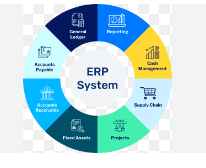
An ERP (Enterprise Resource Planning) system is a type of software that integrates the core business processes of an organization into a single system. The purpose of an ERP system is to tie together the entire organization, providing a unified data set and a common workflow across different departments. This aims to improve organizational effectiveness and efficiency.
Evolution from MRP: ERP software evolved from an older technology called MRP (Material Resource Planning), which originated in manufacturing organizations. MRP systems were designed to help manage manufacturing operations by tracking customer orders and demand, and by managing the parts and supplies needed to fulfill that demand. They also helped manage the manufacturing shop floor to prioritize orders and maximize throughput. Over time, MRP expanded beyond manufacturing to include areas like warehouse management, procurement, financials, accounting, HCM (Human Capital Management), and CRM (Customer Relationship Management). This evolution led to the development of ERP systems that could integrate all these functions into a single system.
Key Benefits of ERP Systems:
Unified Data Set: ERP systems aim to provide one unified source of truth for data across the organization.
Common Workflow: They establish common workflows across different business functions.
Enterprise-wide Transparency: ERP systems offer visibility into operations and data across the entire enterprise.
Different Tiers of ERP Providers: The ERP marketplace can be broadly categorized into different tiers:
Tier 1: These are the largest ERP systems, such as SAP, Oracle, and Microsoft Dynamics 365. They are typically suited for larger, multinational, and more complex organizations, offering a broad range of functionalities.
Tier 2: These providers offer more niche-focused solutions, sometimes concentrating on specific industries or capabilities. Examples include Epicor and Infor, which are common in the manufacturing space.
Tier 3 (Industry Niche): This segment includes numerous smaller and simpler solutions that cater to specific industries or particular functions within ERP. They might not offer full ERP capabilities.
Single ERP vs. Best-of-Breed:
The traditional approach is to have a single ERP system that handles all of an organization’s technology needs. This offers advantages like a lower learning curve, easier maintenance, a single source of truth for data, and less technical complexity.
However, many organizations have unique needs that a single ERP system cannot fully meet, leading to the rise of best-of-breed ERP systems. This involves using multiple, specialized systems for different business areas (e.g., CRM for sales, HCM for HR) and integrating them with a core ERP system. While offering a more precise fit for specific needs and flexibility, this model can be more complex due to the need for integration between multiple systems and can lead to multiple sources of truth. A hybrid model is also common, where a core ERP system handles standard functions, and best-of-breed solutions are used for complex or unique business aspects.
Failure Rate of ERP Implementations: ERP implementations have a high failure rate, often cited as above 80%. The primary reasons for these failures are usually not the technology itself, which is generally robust, but rather issues related to people and processes. This includes inadequate business process improvement and insufficient organizational change management. Resistance to change is a significant factor.
Critical Success Factors for ERP Implementation: To increase the chances of successful ERP implementation, organizations should focus on:
Finding the right software or technology that best fits their needs through independent assessment.
Ensuring organizational alignment on the company’s future direction.
Shifting attention from solely the technology to the people and process side of things during implementation.
Emerging Trends in ERP: The ERP landscape is evolving with the integration of advanced technologies:
Artificial Intelligence (AI) is being used to automate business processes.
Machine Learning (ML) is used to identify patterns and exceptions, such as in accounts payable processing.
Blockchain technology is being adopted for supply chain transparency and traceability, particularly in industries like pharmaceuticals and food.
The Internet of Things (IoT) allows for real-time data collection from devices on the shop floor, providing greater visibility within manufacturing organizations.
How ERP Systems Work: ERP systems are complex, integrated systems comprising various modules, each handling a specific functional area or business process (e.g., finance, accounting, inventory management, supply chain management, CRM, HCM). These modules are designed to work together, enabling end-to-end business processes.
The implementation of an ERP system involves several key steps:
Configuration: This involves making decisions and setting up the software module by module to align with the organization’s specific needs and business requirements. Some vendors offer preconfigured best practices for certain industries.
Customization: If configuration options are insufficient, organizations might resort to customization, which involves changing the software’s source code. This is riskier and more costly than configuration.
Integration: Ensuring that different modules within the ERP system, and potentially third-party systems, can communicate and exchange data seamlessly is crucial. This often involves using APIs.
Testing: Thoroughly testing the integrated processes and data flows between modules is essential to ensure the system works as intended.
Data Migration: This involves consolidating, cleaning, mapping, and transferring data from old legacy systems (including spreadsheets) to the new ERP system. Organizations often need to prioritize which data to migrate.
Key Terminology: Understanding the specific vocabulary associated with ERP systems is important for effective communication:
ERP (Enterprise Resource Planning): Technology that integrates an entire business.
Order to Cash: An end-to-end business process starting from a customer order and ending with the collection of payment.
Procure to Pay: An end-to-end business process focused on acquiring and paying for the materials needed to run a business.
Modules: Functional areas within an ERP system (e.g., finance, HR, sales).
Business Requirements: The specific needs of an organization that determine how the ERP software will be configured and set up.
Configuration: Personalizing or setting up the ERP software to work in a specific way by checking boxes and flipping switches, without changing the core code.
Customization: Modifying the source code of the ERP software to meet unique business needs.
Integration: Connecting different modules within the ERP system and linking the ERP system with external, third-party systems to ensure data flow and process continuity.
Enterprise Architecture: The blueprint that outlines how different systems and modules within the ERP ecosystem will interact, including data flow and storage.
Data Migration: The process of cleaning, mapping, and moving data from legacy systems to the new ERP system.
This overview provides a foundational understanding of ERP systems as described in the provided source.
ERP Implementation: Stages and Considerations
The ERP implementation process is a complex undertaking that requires careful planning and execution, focusing not just on the technology but also on the people and processes within the organization. The source material provides a detailed overview of what this process entails, highlighting several critical stages.
1. Implementation Planning:
Before diving into the implementation itself, a crucial step is implementation planning. This phase, sometimes referred to as “phase zero,” occurs after the ERP system has been selected but before the actual implementation begins. It involves establishing a blueprint for the project, including defining business processes, determining which modules to deploy and when (project phasing), resourcing the project, and putting a change strategy in place. Investing sufficient time in this upfront planning phase is critical to avoid significant problems and wasted resources later in the project. The source suggests that a lack of thorough upfront planning is a common reason for ERP implementation failure.
2. Business Requirements Definition:
A foundational element of the implementation process, often preceding or heavily influencing the planning phase, is the definition of business requirements. Business requirements summarize the organization’s needs and what it expects to achieve with the new ERP system in its future state, not just how things are done currently. These requirements are gathered through workshops with various stakeholders and functional areas to identify current processes, pain points, opportunities for improvement, and future needs with new technology. These requirements are essential for selecting the right ERP system but also for guiding the implementation and ensuring that the chosen system is configured and potentially customized to meet the organization’s specific needs. Maintaining requirements traceability throughout the project is important to ensure that the implemented system ultimately delivers the expected outcomes.
3. Project Phasing:
Given the complexity of ERP systems, most organizations choose to implement them in phases rather than all at once in a “big bang” approach to minimize risk. The way a project is phased depends on various factors such as organizational priorities, project scope, risk tolerance, budget, and resource allocation. Phasing can be based on business processes (prioritizing processes that will deliver the most immediate value), software modules (considering how the modules logically fit together within the chosen ERP system), or organizational readiness and pain points. Regardless of the phasing strategy, it’s often necessary to create interim solutions or integrations between new and existing systems to ensure continuity during the phased rollout.
4. Configuration and Customization:
Implementing an ERP system involves configuration, which is the process of setting up the software by making choices and adjustments within the software’s built-in capabilities to align with the organization’s business requirements and processes. This typically involves checking boxes and flipping switches to define workflows and functionalities without altering the underlying code. Many ERP vendors offer best practices or preconfigured business processes for certain industries to speed up the configuration process.
In situations where configuration alone cannot meet unique business needs, organizations may opt for customization, which involves changing the software’s source code. Customization is a more complex, costly, and risky undertaking compared to configuration, as it can affect the stability of the software and complicate future upgrades. The source advises customizing only when absolutely necessary for mandatory business requirements that cannot be met through configuration.
5. Integration:
Integration is crucial to ensure that the various modules within the ERP system can communicate with each other and that the ERP system can connect with other necessary third-party systems. ERP systems are built with multiple modules, and while they are part of a single system, they still need to be integrated to ensure seamless data and process flow. Furthermore, most ERP implementations require integration with external systems like CRM, HCM, or industry-specific applications. This integration is often achieved through APIs (Application Programming Interfaces). A well-defined enterprise architecture is essential to provide a blueprint for how different systems and modules will interact, including data flow and storage, ensuring a cohesive technology landscape.
6. Data Migration:
Data migration is the process of transferring data from the organization’s old or “legacy” systems (which can include old ERP systems, mainframes, or even spreadsheets) to the new ERP system. This process involves several steps: consolidating data, cleaning up inaccurate or “dirty” data, mapping data fields from the old system to the new system (as naming conventions might differ), and then physically moving the data. Organizations often need to make trade-offs regarding which historical data to migrate. The source emphasizes that data migration is often underestimated and requires significant time and attention.
7. Testing:
Thorough testing is essential to ensure that the configured and integrated ERP system functions correctly and meets the defined business requirements. This involves testing the data flows and processes between different modules and any integrated third-party systems. Different types of testing are typically conducted throughout the implementation process. Ultimately, user acceptance testing (UAT) is critical, where end-users within the organization validate that the system works as intended and supports their business processes. The source points out that many ERP failures could have been avoided with a stringent and effective user acceptance testing process.
8. Go-Live and Beyond:
The final stage of the initial implementation is the go-live, where the new ERP system is launched and begins to be used by the organization. However, the implementation process doesn’t end at go-live. Organizations need to focus on post-implementation support, user training, and continuous improvement to maximize the value of their ERP investment. The source also highlights the importance of measuring and optimizing business benefits after go-live, often by revisiting the initial business case to identify gaps and areas for further improvement.
Throughout the entire ERP implementation process, the source emphasizes the critical importance of program management to oversee and coordinate the various workstreams (including software project management, technical aspects like architecture and integration, organizational change management, and business process re-engineering). Effective program management ensures that the project stays aligned with the overall business objectives and that the implementing organization maintains control and ownership of the program. Furthermore, a strong focus on organizational change management is highlighted as essential for user adoption and realizing the full benefits of the new ERP system, often being a key differentiator between successful and failed implementations.
Reasons for ERP Implementation Failure
The source explicitly outlines several common reasons why ERP implementations fail. These reasons are often interconnected and can significantly impact the success of an ERP project.
Here are the key reasons for ERP failure discussed in the source:
Unrealistic Expectations: Organizations often have a false sense of hope regarding how quickly they can adapt to new ERP software and realize business value. This can lead to compressed timelines, budget cuts, and insufficient resource allocation, ultimately undermining critical success factors like organizational change management and testing.
Lack of Upfront Implementation Planning: Rushing into the implementation phase without a solid plan and vision for the future state is a significant pitfall. Investing time in an “implementation planning” or “phase zero” to establish a blueprint for business processes, module deployment, resource mobilization, and change strategy is crucial for long-term success and can save significant time and money later.
Absence of Clear Executive Vision and Alignment: If executive leadership does not have a clear and well-articulated vision for what the ERP implementation will achieve for the organization, it creates confusion, chaos, and misdirection. Furthermore, a lack of alignment among the executive team on the project’s goals and benefits can severely hinder the implementation process. The justification for the project needs to go beyond simply replacing an old system and should detail how the ERP will improve customer experience, employee experience, operations, and revenue generation.
Insufficient Focus on Organizational Change Management: Neglecting the “people side of change” is a primary root cause of ERP implementation failure. If employees do not adopt the new processes and tools, the investment in technology will not deliver the expected business value. A lack of effective change management can manifest in various problems throughout the implementation. The source indicates that this is a prevalent theme in ERP failures, even leading to lawsuits.
Lack of a Clear Definition of Success: Organizations often fail to define how they will measure the success of their ERP implementation beyond just being on time and within budget. Without a clear vision of the desired business outcomes, such as ROI and specific business value, the project lacks direction, especially when making numerous decisions about scope, configuration, customization, and integrations. This lack of a “North star” can lead the project aimlessly.
The source also provides examples of high-profile ERP failures, which, while not directly listed as reasons in the “Why ERP Projects Fail” section, often illustrate these underlying causes. For instance, Hershey’s unrealistic timeline and go-live during a peak season highlights a lack of planning and unrealistic expectations. Revlon’s inability to ship products after go-live suggests inadequate testing and a potential lack of focus on business process management and organizational change. The massive overspending and lack of tangible improvements in the US Navy’s ERP project could point to a lack of clear vision, scope creep, and potentially issues with project governance and system integrator selection.
In summary, the source emphasizes that ERP implementation failures are often rooted in a combination of inadequate planning, unrealistic expectations, a lack of clear vision and alignment, insufficient attention to the human aspects of change, and a failure to define and measure success. Addressing these factors proactively is crucial for mitigating risks and increasing the likelihood of a successful ERP implementation.
Top 10 ERP Implementation Failures: Case Studies and Lessons
The source provides a detailed list of top 10 ERP failures, offering insights into common pitfalls to avoid during ERP implementations. Here’s a discussion of these case studies:
Herbo (Gummy Bear Manufacturer): Herbo’s SAP implementation in 2018 led to significant supply chain problems. They couldn’t track inventory or raw materials, resulting in an inability to deliver products to stores on time. This caused a roughly 25% drop in sales shortly after the go-live. This case highlights the risk of inadequate planning and testing in critical operational areas.
Washington Community College: Their PeopleSoft implementation, starting in 2012, was significantly impacted by the bankruptcy of their initial system integrator, Cyber. While a second integrator, HDC, was brought in, they eventually canceled the project and sued the college, alleging internal dysfunctions. This case underscores the importance of selecting a stable and reliable implementation partner and the potential for organizational issues to derail an ERP project.
Hul Packer (Technology and Hardware Company): Hul Packer spent $160 million on their ERP project. However, the damages claimed by the company due to the failure were nearly five times that amount. The CIO at the time attributed the failure to a series of small, individually manageable problems that collectively created a “Perfect Storm.” This illustrates how accumulated minor issues and a lack of comprehensive risk management can lead to major failures.
Waste Management: Waste Management’s SAP implementation also failed, despite an investment of around $100 million. They alleged that SAP misrepresented the software during demos, showing “fake software.” The promised annual benefits of $100-$200 million never materialized. This case emphasizes the critical need for thorough due diligence during software selection and ensuring that the demonstrated capabilities align with the actual product.
Hershey’s: Hershey’s SAP implementation resulted in their inability to process roughly $100 million of orders for key products during a go-live. Key contributing factors included an unrealistically short implementation timeline and the decision to go live during a busy holiday season. This highlights the dangers of unrealistic expectations in project timelines and the critical importance of considering the business impact of the go-live timing.
Miller Kors (Beer Company): Miller Kors initiated an SAP implementation in 2013, investing approximately $100 million. The project resulted in a lawsuit against their system integrator, HCL, for $100 million in damages. While details are limited, this case again underscores the potential for issues with system integrators and the significant financial consequences of ERP failures.
Revlon (Consumer Product Company): Revlon’s failed SAP project was publicly disclosed in a financial filing, causing their stock to drop by about 6.9%. After the go-live of one manufacturing plant, they experienced an inability to ship product, lost customer orders, and a lack of supply chain visibility, effectively paralyzing the plant. They also incurred significant costs for expedited shipments. The simultaneous integration of a recently acquired company, Elizabeth Arden, added further complexity. This case illustrates the severe operational disruptions that can result from a failed implementation and the importance of considering organizational readiness and concurrent major changes.
Nike: Nike spent $400 million to upgrade their ERP systems, which did not go well initially. They had to write off around $100 million and saw their stock price drop by approximately 20%. The company then had to invest another five years and $400 million to get the project back on track. This case highlights the potential for massive financial losses and prolonged recovery periods associated with ERP failures, even for large and established organizations.
National Grid (Utility Company): National Grid’s SAP implementation involved an investment of over a billion dollars and ultimately failed. Post go-live, they spent an additional $100 million in support services, utilized two system integrators (including a lawsuit against Wipro), and incurred $30 million per month in ongoing support costs. Their period-end close process increased from four days to 43 days, and they had approximately 15,000 unpaid supplier invoices. This case exemplifies the potential for enormous financial and operational damage from a failed ERP implementation, even with substantial investment.
United States Navy: The US Navy’s ERP implementation, ongoing since 1998, had already cost over a billion dollars with three major system integrators involved. A GAO report indicated no material improvements to the organization despite this massive expenditure. The project scope was reduced to focus solely on financials, excluding shipyard inventory management, yet significant issues persisted, affecting 90,000 employees. This represents a case of prolonged and extremely costly failure to achieve intended benefits, even with significant resources and scope reduction.
These case studies collectively illustrate several recurring themes that contribute to ERP implementation failures, as also discussed in our previous conversation about the reasons for ERP failure. These include:
Unrealistic timelines and expectations.
Inadequate planning and preparation.
Poor software selection or misrepresentation by vendors.
Issues with the selection and management of system integrators.
Insufficient focus on change management and user adoption.
Lack of thorough testing.
Go-live during critical business periods.
Underestimation of project complexity and resource requirements.
Lack of clear project governance and executive oversight.
Concurrent major organizational changes adding complexity.
By examining these high-profile failures, organizations can learn valuable lessons and take proactive steps to mitigate similar risks in their own ERP implementation journeys.
ERP Implementation Success: Key Tips and Recommendations
The source material provides several key tips and recommendations for ensuring ERP implementation success, primarily by highlighting what leads to failure and then offering corresponding advice in the conclusion. Here’s a discussion of these tips, drawing directly from the source:
Choose the Right Software: It is critical to select the technology that best supports your business needs and avoid biased software selection. This implies a thorough evaluation process, potentially involving independent assessments, as mentioned earlier in the training.
Choose the Right System Integrator: Selecting the appropriate partner or partners for implementation is crucial. The source cautions that even well-known system integrators are not a guarantee of success, as evidenced by their involvement in many of the top 10 failures. This suggests the need for careful due diligence in selecting an integrator whose expertise and approach align with your organization’s needs.
Maintain Ownership of Your Project: Remember that the ERP implementation is your project, not the software vendor’s or the system integrator’s. You need to take responsibility for its success, providing clear direction and making necessary course corrections, including potentially changing integrators if they are not performing adequately.
Implement Independent Risk Mitigation: System integrators may not be the best at identifying and mitigating risks. Therefore, it’s essential to have independent risk assessment and mitigation strategies in place.
Prioritize Avoiding Operational Disruption: Operational disruption is a significant risk and cost factor. Avoid cutting corners on crucial aspects like organizational change management and realistic timelines in an attempt to save money, as the costs of post-go-live disruptions can be far greater.
Focus on Business Process Management (BPM): Define your desired future-state business processes and let that blueprint drive your transformation. Avoid the trap of letting the technology dictate how you run your business. This aligns with the earlier discussion about defining business requirements that look towards the future.
Conduct Thorough User Acceptance Testing (UAT): Ensure comprehensive testing of the product and your business processes. Stress-test the end-to-end solution to identify and resolve issues before go-live. The source notes that many failures could have been avoided with a stringent UAT process. The source even suggests having an independent third party facilitate UAT.
Ensure Executive Leadership Involvement and Buy-in: Executives need to be actively involved, bought into the project, and well-informed about its progress and risks. They should also participate in decision-making processes. The lack of clear executive vision was highlighted as a key reason for failure.
Secure Independent, Technology-Agnostic Support: Engaging independent support throughout the digital transformation can help keep the project on track and ensure that decisions are made in the best interest of your business, rather than the vendor or integrator. Third Stage Consulting, the author’s firm, is presented as an example of such a provider.
Establish Realistic Expectations: Understand the true scope, timeline, and resource requirements of the project. Avoid the false hope of quick value realization and be prepared for the effort involved in adapting to new technology.
Invest in Upfront Implementation Planning: Dedicate sufficient time after software selection but before full implementation to create a solid plan, including defining the project blueprint, business processes, and change strategy.
Develop a Clear Vision for Success: Define what success looks like for your ERP implementation beyond just timelines and budgets. Clearly articulate the desired business outcomes and how the ERP will deliver value to the organization.
Prioritize Organizational Change Management: Focus significant time and effort on the people side of change to ensure user adoption of new processes and tools. A solid and effective change management strategy and plan are crucial.
By adhering to these tips, organizations can significantly increase their chances of a successful ERP implementation and avoid the common pitfalls that lead to failure, as illustrated by the case studies discussed in the source.
ERP Software Training: A Detailed Introduction to ERP Systems and Implementations
The Original Text
Erp implementations are complex undertakings that require a lot of finesse and hard skills what exactly are those hard skills and those soft skills you need to know to make your Erp software implementation successful that’s what we’re going to discuss here in a deep dive training course here today my name is Eric Kimberling I’m the CEO of third stage Consulting we’re an independent Consulting for that helps clients throughout the world with their digital transformation and Erp implementations we help clients with all sorts of Erp implementations ranging from sa and Oracle and Microsoft to potentially lesser known systems like infor epicore Etc and we work with a lot of different software implementations a lot of different project teams a lot of different Industries and what we wanted to do here today is provide a training course that goes deep into understanding what the different Erp systems are in the marketplace what it takes to make those Erp implementations successful how to understand the change management and the risks and failure points of implementations as well as some case studies so that we can understand what not to do as well as what to do during our implementations so this training course is meant to be a deep dive into understanding Erp systems and Erp implementations this is going to be relevant whether you’re a project team member going through an Erp implementation for the first time whether you’re trying to brush up on your skills whether you’re a consultant whether you’re an executive team member trying to figure out what exactly you should know about Erp systems and what understanding you need to have before embarking on an implementation so this is meant to be a deeper dive than a lot of the videos you’ll find on my YouTube channel I encourage you to share this training material in this training video with anyone else on your team that you think might benefit from this and your overall project team and your colleagues as well now for more information if you’re looking for more best practices and more supplementary material to this training course I encourage you to read our annual digital transformation report it’s a report we publish each year that goes through a number of independent reviews and rankings of different ARP systems as well as providing a number of best practices and tips to help organizations be more successful with their implementations you can read and download that paper for free by scanning the QR code in front of you or you can go to the links below and if you want to go even deeper than this white paper that we share with you for free I also encourage you to read my new book called The Final Countdown it’s a book that I published in 2023 that talks about digital strategy Erp projects and how to be successful in those implementations and it is my 25 years of experience with helping clients through their Erp implementations you can read that book by scanning the QR code in front of you or you can just go to the final countdown. now the way we’ve broken up this training session here today is we’ve broken it into a number of different modules and you can see the agenda here in front of you we’re going to start off by talking about Erp software in general this is especially helpful if you haven’t yet chosen an Erp system or if you’re still trying to figure out and narrow down what system or systems might be the best fit for your organization once we’ve done that we’ll dive into implementation implementation planning the implementation itself organizational change basically everything you need to know about how to implement Erp systems effectively and then we’ll get into some case studies we’ll talk about Erp failures and some of the lessons from them as well as successful ones and some of the lessons we can take away from organizations that have been successful in their Erp implementations first it helps to understand what exactly Erp software is so let’s start off by giving a quick highle overview before we dive into specific software vendors and ways to implement the system we’ll start off with this basic foundational understanding to start Erp software or enterprise resource planning software has been around for a long time it’s helped a lot of organizations improve and become more effective and efficient but what exactly is Erp software I’m going to give that answer here today I’ve been in the Erp software space now for over 20 years and whenever I’m talking to family or students or someone who’s not familiar with the Erp space that I’m in people often ask what in the world is Erp and what does that mean I mentioned that Erp stands for enterprise resource planning and Erp is actually an evolution from some older technology that was really originated with a lot of manufacturing organizations and that software was called MRP material resource planning so the origin of MRP came to be when a lot of larger Manufacturing organiz ations were finding that they were struggling with managing their entire manufacturing operations they had trouble tracking customer orders and tracking demand tracking what kind of parts and supplies they would need to purchase to be able to meet and fulfill customer demand so MRP systems were a way to handle that it was a way to manage the tracking of what supplies and raw materials we might need to manufacture for our customers it was a way to manage the manufacturing shop floor so that we could prioritize orders and make sure that we maximized throughput and it was really a way to address the whole movement in the 9s toward lean manufacturing and trying to maximize manufacturing efficiency and in the US a lot of us manufacturers were struggling with manufacturing efficiency and Manufacturing quality and they were being beat by Japanese manufacturing organizations at the time so MRP systems were a way to help organizations of all Origins and all national alties to help them better become more efficient and more effective so over time MRP evolved and morphed into something more than just a manufacturing solution it started to focus on warehouse management and procurement and financials and accounting even HCM or human Capital management or customer relationship Management on the sales side it took the core of MRP and started to expand in other parts of the Enterprise to where organizations were moving towards single systems that could tie together the entire organization provide one unified data set provide a common workflow across the organization and for lack of a better term provide one system that provided all the operations and data and transparency into what was happening enterprise-wide and so that’s the whole evolution of how Erp came to be it really traces its Origins back decades ago when Enterprise technology was first emerging now there are a plethora of Erp software providers in the marketplace the biggest ones the ones that are most commonly used by bigger organizations are companies like sap Oracle is another one Microsoft provides its own Erp solution those are the three biggest ones and a lot of organizations and Industry analysts will refer to those larger Erp systems is the tier one Erp systems those are the ones that are typically better suited for larger organiz organizations multinationals more complex organizations multilocation types of organizations those tier one providers are generally trying to provide a breadth of functionality that can meet the needs of those organizations there’s also tier 2 Erp providers and these are the providers that are more Niche Focus solutions they might focus on one industry might focus on one set of capabilities just to give you a few examples epicore and infor for example or two manufacturing Erp systems that are very common in the manufacturing space but you don’t see them a lot in other Industries you don’t see them for example in a lot of financial services organizations or Professional Services organizations they tend to focus more on manufacturing and distribution and nothing else so that is another example or another segment of the Erp space is that whole tier 2 market and then you have your tier three or industry Niche solutions that are there are probably dozens or hundreds of different Erp solutions that fall into that segment they’re either smaller simpler solutions that can provide capabilities to specific Industries or perhaps certain functions or capabilities within Erp they may not even be providing full Erp capability they may be focusing on just one small segment within Erp and like I said there’s a ton of different options and Solutions in that space so overall if we look at all the different types of Erp systems out there there are easily dozens of if not hundreds of Erp systems that can be used for your organization typically the going in proposition with Erp implementations is that you’re going to have one Erp system that can do everything that you would need technology to do for your organization now that is an ideal situation it’s a perfect world scenario but the reality is is most organizations have unique needs and unique challenges that can’t be met by one single ARP system that’s trying to be everything to everyone so what the single ARP System model has done is it’s created a niche or a void that’s being filled by what we call Best of breed Erp systems and these are systems that are not meant to be one single Erp system that’s going to be everything for everyone within your organization but it might be that you’re focusing on different segments of your business so for example within your sales organization you might have CRM or customer relationship management software within your HR department you might use a separate or a different human Capital management software the special izes in that at workday for example is a good example of a system that provides just HCM capabilities you might have a different system that provides financial and accounting capabilities and you could also in addition to those examples be using a core back office Erp system to tie it all together so best of breed systems is a common Trend that we’re seeing in the market and it’s in some ways more complex because now you have multiple systems that you have to tie together but in other ways it provides more flexib ility it provides more precise fit with what your unique business needs might be and there certainly trade-offs to both the best of breed model as well as the single Erp model but when talking about Erp it’s important to look at the whole picture of what are those spectrum and Continuum of options available to you in the marketplace you’ve probably seen that Erp implementations quite commonly fail in fact many statistics put the failure rate at above 80% of organizations that try to implement DRP whether it’s a tier one system a tier 2 or three system or a single Erp best of breed Erp doesn’t really matter the failure rate is fairly high so the question becomes if the technology is great and there’s so much demand for this technology how could they possibly fail as often as they do and if you check out my channel and some of the other videos on my channel just search the word failure and you’ll find a bunch of videos I’ve created about how to avoid failure why projects fail what some of the common challenges are but in a nutshell the reason Erp implementations typically fail is not because of the technology but it’s because of the operational and the people side of things the technology in general is very robust it’s very sophisticated it’s Innovative it can do a lot of different things that’s usually not the problem although technology can create complications during implementation but the more common challenges and problems with Erp implementations are that we haven’t adequately addressed our business process improvements we haven’t adequately addressed our organizational change management or our people needs so in other words and to put it simply people don’t like to change and because they don’t like to change new technology no matter how great it is is going to be difficult for your organization to adapt to so in its simplest terms people and processes are why Erp implementations fail like I said I encourage you to watch some of the other videos on my YouTube channel that go into that topic in more detail but in general that’s why implementations fail so the question becomes how do we Implement Erp software if most of them fail what can we do differently to implement well and to simplify and to summarize what I’ve also talked about in other videos on my YouTube channel the first thing is to find the right software or technology that’s the best fit for your organization that’s kind of the first step that’s the minimum ante that you need to be able to succeed is to make sure that the software technology you’re implementing is a good fit with what your needs are and make sure you get an independent assessment and View and objective eval valuation of the different options in the marketplace so you can find the best technology for your organization a second critical success factor is to ensure that your organization is aligned on what it wants to be when it grows up a lot of times organizations are trying to implement Erp software at a time of turmoil at a time of misalignment or at a time of strategic misalignment where the organization isn’t on the same page with the direction it’s going it doesn’t have a clear vision and then you try to Overlay new technology on top of that and that’s a recipe for failure so making sure you have clear alignment on your overall organization is very important and again I’ve included some videos below that will help you further dive into that topic and then the implementation itself when we focus on the implementation it’s important not to focus too much on the technology but to shift some of the time resources and attention from technology over to the people in process side of things if we do the people and process side of things very well and we also have alignment and we’ also pick the right software or technology for our organization we have the best chances to succeed but the problem is most organizations fail in one or more of those three critical success factors and like I said I encourage you to download some of the content I’ve included links to below that’ll dive more into what you need to do to be successful for your Erp implementation Erp software had its Origins many years ago with some very simple types of objectives it was trying to accomplish it was just trying to track inventory and orders and activities better within an organization sounds simple enough but over the years it’s evolved into more than that it’s not only trying to tie together an organization provide one common single source of Truth for what’s happening in the organization but it’s also now trying to introduce more Advanced Technologies and capabilities into erps so for example there’s new artificial intelligence that’s helping organizations automate some of their business processes better there’s machine learning that looks for patterns and exceptions to things as simple as accounts payable processing of invoices machine learning for example can automate the accounts payable process and use artificial intelligence to flag the exceptions or the things that look like outliers or the things that look like could be potential problems in your accounts payable invoice processing so that’s just one minute example of how machine learning and artificial intelligence is being used to take Erp to a whole another level you also have blockchain which is being used by many organizations and pharmaceutical and food companies for example they need to track every raw material in part in an entire production process an entire distribution process so that if there’s ever a recall or regulatory problem blockchain can be used to trace problems back to the supplier and that’s a new technology that’s being provided and then finally one other common Trend we’re seeing is Internet of Things if you have an Apple Watch and your Apple watch is tracking your dat daily activity that’s an example of Internet of Things it’s tracking that information it’s storing it in the cloud and what you do with that information and how information like that could tie back to an Enterprise is very important for example a lot of manufacturing organizations will have Internet of Things type devices out on the shop floor that will be tracking data on the shop floor that will then tie back to the Erp system so that you can see complete visibility into what is not only happening within the corporate headquarters but also what’s happening on the shop floor so those are just a few examples of some of the trends that are emerging in the Erp space if managed correctly implemented correctly and leveraged correctly organizations can go to the next level in their respective Journeys but it requires the right Focus the right discipline and also just finding the right technology now that we have this basic understanding this fundamental understanding of Erp systems in general let’s go a little deeper and talk about how Erp systems actually work Erp systems are very complex Integrated Systems with a number of different modules so what I want to do next is more of a whiteboard session to dive into what exactly Erp systems are just to help you visualize and understand Erp systems in general I’m going to talk about sort of the mechanics of how Erp systems work along with some of the nomenclature that you should be aware of and by the way for more information about this you can also check out my you YouTube channel that goes into a lot more detail about what Erp systems are and some of the different terms and definitions you need to know so be sure to check that out and I also wanted to invite you to download a white paper from our website that’s called lessons from 1,000 Erp implementations and it’s a guide to best practices and tips and Lessons Learned for Erp implementations and it’ll help you understand how Erp systems work and how implementations work as well so what I want to do today though is talk about the mechanics of Erp systems and how they work more from a mechanical perspective and that’s what we’ll talk about before we dive into what Erp systems are and how they work it helps to understand what we’re moving from in other words organizations are implementing Erp systems because they’re trying to replace their old Legacy systems so that’s the starting point we have here is you have Legacy systems that organizations are starting with and these Legacy systems might be anything from an old DRP system uh it could be a A system that was deployed 10 or 20 years ago maybe even longer um often times organizations are still using main frames believe it or not if you don’t know what a Mainframe is it’s something that was used mainly in the 60s and 70s and it was a there’re the big servers green screens transaction codes a lot of stuff I don’t need to get into here but it’s a very old outdated type of Technology but a lot of organizations are still using them and the number one Legacy system in the world uh I don’t have any data to back this but it’s based on just qualitative experience but the number one Legacy system in the world is Microsoft Excel so spreadsheets in other words organizations that are running their business on spreadsheets they’ve got people with a lot of tribal knowledge and they’re trying to document that tribal knowledge on their local machines in Microsoft Excel so this is where organizations are starting from is our Legacy systems and that’s the first thing to understand is what is it we’ve got today and then what is it we’re going to move toward in the future and that’s what I’ll get to next now let’s shift gears and talk about what Earp systems really are and the first thing I want to talk about are modules when you think about an Erp system which is what we’re moving to here we’re moving from Legacy over here to Erp systems we’re going to have a number of modules and modules are essentially a functional area or a specific business process that can be handled by the Erp system but it’s not just one big massive system it’s a set of modules almost like a puzzle you’re putting together pieces of a puzzle and each module handles their own part of the business so for example a lot of VP systems might have a finance module so this would be more the the uh reporting and the financial budgeting things like that you might have an accounting module for example that’s a very common one another common one would be Inventory management so this is tracking all of the raw materials and goods and materials you might need to run your run your business organizations also oftentimes have Supply Chain management Tech or uh Supply Chain management modules I should say you might also have CRM which is customer relationship management that’s what your sales team would use to track their Pipeline and potential customers you might have your human Capital Management which is your HR systems this is how you onboard people you track their training their benefits payroll all that good stuff so these are just a few examples I won’t go into all of them every Erp system has its own unique mix of modules but in general they have dozens if not more modules that handle different parts of your business and some of these modules by the way especially Supply Chain management might actually have subm modules within it so for example Supply Chain management might have Logistics as a separate module we might have uh procurement for example um you might have logist I already said Logistics you might have transportation management so those are just just a few examples of subm modules and that’s true for all of these Finance might have AR or I’m sorry accounting might have AR and AP uh Finance might have budgeting reporting Etc so you get the idea here the modules are the ways that Erp systems are built to handle specific functions and in the past or or in some cases there are systems out there that only focus on one or more of these modules but Erp systems one of the benefits of Erp systems is that they can do all these things within one single system but still broken out into individual modules and the key to understanding how these modules all tie together is endtoend business processes so you’re going to have end to end processes that start with the individual transactions within each of these modules But ultimately you need to tie it all together and provide those endtoend processes throughout the entire organization which is part of the value that Erp systems provide so these are the building blocks for an Erp system how how do we start to build it how do we start to deploy it well the first thing we do or one of the first things we do is we configure each of these modules they’re not just out of the box working a certain way there’s certain decisions you need to make to really configure and personalize the software to fit your needs and you’re going to do this module by module typically you’re going to start off at the foundational building block side of things building out the the requirements and the configuration that are needed to get the software to work the way you needed to to fit the needs of the business now some Erp vendors have a certain amount of best practices or preconfigured business processes so for certain industries or certain functions Erp vendors sometimes will have sort of predefined ways of configurating the software for certain instances or certain industries so that’s one way you can sort of speed up this configuration process but it doesn’t change the fact that you have to Define what your business needs are Define what your business requirements are and then figure the software and set it up the way you need to going forward now for some reason you find that the configuration for any one of these modules is not enough it doesn’t give you the option you need to run your business the way you want to then your next option is going to be customization customization is a little bit different because we’re not just checking boxes and clicking buttons to get the software configured a certain way customization entails going into the software and actually changing the source code it’s a risky proposition creates a lot more cost and risk than you might want but sometimes it’s necessary if you can’t get what you need out of the basic configuration the other option is if you find that any one of these modules don’t give you what you need within the cor Erp system you might go out there and find another third party technology to bolt onto or integrate to your Erp system so a good example would be Supply Chain management Supply Chain management oftentimes is such a complex area that some Erp systems can’t do Supply Chain management well you also see it fairly commonly with CRM as well there’s a lot of best of breed providers out there like Salesforce is is the biggest one one Salesforce CRM which provides really robust deep CRM capabilities but it’s a standalone system so you lose the benefit of having a single set of modules that are all tied together you can still do it but it’s just a different way of approaching any deficiencies that the Erp system might have Within These modules so as we are configuring the software using either some of the preconfiguration or configuration we do on our own we now need to figure out how to integrate the system the system isn’t just integrated out of the box it provides the tools to integrate but each of these modules are still somewhat of a standalone system that need to be integrated so we need to make sure that we’re tying together data flows and process flows across these different modules for example if we buy some inventory we need that data the fact that we just bought some inventory we need it to tie back to Finance and Accounting and that data needs to flow back and forth uh same with Supply Chain management um we need to make sure that we’re buying inventory and we understand the impacts on Supply Chain management and of course it all starts with your with your sales and your customers so as customers are placing orders that should affect and influence how we manage Inventory management and that data and those process flows need to tie together through integration between modules now if you have a thirdparty standalone system that you’re going to bolt on let’s just call it third party system down here because I’m creative like that so thirdparty system we’re going to do the same thing we’re gonna tie that third party system back to the core Erp system this is a little bit easier to integrate generally the modules within an Erp system but if we have to we can pull in a third party system that’s unaffiliated with the CRP system and tie it in through integration tools now we have to be careful though because every time we do this we’re diluting the value of a single Erp system a single platform that we can use might be necessary maybe you’re selective about it but you don’t want to get overly excited about doing too much of this because then you start to wonder why do you even have a core RP system if if you’re going to bolt on a bunch of different systems on top of that so you can do it but you just want to make sure you understand some of those trade-offs now the next thing we do once we’ve configured the modules we’ve integrated the modules now we’ve got to test the processes and the data flows between the different modules so again it doesn’t just magically integrate it doesn’t just magically work now we need to make sure that all the decisions we made in this complex set of modules we need to make sure that everything’s flowing the way it should data isn’t getting corrupt or lost along the way make sure the processes and the transaction are working the way they need to to support our business and all of that is done by tying this all together after we’ve done the integration through testing and typically you’ll do different types of testing which I’ve talked about in different videos on my YouTube channel so I encourage you to check that out but I have a whole video that talks about the testing process and the different phases of it how you do that and you can check that out in the link here above but generally what you want to do is make sure that you’re testing across these modules to make sure the processes work the data works and ultimately that people are valid validating within your organization the people within your organization are validating that the system works the way it was intended to be built so once we’ve done a few iterations of that testing process now we’ve got to make sure that we get all this data over here we need to move it all over to the new Erp system so over the years we’ve accumulated and presumably hoarded a bunch of data we’ve got our old the Erp system that have been tracking data for decades or how long you’ve had the system maybe your main frames have been around for even longer you’ve been using Excel spreadsheets all over the place you’ve got different employees that are tracking different sets of data so we need to make sure that we figure out how we’re going to consolidate all this data capture it all clean it and then ultimately map this data to the new technology and when I say map that’s a little bit different than migration so first is to map the data so data fields over here might have different names than data fields over here for example in our old Erp system maybe a work order was actually called a service order but in the new Erp system it’s called work order so we need to make sure that we map those data fields to the right place from the old system to the new system and that’s just one example there’s tons of different examples of ways we need to map data from old system to new and it’s often times a messy process because new technology new capabilities make it harder to track or to to trace and map the data the way it was back 10 20 30 years ago to the way it is today so it’s not a perfect process but it is something we need to do and not only do we need to map the data but we also need to make sure that this data is accurate over years and years of using these old systems people make mistakes or they forget to enter things into the system and this data becomes inaccurate so we need to go back and clean up this data and then once we’ve done that then we can migrate all that data over here and then we can complete the testing process with data in the new system and then ultimately we can go live with that data now organizations typically don’t bring all of their data over they tend to be forced into some trade-offs and priorization decisions around what data they actually need to bring over versus what they can leave behind so that data migration process is very important and it’s actually an area that’s oftentimes overlooked or underestimated in a digital transformation or Erp implementation so you want to make sure you spend lots of time on that so I hope this has giv you a fundamental understanding of how Erp systems work what you can do to understand these different nuances of Erp deployments and for more information and more guidance and best practices I encourage you to download our lessons from 1000 Erp implementations ebook now that we have a general understanding of what Erp systems are and how they work let’s dive into some of the buzzword some of the terms and definitions that are important to understand as you’re entering the world of Erp systems or as you’re embarking on your Erp implementation and these are a few of the most important terms that are critical for you to understand so that you can speak the same language with your peers internally within your organization as well as with your outside Consultants or if you are a consultant it’ll help you speak the same language with your peers as well well so let’s dive into some of the top terms and definitions you need to understand as part of your Erp implementation the first and perhaps the most fundamental term to understand is the term Erp itself what does the word Erp mean well the acronym itself stands for enterprise resource planning which that in and of itself it doesn’t tell you what it means but the term enterprise resource planning is really a way to describe technology that ties together an entire business and the reason the term Erp came to be is because in the past companies would deploy multiple Technologies to do different things throughout an organization so Erp systems were invented to really create a single enterprise-wide technology that could do everything from cash and financial management to inventory management to customer service and Order management warehouse management manufacturing basically anything that an organization needed could be handled by an Erp system so enterprise resource planning is a term that defines and alludes to the fact that it’s a system that ties together an enterprise-wide set of business processes a very common term that builds on the enterprise resource planning term is order to cache and order to Cache is a term that refers to an endtoend business process that ties together multiple workflows and functions throughout a business it all starts with a customer order and ends with collecting cash from the customer and everything in between are the steps that happen along the way so if you think about an order to Cache process typically what happens is customer calls you place the order you capture the order in the system and usually that order will trigger a whole set of Downstream activities that will be managed in the airp system so things like managing inventory or making sure you order the right raw materials to satisfy that customer order making sure that you generate an invoice to ensure that the customer pays once the customer pays you track the money that comes in so there’s a whole host of things that happen from the time the order comes in until you actually collect cash from the customer and by the way this will also include things like warehouse management the manufacturing process the planning process for manufacturing really everything that goes into making your product of service and delivering that product of service to your customer and ultimately collecting cash from your customer similar to order to cash you also have a another endtoend business process called procure to pay and procure to pay is a little bit different from order to cash in that it’s more focused on procuring the materials you need to run your business and ultimately paying for those materials so it’s sort of the opposite of order to cash in that order to cash is focused on fulfilling a customer order whereas procure to pay is more focused on what an organization itself needs to procure and pay for to run its business so if you’re an organization that manufactur facturers widgets you need to acquire raw materials in which case you’re going to procure and place orders for those raw materials you’ll receive the raw materials and ultimately you’ll pay for those raw materials sounds simple enough but there’s a lot of steps in that process and a lot of nuances that organizations go through when they’re going through their procure to pay process and the reason that this is such an important process is because when we look at the endtoend business processes within Erp you have your order to cash and procure to pay which are really your two major endtoend business processes that relate to an Erp system now even though Erp systems are meant to be single Integrated Systems the reality is that the way Erp systems are built are in modules so it’s not just one big massive system it’s one big massive system that’s comprised of a number of different individual modules that ultimately integrate tie together and provide that end to-end visibility and that endtoend processing that P systems provide so every Erp system is a little bit different has different modules different names for the modules but if you think about the functional pieces of a business most functional pieces of a business are going to have a module that relates to that part of the business for example in Finance and Accounting you have your accounting and your general ledger module you might have your financial planning module you have your accounts payable module your accounts receivable module so a lot of different pieces within Finance and Accounting might have different modules or subm modules that provide very specific functionality for a specific part of your business but even though it’s providing specific functionality it’s providing that functionality in a way that can integrate with the other modules to provide a complete integrated endtoend business process flow within that technology other examples of modules outside of Finance and Accounting might be Inventory management sales and distribution customer order processing you might have warehouse management transportation management MRP or production planning in the manufacturing environment these are just a few examples of some of the different modules that Erp software providers provide to their customers the beauty of modern Erp software is that they can provide a lot of flexible different types of business processes even though they have a standard way of working a standard way of functioning within the nuances of how that software Works they can be configured and tailored to meet the needs of different business requirements so business requirements are what the needs are of the organization the needs that determine how we’re going to configure and set up the Erp software to accommodate the needs of the organization and I’m going to come back to this concept of configuration later in this video that’s another term we’ll get to but for the time being it’s important to understand what business requirements are and typically what happens is each function or each department within an organization has its own set of business needs business requirements that it will Define as a way to select and implement the right Erp software in the right way that best aligns with and meets their needs now some organizations might have hundreds or even thousands of business requirements that they Define as part of their business requirements but they’re not all equal there’s going to be those that are very high priority things that you must have within an Erp system and then there’s lower priority ones that are more nice to have in a perfect world you might have these business requirements that are met and you’re going to try and accomplish as many of those business requirements ments as you can within your Erp system but in general the whole business requirements phase of a project begins early in the process typically even before you’ve selected an Erp software and oftentimes you’re defining those business processes in even more detail once you selected the software and it’s time to go implement the software now when implementing Erp software in order to accommodate the business requirements that have been defined by the organization implementing the software it needs to go through a process called configuration and configuration is really a way to really personalize or set up the software in the way you want it to work and every Erp software has a number of configuration tools some more flexible than others that give you more options than others but every airp system out there is going to have a certain amount of configuration you can do and a way to think about configuration is it’s a way to change the software and change the way it works and personalize it to fit your needs but not in a way that compromises or changes the way the software was written so in other words you’re not changing the code of the software necessarily you’re not doing development work you’re checking boxes and flipping switches within the software to ensure that it does the right things and goes through the right workflow to match your business processes and your business requirements so configuration is a mandatory part of any sort of Erp software implementation and it’s a key term to understand as you go through your Erp software initiative now I mentioned that configuration is a way to change change the software and personalize the software without changing the way the code was built but sometimes an organization has such unique needs or is so different from its competitors that it needs to change the Erp software in some way beyond the limitations of what configuration allows you to do in these cases most Erp software will give you the tools to actually customize the software and it may sound like very similar terms customization and configuration but customization is different in that you’re actually going in and you’re changing the code you’re doing development work it’s a lot heavier lift from a technical perspective and you’re actually creating additional risk because now you’re changing the way the software was built and you’re sort of rewriting some of the code that’s been proven and established in working for other organizations now often times it’s a necessary evil it’s something that organizations have to do in order to get the software to work the way it needs to but other times organizations customize when they don’t need to there might be better ways that they could get what they need simply by configuring Which is less risky and less timely and less expensive than customization so you want to make sure that you customize only in must needed situations those mandatory business requirements that simply can’t be met through configuration you might look to customization as a way to tailor the software to fit your needs now I mentioned earlier in this video that Erp software is comprised of a number of modules and subm modules those modules and subm modules are integrated with each other so that you’re still using the same system the same user interface the same set of data and the data is flowing and the processes are flowing throughout those different modules however in order to get these modules to work and to talk to one another you still have to do integration you have to ensure that the hooks or the ties between these different modules are there and that the data is flowing and the processes are flowing the way that they should in addition most Erp software implementations require that you implement that core Erp software with some other thirdparty system that’s unrelated to the Erp system even though Utopia is to have one system that’s used by everyone within the organization to do everything an organization needs typically most Erp software is not going to give you 100% of what you need and it requires that you have some other Standalone systems to support that core Erp software in these cases you need to integrate with those thirdparty systems as well to ensure that the data flows back and forth between your core Erp system and all the modules within it and these thirdparty systems a good example and a common example of thirdparty systems that require integration to the core RP software is going to be in any sort of regulated industry if you think about pharmaceuticals or the food industry there’s strict government compliance regulations that require that you have certain processes in place and that you track information a certain way often times those standards and needs aren’t met by simply having an Erp system in place often times you need a standalone separate system to track whatever information or processes you need but whatever the cause is or whatever the reason is for having these thirdparty systems you want to make sure that you build that integration to ensure that the data is Flowing between the core Erp system and those third party systems and typically this is done through what’s called apis and I won’t get into a bunch of technical details but apis are generally the tool or the technology that’s used to create the hook or the integration points between the multiple systems Enterprise architecture is another important term to understand as it relates to Erp software and it ties back to the previous point I made about integration so when we’re talking about integration we need to have a blueprint or a big picture vision of how different systems and different modules within the ARP system are going to talk to one another so in other words we need to Define where the integration points are how data is going to flow back and forth between those systems and ultimately where the data is going to reside where’s that ultimate single source of truth going to be in terms of where the data resides and that’s a big part of what you define as part of your Enterprise architecture so when you hear the term Enterprise architecture or software or solution architecture those terms are somewhat interchangeable and refer to basically a visualization and a map of how different technology and different modules within Technologies are going to talk to one another where those data points are going to be how the data is going to flow how different transactions will flow and touch between multiple systems and so that’s ultimately what Enterprise architecture and solution architecture means in order for an Erp system to work properly it needs to have data and it needs to have historic data so data you’ve brought over from previous systems that you had in place prior to deploying a new Erp software and so data migration refers to the whole process of cleaning up your data that’s in your old system because often times the data in the old system is corrupt or it’s become dirty and inaccurate over the years so you need to clean up that data and then you need to figure out how those data fields and those data points map to the new system because you might have different naming conventions for different fields and different subjects within the system and then ultimately how you’re going to move that data from the old system to the new one so that whole process I described is really falling under the bucket of data migration and so data migration is the way that we clean and map and move the data from our old Legacy systems to our newer Erp software so these are 10 of the most important terms and definitions you need to know as part of your ARP software implementation one of the tricky things about Erp implementations and Erp software in general is that there’s a lot of different options you have two basic types of Erp systems you have fully integrated single Erp systems which are meant to provide one single user interface one single database one single application that ties together your entire operations the other bucket of Erp systems is more of the best of breed model and this entails choosing multiple systems to handle different parts of your business so for example you might have a core Erp system to handle your financial and accounting needs but then you might have another system that handles your HR needs you might have another system that handles your CRM or customer relationship management you might have an Mees or manufacturing execution system that automates your shop floor so a lot of different systems that do different things in the market and rather than trying to be everything to everyone these Focus modules are more targeted on specific niches or in some cases specific industries that are meant to do Erp better than the traditional Erp systems can so while some may argue that best of breed is not really Erp it really is Erp syst systems can be one single integrated system or it can be modular based or separate vendors for different functions within your business and different organizations have different needs so you’re going to have an answer that might be different than your nextdoor neighbor or another organization in your industry so let’s dive into some of the pros and cons of single integrated Erp versus best of breed Erp so let’s start with the single Erp software model that’s frankly where most organizations start and assume they want to be at least the clients we work with they want a single Erp model so we’ll start here and we’ll talk through some of the pros and cons here so with single Erp one of the biggest advantages is that you have one system and the fathy of one system leads to another set of advantages which is there’s a lower learning curve because you don’t have to teach people how to use multiple systems you’re training them on one system it’s easier to maintain and deploy because you’re focused on one system versus multiple systems for multiple Technologies it also provides a single source of Truth for data so when you think about a single Erp system you have one system that houses all of your data you don’t have to worry about the data flowing between systems and something happening to the data because it’s going in between multiple systems you have one single system that’s handling all of it and that leads to another benefit which is that there’s less technical complexity with one system because you don’t have to tie together multiple systems you don’t have to worry about all the different integration points and some of the architecture issues that come up as a result of having multiple systems so there’s less technical maintenance here and complexity I should say so these are just a few of the advantages and reasons why you might consider one single Erp system now let’s talk about what a best breed model might look like and how it compares to the single Erp System model so far the single Erp software model sounds pretty good when I look at this I think that sounds reasonable it sounds like something I would want if I were a leader within an organization but let’s also look at the best of breed model to see if it is as good as it seems to have a single Erp software model so let’s talk about best of breed and again just as a reminder best of breed means that we’re not looking for one single system to do everything throughout our organization as we are here what we’re doing here is we’re looking for the best Technologies for the different parts of our organization so for example your accounting and finance group might go out and buy a Finance and Accounting system your supply chain managers might go out and find a Supply Chain management system and your sales team might go out and find a separate customer relationship management or Salesforce automation system and so on and so forth so the idea here is rather than finding one technology across the Enterprise we’re finding the best Technologies for different parts of our organization now some of the benefits of besta breed would be that you’re more likely to find the better fit across the organization now when you talk to a software vendor especially the Erp vendors that sell the single Erp software model they’re probably going to tell you that this isn’t true true their software can do everything that best of breed can just as well but you get all these advantages the fact of the matter is that’s not true when you go out and look at Best of breed models you find that there are Technologies out there that can typically handle certain functions better than any one system can and the reason for that is because no single Erp software vendor is going to be able to beat everything to everyone even if they focus on one industry and you’re in that one industry they focus on it’s likely that you have different nuances and different parts of your business that have different needs that are is going to be satisfied fully by the single Erp model the other component of best of breed that can be helpful to understand is that there’s a higher learning curve so whereas with single arp we said there’s a lower learning curve here we’re saying there’s a higher learning curve because you’re having to train people on how to use multiple systems so a higher higher learning curve here one of the potential downsides here is that you could have multiple sources of Truth so in other words we for example if we have a CRM system that’s tracking our sales Pipeline and we’re capturing prospective client information in that CRM now we’re housing customer and prospective customer data in the CRM system but we’ve also got presumably another system for inventory management or for financials where we need that same data the customer related information but it’s not in the other system so now we need to create integration and there’s integration back and forth and there’s more potential for something to break down or become undermined as a result of some of the human interactions between systems so that’s a potential upside or advantage of single ARP and another consideration for best of breed is that this has higher technical complexity so because we have to take multiple systems and tie them together figure out how we’re going to integrate these systems how the data is going to flow and ultimately what the overall landscape is going to look like and we have to maintain that longer term multiple systems that adds to your technical complexity so on the surface when I look at this I think okay if I look at these four categories or these four criteria that I’ve outlined here really the advantages here are largely to single ARP system models I say the advantages here here here and here and then here I would say likely to find a better fit might be favoring best to breed so on the surface I would look at that and say well clearly we we probably want the single Erp model because there’s only one advantage here but there’s three advantages here but here’s the problem and here’s the thing that it comes down to for most clients we work with is that this right here becomes the most important thing and the problem here is this difference between these two models is a lot bigger than just one item on a checklist so in other words a lot of times you’re more likely to find some bigger showstoppers over here because it functionally can’t handle what it is you need it to do so it ends up pushing organizations to want to at least consider more bester breed model now one thing I’ll suggest is that in some cases the fact that people resist this model and want to look at this model that could be a symptom of resistance to change so in other words we don’t want to change we the way we do business today so we’re going to push for more of a best breed model but a lot of times maybe even a majority of the time for a lot of organizations you find that no they really do have needs that are better satisfied here and these are strategic business needs not resistance to change this is actual stuff that we need to do our business well and to be more effective as a business so this becomes the biggest challenge for most organizations that are trying to resolve the debate and where they fall on the Spectrum so how do we figure out which model is best what do we do and is are there any other options than what we have here that’s what I’ll talk about next now as if this tradeoff and this decision wasn’t hard enough there’s actually a third option that a lot of organizations don’t consider and that is a hybrid model so that’s saying that rather than choosing one or the other we’re going to have a core single Erp system that does all the core vanilla type functions within our business and then we’re going to do best of breed for the complex or the unique aspects of our business or our industry so for example a lot of times if you look at an organization like a manufacturing organization a complex engineer to order manufacturing organization let’s say you might have a corer p system that handles all the financials basic Inventory management basic bill of materials and customer information things like that but when it comes to product lifecycle management CAD drawings and Engineering types of processes you might have bolt-ons that would bolt on to the core Erp system and this ends up being a good middle ground for a lot of organizations that are really having trouble deciding between these two and by the way vendors even recognize that this is a very powerful model because a lot of vendors like sap and Oracle for example and even Microsoft they gone out and acquired a lot of best of breed providers because they know that their single core Erp system can’t do everything they need it to do or that their customers need it to do so they go bu these best of breed providers so that they they can say that they have a single Erp system when in reality what they’re doing is they’re providing a hybrid model to their clients so regardless of which model we lean towards whether it’s single Erp best of breed or hybrid one thing that’s very important is integration and operability so when we think about in operability and integration what we’re talking about is how do multiple systems tie together so especially if we’re going down the hybrid path or the best of breed path we need to have a Clear Vision for how systems can tie together and how we can leverage solution architecture and integration to ensure that we tie the systems together but that function is important even in the single Erp model because as I mentioned earlier so many vendors have gone out and acquired best of breed providers as bolt-ons to their system that are technically third-party systems it just happens to be that the vendor owns those multiple systems so interoperability integr is something that’s very important in any sort of digital transformation especially if you’re going down the path of best your breed or hybrid so the question now becomes which of these models is best and as you may have heard me say in a lot of videos it depends it depends on what you’re trying to accomplish as an organization what your priorities are if this is your number one priority right here and you know you need to find the best Technical and functional fit for your business processes and your needs and you know that your business is fairly unique in terms of being in a unique industry or you have a distinct competitive advantage that others in your industry don’t have it’s probably going to push you more toward the best breed model but if you’re a younger organization you don’t have established business processes yet Perhaps you don’t have any complex business processes or needs yet as an organization a single Erp system probably makes more sense and of course you might be somewhere in between if you’re somewhere in between those two extremes on the Spectrum you might find that the hybrid model works best what a lot of our client organizations do especially when they come to us and say hey third stage Consulting can you please help us Define a digital strategy that helps us leverage the best single Erp system we may start with that as a starting goal but then recognize that we only get let’s just say 80% of the way there so which is a reasonable number by the way if we say we have 80% fit here that’s great that means we could probably start here and at the very least maybe do a hybrid we may not necessarily need to go fully down this path but we may find that we need to now figure out what do we do with the other 20% are we going to water down our business processes and let the software dictate how we do the processes that may be an answer depending on what the process and the function is and how important it is strategically to your business or it could be that no we’re going to actually go find in Via a hybrid model some other best of breed options that we can plug into or bolt onto our Erp system so those are the kind of trade-offs and the decision points you need to go through as an organization to determine what the best fit is for your organization so for more information and best practices on how to navigate decisions like this as well as specific software reviews and rankings that we do on an independent basis at third stage Consulting because we’re not affiliated with any software vendors and we don’t sell software we don’t support just one Software System we support them all for more information and best practices to help you with this decision as well as other strategic decisions that you need to make as part of your digital transformation our encourage you to read my digital transformation report an annual report we publish each year that highlights best practices and Lessons Learned From digital Transformations throughout the world as well as independent reviews and rankings of different technology options you might consider both in terms of single Erp systems as well as best of breed and Hybrid models too so I encourage you to download that digital transformation report to give you some starting point ideas on what your short list might be or what your long list might be for some of these different categories here now that we understand how Erp systems work and what some of the nomenclature in terms of definitions are we understand and the pros and cons of best of breed versus single integrated Erp systems now let’s dive into specific software vendors let’s talk about the top 10 vendors in the industry and this is only 10 vendors we’re going to give an overview of here there’s hundreds of software solutions that provide Erp systems in the market so take it with a grain of salt but these are the top 10 in terms of the ones that are most commonly selected by our clients and the ones that are most successful in their deployments however having said that this is a general top 10 list that may or may not apply to you as an organization and you may find it you have a totally different top 10 list based on your specific needs but having said that this is a good introduction to understand some of the major players in the marketplace before we jump into the top 10 list for this year it helps to talk about the methodology we Ed this year compared to past years as
well as what changes happened at a high level to the top 10 list first of all we’ll talk about the changes so in other words what systems are no longer in the top 10 that were in the top 10 last time we did this ranking well there’s two vendors in particular that fell out of the top to 10 that were in the top 10 in the past one is Sage X3 and the other is acumatica not that there’s anything wrong with these products but the Erp software field is becoming very crowded and there’s a lot of movement and advances in the industry and there were just simply other vendors that moved further into the top 10 and knocked those two out so that’s the first thing to not is these two vendors are no longer in our top 10 the other thing to note is our ranking methodology how did we decide who is or isn’t in the top 10 and how did we decide how the top 10 compared to one another well what we do is we look at overall functionality of the software we look at the cost and risk of deploying technology and we look at the results that our own clients get from having Chosen and implemented these different Technologies and the beauty of being completely technology agnostic and 100% unaffiliated with all of these software vendors is that we get a broad view of the marketplace and we understand the good the bad the ugly of all the different software vendors and the outcomes that we see with our clients the one thing I’ll say that is a bit different and has a heavier waiting this year than in years past is the failure rate of implementations we looked very heavily this year at what is the failure rate of these different vendors and that worked against some vendors in this case you’ll see a couple of vendors that fell in the top 10 largely because of their implementation results not so much because their technology or the functions and capabilities so that’s a bit about the methodology so let’s jump into the top 10 list now coming in at number 10 is the force platform and the force platform is actually owned by Salesforce and is created by Salesforce and it’s essentially a platform that allows Salesforce to be more than just a CRM solution which is what it’s known for force allows organizations and third party developers to extend salesforce’s capabilities or change salesforce’s capabilities by creating thirdparty applications and adding additional layers of features and functionality for specific functions Andor industries that allow organizations to have a semi-tailored Solution that’s a broad Erp type of solution last year force was number nine on our list it dropped to number 10 but it’s still a very strong solution and it’s a good alternate for organizations that don’t necessarily want a single application but they want to deploy a platform that gives them a lot of flexibility to tie together different systems and potentially even create their own custom applications to tie together with that Force platform now if you’re looking for more information in a deeper dive into Salesforce and the force platform check out this video right here it’s a review that I did not too long ago of Salesforce and this video will dive into the features and functionality of Salesforce in more detail coming in at number nine is Odo Odo is an open source system that has gained a lot of traction and momentum in the marketplace it was number eight on our list last year it fell slightly just a little bit to number nine mainly because there were two new entrance that moved ahead of ODU in the top 10 but still enough to keep it in the top 10 and the reason ODU is in our top 10 is because it offers a good alternative to smaller and midsize organizations that are looking for a system that gives them flexibility and allows them Simplicity in a sea of really complex Erp systems ODU is also very cost-effective so a lot of smaller midsize organizations that don’t have big budgets are able to afford ODU but the downside risk of ODU is that it may not be big enough or complex enough or robust enough for a larger organization and another downside risk is that Odo as an organization seems to be getting a little ahead of itself trying to go after larger organizations when their software isn’t quite capable of some of the larger more complex needs of organizations but despite those negatives there was enough strengths with Odo to keep it in our top 10 and number nine on the list and if you’re looking for a deeper dive review of Odo and understanding the pros and cons and Strikes of weaknesses check out this video right here it’s an independent review that I did of Odo that talks about what some of those strengths and weaknesses are in a bit more detail coming in at number eight is Oracle netw Suite Oracle netw Suite was number two last year and it dropped a few places to number eight largely because of some of the implementation challenges that we’ve seen amongst their customer base now let me start with the strengths though what the strengths of the product are and why it’s in our top 10 list first of all it’s a Pioneer in the software of service or the cloud space so they have a very mature product that’s been around for a long time unlike many Legacy on premise vendors that are just now making the migration to the cloud the other strength of netw Suite is that it’s it’s designed largely for small and midsize companies so if we were just to look at our smaller clients and NS we would actually be much higher on our list in fact it might be as high as number one on our list if we were to look at our client base right now just among small clients but because we’re looking at companies of all sizes and industries net we doesn’t quite have the capabilities to support larger and even midsize organizations and perhaps the biggest thing holding back net weed in our top 10 list this year is the implementation results that we’re seeing with some of our clients some of our clients have struggled with the relative lack of flexibility of the product combined with the complexity of the product as well and this is largely because of the SAS model when you have a software as a service model that is essentially multi-tenant that limits the flexibility of what you can do with it unlike other Cloud Solutions but all that being said netsuite is a very strong product it’s used by a lot of organizations and if you’re in the smaller midmarket it might be especially appealing to you now one other interesting data point as it relates to Oracle net Suite is it is actually number two on our list of the most most commonly selected systems by our client base so that’s something that’s worth noting as well now if you’re looking for a deeper dive into the strengths of weaknesses and the pros and cons of Oracle netw Suite check out this video right here which is an independent review that I did recently of the pros and cons of the software coming in at number seven this year is ifs and ifs is a unique solution that focuses heavily on construction and field services and some manufacturing and distribution and there a software vendor unlike many others that are not trying to be everything to everyone they know what they’re good at and they tend to stick to their knitting in that regard last year ifs was number five on our list and they are the seventh most selected system amongst the third stage Global client base which is why it’s here in our top 10 again this year some of the strengths of the product include the focus that I talk about and the fact that they’re growing fairly aggressively throughout the world and they’re really putting a lot of effort and time and resources into building out their ecosystem of partners that can sell and implement the solution so those are some of the strengths some of the downside weaknesses are that because this is a general ranking of top 10 systems across all Industries ifs doesn’t fit in all Industries and that’s okay but it’s something that does hold back ifs from being higher in our top 10 list having said that because they do Focus so much on certain industries they tend to have somewhat of a higher implementation success rate as a result of that now if you’re looking for more information about the pros and cons of ifs in more detail check out this video right here it’s an independent review that did of ifs that talks about the strengths and weaknesses of the product in a lot more detail coming in at number six is sap S4 Hana and S4 Hana dropped from number four in last year’s ranking down to number six and it’s also our number four most selected Erp system amongst our Global client base now as for is a very robust product it can do a lot of different things it’s designed and built for the Fortune 500 and the biggest organizations in the world that’s the good news the bad news is that there are some material deficiencies in the product as they continue the transition from on-prem ECC and R3 types of solutions to their Cloud s4a solution another reason that s4a has dropped in our top 10 ranking is because the implementation results have not been as strong as other software vendors there have been a lot of sap implementation failures in recent years and in fact even in our own client base we’ve had a couple clients that have completely canceled their S4 implementations because of material concerns with the product and with the implementation itself so for those reasons although the system is falling in our top 10 ranking it’s still a very strong and very prevalent product in the marketplace and that’s why it’s number six for more information and details and understanding of the pros and cons of the system you can also check out this video which is an independent review of S4 Honda that I did not too long ago coming in at number five is a new entrant into our top 10 and that is epicore and epicore is a vendor that owns a number of different systems that I’m not going to go into in a lot of detail here but they own Vantage and profit 21 and a few other different Erp systems that focus on different Industries some of the industries that epic cor focuses on includes manufacturing distribution and Retail those are three of the industries that we see them most commonly used in fact epicore is the fifth most commonly selected Erp software across our client base which is part of the reason why it’s new to the top 10 another reason why epicore is new to the top 10 is because in years past they actually struggled as an organization they had a lot of troubled implementations they had stripped back on their Professional Services Group they had really cut back on their ecosystem of implementation Partners but in more recent years they’ve really put in place a new leadership team that looks very promising and it’s sort of a All-Star group of Executives that have been in the industry for a long time and the vendor itself and the products themselves seem to be headed in the right direction so for those reasons combined with the results we’re seeing with our client base that’s why epicore is number five on our list now if you want to learn more about the strengths and weaknesses of epicore Vantage which is their Flagship product you can watch my independent review of the software which you can find right here on my YouTube channel coming in at number four is workday and workday has been on our list in the past but it wasn’t in our top 10 list last year the reason it wasn’t in our top 10 list is because some of the missing capabilities in core Erp functionality workday has historically been known as more of a financials and HCM or an HR sort of Technology but in recent years workday has invested heavily in Supply chain management and really expanding the Erp esque capabilities of the product the other reason why workday is new to our top 10 list and made the top 10 this year at such a high level is because more and more organizations are choosing workday they’re gaining a lot of traction in their sales cycle and in the marketplace and their implementations do have troubles just like any software vendor but they seem to be building a positive track record of implementation success so you may have thought of workday as just an HR or just a financial type of system but it’s important to think of workday as a more of a complete Erp system if you’re looking for more information about the pros and cons of workday in more detail check out this video right here which is an independent review of the pros and cons of the solution that I recently published on my YouTube channel coming in at number three is in for cloud Suite which is up from number six last year it’s also the number three most selected system amongst third stages client base and the reason in4 Cloud Suite has moved up is largely because it’s being selected at higher Pace amongst our client base but also because Cloud Suite is starting to finally get some traction and some stability to the cloud site solution for a long time in4 has really struggled with M3 and sight line and some of the other Legacy products and having a clear road map for cloud Suite going forward and having a unified road map for cloud Suite going forward but now we’re starting to see the fruits of the last few years of their investments in Cloud Suite in advancing the product as well having said that there are still still imperfections with the product there’s still some confusion and sort of a mix and match of different solutions that are required to satisfy many clients needs but they’ve come a long way and their product is a lot more complete than some of the other products in the marketplace so for those reasons infor is number three on our list this year and you can learn more about in Cloud Suite in more detail in terms of features and functionality in pros and cons by watching this video right here from my YouTube channel that dives into my independent review of in4 cloud Suite coming in at number two is Oracle Fusion Cloud Erp which is up from number three last year so it moved up one in our ranking and it’s also the sixth most selected software among third stages Global client base now the reason Oracle has moved up in the ranking and the reason it’s so high in our ranking is because it provides a flexible option for large organizations Oracle generally focuses on the big multinational organizations it’s a robust product it can do a lot of different things it has a lot of diversity in its functionality but it’s it’s also flexible more flexible than say an sap S4 Hana which is why it rates higher than sap Oracle also has less of a black eye when it comes to implementation results although there are plenty of implementation challenges and even some failures in the Oracle ecosystem Oracle Fusion Cloud Erp has a lower failure rate than sap in terms of the data we’ve seen the other thing to note with Oracle Fusion Cloud Erp is that it has more of an open architecture that can more easily be integrated with other types of systems and Solutions now if you’re looking for more information on the pros and cons of Oracle Fusion Cloud Erp check out my review right here on my YouTube channel that provides the pros and cons from an independent and Tech agnostic perspective coming in at number one this year which is the same as last year’s number one is Microsoft Dynamics 365 fno and the fno stands for finance and operations the reason it’s number one again this year is largely because Microsoft d365 appeals to such a large customer base they generally focus on midmarket and larger organizations so while sap and Oracle tend to focus on just the big companies and netsuite and ODU and others tend to focus on the smaller companies Microsoft d365 sort of straddles between both they cover the midmarket as well as larger organization so it’s a product that can scale but it it’s also not too much overkill for a smaller midsize company that might want to deploy technology the other reason why Microsoft is number one is because first of all it is the number one most selected software by our client base but also because it is a very flexible solution and it’s also a solution that has a familiar user interface in that Microsoft looking feel it’s also an open architecture that can integrate well with third party Solutions so these are just some of the reasons why it’s number one on our list now if I were to focus on the negatives the things that might hold back Microsoft d365 I would say that the biggest negative is the value added reseller ecosystem they really have no control over their ecosystem there’s a wide variety of discrepancy in the qualities and the strengths and weaknesses of different bars out there so you really have to be careful in choosing the right implementation partner because there’s quite frankly too many of them out there but all that being said that’s enough to land Microsoft d365 at number one on our list and if you’re looking for a more detailed review of the pros and cons of the functionality of the software I encourage you to watch my video right here they dives into my independent review of the software so those are the top 10 systems in our top 10 list but there’s a lot of systems that didn’t make the list that you can make a pretty strong argument should have made the list and in some years past they have made the list some honorable mentions worth noting would be ukg ukg is Ultimate Kronos group it’s the merger between Ultimate Software and Kronos and they’ve provided really a best-of class sort of HR and workforce management sort of solution so if you’re not looking for a complete Erp system but you’re really honing in on HR and workforce management ukg might be a great option another honorable mention goes to paler paler isn’t an Erp system per se which is why it did not make the top 10 list but it’s more of a platform a workflow management solution that can help tie together multiple systems and in fact you can watch my independent review of the pros and cons of the system by watching this video right here another one is service now service now is oftentimes viewed as a pseudo Erp system even though it’s not a full-blown Erp system but it’s oftentimes used for service-based organizations and customer service driven organizations and you can watch my review of that soft software in this video right here and then finally snowflake snowflake is a sort of a business intelligence tool on steroids that takes business intelligence to another level it could be a great alternative to traditional Erp systems but because it’s not a complete Erp system we did not includ it in this year’s ranking but it is an upand cominging technology that you might want to consider and then of course the other honorable mentions would go to Sage X3 and acumatica two very strong solutions that were in the top 10 last year and they fell out of the top 10 mainly because we had two new entrance that move to the top of the list but there are still two strong Solutions worth noting so I hope you found this information useful now that we’ve given this overview of Erp systems and how they work specific vendors in the market now let’s shift gears and talk about how to implement Erp systems one of the first steps that’s critical to a successful Erp implementation is your definition of business requirements and business requirements generally are going to summarize your needs and what you want to get out of the system for your future State and that’s the key word here is future State it’s not necessarily focused just on how you do things today but how you want to do things in the future if you had better Technologies so it’s really important to have these business requirements not only to help you select the right system but also to help make sure that as you implement whatever system you’ve chosen you’ve conducted that requirements traceability to go back and make sure that you’ve actually achieved and accomplished those requirements that you expected to see out of the ARP system so so let’s dive into in this next module business requirements and how it fits into in overall Erp implementation first it helps to understand what exactly business requirements are and as the name suggests it’s a set of descriptions of what you need technology to do to support your business so typically what happens is organizations decide that they need a new technology or set of Technologies or they want to deploy a set of Technologies to improve their business as part of their process one of the first steps is to Define what those business requirements or business needs are you can also view them or consider them in terms of what the business wants are in a perfect world if we could improve our business with new technologies what kind of requirements might we have in that scenario so business requirements are really a combination of the things that are working today that you want to preserve but also looking to the future of in a perfect world with new technologies what kind of business needs and requirements is it that we want to have now these business requirements are useful through the the entire life cycle of any sort of Erp implementation or digital transformation business requirements are a useful tool for helping evaluate and select the right technology but they’re also a useful tool in terms of helping implement the technology the way you need it implemented and that latter part is really important because a lot of organizations focus on business requirements to help pick the Technologies or to select the Technologies but then they lose sight of those business requirements and they don’t do much with it during implementation so what I’ll talk about throughout this video is how business requirements can be defined and how they can be used effectively in your digital transformation or Erp implementation so the way business requirements Gathering typically works is you’ll have a series of workshops with different stakeholders and functional areas within your organization you’ll ask them to describe their current processes to walk through their current processes to talk through the things that are working well and the things that aren’t working well what are the pain points and the opportunities for improvement and then another layer is also looking to the Future in a perfect world of if we had better technology what might that look like and what might those business needs or requirements be so we’re looking at business requirements across the spectrum of what works today all the way through what could work or be possible in the future and typically what we’re doing is we’re describing in a fair amount of detail what we would like the technology to do within our functional area what is it that we like the technology to do to support our business going forward now one word of warning here and one tip is to make sure that you’re not simply rehashing what you already do today and focusing just on the current state the current state is important there’s probably things that you’re doing well that you want to preserve and build on but you don’t want to Simply automate what you’ve always done you want to look to the Future to Define what technology could help with and also look to the ways that technology could potentially improve some of the pain points and opportunities for improvement within your organization now once we’ve defined these business requirements through these workshops we might end up with hundreds of business requirements if you’re a larger more complex Lex organization you might end up with thousands so it really depends on the size and complexity and depth that you’d like to go into one thing I would say is that the deeper you go into the requirements the more likely it is that you might run into analysis paralysis but at the same time you don’t want to be so high level that they’re not helpful in helping you select and Implement software effectively so you want to find that right balance to help you manage the project and using those business requirements as a foundation for the entire digital transformation Journey now once we have our full set of requirements not all business requirements are created equally some of them are extremely important and extremely critical their must haves their showstoppers of who can’t get these business requirements or they’re very strategic to the organization there might be another set of business requirements that are low priorities it’s just more nice to have in a perfect world yes we would like these things to be accomplished and then there’s some that are sort of moderate prioritizations that are a little bit more important the nice to have but they’re not super critical or absolutely critical to the organization so typically you want to prioritize your business requirements in terms of high medium Al low or critical nice to have somewhere in between whatever categorization you want to call it typically having those three layers of business requirements is critical and that prioritization will help make sure that you recognize and navigate the inevitable trade-offs that happen when you’re selecting and deploying technology in other words you’re not going to find a technology that meets all of your business requirements so that helps you ensure that you’re at least meeting the most important ones and maybe most of the moderate ones and maybe a fair amount of the low priority requirements so that prioritization is just as important as the actual definition of the business requirements as well now once we have our business requirements defined and we’ve prioritized them now we can use those business requirements to help us identify evaluate and select potential Technologies to help us with our business so now we can look look at demos from software vendors and we can do it not just in the context of a sales pitch from a sales rep but instead we can do it in the context against the backdrop of what our business needs and requirements are and the great thing about this is it allows you as a potential customer to really drive the demo and the sales process with the sales vendors rather than the other way around it allows you to ensure that you’re looking at and evaluating technology through the lens of your business requirements not necessarily just the cool bells and whistles that the technology vendors can provide now having said that during the demo process while you’re evaluating potential Technologies you may find that you add to your list of business requirements because you see something you really like in the technology you’re seeing and that might inform or help you shape some of your business requirements but in general you should have 80 or 90% of your evaluation requirements already defined early on Now One Word of warning in a potential Pitfall that you want to avoid if you can is that a lot of times organization when they have hundreds or thousands of different business requirements they get caught up in analysis paralysis they get concerned that they can’t find a technology that meets every single one of those business requirements well and that’s to be expected you’re not going to find technology that can meet every single one of your business requirements well unless you go out there and buy a bunch of Point solutions that can handle every single nook and cranny within your organization but the key here is we’re using these requirements to compare different options and we want to pick the best option not the perfect opt option but the best one and those business requirements through the prioritization and the waiting process that I described earlier will help you do that another area that business requirements help with during a digital transformation or Erp implementation is in the software and process design aspect of the transformation in other words those business requirements now not only helped you select the right technology but now those same business requirements should help you implement the technology and design the technology the way you need to and this is a great project governance tool tool it’s a way to keep the project on track and to keep the project focused on the business requirements and the business needs that you know you want to accomplish with this digital transformation now one thing to note here is sometimes organizations will do a high Lev set of business requirements during the evaluation process but when they get into the design and implementation phase of the project they’ll go deeper and they’ll Define those business requirements in more detail some organizations will do those detailed requirements upfront during the evaluation in which case those same requirements can then be used to design and implement the technology but regardless of when you do that and when you get into that additional layer of detail you want to make sure you have those detailed business requirements defined before you start designing business processes and new technologies if you don’t have those business requirements in place and clearly articulated and documented what ends up happening is your software vendor and your implementation partner will more than likely sort of guess as to what they think you need and they’ll build build the software the way they’re comfortable with or with what they know not necessarily in the context of what’s best for your business so business requirements are a great project governance tool and they’re also a great way to give organizations control and ownership of their own implementations so that they’re not being hijacked by the software vendor and the implementation partner and finally it’s important to note that business requirements are not just useful for helping design detailed workflows within technology but just as importantly maybe even more importantly those business requirements should help you design your future State business processes and workflows that may sound like the same thing but they’re not you’ve got your high level business processes and workflows and then you’ve got your more detailed granular transactional workflows within the technology and so rather than just building the technology from the bottom up the business requirements that you’ve defined should help you define the business processes from the Strategic level at the macro level all the way on down to that transactional level of detail so business requirements are a great tool for helping you design not just new technologies but also new business processes as well now finally requirements traceability is something that is often overlooked by implementation teams I mentioned earlier in this video that organizations oftentimes will Define business requirements and evaluate and select technology with those business requirements but they too often ignore those business requirements as the implementation goes on and this is a big mistake because if you lose sight of what it is you’re trying to deploy and what it is you’re trying to get out of your technology chances are you’re not going to realize the ROI that you expect from your investment and your cost is more likely to spiral out of control because you don’t have that governance mechanism in place via your prioritized business requirements that help guide you and provide that sort of North Star to your overall implementation so as you go from design to test to training to go live preparation you want to make sure all along the way you have those requirements in the back of your mind and you’re looking at traceability of those business requirements so that you can not guarantee necessarily that you’re going to achieve 100% of your business requirements but instead that you can make an educated and informed decision and understanding of what requirements you have achieved and which ones you haven’t and then when it comes time to go live and you have that go noo decision you can go back to those business requirements and say what percentage of our business requirements have we accomplished and tested and validated within the new technology and which ones haven’t we and can we live with those risks and those trade-offs what often ends up happening is the high priority requirements you expect that you have a very high percentage of compliance with those high level requirements or high priority requirements with the lower level requirements or the lower priority requirements it might be that you’re not as concerned with achieving or validating all of them and then the mid or the moderate ones might be somewhere in between so the business requirements are a great way to ensure that you have that traceability throughout the entire cycle from evaluation and selection all the way through implementation and go live another important first step in an Erp implementation in addition to defining business requirements is also to create a business case a business case is critical for a couple of reasons one is because it helps you justify the project and ensure that the investment you’re about to make in new Erp Technologies can be justified in other words you want to make sure that the business value is there you want to make sure you have a good understanding of what the real total cost of ownership is you want to make sure you have a real understanding of the quantifiable business benefits you expect to get out of your Erp implementation and ultimately you want to understand what Roi or the cost benefit analysis is return on investment by the way is what Roi stands for so a business case is important to not only justify the project but just as important it’s also an important mechanism to provide project governance throughout a project so as you refer back to your business case you’ll be able to make decisions around should we increase the scope should we add cost to our implementation should we customize the software or not there’s a lot of key decisions that need to be made throughout a project that can only be answered objectively by going back to your business case to see how those decisions might impact your business case and then finally longer term a business case is meant to manage and optimize business benefits so that after you’ve deployed the Technologies now you can go back and measure your actual business benefits and try to figure out why there’s gaps because most organizations if not all organizations are going to fail to realize all their business benefits on day one of a new tech techology deployment it takes them time to get used to the technology and to fully leverage that technology and the business case can be a great way to go back and ensure that you get that business value that you expected to see so with that all being said those three reasons why business cases are so important let’s dive into how to create a business case and this module is more of a whiteboard session unpacking a business case in a bit more detail now there are several different dimensions of a business case the one that most organizations tend to hone in on and understand the best is the cost side of the equation so that’s where we’re going to start is we’re going to talk about first how to create the total cost of ownership as part of our business case now when we’re looking at total cost of ownership there’s several different dimensions I want to unpack here and just show you what these different line items should be within your business case the first is the software cost and this is probably the one that’s the most obvious and the most predictable because you get a proposal from software vendor or vendors and they tell you how much the software is going to cost if if you buy it and for the most part it’s going to be the most predictable part of your overall transformation at least as it relates to the cost side of the equation now typically your software costs are going to be some cost per year so I’m just going to leave a blank because it depends on how many licenses you’re buying which vendor you’re buying from how many licenses or subscriptions you’re buying all those things factor into what the overall cost is so I’m not going to give you a placeholder number here because it’s going to vary so greatly depending on who you are as an organization but there’s some number here that you’re going to have that’s typically going to be a annual cost especially if you’re going down the path of the Cloud technology it’s going to be an annual recurring cost so I’m just going to assume that there’s an annual cost per year and that’s one of the light items we need to figure out now if you’re doing an on- premise implementation which some organizations still do it may not be an annual fee it may just be a onetime upfront Capital cost but then there’s going to be an ongoing maintenance fee that might be quite a bit lower than that so if that’s the case for you you might actually have two line items here one for the initial software cost and then one for the ongoing maintenance but for most organizations in most software vendors they’re going down the path of cloud subscription models which involves an annual recurring cost now the next thing we look at as it relates to the cost side of the equation is the technology implementation and this is where you are talking to your software vendor or your third-party implementor that’s providing technology specific Consulting to help you implement the technology and do the configuration the customization the setup of the software there’s going to be a cost associated with that and that’s typically a one-time cost that might be spread out over one two three years or however long it takes you to deploy the technology but there’s some sort of cost associated with this now this number is a lot less predictable than the software cost when we look at software cost as I mentioned before that’s fairly predictable because it is a finite number of licenses or subscriptions a finite number of modules and functionality that you’re getting and you can predict it a lot easier than implementation cost implementation cost or trickier because it depends on how long it takes depends on how much your internal resources get involved it depends on how competent your technology consultant and provider is so a lot of different considerations here but you do have a cost associated with the Technic implementation what I will say is that in most cases The Proposal that you get from software vendors or technology providers are going to underestimate this cost so typically what we do is We’ll add some sort of buffer here or contingency to allow for the unknowns the things that the software vendor may not be considering we also really dig into the assumptions behind this cost to make sure that they’re realistic if for example we find that there’s assumption that you have 40 full-time people committed to the project and that’s how they came up with their cost estimate but you know you can’t commit 40 full-time people to the project then you need to rework that and figure out what is the real cost if we only provide 20 full-time people or whatever the number may be so you really want to rationalize and poke holes in this number so you can get a realistic number because this is where a lot of organizations get into trouble now a lot of organizations will stop here they get their proposal from their software provider and say this is our total cost of ownership however there’s a lot more costs that are hidden that organizations don’t fully understand or plan for and that’s where they get into trouble again or they run into unrealistic expectations because they didn’t plan for these other costs so I’ll walk through what some of these line items are what is going to be your technical implementation costs that are outside the realm of what the software vendor does so we’ll just call this non-vendor costs so these are still implementation cost cost but they cost associated with a line item that is not going to be addressed by your software vendor or your system integrator your technology provider whatever it is examples might be data migration architecture integration things of that nature where maybe your software vendor is doing some of that work but there’s additional work that needs to be done to for example integrate to your legacy system or to clean up all your dirty data and map it to the new system and migrate it over and do all the testing behind that data often times those are examples of separate line items they’re going to add to the cost of your total cost of ownership so think of this as not just one light item but it could be multiple light items of non-vendor related costs and there’s a cost associated with that you also have organizational change cost if you’re doing this right and you want to be successful in your project you’re going to have some organizational change management costs you’re going to have training and adoption communication organizational design all the things that are required to make your project successful your your software vendor may do some things that really scratch the surface of what needs to be done here but most organizations we work with find that they need additional support and help here and this often times is coming from another third party for example third stage Consulting my company will provide organizational change services as a separate line item for organizations go back through the project now finally another line item that’s commonly included in a total cost of ownership is the overall program management and this is a line item that most organizations forget about and the reason this is so important is because the technology vendor and the implementation provider is typically going to provide a focus on one workstream which is focused on configuring and deploying a certain technology however you’ve got all these other activities and other aspects of a project that include internal resources external resources from the software vendor external resources from other potential thirdparty vendors so you need a program management Li item to consider the fact that there’s cost associated with the program management and so that’s another line item that’s commonly overlooked and then a final one I’ll add here is the internal labor so oftentimes organizations will find that they don’t have people just sitting on the bench doing nothing that they Deploy on internal digital transformation but instead they end up having to backfill those Resources by hiring more people to potentially either support these line items here or to help the internal resources that are supporting the project to help them do their they day jobs while they’re supporting the project so these are the major line items that most organizations need to think about when they’re defining their total cost of ownership which is obviously one of the important inputs to creating a business case now when we go through this exercise of looking at total cost of ownership we’re going to end up with a number here right some sort of number that says the total is going to be whatever this value is and that oftentimes becomes the bottom line number that we focus on as far as the cost benefit of our business case however there’s another piece that is missing that organizations typically don’t think about or consider when they’re going through their digital transformation so I’m going to add another line item over here off on the side because it’s so important and that is operational disruption and another way to think about this is risk what are the risks and the costs associated with operational disruption of things that could potentially go wrong and what is the cost associated with that this is a really important number here because this number can often times be exponentially more than theost of the implementation itself let me give you an example if you’re an organization that has a risk of potentially not being able to ship product or getting cancelled orders or not being able to close the books not being able to run payroll what does that cost to you as an organization and mean if you quantify those costs what if we can’t ship product for 30 days for example what is that what is that net impact to your organization when we quantify that number often times again we find that that number is a lot bigger than this number here and that tells us there’s a lot of risk associated with this project and we need to quantify this number because it could end up being that this risk becomes reality and it ends up becoming a part of the cost of the overall project now ideally we don’t want this number to be material we want this number to be as small as possible we don’t want a big operational disruption but we need to understand the correlation here between these two numbers because it may be that in order to mitigate this risk here which is a much bigger cost and a much bigger risk it may mean that we need to modify these numbers here and invest more in the overall project to make sure that we mitigate the risk over here let me give you a quick example a lot of times organizations will look at organizational change management and they’ll say this isn’t nice to have let’s get rid of that we can cut our cost in our bottom line right here but what we’ve done by doing that is we’ve actually increased the risk here which means this number is going to grow exponentially more because you’ve cut back on the employee Human Side of change and the overall change management side of the equation and now you’ve increase the operational risk so it may be that we decide you know what that’s a terrible idea so we’re not going to do that we’re going to go ahead and invest more in change management knowing that we’ve actually decreased the risk cure so we do need to think about this from the perspective of not just what looks good on paper and the line by line cost associated with the implementation itself but what is the cost of the outcome if we don’t do it right so now that we’ve looked at the total cost of ownership and the cost of operational disruption now we start to think about what is the cost benefit of the value that we expect to get out of our technology deployment so this is where we focus on business value business benefits this is the the fun stuff this is why we’re going through this project this is the stuff we expect to get out of the project when we make the Investments we make over here so some examples of ways we’re going to get business value I’m going to try and avoid the really really high level stuff like reduce costs because that’s too vague I’m going to try and get a little bit more Gran Al than that here so I’ll give you some examples of ways that organizations typically see business value one is to reduce inventory so if we can be better at planning and have a better handle on what inventory we have and better anticipate when we need inventory to be in stock at the right time we can actually decrease our inventory levels which frees up cash and there’s a dollar amount associated with that not only in terms of the investment in inventory itself but the carrying cost associated with that inventory and the handling cost ofo stated with that inventory so we need to quantify everything related to inventory reduction and quantify what that impact might be it could also be that we are going to reduce sgna costs and these are the way to look at this is going to be overhead costs you think about all the manual rework the manual processes we have within our organization the extra people the extra headcount we might have an organization that contributes to managing all these manual processes some of those costs can go away over time so we’ll quantify what those sgna costs are now for some organizations most organizations I’d say that we work with are doing a digital transformation not to reduce headcounts necessarily but to not have to hire as many people in the future as a company continues to grow so there is a cost savings associated with that where you can start to quantify how much am I going to save if we double in size but I don’t necessarily need to double my headcount because now I’m more efficient what is the increased value by decreasing the sgna cost and by the way sgna stands for sales General and administration cost so it’s basically all of your overhead and your sales cost another common business benefit you see with digital transformation is increasing Revenue so by having a better handle on ventory by being able to automate some of our sales processes provide better information to our sales team we are likely to increase Revenue too so we want to understand what is that potential impact on Revenue now there’s another business benefit that’s a little bit harder to quantify but it’s really important to think about it from this perspective and that is what is the benefit and the value of having better information so in other words if we have better access to information we can make better decisions we can predict the future better we’ve got better sense of historic data what does that mean to our organization and how can we quantify that in a way that that demonstrates your points to increase business value and business benefits this was a little tougher it’s really dependent on your organization some of it might be captured up here in your ability to reduce inventory and sgna costs and increase Revenue but there might be additional business benefits you want to look at in terms of how we’re going to increase the visibility of information to make better decisions for our organization and based on that you could start to look at how that affects your overall organization so these are just a few examples of ways that we can quantify potential business value but the key here is to really look at this not at a super high level even though this is fairly high level still we haven’t really gotten into for example if we want to decrease inventory where and how are we going to decrease inventory which warehouse location are we talking about our distribution center do we think we have abilities to decrease inventory levels so we want to be very specific about these different benefits even though I’ve summarized them here at a high level we want to break these up into more granular levels of detail so that we can ultimately measure me and hold people accountable for the business value that we actually achieve and that’s what I’m going to talk about next so often times when we create a business case we use this information here to look at what are the overall costs what are the benefits and then we come up with an Roi calculation we come up with a formula that basically says if we invest say a million dollars here we might get half a million dollars per year for the next 10 years of business value based on these metrics here in which case you would look at that and say okay over 10 years we’re getting $5 million of net benefits for the 1 million dollar investment that’s a pretty good Roi so there is a justification component to this and that’s where most organizations sort to stop with their business case they say either this math makes sense or it doesn’t if it does make sense then typically what happens is they’ll move forward with their digital transformation they’ll make these Investments over here assuming they’re going to get the value here and then they sort of set aside the business case and move into execution mode to go Implement new technology what I’ll say is that that’s only getting you about half the value you should be getting out of your business case because ultimately your business case should be a way to track value throughout the implementation and certainly post implementation too you want to be using that as a way to realize the value that you said you would get out of the project over here so let’s start with project governance first and when we look at project governance there’s going to be inevitably decisions that come up during a project to change these costs for example a common one is when we look at the technical implementation we had an estimate here of some amount based on some assumption those assumptions might change during the implementation and we might find that there is a need or want to potentially customize the software which is going to add to our line item here now a lot of organizations will make an arbitrary decision of yes or no we are aren’t going to customize based on whatever criteria they have what they don’t often do is look at well what does this mean to our business case if increasing the cost right here could potentially help us achieve one or more of these measures over here of business value then maybe it does make sense if we invest $100,000 here to get a million dollars of benefits over here okay maybe it makees sense but if we’re going to invest $100,000 of cost over here additional cost but we can’t justify any additional business value that’s going to be a good project governance control for us to say then that doesn’t make sense let’s not do that so the business cases should be a living document that helps you make decisions around project governance as the project is going through the implementation once you’ve gotten through the implementation you’re actually using new techology you’re using these new processes you put in place now you can go back and actually measure what kind of business value are we actually get and spoiler alert most organizations don’t get the business value they expect right away and that’s okay if we go back and measure it we can start to fine tune and figure out why are we not getting it maybe there’s something wrong we did over here maybe we didn’t implement the way we should have maybe we’re not optimizing the business value here maybe we didn’t invest in enough in process Improvement or organizational change those are all things we need to think about in a way that we can use the business case to optimize business value longer term not just to justify the project up front now that we’ve created business requirements we understand what a business case is now it helps to understand how do we phase a project how do we phase different steps in our process and different steps in our implementation so the good thing with an Erp system is that it’s a fully integrated system where it’s at least a set of technologies that can automate your entire business operations your end to-end business processes however for most organizations you don’t want to deploy all that new technology all at once you want to incrementally phase it so that you’re minimizing risk and you’re giving yourselves time to gain momentum and make sure you’re not spreading yourselves too thin so phasing the project is really important and how you phase your project is going to be dependent on who you are as an organization what your priorities are what your scope is your risk tolerance your budget your resource allocation all that stuff factors into how you’re going to phase an Erp implementation so in this module I want to dive into some of the considerations and things to think about to help you determine the best way to phase your Erp implementation essentially when you’re deploying new tech technology or Technologies you have two different schools of thought on how you deploy that technology one would be that you deploy everything all at once and you flip the switch and on day one you’re using new technologies across the Enterprise across all the different technology platforms that you just implemented the other school of thought would be that you take a more incremental approach and phase the project or phase the Technologies to where you’re not flipping the switch all in day one but instead you might have certain parts of your business or certain modules of the technology that go live at different times in more of a sequential phased approach and a lot of organizations might do somewhat of a hybrid somewhere in between what we’re finding though over time is that most organizations are too risk adverse and they don’t see a lot of value in doing the big bang massive transition all at once so most organizations inevitably end up with a sort of phasing strategy where they say we’re going to incrementally roll out this technology to different parts of our organization or using different modules or different Technologies throughout the overall transformation but then the question becomes well how do we phase it what’s the right way for us to phase the project how many phases should we have how do we phase it do we phase it based on processes based on modules based on Technologies does data consider or factor into it these are all things we have to answer questions to and that’s what I want to talk about here today is now that we understand what implementation phasing is and why it’s so important as a risk mitigation measure now we need to figure out well what is it we need to do to determine what the right phasing strategy is for our organization one of the first ways that you can consider phasing your technology is by looking at business processes and choosing the business processes that are going to add the most value to your organization and focusing on those business processes first in your phasing strategy so if for example Topline Revenue growth is one of the biggest opportunities for improvement within your organization it may be that your digital transformation focuses on automating your sales processes first to help drive that Topline Revenue growth you may set aside other Technologies like financials or inventory management other things that are still going to add value to your overall transformation in your overall business but maybe not as much value as you expect to get from in this example your sales automation so that would be one example you can look at is look at your business processes and identify those areas that are the lowest hanging fruit the most immediate value potential in terms of implementing new technologies and focus on that phasing strategy first now of course we’ve got to reconcile what we think our priorities are in terms of business processes we’ve got to reconcile that with the realities of the Technologies and some of the other considerations we’re going to get to here in this video but that’s one dimension to look at one variable to consider first is what business processes Which business processes are going to deliver the most value most immediately and let’s phase our project accordingly based on that another variable or Dimension to view your phasing strategy from is the software itself and how the software is broken into different modules so depending on what software solution or Solutions you’re deploying you’re going to have different ways that the software is architected and different ways of piecing together different mod modules of that particular technology so that’s one consideration you have to look at is just what is the technology you’re deploying and how would you potentially phase the strategy based on that technology another way to think about this is we have to deploy technology in a way that makes sense in the way the technology fits together for that particular vendor that specific solution so for example it might not be realistic to deploy your financial reporting without also deploying your inventory management as an example because it’s hard to do your financials if you don’t have Automation and good tracking of your inventory management so that’d be a good example of how you may not want to split apart those two modules or those two functions into different phases you might want to actually combine those into one phase however going back to my example earlier about sales automation typically for a lot of software Solutions you can set aside sales automation without necessarily having to have inventory management or your financials put in place so if you’re implementing a new Erp system for example it may be that you deploy these Technologies based on how the module fit together now no matter how you phase the Technologies there’s going to be some sort of trade-off and interim solution or a Band-Aid that you’re going to need to tie together some of these different systems so if you for example just put in a new sales automation module it might be that you have to create an interim integration from that sales automation to your financial so you can track revenue for example and that interim integration will go away eventually if you deploy other modules of that same solution to eventually automate your financials but in the meantime you got to create this interim automation or this interim integration so that’s the sort of consideration you have to look at is yes now we’ve broken up our implementation phasing into smaller incremental pieces but now we’ve created rework that has to be done to ensure that you have integration in the meantime while you’re still rolling out the other types of Technologies so these are all trade-offs pros and cons and risk that we have to manage and work through but the technology limitations and the way the technology is architected is one consideration and one input into the overall phasing strategy another thing we need to look at is the organization itself so when we look inward at us as an organization and where the most pain is organizationally or where the most opportunity for improvement is within the organization we might find that that influences or affects the way we phase the implementation of new technologies for example if we find that the finance department is really Under Pressure it’s highly inefficient a lot of manual processes the data is siloed people within the finance organization have trouble accessing data closing the books every month that sort of thing it may be that that organizational pressure forces you to prioritize financials in this example so you also want to look inward at who you are as an organization your culture where your pain points are what parts of your organization you think might be most willing to accept new technologies might be the most excited about new technologies and use that as a way to prioritize and phase the project it’s a lot easier to have an early stage or an early phase of a project that’s focused on parts of the organization that are excited and in the most need for new technologies because that’ll help you build momentum and then when you get to other
parts of the organization that might not be as excited or might even be adverse to new technologies you’ve already built up some momentum and some quick winds along the way so the organizational considerations are something you need to look at as well as another input into determining what the right phasing strategy is for your organization another consideration to look at as you define your phasing strategy for your implementation is risk management so we as organiz ations and we as Leaders within organizations have to look at how comfortable are we with risk and how much risk are we willing to take and also we have to look at how we going to mitigate whatever risk we do or don’t accept so this influences our phasing strategy because if we’re more risk adverse for example it may be that that’s going to cause us to want to be more incremental it maybe a little slower in our rollout it might mean that we break our project into more phases it might mean that each phase is going to be a little bit longer than a more risk tolerant organization so we have to look at the realities of Who We Are are not necessarily who we want to be in the future but who are we right now and what’s going to be realistic for us as an organization and then we manage the risk accordingly we’ve worked with some clients they’re extremely comfortable with risk they’re high growth fast moving organizations they take on a lot of risk dayto day and they might be more inclined to take more of a big bang or something that’s less phasing and more aggressive in the rollout schedule however most organizations we work with especially larger more mature organizations are just more risk adverse For Better or For Worse that’s not AUST judgement it’s not meant to be a criticism of those organizations that’s the reality of most big organizations is they’re risk adverse and therefore they need to come up with the implementation phasing strategy that reflects who they are and it has to be something that fits them that they can be comfortable with but no matter what you do if you phase the project there are risks associated with more incremental approaches the changes can take longer the implementation itself can take longer you have a lot of interim rework that needs to happen as you integrate Legacy systems that are slowly being phased out so there is is risk associated with it one of the biggest risks too is that change fatigue becomes an issue as the project takes longer if you break it up into too many phases you end up in a situation where the organization itself starts to doubt the project and starts to get tired so you have to look at all these risks on both sides of the equation and really assess your phasing strategies and your phasing options from the perspective of what’s going to help us mitigate the risk the best and what’s going to fit our risk tolerance the best as an organization finally another consideration is managing the scope of the project itself it might be that it’s more appropriate for us to scale back the scope and roll out less Technologies in the name of being more risk tolerant and managing risk more effectively or making sure that we get the most value as we possibly can out of the Technologies we do deploy rather than trying to boil the ocean too often organizations try to bite off more than they can choose they deploy too much technology that never gets used and never adds value to the organization so there’s something to be said for organizations that say we’re actually going to cut back scope and we’re going to try and do it really well and knock it out of the park with what we do deploy so reducing scope managing scope that’s another consideration you need to look at because that ultimately influences how you’re going to phase the project and one of the potential benefits of reducing scope is that you’re also reducing risk now you might also be reducing business value longer term but in the short term you might be reducing risk and reducing cost and for a lot of organizations that’s more important so again you really have to look at who you are as an organization and what’s most important to reflect your priorities and your overall strategic objectives so once we’ve looked at our implementation phasing options and our Alternatives pros and cons of each we’ve looked at it through these different lenses that we’ve talked about now we’ve got to reconcile because a lot of times you find that when you look at phasing through the different lenses that I’ve talked about in this video there’s some conflicts there’s some things that don’t match up in other words it may be that what our business process priorities are don’t necessarily align with how the software can realistically be deployed in which case we’ve got to figure out how are we going to reconcile that and how are we going to sort of create a tiebreaker to figure out what the right answer answer is so we take these qualitative inputs based on these different dimensions and variables that we evaluate the implementation phasing options from and then we ultimately come up with a phasing strategy that makes the most sense for us as an organization now the key here is to really look at the risks and the benefits of every option we consider and we have to recognize that there’s not going to be a silver bullet there’s not a perfect answer here there’s going to be trade-offs there’s going to be risk that remain no matter what strategy we develop so we just have to understand what they are and have a risk mitigation strategy to address those risks as we Define the phasing strategy so these are some of the ways that you can look at and evaluate your implementation phasing options hopefully it’s given you some ideas on how to start to think about your phasing strategy and certainly if you’d like to learn more and discuss some ideas on how to phase your project I’d be happy to brainstorm ideas with you I’ve included my contact information below if you’d like to reach out for informal conversation to discuss how you might phase your upcoming project now as we continue to unpack the concept of how to implement Erp systems and we talk about how to plan for an Erp implementation it’s important to understand the difference between program management and project management a lot of time organizations are focused on the technical project management of Erp systems per se but they’re not necessarily focused on the broader scope of what needs to happen to lead to a true digital or business transformation in other words we’re not just deploying technology we’re deploying process changes organizational changes we’re deploying new data models we’re deploying new architectures new integration points a lot of different things are happening outside the realm of deploying new software so instead of just looking at software project management we have to look at the context of the broader program management for the entire Erp implementation or digital transformation and so in this whiteboard module that I’m going to dive into next this is where I unpack and explain what a program is and how you could think about your Erp project a little bit differently in terms of a program rather than a project so to start I want to talk about project management and that’s the thing that I think most of us can get grounded in and really understand when it comes to digital transformation so I’m not just going to call this project management though to clarify and be more specific I’m going to call this software project management and I’ll discuss here in a moment why that is such an important differentiator so software project management is essentially what most of us think about and most of us focus on when we hire a system integrator for example or a software vendor that’s going to manage the software implementation so this is where we get into things like the technical configuration this is where we get into the overall design even before you get to the config you have the design of the software you’ll have the the technical testing of the software and then ultimately you’re going to have the go live of the software this is obviously not an allinclusive uh project plan but I want to call out these tasks that are commonly included within a software vendor system integrator’s proposal as the project management now I don’t want to be dismissive of the concept of software project management but the reason I called this out and separated it is because it’s one piece of an overall program I’ll talk in a few minutes about what those of other components are but it’s really important to understand that when you hire a system integrator and a software vendor they’re really the Project Lead for a technical workstream so project management is important here but the project management is typically focused on deploying technology and as we’ll talk about there’s a lot of other pieces of a transformation that are just as if not more important than this and if all we do is focus on this then what we’re doing is we’re underestimating the amount of effort the amount of resources the amount of tasks and deliverables that need to happen within a transformation and we’re neglecting all the things over here that I haven’t gone to yet that are even more important to ensure that we’re successful so to start we want to understand what the technical project management is but next we’re going to talk talk about what some of the other components and work streams are within program management so as we slowly start to unpack what program management is I’m going to start by just saying we’re going to have an overarching pmo typically you want to have an an overall Enterprise program that’s going to manage the entire program so now what I want to do is talk about how this all ties together now certainly within your overall pmo and even if you don’t have an internal pmo by the way this is something that you want to make sure you establish is make sure you establish a program management office that can manage the overall program including your software vendor and system integrator resources here so the software vendor software project management reports up to the pmo typically and then that BS the question of well what else is there why do we have a whole pmo just to manage this well the reason is because of a lot more than just this first of all I’ll say that software project management may be multiple workstreams so you may end up finding that you’re not just deploying one technology you’re deploying a best of breed model or you’re deploying a core back office Erp system but then you’ve got some third party boltons on top of that so if you are deploying multiple Technologies you want to make sure that you recognize and identify that there’s different threads different software threads that have their own plans that ultimately need to be integrated up to the overall program so that’s the first thing you may have multiple Technical and software work streams depending on what it is you’re deploying now secondly even if you’re just deploying one system but especially if you’re deploying multiple systems you’re going to have a segment for call it the technical aspects that are not software specific and specifically what I mean by this is overall system architecture data and integration so it’s really that overarching thread that ties together multiple Technologies and even within one technology it ties together the different modules within this technology in any third party boltons Z might have on top of that that’s really the architecture piece so architecture we’re talking about solution architecture how do these systems tie together not only the new systems you’re deploying but in the interim while you’re deploying new technologies chances are fairly high that you’re going to want or need some sort of interim integration points to your third party systems or your legacy systems that you have now a lot of those systems if not all of those systems may go away eventually but as you’re going through the transformation most organizations need to have that interim integration built and so you need to have an over all solution architecture that defines how this is all going to tie together the different Technologies the different modules within the same Technologies how does it all tie together you you also have your data and analytics we’ll call it so this is where we get into Data migration data mapping data cleansing which is really just taking your old Legacy data making sure you clean it up map it to the new system or systems and then ultimately Define what kind of analytics you want to get out of those new system or systems so again it does touch this part over here with project management but typically this is out of scope with a software project manager and a software focused workstream and then the other piece within this is the overall integration and this is becoming an increasingly important function and an underrated function with indigital transformation on the technical side because even with the same software vendors a lot of these software vendors have thirdparty systems that they’ve acquired that still have to be integrated with the core Erp or the core Enterprise technology so integration is very important especially if you’re deploying a best debris model or you’re using business intelligence and data analytics tools on top of a core Enterprise technology so this is another workstream and this is a summary of some of the activities within the workstream that’s not software specific but it’s very technical in nature it needs to integrate with the overall pmo and overall program plan to augment what’s being done here on the software project management side of things so the next project within an overall program that needs to be managed within a successful digital transformation is organizational change management and this is anything to do with the people side of change and this also goes well beyond training and Communications now typically when you hire a software vendor and system integrator they’ll tell you that we we are going to help you manage the change we’re going to do change management we’re going to do that in the form of Technical Training in fact that’s a concept I didn’t mention before but here’s where you would say or where a vendor would say we’re going to do Technical Training to teach people how to use our system to perform transactions that’s an important part of change management but it’s one microcosm one subset of an overarching change management plan an overarching change management plan should look at things like change Readiness what kind of organization is it that you are today what kind of culture do you have today what are you trying to become and what does that mean in terms of the potential organizational pitfalls that might come along along with that and the potential sources of resistance that might come along with that another important work stream within change management is change impact so this is where you look at where we are today in our current state where we’re going in our future State and how different work groups and departments and individuals within an organization are affected by that because ultimately we can’t do this tech training on its own without having done this change impact we need this change impact to be successful in our training so that we can get the changes out on the table and help educate people on what the changes will be well before we get to the tech training so that by the time we get to technology training now we’re starting to reinforce what we’ve already communicated and worked through with our employee base now it’s more a matter of just showing us how to do it within the new system too often software vendors and system integrators jump straight to this and it creates a ton of resistance and a ton of backlash within the organization because the organization isn’t ready for all the massive changes they come with new technologies today that statement by the the way is more true the older your technology is and the more of a leap you’re making in terms of upgrading your Technologies and then a final work stream I’ll focus on today although this is not every single work stream within change management that I’m talking about but some of the highlights another one is the organizational design so as we’re defining the change impacts we’re typically doing that in conjunction with business process improvements and as we’re defining what the improvements are we’re identifying how people’s jobs are impacted and we’re also defining how the new organization is going to look what are the roles and responsibilities I’m actually going to call that out as a a separate or a call out here roles and responsibilities in this new organizational future State and again we need to understand this as an organization our people need to understand this so that a they aren’t alarmed by some of the changes that are coming as part of the transformation but B so we can get more business value out of the transformation and this massive investment we’re about to make in new technology so organizational design design roles and responsibilities is another important thread within change management now for more information on what a complete change management program looks like I’ve included a link to a video right here that you can click on that dives into more specifically what change management is I have a number of other videos beyond that one video that talks about what some of the methodologies are some of the tool sets the deliverables you should focus on I’m not going to dive into all that here today but check out those videos on my YouTube channel for more information about what makes an effective change management program and for even more information I encourage you to download our guide to organizational change management it’s a report that I wrote or a white paper that I wrote that unpacks change management as a whole and talks about all the different work streams and threads within change management and it gives you a roadmap for how to deploy a change management program so I encourage you to download that guide to organizational change management in the links in the description field below so we’ve talked about software project management talked about architecture data and integration change management now last but not least is business process re-engineering so this is the whole business business process thread of how we’re going to change our business processes and what those processes are going to look like in the future and a lot of times people think well we don’t need to do this because we’re already doing it over here when we deploy new software there’s some truth that this is going to drive to some degree what your business processes will look like but if you don’t have sort of a top- Down vision of what you want your processes to be regardless of what technology you’re deploying then this is going to become a very less work stream that’s going to get out of control go over budget take a lot more time than it should because you don’t have Clarity on what you want your business processes to be today’s modern Erp systems are more flexible than ever and even the simplest workflows that you would think would be standard vanilla off the shelf out of the box type of Technologies are not so there’s a lot of different decisions that need to be made and if you don’t have Clarity on what you want your processes to be which is why this is so important this workstream quickly gets out of control this work stream is impacted you have a lot of problems here from our human adoption perspective this becomes difficult as well because now you don’t have Clarity on how you’re going to integrate and leverage different Technologies to improve your business processes so this is a core fundamental aspect of an effective digital transformation and here’s where you define your current state processes you don’t want to spend a ton of time here but you do need to understand where you are today partly because part of what you do today in most organizations there’s value in there A lot of times Executives and organizations as a whole think let’s not worry about this because this is our future State over here let’s focus on the future state fair enough you want to focus on the future state but you do need to understand where you’re starting from because there’s a lot of value and a lot of core competencies you’ve built over decades if not longer that you want to preserve and then of course there’s improvements you want to make there’s pain points there’s deficiencies in your current business processes that you want to focus on improving you want to prioritize what those things are where the real business value is what the business case justification will be all that is an important part of defining the current state which then leads us to Future State and this is exactly what it sounds like this is us defining what our future State processes are so that now we can bridge the gap between current state and future state to do our change impact now we’ve got Clarity on how we’re going to deploy technology here and here and it starts to pull together the entire transformation in that way and then of course I mentioned a moment ago you’ve got your business case and this is where you you quantify what the ROI is what kind of business value you expect to get out of the transformation where you’re going to get the business value and ultimately you use this as a tool to manage to business benefits realization as you go through the transformation and even after the transformation now the reason this is so important is not only because you need to have Clarity for business processes to help drive and enable some of these other work streams but because it also gives you a lot of clarity and it gives you project governance and controls as it relates to pmo or the program management office and that’s what I’m going to talk about next so now we’ve talked about the different pieces of an overall program we’ve talked about how software project management is different than some of these other work streams and why these other work streams are so important but now you’ve got a lot of different work streams that need to be tied together that’s where program management comes into play and again this box is intentionally different than this box you might have an SI or a system integrator software vendor resource that is your technical project manager they would fill this role here but you still need someone up here that’s providing the overall program management that now ties together all these different pieces and so there’s a few different components of program management here one is making sure that we’ve got the project plans aligned across these different workstreams you’ve got a software vendor here that’s going to come together with their proposal or their timeline of what they think the technical implementation looks like you might have multiple software vendors doing the same thing if you have multiple systems you’re deploying you’ve got this piece which is the architecture data migration integration which is going to augment what’s done here and that’s going to determine what the overall full plan looks like as well as the full duration and timeline change management of course is its own animal it’s its own strategy that needs to be integrated with the overall transformation and then of course business process Improvement and by the way the things that are most likely to slow down a project and create disruption and cause a project to take longer than expected are these three right here I don’t want to say that this is rare that you have delays or budget overruns here but when it does happen it’s typically because there’s issues over here that are affecting this piece here so that’s even more reason why you need a solid program management office to manage the entire program program management office is also important in terms of ensuring that we have project governance and controls in place so I mentioned before how the business case is an important project governance tool because it gives us Clarity and Direction when we have a need to Pivot or make decisions on what the project scope is going to be or where we might cut scope or add to scope someone has a customization request someone wants to buy another module ual for technology if we don’t have this business case in Roi in place as sort of our guiding North Star for the transformation we’re going to be making these decisions based on gut feel and emotion but here with this in place now we can make tangible business decisions on the rest of the project any changes that come along with the rest of the project we can use this business case as a project governance tool to manage that entire thing so essentially what the program management office is is a way to tie together the entire operations or the entire set of work streams in the different projects within the overall program and it’s also a way to incorporate project governance with a project Charter the overall program plan the business case the overall vision and strategy for the project the resourcing plan all that stuff is really important from a program management perspective and perhaps more importantly and most importantly is that by having this program management in place this enables you the implementing organization not the system integrator not the software vendor but you the implementing organization you now have control and ownership of the overall program and you should this is your organization you’re deploying technology to improve your business and you need that that ownership and buy in and support and control of the overall program so what does this all mean to your digital transformation well first of all it means you want to open up your mind to look Beyond software project management and like I said at the beginning of this video more often than not software vendors and system integrators and value added resellers propose a plan plan that focuses right here but your transformation typically will entail all this other stuff including the program management so you want to make sure you have a full program plan that integrates all these pieces you also want to make sure you’ve got project governance in place and program governance in place and that you ultimately staff this in a way that allows you to have ownership of the overall program and perhaps most importantly the reason program management is so important and why this is so important to you as an organization is it allows you to focus on the things over here that are more important to success than the technical implementation this is important don’t get me wrong but this stuff is ultimately more important especially these two right here if we do this stuff really well and this really well then chances are pretty high that this the software project management and the architecture data and integration work streams are going to come together better than if you hadn’t focused on those things now that we understand how to plan for and execute on an Erp implementation it’s also helpful to understand why Erp projects fail Erp impl ation failure rates are extremely high a lot of estimates put it at 80% or higher of Erp implementations failing and that number hasn’t really changed and it definitely has not gotten better in the last 25 years that I’ve been doing this so the question becomes why why do Erp implementations fail are we doomed for failure or is there something we can do about it and I would argue there’s something we can do about it and that’s what we’re going to talk about next is really unpacking the root causes of why Erp implementations fail so that ultimately you can identify those risks and mitigate those risks as you go through your project so that you’re not surprised by it you’re not blindsided by these risks hopefully you can learn from others mistakes to ensure that you are doing the things that need to be done to make your project successful and to avoid failure the first common reason why Erp implementations fail is because organizations have unrealistic expectations to begin with and the reason this is so powerful is because as fast as technology is changing and as much as technology can do today it creates this false sense of hope that we as an organization can quickly adapt to this software and we can quickly realize business value from different technologies that are out there and don’t get me wrong Erp software today can deliver dramatic value to most organizations the problem is most organizations don’t realize how difficult it is to get from where you are today to where you could be with new technology and so as a result what ends up happening is not only do you have unrealistic expectations of how quick you might get to that business value but when you realize that a project is going to take longer than you expect it’s going to cost more than expected and require more resources than expected what ends up happening then is that organizations end up scaling back and throttling back on some of the key critical success factors that are critical to make their project successful for example let’s just say we have an organization that thinks they can go through their Erp implementation in 18 months but 18 months was never realistic it was always going to take this organization say 24 or 30 months to go through their implementation what ends up happening is when the organization gets part way through that project maybe halfway through or two-thirds of the way through they start to realize that they have compressed a timeline that’s just not at all realistic so they have one of two choices they can either delay the project and spend a lot more time and money than they expected which oftentimes is not possible with Boards of directors and other Executives holding the project team accountable or they can scale back on Project activities and just try to force fit the Erp implementation into a shorter duration when they do the latter what ends up happening is they end up cutting things that are absolutely critical to success they end up cutting things like organizational change management or they’ll cut a couple of iterations of user acceptance testing they might spend a little bit less time on requirements Gathering up front if they understand early on that they’re behind the eightball on the timeline so these are just a few examples of how organizations end up making a bunch of bad decisions later in a project because they had unrealistic expectations to begin with so one of the biggest things you can do to ensure you avoid this Pitfall is to ensure that you have realistic expectations and do so by taking software vendor and system integrator and implementation partner proposals on a time frame in a budget take those with a grain of salt and make sure you add your own dose of reality from an objective perspective to ensure that you have the appropriate amount of time budget and resources dedicated to the project the next common mistake that organizations make that lead them to failure is that they don’t spend enough time and effort upfront in the implementation planning process and this is a fascinating organizational Dynamic that I’ve seen time and time again throughout my career what ends up happening is you get an organization that is committed to a digital transformation and an Erp implementation they go through an evaluation process and they select the software that they are convinced will be the right answer for them going forward and it probably is it probably is the right answer or a really good answer going forward and it’s at that point in the project that momentum and excitement for the project is the highest it’s never going to be that high again so the team ends up rushing into the implementation because they’re excited they want to get started they want to start building stuff they want to see and touch and feel the technology and that’s all good stuff you absolutely need to do that but the problem with that is that when you jump too quickly into the implementation phase without having a really solid plan and a really solid vision of what it is you want to be when you grow up as an organization you’re going to spend a lot of time and money later on spinning your wheels trying to figure out what it is you want to be when you grow up when you’re in the middle of an implementation so the key here is to make sure you dedicate time in your project it’s sort of a phase zero an implementation planning phase that’s after the selection phase of the project but it’s before you get into the implementation and taking that time to really establish a blueprint for the project a blueprint for your business processes and what the organization is going to look like which modules you’re going to deploy and when how you’re going to Resource the project mobilizing the resources getting your change strategy in place all that stuff the more time you spend doing that upfront you’re going to to save exponentially more time and money later on so it’s critical that you spend time defining this implementation phase and to learn more about what this implementation phase should look like I encourage you to check out this video right here this video for my YouTube channel dives into the implementation planning and implementation Readiness phase of the project in a lot more detail and if you watch that video it’ll describe some of the different activities you should be focused on to avoid this common Pitfall another common reason why Erp implementations fail is because Executives don’t have a Clear Vision or they haven’t articulated a Clear Vision of what it is this Erp implementation is going to be to the organization another common Dynamic within this is that executive teams themselves oftentimes aren’t aligned on what that vision is and so when you have an executive team that doesn’t have alignment amongst themselves Andor they haven’t clearly defined and articulated to the organization what this Erp implementation means to the organization going forward that’s going to create a lot of problems confusion chaos and misdirection as it relates to the Erp implementation now a lot of times Executives will say well we’re going to go through this Erp implementation because we have to our software vendor is forcing us off our old Legacy system and now we need to move to a migration to a newer software or it could be that our old system is old it’s broken we can’t scale as a company and therefore we need new technologies and tools to help us grow those are good starting points but that cannot be the basis and the foundation for the entire justification for why you’re going through the project you need to have and articulate a clearer vision of what the Erp implementation is going to do for the organization for example is it going to help us improve our customer experience if so how is it going to improve the employee experience if so how what are some of the details of how that will look is it going to help us improve our operations help us be more efficient Help Us sell more and generate more Revenue whatever the business benefits are you want to not only Define what are and what the value is to the organization but get into more detail and granularity of what that operating model and that organizational model is going to be in that future State it’s not enough to say we’re just going to deploy sap or Oracle or Microsoft or whatever it is you need to go beyond that and clearly articulate what the vision for the project is and the more time and effort you spend defining this vision and the more effective you are at defining that Vision the more Tailwinds you’ll have supporting you you and the project team going through the Erp implementation so one of the biggest things you can do to avoid ARP implementation failure is to ensure that before you get started on your implementation that you have that clear alignment and vision from the executive team one of the most common root causes for Erp implementation failure is a lack of focus on organizational change management or if there’s a focus on organizational change management it just isn’t effective this is one of the root causes that can lead to a lot of other symptoms Within in Erp implementation and simply put if you don’t address the people side of change you don’t ensure that your people are fully adopting new processes and new tools you’re just going to end up with a bunch of shelfware or investments in technology that is not delivering business value and that has to lead you to the question of why are we doing this project in the first place if we’re not getting the business value that we could and should be getting from it so the key here is to not get too caught up in the technology pieces and components of your Erp implementation but instead to focus more time and effort on the organizational change management piece because the better job you do on organizational change management the more likely it is you are to be successful and when we look at Erp implementation failures particularly as it relates to lawsuits that we’ve been hired to testify in in court we find that the number one most common theme and pattern among those failures is a lack of organizational change management the organization did not focus for whatever reason enough on organiz ational change they didn’t address the people aspects of change and they focused too much time and effort on the technology sides of change so one of the biggest things you can do is ensure that you have a solid and effective change management strategy and plan before starting your Erp implementation now for more advice and tips on how to create that organizational change strategy and plan I encourage you to check out my playlist which you can find right here it’s a YouTube playlist that has all of my YouTube videos that talk about organizational change management so check out this link right here that’ll give you a playlist that you can go through and watch some more videos that describe how to go about the change management process now the fifth and final reason I’ll talk about today of why Erp implementations fail is because the organization doesn’t have a clear definition of success how will we define success of our Erp implementation for some organizations it could be that we’re going to come in on time and on budget and that alone is a tricky proposition and most organizations fail at even that most basic fundamental definition of success but beyond that most organizations don’t have a good vision of what it is they want to get out of the Erp implementation after they’ve gone through it in other words what is our business case what’s the ROI where are we going to get the business value where are the dollars and cents going to come from those are all things that need to be defined clearly on not only so that we can ensure that we maximize the business value post implementation but just as importantly so that we have clear direction as we’re going through the implementation itself in other words having that Clear Vision vision of success can serve as a sort of a guard rail for the project and a North star that guides Us in the right direction as we’re going through the implementation every Erp implementation requires hundreds if not thousands of decisions about how your business is going to run how it’s going to look what sorts of Technologies you will or will not deploy whether or not you’re going to configure the software or customize the software or integrate it to other thirdparty systems a lot of different decisions that materially affect the scope and the cost and the risk of the project and if don’t have that Clear Vision for what it is Success looks like for the project and what you want your organization to look like on the other side then you’re headed aimlessly into the darkness of digital transformation or inp implementation so these are five of the most common reasons why Erp implementations fail now that we understand why Erp implementations fail let’s dive into some case studies and talk about why high-profile Erp implementations have failed in recent years and this is a top 10 list we compiled not too long ago that dives into some of the highest profile best known names in the industry that have struggled in their Erp implementations and the reason these are such good case studies is because it gives us some examples and understanding of things we should not do in our Erp implementations these are the mistakes that we should avoid and so it helps to look at what other companies and specific case studies have done in their implementations that have led them to failure so that we can avoid those same things so with that being said let’s dive into the next module which gets into the top 10 Erp failures of all time coming in number 10 is herbo they’re the company that make gummy bears maybe number 10 on our list it’s actually number one on my kids list because they love gummy bears and they weren’t happy to learn that gummy bears were largely unavailable for a period of time in 2018 after their sap implementation and the general gist in summary of what happened here is they spent hundreds of millions of dollars trying to implement sap in 2018 they finally sort of implemented sap and immediately they ran into supply chain problems they couldn’t track where their inventory was they couldn’t track raw materials they couldn’t get the inventory to stores in time and as a result their sales dropped roughly 25% shortly after the transformation so these problems are enough to land herbo at number 10 on our list coming in in number nine is Washington Community College this company or this organization tried to implement people soft in 2012 or beginning in 2012 and they hired cyber to help implement the product and the tricky part in the unfortunate part of this project is that cyber filed for bankruptcy and went out of business at the time of the implementation and the college was left holding the bag and holding the end result which wasn’t pretty so once cyber went out of business they were acquired by a company called HDC who resumed the project but they eventually canceled the project and keep in mind this is HTC the vendor canceled the project not the college the vendor canceled the project and sued the college for $13 million saying that the reason that the project failed is because they had internal dysfunctions that couldn’t be overcome so this is a very rare situation where the failure was probably the result of both parties but in this case the system integrator was actually the one to sue the college but in either case the college spent a lot of time and money and now is dealing with a lawsuit in an implementation that’s delivering little business value to the college and to its student coming in in number eight is hilet Packer the technology and hardware company now H Packer spent 160 million on their Erp project the project cost $160 million but the damages to the company that they claim were caused as a result of the failed implementation were nearly five times that amount so they spent 160 million expecting to get a certain Roi but in this case they actually lost five times that amount which isn’t the type of Roi that most of us are looking for when we go to implement new technology and one of the interesting quotes from the CIO of HP at that time he said we had a series of small problems none of which it individually would have been too much to handle but together they created The Perfect Storm and that pretty well sums up what happens with a lot of these failures and that certainly was enough to land hul Packer to number eight on her list coming in at number seven is Waste Management another company that tried to implement sap to no avail and waste management spent around $100 million according to public records on their sap implementation and It ultimately failed sap had promised that Waste Management would get annual benefits somewhere in the neighborhood of 100 to $200 million per year but those business benefits never materialized and resulted in a failure on the part of Waste Management one of the key challenges that Waste Management alleges that they had with this project was that sap misre represented the software that was being offered to them and they said that they were being demoed fake software so the demos weren’t the real software that sap really had available according to public records and and quotes from people from Waste Management so that was one of the interesting allegations is that when Waste Management sued sap they alleged that sap didn’t demo properly the the real software that they’re actually going to be getting coming in at number six in our list is Hershey’s hershe she’s tried to implement sap they spent quite a bit of money on their implementation and what they found at the time of their go live is that they were incapable of processing roughly a hundred million dollar of orders for Hershey’s kisses and Jolly Ranchers and again this is another one that may only be number six on our list but it’s definitely in my kids top three because they love candy so some of the problems that Hershey’s ran into is that they try to implement the product the sap product in an unreasonably short short period of time and in fact just from the outside looking in it looks and sounds like it was never going to happen and those unrealistic expectations caused the first Domino to fall which led to a lot of other problems later on throughout the implementation and finally one of the biggest mistakes if not the biggest mistakes that Hershey’s made along with their their implementation Partners is that they decided to go live during a busy holiday season when chocolate is most readily bought by customers and so this was a case where the implementation planning wasn’t very well thought out or if it was thought out the risks were were not well mitigated and it’s just a good reminder that we need to think long and hard about when we go live how it affects our day-to-day business as a way to ensure that we don’t run into operational disruptions coming and number five on our list is Miller Kors the beer company and they also struggled with their Earp implementation they started their sap implementation in 2013 and spent roughly $100 million on the project and as a result of the implementation they’re suing their system integrator which was HCL in this case the indian-based firm and they’re suing for hundred million in Damages trying to recover the damages that were resulting from this sap implementation now the really interesting thing about this to add insult to injury is that hcl’s response publicly to the law suit was a bit flippant uh their response was it’s just one client we have several other reference clients available for every one client that has something bad to say about us so I wasn’t involved in this project I don’t know the inside details but it sounds a bit like there’s there’s some finger pointing going on there but either way it’s something that could have been avoided and we’ll talk more at the end of this video on how to avoid some of those failures but that’s enough to land Miller cors uh within our top 10 number four is Revlon the consumer product company they had an sap project recently and the interesting thing about this is they announced it in a financial filing that’s how the news of the failure broke to the markets and the markets didn’t respond well their stock dropped about 6.9% the day after that filing and the announcement that their sap project had failed now just a little background on this and this is really interesting if you go read the financial filing and the SEC filing they actually outline in a fair amount of detail what happened with this sap implementation so it’s really interesting to go read uh because they’re basically explaining what happened and why it had the effect did on the business but in a nutshell to paraphrase some of what they said in that filing is that they first went live with one of their manufacturing plants in North Carolina and the minute they went live they weren’t able to ship product they lost customer orders they lost visibility to their supply chain and it essentially brought that plant to its knees and it wasn’t able to to manufacture distribute or sell products anymore at least in the short term after the go live and the other interesting thing is because of some of those challenges they had to exped shipments so as they were tracking customer orders and as customers were complaining about late orders they were spending a lot of money Expediting shipments for their customers another interesting aspect and another contributing factor to this failure is that at the time they were implementing sap they had just recently acquired the company Elizabeth Arden and they were trying to figure out how they were going to integrate that company into the core Revlon operations at the same time they’re trying to implement sap so here they are trying to implement a new technology at the same time they’re just trying to figure out how to fit together all of their operations and it created somewhat of a moving Target it sounds like in terms of how that transformation was going to go so when we talk about Erp successes or failures one of the big indicators is Roi what kind of return on investment did we get for the time and cost and money that we put into the implementation in the case of revline it wasn’t so great there’s a negative Roi in the form of lost sales lost customer uh value or lost customer service uh there is a intangible number that they didn’t quantify but they said that there was a material effect on the executive’s time and the amount of time they had to spend trying to recover this and deal with all the problems that resulted from that implementation so I don’t know how you quantify that but that sounds like it’s pretty significant there’s also an increase in capital cost increase in operating expenditures they couldn’t pay their vendors uh they couldn’t uh file their regulatory requirements and Regulatory reports to the to the state and federal regul ERS they had expedite shipments and they lost sales so a lot of problems in that implementation number three on our list is Nike the well-known consumer product company that many of you may buy from and the company spent $400 million to upgrade their Erp systems recently and that didn’t go so well obviously or they wouldn’t be on the list but some of the business damages that resulted from the implementation were that the company had to take a loss of around $100 million or they rode off $100 million of that implementation the stock price dropped by around 20% according to one outlet that we we reviewed and preparing for this and the company had to invest another five years and another $400 million to get the project on track and to make the project successful now from what we understand again outside looking in and and what we see in the public forums is it sounds like the the project is back on track and they’re getting value out of their Erp system but the big question is did they need to spend that much money was it worth the heartache could they have done it better and they could they have optimized the way that they went through the transformation coming in number two is National Grid the large utility company in the US National Grid invested over a billion dollars on their sap implementation and yes I said a billion not a million or any other number but1 billion dollars plus on their sap implementation and it failed the reason we can say with certainty to that failed were some of the results that they also publicly announced and that was widely reported in the media as result of their go live some of the metrics that came out of the company as a result were that uh for example the company had to spend aund million in services to support the implementation after the fact so after they went live they spent another $100 million just supporting and stabilizing the system as it was rolled out they also had two system integrators they had Whi proo involved and actually they filed a lawsuit against whpr Pro and you can find in on my YouTube channel a whole video that talks just about the National Grid versus wiipro lawsuit but they had wiipro whom they sued and they also ended up bringing in ernston young a second system integrator and a second expensive integrator to help support the implementation because it wasn’t going well with whpr Pro by the end of the project the company was spending about $30 million a month just supporting the project and trying to get the product up and running and to get through the implementation which for any siiz company is just a ridiculous amount of money to be spending on trying to implement new technology in addition some of the the end results of their operations after go live their their whole process for the period end closed used to take four days before they rolled out the new Erp system it took 43 days after they went live so definitely a negative Roi there after spending all that money and then finally their post go live accounts payable processes resulted in about 15,000 unpaid supplier invoices that they just couldn’t process and they couldn’t pay so they had a lot of suppliers and vendors that weren’t very happy with them at the time coming in number one on our list is the United States Navy that is the military branch within the US military that spent over a billion dollars on their Erp implementation since 1998 in fact I think this project is still going on from what I understand but at the time of the most recent data that was available they had already spent over a billion dollars on their ARP project and they had three big system integrators helping them they had IBM they had deoe they had EDS I think is no longer a business but they had those three companies helping them and according to a ga GAO report which is a regulatory company that that looks at accountability and oversight for the government they put out a report saying that there was still no material improvements to the organization as a result of this billion dollar project and the other interesting thing is that they had reduced the scope of the project to not be covering the entire supply chain and financials but just to focus on the financial component of their business so in other words they cut from their scope the whole Shipyard Inventory management piece of it and despite cutting the scope significantly they still spent over a billion dollars and still had trouble uh with the project which by the way also affected 90,000 employees so there 90,000 employees that were stuck trying to deal with this this new system that apparently didn’t deliver a lot of value to the organization and like I said they are still implementing the product and this is the reason why the US Navy’s Erp implementation comes into number one on our list so what gives why did these projects fail and more importantly what can we do to avoid this type of disaster or more likely how can we avoid a more moderate failure that we’re not going to read about in the news but still becomes painful for our organization how can we navigate those pitfalls and what is it we can do to avoid this type of failure well first is to choose the right software make sure you’ve got the right technology supporting your business and that you’re not choosing software and implementing software in bias way the second thing is to choose the right system integrator make sure you have the right partner or Partners helping you implement just because it’s a big name or a well-known name system integrator doesn’t mean that you’re immune to failure or that you won’t get fired or that your project won’t fail and if you look at the top 10 list here from today you’ll notice that there’s a lot of big name system integrators and well-respected system integrators that were involved in those failures and some cases they’re involved in litigation as a result another thing to do is to remember that you are in charge of your project this is your project it’s not the software vendors it’s not your system integrators and you need to do what you need to do to make this project successful if your system integrator isn’t working out course correct either give them clear Direction on what you expect from them or fire them if you need to bring in additional help whatever it is you need and also make sure that you’re the one mitigating risks and identifying risks system integrators generally aren’t a very good at mitigating risks and identifying where the risks are because they’re the the fox guarding the henh house so to speak so you need to have independent risk mitigation as part of this whole concept of making sure that you’re in charge and you do what you need to do to make the project successful the other thing to remember is that operational disruption is your biggest risk and potentially your biggest cost for the implementation to often companies will cut corners and step over dollars to pick up pennies and what they’ll do is they’ll underinvested things like organizational change management they’ll try to unreasonably compress the timeline and they’ll cut the budget budget and they’ll do this all in the name of saving money and thinking that they’re increasing Roi but what they aren’t looking at is what’s going to happen on the other side when they go live and this materially affects their business generally the companies that have operational disruptions find that that money lost and spent after go live is a lot more damaging than the money they could have spent to get it right in the first place early on in the implementation another tip is to focus on business Process Management Define what you want your business processes and your operation to look like Define your business blueprint and let that drive your transformation don’t fall into the Trap of deferring to the technology and assuming the technology is going to allow you or help you figure out how to run your business you need to determine how your business processes need to look that will help you define how your technology can best support your business along those same lines we should also be focused on user acceptance testing make sure that we thoroughly test the product and thoroughly test our business processes and really stress test the overall solution and the End to End Business processes each of these failures shouldn’t have happened and they wouldn’t have happened if they had a stringent and effective user acceptance testing process that would have identified these problems before they go live and it affects their business so it gets back to the concept of you owning this you running this as a business user acceptance testing is no exception is something that could have been avoided had the companies been through the process and been effective in the Reser acceptance testing so that’s something that we recommend that you have an independent third party someone outside the system integrator help navigate and help facilitate uh in your process the next thing is executive leadership make sure that your executives are involved they’re bought in they roll up their sleeves and help make some of the decisions that need to be made as part of the transformation and that they are well informed of what’s happening in the project and aware of the risks that’s a big problem that we see with Executives is they don’t necessarily know what the risks are partly because they’re not being involved enough as they should be but also partly because the project team either doesn’t know or isn’t sharing what some of the real risks are and some of those real decisions that need to be made and some of those decision trade-offs that need to be made as well and then finally make sure you have independent technology agnostic support to help you through the digital transformation that’s one of the best things you can do to ensure that you keep your project on track you don’t have the fox guarding The Henhouse and that you’re doing what’s best for you as a business not necessarily what’s best for your software vendor or system integrator companies like our team at third stage is one such example that can help you through that transformation so I hope this training course is provided you a deeper understanding of Erp systems how to plan for an implementation how to actually execute an implementation and ultimately how to avoid failure along with some of the case studies we’ve discussed here today if you’re looking for more information and more of a deep dive understanding and a takeaway from this training course I encourage you to read two pieces of content that we made available to you one is is our annual digital transformation and Erp report which is a report we publish each year and it covers a number of independent reviews and rankings of different Erp systems as well as some tips and lessons to make your Erp implementation more successful you can find that and read that paper for free by scanning the QR code in front of you or you can go to the links below I also encourage you to read my new book called The Final Countdown it’s a book that talks about Erp implementations digital Transformations how to be successful how to plan for a successful implementation and it takes a lot of the concepts we’ve talked about here in this training and goes even deeper in that book so I encourage you to read that you can buy the book by scanning the QR code in front of you or you can simply go to the final countdown. so I hope you found this information useful and I hope you found this training course useful again if you wouldn’t mind sharing this with your colleagues with your project team members anyone else that you think might benefit from this training I encourage you to do that so I hope you found this useful and hope you have a great day
Affiliate Disclosure: This blog may contain affiliate links, which means I may earn a small commission if you click on the link and make a purchase. This comes at no additional cost to you. I only recommend products or services that I believe will add value to my readers. Your support helps keep this blog running and allows me to continue providing you with quality content. Thank you for your support!
Affiliate Disclosure: This blog may contain affiliate links, which means I may earn a small commission if you click on the link and make a purchase. This comes at no additional cost to you. I only recommend products or services that I believe will add value to my readers. Your support helps keep this blog running and allows me to continue providing you with quality content. Thank you for your support!
These resources offer a comprehensive introduction to Microsoft SharePoint Online and its integration within the Microsoft 365 ecosystem. They guide users through accessing SharePoint, understanding different site types like team and communication sites, and navigating their features. The materials also explain how to manage and customize SharePoint sites, including navigation, appearance, and the application of site templates. Furthermore, they cover collaboration tools such as Microsoft 365 Groups, file management with OneDrive for Business, and methods for discovering and managing content and user profiles within the platform. Finally, the resources touch upon site administration, including site creation, deletion, and restoration.
Microsoft SharePoint Online Study Guide
Quiz
Explain the primary purpose of Microsoft SharePoint Online in 2-3 sentences.
Describe two different roles a user might have when interacting with a SharePoint Online site.
What is Microsoft 365 (formerly Office 365), and how does it relate to accessing SharePoint Online?
Outline the steps a user would typically take to access their SharePoint Online account.
Identify and briefly describe the function of the “app launcher” in the Microsoft 365 environment.
Explain the difference between the online/web-based versions of Microsoft applications and their desktop counterparts within the context of a Microsoft 365 subscription.
Describe the search functionality within the Microsoft 365 home page and highlight one of its key features.
What is a Microsoft 365 group, and what are two benefits it provides for collaboration?
Briefly explain the purpose of OneDrive for Business and how it can be accessed.
What is the SharePoint start page, and what are two things a user can do from this page?
Quiz Answer Key
Microsoft SharePoint Online is a web-based platform and cloud service designed to help organizations manage and share content and knowledge effectively. It empowers teamwork by facilitating quick information retrieval and creating seamless collaboration through the web.
A typical user in a SharePoint site might primarily view and interact with content, such as reading documents or viewing web pages. A site owner, on the other hand, has administrative responsibilities, including managing site content, permissions, and overall structure.
Microsoft 365 is a subscription-based service that includes web-based versions of Microsoft Office applications and other online services, including SharePoint Online. It serves as a common gateway through which users can access various Microsoft cloud platforms, including SharePoint.
To access SharePoint Online, a user typically starts by going to office.com or microsoft365.com in a web browser and signing in with their organizational email address and password. Once logged in to the Microsoft 365 home page, they can then locate and click on the SharePoint icon (often a stylized “S”) in the app launcher or navigation pane.
The app launcher, often symbolized by nine dots or a “waffle” icon in the top left corner of the Microsoft 365 interface, is a menu that provides quick access to all the Microsoft 365 applications available to the user, including Outlook, OneDrive, Word, Excel, PowerPoint, Teams, and SharePoint.
Online or web-based versions of Microsoft applications are accessed through a web browser and are part of the Microsoft 365 subscription, allowing users to work from any device with internet access. Desktop applications, in contrast, are installed directly onto a computer’s hard drive and typically require the user to be on that specific machine to access the software.
The search functionality within the Microsoft 365 home page offers a powerful way to find content across various applications and services, including file contents, site names, people, news, and conversations. A key feature is its ability to search not only file titles but also the content within the files and even text within images.
A Microsoft 365 group is a service that connects different Microsoft 365 tools, allowing a defined set of people to collaborate effectively. Two benefits include a shared inbox and calendar for streamlined communication and scheduling, as well as a shared document library for centralized file storage and collaboration.
OneDrive for Business is a personal cloud storage space associated with a user’s work or school Microsoft 365 account, allowing them to store, protect, and share their files. It can be accessed by clicking the blue cloud icon labeled “OneDrive” on the Microsoft 365 home page or through the app launcher.
The SharePoint start page is the initial screen users see when they access SharePoint Online. From this page, users can view news and updates from across their organization, see and navigate to SharePoint sites they frequently visit or follow, and use a global search to find content, sites, and people within their Microsoft 365 environment.
Essay Format Questions
Discuss the key differences between a SharePoint Online team site and a communication site, highlighting their respective purposes and typical use cases within an organization.
Explain the strategic considerations involved in planning the structure and navigation of a new SharePoint Online site, emphasizing the importance of user experience and site maintainability.
Describe the evolution of site organization in SharePoint Online, contrasting the use of subsites with the modern approach utilizing team sites, communication sites, and hub sites. Analyze the benefits and drawbacks of each method.
Outline the various ways a site owner can customize the look and feel of a SharePoint Online site, including the use of themes, headers, and navigation settings, and discuss the impact of branding on user engagement and site recognition.
Discuss the administrative responsibilities associated with managing SharePoint Online sites, including site creation, deletion, restoration, and the importance of understanding user permissions and site governance policies.
Glossary of Key Terms
App Launcher: A menu (often a nine-dot grid or “waffle” icon) in the Microsoft 365 interface that provides access to all available Microsoft 365 applications and services.
Cloud-based Service: A service, such as software or data storage, that is hosted on remote servers and accessed over the internet, rather than being installed or stored locally on a user’s device.
Communication Site: A type of SharePoint site designed primarily for broadcasting information, news, and updates to a large audience in a visually appealing format.
Document Library: A specific type of list in SharePoint used for storing, organizing, and managing files and documents. It offers features like version control and metadata.
Microsoft 365 (formerly Office 365): A subscription service offered by Microsoft that includes a suite of web-based applications (like Word, Excel, PowerPoint, Outlook) and cloud services such as SharePoint Online and OneDrive.
Microsoft 365 Group: A service within Microsoft 365 that allows a group of people to collaborate more effectively by sharing resources like a common inbox, calendar, and SharePoint site.
OneDrive for Business: A personal cloud storage service associated with a user’s work or school Microsoft 365 account, used for storing, syncing, and sharing files.
SharePoint Online: A cloud-based platform and service from Microsoft that enables organizations to share and manage content, collaborate on projects, and build internal websites and portals.
SharePoint Start Page: The initial landing page in SharePoint Online that provides users with access to news, frequently visited sites, followed sites, and a search bar for finding content.
Site Owner: A user with administrative permissions over a specific SharePoint site, responsible for managing its content, settings, user access, and overall structure.
Team Site: A type of SharePoint site designed for collaboration among a team of people, providing a shared space for files, communication, and project management tools.
Tenant: A dedicated instance of the Microsoft 365 service provisioned for an organization. It includes all the organization’s users, data, and configurations within the Microsoft cloud.
URL (Uniform Resource Locator): The web address of a resource on the internet, such as a SharePoint site or page. Understanding the components of a SharePoint URL can provide insights into the site’s structure.
Briefing Document: Microsoft SharePoint Online Fundamentals
Date: October 26, 2023 Prepared For: Individuals seeking to understand and utilize Microsoft SharePoint Online. Sources: Excerpts from “Pasted Text” (a transcript of a Microsoft SharePoint Online introductory course).
Executive Summary
This document summarizes the key themes and concepts introduced in the initial modules of a Microsoft SharePoint Online course. The course aims to equip new users and prospective site owners with the foundational knowledge to manage and share content, create engaging web pages, and understand the roles and potential of the SharePoint Online platform within the Microsoft 365 ecosystem. The primary focus is on accessing SharePoint Online through Microsoft 365, navigating its environment, understanding different site types (Team and Communication), and basic site management principles.
Main Themes and Important Ideas/Facts
1. Introduction to SharePoint Online
Definition: SharePoint Online is a web-based, cloud-based platform from Microsoft designed to help organizations share and manage content and knowledge, empower teamwork, facilitate information discovery, and enable seamless collaboration.
Quote: “SharePoint online is a cloud-based service some organizations use it in conjunction with Microsoft 365 and some of them use it as a standalone web-based application or platform but the great thing about SharePoint online is that it really helps organizations to share and manage content and knowledge by empowering teamwork quickly helping them to find information and creating seamless collaboration through the web.”
Target Audience: The course is designed for individuals new to SharePoint and those looking to create and manage their own SharePoint sites or become new site owners.
Quote: “This class is designed for someone who is new to SharePoint in this course we’re going to explore how to access SharePoint online through office 365.”
Potential: SharePoint Online offers significant potential for both site owners and end users in managing and sharing content and creating engaging web pages.
Quote: “You’ll be amazed at the great potential that SharePoint online has for both the site owner and the end user.”
2. Accessing SharePoint Online through Microsoft 365
The Gateway: SharePoint Online is primarily accessed through Microsoft Office 365 (now Microsoft 365), a subscription-based suite of web-based services.
Quote: “The first thing we need to do to access SharePoint online is actually go into another Microsoft platform called Microsoft Office 365 or Microsoft 365.”
Login Process: Users can access Microsoft 365 by navigating to office.com in a web browser (e.g., Microsoft Edge, Google Chrome) and signing in with their organizational email address and password.
Quote: “To do that we’re going to be logging into the office.com site… right here I need to click on sign in and then of course I’m going to paste in my email address… and then I’m going to click on next I’ll need to provide my organizational email address because I will be logging into a work Office 365 account.”
Homepage Overview: The Microsoft 365 homepage provides access to various online applications and recently accessed files. Key elements include the app launcher (waffle/Rubik’s Cube icon), organization name, and the online versions of Office applications.
Quote: “Number one top left hand corner I have the app launcher next to it I might see my organization’s name and then that I’m in office but this is the online version of office so again this will be our jumping point to get into SharePoint online.”
Cloud-Based Nature: Microsoft 365 and SharePoint Online are cloud-based applications, requiring only a computer, web browser, and internet connection to access.
Quote: “When we’re talking about Microsoft 365 we’re talking about web-based applications these are cloud-based applications meaning that all you need for them to run is actually your computer a web browser and the internet.”
3. Navigating the Microsoft 365 Environment
App Launcher: The app launcher provides access to all available Microsoft 365 applications, including SharePoint. Users can pin frequently used apps to the launcher for easier access.
Quote: “This is called the app launcher sometimes people give it other names like the Rubik’s Cube or the waffle but the correct term is app launcher and from anywhere where you are in Microsoft 365 this allows you to see a list of all your M365 applications.”
Creating New Content: From the Microsoft 365 homepage, users can create new online versions of Word documents, Excel workbooks, and PowerPoint presentations directly in their web browser. These are automatically saved to OneDrive for Business.
Quote: “Over on the left hand side in my navigation pane I have the ability to create new content using Microsoft 365. when I click on this create button you’re going to see that it gives me options to create new Word documents PowerPoint presentations even Excel files using the online versions of the Microsoft applications.”
Search Functionality: Microsoft 365 offers a powerful search capability that searches through file titles, content, SharePoint sites, people, news, conversations (Outlook, Teams), and even text within images.
Quote: “When you do a search on your Microsoft Office 365 home page it’s not only going to be searching through the titles of files it searches through their contents.”
Customization: Users can customize their Microsoft 365 environment by changing the theme, switching to dark mode, and pinning/unpinning apps from the app launcher. These settings can be accessed via the settings gear icon.
Quote: “If I go to the top right hand corner of my Microsoft 365 home page you’re going to see a little white gear this is something that you will see throughout Office 365 web-based applications this represents the way to basically get into your defaults for your Microsoft 365 account.”
4. Understanding Microsoft 365 Groups
Definition: Microsoft 365 Groups are a service within Microsoft 365 that connect different collaboration tools. They allow a group of people to share documents, create spreadsheets, work on project plans, schedule meetings, and send emails to the group.
Quote: “Microsoft 365 group now groups are a service that work inside Microsoft 365. they help you really to connect different tools that you need to collaborate with a Microsoft 365 group you can take a group of people and actually write documents create spreadsheets work on project plans even schedule meetings or send email to that group of people.”
Accessing Groups: Groups can be accessed primarily through Microsoft Outlook (online and desktop). In Outlook online, groups are found at the bottom of the folder pane. In Outlook desktop, they are listed in the folder pane as well.
Quote (Outlook Online): “Inside of Outlook online to access my groups I’m going to come over to my folder pane… then to access your groups you’re going to want to scroll all the way down to the bottom you’ll see that groups are also something that can be expanded and collapsed so make sure that you have them open so that you can see them.”
Quote (Outlook Desktop): “Inside Outlook desktop and I want to access my groups notice over here that I have my folder task pane open and if I come down towards the bottom I’m going to see the groups that I’m part of inside my organization.”
Collaboration Tools within Groups: Each Microsoft 365 Group comes with a shared inbox, shared files (stored in a SharePoint document library), a shared calendar, a shared OneNote notebook, and often an associated Planner for task management and a SharePoint Team Site.
Quote (Shared Files): “To access that area and come directly to this little piece of paper button this is actually way to go to the shared files that this group has in common when I click on it it takes me to what’s called a document Library this is actually part of a SharePoint site but we’re able to access it here from inside the Outlook web application.”
Quote (Shared Calendar): “I’m going to come up now again and click on the shared calendar button this takes me into another browser tab for the calendar web application and it’s going to take me specifically to the group calendar that’s been set up.”
Quote (Planner): “Planner is a task application that’s part of your Microsoft 365 platform and when you click on planner it opens up the Microsoft planner application inside of a browser tab… for viewing tasks inside of what are called buckets.”
Quote (SharePoint Site): “When I click on site I’m going to see another browser tab open this is taking me to a SharePoint site it’s actually what we call a team site it’s a site that’s been created to allow my Microsoft group to have a place to collaborate within a website.”
Creating and Managing Groups: Users can create new Microsoft 365 Groups through Outlook (online). When creating a group, users can define the name, description, privacy settings (public or private), and whether members receive notifications. Owners can manage group membership.
Quote (Creating): “To make a new group of my own I’m going to select new group this is going to take me into where I can give my new group a name as I do this it’s going to create an email account for my group I can update this by just changing this name up here I’m also going to include a description this would help other people if they were discovering my group to know what my group is about.”
Quote (Managing): “For this I have a manage groups option when I click here it’s going to take me and show me the different groups that I’m currently part of in fact it refreshes and opens up the People application because this is where my group membership is managed from.”
5. Understanding Delve (Microsoft 365 Profile)
Purpose: Delve is an application within Microsoft 365 that helps users discover and organize information based on their activity and connections within the organization. It tracks files worked on and people collaborated with.
Quote: “With your profile Microsoft keeps track of where you go files that you work on even people that you work with inside your organization now this might sound scary but it’s not they use an application called Dell to help you manage this information and it’s really made to help you discover and organize the info.”
Permissions: Delve respects existing permissions, so users will only see documents they already have access to. Private documents remain private.
Quote: “Delve is never going to change any permissions you’ll only see documents that you already have access to and other people will never see your private documents.”
Accessing Delve: Delve can be accessed from the user’s profile picture or initials on the Microsoft 365 homepage or by searching for “Delve” in the search bar or app launcher.
Quote: “From my home page I’m going to come to the top right hand corner to my picture or initials and click and down here I’ll see a hyperlink that will give me access to my office profile when I click on this it’s going to take me to an application called Dell.”
Features: Delve displays recent documents, people users work with, and a home screen showing recent documents their colleagues are working on. Users can favorite documents and navigate to colleagues’ profile pages.
Quote (Home Screen): “When I go to my home screen I’m going to see recent documents that co-workers have worked on they’re going to appear on little cards that are called content cards and the idea is that it tells me the type of file when it was last updated and also where it’s stored.”
Safety and Privacy: Delve does not store files; it’s a tool to access them. It does not change permissions, and only users can see their private documents within Delve.
Quote: “Yes your documents are safe inside of delve delve will never change permissions for your documents and only you can see your private documents in delve and also your files aren’t actually stored in Dell delve is just the tool to help you access the files.”
6. Understanding OneDrive for Business
Definition: OneDrive for Business is cloud storage within a user’s Microsoft 365 account for storing, protecting, and sharing work or school files. It can be accessed from any device.
Quote: “OneDrive for business it’s also sometimes called OneDrive for work or school so what is OneDrive OneDrive is really the cloud storage that is part of your Office 365 account just for you it lets you store and protect your files and share them with others and get them from any device.”
Storage Space: Users typically get over one terabyte of storage space.
Quote: “With Microsoft 365 you can get over one terabyte of space for storing your files.”
Accessing OneDrive: OneDrive for Business can be accessed from the Microsoft 365 homepage via the app launcher or by searching for it.
Quote: “I can also come over to my app launcher and I’ll see OneDrive there as well.”
Interface: The OneDrive for Business interface includes a command bar at the top and a navigation pane on the left, with views for “My files,” “Recent,” “Shared,” and the “Recycle bin.”
Quote: “A few common interface settings is that you’ll see a command bar at the top also on the left you’re going to see a navigation pane the default view in OneDrive for business is called my files this is exactly what we’re seeing here.”
File Management: Users can create new folders and files, drag and drop files into folders, and upload files and folders from their local computer or network drive.
Quote (Creating Folders): “Up in the command bar I’m going to see options to help me manage content one of them is that I can create new folders and files using office 365. I’m going to create a new folder I can name it and then I can take my files and store them inside the folder.”
Quote (Uploading): “For this I’m going to use my upload button with my upload button I can upload files and folders.”
Synchronization: OneDrive files can be synchronized with a user’s local computer using the OneDrive sync client, allowing access through File Explorer. Changes made locally are automatically synced to the cloud.
Quote: “The other thing that some people will do is synchronize their OneDrive files synchronizing can be important if you don’t want to have to come to this site to be able to access your OneDrive files it actually allows you after we’ve synchronized to access your files from your file explorer.”
Sharing Files: Users can share files with colleagues by generating a link (internal or sometimes external to the organization) and granting either view-only or editing permissions. Shared files are indicated in the OneDrive view.
Quote: “Up in the command bar you’ll see a share button also if you come to the ellipses next to the file’s name you’ll have another option to share now remember sharing is not like emailing a file that’s attached through email because when we email file attachments it recreates a copy of the file… when I share a file through OneDrive I’m giving my co-worker or the person I’m sharing the file with a link to the file it’s not creating copies of it.”
7. Introduction to SharePoint Online Sites
Accessing SharePoint: Users can access SharePoint Online from the Microsoft 365 homepage via the app launcher or by searching for “SharePoint.” This leads to the SharePoint start page.
Quote: “From my Microsoft 365 home page I’m going to come up to the search bar and type in SharePoint… as I come to SharePoint we’re going to see that I’m still in Office 365 so I can see the app launcher… and also that I’m now inside of SharePoint.”
SharePoint Start Page: This page displays content cards for news updates and SharePoint sites the user has permission to access. Users can favorite sites to follow them.
Quote: “This area that I’m in right now is called the SharePoint start page instead of seeing a specific SharePoint site what I’m seeing are content cards that allow me to see different news updates or sites that are part of my organization it’s a great way to explore what kinds of sites your organization has.”
Searching within SharePoint: The search bar on the SharePoint start page allows for a global search across SharePoint, OneDrive, and other Microsoft 365 content, with pre-filtered results for files, sites, people, news, images, and Power BI reports.
Quote: “If I come up here and do a search and it can be for people it can be for Content it can be for anything it’s a very very Global search because not only am I searching through SharePoint I’m searching through my OneDrive I’m searching through anything that’s stored within my Microsoft 365 account.”
Navigating a SharePoint Site: Once on a SharePoint site (e.g., a Team Site), users will see common elements like the site title, navigation (often on the left or top), search bar (scoped to the site by default), and user login information.
Quote: “I’m now on a SharePoint site this is what we call a SharePoint team site now a couple of common features that you’ll see in a SharePoint site we’re still inside of Office 365 so I see the app launcher also notice right now the search bar tells me that if I do a search it will default to just search the site that I’m in.”
Common Site Content: SharePoint sites often contain document libraries (for storing files) and SharePoint lists (for tracking tabular data like product lists or contacts).
Quote (Document Library): “I’d like to do is take you to a really common piece of content called a document Library when I click on documents it’s going to take me to a list of folders and files that this department has stored inside their SharePoint site.”
Quote (SharePoint List): “For this I’m going to come over to my site navigation and go to product list this is an example of a SharePoint list with products here I’m going to see information that would normally be stored in a spreadsheet but here it’s just right inside of my SharePoint site.”
8. Types of SharePoint Sites: Communication Sites
Purpose: Communication sites are designed to share news, reports, status updates, and other information visually with a broad audience. They are primarily for broadcasting information.
Quote: “What exactly is a communication site in Microsoft 365 a communication site is a way to share news reports and status and other information in a visually compelling way a Communications site is really made to broadcast information to a broad audience.”
Membership: Typically have a small number of content contributors and a much larger audience of information consumers.
Quote: “Usually a communication site only has a small set of members that contribute content but then that content is consumed by a much larger audience.”
Microsoft 365 Group Association: Do not automatically create a Microsoft 365 Group.
Quote: “When you create a communication site a Microsoft 365 group is not created.”
Common Features: Often include news releases, links to resources, calendars of events, and sometimes integration with platforms like Yammer for leadership communication.
9. Types of SharePoint Sites: Team Sites
Purpose: Team sites are designed to connect teams, allowing them to share resources, collaborate on files, and create and manage lists of information. They are focused on collaboration.
Quote: “Team sites allow you to connect you and your team together to share resources and content team sites are a great place to store and collaborate on files and even create and manage lists of information.”
Membership: Team sites have a defined set of members (team owners and members) who typically have permissions to edit content at different levels.
Quote: “If you go to the top right hand corner you’re going to see a list of team members when you click on this list you’re going to see that some of them are team owners and some of them are members but both a team owner and a team member have permission to edit content on this site at different levels.”
Microsoft 365 Group Association: Often associated with a Microsoft 365 Group, which helps manage membership and provides additional tools like a team calendar, shared OneNote notebook, and Planner.
Quote (Team Calendar): “Often team sites are going to be regulated by an Office 365 group that is helping to manage the membership of your team this calendar will take me to exchange online and let me see a calendar that’s been created for my Mark 8 project team.”
Quote (OneNote Notebook): “When a team site is created for a group of people an empty OneNote notebook is created that can be accessed from the team site.”
Quote (Planner): “These planners are created again when the site is created this particular one when we open it up will open in planner this is of course a task management application that’s part of The Office 365 experience.”
Common Features: Include left-hand navigation, recycle bin, document library, team calendar, OneNote notebook, and Planner app.
10. Planning and Creating SharePoint Sites
Importance of Planning: Before creating a site, it’s crucial to plan the site’s organization, including navigation, lists, libraries, and pages, to ensure ease of maintenance and user productivity.
Quote: “When a site’s content is logically organized and easy to find it’s going to be easier to maintain and manage it also helps your site users to be more productive so as a site owner you need to plan out your site and there needs to be some strategy involved before you get started.”
Site Collections: SharePoint sites and their associated content (pages, libraries, apps) form a site collection.
Quote: “With SharePoint online you will have what’s called a site collection which means the different pages that make up your site the document libraries the different applications all come together in a collection that is your SharePoint site.”
Permissions to Create: Typically, only users with specific permissions granted by a SharePoint or M365 administrator can create new SharePoint sites.
Quote: “Keep in mind that to create a SharePoint site you have to have permission to do so in a lot of organizations normal users cannot create SharePoint sites and there is a request process that you need to go through and your site will be created for you a SharePoint admin or an M365 Global admin can give you the ability to create sites through permissioning.”
Creating a Team Site: From the SharePoint start page, users with permission can click “Create site” and choose “Team site.” They need to provide a site name (which also creates an Office 365 Group and calendar), a site description, privacy settings (private or public), and add members and owners. The site URL is created based on the site name and is not easily changed later.
Quote: “I’m going to click on create site on the right hand side a panel opens up asking me the type of site I want to create… we’re going to do a team site now I need to name my site after my site’s named I’m also going to see that underneath it’s creating an Office 365 group and also a calendar… this group and calendar are important because they’re going to help me manage calendar events and also communicate with the different users of my site using email the other thing that’s really critical here that’s created is your site URL this is something that cannot be changed very easily after the site is created your site name can always be updated later on.”
Adding Members and Owners: When creating a team site, users can add colleagues as site members (with editing permissions) or site owners (with more administrative control). The site creator is automatically a site owner.
Quote: “At this point I need to start typing in the names of my co-workers who will be able to access this site as I type these co-workers names in they’re actually populating from my company address list or my active directory this makes it really easy for me to go in and quickly start creating the members of my site these are again the people who will be able to access and edit content on my site… I can actually at this point before I’m even done creating the site allocate either my different site members to be owners or site members… because Megan’s creating the site she will also automatically be assigned the role of a site owner.”
11. Managing the Look and Feel of SharePoint Sites
Site Templates: After site creation (and accessible via Site Settings), users can apply pre-designed site templates provided by Microsoft or their organization to quickly add content and structure based on common scenarios (e.g., event planning, project management). Templates update the site’s content, color, and add web parts.
Quote: “Here in my training opportunities team site that I just created I’d like to go ahead and apply one of the site templates to this site to do that I’m going to go to my site settings site settings are located in the top right hand corner of SharePoint online directly from your SharePoint site… about fourth from the bottom in the top menu I’ll see apply a site template when I click on this it will open up the site templates.”
Site Settings: A central place to manage various aspects of a SharePoint site, accessed via the gear icon in the top right corner.
Quote: “To do that I’m going to go to my site settings site settings are located in the top right hand corner of SharePoint online directly from your SharePoint site so they’re really easy to get to so I’m going to come up and click on this white gear located in the top right hand corner of my screen.”
Subsites (Discouraged in Modern SharePoint): While it’s still possible to create subsites (sites within a site), modern SharePoint in Microsoft 365 recommends a flat site architecture using team sites, communication sites, and hub sites for better manageability and migration. Subsites can be created via Site Contents.
Quote: “However with modern SharePoint in M365 we really want to steer clear of subsites one of the reasons is that if you already have subsites and you’re migrating to SharePoint online and M365 it makes the migration process a lot more difficult what SharePoint online recommends instead is that you try to keep the architecture of your site flat instead of using subsites we want you to utilize team sites communication sites and what’s called a hub site to help keep the structure of your SharePoint site very flat.”
SharePoint Online URLs: The anatomy of a SharePoint Online URL provides information about the protocol (HTTPS), tenant name, SharePoint platform (sharepoint.com), site location (/sites/ or /teams/), and the specific site and content (e.g., document library – /Shared Documents/, list – /Lists/).
Quote: “If we come up here in this site I’m in the sales and marketing team site of this organization I’m in a Microsoft environment so the URL is a little bit weird but we can still refer to it to help us understand the anatomy of a SharePoint site the first thing you’re going to notice is that it’s an https site this lets us know that it’s a modern site… the next thing I’m going to see is the company name… and also this is the URL of your tenant now the next thing I’m going to see is I go over to the right it’s going to tell me that I’m in and SharePoint you’ll see that it says sharepointon.com this lets me know that I’m using SharePoint online… the next thing I’m going to see is that I’m in a site this means that I’m in one of the sites that is part of this company’s collection of SharePoint sites then I finally see my site name.”
Modern vs. Classic SharePoint: Microsoft introduced the modern SharePoint Online experience in 2016, designed to be more compelling, flexible, and mobile-friendly compared to the classic experience. The classic experience has some functionalities not available in modern SharePoint.
Quote: “In 2016 Microsoft introduced the modern SharePoint online experience previous to this time a lot of companies were using what they call SharePoint online classic now the modern experience was designed to be more compelling flexible and even available on mobile devices easier to use it was available in SharePoint online and also SharePoint server 2019 with some limitations but there are still organizations that are using the classic experience.”
12. Hub Sites
Purpose: Hub sites connect different SharePoint sites with common navigation and branding, making it easier for users to navigate between related sites. They help create a flat site architecture.
Quote: “Hub sites which is a way to connect certain sites with common navigation and branding to make it really easy for users to navigate between them but now what we want to do is look at how you can manage Hub sites on your own especially if you’re a site owner.”
Creation and Association: Hub sites need to be created by a SharePoint administrator or a global admin. Site owners with permission can associate their sites with an existing hub site via Site Information in Site Settings.
Quote: “A hub site needs to be created for you buy one of your SharePoint admins or a global m a global admin in M365 so keep that in mind if you need a hub site and you want to assign some sites to it you’ll probably need to ask your SharePoint admin to enable The Hub site for you… From my Us sales site I’m going to come in and go to my site settings gear… then I’m going to come down to site information now this is going to take me in and let me see things like the title of my site also the privacy settings and more importantly what we’re looking for is Hub site Association right now it says None So to allow me to associate this with a hub site I’d have to have permission to do so which I do and I need to know know the name of the Hub site for me it’s Global sales I’m going to select that and then I’m going to click on Save.”
Hub Site Navigation: Site owners of the hub site can edit the global navigation bar that appears at the top of all associated sites to include links to relevant sites within the hub. This is done via an “Edit” button on the hub site’s navigation.
Quote: “From here if I am a site owner of this Hub site I will see that on the navigation bar I have an edit button on the far right hand side of the site navigation and keep in mind this is not just within this site this is connecting these sites together I’m going to edit this now you’ll see what’s interesting is that the editing is not horizontal it turns it vertically but once I’m done editing then it will be horizontal now I want to add that site to the site navigation so I’m going to come to the bottom of the current edit Hub navigation and I’ll see this little plus sign in a circle this is of course where I can add new content to the navigation bar at the top I need to type or choose what it is that I’m adding I’m going to be adding a link and then in the address bar I’m going to paste in the address of my US Cell Site.”
Branding Consistency: Sites associated with a hub site typically inherit the hub site’s theme and branding.
13. Updating Site Navigation and Appearance
Site Navigation Options: Site owners can modify the site navigation (left-hand or horizontal) via “Change the look” in Site Settings. They can turn it off, switch between vertical and horizontal orientation, and edit the links (reorder, rename, remove, add new).
Quote (Turning Off/Changing Orientation): “I’m going to go to the top right hand corner to the white gear and Microsoft has done a great job at putting some of these overall site navigation and look tools right here in this menu if you come down to the bottom we have an option that says change the look now this will give me three different primary areas that I can update in my site we want to start with the bottom one which is navigation how are people accessing content on my site now first of all I can turn my site navigation off completely… I’m going to turn the navigation back on but I’m going to change the orientation to being horizontal.”
Quote (Editing Links): “We’re going to come to the bottom of the navigation bar this is really easy to find there’s an edit button this will unlock the site navigation so that I can make changes to it notice how each item has an ellipses on the right hand side hopefully you know what these are for right when you click on them it gives you additional options to manage that specific item for me the first thing I want to do is remove the OneNote that’s associated with this site… also you’ll see here that I can click on the ellipses and use it to move items up in the site navigation… I want to go to the documents area and I’d like to edit that content first of all we’re seeing that it’s a link in the site navigation and we’re seeing the URL to the site I just want to update the name rather than saying documents I’m going to update it to be team files.”
Themes: Site owners can change the overall color scheme of their site by selecting a theme under “Change the look” in Site Settings. Organizations may have custom branded themes available.
Quote: “For that I need to go again to my site settings so from the site I’m going to come up to the white gear in the top right hand corner click on it and come down to change the look under change the look this time we’re going to head to the top to theme think of PowerPoints when you do this these are the different themes or color palettes that you can apply inside of a SharePoint site and as you click on them you can actually preview them.”
Site Header: The header at the top of a SharePoint site (below the Microsoft 365 taskbar) can be customized in terms of layout (minimal, compact, standard, extended), background color (based on the theme), and site logo. This is done under the “Header” option in “Change the look.”
Quote: “For that I need to go again to my site settings so from the site I’m going to come up to the white gear in the top right hand corner click on it and come down to change the look this time we’re going to head into the header portion now in the header there are four different layouts minimal which is very thin compact which is a little bit taller standard and finally extended… under the layouts I’ve got based on the theme that I’ve picked for my site the ability to customize the color applied at the top… below that you can actually turn your site title off maybe you only want to see the theme and notice this just takes the title off now speaking of title on every SharePoint page you’ll see that next to the title there is a logo… as I come down it’s going to ask me for two different logos one is a thumbnail and one is a site logo… I’m going to click on change I have already downloaded my logo locally to my computer… and we’ll see it get added now final thing I can do here is click on Save.”
Updating Site Logo (Alternative Method): The site logo can also be updated via “Site information” in Site Settings.
Quote: “I’m gonna head back to the settings gear again… from here what I want to do is come down to site information now site information is where you can do things like associate Hub sites also customize your site description and update the title of your site… in this case at the very top you’re going to see a location where you can update and change your site logo so I’m going to click on change navigate to the folder where my updated logo is located and then I’ll click on Save.”
14. Deleting and Restoring SharePoint Sites
Deleting a Site: Site owners can delete a SharePoint site via “Site information” in Site Settings. It’s crucial to understand that this action deletes all site content, including files, lists, and associated Office 365 Groups. A confirmation prompt and warning are displayed before deletion.
Quote: “To do that I need to be a site owner also I’ve already done this I’m going to click on my site settings gear now before you delete a site do you have permission to delete it and what’s going to happen to all the stuff in that site… what I’m going to do from here is come up to my site settings gear and go down to site information this is where we’re going to see things like the name of the site it’s description also it’s privacy settings but notice at the bottom above the save button I have a delete site option before you delete a site Microsoft SharePoint online is always going to remind you about what you’re doing notice it’s telling me this will delete all the resources including the site the files the conversations do you want that to happen it’s asking me to back that content up now in this organization there actually is a backup that’s going on behind the scenes but you don’t know that’s going to happen for sure in your organization so please be sure before you delete anything you make triple sure that stuff is backed up yes I’m going to delete all the associated resources and the group… I’m going to click on delete and suddenly I don’t see the side anymore it takes me back to my SharePoint start page.”
Restoring a Deleted Site (Admin Function): SharePoint administrators or global Office 365 admins can restore a deleted SharePoint site from the SharePoint admin center within a retention period (typically 93 days). Restoring the site also restores any associated Office 365 Group and its content.
Quote: “However if you’re a SharePoint admin or a global Office 365 admin you can help there is something there that can help restore a deleted SharePoint site the first thing we need to do is get into the admin portal for Office 365… over here on the left hand side you’re going to see again my my navigation bar I am an admin a global admin actually so I can access my Office 365 admin tools I’m going to click on admin it opens up a new browser Tab and takes me to my M365 admin Center… right here if I expand this lower section of the navigation pane I’m going to see that in the admin portal there’s a section called admin centers and some of the applications which are really more platforms have their own separate admin section SharePoint happens to be that way so I’m going to click on SharePoint another browser tab opens taking me to my SharePoint admin center… one of the very first things you’ll see when you come in here is that for SharePoint I have sites I have active sites these are the sites that are currently being used in the organization and then I have deleted sites… my SharePoint admin can come in select the site and notice up here there’s a restore button… currently we’ll see that sites are retained for 93 days… I’ve selected my site I’m going to click on restore notice this tells me this site is connected to an Office 365 group restoring the site will also restore the group… it’s no longer here under deleted sites if I come back into active sites scroll down and look for event planning it’s back where it was before.”
15. Version History for Site Pages
Purpose: SharePoint Online automatically maintains a version history for site pages (and other content like document libraries). This allows site owners to view previous versions of a page and revert back to an earlier state if unwanted changes have been made.
Quote: “Built into M365 and also your SharePoint sites you have a tool called version history every time a user goes into a site and makes a change or an update it saves those changes under that user as a version and you can actually go in and revert back to a previous version if someone’s made a change that you don’t approve of.”
Accessing Version History: To access the version history for a site page, navigate to Site Contents, find the Site Pages library, click the ellipses next to the page name, and select “Version history.”
Quote: “The first thing I need to do is access my site pages to do this I need to go into a place of SharePoint in my site called site contents it’s kind of like going to the basement or the utility room of your site… in the site contents list I’m going to see that I have contents and subsites and the different elements of my site are listed here including site Pages this would show me the individual pages of my site now right here I have my home page this was the page that I updated… next to the name of the page I’ll see a vertical ellipses… I’m going to click on it and then I’m going to come down and go to version history.”
Restoring a Previous Version: In the version history, users can view details of each version (date, time, editor), and choose to restore a previous version, replacing the current version with the selected one.
Quote: “Every time someone has been in the site… it shows me the date and time and then also the user… what I’m going to do is go back to Lynn’s version click on the ellipses or in this case the arrow next to the date and time that particular version was created I can view properties of that version restore it or delete it in my case what I want to do is restore it so I’m going to click on the restore button notice what it tells me I’m about to replace the current version with the selected version I’m going to click on ok now I’m in a 2.1 version I’m going to go ahead and close out and then I’m going to leave my site contents view by just clicking on my site logo that’ll take me to the top of my site I’m going to see that when I come to it it’s reverted back to the previous version.”
Conclusion
The initial modules of this Microsoft SharePoint Online course provide a comprehensive introduction to the platform, covering essential aspects from accessing the service through Microsoft 365 to understanding different site types, managing their look and feel, and basic administrative tasks like site deletion and restoration. The emphasis on planning, understanding site terminology, and leveraging collaboration tools like Microsoft 365 Groups lays a solid foundation for new users and aspiring site owners to effectively utilize SharePoint Online within their organizations. The course encourages hands-on exploration of the platform’s features to solidify understanding.
Frequently Asked Questions about Microsoft SharePoint Online
What is Microsoft SharePoint Online and why should I use it? Microsoft SharePoint Online is a cloud-based platform designed to help organizations manage and share content, facilitate teamwork, enable quick access to information, and create engaging web pages. It allows users to store, organize, share, and collaborate on files and information from anywhere with an internet connection, promoting seamless collaboration within teams and across the organization.
How do I access Microsoft SharePoint Online? You typically access SharePoint Online through Microsoft 365 (formerly Office 365). First, navigate to office.com in a web browser and sign in using your organizational email address and password. Once logged in to your Microsoft 365 home page, you can find SharePoint Online through the app launcher (the “waffle” icon in the top left corner) or by clicking on the SharePoint tile in your list of apps.
What are the different roles of users in accessing SharePoint Online? There are typically two main roles discussed: the typical user and the site owner. A typical user can access SharePoint sites they have permission to, view content, collaborate on documents, and participate in site activities. A site owner has more administrative privileges, including the ability to create and manage sites, control site settings, manage user permissions, and customize the site’s appearance and functionality.
What are Microsoft 365 Groups and how do they relate to SharePoint Online? Microsoft 365 Groups are a service within Microsoft 365 that connect different tools for collaboration. A Microsoft 365 Group can include a group of people with shared resources like an inbox, calendar, file storage (which is often a SharePoint document library), and more. They are often associated with SharePoint team sites, Microsoft Teams, and Planner, providing a unified membership and set of resources for team collaboration.
What are the different types of SharePoint sites commonly used? The two main types of SharePoint sites highlighted are:
Team Sites: Designed for collaboration within teams, allowing members to share files, work on projects, manage lists, and communicate. They are typically connected to a Microsoft 365 Group.
Communication Sites: Intended for broadcasting information to a broad audience, such as news, announcements, and reports. They are visually focused and usually have a smaller number of content contributors.
What is OneDrive for Business and how does it work with SharePoint Online? OneDrive for Business is your personal cloud storage within your organization’s Microsoft 365 account. It’s like your personal online filing cabinet for work or school files. While OneDrive is for individual file storage and sharing, SharePoint Online is for team and organizational content management and collaboration. You can easily share files stored in OneDrive with others, and often, the backend storage for files associated with Microsoft 365 Groups (and thus some SharePoint team sites) utilizes SharePoint document libraries.
What is the SharePoint Online start page and how can I use it effectively? The SharePoint Online start page is the initial screen you see when you access SharePoint Online. It displays content cards showing news updates and sites within your organization that you have permission to access. You can “follow” frequently visited sites by clicking the star icon, which adds them to a “followed” list for quick access. The start page also includes a powerful global search that searches across SharePoint sites, OneDrive, and other Microsoft 365 content.
How can I customize the look and feel of a SharePoint Online site? As a site owner, you have several options to customize the appearance of your SharePoint Online site. You can apply site templates to quickly add pre-designed content and layouts. You can also modify the site’s theme (color palette), header (including logo and layout), and navigation (placement and links) through the “Change the look” settings accessible from the site settings gear in the top right corner of the site.
Microsoft SharePoint Online: Capabilities and Features
Microsoft SharePoint Online is a cloud-based service from Microsoft designed to help organizations manage and share content, knowledge, and applications. It enables the creation of engaging web pages and facilitates seamless collaboration through the web. SharePoint Online is a key part of the Microsoft 365 ecosystem.
Here’s a breakdown of important aspects of SharePoint Online based on the sources:
Accessing SharePoint Online:
You typically access SharePoint Online through Microsoft Office 365 (now Microsoft 365).
One way to access it is by going to the office.com site and signing in with your organizational email address.
Once logged into your Microsoft 365 account, you can use the app launcher (sometimes called the Rubik’s Cube or the waffle) in the top left corner to find and access SharePoint.
You can also search for “SharePoint” in the search bar on the Microsoft 365 home page.
The SharePoint start page displays content cards showing news updates or sites you have permission to access.
Key Capabilities and Features:
Content Management and Sharing: SharePoint Online helps organizations share and manage content effectively. It provides a platform for teams to store and collaborate on files.
Teamwork and Collaboration: It empowers teamwork by helping users find information and create seamless collaboration. Microsoft 365 groups play a crucial role in connecting different collaboration tools, including SharePoint team sites.
Web Page Creation: The platform allows users to create engaging web pages.
Document Libraries: These are like file folders within SharePoint sites where users can store and manage files.
SharePoint Lists: These are similar to spreadsheets within SharePoint, allowing you to organize information in rows and columns.
Search Functionality: Microsoft 365, including SharePoint Online, has a powerful search capacity that searches through file titles and contents, as well as sites, people, news, conversations (from Outlook and Teams), and even text within images.
Customization: Users can customize their Microsoft 365 environment, including the app launcher. SharePoint site owners can also customize the look and feel of their sites.
Roles in SharePoint Online:
Typical User: Can access and interact with content within SharePoint sites based on their permissions.
Site Owner: Has the ability to create and manage SharePoint sites, update site content, manage permissions, and customize the site’s appearance and navigation.
Integration with Microsoft 365:
OneDrive for Business: This is your personal cloud storage within Microsoft 365, allowing you to store, protect, and share your files. SharePoint document libraries can sometimes be accessed from within OneDrive for Business. Files created in Microsoft 365 applications are often automatically saved to OneDrive.
Microsoft 365 Groups: These groups connect various Microsoft 365 tools, including SharePoint team sites, Outlook, Planner, and Teams, allowing teams to collaborate effectively with shared inboxes, calendars, files, and task management.
Microsoft Teams: Team sites are often associated with Microsoft Teams, providing a website for team collaboration.
Microsoft Outlook: You can access and manage Microsoft 365 groups from within Outlook Online and the Outlook desktop application.
Microsoft Planner: This task management application is often integrated with Microsoft 365 groups and can be accessed from SharePoint team sites.
Delve: This application helps you manage your Microsoft 365 profile and discover and organize information and people within your organization. It respects existing permissions, so you’ll only see documents you already have access to.
Types of SharePoint Sites:
Team Sites: Designed for collaboration within a team, allowing members to share resources and content, store files, and manage lists. They are often associated with a Microsoft 365 group.
Communication Sites: Intended for sharing news, reports, and other information with a broad audience in a visually compelling way. They typically have a small number of content contributors and a larger audience of consumers and are not connected to a Microsoft 365 group by default.
Managing SharePoint Sites:
Site Templates: Pre-designed layouts and content that can be applied to a site to quickly set up its structure and appearance. Organizations can also create their own site templates.
Site Navigation: Site owners can customize the navigation of their sites, choosing between horizontal or left-hand navigation and editing the links.
Branding: You can update the look of your site by applying themes, customizing the header with a logo and title, and choosing different header layouts.
Subsites: While they were common in older versions of SharePoint, Microsoft recommends a flatter site architecture using team sites, communication sites, and hub sites instead. However, creating subsites is still possible.
Site Collections and Hub Sites: In older SharePoint versions, site collections were used to group websites with the same owner and administrative settings. In SharePoint Online, hub sites are recommended for unifying related SharePoint sites with common branding and navigation, enhancing content discovery. You need specific permissions to associate a site with a hub site and to manage the hub site navigation.
Deleting Sites: Site owners can delete sites, but it’s crucial to understand the implications, as this will delete all site content and associated resources, including the Microsoft 365 group if one exists.
Restoring Deleted Sites: SharePoint administrators or global Office 365 administrators can restore deleted SharePoint sites and their associated Microsoft 365 groups from the SharePoint admin center within a retention period (typically 93 days).
Version History: SharePoint Online automatically saves versions of site pages and documents, allowing site owners to revert back to previous versions if unwanted changes are made.
Modern vs. Classic SharePoint Experience:
Microsoft introduced the modern SharePoint online experience in 2016, designed to be more compelling, flexible, and mobile-friendly compared to the classic experience. The modern experience generally offers easier editing and a more user-friendly interface.
In summary, SharePoint Online is a powerful and versatile platform within Microsoft 365 that enables organizations to effectively manage information, collaborate on projects, and communicate with their users through customizable websites and integrated tools.
Microsoft 365: Web-Based Productivity and Collaboration
Based on the sources and our previous discussion, Microsoft 365 is a line of subscription web-based services offered by Microsoft. It encompasses a rich amount of tools, features, and functionalities accessible directly from a web browser. Formerly known as Office 365, the suite was renamed to Microsoft 365 in 2017.
Here’s a breakdown of key aspects of Microsoft 365, drawing on the sources and our conversation:
Web-Based and Cloud-Based Applications: Microsoft 365 provides access to online or web-based versions of familiar Microsoft applications like Word, Excel, PowerPoint, and Outlook. These are cloud-based applications, meaning they run on the internet and can be accessed with just a computer, a web browser, and an internet connection. This allows for accessibility from various devices without needing to be on a specific computer where the software is installed locally.
Integration of Services: Microsoft 365 integrates various services and platforms to enhance productivity and collaboration. Our discussion has heavily featured SharePoint Online, which is a core component used for managing and sharing content, and creating engaging web pages.
Accessing Microsoft 365: You can access your Microsoft 365 account by going to office.com in a web browser and signing in with your organizational email address. Once logged in, you’ll typically see a home page with access to different applications. Your browser may remember your login for easier access in the future.
Home Page Features: The Microsoft 365 home page offers several common elements, including:
The app launcher (also known as the Rubik’s Cube or waffle), which provides access to all your Microsoft 365 applications. You can pin apps to the launcher for quick access and unpin them as needed.
Your organization’s name (potentially) and an indication that you are using the online version of Office.
Your profile picture or initials in the top right corner.
Quick access to recently opened or updated files.
A list of files you might need to access.
Options to view all your content.
Potentially an option to install Office desktop applications, depending on your organization’s setup.
A navigation pane on the left side with a list of application tiles (e.g., Word, Excel, PowerPoint, Outlook) that serve as doorways to the online versions.
A “Create” button that allows you to start new documents, presentations, and spreadsheets using the online applications. These files are automatically saved to your OneDrive for Business.
A powerful search bar that searches across your entire Microsoft 365 account, including file content, SharePoint sites, people, news, conversations (from Outlook and Teams), and even text within images.
Customization of the Environment: You can customize your Microsoft 365 environment through the settings gear in the top right corner. This allows you to change the theme, enable dark mode, and potentially update your password (though some settings might be controlled by your IT department). You can also access your account information and Delve (your Office 365 profile) from your profile picture or initials.
Integration with Desktop Applications: Microsoft 365 works in conjunction with your Microsoft Office desktop applications that are installed locally on your computer. When you open a file stored online (e.g., in OneDrive or SharePoint) in a desktop app, auto-save is typically turned on, and changes are automatically saved back to the online location. This provides the flexibility to use both web-based and desktop versions of applications.
Microsoft 365 Groups: These are a service within Microsoft 365 that help you connect different tools for collaboration. With a group, you can bring together a group of people to share documents, create spreadsheets, work on project plans, schedule meetings, and send emails. They are also important for Microsoft Teams, SharePoint team sites, and Planner. You can access and manage groups through Outlook Online and the Outlook desktop application.
OneDrive for Business: As mentioned previously, this is your personal cloud storage within your Microsoft 365 account for work or school. It allows you to store, protect, and share your files and access them from any device. It’s often the default save location for content created in the online Microsoft 365 applications.
Delve (Microsoft 365 Profile): This application helps you manage your profile, discover documents you have access to, and find information about and connect with people within your organization. It never changes permissions, so you only see content you already have access to.
In essence, Microsoft 365 is a comprehensive suite of online services and applications designed to enhance productivity, communication, and collaboration within organizations, with SharePoint Online being a central platform for content management and teamwork.
Managing SharePoint Online Sites
Based on the sources, managing SharePoint Online sites involves several key aspects, ranging from initial planning and creation to ongoing maintenance and even deletion when a site is no longer needed. Here’s a discussion of site management drawing on the provided text:
Planning Your Site
Before creating a SharePoint site, strategic planning is crucial for maintainability and user productivity. This involves considering:
Navigation: Deciding where the site navigation should be (top or left) for easy access.
Content: Determining the types of lists (for tabular data like contacts or tasks) and libraries (for file storage) needed. Document libraries allow users to store and collaborate on files.
Pages: Planning the individual pages for displaying content within the site. Each page in a SharePoint Online site is considered a site page.
Apps: Considering which applications or features, beyond lists and libraries, will support users in their tasks. This can include news feeds and calendars.
Creating a Site
To create a SharePoint site, you typically need the necessary permissions, which are often granted by a SharePoint administrator or an M365 Global administrator. From the SharePoint start page, you can choose to create a site, selecting between a team site (for collaboration and file sharing among a team) or a communication site (for broadcasting information to a broad audience).
When creating a site, you’ll need to:
Name your site, which will also generate an Office 365 group and a site URL. The site URL cannot be easily changed after creation.
Provide a site description to inform others about the site’s purpose.
Configure the privacy settings (private for invited members only, or public for anyone in the organization to view).
Add site members (who can access and edit content) and designate site owners (who have more control, including managing membership). The creator of the site is automatically a site owner.
Utilizing Site Templates
SharePoint Online offers site templates that provide pre-built content and layouts for various purposes (e.g., event planning, project management). Applying a template can quickly add structure and features to your site, though it won’t delete existing content. You can access site templates through the site settings (gear icon) and “Apply a site template”. There are templates provided by Microsoft and potentially templates created by your own organization.
Understanding Site Structure
Subsites: While historically common in older SharePoint versions, modern SharePoint Online recommends avoiding subsites in favor of a flat site architecture using team sites, communication sites, and hub sites. Subsites can complicate migrations and management. If needed, subsites can still be created under “Site contents” in site settings, but they often rely on the classic experience.
Site Collections vs. Hub Sites: In the past, a site collection was a group of websites with the same owner and administrative settings, often using subsites. Modern SharePoint Online utilizes hub sites to achieve similar unifying goals (common branding and navigation) without the complexities of subsites. A hub site connects related SharePoint sites, providing common navigation and branding, and allowing content to roll up into a centralized display. Hub sites need to be created by a SharePoint administrator. Site owners with permission can associate their sites with a hub site through the site information settings. They can also add their site to the hub site’s navigation if they are owners of the hub site.
Site URLs: Understanding the structure of a SharePoint Online URL helps in navigating and understanding where you are within the organizational SharePoint environment. A typical URL includes https://<yourcompanyname>.sharepoint.com/sites/<yoursitename>/<optional_subfolder_or_list>.
Managing the Site Look and Feel
Themes: You can change the overall color palette of your site by applying a theme through site settings > Change the look > Theme.
Header: The site header can be customized in terms of layout (minimal, compact, standard, extended), background color, and logo through site settings > Change the look > Header. You can upload a site logo (both a thumbnail and a larger version) to brand your site. If no logo is provided, SharePoint may use the first letters of the site name. The site title can also be turned off in the header settings. Another way to update the site logo is via site settings > Site information.
Navigation: The site navigation (typically on the left) can be turned on or off and its orientation can be changed to horizontal via site settings > Change the look > Navigation. As a site owner, you can edit the navigation to add, remove, rename, and reorder links.
Maintaining Your Site
Version History: SharePoint Online automatically keeps track of changes made to site pages and documents through version history. This allows you to revert back to a previous version if unwanted changes occur. You can access the version history for a page via site contents > Site Pages > (select page) > ellipses (…) > Version history.
Site End-of-Life Management
Deleting Sites: Site owners with the necessary permissions can delete a SharePoint site via site settings > Site information > Delete site. Deleting a site removes all its content, including files, lists, and any associated Office 365 group. It’s crucial to ensure content is backed up if needed before deletion.
Restoring Deleted Sites: If a SharePoint site is accidentally deleted, a SharePoint administrator or Global Office 365 admin can restore it from the SharePoint admin center within a certain retention period (e.g., 93 days). Restoring a site also restores its associated Office 365 group.
By understanding and utilizing these site management features, site owners can create effective, well-organized, and easily navigable SharePoint Online environments for their teams and organizations.
Understanding SharePoint Team Sites
Based on the sources, a SharePoint team site is designed to connect you and your team together to share resources and content. It serves as a central place for teams to store and collaborate on files, and to create and manage lists of information. Team sites are a key component of the Microsoft 365 ecosystem and are closely integrated with other Microsoft services.
Here’s a more detailed discussion of team sites based on the provided information:
Purpose and Functionality: The primary goal of a team site is to facilitate teamwork. It provides a platform where team members can work together on projects, share documents, manage tasks, and stay informed. Team sites are intended for collaboration within a specific group, where members typically have permission to contribute and edit content.
Integration with Microsoft 365 Groups: Team sites are often regulated by an Office 365 group, which helps to manage the membership of the team and provides shared resources like a group calendar and potentially a shared inbox. When you create a team site, an Office 365 group and a calendar are typically created along with it to help manage events and communication.
Identifying a Team Site: When you navigate to a SharePoint site, you can often identify it as a team site by several common features:
The title of the site is usually visible in the top left corner.
You will still be within the Office 365 ecosystem, indicated by the presence of the app launcher in the top left.
The search bar at the top typically defaults to searching within the specific site you are currently on.
In the top right corner, you can often see a list of team members, including team owners and members, indicating who has access to the site. Both owners and members typically have permission to edit content at different levels.
The site usually has a left-hand side navigation menu to access different areas of the site.
Common Elements within a Team Site: Team sites typically include various components to support collaboration:
Document Library: This is a file storage area (like a “walk-in closet” for the group) where team members can store, share, and collaborate on files. It consists of folders and various types of files, not necessarily just Microsoft-related. Members often have permission to co-author documents within the document library.
SharePoint Lists: These are used to organize information in a tabular format (rows and columns), similar to a spreadsheet. Lists can be used for various purposes, such as tracking tasks, contacts, or product information, and authorized users can often update the content.
Recycle Bin: Similar to a deleted items folder, the recycle bin stores deleted content from the site, allowing for potential recovery within a defined retention policy.
Team Calendar: Often linked to the associated Office 365 group, the team calendar allows members to view and manage shared calendar events for the team. This calendar is usually accessed through Exchange Online.
OneNote Notebook: When a team site is created with an Office 365 group, an empty OneNote notebook is also created for the team to collaborate on notes, meeting minutes, FAQs, etc.. It is accessible from the team site and opens in OneNote Online.
Planner: Team sites often have an integrated Planner app, which is a task management tool that allows team members to view, assign, and manage tasks within a shared plan.
Site Pages: These are the individual web pages within the team site where content is displayed.
Creation of Team Sites: If you have the necessary permissions, you can create a team site from the SharePoint start page by clicking “Create site” and selecting “Team site”. You will then need to name the site, configure settings (like privacy), and add members and owners. The site will be created with an associated Office 365 group.
Modern Experience: Modern SharePoint Online, introduced in 2016, aims to provide a more compelling, flexible, and user-friendly experience for team sites, with features like easier drag-and-drop functionality and optimized views for lists and libraries.
In summary, SharePoint team sites are powerful platforms designed to foster collaboration and information sharing within teams in an organization utilizing Microsoft 365. They provide a range of integrated tools and features accessible through a web browser, making it easier for teams to work together effectively.
SharePoint Communication Sites: Purpose and Features
Based on the sources, a SharePoint communication site is designed to share news, reports, status updates, and other information in a visually compelling way with a broad audience. It serves as a portal for broadcasting information across a large group of people within an organization. Many organizations utilize communication sites as their intranet sites.
Here’s a more detailed discussion of communication sites based on the provided information:
Purpose and Audience: The primary purpose of a communication site is to disseminate information. Unlike team sites focused on collaboration within a specific group, communication sites are intended for one-way communication, where a smaller set of contributors creates content that is then consumed by a much larger audience.
Key Characteristics:
Visual Appeal: Communication sites emphasize a visually compelling presentation of information.
Broad Reach: They are designed to broadcast information to a wide audience within the organization.
Limited Contributors: Typically, a small number of members have permissions to contribute and manage content on a communication site.
Top Navigation: The navigation on a communication site is commonly located along the top of the page.
Absence of Member List: Unlike team sites, communication sites typically do not display a visible list of site members in the top right corner, reflecting their focus on information sharing rather than team collaboration.
Distinction from Team Sites: A key difference between communication sites and team sites lies in their primary function and associated features:
Collaboration vs. Information Sharing:Team sites are designed for collaboration, allowing team members to jointly work on files and manage tasks. In contrast, communication sites are primarily for sharing information with a wider audience.
Microsoft 365 Group Association: When you create a team site, an Office 365 group is typically created to manage membership and provide shared resources like a calendar. However, when you create a communication site, a Microsoft 365 group is not created. This reinforces the communication site’s focus on broadcasting information rather than group-based collaboration features like a shared inbox and calendar directly associated with the site’s membership.
Common Elements within a Communication Site: While the specific content can vary, communication sites often include elements that facilitate information sharing:
News Releases: These sections provide updates on important events and recent happenings within the organization.
Links to Resources: Communication sites often include links to essential resources that employees or the intended audience might need.
Calendars of Events: Displaying organizational or relevant events in a calendar format is a common feature.
Opportunities for Engagement: Some communication sites may include features to allow audience interaction, such as chat panes (potentially powered by platforms like Yammer) for Q&A sessions or discussions with leadership.
In summary, SharePoint communication sites are powerful tools for organizations to effectively share information with a broad audience in a visually appealing manner. Their design and features prioritize the broadcast of news, updates, and resources over the collaborative functionalities found in team sites, and they are distinct in their lack of an associated Microsoft 365 group.
SharePoint Online Basics Tutorial
The Original Text
hey everyone welcome to Microsoft SharePoint online during this series of modules or courses we’re going to learn all about SharePoint online and how you can manage and share content and also create really engaging web pages using this amazing platform we’re going to discuss what it’s like to be a typical user in a SharePoint site and also a site owner this is a great course to go through if you’re looking to create your own SharePoint sites and manage them also if you’re going to become a new SharePoint site owner you’ll be amazed at the great potential that SharePoint online has for both the site owner and the end user so join us on our journey through SharePoint online hi everyone Welcome to our first module in our Microsoft SharePoint online Series this class is designed for someone who is new to SharePoint in this course we’re going to explore how to access SharePoint online through office 365. after completing this course you should be able to understand why to use SharePoint online the different roles in accessing SharePoint how to log into Office 365 and also successfully navigate in a SharePoint online site as always if there are any exercise files that go at this course you’ll find them in the video description so join us on our SharePoint online Journey hi everyone Welcome to our module one of SharePoint online now the first thing we need to do to access SharePoint online is actually go into another Microsoft platform called Microsoft Office 365 or Microsoft 365. in 2017 Microsoft introduced a line of subscription web-based Services through Microsoft that also includes Microsoft Office and they called it office 365. it’s been recently renamed to Microsoft 365 but one of the doorways to SharePoint online is to go through office 365. now the other thing we’ll be doing is accessing SharePoint and just a reminder of what SharePoint online is there are previous versions of SharePoint that have been created by Microsoft over the years but now we’re looking at a web-based platform called Microsoft SharePoint online SharePoint online is also a cloud-based service some organizations use it in conjunction with Microsoft 365 and some of them use it as a standalone web-based application or platform but the great thing about SharePoint online is that it really helps organizations to share and manage content and knowledge by empowering teamwork quickly helping them to find information and creating seamless collaboration through the web so the first thing we need to do is access office 365. to do that we’re going to be logging into the office.com site in my training environment I’m going to be using Microsoft Edge this is a Microsoft training platform but you could really use any browser you prefer for example Microsoft Edge or even Google Chrome now I’m going to go ahead and click right here and go into my browser now as I do this I’m going to come up to my address bar and type in office.com this is going to take you directly to the login page for M365 or Microsoft 365. right here I need to click on sign in and then of course I’m going to paste in my email address I’m playing the lovely Megan today and then I’m going to click on next I’ll need to provide my organizational email address because I will be logging into a work Office 365 account it’ll also ask me about reducing the number of times I have to sign in this is a great thing to do and I do suggest checking this box because if you sign into different applications that are part of Office 365 this will help you not have to log into each one separately now we’re going to be going to my home base or my Office 365 home page so let’s just really briefly look at a few common elements of this home page number one top left hand corner I have the app launcher next to it I might see my organization’s name and then that I’m in office but this is the online version of office so again this will be our jumping point to get into SharePoint online hi everyone welcome back now if you’ve already logged into your Microsoft 365 account it’s really easy to get back using your default browser because your computer is going to remember that you’ve already logged in using your company password and also your email account so I’m going to click back here again on my browser of choice which is Microsoft Edge and this is going to take me into my browser then to access again my Office 365 account I’m going to come up here and just type in office.com this time it’s going to remember that I’ve already logged in and not require me to log in again let’s look at some more common elements that you’re going to see when you log into Microsoft Office 365. in the top right hand corner you’re either going to see your profile picture or your initials I’m playing Megan Bowen right now so we’re seeing cute smiley Megan up there not every company will put your profile picture in there but some of your companies will allow you to do that it’s also important to remember that I’ve logged into a work or school account that’s why sometimes people call Office 365 their Microsoft for work or their Microsoft for school but it’s also important to remember that when we’re talking about Microsoft 365 we’re talking about web-based applications these are cloud-based applications meaning that all you need for them to run is actually your computer a web browser and the internet and this is one of the really powerful things about the cloud Revolution that’s begun happening is we don’t have to be actually logged into the same computer all the time our information can be accessible through a website now another thing we’re going to see that’s very common in the Office 365 home page is it gives me access to things that I use all the time so notice for example here I’m seeing files that I’ve recently opened or updated also if I come down I’m going to see basically a list of files that I might need to access and you’ll see here that it’s telling me I recently accessed these files and have worked with them so it’s basically giving me a jumping board to get back to them again if I scroll down towards the bottom I’m also going to see options where I can go in and see all my content this is really kind of a jumping board like you’ve heard me talk about to get to files I work with a lot and also the online versions of the Microsoft applications now speaking of those let’s scroll back up to the top and notice that in my case I have an option here to install office now chances are this has already been done for you on your computer but the idea is that with Microsoft 365 the way that my organization has it set up I also get access to Outlook OneDrive for business word excel and other Microsoft applications so Microsoft 365 Works in conjunction with my Microsoft Office desktop applications remember when we say the word desktop we’re talking about the Microsoft applications that install locally on your computer’s hard drive or a network and they would require you to be on that specific computer to access the soft software now again this is a great opportunity to check Office 365 out so go into your own computer and if you have an Office 365 account try logging in to office.com and spend a little bit of time exploring this home page and see all the great things that are packed in it hey everyone when it comes to Microsoft 365 it’s amazing how much you get so the Microsoft 365 applications include a rich amount of tools and features and functionalities that help you do so many things just from your web browser one great way to see some of the different applications that are part of the Microsoft 365 family is to come over to the left hand side to what we call the navigation pane of your Office 365 home page you’ll see over here on the left that I see a list of application tiles and some of these are familiar Microsoft Word Excel PowerPoint and Outlook but the thing to remember is that from The Office 365 homepage these are doorways to the online or web-based applications there are also going to be desktop applications that install locally on your computer but this isn’t all there are actually more apps if I come right here to the apps tile at the bottom and click on it it will actually show me additional applications that I don’t currently see in my navigation pane also if I go to the very top left hand corner we’re going to see a very familiar feature of Microsoft 365. this is called the app launcher sometimes people give it other names like the Rubik’s Cube or the waffle but the correct term is app launcher and from anywhere where you are in Microsoft 365 this allows you to see a list of all your M365 applications if I come down to the very bottom I’m going to see it say all apps and this is a list of the different applications that are part of my organization’s Microsoft 365 environment some of these I use all the time and some of them I don’t use as often now when I come back and look at this list I’m not going to see all of them on the list when I go to all apps I see everything I could potentially use if there’s something in this list that I’d like to add to the main menu I can actually come to the item the app and the app tile in this case and I’ll see a vertical ellipses on the side of it this is going to take me into a menu for options to manage this particular app tile if I select pin to launcher what this does when I return back to the main menu is it takes that particular app tile and it pins it in this case I’ve actually pinned the lists application which is a great way to create lists to put in SharePoint sites by the way and I’ve pinned it to my app launcher so the next time I need to go in and access it all I have to do is click on it and it will be there in addition if you’ve pinned something and then decide you don’t need it you can actually come to the tile click on the three dots at the side and say unpin from launcher this is not going to remove it from your all apps list notice if I go back I will still see good old Yammer down here at the bottom but from my main app launcher list I won’t see it there anymore so you can control which apps you see on the app launcher and which ones you don’t and again it’s a great way to really customize your Office 365 environment go in and check it out in your own account hi everybody now I know that this is a SharePoint course but we want to spend just a tiny bit more time helping you understand how amazing The Office 365 home page is over on the left hand side in my navigation pane I have the ability to create new content using Microsoft 365. when I click on this create button you’re going to see that it gives me options to create new Word documents PowerPoint presentations even Excel files using the online versions of the Microsoft applications so for example if I need a new spreadsheet I can click right here on workbook it’s going to open up a new browser tab notice here that I still have my Microsoft Office 365 homepage browser tab open but now Microsoft Excel online has also opened in a browser tab of its own I’m in a blank workbook and I’m ready to start working now for example if I want to start typing in this particular cell all I have to do is click and start typing now a few things that are unique about working in the Microsoft 365 applications you’re in a web browser but you can still type and create new content this content is automatically being saved to my OneDrive for business which is again my own personal work storage for files also I don’t have to worry about saving things because we’re working in a web browser so everything saves in the background automatically now how can I know that’s going on well notice if I come in and add some additional information to the spreadsheet in short increments what I’m going to see it do up here is say saving it happens so fast though sometimes it’s really difficult to notice that it’s occurring but everything is saving for me in the background as I do it and as I mentioned the default save location is OneDrive for business that we’re going to talk about in just a few minutes by the way now if I’d like to give my spreadsheet an updated name because right now it’s defaulting to call it book one I can actually click right here where it says the name and I can just come in and type in the name that I want and as soon as I hit enter it’s going to update the name because by default it’s going to give my new spreadsheets the same name as a new blank workbook and now you can see that on the browser tab I see the updated name so again as far as Office 365 goes it’s just like creating a spreadsheet on your normal computer but you’re doing it through a web browser application and you don’t have to worry about saving things and again this is something that you can try out yourself go into Office 365 and try using one of the Microsoft Office 365 applications it’s a great way to get familiar with the platform all right what if you need to find something in your Office 365 homepage well Microsoft has you covered it has one of the most powerful search capacities of any website I’ve ever used when you do a search on your Microsoft Office 365 home page it’s not only going to be searching through the titles of files it searches through their contents let me show you what I mean up here at the top of my Microsoft 365 homepage I have a search button when I click on it I’m going to type in the name of a contract that I’ve been working on in this company you’ll see that it already starts looking for search results for me but I want to delve even further into these search results so I’m going to come right here and select show more results it’s going to take me to a comprehensive list of search results and it actually filters them for me so convenient the first tab is all the content and notice I could come in actually right here and filter even by PDFs and photo types if you come down you’ll see other options as well but if you’d rather just use the tabs you can actually work your way to the right the first tab is for any files that have that word Northwind either in their title or within their contents so we won’t see it actually in all the titles because in some places it actually appears within the content and you’ll see here where it shows me a little quick quip or a little shot of where the word is occurring within the content of the file then I have sites these would be SharePoint sites where this word is located within the site I actually don’t have any when I go to people these would be people that are involved with the Northwind project and it includes both their email address and a phone number news are going to be news postings on SharePoint sites and you can see here how the word Northwind is actually occurring within the text of that particular news posting conversations is an interesting one you’ll see this includes content from Outlook and also from Microsoft teams and this is where the word Northwind has been included in either email content or within a team’s chat or a posting within a channel you might be saying that’s not part of Microsoft 365 but believe it or not it actually is especially if you’re off your company is using Exchange online all of your outlook information is now housed online and is part of your Office 365 account this is my favorite one images you’re going to see here a ping or a screenshot of what we call a dashboard but in this screenshot again this is just a picture we see the word Northwind actually inside and so it comes up in the search results Isn’t that cool it’s actually looking through not only the words but it’s looking through images and finding words in the images now the final thing I want to show you here is power bi this is a dashboard report building tool that’s part of Office 365 and I actually don’t have any North winds inside any of my current dashboards or reports but if I did they’d come up in my search results now if I want to actually go back and open one of these files up notice I can come in I can search based on file type I can also come in and filter based on the last time the file was modified and based on that information that will help me to refine my search results and if I see something that I want to open up all I have to do is come in click on it and it opens and again the browser-based version of the application so in this case it’s Excel online that’s opened and I’m able to access the content because you’ll never see something surfaced in the search results of Office 365 that you don’t have permission to access when I’m done all I have to do is click on the browser tab for Excel online to close the search results go back to my office 365 home page if I actually just come back over to the left hand side and click on the home button that’s right underneath my app launcher it’ll clear my search but the big takeaway from this is that searching in Office 365 is global through your entire Office 365 account and we can do this right through a web browser so it’s super cool if you have access to Office 365 go into your own account and try it out and and see how powerful the search can be hi everyone now with Office 365 what can you do to customize the environment and get to your stuff this is a great question first of all if I go to the top right hand corner of my Microsoft 365 home page you’re going to see a little white gear this is something that you will see throughout Office 365 web-based applications this represents the way to basically get into your defaults for your Microsoft 365 account when you click on it you’re going to see it open up a settings task pane when I come in I can do things like update for example the theme of my Microsoft 365 account you can see how it’s added it here in the background also I can go from the default color scheme of Microsoft 365 to dark mode this is actually really good for people that might be visually impaired or colorblind so there’s a reason for it and believe it or not it’s supposed to be easier on your eyes when you’re staring at a screen all day I’m going to keep mine on the default which is the white on white background you’ll also see some other options like change your password but keep in mind some of these settings may be controlled by your it Department to keep things secure and safe when I’m done making these changes I can come up to the X in the top right hand corner and click on it and the settings pane will close now another place that you can go to get information about your Microsoft 365 account is by going up to your initials or your profile picture that are directly to the right of the settings gear this will let you know whose account you’re logged into and if you want to see for example your account information if you click on view account it will open it up and actually take you in so that you can see your account information inside of Microsoft 365. this all opens in its own separate browser Tab and that’s the thing we’ve got to remember about Microsoft 365. it’s a browser-based application so everything runs inside the web browser we’re going to close that Tab and go back to our home page now another great thing they’ve added recently is the my content folder tile this is over in the navigation pane I love this because when I click on it it’s going to take me to a list of recent files that I’ve used in different areas of Microsoft 365 that I’ve accessed so any file from any application that I’ve opened using Office 365 I’ll see on this list and it’s a great way to quickly jump to the file or to the location all I have to do is come in and click on it and it’s going to open of course it will use the Microsoft 365 version of the application to open so this particular word document opened in word online in its own browser tab because that’s what it will default to we are using a web-based platform so it’s going to default to the web-based applications the other thing that’s really powerful about this platform is that it will interface with your desktop applications and I just want to show you that briefly so you can have ease of mind that you’re not going to lose the ability to get to them I’m going to open this PowerPoint presentation and of course it’s going to open in good old PowerPoint web application or powerpoint online but if I would prefer to edit this presentation in the desktop version of PowerPoint as long as powerpoint’s installed on my computer notice that next to the ribbons of powerpoint online I have an editing button this lets me choose how I will have this file be edited so right now I’m in editing within the browser-based version of PowerPoint but I can also come down and select open in desktop app what will happen is my computer will actually launch Microsoft PowerPoint it’s not open right now so it can take a few moments for it to open but the other great thing about this is then the same PowerPoint presentation that was just opened in powerpoint online will actually open on my desktop so notice down here I see good old PowerPoints open and it’s the exact same PowerPoint presentation a few unique things happen when you do this when you open something that’s been stored from an online Source now in a desktop app your auto save button will be turned on to let you know that if you make any changes for example if I come in and add some content it will automatically save this back to wherever this particular PowerPoint file is stored online if I close it everything’s still going to be saved and it will take me back to powerpoint online if I say continue here it will refresh and what we’ll see is any changes I made to the file in the desktop platform are still being added to the file here because it doesn’t matter if the file is open in powerpoint online or in PowerPoint desktop it’s both saving back to the internet and to my Microsoft 365 account it’s really powerful because you get the best of both worlds you can use powerpoint online you can use PowerPoint desktop it doesn’t matter and you can choose which one you utilize to update your files check it out welcome back everyone I want to show you one of my favorite tools that’s part of the Microsoft 365 ecosystem and it’s also important to Microsoft SharePoint online it’s actually called a Microsoft 365 group now groups are a service that work inside Microsoft 365. they help you really to connect different tools that you need to collaborate with a Microsoft 365 group you can take a group of people and actually write documents create spreadsheets work on project plans even schedule meetings or send email to that group of people so it’s more than just a glorified inbox for a group of people because it allows you to do many more things also know that Office 365 groups are actually really important in things like Microsoft teams SharePoint team sites and even inside of the planner application when you want to share a plan with co-workers so first of all where some of the doorways to access a Microsoft 365 group one of the really common places is through Microsoft Outlook now we’re going to start by using Outlook online so I’m actually going to come over to my navigation bar in Office 365 I’m on my home page and I’m going to click on the Outlook tile this is in a separate browser tab is going to take me into outlook on the web or Outlook online this is of course all the great utility of Outlook but from a web browser now inside of Outlook online to access my groups I’m going to come over to my folder pane remember that this is going to be next to your navigation bar and it’s not uncommon for it to be minimized so make sure it’s Again full so that you can see the folder task pane then to access your groups you’re going to want to scroll all the way down to the bottom you’ll see that groups are also something that can be expanded and collapsed so make sure that you have them open so that you can see them now what exactly are these groups well first of all they have a name and in most cases they are a group of people inside an organization that need a way to collaborate doing things like sending email to each other having a shared calendar and even using other tools like a plan inside of Microsoft planner now can I include guests in my groups I can if that’s been turned on by your Office 365 admin but let’s just take a minute and look at some of these groups and the tools that you get with them the first thing I want to do to access my group is click on its name now when I do that I leave my inbox and I actually come to an inbox specific to my group notice it has the same name as my group now some people might look at this and say oh great another glorified distribution list or email group Office 365 or Microsoft groups are actually a lot more than that the first thing though that you can do is send emails so if I come right here and click on the send email button it’ll actually allow me to send an email to everyone who’s part of my group notice how my group has an email right here that’s specific to them and anyone who’s part of this group will get this email there are a lot of additional great tools that you can get with groups so we’re going to explore that that in a future lesson so make sure you come back and if you have access to Outlook on the web try going in and seeing if you have any groups hi everyone while we’re exploring Microsoft 365 groups I want to show you some of the great collaboration tools that come with this service so right now I’m in Microsoft on the web or Outlook online and I’m going to access my groups by going over to my folder Pane and scrolling down towards the bottom where I see the different groups that I have access to the group that I want to go to is called my market project team group this is actually a group created for this company internally to help a group of people manage a project that they’re working on I see some great information at the group up at the top of the group name I’m going to see that it’s a public group this means that it’s discoverable to other people inside my organization using tools like the delve application it also shows me how many team members I have inside my group now Beyond sending group email like we’ve already explored another great thing that a group can do is give me a shared repository for files that this group needs to work on their project to access that area and come directly to this little piece of paper button this is actually way to go to the shared files that this group has in common when I click on it it takes me to what’s called a document Library this is actually part of a SharePoint site but we’re able to access it here from inside the Outlook web application which really helps to streamline things because if I’m sending an email and think about one of the files I need to work with with this group I can automatically get to it the top I’m going to see recent files that different group members have worked on recently and then down below I’m going to see the files and folders that the group has shared in common as part of this group experience another great tool is a shared calendar so I’m going to come up now again and click on the shared calendar button this takes me into another browser tab for the calendar web application and it’s going to take me specifically to the group calendar that’s been set up notice over here on the left that my market project team group calendar is checked off and I can see all the different calendar events that again are viewable and editable to any member of our group if I close the tab it will take me back to Outlook on the web now I have some additional really awesome tools here that I want to show you that are part of the collaboration that a Microsoft 365 group provides I’m going to come again up to those same buttons that allowed me to access the group calendar and the email and I will see an ellipses we see these all over in Office 365 they help us get to other great tools when I click another one of the tools that a group will have in common is an empty OneNote notebook this is created when the group is created and it allows them to have a notebook where they can do things like add meeting minutes store FAQs and again it’s part of the group experience and every member of the group has permission to access this notebook you’ll see right here the name of the notebook is always part of the group name and again it’s a great way for the group to have collaboration to exit out of the notebook all I’m going to do is just click on the browser Tab and I’ll go back to Outlook on the web we’d love to have you try this out so please go into to your outlook online and see if you have any current groups that you’re part of and explore hi everyone we’re back in Outlook online exploring Microsoft 365 groups there’s still just a couple more great collaboration features inside a group that I want you to see so from the Outlook online or web application I’m going to come to my folder Pane and again travel down to the bottom where I can see the different groups that I’m part of in the Mark 8 project team group we’ve already explored that groups allow you to have a shared inbox for every member of your group also shared files and even assured calendar and if we come to the ellipses under the group name we’re also going to see a thing called planner now planner is a task application that’s part of your Microsoft 365 platform and when you click on planner it opens up the Microsoft planner application inside of a browser tab now planner is a great application for viewing tasks inside of what are called buckets so here I’m seeing a plan that’s already been created for my Microsoft group and it allows every member of the group to be able to access the plan go into the different tasks that are part of this plan and edit the tasks and work on them together when I’m done viewing my plan I’m going to click back on the little X to close the planner app and go back to Microsoft again and Outlook online from here the next item that you have access to from an Office 365 group when you click on the ellipses is a site and notice the letter s next to this this is actually our SharePoint Online logo that we’re going to see as we start exploring SharePoint online in more detail when I click on site I’m going to see another browser tab open this is taking me to a SharePoint site it’s actually what we call a team site it’s a site that’s been created to allow my Microsoft group to have a place to collaborate within a website and right here I’m actually seeing the plan that I was just in inside of the Microsoft group so another again element or collaboration function of a group is a SharePoint site now to go out of the SharePoint site I’m just going to click on the X on the tab and it will take me back to Microsoft again and back to the Microsoft Outlook web application what we’re going to explore next is how to create groups so again try going into Outlook online and see if you are part of any groups welcome back everyone we want to now look at how easy it is to create your own Microsoft 365 group for this I’m an Outlook online or outlook on the web and I’m going to come over to the folder Pane and scroll down to the bottom to access the different groups that I’m already part of down towards the bottom I’m going to see that there are options to allow me to create a new group discover groups or manage groups that I’m part of to make a new group of my own I’m going to select new group this is going to take me into where I can give my new group a name as I do this it’s going to create an email account for my group I can update this by just changing this name up here I’m also going to include a description this would help other people if they were discovering my group to know what my group is about now before I’m done I also want to come in and edit the default settings of my group this has to do with the privacy of my group so when I click on edit we’re going to see that I have two choices for the privacy setting private would mean only members of the group can see what’s going on inside public would allow other people to view what’s going on inside of the group both of these settings will allow people to request or join the group I’m going to keep my group private because I’d like more control and I only want people who are part of the group to know what’s going on inside the final setting is do you want members of your group to receive notifications in their inboxes when there are group conversations or events going on I’m going to turn that off because it can add a lot of traffic to my inbox and to my also to my group members and boxes and I’m going to click on create now I’m not done because the next thing I need to do is invite again co-workers and others to join my group now this right here is a list of people who are already part of groups that I’m in and I can just double click on their names and it will automatically add them but then I can also come in and just start typing in the first few letters of a co-worker’s name and it will also allow me from my company address list or active directory to add people to my group this way I can always come back in later and edit this group membership after the group’s already been created it’s really easy to do let me quick and just add a few more people to my group now if someone is outside my organization and my company allows for guests to be added to my group I can type in their email address up here and it will allow me to add them when I’m done adding everyone to my group The One Last Choice I need to make is if I want some additional owners notice next to each group member’s name they can either be a member or an owner I’m going to make both Lydia and Patty owners now what’s the difference between a member and an owner a member can fully participate in all the group’s great functionality but an owner is actually someone who can edit the membership of the group so owners have a little bit more ability to do things also if you create the group you’ll automatically be again an owner of the group now I’m going to click on ADD we’re going to see that when I’m done my group is going to be created in fact it takes me directly to my group notice right here we can see again my group over here on the left if I click on it also if I want to access that group all I have to do is come in here click on the three dots at the side side and come down to settings settings allows me to go in and again decide how those if you notice right here how I decide how notifications will be sent for the group and also if I want to come in and edit the group itself I can also come right here and edit its name now we’d love to have you try this out so go ahead and try creating a group of your own inside of Microsoft 365 and start using some of the Great functionalities welcome back everybody I want to show you how to manage Microsoft 365 groups so from Outlook online I’m going to come over to the groups that I’m already part of in my folder pane now what I have here is the ability to discover groups these are going to be groups that I’m not currently part of right here I’ve already come in and I’m going to type in the name of a group that I’d like to join I’ve just typed in us and then I’m going to come down and you’ll see here there is a group that I’m not currently part of that it’s giving me an option to request to join it’s even showing me a contact card so I can see who’s currently part of this group when I click on request to join I can include a message that will allow me to become part of that group and then one of the owners of the group will have to give me permission to join to leave a group what I need to do is come into the settings of the group so I’m actually going to come down to one of the groups that I no longer need to access and click on the group now at the top I’m again going to see the name of the group whether it’s public or private but also the ellipses that allows me to get into the settings for the group I’m going to come down to the settings gear and on the right I’ll see my group settings task pane Open Notice down here at the bottom it gives me an option to leave this group this would mean that I would no longer see this group over in the list of groups that I’m part of on the left hand side in my folder pane of Outlook online now finally what about just managing all the different groups that I’m part of for this I have a manage groups option when I click here it’s going to take me and show me the different groups that I’m currently part of in fact it refreshes and opens up the People application because this is where my group membership is managed from as I come in and look at the different groups that I’m part of if I’m an owner of a group I’ll see that so when I come here I can see that there is again a list of the group members and if I expand it out it actually takes me in so that I can see each individual member and if they’re an owner or a member remember you can also have guests depending on the security inside of your organization’s Office 365 or Microsoft 365. so right here I could actually come in and take one of my current members of my group and make them an owner and remember owners are people who can manage the settings of the group when I’m done all I have to do to access my group is Just Close My People app it will update all those settings and allow me to come back in and in normal Outlook online I can start managing my groups from there so remember groups are a tool to help you collaborate the reason we’re showing you how to get to groups from Outlook is because we use outlooks for so many things already it’s a great place for all the different collaboration options of groups to come into play because you’re already in the Outlook online web application and try it out on your own create some groups and start using them to help you manage products or I should say projects within your organization hi everyone we’ve been exploring Microsoft 365 groups and we’ve been doing it from Outlook online but another great Doorway to your Office 365 groups is from inside Outlook desktop because we know a lot of organizations use Outlook desktop because it gives you all the great tools that we’re used to in an email platform now I’m inside Outlook desktop and I want to access my groups notice over here that I have my folder task pane open and if I come down towards the bottom I’m going to see the groups that I’m part of inside my organization now from here all I need to do to access a given group is actually just click on its name and we’ll see that specific groups inbox open so again this is the shared inbox where we can receive mail through our group and then up on the top I’ll see the home ribbon tab is going to customize because I’m now in a group I’ll see buttons that allow me to access the shared calendar that’s part of my group experience it will open its own separate window so we’re seeing all the calendar events that are specific to my market project team the group that I have selected I also have a doorway to the shared files that are available through or complement some SharePoint online and when I click on this it will actually take me to my SharePoint site associated with my group and into the files and folders that this particular group has in common and this will of course take me online now the other option I have is to get to my OneNote notebook that’s part of my group experience this will take me to OneNote online so this is the online version of the OneNote application and I haven’t yet put any content in my notebook so it’s empty and last but not least the other doorway I have is to the group settings that you’ll see here these allow me to go in and add members to my group edit my group settings and again really decide how I will get notifications about the group now is there a way to discover new groups while you’re inside Outlook desktop there is I’m going to go back to my inbox and up to my home ribbon Tab and come over to the far right hand side to the ellipses we can’t escape it right from the ellipses you’ll see that there is a browse groups option this is going to take me to groups inside my organization that I might or already be part of or are again public groups where I could either request to join these could also be private groups I need to say or I can just automatically join them so for example if I want to join the All company group I can click on join and it will automatically add me to the group if there’s a group that I need to request before I can join it I will have to again type a little message but again we’re seeing that you can access all great utilities of groups for the most part from Outlook desktop if you’d like to use this as your Doorway to get to them but again everything is really happening because of office 365. so please go in and try accessing groups creating some groups of your own there are great collaboration tool hey everyone welcome back now part of your Microsoft 365 account is called your Office 365 profile or Microsoft 365 profile with your profile Microsoft keeps track of where you go files that you work on even people that you work with inside your organization now this might sound scary but it’s not they use an application called Dell to help you manage this information and it’s really made to help you discover and organize the info the other thing to know is that delve is never going to change any permissions you’ll only see documents that you already have access to and other people will never see your private documents now how do we access the delve or the Microsoft 365 profile inside of office 365. well from my home page I’m going to come to the top right hand corner to my picture or initials and click and down here I’ll see a hyperlink that will give me access to my office profile when I click on this it’s going to take me to an application called Dell now the screen that I’m on right now is all about the person I’m playing who is Megan Bowen so we’re gonna see that it shows us her email address her contact information and if I’d like to update any of this content I can click right here on update profile and it will take me in so that I can see the different information that Megan’s provided and if I want to add to it I can keep in mind that depending on the info that you provide some of it might be discoverable to your co-workers now if I’m done updating this information I can come right here and click back on my name and it will take me back to the main me screen from here I’m going to see great information like recent documents I’ve worked on and also below people that I’ve recently worked with and you’ll also see here that if I hover over one of these people and click it will actually take me to an informational page about that person so delve is also about helping me find people that I work with and contact them it’s not about surfacing anything I don’t have permission to see now there’s one more view in delve called the home screen when I go to my home screen I’m going to see recent documents that co-workers have worked on they’re going to appear on little cards that are called content cards and the idea is that it tells me the type of file when it was last updated and also where it’s stored you’re going to see that at the bottom of these files I have options to add these files to my favorites over here on the left you’ll see my favorites view if it’s something that I would like to go back in and work on later also you’ll see here that I can actually create my own cards through boards and if I see a file that I would like for example to send a link to someone too it gives me that ability if there’s something here that I would like to open I can actually come to the file name click on the file and in this case using powerpoint online the file is going to open up it will only let me open files that I have permission to open when I’m done viewing the file I can click on the X and the file will close so delve is all about helping me to manage my information within Microsoft 365 and also discover other people and files that other co-workers might be working on as well hi everyone I want to show you how to access the delve application from your Office 365 home page so I have several different options number one I can come up to the search bar and type in delve there or I can go over to my app launcher and I can come down to all apps and it will of course be in my list if it’s an app that I’m going to access a lot I can always of course make sure that it’s pinned to my launcher which it is when Delph opens it’s going to open in its own browser tab when I come in I will always start on my home screen this is where I’ll see content cards showing popular documents that co-workers have recently worked on and one thing I want to mention if you’re ever feeling nervous that delve is going to surface content that doesn’t belong to you or you don’t want people to see right down here they actually have a little article telling you about how delve works this is just to help reiterate that yes your documents are safe inside of delve delve will never change permissions for your documents and only you can see your private documents in delve and also your files aren’t actually stored in Dell delve is just the tool to help you access the files I’m going to go ahead and close that because one of the things I can also do through delve is discover files that might be helpful to me I’m going to come here to the top left hand corner and do a search and this could be for any topic that someone that I’ve worked with or that I might be working on and notice it’s even making suggestions as I’m typing it in if I come down and ask Dell to show all its results I’m going to see that it’s showing me both people that may have worked with the Northwind project it’s also showing me documents and if I keep scrolling down I can see it’s all kinds of files with any of these files I can come in and bookmark the file to add it to my favorites I can also come up and hover over a person and when I click on their profile picture it will actually take me to their profile page inside of delve so delve is a great way for me to not only discover files but also people and any of those files that I favorite I can actually come right here and click on favorites and it will take me in and show me those files that I’ve favorited and I’m never going to see a file that I don’t have permission to see and access this is also going to tell me where the file is stored and if I want to open it all I have to do is just click on the file’s name and using the online version of the application it’s going to open up so delve is not about again discovering anything that you shouldn’t see it’s about discovering things that you should see and again locating people who might be subject matter experts that can help you get things accomplished more quickly and again when I’m finished I can close the file and I can even close delve and go back to my office 365 homepage if your organization does use the delve application go in and try playing with it and see what you can Discover it can be really exciting hey everyone learning about SharePoint online would not work if you don’t understand another application that is part of your Microsoft 365 account called OneDrive for business it’s also sometimes called OneDrive for work or school so what is OneDrive OneDrive is really the cloud storage that is part of your Office 365 account just for you it lets you store and protect your files and share them with others and get them from any device when you use OneDrive for school or work it’s associated with your school or work email now it’s important to know that with Microsoft 365 you can get over one terabyte of space for storing your files if your OneDrive library is hosted on a SharePoint server then your organization’s administrators determine how much space you have but for many of us we have a terabyte of space I like to tell people OneDrive for business is like having your own personal filing cabinet where you go it goes because it’s stored in the cloud so how do we access OneDrive for business from our Office 365 home page well I of course can come right here and I can search for OneDrive we’re already going to see that OneDrive is represented by a blue cloud which stands for cloud storage I can also come over to my app launcher and I’ll see OneDrive there as well for me OneDrive is really the heart of your Microsoft 365 account because this is where you store your stuff it’s the most personalized part of the platform when I come into my Microsoft 365 application you’re going to see that it opens in a browser Tab and a few common interface settings is that you’ll see a command bar at the top also on the left you’re going to see a navigation pane the default view in OneDrive for business is called my files this is exactly what we’re seeing here we’re seeing my files for work or school that are stored right here inside of this cloud storage you’re also going to see access to recent files that you’ve worked on files that you may have shared with a co-worker or have been shared with you and a recycle bin now it’s also not uncommon under this to have other SharePoint document libraries that you also have permission to access again these may not be turned on in your organization but when you come into OneDrive for business if you see additional areas below your recycle bin it’s just because your organization also uses SharePoint and it’s giving you again a way to get to your SharePoint sites from inside OneDrive for business now as always we’d love to have you try OneDrive for business out yourself so go to your organizational Office 365 Microsoft 365 home page and try finding OneDrive and accessing it hey welcome back everybody we’ve been looking at OneDrive for business as we get ready to explore SharePoint online now I’m currently in my OneDrive for business account this is a OneDrive for work account and I’m seeing the different files that are again stored here one of the great things you can do is manage your files from your OneDrive and we’re going to spend a little bit of time doing that so up in the command bar I’m going to see options to help me manage content one of them is that I can create new folders and files using office 365. I’m going to create a new folder I can name it and then I can take my files and store them inside the folder now one of the ways I can do this is to drag and drop the applicable files in I don’t want to click on the file name because it will open it’s a hyperlink instead I’m going to come to the left hand side and you’ll see that I get a circle with a white check mark inside of it this is my way of selecting these files without actually having them open once they’re selected I can hover over any of the file names hold down my left Mouse button and drag the files up over the top of the new folder I’ve created release my left Mouse button and it will move the files into that folder you can see here in the top right hand corner it’s telling me that’s what I’ve just done to open the folder up I can click and I’ll see the folder open and the files inside of it so we can actually organize content using our OneDrive for business web application to go back out of the folder I’m just going to come at the top and click on my files because that’s the view I’m in now what about bringing content that’s stored locally on my hard drive or a network drive into my OneDrive for this I’m going to use my upload button with my upload button I can upload files and folders one warning with folders if they’re really large you’ll be using upload speed which can really slow down your internet speed so I would suggest uploading large folders when your computer is not busy doing things like attending a training or a meeting we’re going to click on files and come in and I’m going to locate the files that I’d like to upload I have a couple of PowerPoint presentations I’m going to use my shift key to select three of them and then click on open here in the top right hand corner we’re going to see it’s telling me it’s uploading three files into that again into my OneDrive when I upload I am copying them so the originals will still be back on my computer’s hard drive so at best practice would probably be to either delete those files or archive them so I always make sure I’m not getting confused at which ones I’m working with now the other thing that some people will do is synchronize their OneDrive files synchronizing can be important if you don’t want to have to come to this site to be able to access your OneDrive files it actually allows you after we’ve synchronized to access your files from your file explorer you only have to synchronize once on the device that you want to access them from it takes a few moments you’re seeing me go through the process right now and it may ask you to type in your password but what it’s going to do is actually take these files and make it so I can access them from my own file explorer in my computer and it can save a great deal of time the first time you do it like I said it takes a few moments but once you’re synchronized it can save time when I’m done synchronizing Office 365 will tell me that I’m finished it even waves goodbye then to access these synchronized files I’m going to actually go into my file explorer when I open up file explorer what I’m going to see is a new directory over here on the left in my folder pane I now see it says OneDrive Dash contoso it will be the name of your school or your organization that you work for and what’s exciting is the files that we were just looking at through the OneDrive web application I can now see all those files and folders right here from my file explorer if I want to open one of the files up all I have to do is double click on it the other exciting thing that happens is rather than opening in word online for example the files will default to open in the desktop client the auto save will be turned on because again the file is actually stored online in OneDrive for business but this allows me The Best of Both Worlds cloud storage and also the ability to utilize my desktop applications if for any reason I do make some changes to the file I’ll see that it will automatically start Auto saving to my OneDrive because again it’s open from cloud storage and when I’m done all I have to do is close the file without having to worry about saving so synchronizing is a really powerful way to access OneDrive files without actually having to be in your OneDrive for business web application hey everybody back in OneDrive for business I want to show you how to quickly and easily share a file with a co-worker to share a file from the OneDrive for business web application which I have open I need to select the file so I’m going to come to the left hand side I have a PowerPoint presentation that I want to share with a co-worker there are multiple ways to share but up in the command bar you’ll see a share button also if you come to the ellipses next to the file’s name you’ll have another option to share now remember sharing is not like emailing a file that’s attached through email because when we email file attachments it recreates a copy of the file once that person downloads it to open it when I share a file through OneDrive I’m giving my co-worker or the person I’m sharing the file with a link to the file it’s not creating copies of it up here notice I have to decide the type of link and a lot of organizations the only kind of link you can create is one that’s internal to your org that means only people inside your company or school could open that file up down here another exciting option is that you can allow people to edit your file or by unchecking this box you can make it so they can’t edit the file you can also turn on the ability to block downloading the file after I set those settings I need to type in the name of the person I’m sharing the file with this is a co-worker so I’m accessing their name through my company address list also the strikethrough on the pencil means that it will be a view only link that I’m providing to them I can also type a message because they’re going to get an email and in that email they’ll get a link to my file and then I’m going to click on send after the file has been shared we’re going to see that in my OneDrive one thing that changes and I’m refreshing it just so you can see this is that when we look at the file name rather than saying private it will say shared and that’s because any file in your OneDrive you own that file as an employee or student of your school when you share the file you still own the file but you’re giving a co-worker or fellow student access to it another place you can go to see files that you’ve shared or have been shared with you is the shared view over in your navigation pane when you come here there are two tabs the first one is shared with you these are files that you do not own co-workers or fellow students own but they’ve given you permission to access their files either through an editable link or a view only link shared by you these are the files that you own and we’re seeing that PowerPoint that I just shared right here in this list and this again is letting me see a list of all the files that I’ve either given co-workers permission to add edit or View and this is what makes again OneDrive for business such a great platform because not only can you store your work files and school files but you can also give co-workers and fellow students access to them so open OneDrive for business up in your own OneDrive for business account through Microsoft 365 and try sharing a file with a co-worker hey everyone with all the different parts of Microsoft 365 that we’ve explored we’re finally ready to actually explore SharePoint so from my Microsoft 365 home page I’m going to come up to the search bar and type in SharePoint now it’s important to know that the version of SharePoint we’re using here is SharePoint online as we’ve already managed and remember SharePoint online is a cloud-based service that helps your organization to share manage content knowledge and applications and it’s in my opinion the most powerful application that is in the Microsoft 365 ecosystem now as I come to SharePoint we’re going to see that I’m still in Office 365 so I can see the app launcher it’s very common to see the name of your organization in the top left-hand corner and also that I’m now inside of SharePoint and if I look at my search bar I’m going to see here that it also tells me that I’m in SharePoint now this area that I’m in right now is called the SharePoint start page instead of seeing a specific SharePoint site what I’m seeing are content cards that allow me to see different news updates or sites that are part of my organization it’s a great way to explore what kinds of sites your organization has when you first start using SharePoint each of these cards represents a different site and I’d never see a SharePoint site here that I don’t have permission to access to go into a specific site all I do is click on the card and that specific site will open some additional features that you have here are the ability to go to the top right hand corner of a frequent site click on the star and this will favorite that site and add it to the list of sites that you are following so I can actually use this as a way to create my own list of common sites and make it very easy for me to access them by coming to this followed list additionally another thing I can do from this SharePoint start page is a search if I come up here and do a search and it can be for people it can be for Content it can be for anything it’s a very very Global search because not only am I searching through SharePoint I’m searching through my OneDrive I’m searching through anything that’s stored within my Microsoft 365 account when I type in the word up here and I come to the results page you’re going to see that they are pre-filtered there’s an all Tab and then a tab that shows me any files any SharePoint sites that have that word with them any people that have been associated with that word any news feeds or updates any images that have that word inside of them on text and any power bi reports are dashboards this is one of the most powerful searches inside of Microsoft 365. when I come to files for example I can further refine my search results by picking a specific file type applying that and even going further by picking seeing files that have been recently modified if I want to open one of these files I can click on it and it’s going to open up right for me using whatever online application is applicable in this case word online so doing a search from the SharePoint start page is very powerful to get back all I’m going to do is come right here and click on SharePoint and it will take me back to my SharePoint start page welcome back everyone I’m ready to actually go to a SharePoint site and explore it so up on my search bar I’m just going to type in SharePoint this will take me to the SharePoint platform and to my SharePoint start page from here I’m going to see any sites that I frequently visit and also it’s not uncommon down here to even have my it Department suggest sites I might want to access now I have a few sites that I’ve favorited up here at the top to access one of them I’m going to click on it and that site will open up and again the same browser tab as my SharePoint start page I’m now on a SharePoint site this is what we call a SharePoint team site now a couple of common features that you’ll see in a SharePoint site we’re still inside of Office 365 so I see the app launcher also notice right now the search bar tells me that if I do a search it will default to just search the site that I’m in SharePoint is really good with keeping up with where you are and searching that area finally in the top right hand corner I’m going to see who I’m logged in as and then below that we’re going to see some additional important information this is a public group so it’s what we call a public SharePoint site which means other people in my organization can Discover it and request to become members of the site I’m also seeing how many members there are for this SharePoint site which is something that we’ll Explore More in some future lessons if you come over I’m going to see the title for the site and the letter T next to it it’s not uncommon in a SharePoint site for to have it attributed with a Microsoft team this just gives the team a website to go with their team also my navigation is on the left hand side and if I want to access any of the additional parts of this site I can click and it will actually take me to that particular area of my site I’ve just gone into the documents area of this site which is a document Library I’ll also see that there’s a recycle bin this allows me to delete content and then access it a lot like your deleted items folder inside of excel so when you click on the recycle bin that’s sort would take you to any of those deleted items this particular site doesn’t have any right now but if I deleted something I would see it there what we’re seeing with a SharePoint site is that it’s just like navigating in any website we’re just doing it in a website that’s specific to our organization to go back to the top of my site I’m just going to come up and actually click on the logo for the site and I’ll go back to the top of my SharePoint site so again we’d love to have you try this out in your own organization go to Office 365 access SharePoint and explore some of the different SharePoint sites that you have permission to access in your organization hey everyone thanks so much for joining us in this first module of our SharePoint online series we have spent time exploring office 365. we’ve spent time accessing the different applications that are part of our Office 365 account and even spending time looking at how we can customize the app launcher we’ve also spent time looking at the OneDrive for business web application and also delve and again we’re seeing that with Microsoft 365 you have an entire ecosystem of applications that you can access from inside a web browser we finalized our journey by actually going to a SharePoint page and looking at how easy it is from the SharePoint start page to actually navigate two different sites that you have permission to access inside your organization and we spend a little bit of time exploring how easy it is to navigate a SharePoint site because really it’s just a website and now we’re seeing how powerful SharePoint online can be for helping organizations to bring users together and give them a platform where they can both customize and collaborate please join us for the next module where we’re going to actually learn how to build SharePoint sites hi everyone Welcome to our Microsoft SharePoint online module 2. whether you’re managing existing SharePoint sites or you’re getting ready to become a site owner this course will complement your current situation in this course we’re going to help you understand how existing sites can be managed we’re also going to look at how you can plan out your own new SharePoint sites we want to help you get familiar with SharePoint online terminology and also how you can create your own site navigation we’re going to be looking at creating subsites and even being able to delete and update site content after completing this module we want you to be able to understand site templates and also how you can use site collections to help you really create sites that are powerful we also want to look at how to update site navigation and even delete and restore sites now as always if there are any course files they will be below in the video description so join us for this course hey everyone welcome to SharePoint online now there is a lot of terminology associated with the SharePoint online platform and as we’re getting started exploring the platform in more detail I want to help you have this again common terminology available to you in our practice files you will find a PowerPoint that has several of these terms in it and I just want to share a few of them with you as we’re getting started one of them you’ll see is the second bullet on this slide it’s a communication site this is a really common type of SharePoint site that’s made to share information with large groups of people we’re actually going to build a SharePoint communication site during this module another really common element that we’ll see in SharePoint sites is called a library or a document Library it’s basically a file folder full of files but it can also have files inside of it the great thing about document libraries is they give a place for SharePoint users to store all the content that they need as they work together another really common element is called a SharePoint list I like to tell people that lists are like the spreadsheets of SharePoint online lists are anything that can normally be stored in a table so in rows or columns you can put into a list so lists can include everything from contacts to task lists to even lists of products now in addition to these terms you’re also going to learn about things like a site a site is a website in SharePoint online and anytime you go to a different page that’s called a site page so all of these terms are available in this PowerPoint in our practice files also you’re going to see a link to the Microsoft glossary list for all of SharePoint and it’s much more detailed but before I bore you with any more terms let’s actually get in and explore SharePoint some more hey everyone welcome back to SharePoint we want to spend some time getting familiar with some really common types of content in a SharePoint site so from my Office 365 home page I’m going to come up and actually search for the SharePoint application I’m going to click on it it will take me to my SharePoint start page from here I can go to any sites that I have permission to access inside of SharePoint I have a few sites to the left that I’ve followed and I’m going to select one of those sites this sales and marketing site is a site that’s been created for the sales and marketing department of my organization and I want to point out some really common pieces of content on this site that we’re going to learn to create during this module now first of all you’re going to see the title of the site up in the top left corner this helps me to know that I’m in the right place also every SharePoint site has a URL this is again the website address remember when you’re in SharePoint you are in a web-based platform but I’d have to be logged into my office or 365 account to access this site now on the left I’m going to have my navigation this is how I get to the different parts of my site and what I’d like to do is take you to a really common piece of content called a document Library when I click on documents it’s going to take me to a list of folders and files that this department has stored inside their SharePoint site this is great because it’s cloud storage notice it’s made up of folders and also all different kinds of files these files do not have to be Microsoft related but it allows everyone who is in this department to have a website for all their stuff I like to call it a walk-in closet for the group that uses the site another really common element that we’re going to see in SharePoint sites is called a SharePoint list for this I’m going to come over to my site navigation and go to product list this is an example of a SharePoint list with products here I’m going to see information that would normally be stored in a spreadsheet but here it’s just right inside of my SharePoint site you can see that it’s a list of products but everything is organized into rows and columns it’s a great way to give people who use the site quick access to the different products that this organization works with and depending on their permission they can also update this content which means everyone else can also get to it now a few other common elements in a SharePoint site notice in the top left hand corner we still see the app launcher so we’re still in Office 365 because this organization uses SharePoint online in conjunction with their office 365. also it tells me I’m in SharePoint and don’t forget the search bar at the top this is a great way to look for Content final thing to remember is that in the very top left you’re going to see the settings gear we’re going to use this a lot when we start to explore kind of the back side of our sites as a site owner this will give you access to allow you to update and edit the contents of your site so get into Office 365 navigate to a SharePoint site and start looking for some of these these common site elements so that you can get used to them and we’re going to start making some SharePoint sites hey everybody we’re ready to explore two of the most common types of SharePoint sites the first one is a communication site I actually have a communication site up on my shared screen right now now what exactly is a communication site in Microsoft 365 a communication site is a way to share news reports and status and other information in a visually compelling way a Communications site is really made to broadcast information to a broad audience usually a communication site only has a small set of members that contribute content but then that content is consumed by a much larger audience a lot of intranet sites for organizations are actually made into communication site when you create a communication site a Microsoft 365 group is not created so it’s a great way for again an organization to convey information let’s look at a couple of common things you’re going to see in a communication site when you come to this communication site we can see the title in the top left hand corner and again that we’re still in the Office 365 ecosystem with the app launcher and that it’s still part of the SharePoint platform my navigation is here along the top you’re also going to notice that if I come over to the right hand side I don’t see a list of members of this site because again this site is made to convey information it’s not as much made for collaboration it’s very common in communication sites as you scroll down to see things like news releases notice these allow me to get updates on the important things that have recently happened in this organization other common pieces of communication sites are going to be including links to things that I might need as an employee of this organization also if I scroll down a little bit I’m going to see it’s pretty common to have for example a calendar of things that are happening within my organization and also I’ll see here even an opportunity for example to meet with leadership through in this case a chat pane to find out about what’s going on and sometimes this will be hosted by platforms like Yammer but again the communication site is about sharing information it’s not about collaboration so go into your own organization’s SharePoint and see if you can find any communication site howdy everybody welcome back to SharePoint we want to explore a common type of SharePoint site called a team site now just a reminder to get to any of your SharePoint sites you can use your M365 home page I can either search for SharePoint here in my search bar or look for it over here in my navigation pane now once I find SharePoint I’m going to see different sites in my organization that I have permission to access here in the SharePoint start page I’ve actually favorited a couple of these sites and a few of these are what we call a team site I want to go into this team site called The Mark 8 project team now what exactly is the reason for a team site team sites allow you to connect you and your team together to share resources and content team sites are a great place to store and collaborate on files and even create and manage lists of information so we’re going to see some of these functionalities in this team site now a reminder we’re still in of course the M365 ecosystem I can see that because up here I have the app launcher the name of my organization and then of course a reminder that we’re still in the SharePoint online platform but under that I’m going to see the name of my site this particular site has been created for a project group inside the contoso electronics organization they’re going to use this site to help them get things done now a few common features in a team site are a left hand side navigation also when it comes to who can use this site if you go to the top right hand corner you’re going to see a list of team members when you click on this list you’re going to see that some of them are team owners and some of them are members but both a team owner and a team member have permission to edit content on this site at different levels this makes it really easy for me to come in and see who they are right here from the very top page of the site now what are some other common again functionalities in a team site over here on the left hand side in my site navigation we’re also going to see that it’s very common to have a recycle bin in a team site this is where deleted content goes right now my again recycle bin is empty but if I delete something it will be stored in my recycle bin it’s important to know what the retention policy is for the recycle bin in your organization so make sure you check with your it team on that fact another common functionality in a team site is a team calendar part of this is because often team sites are going to be regulated by an Office 365 group that is helping to manage the membership of your team this calendar will take me to exchange online and let me see a calendar that’s been created for my Mark 8 project team where I can actually have calendar events that have been created for the team in common another common element you’re going to see is a document Library team sites a really important part of what they do is to help the group of people using the site to manage the content there so here we’re actually seeing the different folders and files that this again cite have in common every member of the team site and owner has access and permission to use these files they can also co-author inside of them another common component in a team site is going to be a OneNote notebook when a team site is created for a group of people an empty OneNote notebook is created that can be accessed from the team site and here we’ll see it open up it’s empty right now and it opens in OneNote online but the idea is that this empty notebook is available for the team members to use from their site to put whatever kinds of information they would like and here we’re just viewing the notebook before it’s been used but it’s here part of the site ready for everyone to utilize and access very quickly from inside the again SharePoint site another common area that you’ll see inside of a team site as well are going to be planner apps now these planners are created again when the site is created this particular one when we open it up will open in planner this is of course a task management application that’s part of The Office 365 experience once you’re inside you’ll see that if there is a plan attributed to this group I can either create a new plan or I can actually go into a plan that might already be part of that SharePoint experience and this is what the plan looks like and think about it when a group of people are working together to get something done it’s very common for them to need to know who’s doing what and that’s exactly what the planner app helps them to keep track of from their SharePoint site so again we’re seeing that right from the SharePoint team site there are multiple tools allowing this group of people to come together collaborate on files communicate about tasks again and get stuff accomplished and that’s the main reason for a team hi everybody welcome back now if you’re ready to start creating some SharePoint online sites there’s some strategy that you want to go through before you begin that process when a site’s content is logically organized and easy to find it’s going to be easier to maintain and manage it also helps your site users to be more productive so as a site owner you need to plan out your site and there needs to be some strategy involved before you get started we’re going to explore a couple of sites and look at some of the different components that have been used in the site’s design to help make it easier for it to be maintained and also for users to be productive in the site right here we’re going to look at a site from the SharePoint starting page called The Landing this is actually the intranet site for this organization but it’s SharePoint online one of the things the designer of this particular site has done is put the navigation at the top across the very top now this is again a choice that can be made you’ll notice that in other sites the navigation will be along the left hand side like the sales and marketing site that’s been created for a sales and marketing department putting the navigation in an easy to see place will help your users be able to get to what they need more quickly other questions you should ask yourself as you create a site are what kinds of lists libraries or Pages you want to create libraries can be used to store documents and files lists can be used to track issues or tasks and pages are going to be the individual items within the site where you can display content you’ll see here that this particular site has a document library to help the members of the sales and marketing team to get to the files that they need to use another question to ask yourself is what kinds of apps you may want to include in your site apps help to support the users in the site and get things done apps do include document libraries and lists but they can also include things like news feeds to help keep users up to date with events that are happening inside an organization or department or even calendar events for upcoming events that might be occurring all of these are topics that you need to explore and decide the best placement for such elements within your site before it’s created remember with SharePoint online you will have what’s called a site collection which means the different pages that make up your site the document libraries the different applications all come together in a collection that is your SharePoint site hi everybody you are ready to create your first SharePoint site now keep in mind that to create a SharePoint site you have to have permission to do so in a lot of organizations normal users cannot create SharePoint sites and there is a request process that you need to go through and your site will be created for you a SharePoint admin or an M365 Global admin can give you the ability to create sites through permissioning now right now I’m on my SharePoint start page and in the top left hand corner I see two options one to create a site and one to create a News Post so in this particular company I do have permission to create SharePoint sites also please remember before you create your SharePoint site that you’ve planned the kind of content and the type of site that you need so I’m going to click on create site on the right hand side a panel opens up asking me the type of site I want to create now we’ve already explored these two again types of sites but just a quick review team sites are about a site that’s created for teams of people to collaborate together share files and basically get things done a communication site is a portal to share information make sure you pick the right one we’re going to do a team site now I need to name my site after my site’s named I’m also going to see that underneath it’s creating an Office 365 group and also a calendar this group and calendar are important because they’re going to help me manage calendar events and also communicate with the different users of my site using email the other thing that’s really critical here that’s created is your site URL this is something that cannot be changed very easily after the site is created your site name can always be updated later on it’s always a good idea to tell people about what your site is going to be doing so I suggest filling in the site description even though it’s extra then the privacy settings this is where you select how your site will be advertised to other people inside your company if it’s private only members people that you invite can access your site if it’s public anyone in the organization can see the site and access it they won’t be able to change content but it will be viewable to others we’re going to keep it private because I want to be able to control who has access to my team site also a default language then I’m going to click on next now remember I picked a team site so at this point I need to start typing in the names of my co-workers who will be able to access this site as I type these co-workers names in they’re actually populating from my company address list or my active directory this makes it really easy for me to go in and quickly start creating the members of my site these are again the people who will be able to access and edit content on my site now notice as I’m typing these names in that underneath their names it’s telling me that they are a site member I can actually at this point before I’m even done creating the site allocate either my different site members to be owners or site members now I’m playing Megan right now we can see her picture in the top right hand corner but what I want you to remember is that because Megan’s creating the site she will also automatically be assigned the role of a site owner and in this case I’ve also selected Patty after the site’s made can I edit this list of site owners and members absolutely and it’s really easy to do I’m going to click on finish and voila my site will be made now at this point if I close the different panels that are opening up we can see my new training opportunities site it’s already up and running and I already also have six members including myself and Patty as owners and my site is already ready to rock and roll so if you can create sites go in and try create creating your own team site hey everyone when you have a new SharePoint site you may want to update the way it looks one of the ways that you can do this is to apply a site template now after your site’s created the site templates box will pop up but also you can access it on your own in your new site so here in my training opportunities team site that I just created I’d like to go ahead and apply one of the site templates to this site to do that I’m going to go to my site settings site settings are located in the top right hand corner of SharePoint online directly from your SharePoint site so they’re really easy to get to so I’m going to come up and click on this white gear located in the top right hand corner of my screen and when I do I’ll see a menu of different tools to help me manage my site about fourth from the bottom in the top menu I’ll see apply a site template when I click on this it will open up the site templates now remember this is for my entire site so if I select one of these templates it’s going to update all the content of my my site there aren’t a whole ton you’ll see that there are two tabs at the top one are templates that are provided by Microsoft these templates are built around different core capabilities like event planning project management retail management team store collaboration team collaboration training and development and training in courses now to select one of these you just click on it you’ll see a details button this will take you into where you get a little blurb helping to describe what the site does also a preview of what it looks like and then in the bottom right corner you can click on the purple use template button and it will actually update your site to this template now remember if you’ve already added content to your site the template will not delete anything but it will update the color and add new content to your site and you’ll see that they come with a lot of pre-built content including web Parts which we haven’t explored yet but we will that can save you a tremendous amount of time now after I use one template but if I’d like to try a different one I just go through those same steps go to the top right hand corner click on the settings gear come back down to apply site template the Box will pop open and now I can pick a different site template and apply it so you can actually go through and try a few different ones until you find one that which you feel is applicable do you have to use site templates absolutely not but one real benefit of site templates is they help to add a lot of content to your site very quickly and then you can go in and customize the different content that is here one last thing to mention about the site templates when we go up to again the settings gear and go back down to the site templates options is that when you’re in the site templates box there’s also a tab for from your organization these are going to include templates that your own organization has created for SharePoint sites this particular company hasn’t made any yet and it’s because they’re so new to SharePoint on line but this is something that eventually an organization might build out so again we want you to try this go into a SharePoint site that you’ve created and check out the site templates and try applying one of them to your site to look at all the great content and updates that it can make all right welcome back to SharePoint we need to talk about sub sites now in older versions of SharePoint it was very common to have a sub site which is basically a site within a site especially when you’re looking at SharePoint server 2010 2013 2016 2019 subsites were very popular for the overall layout of a site however with modern SharePoint in M365 we really want to steer clear of subsites one of the reasons is that if you already have subsites and you’re migrating to SharePoint online and M365 it makes the migration process a lot more difficult what SharePoint online recommends instead is that you try to keep the architecture of your site flat instead of using subsites we want you to utilize team sites communication sites and what’s called a hub site to help keep the structure of your SharePoint site very flat now that being said if you need a subsite you can still do that so for example in my training opportunities site I’m a site owner so I can create sub sites also I need to create a subsite for a specific group of people who would like to manage content separately but within this site to do that I’m going to need to go into my site settings so to do that we’re going to come into the site and go to the top right hand corner to the settings gear and then I’m going to access an area called site contents now site contents is a great place to go to really see all the pages document libraries and different apps that are part of your site you’ll see when I come in that I’m looking at a list of the different components that make up my new SharePoint team site at the top there is a new button this new button will let me do things like add lists Pages document libraries apps and yes the unmatchinable the subsite we’re going to select subsite and when I do this I actually go into a view of SharePoint that’s a little bit different but this is where I can create my new sub site right here I’m going to go ahead and type in the name of this site notice I can include a description again the description’s arbitrary but it can help other people know what this site is for the other thing that’s a little bit different here it’s more manual I need to add everything in of course I can copy and paste but I even need to make sure that I come in and type in the rest of the URL I’m going to pick the language that my site will be in Additionally the template it’s based on notice here it can be a team site with no M365 group or it can be a team site based on having again an M365 group associated with it and then down below is it going to have the same permissions as the parent site and finally a create button so this will create my subsite for me so when it’s finished creating the site I will see that I’m no longer in the parent site but now I’ll be in my new sub site that I’ve made but again we’ve got to keep in mind that Microsoft does not really suggest doing subsites the other thing you’ll notice about this new site that it’s based on the classic experience because I based it on the classic template when I create created it so subsites are something you can do but we don’t recommend it all right everyone we need to take a minute and talk about SharePoint online URLs now just like a doctor has to know the anatomy of a body with a SharePoint site you’ve got to understand the makeup of your website address or your url now if we come up here in this site I’m in the sales and marketing team site of this organization I’m in a Microsoft environment so the URL is a little bit weird but we can still refer to it to help us understand the anatomy of a SharePoint site the first thing you’re going to notice is that it’s an https site this lets us know that it’s a modern site and it’s going to need the latest version of most browsers to run the next thing I’m going to see is the company name for me this is the m365x17718-452 it’s quite the number but normally this would be your company name and also this is the URL of your tenant now the next thing I’m going to see is I go over to the right it’s going to tell me that I’m in and SharePoint you’ll see that it says sharepointon.com this lets me know that I’m using SharePoint online some companies use SharePoint but not M365 this organization uses both the next thing I’m going to see is that I’m in a site this means that I’m in one of the sites that is part of this company’s collection of SharePoint sites then I finally see my site name which is sales and marketing now within that site if I come in and go for example to a document Library which I’m going to do what we’re going to notice is that my SharePoint online URL gets additional information at the end I’m still in the sales and marketing site but if I keep going over to the right we’ll see that it’s telling me I’m in shared documents this is letting me know that I’m in a document Library which I am if I go for example to a SharePoint list within that site again we’re going to see that now I’m still in the sales and marketing site but I’m looking at a list and specifically the product list so these SharePoint online site URLs give us a lot of information about where we are in the site the company that we’re in and also the SharePoint platform that we’re using and if you explore them you get pretty familiar with again what they tell you about where you are in your SharePoint ecosystem within your organization hey everybody welcome back in 2016 Microsoft introduced the modern SharePoint online experience previous to this time a lot of companies were using what they call SharePoint online classic now the modern experience was designed to be more compelling flexible and even available on mobile devices easier to use it was available in SharePoint online and also SharePoint server 2019 with some limitations but there are still organizations that are using the classic experience on my screen right now you’re seeing a document Library as viewed in the classic experience some of the biggest differences are that in the classic experience things are a little bit more tricky to edit and also the experience has a few functionalities that the modern experience doesn’t for example the modern experience doesn’t include some of the column types and customizations that you can make in the modern experience now if you view a modern document Library we’re going to see that it looks more like what we’re used to seeing in a SharePoint site things are easier to drag and drop and it’s also going to be an experience that’s a lot easier for users to come in and automatically start utilizing with the classic experience it required a little bit more time to get up to speed with how to make the sites work it’s not uncommon for some organizations to have some sites that continue to have the classic experience and then other sites that are already migrated to the modern experience become familiar so that you can know how to utilize both but count on for the most part sites being migrated to the modern SharePoint online experience because again with the modern online experience you’re going to have views document libraries and also lists that are optimized to make it really easy to pin filter and also sort which the classic experience it was a little bit more difficult hey SharePoint welcome back we want to talk about site collections now in previous versions of SharePoint like 2013 2016 2019 where SharePoint server was involved the architecture of a SharePoint site was to be a site collection now site collection was a group of websites that had the same owner and same administrative settings so that would mean things like permissions and quotas were all the same site collections were created in a web application like SharePoint and they would have a top level site that was automatically created and then all the other sites would be called sub sites well as we’ve already talked about we’re trying to get away from subsites in SharePoint online instead what Microsoft is recommending when you have a group of sites that are in common and managed by the same group or individual then is set up a site collection you create what’s called a hub site so our Hub site’s the new site collection no because they’re two different things but they accomplish publish a similar thing so what exactly is a hub site a hub site is where you unify your SharePoint site with common branding common navigation and everything can roll up into a centralized display also hubs help to enhance content Discovery by tying sites together with easy browsing so I want to actually take you to a hub site so you can see what it looks like I’m going to come over here and go to my Global sales site this is a site that I go to once in a while and it is a hub site so first of all how do I know I’m in a hub site notice right below again my SharePoint bar at the top that includes my search bar I see an additional navigation bar this is again an indicator that you’re probably in a hub site this is the global sales Hub site you’ll see to the right that it gives me navigation to sites that are all common to each other another element of a hub site is when you go to one of the sites that’s part of the Hub they all have the same branding this can include again the navigation bar at the top and then also the same theme so when I go to any of the sites that are part of the Hub I’m going to see that they all have a very similar look so that I know that I’m still in the hub experience even though I’m navigating to different sites within the Hub and again it’s very easy for me to go to the different sites of the Hub and then when I get to a different site like when I go back to my sales and marketing site again I’ll see that in addition to my navigation for the Hub at the top this site has its own internal navigation that will allow me to go to the different parts of the site but I can always get back out to the hub by coming to the top and again all of the sites within the Hub have the same theme and branding so that I know that I’m still within that Hub experience so this is kind of the next phase getting away from site Collections and again this is also part of the idea that we want to keep our SharePoint sites very flat and avoid doing site collections that include a lot of sub sites because it makes it a lot harder to manage and update content one more thing about Hub sites a hub site needs to be created for you buy one of your SharePoint admins or a global m a global admin in M365 so keep that in mind if you need a hub site and you want to assign some sites to it you’ll probably need to ask your SharePoint admin to enable The Hub site for you hey everyone we have explored a tool called a hub site which is a way to connect certain sites with common navigation and branding to make it really easy for users to navigate between them but now what we want to do is look at how you can manage Hub sites on your own especially if you’re a site owner so in my environment I’m playing Megan by the way I have a new site that was recently created to help manage sales for the Us sales team but they also use several other sites in common with other groups in their organization now currently these sites are all organized into a hub site called Global sales let’s take a look at it we’re going to see here how at the top you have the common horizontal navigation representing the Hub site and all the sites that are included in the hub site collection and notice when I click on any of them they still keep that hubsite navigation at the top and then they have the same theme to help me know that they’re all part of the hubsite experience but my U.S sales site that’s new is not currently part of that experience so I want to get it added so it’s going to make it easier for my users to get between those different sites when I go to my Us sales site right now it’s a standalone site so how do I get it added to that Hub well you have to be a site owner and you also have to have permission to do so if you’re not a site owner or you don’t have permission to do this ask your SharePoint admin they can set your site up to make it part of a hub site I have permission to do this so from my Us sales site I’m going to come in and go to my site settings gear we’ve spent a lot of time here hopefully you’re getting the idea of how many important options there are under this menu then I’m going to come down to site information now this is going to take me in and let me see things like the title of my site also the privacy settings and more importantly what we’re looking for is Hub site Association right now it says None So to allow me to associate this with a hub site I’d have to have permission to do so which I do and I need to know know the name of the Hub site for me it’s Global sales I’m going to select that and then I’m going to click on Save now one warning here sometimes when you set up a hubsite Association you will not see the Hub site Association come up as quickly as you want this is something that we tell people sometimes takes a little while to bake because there can be many sites that are being associated with a hub so when you first do this if you notice it doesn’t quite take effect as quickly as mine did it’s okay refresh the site maybe log in and out a couple of times it can take several hours for the hubsite association to connect but in our case it happened really quickly so it’s nice we’re gonna see again now the USL site has that common site navigation at the top and the same branding as the other sites so we’re moving a step forward and helping make it easier for those that use the Us sales site to also use the other sites that are part of the Hub site as always we want you to try this out so if you do use SharePoint go and look for some Hub sites in your own organization hey welcome back SharePoint fans here we are talking about Hub sites now this USL site that you see on my screen right now I recently added to the global sales Hub site collection we can see it here but there is one critical issue currently the U.S sales site is not part of the Hub site collection navigation so I need to take this USL site and add it to the global sales Hub site again I have to be a site owner of the Hub site for me to be able to do this Megan happens to be but if you are not request it from your SharePoint admin or the site owner of the Hub site now first of all I’m going to go up and take a look at the URL for my U.S sales site I’m going to copy it because I’ll need this URL when I go in to actually add it to the hubsite navigation quick ways to copy select it do control C right click and copy any of those are going to work they’ll all get that URL on your clipboard now I’m going to navigate to the hub site I’m going to do that by coming to the far left side where it says Global sales this will take me to the top of the site now from here if I am a site owner of this Hub site I will see that on the navigation bar I have an edit button on the far right hand side of the site navigation and keep in mind this is not just within this site this is connecting these sites together I’m going to edit this now you’ll see what’s interesting is that the editing is not horizontal it turns it vertically but once I’m done editing then it will be horizontal now I want to add that site to the site navigation so I’m going to come to the bottom of the current edit Hub navigation and I’ll see this little plus sign in a circle this is of course where I can add new content to the navigation bar at the top I need to type or choose what it is that I’m adding I’m going to be adding a link and then in the address bar I’m going to paste in the address of my US Cell Site I need to replace the HTTP so make sure you delete it out and then paste your url over the top I also need to include text to be the link in the actual navigation bar so I’m going to type in the name of the site then I’ll click on ok now I’m done I can see it here if I would like to move it further up I can either left drag it or I can come in and click on this ellipses on the right hand side and say move up or move down and of course this is the order that the sites will appear in from over from the left to the right I’m going to click on Save now I see if I look up here and I refresh my U.S sales is here now it didn’t quite move it over enough so I’m going to come back in again and say move up a couple of times because I thought I did but it looks like the change I made didn’t save so we’ll move it up with the move up button and then I’ll save that now it’s updated if I click on Us sales it takes me to the USL site which has the same branding and also that common navigation at the top and if I go to any of the other sites the users that use those sites can in turn get back to the Us sales site notice the navigation isn’t quite updating yet and that’s just because it takes a little bit of time for everything to connect but if I refresh those other sites once I go to them eventually the site navigation will be the same on all of them which puts us sales here in the middle so again try out some Hub sites see what they’re like play with them because again this is the updated way to do a site collection inside of SharePoint online hey everybody I want to be able to update some of the different facets of my site starting with the site navigation do I really want this navigation bar over here at the left hand side of my team site do I even want it on these are some of the questions you can ask when you start updating the look of a SharePoint site so where can I go to quickly make some of these changes well a great doorway is of course site settings so I’m going to go to the top right hand corner to the white gear and Microsoft is done a great job at putting some of these overall site navigation and look tools right here in this menu if you come down to the bottom we have an option that says change the look now this will give me three different primary areas that I can update in my site we want to start with the bottom one which is navigation how are people accessing content on my site now first of all I can turn my site navigation off completely notice right here I can say off save it and now my site has no left hand side navigation and sometimes people will do this because they want to keep the navigation within the content of the site if we go back to site settings again and come back down to change the look at the very bottom this time when I look at navigation I’m going to turn the navigation back on but I’m going to change the orientation to being horizontal now when I do this I get a few different styles of menus that I can pick from but these mostly work with again when you have drop downs within drop downs which I don’t but notice what’s happened now my navigation is along the top now are there benefits to this absolutely if my navigations along the top this might be something that the people I work with are more comfortable using they’re used to seeing the navigation up there so that’s where I’m going to keep the site navigation but remember you can always go in under change the look in site settings and you can again very quickly update where your site navigation is either Horizon horizontal or down the left hand side try it out in your own sights alright I want to update my site navigation a little bit more and just a reminder that to do many of these things that we’re talking about with updating the look of a site you need to be a site owner and how can you tell if you’re a site owner because you’ve heard me say that quite a bit you need to go in your team site because that’s what we’re looking at here to your site membership I’m going to come to the top right hand corner to where I see a list of everyone who’s either a site member or a site owner when I click on this menu I’m going to see all the different site owners and members and as I look through this menu I’m looking for myself I’m playing Megan and as I look through this list I can see Megan and under her name it tells me she is a site owner so this is important because sometimes you may go into a SharePoint site and try to do different things and it won’t allow you it’s because of your permissions in the site so we’ve ascertained that Megan’s a site owner and she wants to edit again her navigation bar first of all we’re going to come to the bottom of the navigation bar this is really easy to find there’s an edit button this will unlock the site navigation so that I can make changes to it notice how each item has an ellipses on the right hand side hopefully you know what these are for right when you click on them it gives you additional options to manage that specific item for me the first thing I want to do is remove the OneNote that’s associated with this site when I click on the ellipses towards the bottom of the menu I’ll see a remove option this does not delete the OneNote from my site it just removes the link to it from the navigation also you’ll see here that I can click on the ellipses and use it to move items up in the site navigation and sometimes the things are at the top it’s easier for people to find finally when I come to my site navigation I want to go to the documents area and I’d like to edit that content first of all we’re seeing that it’s a link in the site navigation and we’re seeing the URL to the site I just want to update the name rather than saying documents I’m going to update it to be team files because this is what my team refers to when they’re dealing with these again document storage for this site we can see how it’s been updated I’ll click on Save and now I’ll see that the navigation bar is back ready to be used and for example the updated team file still takes me to my site’s document Library it hasn’t changed any of the navigation it’s just again allowing me to personalize it to the people who use my site as always we want you to try this out so if you’re a site owner go into your site try modifying your site hi everyone what if I want to take my SharePoint site and really update the way it looks things like the color the logo you know give it a little bit more Pizzazz for that I need to go again to my site settings so from the site I’m going to come up to the white gear in the top right hand corner click on it and come down to change the look under change the look this time we’re going to head to the top to theme think of PowerPoints when you do this these are the different themes or color palettes that you can apply inside of a SharePoint site and as you click on them you can actually preview them this is also a place in some organizations where the organization will actually create branded themed colors so you come to this area and you might see some of them are very different but remember it’s what looks good according to your site and also company branding once I’m done picking my updated look I will click on OK or save I should say at the bottom and we’ll see that the new theme will be applied to the site keep in mind sometimes if someone goes to the site and they haven’t refreshed it they may not see the new theme applied so make sure people refresh the site and then we’ll see the updated theme inside the sites hey everybody welcome back to SharePoint nothing really recognizes a site more than its header so what is the header of a SharePoint site it’s the area at the top of your site that’s recognizable to the site and page it is below the SharePoint taskbar at the top but you’ll notice it has a logo it has a title and other important information to help me understand the site we want this to be branded we want it to be visually appealing so how can we help update the logo of our SharePoint site we’re going to head back to site settings click on the gear and come down to change the look this time we’re going to head into the header portion now in the header there are four different layouts minimal which is very thin compact which is a little bit taller standard and finally extended now you’ll see that for example extended is quite tall and takes up a lot of room vertically on my site if I want my site to not be scrolling forever I might want to go with the compact look it’s a little bit thinner doesn’t take up as much room at the top of the page now under the layouts I’ve got based on the theme that I’ve picked for my site the ability to customize the color applied at the top you want this again to pop so it’s usually better to pick a darker themed color now below that you can actually turn your site title off maybe you only want to see the theme and notice this just takes the title off now speaking of title on every SharePoint page you’ll see that next to the title there is a logo if you don’t provide a logo what does Microsoft do they will take the first letter of the first two words of your site name and those become your logo a little bit awkward but the good news is you can change it so as I come down it’s going to ask me for two different logos one is a thumbnail and one is a site logo the thumbnail is to represent your site when people search for it could you have two different logos here yes but I recommend doing the same one for consistency when people see that logo you want them to recognize that it’s your site so I’m going to click on change I have already downloaded my logo locally to my computer you can’t go online and find logo so you’ve got to already have them locally downloaded so that’s why I’m going in for each one and selecting it and we’ll see it get added now final thing I can do here is click on Save because now that I’ve made that change I I want to be able to see that logo update in my site and that’s what we’re actually seeing so again what we did here is we went to change the look we went to header and then we came down and we updated all this information for the site and the value of this is now I have a custom header that when my users see this header in my site they’re going to recognize it and know that they’re on the right site as always we want you to try this out so if you’re a site owner go in and try updating the header of your own sites all right we’re back in SharePoint land in this site you’re going to see an example of a team site where the logo was created by Microsoft and SharePoint online so right here in the top left hand corner notice the the name of this team site is event planning and so to provide a logo for the site all they do is take the first letter of each of the words in the site name and that becomes your logo it works when you’re first creating the site but really having a customized logo makes your site look more professional so we want to look at one more place you can go to update the site logo again my logo I’ve already got locally stored on my network or computer so I can’t go online to look for one when I add it to the site now to access where you can update the logo there are two different places this time we’re going to go to the second one I’m gonna head back to the settings gear again and I am a site owner another reminder of that from here what I want to do is come down to site information now site information is where you can do things like associate Hub sites also customize your site description and update the title of your site remember if the site’s title is updated it does not change the url in this case at the very top you’re going to see a location where you can update and change your site logo so I’m going to click on change navigate to the folder where my updated logo is located and then I’ll click on Save and you’ll see that this will then replace the logo that was originally provided by Microsoft with this new logo that’s what I want so again different ways to do the same thing but having a customized logo really does help to better brand and make your site more recognizable all right guys sometimes it happens a SharePoint site runs its course it’s time for it to die or maybe sites get created and they’re redundant two people create a site that can do the same thing that’s a bad idea so one of them needs to go away we want to have as few sites as possible so again if you’ve got extras get rid of the hangnail sites to do that I need to be a site owner also I’ve already done this I’m going to click on my site settings gear now before you delete a site do you have permission to delete it and what’s going to happen to all the stuff in that site we’re talking about the documents the calendar events the OneNote notebooks sites are not just web pages there’s a lot of content there you need to remember before you delete something that you know what’s going to happen to all that additional stuff so what I’m going to do from here is come up to my site settings gear and go down to site information this is where we’re going to see things like the name of the site it’s description I’ll so it’s privacy settings but notice at the bottom above the save button I have a delete site option before you delete a site Microsoft SharePoint online is always going to remind you about what you’re doing notice it’s telling me this will delete all the resources including the site the files the conversations do you want that to happen it’s asking me to back that content up now in this organization there actually is a backup that’s going on behind the scenes but you don’t know that’s going to happen for sure in your organization so please be sure before you delete anything you make triple sure that stuff is backed up yes I’m going to delete all the associated resources and the group notice that’s what it’s telling me and that group refers to the Office 365 group that works in tandem with this site to help manage the calendar events the conversations kind of that Outlook portion that happens within a SharePoint site I’m going to click on delete and suddenly I don’t see the side anymore it takes me back to my SharePoint start page and if I were to try to do a search for that site I would see that it’s not there anymore I can’t find it because the site is literally gone so again it’s a great way to manage sites but we’ve got to be super careful when we do delete a site hi everyone we want to talk about something bad that can happen and that’s when you delete a SharePoint site and you don’t mean to as a site owner that’s something all of us can do is delete a site we don’t need anymore but what if you do it accidentally and then realize you need that SharePoint site back really makes you feel sick doesn’t it but it does happen and there’s no magic undo button in SharePoint however if you’re a SharePoint admin or a global Office 365 admin you can help there is something there that can help restore a deleted SharePoint site the first thing we need to do is get into the admin portal for Office 365 and again this isn’t something that everyone has access to but I want to show you the process just so that if you work in an organization that’s new to SharePoint online you can help them through this process so I’m in my M365 home page and over here on the left hand side you’re going to see again my my navigation bar I am an admin a global admin actually so I can access my Office 365 admin tools I’m going to click on admin it opens up a new browser Tab and takes me to my M365 admin Center now we got to realize how important SharePoint is to The Office 365 or M365 experience it’s one of the biggest platforms so right here if I expand this lower section of the navigation pane I’m going to see that in the admin portal there’s a section called admin centers and some of the applications which are really more platforms have their own separate admin section SharePoint happens to be that way so I’m going to click on SharePoint another browser tab opens taking me to my SharePoint admin center it’s based on the same interface so it has again the ability to expand and collapse the navigation bar I do suggest you keep it pretty wide open the first few times you use it one of the very first things you’ll see when you come in here is that for SharePoint I have sites I have active sites these are the sites that are currently being used in the organization and then I have deleted sites well I recently deleted that event planning site and if you recall I didn’t mean to so my SharePoint admin can come in select the site and notice up here there’s a restore button the other thing I want to call out is that currently we’ll see that sites are retained for 93 days so I have a 93 or a three month retention policy and then they’re permanently deleted if you click right here on learn more it will take you in and give you a more in-depth description of what’s happening so this just tells me that deleted SharePoint sites will be retained for 93 days after 93 days the site and all its content will be permanently deleted this will include libraries lists pages and any subsites so it’s pretty specific I’ve selected my site I’m going to click on restore notice this tells me this site is connected to an Office 365 group restoring the site will also restore the group which means that all that great email content will be available to me notice it’s no longer here under deleted sites if I come back into active sites scroll down and look for event planning it’s back where it was before so it’s not an undo button but you’re again SharePoint online admin can help save the day if you are within that retention policy welcome back everybody what if you are in a SharePoint site and someone makes a change to one of your site Pages or a document Library anything in a site and it’s not a change that you like what can you do well built into M365 and also your SharePoint sites you have a tool called version history every time a user goes into a site and makes a change or an update it saves those changes under that user as a version and you can actually go in and revert back to a previous version if someone’s made a change that you don’t approve of as a site owner I’m looking at my market project team and I recently made a change to this site by adding this different styled header at the top or this text with an image underneath I don’t like it I want to revert back to the way the site page looked before the change was made the first thing I need to do is access my site pages to do this I need to go into a place of SharePoint in my site called site contents it’s kind of like going to the basement or the utility room of your site and it’s a great way to see what kinds of content are within the site to do this we’re going to go back up to site settings we’re going to come down to site contents now in the site contents list I’m going to see that I have contents and subsites and the different elements of my site are listed here including site Pages this would show me the individual pages of my site now right here I have my home page this was the page that I updated and again changes were made to this page that I don’t like so next to the name of the page I’ll see a vertical ellipses we all know what that does I’m going to click on it and then I’m going to come down and go to version history every time someone has been in the site or I should say in the page it shows me the date and time and then also the user I’m the one who again updated the page and I do not approve of it so what I’m going to do is go back to Lynn’s version click on the ellipses or in this case the arrow next to the date and time that particular version was created I can view properties of that version restore it or delete it in my case what I want to do is restore it so I’m going to click on the restore button notice what it tells me I’m about to replace the current version with the selected version I’m going to click on ok now I’m in a 2.1 version I’m going to go ahead and close out and then I’m going to leave my site contents view by just clicking on my site logo that’ll take me to the top of my site I’m going to see that when I come to it it’s reverted back to the previous version which is different than the way the site looked before but this version history being Again part of your site pages is a really great way if changes are being made to know that you can always revert back to a previous one if something gets changed and you don’t like it so go into a site of your own and check out the version history in one of your site pages hey everyone thank you so much for joining us for this SharePoint online training we’ve covered a lot of territory everything with how to access SharePoint online from your Office 365 homepage to utilizing the SharePoint start page as a great way to follow sites that you access a lot and also navigate to different parts of your SharePoint platform we’ve even spent some time exploring different kinds of SharePoint sites team sites that allow groups of people to come together communicate and collaborate and communication sites that help us to share information we’ve also spent time using the site settings gear to get familiar with great tools like changing the look accessing our site information to help start making edits to our sites once they’re created we even spent some time deleting sites and looking at how a SharePoint admin could go in and restore that site as always we want you to join us for more courses in the future and thanks for being here for SharePoint online thanks for watching don’t forget we also offer live classes and office applications professional development and private training visit learnit.com for more details please remember to like And subscribe and let us know your thoughts in the comments thank you for choosing learn it [Music]
Affiliate Disclosure: This blog may contain affiliate links, which means I may earn a small commission if you click on the link and make a purchase. This comes at no additional cost to you. I only recommend products or services that I believe will add value to my readers. Your support helps keep this blog running and allows me to continue providing you with quality content. Thank you for your support!
The provided texts are tutorials focused on image editing techniques within the free, open-source software GIMP and darktable. They cover fundamental adjustments like color balance, exposure, and contrast, often contrasting the approaches for JPEG and RAW files. More advanced methods such as layer masks, dodging and burning, sharpening, selections, compositing, creating special effects like double exposures and vignettes, and fixing common issues like overexposure are also explored. The tutorials guide users through specific projects, offering practical application of these editing tools and concepts.
GIMP & Darktable Study Guide
Quiz
Explain the purpose of the Curves tool in GIMP.
Describe two methods for zooming in and out of an image in GIMP.
What is the function of the Healing tool in GIMP, and how is a source point selected?
Why is it generally recommended to duplicate the background layer before editing in GIMP?
Explain the concept of non-destructive editing and how it can be achieved in GIMP using layers.
Briefly describe the difference between a pixel layer and a text layer in GIMP.
What is Darktable, and what is its primary function in a photo editing workflow alongside GIMP?
Explain the purpose of the histogram in Darktable during the editing process.
Describe the function of dodging and burning in photo editing.
What is the main difference between sharpening an image for online use versus preparing it for a large print?
Quiz Answer Key
The Curves tool in GIMP allows for precise adjustments to the tonal range of an image, affecting highlights, shadows, and midtones. It can be used to increase contrast, correct exposure issues, and create various artistic effects by manipulating a curve representing the image’s tonal values.
Two methods for zooming in and out in GIMP are using the Zoom tool (activated by the ‘Z’ key) to click or drag around an area to zoom in, and using the Control (PC) or Command (Mac) key while clicking with any tool to zoom out. Alternatively, the zoom controls can be found in the View menu or the Tool Options panel when the Zoom tool is selected.
The Healing tool in GIMP is used to repair imperfections in an image, such as blemishes or stray hairs, by replacing the selected area with pixel information from a designated source area. A source point is selected by holding down the Control (PC) or Command (Mac) key and clicking on an area with desirable texture and color.
Duplicating the background layer in GIMP allows for non-destructive editing. By working on a copy, the original image data remains untouched, providing the flexibility to revert to the original or adjust the edits on the duplicated layer without permanently altering the base image.
Non-destructive editing is a method of making changes to an image without overwriting the original data, allowing for flexibility and reversibility. In GIMP, this is primarily achieved through the use of layers, where edits are applied to separate layers, leaving the underlying original image intact. Adjusting layer opacity or blending modes are examples of non-destructive techniques.
A pixel layer in GIMP is a standard layer that contains image data made up of individual pixels, and it’s where most direct image manipulations like painting and retouching occur. A text layer, on the other hand, contains editable text elements. Text layers have a special icon in the Layers panel and can be modified using the Text tool to change the content, font, size, and color until they are rasterized into a pixel layer.
Darktable is a free and open-source raw image processing software that works in conjunction with GIMP. Its primary function is to handle the initial processing and adjustments of raw camera files, similar to Adobe Lightroom or Camera Raw, before further detailed editing in a pixel-based editor like GIMP.
The histogram in Darktable is a graphical representation of the tonal distribution in an image, showing the frequency of different brightness levels from black to white. It helps photographers assess the exposure of an image, identify areas of over or underexposure (clipping), and guide adjustments to the tonal range, such as setting white and black points.
Dodging and burning are traditional darkroom techniques used in digital editing to selectively lighten (dodge) or darken (burn) specific areas of an image. This is done to enhance contrast, bring out details, and direct the viewer’s attention by manipulating the brightness of localized regions within the photograph.
Sharpening for online use often involves a slightly more aggressive approach to make images appear crisp on various screen sizes and resolutions, whereas sharpening for a large print requires more subtlety to avoid exaggerating noise and artifacts that might become visible at a larger scale. The viewing distance also plays a crucial role in determining the appropriate level of sharpening for prints.
Essay Format Questions
Discuss the advantages and disadvantages of using adjustment layers (or the mimicked version in GIMP) in a photo editing workflow. How do they contribute to non-destructive editing and creative exploration?
Compare and contrast the roles of GIMP and Darktable in a comprehensive photo editing workflow, particularly when working with raw image files. Explain how these two software programs can complement each other.
Analyze the impact of tonal and color adjustments on the overall mood and visual narrative of a photograph. Using examples from the source material, discuss the significance of tools like Curves, Levels, and Color Balance.
Evaluate the importance of understanding layer management in GIMP for complex image editing tasks such as compositing and applying creative effects. Describe different types of layers and their specific applications.
Explore the concept and application of dodging and burning as a technique for enhancing depth, detail, and focus in a photograph. Discuss the potential pitfalls and best practices for using this technique effectively in GIMP.
Glossary of Key Terms
Contrast: The difference in tonal values (lightness and darkness) within an image.
Curves Tool: A GIMP tool that allows for precise adjustments to the tonal range of an image by manipulating a curve.
Darktable: A free and open-source raw image processing software used for editing raw files before potentially moving to a pixel editor like GIMP.
Dodge: A photo editing technique used to selectively lighten specific areas of an image.
Burn: A photo editing technique used to selectively darken specific areas of an image.
Exposure: The overall brightness or darkness of an image, determined by the amount of light that reaches the sensor or film.
GIMP: GNU Image Manipulation Program, a free and open-source raster graphics editor similar to Adobe Photoshop.
Healing Tool: A GIMP tool used to repair imperfections in an image by blending pixels from a source area with a target area.
Histogram: A graphical representation of the tonal distribution in an image, showing the frequency of each brightness level.
Hue: The pure color in the color spectrum (e.g., red, green, blue).
Layer Mask: A non-destructive way to selectively hide or reveal parts of a layer in GIMP.
Layers: Separate levels within a GIMP image that can contain individual elements, allowing for non-destructive editing and compositing.
Levels Tool: A GIMP tool used to adjust the tonal range of an image by manipulating the black point, white point, and midtones.
Non-destructive Editing: Making changes to an image in a way that does not permanently alter the original data, allowing for reversibility.
Opacity: The degree to which a layer is transparent or opaque.
Pixel Layer: A standard layer in GIMP that contains rasterized image data made up of pixels.
Raw File: An unprocessed image file directly from a digital camera sensor, containing the maximum amount of data and offering greater flexibility in editing.
Retouching: The process of making minor corrections or enhancements to an image, such as removing blemishes or adjusting skin tones.
Saturation: The intensity or purity of a color.
Sharpening: An image editing technique used to enhance the edges and details in an image, making it appear clearer.
Tone Curve: Another term for the Curves tool, referring to the graphical representation of tonal adjustments.
Vignette: A darkening or reduction of saturation towards the corners of an image.
White Balance: The process of adjusting the color temperature of an image to neutralize any color casts and ensure that white objects appear white.
Briefing Document: Review of GIMP Tutorials
Document Version: 1.0 Date: October 26, 2023 Prepared for: User Request Subject: Detailed Review of GIMP Tutorial Excerpts
This briefing document provides a detailed review of the main themes, important ideas, and facts presented in the provided excerpts from GIMP tutorials. Where appropriate, direct quotes from the original sources are included. The tutorials cover a range of fundamental and intermediate GIMP skills, including image adjustments, retouching, interface customization, layer management, non-destructive editing techniques, working with raw files via Darktable, and various creative effects.
Main Themes
Introduction to GIMP Interface and Basic Operations: The tutorials begin by familiarizing users with the GIMP interface, including toolbars, panels, and basic actions like opening files, zooming, and selecting tools.
“let’s jump back into and let’s grab our Zoom tool which you can grab from the tool bar which is right here or you can use the keyboard shortcut which is the letter Z”
The tutorials emphasize customization of the interface for user preference, including combining panels into single window mode, resizing panels, rearranging tabs, and adjusting the size of tool icons and layer thumbnails.
“you can combine them all by going up to Windows and selecting single Window mode”
“for Mac users you’re going to go up to and select preferences from here and if you’re on Windows it’s going to be under edit down here at the bottom”
Fundamental Image Adjustments: Several tutorials focus on essential image editing techniques, including contrast adjustment using the Curves tool, retouching blemishes and stray hairs using the Healing tool and Clone tool, and resizing images for online use.
“I love the curves tool for applying contrast”
“to retouch we are going to use the healing tool in gamp which is very similar to the healing tool in Photoshop we also have another retouching tool that is similar to the one in Photoshop which is called the Clone tool”
The importance of setting a source image for retouching is highlighted: “if you take a look down here it says set a source image first”
Saving images correctly in GIMP is covered, noting the distinction between saving the project file (.xcf) and exporting to common formats like JPEG and PNG.
“there’s something you have to do specifically in order to save your image as a JPEG or PNG file”
Color and Tonal Adjustments: A dedicated tutorial explores various color and tonal adjustment tools available in GIMP under the “Colors” menu.
Tools covered include Color Balance, Color Temperature (White Balance), Hue-Saturation, Exposure, Shadows and Highlights, Brightness-Contrast, Levels, and Curves.
The instructor expresses personal preferences, often favoring the Curves tool for tonal adjustments and Hue-Saturation for color correction over other similar tools.
“never ever use this one [Hue and chroma] I don’t anyways”
The benefit of shooting in RAW format for greater flexibility in white balance adjustments is mentioned.
“it’s much easier to change the white balance in Raw versus JPEG”
Understanding and Utilizing Layers: A significant portion of the tutorials is dedicated to explaining the concept of layers in GIMP and how to work with them effectively.
The analogy of analog layers (sheets of paper) is used to introduce the digital concept.
Four main types of layers are identified: Background layer, Grouped layers, Pixel layer, and Text layer.
Differences between GIMP’s background layer and Photoshop’s are highlighted, particularly the initial unlocked state in GIMP.
“in Photoshop the background layers are automatically locked you can’t move them you can’t apply any edits to them but in you can”
Four ways to customize layers are discussed: Layer Styles (effects like drop shadows), Layer Masks (for non-destructive pixel hiding), Blending Modes (to interact with underlying layers), and Opacity (to control transparency).
Various functions at the bottom of the Layers panel are introduced, including deleting, duplicating, adding masks, merging, and creating new layers and layer groups.
The concept of the Layer Boundary (yellow and black dashed line for individual layers, blue and black for groups) and its purpose in showing layer size and confining edits is explained.
Non-Destructive Editing: The tutorials strongly advocate for non-destructive editing practices to maintain image quality and flexibility.
Duplicating the background layer before applying edits is recommended.
Using adjustment layers (mimicked by duplicated and edited layers) to control the intensity of adjustments via opacity is demonstrated.
“what you have done is you’ve done what is known as destructive editing you’ve applied an edit directly to the pixels and you alter them in a way that you cannot get them back”
The workaround for GIMP not having built-in adjustment layers like Photoshop is presented: “in essence this edited layer is our adjustment layer”
Working with RAW Files via Darktable: A dedicated section introduces Darktable as a free and powerful RAW editor that works in conjunction with GIMP.
Darktable is presented as a Lightroom and Adobe Camera Raw alternative with image management and editing capabilities.
The Lighttable and Darkroom modules are introduced, along with other modules like Map, Print, and Tethering.
The Darkroom interface, including left and right panels, history panel, snapshots, and categorized editing tools, is overviewed.
Customizing the right panel by creating personalized workflows (presets) to show only frequently used tools is demonstrated.
The non-destructive nature of RAW editing in Darktable is emphasized: “you’re not actually editing the raw file instead you’re editing a preview…it’s non-destructive”
Importing images into Darktable from various sources (hard drive, camera, media card, tethering) is explained.
Setting import parameters, including metadata inclusion, is covered.
Practical Editing Project in Darktable: A step-by-step walkthrough of editing a landscape photograph in Darktable is provided.
The editing process includes adjusting exposure using the Exposure module and histogram analysis, correcting white balance, adding contrast with the Tone Curve, removing unwanted elements with the Retouching tool, reducing digital noise with the Denoise tool, and enhancing the sky and water with the Graduated Density tool.
The use of clipping indicators to avoid overexposure and underexposure is demonstrated.
The importance of personal preference in white balance adjustments is noted.
Creating S-curves in the Tone Curve to add contrast is explained.
Managing multiple instances of a module (e.g., Graduated Density) for targeted adjustments is shown.
Addressing issues like dust spots and color banding in Darktable is covered.
Exporting Images from Darktable: The process of exporting edited images from Darktable is detailed, including destination selection, file naming options, format choices (JPEG, PNG, TIFF, etc.), quality settings, resizing, watermarking, metadata inclusion, and more advanced options.
Recommendations for common export settings (JPEG, sRGB profile, appropriate quality) for online sharing are provided.
Understanding bit depth (8-bit vs. 16-bit) and its implications is briefly touched upon.
The use of “Create unique file name” option is explained.
Refining Edits and Exploring Advanced Techniques in GIMP: The tutorials then transition back to GIMP to refine edits and explore more advanced techniques.
The Levels tool is revisited for setting white and black points, particularly when working with JPEG files. The difference between linear and logarithmic histograms is explained.
The Curves tool is explored as a versatile tool for setting white and black points, adjusting exposure, and adding contrast through S-curves, offering a more flexible alternative to the Levels tool.
Dodge and burn techniques are introduced, both conceptually (darkroom analogy) and practically using GIMP’s Dodge/Burn tool.
Tips for effective dodging and burning, such as using low exposure settings for gradual build-up and avoiding the halo effect, are provided.
Lens correction in Darktable is discussed, including its effects on vignetting and distortion, and the need for potential cropping or further correction in GIMP.
Sharpening techniques in both Darktable (Traditional Sharpen) and GIMP (Unsharp Mask, High Pass filter) are demonstrated. The High Pass filter with an overlay blending mode is highlighted as a preferred method, along with the use of layer masks for selective sharpening (e.g., avoiding skin).
Advanced compositing techniques are introduced through a “Sky Replacement” project, covering the selection of the sky, feathering edges, pasting a new sky as a layer, and using layer masks for seamless blending. The importance of matching atmospheric conditions is emphasized, and using a gradient on a layer mask to achieve this is shown.
Creating a “Matte Effect” (faded or muted look) using both the Levels and Curves tools in GIMP is demonstrated, with a preference expressed for the Curves tool for a more traditional and versatile result.
Adding a “Retro Effect” to an image is covered, including desaturation, adding dust and scratch textures (using “Open as Layers” and adjusting blending modes and opacity), and creating a color fade effect using a large, low-opacity brush on a new layer with different color choices and blending modes.
Achieving a “Dramatic Lighting” effect using selection tools to isolate areas (e.g., a subject), inverting the selection, darkening the surroundings, and then enhancing the subject with curves adjustments is shown.
Adding vignettes in both Darktable and GIMP is explained. GIMP is presented as offering more flexibility, especially for creating custom-shaped vignettes using layer masks and selections from external files (e.g., a heart shape). Gaussian blur is used to soften the vignette edges.
Important Ideas and Facts
GIMP offers a highly customizable user interface.
The Curves tool is a powerful and versatile tool for adjusting contrast and tonal range.
Non-destructive editing is crucial for maintaining image quality and allowing for future adjustments.
Layers are fundamental to advanced image manipulation in GIMP.
Layer masks provide a non-destructive way to control the visibility of layer pixels.
Blending modes allow layers to interact in various ways to create different effects.
Darktable is a free, open-source RAW editor that integrates well with GIMP for processing RAW files.
RAW files offer greater flexibility for editing compared to JPEG files.
Dodging and burning are techniques for selectively lightening and darkening areas of an image to enhance depth and detail.
Sharpening should typically be applied as one of the final steps in the editing process.
Layer masks can be used to apply sharpening selectively.
Compositing involves combining multiple images into a single document.
The matte effect is characterized by reduced contrast, particularly in the blacks and shadows.
Retro effects often involve desaturation, added textures (dust, scratches), and color shifts.
Vignettes darken the edges of an image, drawing focus to the center.
Conclusion
The provided excerpts offer a comprehensive introduction to various essential image editing techniques in GIMP, complemented by the use of Darktable for RAW file processing. The tutorials emphasize core concepts like non-destructive editing, layer management, and the effective use of key adjustment tools. By following these tutorials and practicing the techniques, users can develop a strong foundation for enhancing their digital images using free and open-source software. The inclusion of practical projects further reinforces the learning process and encourages creative exploration.
GIMP Basic Image Editing and Interface Guide
1. What are some basic image editing techniques in GIMP demonstrated in the sources?
The sources demonstrate several fundamental image editing techniques in GIMP, including adjusting contrast using the Curves tool, retouching images by removing blemishes and stray hairs with the Healing tool and Clone tool, zooming in and out, resizing images for online use (scaling), and saving images in different formats like JPEG and PNG via the “Export As” function.
2. How does GIMP’s Healing tool work for retouching?
GIMP’s Healing tool, similar to Photoshop’s, requires setting a source image first. To do this, you hold down the Ctrl key (PC) or Command key (Mac) and click on an area of the image with similar color, luminosity, and contrast to the area you want to retouch. Once the source is set (indicated by a small circle), you can click on the blemish or area you want to cover, and GIMP will use the pixel information from the source to blend and remove the imperfection. For stray hairs, it’s recommended to resize the brush to be slightly larger than the hair’s thickness and then click and drag along the hair’s length after setting a source point adjacent to the hair.
3. What are the differences in saving images between GIMP and Photoshop as highlighted in the sources?
The sources emphasize that saving images in GIMP for formats like JPEG or PNG is different from Photoshop. In Photoshop, you typically use “Save As.” In GIMP, you must use the “Export As” function. The standard “Save” function in GIMP saves the image in GIMP’s native format (.xcf), which preserves layers and editing information. To get a shareable file format like JPEG or PNG, you need to explicitly choose “Export As” and select the desired file type.
4. How can the GIMP interface be customized according to the sources?
The GIMP interface offers several customization options. Users can switch to “Single Window Mode” via the Windows menu to combine all panels. The left and right panels can be resized by dragging the three small dots located between them. Individual tabs within these panels can be rearranged by clicking and dragging, closed, or even made into free-floating windows (though this functionality had issues in the Mac version at the time of recording). New tabs can be added back through the Windows -> Dockable Dialogues menu. Users can also increase the size of tool icons and layer thumbnail previews in the Preferences (under GIMP on Mac, Edit on Windows) by navigating to Interface -> Icon Theme and adjusting the icon size, and within the Layers panel’s preferences for thumbnail size.
5. What are the four main types of layers in GIMP, as described in the sources?
The four main types of layers in GIMP discussed are: * Background Layer: This is created when a new document is opened or when an image is opened for the first time. Unlike Photoshop, it is not automatically locked initially and can be edited or moved unless explicitly locked. * Grouped Layers: These layers serve to organize other layers together, allowing for collective management. * Pixel Layer: Any layer containing image data, whether from an opened file or created through painting, is a pixel layer. * Text Layer: These layers contain editable text, indicated by a specific icon in the layer preview. Once a text layer is modified in a way that rasterizes it, it becomes a pixel layer, and the text is no longer directly editable as text.
6. How can layers be customized in GIMP based on the information provided?
Layers in GIMP can be customized in several ways: * Locking: Layers can be locked to prevent moving, editing pixels, or altering the alpha (transparency) channel. * Linking: Multiple layers can be linked together so that actions like moving are applied to all linked layers simultaneously. * Layer Styles (Effects): Although not covered in detail, the source mentions layer styles like drop shadows can be applied. * Layer Masks: These allow for non-destructive hiding or revealing of parts of a layer based on a grayscale image associated with the layer. * Blending Modes: These control how a layer interacts visually with the layers beneath it, offering various effects. * Opacity: Adjusting the opacity of a layer changes its transparency, allowing underlying layers to show through.
7. What is the workaround suggested in the sources for mimicking adjustment layers in GIMP?
Since GIMP does not have built-in adjustment layers like Photoshop, the suggested workaround is to duplicate the layer you want to adjust and then apply the desired edit (e.g., exposure change) to the duplicated layer. This edited layer then acts as a pseudo-adjustment layer. The opacity of this layer can be adjusted to control the intensity of the effect. If the results are not satisfactory, the adjustment layer can be turned off or deleted, preserving the original layer. This method allows for non-destructive editing.
8. How does the source describe the integration of raw editing with GIMP using Darktable?
The sources explain that GIMP, like Photoshop, cannot directly edit raw files. Instead, it integrates with a separate raw editor called Darktable. Darktable is presented as a free and powerful alternative to Lightroom and Adobe Camera Raw, offering features for importing, organizing (with tags, keywords, labels, stars), and editing raw images non-destructively. The workflow involves editing raw files in Darktable and then exporting them (typically as JPEG or other raster formats) to be further worked on in GIMP. The source highlights Darktable’s extensive set of editing tools, its modular interface, and the ability to customize the displayed tools for a streamlined workflow.
Image Tonal Adjustment: Levels and Curves
Based on the sources, tonal adjustments are crucial for enhancing the contrast and detail in an image. The tonal range of an image includes blacks, shadows, midtones, highlights, and whites, which are visually represented by a histogram.
Levels Tool:
The levels tool displays a histogram showing the distribution of tones in an image. Gaps in the histogram on the left side indicate missing detail in the blacks and shadows, while gaps on the right side indicate missing detail in the whites and highlights.
Adjusting the black point (the leftmost slider in the levels tool) involves dragging it to the right edge of the histogram to set the darkest point in the image, thereby adding contrast.
Similarly, adjusting the white point (the rightmost slider) by dragging it to the left edge of the histogram sets the brightest point and also increases contrast.
Be cautious not to drag these markers too far inside the histogram, as this will lead to clipping, resulting in a loss of detail in those tonal ranges. The clipping indicator can highlight areas where detail is being lost (red for whites/highlights, blue for blacks/shadows). It is recommended to set the clipping preview mode to ‘luminance only’ for tonal adjustments.
In GIMP, the levels tool can also be used to target individual color channels for removing color casts. Dragging the midpoint slider in a color channel can decrease that color and increase its complement (e.g., moving the midpoint to the right in the red channel reduces red and adds green).
The midpoint slider in the levels tool can be used to adjust the overall exposure of an image, making it darker or brighter.
In GIMP, you can switch the histogram display from linear to logarithmic to better visualize peaks and valleys, which can aid in editing.
Curves Tool:
The curves tool is considered a more advanced yet precise tool for adding contrast compared to the levels tool. It also displays a histogram in the background.
Instead of horizontal sliders, the curves tool features a linear line representing the tonal range, from black (bottom left) to white (top right).
Contrast is often added using the curves tool by creating an “S curve”: dragging down the line in the blacks and shadows to make them darker and dragging up the line in the whites and highlights to make them brighter.
The curves tool allows for pinpoint adjustments along the tonal range by adding anchor points to the line. This enables subtle and targeted modifications to blacks, shadows, midtones, and highlights independently.
Similar to the levels tool, the curves tool in Dart Table allows setting the white and black points by dragging the ends of the curve to the edges of the histogram. An ‘S curve’ can then be applied for contrast, and the midpoint can be adjusted for exposure.
Other Tonal Adjustment Tools:
The sources briefly mention other tools for tonal adjustments, including “Shadows and Highlights”, which can be used to brighten the shadows and darken the highlights to increase detail and contrast. In Dart Table, this tool can perform basic dodging and burning by adjusting the brightness of shadows and highlights.
The “Brightness and Contrast” tool provides simpler controls for making an image brighter or darker and adjusting overall contrast. However, the curves tool is often preferred for more control.
In Dart Table, the “tone curve” tool can also be used to set white and black points and adjust midtones for exposure, offering similar functionality to the levels tool but with the added flexibility of curve adjustments.
In summary, tonal adjustments involve manipulating the distribution of light and dark tones in an image to improve contrast, reveal detail, and achieve a desired look. The levels and curves tools are fundamental for these adjustments, offering different levels of control and precision in both GIMP and Dart Table. Understanding the histogram is essential for making informed tonal adjustments and avoiding clipping.
GIMP and Dart Table Color Adjustment Tools and Techniques
Based on the sources, color adjustments are essential for modifying the hues, saturation, and overall color balance of an image. Several tools are available in both GIMP and Dart Table for this purpose.
GIMP Color Adjustment Tools:
Levels Tool: While primarily for tonal adjustments, the levels tool in GIMP can also be used to target individual color channels for removing color casts. By adjusting the midpoint slider for a specific color channel (e.g., red), you can decrease that color and increase its complementary color (e.g., green).
Color Balance: This tool allows you to remove or add color casts in an image. You can target specific tonal ranges (shadows, midtones, highlights) to apply these color adjustments precisely. For example, you can add red to the shadows or remove red from the highlights.
Color Temperature (White Balance): Similar to white balance adjustments in Lightroom or Adobe Camera Raw, this tool allows you to adjust the color temperature of an image. You can input the original Kelvin temperature at which the image was captured and then adjust it to your desired temperature. However, the source notes that significant white balance adjustments on JPEG files may lead to unnatural skin tones, and it’s generally easier to adjust white balance in raw files.
Hue and Chroma: The source explicitly states that the instructor does not use this tool.
Hue-Saturation: This is a recommended tool for color adjustments in GIMP. It allows you to target individual color channels to modify their hue, saturation, and brightness levels. This is often used for removing color casts or changing the colors and intensity of specific parts of an image.
Saturation: This tool adjusts the overall color saturation in a way that is described as slightly different from the Hue-Saturation option, but the instructor prefers the Hue-Saturation tool.
Colorize: This tool allows you to replace the colors in a selected layer with a uniform color based on the chosen foreground color. You can adjust the hue, saturation, and lightness of the colorize effect.
Blending Modes: When working with layers, blending modes offer various ways to combine the colors of one layer with the layer(s) below. For example, using the “HSV Hue” or “Color” blending mode with a solid color fill layer can effectively change the color of objects in the underlying layer. Other blending modes like “soft light” can also create color effects like a sepia tone. For changing eye color, “darken only” was suggested as a potentially effective blending mode.
Velvia: This tool, mentioned in the context of Dart Table but later used in GIMP, is designed to boost color saturation in an image.
Dart Table Color Adjustment Tools:
Graduated Density Tool: This tool allows for localized color adjustments. You can apply a gradient of color changes across a selected area of the image, often used for enhancing skies by adjusting hue and saturation.
White Balance: Similar to GIMP, Dart Table has a white balance tool to adjust the color temperature of raw files.
Color Grading: This category contains tools like split toning, color contrast, color correction, and shadows and highlights, which allow for more advanced color manipulations.
Effects Panel: This includes options to convert images to monochrome and other color-related effects.
Velvia: This module is available in Dart Table to boost color saturation.
General Concepts:
Color Casts: These are unwanted tints of a particular color that can affect the overall look of an image. Several tools, like Color Balance and Hue-Saturation, can be used to remove them.
Color Saturation: This refers to the intensity of the colors in an image. Tools like Hue-Saturation and Velvia can be used to increase or decrease saturation.
Color Profiles: When exporting images, choosing the appropriate color profile (e.g., sRGB for online use) is important for consistent color rendering across different devices.
The sources emphasize that experimenting with these tools using your own images is the best way to understand how they work and achieve your desired creative vision.
Editing JPEGs in GIMP and Dart Table
Based on the sources, editing JPEG files can be done in GIMP, and while Dart Table primarily focuses on raw files, JPEGs can still be opened and have basic adjustments applied. However, the sources highlight some important considerations and techniques specific to editing JPEGs.
Limitations of JPEG Editing:
The sources emphasize that it is generally better to shoot in raw format rather than JPEG if extensive editing is anticipated. This is because JPEG files are compressed, and in the process, some image data is discarded. This loss of information can lead to issues like color banding (sharp changes between colors due to insufficient color information) when making significant adjustments.
When you edit and resave a JPEG, it undergoes further compression, which can lead to a gradual degradation of image quality over multiple edits – this is known as destructive editing.
GIMP for JPEG Editing:
Despite the limitations, GIMP offers several tools for editing JPEGs.
Basic Adjustments:The levels tool is recommended for setting the white and black points in a JPEG image to increase contrast. You can adjust the sliders to the edges of the histogram to maximize the tonal range. Be mindful of clipping, which can be monitored with the clipping indicators.
The levels tool can also be used to adjust the midtones to control the overall exposure of the JPEG.
The curves tool can be used similarly to levels for adjusting the tonal range and adding contrast with an “S curve”. It offers more precise control over different tonal areas.
Basic tools like brightness and contrast are available, but the curves tool is often preferred for greater control over contrast.
Color Adjustments:The color balance tool can help remove or add color casts in JPEG images.
The color temperature (white balance) tool can be used to adjust the warmth or coolness of the image, but significant adjustments on JPEGs may produce less desirable results, especially with skin tones.
The hue-saturation tool is recommended for targeting individual color channels to remove color casts or modify the hue, saturation, and brightness of specific colors within the JPEG.
Retouching:The healing tool and clone tool can be used to remove blemishes, stray hairs, and other imperfections in JPEG images. The healing tool blends pixel information from a source area to a target area, while the clone tool directly copies pixels.
Dodging and burning techniques can be applied to selectively lighten (dodge) or darken (burn) areas of the JPEG to enhance depth and detail. This can be done using the Dodge and Burn tool in GIMP, with careful attention to the exposure setting and avoiding the “halo effect” along edges.
Sharpening:The unsharp mask filter and the high pass filter are available for sharpening JPEG images in GIMP. The high pass filter, when used with a blending mode like “overlay,” can effectively sharpen edges while allowing for selective application with layer masks to avoid over-sharpening skin.
Saving JPEGs:In GIMP, you cannot directly “save” an image as a JPEG if it has been modified. Instead, you need to use the “Export As” option and then choose the JPEG file format.
When exporting as JPEG, you can set the quality level, which affects the amount of compression. A higher quality setting results in a larger file size but less compression artifacts. The source suggests a quality of 80 is often sufficient for online use and even prints, with a smaller file size and minimal visible difference compared to 100%.
It is generally recommended to avoid saving over the original JPEG file if you plan to make further edits, as each save introduces more compression artifacts. Saving a copy or working non-destructively with layers is advisable.
Dart Table and JPEGs:
While primarily a raw file editor, Dart Table can open JPEG files and apply basic adjustments like exposure, white balance, contrast (using the tone curve), and sharpening.
You can also use tools like shadows and highlights in Dart Table to perform basic dodging and burning on JPEGs.
When exporting JPEGs from Dart Table, you have options to set the quality, size, and color profile. The source recommends using sRGB for online use.
Workflow Considerations for JPEGs:
The source recommends working non-destructively as much as possible when editing JPEGs in GIMP. This can be achieved by duplicating layers before making significant adjustments, allowing you to adjust the opacity of edits or discard them entirely without affecting the original pixels.
For complex edits, consider merging layers into a new visible layer before applying destructive tools like dodging and burning.
In conclusion, while JPEGs can be edited effectively in GIMP and with some basic adjustments in Dart Table, it’s crucial to be aware of the format’s limitations due to compression. Working non-destructively and avoiding excessive adjustments can help maintain image quality. Shooting in raw format is generally recommended for greater flexibility and quality in post-processing.
Image Importing in GIMP and Dart Table
Based on the sources, importing images is a crucial first step in both GIMP and Dart Table, although the processes and primary uses differ slightly for each.
Importing Images in GIMP:
To open an image in GIMP, you can go to File > Open. This will open the selected image in a new window or within the single-window interface if that mode is enabled.
You can open multiple images as separate layers within the same GIMP document by either:
Clicking and dragging the image files directly onto the GIMP canvas.
Going to File > Open as Layers and selecting the desired images.
When you open an image in GIMP for the first time, the initial layer created is considered the background layer.
Importing Images in Dart Table:
Importing in Dart Table is primarily done within the Light Table module. The Import panel is located in the top left corner of this module. Clicking on it expands the panel with various import options.
Add to library: This option is used to import images that are already saved on your hard drive or from a connected media card.
You can navigate through your computer’s folders to select the desired images.
It allows for the selection of individual photos or a range of photos.
A thumbnail preview of the images can be toggled on to help you identify the files before importing.
By selecting a top-level folder and enabling the recursive directory option, Dart Table will search through all subfolders to find images for import.
For connected media cards, you might need to add them to the “places” section for easier future access by clicking the plus icon and navigating to your media card.
Copy and import: This option is similar to “add to library” but also allows you to rename your files during the import process.
This can be useful when importing directly from a media card or if your files haven’t been renamed yet.
You can define naming rules using predefined variables to structure the new file names.
By default, images imported with this method are saved into the system pictures folder within a subfolder named “Darktable,” but you can change the destination folder.
You can choose to keep the original file names if desired.
You can override the import date and apply the date the photo was taken instead.
Mount camera (when a camera is connected): When your camera is connected to the computer, this option becomes available.
Clicking “Mount camera” may provide options to import directly from the camera’s media card or to use tethered shooting.
Tethered shooting allows you to capture images directly into Dart Table. When activated, a new interface opens, and captured images are automatically imported into the Light Table.
Common Import Settings in Dart Table:
During import in Dart Table, you can configure parameters to include or exclude specific metadata from the images, such as copyright information and geo tags.
When using “copy and import,” you can set renaming rules that consist of a base part (parent folder), a session part (subdirectory), and a file name part (file name structure).
You can save your export settings as presets in Dart Table for consistent exporting in the future.
The sources emphasize that for Dart Table, importing is always done in the Light Table module before you can edit images in the Dark Room module.
Dodge and Burn: Image Editing Techniques in GIMP and Dart Table
Based on the sources, Dodge and burn is an editing technique used to control the brightness or darkness of specific areas within an image to enhance depth, bring out detail, and fulfill a creative vision.
Traditional vs. Digital Dodge and Burn:
Historically, in darkroom photography, dodging involved selectively obstructing light during printing to make areas lighter, while burning involved giving more light to certain areas to make them darker.
In the digital realm, tools within software like GIMP and Dart Table simulate these effects.
Dodge and Burn in GIMP:
GIMP has a dedicated Dodge and Burn Tool.
It can be accessed by right-clicking on the smudge tool icon and selecting “Dodge/Burn”. The keyboard shortcut is Shift + D.
The tool applies a brush effect to the image.
You can choose between “Dodge” to lighten areas and “Burn” to darken them.
You can target specific tonal ranges: Shadows, Midtones, or Highlights, allowing you to apply the effect selectively within those brightness levels.
The “Exposure” setting controls the intensity of the Dodge or Burn effect.
A high exposure (e.g., 100%) applies the edit very strongly and can lead to unnatural-looking results and poor blending.
A low exposure (e.g., 10-15%) is recommended for a more gradual and realistic build-up of the effect, allowing the edit to blend more smoothly with the surrounding areas. Applying multiple strokes at a lower exposure is preferable to a single stroke at high exposure.
It’s advisable to work non-destructively when using Dodge and burn in GIMP. This can be done by:
Duplicating the layer before applying the Dodge and burn.
Merging all visible layers into a new layer (Right-click > New from Visible) and then applying Dodge and burn to this new layer, leaving the original layers untouched. This allows for adjustments or discarding the Dodge and burn effect later without altering the base image.
A common pitfall to avoid is the “halo effect”, which occurs when the Dodge or Burn is applied imprecisely around objects, creating a visible bright or dark outline. This can give the impression of an over-edited image. Careful brushwork within the lines of the desired area is crucial to prevent this.
Dodge and Burn in Dart Table:
Dart Table doesn’t have a specific “Dodge and Burn Tool” in the same way as GIMP.
However, basic dodging and burning can occur automatically or be achieved using the Shadows and Highlights tool. This tool adjusts the brightness of shadows and the darkness of highlights to increase contrast and reveal more detail.
Adjusting the tone curve in Dart Table can also contribute to dodging and burning effects by selectively brightening or darkening different parts of the tonal range.
The source mentions that after applying lens correction in Dart Table, the image might appear flatter with less contrast, potentially requiring further adjustments that could include techniques similar to dodging and burning using the available tonal adjustment tools.
Workflow Considerations:
Dodge and burn is often applied after basic tonal adjustments like setting the white and black points and adjusting contrast.
It can be used to subtly enhance existing highlights and shadows, bring out texture in specific areas, and guide the viewer’s eye within the image.
For portraits, careful dodging and burning can enhance features and create more flattering light, while avoiding over-sharpening skin textures. For landscapes, it can add depth and dimension to elements like rocks, water, and foliage.
In the context of fixing overexposed images, dodging (brightening shadows) and burning (darkening highlights) can be part of the process to try and recover lost detail, although the success of this depends on the severity of the overexposure and the amount of information retained in the file.
In summary, Dodge and burn is a powerful technique for localized tonal adjustments. In GIMP, it is implemented with a dedicated tool offering precise control over the area, tonal range, and intensity of the effect. In Dart Table, similar results can be achieved through the Shadows and Highlights tool and adjustments to the tone curve. Regardless of the software, a subtle and gradual approach is key to achieving natural and impactful results while avoiding common artifacts like the halo effect.
GIMP Photo Editing Masterclass
The Original Text
hello and welcome to the photo editing Master Class where you’re going to learn how to edit your photos in like a pro now this photo editing master class is 5 hours long and includes 33 different lessons in total the timestamps are in the description below so if you’re ready to master photo editing in let’s do it all right so are you ready to edit your first image in if so that’s exactly what we’re going to do in this tutorial so let’s go up to file click on open you’re going to navigate to your section one folder and you’re going to select the o1 image and you’re going to go ahead and open that so this is the image that we’re going to be working on and as you can see it’s kind of flat there’s not a lot of contrast in the image and that’s due to the highlights and the Shadows or maybe it’s the blacks and the whites of the tonal range that are missing details and we’re going to find out which one it is with the levels tool which is going to show us the histogram of the particular image but first let me show you my final edit so this is the edit that I created for this project and as you can see it has a lot more contrast than the original image so that’s what we’re going to do in this tutorial add some contrast and make it pop so we’re going to start off with with the levels tool and then I’m going to show you a different tool to add contrast because I prefer the second one better but it’s nice to know more than one way to edit an image that way you can decide which one is best for you so we’re going to go up to colors and we’re going to click on levels so the levels tool shows you the histogram of the image and if you’ve ever taken one of my photography courses before then you may already know everything you need to know about the histogram but for those of you that do not we’re going to take a quick tour over the histogram so you can get an idea of what we’re going to do for this particular edit now I’m going to go ahead and grab a corner here so I can drag this out and make this a little larger to make it easier to see so the histogram is made up of the different tones of your image and that includes the blacks which are over here on the left then we have the Shadows we have the midtones in the middle then we have the highlights the whites on the right and then we have what is known as the black and the white points which are pure white and pure black so we have our black point right here and that’s designated by this little icon right here and the white point is over here now we have some detail missing in the image which is causing the image to have a low amount of contrast and we can see that there’s a gap on the right side and a gap on the left side so the blacks and the whites in this case are missing detail so what we want to do is we want to fill in that Gap and that’s going to add contrast to the image so we’re going to grab our Black Point here and drag it to the edge of the histogram on the right side here I’m going to go ahead and make this smaller now and we can see that the image is darker and that’s already adding some contrast we’re going to do the same thing with the white point now we’re going to click and drag that over to the left side here so I have 238 for the white Point 11 for the Black Point and that creates contrast in the image and fills in those gaps now another thing you can do with the levels tool is you can Target individual color channels and I like to use these for removing color casts in my image for example if you find that the image is too red you can drag the midpoint here to the right to remove that red and it’s going to add green instead or if you want to add red move it to the left okay so since I’m not a big fan of this particular tool I’m going to go ahead and cancel out of this and go to my favorite tool for adding contrast which is the curves tool it’s a little bit more advanced but it does provide more precision and control over the levels tool so let’s go ahead and grab that by going up to colors and clicking on curves now just like with the levels tool we do have a histogram in the back but this time instead of applying our adjustments along a horizontal line we’re going to manipulate this linear line that goes from the bottom left to the top right the top right here represents the white point so this little circle if we grab that and pull it down it’s going to make adjustments to the white Point down here we have our black point so I can drag this to the right and make it darker that way but what I want to do to create the contrast for this image is I want to manipulate this linear line along the blacks and the shadows and the whites and the highlights so I can pinpoint where that adjustment is going to be applied along that tonal range and it’s going to be more subtle versus linear like we had with the levels tool so we’re going to click right around here and you’re going to click and drag down that’s going to make the image darker and then that line begins to bend so it creates a subtle transition from our edit from this point and it slowly diminishes as it gets up to this part of the tonal range so this part of the tonal range really isn’t being affected by this adjustment down here now if I click and drag up that’s going to make the whites and the highlights brighter so by doing that we add contrast with what is known as an S curve because now this linear line looks like an S curve and this gives you the control and the Precision to apply that contrast exactly where you want it in the image because now I can come in and say okay I’m going to take this Anchor Point and move it up a little bit higher and that’s going to make an adjustment based on that new location versus where it was down here so it’s a lot flatter up here than it is down here so you can make this adjustment based on your own Creative Vision and your own personal editing style the other thing you can do now is you can continue adding additional anchor points along this line now in order to Target specific points of the tonal range for example you can come in here and click in the midpoint here and adjust the midtones of the image and make adjustments that way because maybe that contrast was too much and you want to flatten it out a little bit you can do that and then I can come in here and Target this part of the tonal range as well so you can make these adjustments based on your own Creative Vision just like I mentioned I’m going to go ahead and stick with this right here and I’m going to go ahead and click okay and now we have our finished edit how cool is that I love the curves tool for applying contrast all right before we continue on with the next tutorial I want you to keep this image open and that’s because we’re going to continue working on this image in the next tutorial and I’m going to show you how to retouch this image by removing blemishes and the stray hair all right I’m now going to show you how to retouch your images in so if you’re ready let’s jump back into and let’s grab our Zoom tool which you can grab from the tool bar which is right here or you can use the keyboard shortcut which is the letter Z and just like in Photoshop or any other editing software you just click to zoom in now my favorite way to zoom in is to click and drag around the area that I want to zoom in and we want to zoom in so we can actually see what we’re going to be retouching which are some of these blemishes and this stray hair now if you zoomed in too far and you want to zoom out you can come over here to the tool options and click on zoom out to do that or you can use a keyboard shortcut in addition to the zoom tool which is your control key if you’re on a PC or your command key if you’re on a Mac and when you hold that down and then click it will then go ahead and zoom out once you release you can go ahead and zoom back in all right to retouch we are going to use the healing tool in gamp which is very similar to the healing tool in Photoshop we also have another retouching tool that is similar to the one in Photoshop which is called the Clone tool so if we come over here to the toolbar click on this little icon right here and then you will see your heel tool over here but in order to select it I can’t select it by clicking and dragging down what I need to do is rightclick on this icon and then I can scroll down and select the healing tool from here or you can use the keyboard shortcut which is the letter H all right so let’s say we want to remove this blemish right here and if you click on it nothing happens and that’s because if you take a look down here it says set a source image first so the first thing we need to do is give some information to about what we want to do so what we want to do is we want to take pixel information colors luminous values contrast Etc from one part of the image to cover up another part of the image in this case the blemish so we need to give a Target source to work from in order to do that what we need to do is we need to hold down our control key if you’re on a PC or your command key if you’re on a Mac now you’re going to select an area that’s similar to the colors and the pixel values of the area that we want to retouch I’m going to go ahead and click out here I’m going to hold down my command key and click once and then we’re left with this little circle which is the target area now when I come over here and click on this blemish it disappears how cool is that I love it it’s very similar to what we have in Photoshop but let’s say for whatever reason you don’t like the results let’s go ahead and undo that with command or Control Plus the letter Z what we need to do is change our Target source so I’m going to select an area closer to that blemish so again I’m going to hold down my command or control key and I’m going to click right here to reset that Source now sometimes you may need to click more than once in order to get the results that you want now we can come over here and begin removing these other blemishes by setting a new Target because we don’t want to use this area for this blemish for example because these pixels are much brighter than down here and it’s not going to blend in as well if you don’t set the correct Target area okay so I’m going to come over here click pull down that keyboard shortcut and continue removing blemishes as needed all right so the next thing I want to show you is removing this stray hair right here and what we need to do this time is resize the editing tool to be smaller or a little bit larger than the thickness of the stray hair now when it comes to blemishes I like to have my brush size a little bit larger than the blemish that I’m removing so this blemish right here is much smaller so I’ll probably use a smaller one but this size brush works okay for that one as well but for this stray hair this brush is too large so we’re going to come over to our tool options here and we’re going to resize this smaller I’m going to go right around five for the size actually that’s a little bit too small so I’m going to go up up to 9 and I’m going to go ahead and set my target area right here so hold down command or control click to set that Target point and this time instead of clicking and releasing we’re going to click and drag down to paint over that hair how cool is that now you may have noticed that this little circle followed my brush as I was brushing downward here and that’s because we want to Target the different colors and the contrast levels and the pixel values along the edge or the length I should say of that hair versus the pixels in here because if it just stuck to this area it wouldn’t blend in as well because this area is much darker than it is down here all right so go ahead and keep this image open for the next tutorial as well because I want to show you how to properly resize your images for online use so if you’re ready for that let’s do it all right I’m going to share two more things in this tutorial that you need to know when working with images in and that is how to scale your image larger or smaller so you have the proper size when posting online and also how to save your image in gim because it’s a little bit different than what you would do in Photoshop there’s something you have to do specifically in order to save your image as a JPEG or PNG file and I’m going to show you how to do that in this tutorial so let’s go ahead and take a look at this image again and what we’re going to do is we’re going to scale it down smaller so it’s the recommended size based on what Facebook or Instagram tells us our image should be so I did a quick Google search for Facebook post sizes and it shows it right here but if you want the other ones if you come down here and find this hootsuite.com post it’s been updated for 2022 and then you can scroll down here and then you’ll see the different sizes for in Instagram Facebook Twitter and Linkedin so landscape portrait and square images we’re going to have 1 1200 X 630 or 630 X 1200 or 1 1200 by 1200 so 1 12200 is the maximum width or height that you need anything larger is going to take up extra hard space on your hard drive because you’re using images that are too large for Facebook anyways or at least what they recommend and what Facebook is going to do is they’re going to compress that image down smaller anyways so you might as well start off with the size that they recommend and I’m going to give you a pro tip on which file format I recommend when posting to Facebook now if you’re going to do a story you can go a little bit larger 1080 by 1920 all right so we know our width for this image because it is the landscape is 1200 pixels wide so let’s go ahead and resize this image smaller by going up to image and selecting scale image so from here you want to make sure you have this little icon turned on so it should look like this and when you type in 1200 for the width and hit your tab key it’s going to automatically adjust the height to 800 which is going to keep the image in proportion now down here we have a resolution of 300 which again is too large for online use 300 is for print and then 72 is for online use click my Tab Key and it’s going to update the Y resolution now when I click scale it should resize the image and what I want to do now is I want to fill in the window with this image like it was before it’s too small so to fix that we can go up to view zoom and select fit image and window or you can use this keyboard shortcut which is shift plus command or control if you’re on a PC Plus the letter J so that fills it back into the work space all right so what we need to do now is we need to crop the image so it’s 1,200 by 630 pixels tall versus the 800 pixels tall it is right now that being said you don’t have to do that you can actually post the image as it is right now but it’s not going to show all 800 pixels of the image it’s only going to show 630 pixels and then when somebody clicks on that image they’ll see the full size and the full resolution of that image so if you want to keep the image cropped to the recommended size that Facebook gives us you can go up to image click on canvas size and then we can crop the canvas from here so this time since we don’t want the image to stay in proportion we’re going to undo this option here so it looks like this then we’re going to type in the height which is 630 you’re going to click your tab key and then down here we have our thumbnail preview and once you click that tab key it’s going to update with a new preview showing where the image is going to be cropped so right now she’s going to be cropped across her shoulders and her neck right here we don’t want that I want the full body so I’m going to click and drag up to make sure the entire subject is in the frame and then when you click resize it will recrop that image now we do have this yellow and black dashed line around the image and that is known as the layer Bal boundary so this is letting you know that we have pixels within the image that are still available so I’m going to go ahead and turn this final edit layer off and then with my move tool which you can grab with the letter M you can click and reposition the image to recompose it as needed so those pixels were not deleted permanently now in order to save this to be used on Facebook or Pinterest or anywhere else you need to save the file as a JPEG or a PNG file now if we go up to file and click on save as it’s not going to give you the option to save it as a JPEG file so if I type in JPEG and click save I’m going to get this little message right here that says the given file name cannot be used for saving you can use this dialogue to save to the xcf file format which is a proprietary file format for which is similar to the PSD files that we use in Photoshop so xcf is for saving files with layers I’m going to go ahead and click okay and I’m going to cancel out of this because we can’t save a JPEG with that window so we need to go back to file and this time instead of save save as or save a copy we’re going to select export as now I can save it as a JPEG file but for Facebook what I like to do is I like to save it as a PNG file and that’s because PNG files are not compressed JPEG files will give you an option in to compress the file based on the quality setting that you give it so in Photoshop that could be 80 90 100 or whatever you want and then when you upload that file to Facebook Facebook is going to compress that file again and then you end up losing information in the image and you can can have what is known as color banding which gives the illusion that there is a sharp change from one color to another and that looks like there’s little bands in your sky for example and that’s because there’s not enough colors from one color to another so the transition from let’s say a dark blue sky to a light blue at the Horizon there’s not enough colors within that particular sky and that creates the Banning effect well that comes about from compressing the file one too many times so short story is use PNG file if you want a higher quality image or if you’re noticing that you’re getting that kind of banding in your image and then you can click on export here then you’re going to get another window here with some other options and I like to just keep everything set as is now even though it says it’s compressing at a level of nine that’s okay it’s still better than what you’re going to get with a JPEG file and then once you click export it’s going to export that file and then you can upload it as needed all right so that is it for the editing portion of the quick start guide but we’re not done yet we still have some things we need to learn about in order to get the most out of it as a photo editor using so if you’re ready to get started on the next topic let’s do it all right we’re now going to discover gimp’s interface so you know where everything is located how to customize the interface so it looks more like Photoshop like rearranging the panels increasing the icon size of your tools and more so if you’re ready to get started let’s do it all right let’s start off by opening up a file by going up to file and selecting open and you’re going to navigate to the section one folder and open up any image doesn’t really matter because we’re only going to be using this for demonstration purposes actually let’s open up o2x CF since it has an extra layer in it and and once you install for the very first time you may have had this setup here where there’s three individual panels if so you can combine them all by going up to Windows and selecting single Window mode all right let’s go ahead and get this image back in the center here and it doesn’t look like it’s going to fit so to get that to fit inside of there we’re going to go up to view and select zoom and then fit image in window window all right now that it looks more like Photoshop let’s go ahead and customize the interface some more one of the things you may want to do is resize the left and the right panel by making them wider or thinner so if you take a look right here we have three little dots and once you get your mouse cursor over there you’re going to get this little icon right here and once you see that you can then click and drag it to the left or to the right and you can do the same thing for the right side as well the other thing you may want to do is rearrange these individual tabs here that have some information about different tools and features and you may not want to have all of them either so you can actually hide them so let’s go ahead and hide some of these up here these are all the default ones so I’m going to go ahead and click right here on this little arrow and click on close tab to well close it out the other thing you can do is you can click and drag this out and create a free flow in panel it doesn’t look like it’s working in the Mac version right now so let me show you the windows version here and show you how that looks so I’m going to click here drag it out and now I have a free floating window now I just want to mention real quick that this class is being recorded on the Mac version but it doesn’t matter because is the same on Windows Mac and the Linux system the only real difference is the font and each operating system because the default operating system font is different for Windows compared to Mac so that’s why it looks a little bit different visually it’s because of that font other than that it’s exactly the same all right so the other thing you can do is you can take this tab and pull it down here in with these other paths as well so you’re just going to click and drag it down all right now we have all four tabs here in the same panel and it got rid of that bottom because there was nothing else there but if you still want to have that split for whatever reason just click a tab drag it to the bottom and you’re going to notice a little bit of a line at the bottom there actually it’s pretty thick that blue line right there once you release it’s then going to separate those into two different parts now you can also take a tab from over here and bring it over to the right panel by clicking and dragging and you’re going to notice a outline once you see that outline you want to make sure all of it is selected there you can then release and it will be added inside you can also rearrange the tabs by order so if you want to move the brushes to the end you can click here and drag it to the right and it will move it into that new position I’m going to go ahead and close some of these tabs because I don’t need all of these right now go ahead and close the channels and I’m going to close out the path now if you close a panel or a tab by mistake you can actually add them back by going up to Windows dockable dialogues and then choosing the tool or the information that you need so if you want your histogram you can add that in there and I don’t need that so I’m going to go ahead and close that so go ahead and add any tabs you think you’re going to need most of the time I’m just using the layers and the tool options that’s pretty much it and undo history once in a while but I like to use my keyboard TR cuts to undo anyway so I really don’t have any use for that now the other thing that I like to do is I like to increase the tool icons and increase the size of my layer thumbnail previews here so let me show you how to do that for Mac users you’re going to go up to and select preferences from here and if you’re on Windows it’s going to be under edit down here at the bottom all right so there’s one main difference between Mac and windows that’s it I promise all right so once you’re in preference this here let me go ahead and go back you will navigate to interface going to expand that and look for Icon theme now up here in the icon theme you can change well the theme of my personal preference is symbolic you can go through these and choose the one that you like and to increase the icon size you’re going to choose it from down here because I’m blind I like to use the largest available which is is huge once you click okay you’re all set and you’ll notice that the tabs also increased in size as well so that makes it easier to see and read what that tab is all about now for increasing the layer thumbnail preview in the layers panel here you’re going to click right here down to preview size and then you have all your options right here so medium is the default I’m not quite sure what tiny is for I’m not sure if anybody can actually read that but again because I am blind I like to go with gigantic all right much improved if you ask me all right now down here at the bottom of the layers panel you have some functions that will allow you to rearrange the layers move them duplicate add layer mask delete them and we’ll go over these later on in the class as we work on some different projects you’ll begin learning what all of these are for now let’s take a look at the tool options over here because again you’re probably going to be using this one the majority of the time in conjunction with your layers so the tool options are going to list all the options available for the tool that you have selected so every time you select a new tool it will update with the different options available for that tool some tools will have more options than others and we’ll go over some of these tool options as we work on the tools later on in the class as you progress through it now down here at the bottom we have some additional information that you can use to customize the interface the main one is this one right here the pixels or the dimensions that you want to set by default it’s pixels but if you want inches or millimeters you can choose those different measurements from here and then this is showing the current zoom level for the image in your interface right now so if you grab your Zoom tool and zoom in it will update or you can change it from here if you want to go 200% 800% Etc and then going going back down 15.9 to fit it inside at least for the way I have everything set up right now and then we have our file name and the size of the file the working file all right so that’s it for the overview of the workspace as you progress through the course we will go over some additional tips and tricks for getting the most out of your interface and you will begin recognizing where everything is located as you work on the projects in the remainder of the class you’re now going to learn about three tools that you can use in to help you achieve your Creative Vision now the scale image and the move tool you’re mostly going to use when creating composits in which you’re going to learn how to do in a future section but the rotate tool you’re going to use more often when you have crooked Horizons in your landscape images and you need to straighten them out so I’m going to show you how to use all three tools right now so let’s jump into and get started by opening up our O2 file here in our section 01 folder so to open this file from here I’m going to click and drag this over to the interface and it’s going to automatically open as a new document now depending on your operating system this may or may not work if it didn’t open the file this way go up to file and select open from here so let’s start off by moving this image layer right here of our subject from the last tutorial and move her Above This l landscape layer here so let’s come down here and click on this little icon right here to move those layers around now I’m going to grab my move tool because let’s say we want to move this image layer higher on the canvas so we can come over here to the toolbar to select our move tool from here or you can use the keyboard shortcut which is the letter M and then you can click and drag up unfortunately it’s moving the wrong layer so let’s undo that with Commander Control Plus plus the letter z now the reason why it moved that landscape layer was because I have that one selected if I click on this layer it will activate or select this image layer and then you can go ahead and move it up but let’s say you have this layer selected and then in your tool options you have pick a layer or guide selected this time when I click on the image layer it’s going to move this layer even though the landscape layer is selected and if I undo that and come over here and click on the background layer it will then move that layer so if it’s not moving the layer you want to move make sure you have the correct options selected in the tool options here now let’s say for whatever reason this Horizon in this image layer is crooked and you want to straighten it out you can use the rotate tool to do that by coming over here and clicking on this icon and it’s probably not going to be this one that’s visible it’s probably going to be this one by default if you’re starting off with for the first time so right click here scroll down and select rotate from here or use the keyboard shortcut which is shift plus r if you select from here you then have to click on the layer that you want to activate now because I had this landscape layer selected it’s going to rotate that one so I’m going to escape out of there by hitting my Escape key I’m going to select my image layer and then I can click on it and then click and rotate the image as needed or if you use shift plus r it’s going to automatically activate the rotate tool so you can click on the canvas and rotate from here you can use this slider up here you can also type any number if you want something precise or even more precise you can use these little arrows right here to adjust them in smaller increments clicking rotate will then rotate that image for you I’m going to undo that with Commander control plus the letter z now let’s say we want to fill this image to fit inside of this entire canvas we can use the scale tool to do that so again same area same group of tools we can select the scale tool from here now we can click and drag to the left or right or up and down to resize the only problem is it’s not in proportion right now so we’re going to hit our Escape key to get out of there I’m I’m going to hit shift plus s to autoactivate the tool and then in this little window up here we need to activate this option here to keep everything in proportion and then you can grab a corner a side or drag from inside the image layer here to resize it as needed or you can even type in a specific number if you know you need 1,00 pixels wide it will then automatically adjust the height for you once you’re happy click the scale button here here and it will resize your image all right so that’s it for those three tools the next set of tools that you’re going to learn about in the next tutorial are the ones that you’re going to be using the most often when editing your images in and it’s all about making Selections in to Target your edits exactly where you want them so if you’re ready for that let’s do it one of the most important skill sets that you can learn in or any editing software for that matter is learning how to make selections to precisely control where you place your edits on your image so in this tutorial we’re going to do a quick overview of the six most used selection tools that you’re going to be using in and then later in the class we’ll go into these tools in a little bit more detail so you can get the most out of them so we’re going to jump back into here and we’re going to select our section one folder again and this time we have five images for this tutorial and just like before we’re going to click and drag over the interface and then they will open up one at a time into new individual documents and you can navigate to each image by clicking on the tabs again if this isn’t working for you go to file open and open the images one at a time and it will open up in new tabs right here so the first selection tool we’re going to use is the fuzzy select tool which can be found on your toolbar right here and you can also select it with the keyboard shortcut which is the letter U now this selection tool is very similar to the magic wand tool in Photoshop and the key to using this particular selection tool is adjusting the threshold so here’s how it works so when you click on your canvas it’s going to give a reference color based on the color of the pixel you clicked on then will use that reference color to find similar colors next to it once it reaches the maximum threshold that you set in the tool options will no longer select any more colors once it’s reached that threshold so in essence the higher the threshold the more of your image that will be selected so let’s see this in action so right now I’m going to set my threshold here to 39.2 once I click on it that’s going to be the reference point and then it’s going to make a selection based on that threshold or that range of colors now we didn’t select the entire sky so I need to click again but before I do that I’m going to hold down my shift key because the shift key is going to allow you to add to the selection and once I click down here it’s going to well add to the selection and I need to continue doing this until I get the entire Sky selected and it’s going to take several clicks at this threshold in order to select the sky now if you’re in a rush and you set the threshold higher and you click on your Sky well it’s going to select not just the sky but parts of the foreground as well because you’ve clicked a higher threshold or a larger range of colors now another quick tip that I like to use is using the draw mask option so if you turn this on you can then click and drag down and you’ll see this pink overlay that will show you the part of the image that is going to be selected now if you go too far it will start selecting the foreground as well so I need to back away until that disappears and then shift click and drag down to continue selecting the sky and this time and two click I was able to select the sky how cool was that I love it all right let’s go ahead and deselect with Commander control shift plus a all right let’s go to our next image which is this one right here and what we want to select this time is all the red petals and this time we are going to use the select by color tool which is grouped together with fuzzy select and it’s right here so shift plus o will activate this tool tool now it works very similar to The Fuzzy select tool in that you need to set the threshold to increase or decrease your selection but it works very differently when it comes to targeting your color so this time instead of picking colors in a range next to the Target area is going to select colors throughout the image so let me show you what this is going to look like with the fuzzy select tool first so I’m going to click and drag down and it’s picking only the colors from these two petals because these colors are next to each other I’m going to deselect and I’m going to select my select by color and this time I’m going to click and drag down and it’s going to begin selecting all the petals this time how cool is that so which tool you use is dependent on what it is you need to select again it’s not perfect I need to make some adjustments but it’s much faster than the fuzzy select tool at least for this particular image I’m going to go ahead and deselect and we’re going to go to the next image for this image we’re going to make a selection of the turtle and I’m going to show you two different tools to do this and then you can decide which one you like better the first one I’m going to show you is called the path tool which is similar to the pen tool in Photoshop and it’s not my favorite selection tool but I want to go ahead and show it to you in case you’ve already used the pen tool in Photoshop and you like it let me show you how to use it in so you’re going to grab the path tool by clicking the letter B which is the keyboard shortcut and then you can also grab it from the toolbar right here I’m going to go ahead and zoom in just a little bit more so I can see the edge a little bit better and then to use it you’re going to click to add an anchor point and then click and drag out the path and then when you pull away from that Anchor Point you’re going to get these little handles and then you can adjust where that path is being applied the only problem is when you have the handles like this and you come over here and click it’s not always going to give you a straight line it looks like it did a pretty good job that time so let me see what happens when I pull it out a lot more this time just to show you what’s going to happen if we want a straight line let’s say from here to here and I click here I get a curve instead so I’m going to undo that with Commander Control Plus the letter z now to fix that we need to take this handle and bring it back inside to get rid of it now when I click here I’ll get a straight line so basically you’re going to click and drag out a path as you go around the turtle’s Edge and bring the handle in as needed to make sure that you’re getting that straight line when you continue going around now this could take forever I’m not going to sit here and select this entire Turtle that’s pretty much how you use it what you have to do though is you have to go back to the original Anchor Point here hold down your command or control key and then click on that Anchor Point to close out that path so you can then fill it in or add a stroke or if you hit your enter or return key it will then add that selection for you around that path all right let’s go ahead and deselect with Commander control shift plus a and then we’re going to get rid of the pass tool by selecting our next tool which I believe is 10 times easier than the pass tool and that is the scissors select tool which is similar to the magnetic lasso tool in Photoshop so we can grab that via this grouping right here if we right click we’ll find the scissors select and the keyboard shortcut is the letter I now instead of clicking and creating the path by pulling out handles is going to do this for us automatically by automatically applying the path between the two points so I’m going to click here to start with our first Anchor Point I’m going to come down here and click and boom has automatically applied a path for us and we can just go along without worrying about pulling out those handles to adjust the angle of the curve or the path to get the selection that we need now it’s not perfect right now so I’m going to show you real quick I’m going to go around this corner here and show you what happens when it goes outside of the line like it did there at the bottom and how to fix it but again this is I believe much faster than the pass tool so right here it is outside of that Edge right there so I’m going to click on this line and move it into position and it’s going to add another Anchor Point and it’s going to AIX that path exactly where I want it now just like before we need to come up here and close out the path this time we don’t need to hold down our Command or control key we just click on the first Anchor Point and it automatically creates that path or I should say closes it and then with enter or return you can apply your selection let’s go ahead and deselect with Commander control shift plus a all right this is our next image and the tool that we’re going to use now is known as the quick mask mode which again is available in Photoshop now it’s not available through the toolbar here so you need to either use the keyboard shortcut which is shift plus Q or come down here to the bottom left of the interface here and click on this icon to turn it on now that it’s on we have a red overlay and this represents what is selected in this case nothing is selected so anything in red is not selected now to add to our selection we’re going to grab our paintbrush tool with the letter P or you can grab it from the toolbar right here now I’m going to increase the brush size here a little bit larger maybe a little bit more and then I’m going to paint over actually I need to switch to White to the foreground here and then when I paint over the horse here it will remove that overlay and that lets you know that part of the image is being selected or is part of the selection so once you go through and you adjust your selection this way you can turn off the quick mask mode by using the keyboard shortcut again or clicking on this icon and then it shows you the selection that was created with that selection tool now I like to use this particular selection tool in conjunction with the first two fuzzy select and the select by color even some of the other selection tools that you’re going to learn about as well and that way I can quickly narrow down my selection to exactly where it was because you may remember in this image here it was selecting parts of the image outside of those petals and you can use the quick mask mode to quickly remove it from the selection all right we’re going to deselect again and I have one more selection tool that I want to share with you and this one is called the foreground selection tool which is in the same group as before which is right here foreground select we don’t have a keybo or shortcut for that so you have to grab it from the toolbar now the way this works is you’re going to make an initial outline of the area of where the subject is or the foreground is and then you’re going to get an overlay like we did previously with quick mask mode and then you’re going to fine-tune your selection that way so I’m just going to make a quick outline around our Cardinal here it doesn’t have to be perfect because again we’re going to narrow down that selection process by helping figure out where the foreground or where the subject is in this case Okay so once you go back to the beginning you’re going to notice this little yellow circle once you see that release your mouse button and then hit your enter or return key to get your blue overlay so we have a lighter blue and a darker blue so the lighter blue is the foreground and the darker blue is the background now in the tool options you want to make sure you have draw foreground selected if not it’s going to do the opposite of what you want so to fix or to refine our selection you’re going to use a brush tool which is automatically activated for you you’re just going to need to go in and adjust the stroke width to increase the brush size so I’m going to go maybe a little bit lower here and what we’re going to do is we’re going to paint on the subject to tell okay these are the colors the textures the brightness levels that we want to Target because this is the subject this is the forr so we’re going to go ahead and paint around the inside this time and I’m not going to select that Branch because I don’t want that as part of the background or I should say the foreground and we’re going to see if selects that or not if it does we can then use our quick mask mode to remove it from the selection so I’m going to go ahead and fill this in I want to make sure that this part down here is selected as well the tail of the Cardinal I’m going to go with the lower brush and then I’m going to make a selection here again it doesn’t have to be perfect we just want to get enough of those colors and that texture to reference or give a reference point for selecting the forr all right so once you paint on there you’ll notice that that light blue overlay has disappeared so this is the foreground or we’re telling this is the foreground and it’s going to refine that even further once we click on select it’s going to do its magic it’s going to take a minute depending on the size of the file and the speed of your computer and then it’s going to finally hopefully sooner rather than later make a selection and you can see it didn’t make a selection of the tree branch here and it kind of missed these colors or this part of the bird as well so we can go in with our quick mask mode now and this time with our paintbrush tool we are going to paint with white again to add that to the selection now if we go too far and let’s say we add in the branch if you paint with black that will remove that part from the selection so we can go ahead and deactivate and then our selection process is updated all right so that was a quick overview of the selection Tools in kimp there’s still a lot more to learn and we’re going to cover more in upcoming tutorials once we get into the projects you’re going to learn more about these tools to get the most out of them but before we go on to the next section there’s another set of tools that you need to know about for editing your imag in and that is tonal adjustments and color adjustments so we’re going to cover those tools in the next tutorial so if you’re ready for that let’s do it all right I’m now going to share some editing tools color and tonal adjustments in particular for editing your JPEG files in and I don’t use these tools all that often unless I need to make adjustments after I’ve done my edits in the raw file itself because I’m going to make my tonal and color adjustments with the raw file when I bring the image in as a JPEG file now if you’re shooting with JPEG files you’re going to use these tools more often so I’m going to quickly give you an overview of how they work and where they are and then what I recommend doing is using your own images to practice using these tools so you can see how they work because if you’re just going to use the one image that I’m going to show you throughout this tutorial it’s not really going to give you an indication of how these tools work so it’s best to use your own images to learn how these tools work I’m just going to give you a rough overview of what’s going on in each tool and how to use them so I’m going to use this turtle image here and let’s go ahead and zoom all the way in and the color and tonal adjustment tools are up here under the colors menu here so we’re going to concentrate on these tools right here again we’re only going to be using 20% of the tools 80% of the time so there’s tons more Tools in here that we haven’t even covered yet but you’re most likely not going to use them when you’re editing images in again so we’re going to start off with color balance which will allow you to remove color cast or to add a color cast depending on your Creative Vision you can also Target your shadows midtones and highlights to pinpoint where that edit is going to go so if I want to add red in the shadows I can do that with the cyan red slider here and then add cyan if I want to do that so if I want to add colors into the highlights or remove that color cast I can do so by targeting the highlights and midtones Etc all right let’s go to the next one which is pretty important which is the color temperature or the white balance as you know it in Lightroom or adobe camera raw so with the color temperature window here you’re going to type in the original temperature or the Kelvin number that you used or the Kelvin temperature that you used when you captured the image and then you’re going to apply your intended temperature that you wanted for that white balance so if you shot it at 7,000 then you’re going to type that in here and if you prefer 5400 then you’ll go ahead and adjust this now again for me I prefer shooting in raw and nine out of 10 photographers that I know a lot of my students they prefer shooting in raw as well and that’s based on a poll that I did in our private Facebook group and 90% of them said they prefer raw over JPEG and it’s much easier to change the white balance in Raw versus JPEG and that’s why I bring it up because you’re not necessarily going to get great results by changing the white balance from a large range so let’s say you did 8,000 for the Kelvin originally and you actually meant 4,000 well the skin tones especially with portraits the skin tones are not going to be that good it’s going to look unnatural so just keep that in mind when you’re adjusting your white balance next we have Hue and chroma never ever use this one I don’t anyways uh you can adjust your colors here you can adjust the chroma and then the brightness levels here instead what I like to use is the Hue saturation option here and then I can Target or you can Target your individual color channels to remove color cast or to change the colors or the saturation or even the brightness levels of those individual color channels this is the one that I use 99% of the time if I need to make adjustments once the file is inside of as a JPEG file all right next we have saturation which adjusts the saturation slightly differently than the previous option I just showed you again I never use this one this is something you’re going to have to play with to see if you like the results from this saturation option versus the other one next we have exposure which is pretty self-explanatory you’re going to increase or decrease increase the exposure this way you can also change the black level or the Black Point with this slider here now a lot of these windows you’re going to notice down here a blending option so you can come in here and choose a blending mode to adjust how that edit is going to be applied to the image not something that I use but it’s there so go ahead and play around with that to see if you can get something that you like for your particular style next we have shadows and highlights so we can Target the shadows and the highlights to make them brighter or darker here’s the highlights common to be honest I’ve never used this I’m not even sure what it’s used for so play around with that looks like it’s making adjustments to the white point and increasing the radius of that white point and then compressing it to be wider or shorter based on the amount or the intensity for that particular edit again I don’t use these at all I only use the Shadow and highlight adjustments in the raw editor or if I want to Target the highlights and the Shadows I use the curves tool like we talked about previously I’m going to adjust my highlights this way versus using those highlight and Shadow sliders because again this gives you more control and then we have I think the last one is brightness and contrast again pretty self-explanatory brighter or darker more or less contrast but again I prefer the curves tool over this option so we’ve already talked about levels and curves and we’re going to use the curves tool more later on in the course and I’ll give you some more tips for using that tool all right so congratulations on finishing the quick start guide you now know how to do some basic edits in later in this class you’ll learn some more Advanced Techniques and pro tips for editing in and in the next section we’re going to dive into layers in regards to how they work in gim because they work a little bit differently than they do in Photoshop the concept is the same but I want to give you all the information you need to know about layers in and how to maximize your use of layers and so if you’re ready to learn more about layers and let’s do it so when it comes to layers and you don’t have all the same features and tools as you do in Photoshop however there are four main types of layers and ways to customize them that can help you achieve your Creative Vision and gam so in this tutorial you’re going to discover all of that more but first let’s define what a layer is so we’re all on the same page so in your analog world a layer is nothing more than a canvas or an image and you can add layers to the initial layer like a sheet of paper that you draw on or maybe you want to add another photo to it and that’s another layer that you can use to alter your artwork now the same is true in your digital world you either start off with a blank canvas or a layer that doesn’t have any pixels but if you open an image here let’s go ahead and open up an image that first layer consist of pixels that make up your image and just like in your analog world you can create new layers to alter how your image looks so I can add a new layer I can fill it in and then I can blend it in with the layer below so that’s how layers work so let’s go ahead and review the four types of layers and the four ways to customize them all right to follow along navigate to your section two folder and open up this file called four layer types now the first thing I’d like to do is to turn off the layer boundary which is this blue and black dashed line right here and you’re going to learn more about the layer boundary in an upcoming tutorial let’s go ahead and hide that by going up to view and clicking on show layer boundary all right so the first type of layer is the background layer and it’s a little bit different compared to the background layer in Photoshop now before I show you what it is let’s go ahead and expand this first layer right here go ahead and click on this plus icon to expand the contents inside of it and then what I want you to do is I want you to navigate to the background layer here you can go ahead and click right here and then come over here to the left and click right about in this area right here to reveal the contents of that layer so this I icon will show or hide the contents of layer so if you click here again it will hide that content all right so the background layer is the layer that is created when you create a new document or when you open an image for the first time so if I come up here and create a new document that background layer is right here so the contents are blank there’s nothing in there have a blank slate to start with but when you open an image for the first time the thumbnail preview is going to consist of or show you a preview of what that image looks like even though it doesn’t say background layer this is the background layer for this file and I don’t recommend applying your edits to the background layer instead you should duplicate your background layer and apply your edits to that so you can work non-destructively and we’ll talk more about that as you progress through this class now the reason why I bring this up is because it is a little bit different versus the background layers in Photoshop and that’s because in Photoshop the background layers are automatically locked you can’t move them you can’t apply any edits to them but in you can so if I grab my paintbrush tool here I can paint on the background layer now if you want to have the function of background layers in Photoshop you can come up here and click right here to lock the pixels so now I can’t paint on it but I can grab my move tool and move it now you can lock that action as well by clicking on the icon next to that and then you won’t be able to move it so now it’s a true background layer similar to what we have in Photoshop all right let’s go back to our layers here and what we’re going to do next is look at grouped layers so let’s go ahead and turn on this layer right here to reveal the contents and go ahead and click here to expand it so a grouped layer is a layer that well groups other layers together and when you first open this file only two grouped layers were visible so if I Collapse this group layer this is a group layer and this is a group layer and then inside we have a layer here and then this is considered a grouped layer because there’s more layers inside of it same with our grouped layer here we have individual layers inside so that’s a grouped layer all right let’s go ahead and collapse that and go ahead and turn on the pixel layer here and this is the third type of layer in and a pixel layer basically is a layer that consists of pixels so anytime you paint on your layer or you add an image to the layer that is considered a pixel layer then the fourth type of layer is a text layer now if you take a look at the preview right here it looks like there’s some information there but we can’t see it on our canvas why is that well that’s because the contents of the pixel layer here is above this layer which hides it so if you want to see that go ahead and turn this layer off which will turn everything off or just come inside of here and turn off the image pixel layer to reveal the text layer so this is a text layer now I know it’s a text layer let’s go ahead and expand this here because we have this little icon right here as part of the preview so if we come over here to our toolbar you’re going to see that same a letter and if you click on it you will then activate the text tool and then you can click here to update that text with new content or to change the color if that’s something that you want to do or to change the font type the size and more now if you try and do that with this text layer down here where it says text layer or any one of these for that matter if you try and click on there you will not be able to update that text and that’s because it’s been converted from a text layer to a pixel layer and then if you take a look at the individual layers you’re going to notice that the preview is different than the text layer up here so that’s how to distinguish between a text layer and a pixel layer all right let’s take a look at the four different ways that you can customize your individual layers let’s go ahead and close this group up and let’s go ahead and turn it off to reveal the grouped layer below it and let’s go ahead and expand this so the first type of way to customize your layer is through a layer Style so a layer style could be a stroke or a drop shadow or something else so if we go ahead and turn this layer on we have the image without any type of layer effects but if you turn on the layer below you would then see a drop shadow has been added so that’s a layer effect so layer effects can be applied either through filters or through selections and then adjusting that selection with a stroke through a selection or through a path right here the next type of way to customize your layer is with a layer mask I’m going to go ahead and turn this image layer off here and then inside I’m going to reveal this layer here and then just above that you can see the layer preview shows a black and white version of this layer below it and then next to that we have this rectangle with some black paint on it and this is the layer mask so the layer mask is used to show or hide individual pixels of that layer so if you turn this on you would then see some color coming through that black and white image and that’s because it’s blending with the layer Below based on the black that’s been painted on the white rectangle here so the rectangle takes the shape of the pixels in the layer and then when you paint with white white you will add the edit and then black will remove the edit so that’s why certain areas here are in color because that area has been painted with black on the layer mask to reveal the layer below it all right let’s go ahead and hide these two layers here and collapse the layer masks and then go ahead and turn on the blending modes layer and expand the content here and then inside you’re going to see that black and white image again again as well as a solid color of orange so once you turn that layer on it will hide the image layer below it because it’s a solid color and it’s above it now what you can do is you can use your blending modes to blend this layer in with the layer below so let’s go ahead and try that by going up to mode and selecting soft light and now you have a sepia tone versus a true black and white image and that’s another way to customize your layers through all these different blending modes that you have in there’s actually more blending modes in than what we have in Photoshop so go ahead and go through all of these play around with them and you will see the different ways that you can blend one layer with another layer all right I’m going to go ahead and collapse that actually let’s turn off these two layers here and turn on the opacity layer now OPAC capacity is going to allow you to customize the layer by reducing the transparency of the layer if you click on the blending modes icon here you’re going to notice that the opacity is down around 37% if you increase this all the way to 100 it’s no longer transparent and it’s much brighter than it was before but as you drop the opacity it becomes more transparent harder to see and then the layer below it will then begin showing through because it’s no longer solid so in this tutorial I’d like to share some tips about using layers in and some layer attributes to help you organize them so let’s jump back into here and let’s go ahead and open any image since it’s only for reference all right so in the previous tutorial I mentioned a couple things you can do to lock the layer to prevent you from accidentally moving it it or altering the layer Itself by adjusting or altering the pixels of that layer so to prevent your image layer from being moved you can add this move lock and then you won’t be able to move that layer and then this one here will lock the pixels so you can’t accidentally alter those pixels and then this last lock option here is to lock the alpha channel so the alpha channel is the transparency of layer so if you have transparency in that layer let’s say a logo then you can lock that transparency from being altered now in addition to locking with these three options you can also lock two layers together or link them together so if you come down here and click on this icon that will duplicate the layer then if you click to the right of this I icon it will add a link icon and then you will need to add another layer to link to now when you grab your move tool and move that layer it’s going to move both layers at the same time if you only have one linked then it’s not really linking to anything so you’re only going to move that one layer that has that link icon or without it actually and you can actually link two or multiple layers together if that’s something you need to do for your particular project that you’re working on all right so let’s quickly review some of these options down here at the bottom of the layers panel so you have an idea of the things that you can do with these attributes and then we’re going to cover some of these in more detail later in the class so this first option here pretty self-explanatory it’s going to delete a layer and of course this will duplicate this little clown icon will allow you to add a layer mask and there’s multiple types to choose from and we’ll go into great detail about these in the Pro editing section so we’re going to go ahead and cancel out that for now and then this icon here will allow you to merge the layer that is selected with the layers below it or at least the ones that are visible if they’re not visible then you won’t be able to merge them together so once I click here it’s going to merge those two layers together now if you want to change the stacking order of your layers you can click and drag down or up or you can use these little arrows right here now this option here will create a grouped layer for you but currently it doesn’t have anything inside of it so to add a layer or layers into it you’re going to click and drag that layer over the image preview here until you see those dotted lines once you see that release your mouse and it will automatically be added and you can see it’s added because it’s indented compared to the top layer here and then the layer group will inherit the image preview of the layer that is at the top to add another layer you’re going to click and drag up until you see that horizontal line you can do it either at the top of that layer or below it and then you can add another layer inside of here as well to remove the layers you’re going to click and drag down and then it’s going to remove it and if I close this you’ll see that this layer is no longer in this grouped layer here now to create a new layer you’re going to click right here and you have some different attributes inside of here that you can apply while creating your new layer so you can give it a name here you can add a color tag based on how you want to organize your layers maybe a specific color will be applied to all layer masks and then maybe another color for grouped layers so on and so forth and if you want to apply a blending mode at the time of creation you can do that from here these options are more advanced I never really Ed myself you can apply an opacity setting for that layer as well you can set the size and the position with these options here and then this option down here you’ll probably use more often because you’re either going to want to fill in that new layer with transparency or a solid color whether it’s your foreground or background color swatch that you had set up prior to activating the new layer window now you also have some options over here to make that layer visible or hidden it’s visible by default and then you can set it up to be linked locked with these three options here as well and then once you click okay it will create that new layer accordingly now if you want to change the color tab or make other attribute changes you can right click on the layer and select your color tag from here and make some other changes to that layer from here as well and then there’s other options down here and we’ll cover some of these later on as you progress through the class all right so the last thing we’re going to cover real quick is the layer boundary what is it and what’s its purpose so I have my new layer selected and on the outside here you’re going to see the yellow and black dashed line that’s the layer boundary now if you select a layer group it’s going to change to blue and black so that’s just an easy way to determine whether or not you have a group layer selected or an individual layer now the purpose of the layer boundary is to show the size of the layer and to confine your edits or altering of the pixels of that layer within the layer boundary because you can’t paint on the outside of this layer because the size of this layer is right here so everything you do is confined to that layer boundary inside of it now if you crop your canvas and you didn’t crop the pixels or delete those pixels permanently then the layer boundary is going to show outside of that canvas and that’s your cue that you have additional pixels outside of that layer or outside of that canvas I should say and then you can readjust the layer accordingly if you need to recompose the image now sometimes I find the layer boundary to be a little distracting so I like to turn that off and we did that previously by going up to view and clicking on show layer boundary now every time I click on a new layer it will not show that layer boundary if you want to reshow it just come back up here and click on show layer boundary all right so one type of layer we haven’t covered yet is adjustment layers and if you have experience with Photoshop then you probably know what they are if not that’s okay because you’re going to learn all about them in the next tutorial next up is discovering what an adjustment layer is where they are in and how to use them so if you’re ready let’s do it all right so an adjustment layer is a type of layer but it’s a very special type of layer an adjustment layer is used to contain a specific type of editing tool we take our editing tool and we put it inside of a layer for example when you edit an image you can access a tool to I don’t know let’s say make the image brighter that tool when selected is available in an individual window or it’s separated from all the other tools however we can turn that editing tool into a layer that resides inside of the layers panel with all your other layers which is how it got its name adjustment layer all right so the advantage of an adjustment layer versus having that editing tool outside and separate is that it gives you more control and flexibility over that editing tool I have some good news and I have some bad news the bad news is does not have this type of a layer an adjustment layer built into it like Photoshop but the good news is I have a workaround that will allow you to mimic adjustment layers in so that you have that flexibility of using the editing tools for your Creative Vision all right so let’s go ahead and dive right back into and learn why we want to use adjustment layers and how we can use them in G so just for demonstration purposes we’re going to increase the exposure of this image so let’s go up to Colors levels and then we’re going to adjust the levels midpoint or the midtone section by clicking on this little triangle here and moving it to to the left so the image is now Overexposed it’s not a type of edit that I would recommend but again just for demonstration purposes let’s go ahead and click okay now we’re going to go ahead and save this edit by going up to file select export as we’re going to keep the same file name and click export it’s going to ask do you want to replace the original file in this case we do so click replace go ahead and click export on this next window let’s go ahead and close this file go ahead and select discard changes and then we’re going to go back up to file open up that same image as before and let’s say we do this tomorrow next week next year after we edit the image we save it we close it we come back we realize we over edited the image and it’s Overexposed now what well you could go back up to Colors levels and try and adjust it but the only problem is you’re going to begin degrading the quality of the image and it’s not going to be the same as the original so what you have done is you’ve done what is known as destructive editing you’ve applied an edit directly to the pixels and you alter them in a way that you cannot get them back because you saved over the original file unless you have a duplicate of that particular file or a backup of that file you’ve essentially ruined the image forever you’re out of luck all right so now let’s
take a look at how we should be editing our images so go ahead and close out that file we’re going to go back to file and open and we’re going to open up image 02 which is the same image now what we’re going to do is we’re going to duplicate this layer by coming down here and clicking on this duplicate layer icon okay let’s go ahead and double click right here so we can rename this layer and let’s just call it exposure edit now we’re going to go back up to colors and select levels again and again we’re going to adjust the exposure to make it over exposed so go ahead and do that click okay and now this layer is different from this layer so we have our original and our edited layer so in essence this edited layer is our adjustment layer so let’s see how this works we’re going to go up to file select save as and now is going to amend the file type xcf to the file name so that we can save the layers and keep everything intact go ahead and click save close that file go back in and reopen the O2 xcf file we have both layers still intact we have our adjustment layer and now we realize that the image is Overexposed and we over edited the image so we can come up to our opacity slider up here and then we can click and drag it to the left to tone it down and then it will blend in with the layer below it so we still have the flexibility and control of re-editing our image because we can adjust the opacity but if at some point we decide we’re not getting the results we want we can either turn this layer off or we can come down here and delete the layer and then start our editing over with the original layer so we’ve in essence worked what is known as non-destructively so we can use an adjustment layer in this manner to work non-destructively to give us the flexibility and control to edit our images again in the future now I will admit if you have ever used adjustment layers in Photoshop it’s not 100% exactly the same but this is the best workaround at this point in time and I will add that the developers at are in the process of of updating to include adjustment layers that are going to be much more robust and professional and more like the Photoshop option in a future release however we do not have a specific timeline for when that will happen until then this is the best workaround all right congratulations on completing this section on layers in the next section you’re going to discover how to edit your raw files with gamp if you’re ready for that let’s do it so I have some good news and some bad news the bad news is just like with Photoshop you cannot edit raw files directly in the App instead there’s a raw editor that works in conjunction with and it’s called Dart table for those of you new to Dart table it’s a free alternative for editing your raw files that is similar to Lightroom and Adobe camera raw and just like with Lightroom you can manage your images by sorting with label stars and keywords Plus it works seamlessly with gamp and did I mention it’s free all right so installing Dart table is super easy to do and to download it you’re going to go to dart.org click on install right here and choose your operating system to download it and then you can install it just like any other app that’s it you now have Dart table installed so let’s go ahead and jump into Dart table and take a look at what it has to offer so once you have Dart table open you’re going to be in the light table View and you can do a few different things in here one is importing your images from your hard drive or from your camera you can also organize your images by adding tags and keywords you can add color labels you can also rate those images with the star system down here and then next to light table we have a dark room module and next to that we have other so other is going to include additional modules that are similar to Lightroom so we have a map module which is to list your images on a map based on geographic location and then you have a print module slideshow and if you want to tether your camera to your computer you can do that with this tethering option and then when you create an image Dart table will automatically import that image into light table for you so dark room is where all the magic happens for your editing but before you can get in there you need to select at least one image and when you hover over this you’re going to see that keyboard shortcut for getting into dark room is the letter d and light table is the letter L all right let’s go into dark room so like I said this is where all the magic happens when you want to edit your images and if you’re transitioning from Lightroom to dark table you’re going to notice there’s a lot more tools and features versus Lightroom so you have a lot more ways to edit your images based on your Creative Vision now before we get into that let’s take a look at this left panel over here we have a couple of options here that makes editing your images much easier so to kind of streamline your workflow you can use snapshots to take different versions of your edit and save them for future use and we also have a history panel here which is pretty cool because it’s going to record every edit that you apply to your image and if you decide that you don’t like the direction that the edit is going in you can go back in time by coming in here and selecting one of these editing options and then everything above it will be removed from your image that way you can restart your edit from here versus restarting from scratch now over here on the right side we have our editing tools and they’re divided up into different categories now there’s around 50 to 60 maybe 70 different editing tools that you have available for editing your images now just like with you’re probably going to use 20% of these tools 80% of the time and we’re going to cover those later in the course I’m also going to show you right now how to customize each one of these panels to only include the editing tools that you’ll want to use because personally I probably use only around 20 of the 60 or so tools available for editing so I don’t like to have the Clutter of all these different editing tools that I’m not going to use so I’m going to show you that in just a second so the first category right here or the first tab is the quick access panel which is going to list the tools that you’re probably going to use the most often so local contrast exposure lens correction the noise white balance and a couple others as well now the next module here is going to list all the editing tools that you’ve used for the image that is currently visible so as you continue adding more edits and using new tools they will be listed here all right so the next mod module is the technical editing tools so this is going to list things like the output color profile a base curve the cropping tool and much more now you may notice that there’s a lot of editing Tools in here that were included in the quick access panel like exposure and I believe white balances in here as well so we can actually hide those so that they’re not visible and taking up more room again I’ll show you that in just a second first let’s take a look at the next category which is color grading so you have your split toning you have color contrast color correction shadows and highlights levels tone curve and much more and then the final module is the effects panel so you can add things like vignetting grain you can convert it to monochrome and there’s a lot of other cool options in here as well now like I mentioned I like to have each of these panels set up with only the tools that I prefer to use so that my panels are not as clustered as they are right now so if you click on this hamburger icon right here you’re going to see all the different default workflow options available so they even have one for beginner display referred scene referred those are some pretty Advanced types of Concepts here so we’re going to keep this kind of simple and just look at some of the basic editing tools that you may want to use and you editing workflow so my workflow here is going to list only the editing tools that I selected so once I click on that you’re going to notice there’s a lot less tools than there was before so I’m going to go back to default here and then back inside because I want to show you how to create your own workflow or your own workspace what you’re going to do is click on manage presets you’re going to duplicate the default option that has the majority of the editing tools so once you do that you’re going to give it a new name just going to call it new for now and then from here you can go ahead and begin removing any editing tools that you don’t want to use now if you’re just starting out as an editor you’re probably not going to know which ones that you’re going to want to use or not use so you may want to just stick with the default option for now now if you made a mistake and removed something that you didn’t want to remove you can click on the plus icon here and then you can scroll through and find the module that you want to add back in So once I close out of this and go back again you will then see my new workflow right here now as far as editing your images it works like any other raw editor once you select the tool that you want to use you just adjust the slider to the left or right and then it’s going to update the preview over here on the left side where your image is of course and I just want to point out that you’re not actually editing the raw file instead you’re editing a preview so this right here is just a preview of that raw file so what it’s going to do is it’s going to take these edit settings and save it as a separate file next to your raw file so it’s not going to affect the raw file at all it’s non-destructive and you can go back into that image tomorrow week from now a month from now and continue making adjustments without ruining the original raw file now in addition to customizing your individual editing modules here you can also hide these individual panels so there’s one on each side if we come over here and click on this Arrow it will hide that panel clicking again will reshow it you can also hide all the panels at the same time by pressing the Tab Key and then clicking again to reshow it now there’s additional keyboard shortcuts for customizing your interface and for using Dart table in general and we’re not going to go over all those keyword shortcuts so to see the list of keyword shortcuts available in dark table just hold down the letter H to show all of those keyboard shortcuts if we scroll down there’s a lot more all right once you release H it will go back to the original interface here all right so a couple more things I want to share with you real quick and that is adjusting the size of the panels so if we come to the inside of the panels here we’re going to get this little icon right here and then you can drag it to the left or to the right to resize the width of the panel and then for the thumbnail previews down here come up to the top right here and then drag up or down to resize those thumbnail previews all right it’s now time to get your images into Dart table so you can start organizing and editing your images so if you’re ready for that let’s do it you’re now going to learn everything you need to know to import your images into Dart table and what I would like you to do is import all the images in the section 3 folder so you can use those images throughout the rest of this class and of course you can import your own images once you’re done with this tutorial as well so let’s dive into dark table here and get started so like I mentioned before importing of your photos has to be done in the light table module so make sure you have that view active and then in the top left here you’re going to find the import panel and clicking on it will expand the panel showing the options for importing so right now in the latest version of Dart table which is currently 3.8 there are two default options add to library and copy and import and since I have my Nikon d500 connected to my computer I have a a third option and when I click on Mount camera it provides an option to import from the media card or to use tethered shooting so let’s go over each of these and then you can decide which one you prefer now since we’re here let’s go ahead and look at the tethered option first to activate this feature you’re going to click on the tethered shoot button and a new interface will open now when I capture an image it will auto inut Port into dark table and let’s see how that works I’m going to go ahead and take a random photo here of my studio and let’s see how long it takes to import so depending on the speed of your computer and your camera’s media card will determine how long it takes for that image to import and that took a few seconds to do let’s go back to the light table option here all right so if you already have your files saved to your hard drive you can then use add to library to import those images you can even import directly from your media card when it’s attached now unlike when you have your camera attach it’s not going to list the media card from here instead you have to go into add to library and then locate your media card and find the images that way now it’s not going to show up automatically in the folder section or even in places now I already have have mine added into places which you can see right here Nikon d500 and in order to add your media card so it locates it again in the future you’re going to click on the plus icon here and then you’re going to navigate to that media card click open and then it’s going to add it in places then when you click on the name here Nikon d500 in my case is going to show all the folders inside of that media card now when I click on Nikon d500 from here no images show up so what I have to do now is I have to dig into the folders to find the images so it might take a couple of minutes to actually find them it’s actually in here but a quicker way to overcome that is to select the top folder and select recursive directory and then dark table will look through all the folders to find all the images and by default all images are selected for import now I don’t know about you but the file numbers here have no meaning to me so I have no idea what this particular image is all about I don’t know what I took could it be a tree could be a person water I have no idea so what I like to do is I like to turn on the thumbnail preview so I can actually see which images are being imported because I may not want to import all of them I may just want to select a select few so if we click right here on this little I icon it’s going to show those thumbnails and you can click it again to hide it so it’s going to take a minute to show all those thumbnail previews depending on how many images that you have now what I can do is I can go in and select individual photos so if I click on this top photo only that photo is selected if I want to select this one as well I’m G to hold down my command or control key and click that then I can scroll through and continue clicking as long as I have command or control selected now if I want to select multiple images within two other images I can select one and then hold down my shift key and click on the top image here and then it’s going to select all those images in between now it’s only going to import those images that are selected versus what we had originally so nine images out of 139 are now selected and that’s it so now all you have to do is click on add to library and they will automatically be imported into D table for you all right so let’s go ahead and close out of that and let’s take a look at copy and import actually let’s go back because I want to show you one more thing here in add to library and that is if you go to the places again and click on home this is going to list all the folders on your operating system this way you can select your folder of images that are already installed on your your computer so in this case I can go to desktop and select this folder and it’s then going to show all the images inside of here so that’s how you would import your images if they’re already on your hard drive all right so copy and import is pretty much the same process however this option allows you to rename your files during import so this would be helpful when importing directly from your media card or when you haven’t renamed the files on your hard drive but you’re going to end up with duplicate files since you’re copying and importing at the same time so my recommendation if your files are already on your computer is to rename them before importing and you should be able to do that with the operating system that you have Windows Mac Linux whatever the case may be just do a Google search on how to rename your files before importing but if you decide you want to use this option you can rename your files from the option below the list of your files here by clicking on naming rules to set up how they’re renamed now the naming pattern consists of three parts a base part for defining the parent folder a session part defining a subdirectory and then a file name part defining the file name structure for each imported image and the file naming structure I’ll admit it looks a little confusing so in the next article that’s going to follow this tutorial you’re going to find a link that will provide a list of predefined variables that you can use in each part so by default your images are going to be imported into the system pictures folder on your operating system and it’s going to go inside of a subdirectory or I should say a subfolder called Dark table if you’d like to import your images into a different directory you can do so by clicking on this folder icon and then choose your preferred folder now under that we have our subdirectory naming pattern and a default subfolder naming system will be applied and your images will go into this subfolder so you can either change the subfolder naming to something you prefer or if you don’t want your images in another subfolder you’re going to delete all this information right here you can also keep the original file name when you turn this option on right here versus the file naming pattern underneath it now for the renaming of your files you’re going to use this option down here and we have a default setting that will add the year the month and the day which will be today’s date and then the file extension now for my system I’ve set up a sequence variable that is going to add a sequential number so 01 02 03 Etc to my file name now I need to mention something about this year month and day here and in the subdirectory this date is going to be based on today’s date not the day you took the photo so if you want to override the date and apply the date that you took the photos you’re going to need to apply that in the override today’s date so these images here were taken on looks like February 12th and today’s date is I believe February 16th so if I want to override that I’m just going to do something random here so we’re going to put our year first followed by the month and then the day that the photo was taken now this is going to override this information down here and then it’s going to put the sequential number in here next to it with an underscore and then the file extension and that’s it you’re now ready to import the images okay so one more thing you should know before importing is the parameters you can set during import so from here you can include or exclude certain metadata from these options the one thing I like to include on all images that I import is copyright information so all of these are pretty self-explanatory so go ahead and go through these and you are now ready to import your images so do that and like I mentioned import all the images from your section three folder so you can follow along with the rest of the tutorials it’s now time to learn how to edit your images in Dart table with a real world project that you can submit after you’ve completed your edit so let’s jump back into Dart table and get started all right so here’s the image we’re going to be working on and this is included in your section 3 folder and here’s the final edit that I created how cool is that I love it all right so let me show you how I achieved this edit and I need to go into the history panel and click right here to clear the history to remove all those edits all right so the first thing that I like to do before I edit an image is look at the histogram which we can see up here and you can see that it’s severely underexposed which is pretty interesting since I shot this with an exposure or a shutter speed of 30 seconds so I didn’t nail the exposure in camera and now we need to fix it and we’re going to use the exposure module to brighten it up so I’m going to go ahead and increase the exposure by sliding this to the right and as you can see the histogram begins moving to the right to fill in that Gap and if I go to around two stops brighter we can see that the histogram is beginning to be clipped right here on the right side so I might be losing some detail with that clipping and to verify if I am or not I’m going to go ahead and use my clipping indicators which are located down here actually it’s this icon right here so once you click on that you’ll see this red or blue or both overlays on your image indicating that the detail and that part of the tonal range is being clipped so the red overlay here in the sky is an overexposure indicator so I’m losing detail in the sky so I increased the exposure too much now there’s also a blue over lay and it’s kind of hard to see so I’m going to go ahead and use my scroll wheel on my mouse to scroll in and you can see little specks of blue in the tree stops and I’m okay with that I’m not going to try and correct that because it’s not going to really help this image that much because we’re not going to see the detail in there anyway especially when I’m done editing and darkening up that part of the image so what I do want to do though is I want to lower the exposure value until these red overlays these little dots here disappear so I’m just going to go ahead and grab my slider and move it to the left until they’re all gone so right about there so reading the histogram is an awesome way for figuring out where to start your editing it’s going to tell you if your image is over or underexposed and what parts of the tone range need to be fixed so in this case the highlights and the whites needed to be fixed in order to correct the exposure so once you fix the exposure you then have to determine what’s next well for me that would be the white balance because I see that the image is very blue and I think it’s too blue for my taste so again I didn’t get the correct white balance in camera so let’s go ahead and fix that so if we navigate to the quick access panel you’re going to find the white balance setting options here at the bottom and these settings are the ones that were applied during capture of this image so I should have increased the Kelvin temperature before I took the photo but since I didn’t do that I’m going to go ahead and drag this to the right and I think I want to place it right around 12,000 for the Kelvin and I also want to increase the red tint a little bit as well to add a little bit of red and reduce the green now when it comes to white balance for an image like this it’s more of a personal preference there’s also if you take a look down here some white balance settings down here that will help you set the white balance to remove color tense so if you click on your eyedropper tool here what you want to do is you want to click on an area in your image that should be either pure white or pure black or pure gray and then when you click on it it samples those colors in there and it removes the colors so that part of the image is pure white pure black or pure gray so a neutral gray and that removes the color cast which in effect is white balancing your image all right so the next thing I want to do is I want to adjust the contrast that’s a little flat right now so I’m going to go ahead and grab my tone curve here because that is my preferred method for adding contrast and what I’m going to do is create what is known as an scurve so we should have a histogram behind this linear line right here and inside of this grid and that’s going to represent the tonal ranges of your image which will match the histogram you have up here so as soon as I click on this line you’ll see the histogram show up so this side is the blacks and the shadows and then we have our midtones or the exposures in the middle and then we have our highlights and whites on the end so that’s the same with your histogram so what I want to do is I want to increase the brightness of the highlights and darken the Shadows so I’m going to click and drag up here to brighten up the highlights but you may have noticed that I’m overexposing the sky now so what I need to do now is decide if I’m okay with losing detail here or if I should lower the setting here back to where it was or reduce it some which is going to still show some overexposure and then just darken up the Shadows instead and I think I’m okay with making this part of the image Overexposed for two reasons one it’s not that important of an element of the image there’s no detail there anyways that I can really see there’s no texture or anything like that and we’re going to end up darkening up the sky later on with another tool tool which is going to compensate and reduce the overexposure here so these are things that you have to think about and consider as your editing what other tools do you plan on using and can you fix it with a different type of edit or should you reduce the adjustment now that you made with that specific tool so increasing the highlights or making the highlights brighter and making the Shadows darker adds contrast and we can see that when we turn off the tone curve module or any module by clicking on this icon here to turn it off and this is a great way to see the before and after and as you can see it’s really flat here and now we have some more contrast all right so let’s go ahead and close this off and what I want to do next is I want to remove this tree branch that is peeking in over here on the side and I’m going to use my scroll wheel here to zoom in so I can see it a little bit better and then I can click and drag to navigate around the image a little bit more if needed or you can actually do that up here in this navigational panel right here so to get rid of this I’m going to use our retouching tool which is in the effects group and what I’m going to use is the circle shape tool we also have an oval a path and a brush but for this particular type of edit I prefer using the circle shape so with your scroll wheel you can increase or decrease the size of that shape and and what I want to do is make it just a little bit larger than the element that I’m going to be retouching so once I click here dark room is going to add another Circle which is used to sample another part of the image to be used to cover up or retouch the area that needs to be well retouched now sometimes Dart table is not going to give you a good point of reference and it may overlap with the original area that needs to be retouched so what you can do is you can click on this Circle here and move it into another position to create a better point of sampling the other thing I want to do before I move on is I want to turn off these two circles to review that area that’s being retouched now if you take a closer look you can kind of see some blurriness in the shape of that Circle right here so we need to blend that in a little bit better so let’s go ahead and turn these back on and I’m going to go ahead and increase the Feathering of this particular Circle and we can do that by holding down our shift key so make sure you’re in between these two lines here and then use the scroll wheel on your mouse to increase it and then it’s going to smooth out and feather that a little bit better than it was before now the other thing I’m noticing now that we’re zoomed in is all this digital noise and I want to get rid of that now typically when I shoot at ISO 400 I don’t have this much digital noise but because I had a 30-second exposure that tends to increase the amount of digital noise no and because my image was extremely underexposed when I fixed it it added additional noise so what I always recommend doing is trying to nail your exposure in camera at least as close as possible and you’ll end up with a higher quality image and you won’t have to do these extra editing steps like reducing noise all right so I’m going to go ahead and come up here to the search module and type in noise to find our D noise tool and we have four options so which one should we use well this first one is for Astro photography or designed for that type of Photography surface blur is going to apply an edgeware surface blur to den noise or smooth out the textures and I’ve never really used this one so I don’t know that much about this one now we do have D noise profiled which is more of a common type of D noise filter or tool that you’ll see in other software like Lightroom or adobe camera and then we have RW noise which is a more complex Advanced type of denoise filter so again which one of these are you going to use well it depends on your image and the type of noise that you have so for this camera my Nikon Z6 I found that the raw noise works best for this particular camera but I also have a Nikon d500 where I found that this option the profile option works better for images for that particular camera so you have to experiment based on the camera that you have and the type of noise that is introduced so I’m going to go ahead and use raw the noise and once I turn this on it’s going to automatically remove all the noise how cool is that I love it the only problem though is by default the smoothing effect to remove the noise is intense and you’ll end up losing a lot of texture and detail with the default settings so that’s where this extra linear line here and this grid and other options here give you more control over how much noise is reduced or removed and how much texture or detail is lost so I don’t want it to be this smooth because it looks fake it looks plastic especially when applying this tool on portraits the skin looks really unnatural with these default settings so what I want to do is I want to introduce a little bit of noise back by clicking right here and dragging it down toward wordss noisy next I want to increase the texture and the detail and I have two options either coarse or fine so fine will be smoother and coarse will be more intense and you’re going to see more of that texture come back so let’s go ahead and click and drag this one down and this node or Anchor Point I’m going to bring down as well and yes we have more digital noise but it’s not as bad as it was before plus we’ve brought back some of that texture in there now granted this was a 30-second exposure so we’re not going to have a lot of of detail anyway because of the effects of the water being smoothed out during the process of the long exposure I just wanted to bring back a little bit more texture so it wasn’t too smooth all right so the next step is to darken the sky the water and add a little color tint to the image as well because I think the colors right now are a little boring and I want to add a little bit more color pop to it as well maybe a little color boost with some contrast as well so what I want to do is I want to click on this icon here to bring back all the editing modules so the tool for this job is going to be the graduated density tool at least for this image and this is the tool that I like for this particular effect that we’re going to create so once you click on your graduated density module here you’re going to see this horizontal line on your image and this is the halfway point of the image right now and we also have two triangles on either end which you can click on and then rotate the line according to the direction of the adjustment because what it’s going to do is it’s going to apply the adjustments from the top down to this line so 100% of the edit will be applied up here at the top and it will gradually decrease to zero once it reaches this line and then of course anything below that line will not receive that edit so I want to apply this to the entire sky so I’m going to go ahead and click and drag this down to the horizon and then in my graduated density module here I’m going to increase the density and by default it’s already increased it by one stop so if I turn this off we can see that the sky is darker and the sky is no longer Overexposed in this area so I’m going to go ahead and increase this to around two stops or two EV so right about there looks pretty good and then I’m going to use my Hue slider here to change the color but nothing happens and that’s because you need to increase the saturation first to add some color to it because right now without any saturation it’s not going to render any colors in that area or render any effect so I’m going to go ahead and click and drag this over to the right to right about there should be good and actually that’s not the color I want I want it to be more Bluer to purple so I’m going to go ahead and increase the Hue slider here to the right so right around there looks pretty good all right so I want to do the same thing with the water now but I want to use different settings and that’s why I didn’t drop this all the way down to the bottom so to create another density adjustment we need to create a new instance for this module so we’re going to click right here and select new instance to get another graduated density filter effect so again this line this new line is applied in the middle of the image and it’s starting from the top down and we want to reverse that so I can either click and drag and rotate it that way or we can use the rotation tool which I’m going to use and let’s drag it all the way to the right here to 180° all right so I want this to start at the Horizon again so I’m going to go ahead and click and drag this back down to here and now the edits are being applied from down here all the way up to this line so I think one stop looks pretty good and as you can see the blue overlay is much more more brighter or intense than it was before and that’s because I’m clipping more of the blacks and the shadows and losing detail in that part of the image but I’m okay with that for this particular image because it is a night or blue hour Sunset type of photo and it’s more of a silhouette of the tree stumps and I’m not really interested in keeping all the detail all right so I’m going to go ahead and increase the saturation again to about where we were before and let’s increase the to the right again to I don’t know what do you think I don’t want to go as purple as before I want it to be a little bit Bluer so maybe right about there I think that looks pretty good now the other thing that you may have noticed once we darkened up the sky is the remnants of dust spots and they’re much more visible now than they were before we darkened the sky so I’m going to go ahead and zoom in right here and we can go ahead and navigate over here to the left and we can see a spot right here and there’s a couple of other spots here as well so to fix these we’re going to use the retouching tool again with the circle shape and I’m going to go ahead and click right here actually I think maybe I need to make my brush size a little bit smaller and then once I click here dark table will do its magic and it will magically disappear and don’t forget you can go ahead and move these circles around to adjust it if it’s not giving you the sample point that you need to completely remove it and once you have all of those removed there’s one other thing that we need to fix as well and what I’m noticing in the sky is some color banding so the color banding resulted from some of the other adjustments that we’ve already done and to fix that color banding let’s do a search for the dithering tool and this should help eliminate or minimize this color banding so once you turn this on Dart table would do its magic again and boom the color banding is gone how cool is that all right now that you’ve learned some tips for editing in Dart table you can complete this project on your own to reinforce what you’ve learned and then you need to know how to get your images out of Dart table so you can share them with the world and you’ll discover how to do that in the next tutorial so if you’re ready for that let’s do it now that you’ve learned some basics for editing your images in Dart table it’s now time to learn how to get your images out of it so you can share your images with the world so let’s jump back into Dart table to find out how to export our images all right in Dart table here make sure you’re in the light table view select an image or images that you want to export and click on export and you have a ton of options to choose from before you export your images we’re going to go over each one of these items so you know what they do and which ones you should select but keep in mind some of these are very Advanced options and are beyond the scope of this tutorial because entire books have been written about them and we can’t cover everything in this tutorial but once you’re done with this video you will know how to export your images and which options I recommend using so the first thing you need to do is tell Dart table where to export the file so click on this icon here and choose the destination under that we have an item here called create create unique file name which is going to append a number at the end of that file name if you click here you also have overwrite which will overwrite the original file and you also have skip which will skip renaming the file but if the original file is in that same folder location it will overwrite it so I don’t recommend either one of these it’s nice to have a number appended to the file name so that you can keep them together if you decide to put them in the same folder and then under that we have to set the format or the file type of the image when exported by default we have jpeg selected if you click on it you get this menu here with additional file formats if none of these look familiar to you then you won’t need to use them in fact I would think 99% of the time jpeg will be sufficient for most of your projects especially esally if you’re posting online jpeg is sufficient even when I do print enlargements I still use JPEG 8bit and I find my prints are perfect with that file format next you need to set the quality of that JPEG file so you can set this between 0 to 100 100 is the highest quality and I set mine to 80 for the quality it just means a smaller file and it may not be as good as 100 but I can’t see the difference unless I’m pixel peeping in other words I’m zooming in real close and putting that print enlargement right up against my face I’m not going to see the difference when it’s hanging on the wall or sitting on my desk all right so under that we have an option to set the size of the file on export by default it’s going to set the size to be the same as your raw file if you want want to change it you can adjust the width and the height accordingly you can set it in pixels centimet or inches or by scale so if you want to create an 8×1 12 print you would type in 8 for the width 12 for the height and then the DPI or what is known as dots per inch so that’s the resolution here 8×2 by 300 if you’re going to be using the images for online use then you would use pixels so now that same 8×10 print is now 2400 by 3600 pixels per inch the other thing you can do is you can leave the width or the height set to zero and then you can adjust the width or the height accordingly to whatever you need let’s say 800 pixels wide and then dark table will adjust the height automatically to keep your image in proportion and this is useful when you’re sending images to a social media site that requires a specific width all right so this next option allow upscaling I recommend using when you set the size of the dimensions to be larger than the original raw file and what this option is going to do when you set it to yes is it’s going to improve the quality of of the image because you’re making it larger than the original and often times images will become Jagged or pixelated due to the extra pixels that have to be created when making it larger since they were not there originally so long story short use upscaling when the dimensions are larger than your original the next option highquality resampling is another way to improve the quality quality of your images because it’s going to process that image or the export in a different order in order to create a higher quality image but the downside is it’s going to take a lot longer when you have this set to yes versus to no but if a highquality file is of importance to you I would recommend using this option here the next option is grade out for JPEG file formats and it’s not until you select something that can store masks like an xcf file which is a file format will you be able to store masks with that file under that we have the color profile that you want to export to if you’re only putting images online srgb is the way to go I even use this sometimes for prints if I’m sending to my home printer I will choose one of these other options that closely relates to the color profile of my printer so again like I mentioned before color profiles are something you’re going to need to spend a little bit more time learning about but for now for 99% of your images srgb should be sufficient until you have some understanding of these other ones and know when to use them and when not to use them the next option here in intent is another Advanced type of setting that you’re going to need to learn more about and what this does is dark table is going to render your images that have outof gamut colors based on the option that you have selected here so if you don’t know what a color gamut is that’s something else you need to learn about if you want to take advantage of this option here and have higher quality images on export the next option called style is like presets and it will allow you to apply specific edits that you saved and you can apply those on export it’s something that I usually do during the editing process and that’s something I do on export but you do have that option to apply them during the export process now if you decide to use a style on export you can choose to have that style appended to or overwrite the history stack of that image I would recommend appending it but not overwriting it because you may want to go back at a certain point and take a look at those different editing steps you took for a particular image so the last decision to make is right inside of here if you click right here you get a new window called edit metadata exportation so from here you can tell D table what metadata you would like applied or included in the image and these are all the default settings and you may or may not want to turn these off one you may want to consider turning off is Geo tags let’s say you’re taking some pictures at home and your camera or your smartphone is adding Geo information well with that information somebody can find out where you look live if you’re posting these online so if you don’t want people to know where you live go ahead and uncheck geot tags and maybe you don’t want tags either maybe you’re using the names of your kids or your spouse or other family members and you don’t want to include the names because you want to give them some privacy you might want to turn off the tags option as well and then once you save that it’s going to be sticky so the next time you export those same settings will still be there all right now that you spend all this time going through and setting this up you may want to save this as a preset so you don’t have to come back and do this every single time now that being said this is sticky information in other words when you come back tomorrow next week whatever these settings are still going to be there but maybe you’re exporting images to Facebook one day and then the next day you want to export images for Instagram and the file sign or the dimensions of that file are different for both platforms well you can come up here and click right here and click on store new preset and give this preset a name you can call it Facebook and then you can select that preset from here and then those export options that you set for Facebook will repopulate according to that preset now the moment you’ve been waiting for you can click on export and D table will begin exporting your image all right so we’re going to start off with the levels tool and I want to give you a couple quick tips on using it and both Dart table and even though we’ve used it before or talked about it before I want to give you some additional tips on using it so let’s jump into Dart table here and we’re going to take a look at this image right here and hopefully you’ve already imported all these images from the section 3 folder if not go ahead and do that because we’re going to be using a lot of these images in this section and the next section so go ahead and grab that image and let’s go into dark room now at first glance you can tell that the image is very flat or lack contrast and the histogram confirms that so I like to start off by reviewing my histogram to determine what part of the tonal range needs to be fixed and you can see in this histogram that there’s no detail in the blacks and very little in the shadows and there’s no detail in the whites or the highlights either so those are two things we need to fix we need to fix the whites highlights blacks and shadows and we can do that by starting off with adjusting the white and black point so the purest White and the purest black point of the image now in most cases in most images you want a full tonal range if it was available at the time of capture so this is a I would say a low contrast image at least a dynamic range is low contrast so that’s why this person that whoever photographed this it wasn’t me ended up with a low contrast image now they could have increased their exposure settings to make the image brighter to fill in these gaps so you want to try and do that as much as possible in camera if you can’t then you can come into dark room and use your levels tool to adjust the white and black point so we can do that by by going to the color grading grouping here and accessing the levels tool now once you begin adjusting one of these sliders here it will then show the histogram so this is the white point over here on the right black is over here and what I’d like to do is I like to adjust everything to the edges of the histogram so I’m going to take the Black Point right there because that’s where the histogram begins and then the white point over here to the left so just like that we’ve increased the dynamic range of the image and we’ve added contrast in the process so it’s not as flat as it was before now the one thing you want to be careful of is not placing these markers on the inside of the histogram like this because you’re going to start losing detail so everything on the right side of this marker now is gone all that detail is gone and we can confirm that with our clipping indicator right here so once I turn that on we got a big red overlay so all those pixels have been deleted and then in some points of the forground here you see some blue overlay so that’s pure black so we’ve lost detail in that part of the image so we can adjust that by moving this to the left to try and bring back some of that detail in the foreground now a lot of it you’re not really going to see but I think the sky is important so I’m going to go ahead and move this back to the right and then that over delay begins to disappear as I bring detail back into those parts of the image so it’s not necessary to go right to the edge sometimes you may need to keep a little bit of a gap just to ensure you’re not clipping any detail you don’t want to always fill the Gap completely again this is all dependent on each individual image and your Creative Vision for a particular edit now real quick before we jump into I have some tips about the clipping indicator here because right now you’re probably getting different results than I am and that’s because I’ve set up the settings for my clipping indicator versus using the default settings and if you hover over this you’re going to see a little tool tip it says toggle clipping indication right click for option so go ahead and right click and you can see my clipping preview mode is luminance only so I like to set my to luminance only versus full gamut which is the default because I want to see what part of the image the brightness levels are being clipped so the whites or the blacks or the black points and the white points so that’s what I recommend using the clipping indicator for is for the tonal adjustments so I would set that to luminance only and then you can change the color scheme to something else if red and blue isn’t for you and then you have different thresholds so my numbers here are probably different from yours because I’ve adjusted these and when you hover over the lower threshold here this is going to give you a popup window for the black points and it’s going to give you some ideas to what settings you should use based on your output so if you’re using an 8bit srgb it’s going to clip the blacks at- 12.69 EV 8 Bits Adobe RGB is -99 18 so on and so forth and then you can see if you’re going to do a glossy print it’s minus 8 now which setting you use is dependent on your output but also based on your individual image because if you’re shooting Nikon Canon Sony or whatever the case may be it might be slightly different from One camera to another as well especially when it comes to the upper threshold because it’s not going to really give you any information about the output because Pure White isn’t really going to be printed on paper but black is a solid color ink that is usually used during the printing process not so much white so the upper threshold here you’re going to have to experiment with based on your own images and I find right around 90 95% works the majority of the time so if I take this upper threshold and move it to the left and lower the threshold Dart table is now saying that that part of the sky is Overexposed even though though we can visually see that it’s not okay so now that I have it turned off I can still see color in there so it’s not really being clipped and that’s why you want to be careful with your settings here so I’m going to set this back to around 90% And I think that works pretty good for this image all right so let’s go ahead and click right here to reset those parameters and then go ahead and go into light table and Export it as a 8bit g apeg file 80 for the quality and then go ahead and open it up in kimp so I’ve already done that and we’re going to take a look here at the levels tool in now so I’m going to go up to colors and let’s select levels and we basically have the same information the histogram is showing that detail is missing on both sides we have a gap and we can fill that Gap in with our markers here on either side now we have a little teeny tiny line right here so that’s why I’m stopping right here and I think with this white point now along the edge I think that’s too bright so I’m going to go ahead and bring this back just a little bit and then you have your before and after in game so pretty much the same results but what I want to show you here is a couple other things that we haven’t talked about yet and I would use the levels tool when I’m using or editing I should say a JPEG file 99% of the time I’m editing raw files because that’s that’s what I shoot but if a client gives me a JPEG file this is how I would set up the White and The Black Point so if you’re not shooting a raw and you’re shooting jpeg instead then you’re going to use your levels tool to set your white and black points now if your histogram is really flat and it doesn’t have these really tall Peaks like this you may want to change from the linear histogram to a logarithmic histogram so just click right here and it’s going to change the height of that histogram 9 times out of 10 I use this but once in a while I may need to use this histogram to see those Peaks and valleys a little bit better to help me edit my image another thing that I would do with the levels tool instead of using the exposure slider here or this exposure tool you can adjust your exposure from here by adjusting the midtone so now I can make it darker or brighter by adjusting this midpoint versus going back into the exposure tool here and doing it from here all right so that’s it for the levels tool next up is the curves tool all right we’re now going to take a closer look at the curv tool to see how we can use it in place of multiple tools so we’re going to jump back into Dart table here with the same image as before to see what kind of results we can get with the tone curve so again in color grading just below levels we have our tone curve so it’s a little harder to determine where the weight and black points are but they are in the corners here on this linear line This is the Black Point this is the white point now as far as moving the white point to the edge of the histogram well to fill in this Gap we need to move this to the left and now that aligns with the histogram right here I think that’s a little bit too bright so I’m going to go ahead and bring this back a little bit and then for the black point we can drag that to the edge of the histogram right here let’s go ahead and turn our indicator back on if you don’t have it on and again we’re losing detail in the bushes but we’re not really going to see that detail in there anyway because that detail or that those elements I should say are pretty small all right so we now have our white and black point set our histogram is now showing a larger tonal range and we have pretty much the same result as before but now I can add contrast with the tone curve by applying an S curves so I’m going to go ahead and drag the blacks and the Shadows down and take the whites and the highlights and drag those up and now we have more contrast than we did before and you’re going to adjust this based on your Creative Vision I love it I like that right there you may think it’s too much or maybe not enough that’s entirely up to you I just recommend not overdoing it and start clipping too much detail so I’m happy with these settings right here because I’m not really losing any detail other than these small bushes in the foreground now I can take it even a step further and adjust the exposure by dragging in the middle here where the midtones are and then dragging that up to brighten up or darken the image so you can make that type of decision based on what you prefer so maybe a little bit brighter is better for this particular image I’m not sure what do you think so I think that looks pretty good let’s go ahead and take a look at another image and see how we would apply the tone curve in the same manner with what you’ve learned so far so the first thing we do is that’s right we take a look at the histogram and we can see that there’s no gap on the left side so the blacks and the Shadows are pretty good even though the indicator is saying we are losing detail in that part of the image that’s okay again these parts of the image are not that important but as we make adjustments to the right side which are the whites and the highlights it will brighten up the shadows and bring back some of that detail so let’s go ahead and do that I’m going to grab my white Point here and drag it to the left now if I go all the way to the edge I think that’s too bright it’s a little hot plus I’m losing a little detail in the sky here so I’m going to go ahead and move this back to the right until I find a setting that I think looks good so I think right about there and now we’re losing less detail in these parts of the image where that blue overlay is compared to the image straight out of camera so it’s brightening up that part of the Tona range which is what we want so we’re losing less detail but I may want to do an S curve which is going to lose more detail on that side but again I’m okay with that but I’m going to brighten up the highlights as well because I want to add some contrast to this image and I may drag this up a little bit more and now we definitely have more contrast than we did before so it’s brighter and sharper and has more contrast so the contrast adds a little bit sharpness to it as well because it’s defining the edges a little bit better based on the contrast between the tree and the sky and again what do you want to do do you want to increase the brightness level or darken it up in the midtones so how do you want to change the exposure or do you want to change the exposure if not just double click here and it’s going to reset everything but if I use Commander Control Plus the letter Z it’s going to take me back because maybe I just want to get rid of just one Anchor Point and not reset it completely and you can do that by right-clicking on that Anchor Point to reset it all right back in and let’s take a look at curves from here so colors curves and pretty much the same thing as before so it all depends on if you’re working with a JPEG file or a raw file I would definitely recommend raw over jped because it’s going to retain more information more detail than a JPEG file you can kind of see that this image now is starting to get pixelated because it is a lower quality image as a JPEG file compared to the raw file so go ahead and play around with both your JPEG and RAW file to see this for yourself and go ahead and practice with the tone curve as well all right so that’s it for the tone curve in the next tutorial I have another type of editing technique that can help you elevate your photographic editing skills and it’s called Dodge and burn so let’s check that out another important editing technique to help you fulfill your Creative Vision is known as Dodge and burn we used to use this technique back in the day when we processed our own film and printed it in a dark room so what exactly are Dodge and burn well you would Dodge a specific area of the print to make it brighter and you would burn if you wanted to make another part darker so Dodge and burn are simply controlling how bright or dark different areas of your image are and you can apply this technique in your digital world inside of with the Dodge and burn tool so let’s dive in and check out how to use this tool but before we get into let’s first look at this image that we’re going to be working on in Dart table and that’s because I have a couple of tips for editing in Dart table that is related to a little bit to dodging and burning so one of the things you may notice when you import your images into Dart table for the first time is they may not look like they did on the back of your camera at the time you captured the image some of them might be close to what you saw but some may look completely different they may look too bright or too dark compared with what you captured or saw at the time of capture and that’s because D table is applying default edits to all your images once they’re imported and if you take a look over here here at the history panel you can see all the edits that are being applied during import so if I click on original this may be closer to what you saw at the time of capture maybe or it may be something like this so which one you want to start your editing from is dependent on your Creative Vision and where you want to start your editing because you can come all the way back here and pick one of these points to start your editing now you may end up with something similar to this as you begin applying your own edits when you adjust the tonal range you apply or adjust the whites and black points you add some contrast you may end up with something similar to this maybe not this dark but something similar so you have to choose a starting point in their history panel here if you’re not getting something close to what you want at the time of capture now for this particular image I believe the photographer adjusted his exposure to the left or in other words He adjusted the exposure to get more detail out of the highlights which is going to end up creating darker midtones and Shadow so something closer to this but then dark table is adjusting for that compensation that the photographer did manually and it’s trying to fix it for that photographer so I would come back to this point if this was what I wanted at the time of capture and then I would do my dodging and burning to make the shadows and mid tones brighter and the highlights darker so we’re going to start from this point right here so make sure you grab this image and you should have imported this image already from the section 3 folder if not go ahead and do that and we’re going to go ahead and do a couple quick edits here and we’ll take a closer look at dodging and burning and once we export and open this image so the thing I want to do for this particular image from this point is I want to brighten up the Shadows so that is dodging and you can do that with the Shadow and highlights tool I’m going to type in Shadow here to get the shadow and highlights now once you turn this on you’re going to notice a huge difference in the image boom that looks 10 times better than it did before we’ve done some basic dodging and burning or I should say Dart table has done done some basic default dodging and burning for us by making adjustments to the shadows and highlights for us automatically so these are the default settings and it adds more contrast more detail more depth in the image by adjusting the highlights and the shadows in this manner now you can make adjustments to this now based on your Creative Vision you can make the Shadows brighter or darker if you want I think I may want to make them just a little bit brighter and then I want to make the highlights a little bit darker so here’s the before again and the after so that’s the basic premise of dodging and burning making parts of the image brighter and other parts darker to add that depth to bring detail back and much more now the other thing I want to do before we open this up in is I want to do a basic lens correction because if you take a look in the corners here you can see a yet it’s very dark and I’m not sure if that’s due to the lens hood or if it’s a lens Distortion so type in lens here and turn on lens correction from here and it’s going to remove most of that vignetting and you’re also going to notice that the image is stretching out and that’s due to the lens Distortion for this particular lens which creates what is known as a
barrel Distortion so it kind of has a bulge effect in the middle here and then lens correction is going to stretch out that image to remove that Distortion as well as minimize the vignetting now it’s not completely gone so what you have to do is you need to come in and crop the image tighter to get rid of it but the problem with that for this particular image is you’re going to start cutting into the rocks and the boulders here on the edges and the composition is going to change so if you know what particular lens you’re shooting with creates this type of vignetting or if it’s going to happen because you have a lens hood on then you may want to create a little bit more space on the edges here of any elements that may be close to the edge that way you don’t have to worry about cropping out too much of those elements or at all and changing the composition completely or you can come in with a clone and heel tool in to remove this vignetting now the other thing you may have noticed when we applied this lens correction is the image is flatter has less contrast and it’s overall much brighter than it was before that lens correction was applied so what we need to do in that case then if that happens is go back to shadows and highlights and make adjustments from here to get it back to where we wanted it originally so I’m going to bring the highlights and the Shadows down just a little bit and then we can do some more fine tuning dodging and burning in so go ahead and Export your edit and open it up in so I’ve already done that so I’m going to go ahead and hop over to here and let me show you the final edit I did for this particular image for the dodging and burning so here’s the exported file and my Dodge and burn so you can definitely see there’s more depth in the image now with that dodging and burning so I’ve highlighted the highlights and darkened up the Shadows a little bit and vice versa which creates more depth and you can also see more detail in the Rocks here in the foreground now I did make a mistake on my particular edit here and I did that because it’s a common mistake that I see photographers do when they’re posting their images online whatever social media platform you use Facebook Instagram Pinterest Etc it’s a very common mistake that I think we need to try and avoid to give the impression that the image is edited or over edited and that is known as the halo effect and this can occur when you’re doing your dodging and burning and you’re going outside of the line so I don’t know about you but when I was a kid I had a hard time coloring inside of the lines of a coloring book and the same thing applies when we’re dodging and burning and if you take a closer look at the boulders here you can see a little halo effect you can see it more so down here and that’s because I didn’t keep my brush inside of the area where I was trying to apply that edit and it was being applied outside of the line and it creates that Halo so if I turn this back on and back off you can definitely see the halo effect that is occurring along the edges of the rocks and it’s not a very good edit so let’s try and avoid this type of stake when dodging and burning now you may also notice that I got rid of the vignetting here so I’m going to show you how I did that real quick and then we’ll do some dodging and burning so I’m going to grab my clone tool with the letter c and then we’re going to Target an area in the Sky by holding down our Command or control key clicking right here and then you can paint over that area to get rid of that vignetting so I’m going to do another one down here I’m going to go with a larger brush now for this area down here want to go just a little bit larger than the vignette so command or control click here to set the Target and then just paint in that area okay so now that you know how to remove the vignette let’s go ahead and grab our Dodge and burn tool which is in this group right here so if you see this little hand that’s the smudge tool right click and you have your Dodge and burn tool right here keyboard shortcut is shift plus d now we have a brush tool automatically apply lied once we select that tool and then we have to tell which one we want to work with Dodge or burn so if you take a look inside your tool options here and scroll down you’re going to see a type Dodge and burn so you can select whether you want to brighten or darken parts of the image where you apply that brush then you can Target a tonal range whether it’s the Shadows midtones or highlights the other thing we have down here is exposure which will will apply that particular edit at 100% so think of the exposure like a percentage so 100 it’s applying that edit full force 100% down here it’s only going to apply it at 11% so it’s going to allow you to build up your edit at a slower pace so you’re not applying it all at once and it helps blend in that particular edit with the surrounding area where it’s not being applied so it Blends in a lot smoother and it looks more realistic and you’re not going to really notice that you’re applying an edit at a lower exposure rating versus applying it all at once so let me show you what I mean so I’m going to go ahead and Dodge this part of the bowler and this one down here I’m going to go ahead and go with a larger brush maybe a little bit more and 100% so you can see it’s not really blending in with the tonal range of the rest of the area of that rock or that bowler and same thing down here so 100% is too much I’m going to go ahead and undo that and then if we drop this down to around 10 to 15% it’s going to allow you to slowly build up so I haven’t released my mouse button yet but once I do it’s going to apply another let’s see 13.8% and then if I click multiple times it’s going to add that brush effect more and more and more the more I apply it and this allows you to slowly build up that edit so it Blends in a lot better than it does at 100 now I’m going to bring this back up a little higher to around 52 and I’m going to show you you can see my little outline of my brush there it’s going on the outside of that Boulder and now I’ve created that halo effect around the bottom of that Boulder so be aware of that when you’re applying your Dodge and burn tools so for this particular image I would Dodge my Boulders with the midtone range and or the Shadows so I can Target some of these darker areas in the boulders as well so that’s basically what I did for my particular edit my exposure is too high again so I’m going to go ahead and drop that down is I switched between shadows and midtones and I slowly applied different exposure settings and applied that brush exactly where I wanted it based on the ton range so I can continue going in here into the shadows and building up or bringing out that detail in that area now for the highlights same thing you’re going to grab your Dodge or burn tool depending on what you want to do I think for the highlights for this image should be darker so I’m going to go ahead and grab my highlights range here and then increase my brush size and I’m going to go ahead and dark up the sky slowly this way and of course just like before we want to make sure we’re not applying that Halo along the edge of the trees and the sky so you can continue applying this and adding additional adjustments until you get the sky the way you want it and that’s how I ended up with this how cool is that I love it all right so I’ll leave it up to you to complete this particular edit on your own now that you know how to use the Dodge and burn tool so you can complete the project that follows and then you can post your image and make sure you’re not adding that halo effect which is going to be a dead giveaway and one of the first things I’m going to look for when you submit your image all right it’s time to revisit an editing tool that you’ll be using often when you need to make a selection of your foreground or a subject in particular and the tool of choice for that is the foreground select tool so in this tutorial I’m going to share some tips on how to get the most out of it so let’s go ahead and jump back into and we’re going to open up this image which is O2 in the section 4 folder and let’s go ahead and get started so the foreground selection tool like I mentioned previously is a tool that will allow you to make a selection of your foreground which you can then separate from the background so once you make that selection the creative options you have are limited based on your Creative Vision for example I’ve gone ahead and I’ve isolated our main subject from the background and I converted the background to black and white another option is to remove the background and replace it with something else how cool is that I love it so these are just two examples and you’re only limited by your imagination so let’s go ahead and isolate our bird from the background and review some ways to improve how the tool works so you can get exactly what you want to be selected now before I forget let’s go ahead and duplicate our image layer here so we can work non destructively now before we start the selection process let’s review the tool options that can help improve the selection of your foreground and let’s go ahead and grab our foreground select tool from this group right click and select from here now one of the most important ones is the feather edges right here which is turned off by default so this will feather the edges of your selection that way it creates a smoother transition or separation of the foreground and background now for my images I’ll set this to around 5 to 10 it all depends on the image and the higher the quality and resolution the higher I set this so if you’re not getting the results you want try adjusting the amount of the feather and for this image I believe five will work out for us just fine so below the that we have draw modes so the draw modes determine your intended selection so in this case we are selecting the bird and its perch so the foreground so we’re going to select draw foreground but if you wanted to you could select or Target the background instead with draw background so if you ever find yourself trying to select a subject and it’s not working as it had in the past make sure you have draw foreground selected okay so we have stroke width which is actually the brush size and I’m not sure why they called it a stroke but if you want a larger brush size you can do that from here all right so under that we have preview mode and we can choose either color or gray scale and I’m not sure what grayscale does because for me it doesn’t really show anything except a solid gray and black overlay so let’s stick with color for now all right so next we have our engine so the engine is what drives the foreground select Tool It’s actually an algorithm that you can use to change how the tool function so the engine types are matting Global and matting 11 now each will produce different results depending on whether you’re on a Linux machine windows or a Mac personally I prefer to use l for my photos so you’ll have to experiment to see what works best for your images now depending on which engine you use you’ll have some different options to choose from to refine how it works so for Le we have levels and active levels and then for Global we have iterations so for these I will typically just use the default options and then I will refine my final selection with the quick mask mode if needed and that seems to work best and fastest for my workflow again play around with the options to see the results you get from each and then you can decide what works best for your workflow all right so let’s go ahead and isolate our foreground by making our initial outline like we did previously in a different tutorial and again it doesn’t have to be perfect because this is just the initial selection process and we’re going to go all the way around back until we see this yellow circle then you can hit enter or return to get into the next step step so what I like to do is I like to make an outline of the inside of my subject with a fairly small brush not too small but small enough so I can get most of the subject selected so I’m going to go ahead and create an outline like so to begin the process of telling gamp these are the colors the textures the contrast that I want you to Target because this is part of the foreground so once I get my initial outline done I will then go in with a smaller and larger brush to fill in the other areas now the one thing I want to point out is the color of my brush stroke is probably different from yours and that’s because is using the foreground color swatch and the color that you have set in there and it doesn’t really matter what color you use because it’s just being used to Target specific areas of the image so knows what’s the foreground and what is the background all right so I’m not going to make this perfect you know how to do it now so the next step is to hit enter or return and that’s going to update the overlays to give you a better idea of where the foreground is at this point so now you can go in and refine your selection if needed by brushing on and off according to what you need to update for the selection process or you can do what I do and that is use the quick mask mode after it’s made the initial selection so you can do that by hitting enter or return and then will do its final analyzation and give you your selection and boom there’s your selection all right so what we’re going to do now is we’re going to delete the background but first we need to invert the selection since the bird in our foreground here is selected so let’s go up to select and click on invert here’s the keyboard shortcut command or control plus the letter I now that the background is selected we can delete it with our backspace key or our delete key the only problem is we’re left with a solid color based on the color in our background color swatch here and that’s not what we want we want transparency so let’s undo that with Commander Control Plus the letter Z what we want to do like we’ve talked about previously in a different tutorial is we want to add transparency to that layer by right clicking and selecting add Alpha Chana so an alpha Chana adds that transparency now when you delete you’re left with transparency how cool is that I love it now there’s one problem this is not the way I recommend removing your backgrounds there’s a better non-destructive way to do this so what I would like you to do is to keep everything in place as it is right now and go into the next tutorial where we’re going to learn the proper way of removing the background and I’m going to give you some Pro tips on the tool that we’re going to use to do this so if you’re ready for that let’s do it so we’re going to continue where we left off in the last tutorial and what we want to do is work non-destructively so we deleted those pixels in the previous tutorial and that can be permanent depending on how you save your file and whether or not you duplicated the original image layer either way you still want work non-destructively as much as possible so what we want to do instead of deleting is we want to temporarily hide those pixels that way if you made a mistake in the initial selection process you can bring back or show some of those pixels or hide other pixels if needed that way it’s not permanent it’s temporary and you can do that with a layer mask so a layer mask will show or hide individual pixels based on how you set up that layer mask ask so let me show you how to do that in gamp all right so we’re back where we started and I need to bring those pixels back and because I haven’t saved and closed this file yet I can do that by undoing my last command so command or Control Plus the letter Z brings back those pixels now we need to make sure we have the right part of the image selected in this case the foreground and I know the background is currently selected because if you take a look at the outer edge of the canvas here we see these little white and black dashed lines and it looks like they’re moving and that’s known as dancing ants or that’s what they’re referred to sometimes and that lets you know what part of the image is selected if you see these dancing ants on the outside that lets you know the outside of the image or the background I should say is selected so we need to invert that with Commander Control Plus the letter I and then those dancing ants disappear and that lets you know that the foreground is now selected so let’s come down here to the bottom of the layers panel and click on this icon to add a layer mask and there’s a lot of options to choose from but when you’re working with a selection you want to make sure you use selection as part of the layer mask or the type of layer mask once you click add boom your background is gone how cool is that but what’s even better is those pixels are not gone permanently they’re just hidden so if you take a look at at the image layer here you can see the preview of the image and all the pixels are visible here but next to that is the layer mask anything in black is hidden anything in white is visible so now if you made a mistake let’s say for whatever reason you decide you don’t want to include or show this thing that he’s sitting on free stump or whatever it is well you can paint with black to hide those pixels so so let’s go ahead and do that but first let’s deselect by going up to select and selecting none and the keyboard shortcut for that is shift plus command or control plus a all right so we need to set up our foreground and background color swatches so go ahead and select white and black by clicking here and selecting them from there or click on these little icons right here so that’ll give me black and that’ll give you white there as well now you can come over here and switch between the two by clicking on these double arrows but what I like to do is use my keyboard shortcut which is the letter X so I can be working on my image adjusting the layer mask as needed and then if I want to switch to the other I just press X to add or to change the color swatch okay so I need black so I’m going to set black to the foreground color swatch and then I can paint over this tree stump and it begins hiding those pixels pretty cool if you ask me now let’s say you did the opposite you made a mistake you actually wanted this part of the stump included press X paint with white and it’s going to make those pixels visible how cool is that I love it so a layer mask will give you more precision and control over the final area being targeted with your edit to sharpen or not to sharpen your images that is the question then how much sharpening should you apply so you don’t over sharpen well in this tutorial you’re going to learn some Pro tips for sharpening your images let’s dive back into Dart table here and we’re going to look at some Raw photos and we’re going to determine whether or not we should sharpen them and then how to sharpen them in Dart table then we’ll jump into and learn how to sharpen our images in there so we’re going to take a look at this image first I’m going to scroll in with the scroll button on my mouse and I don’t know about you but I think this image is sharp enough what do you think yes technically you can sharpen this image even more but I think it will degrade the image not improve it now this next image down here on the left is much softer than the other one so I think this particular image can benefit from some sharpening now if you want to zoom in a little bit more you can click right here to select a different percentage so you can definitely see how much softer it is versus the other image so I would definitely sharpen up this image now how much sharpening I apply is depending on the intended use for that particular file if I’m going to post an image online then I will sharpen it more than if I were to do a photographic print but even then I’m going to sharpen my photographic prints more or less depending on the size of the image for example if I have a small 5×7 print on my desk I’m going to sharpen that more than I would say for one of these 40 by3 canvas Gallery wraps that I have up here on my wall behind me because I’m not going to be viewing these images behind me really close like I am my desk photo so I don’t need to spend as much time sharpening it and making sure I’m not oversharpening things like the skin so if you want to sharpen your images in D table just go to the search module here type in sharpen and you’ll get this traditional style type of sharpening tool now I only sharpen my images when I’ve completed my editing so if you’re going to bring your images into I would edit after you do all your edits in and then sharpen from there but if you do all your edits in D table you can go ahead and increase the amount of sharpening and the radius will enhance that sharpening a little bit more and then threshold will narrow down the sharpening in the different tonal ranges from all the tonal ranges down to the midtones and the blacks and the shadows and it will Target the highlights less which is where the skin tones are usually residing within your tonal range if I zoom in here it’s probably a lot sharper now than it was before so let’s take a look at the before and the after so I think that might be a little bit too much so I might bring that threshold down just a little bit just to tone it down some so it’s not as sharp as it was before but what I would prefer doing is targeting my sharpening with a layer mask and gamp so either way I would probably export this particular file and then sharpen in instead so let’s go ahead and do that let’s jump into here and we’re going to take a look at this image and this one here both are in your section five folder so let’s go ahead and zoom in on this image and you can definitely see it’s not as sharp as it could be and again I think that’s because of some motion blur at the time of capture so let’s go ahead and work non-destructively by duplicating this layer and let’s take a look at the first option for sharpening which is under filters enhance and then it’s right here sharpen unsharp mask now this is an old school traditional classic type of sharpening that we’ve had in Photoshop forever so if we go ahead and click on that you can then increase the amount of sharpening from here and then the radius of course will refine the edges a little bit more more than just the amount by itself and if you go too far you’re going to end up with this grunge look so if you’re into that or if that’s what you want that’s one way to get it now for this particular image it’s not looking so good so I wouldn’t use that much so if you bring your threshold in again you can Target that to reduce the amount of color fringing and the amount of the sharpening along the edges so it’s not as intense I’m not really liking this particular sharpening tool for this image the one that I prefer is also under enhance here and it’s called High Pass now the first thing you’re going to notice is the image is converted to grayscale and that’s because it’s easier to see the sharpening along the edges of the detail more so in a grayscale versus a color image but if you want to see the color image as you’re adjusting the amount of sharpening you can do that by going into your blending options here and selecting overlay now as you increase the contrast level here which is targeting the edges of the detail from light to dark you will see that it’s beginning to sharpen up the image but again it’s oversharpening the skin and the pores and the blemishes and everything are being enhanced and I think that’s degrading this portrait image overall so I would probably bring the contrast level down to around two or so for this particular image maybe a little bit more and what I would do next then is I would use a layer mask on this layer in white and then I would paint with black along the skin here to remove that sharpening from the skin so I think that’s looking much better now the eyes are sharper the eyebrows are sharper and the hair is a little bit sharper and so is some of the clothing so you can adjust this to your own liking but again you have to determine how much sharpening you want to apply based on its intended use now for landscape photos you can get away with sharpening a little bit more because you don’t have the skin to deal with so for this particular image I would use the high pass as well and I can increase that contrast to maybe right around two or so now for this particular image actually I’m going to go down lower because it’s not as soft as the previous image so if I put overlay here you can see that we’re already getting a pretty good amount of Sharpening at 1 and 1/2 versus 2 and 1/2 with the previous image because the previous image like I mentioned had some motion blur in it so the before and after so I think that is much improved it’s not as soft the details are popping and there’s more sharpening and contrast from the foreground to the background and I think this overall makes the image much better for this project you’re going to learn how to replace a sky with another one and three as keys for doing it right so let’s open up image 01 from your section 5 folder and the first thing we want to do is duplicate this layer here so we can work non-destructively let’s go ahead and turn this background layer off and then let’s make a selection of our sky so we’re going to use our fuzzy select tool and I’m going to set my threshold to right around 25 and I’m going to use draw mask to assist in the selection process so I’m going to click drag down and try and get as much to the sky as possible without the foreground let’s go ahead and back away now with the shift key I can click and drag down and continue making my selection now I’m starting to get a little bit of that foreground again but we’re going to use our quick mask mode to refine our selection I just want to make sure all of the guy here is selected that looks pretty good now we’re going to grab our Zoom tool with the letter Z and click and drag in let’s go into our quick mask mode with shift Plus plus Q let’s grab our paintbrush tool with the letter P and we want to paint with black so we can remove from the selection so I’m going to go ahead and paint in this area and continue removing from the selection okay shift plus Q again to get out of it I need to do a little bit more refining here so I think that should be pretty good now command or control shift Plus J to zoom all the way back out all right now that we have our Sky selected let’s go ahead and apply a layer mask to hide those pixels so we’re going to come down here click here we’re going to make sure we have selection selected and we’re going to click add and unfortunately the wrong part of the image has been hidden so let’s undo that with Commander Control Plus the letter Z let’s go back inside of here invert mask from here we’ll do just that and boom this guy is gone how cool is that all right we’re now going to review the three key Essentials for replacing Skies to make them look realistic and that is the direction of light color of light and creating an atmospheric condition so let’s review those with some images so the first thing we want to do is make sure that the direction of light matches our original image or the original sky so in this image you can tell that the light is coming from over here on the left away from or outside of the camera angle of view and we know that because we have some Shadows here coming from this mountain range so it’s coming from over here so we want to make sure that the light and the set of clouds or the sky that we’re going to use matches otherwise it’s going to look off it’s not going to look right the other thing is the color of light so in the original sky here it’s a light blue but if you take a look at the light or the color of light right in this area here you can see it’s much warmer so this tells me that this was taken later in the day close to Sunset so I would like to find a sky that was taken at the same time as this image now unless you’re taking the images yourself you’re not going to really know the time of day that an image was taken unless you can get the original raw file that will have the metadata the time for that particular image so when it was created now let’s look at some images to see why this is important so this image here I took this set of clouds or captured it in the middle of the day so you can kind of tell that the lighting in the color is different so it’s not really going to match the original this image here you can definitely see the direction of the light it’s directly behind the cloud so again it’s not going to match the direction of the light here now as far as the time of day this one was later in the day I believe that the sun was pretty much below the Horizon when I took this so the colors are much more vibrant more saturated warmer more orange we have some purples some blues so again it’s not matching so we want to try and find a set of clouds or a sky that matches as closely as possible so I have this set of clouds here we have the sun over here on the right side it’s near the Horizon but it’s not completely down it’s a little bit warmer than the sky here but we have some warmth in the colors on the mountain range right here so I think this set of clouds would work well for this image other than the direction of the light but that’s not a problem because we can flip the canvas so that the light is over on this side so this particular image is not included in this class and that’s because I want you to find your own Sky your own set of clouds and try and find something that matches the time of day the color of light the direction of light to add this layer to this image over here we’re going to click and drag over the tab and then I can release over top now the one thing I want to do is undo that with Commander Control Plus the letter Z and I also want to deselect so I’m going to go up to select and click on none now another way to add a layer is to grab your file from your systems operating folder or the folder system and click and drag over your canvas and then it will be added as a new layer now if that’s not working for you you can go up to file open as layers and then it will open up that image as a new layer so I’m going to go ahead and click and drag this below my layer mask here so I can see that Sky now I believe this set of clouds is much larger than the file that I have open right now the mountain range that I’m working on so I need to scale that smaller so I’m going to grab my scale tool I’m going to click and drag down and try and get it to fit within that canvas if I click on this little square here I can reposition it and it looks like it’s pretty large so I’m going to take a look here and I I believe I resized the original image here from 5,000 pixels wide I believe is what you have and I scaled it down to 2500 so I’m going to go ahead and type in 2500 for the width to rescale or resize this image to fit within the canvas I’m going to make it just a little bit larger and I’m going to place it right there Then enter or return to rescale it now I have my light over here or the direction of the light is coming from over here so let’s go ahead and flip it now by going up to layer transform and selecting flip horizontally all right our light Direction now matches the original so I’m going to go ahead and grab my move tool with the letter M because I want to go ahead and move these clouds up a little bit higher so maybe something like that all right so the third key is the atmospheric condition what is that well you’ll notice in a lot of landscape photos that the sky at the top is darker than the sky at the Horizon it’s going to be much brighter or there’s going to be some transition from darker to lighter and we can see that in this original image here if I turn off my clouds here you can see it’s darker up here but it’s brighter down here that’s the atmospheric condition so we’re going to recreate that with a lay layer mask and a gradient so the first thing we need to do is create a new layer so I’m going to grab my background layer here I’m going to click right here to create a new layer you want to make sure you fill it in with white click okay and that’s going to add the layer above and below the clouds here so make sure this layer is below the clouds if it’s not just click and drag it into position all right let’s grab our set of clouds now and let’s add a layer mask and we’re going to select white because White shows the pixels black hides and you need to make sure you turn off invert mask otherwise it will invert the white to black all right let’s click add and now we’re going to grab our gradient tool which you can grab from the bucket fill tool group right here we’re going to right click select gradient or press the letter G now in the tool options you want to make sure that you click right here and select foreground to background and you want to make sure you have linear set to the shape and we want to paint with white to black so we’re going to start up here and drag down so it’s going to apply white up here and slowly switch to Black so there will be Grays in between and that will reduce the transparency or begin to hide the pixels accordingly so I’m going to click here drag down and that will then create that transition from dark to light I’m going to go ahead and grab this right here and drag it up higher to create a smoother transition from light to dark okay so once you have it set the way you want I’m going to actually bring this back down I’m going to click enter or return and you have your atmospheric condition how cool is that I love it all right it’s now your turn to apply your new knowledge and complete this project on your own back in the days if you underexposed it it would create a faded look today you can recreate this mat effect in and I’m going to share two different methods for creating it so the main characteristic of the mat effect is it appears to be faded or muted and it’s easy to replicate by reducing the amount of contrast in particular the blacks and the shadows and adjusting the Black Point and the two tools you can use to recreate the matter effect effect are either the levels or the curves tools we’re going to take a look at levels first so let’s jump in here and this is the image we’re going to use now even though we’re going to be doing this edit in we first need to fix the tonal range of this image so we need to fill in the Gap a little bit here not too much because I think for this particular image if we adjust it all the way to the right it’s going to start blowing out the highlights and ruining or degrading the skin so we’re not going to do too much I’m going to increase the midtones shadows and highlights by adjusting the center of of our curve here up and then I’m going to grab the shadows and the blacks here and brighten those up maybe just a little bit of a bump on the highlights as well so that’s pretty much it for the tonal adjustments for this particular image so once you do that go ahead and Export this file and open it up in all right so let’s go up to colors and select levels and the way we create the mat effect is by reducing or clipping detail in the blacks and the Shadows so we’re going to take our Black Point here and move it to the right and the image gets darker so that is now pure black in all this area of the image so we’ve taken all this detail and reduced it to a solid black color Now to create the Matt effect we’re going to take our output levels here and we’re going to take this marker and move it to the right and the further it goes to the right as you can see it’s going to get brighter it’s going to add Shades of Gray or a shade of gray I should say in place of that solid black so let’s go ahead and do that I’m going to go ahead and move it to the right and there’s the mat effect unfortunately I’m not a big fan of this particular method I know it’s a popular one on YouTube and other creators use this particular method but it’s not my favorite so let me show you the method that I prefer for creating a matte effect so let’s go ahead and cancel out of this now we’re going to go up to colors and select curve curves so I’m going to add an anchor point right here so I can restrict my adjustments to this part of the tonal range which is the blacks and the Shadows there might be a little bit of midtones in there as well but I’m targeting the two main areas in that range that I need now this is the Black Point like I’ve mentioned before so we’re going to grab this and drag it up and it’s going to begin reducing the contrast in that part of the Tona range from blacks to Shadows how cool is that I love it now this particular method I believe works much better and gives us that true classic traditional matte effect plus you can apply this particular technique on images that are much brighter versus this one whereas the other method will only work with images that has a lot of dark in it but if you do have a Brighter Image you can then darken It Up by changing the shadows in the blacks to be darker and to increase the Black Point here so if you wanted to you can click and drag down here to make those blacks or those dark Grays even deeper than they were before so you can adjust this based on your Creative Vision all right so go ahead and keep this image open for the next tutorial since we’re going to be applying an old school retro effect to it now if you can’t do that next tutorial right away go ahead and save this file so you can get to it when you’re ready to start that next tutorial all right so in the last tutorial you learned how to create a matte effect and now we’re going to enhance that image with a retro effect with some dust textures and more and here’s what the final edit is going to look like how cool is that I love it so if you’re ready let’s do it so the first thing we’re going to do is work non-destructively by duplicating this layer let’s rename this D saturate and that’s because we’re going to reduce the saturation of the image which I like to use when I create my retro vintage type of effects so we’re going to go up to colors and select Hue saturation and I’m going to drop the saturation down usually for vintage retro photos I like to do around minus 50 to minus 80 but I think for this image because we reduced the overall contrast we don’t need to reduce the saturation as much so I’m going to go right around 10 for this project all right so we have some resources that you can add to this image to create the final retro effect which are these files right here 5 through 7even so go to your section five folder locate them click and drag them to the canvas again if this doesn’t work for you go up to file and select open as layers to add the layers now we need to rotate and resize these layers to fill the entire canvas so let’s start with this first layer here these are the scratches so we’re going to go ahead and go up to layer transform and select rotate to well rotate it then we’re going to grab our scale tool with shift plus s and then I’m just going to click on the corners here or on the inside Corners here and resize and stretch that out to go outside of that canvas go ahead and click scale all right I’m going to go ahead and turn that layer off and let’s do the same thing for this layer and one more so we need to rotate this one as well so back to transform and rotate Perfect all right let’s work on this layer here I’m going to go ahead and double click and rename this dust and I think I want to drop the opacity down to around 50 to 60 now we have white dust but dust really isn’t white so what we can do is we can convert this white color to Black by going up to let’s go to colors and select invert and now well can’t see it now let’s go ahead and zoom in here well we can see it a little bit but if you can’t see it go ahead and increase your opacity to show those specks of dust a little bit better okay I’m going to go ahead and zoom all the way back out and I think I want to increase that opacity just a little bit more I want it to be visible when I’m zoomed all the way out so right there looks pretty good all right now that I’m looking at this black dust I’m not sure if I want black dust what do you think white or black and again I guess this really depends on your Creative Vision because the dust particles on a print enlargement are going to occur in two different ways one it can occur during the printing process so back in the old days when we did our own printing in a dark room if there was dust on the paper or the film it would tend to be white on the final print but when you lay your print out or hang it on the wall and you don’t have glass on it dust and dirt builds up and then that dust and dirt is gray or black and not white so I guess I’ll leave that entirely up to you based on your Creative Vision I think I’m going to go ahead and just leave it like it is for now also don’t forget we can also use a layer mask if you need to remove some of that dust where you don’t want it for example I probably don’t want it on her tooth right here so I’m going to go ahead and add a white layer mask and then with our paintbrush tool here we can go ahead and whoops I did the opacity I want to make this smaller we can go ahead and paint with black to remove the dust as needed so I like that better so command or control shift plus J to zoom all the way out all right let’s go ahead and grab our texture layer here let’s go ahead and rename it texture and let’s go ahead and turn it on now we need to blend this in with the layers below so we’re going to go up to mode here and let’s go with soft light I think I like this effect you may want to try one of the other blending modes to see if you can find something else that you like or maybe you just want to use soft light again I’ll lead that up to you all right we now have our scratches here so let’s go ahead and rename that and add that in there and we also need to change the blending mode for this as well and for this one let’s go with screen all right that’s a little bit too intense for me so I’m going to drop that opacity down and just kind of blend it in a little bit more so maybe right around 40 to 50 I think I’m liking that right there and I think this big scratch on her lip right here is kind of distracting so I’m going to go ahead and get rid of that one with a white layer mask and let’s go ahead and get rid of that there we go I like that better all right so the next step is aging the image just a little bit so when you leave your images out in the open and they’re exposed to light the chemicals used will tend to change and degrade that print over time and not only will they fade which we already did in the previous tutorial but they will also begin to change colors because those chemicals are reacting with the light and they tend to shift colors from left to right or orange to blue or whatever the case may be so let’s go ahead and create a new layer by clicking right here and let’s call it color color fade and then for fill width make sure you have transparency and click okay all right grab your brush tool with the letter P and for the foreground color I’m going to choose this orange color right here so if you want to use the same color just type in this hexadecimal number right here click okay and then we need a really really large brush because I want to cover about a third of the image with this color so I’m going to come over here and drag it to the right right around 1,300 or so maybe a little larger and what I want to do is I want to drop the opacity of the brush because I don’t want a solid color and I’m just going to click here and there just to add the color randomly in different places want to go a little lower on that opacity and then just go ahead and add it to the new layer now don’t worry about what it looks like now because we’re going to blend that in in just a second so what we’re going to do now is we’re going to change to a different color I want to choose a contrasting color so let’s go inside here and I believe I used this color on my final edit may want to go a little darker with that so here’s the hexadecimal that I’m going to use go ahead and click okay and then just in a different spot go ahead and add that blue color randomly and make sure it’s not filling in a solid color you just want to bring in a little bit of that blue tint into the image like so if you wanted to you could overlap the colors a little bit as well just to mix it up a little bit more all right so that’s not looking too good right now so let’s go ahead and blend this layer in by changing the blend mode to soft light so we have just a touch of a color shift in it and if you need to add more you go ahead and continue painting across the image to add more color if that’s something you want to do I think I want to add some more orange here actually I think I did too much now so I’m going to go ahead and drop that opacity down of that layer just a little bit to right around 80 to 90 so there’s the before and the after all right so the next thing we need to do is we need to add some grain because a retro image wouldn’t be complete without any so let’s go ahead and create a new layer let’s call it grain and let’s go to our foreground color swatch here and let’s choose a mid gray color actually need to go back now and we need to fill with the foreground color and the reason why we’re filling it in with the color is because the filter that we’re going to use requires some color in order to add the Grain and the color gray the mid gray is a good starting point so let’s go ahead ahead and click okay all right let’s go up to filters down to noise and let’s select HSV noise all right so we’re going to increase the value to add more grain and of course the higher you go the more you will add so I’m going to go pretty high here so maybe right around one or so and depending on the speed of your computer will determine how fast it generates the grain for you now I do want to get rid of the saturation in the grain so I’m going to drop the saturation down to zero and if I want to change the randomness of the grain I can adjust the dulling so I’m going to go ahead and change that to around three all right so we don’t have to wait for this to complete generating so let’s go ahead and click okay and now we’re going to go up to our mode here and change the blend mode to softlight and boom we have our grain all right real quick let’s take a look at at the before and after and here’s a quick tip on how to do that quickly and easily we’re going to scroll all the way down to our first image layer here we’re going to hold down our shift key and then we’re going to click right here on this little I icon and there’s the before and the after how cool is that I love it when photographing a scene that has a large dynamic range chances are your camera will not be capable of capturing all the brightness levels this means you’ll end up with either the highlight lights Overexposed or the Shadows underexposed or possibly both the solution is to take multiple images at different exposures and for this project I’ve included two images with two different exposures one that captures all the detail and the highlights and another that captures the detail in the shadows then you’re going to learn how to merge those two images in to create an HDR image which is known as a high dynamic range so let’s open up this image file here which is 02 and it’s located in your section five folder and let’s learn how to create an HDR image so this file consists of those two layers that I mentioned so the first image I captured to retain the detail in all the highlights and then the second image I adjusted the exposure to get all the details in the shadows which caused the highlights to be Overexposed so the goal is to blend the two layers together to have a new layer that shows all the detail in the shadows and highlights and here is the final edit that I completed for this project and how cool is that I love it so you can definitely see more detail in the shadows and the highlights so the secret to blending and merging these layers together to create an HDR is through the use of a special type of layer mask so let’s add a layer mask by coming down here and clicking here and you want to select grayscale copy of layer and what that’s going to do is it’s going to convert your color image into grayscale and it’s going to apply it on a layer mask the result is the Highlight layer has been blended with the shadow layer below but why did I put the layer mask on the highlights and not vice versa well let’s do that and see the difference so I’m going to go ahead and right click here and disable this layer mask I’m going to go ahead and move that layer below shadows and then I’m going to go ahead and apply that layer mask to this layer and they are Blended together again but they look different this time the Shadows are really dark compared to what we had before so I’m going to go ahead and undo this and get back to where we were originally and notice now how the Shadows are brighter and the highlights are also brighter as well so this is a better starting point for the next phase of of creating your HDR image so the next step is to do some dodging and burning to fix the black Shadows highlights and whites of the tonal range and we’re going to start the process by duplicating the Shadows layer so go ahead and click here and then go ahead and double click on the name to rename it to let’s do exposure adjustment and for this layer we’re going to make it darker to tone down the highlights and darken up the Shadows a little bit so let’s use our curse tool to make that adjustment so let’s go up to colors and select curves from here and let’s go ahead and pull this down and make everything just a little bit darker so right about there looks good okay so we’re now going to bring back some details from the layer below because maybe it’s a little bit too dark and you want to bring back some of that detail so the highlights to me are better than what they were before but maybe the Shadows especially in this area I think it’s a little bit too dark so we’re going to apply a layer mask to bring back some of that detail so let’s go ahead and click here and let’s apply a white layer mask let’s grab our paintbrush tool with the letter P make sure you have black selected for the foreground color swatch here and then go ahead and paint into the areas where you want to bring back some of that detail so I’m going to do this area here maybe over here as well and maybe a little bit up here so wherever you think you lost too much detail with that curves adjustment maybe over here a little bit as well actually I’m going to undo that with Commander Control Plus the letter Z because I do not want to brighten up this area as much so I’m going to drop the opacity which is similar to painting with gray versus pure black and that’s just going to make a small adjustment and it’s not going to make it as bright with opacity set to 100 so if you take a look at the layer mask here you can see a little bit of gray here instead of pure black like we have over here so I’m going to go ahead and put the opacity back to 100 so I don’t forget to do that later on all right so what we’re going to do now is a more traditional type of dodging and burning with our Dodge and burn tool so let’s go ahead and grab that with shift plus d now before we apply this tool let’s go ahead and grab our top layer here we’re going to right click on it and select new from visible and that’s going to merge all the visible layers into a new layer so we can work non-destructively and apply our dodging and burning to this layer so let’s go ahead and Target our highlights first I want to go ahead darken those up so I’m going to select burn and I’m going to Target midtones and the exposure I’m going to set to right around 35 now what I want to do is I want to slowly gradually build up the detail s in this area and darken this area so I’m going to add multiple Strokes at a time not one big stroke at a time but multiple strokes and that will bring out the detail slowly and it will build depth as well which is much better versus just one or two big Strokes at a time so you can apply this to all the areas that need to be a little bit darker and then you can go ahead and work on your shadows and brighten them up if needed so I’m going to go ahead and switch over to my Dodge tool now and I’m going to Target the midtones again and I’m going to go ahead and brighten up this area that’s a little bit too much so I’m going to go ahead and undo that with Commander Control Plus the letter Z so let’s try the Shadows this time and I think that’s too much still so I think I just need to adjust my exposure down to right around 10 to 12 let’s try that I think that’s a little bit too much still I think we did a pretty good job on brightening up those shadows in the previous step that we did but I just want them a little bit brighter just going to add a little bit more depth and over here I think I’ll go ahead and brighten this up as well and you can adjust the dodging and burning of your image to your liking whatever your Creative Vision is and whatever you think looks good to you that’s what you’re going to do so I think it took me about 20 minutes to complete this particular edit here so you’re going to spend some time on this yourself now to practice what you’ve learned but there’s one more thing I want to do before we finish up and that’s something that we need to talk about when it comes to HDR images that we haven’t touched yet and that is the ghosting effect so we’ve talked about ghosting in a previous tutorial but when it comes to HDR you will create the ghosting not from the dodging and burning but because the two are multiple images the details in the scene do not line up completely or exactly I should say so if you have a tree it might be off a little bit compared to the previous image that you took so what happens is when you’re taking multiple exposures and you’re handholding it you’re going to take a photo of the first image at one exposure right and then you need to change that exposure to something else to capture the details in a different part of the ton range the problem is as you’re doing that you’re not going to line up exactly where you were before so to avoid that you can use a tripod but even then if the wind is blowing and moving those leaves and the branches and stuff they’re going to be in a different position when you take that second photo anyways so another thing you can do if your camera has the feature available is to use Auto exposure bracketing and that will automatically change the exposure for you after you take your first photo and if you shoot in continuous shooting mode you can take two photos rapidly one right after the other and that’s going to eliminate the elements in your scene from being out of position now if there is some movement or they are out of position that is going to create the ghosting effect because it’s not lined up and it looks like a ghosting effect around those different elements or the edges of the subjects in your image so one way we can counteract that in is to sharpen up the image so let’s go ahead and do that you learn how to do that in a previous tutorial but let me show you what I would do for this particular image and what I like to do is I like to go ahead and zoom in a little bit so I can see how much ghosting I have it’s not that bad it’s off a little bit and that causes not just the ghosting which we really can’t see in this image but the image isn’t as sharp as it could be because those details don’t line up perfectly from one image to another so I’m going to go ahead and duplicate this layer now and I’m going to call it sharpen so I can apply that sharpening to this layer we’re going to go up to filters enhance and select high pass and then we just need to increase or decrease the contrast based on how much we need to sharpen the image or to minimize that ghosting as much as possible now it’s kind of hard to see because we have a Grays scale here and not the full color so I may go a little bit higher than I actually need and I’m going to go ahead and apply that we’re going to apply our blending mode of overlay and let’s take a look at the before and after so it’s definitely sharper than it was before so those details look like they’re aligning a little bit more than they were before and if you oversharpened your image that’s okay just come into your opacity here and lower it down to tone down that sharpening how cool is that I love it so one of the most difficult things to make a selection of is hair however once you learn the techniques in this tutorial you’ll be able to cut out hair like a pro so here’s the image you’re going to be working on and the final edit how cool is that so if you want to follow along and complete this project this image can be found in your resources folder now if you want to practice fixing the tonal range of the image we have the original raw f to that you imported previously and if I turn off my adjustment here you’ll notice it’s much darker and the histogram has a gap in the whites and the highlights and this was the tone curve adjustments that I applied to fix the image so if you want to do that go ahead and practice making that adjustment export it and open in or just use the image that I provided all right so the first step in cutting out the hair we need to create a new layer and it has to be a solid color so we’re going to go ahead and grab a dark color any color will work out just fine go ahead and name that layer color and then fill with the foreground color and the reason why we’re using this layer will become apparent later in the tutorial let’s go ahead and move that layer below the image layer now let’s grab our image layer and duplicate it and now let’s go ahead and desaturate the image by by going up two colors desaturate desaturate and okay so the next step is key to cutting out her hair what we need to do is we need to convert the Shades of Gray down to as few as possible and the goal is is to make that background as pure white as possible so we’re going to use our levels tool to do that let’s start with our white point and dragging it to the left and now we have a pure white background the only problem is we’re losing a a lot of the detail in the hair and the Stray hairs and when I bring this back you’ll notice some of those stray hairs come back so I’m going to place the white point right around 150 and I’m getting that number right here now to bring back and Define that hair a little bit we can grab our black point and bring it to the right but again if we go too far then that white background is no longer white so we have to find a happy medium between the two so I’m going to bring this back to right around 20 to 25 maybe a little less so I think closer to 20 is good and then we can darken it up a little bit more if we wanted to with the midtones here and I think I’m going to go ahead and do that so again need to find that happy medium between Pure White and retaining as much detail as possible so that looks pretty good I’m going to go ahead and click okay so our next step is removing the background and we’re going to do that with a layer mask now before we apply a layer mask we’re going to copy all the pixels of the layer so let’s go up to edit and select copy visible let’s grab our color image layer now cuz we’re going to apply that layer mask on this one so let’s go ahead and add a white one now we’re going to go back up to edit and select paste and that’s going to create what is known as a floating selection so we need to Anchor this layer with the one below and then it’s going to paste those pixels inside of the layer mask so come down here and click C on this little anchor icon and now you can see those Shades of Gray in the layer mask let’s go ahead and turn off this color layer and our black and white layer up here and now our model is transparent the only problem is I want the background to be transparent not the model so let’s go ahead and invert the layer mask by going up to colors and selecting invert all right we can now see our model a lot better than before the background is gone the only problem is our model is too transparent and that’s where our color layer comes into play for us to help us redefine where our model should be or to see our model again so with our layer mask selected we’re going to grab our paintbrush tool with the letter P I’m going to start off with a fairly large brush here so I can cover as much of the image as possible and we’re going to paint with white to add our back so now I just need to go around the image to reveal all the pixels or our subject again so that she’s not green or transparent if that layer is off so I’m going to go ahead and do this real quickly don’t want to spend a lot of time on this now that you know how to do it but I have one more thing I want to share with you before we wrap up this tutorial so the one thing you may have noticed is her hair has a little bit of a glow to it at least along the Stray hairs here and we’re going to go ahead and fix that let me go ahead and finish up her shoulder here all right that’s looking pretty good now of course I would come in with the smaller brush and get in along these edges here to refine that a little bit so we can see her a little bit better and now let’s go ahead and get rid of that glow in the hair by going up to colors and selecting levels grab your midpoint and drag it to the right and that will minimize that glow and again you don’t want to go too far otherwise you’re going to start losing too much detail in the hair and in case you’re wondering the green or any color of your choice is just really to be used to help you see where you need to make adjustments for example I can see I have some green in her hair up here and when the layer is turned off it’s really hard to tell if you’ve ever wished you wore a different color garment for a photo shoot then this tutorial is for for you you’re about to learn how to change colors from one to another and you’ll discover three different ways to do it so you can find the exact color you need so here’s the original image we’re going to be working with and here’s a different color how cool is that now check this out here’s a different color as well pretty cool all right so let me show you how I did this and just like with the other tutorials this image is in your resources folder if you want to practice fixing the tonal adjustments the Raw file should be imported into dark table already and here’s the tone curve adjustment I made for this image all right so let me show you how to change the colors the most difficult part of this process is making a selection of the target garment that you want to change the color of now for this particular image it’s extra difficult because the Garment is the same color as the background and if we try and use select by color well that’s going to select the background and if we try the fuzzy select tool that’s not going to work because the colors are right next to each
other so again it’s going to bleed into that area and it’s going to take a long time with that particular selection tool so the tool of choice for this would be either the quick mask mode or the foreground select tool so I think I’m going to go ahead and go with the foreground select tool here and I’m going to go ahead and make my initial outline here to start the selection process okay I’m going to go ahead and start targeting the colors the contrast the details and the textures so knows exactly what is the foreground all right now that we have our selection we can refine that with our quick Mass mode so shift plus q p for your paintbrush and then I’m just going to paint with white and black to add and remove from the ction all right I’m going to go ahead and zoom out now that I have my selection it’s not perfect but I can always refine it with the layer mask later on so the first thing we’re going to do is duplicate this layer and the first method for changing a color is pretty simple we’re going to go up to colors and select Hue saturation and then you can adjust the color with the Hue slider here you can make it brighter or darker with lightness and adjust the saturation now this is not my favorite method for changing the color let’s try another method for this next step we’re going to try creating a new layer let’s make sure it’s filled with transparency and then we’re going to choose our color here and you can choose any color you want I’m going to go ahead and go with this dark orange color and then fill it in with your bucket fill tool go ahead and click inside of the selection and that will add the color to that layer all right so that’s not really working out too well so let’s go ahead and blend that in with the layer below let’s go up to mode and select HSV q and boom we now have well it’s not really Orange it’s more tan so what you can do if you’re not getting the color that you want go back into the blending modes here and try one of these other values let’s try color all right so that’s more orange than tan and that’s another way to change the colors of your garments and let me share with you one more I’m going to go ahead and put this layer back to normal so let’s go ahead and turn this layer off and grab our duplicate layer and then we’re going to go up to Colors colorize and boom you have a new color so this light blue color is the default color for this particular tool just click right here to choose another color or you can use your eyedropper tool here to select the color from within in the photo how cool is that I love it now the other thing you can do here is you can apply a blending mode from here if you want to do that to see if you can get the color that you want or you can also adjust the Hue saturation and lightness from here like we did in the first step I don’t know about you but I’ve always thought it would be cool to change the color of my eyes blue or maybe green hm well I’m not a big fan of contact so I’m stuck dreaming and instead we’ll have to settle for changing the color of my eyes and so here’s the image you’ll be working with and she has brown eyes and now they’re green so let me show you how we did this so one of the keys to changing the color of the eyes is ensuring that the eyes themselves are not too dark otherwise the color the new color will not transfer to that solid black color if they’re too dark so we have the original raw file here and I had to brighten up the image and the shadows and the blacks to brighten up those eyes but we need to go a little bit further in and Target those eyes and make them even brighter so let’s go ahead and duplicate our layer here and then we’re going to make a selection of her eyes and I think for this image and this project we’re going to go ahead and use the quick mask mode and we’re going to brush on the edits where we want them let’s go a little larger on the brush size here and then you’re going to paint with white to add to the selection all right shift plus Q again to get out of it and it looks like we have a pretty good selection let’s go ahead and add a layer mask here make sure you have selection selected and click add and we’re going to make sure we have our image layer selected let’s go ahead head and deselect while we’re at it and let’s go ahead and brighten up those eyes so let’s go up to colors and let’s use our curves tool to make them brighter and I’m going to add a little bit of contrast here by darkening up the blacks and the shadows and we’re going to brighten up those whites a little bit maybe we need to adjust the white point and the black point so whatever you think looks good I just want to add a little bit of contrast and make sure that they’re brighter than they were before let’s take a look at the before and the after there we go so that’s what I wanted so let’s go ahead and click okay and I need to zoom out now just a little bit all right now the next thing we need to do is duplicate this layer again make sure the preview thumbnail is selected not the layer mask and what we’re going to do is we’re going to go up to colors and select colorize and boom we have a new color now I didn’t do a really good job on my selection here so I can go back with the layer mask and adjust that as needed and let’s go ahead and click here to choose a new color maybe you want a darker blue lighter blue entirely up to you I think green might be pretty good for this particular image I’m not sure what do you think so maybe a little bit darker on this one so right there looks pretty good and of course you can make your adjustments from the Hue saturation and lightness Sliders just like we did in the previous tutorial I’m going to go ahead and go with that and click okay all right so couple more things I want to do I want to clean up this eye right here with my layer mask and my brush I’m going to go ahead and paint with black to remove this green from the whites of her eye it shouldn’t be out there let’s go ahead and clean this up and if you hold down your space bar you’ll get your hand tool and then you can navigate to the other eye and you can adjust this eye now all right let’s go ahead and zoom out a little bit one more thing I want to do is I want to tone down the green a little bit it’s a little too intense so I could either drop the opacity change the blending mode or both that’s entirely up to you and the blending modes I like to use are either darken I don’t think overlay or soft light work too well so when you have a brown eye I think darken only works pretty good let’s check out the before there’s the normal and command or control+ Z to go back actually that’s not going to work so I’m going to go in here and select darken only and I’m going to increase that opacity again beautiful now if you wanted to you can go up to Colors actually make sure your image layer here is selected go up to Colors Hue saturation and adjust the color of your eyes from here how cool is that so maybe you wanted blue and not green there you go kind of an aqua green now and here’s the before and the after all right so our next photo editing Challenge and project is trying to fix an Overexposed image and you may remember this image from the HDR tutorial where we merged two different exposures to get detail in the shadows and highlights this time we’re going to see if we can fix an Overexposed image when you don’t have multiple IM to create an HDR and you’re also going to discover the challenges that you’re going to face when you overexpose an image now for this particular image I captured both a raw file and jpeg at the same time in camera and the results are very different straight out of the camera so this image here is in your resources folder and of course this is the jpeg file since it’s already in so let’s go ahead and take a look at the raw file now in D table wow that’s a huge difference wouldn’t you agree so more detail in the shadows and highlights compared to the jpeg file but it’s still Overexposed now check this out we’re going to go into Lightroom here to review this raw file there to see what it looks like in Lightroom so it looks completely different it looks more Overexposed compared to Dart table and it looks more like the jpeg file actually and this is more of what I saw at the time of capture with the LCD view on the back of the camera so if you’re transitioning from Lightroom to dark table you’re not going to be presented with this instead you’re going to have this preview of the file why is that why do they look different well you may remember from a previous tutorial how I mentioned Dart table applies some basic edits after you import which you can see here in the history panel even if I go all the way back to the original it still looks different than what we saw in Lightroom and that’s because D table and Lightroom are rendering the raw file based on how they were programmed Dart table is showing more of the detail that was captured Lightroom on the other hand is showing the raw unfiltered rendition of the file so seeing the detail in dark table from the start is nice to have especially for those that haven’t mastered reading the histogram yet now I know that detail is in Lightroom as well because the histogram tells us it’s there based on the bars being displayed in each of the different tonal ranges and if I adjust the highlights all the way down and I dropped the exposure down as well it’s closer to what we start with in Dart table all right now that we got that out of the way let’s go ahead and jump back into and figure out how to fix this underexposed jpeg file and then we’ll edit the raw file in Dart table and then we’ll compare the two with each other all right so for this particular image the jpeg I went ahead and did the edit and here’s my final edit and it’s much improved over the other but I think it still has some problems because the image was severely Overexposed so I’m going to share with you the different steps that I took to get this final image I’m not going to do the complete edit because what I want you to do is to take the knowledge that you’re getting and apply it to the image yourself because that’s the best way to learn how to do something is applying your knowledge all right let’s go ahead and get started by duplicating this layer so we can work non-destructively and we’re going to go up to colors and select curves because what I want to do first is I want to darken up the overall image in particular the highlights I want to try and darken up the highlights and the whites as much as possible so I can bring back some detail or at least show some detail in that area it’s going to affect the blacks and the shadows as well and we’re going to lose detail in some parts of the image that’s fine we’re going to fix that in the next step so I’m going to go ahead and darken this up I may want to drag the highlights and the whites here and try and darken it up from here all right so I think already we’ve done a pretty good job in restoring the details in this image let’s go ahead and add a white layer mask now so we can bring back the detail in the shadows so we’re going to grab our paintbrush tool with the letter P and let’s go ahead and drop the opacity down to around 50 or so and I’m going to start over on this side and I’m going to go ahead and begin bringing back that detail in the shadows so maybe this area here as well and I may need to go back and make adjustments to this later on we’ll see though so what I want to do now is I want to increase the opacity just a little bit and I don’t want to use the same opacity brush in all the areas otherwise it’s going to be really flat and then we’re going to end up doing more work later on trying to bring back some contrast in the different levels I’m going to go a little bit higher again for this Cliff that might be too high I’m going to undo that with Commander Control Plus the letter Z actually I need to go the other way I’m going to go 25% here and I want to keep this side a little bit darker because it’s on this side of the cliff here and it’s not really getting any direct sunlight like this side here so this side I may want to go a little bit brighter and over here if I want to bring back a little detail in here I can go ahead and use a higher opacity setting here to try and bring back some detail in there let’s go all the way to 100% and we’re going to have to do some dodging and burning I think to get the detail back in there all right so you can continue working on your shadows as needed until you’re happy with your final results so I think that looks pretty good for now and now we need to do some dodging and burning so let’s go ahead and right click and select new from visible so we can merge all those layers into one and then we’ll do our Dodge and burning here so let’s grab our Dodge and burn tool with shift plus d and what I want to do first is I want to burn in the highlights so I’m going to start off with the midtones I think and the exposure right around 30 to 35 and I’m going to go ahead and try and darken up these highlights in this area here so I may need to go a little bit higher on the exposure or just continue building up with multiple Strokes I’m going to go ahead and do that so overall we are starting to bring out some detail but I think we’re starting to introduce some additional problems and that is I think this area is becoming oversaturated based on the amount of burning we have to do let’s go ahead and apply some adjustments to the highlights now maybe that’ll tone it down a little bit it looks like it is now in this area here you can see that the results are not that good so I’m going to go ahead and undo that with Commander Control Plus the letter z a couple times until I can get back into this point and then I’ll go ahead and apply some edits in this area here as well and that’s pretty much it so that’s how I achieved this particular edit with some dodging and burning and the curves adjustment overall it’s not bad if you hold down your shift key and click here you will see the before and then the after now personally I’m not really happy with this particular image because it is too Overexposed and you can kind of tell that there’s something wrong with it you may not know what it is exactly when you first look at it but with a trained eye you can definitely see that something is off with this particular image it’s kind of flat in the highlights we could probably go in and make some adjustments to the shadows as well and try and bring back some contrast in that part of the image but overall I think there’s a problem with it and it’s due to the image being Overexposed and this is why I always recommend trying to nail your exposure as close to perfect as possible in camera and shooting in raw because you’re going to notice when we edit the raw file you can get back that detail because what your camera is doing when it converts it to jpeg is it’s taking the detail and information and it’s throwing some of that information out to compress it into a JPEG file so you’re going to lose that detail and you won’t be able to get it back like you can with a raw file now let’s jump into dark table and take a look at how I would edit this image as a raw file now I wouldn’t want to start at the original point I may want to go up a little bit higher to maybe number eight I think number nine makes it too dark in the shadows so these steps right here I’m okay with now I’m going to go ahead and begin making additional adjustments to try and bring back the detail in the highlights so for this particular image if we take a look at the histogram it’s showing that we have detail from the blacks to the whites but it’s still Overexposed and you can see this little line right here it’s kind of being clipped on the right side see that blue line there so that’s letting you know that there’s detail being clipped in the whites so we need to try and fix that and what I want to use is the shadows and highlights so let’s go ahead and grab that and once we turn this on there will be a huge difference boom all right so it did kind of fix the Shadows a little bit and we have more detail in here and some other areas but I think the overall image now is flat so we need to add a little bit of contrast but first I want to try and fix the highlights a little bit more above the default setting here of minus 50 so I’m going to go ahead and drag this to the left to see if I can bring back some detail and definitely if you take a look at this sky here you can definitely see that some detail is coming back into there and in this Cliff area right here if I put this back down to around 50 you’re going to notice that the highlights in here are getting darker the only problem is we’re getting this halo effect around the trees and that doesn’t look good so I’m going to bring the highlights back down until that begins blending in together a little bit better or the transition from dark to light is a little bit less visible it’s more transparent so right around minus 60 to 65 I think would work pretty good for that we’re also going to make an adjustment to the white Point here to the left and that too is going to fix some of those highlights so there’s the before and the after so I think this does a much better job than the dodging and burning in although when I’m done editing in D table I will then bring that file into D table to do some additional dodging and burning if I think it can benefit from that all right so the next thing I would do for this particular image is a tone curve to add some contrast so we’re going to do a little bit of an S curve here and we’re going to try and retain as much detail as possible in the shadows and the highlights so I think the more I bring this down I’m still seeing detail so I’m going to continue going until I’m not seeing any detail in that in this area in particular so if I turn on my masking indicator or my clipping indicator I should say that will definitely help us out so I’m can go ahead and pull this down and I’m starting to lose a little detail in here so I’m going to go ahead and stop right there now if we take a look at these little red overlays that’s where all the highlights are being blown out now we do have another indicator to show whether or not parts of the image are Overexposed and it’s the one right to the left so this is an overexposure indicator and this is going to be more precise than the clipping indicator at least when it comes to overexposure so once you click on on that you’re going to see this red overlay here and it’s basically telling you the solid red here is completely Overexposed slightly and then less Overexposed now these areas in here the Reds it looks pretty solid to me so all of that is being blown out or it’s Overexposed so that’s a good starting point as well before you start editing your image you may want to turn this on to see where the trouble spots are all right so far it’s not too bad but there’s some detail missing in this area here and over here that we’re not going to be able to bring back at least not with the editing tools we’ve used so far what we could do to bring back this detail in here is to use the Clone tool in to copy the detail from one area into another which is going to be tedious and hard to try and match the coloring and the lighting to make it look natural and realistic but before we do anything like that we still have a couple more things we need to do to fix this image in particular the contrast levels are pretty low in the trees the water the rocks and the color as well is kind of flat so let’s go ahead and work on the color first and I’m going to turn on this panel right here Velva which is going to boost the color saturation in the image and the default settings here are pretty minimal so let’s go ahead and increase the strength to kind of tune that up a little bit and then let’s take a look at the the before and after so I think that’s much improved we’re starting to get that halo effect again in the sky here so we’ll probably have to go back and make some adjustments to the black and white points the tone curve and possibly the shadows and the highlights in order to fix that halo effect so if we go back to this tab here it’s going to show you all the edits that you’ve applied so far so it will make it easy to go back and make adjustments to any of the tools that you’ve already used and I need to bring back this highlight down back to aroundus 50 to fix that halo effect all right so the next thing I want to do is try and work on the contrast so I’m going to go into my levels panel here and I’m going to adjust the Black Point which is going to clip some data in the shadows which I’m okay with because I really don’t need to see the detail in this area so I think that’s much improved versus what we had before I think I want to adjust the white balance now so I’m going to go into the quick access panel here and at the bottom we have our white balance so I’m going to go ahead and increase the temperature here to make it warmer than what it currently is right now so there’s the before and the after actually I need to bring this down I think that’s too much now so right about there looks pretty good all right so I think we’ve done just about everything we can do in Dart table so I’m going to go ahead and Export this file and open it up in gamp so here’s the raw file here I’m just going to add it to the jpeg layers here so we can compare the two at this point so we haven’t done any dodging and burning yet on this file that we just imported but I just want to do a quick comparison between the jpeg file and the raw file so we have much more color saturation in the jpeg file but I think that’s too much it’s over saturated in my opinion at least that’s what I think you may think differently but I’m liking the detail in the raw file better now if you want to spend the time on fixing some of these Overexposed areas you can grab your clone tool here with the letter c it’s a little bit too large and remember you have to hold down your command or control key to give a reference point to copy from and then you can go ahead and copy this in and you can see that it’s not really blending in all that well so what you’re going to need to do is go back with your healing brush to try and blend that in with the area that you’re fixing right now so if I grab my healing brush I can then paint over this area actually I need to do a reference point for this as well so command or control click and then just gently paint over the edges here to try and get that to blend in a little bit better so that would be one way of getting some of that detail back now as far as dodging and burning again you can do that if you think you can improve the image by trying to bring back some detail in the Highlight or darkening up the Shadows or bringing out more detail on the Shadows whatever it is you want to do so I’m going to go ahead and increase my brush size here and try and do a couple brush Strokes here in the highlights to see if this will improve it and I think it does and this time unlike with the jpeg file we’re not getting that oversaturation as much as we did before so we may want to go into in midtones next to try and darken that up a little bit more and overall I’m starting to like this edit better than the jpeg file so I’ll leave that up to you to decide which one you like but now it’s time for you to go ahead and practice on the JPEG and RAW file to complete this project next up learning how to whiten teeth so here’s the original image and the final edit how cool is that all right to follow along and to complete this project go ahead and go to your section five folder and open up the teeth JPEG file the first thing we’re going to do is duplicate this layer so we can work non-destructively now we need to make a selection of the teeth so we can Target our edit directly to the teeth so you can use any selection tool that you want to use I’m going to go ahead and use the foreground select tool and since we’ve gone over this tool several times I’m going to go ahead and speed up this part of the video so you don’t have to sit here and watch me redo this again all right if needed go into Quick mask mode and go ahead and fine-tune your selection by painting with white and black to add and remove as needed all right let’s go ahead and add a selection layer mask grab the image preview thumbnail by clicking on it then go up to Colors UE saturation and drop the saturation I wouldn’t go too far otherwise it’s going to look unnatural so you want to leave a little bit of color in there so maybe right around -45 to -50 whatever you think looks good I’m going to go right about there click okay go ahead and deselect and there’s the before and the after to add or not to add a vignette that is the question so in this tutorial I’m going to show you how to add a vignette in Dart table and then how to create a custom vignette in this case a heartshaped vignette how cool is that I love it so let’s dive into darkart table and apply a vignette to this image first so this raw file is in your section three folder and it should be imported already if you’ve been following along since the beginning now before we add our vignette I’d like to do some minor adjustments to the tonal range it’s a little dark so I’m going to grab my highlights and my Shadows here and I’m going to go ahead and turn that on and yep I think I like that we have more detail in the shadows now and that’s what I want I want to bring the highlights down just a little bit just to bring back some details in the highlights and darken them up a little bit all right let’s go ahead and grab our tone curve next and I want to apply a small S curve so I’m going to brighten up these highlights a little bit more than the blacks and I think I want to go ahead and increase the midtones as well to make those a little brighter all right so that’s looking pretty good I’m going to go ahead and grab my vignette tool now and we’re going to add an old school traditional style type of vignette once you click on this the tool will be activated and you will get these two circles on your image so you can either make adjustments from these two circles here or from the sliders over here or both so if I click on this little teeny tiny Circle right here and drag in I can reshape that vignette I can also resize it from up here as well so go ahead and adjust that to your own personal preference and then this Outer Circle is where the Feathering Begins for that vignette so if we click and drag in you can now see that vignette inside of the corners here that might be a little bit too far I’m going to bring that out and then of course the brightness will make that vignette darker or brighter saturation will reduce the color saturation or increase it depending on what you want to do and then horizontal and vertical Center will allow you to move that vignette into a different position because your subject May not be directly in the center and then shape will change the shape from an oval or a circle to more of a diamond shape all right so what I want you to do now is go ahead and turn this vignetting tool off and go ahead and close it because we’re going to learn how to add some vignettes and now and sometimes is a better tool for adding vignettes compared to Dart table because we can do more in versus Dart table so go ahead and Export that file open it up in and then we’re going to grab our image layer here and let’s go ahead and duplicate it so we can apply the vignette non-destructively and to add a vignette in you’re going to go up to filters light and Shadow and select vignette from here now just like with dart table we have pretty much the same tools and adjustments here on the image as well as we did in dark table we have a third oval here that will resize and then this outer one will increase or decrease the width or the height depending on which one you adjust and then we have this dash line which represents the Feathering of that vignette so it’s much softer now than it was before if I bring this in it will be more of a harder Edge and of course you can do all these adjustments in the sliders here and then the other thing you can do is you can change the shape of the vignette from Circle to a square there’s a diamond there’s also horizontal and vertical so all depending on your Creative Vision but if you want to add a custom shape like this heart shape here what you’re going to do is let me go ahead and delete these so we can start over is you’re going to navigate to your section five folder you’re going to find this heart PNG file you’re going to click and drag it in or if that doesn’t work BAS on your operating system you’re going to go up to file and select open as layers to open it up as a new layer now before we can create a vignette out of this we need to increase the layer boundary because it’s smaller than the current canvas and if we try and create that vignette right now it’s going to be confined to the inside of this layer boundary so let’s go up to layer and select layer to image size and that will increase the layer boundary to match the canvas size now let’s make a selection of our heart and we can do that real quick by right clicking on the heart layer here and selecting Alpha to selection and that creates the selection now we need to invert the selection so that we can then fill it in with a color of our choice so let’s go up to select and click on invert let’s go ahead and turn this layer off and let’s create a new layer called vignette and let’s fill it with transparency and now we’re going to go ahead and grab our foreground color swatch here and choose a color so choose anything you want click okay grab your bucket fill tool with shift plus b and fill in that selection let’s go ahead and deselect and then the final step is to blur the edges and the layer Itself by going up to filters blur gazan blur and then adjust the X and Y size to whatever you want so I’m going to go pretty high here so right around 60 to 70 click okay and then drop your opacity down to blend it in a little bit more how cool is that I love it all right congratulations on completing the 10 projects in this section in the next section you’re going to learn how to do three more projects that are a little bit more advanced so we’re going to do some compositing which simply means you’re going to take multiple images bring them together in one document and then merge them blend them and do some other stuff to create a new image or a new piece of artwork so if you’re ready for that let’s do it for this next project we’re going to create what is known as a double exposure and you’re going to take two main images and combine them together to create what looks like one image so here’s the main image that we’re going to be working with and then we’re going to add some trees and then some birds now once we’re done with this particular project we will have something that looks like this how cool is that I love it now I did do a couple different versions of this concept so here’s another version and another one here with some different trees and a mountain in the background here that I shaped to his head I think this is Yos so you could do something like that or another set of trees here and I converted it to black and white because I do like black and white myself so what I recommend you do once you finish this project is take what you learned and apply this new knowledge to your favorite animal and add whatever elements you want because it doesn’t have to be trees it could be clouds or it could be a city citycape if you want to do a jux toos of the city and the industry or something industrial with nature you could do something like that and I would love to see your final composition your final artwork so if you want to share that go ahead and place that in the Q&A section for everybody to see or if you’re part of our private Facebook group go ahead and post it in there as well I would love to see it all right so let’s go ahead and get started by opening up the resource file that is in your section six folder and it is called elephant now I placed all these image layers in there for you so we could go ahead and skip that part since you already know how to do that in fact everything we’re going to do for this particular project you’ve already done before in other projects so although you’re not really going to learn any new tools you’re going to learn how to apply them differently than what you have before which is going to help hopefully inspire you to create your own artwork so let’s go ahead and start off by cropping this canvas here to a square so let’s go up to image and select canvas size and let’s go ahead and do 1,800 for the width and let’s make sure our elephant here is in the center go ahead and resize actually what I want to do is I want to make this elephant larger so let’s grab our scale tool with shift plus f s and let’s go ahead and enlarge let’s see if we drop the opacity that will make it easier to see the size of the elephant compared to the Cannabis and I like that so I’m going to go ahead and scale that down and place that opacity back so the hardest part of this particular project is making a selection so we’re going to have to select the sky here and then possibly make a selection of the sky of these birds here as well to remove the sky in both of them before we do that let’s go ahead and duplicate this layer and I’m going to rename this Sky removal and I’m going to use my fuzzy select tool here to make a selection of the sky so I have my threshold right around 30 and let’s go ahead and make a selection I’m going to hold down my shift key to add this part as well and let’s add our selection layer mask actually I think we need to invert that yes we do so let’s go ahead and deselect Commander control shift plus a what we’re going to do is we’re going to go up to colors and select invert and that will invert the colors of our layer mask all right I’m going to go ahead and zoom in over here because it looks like I missed a little area over here so I’m going to grab my paintbrush tool and paint with white to add that back all right let’s add a little bit of contrast the overall image is a little flat I’m going to duplicate this layer I’m going to right click on the layer mask and select apply layer mask now we can turn this one off and let’s call this curves since we’re going to add an S curve let’s go up to Colors curves and let’s go ahead and create a small S curve I’m going to bring the blacks and the Shadows down a little bit and for the highlights and the whites I’m going to bring those up a little bit more than the blacks so I can accentuate the brightness levels a little bit more to add more contrast that way all right so the next thing I want to do is I want to do some classic dodging and burning because I find that the grassy area here is too bright so let’s go ahead and darken that up let’s start by duplicating this layer and calling this dodge and burn let’s grab our Dodge and burn tool and then as far as the options we have burn midtones and I’m going to do exposure right around 30 actually I might go a little bit higher because what I want to do is I want to try and get this done as quickly as possible I don’t want to spend a lot of time making this perfect because I think you have better things to do like practicing this on your own when I did this edit here I think it took me about an hour to do because I was being really picky and spending a lot of time on perfecting it and I’m not going to do that for this image here you already know how to do all this stuff so let’s go ahead and do this real quick now when you begin applying this you’re going to be adjusting the elephant as well his feet legs belly his trunk and what we need to do is we need to remove that once we’re done with our dodging and burning so let me show you how we’re going to do that actually probably already know how to do that because we’ve done that 100 times already and that’s by adding a layer mask to remove the edit from the elephant so let’s go ahead and do that let’s add a white layer mask and then with your paintbrush tool and black you can begin removing that edit where it shouldn’t be so we don’t want on the elephant so let’s go ahead and remove that as needed I’m going to go ahead and do this real quick and we’ll go on to the next step all right so it’s not perfect but I think you get the idea let’s go ahead and move on to the next step which is let’s go ahead and add a new background layer to fill in our sky so let’s go ahead and click on the elephant layer here we’re going to click here to create a new layer let’s call it background and I filled it in with white I don’t want white so let’s go ahead and choose our color from this tree layer here so we’re going to click on our foreground color swatch here grab your eyedropper tool right here and click on the sky to choose a light gray okay that’s the color I want to fill in for that background so let’s make sure that background layer is still selected and with your bucket fill tool go ahead and fill it in and you can kind of see what it’s doing it’s starting to blend the sky in from this tree image together which is what we want all right let’s work on our tree now which is scaling and then blending in to cover up part of the elephant so let’s go ahead and grab our move tool and we’re going to move this up just a little bit now it’s kind of hard to see where we want to place it so let’s drop our opacity that’ll make it a little bit easier to decipher where to place it and I think I want it right about there I’m going to grab my scale tool now with shift plus s and I’m going to drag from the top right down so I can keep that right side in position and then I’m going to continue adjusting until I want this tree along this area here let’s go ahead and move this up just a little bit so maybe right about there maybe a little bit tighter I think right there all right perfect let’s go ahead and put that opacity back up and then add a white layer mask all right so this layer boundary right here is really bugging me let’s go ahead and go up to view and click on show layer boundary now here’s another little neat trick if you never want to see that layer boundary ever again right click go to edit and select preferences then let’s see I think it’s down here somewhere I think it’s under image Windows click right here on appearance and click right here that will turn off Show layer of boundary and the next project you work on you will not see them all right let’s go ahead and grab our paintbrush tool here and we’re going to paint with black to remove the trees but first actually I forgot a step let’s go back and click on the image layer go up to mode and select darken only and that will help blend it in all right back to the layer mask and then begin removing with black now what I would recommend doing is possibly using a lower opacity to help blend that in at a slower rate so you can fine-tune your edit so it’s not completely gone along the edges otherwise it’s going to have a hard Edge and you also want to work with a soft edged brush I have 50 right now you may want to go down lower to around 22 25 something like that up to 50 at the most and that’s going to give you a softer edged brush which will help blend everything together all right again I’m not going to spend a lot of time on getting this perfect actually I’m doing that thing again where my OCD is kicking in I’m trying to do it perfect but let’s go ahead and stop right there before I go too far I’m going to set my opacity back up here and my hardness back to 50 by clicking right here all right we’re now going to get rid of the elephant’s head and hump right here and over here as well so let’s do this let’s go ahead and turn this layer off we’re going to let’s see let’s go down here and turn off the background as well we’re going to right click and select new from visible all right we can turn this one back on but what I want to do is make sure these two are turned off and then the trees can go back on all right so guess what we’re going to do now that’s right we’re going to add another layer mask so let’s go ahead and do that and then with our paintbrush tool we’re going to paint where that elephant shouldn’t be visible to make him disappear how cool is that I love it let’s go ahead and rename this disappearing elephant and of course this would be trees and now we’re going to add some birds now we already have a set of birds from this tree layer here so I’m not sure if I want to add more small birds or not I’ll leave that up to you we’re going to go ahead and work on this image later here so what we’re going to do is convert this to black and white first and then we’re going to apply a technique that we learned in a previous project so let’s go ahead and grab this image layer here we’re going to go up to Colors Hue saturation and let’s drop the saturation down not all the way I just want to leave a little bit of color so something like that so let’s go with that and then let’s go up to Colors levels and try and brighten up that that sky as much as possible without losing any detail from the birds I don’t want to go too far like that so I’m going to go maybe right around 200 for the white point I’m going to darken up those birds just a little bit I’m not too worried about this part of the image because I want to get rid of all these birds anyways so I’m concentrating more on this area here so maybe a little bit brighter on the white point so right about there all right so let’s say you go in and add a white layer mask again and then you try and brush in between all the birds here and it’s not working well what you can do is you can make a selection even though you added a layer mask what you have to do though is make sure your image layer is selected and then grab your fuzzy select tool and make a selection of the sky like so and then go back to your layer mask make sure your background color is filled to Black and then go up to to edit cut and that will remove the sky based on that selection all right let’s go ahead and deselect with Commander control shift plus a what I’m going to do now is paint with black to remove all these birds that I don’t want so let’s go ahead and remove all of these this guy up here and I think I may want to move these birds into a different position I think I got rid of a bird there that I didn’t want to get rid of so I’m going to go ahead and res start so if you’re going to try and do this all on one stroke and then if you have to undo it well you’re going to have to redo everything so I like to stop release my mouse button and then continue editing that way I don’t have to go all the way back to the beginning if I have to undo something because I made a mistake let’s get this bird here and let’s get these guys over here all right let’s go ahead and grab our move tool I’m going to place this on move the active layer because it’s going to be kind of hard to select a bird otherwise it’s going to select whatever you click on other than a bird so let’s go ahead and click and move this up I’m going to move it over to the right I think right about there should be good now I need to undo that because we need to make sure we have our image layer preview selected and not the layer mask because the layer mask is going to move with the image layer at the same time now I think I need to grab my scale tool here and make this a little bit smaller and let’s go ahead and reposition this right about there okay and now we need to go back in with our paintbrush tool and remove this side of the image make sure your layer mask is selected and adjust as needed all right so the last thing we need to do is some color grading because we have three different images that were shot under three different types of light or different colors of light so each one of these were shot at a different time of a day and I want to blend it in together to finish off the entire image so that it has the same color tone all right long story short we’re going to create a new layer let’s call it color grading and I don’t want black let’s go into our foreground color swatch here and this is the color that I want to use so if you want to use the same color here is the hexadecimal number right here go ahead and type that in right there click okay and then fill in your foreground now let’s blend that in with all the layers below with let’s see let’s go with Luma luminance dark and only and well that doesn’t look too good does it so let’s go ahead and drop the opacity down to help blend it in so somewhere around 50 to 55 and there you go that’s the Double Exposure project go ahead and complete this project on your own and pick out your own elements to create your own artwork for this next compositing project we’re going to take this image here and transform it from day to night and add a magical glow how cool is that all right so let’s go ahead and get started by opening up this image from your section six folder and let’s go ahead and start off by duplicating this layer and calling it KN because that’s the first thing we’re going to do is transform it from day tonight and we’re going to do that by going up to colors and selecting color eyes now for this I’m going to add a light blue color so I’m going to use this color right here and here’s the hexadecimal number if you want to use the same color go ahead and type that in and let’s go ahead and grab this layer next and duplicate again and let’s move it above the other layer what we’re going to do now is separate our deer from the background with our foreground selection tool which is what I used originally for this project when I was putting this together and then I used the quick mask mode to fine-tune my selection now you’ve seen me do this several times throughout the class and you’ve already practiced a few times as well so there’s no need for me to go through how to use this particular tool again since you already know how to use it so I’m going to save you and me sometime by cheating a little bit I’m going to grab my layer mask here that I’ve already done and I’m going to add it to this document so go ahead and duplicate that layer and make your selection and then apply a layer mask based on a selection once you have that you should end up with this now we’re going to take this layer and we’re going to duplicate that one and right click on it and apply the layer mask now the background has been removed so what we need to do now is we need to match the color of the light in the background with the foreground because he’s being lit with daylight it’s a different color than the nighttime light so let’s go back up to Colors colorize and apply that same blue color all right let’s duplicate this layer and let’s call it antlers and we’re going to make a selection of the antlers and remove everything else so let’s grab our free select tool which is right here or you can grab it with the keyboard shortcut which is the letter F and I’m just going to draw around the antlers like so and let’s go around this ear right here so it’s not included and then go ahead and finish off by going back to where you started we need to invert our selection and then hit your delete key or your backspace key and that should leave you with just the antlers all right so we’re going to start working on our glow of the antlers so let’s go ahead and put this first set of antlers inside of a layer group and we’re also going to change the color from Blue to a yellowish orange-ish color I’m going to do that by going up to colors Hue saturation and I’m going to drop the Hue all the way down to minus 180 let’s go ahead and grab our Zoom tool here and zoom in because I forgot to do this little piece in the center this is a little bit of a gap between the antlers and it shouldn’t be glowing yellow it should include the background or at least show the background through it so I’m going to grab my Eraser tool which is right here the keyboard shortcut is shift plus e and let’s just go ahead and erase this because we’re not going to need this B later anyways otherwise I would use a layer Mask doesn’t have to be perfect because we are going to do some blurring of the antlers to create the glow so don’t worry about making it perfect all right I’m going to go ahead and zoom out and I’m going to duplicate this set of antlers and I’m going to call this glow one because we’re going to do this a couple more times and let’s go up to filters blur gazan blur and I’m going to set the blur amount to to I don’t know what do you think I think I’m going to go pretty high here around 80 to 90 so maybe let’s go in the middle 85 all right I’m going to go ahead and duplicate this layer now and let’s call this glow to let’s go up to filters and repeat that gajian blur I also want to change the blending mode to dodge and that’s too intense now so I’m going to drop the opacity down to around 30 or so so maybe right about there and let’s go ahead and grab our original antlers again duplicate it and move it all the way up to the top and let’s blur it again but not as much as before I think this time right around 5 to 10 so I’m going to go with six now there’s one thing that’s bugging me I think the background should be darker than the foreground so let’s go back to our night layer here and let’s recolor eyesee that with a darker blue so let’s see let’s try this one or even darker I think I like the darker one because the deer stands out a little bit better now so I’m going to go ahead and go with that and I think we need to do one more thing with the antlers here I think I want to bring the glow to opacity up a little bit and then I’m going to grab my layer group and drop the opacity of this one down to kind of tone down everything just a little bit so right about there looks pretty good all right let’s go ahead and collapse this layer group so the next step is applying this glow color on on the deer itself since it should be reflecting off of his body so we’re going to Target the highlights of the deer and we’re going to apply the edit more towards the top or where the antlers are closer to his body so down here it’s going to be less of a glow or less of that color so to do that we’re going to grab this layer here we’re going to duplicate it I’m going to rename this glow highlights let’s go ahead and colorize the deer with that color that we used previously this light orange color and then we’re going to add a black layer mask to remove it and then we can paint on with our brush where we want it and I’m using a low opacity of around 15 to 20 so I can gradually build up the edit where I want it and kind of create a smooth transition from one part to another and that’s going to create some depth as well so I’m going to go pretty heavy up here on the top and near the antlers because that’s where the antlers are closest to is this part of the body so it should be brighter over here compared to other parts of his body and again I’m just targeting the different highlights on his body which makes it a little easier to kind of Target where to place everything so I’m going to go really dark in here with lots of strokes and I’m going to go with a larger brush now so I can begin Feathering this color down a little bit there we go so now you can see it’s starting to feather in we probably really shouldn’t have any down there maybe a little bit on this part of his leg here because it’s kind of protruding out a little bit it might get a little bit more light than other parts of his body and maybe a little bit on his legs over here but not as much and then just go ahead and continue Feathering this in until you’re happy with the final results I’m going to go ahead and go with a smaller brush now to get his eyes here a little bit more because it’s really close to the antlers and I think this should be pretty bright in this area and of course if you add too much you can always paint with black to remove it and tone it down if needed now the other thing you can do if you want to speed this up and make this a little bit darker is you can come down here and duplicate this layer and I think that’s a little bit too much now so I’m going to go ahead and drop the opacity down just to add a little bit more than what we had previous viously so there’s the original and then the extra so you can do more or less depending on your personal preference let’s go back to the antlers here I’m going to duplicate this layer and I’m going to turn this layer off and then I’m going to right click on the ant layers and select merge layer group because what I want to do is I want to tone this down it’s not exactly the same color that I had previously so I don’t remember all the exact steps I did so your rendition and your final edit may be different than mine because you may choose different colors throughout the process and I didn’t write down the exact colors that I used here but I do want to tone this down because I find it’s a little bit too saturated and I’m going to go up to Colors saturation actually let’s go to Hue saturation because I prefer that tool over the other one and I’m going to go ahead and drop this down a little bit so right around -40 to -50 yeah that’s too much I like that much better all right so the last step is to add some Stars to our Glu so navigate to the section six folder and drag that over to create a new layer and again you can go up to file open as layers if that doesn’t work for you now with the move tool I’m going to go ahead and move this up so it covers up those antlers Al together so I think right there will be good I’m going to go ahead and apply a black layer mask and then I can begin painting in the Stars exactly where I want them and make sure you have white selected to paint that on you can add as many or as few stars as you want I’ll leave that up to you now there’s one more thing we need to do we need to tone this down just a little bit because it’s a little bit too bright I think so I’m going to go ahead and grab my black now and paint with that with a lower opacity and I’m going to begin painting in some Different Strokes here to tone this down a little bit so we’re left with just a few Stars not too many and I don’t want that big white glow in some of these areas here and this will help tone that down now depending on the colors you chose if you have a really dark background you may want to change the blending mode to either screen darken only multiply or something else to help blend those colors in also depending on the Stars you chose if you’re choosing something else you may need to choose a different blending mode to help that blend in with the background the other thing you can do is you can go to your levels tool here to adjust actually we need to go back and select the image layer here and then adjust the White and the black points to try and darken it up that way so we can brighten up these Stars by going to the left here that’s a little bit too far and then you can darken it up some more this way and that might help blend it in a little bit more as well but now I’m starting to see an outline here and that’s why you may want to go in and choose a blending mode to try and get that to blend in a little bit better so here’s the original and the final edit all right so the final composite project consists of a couple of new challenges Reflections and drop Shadows so when you’re done with this project you’ll have created the world’s tallest draft so let me show you what we’re going to create here is the original image that you’re going to work with and when you’re done you’re going to add a couple of photos and boom this is the final artwork how cool is that I love it so let’s go ahead and get started by opening up this image which is in your section six folder and let’s go ahead and grab the other two files here the clouds and the giraffe and go ahead and add that as well and let’s go ahead and turn these layers off for now all right so we have a lot of steps to cover and we’re going to start off with the foreground by making a selection of the sky and when I did this project initially I used the fuzzy select tool so go ahead and use whatever selection tool you want to use to make a selection of the sky and go ahead and get that done all right with the quick mask mode here I’m going to go ahead and refine my selection if needed looks like I did a pretty good job I need to clean up a little bit here so I’m going to go ahead and do that next the other thing I want to do now real quick if you’re wondering how I’m navigating around if you hold your space bar key you’ll get the hand tool and then you can move around the canvas as needed now the one thing I want to do is I want to adjust this peak right here because we’re going to make this canvas taller and when we do we’ll end up with a flat top for this mountain peak and that’s not what I want so I’m going to go ahead and come in here and adjust it by creating a slope like that all right so once you have your selection go ahead and invert it and apply a layer mask via the selection option and boom the sky is gone all right let’s increase our canvas size Now by going up to image canvas size and for the height we’re going to type in 3500 and once you click your tab key make sure you adjust your position of your image to the bottom of the new canvas all right I’m going to go ahead and zoom all the way out with command or control shift plus J and now we have room for our cloud and our giraffe so let’s work on our clouds next let’s turn that layer on and let’s go ahead and move it behind the foreground now right now the image layer is way too large if I zoom all the way out here let’s see if I go up to view show layer boundary so this is the size of that layer right now and I want it to be closer to what we have for our canvas so I’m going to go ahead and resize that by going up to layer and selecting scale layer so I’m just going to do a little bit wider than the canvas right now so I don’t have to worry about getting it perfectly aligned along the the edge of the canvas there so I’m going to go ahead and do that and move it up with my move tool all right I’m going to go ahead and get rid of that layer boundary again because it’s kind of annoying all right so two things we have to do with the clouds now is we need to create a reflection in the water since we have a new set of clouds and we need to create our atmospheric condition that we learned how to do in a previous tutorial so let’s go ahead and do the reflection first we’re going to duplicate this and call it clouds reflection and it should be above the foreground since we need it in the water so let’s go ahead and go up to layer transform and select flip vertically and then with your move tool you can go ahead and move this down into position so I think I’m going to go right about here now let’s go ahead and grab our new mode which is going to be overlay all right so that looks like it’s in the water now that looks pretty good good we just need to clean up now because we have this part of the sky overlapping the mountain and it shouldn’t be so we’re going to grab a white layer mask and then with a black paintbrush we can go ahead and remove that part of the sky I also want to clean it up on the steps here I don’t necessarily want to remove it completely because the steps look like they are white so what I’m going to do is I’m going going to drop my opacity as soon as I get it off the legs here of our subject I’m going to go a little bit smaller here so I can get in nice and tight clean all of this up and I need to fix this again all right I’m going to go with a lower opacity brush this time so I can paint with gray and remove some of that from the steps all right next is the atmospheric condition this is optional it’s something that I like to do but it’s entirely up to you so if you don’t remember how to do this let’s go ahead and do that real quick I’m going to go ahead and create a new layer called atmospheric condition background I’m going to fill it with transparency and then I want to fill it with white let’s grab our bucket fill tool and fill in that layer and we’re going to move it all the way to the bottom let’s grab our Cloud’s layer here and let’s apply a white layer mask now with our bucket fil tool we can go ahead and apply that condition so I’m going to set my foreground color to Black and my background color to white so make sure it’s pure white and pure black I’m going to click right here and drag down looks like it’s reversed so I need to either adjust the line here or in the tool options I can click on this little icon right here to reverse it I’m going to go ahead and bring this down below this peak right here and I’m going to drag this down just a little bit more perfect okay enter or return to apply that and you can now see there’s some gray right here that is removing that part of the sky and letting the background show through which is the white which creates that atmospheric condition and yes you probably already know that since you learned about it previously all right so the clouds are done let’s go ahead and work on our giraffe now let’s go ahead and resize him let’s go to layer scale layer and same thing I’m going to do 1620 for the width and we have 2446 so click scale we just want to make sure that we have the correct layer selected I still have my cloud so I’m going to go back to giraffe here and layer scale layer and 1620 2439 click scale all right let’s go ahead and move him up into position here let’s go ahead and drop the opacity so we can see where he is in relation to the rest of the image and I want him to look the other way so I’m going to go up to layer transform and select flip horizontally and that’s the direction I want him to look in and I think I have the position exactly where I want it all right so I did a pretty good job there let’s go ahead and put that opacity all the way back up because now we need to get rid of the sky a lot easier this time since it’s a solid blue so I’m going to go ahead and make my selection here and apply my layer mask this time I’m going to click invert mask and select selection and that will invert the selection so we don’t have to go up to colors and invert it up there now we need to place this layer below the foreground so that is’s behind the mountain now and I’m going to let you do some fine tuning of your mask here so you can get rid of all this blue and white along his man right here and then you’re going to go in with a teeny tiny brush in between his hairs here where the light is shining through I’m not going to do that because it’s going to take a few minutes all you have to do is grab your paintbrush tool and paint with black to begin removing it now what I did originally is I did lower the opacity and I did multiple Strokes along the m to get rid of that to try and keep as many of those hairs as possible without losing the overall shape sh of the main so you’re going to have to spend a little bit more time on that to get it just right now it looks like I have a little boo boo or Bobo or whatever right here and I think that is the foreground so I’m going to go ahead and grab that and get rid of that all right I’m going to go ahead and zoom all the way out and now we need to work on a few different things we need to add a reflection in the water because he’s behind the mountains now and he’s kind of peeking over the mountains so his reflection should be there plus a drop
shadow on this side of the mountain then we need to create some depth by reducing the contrast in the image because the further away a subject is from you the less contrast it will have in most cases anyways now for this particular image it’s a little bit harder because the lighting is pretty harsh we have some strong sunlight coming from over here and then if you take a look at the mountain here we have a strong hard Edge Shadow here and then we have the same thing on the Dr as well so we don’t want to reduce the contrast too much but enough to where it looks like he’s further away from us than he currently appears so a lot of things to do let’s start off with the reflection first so let’s grab our giraffe layer here we’re going to duplicate it right click and select apply layer mask let’s go up to layer transform and flip vertically and then with your move tool you’re going to go ahead and move them down into position we also need to get that layer above the foreground since he’s going to be on top of the water now now all this blue is the sky but you don’t really have to worry about that too much because we’re going to get rid of that with a layer mask in just a second I’m just going to go ahead and position them where I think he should be now he’s directly behind the mountain and he’s kind of peeking over so how far down you go depends on where you think he is in relation to the mountain if you take a look at this peak right here that reflection is all the way down here so I think it should be in that same general area so I’m going to go right there let’s go ahead and apply a white layer mask and clean up the sky actually I need to go back because I had invert turned on I’m going to go ahead and turn that off and redo it and now we’re going to get rid of the sky along the edges and the bottom here with your paintbrush tool all right let’s change the blending mode to Overlay to help that blend in and let’s go ahead and drop the opacity down as well and that’s going to definitely help blend it in some more now the one thing I want to do here is zoom in because I don’t think this part of the draft should be on the steps at all so I’m going to go ahead and paint that out all right so the next thing we need to do is we need to blend in this reflection a little bit more so it matches the water what do I mean by that well if you take a closer look at the water you can see there’s some ripples happening in the water so there’s some motion in the water we need to apply that motion to the giraffe reflection as well so it better matches what’s going on with the water itself so to do that we’re first going to duplicate the layer and then we’re going to apply the layer mask and let’s turn this layer off because we don’t need both of them and then we’re going to go up to filters blur motion blur or linear motion blur and we’re going to match the angle of the ripples to match the angle of the water so right now it’s left to right or right to left which is what we have for the angle right now if you’re working on another project and you need to change the angle there’s a little arrow right here just click and drag it to match the angle of the waves and then you just need to adjust the length to match the intensity of those ripples so anywhere from 10 to 15 or 18 for this particular image I think would work I think I used 18 originally so I’m going to go with right around 18 so that’s a little bit too much so I’m going to come down just a little and go with that now we have another problem if we take a look over here the giraffe is now outside of the water so we don’t need this part of the giraffe on the mountain but we are going to use that for the drop shadow but first I want to clean up this part of the giraffe layer so it’s not outside of the mountain range so we’re going to go back to a white layer mask and clean it up once again all right let’s go ahead and duplicate this layer we’re going to go ahead and turn this layer off just for a moment because what we need to do with this layer mask now is get rid of this part of the layer or the reflection part of it on the layer mask so cleaning up once again and then we’ll be left with just what we need for the drop shadow okay let’s go ahead and app apply that layer mask I’m going to call this drop shadow and let’s call this one reflection let’s go ahead and turn that back on before we forget and I’m just going to scroll up here so I can take a look at my drop shadow we do need to make some adjustments to it make sure you have the drop shadow layer selected and let’s go ahead and darken up that layer I’m going to go up to colors and I’m going to go with levels I’m going to bring the Black Point all the way over to the right here and that’s going to darken it up and then we need to blur it out a little bit so that the edges are softer and it will definitely soften up the rest of it so it looks more like a drop shadow so we’re going to go up to filters blur gazi and blur and then increase this to around 10 to 20 or whatever you think looks good now as we’re doing this as we’re increasing the amount of the blur it’s starting to go on the outside of the mountain range here so we need to go back in and clean that up once again with another white layer mask now I would spend a little bit more time on this than I am right now so you’re going to need to spend a little bit more time to fine-tune everything so it looks really good I’m kind of making a mess here trying to go through this as quickly as possible so we’re not here all day and you’re going to notice that the blue in my main here and I also have a blue outline here and under his chin and his mouth that’s actually going to show go up in the reflection which you can see right here which is another reason why you want to clean up before you start doing all these extra layers so you’re not spending more time fixing this up after the fact all right we now have our drop shadow and now we need to work on the perception that the giraffe is farther from us than what it currently appears to be and we also need to make an adjustment to the mountain range as well because I want those to look like they’re further away as well so let’s go ahead and start with the foreground let’s grab our foreground layer here and duplicate it let’s go ahead and apply the layer mask and now we’re going to apply the effect by going up to colors and selecting levels so to create this effect that the mountains are further from us we’re going to reduce the contrast or in this case reduce the amount of tonal ranges from 0 to 255 to 35 to 40 to 255 so if we adjust the output levels this will decrease the tonal ranges in the image and you will notice that the image becomes brighter or has less contrast the further to the right you go that’s too much so I’m going to go maybe right around 25 to 30 I think I’ll go with 30 and then we’re going to go ahead and apply a white layer mask again so we can add back the contrast in this part of the image with our gradient tool which is going to give that illusion that there is more distance or more depth in the actual image than there really is so with your gradient tool make sure you have pure black set to the forground and pure white for the background otherwise you’re going to have some transparency in other parts of the image I think we’ve talked about that before so I’m going to go ahead and click and drag down here and you’ll notice that this part of the image is getting darker I’m going to go ahead and move this line up to shorten that distance so it’s more on the mountain area or the mountain ranges here and less so on the water I’m going to go ahead and click enter or return to apply that gradient now we need to do the same thing to our giraffe so let’s grab the giraffe layer duplicate it right click and apply the layer mask and then the same steps as before so back to Colors levels and I’m going to adjust this too I think it matches the mountain range and you can see already it’s starting to give the illusion that that giraffe is actually further away than it is if the level is at zero so I think I’m going to increase this to right around 27 to 28 I think that matches the mountain range pretty good if you want the draft to be further away from the mountains then you’re going to apply this level further to the right the only problem is I think if he’s back that far you’re not going to see the reflection as much because most of his body and his head here are going to be cut off from the mountain pass and then you would have to move your reflection here up higher so that it’s not covering as much as it is right now so I’m going to go ahead and bring this down to around 27 to 28 and that creates that part of the illusion now the other thing I want to do is I want to do some white balance adjustments on the draft because if you zoom in you’ll notice that this side of the giraff is pretty blue especially in his eyes and his ears right here and we have a Setting Sun and it’s very warm compared to what we see on this side now this side will be more blue or less yellow because it is further away from the Sun just like in the mountain ranges here this is more blue now I do have some problems with some ghosting from the sky in a previous layer right here so again that’s why you have to spend a little bit more time getting things right from the beginning so you’re not going back and making Corrections like I am right now or will have to but anyways let’s go ahead and do our white balance adjustment on our giraffe here by warming him up so we’re going to go up to colors and selecting color temperature and then we’re going to adjust the intended temperature to the right and that will make the giraffe much warmer than he is right now so you can definitely see a huge Improvement by adjusting that to to around 8,800 so you can go more or less depending on your personal preference all right so there’s one more thing I want to do to the white balance or the color of the image or the giraffe I should say and that is to tone down these blue colors here and we’re going to do that by duplicating this layer and then we’re going to go into Hue and saturation and drop the saturation down to remove that then we’re going to go ahead and apply a black layer mask and then paint in those areas to apply that previous edit all right so we only have two more steps left and next I want to create the illusion that the giraffe is inside of the clouds not in front of them let’s go ahead and create a new layer group and place all our giraffe layers inside of it let’s go ahead and duplicate that grouped layer and turn off the original right click and select merge layer group now do you have any idea how we can create the illusion that he’s in the clouds well if you said a layer mask you are correct let’s go ahead and add a white layer mask and then we’re going to paint with black to begin revealing the clouds but you want to make sure that you have your opacity set pretty low under 50 or so and then a fairly large brush to cover more area and then the hardness I would do under 50 so the default is 50 I’m going to go with 25 which is going to create a softer edged brush which will help blend everything together much better and then you can begin clicking and dragging out to create the illusion that the clouds are coming through how cool is that I love it may want a little bit up here on top as well and maybe around his ear all right so the last thing we need to do is we need match the color of light between the three images each of the images were captured at a different time of day and possibly a different season which means the color of light is different for each of them so to create some color Harmony we’re going to create a new layer and fill it in with a color I’m going to call this color grading I’m going to fill it with transparency and then I’m going to choose the color that I want to be dominant throughout the entire image and what I want is this orange pink color right here so I’m going to grab my ey dropper tool and I’m going to go ahead and try and find a color that I like actually I like that so here is the heximal number that I’m going to use go ahead and grab your bucket fill tool and fill it in and all right let’s go ahead and blend it in not quite done yet let’s try overlay nope that’s not going to work soft light actually soft light or overlay I think would work what we need to do is tone it down by dropping the opacity so just like that we now have that color throughout the entire image and the colors are now in Harmony from one image to the other
Affiliate Disclosure: This blog may contain affiliate links, which means I may earn a small commission if you click on the link and make a purchase. This comes at no additional cost to you. I only recommend products or services that I believe will add value to my readers. Your support helps keep this blog running and allows me to continue providing you with quality content. Thank you for your support!
The provided text, excerpts from “01.pdf,” appears to be a transcript from the television show Bewitched. The dialogue centers around Samantha, a witch married to a mortal man named Darrin, and the comedic situations that arise from her attempts to live a normal suburban life while hiding her magical abilities from her husband’s family and society. Many scenes involve Samantha’s meddling mother, Endora, who disapproves of her daughter’s mortal marriage and frequently uses magic to create chaos. The excerpts showcase the clash between the magical and mortal worlds, as well as the humorous challenges Samantha and Darrin face in their unusual relationship.
Bewitched Study Guide
Quiz
Why is Samantha’s mother upset when she sees Samantha gardening? What does her mother accuse her of doing instead?
Describe the initial interaction between Samantha, Endora, and the Welcome Wagon committee. What are Endora’s and the committee members’ impressions of each other?
What happens to the three neighborhood boys who visit Samantha’s house? How do their mothers react to the explanation given?
Explain Darren’s reaction to Endora’s magical interference, particularly concerning his desire for a “normal” life with Samantha. Provide an example.
Describe the conflict surrounding Tabitha’s Halloween costume. What are Samantha’s and Endora’s perspectives on the matter?
How does Endora interfere with Darren’s advertising campaign for Barton Boach? What is the unexpected outcome of this interference?
Explain the situation that leads to Darren being temporarily transformed into his grandfather, Grover. What are some of the comedic results of this transformation?
Describe the misunderstandings and humorous encounters that occur when Grover goes on a “date” with Millison, orchestrated by Larry and Louise Tate.
Why does Endora temporarily transform Darren into an older version of himself? What is Samantha’s reaction to this change?
How does Samantha ultimately convince Endora to reverse the aging spell on Darren? What does this reveal about their relationship?
Quiz Answer Key
Samantha’s mother is upset because she sees Samantha, a witch, engaging in a mundane human activity like gardening. Her mother accuses her of trying to appear “normal” and not embracing her true nature, suggesting she should be doing witch-like things instead.
Endora is immediately suspicious and critical of the Welcome Wagon committee, seeing their visit as “snooping.” The committee members are polite but clearly curious and somewhat taken aback by the unusual atmosphere and Endora’s presence.
The three neighborhood boys end up mysteriously tied up in Samantha’s bedroom. Their mothers are bewildered and initially disbelieving of the vague explanations, with one mother, Mrs. Clyde, particularly perplexed about how three boys could tie each other up.
Darren strongly desires a normal, mortal life and objects to Endora using magic, as he believes it interferes with their attempts to fit in. For example, he asks Samantha to refrain from levitating an ashtray during dinner with Endora.
A conflict arises over Tabitha’s Halloween costume, which Endora finds demeaning to witches, as it aligns with stereotypical “toothless old hags.” Samantha defends it as harmless fun and for a good cause (Unicef), while Endora sees it as perpetuating a negative image.
Endora subtly sabotages Darren’s presentation by reminding him of the stereotypical witch image, ironically inspiring Mr. Barton Boach to create an ad campaign based on that very image. The unexpected outcome is that Boach loves the “ugly witch” concept.
Endora casts a spell that makes the future the present, temporarily transforming Darren into his elderly grandfather, Grover, as a way to teach Darren a lesson about interfering with her. This results in humorous situations like Grover’s confusion with modern technology and his unexpected success at Darren’s work meeting.
Grover’s date with Millison is filled with comedic misunderstandings due to his old-fashioned mannerisms and the Tates’ attempts to observe their interaction. Grover’s outdated references and Millison’s misinterpretations of his comments create awkward and funny moments.
Endora transforms Darren into an older man to emphasize Samantha’s commitment to him beyond his youth and appearance, testing if her love is conditional. Samantha is initially shocked but quickly reassures Darren that his age doesn’t diminish her love for him.
Samantha convinces Endora to reverse the spell by reaffirming her deep and unconditional love for Darren, regardless of his age or appearance. This demonstrates the strength of Samantha’s commitment and ultimately appeases Endora’s concern about her daughter’s happiness.
Essay Format Questions
Explore the theme of “normality” versus “otherness” as it is presented through the characters of Samantha, Darren, and Endora. How do their differing perspectives create conflict and humor within the narrative?
Analyze the role of Endora in the lives of Samantha and Darren. Is she primarily an antagonist, a comedic foil, or a misguided but ultimately caring mother? Support your argument with specific examples from the text.
Discuss the ways in which the source material satirizes suburban life and societal expectations through the interactions of the Stephens family with their neighbors and colleagues.
Examine the portrayal of witchcraft in the excerpts. How does the narrative both perpetuate and subvert common stereotypes associated with witches?
Consider the evolving relationship between Samantha and Endora throughout the provided excerpts. How do their interactions reveal the complexities of their mother-daughter dynamic?
Glossary of Key Terms
Horticulture: The art or science of cultivating gardens. In this context, it represents a “normal” suburban activity.
Gladiolas: A type of flowering plant. Samantha is planting these, much to her mother’s initial dismay.
Green Thumb: A natural aptitude for growing plants. This is contrasted with the idea of witchcraft as a way to achieve successful gardening.
Witch: A person believed to have magical powers, often associated with negative stereotypes in mortal society, but presented as a normal identity in this context.
Welcome Wagon: A committee of neighbors who visit new residents to offer greetings and information about the community.
Bone China: A type of fine porcelain. The fact that Samantha hasn’t unpacked her “good” bone china suggests she is still adjusting to her new life.
Levitate: To rise and float in the air without physical support, a demonstration of magical ability.
Mortal: A human being, as opposed to a witch or other supernatural being. Endora often uses this term with a sense of condescension.
Trick-or-Treat for UNICEF: A Halloween tradition where children collect money for UNICEF (United Nations Children’s Fund) along with candy.
Dunce Caps: Conical hats formerly used as a form of punishment or ridicule, here used as part of stereotypical Halloween costumes.
Barbarian Mortal Holiday: Endora’s dismissive term for Halloween, reflecting her disdain for human traditions that negatively portray witches.
Maligned: To speak harmful untruths about; slander. Endora feels that Halloween has maligned the image of witches.
Oke: A derogatory term used by Endora, likely a magically induced transformation as a form of punishment.
Peeping Tom: A voyeur; someone who secretly watches others. Darren is jokingly accused of this by Samantha when he is curious about Endora’s magical departures.
Stereotype: A widely held but fixed and oversimplified image or idea of a particular type of person or thing. The episode explores stereotypes of witches.
Bummer: A disappointing or unpleasant experience. This term is used to describe Darren’s initial advertising presentation.
Alternate Presentation: A different version of a proposal, in this case, for the Barton Boach advertising campaign.
Wart: A small, hard, benign growth on the skin, often stereotypically associated with witches.
Crone: An old woman who is considered physically unattractive or frightening, a negative stereotype of witches.
Levitate: To rise and float in the air without physical support, a demonstration of magical ability.
Glad Hand: An enthusiastic greeting, usually involving a handshake.
Glum: Looking or feeling dejected; morose. Larry notices Darren looking glum.
Mind Over Matter: The power of the mind to control or influence the body and physical world. Larry uses this phrase to encourage Darren despite his toothache.
Expedite: To make (an action or process) happen sooner or be accomplished more quickly.
Alternate Presentation: A different version of a proposal, in this case, for the Barton Boach advertising campaign.
Saturation Campaign: An intensive advertising strategy involving widespread and frequent exposure.
Fade In: A cinematic technique where a shot gradually appears from darkness.
French Foreign Legion: A branch of the French Army originally made up of foreign recruits. The transformation suggests a fantastical and unexpected outcome.
Gezer: A Yiddish slang term for an old man. Darren’s grandfather uses this to refer to himself.
Brief Me: To give someone concise information about a situation. Darren asks his grandfather to brief him on his meeting.
Bushed: Very tired; exhausted. Grover expresses being bushed after his busy day.
Degenerate: Having lost the physical, mental, or moral qualities considered normal and desirable; showing evidence of decline. Louise uses this term disapprovingly.
Rip Van Winkle: A character in a short story who falls asleep for twenty years. Samantha uses this as a comparison for Darren’s temporary aging.
Abominable: Causing moral revulsion; disgusting or loathsome. Samantha uses this to describe Endora’s trick.
Atrocious: Extremely wicked, brutal, or cruel; shockingly bad or tasteless. Samantha also uses this to describe Endora’s trick.
Corny Incantations: Cheesy or unoriginal magical spells or phrases.
Mashers: Men who make unwanted sexual advances toward women. Darren jokingly refers to them at the drive-in movie.
Drive-In Movie: An outdoor cinema where viewers watch from their cars.
Bridge: A card game played by four people in two partnerships. The Tates and the Stevenses had a bridge game planned.
Intermission: A pause or break in the middle of a performance or movie.
Migraine Headache: A severe type of headache, often accompanied by nausea and disturbed vision. Larry pretends to have one to leave the drive-in.
The Great Beyond: A euphemism for death. Grover jokingly suggests Darren thought he had died.
Overwrought: In a state of excessive emotional excitement or anxiety; agitated.
Bad Vibrations: A feeling of unease or negative premonition.
Groovy: Fashionable and exciting; excellent. Louise uses this term to describe Grover.
Far Out: Unconventional or avant-garde; excellent. Louise also uses this term.
Downer Talk: Depressing or pessimistic conversation.
Compulsive Neatness: An obsessive need for order and tidiness. Sunny observes this trait in both Grover and Darren.
Talkie: An early motion picture with synchronized sound. Grover uses this term humorously to describe the movie.
Mind Blower: Something astonishing or very surprising.
Odds Plus Odds Add Up to Evens: A nonsensical magical phrase used by Endora to cast a spell.
Curse: A solemn utterance intended to invoke a supernatural power to inflict harm or punishment on someone or something.
Dumb Dumb Peasant: An insulting term used by Endora.
Face Transplant: A surgical procedure to replace a person’s face, here used humorously to express Darren’s discomfort with his altered appearance.
Trivia: Details, considerations, or pieces of information of little importance or value. Sam claims to be bored with Endora’s magical antics.
Costume Bend All Costume Ball: A themed party where attendees wear costumes.
Cosmos Catian: A location, likely a restaurant or club, where the costume ball is being held.
Novelty: The quality of being new, original, or unusual. Endora believes her son-in-law is merely a temporary fascination for Samantha.
Dubious Charms: Questionable or uncertain attractiveness or appeal.
Wrinkle Up: To develop wrinkles, a sign of aging.
Materialize: To appear suddenly and unexpectedly. Samantha demands that her mother do this.
Face Transplant: A surgical procedure to replace a person’s face, here used humorously to express Darren’s discomfort with his altered appearance.
Booker: A potential client for McMahon and Tate.
Board Meeting: A formal meeting of the directors of a company.
Vaguest Idea: Not having even a general understanding of something.
Infected Throat: A throat ailment caused by bacteria or a virus.
Saturation Campaign: An intensive advertising strategy involving widespread and frequent exposure.
Fade In: A cinematic technique where a shot gradually appears from darkness.
French Foreign Legion: A branch of the French Army originally made up of foreign recruits. The transformation suggests a fantastical and unexpected outcome.
Old Gezer: A Yiddish slang term for an old man. Darren’s grandfather uses this to refer to himself.
Brief Me: To give someone concise information about a situation. Darren asks his grandfather to brief him on his meeting.
Bushed: Very tired; exhausted. Grover expresses being bushed after his busy day.
Degenerate: Having lost the physical, mental, or moral qualities considered normal and desirable; showing evidence of decline. Louise uses this term disapprovingly.
Halloween is Over: A phrase indicating the end of the holiday and a desire to return to normal.
Salem Trials: A series of hearings and prosecutions of people accused of witchcraft in colonial Massachusetts between February 1692 and May 1693. Endora refers to this to highlight the historical persecution of witches.
Back Down: To withdraw from a position or argument. Samantha refuses to do this easily.
Glinda the Good Witch of the North: A benevolent character from “The Wizard of Oz,” presented as a positive alternative image of a witch.
Trivia: Details, considerations, or pieces of information of little importance or value. Sam claims to be bored with Endora’s magical antics.
Stereotype Witch: The conventional and often negative image of a witch.
Hooked Noses, Warts, Blacked Out Teeth: Stereotypical physical characteristics associated with evil witches.
Instinct: An innate, typically fixed pattern of behavior in animals in response to certain stimuli. Darren’s “instinct” about witches is presented humorously.
Golf: A club-and-ball sport in which players try to put a ball into a series of holes on a course in as few strokes as possible. Darren enjoys playing golf.
Broken Through (Broke 80): In golf, to achieve a score of less than 80 strokes in a round, considered a significant accomplishment for amateur golfers.
No Offense: A phrase used to preface a potentially sensitive remark, intending to assure the listener that no insult is meant.
Breaking 80 Nothings: Endora’s dismissive term for Darren’s golf achievement.
Creature: A term used by Endora to refer to Darren, often with a negative connotation.
Still a Novelty: Endora’s belief that Darren is only interesting to Samantha because he is new and different.
3,000 Years: An exaggerated length of time, emphasizing the potential duration of Samantha’s marriage.
30 Years From Now: A more realistic timeframe for considering the long-term prospects of the marriage.
Dubious Charms: Questionable or uncertain attractiveness or appeal.
Wrinkle Up: To develop wrinkles, a sign of aging.
Do Me a Favor: A request for assistance or a kind act.
Give R My Best: To send one’s regards to someone named R.
Odds Plus Odds Add Up to Evens: A nonsensical magical phrase used by Endora to cast a spell.
Let the Curse Be On Derwood Stevens: Endora’s magical pronouncement to affect Darren.
Make the Future Be the Present: The specific effect of Endora’s aging spell.
Zing It to the Dumb Dumb Peasant: The action of the spell, targeting Darren.
Very Handsome for Your Age: Samantha’s polite but somewhat surprised comment on Darren’s aged appearance.
Abominable: Causing moral revulsion; disgusting or loathsome. Samantha uses this to describe Endora’s trick.
Atrocious: Extremely wicked, brutal, or cruel; shockingly bad or tasteless. Samantha also uses this to describe Endora’s trick.
Brock of ‘s Ey Smge of Eel: Nonsensical magical ingredients used in a (failed) counter-spell.
Corny Incantations: Cheesy or unoriginal magical spells or phrases.
Rip Van Wrinkle: A character in a short story who falls asleep for twenty years. Samantha uses this as a comparison for Darren’s temporary aging.
Old Goat: An affectionate but slightly teasing term for an older man.
Young Chick: A colloquial term for a young woman.
Matched Set: Two things that are similar or intended to go together. Samantha envisions herself and Darren as this, regardless of his temporary age.
A Little Preview: A brief glimpse or demonstration of what is to come. Samantha offers this in the form of also aging herself.
Oldie But a Goodie: Something or someone old but still valued or admired. Darren uses this term affectionately for Samantha.
Sexiest Thing That Ever Lived: Darren’s hyperbolic expression of his continued attraction to Samantha, even in her aged form.
Twice My Age: Endora’s exaggerated observation about Samantha’s temporarily aged appearance.
Witch’s Honor: A pledge or promise made by a witch, considered binding.
Wi Is Odd One Two: Nonsensical magical words used to reverse the aging spell.
This briefing document summarizes the main themes and important ideas presented in the provided excerpts from “01.pdf”. The content appears to be a transcript, likely from a television show, featuring dialogue between various characters. The overarching themes revolve around the clash between the supernatural world (specifically witchcraft) and the desire for a normal suburban life, family dynamics, and societal expectations of the time.
Main Themes:
The Conflict Between Witchcraft and Normalcy: The central conflict revolves around Samantha, a witch, trying to live a normal suburban life with her mortal husband, Darren. This is constantly challenged by her mother, Endora, who embraces her witchcraft and disapproves of Samantha’s attempts to assimilate.
Samantha desires normalcy: “everybody plants flowers around their homes it’s part of the scheme of things anyway it’s fun planting seeds and watching flowers grow in a natural way”
Endora scorns mortal activities: “typical typical that’s a human being for you spend most of their lives running around in circles for a series of nothing” and expresses disdain for cooking: “I didn’t believe in exerting myself I didn’t say I didn’t know how”
Darren wants a normal household: “this is a normal household and I’m trying to avoid witchcraft wherever and whenever possible”
Endora views Samantha’s powers as essential to her being: “Sam you are what you are and there’s nothing you can do to change that” and questions Darren’s desire for normalcy: “Why do you object to my daughter being herself young man?”“what is normal to you young man is to us asinine”
Family Dynamics and Generational Differences: The interactions between Samantha, Darren, and Endora highlight significant generational and cultural differences. Endora represents a traditional view of their supernatural heritage, while Samantha strives for modern, mortal ideals.
Endora’s disapproval of Darren: She consistently refers to him as “what’s his name” and questions his suitability for Samantha: “Darren isn’t like that like what the average human he’s not Covetous or envious or inconsiderate are you trying to convince me or yourself?”
Mother-daughter conflict: Samantha often finds herself caught between her mother’s expectations and her desire to please her husband: “mother please say you’ll come Well I suppose I might as well get it over with yes I’ll come and I prefer the natural you and so will Darren”
Grandmotherly interference: Endora frequently uses her powers to interfere in Samantha and Darren’s lives, often with humorous but disruptive consequences.
Societal Perceptions and Prejudice: The excerpts touch upon how witches are perceived by the mortal world, particularly around Halloween. Samantha expresses a desire for acceptance, while Endora is sensitive to negative stereotypes.
Samantha’s frustration with hiding her identity: “I don’t know why we just don’t tell everyone we’re witches then they’ll find out what wonderful nice people we are well I’m afraid that’s out of the question people don’t really think there are such things as witches so we’ll just have to keep our little secret”
Endora’s anger at negative portrayals of witches: “I absolutely refuse to let my daughter participate in this barbaric mortal holiday that has maligned our image for centuries” and her detailed description of the stereotypical witch: “toothless old hags with scraggly eyebrows and stringy hair and an evil cackle oh no don’t forget the wart on the end of a long crooked nose that she keeps sticking into everybody else’s business”
Suburban Life and Community: The setting is clearly suburban, with references to gardening, welcome wagon committees, neighborhood gatherings, and typical concerns of the time (like freeways). This normalcy serves as a backdrop against which Samantha’s supernatural life plays out.
The Welcome Wagon committee’s curiosity and subtle snooping: “oh oh really snooping no doubt I’m sure you won’t mind if I make myself scarce for a bit coward discretion is the better part of valor”
Community involvement and social expectations: Samantha’s participation in the trick-or-treat for UNICEF committee and the neighbors’ reactions to Darren’s costume highlight the social dynamics of the community.
Love and Acceptance: Despite the conflicts, there is an underlying theme of love and eventual, if grudging, acceptance between family members. Darren, while sometimes frustrated, loves Samantha. Endora, despite her disapproval, cares for her daughter.
Darren’s defense of Samantha: “you cannot fight my battles for me but especially my battles with your mother. It doesn’t matter what Endora does to me, it does to me…”
Endora’s eventual (sort of) apology and concession: “Derwood I do owe you an apology for years Mortals have projected witches in this image I should have known better” and “all right Samantha I’m ready to go trick-or-treating”
Humor and Irony: The dialogue is often witty and humorous, deriving from the absurdity of the supernatural in a mundane setting and the clash of personalities. The irony of Endora criticizing mortal stereotypes while embodying some of her own is evident.
Important Ideas and Facts:
Samantha is a witch married to a mortal, Darren Stevens.
They live in a suburban neighborhood.
Samantha wants to live a normal life, which clashes with her mother Endora’s desire for her to embrace her witchcraft.
Endora frequently uses magic, often without Samantha’s or Darren’s approval.
Darren works in the advertising business.
Halloween is a significant point of contention due to its stereotypical portrayal of witches.
Tabitha is Samantha and Darren’s daughter, though she appears only briefly in the context of Halloween costumes.
There are other supernatural beings, including Endora’s acquaintances like “R” and potentially other witches in their lineage.
Mortals are generally unaware of the existence of real witches and hold stereotypical views.
Quotes Illustrating Key Ideas:
The Desire for Normalcy: Samantha: “everybody plants flowers around their homes it’s part of the scheme of things anyway it’s fun planting seeds and watching flowers grow in a natural way”
The Clash with Witchcraft: Endora: “Sam you are what you are and there’s nothing you can do to change that.” Darren: “this is a normal household and I’m trying to avoid witchcraft wherever and whenever possible.”
Societal Stereotypes of Witches: Endora: “toothless old hags are we with warts and scraggly eyebrows and stringy [Laughter] hair”
Samantha’s Attempt to Bridge Worlds: Samantha: “I don’t know why we just don’t tell everyone we’re witches then they’ll find out what wonderful nice people we are…”
Darren’s Perspective: Darren: “Sam you know it doesn’t matter to me about Barton Bach I’m not worried about losing a client I’m only concerned that you understand you cannot fight my battles for me but especially my battles with your mother.”
In conclusion, these excerpts establish a comedic premise centered on the challenges of a witch attempting to integrate into mortal suburban life while dealing with her opinionated and magically inclined mother. The themes explored touch upon family dynamics, cultural clashes, the desire for normalcy, and the impact of societal perceptions.
Bewitched: Themes Explored
Frequently Asked Questions about the Themes in “01.pdf”
1. What is the central conflict or tension presented in the excerpts? The primary conflict revolves around the clash between the supernatural world of witches, represented by Samantha and her mother Endora, and the ordinary, mortal world that Samantha’s husband Darren inhabits and prefers. Samantha strives to live a normal suburban life, which often conflicts with her inherent magical abilities and her mother’s interventions, who frequently disapproves of Samantha’s attempts at normalcy and Darren’s mortal ways.
2. How does the theme of “normalcy” play out in Samantha’s life and her relationships? Samantha deeply desires to be a typical suburban housewife, engaging in activities like gardening, entertaining guests, and supporting community events. However, her witch identity constantly threatens this normalcy. Her mother’s blatant use of magic and her own occasional slip-ups create awkward and often humorous situations with her mortal neighbors and Darren. Darren, too, values a conventional life and often finds himself bewildered or frustrated by the supernatural elements in his wife’s background and family.
3. What are Endora’s primary motivations and how do they contrast with Samantha’s? Endora is fiercely protective of her daughter and deeply rooted in the traditions and superiority of the witch world. She often views mortals with disdain, finding their preoccupations silly and their limitations frustrating. Her interventions are typically driven by a desire to assert her power, express her disapproval of Samantha’s “ordinary” life, or simply to stir things up for her own amusement. In contrast, Samantha is motivated by a desire to fit in and build a stable, loving life with Darren in the human world, even if it means suppressing or concealing her true nature.
4. How is the theme of identity explored through Samantha’s character? Samantha grapples with her dual identity as a witch and a mortal wife. She attempts to reconcile these two worlds by downplaying her magical abilities and trying to conform to human expectations. This internal conflict is a recurring source of humor and drama, as her true nature and her mother’s interference often make it impossible for her to completely blend in. The excerpts suggest a tension between embracing one’s true self and adapting to societal norms.
5. What role does humor play in addressing the supernatural vs. the mundane? Humor is a central element in these excerpts, arising from the absurd situations created by the introduction of magic into everyday suburban life. The reactions of mortal characters to supernatural occurrences, Endora’s sarcastic remarks about human behavior, and Samantha’s attempts to explain the unexplainable all contribute to a comedic tone. This humor serves not only to entertain but also to highlight the inherent ridiculousness and incompatibility of these two contrasting worlds.
6. How are marital dynamics portrayed, particularly between Samantha and Darren? The marriage between Samantha and Darren is characterized by love and a degree of tolerance for their differences, but it is also frequently tested by the intrusion of Samantha’s witch heritage. Darren often acts as the voice of reason and normalcy, while Samantha navigates the challenges of being married to a mortal while being a witch. Their interactions reveal the difficulties of bridging vastly different backgrounds and perspectives, but also their commitment to making their relationship work.
7. What commentary is offered on societal norms and prejudices through the lens of witchcraft? The excerpts subtly critique societal norms and prejudices by portraying the reactions of mortal characters to the idea of witches. The stereotypical image of witches as ugly and malevolent figures is challenged by Samantha’s seemingly ordinary appearance and her desire for a normal life. Endora’s disdain for human “asinine” pursuits and the neighbors’ curiosity and suspicion highlight the human tendency to judge and fear what they don’t understand. The Halloween episode directly addresses negative portrayals and the idea of a “minority group” being unfairly depicted.
8. How does the concept of “choice” factor into Samantha’s actions and her relationship with her mother? Samantha actively chooses to marry a mortal and attempt to live a human life, a decision that her mother frequently questions and undermines. Samantha’s insistence on handling her own problems with Darren and her occasional defiance of Endora demonstrate her desire to make her own choices and define her own existence, separate from her mother’s expectations. This theme of individual choice versus familial or inherent identity is a significant undercurrent in their interactions.
Suburban Horticulture: Beauty and Enjoyment at Home
The sources describe suburban horticulture as a “Soul satisfying Suburban activity”. It is presented as a “collaboration with nature that brings fragrance and Beauty to the home”.
Here are some key aspects of suburban horticulture highlighted in the excerpts:
Appreciation: “Horiculture husbands are appreciative of their wives efforts” in gardening as they leave for work. This suggests that gardening is often seen as an activity undertaken by women at home, and their efforts in creating a beautiful home environment are valued.
Motivation: The goal of suburban horticulture is to achieve “fragrant blooms sturdy and bursting with color”. This indicates a desire for aesthetic appeal and sensory pleasure derived from gardening.
Requirements: Successful suburban horticulture requires “patience fortitude and loving care” along with “the proper soil and a green thumb”. This emphasizes that gardening is not always effortless and requires skill and dedication. The text humorously adds “or unless you happen to be a witch”, implying that magic could circumvent the usual requirements.
Common Practice: Planting flowers around homes is described as something “everybody plants” and “part of the scheme of things” in the suburbs. This suggests that it is a common and expected activity in suburban life.
Enjoyment: Samantha expresses that “it’s fun planting seeds and watching flowers grow in a natural way”, indicating that the process of gardening itself can be a source of pleasure.
Specific Plants: The planting of “gladiolas” is specifically mentioned as an activity undertaken in a suburban home garden.
In essence, the source portrays suburban horticulture as a fulfilling activity that contributes to the beauty and fragrance of the home, is generally appreciated, and is considered a normal and enjoyable aspect of suburban life, albeit one that requires effort and skill.
Suburban Flower Planting: Enjoyment and Effort
Based on the sources and our previous discussion, planting flowers is portrayed as a significant and enjoyable aspect of suburban life. It is a collaborative effort with nature that brings beauty and fragrance to the home.
Here are some key points about planting flowers from the provided text:
Common Suburban Activity: Planting flowers around homes is described as a widespread practice; “everybody plants flowers around their homes” and it’s considered “part of the scheme of things” in suburban areas. This suggests it’s a typical and expected activity for homeowners.
Enjoyment: Samantha explicitly states that “it’s fun planting seeds and watching flowers grow in a natural way”. This highlights the personal satisfaction derived from the process of nurturing plant life.
Specific Examples: The text specifically mentions the planting of gladiolas, indicating a concrete example of a flower commonly planted in suburban gardens.
Requirements for Success: Achieving “fragrant blooms sturdy and bursting with color” requires “patience fortitude and loving care”. Additionally, having “the proper soil and a green thumb” is necessary for successful flower cultivation. The text humorously notes an alternative: “unless you happen to be a witch”, suggesting that magical abilities could bypass the conventional requirements for gardening success.
Reward: The efforts invested in planting flowers are “rewarded by fragrant blooms sturdy and bursting with color”, emphasizing the positive outcome and aesthetic benefits of this activity.
As we discussed previously regarding suburban horticulture, planting flowers contributes to the “Beauty” of the home environment and is often appreciated by others. The source emphasizes that while it can be a rewarding and enjoyable activity, it also requires dedication and the right conditions to achieve the desired results.
Endora’s Disapproval of Samantha’s Mortal Life
Based on the sources, the mother, Endora, frequently expresses her disapproval towards various aspects of Samantha’s life, particularly her attempts to integrate into mortal suburban society and her marriage to Darren. Here’s a breakdown of her disapproval:
Samantha’s Engagement in “Mortal” Activities: Endora shows disapproval when Samantha is “down on her knees in the dirt digging for onions”, even though Samantha clarifies she is planting gladiolas. Endora believes Samantha is “making a fool of yourself” by engaging in such mundane activities. This highlights Endora’s disdain for what she perceives as beneath her daughter’s magical nature. While our previous discussions focused on the positive aspects of suburban horticulture and planting flowers [You], Endora views these activities with scorn.
Attempting to Live a “Normal” Life and Suppressing Her Witchcraft: Endora strongly disapproves of Samantha trying to avoid witchcraft in their household. She states, “this is a normal household and I’m trying to avoid witchcraft wherever and whenever possible“. However, Endora believes, “Sam you are what you are and there’s nothing you can do to change that“, implying that Samantha’s attempts at normalcy are futile and perhaps undesirable. Furthermore, when Darren prefers that Samantha doesn’t levitate objects, Endora directly questions his objection to “my daughter being herself“. She sees Darren’s desire for a normal life as an attempt to make Samantha something she is not, which incurs her disapproval.
Suspicion of the Mundane: Endora finds ordinary occurrences at Samantha’s house suspicious, noting the rapid appearance and disappearance of trees and strange noises. Her pronouncements like “if one minute you saw trees growing and the next minute you saw nothing, wouldn’t you think something funny was going on?” reveal her difficulty in accepting the non-magical explanations for everyday events.
Disdain for Mortal Holidays: Endora vehemently disapproves of Halloween, calling it a “barbaric mortal holiday that has maligned our image for centuries“. She is incensed that Samantha would participate in depicting witches as “toothless old hags with scraggly eyebrows and stringy hair and an evil cackle“. This disapproval stems from her pride in her identity as a witch and her rejection of the negative stereotypes perpetuated by mortals.
Disapproval of Darren’s Influence: Endora believes Darren is brainwashing Samantha and disapproves of his desire for a “normal” life, which she deems “asinine“. She feels that Samantha’s decision to suppress her powers is driven by Darren’s wishes, a situation Endora clearly dislikes, stating, “just as long as whatever you wish is whatever he wishes you to do“. She is protective of Samantha’s true nature and resistant to Darren’s attempts to change her.
Disdain for Darren’s Hobbies and Interests: Endora expresses her disapproval of Darren’s mundane pursuits, such as playing golf. She sarcastically remarks about Samantha giving up her magical nature to marry a man who spends his Sundays “breaking 80 nothings“, implying that his hobbies are trivial and unworthy of Samantha’s sacrifice.
Reaction to Magical Interference: Even when her own magic affects Darren negatively, turning him into an older version of himself, her initial reaction is not remorse but a continuation of her interference, suggesting a pattern of behavior that prioritizes her own agenda over the well-being of the mortals around her.
In summary, Endora’s disapproval is largely rooted in her belief that Samantha, as a witch, should not be conforming to mortal standards of normalcy and that her marriage to Darren is potentially stifling her true identity and magical nature. She holds mortal activities, beliefs, and even holidays in disdain, viewing them as inferior or harmful to the image of witches.
Samantha’s Introduction Meetings: Magic and Mortal Life
The sources provide several instances that can be considered “introduction meetings,” showcasing various social dynamics and often highlighting the tension between Samantha’s magical heritage and her desire for a normal mortal life. Here’s a discussion of some key introduction meetings depicted:
Samantha and Darren meeting Endora: This is a significant introduction as it brings together the core conflict of the narrative: Samantha’s witch mother meeting her mortal husband.
Endora arrives with a somewhat skeptical and perhaps critical attitude, evident in her earlier remarks about Samantha “making a fool of yourself”.
The initial pleasantries are quickly overshadowed by Endora’s probing questions about Darren’s profession and her subtle (and not-so-subtle) demonstrations of her magical abilities.
Endora’s direct questioning of Darren’s objections to Samantha being herself (“why do you object to my daughter being herself young man?“) establishes her protective stance and disapproval of any attempts to suppress Samantha’s nature.
This meeting sets the stage for the ongoing conflict between Endora’s magical world and Samantha’s chosen mortal life, a conflict that is a major theme highlighted in our previous discussion about Mother’s disapproval [Me: Discuss Mother’s disapproval.]. Endora’s preference for the “natural you” contrasts sharply with Samantha’s efforts to adjust to mortal norms.
Samantha meeting the Welcome Wagon committee (June Foster, Shirley Clyde, and Gladis Krabit): This introduction highlights Samantha’s initial attempts to fit into suburban society.
The committee members arrive with a housewarming gift and are clearly curious about the new residents.
Their questions, such as “do you have a maid with a large curly head around?”, hint at underlying stereotypes or gossip, possibly fueled by Endora’s magical activities.
Samantha attempts to present a normal facade, inviting them in while subtly trying to manage any magical mishaps (like the boys getting tied up later).
This meeting underscores Samantha’s desire to be accepted into her new community and the challenges she faces due to her and her mother’s non-mortal nature, further emphasized by Endora’s earlier disapproval of Samantha’s suburban gardening [Me: Discuss Mother’s disapproval., 1].
Samantha and Darren meeting Mr. Barton Boach: These meetings are crucial for Darren’s professional life.
The initial meeting seems to involve a presentation that Mr. Boach deems a “bummer,” indicating a need for a different approach.
Later meetings, particularly when Darren is inadvertently transformed into an older man by Endora’s magic, become comically awkward. Samantha has to impersonate “young Stevens” while Grover, disguised as the older Darren, interacts with Mr. Boach.
These introductions are complicated by the magical interference, forcing Samantha to navigate professional relationships under false pretenses, a direct consequence of the tensions arising from her magical family and her mortal life, which Endora often disapproves of [Me: Discuss Mother’s disapproval.].
Samantha (as older Darren) meeting Mr. Booker and Larry Tate: This introduction is born out of necessity due to Endora’s magical interference.
Samantha, magically aged, has to present herself as “Stevens” to a new client, Mr. Booker. The situation is immediately awkward due to the discrepancy between the expected “young Stevens” and her appearance.
The unexpected arrival of the real Larry Tate further complicates the introduction, leading to a farcical scenario where Grover Stevens pretends to be the older Darren.
This series of introductions underscores the disruption that Samantha’s magical heritage can cause in her and Darren’s attempts to lead normal lives, a situation that Endora often seems to exacerbate despite claiming to want Samantha to be herself.
Millison (Grover’s wife) meeting Samantha, Darren, and their colleagues: Millison’s introduction into Samantha and Darren’s social circle is marked by her forthright and somewhat eccentric personality.
Her immediate announcement of her long marriage to Grover (“married married married you can’t say it too often he needs reminding married“) sets a humorous tone.
Her interactions with Larry and Louise Tate are characterized by playful banter and a lack of concern for social niceties.
This introduction, while not directly involving Endora’s disapproval, highlights the unexpected and sometimes chaotic elements that can enter Samantha’s life, perhaps mirroring the unpredictable nature of having a witch for a mother.
In conclusion, the introduction meetings in the sources are often pivotal moments that reveal the underlying tensions and comedic possibilities arising from the clash between the mortal and magical worlds in Samantha’s life. Endora’s disapproval of Samantha’s attempts at normalcy frequently casts a shadow over these encounters, either directly through her presence or indirectly through the consequences of her magical actions. These meetings serve to highlight the challenges Samantha faces in trying to reconcile her true nature with her chosen life in a suburban mortal world, a central theme that aligns with our previous discussion.
Bewitched: Halloween Costumes and Endora’s Disapproval
The sources contain a significant discussion surrounding Halloween costumes, primarily focusing on Endora’s strong disapproval and Samantha’s involvement with them.
Here’s a breakdown of the key points regarding Halloween costumes in the provided text:
Tabitha’s Princess Costume: Samantha makes a crown for Tabitha’s princess costume using cardboard from Darren’s shirts and plans to decorate it with sparkle paint and jewels. This illustrates Samantha’s participation in a typical mortal childhood tradition.
Endora’s Initial Disdain for Tabitha’s Costume: Endora expresses her disapproval of Tabitha wearing a crown made of shirt cardboard and sparkle paint, stating, “I don’t see why a granddaughter of mine should have to wear a crown made of shirt cardboard and Sparkle paint“. This reflects her general disdain for what she perceives as cheap or mundane mortal items.
The “Halloween Costumes” and Endora’s Outrage: Samantha is shown to have a collection of what she calls “Halloween costumes“, including dunce caps and hideous masks. Endora’s reaction to these is one of intense outrage. She labels them “perfectly harmless and unrealistic and discriminatory against the minority group you of all people“. Her primary objection is that these costumes perpetuate negative stereotypes of witches as “toothless old hags with scraggly eyebrows and stringy hair and an evil cackle“. This directly connects to Endora’s strong sense of pride in her identity as a witch and her resistance to negative mortal portrayals, a point that aligns with our previous discussion about her disapproval of mortal activities and her desire for Samantha to embrace her true nature [Me: Discuss Mother’s disapproval.].
Samantha’s Involvement with the Trick-or-Treat for UNICEF Committee: Samantha explains that the costumes are for the “trick-or treat for Unicef committee” and that she is “just making some of the costumes for the neighborhood kids“. This reveals Samantha’s desire to engage with her mortal community and contribute to a charitable cause, despite Endora’s objections.
Endora’s Accusation and Belief about Darren’s Influence: Endora refuses to believe Samantha’s explanation, accusing “Derwood” (Darren) of brainwashing her into participating in this “barbaric mortal holiday“. This reinforces Endora’s disapproval of Darren’s influence on Samantha and her belief that he is pushing her away from her magical heritage, a theme we’ve discussed before [Me: Discuss Mother’s disapproval.].
Darren in a Witch Costume: Darren later wears an “authentic witch costume” for trick-or-treating to support Samantha and UNICEF. This is described in detail: “an ugly old Crone of a witch” with a wart on a long, crooked nose.
Endora’s Reaction to Darren’s Costume: Endora seems initially responsible for the creation of this “authentic” witch costume, as Tabitha mentions, “Tabitha’s grandmother made this one“. However, Endora is later furious about the widespread publicity and reinforcement of the negative witch stereotype resulting from Darren’s appearance. This suggests a complex and perhaps contradictory stance where she is both proud of being a witch but dislikes the common mortal depiction.
The Impact of the Witch Costume on Barton Boach’s Campaign: Darren’s appearance in the witch costume inadvertently gives Mr. Barton Boach an idea for his dental cream campaign, using the image of an “ugly old Crone of a witch” with the caption “don’t look like a witch use Barton boach Dental cream hair tonic skin lotion wart remover”. This highlights how the very stereotypes Endora dislikes can be exploited in the mortal world.
The Resolution and Shift in Perspective: Ultimately, Samantha and Darren convince Mr. Barton Boach to move away from the stereotypical witch image and instead use “Glinda the Good Witch of the North” as inspiration. This signifies a victory in challenging negative portrayals and aligns with Samantha’s desire for a more positive integration into the mortal world.
In summary, Halloween costumes serve as a significant point of conflict between Endora and Samantha, highlighting their differing views on the portrayal of witches and Samantha’s desire to participate in mortal traditions. Endora’s vehement disapproval stems from her pride and rejection of negative stereotypes, while Samantha attempts to navigate her magical heritage within a mortal context, even using Halloween as an opportunity for community involvement and charity. The evolution of the witch costume from a point of contention to a source of inspiration for a new advertising campaign further illustrates the ongoing negotiation between the magical and mortal aspects of Samantha’s life.
Bewitched I Get Costume Ideas With Bewitched I TRIPLE FEATURE I Classic Tv Rewind
The Original Text
[Music] among the more Soul satisfying Suburban activities is that collaboration with nature that brings fragrance and Beauty to the home horiculture husbands are appreciative of their wives efforts as they leave for their offices secure in the knowledge that their mates are at home digging rather than in town shopping in time patience fortitude and loving care are rewarded by fragrant blooms sturdy and bursting with color providing of course you have the proper soil and a green thumb or unless you happen to be a witch [Music] [Music] to think I’d ever live to see the day a daughter of mine would be down on her knees in the dirt digging for onions I’m not digging for onions I’m planting gladiolas you’re making a fool of yourself that’s what you’re doing oh now mother don’t be so stuffy everybody plants flowers around their homes it’s part of the scheme of things anyway it’s fun planting seeds and watching flowers grow in a natural way yes I saw an exhibition of that natural growth this morning when who’s this left for wherever it is he goes in the morning well I just didn’t want to look a failure first time at bat first time at what bat mother it’s an expression yes I know what a bat is those ugly flying things that people think we’re always cooking not that kind of bat mother a baseball bat I’m afraid you’ve lost me it’s a game that people play haven’t you ever seen it oh don’t be absurd Samantha well it’s very exciting they play it with a ball and a big stick called a bat one man throws it to the man holding the bat who tries to hit it then everybody chases the ball and the man who hits it runs around in a circle on a field called a diamond before anyone else can tag you’re not serious who yes Darren took me once I don’t believe it and the one who runs around the most wins the series series of what nothing just a series typical typical that’s a human being for you spend most of their lives running around in circles for a series of nothing you like some coffee love some I’ll wash out the cups and saucers why because we only have two we haven’t brought any dishes or silver or linen yet what sort of coffee do you have fresh in the percolator I made it myself no thank you I think I’ll have a cup of Turkish CA this morning it’s delicious have some no thank you and I wish you wouldn’t do that do what well you know perfectly well what I’m talking about this is a normal household and I’m trying to avoid witchcraft wherever and whenever possible it’s ridiculous Sam you are what you are and there’s nothing you can do to change that I’m not trying to change I’m merely trying to adjust he’s trying to make you over he’s doing no such thing Samantha one of these days you’ll see that I’m right I detest sounding like one of those mothers who thinks they know it all but unfortunately I do get away from the window glce sner there’s something funny going on with that house nothing funny it’s an ordinary house if one minute you saw trees growing and the next minute you saw nothing wouldn’t you think something funny was going on if you heard lightning and whoosing noises all the time as if things were flying around wouldn’t you think a minute before being so sure that everything was as normal as blueberry pie adner move glattus you’re not listening I’m listening you’re not interested I’m interested keep talking just move a little place cloves approximately two Ines apart sprinkle generously with brown sugar then add Ginger mother mother mother hold it I have to get the cloes in first of course i’ forgotten you do everything the hard way now it isn’t hard it’s fun anyway that oven practically does it for you all you have to do is set the dials for whatever time you want dinner I forgot to ask Darren what time he’d be home well I guess I better go to the village and call him what’s the matter with your telephone hasn’t been connected yet is that all there you are you can call now well just remember you did it said I didn’t oh hi honey well I should be through here about 6:30 and home about 8 hey I see you got the phone connected huh no no they won’t be here until later this afternoon bye darling do you have any idea how nervous I am about going over there today if you’re nervous don’t go what got to I mean we’re part of the Welcome Wagon Shirley Clyde and June Foster and me we’re the committee and you know how they’re dying to get in there and see the house Mo left a little I can’t see the glass it wouldn’t surprise me if none of us were ever seen again what did you say oh never mind your shadows on top of the ball glce so help me I wish youd cut this nonsense and develop a hobby about 20 minutes per pound 25 would be better why mother I thought you didn’t fool with Mortal things like cooking what I said was I didn’t believe in exerting myself I didn’t say I didn’t know how oh I’ll get it some of the girls coming to call oh oh really snooping no doubt I’m sure you won’t mind if I make myself scarce for a bit coward discretion is the better part of valor how do you do how do you do I’m June Foster this is Shirley Clyde and gratus krabit we’re the Welcome Wagon committee welcome to Morning Glory Circle well thank you very much won’t you come in you sure you’re not busy with someone uh maybe your mother maybe your sister no not a soul here but me no one no that’s my boy Robert Robert now you behave yourself oh he’s a nice looking young fellow gracious that’s Shirley’s son I see three we don’t know who he is oh he’s cute we brought you this cake is sort of a housewarming gift it’s coffee cake why thank you thank you very much do you have a maid with a large curly head around now children if you aren’t quiet you can’t St in no rough housing Sten T things that don’t belong to you put that back wherever you found it that’s perfectly all right uh why why don’t you sit down in the living room and make yourselves comfortable while I put the cake in the kitchen oh why don’t we all go into the kitchen we wouldn’t mind at all of course not after all we’re really not company and you’re nice thing things will probably have to last you for a long long time boys all right get up now don’t get into Mischief oh that’s lovely oh would you like some cake and coffee oh he love them we’re the cups Cups oh not your good cups of course right over there in the [Music] cupboard bone china we haven’t unpacked the good stuff yet I can’t seem to find the silverware silver well it’s right right there in the drawer to your left I thought I looked there well look [Music] again napkins [Music] ladies hi there lady how do you do I’m Black Bob the fastest gun in the west I’m an Indian he’s a a horse who are you I’m a witch okay you a good witch or a bad witch come seeum we coming back guys little boy little boy yeah now so of course we don’t want a freeway coming through this area then on Monday you’re going with us to pick at the construction gangs I will have a gardener that works in pajamas we’re forming teams of two girls each Shirley and I are leading picketing teams and glattus will stand by in case someone has to sit down in front of the cement mixer me why me we voted nobody told me it’s a secret ballot then of course you’ll help us with the refreshments and the boys are awfully quiet yes isn’t that nice boys are always dangerous when they’re quiet check into this yes yes of course nobody asks me they just say Cletus go sit down in front of a cement mixer what are you boys up to there was a witch in here and she tied us up yeah oh that’ll be enough of that I mean I think we better take them home they’re getting pretty tired oh I understand how did three of them get tied up oh I’m so sorry for goodness sakes what is surely how do you suppose all three of them got tied up boys will be boys two tied up who ties up the third Steven stop pushing he’s smaller than you are if you had two kids just a minute GL don’t run into the street what is it oh not so loud Charlie what’s the matter with you don’t yell I’m just asking you a simple question Mrs Clyde the boys are in the street oh oh of course Bo I really don’t Stephen I told you not to run if he gets perspired he gets the flu I better take him home please come back again another time [Music] ad you won’t believe it when I tell you what just happened it’s gladus you don’t think this is a crazy house we listen to this three kids just got tied up in the bedroom do you hear me three so what I’ll tell you so what how did all three of them get tied up after tell me that oh you don’t understand two kids are tied up in the bedroom and one kid isn’t tied up that’s normal but not three kids tied up never mind AB never mind I should know better than to talk to you never mind Mrs Stevens oh no Mrs Stevens is in the living room oh well I’m here to connect the telephones I’ll go right ahead very nice meeting you Mrs Foster thank you Mrs Stevens maybe next week I’ll take you to our decorator he can do wonders for you thank you that’s very kind Robert thanks for everything Mrs Stevens I had a wonderful time oh well please come back again soon oh sure sure by the way I let in the phone repair man to hook up your telephones thank you to hook up your telephone the was not connected me i’ never get off this couch again if the phone was connected gladus don’t get excited you’ll melt the cubes too fast poo don’t you glce you called me about two kids who were tied up in a bedroom three kids three kids were tied up don’t yell glattus if two kids were tied up I wouldn’t have had to call you don’t you understand you’re GL can you believe me that when I called you the phone was not connected you want me to call the Dr gles no I would do any good why not because he doesn’t believe me [Music] either I told you Samantha that you wouldn’t like being part of the animal world they’re not animals mother they’re human beings yes of course granted to the most intelligent of animals and as diogen said also the silliest I was a dienes oh well it was one of those young good Greeks who talked an awful lot father you must believe that Darren isn’t like that like what the average human he’s not Covetous or envious or inconsiderate are you trying to convince me or yourself I think it’s time the two of you met face to face oh really would you care to have dinner with us tonight well I don’t know still it might be son of you wouldn’t do anything startling would you this what’s his name have a weak heart his name is Darren mother d a r r i n and he’s in perfectly good health and I want him to like my mother what sort of mother do you think he’d prefer lavender and old [Music] L Pioneer stock perhaps the old world new world what would you prefer very funny very funny but I’d prefer you on time oh my ham now mother please say you’ll come well I suppose I might as well get it over with yes I’ll come and I prefer the natural you and so will Darren [Music] I wonder you are very pretty that’s not quite the right expression you are very pretty I’m very handsome what time did your mother say she’d be here oh almost anytime now can I make you drink definitely you know having a plain ordinary mother-in-law is a new experience to me but having a mother-in-law who’s a I mean uh do you resemble her no I look like my father uh what does your mother look like well she’s 56 and weighs about 118 lb well sounds normal what do you mean well I mean um it looks it sounds like she looks normal what do you expect my mother to look like how would I know well you know what I look like well that’s no proof proof of what proof that she doesn’t have well well what sort of eyes does she have they’re blue all five of them you’re kidding why is it that human beings care more about what people look like than what they are it’s not that at all Sam well then what difference does it make what my mother looks like I’m merely trying to prepare myself for of what I don’t know if I like the idea of having a mother-in-law with five blue eyes oh don’t be idiotic oh idiotic am I well let me tell you something Sam she’s here well at least she didn’t fly down the chimney now if you’re going to be insulting I’m sorry Sam I I didn’t mean to say that it’s just a well I’m nervous will you answer the door or shall I I’ll answer it ask her to leave her broom [Music] outside good evening good evening won’t you come in [Music] Samantha this must be what’s his name mother this is my husband this is there oh we were just having a drink would you care for a cocktail thank you Mr Steven well I’d like it much better if You’ call me by my first name oh very well Dennis Darren mother oh oh of course I’d like a very dry martini Italian veru Spanish gin and a Greek col well I don’t think we have any oh don’t bother I’ll fix it myself it’s marvelous marvelous now young man suppose you tell me all about yourself what you do and why do you do it etc etc etc well I’m in the advertising business I’m with a firm called McMahon and Tate really isn’t that interesting oh pardon me do you have a cigarette oh yes of [Music] course thank you you were saying our firm handles some rather large accounts thank you I have a [Music] light mother Darren’s firm is one of the largest advertising agencies in the world and Darren’s one of its top Executives that sounds very exciting matter may I have that ashtray please oh yes certainly and Darren is responsible for all of the creative designs for their campaigns what on Earth did you do that for do what you carried that ashtray to me don’t tell me you’ve forgotten how to levitate of course I haven’t forgotten mother it’s just that Darren prefers that I don’t do any of that stuff anymore why do you object to my daughter being herself young man I don’t object Mrs you’ll never be able to pronounce it just call me Endora I like Samantha the way she is Andora she doesn’t need any of that other nonsense nonsense Darren doesn’t mean anything Darren please I mean we don’t need those powers of hers we can handle things very well by ourselves oh you think so do you I don’t mean to be disrespectful but we want to live normal lives what is normal to you young man is to us asinine Samantha is what she is and that you cannot change mother I made the decision myself yes I know a decision I do not approve Samantha and I can handle our problems by ourselves they’re nobody else’s business Darren please are you threatening me not exactly Darren please understand mother means well don’t you worry my poor baby your mother will see to it that you’re treated properly all I have every intention of treating her properly without any help or interference from you young man mother don’t very well just consider yourself lucky that you are not at this moment an oke so from now on watch your step young man mother is watching [Music] you she’s really very nice when you get to know her what are you doing she went away in a puff of smoke I saw her one minute she was there bang the next minute she was gone what’s the matter with you all of a sudden I’m married to a Peeping Tom spying on people sticking your nose into everybody’s business go back to bed you ought to be ashamed of yourself go ahead say anything you want insult me call me cuckoo kill me I don’t mind and you know why sweetheart because I know this is all a [Music] dream oh sure sure I suppose I look like some sort of a freak to you because I want to live what is to me a perfectly normal existence Darren I didn’t say that I understand how you feel feel whatever it is you want that’s what I want too are you absolutely sure Sam yes what about your mother she’ll get used to the idea anyway you married me not my mother say could she I mean really turn me into an another choke if she wanted to that’s creepy what could you do I mean if she did nothing except except what what I could become an artia choke [Applause] [Music] too oh Mommy it’s beautiful I’ll be the most beautiful princess on the whole block well certainly hope so every other child on the Block’s a boy am I going to have a crown yes as soon as Daddy shirts come back from the laundry Daddy’s shirts yes I need the cardboard out of them to make your crown oh then I’m going to get some sparkle paint and I’ll put lots of jewels and things on it Bo oh oh goodness did I scare you yeah a witch that looks like that would scare anybody would I get more treats if I go trick or treating as ugly old witch oh probably but you and I know that witches don’t look like that they’re just the same as everybody else almost I don’t know why we just don’t tell everyone we’re witches then they’ll find out what wonderful nice people we are well I’m afraid that’s out of the question people don’t really think there are such things as witches so we’ll just have to keep our little secret okay okay mommy can I wear this Crown instead of the cardboard one mother what makes you think I did that it could have been something she ate just send it back where it came from oh I don’t see why a granddaughter of mine should have to wear a crown made of shirt cardboard and Sparkle paint don’t you worry sweetheart you’re going to have a beautiful crown Samantha Samantha what’s the meaning of all this mother you know perfectly well that those are Halloween costumes perfectly harmless and unrealistic and discriminatory against the minority group you of all people Tabitha why don’t you run upstairs and play I think maybe grandama would like to have a little talk Samantha will you please explain the meaning of these dunce caps and these hideous masks well mother it’s all for a good cause I’m helping out on the trick-or treat for Unicef committee and I I was just making some of the costumes for the neighborhood kids oh that’s a TDY excuse I know very well who’s behind this it’s Derwood he’s brainwashed you easy Mother Darren will hear you I heard her I heard her there’s more there’s more I absolutely refuse to let my daughter participate in this barbaric mortal holiday that has maligned our image for centuries may I remind you that I am perfectly free to do whatever I wish oh just as long as whatever you wish is whatever he wishes you to do that is not true mother it’s really very simple I agreed to live in this mortal world and as long as Halloween is part of that world I know I know I know you took your vows for better and for worse and you certainly are getting the worse now just a minute Andor you must realize that mother tends to get a little upset this time upset I’m not upset I’m incensed to think that you Samantha would participate in depicting your own kind as toothless old hags with scraggly eyebrows and stringy hair and an evil cackle oh no don’t forget the word on the end of a long crooked nose that she keeps sticking into everybody else’s business so I will not stand here and be insulted by something that’s 90% water oh oh yeah how about something that’s 100% hot air will you please tell what’s name he’s finally pushed me too far she say you find Samantha will you please tell Madam defar that you have happened to be my wife and the Tabitha happens to be my daughter and if we choose to celebrate Halloween tomorrow night and every other night of the week it’s our business and she has nothing to say about [Music] it you notice she had nothing to say [Music] Elizabeth Montgomery [Music] in Bewitched [Music] [Applause] [Music] la [Music] toothless old hags are we with warts and scraggly eyebrows and stringy [Laughter] hair good morning Darren good morning B Box’s on his way up so let’s give him the Glad hand the big smile what’s the matter with you no Dar there’s no reason for you to be glum I’ve gone over this presentation from cover to cover and I want to tell you it’s beautiful thank you very much Larry glad you liked it I’m sure Barton boach likes it as much as I do good good Daren are you all right no trouble at home no no it’s just I have this tooth a yes Mr Barton boach is here oh send him in send him in I’m sorry about the tooth but you know how important this account is so it’s mind over matter okay old boy now let’s give him a big [Music] smile Mr Barton B come in come in morning Tate Stevens good morning good morning good to see see you again Mr bbot I don’t know what you two have to smile about it can’t have anything to do with this presentation it’s a bummer that’s exactly the word that I was passing along to Stevens here when you came in Mr bartenbach a bummer don’t argue Stevens Mr bartenbach knows what he wants I certainly do suppose you tell us what that is well I don’t pay mcmah and tape to pick my brain of course not I just thought we might expedite okay Stevens let’s give Mr Barton boach the alternate presentation right I’ll go home and start working those right now just tell Mr Barton Bach what you have there somebody around here better start working on them or I’m taking my business elsewhere oh I’m sure that won’t be necessary Mr Barton Bach McMahon and Tate will come through for you you just lead it to us [Music] uh Betty I’m going to work at home the rest of the day yes sir I think I need a coffee break [Music] [Music] you didn’t think I’d forget the wart on the long cook and no she sticks in everybody’s business [Music] n [Music] [Music] oh officer I guess this isn’t my lucky day I don’t suppose you get lucky very often I think I know what you’re going to ask I’m not going to ask you for a chorus of Tiptoe Through the Tulips cute now I got nothing to get you guys wearing your hair long but you could at least comb your eyebrows I I don’t blame you for what you’re probably thinking but I don’t think anything anymore buddy I just stand around here and hand these out anyway you guys got something going for you you don’t have to dress up for Halloween sign here whatever turns J so [Music] well Samantha I see you’re still determined to perform this treacherous Folly mother don’t overdramatize Derwood has to learn a lesson and he’s fortunate to have me to teach it to him what have you done your mother always does to others what they do on her why don’t you get back to your little Halloween celebration and I’ll get back to mine mother don’t you go too far Sam boy did you go too far your mother has gone too far funny I I was just saying that where is she I’d like to speak to her my dwood I didn’t know you cared Endora I want you to know that this time I’m fully aware I am responsible for your erasable behavior and uh Endora I do owe you an apology for years Mortals have projected witches in this image I should have known better where I I must say I I don’t know what to say you you don’t have to say anything just do it yes yes of [Music] course on the other hand it was wholly within my Province to remind you that you have no business sticking your nose into the Affairs of my family it’s a matter of Integrity he had a point to make well he didn’t have to make it with my nose oh mother no I fully expected that now if you both excuse me I have some important work to [Music] do mother you’re married to the most stubbor the most OB mother now now please be reasonable after all Darren did Apologize that’s an apology well all right I if you get Darren back to normal I will not go trick-or-treating with Tabitha is that a promise promise and you won’t give into any undue influence that Derwood might exert upon you mother Darren isn’t the one that exerts undue influence around here very well Samantha I want you to know you’ve made your mother very happy oh well now you make me very happy you just get Darren back to normal my dear for Derwood that is normal mother get with it [Music] well like you much better with a haircut where’s Andora I think the least I can do is congratulate her for admitting when she’s wrong oh well she left you know mother she couldn’t stand your getting Sentimental Over her hey look cute huh Heaven sorry [Music] good morning Mr Steven good morning Betty Mr tat in yet he certainly is he’s in your office [Music] oh good morning Larry I suppose you’re anxious about the BB presentations H right well all our worries are over I worked the rest of yesterday afternoon and most of last night on a new campaign marvelous Barton boach is going to love it I doubt it for your information Barton Bach’s wife is the local chairwoman of the trick or treat for Unicef committee she is well that’s great Samantha happens to be doing a lot of work for that committee Sam was doing a great deal of work for that committee she just quit Barton Bach called me to tell me about it and he didn’t sound pleased well now wait a minute Larry I have to admit Darren I’m Sur surprised to think that Sam would turn her back on a great cause like this all those hungry little kids I’m sure Samantha had a good reason I think I know what it is never mind a reason what about our client we stand to lose one of the biggest accounts we’ve ever had now just a minute Larry all right I’m sure Sam has a good reason for what she did I would suggest you find out what it is and do something about it how was I supposed to know that Mr Barton Bach’s wife was the head of the committee Sam you know it doesn’t matter to me about Barton Bach I’m not worried about losing a client I’m only concerned that you understand you cannot fight my battles for me but especially my battles with your mother it doesn’t matter what Endora does to me it does to me and I think in the case of Halloween mother’s point of view should be respected you Tabitha and I are going trick-or-treating millions of hungry children are more important than one stubborn witch oh boy now mother never mind Samantha Dobbin is absolutely right millions of hungry children are more important and I am a stubborn witch [Music] all right Samantha I’m ready to go [Music] trick-or-treating here we go that’s it I bet you don’t know who I am yes I do Tommy you’re Batman did I I scare you don’t be silly Bobby I know you’re not really a ghost Come on Mommy let’s try the next house no sweetheart I think we to wait till your father catches up Tera did you see what I saw there’s a real witch down the [Music] street oh now I know it’s keeping your father so long [Music] [Applause] hello here something for you and something for you one for you and there’s one for you and one for you and and who’s your big [Music] friend Happy Halloween yes well now wait a minute I’ll get the money for Unicef okay now let’s fill all the boxes up with the money huh there’s one for you and one for you and and one for the big bad witch the big bad witch thanks you byebye have fun goly I wish we had a real witch to go trick-or treating with us every hallowen a that’s no witch that’s my daddy huh did you make that costume too Mr Stevens no no Tabitha’s grandmother made this one how you holding up sweetheart I’ve never had it so bad but UNICEF has never had it so good well Mr and Mrs Stevens your group has collected more than any individual group from this neighborhood in the history of Unicef oh good well thank you Mrs Townson it must be the authentic costume that did it that did it taba come on let’s get some cookies excuse me Michael here go Mr Stevens you’re the talk of the neighborhood I can’t get over how real your costume is I mean it looks like if I pulled your hair it would really hurt oh it would it would mother stuck it on with glue that outfit’s giving me an idea imagine a picture of an ugly old Crone of a witch and underneath it the caption don’t look like a witch use Barton boach Dental cream hair tonic skin lotion wart remover I love it now Stevens tell me how you love it oh Mr bartenbach I’m not sure that you’d want I’m sure Stevens and we’ll get things underway first thing in the morning at your office well I don’t think I’ll be coming into the office tomorrow I’ve had a rather uh strenuous evening right I’ll pick up Tate and we’ll meet at your home you do look tired oopsies I’ve come up with another great idea and we owe it all to Mother Mr Darren Stevens trick-or-treating in an authentic witch costume proclaimed neighborhood father of the month as his group collects record amount for Unicef I just wish I could take off my authentic costume between Halloween have you been trying to get your mother all morning mother you have to do something about [Music] Darren I could change him into a pumpkin love mommy Halloween is over Mommy can’t you forget it no mother you don’t realize what you’re doing I know very well what I’m doing and I intend to go right on doing it do you realize that you have given the witch’s image that we hate more publicity than it’s had since the Salem trials Samantha if you think you’re going to make me back down that easily oh that’s probably Larry Darren wait wait a minute haven’t you always said that you like to base your campaign on positive rather than negative Concepts yes well then how about Glinda the Good Witch of the North who Glinda the Good Witch of the North of course you’re the best witch a man ever [Music] had mother Sam you win I’m bored with all this trivia [Music] good hi Larry Mr wach dad didn’t I just see Robin Hood well if you did you hav’t been taking your liver pills well come on in gentlemen I’ve been thinking about Mr Barton Box’s campaign and I decided we should get away from The Stereotype witch I mean well who’s to say that witches really look like I did last night who’s to say they don’t everyone knows witches have hooked noses warts and blacked out teeth frankly Mr Barton Bach you don’t know what you’re talking about look fella I don’t like being insulted neither do witches well I mean well they’ve got feelings too there witch things got him freaked out you’re afraid of offending a witch now hear me out the oldfashioned witch him he is okay for kids but kids don’t do the buying we should use as an image a beautiful witch like uh well like Glinda who Linda the Good Witch of the North Good Witch of the North North and he doesn’t want to offend her gentlemen may I present the alternate concept Glinda the Good Witch of the North Hi Sam hi Larry and Mr Barton Bach I’m Miss Stevens Sam kindly offered to demonstrate Darren who made you an authority on witches it’s Instinct Mr bartenbach wouldn’t you prefer your product to be associated with this image Mr Barton box already made up his mind Darren the caption reads uh to look like Glinda the Good Witch of the North use Barton boach products Darren you’ve got to be crazy I like it crazy to come up with such a fantastically good idea I don’t know where you get your instincts but I hope you never lose them me too [Music] mother what are you doing in there I want to talk to you is uh what’s his name around what’s his name uh Darren is playing golf good but he’ll be home soon oh that’s bad because I have an invitation from your old friend R to join us at the cosmos catian for the costume Bend all costume ball well it sounds fascinating mother but I have more important things to do like what well I have to peel the potatoes chop the onions slice the carrots and season my leg of [Applause] lamb Samantha I have failed you as a mother mother I did it I did it hooray Sam I did it I oh hi Sam you you’ll never believe you’ll never believe this but I I finally broken through isn’t the expression broken out Sam I finally broke 80 oh sweetheart that’s terrific 80 what oh nothing mother oh I’ll tell you about it after your mother leaves oh and Endora no offense but I think you need a shave mother please Sam forgive me but when I think of what you gave up to marry a man who spend his Sundays breaking 80 nothings I could well save your tears mother I am perfectly happy with Darren that’s only because the creature is still a novelty I’ll be happy with him if I live to be 3,000 you can change your mind many times in 3,000 years Samantha heaven knows I did but what about 30 years from now when whatever dubious charms he has wrinkle up mother will you do me a favor go to your ball give R my best and let me see to my dinner you’ll see more than to your dinner what’s that supposed to me mother mother odds plus odds add up to evens let the curse be on Derwood Stevens make the future be the present and Zing it to the dumb dumb peasant [Music] Samantha sweetheart what is it [Music] what’s say something oh mother is that all you can say you look uh very handsome for your age [Music] Elizabeth Montgomery [Music] in Bewitched [Music] [Applause] [Music] Sam this is absolutely and without question the most abominable most atrocious trick your mother has ever pulled on me go be patient sweetheart I’m trying to get her back Brock of ‘s ey smge of eel will you stop with the corny incantations and do something but there’s nothing I can do she’s you don’t want excuses I want the old me [Music] back I mean the young me Darren I know how angry you are with my feelings for your mother go beyond anger I mean anyone who could do this thing is sick I can’t believe it actually you carry your age very well thanks a [Music] lot at least I still got my own teeth Darren will you stop looking at yourself I’m trying now you have got to get your mind off yourself let’s go to a nice dark movie was suppose we meet somebody in the nice bright Lobby how about a drive-in movie I guess anything’s better than waiting around here but didn’t we have a date to play bridge of the Tates I’ll get us out of [Music] it Daren [Applause] [Music] sorry there will be a 10-minute intermission before the start of the main feature the refreshment stand is now open I’ll go get us some you’ll go get us some hot dogs your a why couldn’t you take her to the movies because these dragons are crawling with Mashers you should be so lucky I don’t know how I’m going to sit through that movie again I hated it the first time oh oh hi there hello Sam if you didn’t want to play bridge you should have said so you didn’t have to make up that story about Darren being sick oh but he is well he he was asleep uh so I just decided to go out well somebody dropped in from out of town and as long as Darren was asleep well uh these hot dogs are getting cold by well well well well she leaves a sick husband and goes to a drive in with somebody who just dropped in from out of town Darren here let’s go where to see who her date is you never guess who I ran into oh I can guess hi there oh well hi again I’d like you to meet Darren’s grandfather Grover Grover Stevens this is Louise and Larry Tate Larry is Darren’s boss ah howy kids what you staring at Young fella I thought Darren told me you had gone to the great beyond a that boy never gets anything right it was my wife I’m sorry you know what I’m thinking I hope so it was a real pleasure meeting you sir bye see you soon bye where you mean by that by is short for goodbye no no no what did she mean when she said you know what I’m thinking and what did he mean when he said I hope so Darren you’re overwrought here eat your hot dog I’ve got bad vibrations about this hello again and for a good reason no I want you to meet the Samantha and Grover Stevens her husband’s grandfather hi Grover ma’am ma’am you may call me millison Sam you can do us a big favor um Larry and I have seen this picture before and he’s getting this migraine headache oh well then I don’t see why we just don’t all go home uh because it’s not necessary millison I’m sure Sam and Grover won’t mind if you join them for the movie well I wouldn’t want to intrude it wouldn’t be an intrusion would it Sam this is real sweet of your Sam thank you you can drop melison off at our house on your way home you have fun now that’s it now you behave yourself you two couldn’t you persuade Grover to come in for just a minute we haven’t had a chance to say two words to each other Hi Sam hi where’s Grover he’s sitting in the car well have him come in just for a cup of coffee coffee keeps him awake oh well then Coco Coco puts him to sleep then te come on in gr just for a few minutes we’ll have a cup of tea I won’t take no for an answer how’ you like the movie Oldtimer passible for a talkie [Music] I can’t believe it what are you staring at Sunny the way you straightened that picture you know your grandson Darren does exactly the same thing every time he walks into this room compulsive neatness runs in the family it’s scary how do you like your tea stop yelling at me gream or lemon now have my tea with Brandy with Brandy okay forget the tea just the Brandy make it a double that too Lawrence Sam I’m driving I like a Bo who di a nip now and then I have n well I do a man who has a taste for Brandy has a taste for l so you live in Montana Grove what city but be well isn’t that a mind blower one of my favorite spots used to be Matthews on Front Street yes indeedy stop by there just last week what it was torn down last year uh uh Grandpa loves to look at excavations Samantha I really think we should make a break for it okay Grandpa up we go now stop calling him Grandpa you make him sound so old I’m aging fast believe me that’s Downer talk Grover you’re still a groovy looking boy Louise I just had a great idea you know my meeting tomorrow night what meeting my meeting my meeting the meeting I can’t miss oh that meeting well if I can’t miss the meeting no point in letting the tickets go to waste why not give this groovy looking boy and this far out chick our theater tickets for tomorrow night well now don’t be pushy Lawrence if Grover wants to ask me out I guess he can speak for himself it’s a great musical Grover the truth is I’ve seen it what do you mean you’ve seen it I haven’t even told you the name of it yet what what Grandpa means is is that they they get all the road companies in but he’s seen them all well he hasn’t seen this one because tomorrow is opening night how did I let myself be talked into it at the bright side of things sweetheart it’s supposed to be a great musical don’t even joke about it Sam I am not going out with that overaged hippie mother a joke is a joke now when I snap my fingers I want you to appear front and center is the novelty beginning to wear off Samantha Mother where are you is the novelty beginning to wear off Samantha mother you better materialize this instant this is a recording funny [Music] Sam I’m coming very close to the end of my breakfast and the end of my rope say something something Sam just as soon as I get in touch with mother you’re going to hear plenty soon in your crowd could mean a 100 years from now I need a face transplant by lunchtime couldn’t you postpone the lunch impossible this is my first meeting with Booker he’s on his way to Europe and only be in town for a couple of hours so if I don’t sell them at lunch it’s goodbye account you are not going to let mother get away with this you are going to that meeting how am I going to that meeting just get in your car and go you you said this is your first meeting with Booker right I mean he’s never met you and you’ve never met him right right then what’s the problem if he doesn’t know what you look like what’s the difference what you look like um Mr Jennings Booker here thank [Music] you Booker yeah I’m Stevens Stevens why do you say it that way it’s a good old American name you were expecting me weren’t you well not exactly I don’t know where I got the impression that you’d be a younger man yes I do from Tate who said he was assigning young Stevens to the account he always calls me young Stevens CU I am young in here and in here where it counts now let’s see how the cookie crumbles oh is a line of toiletries that appeals to the 18 to 25 year age group now our motivational research Mr Stevens m there’s a call for you sir oh thank you excuse me Mr Booker thank you [Music] Sunny hello oh sweetheart I’ve been so worried how’s it going as well as going be expected has Endora shown up yet no but but I’m tossing incantations all over the place oh keep at it I better get back to the table my boy board meeting ended early Mr Booker I thought I’d join you fs and see if I could help out on second thought I’d better not what is it Larry has just walked into the restaurant and he’s talking to Booker Sam what am I going to do you’ll think of something I’m thinking of cutting my wrists Darren Don’t Panic Sam I’ve got to make a move you have an idea now don’t misunderstand me tate I admire you for keeping your employees on be beyond the age of retirement I’m not sure I follow you mhm I’ll do it well hold on are we talking about the same Darren Stevens yes age 70 bald head mustache slightly hunched over that is not I repeat not Darren Stevens then who is it I haven’t the vaguest idea but I’m going to find out there he is that’s him ah kids that’s him that’s good over Stevens Darren’s grandfather that’s me uh look Oldtimer I’ve been brought up to respect old age and it isn’t really very nice of you to pass yourself off as Darren now what’s everybody getting so head up about Darren got up this morning with an infected throat that it could destroy the city what could the kid do he could have called the office whatever for when I’m available Mr Booker I must apologize forgive you Lawrence so just hush up let’s get the kid filled me in as much as he could let’s put this in the gas tank and see how far it takes us what I had in mind was a saturation campaign for television fade in interior bathroom a nice looking boy with glasses shy type has just finished shaving for the first time in his life he he picks up a bottle of b justest and dabbed a little on his face and boom the bathroom becomes a Sahara the boy turns into a member of the French Foreign Legion he’s right in the middle of a battle but here’s the switch he’s fighting off girls not bad for an old gezer huh you son of a gun and when I I finished my presentation Bo J was in my back pocket that’s my old man I bet Larry was thrilled he offered to make me Darren supervisor you hear that mother no matter what you do things seem to work out so why don’t you undo your thing that stubborn old witch will never Darren name calling is not going to help now I know that mother can behave badly at times but deep down she’s she’s rotten don’t mind call Larry and tell him the date with millison is off grandpa has been called home on an emergency oh sweetheart that would break millson’s heart she’ll get over [Music] me what a surprise sa over a trip bring millison over here we came early so I’d have a chance to tell Darren what a great job his grandfather did this oh well you you can’t he’s sound asleep oh how’s he feeling well he’s feeling better but he doesn’t look so good oh well he’ll be all right Grover you were great this afternoon absolutely brilliant Darren brief me oh I’m so proud of your Grover you may be proud melison but I’m bushed I’m afraid I just can’t make our date tonight oh Grover well I I’m sure you understand it’s it’s all that business activity grandpa just wants to relax in front of the television set oh well I’m sure Aunt ment doesn’t care one way or the other as long as they’re together I guess You’ like a drink I’ll go get some more ice excuse me [Music] [Applause] [Music] will someone answer the door please I’ll get [Music] it yes is that the way you folks out here say [Music] [Applause] hello hi there hello what’s the matter Grover cat got CH tongue uh hello there forgot my name so soon well you can’t really blame him Deary we’ve only been married 53 years married married married you can’t say it too often he needs reminding married oh okay hot lips I’m giving you one more chance and if I catch you messing around again I’m going home to mother all I was going to do is watch wrestling with her you poor kid was pulling the old wrestling bit on you H and what is that supposed to mean first you watch wrestling and then he challenges you to a little match on the sofa Lise take me degenerate a man your age carrying on like that and congratulations [Music] Sam is that really you in there you bet your old age pension it is Sam okay hot lips but I’m giving you one more chance and if I catch you messing around again I’m going home to [Music] mother sweetheart no matter how atrocious and abominable my mother might behave she always comes to her senses eventually usually that’s not what I’m worried about it isn’t now being turned into Rip Van wrinkle for a couple of days to satisfy your mother’s warped sense of humor isn’t half as bad as wondering what’s going to happen when I really do grow old I mean what’s it going to look like this Old Goat with that young chick simple we’ll grow old together but witches don’t grow old at the same Pace as witches can do anything they want to do and I love you so this young chick and that Old Goat will look like a matched set how about a little preview how’s [Music] that I I can’t tell Puck her [Music] up you’re an oldie but a goodie as far as I’m concerned you’re still the sexiest thing that ever [Music] lived I can’t stand it mother oh it’s ridiculous having a daughter who looks twice my age now you change yourself at once no I am going to stay this way as long as Darren stays that way stubborn okay mother okay one two witch’s honor wi is odd one two 3 thank you mother dear now as for you Endora please dard excessive gratitude always embarrasses me now where were we [Music] a [Music] [Applause] [Music] [Applause] [Music] [Applause] [Music] [Applause] la [Music]
Affiliate Disclosure: This blog may contain affiliate links, which means I may earn a small commission if you click on the link and make a purchase. This comes at no additional cost to you. I only recommend products or services that I believe will add value to my readers. Your support helps keep this blog running and allows me to continue providing you with quality content. Thank you for your support!
The text depicts the life story of Buddha, from his royal birth and prophecy of becoming either a great emperor or sage, to his renunciation of worldly life. It showcases his marriage, the birth of his son, and his ultimate departure from his kingdom in search of enlightenment. The narrative highlights Buddha’s encounters, teachings on overcoming sorrow and finding truth, and his interactions with various individuals like kings, Brahmins, and even outcasts. It further explores the establishment of his monastic order, the challenges he faced, and the eventual passing of key disciples and family members. The text concludes with Buddha’s final instructions and his attainment of Nirvana, leaving behind a path of compassion and non-violence.
The Life of Buddha: A Study Guide
Quiz: Short Answer Questions
What was the significance of Queen Mayadevi’s dream before Siddhartha’s birth, according to the Brahmans?
What were King Shuddhodhan’s initial hopes and plans for Siddhartha’s future?
Why did Siddhartha leave his royal life? What motivated his renunciation?
What is the meaning of the name Rahul, and how did Siddhartha react to this name?
Describe Siddhartha’s encounter with Emperor Bimbisar and the offer Bimbisar made to him.
What are the Four Noble Truths that Buddha discovered?
What is the Eightfold Path (Ashtanga yoga), and what is its purpose?
Why did Buddha initially refuse to induct women into the Buddhist order (Sangha)?
Who was Angulimal, and what was the turning point in his life after meeting Buddha?
What were Buddha’s final instructions to his disciples before his death (parinirvana)?
Quiz Answer Key
The Brahmans interpreted Queen Mayadevi’s dream of a white elephant with six tusks entering her womb as a sign that she would give birth to a divine and learned son. They believed this son would either be a great emperor or a sage who would establish a new religion.
King Shuddhodhan initially hoped that Siddhartha would become a powerful emperor of the Shakya dynasty, following in the footsteps of his ancestors. He wanted Siddhartha to marry, have children, and fulfill his royal duties.
Siddhartha left his royal life because he was deeply troubled by the suffering and misery he observed in the world. He sought a path to liberate himself and others from worldly miseries, old age, sickness, and death.
The name Rahul means “hindrance.” Siddhartha expressed that there can be no hindrance in his path upon hearing the name.
Emperor Bimbisar encountered Siddhartha begging for alms and, impressed by his presence and goals, offered him a high position in his kingdom to serve society. Siddhartha declined, stating that such service wouldn’t solve the deep roots of human misery.
The Four Noble Truths are: (1) There is suffering (dukkha) in the world; (2) There is a cause of suffering; (3) There is a way to end suffering; and (4) The way to end suffering is the Eightfold Path.
The Eightfold Path (Ashtanga Yoga) is the means to defeat the misery.
Buddha initially refused to induct women into the Sangha because he believed that their presence would weaken the order. He feared it would become like a house with women and children, requiring additional security and care, which would shorten the lifespan of his teachings.
Angulimal was a fierce killer who collected fingers from his victims to make a garland. His turning point occurred when he encountered Buddha, who confronted him about his fear and restlessness. This led Angulimal to renounce violence, become a disciple of Buddha (renamed Ahinsak), and walk the path of non-violence.
Buddha’s final instructions included emphasizing the importance of the teachings (dharma) as the path forward, urging his disciples to remember that everything he taught was the path, and stating that after he departed if anyone said anything claiming it was his word they should not believe it.
Essay Questions
Analyze the factors that contributed to Siddhartha’s decision to renounce his royal life and pursue a path of asceticism. How did his interactions with his family, particularly his father and wife, shape his choices?
Discuss the significance of key figures in Siddhartha’s journey to enlightenment, such as Emperor Bimbisar, the Brahmins, and his disciples. How did their interactions with Siddhartha/Buddha influence his development and the spread of his teachings?
Examine the role of women in the story of Buddha, focusing on figures such as Queen Mayadevi, Yashodhara, Prajapati Gautami, and Amrapali. How are they portrayed, and what do their experiences reveal about the social and spiritual landscape of the time?
Explain the core principles of Buddha’s teachings, including the Four Noble Truths and the Eightfold Path. How do these concepts address the problem of human suffering, and what do they offer as a solution?
Evaluate the challenges and controversies that Buddha faced throughout his life, such as Devadatta’s opposition, the initial reluctance to include women in the Sangha, and criticisms from Brahmins. How did Buddha respond to these challenges, and what do they reveal about the nature of his teachings?
Glossary of Key Terms
Tathagat Buddha: Another name for Buddha, often used in honorific contexts, meaning “one who has thus come” or “one who has thus gone.”
Kapilavastu: The capital city of the Shakya kingdom, where Siddhartha (Buddha) was born and raised.
Shakya Dynasty: The royal family to which Siddhartha (Buddha) belonged.
Lumbini Forest: The place where Queen Mayadevi gave birth to Siddhartha.
Devdah: The hometown of Queen Mayadevi.
Koliya Dynasty: The royal family from which Yashodhara, Siddhartha’s wife, came.
Rahul: Siddhartha’s son; his name means “hindrance.”
Channa: Prince Siddhartha’s loyal charioteer and attendant.
Kanthak: Siddhartha’s loyal horse, which he rode when he left the palace to begin his ascetic life.
Rajgruh: A city in Magadha and the capital of King Bimbisar, where Siddhartha went seeking alms.
Bimbisar: The King of Rajgruh who befriended Siddhartha and offered him a position in his kingdom.
Sarnath: The place where Buddha gave his first sermon after achieving enlightenment, setting in motion the “Wheel of Law.”
Kaundinya: A Brahmin who predicted Siddhartha’s destiny at birth and later became one of Buddha’s first disciples.
Sujata: A woman who offered Siddhartha a bowl of milk rice, nourishing him after his period of extreme asceticism.
Mara: A demon-like figure who tempted Siddhartha during his meditation under the Bodhi tree.
Sambuddha: A term for Buddha meaning “fully enlightened one”.
Four Noble Truths: The fundamental teachings of Buddhism, outlining the nature of suffering and the path to liberation.
Ashtanga Yoga: The Eightfold Path, the means to defeat the misery.
Nirvana: The ultimate goal of Buddhism, representing liberation from suffering and the cycle of rebirth.
Upali: A barber who joined the Buddhist order and became a senior disciple.
Sangha: The Buddhist community of monks, nuns, and lay practitioners.
Devdutt: A cousin of Buddha who became his rival and attempted to undermine his teachings.
Ajatshatru: King Bimbisar’s son, who, influenced by Devadatta, murdered his father and later sought refuge in Buddha’s teachings.
Angulimal (Ahinsak): A notorious murderer who was reformed by Buddha and became a monk, adopting the name Ahinsak (“non-violent”).
Amrapali: A courtesan from Vaishali who became a devoted follower of Buddha and offered him alms.
Anand: One of Buddha’s principal disciples, known for his memory and devotion, and instrumental in establishing the nuns’ order.
Kushinagar: The place where Buddha passed away and attained parinirvana.
Buddham Sharanam Gacchami: “I go to the Buddha for refuge.”
Dhammam Sharanam Gacchami: “I go to the Dharma for refuge.”
Sangham Sharanam Gacchami: “I go to the Sangha for refuge.”
Tathagat Buddha: Enlightenment, Compassion, and the Wheel of Law
Okay, here is a detailed briefing document summarizing the main themes and important ideas from the provided text excerpt, using quotes to illustrate key points.
Briefing Document: “Tathagat Buddha” Excerpts
Overview:
This document provides a summary of key themes and plot points extracted from excerpts related to the film “Tathagat Buddha.” The text outlines the life of Siddhartha Gautama, his journey from prince to Buddha, and the core tenets of his teachings. It highlights his renunciation of worldly life, his search for enlightenment, and the establishment of his ‘wheel of law’ with the goal of relieving mankind of misery. The excerpts emphasize the importance of non-violence, compassion, and the understanding of suffering as a path to liberation.
Main Themes and Ideas:
Suffering and the Search for Liberation: A central theme is the inherent suffering in the world and Siddhartha’s quest to find a way to overcome it. He says, “I wish to look for a path.. ..that will liberate one from worldly miseries.” This quest motivates his renunciation of his royal life. He observes, “This world around us.. is in a state of misery. Man is constantly harvesting misery.”
Renunciation and Asceticism: The text describes Siddhartha’s decision to leave his life of privilege and embrace asceticism as a means to find enlightenment. He states, “Traditions won’t be able to restrict me,” indicating his determination to follow his own path, even if it deviates from societal norms. The excerpt notes, “Prince Siddharth forsake his royal attire and jewellery.. ..and donned the garments of recluses.”
The Middle Path: The importance of maintaining the body is highlighted. This is contrary to the belief of extreme asceticism being the path to freedom. “Dear friends, by abstaining from food.. ..and by hurting and torturing this body.. ..we did not find any path. We must keep this bodily device healthy. We won’t remain hungry any longer. Hereafter I shall eat whatever I wish.” This signals a shift away from extreme self-denial toward a more balanced approach.
Enlightenment and the Four Noble Truths: The text outlines Siddhartha’s enlightenment experience and the core principles he discovered. After achieving enlightenment, he declares, “I am Sambuddha now. I have found the path to truth and knowledge.” He introduces the Four Noble Truths: “There is only sorrow in this world. There are several reasons for the misery.. ..as well as their consequences. Via my Ashtanga yoga it can be defeated.”
The Wheel of Law (Dharma Chakra): Buddha’s teachings are presented as a ‘wheel of law’ designed to alleviate suffering and guide people toward enlightenment. “Now I shall establish my wheel of law here in Sarnath. This wheel of law will move from one village to another.. ..and one city to another to relieve mankind of misery.” The core components of this wheel are ignorance, attachment, aversion, and intense meditation.
Compassion and Non-Violence: The text stresses the importance of compassion and non-violence as fundamental principles. This is emphasized in the story of Angulimal, a fierce killer who is transformed by Buddha’s teachings: “Letting go of hatred and violence.. ..will bring you peace of mind.” This highlights Buddha’s belief that even the most hardened individuals can find redemption through compassion. “With the power of mercy, compassion and forgiveness.. ..and by spreading the feeling of remorse in criminals.. ..justice can be established as well as protected.”
Equality and Inclusivity: The teachings of Buddha welcome everyone including members from all parts of society. “Lord, by your grace Brahmins, fallen women.. ..Kings, Queens and lower classes of the world.. ..such as barbers are taking this path together.”
Impermanence: One element emphasized often is that everything that is happening is not permanent. “Learned Brahmins, everything we see is temporary. There is no element of truth in it. These are sources of sorrow.”
Key Plot Points and Characters:
Early Life and Prophecy: The text describes the prophecy surrounding Siddhartha’s birth, foretelling his potential to become either a great emperor or a great sage. “There is a possibility that your son will be a great sage.. ..who will go on to establish religion in the world. But I am a little doubtful about him becoming an Emperor.”
Marriage to Yashodhara: Siddhartha marries Yashodhara, but remains troubled by the suffering he observes in the world. Even though he has been given everything he wants, he is “restless.”
Birth of Rahul: The birth of his son, Rahul, is viewed as a ‘hindrance’ to Siddhartha’s path, furthering his resolve to seek enlightenment. He views the son as a “web of worldly restrictions being woven around me.”
The Great Departure: Siddhartha’s renunciation of his kingdom and family marks the beginning of his spiritual quest. The text notes, “Accompanied by his companion.. ..Prince Siddharth forfeited Kapilavastu..”
Meeting with Bimbisar: Siddhartha’s encounter with King Bimbisar highlights his growing reputation and influence. Bimbisar says, “Siddharth, you are unique. Your body is special. I get the feeling you will definitely succeed.”
Disciples: Kaundinya, Bhadrak, Vashwa, Mahanama, and Ashwajit are listed.
Sujata: Offers Siddhartha custard as a sign of devotion.
Devdutt’s Opposition: The text introduces Devdutt, a rival figure who challenges Buddha’s authority and eventually forms his own organization. He attempts to take over Buddha’s place in leadership.
Amrapali’s Redemption: Buddha’s acceptance of alms from Amrapali, a courtesan, demonstrates his inclusive approach and challenges societal stigmas. Buddha states, “It doesn’t concern me what people say. I shall come to your house for alms tomorrow.. ..accompanied by my disciples.”
Angulimal’s Transformation: The story of Angulimal’s conversion showcases the power of compassion to overcome violence.
Death and Final Instructions: The text outlines Buddha’s impending death and his final instructions to his disciples. He advises them to follow the path he has shown them and not to believe anything claiming to be his word after his departure. He states, “Everything I said and taught is the path.”
Significance:
The excerpts provide insight into the key events and philosophical underpinnings of Buddha’s life and teachings. They illustrate his journey from a sheltered prince to an enlightened teacher who offered a path to liberation from suffering. The themes of compassion, non-violence, and the understanding of impermanence remain relevant and influential in contemporary society.
This briefing document should provide a comprehensive overview of the key aspects of the provided text excerpts.
Siddhartha’s Journey: Enlightenment, Truths, and Social Justice
FAQ on Key Themes and Ideas from the Source
Q1: What were the initial signs and predictions surrounding Prince Siddhartha’s birth?
A1: Queen Mayadevi had a dream of a white elephant entering her womb, which was interpreted as a sign that she would give birth to a divine and learned son. Priests predicted he would either be a great emperor or a sage who would establish a new religion.
Q2: What prompted Prince Siddhartha to leave his royal life and seek enlightenment?
A2: Siddhartha was deeply troubled by the worldly miseries and suffering he observed. He sought a path to liberate people from this suffering and questioned the meaning of worldly attachments, leading him to renounce his royal life.
Q3: What were some of the key challenges and turning points Siddhartha faced during his search for enlightenment?
A3: Siddhartha tried extreme asceticism but found it ineffective. He was tempted by Mara, who questioned his defeat of desire and attachment. Ultimately, he realized the path was not through self-mortification but through understanding the Four Noble Truths.
Q4: What are the Four Noble Truths, according to the source?
A4: The Four Noble Truths are that there is suffering in the world, there are reasons for this misery and its consequences, this misery can be defeated through the Ashtanga yoga (the Eightfold Path), and Nirvana is emancipation from constraints.
Q5: What is the “Wheel of Law” (Dharma)?
A5: The “Wheel of Law” is the confidential truth, ignorance, attachment and aversion. All sorrow is due to this. Liberation from them and its methods are its spokes. That is the Ashtanga Path.
Q6: How did Buddha address social inequalities and injustices prevalent during his time, as demonstrated in the source?
A6: Buddha welcomed people from all social classes and backgrounds into his order, including those considered outcasts like Amrapali (a courtesan) and Upali (a barber). He challenged the rigid caste system and emphasized that deeds, not social standing, determined a person’s worth.
Q7: What is the significance of compassion and non-violence in Buddha’s teachings, according to the source?
A7: Buddha emphasized that spreading the feeling of remorse in criminals, establishing and protecting justice could be accomplished with compassion, non-violence, and forgiveness. This is evident in his transformation of Angulimal from a fierce killer to a monk. He showed that these qualities can overcome evil.
Q8: What were Buddha’s final instructions to his disciples regarding leadership and the future of the organization?
A8: Buddha stated that after his departure, no one should believe anything that anyone says claiming that is his word. There is no successor and to understand the world and recognize the outcome of deeds is the same as understanding him. Everyone is equal and can achieve Nirvana.
The Life of Buddha: Renunciation, Enlightenment, and Teachings
Buddha’s life, as depicted in the source, involves key events and transformations:
Early Life and Prophecy: Born as Prince Siddharth to King Shuddhodhan and Queen Mayadevi of the Shakya dynasty in Kapilavastu, his birth was prophesied to produce either a great emperor or a sage who would establish a religion. A bizarre dream by Queen Mayadevi foretold the birth of a divine and learned son.
** sheltered upbringing**: Prince Siddharth was known to be learned and studied scriptures very well.
Marriage and Discontent: Despite marrying Yashodhara and having a son named Rahul, Siddharth was restless and questioned the worldly sorrows, seeking a path to liberate people from misery. The name ‘Rahul’ meant ‘hindrance,’ which Siddharth felt it was in his path.
Renunciation: Witnessing human suffering, Siddharth renounced his royal life, wife, and child to seek salvation. Accompanied by his companion Channa, Prince Siddharth left Kapilavastu on a full moon night in spring to look for salvation. He forfeited his royal attire and donned the garments of recluses.
Asceticism and the Middle Path: Siddharth practiced penance and meditation, analyzing the secrets of the universe. He realized that abstaining from food and torturing the body did not lead to enlightenment, advocating instead for a “Middle Path”.
Enlightenment: Under a tree, Siddharth meditated until he achieved his goal and became Sambuddha, finding the path to truth and knowledge and discovering the Four Noble Truths.
The Four Noble Truths: According to the source, after becoming Sambuddha, Buddha spoke of the Four Noble Truths, which address the existence of sorrow, the reasons for misery and their consequences, and the defeat of misery via Ashtanga yoga.
Establishing the Wheel of Law: In Sarnath, Buddha established his wheel of law to relieve mankind of misery. The wheel’s center is confidential truth, ignorance, attachment and aversion. Intense meditation is the surrounding rim and liberation from them and its methods are its spokes.
Ministry and Teachings: Buddha returned to Rajgruh, where he was received by King Bimbisar, and shared his experiences and path. He converted Sariputta and Maudgalyan, who became key figures in publicizing his path. Encounters with his family followed, including his father, wife, and son Rahul.
Compassion and Inclusivity: The source claims that Buddha’s compassion extended to all, regardless of their social standing, and he accepted all into his order, including women. This included figures like Amrapali, a courtesan, and Angulimal, a fierce killer.
Final Days: Nearing the end of his life, Buddha left Vaishali and headed to Kushinagar, knowing he had 100 days left. He emphasized that his teachings and path were the guide, not a successor.
The Path to Nirvana: Core Concepts and Practices
The path to Nirvana, as depicted in the source, involves several key concepts and practices:
The Middle Path: Rejecting extreme asceticism, the source indicates Buddha advocated for a balanced approach to life, avoiding self-mortification and focusing on maintaining a healthy body and mind.
The Four Noble Truths: The source notes that Buddha’s enlightenment led him to discover the Four Noble Truths, which address the nature of suffering, its origins, its cessation, and the path to its cessation.
Ashtanga Yoga: According to the source, Buddha suggested misery can be defeated through Ashtanga yoga. The source does not fully describe what is meant by Ashtanga yoga.
Wheel of Law: Establishing the wheel of law involves understanding the confidential truth, overcoming ignorance, attachment, and aversion through intense meditation, and practicing the Ashtanga path. According to the source, the wheel of law moves from one village to another to relieve mankind of misery.
Understanding the Nature of Reality: Recognizing that everything is temporary and without inherent truth is crucial. Craving leads to sorrow, and terminating craving ends reincarnation and sorrow.
Compassion, Mercy, and Forgiveness: Overcoming evil requires mercy, compassion, and forgiveness, and spreading the feeling of remorse can establish and protect justice.
Detachment: One must renounce worldly ties and material desires. The story of Sudutt (Anathpindak) exemplifies this, as he contributed everything he had, demonstrating sacrifice and surrender.
Self-Realization: The source indicates Buddha emphasized the importance of individual experience and realization over external validation or recognition.
Following the Teachings: In Buddha’s final instructions, he emphasized that his teachings and path were the guide, not a successor.
Key Buddhist Concepts
Key Buddhist concepts, according to the source, encompass a range of philosophical and practical principles centered on understanding suffering, achieving liberation, and living ethically:
The Middle Path: Rejecting extremes, the source says Buddha advocated for a balanced approach, avoiding self-mortification and indulgence. This involves maintaining a healthy mind and body through moderate practices.
The Four Noble Truths: The source says that at its core, Buddhism identifies the nature of suffering, its origins, its cessation, and the path to its cessation.
Ashtanga Yoga: The source notes that misery can be defeated through Ashtanga yoga.
Nirvana: The source defines Nirvana as emancipation from constraints. It involves freedom from ignorance and the destruction of deeds, leading to salvation. After achieving Nirvana, there is no heaven or hell.
Reincarnation: The source states that Buddha understood the secret of reincarnation and found a path to terminate it. Terminating craving puts an end to reincarnation and sorrow.
The Wheel of Law: Establishing the wheel of law involves understanding the confidential truth, overcoming ignorance, attachment, and aversion through intense meditation, and practicing the Ashtanga path. According to the source, the wheel of law moves from one village to another to relieve mankind of misery. The center of this wheel of law is the confidential truth: ignorance, attachment, and aversion. Intense meditation is the surrounding rim, and liberation from them and its methods are its spokes.
Compassion and Non-Violence: Overcoming evil requires mercy, compassion, and forgiveness. Spreading the feeling of remorse can establish and protect justice. Buddha’s teachings emphasize non-violence (Ahinsa) as a way to find peace of mind and begin life anew.
Impermanence: Recognizing that everything is temporary and without inherent truth is crucial.
Ethical Living and Karma: Actions (karma) have consequences, and negative emotions like envy and aversion can lead to vile actions.
The Role of Deeds: The standing of a profession is subject to deeds, but conscience is above man’s profession.
Detachment and Sacrifice: Renouncing worldly ties and material desires is essential.
Equality: Buddha’s path leads to salvation and nirvana, wherein everyone is equal.
King Shuddhodhan: Buddha’s Father, Ruler, and Disciple
King Shuddhodhan, as depicted in the source, is a key figure in the story of Buddha, and the source presents him as:
A Just Ruler: He is presented as a king of the Ikshvaku dynasty who followed the path of justice and served his people, following in the footsteps of his ancestors, Kings Dilip and Dashrath.
A Father: He is depicted as concerned about his son Siddharth’s future, and he wants him to lead a matrimonial life and carry out his duties as a king. He arranges for Siddharth to be introduced to eligible girls from the Koliya dynasty.
Seeking an Heir: The source indicates that King Shuddhodhan is concerned with continuing his lineage and wants Siddharth to marry and produce an heir to the throne. He is pleased when Siddharth has a son, Rahul, and wants Siddharth to take charge of the state soon.
Troubled by Prophecy: Shuddhodhan is concerned by the prophecy that Siddharth might become a sage instead of an emperor.
A Disciple: As the story progresses, the source notes that King Shuddhodhan eventually accepts Buddha’s path and expresses that sorrows have left him.
Fulfillment of Last Rites: Despite his initial hopes for Siddharth to be a traditional successor, Shuddhodhan’s last wish is fulfilled when Buddha (Siddharth) performs his final rites.
Realization of Solitude: Toward the end of his life, King Shuddhodhan realizes that every individual is alone in this world.
A Father Grieving: The source also indicates, that King Shuddhodhan was grief-stricken at the departure of his heirs. He mourns the fact that his son and the next generation have left him.
Buddha’s Social Impact: Equality, Justice, and Spiritual Transformation
The social impact of Buddha’s teachings and actions, as depicted in the source, is significant and multifaceted:
Challenge to Social Norms: Buddha challenged existing social norms and hierarchies by accepting individuals from all backgrounds into his order, regardless of their caste, profession, or social standing. This included women, courtesans like Amrapali, and even criminals like Angulimal.
Emphasis on Equality: Buddha’s path leads to salvation and nirvana, wherein everyone is equal. This egalitarian approach challenged the rigid social structures of the time.
Empowerment of Women: By allowing women to join his order, Buddha provided them with an opportunity for spiritual growth and liberation that was not traditionally available. However, the source also notes that Buddha was hesitant to allow women into the organization and that he believed their inclusion would weaken it.
Social Justice and Rehabilitation: Buddha’s compassion and forgiveness extended even to criminals, offering them a path to rehabilitation and redemption. The story of Angulimal demonstrates the transformative power of remorse, compassion, and forgiveness in reforming even the most violent individuals.
Conflict Resolution: Buddha intervened in social disputes, such as the conflict over water rights to the Rohini river, advocating for non-violence and peaceful resolution. He emphasized the value of human life and the importance of avoiding violence, even in conflicts over resources.
Influence on Rulers: Kings like Bimbisar and Prasanjit were influenced by Buddha’s teachings and sought his guidance. This suggests that Buddha’s ideas had an impact on governance and leadership, promoting ethical principles and social responsibility.
Critique of Materialism: The source indicates that Buddha critiqued materialism and the pursuit of worldly pleasures, emphasizing the importance of spiritual development and detachment from material desires. The story of Sudutt (Anathpindak) exemplifies this, as he contributed everything he had, demonstrating sacrifice and surrender.
Promotion of Remorse and Accountability: By spreading the feeling of remorse among criminals, Buddha sought to establish and protect justice. He believed that true penitence and a change of heart were more effective than punishment alone.
Emphasis on Personal Experience and Understanding: Buddha emphasized the importance of individual experience and realization over external validation or recognition. He encouraged his followers to understand the world and recognize the outcome of their deeds, rather than blindly following traditions or beliefs.
Impact on Vedic Traditions: The source notes that many learned Brahmins abandoned the Vedic path and adopted Buddha’s path. Buddha also debated with Brahmins, challenging their practices and beliefs.
Tathagatha Buddha | Full Movie | Sunil Sharma, Kausha Rach, Suman | HD 1080p | English Subtitles
The Origianl Text
‘I go to Buddha for refuge.’ ‘Today there is need for peace in the world..’ ‘..because the orgy of terrorism, explosion and violence..’ ‘..is pervading the entire world.’ ‘In 500 BC Buddha personally preached the great lesson..’ ‘..of sacrifice and non-violence.’ ‘It is our aim to spread Lord Buddha’s message of peace..’ ‘..and non-violence through the whole world..’ ‘..by means of this film Tathagat Buddha.’ Shuddhodhan greets all you learned Brahmans. As you are well aware, my ancestors King Dilip.. ..and King Dashrath tread the path of justice.. ..and always served the people. And with your blessings.. ..I hope the Ikshvaku dynasty tradition will carry on. Last night Queen Mayadevi had a bizarre dream. A white elephant with six tusks alit from the skies.. ..and embedded in the right side of her womb. What is the implication of this dream? And what does it symbolize? Your Highness, both the implication and premonition.. ..of the dream are auspicious. It symbolizes you will sire a son who is divine and learned. We all feel the same. But priest Kaushike would like to say something. Noble King, I concur with what the learned priests have said.. ..about the greatness of the son that the Queen is carrying. But.. – Yes, yes, tell me. What is your opinion? There is a possibility that your son will be a great sage.. ..who will go on to establish religion in the world. But I am a little doubtful about him becoming an Emperor. I am grateful to all your learned men. “Colorful patterns were made in every house.” “Every house became invoking.” “Kapilavastu became festive.” “Men and women danced.” “Congratulations! Congratulations!” “Let’s get together and sing happy songs.” “Congratulations! Congratulations!” “Let’s get together and sing happy songs.” “Dance with gusto.” “Dance with gusto. Play the instruments, brother.” “Congratulations! Congratulations!” “Congratulations! Congratulations!” “There is joy all over the King’s palace.” “Hermits, recluses, the austere and the sages arrive.” “Brahmin chant mantras while poets sing verses.” “Everyone is showering blessings with great joy in the heart.” “Congratulations! Congratulations!” “Let’s get together and sing happy songs.” “Congratulations! Congratulations!” “Let’s get together and sing happy songs.” Lord, as is customary.. ..my parents have extended an invitation. They have requested you.. ..to permit me to go to Devdah for my delivery. Dear lady, may God protect you. I pray everything goes well. Sire, as mother Sita presented Sri Ram with two divine sons.. ..called Luv and Kush, I shall present you with one great son. Queen, I shall wait for this good news from you. Of course. Maidens, inform the chief of the unit.. ..we shall rest in this beautiful Lumbini forest tonight. Yes, Your Highness. The Shakya dynasty and Kapilavastu.. ..has got its new heir and future Emperor. My joy is out of bounds today. Greetings, Queen Prajapati. Your sister Mayadevi is unwell. – What? You must leave for Lumbini forest immediately. You proceed and I shall follow you. Praja.. This is Siddharth. The fruit of my penance. I went to pilgrims and I performed rituals for him. He is the successor to Kapilavastu and Shakya dynasty. Your son. You will be his mother hereafter. Sister.. No, sister! Sister! Sister! Sister! Sister! Sis.. Siddharth, sister left us forever. King Shuddhodhan.. ..your divine son will be a great preacher. He will convey a new message to the world. He will adopt the path of asceticism. I am very fortunate to have had a glimpse of him. He has 32 favorable symbols on his body.. ..which reveal that he is a supreme being. Enlightened soul, a short time after his birth.. ..his mother, Queen Mayadevi passed away. I am very concerned. God will ensure everything goes well. Young Prince Siddharth is very learned. The Prince has studied the scriptures very well. Prince Siddharth, King Shuddhodhan wishes to see you. Greetings, father. Bless you! Siddharth, you are mature now. It is time for you to select your life partner. According to tradition.. ..you must choose a nice girl from the Koliya dynasty. Revered father, I do not wish to lead a life of matrimony. What? You don’t want to lead a life of matrimony. Then what will you do? I do not know. I wish to look for a path.. ..that will liberate one from worldly miseries. For people who want such liberation.. ..there are many ancient paths that can be lead. They aren’t simple. Only a few can attain them. Many people opt for matrimonial life.. ..and become ascetics in their old age. Even that path is meant for some people. That is true. Very true. But there are only a few people who opt for it.. ..of their own free will. And this way they leave behind immense masses.. ..to deal with their fate. Even if you find a new path.. ..it is possible only a few people will adopt it. That is also possible, father. But I wish to arouse those people.. ..who are surrounded by misery out of ignorance. Every man must recognize the importance of freedom. The joys of the world.. tie people to life’s bonds, not freedom. All these bonds will leave them. They will only gain sorrow and grief. And that is the way of the world. Can you change it? That is the only challenge I am confronted with. Siddharth, I would like you to follow our custom.. ..and step into a matrimonial life. You must carry out your duties towards your family.. ..and to your subjects as a King. And you may fulfill this strange wish of yours.. ..at a more suitable time. Can’t you liberate me from all this? I am bound by my traditions, son. I cannot offer you any such freedom. Okay, respected father. If it is not possible for you to do this.. ..then I shall accept all your wishes. But my aim will always be in front of me. Traditions won’t be able to restrict me. Siddharth, I am carrying out my duty. You will be introduced to eligible girls of Koliya dynasty. Okay, father. Ladies, I thank you all for coming here. I have some gifts for you. Prince. – Yes. My name is Yashodhara. Where is my gift? Don’t you have any gift for me? Take this. Salutations, father. Bless you! Yashodhara. Lord, you are lost in thought. What is preoccupying your mind? Yasho, you know nothing about me. I hope you are well. I am well. Lord, why do you remain in solitude these days? You are right. I am uneasy. Could I help you in any manner? Yashodhara, you have given me everything. You’ve been a very good companion to me. What more could I demand of you? Then why are you so restless? For this world. I guess you are talking about the worldly ills. That’s right, Yashodhara. But what can one do about it? Even I don’t know the answer to that. Who is responsible for these sorrows? All of us, Yashodhara. All of us? Yes. You, me and every person present. In that case, Lord, you must find out yourself.. ..and reveal it to the world. Something surely needs to be revealed to the world. But first we must know what it is. Yes. But I still have to find it. “Beloved, you occupy my mind like the moon dwells in the sky.” “Like the moon dwells in the sky.” “You dwell in my eyes, you dwell in my eyelids.” “You dwell in my breath and in my heartbeat.” “You dwell in my breath and in my heartbeat.” “Beloved, you occupy my mind like the moon dwells in the sky.” “You are my life, you are my God.” “You are my whole world.” “Don’t bat your eyelid even for a moment, my love.” “Continue looking at the beautiful form.” “The sound of the wristband is heavenly..” “..and that pearl necklace on your neck.” “With dusky looks, attractive features and huge eyes.” “With huge eyes.” “Beloved, you occupy my mind like the moon dwells in the sky.” “Like the moon dwells in the sky.” Dear students, nobody knows the secrets of destiny. At the time of the birth of Prince Siddharth.. ..son of King Shuddhodhan the priests predicted.. ..that he would become an ascetic.. ..but he is going to be the Emperor of Kapilavastu now. Hail the Prince! – Yes, Channa. King Shuddhodhan congratulates you. Your son is born. Dear Siddharth.. ..His Highness has named the tiny Prince Rahul. Oh. ‘Rahul.’ ‘Rahul means hindrance.’ ‘There can be no hindrance in my path.’ Here’s your gift. Thank you. Lord, your son is as majestic as you are. Hail, the Prince. King Shuddhodhan has sent a message for you. He says if you take charge of the state soon.. ..he would be pleased. Kapilvastu seems to be dancing with joy today. There is no doubt that Prince Siddharth will follow the path.. ..of King Shuddhodhan.. ..and tread and protect the path of justice. ‘Webs of worldly restrictions are being woven around me.’ ‘I must find a way to free myself from them. Soon.’ “This is the grief of love.” “Don’t ever fall in love.” “Sleep has become my enemy.” “My eyes slept unaware.” “Sleep has become my enemy.” “My eyes slept unaware.” “This is the grief of love.” “Don’t ever fall in love.” “This is the grief of love.” “Don’t ever fall in love.” “On a spring full moon night it became extremely dark.” “Don’t leave me alone and go, sweetheart.” “My heart bleeds. This parting is killing.” “Such a night came into my life that had no morning.” “This is the grief of love.” “Don’t ever fall in love.” “Sleep has become my enemy.” “My eyes slept unaware.” “My enemy.” “All the bonds are false.” “He headed toward salvation.” “Neither beauty nor affection could constrain him.” “This is the grief of love.” “Don’t ever fall in love.” “Sleep has become my enemy.” “My eyes slept unaware.” “My enemy.” Where are you going at this time, Prince? Don’t ask me any questions, Channa. Follow me. ‘Accompanied by his companion..’ ‘..Prince Siddharth forfeited Kapilavastu..’ ‘..and mounted Kanthak on a full moon night in spring..’ ‘..and set out to look for salvation.’ Why don’t you understand, Channa? I am leaving. You must return. – Where will you go, Prince? To search this vast and open world. Search for what? The search for the ultimate answers to my questions. I shall not return until I have the answers. Dear Prince, I appeal to you to return home. You go back, Channa. Inform the King, the Queen and Yashodhara of my wellbeing.. ..so they aren’t saddened. Dear Siddharth, your parents, Yashodhara.. ..and even Kapilavastu can be separated from you. I appeal to you to please return. Separation is destiny. Doesn’t death separate us? Take this, Channa. Keep it. Go back now. I am leaving. Dear Kanthak, you have served me well. I am grateful to you. Dear monk, whoever you are.. ..please give me the orange clothes.. ..and begging bowl you have in your satchel. ‘Prince Siddharth forsake his royal attire and jewellery..’ ‘..and donned the garments of recluses.’ ‘To explore the path of salvation in this world of grief..’ ‘..Siddharth started penance and meditation.’ ‘He tried to analyze the secrets of the universe.’ ‘When he arrived in the Rajgruh city of Magadh for alms..’ ‘..the people there stared in amazement..’ ‘..at his divine and attractive form.’ Please give me alms. ‘Emperor Bimbisar was informed..’ ‘..that a great yogi was begging in the streets of Rajgruh.’ ‘He decided to personally meet him.’ Is this the same food that people eat? How can anyone eat this interestedly? But I am an ascetic. I have nothing. This food is a donation from compassionate people. There is something pure about this. I should eat it with sincerity. Greetings, ascetic. I am Bimbisar. The King of Rajgruh. May I ask you something? What do you wish to know? You appear to be from a royal family. Who are you? Why did you opt for asceticism? I am Siddharth. Son of King Shuddhodhan of Kapilavastu. Dear Siddharth, I asked you why you opted for asceticism. What is your goal? Did some personal misery compel you to do this? Your Highness, I have no reason to grieve. This world around us.. is in a state of misery. Man is constantly harvesting misery. But that is the way of the world. Several monks are doing penance.. ..to find a remedy for the eternal problems of humanity. Perhaps that path might bring you some peace of mind. My goal is not my personal peace of mind. Merely a handful of monks and sages.. ..cannot eradicate human misery. So what is it you wish to do, Siddharth? I do not know. My search has only just begun. I could offer you a high position in my kingdom. That way you can serve society.. ..and find peace of mind. Serving mankind in that manner isn’t the solution. Such service or charity cannot please them for long.. ..and even that ends in misery. The roots of this problem are very deep.. ..and complex too, Your Highness. Siddharth, you are unique. Your body is special. I get the feeling you will definitely succeed. Thank you. Siddharth, I have become old now. I might not live long. When you find the answers to your questions.. ..I would like you to make me aware of it before all others. May I make that demand? Learned King, if I find the answers to my questions.. ..I promise you I will surely come.. ..to tell you of my experience. Yes. I shall pray to God for your success. ‘This is our world.’ ‘There is so much variation and diversity in it.’ ‘People find different paths to achieve salvation.’ ‘But ordinary man doesn’t even know which path he wants.’ Gautam, my name is Kaundinya. I am a Brahmin from Kapilavastu. I had foreseen your future at the time of your birth. I have four Brahmins with me. Bhadrak, Vashwa, Mahanama and Ashwajit. We are Rudrak’s disciples. We wish to follow your path. Greetings, enlightened soul. I am Sujata. Mayor Nandank’s daughter. I have been worshipping this tree for years. The Goddess of this tree fulfilled all my wishes. I have a gentle husband and loving son by its virtue. I came here today to offer this custard.. ..as a sign of my devotion. You look like the God of this tree to me. Please accept my gift. And give me your blessings. Siddharth. Dear friends, by abstaining from food.. ..and by hurting and torturing this body.. ..we did not find any path. We must keep this bodily device healthy. We won’t remain hungry any longer. Hereafter I shall eat whatever I wish. You are free to make your own decisions. That is your end, not your progress. We shall leave you. Let’s go. ‘Siddharth, the shade under this tree is your final stop.’ ‘You must sit here and meditate..’ ‘..until you achieve your goal.’ ‘Even if this body gets destroyed..’ ‘..you are not to move from here.’ Siddharth, I am Mara. You said you have defeated temptation.. ..desire and attachments. What evidence do you have of this? Answer my questions, Siddharth. This soil is witness to the fact, Mara. I am satisfied. Why am I feeling a peculiar sense of joy and peace? Could it be the shadow of the great joy my Lord has achieved? ‘This world is my source of inspiration..’ ‘..and the cause of my accomplishment.’ ‘This world is my guru.’ ‘How will I repay my debt to this world..’ ‘..if I don’t approach people to preach them?’ Perpetual one, from where are you coming? Friends, please don’t call me Perpetual one. There is a difference between you and me now. I am no longer that Siddharth whom you left. I am Sambuddha now. I have found the path to truth and knowledge. What did you find? Four noble truths. There is only sorrow in this world. There are several reasons for the misery.. ..as well as their consequences. Via my Ashtanga yoga it can be defeated. You mean penance that leads us to enlightenment? I did not say it is enlightenment. What is required then? Nirvana. What is the meaning? Emancipation from constraints. What is the difference? The constraints of ignorance and destruction of deeds. So what did you find on your path? I witnessed my past lifetimes during my meditation. Did transgression and ignorance exist in those births? No. Only search and progress. Is this search over now? Yes. That means we have to take several births in this manner.. ..just like you did to find the truth. That is not necessary. – Why? I have found a solution for all of you. We can achieve salvation even by God’s grace. You have no idea what salvation is. You don’t even know what God is. Are you trying to say God does not exist? Un-manifested. This question is insignificant in my path. What is a spirit? Un-manifested. This question too is insignificant in my path. Then what is man? And how does he get an ego? The spirit or soul, which I call matter.. ..is a combination of five elements. The conscience, suffering, sense, values and science. The mixture of all these is ego.. ..which is born in various bodies in various lifetimes. Any example. Look at a chariot. From the wheels to the roof.. ..it is an assembly of many factors. If you disassemble them, it won’t remain a chariot. Monk, we are confident you have found the path of truth. We accept your path. Please take us under your wing. Now I shall establish my wheel of law here in Sarnath. This wheel of law will move from one village to another.. ..and one city to another to relieve mankind of misery. What is the wheel of law? The centre of this wheel of law is the confidential truth. Ignorance, attachment and aversion. And intense meditation is the surrounding rim. All the sorrow is due to this. And liberation from them and its methods are its spokes. That is the Ashtanga path. This is my path. “The wheel of law turns. The wheel of law turns.” “The wheel of law turns. The wheel of law turns.” “Freedom from the wheel of life and death.” “The search for truth.” “The search for truth.” “He has brought a ticket to show us the path to truth.” “With a ticket.” “He goes on a crusade with his disciples..” “..armed with the path of Ashtanga.” “The wheel of law turns. The wheel of law turns.” “He promised he would return when he gained knowledge.” “The first place he went was Rajgruh.” “He promised he would return when he gained knowledge.” “The first place he went was Rajgruh.” “Bimbisar obtained a new stairway to theology.” “The wheel of law turns. The wheel of law turns.” Please sit. Lord, I have heard about your great achievement. Many yogis and Brahmins have accepted your preaching. Dear King Bimbisar, armed with your good wishes.. ..for six years I practiced austerity and explored. With my own efforts and without the help of a guru.. ..I have found a new path. My path and its consequences are my own experiences. I do not want official recognition from anyone. I am pleased I survived for so long.. ..to see you again and to hear your discourse. Know my four noble truths. My path is the path of Ashtanga yoga. Practice it till you attain the level of meditation. You will know of your past lifetimes. Look at the entire world and arrive at your final halt. I am blessed, Lord. I request you and your disciples to stay at Rajgruh. The beautiful Venu forest at the periphery of my kingdom.. ..is my small gift to you. Please gratify me by staying there. Goodbye. Let’s go. Greetings, Gautam. I am Sariputta and this is Maudgalyan. We have studied all the scriptures and Vedas. We are disciples of the great monk Sanjay. We are surprised to hear.. ..that Gayakashyap, Nadikashyap and Urvelkashyap.. ..have renounced the path of sacred fire worship.. ..and accepted your path. We met your disciples Ashwajeet and Vashwa.. ..in Rajgruh yesterday. We learned about you from them. Lord, we wish to adopt your path to salvation.. ..and we wish to hear your discourse. Learned Brahmins.. ..Buddha has learned the secret of reincarnation. And he has also found the path to terminate it. You must learn it. What is your advice for us, Lord? Learned Brahmins, everything we see is temporary. There is no element of truth in it. These are sources of sorrow. Sorrow is the result of craving. Terminating your craving will put an end.. ..to reincarnation and sorrow. This is Buddha’s path. Please accept us as your disciples. Dear Buddhist monks.. ..these two Brahmins will publicize my path. Give them the attire. I once dreamed.. ..someday Siddharth would be Emperor of Kapilavastu. But today he is begging in the lanes of this city. Shuddhodhan has so much wealth.. ..he can give all the beggars in India anything they desire. Chief Minister, my mind is full of guilt and anguish. Go and inform him I would like to see him. As you please, Lord. Lord, you have renounced, your parents, wife.. ..child and his house. Do you wish to let them see you again? You are a recluse. But it is also my duty to console them. Because I have inflicted them with dire pain of separation. I must fill Yashodhara’s deep wounds. Greetings, great soul. Please take a seat. Great soul, if your expedition has been a success.. ..then you can meet people even while living in Kapilavastu. I am old. Your mother and your wife will find solace. Your Majesty, I am no longer related.. ..to Kapilavastu or your family. I am obliged to wander and begging. Gautam Buddha, Yashodhara has spent so many years.. ..waiting for you to return.. abstaining from food. Look at her condition. The only reason she endured separation from you is Rahul. Go and meet her. Lord! Yashodhara, I had to give up your companionship.. ..for my obligation to the world. It is natural to cry at the death of a dear one. But if asceticism is the reason for separation.. ..then you haven’t lost your husband. Mourning is pointless. Think about yourself.. ..and adopt the path to truth. Greetings, grandfather. Come Rahul. Come. Son, you will be the successor to Kapilavastu. Go meet your father. Okay, grandfather. Rahul, this is your father. Greetings, father. A son has the right to be his father’s successor. Go, demand your privilege. Demand your wealth. Rahul, your mother is right. You have every right to my wealth. Today I will give you the kind of wealth.. ..that no father has ever given to his son till date. This is total wealth. Rahul, you must be ready to accept it. Okay, father. Greetings, monk. Greetings. I am Anand. This is Aniruddh, Bhadra, Kimbila and Braghu. We are the Shakya dynasty Princes of Kapilavastu.. ..and we wish to meet our brother Buddha. God, you have showed us the path.. ..to salvation from this material world and knowledge. We have been inspired by you. Please induct us. Upali, why have you come? Lord, please let me follow the Shakya Princes. I shall serve you in the form of a beggar. Upali, you are correct. You have no property or desire. Your induction is rich. Sariputta. – Yes, Lord. My Shakya brothers will be inducted tomorrow.. ..but let Upali be inducted today. Okay, Lord. Lord, Upali will be a senior and preceding disciple. Did you wish to see me, father? Any particular reason? Yes, Ajatshatru. The kingdom and the throne vouch for the king’s competence. Our ancestors maintained the dignity.. ..of the throne that they occupied. I am getting old now. I wish to retire from the royal duties. Yes, father. I wish to carry out this duty. I know, son. Rajgruh’s throne is awaiting you.. ..and Lord Buddha’s path is awaiting me. A king shouldn’t emulate another to carry out his duties. He can emulate any guru for his spirituality. Respected father, my nature is spotless. If you are referring to Devdutt being my guru.. ..then that is true. Because he is my well-wisher. I am your well-wisher, son. Tomorrow will be a good day for your coronation. I shall seek Lord Buddha’s blessings tomorrow. Mother. It has been seven days since I met father. You told me I should demand my property from him. He is still in Kapilavastu and he has summoned me. Permit me to go to him. Rahul, when your father left me I thought I was alone. Now I am not feeling hurt watching you leave. I shall learn to live without you. May God give you a long life! Goodbye. Learned Brahmins, what doubts do you have? Lord, our lives are based only on the Vedas. Don’t you concur with that? Great sage, Gautam, Vashisht, Jamdagni.. ..and Vishwamitra formulated the mantras of the Vedas. How did they live their lives? Did they don priceless jewellery like you? No, Lord. Did those great souls travel by chariots? No, Lord. Did they eat good food and wear good clothes like you? Did they live in grand homes like the rich Brahmins? Never, Lord. But you are uttering those mantras.. ..without adopting their penance, discipline and lifestyle. Can you hope to go heaven simply by chanting mantras? No, Lord. When we aren’t adopting the sages’ lifestyle.. ..in our lives, how can we get the power of their mantras? Please guide us, Lord. My Lady, I don’t have much time left. No. Has Buddha been notified? Don’t say that, Lord. I pray you live to be a hundred. The Chief Minister has personally gone to him. Lord, Siddharth has become Buddha. Will he come here as a son? Bless you. Greetings, Buddha. Greetings. My death is close. All my heirs have left me. My wife Prajapati and my daughter-in-law Yashodhara.. ..are the only ones close to me. Learned King Shuddhodhan.. ..even if your heirs were here with you.. ..your departure from the world would be reason to mourn. Don’t grieve for them. You spent several years of your life praying. You are at your final stage now. Thanks to you. Sorrows have left me.. ..but you know only too well.. ..that every father wishes.. ..that his son perform the final rites for his father. I know about values and human nature. But I cannot expect that now.. ..because my son and the next generation too.. ..have left me. Every individual is always alone in this world. I have understood this now. Learned King and my dear father.. ..your last wish will be fulfilled. How? Buddha is also your son Siddharth.. ..who will carry out his duty towards his father. If your path permits this then I am blessed. I have created my own path. My path is my obligation. My path entails compassion. Compassion liberates one from suffering. “There is only suffering in this mortal life.” “Even the outcome of every joy is suffering.” “There is only suffering in this mortal life.” “Even the outcome of every joy is suffering.” “Understand the noble truth, which is peaceful and true joy.” “Understand the noble truth, which is peaceful and true joy.” Lord.. “Grace, meditation, intelligence and discipline..” “..are the findings of the rules of begging.” “The wheel of law turns. The wheel of law turns.” Come on compatriots! – We have a right to this river. Come on compatriots! – We have a right to this river. It belongs to us. Let’s go! Come on! God, there is an atmosphere of fierce battle.. ..near the dam at river Rohini. – What happened, monk? Both kingdoms utilize the water of the Rohini river. Due to less rainfall this year.. ..the level of water is way below the dam. Both the groups can share the water with each other. The two sides are unable to come to an agreement. Both sides want complete privilege to it. God, both groups have assembled at the dam. They are thirsting for each other’s blood at the water spot. Let’s go, compatriots. Let’s go! Let’s go! Let’s go! Hit them! Hit them! Hit them! Hit them! Stop this violence. Greetings, God. I completely understand your dispute. Both sides require water. But I wish to ask you some questions. What is the value of a warrior soldier? Priceless. How much will his family grieve if he is killed in battle? Infinite. If this is a battle over water which is of very little value.. ..can one sacrifice a few people’s lives? If one family loses one youth.. ..can that loss be compensated? No, Lord, it cannot. If several such lives are lost in this battle.. ..their families will be so aggrieved. Therefore you cannot fight to extinguish any life. God, we realize the truth, but what will become of our dispute. Tell us, God. Who will get the water? Nobody. We don’t understand, God. If you wait patiently for a few days.. ..you will find sufficient water on both sides of the Rohini. Waiting patiently won’t make you paupers. Goodbye. Brother-in-law, Anathpindak there is no other as altruistic.. ..wealthy and generous as you in the country. I have heard your fame everywhere. Brother was telling me about the greatness of Lord Buddha. He is in Rajgruh at this time. That’s right, brother-in-law. It is true. You should visit Lord Buddha. How do I describe his greatness to you? You may not see anything special about him.. ..and yet you would give him everything you have. Lady, I can merely offer him material wealth.. ..which is perishable But a learned one can offer his followers.. ..the wealth of knowledge.. ..which can’t be obtained even with infinite wealth. That’s right. So much so, even King Bimbisar.. ..the Emperor of Rajgruh, is his disciple. Many learned Brahmins have accepted him.. ..as great yogi, an intellectual and savior of mankind. I would like to see him. Please take me to him. Lord Buddha appears in front of his devotees in the evening. I shall send a servant to him to fix an appointment. No, I would like to meet him as a stranger. It is said a great soul can recognize unknown people. I know Lord Buddha will recognize you. But I would like Buddha to address me by my actual name. I shall personally go to Rajgruh tomorrow. I shall meet Buddha, the great soul, over there. Greetings, Lord. Lord, that man who is coming to visit you.. ..is a prosperous trader from Shrawasti. His name is Anathpindak. Greetings, great soul. Sudutt. Welcome Sudutt. Please forgive me, Lord. Lord, you knew what was on my mind. I wanted you to call me by my old name. Please forgive me for testing you. I am very fortunate for having seen you. What is your wish, Sudutt? Lord, I am a resident of Shrawasti. May I invite you to my home for alms? Sudutt, I would be pleased to come to your home. There is a beautiful forest in Shrawasti called Jate forest.. ..which would be a suitable place for the month of March. Jate forest belongs to the Prince Jate of Shrawasti. I know. He has invited me in the past.. ..but I could not go there. Please give me your blessings.. ..so that I may lease Jate forest for your stay. I shall visit you as soon as I succeed in this task. Prince Jate, as per our agreement.. ..I have spread gold coins on thirty acres of the land. Anathpindak, thirty acres of Jate forest belongs to you now. You may use it as you see fit. Thank you, Prince. Greetings, Lord. – Greetings. Lord, by your grace I have succeeded in my effort. Please oblige me by accepting Jate forest. Sudutt, you contributed everything you had for this. Lord, everything I had belonged to you. Lord, never before have I seen so much excitement.. ..and delight on my husband’s face. You have given us eternal peace.. ..by accepting our small gift. Giving is charity. Sudutt gave everything he had. That is sacrifice. It is surrender. Lord, Sudutt is a trader. How did he do this without giving it a second thought? This is courage, faith. Lord, what is faith The faith of truth is for man to know.. ..that this world is not his goal. His goal is the path of sacrifice and salvation. The journey of life ends here. The Lord walked 45 days from Rajgruh to Shrawasti.. ..only to bless me. Any sacrifice is miniscule compared to his compassion. Sariputta, this Jate forest which Anathpindak offered us.. ..is extremely good. We shall spend the year over here. As you wish, Lord. Yes. – Greetings. Lord.. ..a lady is here to see you. I am feeling hesitant to let her enter. Who is she? – Lord, her name is Amrapali. She is a prostitute. The standing of a profession is subject to deeds. The conscience is above man’s profession. “Beloved. Beloved. Beloved.” “A thirst from several lifetimes.” “A thirst from several lifetimes.” “I am depressed every day.” “A thirst from several lifetimes.” ” Beloved. Beloved.” “A thirst from several lifetimes.” “I don’t feel sleepy. I miss him.” “The anticipation of meeting you, beloved. Beloved.” “A thirst from several lifetimes.” “A thirst from several lifetimes.” “She was the royal courtesan of Vaishali.” “I couldn’t become a daughter-in-law.” “I bloomed from a bud in the garden..” “..but I could not touch my Lord’s feet.” “Please appear to me, God.” “That is my request.” “That is my request, beloved. Beloved.” “The lotus is a beautiful flower, but it wilts. It is useless.” “A mango flower turns into a sweet fruit.” “My life is blessed. My existence is blessed.” “My existence is blessed.” “Beloved. Beloved.” “A thirst from several lifetimes.” Let her come. Greetings, Lord. I am blessed now. I don’t know if I am worthy of seeing you. Amrapali, what is your request? Lord, I am Vaishali’s Amrapali. People call me a prostitute. A characterless woman. What is your wish? If you come to my house and accept alms from me.. ..I shall be blessed. Amrapali, it doesn’t concern me what people say. I shall come to your house for alms tomorrow.. ..accompanied by my disciples. I shall wait for you. Permit me to leave now. Lord, is Amrapali eligible to offer you alms? Ayushman, isn’t the society accountable.. ..for making her a courtesan? The stigma attached to her is Vaishali’s stigma. She is untainted. This no logic to it. No matter how amoral one might be.. ..the person has a right to rise above that situation. She is untainted. You accepted alms from Amrapali. You are an ocean of compassion. But why did you say she is untainted? Listen. In her past birth Amrapali was a gardener.. ..called Nalad in a garden in Rajgruh. One day a great sage came there. She served him and was hospitable to him. When there were no flowers.. ..she offered mango flowers at his feet. He was pleased with her and he asked her to make a wish. Lord, please bless me.. ..so that I am a princess in my next lifetime. And that my son becomes a Crown Prince. The sage blessed her. What happened to her next, Lord? A palace official called Mahavan.. ..found her in Amra forest when she was a baby. According to the Vaishali’s laws.. ..the women from there had to marry men from that state. King Bimbisar stayed incognito.. ..with Amrapali for seven whole days. She gave birth to a son out of that alliance. She served me with a pure heart. She too will achieve salvation. “The monks are blessed. He taught ethics to his disciples.” “The monks are blessed. He taught ethics to his disciples.” “At the courtesan’s invitation he went to her home for alms.” “At the courtesan’s invitation he went to her home for alms.” “Amrapali, the royal courtesan was blessed with salvation.” “The wheel of law turns. The wheel of law turns.” Lord, you are an ocean of compassion. Your arrival has blessed ill-fated Amrapali. Amrapali, all of mankind is submerged in an ocean.. ..of ignorance and suffering. It is futile expecting this society to understand you. Lord, all the sorrows and misery in my life have ended. I don’t want anything more from this world. You have obliged me by coming to my house.. ..and it has brought me remarkable peace. Please accept this. I bless you. All your wishes are fulfilled. The purpose of your living ends here. Please give me alms. Dear friend.. – Greetings from Devdutt.. ..to the respected brother Buddha. Devdutt, you are my brother.. ..but you failed to become my prime pupil. Buddha, you have become old, weak and sick now. You are no longer capable of operating.. ..this colossal Buddhist organization. You can merely extend blessings. I would like you to allocate the burden.. ..of operating this entire Buddhist organization. Devdutt, all the men in this organization.. ..are senior and learned like Maudgalayan. When I haven’t allocated the burden on them.. ..how could I allocate it to you? You are not even qualified for this. I knew it. I knew that would be your response. Because you want to stay on the highest position.. ..of the organization all your life. Buddha, I am abandoning your organization hereafter. I shall have my own organization after this. I shall be the Guru. I shall be the creator. Wait and watch. Your disciples will become my disciples. Not only the disciples.. ..even their descendants will be my disciples. Just like King Bimbisar’s son Ajatshatru is my disciple now. Wait and watch. Wait and watch, Buddha. Come here, dear Ajatshatru. Father, my friend Devdutt is calling out to me. I am going to him. Lord, please bless me with peace. Lord, you have suffered hardships for 20 years.. ..for the spread of religion. But you never had anyone close to you.. ..to personally serve you. I would like to stay close to you to serve you. Anand, I too wanted a person like you for a while now. Who better than you? Oh, infinite powers, come! Come and embody me! – Greetings, Guru Devdutt. Guru, King Bimbisar has been murdered in prison. Go. Bimbisar’s murder is my first success. Devdutt’s first success. What is your command now, Guru Devdutt? Ajatshatru, your father Bimbisar.. ..was highly influenced by Buddha.. ..and he had started to serve him. That’s why. That’s why I killed him at your orders. That’s why. That’s why you are completely safe, Ajatshatru. Isn’t killing one’s father a sin? You have not committed any sin, Ajatshatru. Every Emperor has to pay some price to protect himself. My mother is extremely aggrieved. Ajatshatru. Buddha isn’t as powerful as you imagine. If he was powerful, why didn’t he protect your father? He was his devotee. That’s true. That’s true. You are speaking the truth, Guru. Buddha has a distinct place in society. I told him I could carry his burden.. ..to run the organization independently. But he rejected my suggestion and insulted me. Buddha is not a recluse. But so many learned Brahmins.. ..abandoned the Vedic path and adopted Buddha’s path. Ajatshatru, Buddha is craftily influencing good people. I want to meet him once to find out more about him. Beware! Beware, Ajatshatru! Lest even you get trapped in his web. I am cautioning you to beware of Buddha. Anand. Yes, Lord. I hear a group coming this way. Lord, your mother, my mother, Queen Prajapati Gautami.. ..Princess Yashodhara, Janpath Kalyani.. ..and many other people are coming. Anand.. ..you know only too well I have denied them induction earlier. Mother Prajapati has served you since your birth. She has had love and affection for you. She has nothing left now. The world has nothing to offer her now. She wants salvation from the world. The salvation that you have promised to the world. Lord, with renunciation and asceticism from this world.. ..she is waiting for you without hopes and expectations. Please forgive me for saying this. It is your duty to reward her for her services. Mother Gautami has walked all the way here from so far. Her tender feet are bleeding. Yashodhara’s condition is the same. Anand, I am compelled to change my decision.. ..as I have no alternative. They will be included in the organization. But the rules will be different for women. Greetings, Lord. Lord, you have sanctioned women’s entry.. ..into the organization? The events were the fate of the organization. What kind of fate is this, Lord? If the number of women in the organization increase.. ..the house becomes weak. ..like it does if there are women and kids in the house. How will they make it weak, Lord? If there are women and children.. ..one has to ensure additional security to the house. The situation with the Buddhist organization will be the same. I had hoped my path would exist for 1000 years. But after this change it will exist only for half the time.. ..that is to say only for 500 years. Respected Buddha. I am Ajatshatru. King Bimbisar’s son. You claim to be the creator of your path. What is the evidence of that? My experience. Your path is founded on the fact.. ..that there is only sorrow in the world. Yes. But there is joy as well. That will go. It is temporary. Man can make it permanent with his good deeds. Death is assured. That is the grief. That is a fraternal path for joy. Man is chasing joy. What is wrong with that? Seeking joy and pursuit of joy.. ..is for running away from sorrow. That is the noble truth. I understand, Gautam.. ..but I have my doubts about the monastic path. What is that? A Buddhist does nothing. He earns nothing. He serves nobody. What would you call that? Have you ever discussed this with a teacher? Yes. Purna Kashyap, Bhaskari Ghosal and Ajit Keshkambli.. ..told me about their paths, functionalities. But none of them could resolve my doubts. I would like you to answer my questions. In my path this Buddhism is respected.. ..because a Buddhist has defeated his desires. A Buddhist inspires a family man to sacrifice and truth. He experiences peace himself. Gautam Buddha, you have resolved all my doubts. I wish to seek shelter in your path. If you didn’t have your sins.. ..you would get the highest position. I have remorse for murdering my father. I know. But you did it at Devdutt’s behest.. ..whom you chased as a disciple. The burden of my crime hounds me day and night. I am restless. Devdutt is mostly responsible for that sin. Any Guru who feels envy, conceit and aversion.. ..towards another guru will instill vile emotions.. ..even in his disciples. Your Highness, wash away your sins.. ..on the path of peace and non-violence. You have a future, Devdutt doesn’t. Lord, fierce killer Angulimal has entered the Jate forest. It is said that he kills people and dons their fingers.. ..in a garland on his neck. Buddha! What do you want from me, Angulimal? Buddha, I want to kill you. I want to cut your fingers and put them on my garland. So what is the delay? Fulfill your wish. I have no objection. What? You aren’t afraid of me? People tremble at the mention of my name. I am not afraid of you, Angulimal. You are afraid and restless. What are you saying, Buddha? Angulimal afraid? You are jesting with me. Your fear is concealed in your violence. Are you aware, Buddha, if I kill you.. ..my aim to kill 100 people will be fulfilled. How will you benefit from it? You will become more fearful and restless that way. Restless? Why will I be restless? All your life you will regret the murders you committed. Your life will become a living hell. You will be inundated by ceaseless fear. Why? Because the terror and violence you spread.. ..only comes back to you. If that is true, what should I do? Forgo the path of violence and begin life anew. But how is that possible? Letting go of hatred and violence.. ..will bring you peace of mind. I understand exactly what it is that I want. Please give me the armor of your mercy.. ..and compassion, Lord. If you forgive me for my sins, I shall seek ordinance from you. Hereafter your name shall be Ahinsak, not Angulimal. Walk the path of non-violence and find nirvana. Chant this great mantra with me, companion. Buddham Sharanam Gacchami. Buddham Sharanam Gachchami. Dhammam Sharanam Gachchami. Sangham Sharanam Gachchami. Lord, you have perceived.. ..that human life is nothing but sorrow. It would be best to live several lives happily.. ..and go to heaven as a result of Vedic sacred fire worships. What is wrong with that, Lord? Learned Brahmins, do any of you know what heaven is like? No, Lord. Have your teachers who taught you seen heaven? No, Lord. Have you heard of anyone who has seen heaven? No, Lord. Without knowing or hearing about heaven.. ..where will you go by performing sacred fire worships? Are you saying that heaven does not exist? I myself have seen heaven. Close your eyes. You can see heaven for yourself. Lord, I saw the joy of heaven. We saw angels, deities, the opulence there and ambrosia. We also saw end of organism in heaven, Lord. Which path should we follow? My path is the path to salvation, learned ones. Adopt it and get nirvana. There will be no heaven or hell after nirvana. Lord, King Prasanjit has come to see you. Greetings, Lord. A fierce killer Angulimal has tricked our soldiers.. ..and become a fugitive. Lord, I have been told that he is your aegis. No, Your Highness, the killer Angulimal.. ..is no longer an aegis of mine. The criminal Angulimal has died. Scorched by remorse, Angulimal has completely changed. I have forgiven him. He is not a criminal now. He is a monk. Lord, should a criminal escape punishment simply by regret? If every criminal is forgiven this way.. ..how will justice and people be protected? With the power of mercy, compassion and forgiveness.. ..and by spreading the feeling of remorse in criminals.. ..justice can be established as well as protected. Will that be possible? Yes. One can overcome evil powers.. ..with mercy, compassion and forgiveness. Then nobody will be left to punish. Lord, a criminal could pretend to be remorseful.. ..just to escape punishment. The virtue of any kingdom is linked with the king’s character. There are many emperors who have become killers.. ..because of their arrogance and thirst for battle. But they do not regret it. Lord, I am a killer. I have committed heinous crimes. I should be punished, even if it is the death penalty. I am ready for it, Lord. I have no more fear or restlessness. I am completely free of fear now. Isn’t he truly penitent? Lord, I have understood. Tathagat has protected you. You don’t need to be punished. You are free. Lord, I understand the real penitence of man now. Permit me to leave. Goodbye. Disciples, life and death are eternal. It is a certainty. Lord, I have some bad news. Yes, Anand. What is it? Our dear Rahul is no more. It was meant to be. I pray dear Rahul gets nirvana. I pray Yashodhara faces this sorrow with fortitude. Anand, the two backbones of the organization.. ..Sariputta and Maudgalyan have exited the cycle of rebirth.. ..and found nirvana. Anand. Lord. I have 100 days of life left. We need to leave Vaishali now and reach Kushinagar. Have you fulfilled your goal, Lord? There is no end to it. When someone departs this world to never return.. ..that’s when his task is complete. If a person feels his task is incomplete.. ..then he must be reborn. Lord, what are your instructions for the organization? I have said a lot so far. Everything I said and taught is the path. Always keep this in mind, after I have departed.. ..if anyone says anything claiming it is my word.. ..do not believe one word he says. I understand, Lord. You have shown us the path. This organization has taken a colossal form. It needs someone to show the path. A successor. Anand, Sariputta and Maudgalyan understood me.. ..and they followed me too. But they are no more. Do you mean to say you don’t need a successor? Yes. Like there is no successor to the throne of Kapilavastu. “The Royal Palace is deserted.” “There is no royal official.” “The Royal Palace is deserted.” “There is no royal official.” “Beautiful Kapilavastu city lies in ruins.” “The Royal Palace is deserted.” “There is no royal official.” “The Royal Palace is deserted.” “There is no royal official.” Maybe it was meant to be. King Shuddhodhan, mother Queen Prajapati.. ..Princess Yashodhara, Rahul and Nand. I don’t know if any of them achieved nirvana. Many Shakyas were murdered. Kapilavastu city, which used to be as lavish as Indra’s city.. ..now lies in ruins. I know. Don’t mourn for any of that. Do you think I did it? Anand, always bear in mind all of us have to leave this world. I am trying to understand your words. I have always tried to understand Buddha. That should be your only goal, Anand. Dear Princes.. ..the joys of youth, enjoyment.. ..and luxury are momentary. Recognize the significance of life. Carry out your duties with integrity. Why are you afraid of death? It is natural. Think of religion. Be willing to give up this body. Your pain will decrease. Lord, we have crossed Pahwa, Bhanda and Jambu villages. Kushinagar is about 6 miles from here. You appear to be exhausted. That is a physical feature. Lord, how do we understand the meaning of your words? Understanding this world and recognizing the outcome of deeds.. ..is the same as understanding me. Lord, will the Vedic path be lost forever? Possibly. I had cautioned them. Lord, by your grace Brahmins, fallen women.. ..Kings, Queens and lower classes of the world.. ..such as barbers are taking this path together. Anand, always bear in mind.. ..every journey and stop in life is correlated to the life of earth. The differences are insignificant. Lord, the Brahmins’ claim your path is free from all bonds. Will this path always be sustained in the country? I do not know. Lord, please bless the organization.. ..so it consolidates and becomes strong.. ..and publicizes your path. “The body is a cage and the mind is a bird.” “The bird will leave the cage and fly away.” “The bird will leave the cage and fly away.” “The body is a cage and the mind is a bird.” “The bird will leave the cage and fly away.” “The cycle of birth and death is distressing.” “Freedom from grief is the best.” “Luxury, endearment, temptation are melancholy.” “The middle path is natural and simple.” “The bird explains this to everyone.” “The bird will leave the cage and fly away.” “The bird will leave the cage and fly away.” “You are a foreigner. This is a foreign land.” “You haven’t understood this.” “Youth passed and entered old age.” “The golden body turned to dust.” “The bird sings songs of farewell.” “The bird will leave the cage and fly away.” “The bird will leave the cage and fly away.” Anand. – Yes, Lord. Chandu was the last one to offer me food. He should not feel I died by eating his food. After starving for six years.. ..I received delicious food from Sujata. That was the first meal for Buddha. Lord. And Chandu’s alms were the last. Both of them satiated my hunger. Anand.. ..you have tended to me devotedly. I am pleased. You should meditate instead of mourning me. Soon you will be leader. I found the path to salvation and nirvana.. ..wherein everyone is equal. You have this knowledge. Follow it. You too will achieve nirvana. All of you too will achieve nirvana. “Practice the best path.” “Modesty, introspection, intelligence and consciousness.” “The bird pecks these pearls. “The bird will leave the cage and fly away.” “The bird will leave the cage and fly away.” “Forsaking comfort and grandeur he became a hermit.” “He explored the path to salvation.” “Peace, non-violence and advisable life.” “Affection amongst all classes.” “The bird gives the message of truth.” “The bird will leave the cage and fly away.” “The bird will leave the cage and fly away.” “The bird explains this to everyone.” “The bird will leave the cage and fly away.” “The bird will leave the cage and fly away.” “The body is a cage and the mind is a bird.” “The bird will leave the cage and fly away.”
Affiliate Disclosure: This blog may contain affiliate links, which means I may earn a small commission if you click on the link and make a purchase. This comes at no additional cost to you. I only recommend products or services that I believe will add value to my readers. Your support helps keep this blog running and allows me to continue providing you with quality content. Thank you for your support!
This transcript features an interview with Monica Lewinsky, discussing her affair with President Bill Clinton. Lewinsky details the affair’s progression, her emotional state throughout the ordeal, and the subsequent fallout, including her testimony and media scrutiny. She reflects on the impact on her family and relationships, expressing regret and describing feelings of betrayal and violation. The interview also explores the political context and Lewinsky’s perspective on the events.
Study Guide: Monica Lewinsky Interview
Quiz
Instructions: Answer each question in 2-3 complete sentences.
What was Monica Lewinsky’s initial reaction to the Senate vote on President Clinton’s impeachment?
How did Monica describe her initial physical attraction to President Clinton before meeting him in person?
What is “the full Bill Clinton,” according to Monica?
What did Monica do after she learned that she and other interns would be filling in for furloughed government workers?
How did Monica’s mother react when Monica told her that the president kissed her?
According to Monica, was the sexual aspect of the relationship equal and consensual?
Why did Monica think she and the President might have a future after he left office?
What led to Monica confiding in Linda Tripp about her relationship with President Clinton?
What reason did Monica give for not having the infamous blue dress cleaned right away?
What is Monica’s biggest fear today related to the events of this interview?
Quiz Answer Key
Monica was relieved for the country that the impeachment process was over, but personally, she did not yet feel a sense of relief. She felt that her own experience was not yet over.
Monica was not attracted to him at all before meeting him. She was surprised to find him attractive once she saw him in person because she only had seen him on TV or in pictures and had not been drawn to him.
“The full Bill Clinton” is how she describes the intense way he looks at a person, locking eyes and “peeling away the layers” with his gaze, energy, and spirit. Monica describes it as a very intense experience.
Monica put on her “lucky green suit” that she had worn the day before and flirted with the President at a party. She admits she was excited that they would be working together.
Monica’s mother was half asleep when Monica told her the President kissed her. She reacted very casually, saying “that’s nice” and then went back to sleep, assuming it was a kiss on the cheek.
While she admits the sexual encounters weren’t always equal, she strongly refutes the claim that they were one-sided and that she only provided a service. She says that in the first sexual encounter, the president focused on her more than she focused on him.
She thought they could have a future after his presidency because he remarked to her that he wished he had more time to spend with her. She also felt that they had a strong connection.
Monica confided in Linda Tripp after a long period without hearing from President Clinton and because Tripp had previously said to her that she would have an affair with the president. Monica confided in Tripp out of frustration because she didn’t want to hear Tripp encourage her to pursue the President anymore.
She had gained weight, and the dress did not fit, so she put it back in her closet, joking about the fact that she might have to have it dry cleaned. She says she only got things dry-cleaned when she intended to wear them again.
Monica’s biggest fear is losing her immunity from prosecution and that she or her family will be prosecuted to get to her. She is worried she may still be punished for the things she has said or done.
Essay Questions
Instructions: Answer the following essay questions thoroughly, using evidence from the text.
Analyze Monica Lewinsky’s evolving perception of President Clinton throughout the course of the interview. How do her initial impressions compare to her later realizations? Consider the impact of public and private moments on her assessment.
Examine the role of power dynamics in the relationship between Monica Lewinsky and President Clinton. How did factors such as age, position, and the environment of the White House affect their interactions? How did power dynamics influence Monica’s actions and choices?
Discuss the impact of media coverage and public perception on Monica Lewinsky’s experience during and after the scandal. How did media portrayals affect her personal and emotional well-being? How did this compare with her actual experience as shown through the interview?
Explore the theme of trust and betrayal in the context of Monica Lewinsky’s relationships. How did her relationships with President Clinton, Linda Tripp, and others contribute to her emotional distress and personal struggles? How has it affected her ability to trust?
Reflect on the broader implications of the Monica Lewinsky scandal on American politics and society, based on her perspective. How did the events surrounding the scandal reveal societal attitudes toward women, power, and public life?
Glossary of Key Terms
Impeachment: The process by which a legislative body formally levels charges against a high official of government.
Star Report: The report compiled by Independent Counsel Kenneth Starr regarding President Clinton’s relationship with Monica Lewinsky.
The Full Bill Clinton: Monica Lewinsky’s description of President Clinton’s intense and captivating gaze.
Furlough: A temporary leave of absence, especially from work, often without pay, in this case due to a government shutdown.
Judas: An allusion to the biblical figure Judas Iscariot who betrayed Jesus Christ; Linda Tripp is compared to Judas.
Grand Jury: A group of citizens who examine the evidence presented in a legal case to determine if there is sufficient evidence to indict.
Immunity: Exemption from prosecution.
Right-Wing Conspiracy: The theory that a secret group of conservative political actors was trying to destroy President Clinton.
Deposition: A testimony or sworn statement made outside of court, usually to be used at a later legal proceeding.
Stalker: Someone who harasses or pesters another person repeatedly and persistently.
Monica Lewinsky: An Interview Analysis
Okay, here is a detailed briefing document based on the provided interview with Monica Lewinsky:
Subject: Analysis of a candid interview with Monica Lewinsky discussing her relationship with President Bill Clinton, its aftermath, and personal reflections.
Sources: Excerpts from a televised interview with Monica Lewinsky.
Executive Summary:
This interview provides an intimate and detailed account of Monica Lewinsky’s perspective on her affair with President Bill Clinton. Lewinsky discusses her initial attraction to Clinton, the development of their relationship, its impact on her life, and the subsequent legal and media storm. The interview is marked by a mix of vulnerability, regret, and a desire to reclaim her narrative after years of being defined by the scandal. Key themes include the power dynamics of their relationship, the betrayal she felt, and her struggles to find a path forward.
Key Themes and Ideas:
Initial Attraction and the “Full Bill Clinton”:
Lewinsky initially found Clinton unattractive before meeting him in person, dismissing the idea of having an affair with someone so much older. She says, “I did not find the president remotely attractive before I came to Washington before I even saw him in person.”
She describes a significant shift upon meeting him: “it sort of took my breath away…he has a very magnetic sense about him and he’s very sensual and attractive and draws you into his energy.”
She details “the full Bill Clinton” – a captivating, intense way he connected with her: “he looks at you and he locks eyes with you and he sort of peels away the layers of your being with his eyes and with his energy and his spirit and it’s um it’s very intense.”
Lewinsky details how she made efforts to get his attention, including wearing what she called a “lucky green suit” to a party hoping he would notice her.
Relationship Dynamics and Power Imbalance:
The relationship began with flirtation and mutual attraction: “I told him that I had a crush on him and we went into his back office and had our first private conversation and it was the first time he kissed me.”
Lewinsky says that in the early stages of the affair, she thought the president’s “regular girlfriend” must have been furloughed.
Lewinsky acknowledges that there was a power dynamic, but emphasizes that she actively chose to be in the relationship: “certainly I was choosing to be in the relationship…it was my choice and I chose to continue.”
She felt that Clinton had “total control,” particularly after she was moved out of the White House and found herself seeking opportunities to see him, not the other way around.
She describes a feeling of being “reduced” after being moved from the White House to the Pentagon. She had to try to see him at public events. She felt that the relationship was “still alive.”
She felt betrayed when he did not call her after the election. She said she felt he “strung [her] along throughout the election.”
The Nature of the Relationship (Beyond Sex):
Lewinsky disputes the notion that the relationship was purely sexual or that it was one-sided and a “servicing contract”: “…the sexual aspects of the relationship were just one component of it… it was my love” and “the first encounter he concentrated on me and focused on me first before I ever focused on him.”
She believed Clinton genuinely cared for her in his own way: “I think in his own way he did. I think in his own way he he thought that I was special.” She qualifies this with “I don’t know about now.”
She felt Clinton was “lonely” and that he liked that she treated him as a regular person.
She said that she found Clinton to be a “brilliant man who had a very big heart” and that he “needed loving.” She connected with him on that level since she felt she was “an emotionally needy person.”
Regret and Impact:
Lewinsky expresses deep regret for the entire relationship, particularly its consequences: “the consequences of that relationship were certainly far beyond what I could have ever imagined.”
She feels regret for the pain she caused Hillary Clinton: “not at that time I do now…I never intended for her to ever find out.”
She states that while she has learned from the experience, she has days when she doesn’t have “warm feelings” towards the former president.
She says she was “terrified to death” when she was subpoenaed in the Paula Jones case. She did not want to hurt the president or her family and she was working to prevent that outcome.
Betrayal by Linda Tripp and the Starr Investigation:
She emphasizes her betrayal by Linda Tripp and how it led to her public exposure: “the worst judgment call I’d made in my life which was to to confide in her.”
She rejects Tripp’s claim that she “saved her life”: “she set me up to try and save my life…you can’t take credit for something that you caused.”
Lewinsky clarifies the story of the “gap dress,” emphasizing that she had not saved it intentionally as a souvenir, but had put it away because she had gained weight and it didn’t fit. She said it was “humorous to me.”
She said she considered jumping out of the window of the hotel where she was held.
She describes the experience of being questioned by the FBI as “the most afraid I’ve ever been in my entire life.”
She feels like she is the last person being punished, as opposed to Clinton or Tripp: “it beggars belief that at this stage anybody would feel that they could get away with jailing you.”
She acknowledges her fear of losing immunity and being prosecuted.
Media Scrutiny and Humiliation:
Lewinsky expresses the profound shame and humiliation of having her private life exposed publicly: “it’s disgusting and appearing in front of a grand jury which for people outside of America is a difficult thing necessarily to conceive of… it’s something that I hope and pray one day I will have back because I miss it.”
She says that she was especially upset by having her emails and other documents published, and having to have those private details discussed publicly.
She emphasizes that she felt that her family was “maligned and trashed in the media.”
She speaks of her family watching things on the news and “screaming at people who aren’t in the room.”
Clinton’s Public Denial and Characterization of Lewinsky:
Lewinsky recalls her complex reaction to Clinton’s televised denial: “my emotions were really split on the one hand i was relieved and felt that that was it was good that he was denying the relationship and that’s what he should do and on the other hand i also felt that i could see and hear in his voice and his actions how very angry he was with me and that hurt.”
She was especially hurt when she learned that the White House and Clinton had characterized her as a “stalker” and that Clinton had tried to resist her: “that was the moment in the realization that I fell completely out of love with him.”
She came to the conclusion that Clinton was 100% a politician rather than a person with a genuine connection to her.
She says that being forced to testify about their relationship was a “humiliating, violating, frightening experience.” She notes that she is worried about her father having to learn those details about her.
Personal Growth and Future Aspirations:
Lewinsky expresses a desire to move forward, find love, and contribute to the world positively: “I hope I hope it will be finding the right person that I can have a meaningful relationship with and eventually get married and have kids figuring out what I’m going to do with myself how I can make a positive contribution it’s I don’t know what’s in store.”
She states that she’s learned to “value and honor” family and friends.
She acknowledges that she continues to be “too trusting” and “suspicious of situations.”
If she saw Clinton again, she would apologize to him for her indiscretion, but she does not know if she would ever want to see him again.
Conclusion:
This interview is a crucial resource for understanding the human impact of the Clinton-Lewinsky scandal. Lewinsky’s perspective reveals the complex emotional, political, and legal dimensions of the affair. The interview underscores the devastating consequences of a very public betrayal and highlights the immense personal struggle Lewinsky faced to navigate the situation. Her account offers valuable insights into the power dynamics of relationships, the role of media and politics, and the challenge of rebuilding life after scandal. This interview reveals the ongoing toll this event took on Lewinsky and her deep desire to move forward and to reclaim her own narrative.
Monica Lewinsky: An Untold Story
FAQ
How did Monica Lewinsky initially perceive President Clinton before working at the White House? Monica Lewinsky stated she did not find the President remotely attractive before coming to Washington. She had respect for him as a president but did not see him as someone she would be romantically interested in. She was surprised to hear the female interns at the White House gossiping about the president in a way that seemed like he was the “star of the football team”. She did not anticipate developing any sort of attraction to him.
What was the “full Bill Clinton” experience and how did it impact Monica? “The full Bill Clinton” is described as the President’s intense gaze and magnetic personality, where he seems to “peel away the layers of your being with his eyes and his energy.” Monica found this experience to be very impactful, changing her perception of him from someone she wasn’t initially drawn to, to someone she found incredibly sensual and attractive. She felt drawn into his energy.
How did the government shutdown influence the beginning of the relationship? The government shutdown led to interns taking on more responsibilities, which provided opportunities for Monica to be closer to the President. The increased proximity and shared experience created a “tantalizing thought” in her mind that this would bring her closer to him. It ultimately led to their first private conversation and kiss. She even joked that she felt like the “regular girlfriend” had been furloughed along with other civil servants.
How did Monica view the nature of her relationship with President Clinton beyond the sexual aspect? Monica emphasized that the sexual aspect was only one component of their relationship. She felt that it was also based on love, with her being emotionally needy and she saw he was someone who had a “large appetite for love.” She believed he thought she was special and that it was not a “servicing contract” but a relationship where there was mutual attraction.
What were Monica’s feelings toward Hillary Clinton during the affair and how have those feelings changed? During the affair, Monica did not feel guilt towards Hillary Clinton, partly through the self-deception that “what she doesn’t know won’t hurt her.” She now expresses feelings of guilt about her actions.
What was the significance of the blue Gap dress and the controversy surrounding it? The blue Gap dress became a point of controversy because of the President’s semen on it. Monica had kept the dress in her closet after it didn’t fit anymore. She didn’t save it as a “souvenir,” but because she was planning to dry clean it when she was back to wearing that size. It was Linda Tripp who advised her not to dry clean it.
What were the events and emotions leading up to Monica’s encounter with FBI agents on January 16th, 1998? Monica had become distrustful of Linda Tripp, who she had confided in, and was concerned she was being recorded. The January 16th meeting, which was a setup, involved her being confronted by FBI agents in a frightening encounter, with her feeling terrified, violated, and desperately alone. She even considered jumping out a window of the hotel room.
What has Monica learned from this experience, and how has it shaped her perspective on relationships and the future? Monica has learned the value of family and friends. She also understands the importance of trust and has become more cautious in her relationships. She says she was disappointed in herself for still being too trusting. She hopes to return to a normal life with a loving relationship and a way to make a positive contribution. She would consider apologizing to President Clinton someday but believes she would not trust him. She is still deeply scarred from the public humiliation, and has lost her sense of anonymity and wishes to get it back one day.
Monica Lewinsky and Bill Clinton: A Timeline of the Affair
Okay, here’s the timeline and cast of characters based on the provided text:
Timeline of Main Events:
Early Days in Washington D.C.:Monica Lewinsky arrives in Washington D.C. and begins working as an intern at the White House. She is initially surprised by the open talk and gossip about President Clinton among the staff, including the female interns.
Lewinsky initially finds Clinton physically unattractive but after meeting him in person changes her mind due to his “magnetic” and sensual energy.
Initial Encounters and Flirtation:Lewinsky and Clinton have their first intense connection the day before his 49th birthday party, during which Lewinsky wears her “lucky green suit”.
They flirt at Clinton’s birthday party, and Lewinsky feels a “sexual thing” about him.
The government shutdown occurs, leading to many civil servants being furloughed. Interns, including Lewinsky, are asked to take on more responsibilities.
First Intimate Encounter:Lewinsky and Clinton are alone in a room, and she tells him she has a crush on him. They go to his back office, where they kiss for the first time.
Lewinsky reveals a “small gesture” of showing her underwear, which is later discussed in the Starr Report.
The Relationship Develops:Lewinsky reflects on the fact that Clinton focused on her initially during their sexual encounters.
Lewinsky feels that Clinton needed love, and she related to that as an “emotionally needy person”.
Lewinsky and Clinton have numerous phone conversations and encounters. Lewinsky believed in and hoped for a future with him after his presidency.
Growing Suspicion and Removal from the White House:Lewinsky becomes aware that some people in the White House suspected, or possibly knew, about her relationship with Clinton.
She confides in some friends, who warn her to stop.
Lewinsky is removed from her position at the White House and transferred to a role at the Pentagon. She believes the transfer was a result of suspicion about her relationship with the President.
Clinton promises he will bring her back, which Lewinsky believes, and he continues to call her.
Post-Election and Linda Tripp:After the election, Clinton does not call, leaving Lewinsky feeling distraught.
Lewinsky confides in Linda Tripp about the relationship, a decision she later calls the “worst decision” she ever made.
Tripp encourages Lewinsky to return to the White House.
The Blue Dress:Lewinsky had put the blue Gap dress with Clinton’s semen on it in the closet because it didn’t fit after she had gained weight. Later when it fit again, she intended to have it cleaned and wear it to Thanksgiving.
Lewinsky jokes about the dress with a friend, and tells Tripp about it during a visit to her apartment.
Tripp convinces her not to clean the dress, telling her she may need it one day.
The Trap and Betrayal:
Tripp had been secretly recording Lewinsky’s phone calls and lunch discussions, including their lunch on January 14th.
On January 16, 1998, Lewinsky is confronted by FBI agents at the Pentagon City. Tripp is also present, and it is made clear that Tripp had been working with the investigators and against Lewinsky.
Lewinsky is taken to a hotel room where she fears her life, and thinks of jumping out the window.
She is questioned by investigators for hours, and tries to call her mother and lawyer but is unsuccessful.
Lewinsky is threatened with 27 years in jail and is made to testify to a grand jury.
Public Disclosure and Aftermath:
The story breaks, and the world learns of the affair. Lewinsky is publicly ridiculed and scrutinized, with her personal communications being released.
Clinton publicly denies having a “sexual relationship” with her, further damaging her feelings.
Lewinsky testifies in a grand jury, and also is made to give a deposition detailing the intimate aspects of her relationship with Clinton.
Lewinsky describes her experience as humiliating, violating and frightening.
Reflection:
Lewinsky reflects on how she was a pawn in a right-wing conspiracy to destroy the president, and is upset at how she was used.
She no longer believes she loves Clinton.
Lewinsky realizes the importance of family and friends and says she needs to learn to value them more.
She says she will never marry again but still hopes to find someone to have a meaningful relationship with, marry, and have children.
She says she would apologize to Bill Clinton for being indiscreet, but doesn’t really know if she wants to see him.
Cast of Characters:
Monica Lewinsky: A former White House intern who had an affair with President Bill Clinton. She was 22 years old during the affair, and she is the primary focus of the provided source. She is portrayed as emotionally open, trusting, and naive, while also being strong willed and passionate.
Bill Clinton: The President of the United States at the time of the affair. He’s described as having a magnetic personality and a “sensual” energy. He is portrayed as having a need for love, but also a tendency to prioritize political expediency over personal relationships.
Linda Tripp: A former colleague of Lewinsky’s at the Pentagon who she confided in, and who secretly recorded their conversations. She is portrayed as a manipulative and untrustworthy figure who ultimately betrayed Lewinsky, leading to the public revelation of the affair.
Monica’s Mother: Though unnamed, she is mentioned as being supportive of Monica, and is a writer. She was shocked when she realized her daughter had kept the stained dress in their apartment and had lied about it to her. She was also a victim of government overreach by being forced to testify against her daughter.
Monica’s Father: A doctor, and described as more strict than her mother. Monica says that she did not usually get her way with him. Her parents were divorced when she was 13, which Monica says was painful for her.
Hillary Clinton: The First Lady during Bill Clinton’s presidency. Though not a direct participant in the narrative, her presence is felt as Lewinsky acknowledges the guilt she feels for her. Lewinsky is aware of Hillary’s role as Clinton’s wife and mentions her during several points during the interview.
Kenneth Starr: The Independent Counsel who investigated the affair. He is the person who delivered the Starr Report, which included information about the affair. He is mentioned as seeing the affair as basically sex, whereas Lewinsky saw it as something much more complex.
Paula Jones: A woman who accused Bill Clinton of sexual harassment, a case that inadvertently exposed his relationship with Lewinsky. Although not a character in the text, her case was the reason Lewinsky was subpoenaed.
This timeline and character list should provide a comprehensive overview of the events and people discussed in the provided text.
Monica Lewinsky: An Insider’s Account
The sources provide an account of Monica Lewinsky’s experience during the scandal involving her relationship with President Bill Clinton [1-17].
Here’s a breakdown of key aspects:
Relationship Origins: Lewinsky initially did not find President Clinton physically attractive [1, 2]. However, upon meeting him in person, she was struck by his “magnetic sense,” “sensual” nature, and intense energy [2]. She describes his ability to connect with someone through eye contact as “peeling away the layers of your being” [2]. The relationship began with flirtation and a kiss during the government shutdown when Lewinsky, as an intern, was working closely with the President [2, 3]. Lewinsky admitted she told the President that she had a crush on him [3].
Nature of the Relationship: Lewinsky emphasizes that the relationship was more than just sexual [5]. She describes a connection of love, and says that the sexual aspects of the relationship were only one component [5]. The sexual encounters were not one-sided, and she resents the idea that she was merely providing a “servicing contract” to the President [5]. Although the relationship began with a mutual attraction, the power dynamic of a young intern and the President of the United States was significant [3-5]. She recognized that President Clinton had a “large appetite for love” and that she, being an “emotionally needy person,” related to that [4, 5]. Lewinsky notes that while she felt there was a connection, and at times thought there could be a future with the president, he never said he loved her [6].
Consequences and Exposure: The relationship became public knowledge after Lewinsky confided in Linda Tripp [9, 10, 12]. Lewinsky’s attempts to conceal the affair were thwarted when Tripp began recording their conversations and ultimately revealed the affair [10, 12]. Lewinsky was “terrified” when confronted by FBI agents at the Pentagon and felt betrayed by Tripp [13, 14]. This led to her being subpoenaed to testify in the Paula Jones case [11, 12].
Public Scrutiny and Personal Impact: Lewinsky describes the intense public scrutiny she faced as “horrible” and “surreal,” emphasizing how she lost her anonymity [16]. She was humiliated and violated by the forced testimony about her intimate relationship, and the publication of her private communications and thoughts [15, 16]. She also felt used as a “pawn” in a “right-wing conspiracy” [14]. She was deeply hurt by President Clinton’s public denial of the relationship, especially when he portrayed her as a stalker [15]. Lewinsky was devastated when Clinton didn’t call after the election [9]. She also notes that the experience of being questioned by the prosecutors was “degrading and violating” [16].
Regrets and Reflections: Lewinsky regrets the relationship and ever having met the president [1]. She regrets confiding in Linda Tripp, calling it the “worst decision” she ever made [9, 10]. Lewinsky reflects that she had “always been a little adult,” was “strong-headed,” and “passionate,” though she admits passion has a “bad side” [6]. She acknowledges that her family was also maligned and trashed in the media during the scandal [15]. Lewinsky also feels that she has been unfairly discriminated against [13]. Despite the difficulties she experienced, she believes that she learned the importance of family and friends [17]. She stated that she would not trust and would not believe anything President Clinton said to her, and she would apologize to him for having been indiscreet about the relationship [17].
The Dress: The infamous dress with the president’s semen on it was not kept as a “souvenir,” but because it didn’t fit Lewinsky after she had gained weight [10]. She did not dry clean it immediately because she did not intend to wear it until she had lost weight and had an occasion to wear it. Lewinsky joked with her friend about the dress, and later told Tripp about it while they were in her closet [11].
In summary, the sources portray Monica Lewinsky’s experience as a young woman who was drawn into an affair with the President, and subsequently faced intense public scrutiny, humiliation, and personal challenges as a result of her choices and the actions of others.
Monica Lewinsky and Bill Clinton: An Affair’s Aftermath
The sources detail Monica Lewinsky’s affair with President Bill Clinton, outlining the progression of their relationship, its exposure, and the profound personal and public consequences that followed.
Initial Attraction and Relationship Development: Lewinsky’s initial impression of President Clinton was not one of physical attraction; however, she found him to be very “magnetic,” “sensual,” and full of energy upon meeting him in person [1, 2]. She described their connection as intense, noting his ability to “peel away the layers of your being” [2]. Their relationship began with flirtation, and then progressed to a private conversation and a first kiss [2, 3]. Lewinsky admitted that she told President Clinton she had a crush on him [3]. The relationship deepened during the government shutdown when, as an intern, she had more access to the President [3].
Nature of the Relationship: Lewinsky viewed her relationship with President Clinton as more than just a sexual encounter [4]. She felt a deep emotional connection, describing it as a form of love, noting that the sexual part of the relationship was just one component [4]. Lewinsky says that the sexual encounters were not one-sided, and that President Clinton focused on her first [4]. Lewinsky also says she and the President connected on an emotional level, because he had a “large appetite for love,” and she was an “emotionally needy person” [4, 5]. She thought there could be a future with the President [1, 6], although he never told her he loved her [6].
Exposure and Public Scrutiny: The affair became public after Lewinsky confided in Linda Tripp, who secretly recorded their conversations [7]. Lewinsky was “terrified” when confronted by FBI agents at the Pentagon [8], and felt betrayed by Tripp [8, 9]. This led to Lewinsky’s subpoena to testify in the Paula Jones case [10, 11]. The intense public scrutiny she faced was “horrible” and “surreal,” and she felt that she lost her anonymity [12]. She also felt used as a “pawn” in a “right-wing conspiracy” [9]. Lewinsky also describes the forced testimony about her intimate relationship as “humiliating” and “violating” [13].
President Clinton’s Actions and Impact on Lewinsky: Lewinsky was deeply hurt by President Clinton’s public denial of the relationship, especially his portrayal of her as a stalker [13]. She was also devastated when he did not call her after the election, leading her to confide in Linda Tripp [7, 14]. Lewinsky felt that President Clinton was a “100% politician” and that he “wrote all the plays” in order to protect himself [13].
The Dress: The infamous dress with President Clinton’s semen on it was not kept as a “souvenir” but because it did not fit her after she had gained weight [14]. She had planned to dry clean the dress when she had lost enough weight to wear it, but it was the subject of conversations that Tripp recorded [14].
Lewinsky’s Personal Reflections and Regrets: Lewinsky regrets the relationship and ever having met President Clinton [1]. She also regrets confiding in Linda Tripp, calling it the “worst decision” she ever made [14]. Lewinsky notes that her family was also “maligned and trashed in the media” during the scandal [13]. She also reflects that she learned the importance of family and friends [15]. She stated that she would not trust and would not believe anything President Clinton said to her [15], and that she would want to apologize to him for having been indiscreet about the relationship [15].
In summary, the sources present the Bill Clinton affair from Monica Lewinsky’s perspective, highlighting the complexities of their relationship, the devastating impact of the public exposure, and the lasting personal and emotional consequences she endured.
Lewinsky and Clinton: An Intimate Account
The sources detail the presidential relationship between Monica Lewinsky and Bill Clinton, focusing on Lewinsky’s perspective and experience.
Initial Impressions and Attraction: Monica Lewinsky initially did not find President Clinton physically attractive [1]. However, upon meeting him in person, she was struck by his “magnetic sense,” “sensual” nature, and intense energy [2]. She described his ability to connect with someone through eye contact as “peeling away the layers of your being” [2].
Relationship Development: Their relationship began with flirtation, and a first kiss occurred after Lewinsky told the President she had a crush on him [3]. The relationship deepened during the government shutdown when Lewinsky, as an intern, had more access to the President [3].
Nature of the Relationship: Lewinsky viewed their relationship as more than just a sexual encounter [4]. She described a deep emotional connection and said that the sexual part of the relationship was just one component [4]. Lewinsky felt that President Clinton had a “large appetite for love,” and that she, being an “emotionally needy person,” related to that [4, 5]. She thought there could be a future with the President [6]. However, President Clinton never told her he loved her [6]. Lewinsky also notes that the sexual encounters were not one-sided, and she resents the idea that she was merely providing a “servicing contract” to the President [4].
Exposure and Public Scrutiny: The affair became public after Lewinsky confided in Linda Tripp, who secretly recorded their conversations [7]. Lewinsky was “terrified” when confronted by FBI agents at the Pentagon, and felt betrayed by Tripp [8]. This led to Lewinsky’s subpoena to testify in the Paula Jones case [9]. The intense public scrutiny she faced was “horrible” and “surreal,” and she felt that she lost her anonymity [10].
President Clinton’s Actions and Impact on Lewinsky: Lewinsky was deeply hurt by President Clinton’s public denial of the relationship, especially his portrayal of her as a stalker [11]. She was also devastated when he did not call her after the election [7]. Lewinsky felt that President Clinton was a “100% politician” and that he “wrote all the plays” in order to protect himself [11].
The Dress: The infamous dress with President Clinton’s semen on it was not kept as a “souvenir,” but because it did not fit her after she had gained weight [12]. She had planned to dry clean the dress when she had lost enough weight to wear it, but it was the subject of conversations that Tripp recorded [12, 13].
Lewinsky’s Personal Reflections and Regrets: Lewinsky regrets the relationship and ever having met President Clinton [1, 14]. She also regrets confiding in Linda Tripp, calling it the “worst decision” she ever made [7, 12]. Lewinsky notes that her family was also “maligned and trashed in the media” during the scandal [11]. She reflects that she learned the importance of family and friends [14]. She stated that she would not trust and would not believe anything President Clinton said to her, and that she would want to apologize to him for having been indiscreet about the relationship [14]. She also feels that she has been unfairly discriminated against [8, 15].
Power Dynamics: There was a significant power imbalance in the relationship, with Lewinsky being a young intern and Clinton the President [5]. Lewinsky notes that he had total control and was the person who could summon her [16].
In summary, the sources describe a complex relationship marked by intense emotions, power imbalances, and devastating public exposure, leaving a lasting impact on Lewinsky’s life.
Lewinsky and the Media: A Legacy of Shame
The sources detail the significant media coverage surrounding Monica Lewinsky’s affair with President Bill Clinton, and its profound impact on her life.
Public Scrutiny and Loss of Anonymity: Lewinsky describes the intense public scrutiny she faced as “horrible” and “surreal,” emphasizing how she lost her anonymity [1]. She notes that it is impossible to imagine what it is like to lose one’s anonymity until it happens [1].
Global Reach of the Story: The story of Monica Lewinsky and the affair with President Clinton was not limited to the United States. Lewinsky notes that the details of the affair were known all over the world via the internet, press and television [1]. She recalls seeing a bus in Uganda named the “Lewinsky bus,” with a picture of her on it [1].
Maligned in the Media: Lewinsky states that her family was also “maligned and trashed in the media” [2].
Public Exposure of Private Details: Lewinsky’s innermost thoughts and intimate, private moments were discussed not only by herself but by others all over the world [2]. Her emails with her closest girlfriend were published [2]. Lewinsky also states that documents deleted from her computer were retrieved and printed for the world to read [2].
Impact of Media on Lewinsky: The media coverage had a significant impact on Lewinsky’s life. She described it as a “humiliating, violating, frightening experience” not only for herself but for those close to her [2].
President Clinton’s Denial: Lewinsky was deeply hurt by President Clinton’s public denial of the relationship, especially when he portrayed her as a stalker [2].
Linda Tripp’s Media Appearances: Lewinsky notes that Linda Tripp was giving interviews on cable television, saying that she saved Lewinsky from suicide [3].
Media’s Portrayal of the Dress: Lewinsky mentions that there were misconceptions that she had saved the dress with the President’s semen on it as a souvenir [4].
Media’s Focus on the Sexual Aspects: Lewinsky says that the media’s focus on the sexual aspects of the relationship was very degrading and difficult for her as a woman [5].
In summary, the sources indicate that the media played a significant role in shaping the public’s perception of the affair and profoundly impacted Monica Lewinsky’s life, leaving her feeling exposed, humiliated, and violated.
Monica Lewinsky: Reflections on the Clinton Affair
The sources provide insight into Monica Lewinsky’s personal reflections on her affair with President Bill Clinton, highlighting her regrets, lessons learned, and emotional struggles [1-17].
Regret and Emotional Turmoil: Lewinsky expresses significant regret about the affair, stating that she regrets the entire relationship and ever having met President Clinton [1]. She describes the experience as painful and notes that there were many times she wanted to stop the relationship, but felt compelled to continue [8]. She also regrets confiding in Linda Tripp, calling it the “worst decision” she ever made [9, 10]. Lewinsky notes the intense emotional distress she felt during the public exposure of the affair [12, 13].
Impact on Self-Perception: Lewinsky reflects on how the experience has impacted her self-perception, noting that she had always been a passionate and strong-headed person [6]. She acknowledges being “emotionally needy” and how that may have played a role in the relationship [5]. She also expresses disappointment in herself for being too trusting [17]. Lewinsky says that her experience of being forced under threat of jail to testify about a very intimate relationship was “humiliating” and “violating” [15].
Lessons Learned: Lewinsky states that she has learned the importance of valuing and honoring family more [17]. She also says that she has learned the true definition of a friend [17]. Lewinsky acknowledges that she was naive about the potential consequences of her actions [7]. She also learned that she needs to be more cautious and less trusting [17].
Feelings Towards President Clinton: Lewinsky’s feelings towards President Clinton evolved over time. Initially, she had hoped for a future with him [1, 6]. However, she was deeply hurt by his public denial of the relationship and his portrayal of her as a stalker [15]. She states that she fell out of love with him when she realized he was “writing all the plays” to protect himself [15]. Lewinsky states that she doesn’t know if she would want to see him, and wouldn’t believe anything he said to her [17]. She also notes that at some point, she would want to apologize to him for having been indiscreet about the relationship [17].
Loss of Anonymity: Lewinsky describes the loss of her anonymity as “surreal,” stating that she misses it [16]. She emphasizes how her innermost thoughts and private moments were exposed to the world [15, 16].
Desire for a Normal Life: Lewinsky expresses a desire to return to a normal life, which for her includes finding a meaningful relationship, getting married, and having children [17]. She also hopes to make a positive contribution to the world [17].
Discrimination: Lewinsky feels unfairly discriminated against, noting that she is “the last person in jail” while others involved in the scandal are not facing the same level of scrutiny [13].
In summary, the sources indicate that Monica Lewinsky’s personal reflections reveal a complex mix of regret, pain, and a desire for a normal future, while also highlighting the profound impact of the affair and its aftermath on her sense of self and her relationships.
Affiliate Disclosure: This blog may contain affiliate links, which means I may earn a small commission if you click on the link and make a purchase. This comes at no additional cost to you. I only recommend products or services that I believe will add value to my readers. Your support helps keep this blog running and allows me to continue providing you with quality content. Thank you for your support!
The text offers a comprehensive guide to constructing and deploying Flask web applications. It begins with the essentials of setting up a virtual environment and creating a basic “Hello, World!” application using Flask. The guide then demonstrates advanced features such as URL handling, request methods, response customization, and Jinja templating, which dynamically generates HTML content. Furthermore, the text details incorporating static files and integrating frameworks such as Bootstrap. The text advances to explore user authentication and databases and further enhances application structure through the implementation of blueprints. The explanation culminates in directions for using Docker to containerize applications for deployment on remote servers.
Flask Framework Mastery: A Comprehensive Study Guide
I. Quiz: Short Answer Questions
Answer each question in 2-3 sentences.
What is the primary reason for creating a virtual environment when developing Flask applications?
Explain the purpose of the requirements.txt file in a Flask project.
Describe how to activate a virtual environment in a command line interface (CLI) on Linux or macOS.
In Flask, what is a “route” and how is it defined?
What does the debug=True parameter do when running a Flask application and why should it be turned off in production?
Explain the difference between URL processors and URL parameters in Flask.
How can you access URL parameters within a Flask route function?
How can you specifically handle POST requests in Flask, and why is this useful?
Explain how to return a custom status code along with a response in Flask. Give an example of a use case for this.
What is Jinja2 and how is it used to generate dynamic web pages?
Answer Key
Virtual environments isolate project dependencies, ensuring specific package versions don’t conflict with other projects or the system’s global packages. This isolation creates reproducible deployments.
The requirements.txt file lists all the packages and their versions required for a Flask project. It enables others to easily replicate the project’s environment by installing these dependencies.
To activate a virtual environment on Linux or macOS, use the command source venv/bin/activate. This command sets the environment variables to use the virtual environment’s Python interpreter and packages.
A route in Flask maps a URL endpoint to a specific function that handles requests to that endpoint. It is defined using the @app.route() decorator.
When debug=True, Flask automatically reloads the server on code changes and displays detailed error messages. It should be turned off in production to prevent security vulnerabilities and improve performance.
URL processors are dynamic parts of the URL path captured as function arguments, like /greet/<name>. URL parameters are key-value pairs appended to the URL after a question mark, like /login?username=user.
URL parameters can be accessed using the request.args object. The code example uses request.args.get(‘parameter_name’) or directly accesses request.args[‘parameter_name’].
POST requests are handled by specifying methods=[‘POST’] in the @app.route() decorator. This is useful for submitting form data or sending data to the server to create or update resources.
A custom status code can be returned as a second value in a return statement. For instance, return “Created”, 201 returns a 201 Created status. This is useful for indicating the success or failure of an operation to the client.
Jinja2 is a templating engine that enables developers to embed dynamic content within HTML templates. It is used to generate dynamic web pages by combining data from the Flask application with HTML markup.
II. Essay Questions
Discuss the advantages of using a modular structure, such as blueprints, in large Flask applications.
Compare and contrast sessions and cookies in Flask, detailing their purposes, implementation, and security implications.
Outline the steps involved in building a user authentication system in Flask, including hashing passwords and managing user sessions.
Describe how static files (CSS, JavaScript, images) are served in Flask and explain how to structure your project to effectively manage them.
Explain the process of deploying a Flask application using Docker, highlighting the benefits of containerization for deployment.
III. Glossary of Key Terms
Flask: A micro web framework for Python, designed to be lightweight and flexible.
Virtual Environment: An isolated environment for Python projects, managing dependencies and package versions.
requirements.txt: A text file listing all the Python packages required for a project, used to recreate the environment.
Route: A URL endpoint in a Flask application, mapped to a specific function that handles requests.
Decorator: A Python feature used to modify or extend a function’s behavior, often using the @ symbol (e.g., @app.route).
URL Processor: A dynamic part of a URL that captures values as function arguments (e.g., <int:id>).
URL Parameter: A key-value pair appended to a URL after a question mark (e.g., ?key=value).
POST Request: An HTTP method used to send data to a server to create or update a resource.
Status Code: A three-digit code returned by a server indicating the result of a request (e.g., 200 OK, 404 Not Found).
Jinja2: A templating engine for Python, used to embed dynamic content within HTML templates.
Template: A file containing HTML markup and Jinja2 syntax, used to generate dynamic web pages.
Session: Server-side storage used to persist user-specific data across multiple requests, using a cookie to maintain state.
Cookie: A small piece of data stored on the client-side, used to remember information about the user or track their activity.
Blueprint: A modular component in Flask, used to organize and encapsulate a set of related views, templates, and static files.
Docker: A platform for developing, shipping, and running applications inside containers, providing isolation and portability.
Container: A standardized unit of software that packages up code and all its dependencies, enabling applications to run quickly and reliably from one computing environment to another.
Docker Image: A read-only template with instructions for creating a Docker container.
pip: The package installer for Python, used to install and manage packages from the Python Package Index (PyPI).
flask-login: A Flask extension that provides user session management for login/logout functionality
bcrypt: A password-hashing function designed to be computationally intensive to prevent reverse engineering by brute-force attacks.
flask-sqlalchemy: A Flask extension that simplifies using SQLAlchemy, a powerful ORM (Object-Relational Mapper) for working with databases.
flask-migrate: A Flask extension that uses Alembic to handle database schema migrations in your Flask application
Flask Application Development and Deployment Guide
Okay, here’s a detailed briefing document summarizing the key themes and ideas from the provided source.
Briefing Document: Flask Application Development & Deployment
Overview:
This document synthesizes information from a series of tutorials on developing and deploying Flask applications. The tutorials cover core concepts, best practices, and practical steps for building, containerizing, and deploying Flask applications to a server. The emphasis is on modularity, maintainability, and security.
Main Themes & Ideas:
Virtual Environments:
Theme: Isolating project dependencies.
Details: Creating a virtual environment ensures a project uses only the necessary packages and versions. This prevents conflicts and simplifies deployment.
Quote: “The reason you want to create a virtual environment is because you want to have an isolated uh project where you only have the packages and also the package versions that are relevant to this particular project.”
Process:Navigate to project directory in the command line.
Activate the environment: source venv/bin/activate (Linux/Mac).
Configure IDE (e.g., PyCharm) to use the virtual environment’s Python interpreter.
Basic Flask Application Structure:
Theme: Building a minimal “Hello, World!” application.
Details: Creating a simple Flask application to demonstrate the core components and workflow. This covers importing Flask, creating an app instance, defining routes, and running the application.
Process:Import Flask: from flask import Flask
Create app instance: app = Flask(__name__)
Define a route: @app.route(“/”)
Create a function to handle the route, returning HTML or text.
Run the app: if __name__ == “__main__”: app.run(host=”0.0.0.0″, debug=True)
Routes & Request Handling:
Theme: Defining and managing different URL endpoints.
Details: This covers static routes, dynamic URLs (using URL processors), URL parameters, and handling different HTTP methods (GET, POST).
Dynamic URLs:Use angle brackets to define variables in the route: /greet/<name>.
The function handling the route takes the variable as a parameter: def greet(name):.
Type casting parameters (e.g., <int:number>) to enforce data types in URLs.
URL Parameters:Access URL parameters using request.args: request.args.get(‘name’).
Check for the existence of parameters using if ‘name’ in request.args.keys():.
HTTP Methods:Specify allowed methods in the route decorator: @app.route(‘/login’, methods=[‘GET’, ‘POST’]).
Use request.method to differentiate between GET and POST requests.
GET requests are typically used to display forms, while POST requests handle form submissions.
Templates:
Theme: Separating presentation logic from application code using Jinja2 templates.
Details: This covers rendering HTML templates, passing variables to templates, using loops and conditionals within templates, and template inheritance for creating reusable layouts.
Process:Store HTML templates in a “templates” directory.
Use render_template(‘index.html’, variable1=value1) to render a template.
Access variables in templates using double curly brackets: {{ variable1 }}.
Use Jinja2 syntax for loops ({% for item in list %}) and conditionals ({% if condition %}).
Use template inheritance to create reusable layouts with {% extends ‘base.html’ %} and {% block content %}.
Filters:
Theme: Modifying data within templates using filters.
Details: Using built-in filters (e.g., upper, lower, replace) and creating custom filters to manipulate data before displaying it in the template.
Custom Filters:Define a filter function: def reverse_string(s): return s[::-1].
Register the filter: @app.template_filter(‘reverse_string’).
Use the filter in the template: {{ my_string | reverse_string }}.
Static Files:
Theme: Serving static assets like CSS, JavaScript, and images.
Details: This covers how to serve static files from a dedicated “static” directory and referencing them in HTML templates.
Process:Store static files (CSS, JavaScript, images) in a “static” directory.
Reference static files in templates using the /static URL: <link rel=”stylesheet” href=”/static/style.css”>.
File Uploads:
Theme: Handling file uploads from HTML forms.
Details: This covers creating a form for file uploads, accessing uploaded files using request.files, validating file types, and saving files to the server.
Process:Create an HTML form with enctype=”multipart/form-data”.
Access uploaded files using request.files[‘file_field_name’].
Validate file types using file.content_type.
Save files using file.save(‘path/to/save/file’).
Downloads
Theme: Allowing users to download dynamically created files, such as CSV exports, through the web application.
Details: The process involves generating the file on the server, creating a unique filename to avoid conflicts, and using Flask’s send_from_directory function to securely serve the file for download. The tutorial demonstrates generating a CSV from an uploaded Excel file for download.
Sessions & Cookies:
Theme: Managing user data and state across requests.
Details: This covers the difference between sessions (server-side storage) and cookies (client-side storage), setting and retrieving session data, setting and retrieving cookies, and the security implications of using each.
Sessions:Set app.secret_key to enable sessions.
Store data in the session dictionary: session[‘username’] = ‘value’.
Access data from the session dictionary: session.get(‘username’).
Clear the session using session.clear().
Cookies:Set cookies using response.set_cookie(‘key’, ‘value’).
Access cookies using request.cookies.get(‘key’).
Remove cookies by setting expires=0.
Message Flashing:
Theme: Displaying temporary status messages to the user.
Details: This covers using the flash() function to store messages and retrieving them in templates using get_flashed_messages().
Database Integration (SQLAlchemy):
Theme: Interacting with databases using Flask-SQLAlchemy.
Details: This covers setting up Flask-SQLAlchemy, defining database models, creating tables using Flask-Migrate, and performing basic database operations (CRUD – Create, Read, Update, Delete).
Models:Define models as classes inheriting from db.Model.
Define columns using db.Column(db.DataType, primary_key=True, nullable=False).
Migrations:Use Flask-Migrate to manage database schema changes: flask db init, flask db migrate, flask db upgrade.
User Authentication (Flask-Login & Bcrypt):
Theme: Implementing a user authentication system.
Details: This covers using Flask-Login to manage user login and logout, using Flask-Bcrypt to hash passwords securely, creating user models, and protecting routes that require authentication.
Security:Hash passwords using bcrypt.generate_password_hash(password).
Verify passwords using bcrypt.check_password_hash(hashed_password, password).
Flask Login:Import and create a LoginManager instance, setting up user loading callbacks.
Implement a function @login_manager.user_loader to load users from the database based on their ID.
Protect views with login_required.
Blueprints:
Theme: Organizing applications into modular components.
Details: This covers creating blueprints, defining routes and templates within blueprints, and registering blueprints with the main application.
Process:Create a Blueprint instance: blueprint_name = Blueprint(‘name’, __name__, template_folder=’templates’).
Define routes using @blueprint_name.route(‘/route’).
Register the blueprint with the application: app.register_blueprint(blueprint_name, url_prefix=’/prefix’).
Deployment with Docker:
Theme: Containerizing and deploying Flask applications using Docker.
Details: The process involves creating a Dockerfile to define the environment and dependencies of the application, building a Docker image, and running the image on a server.
Docker File CommandsFROM defines base image
WORKDIR sets the working directory
COPY copies files from host to container
RUN executes commands to configure the environment
The process further involves building, saving, uploading, loading, and running the docker image on the server.
The importance of using pip freeze to export packages with exact versions is highlighted, making it easier to rebuild the container elsewhere.
Key Quotes:
“(Virtual Environment) the reason you want to create a virtual environment is because you want to have an isolated uh project where you only have the packages and also the package versions that are relevant to this particular project.”
“(For deploying you) need Docker on the server and that’s it.”
Conclusion:
This source provides a comprehensive guide to developing and deploying Flask applications, emphasizing modularity, security, and best practices. By following these tutorials, developers can build robust and scalable web applications using the Flask framework. The focus on using virtual environments, secure password handling, and containerization ensures that the applications are well-structured, secure, and easy to deploy.
Flask Development Essentials
General Flask Development
1. What is a virtual environment and why should I use one when developing Flask applications?
A virtual environment is an isolated project workspace that contains only the necessary packages and package versions specific to that project. This prevents conflicts with other projects and ensures that your application has consistent dependencies across different environments (development, testing, and production). Using a virtual environment also streamlines the process of creating a requirements.txt file for easy deployment and containerization.
2. How do I create and activate a virtual environment for a Flask project?
Open a command line (CMD on Windows, terminal on Linux/Mac) and navigate to your project directory. Create the environment using python -m venv venv (or python3 -m venv venv, depending on your system), where “venv” is the name of the environment directory. To activate it, use source venv/bin/activate (on Linux/Mac) or venv\Scripts\activate (on Windows). Your command line prompt will indicate the active environment.
3. How do I install Flask and save the project dependencies to a file?
With your virtual environment activated, use pip install flask (or pip3 install flask) to install Flask and its dependencies. To save the list of installed packages and their versions to a requirements.txt file, use pip freeze > requirements.txt (or pip3 freeze > requirements.txt). This file can then be used by others (or yourself on another system) to easily install the exact same dependencies by running pip install -r requirements.txt.
4. What is a route in Flask and how do I define one?
A route in Flask is a URL path that is associated with a specific function. When a user visits that URL, the corresponding function is executed. Routes are defined using the @app.route() decorator above a function definition. The decorator takes the URL path as an argument. For example:
from flask import Flask
app = Flask(__name__)
@app.route(“/”)
def index():
return “Hello, World!”
5. How do I pass and handle dynamic URLs in Flask?
Dynamic URLs can include variables that are passed as part of the URL path. You define these variables using angle brackets <> within the route. The variable name inside the angle brackets becomes an argument to the associated function. You can also specify the data type using <int:variable_name>.
@app.route(“/greet/<name>”)
def greet(name):
return f”Hello, {name}!”
@app.route(“/add/<int:num1>/<int:num2>”)
def add(num1, num2):
return str(num1 + num2)
6. What are URL parameters and how do I handle them in Flask?
URL parameters are key-value pairs appended to the end of a URL after a question mark (?). For example: /login?username=john&password=secret. You can access these parameters using the request.args object.
from flask import Flask, request
app = Flask(__name__)
@app.route(“/handle_params”)
def handle_params():
name = request.args.get(“name”)
greeting = request.args.get(“greeting”, “Hello”) #Default value if greeting is not provided
return f”{greeting}, {name}!”
7. How can I use HTML Templates in Flask?
To use HTML templates, you must first place your HTML files in a directory called “templates” within your project directory. The directory will be located in whatever file runs the application, commonly app.py. Use the render_template() function from Flask to load and render these templates, passing any necessary variables as keyword arguments. Use Jinja2 syntax ({{ variable_name }}) within the HTML templates to display these variables. This requires importing render_template from the flask package: from flask import render_template. Here is how you would return an HTML template in your app.py file:
Copy Application Files: Copy the entire Flask application code into the container (COPY . .).
Run database migrations: Change the working directory and run database migrations (WORKDIR /flaskapp/blueprintapp, then RUN flask db init, RUN flask db migrate, RUN flask db upgrade, then WORKDIR /flaskapp).
Expose Ports: Specify the port that the Flask application will listen on (EXPOSE 5000).
Set Entrypoint/Command: Define the command to start the application (CMD [“python3”, “run.py”]).
Build the Docker Image: Use the command docker build -t <image_name> . from the directory containing the Dockerfile.
Run the Docker Container: Use the command docker run -d -p <host_port>:<container_port> <image_name> to run the image as a container.
Understanding and Using Python Virtual Environments
A virtual environment is a tool used to create isolated project spaces containing only the packages and package versions relevant to that specific project. Here’s a breakdown of why and how to use them, according to the sources:
Purpose
Isolation: Virtual environments isolate projects, ensuring that each has its own dependencies without conflicts.
Dependency Management: They allow for specifying and managing exact package versions, which is crucial for consistent performance and avoiding compatibility issues.
Requirements File: Facilitates the creation of a requirements.txt file, which lists all project dependencies and their versions, simplifying deployment and containerization.
Creation & Activation
Command Line: Creation is typically done via the command line using python -m venv <environment_name>. For example, python -m venv venv.
Activation: Activating the environment makes it the current Python environment for the terminal session. On Linux and Mac, this is done using source <environment_name>/bin/activate.
Usage
Package Installation: Once activated, packages are installed using pip install <package_name>. For example, pip install flask.
Dependency Listing: The command pip freeze lists all installed packages within the active environment, which can then be saved to a requirements.txt file using pip freeze > requirements.txt.
Replicating Environments: Others can install the exact dependencies of a project by using the requirements.txt file and the command pip install -r requirements.txt.
Flask Application Development: A Minimalist Python Web Framework
A Flask application is a web application built using the Flask framework, a Python microframework known for its simplicity and minimalism.
Key aspects of Flask applications, based on the sources:
Minimalistic Approach: Flask provides only the essential tools and features needed for web development, leaving developers to implement additional functionality as required or by installing extension packages.
File Structure: A simple Flask application can be created with just a single Python file. However, more complex applications typically use a directory structure that includes templates and possibly blueprints.
Virtual Environments: It is recommended to create a virtual environment to manage project-specific dependencies.
How to create a basic Flask application, according to the sources:
Set up: First, import the Flask class from the flask library: from flask import Flask.
Create an instance: Create an instance of the Flask class, which will be the WSGI application: app = Flask(__name__).
Define routes: Use the @app.route() decorator to define routes, which map URL paths to Python functions. For example:
@app.route(‘/’)
def index():
return ‘Hello, World!’
Run the application: Use the app.run() method to start the development server. You can specify parameters such as the host, port, and debug mode.
if __name__ == ‘__main__’:
app.run(host=’0.0.0.0′, port=5000, debug=True)
Key components and concepts in Flask applications:
Routes: Routes define the different URLs that the application responds to and the functions that are executed when those URLs are accessed.
Templates: Flask uses Jinja2 templating engine to render HTML files dynamically.
Static Files: Flask applications can serve static files such as CSS, JavaScript, and images from a designated static directory.
Blueprints: Blueprints are a way to organize larger Flask applications into reusable components.
Requests and Responses: Flask handles HTTP requests and provides objects for accessing request data, such as URL parameters and form data. It also provides mechanisms for creating custom responses, including setting status codes and headers.
Sessions and Cookies: Flask supports sessions and cookies for managing user-specific data across multiple requests.
Database Integration: Flask can be integrated with databases using extensions like Flask-SQLAlchemy, allowing you to define data models and perform database operations.
User Authentication: Flask can be used to implement user authentication systems, using extensions like Flask-Login and Flask-Bcrypt to manage user sessions and password hashing.
Docker Containers: Application Standardization and Deployment
A Docker container is a standardized unit of software that packages up code and all its dependencies so the application runs reliably from one computing environment to another. Here’s a breakdown based on the sources:
Purpose
Consistency: Docker containers ensure applications run the same way regardless of the environment, eliminating “it works on my machine” problems.
Efficiency: Containers virtualize the operating system, allowing for smaller sizes and faster startup times compared to virtual machines.
Isolation: Docker containers isolate applications from one another and the underlying infrastructure, providing security and preventing conflicts.
Creation
Dockerfile: A Dockerfile is a text file that contains all the instructions needed to build a Docker image. This includes the base image, dependencies, environment variables, and startup commands.
Image: A Docker image is a read-only template used to create containers. It’s built from a Dockerfile and contains everything needed to run an application.
Build Command: The command docker build -t <image_name> . is used to build a Docker image from a Dockerfile in the current directory.
Deployment
Docker Hub: Docker images can be stored in and distributed from registries like Docker Hub.
Run Command: The command docker run -d -p <host_port>:<container_port> <image_name> is used to run a Docker image as a container. The -d flag runs the container in detached mode (in the background), and the -p flag maps a port on the host to a port in the container.
Docker Compose: For more complex applications, Docker Compose can be used to define and manage multi-container applications.
Key commands
docker build: Builds a Docker image from a Dockerfile.
docker run: Runs a Docker image as a container.
docker ps: Lists running containers.
docker stop: Stops a running container.
docker save: Saves a Docker image to a tar archive.
docker load: Loads a Docker image from a tar archive.
docker images: Lists Docker images.
To deploy a Flask application using Docker, the process generally involves the following steps:
Create a Dockerfile that specifies the base image, installs dependencies, copies the application code, and defines the startup command.
Build a Docker image from the Dockerfile using the docker build command.
Run the Docker image as a container using the docker run command, mapping the host port to the container port.
By containerizing a Flask application with Docker, you can ensure it runs consistently across different environments, simplify deployment, and isolate it from other applications.
Flask Database Migrations with SQLAlchemy and Flask-Migrate
Database migration, specifically in the context of Flask applications, involves managing changes to the database schema in a structured and organized manner. It is a way to evolve the database schema over time as the application’s needs change.
Here’s a breakdown of database migrations using Flask-Migrate and SQLAlchemy, according to the sources:
Packages: Flask-Migrate and SQLAlchemy are essential packages.
SQLAlchemy is an Object Relational Mapper (ORM) that facilitates the interaction with databases using Python classes and objects, rather than raw SQL queries.
Flask-Migrate is an extension for Flask that uses Alembic to handle database migrations.
Avoiding Circular Imports: To avoid circular import issues when working with databases and models in Flask, a common approach is to use the factory pattern, where the application and database objects are created within a function.
Steps for Implementing Migrations:
Initialization: Use the command flask db init to initialize the migration repository. This step is done only once.
Migration Creation: Use the command flask db migrate to automatically generate a migration script based on the changes made to the models. Flask-Migrate detects the changes in the models and generates the necessary migration script.
Applying Migrations: Use the command flask db upgrade to apply the migration to the database. This updates the database schema to match the current state of the models.
Workflow: The typical workflow involves making changes to the models (e.g., adding a new field, changing a data type), generating a migration, and then applying the migration to the database. This process ensures that the database schema is always in sync with the application’s models.
Database Types: Flask-Migrate and SQLAlchemy support various database types, including SQLite, MySQL, and PostgreSQL. To switch between databases, you only need to change the connection string in the application configuration. After changing the connection string, you need to migrate and upgrade the database.
Model Definition: Define database tables as classes that inherit from db.Model. Each attribute of the class represents a column in the database table. Specify the data type of each column using db.Column and the appropriate SQLAlchemy data type (e.g., db.Integer, db.String, db.Text). You can define the table name using the __tablename__ attribute. You can specify the primary key for a column using primary_key=True. You can specify whether a column can be empty using nullable=False.
Making Changes: To make changes to the database schema, modify the models, then generate and apply a migration.
Benefits:
Version Control: Database migrations provide a way to version control the database schema, allowing you to track changes and roll back to previous versions if necessary.
Collaboration: Migrations facilitate collaboration among developers by providing a standardized way to manage database changes.
Deployment: Migrations simplify deployment by ensuring that the database schema is automatically updated when the application is deployed to a new environment.
Flask Application Server Deployment Guide
Server deployment involves making a Flask application accessible on the internet. Here’s a breakdown of key aspects and methods, according to the sources:
Methods
Manual Deployment: This involves copying the application files to a Linux server, installing the necessary dependencies, and running the application.
Docker Containerization: This involves packaging the application and its dependencies into a Docker container, which can then be run on any server with Docker installed.
Cloud Services: Docker can be used in combination with cloud services.
Docker Containerization Deployment Steps
Create a Dockerfile: A Dockerfile contains the instructions to build a Docker image. This includes specifying the base image, setting the working directory, copying the application files, installing dependencies, and defining the startup command.
Build the Docker image: Use the command docker build -t <image_name> . to build the Docker image from the Dockerfile.
Save the Docker image: Save the Docker image to a tar archive using the command docker save -o <image_name>.tar <image_name>.
Upload the Docker image: Upload the Docker image to the server using a tool like SCP. For example: SCP <file_name> root@<host_name>:<path>.
Load the Docker image: Load the Docker image on the server using the command docker load -i <image_name>.tar.
Run the Docker image: Run the Docker image as a container using the command docker run -d -p <host_port>:<container_port> <image_name>.
Key Considerations for Docker Containerization
Virtual Environment: Use a virtual environment during development to manage project-specific dependencies and create a requirements.txt file.
Base Image: Specify a Python base image in the Dockerfile. For example: FROM python:3.10-slim-buster.
Working Directory: Define a working directory in the Dockerfile. For example: WORKDIR /app.
Install Dependencies: Copy the requirements.txt file to the container and install the dependencies using pip install -r requirements.txt.
Copy Application Files: Copy the application files to the container. For example: COPY . ..
Database Migrations: Run database migrations inside the container to ensure the database schema is up to date.
Port Mapping: Map the host port to the container port when running the Docker image. For example: docker run -d -p 5000:5000 <image_name>.
By using Docker, you can ensure that the Flask application runs consistently across different environments, simplify deployment, and isolate it from other applications.
Full Flask Course For Python – From Basics To Deployment
The Original Text
what is going on guys welcome back this video today is a full flas course combined into a single video it covers everything from the very basics of flask like working with HTML files rendering templates handling post requests working with files working with static files integrating bootstrap two more advanced concepts like sessions and cookies database interaction user authentication up until stuff like blueprints and even deployment and Docker so this is a very comprehensive course and it consists of 10 individual videos compiled into one big course so often times you will hear me referring to the previous episode or to the next episode uh in this case I just mean earlier or future points in the video so don’t be confused by that and I do this because most of you guys prefer to have one big course instead of 10 individual episodes so this is now the full flas course uh on the neural 9 Channel as I said it’s quite comprehensive so you might want to split it up into multiple sessions but yeah let’s get right into it I hope you enjoy it not a g all right so we’re going to start in this first episode today by creating our first simple flask application a simple hello world application just to get to know the process of creating and running a flask app so it’s going to be very beginner friendly and simple now as I already mentioned flask is a python web development framework and it’s often times also referred to as a micro framework or a microw web framework because it’s so simple and minimalistic compared to something like Django when you create a new flask application you don’t have any functionality out of the box you don’t have an authentication system or anything like that you basically have to implement everything from scratch or you have to install additional packages that implement the functionality we’re not going to go into the advantages and disadvantages we’re not going to compare here Jango versus flask we’re going to go into flask but it’s important to know that flask is very simple and minimalistic you can basically built an application with a single file you don’t have some uh project structure that has to be in place in order to run a simple hello world project we’re going to see that this is the case in a second here so the first thing we’re going to do is we’re going to create a virtual environment and the reason you want to create a virtual environment is because you want to have an isolated uh project where you only have the packages and also the package versions that are relevant to this particular project there are many reasons you want to do that but one reason is that it’s very uh convenient to then create a requirements txt file to then deploy the application to containerize it and so on uh but there are also other benefits so what we’re going to do first is we’re going to open up a command line so on Windows CMD on Linux and Mac the terminal and we’re going to navigate to the directory that we’re going to be working in in my case this is the current directory and here now we’re going to create our flask uh project directory so we’re just going to create a directory I’m going to call it now first app and in this directory here in this first app directory we’re going to create a virtual environment for this you don’t need to install any python packages this is something that works with python out of the box it’s part of the core python uh installation and what we need to do is we need to say python or Python 3 depending on your operating system- mvmf and then the name of the virtual environment directory I like to call itvn which makes it a hidden directory and once you have this once this is um created you can see that we have this virtual environment here and depending on your IDE depending on the editor that you’re using you will have to configure that now the environment that is being used is this environment because by default it’s going to use the environment it always uses uh in my case here in py charm what I have to do is I have to click here um on the python interpreter and I have to oh actually I’m blocking this with my camera let me just move this for a second I have to click on the python version down here I have to add a new interpreter a local interpreter and then basically I have to go to Virtual n environment existing and then I basically have to look for this so I have to in this case I have my prepared projects here uh I have to go to python current VN bin and then I want to use Python 3 this is the executable or the binary I’m interested in I click on this I click okay and now my pie charm uses this virtual environment um in addition to that the terminal that I want to use I also want to activate this environment in so I want to say Source at least on Linux and Mac source and then vnf bin and then activate and now you can see it’s using the vmf environment how can you check if this is actually working you can just type pip or pip 3 freeze and you’re going to get a list of all the packages that are installed in this case no package is installed now once you have the virtual environment running and activated what you can do or what you have to do is you have to install flask so pip or pip 3 install flask and then this is going to install uh everything that’s needed for a basic flask application I can run pip freeze again and now you can see I have a couple of packages here installed in this environment so after this what we want to do is want to create a python file called app.py and this is actually all we’re going to need for this video today we don’t need any uh directory structure we don’t need models we don’t need anything like that we can just have a simple python file and this is going to be our whole application of course when you build more complex projects you still have a directory structure you have templates you have Blueprints and so on we’re going to talk about this in future episodes but for a simple flask application one file is enough so what we’re going to do here now is we’re going to import from flask flask with a capital f so from flask import flask and then we’re going to create the application by saying app equals flask ask and we’re going to pass here uncore name uncore uncore so this is how you create the application and now what we do with this application is we add end points or routes you could say we’re going to talk about routes in the next episode but for this video we’re going to just create a simple uh default route a simple index route so what we’re going to do is we’re going to use the decorator so at app. Route and we’re going to specify the rule so basically the path that this uh route is going to to belong to and the default is just slash so app route slash and then below that we want to create a function that is going to return something uh which is what we’re going to see the HTML code we’re going to see when we go to that endpoint so here we’re going to say now def to create a new function index and here you can return something now later on we’re going to render HTML templates we’re going to do it professionally but for now you can just return any text you can just return hello world for example and this is what you’re going to see when you go to that specific endpoint now this is now the endpoint to actually run the application what we’re going to do is we’re going to say if uncore name uncore equals uncore maincore that’s just a basic uh python main section um what we’re going to do here is we’re going to say app.run and we can provide a couple of parameters here the three important parameters that we’re going to provide here are the host the port and whether we want to run this in debug mode or not so we can say host equals and what you want to do is you always want to run the application on the Local Host so on the host of The Machine uh not necessarily on Local Host but on the local IP address so if you’re running this on a server you can provide the IP address that you can find with the terminal so for example something like 1 192 168 and so on um or you can provide Local Host if you just want to run this locally or you can provide both by passing 000000 this is going to basically use the local IP address and Local Host so you can keep it simple and just provide this and then you can also provide a port I’m not sure what the default Port is we can actually see what the default Port is um and then you want to provide debug equals true now you don’t want to provide debuck equals true when you’re actually running this on a server when you’re actually deploying this but while you’re developing this application you want to run it in debug mode because then you don’t have to constantly restart the server you can just keep it running change the code and it’s going to update automatically uh and you’re also going to see the error messages and stuff like that uh but you want to turn this to false once you deploy the application so um right now I can just run this I think the default Port is yeah 5,000 but we can also change this for example you can say Port equals 5555 if you want to then you can run this and you can see it’s running now on Local Host and also on the private IP address and when I click on this it will open up a web browser and this web browser goes automatically to the default route slash and I get hello world as an output here and you can of course also change this to be HTML code so you can say here H1 and then H1 um yeah and and then this is going to to when you save this it will update because you’re running this in debug mode I can click on it and you can see now I have a heading here so this is the basic idea of a simple flask application what we’re going to do now in the next episodes is we’re going to add more routes we’re going to handle different types of requests we’re going to add uh Dynamic routes we’re going to add post requests and Status codes and templates and blueprints and all that but this is where it all starts this is the simple basic hello world application uh in flask and of course what you can also do is you can run this in the terminal you can just say Python 3 app.py this also works and uh just as one thing up front you can now take all the packages let’s say this is now your application you want to deploy it somewhere all you have to do for example to push it to GitHub so that people can uh use it you want to do something like um pip 3 freeze and then you want to pipe this with uh with the greater than sign with the close closing angle bracket you want to uh feed this into a requirements.txt file and when you have that you have this requirements txt file and then people can just go ahead and say pip 3 install dasr requirements txt and they can install all the packages that you have installed in this particular virtual environment all right so let us briefly recap what we did up until this point we created a virtual environment for our application so that we only have the packages that are relevant to this project that we’re building here and we created this simple hello world application in flask the idea is we import from flask flask with a capital f we create an application and then we add this index function which just returns hello world as a heading this is just some HTML code here and then we map this index function to the default route slash and then all we have to do is we have to run the application with the host 000000 which is automatically local host and also the private local IP address then we also customized the port to be 5555 and we set debug to True which has the effect of us not having to constantly restart the application to make changes or to apply changes uh it happens when we change the code and we also see the error messages instead of something like internal server error without any context so what we’re going to do in this video is we’re going to learn about routes we’re going to learn how to handle different types of um URLs so how to handle Dynamic URLs also also how to handle URL parameters and we’re going to learn about the different types of requests like post and get and put and so on um and we’re going to also learn how to return custom status codes so let us start with a very simple thing first let’s just add another endpoint here which has a different route so we can say here another function let’s say hello and this function will also return just a simple hello world maybe not as a heading this time uh what we can do easily we can just say app. route and the route can be something like SL hello the important thing is every route want it has to start with a slash so we have to say slash and then something and you can call this route whatever you want you can call it hello you can call it hello world you can call it ABC it doesn’t matter and it doesn’t even have to match the name of the function so I can call the route XYZ and I can call the function hello this is also fine and by doing that you can basically add as many end points as you want so what you have to do is you have to run the application and then you can just say slash hello and then you will get to this end point uh that is mapped to the function or that the function is mapped to now this is all static so I can add a bunch of those and they’re always going to be the same however what I can also do is I can add certain or so-called URL processor so I can have variables in the URL itself that I can handle in the function so so for example what I can do is I can create an endpoint here a route uh which I can call slash greet and then what I can do is I can add uh a name here so I can say I want to greet a certain name and how I can do that is I can use angle brackets to specify name here so now it’s not greed and then slash angle brackets name this is not the endpoint but name is now a variable that can be dynamic so I can say greet Mike greet uh Bob or something like that this and the way I handle this is I create a function and the function takes the parameter name so in this case what I could do is I could say fstring hello and then name so the idea is now in the URL itself I have the parameter name and I can go to the route greet SL mik and I would get a different response then when I go to greet SLB for example and uh we can see that this is the case by just going to SLG greet SL Mike and there you go hello mik SLG greet SL Bop hello Bop so this is what is called a URL processor now there are certain things that we can add to these URL processors so for example if I have a route um let’s call it at so slash add and what I have here is number one and number two then what I can do is I can Define the function add which takes the parameters number one number two but you’re going to notice something if I return for example an FST string saying number one plus number two is equal to number one + number two what you will notice is that when we go to the application and I actually go to add sl10 sl20 you will see that the result is 1020 and of of course this is because what happens by default is that the parameters that we pass are considered to be strings so they’re just concatenated so the string 10 plus the string 20 is of course 1020 that’s a string concatenation if I actually want to do a calculation I have to typ cast these parameters so what I can do of course is I can say number one equals int number one but I can also just specify the data type of the parameter of the um of the it’s not a URL parameter of the um value that is passed here as part of the dynamic URL I can specify it here in the route already so I can say it’s an INT colon number one and it’s an INT colon number two so what happens here now is that this is considered to be uh an integer already so I can say at 1020 and you can see 10 + 20 is 30 what happens now is though when I pass something else so when I say 10 hello I get not found because this is now obviously a string it cannot be typ casted into an integer and this route is only for integers so if I pass something that’s not an integer it doesn’t even have the route it doesn’t find the mapping so those are or this is how you do Dynamic URLs those are URL processors what we can also do is we can pass actual URL parameters and maybe you’ve seen this or probably you’ve seen this um on a couple of websites you go to something like uh login now hopefully it’s not done like this this is very secure uh but you usually have something like login and then question mark username equals and then something and then you have an ant and then you have password equals and again hopefully it’s not in clear text in the URL but these are URL parameters if you see them somewhere so how can we handle those in flask what we can do is we can do the following app route and then maybe let’s call this handle uh the suggestions you see here are by the way from my prepared code it just thinks that I’m going to write all the stuff again and I actually am uh so handle query or handle URL params let’s call it that way uh handle URL parameters and the function is going to be handle PMS or something like this uh now we don’t need to pass anything here now as a parameter the parameters here are taken from the URL so if I have uh these URL processors year they’re going to be part of the function signature if I handle the actual URL parameters it’s happening by uh using a so-called uh or using the request instance so what I have to do is I have to say from flask import flask and also request and then it’s going to be part of the request uh object so I can do here or actually I can return uh the string version of request do arguments so I can just return this as a string version and then I can go to handle uh what was it handle URL params and you can see it’s an empty dictionary so it’s an empty immutable dictionary but if I add now some parameters so uh question mark name is equal to mic then you can see I have name and mik in here and if I say ant greeting is equal to hello you can see I have name mic greeting hello so what I can do here is I can say that I want to handle the following thing the greeting is going to be equal to request. ARs doget and I can say here greeting and the name is going to be the same thing with Name by the way this is a dictionary so you can also instead of saying get you can just do this this also works um and then we can return for example an F string that says greeting and then name so when I go back I can just go to slash handle your url parameters and then name mic greeting hello hello mic so this is how you handle the URL parameters now of course if one is missing this is going to give me a bat request key so it makes sense to check if we have all the parameters available we can do something like if greeting in request arguments. keys and name in request arguments. Keys then we do all this otherwise we return some parameters are missing uh so now if I do this I get some parameters are missing and if I go to this I get hello mic all right um so this is how you handle the uh URL parameters now if you have a post request you actually get uh a form we’re going to talk about this I think in the next video so we’re not going to handle the post parameters yet so not we’re not going to handle forms that actually um include uh include information that we pass with a post request however what we are going to do is we’re going to learn how to handle different types of requests because all these routes all these endpoints that we Define here are by default only handling get request so we can see that this is the case by opening up a terminal uh I’m not sure if this works out of the box on Windows it does work on Mac and Linux uh you can use the tool curl and if you don’t have curl just install curl using your package man manager uh and curl basically just sends a request so I can say HTTP colon sl/ uh then Local Host slash hello for example and of course I need to specify the port which is 5555 uh and you can see I get Hello World here uh as an answer so I can just send a simple get request to an endpoint and I get whatever this endpoint returns to me now what I can do is I can also specify the method so I can say curl – x so capital x and then post to specify that now I’m sending a post request to the same same endpoint and what you can see here is I get as a response 405 method not allowed so the post method is not supported by this endpoint now if we want to change this if we want to allow for post requests we need to Define this in the route definition so for example if I want to allow for post requests on the endpoint hello what I have to do is I have to say methods equals and then I have to pass a list of all the methods that I want to support on this endpoint by default this list looks like this it’s just get however I can also say it’s just post if I specify it like that get requests are no longer allowed so I can save this I can open up my terminal and I can say curl um HTTP colon1 27001 5555 and then SL hello you will see it now tells me method not allowed even though didn’t specify post or exactly because I didn’t specify post whereas if I say DX poost you will see I get hello world so if I want to support both I just have to say get and post and then I can run the same thing it works and I can also run just uh now the displaying is a little bit messed up there you go I can also do it with get and I also get the same response now the difference between get post put delete is not really uh a technical one primarily it’s primarily a convention you use get when you want to get a resource when you want to get information you use post when you want to submit information so when you want to create something uh you use put when you want to update information so when there is for example uh if you have a to-do list application you already have an existing to-do you want to change something about it you use put and if you want to delete it you use delete so those are the four main methods there are also others but we’re going to to focus on those four uh and you can basically just specify that you want to allow for put you want to allow for delete and so on maybe you only want to allow for delete but this is how you use them get to get information post to create information or to submit information put to change information delete to delete information um now let’s say you support multiple of these methods on the same endpoint how can you differentiate between the two uh or between the three or four let’s say I have get and post here what I can do is I can say if request. method is equal to get then I want to have a certain kind of behavior so then I want to return for example here um you made a get request then I can say l if request method is equal to post then I can just print you made a post request now you can also if you want to add an else Branch but this is not going to be relevant because the proper message here is you will never see this message because of course we cannot send a put request or a delete request or anything else to this endpoint you will always only get a get or a post request so I can go again into the terminal maybe let’s go ahead and also add a back sln Indian just so we have a line break so that we don’t have to constantly mess up the formatting in uh in the command line so I can send this request you made a get request I can send a post request you made a post request and what you usually do later on we’re going to learn about templating and using HTML files and so on uh what you usually do is you have one endpoint that does something and when you send a get request to that endpoint you get the HTML template so you get basically the form to fill out with maybe create a new to-do you get uh when you send a get request to this create to-do page you get the form that allows you to create a word top specify the new to-do and then when you click the submit button you send a post request to the same endpoint to actually create um the to-do so in the get Branch you would serf the HTML file and here you would actually process the information from the form um all right so this is how you handle the different methods now last but not least I want to show you how you can return a custom response so how you can uh specify the status code that you want to return and for this we’re going to actually also use the hello here let’s go back and just return hello world and let’s only allow for get again um what we can do here this is the simple way to do it we can just specify the status code by passing uh or by returning it as a second value here so I can just say comma 200 and this will return a 200 status code now I think 200 is the default we can see if that is the case by just going again into the terminal and let’s just add again here for formatting reasons back ACC in uh we can go ahead and say curl but I can also specify here Dash uh what was it I wrote it down here um I think it’s- i- capital I to get the response header so you get HTP 200 okay and then you get also the content type the content length you can see it’s text HTML uh it’s content a Content length of 12 and so on now I can change this by just saying comma 2011 which is created so usually use that after a post request I can just curl again and you can see here now I get 21 created I can also change this to 202 and then you get accepted I can also change this even though it doesn’t fit here I can also change this to 404 which is not found and you can see I get not found I can also change this to 500 which is I think internal server error there you go I can also change this to 51 which is something else not implemented and I can also change this to something like 936 uh which I don’t even know what it is unknown there you go or I can change this to something like this I’m not sure if this is going to be rejected uh yeah unsupported Response Code and HTTP response so I have a video on this channel where I explain the different status codes when to use which one and what they basically mean I’m not going to go through all this here just know 200s are basically to tell you that uh everything worked fine 300s are for redirection uh 400 is telling you you did something wrong and 500 is telling you the server messed up something that’s like the most important thing to know um now we can also go ahead and create a full custom response so we can go and say from flask import flask request and make response and then we can craft a full response we can say response is equal to make response and then we can do things like response do status code is equal to 202 for example and then we can also say response and I can actually or response. headers and I can actually manipulate things like content type is going to be equal to and I can change this to application SL octet stream for example or Json or text plane or something like this so I can go now and you can see we get actually we don’t get this because we were still returning hello world we need to of course return the response there you go you can see now 202 accepted content type application octet stream uh and of course now we we don’t have any text so we would have to add here hello world back sln to have the content there you go and we still have content length 12 and if I just do it like this I still get hello world um we can also change this here to text/plain which is more fitting I guess there you go text plane 202 accepted and this is the content so this is how you can craft custom responses all right so we’re going to cover a couple of different concepts in this video today as I already mentioned we’re going to learn how to render HTML files we’re going to learn how to work with templates in addition to that we’re also going to learn how to redirect we’re going to learn how to dynamically get the URLs for specific end points and we’re also going to learn how to work with the Ginger 2 templating engine how to use filters how to create custom filters so it’s going to be a quite comprehensive episode today now what we have here is a very basic hello world project we just have a simple index endpoint and that’s it and up until this point every time we had an endpoint we returned some string some Json object something like this but not an actual HTML file and this is the first thing that we’re going to change now so what we’re going to do is we’re going to create a directory full of templates full of HTML files and then we’re going to render them instead of just returning a text and the first step to do that is in the definition of our application we’re going to add a keyword argument called template folder and we’re going to call the folder in this case templates this is what it’s usually called now this folder this directory now needs to be created here in our app application so I can rightclick new directory and I can call this here templates now to keep it very simple what we can do now is we can just create an HTML file in here let’s call it index HTML and in my case here I already have some basic structure just doc type HTML HTML head uh characters set defined a title and then an empty body and we can say the title is flask app and uh then I can just you know have a heading here hello world or something like this this is now an HTML file in my templates directory a very simple one now in order to return the HTML file and not just some text I need to import a function or a method called render template and now what I do is I render the template instead of returning hello world so I say return render template and then just the name of the file we don’t need to specify the path because we already know that the template folder is templates so all I have to do is I have to say index HTML and in this case when I run the application when I go to the browser you’re going to see Hello World the HTML file has been rendered now the good thing is now we can do a lot of things here that we can usually not do with HTML files we can dynamically uh change what is happening in this HTML file we can change the content of this HTML file and we can do that for example in a very simple way by just passing certain keyword arguments so for example I might have uh my value here and my value can be hello world or let’s change this to something else like uh uh let’s just call this neural 9 and then I might have some calculation my my result is equal to 10 + 20 I do some stuff here in this method I call some functions I do some processing and then I want to put these two values these two resulting values I want to feed them into the HTML file and I want to dynamically render them in the HTML file what I can do for this is I can just pass keyword arguments whichever keyword arguments I want I can say my value equals my value I can say my result equals my result and of course they don’t have to be the same name I can also say uh XYZ equals my value this is not a problem the important thing is that the name that I choose for the keyword argument so the left one is the one that I have to access in the HTML file the right side doesn’t really matter this is just a value um so now I have these two values and I can easily just go into my HTML file and all I have to do to display them is I can use some tag so for example a paragraph and in order to access these variables these values I just have to use double curly brackets and I can uh now specify the variable name so my value for example and I can copy this and change this to my result by the way I think that if you’re working in pyrum you need to set up the templating language I think you need to go to settings um template is there something like template language yeah you have to go with template language and change this to Ginger 2 because this is the templating engine of uh of flash but I think this only works in the professional Edition I’m not sure about that uh but it’s only about syntax highlighting you can also do it without that so you have these two um things here now and what I have to do or what I can do now is I can just go reload the page and you can see I get the values in the page even though I didn’t explicitly say neural 930 I get whatever I passed from the function here so that is how you use values that you pass now you can also do some more advanced stuff so for example what I can do is I can say my list equals and then I can have some elements in here 10 20 30 40 50 and I can say that I want to pass the list so let’s just pass the list only my list equals my list let’s delete these two things um and what I can do now is of course I can go here and I can just say my list this is easy in this case um what would happen is I would just get the list but I can also uh use certain other structures of the templating language so I can go ahead and say I want to have an unordered list so ul and then I want to have certain list items and I want to list all the individual elements of the list how do I do that I can do that with a Ginger 2 full loop so I can use a single curly bracket not not double single and then percent and then I also close this with percent curly bracket and here I can say now four and I can call this whatever I want item in my list now I need to close this with curly bracket percent and for percent curly bracket and in between now for each element in the list I will do something so I can also just say hello then I’m going to do this five times uh this also works as you can see uh but it makes more sense to have a list item and to have the content of this list item be double curly brackets item so what we do here is percent so single curly bracket percent for a full loop also for if statements and so on and we use double quot uh not quotations double uh curly brackets for individual variables or values then you can see here I get a list of the values so this is what we can do here um what else can we do now we can do a lot of things we can um do conditions so for example I can say uh curly bracket percent if item is equal to 30 uh what I want to do then is again also here end if then I can say if that is the case I want to have a specific list item where the style is color red item and I also need an else branch and I can just copy this here there you go uh and in this case now this one is red because I have this condition in here uh now of course I can also take this and make it more efficient by just not doing it like this by just saying here uh within the the list item I can just go and say percent if item equals 30 then add the style and if and otherwise don’t this has the same effect it’s just uh another way of writing it so basically we have the if here and then this is what happens if the condition is met so this produces the same result as you can see um all right so that’s like the simple stuff um this is the basic idea of templating um or at least of of of using values in the templates now what we can also do and this is now very interesting is we can inherit templates so let’s say I want to have the same navigation I want to have the same uh header I want to have or the same head section I want to have the same Imports I want to have the same content on every single page I have on my page uh or on my uh application uh and I don’t want to rewrite it all the time so actually the only thing that’s different about this index HTML compared to all the other files in my application is this content here I don’t need the rest this is just what’s unique about this everything else should be the same everywhere else maybe the title not what we can do for this is we can create a so-called base template so I can go ahead I can I can create an HTML file base. HTML and in this base HTML file I can now Define the structure so I can say we have this doc type HTML again HTML language English uh we Define a character set I have a body and so on um and the title now we can make Dynamics so we can say if you inherit from this template you will be able to fill in certain blocks so you will have certain sections that you can change and as such a section can be defined as curly bracket percent block and then we can choose a name for this section so title for example and then I also need uh end block the idea now is that when we inherit from this template we’re going to see how to do that here in a second when we inherit from this template we can fill in this section so depending on which page you’re in you’re going to get a different title however I can also put a default value in between so I can say default value for example this is going to be the default title if I don’t actively fill in the title in the sub page that is inheriting from this template uh and then I can do another block here in body I can say um again curly bracket percent block content and I can close this here end block and then I have some content here so this is now the basic structure and of course if I want to I can have a navigation here on each page and this is now always the same it’s not part of the block it will always be there um or maybe just to show you that this is the case I can add a paragraph here this will always be here because it’s not part of the uh of the block content here or of the block content here um and now what we can do is we can go into our index file and we can extend from this template so I can go here I can delete all of this here and at the top of my index HTML file I can say now uh curly bracket percent extends and then base. HTML like this so now it extends from base HTML it has the same structure and I can fill in the blocks now I can do the same thing block and title and block and in title I’m going to say here just index page and then I can say block content then I have my content here and I can close this block there you go so now what I can do is I can refresh the page you can see this will always be there and I still have the same content and I can do this now with a different page as well I can copy this I can call this other HTML um I can change the title to other page and I can you know maybe just have a heading here other something like this then I also need an endpoint for this so let’s copy this let’s call this other let’s put around to other and then just render other HTML there you go and now when I rerun this you can see here first of all we have um again here index page and then I can go slash other and this is still here and we get other Pages a title here so this is very useful because you don’t have to constantly uh make all the changes everywhere imagine you don’t do that and you want to include a new CSS file or a new Javascript file or you want to import bootstrap or something you cannot just do it here once you have to do it at every single HTML file you have and chances are you have hundreds of them depending on the size of your application so it makes a lot of sense to have this base HTML file um for the basic structure and then to just extend it here uh with with the other HTML files all right so now let us move on to a concept uh called filters now I have a video on this channel separately a separate video about filters in ginger um and I’m just going to briefly go through them so I’m going to create here a new or actually let’s use the other page for that let’s call it filters here um what we’re going to do now is we’re going to explore the effect of filters so very basic here let’s say I have uh some text that I pass to this to this endpoint I have a text and let’s call this text just hell World Su text equals Su text now as we already saw I can just display this in a paragraph here in a very simple way by using double curly brackets some text just to see that this still works there you go hello world now what I can do is I can say I want to have certain operations applied to that a very simple one is I want to have everything in uppercase now what you do in Python is you call the Dot Upper function or you call other methods of the string this is not really possible here in ginger what what you do in ginger is you use templates and to use templates uh not templates sorry filters uh and to use filters you need to pipe the text through a filter so we use the pipe symbol and for example one filter is upper this is a built-in filter you need to to know that these exist there is a there’s a list of them in the documentation but this is a built-in filter and now if I go to the page you can see we get hell World in uppercase I can do the same thing in let’s maybe just keep all of them to compare them I can do the same thing with lower so now if I go here you can see it’s all lowercase and there are also other filters so for example I can do title I can do stuff like uh replace where I can also add parameters so I can say replace all the else by uppercase lse for example this works so here you can see title case is just default and then we have here the replace filter active um and then we can also do uh or actually you know there there’s a huge list of different filters that you can use but what I’m interested in showing you here is that you can also Define your own custom filter so you can say uh let’s say you want to have a a filter that reverses the string for example for some reason you want to do that um this is not a filter as far as I know that is available by default so you have to implement yourself and you can easily do that by going into your appy and importing from flask here um or actually I don’t even think we need to import anything sorry uh we can go down here and we can create now not a route so not app. route but app. template filter uh and we can call this filter for example reverse string then I can call the method reverse string and it takes something as a parameter um and this parameter is just our text so our string s and what I can do now is I can just return s and then I can reverse it like this colon colon1 this is just how you reverse the string in Python and now what I can do is I have this reverse string here I can go to my other HTML and I can say reverse string and now I can go here and you can see it reverses the string it’s my custom Behavior I get some input and I return some output this is my filter I can do other filters as well I can do a filter called uh what did I have here repeat is a very simple one repeat also takes additional parameters so I can say repeat um and repeat takes a string and I can also say it takes times and Times by default is two but it doesn’t have to be it can also be 10 and then I return just s * times so I can go here I I can copy this I can say repeat and I can say repeat five and then you can see Hello World hello world and then I get it five times as well um maybe another thing that we can do is we can alternate the case is just now one more example here we can go and say app template filter alternate case basically everything that’s uppercase will be made lower case and vice versa so alternate case of s and now we can return here MP string join I’m going to use a list comprehension character upper if I or actually uh no this would be swap case alternate case means uh you have uppercase lower case uppercase lower case uppercase lower case so what we’re going to do actually here is we’re going to say if the index is um modulo modulo 2 is zero so if it’s an odd uh if it’s an even number we’re going to do c. uper else C do lower for i c in enumerate s and then what we get is of course we need to apply it as well let’s go to other alternate case there you go we get this uppercase lower case uppercase lowercase uppercase and so on so this is how you use filters now one last thing or actually uh two things that I want to show you here now is uh one the redirect and two how you get Dynamic URLs so how you can get um Dynamic how you can get the the the URL of an endpoint dynamically without having to specified statically because of course it can change so first of all let’s do the redirect um or actually first of all let’s do the the dynamic URL because the redirect can then use the dynamic URL for the redirection uh now let’s say on my index page I want to have a link to other so I want to have a link to the endpoint other now the endpoint other might have actually this URL here but I might uh I might change this over time so I might say this is something else now I don’t want to manually Define that this is the endpoint uh or that this is the route to this endpoint so what I can do here in the index pages I can have a link I can have an A an anchor tag uh with the following destination and now I can use double cly brackets again and I can say URL or4 and then I just pass the function name other and then I can say here other now you can see I didn’t specify the route at all but if if I now go to to this and I reload the page you can see I have a link to other and you can see in the bottom left that it actually gets me to this page so you can see here that the link is going to this URL here to this endpoint dynamically if I change it it’s going to change as well so if I go here and I change this again back to other it will also change in index HTML without me having to do anything there you go still works uh now this can also be used for redirects and this can also be used in the python code not just in HTML not just in the templating engine so for example what I can do is I can say let’s add a new endpoint here app route redirect endpoint and then I can say redirect endp Point here uh what I can do now is I can return instead of returning a template or a text or something I can just return a redirect and for this I need to import the redirect function and I can just say return redirect and the location now I can of course say just slash other but I can also do and for this I need to also import URL 4 I can just call the URL 4 function here URL 4 and then other for example redirects me to other um so if I now run the application again and I go to slash redirect endpoint you can see I end up at the other page so yeah this is how you can do that this is how you work with templates this is how you render HTML files how you can use uh filters in ginger how you can extend templates and uh how you work in general with actual HTML content not just text all right so we’re going to cover a lot of different things in this video today primarily we’re going to focus on handling post requests in the back end in a more advanced way than we already did in episode two we’re going to learn about forms we’re going to learn how to handle forms data we’re going to learn how to send post requests using JavaScript with Json data we’re going to learn how to handle that Json data we’re going to learn how to upload files how to process uploaded files how to respond with a file download for the user uh and stuff like that and what we have here now for the beginning is a very basic flask application which just renders an index HTML file this index HTML file just has a heading hello world and it extends a base HTML template nothing too fancy here very simple we already know how all of this works I can run this so that you can see what this looks like again just a basic hell World page and what we want to do now is we want to handle a post request but we don’t want to do it the way we did it in episode to with curl with a command line tool we actually want to have an HTML form where I can input some data where I can press a button and then the post request is sent and something is done based on that post request so what we’re going to do here is a very simple example is a uh dummy login page so we’re just going to have username password and then we’re going to send a post request with username password and if they match some static string then we’re going to say success otherwise we’re going to say fail so this is of course not an authentication system it’s just a dummy page that you know processes username and password and Compares them to Strings but it’s a good start to understand what is happening here or how this works so we’re going to use index for that and what we need to do first is we need to specify that multiple methods are allowed here by default remember get is already allowed but we still need to specify it here if we want to change this uh and we now also want to allow for post requests here so the idea is with a get request we want to get the HTML page to display the form and then when we submit that form we want to send a post request and then we want to process the data that was sent so what we’re going to do here is first of all import request and we’re going to distinguish two cases between two cases if request. method is equal to get then what we want to do is we want to just render the index HTML file otherwise if request method is equal to post we want to do something else that we don’t have yet so I’m just going to return an empty string for now uh we’re going to implement that once we have the form so what we want to do now is we want to get into index HTML and we want to create a simple form so I’m just going to say here form and now we need to specify a couple of things we want to say method is equal to post this is a post request that we’re sending and the action is the target URL that we’re sending this to here for this we’re going to use again double curly bracket URL 4 and the endpoint that we’re sending the post request to in our case index now of course what you can also do if you want to you can also create a separate endpoint login that only accepts post requests and then index only accepts get get requests and then of course you can also send the action to another page you don’t have to send it to the same page you can also send it to a different endpoint uh but we’re going to do it like this now and in this form we’re going to have two basic fields in input type textt now the important thing here is the name we don’t need an ID this is more for CSS stuff or styling we don’t need a class we need a name the name is important because the name is what we’re going to get as a key uh for the key value pair in the backend so we’re going to say that the name is username here uh and then we’re going to define a placeholder username and then we’re going to copy this type password name is going to be password and placeholder is going to also be password like this and then finally want to have an input type submit with the value login and probably we should add some line breaks here so when I run this here you can see we have this basic form I can enter some stuff and I think if I just do something I’m going to get an empty response here because remember if we send a post request which we now did we just get uh an empty string as a as a result here so what we would actually want to do is we would want to compare the username and password to our quote unquote actual username and password so what we do here is we say username equals and now we have to get the username from the post request that was being sent so we’re going to say request. form now this is important if you get the request from a form the post request comes from a form we get request. form Dot and then get key or you use it as a dictionary however if you send a request with JavaScript and you send a Json object you have to use request Json we’re going to look at this here in a second request form and now I can access the key username like this or I can also say form. get usern name whatever you like it’s the same thing it’s just a different way of writing it then password request form get password so now we get these things from the post request and of of course if you have some optional stuff uh it makes sense to first of all check if it’s part of the form so you can say if and then before getting it because in this case you would get an exception if you have something that’s not part of the form that was submitted and you try to access it you’re going to get an exception it’s going to crash your application what you should do is something like if username in request form Keys only then get username but in this case there’s no way uh to not get to not get the username because we’re going to use the application properly so for now we’re going to ignore this but this is how you get the two things now from the form and now we can say if username is equal to let’s say neural 9 and password is equal to uh let’s say password then return now we’re just going to return a text success otherwise we’re going to return failure like this so I can go here again I can type some nonsense there you go failure and now I can go and I can say neural n password success so this is how you handle very basic form data now what we can also do is we can upload files this now gets a little bit more advanced because you need to consider a couple of things when you upload files you have to to uh provide specific types of in puts you also have to change stuff about the form itself and you have to also access the files in a different way so this right here is a very simple way you just have some input stuff you have some text password number whatever and you just name them and you just access them this is how you handle basic form data you can now add a bunch of other fields here with type number and stuff like this doesn’t really matter it’s the same way of handling it you just get the form dictionary and then you get the individual keys and again if something is optional you just say if whatever key you have some key in request form Keys then get it from there to keep it safe now we’re going to handle files and for this I want to actually create a new uh a new endpoint I want to create an endpoint file upload so we’re going to say app route slash file upload file upload and and here now we want to handle what happens when a file is being uploaded for now I’m just going to return an empty string because first of all again I want to handle this in the HTML file so we’re going to create another form here let’s maybe add a heading in between to know the different sections we’re going to add a new form here and we’re going to start the same way method is equal to post action is going to be equal to now of course different URL so URL for the method or for the function file upload and the important thing now is that we need to specify an encoding type we need to say that this is now uh we we need to add this parameter here en type is equal to multiart form data because we’re going to pass files now so it’s a different type of encoding that we have to use here multiart form data this is important then what we can do is we can say input and the type of the input is file however this is not all of it because file is very generic what kind of file are you expecting are you expecting any type are you expecting any kind of file or are you expecting maybe just plain text or just uh Excel files or just CSV files or something like this uh depending on that you’re going to have to specify uh a different keyword here or or a different uh parameter here in a second so we’re going to say the name is just file nothing too fancy uh and what we want to do now is we want to say accept equals and accept equals now you can specify certain uh content types now what these content types uh content content types are exactly you have to Google most of the time here in py charm I have uh all the suggestions which is very convenient but um if you have a certain file type that you want to uh allow for here you need to Google what the content type string is actually uh what I want to allow here now is I want to allow uh Excel files so basic Excel files XLS and xlsx and also plain text so how do I do that I have to know what the proper um content type is for Excel and I think it is um application vnd D and then we need open XML formats so you have to scroll for a while here oh actually I don’t think that we have it here so I have to type it out applications SLV and. openen XML formats Dash Office document uh do spreadsheet usually you want to copy that you want to you don’t want to type this out actually I’m going to copy this now because that that’s no uh there’s no value in uh in doing this here so let me just mark this and then copy this to my clipboard then I’m going to just paste this here so the idea is you get the content types in this case I have three content types this is one then I use a comma to separate them then I use another one and then I use a comma again another one so here I have uh Excel Excel again and then uh text PL so txt files so that’s basically it then I can also set this to required equals required even though I think required in of itself should be enough let’s do it like that and then I can use again input type submit or yeah submit and then the value of that is upload file so let’s go ahead I can browse the file I can use data xlsx I can upload the file and in this case it tells me method not allowed because in my file upload here I didn’t specify that the method that I want to allow here is equal to post let’s go again upload the file and I get nothing in return because of course we had return an empty string so now it’s about handling that file let’s say what we want to do here in this case is we just want to uh in the case of a text file we want to to return the content of the file so we just want to display the content of the text file in the case of an EXO file we want to uh render the table we want to load it into a data frame and we want to render the table um to the HTML file so we want to show an HTML table off the data frame for this of course we need pandas so if you don’t have pandas installed uh this is now just an example by the way if you don’t care about pandas you don’t want to process Excel files just skip this you don’t need to work with that that’s not part of the course but we’re going to do this here now as an example in this case you would have to install pandas like this pip or pip 3 install pandas uh and of course we need to also then import pandas SPD um and now what we would do here is we would first of all get the file so we would say that the file is equal to request do files this is now a separate field it’s not form it’s not Json it’s files specifically for files and here want to get file this is again the name here file uh what we now want to do is we want to look at the content type of the file and decide what we do with that file so we’re going to say if file. content type is equal to text/plain if that is the case all I want to do is I want to return file read read the content of the file decode it so that it’s a string because it’s binary data I think uh by default since we have uh the encoding type um and that happens when we have a text file otherwise if the file content type come on file content type is equal to the Excel stuff and I think for this I’m going to just do it like this or file. content type is equal to that so just a two different uh content type strings if it’s one of those then what we want to do is want to say data frame is equal to pandas read Excel and then uh the file like this and then what we want to return is just df2 HTML which is a method in pandas that allows us to turn the data frame into HTML so that we can easily just uh display it all right so that is it and we can actually see now hopefully that this works so I have data xlsx I can upload it and you can see I get the content of the Excel file this is the content of the Excel file uh as HTML here rendered now I can also go here now and I can create uh a text file let’s call this hello.txt and I can say hello world this is a text file with some text and then I can go here I can browse I can get hello txt upload file and there you go now the line braks are not displayed properly but that’s okay uh and you can see we can distinguish between content type and get different responses so this is how you handle file uploads you get a file from request files this is just whatever file you submit here is input type file you accept certain file formats you can check for them you can process them in different ways depending on what the content type is so that’s actually quite straightforward and simple let us now actually go and Implement uh a use case that might be interesting let’s go ahead and convert um an Excel file to a CSV file so we take an Excel file and we take the content that we displayed as a table here in HTML and we want to return so this is now also about a file download as a result of the request we don’t just want to display something we actually want to return a CSV file to the user that the user can download so how can we do that for this what we’re going to do is we’re going to create an endpoint app route we’re going to call this convert CSV by the way the reason you already always see uh the names that we’re going to use is because I have all the code prepared so it already knows what I want to call the functions or the routes at least so convert CSV is going to be the endpoint um and here now all we want to do is we want to take the file and we want to return the converted version so the csb file and for this now again we’re going to just copy this part going to paste it down below I’m going to change this to convert to C vsv and now we’re not going to allow for text plane we’re only going to allow for EXO so we have um and also we’re going to not send this to file upload we’re going to send this to convert CSV and it’s important of course to specify here again methods is equal to post we accept post requests on this endpoint and uh the idea is the same now we get the file we say file equals request files file and in this case it’s always going to be an Excel file we don’t even need to to check for this it’s always going to be an Excel file because those are the two things that we accept um by the way let me just I hope this can be run right now you can see which types are supported down here you can see now since I in the first form allowed for Excel Excel and text file these are the supported types and only these are actually displayed here uh whereas here now I only have Excel and Excel um all right so we know that this is going to be the file type what I can do now is I can load this into a data frame again pd. read Excel file and then I can craft a response that I can give to the user and in this response I’m actually returning a file how do I do that I import from flask response with a capital R and then I do the following thing response is equal to response and here I specify a couple of things first of all what am I responding with and what I’m responding with is a CSV file so df2 CSV I’m taking the data frame and turning it into a CSV file and since I’m not specifying a path here I’m getting the object itself as a result so df2 CSV then I specify the mime type which is the content type and the string for CSV is just text SL CSV and then what I do is I say header equals and here I pass now a dictionary with a key content disposition and we pass uh the value attachment and file name equals and now now you can choose the file name of the CSV file now this is important this optional but this is important because the file itself uh doesn’t have uh or actually I’m not sure if this is uh in this case is even optional maybe it’s even mandatory but the thing that you’re returning you need to also specify a file name for it and what you can do with this header field is you can specify what the download name is going to be because there’s also another use case which we’re going to look at in a second where you actually have the file stored on your system and the file might have a completely random file name but you want to return it as result CSV for example so this is why you need this header and now what we do is we just return the response itself so again we get the file we load it into pandas we turn it into a CSV file we specify the type we specify the header with a file name and that is it so now this should already work I load the Excel file upload file and now you can see that for this I’m going to now navigate to my uh directory here result CSV I don’t want to do that come on current save result CSV and now I have a CSV file with the information from the Excel file so this is one way to serve a file this is one way to return uh a file for download we can find a second way now or we can do a second way now uh which is you get the file you download the file from the user so the user uploads the file and um you you process the file and what you do is the result you don’t return it immediately you save it in a downloads directory and then what you do is you return to the user a download page with a separate button so the user uploads an EXO file clicks on convert and instead of just getting the file as a result he’s redirected to a download page and at this download page uh the file is then loaded from the system from the server uh and download it this is in my opinion more professional most of the time you don’t want to just return the file immed medely you want to have a download page uh and then you can download the file from there but of course it depends on the use case so we’re going to call this convert CSV 2 um and the function is going to also be called convert CSV 2 and of course this takes methods equals post and what we want to do now here is let’s copy this convert to CSV 2 convert CSV 2 uh we’re going to have to add a couple of things here because we need a download template in our application we need to have here a download HTML file which actually I’m going to just copy index I’m going to call it download HTML and for now we’re just going to have downloads as a heading here and actually nothing else I’m going to add the stuff later on um and in our convert to function now we’re going to do the same thing file equals request. files file then we’re going to load this into a data frame so PD read Excel file and now what we’re going to do is we’re going to see does the download directory that I want to store this in uh the CSV file in does it already exist if not we’re going to create it and then we’re going to place the CSV file there so that it can be downloaded later on uh for this we’re going to need the OS module or package so import OS uh and we’re going to say if OS do path. exists or actually if not OS path exists downloads we’re going to do OS make deers downloads and then we’re going to create a file name we’re going to say file name is equal to and the important thing now is we want to have some file name that’s completely random it doesn’t really matter but we want to make sure that we don’t use the same file name that’s maybe already there and for this we’re going to import another uh python Library uu ID which is basically generating a random ID which is almost certain to not be the same as one that you generated uh already so it’s very unlikely that you’re going to generate something that you already have so we’re going to say file name is equal to uuid uuid4 and then CSV so just some generated file name and now what we’re going to do is we’re going to save the file with this file name and then we’re going to return download HTML and we’re going to pass the file name as a parameter to the HTML file so that the HTML file when you press download knows which file to actually download um so we’re going to say df2 CSV and then um OS path join downloads and file name and then we return render template download HTML and the file name is equal to file name now the important thing about download is now it has to actually download from an endpoint so it actually needs to call an endpoint that makes the download that performs the download so we’re going to create this one app. route download slash download actually and then we’re going to just call this download and here what we’re going to do is we’re going to return and this is now a function that we need to import again from flask it’s called sent from directory so we send from directory and this is now the directory downloads the file name file name which uh we need to pass here or we want to pass here as a URL parameter so I’m going to just call this file name I’m going to pass this here as file name this is now again these uh URL processors we passed a file name here and then the downloador name is what we want the file actually to be called so again we have some random file name some numbers and letters mixed together CSV but the download name should be result CSV all right and then finally what we need to do is we need to go to download we need to create an anchor tag with the following url url 4 download and the file name is equal to file name then download file so if I’m not mistaken this should actually be it uh I need to run the application there you go now this is not the best styling I know uh let’s go ahead upload data xlsx upload file now I’m redirected to download we can see here behind the scenes a downloads directory was created with some random file name you can see here the uuid it’s the CSV file and now what I can do is I can download the file and and I get result CSV I can save it replace the existing file and I now have the same file here and if I do this again I’m going to get a different file so I can do this again upload file and now you can see I have a second file here and I’m going to download it and it’s going to be result CSV again and of course uh you should probably on a regular basis clean the downloads directory otherwise you’re going to get a lot of different files that you don’t need anymore maybe once a day you should clean it uh but yeah this is how you can do that um then finally I also want to cover how to post Json data with JavaScript so this is now no longer python in HTML now we’re going to actually use JavaScript to send a post request with a button click now why is this useful it’s useful because sometimes you’re going to have um some button or some chat or something that you want to use to send request to the backend so a very simple example of that is you have a chatbot you have a chat window and you have an AI model in the background answering uh the request you have an endpoint that you need to communicate with but you don’t want to actually send form data so to chat with a chat bot you don’t want to send you don’t want to fill out a form with your message send uh the request and then be redirected to another page to get the response you want to do this dynamically in the same window you want to just send a request using JavaScript get the response update the HTML and so on this is why you want to do that so for this let me just close all of this let’s go to index again we’re going to do down below H1 JavaScript Json request and all we’re going to do here now is we’re going to have a button and the button will have an ID this is now important the ID is important because now we’re working with JavaScript JavaScript works with ID and ID is a unique identifier for a specific element in HTML and we’re going to call this post button and we’re going to say send post request and what we need now is we need an endpoint that we’re going to send a request to this is going to be the endpoint that handles the Json data and for that we’re going to go to appy we’re going to create an endpoint app route let’s call this handle post which of course needs to take method post and we’ll post and what we do in this one here is we get the ad Json data we expect this post request to be a Json uh to have the content type Json so we say here um what we’re going to do is we’re going to have a greeting and a name and we’re going to process a greeting and Name by writing it into a file and then returning that the file was successfully written so we’re going to say greeting is equal to um to request. Json and then greeting I can copy this name equals request Json name and then I want to say with open file.txt in writing mode SF fite and then just greeting name and then we want to return just adjacent object saying that it was successfully written so key message and value successfully written so I can just do it like this message and then successfully written now the best practice way to do this is to jsonify this to make sure it’s actually ajacent object so you want to import jsonify from flask and you just want to call the function on this so jsonify on this dictionary that’s it so this is our endpoint and now we’re going to send a post request to that endpoint using JavaScript so script we’re going to create a script tag down here script type is text JavaScript and the functionality is going to be the following we’re going to get the con uh the button is a constant here so const uh post button is going to be equal to document. get element by ID now this is core JavaScript you probably want to use something like J query if you’re actually doing some JavaScript stuff but this is now core JavaScript get element by ID postore button uh then const Json data is going to be equal to and now let’s just go with name or actually we don’t need quotation marks your name is going to be equal to Mike and the greeting is going to be equal to hello and of course in the case of a chatbot you would not just statically Define adjacent data you would actually get it you would get the content off a text box that contains the data you would get the content from the chat window you would update the content of the chant window but we’re keeping it simple now we have some static Json dictionary here some static Json data and now we’re going to add an event to the post button we’re going to say post button. add event listener and the event listener that we’re targeting is Click so when you click on the button the following is going to happen we’re going to have an an anonymous function here just uh parentheses then equals and then the greatest uh greater than sign so an arrow basically then CI brackets and in here now we’re going to call the fetch function and the URL is again we can get it dynamically URL 4 and the URL 4 is going to be handle post so that is where the request is going then again k brackets to say the method that we’re using here is post and we need to specify the headers because of course what we’re sending is Json data but we need to also specify it’s Json data so we’re going to say content type is application SL Json then semicolon character set is equal to utf-8 encoding basically and the body this is now the content the body is equal to json. stringify Json data um this is basically sending the request what we want to do now also is we need to respond or we need to to we can respond so we can say here uh dot then what happens then response is response. Json and then do then we can say data console lock and we can lock that this was successful success is uh success data here so success colon data um and then finally we can say catch if there is an error we can also uh we can also come on not used to JavaScript I don’t like JavaScript so I have to constantly check my second screen console do error and we can just lock the error message yeah that’s basically it and uh I think this needs to be closed and this also needs to be no actually is this where is this closed this is actually closed here I think I messed up something in my code yeah of course because we need it like this all right so to just go over this again we Define the element post button to be the element in document that has the ID post button which is our button here we have some static Json data in an actual application you would read this from the text boxes then you add an event listener to the button when the button has the event click then the following thing happens we fetch to the URL of the handle post endpoint with a post request we have the content type Json we get the Json data we stringify it that’s the body then we get the response we get the data we lock the data if it was successful if there’s an error we lock the error message that is what we do here so let’s go ahead and go to the site let’s go ahead and open up the console let’s send a post request there you go success successfully written then I can see I have file txt hello mik so this is how you can handle Json data from JavaScript script post requests all right so we’re going to learn how to work with static files and flask in this video today which means we’re going to learn how to work with images CSS files javascripts and so on how can we load these things into our HTML files how can I specify the path to an image how can I link to a stylesheet how can I load a JavaScript from the respective directory how is this done in flask properly and how do I work with static files in general in addition to that we also going to use that knowledge to integrate bootstrap into our flask application just so you see how you can integrate something simple like a CSS framework uh and yeah this is what we’re going to do in this video today so this is our starting point we have a simple flask application just an index endpoint rendering the index HTML file which just extends the base HTML template we just have a simple hello world heading here and now let’s say my goal is to display an image here so let’s say I want to have an image Tech down here this is basic HTML I have an image the image has a source and uh the image also has an alternative text so something like this here um and that is basically our image here how do I do that now in flask so where do I put the images how do I link to the images because for our templates is very simple we have a template folder and we just specify the name of the HTML file so we have the templates all the HTML files here in the templates directory and then in order to load the HTML files I just have to specify the file name how do I do that now with static files the way you do that with static files is very simple to the way you do that with templates you define a static folder so you have to add an additional parameter here an additional keyword argument called Static folder equals and then you can choose the name of the static folder usually you call the static and then in addition to that we also want to specify a static URL path so how do we uh get there and what I like to do or what it’s usually done is you just pass slash so simple slash and then you can access all the different directories uh from the static directory just after the slash so in addition to templates now here we add an additional directory called Static and in this directory what I like to do and what is usually done is you have different directories for the different types of static files that you want to serve so you can have something like IMG or images you can call this whatever you want I like to call it IMG then you have maybe another one for uh CSS and then maybe you have another one for scripts or you can call it JavaScript or JS whatever you want to call it so CSS IMG JS again you can call this uh CSS images scripts something like this doesn’t really matter but now you have the static directory the static folder which is also defined here in the application and when I now uh put an image here so for example I have here the prepared logo. jpeg just in theal 9 logo I can just take it drag it into IMG and now this image is in the static folder and all I have to do to display it in the index HTML file is in the source I have to say SL IMG SL logo. jpack and it’s automatically going to recognize since I have static as the folder and the URL path is slash I can just go into slash IMG because I’m already in static when I go slash I can go IMG logo JPEG and that’s it so I can run this application and you’re going to see that we have the neural 9 logo here very simple and this now works of course with stylesheets with scripts whatever you want to do you can do that uh so for example I can go ahead and I can create a file called style.css and here maybe I can create a class special and this special class here I want to say that the color of the text in that class has to be red and the font size has to be I don’t know 18 PT and then I can go into my index HTML file I can create maybe uh span or something give it a class special and I can just add hello here then I can go to my application uh and of course we’re not going to see anything for uh first of all let’s let’s make this a paragraph uh but of course we also need to uh to include the stylesheet sheet into our uh HTML template so let me just show you again that we have hello down here so The Styling is not applied even though I had the class uh set to special of course we need to also include this CSS file and how you usually do that is you go to the Head section which is of course in our base template not in our index file uh and here I do a simple link Rel equals stylesheet type equals text CSS and The Source or the path is equal to/ CSS SL style CSS like this then I can load the page again and you can see the styling is applied because it loads the static files from the static directory um what else I can do is I can create a JavaScript so for example I can go and I can say um I want to have a simple JavaScript that displays some popup after 5 seconds so I can go ahead and I can say uh hello.js and I can Define window onload is equal to a function that is called when the window is loaded and this function what it does is it sets a timeout and there’s another function in here and what we basically do is we just alert which is just pop up the warning hello world and we do that after 5,000 milliseconds so after after 5 Seconds basically uh that is our JavaScript now this alone won’t do anything if I open the page and wait for 5 seconds nothing’s going to happen because of course the script is not loaded in the index HTML file I have to load the script again from the static directory uh for example here at the bottom I can just say script and then um source is equal to uh sljs hello JS like this not sure if I have to specify a type I don’t think so now we can wait for 5 seconds and we should get a popup after 5 Seconds there you go hello world and yeah this is the basic idea of how you load images and CSS files and JavaScript files everything that’s static can be just placed here and you can just access it because you defined in the app py file here in the definition of the app you define the static folder and the static URL path so we can use this now of course to also integrate bootstrap so we can go to the bootstrap website which is this one here um and basically you can just download the compiled CSS in JavaScript you can just uh download the zip file which I have here then we can go and open files I can just open this and here we can see we have Js and we have CSS so all I have to do is I have to go to static JS I can take all these files here I can extract them I can go back I can go to CS CS we can go up here CSS take all these files drag them in here and now we have bootstrap basically installed uh in our flask application that was already it the only thing that you need to do now to actually be able to use bootstrap is you have to of course uh link the stylesheet and uh load to JavaScript so I can say link real stylesheet type text CSS and then SL CSS slash and then bootstrap.css and then also here I can go and I can say script source is equal to sljs SL bootstrap.js there you go and now in index for example I can go ahead let’s remove the image uh I can go ahead and add a button or an anchor tack so I can just say going nowhere let’s just use a filler here um I want to have some button text here and I can go ahead and I can say class equals and now BTN BTN primary for example which is these two are bootstrap classes that Define uh The Styling of the button you can see this is now a bootstrap button and of course if I change this to button uh danger I will get a red button that is bootstrap as you can see loaded and working all right so we’re going to learn about session management and cookie management and flask in this video today and we’re also going to learn about message flashing now let us get started with the first two sessions and cookies the basic ideas here are quite similar because in both cases we want to keep track of information we want to store information that is relevant for multiple requests so we want to keep information across multiple requests because HTTP in general is stateless which means we have a request and a response and we don’t have a state that keeps track of information uh about the overall exchange so if you want to do that you have the two basic ideas or the two basic methods to have a session or to have cookies to use cookies on the client site or to keep track of session information on the server site that’s the major difference the location of the storing and also for security reasons if something is sensitive and you want to be able to trust it you want to keep it in the session you want to keep it on the server side and um if something doesn’t really matter it does really matter if it’s changed it doesn’t really matter if the user sees it you can store it in a cookie on the client side so in the browser because whatever you store in a cookie on the client side can of course be changed by the client can be seen by the client whereas if you just provide the client with an ID with a so-called session ID and then you store the information uh for that session ID on the server and you do all this with a secret key you sign it with secret key and so on uh this is more secure so these are the two things we’re going to talk about out here now this is again our basic starting application we have an index endpoint rendering the index HTML file quite simple and we have the base HTML template here uh that is extended by index HTML very simple now the first thing we want to do here in order to be able to use sessions is we need to set a secret key for the signing for the encryption basically so app. secret key has to be set to something now in practice you want to use a good secret key here um for learning purposes for testing purposes you can use whatever you want just some key here uh again if you have an actual application you want to definitely uh set this to something yeah proper but you have now this secret key and with this secret key now you can uh issue basically uh session IDs and you can keep track of information uh of individual users of individual clients on the server site so for example if I want to do this in the index endpoint or actually let’s create individual endpoints for all of these things we’re going to talk about here um let’s do slash set data and let’s call the function here set data as well and what we want to do here is in the session and for this we need to import from flask import session here uh in the session dictionary you could say we want to set now some field to something so for example I can go and say name equals mic now these are just examples you can of course do whatever you want here in reality in actual applications as I mentioned the session data is something that is usually sensitive or that should not be changed by the user that should not be seen by the user maybe something that is not um yeah something that you’re supposed to be able to trust on the server side that’s the basic idea so session name equals mik and then session maybe something else let’s call it other equals hello world whatever you want to call it so this is now information stored in the session dictionary in this case um and this will be associated with a specific session ID so what I can do here now is I can say return render template and I can you know return index HTML maybe what we’re going to do here is just so we see the difference because I’m going to return here a couple of times uh I’m going to add a paragraph here and in this paragraph we’re going to just have some mess message and the message will be passed uh here so I can say message equals index and here I can say message equals session data set or something like this uh and then maybe Also let’s go ahead and have a couple of anchor Texs here with URL 4 so that we can have some buttons to play around with URL 4 set data and then set session data so let’s run the application and let’s open this up there you go so now I can click on set session data and it says session data set and I can actually see that in my browser if I right click go to inspect and then I go to storage you can see that I have a cookie here so I have a cookie here uh in Firefox and the name of the cookie is session and the value is something that I cannot really read you can see I don’t have any information here I don’t see the actual values for name and other I just have a session cookie and the server has the information for name and for other and I can just get it the server can provide me the information if the server wants to but I don’t have the information here on the client side I just have this session cookie um that I can identify myself with basically so now I can make another end point I can create a route app route um get data and here now I could just go ahead and render the data as the message or into the message so I can say that the name is equal to session name that other is equal to session other and then I can just return render template index HTML and the message will be a formatted string and F string where I have this information so I can say something like name name and other other whatever and then of course I also want to add an anchor tag for this so that we can easily do these things interactively so here I have set session data get session data set get now the interesting thing is I can go now into my memory uh or actually storage and I can delete the session cookie so I can delete my identifier that the server needs to know who I am that the server needs to understand that this is the same session so I can just go ahead delete this and now if I go to get session data I get the key error name because there is no session for this I don’t have a session uh cookie I don’t have a session ID so there is no data that the server can provide me with so actually what would make sense is to say something like if name in session do keys and other in session. keys if that is the case do this else just return with the message uh no session found so in this case now get session data no session found set session data get session data there you go so again this is all happening on the server side this is for security reasons this is what you want to do if you have some sensitive information and you want information that the user cannot change now we can do the same thing now uh or actually before we go to cookies let me show how you can clear a session you can also create an endpoint um app route and then uh we can say clear session and then clear session is also the function what I can do here is I can say session. CLE and then this basically clears the session uh the sessions entirely so it clears all the session data and uh I can then again just copy this and return the uh the message session cleared so now when I run this I don’t have a link to this so let me just add this maybe also with a line break to get a better overview um clear session clear session data then I can clear it now when we look at the storage I don’t have anything here I can set it then I can look again I have a session cookie I can get it still still have the session cookie I can clear the session data and I don’t have the session cookie anymore uh and now I cannot get it because it tells me again no session found so that is how you work with sessions now cookies are quite similar the important thing again is cookies are um cookies are stored on the client side now actually one more thing before we get uh on you can also just pop individual Fields now I’m not going to run this now to not spend too much time on this but if you don’t want to clear the whole session but you only want to pop individual um individual Fields you can also do something like session pop and then name for example so you can pop the name key value pair from the session but then you would still have other so if you have some mechanism for only reading certain parts of it you can also only clear certain parts of it so let us move on to the cookies now let’s say we have a route we want to call this route uh set cookie and the method is also or the function is also so set cookie and what we do here now is we make a response the response instructs the browser to set a cookie again this is client side so now we cannot just set the cookie we need to instruct the browser to set the cookie on the client side and then the client has control over the cookie so I can say response is equal to and for this we need to import a function called make response I think we talked about this already uh make response and the response we make is just render template index.html with a message cookie set that is the response and to this response now we can attach a cookie or we can set a cookie so response set cookie and then we just pass the key and we pass the value so we pass a cookie name and a cookie value so in this case the name is Cookie name or the key is Cookie name and the value is Cookie value and then I can just return to response and then I can also just copy this paste this set cookie set cookie and I need to run the application there’s a problem because I didn’t use a slash there you go now we can rightclick inspect look at the storage look at the cookies we don’t have cookies I can also set a session cookie there you go and now I can set cookie and now you can see we have cookie name cookie value you can see that this is now clear text I can see the content of the cookie I can see cookie name cookie value it’s not like with a session where the server has the information I have it here in my browser um and now we can have an endpoint get cookie so I can copy this down here I can change this to get cookie get get cookie and now what we want to do is we want to say cookie value is equal to request now do we have request imported no we need to get from request we need to get the cookies and in in particular here we want to get the cookie with the name cookie name of course you can have multiple cookies you can set cookie name cookie value then something else uh but in this case we’re interested in this one cookie uh so we get the value and then we can return a response in this case it’s going to be render template index HTML and the message is going to be formatted string cookie value is equal to cookie value so let’s load this and of course we need to have a link here as well so just copy change S to G and now let’s go ahead and see get cookie cookie value so you can see again the cookie is still here now the thing is since I have control over it I can change it it’s my browser I can do with it whatever I want and now if I go to get cookie you can see that the value has changed which shows you why the session might be a better choice in certain cases if it’s my choice whatever I want to do with a cookie it’s my choice I can I can uh you know manipulate it maybe it’s not sensitive maybe it doesn’t really matter but if the server needs to have control about something or over something if the server needs to be able to trust the information uh then of course use the session uh and don’t use cookies because cookies I can do with them whatever I want I can set new ones I can change them I can do whatever I want with cookies because they’re on my system they’re in my browser where’s the session of course I can also change this but I cannot change it in a meaningful way I cannot uh change the value of name and other just because I changed this cookie uh session cookie here um all right what else can we do we can also invalidate cookies so we can remove cookies uh let’s copy this here remove cookie uh and the way we do that is we basically make a response and we instruct the browser to expire the cookie to say the cookie expires in uh immediately basically so we can actually copy this here it’s almost the same we say cookie removed and what we do here now is we set cookie cookie name but we don’t set a value to it because the default value is just an empty string we set expires equal to zero and then we just return the response let’s go and I always forget to add the new endpoint here it is remove cookie remove cookie there you go and if I go and get the cookie I have it here remove the cookie get cookie and there you go bad request so here also again you should check for the key um but we can see in the storage now we don’t have it then again we do have it then again we don’t have it so this is how you can remove a cookie you just let it expire now last but not least I want to show you message flashing which is something in Flash that we can do it is basically you you display a message um that can be flashed using the flash function which can be useful uh if you want to have the field up there on every page for specific status messages for example you locked in or some event happened and uh this is something you could add in the base template for example so the idea is that we have the base template and in the base template what I can do is I can add a section in the body and of course you should style the section properly I’m not going to style it now so it’s going to look uh bad but what we can do here is we can use ginger with Ki brackets percent and I can say with messages being equal to get flashed messages and I can also use an endwith in between what I can do is I can say if there are messages and then of course I have to close it off with an end if if there are messages I’m going to iterate over the messages and show them in an unordered list again this is going to look bad but if you style it properly you will have an info box at the top showing relevant messages that have been flashed so we can say here for message in messages and for we’re going to have a list item with the message so this is how you display the flashed messages now you can flash a me a message in flask by just using the flash function so you import Flash and then let’s go ahead now and create a login page let’s go ahead and say we have an app route SL login and what we do here is we return render template login HTML so this of course needs to be created login HTML there you go then we can or actually let’s go ahead and copy the content of index and just replace this stuff here login page and then the content is going to be a form so we’re going to have a heading One login and we’re going to have a simple form which is going to have an action equal to URL for login and a method being equal to post and then we have some basic input type text name is going to be username placeholder is going to be username then we’re going to copy that we’re going to say this is password this is password this is password then we’re going to have an input type submit that value login very simple that’s basically it that is our login page and what we want to do now is we want to go to index um when we successfully logged in but of course we want to flash the message that we’re now successfully logged in or that the login failed depending on what we do so what we’re going to do here now is we’re going to say if request method and of course we need to allow here for methods being equal to get and to post so if the method is equal to get that is the case just render login HTML otherwise if the method is equal to post then do the following get the value for the values username is equal to request. form doget username password is equal to request form get password and then if username equals noral 9 and password equals 1 2 3 4 5 if that is the case we return render template index HTML and the message will be uh yeah not going to have any message or actually let’s go ahead and say message is going to be empty like this and otherwise we can copy this and also redirect to index the only difference now is going to be our message flashing I’m going to flash in this case successful login and in this case I’m going to flash login failed so the flash function is the only difference here and this is what we display here in the base template at the top so I can go now of course one more time let’s go ahead and add here the login there you go login and now I can say neural 9 1 2 3 4 5 login successful login and now do something else login failed this is the message flashing again usually you want to style this you want to design this properly so that you can have just an info field at the top all right so we’re going to learn how to work with databases in flask in this video today and for this we’re going to create a new project or application from scratch because we’re going to slightly change the structure of the files and of the code because in this case here since we’re working with databases and with models we have to avoid circular Imports because the idea is if you have an application file an appy file for example and you define a database object and this database object is then used in the models file where you define all the models and then you also import the models back into the application file you can end up in an endless Circle in a circular import and that can cause some issues so we’re going to adjust the structure here we’re going to use a factory pattern uh we’re going to talk about this here in a second but first of all what we need to do is we need to install two packages that we need for working with databases and for this you can open up your terminal of course use your virtual environment in this case now for the sake of the tutorial I’m just going to use my base environment but you want to do pip or pip 3 install Flash and then SQL Alchemy and flask migrate these are the two packages that you need to install for this video today let me zoom in a little bit there you go these are the two packages and once you have them installed we can go ahead and we can create now a new application directory let’s call this DB application and let’s let’s create now an app py file now this app py file in order to avoid circular Imports we need to now change the idea a little bit because what we’re going to have here is we’re going to have a DB object now let’s say this DB object is now an empty string but this DB object will be needed in another file that we’re going to have called models.py now why do we need a models py file think about it that way in our flask application we don’t have database tables we have classes so for example what we’re going to do in this video is we’re going to define a person Class A person can have an ID a person can have a name an age uh and other attributes but this is all just a class in python in the database if you’re connecting to a sqlite database or to a postgress database or mySQL database you are connecting to database tables now what the omm does an object relational mapper which is SQL Alchemy in this case what it does is it converts it migrates so to say the class CL into database tables it connects it to Worlds so that you can work with classes and flask and you can basically translate all the actions all the updates all the Creations all the insertions and so on in database language so that it all ends up in tables and that you can also select tables and get uh python objects as an answer now in order to Define that what we need to do in the models file is we need to create a class and so on but we also need to import this DB object in the models file now however once we have the the model defined here we also need to define or we also need to import the model from the models file into the application and then what happens is you import models in app you import app and models and it creates this circular import so we’re going to use a design pattern uh I think it’s the factory pattern where we have a function that creates the application then we have a separate file called run py which is going to run the application so the basic idea here is we’re going to import from flask import flask from flask SQL Alchemy we’re going to import SQL Alchemy and from flask uh migrate we’re going to import migrate these are the Imports now and what we do now is we Define a database object we say DB equals SQL Alchemy so that we can import it in models but then what we do is we create a function which we call create app and this fun function creates the application and returns it as an object so that it’s not always executed when you import this um this appy file because when you import something you execute all of the code however if it’s a function you don’t call the function so what we’re going to do here now is I’m going to say um equals flask uncore uncore name uncore template folder equals templates as we did it before now what we need to do here is we need to configure the string for the SQL database so I need to say okay what am I going to connect to and we’re going to start here with a simple SQL light database because if it doesn’t exist it’s just going to create it it’s the most simple database if you want to connect this to mySQL or postgress you can do that I can show you how to do that with postgress I’m not going to go through the installation of postgress and setting up postgress if you don’t have postgress already running it’s not going to work but you can connect this to any type of database so you can say here app.config and then you have to say SQL Alchemy uncore database _ URI is equal to and then you need this string and in the case of a sqlite database you can use it out of the box already you can say sqlite and then colon SL SL slash and then the path to the database so if it exists the path to the database otherwise just the name of the database so in this case we can say current directory and in this current directory I want to have a test T db. DB for example so this would now create a database test dbdb in this directory here that is the config now what we also do is we say DB initialize application so DB init app app and then what we do now is uh we do a couple of imports now we we’re not going to do the Imports yet um because we don’t have uh the stuff written out yet but what we’re going to do here is we’re going to import the routes so the views that we had before like app route Index app route create something or so on uh and we’re going to have in these routes they’re going to import the models which is again where the circular input uh import would happen uh but for now we’re going to leave this empty so we’re going to say here Imports later on and then what we want to do is we want to say migrate is equal to migrate app and DB and in the end we return the application so what we want to do in our run file is quite simple all we do in our run file is we say from App import create app and then we say flask application here is equal to create app and then we just say if uncore uncore name uncore uncore is equal toore uncore maincore uncore if that is the case just do flask app run host is equal to 000000 and debug equals true that’s down this is how you run the application so now instead of running the appy file We Run The Run py file it’s as simple as that so let us move on now to the model uh the model is going to be whatever you want to have in the database so you can either create the database first and then connect uh your application to the database or you can also create the database tables using uh SQL Alchemy and flask migrate so what we’re going to do here is we’re going to say from App import DB and then we can define a class let’s call it person and this class has to inherit from db. model so we’re defining a database model now and we need to have a double under hcore variable here called table name like this and this is basically the name of the table in the database let’s call table in the database people and all you have to do now is you have to define the field so I can say p ID is equal to db. column and what I do here now is I specify the data type DB integer for example and then I can also do some stuff like primary key equals true which makes the P ID the primary key integer column in the database table um then I can do name equals DB column and then I can say DB and then text now it depends on the database type what you want to use here so for example in the case of sqlite I think there is only text you don’t have something like varar or something but if you’re working with postgress you might want to do something like string and then I don’t know 255 or something or 128 I don’t know whatever you want to do here but I’m going to keep it simple here with text and I can say nullable equals false so it’s not allowed to be empty then I can do something like age is equal to DB column DB integer and then maybe job is equal to DB column DB text like this then I can also Define a representation Dunder method here just what happens when I print this so I can see more information I can say person with name self. name and H self. H that is just a string that you get uh when you when you print a person object here all right now this is a model I have in my application what I need to do now is I need to somehow create a database but in order to do that I first need to use this model in my application and for this we’re going to create a fourth F python file which is going to be routes. py you can also call this views pii it doesn’t really matter and this routes py here is going to import from flask uh render template and request but it’s also going to import from Models the person class and in order again to avoid circular Imports we’re going to do this now with a function again so we’re going to say def register rout takes the parameter app and DB or the parameters app and DB and to this we pass now the application and here we can register the route so we can say app route and by the way this is not necessarily the the only way you can do that or even the best way it’s one way you can do that while avoiding circular Imports it’s not the only way and you can uh try different patterns and different approaches here well let’s just let’s just go ahead and say we have the index function and all we want to do here is we want to say people is equal to person query all then maybe I want to print the string version or actually not print I want to return the string version of this people result here that would be now using the model uh now we don’t use any of these but we’re going to use them here in a second uh let’s also maybe create here a templates directory but now what I can do is I can go into my application here and I can say in appy um in the function this is important now I want to do the Import in the function this is how I’m avoiding the circular import I’m not doing it all the time I’m doing it when I call the function so what I do here now is I say import or actually from routes import register routes and then I call register routes with app and DB like this so I think if I didn’t mess up anything I mean it’s not going to work because we didn’t uh create anything but I’m not sure if we can even run the application let’s see it should probably cause some issue though there you go because we don’t have a table people so what we need to do now is we need to somehow migrate this to a database for this we’re going to open up the terminal in the directory of our uh project for this I’m going to actually open up this terminal here I’m going to navigate to um to my working directory so to current here let me just zoom in a little bit and actually I’m going to go into DB application now here I’m going to run the following command flask DB init flask DB init and you can see that this worked and then I can do flask DB migrate and then you can see detected added table people and in order to now actually create the migration to actually upgrade it I can say flask DB upgrade there you go it’s running the upgrade now the important thing is you only do this flask DB in it once and you do the migrate and upgrade every time you make a change in the scheme add a new class add a new model change a field you can always do that here you have now the database I can always change something I can always say I want to have an additional field or I don’t want to have the job field anymore or or I want to change the nullable or the data type I can do all of that but I have to migrate and upgrade every single time so I can open open up here this sqlite database can open up a connection and I can say select everything from people and you will see that I have P name AG job in the database which is of course great so now what I can do is I can just run this application and you can see that I get an empty list but it loaded all the people from the database because we don’t have any people in the database now what I can do is I can open up again the connection here and I can say insert into people and I can specify the fields uh Fields name H for example values and I can say I want to have Mike being 25 years old and maybe Bob being 30 years old then I can run this and then I can say select everything from people again you can then see I have these entries in the database and now I can again go run my application actually it was running already I can open it up and you can see I have these two people loaded from the database into flask mapped into a class now I have the objects that I can work with that’s the most simple way to do that so you have again a run file you have an app file where you have a function that creates the application just in order to avoid circular Imports here because routes think about it routes import models models Imports uh from App Imports DB from app and app itself again Imports routes routes Imports models models app and so on if we don’t do this in a function here it’s going to cause issues so that’s the basic idea what we’re going to do now in this video is we’re going to Define um or we’re not going to Define we’re going to create a base template again we’re going to create an index and we’re going to create a uh Details page where we can actually create users we can or create people uh delete people and also show more details about the people so we’re going to say here base HTML and we’re going to have the same uh layout that we had before so for the title we’re going to have here a block which is going to be the title block end block and the default title is just going to be default and then here we’re going to have a block content and we’re going to end the block um yeah that’s basically it now for the index what we’re going to do is we’re going to have index HTML the index HTML is going to extend this template extends base. HTML and we’re going to fill first of all the block title with the value index and we’re going to have also the block content and in here we’re going to put our content which is going to be a heading index page and then we can have uh we can list all the people from the database so we can say give me an unordered list and I want to do for person in people and for I want to have a list item here and this list item will be just the person and of course for this to work I need to pass first of all I need to render the HTML render template index.html and I need to pass people come on need to pass people equals to people so then there you go we get all the people from the database now what we want to do is we want to provide a form that allows for the creation of a new person so I’m going to go down here I’m going to say now heading of size three new person I’m going to create a form I’m going to say that the action of the form is going to go to yourl for index HTML um and we’re going to have a post request so we’re going to say method equals post like this and of course for this we need to adjust a route to also accept post so methods is going to be equal to get and post this is all stuff we already covered nothing new and we’re going to go ahead now and say we’re going to have the following fields input type text which is going to be the name placeholder is also going to be name and it’s going to be required like this then I can copy this and I can say I want to have also a type number which is going to be H with a placeholder H not going to be required and we’re going to have also job with a placeholder job and it’s also not required and then I want to have an input type submit with a value create all right so that’s quite simple um and I also want to have line breaks here there you go so that will not work because we need to say URL for index not URL for HTML but now you can see we have this form here and all I have to do now to use the information of this form and create a new user is I have to go into the route I have to distinguish between the two cases so I can say um if request. method is equal to get then just do this and otherwise if the request method is equal to post then what I want to do is I want to create a new um a new entry in the database how do I do that first of all I get all the information from the form so request. form. getet name I do the same thing for age I do the same thing for job age job and then all I have to do is I have to create a new instance of person so I can say person is equal to person name is equal to name H is equal to H and job is equal to job like this uh what’s the problem here yeah of course we need to type cast this into an integer there you go and now this object here this python class instance this python object basically I can just add it to the database by saying db. session. add person and db. session. commit and that is it so I can just copy these two lines here as well so that I can get again the full database table and display it but that is all you need to create a new database instance so let me just rerun this run it open it and then I can say I want to have uh Sarah 29 programmer create there you go we have a new in in the database I can say uh John 89 clerk something like this there you go I can create Now new instances which are also of course in the database they’re not just in my flask application so I can actually select from people and you can see that they’re part of the database and this works not only with sqlite it works with um postgress so I can easily go ahead now since I have postgress configured I can say create uh DB Flash tutorial DB there you go created it and now I can change the connection string to be something else uh I can easily change it to let me just copy this comment this out and say that the string is now going to be postgress ql colon postgress the user postgress the password very creative at localhost Port 5432 SL flash tutorial DB now I can run the full application again or actually I need to first uh I think I need to to where is it I need to migrate so I need to say flask DB migrate class DB upgrades and then I can just uh run the application here so stop and rerun open of course it’s going to be an empty database but I can create new entries here as well there you go now I’m connected to my postgress database not to my sqlite database and I have a new database with a new table with new data um this is how easy it is to switch from one database to another one you can do the same thing with mySQL you just need to know how to configure the uh database of course installing post setting it up might be a little bit more complex but once you have a database running you can just easily change the connection string and everything St is the same I don’t need to adjust anything about the model here um yeah so that is the basic idea uh what we’re also going to do now is we’re going to get we’re going to create two more routes and the two more routes are going to be for getting details about a person and deleting a person so I’m going to say here down below Define delete and delete is going to be an app route which is going to be delete and then we’re going to pass a p ID so a person ID and this is only going to take the method want to keep it professional here delete so this endpoint will only accept the delete method and what we pass here is the PID so we delete a specific user with an ID and all we have to do in order to accompl accomplish this is we need to say person query filter and we need to specify which person are we looking for we’re looking for person with a p ID that is equal to P ID and for this person we want to delete it there you go that’s it and again the only thing we need to do is we need to commit the session like this and then we can return render template index HTML with uh probably we should go and say people equals person query all then we can say people equals people as simple as that so let me just reconnect to the MySQL not the MySQL to the sqlite database because we had some data there let me just rerun this um what I can do now is I can just go ahead and say slash delete one for example uh of course this doesn’t work because I’m using a get method when I’m doing it in the browser so we’re not going to do it in the browser we’re going going to do it directly uh as a JavaScript function so we have this method here uh this route here this function and what we need to do is we need to send a delete request from the front end so from the python uh from the HTML file so we’re going to index and for each entry that I have here I’m going to add a button or a link we could say and this button or link I’m actually going to do it I’m going to make it a button uh this button is going to call a JavaScript function that takes the ID of the specific person and deletes it so we’re going to say here button the onclick is going to be equal to delete person and the parameter here is going to be the person. PID that is what this button does and the text is going to be just delete so for every person we have a button that has an onclick event which calls delete person with the ID of the specific person in this row now we need to Define this function so we’re going to say script type text JavaScript and we’re going to define the function delete person with PID as a parameter and what we need to do here is we need to fetch so we need to send a request we’re going to say I want to send a request to URL for delete I think this is what we called it right where is it routes delete and we can say also that the uh or actually we should use quotation marks here uh we can also say that the PID is equal to P ID because that is a URL parameter we need to pass it here and then we’re going to say plus P ID um and I’m going to say here that the function is going to be or actually the method is going to be uh Delete now please excuse that I’m looking at my second monitor a couple of times I’m not a JavaScript fan so I have to double check my code here um but this is what we do we sent a delete request to this URL endpoint and what we do then is we if it was successful we get the response and we forward it to the if statement if response is okay then we’re going to just say window location reload so that we can reload the page and see what happens uh so we can see the changes and otherwise we’re going to log into the console an error message console error failed to delete item with PID and we’re going to display the P ID here and finally of course we’re going to say catch if we have any errors here we’re going to say what we want to do is console error error during fetching P ID or let’s just do it like this error during fetching and then we can print the error message as well so I hope this works let me just indent this properly but the whole Magic happens actually here we’re fetching the URL for delete and we’re sending uh we’re using a delete method to do that uh yeah so that’s basically it let’s see if this works now let’s open up the application and let’s press delete there you go it deletes the entries from the database I can create some entries here delete oh actually doesn’t work when I just posted so let me just load the page again delete there you go so the entries are now gone from the database and you can also right click inspect and see that the delete button actually contains the ID so delete person 4 delete person 2 depending on the row so this is how you delete the object now finally what we want to do is we want to also display some more details so we want to say app route details and want to get the details for a specific person so for this we’re going to also get here the p and we’re going to define the details method that takes the P ID and all we’re going to do here is we’re going to load the person object from the database and we’re going to show the information so we’re going to say person equals person query filter where the person P ID is equal to the P ID from the URL and we get the first of these it’s always going to be one since the p ID is unique but in case we have many we’re just going to do uh we’re just going to get the first one and we’re now going to render actually the details HTML which is going to be a new one and the person is going to be equal to person like this and here now we’re going to just copy paste the index we’re going to call it detail. HTML I think I use just detail right details actually okay let’s just call it detail then um and here now what I’m going to do is I’m just going to say [Music] person and then person P ID and I can list some information something like name going to be person name H is going to be person H and job is going to be person job like this and the only thing that we need to do now is we need to add a button or actually this time we’re going to use an anchor tag so we’re going to use a link uh for each individual person here we want to have a link to the details page so a ATF is going to be uh URL 4 details and the P ID is going to be equal to person uh person do p like this and we’re going to say that the text for this is going to be details that should be enough to go to The Details page of the respective person and that’s it basically this is how you work with databases in flask this is how you can migrate how you can use any database basically the important thing is again to avoid circular Imports this is one way to do it with a factory pattern you have a create app you have a register uh routes meth method but that is one way to do it you just have to swap out the connection string here and you can use any database you like as long as you set it up properly you define models you migrate them with flask DB migrate flask DB upgrade and that is how you work with databases in flask all right so we’re going to learn how to implement a user authentication system for our flask application in this video today and for this we’re going to continue working on the application from last time remember the structure was slightly different because we had a separate run file which calls the create app function which is defined in the app py file where we use this sort of factory pattern in order to avoid circular Imports and basically all we’re going to do in this video is we’re going to add a class or we’re going to replace the class depending on what you want to do uh you can either replace person and create a user class or you can just add a user class you can have multiple classes as well and we’re going to build an authentication system around this user class so we’re going to be able to log in a user we’re going to be able to register or sign up a user and we’re going to be able to keep a user logged in and see which user is sending a request so that we can um you know show different content depending on the type of user or depending on the exact user that is viewing a certain endpoint so for this we’re going to need an external python package called flask login and we’re also going to install another one called flask bcrypt and the reason we install flask bcrypt is because when you have a user uh and you have user information in the database like a username and a password usually you don’t want to store the password in clear text in the database you want to store a hash of the password in the database and the good thing about a hash is it’s a one-way street so you can take a password you can hash it you get something that is very hard uh to reproduce almost impossible to reproduce with a given input string but you cannot reverse it in any way so you cannot decrypt it it’s not encryption it’s hashing uh and this is what bcrypt basically does so what we’re going to do first now is we’re going to install the packages we’re going to open up the command line and we’re going to type pip or pip 3 install flask-login and flask Das bcrypt like this and once you have this installed we’re going to go to our appy file and we’re going to import from flask login we’re going to import the login manager on and from flask uncore bcrypt we’re going to import bcrypt now let’s go ahead and create a user class now in my case here just to keep it simple and to have a better overview I’m going to remove the person class however you can do everything we do in this video and keep the current functionality from last video so you can actually keep uh all the routes all the models that you have and you can just add a user model but for the sake of Simplicity I’m going to just have one class here so we’re going to say class user and this is obviously going to be a DB model but it’s also going to have something else and for this we need to import report from flask login the user mix in this is something that we’re going to add here to The Inheritance so we’re going to say user mixin here in the parenthesis and then we’re just going to do the same thing as with a person we’re going to say table name let me just zoom in table name is going to be equal to users and then we’re going to say uid is equal to DB column DB integer and primary key equals true and then username is going to be a DB column DB string nullable is going to be equal to false then we are going to say password is also a string nullable false the RO is also going to be a string I’m going to keep it simple here no enm or anything it’s going to be nullable though and then we can say something like description you can add whatever you want here this is basically a user profile so table name is users actually we don’t want to do a comparison here we want to actually assign this uh description is going to be equal to DB column DB string as well and then what we’re going to do is we’re going to Define again the representation Dunder method we’re just going to return here a formatted string maybe with some angle brackets here and we’re going to say user and the user is going to be actually sorry this is a string I want to do user and in in here what we want to do is we want to show the username so self. username and maybe the role as well self. roll all right and one more thing we want to implement a method get ID which is just going to return self U ID just so we can access users by ID easily so that is our user class now of course we need to do the same thing with migration and upgrading so we need to open up a terminal we need to navigate to the directory that we’re currently working at which is here and then I need to say flask DB init or actually this is going to actually not in it we need to use uh first of all we don’t need to use in it because we already did it we need to use um migrate and upgrade but also we need to First of course sanitize all the code we need to remove everything that uses the person uh model so we can replace this here by user uh we can basically get rid of all this so we can just say uh return something here we can also get rid of the detail HTML in the index we can get rid of almost everything actually let’s get rid of everything and then here we don’t really have anything here we have just a model so now it should probably work flash DB migrate then you can see here remove table people added table users and then flask DB upgrade to actually make changes there you go so one thing that you need to understand about flask login is it doesn’t Implement any login procedure it doesn’t Implement any logic whatsoever when it comes to how you want to log in whether you want to do it with a password whether you want to do it with a token whether you want to do it without any uh secret or any any security measure at all all that flask login does is it locks you in it keeps you locked in it handles the user that is currently locked in and it locks you out how exactly you do that is up to you so you basically just use the login manager to say now you’re logged in now you’re logged out and now this is the currently loged in user how or when you log in a user is up to you so you need to implement all the logic with comparing the password hashing the password and so on so we have this models py file now this is just a user and what we’re going to do now in the application so in the app why is first of all since we’re working with sessions here this is what we’re doing behind the scenes we’re working with sessions we need to again Define a secret key so app. secret key as we did it already in the session management is going to be equal to something of course here you want to generate a good secret key I’m just going to use some sample key here some key and then what we want to do is we want to create a login manager so the login manager is going to be equal to login manager and we also want to say login manager init application we pass the application and now what we want to do is we want to Define um a certain we want to Define for the login manager what it means to load a user so what we do is we say and here now we Define a method inside of a method so when you just say uh let’s say the the method or the function is going to be called load user based on a given ID the logic here is to say return user query get uid and for this of course we need to import up here from Models import user otherwise we cannot do that now the important thing is this is now just some function here we need to say that this function is actually how the login manager loads users so we need to give it an annotation here login manager. user loader like this this basically now means said when the login manager loads a user it does it like that it gives you a user based on a uid that is how it’s done um what we also want to do afterwards here is we want to create a bcrypt object so bcrypt is going to be equal to bcrypt and we’re going to pass app here um as a parameter and the important thing now is that we also want to pass the bcrypt object to the register route so we pass here bcrypt to register routes which is remember this function here uh so we pass bcrypt here and we need to do that because of course we need to Hash passwords when we create users and also hash them when we log in users so that is important now we’re going to leave appy for now we’re going to add something later on but now let’s go ahead and try to just Implement a very basic login so no password no fancy stuff just an endpoint where I can go and I can log in a user and another one where I can log out the currently logged in user very simple uh for this let’s go ahead and Define just a simple endpoint let’s call it login um and then a p ID or uid actually so I can just go to an endpoint and when I go to that endpoint I can just log in a user how do I do that uh well all I have to do basically is I have to call the login user function and this is a function provided by flask login so we can say from flask login import log in user I also have log out user which I’m going to import I can also get information about the currently locked in user so current user and I can later on this is I’m going to import it uh now but we’re going to use it later on we can also say that for certain endpoints a login is required so we’re going to import these four things login user logout user current user and login required so all we’re going to do here now is we’re going to Define this login function with pi ID or actually uid as a parameter here and this function will just log in a user so we’re going to say login user uid done that’s it that’s how you log in a user and then we can return success and let’s say for the index page what we’re going to do is we’re going to return current user username as a string so we just want to know what is the username of the current user this is what the index um endpoint gives us and then I can copy this and I can say I want to have also a log out log out endpoint lock out without any ID I’m just logging out the current user and for this we’re going to just say lock out user very simple nothing too fancy let’s run the application and see what happens so first of all I have of course the problem that there’s no uh logged in user so what we’re going to do is we’re going to say for the sake of Simplicity we’re just going to use a try except or actually let’s do it properly let’s say if current user is authenticated I think that is the proper Boolean here we’re going to do that otherwise we’re going to just return no user is logged in let’s do it like this let’s go back no user is logged in now let’s go to slash login oh actually I don’t have a user so let’s first of all before we do anything go to the database and select everything from users you can see we have no users so what we’re going to do is we’re going to say insert into users and here we want to have username password values and then I’m going to just say neural 9 the p password is going to be 1 2 3 4 5 I can run this then I can run this and you can see now I have this user so let’s go back let’s run this and then let’s go SL login one now what’s the problem here login user user is active string has no attribute is active what’s the problem here let me just double check l in user oh of course sorry uh what we need to do actually I didn’t uh write this properly what we need to do is we cannot just log in a user based on the ID we need to log in a user object so what we need to do is we cannot just pass the U ID we need to first get the user that has this uid so user query get uid and then we can pass the user and log in the user so let’s run this again or actually it’s still running Let’s Go slash login one success now let’s go back to index there you go neural 9 is logged in as you can see now I can go to SL logout success let’s go back and no user is logged in so this works you can see that there was no password checking there was no hashing all flask login does is it allows me to log in a user to log out a user and to work with a current user and do some stuff with it but it doesn’t say what the authentication process actually has to be this is what we have to implement ourself so what we’re going to do now is we’re going to just create a basic login system here so we’re going to return render template here I’m just going to say index HTML is going to be the start page nothing too fancy we’re also not going to do any post requests here so just a simple endpoint um and then what we want to do is we want to have a sign up we want to have a login and a log out so we’re going to say app route and here we’re going to say sign up methods are going to be obviously get and post because we need to get the form and then with the form we can sign up and here we’re going to do now if request method is equal to get then we’re going to return render template and the template is going to be be sign up. HTML we don’t have it yet otherwise if the method is equal to post we’re going to do some stuff uh same is going to be true for login so I’m going to just copy that and I’m going to replace this here I’m going to change this to login we’re going to change this to login and we’re going to also load the login HTML now login and signup are going to be very simple HTML files they’re just going to have some basic form with username and password and that’s basically it um of course you can also add for the sign up maybe the other fields if you want to I’m not going to do it here now it’s not really complicated to do that you just add more Fields uh the important thing you need to consider is the hashing so let’s say or actually let’s go ahead and first create the signup so for the sign up uh we literally just need sign up page we literally just need a form that has an action equal to URL for signup method is going to be equal to post and the fields here are just going to be type text name username placeholder username required equals required copy change the type to password change the name to password and change the placeholder to password and then a simple sign up button input type submit value sign up that’s quite simple and that’s also what we’re going to have in our log in page so actually this is when we copy pasted login HTML um this is going to be the same thing the only difference is we’re going to go to login here and the text is also going to be login and here login page now maybe you want to add some breaks here for design reasons here as well but that’s basically it we’re done with the HTML part the interesting part is now how do we actually create a user how do we actually have the password and for this we’re going to go to the routes again and here now if it’s a post request we’re going to get username and password from the form so request form get username request form get password password and now the important thing is you don’t want to store the password in the database you want to store the hash of the password in a database so what we do is we Hash a password we say hashed pass password is equal to bcrypt do generate password hash of password and then what we do is we say user equals user username is equal to username password is equal to hashed password now and then all we have to do is we have to say DB session at this new user and then DB session commit the session and then we can just redirect for this we need to import redirect of course we can just redirect to and we need URL 4 here as well can redirect to index for example um which is going to show the current user or you can also redirect to a profile page if you want to it doesn’t really matter you redirect somewhere where you’re going to see some uh information that is specific to the user in our casee the index HTML file uh will display the user so here what we’re going to do let’s do it right away we’re going to say um if current user is authenticated we don’t even need to pass it if that is the case we’re going to do something otherwise we’re going to do something else and then we’re going to do end if down here and what we’re going to do here is heading of size three hello current user username and otherwise I’m going to just do hello like this so we can easily see if there is a user locked in or locked out maybe we should add also two links here pointing to URL for [Music] login like this and then we should also have one for sign up and maybe also one for log out there you go all right so this is how you create a new user this is done this is the signup process now how do we log in very easy we do the same thing we get username and password from the form we hash the password so we can actually go and copy paste this so we get username and password from the form uh we hashed the password and then we compare the hashed password uh that was hashed now from the user input to the hashed password from the database and if it’s the same we’re going to log in the user so we’re going to say user equals user query uh and then we’re going to use filter because now we’re not going to just get the ID we’re going to say the username has to be equal to the username passed in the form I want to get the first um the first entry we’re going to assume it’s Unique maybe we should set that up in the model but I’m just going to get the first user now and we’re going to say okay if the password of this user the hash password is the same as the hash password here we’re going to lck in the user and we’re going to do that here by saying if bcrypt check uncore password hash user password and password actually we don’t need a password hash here I’m going to do it like this um if that is the case we’re going to say login user and we’re going to return render template index.html and otherwise we’re going to return failed just like this okay so that is the login process again just repeat we sign up by getting a form providing username password hashing the password creating a user with the hash password in a database committing the session showing the index uh maybe we should also redirect here and not just render template I think that’s better uh for the login what we do is we get again username password We compare is there already a user with this username if yes get him does the password hash match and if yes log in the user otherwise just say failed no user was logged in and then finally we’re going to have log out which is just going to log out user and we’re also going to just redirect to index here and keep it simple so I think this should already work let’s see if it works we’re going to run it and now I have sign up log and log out let’s go ahead sign up let’s say I want to have a user mic with password password sign up there you go now I’m not logged in as you can see I’m just getting a hello here I can log in now as Mike with password login hello Mike log out hello log in uh now for neural 9 it’s not going to work because we didn’t have a hash so maybe I want to create uh another one John here and John will have the password 1 2 3 4 5 sign up there you go log in John 1 2 3 4 5 there you go log out and now if I try for example John with some other password I’m going to get failed and if I look into the database you will see that except for the one that I created manually here in the database you can see that the password is always a hash not the clear text password so even if someone hacks a database they’re not going to see the passwords that is important of course for security reasons all right so that’s almost everything but I want to show you something else I want to show you how we can protect certain endpoints uh or at least require for certain endpoints that the user is authenticated so let’s say I have an endpoint Here app route let’s call it secret yeah let’s call it secret def secret is going to be the function and here we just going to return my secret message this is what we get at this end point nothing nothing uh fancy here and of course what you can also do is you can also check for roles you can say if the current user uh Ro is equal to and then you can say admin only then show that otherwise return no permission but I’m not going to implement this now this is very simple you just have to set the role when you sign up or on an edit page um but then you can also check for rle you can do whatever you want here but the only thing that we want to do is we want to require a login so what we can do is we can say add login required and you want to put this below the app definition uh before the route definition here so app route Secret login required and now we can also go to index and add a link here to secret secret and then let’s go and run this now I’m not logged in if I try to go to secret I get this default message unauthorized the server could not verify that you’re an authorized uh that you’re authorized to access this URL if I log in now as mik what was the password I think password log in I’m now Mike secret my secret message okay so when I’m logged in it works um now as you saw when I’m not logged in I get this default error message so I can log out secret unauthorized how can I change that how can I change the behavior of this redirection if I’m not authorized um it’s actually quite easy to do that we just have to go to appy here and we have to add a function and this function will be a call back for this uh unauthorized uh scenario so we’re going to say here that the method is called or the function is called unauthorized callback and we’re going to decide what happens when uh what happens when I’m not unauthorized when I’m not authorized when I’m unauthorized to uh visit an endpoint because I’m not logged in what I’m going to do in this case is I’m going to to do redirect URL for index like this and of course we need to import this redirect URL for and in order to associate this with a login manager we need to again add a decorator login manager unauthorized Handler and um yeah that’s basically it so now when I’m not logged in I’m going to be redirected to index so if I try to go to secret you can see I’m ending up at index if I log in mikic password login secret it works and I can of course also do something else I can also just return some string here custom Behavior so it’s really up to you what you want to do I can log out secret custom Behavior so you can decide that but yeah this is how you build an authentication system in Python flask using flask login and using flask bcrypt all right so we’re going to learn how to work with blueprints and flask in this video today and this is going to make our applications much more professional and much more modular the main idea behind blueprints is that we take the functionality of our program we take our application and we split it up into multiple different components or blueprints which are for the most part independent of one another now of course you can still reference them uh between each other you can still interact with them so you can redirect from one blueprint to another one for example but the idea is that I can work on blueprint a you can work on blueprint B and we don’t have to really uh change the same files we don’t have to constantly interact with one another to merge some uh differences because I’m working on the files of blueprint a you’re working on the files of blueprint B and maybe occasionally we have to adjust some things because I changed the function signature or the name of an ENT point or something but for the most part we can work on these separate Blueprints and then all of them are combined into a central application so you can have one blueprint for a to-do list application uh or a to-do list blueprint uh or section you could say you can have one for a calender you can have one for a habit tracker you can have one for a login page or for authentication in general uh that’s the basic idea and then you can merge All of These Blueprints into a central application and this is just much more structure and uh everything is much more modular and professional now because of that we’re going to do everything from scratch here because we’re going to have a different directory structure and the first thing we’re going to do is we’re going to create a directory I’m going to call this now blueprint app call this whatever you want this is going to be our flask application and outside of this directory I want to run or I want to create a run py file and this is important because we’re going to use this as a package so right away I’m going to say init dot soore nitpy is going to be placed in that directory to make it a package because in all the files we want to have absolute paths we want to say blueprint app do blueprint name do uh module do something whatever you want to import you always want to use the absolute name here of the package blueprint app this is going to be our application now inside of this application I’m going to have an appy file this is going to be our Central File where all of this stuff is going to be merged and created and here what we’re going to do is we’re going to say from flask import flask obviously we’re going to also import URL 4 or actually I don’t think we need that we don’t need URL 4 and I also don’t think that we need redirect we’re just going to import flask uh we’re going to also import from flask SQL Alchemy import SQL Alchemy because of course we’re also going to work with models here so each blueprint will have its own model file models file and also its own routes file so we’re going to have everything that we have in an application we’re going to have in a blueprint other than maybe the database connection itself uh and then from flask migrate we’re going to import migrate so we do the same thing as before we create our database uh object here and then we Define our create app uh function and what we’re going to do here is we’re going to do the same thing as before create a flash application let me just zoom in a little bit create a flask application uncore name uncore the template folder is going to be templates now this is another thing each blueprint will uh each blueprint will have its own template uh folder so app is going to be that app config even though I don’t think we need to have a secret key um but yeah we need to have of course a um a database connection so actually this is not like this app config like this and then the field is SQL Alchemy database URI I’m going to set this equal to sqlite and then three * SL current directory SL test db. DB or call this whatever you want we can call this for this video today blueprints do DB for example um and I don’t think we need the secret key so we’re going to skip that and we’re going to say DB init application app and what we want to do then is here in this section we’re going to uh import and register all blueprints which we don’t have yet so we don’t have any blueprints yet but here we’re going to merge everything together and once this is done we’re going to say migrate is equal to migrate app DB and we’re going to return the app and in our run file this is also not we’re just going to import that from blueprint app.app import create app and then flask app is going to be equal to create app and if uncore uncore uh name uncore is equal toore maincore uncore then we want to do flask app run poost is going to be 00 0 debug equals true there you go so this is our run file you can see we use the absolute path here as well from blueprint app app and um that is our app file here here we’re going to merge everything but we don’t have anything to merge yet so what we’re going to do is we’re going to create our first blueprint and let’s actually just use a uh to-do list blueprint as an example here so we’re going to create now a directory which I’m going to call uh todu this is going to be our to-do blueprint and our to-do blueprint will also or or actually will it be a package let me just double check yeah it will be a package um we’re going to also add an init file here as well to make it a package just keep it empty this is just a file that needs to be present and here now we can create the two files routes py and models py and this is going to be the structure of each blueprint so I can create another one here I can create the blueprint people for example and I will do the same thing I can copy these files I can put them in here uh of course the code is going to be a different one later on but we’re going to have models and routes and then I can make another one we’re going to do three blueprints in this video today uh which I’m going to call Core core basically to just be the homepage the default blueprint which just displays an index page um and here I’m not going to have any models but I’m going to have also routes and I’m going to have anit py file all right so these are now three blueprints but we don’t really have or these are going to be our three blueprints but we don’t have them yet so what we’re going to do first is we’re going to create uh the toce uh routes file here so we’re going to say from flask import request render template the usual stuff uh redirect URL 4 and then what’s new now blueprint with a capital B this is a class blueprint um and then we also want to sa from and now we need the absolute path now this is something important if for some reason your development environment doesn’t show you that this is possible so if I say from blueprint app import DB if that doesn’t work if it somehow um says that this is you know an invalid path or something chances are you have to right click your directory at least in pie charm for example and you have to mark the directory as sources rout then it should work um just if you have the problem in case you have the uh problem and then if if it doesn’t apply right away you might have to invalidate the caches and restart the application and maybe we will have to do this here as well but for now it works so from blueprint app. blueprints do too. models import and here now I’m going to create a uh to-do model so this is nothing new this is just from blueprint app. app import DB class is going to be to-do it’s going to be a DB model we did that already nothing new here table name is going to be equal to uh toos and the fields are going to be the T ID the to-do ID basically it’s going to be a column it’s going to be an integer and it’s going to be the primary key then we’re going to say um that the to-do title is going to be equal to a column it’s going to be a string and it’s not going to be nullable and then we’re going to just copy this I’m going to do the same thing for description but it’s going to be nullable and then maybe done is going to be DB column DB Boolean and it’s also not going to be nullable because it’s either going to be true or false uh and then we can just uh Define a representation Dunder method here so we can just return some stuff like angle brackets to do and then we can use it to do title and whether it’s done or not and of course you want to have this as an F FST string here uh and then we need also get ID even though I’m not sure if we need that or if this was just for the user not sure right now let’s just add it here won’t hurt um and this is now our to-do model which we want to import here to work with it and the functionality itself is not going to be too fancy we did all of the stuff that we’re going to do in this blueprint now we already did so I’m going to go through it quite uh quite quickly the new thing here is that we now are going to create this as a blueprint so we don’t say app equals flask what we do is we say Todo equals blueprint and now we have to name the blueprint it’s going to be todos we’re going to pass here uncore uncore name uncore uncore and we’re going to define a template folder which is going to be templates the same way we did it for um for the application so this is what we do for an application here we just add a blueprint name and this is what we’re going to register now later on in our app py file so this is the blueprint and I can do the same thing now to dece instead of app. route to do. Route and the default route here is going to be slash and we’re going to say that we want to have an index and uh all we want to do here is we want to get all the to-dos from the database so to-do query all and then return and we’re going to render a template now what’s important here is um the structure or the convention the best practice way to do it is to create a directory templates here like this and then inside of it to use the same name of the blueprint again so to-dos templates to-dos like this and here now we place our um index HTML file for example now this brings us to another point we have a base template now let’s let’s just return an empty string for now to not have an error here um we want to use a base template for all the different Blueprints and because of that we’re going to create Also let’s close the blueprints here we’re going to create here in the application itself a directory templates and this templates directory will contain the base HTML template base HTML now this one I’m going to copy because I don’t want to waste too much time writing code that we have already written before so that is that we have again just our simple uh actually we don’t need this because we don’t have bootstrap and we also don’t need this uh but this is basically our blueprint we have uh or not blueprint our template we have here the base uh template with the title and the content block and then we just fill it up with um the other HTML files and here now what I’m going to do is I’m going to just extend so I’m going to say here extends base HTML nothing new here we did that before also again I’m going to fill the block title end block the title is going to be todu and then we’re going to fill up the block content and we going to do end block and what we want to do now for the index routee is we just want to get all the to-dos and then we want to say return render template and here now we need to say to-do /index HTML because remember we have a todu directory in the templates directory itself and we pass people equals people uh sorry not people to-dos equals to do like this now this object we can now use again here and display so we can say unordered list and then I can do four to-do in [Music] todos and four and I can just use list items here to show all the toos individually of course so that is a simple index route and then uh just so we have another endpoint here as well we’re going to use a create endpoint so we’re going to say Tod do. route we’re going to say the endpoint is slash create and uh we’re going to allow for methods get and post we going to say create like this and we’re going to say if request method is equal to get we’re going to just return an HTML file otherwise if request. method is equal to post we going to do something else so here I’m just going to return uh render template and I’m going to return H2 do create. HTML which we don’t have yet so I’m going to copy paste the index HTML I’m going to call it create I’m going to delete all this here um and I’m going to have a simple form that I can use here so I’m going to say H1 create too form again I’m rushing through this because all of this we have already done this is just a repetition the new thing is the blueprints now so I’m going to say here URL 4 uh Tod do. create and method is equal to post and then we’re going to have our field here so we’re going to have input type text which is going to be the title of the to-do so the name is going to be title the placeholder is going to be title and required is going to be equal to required then we’re going to say here input type uh text [Music] description come on description description not required and then we’re going to have a check box with the name done and here we’re just going to say in the end done and finally input type submit and the value is going to be equal to create all right so this is going to be our form and all we have to do now is we have to get the attributes title is going to be equal to um request form get title it’s mandatory so we don’t have to check if it’s there or not and for the description we’re going to say um request. form get description and for done we’re going to say it’s true if done is in request form keys so if the checkbox is checked it’s going to be part of the keys otherwise wi not so we want to set it to false if not um and we want to set also the description to null if it’s empty so we’re going to say description is equal to description if description is not equal to an empty string otherwise it’s going to be none so that is that and then we’re just going to create a new to-do like this we’re going to say that the name is equal to name the description is equal to description and done is equal to done and then then all we have to do is DB session add Todo DB session commit and of course we don’t need name we need Title there you go and then we return a redirect to and now this is also important when we do URL 4 now we need to say it’s not index it’s Todo index because we might have another index and another blueprint and that’s a different one of course so everything you see here except for maybe this blueprint line is stuff that we already did I think in two videos and also this is not not new and this is also not new so all this is already something that we have done before also the model now what’s new is how to get this into the application and how we do that is we register the blueprints so we do that in the create app function we just go ahead and say from blueprint app.app uh not app sorry blueprints do toos routes import um Todo now Todo is not a file to-do is our to-do blueprint that we defined up here this is what we want to import and this is also what we want to register so we have to say now app. register blueprint and we register our to-do blueprint and the important thing now is you want to uh you want to uh associate a prefix with it so URL prefix because you will have multiple of those and what I want to do here for example is just SL toos what this means is that in order to get to my index here I don’t have to say just slash I have to say to-dos slash and to get to create I cannot just go to URL SLC create I have to go to URL SL tocreate that is what the prefix is for uh now I’m not going to run the application yet we’re going to finish all the blueprints before we look at this and the good thing is that all of this can be easily just copy pasted at least for the person uh or for the people blueprints I’m going to delete all this and I’m going to just copy paste everything here uh so from here to no just just this stuff here copy and paste now somehow it doesn’t work so let me do that into files Explorer toce seems to be a bit buggy now it works there you go um and all we have to do now is we have to adjust the obvious parts so for example the model is not going to be to-dos or to-do is going to be person the table name is going to be people it’s not going to be a t ID it’s going to be a p ID it’s going to be a name instead of a title um and it’s going to be an AG which is going to be an integer instead of the description and it’s going to be a job um it’s going to be a job instead of a done and it’s going to be a Str string and it’s going to be down here a person and the person will have a name and H like this and it’s going to be a return P ID so that is how we Chang the model for the routes of course what we need to do is we need to change that it’s not the todu blueprint it’s the people blueprint it’s not the name Todo it’s the name people um it’s also not import from to-do models it’s import from people models and it’s going to be import person let me just adjust my chair it’s making some noises here uh it’s going to be the person model uh it’s not going to be add to doce route it’s going to be add people route down here as well um and here it’s not going to be to doce equals to do query it’s going to be people equals person query all and it’s going to be not to do/ index it’s going to be people slash index and it’s going to be people equals people we of course also have to rename now here this name it’s not going to be people templates to do so it’s going to be people templates people and um I think this is now done down here we’re going to do also people create HTML and here of course we need to also get the different field so it’s going to be get name it’s going to be AG is equal to request form get H and we have to type gas this into an integer again rushing through it because we already did it job is going to be equal [Music] to job and we’re going to say that this is going to be job job is going to be job if job is not empty otherwise none here we’re going to say person is equal to person and here we’re going to say name equals name H equals H and job equals job I’m going to add the person and we’re not redirecting to todu index even though we could do that here um we will do to we will redirect to people index uh now this should already be okay now we only have to change these two things we need to change this to people here we need to change this to person in people we need to change this to person and then for create we have to adjust a little bit more first of all again people create person then people create and then here we want to have [Music] name name then we want to have input type number H H then we want to copy this which is going to be job job job and just submit there you go so this should be it now we have our second blueprint what do we do to register it we go to appy we say from blueprint app. blueprints people. routes import the people blueprint and then register to blueprint people with a prefix SL people so we have in both files here you can see we have index and create index and create and they have the same uh pattern here but they’re different because they have different prefixes now finally what I want to do is I want to um implement the core blueprint which is not going to be super fancy it’s just going to be a simple HTML file uh that is rendered by default um so we’re going to go here we’re going to create also here a uh templates directory with another core directory in it and we’re going to copy here the index and we’re going to also copy the routes just so we don’t have to write every basic stuff from scratch but what we’re going to do now is we’re going to say that the blueprint is called core for not people and we also don’t need to import any models here so we’re just going to call this core and we’re going to have core route which is going to be index and this is just going to render the core index HTML but we’re not going to pass any objects and that is going to be our blueprint that’s it we don’t even need a database so just like this and we also don’t need all the Imports we just need render template and blueprint and our index file will do nothing but just uh link to the two other Pages just so we have a landing page a homepage so a h reference is going to be URL 4 and here now we can say todos index toos like this and then we can say here people index for people and that is actually all I want to do here I think maybe we can add a heading H1 homepage or something and we can say here core something like this and now all we have to do is we have to register this and we’re done um so since this is going to be our default default page I’m going to say from blueprint app blueprints core uh routes we’re going to import core and now I’m going to register this and it’s going to have no URL prefix just a slash so this is going to be our default index so to say now of course what’s important is we need to create the database so let’s go ahead and navigate to our current directory let’s go to blueprint app let’s do flask DB init no module named blueprint app blueprints why is that the case oh I think this is one thing that I forgot to do I wanted to place all of them in into a blueprints directory just to have a little bit uh more of an overview so blueprints is going to be a directory and I’m going to copy or I’m going to move core people introduce into this directory now I did this in my prepared code which is why I did the Imports like that blueprint app um and then blueprints core routes and not just blueprint app core routes uh but now it should work so we do we do here flash DB init flash DB migrate Flash DB upgrade and once this is done we can go into our run py file we can run it we can go to our application here and we can uh click on to do now to do is empty uh oh one thing that I wanted to do maybe this would be um useful is we can go to templates we can go to index and we want to have a link that links to URL 4 todos create I can copy this into the people index as well just so we don’t have to use the URL bar to make these changes so let’s restart the application go here to doce create and now I can say test whatever done create stuff stuff not done create there you go then we can go back we can go to people create person there you go so you can see this works and this is how we connect All These Blueprints you can see the URL patterns here people create and then if I go back to dos and then to do create so this is how we integrate All These Blueprints and this is the core blueprint here so yeah this is how you work with blueprints and flas this is how you make your applications more modular and professional all right so finally we’re going to learn how to deploy our flask application to an actual server on the internet and we’re going to also learn how to containerize our application using Docker in order to do that now when it comes to deploying an application there are multiple ways in which it can can be done for example you can also just copy paste all the files upload them to a Linux server install all the dependencies and run the application this is also an option you can use Docker you can use Docker in combination with some cloud service there’s not one correct way to do it what we’re going to do in this video is we’re going to containerize our application using Docker we’re going to upload the docker image to a Linux server which I have rented for this video uh we’re then going to load the docker image on the server we’re going to run it there and then the application is running on the server without us having to install any dependencies without even having to install python we just need Docker on the server and that’s it now if you want to follow along you will need to have some or if you want to replicate the results you will need to have some server that you can work with so you can either do it locally you can open up a virtual machine if you don’t have an actual server on the internet you can rent a server maybe you can find some free alternative I’m using a paid server that I’m paying for monthly uh but you will need to have some SSH access to a Linux server if you want to follow along if you want to replicate otherwise you can just watch and and learn how it’s done so the application that I’m going to deploy today is going to be the blueprint uh the blueprint application from last video so we’re not going to add any new code here we’re just going to take this application and deploy it now since we didn’t do it properly in the last video since we didn’t use a virtual environment we’re going to create one now just so you see why it’s important to have a virtual environment here so I’m going to open up a terminal down here I’m going to navigate to current and I’m going to uh do the following here I’m going to say python 3-m vnf dovm I’m going to create a virtual environment called vnf then I’m going to say source. vnf bin and activate as you can see now I’m using the environment and if I try to see which packages I have installed you can see I have no pip packages installed here so what I’m going to do here because we need it for the application is I’m going to say pip 3 install flask flask um SQL Alchemy and flask migrate and then this is going to install all the packages now why do we need that because we don’t need the virtual environment for Docker we’re not going to uh to add this to Docker we’re not going to add the virtual environment to Docker why do we need that um because now if I have been working on this for maybe months I will have all the packages relevant for this project in this virtual environment and I can do pip three freeze and I can see all the packages with the versions that I have to make this work so I want to have these exact versions to have the exact behavior of my application so what I can do is I can say pip free uh pip three freeze and then requirements.txt and now what I have here is a requirements file with all all the packages and all the versions that I need uh to make it work on any system basically this is the exact configuration I have in my virtual environment with which it works now for the sake of Simplicity what I’m going to do is I’m going to delete um first while I’m going to delete this I’m going to delete the database itself and I’m going to delete the migrations just so I can start from scratch so the application is still here we still have all the blueprints all the files but we don’t have any data already in there so we’re going to deploy an empty application without a database um now what do we need to do in order to turn this into a dock container what we need is we need to have a so-called Docker file so I need to go up here to current I need to right click and I need to say Docker file and this Docker file now will have the instructions that are necessary um to to build the image to build the docker image so the first thing I want to do is I want to specify the python version so I’m going to say from and then I’m going to say python colon 3.10 I’m going to use slim and Buster here so this is the python version that I’m going to use here 3.10 this is the one that I used uh during deploy uh during development as well and now we need to say okay what exactly has to be done to make this application work first of all let’s define a working directory let’s call the working directory flask app like this um what we want to do here is we want to copy the requirements txt file so we want to say copy requirements txt and the file should be requirements txt in the container in the docker container as well once I have requirements txt uh in the container what I want to do is I want to run the following command pip3 install dasr requirements txt now if you don’t know that pip install – R installs the dependencies from a requirements txt file so it’s going to install all these packages with these versions with these exact versions now once I have all the dependencies installed I can just go ahead and copy all the files um of the application so I can just do copy everything to everything so or current directory to the current directory on the server so copy everything that’s in this directory um and place it on the server as well now we don’t need the virtual environment we can delete that I think it has read only so I need to delete it in my uh my files applications here application here uh but we copy out all the files all the blueprints templates uh run file and and all that also the requirements file we copy all this uh into the container and then we change the work directory to flask app and then slash blueprint app now why do we do that we do that because we need to run some commands remember since we’re working with databases and we don’t have the database here we need to run all these flask DB commands and we have to run them inside of this directory because if I run them here they’re not going to have any effect I have to run them in here where the appy file is located so I have to change the working directory and then I can say run flask DB init run flask DB migrate run flask DB upgrade and then I have to change back to flas because of course I need to run the following command Python 3 run py this is running our application and that is the docker file that we need to create our uh image for our application so what do we do we Define a python version We Define a working directory we install the requirements we copy all the files we go into the application we do all the flash DB commands we go back and we run the py file the the Run py file that’s basically what we need to do here now in order to actually turn this into an image now we need to use our command line so I’m going to open up my terminal here I’m going to navigate to the directory here where the docker file is located and now we need to use Docker in order to build um the image now the important thing is that you need to have doer installed you need to have Docker running in the background the docker Damon has to be active so in case of Docker desktop you just need to run the application then the docker Damon is going to be up I’m not going to spend any time here now uh going through the installation process of Docker or showing you how to uh you know get Docker onto your system first of all it’s not that complicated second of all I think I have a video on this channel already where I do that I’m only going to show you how you can actually uh go through the steps uh that are necessary for deployment so I expect you to have Docker already on your system um so what we’re going to do here is we’re going to say Docker built– Tac and we can call this for example blueprint Docker or something like this uh and we need to pass uh a a DOT here because this means that we’re using the current uh the current uh directory for this Docker um this Docker process so there you go you can see it did all the steps it ran all the commands and the docker image is written so what I can do now is I can list a Docker images that I have using Docker images but in my case I don’t need to do that because I know uh the docker image name that I provided Docker Tac which is blueprint Docker so I can say Docker run- d-p now this is important we want to map Port 5000 depending on which Port you used to Port 5000 so the port 5000 in the docker container should also be the port 5000 on this machine that I’m running this on and then blueprint docker so I run this and now as a result of that I should be able to go to Local Host 5,000 and see my application is running and I should be able to do all the stuff that I was able to do before as you can see my application is running and it’s running as a Docker container so I can now say uh Docker PS what is running you can see here old Lama seems to be running and this is also running so I can just say Docker stop and I have to provide the container ID which is this one I think it’s enough to just say something like this that it recognizes which one I’m talking about uh and now if I try to reload you can see it’s down it’s offline basically so we do have our Docker image um we do have our Docker image ready now what we need to do is we need to upload this Docker image to um to the server and for that we need to first save it somewhere we need to save the docker image into a tar file so what we’re going to do is we’re going to say Docker save – o and now let’s call this blueprint Docker doar and what I want to store here is the blueprint Dash Docker image so this is going to take a while and then we’re going to create this tar file there you go and this is now the file that I want to deploy or that I want to upload to my server this is the whole thing this is my whole whole application as a Docker image so in my case here I do already have an SSH connection to my virtual machine now how do you get this file onto the server it depends on how you want to do that maybe you have some FTP access uh the simplest way to do that is to do that is to use SCP so SCP is basically just let me just zoom in a little bit here SCP is this command here you can also use tldr to see what SCP does it basically can just upload a file it can upload whole directories uh all you have to do is you have to say SCP then the file that you want to upload in my case blueprint uh Docker dotar and then you have to specify the uh host and user so in my case it’s root at and then the server host uh I’m not sure if I’m going to show this here maybe you see it right now uh maybe I’m going to censor it but I’m going to just enter here um um I’m going to enter my host and then you want to specify after the host name colon and then slash uh the path where you want to store this now in my case I’m here on my server in the root directory so I want to store it at root and then slash and then also the same name Blue Print Docker tar so this is how you do that in my case it’s going to ask me for a password now and it’s going to upload the file as you can see see it’s uploading the file to the server now and once this is done I’m going to be able to use that file on the server so I think I should already be able to see it it’s being uploaded here um and then all we have to do is we have of course we need to have Docker installed on the server as well again go to Docker installation guide to see how to do that it’s just adding uh the repository and then installing some dependencies it’s not too complicated um and what you want to do now when this is uploaded let me just close this here what you want to do now is you want to say Docker load dasi blueprint doer. tar and then I have the blueprint Docker image on the system and I just have to say Docker run uh and then blueprint Docker or actually not not just run sorry we need to say Docker run and then what we did before we need to say Das d-p we want to map again 5,000 to 5,000 uh and then blueprint Docker like this and now you can see it’s running and I can go to my um to my server which is public which is on the internet now this is not local anymore and I can use the application I can create people there you go I can use the application the flask application is now deployed on an actual server using a Docker container and this is how you do that you just need to have have a server you need to have Docker as I said again what you could do is you can use SCP to just upload all the files and you can then install all the dependencies using Pip this would also work probably but that’s a more convenient way to do it so that’s it for today’s video I hope you enjoyed it and I hope you’ll learn something if so let me know by hitting a like button and leaving a comment in the comment section down below and of course don’t forget to subscribe to this Channel and hit the notification Bell to not miss a single future video for free other than that thank you much for watching see you in the next video and bye for
Affiliate Disclosure: This blog may contain affiliate links, which means I may earn a small commission if you click on the link and make a purchase. This comes at no additional cost to you. I only recommend products or services that I believe will add value to my readers. Your support helps keep this blog running and allows me to continue providing you with quality content. Thank you for your support!
This YouTube interview features Kamal Cheema, an IT expert, discussing Pakistan’s potential to leverage technology for economic growth and social progress. Key topics include: the importance of internet access as a basic human right, the untapped potential of Pakistan’s young population and high mobile penetration for technological advancements, the benefits of adopting technologies like barcoding and cashless payment systems, and the significance of cryptocurrency and artificial intelligence in shaping the global economic and political landscape. Cheema also highlights the opportunities and challenges presented by these technologies, particularly regarding financial inclusion, transparency, and national security. The conversation emphasizes the need for Pakistan to adapt and embrace technological innovation to improve its economic competitiveness and solve societal problems.
Digital Transformation in Pakistan: A Study Guide
Quiz
Instructions: Answer each question in 2-3 sentences.
What is the primary mental block that the speaker describes people having when learning to use technology like computers?
According to the speaker, why is the internet considered a basic human right and what implications does this have for Pakistan?
What is meant by Pakistan being a “green field” in terms of technology development? How does this contrast with “brown field” scenarios?
How can barcoding be beneficial to vendors in Pakistan, and why can’t they implement it themselves?
What is the speaker’s view on a cashless system, and why does she believe it is difficult to implement in Pakistan?
What are the main issues with the current charity system in Pakistan? How does the My Impact Meter app aim to solve them?
Besides creating viral content, what other methods can individuals use to earn from social media?
What are the key issues with the existing e-commerce system in Pakistan, particularly related to payment processing?
Why does the speaker argue that Pakistan should not delay introducing its own cryptocurrency?
What is the significance of Deep Seek and how has it impacted the artificial intelligence race?
Quiz – Answer Key
The primary mental block people have is a fear of technology, an initial feeling that it is too difficult to learn. This fear creates resistance, even if the technology is inherently simple.
The internet is a basic human right because it is now the backbone of the economy and daily life. This means internet access should be prioritized like healthcare or education and not subject to political interference.
Pakistan is a “green field” because much of the country lacks existing technology infrastructure. This means new tech can be implemented at a lower cost without the need to remove outdated systems, as opposed to “brown field” scenarios where upgrading is more costly and complex.
Barcoding can help vendors manage inventory and payments more efficiently, as well as make the shopping experience more seamless for customers. However, vendors need a company to develop an easy-to-use product for them.
The speaker supports a cashless system, believing it can document the economy and curb corruption. She indicates the general population isn’t ready for this change, preferring cash due to the informal economy and corruption in Pakistan.
The charity sector in Pakistan lacks transparency and visibility, often dominated by “professional mafias.” My Impact Meter aims to solve this by using tech to provide transparency and direct aid to verified recipients.
Besides creating viral content, individuals can earn from social media through affiliate marketing by reviewing or promoting other products and earning commission through these programs.
The main issues include a reliance on cash-on-delivery because of credit card restrictions and courier companies holding cash payments for extended periods. These problems hinder online businesses.
Pakistan should not delay introducing its own cryptocurrency because it is a way to decentralize and democratize the exchange of value, reducing reliance on traditional banks. Furthermore, she believes the country is behind in its embrace of this tech.
Deep Seek is significant because it is a Chinese AI development that caught up with the United States in the AI race despite a much smaller investment. It revealed how the U.S. investment into this technology has been more expensive, while simultaneously showing the importance of AI in world politics and the economy.
Essay Questions
Instructions: Develop a well-structured essay for each of the following prompts.
Discuss the importance of technological literacy in Pakistan, using examples from the text to illustrate the potential benefits and challenges of adoption.
Analyze the economic advantages of the digital transformation for a country like Pakistan. Make sure to focus on the country’s unique factors mentioned in the source, such as high mobile penetration and population density.
Evaluate the role of technology in addressing social issues like poverty and corruption in Pakistan, focusing on the ideas presented in the discussion of the My Impact Meter and cashless transactions.
Explore the challenges and opportunities for e-commerce growth in Pakistan, considering the discussion on payment methods, infrastructure limitations, and the potential for tech-driven solutions.
Critically assess the geopolitical implications of artificial intelligence and cryptocurrency as discussed in the conversation, paying particular attention to their potential effects on power dynamics and economic structures.
Glossary of Key Terms
Bandwidth Penetration: The degree to which internet access is widespread and available within a given population or region.
Barcode: A machine-readable representation of data, often used to identify products and facilitate inventory and sales management.
Brown Field: A situation where an existing system or infrastructure is in place, making the introduction of new technology more complex and expensive due to the need to integrate with or replace the old.
Cashless System: An economy or method of payment where transactions are done without the physical exchange of cash.
Cryptocurrency: A digital or virtual currency secured by cryptography, designed to work as a medium of exchange using a technology called blockchain.
Data Center: A facility used to house computer systems and associated components, such as telecommunications and storage systems, requiring robust energy and cooling systems.
Deep Seek: In this context, refers to a Chinese AI company that, according to the interview, made a major advance in the development of AI.
Decentralized Information: A system where data is not controlled or stored in one place but is spread across many locations, often used to increase transparency and avoid single points of failure.
Frictionless: A term describing the ease of use and simplicity in a product, service, or technology, minimizing any barriers or difficulties for the user.
Green Field: A situation where there is no existing system or infrastructure, making the introduction of new technology relatively easier and less expensive.
GPU (Graphics Processing Unit): A specialized electronic circuit designed to rapidly manipulate and alter memory to accelerate the creation of images in a frame buffer intended for output to a display device. Essential for AI development.
Impact Credit: A unit of value linked to the social impact or charitable contributions, used in programs to measure and quantify benefits. In this context, the program’s impact credits are backed by gold.
Monetize: The process of converting something into money or making revenue from it, especially in digital and online platforms.
Open Source: Software or code that is made freely available for use, modification, and redistribution, often fostering innovation through collaboration.
Repatriation: The process of returning profits or capital to the home country of a business, often a key factor in international business and investment.
Speed Money: Bribes or unofficial payments made to expedite a process or service, often associated with corruption.
Pakistan’s Technological Future: A Conversation with Kamal Cheema
Okay, here is a briefing document summarizing the key themes and ideas from the provided text:
Briefing Document: Analysis of Mub Shar Luqman Interview with Kamal Cheema
Date: October 26, 2023 (based on the content, but actual date unspecified)
Subject: Discussion on the role of technology and its potential impact on Pakistan, including digital adoption, financial systems, and AI.
Overview:
This discussion features a conversation between Mub Shar Luqman and IT expert Kamal Cheema. The conversation delves into the transformative power of technology, particularly in the context of Pakistan. Cheema argues that technology, especially the internet and digital solutions, is no longer a luxury but a fundamental right and an essential driver of economic growth. She also critiques Pakistan’s current approach, highlighting missed opportunities and the need for a paradigm shift toward embracing and leveraging technological advancements. The discussion covers digital adoption, the importance of internet infrastructure, the potential of blockchain and crypto, the impact of AI and recent developments like DeepSeek.
Key Themes and Ideas:
The Internet as a Basic Human Right and Economic Backbone:
Cheema asserts that the internet should be considered a basic human right, akin to healthcare and education, and not subject to political interference.
She emphasizes that the internet is the backbone of the economy, and its lack of consistent service harms all sectors, including businesses and the stock market.
Quote: “the internet is now the backbone of your economy, it is the backbone of your life, as well as life… internet is now a basic human right”
Pakistan’s Technological Potential and Missed Opportunities:
Pakistan has an advantage in the following areas:
A young population (69% under 30 years old).
High mobile phone penetration due to affordable options.
High bandwidth penetration due to population density.
A “green field” environment, allowing for new technology implementation without legacy infrastructure to remove.
Cheema criticizes the slow adoption of tech like barcoding and cashless payment systems. She points out that vendors are held back because they lack easy access to digital technologies.
Frictionless Tech Adoption:
The emphasis is placed on intuitive and easy-to-use technology, drawing a contrast with “frictional” systems.
Cheema states that people are naturally receptive to tech that works seamlessly, citing the proliferation of smartphones as an example.
Quote: “…ever since smartphones have come, people have started using friction, friction less, any thing that is frictional, which creates even the slightest difficulty for you…”
The Need for Innovative Solutions and Business Models:
Cheema suggests the implementation of user-friendly barcoding systems and digital payment solutions for vendors, highlighting India as a good example of successful adoption of these systems.
She stresses the need for businesses to create frictionless ways for people to use tech, like the My Impact Meter charity app, which, despite a good goal, has faced slow adoption.
Documented Economy and Transparency:
Cheema argues that technology’s ability to document all transactions can help combat corruption by creating predictability and accountability.
Quote: “This is a very beautiful advantage of technology that technology is very predictable…it makes things very repeatable, it makes things very predictable.” *The discussion highlights resistance to a documented economy as an obstacle for the adoption of new technologies.
The Importance of Fintech and Crypto:
Cheema strongly advocates for Pakistan to adopt cryptocurrency, stating it will democratize the exchange of value by removing dependence on banks. She describes it as decentralizing the “trust system”.
She critiques the traditional banking system, and argues that it’s built on lending leverage and distrust, and can be destabilized through bank runs.
She points out that China and America are beginning to embrace crypto.
Quote: “…crypto currencies are going to democratize the exchange of value… Right now we are fully dependent on banks.”
Cheema recommends abolishing the 5000 rupee note to help reduce inflation, and suggests implementing a national crypto currency backed by the State Bank of Pakistan.
Social Media Monetization:
Cheema discusses various ways to generate income through social media, such as creating viral content and affiliate marketing.
She emphasizes that brands benefit from affiliate marketing because they gain access to sellers at a low cost.
The Impact of AI and Deep Seek:
Cheema emphasizes the transformative potential of AI in all aspects of life, including war, politics and the economy.
She explains that DeepSeek’s work is significant because they were able to replicate very complex AI models that were previously only possible for large, well-funded companies (such as Open AI). They did so with comparatively few resources and at very low cost.
Cheema argues that Deep Seek’s work destabilized America’s perceived advantage in AI and highlighted a major weakness in their strategy.
She points to a possible unintended consequences of AI use, including high water usage for data centers.
Quote: “Artificial intelligence is such a thing that is the most important thing in humanity right now…the way we interact, the way we work, the way we play, the way we live, the way we learn, everything will be completely different because of AI.”
The Open Source Nature of Deep Seek:
The open source nature of Deep Seek allows anyone to use it freely.
She notes that this is a direct challenge to US companies that hoped to profit from similar AI models, making them less competitive.
Government Regulation of Crypto:Cheema argues that by regulating crypto, the government can prevent its use in laundering money and funding terrorists by controlling the blockchain.
Conclusion:
The interview highlights both the significant potential and the challenges facing Pakistan in leveraging technology for economic and social development. Kamal Cheema’s message is clear: Pakistan needs to adopt a forward-thinking approach to technology, treating it as a basic right, an economic imperative, and a tool for greater transparency and accountability. The failure to do so will result in continued missed opportunities and a widening gap with more technologically advanced nations.
Technology’s Impact on Pakistan and Beyond
Frequently Asked Questions About Technology and its Impact
Why do some people have a mental block when it comes to using technology, and how can this be overcome? Some individuals, particularly older generations or those with limited exposure, develop a mental block towards technology, often stemming from fear of complexity or a lack of initial confidence. This can be overcome by emphasizing the intuitive design of modern devices and applications, demonstrating the simplicity of basic tasks, and providing patient, step-by-step guidance. Focusing on real-world applications and the benefits of technology can further motivate individuals to embrace it.
Why is reliable internet connectivity considered a basic human right, and what does this mean for a country’s development? Reliable internet connectivity is now considered a basic human right due to its critical role in various aspects of modern life, including education, healthcare, commerce, and access to information. A country’s development is heavily dependent on internet access as it serves as the backbone of the economy. Businesses, productivity, and the stock market all suffer if internet access is restricted. Treating the internet as a national security matter, rather than a political issue, is crucial for consistent and widespread access.
How can small business owners like fruit vendors and readymade garment sellers benefit from technology like barcoding and digital payments? While individual vendors might not directly implement sophisticated systems, companies can create user-friendly tools that allow vendors to generate barcodes for their products, track sales, and accept digital payments. Customers could then scan these barcodes to view prices and make cashless transactions. This streamlines the process and provides benefits of predictability and documentation. This can reduce the need for cash and document the economy in a way that can lead to reduced corruption.
What advantages does Pakistan have in adopting and implementing new technologies, and why is it considered a “greenfield” in this context? Pakistan has several advantages for technology adoption, including a large youth population, high mobile phone penetration, and high bandwidth penetration due to its population density. Additionally, Pakistan is considered a “greenfield” because it has fewer legacy technologies to replace, making it easier and more cost-effective to implement new solutions compared to developed countries.
How does the “My Impact Meter” app aim to address challenges in the charity sector, and why is transparency so crucial in this field? The “My Impact Meter” app seeks to bring transparency, visibility, and ease to the charity sector. By enabling donors to track exactly who receives aid, monitor their progress, and choose specific causes, the app aims to overcome issues like corruption and lack of accountability. Transparency is crucial in the philanthropic sector to ensure that donations reach intended recipients, building trust and maximizing impact. The app combats issues of encouraging child kidnapping by providing alternative routes of donation, in contrast to giving alms to street beggars.
How can ordinary individuals earn money using social media, and what is “affiliate marketing?” Individuals can earn money on social media through various methods such as creating engaging content and monetizing their channels or by doing affiliate marketing. Affiliate marketing involves promoting other companies’ products on your own social media channels and earning a commission for any sales generated through your unique link.
What are the major hurdles that Pakistani businesses face regarding online sales and e-commerce, and what solutions are being discussed? Pakistani businesses face challenges including difficulties with international online transactions because the State Bank doesn’t allow credit card payments and the issue of cash-on-delivery payments being held by courier companies for extended periods. Solutions such as establishing a Pakistani crypto currency, backed by the State Bank, can assist in bettering these types of issues. This type of national cryptocurrency could also aid in mitigating the issues of money laundering that have plagued the traditional financial systems.
What is DeepSeek, how did it impact the AI landscape, and what broader implications does it have for global politics? DeepSeek is a Chinese AI company that made significant advances in AI technology with only 6 million dollars, in comparison to the billions of dollars invested by other big tech companies. DeepSeek’s accomplishments have challenged America’s belief that it was winning the AI race and demonstrated that significant advancements are possible with fewer resources. It shows that a country can be more than competitive in AI and also challenges the concept of intellectual property rights. This breakthrough has shifted the geopolitical balance and highlights AI’s central role in the competition between superpowers. Furthermore, this has lead to a greater discussion about the energy needs and environmental costs of AI development, along with the need to make AI open source.
Social Media’s Impact: Promise and Peril
Social media has become an integral part of modern life, with various platforms offering different ways to connect and share information. Here’s a breakdown of how social media is discussed in the sources:
Social Media Platforms:
The sources mention a variety of social media platforms, including TikTok, Facebook, Daily Motion, and Vio. There are also others like Sling.
The rise of social media has provided new ways for people to gain fame, such as the methods used by girls on TikTok.
Using Social Media for Earning:
One of the primary ways to earn through social media is by creating content. If your content is engaging and gains a lot of views, you can monetize your channels.
Affiliate marketing is another method for earning from social media. This involves marketing other products, reviewing products, and earning money from those reviews. This can be done by including links to products on a website or social media page.
Affiliate marketing is beneficial for both the brand and the seller. Brands can find sellers at a low cost, while the sellers can earn commission on sales.
In Pakistan, affiliate marketing can be done with local brands if they have affiliate marketing programs.
Social Media and Business:
The internet, including social media, is now considered the backbone of the economy and daily life. It impacts businesses, productivity, and the stock market.
The internet is considered a basic human right, similar to health, education, clothes, and shelter.
Social media is increasingly important for businesses and the economy, which is why issues such as the internet being shut down are of concern.
Many businesses, including the taxi and hospitality industries, have been transformed by technology.
Online businesses are becoming increasingly popular, but face challenges in Pakistan due to the State Bank not permitting credit card transactions. This leads to issues with cash-on-delivery payments and delays in receiving payments from courier companies.
Social Media and Charity:
Social media can be used to increase transparency and ease in the charity sector.
Apps can be developed where people can see exactly who the poor are, give rations against identification cards, and give vouchers instead of cash.
Donors can also track the impact of their donations, such as attendance of children in school.
Despite these tech-based solutions, people still often prefer giving directly to beggars, which can encourage negative activities such as child kidnapping.
Technology can be used to create more efficient and transparent charitable systems by connecting benefits to identity card numbers to avoid double dipping.
There are apps such as “My Impact Meter” that are designed to bring transparency to charitable giving.
Other points related to social media:
Social media is a tool that can document everything, which can make corruption more difficult.
The technology associated with social media makes things more predictable, repeatable, and the outcomes better.
The continuous service of the internet and therefore access to social media should be considered a matter of national security.
The sources highlight both the potential benefits and challenges associated with social media. It is portrayed as a tool that can transform economies, streamline business, increase transparency in charity, and facilitate new avenues for earning, but also as something that needs to be approached with awareness of how it can be used both positively and negatively.
IT’s Transformative Impact Across Sectors
Based on the provided sources, here’s a discussion of IT applications, highlighting their impact across various sectors:
IT in Business and Economy
The internet is considered the backbone of the economy and everyday life. It’s not just a helpful tool but a fundamental component for business, productivity, and stock markets.
Connectivity is now regarded as a basic human right, similar to health, education, and shelter. This highlights the essential role of IT infrastructure in modern society.
IT solutions are needed to support vendors, such as applications that generate unique codes like barcodes. These applications can help vendors manage their products and prices, which is particularly beneficial for small businesses.
E-commerce and online businesses are becoming increasingly popular, but face challenges in Pakistan due to restrictions on credit card transactions. These restrictions lead to issues with cash-on-delivery payments, which can affect online businesses.
Technology documents everything, making corruption more difficult. This suggests that IT can be used as a tool for transparency and accountability in various sectors.
Technology makes processes more predictable and repeatable which leads to better outcomes.
IT in Charity and Philanthropy
IT can transform the social philanthropic sector by increasing transparency and visibility.
Apps can be used to track donations, ensure they reach the intended recipients, and monitor the impact of charity. For example, apps can provide detailed information on who receives aid, what they receive, and even track the attendance of children in school.
Digital platforms can also help reduce friction in the donation process and improve overall efficiency in the charity sector.
IT can address issues of double-dipping by associating benefits with identity card numbers. This approach ensures that aid is distributed equitably and prevents the same individuals from receiving benefits multiple times.
Examples include apps that allow donors to give rations or vouchers directly to those in need, monitor the use of funds, and access real-time data. An example of this is the app called “My Impact Meter”.
There is also a service called “Doctor on Call”, which issues smart cards with patient’s medical information for easy access by medical professionals.
IT and Finance
The sources discuss the idea of introducing a cryptocurrency backed by the State Bank of Pakistan. This is seen as a way to combat inflation and move away from traditional banking systems.
Cryptocurrencies are presented as a means to democratize the exchange of value by decentralizing the trust system which is traditionally held by banks.
The technology behind crypto, called blockchain, records all transactions and makes the system more secure and transparent.
The development of crypto-based solutions are seen as a way of moving away from the current dependency on banks and traditional financial systems.
IT and Artificial Intelligence
Artificial intelligence (AI) is considered a transformative technology that will change how we interact, work, play, and learn.
AI has the potential to affect various sectors, including war and politics.
The development of AI technologies is viewed as a race between global powers, with economic and political superiority at stake.
The use of GPUs is vital for developing AI. The sale and use of this technology are controlled and restricted in many places.
The source highlights the impact of an AI company called Deep Seek, which made significant advancements in AI for a fraction of the cost of the technology in the west.
Data centers are a very energy-intensive component of IT infrastructure. This includes the energy needed for computing and cooling.
IT in General
IT is intuitive and designed for easy use, with companies focusing on friction-less products.
There is a need for a shift in thinking regarding the internet’s role, emphasizing its importance as a basic human right rather than a political issue.
Pakistan has a high mobile phone penetration and bandwidth, which is a major advantage.
Pakistan is also a “green field,” which means that technology can be implemented more easily and at a lower cost.
In summary, the sources portray IT as a powerful tool with wide-ranging applications, from streamlining business operations to revolutionizing charity and finance. IT has the potential to transform societies by making processes more efficient, transparent, and predictable. It also has the power to become the core of economic and political power.
Online Business in Pakistan: Challenges and Opportunities
Online business is discussed in the sources as a growing sector with significant potential, but also facing specific challenges, particularly in Pakistan. Here’s a breakdown of the key points:
Growth and Importance
Online business is becoming increasingly popular, reflecting a global shift towards e-commerce. The internet and digital technologies are now seen as the backbone of the economy and daily life.
The shift to online platforms has been so significant that it has transformed major industries, including taxi services and hospitality. These companies have become global leaders even without owning physical assets, highlighting the transformative power of technology.
The sources mention that the internet, which underpins online business, is now considered a basic human right, similar to health, education, clothes, and shelter. This underscores the essential role of online access for modern life and commerce.
Challenges in Pakistan
A major challenge for online businesses in Pakistan is that the State Bank does not permit credit card transactions. This forces many businesses to rely on cash-on-delivery (COD) payments.
COD payments result in a significant issue: courier companies often hold onto the cash for extended periods (a month or more) before paying the business. This creates cash flow problems for online businesses and is a common complaint from sellers.
The courier companies may take a percentage of the payment, as much as 30%, and charge interest on the amount. This practice further erodes the profits of online businesses.
These issues, driven by government policy and the monopoly of courier companies, are causing the failure of many online businesses in Pakistan.
Opportunities and Solutions
Despite these challenges, Pakistan has a high mobile phone penetration and bandwidth, making it a suitable environment for online businesses.
Pakistan is considered a “green field” with many areas where technology is not yet fully implemented. This presents opportunities to introduce new and cost-effective tech solutions.
The source suggests that solutions should be adopted which are easy and frictionless for people to use.
The sources suggest that IT and technology can document every transaction, which makes corruption more difficult.
Impact on the Economy
The development of online businesses is closely tied to the overall economic health of the country. The internet’s role is essential to the economy, affecting productivity, the stock market, and various businesses.
The source notes that even businesses beyond the IT sector, such as fruit and garment vendors, could benefit from IT applications, such as barcoding. However, they will need apps that are easily adopted to facilitate this.
The sources also discuss the potential of cryptocurrencies to bypass current financial restrictions and provide a more democratic and decentralized system for financial transactions.
In conclusion, online businesses are a vital component of the modern economy, and they offer significant opportunities for growth and development, particularly in countries like Pakistan. However, there are significant hurdles to overcome, particularly regarding financial transactions and the need for policies that support the growth of online businesses. The sources suggest that a more robust and streamlined online business ecosystem can benefit from the use of IT and the development of more appropriate financial structures.
Cryptocurrency: Potential, Challenges, and Pakistan’s Role
Based on the provided sources, here’s a discussion of cryptocurrency, highlighting its potential and challenges:
Core Concepts
Cryptocurrency is a way to democratize the exchange of value by decentralizing the trust system that is currently managed by banks.
Instead of relying on a central authority like a bank, cryptocurrency distributes the trust system across many points globally.
Blockchain technology is fundamental to cryptocurrencies. It records all transactions in a secure, unchangeable chain, enhancing transparency and security.
The transactions recorded on the blockchain are immutable, and this is part of what provides crypto with credibility and integrity.
Traditional Banking vs. Cryptocurrency
Traditional banks act as a third party between individuals who don’t trust each other. Banks hold money, lend it out, and charge interest.
Cryptocurrency aims to eliminate this third party, making transactions more direct and reducing dependency on banks.
The sources indicate that banks operate on a system of fractional reserve banking, in which they lend out more money than they have on deposit. They also swap credits which is one of the ways that banks profit, but that can also lead to bankruptcy.
The banking system is described as a “mafia” that profits from interest and fees.
The source states that critics of crypto say it lacks an asset on which its value is based, unlike traditional currency which has been based on gold or is guaranteed by the government.
Potential Benefits
Cryptocurrency can address the challenges of inflation. The sources suggests that the current monetary system is based on high interest rates that are maintained to protect the credibility of the currency. Crypto, as a decentralized system, may offer an alternative.
Cryptocurrency can democratize the exchange of value, making it more accessible to the common person.
Cryptocurrency can promote transparency through blockchain technology, since all transactions are recorded and cannot be altered.
The sources suggest that crypto could circumvent issues related to the fact that the State Bank of Pakistan does not permit credit card transactions.
The source claims that crypto can also reduce corruption by making transactions fully transparent.
Challenges and Criticisms
The value of cryptocurrencies is based on supply and demand, rather than being pegged to an underlying asset like gold. This makes their value volatile.
There is a risk of a “bank run” where everyone withdraws their money at the same time, which can also happen in traditional banks.
The source mentions concerns that cryptocurrency is used for money laundering and funding terrorism.
Global Adoption
China has started a crypto yuan, backed by the State Bank of China, recognizing the potential of cryptocurrency.
The United States has also started to explore cryptocurrency.
Pakistan and Cryptocurrency
The source suggests that Pakistan should introduce its own cryptocurrency, backed by the State Bank of Pakistan.
The source states that the longer Pakistan delays introducing its own cryptocurrency, the further they will fall behind.
The source implies that regulating crypto is a way to combat terrorism and to ensure that terrorists do not have access to funding through unregulated crypto.
Impact Credit
One example of a crypto-like currency is an “impact credit,” which is backed by gold and tied to a proof of donation, as used by the “My Impact Meter” app.
In summary, the sources portray cryptocurrency as a transformative technology with the potential to disrupt traditional financial systems, increase transparency, and democratize financial transactions. However, it also poses challenges related to volatility, security, and potential misuse. The source suggests that Pakistan should embrace cryptocurrency to solve existing financial problems and to avoid falling behind.
The AI Race: Deep Seek and Geopolitical Implications
Based on the provided sources, here’s a discussion of Artificial Intelligence (AI), highlighting its transformative potential, current geopolitical implications, and challenges:
Transformative Potential of AI
AI is considered the most important development in humanity right now.
It is expected to completely transform how we interact, work, play, live, and learn.
AI is also expected to drastically change how wars are conducted and how politics is done.
The source indicates that AI is a “race” between major superpowers, with the winner gaining significant advantages in world politics and the economy.
The AI Race
The AI race was initially thought to be led by the United States, which controlled the supply of crucial components like GPUs (Graphics Processing Units).
GPUs are considered the “bricks” used to build AI systems.
The US restricted the sale of GPUs to countries like China and Pakistan, aiming to maintain its lead in AI development.
Deep Seek and the Shift in the AI Landscape
A Chinese company called Deep Seek has emerged as a major disruptor in the AI race.
Deep Seek achieved a breakthrough in AI development by spending only $6 million, whereas US companies spent billions of dollars.
Deep Seek’s accomplishment has been described as “mind blowing,” demonstrating that substantial progress in AI can be made with far fewer resources than previously thought.
Deep Seek is said to have “stolen” technology or “chips” or used “copyright violation or plagiarism” to achieve this breakthrough.
Impact of Deep Seek
Deep Seek’s success has caused a major shift in the AI landscape, demonstrating that China is a serious competitor.
The success of Deep Seek caused the stock of an Indian company to fall by 593 billion dollars overnight.
Deep Seek’s move to make its technology open source is considered a further blow to US Big Tech companies.
Open-source AI means that anyone can use, modify, and build upon their technology, eliminating a key advantage of the US companies.
Challenges and Considerations
Data centers, which are crucial for AI development, are highly energy-intensive and consume a lot of water.
The source states that energy and water consumption are major considerations when building data centers.
The high energy consumption is why the fact that Deep Seek created a data center and AI using less energy was so significant.
The source suggests that AI is not just about technology, but also about resource management.
The source suggests that AI is a rapidly developing field, with significant changes and breakthroughs happening very quickly.
The source does not explicitly state that AI has a potential for misuse, but the source does suggest that like crypto currency, it can be used for good or for ill.
Geopolitical Implications
The source indicates that the development and control of AI technology have significant geopolitical implications, with the potential to reshape global power dynamics.
The US has taken measures to try to maintain its dominance in the field by restricting the sale of components needed for AI development.
The source suggests that China is now a major competitor in the AI race, through the success of Deep Seek.
The source does not specify the effect that AI will have on global politics other than stating it will change how wars are conducted, and how politics is done, nor does it provide any explanation about how it will change it.
Overall Impact
The source implies that AI has the potential to bring about significant progress, but also presents challenges related to resource consumption and power dynamics.
The sources suggest that nations need to be aware of how quickly technology is developing and they must be willing to make bold changes to keep up.
In summary, AI is portrayed as a revolutionary technology that is poised to transform many aspects of human life, and there is currently an active competition for its development and control. The recent developments by Deep Seek are particularly significant, as they highlight that rapid, impactful developments in AI can come from unexpected sources and with fewer resources. The source implies that governments need to be agile and willing to adapt to new developments in order to stay competitive in the AI race.
Only way Pakistan can make progress in IT!! Look at the changes! Do not be irrelevant!
Affiliate Disclosure: This blog may contain affiliate links, which means I may earn a small commission if you click on the link and make a purchase. This comes at no additional cost to you. I only recommend products or services that I believe will add value to my readers. Your support helps keep this blog running and allows me to continue providing you with quality content. Thank you for your support!