The text expresses concern over the suppression of free speech and human rights in a predominantly Muslim society. It cites examples of censorship, injustice, and the abuse of power, particularly targeting minority groups and those critical of the government. The author contrasts this situation with idealized notions of free expression in other societies, arguing that true freedom requires accountability and protection for all, not just the powerful. The piece ultimately pleads for justice and an end to oppression, emphasizing the importance of both free speech and human rights. A call for responsible media is also included.
FAQ: Freedom of Expression and Human Rights
1. What is the main concern highlighted in the text?
The text expresses deep concern over the suppression of freedom of expression and human rights, particularly within the context of Islamic societies. It highlights the hypocrisy of claiming media freedom while simultaneously silencing dissenting voices and shielding those who commit heinous crimes.
2. How does the text connect freedom of expression to societal well-being?
The text argues that a lack of freedom of expression leads to “confusion and suffocation” within a society. It implies that open discourse and the ability to express concerns without fear are essential for a healthy and vibrant community.
3. What historical example does the text use to demonstrate the power of free expression?
The text references the “Danish poets and writers” who, despite facing religious persecution, sparked a literary revolution through their writing. This example demonstrates the enduring power of free expression to overcome oppression and bring about positive change.
4. How does the text criticize the current state of media freedom?
The text argues that while media proclaims to be free, this freedom is often “one-sided” and fails to hold powerful individuals and institutions accountable. It points out that critical voices are often silenced, particularly those who challenge religious or political authority.
5. What specific examples of injustice does the text highlight?
The text cites several examples of injustice, including the murder of Mashal Khan, the lack of justice for the rape of a 16-year-old girl, and the shielding of individuals involved in “Jihadi Lashkar and Tanzeem” from scrutiny.
6. What is the text’s stance on criticizing religious figures?
The text criticizes the tendency to silence any criticism of religious figures, even when their actions are harmful or contradict the principles of their faith. It argues that this unchecked authority allows for the abuse of power and the perpetuation of injustice.
7. What is the “short journey” the text refers to for the oppressed community?
The “short journey” refers to the struggle for freedom of expression and human rights. The text urges its readers to allow this community to continue its fight for justice and to resist those who seek to silence their voices.
8. What is the ultimate message of the text?
The text ultimately calls for a genuine commitment to freedom of expression and human rights, urging its readers to challenge hypocrisy, fight against injustice, and protect the right to speak truth to power. It emphasizes that these freedoms are essential for a just and flourishing society.
Freedom of Expression and Human Rights: A Study Guide
Glossary of Key Terms:
Tawa of Kufar: A declaration of disbelief or apostasy, often used to ostracize or condemn individuals or groups.
Danish: Likely refers to a specific cultural or linguistic group known for their poets and writers.
Atanas: Unclear from the text; requires further research for definition.
Hui Ahle religion: Unclear from the text; requires further research for definition.
Vaiti approach: Unclear from the text; requires further research for definition.
Maghrib Akwaaba Safar: Unclear from the text; might refer to a specific event, journey, or concept.
Muldoon: Unclear from the text; might refer to a person, group, or concept.
Vajra Ajams: Unclear from the text; might refer to a group or concept.
Mutalik: Unclear from the text; might refer to a person, ideology, or concept.
Jihadi Lashkar and Tanzeem: Refers to Jihadi militant groups or organizations.
Amran Ali Naqshbandi: A person mentioned in the text, likely accused of a crime.
Nama Nahaj Sahafi: Unclear from the text; might refer to a journalist or a media figure.
Muntakhab government: Refers to an elected government.
Ilm Mashal Khan: A student from Wali Khan University who was murdered.
PTI’s counselor Araf Khan: A political figure identified as the mastermind behind Ilm Mashal Khan’s murder.
Sati accounts: Unclear from the text; requires further research for definition.
Naqshbandi: Likely refers to a follower of the Naqshbandi Sufi order.
Mustaqeem: Arabic word meaning “those who are on the straight path,” often used to refer to righteous individuals.
Jumma Dara: Unclear from the text; requires further research for definition.
Barah Karam: Unclear from the text; requires further research for definition.
Short Answer Quiz:
According to the text, how do Danish poets and writers exemplify the idea of freedom of expression?
What are some of the challenges and restrictions faced by individuals expressing themselves freely in the context described?
How does the author compare the freedom of the media in their society to the freedom experienced in the United States and the Soviet Union?
What specific examples of media bias or restrictions are mentioned in the text?
What is the author’s critique of the media’s handling of the cases of Amran Ali Naqshbandi and Ilm Mashal Khan?
Who is Imran Ali and what allegations are made against him in the text?
What is the significance of the author’s plea to “have mercy on this unfortunate oppressed community”?
How does the author connect freedom of expression with concepts such as human rights, truth, and love?
What is the author’s stance on the limits of freedom of expression?
What is the overall message or argument the author is trying to convey through the text?
Answer Key:
The Danish poets and writers serve as examples of freedom of expression because they initiated a literary revolution despite facing opposition and restrictions from religious authorities.
The author describes challenges such as fear, censorship, societal pressure, and potential violence that hinder free expression. People are afraid to speak out against injustice or question authority for fear of reprisal.
The author argues that while the media is presented as “free,” it is a one-sided freedom that primarily serves the interests of the powerful. Unlike the US and USSR examples, where criticizing leaders is possible, the author suggests criticizing certain groups or ideologies remains taboo.
Examples of media bias include downplaying crimes committed by certain groups, focusing on negative aspects of the elected government, and silencing dissenting voices. The author also criticizes the inability to freely discuss the religious background of certain individuals accused of crimes.
The author criticizes the media for its selective outrage, highlighting the lack of attention given to Ilm Mashal Khan’s murder compared to the extensive coverage of Amran Ali Naqshbandi’s case. This disparity suggests biased reporting influenced by the religious background of the accused.
Imran Ali is presented as someone who exposes financial wrongdoings. However, the author questions his motives, suggesting he might be a “pawn” used to discredit those associated with the Naqshbandi Sufi order.
The author’s plea reveals a concern for a community facing discrimination and oppression. The author believes this community is further marginalized by biased media coverage and a lack of support from those in power.
The author emphasizes the interconnectedness of freedom of expression, human rights, the pursuit of truth, and the promotion of love. They argue that true freedom requires protecting individual rights and fostering a society where truth prevails and love conquers hatred.
While advocating for freedom of expression, the author acknowledges the need for limits, especially concerning lies and the spread of harmful information. The author believes responsible expression comes with accountability.
The author argues that genuine freedom of expression is lacking in their society despite claims of a “free media.” They expose hypocrisy, highlight the vulnerability of the oppressed, and emphasize the importance of responsible discourse grounded in truth, justice, and human rights.
Essay Questions:
Analyze the author’s use of historical and contemporary examples to illustrate their argument about freedom of expression. How do these examples strengthen or weaken their claims?
How does the text address the tension between freedom of expression and the potential for harmful or offensive speech? Discuss the author’s proposed solutions for navigating this complex issue.
The text heavily critiques the role of the media in shaping public perception and influencing societal discourse. Evaluate the validity of these criticisms and discuss the potential consequences of media bias on a society.
Drawing upon the text, explore the relationship between freedom of expression, human rights, and social justice. How can the pursuit of free expression contribute to the advancement of human rights and a more just society?
The text raises concerns about the treatment of a specific “oppressed community.” Analyze the nature of their oppression and the factors contributing to their marginalization. What role does freedom of expression play in empowering or silencing marginalized voices?
A Table of Contents for Understanding Freedom of Expression in the Muslim World
Source: Excerpts from “Pasted Text”
I. The Importance of Freedom of Expression
This section highlights the critical role of freedom of expression, using the example of a dervish’s humorous act as a symbol of genuine concern and thought in a society stifled by anxieties and limitations. It argues that the absence of such freedom leads to societal confusion and suffocation.
II. Historical Context: The Danish Writers’ Struggle
This section delves into a historical parallel, referencing the literary revolution spearheaded by Danish poets and writers who faced opposition from religious authorities. It emphasizes the Danish people’s perseverance in the face of adversity, ultimately achieving the seemingly impossible.
III. Contemporary Challenges: A Stifled Society
This section focuses on the current state of the Muslim world, depicting it as a place steeped in sorrow, worry, and suffocation. It illustrates the numerous obstacles and restrictions imposed on individuals, particularly by societal pressures, tradition-bearers, and fear. The author expresses concern over the potential consequences of criticizing religion, citing the fear of being labeled an infidel.
IV. Hypocrisy and Injustice: A Critique of Modern Society
This section criticizes the hypocrisy and injustices prevalent in society, pointing to the impunity enjoyed by those who commit acts of terror, bullying, and theft. It highlights the lack of accountability for violence and oppression, even on the 77th anniversary of Islamism. The author questions the authenticity of progress, suggesting that any success is met with suspicion and attempts to undermine it.
V. A Critical Look at Media Freedom: One-Sided and Superficial
This section delves into the state of media freedom, arguing that while it appears free on the surface, a closer examination reveals a biased and limited reality. It contrasts the freedom of expression in the West, using the example of criticizing President Reagan, with the constraints faced in the Muslim world. The author questions whether genuine criticism, particularly of religious extremism and violence, is truly permitted.
VI. The Limits of Freedom: Protecting Lies and Silencing Truth
This section examines the boundaries of media freedom, arguing that it should not be used to shield those who spread lies and falsehoods. It criticizes media personalities who prioritize profit over truth and responsibility, likening them to “mountains of Tazia and Daneshwari.” The author calls for concern and accountability within the media, advocating for restrictions on the misuse of freedom of expression.
VII. The Need for Balance: Freedom, Human Rights, and Responsibility
This concluding section emphasizes the importance of balancing freedom of expression with the protection of human rights. It acknowledges the potential for misuse and manipulation under the guise of freedom, stressing the necessity for responsible discourse and limitations to prevent harm and ensure a just and equitable society.
Freedom of Expression and Its Limitations
Source argues that true freedom of expression should allow for the criticism of those in power, including government officials and religious figures. The source uses the example of an American citizen’s right to criticize President Reagan to highlight the extent of freedom of expression in a democratic society.
The source criticizes the current state of media freedom, stating that it appears free on the surface but is actually one-sided.
True freedom should allow for open and honest discussion of even sensitive topics, without fear of reprisal.
The source emphasizes the importance of holding individuals accountable for their actions, regardless of their position or influence. This accountability should extend to journalists and media outlets, who have the responsibility to report truthfully and fairly.
The source also cautions against abusing the concept of freedom of expression. While freedom of expression is essential, it should not be used as a shield to spread falsehoods or harmful information.
The source calls for responsible use of freedom of expression, emphasizing the need for honesty and factual accuracy, especially in media reporting.
The source highlights the tension between freedom of expression and the potential for its misuse. Finding a balance between protecting free speech and preventing harm is crucial for a healthy and functioning society.
Human Rights Concerns Highlighted in the Source
The source expresses several human rights concerns, focusing on the rights to freedom of expression, a fair trial, and protection from violence and discrimination.
The source condemns the suppression of dissenting voices, particularly those critical of powerful figures or institutions.
The source criticizes the media for being complicit in this suppression, highlighting the tendency to avoid reporting on certain issues or perspectives due to fear or bias. This lack of balanced reporting, according to the source, is a serious threat to freedom of expression and the public’s right to be informed.
The source also raises concerns about the lack of accountability for perpetrators of violence and injustice.
The source cites specific examples of murders and other crimes where the perpetrators have not been brought to justice. This failure to hold individuals accountable, the source argues, contributes to a climate of impunity and fear.
Furthermore, the source points to the vulnerability of marginalized communities, who often face discrimination and violence without adequate protection or recourse.
The source’s concern for the “oppressed community” suggests that certain groups are systematically denied their basic human rights, including the right to safety and security.
By highlighting these issues, the source underscores the importance of upholding human rights for all individuals, regardless of their background or beliefs. The source emphasizes the need for:
a free and independent press that can hold those in power accountable.
a just and equitable legal system that ensures fair trials and punishes perpetrators of crimes.
protection for marginalized communities from discrimination and violence.
A Closer Examination of Media Freedom
The sources argue that true media freedom is essential for a functioning democracy. A free press should be able to hold those in power accountable and provide the public with accurate and unbiased information.
However, the sources express concern that the current state of media freedom is inadequate. While media outlets may appear free on the surface, they often face pressure to avoid reporting on certain topics or perspectives.
This pressure can come from government officials, powerful individuals, or even social norms and expectations.
The sources argue that this self-censorship leads to one-sided reporting and limits the public’s ability to engage in informed debate. The sources emphasize the importance of media outlets reporting truthfully and fairly, even on sensitive topics.
The sources highlight the responsibility of journalists to be courageous in their pursuit of truth. Journalists should not be afraid to criticize those in power or expose wrongdoing, even if it puts them at risk.
A free press should be a watchdog, holding those in power accountable and shining a light on injustices.
The sources also caution against the misuse of media freedom to spread misinformation or propaganda. While freedom of expression is essential, it should not be used to harm individuals or incite violence.
The sources call for a critical examination of media narratives and encourage the public to be discerning consumers of information.
Social Injustice: A Look at Suppression, Impunity, and Media’s Role
The sources discuss various forms of social injustice, highlighting the suppression of dissent, lack of accountability for perpetrators of violence, and the media’s role in perpetuating these injustices.
The sources strongly condemn the suppression of individuals or groups who express views critical of those in power or challenge established norms and beliefs. This suppression can take various forms, including censorship, harassment, intimidation, and even violence.
The sources point to a climate of fear where individuals hesitate to speak out against wrongdoing due to potential repercussions. This fear, they argue, allows injustice to flourish and prevents the necessary dialogue for positive social change.
The sources express deep concern about the lack of accountability for those who commit acts of violence or engage in discriminatory practices. They cite examples where perpetrators of serious crimes, including murder, have escaped justice. This impunity, according to the sources, not only denies victims their right to justice but also emboldens perpetrators and creates a culture where violence and discrimination are tolerated.
The sources emphasize that marginalized communities are particularly vulnerable to such injustices, as they often lack the resources and support systems to seek redress or protect themselves. The sources call for a more equitable legal system that ensures fair trials, protects victims, and holds perpetrators accountable, regardless of their social standing or influence.
The sources critically examine the role of the media in addressing or perpetuating social injustice. While acknowledging the importance of a free press, the sources argue that the current media landscape often falls short of its ideals.
They criticize the tendency of media outlets to engage in self-censorship, avoiding reporting on sensitive or controversial topics, especially those that might offend powerful individuals or institutions.
This self-censorship, according to the sources, creates a distorted picture of reality and prevents the public from being fully informed about critical social issues. It also contributes to the suppression of dissenting voices by denying them a platform to express their concerns.
The sources call for a more courageous and independent media that is willing to hold those in power accountable, expose wrongdoing, and give voice to the marginalized and oppressed. They stress the importance of truthful and fair reporting, even on sensitive issues, as a fundamental pillar of a just and equitable society.
Religious Persecution: A Glimpse Through Concerns About Freedom and Justice
While the sources do not explicitly detail instances of religious persecution, they do raise concerns about social injustices that are often intertwined with religious discrimination and persecution. The sources highlight the suppression of dissent, the lack of accountability for perpetrators of violence, and the media’s role in potentially exacerbating these issues, all of which can contribute to an environment where religious persecution can occur.
The sources’ emphasis on the suppression of critical voices suggests that individuals or groups holding certain religious beliefs might face censure or reprisal for expressing their views, especially if those views challenge dominant religious ideologies or the actions of powerful religious institutions.
The climate of fear described in the sources, where individuals hesitate to speak out against wrongdoing, could be particularly acute for religious minorities or individuals holding dissenting religious beliefs. This fear can prevent them from openly practicing their faith or advocating for their religious freedom, leaving them vulnerable to persecution.
The sources’ concern for the lack of accountability for perpetrators of violence is particularly relevant in the context of religious persecution. History is replete with examples of violence directed at religious minorities or individuals holding beliefs deemed heretical.
The failure to hold perpetrators of such violence accountable, as highlighted in the sources, creates a climate of impunity where religious persecution can continue unchecked. This lack of justice can further marginalize and disempower religious minorities, making them more susceptible to future attacks.
The sources’ critique of the media’s potential role in perpetuating injustice also applies to religious persecution. Media outlets, by avoiding reporting on sensitive religious issues or by presenting biased narratives, can contribute to the marginalization and demonization of certain religious groups.
This biased reporting can fuel prejudice and discrimination, creating a fertile ground for religious intolerance and even violence. Conversely, a free and independent media, as advocated for in the sources, can play a crucial role in exposing religious persecution, holding perpetrators accountable, and fostering interfaith understanding and tolerance.
Although the sources do not provide specific examples of religious persecution, their broader concerns about the suppression of dissent, lack of accountability for violence, and the media’s potential complicity in injustice all point to a societal context where religious persecution can thrive. Addressing these broader issues of injustice and promoting a culture of respect for human rights, including religious freedom, are crucial steps in combating religious persecution.
Examples of Injustice in the Sources
The sources highlight several examples of injustice, focusing on the suppression of dissent, the lack of accountability for violence, and the unequal treatment of marginalized communities.
Suppression of Dissent: The sources repeatedly criticize the silencing of individuals who dare to criticize those in power or challenge established norms. While not explicitly stated, this suppression can be inferred to include intimidation tactics, censorship, and potentially even legal action taken against those who express dissenting views. This climate of fear, as the sources argue, prevents open and honest dialogue, hindering progress and positive social change.
Lack of Accountability: The sources express deep concern over the failure to hold individuals accountable for their actions, particularly those who commit acts of violence or engage in discriminatory practices. Although no specific details about the crimes or the perpetrators are provided, the sources’ emphasis on this issue suggests a pattern of impunity where individuals, potentially those with influence or power, escape justice for their wrongdoings. This lack of accountability not only denies victims and their families justice but also creates a culture where violence and discrimination are tolerated or even normalized.
Unequal Treatment of Marginalized Communities: The sources repeatedly express concern for an “oppressed community” that faces systemic disadvantages and suffers disproportionately from these injustices. While the specific identity of this community is not explicitly defined, the sources suggest that they experience discrimination, vulnerability to violence, and lack of access to justice. The sources highlight the urgent need for greater protection and support for these marginalized groups to ensure their basic human rights and safety.
The sources, while not providing specific details about individual cases of injustice, paint a picture of a society where dissent is stifled, perpetrators of violence evade accountability, and marginalized communities bear the brunt of these systemic failures. They call for greater transparency, accountability, and protection of human rights to address these deeply rooted injustices and create a more just and equitable society.
Specific Instances of Censorship and Injustice in the Source
While the source expresses broad concerns about censorship, lack of accountability, and the unequal treatment of marginalized communities, it does not provide specific details about individual cases or name specific perpetrators. However, the source does allude to certain events and situations that exemplify these injustices.
Media Self-Censorship: The source criticizes the media for engaging in self-censorship, suggesting that media outlets avoid reporting on sensitive or controversial topics, particularly those that might offend powerful individuals or institutions. This self-censorship acts as a form of indirect censorship, limiting the information available to the public and hindering open discourse on important issues. The source does not provide specific examples of topics that are avoided but emphasizes that this practice distorts the public’s understanding of reality and contributes to the suppression of dissenting voices.
Unpunished Crimes: The source highlights the lack of accountability for perpetrators of violence, citing examples where individuals have escaped justice for serious crimes, including murder. While the source does not provide specific details about these crimes or name the perpetrators, it emphasizes that this impunity fosters a climate of fear and allows injustice to persist. This lack of accountability disproportionately impacts marginalized communities, who are often left without recourse or protection.
Suppression of Dissent: The source repeatedly condemns the suppression of dissenting voices, suggesting that individuals who challenge those in power or established norms face various forms of reprisal. The source does not specify the methods used to suppress dissent but suggests a climate of fear where individuals hesitate to speak out due to potential repercussions. This suppression limits open dialogue and hinders the possibility of positive social change.
The source, while lacking in specific details, uses these allusions to illustrate a broader pattern of injustice where censorship limits freedom of expression, perpetrators of violence evade accountability, and marginalized communities suffer disproportionately. This lack of specificity might be intentional, aiming to highlight systemic issues rather than individual cases, or it might reflect the author’s concern for potential repercussions if they were to provide more concrete details.
A Plea for Courage, Truth, and Justice
The author’s overall plea is for a society that upholds justice, protects freedom of expression, and ensures accountability for wrongdoing. They call for courage in the face of oppression, urging individuals and the media to speak truth to power and challenge the status quo.
Challenging Complacency: The author seems particularly concerned about a prevailing sense of apathy and acceptance of injustice. They challenge readers to move beyond passive observation and become active participants in the pursuit of a more just and equitable society. This call to action implies a rejection of complacency and a commitment to actively working towards positive change, even in the face of potential risks or discomfort.
Embracing Freedom of Expression: The author emphasizes the importance of freedom of expression as a cornerstone of a just society. They criticize the suppression of dissenting voices and the chilling effect of fear on open discourse. The author’s plea extends to the media, urging them to embrace their role as a watchdog and hold those in power accountable, even when it involves reporting on sensitive or controversial topics. This call for a courageous and independent media underscores the author’s belief in the power of truth and transparency as tools for combating injustice.
Demanding Accountability: The author repeatedly calls for an end to impunity, demanding that perpetrators of violence and injustice be held accountable for their actions. This plea is particularly poignant in the context of their discussion of marginalized communities who often suffer disproportionately from violence and lack access to justice. By emphasizing the need for accountability, the author highlights the systemic nature of injustice and the need for structural changes to ensure that all individuals, regardless of their social standing or background, have equal protection under the law.
The author’s overall plea is not merely for awareness of injustice but for a collective commitment to action. They urge readers to resist complacency, embrace freedom of expression, and demand accountability for wrongdoing. Their call to action is a powerful reminder that achieving a just and equitable society requires courage, truth, and a collective commitment to challenging the status quo.
A Critical Look at the Media’s Role
The author characterizes the media’s role as deeply problematic, accusing them of complicity in perpetuating injustice through self-censorship, biased reporting, and a failure to hold the powerful accountable. They present a scathing critique of the media’s shortcomings, arguing that instead of serving as a watchdog for the public good, they often act as a tool for those in power, silencing dissent and obscuring the truth.
Self-Censorship and the Suppression of Truth: The author contends that the media engages in self-censorship, avoiding sensitive or controversial topics that might offend powerful figures or institutions. This self-imposed silence, they argue, prevents open and honest public discourse, leaving citizens uninformed and vulnerable to manipulation. The author uses the term “free” ironically when describing the media, highlighting the discrepancy between the supposed freedom of the press and the reality of self-censorship that limits the flow of information and distorts public perception.
Unequal Treatment and Amplification of Injustice: The author also criticizes the media for its unequal treatment of different groups and issues, suggesting that they often amplify the voices of the powerful while silencing or marginalizing those of the oppressed. This bias, they argue, contributes to the perpetuation of injustice by shaping public opinion and reinforcing existing power structures. The author contrasts the media’s willingness to criticize the government with their reluctance to scrutinize powerful individuals or institutions, particularly those with religious authority, suggesting that the media’s pursuit of truth is often compromised by self-interest and fear of reprisal.
A Call for Courage and Accountability: The author’s critique of the media is not merely an observation of their failings but a call to action. They urge journalists and media outlets to embrace their role as a watchdog, holding those in power accountable and giving voice to the voiceless. The author’s plea for a courageous and independent media underscores their belief that a truly free press is essential for a just and equitable society. They challenge the media to move beyond self-interest and fear, to prioritize truth and justice over ratings and profits, and to use their platform to challenge the status quo and amplify the voices of those who are often silenced or ignored.
The author’s characterization of the media’s role is undeniably harsh, but it stems from a deep concern about the media’s potential impact on society. They see the media as a powerful force that can either contribute to or challenge injustice, and their critique serves as a wake-up call for the media to live up to its responsibility to serve the public good.
The Perils of Unchecked Media Freedom: A Source of Injustice
The author argues that unchecked media freedom, rather than being a guarantor of truth and justice, can become a tool for perpetuating injustice and silencing dissenting voices. They contend that when media outlets prioritize self-interest and sensationalism over truth and accountability, they contribute to the suppression of dissent, the spread of misinformation, and the unequal treatment of marginalized communities.
Amplifying Injustice through Bias and Censorship: The author suggests that unchecked media freedom can lead to biased reporting that favors the powerful and marginalizes the voices of the oppressed. This bias can manifest in the selection of stories covered, the framing of narratives, and the amplification of certain perspectives over others. The author also criticizes the media’s tendency to engage in self-censorship, avoiding sensitive or controversial topics that might offend powerful individuals or institutions. This self-imposed silence, they argue, prevents open and honest public discourse, leaving citizens uninformed and vulnerable to manipulation.
Fueling Social Divisions and Undermining Trust: The author expresses concern that unchecked media freedom can be exploited to spread misinformation and propaganda, further dividing society and eroding public trust in institutions. They highlight the danger of allowing media outlets to operate without any accountability for the accuracy or fairness of their reporting. This lack of accountability, they argue, creates an environment where truth becomes subjective and easily manipulated, making it difficult for citizens to discern fact from fiction and hindering informed decision-making.
Eroding Democratic Values and Principles: The author’s critique of unchecked media freedom ultimately stems from a concern for the health of democratic values and principles. They argue that a responsible and accountable media is essential for holding those in power accountable, informing the public, and facilitating open and honest debate. When media outlets prioritize sensationalism, profit, or self-preservation over truth and justice, they undermine these democratic principles and contribute to a climate of distrust, division, and injustice.
The author’s perspective challenges the often-held assumption that more media freedom is inherently beneficial. They argue that true media freedom requires a commitment to truth, accountability, and the responsible use of this powerful platform. Without these safeguards, unchecked media freedom can become a tool for manipulation and oppression, further entrenching existing power structures and hindering the pursuit of a just and equitable society.
Limits on Freedom of Expression: A Balancing Act for a Just Society
The author, while championing freedom of expression as a cornerstone of a just society, acknowledges the need for limitations on this freedom when it comes to potentially harmful or misleading information. The author’s perspective suggests that an unfettered right to free speech can be detrimental, leading to the spread of misinformation, the silencing of dissenting voices, and the perpetuation of injustice.
Accountability and Responsibility as Constraints: The author implies that freedom of expression should not be absolute but rather exercised with a sense of responsibility and accountability. This emphasis on responsibility suggests a need for mechanisms to address harmful or misleading speech, particularly when it incites violence, spreads hatred, or infringes on the rights of others. While not explicitly outlining specific limitations, the author underscores the importance of balancing individual liberties with the well-being of the community and the pursuit of a just society.
Media Ethics and the Public Good: The author’s critique of the media’s tendency toward self-censorship and biased reporting suggests a need for ethical guidelines and accountability mechanisms within the media industry. The author argues that a responsible media should prioritize truth, accuracy, and fairness over sensationalism or self-interest. This call for ethical conduct within the media highlights the author’s belief that freedom of expression should be exercised in a manner that contributes to informed public discourse and the betterment of society.
Protecting Vulnerable Communities and Challenging Power: The author’s concern for the unequal treatment of marginalized communities and the suppression of dissenting voices points to the need for limitations on speech that perpetuates discrimination or incites violence against vulnerable groups. This perspective suggests that freedom of expression should not be used as a shield for hate speech or to silence those who challenge established power structures. The author’s stance implies a commitment to protecting the most vulnerable members of society and ensuring that freedom of expression does not become a tool for oppression or the silencing of dissent.
The author’s view on the limits of free speech emphasizes the need for a nuanced approach that balances individual liberties with the pursuit of a just and equitable society. They argue that unchecked media freedom, while seemingly promoting open discourse, can inadvertently harm vulnerable communities, spread misinformation, and hinder genuine dialogue. The author’s perspective underscores the importance of fostering a culture of responsible speech, media accountability, and a commitment to protecting the rights of all members of society.
Navigating the Tightrope: The Author’s Perspective on Responsible Free Expression
The author views freedom of expression as a fundamental right, but one that must be exercised responsibly. They argue that unchecked free speech, particularly in the context of media, can be detrimental to a just society, leading to the spread of misinformation, the silencing of dissent, and the perpetuation of injustice.
Freedom of Expression as a Double-Edged Sword: The author acknowledges the inherent value of free speech in fostering open discourse and holding power accountable. They cite examples like the ability to criticize leaders and challenge authority as essential aspects of a democratic society. However, they also caution against viewing free speech as an absolute right, arguing that it can be weaponized to spread harmful ideologies, incite violence, and silence marginalized communities. This nuanced perspective suggests that freedom of expression, while crucial, must be carefully balanced with other societal values, like truth, justice, and the protection of vulnerable groups.
Media Responsibility as a Cornerstone of Just Discourse: The author places a significant emphasis on the role of the media in shaping public discourse and influencing societal values. They argue that media outlets have a responsibility to use their platform ethically, prioritizing truth and accuracy over sensationalism and profit-driven agendas. This call for media responsibility extends to the need for balanced reporting, fair representation of diverse viewpoints, and a commitment to holding powerful individuals and institutions accountable, even when it involves reporting on sensitive or controversial topics. The author contends that when media outlets fail to uphold these responsibilities, they contribute to the erosion of public trust, the spread of misinformation, and the amplification of existing power imbalances.
Individual Accountability and the Limits of Free Speech: The author’s call for responsible free speech extends beyond the realm of media to encompass individual accountability. They argue that individuals, too, have a responsibility to engage in discourse with a sense of integrity, avoiding the spread of harmful rhetoric or misinformation. While not explicitly advocating for specific legal limitations on free speech, the author’s perspective suggests that certain forms of expression, like hate speech or incitement to violence, should be subject to scrutiny and potential consequences. This stance reflects a belief that freedom of expression should not be used as a shield for harmful or irresponsible behavior, and that a just society requires a balance between individual liberties and the well-being of the community.
The author’s views on the responsibility of free expression reflect a nuanced understanding of this complex right. They advocate for a balanced approach that acknowledges the inherent value of open discourse while recognizing the potential for its misuse. They emphasize the need for both individual and institutional accountability in ensuring that freedom of expression serves its intended purpose: to promote truth, justice, and a more equitable society.
Contrasting Media Freedom: A Global Perspective
The author contrasts media freedom in different countries by using the example of a hypothetical scenario in the United States compared to the situation in their own country. While the author doesn’t explicitly name their country, they do mention “the 77th anniversary of Islamism”, and the text is written in English, suggesting a global perspective on media freedom.
The Illusion of Freedom: The author presents the anecdote about an American and a Soviet citizen discussing their ability to criticize their respective leaders. While this anecdote highlights a stark difference in freedom of speech during the Cold War era, the author uses it to illustrate a more nuanced point about the illusion of media freedom in their own country. They argue that while media outlets may appear to have the freedom to criticize the government, they face significant constraints when it comes to challenging powerful individuals or institutions, particularly those with religious authority.
Self-Censorship and Fear of Reprisal: The author argues that media freedom in their own country is limited by self-censorship and a fear of reprisal, particularly when reporting on sensitive topics related to religion or those in positions of authority. They contrast this with the hypothetical scenario in the US, where, according to the anecdote, citizens supposedly have the freedom to openly criticize their leaders without fear of repercussions. The author implies that true media freedom requires not only the absence of legal restrictions but also a culture of openness and a willingness to challenge those in power without fear of retaliation.
Unequal Treatment and the Protection of the Powerful: The author further criticizes the media in their own country for exhibiting bias in their reporting, protecting powerful figures and institutions while readily targeting those who are already marginalized or vulnerable. They contrast this with the idealized notion of media freedom in the US, where, according to the anecdote, even the President can be subject to public criticism without repercussions. This contrast highlights the author’s view that genuine media freedom requires a commitment to holding all individuals and institutions accountable, regardless of their power or influence.
The author uses the contrasting example of media freedom in the US to highlight the shortcomings and limitations they perceive in their own country. They argue that true media freedom requires not only the absence of legal restrictions but also a culture of openness, accountability, and a willingness to challenge those in power without fear of reprisal. They suggest that the current state of media freedom in their own country falls short of this ideal, characterized by self-censorship, bias, and the protection of powerful individuals and institutions at the expense of truth and justice.
A Delicate Balancing Act: Freedom of Expression and Its Necessary Constraints
The source presents a complex and often paradoxical relationship between freedom of expression and the need for its limitations. While the author champions the right to free speech as fundamental to a just society, they also caution against viewing this right as absolute, arguing that unchecked freedom of expression can become a tool for perpetuating injustice, silencing dissent, and eroding democratic values.
The Allure and Peril of Unfettered Speech: The source highlights the inherent tension between the ideals of free expression and the potential for its misuse. On the one hand, the author celebrates the power of free speech to challenge authority, expose wrongdoing, and foster open dialogue. They argue that a society where individuals can freely express their opinions, even those that are critical of the government or prevailing norms, is essential for a healthy democracy. However, the author also warns that unfettered free speech can have detrimental consequences. They argue that without certain safeguards, freedom of expression can be exploited to spread harmful ideologies, incite violence, and silence marginalized communities.
The Media’s Responsibility: A Double-Edged Sword: The source places particular emphasis on the role of the media in navigating this complex terrain. The author contends that media outlets, while enjoying the freedom to report and comment on matters of public interest, have a profound responsibility to use this power ethically. They argue that a responsible media should prioritize truth, accuracy, and fairness over sensationalism, profit-driven agendas, or self-preservation. The source suggests that when media outlets fail to uphold these responsibilities, they can become complicit in amplifying injustice, spreading misinformation, and eroding public trust.
Accountability as a Necessary Constraint: The author’s perspective underscores the importance of accountability as a key element in balancing freedom of expression with the need to protect individuals and society from harm. This accountability, they suggest, operates on multiple levels. Media outlets should be held accountable for the accuracy and fairness of their reporting, potentially through ethical guidelines or regulatory mechanisms. Individuals should also be held accountable for the responsible exercise of their free speech rights, particularly when it comes to avoiding harmful rhetoric or the spread of misinformation. The author’s view suggests that while freedom of expression is a cherished right, it is not a license to engage in reckless or harmful speech that undermines the well-being of others or the foundations of a just society.
The source’s exploration of freedom of expression and its limitations suggests that a truly free society requires a delicate balancing act. It necessitates a commitment to upholding the right to free speech while simultaneously recognizing the need for safeguards against its misuse. This balance, the author implies, requires a shared responsibility among individuals, media institutions, and society as a whole to ensure that freedom of expression serves its intended purpose: to foster open dialogue, promote truth, and contribute to a more just and equitable world.
Summary: This passage argues that true freedom of expression is essential for a healthy society and uses historical and contemporary examples to illustrate the dangers of suppressing dissent and critical thought.
Explanation: The author uses the metaphor of a “dervish” (a Sufi mystic) to represent someone who freely expresses their thoughts and concerns, not through empty slogans but through genuine reflection. They argue that societies that restrict such free expression will suffer from “confusion and suffocation” because worries and anxieties will fester without an outlet. The author then points to the example of Danish poets and writers who faced persecution for their ideas but ultimately triumphed, leading to a literary revolution. In contrast, the author laments the current state of the Muslim world where fear and restrictions stifle open discussion and critical thinking. They criticize those who enforce these restrictions and those who blindly follow them, comparing them to those who seek to impose their beliefs on others through violence and intimidation. The author concludes by highlighting the importance of true freedom of expression, drawing a parallel to Ronald Reagan’s assertion that even criticizing the President should be allowed in a free society.
Key terms:
Dervish: A Sufi mystic known for their unconventional behavior and spiritual insights, often associated with freedom and transcendence.
Tawa of Kufar: A declaration of disbelief or apostasy, often used as a tool to ostracize or persecute those who hold dissenting views.
Maghrib Akwaaba Safar: This phrase is unclear but seems to refer to a historical event or period.
Bami: It is unclear what “Bami” refers to in this context. It might be a person, place, or concept specific to the source material.
Atanas: It is unclear what “Atanas” refers to in this context. It might be a group of people, a literary genre, or a cultural movement specific to the source material.
Summary: The author is criticizing the Pakistani media for being biased and ignoring important issues like violence against women and religious extremism. They argue that while there is freedom of speech, the media focuses on sensationalism and protecting powerful figures.
Explanation: The passage uses a sarcastic tone to highlight the hypocrisy in claims of a free media in Pakistan. The author points out that while people can criticize the government, the media itself is selective in its coverage. They cite examples like the murder of Mashal Khan and violence against women, arguing that these cases don’t receive the attention they deserve. Instead, the media is accused of focusing on trivial matters and protecting those in power, even when they are involved in wrongdoing. The author appeals for more responsible journalism that addresses real issues and holds the powerful accountable.
Key Terms:
Muntakhab Government: Likely refers to the elected government in Pakistan.
Namna Sahafi: This term likely refers to a specific journalist or a type of sensationalist journalism.
Imran Ali: Possibly an individual accused of spreading false information.
Naqshbandi: Could refer to a specific person or a religious group.
Mustaqeem: A term in Islamic tradition referring to those who are righteous and follow the straight path.
Summary: This passage criticizes individuals who spread hatred and misinformation, particularly those who target vulnerable communities. It emphasizes the importance of truth, love, and respect for human rights.
Explanation: The author is deeply concerned about people who exploit and misrepresent others, particularly a vulnerable community referred to as “Mustaqeem.” They condemn those who spread ignorance and hatred, comparing them to “traders of profit” who prioritize personal gain over truth and human dignity. The author calls for responsible behavior, even in the context of freedom of expression, arguing that inciting hatred and spreading lies should not be tolerated. They believe in countering negativity with love, understanding, and a commitment to human rights. The passage emphasizes the need to stand against those who manipulate and harm others for personal gain.
Key Terms:
Mustaqeem: This term likely refers to a specific community or group that the author believes is being targeted and oppressed.
Jumma Dara: The meaning of this term is unclear from the passage, but it seems to represent a positive concept related to companionship, thinking, passion, and love.
Tazia and Daneshwari: These terms likely refer to cultural or religious symbols, possibly representing knowledge and tradition, which the author uses metaphorically to criticize those who misuse their influence.
Barah Karam: The meaning of this term is unclear, but it seems to be an appeal to someone named “Ram” to act ethically and avoid spreading falsehoods.
Kama: This term likely refers to a specific action or behavior that the author believes should be punished. It could be related to spreading lies or exploiting others.
A Paradox of Freedom: Navigating the Boundaries of Expression
The source navigates the paradoxical relationship between freedom of expression and its limitations, highlighting how the pursuit of uninhibited expression can sometimes clash with the need to protect individuals, communities, and the very foundations of a just society. This paradox is central to the author’s critique of Pakistani media and their perceived failure to uphold the principles of responsible reporting.
The Ideal of Free Expression vs. The Reality of Power Dynamics: The source positions freedom of expression as a fundamental right, essential for a healthy and vibrant society. The author invokes the image of a “dervish” to represent an individual who embodies this freedom – someone who fearlessly expresses their thoughts and concerns, engaging in genuine reflection rather than simply parroting empty slogans. This ideal is juxtaposed against the reality of power dynamics and societal pressures that often curtail genuine expression. The author argues that in societies where freedom of expression is stifled, worries and anxieties fester, leading to “confusion and suffocation”. They illustrate this point by drawing a parallel to the historical struggles of Danish poets and writers who faced persecution for their ideas but ultimately paved the way for a literary revolution.
The Media’s Responsibility and Its Shortcomings: The source places a significant burden on the media, highlighting their role in both upholding and undermining the principles of free expression. While acknowledging that media outlets in Pakistan have the freedom to criticize the government, the author contends that this freedom is often exercised selectively, with certain topics and individuals remaining off-limits due to power dynamics, societal pressures, and self-preservation. They argue that instead of focusing on crucial issues like violence against women, religious extremism, and government corruption, the media often prioritizes sensationalism, protecting powerful figures, and perpetuating a culture of fear and silence. The author’s critique underscores the importance of a responsible media that prioritizes truth, accuracy, and accountability over self-interest and the protection of the powerful.
The Need for Accountability and Ethical Boundaries: The source suggests that while freedom of expression is a cherished right, it is not an absolute right without limitations. The author emphasizes the need for accountability at both the individual and institutional levels to prevent the misuse of this freedom. This accountability, they argue, is necessary to prevent the spread of misinformation, hate speech, and harmful ideologies that can undermine the well-being of individuals and communities. The author condemns those who exploit freedom of expression for personal gain, particularly those who target vulnerable groups with hateful rhetoric or false narratives. They argue that such behavior should not be tolerated, even under the banner of free speech, and call for a commitment to truth, love, and respect for human rights as guiding principles for navigating the boundaries of expression.
The source ultimately advocates for a nuanced understanding of freedom of expression, one that acknowledges both its immense value and its potential for harm. The author’s perspective suggests that a truly free society requires a careful balancing act, where the right to express oneself is upheld while simultaneously acknowledging the need for ethical boundaries, responsible reporting, and accountability to prevent the misuse of this freedom. This balancing act, the source implies, is essential for ensuring that freedom of expression truly serves its intended purpose: to foster open dialogue, promote truth, and contribute to a more just and equitable society.
Bibliography
Cheema, Moeen H., and Ijaz Shafi Gilani. Fundamental Rights and Constitutional Remedies in Pakistan. Lahore: Pakistan Law House, 2015.
Malik, Iftikhar H. Culture and Customs of Pakistan. Westport: Greenwood Press, 2006. (Contains a chapter on media freedom and societal constraints.)
Rasul, Azmat, and Stephen D. McDowell. Consolidation of Media Freedom in Pakistan. Routledge, 2012.
Hussain, Zahid. Frontline Pakistan: The Struggle with Militant Islam. New York: Columbia University Press, 2007. (Discusses freedom of expression in the context of extremism and press freedom.)
Academic Articles
Yusuf, Huma. “Media and Politics in Pakistan.” South Asian History and Culture, vol. 3, no. 2, 2012, pp. 209–221.
Siraj, Syed A. “Critical Analysis of Press Freedom in Pakistan.” Journal of Media and Communication Studies, vol. 1, no. 3, 2009, pp. 043–047.
Mezzera, Marco, and Safdar Sial. “Media and Governance in Pakistan: A Controversial Yet Essential Relationship.” Initiative for Peacebuilding – Early Warning, 2010.
Reports and Research Papers
Human Rights Watch. “Criminalizing Online Speech: Pakistan’s Crackdown on Expression Over the Internet.” 2018. Available Online.
Reporters Without Borders (RSF). “2023 World Press Freedom Index: Pakistan.” Report Link.
Freedom House. “Freedom in the World 2023: Pakistan.” Freedom House Report.
Amnesty International. “Pakistan: Media under Siege.” 2021. Amnesty Report.
Online Articles and Essays
Hassan, Hamid. “Freedom of Expression in Pakistan: Legal Framework and Challenges.” Dawn, 15 July 2020. Link.
Imtiaz, Saba. “Censorship and Self-Censorship in Pakistan’s Media.” Al Jazeera, 18 February 2022. Link.
Baloch, Sahar. “The Internet Crackdown in Pakistan: How Freedom of Expression Is Threatened.” BBC News, 25 March 2021. Link.
This list offers a comprehensive overview of the topic, blending scholarly research, firsthand reports, and journalistic analyses. Let me know if you’d like sources narrowed down to specific subtopics!
Affiliate Disclosure: This blog may contain affiliate links, which means I may earn a small commission if you click on the link and make a purchase. This comes at no additional cost to you. I only recommend products or services that I believe will add value to my readers. Your support helps keep this blog running and allows me to continue providing you with quality content. Thank you for your support!
The text is a critical analysis of the Pakistan Tehreek-e-Insaf (PTI) party and its leader, Imran Khan. It accuses the PTI of employing violent tactics and spreading misinformation, citing instances of contradictory statements and exaggerations. The author questions the party’s democratic claims and criticizes its leadership’s strategic decisions, particularly regarding a major protest. The analysis contrasts the PTI’s actions with genuine democratic processes, highlighting the dangers of their approach and advocating for a more pragmatic political strategy. Ultimately, the piece argues that the PTI’s methods are unsustainable and ultimately self-defeating.
FAQ: PTI’s Political Strategy and the November 26th Protest
1. What is the main criticism being leveled against PTI and its founder?
The author criticizes PTI for claiming to be a democratic party while reacting harshly to criticism. They compare PTI’s behavior to extremist groups like the Taliban, Hamas, and Boko Haram, accusing them of hypocrisy and using violence while playing the victim.
2. What is the significance of the “278 testimonies” and the later clarification of “a dozen testimonies”?
An elderly barrister initially claimed there were 278 testimonies supporting PTI’s version of events on November 26th, when protestors were removed from D-Chowk. This claim was later contradicted by another barrister who clarified that there were only a dozen testimonies. This discrepancy highlights inconsistencies and potential exaggeration within PTI’s narrative.
3. What was the purpose of the “last call” protest according to the author?
The author suggests that PTI’s “last call” protest, inspired by student protests in Dhaka, aimed to mobilize enough public support to occupy the Parliament and Prime Minister’s House, paralyzing the government and paving the way for Imran Khan’s “revolution.”
4. How does the author critique this plan?
The author criticizes the plan as dangerous and unrealistic, comparing it to the occupation of the Kaaba, a holy site in Islam. They argue that such actions are driven by “madness” and disregard the complexities of modern politics.
5. What is the author’s opinion on the potential consequences of the protest lasting longer?
The author believes that if the protest had continued for an extended period, it could have resulted in significant casualties and chaos, similar to the occupation of the Haram. They argue that PTI’s approach is unsustainable and lacks the necessary public support.
6. What does the author believe is the difference between Imran Khan and “Mr. Hafiz”?
The author contrasts Imran Khan with “Mr. Hafiz,” suggesting that the latter has proven the strength of democracy. This implies that Imran Khan’s methods are incompatible with democratic principles.
7. What advice does the author give to Imran Khan?
The author advises Imran Khan to abandon his confrontational approach and acknowledge that he lacks the public support to challenge the existing power structures. They suggest that political maneuvering, not conflict, is the path to gaining power.
8. What is the overall tone and purpose of the text?
The text is a highly critical commentary on PTI and Imran Khan’s political strategy. The author employs sarcasm, historical comparisons, and strong language to portray PTI’s actions as hypocritical, dangerous, and ultimately futile. The purpose appears to be to discredit PTI’s narrative and expose the flaws in their approach to achieving political power.
PTI and the Politics of Protest: A Study Guide
Glossary of Key Terms:
PTI: Pakistan Tehreek-e-Insaf, a political party in Pakistan founded by Imran Khan.
Youthia: A term used in Pakistani media to refer to young PTI supporters.
D Chowk: A major intersection in Islamabad, Pakistan, often the site of political rallies and protests.
Sangjani: A town located near Islamabad, Pakistan.
Bushra Begum (Pinki Peerni Sahiba): The third and current wife of Imran Khan, known for her spiritual influence on him.
Barrister: A type of lawyer in some common law jurisdictions.
Imran Reham Khan: Imran Khan’s second wife, a journalist and author.
Jamaima Khan: Imran Khan’s first wife, a British socialite and filmmaker.
Haram Sharif: The holiest mosque in Islam, located in Mecca, Saudi Arabia.
Imam Mehdi: A messianic figure in Islamic tradition who is believed to appear at the end of times.
Hafiz: A term of respect used for someone who has memorized the entire Quran.
Lanka Dahan: The burning of Lanka, an event in the Hindu epic Ramayana, often used as a metaphor for destruction.
Hasul Layli: A metaphor for achieving a difficult goal, often used in the context of love and longing.
Short Answer Questions:
How does the author compare the reactions of PTI supporters to criticism with the actions of groups like the Taliban, Hamas, or Boko Haram?
What is the author’s perspective on the use of terms like “Mother of the Nation” for political figures?
Explain the conflicting accounts of the number of testimonies related to the November 26th protest at D Chowk.
What role did Bushra Begum allegedly play in the planning and execution of the protest at D Chowk?
What historical event does the author use to illustrate Imran Khan’s alleged plan for the protest?
What critique does the author offer of Imran Khan’s approach to achieving political power?
What does the author suggest is the “real point” of Imran Khan’s protest?
What metaphor does the author use to describe the difference between Imran Khan and his political opponents?
According to the author, what is the more effective strategy for gaining political power?
How does the author utilize religious imagery and metaphors to make his points?
Short Answer Key:
The author criticizes PTI supporters for reacting defensively and aggressively to criticism, comparing them to extremist groups who resort to violence and refuse accountability.
The author finds the use of such terms to be excessive flattery and possibly unwelcome by the individuals being addressed.
The author highlights discrepancies between the initial claim of 278 testimonies and the later clarification of a dozen testimonies, suggesting exaggeration and a lack of credibility within PTI.
The author suggests that Bushra Begum influenced the decision to return from D Chowk and that blame for the protest’s failure is unfairly placed on her.
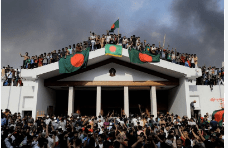
The author compares Imran Khan’s alleged plan to the 1971 student protests in Dhaka, Bangladesh, which ultimately led to the country’s independence.
The author criticizes Imran Khan’s confrontational approach and argues that he lacks the public support necessary to succeed through such tactics.
The author posits that the protest was not merely a rally but an attempt to paralyze the government and force a change in leadership.
The author uses the metaphor of a storm to contrast the resilience of a genuine leader with the fragility of someone focused on selfish ambitions.
The author suggests that political maneuvering and negotiation are more effective than direct confrontation in achieving power.
The author draws parallels with religious figures and events like the occupation of the Haram Sharif to emphasize the potential dangers of Imran Khan’s alleged plan and his followers’ blind faith.
Essay Questions:
Analyze the author’s use of language and tone in portraying PTI and its supporters. How does the author employ rhetorical devices to construct his argument?
Explore the author’s criticism of Imran Khan’s leadership style. Do you agree with the author’s assessment? Provide evidence from the text to support your position.
Examine the author’s use of historical and religious analogies. How effective are these comparisons in conveying his message?
Discuss the role of Bushra Begum in Imran Khan’s political life as portrayed in the text. Is her influence depicted as positive or negative? Explain your reasoning.
What broader commentary does the text offer on the nature of political power and the strategies for achieving it?
Table of Contents: Decoding PTI’s Political Strategy
Source: Excerpts from “Pasted Text”
I. Critique of PTI’s Self-Image
This section analyzes the dissonance between PTI’s self-proclaimed democratic identity and its reactions to criticism. The author uses provocative comparisons to groups like the Taliban and Boko Haram to highlight PTI’s perceived intolerance and aggressive tendencies when faced with dissent.
II. PTI’s Internal Contradictions
This section explores inconsistencies within PTI’s leadership and rhetoric. The author points out contradictory stances on figures like Bushra Begam and Imran Khan’s ex-wives, highlighting the party’s fluctuating narratives and tendency towards hero-worship and personality cults.
III. Examining the November 26th Incident
This section focuses on conflicting accounts of the November 26th protest at D-Chowk. The author emphasizes the discrepancies between claims of violence against PTI protestors and the lack of evidence, exposing potential exaggerations and attempts to manipulate public perception.
IV. Deconstructing the “Last Call” Protest
This section scrutinizes the true objectives of Imran Khan’s “Last Call” protest. The author questions whether the protest aimed for a peaceful rally or a prolonged sit-in with more radical goals, drawing parallels to historical examples like student protests in Dhaka and the occupation of the Kaaba.
V. The “Consciousness and Madness” Dichotomy
This section delves into the author’s critique of PTI’s political strategy, contrasting it with a more pragmatic and realistic approach. The author argues against the romanticized and potentially dangerous aspects of PTI’s revolutionary zeal, advocating for a shift from “madness” to “consciousness” in political engagement.
VI. The Limits of PTI’s Power
This section analyzes the limitations of PTI’s confrontational approach to power. The author acknowledges the challenges of challenging entrenched power structures through brute force and suggests that PTI may need to adopt more nuanced political strategies to achieve its goals.
Briefing Doc: PTI’s Political Strategy and the “Long March”
This briefing document analyzes the political strategy employed by Pakistan Tehreek-e-Insaf (PTI) and its leader, Imran Khan, focusing on their use of protest and agitation. The analysis is based on the provided source, which appears to be an opinion piece or blog post critical of PTI.
Main Themes:
PTI’s Aggressive Protest Tactics: The source compares PTI’s actions to extremist groups like the Taliban and Hamas, criticizing their “attacking, killing, and looting” while simultaneously claiming victimhood. This highlights the perception of PTI’s aggressive approach to protests and their tendency to escalate situations.
Cult of Personality around Imran Khan: The source criticizes the excessive praise and devotion directed towards Imran Khan, comparing him to a “player” and highlighting the use of hyperbolic titles like “Mother of the Nation” for figures associated with him. This suggests a personality-driven political strategy that relies heavily on Khan’s charisma and popularity.
Manipulation and Misinformation: The source accuses PTI of manipulating facts and using misleading narratives, specifically regarding the events of November 26th and the number of casualties. This emphasizes concerns about the party’s reliance on propaganda and potentially false information to bolster their claims.
Unrealistic Expectations and Dangerous Rhetoric: The source argues that PTI’s protest strategy, inspired by student protests in Dhaka, is unrealistic and potentially dangerous. It suggests that PTI aimed to paralyze the government and seize power through mass mobilization, drawing parallels to extremist groups occupying religious sites. This highlights concerns about the potential for violence and instability stemming from PTI’s actions.
Key Facts and Ideas:
PTI claims to be a democratic party but faces criticism for its aggressive tactics.
The party is accused of exaggerating events and manipulating information for political gain.
Imran Khan’s leadership style is characterized as charismatic but potentially reckless.
PTI’s protest strategy is seen as unrealistic and potentially dangerous, aiming to overthrow the government through mass mobilization.
Key Quotes:
“Like Taliban Hamas or Boko Haram, these people have a strange attitude. While being attackers, killing and looting slogans of ‘Jihad Al-Jihad’ is also permissible, but when their punch is slapped in retaliation, they immediately put on a black veil of innocence while shedding tissues.” This quote highlights the perception of PTI’s hypocrisy and aggressive approach.
“His claimant was sitting on the same lines, that gradually so much in a few days. There will be more public participation that one night, the event will be occupied by the Parliament and the Prime Minister’s House in a very close manner, which will leave the entire government system paralyzed and jammed. In other words, the sun of Imran’s revolution will rise.” This quote describes PTI’s alleged strategy of seizing power through mass mobilization.
Conclusion:
The source presents a highly critical view of PTI’s political strategy, portraying the party as manipulative, aggressive, and potentially dangerous. While the source’s biases should be considered, it raises important questions about the role of personality cults, misinformation, and aggressive tactics in Pakistani politics.
What are the central goals and strategies of the PTI party?
The sources discuss the actions and rhetoric of the leader of the PTI party, Imran Khan, more than they lay out the party’s central goals. The author of the sources is critical of Khan’s approach. Here is a summary of what the sources say about Khan’s goals and strategies:
Goal: To gain power by inciting a popular uprising similar to a student protest in Dhaka that paralyzed the government.
Strategy: Khan urged supporters to participate in a sit-in protest in Islamabad with the goal of attracting so many people that it would overwhelm government buildings like the Parliament and Prime Minister’s house. The author compares this approach to the dangerous fanaticism of those who might try to occupy the Kaaba in Mecca.
Criticism: The author of the sources argues that Khan’s strategy was dangerous and reckless and could have led to widespread violence and death. The author claims that Khan should recognize he lacks the public support to take power by force and should instead focus on achieving his goals through political maneuvering.
The sources do not explicitly list the central goals of the PTI party, but they imply that Khan’s personal goal of taking power is also the party’s goal.
How does the PTI’s rhetoric and actions compare to other groups?
Comparisons Between PTI and Other Groups
The sources compare the rhetoric and actions of the Pakistani political party, PTI, to several other groups, including:
Taliban, Hamas, and Boko Haram: The sources suggest that PTI, like these extremist organizations, exhibits aggressive behavior and justifies violence. They employ inflammatory rhetoric, using phrases such as “Jihad Al-Jihad”, but quickly adopt a posture of innocence when facing repercussions for their actions.
Individuals involved in the occupation of the Haram Sharif: The sources draw a parallel between PTI’s actions and the hypothetical scenario of individuals justifying the occupation of the Kaaba by claiming the appearance of Imam Mehdi. This comparison highlights what the author sees as PTI’s tendency to pursue their objectives with a disregard for potential consequences, driven by a “consciousness and madness”.
An individual referred to as “Mr. Hafiz”: While the sources do not explicitly identify “Mr. Hafiz,” they suggest that he may be playing a “duplicate role” similar to “Lanka Dhane” within PTI. This comparison possibly implies that certain figures within PTI are mirroring the actions or strategies of individuals associated with extremism.
The sources also criticize PTI’s internal dynamics, particularly their approach to leadership figures:
PTI members’ use of familial titles for leaders: The sources find fault with PTI members addressing leaders with familial titles like “mother” and “father”. They highlight the inconsistency in attributing these titles to various individuals, including Bushra Begum, Imran Khan’s wife, and Jamaima Khan, his ex-wife. This critique suggests an element of opportunism and insincerity within the party’s culture.
Overall, the sources express concern about PTI’s rhetoric and actions, comparing them to extremist groups and highlighting potentially problematic internal dynamics. They suggest that PTI’s approach to politics is characterized by aggression, justification of violence, and a disregard for potential consequences, driven by a “consciousness and madness”.
What are the long-term consequences of PTI’s political tactics?
Based on the provided sources, there are several potential long-term consequences of PTI’s political tactics:
Increased political instability and violence: The sources suggest that PTI’s tactics, which include inciting supporters to engage in violent protests and making unsubstantiated claims of election fraud, could lead to increased political instability and violence in Pakistan.
Erosion of public trust in democratic institutions: PTI’s rhetoric, which often portrays democratic institutions as corrupt and illegitimate, could erode public trust in these institutions, making it more difficult to govern effectively and peacefully.
Damage to Pakistan’s international reputation: PTI’s actions, particularly its allegations of foreign interference in Pakistani politics, could damage Pakistan’s international reputation and make it more difficult for the country to attract foreign investment and build strong relationships with other countries.
Empowerment of extremist groups: The sources imply that PTI’s use of religious rhetoric and its willingness to engage in violent confrontations could empower extremist groups in Pakistan, further destabilizing the country.
It is important to note that these are potential consequences based on the provided sources. The actual long-term consequences of PTI’s political tactics will depend on a variety of factors, including the response of other political parties, the actions of the Pakistani government, and the broader political and social context in Pakistan.
An Overview of PTI’s Actions
The sources primarily focus on criticizing the actions and rhetoric of PTI’s leader, Imran Khan, during a specific protest event, which they frame as reckless and potentially dangerous.
Incitement of Protestors: Khan encouraged his supporters to participate in a large-scale sit-in protest in Islamabad. The sources claim his intention was to attract such a large crowd that it would overwhelm government buildings like the Parliament and Prime Minister’s house and effectively paralyze the government.
Comparisons to Dangerous Groups: The sources draw alarming parallels between PTI’s actions and those of extremist organizations like the Taliban, Hamas, and Boko Haram. They suggest that PTI, under Khan’s leadership, similarly employs aggressive tactics and violent rhetoric, while attempting to evade responsibility for any resulting consequences.
Unsubstantiated Claims and Shifting Narratives: The sources point to inconsistencies in PTI’s claims regarding the protest. They mention an instance where a PTI lawyer initially claimed to have 278 testimonies of violence against protesters, but later reduced this number to a dozen. This, along with conflicting accounts of Khan’s instructions to his supporters during the protest, suggests an attempt to manipulate the narrative and avoid accountability.
Exploitation of Religious Sentiment: The sources criticize Khan for invoking religious imagery and language, drawing a comparison with those who might justify occupying the Kaaba in Mecca by claiming the appearance of Imam Mehdi. This comparison suggests that Khan may be using religious sentiment to incite his followers and legitimize potentially dangerous actions.
The sources also express concern about the potential long-term consequences of PTI’s actions, including increased political instability, violence, erosion of public trust in democratic institutions, damage to Pakistan’s international reputation, and the empowerment of extremist groups. [from our conversation history]
The sources paint a negative picture of PTI’s actions, highlighting the potential dangers of its tactics and rhetoric. However, it’s important to note that these sources represent a single perspective and may not provide a complete or unbiased view of the situation.
PTI’s Use of the Concept of “Political Mothers”
The sources mention the concept of “political mothers” in the context of Pakistani politics, specifically within the PTI party. The author critiques the practice of assigning familial titles like “mother” and “father” to political leaders.1 While the tradition of calling leaders “fathers” for political gain has existed, the author notes that creating “political mothers” is less common.1
The author cites the example of Fatima Jinnah, sister of Pakistan’s founder Muhammad Ali Jinnah, who was positioned as a “mother of the nation.”1 However, the author also highlights a disparaging remark made by former President Ayub Khan, who questioned her role as a “mother of the nation” due to her never having given birth.1
Within PTI, the author observes an inconsistent and opportunistic application of the “political mother” label.1 Bushra Begum, the wife of PTI leader Imran Khan, is referred to as a “mother” by some party members.12 The author questions whether Begum welcomes this title, drawing a parallel with singer Madam Noor Jahan who rejected such a label from an elderly person.1
The author also notes that some within PTI bestowed the title “Mother of the Nation” on Imran Khan’s ex-wife, Reham Khan.1 They suggest that others might similarly address Khan’s first wife, Jemima Khan, as “mother” despite the likelihood that she, too, would find such a label undesirable.1
The author’s criticism of PTI’s use of “political mothers” suggests that the practice is:
Inconsistent: The title is applied to different women with varying relationships to the party leader, highlighting a lack of clear criteria or meaning.
Opportunistic: The use of familial terms like “mother” appears to be a calculated strategy to evoke emotional connections and garner support, rather than a genuine reflection of respect or admiration.
Potentially disrespectful: The author implies that using such titles without the individual’s consent is disrespectful and potentially objectifies women by reducing them to their familial roles.
The author’s observations suggest that the concept of “political mothers” within PTI is more about political maneuvering and leveraging emotional appeals than about genuine respect or recognition of women’s contributions to the party.
A Critical Look at Imran Khan’s “Protest Call”
The sources focus on a specific “protest call” made by Imran Khan, the leader of the Pakistani political party PTI. The author strongly criticizes Khan’s approach and the potential consequences of his actions.
The Nature of the Protest Call: Khan called for a large-scale sit-in protest in Islamabad, encouraging his supporters to gather in such large numbers that they would overwhelm government buildings like the Parliament and Prime Minister’s house. The sources suggest that his ultimate goal was to paralyze the government and seize power through this disruptive demonstration. Khan drew inspiration from a student protest in Dhaka, which he presented as a model for success.
Dangerous Comparisons and Reckless Tactics: The author expresses deep concern about Khan’s methods, comparing them to the tactics of extremist groups like the Taliban, Hamas, and Boko Haram. They argue that Khan, like these organizations, utilizes aggressive rhetoric and justifies violence, while quickly adopting a posture of innocence when facing consequences. They also compare his approach to the dangerous fanaticism of individuals who might attempt to occupy the Kaaba in Mecca, driven by a reckless disregard for potential consequences.
Shifting Narratives and Unsubstantiated Claims: The sources point out inconsistencies in the accounts of events surrounding the protest. They highlight an incident where a PTI lawyer initially claimed to have 278 testimonies of violence against protesters but later revised the number down to a dozen. This discrepancy, along with conflicting narratives about Khan’s instructions to his supporters during the protest, raises concerns about PTI’s attempts to manipulate the narrative and avoid accountability for their actions.
The “Consciousness and Madness” of the Protest Call: The author characterizes Khan’s approach as a dangerous mix of “consciousness and madness.” They argue that while his goals may be driven by a desire for political change, his methods are reckless and potentially disastrous. The author contends that Khan’s romanticized view of historical events and his disregard for the complexities of the modern world make his approach unsustainable and dangerous.
Potential Consequences: The author warns of severe long-term consequences if Khan continues to employ such tactics. These include increased political instability and violence, erosion of public trust in democratic institutions, damage to Pakistan’s international reputation, and empowerment of extremist groups. [5, from our conversation history]
A Call for a Change in Approach: The sources ultimately suggest that Khan should abandon his confrontational approach and recognize that he lacks the public support to achieve his goals through force. They urge him to focus on building political alliances and engaging in constructive dialogue rather than pursuing a path of conflict and disruption.
Public Power and PTI’s Political Strategy
The sources discuss the concept of “public power” in relation to the political strategies of the Pakistani political party, PTI, and its leader, Imran Khan. The author argues that Khan’s pursuit of power relies on a flawed understanding of public support and the dynamics of political change.
Khan’s Belief in Mass Mobilization: Khan appears to believe that he can achieve his political objectives through mass mobilization and disruptive protests, as evidenced by his call for a large-scale sit-in in Islamabad. He aimed to attract a massive crowd to paralyze the government and force his way into power. This strategy is based on the assumption that overwhelming displays of public support can effectively challenge the existing power structures.
The Limits of Public Power: The author, however, contends that Khan overestimates his level of public support and the effectiveness of his confrontational approach. They argue that he lacks the necessary “public power” to succeed in his attempts to seize control through force. This suggests that relying solely on mass mobilization and disruptive tactics is insufficient to achieve lasting political change.
The Need for Political Strategy: The sources suggest that true political power lies in building broad-based support through political maneuvering and strategic alliances rather than relying on brute force or emotional appeals. The author advises Khan to change his approach, recognizing that “the goddess of power can only be embraced in the feet of Aap Sir,” but “the path that the player has taken to Hasul Layli is of colliding with power, in which he will not be able to succeed.” This implies that a more nuanced and strategic approach is necessary to navigate the complexities of Pakistani politics.
The Importance of Political Acceptability: The author emphasizes that sustainable political power requires more than just mobilizing crowds; it necessitates building legitimacy and acceptance within the existing political framework. Khan’s confrontational tactics and his attempts to bypass established political processes, as seen in his “protest call,” ultimately undermine his ability to gain lasting power.
The Dangers of Miscalculating Public Power: The author warns that Khan’s miscalculation of his public power and his reliance on disruptive tactics could have significant negative consequences for Pakistan. They express concern about the potential for increased political instability, violence, and the empowerment of extremist groups. [4, 5, from our conversation history]
The sources highlight the importance of accurately assessing one’s level of public support and understanding the limitations of relying solely on mass mobilization to achieve political goals. They argue that building lasting political power requires a more strategic approach that involves political negotiation, coalition-building, and a recognition of the existing power structures.
Examining Imran Khan’s Plan and its Underlying Assumptions
The sources provide a critical analysis of Imran Khan’s political strategy, particularly his plan to orchestrate a massive sit-in protest in Islamabad. The author portrays this plan as dangerous and built on a flawed understanding of political power dynamics.
Khan’s Goal: The sources indicate that Khan’s objective was to mobilize such a large number of supporters that they would effectively paralyze the government by occupying key government buildings like Parliament and the Prime Minister’s House. This suggests an attempt to seize power through disruptive force, rather than through established political processes.
Inspiration from a Student Protest: Khan drew inspiration from a student protest in Dhaka, presenting it as a successful model for his own plan. However, the sources do not provide details about this specific protest or its outcome, leaving it unclear whether it serves as a valid comparison or a realistic basis for Khan’s strategy.
A Dangerous Gamble: The sources characterize Khan’s plan as a dangerous gamble that could have disastrous consequences for Pakistan. They highlight several concerning aspects:
Unsubstantiated Claims of Violence: The sources point to discrepancies in PTI’s accounts of violence against protesters during a previous event. A lawyer initially claimed to have 278 testimonies but later reduced the number to a dozen, raising questions about the party’s credibility and attempts to manipulate narratives.
Unrealistic Expectations of Public Support: The sources suggest that Khan overestimates his level of public support and the effectiveness of mass mobilization as a means to achieve his goals. They argue that he lacks the necessary “public power” to succeed in seizing control through force alone.
Ignoring Potential for Violence and Instability: The sources warn that Khan’s confrontational approach could lead to increased political instability, violence, and the empowerment of extremist groups. [4, 5, from our conversation history] They draw alarming parallels between his tactics and those of organizations like the Taliban, Hamas, and Boko Haram, suggesting that he may be inciting his followers towards dangerous actions while attempting to evade accountability for the consequences.
A Flawed Understanding of Political Power: The sources ultimately argue that Khan’s plan reflects a flawed understanding of political power. They suggest that sustainable political change requires building broad-based support through strategic alliances, political negotiation, and engagement within existing power structures, rather than relying on brute force or emotional appeals. They advise him to recognize the limitations of his approach and focus on building legitimacy through established political processes.
Summary: The author argues that the Pakistani political party PTI, led by Imran Khan, employs dangerous and deceptive tactics to gain power, comparing their behavior to extremist groups.
Explanation: This passage criticizes the tactics of the Pakistani political party PTI and its leader, Imran Khan (referred to as “the player”). The author contends that despite claiming to be democratic, PTI reacts aggressively to criticism and utilizes inflammatory rhetoric reminiscent of extremist groups like the Taliban. The author points to inconsistencies in PTI’s narrative surrounding a protest they held, particularly regarding the number of injuries and the role of Imran Khan’s wife, Bushra Begum. The passage suggests that PTI’s ultimate goal is to seize power through disruptive means, even at the expense of public safety, comparing their ambitions to dangerous historical events. The author concludes by advising Imran Khan to abandon his confrontational approach and embrace more conventional political strategies.
Key terms:
PTI: Pakistan Tehreek-e-Insaf, a political party in Pakistan led by Imran Khan.
Youthia: A term used in Pakistani media to refer to young PTI supporters.
D Chowk: A major intersection in Islamabad, Pakistan, often the site of political protests.
Bushra Begum: The wife of Imran Khan.
Sangjani: A town on the outskirts of Islamabad, Pakistan.
Examining Conflicting Narratives about the PTI’s November 26th Protest
The sources highlight a notable inconsistency in witness accounts regarding the events of the PTI’s November 26th protest, specifically regarding the alleged violence against protesters. A PTI lawyer initially claimed to possess 278 testimonies supporting their claims of violence against demonstrators during the protest. However, this number was later significantly revised downward, with the lawyer stating that there were only “a dozen testimonies of PTI workers in the process of killing our protestors.”
Significance of the Discrepancy: This change in the number of testimonies raises concerns about the reliability of PTI’s narrative and their potential attempts to exaggerate the level of violence against their supporters. The drastic reduction from 278 to a dozen suggests either a significant misrepresentation of the facts or a lack of organization in gathering evidence.
Impact on PTI’s Credibility: The discrepancy in the number of testimonies could damage PTI’s credibility and their attempts to portray themselves as victims of state oppression. It casts doubt on their claims and raises questions about their motives in presenting an inflated number of testimonies initially.
Broader Context of Conflicting Narratives: This inconsistency aligns with a broader pattern identified in the sources, where PTI is accused of shifting narratives and utilizing inflammatory rhetoric to manipulate public perception and avoid accountability for their actions. The sources draw comparisons between PTI’s tactics and those of extremist groups, alleging that they readily adopt a posture of victimhood while engaging in aggressive behavior.
Implications for Understanding the Protest: The conflicting witness accounts make it difficult to ascertain the true extent of violence and the overall events of the November 26th protest. The lack of reliable information underscores the importance of critical analysis and consideration of multiple perspectives when evaluating political events and the claims made by different actors.
The PTI’s Goals for the November 26th Protest: A Drive for Disruptive Power
The sources offer a critical perspective on the PTI’s November 26th protest, suggesting that its primary goals revolved around disrupting the government and projecting an image of mass public support for Imran Khan. While the sources don’t explicitly state the protest’s intended outcomes, they do shed light on the underlying motivations and strategies driving the PTI’s actions.
Paralyzing the Government: The sources indicate that Khan aimed to mobilize a sufficiently large crowd to effectively paralyze the government by occupying key government buildings like Parliament and the Prime Minister’s House. This tactic suggests an intention to seize power through forceful disruption rather than through established political processes.
Emulating a Student Protest Model: The sources mention that Khan drew inspiration from a student protest in Dhaka, viewing it as a successful blueprint for his own plan. However, the specifics of this protest and its outcomes remain unclear in the sources, raising questions about the validity of the comparison and the feasibility of replicating its success.
Projecting an Image of Mass Support: The sources imply that a crucial goal of the protest was to showcase the scale of public support for Imran Khan and the PTI. By creating a spectacle of mass mobilization, the PTI sought to bolster its political legitimacy and influence public perception, even if the actual level of support might have been overstated.
Pressuring the Government through Public Display: The protest can also be interpreted as a tactic to exert pressure on the government through a massive display of public discontent. By showcasing the strength of their opposition, the PTI aimed to force the government into concessions or potentially even trigger a collapse of the ruling structure, paving the way for their own ascension to power.
However, the sources are highly critical of the PTI’s approach, arguing that their goals were ultimately driven by a flawed understanding of political power and a dangerous reliance on disruptive tactics. The sources warn that such actions could destabilize the country and empower extremist elements, ultimately harming Pakistan’s political landscape.
Contradictions in Claims Surrounding the PTI’s November 26th Protest
The sources reveal several conflicting narratives surrounding the PTI’s November 26th protest, particularly regarding the scale of violence against protesters and Imran Khan’s intentions behind the demonstration.
Discrepancies in Witness Accounts: A significant contradiction arises from the varying accounts provided by a PTI lawyer regarding the number of witness testimonies supporting allegations of violence against protesters. The lawyer initially claimed to have 278 testimonies, but later reduced this number to a mere “dozen.” This drastic change casts doubt on the PTI’s claims and raises questions about their efforts to portray themselves as victims.
Shifting Narratives Regarding Imran Khan’s Role: The sources suggest that Khan initially presented the protest as a peaceful demonstration, emphasizing a plan to sit-in at a specific location. However, his actions and subsequent rhetoric appeared to shift towards a more aggressive and disruptive stance, with allusions to occupying government buildings and paralyzing the state. This shift in messaging, coupled with his praise of a student protest in Dhaka, potentially involving forceful takeover, raises concerns about his true intentions and the potential for escalating violence.
Contradictions Regarding the Protest’s Goals: While the PTI initially framed the protest as a peaceful demonstration of public support for Khan, the sources imply that a more strategic and disruptive objective was at play. The goal appeared to be to create a spectacle of mass mobilization to pressure the government, potentially leading to its collapse and paving the way for the PTI’s rise to power. This underlying ambition contradicts the image of a peaceful sit-in and reveals a more calculated and potentially dangerous political strategy.
These contradictions highlight the challenges in assessing the true nature of the November 26th protest and the PTI’s motives. The conflicting narratives, coupled with the PTI’s tendency to employ inflammatory rhetoric and shift blame, necessitate a cautious and critical approach to evaluating their claims and understanding the complexities of Pakistani politics.
Analyzing the Contradiction Between PTI’s Actions and its Democratic Image
The sources paint a critical picture of the PTI, arguing that the party’s actions often clash with its self-proclaimed democratic image.
Aggressive Response to Criticism: Despite positioning itself as a democratic party, the PTI exhibits a notable intolerance towards criticism, responding aggressively to any questioning of its actions or motives. The sources highlight the party’s tendency to react with hostility and accusations, suggesting a lack of openness to dialogue or dissent, characteristics that are typically associated with authoritarian rather than democratic approaches.
Inflammatory Rhetoric and Comparisons to Extremist Groups: The sources draw alarming parallels between PTI’s rhetoric and tactics and those of extremist groups like the Taliban, Hamas, and Boko Haram. This comparison underscores the party’s proclivity for inflammatory language and its willingness to employ disruptive and potentially violent methods to achieve its political goals, contradicting its claims to uphold democratic values.
Shifting Narratives and Lack of Accountability: The sources expose inconsistencies in the PTI’s accounts of events, particularly concerning the November 26th protest, where witness testimonies were dramatically altered and narratives shifted to deflect blame and evade responsibility. This manipulation of information and lack of transparency raise serious questions about the party’s commitment to honesty and accountability, core principles of democratic governance.
Undermining Democratic Processes: The sources suggest that the PTI, under Imran Khan’s leadership, seeks to gain power through disruptive means rather than through established democratic processes. Khan’s plan to paralyze the government by occupying key institutions reflects a disregard for democratic norms and a preference for forceful tactics over dialogue and negotiation.
Manipulating Public Perception: The PTI is accused of employing emotional appeals and manipulating public sentiment to advance its agenda. The sources suggest that the party leverages religious symbolism and plays on the public’s desire for change, potentially exploiting these sentiments to gain support without offering concrete solutions or engaging in constructive political discourse.
The sources ultimately argue that the PTI’s actions, characterized by aggression, manipulation, and a disregard for democratic norms, directly contradict its carefully crafted image as a democratic force for positive change. This disconnect between rhetoric and reality raises concerns about the party’s true commitment to democracy and its potential to erode democratic values in Pakistan.
Affiliate Disclosure: This blog may contain affiliate links, which means I may earn a small commission if you click on the link and make a purchase. This comes at no additional cost to you. I only recommend products or services that I believe will add value to my readers. Your support helps keep this blog running and allows me to continue providing you with quality content. Thank you for your support!
The sources describe the D Chowk incident as a protest led by the PTI (Pakistan Tehreek-e-Insaf) party, orchestrated by Bushra Begum (wife of PTI founder Imran Khan).
The protest aimed to pressure the establishment for Imran Khan’s release.
Bushra Begum encouraged supporters to remain at D Chowk until Khan was freed, even if it meant death.
However, the protest ended with PTI leaders retreating and leaving supporters vulnerable.
Criticisms of the Protest
The sources criticize the PTI’s handling of the protest, particularly Bushra Begum’s leadership:
Bushra Begum is described as lacking political wisdom despite her enthusiasm.
The sources condemn the decision to leave supporters behind while leaders retreated.
Questions are raised about the conflicting reports of casualties, suggesting potential exaggeration for political gain.
Broader Implications
The D Chowk incident is presented as an example of the PTI’s manipulative tactics:
The author argues the PTI uses rallies and protests for self-interest, not for the benefit of the people.
They point out that PTI leaders, like Imran Khan and Bushra Begum, do not involve their own children in these potentially dangerous events.
The incident is used to illustrate a broader pattern of Pakistani politics where power is sought through connections with the establishment, not through genuine public service.
The sources ultimately urge Pakistani youth to be wary of political manipulation and prioritize their own futures rather than blindly following political leaders.
The sources portray the PTI’s involvement in the D Chowk incident as a manipulative attempt to leverage public support for personal gain. They specifically highlight the role of Bushra Begum, wife of PTI founder Imran Khan, in orchestrating the protest. Bushra Begum is depicted as a driving force behind the protest, urging supporters to remain steadfast even in the face of danger.
The sources allege that the PTI’s true objective was to destabilize the government by inciting chaos and potentially even violence. They suggest that the party leadership, including Bushra Begum, were aware of the risks involved but were willing to exploit their supporters’ loyalty for their own political ambitions. This manipulation is further emphasized by the claim that PTI leaders shielded their own children from the dangers they exposed their supporters to.
The sources also point to the PTI’s strategic use of religious rhetoric and symbolism during the protest, particularly by Bushra Begum, as evidence of their calculated attempt to emotionally manipulate the crowd. This approach is presented as a cynical ploy to bypass rational discourse and exploit the religious sentiments of the populace for political ends.
The sources ultimately condemn the PTI’s involvement in the D Chowk incident as a betrayal of the trust placed in them by their supporters. They argue that the party leadership prioritized their own power struggles over the well-being of the people they claimed to represent, leaving their supporters vulnerable and disillusioned.
Bushra Begum’s Role in the D Chowk Incident
The sources portray Bushra Begum, the wife of PTI founder Imran Khan, as a key figure in the D Chowk protest. She is presented as the driving force behind the event, even more so than the PTI leadership itself.
While some PTI officials preferred a less confrontational approach, Bushra Begum insisted on the D Chowk location, believing her own party officials might compromise with the establishment.
She actively encouraged supporters, using speeches and oaths, to remain at D Chowk until Imran Khan was released, even if it meant death.
However, the sources are highly critical of her leadership and the protest’s outcome:
Despite her enthusiasm and sincerity, Bushra Begum is described as lacking the necessary political wisdom to navigate such a complex and sensitive situation.
Her approach is characterized as overly emotional and naive, relying on grand gestures and fervent pronouncements rather than strategic planning and adaptability.
The sources condemn the decision to leave supporters behind while leaders, including Bushra Begum, retreated, calling it a betrayal of their trust and a demonstration of placing self-interest above the well-being of the people.
The author specifically questions Bushra Begum’s decision to leave the supporters, contrasting it with a hypothetical scenario where she chooses to stand with them and face the consequences.
The sources highlight a disparity between Bushra Begum’s rhetoric and actions, suggesting a degree of hypocrisy:
She encouraged others to risk their lives for the cause while her own children were not present at the protest.
This is compared to a drug dealer who keeps their children away from their dangerous business.
The sources ultimately frame Bushra Begum’s role in the D Chowk incident as a cautionary tale, illustrating the dangers of political manipulation and blind faith in leaders who prioritize personal gain over the welfare of their supporters.
Political Strategies in the Context of the D Chowk Incident
The sources, while focusing on the D Chowk incident and its aftermath, offer insight into various political strategies employed by different actors.
PTI’s Strategies: Populism and Manipulation
The sources heavily criticize the PTI’s political strategies, particularly those employed during the D Chowk protest. These strategies are characterized as populist and manipulative, aimed at mobilizing public support for the party’s own interests rather than genuine public service.
The sources highlight the PTI’s use of emotionally charged rhetoric and symbolism, especially religious themes, as a way to bypass rational discourse and sway public opinion.
Bushra Begum’s impassioned speeches and calls for unwavering commitment, even in the face of potential death, exemplify this approach.
The sources argue that the PTI’s decision to hold the protest at D Chowk, a highly sensitive location, was a deliberate attempt to provoke a reaction from the establishment and escalate the situation.
This strategy, according to the sources, was driven by a desire to create chaos and destabilize the government for the PTI’s political advantage.
The sources further accuse the PTI of hypocrisy, pointing out that while they encouraged supporters to risk their lives, the party’s leaders, including Imran Khan and Bushra Begum, shielded their own children from these dangers.
This is presented as evidence of the PTI’s willingness to exploit the loyalty of their supporters for their own gain.
Establishment’s Strategies: Force and Control
The sources also allude to the political strategies employed by the establishment in response to the PTI’s actions. These strategies are characterized by the use of force and a desire to maintain control.
The sources suggest that the establishment, likely referring to powerful entities like the military or intelligence agencies, exerted pressure on the PTI to abandon the D Chowk protest.
The swift crackdown on the protest and the alleged presence of armed individuals within the crowd suggest a readiness to use force to quell dissent.
The sources criticize the establishment’s heavy-handed approach while also acknowledging their effectiveness in containing the situation.
They warn against the dangers of excessive repression, predicting that such actions will eventually backfire and lead to further instability.
Alternative Strategies: Reason and Public Service
The sources advocate for alternative political strategies based on reason, dialogue, and genuine public service.
They criticize the PTI’s reliance on emotional appeals and manipulative tactics, urging the Pakistani youth to think critically and prioritize their own futures rather than blindly following political leaders.
They implicitly support engaging with political issues through reasoned debate and peaceful means rather than resorting to violence or disruption.
They emphasize the need for politicians to prioritize the well-being of the people they represent, placing public service above personal ambition and power struggles.
The D Chowk incident, as portrayed in the sources, serves as a case study in contrasting political strategies. The incident highlights the dangers of populism, manipulation, and the use of force, while advocating for a more reasoned and ethical approach to political engagement.
The Plight of Pakistani Youth: Exploitation and Disillusionment
The sources paint a bleak picture of the plight of Pakistani youth, particularly those involved in political movements like the PTI. They are depicted as victims of political manipulation, their idealism and energy exploited for the personal gain of ambitious leaders.
The sources highlight the dangers these youth are exposed to, particularly during events like the D Chowk protest, where they are encouraged to risk their lives while their leaders remain protected.
This disparity is exemplified by the contrast between Bushra Begum’s impassioned calls for unwavering commitment, even in the face of death, and the absence of her own children from the protest.
The author draws a parallel with a drug dealer who keeps their own children away from their dangerous business, highlighting the hypocrisy inherent in the PTI’s approach.
The sources lament the wasted potential of these young individuals, whose talents and passion are squandered in futile political battles.
They argue that participation in these movements ultimately leaves the youth with nothing but regret and disillusionment, hindering their personal growth and future prospects.
The author directly addresses the youth, urging them to break free from the manipulative slogans of these leaders and prioritize their own futures.
They are encouraged to critically evaluate the motivations of political figures and question why those leaders’ own children are absent from the rallies and protests.
The sources suggest that the broader political landscape in Pakistan contributes to the youth’s predicament.
The emphasis on connections with the establishment, rather than genuine public service, perpetuates a system where power is concentrated among a select few, leaving the youth with limited opportunities for meaningful political participation.
This lack of representation and agency fuels a sense of frustration and disillusionment, pushing some towards more extreme ideologies or actions.
The sources, while focused on the specific context of the D Chowk incident and the PTI, offer a broader commentary on the challenges faced by Pakistani youth. They serve as a call for greater awareness, critical thinking, and a rejection of political manipulation, urging the youth to forge their own paths and build a better future for themselves and their country.
The author criticizes PTI’s leadership, particularly Bushra Begum (Pinki Perni) and Imran Khan, for their handling of the D Chowk protest, calling it a betrayal of their supporters.
The author questions the wisdom of the aggressive protest strategy, arguing that it lacked political nuance and led to unnecessary hardship for the participants.
The author accuses the PTI leadership of hypocrisy for inciting their followers to potentially violent actions while their own families remained safe.
The author condemns the alleged involvement of armed groups and questions the motives behind pushing for a potentially chaotic situation in Islamabad.
The author urges the youth to think critically and not blindly follow political leaders, while also warning the government against overreach and suppression of legitimate political activity.
Affiliate Disclosure: This blog may contain affiliate links, which means I may earn a small commission if you click on the link and make a purchase. This comes at no additional cost to you. I only recommend products or services that I believe will add value to my readers. Your support helps keep this blog running and allows me to continue providing you with quality content. Thank you for your support!
The text explores the tension between unwavering adherence to truth and the pragmatic need for self-preservation, particularly for leaders and idealists. It examines historical figures who prioritized truth and ideals, even at the cost of their lives, questioning whether compromise would have been a wiser choice. The author contemplates the value of martyrdom versus survival, suggesting that while unwavering commitment is admirable, preserving oneself to continue fighting for one’s ideals may be equally important. The piece ultimately advocates for a balanced approach, combining dedication with strategic self-preservation. This approach emphasizes the importance of continuing one’s mission and advocating for one’s beliefs.
The Realist’s Dilemma: Truth, Martyrdom, and Survival
Instructions: Answer each question in 2-3 sentences.
What is the author’s main concern regarding the pursuit of “hundred percent truth”?
How does the author describe the relationship between truth and martyrdom?
What is the “message from Darvesh to his new generations” regarding martyrdom?
According to the author, what is the Sufi perspective on death compared to the perspective of those who celebrate it as “Urs”?
How does the author connect the fear of death with the idea of being a believer?
What is the author’s reaction to the deaths of historical figures like Abraham Lincoln and Mahatma Gandhi?
What does the author suggest these historical figures could have done differently to potentially avoid their fates?
How does the author characterize the leaders Izhaq Robin and Anwar Sadat in relation to their pursuit of truth?
What advice does the author offer regarding the balance between bravery and wisdom in pursuing one’s ideals?
What is the author’s interpretation of the relationship between love and patience?
Quiz Answer Key
The author worries that pursuing “hundred percent truth” can be dangerous, leading to being “cornered or disappeared.” He suggests that truth needs to be digestible and that speaking it without considering the consequences can be detrimental.
The author suggests that speaking absolute truth, even if it results in martyrdom, is a lofty and admirable goal but acknowledges that deviating from the absolute truth to achieve reconciliation is sometimes necessary. Speaking the whole truth can lead to martyrdom, which the author believes should not be glorified.
Darvesh advises future generations to avoid seeking martyrdom, emphasizing the importance of survival and love of life. Despite a theory of love that embraces sacrifice, Darvesh believes in finding ways to survive and live out one’s ideals.
The Sufi perspective, according to the author, is one that loves life and therefore views death with horror as a separation from loved ones, not as a welcome reunion. Those who celebrate death as “Urs” view it as a connection to the beloved, which is contrary to the Sufi view that cherishes life.
The author suggests that even those deeply devoted to their faith or ideals may fear death, which is seen as a “witch.” Acknowledging this fear does not diminish one’s faith, and it’s genuine and natural to want to avoid death.
The author laments their deaths and wishes they had avoided the circumstances that led to their assassinations. He seems to think that they should have chosen a path of reconciliation.
The author speculates that these figures could have adopted more moderate approaches, such as being more cautious with their security or compromising in their political actions, to avoid the extreme consequences. The author emphasizes avoiding the “hundred percent truth” to stay alive.
Izhaq Robin and Anwar Sadat are portrayed as leaders who went too far in their pursuit of truth, honesty, and peace, which led to their violent deaths. They serve as examples of the dangers of extreme commitment to an ideal.
The author suggests that while bravery and enthusiasm are valuable, wisdom and strategy are essential for pursuing ideals effectively. It emphasizes that staying alive and persevering in one’s mission is ultimately more effective than martyrdom.
The author contrasts patience, which is necessary for love, with the impatience of desire. He implies that love requires a thoughtful, enduring approach, whereas desire can be quick and reckless.
Essay Questions
Analyze the author’s argument regarding the tension between adherence to truth and the practical considerations of political action, using specific historical examples from the text.
Explore the author’s characterization of martyrdom and the different perspectives surrounding it, considering the motivations and consequences associated with both seeking and avoiding such a fate.
Discuss the author’s critique of “hundred percent truth” and the implications of this critique on the role of idealism in personal and societal change.
Examine the author’s perspective on the relationship between life and death, particularly concerning the Sufi view of avoiding death in contrast to the romantic or celebratory view.
Evaluate the author’s advice on striking a balance between bravery, wisdom, and caution in the pursuit of ideals, considering the specific examples of the leaders discussed in the text.
Glossary of Key Terms
Realism/Factualism: The idea of adhering strictly to facts and truth, even when they may be difficult or dangerous to express.
Martyrdom: The act of dying for a cause or belief, often seen as noble, but the author suggests it can be avoided.
Urs: A celebration of death in some traditions, viewed as a joyous reunion with the divine or a beloved.
Sufi: A mystical branch of Islam, the text portrays them as valuing life deeply and fearing the separation caused by death.
Darvesh: A term used here to indicate the author or a person espousing a contemplative, possibly mystical, perspective.
Hundred Percent Truth: The author’s phrase for absolute, uncompromised honesty and its potentially dangerous consequences.
Reconciliation: The act of finding middle ground or compromise rather than seeking absolute adherence to an ideal or belief.
Honi: A fatalistic term implying that an event is inevitable or meant to happen.
Wisdom with Truth: The idea of using strategic thinking with truth, advocating for a balance of bravery and thoughtful action.
Divine Masterpiece: The phrase the author uses for the human form.
convert_to_textConvert to sourceNotebookLM can be inaccurate, please double check its responses.
Truth, Martyrdom, and the Value of Life
Okay, here’s a briefing document analyzing the provided text, focusing on its main themes and ideas:
Briefing Document: Analysis of “Pasted Text” Excerpts
Date: October 26, 2023
Subject: Exploration of Truth, Martyrdom, and the Value of Life within the provided text.
Introduction:
This document analyzes the themes presented in the provided text, which appears to be a philosophical reflection on truth, martyrdom, and the pragmatic choices one must make while pursuing ideals. The author, possibly speaking through the persona of “Darwish,” grapples with the tension between unwavering commitment to truth and the need for self-preservation and strategic action. The text uses historical examples and personal reflections to illustrate its points.
Key Themes and Ideas:
The Paradox of Truth:
The text acknowledges that absolute truth (“hundred percent truth”) is a “lofty thing” and desirable, yet also potentially dangerous.
Quote:“Realism or factualism is such a lofty thing, I wish it was adopted completely, but what to do, it is compulsory that the truth can also be spoken as much as it is digested, otherwise you will be cornered or disappeared.”
This suggests that the unvarnished truth can be too difficult for society to accept or for an individual to bear. The author implies the need for a pragmatic approach to truth-telling, where the timing and method of delivery are as important as the truth itself.
The author questions whether total devotion to truth justifies martyrdom. “If you speak hundred percent truth even in the morning, then this rank will be at your feet.” Here, “rank” refers to “martyrdom”
Rejection of Martyrdom as a Primary Goal:
While recognizing the sacrifice made by martyrs, the author explicitly advises against actively seeking martyrdom.
Quote:“Despite this theory of love, this message from Darvesh to his new generations is that do not have the interest of martyrdom. Even great personalities have sought refuge from trials or tests.”
The text uses the phrase “play the drum while hugging,” emphasizing the importance of enjoying life and its experiences while working towards one’s aims rather than succumbing to the pressure of death for ideals.
The author highlights that a premature death, even in pursuit of ideals, can be the “death of his mission.” In this case, they encourage strategic thinking and the prioritization of life.
This idea contrasts with a seemingly more fatalistic view of death, where it is seen as a release from suffering and a connection with the divine. The text challenges this perspective.
The Value of Life and the Need for Survival:
The author emphasizes the importance of “loving life,” learning to survive, and avoiding self-destructive behavior.
Quote:“They always hum. Oh my heart! If you swear, don’t give up… If you are yours, call them… Don’t hide your face and don’t live with your head down, even if the time of sorrows comes, live with a smile.”
The text directly counters the notion of embracing death, particularly suicide, which it calls a “curse.” The focus is on perseverance and resilience rather than seeking an easy escape through death.
There’s an explicit fear of death, seen as a “witch” that snatches away loved ones, even from those who are believers.
Quote:“People say that a believer never fears death, but The truth is that despite the fact that the person is afraid of this witch of all Darveshi, should it be considered that he is not a believer…deep inside I also want this witch to stay away, stay away.”
Strategic Action and the “Alternate Route”:
The text promotes the idea of “carving an alternate route” when faced with obstacles. This signifies the need to be strategic and adaptable in the pursuit of one’s goals.
Quote:“Lette if you see a roadway being closed you find or carve an alternate route immediately.” This reinforces the idea that one should navigate life with cleverness and creativity, rather than rigidly following a path that may lead to ruin.
This strategic approach extends to political and social action, where the author suggests that choosing life over martyrdom can ultimately be more effective.
Historical Examples:
The text uses historical figures like Abraham Lincoln, Mahatma Gandhi, Yitzhak Rabin, Anwar Sadat, Indira Gandhi, and Benazir Bhutto, to illustrate the consequences of taking extreme stands on truth.
These examples often point to leaders who, while admirable, perhaps made themselves vulnerable through their uncompromising stances and were killed as a result.
The text suggests that these figures may have been able to accomplish more for their ideals had they considered personal security and adopted a more strategic approach.
The Wisdom of Patience and Strategy:
The text contrasts “enthusiasm and stupidity” with “wisdom and truth.”
Quote:“There is no distance, similarly you can call wisdom cowardice but wisdom with truth is that a man should prefer life over death for the sake of his ideals and for his loved ones.”
The analogy of a cricket match (“stay on the crease with strategy, then you will be able to score for the nation”) emphasizes that long-term effectiveness depends on patience and thoughtful action, not just impulsive bravery.
The concluding line, “Love requires patience and desire impatient”, encapsulates this idea that achieving meaningful change requires a sustained, patient approach.
Conclusion:
The text presents a nuanced perspective on the pursuit of truth and ideals. It challenges the romantic notion of martyrdom as the ultimate expression of devotion and instead advocates for a more pragmatic and life-affirming approach. The author stresses the importance of strategic action, adaptability, and a deep appreciation for life, even in the face of adversity. The core message is that one can best serve their ideals by staying alive and fighting for them strategically, rather than sacrificing oneself prematurely on the altar of martyrdom.convert_to_textConvert to source
Truth, Action, and Strategic Survival
Frequently Asked Questions
What is the central conflict explored in the text regarding truth and action? The text grapples with the tension between absolute adherence to truth and the pragmatic need for survival and achieving long-term goals. The author suggests that while truth is paramount, unwavering commitment to it can lead to martyrdom and hinder one’s ability to effect change. There’s an ongoing contemplation about whether compromising, or finding an “alternate route,” could be more effective than absolute truth-telling in certain circumstances.
How does the author view the concept of martyrdom? While acknowledging the “glory” of sacrificing oneself for ideals, the author cautions against seeking martyrdom. The text emphasizes the importance of valuing life and finding ways to survive and continue working towards one’s goals, rather than prematurely ending one’s mission through death. The idea is that those who live longer can do more for the causes they champion.
What is the author’s perspective on the fear of death? The author reveals a personal fear of death, even in the context of spiritual or mystical beliefs. While some traditions see death as a welcome reunion with the divine, the author, along with a Sufi perspective, sees death as something to be avoided because it is a separation from loved ones and the pursuit of ideals. The author distinguishes between the idea of death as a “connection” and the more human fear of its finality.
How does the author view figures like Abraham Lincoln, Mahatma Gandhi, and other leaders who faced violence? The author admires these historical figures for their commitment to ideals, but also questions whether they could have achieved more by being more strategic and cautious. The text suggests that even the greatest leaders made choices that might have been different had they considered survival and the long-term impact of their actions. The author considers it tragic that the directness of these leaders led to their untimely deaths.
Why does the author question the idea of “100% truth”? The author argues that while truth is a “lofty thing,” absolute adherence to it can be dangerous and counterproductive. There are times when speaking the whole truth immediately may lead to being “cornered or disappeared.” The author advocates for a more nuanced approach, where truth is balanced with the need for strategy and the goal of staying alive to continue one’s mission.
What is the author’s comparison of “enthusiasm” and “wisdom”? The author equates enthusiasm without strategy to stupidity, and conversely, without truth to cowardice. True wisdom, in their eyes, lies in striking a balance between these two extremes. It’s about living a life that not only seeks to achieve ideals, but also values life and finds a way to continue doing good work by taking a patient, strategic approach. This may mean avoiding direct conflict at times in order to have a long term impact.
What does the text imply about patience in achieving goals? The text emphasizes the importance of patience, likening it to a long and challenging cricket match. It suggests that it is easy to be rash and lose one’s life for ideals, but true success involves perseverance. It suggests that real victory will come through surviving difficult times and continuing to work towards goals. This includes learning how to live through struggles and staying true to ideals.
What is the author’s concluding message? The author’s overall message is a call for balance and strategic action in pursuit of ideals. While valuing truth and commitment, the text underscores the importance of preserving life and finding ways to continue working towards goals, even when faced with adversity. It’s a message that emphasizes both the strength of conviction and the wisdom of strategic survival.
The Price of Truth: Martyrdom and Idealism
Okay, here is a timeline and cast of characters based on the provided text:
Timeline of Events and Reflections:
General Observation: The text is primarily a meditation on the dangers of absolute truth and the sacrifices people make for their ideals. It’s not a traditional historical narrative but a reflection on historical figures.
Recurring Theme of Martyrdom: The writer frequently contemplates the martyrdom and deaths of significant figures, including those in their own life and throughout history, and questions if their deaths could have been avoided through compromise.
Philosophical Reflection: The author discusses the importance of realism and survival alongside the commitment to truth and ideals. They advocate for a path that prioritizes living and advancing ideals rather than martyrdom.
Discussion of “Urs”: The author contrasts the celebration of death in some traditions (Urs) with a perspective that values life and continued engagement with ideals.
Baba Ji’s Statement: The author recounts a statement from “Baba Ji” expressing a fear of death, even amongst mystics, despite the common belief that believers do not fear it.
Historical Examples of Martyrdom: The author reflects upon deaths of Abraham Lincoln, Mahatma Gandhi, Yitzhak Rabin, Anwar Sadat, Indira Gandhi, and Benazir Bhutto, arguing that while these figures fought for truth and ideals they could have avoided their violent ends with more caution and pragmatism.
Discussion with Journalist: The author recalls a conversation with a journalist about the approaches of two Pakistani Prime Ministers, Bhutto and Nawaz Sharif, and how the author advocated a patient and strategic approach over bold action.
Closing Thought: The author concludes with a reflection on the tension between patience (required for love) and impatience (born of desire).
Cast of Characters and Brief Bios:
Darwish: The author of the text. A person deeply concerned with the nature of truth, martyrdom, and the best ways to advance ideals. They seem to have a Sufi or mystic background, and have had many personal losses. They are now advising their own generation against seeking martyrdom.
Baba Ji: A spiritual figure or elder, likely within a Sufi tradition, who reveals a surprising fear of death. They act as a source of wisdom for the author and others.
Ashfaq Ahmed: Someone to whom Baba Ji is speaking, suggesting a close relationship or audience.
Olul-Azam: A reference to a “great personality” who “ended human slavery,” an indirect reference to Abraham Lincoln.
Abraham Lincoln: (1809-1865) The 16th President of the United States. He led the Union through the American Civil War and issued the Emancipation Proclamation which helped abolish slavery. He was assassinated by John Wilkes Booth at a theatre.
Mahatma Gandhi: (1869-1948) An Indian lawyer, anti-colonial nationalist, and political ethicist, who employed nonviolent resistance to lead the successful campaign for India’s independence from British rule, and was assassinated for his beliefs.
Yitzhak Rabin: (1922-1995) The Prime Minister of Israel who was assassinated by a Jewish extremist for his peace efforts with Palestinians.
Anwar Sadat: (1918-1981) The President of Egypt who was assassinated by Islamic extremists for signing a peace treaty with Israel.
Indira Gandhi: (1917-1984) The Prime Minister of India, assassinated by her Sikh bodyguards in retaliation for military action against separatists.
Benazir Bhutto: (1953-2007) The Prime Minister of Pakistan, who was assassinated after leading a rally.
Bhutto: Likely referencing Zulfiqar Ali Bhutto (1928-1979), the former President and Prime Minister of Pakistan. This may also be a reference to Benazir Bhutto above. The text refers to the former and the other being more like the latter, which suggest this was about Zulfiqar Ali.
Nawaz Sharif: A Pakistani politician who has served as the Prime Minister of Pakistan three times. The author contrasts his approach with that of Bhutto.
Unnamed Journalist: A friend of the author who they have discussed the approaches of various political figures with.
This structure should provide a good overview of the text’s content and the people it mentions. The key takeaway from this text is the author’s contemplation of truth, martyrdom, and the value of life and strategic engagement with difficult circumstances.convert_to_textConvert to source
Truth, Survival, and Strategy
The sources discuss a tension between adhering to absolute truth and ensuring survival, suggesting that while truth is a noble goal, it can be dangerous and may need to be tempered for the sake of achieving greater ideals or protecting oneself and others [1, 2]. Here’s a breakdown of the key ideas:
The Peril of Absolute Truth: The sources argue that speaking the “hundred percent truth” can lead to being “cornered or disappeared” [1]. The text uses examples of historical figures who were killed because of their commitment to their ideals [2]. These figures include Abraham Lincoln, Mahatma Gandhi, Izhaq Robin, Anwar Sadats, Indira Gandhi, and Benazir Bhutto [2, 3]. It suggests that they might have survived if they had been more careful or had found a middle path [2, 3].
Reconciliation and Compromise: The text suggests that sometimes it’s necessary to deviate “a little from the absolute truth” and seek reconciliation or compromise in order to survive and continue to work towards one’s goals [4]. The analogy of finding an alternate route when a road is closed is used [4].
The Value of Life: Despite admiration for martyrdom, the text emphasizes the importance of valuing life and learning ways to survive [5]. It argues that great personalities have sought refuge from trials and tests, and that one should always love life [5]. Suicide is deemed “a curse” by the “lovers of life” [5].
The Mission vs. Death: The text discusses how dying for a mission or ideal can lead to the “death of his mission” [4]. It argues that it is better to survive and continue working towards one’s ideals than to die for them [3]. The text says that it’s not hard to achieve martyrdom, but it is more difficult to stay in the game with strategy [3].
Wisdom and Strategy: The text contrasts bravery and wisdom, and suggests that wisdom with truth involves preferring life over death for the sake of ideals and loved ones [3]. This means using strategy to stay in the “crease” and “score for the nation” [3].
Love for life and a rejection of death: The sources indicate that some see death as beloved and a “remover of sorrows”, however others, particularly those in the Sufi tradition see death as a horror that snatches away loved ones and dream gatherings. They choose instead to live life to the fullest with loved ones [6]. The sources suggest that one should face sorrows with a smile rather than give up [5].
The Nature of Love: The source contrasts love and desire, stating that “Love requires patience and desire impatient” [7].
In conclusion, the sources suggest that while truth is an important principle, it is not always practical or safe to pursue it without considering the consequences. The text advocates for a balanced approach that values both truth and survival, emphasizing the need for strategy, wisdom, and a love for life in order to achieve one’s goals and protect oneself and others [3, 5].
Martyrdom and the Pursuit of Ideals
The sources discuss martyrdom in the context of pursuing ideals, highlighting a tension between the perceived glory of martyrdom and the practical need for survival to achieve those ideals. Here’s a breakdown of the key ideas:
Martyrdom as a Potential Outcome: The sources acknowledge that speaking the absolute truth or pursuing lofty ideals can lead to martyrdom, suggesting that it can be a consequence of uncompromising dedication to one’s beliefs [1]. The text notes that if someone speaks the “hundred percent truth,” they may be “cornered or disappeared” [1].
The Questionable Value of Martyrdom: While martyrdom is sometimes seen as a noble sacrifice, the sources question its value, arguing that it can lead to the “death of his mission” [2]. It suggests that it is better to survive and continue working toward one’s ideals than to die for them. The text explains that achieving martyrdom is not difficult, but it is harder to stay in the game with strategy [3].
Examples of Martyrs: The text gives examples of historical figures who were martyred for their ideals, such as Abraham Lincoln, Mahatma Gandhi, Izhaq Robin, Anwar Sadats, Indira Gandhi, and Benazir Bhutto [3, 4]. It is suggested that these individuals might have survived if they had been more careful or had found a middle path [4].
A Rejection of Martyrdom: Despite the admiration for martyrs, the text conveys a message to new generations to not have the “interest of martyrdom” [5]. It emphasizes the importance of valuing life and learning ways to survive. The text notes that great personalities have sought refuge from trials and tests, and that one should always love life [5]. The source notes that suicide is considered a curse because those who love life do not allow that negative thought to come near them [5].
Strategic Survival: The sources advocate for a strategic approach to pursuing ideals, suggesting that one should prefer life over death for the sake of those ideals and loved ones [3]. This involves using wisdom and strategy to stay in the game and work towards one’s goals, rather than seeking martyrdom [3]. It also suggests that one should be patient, because “love requires patience” [6].
Conflicting Views of Death: The text discusses how some people view death as “beloved” and a “remover of sorrows” [7]. However, others, particularly those in the Sufi tradition, view death as a horror that snatches away loved ones and the gatherings of dreams [7]. The source suggests that it is important to live life to the fullest, with a love of life, and to face sorrows with a smile [5, 7].
In conclusion, the sources present a nuanced view of martyrdom, recognizing its potential nobility while emphasizing the importance of survival and strategic action in order to achieve one’s ideals. The text encourages a love for life, and suggests that it is better to live and work towards one’s ideals, rather than die for them.
Truth, Safety, and Strategic Survival
The sources explore the complex relationship between truth and safety, suggesting that a constant balancing act is required when pursuing ideals and navigating life. Here’s an overview of how the sources address this balance:
Truth as a Danger: The sources make it clear that adhering to absolute truth can be dangerous [1, 2]. Speaking the “hundred percent truth” can lead to being “cornered or disappeared” [1]. The text references historical figures such as Abraham Lincoln, Mahatma Gandhi, Izhaq Robin, and Anwar Sadats, who were killed because of their commitment to their ideals, suggesting that their dedication to truth put them in harm’s way [2].
The Need for Reconciliation: To avoid danger, the sources propose deviating “a little from the absolute truth” and seeking reconciliation or compromise as a way to survive and continue working towards one’s goals [3]. This is illustrated by the analogy of finding an alternate route when a road is closed [3]. This suggests that sometimes a compromise on truth is necessary for safety and achieving goals.
Strategic Survival: The text emphasizes that it is better to survive and continue working towards one’s ideals than to die for them [3, 4]. It suggests that achieving martyrdom is not difficult, but it is harder to stay in the game with strategy [5]. This involves using wisdom to navigate difficult situations and prioritize life, not just truth.
Valuing Life: The sources strongly advocate for valuing life and learning ways to survive [4]. Even while acknowledging the potential nobility of martyrdom, the text advises against seeking it and emphasizes the importance of loving life [4]. The text notes that great personalities have sought refuge from trials and tests, and one should always love life.
Wisdom and Strategy: The text argues that “wisdom with truth” involves preferring life over death for the sake of ideals and loved ones [5]. This means using strategy to stay in the “crease” and “score for the nation” [5]. This also suggests that pursuing truth without caution is not wise.
Finding a Middle Path: The sources imply that it is important to find a middle path between absolute truth and safety. This is presented by the assertion that figures like Mahatma Gandhi, Indira Gandhi, and Benazir Bhutto might have survived if they had been more careful and not gone “so far in truth” or been “careless about their security” [2, 5].
Patience: The source states “Love requires patience and desire impatient” [6]. In the context of a discussion about truth and safety, this might mean being patient and strategic when pursuing ideals rather than being reckless and impulsive.
In conclusion, the sources suggest that balancing truth and safety is a complex process that requires careful consideration. While truth is presented as a noble goal, it must be tempered with wisdom and a desire for survival to achieve one’s goals. The text advocates for a strategic approach that values life and finds a middle path between absolute truth and the need for safety. The sources suggest that one should pursue truth with caution and patience.
Love, Life, and Ideals
The sources present a strong connection between love and life, emphasizing the importance of valuing life and living it fully, especially when pursuing ideals. Here’s a breakdown of the key ideas regarding love and life as presented in the sources:
Love of Life: The sources repeatedly stress the importance of loving life. It is suggested that even when faced with challenges or the pursuit of difficult goals, one should “always love life” [1]. This love of life is presented as a fundamental principle, which is linked to the desire to avoid death and to continue to pursue one’s ideals. The text explains that “lovers of life” reject suicide [1].
Life as a Priority: The text suggests that life should be prioritized over martyrdom [2, 3]. It is argued that while martyrdom may seem like a noble sacrifice, it can lead to the “death of his mission” [2]. The sources suggest it’s more beneficial to survive and continue working towards one’s ideals. A strategic approach is advised, where one “should prefer life over death for the sake of his ideals and for his loved ones” [3].
Love and Patience: The sources make a distinction between love and desire, stating that “Love requires patience and desire impatient” [4]. This suggests that true love, especially when connected to ideals, requires a long-term commitment and strategic thinking rather than impulsive action [3, 4]. This patience would be necessary to balance the pursuit of truth and safety.
Life’s Challenges: The sources acknowledge that life is full of challenges and that “the time of sorrows comes” [1]. However, they advocate for facing these challenges with a positive attitude, encouraging people to “live with a smile” [1]. This emphasizes the importance of resilience and maintaining hope even in difficult times.
Rejection of Death: While some may view death as a welcome release or a way to connect with the beloved, the sources emphasize a different perspective, particularly from the Sufi tradition. They view death as “a horror” and a “witch” that snatches away loved ones [5]. This perspective underscores the importance of cherishing life and the relationships one has, therefore advocating for survival and connection.
Love for Others: The sources also discuss the importance of love for others and their connection to life. The source says that a “Moderate sect, Suf, is a divine masterpiece, that is humanity” and they “have so much love that he wants to live with his loved ones, so he loves his life to the fullest that he does not want separation or separation from the spread of his beloved ideals like his dear loved ones and friends.” [5] This love for others inspires the desire to live life to the fullest.
Strategic Living: The idea of living strategically also ties into the concept of love and life [3]. The source says that to “stay on the crease with strategy” means that you can work to “score for the nation.” [3] This suggests that loving life means taking the actions necessary to ensure that one’s life is meaningful and contributes to a larger purpose.
In conclusion, the sources present a perspective that prioritizes love of life as an important part of pursuing ideals and working toward a larger purpose. The sources suggest that love is linked to patience and strategy, that one should love life and face challenges with a smile, and that it is better to live and fight for ideals than to die for them.convert_to_textConvert to source
Martyrdom vs. Legacy: A Strategic Approach to Life’s Purpose
The sources present a complex perspective on death and legacy, highlighting a tension between the potential glory of martyrdom and the more lasting impact of a life lived in pursuit of ideals [1, 2]. Here’s a breakdown of how the sources address death and legacy:
Martyrdom vs. Legacy: The sources acknowledge that martyrdom is a possible outcome for those who pursue truth and ideals, but it questions whether this is the best way to create a lasting legacy [1, 3]. While martyrdom might bring immediate recognition, the sources suggest it can also lead to the “death of his mission” [1]. This implies that a legacy built through sustained effort and strategic action may be more effective than one achieved through sacrifice alone. The sources state that if one dies for their ideals, “it was not the death of the man, it was the death of his mission” [1].
The Questionable Value of Death: Some people view death as a welcome release, a “remover of sorrows”, and a way to connect with the beloved [4]. However, the sources also present a contrasting viewpoint, especially from the Sufi tradition, which sees death as a “horror” that “snatches the loving touch of loved ones” [4]. This suggests that death may not be a desirable end, and that a legacy of life and love may be more valuable than a legacy of death [4].
Living for a Mission: The sources imply that a more impactful legacy is created by continuing to live and work towards one’s goals. The text states that “if you stay on the crease with strategy, then you will be able to score for the nation” [5]. This suggests that a person’s legacy should be measured by their ongoing contributions and the impact they have on society, rather than simply by their death. The sources suggest that it is better to live and work towards one’s ideals than to die for them [1, 2].
Examples of Martyrs: The sources give examples of historical figures who were martyred for their ideals, such as Abraham Lincoln, Mahatma Gandhi, Izhaq Robin, Anwar Sadats, Indira Gandhi, and Benazir Bhutto [5, 6]. However, it is also suggested that these individuals might have had a greater and more positive legacy if they had been more careful, survived, and continued their work. The text notes, “if he would not have gone so far in supporting Muslims, he would not have made his Hindu majority extremists angry and angry with him,” suggesting a more strategic path may have allowed him to have a larger impact [6].
Strategic Survival and Legacy: The sources advocate for a strategic approach to pursuing ideals, suggesting that one should prefer life over death for the sake of their mission and their loved ones [5]. By valuing life and finding ways to survive, one can continue to contribute to society and build a more lasting legacy. This is also tied to the idea of patience, because “love requires patience and desire impatient” [7]. A lasting legacy is often built over time through sustained action.
Love as a Legacy: The source suggests that love is also an important part of legacy. A “Moderate sect, Suf, is a divine masterpiece, that is humanity” [4]. They “have so much love that he wants to live with his loved ones, so he loves his life to the fullest that he does not want separation or separation from the spread of his beloved ideals like his dear loved ones and friends” [4]. This suggests that the way one lives and loves becomes an important part of their legacy.
In conclusion, the sources suggest that a lasting legacy is best achieved not through martyrdom, but through a life lived strategically and with purpose, marked by love and continued work toward one’s ideals [1, 2, 4]. While death is an inevitable part of life, the emphasis is on valuing life and creating a legacy through positive contributions to society [4, 5].convert_to_textConvert to source
Truth, Strategy, and Survival
The author views the balance between truth and self-preservation as a complex and delicate act, emphasizing that while truth is a noble goal, it should be tempered with a strategic approach that prioritizes life and safety [1-3]. Here’s a breakdown of the author’s perspective:
Truth can be Dangerous: The author acknowledges that adhering to absolute truth can be dangerous and can lead to negative consequences [1, 4]. The phrase “if you speak hundred percent truth even in the morning, then this rank will be at your feet,” suggests that while speaking the truth is desirable, it can also be risky. The author points to historical figures like Abraham Lincoln, Mahatma Gandhi, and others, whose dedication to their ideals led to their deaths, suggesting that a commitment to truth without caution can put one in harm’s way [4].
The Need for Compromise: The author proposes that deviating “a little from the absolute truth” and seeking reconciliation is sometimes necessary for self-preservation [2]. This implies that a pragmatic approach is needed where one might have to make compromises to survive and continue working towards one’s goals. The analogy of finding an alternate route when a road is closed further emphasizes the need to find ways around obstacles, rather than directly confronting them [2].
Strategic Survival is Key: The author emphasizes the importance of strategic survival, suggesting it’s better to live and continue working towards one’s ideals than to die for them [2, 5]. The text suggests that achieving martyrdom is not difficult, but it is harder to stay in the game with strategy, and that one “should prefer life over death for the sake of his ideals and for his loved ones” [2, 5].
Valuing Life: The author stresses the importance of valuing life and learning ways to survive [3, 6]. The author argues that “lovers of life” reject suicide, and that even great personalities have sought refuge from trials and tests, indicating that protecting one’s life is a natural and wise course of action [3].
Wisdom with Truth: The author advocates for “wisdom with truth,” which involves prioritizing life while still working towards one’s goals [5]. This means strategically navigating difficult situations to stay alive and continue contributing. The author suggests that one needs to be patient and wise when pursuing truth and safety, because “love requires patience and desire impatient” [7].
Middle Path: The author implies the need to find a middle path between absolute truth and safety, suggesting that being careless about one’s security can have dire consequences [4, 5]. The author notes that figures such as Mahatma Gandhi, Indira Gandhi, and Benazir Bhutto may have survived and continued their work if they had been more careful.
Legacy: The author believes that a more lasting and positive legacy is built through continued effort, love, and strategic action, rather than through martyrdom [2, 3]. The author suggests that one should “stay on the crease with strategy” to “score for the nation” and this implies that one’s impact on society is more important than the manner of their death [5].
In conclusion, the author’s view is that while truth is important, it should be pursued with caution and strategy [1, 2, 5]. The author advocates for a balanced approach that prioritizes self-preservation and continued engagement in working toward one’s goals [2, 3]. This involves being willing to make compromises, valuing life, and being patient and strategic in the pursuit of one’s ideals [2, 5, 7]. The author does not advocate for abandoning truth, but rather for finding a way to live it with wisdom and strategy [5].
Truth, Survival, and Leadership
The sources use several historical figures to illustrate the central conflict between adhering to absolute truth and the need for self-preservation. These examples highlight the risks of pursuing ideals without considering personal safety and the potential for a greater legacy through strategic survival [1, 2]. Here are some of the key figures mentioned and how they relate to the text’s themes:
Abraham Lincoln: The source states that Lincoln, a “great personality who actually ended human slavery,” was “brutally killed” [1]. The author contemplates that Lincoln might have survived if he had not gone to the theater that night, but concedes that he may have been targeted regardless due to the political climate of the time [1]. This example shows the risk that leaders who take strong stances on important issues face. It also suggests a tension between acting on principle and the very real dangers that can result.
Mahatma Gandhi: The author reflects that if Gandhi had not gone “so far in supporting Muslims,” he might not have angered Hindu extremists [1]. The text also notes that he went “far in truth” even though he was aware that “hundred percent truth is dangerous” [1]. This example illustrates the idea that sometimes a more strategic path may lead to greater impact and less personal danger. It emphasizes that while truth is important, it may need to be pursued with caution. The author questions why he did not “think something for his ideals,” implying that a more measured approach may have led to a longer life and more positive outcome for his mission [1].
Izhaq Robin and Anwar Sadat: These two leaders, who pursued “truth, honesty, peace and security,” became targets of violence within their own nations [1]. Like the others, this example demonstrates how pursuing one’s ideals can make a person a target [1]. The author suggests that they “should have found a seed path” [1]. This highlights the author’s belief that a more strategic approach might have been beneficial, suggesting that their deaths, while perhaps noble, may have been avoidable.
Indira Gandhi and Benazir Bhutto: These leaders “sacrificed themselves for their national goals or lofty ideals” [2]. The author suggests that both “should have been careful about their security” and were “punished by direct terror,” noting that they “acted fairly careless” [2]. This emphasizes the need for leaders to be mindful of their safety while pursuing their goals, suggesting that being careless about one’s security can have dire consequences.
These examples underscore the central tension explored in the text: while truth and ideals are important, they should be pursued with an understanding of the potential risks. The author seems to suggest that a strategic approach that values self-preservation and allows for continued work towards one’s goals is often more effective than a path that leads to martyrdom. By using these specific examples, the author highlights that great leaders and thinkers are not immune to this tension and that their actions have important lessons for those who aspire to lead or to make a difference in the world.
Truth, Self-Preservation, and Strategic Living
The author reconciles the pursuit of truth with self-preservation by advocating for a strategic and balanced approach, where truth is not abandoned but pursued with wisdom and caution. The author does not see truth and self-preservation as mutually exclusive but rather as interconnected aspects of a meaningful life. Here’s a breakdown of how the author reconciles these concepts:
Truth as a High Ideal but not an Absolute Mandate: The author acknowledges the importance of truth, calling “Realism or factualism” a “lofty thing” [1]. However, the author also recognizes that speaking “hundred percent truth” can be dangerous [1, 2]. This suggests that while truth is a valued goal, it is not something that should be pursued at all costs, particularly when it puts one’s life in danger.
Strategic Compromise: The author proposes that deviating “a little from the absolute truth” and seeking “some reconciliation” can be necessary for self-preservation [3]. This indicates a pragmatic approach, where one might need to make compromises to survive and continue working towards their ideals. This is further emphasized by the analogy of finding an alternate route when a road is closed [3]. The sources suggest that it’s sometimes necessary to navigate around obstacles strategically, rather than directly confronting them.
Living for the Mission: The author stresses the importance of valuing life and suggests that it’s better to live and continue working towards one’s ideals than to die for them [3, 4]. The text implies that “if you stay on the crease with strategy, then you will be able to score for the nation” [4]. This emphasizes that a person’s legacy should be measured by their continued contributions and impact on society, rather than by a single act of martyrdom.
Wisdom and Patience: The author advocates for “wisdom with truth,” which involves prioritizing life while still working towards one’s goals [4]. This approach involves being patient and strategic in pursuing truth and safety, because “love requires patience and desire impatient” [5]. This implies that achieving a lasting impact often requires time, careful planning, and a strategic approach to both truth and self-preservation.
Learning from Historical Examples: The author uses examples of historical figures who died for their ideals, such as Abraham Lincoln, Mahatma Gandhi, Izhaq Robin, Anwar Sadat, Indira Gandhi, and Benazir Bhutto, to illustrate the risks of pursuing truth without caution [2, 4]. These examples emphasize that while their actions may have been noble, a more strategic approach that prioritized their safety could have led to even more significant positive outcomes [2, 4]. The author questions why Gandhi did not “think something for his ideals,” implying a more measured path might have allowed him to achieve more [2].
Valuing Life: The author emphasizes that even “great personalities have sought refuge from trials or tests” [6]. The author also points out that “lovers of life never allow such a negative approach to come near them” [6]. This suggests that protecting one’s life is a natural and wise course of action.
Avoiding Martyrdom: The author’s message to “new generations” is “do not have the interest of martyrdom” [6]. This is because “it was not the death of the man, it was the death of his mission” [3]. The text emphasizes the importance of focusing on continuing a mission, and not ending it prematurely, by avoiding martyrdom and choosing to survive.
Love as a Driving Force: The author’s perspective is informed by the Sufi tradition, which values love and life. They “have so much love that he wants to live with his loved ones, so he loves his life to the fullest that he does not want separation or separation from the spread of his beloved ideals like his dear loved ones and friends” [7].
In conclusion, the author reconciles the pursuit of truth with self-preservation by suggesting that they are not opposing concepts. Instead, the author proposes that truth should be pursued with wisdom, strategy, and a focus on long-term impact, rather than through reckless acts of martyrdom. The author advocates for a path that values life and love, while still making meaningful contributions to society and adhering to one’s ideals. The author sees a greater value in living for a cause than dying for one.
Truth, Ideals, and Self-Preservation
The author provides several examples of historical figures who, in their view, prioritized truth and their ideals over self-preservation, often leading to their deaths [1-4]. These examples serve to illustrate the central conflict of the text and to support the author’s argument for a more strategic approach to pursuing truth [2, 3]. Here are the historical figures the author discusses in this context:
Abraham Lincoln: The author mentions that Lincoln, who “ended human slavery,” was “brutally killed” [3]. The author contemplates that perhaps Lincoln could have avoided his assassination if he had not gone to the theater. However, the author also notes that the political climate of the time may have made him a target regardless [3]. This example demonstrates the dangers faced by leaders who champion strong ideals [3].
Mahatma Gandhi: The author suggests that Gandhi’s unwavering support for Muslims may have angered Hindu extremists, ultimately leading to his death [3]. The author reflects that Gandhi went “far in truth” despite knowing that “hundred percent truth is dangerous”. The text questions why Gandhi did not “think something for his ideals,” implying that perhaps a more cautious approach might have allowed him to achieve his goals while avoiding assassination [3]. This example is used to emphasize that sometimes a more strategic and less confrontational approach may be necessary for self-preservation [2, 3].
Izhaq Robin and Anwar Sadat: These two leaders pursued “truth, honesty, peace and security,” but became targets of violence within their own nations [3]. Their deaths are presented as examples of the risks involved in pursuing truth without considering personal safety [3]. The author suggests that they “should have found a seed path,” implying that perhaps they could have been more strategic in their pursuit of peace and security [3].
Indira Gandhi and Benazir Bhutto: These leaders “sacrificed themselves for their national goals or lofty ideals” [4]. The author notes that both “should have been careful about their security” and were “punished by direct terror,” indicating that their deaths could have been avoided if they had been more cautious [4]. This highlights the need for leaders to be mindful of their safety while pursuing their goals [4].
These examples illustrate the author’s central argument that while truth and ideals are important, they should be pursued strategically, with an awareness of the potential risks and with an effort to preserve one’s life [1-4]. The author does not see martyrdom as the goal, but rather a continued effort towards one’s mission as the most important thing [2, 4, 5]. The author also implies that these figures might have had a more significant and lasting impact if they had prioritized self-preservation along with their commitment to truth [2-5].
Idealism and Self-Preservation: A Strategic Approach
The text discusses several historical figures who faced the dilemma of choosing between adhering to their ideals and ensuring their self-preservation [1, 2]. These figures serve as examples of the risks involved in prioritizing truth and ideals above all else and highlight the author’s argument for a more strategic approach. Here are the historical figures discussed:
Abraham Lincoln: The author reflects on Lincoln’s assassination and suggests that his death might have been avoided had he not gone to the theater that night [3]. However, the author also notes that the political climate of the time made him a target, regardless [3]. This example illustrates the dangers that leaders who take strong stances on important issues can face.
Mahatma Gandhi: The author suggests that Gandhi’s strong support for Muslims may have contributed to his assassination by Hindu extremists [3]. The author notes that Gandhi went “far in truth,” despite knowing that “hundred percent truth is dangerous,” and questions why he did not “think something for his ideals” [3]. This example illustrates the idea that sometimes a more strategic path may lead to greater impact and less personal danger.
Izhaq Robin and Anwar Sadat: The author states that these leaders, who pursued “truth, honesty, peace, and security,” were targeted and killed by violent factions within their own nations [3]. The text suggests that these leaders “should have found a seed path,” indicating a belief that a more cautious approach might have been beneficial [3].
Indira Gandhi and Benazir Bhutto: These leaders “sacrificed themselves for their national goals or lofty ideals” [4]. The author suggests that both “should have been careful about their security” and were “punished by direct terror,” noting that they “acted fairly careless” [4]. This example demonstrates the importance of leaders being mindful of their safety while pursuing their goals.
These historical figures are presented to support the author’s argument that while truth and ideals are important, they should be pursued strategically, with an awareness of the potential risks and with an effort to preserve one’s life [3, 4]. The author emphasizes that a continued effort towards one’s mission is more important than martyrdom [2, 5].
The Strategic Pursuit of Ideals
The author does not view martyrdom as a desirable goal, but rather as a potential outcome to be avoided through strategic action and self-preservation [1]. The author believes that it is more important to live and continue working towards one’s ideals than to die for them [1-3]. Here’s a breakdown of the author’s perspective on martyrdom:
Martyrdom as a Loss of Mission: The author argues that “it was not the death of the man, it was the death of his mission” [1, 2]. This highlights that martyrdom prematurely ends a person’s ability to contribute to their cause, making it a negative outcome [2]. The focus should be on the continued pursuit of a mission, not on achieving martyrdom [1, 2].
Rejection of Martyrdom as a Goal: The author explicitly states that “this message from Darvesh to his new generations is that do not have the interest of martyrdom” [1]. This shows that the author actively discourages seeking martyrdom.
Emphasis on Survival: The author stresses that “you always love life” and emphasizes the need to “learn ways to survive” [1]. The author suggests that even great personalities have sought to avoid trials [1]. Additionally, the author notes that “lovers of life never allow such a negative approach to come near them” [1]. This implies a natural inclination towards self-preservation and suggests that it is a wise path to take, as opposed to the “negative approach” of martyrdom [1].
Strategic Action over Martyrdom: The author advocates for a strategic approach to pursuing one’s ideals, suggesting that one should “stay on the crease with strategy” to “score for the nation” [3]. This implies that continuous efforts and contributions are more valuable than a single act of martyrdom.
Historical Examples: The author uses historical examples of figures like Abraham Lincoln, Mahatma Gandhi, Izhaq Robin, Anwar Sadat, Indira Gandhi, and Benazir Bhutto to illustrate how prioritizing truth over self-preservation can lead to martyrdom and the premature end of their mission [3, 4]. The author suggests that these figures may have had a more lasting impact had they been more strategic in their approach to personal safety [3, 4].
Value of Life and Love: The author’s Sufi perspective emphasizes love and life. The author believes in living life fully with loved ones and continuing to spread ideals, rather than choosing separation or death. Death is viewed as a “witch” that snatches away loved ones, and the author acknowledges that he also wants to avoid this “witch” [5]. This viewpoint contrasts with those who “welcome death” as a way to connect with the divine [5]. The author wants to remain and spread love in life.
In summary, the author’s view on martyrdom is that it is not a desirable goal and should be avoided through strategic action and a focus on self-preservation. The author believes that it is more important to live and continue working towards one’s mission than to die for it.
Strategic Survival: A Philosophy of Action
Darvesh advises that one should prioritize survival and strategic action in the pursuit of their ideals, rather than seeking martyrdom [1-3]. Here’s a breakdown of the advice offered:
Avoid Martyrdom: Darvesh explicitly advises against having an “interest of martyrdom” [3]. The author suggests that it is more important to live and continue working towards one’s mission than to die for it [2, 3]. Martyrdom is viewed as the end of a mission, not its culmination [2].
Prioritize Survival: The author emphasizes the importance of loving life and learning “ways to survive” [3]. The text suggests that even great personalities have sought refuge from trials, implying that self-preservation is a natural and wise approach [3].
Strategic Action: Darvesh advocates for a strategic approach to pursuing ideals. The author suggests that one should “stay on the crease with strategy” to “score for the nation,” implying that continuous effort and contribution are more valuable than a single act of martyrdom [4].
Reconciliation and Compromise: The author contemplates whether some historical figures might have been more successful if they had “deviated a little from the absolute truth and used some reconciliation” [2]. This suggests that sometimes, compromise and finding an alternate route is a better approach to achieve one’s mission [2].
Patience and Perseverance: The author notes that “love requires patience and desire impatient” [5]. The text encourages patience, highlighting that remaining “on the crease with strategy” is a test of patience that ultimately allows one to achieve more for their cause [4].
Value of Life: The author emphasizes the importance of living life fully with loved ones and continuing to spread ideals [6]. The author sees death as a “witch” that takes away loved ones, expressing a desire to avoid this separation [6]. This perspective contrasts with those who might welcome death for ideological reasons [6].
The Danger of Absolute Truth: The text suggests that “hundred percent truth is dangerous” [1, 7]. The author reflects on how figures like Mahatma Gandhi may have been targeted because of their unwavering commitment to their beliefs [7]. This suggests that sometimes a more cautious, nuanced approach is necessary to survive and continue working towards one’s mission [1, 7].
In summary, Darvesh advises a path of strategic survival, patience, and a balanced approach to truth and ideals, rather than seeking martyrdom. The goal is to live and continue working towards one’s mission, finding alternate routes when necessary and valuing the opportunity to continue contributing to one’s cause [1-5, 7].convert_to_textConvert to source
Darvesh on Martyrdom and Self-Preservation
Darvesh does not view martyrdom as a desirable goal but rather as an outcome to be avoided through strategic action and self-preservation [1, 2]. The author believes that it is more important to live and continue working towards one’s ideals than to die for them [1, 3]. Here’s a more detailed look at Darvesh’s perspective:
Martyrdom as a Loss of Mission: The author states, “it was not the death of the man, it was the death of his mission” [3]. This highlights that martyrdom prematurely ends a person’s ability to contribute to their cause, making it a negative outcome [1, 3]. The focus should be on the continued pursuit of a mission, not on achieving martyrdom [2, 3].
Rejection of Martyrdom as a Goal: Darvesh explicitly states, “this message from Darvesh to his new generations is that do not have the interest of martyrdom” [1]. This shows that the author actively discourages seeking martyrdom [1].
Emphasis on Survival: The author stresses that “you always love life” and emphasizes the need to “learn ways to survive” [1]. Darvesh suggests that even great personalities have sought to avoid trials [1]. Additionally, the author notes that “lovers of life never allow such a negative approach to come near them,” suggesting a natural inclination towards self-preservation [1].
Strategic Action over Martyrdom: The author advocates for a strategic approach to pursuing one’s ideals, suggesting that one should “stay on the crease with strategy” to “score for the nation” [2]. This implies that continuous efforts and contributions are more valuable than a single act of martyrdom [2].
Historical Examples: The author uses historical examples of figures like Abraham Lincoln, Mahatma Gandhi, Izhaq Robin, Anwar Sadat, Indira Gandhi, and Benazir Bhutto to illustrate how prioritizing truth over self-preservation can lead to martyrdom and the premature end of their mission [2, 4]. The author suggests that these figures may have had a more lasting impact had they been more strategic in their approach to personal safety [2, 4].
Value of Life and Love: From a Sufi perspective, the author emphasizes love and life, believing in living life fully with loved ones and continuing to spread ideals, rather than choosing separation or death [5]. Death is viewed as a “witch” that snatches away loved ones, and the author acknowledges that he also wants to avoid this “witch” [5]. This viewpoint contrasts with those who “welcome death” as a way to connect with the divine [5]. The author wants to remain and spread love in life [5].
In summary, Darvesh believes that martyrdom is not a desirable goal and should be avoided through strategic action and a focus on self-preservation [1, 2]. The author emphasizes that a continued effort towards one’s mission is more important than martyrdom [1, 3]. The goal is to live and continue working towards one’s mission, finding alternate routes when necessary and valuing the opportunity to continue contributing to one’s cause [2, 3].convert_to_textConvert to source
Strategic Survival: A Critique of Martyrdom
Several historical figures are discussed in the text as examples that support Darvesh’s arguments against martyrdom and in favor of strategic action and self-preservation [1, 2]. These figures serve as cautionary tales, illustrating the potential consequences of prioritizing absolute truth and ideals over personal safety. Here are the figures and how they relate to Darvesh’s arguments:
Abraham Lincoln: Darvesh reflects on Lincoln’s assassination, suggesting that it might have been avoided if Lincoln had not gone to the theater that night [1]. This example highlights how even leaders who are committed to important causes can become targets, and that sometimes a change of behavior or circumstance might have led to a longer life and more impact [1].
Mahatma Gandhi: The author suggests that Gandhi’s strong support for Muslims might have contributed to his assassination by Hindu extremists [1]. Darvesh questions why Gandhi went “so far in truth” when he knew “hundred percent truth is dangerous,” suggesting that a more strategic approach could have been more effective and less dangerous [1].
Izhaq Robin and Anwar Sadat: These leaders are presented as examples of individuals who pursued “truth, honesty, peace and security” but were killed by violent factions within their own nations [1]. The author notes that they “should have found a seed path,” implying that a more cautious approach could have led to their continued work and avoided their martyrdom [1].
Indira Gandhi and Benazir Bhutto: These leaders “sacrificed themselves for their national goals or lofty ideals” [2]. Darvesh suggests that they “should have been careful about their security” and were “punished by direct terror,” showing that being reckless about personal safety can undermine one’s goals [2].
These figures exemplify Darvesh’s argument that while truth and ideals are important, they must be pursued strategically, with awareness of the potential risks, and with an effort to preserve one’s life [1, 2]. Darvesh emphasizes that a continued effort towards one’s mission is more valuable than martyrdom [3, 4]. These examples highlight Darvesh’s belief that it is more important to live and continue working towards one’s ideals than to die for them, and that strategic thinking and a focus on survival are essential for achieving a lasting impact [2-4].convert_to_textConvert to source
Against Martyrdom: A Strategic Approach to Idealism
Darvesh’s central message regarding martyrdom is that it is not a desirable goal and should be avoided through strategic action and a focus on self-preservation [1-3]. The author emphasizes that it is more important to live and continue working towards one’s ideals than to die for them [1-3].
Here’s a more detailed breakdown of Darvesh’s central message:
Martyrdom as the End of a Mission: Darvesh believes that martyrdom is not a noble end but rather the termination of one’s mission [2, 3]. The author states, “it was not the death of the man, it was the death of his mission” [2]. This highlights that martyrdom prematurely ends a person’s ability to contribute to their cause, making it a negative outcome [2].
Rejection of Seeking Martyrdom: Darvesh explicitly advises against having an “interest of martyrdom” [3]. This demonstrates a clear discouragement of actively seeking a martyr’s death [3].
Emphasis on Survival: The author stresses the importance of loving life and learning “ways to survive” [3]. The author also notes that even great personalities have sought refuge from trials, implying that self-preservation is a natural and wise approach [3].
Strategic Action and Patience: Darvesh advocates for a strategic approach to pursuing one’s ideals, suggesting that one should “stay on the crease with strategy” to “score for the nation” [4]. This implies that continuous efforts and contributions are more valuable than a single act of martyrdom [4]. The author also notes that “love requires patience and desire impatient” [5].
Historical Examples as Cautionary Tales: The author uses historical examples of figures like Abraham Lincoln, Mahatma Gandhi, Izhaq Robin, Anwar Sadat, Indira Gandhi, and Benazir Bhutto to illustrate how prioritizing truth over self-preservation can lead to martyrdom and the premature end of their mission [4, 6]. The author suggests that these figures may have had a more lasting impact had they been more strategic in their approach to personal safety [4, 6].
Value of Life and Love: From a Sufi perspective, the author emphasizes love and life, believing in living life fully with loved ones and continuing to spread ideals, rather than choosing separation or death [7]. The author sees death as a “witch” that takes away loved ones [7].
In essence, Darvesh’s central message is a call for a strategic, life-affirming approach to pursuing one’s ideals. The goal is to live and continue working towards one’s mission, finding alternate routes when necessary, and valuing the opportunity to continue contributing to one’s cause rather than seeking martyrdom [2, 4].
Truth, Strategy, and Survival
Darvesh views the relationship between truth and survival as complex, suggesting that while truth is a “lofty thing,” it must be approached strategically, with an understanding of the potential dangers of absolute adherence to it [1, 2]. Here’s a breakdown of Darvesh’s perspective:
Truth is Valuable but Can be Dangerous: Darvesh acknowledges the importance of truth, referring to it as a “great thing” [2]. However, the author also cautions that “hundred percent truth is dangerous” [2]. This implies that while truth is an ideal, its pursuit must be tempered with practicality and an awareness of the potential consequences.
The Need for Strategic Communication of Truth: The text states, “the truth can also be spoken as much as it is digested, otherwise you will be cornered or disappeared” [1]. This highlights that the way truth is communicated is as important as the truth itself, suggesting that one should tailor the delivery of truth to ensure it can be received and accepted without causing harm or endangering oneself. It emphasizes the importance of timing and audience, suggesting that not every truth can be accepted at every moment or by every person.
Reconciliation and Compromise: Darvesh contemplates whether some historical figures might have been more successful if they had “deviated a little from the absolute truth and used some reconciliation” [3]. This implies that in some situations, it is necessary to make compromises or find alternate routes to achieve one’s mission [3]. This suggests that sometimes a strategic retreat from absolute truth, or a more nuanced approach, can be a wiser path to long-term impact.
Survival as a Prerequisite for Achieving Ideals: Darvesh believes that survival is essential to continue working towards one’s ideals [4]. The author emphasizes that one should “learn ways to survive” and love life, as a continued life allows for a continued pursuit of one’s mission [4]. This perspective contrasts with seeking martyrdom, which is seen as the end of one’s mission [3]. The author argues that if one dies in the pursuit of absolute truth, “it was not the death of the man, it was the death of his mission.” [3]
Historical Examples of the Perils of Absolute Truth: Darvesh uses the examples of figures like Mahatma Gandhi, who “went so far in truth”, to illustrate the dangers of unwavering commitment to truth [2]. These examples serve as cautionary tales, showing how prioritizing absolute truth over self-preservation can lead to martyrdom and the premature end of one’s mission [2]. Darvesh also considers the examples of Abraham Lincoln, Izhaq Robin, and Anwar Sadat [2].
Wisdom in Balancing Truth and Self-Preservation: Darvesh discusses how one may call wisdom cowardice, but that “wisdom with truth” suggests that a person should value life over death in order to achieve their ideals [5]. The author contrasts the wisdom of prioritizing life with the “enthusiasm and stupidity” of recklessly pursuing a path that can lead to death [5].
Patience as a Virtue: Darvesh notes that “love requires patience and desire impatient” [6]. The author suggests that “stay[ing] on the crease with strategy” is a test of patience that allows one to contribute to their cause in the long term [5].
In summary, Darvesh believes that while truth is a fundamental ideal, it must be balanced with strategic thinking and self-preservation. The author suggests that sometimes compromising or finding an alternate route is the better approach to achieve one’s mission. The central message is to prioritize survival and continuous effort towards one’s ideals, recognizing that adhering to absolute truth without consideration of its consequences can be counterproductive.
Strategic Idealism: Balancing Action and Self-Preservation
Darvesh advises his followers to balance idealism and self-preservation by prioritizing strategic action, self-preservation, and a nuanced approach to truth, rather than pursuing martyrdom [1-3]. Here’s a breakdown of how Darvesh suggests achieving this balance:
Strategic Action over Martyrdom: Darvesh emphasizes that it is more important to live and continue working towards one’s ideals than to die for them [2, 3]. The author explicitly discourages seeking martyrdom, stating “do not have the interest of martyrdom” [3]. The focus should be on the continued pursuit of a mission, not on achieving martyrdom [2].
Emphasis on Survival: Darvesh stresses the need to “learn ways to survive” and to love life [3]. The author believes that self-preservation is essential to continue working towards one’s goals and that “lovers of life never allow such a negative approach to come near them” [3]. This suggests a natural inclination towards self-preservation.
Nuanced Approach to Truth: Darvesh believes that while truth is a “great thing,” “hundred percent truth is dangerous” [1, 4]. The author advises that “the truth can also be spoken as much as it is digested, otherwise you will be cornered or disappeared” [1]. This suggests a strategic approach to sharing truth, tailoring it to the audience and circumstances to avoid endangering oneself or one’s mission.
Reconciliation and Compromise: The author contemplates whether some historical figures might have been more successful if they had “deviated a little from the absolute truth and used some reconciliation” [2]. This implies that in some situations, it is necessary to make compromises or find alternate routes to achieve one’s mission [2, 4].
Patience and Long-Term Impact: Darvesh suggests that one should “stay on the crease with strategy” to “score for the nation” [5]. This implies that continuous efforts and contributions are more valuable than a single act of martyrdom, emphasizing the importance of a patient, long-term approach. The author also notes that “love requires patience and desire impatient”, implying that achieving ideals requires consistent work and patience rather than a singular, impatient pursuit that could end in martyrdom [6].
Historical Examples as Lessons: Darvesh uses the examples of figures like Abraham Lincoln, Mahatma Gandhi, Izhaq Robin, Anwar Sadat, Indira Gandhi, and Benazir Bhutto to illustrate the potential dangers of prioritizing absolute truth and ideals over personal safety [4, 5]. These examples highlight how a lack of strategic thinking and self-preservation can lead to the premature end of one’s mission [4].
Value of Life and Love: Darvesh believes in living life fully with loved ones and continuing to spread ideals, rather than choosing separation or death [7]. The author sees death as a “witch” that takes away loved ones [7]. This contrasts with those who “welcome death” as a way to connect with the divine, and suggests that the author wants to remain in life and spread love [7].
In summary, Darvesh advises his followers to pursue their ideals with a strategic approach that prioritizes survival and long-term impact over martyrdom. This involves being thoughtful about when and how to express the truth, being willing to compromise or find alternative routes when necessary, and understanding that self-preservation is not selfish, but a means of continuing one’s mission and contributing to the world [1-4].
Truth, Survival, and Strategic Compromise
The text portrays the tension between truth and survival as a central conflict, suggesting that while truth is a noble ideal, its pursuit must be balanced with strategic thinking and self-preservation [1, 2]. Here’s how the text explores this tension:
Truth as a Double-Edged Sword: The text acknowledges the importance of truth, describing it as a “lofty thing” [1] and a “great thing” [2]. However, it also warns that “hundred percent truth is dangerous” [2]. This indicates that while truth is valued, its unyielding pursuit can lead to negative consequences, including death [1].
The Practicality of Communicating Truth: The text suggests that truth should be spoken “as much as it is digested” [1]. This highlights the importance of considering the audience and the context when communicating truth, rather than sharing it indiscriminately. The text implies that speaking truth without regard for its reception can lead to being “cornered or disappeared” [1], emphasizing the need for a strategic approach.
Compromise and Reconciliation: The author contemplates whether some historical figures might have been more successful if they had “deviated a little from the absolute truth and used some reconciliation” [3]. This suggests that sometimes it is necessary to compromise or find alternate routes to achieve one’s mission, rather than rigidly adhering to absolute truth.
Survival as a Prerequisite for Mission: The text emphasizes that survival is essential to continue working towards one’s ideals. The author notes that if one dies in the pursuit of absolute truth, “it was not the death of the man, it was the death of his mission” [3]. This highlights the idea that one cannot effectively pursue their ideals if they are dead, emphasizing the need to prioritize self-preservation.
Martyrdom as a Negative Outcome: The text discourages seeking martyrdom, stating “do not have the interest of martyrdom” [4]. Martyrdom is portrayed as the end of one’s mission, rather than a noble goal [3]. This perspective is rooted in the idea that continuing to live allows one to continue working towards their ideals, and that martyrdom prematurely ends this process.
Historical Examples: The text uses historical figures like Abraham Lincoln, Mahatma Gandhi, Izhaq Robin, Anwar Sadat, Indira Gandhi, and Benazir Bhutto, to illustrate the dangers of prioritizing absolute truth over self-preservation [2, 5]. These examples serve as cautionary tales of how a commitment to absolute truth can lead to martyrdom and the premature end of their mission. The author suggests that these individuals might have been more successful had they been more strategic in their approach to personal safety [2, 5].
Wisdom vs. Enthusiasm: The text contrasts “wisdom with truth” with the “enthusiasm and stupidity” of recklessly pursuing a path that can lead to death [5]. This highlights the idea that while enthusiasm and commitment are important, they should be tempered with wisdom and a strategic approach to ensure long-term success, and ultimately survival. The text also suggests that “love requires patience and desire impatient” [6], highlighting the need for a long term strategy.
In summary, the text portrays the tension between truth and survival as a complex balancing act. While truth is presented as a valuable ideal, the text argues that it must be approached strategically, with an understanding of the potential dangers of absolute adherence to it. The text ultimately suggests that survival is essential to continue working towards one’s mission and that a nuanced approach to truth, that sometimes includes compromise, is the wiser path.
Truth, Survival, and Ideals
The text cites several historical figures as examples to illustrate the complex relationship between truth, survival, and the pursuit of ideals [1, 2]. Here are the figures mentioned:
Abraham Lincoln: The text contemplates whether Lincoln might have avoided his assassination if he had not gone to the theater that night [1]. The author suggests that his commitment to his ideals and the tense political climate of the time may have made his death inevitable, though the author still wishes Lincoln had not been in the theater [1].
Mahatma Gandhi: The text reflects on how Gandhi’s unwavering support for Muslims may have angered Hindu extremists, leading to his assassination [1]. The author uses Gandhi as an example of someone who went too far in the pursuit of truth, suggesting that a more moderate approach might have allowed him to live longer and continue his mission [1].
Izhaq Robin: The text mentions Izhaq Robin, former Prime Minister of Israel, as an example of someone who was targeted for their pursuit of truth, honesty, peace, and security [1].
Anwar Sadat: The text cites Anwar Sadat, former President of Egypt, as another example of a leader who was assassinated for his commitment to truth, honesty, peace, and security [1].
Indira Gandhi: The text suggests that Indira Gandhi, former Prime Minister of India, should have been more careful about her security. She is presented as an example of a great personality who sacrificed herself for national goals [2].
Benazir Bhutto: The text also uses Benazir Bhutto, former Prime Minister of Pakistan, as an example of a leader who sacrificed herself for her national goals and should have taken more precautions for her own safety [2].
Bhutto and Nawaz Sharif: The text refers to a discussion about two Prime Ministers, Bhutto and Nawaz Sharif, one of whom was known for bravery and the other for wisdom [2]. The author’s view is that wisdom is preferable to bravery, and that wisdom with truth means that a person should prefer life over death for the sake of their ideals [2].
These examples are used to highlight the dangers of prioritizing absolute truth and ideals over personal safety, and serve as cautionary tales for Darvesh’s followers [1, 2]. The author suggests that these leaders, while pursuing noble goals, might have achieved more if they had been more strategic in their approach and focused on their own self-preservation [1, 2].
Strategic Compromise: Truth, Survival, and Mission
The author’s thoughts on compromise are that it is sometimes a necessary and strategic approach to achieve one’s mission, rather than rigidly adhering to absolute truth [1, 2]. Here’s a breakdown of the author’s perspective on compromise:
Compromise as a Deviation from Absolute Truth: The author contemplates whether historical figures might have been more successful if they had “deviated a little from the absolute truth and used some reconciliation” [1]. This suggests that the author sees compromise as a departure from absolute truth, but potentially a beneficial one in certain circumstances.
Compromise as a Strategic Tool: The text implies that compromise can be a strategic tool for survival and for the continuation of one’s mission [1, 3]. The author notes that “wisdom with truth is that a man should prefer life over death for the sake of his ideals and for his loved ones” [3]. This implies that a strategic compromise may be necessary to ensure one’s survival, which is seen as essential for achieving long-term goals.
Compromise as an Alternate Route: The author uses the metaphor of finding an alternate route when a roadway is blocked [1]. This illustrates that compromise can be a way to navigate obstacles, implying that if a direct approach is not possible, one should be willing to find another way.
Compromise in the face of danger: The author uses the examples of historical figures, such as Mahatma Gandhi, Abraham Lincoln, Indira Gandhi, and Benazir Bhutto to illustrate the dangers of not compromising [2, 3]. The author suggests that Gandhi’s support of Muslims led to his assassination and that Indira Gandhi and Benazir Bhutto should have been more careful about their security. These examples suggest that not compromising and sticking to ideals without concern for safety can lead to negative outcomes.
Compromise as a Nuanced Approach: The author’s perspective on compromise is connected to the idea that truth should be spoken “as much as it is digested” [4]. This implies that one should be willing to tailor their communication of truth to their audience, and to make compromises to ensure the message is received, and that the speaker does not put themselves in danger.
In summary, the author views compromise as a practical strategy for navigating complex situations, and a way to ensure one’s survival and the continuation of one’s mission [1, 3]. The author suggests that it is sometimes necessary to deviate from absolute truth and find alternate routes, emphasizing that compromise is a valuable tool when pursuing ideals and avoiding martyrdom [1, 2].
Truth, Survival, and Strategic Compromise
The author views the balance between truth and self-preservation as a complex and crucial consideration, arguing that while truth is a noble ideal, it should not be pursued at the expense of one’s life or mission [1]. Here’s a breakdown of the author’s perspective:
Truth as a Double-Edged Sword: The author recognizes the value of truth, describing it as “a lofty thing” and a “great thing”, but also warns that “hundred percent truth is dangerous” [1, 2]. This indicates that while truth is important, its unyielding pursuit can lead to negative consequences, including death. The text suggests that truth should be spoken “as much as it is digested”, implying that the communication of truth should be strategic, taking into account the audience and context, rather than shared indiscriminately [1].
Survival as Essential for Mission: The author emphasizes that survival is a prerequisite for the continuation of one’s mission [3, 4]. The author states that if one dies in the pursuit of absolute truth, “it was not the death of the man, it was the death of his mission” [3]. This highlights that one cannot effectively pursue ideals if they are dead, thus prioritizing self-preservation is critical for long-term impact.
Compromise as a Strategic Tool: The author contemplates whether some historical figures might have been more successful if they had “deviated a little from the absolute truth and used some reconciliation” [3]. This suggests that compromise is sometimes a necessary and strategic approach to achieve one’s mission, rather than rigidly adhering to absolute truth. The author uses the metaphor of finding an alternate route when a road is closed, illustrating that compromise can be a way to navigate obstacles [3].
Martyrdom as a Negative Outcome: The author discourages seeking martyrdom, stating “do not have the interest of martyrdom” [4]. Martyrdom is portrayed as the end of one’s mission, rather than a noble goal. This perspective emphasizes that continuing to live allows one to continue working towards their ideals, and that martyrdom prematurely ends this process.
Historical Examples: The author uses historical figures such as Abraham Lincoln, Mahatma Gandhi, Izhaq Robin, Anwar Sadat, Indira Gandhi, and Benazir Bhutto to illustrate the dangers of prioritizing absolute truth and ideals over self-preservation [2, 5]. These figures are used to exemplify how a commitment to absolute truth, without regard for personal safety, can lead to negative outcomes, including assassination. The author suggests that these individuals might have been more successful if they had been more strategic in their approach and focused on their own self-preservation. The author also refers to a discussion of Bhutto and Nawaz Sharif, suggesting that “wisdom with truth” means one should prioritize life in order to achieve one’s ideals [5].
Wisdom vs. Enthusiasm: The author contrasts “wisdom with truth” with the “enthusiasm and stupidity” of recklessly pursuing a path that can lead to death. This emphasizes the idea that while commitment is important, it should be tempered with wisdom and a strategic approach [5]. The text also suggests that “love requires patience and desire impatient”, highlighting the need for a long-term strategy [6].
In summary, the author views the balance between truth and self-preservation as a nuanced issue, arguing that while truth is essential, it must be pursued with a strategic mindset that prioritizes survival. The author emphasizes the idea that one must survive in order to continue working towards their ideals, and that a willingness to compromise, when necessary, is a sign of wisdom, not cowardice. The author uses historical examples to demonstrate the dangers of adhering to absolute truth without regard for one’s own safety.
Ethical Dilemmas of Idealism
The ethical dilemmas inherent in pursuing lofty ideals, as explored in the text, revolve around the tension between unwavering commitment to truth and the practical need for self-preservation, and the potential for compromise to achieve long-term goals. Here’s a breakdown of these dilemmas:
The Risk of Martyrdom vs. Continued Impact: The text highlights the dilemma of whether to pursue an ideal to the point of martyrdom or to prioritize survival in order to continue working towards that ideal. The author explicitly advises against seeking martyrdom [1], arguing that “it was not the death of the man, it was the death of his mission” [2]. This implies that a commitment to an ideal should not come at the cost of one’s life, if that life is necessary for the long term realization of those ideals [2].
The Conflict Between Absolute Truth and Practicality: The text presents a conflict between adhering to “hundred percent truth” and the practical need to tailor the communication of that truth to the situation [3]. The author suggests that truth should be spoken “as much as it is digested” [3]. This implies that a strategic approach is necessary, and that sometimes one may need to compromise or temper one’s message in order to be effective and to stay alive [2].
The Dilemma of Compromise: The text explores whether deviating “a little from the absolute truth and use some reconciliation” might be a more effective approach [2]. The author uses the metaphor of finding an alternate route when a roadway is closed, to suggest that compromise can be a way to navigate obstacles in the pursuit of one’s ideals [2]. This raises the ethical question of whether compromising one’s ideals is acceptable, and when.
Balancing Personal Safety and Dedication: The text uses several historical figures to illustrate the risks of prioritizing absolute truth and ideals over self-preservation. Figures like Abraham Lincoln, Mahatma Gandhi, Izhaq Robin, and Anwar Sadat are presented as examples of individuals who were assassinated due to their commitment to their ideals, which the author suggests might have been avoided with a more strategic approach [4]. Similarly, Indira Gandhi and Benazir Bhutto are mentioned as examples of leaders who were careless about their security, raising the ethical consideration of whether leaders have a responsibility to prioritize their own safety for the sake of their continued mission [5].
The Nature of Wisdom vs. Bravery: The author discusses the qualities of bravery and wisdom, arguing that “wisdom with truth” means that one should value life over death, so that they can continue to work for the benefit of others [5]. This implies that a truly ethical approach to pursuing ideals requires a pragmatic and long-term perspective, rather than reckless displays of courage.
The Danger of Unyielding Beliefs: The author cites the example of Gandhi who went “too far in truth” in supporting Muslims, which led to his assassination by Hindu extremists [4]. This example highlights the ethical dilemma of how far one should go in advocating for one’s beliefs, especially when it may put oneself or others at risk [4].
The Fine Line Between Courage and Recklessness: The text indicates that while bravery is often seen as a desirable trait, it can be indistinguishable from “enthusiasm and stupidity” [5]. The author suggests that a more balanced approach, combining wisdom and courage, is needed to effectively pursue and realize lofty ideals.
In conclusion, the ethical dilemmas inherent in pursuing lofty ideals involve the difficult choices between absolute truth and pragmatic compromise, between martyrdom and continued influence, and between personal safety and unwavering commitment. The author emphasizes the need for a strategic and nuanced approach, balancing the pursuit of ideals with the practical considerations of survival and long-term impact. The text suggests that wisdom, which involves knowing when to compromise and when to stand firm, is essential for achieving lasting change [5].
Affiliate Disclosure: This blog may contain affiliate links, which means I may earn a small commission if you click on the link and make a purchase. This comes at no additional cost to you. I only recommend products or services that I believe will add value to my readers. Your support helps keep this blog running and allows me to continue providing you with quality content. Thank you for your support!
Post-election analysis in Pakistan reveals a fragmented political landscape with no single party securing a majority. While the elections were largely peaceful and transparent, concerns remain about internet disruptions affecting voter access. The lack of a clear majority raises concerns about government stability and the influence of unelected forces. Despite this uncertainty, the author expresses optimism about the potential for cooperation among parties and highlights specific victories among their allies.
What is the primary reason that the author believes no party can credibly claim election rigging in the 2024 Pakistani election?
According to the source, what is one negative consequence of no party achieving a simple majority in the election?
What are the three possible governing coalitions the source identifies for the federal government?
Besides the shutdown of internet services, what additional challenges did the election staff face during the 2024 election process, according to this source?
What does the source suggest about the role of “powerful people” in policy making when there is not a strong, stable government?
The author highlights the victory of which two specific candidates as a source of particular joy?
According to the author, what did the Pashtun brothers demonstrate in KP, using a saying by Wali Khan Sahib?
What is the primary reason the author gives for why the N-League did not achieve a simple majority?
What does the author argue is necessary for democracy to move forward in Pakistan, especially in this new political climate?
What does the source say about the potential for a mixed government and its previous performance?
Answer Key
The author believes no party can credibly claim election rigging because the results show victories across different parties including PTI winning in N-League strongholds which suggests a fair, not rigged, process.
A negative consequence of no party achieving a simple majority is the inability to form a strong and vigorous democratic government, which is needed to handle political instability and economic struggles.
The three possible governing coalitions identified are: N-League uniting with PPP, PPP uniting with PTI (less likely), and N-League uniting as many independents as possible.
Besides the internet shutdown, election staff faced difficulties and confusion in delivering election results on time, leading to delays.
When there isn’t a strong government, national policy making is determined by the will of unelected powerful people instead of public aspirations.
The author specifically highlights the victories of Noor Alam Sahib from Central Peshawar and Aun Chaudhry against Raja Salman.
The Pashtun brothers in KP demonstrated their loyalty in friendship, reflecting Wali Khan Sahib’s saying that a Pashtun can be cut off but can’t be left.
The author states that the N-League did not get a simple majority as expected because Nawaz Sharif did not distance himself from family and picked a “player” instead of focusing on a strong public campaign.
The source argues that for democracy to move forward in Pakistan, there needs to be a spirit of tolerance, mutual respect for public mandates, and a focus on the constitution and parliament.
The source states that the previous mixed government, which had been tested for 16 months before the interim setup, was incompetent and not only burdened the N-League but the country’s ruined economy.
Essay Questions
Analyze the author’s perspective on the 2024 Pakistani election, discussing both the positive aspects of election transparency and the negative implications of a fractured political landscape. Consider how these views contribute to an understanding of the current political climate in Pakistan.
Evaluate the author’s assessment of potential coalition governments, exploring the possible political implications of each configuration and the likelihood of stability. Discuss the author’s views on the role of “powerful people” in such a landscape.
Discuss the significance of public mandate and the role of tolerance in the author’s vision for Pakistani democracy. To what extent do the election results challenge the prevailing political norms and how the public has voted?
Examine the author’s concern regarding the impact of a weak government on national policy. How does the author describe the dynamics between elected officials, unelected forces, and national interest in the context of a coalition government?
Assess the author’s arguments regarding the N-League’s performance, specifically addressing the reasons for its failure to secure a simple majority and the broader lessons to be learned from the election outcomes.
Glossary
Election Commission of Pakistan: The independent body responsible for conducting elections in Pakistan. Rigging: The act of manipulating an election to produce a desired outcome that does not reflect the popular vote. Interim Setup: A temporary government formed to oversee the country before a new government is elected, often after a previous government’s term has ended or when a political crisis occurs. Simple Majority: More than half of the total votes or seats in a parliament or assembly, required to form a government. N-League (PML-N): Pakistan Muslim League (Nawaz), a major political party in Pakistan. PTI: Pakistan Tehreek-e-Insaf, another major political party in Pakistan, often referred to as the “independent” party in the text. PPP: Pakistan Peoples Party, a significant political party in Pakistan. Federal Government: The central government of Pakistan, responsible for national matters. Punjab: The most populous province in Pakistan, and a key political battleground. Balochistan: One of the four provinces of Pakistan, known for its distinct political landscape. KP (Khyber Pakhtunkhwa): One of the provinces of Pakistan, with a significant Pashtun population. Hybrid System: A form of government where there is a combination of civilian and non-civilian control (often referring to the military). Public Mandate: The authority given to an elected government or official by the voters. Tolerance: The ability to accept different opinions and beliefs without hostility. Coalition Government: A government formed by multiple political parties that have joined together to achieve a majority.
Pakistan’s 2024 Election: A Fragmented Mandate
Okay, here’s a briefing document summarizing the key themes and ideas from the provided text about the 2024 Pakistani elections:
Briefing Document: Analysis of 2024 Pakistan Election Results
Document Source: Excerpts from “Pasted Text” (Analysis of 2024 Pakistan Election)
Date: October 26, 2023
Summary:
This document provides an analysis of the 2024 Pakistani general election results, focusing on the distribution of power among different political parties, the perceived fairness of the election, and the implications for the formation of a stable government. The author, referred to as “Darwish”, offers both positive and negative observations, emphasizing the need for political maturity and cooperation in the face of a fragmented electoral outcome.
Key Themes and Ideas:
Fragmented Mandate and Coalition Government:
The election results indicate a lack of a clear majority for any single party across the provinces. The author notes that “no party will get a simple majority in all the three provinces,” leading to the formation of coalition governments.
The Pakistan Peoples Party (PPP) is expected to form the government in Sindh.
Pakistan Tehreek-e-Insaf (PTI) independents, under the supervision of Barrister Gohar Khan, will likely form a government in Punjab.
Balochistan is anticipated to have a mixed government, similar to the federal level.
The Pakistan Muslim League-Nawaz (N-League) has emerged as the largest party in the new parliament, but lacks a simple majority.
The author sees a high likelihood of the N-League forming a coalition government at the federal level, possibly in alliance with PPP or by bringing in independent members. There is a lower possibility of PPP uniting with PTI.
Perceptions of Election Fairness and Transparency:
Positive Aspect: The author claims that a positive outcome is that no party can make traditional allegations of rigging, as the results made clear that the public was able to vote for the candidate of their choice.
Quote: “The positive side is that after these election results, no party has had the capacity to make traditional allegations of rigging…”
Negative Aspect: The author does highlight that mobile phone and internet service shutdowns on election day caused difficulties for voters and electoral staff, impacting timely results, “they unnecessarily shut down mobile phones and internet services throughout the day which not only Political people but also ordinary voters faced severe difficulties and the votes were thrown away…”
There are accusations from some journalists about election transparency due to delays in result delivery, particularly surrounding the delayed announcement of Nawaz Sharif’s victory, and the author views this as biased because if the same thing had happened to a political opponent it would not have been an issue, implying that the results were credible even if not timely.
The author points out the contradiction that many are claiming that the election was a ‘selection’ while also praising the fact that PTI won easily in N League’s strongholds, “whereas what is the biggest proof of transparency than that PTI has won so freely in Garh Lahore of N League.”
The author is pleased to see several of his friends and well-wishers won during the elections, implying they believe the elections were fair.
Concerns about Political Instability and Economic Challenges:
The lack of a clear majority is seen as a negative development, potentially hindering the formation of a strong and stable government.
The author fears that a weak coalition government would struggle to address the existing political and economic instability, saying, “no party getting a simple majority will not form a strong and vigorous democratic government, which was necessary to handle the political instability and the drowning economy at this time.”
The author also says that a previous mixed government lead by the N-League failed to improve these issues, “The incompetent mixed government that has been tested for sixteen months before the interim setup has not only been borne by the N-League but also the unfortunate country and its ruined economy itself.”
The author argues that the lack of a strong government could empower “unelected powerful forces” to influence national policy. This implies the interference of the military or other non-democratic bodies.
The author says that the “major steps in pure public interest are left stacked” implying that essential policies to help the country may fail.
Call for Unity and Cooperation:
The author emphasizes the need for political parties and leaders to prioritize national and public interest over personal or party agendas.
He stresses the importance of tolerance, mutual respect for public mandates, and upholding the constitution and parliament.
He suggests that political leaders should follow the example of Western democracies where governments with small majorities can function effectively through mutual respect.
He says, “What is needed is the spirit of tolerance, tolerance and tolerance not only individual but also the public mandate of each other.”
The author calls on all political leaders to show magnanimity to the losers by congratulating each other, and for the winners to focus on winning the hearts of the people through dedicated service instead of leaving the big things.
Significance of Public Power:
The election results demonstrate the power of public opinion and unwavering dedication. The author notes how the people of KP supported their candidate.
Quote: “These election results have also made it clear that if you stand with true devotion, the power cannot oust you nor make you sit on the throne of power. There is no authority in front of the public power.”
The author uses Wali Khan’s example of a Pashtun’s loyalty to say that the people of KP showed similar loyalty, “Wali Khan Sahib used to say well that in friendship a Pashtun can be cut off but can’t be left.”
The author believes that those who were voted in are in the position that they should be in, and should not be afraid of speaking their truth, saying this is demonstrated in the cases of the winner Noor Alam from Central Peshawar and Aun Chaudhry.
Critique of Nawaz Sharif’s Actions:
The author criticizes Nawaz Sharif for not keeping his distance from his brother, son in law and Samadhi, as was suggested to him, and implies that this lack of heed contributed to his less than ideal result, “Nawaz Sharif was told to keep distance from his brother, Samadhi and his son-in-law, but he did not take precautions.”
The author also claims that Nawaz Sharif’s public contact campaign was lacking, “the public contact campaign was also lacking.”
Conclusion:
The author paints a complex picture of the 2024 Pakistani elections, highlighting the challenges and opportunities presented by the fractured mandate. While acknowledging the perceived fairness of the elections despite some issues, he emphasizes the urgent need for political maturity, cooperation, and a focus on public service to overcome the country’s political and economic woes. The analysis conveys a sense of hope that Pakistan can navigate its challenges if political leaders prioritize national interests over personal or party gains.
Pakistan 2024 Election Analysis
Frequently Asked Questions about the 2024 Pakistan Elections
What is the most significant outcome of the 2024 Pakistani elections in terms of party majority? The most notable outcome is that no single party achieved a simple majority in any of the three major provinces. This has led to a situation where the formation of coalition governments is necessary, with various parties holding significant shares of power across different regions. Specifically, the PPP is expected to lead in Sindh, PTI-backed independents in Punjab, and a mixed government is likely in Balochistan. At the federal level, the N-League is the largest party, but it will need to form a coalition.
Which party emerged as the largest popular party despite not securing a simple majority? The N-League emerged as the largest popular party in the new parliament, despite failing to secure a simple majority as initially expected. This positions them as a key player in forming the federal government, likely through alliances with other parties.
What are the potential coalition scenarios for forming a government at the federal level? There are a few potential coalition scenarios being discussed. The most likely is a coalition between the N-League and the PPP. There is also a possibility, though less probable, of a coalition between the PPP and PTI. However, the N-League is more likely to unite with as many independent candidates as possible to form the government, especially in the center.
What is the “positive” aspect of these election results highlighted by the source? The positive aspect emphasized is that, due to the lack of a clear majority for any single party, it has become difficult for any party to make traditional allegations of widespread rigging. This minimizes the opportunity for widespread, credible challenges to the election’s transparency, although other issues such as the shutdown of mobile phone and internet service during the voting period have drawn criticism.
What is the “negative” aspect of these election results, as identified in the source? The negative aspect is the absence of a clear majority for any party, which makes it unlikely that a strong and stable democratic government will be formed. This is seen as problematic because the country needs a strong government to deal with political instability and the dire economic situation. A weak coalition government may allow unelected powerful forces to unduly influence national policy.
How did the shutdown of mobile and internet services during election day impact the electoral process and perception of transparency? The shutdown of mobile phones and internet services throughout the day caused difficulties for both voters and election staff. Voters faced severe challenges, some were unable to cast votes, and election staff experienced confusion in delivering results on time. This led to some criticism of the election process’s transparency by some media outlets and political actors, although these objections are viewed in the source as potentially disingenuous and based on partisan biases.
According to the source, what does the victory of PTI-backed independent candidates demonstrate about the power of the public? The victory of PTI-backed independent candidates demonstrates the significant power of the public when they are devoted to a cause, suggesting that public support can overcome efforts to control or manipulate election outcomes. It highlights that no authority can overcome the public’s will when they are united and committed. This underscores the idea that genuine devotion can lead to electoral success, regardless of efforts to suppress it.
What is the advice given to political parties and leaders after the elections? The source advises political parties and leaders to embrace a magnanimous attitude, prioritize national and public interest, and accept the results with courage. They should congratulate each other, especially the losers, and make a commitment to hard work, dedication, and public service rather than focusing on power dynamics and division. The message is that, given the fragile democratic landscape, all parties should promote tolerance, compromise, and a commitment to the supremacy of the constitution.
Pakistan’s 2024 Elections: A Fragmented Mandate
Okay, here is a timeline of the main events and a cast of characters based on the provided text:
Timeline of Events (Based on 2024 Pakistan Elections)
2024 General Elections: Pakistan holds general elections. The Election Commission of Pakistan is commended for conducting peaceful and fair elections.
Fragmented Results: No single party wins a simple majority in any of the three provinces.
Sindh: PPP is expected to form the government.
Punjab: PTI independents are expected to form a government, supervised by Barrister Gohar Khan.
Balochistan: A mixed government, similar to the federal structure, is anticipated.
N-League Emerges as Largest Party: Despite not achieving a majority, the N-League becomes the largest party in the new parliament.
Potential Coalition Governments:N-League + PPP: A potential coalition is discussed as likely, with the possibility of Nawaz Sharif becoming Prime Minister and Asif Zardari becoming President.
N-League + Independents: The N-League is expected to gather as many independents as possible to form the government at the federal level.
PPP + PTI: A less likely coalition scenario is mentioned.
Election Transparency Debates:No party can make traditional claims of rigging due to the transparency of the process.
Objections are raised about the shutdown of mobile and internet services, causing difficulties for voters and electoral staff and impacting the timely delivery of results.
Some journalists raise concerns about election transparency because of the delays in results, especially with the N-League winning.
Despite those concerns, it is noted that PTI freely won in N-League strongholds such as Lahore, indicating fairness.
Criticism of Nawaz Sharif: Nawaz Sharif is criticized for ignoring advice to distance himself from certain family members and for a weak public contact campaign.
Concerns about Weak Coalition Government: The lack of a simple majority for any party is seen as a negative. It is feared that a weak, mixed government will not be able to handle political instability and the struggling economy, as past governments with similar makeups have not succeeded.
Balance of Power Shift: The potential for unelected forces to gain influence in national policy making is expressed.
Call for Cooperation: A call is made for all parties to prioritize national interest and cooperate, regardless of the political outcome. It suggests that despite a difficult outcome, a functioning democracy is possible with tolerance, cooperation, and respect for the public mandate.
Celebration of Individual Victories: Specific victories are celebrated, including those of Noor Alam and Aun Chaudhry.
Cast of Characters (Principal People Mentioned):
Nawaz Sharif: Leader of the N-League. Expected to lead the government, potentially as Prime Minister. Criticized for ignoring advice on relationships and lacking in a public contact campaign.
Asif Zardari: A leader of the PPP. Could potentially become President in a coalition government with N-League.
Barrister Gohar Khan: Expected to supervise the PTI independent government in Punjab.
Bilawal: A leader of the PPP. Mentioned in the context of delayed election results, noting that criticism was not the same if it were a win for him, suggesting some bias.
Hafiz Noman: A candidate who was defeated in a race by Latif Khosa, an example of fair election results in N-League strongholds.
Latif Khosa: A winner against Mian Azhar, indicating the surprising nature of some of the results.
Saad Rafique: A candidate who was defeated by K., part of the same point as the above.
Mian Azhar: A candidate who was defeated by Latif Khosa.
K.: Mentioned as the winner against Saad Rafique.
Noor Alam: A winner from Central Peshawar, admired for speaking the truth.
Aun Chaudhry: A winner against Raja Salman, another victory celebrated by the author.
Raja Salman: A candidate defeated by Aun Chaudhry.
Wali Khan Sahib: (Mentioned only as source of a saying): A Pashtun leader quoted on the nature of loyalty.
Ahsan Iqbal: A friend and well-wisher who won in the elections.
Rana Tanveer Hussain: A friend and well-wisher who won in the elections.
Rana Ahmad Ateeq: A friend and well-wisher who won in the elections.
Sardar Ayaz Sadiq: A friend and well-wisher who won in the elections.
Malik Brothers: A group of friends and well-wishers who won in the elections.
Khwaja Imran Nazir: A friend and well-wisher who won in the elections.
Khwaja Salman Rafique: A friend and well-wisher who won in the elections.
Perashraf Rasool: A friend and well-wisher who won in the elections.
Chaudhry Hassan Riaz: A friend and well-wisher who won in the elections.
This timeline and cast of characters should give a detailed overview of the information presented in the text you provided. Let me know if there is anything else I can do.
Pakistan’s 2024 Elections: A Fragmented Mandate
The 2024 elections in Pakistan resulted in a situation where no single party secured a simple majority in any of the three provinces [1].
Here’s a breakdown of the key aspects:
Provincial Governments:The Pakistan Peoples Party (PPP) is expected to form the government in Sindh [1].
Pakistan Tehreek-e-Insaf (PTI) independents, under the supervision of Barrister Gohar Khan, are expected to form the government in Punjab [1].
A mixed government is likely to be formed in Balochistan [1].
Federal Government:The Pakistan Muslim League-Nawaz (N-League) emerged as the largest popular party in the new parliament, despite not achieving a simple majority [1].
There are possibilities for a mixed government at the federal level, potentially involving the N-League uniting with the PPP [1].
Another less likely option is the PPP uniting with PTI [1].
It is more probable that the N-League will gather as many independent members as possible to form the government [1].
If the N-League and PPP form a government together, it is suggested that Nawaz Sharif would become Prime Minister and Asif Zardari would become President [1].
It is also likely that Nawaz Sharif will combine traditional allies and liberals to form governments in the Federal and Punjab [1].
Transparency and Objections:A positive aspect of the election is that no party was able to make traditional allegations of rigging [2].
Objections were raised regarding the shutdown of mobile and internet services during the election, which caused difficulties for voters and electoral staff and led to confusion in delivering results [2].
Some journalists have questioned the transparency of the elections due to these issues [2].
It was also noted that PTI won freely in the N-League stronghold of Lahore, with opposition candidates also receiving good votes, indicating the election’s fairness [2].
Challenges:The lack of a simple majority for any party could lead to a weak and unstable government, unable to effectively handle the current political and economic instability [3].
This situation could increase the influence of unelected forces in national policy making [3].
To move forward, it will be important for political parties to prioritize the national and public interest and to work together [3].
A spirit of tolerance and respect for the public mandate of each other will be necessary [3].
Other noteworthy points:The election results showed that with true devotion, power cannot remove you, and that public power is supreme [4].
There was happiness expressed at the victory of several individuals, including Noor Alam from Central Peshawar and Aun Chaudhry against Raja Salman [4].
The author was pleased that many of their friends and well-wishers were victorious in these elections, including Ahsan Iqbal and Rana Tanveer Hussain [4].
Despite the situation in KP, the N-League is expected to form the government in Punjab and the federal government [4].
Political parties should congratulate each other, especially the losers, and focus on serving the people [4].
Pakistan’s 2024 Elections: A Fragmented Mandate
The 2024 elections in Pakistan resulted in a situation where no single party secured a simple majority in any of the three provinces [1].
Here’s a breakdown of the key aspects:
Provincial Governments:The Pakistan Peoples Party (PPP) is expected to form the government in Sindh [1].
Pakistan Tehreek-e-Insaf (PTI) independents, under the supervision of Barrister Gohar Khan, are expected to form the government in Punjab [1].
A mixed government is likely to be formed in Balochistan [1].
Federal Government:The Pakistan Muslim League-Nawaz (N-League) emerged as the largest popular party in the new parliament, despite not achieving a simple majority [1].
There are possibilities for a mixed government at the federal level, potentially involving the N-League uniting with the PPP [1].
Another less likely option is the PPP uniting with PTI [1].
It is more probable that the N-League will gather as many independent members as possible to form the government [1].
If the N-League and PPP form a government together, it is suggested that Nawaz Sharif would become Prime Minister and Asif Zardari would become President [1].
It is also likely that Nawaz Sharif will combine traditional allies and liberals to form governments in the Federal and Punjab [1].
Transparency and Objections:A positive aspect of the election is that no party was able to make traditional allegations of rigging [2].
Objections were raised regarding the shutdown of mobile and internet services during the election, which caused difficulties for voters and electoral staff and led to confusion in delivering results [2].
Some journalists have questioned the transparency of the elections due to these issues [2].
It was also noted that PTI won freely in the N-League stronghold of Lahore, with opposition candidates also receiving good votes, indicating the election’s fairness [2].
Challenges:The lack of a simple majority for any party could lead to a weak and unstable government, unable to effectively handle the current political and economic instability [3].
This situation could increase the influence of unelected forces in national policy making [3].
To move forward, it will be important for political parties to prioritize the national and public interest and to work together [3].
A spirit of tolerance and respect for the public mandate of each other will be necessary [3].
Other noteworthy points:The election results showed that with true devotion, power cannot remove you, and that public power is supreme [4].
There was happiness expressed at the victory of several individuals, including Noor Alam from Central Peshawar and Aun Chaudhry against Raja Salman [4].
The author was pleased that many of their friends and well-wishers were victorious in these elections, including Ahsan Iqbal and Rana Tanveer Hussain [4].
Despite the situation in KP, the N-League is expected to form the government in Punjab and the federal government [4].
Political parties should congratulate each other, especially the losers, and focus on serving the people [4].
Pakistan’s 2024 Coalition Governments
The 2024 Pakistan elections have resulted in a situation where no single party achieved a simple majority, necessitating the formation of coalition governments at both the provincial and federal levels [1, 2].
Here’s a breakdown of potential coalition scenarios:
Federal Level:
The Pakistan Muslim League-Nawaz (N-League) is the largest party, and it is likely to form a coalition government [1].
One possibility is that the N-League will unite with the Pakistan Peoples Party (PPP) to form a mixed government [1].
Another, less likely option, is a coalition between the PPP and Pakistan Tehreek-e-Insaf (PTI) [1].
The most probable scenario is that the N-League will gather as many independent members as possible to form the government [1].
If the N-League and PPP form a government together, it is suggested that Nawaz Sharif would become Prime Minister and Asif Zardari would become President [1].
It’s also likely that Nawaz Sharif will combine his traditional allies and liberals to form governments in the Federal and Punjab [1].
Provincial Level:
In Sindh, a PPP government is expected [1].
In Punjab, a PTI-independent government is expected under the supervision of Barrister Gohar Khan [1].
In Balochistan, a mixed government is likely, similar to the federal level [1].
Challenges and Considerations:
The absence of a simple majority for any party may lead to a weak and unstable government, making it difficult to address political and economic challenges [2].
Such a situation could empower unelected forces in national policy making [2].
To succeed, political parties need to prioritize national and public interest, working together with tolerance and mutual respect for each other’s public mandate [2].
The need for a spirit of tolerance and respect is paramount [2].
Historical Context:
The country has experienced an “incompetent mixed government” for sixteen months prior to the interim setup which has been detrimental to the economy [2].
Positive Outlook:
Despite the challenges, there is hope for a functional democracy, with examples from the West showing that even governments with a one-seat majority can complete their term successfully if there is mutual respect [2].
In conclusion, the 2024 elections have paved the way for complex coalition dynamics. The success of these governments will depend on the willingness of different parties to cooperate and prioritize the nation’s interests over party politics [2].
Pakistan’s 2024 Elections: Transparency and Challenges
The 2024 Pakistan elections had some issues related to transparency, according to the sources [1, 2].
Positive aspects: One of the positive sides of the election results is that no party was able to make traditional allegations of rigging while objecting to the transparency of the elections [2]. The fact that PTI won in Lahore, a stronghold of the N-League, with opposition candidates also getting good votes, is considered a sign of transparency [2].
Negative aspects:
Mobile and Internet Shutdown: Objections were raised regarding the unnecessary shutdown of mobile phones and internet services throughout the day, which caused difficulties for voters and electoral staff [2]. This disruption also led to confusion in delivering the election results on time [2].
Journalistic Scrutiny: Some journalists have raised concerns about election transparency because of the delays in announcing the results [2].
Perception of Bias: Some believe that delays in announcing Nawaz Sharif’s victory were a ‘sting’, while similar delays for other candidates would be considered normal [2]. There was also a perception that the elections were a ‘selection’ rather than a true election [2].
Other considerations:
While some people may have had concerns about the election process, it is noted that the winners are not all from PTI, and there are no legal restrictions on independent candidates being part of the newly formed government [2].
In summary, despite some issues with the shutdown of mobile and internet services and concerns raised by some journalists, the 2024 elections did not see widespread allegations of rigging, and the success of opposition candidates in strongholds of other parties indicates a level of fairness [2].
Pakistan’s 2024 Elections: Coalition Politics and Stability
The 2024 Pakistan elections have resulted in a complex political landscape that presents both challenges and opportunities for political stability [1, 2].
Lack of a Simple Majority: A key factor affecting political stability is that no single party secured a simple majority in the elections [1, 2]. This necessitates the formation of coalition governments at both the provincial and federal levels [1, 2]. The absence of a clear majority can lead to a weak and unstable government [3].
Coalition Dynamics:At the federal level, the Pakistan Muslim League-Nawaz (N-League), as the largest party, is likely to lead a coalition government [1].
Possible coalition scenarios include the N-League uniting with the Pakistan Peoples Party (PPP), or the N-League gathering as many independent members as possible [1].
A less likely scenario involves a coalition between the PPP and Pakistan Tehreek-e-Insaf (PTI) [1].
The success of these coalitions will depend on the willingness of different parties to cooperate and prioritize the nation’s interests over party politics [3].
Potential for Instability: The lack of a strong, single-party government could lead to political instability and make it difficult to address the country’s economic and political challenges [3]. This situation might also increase the influence of unelected forces in national policy-making [3].
Need for Cooperation and Tolerance: To overcome these challenges and foster political stability, political parties need to prioritize national and public interest and work together with tolerance and mutual respect for each other’s public mandate [3]. A spirit of tolerance and respect is paramount [3].
Historical Context: The country has experienced an “incompetent mixed government” for sixteen months prior to the interim setup which has been detrimental to the economy, further highlighting the need for a stable and effective government [3].
Positive Outlook: Despite the challenges, there is hope for a functional democracy, with examples from the West showing that even governments with a one-seat majority can complete their term successfully if there is mutual respect [3]. The election results also demonstrated that public power is supreme, and that standing with true devotion cannot be overturned [4].
Public Mandate: All political parties and leaders are urged to have a big heart, recognizing the demands of democracy, congratulating each other, and promising the people that they will work hard, dedicate themselves, and serve them to win their hearts [4].
In conclusion, the 2024 elections in Pakistan have created a complex political situation. The lack of a simple majority has led to the need for coalition governments, which may bring instability. The success of these governments in achieving political stability will depend on the political parties’ commitment to cooperation, tolerance, and public service [3, 4].
Pakistan’s 2024 Elections: The Public Mandate
The concept of a public mandate is a significant theme in the sources regarding the 2024 Pakistan elections.
Public Power is Supreme: The sources emphasize that there is no authority in front of the public’s power [1]. This is highlighted by the fact that with “true devotion, the power cannot oust you nor make you sit on the throne of power” [1]. The election results have demonstrated that public power is supreme [1].
Respect for the Public Mandate: The sources stress the importance of respecting the public mandate. Political parties are encouraged to prioritize national and public interest and to work together with a spirit of tolerance and respect for each other’s public mandate [1, 2]. It is stated that the real need is for tolerance, not just individually but also for each other’s public mandate [2].
Importance of Public Interest: The sources suggest that major steps in the public interest have been left unaddressed because of a hybrid system [2]. The need to put national and public interest above everything is underscored, and it is important to move forward with mutual trust [2]. The emphasis on public interest is a call for political parties to prioritize the needs and aspirations of the people [2].
Winning the Hearts of the People: Political parties are urged to move beyond large political objectives and instead win the hearts of the people through hard work, dedication, and service [1]. This suggests that the public mandate is not just about winning elections but also about continually earning the trust and support of the people through effective governance and service [1].
Challenges to Public Mandate: The sources also point out that the lack of a simple majority for any party could undermine the public mandate. A weak and unstable coalition government might make it difficult to fulfill public aspirations [2]. The balance of power could shift to unelected forces, resulting in national policy-making being decided by powerful people rather than public aspirations [2].
In summary, the public mandate in the context of the 2024 Pakistan elections, as described in the sources, encompasses the power of the people, the importance of respecting the public’s will, prioritizing public interest, and working to serve the people with dedication. The need for political parties to acknowledge and act on the public mandate is repeatedly emphasized to ensure a stable and effective government.
Pakistan’s 2024 Coalition Governments
Following the 2024 Pakistani elections, the political landscape is characterized by the absence of a simple majority for any single party, necessitating the formation of coalition governments [1, 2]. This situation presents various potential coalition scenarios at both the federal and provincial levels [1].
Federal Level Coalitions:
N-League-led Coalition: The Pakistan Muslim League-Nawaz (N-League) has emerged as the largest popular party in the new parliament, making it the most likely candidate to lead the federal government [1].
N-League and PPP: One potential coalition involves the N-League uniting with the Pakistan Peoples Party (PPP) to form a mixed government [1].
N-League and Independents: It is considered more likely that the N-League will unite with as many independent members as possible to form the government [1].
Leadership Considerations: If the N-League and PPP form a government, there is an expectation that Nawaz Sharif would become Prime Minister, and Asif Zardari would become President [1]. It is also likely that Nawaz Sharif will combine his traditional allies and liberals to form governments at the Federal and Punjab level [1].
Less Likely Coalition: A coalition between the PPP and Pakistan Tehreek-e-Insaf (PTI) is considered less probable [1].
Provincial Level Coalitions:
Sindh: A PPP government is expected to be formed in Sindh [1].
Punjab: A PTI-independent government is expected to be formed in Punjab under the supervision of Barrister Gohar Khan [1].
Balochistan: A mixed government, similar to the federal level, is anticipated in Balochistan [1].
Challenges and Considerations:
Weak Government: The lack of a simple majority may result in a weak and unstable government, making it difficult to address political and economic challenges [2].
Influence of Unelected Forces: The absence of a strong, single-party government could lead to increased influence of unelected powerful forces in national policy-making [2].
Need for Cooperation: To overcome these challenges, political parties must prioritize national and public interest, working together with tolerance and mutual respect [2]. A spirit of tolerance and respect is considered paramount [2].
Historical Context
The country has experienced an “incompetent mixed government” for sixteen months before the interim setup, which was detrimental to the economy, further highlighting the need for a stable and effective government [2].
Positive Outlook:
Despite the challenges, there is hope for a functional democracy. Examples from the West show that even governments with a one-seat majority can complete their term successfully if there is mutual respect [2].
In summary, the 2024 Pakistani elections have resulted in a complex political landscape where coalition governments are necessary at both the federal and provincial levels [1, 2]. The success of these coalitions will depend on the political parties’ ability to cooperate and prioritize national interest over party politics [2].convert_to_textConvert to source
Pakistan’s 2024 Election: A Shifting Power Balance
The 2024 elections in Pakistan have significantly impacted the balance of power, primarily due to the lack of any single party securing a simple majority [1-3]. This has led to a complex political landscape requiring coalition governments and potentially shifting influence among different groups [1-3].
Here’s how the election results have affected the balance of power:
No Simple Majority: The most significant impact is that no single party achieved a simple majority in the elections [1-3]. This necessitates the formation of coalition governments at both the federal and provincial levels [1-3]. This lack of a clear majority has weakened the power of any one party, forcing them to negotiate and share power with others [1, 3].
Federal Level:
N-League Emerges as Largest Party: Although it didn’t secure a simple majority, the Pakistan Muslim League-Nawaz (N-League) has emerged as the largest popular party in the new parliament [1]. This positions the N-League to lead the federal government, likely through a coalition [1].
Coalition Scenarios: The N-League is expected to form a coalition either by uniting with the Pakistan Peoples Party (PPP) or by gathering as many independent members as possible [1]. These different coalition possibilities mean the balance of power at the federal level remains fluid and dependent on which parties can agree [1].
Potential for a Mixed Government: There is a possibility that the N-League will unite with the PPP to form a mixed government [1]. This would change the power dynamic between the two parties and potentially create a more balanced distribution of power [1].
Less Likely Coalition: A coalition between the PPP and Pakistan Tehreek-e-Insaf (PTI) is considered less probable [1]. This suggests that the balance of power is likely to rest between the N-League, PPP, and independent members [1].
Leadership Roles: There is an expectation that if the N-League and PPP form a government, Nawaz Sharif would become Prime Minister and Asif Zardari would become President, which would shift the power distribution accordingly [1].
Provincial Level:
Sindh: The PPP is expected to form the government in Sindh [1].
Punjab: A PTI-independent government is expected to be formed in Punjab, under the supervision of Barrister Gohar Khan [1].
Balochistan: A mixed government, similar to the federal level, is anticipated in Balochistan [1].
Shift in Influence:
Rise of Independents: The necessity of forming coalitions with independent members could enhance their influence in the new government, creating a shift in the traditional power dynamic between established political parties [1].
Potential for Instability: The lack of a strong, single-party government could lead to political instability and increase the influence of unelected forces in national policy-making [3]. The balance of power could shift to these forces rather than public aspirations [3].
Public Mandate: The election results have demonstrated that public power is supreme and that standing with true devotion cannot be overturned [3, 4]. There is an emphasis on respect for the public mandate, urging political parties to prioritize national and public interest above their own objectives and work together [3, 4].
In summary, the 2024 elections have created a fragmented political landscape where no single party holds a clear majority, leading to a significant shift in the balance of power in Pakistan. The need for coalition governments, the rise of independent candidates, and the potential influence of unelected forces all contribute to a more complex distribution of power. The success of these new arrangements will depend on the ability of various political actors to cooperate and prioritize the country’s needs [3].
Pakistan’s 2024 Election: A Balanced View
Darwish offers a balanced view of the 2024 election results, highlighting both positive and negative aspects [1].
Positive Aspects
Transparency: A key positive outcome, according to Darwish, is that no party can credibly claim the elections were rigged [1]. This is because no single party was able to achieve a simple majority [1, 2]. The fact that the Pakistan Tehreek-e-Insaf (PTI) won in strongholds of the Pakistan Muslim League-Nawaz (N-League), such as Garh Lahore, is seen as proof of the election’s transparency [1]. Additionally, the fact that opposition candidates, including Hafiz Noman, Latif Khosa, and Saad Rafique, won against established politicians further supports the transparency of the election [1].
No Legal Restrictions on Independents: Darwish notes that there are no legal restrictions preventing independent winners from forming part of the new government [1]. This is seen as a positive aspect of the election results [1].
Negative Aspects
Lack of a Strong Government: The major negative aspect is that no party secured a simple majority [1]. This is seen as a major problem, because it will prevent the formation of a strong and stable democratic government [1, 3]. Such a government is considered necessary to handle the political instability and struggling economy of Pakistan [1, 3]. Darwish criticizes the “incompetent mixed government” that existed before the interim setup for being detrimental to the country and its economy [3].
Influence of Unelected Forces: The absence of a strong, single-party government could lead to an increase in the influence of unelected powerful forces in national policy-making [3]. Darwish states that national policies would be determined by the will of powerful people rather than public aspirations [3].
Delays and Confusion: Darwish acknowledges that the election process was marred by issues including the shutdown of mobile phone and internet services, which caused difficulties for voters and electoral staff [1]. This resulted in confusion and delays in the delivery of election results [1]. Darwish does mention that the delay in announcing Nawaz Sharif’s victory was criticized, but had this delay occurred with any other candidate, it likely would have been praised [1].
Failure to Take Precautions: Darwish criticizes Nawaz Sharif for not distancing himself from family members, which Darwish believed would have been a beneficial precaution [1]. Darwish notes that Nawaz Sharif’s campaign was also lacking and was affected by “dirty people” [1].
In summary, while Darwish acknowledges the transparency of the election as a positive aspect, the potential for a weak coalition government, the influence of unelected forces, and the challenges in the election process are viewed as significant drawbacks [1, 3].convert_to_textConvert to source
Darwish on the 2024 Election Results
Darwish expresses significant concern regarding the lack of a majority party in the 2024 election results [1, 2]. This concern is primarily centered on the potential for a weak and ineffective government [2].
Inability to Form a Strong Government: Darwish states that the absence of a simple majority for any party means that a strong and vigorous democratic government cannot be formed [2]. Such a government is deemed necessary to address the country’s political instability and economic challenges [2].
Influence of Unelected Forces: A key concern is that the lack of a strong, single-party government will lead to an increased influence of unelected powerful forces in national policy-making [2]. Darwish fears that national policy making will be decided by the will of powerful people instead of the public’s aspirations [2].
Weakened National Policy Making: The lack of a strong government will mean that important public interest steps are delayed or left unaddressed [2].
Past Failures: Darwish references the “incompetent mixed government” that existed for sixteen months prior to the interim setup, noting that this government was detrimental to the country and its economy [2]. This past failure highlights Darwish’s concern about the potential for similar issues to arise with another coalition government [2].
Need for Cooperation: Darwish suggests that if all the parties prioritize the public and national interest above their own, a system of checks and balances might allow democracy to move forward [2].
In summary, Darwish is worried that the lack of a majority party will prevent the formation of a stable, effective government, potentially leading to increased influence from unelected forces and a failure to address critical issues facing the country [2].convert_to_textConvert to source
Darwish on Pakistan’s 2024 Election Results
The author, Darwish, has a mixed assessment of the 2024 election results’ impact on governance. While acknowledging some positive aspects, Darwish expresses concerns about the potential for a weak and unstable government [1].
Here’s a breakdown of Darwish’s assessment:
Positive Aspects:
Transparency: Darwish believes the election was transparent because no party secured a simple majority, preventing claims of rigging [1]. The success of PTI in N-League strongholds is cited as proof of this [1].
No Legal Restrictions on Independents: There are no legal barriers preventing independent winners from becoming part of the government [1].
Negative Aspects and Concerns:
Lack of a Strong Government: A major concern is that the absence of a simple majority for any party will hinder the formation of a strong, vigorous democratic government [2]. This type of government is considered essential to tackle political instability and economic challenges [2].
Influence of Unelected Forces: Darwish worries that the lack of a majority government could lead to increased influence from unelected, powerful forces in national policy-making, with decisions being driven by these forces rather than the public’s will [2].
Weakened National Policy Making: Important public interest initiatives will be delayed or ignored due to the weak government [2].
Risk of Repeating Past Failures: Darwish points to the “incompetent mixed government” prior to the interim setup as an example of the potential problems with a coalition government [2].
Need for Cooperation: Darwish suggests that if all parties prioritize the public and national interest, a system of checks and balances might allow democracy to move forward [2]. The author emphasizes that tolerance and respect for each other’s mandates is essential [2].
Other Observations:
N-League as Largest Party: While not securing a simple majority, the N-League has emerged as the largest party, positioning it to lead a coalition government [3].
Coalition Government: A mixed government is likely to be formed, potentially with the N-League uniting with the PPP or independent members [3].
Potential for Instability: The lack of a strong majority government could increase political instability [2].
Public Mandate: The author emphasizes the importance of respecting the public mandate, urging political parties to prioritize the country’s needs and cooperate [4].
In summary, Darwish believes that while the 2024 election was transparent, the lack of a majority party poses a serious challenge to governance in Pakistan. The potential for a weak coalition government, the increased influence of unelected forces, and the failure to address critical issues are all major concerns.
Pakistan’s 2024 Election: A Transparent Process?
Darwish assesses the 2024 election’s transparency positively, highlighting that no party can credibly claim the elections were rigged because no single party secured a simple majority [1]. This outcome is seen as preventing traditional allegations of rigging [1].
Here are the key points of Darwish’s assessment:
No Simple Majority: The fact that no party achieved a simple majority is the biggest proof of transparency [1].
PTI Victory in N-League Strongholds: Darwish points to the fact that the Pakistan Tehreek-e-Insaf (PTI) won in Garh Lahore, a stronghold of the Pakistan Muslim League-Nawaz (N-League), as further evidence of the election’s transparency [1].
Opposition Wins: The success of opposition candidates, like Hafiz Noman, Latif Khosa, and Saad Rafique, against established politicians also supports Darwish’s assessment of the election’s transparency [1].
No Legal Restrictions on Independents: Darwish notes that there are no legal restrictions preventing independent winners from forming part of the new government, further supporting the idea that the election process was fair [1].
Critiques of the Process: Darwish does note that there were issues with the election process, such as the shutdown of mobile phone and internet services, which caused difficulties for voters and electoral staff. However, these problems are not seen as evidence of rigging, but rather as mistakes in the process [1]. Darwish does note that the delay in announcing Nawaz Sharif’s victory was criticized by some, which Darwish notes is hypocritical, as the same delay would have been accepted or praised if it had happened with a different candidate [1].
In summary, while Darwish acknowledges some logistical problems with the election, the author believes that the election was conducted fairly and that the results accurately reflect the public’s will [1].convert_to_textConvert to source
Pakistan’s Post-2024 Political Instability
Darwish expresses several concerns about the resulting government following the 2024 elections, primarily focusing on its potential weakness and instability [1]. Here are the key concerns:
Lack of a Strong Government: The most significant concern is that no single party has secured a simple majority, which makes it impossible to form a strong and vigorous democratic government [1, 2]. Darwish emphasizes that a strong government is necessary to effectively address the political instability and economic challenges facing Pakistan [1].
Influence of Unelected Forces: Darwish is worried that the absence of a strong, single-party government will lead to an increased influence of unelected powerful forces in national policy-making [1]. This could result in decisions being made based on the will of powerful individuals rather than the public’s aspirations [1].
Weakened National Policy Making: According to Darwish, important public interest initiatives will likely be delayed or left unaddressed because of the weak government [1].
Potential for Instability: The author suggests that the lack of a strong majority government could increase political instability [1, 2].
Risk of Repeating Past Failures: Darwish references the “incompetent mixed government” that existed for sixteen months before the interim setup, noting that this government was detrimental to the country and its economy. This past experience raises concerns that a similar coalition government could lead to the same problems [1].
Need for Cooperation: Darwish states that it is imperative for all political parties and leaders to have a big heart considering the intuitive demands of democracy, to have courage, and congratulate each other on their victories [3]. Darwish suggests that if all parties prioritize the public and national interest above their own, a system of checks and balances might allow democracy to move forward [1]. The author emphasizes that tolerance and respect for each other’s mandates is essential [1].
In summary, Darwish’s main concern is that the lack of a majority party will result in a weak, unstable government that is susceptible to the influence of unelected forces. This is seen as a significant impediment to addressing the country’s political and economic challenges [1].convert_to_textConvert to source
Darwish on the 2024 Pakistani Elections
Darwish has several positive assessments of the 2024 election, despite concerns about the resulting government.
Here are the key positive points from Darwish’s perspective:
Transparency: Darwish believes that the elections were transparent. The fact that no single party secured a simple majority is seen as the biggest proof of this, preventing traditional allegations of rigging [1]. Darwish states, “after these election results, no party has had the capacity to make traditional allegations of rigging while objecting to the transparency of the elections” [1].
PTI Victory in N-League Strongholds: Darwish highlights that the success of the Pakistan Tehreek-e-Insaf (PTI) in Garh Lahore, a traditional stronghold of the Pakistan Muslim League-Nawaz (N-League), is further evidence of the election’s transparency [1].
Success of Opposition Candidates: Darwish also notes the success of various opposition candidates as evidence of a free and fair election, pointing to the fact that opposition candidates like Hafiz Noman, Latif Khosa, and Saad Rafique won against established politicians [1].
No Legal Restrictions on Independents: Darwish observes that there are no legal restrictions preventing independent winners from becoming part of the new government, which supports the idea that the election process was fair [1].
Public Power: Darwish believes the election results show that true devotion to the public cannot be defeated by any power, stating that “there is no authority in front of the public power” [2].
Personal Victories: Darwish is also pleased that many of his friends and well-wishers have won in the elections [2].
In summary, Darwish’s positive assessment of the 2024 election centers on its perceived transparency and fairness, which is attributed to the fact that no party won a clear majority, the success of opposition candidates, and the lack of restrictions on independent winners.
Darwish on the 2024 Election: A Weak Government
Darwish’s primary concern regarding the 2024 election outcome is the inability to form a strong and stable government due to the lack of a simple majority for any single party [1]. This concern stems from a number of interrelated issues:
Weak Government: Darwish believes that without a majority, it is not possible to create a vigorous and effective democratic government, which is necessary to tackle the country’s political and economic problems [1]. The absence of a strong majority is seen as a major obstacle to effective governance [1].
Increased Influence of Unelected Forces: The lack of a majority government raises concerns that unelected powerful forces will have greater influence on national policy making [1]. This is seen as a threat to public aspirations, with decisions being dictated by these forces rather than the public’s will [1].
Impeded Policy Making: Darwish fears that crucial steps for the public good will be delayed or ignored because the government is weak [1].
Risk of Repeating Past Failures: Darwish references a previous “incompetent mixed government” to highlight the potential for similar problems with the new coalition government [1].
Political Instability: The lack of a strong majority government is seen as a potential cause of increased political instability [2, 3].
In essence, Darwish’s primary concern is that the lack of a majority will result in a weak and unstable government, making it difficult to address the country’s pressing issues and increasing the influence of unelected forces [1]. While Darwish acknowledges the transparency of the election, this concern about the resulting government is the most significant [2, 3].
Darwish on the 2024 Election
Darwish’s main criticism of the 2024 election outcome is the failure of any single party to secure a simple majority, which is seen as preventing the formation of a strong and stable government [1, 2]. This primary concern is tied to several related issues:
Weak and Ineffective Government: Without a majority, Darwish believes it will be impossible to establish a “strong and vigorous democratic government” [2]. This is a major impediment to effectively addressing the political and economic crises facing the country [2].
Increased Influence of Unelected Forces: Darwish is concerned that the lack of a majority will lead to unelected powerful forces exerting greater influence on national policy-making [2]. This could mean that decisions are made according to the will of these powerful entities, rather than in accordance with the public’s aspirations [2].
Impeded Policy Making: The weak government will likely be unable to effectively implement crucial policies that are in the public interest [2].
Risk of Repeating Past Failures: Darwish points to a previous “incompetent mixed government” as a cautionary tale, suggesting that the new coalition government may encounter similar problems and ineffectiveness [2].
Political Instability: Darwish also suggests that the lack of a strong majority government could increase political instability [2].
In short, while Darwish acknowledges the transparency of the election, his primary criticism is that the lack of a majority will result in a weak, unstable, and ineffective government that is susceptible to the influence of unelected forces [1, 2]. This outcome is seen as detrimental to the country’s ability to address its many challenges [2].convert_to_textConvert to source
Pakistan 2024 Election Analysis
Darwish highlights both positive and negative aspects of the 2024 election results.
Positive Aspects:
Transparency: The primary positive aspect of the election results is the perceived transparency of the process [1, 2]. The fact that no single party achieved a simple majority is considered the biggest proof of transparency, making it difficult for any party to make credible allegations of rigging [2, 3].
PTI Success: The success of the Pakistan Tehreek-e-Insaf (PTI) in Garh Lahore, a stronghold of the Pakistan Muslim League-Nawaz (N-League), is cited as evidence of the election’s fairness [2].
Opposition Wins: The victory of various opposition candidates against established politicians is also seen as a sign of a free and fair election [2].
No Legal Restrictions on Independents: There are no legal restrictions on the independent candidates who won, allowing them to become part of the newly formed government [2].
Public Power: The election results demonstrate the power of public devotion, showing that no other power can stand against it [4].
Personal Victories: Darwish expresses joy at the success of his friends and well-wishers in the election [4].
Negative Aspects:
Lack of Majority: The most significant negative aspect is that no party secured a simple majority, which is expected to lead to a weak and unstable government [1-3].
Weak Government: The lack of a majority is seen as preventing the formation of a strong and effective democratic government, which is necessary to tackle the country’s political and economic problems [3]. This is the main criticism of the election outcome [2, 3].
Increased Influence of Unelected Forces: Darwish is concerned that the lack of a majority will increase the influence of unelected powerful forces in national policy-making [3].
Impeded Policy Making: The weak government is expected to struggle with implementing crucial policies in the public interest [3].
Risk of Repeating Past Failures: Darwish is concerned that the new government may encounter similar problems to a previous “incompetent mixed government,” and the unstable political climate may be detrimental to the country and its economy [3].
Potential for Instability: The lack of a strong majority government is seen as a potential cause of increased political instability [3].
Process Issues: Although not directly tied to the election results themselves, Darwish acknowledges issues with the election process, such as the shutdown of mobile phone and internet services, which caused difficulties for voters and electoral staff [2].
In summary, while Darwish acknowledges the election’s transparency as a significant positive, the primary concern is the inability to form a strong, stable government due to the lack of a simple majority, which is expected to lead to several negative consequences.
Pakistan Election Analysis: Transparency and Concerns
While Darwish expresses an overall positive view of the election’s transparency, there are some concerns regarding fairness and transparency raised in the sources:
Mobile Phone and Internet Shutdown: Darwish notes that the unnecessary shutdown of mobile phone and internet services throughout the day caused severe difficulties for both political figures and ordinary voters [1]. This action is seen as problematic and led to confusion in delivering the election results on time [1]. This is the main criticism about the process itself that Darwish raises [1].
Delayed Results: The delay in delivering the election results led to “mischievous Azhan journalists” raising questions about the transparency of the election [1]. Darwish notes that if Nawaz Sharif’s victory had been announced late, it would have been seen as a negative, whereas if a delay had happened with a Bilawal victory, it would have been perceived as acceptable [1].
Allegations of “Selection”: Before the election, there were claims raised that it would be a selection rather than an election [1].
Despite these concerns, Darwish highlights some aspects of the results that support the transparency of the election [1]:
Lack of Majority: Darwish sees the fact that no party obtained a simple majority as the most significant proof of the election’s transparency, as it prevented traditional allegations of rigging [1].
PTI Victory in N-League Strongholds: The fact that the PTI won in Garh Lahore, a traditional stronghold of the N-League, is further evidence of the election’s fairness [1].
Opposition Success: The success of opposition candidates against established politicians is also considered a sign of a free and fair election [1].
In summary, while Darwish believes the election was largely transparent, the shutdown of mobile and internet services, the delay in results, and previous allegations of a “selection” are noted as potential issues that could impact the perception of the election’s fairness [1]. However, the election results themselves, particularly the lack of a majority for any single party, and the success of the opposition are seen by Darwish as a proof of transparency [1].
Darwish on Post-Election Tolerance in Pakistan
Darwish emphasizes the critical need for political tolerance following the 2024 election, particularly given the lack of a simple majority for any single party [1]. Here’s a breakdown of Darwish’s view:
Essential for a Functioning Democracy: Darwish believes that a spirit of tolerance is essential for the vehicle of democracy to move forward [1]. This is necessary because the election results have created a situation where no single party has a clear mandate.
Tolerance Among Leaders: Darwish stresses the need for leaders to demonstrate tolerance, stating that they should “move forward by trusting each other” [1]. This suggests that political leaders must be willing to work together, despite their differences, for the good of the country.
Tolerance for the Public Mandate: It’s important that political figures respect not only each other but also the public mandate that each has received [1]. This means accepting the legitimacy of the election results and the representation of different political viewpoints, even those in opposition.
Overcoming Personal Interests: Darwish believes that national and public interests must come before personal interests and that political leaders should prioritize the supremacy of the constitution and parliament [1]. This is a call for politicians to look beyond their individual ambitions and focus on the broader needs of the country.
Learning from Western Democracies: Darwish points out that Western democracies can function effectively with narrow majorities, highlighting the importance of the spirit of tolerance, referencing how “democrats with a majority of only one seat can complete their term happily” [1]. This suggests that a lack of a large majority should not be an impediment to effective governance if there is a willingness to compromise and cooperate.
Moving Forward with Unity: Darwish calls on all political parties and leaders to “have a big heart” and congratulate each other on their victories [2]. He also calls on the winners to commit to serving the people and winning their hearts through hard work, dedication, and service [2]. This is a call for unity and cooperation, even in victory and defeat.
Acknowledge and Respect Each Other’s Victory: Darwish asks politicians to show courage and congratulate each other, even the losers, and he asks them to promise the winners to “win the hearts of the people through hard work, dedication and service”, suggesting they should rise above political rivalry [2].
In summary, Darwish’s view is that political tolerance is not just a desirable trait but a necessity for Pakistan to move forward after the 2024 election. He believes that the lack of a majority necessitates cooperation, respect, and a focus on the public good over personal interests [1, 2]. He also argues that such tolerance is essential to build a stable government and a healthy democracy.convert_to_textConvert to source
Darwish Celebrates 2024 Election Victories
Darwish personally celebrated the victories of several individuals in the 2024 elections [1]. These include:
Noor Alam Sahib from Central Peshawar [1]. Darwish was particularly happy about this victory because Noor Alam Sahib spoke his truth [1].
Aun Chaudhry against Raja Salman [1]. This is described as the second big joy for Darwish [1].
His Friends and Well-wishers: Darwish was happy that almost all his friends and well-wishers emerged victorious in these elections. He specifically names several individuals, including:
Ahsan Iqbal [1]
Rana Tanveer Hussain [1]
Rana Ahmad Ateeq [1]
Sardar Ayaz Sadiq [1]
Malik Brothers [1]
Khwaja Imran Nazir [1]
Khwaja Salman Rafique [1]
Perashraf Rasool [1]
Chaudhry Hassan Riaz [1]
Darwish’s personal celebrations highlight his joy in the success of those who he believes stood with “true devotion” [1]. The victory of Noor Alam Sahib is particularly important to him due to his truth-speaking, and Aun Chaudhry’s victory is also a significant personal joy [1]. Darwish’s happiness at the success of his friends and well-wishers underscores the personal significance he places on these election outcomes [1].convert_to_textConvert to source
The Perils of Minority Government
The main concern regarding the lack of a majority government, as highlighted by Darwish, is that it will lead to a weak and unstable government, hindering the country’s ability to address its numerous challenges [1]. This primary concern has several related aspects:
Inability to form a strong government: The absence of a simple majority is seen as a major impediment to establishing a “strong and vigorous democratic government” [1]. This is crucial for effectively addressing the current political and economic instability [1].
Increased influence of unelected forces: Darwish fears that the power vacuum created by the lack of a majority will lead to “unelected powerful forces” exerting greater influence on national policy making [1]. This means that major policy decisions would be made according to the will of these entities, instead of the aspirations of the public [1].
Impeded policy-making: A weak government will struggle to implement policies that are in the public interest [1].
Risk of Repeating Past Failures: Darwish uses the example of a previous “incompetent mixed government” to suggest that the new coalition government may face similar problems and ineffectiveness [1].
Potential for political instability: Darwish suggests that a lack of a strong majority government could increase political instability [1].
Darwish views the failure of any party to secure a simple majority as the most significant downside of the election results. While he acknowledges the transparency of the election, this lack of a clear mandate is viewed as detrimental to the country’s prospects for effective governance and stability [1, 2]. He stresses that the resulting government will likely be weak, ineffective, and susceptible to outside influence [1].
Darwish on the 2024 Pakistani Election
Darwish’s overall assessment of the 2024 election is mixed, with both positive and negative aspects. While he acknowledges the election’s transparency, his primary concern is the lack of a simple majority for any party, which he believes will lead to a weak and unstable government [1, 2].
Here’s a breakdown of Darwish’s assessment:
Positive aspects:
Transparency: Darwish views the election as largely transparent, noting that no party has the capacity to make credible allegations of rigging due to the absence of a clear majority [1]. He points to the fact that the PTI won in Garh Lahore, a traditional stronghold of the N-League, as a proof of transparency, as well as the success of various opposition candidates [1].
Public Power: The election results demonstrate the power of public devotion, showing that no other power can stand against it [1].
Personal Victories: Darwish expresses joy at the success of his friends and well-wishers in the election [1, 3]. He celebrates the victories of Noor Alam Sahib and Aun Chaudhry in particular [3].
Negative aspects:
Lack of Majority: The most significant negative aspect is that no party secured a simple majority, which is expected to lead to a weak and unstable government [2]. This lack of a majority is viewed as the main obstacle to forming a strong and effective democratic government that is needed to handle the political instability and economic crisis [2].
Increased Influence of Unelected Forces: Darwish is concerned that the lack of a majority will increase the influence of unelected powerful forces in national policy-making [2].
Impeded Policy Making: The weak government is expected to struggle with implementing crucial policies in the public interest [2].
Risk of Repeating Past Failures: Darwish is concerned that the new government may encounter similar problems to a previous “incompetent mixed government,” and the unstable political climate may be detrimental to the country and its economy [2].
Potential for Instability: The lack of a strong majority government is seen as a potential cause of increased political instability [2].
Process Issues: While not directly tied to the election results themselves, Darwish acknowledges issues with the election process, such as the shutdown of mobile phone and internet services, which caused difficulties for voters and electoral staff [1]. He also points out the delays in the results [1].
Need for Political Tolerance: Darwish stresses that the lack of a majority necessitates a spirit of tolerance, where leaders put the national interest above their own, respect the public mandate, and cooperate to move forward [2]. He believes this is essential for a functioning democracy, as seen in Western democracies with small majorities [2].
In summary, while Darwish acknowledges the election’s transparency as a significant positive, the primary concern is the inability to form a strong, stable government due to the lack of a simple majority. This is expected to lead to a weak and ineffective government, and increased influence of unelected forces, and will make it difficult to implement important policies [2]. He believes that only through political tolerance and cooperation can the country overcome this challenge [2].
Pakistan’s 2024 Coalition Government Prospects
Based on the provided sources, several key factors are influencing the potential formation of coalition governments following the 2024 elections in Pakistan:
Lack of a Simple Majority: The most significant factor is that no single party has secured a simple majority in the elections [1-3]. This necessitates the formation of coalition governments [1]. This is seen as the most significant downside of the election results by Darwish, because it leads to weak governments and political instability [3].
Party Positions and Potential Alliances:
N-League as the Largest Party: The N-League has emerged as the largest popular party in the new parliament, making it a central player in any coalition discussions [1].
Potential N-League-PPP Alliance: There is a possibility that the N-League and PPP (Pakistan Peoples Party) may unite to form a mixed government [1]. This alliance is considered likely by the source, which suggests that the N-League will attempt to unite with as many independent people as possible to form a government [1].
Less Likely PPP-PTI Alliance: The source notes a possibility, but deems it less likely, that PPP will unite with PTI [1].
N-League Forming Government with Traditional Allies and Liberals: It is most likely that the N-League will try to form governments by uniting with its traditional allies and liberals [1].
Regional Considerations:
PPP in Sindh: The PPP is expected to form the government in Sindh [1].
PTI in Punjab: PTI is expected to form a government in Punjab, potentially under the supervision of Barrister Gohar Khan [1].
Mixed Government in Balochistan: Balochistan is expected to have a mixed government, similar to the federal level [1].
Power Dynamics and Leadership:
Potential Prime Minister and President: If the N-League and PPP form a government, it is likely that Nawaz Sharif would become Prime Minister, and Asif Zardari would become President [1].
Influence of Independent Candidates: The sources note that independent candidates have won, and that these candidates can be part of newly formed governments, further complicating the process of coalition formation [2].
The Need for Cooperation:
Political Tolerance: Darwish stresses the need for political tolerance, as the lack of a majority necessitates that leaders move forward by trusting each other and putting the country’s interests first [3].
Public Interest Above Personal Interests: Darwish suggests that national and public interest must be prioritized over personal interests for a stable government to form [3].
In summary, the formation of coalition governments will be driven by the lack of a simple majority, the need to balance the competing interests of different political parties, the regional distribution of power, the potential leadership dynamics and the need for cooperation and political tolerance among the various actors.convert_to_textConvert to source
Communication Blackouts and Election Integrity
The sources indicate that the shutdown of mobile phone and internet services during the 2024 election caused significant difficulties for both voters and electoral staff, raising concerns about transparency [1]. Here’s a breakdown of the key impacts:
Difficulties for Voters: The shutdown of mobile and internet services created severe difficulties for ordinary voters [1]. The specific nature of these difficulties are not described in detail in the sources, but it can be inferred that lack of communication may have hindered voters’ ability to find polling locations, confirm voting information, and coordinate transportation to polling locations, among other issues.
Difficulties for Electoral Staff: Electoral staff also faced confusion in delivering the election results on time because of the communication blackouts [1]. The lack of communication tools likely complicated the process of tabulating votes and transmitting the results, which led to delays.
Concerns about Transparency: The shutdown of mobile phone and internet services is criticized as an unnecessary measure, and raised questions about the election’s transparency. The delays in announcing results, partially attributable to the communication shutdowns, led some journalists to question the integrity of the election, even though Darwish believes the election was transparent [1].
Disruption of the Process: The shutdowns are seen as a disruptive factor that contributed to the chaos and confusion surrounding the election, and suggests that these measures may have negatively impacted voter turnout, and created an environment that made it more difficult to verify results [1].
In summary, the shutdown of mobile phone and internet services during the election caused significant disruptions and difficulties for both voters and electoral staff, which then led to questions about the transparency of the election process. While Darwish believes the election was transparent, he acknowledges the negative impact of these shutdowns on the election process itself [1].convert_to_textConvert to source
Pakistan’s 2024 Election: A Shifting Power Balance
The 2024 election results have significantly impacted the balance of power in Pakistan, primarily by preventing any single party from securing a simple majority [1, 2]. This outcome has led to a complex political landscape with the following key shifts:
Weakening of Traditional Power Structures: The election results have weakened the traditional dominance of major parties, like the N-League, that were not able to secure a simple majority [1, 2]. This is highlighted by the fact that the N-League did not achieve a simple majority, despite being expected to, and that PTI was able to win in Lahore, a traditional stronghold for the N-League [1, 3]. The need for coalition governments means that the power of any one party is diminished, which contrasts with previous elections where single parties were able to secure a majority and form a government on their own [1].
Rise of Coalition Politics: The lack of a simple majority for any party has made coalition governments a necessity, which will result in a more fragmented distribution of power [1, 2]. The need to form alliances between different political parties means that policy-making will now be subject to negotiation and compromise, affecting the ability of any one party to implement its agenda [1]. The sources suggest a potential alliance between the N-League and PPP, as well as the possibility that the N-League will try to bring together traditional allies and independent members [1]. This contrasts with a scenario where a single party has a clear mandate.
Increased Influence of Unelected Forces: Due to the lack of a strong, stable government with a clear majority, there is a concern that unelected powerful forces will have a greater influence on national policy making [2]. This is a direct result of the political instability, which leaves a power vacuum that these forces can fill [2].
Regional Power Dynamics: The election results have also impacted the balance of power at the regional level. The PPP is expected to form the government in Sindh, while PTI is expected to form the government in Punjab, and a mixed government is expected in Balochistan [1]. These regional distributions of power will likely affect the dynamics of the federal government, as these regional parties seek to advance their interests [1].
Emphasis on Political Tolerance and Cooperation: The need for coalition governments also means that political parties and leaders will need to show a greater degree of political tolerance and cooperation [2]. This is particularly emphasized by Darwish who believes that leaders must prioritize national interest over personal interests, and move forward by respecting the public mandate and trusting each other [2].
Shift in Public Perception of Political Power: The election results have shown that public devotion is a powerful force that cannot be ignored [4]. The success of candidates who stood by their principles demonstrates the ability of the public to sway power [4]. This is reflected in the fact that no single party was able to win a clear majority despite expectations [1].
In summary, the 2024 elections have led to a more diffused and complex balance of power in Pakistan [1, 2]. No single party has a clear mandate, necessitating the formation of coalition governments, with the associated compromises and power-sharing arrangements. The potential for unelected forces to exert greater influence, coupled with the need for political tolerance and cooperation, represent a significant shift from the previous status quo [2].
Darwish on the 2024 Pakistani Election
Darwish has both positive and negative assessments of the 2024 election results, focusing on the implications for transparency, government stability, and political dynamics.
Here’s a breakdown of his views:
Positive Assessment:
Transparency and Lack of Rigging: Darwish believes that the election was largely transparent because no party secured a simple majority [1]. This outcome makes it difficult for any party to claim rigging, as it suggests that the public’s will was reflected in the results [1]. He argues that this lack of a clear majority serves as evidence that the election was not manipulated [1].
PTI Victory in N-League Stronghold: The fact that PTI won in Garh Lahore, a traditional stronghold of the N-League, is seen as further evidence of the election’s transparency and fairness [1]. This victory highlights that the election was not rigged and that the public could express their preferences freely [1].
Opposition Success: Darwish also points out that various opposition candidates were successful in the election, winning against established politicians [1]. These victories further support the idea that the election was fair and impartial [1].
Public Power: Darwish notes that the election results demonstrate the strength of public devotion and that no other power can stand against it [2].
Personal Victories: Darwish expresses personal joy at the success of his friends and well-wishers in the election, which he views as a positive aspect of the democratic process [2]. He is particularly happy about the victories of Noor Alam Sahib and Aun Chaudhry [2].
Negative Assessment:
Lack of a Simple Majority and Weak Government: Darwish sees the fact that no party obtained a simple majority as a major downside [3]. He believes this will prevent the formation of a strong and vigorous democratic government, which is necessary to address the country’s political instability and economic issues [3]. He argues that a weak coalition government will be unable to handle the country’s problems effectively [3].
Increased Influence of Unelected Forces: The absence of a strong, stable government is a concern for Darwish because he thinks it will lead to an increase in the influence of unelected powerful forces in national policy making, with policy decisions being made by powerful people rather than the public [3].
Failed Hybrid System: Darwish believes that the previous mixed government, tested for 16 months before the interim setup, has demonstrated the weakness of a hybrid system, which makes a strong government less likely [3].
Concerns About the Process: Although Darwish believes the election was transparent overall, he acknowledges that the shutdown of mobile phones and internet services created severe difficulties for both voters and electoral staff and led to questions about the process [1]. The confusion and delays caused by the shutdowns created an environment in which some were able to question the integrity of the election [1].
N-League’s Mistakes: Darwish notes that the N-League failed to take precautions by not keeping a distance from family members and that they made poor decisions in their candidate selection and public contact campaign [1].
In summary, Darwish is encouraged by the perceived transparency and fairness of the election, as evidenced by the lack of a simple majority and the success of opposition candidates. However, he is concerned that the lack of a simple majority will lead to a weak coalition government and increase the influence of unelected forces. He is also concerned about the disruption and difficulties caused by the shutdown of mobile and internet services during the election.
Affiliate Disclosure: This blog may contain affiliate links, which means I may earn a small commission if you click on the link and make a purchase. This comes at no additional cost to you. I only recommend products or services that I believe will add value to my readers. Your support helps keep this blog running and allows me to continue providing you with quality content. Thank you for your support!
The source states that science cannot definitively confirm or deny the existence of life after death, as it lacks the means to investigate such a realm. Thus, the question is outside the scope of science.
The text argues that the question of life after death profoundly impacts family life and moral choices, shaping one’s attitude and actions. The belief in an afterlife changes the way one acts in the present.
The analogy shows that if a traveler thinks their journey ends in Mumbai, they will act differently than if they believe Mumbai is just a stop on a longer journey with a final destination and judgement. This highlights the way one’s beliefs about the afterlife influence present behavior.
The source suggests that when science fails to offer an answer, we should consult our heart. The heart can guide us and provides a way to connect with that which cannot be directly known through scientific means.
The text notes that human bodies are composed of the same elements as the universe and therefore need to be treated with respect. The idea of using the universe as a model suggests that, just as all forces of nature act according to universal laws, so too should the effects of good and evil.
The current world is run with systems that do not take into account the laws and order of nature, including the laws of morality.
The text asserts that the present system cannot fully reward the good or punish the bad. The promise of an afterlife ensures justice where actions will ultimately be weighed for their moral value.
The analogy of rain giving life to dry land is used to illustrate the idea that just as life can reappear in unexpected ways, so too might it be possible for life to exist again after death.
The source argues that those who deny life after death do so without a basis to do so and their denial ignores the possibility that people can be resurrected and given a final judgement.
The text suggests that the afterlife would have a different nature than this world; with different rewards, punishments, and judgements according to a higher standard, where truth is the only thing valued and not worldly wealth or power.
Essay Questions
Discuss the relationship between science and faith as presented in the text. How does the text use the limitations of science to justify exploring the possibility of life after death through other means?
Analyze the various examples and analogies used in the text to illustrate the impact of beliefs about the afterlife on moral behavior.
Examine the text’s critique of the current world system and its inability to fully account for the consequences of human actions. How does the idea of an afterlife serve as a solution to this inadequacy?
Discuss the significance of the text’s claim that the question of life after death is not just a mental or philosophical one, but has a profound impact on family life and social interactions.
Explore the nature of justice in the current world versus the justice that is promised in the afterlife, according to this text. What are some of the specific ways the text suggests this other form of justice is different?
Glossary of Key Terms
Scientific Attitude: An approach that relies on empirical evidence and observation to understand the world, limiting conclusions to what can be proven through scientific methods.
Naseer (and “This Matter”): Terms used in the text to represent different sources of knowledge or understanding, indicating that the answer is not necessarily found through one way of knowing. This demonstrates the author’s belief that some things must be approached through science and other matters must be approached through other sources, like the heart.
Family Life: Refers to the interpersonal dynamics, obligations, and social codes within a family structure, and how they are influenced by beliefs about life after death, rather than just logic.
Sovereignty of Action: The power or authority to make choices and act based on a guiding belief system, such as whether this life is the first and last, or one of many lives.
Bhavani: The term used for the system or law that dictates how natural elements and human bodies operate, which suggests order and that results should match behaviors.
Akhtar and Oil: Used to represent the different ways we approach the question of the afterlife: Akhtar, representing rational inquiry, and oil, representing intuition and the heart.
Akhlaq Khan: A name used to represent the standard of ethical behavior or moral integrity which will be valued above all other things in the afterlife.
Haq: Refers to those who are in denial of the afterlife.
Raqesh of Khusro: Used in the text to show how impossible it is that something of this earth was not meant for a different reality than what we live.
La Mahala: The condition of existing in two remarks, highlighting the text’s argument that people are either on one side or the other when it comes to the nature of the universe.
Life, Death, and the Afterlife
Okay, here’s a detailed briefing document summarizing the main themes and ideas from the provided text.
Briefing Document: Exploration of Life, Death, and Afterlife
Introduction
This document analyzes a philosophical text grappling with the profound questions of life, death, and the possibility of an afterlife. The text emphasizes the limitations of science in addressing these questions and explores the impact of beliefs about an afterlife on morality and human behavior. It ultimately argues for the existence of an afterlife based on inherent human needs for justice and the apparent incompleteness of earthly existence.
Main Themes and Key Ideas
The Limits of Scientific Knowledge:
The text asserts that science is incapable of proving or disproving the existence of an afterlife. It uses strong language to suggest that the tools and methods of scientific inquiry are not equipped to “peep beyond the border of death.”
Quote: “That there is a moment after life, whether there is another life after death or not and if yes, then what is it like, this question is really far from the kitchen of our knowledge… as far as science is concerned, This question is absolutely out of the scope of this question.”
It criticizes those who claim scientific certainty about the absence of an afterlife, stating that such claims are “unscientific.”
It acknowledges that while a “scientific attitude” might be to deny an afterlife due to lack of evidence, this attitude is not always practical or suitable for life.
The Impact of Afterlife Beliefs on Morality:
The author argues that belief in an afterlife profoundly shapes moral behavior and decision-making. Whether one believes this life is all there is or that there is a subsequent accounting significantly impacts a person’s actions and attitude towards life.
Quote: “If I am ready to believe that the life which If there is only this life of this world and there is no other life after this, then my attitude is of a different kind or if I think that there is another life after this in which I will have to give an account of my present life…”
The text uses the analogy of travelers journeying to Mumbai and beyond, to illustrate this point: someone who thinks that their journey is done when they get to Mumbai will have a much different attitude compared to a person who knows they are going to go to another country after the journey. One plans only for Mumbai while the other plans for the other country as well. The author also states that the idea of a continued journey beyond earthly life, with moral accounting, encourages behavior aimed towards a more important final destination.
The author states that our minimum expectations and how we operate in the world is drastically different based on whether this is our first and last life, or if there is a subsequent life.
Human Intuition and the Need for Justice:
The text emphasizes that human nature inherently seeks justice and order which are often not found in this life.
Quote: “There is the etiquette of good and bad, there is the capacity to do good and bad, and its nature demands that the bad consequences of good and evil should be made visible…”
It highlights the seeming unfairness of earthly existence, where those who commit great evil often escape adequate punishment, while those who perform great good may not receive sufficient reward during their lifetime.
Quote: “Is it possible that such people can get the full reward of their initiative in this world? Can we imagine that in the present world Inside the rise of Tayy Qabbani A person can get the full reward of his deeds whose repercussions have spread to thousands of years and countless people after his death…”
The text argues that the human moral compass and innate understanding of good and evil would require that good and bad both reach their natural consequence. This innate sense cannot be logically explained as it originates outside of this realm.
The author mentions the Quran which states that the world will be destroyed and a new one will be created where all those who ever lived will be gathered to account for their actions.
The author emphasizes that the rewards and punishments we see in the current world is based on “gold and silver”, while the reward of the afterlife is based on “truth and the fire of Akhlaq Khan”.
The Incompleteness of This World:
The text posits that the human experience seems incomplete within the confines of this earthly life.
Quote: “This shows that the current destruction is enough for the switch of the Sangh and the demon Nasir in the world under the command of Phil Dawood. But this world is not enough for his All India Mission, therefore a second Ninja world is required for him…”
It suggests that there’s a “second Ninja world” or a new system required to fully realize the potential for moral justice and the full consequences of human actions. It points out that this world operates on different standards (money and power) compared to the afterlife (morality).
The limited scope of earthly time, compared to the long-lasting consequences of actions, further underscores the need for another life where the scales of justice can be properly balanced.
The Analogy of Nature:
The author points to the life cycle of plants as evidence for an afterlife.
Quote: “that Allah rains water from the sky and suddenly puts its ugly life into the dead body lying on the ground, surely there is a sign in this for the listeners”
Just as seemingly dead plants come back to life every rainy season, the author argues that human beings can also be resurrected after death.
The Error of Denying the Afterlife:The author states that it’s illogical and foolish to deny the possibility of an afterlife, especially since no one can scientifically prove that there is nothing after death.
Quote: “although none of his lecturers had any way of knowing earlier, nor is there any now, nor will it ever be possible, that there is no other life after death. But these foolish people have always claimed this with great force, although there is no single basis to deny it…”
Those who think they have the answer to the question of the afterlife are in fact, foolish as no one can possibly have the complete answer to something that is completely outside of science.
Conclusion
The text concludes by emphasizing the necessity of an afterlife to fulfill the demands of human nature for justice, and to provide a complete accounting of life. It uses the analogy of nature and the cycles of life to suggest that the resurrection and afterlife is a distinct possibility, not a far-fetched or impossible one. It is critical for the reader to engage with this subject on a deeper level than just the scientific, and to understand that a failure to do so would be a huge detriment.
Life After Death: Justice, Morality, and the Human Condition
FAQ: Life, Death, and Morality
1. According to science, can we definitively say whether or not there is life after death?
Science, as a discipline, cannot definitively answer the question of whether there is life after death. We lack the tools and methods to observe or measure anything beyond the boundary of death. Therefore, from a scientific perspective, the question is considered outside the realm of what can be studied. Someone claiming scientific evidence against afterlife is just as unscientific as someone claiming scientific evidence for it. Science doesn’t yet have a way to approach the question.
2. If science can’t answer the question of life after death, what are other approaches we can take to understand this complex topic?
Since science is limited, we can consider other avenues, such as looking inward and consulting our hearts and intuition. Observing the world and human nature can also provide clues, as well as engaging with religious or philosophical ideas that attempt to grapple with this question. This text suggests that our deeply held moral feelings about justice and retribution are a valid starting point.
3. How does the belief or disbelief in an afterlife impact our actions in this life?
Whether we believe this life is the only one, or that there’s a life after death, has a profound impact on our daily choices. If we think this life is all there is, our focus may be on immediate gratification, or this world’s rewards and punishments. Conversely, if we believe in an afterlife with consequences for our earthly actions, we might prioritize long-term moral goals and consider our actions in terms of their implications beyond this life. The text provides the analogy of two travelers with different destinations who behave differently based on their long-term goals.
4. Why does the text suggest our concept of life after death is not just a philosophical question but deeply relevant to family life?
Our view of life after death is not just an abstract idea, it’s fundamentally linked to how we live and interact with our families. If we believe our current actions will have consequences beyond this life, that changes our perspective on the value of our relationships and how we act within them. Our ethical framework and sense of responsibility are largely shaped by our views on the continuity of life, whether one thinks of only the life on this Earth or a life to come as well. A family attitude cannot be based in doubt.
5. What does the text suggest about the nature of human justice and its limitations in this world?
The world’s system of justice is often imperfect and incomplete. Those who commit great harm may not receive proportional punishments, while those who perform great good may not receive full recognition. The long-term impacts of actions, whether positive or negative, often extend beyond a single human lifespan, meaning that traditional earthly legal systems can never be sufficient for total justice. In other words the rewards and punishments we see in this world seem insufficient.
6. According to the text, how does nature itself point to the possibility of another system of justice beyond this world?
The text argues that nature, in the process of life, death, and rebirth, hints at the possibility of a larger system. Just as rain can cause dead earth to come alive, similarly justice will have its moment. The text uses the example of seeds, growing, and then dying in winter, only to be reborn in the spring. This, the text suggests, points to the plausibility of a second life, governed by the rules of absolute moral justice. The text suggests the fact that people are born with ideas of justice and injustice also points to this ultimate system.
7. What is the text’s view of the purpose of a potential afterlife?
An afterlife, according to this text, would be a place where true justice can be realized. Those who have caused great harm will receive the full measure of their due, and those who have acted justly will receive their full reward. This is described as a world where there is no escape from responsibility, no death, sickness, or old age, and therefore no escaping the consequences of one’s actions. This other world is where our moral intuitions can be satisfied.
8. What common misconception does the text point out about claims regarding life after death?
The text points out that many people claim with certainty that there is no life after death, despite the lack of evidence either for or against it. They claim this while not being able to know if this life is our only life. This, the text argues, is as much a leap of faith as believing in an afterlife, and that this claim is made without any basis. It is arrogant for one to assume they have enough information to completely deny such a concept.
Justice, Morality, and the Afterlife
Okay, here is the timeline and cast of characters based on the provided text:
Timeline of Main Events
This text primarily deals with a philosophical and theological discussion about life after death, morality, and justice. There are no specific historical events described, but rather a presentation of arguments and viewpoints. Therefore, the timeline will reflect key concepts discussed in the text:
Beginning of Time/Human Existence: The text begins with the fundamental question of the existence of an afterlife and the scientific limits of our understanding about it. It establishes that science cannot prove or disprove an afterlife.
The Impact of Belief on Moral Life: The text then explores how belief in an afterlife dramatically shapes one’s actions in the present life, drawing comparisons between those who believe in only one life (a “Mumbai” destination) and those who believe in a subsequent life (a journey beyond the “ocean”).
Moral Choices & Accountability: The discussion progresses to the idea that our actions are deeply influenced by our belief in an afterlife and that this should guide our moral conduct. The text asserts that the current world is insufficient to provide perfect justice and therefore suggests the need for another system.
Critique of Current World System: The text criticizes the current world’s limitations in delivering justice, pointing out that consequences are often delayed or not fully realized in a single lifetime. It gives examples of arsonists and warmongers to illustrate this idea.
Arguments for an Afterlife: The text presents the view that a second “Ninja” world is necessary to provide the complete justice demanded by human nature. This afterlife is described as a place where the laws of morality are supreme, and where past actions will have their full consequences. It also states that this view is supported by the Quran.
Resurrection and Judgement: The text presents a scenario where all humans who have ever existed will be resurrected and judged by God. The concept of having to face consequences from actions is emphasized.
Analogies of Nature: The author uses the analogy of rain resurrecting barren land to support the concept of life after death and resurrection. It’s also used to criticize those who claim death is the end.
Critique of Atheism: The text argues that the denial of an afterlife is a fundamental mistake based on foolishness, and not actual knowledge or proof. It also says that the denial of absolute justice is also against wisdom.
Cast of Characters
This text doesn’t present characters as individuals in a story, but rather as conceptual archetypes or figures:
Naseer: A figure mentioned as someone to consult when trying to understand difficult issues where one doesn’t have personal knowledge. (Likely metaphorical/hypothetical, not a real individual from the text itself.)
Chuck: An unknown person used as an example to illustrate the necessity of making a decision about their honesty when interacting with them, whether one is certain or not. (Likely metaphorical/hypothetical, not a real individual.)
Ala Mahala: This seems to be a type of approach or person, perhaps a denier of truth, and this approach should not be followed.
Amarkant: This seems to be an event that needed to be organized, due to the doubts of the approach of Ala Mahala.
Bhavani: Described as the force or “government” of the universe, implying a natural law or system of operation. It is found throughout the universe and also within humans.
Kar Verma: A force or principle that is powerful and dominates the living, as well as humanity. This being controls the good and bad choices that people make.
Madan: Used as a reference to humanity and where the battle of good and bad are always at play. This reference may be meant to have the same meaning as “Kar Verma” as well.
Chandra Khas: An example of a political leader or warmonger who abuses power and causes widespread harm, but does not receive just punishment in this life. (Likely metaphorical/hypothetical.)
Gidda: Is a type of work, specifically warmongering, that Chandra Khas used to manipulate people into action.
Tayy Qabbani: An example of a person of virtue whose actions continue to help others, however it is not possible to get the full reward in this world. (Likely metaphorical/hypothetical.)
Eknath The current system of law is defined as running under the principles of this being.
Mahesh: Is a helper of the company that will work under the second Ninja world.
Akhlaq Khan: A symbol of truth and morality that is found within the afterlife.
Allah Ta’ala: Refers to God, who is described as the judge of humankind in the afterlife, who will create them again.
Adam: The first man, used to illustrate the argument for resurrection.
Raqesh of Khusro: A reference to a work of art, or something of great beauty, where its creator is not responsible for its actions.
Kartik Used as an example of a person who is bold and says either the human is irresponsible, or he thinks he is creating a whole new universe for humankind.
Hakim: Is used to criticize a fool who makes the wrong judgement.
Amy and Bill: Used as examples of people required for the “Queen Hit Broker”
Prophet (peace be upon him): The religious figure whose words about resurrection are affirmed by the author.
“The Poor”: Refers to humanity, who will be resurrected and judged.
Haq: Is referenced as being the fundamental misguidance that people fall into when they claim there is no afterlife.
Note: Many of the “characters” are presented as archetypes or hypothetical figures used to illustrate arguments. They are not characters in a narrative with a plot.
This timeline and cast of characters should provide a structured overview of the main topics and figures discussed within the provided text.
Life After Death: A Quranic Perspective
The sources discuss the concept of life after death, noting that it is a question that science cannot answer [1]. Here’s a breakdown of key ideas:
Limits of Scientific Knowledge: The sources emphasize that there is no scientific way to know what happens after death [1]. There are no “eyes” to see beyond the border of death, nor “ears” to hear sounds from there [1].
The Question of Attitude: The belief, or disbelief, in an afterlife significantly impacts how one lives in the present life [2]. If someone believes this life is the only one, their attitude and actions will be different than someone who believes in an afterlife where they will be held accountable [2]. The question of life after death is not just philosophical, but has a deep connection with our family life and moral decisions [2, 3].
Moral Implications: The sources suggest that our moral actions and choices are tied to our beliefs about life after death. Whether one considers this life the first and last, or if there is a subsequent life with consequences, it greatly influences the decisions one makes [3].
The Need for Justice: The current system of the world does not allow for complete justice, as the consequences of one’s actions can last for generations [4]. The sources posit that a second world might be necessary for a system where the full consequences of actions can be realized [5]. The intellect and nature demand that there should be a state where all the actions of a person, good or bad, have their consequences [5].
A Second World: The concept of another world is introduced, where the laws of morality reign and where those who have died can be completely free to receive the consequences of their actions [5]. This world is described as being very different, where truth holds value, and where people will experience the full impact of their choices [5].
The Quran’s Perspective: The sources reference the Quran, which states that the current world will be destroyed and a new system will be formed [5]. In this new system, all humans who have ever lived will be brought before God and made to account for their actions [5]. Every action will be felt, and those responsible will be judged [5, 6]. The rewards for good and punishment for evil will be carried out fully, without the limitations of the current world, including death [6].
Signs of a Creator: The world around us and the cycle of life and death offer signs for those willing to see [7]. For example, the fact that life springs from dead land after the rains suggests the possibility of a resurrection [7].
The Problem of Injustice: The sources highlight the injustice in the world, where those who have caused great harm or done great good might not experience the full consequences of their actions in this lifetime. Those who have guided humanity towards the right and the path and those who have spread misery will receive a reward or punishment in another world [4, 6].
Rejection of Denial: The sources argue that it’s foolish to claim definitively that there is no life after death, as there is no way to know this [8].
Science and the Afterlife
The sources discuss scientific attitude in the context of the question of life after death, noting its limitations and how it should be applied [1]. Here are some key points regarding scientific attitude, as presented in the sources:
Limitations of Science: The sources state that science is not equipped to answer the question of whether there is life after death. It is described as being “out of the scope” of scientific inquiry [1]. The tools of science, such as observation with eyes or ears, and measurement with devices, cannot be used to explore the realm beyond death [1].
Scientific Neutrality: From a scientific perspective, it can’t be said that there is life after death, but it also can’t be said definitively that there is no life after death. The sources state that someone who claims there is no life after death is not being scientific, they are expressing a personal opinion [1]. The correct scientific attitude would be to acknowledge the uncertainty until a sure way to get salvation is found [1].
Denial vs. Acceptance: The sources suggest that a scientific attitude may lead to a denial of life after death until there is proof, but this attitude is difficult to maintain when the matter is deeply connected to one’s life. In such cases, one may be forced to either accept or deny the existence of an afterlife, even without proof [1].
Doubt and its Limitations: The source explains that doubt about life after death can be like poison because a family attitude cannot be based on doubt. The source makes an analogy that when dealing with a person, one cannot remain in doubt about whether the person is honest or not, one must either consider them honest or dishonest [1].
Need for a Broader Perspective: Because science has its limits, the source suggests seeking help from the heart when it comes to questions that science cannot address [2]. This indicates a need to go beyond scientific inquiry when dealing with fundamental questions of existence and life after death.
In summary, the sources propose that while a scientific attitude is important, it has limitations, especially in existential questions like the existence of an afterlife. The sources suggest that scientific neutrality is crucial, and that one must not deny or accept an idea just because there is no scientific proof [1].
Moral Life and the Afterlife
The sources emphasize a strong connection between beliefs about life after death and one’s moral life, noting that these beliefs profoundly influence actions and decisions [1]. Here’s a breakdown of how the sources discuss moral life:
Impact of Beliefs on Actions: The sources state that the actions taken in life are directly influenced by whether a person believes this life is the only one, or if they believe in a subsequent life where they will be held accountable [1]. For instance, if a person believes this life is the only one, their actions and attitudes will be very different from someone who believes in an afterlife where they will have to give an account of their present life [1].
Moral Decisions and Consequences: According to the sources, the question of life after death is not just philosophical, it has a very deep connection with our family life and moral decisions. Whether one considers this life as the first and last or believes in another life with consequences greatly influences the moral choices one makes [1]. The sources make the point that a person’s “minimum” standard of behavior will be different depending on their belief in an afterlife [2].
The Need for Justice and Morality: The sources argue that the current world does not always provide a just system where individuals experience the full consequences of their actions [3, 4]. It’s noted that the effects of a person’s actions can last for generations, and it’s not possible for the current system to ensure that those responsible for good or bad deeds are adequately rewarded or punished [4]. The sources suggest that a second world is required where the ruling law is of domestic morality and where the full consequences of actions can be realized [5].
Human Nature and Morality: The sources propose that human nature itself demands that there be a state where the consequences of good and evil are made visible [3]. The inherent sense of right and wrong, justice and injustice, and the capacity to do both good and bad indicate a need for a system that can properly address these moral aspects of life [3].
Moral Responsibility: The sources highlight the moral responsibility that comes with being human [6]. A person’s choices, whether for good or bad, have consequences. The sources state that the universe does not seem designed to let individuals be completely free of responsibility for these choices and that another world is necessary to ensure there are consequences for these actions [6].
The Limitations of the Present System: The sources suggest that the current system of law and justice in the world is not capable of fully addressing the moral implications of human actions [4]. They point out that the repercussions of a person’s actions can be far-reaching and extend beyond their lifetime [4]. This limitation indicates the necessity for a system beyond the current one to provide justice [4].
Rewards and Punishments: According to the sources, in the present world the good and bad deeds of an individual often go without appropriate reward or punishment. Therefore, another world is necessary for a system where justice can be done. In this world, those who did good will be rewarded, and those who did evil will be punished in full measure [5]. The sources state that the current system of law does not have the capacity to deliver full justice [4].
Focus on Truth: In this other world, the sources indicate that the focus will be on truth and not on worldly measures such as wealth [5]. This emphasis on truth as the primary measure of value and moral standing is a contrast to the current world where material success may be prioritized [5].
In summary, the sources present a view that moral life is inextricably linked to beliefs about life after death. The concept of an afterlife provides a framework for understanding moral responsibility, the consequences of actions, and the need for ultimate justice.
Human Nature, Morality, and the Afterlife
The sources discuss human nature by exploring its inherent qualities, its relationship to morality, and its implications for the concept of an afterlife. Here’s an overview of how the sources address human nature:
Dual Nature of Humans: The sources describe human nature as having a dual aspect, capable of both good and evil [1]. It’s noted that humans have the capacity to do good, as well as the capacity to do bad, and they are aware of the difference [1]. This awareness includes an understanding of etiquette, and the consequences of both good and bad [1].
Innate Sense of Morality: According to the sources, human nature strongly demands that the consequences of good and evil be made visible, just as the immediate results of actions are visible in this world [1]. The sources suggest an innate sense of justice and a desire for accountability [1]. This sense is reflected in the concepts of truth, lies, oppression, justice, right, wrong, kindness, ungratefulness, trust, and betrayal [1].
Moral Responsibility: The sources emphasize that humans are morally responsible for their actions [1]. They argue that the universe does not seem designed to allow individuals to be completely free of responsibility for their choices [1]. The actions of human beings have moral implications, and there is an expectation that those actions will have consequences [1-3].
The Need for Justice: The sources argue that human nature demands justice. The desire for justice is not fully satisfied in the present world, where it is not always possible to see the full consequences of actions [1, 2]. The sources suggest that this need for justice is a part of human nature and it is not fully addressed by the current system [2, 4].
The consequences of actions can extend far beyond a person’s lifetime, and a just system requires the full results to be visible [1, 2]. This includes both the good and bad impacts of an individual’s choices [1].
The current system is limited in its capacity to deliver complete justice and accountability, so a second system is needed where actions can be addressed justly [2, 4].
Connection to the Afterlife: The sources connect the concept of human nature to the belief in an afterlife, suggesting that the existence of moral qualities and a desire for justice point toward a need for a system beyond the current world [3-6]. The sources argue that there must be a place or time where the good deeds are rewarded and the bad deeds are punished fully [2, 5].
The human intellect and nature demand a state where all actions have their consequences [4].
The sources mention that a second world is needed to satisfy these inherent aspects of human nature [4].
Human Fallibility: The sources also acknowledge human weaknesses, noting that these weaknesses can exacerbate the negative effects of current systems, making the need for a system beyond the current one even more significant [7].
Limitations of Current System: The sources highlight that the present world is not designed to handle the far-reaching effects of human actions [2]. The limitations in the current system make the need for an afterlife more apparent [2, 4].
The consequences of an action can span generations, making it impossible for the current system to ensure justice [2].
The current system is considered to be insufficient for dealing with the full impact of human choices and actions [2].
In summary, the sources portray human nature as complex, with an innate capacity for both good and evil, and a deep-seated sense of morality and justice. They propose that this inherent nature requires a system beyond the current world to fully address the consequences of human actions, leading to the need for the concept of an afterlife. The duality of human nature is critical, as it is described as having both the capacity for good and evil, and this duality drives the necessity for justice and an afterlife.
Divine Justice and the Afterlife
The sources discuss divine justice primarily in the context of the limitations of earthly justice and the necessity of an afterlife to fulfill the demands of fairness and morality [1-3]. Here’s a breakdown of how divine justice is presented in the sources:
Limitations of earthly justice: The sources argue that the current systems of law and justice in the world are inadequate to ensure that individuals receive the full consequences of their actions [2, 3]. The impacts of human actions can be far-reaching and extend beyond their lifetimes, making it impossible for earthly systems to deliver complete and appropriate justice [2]. For example, the actions of someone who starts a war can affect millions of people for generations [2, 4]. Similarly, those who have guided humanity toward good may have a positive impact for generations [2]. The current systems are not capable of fully rewarding the good or punishing the bad in proportion to the impact of those actions [2].
Need for a second world: The sources propose that a second world is needed to ensure the implementation of divine justice [3]. This world would have a system of domestic morality that would operate with a different set of laws than the present world [3]. This world is needed because the present world is not enough for the full implementation of divine justice [3]. In this second world, the actions of humans will be fully accounted for [3].
Full accounting of actions: According to the sources, in the second world, there will be a complete record of every person’s actions [3]. In this world, individuals will be fully aware of all of their actions and the full consequences of those actions [3, 5]. The sources describe a scene where every action is laid bare, and no one can hide the impacts of their deeds [5]. Even the body parts like hands, feet, and eyes will reveal how they have been used, and every witness that was affected by the actions will be present [5].
Rewards and punishments: The sources indicate that divine justice will involve the appropriate reward and punishment for every action, in a way that is impossible in the current system [3, 5]. Those who have done good will be fully rewarded, and those who have done bad will be fully punished, and that process will occur on such a large scale that it cannot be compared to what is possible in the current world [5]. The rewards and punishments will be proportionate to the actions performed, ensuring that justice is complete and fair [5]. The consequences of both good and evil will be fully realized without the limitations of death, sickness, or old age interrupting the experience of those consequences [5].
Emphasis on Truth: In the context of divine justice, truth is the primary measure of value and moral standing [3]. Unlike the present world where wealth and power are often considered, in the second world the only important thing is truth [3]. The sources suggest that this focus on truth is essential for divine justice to be realized.
Human intellect and nature: The sources mention that both human intellect and nature demand that there should be a state where all actions receive appropriate consequences [3]. This indicates that the concept of divine justice is not arbitrary, but is a response to the inherent moral understanding and sense of justice that is part of human nature [3, 6, 7]. The sources emphasize that the human desire for justice is not fully satisfied in the present world, and it needs to be addressed in another world.
In summary, the sources present a concept of divine justice that is necessary because of the limitations of earthly justice. Divine justice will be implemented in a second world where all actions will be accounted for, and individuals will receive the full consequences of their actions, either as rewards or punishments. This system will be based on truth, and it will align with the innate human desire for justice.
Afterlife Beliefs and Moral Choices
Belief in an afterlife significantly shapes moral choices by influencing a person’s understanding of accountability and the consequences of their actions [1]. The sources emphasize that whether one believes in an afterlife or not will lead to different attitudes and actions in the present life [1, 2].
Here’s how the sources explain the impact of belief in an afterlife on moral choices:
Different attitudes: The belief that this life is the only one leads to a different attitude than the belief that there is another life after death where one will be held accountable for their actions [1]. If a person believes that there is no life after death, they may be more inclined to focus on immediate gratification and may not consider the long-term moral consequences of their actions [1]. Conversely, if a person believes that their actions will be judged in an afterlife, they are more likely to act in a way that is morally upright [1].
Moral responsibility and accountability: The belief in an afterlife introduces the idea that one will have to give an account of their present life [1]. If a person believes their actions will have consequences beyond this life, they are more likely to act responsibly and consider the moral implications of their choices [1, 3]. The sources suggest that the idea of an afterlife is essential to ensure that individuals are held accountable for their good and bad actions, as the present world does not always allow for a full accounting [1, 2, 4, 5].
Motivation for actions: The belief in an afterlife provides a framework for understanding the true profit and loss of one’s actions [1]. The sources explain that those who believe in an afterlife see the present life as a journey toward a destination where they will be judged, and this belief significantly influences their motivation [1]. They will be concerned with their actions as they will be judged in the afterlife and this impacts how they make moral choices [1].
Impact on moral decision-making: The belief in an afterlife affects how people make decisions in their moral lives [1]. The sources explain that the way a person acts will depend on whether they think of this life as the only one or as a precursor to another life [6]. If they believe in an afterlife, they are more likely to make decisions that align with the values of truth, justice, and morality [1, 3].
Concept of reward and punishment: The belief in an afterlife introduces the idea that there will be a system of rewards and punishments based on one’s actions in this life [3, 7]. If a person believes that there will be consequences for their actions after they die, they are more likely to be motivated to act in ways that they believe will lead to a positive outcome in the afterlife [1, 7]. The sources describe that in this system there will be a full accounting of every person’s actions and that both rewards and punishments will be carried out fully and fairly [3, 7].
Just and moral actions: The sources indicate that belief in an afterlife influences whether a person chooses to work towards justice, morality and good behavior [1, 3, 7]. Those who believe in an afterlife are motivated to act in a way that will bring about positive consequences in the afterlife [1, 3, 7].
Emphasis on long-term consequences: The belief in an afterlife shifts the focus from short-term outcomes to long-term consequences [1, 3]. Those who believe in an afterlife will take a longer-term perspective and realize that the real profit and loss is not in the first stage of the journey but in the last stage [1]. The belief in the afterlife helps people look beyond the immediate moment and consider the impact of their actions on the bigger picture [1, 3, 7].
In summary, the sources suggest that belief in an afterlife strongly influences moral choices by providing a framework for accountability, justice, and long-term consequences. The belief in an afterlife emphasizes that moral choices extend beyond immediate results in this world and that there are future repercussions for both good and bad actions, therefore it is a critical factor in guiding moral behavior [1, 3, 7].
Afterlife Beliefs and Moral Action
The text illustrates how differing beliefs about the afterlife dramatically impact one’s actions, moral framework, and understanding of justice and consequences [1]. Here’s how:
Differing Actions Based on Beliefs: The text provides the example of two travelers going to Mumbai to demonstrate how beliefs about the afterlife change a person’s behavior. The traveler who believes the journey ends in Mumbai will focus solely on the immediate trip, while the traveler who believes the Mumbai trip is followed by another journey where they will be judged, will prepare for both parts of their journey. This example illustrates that belief in an afterlife leads to different priorities and actions [1].
Moral Implications: The text argues that the belief in an afterlife shapes moral behavior because if a person believes they will be held accountable for their actions after death, they are more likely to act morally in their present life [1]. This is because the belief in a future reckoning creates a sense of accountability that extends beyond earthly consequences [1]. Conversely, someone who does not believe in an afterlife might feel less constrained by moral considerations, as they would not believe they would be judged for their actions after death. The text suggests that the way people approach their moral life is informed by what they think about life after death [1, 2].
Understanding of Justice and Consequences: The text emphasizes that earthly systems of justice are insufficient to address the full scope of consequences for both good and bad actions [3-5]. It argues that because of this, belief in an afterlife is required for true justice to be achieved. For example, the text notes that the actions of tyrannical leaders who cause immense suffering cannot be adequately punished in this world, and similarly, those who have guided humanity toward good cannot be fully rewarded [5]. The text notes that, “the present system of Eknath is running under which it is not possible in any way that they can get punishment equal to their crime” [5]. This highlights the text’s argument that the belief in an afterlife is necessary for a complete and just system of consequences.
Influence on Attitude Toward Truth: The text states that the attitude adopted towards truth in life is similar to the acceptance or denial of an afterlife [2]. This means that if one has a skeptical or doubtful view of the afterlife, they may also be skeptical towards truth in this life [2]. This implies that belief in an afterlife is not just a metaphysical consideration but has implications for one’s broader worldview and approach to truth and morality.
The inadequacy of this world: The text uses examples of positive and negative actions that reverberate across generations to illustrate that the current world is not enough for people to be fully rewarded or punished for the consequences of their actions [5-7]. The text notes that “whatever a person does in a few years of his life, the chain of its repercussion is so long and continues for such a long time that the consequences of that only are not fulfilled. Thousands of years of life are required to reap the full results and it is impossible for a man under the current captaincy to live that long” [5]. This is used to illustrate how the belief in an afterlife accounts for a system that can bring about adequate consequences.
In summary, the text illustrates that differing beliefs about the afterlife lead to significantly different actions, moral frameworks, and understandings of justice. The belief in an afterlife provides a basis for accountability and moral behavior, while a lack of such belief might diminish these considerations. The text suggests that the current world is inadequate to fully account for the consequences of one’s actions, and that faith in an afterlife is needed to complete the chain of actions and consequences.
Justice and the Afterlife
The text uses several examples to illustrate its arguments about consequences, both in this life and in the afterlife. These examples emphasize the idea that actions have far-reaching effects, and that true justice requires a system where these effects are fully accounted for [1-3].
Here are some key examples from the text:
The traveler to Mumbai: This example compares two people traveling to Mumbai [1]. One believes that the journey ends in Mumbai, while the other believes that Mumbai is just a stop on a longer journey to a place where they will be judged. The person who believes their journey ends in Mumbai will only focus on that part of the journey, while the person who believes in an afterlife will prepare for both parts of their journey. This illustrates how the belief in an afterlife changes a person’s actions and focus [1].
The Arsonist: The text describes a person who sets fire to another person’s house [4]. The text argues that the consequences of this action should extend beyond the immediate damage of the fire, to include the impact on the future generations of the family. If the arsonist is caught and punished, that punishment is unlikely to be equal to the damage that they caused to the family. This example highlights how the justice system in this world is often inadequate to provide full consequences for harmful actions [4].
Tyrannical leaders: The text discusses individuals who use their power to oppress and harm others [3]. It uses the example of leaders who start wars, suppress countries, and force millions to live miserable lives. The text poses the question of whether those leaders can ever receive a punishment in this world that is equal to the harm that they caused to so many people. This example argues that no earthly punishment is sufficient to rectify the extensive harm caused by such people, and that there must be an afterlife to account for their actions [3].
Benefactors of humanity: The text contrasts the examples of destructive leaders with those who have guided humanity toward good [3]. The text argues that there is no system in place in this world that can fully reward the people who have shown the way to millions of people for centuries. This example shows that the positive impact of actions can also extend far beyond one’s lifetime, and the current system does not have the capacity to offer appropriate rewards [3].
The rainy season and the dead land: The text uses the example of the rainy season revitalizing dead land to illustrate the possibility of life after death. It describes how lifeless land springs back to life during the rainy season, with plants and life suddenly emerging [5]. The text suggests that just as life returns to the land after appearing dead, so too will humans be brought back to life. This example uses a natural phenomenon as evidence to prompt consideration of how the afterlife could be possible [5].
These examples illustrate the text’s broader arguments about consequences by:
Demonstrating the Limitations of This World: The examples highlight how the current world’s systems and timelines are insufficient to fully account for all the consequences of human actions [1, 3, 4].
Showing the Need for a Complete System of Justice: The examples illustrate the necessity of a system, such as an afterlife, where actions can have their full consequences [1, 3].
Emphasizing the Long-Term Impact of Actions: The examples underscore the idea that actions have repercussions that extend beyond a person’s lifetime [1-3].
Illustrating the Necessity of a Moral Framework: The examples emphasize that a moral framework that includes the concept of an afterlife is necessary to achieve true justice and to account for all actions, good and bad [1, 3].
In summary, the text uses examples of travelers, arsonists, leaders, and nature to argue that the consequences of actions are not fully realized in this world. It suggests that a system is needed to account for both the immediate and far-reaching impacts of human choices, providing a strong argument for the necessity of an afterlife.
Faith and the Afterlife
The text uses faith as a necessary component for understanding the concept of an afterlife, particularly when science cannot provide answers [1]. Here’s how faith plays a role in the text’s reasoning:
Faith as a Complement to Science: The text acknowledges that science cannot provide definitive answers about the existence or nature of an afterlife [1]. It states that we lack the “eyes” and “ears” to perceive beyond death, and that scientific tools are unable to prove or disprove its existence [1]. Given this limitation, the text suggests turning to faith, using the “heart” to understand such matters [2]. This implies that faith fills the gap where scientific knowledge ends.
Heart as a Source of Understanding: The text proposes that when scientific knowledge is lacking, one should turn to their “heart” for guidance [2]. This suggests that intuition, personal conviction, and faith are valid ways to understand the possibility of an afterlife, alongside or in place of empirical data. The text indicates that when dealing with questions related to life, and death, consulting both reason and faith (“Naseer” and “this matter”) may be appropriate [1].
Acceptance vs. Doubt: The text argues that in matters of life, death, and the possibility of an afterlife, one cannot remain in a state of doubt [1]. It uses the analogy of dealing with a person whose honesty is not known, stating that when it comes to matters of consequence, one must either accept or deny, as doubt can be “poison” [1]. This implies that faith is an active choice to accept or deny, that will ultimately influence one’s actions and understanding of the world.
Faith as a Basis for Moral Action: The text highlights the significance of the belief in an afterlife for shaping moral behavior [3]. It argues that if a person believes there is an afterlife where they will be held accountable for their actions, they will act differently in their current life [3]. The text suggests that faith in an afterlife provides a moral compass that guides actions, as a sense of accountability goes beyond this life. The text states that the way people approach their moral life is informed by what they think about life after death [3].
Divine Justice and the Quran: The text presents the Quran as a source of support for the concept of an afterlife. It states that according to the Quran, the current world will be destroyed, and a new system will be created where all humans will be judged for their actions [4]. The text suggests that this belief is not just about a reward or punishment but about a fundamental aspect of divine justice, where all actions are accounted for. The text implies that faith in the Quran’s teachings provides a basis for believing in an afterlife and the full accounting of deeds.
Natural Signs as Evidence of the Divine: While not scientific proof, the text uses natural phenomena to suggest the possibility of an afterlife [5]. It draws a parallel between the revitalization of dead land during the rainy season and the possibility of resurrection, arguing that if life can emerge from apparent death in nature, then it could be possible for humans [5]. The text suggests that these signs in nature should evoke a sense of wonder and faith that affirms the possibility of an afterlife.
In summary, the text doesn’t present faith as an alternative to reason, but as a necessary complement to it. Faith is portrayed as a source of knowledge and understanding, especially in areas where scientific inquiry cannot reach. It provides a foundation for accepting the possibility of an afterlife, which in turn influences moral behavior and one’s understanding of justice and consequences. The text uses faith in conjunction with reason, intuition, and signs in nature to make its case for the necessity of an afterlife.
Afterlife Beliefs and Justice
The text provides several examples to illustrate how beliefs about the afterlife impact actions and the understanding of justice and consequences [1]. Here are some of the key examples:
The Two Travelers: The text uses the analogy of two travelers going to Mumbai [1]. One traveler believes that the journey ends in Mumbai, while the other believes that after reaching Mumbai, they will have to travel across the ocean to another country where they will be judged [1]. The first traveler focuses solely on the immediate trip to Mumbai, while the second traveler prepares for both parts of the journey [1]. This illustrates that beliefs about the afterlife drastically change a person’s focus, priorities, and actions [1].
Moral Behavior: The text states that if a person believes there is an afterlife where they will be held accountable for their actions, they are more likely to act morally in their present life [1]. This is because the belief in a future reckoning creates a sense of accountability that extends beyond earthly consequences [1]. Conversely, someone who does not believe in an afterlife might feel less constrained by moral considerations because they do not believe their actions will be judged after death [1]. This highlights how beliefs about the afterlife are directly tied to moral decision-making and behavior [1].
Actions of Tyrannical Leaders: The text argues that earthly systems of justice are inadequate to address the full scope of consequences for both good and bad actions [2]. The text provides the example of tyrannical leaders who cause immense suffering and whose actions affect generations, pointing out that it is impossible for them to receive punishment equal to the harm they have caused during their lifetimes [2]. The text notes that “the present system of Eknath is running under which it is not possible in any way that they can get punishment equal to their crime” [2]. This suggests that the belief in an afterlife is necessary for true justice to be achieved, where individuals are held fully accountable for their actions [2].
Actions of Benevolent Guides: The text states that those who have guided humanity towards good and whose decisions benefit countless people for centuries cannot receive full reward in their lifetimes [2]. It emphasizes that the positive impact of their actions continues long after their death. This serves as another example of how the current world is limited in its ability to provide complete reward or punishment for the scope of actions and consequences, which is why a system in the afterlife is needed [2].
The Inadequacy of the Present System: The text argues that “whatever a person does in a few years of his life, the chain of its repercussion is so long and continues for such a long time that the consequences of that only are not fulfilled. Thousands of years of life are required to reap the full results and it is impossible for a man under the current captaincy to live that long” [2]. This serves as a further example of how the current world is unable to provide a system in which the full consequences of human actions can be accounted for, illustrating the need for a system of justice beyond this life [2].
Arsonist Example: The text uses the example of a person who sets fire to another person’s house, noting that while punishment might be meted out in this world, that punishment might not be equal to the damage done [3]. The text argues that if all conditions are not met (such as apprehending the arsonist or the court being able to determine the extent of the damage) the consequences for their actions might either be invisible, or incomplete, and the arsonist might live and enjoy their life despite their actions [3]. This example illustrates how earthly justice systems may not fully account for the consequences of actions, in contrast to what might be achievable in an afterlife [3].
In summary, these examples demonstrate that beliefs about the afterlife significantly impact how individuals live their lives, how they understand moral responsibility, and how they view the concept of justice. The text suggests that the idea of an afterlife is necessary for a complete system of consequences that transcends the limitations of the present world.
Afterlife Beliefs and Human Action
The text uses several examples to illustrate its central argument that beliefs about the afterlife profoundly impact actions, moral frameworks, and the understanding of justice and consequences [1]. Here are key examples from the text:
The Two Travelers [1]: This analogy compares two people traveling to Mumbai. One believes the journey ends in Mumbai, while the other believes that Mumbai is just a stop before continuing on to another destination where they will be judged [1]. The first traveler only focuses on the immediate trip, while the second prepares for both parts of the journey. This example demonstrates how differing beliefs about the afterlife change a person’s priorities, actions, and overall approach to life [1].
Moral Behavior [1]: The text argues that a person who believes in an afterlife with accountability is more likely to act morally in their present life [1]. This belief creates a sense of responsibility that extends beyond earthly consequences [1]. Conversely, someone who does not believe in an afterlife may feel less constrained by moral considerations because they do not believe there will be a future reckoning [1]. This example illustrates that beliefs about the afterlife directly influence moral decision-making and behavior [1].
Actions of Tyrannical Leaders [2, 3]: The text points out that earthly systems of justice cannot adequately punish leaders who inflict immense suffering [3]. These leaders may not face consequences equal to the harm they have caused in their lifetimes [3]. The text states that “the present system of Eknath is running under which it is not possible in any way that they can get punishment equal to their crime” [3]. This highlights the idea that a belief in an afterlife is necessary for true justice to be achieved, where individuals are fully accountable for their actions [2, 3].
Actions of Benevolent Guides [3]: The text also considers the opposite, stating that those who have guided humanity towards good and whose decisions have benefitted countless people throughout history cannot receive full reward in their lifetimes [3]. The positive impact of their actions continues long after they die. This illustrates how the current world is limited in its capacity to provide complete reward or punishment for the scope of actions and consequences, emphasizing the need for a system of justice beyond this life [3].
The Inadequacy of the Present System [3]: The text notes that “whatever a person does in a few years of his life, the chain of its repercussion is so long and continues for such a long time that the consequences of that only are not fulfilled. Thousands of years of life are required to reap the full results and it is impossible for a man under the current captaincy to live that long” [3]. This highlights the text’s argument that the present world cannot provide a system in which the full consequences of human actions can be accounted for, indicating the necessity for an afterlife [3].
Arsonist Example [4]: The text discusses a person who sets fire to another’s house [4]. While the arsonist might receive some punishment in this world, the text points out that the punishment may not be equal to the damage done [4]. If certain conditions are not met (such as identifying and convicting the arsonist or the court understanding the full extent of the damage) the consequences may be invisible, incomplete, and the arsonist may continue to enjoy their life [4]. This illustrates how earthly justice systems might not fully account for the consequences of actions, and it emphasizes the need for an afterlife system that can provide complete justice [4].
In summary, these examples collectively illustrate the text’s argument that beliefs about the afterlife are fundamental in shaping human behavior, moral considerations, and views on justice [1]. The text suggests that the idea of an afterlife is essential for a comprehensive system of consequences that goes beyond the limitations of the present world [3].
Afterlife and Moral Action
The author connects the belief in an afterlife to moral action by arguing that it significantly influences how people behave and make decisions [1, 2]. The text suggests that a belief in an afterlife where one will be held accountable for their actions creates a sense of responsibility that extends beyond earthly consequences, thus encouraging moral behavior [1].
Here’s a more detailed breakdown of how the author makes this connection:
Accountability and Moral Behavior: The text proposes that if individuals believe their actions will be judged in an afterlife, they are more likely to act morally in their present life [1]. This is because the belief in a future reckoning introduces a powerful incentive for ethical conduct [1, 2]. Conversely, the text suggests that someone who does not believe in an afterlife may feel less constrained by moral considerations, since they do not think their actions will be judged after death [1, 3].
The Two Travelers Analogy: The text uses the analogy of two travelers going to Mumbai to highlight how differing beliefs about the afterlife change a person’s perspective and actions [1]. One traveler believes the journey ends in Mumbai, while the other believes that after reaching Mumbai, they will have to travel to another country where they will be judged [1]. The first traveler only focuses on the immediate trip, while the second prepares for both parts of the journey. This illustrates that beliefs about the afterlife drastically affect a person’s priorities, and therefore their behavior [1].
Consequences and Justice: The author argues that earthly systems of justice are often inadequate to address the full scope of consequences for both good and bad actions [4-6]. The text gives the example of tyrannical leaders who cause immense suffering and whose actions affect generations, noting that it is impossible for them to receive a punishment equal to the harm they have caused during their lifetimes [6]. Similarly, the text points out that individuals who have positively impacted humanity for centuries also cannot receive full reward in their lifetime [6]. Because the current system is not capable of fully delivering justice, the text implies that the belief in an afterlife becomes necessary, to ensure that all actions, good and bad, are ultimately accounted for [6, 7].
The Inadequacy of the Present System: The text emphasizes that the repercussions of human actions can extend far beyond a person’s lifetime, stating that “whatever a person does in a few years of his life, the chain of its repercussion is so long and continues for such a long time that the consequences of that only are not fulfilled” [6]. It is argued that the current world is unable to provide a system in which the full consequences of human actions can be accounted for, which is why a system in the afterlife is needed to provide complete justice [6, 7].
The Arsonist Example: The text provides the example of an arsonist, arguing that if the conditions of earthly justice are not fully met (such as if the arsonist is not caught, or if the court is unable to assess the full extent of the damage), they may not receive a punishment that matches their actions, and may even continue to live and enjoy their life [5]. This example serves as further evidence that the earthly system of justice may not fully account for consequences, in contrast to what might be possible in an afterlife [5].
In summary, the text connects the belief in an afterlife to moral action by suggesting that the belief in future accountability encourages individuals to behave ethically [1]. The limitations of the present world, where consequences for actions may be incomplete or unseen, further highlight the need for an afterlife where true justice can be achieved [6, 7]. The text implies that without a belief in an afterlife, there is less incentive to behave morally because the consequences of one’s actions may not be fully realized in this life [1, 3].
Afterlife and Moral Action
The author connects the belief in an afterlife to moral action by arguing that it significantly influences how people behave and make decisions [1, 2]. The text suggests that a belief in an afterlife where one will be held accountable for their actions creates a sense of responsibility that extends beyond earthly consequences, thus encouraging moral behavior [1].
Here’s a more detailed breakdown of how the author makes this connection:
Accountability and Moral Behavior: The text proposes that if individuals believe their actions will be judged in an afterlife, they are more likely to act morally in their present life [1]. This is because the belief in a future reckoning introduces a powerful incentive for ethical conduct [1, 2]. Conversely, the text suggests that someone who does not believe in an afterlife may feel less constrained by moral considerations, since they do not think their actions will be judged after death [1, 3].
The Two Travelers Analogy: The text uses the analogy of two travelers going to Mumbai to highlight how differing beliefs about the afterlife change a person’s perspective and actions [1]. One traveler believes the journey ends in Mumbai, while the other believes that after reaching Mumbai, they will have to travel to another country where they will be judged [1]. The first traveler only focuses on the immediate trip, while the second prepares for both parts of the journey. This illustrates that beliefs about the afterlife drastically affect a person’s priorities, and therefore their behavior [1].
Consequences and Justice: The author argues that earthly systems of justice are often inadequate to address the full scope of consequences for both good and bad actions [4-6]. The text gives the example of tyrannical leaders who cause immense suffering and whose actions affect generations, noting that it is impossible for them to receive a punishment equal to the harm they have caused during their lifetimes [6]. Similarly, the text points out that individuals who have positively impacted humanity for centuries also cannot receive full reward in their lifetime [6]. Because the current system is not capable of fully delivering justice, the text implies that the belief in an afterlife becomes necessary, to ensure that all actions, good and bad, are ultimately accounted for [6, 7].
The Inadequacy of the Present System: The text emphasizes that the repercussions of human actions can extend far beyond a person’s lifetime, stating that “whatever a person does in a few years of his life, the chain of its repercussion is so long and continues for such a long time that the consequences of that only are not fulfilled” [6]. It is argued that the current world is unable to provide a system in which the full consequences of human actions can be accounted for, which is why a system in the afterlife is needed to provide complete justice [6, 7].
The Arsonist Example: The text provides the example of an arsonist, arguing that if the conditions of earthly justice are not fully met (such as if the arsonist is not caught, or if the court is unable to assess the full extent of the damage), they may not receive a punishment that matches their actions, and may even continue to live and enjoy their life [5]. This example serves as further evidence that the earthly system of justice may not fully account for consequences, in contrast to what might be possible in an afterlife [5].
In summary, the text connects the belief in an afterlife to moral action by suggesting that the belief in future accountability encourages individuals to behave ethically [1]. The limitations of the present world, where consequences for actions may be incomplete or unseen, further highlight the need for an afterlife where true justice can be achieved [6, 7]. The text implies that without a belief in an afterlife, there is less incentive to behave morally because the consequences of one’s actions may not be fully realized in this life [1, 3].
Science, Religion, and the Afterlife
The author contrasts scientific and religious perspectives on the afterlife by highlighting their differing approaches to the question and the types of evidence they consider valid [1]. Here’s a breakdown of the contrast:
Scientific Perspective:
The author states that, from a scientific viewpoint, the question of whether there is life after death is “absolutely out of the scope” of science [1]. Science, according to the text, lacks the tools or methods to investigate this question, noting that “we do not have those eyes with which we can peep beyond the border of death” [1].
The author mentions that science can neither prove nor disprove the existence of an afterlife [1]. Therefore, someone who claims “in the name of science that there is no life after death” is speaking unscientifically [1].
The text suggests that a proper scientific attitude would be to remain agnostic on the issue until a reliable method for investigating it is found [1].
The scientific approach, as described, emphasizes empirical evidence and verifiable methods, which are currently unavailable for questions about the afterlife.
Religious Perspective:
The author suggests that when science cannot provide an answer, one should seek help from the heart, and that religion, specifically the Quran, can provide insight [2, 3].
The religious perspective, as described in the text, asserts the existence of an afterlife as a matter of faith and divine revelation. The Quran, in this context, suggests that there will be another system after the destruction of the present world, where all humans will be resurrected and judged for their actions [3].
The text indicates that in this afterlife, a full accounting of each person’s actions will be made, and that this system is intended to provide complete justice where the current world cannot [3, 4]. This includes rewards for good and punishment for evil [4].
The religious view, unlike the scientific one, is not based on empirical evidence, but on faith and the conviction that the universe operates according to a divine plan and includes an afterlife where justice will be served.
The limitations of each perspective:
The text acknowledges the limitations of the scientific approach in dealing with questions about the afterlife, as science does not have the tools to verify claims related to it.
The author also implies that relying solely on the scientific approach might be insufficient for addressing questions about the meaning of life and justice, particularly because “family attitude can never be based on doubt” [1].
The text implies that the religious view offers a framework for understanding the purpose of life and the need for ultimate justice that extends beyond the limitations of this world.
In summary, the text contrasts science and religion by showing that they operate under different epistemological frameworks, particularly in addressing the question of an afterlife. Science is portrayed as reliant on empirical observation and verification, and therefore unable to confirm or deny the existence of life after death, while religion relies on faith and divine revelation to assert that it exists. The text implies that while the scientific perspective is limited by its methods, the religious one offers a framework for understanding the need for justice and meaning beyond the earthly realm [1, 3, 4].
Faith and Action: The Afterlife’s Influence
The author ascribes a significant role to faith in determining one’s actions, particularly in relation to the belief in an afterlife [1, 2]. The text emphasizes that whether one believes in an afterlife profoundly influences their behavior, moral framework, and understanding of justice [1]. Here’s how the author connects faith and action:
Faith as a Foundation for Moral Behavior: The author argues that if an individual believes in an afterlife where they will be held accountable, they are more likely to act morally in their present life [1]. This is because the belief in future judgment creates a powerful incentive for ethical conduct [1, 2]. Conversely, if one does not believe in an afterlife, they may feel less constrained by moral considerations, as they do not think their actions will be judged after death [1]. The text suggests that “the whole philosophy of our story is based on this question” of life after death, which highlights the fundamental role of faith in shaping moral attitudes [1].
Faith in the Inadequacy of Earthly Justice: The text notes that earthly systems of justice are often inadequate, as they cannot fully address the consequences of actions, whether good or bad [2, 3]. The text emphasizes that “whatever a person does in a few years of his life, the chain of its repercussion is so long and continues for such a long time that the consequences of that only are not fulfilled. Thousands of years of life are required to reap the full results,” and that it is impossible to have such long lives in the present system [3]. Therefore, faith in an afterlife where true justice will be served becomes essential [2, 3].
Faith as a Source of Meaning: The author suggests that when science cannot provide answers about the afterlife, one should turn to their heart and to religion, specifically the Quran [2, 4]. The religious view, as presented in the text, asserts the existence of an afterlife based on faith and divine revelation [2]. This perspective offers a framework for understanding the purpose of life and the need for ultimate justice that extends beyond earthly limitations [2]. Faith, in this context, provides a sense of meaning and purpose that guides actions [2].
Faith in the Afterlife as a Guide for Actions: The analogy of the two travelers highlights how beliefs about the afterlife change priorities and actions [1]. One traveler, believing the journey ends in Mumbai, only focuses on the immediate trip, while the other, believing in another destination after Mumbai, prepares for both parts of the journey [1]. This analogy illustrates that faith in an afterlife dramatically influences how a person lives their life, including their preparation and focus [1].
Faith in a System of Reward and Punishment: The text emphasizes that in the afterlife, a full accounting of each person’s actions will be made, with rewards for good and punishment for evil [2, 5]. This belief in a future system of divine justice strongly encourages moral action in the present, since individuals believe they will ultimately be held accountable for their choices [5]. The author states that “the effects of man’s policies are visible in thousands of places in the world Years pass and he will be able to reap their full reward without death, sickness and old age being able to break his chain of enjoyment” and that similarly “the evils of man which have been reaching countless people in this world for thousands of years, will be rewarded with their reward. He will suffer the entire punishment without death or unconsciousness coming to save him from the pain” [5].
In summary, the author argues that faith, particularly faith in an afterlife, is a critical factor in determining one’s actions. It provides a foundation for moral behavior, offers a sense of meaning and purpose, guides priorities and preparations, and motivates actions by instilling a sense of accountability and a belief in future justice. The text suggests that faith is not just a matter of belief, but a powerful force that shapes how people live their lives.
Science and the Afterlife: An Agnostic Perspective
The author views the scientific understanding of the afterlife as limited and ultimately outside the scope of its methodology [1]. Here’s a breakdown of the author’s perspective:
Science Lacks the Tools: The author states that science does not possess the necessary “eyes” or “ears” to perceive or gather information about the realm beyond death [1]. The author argues that science does not have a “device” to determine if something exists beyond death [1].
Neither Proof Nor Disproof: The author emphasizes that science is incapable of proving or disproving the existence of an afterlife [1]. Therefore, anyone claiming that science proves there is no life after death is not speaking scientifically [1]. According to the author, it is unscientific to claim that there is no life after death [1].
Agnosticism as a Scientific Stance: The text suggests that the correct scientific approach would be to maintain an attitude of agnosticism until a “sure way to get salvation” or a reliable method for investigating the afterlife is discovered [1]. This suggests that science cannot make a definitive statement about the afterlife given its limitations [1].
Limitations of Empirical Evidence: The author suggests that science relies on empirical evidence, which is not applicable to questions about the afterlife [1]. The author indicates that current scientific tools and methods cannot investigate the question of what happens after death [1].
Science and the Limits of Understanding: The author uses the metaphor of “the kitchen of our knowledge” to describe the limits of science in understanding the afterlife [1]. This metaphor suggests that questions about life after death are beyond the current reach of scientific inquiry [1].
In summary, the author views the scientific approach as valuable for the study of the natural world but ultimately inadequate when dealing with the question of the afterlife. The author believes that science cannot offer conclusive answers about what, if anything, happens after death due to its limitations in investigating non-empirical phenomena [1]. The author suggests that other avenues of inquiry, such as faith, may be more appropriate when grappling with questions about the afterlife [2].
Divine Justice and the Quran
The Quran plays a significant role in the author’s argument, primarily as a source of authority and guidance regarding the afterlife and divine justice [1]. Here’s a breakdown of the Quran’s role:
Providing Answers Beyond Science: The author suggests that when science is unable to provide answers about the afterlife, individuals should turn to their “heart” and to religion, specifically the Quran [1, 2]. This indicates that the Quran is presented as a source of knowledge that complements, and in some cases, surpasses the limitations of science [2, 3].
Assertion of an Afterlife: According to the author, the Quran asserts the existence of an afterlife, where a system will be established after the destruction of the current world [1]. This is a central tenet in the author’s argument, as the belief in an afterlife is fundamental to the author’s understanding of justice and moral behavior.
Description of Divine Justice: The author uses the Quranic perspective to emphasize that in the afterlife, there will be a full accounting of each person’s actions, with rewards for good and punishment for evil [1]. This concept is highlighted as a means to address the inadequacies of earthly justice systems [4, 5]. The Quran, in this context, provides a framework in which to understand that true and complete justice is not limited to the present world.
Framework for Moral Behavior: The author implies that the Quran provides a basis for moral behavior [1]. The belief that one will be judged in the afterlife, as taught by the Quran, serves as a strong motivator for ethical conduct in the present life [6]. This belief shapes how individuals perceive their responsibilities and actions [6].
A Source of Truth: The Quran is presented not just as a religious text but as a source of truth regarding the nature of reality and the human condition [1]. The author uses the Quran to support claims about the nature of the afterlife and the fairness of divine judgment.
Counter to Skepticism: The Quran serves as a counter to those who might be skeptical about the afterlife [7]. The author uses the Quran to argue against those who believe that the current world is the only reality. The Quran’s authority provides reassurance and validation for the idea of an afterlife. The author notes that the Quran states “that whatever your intellect and your nature demand, The fruits are to be distributed and the present world which is built on the basis of speech and health will be destroyed in a certain time, after which another system will be formed in which the earth, sky and all the things will be in a different manner” [1].
Evidence of Resurrection: The author draws on the Quran’s description of resurrection to illustrate how those who have died will be brought back to life to face their judgment [1]. This concept further reinforces the belief in an afterlife and provides an image of how divine justice will be enacted [1, 8].
In summary, the Quran plays a crucial role in the author’s argument by providing a framework for understanding the afterlife, divine justice, and the importance of moral action. It serves as a source of authority, guidance, and truth, offering answers to questions that science cannot address and providing a foundation for the author’s claims [1].
Science and the Afterlife: A Question of Methodology
The author views the scientific understanding of the afterlife as limited and ultimately outside the scope of its methodology [1]. Here’s a breakdown of the author’s perspective, drawing on the sources and our conversation history:
Science Lacks the Tools: The author asserts that science does not have the necessary “eyes” or “ears” to perceive or gather information about the realm beyond death, nor does it have a “device” to determine if something exists beyond death [1]. This indicates a fundamental limitation in science’s ability to investigate the afterlife.
Inability to Prove or Disprove: The author argues that science is incapable of proving or disproving the existence of an afterlife [1]. Thus, any claim made in the name of science that there is no life after death is not a scientifically valid statement [1].
Agnosticism as the Proper Scientific Stance: According to the author, the correct scientific approach would be to maintain an agnostic position regarding the afterlife, at least until a reliable method for investigating it is discovered [1]. This stance underscores the limitations of scientific inquiry in this specific area.
Limitations of Empirical Evidence: The author implies that science, which relies on empirical evidence, is not applicable to questions about the afterlife, as current scientific tools and methods cannot investigate what happens after death [1]. This suggests that the nature of the afterlife is beyond empirical observation.
Science and the Limits of Understanding: The author uses the metaphor of “the kitchen of our knowledge” to illustrate the limits of science in understanding the afterlife, suggesting that this topic is beyond the reach of current scientific inquiry [1].
Alternative Avenues of Inquiry: The author proposes that when science cannot provide answers about the afterlife, individuals should turn to their heart and to religion, specifically the Quran [2, 3]. This emphasizes the author’s belief that faith offers a more appropriate means of understanding the afterlife than science [2].
In summary, the author believes that the scientific method, while valuable for understanding the natural world, is fundamentally inadequate for addressing the question of the afterlife [1]. The author believes that science cannot offer conclusive answers due to its limitations in investigating non-empirical phenomena [1]. The author indicates that other ways of knowing such as faith, and specifically the Quran, may be more appropriate for understanding this topic [2, 3].
The Limitations of Earthly Justice
The author uses several examples to illustrate the limitations of earthly justice, highlighting how it often fails to deliver appropriate consequences for both good and bad actions [1-3]. Here are the key examples:
The Arsonist: The author describes a scenario where a person sets fire to another’s house [2]. According to the author, earthly justice may fail to fully address this crime in several ways. If the police cannot find the arsonist, the court cannot prove them guilty, or if the full extent of the damage to the family and future generations is not recognized, the arsonist may not receive a punishment equal to their crime [2]. The author notes that the arsonist may even continue to enjoy their life, while the victims suffer [2]. This example highlights how earthly justice can fail to deliver a punishment that matches the severity of the crime and how the system can be limited by practical issues of proof and understanding the long-term impacts of an action.
The Tyrannical Leader: The author also provides the example of a leader who uses patriotism to incite wars and oppress millions of people [3]. Despite causing immense suffering, such leaders may be praised and honored during their lifetime [3]. Even if they are punished by humans, their punishment can never be equal to the harm they have caused to countless people across generations [3]. The author argues that the existing system of earthly justice is inadequate to deliver an appropriate punishment that matches the scale of the harm caused by the leader [3]. This example highlights the limitations of earthly justice in addressing crimes that have a wide impact over time, and the system’s inability to fully account for the long-term effects of a person’s actions.
The Righteous Guide: On the other side of the coin, the author discusses individuals who have guided humanity towards good and whose decisions have benefitted countless generations [3]. According to the author, these individuals cannot receive full credit for the positive impacts of their actions in the present world [3]. The author argues that the current system does not have the scope or duration needed to give full rewards to such people, whose influence can extend over millennia [3]. This example illustrates how earthly justice fails to provide adequate rewards for acts of great good, as their influence and effects may extend beyond the scope of any earthly system. The author also highlights that, under current systems, there isn’t enough time for a person to live to experience the full impact of the consequences of their actions [3].
In summary, the author’s examples illustrate that earthly justice is limited by its scope, its inability to fully assess the consequences of actions, and the practical constraints of human systems [1-3]. The author suggests that the current system is inadequate for providing justice, as it can neither fully punish those who have done immense evil nor completely reward those who have performed immense good [3]. This is why the author believes that a system of justice that extends beyond the confines of earthly existence is needed [4].
Science and the Afterlife
The author presents several arguments against purely scientific views on the afterlife, primarily focusing on the limitations of science in addressing this particular question [1]. Here’s a breakdown of the author’s arguments:
Lack of Empirical Tools: The author contends that science lacks the necessary tools to investigate the afterlife [1]. Science relies on observation, measurement, and empirical evidence, but the author claims that the realm beyond death is not accessible through these methods [1]. The author specifically mentions the absence of “eyes” or “ears” capable of perceiving anything beyond death and further argues that there is no “device” to even ascertain if something exists there [1]. This indicates a fundamental limitation of science when investigating non-empirical phenomena.
Inability to Prove or Disprove: According to the author, science is incapable of proving or disproving the existence of an afterlife [1]. The author states that anyone claiming that science has disproven life after death is speaking unscientifically [1]. This assertion underscores the limitations of scientific inquiry in addressing questions that are beyond the scope of empirical validation.
Agnosticism as the Scientific Stance: The author suggests that the correct scientific approach would be to maintain an attitude of agnosticism towards the afterlife [1]. The author believes that scientists should neither affirm nor deny the existence of the afterlife until a “sure way to get salvation” or a reliable method for investigating the afterlife is discovered [1]. This highlights the author’s view that science should not overstep its boundaries or make definitive claims when lacking evidence.
Limitations of the “Kitchen of our Knowledge”: The author uses the metaphor of “the kitchen of our knowledge” to illustrate the limits of science in understanding the afterlife [1]. This metaphor suggests that questions about life after death are beyond the current reach of scientific inquiry, implying that science is confined to specific areas of investigation and lacks the capacity to address all questions about existence.
Need for Alternative Approaches: The author posits that when science cannot provide answers about the afterlife, individuals should turn to other sources of knowledge, specifically, one’s “heart” and religion [2]. This position emphasizes the author’s belief that faith and other non-scientific approaches offer more appropriate means of understanding the afterlife [2]. The author uses the Quran to support claims about the nature of the afterlife and the fairness of divine judgment [3]. The Quran is presented as a source of truth regarding the afterlife [3].
Scientific Attitude is Not Always Followed: The author suggests that a purely scientific attitude may not be possible to maintain for people when dealing with the question of an afterlife, as this question has a deep connection with family life and morality [1, 4]. The author notes that people are forced to either accept or deny an afterlife rather than remain in a state of doubt [1]. The author also makes the point that the consequences of one’s actions should be made visible, just as the destruction of a file has visible results [5]. The author states that human nature demands that the consequences of good and evil are made visible [5]. The author also observes that the current system is inadequate to provide true justice [6].
In summary, the author argues against purely scientific views on the afterlife by highlighting the inherent limitations of science in investigating non-empirical phenomena. The author emphasizes that science cannot provide definitive answers to questions about the afterlife and suggests that other avenues of inquiry, such as faith, may be more appropriate [1, 2]. The author’s argument rests on the idea that science has a limited scope and that other forms of knowledge are necessary to grapple with questions that lie beyond its reach [1-3].
Science, Faith, and the Afterlife
The author contrasts scientific and faith-based perspectives on the afterlife by highlighting the limitations of science in addressing questions about life after death and presenting faith, particularly through the Quran, as a more suitable means of understanding this topic. Here’s a breakdown of the author’s contrasting views:
Scope and Methodology: The author argues that science lacks the necessary tools and methods to investigate the afterlife [1]. Science relies on empirical evidence, observation, and measurement, while the author suggests that the afterlife is beyond these methods [1]. The author uses the metaphor of not having the “eyes” or “ears” to perceive anything beyond death to emphasize this limitation [1]. In contrast, the author presents faith, particularly religious texts like the Quran, as a source of knowledge that can provide insight into the afterlife [2].
Ability to Prove or Disprove: According to the author, science is unable to definitively prove or disprove the existence of an afterlife [1]. The author states that those who claim science has disproven life after death are speaking unscientifically [1]. The author suggests the correct scientific approach to the question of an afterlife is agnosticism [1]. However, the author believes that faith, as expressed in the Quran, can provide definite answers about the afterlife [2].
Limitations of Empirical Inquiry: The author suggests that the empirical methods of science are inadequate to address questions about the afterlife, as they cannot investigate non-empirical phenomena [1]. The author uses the metaphor of “the kitchen of our knowledge” to illustrate the limits of science in understanding the afterlife [1]. In contrast, the author implies that faith, as expressed in the Quran, can provide truths about the afterlife that are beyond the scope of scientific inquiry [2].
Role of the “Heart”: The author suggests that when science fails to provide answers, individuals should turn to their “heart” for guidance [3]. This indicates that the author believes intuitive or emotional understanding plays a role in determining one’s beliefs about the afterlife. The author positions this “heart” knowing as a necessary supplement to the limitations of science.
Need for Alternative Approaches: The author proposes that when science cannot provide answers, individuals should turn to their faith [3]. Specifically, the author refers to the Quran as a source of truth about the afterlife [2]. The author also suggests that the Quran supports the idea that the fruits of good and evil actions will be distributed in the afterlife [2]. This contrasts with science which the author has noted does not have the scope to address the scale of justice required. The Quran is presented as a source of truth regarding the afterlife [2].
Justice and Morality: The author notes that the current earthly system is inadequate to provide true justice and implies that faith is required to make sense of the inherent need for complete justice [2, 4, 5]. The author believes that a system of justice that extends beyond earthly existence is needed, as current systems cannot fully reward good or punish evil [4]. The Quran, in this case, is used to support claims about the nature of the afterlife and the fairness of divine judgment [2]. The author implies that faith can provide a framework for understanding justice, as the current system cannot provide full justice in the span of one human life [2].
In summary, the author contrasts scientific and faith-based perspectives by arguing that science is limited in its ability to investigate the afterlife due to its reliance on empirical methods. The author presents faith, particularly through the Quran, as a more appropriate means of understanding the afterlife, emphasizing its capacity to provide answers about justice and morality beyond the scope of scientific inquiry. The author suggests that the limitations of science require individuals to use faith and intuition to understand the nature of life after death.
Divine Justice and the Afterlife
The author, identified as Maudoodi in the sources [1], uses observations from the natural world and human experiences to support arguments for the existence of an afterlife and the necessity of a divine system of justice. Here’s how the author uses these elements:
The Cycle of Life and Rebirth: The author draws a parallel between the natural cycle of death and rebirth in the world and the concept of resurrection in the afterlife [2]. The author points to the way land appears lifeless and barren during certain seasons, only to be revitalized by rain, with new life emerging from what seemed dead [2]. The author argues that just as dead plants and seeds come back to life, humans too can be resurrected after death. The author also uses the example of rain revitalizing the earth, showing the emergence of new life, and uses this as a sign for those who believe in the concept of resurrection after death [2]. This cyclical process in nature is presented as evidence that the concept of life after death is possible and aligns with the patterns of the universe.
The Incompleteness of Earthly Justice: The author argues that the human experience of injustice in the world points to a need for a system of justice beyond the earthly realm. The author notes how those who perpetrate great evils may not receive adequate punishment in their lifetime [3]. Similarly, those who have done immense good may not receive adequate recognition or rewards within the scope of earthly existence [3]. The author notes that these leaders may live comfortably despite the harm they cause and, even when punished, earthly justice is not sufficient to match the scale of harm done [3]. These examples of the limitations of earthly justice are used to argue that a more complete and fair system must exist beyond this life to ensure all actions have fitting consequences [4]. The author claims the current system is inadequate to provide true justice [4].
Human Nature and Moral Inclination: The author suggests that human beings have an inherent moral sense which requires that good and evil actions should have visible consequences [5]. The author believes this moral sense is part of human nature and points to a need for a system that can ensure complete justice and moral accountability [5]. The author notes that the “nature with which man is born strongly demands that just like the destruction of his file results are visible, in the same way the next PM’s result will also be visible” [5]. This is used to suggest that because human beings inherently seek a just outcome for moral actions, there must be a divine system in place to satisfy that need.
The Limitations of Human Systems: The author argues that human-created systems of justice and reward are insufficient and limited by their nature [3]. The author points out that human systems cannot fully address the long-term consequences of actions, as the repercussions of an action can extend across generations. In contrast, the author argues for the existence of a divine system of justice which can account for the full impact of one’s actions over time and ensure a just outcome [4]. The author notes that because one’s actions can have repercussions that extend for generations, only a system outside of earthly constraints can provide justice. This is used to show the limitations of human-created systems and support a divine system of justice where every action receives proper recompense.
The Argument from Design and Purpose: The author also hints at an argument from design, suggesting that the existence of complex systems and purpose in the universe points to a creator with wisdom. He asks why a “creature in this universe” with the ability to create and control many things would not create a system that ensured full justice [6]. The author questions why a creature with power over the universe would leave humans without a system for absolute justice [1]. This leads to the conclusion that the limitations of earthly justice point to the existence of a creator and a system of divine justice in the afterlife.
In summary, the author uses the natural world (the cycle of life and rebirth) and human experiences (the limitations of earthly justice and the innate moral sense) to argue for the existence of an afterlife. These observations are used to highlight the inadequacy of the present world in providing complete justice and to suggest that a divine system is needed to fulfill human nature and the inherent purpose of existence.
Maudoodi on Science and the Afterlife
In Maudoodi’s discussion of the afterlife, science plays a specific and limited role. Maudoodi does not see science as the primary means of understanding the afterlife but rather as a system with inherent limitations in this particular area [1]. Here’s a breakdown of the role science plays in Maudoodi’s argument:
Science is Limited in Scope: Maudoodi asserts that science is fundamentally limited in its capacity to investigate the afterlife [1]. The author uses the metaphor of “the kitchen of our knowledge” to show that the tools and methods of scientific inquiry are not equipped to probe beyond the realm of the observable and measurable world [1].
Lack of Empirical Tools: Science, according to Maudoodi, lacks the necessary “eyes,” “ears,” or “devices” to perceive or measure anything beyond the border of death [1]. The author argues that because science relies on empirical evidence and observation, it is unable to study the afterlife, as this is not a realm that can be accessed through these methods [1].
Inability to Prove or Disprove: Maudoodi contends that science can neither prove nor disprove the existence of life after death [1]. The author believes that any claim made in the name of science about the existence or non-existence of an afterlife is, therefore, unscientific [1].
Agnosticism as a Scientific Stance: According to Maudoodi, the correct scientific attitude regarding the afterlife is one of agnosticism. This means science should neither affirm nor deny the existence of an afterlife until a sure way to investigate it is found [1].
Focus on the Physical World: Maudoodi emphasizes that science is primarily concerned with the physical world and its laws. This focus limits its capacity to address moral and existential questions [1, 2]. According to the author, science is not equipped to answer questions about the purpose of life or the consequences of actions [3, 4].
Science Cannot Address Moral Questions: Maudoodi believes that science cannot address moral questions or concerns about justice. The author argues that human nature demands that there should be a system where the consequences of good and bad actions are made fully visible, something that science is not capable of exploring [4]. The author asserts that the limitations of earthly justice, for example, point to the need for a different kind of system, beyond the scope of science [5-7].
Science as a Starting Point: Despite its limitations, science can serve as a starting point for inquiry. Maudoodi uses the natural world to draw analogies and arguments about the possibility of life after death. The author uses the natural cycle of death and rebirth to support the concept of resurrection, demonstrating that science can still inform the discussion even while remaining limited in its capacity to study the afterlife directly [2, 8].
In summary, while Maudoodi acknowledges the value of science within its specific domain, the author believes that it is fundamentally incapable of addressing questions about the afterlife. According to Maudoodi, the limitations of scientific inquiry necessitate the use of other methods, such as faith, and the understanding of human moral and ethical needs to explore this realm [2, 6]. The author suggests that these other methods are better suited to addressing questions about justice and the consequences of good and evil, which are not within the scope of scientific inquiry [3-5]. Maudoodi primarily positions science as a tool with limited application when it comes to questions about the afterlife, requiring additional forms of knowledge for a more complete understanding [1, 2, 6].
Divine Accountability: Maudoodi’s Argument for an Afterlife
Maudoodi uses several examples to illustrate the concept of accountability after death, emphasizing that actions in this life have consequences in the afterlife. These examples highlight the limitations of earthly justice and the necessity of a divine system to ensure full accountability:
The Traveler Analogy: Maudoodi uses the analogy of two travelers to explain different perspectives on life and accountability [1]. One traveler believes that life ends in Mumbai, where no authority can reach him [1]. This person’s actions are thus only focused on the journey to Mumbai [1]. The other traveler believes his journey continues after Mumbai, to a place where he will be held accountable for his actions [1]. This second traveler prepares not only for the journey to Mumbai, but also for the subsequent journey where he will be judged [1]. The different approaches of these travelers illustrate how the belief in an afterlife shapes one’s actions and sense of responsibility [1]. The traveler who believes in an afterlife acts with a broader sense of accountability, knowing his actions will have future consequences [1].
The Arsonist Example: Maudoodi describes the scenario of a person who sets fire to another’s house [2]. According to the author, if earthly justice were perfect, the arsonist should receive a punishment equivalent to the damage caused, including the long-term impact on the victim’s family and future generations [2]. However, the author points out that the current justice system often fails to deliver such complete justice. The arsonist might escape punishment, receive only a light penalty, or even continue to enjoy life [2]. This example illustrates how the limitations of earthly justice require a system of accountability beyond this world [2]. The inadequacy of earthly justice highlights the necessity of an afterlife where full accountability can be ensured.
The Tyrannical Leader Example: Maudoodi uses the example of a leader who gains power by manipulating people with false patriotism and starting wars that cause immense suffering [2, 3]. Such a leader may be praised by his people during his lifetime, despite the harm he causes [3]. Even if such a leader is punished in this life, Maudoodi argues that it will never be equal to the scale of suffering he caused [3]. The limitations of earthly justice, in this case, serve to illustrate the necessity of a system beyond this world where true accountability and proportional punishment are possible.
The Example of Those Who Guide Humanity: The author also presents the opposite case of individuals who have guided humanity towards good [3]. These figures have had positive impacts on countless generations and continue to benefit people even after their death [3]. According to the author, it is impossible for such people to receive full rewards for their positive actions in this world [3]. The author notes that the impact of their deeds continues for generations, suggesting a need for a system outside of time’s constraints to provide adequate recompense [3]. This is used as another example of how the current system is insufficient and why there is a need for an afterlife where full reward and recognition can be granted.
The Quranic View: The Quran is cited as a source supporting the concept of accountability [4]. According to the Quranic view, the present world will be destroyed and another system will be formed where everyone will be resurrected and held accountable for their actions [4]. In this system, there is a record of every action, and individuals will be judged fairly. This divine judgment will ensure everyone will be held accountable for their actions in their earthly lives [4, 5]. This view offers a broader perspective on accountability by incorporating a divine framework of justice, emphasizing that there will be a complete and fair accounting of one’s actions [4, 5].
In summary, Maudoodi’s examples illustrate the concept of accountability by showing how earthly systems often fail to deliver true justice. The author uses these limitations to argue for the necessity of an afterlife, where every action is accounted for and where justice is fully realized [1-4]. These examples demonstrate that a divine system of accountability is needed to address the imperfections of earthly justice.
The Afterlife’s Impact on Life: Maudoodi’s Perspective
According to Maudoodi, believing in an afterlife has significant practical implications that deeply affect how one lives and acts in the present world [1]. Here are some of these implications:
Shaping of Attitudes and Actions: Belief in an afterlife fundamentally shapes a person’s attitudes and actions [1]. If one believes that this life is the only life, their actions will be different from those who believe in a future life where they will be held accountable [1]. This difference in belief leads to different approaches to morality, responsibility, and decision-making in daily life [1, 2].
Moral Responsibility and Accountability: The belief in an afterlife creates a sense of moral responsibility [1]. Those who believe in accountability in the afterlife are more likely to consider the long-term consequences of their actions, knowing they will have to answer for them [1]. This accountability extends beyond the present life and into the future, shaping a person’s actions and behavior [1, 2].
Motivation for Good Deeds: The belief in an afterlife with rewards motivates people to do good and avoid bad actions [1]. The idea that one will be rewarded for good deeds in the afterlife encourages people to live morally and ethically. Conversely, the fear of punishment in the afterlife acts as a deterrent against immoral behavior [1, 2].
Different Approaches to Justice: Believing in an afterlife influences one’s understanding of justice. If this life is the only life, then what matters is what one can achieve in this life. However, belief in an afterlife includes the idea of a final accounting of one’s deeds in the afterlife [1]. This perspective suggests that actions in this life have consequences beyond earthly outcomes [1]. Thus, earthly justice can be viewed as imperfect, pointing to the necessity of a system of justice in the afterlife [3, 4].
Perception of Success and Failure: The perception of success and failure is also influenced by belief in an afterlife [1]. If this life is the only life, then success is defined by what one can accomplish in their lifetime. However, in the context of an afterlife, true success includes preparing for the next life and ensuring one’s actions align with divine morality [1]. This means that worldly successes alone are not the ultimate goal, but rather a means to a more eternal goal [1, 4].
Family Life: The question of life, things and death is deeply connected with our family life [1]. The whole philosophy of our story is based on this question [1]. If one believes that this life is the only life, their attitudes will be different than if they believe there is another life where one will have to give an account of their actions [1].
Living with Purpose: Belief in an afterlife gives people a sense of purpose [5]. This purpose is tied to living a life that will be deemed worthy of reward in the afterlife. This purpose extends beyond earthly life and focuses on a higher goal of pleasing God or living according to divine laws [6].
Dealing with Uncertainty: When one is faced with uncertainty regarding life and death, there is a need to consult both the mind and the heart [7]. However, when the matter is related to our life, there is no option but to accept or deny it [7].
Need for a Complete System of Justice: The belief in an afterlife is connected to the belief that the current system of justice is incomplete [3, 4]. The author argues that there must be a system where people get the full reward of their good deeds and suffer the full consequences of their evil deeds [4, 8]. Such a system is not possible in this world [4]. This is why there is a need for an afterlife where justice can be fully realized [6].
Understanding Human Nature: According to Maudoodi, human nature demands a system where the consequences of good and bad actions are made fully visible [3]. The current system often fails to deliver complete justice or provide adequate rewards, pointing to the need for an afterlife [3, 4]. This also suggests that belief in the afterlife stems from a deep understanding of the inadequacies of the present system to account for human action [3].
Guidance in Life: The belief in an afterlife acts as a guide in one’s life [6]. The Quran helps in this regard [6]. It teaches that the present world, built on speech and health, will be destroyed after a certain time, and a new system will be formed where humans will be judged [6]. This belief provides guidance on how to live in this world, so that they can be successful in the next [6].
In summary, the belief in an afterlife is not merely a matter of abstract theology for Maudoodi. Instead, it deeply influences an individual’s moral, ethical, and practical choices in life. The implications are far-reaching, affecting one’s behavior, sense of responsibility, approach to justice, and overall understanding of life’s purpose [1-3].
Faith, Morality, and the Afterlife
The text connects faith and morality by asserting that belief in an afterlife directly influences one’s moral behavior and understanding of justice [1]. Here’s how this connection is developed:
Impact on Actions: The text argues that if a person believes this life is the only life, their actions will be different than if they believe there is another life where they will be held accountable for their actions [1]. This demonstrates that faith, specifically in an afterlife, has a practical impact on shaping a person’s daily conduct and moral choices.
Motivation for Moral Behavior: The text suggests that the belief in an afterlife with rewards motivates people to do good and avoid bad actions [1]. This implies that faith is a key motivator for adhering to moral principles. The concept of reward and punishment in the afterlife serves to reinforce ethical behavior.
Accountability: The belief in an afterlife creates a sense of moral responsibility. People who believe in accountability in the afterlife are more likely to consider the long-term consequences of their actions, knowing they will have to answer for them [1]. This sense of accountability extends beyond earthly life.
Limitations of Earthly Justice: According to the text, the belief in an afterlife arises partly from the limitations of earthly justice. It suggests that the current system often fails to deliver complete justice or provide adequate rewards [2, 3]. This implies that morality is not solely defined by earthly laws, but by a larger, divine system of justice.
Moral Examples: The text illustrates its point through examples that show the limitations of earthly justice:
Arsonist Example: The text describes a scenario of an arsonist who may not receive adequate punishment in this world [4]. This lack of earthly justice illustrates that there must be a system beyond this world to ensure justice is served.
Tyrannical Leader Example: The text discusses leaders who cause immense suffering but are praised during their lifetime. Even if these leaders are punished, it will never be equal to the scale of suffering they caused. This illustrates the necessity of a system beyond this world for true accountability and punishment [2].
Those Who Guide Humanity: Conversely, individuals who have guided humanity toward good cannot receive full rewards for their positive actions in this world. The impact of their deeds continues for generations, requiring a system outside time’s constraints to provide recompense [2].
A Divine Framework for Morality: The Quran is cited as a source supporting the idea of accountability [3]. According to this view, the present world will be destroyed, and another system will be formed where people will be judged fairly. This divine judgment ensures everyone is held accountable for their actions [3]. This reinforces the idea that faith provides a comprehensive moral framework that goes beyond human-made rules.
Human Nature and Morality: The text argues that human nature demands a system where the consequences of good and bad actions are made fully visible. [5] It is implied that humans have an innate sense of justice, which further supports the connection between faith and morality, suggesting a divine link between the two.
Guidance in Life: The belief in an afterlife acts as a guide in one’s life. The Quran helps in this regard by teaching that the present world will be destroyed after a certain time and a new system will be formed where humans will be judged [3]. This faith-based perspective provides guidance on how to live in this world to ensure success in the next.
Purpose in Life: The text suggests that a belief in an afterlife gives people a sense of purpose [1]. This purpose is tied to living a life that will be deemed worthy of reward in the afterlife. Thus, faith provides a framework for moral living by giving people a higher purpose beyond the present.
In summary, the text establishes a strong connection between faith and morality by arguing that belief in an afterlife is not just a theological concept, but a driving force behind moral behavior, ethical decision-making, and an understanding of justice [1, 3]. The text highlights the limitations of earthly justice and suggests that faith provides a more comprehensive framework for morality and accountability.
Afterlife Beliefs and Their Consequences
The sources indicate that different beliefs about the afterlife have significant consequences on how individuals perceive life, morality, and their actions [1]. Here are some key consequences:
Differing Attitudes and Actions: The sources emphasize that if a person believes this life is the only life, their attitudes and actions will differ greatly from someone who believes in a life after death where they will be held accountable [1, 2]. This difference in belief leads to distinct approaches to morality, responsibility, and decision-making [1, 3]. For example, if someone believes this life is all there is, they may prioritize immediate gratification, whereas someone who believes in an afterlife may consider the long-term consequences of their actions [1].
Moral Behavior and Accountability: Belief in an afterlife fosters a sense of moral responsibility and accountability. Those who believe they will be judged in the afterlife are more likely to act ethically, knowing they will have to answer for their actions [1, 3]. This accountability shapes their behavior and encourages them to consider the consequences of their actions. On the other hand, those who do not believe in an afterlife may not feel such a sense of responsibility [1].
Motivation for Good and Bad Actions: The belief in rewards and punishments in the afterlife motivates people to do good and avoid bad actions [1]. The anticipation of a positive outcome in the afterlife encourages moral and ethical behavior, while the fear of punishment acts as a deterrent against immoral behavior [1]. This framework links faith directly to ethical behavior.
Differing Perceptions of Justice: The sources suggest that belief in an afterlife shapes one’s understanding of justice. If this life is the only life, then what matters is what one can achieve in this life [1]. However, belief in an afterlife includes the idea of a final accounting of one’s deeds in the afterlife. This perspective suggests that actions in this life have consequences beyond earthly outcomes. Thus, earthly justice can be viewed as imperfect, pointing to the necessity of a system of justice in the afterlife [4, 5].
Limitations of Earthly Justice: The sources present examples to highlight the limitations of earthly justice and support the need for an afterlife. For example, they discuss an arsonist who might not receive adequate punishment, tyrannical leaders whose crimes cannot be matched by earthly penalties, and those who do good, but whose reward cannot be fully realized in their lifetime [5, 6]. These examples suggest that there must be a system of justice beyond this world to ensure that all actions are properly accounted for.
Different Views of Success and Failure: The perception of success and failure also varies depending on one’s belief in an afterlife [1, 2]. If this life is the only life, then success is defined by worldly achievements [1]. However, in the context of an afterlife, true success also includes preparing for the next life by aligning one’s actions with divine laws and morality [1, 7].
Purpose in Life: Belief in an afterlife provides a sense of purpose beyond earthly existence, focusing on a higher goal [7, 8]. This purpose involves striving for a life deemed worthy of reward in the afterlife. Those who do not believe in an afterlife might lack this sense of higher purpose and instead find purpose in worldly goals [1, 7].
Guidance in Life: The belief in an afterlife acts as a guide in one’s life [7]. The Quran helps in this regard, indicating that the present world will be destroyed after a certain time, and a new system will be formed where humans will be judged [7]. This belief provides guidance on how to live in this world, so that they can be successful in the next.
Family Life: The sources also mention that the question of life, things, and death is closely connected with our family life [1, 3]. If one believes that this life is the only life, their attitudes will be different than if they believe there is another life where one will have to give an account of their actions [1].
The Need for a Complete System of Justice: The belief in an afterlife is connected to the belief that the current system of justice is incomplete [5, 8]. The sources argue that there must be a system where people get the full reward of their good deeds and suffer the full consequences of their evil deeds [4, 5]. Such a system is not possible in this world. This reinforces the concept of an afterlife as a place where true justice will be realized [5, 9].
Understanding Human Nature: The text suggests that human nature demands a system where the consequences of good and bad actions are made fully visible [4]. The current system often fails to deliver complete justice, pointing to the need for an afterlife. This implies that belief in the afterlife stems from a deep understanding of the inadequacies of the present system to account for human action [4].
In summary, the consequences of different beliefs about the afterlife are profound. They affect how people perceive the world, make decisions, and conduct themselves in daily life [1]. Whether one believes in an afterlife with accountability and justice or not shapes the individual’s moral code, sense of purpose, and their approach to success and failure [1]. The belief in an afterlife also addresses the perceived limitations of justice in this world, offering a vision of a future where true accountability is realized [5].
Afterlife Beliefs and Justice
The text uses several examples to illustrate its arguments about the consequences of different beliefs about the afterlife. These examples highlight how one’s view of the afterlife influences their actions and understanding of justice [1]. Here are the main examples used, drawing on our conversation history:
The Traveler Analogy: The text uses the analogy of two people traveling to Mumbai, but with different beliefs about what comes after the trip [1].
One person believes that the journey to Mumbai is their final destination, where their journey ends forever, and they will be out of reach of any earthly power [1]. This person’s actions will focus solely on the journey to Mumbai, with no concern for what comes next [1].
The other person believes that the journey to Mumbai is just a stop, after which they will travel to another country where they will be judged according to the rules of their destination [1]. This person will not only prepare for the journey to Mumbai, but also for the journey beyond it [1]. Their actions and preparations will be shaped by the awareness of a future reckoning [1].
This analogy illustrates that believing in an afterlife leads to a different set of priorities and actions than not believing in one. It emphasizes that the perception of a final destination shapes an individual’s behavior in the present [1].
The Arsonist: The text presents the example of an arsonist who sets fire to someone’s house [2].
According to the text, the immediate consequence of such an action should be that the arsonist receives equal punishment for the harm they have caused. [2]. However, the text argues that the legal system is flawed and may not always lead to this outcome [2].
It highlights that in the current system, the arsonist might not be caught, or the court may not be able to fully comprehend the extent of the damage caused to the family and future generations [2]. The punishment, therefore, may be inadequate or non-existent [2].
The example serves to illustrate the limitations of earthly justice and supports the idea that a more complete system of justice is needed in the afterlife to ensure that all actions receive their due consequences [2]. It shows that earthly systems of justice are not comprehensive or guaranteed to fully address wrong actions [2].
The Tyrannical Leader: The text uses the example of leaders who gain power, use patriotism to start wars, suppress countries, and force millions of people to live miserable lives [3].
The text notes that these leaders might be praised by people during their lives for the power they wield, despite the suffering they cause [3].
Even if these leaders face punishment, it is very unlikely to match the immense harm they caused to so many people, their families, and the suffering that ripples through generations [3].
This example demonstrates the limitations of earthly justice. It highlights that even if they are punished on Earth, the punishment will not match the scale of their crimes [3]. It also highlights the need for an afterlife to serve as a place where these individuals can receive punishment proportionate to their actions [3]. This is used to show the incompleteness of justice on Earth [3].
Those Who Guide Humanity: The text also provides examples of individuals who have shown the right path to humanity, whose decisions have benefited countless generations [3].
The text asks whether such people can ever be fully rewarded for their good actions in the present world, or if it is possible for such people to receive a reward that would equal the scope of their positive contributions to humanity [3].
The text argues that in the current system, such individuals cannot receive the full reward for their actions due to the limited scope of earthly life.
This serves as an example of how earthly rewards and appreciation are often insufficient for actions that have a long-term and widespread impact [3]. The point is that the present system lacks the ability to give complete justice and rewards, thus illustrating the need for an afterlife [3].
The Mango Seed: The text also uses a metaphor of a mango seed, arguing that justice should be like a mango that grows from a mango seed [4].
It asserts that those who sow the seeds of rights should receive the benefit of their actions [4]. This metaphor supports the idea that just actions should naturally lead to just consequences.
This also ties into the concept of justice and how the good that people do should be rewarded and the bad should be punished. [4]
The Rainy Season: The text gives the example of how rain brings life to dead land, as a sign of the possibility of resurrection [5]. This example uses the natural world to illustrate how life can emerge from what appears to be lifelessness, suggesting a parallel to resurrection after death [5]. It emphasizes the power of creation and suggests a greater plan is at work [5].
These examples illustrate that the consequences of one’s beliefs about the afterlife are far-reaching, impacting their understanding of justice, their actions, and their sense of purpose. The examples highlight how a belief in an afterlife shapes an individual’s behavior and their understanding of justice, reward, and punishment [1-3].
Affiliate Disclosure: This blog may contain affiliate links, which means I may earn a small commission if you click on the link and make a purchase. This comes at no additional cost to you. I only recommend products or services that I believe will add value to my readers. Your support helps keep this blog running and allows me to continue providing you with quality content. Thank you for your support!
“The Art of Letting Go” is a collection of essays and quotes offering guidance on overcoming heartbreak and moving on from difficult relationships. The book provides advice and support for readers experiencing various stages of grief and emotional turmoil. Contributors share personal experiences and insights to help readers process loss and find healing. The text explores themes of self-acceptance, forgiveness, and letting go of what is no longer serving them. It encourages readers to embrace their emotions and take steps toward building a better future for themselves.
The Art of Letting Go: A Study Guide
Short-Answer Quiz
According to Rania Naim, why is letting go hard?
Skylar Child shares 13 things to remember when you realize he’s not right for you. Describe three of them.
Martin Bagnato expresses gratitude for a relationship not working out. Briefly summarize why.
Sabrina Alexis gives six ways to move on after heartbreak. List three and briefly explain each.
Heidi Priebe writes about lovers we never fully let go of. What is the main point of this piece?
Marisa Donnelly discusses that it’s never too late to start over. How does she suggest one goes about doing this?
Becca Martin describes a love that wasn’t enough. Why did this relationship end?
What does Heidi Priebe mean when she speaks of “this is me letting you go”?
Bianca Sparacino writes that “you are not for everyone.” Briefly explain what she means.
What is the main point Kovic Blakodo is making in “You Have To Let Go Of The Things That Aren’t Meant For You”?
Short-Answer Quiz Answer Key
Rania Naim states that letting go is hard, especially when you have strong feelings for something or someone. The uncertainty of not knowing how things will unfold and the fear of failing can make it difficult to release your grip on what you desire.
(Any three of the following are acceptable) Skylar Child advises: 1) Remember your worth and don’t settle for less. 2) Don’t stay in a relationship just because you’ve been together for a long time. 3) Realize that sometimes it’s better to let go for your own happiness. 4) Learn to love yourself. 5) Trust your intuition and don’t ignore red flags. 6) Be honest with yourself about your needs and feelings.
Martin Bagnato expresses gratitude for a past relationship that didn’t work out because it taught him valuable lessons about self-respect and boundaries. He learned that sometimes, being alone is preferable to being with someone who does not value or appreciate you. The failed relationship helped him grow and understand his own worth.
(Any three of the following are acceptable) Sabrina Alexis suggests: 1) Feel Your Feelings: Don’t suppress your emotions; allow yourself to grieve the loss. 2) Write a Letter You Don’t Send: This therapeutic exercise helps process feelings and gain closure. 3) Surround Yourself with Love: Lean on your support system and practice self-care. 4) Get Excited About Your Next Love: Focus on the future and the possibility of finding a better relationship. 5) Do a Self-Check: Take time for reflection and identify areas for personal growth. 6) Exceed Your Expectations: Learn from past mistakes and set higher standards for your next relationship.
Heidi Priebe emphasizes that there are certain loves, particularly intense ones from our past, that leave a lasting impact on us. Even though these relationships may have ended, we carry pieces of those experiences and the people within us, shaping who we become.
Marisa Donnelly encourages readers to start over by first acknowledging the need for change. She suggests taking a deep breath and releasing anxieties, focusing on self-love and personal growth. It’s about shifting your mindset and prioritizing your own well-being.
Becca Martin explains that the love wasn’t enough because it lacked depth and reciprocity. While she loved her partner deeply, he did not feel the same intensity, leaving her feeling incomplete and unfulfilled. This imbalance ultimately led to the relationship’s demise.
Heidi Priebe uses the phrase “this is me letting you go” to describe the process of accepting the end of a relationship. It’s the moment when you finally release your grip on the hope of reconciliation and begin to move on. It involves both mental and emotional detachment from the other person.
Bianca Sparacino emphasizes that individuals possess unique qualities and personalities that may not resonate with everyone. It’s okay not to be universally liked or loved, as finding your tribe, those who appreciate you for who you are, is more important.
Kovic Blakodo highlights the necessity of detaching from things that are not meant for us, even though it can be painful. Holding onto what’s not meant to be can hinder personal growth and prevent us from embracing opportunities that align with our true purpose.
Essay Questions
Several authors in this collection emphasize the importance of self-love in the process of letting go. Discuss how self-love empowers individuals to move on from past relationships and experiences.
The idea of “things not meant for you” appears in several pieces within this collection. Analyze how recognizing and releasing such things can lead to personal growth and a more fulfilling life.
Many authors provide specific actions or practices to aid in letting go. Select three of these practices and explain in detail how each contributes to healing and moving forward.
Heartbreak is a recurring theme in The Art of Letting Go. Explore the various ways authors depict heartbreak and discuss how these perspectives can offer solace and understanding to those experiencing similar pain.
While letting go can be a painful process, many authors also emphasize the positive outcomes it can bring. Discuss the potential for growth, self-discovery, and new beginnings that can emerge from letting go.
Key Terms Glossary
Boundaries: Limits we set to protect our physical, emotional, and mental well-being.
Closure: A sense of resolution or understanding at the end of a relationship or experience.
Detachment: The process of emotionally and mentally separating from someone or something.
Grief: A natural emotional response to loss; a process of healing and adapting to a new reality without the person or thing that was lost.
Heartbreak: Intense emotional pain and sadness caused by the loss of a romantic relationship.
Intuition: An inner knowing or gut feeling that guides our decisions and actions.
Letting Go: The act of releasing attachments to people, things, or situations that no longer serve us.
Self-Love: Regard for one’s own well-being and happiness; accepting and appreciating oneself.
Self-Respect: Valuing oneself and treating oneself with dignity and worth.
Support System: A network of people who provide emotional, social, and practical assistance during challenging times.
The Art of Letting Go: A Briefing
This document reviews the main themes and key ideas presented in “The Art of Letting Go” by Thought Catalog. The book is a compilation of essays and quotes addressing the challenges and necessities of letting go in various life situations.
Central Theme:
The overarching theme of the book revolves around the difficulty and importance of letting go – of relationships, grief, past experiences, and even things that simply aren’t meant for us. The authors unanimously agree that letting go is a painful but necessary process for personal growth and achieving happiness.
Key Ideas and Facts:
1. Letting Go is Essential for Growth:
Rania Naim argues that holding onto things that no longer serve us prevents us from moving forward and experiencing new opportunities: “Anything that feels forced is harder than it should be or it causes you pain and distress is not meant for you. Having this mentality or faith will help you overcome the reluctance that you come with making a decision whether you will let go or fight for something that is not meant for you, the fear of moving into the unknown or not always being right.”
Sabrina Alexis highlights the pain of heartbreak and how moving on, while challenging, ultimately leads to self-discovery: “There is something to be said about how even when a breakup is completely your fault (as was the case with my high-school sweetheart, my husband, or in some cases maybe you simply weren’t a match [as was the case with an ex who now lives in Chicago]), sometimes it was simply two people making a decision. One decided they didn’t get enough, and the other decided they didn’t give enough. And in some cases maybe you love that one guy more than anything about you.”
Heidi Priebe explores the lingering presence of past loves and how acknowledging their impact on us helps us define our present selves: “We like to keep them alive inside each other. In case we ever need to return to them.”
2. Understanding Why Letting Go is Hard:
Heidi Priebe emphasizes the emotional attachment we develop, making letting go feel like losing a part of ourselves: “Because each one of them represents a whole entire world within ourselves. We aren’t willing to let go of a world, not completely.”
Favs proposes that fear plays a significant role: “I think part of the reason we hold on to something so tight is because we fear something so great won’t happen twice.”
3. Practical Strategies for Letting Go:
Sabrina Alexis suggests journaling and self-reflection as tools for processing emotions: “Write a letter you don’t send.”
Ellen Nguyen encourages acceptance and moving on from situations where we’re not wanted: “When someone doesn’t want you, in the beginning, it will be hard. Sometimes, unthinkably hard.”
Kim Quindlen emphasizes recognizing the temporary nature of difficult emotions: “So we think that’s how we’re supposed to behave in real life, too. But it doesn’t happen in 3 minutes, or a set-up, touching, climax, and resolution.”
Brianna Wiest encourages gratitude for even painful experiences as they offer valuable lessons: “The people who were able to hurt you the most were also the people who were able to love you the most.”
4. Finding Strength and Self-Love:
Marisa Donnelly emphasizes self-acceptance and starting anew: “You don’t need to erase. To hit the pause button. Breathe. Then begin again.”
Bianca Sparacino promotes embracing individuality and understanding our worth: “You are not for everyone. There are poems within you that people will not be able to handle.”
Art Eastman points out the empowerment in walking away from those who don’t value us: “If they leave you, you must let them go.”
Conclusion:
“The Art of Letting Go” offers a relatable and insightful exploration of a universal human experience. The collection provides readers with diverse perspectives on dealing with loss, heartbreak, and the challenge of moving on. While acknowledging the pain inherent in the process, it ultimately champions the power of letting go to achieve personal growth, self-discovery, and ultimately, a more fulfilling life.
The Art of Letting Go: FAQ
1. Why is letting go so difficult?
Letting go, especially when it involves something or someone you truly want, can be incredibly challenging. This difficulty stems from a variety of sources, including fear of the unknown, attachment to the familiar, and the belief that holding on is easier than moving forward. We often convince ourselves that good things won’t happen twice, making it harder to let go of what we already have.
2. What are some signs that it’s time to let go of a relationship?
Recognizing when a relationship has run its course can be difficult, but there are certain signs that indicate it’s time to let go. If you consistently feel undervalued, unappreciated, or disrespected, it’s essential to re-evaluate the relationship. Other signs include a lack of trust, a feeling of being stuck, and a persistent sense of unhappiness. Remember, your emotional well-being should always be a priority.
3. How can I move on after heartbreak?
Moving on after heartbreak is a process that requires time, patience, and self-compassion. Allow yourself to feel the pain, grieve the loss, and acknowledge your feelings without judgment. It can be helpful to write a letter to your ex that you don’t send, allowing you to express your emotions and release pent-up feelings. Focus on self-love and engage in activities that bring you joy.
4. Do we ever fully let go of the people we love?
While letting go is crucial for personal growth and happiness, there may be certain people we never fully let go of. These individuals leave a lasting impact on our lives, shaping our perspectives and experiences. We may carry their memories with us, cherish the lessons they taught us, and continue to love them from afar.
5. Is it ever too late to start over?
It’s never too late to start over and embrace a new chapter in your life. Life is a journey of growth and transformation, and every moment offers an opportunity for renewal. You have the power to release the past, forgive yourself, and create a future filled with purpose and meaning.
6. Why should I be thankful for the people who hurt me?
While it may seem counterintuitive, being thankful for the people who hurt us can be a powerful act of healing. The pain they caused may have led to valuable lessons, personal growth, and a deeper understanding of yourself. By acknowledging the role these individuals played in your life, you can transform pain into wisdom and move forward with greater resilience.
7. What if someone doesn’t like me?
It’s natural to feel hurt or rejected when someone doesn’t like us, but it’s crucial to remember that not everyone will resonate with us. Trying to understand why someone doesn’t like us is often futile and can lead to unnecessary pain. Instead, focus on cultivating relationships with those who appreciate and value you.
8. How can I stop loving someone who has already forgotten me?
Letting go of someone who has moved on while you still hold feelings can be agonizing. Focus on your own well-being and remind yourself of your worth. Surround yourself with supportive friends and family, engage in activities that bring you joy, and allow time to heal the wounds. Gradually, the intensity of your feelings will diminish, and you’ll find yourself moving forward.
Letting go can be difficult, especially when you have to let go of something you really want, whether it’s an opportunity or someone you really loved. One reason people hold on to things is because they fear something so great won’t happen twice [2].
Reasons why you might need to let go:
Sometimes, holding on does more harm than good [3].
You have to let go of the things that aren’t meant for you [4].
Sometimes it’s the only way to be free [5].
You are not for everyone and there will be people who will not be able to handle you [6]. You may need to dismiss anything that we find difficult to go through [4]. You have to trust that whatever you let go of, life and the universe have something better in store for you [7].
How to let go:
** Forgive yourself enough to let go of even the parts of you that dim your light** [8].
Think of something that you really wanted that you thought was meant for you, maybe even something that hurt you, but something that eventually you had to let go of [4].
Acknowledge that you are going on a journey of gaining love and respect for yourself [9].
Read this if you can’t forget someone who has already forgotten you [10].
Remember the times when they finally got over you [11].
Benefits of letting go:
It can make you wiser, kinder, and happier overall [12].
It allows you to truly accept what is, and to move on to something better [13].
It helps you to find yourself and the happiness you deserve [14].
It shows you exactly why things didn’t work out with anyone before [14].
It makes room for the people who are meant to stay and for the things that are meant to be [15].
Healing Heartbreak
Heartbreak can feel like one of the most intense and agonizing events a person can experience. It’s important to remember that it’s okay to not be okay and that healing takes time. [1, 2] The first heartbreak is often the most devastating because there was nothing to compare it to and no prior way of knowing how to make sense of it. It can feel like a death, even when you realize this wasn’t the right person for your life. [3]
Here are some tips on how to heal from heartbreak:
Feel your feelings. Don’t try to bury or suppress your emotions. Allow yourself to grieve the loss of the relationship and to feel all the pain, anger, sadness, and confusion that comes with it. [3]
Don’t rush the process. Healing takes time. Be patient with yourself and allow yourself to grieve for as long as you need to. [3] There is no set time limit for moving on. [3]
Talk to someone you trust. Talking about your feelings can help you to process them and to feel less alone. [3]
Write a letter you don’t send. This can be a great way to release your emotions and process your feelings, and may even jumpstart the healing process. [3]
Surround yourself with love. Spend time with friends and family who love and support you. [4]
Do things that make you happy. Engage in activities that bring you joy and help you to feel good about yourself. [4]
Take care of yourself. Make sure to eat healthy, get enough sleep, and exercise. [4]
Learn from your experience. What did you learn from this relationship? What are your deal-breakers? What are you looking for in a partner? [4]
Focus on yourself. This is a time to invest in yourself and to focus on your own happiness. [4] You must make yourself ready to receive love. [4]
Remember that you will get through this. Heartbreak is painful, but it is not permanent. You will heal and you will find love again. [5]
It’s important to note that if you are feeling overwhelmed by your emotions or if you are having thoughts of harming yourself, you should reach out for professional help. [Information not from the sources.]
Moving On After a Relationship
Moving on after a relationship can be a challenging process, but it is possible. The sources provide advice on how to let go of the past and embrace the future.
One important step is to acknowledge and accept that the relationship is over. [1, 2] It’s important to resist the temptation to go back, even when it feels like the only thing you can think about. [2] You must give yourself time to grieve and come to terms with the loss. [3] Don’t expect to be cured in a month. [4] Instead, focus on gaining love and respect for yourself as you step into this journey without looking back. [4]
It can be helpful to reflect on what you learned from the relationship and what you are looking for in a partner in the future. [5] This will help you to avoid repeating the same mistakes in future relationships. [5] You should make yourself ready to receive love. [5] This involves letting go of any emotional baggage you may be carrying from the past. [5]
It is also important to take care of yourself both physically and emotionally. [5, 6] This means eating healthy, getting enough sleep, exercising, and spending time with loved ones. [6] Doing things that make you happy will help you to feel more positive and confident. [5, 6] It’s also important to be brave and honest with yourself about how you feel. [7]
Letting go of a past relationship can be difficult, but it is an important step in moving on with your life. [3] The sources encourage you to be patient with yourself and trust that the universe has something better in store for you. [8] Remember, you will get through this and you will be okay. [9]
The Path to Forgiveness
Forgiving others can be a difficult process, but it is an important part of letting go and moving on. One important aspect of forgiveness is forgiving yourself. You must forgive yourself enough to let go of even the parts of you that dim your light.
You can enhance your ability to forgive others by recognizing their humanity. People make mistakes, and everyone is capable of hurting others, even unintentionally. Sometimes people hurt you because they are hurting themselves. It’s important to remember that forgiveness is not about condoning the other person’s behavior. It is about releasing yourself from the negative emotions that you are holding onto.
The sources don’t provide specific guidance on forgiving others. However, based on our conversation history, here are some tips on how to work towards forgiving others:
Acknowledge your pain. The first step to forgiveness is to acknowledge the pain that you are feeling. Don’t try to bury or suppress your emotions. Allow yourself to feel the anger, sadness, and betrayal that you are experiencing.
Try to understand the other person’s perspective. This does not mean that you have to agree with them or condone their behavior. But it can help you to see the situation from a different perspective and to have more compassion for them.
Let go of the need to be right. Sometimes, the need to be right can be a major obstacle to forgiveness. It’s important to remember that even if you are right, holding onto anger and resentment will only hurt you in the long run.
Focus on the future. Forgiveness is about letting go of the past and moving on with your life. It’s time to start focusing on what you want for your future and to let go of the hurt and anger that is holding you back.
Forgiving others can be a long and difficult process, but it is possible. Remember that forgiveness is a gift that you give to yourself. It is a way to release yourself from the pain of the past and to move on with your life. [Information not from the sources.]
Starting Over: A Journey of Self-Love
It is never too late to start over. Life is imperfect: beautiful, complicated and messy. Everyone goes through changes in life, sometimes experiencing situations that make their hearts feel like a shattered jar [2]. But you are more than the little jar you try to fit yourself into.
When it’s time to start over, you don’t need to start over in the panic or the shuffle. Just breathe. Then begin again. Acknowledge that you are going on a journey of gaining love and respect for yourself [3]. It can be a long process. Don’t expect to be cured in a month [3].
Here are some things to keep in mind as you start over:
You can’t replace what you’ve lost, and you cannot make it perfect [2]. Let go of the things that aren’t meant for you [4].
Remember that you are not a static person; you are meant to grow and change with time [5].
Forgive yourself enough to let go of even the parts of you that dim your light [6].
Be patient with yourself as you begin again, becoming new, becoming yourself [2].
Pages Summary The Art of Letting Go
Page 2: This page is the copyright page for The Art of Letting Go. The book was published in 2016 by Thought Catalog Books, located in Brooklyn, NY. The book’s ISBNs are: 978-1-941133-98-0, 1-941133-98-1, and 978-1-941214-22-2.
Page 4: This page contains the table of contents for the book, The Art of Letting Go. The table of contents lists 22 different entries. [2]
Page 5: This page introduces the first entry of the book, titled “The Art of Letting Go,” by Rania Naim. The entry opens with a quote by Elizabeth Gilbert: “The only thing more impossible than staying stuck is only staying impossible.” [3] Naim discusses the difficulty of letting go, particularly when it comes to opportunities or loved ones. [3] One reason it’s so hard to let go, she explains, is the fear that something great won’t happen twice. [3] She asks the reader what they are holding on to, and whether it is meant for them. [3]
Page 6: This page continues Rania Naim’s entry, “The Art of Letting Go.” She uses a quote by Paulo Coelho to explain that when you let go of something you previously held on to, life will reward you with something better and more convenient. [4] Naim also includes a quote that explains one reason we hold on to things is because we are afraid of letting go. [4]
Page 7: This page features a quote about forgiving yourself: “face…of your past, of your mistakes, of your insecurities, of your failures, of your self-doubt. Forgive yourself enough to let go of even the parts of you that dim your light.” [5]
Page 8: This page begins the second entry of the book, titled “13 Things to Remember When You Realize He’s Not Right for You,” by Skylar Child. [6] Child shares some important lessons that she learned in the five years following a breakup. [6]
Page 10: This page is a continuation of Skylar Child’s entry. It encourages the reader to open their eyes to every opportunity and advises them to follow both their heart and their brain when making decisions. [7]
Page 13: This page introduces the third entry in the book, “I’m Glad It Didn’t Work Out Between Us,” written by Martin Bagnato. [8] In this entry, Bagnato thanks a former romantic partner for showing them what they don’t want in a relationship. [8] He expresses gratitude for the relationship despite its ending, saying, “Truthfully, we had good aspects, but–they were also so bad.” [8]
Page 15: This page is a continuation of Martin Bagnato’s entry, “I’m Glad It Didn’t Work Out Between Us.” He expresses his hope that his former partner will find happiness. [9] He states that he is thankful the relationship didn’t work out. [9]
Page 16: This page is the beginning of Sabrina Alexis’s entry, “6 Ways to Move On After Heartbreak That Will Begin to Heal the Pain.” [10] In her entry, Alexis explains that heartbreak can feel like one of the most agonizing events a person can experience. [10] She also explains that the first heartbreak is often the most devastating because a person has nothing to compare it to, and no way of knowing how to make sense of it. [10]
Page 18: This is a continuation of Sabrina Alexis’s entry, “6 Ways to Move On After Heartbreak That Will Begin to Heal the Pain.” [10, 11] She explains how to overcome heartbreak, advising readers to feel their feelings and give themselves time to process. [11] She also advises people to realize that it wasn’t meant to be. [11]
Page 20: On this page, Sabrina Alexis continues to give advice on how to overcome heartbreak. [12] This includes surrounding yourself with love and focusing on yourself. [12] She also encourages readers to learn from their experiences and to make themselves ready to receive love. [12]
Page 22: This is a continuation of Sabrina Alexis’s entry on heartbreak. [13] It includes advice on recognizing that you will heal and find love again. [13] She reassures readers that you will get through this and you will be OK. [13]
Page 24: This is the start of Heidi Priebe’s entry, “To The Lovers We Never Fully Let Go Of.” [14] She describes lovers as “those that move more than we can possibly admit”. [14] She recognizes that everyone has had at least one lover like this, and that “we like to keep these lovers alive inside each other.” [14]
Page 26: This is a continuation of Heidi Priebe’s entry, “To The Lovers We Never Fully Let Go Of.” [15] Here she explains that everyone we have ever loved is still inside us in some way, and that in a strange and inexplicable way, we need those lovers to never fully let go of us. [15]
Page 27: This page begins the entry, “It’s Never Too Late To Start Over,” by Marisa Donnelly. [16] She reminds readers that life is messy and imperfect, and that there will be times when you feel like a shattered jar. [16] She tells you to breathe and begin again. [16]
Page 28: This is a continuation of Marisa Donnelly’s entry “It’s Never Too Late To Start Over.” [17] She emphasizes the importance of acknowledging your imperfections, letting go of the past, and being patient with yourself. [17]
Page 30: This page begins the entry “You Were Never Enough For Me” by Becca Martin. [18]
Page 31: This is a continuation of Becca Martin’s entry, “You Were Never Enough For Me.” [19] In this entry, she recalls a past relationship and how much she loved the other person, but ultimately concludes that it still wasn’t enough. [19]
Page 33: This page begins the entry “This Is Me Letting You Go,” by Heidi Priebe. [20] She describes her acceptance of letting go, and notes that this is her acknowledgment that there’s no further room to change your mind and no way to talk me into resignation or to guilt trip me out of my pride. [20]
Page 34: This page continues Heidi Priebe’s entry, “This Is Me Letting You Go.” [21] She concludes the entry by acknowledging that this is her parting, her reluctance, her heartache and her final gift to you. [21]
Page 36: This page begins the entry “You Are Not For Everyone” by Bianca Sparacino. [22] Sparacino encourages the reader to celebrate their true, real self. [23] She warns the reader that the world will condemn you for being too loud, too expensive, too soft and implores them not to let this happen. [22]
Page 38: This page introduces the entry “You Have To Let Go Of The Things That Aren’t Meant For You,” by Kovie Biakolo. [24] Biakolo quotes Walt Whitman and encourages the reader to have the courage to let go of the things that are not meant for us. [24]
Page 39: This page continues Kovie Biakolo’s entry, “You Have To Let Go Of The Things That Aren’t Meant For You.” [25] He explains that letting go allows us to truly accept what is and to move on to something better. [25]
Page 41: This page begins Lauren Jarvis-Gibson’s entry, “How To Let Go Of Grief.” [26] It describes the intense and lingering pain of grief, which follows you around and tries to trip you as soon as you get back on your feet. [26]
Page 43: This page begins the entry “Read This If You Don’t Understand Why Someone Doesn’t Like You,” by Ellen Nguyen. [27] It addresses the difficulty of accepting that someone may not like you. [27]
Page 44: This is a continuation of Ellen Nguyen’s entry, “Read This If You Don’t Understand Why Someone Doesn’t Like You.” [28] It describes the importance of honesty and self-acceptance, and encourages the reader to be thankful for their honesty and decision. [29]
Page 47: This page introduces Beau Taplin’s entry, “When The One You Could Love Forever Slips Away.” [30]
Page 48: This is the final page of Beau Taplin’s entry, “When The One You Could Love Forever Slips Away.” [31]
Page 50: This page begins Art Eastman’s entry, “If They Leave, You Must Let Them Go.” [32] Eastman writes about the experience of someone leaving you and your reaction to it. [32]
Page 51: This page continues Art Eastman’s entry, “If They Leave, You Must Let Them Go.” [33] It describes the sun setting and coming up again as a reminder that you will get through this. [33]
Page 54: This page is the beginning of the entry “The Truth About Changing Them,” by Kim Quindlen. [34] This entry focuses on the impossibility of changing someone else. [34]
Page 55: This is a continuation of Kim Quindlen’s entry “The Truth About Changing Them.” [35] It focuses on the difference between demanding and loving, and encourages the reader to decide whether they are going to stay in their relationship. [35]
Page 57: This is the beginning of the entry, “Read This If You Can’t Forget Someone Who Has Already Forgotten You,” by Rania Naim. [36] Naim explains the reasons why it can be difficult to forget someone and offers advice on how to let go. [36, 37]
Page 60: This page introduces Marisa Donnelly’s entry “You Broke My Heart, But I Am Forever Thankful.” [38] She recounts the end of a romantic relationship. [38, 39]
Page 63: This page begins the entry “The Truth About Why I Don’t Contact You Anymore,” written by Ellen Nguyen. [40] She explains her reason for not contacting someone anymore. [40]
Page 64: This page continues Ellen Nguyen’s entry, “The Truth About Why I Don’t Contact You Anymore.” [41] It focuses on self-care and moving forward, describing the importance of having patience with oneself. [41]
Page 66: This page introduces Art Eastman’s entry, “Here’s How To Stop Loving Them.” [42] It encourages readers to take their time to grieve a relationship, and reminds them that they are not supposed to love anyone anymore. [42]
Page 67: This is a continuation of Art Eastman’s entry, “Here’s How To Stop Loving Them.” [43] It encourages readers to go for a walk to help themselves feel better. [43]
Page 68: This page begins the entry “What You Should Do When You Want To Run Back To Them,” written by Kim Quindlen. [44] It focuses on resisting the temptation to go back to a previous relationship. [44, 45]
Page 72: This page introduces Brianna Wiest’s entry “8 Reasons To Thank The People Who Hurt You Most In Life.” [46] This entry explores how past relationships can provide wisdom and insight. [46]
Page 73: This page is a continuation of Brianna Wiest’s entry, “8 Reasons To Thank The People Who Hurt You Most In Life.” [47] It reiterates the lessons learned from painful relationships and encourages the reader to be grateful for them. [47, 48]
Page 76: This page introduces the entry “20 Quotes To Read If You Can’t Let Someone Go,” by Rania Naim. [49] The entry features a quote by Kate DiCamillo: “How you love what you get to love.” [49] It also includes a quote by Deborah Reber: “Letting go doesn’t mean that you don’t care about someone anymore. It’s just realizing that the only person you really have control over is yourself.” [49]
Page 77: This page continues Rania Naim’s entry, “20 Quotes To Read If You Can’t Let Someone Go,” with quotes from various authors on the themes of moving on, acceptance, and finding new love. [50]
Summary
The book, “The Art of Letting Go,” published in 2016 by Thought Catalog Books, is a collection of essays by various authors. The book explores the challenges and triumphs of letting go of various aspects of life, including relationships, grief, and self-doubt. The essays offer personal perspectives and practical advice on how to navigate the emotional complexities of moving on.
The authors delve into different facets of letting go, providing insights into the psychological and emotional processes involved. Here are some key themes explored in the book:
The Importance of Acceptance: The book emphasizes the significance of accepting situations and people as they are, acknowledging that holding onto things that no longer serve us can hinder our growth.
Embracing Change: The essays encourage readers to view change as an inevitable part of life and to embrace the opportunities that come with it. Letting go of the past allows for new experiences and personal evolution. [2]
Self-Love and Forgiveness: The book stresses the importance of self-compassion and forgiveness, both towards oneself and others. Releasing resentment and negative emotions is crucial for healing and moving forward. [3-5]
Finding Meaning in Pain: The authors acknowledge that letting go can be painful, but they also highlight the potential for growth and self-discovery that can emerge from difficult experiences. Pain can be a catalyst for learning and resilience. [6-8]
Moving on from Relationships: Several essays focus on the challenges of letting go of romantic relationships, offering practical advice on coping with heartbreak, healing emotional wounds, and finding love again. [4, 6, 7, 9-17]
The Power of Time: The book acknowledges that time is a crucial factor in the process of letting go. Healing takes time, and it’s important to be patient with oneself as one navigates the emotional journey. [11, 18-20]
Living in the Present: The essays encourage readers to focus on the present moment, rather than dwelling on the past or worrying about the future. Embracing mindfulness and gratitude can help in appreciating the beauty of the present. [9, 21]
The book offers diverse perspectives on letting go through a collection of personal anecdotes, philosophical reflections, and practical tips. It provides a relatable and supportive resource for anyone struggling with the complexities of moving on from various aspects of life. [22-24]
Affiliate Disclosure: This blog may contain affiliate links, which means I may earn a small commission if you click on the link and make a purchase. This comes at no additional cost to you. I only recommend products or services that I believe will add value to my readers. Your support helps keep this blog running and allows me to continue providing you with quality content. Thank you for your support!
Multiple Bangladeshi news sources report on the aftermath of a July 2024 coup d’état, focusing on the formation of an interim government led by Professor Muhammad Yunus. Key events covered include a planned December 31st declaration by a student movement to invalidate the 1972 constitution, ongoing investigations into a secretariat fire, land disputes, and the upcoming Bangladesh Premier League (BPL) cricket season. Political discussions center on the Awami League’s potential participation in future elections and the need for national unity. Social issues such as journalist accreditation cancellations and the trial of those involved in the July violence are also highlighted.
Bangladesh Political Study Guide
Quiz
What is the Anti-Discrimination Student Movement planning to announce on December 31st, and where will this announcement take place?
Why are the journalist accreditation cards being cancelled, and what is the justification for allowing some journalists temporary access to the Secretariat?
What is the BPL, and what are some key details about the opening of Season Eleven?
What action has been taken regarding privately owned land in Bhaluka, Mymensingh, and what does this reveal about corruption?
What is the interim government’s position on the July Revolution declaration and the role of the anti-discrimination student movement in this political climate?
What is the state of commodity prices, and what steps has the government taken to address this issue?
What are some of the key concerns or criticisms that have been articulated about the actions of the interim government and its advisors?
What is the main grievance of the families of the martyrs of the July revolution?
What are the concerns of Bangladesh citizens bordering Myanmar, and what is the government doing about it?
What are the key elements of the manifesto being developed by the anti-discrimination student movement, and what is its stated intention?
Answer Key
The Anti-Discrimination Student Movement is planning to announce a manifesto declaring the end of the Mujibist constitution and the irrelevance of the Awami League. This declaration is scheduled to take place at the central Shaheed Minar on December 31st.
The journalist accreditation cards are being cancelled as part of a policy change. Temporary access is granted to some journalists to prevent misconceptions while new cards are issued and a new policy is being implemented that will require a selection process.
BPL is the Bangladesh Premier League, a popular franchise cricket league. Season Eleven began with matches between Barisal and Rajshahi, and Rangpur Riders defeated Capitals in their opening match.
Privately owned land in Bhaluka, Mymensingh has been seized by land robbers and unscrupulous officials of the Forest Department despite a High Court order prohibiting it, highlighting corruption and disregard for the rule of law.
The interim government views the July Revolution declaration as a private initiative with which it has no involvement. However, the anti-discrimination student movement played a key role in overthrowing the previous government and is now a major part of this political landscape.
The commodity prices are not being controlled, and the Chief Advisor urged field administrators to bring them under control. The government is also trying to monitor the distribution of agricultural products and fertilizers to help stabilize the market.
Key criticisms include a lack of national unity, distrust of advisors, a fear of being a long term interim government, and the potential for political parties and the student movement to diverge from one another.
The main grievance of the families of the martyrs of the July revolution is not a lack of financial support but the absence of justice for the murders of their family members. They blame the police for having been directly involved.
Bangladesh citizens bordering Myanmar are concerned about the sounds of gunfire and their safety. The government is maintaining communication with the Myanmar government and Arakan Army, and it has temporarily closed fishing in the area.
The manifesto, based on the people’s uprising, is a declaration for the future of Bangladesh after the fall of a long dictatorship. It aims to address the desires of the public and end rotten politics through a new political arrangement and a new Bangladesh exchange.
Essay Questions
Analyze the role and influence of the Anti-Discrimination Student Movement in the current political landscape of Bangladesh, focusing on its relationship with the interim government and other political parties.
Evaluate the significance of the planned December 31st declaration, including its intended purpose, symbolism, and the potential impacts on the political system and national unity.
Discuss the challenges and conflicts facing the interim government, including the management of commodity prices, land disputes, and the push for political and constitutional reforms.
Assess the effectiveness and legitimacy of the interim government in Bangladesh, focusing on the perceptions of various stakeholders, the role of consensus, and its transition towards a free, fair and impartial election.
Examine the role of media, particularly the issues around journalism accreditation and access to the Secretariat, and how they reflect broader political tensions and power dynamics.
Glossary of Key Terms
Interim Government: A temporary government established after the fall of a previous regime, tasked with managing the state during a transition period, often towards new elections.
July Revolution: A popular uprising that overthrew the previous government, which was led by a student movement in July of 2024.
Anti-Discrimination Student Movement: A student-led organization that played a key role in the July revolution and is now heavily involved in planning for the country’s future.
Mujibist Constitution: Refers to the Constitution of 1972, which is associated with Sheikh Mujibur Rahman, and is viewed as foundational by some and oppressive by others.
BPL: Bangladesh Premier League, the country’s popular franchise cricket league.
Shaheed Minar: A national monument in Bangladesh, central to important political and cultural events.
Accreditation Card: An official identification card for journalists to access government buildings and events.
Land Robbers: Individuals or groups involved in illegally seizing land, often with corrupt officials.
Constituent Assembly: A body formed to create a new constitution for a country.
Referendum: A vote on a specific issue, in this case, a new constitution or changes to existing governing documents, to determine the will of the people.
National Unity: A state of cohesion and agreement among different groups and political parties within a country.
Fascism: A political ideology characterized by authoritarian leadership, suppression of dissent, and strong nationalism; an important factor in the rise of the Anti-Discrimination Student Movement.
Weighted Average Method: A process of giving more weight to the opinions or votes of larger political parties when trying to reach consensus and make a decision.
National Dialogue: Formal discussions between all the interested parties (political or otherwise) when trying to address a national issue.
July Declaration: Refers to a proclamation or manifesto created after the July revolution, meant to be a foundational document for a new Bangladesh.
DSA (Digital Security Act) & CSA (Civil Security Act): Laws viewed as restricting freedom of speech and often used to suppress dissent.
Genocide Trial: A legal process aimed at prosecuting those responsible for mass killings, a particularly significant focus of the current government as it relates to the previous regime.
Bangladesh’s July Revolution: A Nation in Flux
Okay, here is a detailed briefing document analyzing the provided text excerpts:
Briefing Document: Analysis of Political & Social Events in Bangladesh
Date: October 26, 2024 (Assumed based on the content’s internal timeline)
Introduction:
This briefing document analyzes a series of news reports, discussions, and political statements, primarily from “Channel I” and “ATN Bangla” news sources, providing insight into the complex political landscape in Bangladesh following a recent coup or “July Revolution” that ousted Sheikh Hasina’s government. The reports cover a range of issues, from the formation of a new interim government to land disputes, BPL cricket, and the ongoing political and social ramifications of the revolution. A key focus is the planned December 31st declaration by the Anti-Discrimination Student Movement.
Key Themes and Issues:
The July Revolution & Interim Government:
Coup Context: The texts reveal that a coup or “July Revolution” led to the ousting of Sheikh Hasina’s government, which fled on August 5th. The movement was spearheaded by students, and it included violent clashes. As Abdul Hannan Masood, a coordinator for the Anti-discrimination student movement, said, “This is a one-party movement in July. It has happened through a bloody conflict. The government has fallen. Sheikh Hasina has fled.”
Interim Government: Following the coup, Dr. Muhammad Yunus has been appointed as Chief Adviser to an interim government. This government’s legitimacy seems to stem from a consensus among political parties and student groups. Yunus himself urges field administration to work on “the objectives of the coup.” There is some disagreement on the formal process of its recognition. As Abdul Hannan Masood says, “This responsibility was given to the government on August 8. We did not give any official recognition to the government. Dr. Mohammad Yunus has been called upon to form the government of this country.”
Government Objectives: The Interim Government’s priorities include maintaining law and order, controlling commodity prices, addressing corruption, and preparing for free, fair and impartial elections. According to a news report, the Chief Advisor also stressed “maintaining law and order in their respective areas and maintain communal harmony” and directed them “to work intensively to ensure the preservation of agricultural products, supply of fertilizers and peace and order in the industrial areas.”
Reform Commissions: Fifteen commissions were set up for reforms. Some of these commissions are expected to submit their reports soon.
The Anti-Discrimination Student Movement and the December 31st Declaration:
Central Role: This student movement played a critical role in the July Revolution, with students giving their lives on the streets. They aim to dismantle the “Mujibist constitution,” referring to the 1972 constitution that they believe perpetuates an unjust system. As Abdul Hannan Masood said, “We want this Mujibist constitution to be buried. The declaration will be made from the very place where the one-point declaration was made, the grave of the Mujibwadi 72 Constitution will be written.”
December 31st Manifesto: The movement is planning a significant declaration on December 31st at the Shaheed Minar, which is presented as a historic moment. They are preparing a “manifesto of the people’s uprising” based on a national consensus. The event aims to present a vision for a new Bangladesh based on the desires of those who participated in the uprising. As Sardis Alam, a coordinator of the movement, states, “This manifesto of ours can contain the hopes and aspirations of all. It is the manifesto of the future Bangladesh.” The Chief Organizer, Abdul Hannan Masud, says there may be 250,000 students participating.
Rejection of the 1972 Constitution: The students see the 1972 constitution as flawed and a source of oppression. They claim it is not aligned with the spirit of the Liberation War, claiming that it was not what their forefathers intended. Abdul Hannan Masood argues: “The spirit of the liberation war in the constitution of 1972 is the spirit that has taught us the spirit of the liberation war. I am taking position against the spirit of Mujibii spirit.”
Historical Document: The planned declaration is intended to be a historical document that recognizes the sacrifices made during the July Revolution and outlines the goals of the movement. As Abdul Hannan Masood stated, “It should be clear to the nation that it should remain as a historical document.” They intend to record the goals of the movement in this declaration.
Political Divisions & Tensions:
National Unity vs. Disunity: While the initial coup saw some national unity, cracks are beginning to show between the student movement and political parties. The student movement is accused by some politicians of being “garbage” who are trying to claim all the credit. There are conflicting views on how the country should be governed post-revolution, and some political parties are seemingly suspicious of the student movement’s goals.
Concerns over the Student Movement’s Approach: Some established political figures, like Dr. Mizanur Rahman, argue that the student movement’s call to dismantle the 1972 constitution threatens the foundations of the state, especially since the interim government was formed under it. They advocate for a more collaborative approach. Abdul Latif Samrat says, “If any such declaration is to be made then all the political parties have to sit together and a national declaration can be made from among them.” The student movement has also been criticized for being inflexible and not engaging in proper dialogue with political parties before creating their proclamation.
BNP Concerns: The BNP appears to be cautious, expressing concern that actions should not delay elections. Mirza Abbas, a BNP leader, stated, “The attempt to abolish the constitution is regrettable and can be amended.” They are also wary of the government or student movement trying to benefit from the political turmoil.
Accusations of Conspiracy: Legal adviser Asif Nazrul stated that there were “many conspiracies going on to question the government.” Rezwan Ahsan urged citizens to not create differences among themselves.
Media & Censorship:
Accreditation Cancellation: Over 3,000 journalist accreditation cards have been cancelled, raising concerns about press freedom. Information Adviser Nahid Islam said that journalists were initially not allowed into the secretariat. Temporary passes are being issued, and the government is implementing policy changes.
Temporary Media Closure: The text mentions a temporary closure of media, including private outlets, following the coup. While media access has been restored, there’s a sense of unease and questions about the government’s long term relationship with the press.
Other Social Issues:
Land Grabbing: There are reports of land grabbing by “land robbers and unscrupulous officials” in Bhaluka, Mymensingh, defying a High Court order. The forest department is implicated in the corruption.
Commodity Prices: The interim government is focused on controlling commodity prices in the lead-up to Ramadan.
Environmental Concerns: Illegal hill cutting in Sylhet is causing environmental damage and loss of life. There are also concerns over the lack of coordination, political influence, and protracted legal processes that allow this activity to continue.
BPL Cricket: The start of the Bangladesh Premier League (BPL) is covered, highlighting its significance in the national consciousness.
Key Quotes:
On the Revolution: Abdul Hannan Masood: “This is a one-party movement in July. It has happened through a bloody conflict. The government has fallen. Sheikh Hasina has fled.”
On the 1972 Constitution: Abdul Hannan Masood: “We want this Mujibist constitution to be buried…the grave of the Mujibwadi 72 Constitution will be written.”
On the Manifesto: Sardis Alam: “This manifesto of ours can contain the hopes and aspirations of all. It is the manifesto of the future Bangladesh.”
On the nature of the interim government: Abdul Latif Samrat: “An unelected government cannot stay in power for long and that creates a crisis and you see that crisis.”
Analysis:
The situation in Bangladesh is highly volatile. The initial euphoria of the coup and the establishment of the interim government is being challenged by political disagreements. The student movement, while playing a pivotal role in the revolution, faces pushback from established political forces who see their plan to dismantle the 1972 constitution as too radical.
The planned declaration of December 31st has the potential to be a significant event. The success or failure of this declaration, along with the ability of the interim government to navigate these challenges and maintain consensus, will significantly impact the country’s future. The ongoing issues of land grabbing, media censorship, and environmental destruction highlight the deep-seated problems that the new government must address. There are also concerns that the government has not made enough progress and that their decisions have been undermined. As Mizanur Rahman states, “The press conference was held. Now today, students, I will add a little bit to you. Honorable Chief Adviser, Press Secretary made a comment that the government has nothing to do with it, but if you see an adviser to the government, Mr. Nahid Islam, he is the press secretary.”
Conclusion:
The news reports and discussions indicate a nation in flux. The anti-government revolution has given rise to new challenges: the formation of a functioning interim government, a major constitutional debate, and political division. The success of the interim government and the ultimate outcome of the planned December 31st declaration remain uncertain, but they will likely determine the future of Bangladesh’s political and social landscape.
Bangladesh’s July Revolution and its Aftermath
FAQ:
What is the “July Revolution” and what led to it? The “July Revolution” refers to a mass uprising led by an anti-discrimination student movement that resulted in the overthrow of the previous government, with Sheikh Hasina fleeing. This coup was sparked by widespread dissatisfaction with the existing political system and a desire for a new political arrangement, as the people had given their lives and their children’s lives to see the system overthrown. The movement claims the previous government had been in power for 16 years, manipulated elections and was corrupt, thereby needing to be overturned and replaced.
What is the significance of the December 31st declaration by the anti-discrimination student movement? The December 31st declaration is intended to be a historical document that solidifies the goals and aspirations of the July Revolution. It will be presented at the Shaheed Minar, a place of great significance, and will address the desire for a new political structure in Bangladesh. A central component of the declaration is the symbolic “burial” of the 1972 constitution, which they argue has been corrupted and used to justify oppression and they will be making it clear to the nation that this is a document of the Bangladeshi people. This declaration aims to present a manifesto for the future of Bangladesh, aiming to be a document that reflects the aspirations of everyone, not any single group.
What is the role of the interim government led by Dr. Mohammad Yunus? The interim government, led by Dr. Mohammad Yunus, was formed after the coup, and took power after three days of no government. It is tasked with stabilizing the country, restoring law and order, controlling commodity prices, and preparing for free and fair elections. This government does not intend to stay in power indefinitely but is focused on necessary reforms in order to have fair elections. The interim government is intended to be a consensus government, in that it came to power with the support of the students and the political parties.
Why are journalists’ accreditation cards being canceled and what is the situation regarding access to the Secretariat? Over 3000 journalists’ accreditation cards are being canceled as part of a policy review, and it may be in part due to the government wanting to control the narrative of information that is being distributed. The government is taking this step to ensure only genuine journalists receive accreditation with the intention of ensuring no misconceptions by those with improper access. Initially, about 200 journalists with temporary passes are being allowed entry into the Secretariat with more to be granted passes after review. These passes are valid until new cards are issued.
What are the allegations of land grabbing and how is the government responding? There are reports of land grabbing by “Bhoomidyu Chakra” (land mafia) and corrupt forest department officials, who are allegedly seizing privately owned land and leasing it anonymously, ignoring High Court orders. There have been claims of the government actually being behind these seizures. The government has formed commissions to investigate these allegations and is taking action to ensure there is no state bias and to ensure the public gets justice by bringing all those involved in corruption to justice.
How does the anti-discrimination student movement view the 1972 constitution and the concept of the “spirit of the liberation war”? The anti-discrimination student movement sees the 1972 constitution as fundamentally flawed and believes it has been twisted by successive governments. They argue it has been used to justify oppression and corruption, therefore they want to “bury” it. They feel that the “spirit of the liberation war” has also been hijacked and distorted to serve the interests of those in power, which they see as fundamentally undermining the original principles of the war. They feel that this government needs to get rid of this corrupted version of the liberation war spirit.
What are the main concerns regarding the transition to a new government and the process of reform? There are concerns that the process of transition and reform may lack coordination between the student movement, political parties, and the government. There is discussion about whether the new government is working with the right groups or that the government may be doing its own bidding. There are disagreements on the timing and extent of reforms, with some advocating for a quicker timeline and others urging a more cautious approach to ensure representation for the majority of the country. There is discussion on whether the political parties can come together with this anti-discrimination movement in order to maintain a proper national unity.
What is the current situation of the BPL and what does it mean for the future of Bangladeshi cricket? The Bangladesh Premier League (BPL) Season XI has started with much fanfare and excitement, with several teams featuring international stars. There is optimism that the BPL will bring out new talented cricketers and provide a boost to Bangladeshi cricket. The tournament includes free water for spectators and will hold games in memory of the martyrs of July and August and it has been noted that spectator safety and security has been emphasized.
Bangladesh: 2024 Political Upheaval and its Aftermath
Okay, here is a detailed timeline of the main events and a cast of characters based on the provided sources:
Timeline of Events
July 2024
July Coup/Revolution: A mass uprising/coup occurs, led by an anti-discrimination student movement, resulting in the fall of the previous government and the reported fleeing of Sheikh Hasina. The exact date within July is not specified but a “July Revolution” is consistently referred to throughout the texts. The student movement makes clear that they will not recognize the constitution formed as a result of this revolution.
Formation of Interim Government: Dr. Mohammad Yunus is called upon to form and lead an interim government after the collapse of the previous government. This government is not officially recognized in the texts.
August 2024
August 5: The previous government is said to have fallen and fled. The formation of a national unity among political parties and especially student organizations is noted to have occurred after this date.
August 8: The student movement claims they gave responsibility to the government to rebuild the state, but did not give official recognition to it.
Early August: The anti-discrimination student movement proposes a national government to Tariq Rahman and all political parties. They do not agree, leading to Dr. Yunus’s interim government.
Late 2024
Ongoing: Land grabbing and illegal expropriation of land is reported in Bhaluka, Mymensingh, with officials defying High Court orders and continuing to lease land to individuals (specifically the case of Nazmul Islam).
Ongoing: BPL Season XI is organized, with preparations and matches taking place at various locations throughout the country. BPL matches are to be held at Mochad corner grounds as a memorial for the martyrs of July and August.
Ongoing: The Secretariat Fire; Offices of five ministries are burnt down. An investigation is launched. Journalist accreditation is cancelled and then replaced by temporary passes.
Ongoing: Commission is formed by the government to look into reforms and their recommendations are expected by December.
Ongoing: Ongoing issues relating to land grabbing and the illegal cutting of hills and dunes.
November 2024: Reports of food cooking training in Narayanganj as an initiative to build self-reliance among women.
Late 2024: The Chief Advisor urges officials to keep prices normal during Ramadan, to act in the spirit of the mass uprising, and to complete reform peacefully.
December 2024
December 30: The deadline for the submission of the investigation into the fire at the secretariat.
December 31: Anti-discrimination student movement to announce “Declaration of Revolution” at the Shaheed Minar, including the declaration that the 72′ constitution and Awami League are irrelevant. They also plan to present a manifesto outlining a roadmap for the future of the country, based on the July coup. They plan for 250,000 students at this event. The goal is to “end sack politics.”
December 31: The government publicly states it has nothing to do with the July declaration or the student movement’s event.
End of Year: Thousands of tourists visit Cox’s Bazar to see out the year.
General/Recurring Events:
Political Unrest: A general state of political flux is implied throughout the texts, with competing political factions, accusations of conspiracy, and calls for unity.
Land Issues: Repeated reports of illegal land occupation, particularly in Mymensingh.
Media Restrictions: Temporary bans and new accreditation policies are established for journalists in the secretariat.
BPL Season XI: The Bangladesh Premier League’s 11th season is highlighted, showing the popularity of cricket in the country, with mentions of the teams, key players, and ticket issues.
Cast of Characters
Key Political Figures:
Dr. Mohammad Yunus: The Chief Advisor of the interim government formed after the July coup. He is tasked with leading the country through reforms and preparing for free and fair elections.
Sheikh Hasina: Former leader of the overthrown government. She is accused of genocide by student protesters. She is implied to have fled the country, but there is no specific confirmation.
Tariq Rahman: A political figure to whom the anti-discrimination student movement proposed a national government.
President (Unnamed): Administered the oath of office to Dr. Mohammad Yunus.
Sheikh Abdur Rashid: Cabinet Secretary under the interim government.
Advisors to the Interim Government:
Nahid Islam: Information and Broadcasting Advisor; also the Press Secretary for the Chief Adviser. He initially cancels journalist accreditations.
Rafiqul Bashar: Information Advisor
Shafiqul Alam: Chief Adviser’s Press Secretary, who announces the manifesto based on the national consensus.
Jahangir Alam Chowdhury: Home Affairs Advisor.
Asif Nazrul: Public Law Advisor, who states the Legal Aid Cell has been formed and notes that there are “conspiracies” against the government.
Syeda Rezwan Ahsan: Advisor who states there are conspiracies to question the government, and urges for justice for the martyrs.
Anti-Discrimination Student Movement Leaders:
Abdul Hannan Masud: Coordinator of the anti-discrimination student movement and chief organizer of the December 31st declaration. He is the most prominent student leader.
Sargis Alam: One of the coordinators of the anti-discrimination student movement. He is also the General Secretary of the July Shaheed Smriti Foundation.
Hasnat: Convener of the anti-discrimination student movement.
Tara Masur Shakeel: A young leader of the anti-discrimination student movement.
Abdullah: Member of the anti-discrimination student movement.
Other Political Figures:
Ruhul Kovid: Senior Joint General Secretary of an unnamed party, asking for vigilance.
Rezvi: Member of an unnamed party, stating that opponents of the liberation war are trying to cause trouble.
Mirza Abbas: Member of an unnamed party who states the attempt to abolish the constitution is regrettable.
Advocate Ruhul: Senior Joint Secretary General of BNP.
Abdul Latif Samrat: Committee member of the Bangladesh Nationalist Party (BNP). He is also a former President of United States BNP.
Dr. Mohammad Mizanur Rahman: General Secretary of a public forum.
Dr. Abdul Moin Khan: Member of the BNP Standing Committee.
Anam Ehsanul Haque Milon: Former Minister of State for Education.
Other Individuals:
Nazmul Islam: Owner of land in Bhaluka, Mymensingh, who is targeted by land grabbers.
Ashraful Alam Sal: Bit official involved in the illegal expropriation of Nazmul Islam’s land.
Alim Al Raji: Channel I reporter covering the land grabbing issue.
Enayetur Rahman: Channel I representative from Patuakhali.
Sadiqur Rahman Sakir: Channel I representative from Sylhet.
Afroja Hasi: Channel I reporter from Sylhet.
Arpan Barua: Channel I representative from Cox’s Bazar.
Maria Shimu: Channel I News presenter.
Mr. Mustafa: Channel I News presenter.
Tariqul Islam Masum: Channel I host.
Roni: Channel I reporter working with Alim Al Raji.
Shamsul Arefen: Desk Report ATN News.
Mohammad Nabi: Captain of Fortune Barisal BPL team.
Risad: Fortune Barisal BPL Player.
Myers and David Malan: International stars on the Barisal BPL team.
Aizaz Ahmed: Coach of Durbar Rajshahi BPL team.
Thisara Pera: Captain of the Dhaka Capitals BPL team.
Liton Das: Player on Dhaka Capitals BPL team.
Mehdi Hasan Mirza: Captain of the Khulna Tigers BPL team.
Dr. Hussam Abu Safia: Director of the hospital who was arrested by international aid groups.
Kamal Adwan: Person calling on Israel to release the director of the hospital.
Dr. Shafiqur Rahman: Gives a speech at Birganj Upazila Government College in Dinajpur.
Dr. Enamul Haque: Jamaat Secretary General.
Mohammad Rashidunnabi: Sramik Kalyan Federation District Branch Vice President.
Zakia Akhter: Channel I reporter in Narayanganj.
Mohammad Saidur Rahman: Secretary of the Ministry of Health and Family Welfare.
Professor Sabira Khatun: President of GOSB.
Prof. Abu Jafar: Director General of Health Department.
Zareen Karim: Managing Director of Orion Pharma Ltd.
Prof. Farhana Dewani: President of OGSB.
Prof. Rehana Parveen: Vice President of GOSB.
Mehdi Hasan: Player for the Rangpur Riders BPL team.
Iftekhar: Player for the Rangpur Riders BPL team.
Saif: Player for the Rangpur Riders BPL team.
Khush Dil Shad: Player for the Rangpur Riders BPL team.
Tanjid Hasan: Player for the Dhaka Capitals BPL team.
Mahmudullah Riyad: Player for the Fortune Barisal BPL team.
Fahim Ashraf: Player for the Fortune Barisal BPL team.
Nurul Sohan: Player for Rangpur Riders BPL team.
Let me know if you have any other questions.
Secretariat Building Fire Investigation
The sources discuss a fire that occurred in building number seven of the secretariat [1]. Here’s a breakdown of what the sources reveal about this incident:
Investigation: An investigation into the fire was conducted and a report was to be submitted to the Chief Adviser [1, 2]. The investigation was initially given a deadline of December 30th, but this was extended because the investigation was not complete [3].
Preliminary Report: A preliminary report was to be given to the Chief Counsel [2]. The investigation work was said to be progressing successfully and an audit was planned [2]. The committee investigating the fire is still meeting [1].
Cause: The sources indicate that the cause of the fire is still under investigation [1].
Damage: The fire affected the offices of five ministries, which were temporarily moved to other locations [4].
Impact on Access:Initially, journalists were temporarily banned from entering the secretariat after the fire [1, 5].
Later, temporary passes were issued to a limited number of journalists (around 200 initially), allowing them access until new accreditation cards were issued [2, 5].
There were concerns that the fire could be a planned event, leading to the implementation of long-term reforms and a new detention card for journalists after a selection process [5].
Security Concerns: There was concern inside the Secretariat that the fire might be part of a plan, leading to the need for long-term reform [5].
Ongoing Restrictions: Even after journalists were allowed to enter, restrictions for visitors remained in place [1].
Ministry Operations: While the affected offices were not operational, other ministries and departments opened as usual [4].
Eyewitness accounts A reporter was able to show the burnt areas of building number seven and ash [1].
Relevance to Larger Issues: The fire is mentioned in connection with other events, including the cancellation of journalist accreditation and the broader political climate [2, 4, 6].
The sources suggest the fire is a significant event, prompting security concerns and changes to access procedures for the secretariat while an investigation into the cause was conducted [1, 2, 5].
Journalist Accreditation Overhaul Following Secretariat
The sources discuss journalist accreditation in the context of a recent fire at the secretariat and other political events. Here’s a breakdown of the key points regarding journalist accreditation:
Cancellation of Accreditation: Over 3000 journalist accreditation cards were canceled [1-3]. The Information Adviser announced this cancellation [3].
Temporary Ban: Initially, journalists were temporarily not allowed to enter the secretariat [2, 4]. This ban was implemented due to security concerns after the fire [5].
Temporary Passes: To address the access issues, temporary passes were issued to journalists [1]. About 200 journalists were initially granted these passes [1]. These temporary passes allowed entry from the day after the announcement [1, 2]. These passes were to remain valid until new cards were issued and reviewed, and were intended for genuine journalists [1].
New Accreditation Cards: New accreditation cards were planned to be issued [1]. The process for issuing these cards was to involve a selection process [4].
Policy Changes: The sources indicate there would be some changes in policy regarding journalist access [4].
Restrictions: There were issues with journalist access for four months prior to these changes [4].
Press Conferences: The Press Wing of the Chief Adviser planned to hold its first press conference on a Sunday afternoon [1]. The new accreditation cards were also to be issued at an open press conference center [1].
Reasons for Changes: The cancellation of the old passes and the introduction of new ones were due to the issues faced by journalists in the last four months and the need to avoid misconceptions [4].
Journalist Organization: There is a journalist organization that works within the secretariat [5].
In summary, the sources indicate a significant overhaul of the journalist accreditation process, driven by security concerns after the secretariat fire and other issues. This included a mass cancellation of old cards, a temporary ban on access, and the subsequent issuance of temporary passes, with a plan to issue new accreditation cards under a revised policy.
The Bangladesh July Revolution
The sources discuss the “July Revolution” as a significant event that led to a change in government and is associated with various political and social actions. Here’s a detailed breakdown of the key aspects of the July Revolution as described in the sources:
Overthrow of Government: The July Revolution involved the overthrow of the previous government and the flight of Sheikh Hasina [1, 2]. A new government was formed, led by Dr. Mohammad Yunus, after a popular coup [2, 3].
Student Leadership: The anti-discrimination student movement played a crucial role in leading the mass uprising that resulted in the July Revolution [1, 3, 4]. Student leaders are recognized as having mobilized people and political parties [5].
Declaration of July: A key aspect of the revolution is the Declaration of July, a manifesto that is intended to serve as a historical document reflecting the goals and objectives of the movement [1, 2, 5].
This declaration is meant to be a roadmap for the future of Bangladesh [1].
The declaration is intended to express the desire of the people after the fall of a long dictatorship and to establish a new political arrangement [4, 6].
It is expected to contain the hopes and aspirations of all people [1].
The declaration is to be presented to the nation soon [4].
The declaration aims to dismantle the old foundations of the government and rebuild them [5].
Rejection of the 1972 Constitution: A significant part of the July Revolution is the rejection of the 1972 constitution, which is seen as the foundation of a system that needs to be dismantled [1, 5].
The constitution is considered a document of the liberation war, which some want to bury [7].
The anti-discrimination student movement aims to declare the 1972 constitution invalid [3, 7].
December 31st Program: The anti-discrimination student movement plans to re-enact the coup on December 31st at the central Shaheed Minar [3]. This is the same place where the one-point declaration was made [1]. This day is intended to be a historic day, ending the country’s “sack politics” [4].
Interim Government: The interim government, formed after the coup, is seen as a result of the popular uprising and the national unity that followed [3, 8, 9].
This government is tasked with restoring law and order, controlling commodity markets, and preparing for free and fair elections [10].
There are differing views on how the interim government should function and whether it is truly aligned with the spirit of the revolution [11, 12].
National Unity: The sources discuss the national unity that emerged after August 5th, involving various political parties and student organizations [7, 8]. There are concerns about this unity fracturing [7, 13].
Reforms and Changes: The revolution aims at significant reforms in the country’s political and social systems [14, 15]. The interim government is expected to make these reforms visible [10]. These include reforms to the police force [14, 16].
Martyrs and Justice: The July Revolution resulted in casualties, and the families of the martyrs are seeking justice [1, 16, 17]. There are calls for the trial of those responsible for the killings [6, 16, 18]. The government has formed a legal aid cell to assist the families of the martyrs [16].
Criticism and Opposition:Some political parties express concerns about the lack of coordination and consultation in the process of the revolution [7, 13].
There is criticism about the role of bureaucrats and their resistance to the reforms [12].
Some accuse the anti-discrimination student movement of undermining the spirit of the liberation war by rejecting the 1972 constitution [7, 19].
Public Support The people are described as supporting the movement with sacrifices and lives [5, 6]. They are demanding a new political system and end to “rotten politics” [6].
In summary, the July Revolution is portrayed as a transformative event driven by a popular uprising, particularly led by students, with the aim of dismantling the existing political system and establishing a new order. The Declaration of July is central to this process, aiming to capture the spirit of the revolution and guide the country’s future. There are calls for unity, justice, and significant reforms, along with criticisms and concerns about the revolution’s direction and implementation.
Land Grabbing in Bangladesh: The Bhaluka Case
The sources describe several instances of land grabbing, primarily focusing on a case in Bhaluka, Mymensingh, and also mentioning broader issues of land acquisition. Here’s a breakdown of the key points regarding land grabbing:
Bhaluka, Mymensingh Case:
Private Land Seized: Land grabbers and unscrupulous officials from the Forest Department are accused of seizing privately owned land in Bhaluka, Mymensingh, despite a High Court order prohibiting such actions [1, 2].
High Court Order Defied: The land grab is occurring in defiance of a High Court declaration and prohibition [1-3].
False Claims: The Forest Department falsely claimed that Nazmul Islam’s land was forest area [2, 3]. A survey and sketch map later confirmed the land was not part of the forest [2, 3].
Landowner Labeled a Land Robber: Despite owning the land, Nazmul Islam was labeled a land robber by officials [4, 5].
Anonymous Leasing: The land was anonymously leased to another party, even though it was privately owned [4, 5].
Use of Force: Caretakers of the land were beaten, signboards with High Court instructions were removed, and security gates were broken by those seizing the land [4, 5]. Water was also thrown to prevent access to the land [4, 5].
Gang Involvement: The land was seized with the help of a gang and a Bit official named Ashraful Alam [4, 5].
Ongoing Problem: This issue has been ongoing, with the land owner facing problems since 2006 [2, 3]. The problem recurred in 2017 and again in 2022 [2, 4, 5].
No Action Against Officials: Despite accusations, the accused officials could not be found for comment [4, 5].
Landowner’s Plight: The landowner, Nazmul Islam, has lost his property including tin houses and steel gates and is facing constant harassment by the land grabbers [2, 3, 5].
General Land Grabbing Practices:
Unscrupulous Officials: The sources mention that dishonest officials are involved in land grabbing [3].
Violation of Court Orders: Land is being occupied publicly in violation of court orders [1-3].
Anonymous Leasing: Land is being leased anonymously to others after being seized [4, 5].
Corruption: Land grabbing is linked to corruption among government officials [3].
Connection to Other Issues The land grabbing issue is connected to other issues mentioned in the sources such as:
Government Corruption Land grabbing is linked to dishonest government officials [3].
High Court Land grabbing occurs in defiance of a high court order [1-3].
Police Impunity: There is no indication that the police are intervening to stop the land grabbing or protect the landowner.
Political Instability: Land grabbing may reflect the broader instability after the July revolution, and a disregard for the rule of law by some actors.
In summary, the sources highlight a significant problem of land grabbing, with the case in Bhaluka, Mymensingh, serving as a detailed example of how private land is seized by unscrupulous officials and land grabbers, despite court orders and the owner’s legal rights. The incident showcases the impunity with which such actions are carried out, the use of force and intimidation, and the complicity of corrupt officials. The sources also suggest a broader problem of land grabbing and corruption, indicating this is not an isolated incident.
Affiliate Disclosure: This blog may contain affiliate links, which means I may earn a small commission if you click on the link and make a purchase. This comes at no additional cost to you. I only recommend products or services that I believe will add value to my readers. Your support helps keep this blog running and allows me to continue providing you with quality content. Thank you for your support!
This text is a transcription of a lecture discussing the internal conflict within the Tablighi Jamaat, a large Islamic missionary movement. The speaker details the history of the Jamaat, highlighting key figures and events leading to a schism in 2016. He explores the underlying causes of the division, including succession disputes and differing interpretations of religious practices. The lecture further examines the broader context of sectarianism in Islam, emphasizing the importance of adhering to the Quran and Sunnah while advocating for tolerance and unity among diverse Muslim groups. Finally, the speaker urges a return to core Islamic principles to resolve the conflict and prevent further division within the Muslim community.
What are the two factions that have formed within the Tablighi Jamaat in recent years and what is the primary point of conflict between them?
What are the three main centers of the Tablighi Jamaat’s annual gatherings, and where are they located?
What are the titles of the two books used by the Tablighi Jamaat that have recently become a source of controversy, and why are they controversial?
What is the historical context of the Deobandi and Barelvi conflict, and what is the central issue of contention?
Who was Maulana Ilyas Kandhalvi and what is his significance to the Tablighi Jamaat?
According to the speaker, what is the primary issue that caused the split in the Tablighi Jamaat after the death of Maulana Inamul Hasan?
What is the speaker’s view on sectarianism within Islam and what does he argue is the source of division?
According to the speaker, what is the importance of the Quran and Sunnah, and how should Muslims approach the interpretation of these sources?
How does the speaker analyze the hadith of the 73 sects in relation to sectarianism?
What is the speaker’s perspective on the role of the Imams in Islamic jurisprudence, and what is his specific objection to the way they are followed by some Muslims?
Quiz Answer Key
The two factions within the Tablighi Jamaat are the “building group,” which focuses on infrastructure and organization, and the “Shura group,” which adheres to a council-based leadership structure. The primary conflict is over leadership and authority, stemming from a dispute regarding the appointment of an amir (leader).
The three main centers of the Tablighi Jamaat’s annual gatherings are in Tongi (Bangladesh), near Lahore (Pakistan), and the Nizamuddin center in Delhi (India). These gatherings draw huge numbers of participants and are significant events in the Tablighi Jamaat calendar.
The two books are “Virtues of Deeds” and “Virtues of Charity.” They are controversial because they contain accounts of outlandish Sufi events and stories, which some find to be inconsistent with a strict adherence to the Qur’an and Sunnah.
The conflict between the Deobandi and Barelvi sects began after the establishment of the Deoband Madrasah and is rooted in differing views on Sufi practices and the authority of Hadith. Each group holds the other as not being a true Muslim, even though they both come from the Sunni and Hanafi schools of thought.
Maulana Ilyas Kandhalvi was the founder of the Tablighi Jamaat, who started the movement in 1926 as an effort to educate Muslims at the basic level of the religion. He focused on teaching Muslims about ablutions and prayers, expanding the movement to various villages.
According to the speaker, the primary cause of the split in the Tablighi Jamaat was the failure to reestablish the Shoori (council) after the death of Maulana Inamul Hasan and a power struggle, resulting in the appointment of Maulana Saad Kandhalvi without the proper consultation.
The speaker views sectarianism as a curse and believes the primary source of division within the Islamic community is the creation of factions and the adherence to traditions and teachings outside of the Qur’an and Sunnah. He advocates for unity based on the teachings of the Qur’an and Sunnah.
The speaker emphasizes that the Qur’an and Sunnah are the supreme and fundamental sources of guidance in Islam. He advises that Muslims approach the interpretation of these sources by referencing Hadith and avoiding opinions or traditions that deviate from their teachings.
The speaker argues that the hadith of the 73 sects does not command Muslims to create sects. Rather, it is a prediction of what will happen. He states that the Qur’an orders Muslims not to create sects and to reject interpretations of Hadith that justify divisiveness.
The speaker believes that the Imams should be respected but that their sayings should not supersede the Qur’an and Sunnah. He objects to how some Muslims follow Imams dogmatically rather than directly studying the Qur’an and Hadith, specifically referencing the act of kissing the thumb.
Essay Questions
Analyze the historical development of the Tablighi Jamaat, including its origins, growth, and the internal conflicts that have led to its current state of division. How has the legacy of Ilyas Kandhalvi shaped the trajectory of the movement?
Discuss the role of religious texts in the Tablighi Jamaat, focusing on the controversial books “Virtues of Deeds” and “Virtues of Charity,” and the impact of these books on the schism within the Jamaat. How do they compare to more canonical texts of the Qur’an and Sunnah?
Examine the issue of sectarianism within Islam as described by the speaker. What are the core issues that contribute to sectarian divisions, and how does he suggest overcoming them? What are the obstacles to creating unity within Islam, as identified by the speaker?
Compare and contrast the speaker’s approach to understanding Islam with the practices of the Tablighi Jamaat and its various factions. In what ways does the speaker attempt to be a neutral observer while also providing an analysis of the movement’s theological underpinnings?
Discuss the speaker’s emphasis on the Qur’an and Sunnah as the primary sources of guidance in Islam. How does this compare with the speaker’s understanding of the role of the Imams and the traditional schools of thought?
Glossary of Key Terms
Tablighi Jamaat: A transnational Islamic missionary movement that encourages Muslims to return to a strict adherence to Sunni Islam.
Deobandi: A Sunni Islamic reform movement that emphasizes a strict interpretation of the Qur’an and Hadith, with a focus on education and missionary work.
Barelvi: A Sunni Islamic movement that emphasizes love and devotion to the Prophet Muhammad and includes practices that some consider Sufi, often in opposition to the Deobandi view.
Ahl al-Hadith: A movement within Sunni Islam that emphasizes the importance of direct study of the Hadith, and often opposes Sufi practices or traditions not directly found in the texts.
Shura: A consultative council used in Islamic decision-making. In this context, it refers to the leadership council within the Tablighi Jamaat.
Amir: A leader or commander, often used to denote the head of a religious group or organization. In this context, it is the disputed leadership position within the Tablighi Jamaat.
Nizamuddin Center: The original headquarters of the Tablighi Jamaat in Delhi, India.
Raiwand Center: A major center of the Tablighi Jamaat located in Pakistan.
Tongi (Bangladesh): A town near Dhaka, Bangladesh, known for hosting one of the largest annual Tablighi Jamaat gatherings.
Virtues of Deeds/Virtues of Charity: Two books written by Shaykh Zakaria Kandhalvi used by the Tablighi Jamaat that have become controversial for containing outlandish Sufi stories and accounts.
Hayat al-Sahaba: A book written by Yusuf Kandhalvi about the lives of the companions of the Prophet, used within the Tablighi Jamaat.
Ijtihad: The process of making a legal decision based on the Islamic legal tradition. The term refers to reasoned interpretation of Islamic law by qualified scholars.
Sunnah: The practice and teachings of the Prophet Muhammad, serving as a secondary source of guidance for Muslims after the Qur’an.
Hadith: The recorded sayings, actions, and approvals of the Prophet Muhammad, which are used to guide Muslims in their religious practice and understanding.
Qur’an: The holy scripture of Islam, considered by Muslims to be the word of God as revealed to the Prophet Muhammad.
Ahl al-Bayt: The family of the Prophet Muhammad, including his descendants, wives, and other close relatives.
Tawheed: The concept of the oneness of God in Islam, which emphasizes that there is no other god but Allah.
Ghadir Khum: A specific location where the Prophet Muhammad is said to have delivered a sermon about the importance of Ahl al-Bayt.
Rifa al-Ideen: The practice of raising hands during prayer, specifically when going into and rising from the bowing position (Ruku’). This is a point of contention for some Sunni Muslims.
Ijma: The consensus of the Muslim scholars on a particular issue of law or practice.
Fard: A religious obligation in Islam that is considered a duty for all Muslims.
Mujaddid: A renewer of the faith, who is seen as coming at the turn of each century in the Islamic calendar to restore Islamic practice back to the traditions of the Prophet and his companions.
Nasbiy: A derogatory term given to individuals who show animosity toward the family of the Prophet Muhammad.
Kharijites: An early sect of Islam who broke away from mainstream Islam over political and religious disputes.
Wahhabi Movement: An Islamic revivalist movement that promotes a strict adherence to Islamic doctrine and often views other Muslims as apostate.
Shia: A sect of Islam that believe Ali ibn Abi Talib was the rightful successor to the Prophet Muhammad.
Qadiani: A group that stems from the Ahmadiyya movement that was founded in 1889. Orthodox Muslims don’t consider them to be proper Muslims.
Tablighi Jamaat Schism and Islamic Unity
Okay, here is a detailed briefing document analyzing the provided text:
Briefing Document: Analysis of Discourse on the Tablighi Jamaat and Sectarianism within Islam
Date: October 22, 2024 (based on the text’s context)
Source: Excerpts from a transcript of a public session (number 179) held on December 29, 2024
Overview:
This briefing document summarizes a lengthy and complex discourse that primarily centers on the Tablighi Jamaat, a large Islamic organization, and its recent internal divisions. The speaker, who identifies as an engineer and a scholar of the Quran and Sunnah, provides a critical historical overview of the group, its origins, and its current conflict. The speaker also uses this specific conflict as a springboard to discuss broader issues within Islam, such as sectarianism, the importance of adhering directly to the Quran and Sunnah, and the dangers of blind following of tradition. The tone is critical yet somewhat sympathetic, seeking to inform and to advocate for a more unified and Quran-centered approach to Islam.
Key Themes and Ideas:
The Tablighi Jamaat and Its Internal Strife:
Origins and Growth: The Tablighi Jamaat was founded by Ilyas Kandhalvi in 1926 with the aim of teaching basic religious practices to Muslims. The speaker acknowledges their hard work and dedication to going “from village to village to town to town to the mosque” and expresses personal “love for the people of Tablighi Jamaat” for their self-sacrifice.
Current Division: For the past nine years, the Tablighi Jamaat has been split into two factions: one focused on the “building system” and the other on the “Shuri” (consultative council). The text specifies that the schism became public in 2015. This conflict recently resulted in violence at their annual gathering in Bangladesh on December 18, 2024, with “five people were martyred and more than a hundred were injured.”
Accusations and Rhetoric: Each group accuses the other of various offenses, including calling the opposing group “Saadiani” which is intentionally close to “Qadiani” in sound, suggesting they are heretical, and that one side is an “Indian agent” while other “is pro-Pakistan.”
Leadership Dispute: The dispute over leadership can be traced to the death of Inamul Hasan in 1995 and the failure to name a successor, resulting in a power vacuum and ultimately, the schism between Maulana Saad Kandhalvi and the Shura based in Raiwand. The speaker argues that the Tablighi Jamaat, which is generally averse to public sectarianism, is publicly showcasing its division.
Sectarianism Within Islam:
Historical Context: The speaker traces the historical roots of sectarianism in Islam, highlighting the Deobandi-Barelvi divide, which emerged in the early 20th century. They note that before the Deoband madrasa, distinctions between Muslims were not as significant, focusing instead on legal schools of thought.
Critique of Sectarianism: The speaker argues that sectarianism is a “curse” and a deviation from the true teachings of Islam. The speaker emphasizes the need to avoid sectarian labels. They believe that sectarianism and the lack of tolerance prevents Muslim unity.
Critique of Following Elders: The speaker takes issue with the practice of following elders in a tradition, that results in the failure to adhere to and interpret the Qur’an and Sunnah directly.
Call for Unity through Diversity: The speaker advocates for a form of unity that acknowledges diversity and encourages scholarly debate while emphasizing common ground in the Qur’an and Sunnah.
Importance of the Quran and Sunnah:
Primary Sources: The speaker insists that the Quran and the Sunnah (the teachings and practices of the Prophet Muhammad) are the primary sources of guidance in Islam.
Rejection of Sectarian Interpretations: They are critical of sectarian interpretations of the Quran and Sunnah, particularly in the area of worship. They find that traditions based on the sayings of elders result in a loss of adherence to the true practices described in Hadith (collections of the sayings and actions of the Prophet).
Emphasis on Understanding: The speaker emphasizes the importance of understanding the meaning of the Quran, rather than simply reciting it without comprehension. The speaker strongly criticizes the Tablighi Jamaat for relying more on books of virtue than on the text of the Qur’an itself. They cite the example of the practice of Rafa ul-Yadayn (raising hands during prayer), which they see as a clear example of adherence to Sunnah over sectarian custom. The speaker states that “The entire religion of the whole stands on it.” in regards to following the recorded traditions of how the Prophet practiced Islam.
Critique of Traditional Islamic Practices:
Sufi Influences: The speaker is critical of certain Sufi practices and beliefs, particularly those found in books such as “Virtues of Deeds”, used by the Tablighi Jamaat before being removed by Maulana Saad Kandalvi. They reject stories in these books that conflict with the Quran and Sunnah.
Rejection of Imitation of Religious Leaders: The speaker states “we don’t believe any sage, we don’t believe traitors, yes, we believe those who are loyal to the Messenger of Allah”. They reject the practice of following particular religious leaders and state that the “Imams are not at fault” and “we are not saying anything to Imam Hanifa, Imam Shafi’i, Ahmad Ibn Hanbal, Imam Malik, to his followers”, but reject religious leaders’ ideas that do not follow Quran and Sunnah.
The Concept of “The Straight Path” (Sirat al-Mustaqim):
Emphasis on following the straight path. The speaker quotes a hadith about the Prophet drawing a straight line, representing the true path, and many crooked lines, representing the paths of deviation, and urges adherence to the Quran and Sunnah in an effort to avoid “paths of the devil”.
Call to adhere to the way of the blessed The speaker concludes by stating that “They have not made their own paths and whoever has deviated from their path is the wrongdoer.” The speaker makes this statement in the context of the Prophet’s path and those who have followed the same path.
Quotes of Significance:
“It is a very big international news for Muslims. Therefore, it is not only a cause of pain and suffering, but also a cause of shame.” – On the Tablighi Jamaat conflict.
“No Muslim in the world called himself a Deobandi before the Hanafis There was a difference between the Shafi’is and the Sunnis, but the difference was not that these Deobandis were Muslims…” – On the historical context of sectarianism.
“I think sectarianism is a curse and we should avoid it.” – On the speaker’s stance on sectarianism.
“The whole issue of sectarianism is going on and then we started the work of a separate invitation, not to form a congregation…” – On the speaker’s organization.
“…the Quran and the Sunnah of His Prophet (peace and blessings of Allah be upon him). The Qur’an Who wants to believe that the Qur’an and the Sunnah are one and the same, these are not optional things in this regard, there are two sources in parallel, the one who denies the Sunnah is not misguided, brother, he is a disbeliever…” – On the importance of following the Sunnah.
“This book is meant to end the differences between Jews and Christians. The book made the Companions and now Rizwan out of misguidance and made them the imam of the whole humanity and you are saying that differences will arise…” – On the unifying effect of the Qur’an.
“…after the departure of the Messenger of Allah, the Qur’an is the supreme caliph on this planet earth…” – On the final authority of the Quran after the Prophet.
“These are crooked lines, isn’t there a devil sitting on top of each line, who is calling you to him, and in the center of which I have drawn a straight line.” He placed his finger on it and said, “I recited the verse of the Qur’an, ‘The straight path,’ and this is my path, which is the straight path, so follow it…” – On the importance of following the straight path.
Analysis:
The speaker’s analysis is comprehensive, historically informed, and critical of the status quo within many Islamic communities. They advocate for a return to the primary sources of Islam (Quran and Sunnah) while rejecting sectarianism, blind following of tradition, and innovations that go against the Prophet’s teachings. The speaker uses the current conflict within the Tablighi Jamaat as a case study to illustrate the harmful effects of sectarianism and the importance of following the straight path. They highlight the significance of adherence to the way of the blessed in following the straight path.
Potential Implications:
This discourse has the potential to provoke discussion and debate within Muslim communities. It is a call for a critical engagement with religious traditions, pushing for a more Quran and Sunnah focused practice of Islam, and it might encourage Muslims to look beyond traditional sectarian divisions. However, the speaker’s criticism of established practices and leadership may be met with resistance from those within those traditional systems. The speaker intends to encourage followers of these paths to reevaluate some of their beliefs and practices, but also to treat other Muslims with respect regardless of their sect.
Conclusion:
This public session provides a detailed and nuanced commentary on a specific conflict within the Tablighi Jamaat while touching on wider issues of sectarianism and correct Islamic practice. The speaker advocates for reform, tolerance, and a return to the primary sources of Islam in the interest of creating a unified and more tolerant Muslim community. The message is powerful, but is likely to be controversial.
The Tablighi Jamaat: Division and Disunity
Frequently Asked Questions
What is the Tablighi Jamaat and what are its main activities?
The Tablighi Jamaat is a large, international Islamic organization that originated in India around 1926. It focuses on encouraging Muslims to adhere to basic Islamic practices like prayer, ablution, and reading the Quran. They are known for their door-to-door preaching efforts, often traveling from village to village, mosque to mosque, promoting these fundamentals. The organization emphasizes personal sacrifice and religious devotion among its members, who often fund their missionary activities from their own pockets. It is also noteworthy for its large gatherings, particularly in Tongi, Bangladesh, near Lahore, Pakistan, and at Nizamuddin, in Delhi, India. They have centers established in roughly 170 countries and are considered to be the largest organization in the Muslim world.
Why has the Tablighi Jamaat recently been in the news?
The Tablighi Jamaat has experienced significant internal conflict and division in recent years, stemming from disagreements over leadership and the methodology of preaching. This has led to the formation of two main factions: one aligned with the “building system” (construction and management of centers), and the other focused on the “Shura” (consultative council). These divisions have manifested in clashes, most notably at their annual gathering in Bangladesh on December 18, 2024, resulting in deaths and injuries. The accusations flying between the factions are also a factor in the media coverage, with each side accusing the other of various wrongdoings.
What are the main points of contention between the two factions within the Tablighi Jamaat?
The core of the conflict involves disputes over leadership succession following the death of previous leaders. This culminated in Maulana Saad Kandhalvi unilaterally declaring himself Amir (leader) in 2016, leading to a split from the Shura council, the original group. The original Shura group felt that the 10 member Shura should have selected a new amir as decided in 1993. This resulted in each faction declaring the other’s mosques to be illegitimate, while accusations of betrayal and even foreign influence (Indian Agent), are common in the videos uploaded by the different factions. The factions differ also on the usage of specific books, for instance, Maulana Saad Kandhalvi’s faction no longer endorses “Virtues of Deeds” and “Virtues of Charity,” which have been sources of controversy.
What is the significance of the books “Virtues of Deeds” and “Virtues of Charity” and why are they now controversial?
These books, authored by Sheikh Zakaria Kandhalvi, have historically been a part of the Tablighi Jamaat’s curriculum. However, they have come under criticism for containing narratives and stories perceived as fantastical, and for promoting ideas associated with Sufi practices and beliefs. Some critics, including Maulana Tariq Jameel, have argued that these narratives are not grounded in the Qur’an or the Sunnah. It’s also important to note that the authorship of these texts has been a factor, as the books are from the father of Maulana Saad Kanlavi, who was in the party of Sufism and Peri Muridi. This is why Saad Kandhalvi banned the books.
How does the Tablighi Jamaat relate to the broader historical conflict between the Deobandi and Barelvi schools of thought?
The Tablighi Jamaat is rooted in the Deobandi school of thought, which emerged as a reaction against certain Sufi practices and beliefs. The Deobandi school originated with the establishment of the Deoband Madrasa. This madrasa was formed because its scholars began to differ from Sufi thought, specifically taking aspects from the Ahl al-Hadith school. The Barelvi school of thought, in response, arose in 1904 in opposition to the Deobandi school and their deviations from Sufi thought. This led to a long-standing theological and cultural conflict between these two schools, with each side accusing the other of being outside the fold of Islam. This history of sectarianism affects how each faction within the Tablighi Jamaat views the other.
How does the speaker view the role of sectarianism in Islam?
The speaker views sectarianism as a detrimental force in Islam, believing it to be a curse. He argues that divisions and sects are a violation of the Qur’anic injunction to “hold fast to the rope of Allah and do not be divided into sects”. He believes the constant infighting and accusations of disbelief that each sect throws at each other creates disunity. He stresses that Muslims should primarily adhere to the Qur’an and the Sunnah of the Prophet Muhammad and avoid creating sects. He further asserts that each group thinks that their way is right, and because of that, it is easy for that group to deem all other groups are on the path to hell. He supports a more tolerant approach to differences in practice, where groups should focus on constructive scholarly criticism rather than outright denouncement.
What is the speaker’s position on following the Qur’an and the Sunnah?
The speaker strongly emphasizes that the Qur’an and the Sunnah are the primary sources of guidance for Muslims. He maintains that the method for the prayer was not described in the Quran, and therefore must come from the Sunnah and its related Hadiths. He argues that adherence to these sources will prevent Muslims from going astray, as the Prophet’s final instructions centered around these two things. He also stresses the importance of understanding the Qur’an rather than simply reciting it without comprehension. He highlights a hadith in which the Prophet (PBUH) states the best book of Allah is the Book of Allah, and the best path is that of Muhammad, and that any new actions in religion are considered heresies and will lead to hell.
What is the significance of the Hadith of Ghadeer Khum, and what does it tell us about the two things the Prophet left behind?
The speaker considers the Hadith of Ghadeer Khum to be of the highest importance. It details the Prophet, peace be upon him, declaring that he was leaving behind two weighty things for his followers: the Qur’an and his Ahl al-Bayt (his family). This is considered an important hadith because the Quran is not just a book, but rather “The Rope of Allah”, that if followed closely, will keep one from going astray. The Hadith goes on to say that the Prophet (PBUH) implores his followers to treat the Ahl al-Bayt well. The speaker believes that this hadith shows the significance of the Qur’an and also the importance of respecting the Prophet’s family. He argues that the Muslim Ummah has failed to uphold either of these.
The Tablighi Jamaat Schism
Okay, here’s the timeline and cast of characters based on the provided text:
Timeline of Events
1904: Madrasah Manzarul Islam Barelwi is built, marking the formal establishment of the Barelvi sect.
1905:Five Fatwas of infidelity (Hussam al-Haramayin) are issued against Deobandi scholars by Barelvi scholars.
Einstein publishes his Special Theory of Relativity, while the Deobandi-Barelvi conflict escalates.
Deobandi scholars write Al-Muhand Ali Al-Mufand in response to accusations of infidelity, but these are not accepted by the Barelvis.
1926: Maulana Ilyas Kandhalvi starts the work of Tablighi Jamaat in Mewat, initially focused on educating Muslims.
1944: Maulana Ilyas Kandhalvi dies.
1965: Maulana Yusuf Kandhalvi, Ilyas’s son, dies at the age of 48 after serving as Amir for 21 years; he wrote Hayat al-Sahaba.
1965: Instead of Yusuf’s son, Haroon, Sheikh Zakaria Kandhalvi appoints his son-in-law, Maulana Inamul Hasan Kandhalvi, as the Amir of Tablighi Jamaat.
1981: Dawat-e-Islami is formed by Barelvi scholars, with access to existing Barelvi mosques.
1993: Maulana Inamul Hasan Kandhalvi forms a ten-member council to choose a successor as Amir.
1995: Maulana Inamul Hasan Kandhalvi dies; the ten-member council fails to choose a new Amir, and the leadership falls to the council.
2007: The speaker of the text attends the Tablighi Jamaat gathering at Raiwind on 2nd November.
2008: The speaker moves towards Ahl al-Hadith beliefs.
2009: The speaker starts to understand issues of sectarianism
2010: The speaker starts regular video recordings of Quran classes in October.
March 2014: Maulana Zubair Al Hasan, a member of the Shura council, dies.
November 2015:Meeting of the Tablighi Jamaat in Raiwand.
Haji Abdul Wahab adds 11 new members to the shura, making a total of 13, and Maulana Saad Kandhalvi is named as one of the two most senior.
Maulana Saad Kandhalvi refuses to sign the document with the 13 members.
June 2016: Maulana Saad Kandhalvi declares himself the Amir of the Tablighi Jamaat, sparking a split within the organization. He expelled members of the other side from the Nizamuddin mosque in Delhi.
December 1, 2018: A clash occurs between the two factions of the Tablighi Jamaat in Bangladesh.
November 18, 2018: Haji Abdul Wahab dies.
December 18, 2024: Violent clashes in Bangladesh between the two Tablighi Jamaat groups result in 5 deaths and over 100 injuries. This event causes the speaker of the text to discuss the history of Tablighi Jamaat in public.
December 29, 2024: The speaker gives public session number 179, discussing these events.
Cast of Characters
Maulana Ilyas Kandhalvi: Founder of the Tablighi Jamaat in 1926. He focused on educating Muslims and his work spread quickly. He died in 1944.
Maulana Yusuf Kandhalvi: Son of Ilyas Kandhalvi; the second Amir of Tablighi Jamaat. Served for 21 years, wrote Hayat al-Sahaba. Died at the age of 48 in 1965.
Maulana Haroon Kandhalvi: Son of Yusuf Kandhalvi, not chosen as the next Amir of Tablighi Jamaat after his father’s death.
Sheikh Zakaria Kandhalvi: Nephew of Ilyas Kandhalvi and cousin of Yusuf Kandhalvi. Chose his son-in-law as Amir instead of Yusuf’s son. Wrote Virtues of Actions, Virtues of Hajj, Virtues of Durood and Virtues of Charity.
Maulana Inamul Hasan Kandhalvi: Son-in-law of Sheikh Zakaria Kandhalvi; the third Amir of Tablighi Jamaat, serving for 30 years (1965-1995). Established the ten-member council.
Maulana Saad Kandhalvi: A descendant of Ilyas Kandhalvi who declared himself the Amir in 2016, leading to the current split within the Tablighi Jamaat. He leads the faction based at the Nizamuddin center in India and has banned some Tablighi books.
Haji Abdul Wahab: A senior member of the Tablighi Jamaat Shura (council) and teacher. He was with Ilyas Kandhalvi in 1926. Attempted to make peace between the groups in 2016 before passing away in 2018.
Maulana Zubair Al Hasan: Member of the ten-member Shura, who died in March 2014.
Rashid Ahmed Gangui, Ashraf Ali Thanvi, and Ismail Ambeti: Deobandi scholars who were targets of the Fatwas of infidelity from the Barelvis in 1905.
Khalil Ahmad Saharanpuri: Deobandi scholar who wrote Al-Muhand Ali Al-Mufand in response to accusations of infidelity from the Barelvis in 1905.
Imam Nabawi: Author of Riyad al-Saliheen, a widely read hadith book.
Maulana Tariq Jameel: A contemporary religious scholar who has criticized some of the traditional stories found in Tablighi books.
Imam Ahmed Barelvi: Founder of the Barelvi sect.
Ibn Abidin al-Shami: A scholar from 1252 A.H. who gave a blasphemous fatwa about Surah Al-Fatiha. Deobandi scholars cite him with respect.
Imam Abu Hanifa: Founder of the Hanafi school of law, whose opinions are followed by both Deobandis and Barelvis.
Sheikh Ahmad Sarandi (Mujaddid al-Thani): Declared himself a Mujaddid and claimed that if a prophet was to come to the Ummah, he would follow Hanafi law.
Sheikh Abdul Qadir Jilani: A respected Sufi figure. Author of Ghaniya Talibeen.
Imam al-Ghazali: A respected Sufi figure who lived from 505 – 506 Hijri.
Maulana Ilyas Qadri: Leader of the Dawat-e-Islami movement.
Maulana Ilyas: Leader of a small Tablighi Jamaat of Ahl al-Hadith.
Engineer (Speaker of the text): The speaker of the text who describes the history of the Tablighi Jamaat and Islamic sectarianism. He considers all the sects to be Muslim.
Qazi Shur: A judge of Kufa who wrote a letter to Hazrat Umar about issues of Ijtihad.
Imam Ibn Al-Mazar: Author of Kitab al-Ijma, a book on the consensus of Islamic scholars.
Zayd Ibn Arqam: Narrator of the hadith of Ghadeer Khum.
Hazrat Umar: Companion of the Prophet, second Caliph.
Hazrat Abu Bakr: Companion of the Prophet, first Caliph.
Mufti Amjad Ali: Author of Bhar Shariat.
Syed Farman Ali Shah: Whose translation is used for the Deobandis.
Gulam Ahmad Qadiani: The person who formed the Qadiani movement.
This detailed breakdown should provide a solid understanding of the key events and figures discussed in the text. Let me know if you have any other questions!
The Tablighi Jamaat Schism
The Tablighi Jamaat, a Deobandi sect, has experienced a significant split in recent years, leading to internal conflict and division [1, 2]. Here’s a breakdown of the key aspects of this schism based on the provided sources:
Origins and Early Growth:
The Tablighi Jamaat was started by Ilyas Kandhalvi, with the goal of teaching basic Islamic practices [1, 3].
It became a large organization with centers established in 170 countries [3].
The Jamaat is known for its commitment to preaching and personal sacrifice, with members often using their own money to travel and spread their message [3].
They focus on teaching basic practices like ablution and prayer, and their work is considered effective [3].
The Split:
Internal Division: Over the last nine years, the Tablighi Jamaat has been divided into two groups: one focused on the building system and the other on the Shura (council) [1].
Public Disagreement: This division became very public in December 2024 during the annual gathering in Tongi, Bangladesh, when clashes between the two factions resulted in casualties [1, 4].
Accusations: The two groups have engaged in mutual accusations. The Shura group, based in Raiwind (Pakistan), has accused Maulana Saad Kandhalvi’s group of being Indian agents [4]. Maulana Saad Kandhalvi’s group is referred to as “Saadiani” by the other group, which is a derogatory term that sounds similar to “Qadiani,” a group considered heretical by many Muslims [2].
Centers of Division: The split is evident in different centers globally. The main centers are in Tongi (Bangladesh), Raiwind (Pakistan), and Nizamuddin (India), with the Nizamuddin center being associated with Maulana Saad Kandhalvi [1, 4].
Leadership Dispute: The conflict is rooted in a disagreement over leadership succession following the death of Maulana Inamul Hasan in 1995. A ten-member council was supposed to choose a new leader, but this did not happen [5, 6]. In 2016, Maulana Saad Kandhalvi declared himself the Amir (leader), which was not accepted by the Shura [6].
Key Figures and Their Roles:
Maulana Ilyas Kandhalvi: Founder of Tablighi Jamaat [1, 7]. He passed away in 1944 [7].
Yusuf Kandhalvi: Son of Ilyas Kandhalvi, who served as Amir for 21 years and died in 1965 [8].
Maulana Haroon Kandhalvi: Son of Yusuf Kandhalvi, who was not chosen as the next Amir [5, 8].
Sheikh Zakaria Kandhalvi: A nephew of Maulana Ilyas Kandhalvi and cousin of Yusuf Kandhalvi. He chose his son-in-law, Maulana Inamul Hasan, as Amir instead of Maulana Haroon Kandhalvi [5]. He wrote the book Virtues of Deeds, which is now not read by the group led by Maulana Saad Kandhalvi [3, 9].
Maulana Inamul Hasan: Son-in-law of Sheikh Zakaria Kandhalvi, who served as Amir for 30 years (1965-1995) [5].
Maulana Saad Kandhalvi: A descendant of Ilyas Kandhalvi and the leader of one of the two factions. He is in charge of the Nizamuddin center in India [10].
Haji Abdul Wahab: A senior member of the Shura who opposed Maulana Saad Kandhalvi’s claim to leadership [6, 10]. He died in 2018 [10].
Impact of the Split:
Clashes and Casualties: The dispute has resulted in physical clashes and casualties [4, 11].
Division of Followers: The majority of the Tablighi Jamaat is with the Shura group centered in Raiwind [10]. The common members of the Tablighi Jamaat are not fully aware of the split [12].
Accusations of Sectarianism: The conflict is seen as part of a broader issue of sectarianism within Islam [11].
Underlying Issues:
Sectarian Tensions: The split is partly due to long-standing tensions between Deobandi and Barelvi sects. The speaker mentions that he hated the Tablighi Jamaat when he was younger because they belonged to the Deobandi sect [2].
Controversial Books: The group led by Maulana Saad Kandhalvi no longer uses books like Virtues of Deeds, which is considered controversial [3, 9].
Leadership Disputes: A major issue is the lack of clear succession process within the Tablighi Jamaat [5].
In conclusion, the Tablighi Jamaat’s split is a complex issue involving leadership disputes, sectarian tensions, and disagreements over practices. The division has led to physical conflict and has caused concern among Muslims [3, 4].
Sectarianism in Islam
Sectarianism within Islam is a significant issue, characterized by divisions and conflicts among different groups [1, 2]. The sources highlight several aspects of this problem, including its historical roots, its impact on Muslim communities, and the different perspectives on it [3-5].
Historical Roots of Sectarianism
Early Divisions: The sources suggest that the seeds of sectarianism were sown early in Islamic history [6].
After the death of the Prophet Muhammad, political disagreements led to the emergence of the Sunni and Shia sects [6].
The rise of different schools of thought (madhhabs) also contributed to the divisions, although they initially did not cause as much conflict [3].
Deobandi and Barelvi: A major split occurred with the emergence of the Deobandi and Barelvi sects in the Indian subcontinent. These two groups, both Sunni and Hanafi, developed from differing views on Sufi thought and Ahl al-Hadith teachings [3, 4].
The establishment of the Deoband Madrasa and the Barelvi Madrasa further solidified this division [3].
These groups have a long history of disagreement and conflict, with each not accepting the other as true Muslims [3].
Manifestations of Sectarianism
Mutual Condemnation: The different sects often accuse each other of being misguided or even outside the fold of Islam [3, 7].
The Barelvi’s issued fatwas of infidelity against Deobandi scholars [4].
The Deobandis and Barelvis are not ready to accept the other as Muslim [3].
Accusations and derogatory terms are used against each other, such as “Saadiani” to describe followers of Maulana Saad Kandhalvi, which is a word that is meant to sound like “Qadiani,” a group considered heretical [3, 8].
Physical Conflict: Sectarian tensions have sometimes resulted in physical violence, as seen in the clashes within the Tablighi Jamaat [2, 8].
Members of one group of Tablighi Jamaat attacked members of another group, resulting in deaths and injuries [8].
Mosques are sometimes declared as “Masjid Darar,” (a mosque of the hypocrites) by opposing groups [9].
Intolerance: The sources suggest that sectarianism leads to intolerance and a lack of respect for different views within the Muslim community [7, 10].
Sectarian groups are more focused on defending their own positions and attacking others [7].
This is demonstrated by the practice of some groups of throwing away prayer rugs of other groups in mosques [2, 9].
Different Perspectives on Sectarianism
Sectarian Identity: Each sect often views itself as the sole possessor of truth, with the other groups being misguided [7].
Ahl al-Hadith consider themselves to be on the path of tawheed (oneness of God) [7].
Barelvis see themselves as the “contractors of Ishq Rasool” (love of the Prophet) [7].
Deobandis claim to defend the Companions of the Prophet, although they will not discuss aspects of their history that do not support their point of view [7].
The Quran’s View: The sources emphasize that the Quran condemns sectarianism and division [5].
The Quran urges Muslims to hold fast to the “rope of Allah” and not to divide into sects [5].
The Quran states that those who create sects have nothing to do with the Messenger of Allah [5].
Critique of Sectarianism: The speaker in the sources critiques sectarianism, arguing that it is a curse and that all sects should be considered as Muslims [2].
He suggests that unity should be based on scholarly discussion, rather than on forming exclusive groups [10].
He also believes that groups often focus on their own particularities, while ignoring the foundational values of Islam. [7]
The speaker says that the Imams did not spread sectarianism; it is the fault of the followers of the Imams [6].
The Role of the Quran and Sunnah
The Straight Path: The sources highlight the importance of following the Quran and the Sunnah (Prophet’s practices) as the “straight path” [11, 12].
This path is contrasted with the “crooked lines” of sectarianism and division [11].
The sources argue that the Quran and the Sunnah are the core sources of guidance [13, 14].
Interpretation: Differences often arise from the interpretation of the Quran and Sunnah, which are used to justify sectarian differences. [15]
Each sect has its own translation of the Quran, leading to varying understandings [16].
Some groups emphasize adherence to specific interpretations of religious texts and actions, often based on the teachings of their own scholars, rather than focusing on the core teachings of Islam [15].
Conclusion Sectarianism in Islam is a complex and multifaceted issue with historical, theological, and social dimensions [5]. The sources highlight that sectarianism leads to division, conflict, and intolerance within the Muslim community [1, 2, 7]. They call for a return to the core principles of Islam, as found in the Quran and Sunnah, and for mutual respect and tolerance among all Muslims [5, 10, 11]. The sources emphasize that the Quran condemns sectarianism and that the true path is one of unity based on shared faith and not sectarian identity [5, 11, 12].
Islamic Jurisprudence: Sources, Schools, and Sectarianism
Islamic jurisprudence, or fiqh, is a complex system of legal and ethical principles derived from the Quran and the Sunnah (the teachings and practices of the Prophet Muhammad). The sources discuss several key aspects of Islamic jurisprudence, particularly how it relates to different interpretations and practices within Islam.
Core Sources of Islamic Jurisprudence:
The Quran is considered the primary source of guidance and law [1, 2].
It is regarded as the direct word of God and is the ultimate authority in Islam.
Muslims are urged to hold fast to the Quran as a source of unity and guidance [3].
The Sunnah, which encompasses the sayings and practices of the Prophet Muhammad, is the second most important source [2, 4, 5].
The Sunnah provides practical examples of how to implement the teachings of the Quran [2].
It is transmitted through hadiths, which are reports of the Prophet’s words and actions [2, 4].
Ijma (consensus of the Muslim scholars) is another source of Islamic jurisprudence [6].
It represents the collective understanding of Islamic law by qualified scholars.
The sources mention that the ummah will never agree on misguidance [6].
Ijtihad (independent legal reasoning) is the process by which qualified scholars derive new laws based on the Quran and the Sunnah when there is no clear guidance in the primary sources [6].
Ijtihad allows for the application of Islamic principles to new situations and circumstances [6].
The sources point out that the door of ijtihad is open until the Day of Resurrection [1].
Schools of Thought (Madhhabs):
The sources mention different schools of thought, or madhhabs, within Sunni Islam, including the Hanafi, Shafi’i, Maliki and Hanbali schools [7, 8].
These schools developed as scholars interpreted and applied the Quran and Sunnah differently.
The speaker indicates that these different Imams did not spread sectarianism, but their followers did [8, 9].
The Hanafi school is particularly mentioned, as it is the school of jurisprudence followed by Deobandis, Barelvis, and even Qadianis [7, 10].
The sources note that there is no mention in the Quran or Sunnah that Muslims must follow one of these particular schools of thought [8, 11].
It is said that the four imams had their own expert opinions [8].
The Imams themselves said that if they say anything that is against the Quran and Sunnah, then their words should be left [9].
Points of Jurisprudential Disagreement:
The sources discuss disagreements over specific practices, like Rafa al-Yadain (raising the hands during prayer), which is practiced by those who follow the hadiths from Bukhari and Muslim, but not by Hanafis [12].
The speaker in the source says that he follows the method of prayer from Bukhari and Muslim [10].
Hanafis, in contrast, do not perform Rafa al-Yadain [10, 12].
The sources indicate that different groups within Islam have varying interpretations of what constitutes proper Islamic practice [12].
For instance, some groups emphasize the importance of specific rituals, while others focus on different aspects of faith [13].
The source suggests that sectarianism arises because each sect has its own interpretation of the Quran and Sunnah [5].
Differences in jurisprudence are often related to different understandings of what is considered Sunnah [12].
The speaker points out that there are different types of Sunnah [12].
The practice of kissing the thumbs is also a point of difference. The Barelvis kiss their thumbs, while the Deobandis do not. The source explains that this is a point of disagreement even within Hanafi jurisprudence [14].
The speaker also says that both are incorrect in light of the Quran and Sunnah [14].
Ijtihad and Modern Issues
The source states that the door of Ijtihad remains open until the Day of Judgment and that it is a beauty of Islam that allows people in different locations to address issues that are not directly covered in the Quran and Sunnah [1].
Ijtihad is considered necessary to address contemporary issues that did not exist at the time of the Prophet, such as those related to technology or modern life [1, 6].
Examples include issues of blood donation, praying in airplanes, and other contemporary matters [6].
The need for ijtihad allows the religion to remain relevant across time and cultures.
The sources mention that the scope of Ijtihad is limited to issues on which there is no consensus, and it does not contradict the Quran or Sunnah [1, 6].
The source says that Ijtihad should be performed by a wise person who is familiar with the proper process [6].
Emphasis on the Quran and Sunnah
The sources consistently emphasize the importance of the Quran and Sunnah as the primary sources for guidance [1, 2, 5].
It states that all actions must be in accordance with the Quran and Sunnah [1].
The Prophet emphasized the importance of holding fast to the Quran and Sunnah [2].
The source indicates that the Quran and Sunnah should be considered the main source of information about religion [11].
The speaker indicates that the Sunnah is essential for understanding and practicing Islam. The method of prayer is not described in the Quran, but comes from the Sunnah [2].
The Problem of Sectarianism and Jurisprudence
The source also suggests that sectarianism is a result of differences in jurisprudential interpretations and an over-emphasis on the opinions of specific scholars and imams [9, 13].
The speaker emphasizes that sectarianism is a curse and that Muslims should avoid it [3, 7].
He stresses the importance of focusing on the core values of the Quran and Sunnah.
He also suggests that each group should engage in intellectual discussion and not condemn others [3, 13].
He states that the Imams did not spread sectarianism; the fault is with their followers [8, 9].
In summary, Islamic jurisprudence is a rich and complex system based on the Quran and the Sunnah, which is interpreted and applied through Ijma and Ijtihad. The sources show how this process has led to different schools of thought and varying interpretations of Islamic law and practice. While there is space for scholarly disagreement and the need to address contemporary issues, the sources also emphasize the need to avoid sectarianism and adhere to the core principles of the Quran and Sunnah.
Quranic Interpretation and Sectarianism
Quranic interpretation, or tafsir, is a crucial aspect of Islamic scholarship, involving the explanation and understanding of the Quran’s verses [1]. The sources discuss how different approaches to Quranic interpretation have contributed to sectarianism and varying understandings of Islam.
Importance of the Quran:
The Quran is considered the direct word of God and the primary source of guidance in Islam [2, 3].
The sources emphasize the Quran as a source of unity, urging Muslims to hold fast to it [4].
It is considered a complete guide for humanity [5].
The Quran is the ultimate authority, and the Sunnah explains how to implement the Quranic teachings [3].
Challenges in Quranic Interpretation:
The sources point out that differences in interpretation of the Quran are a major source of sectarianism [1, 5].
Each sect often has its own translation of the Quran, leading to varying understandings and disputes [1].
Some groups emphasize the literal reading of the Quran and Sunnah, while others focus on more metaphorical or contextual interpretations [1, 6, 7].
The Quran was meant to end differences between people, not create them. [1].
The Role of the Sunnah:
The Sunnah, which encompasses the sayings and practices of the Prophet Muhammad, is essential for understanding and practicing Islam [3].
The method of prayer, for example, is not fully described in the Quran, but comes from the Sunnah [3].
The sources emphasize that the Sunnah is a necessary complement to the Quran, clarifying and elaborating on its teachings [3].
Both the Quran and the Sunnah should be followed as sources of guidance [3].
The Problem of Sectarian Interpretations
The sources criticize the tendency of some groups to prioritize their own interpretations and traditions over the core message of the Quran [8].
Sectarian groups often consider their own interpretations as the only correct ones.
The speaker in the source notes that many Muslims read the Quran in Arabic without understanding its meaning, leading to misinterpretations and manipulations by religious leaders [1, 5].
Some groups emphasize the teachings of their own scholars and imams, while ignoring the core teachings of Islam from the Quran and Sunnah [8-10].
The source suggests that the Imams did not spread sectarianism; it is the fault of their followers [2, 11].
Sectarian interpretations of the Quran are seen as a deviation from the intended purpose of the scripture. [9]
Some groups reject valid hadith and only accept the teachings of their own imams, even when the imams’ teachings are not based on the Quran and Sunnah [12].
The Correct Approach to Interpretation
The speaker emphasizes the importance of directly engaging with the Quran and Sunnah rather than relying on interpretations of religious clerics or scholars [10].
The sources suggest that the Quran is meant to be understood, not just recited without comprehension [1, 5].
There is a call for a return to the core principles of the Quran and Sunnah, without sectarian biases [3].
The sources suggest that scholarly discussion and intellectual engagement, rather than dogmatic adherence to specific interpretations, are necessary for proper understanding [9].
The sources refer to a hadith that calls for the community to refer to the Quran and Sunnah when there is a dispute [3, 13].
The speaker believes that the Quran is meant to unite people, not divide them [1].
Historical Context and the Quran
The sources also suggest that the Quran must be understood in its historical context.
The speaker explains that the Quran was meant to be a guide for all people and that Muslims should not be like those who recite it without understanding [1].
Ijtihad and Interpretation
The sources also touch on the role of ijtihad, or independent reasoning, in interpreting the Quran.
Ijtihad is used to interpret Islamic law when there is no direct guidance in the Quran or Sunnah [14].
The door of ijtihad is open until the Day of Judgment to address contemporary issues that did not exist at the time of the Prophet [15].
Ijtihad should be performed by a qualified scholar and should not contradict the Quran or Sunnah [14].
In summary, Quranic interpretation is a critical aspect of Islamic practice, but it is also a source of sectarianism due to differences in how the text is understood. The sources call for a return to the Quran and Sunnah, and for direct engagement with the scripture, as well as an understanding of its original historical context. The sources emphasize the importance of using both the Quran and the Sunnah as guides and stress that the Quran is meant to be understood and not simply recited, while discouraging reliance on specific interpretations of religious clerics and scholars, in order to avoid sectarianism.
Islamic Unity: Challenges and Pathways
Religious unity is a significant theme in the sources, particularly in the context of Islam, where sectarianism and division are identified as major challenges. The sources emphasize the importance of the Quran and Sunnah as unifying forces, while also discussing the obstacles to achieving true unity among Muslims.
Core Principles for Unity
The Quran is presented as the primary source of unity [1]. It is considered the direct word of God and the ultimate authority in Islam [2, 3].
Muslims are urged to hold fast to the Quran as a source of guidance and unity [1].
The Quran is meant to end differences between people, not create them [4].
The Sunnah, the teachings and practices of the Prophet Muhammad, is also crucial for unity [3].
The Sunnah is a necessary complement to the Quran, clarifying and elaborating on its teachings [3].
Both the Quran and the Sunnah should be followed as sources of guidance [3].
The concept of Ijma (consensus of Muslim scholars) is also mentioned as a source of unity, representing the collective understanding of Islamic law [5].
The sources state that the ummah will never agree on misguidance [5].
The sources emphasize that all Muslims are brothers and sisters and that they should respect each other [1, 6].
Obstacles to Unity
Sectarianism is identified as a major obstacle to religious unity [1].
The sources note that sectarianism arises from differences in interpretations of the Quran and Sunnah, as well as from the overemphasis on the opinions of specific scholars [1, 7].
Each sect often has its own translation of the Quran, leading to varying understandings and disputes [4].
The sources criticize the tendency of some groups to prioritize their own interpretations and traditions over the core message of the Quran [8].
The speaker emphasizes that sectarianism is a curse and that Muslims should avoid it [1, 6].
The sources suggest that many Muslims read the Quran in Arabic without understanding its meaning, leading to misinterpretations and manipulations by religious leaders [4, 9].
Blind adherence to the opinions of religious clerics and scholars is also seen as a cause of disunity [4, 10].
The source suggests that the Imams did not spread sectarianism; it is the fault of their followers [1, 7, 11-13].
Internal conflicts and disputes within religious groups further exacerbate the problem [14].
The sources describe how disagreements within the Tablighi Jamaat led to its division into two factions, resulting in violence and animosity [2, 6, 12, 14, 15].
The sources also mention historical events, such as the conflict between the Deobandis and Barelvis and the Sunni and Shia split, as examples of how political and theological disagreements can lead to division [11, 16, 17].
Pathways to Unity
The sources stress the importance of focusing on the core values of the Quran and Sunnah, rather than getting caught up in sectarian differences [1, 3, 5, 18].
Muslims should engage directly with the Quran and Sunnah, rather than relying on interpretations of religious clerics or scholars [4, 10].
Intellectual discussion and engagement, rather than condemnation of others, are necessary for proper understanding [8, 12].
The source suggests that each group should engage in intellectual discussion and not condemn others [12].
The sources emphasize the importance of tolerance and mutual respect among different groups [8, 11, 14].
Muslims should avoid labeling others as “hell-bound” [8].
The sources suggest that a recognition of the diversity of interpretations is necessary [8, 12].
The source states that the ummah cannot come together on one platform and that it should give space to everyone [12].
The sources point to the need for Ijtihad to address contemporary issues, which may contribute to a sense of shared understanding and engagement with faith in modern contexts [5, 19].
The source notes that the door of ijtihad is open until the Day of Judgment and that it is a beauty of Islam that allows people in different locations to address issues that are not directly covered in the Quran and Sunnah [5, 19].
Emphasis on Shared Humanity
The sources highlight the importance of recognizing the shared humanity of all people and avoiding sectarianism and prejudice.
The source states that there is no prophet after the Prophet Muhammad and that Muslims should focus on the Quran and Sunnah [12].
The speaker emphasizes that despite differences in interpretation, all sects of Islam are considered Muslim [8].
The goal should be to foster unity based on the teachings of the Quran and Sunnah, while respecting the diversity of perspectives [12].
In conclusion, the sources present a complex view of religious unity, acknowledging both the unifying potential of the Quran and Sunnah, and the divisive forces of sectarianism and misinterpretations. The path to unity, according to the sources, lies in a return to the core principles of Islam, fostering intellectual engagement, and promoting tolerance and mutual respect, while avoiding sectarianism and prejudice.
Affiliate Disclosure: This blog may contain affiliate links, which means I may earn a small commission if you click on the link and make a purchase. This comes at no additional cost to you. I only recommend products or services that I believe will add value to my readers. Your support helps keep this blog running and allows me to continue providing you with quality content. Thank you for your support!
This transcript records a panel discussion at the International Islamic University exploring the complex relationship between Muslim identity, Islamic teachings, and Western influence. The speakers debate the challenges of reconciling traditional Islamic values with modernity, particularly concerning Western liberalism and secularism. They discuss the impact of Western ideologies on Muslim youth, the role of technology in shaping perceptions of Islam, and the dangers of both complete rejection and uncritical acceptance of Western culture. Accusations of Muslim exclusivism are addressed, and the speakers analyze the strategies used to counter negative narratives about Islam. Ultimately, the conversation centers on finding a balanced approach to navigating a globalized world while preserving Islamic identity.
Unpacking Muslim Identity, Islam, and Western Influence: A Study Guide
Quiz
Instructions: Answer the following questions in 2-3 sentences each, based on the provided source text.
According to the speakers, what is the simple definition of a Muslim?
What is the meaning of La Ilaha Illallah beyond the literal, according to Qaiser Ahmed Raja?
What are the two primary ways in which “the devil” causes misguidance, according to Khalid Mahmood Abbasi?
What is meant by the term “Gulu” in the text? Give an example provided in the text.
How did the speakers characterize the Jadid movement?
What is the Bretton Woods System and what is it used for according to the text?
What is the claim about the West’s actions during the first and second wars?
What are some of the reasons given for the rising trend of Ilha (apostasy) among those with religious backgrounds?
According to the speakers, what are some examples of the failures of liberalism in recent times?
What does the speaker say about the use of technology and Islam?
Quiz Answer Key
A Muslim is simply defined as someone who believes in Tauheed (the oneness of God) and the finality of prophethood, and who lives their life according to the rules given by Allah. It’s about faith and adherence to divine guidance.
Beyond the literal, La Ilaha Illallah means that no system is worthy of worship or should be followed except the system of Allah. It entails not only belief in God’s oneness but also adherence to divine law in daily life.
The devil causes misguidance by creating Gulu in good things, taking them to extremes, and by diverting feelings that should be directed towards Allah to creation. An example of this is the elevation of Prophet Isa to the status of the Son of God.
“Gulu” refers to taking something good to an extreme, thereby distorting it. In the text, the example given is how love for Prophet Isa was taken to the extreme of deifying him.
The Jadid movement is described as dangerous, a form of reform that seeks to make Islam palatable to the West, like the vision of Sir Syed Ahmed Khan. It is seen as undermining traditional Islamic beliefs.
The Bretton Woods System, created in 1940, is described as an economic system put in place to control countries’ economies, foreign policy, and decision-making through institutions like the IMF and the World Bank, ensuring they remained dependent even after gaining theoretical independence.
The speakers claim that the West caused holocaust, dropped nuclear bombs, and killed large numbers of innocent people during the first and second world wars, yet tries to act like a moral authority.
The rising trend of Ilha is attributed to the imposition of a Ghalib culture, lack of feeling, and material interpretations of religion rather than spiritual understanding. This is due to confusion over what Islam actually is.
Some examples of the failures of liberalism include Brexit, the rise of conservative populist governments in countries such as Hungary, Austria and Italy, and the election of Donald Trump. These events are seen as signs that liberalism is on the decline globally.
Technology is seen as value-neutral, in that it’s not inherently tied to any particular culture or religion. Its impact depends on how it is used, and the speakers advocate for using technology to spread Islamic teachings and values effectively.
Essay Questions
Instructions: Answer the following questions in a well-developed essay using information found in the provided sources.
Analyze the speakers’ perspectives on the relationship between Islam and Western culture. How do they view the influence of the West on Muslim identity, and what solutions do they propose?
Discuss the concept of “exclusivity” as it is used in the text. How do the speakers understand the idea of being exclusive in religion, and what arguments do they make for or against it?
Explore the arguments made in the text about the dangers of liberalism and secularism. What specific criticisms do they raise, and what alternatives do they suggest?
Compare and contrast the speakers’ analysis of modern societal issues. What are the common themes they address, and where do their viewpoints differ?
How do the speakers believe that technology should be used in relation to Islam and Islamic values, and how does that relate to their critique of western culture?
Glossary of Key Terms
Tauheed: The Islamic concept of the oneness of God; the absolute monotheism in Islam.
Prophethood: The state of being a prophet; Muslims believe in a line of prophets, the last of whom is Muhammad.
La Ilaha Illallah: The central tenet of Islam, often translated as “There is no god but Allah.” This statement is a declaration of monotheism and devotion.
Gulu: The concept of taking something good or religious to an extreme, thereby distorting its true meaning.
Jadid Movement: A reformist movement in Islam aimed at modernizing Islamic thought and practice in response to Western influence.
Bretton Woods System: An economic system established in 1940 to regulate the international monetary and financial order, which included the creation of institutions like the IMF and World Bank.
Ilha: The term used to refer to apostasy, the renunciation of Islam by a Muslim.
Dajjal: In Islamic eschatology, an evil figure who will appear before the Day of Judgment, often associated with deception and false messiahship.
Sirat Mustaqeem: The straight path; the righteous path that Muslims are encouraged to follow, according to Islamic teachings.
Maghrib: The Arabic term for the West.
Ikamat Deen: Establishing the religion; the concept of implementing Islamic law and governance.
Mushara: A collective term for society or community.
Sajdah: Prostration in prayer; an act of submission to Allah.
Kuli Khair/Kuli Shar: Terms meaning complete good and complete evil, respectively.
Liberalism: A political and social ideology that emphasizes individual rights and freedoms.
Secularism: The principle of separation of the state from religious institutions.
Transderm/Transient: Terms related to the nature of things that can be appreciated but not brought under the control of the intellect, often used in theological discussions.
Immanent: The opposite of transderm/transient, referring to things that are within the realm of human understanding, including the material world.
Hijrat: Migration, often referring to the Islamic concept of emigrating to a place where one can practice Islam freely.
Unpacking Muslim Identity: Islam and Western Influence
Okay, here is a detailed briefing document reviewing the main themes and important ideas from the provided text excerpts.
Briefing Document: Analysis of “Unpacking Muslim Identity, Islam and Western Influence” Discussion
Date: October 26, 2023
Subject: Analysis of a discussion on Muslim Identity, Islam and Western Influence
Sources: Excerpts from a discussion transcript titled “Unpacking Muslim Identity, Islam and Western Influence,”
Overview
This document summarizes the key themes and arguments presented in a transcribed discussion concerning Muslim identity, Islam, and Western influence. The discussion features several speakers, including Qaiser Ahmed Raja, Khalid Mahmood Abbasi, and Zubair Safdar, who offer their perspectives on the challenges facing the Muslim community in the modern world. The discussion covers topics ranging from secularism and liberalism to the role of technology and the concept of Dajjal (the Antichrist) within an Islamic context.
Key Themes and Ideas
The Simplicity of Islamic Identity vs. Modern Confusion:
Core Definition: Speakers emphasize the simplicity of Islamic identity: believing in the oneness of God (Tauheed) and the finality of the Prophet Muhammad, then following the rules given by Allah. Qaiser Ahmed Raja states, “The simple thing is that every person who believes in Tauheed and ends in Prophethood. One has faith and after that he spends the rest of his life according to the rules given by Allah, he becomes a Muslim. It is simple.”
Confusion Arises from Mixing Systems: The speakers argue that confusion arises when Muslims try to integrate other ideologies (e.g., liberalism, capitalism, socialism) into their faith. They posit that trying to please too many belief systems leads to internal conflict. They use an analogy of a boat, suggesting that trying to be on multiple “boats” of different ideologies at once leads to problems, that the straight path is that of Allah and following multiple leads to multiple prostrations.
“Prostration to Darwinism”: If Muslims reject the order of Allah, they are forced to prostrate before a multiplicity of ideas, including “Darwinism,” implying a loss of faith as a consequence of modern ideologies.
Exclusivity: Speakers assert that Islam is an exclusive belief system. Qaiser Ahmed Raja states, “…if we don’t face any blame then we should snatch this title on our chest that yes we are exclusive jam wala dat.” It is seen as natural for any group to have exclusive markers.
Critique of Western Influence:
Rejection of “Maghrib”: There’s a strong critique of Western culture (“Maghrib”), which is seen as a source of corruption and misguidance. They cite Western actions such as the Holocaust and dropping of nuclear bombs to demonstrate the perceived moral failings of the West.
Historical Dependency: It’s argued that Muslim societies became dependent on Western powers due to historical circumstances such as Imperialism, which has resulted in contemporary economic and political issues. They also cite the Bretton Woods system of the IMF and World Bank as examples of continuing forms of Western economic control.
Rejection of Western Values: The speakers criticize what they perceive as Western values of individualism, secularism, and liberalism, believing they undermine traditional Islamic structures.
The West’s Decline: It is stated that the West is declining, and that its liberal foundations are failing. They refer to Brexit, the rise of conservative governments in Europe, and the election of Trump as evidence of the failure of liberalism.
The Problem of “Jadid” (Modernism) and Ilha (Atheism):
Jadid as a Threat: The “Jadid” movement is seen as a dangerous effort to reform Islam to align with Western values, a sentiment described as like a “disease”.
Ilha and Transderm: Speakers posit that modernism has eroded the concept of the “transcendent” (God) in favor of the “immanent,” leading to atheism.
Funded Narratives: It’s argued that Sufi narratives are being funded to promote a diluted version of Islam. Similarly, funding is given to other movements to create equality between the religious and nonreligious.
Deception and Dajjal: Modernist movements are viewed as potentially deceptive, part of a broader effort associated with Dajjal (the Antichrist), who will use deception and religious narrative to mislead. Abbasi says, “Dajjal will or will not use deception, he will not be liberal, he will be like me, then you will be deceived.”
Navigating the Complexities of the Muslim Community:
Categories of Muslims: The discussion identifies different types of Muslims: liberals, “secular” Muslims, cultural Muslims, religious Muslims, and those who are considered “brokers” for the West.
The Danger of Extremism: While advocating for a firm stance on Islam, the speakers are cautious about labeling and alienating large segments of society, noting that “we should not go into this exclusive world like this.”
The Importance of Unity: They express the importance of uniting the Muslim community by bringing all Muslims to the faith, not simply insulting or labeling them, a call to empathy.
Technology and Its Impact:
Value Neutrality of Technology: While the speakers don’t universally condemn Western technology, there is an acknowledgment that it isn’t value-neutral.
Use and Misuse: The emphasis is on how technology is used, not on the technology itself; technology can be a tool for good or ill depending on the values of the person using it.
Communication and Influence: Technology and communication is said to have a significant impact on how information is spread and how it shapes the youth. The modern communications technology can lead people astray.
Islamic Institutions as Sources of Dajjal: There is concern about the decline of Islamic institutions, such as Islamic universities, and how they have become sources for a weakened and misrepresented view of Islam.
Liberalism, Freedom and Anarchy
The Limits of Freedom: The speakers argue that “liberal freedom” can lead to anarchy as the rejection of all structures. Liberalism is seen as having created many negative outcomes, and the rise of traditionalist figures in Western politics is a reaction to these failures.
Liberal Hypocrisy: The speakers accuse liberals of being intolerant and hypocritical, noting that they don’t give others freedom within their own value structures; as such, they are not free.
The West’s Exploitation and Deciet
The West as exploitative: The speakers argue that the West has not given their resources freely, but to make money, and that whatever they have given to the Muslim world is in fact leftover or outdated.
The West’s “Holocaust” The speakers state the West has committed horrific violence, not only against Muslims, but other peoples as well.
Quotes of Note
“If you leave the order of Allah then you If you have to pay sajdah at many places, then you will have to pay sajdah to Darwinism.” – Emphasizes the perceived loss of religious faith due to secular ideologies.
“There is no change in the world unless there is polarization first. Hate becomes a reason. Without this polarization, revolution does not come.” – Suggests that conflict and polarization are necessary for change.
“We are teaching Islam to the masses and by giving information to people by putting a label on it, we are misleading them into thinking that we have understood the whole of Islam from Ghadi Saheb which is mine.” – Criticizes shallow, labeled understandings of Islam.
“The difference is that if you study this Jadid movement, you will know how dangerous their work is, we have failed in the world, not the religion.” – The fault lies with Muslims, not Islam itself.
“The very first thing you should do if you want to exist with someone is that you are that person and we are this person.” – Justifies exclusivity in terms of group identity.
“…when you become against every structure, then the state is also a structure. You have to live under it…” – Critique of the Anarchic nature of absolute liberalism.
“Now you see, the situation has started to develop. Just now there was talk of funding, so one thing like that. Funds are being given to build a narrative and secondly , funds are being given to build a narrative of Sufi Jama on religious basis.” – Suggests outside funding to manipulate the Muslim community.
Conclusion
The discussion reflects a strong concern for the preservation of Islamic identity in the face of perceived Western cultural and ideological threats. There’s an emphasis on the purity and simplicity of Islamic teachings and a call for greater adherence to its principles. The speakers view the modern world as a battleground of competing ideologies, with Western liberalism as a significant source of confusion and misguidance, and that the current issues are the result of human error and not an issue with Islam. The discussion also warns against the deception of Dajjal and the subtle ways it can influence the Muslim community. They also acknowledge the complexity and need for empathy when engaging with those who have been led astray. The overall tone is a call for increased awareness, greater dedication to Islam, and a firm rejection of what are seen as harmful outside influences.
Muslim Identity in a Western World
FAQ: Unpacking Muslim Identity, Islam, and Western Influence
What is the core, uncomplicated definition of a Muslim identity?
The fundamental definition of a Muslim is someone who believes in the Oneness of God (Tauheed) and the finality of prophethood, and who lives their life according to the rules and principles given by Allah. The issue arises when people try to mix or integrate other worldviews or systems, causing confusion and deviation.
Why does confusion arise when trying to integrate multiple systems of belief and practice?
Confusion arises when individuals attempt to adhere to multiple, conflicting systems simultaneously. This is likened to trying to travel in several boats at once – one being the system of Allah, and the others being materialistic science, socialism, liberalism, or individualism. This deviation from the straight path (Sirat Mustaqeem) leads to internal conflict and a loss of focus on the Islamic system.
What is meant by the accusation that some Muslims are “exclusivists” and why is this not a negative thing in this context?
The accusation of “exclusivism” arises when Muslims assert the distinctiveness of their faith and system, which is seen as exclusionary. However, the speakers here argue that all ideologies are exclusive in their nature. Every identity or system has boundaries. Asserting the distinctiveness of Islam is necessary for its preservation and is not inherently negative when it comes to differentiating belief systems. Islam is a clear system separate from other systems, and its boundaries must be acknowledged.
How do Western influences, particularly the Bretton Woods System and post-9/11 media, contribute to the identity crisis among some Muslims?
Western systems, such as the Bretton Woods System (including the IMF and World Bank), have created economic dependencies that can limit national autonomy. Furthermore, post-9/11 media narratives have contributed to an identity crisis by creating confusion, promoting certain viewpoints, and diminishing the Islamic worldview. This has led to a feeling that the Islamic system is not comprehensive and needs to be replaced with a Western paradigm.
What are the different reactions to Western influence among Muslims, and why are they problematic?
There are various reactions to Western influence, including complete rejection, complete acceptance, and a moderate middle ground. Both complete rejection and acceptance are seen as problematic. The middle ground, which involves sorting through good and bad aspects, is seen as a difficult but necessary task, though those attempting it often find themselves caught between extremes of thought.
How do the speakers understand secularism, liberalism, and their impact on society?
Secularism and liberalism are viewed as having a negative impact by weakening religious structures, especially the family, and leading to a decline in moral values. Liberalism’s pursuit of absolute individual freedom and rejection of structure is seen as leading towards anarchy, which is contrary to the need for structure in a globalized world. The speakers argue that the rejection of all structures inevitably destabilizes societies, and these ideologies are ultimately self-destructive.
How is the concept of “Dajjal” (Antichrist) interpreted in the context of contemporary society?
The “Dajjal” is not seen as a monstrous figure with horns but rather as a charismatic and deceptive force that will use religious narratives to mislead people. Dajjal’s deception may include miracles and attractive ideas that mask the real intention of taking control. The speakers warn against the appeal of figures who appear religiously sound but are actually serving secular or Western agendas. They will use deception, and will not be liberal or secular, rather they will appear to be aligned with traditional and religious values.
How should Muslims approach technology, and what is the critique of Western technology and its origins?
Technology is seen as value-neutral in itself. It’s the use and underlying ideology that make it good or bad. The speakers reject the idea that Western technology comes as a favor; rather it is primarily for Western benefit and secondly sold as a byproduct. They note that technology is developed based on the values of the culture that created it. However, Muslims should use technology without being defined by its values and with the goal of advancing the interests of Islam.
The Crisis of Islamic Identity in the Modern World
Okay, here’s a detailed timeline and cast of characters based on the provided text:
Timeline of Main Events & Ideas Discussed
Past (Historical/Religious Context)
Divergence from Allah’s Path: The discussion begins by asserting that deviations from the path of Allah lead to multiple forms of “prostration” or subservience (e.g., to Darwinism, materialism, socialism, liberalism, capitalism).
Gulu (Extremism) and Diversion: The text argues that some misinterpretations of Islam take the form of excessive devotion (Gulu), and the diversion of love and sacrifice that should be directed to Allah to other entities (example given of Jesus/Hazrat Masih).
British Colonial Influence: The British presence in India led to two opposing reactions: the resistance of Darul Uloom Deoband and the total acceptance by Aligarh (Sir Syed Ahmed Khan).
Jadid Movement: The Jadid movement is described as a dangerous attempt to reform Islam to make it palatable to the West, likened to Sir Syed Ahmed Khan and Gandhi’s approach.
Fall of USSR & Impact: The fall of the USSR and its influence on Islamic regions is briefly mentioned, suggesting a negative impact on Muslim societies.
Bretton Woods System (1940s): The establishment of institutions like the IMF and World Bank is seen as a way to control the economies and policies of nominally independent nations, a form of Western Imperialism.
Post-9/11: The period after 9/11 is noted as a time when a lot of “content” was produced that led to identity crises amongst Muslim children.
Historical Atrocities by the West: The text references historical atrocities committed by the West like the Holocaust, dropping nuclear bombs, and other wars, as examples of Western hypocrisy and barbarity.
Present (Contemporary Issues)
Confusion of Muslim Identity: A major theme is the complexity of Muslim identity, with Muslims categorized as: liberal, secular, culturally Muslim, religious, “brokers” of religious ideas, common Muslims, and fanatical Muslims.
Exclusivity in Identity: The speakers argue that embracing exclusivity in religious identity is natural and necessary for maintaining religious boundaries. They point out that all political ideologies, secular or otherwise, have exclusive claims.
Critique of Secularism & Liberalism: The speakers express strong criticism of secularism and liberalism, arguing that they lead to moral decay, anarchy, and the weakening of traditional structures. They discuss the idea that secularization has failed and that religion cannot be eliminated.
Western Influence on Muslims: Concern is expressed about the negative impacts of Western culture and ideology, the effects of the Maghrib, particularly its technology and values, on Muslim societies and individuals.
Funding of Anti-Islam Narratives: The discussion references the idea that funds are being given by the US to spread anti-Islamic narratives in the guise of promoting equality between religious and non-religious groups and to build narratives around Sufism.
Liberal “Machetes”: The text discusses how some see liberals as being “free machetes” but argues that they are equally or more coercive than some elements within the religious community.
Decline of Liberalism: The speakers point out the perceived decline of liberalism globally, citing examples like Brexit, the rise of populist governments in Europe, and Trump’s presidency.
Dajjal: The speakers discuss the concept of Dajjal as a form of deception, who will appear attractive and use religious language to deceive people.
Critique of Islamic Education System: The Islamic education system is criticized for not doing enough to explain the political/social aspects of Islam or guiding how Islam should be applied in daily life and for failing to combat the rising influence of the West.
Technology & Values: The argument is made that technology is value-neutral, and it is the way it is used that matters, while emphasizing their stance that they are not against technology and science, just how the West uses it.
Hijrat: The question of why Muslims seek to leave Muslim countries and migrate to the West is also raised.
Future (Concerns & Challenges)
Polarization: The speakers assert that polarization is necessary for revolution and social change.
Potential for Religious Conflict: A concern that a new problem may arise within the religious community itself, where some are influenced by modernizing forces and might pose an obstacle for the traditionalists.
Need for Clear Religious Vision: The text emphasizes the importance of having a clear understanding of Islam, particularly its concepts of tradition (Sunnah) and the implementation of Islam, and that the Islamic movement needs to adapt a unified approach and should make the effort to connect with every person, rather than just labeling everyone with special titles, that way they can bring them to Islam.
Cast of Characters
Qaiser Ahmed Raja: A prominent figure who is known for his work on social media where he harasses secular people. He is concerned with the effects of Western influence and its cancellation on Pakistan. He believes Islam is simple and that following Tauheed and the Prophethood is all that is needed to define a Muslim. He argues that religious identity should be exclusive, and that the problem is mixing various ideologies, which he illustrates with an analogy about boats.
Khalid Mahmood Abbasi: A person who spent a significant part of his life in the company of Dr. Israr Ahmed and resigned from it. He is interested in topics like the Islamic movement, Iqamat Deen (establishment of religion), and the negative aspects of Western culture. He argues that current religious practices are not open to other points of view. He states that people have become overly focused on personal interpretation, often influenced by worldly desires. He believes Dajjal will not appear to be secular or liberal, but will instead utilize religious language to deceive.
Zubair Safdar: The Nazim of Jamiat Talba and leader of Jamaat Islami Halka Islamabad. He is interested in the attitudes and positions of the youth on these issues. He believes the current situation is not as serious as some believe. He states that the spirit of the Dai is still within the Muslim community and that people should try to unite everyone, rather than label people.
Dr. Israr Ahmed: Although not present at the discussion, his influence is mentioned as being a mentor to Khalid Mahmood Abbasi. He is mentioned as a prominent figure within the Islamic movement.
Syed Muzammil Sahab, Faran Alam Sahab, Professor Asim Sajjad Sahab: These individuals were invited to represent secular perspectives but were unable to attend, as they felt it would be difficult to face Qaiser Ahmed Raja.
Sir Syed Ahmed Khan: A figure who is mentioned as one of the two reactions to the British influence on India, who embraced Western culture (specifically, the Aligarh movement).
Allama Iqbal, Abul Kalam Azad, Maulana Abul Aala Moudi: These are mentioned as significant Muslim figures who took the good things from the West but had to reconcile the bad with the good, and who did not agree with the idea of total rejection.
Hazrat Isa al- Salam: Refers to Jesus, whose story is used as an example of how religious figures can be elevated beyond their proper status.
Mohammed bin Salman: Mentioned briefly for his efforts in “modernizing” the Arab world, and the impact that has on other countries.
Trump: The former US President is cited as a reaction against liberalism, representing a return to traditional values and rejecting liberal principles as promoting anarchy.
Rousseau and John Locke: Rousseau is mentioned in the context of intellectual discussions of social contract theory, as something the “liberals” in Pakistan are not able to understand.
Lenin, Stalin, Mao: These figures are cited as examples of how political ideologies such as socialism are “exclusive.”
Peter Berger and John Murr Schumer: These Western thinkers who have written on secularization are cited as thinkers who acknowledge the failure of liberalism and the inability to eliminate religion from the world.
Dr. Musaddiq: He is a figure whose overthrow the speakers state the West is responsible for.
Analysis & Summary
The text presents a strongly conservative and critical view of Western influence on Muslim societies. It emphasizes the importance of a clear and exclusive Islamic identity and the need to resist Western values like liberalism, secularism, and individualism. The speakers see these as detrimental forces leading to moral decline and a weakening of the Islamic faith. The discussion highlights concerns about the influence of money, technology, and global events on the Muslim world. A lot of concern is expressed about the way the Muslim educational system is failing the youth and setting them up for failure. It also references the historical harms the West has done to Muslim nations. The dialogue underscores the tension between tradition and modernity and calls for a revitalization of Islamic principles in all aspects of life.
Let me know if you have any further questions!
Muslim Identity in a Globalized World
Muslim identity is a complex issue with varying perspectives, and the sources discuss several aspects of it [1].
Defining Muslim Identity:
A simple definition of a Muslim is someone who believes in Tauheed (the oneness of God) and the finality of Prophethood, and lives their life according to the rules given by Allah [1].
However, when people try to reconcile different viewpoints or please multiple perspectives, confusion about identity arises [1]. This is because Islam has a clear boundary of what is Deen (religion) and what is not [2].
The sources also acknowledge that there are different types of Muslims, including those who identify as liberals, secular, or those who are culturally Muslim [1]. Some Muslims are seen as brokers for the West and others as strict or fanatic [1].
Challenges to Muslim Identity
Western influence is a major theme, with concerns about its effects on Muslim countries and the potential for it to lead to an identity crisis [3, 4].
The sources discuss the idea that the West’s system is based on individualism, while the Islamic system is based on collectivism, and when these systems mix it can lead to confusion and a need to bow before other systems like liberalism and capitalism [5].
Dependence on Western systems is also a concern. The Bretton Woods System, IMF and World Bank are cited as examples of mechanisms that capture a country’s economy, decision making and foreign policy [4].
The sources express concern that Muslims have not presented Islam in its grand context or explained why it is better than Western systems [4]. This has led to Muslims adopting Western paradigms which cause misunderstanding [4].
Exclusivity:
Some Muslims are accused of being exclusivist, but the sources argue that exclusivity is inherent in any identity badge. They claim that liberalism and secularism are also exclusive [2].
The sources suggest that the boundary of Islam is very clear, and if one is not exclusive, then they will follow both liberal and socialist ideologies, while also trying to practice Islam. This is seen as a problem because Islam requires following the system of Allah alone [2].
One of the main points of the sources is that there is no change in the world unless there is first polarization [6], and that hate can be a reason for polarization, and it is needed for a revolution [6, 7].
There is an idea that those who do not adhere to the system of Allah will have to pay prostration in other places [6].
Internal Divisions:
The sources point out divisions within the Muslim community, with some adhering to traditional interpretations and others embracing modern views [8, 9].
The speakers in the sources discuss how the conflict between those who totally reject Western culture, those who totally accept it, and those who try to take the good aspects from it has created internal division [10].
There’s a view that some religious leaders have become too focused on their own sect, and are not open to other viewpoints [11].
The Role of Technology:
Technology is seen as a tool that is value-neutral, and can be used for good or bad purposes depending on the ideology it is based on [12-14].
The sources argue that the issue is not the technology itself but how it is being used, and what is being spread through it [13].
They point out that technology can be used to spread both Islamic and anti-Islamic narratives [13].
The Importance of Unity:
There is an emphasis on the importance of uniting the Muslim community by connecting with people and bringing them closer to Deen (religion) [15, 16].
The sources suggest that labeling people is not the correct approach; instead the focus should be on bringing people closer to Islam and warning them about their weaknesses [16].
It is noted that the Muslim community is meant to unite everyone, and not insult anyone [15].
Dajjal (The Deceiver)
The concept of Dajjal is introduced as a powerful deceiver who will use a religious narrative and have many miracles to attract people [17].
It is suggested that the Dajjal will not be secular or liberal, but rather will appear as someone who is like “us,” deceiving people into following them [17].
The sources also suggest that the Dajjal will use funding to create a narrative and build a following on a religious basis [12].
The Importance of the “Sirat Mustaqeem” (Straight Path)
The “Sirat Mustaqeem,” or the straight path, is referenced as the correct way of life for Muslims [5-7].
The sources argue that if a person deviates from this path, they do so because of a love of the world which results from lack of faith in the end [7].
The sources suggest that if you want to follow Sirat Mustaqeem you must make sacrifices at every step [7].
In conclusion, the sources present a complex view of Muslim identity, shaped by various influences and internal divisions. There is an emphasis on maintaining a clear Islamic identity while being wary of Western influences and the deception of Dajjal, as well as the importance of unity and following the Sirat Mustaqeem. The sources also argue for a deeper understanding of Islam and a more proactive approach to spreading its message, while acknowledging the challenges of navigating a world with diverse ideologies and strong competing narratives.
Western Influence and the Muslim World
Western influence is a significant concern in the sources, with discussions focusing on its impact on Muslim identity, culture, and political systems [1-4]. The sources highlight several key aspects of this influence:
Cultural Impact: The sources express concern that Western culture can lead to an identity crisis for Muslims [3]. There is a perception that Western systems, which are based on individualism, clash with the collectivist values of Islam, causing confusion and a need to compromise [5, 6]. The sources also suggest that Muslims who are influenced by Western culture may end up abandoning Islamic principles and traditions, and may even end up “bowing before individualism” [6].
Economic and Political Control: The sources argue that Western powers exert control over Muslim countries through economic and political structures such as the Bretton Woods System, the IMF, and the World Bank [3]. It is suggested that these institutions can capture a country’s economy, decision-making processes, and foreign policy, thereby limiting their independence [3]. The sources also mention how Western powers have interfered with Muslim countries through wars and political regime change [7, 8].
Clash of Ideologies: The sources discuss the conflict between those who see Western culture as entirely bad and those who see it as entirely good, and those in between who attempt to pick and choose the good parts, and how this creates division [9, 10]. It is argued that the West’s secular and liberal ideologies are incompatible with Islam, and that trying to reconcile them leads to confusion and a departure from the “Sirat Mustaqeem” (straight path) [5, 6, 11]. The sources present the idea that Muslims who are influenced by the West may adopt liberal and socialist ideas, as well as try to practice Islam, which is presented as a contradiction [12].
Technology as a Tool: While technology is seen as value-neutral, the sources acknowledge that it can be used to spread Western cultural values, which can negatively impact the Muslim world [13-15]. There is concern that technology is being used to promote narratives that are not in line with Islam [14, 16]. It is argued that Muslims must learn to use technology in a way that promotes their own values and beliefs rather than those of the West [14].
The Deception of Dajjal: The sources introduce the idea of Dajjal, the deceiver, as being connected to Western influence. It is suggested that the Dajjal will not be secular or liberal, but will use a religious narrative to deceive people, using funding to build his following [13, 17]. The sources present the idea that the Dajjal will use a form of Western logic and thinking while appearing to be a religious leader [13].
Rejection vs. Acceptance: The sources describe a historical pattern of reactions to Western influence, with some Muslims choosing to totally reject it, while others totally accept it [4, 9]. It is argued that neither of these approaches is correct, but instead, Muslims must learn to discern between the good and bad aspects of Western culture, retaining their own identity while also benefiting from its positive elements [9, 18].
The Failure of Liberalism: The sources claim that liberalism is failing in the West and that its emphasis on freedom leads to anarchy [19, 20]. They argue that the rise of populist and conservative movements in the West demonstrates that liberal ideology is not sustainable [7, 21]. The sources suggest that the West’s own rejection of liberalism further undermines its claim to global dominance [22].
Need for Islamic Alternatives: The sources suggest that Muslims need to present Islam in its grand context and explain why it is better than Western systems [3]. This includes emphasizing the merits of the Islamic political and judicial systems and explaining the value of Islamic culture [3, 22]. The sources advocate for a strong Islamic identity and argue that Muslims should not compromise their principles in an attempt to please Western powers [5, 6, 12].
In summary, the sources express deep concern about Western influence, viewing it as a threat to Muslim identity, values, and political autonomy. They advocate for a strong, independent Islamic identity, and argue that Muslims must resist Western encroachment and work towards the implementation of Islamic principles in all aspects of life. The sources also suggest that Western systems are in decline and are not sustainable, and that Islam offers a better alternative for the future [7, 21, 22].
Islamic Movements: Responses to Western Influence
The sources discuss Islamic movements primarily in the context of their responses to Western influence and their efforts to define and assert Muslim identity. Here’s a breakdown of key points:
Response to Westernization: The sources portray Islamic movements as a reaction to the perceived negative impacts of Western culture, including cultural imperialism, economic exploitation, and political interference. These movements seek to counter Western influence and reclaim Islamic values [1-4].
The sources mention a historical split in the Muslim world between those who wanted to boycott the West, like Darul Uloom Deoband, and those who wanted total acceptance of Western culture, like Aligarh. Islamic movements are presented as a reaction to those positions, where some attempt to take the good aspects of Western culture while retaining their Muslim identity [4, 5].
Emphasis on “Ikamat Deen”: The concept of “Ikamat Deen,” which means establishing or implementing the religion of Islam, is a recurring theme. This suggests that many Islamic movements aim to not only preserve Islamic identity but also to actively establish Islamic systems of governance and justice [2, 6].
Rejection of Secularism and Liberalism: Many Islamic movements, according to the sources, are critical of secularism and liberalism, viewing them as ideologies that are incompatible with Islam. These movements often advocate for the implementation of Islamic law (Sharia) and a rejection of Western legal and political systems [1, 7].
The sources claim that liberalism is failing in the West and that its emphasis on freedom leads to anarchy and that this indicates that liberal ideology is not sustainable [8, 9].
Focus on Education and Da’wah: The sources discuss the importance of education and “Da’wah” (inviting people to Islam) as tools for strengthening the Muslim community and countering Western narratives. There is a sense that Muslims have failed to adequately convey the teachings of Islam and have instead adopted Western paradigms [3, 6].
The sources mention the need to utilize technology to promote Islamic values and counter anti-Islamic narratives. Technology is seen as a tool that is value neutral but can be used to promote Western cultural values [10].
Internal Divisions: The sources highlight internal divisions within Islamic movements, including disagreements on the best way to respond to the West and how to define Muslim identity. These divisions include differing views on the value of Western culture and technology, and the role of tradition and modernity in Islamic practice [11-13].
There are different views on whether to totally reject, totally accept, or try to synthesize different aspects of Western culture [4, 5, 12].
There is a critique of some religious leaders as being too focused on their own sect, which results in narrow viewpoints [7].
The Concept of Polarization: The sources emphasize the idea that polarization is necessary for change, and that hate can be a reason for polarization. This suggests a belief among some Islamic movements that confrontation with opposing forces is necessary for a revolution [14, 15].
Accusations of Exclusivity: The sources mention that Islamic movements are often accused of being exclusivist. However, the speakers in the sources argue that exclusivity is inherent in any identity and that liberalism and secularism are also exclusive [16].
Concerns about “Dajjal”: The sources connect Islamic movements to the concept of “Dajjal” (the deceiver) which is framed as a figure that will use a religious narrative and deception to lead people astray. This suggests that some Islamic movements are concerned about the possibility of being misled by false leaders or narratives [17, 18]. The sources indicate that this figure will use a form of Western logic and thinking while appearing to be a religious leader [17].
Critique of Modernity: The sources discuss the idea that the modern world is characterized by “the love of the world,” which is seen as a result of a lack of faith. This is presented as a reason why some people move towards secularism, liberalism, and other modern ideologies. [15] The sources argue that it is necessary to make sacrifices at every step to follow the straight path [15, 17].
Critique of specific Islamic groups: There are also some critical statements of Sufism, as some see funds being given to create a narrative of Sufism on its foundation [14].
In summary, the sources portray Islamic movements as diverse responses to Western influence, characterized by a desire to reclaim Islamic identity and implement Islamic principles. These movements are often critical of secularism, liberalism, and other Western ideologies, and they seek to establish Islamic systems of governance and justice. The sources also highlight the internal divisions and challenges faced by these movements, including concerns about exclusivism and the deception of “Dajjal”, as well as the love of the world that drives people from the straight path.
Islamic Narratives and the West
Religious narratives are a central theme in the sources, often discussed in the context of Islam, its relationship with the West, and the challenges faced by Islamic movements. Here’s a comprehensive overview of the key aspects of religious narratives discussed in the sources:
The Core of Islamic Narrative: The sources emphasize that the core of the Islamic religious narrative is the belief in “Tauheed” (the oneness of God) and the finality of prophethood. According to the sources, a Muslim is one who believes in these principles and lives according to the rules given by Allah [1]. This is presented as a simple and straightforward definition of a Muslim, which contrasts with the complexities and confusions created by Western influences [1]. The practical meaning of “La Ilaha Illallah” (There is no god but Allah) is presented as the idea that no system is worthy of worship except the system of Allah, which should be followed except the system of Allah [2].
Religious Narratives vs. Western Narratives: The sources present a conflict between Islamic religious narratives and Western secular narratives. They argue that the West has imposed its own narrative on the world through cultural, economic, and political means, and that this has led to a crisis of identity for Muslims [3-5]. The sources suggest that Western narratives often contradict Islamic teachings, and that Muslims should not compromise their religious values in order to please Western powers [1, 2, 6].
The Dajjal Narrative: The sources introduce the concept of the “Dajjal” (the deceiver) as a key figure in a deceptive religious narrative. It is suggested that the Dajjal will not be secular or liberal, but rather will use a religious narrative to deceive people. He will be an attractive and charismatic figure, using miracles and religious language to lead people astray [7]. This narrative also involves the idea that the Dajjal will use a form of Western logic and thinking, but within a religious context [7]. The sources also suggest that the Dajjal will use funding to promote his own narrative, including funding of Sufi Jama [8].
The Importance of a Clear Religious Identity: The sources argue that Muslims need to have a clear understanding of their religious identity. It is argued that the confusion that arises when people mix Islam with other ideologies can be solved by adhering to a simple religious identity [1]. The sources criticize Muslims who mix Islamic practices with liberal and socialist ideas, calling it a contradiction and stating that you cannot serve two masters [1, 2, 6, 9].
Critique of Religious Practices: The sources criticize some traditional religious practices, claiming that they have become customs that are not in line with the true spirit of Islam. They cite examples of how some practices such as Gulu have become exaggerated, while others have become diversions from the path of Allah [5, 6]. The sources also suggest that some religious leaders are too focused on their own sects, resulting in narrow viewpoints [10].
The Role of Polarization in Religious Narrative: The sources present the idea that polarization is necessary for change and that hate can be a reason for polarization. This suggests a belief among some Islamic movements that confrontation with opposing forces is necessary for a revolution [11]. The sources indicate that this approach is necessary to bring about change in the world, but that it is also important to not become like those who issue such statements for their own benefit [12].
The Love of the World and Religious Narrative: The sources identify the “love of the world” as a key factor that causes people to deviate from the “Sirat Mustaqeem” (the straight path). This is presented as a reason why some people are attracted to secularism, liberalism, and other modern ideologies. The sources argue that it is necessary to make sacrifices at every step to follow the straight path, which includes being willing to sacrifice worldly possessions, careers, or even the desire for heaven in this world [11].
The Use of Technology in Religious Narratives: While technology is seen as value-neutral, the sources acknowledge that it is being used to spread both Islamic and anti-Islamic narratives. There is concern that technology is being used to promote narratives that are not in line with Islam, and the sources state that Muslims need to use technology in a way that promotes their own values and beliefs rather than those of the West [4, 13, 14]. The sources mention that some people are using technology to mislead people about the true meaning of Islam [14].
The Narrative of Western Failure: The sources present a narrative of the West’s decline, arguing that liberalism is failing and that the rise of populist and conservative movements in the West indicates that liberal ideology is not sustainable. It is argued that the West has lost its moral authority and that the Islamic world should not look to it for guidance [15, 16]. This is contrasted with the Islamic narrative that they present as a stronger and more stable system [14, 17].
In summary, religious narratives, particularly within Islam, are portrayed as central to understanding identity, values, and the relationship with the West. The sources emphasize the need to adhere to the core principles of Islam, resist the influence of deceptive narratives like that of the Dajjal, and promote the teachings of Islam through education and technology. They also highlight the importance of being aware of the different ways that narratives are being used to influence people and to make sure that the correct messages are being spread, and that people are not being led astray.
The Decline of Liberalism
The sources discuss liberalism’s decline primarily in the context of its perceived failures and the rise of opposing ideologies and movements. Here’s a breakdown of the key points:
Liberalism as a Failing Ideology: The sources present a narrative of liberalism’s decline, arguing that it is an ideology that is failing in the West and that its emphasis on freedom leads to anarchy [1, 2].
It is suggested that the rise of populist and conservative movements in the West indicates that liberal ideology is not sustainable [1].
The sources claim that liberalism’s emphasis on individual freedom undermines social structures and leads to a breakdown of order [2].
Critique of Liberal Values: The sources criticize some of the core values associated with liberalism.
It is argued that liberalism’s focus on individual rights and freedoms is excessive and that it neglects the importance of social responsibility and community [2].
The sources suggest that liberal societies are unable to tolerate those who do not adhere to its values, such as practicing Muslims, and therefore are not truly liberal [3].
The sources also accuse liberalism of being an exclusive ideology, similar to other ideologies [4].
The Rise of Populism and Conservatism: The sources suggest that the decline of liberalism has led to the rise of populist and conservative movements in the West [1].
The election of Donald Trump and the rise of conservative governments in Europe are cited as examples of this trend [1, 2].
These movements are presented as a reaction to the perceived failures of liberalism and a desire for a return to traditional values [2, 5].
Liberalism’s Inherent Contradictions: The sources argue that liberalism is inherently contradictory, as it promotes individual freedom while also requiring a certain level of social order and structure [2].
The sources claim that liberalism’s emphasis on individual freedom undermines the role of the state and leads to chaos [2].
The sources state that a global village requires a one world order, while liberalism is pushing for individual freedom which opposes any kind of structure [2].
Liberalism and Western Influence: The sources often frame liberalism as a Western ideology that has been imposed on the rest of the world through cultural, economic, and political means.
The sources suggest that the decline of liberalism in the West indicates a decline in Western influence as a whole [6].
It is also argued that liberalism is not a universal value and that it is incompatible with Islamic principles [2, 5].
The “Failure of Secularization”: The sources refer to the “hypothesis of secularization” as a failure, indicating a view that the predicted decline of religion in modern society has not occurred [1]. This suggests that the narrative of secularization, which is often tied to liberalism, is being challenged by the continuing importance of religion in society [1].
Technology as a Challenge to Liberalism: The sources note that while technology is value neutral, it can be used to promote a variety of worldviews. There is a concern that technology is being used to undermine the values of the traditional world, including Islam, but also that these technologies are being used within liberal societies [7, 8].
The sources state that there is a debate about whether technology is value neutral or not [9].
The inevitability of change: The sources suggest that world orders change and that liberalism will be replaced by a new order [10].
In summary, the sources present a view of liberalism as an ideology that is in decline, facing challenges both from within and from without. The sources are critical of liberal values, pointing to the rise of populism and conservatism, internal contradictions, and the ongoing importance of religion as evidence that liberalism is not a sustainable model for society. The sources indicate that a new world order is coming as the decline of liberalism continues.
Western Influence and the Muslim Identity Crisis
The speaker in the sources critiques Western influence on Muslim identity from multiple angles, viewing it as a significant threat to the core principles of Islam and the well-being of the Muslim community. Here’s a breakdown of the key elements of this critique:
Imposition of Western Narratives: The speaker argues that the West has imposed its narratives on the world through cultural, economic, and political dominance, leading to a crisis of identity for Muslims [1-3]. This imposition is seen as a form of “slavery,” where Muslims become dependent on Western systems and ideas [2]. The speaker is critical of the fact that many Muslims have adopted Western values and lifestyles, which they see as a betrayal of their own traditions.
Secularism and Liberalism as Threats:Secularism and liberalism are identified as key components of this Western influence and are viewed as fundamentally incompatible with Islam [4-7]. The speaker asserts that these ideologies undermine religious values and lead to moral decay [4, 8, 9]. They believe that these ideologies promote individualism at the expense of community and that they encourage people to question and reject traditional structures [4, 8].
Rejection of Western Values: The speaker rejects the idea that Western values are universally applicable or superior to Islamic values. They argue that the West has its own problems and contradictions, and that its moral authority is in decline [2, 10-14]. The speaker points to the rise of populist and conservative movements in the West as evidence of the failure of liberalism [9, 10]. The speaker is critical of the West’s history of violence and oppression, especially against Muslim populations [11, 14, 15].
The Dajjal Narrative: The speaker uses the concept of the “Dajjal” (the deceiver) to explain how Western influence operates [4, 16]. They argue that the Dajjal will use a deceptive religious narrative, possibly incorporating elements of Western thinking, to lead people astray [16, 17]. This narrative serves to illustrate the perceived dangers of Western influence, framing it as a subtle and dangerous form of deception [16]. This suggests that the speaker views Western narratives as a sophisticated and attractive form of deception that can be difficult to recognize [16, 17].
Economic and Technological Dependence: The speaker is also critical of the economic and technological dependence of Muslim countries on the West [2, 14, 18]. They argue that this dependence makes Muslim countries vulnerable to Western influence and exploitation [2, 14, 17, 19]. The speaker points out that even when Muslim countries adopt Western technology, they are not free of Western influence [17, 19]. They are critical of the fact that Western countries provide technology for profit, not as a favor to the Muslim world [14, 19].
The Erosion of Islamic Identity: The speaker believes that Western influence leads to the erosion of Islamic identity [2, 20]. They assert that many Muslims have become confused about their identity due to the conflicting messages they receive from the West and from within their own communities [2, 20, 21]. The speaker suggests that some Muslims have become “victims of identity crisis” because of Western narratives [2]. They call on Muslims to have a clear understanding of their religious identity by sticking to the core principles of Islam [8, 20].
The Love of the World: The speaker attributes the attraction to Western ideas to the “love of the world” and a lack of faith in the hereafter [4, 16, 22]. This love of the world is seen as a cause for deviation from the “Sirat Mustaqeem” (the straight path) [22]. The speaker suggests that true adherence to Islam requires a willingness to sacrifice worldly desires for the sake of faith [22].
Call for Exclusivity: The speaker advocates for a more exclusive understanding of Islamic identity, arguing that Muslims should not compromise their religious values to please the West [4, 6, 7]. They see the idea of exclusivity not as a negative thing but as a clear definition of their identity and boundaries [7]. They believe that this kind of exclusivist attitude is necessary to protect Muslims from Western influence and to maintain the integrity of their faith [7].
In summary, the speaker’s critique of Western influence is comprehensive, touching on cultural, political, economic, and religious dimensions. The speaker views Western influence as a threat to the core principles of Islam and the integrity of Muslim identity, and advocates for a return to traditional Islamic values as a means of resisting this influence.
The Jadid Movement: A Critique
The speaker in the sources characterizes the Jadid movement as a dangerous and deceptive force that seeks to undermine traditional Islamic values and promote Western influence [1]. Here’s a breakdown of the speaker’s views on the Jadid movement:
A Threat to Islam: The speaker views the Jadid movement as a serious threat to Islam [1]. They believe that it is a movement that seeks to change the fundamental principles of Islam and to replace them with Western ideas [2]. The speaker also suggests that the Jadid movement is a dangerous force that can lead to the destruction of Islamic societies [1].
A Tool of Westernization: The speaker sees the Jadid movement as a tool of Westernization [1, 3]. They believe that the movement is a way for the West to impose its values and culture on Muslim societies [3]. The speaker is critical of the fact that many Muslims have embraced the Jadid movement, which they see as a sign of the decline of Islamic influence [3].
A Deceptive Movement: The speaker considers the Jadid movement to be deceptive in that it uses religious language and concepts to promote its own agenda [1, 4]. The speaker suggests that the Jadid movement presents itself as a reform movement, but its true goal is to undermine Islam from within [2]. They believe that the movement is using a “narrative of Sufism” as a foundation and that it is misleading people into thinking they have understood Islam [2].
A Historical Perspective: The speaker traces the origins of the Jadid movement to Central Asia and associates it with figures like Sir Syed Ahmed Khan [3]. They suggest that the movement was initially an attempt to reform Islam in a way that would be compatible with the West, with the practical approach of reforming the day in such a way as to look good with the West [3]. The speaker also connects the Jadid movement to the suppression of Islam in the USSR, noting that the movement was used as a tool to undermine Islam in those regions [3].
A Precursor to Ilha (Atheism): The speaker connects the Jadid movement to the rise of atheism in the West and suggests that it is a precursor to the loss of faith. They argue that the Jadid movement seeks to undermine the concept of the transsensual (things that can be appreciated but not brought under the control of intellect) by giving a material interpretation of religious concepts [1]. The speaker states that this shift from the transsensual to the immanent is a key factor in the movement toward Ilha (atheism) [1].
A Counter Narrative to Traditional Islam: The speaker contrasts the Jadid movement with what they see as true Islam. They argue that the Jadid movement promotes a superficial understanding of Islam that focuses on the material world, while true Islam is concerned with the spiritual world and the hereafter [4, 5]. They believe that the Jadid movement is a deviation from the “Sirat Mustaqeem” and that Muslims must resist its influence in order to maintain their faith [2, 5].
In summary, the speaker views the Jadid movement as a dangerous and deceptive force that seeks to undermine traditional Islamic values and promote Western influence, by using religious language and narratives to promote its agenda. They see it as a historical movement that paved the way for the rise of atheism in the West, and a counter-narrative to true Islam [1-3].
Liberalism’s Failures: A Muslim Critique
The speaker in the sources presents a strong critique of liberalism, viewing it as a destructive force that undermines both religious and social order. Here’s a breakdown of the key criticisms:
Incompatibility with Islam: The speaker sees liberalism as fundamentally incompatible with Islam [1, 2]. They argue that liberalism promotes values and principles that contradict core Islamic teachings and beliefs [3-5]. They believe that liberalism encourages individualism and secularism, which undermines religious faith and community values [4, 6].
Moral Decay: The speaker associates liberalism with moral decay and the erosion of traditional values [7]. They suggest that liberalism encourages people to question and reject established norms and traditions, which leads to social disorder and chaos [8]. The speaker criticizes the way in which liberal values have been imposed on Muslim societies, leading to a crisis of identity and a loss of faith [6].
A Threat to Structure: The speaker criticizes liberalism for its opposition to structure and authority. They argue that liberalism’s emphasis on individual freedom undermines the need for societal structures, such as government and family, and that it inevitably leads to anarchy [8]. They note that liberalism is against “every structure” and therefore destabilizes the very concept of government and social organization [7, 8].
Hypocrisy and Double Standards: The speaker criticizes liberalism for its perceived hypocrisy and double standards [9]. They argue that while liberals promote freedom of speech, they are intolerant of views that challenge their own values [9]. The speaker points out that liberals often criticize religious restrictions but impose similar restrictions when it comes to issues they deem important, such as the Holocaust [9]. They suggest that liberals are not willing to extend freedom outside their own “value structure” [9].
Anarchy and Chaos: The speaker associates liberalism with anarchy and chaos [8]. They argue that liberalism’s emphasis on individual freedom without any sense of responsibility or accountability leads to social breakdown. They believe that liberalism’s tendency towards “absolute freedom” is self-destructive and destabilizes society [8].
Western Origins and Imposition: The speaker sees liberalism as a Western import that has been imposed on Muslim societies [6, 10]. They believe that this imposition is a form of cultural imperialism that undermines Muslim identity and autonomy [6]. They also suggest that liberalism is a tool used by Western powers to maintain their dominance and exploit other countries [6, 11].
Failure in the West: The speaker argues that liberalism has failed in the West itself [12]. They point to the rise of populist and conservative movements as evidence of the limitations and failures of liberalism [10, 12]. The speaker suggests that liberalism is on the decline in the West and that this decline is an indication of its inherent weaknesses and flaws [13, 14]. They note that the very things that liberalism has tried to eliminate, like religion, are returning to the West [12].
The “Dajjal” Connection: The speaker connects liberalism with the idea of the “Dajjal,” a figure of deception and false promises [7, 15, 16]. The speaker implies that liberalism is a deceptive ideology that attracts people with promises of freedom and progress, but ultimately leads them astray [15]. They suggest that the Dajjal will not be easily recognized and may even appear to be good or righteous [15].
In summary, the speaker’s criticisms of liberalism are multi-faceted, arguing that it is an ideology that is incompatible with Islam, leads to moral decay and anarchy, is hypocritical, and is ultimately a failed and destructive force. They see it as a Western import that has been imposed on Muslim societies and is now failing even in the West itself. The speaker argues that liberalism’s true nature is deceptive, as implied by its connection to the concept of the “Dajjal.”
Muslim Migration to the West
The speaker in the sources offers several reasons for Muslim migration to the West, often framing it as a complex issue stemming from both internal and external pressures [1]. These reasons include:
Economic Hardship and Lack of Opportunity: The speaker suggests that people migrate to the West due to economic hardship and a lack of opportunity in their home countries [1]. They imply that when countries are mismanaged, or have systems that crush the economy, people will be compelled to leave to seek better lives. The speaker notes that the Pakistani economy is crushed due to the way it handles its banking and oil industries [1].
Political and Social Instability: The speaker indicates that people migrate to the West to save their lives [1]. This suggests that political and social instability, including wars and persecution, are factors that drive Muslims to seek refuge in Western countries [2]. The speaker references the destruction of Muslim countries through wars and violence as a cause for migration [2]. They also make reference to the historical role of Western Imperialism in subjugating Muslim populations and creating conditions that led to migration [3, 4].
Perceived Superiority of the West: The speaker notes that people go to the West for better opportunities, and also because they view the West as an “upgrade” [1]. This suggests that the perceived economic and social advantages of the West act as a pull factor, attracting individuals seeking a better quality of life with good cars, good houses, and low taxes [1]. The speaker states that some people in the West are “killed in the nether ends” by high taxes, which causes them to migrate to places like Dubai [1].
Compulsion and Lack of Choice: The speaker emphasizes that migration is often driven by compulsion rather than free choice [1]. They suggest that people do not want to leave their homes and families, but are often forced to do so because of circumstances beyond their control. They state, “Who wants to leave his/her parents when? Who wants to leave his/her mother?” [1]. The speaker argues that the need to save their lives or to make a living pushes people to migrate [1].
Influence of Western Systems: The speaker argues that Western powers have created global financial systems, like the Bretton Wood System, which are designed to capture countries’ economies and decision-making power [3]. They suggest that these systems create dependency which drives people to seek better prospects in the West [3]. The speaker also argues that Western powers have created international standards of law and governance that undermine the sovereignty of Muslim countries, thus forcing them to be dependent on the West [3].
Mismanagement in Muslim Countries: The speaker implies that the mismanagement of Muslim countries contributes to migration. They state that decisions about interest rates and oil policies, for example, hinder economic growth, and drive people to migrate in search of better lives [1]. The speaker notes that people do not want to leave their homes, but are often driven to do so by bad economies and political conditions [1].
Distorted View of Islam: According to the speaker, some Muslims have a distorted view of Islam because of Western influence which contributes to migration to the West [3]. This suggests that a lack of understanding of true Islamic teachings can make some Muslims more susceptible to Western values and lifestyles, which can lead to migration [3].
Critique of Western “Freedom”: While not explicitly stated as a reason for migration, the speaker does criticize the concept of “freedom” in the West, noting that it has led to anarchy and a breakdown of structure [5]. This suggests that those who migrate to the West in search of freedom, may not find what they expect. The speaker also notes that Western cultures have their own limitations in the expression of freedom.
In summary, the speaker attributes Muslim migration to a combination of push factors such as economic hardship, political instability, and a lack of opportunity in Muslim countries, and pull factors such as the perceived advantages and opportunities in the West. The speaker also stresses that migration is not always a matter of choice but is often driven by compulsion and a need to survive. The speaker implies that western economic and political systems, as well as the imposition of liberal culture on Muslim societies, have contributed to creating conditions that lead to Muslim migration to the West [3].
Liberalism’s Failure: An Islamic Critique
The speaker in the sources expresses strong criticisms of liberalism, viewing it as a destructive force that undermines religious and social order [1-7]. These criticisms are multifaceted and include:
Incompatibility with Islam: The speaker argues that liberalism is fundamentally incompatible with Islam [1, 4, 8]. They suggest that liberalism promotes values that contradict core Islamic teachings, such as individualism and secularism, which undermine religious faith and community values [1, 4, 9]. According to the speaker, a Muslim must believe in one God and follow his rules [8]. Trying to please too many viewpoints or systems at the same time creates confusion and goes against this fundamental principle [8]. The speaker states that when one leaves the system of Allah, one is forced to “pay prostration at many places,” such as to “Materialistic Science Atheistron Jam,” socialism, or liberalism and capitalism [9].
Moral Decay: The speaker associates liberalism with moral decay and the erosion of traditional values [1, 4, 10, 11]. They suggest that liberalism encourages people to question established norms, leading to social disorder [1, 9, 12]. The speaker believes that the imposition of liberal values on Muslim societies has resulted in a crisis of identity and loss of faith [10]. They suggest that liberalism is an ideology that creates a distorted view of Islam [13].
A Threat to Structure: The speaker criticizes liberalism for its opposition to structure and authority [1, 11]. They claim that liberalism’s emphasis on individual freedom undermines necessary societal structures like government and family, leading to anarchy [11]. The speaker states that if one is against “every structure,” the very name of the government will end [1]. They believe that every person being “free” is not workable, and that a structure or system is necessary to function [11].
Hypocrisy and Double Standards: The speaker criticizes liberalism for hypocrisy and double standards [12]. They argue that liberals, while promoting free speech, are intolerant of views that challenge their values [12]. They suggest that liberals criticize religious restrictions but impose similar restrictions on issues they deem important [12]. For example, the speaker notes that liberals might allow insulting prophets but not the Holocaust [12]. They are not willing to extend freedom outside their “value structure” [12].
Anarchy and Chaos: The speaker associates liberalism with anarchy and chaos [11]. They contend that liberalism’s emphasis on individual freedom, without responsibility or accountability, leads to social breakdown [11]. They believe that liberalism’s tendency towards “absolute freedom” is self-destructive [11]. The speaker notes that the current direction of liberalism is leading toward “fiesta” [11, 14].
Western Origins and Imposition: The speaker sees liberalism as a Western import that has been imposed on Muslim societies [1, 2, 5, 15-17]. They believe it’s a form of cultural imperialism that undermines Muslim identity [1, 10]. They also suggest liberalism is a tool used by Western powers to maintain dominance and exploit other countries [10, 15]. According to the speaker, Western powers have created global financial systems that capture countries’ economies and decision-making power [10]. They note that these systems create dependence on the West [10, 15].
Failure in the West: The speaker argues that liberalism has failed in the West [11, 17-19]. They point to the rise of populist and conservative movements as evidence of the limitations and failures of liberalism [18, 20]. The speaker suggests that liberalism is declining in the West, and this decline is an indication of its inherent weaknesses [17, 18]. They note that many in the West are acknowledging the failure of the “Hypothesis of Secularization” and that “Liberalism has failed” [18]. They indicate that the very things liberalism has tried to eliminate, like religion, are returning to the West [18].
The “Dajjal” Connection: The speaker connects liberalism with the idea of the “Dajjal,” a figure of deception [21, 22]. The speaker implies that liberalism is a deceptive ideology that attracts people with promises of freedom and progress but ultimately leads them astray [21]. They suggest that the Dajjal will be attractive and handsome, and may even appear to be righteous, making the deception more dangerous [21]. The speaker also implies that those who support liberalism may be funded by outside groups [20, 22].
In summary, the speaker’s criticisms of liberalism are extensive, arguing that it’s incompatible with Islam, leads to moral decay and anarchy, is hypocritical, is a Western import, and is ultimately a failed and destructive force. The speaker connects liberalism with the concept of the “Dajjal,” suggesting that it is a deceptive ideology.
Dajjal: Deception and the End Times
The speaker characterizes the concept of Dajjal as a deceptive and attractive figure who will lead people astray, particularly through religious narratives [1]. The speaker’s description of Dajjal includes:
Deceptive Nature: The speaker emphasizes that Dajjal will use deception, not through overt evil, but by appearing to be like those he seeks to deceive [1]. He will not be “secular” or “liberal,” but rather will appear to be aligned with the values and beliefs of those he is targeting. The speaker uses the example of Satan deceiving Adam in heaven to illustrate that deception can come in the form of a seemingly “good man” [1].
Attractiveness and Charisma: Dajjal will be “attractive and handsome” with “a lot of attraction in him” [1]. This suggests that Dajjal will be charismatic and persuasive, making it difficult for people to recognize his true nature and resist his influence.
Religious Narrative: Dajjal’s deception will be based on a religious narrative [1]. This implies that he will use religious language and symbols to gain support and manipulate people’s beliefs, using the cover of religion to further his own goals [1]. The speaker notes that funds are being given to build a narrative of Sufi Jama on religious basis [2].
Use of Miracles: The speaker notes that Dajjal will perform “many miracles” [1]. This implies that Dajjal’s influence will be further enhanced by his ability to perform seemingly supernatural acts, which can cause people to believe he is righteous and worthy of following.
Connection to Worldly Desires: Dajjal will exploit people’s love for the world, including their desires for food and material comforts [1]. The speaker suggests that people will be drawn to Dajjal because they seek worldly benefits, and this desire will blind them to his deception. The speaker suggests that the love of the world is the result of a lack of faith in the end of faith [3]. This means that those who cannot sacrifice worldly things will be more vulnerable to Dajjal’s influence.
A Figure in the Religious Class: The speaker indicates that the Dajjal might come from the religious class. They suggest that Dajjal might be an “old man in Karamat,” a regular character at a Khanka, where both men and women will gather. They indicate that women will be the first ones to be attracted to Dajjal [2].
Relevance to Current Events: The speaker implies that the “coming events are cast before the shadows which we have started to see” [1]. They suggest that the signs of Dajjal’s emergence are already visible in the world, as evidenced by the current narrative and the funding of Sufi movements [2]. The speaker also indicates that the “fait of Dajjal is the whole world,” which means the whole world will move toward him for food and the world [1].
In summary, the speaker’s characterization of Dajjal is not that of a simple evil figure, but a complex and deceptive personality who will exploit religious sentiments and worldly desires to mislead people. The speaker suggests that Dajjal will use deception, charisma, religious rhetoric and miracles to gain influence and control. The speaker also implies that the signs of Dajjal’s emergence are already present, making it essential for people to be aware and cautious of these deceptions.
The Jadid Movement: A Critique
The speaker expresses a negative view of the Jadid movement, characterizing it as dangerous and a threat to Islam [1]. The speaker’s perspective on the Jadid movement includes:
Dangerous Nature: The speaker believes the Jadid movement is dangerous and that its work is harmful [2]. They suggest that studying the Jadid movement will reveal the extent of its threat [1].
Link to Westernization: The Jadid movement is associated with attempts to reform Islam in a way that aligns with Western ideals [3]. The speaker states that the Jadid approach is to reform the day “in such a way that you look good with the West” [3]. The movement is also associated with Sir Syed Ahmed Khan’s vision [3].
Historical Context: The Jadid movement is placed in the context of Central Asia, where it was a movement led by young people. It is also noted that the Jadid movement occurred during a time of Russian influence, and it was followed by the persecution of Muslims by the USSR [3]. The speaker also notes that the USSR captured Muslim countries and imposed restrictions on Islam [3].
A Bridge to Ilha: The speaker sees the Jadid movement as a bridge or pathway toward ‘Ilha’ (atheism) [1]. The movement is described as a bridge from Christianity to atheism, where “the transderm concept came to an end and the immanent remained behind” [1]. The speaker also suggests that the movement attempts to give material interpretations to things that cannot be understood, which has led to the acceptance of things like men and women joining hands and the rejection of the veil [1].
Contrast with Traditional Islam: The Jadid movement is presented as a deviation from traditional Islam. The speaker implies that the movement seeks to modernize Islam by adopting Western values [1, 3].
Misleading the Masses: The speaker criticizes the Jadid movement for misleading the masses by putting a label on Islam, giving light information, and drowning them in a dilemma that they understand the whole of Islam [2, 4].
In summary, the speaker views the Jadid movement as a dangerous and deceptive force that attempts to corrupt Islam by incorporating Western ideals and paving the way for atheism. The speaker suggests that studying the movement will reveal how harmful it is and that it is important to distinguish between traditional Islam and this movement. The speaker connects the Jadid movement to the West and the undermining of Islam.
Technology, Ideology, and the Dajjal
The speaker’s views on technology are nuanced, acknowledging its power and neutrality while also emphasizing its potential for misuse and its connection to broader ideological and cultural forces. Here are the key aspects of the speaker’s thoughts on the role of technology:
Technology as Value-Neutral: The speaker asserts that technology is inherently value-neutral, stating that “any technology is not related to any such culture.” [1] They believe that technology, like a mobile phone, is simply a tool and that its impact depends on how it is used. The speaker argues that no religion has control over technology and that once a technology is created, it can be used for a variety of purposes. [1]
Technology as a Tool for Spreading Ideologies: While technology is neutral, it can be used to promote specific ideologies or narratives. The speaker notes that the internet and communication technologies are used to spread information, and this can be for good or ill. [1, 2] The speaker says that technology can be used to spread a positive message about Islam, but it can also be used to promote a negative view of Islam or any other ideology. [1] The speaker seems to be particularly concerned about how technology can be used to influence young people. [1]
Technology and Western Influence: The speaker notes that much of current technology originates from the West. However, they do not see this as inherently negative, but instead as a practical reality. They argue that technology is not given freely but rather sold for profit or as a means of filling accounts. [3] According to the speaker, Western nations create technology for their own benefit first, and then sell or give it to other countries as “waste” once they have moved on to something else. [3]
Technology and the “Dajjal”: The speaker links the misuse of technology to the deceptive influence of the “Dajjal”. The speaker suggests that the “Dajjal” will use technology and communication to attract people and spread his message. The speaker says that new technology is like the “miracles” of the “Dajjal” which have “started to develop”. [2] They indicate that through technology, the Dajjal’s deception will take the form of a “religious narrative.” [4]
Technology as a Tool for Good: Despite the potential for misuse, the speaker also suggests that technology can be a tool for positive change. They mention that technology can help convey information, and they use the example of the communication methods used by the Prophet Muhammad. [2] They argue that technology should be used to spread the teachings of Islam and counter the negative narratives of the West. [1]
Critique of Uncritical Technology Use: The speaker cautions against the uncritical acceptance of technology, stating that one must not blindly accept the “vision” that comes along with technology. [5] The speaker suggests that users should use technology with a clear understanding of the values and ideologies that are also being spread along with it. [5, 6]
The Need for Discernment: The speaker emphasizes the importance of discernment when it comes to technology and the need to be aware of the underlying ideologies, values, and intentions that may be attached to its use. The speaker believes it is important to use technology in a way that aligns with Islamic principles. [1]
In summary, the speaker views technology as a powerful but neutral tool that can be used for both good and evil. They do not reject technology outright but warn against its misuse and the uncritical adoption of Western technologies. The speaker believes that technology is a tool that can be used to further both sides of the conflict: it can be used to spread Islam, or it can be used by the Dajjal. The speaker emphasizes that the key lies in how technology is used, and for what purpose. The speaker also believes that technology does not come from a vacuum and that users should consider the underlying ideas, values, and agendas that might be tied to it.
Islam and Technology: A Critical Approach
The speaker presents a complex view of the relationship between Islam and technology, asserting that while technology is inherently neutral, its use is deeply intertwined with ideological, cultural, and even spiritual considerations [1]. Here’s a breakdown of the speaker’s key points:
Technology is Value-Neutral: The speaker emphasizes that technology is not inherently good or bad, stating that “any technology is not related to any such culture” [1]. They view technology as a tool that can be used for various purposes, and its impact depends on how it is used [1]. The speaker uses the example of a mobile phone as a tool that is not tied to any specific culture [1].
Technology as a Tool for Spreading Ideologies: Although technology is neutral, it becomes a powerful tool for disseminating ideologies and narratives [1]. The speaker acknowledges that technology, especially the internet and communication technologies, is being used to spread information, and this can be for good or ill [1]. According to the speaker, technology can be used to spread a positive message about Islam [1], but also to promote negative views or any other ideology [1]. The speaker seems concerned about the impact of technology on the youth and the narratives they are being exposed to [1].
Technology and Western Influence: The speaker notes that much of the technology in use today has originated in the West, and they do not necessarily view this as a negative thing [1]. However, the speaker also points out that this technology is often not given freely but rather sold for profit or as a means of filling accounts [2]. The speaker suggests that Western nations create technology for their own benefit first, and then sell or give it to other countries as “waste” once they have moved on to something else [2].
Technology and the “Dajjal”: The speaker connects the misuse of technology to the deceptive influence of the “Dajjal” (a figure in Islamic eschatology who is considered an antichrist) [1, 3]. They suggest that the “Dajjal” will use technology and communication to attract people and spread his message [3]. The speaker compares new technology to the “miracles” of the “Dajjal,” suggesting that the “Dajjal’s” deception will use a “religious narrative” [1, 3].
Technology as a Tool for Good: The speaker recognizes the potential of technology to be used for positive change [1]. They indicate that technology can help convey information and use the example of the communication methods of Prophet Muhammad [1]. The speaker suggests that technology should be used to spread the teachings of Islam and to counter the negative narratives of the West [1].
Critique of Uncritical Technology Use: The speaker cautions against the uncritical adoption of technology and suggests that one must be aware of the underlying ideologies and values that may come with it [1, 4]. They believe that users should be aware of the “vision” that comes with the use of technology [4]. They also believe that technology should be used in a way that is in line with Islamic principles [1, 5].
The Need for Discernment: The speaker emphasizes the importance of being able to make distinctions when it comes to technology and the need to be aware of the underlying ideologies, values, and intentions that may be attached to its use [1, 4, 5]. The speaker believes it is important to use technology in a way that aligns with Islamic principles [5].
Technology is not unique to any culture: The speaker notes that technology itself is not unique to any culture and not related to any specific religion [1].
Technology can be used by anyone: The speaker acknowledges that anyone can use technology and that once a technology is made, it can be used by anyone [1].
In essence, the speaker does not outright reject technology but instead advocates for a critical and discerning approach to its use within an Islamic framework. They view technology as a powerful but neutral tool that can be used for good or evil, depending on its application and the intentions behind it [1, 5]. The speaker believes that Muslims should use technology to spread the message of Islam and counter negative influences, while remaining mindful of the potential for misuse and the need to uphold Islamic values. The speaker believes that while technology is not inherently related to any culture or religion, it can be used to promote ideologies, and thus it is necessary to be aware of the underlying values and agendas that might be tied to its use [1, 4].
Technology, Ideology, and Islam
The speaker views technology as a neutral tool that can be used for either good or ill, depending on the underlying ideology and intentions of the user [1-3]. While technology itself is not inherently tied to any culture or religion, it becomes a powerful instrument for spreading ideologies and narratives [2, 3]. Here’s a breakdown of the speaker’s perspective on the interplay between technology and ideology:
Technology is value-neutral: The speaker repeatedly states that technology, in and of itself, is neither good nor bad [2, 3]. It is a tool that is not tied to any specific culture, religion or ideology [2, 4]. According to the speaker, technology can be used for various purposes [1-3].
Technology as a means to propagate ideology: The speaker is very concerned with the role of technology in spreading ideologies [1]. The speaker notes that technology can be used to spread a positive message about Islam, but also to promote negative views or any other ideology [2]. The speaker views the internet and communication technologies as powerful means for disseminating information, which could be for good or for ill [1, 2]. The speaker seems particularly concerned about the impact of technology on the youth and the narratives to which they are being exposed [2]. The speaker notes that technology has the ability to move information from one place to another [1].
Western technology: Much of the technology in use today has originated in the West [5-7]. The speaker points out that this technology is often not given freely, but is rather sold for profit or as a means of filling accounts [6-8]. The speaker suggests that Western nations create technology for their own benefit first, and then sell or give it to other countries as “waste” once they have moved on to something else [7].
Technology and the “Dajjal”: The speaker connects the misuse of technology with the deceptive influence of the “Dajjal”, whom they describe as a figure in Islamic eschatology who is considered an antichrist [1, 2, 9, 10]. The speaker suggests that the “Dajjal” will use technology and communication to attract people and spread his message [1, 10]. The speaker seems to equate new technology with the “miracles” of the “Dajjal”, who will use a “religious narrative” to deceive people [1, 10].
Technology as a tool for good: The speaker recognizes the potential for technology to be used for positive change, noting that technology can help convey information, referencing the communication methods of Prophet Muhammad [1, 2]. The speaker suggests that technology should be used to spread the teachings of Islam and to counter the negative narratives of the West [2].
Critique of uncritical adoption of technology: The speaker warns against the uncritical adoption of technology and suggests one must be aware of the underlying ideologies and values that come with it [3, 4]. The speaker believes users should be aware of the “vision” that comes with the use of technology and that technology should be used in a way that is in line with Islamic principles [3, 4]. According to the speaker, technology should not be used to criticize other views [3, 4].
The need for discernment: The speaker emphasizes the importance of being able to make distinctions when it comes to technology and the need to be aware of the underlying ideologies, values, and intentions that may be attached to its use [4]. The speaker believes it is important to use technology in a way that aligns with Islamic principles [3].
Technology is not unique to any culture: The speaker notes that technology itself is not unique to any culture [4] and not related to any specific religion [2].
Technology can be used by anyone: The speaker acknowledges that anyone can use technology and that once a technology is made, it can be used by anyone [2].
The speaker emphasizes that while technology is neutral, ideology is not. The speaker seems concerned that various ideologies, particularly those from the West, are being spread through technology [5, 9]. For instance, the speaker sees liberalism as an ideology that undermines traditional values and religious principles [8, 11, 12]. The speaker suggests that technology can be used to promote ideologies that are in conflict with Islamic principles, such as secularism and liberalism [8, 11, 12]. The speaker believes that those who control technology can use it to promote their own agendas [1].
In summary, the speaker sees technology as a powerful tool that is not inherently good or evil, but which can be used to promote a variety of ideologies and worldviews [2]. According to the speaker, the way technology is used is dependent on the values and principles of the user, and thus technology must be used with awareness, caution, and discernment [3, 4]. The speaker believes that Muslims should be conscious of the potential for technology to be used for negative purposes, such as the propagation of non-Islamic ideologies, and should strive to use technology in a way that aligns with their religious principles.
Countering Negative Narratives about Islam
The speaker suggests several strategies for countering negative narratives about Islam, focusing on the importance of understanding Islam’s true teachings, promoting its values, and actively engaging with and challenging opposing viewpoints [1-7]. Here’s a breakdown of those strategies:
Emphasize the simplicity and clarity of Islam: The speaker asserts that the core tenets of Islam are simple [8, 9]. They argue that a Muslim is someone who believes in the oneness of God and the prophethood of Muhammad, and lives according to the rules of Allah. The speaker suggests that this simplicity is often obscured by complex and confusing interpretations, particularly from those with a “love of the world” [8, 10, 11].
Promote a correct understanding of Islam: The speaker stresses the importance of teaching the masses the correct understanding of Islam [1]. This involves going beyond surface-level knowledge and conveying the true spirit of Islam [4, 12]. The speaker criticizes the current system of education for limiting Islam to a few credits and not providing a comprehensive understanding of the faith [12, 13]. They believe that a proper education in Islam would enable people to understand its superiority and to counter the false narratives of the West [4]. The speaker laments that the teachings of Islam are not being spread from mosques and madrassas [4].
Counter Western Influence: The speaker emphasizes the need to be wary of Western influence, which they see as a major source of negative narratives about Islam [1, 2]. They believe that Western culture and ideologies, such as liberalism and secularism, undermine Islamic values and principles [1, 3, 14, 15]. The speaker suggests that Muslims should be aware of the “vision” that comes with Western technology and ideologies, and should strive to use technology in a way that aligns with Islamic principles [16]. The speaker specifically calls out the danger of the “Jadid movement,” which they see as a tool to make Islam more acceptable to the West [1, 17, 18].
Engage in Dialogue and Debate: The speaker advocates for active engagement with those who hold opposing views [2, 19]. They believe that Muslims should not shy away from confronting and challenging negative narratives [2, 20]. The speaker stresses that it is important for Muslims to ask questions and to not be afraid of accusations of being exclusive [10, 20, 21]. They also believe that Muslims should not be afraid of confrontation [2]. The speaker criticizes those who only debate amongst themselves or only seek out one-sided views [2, 22, 23]. They also highlight the importance of unity among Muslims in countering opposing viewpoints [6, 7].
Be Courageous and Stand Firm in Faith: The speaker believes that Muslims should be confident and courageous in their faith, and should not be afraid to express their beliefs [2, 7]. The speaker suggests that Muslims should be “exclusive” in their adherence to Islam and should not compromise their principles [21]. The speaker also notes that Muslims should be tolerant, but must also be firm in their beliefs [23, 24]. According to the speaker, Muslims must not be afraid of being called exclusive or narrow-minded [10, 21].
Promote Islamic Values: The speaker suggests that Muslims must promote Islamic values and that Islam is a complete system [3, 12, 25]. The speaker emphasizes that Islam provides a way of life that is superior to other systems. According to the speaker, Islam encompasses all aspects of life, including political, social, and economic systems. The speaker believes that by presenting Islam as a comprehensive system of life, Muslims can counter negative narratives [4].
Utilize Technology: The speaker advocates for the use of technology to spread the message of Islam and to counter negative narratives [25]. They also acknowledge that technology can be used to spread negative narratives, and that Muslims need to be aware of the underlying ideologies and values that may be attached to its use [16, 25]. The speaker recognizes the power of technology to reach a wide audience and believes that it should be used to spread the teachings of Islam [25].
Be aware of deception: The speaker believes that many negative narratives are spread through deception and that Muslims need to be aware of this [11, 13]. According to the speaker, the “Dajjal” will use deception to lead people away from Islam [11]. The speaker warns that the “Dajjal” will not appear as a demonic figure, but rather as an attractive and charismatic leader. The speaker notes that the “Dajjal’s” deception will be based on a “religious narrative” [11].
Recognize the need for sacrifice: The speaker suggests that the “love of the world” is a primary reason for deviation from the correct path of Islam [1, 10]. The speaker notes that those who are not ready to sacrifice worldly things are more likely to be swayed by negative narratives [10, 11]. The speaker believes that Muslims need to be willing to make sacrifices in order to follow the path of Islam and stand against opposing viewpoints [10, 11].
In summary, the speaker believes that countering negative narratives about Islam requires a multifaceted approach that combines a deep understanding of Islamic teachings, a strong commitment to Islamic values, a critical awareness of Western influences, and an active engagement with those who hold opposing views. The speaker emphasizes the importance of using technology to spread the message of Islam, while also being aware of its potential for misuse. The speaker believes that it is essential for Muslims to be courageous, confident, and unwavering in their faith.
The Decline of Liberalism
The speaker views liberalism as a failing ideology that is on the decline worldwide [1-3]. Here’s a detailed breakdown of the speaker’s assessment:
Liberalism is inherently flawed: The speaker believes that liberalism’s core principles lead to negative outcomes [3]. They see liberalism as an ideology that undermines traditional values and religious principles, and as a source of “anarchy” because it opposes all structures [3]. The speaker criticizes the idea of absolute freedom, arguing that it leads to a lack of discipline, organization, and respect for authority [3].
Liberalism is failing globally: The speaker claims that liberalism is in decline in the West, pointing to the rise of populist and conservative movements in various countries as evidence [1-3]. They cite examples such as Brexit, the strong conservative governments in Hungary, Austria and Italy, and the election of Donald Trump in the United States as examples of liberalism’s failures [1]. The speaker states that there is a debate in the West about how much time is left before liberalism collapses [4].
Liberalism’s “freedom” is not genuine: The speaker suggests that the “freedom” promised by liberalism is not genuine, as liberals impose their own restrictions on what can and cannot be said or tolerated [5]. They note that liberals often criticize religious restrictions, but then impose similar restrictions on things like holocaust denial, or on Muslim women who wear a hijab [5].
Liberalism is a cause of societal problems: According to the speaker, liberalism is responsible for many of the problems that plague modern society [3]. They view liberalism as an ideology that promotes individualism at the expense of community and that ultimately leads to chaos and disorder [3]. The speaker states that it was liberal thinking that led to things like the idea that no one should be punished and that the death penalty should be abolished [3].
Liberalism is a Western construct: The speaker argues that liberalism is not a universal value but a product of Western culture and history [6]. The speaker implies that liberalism is being imposed on non-Western cultures through funding and various forms of influence [7, 8]. The speaker believes that the West is using liberalism to further its own agenda and undermine other cultures, particularly Islam [7].
Liberalism leads to moral decay: The speaker is concerned that liberalism promotes moral relativism and the rejection of traditional values. The speaker sees liberalism as a cause of the decline of religion and the rise of atheism [9, 10]. The speaker suggests that liberalism’s emphasis on individual freedom and self-expression has led to moral decay and social breakdown [3]. The speaker claims that liberal ideology leads to people being more concerned with the world and worldly things rather than faith and the hereafter [11].
Liberalism will be replaced: The speaker believes that liberalism’s failures will lead to its eventual replacement by a new world order [2]. They suggest that this new order will likely be more structured and less tolerant of individual freedom [3, 4]. The speaker notes that the world is being pulled towards a system that is the opposite of liberalism, where freedom will be curtailed [3, 12]. The speaker notes that if Islam does not take the place of liberalism, something else will, and that the result could be that no one will have freedom of speech [12].
Hypocrisy of Liberalism: The speaker sees hypocrisy in the way that liberals behave [13]. They note that many who claim to be liberal do not seem to have an intellectual understanding of what it means to be liberal [13]. The speaker points out how some radical feminists who support transgender rights are completely unaware of the fact that those two groups often have contradictory views [13]. The speaker claims that some liberals “just choose labels” without actually understanding them [13].
In summary, the speaker views liberalism as a failed ideology that is on the decline due to its inherent flaws and its negative impact on society. The speaker believes that liberalism is a destructive force that promotes anarchy and undermines traditional values and that its decline is inevitable [3]. The speaker believes that liberalism will be replaced with a new system that will be less tolerant of individual freedom [3, 12].
Critique of Liberalism and Secularism from an Islamic
The speaker expresses numerous criticisms of both liberalism and secularism, viewing them as harmful ideologies that undermine Islamic values and lead to societal decay [1-9]. The speaker argues that these ideologies are Western constructs being imposed on other cultures and that they are ultimately failing [6, 7, 9-12].
Here’s a breakdown of the speaker’s criticisms:
Rejection of Traditional Values: The speaker believes that liberalism and secularism reject traditional values and religious principles [1, 8, 9]. They argue that these ideologies promote individualism at the expense of community and undermine the family structure [1, 9, 13]. The speaker notes that liberalism opposes any kind of structure, including religious, societal and governmental [1, 9].
Promotion of Anarchy and Disorder: The speaker suggests that liberalism’s emphasis on individual freedom leads to anarchy and disorder [1, 9]. They argue that absolute freedom is not a good thing, and that it results in a lack of discipline and respect for authority. According to the speaker, a society based on liberal principles will not be able to function because it will lack any kind of organization [9].
Hypocrisy of Liberal Values: The speaker criticizes the hypocrisy of those who identify as liberal [8]. They note that while liberals often advocate for freedom of speech and expression, they often impose their own restrictions and limitations on what can be said or tolerated [8]. The speaker points out that liberals often criticize religious restrictions, but then impose similar restrictions on things like holocaust denial, or on Muslim women who wear a hijab [8].
Moral Decay: The speaker is concerned that liberalism promotes moral relativism and the rejection of traditional values, which they claim lead to moral decay and social breakdown [1, 6, 8, 9]. The speaker argues that liberalism is a cause of the decline of religion and the rise of atheism [6]. They suggest that liberalism’s emphasis on individual freedom and self-expression has led to moral decay and social breakdown [1, 6, 9].
Western Constructs: The speaker views liberalism and secularism as Western constructs being imposed on non-Western cultures through funding and various forms of influence [2, 4, 7, 10-12, 14]. The speaker implies that the West is using these ideologies to further its own agenda and undermine other cultures, particularly Islam [1, 4-7, 10, 15-17]. The speaker also suggests that the West provides technology to other countries as a kind of waste, not as a benefit, after they have already improved on the technology for themselves [2, 18].
Failure as Ideologies: The speaker claims that both liberalism and secularism are failing ideologies, pointing to the rise of populist and conservative movements in the West as evidence [7, 9, 11]. The speaker suggests that these ideologies have led to societal problems and that their decline is inevitable [7, 9]. According to the speaker, the world is being pulled in the opposite direction of liberalism [9].
Superficiality and Lack of Depth: The speaker criticizes many people who identify as liberal for lacking intellectual depth and understanding of what it means to be liberal [19, 20]. The speaker notes how some radical feminists who support transgender rights are completely unaware of the fact that those two groups often have contradictory views [20]. The speaker claims that some liberals “just choose labels” without actually understanding them [20].
Deception and the Dajjal: The speaker links liberalism and secularism to the concept of the Dajjal, who they believe will use deception to lead people away from Islam [1, 21, 22]. The speaker suggests that the Dajjal will not appear as a demonic figure, but as an attractive and charismatic leader who will use a religious narrative [21]. The speaker states that this is already happening with the creation of Sufi narratives that are designed to distract Muslims from traditional understandings of Islam [22].
In summary, the speaker views liberalism and secularism as inherently flawed and failing ideologies that are detrimental to society and incompatible with Islamic principles [1-9]. The speaker believes that these ideologies are part of a larger Western agenda to undermine Islam and impose its own values on the world [1, 4-7, 10, 15-17].
The Dajjal’s Deception: A Test of Faith
The speaker characterizes the Dajjal as a figure who will use deception to lead people away from Islam, and this deception will be particularly dangerous because it will be based on a religious narrative [1]. Here’s a detailed breakdown of the speaker’s characterization of the Dajjal and the dangers associated with it:
Deceptive Appearance: The speaker emphasizes that the Dajjal will not appear as a demonic or obviously evil figure, but rather as an attractive, charismatic, and “handsome” leader [1]. This is a key aspect of the Dajjal’s deception, as people will be drawn to them and will not recognize the danger they pose [1]. The speaker notes that Satan did not appear to Adam in a demonic form, but rather as a “shaguft type of personality”, implying that the Dajjal will also be very appealing [1].
Religious Narrative: The speaker believes that the Dajjal will use a religious narrative to deceive people, rather than a worldly one [1]. This means that the Dajjal will likely appear to be a religious figure and will use religious language and concepts to gain followers [1]. The speaker notes that funds are being given to build a narrative based on Sufism, which the speaker seems to believe is a form of Dajjal’s deception [2]. The speaker states that those who are drawn to the Dajjal will be attracted by a religious merchant who will “bring it”, and that the coming events are like “shadows” of what is to come [1].
Use of Miracles: The speaker suggests that the Dajjal will perform miracles to further deceive people [1]. This will make it even more difficult for people to recognize the Dajjal’s true nature and to resist their influence [1].
Exploitation of Worldly Desires: The speaker states that the Dajjal will exploit people’s love for the world and their desire for worldly things [1]. According to the speaker, the Dajjal will promise people food and worldly benefits, and that people will flock to them for these things [1].
Connection to Current Trends: The speaker believes that the conditions are currently developing for the Dajjal to appear [1]. They point to the funding of narratives, such as Sufism, as evidence that the Dajjal’s deception is already underway [2]. The speaker also suggests that the Dajjal may appear as a person of high status, such as an old man with “karamat,” who will attract men and women [2]. The speaker also suggests that the Dajjal will seek to create a world that is made “only for me”, and that they will be very exclusive [2].
The Dajjal’s Deception as a Test of Faith: According to the speaker, the Dajjal is not someone who will obviously appear as a deceiver or someone who is not liberal, but will rather appear as someone who seems like them, which will make the deception all the more effective [1]. The speaker states that people who are not willing to sacrifice worldly things for faith will be more susceptible to being deceived by the Dajjal [3]. The speaker states that people are being deceived by smooth words and waxy philosophies that are far from religion [4].
In summary, the speaker characterizes the Dajjal as a highly deceptive figure who will use religious narratives, miracles, and the exploitation of worldly desires to lead people away from Islam. The speaker believes that the Dajjal’s deception is already underway and that people must be vigilant to avoid being led astray. The speaker emphasizes that the Dajjal will not appear as a traditional villain, but rather as someone who is appealing and charismatic, which makes the deception all the more dangerous. The speaker implies that the Dajjal is an ultimate test of faith.
Technology, Ideology, and Islamic Discourse
The speaker’s view on technology’s neutrality is that technology itself is value-neutral, but its use and the ideology behind it are not [1-4]. This means that technology can be used for good or bad purposes, depending on the values and intentions of those who are using it [4]. The speaker emphasizes that technology is always dependent on ideology [1].
Here’s a more detailed breakdown of the speaker’s view:
Technology as a Tool: The speaker views technology as a tool that can be used for various purposes, and it is not inherently good or bad [1, 4]. The speaker states that the technology can be used in any way [1]. They use the example of transportation to illustrate how technology can be used to achieve goals. The speaker notes that technology such as the internet can spread information quickly [1].
Ideology and Technology: The speaker asserts that technology is not neutral because it is developed and used within a specific ideological framework [1, 3]. This means that the technology will reflect the values and beliefs of the people who create it. The speaker states that the ideology that is the basis for technology will prevail [1].
Technology as a Means of Influence: The speaker is concerned that technology is being used to spread certain values and beliefs, especially those that are harmful to Islam [2]. The speaker is concerned about the impact that technology is having on the youth [2]. The speaker notes that technology can also be used to spread the teachings of Islam [2].
The Importance of Discernment: The speaker argues that it is important to be discerning about how technology is being used and to avoid being swept away by its influence [2]. The speaker emphasizes that it is important to understand the impact that technology is having, and to use it to spread good rather than harmful influences [2].
Technology and Western Influence: The speaker notes that much of the current technology has come from the West, but that does not mean that technology itself is harmful [1, 4]. According to the speaker, the West did not give technology as a favor, but in order to fill their own accounts, and that they often give other countries technology after they have already improved it [5].
Critique of the Liberal View of Technology: The speaker critiques the liberal view of technology as value-neutral, arguing that this is a superficial and naive understanding [3]. The speaker states that the use of technology requires a deeper analysis and understanding of the values and beliefs behind it [3]. The speaker makes an analogy to the way that the West criticizes China for human rights abuses while using products from China, arguing that the use of products indicates an implicit endorsement of the values that are behind that product [6].
The Need to Use Technology Wisely: The speaker believes that Muslims should learn to use technology to their advantage [2]. The speaker argues that technology is not controlled by any one religion or culture, and therefore it is important to understand how it works and how it can be used [2]. The speaker calls for a deeper examination of how technology can be used to further Islamic goals [3].
In summary, the speaker does not believe that technology is inherently good or bad, but that its use is shaped by the values and ideologies of those who create and utilize it. The speaker emphasizes the importance of being aware of the ideological influences behind technology and using it for good purposes. The speaker suggests that Muslims should strive to use technology to spread the teachings of Islam and to counter the negative effects of Western influence [2].
Polarization and Revolution
According to the speaker, polarization is a necessary precursor to revolution [1, 2]. The speaker argues that change cannot happen without polarization and that hate becomes a reason for polarization [1, 2].
Here’s a breakdown of the speaker’s view on the role of polarization:
Polarization as a Catalyst: The speaker explicitly states that “there is no change in the world unless there is polarization first” [1]. This indicates that polarization is not just a side effect of revolution, but a crucial step that must happen before any significant change can occur.
Hate as a Driver: The speaker notes that “hate becomes a reason” for the necessary polarization that is needed for revolution [1, 2]. This implies that strong emotions and divisions are necessary to mobilize people and create a climate for change. The speaker also notes that the “bias of polarization” can be caused by love, such as the “love” of tauhid, which is the viewpoint of Islam [2].
Rejection of Middle Ground: The speaker’s emphasis on polarization suggests a rejection of compromise or middle-ground solutions. According to the speaker, revolutions require clear divisions and a willingness to take sides [1]. The speaker views the world as being divided by different systems and that people must take sides [3].
Revolution and Change: The speaker implies that polarization is the mechanism through which revolution happens and that change will not occur without it [1, 2]. In other words, the speaker believes that significant societal shifts require a process of division and conflict. The speaker notes that when people are not willing to take sides, their “pendulum starts swinging” between faith and the world, leading to problems [4].
The Necessity of Conflict: The speaker’s view suggests that conflict is a necessary part of the process of change, and that polarization is the means through which that conflict occurs. The speaker notes that “we have to tolerate the accusations that come” as a result of taking sides [2].
In summary, the speaker views polarization as an essential component of revolution, arguing that it is necessary for significant change to occur. According to the speaker, hate and division are often the catalyst of polarization and a necessary component of revolution. The speaker seems to believe that compromise and neutrality are not conducive to creating change.
Technology, Ideology, and the Dajjal
The speaker views technology as a value-neutral tool that can be used for various purposes, but is shaped by the values and ideologies of those who create and use it [1-3]. Here’s a more detailed breakdown of the speaker’s view on the role of technology in society:
Technology is a tool: The speaker states that technology itself is neither good nor bad, but rather a tool that can be used in any way [1, 2]. They use the example of transportation and communication technology, such as trains, electricity, and the internet, to illustrate how technology has revolutionized the world [1, 2]. The speaker also notes that the internet can spread information quickly [1].
Technology is shaped by ideology: The speaker asserts that technology is not neutral because it is developed and used within a specific ideological framework [3]. The speaker is concerned about the impact that technology is having on the youth, and the speaker notes that technology can also be used to spread the teachings of Islam [2].
Technology and Western Influence: The speaker notes that much of the current technology has come from the West [1, 4]. However, the speaker also notes that the West did not give technology as a favor, but in order to fill their own accounts, and that they often give other countries technology after they have already improved it [5].
Technology can be used for good or bad: The speaker emphasizes that technology can be used for good or bad purposes, depending on the values and intentions of those who are using it [1, 2]. The speaker states that technology is always dependent on ideology, and the ideology that is the basis for technology will prevail [1]. The speaker states that Muslims should strive to use technology to spread the teachings of Islam and to counter the negative effects of Western influence [2].
The Need to Use Technology Wisely: The speaker believes that Muslims should learn to use technology to their advantage [1, 2]. According to the speaker, technology is not controlled by any one religion or culture, and therefore it is important to understand how it works and how it can be used [2]. The speaker calls for a deeper examination of how technology can be used to further Islamic goals [2].
Critique of the Liberal View of Technology: The speaker critiques the liberal view of technology as value-neutral, arguing that this is a superficial and naive understanding [6]. The speaker states that the use of technology requires a deeper analysis and understanding of the values and beliefs behind it [6]. The speaker makes an analogy to the way that the West criticizes China for human rights abuses while using products from China, arguing that the use of products indicates an implicit endorsement of the values that are behind that product [6].
Technology and the Dajjal: The speaker suggests that the Dajjal will use technology as a tool of deception and influence [7]. According to the speaker, technology is increasingly being used to spread harmful narratives, such as the narrative of Sufism [1, 7]. The speaker notes that funds are being given to build these narratives [1]. The speaker is concerned that people may be drawn to the Dajjal through the use of technology [7].
In summary, the speaker believes that technology itself is neither good nor bad but rather a tool that is shaped by the values and intentions of those who use it, and that it is always dependent on ideology [1-3]. The speaker emphasizes the importance of being aware of the ideological influences behind technology and using it for good purposes, and that Muslims should strive to use technology to spread the teachings of Islam and counter the negative effects of Western influence [2]. The speaker suggests that the Dajjal may use technology to deceive people [7].
Islam and Liberalism in the West
The sources highlight several key tensions between Islamic traditions and liberal values in the West, focusing on differing views on systems of governance, individual freedoms, and cultural values.
Clash of Systems and Values:
The core tension lies in the differing worldviews [1]. The sources argue that Islam, at its core, requires a belief in one God (Tauheed) and adherence to the rules set by Allah, with the Prophet Muhammad as the final prophet [1]. In contrast, Western liberalism, in its extreme form, is seen as promoting individual freedom and rejecting traditional structures [2].
The concept of ‘La Ilaha Illallah’ is central to the Islamic perspective. It means that “no system is worthy of worship except the system of Allah,” [3] which is interpreted as requiring adherence to a divinely ordained system. This clashes with the liberal emphasis on individual autonomy and the rejection of absolute authority.
The sources suggest that attempts to blend Islamic principles with secular, liberal values create confusion and contradictions [1]. The sources argue that trying to please multiple systems at the same time leads to a loss of identity and a deviation from the straight path of Islam [1].
Freedom and its Limits:
Liberalism is criticized for its emphasis on absolute freedom, which the speakers argue leads to anarchy [2]. The speakers argue that when one becomes against every structure, including the state, it leads to chaos [2]. In contrast, Islamic tradition emphasizes obedience to God and to a divinely ordained system [4].
The sources note that liberal societies often fail to tolerate practicing Muslims, such as women wearing hijabs, which contradicts their claims of tolerance and inclusivity [5]. This highlights a tension between the stated values of liberalism and the realities of how it is practiced.
The sources claim that liberal societies place restrictions on certain forms of speech, such as denying the Holocaust, while allowing the insult of prophets, suggesting that liberal freedom is not absolute, and that it is limited by the value structure of liberalism [5].
Cultural Differences and Western Influence:
The speakers perceive Western culture as a threat to traditional Islamic values [6, 7]. They argue that Western imperialism has led to dependency and a crisis of identity among Muslims [7]. They view the West as seeking to capture Muslim economies and influence their decision-making [7].
The sources point to a conflict between two groups of Muslims, one that sees Western culture as “Kuli Khair” (totally good) and another that sees it as “Kuli Shar” (totally evil) [8]. The speaker notes that a more nuanced approach is required in order to assess the good and bad elements of Western culture.
Western technology is also viewed with suspicion, although the speaker concedes that technology itself is neutral [9, 10]. The concern is that technology is used to spread Western values, particularly those that conflict with Islamic teachings [10]. The speaker notes that Western technology is given to other countries not as a favor but in order to fill the accounts of Western countries [11].
The speaker critiques the liberal view of technology as value-neutral, arguing that it is always dependent on ideology [9, 10, 12]. The speaker notes that technology is used to spread harmful narratives, such as the narrative of Sufism [9].
The sources suggest that the West often does not respect those who do not respect themselves [13]. The speaker argues that Muslims should challenge the West rather than trying to explain that they are good people [13].
Exclusivity and Identity:
The concept of exclusivity is a key point of contention [14]. The speaker notes that all systems have some element of exclusivity and that Islam, like other systems, has a clear boundary between what is considered “Deen” (religion) and what is not [14]. This is seen as conflicting with the liberal idea of inclusivity and universalism.
The sources suggest that Muslims who try to identify as liberal or secular are often seen as “brokers” of Western values [1]. The speakers advocate for a clear understanding of Muslim identity and a rejection of attempts to blend it with other identities [1].
The sources argue that Muslims should maintain their own identity and not lose themselves in the West, but that working with people of other beliefs can be beneficial [14]. The speaker emphasizes that it is important to maintain boundaries between different communities, while still working together when possible [14].
Overall, the sources paint a picture of deep-seated tensions between Islamic traditions and liberal values in the West. These tensions stem from differing worldviews, approaches to freedom, and the perceived cultural and political dominance of the West. The speakers advocate for a clear and uncompromising understanding of Islamic identity and a critical approach to Western influence.
Technology, Ideology, and the Muslim World
The sources present a complex view of technology, acknowledging its potential benefits while also highlighting its role in spreading what the speakers see as harmful Western values and ideologies. Here’s a breakdown of the role of technology in their arguments:
Technology as a Neutral Tool: The speakers concede that technology, in itself, is value-neutral [1, 2]. This means that a tool or technology is not inherently good or bad; rather, its value depends on how it is used and the underlying ideology that drives its application [3]. For example, a mobile phone is not inherently tied to any specific culture or religion, but can be used to spread different messages and values [1].
Technology as a Carrier of Ideology: While technology itself is considered neutral, the sources emphasize that it is always dependent on ideology [2, 4]. The speakers argue that technology is often used to spread specific values, and that these values are not always beneficial. The speakers contend that technology is being used to spread what they see as a harmful narrative of Sufism [4].
Technology as a Means of Western Influence: The speakers are critical of how Western technology is used to promote Western values and culture [1, 2]. They suggest that the West is giving technology to other countries not as a favor, but to benefit themselves financially [5]. They argue that this use of technology can lead to a crisis of identity among Muslims and a weakening of Islamic traditions [1, 6].
Technology and the Spread of Information: The speakers acknowledge the power of technology to spread information, noting that it has revolutionized communication [1, 4]. They argue that technology can be used to spread both good and bad ideas. They compare the internet to the streets of Mecca during the time of the Prophet, where both positive and negative information was spread [1]. The speakers are concerned about how this ability to spread information can be used to promote anti-Islamic views and narratives [7].
Technology as a Double-Edged Sword: The speakers recognize that technology is a double-edged sword. While it has the potential to be used for good, it can also be used to reinforce negative narratives. The sources say that the Muslim community should not be weak regarding the use of technology but should instead find the best ways to use it [1].
Critique of Technology Adoption: The speakers criticize the uncritical adoption of Western technology by Muslims. They contend that many Muslims have adopted a Western paradigm due to a lack of understanding about Islam, which has created misunderstandings [6]. They suggest that Muslims should develop their own paradigm, rather than simply adopting Western ideas [2, 6].
Technology and the Dajjal: The speakers connect technology to the idea of the Dajjal, suggesting that the Dajjal will use technology and a religious narrative to deceive people [8]. They note that the Dajjal will be attractive and that many people will be drawn to him [8]. They connect technology with the Dajjal by claiming that a narrative is being created by those who are spreading the ideas of Sufism [4]. The speakers claim that the Dajjal will use deception to bring people to him and the Dajjal will not be liberal [8].
Technology and the Educational System: The speakers also criticize how the educational system has failed to teach the correct teachings of Islam. They note that the educational system has limited Islam to a few “credits” and that this has forced people to have a wrong opinion of Islam [7]. They criticize the educational system for using technology to spread a false idea of Islam [7].
Technology and Economic Exploitation: The speakers suggest that Western countries have given technology to other countries to fill their accounts, rather than as a favor [5]. They say that Western countries have given their waste to other countries after using it for themselves [5].
Technology and the Muslim Community: The speakers stress the importance of the Muslim community understanding and using technology in a way that is consistent with Islamic values. They encourage people who like Islam to think about how to best use technology [1]. They also note that they use technology to interact with people and to spread positive messages about Islam [9].
In summary, the speakers view technology as a powerful and pervasive force that can be used for good or evil. While they acknowledge its neutrality, they are primarily concerned with its use to spread Western values, undermine Islamic traditions, and advance the agendas of those they see as opposed to Islam. They encourage Muslims to be critical of technology and to use it in a way that is consistent with their faith. They also emphasize the importance of using technology to promote the correct teachings of Islam and combat the negative narratives that are being spread.
Critiques of Exclusive Islamic Views
The speakers face several criticisms regarding their views on Islam, primarily centered around accusations of exclusivity, intolerance, and a narrow-minded approach to both their faith and the modern world [1, 2].
Accusations of Exclusivity: The speakers are accused of being exclusivists, suggesting they believe their interpretation of Islam is the only correct one [2]. They are criticized for creating divisions within the Muslim community by labeling those with differing views as “secular” or “liberal” and thus, not truly Muslim [1, 3, 4]. They are accused of excluding people from the Muslim community [4]. The speakers embrace the term “exclusivist” [5]. They argue that having a distinct identity makes one “exclusive,” and that this is not necessarily a negative thing [5]. They say that Islam has clear boundaries between what is “Deen” and what is not [5].
Intolerance and Narrow-Mindedness: The speakers are described as having a narrow-minded approach because they seem unwilling to consider other viewpoints or engage in dialogue [6]. They are criticized for being closed off to outside influences and for not tolerating those who do not share their exact views [6]. The speakers are accused of being like those who are “enclosed in their own dome of Bismillah,” unwilling to see beyond their own beliefs [6]. It is suggested that they do not give freedom to people outside of their own value structure [6].
Rejection of Modernity: The speakers are accused of rejecting all aspects of Western culture and technology, despite using these tools themselves [7, 8]. They are criticized for their selective rejection of Western concepts, using Western technology while criticizing Western values [7, 8]. It is pointed out that they benefit from the modern world, while criticizing it [7]. They are also criticized for saying that Western technology is “Godless” [7].
Hypocrisy and Double Standards: The speakers are seen as hypocritical because they criticize Western culture, while at the same time, they are reliant on its technology and conveniences [7]. They are criticized for not bringing depth to their arguments [8]. It is pointed out that they say Western technology is a waste product, but still make use of it [9].
Misrepresenting Islam: Some of the speakers are accused of misrepresenting the true nature of Islam by promoting a narrow and exclusionary vision of the faith [10]. They are accused of creating confusion about Islam by giving people light information and labeling it as the complete truth [11]. They are accused of limiting Islam to only a few credits within the education system [10]. The speakers are criticized for creating a negative perception of Islam [10].
Divisiveness and Disunity: The speakers are criticized for creating division and disunity within the Muslim community [4]. By labeling some Muslims as “secular” or “liberal,” they create an “us vs. them” mentality that is harmful to the overall unity of the Muslim community [3, 4]. They are also criticized for dividing the masses into groups [12].
Lack of Intellectual Depth: The speakers are criticized for a lack of intellectual depth in their arguments [13]. They are accused of simply choosing labels to define people, without truly understanding the nuances of different viewpoints [13]. It is pointed out that they do not understand the concepts they are criticizing [13, 14].
Promoting a “Victim Mentality”: The speakers are criticized for focusing on historical grievances and portraying Muslims as victims of Western oppression [15]. They are accused of dwelling on the past instead of finding ways to move forward and to improve their own communities [15, 16]. They are seen as not accepting responsibility for their own faults [16, 17].
Conspiracy Theories: The speakers are criticized for promoting conspiracy theories [15]. They claim that there are multiple NGOs that are funded to spread anti-Islamic ideas [15]. They claim that Sufism is a narrative being promoted by outside groups [7]. They also claim that the Dajjal will use deception to lead people astray [18].
Ignoring the Complexity of the Modern World: The speakers are seen as failing to appreciate the complexities of the modern world and for having a simplistic approach to issues [3]. They are criticized for not recognizing the benefits of Western culture [19]. They are accused of not recognizing that there is both good and bad in Western culture [19].
In summary, the speakers face criticism for their rigid and exclusionary approach to Islam, their rejection of the modern world, and their lack of intellectual depth in their arguments [1, 2, 7, 8, 13]. They are often seen as divisive, intolerant, and hypocritical in their views [4, 6-9]. The criticisms also highlight a tension between traditional religious views and the need for Muslims to engage with the complexities of the contemporary world [1, 3].
Islamic Traditions vs. Western Liberalism
The sources highlight several key tensions between Islamic traditions and liberal values in the West, primarily focusing on the clash between religious and secular worldviews, individual freedom versus communal values, and differing views on authority and societal structures.
Religious vs. Secular Worldviews: A central tension arises from the conflict between the religious foundation of Islamic traditions and the secular principles that often underpin liberal values in the West [1-6]. The speakers emphasize that Islam is a complete way of life that encompasses all aspects of existence [4, 7]. In contrast, Western liberalism often promotes a separation of church and state and prioritizes individual autonomy over religious dogma [2]. The speakers criticize this separation, arguing that it leads to a decline in morality and a loss of connection to God [1, 5, 7, 8].
Individualism vs. Communalism: Another key tension lies in the differing emphasis on individualism versus communalism. Western liberalism champions individual rights and freedoms, often at the expense of traditional communal values [7, 9, 10]. The speakers, however, express a preference for the collectivist nature of Islamic society [7]. They criticize the excessive individualism in the West, arguing that it leads to societal breakdown and a loss of family values. They see this individualism as a deviation from the Islamic way of life [4, 7].
Authority and Structure: Liberal values often challenge traditional authority structures, advocating for a more egalitarian society [1, 3, 7]. Islamic traditions, on the other hand, emphasize the importance of established religious and social hierarchies [5, 6]. The speakers argue that liberalism’s rejection of authority leads to anarchy and chaos, citing the breakdown of traditional family structures and the rise of social unrest [11, 12].
Freedom vs. Order: The concept of freedom itself is a point of contention. Liberalism promotes freedom of speech, expression, and individual autonomy, often without limitations. The speakers see this as problematic, arguing that it can lead to moral decay and a disregard for religious and social norms [11-13]. They argue that absolute freedom leads to a rejection of all structures [12]. They emphasize that in Islam, freedom is balanced with a responsibility to God and community [5, 6, 14]. They also claim that liberal societies do not truly offer freedom, but instead have “out-of-bounds” areas where there is no freedom [11].
The Role of Tradition: The speakers argue that tradition is crucial for maintaining a stable society, while liberalism often challenges traditions in favor of progress [1, 3, 4, 6, 7, 10]. The sources argue that the West’s departure from its own traditions has led to social problems. The speakers argue that traditional societies have more stability than liberal societies. The speakers also criticize Muslims who follow tradition blindly, saying that they should follow Islam in its true spirit [5, 7].
Technology and Western Influence: Technology is seen as a vehicle for the spread of Western liberal values, further exacerbating the tension between Islamic traditions and the West [1, 8, 15, 16]. The speakers argue that Western technology carries with it an underlying ideology that can be harmful to Islamic values and culture [8, 17, 18]. The speakers view the adoption of Western technology as a sign of dependence and a rejection of Islamic traditions [8].
Exclusivity vs. Inclusivity: The speakers are accused of being “exclusivist” in their views, suggesting that their interpretation of Islam is the only valid one. This stance contrasts with the liberal ideal of inclusivity and tolerance for diverse viewpoints [5, 13, 14, 19, 20]. However, the speakers argue that their “exclusivity” is a necessary part of maintaining their identity [13]. They claim that there are clear boundaries between Islam and other value systems [11, 13].
Perceived Western Hypocrisy: The speakers point out the perceived hypocrisy of the West, particularly in the areas of freedom and human rights [1, 2, 21-23]. They highlight historical events like the Holocaust, the use of nuclear bombs, and the killing of civilians in wars to show that Western nations have also engaged in violence and oppression. They see this as evidence that the West’s claim to be the champions of freedom and human rights is not genuine [22, 23]. They also note that liberal societies do not allow for free speech on certain topics [11].
In summary, the tension between Islamic traditions and liberal values in the West stems from fundamental differences in their core principles. Islamic traditions emphasize the importance of religious law, community, and tradition, while Western liberalism prioritizes individual freedom, secularism, and progress. These differing worldviews lead to clashes in how societies are structured, how individuals behave, and how people understand the world. The speakers view the spread of Western liberal values as a direct threat to the Islamic way of life.
Islam in the Modern West
Navigating the complexities of modern Western society while maintaining faith, according to the sources, requires a multifaceted approach that balances adherence to Islamic principles with a critical engagement with Western values and practices. The speakers offer several strategies and insights for Muslims seeking to reconcile their faith with the challenges of the modern world:
Understanding and Adhering to the Core Principles of Islam: The speakers emphasize that a clear understanding of Islam’s core principles is essential for Muslims living in the West [1, 2]. They stress the importance of belief in Tauhid (the oneness of God) and the Prophethood of Muhammad, as well as following the rules and guidelines provided by Allah [1]. They also say that Muslims should understand that the practical meaning of La Ilaha Illallah is that no system other than the system of Allah is worthy of worship [2]. This foundation provides a framework for navigating the challenges of modern society while staying grounded in faith [1].
Maintaining a Distinct Identity: The speakers stress the need for Muslims to maintain a distinct identity in the face of Western cultural influence [1, 3]. They argue that Muslims should not attempt to blend in with Western culture or compromise their values to gain acceptance [3]. Instead, they should be proud of their Islamic identity and unapologetic about their beliefs [3]. The sources suggest that this clear sense of identity helps Muslims resist the pull of Western secularism and materialism [1]. This also means that Muslims need to be clear that there are boundaries between Islam and other systems of thought [3].
Critical Engagement with Western Values: The speakers encourage Muslims to engage critically with Western values, rather than blindly accepting them [4, 5]. They suggest that Muslims should be aware of the underlying ideologies and assumptions that shape Western culture, and should not simply adopt Western practices without considering their implications [4, 6]. They claim that some Muslims have become “brokers” of the West, and are promoting western values instead of Islam [1]. They should examine their own traditions and values critically as well [2]. They emphasize that it is important for Muslims to differentiate between what is good and bad in Western culture [7, 8]. The speakers cite Allama Iqbal, Abul Kalam Azad, and Maulana Abul Aala Moudi as examples of people who have taken the good things from the West and left the bad things [7].
Recognizing the Limitations of Liberalism: The sources critique liberalism and its emphasis on individual autonomy and freedom without limits. They argue that liberalism’s rejection of structure and authority leads to anarchy and chaos [9]. The speakers assert that liberalism’s claim to be a path to freedom is false, and that it actually imposes restrictions of its own [10]. They argue that when you go against every structure, including the state, that there will be a societal breakdown [4]. They state that absolute freedom is not a good thing [10]. They note that many of the problems in the modern world are the result of liberal thinking [9].
Using Technology with Discernment: The speakers recognize the power of technology, but they also caution against its uncritical adoption. They believe that technology should be used as a tool to further Islamic values and not as a vehicle for spreading Western ideologies [11, 12]. They suggest that Muslims should be aware of the messages and narratives that are being transmitted through technology and should use technology in a way that is consistent with Islamic principles [13].
Focusing on Education and Da’wah: The speakers emphasize the importance of education in transmitting Islamic knowledge to the next generation [14, 15]. They also stress the importance of Da’wah (inviting people to Islam) as a way to counter the negative influences of Western culture [16, 17]. This requires using all available means of communication, including technology, to convey the message of Islam.
Avoiding Extremism and Division: The speakers call for unity among Muslims [16]. They caution against extremism and sectarianism, which they believe weakens the Muslim community [18, 19]. They argue that Muslims should focus on their commonalities and not allow themselves to be divided by differences of opinion [18, 19]. They also argue that Muslims should not label large sections of society with special titles, because that pushes them away from Islam [17]. They also claim that they do not wish to insult anyone, and wish to bring everyone closer to their faith [16].
Acknowledging the Reality of Western Influence: The speakers acknowledge that the West has had a significant impact on Muslim countries [14]. They also recognize that there are many good things in the West, and they do not want to reject everything from the West [7, 8]. They suggest that Muslims must be aware of the West’s influence in order to navigate it, but must be careful not to be exploited by that influence [8, 14, 20].
Maintaining Hope and Perseverance: Despite the many challenges, the speakers express optimism about the future of Islam [17, 21]. They believe that if Muslims remain steadfast in their faith, they can overcome the challenges of the modern world and contribute to the betterment of society [16]. They argue that Muslims should continue their movement with a strong mindset, despite what others say [16]. They believe that the quality of hearing and knowledge of Islam is increasing, even amidst the confusion of modern culture [16].
In conclusion, the speakers suggest that navigating the challenges of modern Western society while maintaining faith requires a balanced approach, characterized by a deep understanding of Islamic principles, critical engagement with Western values, and a commitment to spreading the message of Islam. This approach is not about retreating from the world, but about living within it as a faithful Muslim, while maintaining a distinct identity and striving to create a more just and equitable world, guided by Islamic teachings.
Islam and Modernity: Critical Perspectives
The sources present several criticisms leveled against Muslims regarding their approach to modernity, often framed within the context of their interactions with the West and their efforts to reconcile faith with modern life. These criticisms come both from within the Muslim community and from external perspectives.
Exclusivism and Intolerance: Muslims are criticized for being “exclusivists” who reject other viewpoints and fail to engage with those outside their faith [1-3]. The speakers in the sources acknowledge this accusation, noting that their emphasis on the unique truth of Islam can be seen as exclusionary. They counter that all systems are exclusive, and they are not ashamed of the exclusivity of Islam [3]. They argue that maintaining a distinct Islamic identity requires drawing clear boundaries between Islam and other systems [3]. However, this stance can be interpreted as intolerance towards other beliefs and practices [2]. Additionally, it’s noted that some Muslims are unwilling to listen to other viewpoints, particularly those from different sects or interpretations within Islam [4].
Rejection of Modernity and Technology: Some criticize Muslims for what is seen as a rejection of modernity and technology, particularly when it comes from the West [5, 6]. The sources reveal a tension regarding the adoption of Western technology, with some Muslims viewing it as a vehicle for spreading harmful Western values and ideologies [5, 7]. They are criticized for using technology while simultaneously denouncing its origins in the West [8, 9]. However, the speakers clarify that their concern is not with technology itself, but with its use and the ideologies it carries [6, 7]. They argue that technology is value-neutral and can be used for good if employed in accordance with Islamic principles [5, 8, 9]. They also claim that technology is not related to any specific culture [7].
Failure to Adapt and Engage: Muslims are also criticized for a failure to adapt to the modern world and engage with its challenges constructively [10-12]. The sources indicate that some Muslims have become passive recipients of Western culture, adopting its values and practices without critical reflection [10]. Some have become “brokers” of the West, promoting its values instead of Islam [13]. They have also failed to present Islam in a way that makes sense to modern people. There is criticism of the educational system for limiting Islam to a few credit hours in school [8, 12]. It is also said that Muslims do not engage in critical thought and blindly follow traditions [10, 14].
Internal Division and Sectarianism: The sources reveal criticism of internal divisions within the Muslim community, with sectarianism and narrow-mindedness hindering its progress and unity [4]. It is said that each guru is enclosed in his own dome of bismillah, unwilling to look outside of it [4]. This lack of unity is seen as a weakness that makes Muslims more vulnerable to external pressures.
Hypocrisy and Inconsistency: Some Muslims are criticized for hypocrisy, particularly when they condemn Western culture but still benefit from its technology and systems [5]. There is also a critique of those who adopt a “pick and choose” approach to Islam, following traditions they like while ignoring others [14]. Additionally, Muslims are accused of having a narrow view of the world, while also being quick to criticize others [4]. They are also accused of inconsistency, because they use technology that comes from the West while also condemning the West [9].
Lack of Intellectual Depth: Some Muslims are criticized for lacking intellectual depth, especially those who adopt labels without understanding their meaning [15]. It is said that some Muslims merely put on labels, without any intellectual understanding of the meaning behind the labels.
Misinterpretation of Islam: Some Muslims are criticized for misinterpreting or misrepresenting Islam, leading to harmful practices and distorted views of the faith [12]. This also includes a criticism of those who present Islam as merely a set of rituals, rather than as a complete way of life [10]. They are also accused of focusing on the history of Islam instead of applying its teachings to modern life [10]. They are also criticized for giving only a small amount of information about Islam, and misleading people into thinking they understand the entirety of Islam [1, 8].
In summary, the criticisms leveled against Muslims regarding their approach to modernity highlight the tensions between tradition and change, faith and reason, and the struggle to maintain a distinct identity in a globalized world. These criticisms come from both internal and external sources, and reflect the diverse viewpoints and experiences of Muslims navigating the complexities of modern life.
Islam in the Modern West
To navigate the challenges of modern Western society while maintaining their faith, Muslims, according to the sources, should adopt a comprehensive approach that involves a deep understanding of Islamic principles, critical engagement with Western values, and a commitment to spreading the message of Islam [1-35]. This approach is not about retreating from the world but living within it as faithful Muslims, maintaining a distinct identity, and working towards a more just and equitable world guided by Islamic teachings.
Here are some key strategies and insights that the sources offer:
Embrace the Core Principles of Islam: Muslims should have a firm grasp of Islam’s core principles, such as belief in Tauhid (the oneness of God) and the Prophethood of Muhammad, and should follow the rules given by Allah [4]. The practical meaning of La Ilaha Illallah should be understood as the belief that no system other than that of Allah is worthy of worship [5]. This foundation allows Muslims to navigate modern challenges while remaining grounded in their faith [4, 5].
Maintain a Distinct Identity: Muslims should maintain a clear and distinct identity rather than blending in with Western culture [4]. They should be proud of their Islamic identity and unapologetic about their beliefs [14]. This approach will help them resist the pull of Western secularism and materialism [4]. Muslims should be aware that there are clear boundaries between Islam and other systems of thought [14].
Engage Critically With Western Values: It is essential for Muslims to critically analyze Western values rather than blindly accepting them [3]. They should be aware of the underlying ideologies that shape Western culture and avoid adopting practices without considering their implications. Some Muslims are accused of being “brokers” of the West and promoting its values instead of Islam [4]. Muslims should also be critical of their own traditions and values [6, 14]. They should differentiate what is good and bad within Western culture [9].
Recognize the Limitations of Liberalism: The sources criticize liberalism and its emphasis on individual autonomy and freedom without limits, arguing that it leads to anarchy and chaos [32]. Liberalism’s claim to be a path to freedom is viewed as false, with its own restrictions [31, 32]. Muslims should understand that when people reject every structure, including the state, that societal breakdown will result [1, 32]. They should also understand that absolute freedom is not a good thing [32]. Many problems in the modern world are said to be the result of liberal thinking [32].
Use Technology With Discernment: Technology should be viewed as a tool that can be used to further Islamic values and not as a means for spreading Western ideologies [22, 23]. Muslims should be aware of the messages transmitted through technology and ensure that its use aligns with Islamic principles [23]. The speakers argue that technology itself is not related to any specific culture and is value-neutral [23, 25].
Focus on Education and Da’wah: Education is crucial for transmitting Islamic knowledge to future generations [6]. Muslims should also focus on Da’wah (inviting people to Islam) to counter the negative influence of Western culture, using all communication means, including technology [12, 23, 25].
Avoid Extremism and Division: Muslims must strive for unity and avoid extremism and sectarianism which weakens the community [11, 12]. They should focus on their commonalities and resist being divided by differences of opinion [10, 12]. They should not label large sections of society with special titles that push them away from Islam [13]. The sources also claim that they do not wish to insult anyone, and wish to bring everyone closer to their faith [13].
Acknowledge the Reality of Western Influence: Muslims must acknowledge the significant impact that the West has had on their countries and be aware of its influence so they are not exploited by it [6]. However, it is also important to recognize the many good things that have come from the West, and avoid rejecting everything from that culture [9].
Maintain Hope and Perseverance: Despite the challenges, Muslims should be optimistic about the future of Islam [3]. They should remain steadfast in their faith and continue their movement with a strong mindset [12]. They should also recognize that the quality of hearing and knowledge of Islam is increasing, despite the confusion of modern culture [12].
The sources suggest that Muslims need a balanced approach that integrates their faith with the realities of the modern world [1-35]. This approach is not about retreating from the world, but rather about living in it as faithful Muslims, maintaining a distinct identity, and striving to create a more just and equitable world based on Islamic teachings [4, 5, 14, 15, 23].
Affiliate Disclosure: This blog may contain affiliate links, which means I may earn a small commission if you click on the link and make a purchase. This comes at no additional cost to you. I only recommend products or services that I believe will add value to my readers. Your support helps keep this blog running and allows me to continue providing you with quality content. Thank you for your support!