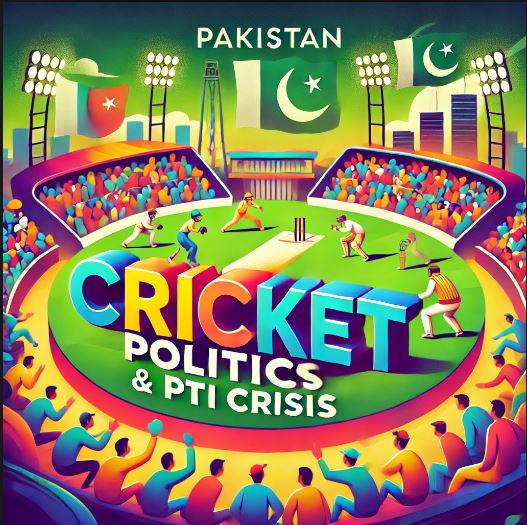
1. What is the current situation with the upcoming Cricket Champions Trophy and Pakistan’s participation?
Pakistan is facing challenges regarding its participation in the Champions Trophy due to India’s reluctance to play in Pakistan, citing security concerns. While a hybrid model, with some matches played in Pakistan and others in a neutral venue, was accepted for the Asia Cup, Pakistan is pushing for equal treatment. Pakistan argues that if India is unwilling to play in Pakistan, then future ICC events hosted by India should also adopt a hybrid model with some matches played outside India.
2. What is Pakistan’s proposed solution to the Champions Trophy hosting dilemma?
Pakistan proposes a reciprocal hybrid model. If India insists on a hybrid model for the Champions Trophy in Pakistan, then future ICC events hosted in India should also follow a hybrid model. This would ensure fairness and avoid a two-tiered system within ICC events.
3. What are the financial implications of the Champions Trophy standoff?
The primary broadcaster for the Champions Trophy, an Indian company, has stated that if India and Pakistan do not play, the financial viability of the tournament will be severely impacted. This puts pressure on the ICC to find a solution that satisfies both India and Pakistan.
4. What is the situation with political unrest in Pakistan and how does it relate to the Pakistan Tehreek-e-Insaf (PTI)?
Following events on November 24th, there are allegations of excessive force used against PTI supporters, with claims of injuries and deaths. PTI leaders are calling for an investigation into the incidents.
5. What is the role of Bushra Bibi (wife of Imran Khan) and Pervez Khattak (senior PTI leader) in the current political climate?
Both Bushra Bibi and Pervez Khattak are seen as influential figures within the PTI and capable of controlling and directing the party’s supporters. Their potential arrest and isolation are being viewed as a tactic to weaken the PTI’s ability to mobilize protests.
6. Is there a possibility of the PTI being banned and what are the implications?
Resolutions to ban the PTI have been discussed, but many believe a ban would be counterproductive. It could galvanize PTI supporters and further escalate tensions. Additionally, the effectiveness of such a ban is questioned, as previous attempts to restrict political parties through symbols have had little impact.
7. What are the potential consequences of imposing Governor’s Rule in Khyber Pakhtunkhwa (KP)?
Imposing Governor’s Rule in KP, a province where PTI holds significant influence, is seen as a risky move. It could backfire by further alienating PTI supporters and triggering larger-scale protests, potentially even targeting the Governor’s House. Furthermore, such a move may face legal challenges and lack of support from other political parties.
8. What is the significance of Aseefa Bhutto Zardari’s comments on Imran Khan’s safety?
Aseefa Bhutto Zardari, a prominent figure in the Pakistan Peoples Party (PPP), raising concerns about Imran Khan’s safety on an international platform suggests the PPP is positioning itself as a potential alternative to the current government. It also signals a potential willingness to work with Imran Khan in the future, creating a point of friction within the ruling coalition.
What is the “hybrid model” being discussed in the context of the cricket Champions Trophy, and why is it causing tension between India and Pakistan?
What are the arguments presented for and against holding the Champions Trophy in Pakistan? What are the potential financial implications for the ICC if India and Pakistan do not play?
According to the speaker, how does the political climate in Pakistan affect the potential hosting of the Champions Trophy? What evidence do they provide to support their claim?
What specific claims are being made by the Pakistan Tehreek Insaaf (PTI) regarding the events of November 24th? What evidence do they present to support their allegations?
How does the speaker analyze the potential impact of Governor’s Rule in KP? What are the potential benefits and disadvantages they highlight?
What is the significance of Bushra Bibi and Gandapur in the current political situation, according to the speaker’s analysis?
Why does the speaker believe that banning PTI would be ineffective? What historical example do they cite to support their viewpoint?
What is the significance of Asifa Bhutto Zardari’s statement about the threat to Imran Khan’s life, and how does the speaker interpret the People’s Party’s motives?
According to the speaker, how has the political dynamic between Imran Khan and the establishment shifted since November 24th?
In the speaker’s view, what is the likely future of the political situation in Pakistan, and what role might the People’s Party play?
The “hybrid model” proposes holding some Champions Trophy matches in Pakistan and others in a neutral country, likely due to India’s reluctance to play in Pakistan. This causes tension as Pakistan insists on hosting all games or implementing the hybrid model for future tournaments in India as well, seeking reciprocal treatment.
Arguments for holding the Champions Trophy in Pakistan cite contractual obligations, Pakistan’s right to host, and the potential for generating revenue. Arguments against it focus on security concerns and potential civil unrest. The ICC faces significant financial losses from broadcasting rights if India and Pakistan do not participate.
The speaker argues that the current political climate in Pakistan, characterized by potential civil unrest and the PTI’s challenges against the government, makes hosting the Champions Trophy difficult. They point to the PTI’s claims of violence against their supporters as evidence of instability.
PTI alleges excessive force used against their supporters on November 24th, claiming over 5000 arrests, hundreds injured by bullets, and 12 deaths. They claim to possess evidence, including witness testimonies and medical records, to support these allegations.
The speaker suggests Governor’s Rule in KP would give the administration greater control over potential PTI protests and disrupt their mobilization efforts. However, they also point out potential disadvantages, including public backlash, bureaucratic resistance, and legal challenges, arguing that it might ultimately prove ineffective and unsustainable.
Bushra Bibi and Gandapur are identified as crucial figures for PTI due to their influence over supporters and potential to persuade Imran Khan towards a more moderate approach. Their detention, the speaker argues, aims to limit PTI’s mobilization capacity while maintaining channels for negotiation.
The speaker believes banning PTI would be counterproductive, arguing that it would not diminish popular support and could even bolster their appeal as victims of political oppression. They cite the example of the ban on Jamaat-e-Islami, which failed to significantly impact their electoral performance.
Asifa Bhutto Zardari’s statement is interpreted as a strategic move by the People’s Party to signal their potential willingness to work with Imran Khan if the opportunity arises. By expressing concern for his safety, they subtly distance themselves from the government’s hardline stance and position themselves as potential allies.
The speaker observes that the power dynamic has shifted since November 24th, with the establishment appearing stronger and Imran Khan’s position weakened due to the crackdown on PTI. Despite this shift, the speaker believes Khan might eventually re-emerge and return to the political scene.
The speaker predicts that the political landscape will eventually transition away from street protests and back into the parliamentary arena. They foresee the People’s Party potentially playing a pivotal role in this transition, positioning themselves as a more palatable alternative to the PML-N for accommodating Imran Khan and his supporters.
Analyze the arguments for and against the “hybrid model” in the context of the Champions Trophy. Consider the perspectives of Pakistan, India, and the ICC, and discuss the potential implications of each proposed solution.
Evaluate the speaker’s claims about the political situation in Pakistan. To what extent do you agree or disagree with their assessment of the events of November 24th and the potential impact of Governor’s Rule in KP?
Explore the significance of the “safe passage” reportedly granted to Bushra Bibi and Gandapur. Analyze the speaker’s interpretation of this event, and consider its potential implications for the ongoing power struggle between PTI and the government.
Discuss the potential motives behind Asifa Bhutto Zardari’s statement about the threat to Imran Khan’s life. Analyze the speaker’s interpretation of the People’s Party’s strategy, and evaluate its potential effectiveness in the current political climate.
Based on the speaker’s analysis, predict the future of Pakistani politics. Consider the potential for Imran Khan’s return, the role of the establishment, and the possible realignment of political forces.
Hybrid Model: A proposed format for hosting the Champions Trophy where some matches are held in Pakistan and others in a neutral country.
Champions Trophy: A prestigious international cricket tournament organized by the ICC.
ICC: The International Cricket Council, the governing body for cricket worldwide.
PTI: Pakistan Tehreek-e-Insaf, a political party led by Imran Khan.
Governor’s Rule: A constitutional provision in Pakistan that allows the federal government to assume direct control of a province under specific circumstances.
KP: Khyber Pakhtunkhwa, a province in Pakistan where PTI holds a majority in the provincial assembly.
Establishment: A term often used in Pakistan to refer to the powerful military and intelligence apparatus.
Safe Passage: The act of granting someone permission and protection to travel through a dangerous or contested area.
People’s Party: Pakistan Peoples Party, a major political party in Pakistan.
Noon League: Pakistan Muslim League-Nawaz, a major political party in Pakistan.
BCCI: Board of Control for Cricket in India.
ACC: Asian Cricket Council.
Pakistani Politics & the Future of Cricket: A Deep Dive
Source 1: “Pasted Text” (Transcript of a Pakistani Political Commentary Show)
I. The Fate of the Champions Trophy: A Hybrid Model Emerges
This section analyzes the ongoing debate regarding the location of the upcoming Champions Trophy. With India refusing to play in Pakistan due to security concerns, and Pakistan rejecting a full hybrid model that would see them play most of their matches abroad, a potential solution is presented: a reciprocal hybrid model. This model would require India to also play some of its matches in future ICC tournaments at neutral venues if Pakistan is forced to do so for this tournament.
II. Political Turmoil: Analyzing Claims of Violence & Repression
This section delves into allegations by Pakistan Tehreek-e-Insaf (PTI) regarding state-sanctioned violence against their supporters on November 24th. The commentator analyzes the validity of these claims, scrutinizing evidence and urging for thorough investigations using available footage from safe city cameras.
III. The Potential for Governor’s Rule & a PTI Ban
This segment examines the potential consequences of imposing Governor’s rule in Khyber Pakhtunkhwa (KP) and a nationwide ban on PTI. The commentator argues that such actions would be ultimately counterproductive, potentially galvanizing public support for PTI and facing legal challenges. He emphasizes the importance of provincial autonomy and predicts a lack of support from the Pakistan People’s Party (PPP) for such measures.
IV. Shifting Power Dynamics & the Role of Key PTI Figures
This part explores the changing political landscape following the events of November 24th. The commentator posits a shift in power dynamics, with the establishment gaining strength and Imran Khan experiencing a relative weakening. He discusses the importance of figures like Bushra Bibi and Pervez Khattak for PTI and speculates on the possibility of their detention and isolation as a means to exert control and facilitate negotiations.
V. Asif Zardari’s Strategic Maneuvering & Potential PPP-PTI Alliance
This section focuses on Asif Zardari’s political maneuvering and the potential for an alliance between PPP and PTI. The commentator highlights Asif’s deliberate choice of Aseefa Bhutto Zardari to voice concerns regarding threats to Imran Khan’s life, interpreting it as a strategic move to distance PPP from the current government’s policies and position themselves as a potential ally for PTI in future political scenarios.
Briefing Doc: Pakistani Politics and Cricket Controversy
Main Themes:
Political turmoil in Pakistan: This source focuses heavily on the ongoing conflict between the PTI (Pakistan Tehreek-e-Insaf) and the ruling government. The PTI alleges excessive force and human rights violations during protests, demanding an independent inquiry. The government denies these claims.
The future of the Champions Trophy: A significant portion of the discussion centers around the upcoming Champions Trophy and the conflict surrounding India’s participation in Pakistan. Financial and political factors are intertwined with proposed solutions like the ‘hybrid model’ and potential venue changes.
PTI claims: The PTI alleges that over 5,000 of their supporters were arrested before November 24th, with hundreds suffering bullet injuries and 12 fatalities. They cite evidence from medical professionals and demand an independent inquiry.
Government’s response: The government dismisses these claims, stating they used appropriate force to control riots. They challenge the PTI to provide concrete evidence and suggest the Safe City camera footage could be examined.
PTI’s future: The discussion explores the possibility of banning the PTI, implementing Governor’s rule in KP (Khyber Pakhtunkhwa), and the potential consequences of such actions.
Possible reconciliation: The source hints at potential back-channel negotiations and the possibility of Imran Khan returning to the political scene in the future. Asif Ali Zardari’s daughter, Aseefa Bhutto Zardari, expressing concern over threats to Imran Khan’s life, is interpreted as the PPP (Pakistan People’s Party) potentially positioning itself as a mediator.
The Champions Trophy dispute: The core issue is India’s reluctance to play in Pakistan due to security concerns.
The ‘hybrid model’: This proposes holding some Champions Trophy matches in Pakistan and others in a neutral venue like Dubai or Sri Lanka. The source suggests a counter-proposal: applying the hybrid model reciprocally to future ICC events in India, ensuring fairness.
Financial implications: The source highlights the financial pressure on the ICC due to the potential loss of broadcast revenue if India-Pakistan matches don’t take place.
Possible outcomes: The source discusses possible scenarios like the Champions Trophy being shifted to another country, Pakistan refusing to play, or a negotiated agreement through the reciprocal hybrid model.
Omar Ayub (PTI): “They fired bullets of destruction. They have an agenda to destroy everything, destroy everything. This is not a political party, this is a fad.”
Najam Sethi (Analyst): “If India and ICC do not accept my point, then we will not play… then this champion trophy will be shifted.”
Najam Sethi (Analyst): “The Indian government gets hurt when India comes and plays with Pakistan… If Pakistan doesn’t play in India then they don’t have any problem.”
The source provides a detailed insight into the current political landscape of Pakistan and the complexities surrounding the Champions Trophy. It offers multiple perspectives, analyzing potential scenarios and their implications. The tone is speculative, relying heavily on insider information and predictions based on the speaker’s experience and understanding of the political players involved.
Note: The source appears to be a transcript from a talk show or similar format. The informal language and conversational style should be considered when assessing the validity of the information presented.
Here are the central political and sporting conflicts discussed in the sources:
The central sporting conflict revolves around the upcoming Cricket Champions Trophy and Pakistan’s participation in it. Pakistan is demanding reciprocal treatment from the International Cricket Council (ICC) and India. [1, 2] Pakistan argues that if India is allowed to host some of its matches in the Champions Trophy outside of India in a “hybrid model” due to security concerns about playing in Pakistan, then Pakistan should be granted the same concession for future ICC events held in India. [1, 2]
Pakistan believes that the ICC’s acceptance of India’s “hybrid model” sets a dangerous precedent of unequal treatment. They argue that the ICC should either require India to play all its matches in Pakistan or enforce the same “hybrid model” for future ICC events in India. [1, 2] Pakistan believes its stance is strengthened by the fact that they won the Champions Trophy in the past on their own terms and that respecting international relations requires reciprocal treatment. [2]
The sources suggest that the financial implications of India and Pakistan not playing each other are significant, putting pressure on the ICC and broadcasters. [3] It’s noted that the broadcaster, an Indian company with global rights, has threatened financial penalties if Pakistan pulls out of the tournament. [3]
The central political conflict discussed involves the aftermath of events on November 24th, with Pakistan Tehreek Insaaf (PTI) and the current government clashing over the use of force and the treatment of PTI supporters. PTI claims that their supporters were subjected to excessive force, including the use of snipers and live ammunition, resulting in injuries and deaths. [4] They demand an investigation into the events. [5]
The government denies PTI’s claims, stating that no snipers were used and that any force applied was in response to PTI’s actions. [5] They argue that PTI is exaggerating the situation and that their demands for an inquiry are politically motivated. [5]
There are discussions about potential actions against PTI, including a ban on the party and the imposition of Governor’s Rule in Khyber Pakhtunkhwa (KP). [6, 7] The sources debate the effectiveness and potential consequences of such actions, with concerns raised about backlash from the public and the judiciary. [7, 8]
The role of key figures like Bushra Bibi (Imran Khan’s wife) and Pervez Elahi (former Chief Minister of Punjab) is also discussed, particularly regarding their potential influence on the situation and the possibility of negotiations. [4, 6, 8]
The People’s Party’s position is analyzed, noting their potential as a mediating force between PTI and the government. [9, 10] Asifa Bhutto’s statements about threats to Imran Khan’s life are interpreted as a signal of the People’s Party’s willingness to accommodate PTI in future political arrangements. [9, 10]
These conflicts highlight the deep political and sporting divisions within Pakistan and the challenges faced in navigating these complex issues.
Power dynamics heavily influence decision-making, particularly in the context of international relations and politics, as evidenced by the sources.
The sources, which analyze the dynamics between the International Cricket Council (ICC), the Board of Control for Cricket in India (BCCI), and the Pakistan Cricket Board (PCB), illustrate how financial power and political influence can dictate the terms of engagement and shape outcomes. [1, 2]
The BCCI, due to its financial strength stemming from lucrative broadcasting deals and strong domestic cricket, holds significant sway within the ICC. [1, 2] This allows them to influence decisions in their favor, such as potentially determining the venue for the Champions Trophy. [1, 2]
The sources suggest that the BCCI leverages its position to exert pressure on other boards, many of whom are financially dependent on matches against India. [1] This creates a situation where these boards are more likely to side with India, even if it goes against the interests of other nations like Pakistan. [1, 3]
The sources further highlight the political dimension, with the Indian government’s stance on playing against Pakistan impacting the BCCI’s decisions. [4] The Indian government’s reluctance to engage with Pakistan on the cricket field, stemming from political tensions, restricts the BCCI’s freedom of action and ultimately shapes the ICC’s choices regarding tournament venues and formats. [4]
The sources propose that Pakistan could utilize a “hybrid model” for hosting the Champions Trophy, with some matches being played in a neutral country like Bangladesh to accommodate India’s concerns, while ensuring Pakistan retains some hosting rights. [5, 6] This model aims to address the power imbalance by advocating for reciprocal treatment: if India benefits from a hybrid model in Pakistan, future ICC events in India should also adopt a similar format. [5, 6]
The sources suggest that this strategy could force the ICC to acknowledge and address the unequal treatment of nations, potentially leading to a more equitable decision-making process within the organization. [6] By demanding reciprocity and highlighting the financial implications of India’s potential non-participation, Pakistan could leverage its position and gain an advantage in the negotiations. [4, 6]
In essence, the sources demonstrate how power dynamics, driven by financial clout and political influence, significantly impact decision-making processes, particularly in international sporting events like the Champions Trophy. They highlight how these power imbalances can be challenged through strategic negotiation and a push for greater reciprocity and fairness.
Here is a breakdown of potential consequences based on the outcomes discussed in the sources:
Potential Outcomes and Their Consequences
Pakistan stands firm on its demand for reciprocal hybrid model treatment: [1-3]
Positive Consequences for Pakistan:Levels the playing field with India. Pakistan would gain an advantage by ensuring that future ICC events in India also follow a hybrid model, reducing India’s leverage over Pakistan in cricketing matters. [3]
Strengthens Pakistan’s position in the ICC. By forcing a reciprocal arrangement, Pakistan asserts its independence and challenges India’s dominance in the ICC. [3, 4]
Potential for Pakistan to win the Champions Trophy on its own terms. This outcome allows Pakistan to maintain its stance and potentially achieve a favorable outcome in the tournament. [4]
Negative Consequences:Possible rejection by India and the ICC. India, with its financial clout and influence within the ICC, might resist the proposal. [3, 5]
Risk of the Champions Trophy being shifted to another country. This would result in financial losses for the ICC and potentially harm Pakistan’s cricketing reputation. [6]
Potential legal challenges from India. India could dispute the decision and initiate legal action against the ICC. [3]
Pakistan accepts a limited hybrid model: [1, 2, 7]
Consequences:Loss of bargaining power for future ICC events. Pakistan concedes to India’s demands, setting a precedent for future tournaments. [2, 3]
Perception of Pakistan surrendering to India’s pressure. Accepting a limited hybrid model without reciprocal terms weakens Pakistan’s position. [2]
Pakistan refuses to play in the Champions Trophy: [6]
Consequences:Financial losses for the ICC. The absence of India-Pakistan matches significantly reduces the tournament’s appeal and revenue. [5]
Damage to Pakistan’s cricketing relationships. This action could strain ties with the ICC and other cricket boards.
Potential for the Champions Trophy to be postponed or shifted. The ICC might be forced to reschedule or relocate the tournament. [6]
The source highlights the power dynamics within the ICC, emphasizing the financial influence of the BCCI and India’s ability to sway decisions in its favor. [5, 8]
The speaker suggests that Pakistan’s successful implementation of the PSL has provided it with greater financial independence and leverage. [1]
The analysis emphasizes the need for Pakistan to act strategically, capitalizing on any opportunity to secure reciprocal treatment and avoid being subjected to unequal terms by the ICC. [3, 4]
The source presents a nuanced view of the situation, emphasizing the complexities of international cricket politics and the financial stakes involved. The potential consequences outlined above provide a framework for understanding the possible outcomes and their implications for Pakistan’s cricketing future.
A Look at Pakistan Cricket: Politics, Finances, and the Champions Trophy
The sources provide a glimpse into the current state of Pakistan cricket, highlighting the intricate interplay between politics, finance, and international relations. The impending Champions Trophy serves as a focal point, with Pakistan demanding equitable treatment from the ICC and India.
At the heart of this discussion lies the “hybrid model,” which allows India to play some of its Champions Trophy matches outside of Pakistan due to security concerns. The sources argue that accepting this model without a reciprocal arrangement for future ICC events held in India would perpetuate an imbalance of power. [1-4]
The sources emphasize that this isn’t just about cricket – it’s about national pride and respect on the international stage. Pakistan, having won the Champions Trophy in the past, seeks to maintain its cricketing integrity and avoid being perceived as bowing to pressure. [4]
The financial implications of this situation are significant, with broadcasters and the ICC heavily reliant on the viewership and revenue generated by India-Pakistan matches. This reality puts Pakistan in a position to negotiate, as their absence from the tournament could lead to substantial financial losses. [5, 6]
The sources paint a picture of a complex landscape where Pakistan faces a crucial decision:
Option 1: Stand Firm on Reciprocal Hybrid Model: This path, while upholding principles of fairness, carries the risk of India and the ICC rejecting the proposal, potentially resulting in the Champions Trophy being shifted to another country. [4]
Option 2: Accept a Limited Hybrid Model: This would involve conceding to India’s demands, risking the perception of Pakistan surrendering to pressure and setting a precedent for future tournaments. [3]
Option 3: Refuse to Play in the Champions Trophy: This drastic step, though impactful, could damage Pakistan’s relationships with the ICC and other cricket boards, potentially leading to further isolation and financial consequences. [5]
The sources suggest that the success of the Pakistan Super League (PSL) has given Pakistan more financial independence and leverage in these negotiations. [2] This development provides them with a stronger platform to advocate for their interests and resist being subjected to unequal treatment.
The conversation history emphasizes the role of power dynamics, underscoring the influence wielded by the BCCI due to its financial strength. This power allows them to influence decisions within the ICC, often to the detriment of other boards, particularly those financially dependent on matches against India. [5, 7, 8]
The analysis presented in the sources suggests that Pakistan must adopt a strategic approach. This approach involves leveraging its newfound financial independence, highlighting the financial risks associated with India’s potential non-participation, and advocating for reciprocal treatment to ensure a more balanced and equitable cricketing future. [2, 4, 6]
A Divided PTI: Internal Conflicts and Political Maneuvering
The sources depict a Pakistan Tehreek-e-Insaf (PTI) grappling with internal discord and facing political challenges. While not explicitly stating “disarray,” the conversations reveal a party navigating complex power dynamics and struggling to maintain a unified front.
The sources suggest a rift within the PTI, with some members openly criticizing party leadership, particularly Bushra Bibi, wife of former Prime Minister Imran Khan. [1] These internal conflicts raise questions about the party’s cohesion and its ability to present a united front against its political opponents.
Adding to this internal tension, the sources highlight varying accounts regarding the events of November 24th, specifically concerning the number of PTI supporters injured or killed during protests. [2] This discrepancy in information, with PTI officials claiming higher figures than independent sources, indicates possible attempts to manipulate the narrative and exploit the situation for political gain.
The sources further depict a PTI caught between a desire to protest and a need to negotiate. [3] They illustrate the dilemma of a party seeking to mobilize its base while also recognizing the potential consequences of escalating confrontations with the government. This delicate balancing act underscores the precarious position the PTI finds itself in.
The sources also reveal external pressures impacting the PTI’s stability. [4] They describe how the current government, led by Shahbaz Sharif, is actively seeking to restrict the PTI’s political activities, potentially through bans or limitations on public gatherings. This external pressure further complicates the PTI’s ability to operate effectively and maintain its influence.
The sources, while focused on cricket politics, indirectly provide insights into the broader political landscape in Pakistan. The PTI’s struggles are contextualized within a broader environment of political tension and power struggles, where maneuvering and strategic alliances are essential for survival.
Champions Trophy: A Stage for Cricket and Politics
The sources, while primarily focused on the political landscape in Pakistan, provide a compelling look at the upcoming Champions Trophy tournament and the complex dynamics surrounding its potential hosting in Pakistan. The conversation centers on the “hybrid model” proposed to accommodate India’s reluctance to play in Pakistan due to security concerns.
The sources emphasize the significance of this event, extending beyond mere sport. For Pakistan, hosting the Champions Trophy is a matter of national pride and international recognition. Successfully navigating the challenges and securing hosting rights, potentially through the hybrid model, would represent a significant victory.
Here’s a closer look at the key elements surrounding the Champions Trophy discussion:
Hybrid Model: This concept lies at the heart of the debate. The sources suggest that Pakistan is willing to accept this model, with some matches played in a neutral country like Bangladesh to address India’s concerns. However, Pakistan insists on reciprocity – if India benefits from this model in Pakistan, future ICC events held in India should also adopt a similar format. This demand for equality aims to prevent a situation where Pakistan is subjected to different standards than India.
Power Dynamics: The sources repeatedly underscore the uneven power distribution within the ICC. The BCCI, fueled by its financial might derived from lucrative broadcasting deals and strong domestic cricket, holds significant influence. This allows them to exert pressure on other boards, many of whom are financially dependent on matches against India. This power dynamic creates a scenario where decisions often favor India, potentially sidelining the interests of other nations like Pakistan.
Financial Stakes: The sources acknowledge the substantial financial implications tied to the Champions Trophy. India-Pakistan matches are highly sought after by broadcasters and contribute significantly to the tournament’s revenue. Pakistan can leverage this reality to negotiate, as their absence could lead to significant financial losses for the ICC.
National Pride: The sources highlight that for Pakistan, the Champions Trophy is not just about cricket. It’s about asserting their position on the world stage and resisting perceived pressure from India. Winning the tournament on their own terms would be a symbolic victory, demonstrating their resilience and cricketing prowess.
The sources suggest several potential outcomes for Pakistan regarding the Champions Trophy:
Stand firm and demand a reciprocal hybrid model: This approach, though principled, carries risks. India and the ICC, influenced by the BCCI, might reject the proposal, leading to the tournament being moved to another country.
Accept a limited hybrid model without reciprocity: This option would be seen as a concession to India, potentially weakening Pakistan’s position within the ICC and setting a precedent for future events.
Refuse to participate in the Champions Trophy: This extreme step, while making a statement, could lead to financial losses for Pakistan, damage relationships with the ICC and other cricket boards, and potentially lead to further isolation within the cricketing world.
The sources advocate for Pakistan to adopt a strategic and assertive approach. By highlighting the financial risks associated with India’s potential non-participation and demanding reciprocal treatment, Pakistan can leverage its position and potentially secure a more favorable outcome.
The Champions Trophy, as depicted in the sources, represents more than just a cricket tournament. It’s a platform where political tensions, financial interests, and national pride intersect, making for a complex and fascinating case study in international relations.
Analyzing Pakistan’s Political Turmoil
The sources offer a detailed account of the current political climate in Pakistan, highlighting a landscape marked by political tension, internal divisions, and the maneuvering of various political actors. Although the focus is mainly on the impact of these events on the cricketing world, the sources provide valuable insight into the broader political struggles unfolding in the nation.
PTI Facing Internal & External Pressures: The sources portray a Pakistan Tehreek-e-Insaf (PTI) party grappling with internal disagreements and facing external pressure from the ruling government. The conversation reveals concerns over the influence of Bushra Bibi, Imran Khan’s wife, within the party, suggesting possible internal rifts and challenges to leadership. This internal discord is compounded by the government’s active efforts to limit PTI’s activities, potentially through bans or restrictions, further hindering their ability to function effectively. [1-5]
Controversial Events of November 24th: The sources describe the events of November 24th, a significant turning point in the PTI’s political journey. The conversation highlights conflicting narratives regarding the severity of the protests and the number of PTI supporters injured or killed, suggesting attempts to control the narrative and utilize the situation for political gain. [6, 7] The sources also reveal differing perspectives on the role of key figures like Bushra Bibi and Gandapur, with some arguing for their detention to maintain control and others suggesting their importance in negotiating with Imran Khan. [3, 6] This uncertainty surrounding the events and the roles of key figures further underscores the political turmoil and the challenges the PTI faces. [3]
Shift in Power Dynamics: The sources describe a notable shift in the balance of power following the events of November 24th. They suggest a change from a situation where Imran Khan held significant influence to one where the establishment now wields more power. This shift in dynamics has altered the political landscape, impacting the PTI’s ability to operate freely and influencing negotiations with the government. [8]
People’s Party Positioning for Future Influence: The sources highlight the People’s Party’s strategic maneuvering within this volatile political climate. They suggest that the People’s Party, by distancing itself from the government’s actions and expressing concern over the treatment of Imran Khan, is positioning itself for potential future alliances. This strategy is evident in Asifa Bhutto’s public statements, which create space for potential collaboration with PTI should the political situation shift. [8, 9] This calculated approach underscores the fluidity of political alliances in Pakistan and the importance of maintaining options in an unpredictable environment.
The sources, while focused on cricket-related issues, paint a vivid picture of a nation embroiled in political turmoil. The PTI’s internal conflicts, the government’s attempts to restrict their activities, and the People’s Party’s strategic positioning all contribute to an atmosphere of uncertainty and tension. This analysis reveals the complexity of Pakistani politics and highlights the continuous struggle for power and influence among various political actors.
The sources offer a detailed account of the current political climate in Pakistan, highlighting a landscape marked by political tension, internal divisions, and the maneuvering of various political actors. Although the focus is mainly on the impact of these events on the cricketing world, the sources provide valuable insight into the broader political struggles unfolding in the nation.
PTI Facing Internal & External Pressures: The sources portray a Pakistan Tehreek-e-Insaf (PTI) party grappling with internal disagreements and facing external pressure from the ruling government. The conversation reveals concerns over the influence of Bushra Bibi, Imran Khan’s wife, within the party, suggesting possible internal rifts and challenges to leadership. This internal discord is compounded by the government’s active efforts to limit PTI’s activities, potentially through bans or restrictions, further hindering their ability to function effectively. [1-5]
Controversial Events of November 24th: The sources describe the events of November 24th, a significant turning point in the PTI’s political journey. The conversation highlights conflicting narratives regarding the severity of the protests and the number of PTI supporters injured or killed, suggesting attempts to control the narrative and utilize the situation for political gain. [6, 7] The sources also reveal differing perspectives on the role of key figures like Bushra Bibi and Gandapur, with some arguing for their detention to maintain control and others suggesting their importance in negotiating with Imran Khan. [3, 6] This uncertainty surrounding the events and the roles of key figures further underscores the political turmoil and the challenges the PTI faces. [3]
Shift in Power Dynamics: The sources describe a notable shift in the balance of power following the events of November 24th. They suggest a change from a situation where Imran Khan held significant influence to one where the establishment now wields more power. This shift in dynamics has altered the political landscape, impacting the PTI’s ability to operate freely and influencing negotiations with the government. [8]
People’s Party Positioning for Future Influence: The sources highlight the People’s Party’s strategic maneuvering within this volatile political climate. They suggest that the People’s Party, by distancing itself from the government’s actions and expressing concern over the treatment of Imran Khan, is positioning itself for potential future alliances. This strategy is evident in Asifa Bhutto’s public statements, which create space for potential collaboration with PTI should the political situation shift. [8, 9] This calculated approach underscores the fluidity of political alliances in Pakistan and the importance of maintaining options in an unpredictable environment.
The sources, while focused on cricket-related issues, paint a vivid picture of a nation embroiled in political turmoil. The PTI’s internal conflicts, the government’s attempts to restrict their activities, and the People’s Party’s strategic positioning all contribute to an atmosphere of uncertainty and tension. This analysis reveals the complexity of Pakistani politics and highlights the continuous struggle for power and influence among various political actors.
The sources, while discussing Pakistani politics and the PTI’s current challenges, touch upon the issue of a potential threat to Bushra Bibi’s life. This concern, voiced by Asifa Bhutto of the People’s Party, adds another layer of complexity to the already turbulent political situation.
Here’s a breakdown of the information presented in the sources:
Asifa Bhutto’s Statement: The sources emphasize that Asifa Bhutto, daughter of former President Asif Ali Zardari, publicly expressed concerns about a threat to Bushra Bibi’s safety [1]. This statement, made to an international news outlet, Al-Arabiya, holds significance due to its public nature and the potential for international attention.
Strategic Messaging: The sources suggest that Asifa Bhutto’s statement may be part of a broader political strategy employed by the People’s Party [1]. They argue that by voicing concern for Bushra Bibi, the People’s Party aims to distance itself from the ruling government’s actions and potentially create an opening for future collaboration with PTI. This calculated approach indicates the fluidity of political alliances in Pakistan.
Lack of Specificity: The sources do not provide details about the nature of the threat to Bushra Bibi, its origin, or the evidence supporting it. This lack of concrete information raises questions about the validity of the claim and whether it is based on credible intelligence or is a political maneuver.
It is important to note that the sources do not offer definitive proof of an actual threat against Bushra Bibi. The information presented is primarily focused on the political implications of Asifa Bhutto’s statement rather than confirming the existence of a threat. Further investigation and independent verification would be necessary to determine the credibility and severity of any potential danger to Bushra Bibi’s safety.
Here are the summaries of each page of the provided source, focusing on the key points and information presented:
Page 1:
The speaker introduces the topic of the conversation, which will focus on current events in Pakistan, including the political situation of Pakistan Tehreek-e-Insaf (PTI), the controversy surrounding the Champions Trophy, and other significant news.
The speaker highlights concerns regarding PTI’s internal disarray due to a lack of clarity and direction from party leadership.
Allegations made by Omar Ayub, a PTI leader, during a press conference are mentioned as requiring further investigation.
The speaker expresses uncertainty about the future of the Champions Trophy, acknowledging both Pakistan and India’s interest in the tournament’s outcome.
The speaker also mentions predictions made in a previous conversation, particularly those related to Faisal Vavda and Asifa Bhutto.
The speaker acknowledges the importance of cricket in Pakistan, recognizing it as a source of national interest and a respite from political turmoil.
The conversation shifts focus to cricket and the Champions Trophy, acknowledging the widespread interest in the sport, even amidst political tensions.
The speaker expresses confusion regarding the actions of PCB Chairman Mohsin Naqvi, questioning his sudden trip to Dubai and the subsequent adjournment of the ICC meeting.
The speaker claims to have insight into the potential outcomes of the Champions Trophy debate based on their past experience and negotiations with Jay Shah, head of the BCCI.
The speaker recalls their involvement in negotiating the Asia Cup hosting arrangement, highlighting the challenges faced in securing Pakistan’s right to host matches.
The speaker details the challenges of convincing other Asian cricket boards, particularly India, to agree to a hybrid model for the Asia Cup, where some matches would be held in Pakistan.
The speaker recounts their efforts in convincing the Indian media and ICC officials to accept a partial hosting arrangement for Pakistan, ultimately leading to a compromise where some matches were played in Pakistan and others in neutral venues.
The speaker emphasizes the acceptance of the hybrid model for the Asia Cup and questions whether Pakistan should now accept a similar arrangement for the Champions Trophy.
The speaker highlights the contrasting positions of Pakistan and India regarding the hybrid model, with Pakistan demanding a reciprocal arrangement for future ICC events held in India.
The speaker continues to outline the arguments surrounding the Champions Trophy hosting debate. They mention Pakistan’s strong stance, rooted in their contractual agreement with the ICC and the government’s position that they will not play under a hybrid model unless it’s reciprocal.
The speaker dismisses India’s concerns about security and civil unrest in Pakistan, arguing that similar issues exist in other countries.
The speaker discusses the potential for voting within the ICC on the hybrid model, predicting that some Asian countries, influenced by India’s pressure, might not openly support Pakistan.
The speaker highlights the potential deadlock in negotiations between India and Pakistan, leaving the ICC in a challenging position.
The speaker emphasizes the financial consequences for the ICC if India and Pakistan do not participate in the Champions Trophy, particularly due to the potential loss of revenue from broadcasting deals.
The speaker predicts that the ICC will likely propose a compromise formula, driven by financial interests and the desire to ensure India-Pakistan matches.
The speaker acknowledges the BCCI’s significant influence within the ICC, stemming from its financial power and control over broadcasting rights.
The speaker suggests that the BCCI uses its influence to secure favorable outcomes for India, often at the expense of other boards who are financially dependent on matches against India.
The speaker recounts a previous meeting with Jay Shah and ICC officials where they proposed a reciprocal hybrid model, emphasizing the benefits for both India and Pakistan in future ICC events.
The speaker suggests that a hybrid model, with matches played in Bangladesh, could be a viable solution for Pakistan’s matches in the Champions Trophy, addressing India’s security concerns while ensuring Pakistan’s participation.
The speaker criticizes the previous PCB Chairman, Jaka Ashraf, for accepting a limited hybrid model without securing reciprocity for future events in India.
The speaker argues that Pakistan should leverage its position and demand a reciprocal arrangement for the hybrid model, ensuring equality and fairness within the ICC.
The speaker reiterates their proposal for a reciprocal hybrid model, where future ICC events in India would also adopt a similar arrangement if Pakistan agrees to it for the Champions Trophy.
The speaker emphasizes the importance of securing a written guarantee from the ICC that India would be penalized for not adhering to the agreed-upon hybrid model in future events.
The speaker suggests that this approach could potentially force India to reconsider its position and agree to a reciprocal arrangement, preventing a two-tier system within the ICC.
The speaker predicts that a vote within the ICC on this proposal could favor Pakistan, forcing India to accept the hybrid model for future events.
The speaker highlights the potential benefits for Pakistan if they successfully secure a reciprocal hybrid model, asserting their independence and establishing a precedent for fair treatment within the ICC.
The speaker argues that this approach would be beneficial for cricket as a whole, ensuring a level playing field and promoting a sense of respect and equality among member boards.
The speaker suggests that the BCCI might be willing to accept this arrangement as a “goodwill gesture,” potentially easing pressure from the Indian government.
The speaker highlights the conflicting interests of the Indian government and the BCCI, with the government potentially opposing matches against Pakistan while the BCCI prioritizes financial gains from these high-profile encounters.
The speaker continues to analyze the potential outcomes of the Champions Trophy debate, suggesting that the Indian government might not object to Pakistan not playing in India as long as the BCCI benefits financially from hosting other matches.
The speaker expresses confidence in the viability of the reciprocal hybrid model as a solution, urging the PCB Chairman to adopt a firm stance and negotiate effectively.
The speaker also mentions other potential outcomes, including the possibility of the Champions Trophy being postponed or moved to another country, though emphasizing the financial losses associated with these options.
The conversation shifts back to the political situation in Pakistan, focusing on the events of November 24th and the claims made by PTI regarding the number of supporters injured or killed during protests.
The speaker questions the validity of some PTI claims, suggesting that they may be exaggerating figures for political gain and urging for independent verification of the information.
The speaker analyzes the government’s response to the protests, highlighting their use of force and attempts to discredit PTI.
The speaker also discusses the potential for a judicial inquiry into the events of November 24th, acknowledging the challenges in obtaining accurate information and the possibility of political interference.
The speaker continues to discuss the events of November 24th, specifically addressing the claims made by PTI regarding the alleged firing on the car of PTI leaders.
The speaker dismisses these claims as “nonsense,” asserting that no firing took place and that the PTI leaders were given safe passage.
The speaker calls for an investigation into the use of weapons during the protests, suggesting that footage from safe city cameras could provide evidence.
The speaker also criticizes the government’s rhetoric and calls for a more constructive approach to resolving the political standoff.
The speaker criticizes PTI’s demands for a committee or judicial commission to investigate the events of November 24th, suggesting that these are political tactics rather than genuine attempts to seek justice.
The speaker expresses skepticism about the effectiveness of such inquiries, highlighting the challenges in accessing sensitive information and the potential for political bias.
The speaker argues that the government should focus on addressing the root causes of the political unrest instead of resorting to bans or restrictions on PTI’s activities.
The speaker emphasizes the importance of dialogue and compromise in resolving political differences, urging both sides to find a peaceful solution.
The speaker analyzes a statement made by Prime Minister Shahbaz Sharif regarding PTI’s actions, highlighting the government’s hardline stance and their attempts to portray PTI as a threat to national security.
The speaker suggests that this rhetoric is aimed at further isolating PTI and justifying the government’s crackdown on their activities.
The speaker discusses the potential for banning PTI, acknowledging the disadvantages and the likelihood that such a move would backfire by generating sympathy for the party.
The speaker also criticizes the government’s focus on Governor’s Rule, arguing that it is an ineffective solution and would likely face legal challenges.
The speaker continues to discuss the possibility of Bushra Bibi’s arrest, suggesting that it might be a strategic move by the government to control her influence and potentially use her as a bargaining chip in negotiations with Imran Khan.
The speaker argues that Bushra Bibi’s detention could backfire, generating further sympathy for PTI and potentially leading to more unrest.
The speaker highlights the importance of Bushra Bibi and Gandapur in controlling PTI’s supporters and potentially influencing Imran Khan’s decisions, suggesting that their detention could escalate the situation.
The speaker also discusses the potential for restrictions on PTI’s activities, acknowledging the government’s attempts to limit their freedom of movement and assembly.
The speaker analyzes resolutions passed in various assemblies regarding the potential banning of PTI, dismissing them as political maneuvering and emphasizing the ineffectiveness of such bans.
The speaker argues that banning PTI would not address the underlying issues and would likely strengthen the party’s support base.
The speaker highlights the negative consequences of Governor’s Rule, arguing that it would face legal challenges, create further unrest in KP province, and alienate the People’s Party, who are strong advocates for provincial autonomy.
The speaker predicts that the government’s attempts to suppress PTI will ultimately fail, suggesting that dialogue and compromise are the only viable solutions to the political crisis.
The speaker continues to discuss the potential consequences of Governor’s Rule, highlighting the risks of alienating the bureaucracy and provoking further protests and unrest in KP province.
The speaker argues that Governor’s Rule would be ineffective in suppressing PTI’s activities and would likely backfire by strengthening their support base.
The speaker suggests that the judiciary would likely challenge the legality of Governor’s Rule, further complicating the situation.
The speaker emphasizes the importance of addressing the underlying issues fueling the political unrest, arguing that suppression and restrictions will only exacerbate the situation.
The speaker summarizes their predictions regarding the political situation, suggesting that Bushra Bibi might be detained but not formally arrested, and that Imran Khan will eventually return to prominence after a period of negotiation and compromise.
The speaker highlights the shift in power dynamics following the events of November 24th, suggesting that the establishment now holds more influence than Imran Khan.
The speaker analyzes Asifa Bhutto’s statement regarding the threat to Bushra Bibi’s life, suggesting that it could be a strategic move by the People’s Party to position themselves for future collaboration with PTI.
The speaker emphasizes the fluidity of political alliances in Pakistan, highlighting the People’s Party’s attempts to distance themselves from the government’s actions and maintain their options for future political maneuvering.
The speaker continues to analyze the motivations behind Asifa Bhutto’s statement, suggesting that it is a deliberate attempt to create space for potential collaboration with PTI.
The speaker highlights the People’s Party’s strategic positioning within the political landscape, seeking to capitalize on the current instability and potentially form a new alliance with PTI.
The speaker contrasts the People’s Party’s approach with that of the ruling Noon League, suggesting that the People’s Party is more open to negotiation and compromise.
The speaker concludes by emphasizing the dynamic nature of Pakistani politics and the constant maneuvering of different actors seeking power and influence.
The discussion centers around the upcoming Cricket World Cup and the uncertainty of Pakistan’s participation due to India’s reluctance to play in Pakistan.
A “hybrid model” is being considered, where Pakistan’s matches would be held in a neutral venue, while India’s would be held in India. However, Pakistan prefers to host all its matches, as agreed upon in the original contract.
The ICC is facing pressure, especially from broadcasters, as matches between India and Pakistan are crucial for revenue.
The financial implications are significant, with the broadcaster threatening reduced payments if India-Pakistan matches don’t occur. Many ICC member countries are financially dependent on India’s participation.
Najam Sethi proposes a reciprocal hybrid model: If India’s matches involving Pakistan are played in a neutral venue for this World Cup, Pakistan would reciprocate when India hosts future tournaments. This was suggested previously and received positive initial feedback.
Hybrid Model Dispute: A disagreement exists regarding a “hybrid model” for cricket matches involving Pakistan and India. Pakistan proposes accepting the hybrid model for upcoming World Cup matches if India reciprocates in future ICC events hosted by India. This means Pakistan would play some matches in India if India also plays some matches at neutral venues when hosting Pakistan.
Neutral Venue Options: If India refuses the hybrid model, Pakistan suggests their World Cup matches in India could be moved to Bangladesh. This is presented as a financially beneficial solution for Bangladesh.
Pakistan’s Stance: Pakistan’s position is that any rules applied to them for hosting matches should also apply to India when they host. They are willing to play at neutral venues for some matches if India does the same in the future.
ICC’s Role: Pakistan wants the ICC to guarantee that any agreement regarding the hybrid model will be enforced and that penalties will be levied against India if they back out of the agreement. They believe this will force India to accept the reciprocal arrangement.
Potential Outcomes: Pakistan believes they have leverage due to upcoming tournaments they are hosting and feels confident a vote on this issue within the ICC would favor their position. They see this as a win for Pakistan and for cricket as a whole.
Thousands of PTI supporters were allegedly arrested and injured, some fatally, before and during protests around November 24th. PTI claims to have evidence, while the government disputes the figures.
There are conflicting accounts regarding an incident involving firing on the car of Bura B and Gandapur. The government claims they were provided safe passage, while PTI alleges they were attacked.
PTI demands an inquiry or judicial commission into the government’s actions against protesters, alleging excessive force and use of inappropriate weaponry. The government appears reluctant.
There are calls to ban PTI, similar to a resolution passed in the Balochistan Assembly. However, it’s argued that such a ban would be ineffective and potentially counterproductive.
Debate surrounds the possibility of Governor’s rule, with differing opinions on its potential benefits and drawbacks. The current governor’s actions are being closely watched.
The ban on PTI has not diminished their popular support and has not significantly impacted them politically.
Governor’s rule is unlikely to be imposed, as it is believed to have more disadvantages than advantages, including potential internal resistance and bureaucratic pushback.
The judiciary is unlikely to support Governor’s rule, viewing it as unconstitutional and a politically motivated maneuver. The People’s Party is also expected to oppose it due to their stance on provincial autonomy.
Asifa Bhutto’s statements about threats to Imran Khan’s life are interpreted as a strategic move by the People’s Party to distance themselves from the PML-N and position themselves as a potential political ally for Imran Khan in the future.
The People’s Party is attempting to create political space for themselves and exert pressure on the government, similar to how Maulana Fazl-ur-Rehman previously positioned himself.
Here is a comprehensive response to your query regarding the key disagreements regarding the Champions Trophy, based on the information provided in the sources:
Disagreement over the Hybrid Model: The sources indicate a disagreement between Pakistan and India regarding the hybrid model for the Champions Trophy. Pakistan initially proposed the hybrid model for the Asia Cup, suggesting that matches involving India be held in a neutral venue due to India’s unwillingness to play in Pakistan [1]. India eventually accepted this model for the Asia Cup, with India’s matches being held in Dubai or Sri Lanka and the remaining matches in Pakistan [2]. However, when it came to the Champions Trophy, Pakistan objected to the hybrid model, arguing that if India wanted a hybrid model, it should be applied equally to both countries [2, 3]. Pakistan proposed that its matches in India during ICC events also be held in a neutral venue, such as Bangladesh [4]. This proposal was met with resistance from India, likely due to concerns about losing hosting rights and potential revenue [4, 5].
Financial Implications and Broadcaster Pressure: The sources reveal that the disagreements are heavily influenced by financial considerations. The Indian broadcaster, holding global rights, has reportedly threatened to reduce payments if India-Pakistan matches don’t occur, putting pressure on the ICC to ensure these matches take place [6]. This financial pressure gives India leverage, as many cricket boards rely on revenue generated from matches involving India [6].
Governmental Influence and Political Tensions: The sources suggest that governmental influence and political tensions between India and Pakistan are significant factors in the disagreements. India cites security concerns and civil unrest in Pakistan as reasons for not playing there [3]. The sources also highlight that the Indian government is particularly sensitive about India playing in Pakistan, viewing it as a foreign policy issue [5]. This governmental stance adds another layer of complexity to the situation.
Possible Resolution and Pakistan’s Position: The sources suggest that Pakistan is pushing for a reciprocal hybrid model where matches involving either India in Pakistan or Pakistan in India are held in neutral venues [4, 7]. This approach aims to ensure fairness and equality while addressing security and political concerns. Pakistan believes that this proposal, if accepted by the ICC, could provide a way out of the deadlock and lead to a successful Champions Trophy [5, 7].
The sources depict the International Cricket Council (ICC) as a key player in the Champions Trophy dispute, stuck mediating between the strong stances of India and Pakistan.
The ICC is responsible for making the final decision on the tournament’s format and venue. [1]
While the sources suggest that India holds considerable sway within the ICC due to its financial clout, the organization aims to reach a resolution that benefits all stakeholders, including broadcasters and participating nations. [2, 3]
The sources highlight the ICC’s role in facilitating dialogue between India and Pakistan, encouraging them to find common ground. [2]
It is expected that the ICC will consider Pakistan’s proposal for a reciprocal hybrid model and potentially put it to a vote among member boards. [4, 5]
The sources indicate that the ICC faces a challenging task. The organization must balance the interests of various stakeholders, including:
The financial implications of the tournament, particularly the broadcaster’s demand for India-Pakistan matches. [2]
The need to maintain the integrity and fairness of the competition. [5]
The importance of upholding the ICC’s own rules and regulations. [5, 6]
The sources imply that the ICC’s decision will have significant implications for the future of international cricket. A fair and balanced outcome could help ease tensions and pave the way for more consistent engagement between India and Pakistan. However, failure to reach a satisfactory resolution could exacerbate existing conflicts and further fracture the cricketing world. [3, 5]
While the sources discuss the disagreements and potential resolutions surrounding the Champions Trophy, they do not explicitly state the outcome of the ICC meeting.
The sources mention that the ICC meeting was adjourned after a short duration and postponed until the following day. [1, 2]
The discussion revolves around the events leading up to the meeting and potential solutions, but there is no information on what transpired in the meeting itself or any decisions made.
To learn about the meeting’s outcome, you would need to consult additional sources that cover developments after the initial postponement.
Allegations Against Pakistan Tehreek-e-Insaf (PTI)
The sources, primarily a conversation between Syed Anaz and Najam Sethi, outline various allegations made against the PTI, particularly in the context of the events surrounding November 24th. These allegations come from PTI members themselves and paint a picture of alleged government suppression and violence against the party.
Excessive Arrests: Omar Ayub, a PTI leader, claims over 5,000 party members were arrested before November 24th. [1] This suggests a targeted crackdown on PTI in the lead-up to the events.
Violence and Casualties: The sources cite allegations from PTI of shootings, with “hundreds” hit by bullets and 12 confirmed deaths. [1] They claim to have evidence of these casualties. Additionally, they mention interviews on BBC with a doctor who reported an unprecedented number of surgeries performed, further supporting the claim of violence. [1]
Use of Military-Grade Weapons: The PTI accuses the government of using weapons meant for combating terrorism against its members, including snipers. [2] They argue that the use of such weaponry against civilians protesting or engaging in political activity is disproportionate and unjustified.
Suppression of Evidence: PTI challenges the government to release footage from Safe City cameras to prove or disprove the allegations of violence. [2] This implies that the government may be withholding evidence that could shed light on the events and potentially expose their actions.
The sources present these allegations as serious concerns raised by PTI, demanding an inquiry or judicial commission to investigate the events of November 24th. [2] They highlight the need for transparency and accountability from the government in addressing these allegations.
The sources point to a proposed solution to the Champions Trophy venue issue centered around a reciprocal hybrid model. This concept, put forth by Najam Sethi, stems from Pakistan’s objection to the one-sided application of the hybrid model for the Asia Cup, where India’s matches were held in neutral venues while Pakistan hosted the rest.
Here’s the breakdown of the proposed solution:
Equal Application of the Hybrid Model: Pakistan argues that the hybrid model, if used, should apply to both countries equally. This means that not only should Pakistan’s matches in India during ICC events be held in a neutral venue, but also India’s matches in Pakistan should follow the same principle. [1-3]
Neutral Venues for Both India and Pakistan Matches: The sources suggest Bangladesh as a possible neutral venue for Pakistan’s matches in ICC events held in India. This is due to its geographical proximity, making travel for Pakistan relatively easier. [2]
ICC Guarantee and Penalties: Pakistan emphasizes the need for the ICC to provide a guarantee that the reciprocal hybrid model will be enforced for future tournaments. They also call for penalties against India if they refuse to comply at the last minute. This ensures that the agreement is not simply for the upcoming Champions Trophy but sets a precedent for future ICC events. [3]
This proposed solution aims to achieve several objectives:
Fairness and Reciprocity: The reciprocal hybrid model addresses Pakistan’s concerns about the unequal application of the hybrid model, ensuring fairness and equal treatment for both countries. [1, 3]
Addressing Security and Political Concerns: By holding matches in neutral venues, the proposal seeks to alleviate India’s security concerns regarding playing in Pakistan, while simultaneously acknowledging Pakistan’s stance on not playing in India under the current political climate. [2, 3]
Financial Viability: The proposal attempts to balance the financial interests of the ICC and the broadcaster by ensuring the high-revenue-generating India-Pakistan matches take place, even if not on either country’s soil. [4, 5]
Shifting the Burden to the ICC: By making the ICC responsible for enforcing the reciprocal hybrid model and imposing penalties, the proposal aims to reduce the direct conflict between India and Pakistan. [3]
Sethi expresses confidence that this proposal, if presented strongly by Pakistan, could force India and the ICC to accept it. He believes it could lead to Pakistan gaining a strategic advantage, showcasing their firm stance and commitment to fairness. [3, 5] However, it’s important to note that the sources do not provide information on whether this proposal was formally presented at the ICC meeting or the response it elicited.
The sources, mainly focusing on Najam Sethi’s perspective, indicate a complex and evolving stance of the Pakistani government on the hybrid model. While not explicitly stating the official government position, the conversation reveals the following:
Initial Support for the Hybrid Model: During the Asia Cup negotiations, Pakistan, under Sethi’s leadership, proposed the hybrid model as a solution to India’s reluctance to play in Pakistan [1, 2]. This suggests an initial acceptance of the model as a way to ensure the tournament’s viability.
Shifting Position and Demand for Reciprocity: Following the Asia Cup, where India’s matches were held in neutral venues while Pakistan hosted others, Pakistan’s stance shifted. They objected to the one-sided application of the hybrid model for the Champions Trophy [3, 4]. The sources highlight Pakistan’s demand for reciprocity – if India wants its matches in Pakistan played at neutral venues, the same should apply to Pakistan’s matches in India during ICC events [4, 5].
Leveraging the Hybrid Model for Strategic Advantage: Sethi suggests that Pakistan should use the hybrid model as a bargaining chip, pushing for its reciprocal application to gain an advantage in negotiations with India and the ICC [5]. This indicates a view that the hybrid model, while initially seen as a compromise, could be used to level the playing field and assert Pakistan’s position.
Focus on Fairness and Equality: The sources emphasize Pakistan’s focus on fairness and equality in the application of the hybrid model. They argue that a one-sided model undermines the integrity of the competition and creates an imbalance in favor of India [5].
Linking the Hybrid Model with Future ICC Events: Pakistan’s proposal is not limited to the Champions Trophy. They advocate for the inclusion of the reciprocal hybrid model in future ICC tournament contracts, ensuring its long-term implementation [5, 6].
Based on Sethi’s statements, the Pakistani government’s stance appears to have evolved from accepting the hybrid model as a necessary compromise to leveraging it as a tool for achieving fairness and reciprocity in international cricket. The sources suggest a strong belief that the reciprocal hybrid model is crucial for protecting Pakistan’s interests and ensuring a level playing field in future tournaments.
The sources, primarily a discussion between Syed Anaz and Najam Sethi, touch upon the potential imposition of Governor’s Rule in Khyber Pakhtunkhwa (KP) and outline arguments both for and against it. The context revolves around the political climate following events on November 24th, involving protests and clashes related to PTI.
Arguments for Governor’s Rule:
Controlling PTI’s Mobilization: Sethi suggests that Governor’s Rule could limit PTI’s ability to mobilize large-scale protests or marches. [1] The administration, under the Governor’s control, might be less supportive of such actions, potentially curbing PTI’s political activities. This argument implies that Governor’s Rule could be used to maintain order and prevent disruptions caused by PTI’s mobilization efforts.
Arguments against Governor’s Rule:
Public Backlash and Resistance: The sources highlight that the mood in KP is largely against PTI, and potentially against other major parties like PMLN and PPP. [2] Imposing Governor’s Rule in this environment could further inflame public sentiment, leading to increased resistance, protests, and potentially violent backlash against the government.
Bureaucratic Challenges and Non-Compliance: Sethi notes that the KP bureaucracy is largely sympathetic to PTI and Imran Khan. [2] Governor’s Rule might face significant challenges in enforcing its authority, as the bureaucracy, including the police, might be reluctant to comply with directives that go against PTI’s interests.
Legal and Constitutional Challenges: The sources point out that Governor’s Rule is likely to face legal challenges in court. [2] They argue that the judiciary tends to view Governor’s Rule negatively, seeing it as a politically motivated maneuver rather than a legitimate constitutional measure. This suggests that Governor’s Rule might be deemed unconstitutional and ultimately overturned by the courts.
Lack of Support for Provincial Autonomy Infringement: The discussion highlights that the People’s Party, with its emphasis on provincial autonomy, is unlikely to support Governor’s Rule. [2] They fear setting a precedent that could be used against them in Sindh. This implies that imposing Governor’s Rule in KP would face opposition not only from PTI but potentially from other political parties concerned about safeguarding provincial autonomy.
Sethi concludes that, based on these factors, Governor’s Rule is likely not a viable option. The potential disadvantages, including public backlash, bureaucratic resistance, legal challenges, and political opposition, outweigh the limited benefits of curbing PTI’s mobilization. The sources suggest that the government should explore alternative strategies to address the political situation in KP without resorting to Governor’s Rule, which is perceived as a heavy-handed and potentially counterproductive measure.
Proposed Solution for Cricket Match Dispute: Reciprocal Hybrid Model and Venue Options
The sources, focusing on a conversation between Syed Anaz and Najam Sethi, offer insights into potential solutions for the ongoing dispute surrounding India-Pakistan cricket matches, particularly within the context of the upcoming Champions Trophy. While the specific outcome of the ICC meeting regarding the tournament isn’t stated, the sources highlight proposed solutions and potential strategies.
Reciprocal Hybrid Model:
One prominent solution revolves around the concept of a “reciprocal hybrid model” for ICC tournaments [1, 2]. This idea stems from Pakistan’s dissatisfaction with the one-sided hybrid model implemented during the Asia Cup, where India’s matches were held in neutral venues, while Pakistan hosted the remaining games [3, 4].
Under this proposal, if India insists on its matches in Pakistan being played at neutral venues, Pakistan demands the same treatment for its matches scheduled in India during ICC events [1, 2, 5]. This ensures equal application of the hybrid model, addressing Pakistan’s concerns about fairness and reciprocity.
The sources propose Bangladesh as a potential neutral venue for Pakistan’s matches in ICC tournaments hosted by India [2]. Bangladesh’s proximity is cited as a key advantage, making travel more convenient for the Pakistani team and fans.
Pakistan also emphasizes the need for robust guarantees and enforcement mechanisms for the reciprocal hybrid model [5]. This includes:
ICC Guarantee: A formal guarantee from the ICC that the reciprocal hybrid model will be applied in future tournaments, ensuring it’s not a one-off arrangement for the Champions Trophy.
Penalties for Non-Compliance: Clear penalties for India if they back out of the agreement at the last minute. This safeguards Pakistan’s interests and deters potential breaches of the agreement.
Sethi suggests that Pakistan can use this proposal as leverage in negotiations with the ICC and India [5]. By taking a firm stance and demanding fairness, Pakistan could gain a strategic advantage and demonstrate its commitment to a level playing field in international cricket.
Alternative Venues:
Apart from the reciprocal hybrid model, the sources mention alternative venues as potential solutions, though less extensively:
Dubai and Sri Lanka: These locations have been suggested as possible neutral venues for the Champions Trophy if the hybrid model isn’t adopted [6]. Both have hosted ICC tournaments in the past, making them logistically viable options.
Postponement:
While not favored, the sources acknowledge the possibility of postponing the Champions Trophy if the venue dispute remains unresolved [6]. This would be a last resort, considering the potential financial losses for the ICC and the disruption to the cricketing calendar.
Key Considerations:
The sources present these potential solutions alongside various considerations influencing the decision-making process:
Financial Implications: The financial impact on the ICC, broadcasters, and participating nations is a significant factor in venue selection. India-Pakistan matches generate substantial revenue, making their inclusion crucial for the tournament’s commercial success.
Political Climate: The strained political relationship between India and Pakistan undoubtedly plays a role in the venue discussions. Security concerns and governmental restrictions on travel and sporting engagements add complexity to the situation.
ICC’s Role: The ICC’s ability to enforce agreements and ensure fairness is paramount. The success of any proposed solution hinges on the ICC’s willingness to take a strong stance and ensure equitable treatment for both India and Pakistan.
The sources provide a glimpse into the complexities of the venue dispute and highlight potential solutions that could address the concerns of both India and Pakistan. However, it’s crucial to remember that the conversation represents one perspective, and further developments and official statements from the ICC and the respective cricket boards are needed to fully understand the situation’s trajectory.
Potential Consequences of Resolving the Cricket Dispute
The resolution of the cricket dispute between India and Pakistan, particularly concerning the venue for their matches in ICC tournaments, carries several potential consequences, as highlighted in the sources and previous conversation. These consequences extend beyond the immediate outcome of the Champions Trophy and have implications for future tournaments, the financial health of international cricket, and the broader relationship between the two nations.
Impact on Future ICC Tournaments and the Hybrid Model
Establishing a Precedent: The chosen resolution for the Champions Trophy will likely set a precedent for future ICC tournaments. If the reciprocal hybrid model is adopted and successfully implemented, it could become the standard approach for handling India-Pakistan matches, ensuring fairness and a level playing field.
Strengthening or Weakening the ICC’s Authority: The ICC’s handling of this dispute will significantly impact its perceived authority and effectiveness. A firm stance that upholds fairness and enforces agreements would strengthen the ICC’s position as a governing body. Conversely, a weak or biased resolution could undermine its credibility and embolden nations to disregard its decisions in the future.
Financial Ramifications for International Cricket
Revenue Generation and Broadcast Deals: India-Pakistan matches are among the most lucrative in cricket, attracting massive viewership and generating substantial revenue for the ICC, broadcasters, and participating nations. The dispute’s resolution will directly affect these financial aspects.
Positive Outcome: A solution that guarantees India-Pakistan matches, whether through the hybrid model or neutral venues, would safeguard this revenue stream and benefit the financial health of international cricket.
Negative Outcome: If the dispute leads to Pakistan’s withdrawal from the Champions Trophy or the cancellation of India-Pakistan matches in future tournaments, the financial losses would be significant. Broadcasters might renegotiate deals, and the overall value of ICC events could diminish.
Implications for India-Pakistan Relations
Potential for Goodwill or Further Strain: While cricket itself cannot resolve deep-rooted political issues, the handling of this dispute could have symbolic implications for the India-Pakistan relationship.
Opportunity for Positive Gesture: A mutually agreeable solution that prioritizes fairness and respects both nations’ concerns could be perceived as a positive gesture, fostering goodwill and potentially paving the way for dialogue in other areas.
Risk of Heightened Tensions: A contentious or one-sided resolution could further strain relations, fueling animosity and making future cooperation more difficult.
Additional Considerations
Impact on Pakistani Cricket: The outcome will directly affect Pakistan’s ability to host and participate in international tournaments. A favorable resolution, ensuring Pakistan’s participation in ICC events on equal terms, would boost Pakistani cricket and help develop the sport within the country.
Public Sentiment in Both Nations: The resolution will likely evoke strong reactions from cricket fans and the general public in both India and Pakistan. This could influence public opinion and potentially impact political discourse in both countries.
It’s important to acknowledge that these potential consequences are based on analysis of the sources provided and the previous conversation. The actual outcome and its full implications might vary depending on factors not explicitly discussed, such as unforeseen political developments or shifts in the stances of the ICC, BCCI, or the PCB.
Jay Shah’s Role in the Champions Trophy Dispute: A Pakistani Perspective
The sources, recounting a conversation between Syed Anaz and Najam Sethi, offer a Pakistani perspective on the Champions Trophy venue dispute and the perceived role of Jay Shah, the BCCI Secretary and influential figure in the ICC. While the sources don’t reveal specific actions taken by Shah regarding the Champions Trophy, they portray him as a key player whose stance and influence significantly impact the situation.
Control over ICC and Asian Cricket: Sethi asserts that Shah effectively controls the ICC due to the BCCI’s financial dominance and influence over other cricket boards, particularly in Asia. He suggests that even without formally becoming the ICC chairman, Shah’s position within the BCCI grants him significant sway over ICC decisions. [1]
Resistance to the Hybrid Model for Pakistan: Sethi recalls past negotiations with Shah regarding the hybrid model during his own tenure as PCB chairman. He claims Shah initially rejected the concept for the Asia Cup, preferring to hold all matches in a neutral venue rather than having some in Pakistan. [2, 3] Sethi implies that Shah’s reluctance stemmed from a desire to protect India’s interests and maintain control over hosting rights for major tournaments. [4]
Potential for Continued Opposition to Reciprocity: Sethi speculates that Shah might resist the proposed reciprocal hybrid model for the Champions Trophy and future ICC tournaments. He believes Shah would prefer to maintain the status quo, where India’s matches are always played in India or neutral venues, giving them a perceived advantage. [1, 5]
Influence on ICC’s Financial Decisions: The sources highlight the ICC’s dependence on revenue generated from India-Pakistan matches, primarily driven by the Indian broadcast market. [1] Sethi suggests that Shah, representing the BCCI, could leverage this financial influence to pressure the ICC into adopting decisions favorable to India, potentially at the expense of Pakistan’s interests.
Interpreting Sethi’s Perspective:
It’s important to note that Sethi’s statements about Shah’s role are presented without direct evidence or confirmation from other sources. His perspective might be influenced by his own experiences negotiating with Shah and the broader political context surrounding India-Pakistan cricket relations.
Additional Insights from Previous Conversation:
The previous conversation about potential consequences of the dispute’s resolution further underscores Shah’s potential influence. The discussion highlights the ICC’s need to balance financial considerations with fairness and the risk of its authority being undermined if it’s perceived as favoring one nation over another. Shah’s position within the BCCI and his potential control over the ICC’s financial levers make him a crucial figure in this balancing act.
Need for Further Information:
To fully understand Shah’s role in the Champions Trophy dispute, it’s necessary to consider information from additional sources, including official statements from the ICC, the BCCI, and Shah himself. The sources provided offer a valuable but limited Pakistani perspective, and further research is needed to gain a more comprehensive understanding of the situation.
While the sources do not explicitly state the ICC’s final decision regarding the Champions Trophy, they provide extensive discussion about the factors influencing the decision-making process and the various perspectives involved.
Lack of Definitive Outcome: The provided excerpts from “Pasted Text” primarily focus on a conversation between Syed Anaz and Najam Sethi about potential solutions and strategic considerations surrounding the Champions Trophy venue dispute. They do not disclose the actual outcome of the ICC meeting or any official announcements regarding the tournament’s fate. [1-10]
Emphasis on Potential Solutions and Strategies: The conversation heavily emphasizes potential solutions, particularly the “reciprocal hybrid model,” and Pakistan’s negotiating strategies. Sethi, drawing from his past experience, outlines how Pakistan could leverage this model to ensure fairness and reciprocity in ICC tournaments. However, the discussion remains speculative and doesn’t confirm whether the ICC ultimately adopted or rejected this proposal. [1-10]
Focus on Influencing Factors: The sources highlight various factors that likely influenced the ICC’s decision, including the financial implications of India-Pakistan matches, the political sensitivities surrounding the dispute, and the pressure exerted by powerful figures like Jay Shah. However, they stop short of revealing the ICC’s final judgment based on these considerations. [1-10]
Conclusion:
Based on the information provided in the sources, the ICC’s decision regarding the Champions Trophy remains undisclosed. The conversation between Syed Anaz and Najam Sethi provides valuable insights into the factors at play and potential solutions discussed, but it lacks concrete details about the ICC’s final determination. To ascertain the actual outcome, it would be necessary to consult additional sources, such as official statements from the ICC, the BCCI, or the PCB.
Political Implications of PTI’s Actions: A Pakistani Perspective
The sources, featuring a discussion between Syed Anaz and Najam Sethi, primarily center on the Champions Trophy venue dispute and offer limited direct insights into the broader political implications of PTI’s actions. However, they provide glimpses into the political landscape in Pakistan and the potential consequences of PTI’s strategies, particularly in the context of their confrontational approach towards the government.
Public Sentiment and Potential for Unrest: Sethi notes that public sentiment in Khyber Pakhtunkhwa (KP), a PTI stronghold, is currently against the party. He suggests that this disillusionment stems from PTI’s actions, potentially referring to their protests and calls for street mobilization. This negative sentiment could pose challenges for PTI’s future political prospects and potentially lead to further unrest if the party continues its confrontational tactics.
Government Response and Crackdown: The sources describe the government’s response to PTI’s protests, including allegations of excessive force, arrests, and the potential imposition of Governor’s Rule in KP. Sethi analyzes the government’s motives and the potential implications of these actions, suggesting that the government aims to curtail PTI’s influence and prevent further mobilization. He also speculates on the effectiveness and legality of these measures, highlighting the potential for legal challenges and the possibility of further inflaming public anger.
Impact on Political Stability and Dialogue: The sources indirectly touch upon the broader political implications of PTI’s actions and the government’s response. The confrontational dynamics between the two sides contribute to political instability and hinder potential dialogue or compromise. Sethi’s analysis of the situation suggests that both PTI and the government are engaged in a power struggle, with potential consequences for the functioning of democratic processes in Pakistan.
Connecting to Previous Conversation:
The previous discussions about the Champions Trophy dispute highlight the broader context of political tension between India and Pakistan. This tension, reflected in the cricket world, likely spills over into other areas, influencing domestic politics and shaping the actions of political parties like PTI.
Limitations of the Sources:
It’s crucial to recognize that the sources primarily focus on a specific conversation and offer a limited perspective on the political implications of PTI’s actions. The analysis presented is primarily Sethi’s interpretation of the situation, and other political analysts or stakeholders might hold differing views. To gain a more comprehensive understanding, it would be beneficial to consult additional sources, including statements from PTI leaders, government officials, and independent political commentators.
Need for Further Context:
The sources lack specific details about the particular PTI actions being discussed. To fully grasp the political implications, it’s essential to understand the specific events or policies that have sparked controversy and shaped public perception. Further research and analysis are necessary to connect these actions to the broader political landscape in Pakistan and assess their long-term consequences.
Potential Consequences of a PTI Ban in Pakistan: A Speculative Analysis
The sources, primarily focused on the Champions Trophy dispute and other political matters, don’t explicitly discuss a potential PTI ban or its consequences. However, Sethi’s analysis of the political landscape in Pakistan, particularly regarding PTI’s confrontational approach and the government’s crackdown, offers some insights that could be extrapolated to speculate on the potential fallout of such a ban.
Exacerbated Public Anger and Unrest: Sethi points out that public sentiment in KP, a PTI stronghold, is already turning against the party. Banning PTI could further alienate its supporters and fuel resentment against the government, potentially leading to more intense protests, civil disobedience, and even violence. The sources highlight previous instances of unrest in KP, suggesting a pre-existing potential for escalation.
Increased Political Polarization: A PTI ban would likely deepen the existing political polarization in Pakistan. It could be perceived as an undemocratic move to silence opposition, pushing PTI supporters further away from mainstream politics and potentially encouraging more radical or extremist viewpoints. This polarization could make dialogue, compromise, and constructive political engagement even more challenging.
Legal Challenges and Questions of Legitimacy: Sethi emphasizes the potential legal ramifications of the government’s actions, particularly regarding the imposition of Governor’s Rule in KP. He suggests that such measures could face legal challenges and be deemed unconstitutional, further undermining the government’s legitimacy and fueling accusations of authoritarianism. A PTI ban would likely face similar legal scrutiny and could be challenged in court, prolonging the political conflict and raising questions about the rule of law in Pakistan.
International Criticism and Reputational Damage: Banning a major political party like PTI could attract international criticism and damage Pakistan’s reputation on the global stage. It could be viewed as a suppression of democratic rights and freedom of expression, potentially harming Pakistan’s relationships with other countries and impacting its standing in international organizations.
Limited Effectiveness in Curbing PTI’s Influence: While a ban might temporarily restrict PTI’s formal political activities, it’s unlikely to completely eradicate the party’s influence or quell its support base. PTI could potentially operate underground or find alternative ways to mobilize its followers, potentially through social media or other informal channels. The ban could also backfire, turning PTI into a martyr and further strengthening its narrative of victimhood and resistance.
Important Considerations:
Speculative Nature of the Analysis: It’s crucial to emphasize that the sources do not directly address a PTI ban, and this analysis is based on extrapolations from Sethi’s broader commentary on Pakistani politics. The actual consequences of a ban could differ significantly depending on various factors, including the specific circumstances surrounding the ban, the public’s reaction, and the international community’s response.
Need for Broader Context: Understanding the potential consequences requires considering the broader political landscape in Pakistan, the specific actions and rhetoric of PTI that might lead to a ban, and the government’s overall approach to dealing with political dissent. A more comprehensive assessment necessitates information beyond the provided sources.
Importance of Diverse Perspectives: This analysis primarily reflects Sethi’s perspective, which might be influenced by his own political affiliations or biases. Consulting additional sources, including statements from PTI leaders, government officials, and independent political analysts, would provide a more balanced and nuanced understanding of the potential consequences of a PTI ban.
The sources offer a nuanced discussion of the potential imposition of Governor’s Rule in Khyber Pakhtunkhwa (KP), analyzing both the perceived benefits and drawbacks from Najam Sethi’s perspective.
Arguments in Favor of Governor’s Rule:
Controlling PTI’s Mobilization: Sethi suggests that Governor’s Rule could effectively limit PTI’s ability to mobilize supporters for protests or other disruptive actions. By transferring administrative control to the Governor, the government could potentially hinder PTI’s logistical capabilities and prevent large-scale gatherings. [1] This is particularly relevant in the context of the government’s concerns about PTI’s calls for street mobilization and potential unrest. [1, 2]
Preventing Further Unrest: The government’s rationale for considering Governor’s Rule stems from a desire to maintain order and prevent further escalation of protests or violence. [1] The sources highlight the volatile situation in KP, with allegations of excessive force used against PTI supporters and the potential for continued unrest. [1, 2] Governor’s Rule is presented as a way to stabilize the situation and restore control.
Arguments Against Governor’s Rule:
Ineffectiveness in Curbing PTI’s Influence: Sethi argues that while Governor’s Rule might temporarily disrupt PTI’s organized activities, it won’t eliminate the party’s influence or diminish its support base. He suggests that PTI could operate through informal channels, like social media, or even gain sympathy as a perceived victim of government oppression. [3] This viewpoint aligns with the broader discussion about the potential ineffectiveness of banning political parties.
Exacerbating Public Anger and Backlash: Imposing Governor’s Rule could further alienate PTI supporters and intensify anti-government sentiment in KP. [3] Sethi highlights the already existing negative sentiment towards PTI in the region and warns that Governor’s Rule could backfire, leading to more resistance and protests, potentially targeting the Governor’s House itself. [3]
Legal Challenges and Constitutional Concerns: Sethi emphasizes the potential legal and constitutional hurdles associated with Governor’s Rule. [3] He cites past instances where the judiciary viewed Governor’s Rule unfavorably, perceiving it as a political maneuver rather than a legitimate administrative measure. [3] This legal uncertainty could lead to prolonged court battles, further destabilizing the political landscape.
Lack of Support for Limiting Provincial Autonomy: The sources suggest that imposing Governor’s Rule could be seen as an infringement on provincial autonomy, a principle that the People’s Party, another major political force, strongly advocates for. [3] Sethi speculates that the People’s Party would likely oppose Governor’s Rule based on this principle, further complicating the government’s efforts to implement it. [3]
Conclusion:
The sources present a complex picture of the potential consequences of Governor’s Rule in KP. While it’s presented as a tool for controlling PTI and preventing unrest, Sethi argues that its effectiveness is questionable and warns of potential negative consequences like further instability, public backlash, and legal challenges. The discussion highlights the delicate political situation in Pakistan and the government’s difficult choices in navigating dissent and maintaining order.
The sources, primarily a conversation between Syed Anaz and Najam Sethi, focus heavily on the Champions Trophy venue dispute and don’t explicitly detail specific allegations against PTI in a broader context. However, within the discussion of the political climate surrounding PTI’s actions, several accusations emerge:
Violent Protests and Destruction: The sources mention PTI protests leading up to November 24th and the government’s subsequent response. Shahbaz Sharif, characterized as a “fun player” in politics by Sethi, is quoted accusing PTI of destructive behavior, stating they “fired bullets of destruction” and have an agenda to “destroy everything.” [1] This statement, though lacking specific details, paints PTI as a force of chaos and instability.
Exaggerated Claims of Casualties and Arrests: Sethi casts doubt on PTI’s claims regarding the scale of violence and arrests during their protests. He contrasts PTI’s assertions of 5000 arrests and numerous bullet injuries, including 12 martyrs, with his own understanding, suggesting the numbers are inflated for political gain. He encourages media investigation into PTI’s claims, specifically urging them to examine Safe City camera footage for evidence. [2, 3]
Staging Incidents for Publicity: Sethi dismisses the alleged firing on the car of “Bura B and Gandapur Saheb,” asserting it was staged for publicity. He claims there was an “understanding” beforehand and points to their safe passage as evidence that no real threat existed. He further suggests Bushra Bibi’s participation was calculated to garner attention and fuel controversy. [2-4]
Manipulating Public Sentiment: The sources describe a political landscape where PTI is accused of exploiting public sentiment for political ends. Sethi suggests PTI’s calls for protests and potential unrest are designed to generate sympathy and portray themselves as victims of government oppression. He specifically highlights the potential for unrest in KP, where public sentiment is already turning against PTI, and warns of their ability to mobilize supporters through emotional appeals. [5, 6]
Important Considerations:
Sethi’s Perspective: It’s crucial to recognize that the allegations against PTI are presented from Sethi’s viewpoint. He positions himself as an experienced political analyst who can discern PTI’s strategies and motives. However, his interpretations could be influenced by his own political leanings.
Lack of Specific Evidence: The sources offer limited concrete evidence to substantiate the allegations against PTI. Sethi relies heavily on his analysis and understanding of political dynamics, encouraging further investigation but not presenting conclusive proof.
Need for Multiple Perspectives: To fully understand the accusations against PTI, it’s essential to consider other viewpoints, including PTI’s own statements and independent assessments of their actions. The provided sources offer a glimpse into one perspective on the political landscape but lack a comprehensive overview.
BCCI’s Influence in the Cricket Dispute: Money, Power, and Control
The sources, primarily a discussion between Syed Anaz and Najam Sethi about the Champions Trophy venue dispute, highlight the significant role the Board of Control for Cricket in India (BCCI) plays in international cricket, particularly in influencing decisions within the International Cricket Council (ICC).
Financial Dominance: Sethi repeatedly emphasizes the BCCI’s financial clout as a key factor in its power. He states, “BCCI is inside, whether the Chairman is there or not, ICC is in control, okay, there is money, right” [1]. This financial dominance stems from India’s massive cricket fanbase and lucrative broadcasting rights. The sources note that the broadcaster for the Champions Trophy is Indian, holding global rights, and that the BCCI generates substantial revenue from full-house stadiums during matches held in India [1, 2]. This financial power translates into influence over other cricketing boards, particularly those struggling financially. Sethi explains, “the rest of the boards except for Australia and Pakistan and England, the rest of the boards are poor, their condition is bad…if India does not play with them then they cannot sail their boat because Money comes in on the matches of India” [3]. This creates a situation where the BCCI can pressure other boards to align with its interests.
Political Influence within the ICC: Sethi asserts that the BCCI effectively controls the ICC, regardless of who holds the chairmanship. He suggests that Jai Shah, the head of the ACC and likely future ICC chairman, already wields significant influence within the ICC [1]. This control, according to Sethi, allows the BCCI to sway decisions in its favor, often using its financial leverage to secure votes from other boards [1].
Impact on the Hybrid Model Proposal: The sources highlight how the BCCI’s influence affects the proposed hybrid model for the Champions Trophy, where some matches would be held in Pakistan and others in a neutral venue. Sethi recounts his negotiations with Jai Shah, revealing that the BCCI initially rejected the model for the Asia Cup, preferring to hold all matches outside Pakistan [4]. He suggests that Shah was reluctant to accept any model that involved playing matches in Pakistan, potentially due to political pressure from the Indian government. Sethi argues that the BCCI’s stance stems from a desire to protect its revenue streams, as matches held in neutral venues like Dubai would likely generate more revenue than those in Pakistan [2].
Potential for Exploiting the Hybrid Model: While Sethi advocates for the hybrid model as a compromise, he also expresses concerns that the BCCI could exploit it to its advantage. He proposes that the ICC should impose the same hybrid model on future tournaments held in India if the BCCI refuses to play in Pakistan for the Champions Trophy [5]. This reciprocal arrangement, he believes, would ensure fairness and prevent the BCCI from dictating terms unilaterally.
The Indian Government’s Role: The sources also touch upon the Indian government’s role in influencing the BCCI’s stance on playing in Pakistan. Sethi notes that the Indian government is hesitant to allow the BCCI to engage in matches with Pakistan due to political sensitivities [2]. This suggests a complex interplay between the BCCI, the Indian government, and the ICC in determining the future of cricket relations between India and Pakistan.
Affiliate Disclosure: This blog may contain affiliate links, which means I may earn a small commission if you click on the link and make a purchase. This comes at no additional cost to you. I only recommend products or services that I believe will add value to my readers. Your support helps keep this blog running and allows me to continue providing you with quality content. Thank you for your support!
The text analyzes the interplay between national pride, leadership, and global power dynamics. It examines how nationalistic leaders, prioritizing their own power, can misjudge public sentiment and ultimately damage their own standing. Examples include President Trump’s attempts to acquire Greenland and pressure Canada, contrasting with President Carter’s approach to the Panama Canal. The author also highlights the importance of adapting to changing circumstances, using the examples of Justin Trudeau and Sheikh Hasina to illustrate the consequences of clinging to unpopular policies. Ultimately, the text argues that leaders who fail to understand and respond to evolving public opinion risk losing power and legitimacy.
The Power of Individuals and the Shifting Tides of Global Power
Key Terms Glossary
Faiz Shaktoria Elite Class: A hypothetical ruling class mentioned in the text. They are depicted as resistant to change and prioritize maintaining their power and status quo.
Panama Canal: A man-made waterway in Panama that connects the Atlantic Ocean with the Pacific Ocean. Its construction significantly shortened travel distances for shipping routes.
Greenland: The world’s largest island, an autonomous territory of Denmark, located between the North Atlantic and Arctic Oceans.
Justin Trudeau: The former Prime Minister of Canada, known for his progressive policies and focus on international cooperation.
Sheikh Hasina: The current Prime Minister of Bangladesh, recognized for her leadership but also criticized for her handling of certain political situations.
Short Answer Questions
According to the text, what is the primary obstacle to the decline of nationalistic ideologies?
What does the author suggest is the role of individuals in shaping a nation’s destiny?
How does the author contrast the actions of President Jimmy Carter and President Donald Trump regarding the Panama Canal?
Why, according to the author, is Donald Trump interested in acquiring Greenland from Denmark?
What proposal did Donald Trump make to Justin Trudeau regarding the future of Canada?
How did Justin Trudeau respond to Trump’s proposal?
What criticism does the author level at Sheikh Hasina’s handling of political dissent?
What alternative course of action does the author suggest Sheikh Hasina could have taken?
What lesson does the author draw from the experiences of Justin Trudeau and Sheikh Hasina?
Explain the meaning of the concluding sentence: “The one who walked with time is a man, the one who stayed behind is around the road.”
Short Answer Key
The primary obstacle is the “Faiz Shaktoria Elite Class,” who benefit from maintaining traditional national ideologies and resist any shift that would diminish their power.
Individuals have the power to either “pull the boat of any nation” towards progress or “drown ships” by steering them in the wrong direction. Their actions significantly impact the nation’s trajectory.
Carter is praised for handing over the Panama Canal to Panama, demonstrating fairness and dignity, while Trump is criticized for demanding payment and considering reclaiming the canal, highlighting a self-serving approach.
The author claims Trump is interested in Greenland because American experts believe it is rich in natural minerals, presenting a potential economic opportunity.
Trump proposed that Canada become the 51st state of the United States, with Trudeau serving as its governor, in exchange for eliminating tariffs and taxes.
Trudeau rejected Trump’s proposal, affirming Canada’s commitment to maintaining its independence and sovereignty.
The author criticizes Sheikh Hasina for responding to political dissent with violence and suppression instead of engaging with the concerns of the people.
The author suggests she should have acknowledged the public’s demands, condemned the violence against protesters, and potentially stepped down to allow parliament to choose a new leader.
The author argues that leaders who fail to adapt to changing circumstances and ignore the will of the people ultimately face downfall and humiliation.
The sentence emphasizes the importance of adapting to changing times and evolving perspectives. Those who cling to outdated ideas and methods get left behind, while those who embrace progress thrive.
Essay Questions
Analyze the author’s argument regarding the role of individuals in shaping national destiny. Do you agree with their assessment? Why or why not? Use examples from history or current events to support your position.
Discuss the author’s portrayal of the “Faiz Shaktoria Elite Class” and their resistance to change. How does this concept relate to contemporary political and social issues?
Compare and contrast the leadership styles of Jimmy Carter, Donald Trump, Justin Trudeau, and Sheikh Hasina as depicted in the text. What conclusions can you draw about the qualities of effective leadership in a globalized world?
Examine the author’s critique of nationalism and its impact on international relations. Do you believe that national pride is inherently problematic, or can it coexist with a commitment to global cooperation?
Analyze the author’s concluding message about the importance of adapting to change. How does this theme connect to broader discussions about progress, tradition, and the challenges of the 21st century?
National Identity, Leadership, and Global Politics
Briefing Document: National Identity, Leadership, and Global Politics
This document analyzes the main themes and key takeaways from the provided excerpt. The text explores the evolving nature of national identity and leadership in a globalized world, focusing on examples like the Panama Canal, Greenland, and political leadership in Canada and Bangladesh.
Key Themes:
Decline of National Superiority: The text argues that with rising consciousness, “the pride of nationhood or national superiority has also begun to die.” This shift challenges the traditional power structures of national elites who benefit from maintaining nationalistic fervor.
Impact of Individual Leaders: The excerpt emphasizes the crucial role individual leaders play in shaping a nation’s trajectory. It contrasts the humanitarian leadership of Jimmy Carter, who willingly transferred control of the Panama Canal back to Panama, with Donald Trump’s pursuit of nationalistic interests, potentially seeking to regain control of the canal and purchase Greenland.
“[Jimmy Carter] said on the occasion that ‘Americans today have made it.’ ‘It has proven that as a great and powerful country we are worthy of treating a small but autonomous nation with justice and dignity.’”
Shifting Global Power Dynamics: The excerpt highlights the potential for shifts in global power dynamics. It points to Trump’s concern about China’s growing influence, particularly regarding Greenland, illustrating anxieties surrounding the rise of new global powers.
Leadership in the Face of Public Sentiment: The text uses examples of Sheikh Hasina of Bangladesh and Justin Trudeau of Canada to illustrate the importance of leaders responding effectively to public sentiment. It criticizes Hasina’s forceful response to public dissent and praises Trudeau’s willingness to step down amidst declining popularity, suggesting that adapting to the “mood of the people” is crucial for successful leadership.
“A timely action taken in accordance with [public sentiment] can prevent many new additions to your difficulties.”
Important Facts and Ideas:
The excerpt criticizes the elite class for clinging to outdated notions of national superiority to maintain their power and influence.
It highlights the Panama Canal as a symbol of shifting power dynamics between nations, contrasting Carter’s and Trump’s approaches.
Greenland’s potential mineral wealth and strategic importance are presented as factors driving Trump’s interest in acquiring the territory, raising concerns about American expansionism.
The text suggests that leaders should prioritize adaptability and responsiveness to public opinion, using Trudeau’s resignation as a positive example.
Overall, the excerpt argues that the traditional concept of national identity is evolving in an increasingly interconnected world. Leaders must adapt to this changing landscape, prioritizing global cooperation and responsiveness to public sentiment over outdated notions of national superiority.
The text’s tone is critical of leaders who prioritize personal or national gain over global cooperation and justice, advocating for a more nuanced and adaptable approach to leadership in the 21st century.
The Rise and Fall of Leaders: An FAQ
1. What is the connection between rising human consciousness and national pride?
As human consciousness evolves and we become more aware of our interconnectedness, traditional notions of national superiority and pride begin to fade. This shift is similar to the decline of human slavery, which was once widely accepted but is now considered abhorrent.
2. Does a strong system guarantee success regardless of individual leaders?
While a robust system is important, individuals still play a crucial role in a nation’s trajectory. Strong leaders can guide a nation towards progress and cooperation, while ineffective or corrupt leaders can hinder development and sow discord among nations.
3. What is the significance of the Panama Canal example?
The Panama Canal example highlights the contrasting approaches of two American presidents. President Carter’s decision to return the canal to Panama demonstrated respect for sovereignty and fairness. In contrast, President Trump’s desire to reclaim the canal, even considering forceful means, suggests a focus on self-interest and disregard for international agreements.
4. What does President Trump’s interest in Greenland and his proposal to Canada reveal about his leadership style?
Trump’s interest in acquiring Greenland and his proposal for Canada to become part of the US illustrate a transactional approach to leadership. He prioritizes perceived economic and strategic benefits, often overlooking diplomatic norms and the wishes of the people involved.
5. How does Justin Trudeau’s response to Trump’s proposal contrast with the actions of some Asian leaders?
Trudeau, despite facing domestic challenges, firmly rejected Trump’s proposal, upholding Canada’s sovereignty. This contrasts with some Asian leaders who cling to power despite unpopularity and public pressure, even resorting to illegal means.
6. What lessons can be learned from Sheikh Hasina’s experience in Bangladesh?
Sheikh Hasina’s experience underscores the importance of respecting public sentiment and responding appropriately to dissent. Her forceful response to protests led to her downfall, demonstrating that leaders who fail to adapt to the changing mood of the people risk losing their legitimacy and power.
7. What does the example of Justin Trudeau’s resignation and potential return to power suggest about effective leadership?
Trudeau’s decision to step down amidst challenges and his potential future return to power highlight the importance of adaptability and strategic timing in leadership. Stepping aside when necessary can sometimes pave the way for a stronger comeback.
8. What is the overall message about leadership conveyed by these examples?
The examples presented emphasize that effective leadership requires more than just individual strength. Leaders must be adaptable, responsive to public sentiment, and prioritize ethical and collaborative approaches over self-interest and forceful tactics. Those who align themselves with the changing times and prioritize the well-being of their people will ultimately be more successful and respected.
Nationalism, Leadership, and Global Change
As human consciousness rises, national pride and the idea of national superiority are declining [1]. This is likely due to the influence of the Faiz Shaktoria Elite Class, who hold significant power within nations and benefit from traditional national ideologies [1]. They fear a decline in their own status and leadership if national pride diminishes [1].
However, individuals play a crucial role in shaping a nation’s destiny. Some individuals can lead a nation toward progress and cooperation, while others can incite hatred and conflict, harming both their nation and others [2].
The examples of former US President Jimmy Carter and former Canadian Prime Minister Justin Trudeau demonstrate how leaders can prioritize national interests while respecting the sovereignty of other nations. Carter returned the Panama Canal to Panama, acknowledging their right to autonomy [3]. Trudeau rejected Trump’s proposal to make Canada the 51st US state, emphasizing Canada’s independent status [4].
These leaders understand the importance of adapting to changing circumstances and public sentiment. Trudeau’s resignation in response to declining popularity reflects this understanding [4, 5].
Leaders who fail to recognize and respond to these shifts risk losing their power and legacy. Sheikh Hasina’s strict stance against protests in Bangladesh led to her decline in popularity and damaged her father’s legacy [6].
Ultimately, those who align themselves with the changing times and prioritize justice and dignity will be remembered as true leaders, while those who cling to outdated ideologies will be left behind [3, 7].
Global Leadership: Adaptability and Elite Influence
The sources offer several perspectives on global leadership, highlighting the influence of elite classes, the importance of adaptability, and the potential consequences of clinging to outdated ideologies.
The Faiz Shaktoria Elite Class, with its significant power within nations, plays a crucial role in shaping global leadership. This elite class benefits from traditional national ideologies and fears a decline in its status and leadership if national pride diminishes [1]. As seen in the example of Donald Trump’s interest in buying Greenland, elite individuals and groups can influence leaders to prioritize their interests, even if it means compromising national sovereignty or straining international relations [2]. This suggests that global leadership can be susceptible to manipulation by powerful elites who seek to maintain their advantage.
However, the sources also emphasize the importance of leaders who can adapt to changing circumstances and public sentiment. Former US President Jimmy Carter’s decision to return the Panama Canal to Panama demonstrates a leader’s capacity to prioritize justice and dignity over national self-interest [3]. Similarly, former Canadian Prime Minister Justin Trudeau’s rejection of Trump’s proposal to absorb Canada into the US showcases a commitment to national sovereignty and a recognition of the evolving global landscape [4]. These leaders exemplify a style of global leadership that acknowledges the interconnectedness of nations and the need for cooperation and mutual respect.
Leaders who fail to adapt to changing times and cling to outdated ideologies risk facing consequences. Sheikh Hasina’s strict response to protests in Bangladesh led to a decline in her popularity and tarnished her father’s legacy [5]. This example underscores the importance of leaders being responsive to public sentiment and willing to adjust their approach as needed.
Ultimately, effective global leadership requires a balance between national interests and international cooperation. Leaders must navigate the complexities of a globalized world while remaining accountable to their citizens and upholding principles of justice and dignity. Those who can successfully adapt to changing circumstances, prioritize the well-being of their people, and foster collaboration with other nations will likely shape a more just and equitable world order.
Global Politics: Elite Influence, National Pride, and Public Opinion
Political decisions are often influenced by a complex interplay of factors, including the interests of elite classes, national pride, public sentiment, and the need to adapt to changing global dynamics. The sources provide several examples that illustrate this complexity.
The Faiz Shaktoria Elite Class, with its vested interest in maintaining traditional power structures, plays a significant role in shaping political decisions. Their influence can be seen in instances where leaders prioritize actions that benefit elite interests, even if it potentially compromises national sovereignty or strains international relations. [1] For example, former US President Donald Trump’s desire to purchase Greenland, driven by the perceived economic benefits for specific groups, exemplifies how elite interests can shape political agendas. [2]
National pride and the desire to assert national superiority can also factor into political decisions. However, as global consciousness evolves, leaders are increasingly challenged to balance national interests with the need for international cooperation and respect for other nations’ sovereignty. [1, 3] Former US President Jimmy Carter’s decision to return the Panama Canal to Panama demonstrates a willingness to prioritize ethical considerations and acknowledge the autonomy of other nations, even when it involves relinquishing control over a strategically important asset. [4]
Political decisions are also influenced by public sentiment and the need for leaders to adapt to changing circumstances. Leaders who fail to recognize and respond to shifts in public opinion risk losing their power and legitimacy. [5-7] Former Canadian Prime Minister Justin Trudeau’s resignation, prompted by declining popularity and political challenges, highlights the importance of being responsive to public sentiment and adapting to evolving political landscapes. [5] His decision to step down rather than cling to power underscores the significance of prioritizing the well-being of the nation over personal political ambitions. [5, 7]
In essence, political decisions are rarely made in isolation. They are shaped by a confluence of internal and external pressures, with leaders often navigating a delicate balance between national interests, global dynamics, and the evolving expectations of their citizens. The examples discussed in the sources emphasize the importance of considering the broader context and potential consequences when making political decisions, urging leaders to prioritize principles of justice, dignity, and adaptability in their approach to governance.
National Sovereignty: A Multifaceted Concept
National sovereignty, the right of a nation to self-governance and independence, is a complex issue often intertwined with the interests of elite classes, national pride, and the dynamics of global power. The sources provide examples of how national sovereignty can be both asserted and challenged in the face of various internal and external pressures.
The Faiz Shaktoria Elite Class, with its significant influence within nations, can impact decisions related to national sovereignty. Their focus on maintaining traditional power structures and their own superior status may lead them to support policies that prioritize their interests, even if it potentially undermines a nation’s autonomy. For instance, Donald Trump’s desire to buy Greenland, influenced by perceived economic benefits for specific groups, raises questions about the potential compromises to Danish sovereignty that such a transaction might entail. This example illustrates how elite interests can potentially override national interests when it comes to matters of sovereignty.
Expressions of national pride and the desire to assert national superiority can also factor into decisions related to sovereignty. However, as global consciousness evolves, there’s a growing need to balance national interests with respect for the sovereignty of other nations. Former US President Jimmy Carter’s return of the Panama Canal to Panama demonstrates a commitment to acknowledging and respecting another nation’s autonomy, even when it involves relinquishing control over a strategically important asset. This act reflects a perspective on national sovereignty that prioritizes ethical considerations and acknowledges the evolving dynamics of international relations.
Threats to national sovereignty can also arise from external pressures and offers that may seem beneficial on the surface but carry implications for a nation’s independence. Former Canadian Prime Minister Justin Trudeau’s rejection of Trump’s proposal to make Canada the 51st US state highlights a firm commitment to protecting Canadian sovereignty. Trudeau’s decision underscores the importance of safeguarding national identity and autonomy against proposals that might compromise a nation’s independent decision-making and governance.
In conclusion, national sovereignty is a multifaceted concept that requires careful consideration of internal and external factors. Leaders must navigate the complexities of balancing national interests with global cooperation, ensuring that decisions related to sovereignty prioritize the well-being and autonomy of their nation while respecting the sovereignty of other nations. The examples in the sources highlight the importance of vigilance and a principled approach to protect national sovereignty in an increasingly interconnected world.
Affiliate Disclosure: This blog may contain affiliate links, which means I may earn a small commission if you click on the link and make a purchase. This comes at no additional cost to you. I only recommend products or services that I believe will add value to my readers. Your support helps keep this blog running and allows me to continue providing you with quality content. Thank you for your support!
What are the five key personal qualities needed to succeed in real estate?
Enthusiasm: Your passion for a project can inspire others, from lenders and investors to contractors and buyers.
Relationship Building: Strong relationships with everyone involved in a deal, even perceived adversaries, can lead to smoother transactions and better outcomes.
Showmanship: Presentation matters. Create excitement and a compelling vision to make your property stand out.
Preparation: Thorough research and anticipation of potential problems give you an edge in negotiations and decision-making.
Tenacity: Don’t give up easily. Roadblocks and obstacles are opportunities for creative problem solving.
What does “Think Big” mean in the context of real estate investing?
“Thinking Big” is about challenging conventional thinking and looking for opportunities to add significant value to a property that others may miss. It’s about having a vision that transforms a property and maximizes its potential.
How can I “Improve the Location” of a property I’m considering buying?
“Improving the Location” goes beyond the physical address. It involves identifying hidden potential and taking steps to:
Highlight Great Views: Emphasize or enhance existing views, or create new ones through landscaping or structural changes.
Increase Convenience: Improve access to amenities, transportation, and other desirable features.
Create Exclusivity: Develop unique features and amenities that set your property apart and increase its perceived value.
What are the most important things to consider when raising money for a real estate project?
Build a Strong Credit History: Establish trust with lenders by consistently borrowing and repaying loans responsibly.
Maximize Leverage: Borrow as much as you can for as long as you can, but within your capacity to manage the debt.
Cultivate Relationships with Lenders: Strong relationships make it easier to secure financing and negotiate favorable terms.
Don’t Get Bogged Down in Minor Details: Focus on key terms like interest rates, payment schedules, and prepayment rights.
Explore Mortgage Alternatives: Research programs like FHA loans, VA mortgages, and owner-financing options.
How do I attract investors to my real estate ventures?
Present a Clear Business Plan: Outline your vision, projected costs, financing, income, and exit strategy.
Offer Incentives: Provide a compelling combination of fixed returns, profit sharing, and tax advantages.
Highlight Bank Financing: Securing a bank loan adds credibility and demonstrates confidence in your project.
Communicate Transparently: Keep investors informed and build trust through open and honest communication.
What are the key principles of “The Trump Touch” in real estate?
Create Sizzle: Add distinctive features and luxurious touches that generate excitement and appeal to buyers’ emotions.
Perceived Quality is Paramount: Use high-end materials and craftsmanship to create an impression of exceptional value.
Understand Your Target Market: Tailor amenities and marketing to the lifestyle and aspirations of your ideal buyers or tenants.
What are Trump’s top marketing strategies?
Sell the Sizzle: Highlight the most appealing features and benefits of your property, focusing on the emotional appeal.
Presentation is Key: Stage the property meticulously to create a visually stunning and inviting experience for potential buyers.
Utilize Dazzling Presentations: Use high-quality photography, renderings, and models to showcase the property’s potential.
Strategic Advertising: Target your advertising to reach your ideal customer profile in relevant publications and media.
How do I manage property “like Trump?”
Develop an Eye for Detail: Pay attention to the small things that enhance the appearance and functionality of the property.
Prioritize Customer Service: Treat tenants as valued customers, promptly addressing their needs and concerns.
Maintain Impeccable Upkeep: Regular maintenance and repairs ensure a positive living or working environment.
Trump Strategies For Real Estate: A Study Guide
Short-Answer Quiz
Instructions: Answer the following questions in 2-3 sentences each.
How did George Ross’s early experience as a cryptanalyst in the U.S. Army contribute to his success in real estate?
Describe the title impediment Ross faced in the Goldman and DiLorenzo railroad property acquisition and how he eventually resolved it.
Explain the concept of “selling yourself” in real estate, as exemplified by Donald Trump.
What is “showmanship” in real estate, and how can small investors utilize it effectively?
Why does Trump emphasize the importance of being better prepared than anyone else in real estate dealings?
What is “land banking,” and what are its potential risks and rewards?
Describe how Trump utilizes “exclusivity” to increase the value and desirability of his properties.
Explain the “aura of legitimacy” and how it can mislead real estate investors.
How does Trump leverage the “invested time philosophy” to his advantage in negotiations?
Describe the “Trump Touch” and its impact on the value of his properties.
Short-Answer Quiz: Answer Key
Ross’s training as a cryptanalyst instilled in him analytical skills, patience, and tenacity, qualities crucial for navigating the complexities of real estate deals and finding solutions to seemingly insurmountable obstacles.
The property’s title was clouded by uncertainty regarding the ownership of filled-in land under water. Ross negotiated a price reduction and seller financing due to the defect. He later discovered a legal procedure allowing the state to relinquish its potential claim, resolving the title issue and significantly increasing the property’s value.
“Selling yourself” involves projecting enthusiasm, building relationships, and inspiring confidence in others about your abilities and the potential of your projects. Trump excels at this, using charisma and personal branding to secure deals and attract investors.
Showmanship in real estate utilizes creative presentations, such as renderings, scale models, and impactful visuals, to capture the imagination of potential buyers and create excitement around a project, allowing small investors to showcase the potential of their properties in a captivating manner.
Thorough preparation, including meticulous research, financial analysis, and anticipating potential challenges, allows Trump to confidently navigate negotiations, make informed decisions, and gain a strategic advantage over less-prepared counterparts.
Land banking involves purchasing land with the expectation of future appreciation in value, often due to its strategic location. While it offers potential for significant long-term returns, it requires substantial capital, patience, and the ability to absorb carrying costs without immediate income generation.
Trump cultivates an aura of exclusivity by incorporating unique features, luxury amenities, and a sense of prestige into his properties. This appeals to buyers and tenants seeking a premium experience, allowing him to command higher prices and create a desirable brand image.
The “aura of legitimacy” refers to the persuasive power of seemingly credible information presented by brokers, sellers, or experts. Investors can be misled by accepting this information at face value without independent verification, potentially leading to flawed investment decisions.
Trump recognizes that time is a powerful negotiating tool. By strategically investing time in building relationships, gathering information, and patiently pursuing favorable terms, he increases the other party’s perceived investment in reaching an agreement, ultimately tilting the negotiation in his favor.
The “Trump Touch” signifies an unwavering commitment to quality, luxury, and meticulous attention to detail in all aspects of his developments. This translates into distinctive properties with high perceived value, allowing Trump to attract discerning buyers and command premium prices in the market.
Essay Questions
Analyze the importance of “thinking big” in real estate investing, drawing upon examples from Trump’s strategies and the Trump World Tower case study. How can small investors apply this principle to their own ventures?
Discuss the various sources of power in real estate negotiations. How does Trump effectively leverage these sources to achieve favorable outcomes in his deals? Provide specific examples.
Evaluate the role of creativity and problem-solving in real estate investing. How does Trump demonstrate these skills in navigating complex deals and overcoming obstacles? Illustrate with examples.
Compare and contrast the “buy and hold” versus “fix and flip” strategies in real estate investing. What are the advantages and disadvantages of each approach, and how do market conditions influence the choice between them?
Explain the importance of building and maintaining strong relationships in real estate investing. How do Trump and Ross demonstrate this principle in their respective careers, and how can this lesson be applied to the experiences of small investors?
Glossary of Key Terms
Air Rights: The legal right to utilize the unused development potential above a property, often transferable to adjacent properties.
Aura of Exclusivity: A perception of rarity, desirability, and prestige associated with a property, enhancing its appeal and value.
Aura of Legitimacy: The persuasive power of seemingly credible information, which may or may not be accurate, used to influence decisions.
Business Plan: A comprehensive document outlining the financial projections, strategies, and operational details of a real estate project.
Fix and Flip: A real estate investment strategy involving purchasing a property, renovating it, and quickly reselling it for a profit.
Land Banking: Acquiring land and holding it for future appreciation in value, often with the intention of eventual development or sale.
Leverage: Using borrowed funds to amplify returns on a real estate investment, increasing both potential profits and risks.
Mortgage: A loan secured by real estate, used to finance the purchase of a property.
Negotiation: A process of discussion and compromise between parties with differing interests, aiming to reach a mutually acceptable agreement.
Showmanship: The use of creative presentations, visuals, and marketing techniques to enhance the perceived value and excitement surrounding a property.
“Sizzle”: The enticing and captivating elements of a property, including its design, amenities, and marketing, that create excitement and appeal to potential buyers or tenants.
“The Trump Touch”: A distinctive combination of quality, luxury, and meticulous attention to detail, characteristic of Donald Trump’s real estate developments.
Watchdog: An individual entrusted with overseeing and protecting the interests of a property owner, often in complex situations or partnerships.
Decoding Trump: Real Estate Strategies for the Small Investor
Source: Excerpts from “024-Trump Strategies For Real Estate.pdf” by George H. Ross with Andrew James McLean
I. Preface
How My Career Started: The author, George Ross, details his unexpected journey into real estate law, starting with a chance encounter with a law school friend leading to a position at a prominent real estate firm. (pp. xiv-xv)
A Challenging Assignment: Ross shares an anecdote of his early career, demonstrating his problem-solving skills in resolving a complex title issue for a property purchased by his clients. (pp. xvii-xviii)
Radio Days: Ross recounts his foray into radio broadcasting, highlighting his partnership with his brother-in-law and their successful acquisition and management of radio stations. This section emphasizes identifying investment opportunities that generate long-term income. (pp. xviii-xix)
Meeting Donald Trump: Ross describes his initial meeting with Donald Trump, where he offered pro bono legal services, showcasing his belief in supporting clients in times of need and emphasizing the importance of loyalty. (pp. xx-xxii)
A Lasting Partnership: Ross reflects on his enduring professional relationship with Trump, highlighting the trust and respect they share and emphasizing the invaluable lessons he learned from this real estate magnate. (pp. xxii-xxiii)
Acknowledgments: Ross expresses his gratitude to Donald Trump for his friendship and the opportunity to contribute to his real estate ventures. (p. xxiii)
II. Chapter 1: Sell Yourself Like Trump: Five Personal Qualities You Need to Succeed in Real Estate
Introduction: This chapter focuses on the essential personal qualities needed for success in real estate, drawing parallels between Trump’s approach and the strategies applicable to small investors. (pp. 3-4)
Enthusiasm: This section emphasizes the importance of genuine passion for your projects, using Trump’s contagious enthusiasm as an example to inspire and motivate others. (pp. 4-5)
Relationships: This section underscores the significance of building strong relationships with everyone involved in a deal, emphasizing the value of finding common ground and learning about individuals you interact with. (pp. 5-8)
Showmanship: This section explores the strategic use of showmanship in real estate, showcasing Trump’s mastery of presentations and highlighting the impact of appearance and visual aids on influencing potential partners and buyers. (pp. 8-14)
Preparation: This section stresses the importance of being thoroughly prepared, using Trump’s meticulous research and anticipation of potential problems as an example for small investors to emulate. (pp. 14-18)
Tenacity: This section highlights the value of persistence and determination in overcoming obstacles, emphasizing Trump’s unwavering pursuit of goals and his ability to turn roadblocks into advantages. (pp. 18-20)
Deal Case Study: Trump World Tower at the United Nations: This case study delves into the acquisition and development of Trump World Tower, exemplifying Trump’s “Think Big” philosophy, strategic utilization of air rights, and creative problem-solving in navigating complex legal and zoning regulations. (pp. 24-31)
III. Chapter 2: Think Big: The Trump Philosophy of Real Estate Investing
Introduction: This chapter delves into Trump’s “Think Big” investment philosophy, emphasizing the importance of vision, strategic overpayment, and seeking opportunities with significant potential for value addition. (pp. 31-33)
Principle 1: Location, Location, Location: This section reinforces the paramount importance of location in real estate investment, showcasing Trump’s emphasis on prime locations and highlighting the potential for transforming seemingly ordinary properties into extraordinary ventures. (pp. 33-34)
Principle 2: Don’t Be Afraid to Overpay for the Right Property: This section challenges the conventional wisdom of seeking average market prices, advocating for strategic overpayment for properties with exceptional potential and highlighting the long-term benefits of securing prime locations. (pp. 34-37)
Principle 3: Four Things Trump Looks For in a Location: This section outlines the four key factors Trump prioritizes when evaluating location: great views, improving the location, convenience, and zoning potential. (pp. 34-38)
Principle 4: Find Hidden Value to Create a Win-Win Situation: This section emphasizes identifying hidden value in properties, using the example of the Nike building development to illustrate the potential for creative problem-solving and collaboration to unlock hidden value and achieve mutually beneficial outcomes. (pp. 38-43)
Principle 5: Write a Business Plan Before You Buy: This section advocates for developing a comprehensive business plan before making a purchase, detailing the key elements to include and highlighting the importance of aligning investment goals with the chosen property and strategy. (pp. 43-44)
IV. Chapter 3: Location: It’s More Than Just Where the Property Sits
Introduction: This chapter focuses on refining the concept of location, emphasizing its multifaceted nature beyond mere geographical positioning. (pp. 47-48)
Investing Case Study: Trump Building at 40 Wall Street: This case study analyzes the acquisition and transformation of the troubled 40 Wall Street building, showcasing Trump’s ability to identify hidden value, leverage historical significance, and capitalize on a prime location’s potential for revitalization. (pp. 48-53)
Principle 1: Create a Brand That Evokes Quality and Exclusivity: This section highlights the importance of brand building in real estate, emphasizing the value of associating your properties with quality, exclusivity, and desirability to command premium prices. (pp. 53-54)
Principle 2: Create an Aura of Exclusivity: This section delves into the strategic creation of an aura of exclusivity around your properties, showcasing Trump’s masterful techniques for making properties appear highly sought-after and demonstrating how to leverage scarcity and desirability to drive up value. (pp. 54-56)
Principle 3: Don’t Be Misled by the Aura of Legitimacy: This section cautions against blindly accepting information from various sources, urging investors to conduct thorough due diligence and highlighting the importance of independent verification to avoid costly investment mistakes. (pp. 56-61)
Principle 4: Don’t Make a Quick Deal: This section advocates against rushing into real estate transactions, stressing the importance of patience, strategic negotiation, and understanding the psychological dynamics of deal-making to secure favorable terms. (pp. 62-66)
Principle 5: Use the “Invested Time” Philosophy: This section introduces the concept of the “invested time” philosophy, emphasizing the strategic use of time in negotiations to gain leverage, exploit weaknesses, and ultimately secure a more advantageous outcome. (pp. 66-68)
V. Chapter 4: High-Powered Real Estate Techniques: How to Get What You Want in a Deal
Introduction: This chapter dives into advanced negotiation techniques, offering insights into leveraging psychology, power dynamics, and strategic tactics to secure favorable outcomes in real estate transactions. (pp. 69-72)
Negotiations: What They Are and What They Are Not: This section provides a clear definition of negotiation, differentiating it from other forms of communication and highlighting the importance of understanding its core principles. (pp. 72-73)
What You Should Do at the Start of Any Negotiation: This section outlines crucial preparatory steps for effective negotiation, emphasizing the need to clearly define goals, assess the other party’s position, and understand potential constraints. (pp. 73-74)
The Value of Instinct: This section stresses the importance of trusting your intuition during negotiations, recognizing red flags, and understanding the subtle cues that can guide decision-making. (pp. 74-76)
The Five Sources of Power: This section identifies and explains the five primary sources of power in negotiation: knowledge, time, risks, company policy, and record keeping, highlighting their strategic use in influencing outcomes. (pp. 76-77)
Five Characteristics of a Skilled Negotiator: This section outlines the key qualities of a successful negotiator, emphasizing the ability to organize information, identify and exploit weaknesses, exhibit good judgment, remain flexible, and establish a reputation for trustworthiness. (pp. 77-79)
Ten Techniques to Get You What You Want: This section provides a comprehensive toolkit of negotiation techniques, including leveraging human nature, creating exclusivity, exploiting weaknesses, using indirect questions, timing your moves, and maintaining a calm demeanor. (pp. 81-88)
Dos and Don’ts of Negotiations: This section offers concise guidelines for effective negotiation, highlighting important practices to avoid and emphasizing strategic approaches to maximize outcomes. (pp. 88-89)
Reviewing the Deal After the Negotiation: This section encourages post-negotiation analysis, reflecting on lessons learned, assessing the effectiveness of strategies employed, and identifying areas for improvement in future negotiations. (pp. 90-91)
Using Deadlocks, Deadlines, and Delays to Your Advantage: This section explores the strategic use of deadlocks, deadlines, and delays as tactical tools in negotiation, highlighting their potential to create leverage and influence the other party’s decision-making. (pp. 93-97)
VI. Chapter 5: The Trump Touch: Create “Sizzle,” Glamour, and Prestige to Get Higher-Than-Market Prices for Your Properties
Introduction: This chapter delves into the concept of the “Trump Touch,” highlighting the power of creating “sizzle” through exceptional quality, prestige, and unique features to command premium prices in real estate. (pp. 101-102)
Investing Case Study: Trump Tower on 5th Avenue: This case study analyzes the development of the iconic Trump Tower, showcasing the strategic use of luxury amenities, architectural distinction, and meticulous attention to detail to create a highly desirable and valuable property. (pp. 102-111)
Principle 1: Give Your Customers the Ultimate in Perceived Quality: This section emphasizes the importance of exceeding customer expectations by delivering superior quality, even in seemingly minor details, to create a perception of exceptional value and justify higher prices. (pp. 112-120)
Principle 2: Understand Your Buyers’ and Tenants’ Lifestyles: This section underscores the importance of understanding your target market’s lifestyle preferences, tailoring amenities and features to their needs, and creating a living or working environment that resonates with their aspirations. (pp. 120-124)
VII. Chapter 6: Raising Money: Tactics for Attracting Lenders and Investors
Introduction: This chapter focuses on the crucial aspect of financing real estate ventures, offering insights into attracting lenders, securing favorable loan terms, and strategically leveraging borrowed capital. (pp. 127-128)
Make Lenders Want to Do Business with You: This section provides strategies for building strong relationships with lenders, establishing a solid credit history, and positioning yourself as a reliable and desirable borrower. (pp. 134-140)
Borrow as Much as You Can for as Long as You Can: This section advocates for maximizing loan amounts and securing favorable terms, explaining the benefits of leveraging borrowed capital and highlighting the importance of negotiating for flexibility in repayment. (pp. 140-141)
Don’t Sweat the Details: This section advises against getting bogged down in minor details of loan agreements, focusing on negotiating key terms like interest rates, repayment schedules, and prepayment options while accepting standard lender clauses. (pp. 144-145)
How to Get Investors: This section outlines strategies for attracting investors, emphasizing clear communication, transparency in deal structures, and offering appealing incentives aligned with investor goals. (pp. 145-149)
Mortgage Alternatives for Small Investors: This section explores various mortgage options available to small investors, including FHA loans, VA loans, and other programs offering low down payment requirements or flexible financing options. (pp. 150-153)
VIII. Chapter 7: Get Help from the Best Real Estate Specialists: Don’t Be Afraid to Ask for Expert Advice
Introduction: This chapter emphasizes the importance of leveraging expert advice in real estate, highlighting the benefits of assembling a team of skilled professionals to navigate complexities and maximize investment outcomes. (pp. 155-157)
The Power of Good Referrals: This section emphasizes the value of referrals in finding reputable and reliable real estate specialists, highlighting the importance of networking and seeking recommendations from trusted sources. (pp. 157-159)
Hiring a Real Estate Broker: This section outlines the key considerations when hiring a real estate broker, emphasizing the importance of experience, local market knowledge, and a proven track record of success. (pp. 162-163)
Hiring an Attorney: This section highlights the crucial role of a real estate attorney, emphasizing their expertise in navigating legal complexities, reviewing contracts, and ensuring compliance with regulations. (pp. 163-164)
IX. Chapter 9: Trump Marketing Strategies: Selling the “Sizzle” Sells the Product
Introduction: This chapter focuses on effective marketing strategies for real estate, drawing inspiration from Trump’s mastery of selling the “sizzle” and highlighting the importance of creating an appealing narrative around your properties. (pp. 181-182)
Showing the Property: The Aesthetics Must Draw People In: This section emphasizes the significance of creating an inviting and visually appealing presentation when showcasing properties, highlighting the impact of interior design, cleanliness, and attention to detail in creating a positive first impression. (pp. 184-185)
Use Dazzling Presentations: This section explores the art of crafting compelling presentations, emphasizing the use of visuals, storytelling, and highlighting unique selling points to capture attention and generate interest. (pp. 185-188)
Advertising Strategies: This section delves into effective advertising strategies, highlighting the importance of targeting the right audience, choosing appropriate publications, and crafting compelling messages that resonate with potential buyers or renters. (pp. 189-190)
Marketing to Home Buyers and Renters: This section provides specific insights into tailoring marketing efforts to different target audiences, highlighting the unique considerations for appealing to home buyers versus renters and emphasizing the importance of understanding their motivations and preferences. (pp. 191-192)
X. Chapter 10: How to Manage Property Like Trump: Treat It as a Customer Service Business
Introduction: This chapter focuses on effective property management strategies, emphasizing Trump’s customer-centric approach and highlighting the importance of treating tenants as valued customers to maximize satisfaction and profitability. (pp. 195-196)
Develop an Eye for Detail: This section stresses the importance of meticulous attention to detail in property management, highlighting the need for regular inspections, proactive maintenance, and addressing tenant concerns promptly to ensure a positive living experience. (pp. 200-202)
Treat Tenants as Treasured Customers, Not as Problems: This section advocates for a customer-centric approach to property management, emphasizing the importance of respectful communication, responsiveness to tenant needs, and fostering a sense of community within the property. (pp. 202-204)
Be Vigilant About Repairs and Upkeep: This section highlights the significance of proactive maintenance and prompt repairs, stressing the need for a well-structured system for handling tenant requests, addressing issues efficiently, and ensuring a safe and comfortable living environment. (pp. 204-205)
XI. Chapter 11: Holding Strategies and Exit Strategies
Introduction: This chapter addresses the crucial aspects of planning for the long-term ownership and eventual exit from real estate investments, outlining strategies for maximizing returns and navigating different ownership scenarios. (pp. 207-209)
Planning Your Timeline: This section emphasizes the importance of developing a clear timeline for your real estate investments, outlining various holding strategies and exit options to align with your financial goals and risk tolerance. (pp. 209-213)
Holding Strategies: This section delves into different approaches to holding real estate assets, including buy-and-hold, land banking, renting with a buy option, and bringing in a watchdog to protect your interests, highlighting the pros and cons of each strategy. (pp. 213-218)
Exit Strategies: This section explores various methods for exiting real estate investments, including selling outright, refinancing, structuring partnership interests with exit mechanisms, and highlighting the importance of planning for potential challenges and contingencies. (pp. 218-221)
Timeline of Events
This timeline focuses on the career of George H. Ross, as detailed in the provided excerpts from his book “Trump Strategies for Real Estate”.
Early Life and Career:
1940s: George H. Ross is born and raised in Brooklyn, New York.
1946: Ross’s father passes away when he is 16.
1947: Ross enlists in the U.S. Army at 17 and is trained as a cryptanalyst.
Early 1950s: Ross uses the G.I. Bill to earn his BA from Brooklyn College and attends Brooklyn Law School while working three jobs.
1953: Ross is admitted to the New York Bar and takes a low-paying law clerk job at Dreyer and Traub, a real estate law firm.
Early Real Estate Career:
1950s – Early 1960s: Ross works at Dreyer and Traub, gaining experience in various real estate transactions. He works with clients like Sol Goldman and Alex DiLorenzo.
Early 1960s: Ross successfully negotiates a deal involving a title defect for Goldman and DiLorenzo, showcasing his problem-solving abilities.
1966: Ross forms Beck-Ross Communications Corporation with his brother-in-law, Martin Beck, and buys their first radio station, WGLI, in Long Island.
Meeting and Working with Donald Trump:
1970s: Ross meets Donald Trump through a mutual acquaintance, lawyer Roy Cohn.
Mid-1970s: Ross offers Trump pro-bono legal advice during a challenging time, cementing their relationship based on loyalty.
Late 1970s: Trump begins his first major Manhattan project, the Commodore-Hyatt Hotel renovation, and retains Ross as his legal counsel.
1980s-2000s: Ross works closely with Trump on numerous high-profile projects, including Trump Tower, Trump World Tower, and 40 Wall Street.
1997: Ross negotiates the assemblage of air rights for Trump World Tower, a key element in the project’s success.
2005: Ross publishes “Trump Strategies for Real Estate,” sharing his experiences and insights gleaned from his career, especially his collaborations with Trump.
Cast of Characters
George H. Ross: The author of the book and the central figure in the timeline. Ross is a seasoned real estate lawyer and investor with a keen understanding of the market and a talent for deal-making. His career spans decades, from humble beginnings as a law clerk to becoming a trusted advisor to Donald Trump.
Donald Trump: A prominent real estate developer and entrepreneur. Trump is known for his ambitious projects, marketing flair, and focus on building luxury properties. Ross’s book emphasizes learning from Trump’s strategies, particularly in branding, negotiation, and property management.
Sol Goldman: A highly successful real estate investor who partnered with Alex DiLorenzo. Known for his shrewd negotiating tactics, Goldman served as an early mentor to Ross, providing him with valuable experience and lessons in real estate.
Alex DiLorenzo: Goldman’s business partner. Together, they engaged Ross in numerous real estate transactions, offering him the opportunity to learn the complexities of the industry and develop his own skills.
Martin Beck: Ross’s brother-in-law and partner in Beck-Ross Communications Corporation. Beck brought his expertise in radio broadcasting to the partnership, while Ross focused on financing and legal aspects, demonstrating the power of collaboration.
Roy Cohn: A controversial lawyer who introduced Ross and Trump. This connection highlights the importance of networking and the role of personal relationships in the real estate world.
Leonard S. Kandell: A seasoned real estate developer and investor who owned land crucial to the Trump Tower project. His negotiations with Trump, facilitated by Ross, exemplify the complexities and importance of securing property rights and building lasting relationships.
Ed Minskoff: A real estate developer who represented IBM in lease negotiations related to the Trump Tower project. Minskoff’s tough negotiating style highlights the challenges and need for creative solutions in real estate deals.
Briefing Doc: Trump Strategies for Real Estate – Billionaire Lessons for the Small Investor
Source:Trump Strategies for Real Estate: Billionaire Lessons for the Small Investor by George H. Ross with Andrew James McLean (John Wiley & Sons, Inc., 2005).
Author: George H. Ross, a seasoned real estate attorney and Donald Trump’s long-time advisor, shares insights gleaned from decades of experience working alongside the real estate mogul.
Target Audience: Small investors seeking to learn and apply Donald Trump’s successful real estate strategies to their own ventures.
Main Themes:
Personal Qualities for Success: Ross highlights the importance of enthusiasm, relationship building, showmanship, preparedness, and tenacity in real estate investing.
Thinking Big: The book emphasizes the need for investors to have a vision, focusing on adding significant value to properties beyond their current perceived worth.
Location, Location, Location: Ross delves into the factors that make a location desirable, including views, potential for improvement, convenience, and strategic positioning.
High-Powered Real Estate Techniques: The book explores negotiation tactics like creating exclusivity, leveraging human nature, and using deadlocks and deadlines to your advantage.
The Trump Touch: Ross explains how adding “sizzle” through distinctive features, perceived quality, and lifestyle considerations can command higher prices for properties.
Raising Money: The book provides tactics for attracting lenders and investors, emphasizing the importance of building relationships, borrowing strategically, and offering attractive incentives.
Marketing Strategies: Ross outlines marketing tactics that sell the “sizzle,” including property presentation, dazzling presentations, and targeted advertising.
Property Management: The book underscores the importance of treating property management as a customer service business, emphasizing tenant satisfaction and meticulous upkeep.
Holding Strategies and Exit Strategies: Ross discusses various approaches to holding and exiting real estate investments, including flipping, land banking, and renting with a buy option.
Key Ideas and Facts:
Sell Yourself Like Trump: Ross outlines five personal qualities essential for success in real estate:
Enthusiasm: “Use your enthusiasm for the project to inspire others.”
Relationships: “Build relationships with everyone involved in a deal.”
Showmanship: “Showmanship is a real estate strategy.”
Preparedness: “Be better prepared than anyone else.”
Tenacity: “Once again his tenacity helped him turn a roadblock into an additional benefit for this investment.”
Think Big:Improve the Location: “Though you may be a small investor, if you want to be extremely successful make sure that you too have a vision for adding significant value to any property you buy.”
Four Things Trump Looks for in a Location: Great views, potential for improvement, convenience, and strategic positioning.
Business Plan: “Creating a preliminary business plan is an important discipline for you to adopt because it forces you to think through the most important elements of owning a particular piece of property.”
High-Powered Real Estate Techniques:Exclusivity: “People become overwhelmed when they are faced with too many decisions…If someone announces: ‘That’s not for sale at any price,’ everyone thinks that there must be some price at which it can be bought.”
Invested Time Philosophy: “Because unless the other party has satisfied his ego, he is not going to make the deal, or he is going to find a reason not to close on the deal.”
Negotiation Skills: Ross outlines the importance of instinct, organizing information, and finding and exploiting weaknesses during negotiations.
The Trump Touch:Sizzle: “If you want willing buyers to pay higher prices for your real estate, you must include unusual, dazzling features that will appeal to buyers or tenants on several emotional levels.”
Perceived Quality: “The creation of perfection is why, in 2003, nine out of the top ten highest selling condominium residences in New York City were in buildings built by Trump.”
Lifestyle: “Before proceeding with any real estate venture, you have to determine what’s appropriate for your particular project. You must familiarize yourself with the surrounding neighborhood and the lifestyle and income of the people you are planning to sell or rent to.”
Raising Money:Building Relationships: “Make lenders want to do business with you.”
Borrowing Strategically: “Borrow as much as you can for as long as you can… Borrow from a lender with whom you already have a relationship.”
Attracting Investors: “Include incentives. Give investors something to peak their interest.”
Marketing Strategies:Selling the Sizzle: “If you have adopted some of Trump’s strategies… then you have designed into your property some features that have ‘sizzle,’ ‘glamour,’ and prestige. Your marketing efforts should emphasize those features.”
Presentation: “Showing the property: The aesthetics must draw people in.”
Targeted Advertising: “Advertising strategies… Use intelligent promotions.”
Property Management:Customer Service: “The Trump approach to property management involves treating it as a ‘customer service business’ and seeing tenants as valued customers.”
Meticulous Upkeep: “Be vigilant about repairs and upkeep.”
Holding Strategies and Exit Strategies:Types of Holdings: Ross discusses flipping, land banking, and renting with a buy option.
Planning Timelines: “The first thing you have to do is to take into account the nature of the investment.”
Divorce Mechanisms: The importance of planning for the eventual separation of partnership interests.
Quotes:
“Donald Trump became a billionaire in real estate by making a series of incredibly creative and successful investments in New York City and around the world. But you don’t have to be a billionaire to make a fortune in real estate.”
“Small investors tend to think that they have no basis for building a personal relationship, and therefore no negotiating power. Negative thoughts create their own problems.”
“Think about the people whose help you need to make your investment successful.”
“If you are going to make money in real estate, you have to be tenacious.”
“The lesson for small investors (to reiterate a point made in Chapter 1) is that you should never underestimate the value of good relationships if you are going to be a long-term real estate investor.”
“Don’t take everything you read or hear from brokers, sellers, buyers, tenants, experts, or see on television as if it were etched in stone.”
“People become overwhelmed when they are faced with too many decisions.”
“The key to borrowing money or attracting investors is establishment of trustworthiness.”
“The aesthetics of showing a property are that important, and it’s true in almost any kind of real estate.”
Overall Impression:
This book provides practical advice and actionable insights into Donald Trump’s real estate investment strategies. It emphasizes the importance of personality traits, vision, preparation, negotiation, and marketing in achieving success in the real estate market. While some concepts may require adaptation for smaller-scale investors, the book offers valuable lessons applicable to any level of real estate investment.
Insights from Trump’s Real Estate Strategies
The sources provide insights into real estate investing, using Donald Trump’s strategies as a model. They emphasize that successful real estate investing is not solely about finances but also about personal qualities, smart decision-making, and effective management.
Personal Qualities are Key
The sources highlight five crucial personal qualities for success in real estate:
Enthusiasm: Investors need to be passionate about their projects to inspire others and overcome initial skepticism [1].
Relationship Building: Strong relationships with all parties involved in a deal foster trust and facilitate smoother negotiations [2, 3].
Showmanship: Presenting a compelling vision and showcasing the potential of a property are vital for attracting partners and buyers [4].
Preparation: Thorough research, due diligence, and planning are crucial for making informed decisions and gaining an advantage in negotiations [5].
Tenacity: Persistence and determination are essential for overcoming obstacles and seeing projects through to completion [6].
Making Smart Investment Decisions
The sources outline several key principles for choosing promising properties:
Location is Paramount: While “location, location, location” is a well-known adage, the sources emphasize that investors should be willing to pay a premium for a prime location [7, 8].
Vision for Adding Value: Investors should look for properties where they can implement creative solutions to enhance value, such as renovations, additions, or changes in use [9].
Growth Potential: Investing in areas with strong potential for future growth can lead to significant returns [10].
Problem-Solving Mindset: Viewing problem properties as opportunities to acquire assets at a discount and implementing solutions can unlock substantial profits [11].
Developing a Business Plan: A well-structured business plan helps investors think through the financial aspects, goals, and strategies for a property before committing funds [12, 13].
Mastering the Art of Negotiation
Negotiation is a crucial aspect of real estate investing, and the sources provide insights into effective techniques:
Negotiate with Decision-Makers: Directly engaging with those who have the authority to make decisions can streamline the process and prevent miscommunication [3].
Avoid the Aura of Legitimacy: Investors should conduct independent research and not blindly accept information presented by others, even if it seems credible [14, 15].
Preparation is Key: Understanding the other party’s position, constraints, and motivations is crucial for successful negotiations [16].
Using Time to Your Advantage: Spending time to build rapport, gather information, and allow the other party to invest time in the negotiation process can create a more favorable outcome [17, 18].
Employing Effective Tactics: The sources discuss various negotiation tactics, including the “dumb-is-smart” principle, playing up fear of superiority, the “bogey” theory, and the change of pace [19-21].
The Trump Touch: Creating Sizzle and Prestige
The sources detail how Trump creates value and commands premium prices by focusing on prestige, quality, and attention to detail:
Creating “Sizzle”: Adding unique and desirable features that appeal to buyers and tenants emotionally can significantly increase a property’s value [22, 23].
Understanding Lifestyle and Needs: Tailoring amenities and features to the target market’s lifestyle and preferences is crucial for attracting buyers and tenants [24].
Knowing What Customers Value: Identifying features and upgrades that customers are willing to pay extra for is essential for maximizing returns [25, 26].
Effective Property Management
The sources advocate for a customer-service-oriented approach to property management:
Attention to Detail: Maintaining a property meticulously and addressing even minor issues promptly can enhance its appeal and value [27].
Treating Tenants as Customers: Providing excellent service and responding to tenant needs fosters positive relationships and tenant retention [28, 29].
Raising Money and Financing
The sources provide guidance on securing financing and attracting investors:
Building Relationships with Lenders: Establishing strong relationships with banks and other lenders is crucial for obtaining favorable financing terms [30, 31].
Attracting Investors: Highlighting successful past projects and offering attractive returns can entice investors to participate [34, 35].
Exploring Mortgage Alternatives: The sources list various mortgage options for small investors, including FHA and VA programs, and purchasing real estate owned (REO) properties [36, 37].
Holding and Exit Strategies
The sources emphasize the importance of developing a clear strategy for holding or selling a property:
Creating Ownership Timelines: Investors should consider factors such as market conditions, financial goals, and potential future developments when deciding how long to hold a property [38].
Exploring Holding Strategies: The sources discuss various holding strategies, including land banking, renting with a buy option, and conversions [39-41].
Developing Exit Strategies: Planning for potential sale scenarios and understanding market dynamics are essential for maximizing returns when exiting an investment [42, 43].
By implementing these strategies, small investors can potentially achieve success in the world of real estate, just like Donald Trump.
A Comprehensive Look at Trump’s Real Estate Strategies
The sources offer a detailed examination of Donald Trump’s real estate strategies, emphasizing that his success stems from a combination of personal qualities, insightful decision-making, and efficient management practices. These strategies, while often applied on a grand scale, offer valuable lessons for real estate investors of all levels.
Personal Qualities that Drive Success
The sources repeatedly underscore the importance of specific personal qualities that contribute to Trump’s achievements in real estate:
Enthusiasm: Trump’s genuine passion for his projects is contagious, inspiring confidence in others and helping him secure crucial support from stakeholders. This enthusiasm is evident in his first major project, the transformation of the Commodore Hotel into the Grand Hyatt. [1, 2]
Relationship Building: Trump understands that real estate success relies heavily on strong relationships. He invests time in getting to know the individuals involved in a deal, fostering trust and rapport. This approach proved invaluable in securing the cooperation of Penn Central Railroad executive Victor Palmieri for the Commodore-Hyatt deal. [3, 4]
Showmanship: Trump excels at presenting his vision in a captivating manner. He utilizes striking architecture and employs strategic tactics, such as the well-timed announcements regarding the Commodore Hotel’s potential closure, to generate attention and sway decisions in his favor. [5-8]
Preparation: Trump is meticulous in his preparation for negotiations. He anticipates potential questions and concerns, gathers relevant information, and develops well-thought-out responses. This preparedness gives him a significant advantage in negotiations. [8-10]
Tenacity: Trump’s relentless determination allows him to overcome obstacles and setbacks that would deter others. His persistence in securing a tax abatement for the Commodore-Hyatt project and his successful negotiation of a ground lease for 40 Wall Street exemplify his unwavering commitment to achieving his goals. [11-14]
Strategic Property Selection: Thinking Big
The sources identify key principles that guide Trump’s property selection, showcasing his focus on long-term value and potential:
Prioritizing Prime Locations: While acknowledging the importance of location, Trump emphasizes that a great location is merely a starting point. He is willing to pay a premium for properties in prime locations, recognizing their inherent value and potential for appreciation. [6, 15, 16]
Vision for Value Enhancement: Trump seeks out properties where he can apply his creativity and expertise to significantly enhance their value. His acquisition of Trump World Tower at the United Nations Plaza demonstrates his ability to identify undervalued properties and transform them into high-profit ventures. [16, 17]
Recognizing Growth Potential: Trump focuses on investments in areas with strong growth potential. He assesses factors like economic trends, development plans, and neighborhood dynamics to ensure his investments align with future growth trajectories. [18]
Embracing Creative Problem Solving: Trump views challenges as opportunities to unlock hidden value. He demonstrated this approach by securing the Nike building on 5th Avenue by navigating complex lease agreements and finding a creative solution through a co-ownership agreement. [19-21]
Developing a Comprehensive Business Plan: Before making a purchase, Trump creates a detailed business plan that outlines projected costs, financing options, income estimates, and a timeline for execution. This disciplined approach ensures he thoroughly evaluates the financial viability and potential risks associated with an investment. [22, 23]
Mastering the Art of Negotiation
The sources provide insights into Trump’s negotiation style, revealing his strategic use of techniques that give him an edge:
Direct Engagement with Decision Makers: Trump prioritizes face-to-face negotiations with those who hold decision-making authority. This direct approach avoids delays and misinterpretations, as seen in his negotiations for the Commodore-Hyatt project and 40 Wall Street. [14, 24]
Circumventing the “Aura of Legitimacy”: Trump conducts thorough due diligence and doesn’t blindly accept information presented to him, even if it appears credible. This skeptical approach allows him to uncover hidden opportunities and negotiate more effectively. [25]
Thorough Preparation: Trump emphasizes the importance of pre-planning and preparation. He carefully considers the other party’s perspective, anticipates their needs, and prepares responses to potential questions. This preparedness gives him a distinct advantage in navigating complex negotiations. [26-28]
Leveraging the “Invested Time” Philosophy: Trump understands that the more time and effort invested by all parties, the more committed they become to reaching an agreement. He strategically utilizes this principle to create a favorable negotiating environment and secure better outcomes. [29, 30]
The “Trump Touch”: Creating Sizzle and Prestige
The sources highlight how Trump differentiates his properties and commands premium prices by focusing on luxury, exclusivity, and meticulous attention to detail:
Adding “Sizzle”: Trump consistently incorporates distinctive and visually impressive features into his properties. These elements, from grand waterfalls to luxurious lobbies, create a sense of awe and desirability, elevating his properties above the competition. [31, 32]
Catering to Lifestyle and Needs: Trump understands the importance of tailoring amenities and features to the specific lifestyle and preferences of his target market. This customer-centric approach enhances the appeal and value of his properties. [33]
Understanding What Customers Value: Trump carefully analyzes what features and upgrades resonate with his target market and are willing to pay extra for. This strategic approach allows him to maximize returns by investing in elements that truly enhance perceived value. [33]
Effective Property Management: A Customer-Centric Approach
The sources emphasize the importance of effective property management as a key element of Trump’s real estate success:
Unwavering Attention to Detail: Trump maintains his properties meticulously, ensuring every detail is addressed promptly and efficiently. This commitment to excellence creates a positive impression on tenants and enhances the overall value of his properties. [34, 35]
Treating Tenants as Valued Customers: Trump views tenants as customers, understanding that their satisfaction is crucial for long-term success. He prioritizes excellent service, responsiveness to tenant needs, and a positive landlord-tenant relationship. [36]
Raising Capital and Financing: Strategic Partnerships
The sources offer insights into Trump’s approach to raising capital and securing financing for his projects:
Cultivating Strong Lender Relationships: Trump emphasizes the importance of building strong relationships with banks and other lenders. These relationships enable him to secure favorable financing terms and access capital more readily. [37]
Leveraging Borrowed Money: Trump strategically utilizes borrowed funds to maximize his investment potential and reduce his personal financial risk. He structures deals that allow him to participate in multiple projects without overextending his own capital. [37]
Attracting Strategic Investors: Trump entices investors by showcasing his track record of successful projects and offering attractive returns. He effectively communicates the value proposition of his investments, drawing in partners who contribute capital and share in the profits. [38]
Holding and Exit Strategies: Maximizing Returns
The sources outline key principles that guide Trump’s decisions regarding holding or selling properties:
Planning Ownership Timelines: Trump carefully considers market conditions, financial goals, and future development plans when determining how long to hold a property. He develops flexible timelines that allow him to adapt to changing circumstances. [39]
Implementing Holding Strategies: Trump utilizes various holding strategies to maximize returns and capitalize on market fluctuations. These strategies include land banking, renting with a buy option, and property conversions. [40, 41]
Developing Effective Exit Strategies: Trump plans for potential sale scenarios, carefully analyzing market dynamics and identifying optimal times to exit an investment. He structures deals that protect his interests and ensure he maximizes profits. [41]
By applying these comprehensive strategies, real estate investors can potentially achieve significant success, following in the footsteps of one of the most prominent figures in the industry.
Trump’s Negotiation Prowess: Skills and Strategies
The sources portray Donald Trump as a highly skilled negotiator who utilizes a range of techniques to secure favorable outcomes in his real estate dealings. His approach emphasizes thorough preparation, understanding human nature, and strategically leveraging various tactics. These negotiation skills, coupled with his personal qualities and business acumen, have played a significant role in his real estate successes.
Preparation: The Foundation of Successful Negotiation
The sources consistently stress that Trump’s meticulous preparation is a key factor in his negotiation successes. He understands that knowledge is power and invests considerable time and effort in gathering information and anticipating potential challenges before entering any negotiation. This approach is evident in his dealings for the 40 Wall Street Building and the Trump Tower project.
Knowing the Players: Trump prioritizes understanding the motivations and goals of all parties involved. For example, before meeting with Walter Hinneberg, the owner of 40 Wall Street, Trump conducted extensive research to understand Hinneberg’s background, business interests, and previous experiences with the property. This background knowledge allowed Trump to tailor his approach and establish a rapport with Hinneberg, ultimately leading to a successful negotiation of a new ground lease.
Anticipating Obstacles: Trump carefully considers potential roadblocks and develops strategies to address them. In the case of the Commodore-Hyatt project, Trump anticipated that the New York City Board of Estimate would question his experience in running a first-class hotel. He proactively addressed this concern by securing Hyatt as a partner, strengthening his position and ultimately securing the deal.
Preparing Responses: Trump meticulously plans his responses to potential questions and concerns. He understands that providing prompt and well-conceived answers creates a sense of confidence and competence, giving him an advantage in the negotiation process. For instance, when anticipating a potential buyer’s concern about securing a mortgage for a property, Trump might preemptively contact a bank to secure a mortgage commitment, demonstrating his preparedness and offering a solution that benefits both parties.
Understanding Human Nature: Leveraging Psychology
The sources highlight Trump’s astute understanding of human psychology and his strategic use of this knowledge in negotiations. He recognizes that emotions, perceptions, and motivations play a significant role in decision-making and utilizes various techniques to influence the other party’s thinking and actions.
Creating the “Aura of Exclusivity”: Trump skillfully leverages the principle of scarcity to increase the perceived value of his properties and drive up prices. He might subtly suggest that a property is not for sale, sparking interest and prompting potential buyers to pursue it more aggressively. He understands that people naturally desire what is in high demand or difficult to obtain.
Circumventing the “Aura of Legitimacy”: Trump approaches negotiations with a healthy dose of skepticism, refusing to be swayed by information presented as factual or authoritative without conducting his own due diligence. He recognizes that documents presented as “standard” or “non-negotiable” are often open to negotiation and challenges assumptions to uncover hidden opportunities.
Exploiting Weaknesses: Trump skillfully identifies and leverages the other party’s weaknesses to gain an advantage in negotiations. He might indirectly probe for information that reveals their constraints or motivations, allowing him to tailor his approach and secure more favorable terms. For example, he might ask questions about a seller’s desired timeline for closing a deal, potentially uncovering a need for a quick sale that he can leverage to negotiate a lower price.
Playing on the Need for Satisfaction: Trump recognizes that individuals involved in negotiations often seek a sense of satisfaction and accomplishment. He strategically “holds back” on concessions, even minor ones, to create a perception that the other party has “won” something through their negotiating prowess. This tactic can foster a sense of goodwill and make them more amenable to future agreements.
Using Time Strategically: Trump understands the power of time in negotiations. He employs the “invested time” principle, recognizing that the more time and effort invested by all parties, the more reluctant they become to walk away from a deal. He might intentionally draw out negotiations, requesting additional information or revisiting previously agreed upon points, to increase the other party’s commitment to reaching an agreement.
Negotiating Techniques and Tactics
The sources provide examples of specific techniques and tactics employed by Trump in his negotiations. While these tactics can be effective, it’s essential to adapt them to the specific context of the negotiation and the personalities involved.
Direct Engagement with Decision Makers: Trump avoids dealing with intermediaries and prioritizes face-to-face negotiations with individuals who have the authority to make decisions. This direct approach streamlines the process, minimizes miscommunications, and allows him to build rapport with key players.
Avoiding Quick Deals: Trump recognizes that rushed negotiations often lead to one party overlooking important details or feeling dissatisfied with the outcome. He prefers to engage in extended negotiations, allowing time for thorough consideration, relationship building, and strategic maneuvering. However, he might also strategically employ a quick deal tactic if he senses an advantage or perceives the other party as unprepared.
Using Deadlocks and Delays: Trump understands that deadlocks and delays are not necessarily failures but can be strategic tools in negotiations. He might intentionally create a deadlock to test the other party’s resolve or use delays to gather more information or shift the power dynamic in his favor.
Telephone Negotiations: Trump recognizes both the advantages and disadvantages of conducting negotiations over the phone. He might utilize phone calls to save time or bring together geographically dispersed parties. However, he’s also aware of the limitations of phone conversations, such as the inability to read body language and the increased potential for distractions and misinterpretations.
By developing a deep understanding of these negotiation skills and tactics, real estate investors can enhance their ability to navigate complex deals, secure favorable terms, and ultimately achieve greater success in their ventures.
Prioritizing Service and Attention to Detail: Trump’s Approach to Property Management
The sources emphasize that Donald Trump views property management as a crucial element of his overall real estate investing strategy, rather than simply a necessary task. He applies the same level of attention to detail and commitment to excellence in managing his properties as he does in acquiring and developing them. This approach, characterized by a customer-service mindset and a focus on providing premium experiences, allows him to maximize the value of his holdings and generate significant profits.
Treating Tenants as Valued Customers
Trump recognizes that satisfied tenants are essential for long-term profitability. He prioritizes their needs and strives to create a positive and enjoyable living or working environment. This customer-centric approach contrasts sharply with the practices of many landlords who view tenants as sources of problems and expenses.
Prompt and Efficient Service: Trump emphasizes responsiveness to tenant requests and concerns. He understands that promptly addressing maintenance issues and other problems fosters goodwill and encourages tenant retention. The sources describe his implementation of the “Workspeed” website in his office buildings, which allows tenants to report problems directly and track their resolution, demonstrating a commitment to efficient and transparent communication.
Focus on Cleanliness and Upkeep: Trump understands that maintaining a clean and well-maintained property is crucial for attracting and retaining tenants, particularly in the luxury market. The sources highlight the meticulous upkeep of Mar-a-Lago, with its manicured grounds, opulent interiors, and constant attention to detail, as an example of his commitment to providing a premium experience.
Providing Premium Amenities and Services: Trump differentiates his properties by offering a range of amenities and services that cater to the lifestyles of his target clientele. The sources note that he provides services such as concierge assistance, fitness facilities, and 24-hour security in his residential buildings, creating a sense of exclusivity and luxury that justifies premium rental rates.
Attention to Detail: The Key to Maximizing Value
The sources consistently emphasize the importance of meticulous attention to detail in property management, particularly in creating a perception of quality and luxury. Trump believes that even seemingly small details can significantly impact tenant satisfaction and the overall value of a property.
Investing in High-Quality Materials: Trump uses top-of-the-line materials and finishes in his properties, even in areas that might not be immediately visible to tenants. He understands that this commitment to quality creates a lasting impression and contributes to the overall sense of luxury and exclusivity.
Maintaining a Consistent Aesthetic: Trump strives to create a cohesive and aesthetically pleasing environment throughout his properties. He pays close attention to details such as landscaping, lighting, and signage, ensuring that they align with the overall design and branding of the property.
Regular Inspections and Preventative Maintenance: Trump proactively addresses potential problems through regular inspections and preventative maintenance. This approach helps to minimize costly repairs, ensures tenant safety and satisfaction, and preserves the long-term value of the property.
Leveraging Technology and Expertise
The sources suggest that Trump utilizes technology and expert advice to enhance the efficiency and effectiveness of his property management practices. He understands that leveraging these resources can improve tenant satisfaction, streamline operations, and ultimately increase profitability.
Implementing Technology for Communication and Service: The “Workspeed” website, as mentioned earlier, demonstrates Trump’s willingness to adopt technology that improves communication with tenants and facilitates timely resolution of maintenance issues.
Seeking Expert Advice: Trump consults with experts in various fields, such as design, construction, and property management, to ensure that his properties are well-maintained and meet the needs of his target clientele. He understands that leveraging specialized knowledge can lead to better decision-making and ultimately enhance the value of his properties.
By adopting a customer-centric approach, paying close attention to detail, and utilizing technology and expertise, real estate investors can transform property management from a burden into a strategic advantage. This approach can lead to increased tenant satisfaction, reduced operating costs, and ultimately, greater long-term profitability.
Attracting Capital: Trump’s Strategies for Raising Money
The sources offer insights into Donald Trump’s approach to raising money for his real estate ventures, highlighting key principles and tactics that have contributed to his success. Trump emphasizes establishing strong relationships with lenders, maximizing leverage, and diversifying his funding sources through partnerships and syndications.
Building Strong Relationships with Lenders
The sources stress the importance of cultivating enduring relationships with banks and other lending institutions, positioning these connections as invaluable assets in real estate investing. Trump believes in nurturing these relationships over time, going beyond transactional interactions to build trust and demonstrate reliability.
Establishing a Track Record of Success: Trump recognizes that demonstrating consistent success in previous ventures instills confidence in lenders, making them more receptive to future financing requests. He meticulously fulfills his financial obligations, making timely payments and maintaining a strong credit history, establishing a reputation for dependability and trustworthiness. [1]
Cultivating Personal Connections: Trump actively fosters personal relationships with key individuals within lending institutions. He understands that forging these connections can expedite loan approvals and secure favorable terms, particularly when seeking financing for complex or unconventional projects. [2]
Leveraging Existing Relationships: Trump prioritizes borrowing from lenders with whom he has an established relationship. He understands that these lenders are more likely to understand his investment philosophy, trust his judgment, and offer financing with less scrutiny and red tape. [1]
Maximizing Leverage: Borrowing Strategically
The sources emphasize Trump’s belief in maximizing leverage through strategic borrowing. He understands that using borrowed money amplifies his purchasing power, allows him to participate in more projects simultaneously, and reduces his personal financial risk.
Borrowing as Much as Possible for as Long as Possible: Trump advocates for securing the largest loan possible with the longest repayment terms available. This approach allows him to stretch his capital further and take advantage of favorable interest rates, maximizing his returns on investment. [3]
Understanding Loan Structures and Alternatives: Trump possesses a deep understanding of various loan structures and financing options. He strategically utilizes bridge loans to secure short-term financing for construction or renovation projects, while simultaneously securing commitments for long-term takeout loans that replace the bridge financing upon completion. This approach helps mitigate the risks associated with financing long-term projects with short-term funds. [4]
Negotiating Favorable Terms: While acknowledging that most lenders have standardized loan documents and procedures, Trump emphasizes the importance of negotiating key terms such as interest rates, repayment schedules, and prepayment rights. He understands that securing favorable terms can significantly impact the overall profitability of a project. [5]
Diversifying Funding Sources: Partnerships and Syndications
Trump recognizes the value of diversifying his funding sources through partnerships and syndications. This approach allows him to access additional capital, mitigate risk, and leverage the expertise and connections of his partners.
Attracting Equity Investors: Trump seeks equity investors who are willing to provide capital in exchange for a share of the profits. He understands that attracting outside investors reduces his personal financial exposure and often makes projects more appealing to lenders, as it demonstrates greater financial stability. [6]
Forming Strategic Partnerships: Trump collaborates with partners who possess complementary skills and expertise, allowing him to tackle projects that might otherwise be beyond his reach. He might partner with individuals who have expertise in construction, property management, or other areas essential for successful project execution. [7]
Structuring Partnerships Effectively: Trump emphasizes the importance of clearly defining roles and responsibilities within partnerships, establishing communication protocols, and outlining profit-sharing arrangements. He understands that crafting well-structured partnership agreements helps mitigate potential conflicts and ensures alignment among all parties. [8-11]
Additional Insights: Beyond the Basics
Minimizing Personal Risk: Trump strategically structures deals to minimize his personal financial exposure, often leveraging other people’s money to fund his projects. [3] He understands that this approach allows him to participate in more ventures without putting his entire fortune at risk.
Don’t Sweat the Small Stuff: Trump recognizes that focusing on negotiating every minor detail of a loan agreement can be time-consuming and counterproductive. He prioritizes negotiating key terms such as interest rates and repayment schedules, accepting the standard language for less crucial aspects of the agreement. [5]
Understanding Investor Motivations: Trump tailors his approach to potential investors based on their individual goals and risk tolerance. He might offer different investment options, such as fixed returns, profit sharing, or a combination of both, depending on the investor’s preferences. [10]
By adhering to these principles and employing these tactics, real estate investors can enhance their ability to raise capital, secure financing on favorable terms, and ultimately, achieve greater success in their real estate ventures.
Strategies for Maximizing Real Estate Profits
The book outlines several strategies for maximizing real estate profits, many of which can be adapted for both large and small real estate projects.
Think Big
Be willing to pay a premium for a prime location. Location is a crucial factor in real estate, and properties in prime locations will always be in demand. Even if the initial investment is higher, the potential for returns is greater due to the desirability and limited availability of prime locations [1, 2].
Don’t buy without a creative vision for adding significant value. Look for properties with unrealized potential that can be enhanced through creative renovations, zoning changes, or unique amenities [3-5]. This can make the property more desirable and increase its market value.
Creative problem-solving leads to big profits. View problems with a property as opportunities to acquire it at a lower price. By finding solutions to complex issues that others may have overlooked, you can unlock significant profit potential [6, 7].
Write a preliminary business plan before you buy. A business plan helps to define your goals for the property, project costs, income potential, financing options, and exit strategies [8, 9]. This will guide your decision-making and help you secure financing.
Negotiation
Create an aura of exclusivity. Highlight the unique features of your property and emphasize its limited availability. This creates a sense of desire and urgency, potentially leading to higher offers [10].
Understand the power of legitimacy. Be aware that seemingly reliable sources, like market reports or reputable brokers, can sometimes present information that doesn’t accurately reflect the specific value of your property. Always conduct your own thorough research and be prepared to challenge assumptions [11].
Every negotiation requires pre-planning. Anticipate questions, prepare responses, and develop a clear understanding of the other party’s needs and constraints. This will give you a significant advantage in negotiations [12].
The Trump Touch: Creating Sizzle and Prestige
Be distinctive; add “sizzle” to your property. Invest in unique and eye-catching features that make your property stand out from the competition. This can involve landscaping, architectural details, or premium amenities [13]. This doesn’t always require a large investment, but it should create a perception of value and desirability [14].
Understand your buyers’ and tenants’ lifestyles. Research the demographics and preferences of your target market to determine the most appealing features and amenities. Cater to their specific needs and desires to enhance the desirability of your property [15].
Know what your customers will pay extra for and what they won’t. Identify cost-effective upgrades that add significant value and appeal to your target market. Don’t overspend on features that won’t generate a return on investment [16, 17].
Property Management
Develop an eye for detail. Impeccable maintenance and attention to detail create a sense of quality and enhance the tenant experience. This can lead to tenant satisfaction, lower vacancy rates, and the ability to command premium rents [18].
Treat tenants as treasured customers, not as problems. Cultivate positive relationships with tenants, address their concerns promptly, and provide exceptional service. This fosters tenant loyalty and contributes to a positive reputation for your property [19].
Financing and Holding Strategies
Borrow as much as you can for as long as you can. Leverage allows you to control more assets with less capital, magnifying potential returns. Secure long-term financing to minimize the risk of rising interest rates and maintain financial flexibility [20].
Plan several possible ownership timelines. Consider various holding periods and exit strategies based on market conditions, financial goals, and personal circumstances. Determine whether a short-term “fix and flip” strategy or a long-term holding strategy is more suitable for your objectives [21, 22].
The sources emphasize that while Trump operates on a large scale, the underlying principles of his success can be applied to real estate investments of any size. The key is to adapt these strategies to the specific type of property, target market, and financial resources available.
Trump’s Personal Qualities and Negotiation Tactics for Small Investors
The book “Trump Strategies for Real Estate” emphasizes that personal skills are just as crucial as financial and technical skills for successful real estate investing, for both large and small investors. [1]
Personal Qualities
The book details five key personal qualities exhibited by Donald Trump that contribute to his success:
Enthusiasm: Trump’s enthusiasm inspires others to support his projects. Small investors can apply this by telling a compelling story about their vision for a property and its unique features to potential lenders, sellers, and investors. [2, 3]
Relationship-building Skills: Trump establishes strong relationships with everyone involved in a deal, including adversaries. Small investors should learn about the people they deal with, find common ground, and leave a positive impression to build trust and lay the groundwork for future deals. [4-6]
Showmanship: Trump uses visual tools, like architectural renderings and scale models, and his personal appearance to create excitement and communicate his vision. Small investors can do the same by using visual aids to help buyers visualize the potential of a property and by dressing to inspire confidence. [7-10]
Preparation: Trump meticulously prepares for meetings by anticipating questions and having answers ready. He fills the gap left by those who are less prepared, giving him greater control. Small investors should research potential issues, have solutions ready, and gather information to gain an advantage. [11-14]
Tenacity: Trump doesn’t give up on challenging projects and turns obstacles into opportunities. Small investors can overcome roadblocks by addressing concerns and demonstrating their commitment. [15-17]
Negotiation Principles
The book outlines five key negotiation principles from Trump’s acquisition of 40 Wall Street:
Create the Aura of Exclusivity: By emphasizing unique features, Trump makes his properties more desirable and commands higher prices. Small investors can highlight the distinct aspects of their properties to increase their appeal. [18, 19]
Avoid the Aura of Legitimacy: Trump challenges accepted norms and investigates claims thoroughly. Small investors should scrutinize information and avoid being swayed by perceived authority. [20, 21]
Every Negotiation Requires Preplanning: Trump anticipates questions and prepares persuasive responses, exploiting the fact that most people put in minimal effort. Small investors should plan for each communication, anticipate questions, and prepare responses to gain control. [22-24]
Insist on Negotiating Directly with the Decision Maker: Trump negotiates face-to-face with key decision-makers, bypassing intermediaries. Small investors should seek direct communication with decision-makers to build relationships and ensure clear communication. [25-27]
Understand the Value of Invested Time: By encouraging others to invest time and effort in a project, Trump increases their commitment. Small investors can involve others in tasks to build buy-in, while minimizing their own effort and maximizing control. [28, 29]
Negotiation Techniques
Beyond principles, the book highlights specific techniques Trump employs:
Understanding Human Nature: Trump uses knowledge of human psychology to his advantage, understanding fears, desires, and tendencies. Small investors can benefit by studying human behavior and applying psychological principles to their negotiations. [30-32]
Finding and Exploiting Weaknesses: Trump gathers information to identify vulnerabilities and uses them to gain an advantage. Small investors can ask probing questions and observe reactions to uncover and exploit weaknesses. [33, 34]
Adopting an Effective Negotiating Style: Trump tailors his approach to the individual and situation. Small investors should develop a personal style that leverages their strengths and adapts to the other party’s personality. [34, 35]
The book stresses that no one technique works in every situation, and negotiation is an art that requires developing personal style and adapting to the specific context. [35] By understanding and applying Trump’s principles and techniques, small investors can increase their negotiating power, improve their deals, and ultimately achieve greater success in real estate investing.
Building Trust to Raise Money for Real Estate Investments
The sources highlight that building strong relationships with lenders and investors is crucial for securing financing for real estate projects. This involves understanding their needs and building trust through consistent actions and open communication.
Effective Ways to Raise Money for Real Estate Investments
Here are some of the most effective ways to raise money for real estate investments, as suggested by the sources:
Borrowing from Commercial Lenders
Maximize Borrowing: Borrow as much as possible for as long as possible, especially when interest rates are low. This provides leverage and potentially allows for refinancing at a lower rate if the market improves. [1]
Build Credit History: Establish a track record of responsible borrowing by taking out small loans, investing wisely, and repaying promptly or ahead of schedule. This demonstrates creditworthiness and makes it easier to secure larger loans in the future. [2, 3]
Nurture Lender Relationships: Cultivate relationships with lenders by understanding their needs and perspectives. This involves clear communication, meeting obligations promptly, and demonstrating trustworthiness. [4-6]
Attracting Equity Investors
Syndications: Form partnerships with investors who provide capital in exchange for a share of the profits. [7] This allows the investor to participate in multiple projects concurrently with reduced risk.
Demonstrate Expertise: Create a business plan that outlines the project, showcases expertise, and includes potential returns for investors. [8] A solid business plan increases investor confidence and transparency.
Offer Incentives: Provide investors with attractive returns, such as fixed interest payments or a percentage of the profits. [8] Tailor the incentives to the investor’s risk appetite and financial goals.
Lead by Example: Show confidence in the project by investing personal funds. This demonstrates commitment and encourages investor participation. [9, 10]
Exploring Mortgage Alternatives for Small Investors
FHA/VA Loan Programs: Utilize government-backed loan programs like FHA and VA loans, which offer favorable terms and lower down payment requirements. [11]
Assumptions: Consider assuming existing mortgages, especially when interest rates are high. This can save on origination fees and provide a lower interest rate. [11]
Real Estate Owned (REO): Explore purchasing foreclosed properties from banks and lending institutions, often available at discounted prices. [11]
Building Relationships with Lenders and Investors: Key Concepts
The book emphasizes these key concepts for building trust and lasting relationships with lenders and investors:
Transparency: Be open and honest in all dealings and communication. This builds credibility and trust, which are essential for successful partnerships.
Reliability: Meet commitments, repay loans on time, and fulfill obligations as promised. This establishes a track record of reliability and strengthens relationships.
Communication: Maintain regular communication with lenders and investors, keeping them informed about project progress and addressing concerns promptly. Open and frequent communication fosters trust and demonstrates commitment.
Shared Goals: Understand the needs and objectives of lenders and investors, and structure deals that align with their interests. When both parties benefit from a project, it creates a foundation for a strong and mutually beneficial relationship.
By adhering to these principles, real estate investors can establish strong relationships that facilitate access to capital and pave the way for long-term success.
Five Essential Personal Qualities for Real Estate Investing Success
The book “Trump Strategies for Real Estate” by George H. Ross, Donald Trump’s long-time advisor, highlights five key personal qualities that are crucial for success in real estate investing, regardless of the scale of the project. These qualities are illustrated through various examples of Trump’s real estate ventures, showcasing how these traits contribute to his success and how they can be applied by any investor.
Enthusiasm: Enthusiasm is contagious and can inspire confidence in others. Trump’s passion for his projects is evident in his interactions with potential partners, lenders, and investors. The book emphasizes the importance of being genuinely excited about your real estate investment idea and sharing that enthusiasm with others to secure their support. [1] Small investors can leverage this by articulating their vision for a property in a compelling and engaging way, highlighting its unique features and potential. [2] This is especially crucial when dealing with lenders, as their willingness to provide financing often hinges on their perception of the investor’s commitment and confidence in the project.
Relationship-building Skills: Building strong relationships with everyone involved in a deal is paramount for long-term success. Trump prioritizes establishing personal connections and understanding the motivations and perspectives of his counterparts. [3] This approach fosters trust and makes negotiations smoother and more amicable. [4] Small investors can apply this by taking the time to learn about the people they are dealing with, finding common ground, and leaving a positive impression to pave the way for future collaborations. [5, 6]
Showmanship: Effectively communicating your vision and the value of your project requires a certain level of showmanship. Trump masterfully employs visual aids, his personal appearance, and compelling storytelling to create excitement and convey the “sizzle” of his properties. [7] The book encourages small investors to adopt similar techniques. Instead of simply presenting a vacant lot, for instance, use renderings or scale models to help buyers visualize the finished project. [8] Additionally, paying attention to personal appearance and presenting oneself in a way that inspires confidence can significantly influence perceptions and outcomes.
Preparation: Meticulous preparation is a hallmark of Trump’s approach to real estate investing and negotiations. He meticulously researches every aspect of a deal, anticipates questions, and prepares persuasive responses. [9] This level of preparation gives him an advantage, especially when dealing with those who are less prepared. [9] The book encourages small investors to adopt a similar mindset by thoroughly researching potential issues, having solutions ready, and gathering comprehensive information to support their position in negotiations. [10]
Tenacity: Real estate investing inevitably involves challenges and obstacles. Trump’s tenacity, his refusal to give up on promising projects even in the face of setbacks, is a key factor in his success. [10] He sees problems as opportunities and tenaciously pursues solutions. The book emphasizes the importance of this quality for small investors as well. When faced with roadblocks, such as securing financing or navigating bureaucratic hurdles, persistence and a problem-solving mindset are essential to overcome them. [11, 12]
These five personal qualities, as exemplified by Donald Trump and described by George H. Ross, are not simply abstract concepts. They are practical tools that can be cultivated and applied by any real estate investor, regardless of the size of their project. By embracing these qualities, investors can navigate the complexities of the real estate market with greater confidence, build strong relationships, and ultimately achieve their investment goals.
Dealing with a Stubborn Seller: Understanding their Motivation
When encountering a seemingly stubborn property owner, the sources recommend understanding their underlying motivations and finding ways to address their concerns rather than simply engaging in a battle of wills. The example of Trump’s acquisition of the land for Trump Tower highlights this approach.
The Kandell Negotiations: A Case Study in Persistence and Creative Problem Solving
To assemble the land for Trump Tower, Trump needed to acquire a small but strategically important parcel owned by Leonard Kandell [1]. Kandell, known for his tough negotiating style, was initially reluctant to sell [1]. Instead of engaging in a protracted legal battle, Trump opted for a more strategic approach:
Building a Relationship of Mutual Respect: Recognizing Kandell’s reputation for fairness, Trump initiated a direct conversation, acknowledging their shared interest in finding a mutually beneficial solution [1].
Understanding Kandell’s Objectives: Trump learned that Kandell was more interested in securing a long-term income stream for his family than simply maximizing the immediate sale price [1].
Crafting a Creative Solution: Trump proposed a long-term ground lease that would provide Kandell with ongoing income while allowing Trump to develop the property [1].
This approach, based on empathy and creative problem solving, proved successful. By understanding Kandell’s motivations and crafting a solution that addressed his concerns, Trump was able to acquire the necessary land and move forward with the Trump Tower project [1].
Applying the Principles to Small Investors
While small investors may not be dealing with figures like Leonard Kandell, the principles illustrated in this example can be applied to any negotiation with a seemingly stubborn seller:
Direct Communication: Establish direct communication with the owner to understand their perspective and build rapport. This can involve bypassing intermediaries or gatekeepers, as Trump did when he flew to Germany to meet with the owner of 40 Wall Street [2].
Uncovering Underlying Motivations: Go beyond the stated asking price to uncover the seller’s underlying motivations. Are they facing financial pressures? Do they have emotional attachments to the property? Understanding their true objectives can lead to more creative and effective solutions.
Crafting Mutually Beneficial Solutions: Explore options that address the seller’s needs while achieving your investment goals. This may involve creative financing arrangements, flexible closing timelines, or even partnerships that allow the seller to participate in the property’s future success.
By adopting this problem-solving approach, small investors can increase their chances of acquiring desirable properties even when dealing with seemingly intractable sellers.
Four Key Location Aspects to Consider When Purchasing Property
When choosing a property to invest in, location is crucial, but simply having a great location isn’t enough to guarantee success [1, 2]. The sources highlight four key aspects of a location that real estate investors should consider to increase their chances of making a profitable investment:
Great Views: Properties with appealing views are generally more desirable and command higher prices. While stunning cityscapes or oceanfront vistas may come to mind, the concept of “great views” extends to any feature that enhances the visual appeal of a property [3]. For a smaller residential building, this could mean a peaceful view of a park or a well-maintained green space [3]. Even something as simple as ensuring a property doesn’t face an unsightly view can significantly impact its value. The sources emphasize that identifying and capitalizing on the view potential of a location, even through enhancements like larger windows, is a key strategy for maximizing returns [3].
Prestige: The prestige of a location is another significant factor to consider [4]. This relates to the perceived status or desirability associated with a particular area or address. A prestigious address can attract a higher caliber of tenants or buyers, leading to increased rental income or sales prices. Trump’s properties often command premium prices because they are located in highly sought-after areas known for their exclusivity and luxury [4]. While small investors may not be developing properties on the scale of Trump Tower, understanding the dynamics of prestige in their target market is essential. Investing in an up-and-coming neighborhood or an area undergoing revitalization can offer significant appreciation potential.
Growth Potential: The sources stress the importance of investing in locations with future growth potential [5]. This involves assessing factors like population growth, economic development, and infrastructure improvements that are likely to drive demand for real estate in the area. Properties in stagnant or declining areas, even if initially attractive due to lower prices, may not yield the desired returns in the long run. The sources recommend looking for properties in areas with positive growth indicators, as these locations are more likely to experience appreciation and attract desirable tenants or buyers.
Convenience: The convenience of a location plays a significant role in its attractiveness to potential tenants or buyers [6]. This encompasses easy access to amenities like shopping centers, public transportation, schools, and recreational facilities. For residential properties, proximity to good schools and safe neighborhoods is often a top priority for families. In commercial real estate, access to transportation hubs and a skilled workforce can be crucial. The sources suggest evaluating a location from the perspective of the target market to determine if it offers the convenience and amenities they desire.
By carefully considering these four aspects of location—views, prestige, growth potential, and convenience—real estate investors can make more informed decisions about property purchases and increase their chances of achieving long-term success.
Projecting Confidence: Five Key Personal Qualities for Real Estate Investors
The sources emphasize that successful real estate investors need more than financial acumen and market knowledge; they must also project personal qualities that instill confidence in those they interact with, whether it’s lenders, investors, or potential buyers. “Trump Strategies for Real Estate” outlines five crucial qualities:
Enthusiasm: Enthusiasm is contagious. When an investor genuinely believes in a project and conveys that excitement to others, it builds trust and encourages participation. The sources highlight that Trump’s infectious enthusiasm is a hallmark of his success, capturing the imagination of those he works with and making them more receptive to his ideas. The book suggests that even small investors can leverage this principle by “selling” their vision for a property with passion and conviction, inspiring confidence in their plans and attracting the support they need. [1]
Relationship Building: Building strong, mutually beneficial relationships is vital for success in real estate, as in any business. The sources emphasize that Trump’s investment in understanding the people he works with, their motivations, and even personal details contributes significantly to his negotiating prowess and ability to forge lasting collaborations. This approach, according to the book, lays the foundation for trust, making it easier to navigate challenges and reach agreements. Small investors, the sources suggest, can apply this principle by treating every interaction as an opportunity to build rapport, fostering connections that may benefit them in future ventures. [2, 3]
Showmanship: Effectively communicating your vision and captivating your audience is crucial for securing buy-in and generating excitement for a project. The sources point to Trump’s mastery of showmanship, using visual aids, striking presentations, and his own carefully cultivated image to create “sizzle” and convey the value of his properties. The book suggests that even small investors can incorporate elements of showmanship, even on a smaller scale, to enhance the appeal of their properties. For instance, using renderings to showcase the potential of a vacant lot or investing in small but impactful upgrades can significantly elevate a property’s perceived value and draw in potential buyers or tenants. [4]
Preparation: Meticulous preparation is the foundation for success in real estate. Trump’s thoroughness in researching every facet of a deal, anticipating potential questions or challenges, and preparing persuasive responses is highlighted as a major factor in his negotiating successes. The book emphasizes that this level of preparation gives Trump an edge, particularly when dealing with individuals who haven’t invested the same level of effort. This principle, according to the sources, applies to investors at every level. Thorough preparation, whether it’s researching potential problems with a property or anticipating the needs of investors, is crucial for minimizing risks and maximizing opportunities for success. [5, 6]
Tenacity: Real estate ventures are inherently challenging, requiring persistence and the determination to overcome obstacles. Trump’s unwavering commitment to pursuing promising projects, even when confronted with setbacks or naysayers, is cited as a key factor in his ability to turn challenging situations into profitable ventures. He sees problems as opportunities to be solved, a perspective that, according to the book, is crucial for navigating the complexities of the real estate world. For small investors, the sources suggest, this tenacious spirit can make all the difference, enabling them to persevere through challenges that might discourage others and ultimately achieve their goals. [7]
By cultivating and projecting these five personal qualities—enthusiasm, relationship building, showmanship, preparation, and tenacity—real estate investors can inspire confidence in others, enhance their negotiating power, and significantly increase their chances of success in a competitive market.
Inspiring Confidence Through Enthusiasm
The sources, specifically the book “Trump Strategies for Real Estate,” highlight enthusiasm as a key strategy for real estate investors to inspire confidence in others.
The book’s author, George H. Ross, who served as Donald Trump’s long-time advisor, emphasizes that genuine excitement for a project can be contagious, influencing potential partners, lenders, and investors.
Trump’s own success, according to Ross, is partly attributed to his ability to project unwavering enthusiasm for his ventures, capturing the imagination of those he works with and making them more receptive to his ideas.
This principle, the book suggests, is applicable even for small investors.
By presenting their vision for a property with passion and conviction, investors can create a sense of belief and trust, encouraging others to share their confidence in the project’s potential.
The book emphasizes that enthusiasm is not merely about putting on a show but stems from a genuine belief in the value and potential of a real estate venture. This authenticity is what resonates with others and inspires them to place their confidence in the investor and the project.
Finding Reputable Real Estate Professionals
The sources, specifically “Trump Strategies for Real Estate,” offer several recommendations for finding reputable professionals to assist with real estate projects, even for small investors:
Leverage the Local Realtor: The sources highlight the value of experienced local real estate agents as invaluable resources for identifying qualified professionals. Realtors, by virtue of their profession, have extensive networks and often work closely with various specialists, including architects, contractors, designers, and attorneys. They can offer recommendations based on their firsthand experience and knowledge of the local market. The book suggests that investors can approach realtors, expressing their interest in purchasing property and inquiring about professionals they’ve worked with on similar projects. By demonstrating a genuine interest in buying, investors are more likely to gain the realtor’s cooperation and access their valuable network of contacts.
Seek Referrals from Other Investors: Networking with other investors who have completed similar projects is another valuable avenue for finding reputable professionals. The sources suggest reaching out to individuals who have successfully renovated properties or developed projects akin to yours. While some investors may be reluctant to share information if they perceive you as competition, the book suggests that their lawyers, brokers, or realtors might be more willing to offer recommendations, especially if they see you as a potential client.
Look for Proven Track Records: When evaluating potential professionals, prioritize those with a demonstrable history of success in projects similar to yours. The sources emphasize the importance of focusing on experience and expertise relevant to your specific needs. For instance, if your project involves complex zoning issues, seeking a lawyer specializing in zoning law with a successful track record in your area would be crucial. The book suggests that investors should inquire about past projects, client references, and the professional’s approach to handling challenges and staying within budget.
Prioritize Full-Time Specialists: The sources strongly advise against hiring individuals who only dabble in real estate or handle projects as a side venture. The emphasis is on finding professionals who are fully dedicated to their respective fields and possess up-to-date knowledge of industry trends and best practices. While part-timers may offer lower fees, the book suggests that their lack of in-depth expertise and commitment could ultimately cost investors more in the long run.
The underlying message from the sources is that investing in quality professional help is essential for real estate success, regardless of the scale of the project. Finding the right people can not only save investors time and money but also significantly enhance the value and profitability of their ventures.
Challenges in Converting the Commodore Hotel into the Grand Hyatt
The sources outline several major hurdles that Donald Trump had to clear in order to successfully convert the dilapidated Commodore Hotel into the Grand Hyatt:
The Complex Web of Stakeholders: Trump’s vision required the cooperation of multiple parties, each with their own interests and agendas, making the negotiations exceptionally intricate.
Penn Central Railroad, the owner of the land beneath the Commodore Hotel, was bankrupt and owed New York City millions in back taxes. [1, 2]
New York City itself was facing financial difficulties, making tax concessions a politically sensitive issue. [1, 2]
The State of New York, through the Urban Development Corporation, had to be persuaded to accept the property’s title and grant Trump a long-term lease, further complicating the process. [3]
Securing a Major Hotel Operator was essential for the project’s credibility and to reassure the city about the potential for profit sharing. [3]
Financing the project required finding a lender willing to provide a substantial loan for a risky venture in a city facing financial turmoil. [3]
Existing Tenants had to be convinced to vacate, potentially leading to legal battles and further delays. [1, 3]
Financial Hurdles: The project’s scale and complexity meant that substantial financing was required, presenting a significant challenge.
Trump needed to secure an $80 million loan to cover the various costs associated with acquiring and developing the property. [3]
Convincing lenders to invest in a risky venture in a city grappling with bankruptcy, especially with a young and relatively untested developer like Trump at the helm, was a daunting task.
**The Commodore Hotel itself was in dire condition, ** requiring extensive renovations and modernization to meet the standards of a luxury hotel, adding to the financial burden.
Political and Bureaucratic Roadblocks: Navigating the political landscape and bureaucratic hurdles of New York City presented its own set of challenges.
Securing a 40-year tax abatement from New York City was critical for the project’s financial feasibility, but required persuading skeptical politicians and officials to support a significant concession. [4]
Trump’s youth and relative lack of experience in major real estate developments may have initially made it difficult for him to gain the trust and confidence of seasoned city officials and decision-makers.
Public perception of the declining Grand Central Station neighborhood may have added to the challenge, requiring Trump to convince stakeholders that his project could revitalize the area and contribute to the city’s overall economic recovery. [5]
The Commodore Hotel’s Physical Condition: Transforming a large, rundown, and nearly vacant hotel into a modern, luxury facility was a monumental undertaking.
Extensive renovations were necessary, involving upgrading the building’s infrastructure, including electrical, plumbing, heating, and air conditioning systems, which was likely a costly and time-consuming process. [6]
The design needed to be both eye-catching and functional, requiring a skilled architect who could transform the Commodore’s dated appearance into a structure befitting a Grand Hyatt.
The project had to be completed on time and within budget, a challenge given the scope of the renovations and the potential for unforeseen issues to arise during construction.
These challenges highlight the complexities of large-scale real estate development, demanding not only financial resources but also a combination of strategic negotiation, political maneuvering, and effective project management skills.
Trump’s Personal Qualities and the Commodore-Hyatt Success
The sources, particularly the book “Trump Strategies for Real Estate,” highlight how Donald Trump’s distinct personal qualities played a pivotal role in overcoming the numerous challenges he faced in converting the Commodore Hotel into the Grand Hyatt.
Enthusiasm: Trump’s unwavering belief in the project’s potential and his ability to articulate a compelling vision for the revitalization of the Grand Central Station area proved instrumental in securing buy-in from various stakeholders. His enthusiasm, as recounted by his advisor George H. Ross, was contagious, inspiring confidence in those he needed to persuade, from city officials to potential investors.
The sources note that Trump repeatedly emphasized the project’s potential to benefit New York City, focusing on the economic revitalization it would bring through job creation, increased tax revenue from room taxes and employee salaries, and the positive impact on the city’s image.
This strategic approach, fueled by genuine passion, helped to counter skepticism and garner support for a project that many initially deemed impossible.
Relationship Building: Trump’s success in navigating the complex web of stakeholders involved in the Commodore-Hyatt project is attributed in part to his knack for building rapport and fostering trust.
The sources recount how Trump, despite his youth and relative inexperience at the time, managed to connect with key decision-makers like Victor Palmieri of Penn Central Railroad.
By securing Palmieri’s cooperation, Trump gained a valuable ally who helped to pressure the city for its support, a pivotal factor in the project’s advancement.
Showmanship: Trump’s flair for the dramatic, his understanding of visual persuasion, and his ability to present his vision in a compelling manner contributed significantly to swaying opinions and garnering support.
He understood the power of presenting a tangible representation of his vision to city officials, enlisting architect Der Scutt to create impressive sketches and renderings that helped to solidify the project’s image in the minds of decision-makers.
This strategic use of showmanship, coupled with his carefully cultivated image, played a role in turning a seemingly far-fetched concept into a tangible and believable reality.
Preparation: The sources underscore Trump’s meticulous approach to preparing for crucial meetings and negotiations.
His understanding of the political landscape and the sensitivities surrounding the Commodore Hotel’s fate allowed him to strategically orchestrate events leading up to key decisions.
For instance, he leveraged his relationship with Palmieri to time announcements about the Commodore’s impending closure to coincide with the New York City Board of Estimate’s deliberations, creating a sense of urgency and highlighting the potential negative consequences of inaction. This careful orchestration played a role in swaying the Board’s vote in his favor, securing the crucial tax abatement that made the project financially viable.
Tenacity: The Commodore-Hyatt project was fraught with setbacks and required unwavering determination to see it through.
The sources describe Trump’s relentless pursuit of solutions, his refusal to accept defeat, and his ability to turn challenges into opportunities as key factors in the project’s ultimate success.
When faced with the city’s concern about his lack of experience in running a luxury hotel, he didn’t back down; he secured Hyatt as a partner, further bolstering the project’s credibility and solidifying his position.
By skillfully leveraging these personal qualities, Trump successfully navigated a complex landscape of financial, political, and logistical challenges. His story, as recounted in the sources, illustrates how personal attributes, combined with business acumen, can be powerful tools for achieving success in real estate, even for a relatively young and untested developer.
The Power of Presentation: How Trump Uses Showmanship to Drive Real Estate Success
The sources, particularly “Trump Strategies for Real Estate,” emphasize that showmanship is a deliberate and effective strategy that Trump employs throughout his real estate ventures, contributing significantly to his ability to secure deals, command premium prices, and shape public perception. This tactic extends beyond mere aesthetics; it’s about crafting an aura of exclusivity, desirability, and success that resonates with his target audience.
Here are some key ways Trump uses showmanship to his advantage:
Visual Persuasion: Trump understands that appearances matter, especially when trying to convince others to buy into his vision. He uses eye-catching visuals, such as architectural renderings and scale models, to present a tangible representation of his ideas.
During the Commodore-Hyatt project, he recognized that the New York City Board of Estimate needed more than just words to believe in his ambitious plan. He enlisted architect Der Scutt to create impressive sketches and renderings that effectively showcased the transformation he envisioned [1].
This strategic use of visual aids helped to bridge the gap between concept and reality, making it easier for stakeholders to grasp the potential of the project and ultimately influencing their decision in Trump’s favor.
Creating an Aura of Exclusivity: Trump masterfully leverages the principle of scarcity and desirability, creating an aura of exclusivity around his properties that drives up demand and justifies higher prices.
The sources note that Trump intentionally cultivates an image of luxury and prestige, associating his name with high-end design, premium materials, and impeccable service. This carefully crafted image, in turn, becomes a selling point for his properties.
For instance, in developing Trump Tower, he deliberately targeted an elite, underserved market of celebrities, multimillionaires, and dignitaries, creating a residential experience that exuded exclusivity and commanded premium prices [2].
Strategic Use of Professionals: Trump surrounds himself with top-tier professionals, from architects and designers to lawyers and marketing experts, not just for their expertise, but also for the prestige their names bring to his projects.
He leverages the reputation of these individuals to enhance the perceived value of his properties, further contributing to the “Trump Touch” that sets his projects apart.
The sources highlight how Trump’s choice of architect Costas Kondylis for the Trump World Tower, known for designing high-priced condominiums, added to the project’s allure and contributed to its success [3].
Attention to Detail: Trump’s showmanship extends beyond grand gestures; he pays meticulous attention to detail, ensuring that every aspect of his properties, from lobbies and landscaping to signage and marketing materials, reinforces the image of luxury and exclusivity he’s cultivated.
The sources describe how Trump personally inspects his properties, ensuring that everything, from the polish on the brass fixtures to the cleanliness of the elevators, meets his exacting standards. This unwavering focus on detail contributes to a consistent, high-quality experience that reinforces the perception of value.
Selling the ‘Sizzle’: Trump understands that selling real estate is about selling a lifestyle, an aspiration. He focuses on highlighting the unique, exciting, and desirable aspects of his properties, crafting a compelling narrative that goes beyond mere bricks and mortar.
His marketing materials, often lavish and visually stunning, emphasize these intangible aspects, appealing to emotions and aspirations, further enhancing the perceived value of his properties.
The sources point out how Trump’s successful transformation of Mar-a-Lago into a luxurious country club, complete with amenities like a world-class spa, championship tennis courts, and a grand ballroom, exemplifies his ability to “sell the sizzle” and create an experience that justifies the high price tag [4].
By masterfully blending visual persuasion, strategic partnerships, and a meticulous attention to detail, Trump elevates his real estate ventures beyond the ordinary, creating an aura of success and desirability that commands premium prices and solidifies his position as a master of the real estate game.
From Goldman’s Mentorship to Trump’s Side: How Ross’s Early Experiences Shaped His Negotiation Approach
George Ross’s tenure with Sol Goldman provided him with an immersive, real-world education in real estate negotiation, shaping his approach and equipping him with valuable insights that he later brought to his work with Donald Trump. The sources, particularly Ross’s own account in the preface of “Trump Strategies for Real Estate,” highlight several key takeaways from his experience with Goldman that influenced his negotiation style:
Shifting from a Legalistic to a Business Mindset: Ross, initially a lawyer specializing in real estate transactions, admits that his early approach was more focused on the legal intricacies of deals rather than the business implications. Goldman, a shrewd and highly successful real estate investor, challenged this perspective, pushing Ross to see problems as opportunities for negotiation.
Ross recounts Goldman’s frequent question, “Is it serious enough to blow the deal?” followed by, “How much can I get off the price for the problem?” This pragmatic approach forced Ross to move beyond a purely legalistic framework and to consider the financial implications of potential issues, translating legal risks into quantifiable terms for informed decision-making. [1]
This shift in mindset, as emphasized by Ross, was crucial in developing his ability to see the bigger picture, to weigh potential risks against potential rewards, and to use challenges to his advantage in negotiations. [1]
Embracing Aggressive Deal-Making: Ross describes Goldman and DiLorenzo’s approach to real estate acquisition as “voracious,” highlighting their willingness to pursue deals aggressively and their ability to close transactions swiftly. [2] Ross, as their sole legal and business representative, was given significant autonomy in negotiating these acquisitions, developing a hands-on understanding of the dynamics of high-stakes deal-making. [3]
The sources describe how Goldman and DiLorenzo’s clear investment criteria and Ross’s authority to “kill” deals that didn’t meet their terms enabled them to acquire a vast portfolio of properties in a relatively short period. This experience instilled in Ross the importance of establishing clear objectives, setting boundaries, and walking away from deals that don’t align with those parameters. [3]
Learning from Seasoned Negotiators: Working for Goldman exposed Ross to a network of prominent real estate figures in New York City, including individuals like Harry Helmsley, Bill Zeckendorf, and Morris Karp. [2] Observing these seasoned negotiators in action, Ross gleaned insights into their tactics, strategies, and approaches to deal-making, rapidly expanding his understanding of the nuances of real estate negotiation.
Ross compares himself to a “sponge,” absorbing knowledge from these experienced individuals, learning to discern good deals from bad ones, and developing the confidence to offer well-reasoned opinions to his clients. [4] This exposure to diverse negotiation styles and strategies broadened Ross’s perspective and equipped him with a versatile toolkit for navigating complex real estate transactions.
Understanding the Value of Information: The sources suggest that Goldman’s approach emphasized the importance of gathering information as a leverage point in negotiations. Ross recounts a story that exemplifies this principle. [5, 6]
A broker presented Goldman with a listing for an apartment building in Brooklyn Heights, a property Goldman had been trying to acquire for years. Rather than jumping at the seemingly reasonable asking price, Goldman instructed Ross to determine how widely the property had been marketed. Upon learning that he was the first potential buyer to receive the listing, Goldman directed Ross to offer a price significantly higher than the asking price. [5]
This tactic, seemingly counterintuitive, stemmed from Goldman’s understanding of the dynamics of scarcity and the potential for a bidding war. By preemptively offering a premium price before other buyers could enter the fray, Goldman secured the property on his terms, avoiding the risk of escalating prices and potentially protracted negotiations. [6]
The ‘Dumb is Smart’ Principle: Ross describes how Goldman, despite his sharp intellect and deep understanding of the real estate market, often feigned ignorance as a negotiation tactic. By downplaying his expertise and appearing less sophisticated than he truly was, Goldman could disarm opponents, extract valuable information, and gain a strategic advantage. [7, 8]
Ross recounts how Goldman, when presented with complex proposals, would request simplified explanations, giving the impression that he needed help grasping the concepts. This tactic allowed him to buy time, assess the situation, and potentially uncover weaknesses in the other side’s arguments. [7]
These experiences with Goldman, as detailed in the sources, laid the foundation for Ross’s negotiation philosophy. By combining a keen business sense with a willingness to learn from seasoned professionals and a strategic understanding of information as a tool for leverage, Ross honed his skills, equipping him to effectively navigate the complex world of high-stakes real estate deals alongside Donald Trump.
Essential Qualities for Real Estate Success: Ross’s Perspective
George Ross, in the preface and first chapter of Trump Strategies for Real Estate, outlines five key personal qualities that he considers crucial for achieving success in the real estate industry. He emphasizes that these qualities, evident in Donald Trump’s approach, are applicable not just for high-profile developers but also for small investors. Ross underscores that cultivating these personal attributes can enhance your ability to secure deals, navigate complex transactions, and maximize profitability in the competitive world of real estate.
Here are the five qualities Ross highlights, drawing on examples from the sources:
Enthusiasm: Ross emphasizes the power of enthusiasm in capturing the imagination of potential partners and stakeholders. He posits that genuine excitement about your real estate venture is contagious and can inspire others to share your vision, ultimately increasing your chances of securing support and achieving your goals. [1, 2]
Ross describes how Trump’s unwavering enthusiasm for the Commodore-Hyatt project played a significant role in overcoming initial skepticism and securing the necessary approvals. Trump’s ability to articulate his vision with passion and conviction helped to sway key decision-makers like Victor Palmieri of Penn Central, paving the way for a successful outcome. [1, 2]
Ross suggests that this principle applies even to smaller real estate investments. He encourages investors to share their vision for a property with sellers, lenders, contractors, and other stakeholders, using their enthusiasm to build excitement and foster collaboration. [3]
Relationship Building: Ross stresses the importance of forging strong, cooperative relationships with all parties involved in a real estate transaction. He suggests that personal connections and trust can significantly smooth the negotiation process, facilitate problem-solving, and lead to more favorable outcomes for all involved. [4]
Ross cites Trump’s successful approach to building a relationship with Victor Palmieri as a pivotal factor in the Commodore-Hyatt deal. Trump’s willingness to understand Palmieri’s perspective and to present his plan in a way that addressed Penn Central’s interests fostered a sense of mutual trust and collaboration. [5]
Ross encourages small investors to adopt a similar approach, building rapport with sellers, lenders, contractors, and even potential competitors, recognizing that fostering positive relationships can create opportunities for future deals and recommendations. [5, 6]
Showmanship: Ross highlights showmanship as a deliberate strategy in real estate, emphasizing that effectively communicating your vision and showcasing the unique aspects of your property can significantly influence perceptions and drive up value. [7]
Ross discusses how Trump’s use of architectural renderings and visually compelling presentations during the Commodore-Hyatt project helped to showcase the transformation he envisioned, ultimately persuading stakeholders to support his ambitious plan. [8]
Ross suggests that small investors can apply similar principles, utilizing tools like artistic renderings, scale models, and carefully curated presentations to highlight the potential of their properties and create a lasting impression on buyers or tenants. [9]
Preparation: Ross emphasizes that thorough preparation is crucial in all aspects of real estate investing, from developing a sound business plan to anticipating potential challenges and crafting effective negotiation strategies. [1, 10]
Ross attributes Trump’s negotiation success in part to his meticulous preparation and willingness to invest the time and effort that others often shy away from. He recounts Trump’s approach to the 40 Wall Street deal, noting that Trump’s comprehensive due diligence and thorough analysis of the property’s financials enabled him to identify potential risks and opportunities, ultimately giving him a strategic advantage in negotiations. [10]
Ross encourages small investors to embrace this principle, emphasizing that researching properties thoroughly, developing detailed business plans, and anticipating potential roadblocks can lead to more informed decisions and a greater likelihood of success. [10, 11]
Tenacity: Ross stresses that tenacity, the ability to persevere through challenges and setbacks, is essential in the often unpredictable world of real estate. He suggests that maintaining a determined mindset and refusing to give up easily, even when faced with obstacles, can make the difference between a successful outcome and a missed opportunity. [1, 12]
Ross highlights Trump’s unwavering tenacity in pursuing the Commodore-Hyatt deal, navigating through a complex web of negotiations and overcoming numerous hurdles to achieve his goal. [1, 12, 13]
Ross encourages small investors to cultivate a similar level of determination, emphasizing that overcoming challenges like securing financing, obtaining permits, or dealing with difficult tenants requires resilience and a willingness to keep pushing forward. [14]
By cultivating these five personal qualities, as exemplified by Trump and emphasized by Ross, real estate investors can enhance their ability to connect with stakeholders, navigate complex negotiations, overcome obstacles, and ultimately achieve success in this demanding and potentially rewarding field.
The Power of “WHAT?”: Sol Goldman’s Disarming Tactic
The sources, specifically George Ross’s account of his experience working with Sol Goldman, reveal a unique and surprisingly effective negotiation tactic that Goldman frequently employed: feigning indignation and confusion by repeatedly exclaiming “WHAT!?” in a high-pitched voice. While seemingly simplistic, this tactic, as described by Ross, consistently yielded favorable results for Goldman, allowing him to secure properties at lower prices and on more advantageous terms.
Here’s how Goldman’s “WHAT!?” tactic worked in practice:
Creating an Illusion of Insult and Disbelief: Goldman would react to the initial offer or proposal with an exaggerated and indignant “WHAT!?” conveying a sense of shock and offense. This performance suggested that the other party’s proposition was utterly unreasonable and deeply insulting to him.
Disarming the Opposition: Goldman’s exaggerated reaction would often catch the other party off guard, disrupting their composure and potentially leading them to second-guess their own position. The seller, in an attempt to appease Goldman and salvage the deal, would often backpedal, revising their initial offer in a more favorable direction.
Extracting Concessions Without Making Counteroffers: Ross emphasizes that Goldman, throughout this performance, would rarely, if ever, articulate his own desired price or terms. Instead, he would rely solely on the “WHAT!?” tactic to chip away at the other side’s position, prompting them to make concessions without him having to reveal his hand.
Maintaining an Aura of Ignorance: This tactic played into Goldman’s broader strategy of downplaying his expertise and appearing less sophisticated than he truly was. This “dumb is smart” approach, as Ross describes it, further disarmed opponents, making them more likely to underestimate Goldman’s shrewdness and to offer more favorable terms.
Examples from Ross’s Account:
Purchasing a Building for $12 Million Instead of $15 Million: Ross recounts a negotiation in which Goldman wanted to buy a building for $15 million, all cash. The seller, unaware of Goldman’s true intention, opened the negotiation by asking for that exact price. Goldman responded with his trademark “WHAT!?” The seller, seemingly thrown off balance by Goldman’s reaction, immediately lowered the price to $14 million. Goldman, maintaining his feigned indignation, continued to exclaim “WHAT!?” ultimately securing the property for $12 million with terms.
Selling a Building for $22 Million Instead of $20 Million: Ross describes another instance where Goldman was selling a building. A buyer offered his desired price of $20 million. Instead of accepting, Goldman simply replied, “You’ve got to do better than that.” The buyer, again seemingly compelled to appease Goldman, raised their offer to $22 million.
Key Takeaways:
The Element of Surprise: Goldman’s “WHAT!?” tactic relied heavily on the element of surprise, catching the other party off guard and disrupting their planned negotiation strategy.
Psychological Manipulation: This tactic played on the other party’s desire to maintain a positive negotiation atmosphere and to avoid confrontation. The seller, faced with Goldman’s exaggerated indignation, would often feel compelled to make concessions to appease him and to salvage the deal.
The Power of Nonverbal Communication: While the specific words (“WHAT?”) were simple, the effectiveness of this tactic stemmed largely from Goldman’s delivery: the high-pitched voice, the exaggerated expression of offense, and the overall performance of disbelief.
Ross, through his firsthand account of Goldman’s negotiation style, highlights the effectiveness of unconventional tactics that leverage psychology and carefully crafted performances to gain an advantage in negotiations. This experience undoubtedly contributed to Ross’s own understanding of the importance of understanding human nature, of thinking creatively, and of utilizing unexpected approaches to achieve favorable outcomes in real estate transactions.
The Power of Friendship: Securing an Easement in Trump Tower
The sources provide a detailed account of the negotiations between Donald Trump and Leonard Kandell during the development of Trump Tower. The story highlights how Trump leveraged an existing positive relationship with Kandell to secure a crucial easement for the project, ultimately saving himself a significant sum of money.
The Challenge:
Trump needed to obtain an easement from Kandell, who owned a crucial parcel of land adjacent to the Trump Tower site, to allow for the placement of a structural support beam. This easement was essential for the building’s stability and to comply with the city’s requirements for the public walkway that Trump had agreed to incorporate into the project.
Trump’s Strategy:
Instead of approaching the negotiation with a purely transactional mindset, Trump relied heavily on the strong relationship he had cultivated with Kandell during earlier dealings. This approach proved highly effective, allowing Trump to secure the easement without any financial outlay.
Here’s a breakdown of the key elements of Trump’s strategy:
Building on Past Trust and Fairness: The sources emphasize that Trump had previously demonstrated fairness and respect in his dealings with Kandell, particularly during the negotiations for the ground lease that enabled Trump Tower’s development. Kandell, recognizing Trump’s integrity and valuing their established rapport, was inclined to reciprocate this goodwill.
Appealing to Kandell’s Sense of Friendship: When approached about the easement, Kandell, through his lawyer George Ross, inquired about the potential impact on his property value. Ross, acknowledging that the easement might slightly diminish the value, suggested that Trump might be willing to pay a substantial sum for the rights. Kandell, however, decided to grant the easement without any financial compensation, stating, “He’s [Trump] always been fair and square with me, so give it to him for nothing.” This decision underscores Kandell’s willingness to prioritize their friendship over maximizing his own financial gain.
Highlighting Mutual Benefit: Trump, though initially prepared to pay a considerable sum for the easement, likely understood the value of maintaining a positive relationship with Kandell. Securing the easement without a financial transaction reinforced their bond, paving the way for potential future collaborations and demonstrating Trump’s understanding of the long-term benefits of reciprocal goodwill in real estate.
The Outcome:
Kandell’s decision to grant the easement saved Trump an estimated $3 million, a substantial concession that significantly benefited the Trump Tower project.
Key Takeaways:
Relationships Matter: The story of the Trump Tower easement underscores the significant role that strong, positive relationships can play in real estate negotiations. Building trust, demonstrating fairness, and fostering a sense of mutual respect can create a foundation for win-win outcomes.
Long-Term Perspective: Trump’s willingness to nurture a positive relationship with Kandell, even when it didn’t yield immediate financial gains, demonstrates the importance of a long-term perspective in real estate investing.
The Value of Reciprocity: Kandell’s decision to grant the easement without compensation highlights the power of reciprocity in business dealings. When one party demonstrates goodwill and fairness, the other party is often inclined to respond in kind.
This example from the sources provides valuable insights into the dynamics of negotiation, emphasizing that fostering strong relationships, based on trust and mutual respect, can often yield greater benefits than a purely transactional approach, particularly in the long run.
Characterizing Trump’s Real Estate Investment Approach: Insights from the Preface
The preface of “Trump Strategies For Real Estate” by George Ross provides valuable insights into how Trump approaches real estate investment, emphasizing his unique strategies and personal qualities that have contributed to his success.
Key Characteristics of Trump’s Approach:
Focus on “Sizzle” and Perceived Value: The preface highlights Trump’s unwavering commitment to creating properties that embody luxury, exclusivity, and meticulous attention to detail. This emphasis on “sizzle” and perceived quality allows him to command premium prices for his properties, exceeding market averages. [1] The author suggests that Trump’s properties “earn far more money, square foot for square foot, than his competitors” due to these strategies. [1]
Strategic Use of Showmanship and Marketing: The preface reveals Trump’s mastery of showmanship, using flashy architecture and strategic marketing to generate excitement and attract high-end buyers and tenants. [1] This approach is exemplified in the case of Trump Tower, where he created a previously non-existent market for ultra-luxury residences in Manhattan, successfully attracting celebrities, multimillionaires, and global dignitaries. [2-4]
Target Market: Elite and Luxury Customers: The preface explicitly states that Trump’s target market consists of “an elite, luxury customer.” [5] He focuses on developing properties that cater to the desires and lifestyles of affluent individuals and corporations, offering premium amenities and services that command top dollar. [2, 3, 5]
Creative Vision and Problem-Solving: The preface underscores Trump’s ability to identify opportunities in undervalued or problematic properties, using his creative vision and problem-solving skills to transform them into highly profitable ventures. This is exemplified in his acquisition of the Commodore Hotel, a dilapidated property that he converted into the Grand Hyatt, and 40 Wall Street, a nearly vacant structure that he revitalized into a thriving office building. [1, 6, 7]
Thinking Big and Maximizing Potential: The preface emphasizes Trump’s inclination to “think big,” consistently seeking ways to maximize a property’s potential through innovative design and development strategies. This approach is evident in the case of Trump World Tower, where he utilized air rights from adjacent properties to construct the tallest residential building in New York City, capitalizing on the magnificent views and creating a unique selling point. [8, 9]
Importance of Personal Relationships: The preface highlights the significant role that strong relationships play in Trump’s real estate ventures. He cultivates connections with key players, including lenders, investors, and even adversaries, understanding that building trust and rapport can facilitate negotiations and lead to long-term success. [10, 11] This emphasis on relationships is also evident in our conversation history, where we discussed how Trump leveraged his friendship with Leonard Kandell to secure a valuable easement for Trump Tower, saving himself millions of dollars.
The Small Investor Perspective:
While acknowledging that Trump operates on a grand scale, the preface emphasizes that many of his core principles can be adapted and applied by smaller investors. [5, 12] It encourages readers to think creatively, seek opportunities to add value, and focus on developing properties that cater to the desires of their target market, even on a smaller scale. [5, 12, 13]
Overall Impression:
The preface portrays Trump as a bold and visionary real estate investor who combines a keen understanding of market trends, a talent for creating “sizzle,” and strong negotiation skills to achieve remarkable success. While his projects are often large and complex, the preface suggests that the underlying principles and strategies he employs can be adapted and utilized by investors of all levels to achieve greater profitability.
Attracting Lenders and Investors: Strategies from George Ross
George Ross, in “Trump Strategies for Real Estate,” outlines several key strategies for attracting lenders and investors to real estate projects, drawing from his experience working alongside Donald Trump:
1. Establish a Strong Credit History and Banking Relationships:
Build Trust Through a Gradual Approach: Ross advises investors to establish a track record of responsible borrowing by starting with small loans and consistently repaying them on time or ahead of schedule [1]. This demonstrates financial trustworthiness and encourages banks to grant larger loans in the future.
Cultivate Relationships with Loan Officers: Nurturing relationships with loan officers can be crucial. A good loan officer who understands your financial history and investment goals can advocate for you within the bank and facilitate loan approvals [1, 2].
Leverage Existing Relationships: Ross emphasizes that personal connections can be beneficial when seeking loans. If you have a friend or business associate who has a good relationship with a bank officer, their recommendation can carry significant weight [3].
2. Borrow Strategically for Maximum Leverage and Tax Benefits:
Borrow as Much as You Can for as Long as You Can: Ross recommends maximizing leverage by borrowing the largest amount possible over the longest term available, especially when interest rates are favorable [4]. This allows for greater investment capacity and provides tax deductions on interest payments.
Seek Long-Term Financing: Ross cautions against using short-term financing for long-term projects, as this can lead to financial instability and limit growth potential [5].
Secure Prepayment Rights: Negotiate loan agreements that allow for prepayment without significant penalties [1]. This provides flexibility to refinance at lower interest rates if the market improves.
3. Seek Equity Investors to Reduce Risk and Enhance Financing:
Partner with Silent Investors: Ross suggests partnering with investors who are primarily interested in passive financial returns [6]. This allows you to leverage their capital while retaining control over the management and operation of the property.
Craft a Compelling Business Plan: Develop a detailed business plan that outlines the investment opportunity, projected returns, and your expertise in managing the project [7]. This builds confidence among potential investors and demonstrates a clear path to profitability.
Highlight Bank Loan Approvals: If you have already secured a bank loan for a portion of the project, showcasing this to potential investors can significantly increase their comfort level and willingness to participate [8].
Offer Incentives: Ross suggests providing investors with incentives that align with their financial goals [8]. This could include guaranteed minimum returns, a share of the profits upon sale, or other arrangements that create a win-win scenario.
4. Tap into the Expertise of Real Estate Professionals:
Engage Brokers with Lender Connections: Real estate brokers often have established relationships with mortgage lenders and can be valuable resources for identifying potential financing sources [9].
Seek Legal and Financial Counsel: Attorneys and financial advisors can provide expert guidance on structuring deals, negotiating loan agreements, and complying with relevant regulations [10].
Additional Insights from Our Conversation History:
Emphasize “Sizzle” and Perceived Value: The conversation history highlights Trump’s strategy of creating properties with a strong “sizzle” factor, focusing on luxury, exclusivity, and perceived value. This approach can be appealing to both lenders and investors as it suggests a higher potential for strong returns.
Showcase Your Expertise and Track Record: Demonstrating your knowledge and past successes in real estate can build confidence among potential lenders and investors. Highlighting your ability to identify undervalued properties, manage projects effectively, and generate profits can make you a more attractive partner.
By implementing these strategies and building strong relationships, real estate investors can increase their chances of attracting the necessary capital to fund their projects and achieve their investment goals.
Ziff’s Principle of Least Effort in Real Estate Negotiation
George Ross, in “Trump Strategies for Real Estate,” highlights Ziff’s Principle of Least Effort as a powerful negotiating tool. This principle, derived from research on negotiation, states that people will generally put forth the least amount of effort necessary to complete a transaction [1]. Ross argues that this human tendency presents a strategic advantage for those willing to invest more time and effort into the process [1].
Here’s how Ross explains the application of this principle in real estate:
Exploiting the Effort Gap: Because most individuals are reluctant to invest substantial time in preparation and negotiation, the investor who willingly takes on this extra effort can gain a significant advantage [1]. This is particularly relevant in complex deals where a thorough understanding of the details and potential challenges is crucial.
Controlling the Narrative: By taking the initiative to handle tasks that others shy away from, such as preparing financial projections, drafting contracts, and researching relevant information, the diligent investor can shape the direction of the negotiation and present information in a way that favors their position [1].
Creating the Illusion of Simplicity: Ross points to Donald Trump’s strategy of presenting investment plans with a clear, concise summary of potential returns, knowing that most people won’t take the time to examine the underlying details [2]. This approach allows the savvy investor to capture attention and generate enthusiasm while minimizing the other party’s perceived need to scrutinize the finer points.
Shifting the Burden of Effort: Ross advocates for making the other party’s involvement as effortless as possible, offering to handle tasks and provide information that they would otherwise need to undertake [3]. This creates a sense of obligation and can make the other party more inclined to accept the proposed terms, as they have invested less time and effort into the process.
Ross emphasizes that awareness of Ziff’s Principle can be a game-changer in real estate negotiations, allowing investors to capitalize on the common human tendency to seek the path of least resistance. By proactively investing effort and streamlining the experience for the other party, the prepared investor can gain a significant advantage and increase the likelihood of achieving their desired outcomes [1].
The True “Profit” of Negotiation: Mutual Satisfaction
George Ross, in “Trump Strategies for Real Estate,” argues that the most significant outcome of any negotiation, particularly in real estate, extends beyond mere financial gain. While securing a favorable price, advantageous terms, or a profitable investment is undoubtedly important, Ross emphasizes that achieving a sense of mutual satisfaction among all parties involved is crucial for long-term success.
Here’s why Ross prioritizes mutual satisfaction as the most valuable outcome:
Fostering Positive Relationships: Ross repeatedly stresses the importance of building strong, collaborative relationships in real estate. He contends that a negotiation that leaves one party feeling cheated or resentful damages the potential for future partnerships and can lead to difficulties down the line. In contrast, when all parties walk away from the negotiating table feeling like they achieved a fair and reasonable outcome, it lays the foundation for trust and ongoing collaboration.
Ensuring Deal Fulfillment: Ross argues that a negotiated agreement is only as good as the willingness of both sides to uphold their end of the bargain. If one party feels coerced or taken advantage of, they may be less motivated to fulfill their commitments, potentially leading to disputes, delays, or even legal battles. A sense of mutual satisfaction, however, incentivizes all parties to honor the agreement and work together to ensure its successful execution.
Building a Reputation for Fairness: Ross suggests that a negotiator who consistently prioritizes fairness and strives for mutually beneficial outcomes cultivates a positive reputation within the industry. This reputation can attract partners, facilitate smoother negotiations in the future, and open doors to new opportunities. In contrast, a reputation for ruthlessness or a win-at-all-costs mentality can lead to distrust and damage one’s long-term prospects.
Ross’s perspective challenges the common notion of negotiation as a zero-sum game where one side wins and the other loses. Instead, he advocates for a more collaborative approach that seeks to create value for all participants, fostering lasting relationships and maximizing long-term success in the real estate world. [1-12]
Securing the Commodore: A Strategy of Collaboration and Persistence
Trump’s acquisition of the Commodore Hotel relied heavily on a multifaceted strategy that combined relationship building, enthusiasm, and creative negotiation to overcome the numerous obstacles inherent in such a complex deal.
The sources highlight several key elements of Trump’s approach:
Building a Foundation of Trust: Trump recognized the crucial role that relationships would play in acquiring and redeveloping the Commodore, which was owned by the bankrupt Penn Central Railroad. He prioritized establishing a strong connection with Victor Palmieri, a key executive at Penn Central, understanding that Palmieri’s support and cooperation were essential for the deal to move forward [1, 2]. Trump secured a meeting with Palmieri, presenting his vision with confidence and enthusiasm, ultimately forging a solid working relationship that proved instrumental in navigating the complex web of stakeholders involved [2].
Leveraging Enthusiasm to Inspire Action: Trump’s unwavering belief in the project’s potential was evident in his interactions with all parties involved. He repeatedly communicated his vision for transforming the dilapidated Commodore into a world-class hotel, emphasizing how the project would revitalize the Grand Central Station neighborhood and benefit New York City as a whole [1, 3]. This contagious enthusiasm helped to sway skeptical city officials and convince them that he was the right person to lead such an ambitious undertaking [3].
Crafting a Mutually Beneficial Deal: Trump understood that securing the Commodore required more than just offering a purchase price. He needed to structure a deal that addressed the interests of all involved, including Penn Central, New York City, and the state of New York [4]. Recognizing the city’s dire financial situation, Trump creatively proposed a plan that would alleviate Penn Central’s $15 million tax debt to the city while simultaneously providing the city with a share of the future hotel profits in lieu of traditional property taxes [5]. This innovative approach helped to align the interests of multiple parties, ultimately paving the way for a successful acquisition.
Persistence in the Face of Challenges: The Commodore deal involved navigating a complex network of interconnected transactions, with the failure of any single element potentially jeopardizing the entire project [4]. Trump exhibited unwavering tenacity throughout the two-year negotiation process, remaining committed to his vision and persistently working to overcome each obstacle that arose. He skillfully employed his relationship-building skills, showmanship, and meticulous preparation to address concerns, negotiate favorable terms, and ultimately secure the necessary approvals and financing [1, 6].
In essence, Trump’s successful acquisition of the Commodore Hotel was not a simple matter of financial maneuvering. It was a testament to his understanding of the power of relationships, his ability to inspire others with his vision, and his persistent determination to overcome formidable challenges. This strategy ultimately allowed him to transform a seemingly impossible dream into a landmark achievement that helped to revitalize a struggling section of New York City.
Showmanship and Securing Financing for the Commodore-Hyatt Project
While the sources provide a detailed account of Trump’s approach to securing the Commodore Hotel, including his use of enthusiasm, relationship building, and negotiation tactics, they don’t specifically illustrate how showmanship helped him secure financing for the project.
The sources primarily emphasize how Trump’s showmanship contributed to:
Inspiring Confidence in City Officials: Trump’s use of flashy architectural renderings, particularly those created by architect Der Scutt, played a crucial role in convincing skeptical New York City officials of the project’s potential. These visually striking presentations helped to make Trump’s vision for a revitalized Grand Central Station area more tangible and compelling, ultimately securing the city’s support and a critical 40-year tax abatement. [1-5]
Attracting a Major Hotel Partner: Trump recognized that securing financing would be significantly easier with a reputable hotel operator on board. He employed showmanship by initially focusing on the grand vision of the project and the potential benefits for Hyatt rather than immediately discussing financial details. This approach, combined with his ability to paint a compelling picture of the future success of the hotel, helped him secure Hyatt as a partner, lending credibility to the project and making it more attractive to lenders. [6]
The sources do note that Trump hired a well-respected banker, Henry Pearce, to assist him in securing financing for the project. This move could be considered a form of showmanship, as Pearce’s presence likely projected an image of stability and financial expertise to potential lenders. However, the sources don’t explicitly state that this tactic directly led to the securing of financing. [7]
Overall, while the sources clearly demonstrate the importance of showmanship in various aspects of the Commodore-Hyatt project, they don’t provide specific examples of how this quality directly helped Trump secure the necessary financing.
Negotiation Tactics: Winning City Support for the Commodore-Hyatt Project
The sources detail how Donald Trump secured the Commodore Hotel and transformed it into the Grand Hyatt, but they focus on the personal qualities that contributed to his success rather than explicitly outlining specific negotiation tactics. However, by analyzing his actions, we can glean insights into the strategies he likely employed to gain the crucial support of the City of New York for the project.
Based on the information provided, here are some key negotiation tactics that likely played a role:
Emphasizing Mutual Benefits: Trump understood that to win the city’s support, he needed to demonstrate how the project would benefit not only himself but also the city as a whole. He skillfully framed the project as a solution to several of the city’s pressing problems:
He presented the renovation of the dilapidated Commodore as a means of revitalizing the blighted Grand Central Station area. [1, 2]
He highlighted the economic benefits of the project, including job creation and increased tax revenue from the hotel’s operations. [2]
He creatively addressed Penn Central’s outstanding tax debt by incorporating it into the deal structure, offering the city a share of future hotel profits in lieu of traditional property taxes. [3]
By positioning the project as a win-win for all parties involved, Trump effectively neutralized potential opposition and created a compelling case for the city’s support.
Building Relationships and Cultivating Allies: Trump recognized the importance of establishing personal connections with key decision-makers within the city government. His strong relationship with Victor Palmieri, a Penn Central executive, proved crucial in securing the initial acquisition of the Commodore. [4, 5] Additionally, Trump’s unwavering enthusiasm for the project and his ability to articulate a compelling vision likely helped him garner support from city officials who were eager to find solutions for the struggling Grand Central area.
Strategic Timing and the Power of Leverage: Trump leveraged the city’s desperation to revitalize the Grand Central Station area and its desire to avoid the negative publicity of a shuttered Commodore Hotel. He strategically timed announcements about the hotel’s impending closure to coincide with key meetings with the Board of Estimate, creating a sense of urgency and highlighting the potential consequences of inaction. [6] This tactic effectively increased the city’s willingness to negotiate and grant concessions, such as the 40-year tax abatement. [7]
Employing Visual Aids to Enhance Persuasion: Trump understood the power of visual communication in conveying his vision and securing buy-in. He utilized architect Der Scutt’s impressive sketches and renderings to showcase the transformative potential of the project. [8, 9] These visual aids likely made a significant impact on the Board of Estimate, providing a tangible representation of the project’s potential and helping to solidify support for the tax abatement.
While the sources don’t explicitly label these actions as “negotiation tactics,” they clearly demonstrate Trump’s strategic approach to securing the city’s support. He effectively combined his understanding of the city’s needs and motivations with his ability to build relationships, leverage timing, and create persuasive presentations to achieve a favorable outcome.
Strategic Preparation Secures a Tax Abatement
Donald Trump’s meticulous preparation for negotiations with the New York City Board of Estimate was instrumental in securing the crucial 40-year tax abatement that made the Commodore-Hyatt project financially viable. Trump recognized the importance of understanding the perspectives and motivations of the Board members and strategically tailored his presentations and actions to address their concerns and create a compelling case for his proposal.
Anticipating Concerns and Crafting Solutions: Trump anticipated that the Board would be hesitant to grant a significant tax abatement, especially given the city’s own financial struggles at the time. To address these concerns, he meticulously researched the city’s financial situation and crafted arguments that highlighted the long-term economic benefits of the project [1]. He emphasized that the renovation of the dilapidated Commodore would revitalize the Grand Central Station area, generate new jobs, and ultimately increase tax revenue from the hotel’s operations [1]. He also creatively addressed Penn Central’s outstanding tax debt by proposing that the city receive a share of future hotel profits in lieu of traditional property taxes [1, 2], effectively turning a liability into a potential source of revenue for the city.
Visualizing the Transformation: As discussed in our previous conversations, Trump understood the power of visual communication in conveying his vision and swaying opinions. He enlisted architect Der Scutt to create detailed sketches and renderings that depicted the Commodore’s transformation into a gleaming, modern hotel [3, 4]. These visuals, presented to the Board, served as powerful tools to showcase the project’s potential and to make the idea of a revitalized Grand Central Station area more tangible and believable [4]. By providing the Board with a concrete representation of his vision, Trump effectively countered skepticism and reinforced his arguments for the tax abatement.
Leveraging Timing and Public Pressure: Trump masterfully employed strategic timing to influence the Board’s decision-making process. As we discussed earlier, he timed announcements about the Commodore’s impending closure to coincide with key meetings with the Board of Estimate [5]. These announcements, orchestrated through his relationship with Penn Central executive Victor Palmieri, highlighted the urgency of the situation and the potential consequences of inaction [5]. The looming threat of a shuttered Commodore, an eyesore in a prime location, likely increased the Board’s willingness to negotiate and grant concessions to prevent such an outcome [5]. This tactic, coupled with the potential for negative publicity surrounding the city’s failure to address the issue, created additional pressure on the Board to approve the tax abatement.
Building Relationships and Fostering Trust: Trump’s success in securing the tax abatement was not solely due to strategic maneuvering but also a result of his ability to build relationships and foster trust. As we discussed in our previous conversations, his strong relationship with Victor Palmieri proved crucial in navigating the complexities of the deal and in securing Penn Central’s cooperation [6]. Additionally, Trump’s infectious enthusiasm for the project and his genuine belief in its potential likely resonated with members of the Board, fostering a sense of shared purpose and facilitating a more collaborative negotiation process [1, 7].
In conclusion, Donald Trump’s strategic preparations for negotiations with the New York City Board of Estimate played a crucial role in securing the favorable 40-year tax abatement for the Commodore-Hyatt project. By anticipating concerns, crafting solutions, utilizing persuasive visuals, strategically timing announcements, and cultivating relationships, he effectively presented a compelling case for his proposal and ultimately secured the financial foundation for the project’s success.
Creating the Trump “Sizzle”
Donald Trump uses the concept of “sizzle” to elevate his real estate projects beyond mere functionality and into the realm of aspiration and exclusivity. This “sizzle,” as the sources explain, encompasses a range of strategic techniques designed to create a perception of heightened value, desirability, and prestige, ultimately translating into higher rents, sales prices, and overall profitability.
The Art of Showmanship: Trump understands that perception plays a significant role in determining value. He uses showmanship to craft a narrative of luxury and exclusivity around his projects, capturing the imaginations of potential buyers and tenants. This approach is evident in his use of visually striking architecture, as demonstrated in the Commodore-Hyatt project, where architect Der Scutt’s renderings were instrumental in conveying the transformative potential of the project [1-4]. This emphasis on visual appeal is further reinforced in the sources’ discussion of Trump’s preference for spending money on elements that are immediately visible and create a strong first impression [5].
Signature Design Elements: Trump strategically incorporates “signature design elements” into his projects, creating unique features that instantly impress and become talking points. These elements are carefully chosen to evoke a sense of grandeur, sophistication, and exclusivity, contributing to the overall “sizzle” and perceived value. The sources highlight the seven-story marble waterfall in Trump Tower as a prime example of this strategy [6, 7]. This visually stunning feature serves as a focal point, creating a lasting impression on visitors and reinforcing the building’s image of luxury and opulence. The sources also mention the $7 million, 120-foot waterfall at Trump’s Westchester golf course as another example of a signature design element that elevates the property’s perceived value and attracts attention [8].
Targeting a Specific Lifestyle: Trump’s understanding of his target audience and their desired lifestyles is crucial to creating the “sizzle” that resonates with them. He meticulously tailors his projects to appeal to the aspirations and sensibilities of his intended buyers and tenants, incorporating features and amenities that align with their values and preferences. This approach is exemplified in the sources’ discussion of Trump’s inclusion of feng shui principles in the design of Trump International Tower, a strategic decision aimed at appealing to the cultural preferences of potential Asian buyers [9].
Creating an Aura of Exclusivity: The concept of “sizzle” is closely tied to the perception of exclusivity. Trump masterfully cultivates this aura by emphasizing the unique features of his properties, highlighting their limited availability, and associating them with prestigious brands and individuals. This strategy is evident in his marketing materials, which often feature high-quality photography, elegant designs, and language that conveys a sense of luxury and refinement [10]. As discussed in our previous conversations, his use of showmanship and strategic timing of announcements further reinforces this perception of exclusivity, generating buzz and creating a sense of urgency among potential buyers and tenants.
Perception of Quality: Trump understands that the perception of quality extends beyond surface-level aesthetics. He emphasizes the use of high-quality materials and meticulous attention to detail in all aspects of his projects, ensuring that the “sizzle” is backed by a tangible sense of craftsmanship and durability [11-13]. This commitment to quality is evident in his selection of top-tier architects, designers, and contractors, whose expertise and reputation contribute to the overall perception of excellence [14].
In conclusion, Donald Trump’s strategic use of “sizzle” is a key factor in his ability to elevate the perceived value of his real estate projects. By employing a combination of showmanship, signature design elements, targeted lifestyle appeal, exclusivity tactics, and a commitment to quality, he transforms his properties from mere buildings into desirable and aspirational destinations, commanding premium prices and solidifying his reputation as a developer of luxury and distinction.
Leveraging Personal Qualities for Success
The sources highlight several key personal qualities that Donald Trump uses to build relationships and secure favorable real estate deals. These qualities, combined with his sharp business acumen, have enabled him to cultivate trust, influence decisions, and navigate the complex world of real estate development.
Enthusiasm as a Catalyst: Trump’s genuine enthusiasm for his projects is infectious, creating a sense of excitement and shared purpose among potential partners, investors, and stakeholders. [1, 2] As the sources emphasize, his passion is evident in his presentations, his interactions with key players, and his unwavering belief in the potential of his endeavors. [1, 2] This infectious enthusiasm not only draws people in but also helps to overcome initial skepticism and inspire confidence in his vision. [2] The Commodore-Hyatt project, for example, exemplifies how Trump’s enthusiasm was instrumental in garnering support from various parties, including Penn Central, New York City officials, and Hyatt executives. [1]
The Power of Relationship Building: Trump recognizes the crucial role of personal relationships in facilitating successful deals. He invests time and effort in getting to know the individuals he works with, understanding their motivations, and cultivating a sense of trust and rapport. [3] This approach is exemplified in his interaction with Victor Palmieri of Penn Central. [4] Trump initiated contact with Palmieri, securing a meeting by emphasizing the potential benefits of the Commodore-Hyatt project for both Penn Central and New York City. [4] This strategic move laid the foundation for a strong working relationship that proved invaluable in navigating the complexities of the deal. [4]
Showmanship as a Strategic Tool: Trump strategically employs showmanship to create buzz, attract attention, and enhance the perceived value of his projects. [5] He understands the power of visual communication in conveying his vision and capturing the imaginations of potential partners and investors. [5, 6] The sources note that Trump often uses flashy architecture, extravagant events, and strategic media appearances to create a sense of excitement and exclusivity around his projects. [5] This approach is evident in his decision to enlist architect Der Scutt for the Commodore-Hyatt project. [7] Scutt’s designs for the hotel were intended to embody “showmanship”—creating a visually striking and distinctive structure that would symbolize the revitalization of the Grand Central Station area. [7]
Meticulous Preparation as a Foundation: Trump’s success in negotiations stems from his meticulous preparation and attention to detail. [8] He thoroughly researches the parties involved, anticipates potential questions and objections, and develops compelling arguments to support his proposals. [8] The sources describe Trump’s use of “Ziff’s Principle of Least Effort,” highlighting his understanding that most people are unwilling to invest significant time in preparation, giving him a strategic advantage in negotiations. [9] As our previous conversations demonstrated, Trump’s preparation for the Commodore-Hyatt project involved researching the city’s financial situation, crafting arguments that emphasized the economic benefits of the project, and developing creative solutions to address concerns about the city’s tax revenue. [1] He also anticipated potential pushback regarding his experience in the hotel industry and secured a partnership with Hyatt to bolster his credibility. [10]
Tenacity in Overcoming Obstacles: Trump’s unwavering tenacity is a defining characteristic that fuels his success in overcoming obstacles and achieving his goals. [11] He is persistent in pursuing his objectives, refusing to be deterred by setbacks or challenges. [11] The sources emphasize that Trump views seemingly “impossible” situations as simply taking longer to resolve. [12] This determination is evident in his approach to the Commodore-Hyatt project, where he faced numerous hurdles, including navigating complex negotiations, securing financing, and obtaining approvals from various government agencies. [13, 14]
In conclusion, Donald Trump’s personal qualities play a crucial role in his ability to build relationships, secure deals, and achieve success in the competitive world of real estate development. His infectious enthusiasm, commitment to relationship building, strategic use of showmanship, meticulous preparation, and unwavering tenacity have enabled him to cultivate trust, influence decisions, and navigate the complexities of major real estate projects.
Using Showmanship to Enhance Value
The sources, particularly the book “Trump Strategies For Real Estate,” clearly illustrate how Donald Trump employs showmanship as a strategic tool to enhance the value of his real estate projects. His approach leverages visual elements, exclusivity, and strategic marketing to create a sense of excitement and aspiration around his properties, ultimately justifying higher prices and attracting a discerning clientele.
The Allure of Striking Architecture: Trump recognizes that distinctive, eye-catching architecture can significantly elevate a property’s perceived value. He often collaborates with architects known for their bold and innovative designs, creating buildings that stand out from the competition and generate buzz. This approach is evident in his choice of Der Scutt for the Commodore-Hyatt project. Scutt’s designs aimed to transform the aging Commodore Hotel into a visually striking and modern structure that would symbolize the revitalization of the area. Similarly, his selection of Costas Kondylis, an architect renowned for designing luxury condominiums, for the Trump World Tower project further illustrates this strategy [1, 2].
Creating an Aura of Exclusivity: Trump masterfully cultivates an aura of exclusivity around his projects, making them appear highly desirable and sought-after. He achieves this through various means, including limiting access to certain properties, hosting exclusive events, and emphasizing luxury features and amenities. The sources highlight his use of this strategy with 40 Wall Street. By marketing the building as if it were three separate structures, each offering varying floor sizes and amenities, he created a sense of tailored exclusivity that appealed to a range of tenants, justifying higher rents [3].
Harnessing the Power of Presentations: Trump understands the importance of visually engaging presentations in conveying his vision and showcasing the value of his projects. He employs high-quality renderings, scale models, and carefully curated visuals to create a lasting impression on potential investors and buyers. This approach was evident in his efforts to secure approval for the Commodore-Hyatt project from the New York City Board of Estimate. Trump presented detailed sketches and renderings that depicted the transformative potential of the project, successfully conveying his vision and generating support for his plan [4].
The Art of Strategic Marketing: Trump is a master of strategic marketing, employing various techniques to promote his projects and enhance their perceived value. He strategically places advertisements in publications targeting his desired clientele, uses compelling catchphrases, and hosts lavish launch parties to generate excitement and attract media attention. The sources note his preference for publications like The New York Times and The Wall Street Journal over those with a broader, less affluent readership, indicating his focus on reaching a specific, high-end market [5, 6].
In conclusion, Donald Trump’s strategic use of showmanship is integral to his success in the real estate market. By incorporating striking architectural elements, creating an aura of exclusivity, crafting compelling presentations, and employing strategic marketing techniques, he elevates the perceived value of his projects, attracting a discerning clientele willing to pay a premium for the Trump brand and lifestyle.
Location Considerations
The sources, primarily excerpts from “Trump Strategies For Real Estate,” outline four key things that Donald Trump prioritizes when evaluating the location of a potential property investment:
Great Views: Trump places significant importance on a location offering stunning views. He recognizes that impressive views add to the desirability and value of a property. The sources cite multiple examples of Trump properties where views played a crucial role in his decision to invest. These include Trump World Tower with its views over the East River, 40 Wall Street overlooking New York Harbor, and various Trump Towers with views of Central Park and the Hudson River. While the scale and nature of desirable views may vary depending on the property type, Trump emphasizes the importance of views aligning with the desired lifestyle of the target occupants.
Prestige: Trump seeks locations that carry inherent prestige, recognizing that an address associated with exclusivity and high status can elevate a property’s appeal and command premium prices. This is evident in his attraction to locations like the United Nations Plaza for Trump World Tower, 5th Avenue for Trump Tower, and Wall Street for his building at 40 Wall Street. For smaller investors, the sources suggest identifying locations considered desirable within their target demographic, whether it be high-income families, middle-income families, or other specific groups.
Growth Potential: Trump prioritizes locations that offer potential for future growth and appreciation. He seeks areas that are stable or on an upward trajectory, ensuring that his investments keep pace with changing times and market trends. He encourages investors to consider factors like rent increases in line with inflation and the overall development trajectory of the area. As an example, the sources highlight the concept of investing in marginal areas near successful locations, recognizing the potential for these areas to experience growth and value appreciation due to their proximity to prime areas.
Convenience: Trump prioritizes locations that offer convenience and accessibility for his target market. This encompasses proximity to amenities like shopping facilities, transportation hubs, schools, and other desirable features. The sources emphasize the importance of considering the needs of potential occupants, such as access to transportation and everyday necessities. This focus on convenience aligns with Trump’s strategy of creating a desirable and hassle-free living or working experience for his clientele.
The Author’s Role in Trump’s Real Estate Success
The sources, specifically the preface of “Trump Strategies For Real Estate,” provide valuable insights into the role author George H. Ross played in Donald Trump’s real estate ventures. The book positions Ross as a close advisor and legal counsel to Trump, particularly during a pivotal period of Trump’s career.
Early Advisor and Negotiator: Ross recounts his initial encounter with Trump in 1974, highlighting his early involvement in the Commodore-Hyatt project, which he describes as Trump’s “first big real estate deal” [1]. He emphasizes the complexity of the project, noting the numerous stakeholders and the challenging negotiations required [2]. He credits his own experience in complex real estate transactions, coupled with his role as Trump’s “right-hand man,” for contributing to the project’s ultimate success [3, 4].
Legal Expertise and Problem-Solving: Ross underscores his expertise as a lawyer and deal negotiator, highlighting his role in navigating complex legal and financial aspects of Trump’s projects [3, 5, 6]. He emphasizes his ability to solve complex problems, citing instances where he helped Trump secure favorable terms and overcome seemingly insurmountable obstacles [6, 7]. He specifically points to the 40 Wall Street project as an example of his problem-solving acumen, noting his role in settling mechanic liens and restructuring the ground lease to make the project financially viable [8, 9].
Drafting Key Agreements: Ross played a significant role in drafting legal documents that were crucial to the success of Trump’s projects. He recounts his experience in creating a “co-ownership agreement” for the Nike deal involving the Bonwit Teller and IBM properties [10]. He also highlights his innovative approach to structuring the ownership agreement for the Olympic Tower, which influenced the later development of Trump Tower [11, 12].
Trusted Advisor and Friend: Ross portrays himself as a trusted advisor to Trump, emphasizing their long-standing relationship built on mutual respect and understanding [6, 13, 14]. He suggests that his insights and counsel have been instrumental in guiding Trump’s decisions and contributing to his successes, particularly during challenging times [6, 15]. He recounts an instance where Trump readily approved his request for a bonus for his work on the 40 Wall Street project, illustrating the level of trust and appreciation between them [6].
In essence, the sources position George H. Ross as a key figure in Donald Trump’s real estate journey. They highlight his contributions as a skilled negotiator, legal expert, problem-solver, and trusted advisor, all of which played a significant role in shaping Trump’s successes.
Acquiring the Commodore Hotel: Knowledge, Tenacity, and Vision
The sources, specifically the preface of “Trump Strategies for Real Estate,” provide insights into how Donald Trump used his understanding of the real estate market to acquire the Commodore Hotel, later transformed into the Grand Hyatt. While the sources don’t explicitly detail Trump’s specific knowledge applied in this deal, they highlight key aspects of his approach and qualities that enabled him to see potential in a seemingly problematic property:
Identifying Undervalued Opportunities: Like many successful real estate investors, Trump possesses a knack for recognizing opportunities in properties often overlooked by others. In 1974, the Commodore Hotel, a “huge, dumpy, rundown” building, presented such an opportunity [1]. New York City was facing economic struggles, and the hotel, located next to Grand Central Station, was in a state of decline. While many saw only its problems, Trump saw potential for revitalization.
Vision for Transformation: Trump’s vision extended beyond the hotel’s current state. He envisioned transforming it into a “first-class, state-of-the-art business hotel” [1], a concept that would later become a hallmark of his real estate endeavors. This ability to see beyond the present and envision a property’s highest and best use is a key aspect of his success.
Understanding Market Trends: Although the sources don’t explicitly mention this for the Commodore Hotel deal, Trump’s success in real estate hinges on his ability to understand market trends and anticipate future demand. It’s likely that he recognized the potential for a revitalized business hotel in a prime location, anticipating the eventual economic recovery of New York City.
Recognizing the Value of Location: Trump consistently emphasizes the importance of location in real estate, and the Commodore Hotel deal underscores this principle. Despite the hotel’s dilapidated condition, its proximity to Grand Central Station made it a prime location for a business hotel [1]. Trump recognized that a strategic location could outweigh a property’s current shortcomings, especially with a vision for transformation.
Tenacity in Negotiations: The sources highlight Trump’s relentless tenacity in pursuing his goals [1]. The Commodore Hotel deal involved navigating complex negotiations with multiple stakeholders, including the bankrupt Penn Central Railroad, the financially strapped New York City government, lenders, and Hyatt executives. Trump’s persistence and determination, coupled with his vision and understanding of the market, allowed him to secure the necessary concessions and approvals to make the deal happen.
The sources, while focusing on the personal qualities and strategies that contributed to Trump’s success, don’t explicitly detail the specific market knowledge he applied to acquire the Commodore Hotel. They do, however, illustrate his ability to identify undervalued opportunities, envision a property’s potential, and leverage a strategic location to overcome obstacles and achieve a remarkable transformation.
Here are summaries of each of the chapters from the book “Trump Strategies for Real Estate: Billionaire Lessons for the Small Investor”:
Chapter 1: Sell Yourself Like Trump: Five Personal Qualities You Need to Succeed in Real Estate
This chapter focuses on the personal qualities that contribute to Donald Trump’s success in real estate, using the Commodore-Hyatt project as a case study. These qualities are:
Enthusiasm: Trump’s passion for his projects and their potential benefits is contagious, inspiring others and building support for his ventures. He used this effectively in securing the Commodore Hotel deal, convincing stakeholders of the positive impact the revitalized hotel would have on New York City. [1, 2]
Relationship Building: Trump recognizes that real estate success depends on strong relationships. He cultivates connections and builds trust with everyone involved, from partners and lenders to city officials and contractors. This emphasis on personal connections helped him navigate the intricate web of negotiations required for the Commodore-Hyatt project. [1, 3]
Showmanship: Trump is a master of presentation and perception, creating an aura of excitement and exclusivity around his projects. He understands that “selling the sizzle” enhances value and attracts investors and buyers. [1, 4]
Preparation: Trump meticulously prepares for every important interaction, anticipating questions and crafting effective responses. This was evident in his handling of the New York City Board of Estimate meetings, where he skillfully orchestrated a series of events to pressure the board into approving the tax abatement for the Commodore-Hyatt project. [1, 5]
Tenacity: Trump’s unwavering determination and persistence are crucial to his success. He doesn’t give up easily and tackles obstacles head-on. In the Commodore-Hyatt project, he faced numerous challenges, from securing financing to overcoming bureaucratic hurdles, but his tenacity ultimately prevailed. [1, 6]
Chapter 2: Think Big: How Trump Chooses Properties to Invest In
This chapter explores Trump’s approach to selecting real estate investments, highlighting his focus on prime locations, the potential for transformation, and the creation of unique and desirable properties.
Location, Location, Location: Trump emphasizes the paramount importance of location, recognizing that a prime location can significantly impact a property’s value and desirability. He seeks out properties with high visibility, accessibility, and proximity to amenities and transportation hubs. [7]
Identifying Under-Performing Assets: Trump often targets properties that are underperforming or have been overlooked by others. He sees potential where others see problems, recognizing that with the right vision and execution, these properties can be transformed into profitable ventures. [7]
Creating a Sense of Exclusivity: Trump strives to create properties that offer a sense of exclusivity and cater to a discerning clientele. He incorporates luxurious amenities, high-end design, and prestigious branding to set his projects apart and command premium prices. [7]
Understanding Market Dynamics: Trump has a keen understanding of market dynamics and anticipates future trends. He assesses the supply and demand factors that influence property values and identifies emerging opportunities. [7]
Chapter 3: Principles of Negotiation: How Trump Uses Them
This chapter focuses on the key negotiation principles that contribute to Trump’s success in real estate deals. It uses the acquisition of 40 Wall Street as a case study to illustrate these principles.
Create an Aura of Exclusivity: Trump understands that people desire what is scarce or sought after by others. He strategically positions his properties as exclusive and desirable, creating a sense of urgency and competition among potential buyers or tenants. [8]
Don’t Be Misled by the Aura of Legitimacy: Trump is wary of accepting information or claims at face value, particularly when presented as “standard” or “official.” He encourages critical thinking and independent verification, recognizing that what appears authoritative may not always be accurate or beneficial. [9]
Every Negotiation Requires Preplanning: Trump emphasizes the importance of thorough preparation before entering any negotiation. He anticipates the other party’s positions, gathers relevant data, and develops a strategic approach to achieve his objectives. [10]
Avoid a Quick Deal: Trump believes that hasty negotiations often lead to oversights and regrets. He advocates for a deliberate and thorough approach, ensuring that all details are carefully considered and potential pitfalls are addressed. [11]
The Invested Time Philosophy: Trump recognizes that the time and effort invested by the other party in a negotiation can work to his advantage. By strategically prolonging negotiations and involving the other party in various aspects of the deal, he increases their psychological commitment and makes them more likely to concede on key points. [12]
Chapter 4: High-Powered Real Estate Negotiation Techniques and Tactics
This chapter expands on the negotiation principles discussed in Chapter 3, providing specific techniques and tactics that can be employed in real estate deals.
The Basics of Negotiation: The chapter outlines the fundamental nature of negotiation, highlighting the importance of understanding goals, constraints, and the dynamics of power. [13]
Sources of Negotiating Power: The chapter explores various sources of power in negotiations, such as access to information, control over timing, and the willingness to take risks. [14]
Characteristics of a Skilled Negotiator: The chapter identifies five key characteristics of effective negotiators: a strong personality, knowledge of the subject matter, an understanding of human nature, the ability to organize information, and the willingness to walk away from a deal if it doesn’t meet their requirements. [15]
Critical Dos and Don’ts of Successful Negotiation: The chapter provides a series of practical do’s and don’ts to guide negotiators, emphasizing the importance of preparation, patience, flexibility, and the ability to read and respond to the other party’s cues. [16, 17]
P.O.S.T. Time for Negotiators: The chapter introduces the P.O.S.T. acronym as a framework for preparing for negotiations: Persons (identifying the key players), Objective (defining your desired outcome), Strategy (developing a plan to achieve your objective), and Tactics (implementing specific techniques). [17, 18]
Telephone Negotiations: The chapter discusses the advantages and disadvantages of negotiating over the phone, offering tips for effectively managing these interactions. [19, 20]
Deadlocks, Deadlines, and Delays: The chapter explains how negotiators can strategically utilize deadlocks, deadlines, and delays to their advantage in negotiations. [21, 22]
More Tactics and Countermeasures: The chapter concludes with additional tactics and countermeasures that can be employed in negotiations, such as using silence to your advantage, making concessions strategically, and recognizing when to walk away. [23]
Chapter 5: The Trump Touch: Create “Sizzle,” Glamour, and Prestige to Get Higher-Than-Market Prices for Your Properties
This chapter focuses on Trump’s approach to creating properties that command premium prices, emphasizing the importance of design, amenities, and the creation of a luxurious and exclusive image. It uses Trump Tower on 5th Avenue as a case study.
Be Distinctive: Trump aims to create properties that stand out from the competition. He incorporates unique architectural elements, luxurious finishes, and eye-catching amenities that create a “wow” factor. [24]
Give Your Customers the Ultimate in Perceived Quality: Trump understands that perception plays a significant role in determining value. He focuses on creating an impression of quality and exclusivity, using high-end materials, craftsmanship, and design. [24]
Understand Your Buyers’ and Tenants’ Lifestyles: Trump caters to the aspirations and desires of his target market. He anticipates their needs and preferences, incorporating features and amenities that align with their lifestyles. [24]
Know What Your Customers Will Pay Extra For and What They Won’t: Trump is astute at identifying the features and amenities that buyers and tenants are willing to pay a premium for. He focuses on creating value propositions that justify higher prices. [24]
Chapter 6: Raising Money: Tactics for Attracting Lenders and Investors
This chapter explores Trump’s strategies for securing financing for his real estate projects, emphasizing the importance of building strong relationships with lenders and investors, structuring deals effectively, and establishing a track record of success.
Build Trust and Credibility: Trump recognizes that lenders and investors are more likely to support projects led by individuals with a proven track record of success and integrity. He emphasizes the importance of fulfilling promises and delivering on commitments. [25]
Borrow as Much as You Can for as Long as You Can: Trump advocates for leveraging borrowed funds to maximize returns, securing loans with favorable terms and extending repayment periods to reduce financial pressure. [26]
Borrow From a Lender With Whom You Already Have a Relationship: Trump cultivates strong relationships with lenders, recognizing that existing connections can facilitate smoother financing processes and potentially lead to more favorable terms. [27]
Don’t Sweat the Details: While Trump is meticulous in his overall approach to real estate, he understands that getting bogged down in minor details of loan agreements can be counterproductive. He focuses on negotiating key terms, such as interest rates and repayment schedules, while accepting standard language in other areas. [28]
Investor Tips: The chapter provides specific advice for attracting and managing investors in real estate projects, emphasizing the importance of clear communication, transparency, and establishing a mutually beneficial deal structure. [29, 30]
Chapter 7: Get Help From the Best Real Estate Specialists You Can Find
This chapter emphasizes the importance of assembling a team of skilled and experienced professionals to support real estate ventures. Trump recognizes that leveraging the expertise of specialists can significantly enhance the success of his projects.
Hire People Based on Their Reputation and Track Record: Trump seeks out professionals with a proven track record of success in their respective fields. He values experience, expertise, and a reputation for delivering quality results. [31]
Be Willing to Pay a Premium: Trump understands that quality comes at a price. He is willing to invest in hiring top-tier professionals, recognizing that their expertise can ultimately save money and enhance the value of his projects. [31]
Play Up the Prestige of Your Professionals: Trump strategically leverages the reputation and prestige of the professionals he hires, associating his projects with well-respected names in the industry. [32]
Hiring Tips for Key Specialties: The chapter provides specific guidance on hiring architects, contractors, real estate agents, attorneys, and accountants, offering practical tips for selecting and managing these professionals effectively. [32-36]
Chapter 8: Why Trump Building Projects are Always on Time and Under Budget
This chapter explores Trump’s approach to managing construction projects, highlighting his focus on controlling costs, motivating contractors, and maintaining a meticulous attention to detail.
Manage Contractors and Control Costs: Trump actively engages in the construction process, closely monitoring progress and holding contractors accountable for staying on schedule and within budget. [36]
Be Your Own General Contractor When Possible: Trump advocates for taking on the role of general contractor whenever feasible, allowing for greater control over the project and potentially reducing costs. [37]
Create Incentives for Being Early Rather Than Having Penalties for Being Late: Trump believes that rewarding contractors for early completion is more effective than penalizing them for delays. He structures contracts to incentivize efficiency and timely delivery. [38]
Be Fanatical About Details: Trump maintains a meticulous attention to detail throughout the construction process, ensuring that all aspects of the project align with his vision and quality standards. [39]
Motivate People: Trump recognizes the importance of motivating and inspiring his team, using praise and recognition to encourage high performance and create a positive work environment. [40]
Chapter 9: Trump Marketing Strategies: Selling the “Sizzle” Sells the Product
This chapter focuses on Trump’s marketing strategies, emphasizing his ability to create excitement, generate buzz, and effectively communicate the value and desirability of his properties.
How Selling the “Sizzle” Sells the Product: Trump understands that creating an emotional connection with potential buyers or tenants is crucial to marketing success. He focuses on highlighting the unique features, amenities, and lifestyle offered by his properties. [41]
Showing the Property: The Aesthetics Must Draw People In: Trump recognizes the importance of presentation. He ensures that his properties are visually appealing and well-maintained, creating a positive first impression that entices potential buyers or tenants. [42]
Use Dazzling Presentations: Trump utilizes creative and engaging presentations to showcase the features and benefits of his properties. He employs visual aids, multimedia, and storytelling to captivate his audience and convey a sense of exclusivity. [43]
Advertising Strategies: Trump employs targeted advertising campaigns to reach his desired audience. He selects publications and media outlets that align with his target market’s demographics and interests. [44]
Use Intelligent Promotions: Trump strategically utilizes promotions and incentives to generate interest and create a sense of urgency. He offers limited-time offers or exclusive perks to entice buyers or tenants. [45]
Marketing to Home Buyers and Renters: The chapter provides specific tips for marketing to both home buyers and renters, emphasizing the importance of tailoring strategies to the needs and preferences of each target market. [46-48]
Chapter 10: How to Manage Property Like Trump: Treat It as a Customer Service Business
This chapter explores Trump’s approach to property management, emphasizing the importance of treating tenants like valued customers and providing exceptional service to enhance tenant satisfaction and retention. It uses Mar-a-Lago, Trump’s private club in Palm Beach, Florida, as a case study.
Treat Tenants Like Royalty: Trump emphasizes the importance of providing tenants with a luxurious and pampered experience. He goes above and beyond to meet their needs and exceed their expectations. [49]
Provide Excellent Service: Trump prioritizes responsiveness and efficiency in addressing tenant requests and concerns. He ensures that maintenance issues are resolved promptly and effectively. [50]
Be Vigilant About Repairs and Upkeep: Trump maintains his properties in impeccable condition, recognizing that a well-maintained property enhances tenant satisfaction and preserves its value. [51]
Create a Sense of Community: Trump fosters a sense of community among tenants, providing opportunities for social interaction and engagement. [49]
Chapter 11: Holding Strategies and Exit Strategies
This chapter discusses Trump’s approach to managing real estate holdings, considering both long-term ownership and strategic exit strategies.
Plan Several Possible Ownership Timelines: Trump develops multiple scenarios for his real estate investments, considering various holding periods and potential exit strategies to maximize returns. [52]
Holding Strategies: The chapter discusses various strategies for holding real estate investments, such as land banking (acquiring and holding land for future development), renting with a buy option, and bringing in a watchdog (hiring an experienced professional to monitor the property and identify potential issues). [53]
Exit Strategies: The chapter explores various exit strategies for real estate investments, including selling in a hot market, selling when the market is down, and structuring partnership interests to facilitate smooth transitions. [53-55]
These summaries provide a brief overview of the key concepts and strategies presented in each chapter of “Trump Strategies for Real Estate.” The book offers valuable insights into Trump’s approach to real estate investing, providing lessons that can be adapted and applied by individuals at different scales and in various markets.
Insights from the Preface: A Look at What the Book Offers
The preface of Trump Strategies for Real Estate is written by George H. Ross, Donald Trump’s long-time lawyer and advisor. The preface begins by highlighting the book’s goal of sharing Trump’s insights and strategies for real estate investing with readers, emphasizing that it’s intended to benefit both small investors and seasoned professionals [1].
The preface acknowledges that while the book offers numerous principles and practical guidance, it’s not a guaranteed path to becoming a successful investor. Ross compares it to his own negotiation course at New York University, where he aims to “open your mind to the possibilities and the power of negotiating” and provide fundamental techniques [1].
Ross stresses that the book is built upon his extensive experience working with Trump and over 50 years in the real estate business. He aims to impart knowledge that can help readers negotiate more favorable deals, secure better financing, make smarter investments, and ultimately earn more money in real estate [1].
The preface then illustrates the value of the book’s insights through an anecdote involving a challenging real estate transaction. Ross describes a situation where his clients, Sol Goldman and Alex DiLorenzo Jr., were considering a property purchase that seemed reasonable at first glance [2]. However, upon closer examination of the title report, Ross uncovered a potential issue: a possible claim by the State of New Jersey to a portion of the land [2]. This example demonstrates the importance of in-depth analysis and awareness of potential pitfalls, which are skills the book aims to develop in readers.
End Result Recommendations in Trump Strategies for Real Estate
The sources provided do not explicitly state the end result recommendations of the book. However, based on the excerpts from the preface, table of contents, and chapter 1, it is possible to extrapolate the key takeaways that the book aims to convey.
Develop the Essential Personal Qualities for Real Estate Success: The book strongly emphasizes that success in real estate investing goes beyond financial strategies and requires cultivating certain personal qualities [1, 2]. The very first chapter focuses on these qualities, including enthusiasm, the ability to build relationships, showmanship, preparation, and tenacity [1, 2]. The authors believe these traits are foundational to achieving favorable outcomes in real estate transactions [1, 2].
Embrace a Bold Mindset and Creative Problem-Solving: The book encourages readers to adopt Donald Trump’s approach of thinking big and taking calculated risks [3, 4]. It highlights the importance of having a clear vision for maximizing the value of properties and using creative solutions to overcome challenges [3, 4].
Master the Art of Negotiation: Negotiation plays a central role in the book. Readers are encouraged to develop a deep understanding of Trump’s negotiation strategies [3, 5]. This includes grasping key principles such as creating an aura of exclusivity to increase desirability [6], not being deceived by the aura of legitimacy that often surrounds deals [7], and avoiding rushing into agreements [8]. The book also provides tactical advice for negotiations, such as leveraging deadlines and using delays strategically [9].
Create the “Sizzle” that Commands Premium Prices: The book advocates for emulating Trump’s signature “Trump Touch,” which involves using showmanship and a focus on quality to generate excitement and perceived value [10, 11]. By understanding the lifestyles and desires of target buyers and tenants, investors can create properties that command higher prices [12]. The book also highlights how leveraging the reputation of top professionals can contribute to a property’s prestige and desirability [13, 14].
Secure Funding Strategically: The book provides guidance on effectively raising money from banks and investors. This includes building relationships with lenders, maximizing borrowing capacity, and exploring alternative financing options [15-17]. The book also offers insights into attracting investors by crafting compelling business plans, offering incentives, and structuring deals fairly [18, 19].
Manage Projects Efficiently: The book stresses the importance of meticulous planning and execution in managing building projects [13]. Readers are advised to adopt practices such as focusing on details, effectively managing contractors, and establishing incentives for timely completion [20-22].
Employ Effective Marketing Strategies: The book emphasizes the importance of showcasing the unique features and benefits of a property [11]. This includes using visually appealing presentations, creating high-quality marketing materials, and strategically showcasing the property’s strengths [23-25].
Prioritize Excellent Property Management: The book underscores the importance of providing exceptional customer service to tenants [26]. This involves responding promptly to tenant needs, ensuring well-maintained properties, and fostering a sense of community [27].
Develop Clear Holding and Exit Strategies: The book recommends that investors plan different scenarios for holding and exiting their real estate investments, considering factors such as market conditions, financial goals, and personal circumstances [28, 29]. It also explores strategies like selling properties, refinancing, or passing them on to heirs [30].
In essence, the book aims to equip readers with the knowledge, strategies, and mindset to succeed in real estate investing, using the insights gleaned from Donald Trump’s successful career. While the sources don’t explicitly state the end result recommendations, these extrapolated takeaways provide a comprehensive understanding of what the book seeks to achieve for its readers.
Affiliate Disclosure: This blog may contain affiliate links, which means I may earn a small commission if you click on the link and make a purchase. This comes at no additional cost to you. I only recommend products or services that I believe will add value to my readers. Your support helps keep this blog running and allows me to continue providing you with quality content. Thank you for your support!
1. What were the key factors that shaped Donald Trump’s personality and drive for success?
Donald Trump’s personality was significantly influenced by his upbringing and experiences. His father, Fred Trump, instilled in him a strong work ethic and a “killer” instinct while also indulging him with a lavish lifestyle. This combination of discipline and privilege, along with his natural ambition, fueled his drive for success. Additionally, attending the New York Military Academy (NYMA) further emphasized discipline, respect for authority, and the importance of winning, shaping his approach to life and business.
2. How did Fred Trump’s business practices and connections impact Donald Trump’s early career?
Fred Trump, a successful real estate developer, had political connections and a shrewd understanding of exploiting opportunities, particularly in the aftermath of the Great Depression. He leveraged these connections to secure valuable properties at low prices, often through bankruptcy proceedings. Donald Trump witnessed these tactics firsthand, learning how to navigate the system and utilize connections to his advantage. This early exposure to his father’s methods laid the groundwork for his own approach to deal-making.
3. How did Donald Trump’s personality and image contribute to his early successes in New York real estate?
Donald Trump’s flamboyant personality, coupled with his carefully crafted image as a successful, wealthy businessman, drew media attention and generated public interest. His confidence and willingness to take risks, even in a challenging market like 1970s New York City, impressed lenders and investors, enabling him to secure financing for ambitious projects. This combination of personality and image-building played a crucial role in establishing him as a major player in the real estate world.
4. What role did Roy Cohn play in shaping Donald Trump’s approach to business and dealing with adversaries?
Roy Cohn, a notorious lawyer with a reputation for ruthlessness and strong political connections, became a mentor to Donald Trump. Cohn’s aggressive tactics, disregard for social norms, and willingness to push boundaries influenced Trump’s approach to business and dealing with opponents. Trump learned from Cohn the value of relentless pursuit, intimidation, and using the legal system to his advantage, shaping his win-at-all-costs mentality.
5. How did the economic and cultural climate of the 1980s contribute to Donald Trump’s rise to national prominence?
The 1980s was a decade characterized by economic deregulation, conspicuous consumption, and the celebration of individual success. This cultural climate, which glorified wealth and ambition, provided a fertile ground for Trump’s brand of self-promotion and ostentatious display of wealth. His high-profile projects, like Trump Tower, and his association with celebrities solidified his image as a symbol of the era’s excess and ambition.
6. How did Trump’s financial struggles in the early 1990s impact his public image and business strategies?
Despite his success in the 1980s, Trump faced significant financial setbacks in the early 1990s due to overleveraging and a changing economic landscape. This period of struggle tarnished his image as an infallible deal-maker but also revealed his resilience. He utilized bankruptcy laws to restructure his debt, demonstrating an ability to bounce back from failure. This experience taught him the importance of financial maneuvering and reinforced his willingness to take calculated risks.
7. What motivated Donald Trump to venture into reality television with “The Apprentice,” and how did this experience further shape his public persona?
Facing financial challenges and a diminished public profile, Trump saw reality television as an opportunity to revitalize his image and regain relevance. “The Apprentice” allowed him to present himself as a successful businessman, mentor, and decision-maker, shaping his persona as a decisive leader with a no-nonsense approach. The show’s success further boosted his fame and name recognition, laying the groundwork for his eventual foray into politics.
8. How did Donald Trump’s personal experiences and evolving public image influence his decision to enter politics?
Throughout his career, Trump consistently expressed his political views and even hinted at presidential aspirations. His experiences in business, entertainment, and media exposure shaped his belief in his own leadership capabilities. His carefully cultivated public image as a strong, decisive figure, combined with his growing frustration with the political establishment, ultimately motivated him to actively pursue a political career.
Never Enough: Donald Trump and the Pursuit of Success Study Guide
Quiz
How does D’Antonio characterize Donald Trump’s personality in relation to the American pursuit of success?
What are some of the contradictory aspects of Donald Trump’s personality highlighted by D’Antonio?
How did Fred Trump, Donald’s father, exploit government programs for personal gain?
Explain the significance of Fred Trump’s involvement with the Lehrenkrauss bankruptcy.
Describe the incident involving Donald Trump and Theodore Dobias at NYMA. What does this incident reveal about Trump’s character?
How did Donald Trump’s time at NYMA shape his worldview and approach to life?
What was the role of Roy Cohn in Donald Trump’s early career, and how did their relationship impact Trump’s business practices?
What strategies did Donald Trump employ in acquiring the development rights for the Penn Central Midtown train yard?
How did the concept of “sexy” evolve in the 1980s, and how did Donald Trump capitalize on this shift?
Describe Donald Trump’s approach to bankruptcy. How did he spin it to his advantage?
Quiz Answer Key
D’Antonio describes Trump’s personality as “practically all id,” driven by ambition and a constant need to declare his superiority, reflecting the American urge to build empires from ambition.
D’Antonio highlights Trump’s contradictory nature by presenting him as both a pugnacious bully who insults women and a privately generous person capable of acts of kindness, such as donating to a dying child.
Fred Trump exploited government programs like the FHA by inflating construction costs and pocketing the difference, a practice D’Antonio compares to “honest graft” as described by Tammany Hall politician George Washington Plunkitt.
Fred Trump’s involvement in the Lehrenkrauss bankruptcy allowed him to acquire the mortgage-servicing business at a low price through connections with Brooklyn’s political machine, demonstrating his early use of cronyism for profit.
When confronted by the war veteran and disciplinarian Dobias at NYMA, Trump responded with defiance, which led to a harsh reprimand. This incident reveals Trump’s early tendency to challenge authority and his ability to “survive” in tough environments.
NYMA instilled in Trump a sense of confidence, military bearing, and a belief in his own superiority. It also provided him with his first taste of fame when he excelled at baseball, fueling his lifelong craving for attention.
Roy Cohn, known for his ruthless tactics and connections, became Trump’s mentor and lawyer, teaching him how to exploit legal loopholes and manipulate the media. Their relationship normalized aggressive and ethically questionable business practices for Trump.
To acquire the Penn Central train yard development rights, Trump relied on connections, his relationship with Roy Cohn, and his stubborn persistence. He utilized charm and manipulation to secure deals, showcasing his deal-making formula that prioritized style over substance.
In the 1980s, “sexy” became associated with money, fame, and social status. Trump, already wealthy and gaining notoriety, leveraged his appearance and Playgirl’s “Sexiest Man Alive” list inclusion to acquire the “sexiness” that completed the trifecta of celebrity appeal.
Trump viewed his corporate bankruptcies as a strategic maneuver rather than a failure, highlighting his ability to negotiate favorable terms with creditors and maintain control of his assets. He framed it as a “comeback story” and proof of his deal-making prowess, further enhancing his public image.
Essay Questions
Analyze the impact of Fred Trump’s values and parenting style on Donald Trump’s personality and business practices.
How has Donald Trump’s relationship with the media shaped his public persona and contributed to his success?
Explore the ethical implications of Donald Trump’s business dealings, drawing on specific examples from the text.
To what extent is Donald Trump a product of his time, reflecting broader cultural and economic trends in American society?
Assess the significance of Donald Trump’s craving for attention and his use of self-promotion as a tool for achieving success.
Glossary of Key Terms
Id: In Freudian psychology, the part of the mind driven by primal instincts and desires.
Honest Graft: A term coined by Tammany Hall politician George Washington Plunkitt, referring to the use of political influence for personal gain, often through insider information and manipulating real estate deals.
FHA: The Federal Housing Administration, a government agency created in the 1930s to stimulate the housing market by providing mortgage insurance.
NYMA: New York Military Academy, a private boarding school where Donald Trump attended from seventh to twelfth grade.
Cronyism: The practice of favoring friends and associates in business or politics, often regardless of merit or qualifications.
Air Rights: The legal rights to develop the airspace above a property, often allowing for taller buildings than zoning regulations would otherwise permit.
Greenmail: A corporate raiding tactic involving the purchase of a significant stake in a company, followed by a threat of a hostile takeover to force the target company to buy back the shares at a premium.
Junk Bonds: High-yield, high-risk bonds issued by companies with low credit ratings.
Bankruptcy: A legal process for individuals or businesses unable to repay their debts, often involving the liquidation of assets or restructuring of finances under court supervision.
Reform Party: A third political party in the United States, founded by Ross Perot, advocating for political reform and fiscal responsibility.
Reality Television: A genre of television programming that documents supposedly unscripted real-life situations, often starring ordinary people rather than professional actors.
SSSI: Site of Special Scientific Interest, a designation in the United Kingdom for areas deemed important for their natural heritage, requiring special considerations for development.
Never Enough: Donald Trump and the Pursuit of Success – Table of Contents
Introduction: Explores the driving forces in Donald Trump’s personality and how his relentless ambition, along with cultural and economic trends, helped him rise to success. This section also lays out the book’s aim to understand Trump as an idea: What does his prominence and controversial personality tell us about American society?
1. The Donald: Focuses on Trump’s childhood in Queens and his relationship with his father, Fred Trump, who instilled a sense of competition and entitlement in his son. It explores the impact of Donald’s time at the New York Military Academy, where he learned the importance of outward appearances and the power of winning.
2. Inheritance: Investigates the business practices of Fred Trump, Donald’s father, revealing how he exploited government programs and political connections to amass wealth through real estate. This section shows how Fred’s success laid the groundwork for Donald’s future ventures.
3. Educating Donald: Chronicles Donald’s time at the New York Military Academy, where he developed a fascination with hierarchy and an understanding of the power of self-promotion. This section examines how the academy’s emphasis on discipline and outward appearances shaped Donald’s worldview.
4. Fear City: Delves into the social and economic climate of New York City in the 1970s, a period marked by crime, fiscal crisis, and a sense of fear. This section examines the backdrop against which Donald began his real estate career and the opportunities it presented for ambitious developers.
5. Roy and the Rail Yards: Discusses Donald’s early foray into Manhattan real estate, particularly his acquisition of the Penn Central rail yards on Manhattan’s West Side. It highlights his reliance on political connections, particularly his relationship with the notorious lawyer Roy Cohn, to navigate the complex world of New York City development.
6. The UDC Connection: Explains the role of the Urban Development Corporation (UDC), a state agency created to bypass legal restrictions and finance housing projects. This section reveals Donald’s involvement with the UDC and his ability to leverage its power for his own gain.
7. The Commodore Hotel: Chronicles Donald’s ambitious plan to redevelop the Commodore Hotel into the Grand Hyatt New York. It details his use of tax abatements, political maneuvering, and public relations to transform the aging hotel into a symbol of his success.
8. The Trump Brand: Explores the rise of Donald’s public persona, fueled by media attention, brash pronouncements, and self-promotion. This section examines how Donald cultivated his image as a wealthy and successful businessman, a perception further bolstered by his inclusion in Playgirl’s list of the “sexiest men”.
9. Luck Runs Out: Discusses the unraveling of Donald’s personal life and the impact of his high-profile affair with Marla Maples on his marriage to Ivana. It highlights the role of the tabloid press in amplifying the scandal and the damage it inflicted on Donald’s reputation.
10. Taj Mahal Troubles: Examines the financial woes of the Taj Mahal casino in Atlantic City, revealing the consequences of Donald’s excessive spending, high debt, and risky business practices. This section explores the complexities of Donald’s financial dealings and the challenges he faced in navigating bankruptcy.
11. Marla and the Mob: Chronicles Donald’s relationship with Marla Maples and the birth of their daughter Tiffany. It delves into Donald’s continued association with figures connected to organized crime and the public fascination with his tumultuous personal life.
12. Candidate Trump: Discusses Donald’s flirtation with politics, particularly his exploration of a presidential candidacy with the Reform Party. This section examines his use of populist rhetoric, his embrace of conspiracy theories, and the public’s reaction to his potential entry into the political arena.
13. Trump the TV Show: Explores the creation and success of The Apprentice, the reality TV show that transformed Donald’s public persona. It details his partnership with producer Mark Burnett and how the show showcased Donald’s business acumen and flamboyant personality, further solidifying his image as a successful entrepreneur.
14. The Links at Menie: Chronicles Donald’s ambitious plan to develop a golf course in Scotland, highlighting his clashes with local residents and environmentalists who opposed his project. It explores his use of political influence, legal maneuvering, and public relations to overcome resistance and achieve his goal.
15. The Trump Organization: Examines the inner workings of the Trump Organization, the family business that oversees Donald’s vast holdings. It explores the roles of Donald’s children, Ivanka, Donald Jr., and Eric, in the company and their efforts to manage their father’s sprawling empire.
16. Epilogue: Reflects on Donald Trump’s enduring quest for success and the lasting impact of his personality and business dealings on American culture. This section explores the contradictions inherent in his persona, highlighting both his generosity and his tendency toward vindictiveness, and concluding that his self-promotion is a symptom of a culture obsessed with media and personal branding.
Timeline
1905: Friedrich Trump is born in Kallstadt, Germany.
1918: Fred Trump is born in New York City.
1930: Friedrich Trump dies.
1930s: Fred Trump begins his career in real estate, taking advantage of the Depression to acquire properties at low prices. He partners with politically connected lawyer Abe Kazan.
1933: Fred Trump submits a low bid to manage the mortgage business of the bankrupt Lehrenkrauss & Co.
1936: Donald Trump is born in Queens, New York.
1946: Fred Trump is investigated by a Senate committee for profiteering from FHA-backed housing projects.
1950s: Fred Trump builds large apartment complexes in Brooklyn and Queens, catering to middle-class families.
1959: Donald Trump is sent to New York Military Academy after displaying rebellious behavior.
1964: Donald Trump graduates from New York Military Academy.
1968: Donald Trump graduates from the Wharton School of the University of Pennsylvania and joins his father’s business. He moves to Manhattan.
Early 1970s: Donald Trump begins acquiring properties in Manhattan, focusing on underdeveloped areas. He relies on his father’s connections and political influence.
1971: Donald Trump takes control of his father’s company, renaming it The Trump Organization.
1973: The Justice Department files a lawsuit against The Trump Organization for racial discrimination in housing.
1970s-1980s: Donald Trump develops several high-profile projects in Manhattan, including Trump Tower, Grand Hyatt Hotel, and Trump Plaza. He becomes a celebrity, appearing frequently in the media.
1977: Donald Trump marries Ivana Zelníčková.
1980s: Donald Trump expands his business interests beyond real estate, investing in casinos, airlines, and sports teams.
1986: Donald Trump is listed as one of Playgirl magazine’s “Sexiest Men.”
Late 1980s-early 1990s: Donald Trump’s businesses struggle financially. Several of his casinos file for bankruptcy. His marriage to Ivana unravels publicly.
1991: The Taj Mahal casino files for bankruptcy.
1993: Donald Trump marries Marla Maples.
1990s: Donald Trump recovers financially, focusing on brand licensing and management deals.
1999: Donald Trump considers running for president as a Reform Party candidate.
2001: Donald Trump begins construction on Trump International Hotel and Tower in Chicago.
2004: The Apprentice premieres on NBC, starring Donald Trump.
2005: Donald Trump marries Melania Knauss.
2006: Donald Trump begins development of a golf course in Balmedie, Scotland, facing opposition from local residents.
2009: Donald Trump helps to publicize the release of President Obama’s birth certificate, furthering the “birther” conspiracy theory.
2015: Donald Trump announces his candidacy for president of the United States.
Cast of Characters
Donald Trump: Real estate developer, businessman, television personality, and 45th president of the United States. Known for his self-promotion, brash personality, and controversial business practices.
Fred Trump: Donald Trump’s father, a successful real estate developer who built his fortune in Brooklyn and Queens. Known for his frugality and disciplinary approach to parenting.
Friedrich Trump: Donald Trump’s grandfather, an immigrant from Germany who made his initial fortune in the United States during the Klondike Gold Rush.
Ivana Trump: Donald Trump’s first wife, a former model and businesswoman. Played a key role in The Trump Organization during the 1980s.
Marla Maples: Donald Trump’s second wife, an actress and model. Their relationship and marriage was highly publicized and controversial.
Melania Trump: Donald Trump’s third wife, a former model. Became First Lady of the United States in 2017.
Abe Kazan: Fred Trump’s lawyer and business partner. A politically connected figure who helped navigate the complexities of New York City real estate development.
Theodore Dobias (the Maje): Military instructor at New York Military Academy who had a significant impact on Donald Trump during his formative years. Known for his strict discipline and emphasis on traditional masculinity.
Roy Cohn: Controversial lawyer and political fixer who mentored Donald Trump and introduced him to powerful figures in New York City. Known for his aggressive tactics and ruthless pursuit of his clients’ interests.
George Steinbrenner: Owner of the New York Yankees baseball team and friend of Donald Trump. Known for his flamboyant personality and competitive drive.
Der Scutt: Architect who designed several of Donald Trump’s most prominent buildings, including Trump Tower. Worked closely with Trump to achieve his ambitious vision.
Ed Koch: Mayor of New York City from 1978 to 1989. Had a contentious relationship with Donald Trump, often clashing over real estate development projects.
Mark Burnett: Television producer who created The Apprentice, starring Donald Trump. Burnett’s reality TV formula helped to further Trump’s celebrity status.
Bill Rancic: Winner of the first season of The Apprentice. Experienced the complexities of Donald Trump’s management style firsthand.
Chuck Jones: Publicity agent who worked with Marla Maples. Involved in a bizarre criminal case involving the theft of Maples’ shoes and subsequent harassment.
Roger Stone: Political consultant and longtime associate of Donald Trump. Known for his controversial tactics and involvement in various political scandals.
Patrick Buchanan: Conservative political commentator and Reform Party candidate for president in 2000. Briefly competed with Donald Trump for the party’s nomination.
Peter Whyte: Donald Trump’s Scottish representative who initially approached residents of the Menie Estate about selling their properties for the golf course development.
Michael Forbes: Scottish farmer who refused to sell his land to Donald Trump for the golf course development. Became a symbol of local resistance to the project.
Martin Ford: Local politician and environmental activist who opposed Donald Trump’s golf course development in Balmedie, Scotland. Clashes with Trump highlighted the developer’s disregard for environmental regulations and community concerns.
Donald Trump Jr.: Donald Trump’s eldest son and executive vice president of The Trump Organization. Involved in various family business ventures.
George Sorial: Executive at The Trump Organization who worked on the golf course development in Scotland. Known for his aggressive negotiating tactics.
Briefing Doc: “Never Enough: Donald Trump and the Pursuit of Success” by Michael D’Antonio
Main Themes:
The American Dream and the Pursuit of Success: The book explores Donald Trump’s life as an embodiment of the American Dream, albeit a distorted and exaggerated one. His relentless ambition, focus on wealth accumulation, and craving for attention are presented as both compelling and problematic facets of American culture.
Nature vs. Nurture in Shaping Personality: D’Antonio analyzes the roles of upbringing, personality, and cultural forces in shaping Trump’s character. He examines how Fred Trump’s strict discipline, coupled with a message of inherent superiority, influenced Donald’s approach to competition and success.
The Power of Image and Self-Promotion: Trump’s mastery of image manipulation and media manipulation is a recurring theme. From his early publicity stunts to his later reality TV persona, the book highlights how Trump utilizes media to craft and maintain his public image.
Ethical Boundaries and Morality in Business: D’Antonio scrutinizes Trump’s business practices, often questioning their ethical and legal dimensions. He delves into Trump’s use of bankruptcy laws, political connections, and aggressive negotiation tactics to achieve his goals.
Trump as a Reflection of American Culture: The book suggests that Trump’s excesses and flaws are not unique but rather reflective of broader trends in American society, such as the obsession with celebrity, the celebration of wealth, and the erosion of traditional values.
Most Important Ideas/Facts:
Early Influences: Donald Trump’s upbringing at the New York Military Academy (NYMA) instilled in him a strong sense of hierarchy, discipline, and the importance of winning. His coach, Theodore Dobias, emphasized traditional values and respect for authority while fostering a competitive spirit.
“In those days they’d smack the hell out of you. It was not like today where you smack somebody and you go to jail,” said Trump decades later. “He could be a fucking prick. He absolutely would rough you up. You had to learn to survive.” (Excerpt from the source)
The Art of the Deal: Trump’s business approach is characterized by aggressive negotiation, a reliance on political connections, and a willingness to exploit legal loopholes. His acquisition of the Penn Central Midtown train yard exemplifies these tactics.
Bankruptcy as a Strategy: Trump’s multiple corporate bankruptcies are portrayed not as failures but rather as calculated maneuvers to shed debt and maintain control of assets. His ability to emerge from these situations with his wealth largely intact raises questions about the fairness of the system.
Spinning the tale like a gifted advertising man, Trump said that bankers “love me.” He told everyone who would listen that his financial troubles had resulted from nothing more than the “disease of extravagant expectations” that was evident throughout America. (Excerpt from the source)
The Importance of Celebrity: Trump’s relentless pursuit of fame and his calculated self-promotion through media appearances and publicity stunts are seen as integral to his success. His reality TV show, “The Apprentice,” solidified his celebrity status and helped him build a national brand.
Trump’s Personal Life: D’Antonio delves into Trump’s relationships with women, including his marriages to Ivana Trump and Marla Maples. These relationships are often depicted as turbulent and marked by infidelity and public scandals.
Trump’s Political Ambitions: The book traces Trump’s early forays into politics, including his flirtation with the Reform Party and his exploratory committee for the 2000 presidential election. His focus on issues like trade and national strength foreshadowed his later political platform.
The Menie Estate Controversy: Trump’s development of a golf course in Scotland on the environmentally sensitive Menie Estate highlights his confrontational style and disregard for local concerns. His clash with environmental activist Martin Ford underscores the ethical and environmental implications of his business practices.
Trump as a Polarizing Figure: D’Antonio acknowledges Trump’s ability to evoke both admiration and revulsion. He suggests that Trump’s flaws and excesses are not simply personal shortcomings but rather reflections of broader cultural trends.
“Listen, he’s a polarizing guy. Okay? There is no question. There are not guys out there that probably say, ‘Yeah, Trump’s okay.’ There are guys that say, ‘I love Trump! He’s the greatest guy in the world!’ Or he’s their least favorite human being in the whole world.” (Excerpt from the source, quoting Donald Trump Jr.)
Conclusion:
“Never Enough” offers a comprehensive and critical examination of Donald Trump’s life and career. The book paints a portrait of a man driven by ambition, ego, and a relentless pursuit of success, often at the expense of ethical considerations and the well-being of others. It suggests that Trump’s rise to prominence is not merely a personal story but rather a reflection of the complexities and contradictions of American culture itself.
Shaping a Worldview: Fred Trump’s Influence on Donald Trump
The sources describe how Fred Trump’s business practices and personal life shaped his son Donald’s worldviews and business strategy.
Business Practices: A Model for Success
Fred Trump’s success in real estate, despite lacking connections to easily seize opportunities, taught Donald the importance of ambition, discipline, and hard work [1, 2].
Fred, who built a fortune by providing housing for working-class New Yorkers, valued hard work above all else [3].
Fred involved his children in his work, taking them on tours of construction sites and instilling in them the belief that they could achieve a great deal in life [1].
Donald absorbed his father’s way of doing business by observing Fred’s negotiations with contractors and tradesmen, learning to secure the best work at the best price [2].
Donald witnessed Fred’s shrewdness and understanding of how to exploit opportunities [4].
Fred’s success with government programs, such as securing an FHA contract and navigating the Mitchell-Lama program, demonstrated the potential of leveraging political connections for profit [5-7].
Fred’s use of government condemnations to acquire land for Trump Village showed Donald how to use legal means to benefit his business interests [6].
However, the scrutiny Fred faced during investigations into his practices in the Mitchell-Lama program highlighted the potential for scandal and backlash [7, 8].
Fred’s experience with the changing political landscape in New York City, particularly with the election of reform-minded Mayor John V. Lindsay, emphasized the importance of adapting to new political realities [9].
Personal Life: Shaping Donald’s Values and Drive
Fred’s strict discipline, combined with indulgence and a belief in his son’s superiority, shaped Donald’s personality [10, 11].
Fred instilled a sense of genetic predisposition for success, leading Donald to believe he was destined for greatness [12].
Donald’s experience at New York Military Academy, where Fred sent him due to his unruly behavior, further reinforced the values of strength, masculinity, and competition [12-14].
Fred’s suspicion of intellectuals, despite wanting his children to have college diplomas, may have influenced Donald’s focus on practical skills and business acumen [3, 15].
Fred’s unwavering support for Donald’s ambitions, in contrast to his treatment of his elder son Freddy, provided Donald with a sense of security and confidence [16].
Donald’s observations of his brother Freddy’s struggles to live up to their father’s expectations reinforced the importance of toughness and the need to defend oneself [17-20].
Fred’s tendency to align himself with powerful figures, whether in the Brooklyn Democratic Party or through connections like Abe Beame, showed Donald the value of cultivating relationships with influential individuals [9, 16].
Fred’s focus on financial success and his relative lack of interest in other pursuits, like art or fine dining, likely shaped Donald’s own priorities [21].
Conclusion: A Lasting Legacy
The sources suggest that Fred Trump’s business practices and personal life provided a foundation for Donald Trump’s worldview and approach to business. While Donald’s personality and decisions are ultimately his own, it’s clear that his father played a significant role in shaping his values, ambition, and understanding of how to operate in the world of business and politics.
Reliance on Celebrity and Media Attention
Donald Trump has intentionally cultivated media attention throughout his career, using it to build his public image and advance his business ventures [1-4].
Trump’s name became a personal brand, synonymous with wealth and luxury. His relentless self-promotion ensured his name was placed on buildings, products, and anything that could be marketed as high-class [1].
Trump actively sought media coverage from the beginning. Even before he had any major real estate accomplishments in Manhattan, he got the attention of New York Times reporter Judy Klemesrud in 1976 and boasted about his (possibly inflated) net worth and earnings [5, 6].
Trump’s willingness to provide quotes and interviews, and his flamboyant personality, made him a media favorite. He understood that “all publicity was good publicity” and used this to his advantage [7, 8].
His association with celebrities further enhanced his public image. Michael Jackson even had an apartment in Trump Tower [9].
Trump’s ventures into reality television with The Apprentice confirmed his understanding of popular culture and the value of celebrity. The show introduced him to a new generation and solidified his image as a symbol of wealth, even if mixed with vulgarity [10, 11].
Trump’s various books, beginning with Trump: The Art of the Deal, advanced the idea of his brilliance and success. His face on the covers guaranteed widespread visibility and further cemented his image [10, 12].
Trump used his media savvy to promote his business ventures. For example, he strategically timed the release of his second book, Trump: Surviving at the Top, to coincide with a 20/20 profile by Barbara Walters to maximize publicity [13].
He has repeatedly used media attention, even negative coverage, to his advantage. For example, he claimed that the highly publicized scandal surrounding his affair with Marla Maples and subsequent divorce from Ivana was “great for business” [14].
Trump understood that controversy sells, and he repeatedly courted it to remain in the public eye. His forays into politics, including his “birther” campaign against President Obama, were seen as attention-grabbing stunts aimed at generating publicity and promoting his brand [15-17].
Trump’s relentless pursuit of media attention has made him a polarizing figure, but also one of the most recognizable businessmen of our time [2, 18].
The sources emphasize that Trump’s understanding of the media and his calculated use of celebrity have been key factors in his success. His willingness to court controversy, embrace self-promotion, and maintain a larger-than-life persona has ensured his continued presence in the public consciousness.
Visions for the Future of America: Trump vs. Critics
The sources portray a stark contrast between Donald Trump’s vision for the future of America and the vision held by his critics. While Trump champions a vision rooted in individual ambition, aggressive self-promotion, and a worldview where life is a series of battles, his critics express concerns over his divisive rhetoric, ethical lapses, and his promotion of an American Dream built on wealth and celebrity rather than communal well-being.
Here’s a breakdown of the key differences:
Trump’s Perspective:
Life is a series of battles that result in “victory or defeat.” He believes most people aren’t worthy of respect and one must approach life with aggression and a constant need to “win.” [1, 2]
He views business success as the ultimate measure of a person and a qualification for leadership. He believes his success in real estate, particularly his ability to make deals, makes him capable of handling any presidential task. [3, 4]
He advocates a strong, assertive foreign policy and criticizes America’s defense commitments, arguing the US should stop “paying to defend countries that can afford to defend themselves.” He believes in taking a tough negotiating stance, particularly with countries like Japan, whom he believes take advantage of the US. [5, 6]
He celebrates wealth and personal achievement as the pinnacle of the American Dream. He actively promotes a lavish lifestyle and sees his opulent possessions as symbols of success. [7]
Critics’ Perspective:
They find Trump’s aggressive rhetoric and actions disturbing. They point to his bullying tactics in business dealings, personal attacks on opponents, and divisive comments on race and social class. [8-11]
They are alarmed by his ethical lapses in business. They highlight his history of bankruptcies, questionable financial practices, and disregard for environmental regulations. [12-16]
They reject his vision of an American Dream centered on wealth and celebrity. They see it as a shallow and unsustainable model that ignores the importance of community, social responsibility, and genuine achievement. [7]
Trump’s vision resonates with a segment of Americans who admire his perceived strength, business acumen, and willingness to “tell it like it is,” even if it means resorting to divisive rhetoric and personal attacks. These supporters view him as an embodiment of success in a competitive world and find his unapologetic approach refreshing. [10]
However, Trump’s critics see him as a threat to American values and democratic norms. They believe his focus on winning at all costs, disregard for ethical behavior, and promotion of a materialistic American Dream are detrimental to the country’s future. [7, 8, 13, 16]
The Making of Donald Trump: An Examination of His Early Life
The sources offer glimpses into Donald Trump’s early life, highlighting the people and experiences that shaped his personality, values, and ambitions.
Family Influences:
Fred Trump, Donald’s father, was a highly successful real estate developer who instilled in his son a strong work ethic, a belief in his own superiority, and a focus on financial success. [1-3] Donald learned the family business from a young age, observing his father’s dealings and absorbing his approach to negotiation and deal-making. [1, 4]
Fred’s ambition and drive were evident in his efforts to gain publicity for his projects, even using bathing beauties and an ax-wielding performance to attract attention to a development in Coney Island. [5] This early exposure to self-promotion and media savvy likely influenced Donald’s own approach to building his brand.
While Fred valued hard work, he was suspicious of intellectuals. [1] This attitude may have contributed to Donald’s focus on practical skills and business acumen rather than intellectual pursuits.
Mary Anne MacLeod Trump, Donald’s mother, was a strong-willed woman who also instilled a sense of ambition and toughness in her son. [6] She had a competitive spirit and a fascination with luxury and excess, particularly as embodied by the British monarchy. [6]
Donald’s older brother, Freddy, struggled to live up to their father’s expectations, eventually failing as his father’s assistant and pursuing a career as an airline pilot. [7] This contrast highlighted for Donald the importance of toughness and the need to succeed in his father’s eyes. [7, 8] Freddy’s death at age 43, due in part to alcoholism, further solidified these beliefs for Donald. [8]
Formative Years:
Donald’s rebellious and disruptive behavior as a child led his father to send him to New York Military Academy (NYMA) at the age of 13. [9]
At NYMA, Donald learned discipline, military bearing, and how to navigate a competitive environment. [10, 11] His coach, Theodore Dobias, a war veteran, instilled in him a fighting spirit. [10, 12]
Despite his father’s suspicion of intellectuals, Donald attended Fordham University and then transferred to the Wharton School of the University of Pennsylvania, graduating with an economics degree. [2, 11]
Early Ambitions:
Even during his college years, Donald was eager to enter the family business and fulfill his father’s expectations for his success. [2]
He displayed a strong sense of confidence and ambition, believing that he could achieve anything he set his mind to. [4] This early self-belief would become a hallmark of his personality and business approach.
Conclusion:
The sources depict Donald Trump’s early life as a blend of privilege and hardship, shaped by a demanding father, a competitive family environment, and a formative experience at military school. These experiences instilled in him a strong work ethic, a belief in his own superiority, a focus on winning, and a drive to achieve success in the world of business and beyond.
The Business of Being Donald Trump: A Look at His Career
The sources depict Donald Trump’s business career as a rollercoaster ride of successes, setbacks, and constant reinvention, fueled by ambition, a keen understanding of media and branding, and a relentless pursuit of wealth and recognition.
Early Ventures and the Rise of “The Donald”:
Trump’s early real estate projects, particularly the renovation of the Commodore Hotel in Manhattan into the Grand Hyatt Hotel and the development of Trump Tower, established him as a major player in the New York real estate scene. [1, 2] He leveraged tax breaks and his father’s connections to secure financing and navigated complex negotiations with city officials, demonstrating a combination of business acumen and political savvy. [1, 3]
From the start, Trump understood the power of publicity and cultivated media attention, using it to build his personal brand and enhance his projects’ perceived value. [2, 4, 5] He courted reporters, gave numerous interviews, and crafted a larger-than-life persona that made him a media darling, earning him the nickname “The Donald.” [4-6]
He expanded his empire into casinos in Atlantic City, aiming to capitalize on the booming gambling industry. [7] However, his ventures into this new territory were marked by risky financial decisions and lavish spending, which ultimately led to significant debt and multiple bankruptcies. [7-9]
Despite these setbacks, Trump managed to maintain his public image and lifestyle, leveraging his celebrity to secure loans and negotiate favorable terms with creditors. [9, 10] He portrayed himself as a savvy businessman who always bounced back, further cementing his brand as a symbol of resilience and success.
Reinvention and the Reality Show Era:
As his casino empire crumbled, Trump turned to other avenues to generate revenue and maintain his public profile, including writing books, giving paid speeches, and licensing his name to various products. [10-12] He understood that his name had become a valuable commodity, synonymous with wealth and ambition, and he sought to exploit it in new and innovative ways.
His foray into reality television with The Apprentice proved to be a masterstroke, introducing him to a new generation and solidifying his image as a symbol of success, even if mixed with a certain degree of vulgarity. [13-15] The show, which featured Trump as the ultimate arbiter of business success, allowed him to showcase his personality, business acumen (or at least the perception of it), and lavish lifestyle.
The success of The Apprentice provided Trump with a platform to further expand his brand and monetize his celebrity. [16] He launched a variety of ventures, including Trump University, a real estate seminar program that promised to impart his knowledge and secrets to aspiring entrepreneurs. [12] However, these ventures often drew criticism for their questionable business practices and misleading claims. [17, 18]
The Business of Controversy:
Throughout his career, Trump has courted controversy and used it to his advantage. [19, 20] He understood that conflict generates media attention, which in turn keeps his name in the public eye and maintains interest in his brand.
His pronouncements on various social and political issues, often delivered with bombast and hyperbole, ensured he remained a topic of conversation and debate. [19, 21, 22]
This approach, while effective in keeping him in the spotlight, has also alienated many and contributed to his polarizing image. [20, 23]
Conclusion:
The sources present a complex and often contradictory picture of Donald Trump’s business career. He is portrayed as a skilled dealmaker, a master of self-promotion, and a relentless entrepreneur, but also as a reckless gambler, an ethically questionable businessman, and a purveyor of hype and exaggeration. His career has been marked by both spectacular successes and embarrassing failures, but he has consistently managed to leverage his celebrity and media savvy to weather storms and reinvent himself. Ultimately, Trump’s business career demonstrates the power of branding and the ability to turn notoriety into a form of success, even if that success is built on shaky foundations and fueled by controversy.
From Real Estate Mogul to Reality TV Star: The Rise of Donald Trump’s Fame
The sources illustrate how Donald Trump’s ascent to fame was a carefully constructed and meticulously maintained phenomenon, orchestrated through a potent blend of shrewd business moves, aggressive self-promotion, and an intuitive understanding of media dynamics. His fame, while rooted in real estate development, transcended the confines of the business world to permeate popular culture, transforming him into a household name synonymous with wealth, ambition, and a certain brand of American success.
The Early Spark:
Trump’s first taste of fame came as a teenager at NYMA when he earned a headline in the local paper for his athletic achievements. He reveled in the experience, recognizing the power of seeing his name in print and realizing the inherent allure of public recognition [1, 2]. This early encounter with fame laid the groundwork for his future endeavors, instilling in him a desire for public acclaim that would fuel his ambition throughout his life.
Strategic Media Cultivation:
Trump’s understanding of media and publicity played a pivotal role in his rise to fame. From his early days in Manhattan real estate, he actively sought media attention, granting interviews, courting reporters, and strategically leveraging his father’s connections to secure favorable coverage. He recognized that publicity, regardless of its nature, could enhance the perceived value of his projects and elevate his own stature in the public eye.
His early successes in real estate, particularly the transformation of the Commodore Hotel into the Grand Hyatt and the development of Trump Tower, provided him with ample opportunities to court the press and shape his public image. He positioned himself as a bold, ambitious developer, willing to take risks and challenge the status quo, a narrative that resonated with a public fascinated by stories of entrepreneurial success [3-6].
Trump’s personality, characterized by confidence, brashness, and a penchant for hyperbole, provided ample fodder for the media. He understood that outrageous statements and bold pronouncements, even if controversial, guaranteed coverage and kept his name in the public consciousness [7-11].
The Power of the “Trump” Brand:
As Trump’s fame grew, his name became synonymous with success, wealth, and a certain brand of aspirational luxury. He became a cultural icon, his name appearing on buildings, casinos, and a variety of consumer products, transforming “Trump” into a symbol of opulence and achievement [12-15].
This carefully cultivated brand allowed him to transcend the world of real estate and enter the realm of popular culture. His image became a shorthand for wealth and excess, frequently used by the media to signal stories about money, business, and luxury [15].
The Apprentice and the Reality TV Phenomenon:
Trump’s foray into reality television with The Apprentice marked a significant turning point in his rise to fame. The show, which cast him as the ultimate judge of business acumen, introduced him to a new generation of viewers and further cemented his image as a symbol of success, albeit one infused with a certain degree of reality TV-style drama and vulgarity [13, 16-22].
His catchphrase “You’re fired!” became a cultural phenomenon, further solidifying his image as a powerful and decisive figure. The show’s success provided him with an unprecedented platform to promote his brand and monetize his celebrity.
Political Dabbling and the Birther Controversy:
Trump’s repeated flirtations with presidential politics, while never resulting in a formal candidacy until 2015, consistently generated significant media attention. He understood that even the suggestion of a presidential run could elevate his profile and keep him in the public eye [13, 23-29].
His involvement in the “birther” movement, which questioned President Obama’s legitimacy and place of birth, further fueled his notoriety and provided him with ample opportunities to appear on news programs and offer his often controversial opinions. This strategy, while deeply divisive, effectively kept him in the spotlight and ensured he remained a topic of conversation [30-34].
The Enduring Appeal of Fame:
The sources suggest that Trump’s relentless pursuit of fame stems from a deep-seated psychological need for attention and validation, a drive that seemingly originated in his childhood experiences. He acknowledges a fascination with fame and its power, viewing it as a “drug” that he has learned to control and leverage to his advantage [2, 35, 36].
Conclusion:
Donald Trump’s rise to fame is a testament to his understanding of media, branding, and the dynamics of public attention. He recognized early on that fame, regardless of its origins, could be harnessed to enhance his business ventures, elevate his personal brand, and ultimately create a powerful and enduring public persona. His fame, while often fueled by controversy and divisive rhetoric, has undeniably made him one of the most recognizable figures of our time, transforming him into a cultural icon whose influence extends far beyond the realm of real estate and business.
Trump’s Presidential Campaign: A Look at His Journey to the White House
The sources depict Donald Trump’s presidential campaigns as unconventional, fueled by his celebrity status, provocative rhetoric, and ability to capture media attention. His campaigns exploited his understanding of public perception and his willingness to court controversy, ultimately propelling him to the presidency in 2016.
Early Political Flirtations and the Birth of a Pseudo-Campaign:
Trump first dabbled in politics in the late 1980s, using newspaper advertisements and public appearances to criticize America’s foreign policy and defense commitments. These actions, coupled with his meetings with political operatives, fueled speculation about his presidential ambitions. However, he maintained that he was not seeking office but merely expressing his views as a concerned citizen. [1, 2]
In 1999, he joined the Reform Party and openly considered a run for its presidential nomination, leveraging his celebrity status and provocative statements to gain media attention. His campaign, managed by Roger Stone, a seasoned political operative known for his controversial tactics, was characterized by outrageous pronouncements and a platform that combined elements of both liberal and conservative ideologies. [3-6]
Political analysts viewed Trump’s Reform Party campaign as a publicity stunt designed to promote his business interests rather than a genuine bid for the presidency. He ultimately withdrew from the race, citing the party’s internal disarray, but not before benefiting from increased book sales and speaking engagements. [7-9]
This early foray into presidential politics established a pattern that would repeat in subsequent years, with Trump using the specter of a candidacy to generate media attention and enhance his brand. He continued to flirt with presidential runs in the following years, often coinciding with the publication of his books or the launch of new business ventures. [10, 11]
The Birther Movement and the 2012 Pseudo-Campaign:
In the lead-up to the 2012 presidential election, Trump became a prominent voice in the “birther” movement, which questioned President Obama’s legitimacy and place of birth. This involvement provided him with a platform to appear regularly on news programs, particularly on Fox News, and espouse his views on a range of political issues. [12-14]
Trump’s birther rhetoric, though widely debunked, resonated with a segment of the Republican base who viewed Obama with suspicion and distrust. This fueled speculation about a potential presidential bid, with some polls showing him as a viable contender in the Republican primary. [15, 16]
However, as with his previous political flirtations, Trump ultimately declined to run, choosing instead to focus on his business ventures, including The Apprentice. This decision, announced before a gathering of television advertisers, underscored the perception that his political ambitions were primarily driven by self-promotion and financial gain. [17, 18]
The 2016 Campaign: From Reality TV Star to President:
In 2015, Trump formally announced his candidacy for the Republican presidential nomination, launching a campaign that would defy political norms and upend the American political landscape. His campaign was characterized by his unconventional style, inflammatory rhetoric, and ability to connect with a segment of the electorate who felt ignored by the political establishment. [19]
Trump’s campaign tapped into a vein of anger and resentment among white working-class voters who felt left behind by economic globalization and social change. He promised to “Make America Great Again,” appealing to a nostalgic vision of American power and prosperity.
His campaign rallies were often boisterous and filled with charged language, attracting large crowds and generating constant media attention. His use of social media, particularly Twitter, allowed him to bypass traditional media outlets and communicate directly with his supporters.
Trump’s rhetoric, often bordering on xenophobic and racist, drew criticism from both Democrats and many within his own party. However, his unapologetic style and willingness to challenge political correctness resonated with his base.
Despite facing numerous controversies and setbacks, Trump managed to secure the Republican nomination, defeating a crowded field of establishment candidates. His victory was a testament to his political instincts, his ability to exploit media attention, and the deep divisions within the Republican Party.
In the general election, Trump faced off against Hillary Clinton, the Democratic nominee. The campaign was one of the most contentious and divisive in American history, marked by personal attacks, allegations of misconduct, and a relentless focus on scandals and controversies.
Trump’s victory in the 2016 presidential election shocked many political observers and pundits. His victory was attributed to a number of factors, including his appeal to white working-class voters, Clinton’s perceived weaknesses, and a general dissatisfaction with the political status quo.
Conclusion:
The sources portray Trump’s presidential campaigns as a culmination of his lifelong pursuit of fame, wealth, and power. His campaigns were unconventional and often controversial, but they were undeniably effective in capturing media attention and mobilizing a segment of the electorate. His 2016 victory demonstrated the power of celebrity, the allure of a populist message, and the deep divisions within American society.
The Trump Effect: Examining His Impact on American Society
The sources illustrate Donald Trump’s profound impact on American society, highlighting his influence on political discourse, media culture, and social norms. They suggest that his aggressive self-promotion, divisive rhetoric, and blurring of the lines between entertainment and politics have contributed to a coarsening of public dialogue, a heightened focus on celebrity, and a widening of social divisions.
Shaping the Political Landscape:
Trump’s political campaigns, particularly his successful 2016 presidential bid, have had a significant impact on the American political landscape. His populist message, focused on economic nationalism and a rejection of “political correctness,” resonated with a segment of the electorate who felt ignored by the political establishment.
This success demonstrated the potency of tapping into feelings of resentment and disillusionment, particularly among white working-class voters who felt left behind by globalization and social change [1, 2].
Trump’s victory emboldened far-right political movements and normalized rhetoric that had previously been considered fringe or extremist [3].
His presidency further polarized American politics, deepening existing divisions and contributing to a climate of political instability [4].
Transforming Media and Celebrity Culture:
Trump’s mastery of media manipulation and his relentless self-promotion, honed over decades in the public eye, have significantly influenced media culture and the nature of celebrity [5-8].
He understood the power of spectacle and controversy, using outrageous statements and provocative behavior to generate media coverage and maintain a constant presence in the public consciousness [9-14].
Trump blurred the lines between entertainment and politics, leveraging his reality TV stardom to gain political traction and normalize a performative style of leadership [15-18].
His use of social media, particularly Twitter, allowed him to bypass traditional media outlets and control his message, often amplifying divisive and inflammatory rhetoric [19].
This approach, while effective in garnering attention and solidifying his base, contributed to the erosion of journalistic standards and the spread of misinformation [3].
Normalizing Aggression and Divisive Rhetoric:
Trump’s aggressive, confrontational style, characterized by personal insults, bullying tactics, and a disregard for facts and evidence, has had a corrosive effect on public discourse and social norms [2, 7, 19-23].
His willingness to engage in verbal brawls and to denigrate opponents, often in deeply personal terms, normalized a level of incivility and aggression that many found alarming [19, 24].
This behavior, coupled with his frequent use of hyperbole and falsehoods, eroded trust in traditional sources of information and contributed to a climate of skepticism and cynicism [3, 7, 13, 25].
Trump’s rhetoric often appealed to prejudice and fear, exploiting social anxieties and divisions for political gain.
His comments about immigrants, minorities, and women frequently crossed the line into outright bigotry, further polarizing American society and emboldening extremist groups [1-3, 26].
The “Culture of Narcissism” and the Pursuit of Self-Promotion:
The sources suggest that Trump’s relentless pursuit of fame and wealth, his obsession with winning and his need for constant validation, are symptomatic of a broader cultural shift towards narcissism and self-promotion [8, 27-30].
They argue that Trump’s success, while unique in its scale and notoriety, is a product of a society that increasingly values individual achievement, material wealth, and public recognition above all else [28, 31-33].
This “culture of narcissism,” as described by sociologist Christopher Lasch, has led to a decline in civic engagement, an erosion of social trust, and a focus on superficiality over substance [8, 29, 30].
Trump’s behavior, while often reprehensible, can be seen as a reflection of these cultural trends, serving as both a cause and a symptom of a society increasingly focused on self-interest and individual gratification [4, 30, 34].
Conclusion:
Donald Trump’s impact on American society has been multifaceted and profound. His political campaigns and presidency have reshaped the political landscape, while his media savvy and confrontational style have transformed media culture and normalized a level of incivility and division previously unseen in American public life. The sources suggest that his success, while rooted in his individual talents and ambitions, is also a reflection of broader cultural trends towards narcissism, self-promotion, and the pursuit of wealth and fame at any cost. While the long-term consequences of his impact remain to be seen, it is clear that Trump has left an indelible mark on American society, one that will continue to be debated and analyzed for years to come.
Here are the chapter summaries for the book Never Enough: Donald Trump and the Pursuit of Success:
Chapter Summaries of Never Enough
Chapter 1: The Trumps of Brooklyn, Queens, and the Klondike
This chapter explores the origins of the Trump family, starting with Donald Trump’s paternal grandfather, Friedrich Trump, who emigrated from Germany to the United States in the late 19th century [1, 2]. Friedrich sought his fortune in the Klondike Gold Rush but ultimately returned to New York and began investing in real estate [2]. His son, Fred Trump, followed in his footsteps, becoming a successful real estate developer in Brooklyn and Queens [1, 3, 4]. The chapter highlights Fred Trump’s shrewd business practices and his ability to profit from government housing programs, setting the stage for the family’s wealth and influence [4, 5]. It also touches upon the social and economic context of New York City during this period, including the rise of public relations as a tool for shaping public perception [6].
Chapter 2: The Boy King
This chapter focuses on Donald Trump’s childhood and adolescence, painting a picture of a privileged upbringing in a family obsessed with success [7]. The chapter draws parallels between Donald’s father, Fred Trump, and Lord Leverhulme, a British soap magnate who built a company town on the Isle of Lewis in Scotland [8]. Both men were driven by a desire to create their own worlds, with Fred Trump establishing a real estate empire in Queens and instilling in his son a competitive spirit and a thirst for recognition [7, 9]. Donald’s experiences at New York Military Academy, a strict boarding school, further shaped his personality, emphasizing discipline, hierarchy, and a focus on outward appearances [10-12].
Chapter 3: Apprentice
This chapter chronicles Donald Trump’s early forays into the world of Manhattan real estate, showcasing his ambition, bravado, and willingness to challenge established norms [13]. It covers his time at Fordham University and the Wharton School of the University of Pennsylvania, where he honed his business skills and cultivated an image of success [14]. The chapter also delves into the cultural context of the 1960s, marked by a growing emphasis on personal ambition and the pursuit of wealth, influenced by figures like Norman Vincent Peale and his “power of positive thinking” philosophy [15, 16]. Trump’s early real estate deals, including his involvement in the controversial Swifton Village development, illustrate his shrewdness and his ability to exploit government programs for profit [14].
Chapter 4: Fear City
This chapter portrays New York City in the 1970s as a city grappling with economic decline, social unrest, and rising crime rates [17]. It highlights the challenges faced by Mayor Abe Beame in addressing the city’s fiscal crisis and the growing sense of fear and anxiety among residents [18, 19]. Amid this backdrop, Donald Trump emerges as a brash young developer determined to make his mark on Manhattan [20]. The chapter details his early projects, including the renovation of the Commodore Hotel, and his association with Roy Cohn, a controversial lawyer with ties to organized crime [21, 22]. Trump’s ability to navigate the city’s complex political and legal landscape, often through questionable means, showcases his ruthlessness and his willingness to bend the rules to achieve his goals [23, 24].
Chapter 5: Donald Saves Midtown
This chapter focuses on Donald Trump’s acquisition and renovation of the Commodore Hotel, a decaying landmark across from Grand Central Terminal, illustrating his deal-making prowess and his talent for self-promotion [25]. It details the complex negotiations with the bankrupt Penn Central Railroad and the securing of lucrative tax breaks from the city government, paving the way for the hotel’s transformation into the Grand Hyatt [26-28]. The chapter also highlights the role of Roy Cohn in smoothing the way for Trump, using his connections and influence to overcome legal obstacles and secure favorable terms [25]. The success of the Grand Hyatt project solidifies Trump’s reputation as a major player in Manhattan real estate, further fueling his ambition and his insatiable hunger for recognition [29].
Chapter 6: Towering Trump
This chapter centers on Donald Trump’s most ambitious project to date: the construction of Trump Tower on Fifth Avenue, a gleaming skyscraper intended to symbolize his wealth and power [30]. It chronicles the challenges he faced in acquiring the land, overcoming zoning restrictions, and securing financing, showcasing his determination and his ability to manipulate public opinion [30]. The chapter also examines the opulent design of Trump Tower, with its lavish interiors and prominent retail spaces, reflecting Trump’s taste for extravagance and his desire to create a monument to himself [30]. The completion of Trump Tower marks a turning point in Trump’s career, elevating him to the status of a celebrity developer and cementing his image as a symbol of success and aspiration [30].
Chapter 7: Celebrity Donald
This chapter explores Donald Trump’s burgeoning celebrity status in the 1980s, fueled by his high-profile real estate projects, his lavish lifestyle, and his embrace of media attention [30]. It examines his cultivation of relationships with journalists, his frequent appearances on television shows, and his growing presence in gossip columns and society pages [31]. The chapter also analyzes Trump’s first book, The Art of the Deal, which became a bestseller and further cemented his image as a shrewd businessman and master negotiator [32]. Trump’s celebrity status, however, is not without its drawbacks, as he faces increasing scrutiny from the press and criticism for his ostentatious displays of wealth and his often abrasive personality [33].
Chapter 8: Donald in Suckerland
This chapter delves into Donald Trump’s expansion into the casino industry in Atlantic City, portraying a world of excess, risk, and questionable business practices [34]. It details his acquisition of multiple casinos, including the Taj Mahal, and his use of junk bonds and other high-risk financing methods to fuel his expansion, leading to mounting debt and financial instability [35-38]. The chapter also examines the broader social and economic context of the 1980s, marked by a growing income inequality and the rise of a “culture of narcissism” that celebrated wealth and material success [34]. Trump’s exploits in Atlantic City, while initially successful, ultimately contribute to his financial downfall, revealing the fragility of his empire and the recklessness of his business strategies [38].
Chapter 9: Luck Runs Out
This chapter chronicles Donald Trump’s financial troubles in the early 1990s, as his overleveraged casino empire crumbles under the weight of debt and declining revenues [39]. It details his struggles to renegotiate loans with banks, his near-bankruptcy, and the forced sale of assets, including his beloved Trump Shuttle airline and his yacht, the Trump Princess [37, 39]. The chapter also highlights the personal toll of Trump’s financial woes, as his marriage to Ivana Trump collapses and his reputation suffers [39]. Despite his setbacks, Trump manages to maintain a veneer of success, continuing to promote himself and his brand, even as his empire teeters on the brink of collapse [38].
Chapter 10: Trump the Spectacle
This chapter focuses on Donald Trump’s reinvention of himself in the mid-1990s, shifting his focus from real estate and casinos to entertainment and branding [40]. It covers his involvement in beauty pageants, his foray into professional wrestling, and his growing presence on tabloid television, showcasing his ability to adapt to changing media landscapes and to capitalize on his celebrity status [40]. The chapter also examines Trump’s second marriage to Marla Maples, a relationship that further fueled his tabloid notoriety [41, 42]. Trump’s embrace of spectacle, while often criticized as vulgar and superficial, allows him to remain in the public eye and to rebuild his brand, laying the groundwork for his eventual return to business and, ultimately, politics [43].
Chapter 11: New Trump
This chapter details Donald Trump’s financial comeback in the late 1990s and early 2000s, marked by a more cautious approach to business and a renewed focus on branding and licensing deals [40]. It covers his successful launch of Trump Hotels & Casino Resorts, a publicly traded company that allowed him to leverage his name and reputation without taking on excessive debt [40]. The chapter also examines his development of luxury residential towers in New York and other major cities, catering to wealthy buyers drawn to the Trump brand [40]. Trump’s financial recovery, however, is not without its controversies, as he faces accusations of misleading investors and engaging in questionable business practices [40]. Nevertheless, he re-establishes himself as a successful businessman and a cultural icon, laying the groundwork for his future political ambitions [44].
Chapter 12: Candidate Trump
This chapter traces Donald Trump’s growing interest in politics in the 2000s, marked by his exploration of a presidential run in 2000 as a Reform Party candidate and his vocal criticism of President George W. Bush’s handling of the Iraq War [44]. It examines his flirtation with a New York gubernatorial bid and his growing prominence as a conservative commentator on cable news, particularly on Fox News [44]. The chapter also delves into Trump’s embrace of the “birther” conspiracy theory, which falsely claimed that President Barack Obama was not born in the United States [45]. Trump’s promotion of this racist and baseless conspiracy theory, while condemned by many, brought him further attention and cemented his appeal among a segment of the Republican base who shared his views [45].
Chapter 13: Trump the TV Show
This chapter focuses on Donald Trump’s role as the host of the reality television show The Apprentice, which premiered in 2004 and became a ratings success, further enhancing his celebrity status and providing him with a platform to showcase his business acumen and his larger-than-life personality [46]. The chapter analyzes the show’s format, which pitted aspiring entrepreneurs against each other in a series of challenges, with Trump serving as the ultimate judge and arbiter of success [46]. The Apprentice not only boosted Trump’s popularity but also helped to rehabilitate his image after his financial troubles in the 1990s, portraying him as a successful businessman and a savvy mentor [46]. The show’s success also reinforced Trump’s belief in his own exceptionalism and his ability to command an audience, qualities that he would later leverage in his presidential campaign [46].
Chapter 14: “The Beauty of Me”
This chapter examines Donald Trump’s personality and his worldview, highlighting his narcissism, his obsession with winning, and his belief in his own infallibility [46]. It explores the psychological roots of his behavior, drawing on insights from experts in psychology and sociology, and analyzes the ways in which his personality traits have shaped his business dealings, his personal relationships, and his approach to politics [46, 47]. The chapter also delves into the broader cultural context of American society, suggesting that Trump’s success is a reflection of a “culture of narcissism” that values self-promotion, material wealth, and external validation above all else [46, 47].
Chapter 15: A Not-So-Innocent Abroad
This chapter chronicles Donald Trump’s business ventures outside of the United States, highlighting his failed golf course development in Scotland and his pursuit of licensing deals in various countries, illustrating his global ambitions and his willingness to exploit his brand for profit [48]. It also examines his controversial trip to Moscow in 1987, where he explored the possibility of building a Trump Tower in the Soviet Union, showcasing his eagerness to court foreign leaders and to pursue business opportunities regardless of ethical considerations [48]. The chapter concludes by suggesting that Trump’s foreign ventures, often marked by setbacks and controversies, reveal his limited understanding of global affairs and his tendency to prioritize personal gain over broader considerations [48].
Please note that the summaries are based solely on the provided source material and my conversation with you. If you wish to delve further into specific events or gain additional perspectives, you may want to consult external sources and fact-check the information presented in the book.
Impact of the Great Depression on the American Dream
The Great Depression had a profound impact on the American Dream, shaking the very foundations of the concept and forcing a reassessment of its meaning. Here’s how:
Economic Hardship and the Erosion of Faith: The stock market crash of 1929 and the ensuing economic depression resulted in widespread unemployment, poverty, and financial ruin. Soaring unemployment rates, breadlines, and foreclosures became the new reality for millions of Americans. [1, 2] This stark contrast to the prosperity of the Roaring Twenties caused widespread disillusionment and eroded faith in the idea of upward mobility and economic security, key tenets of the American Dream.
Redefining the Dream: From Materialism to Dignity: Amidst the economic despair, historian James Truslow Adams, in his 1931 book “The Epic of America,” offered a new interpretation of the American Dream. He defined it as a chance for every citizen to live “the fullest possible life of which they were capable,” emphasizing dignity and respect rather than solely focusing on material wealth. [3] This shift in focus reflected a growing awareness of the limitations of a purely materialistic pursuit of success, especially in the face of economic hardship.
Government Intervention and the Search for Security: The Great Depression forced a reevaluation of the role of government in ensuring economic security and opportunity. The establishment of the Federal Housing Administration (FHA) by Franklin Delano Roosevelt as part of the New Deal signaled a move towards greater government intervention in the housing market. [4] The FHA’s aim was to stimulate the economy and promote homeownership by insuring mortgages, making it easier for people to buy homes. [5] This intervention marked a departure from the laissez-faire approach that had prevailed before the Depression and reflected a growing recognition of the government’s responsibility in promoting social welfare.
The Rise of “Get-Rich-Quick” Schemes: While some sought security through government programs, others turned to “get-rich-quick” schemes in an attempt to recapture the prosperity they had lost. The sources mention the popularity of books and seminars that promised financial success with minimal effort, often through real estate speculation. [6] This trend reveals the enduring allure of the American Dream, even in the face of widespread economic hardship. It also suggests a growing sense of desperation and a willingness to take risks in pursuit of financial security.
The sources offer a nuanced perspective on the impact of the Great Depression on the American Dream. While highlighting the economic devastation and the erosion of faith in traditional notions of success, the sources also point to a redefinition of the dream, a shift towards emphasizing dignity and respect, and a growing role for government in ensuring economic opportunity.
Evolution of Celebrity in the Gilded Age
The sources portray the Gilded Age as a period where the concept of “celebrity” underwent significant transformation. While historically, fame was associated with heroic achievements or leadership in noble causes, the Gilded Age saw the rise of a new type of celebrity fueled by media attention and public fascination with wealth and extravagance.
Wealth as a Pathway to Fame: During the Gilded Age, immense wealth became a defining characteristic of celebrity. Individuals like J.P. Morgan and the Vanderbilts, who amassed enormous fortunes, became objects of widespread fascination. Their lavish lifestyles, chronicled in detail by mass-circulation newspapers, transformed them into symbols of success and social standing, effectively turning their wealth into a form of fame [1].
Media’s Role in Creating “Synthetic Celebrity”: The rise of mass media, particularly photo-rich tabloid newspapers and movie-theater newsreels, played a crucial role in the evolution of celebrity. This new media landscape created what Neal Gabler termed a “two-dimensional society,” where individuals and events became memorable to millions who never experienced them firsthand [2]. This phenomenon, driven by the media’s ability to disseminate images widely, contributed to the rise of “synthetic celebrity,” where publicity itself was enough to make someone famous [2, 3].
Shifting Values and the Rise of the “Personality”: The sources suggest that the Gilded Age witnessed a shift in societal values, where the pursuit of wealth and attention gained prominence. This shift, coupled with the media’s focus on personalities, paved the way for individuals to cultivate fame based on their image and public persona rather than solely on their achievements [4, 5].
The Power of Publicity and “Pseudo-Events”: Recognizing the power of media, individuals in the Gilded Age, including Fred Trump, began staging “pseudo-events” – carefully orchestrated occurrences intended to generate publicity [6]. These events, often designed to create a specific image or message, highlighted the growing understanding of how media could be manipulated to shape public perception and elevate one’s social standing.
From “Robber Barons” to “American Royalty”: The sources describe how wealthy individuals of the Gilded Age navigated public perception. They were aware of the criticism directed at their extravagant lifestyles and often sought to justify their wealth by emphasizing virtues like hard work and determination [7]. The media often portrayed them as “American royalty,” focusing on their successes while downplaying any negative aspects of their business practices [8, 9].
The Enduring Legacy of Gilded Age Celebrity: The concept of celebrity, as shaped by the Gilded Age, continues to resonate in contemporary society. The media’s focus on wealth, personalities, and carefully constructed public images remains central to how we understand and engage with fame. The rise of reality television, social media, and personal branding can be seen as extensions of trends that emerged during the Gilded Age, where the line between genuine achievement and manufactured celebrity becomes increasingly blurred.
Key Characteristics of the Gilded Age
The Gilded Age, a term coined by Mark Twain, was a period in American history, roughly spanning from the 1870s to the early 1900s, marked by rapid economic growth, industrialization, and social change. Here are some of its key characteristics as gleaned from the sources:
Extravagant Displays of Wealth: The sources describe the era as one of immense wealth accumulation, leading to ostentatious displays of luxury by the upper class [1]. They built enormous mansions, owned multiple yachts, and indulged in lavish parties [1, 2]. This conspicuous consumption was fueled by a belief that wealth was a sign of success and social standing, mirroring contemporary trends where the richest individuals expressed their fortunes through “mega” or “monster” mansions and opulent gatherings [2].
Public Fascination with the Rich: The rise of mass-circulation newspapers fueled public fascination with the lives of the wealthy, who became a source of both admiration and envy [1]. The press chronicled their every move, contributing to the perception of the Gilded Age as a time of grandeur and extravagance. This fascination with wealth persists today, as evidenced by the popularity of television programs and magazines that showcase the lifestyles of the rich and famous [3].
The Rise of “Robber Barons”: While some celebrated the achievements of wealthy industrialists and financiers, others viewed them as “robber barons” who amassed their fortunes through ruthless business practices [4]. These individuals, with names like Rockefeller, Morgan, Carnegie, and Vanderbilt, were criticized for their pursuit of profit at the expense of workers and the public good. This tension between admiration and criticism of the wealthy continues to resonate in discussions about income inequality and corporate power today.
Attempts to Justify Wealth as Virtue: The sources suggest that the wealthy of the Gilded Age were aware of the public’s mixed feelings towards their extravagant lifestyles. In response, they sought to distance themselves from negative perceptions by emphasizing virtues like hard work and determination [5]. They often downplayed their intellectual capabilities and claimed their success was a result of divine favor or superior morals [5, 6]. This tendency to attribute wealth to virtue, rather than to factors like luck or systemic advantages, is a recurring theme in American history, with parallels in contemporary justifications for economic inequality.
The Emergence of a “Leisure Class”: Social theorist Thorstein Veblen, writing during the Gilded Age, observed the development of a “leisure class” – individuals who, thanks to their inherited wealth, were freed from the necessity of work [7]. They engaged in conspicuous leisure pursuits like yachting and golf, further solidifying their social status and differentiating themselves from the working class. The concept of a leisure class remains relevant today, as debates continue about the role of inherited wealth and the social implications of extreme income inequality.
Economic Instability and Social Discontent: The Gilded Age was not without its problems. The sources mention that the era was punctuated by recessions and panics, ultimately culminating in the stock market crash of 1929 [6]. This economic instability led to social discontent and fueled calls for reform. This period of economic turmoil provides a historical context for understanding the anxieties and aspirations of the Trump family, who were navigating the challenges of building wealth during a time of both opportunity and uncertainty.
These characteristics offer a glimpse into the complexities of the Gilded Age – a time of unprecedented wealth creation, but also one marked by stark social divisions and economic instability. The sources suggest that many of the themes and tensions of the Gilded Age continue to resonate in contemporary American society, particularly in discussions about wealth, inequality, and the pursuit of the American Dream.
Here’s a summary of the topics discussed in “Never Enough: Donald Trump and the Pursuit of Success,” drawing from the provided excerpts:
The Trump Family History and Donald’s Upbringing
The book begins by exploring the Trump family history, starting with Donald Trump’s paternal grandfather, Friedrich Trump, who emigrated from Germany to the United States in the late 19th century [1-3]. Friedrich sought wealth during the Klondike Gold Rush, amassing a small fortune before returning to Germany and eventually settling in New York City [3]. His son, Fred Trump, became a successful real estate developer in Brooklyn and Queens, focusing on building affordable housing [2, 4].
The book then traces Donald Trump’s childhood in Queens, painting a picture of a privileged but competitive upbringing [5]. His father, Fred, instilled in him a strong work ethic and an ambition for success [5-7]. Donald’s early education at the New York Military Academy further shaped his personality, fostering a focus on discipline, competition, and a hierarchical view of the world [5, 7-10].
Donald Trump’s Entry into Manhattan Real Estate and the Pursuit of Success
The book chronicles Donald Trump’s entry into the world of Manhattan real estate in the 1970s [11, 12]. It highlights his ambition, his willingness to take risks, and his early success in acquiring and developing properties like the Commodore Hotel, which he transformed into the Grand Hyatt [11, 13, 14]. The book also documents his close association with controversial figures like lawyer Roy Cohn, who played a significant role in Trump’s early deals [13, 15, 16].
Trump’s pursuit of success in Manhattan real estate took place against the backdrop of a changing New York City [11, 13, 17-19]. The city faced financial challenges, social unrest, and rising crime rates in the 1970s [18, 19]. Amidst this turmoil, Trump emerged as a brash and ambitious developer, eager to make a mark on the city’s skyline [11, 14]. He leveraged his connections, his media savvy, and his willingness to push boundaries to secure favorable deals and garner public attention [11, 12, 14-16].
Celebrity, Media Manipulation, and the Construction of the Trump Image
The book examines how Donald Trump cultivated his celebrity status, utilizing media attention to build his brand and enhance his power [14, 20-23]. From the early days of his career, he understood the importance of publicity and carefully managed his image, supplying the press with quotes and interviews [12, 20]. He furthered his celebrity with the publication of his 1987 book, “The Art of the Deal,” which he co-authored with professional writer Tony Schwartz [20, 22-25].
Trump’s relationship with the media was marked by a mix of courtship and confrontation [12, 26, 27]. He cultivated relationships with certain journalists, providing them with information and access while fiercely attacking those who criticized him [12, 15, 26, 27]. He was adept at using hyperbole and exaggeration to promote himself and his projects, often blurring the lines between truth and fiction [22].
The book explores how Trump’s image as a successful businessman, a master negotiator, and a larger-than-life figure was carefully crafted and maintained, even as his businesses faced financial difficulties [24, 26-31]. It argues that Trump’s celebrity persona became a valuable asset, allowing him to leverage his fame into new ventures, including casinos, airlines, and eventually, a reality television show, “The Apprentice” [26, 30, 32, 33].
Donald Trump’s Personal Relationships and Business Practices
The book delves into Donald Trump’s personal relationships, highlighting his multiple marriages, his relationships with his children, and his interactions with business associates [8, 21, 28, 34-38]. It paints a complex portrait of a man who demands loyalty, thrives on competition, and often displays a transactional approach to relationships [7, 21, 36-38].
The book also scrutinizes Trump’s business practices, examining his dealings with contractors, investors, and financial institutions [13, 30, 31, 36, 39-42]. It raises questions about his financial management, his history of bankruptcies, and his treatment of those who worked for him [13, 30, 31, 36, 41].
The American Pursuit of Success and the Cultural Context of Donald Trump’s Rise
The book analyzes the cultural context that contributed to Donald Trump’s rise to prominence, exploring themes of celebrity culture, the American Dream, and the pursuit of wealth and status [1, 17, 43-52]. It draws connections between the popularity of self-help gurus like Norman Vincent Peale and Tony Robbins and the public’s fascination with figures like Trump who projected an image of success and power [1, 44, 45, 50, 52, 53].
The book argues that Trump’s success was, in part, a reflection of a cultural shift in America, where self-promotion, image-making, and the relentless pursuit of wealth and attention became increasingly valued [17, 46-50, 52]. It suggests that Trump’s ability to tap into these cultural currents, combined with his media savvy and his talent for self-promotion, helped propel him to a level of fame and influence that extended far beyond the world of real estate [23].
Donald Trump’s Political Ambitions
The book also touches upon Donald Trump’s early forays into politics, including his brief exploration of a presidential run in 1987 and his subsequent flirtations with political office [52, 54, 55]. It highlights his populist rhetoric, his focus on economic issues, and his ability to connect with a segment of the American public who felt disillusioned with the political establishment [52, 54, 55].
These are just some of the topics covered in “Never Enough.” The book provides a detailed account of Donald Trump’s life, career, and personality, offering insights into the man who would eventually become President of the United States. To fully understand the author’s analysis, it is recommended to read the book in its entirety.
Downplayed Qualities of Gilded Age Captains of Industry and Finance
The sources indicate that captains of industry and finance during the Gilded Age strategically downplayed certain qualities in an effort to manage public perception and justify their immense wealth.
Intellectualism: While talent and intelligence were acknowledged as necessary for success, the sources suggest that higher education and intellectualism were downplayed [1]. The achievements of entrepreneurs and inventors who dropped out of college and attained significant success were emphasized. This focus on practical skills and a “can-do” spirit served to deflect attention from intellectual capabilities, which might have been perceived as elitist or out of touch with the common man.
Excesses of High Society: Recognizing that the American public was wary of the excesses associated with high society, wealthy men distanced themselves from extravagant social events [2]. They portrayed such gatherings as primarily feminine affairs, participating only to please their wives and daughters. This strategic separation aimed to counter the image of the wealthy as frivolous and out of touch with the concerns of ordinary Americans.
Unethical Business Practices: The sources reveal that captains of industry and finance often downplayed or obscured their involvement in unethical business practices [3, 4]. While some, like John D. Rockefeller, attributed their wealth to divine favor, others like J.P. Morgan, whose empire was built through stock manipulation, pointed to “character” as the source of their success. These claims sought to deflect attention from the often-ruthless methods employed in amassing their fortunes.
Connections and Privilege: While the sources don’t explicitly state that connections and privilege were downplayed, there is an implicit suggestion that the emphasis on hard work and determination served to obscure the role of these factors in achieving success. By focusing on individual effort and virtue, the narrative of the “self-made man” helped mask the systemic advantages enjoyed by those born into wealth and influence.
In summary, the sources suggest that Gilded Age captains of industry and finance downplayed intellectualism, their participation in high-society events, and their involvement in unethical business practices. This calculated approach aimed to present a more palatable image to the public, emphasizing virtues like hard work and determination while obscuring the role of privilege and questionable business tactics in their rise to wealth and power.
Differences in Ambition and Conspicuous Consumption: Fred Trump Sr. vs. Donald Trump
While both Fred Trump Sr. and his son Donald shared an ambition for success in real estate, their approaches diverged significantly, particularly in terms of conspicuous consumption. Fred, a product of a different era, exhibited a more restrained approach to displaying his wealth compared to his son’s flamboyant style.
Ambition Rooted in Different Eras: Fred’s ambition was shaped by his experiences during the Great Depression and the post-war economic boom. He focused on providing housing for the middle class, accumulating wealth through shrewd business practices and a relentless work ethic [1, 2]. Donald, on the other hand, came of age during the booming 1980s, a period marked by a resurgence of conspicuous consumption and the celebration of wealth as a virtue [3, 4]. His ambition was driven by a desire not just for financial success but also for fame and recognition [5].
Fred’s Restrained Lifestyle: Despite his considerable wealth, Fred maintained a relatively modest lifestyle. He resided in a comfortable but not overly lavish mansion in Queens, rarely traveled beyond Florida vacations, and exercised caution with expenses [3, 6]. This approach aligns with the general trend among top executives in the mid-20th century, who, mindful of the excesses of the Roaring Twenties, opted for more restrained displays of wealth [3].
Donald’s Embrace of Extravagance: In stark contrast, Donald embraced a flamboyant lifestyle, epitomizing the conspicuous consumption that characterized the 1980s. He acquired luxury properties, traveled in private jets and helicopters, and adorned himself with expensive suits and gold accessories [7-9]. His approach aligns with his belief in “flair” as a key element of success [8].
Divergent Approaches to Media and Publicity: While Fred recognized the importance of publicity, he was generally uncomfortable as a public figure and stepped back from media attention after facing scrutiny for his business practices [10, 11]. Donald, however, actively sought media attention, using it to build his brand and cultivate an image of success [1, 7, 8]. He recognized the power of “pseudo-events” and skillfully manipulated media to his advantage, learning from his father’s experiences while embracing a more aggressive approach [1, 9, 12, 13].
Donald’s Ambition for Fame and Recognition: Donald’s ambition extended beyond mere financial success. He craved fame and recognition, seeking to establish his name as a symbol of wealth and power [7, 14]. His pursuit of celebrity aligns with the broader trends of the Gilded Age, where wealth became a pathway to fame and media attention fueled the rise of a new type of celebrity [5, 15].
In conclusion, Fred Trump Sr. and Donald Trump, though both driven by ambition, differed significantly in their approaches to wealth and its display. Fred, a product of a more restrained era, focused on building a solid real estate business while maintaining a relatively modest lifestyle. Donald, coming of age in the flamboyant 1980s, embraced a more extravagant approach, leveraging media attention and cultivating a celebrity persona to further his ambitions. This difference highlights not only a generational shift but also a fundamental contrast in their values and understanding of success.
Business Practices: Fred Trump Sr. vs. Donald Trump
The sources offer a detailed account of Fred Trump Sr.’s business practices, revealing a shrewd and determined individual who built a successful real estate empire primarily focused on providing middle-class housing in Brooklyn and Queens. Donald Trump, while learning from his father’s methods, adopted a different approach, shifting his focus to luxury developments in Manhattan and embracing a more flamboyant and aggressive style.
Fred’s Focus on Middle-Class Housing: Fred primarily developed and operated large-scale apartment complexes aimed at middle-class residents. He excelled at navigating government programs like the Federal Housing Administration (FHA) and the Mitchell-Lama program, securing valuable tax breaks and subsidies to maximize profits [1-3].
Donald’s Shift to Luxury Developments: In contrast, Donald, upon entering the family business, urged his father to invest in Manhattan, where he focused on luxury hotels and residential towers, catering to a wealthy clientele [4]. This shift reflects Donald’s ambition for fame and recognition, as he saw associating his name with high-profile projects as a pathway to celebrity.
Fred’s Mastery of Government Programs: The sources depict Fred as a master of leveraging government programs to his advantage. He skillfully navigated the complexities of FHA regulations, exploiting loopholes to maximize profits, as evidenced in his testimony before the Senate Banking Committee [1, 2]. His success in securing favorable terms for projects like Trump Village demonstrates his deep understanding of how to work within the system to benefit his business [3].
Donald’s Reliance on Political Connections: Donald, while also adept at working with government officials, relied heavily on political connections and the influence of figures like Roy Cohn to secure approvals and favorable treatment for his projects [5-7]. This approach, more aggressive than his father’s, reflects Donald’s belief in the power of leverage and negotiation.
Fred’s Conservative Financial Strategy: Fred adopted a conservative financial strategy, focusing on steady growth and minimizing risk to his personal fortune. He preferred to build and operate his properties, generating a reliable stream of income through rent payments [8]. His cautious approach ensured long-term profitability and allowed him to expand his portfolio gradually over time.
Donald’s Aggressive Financial Practices: Donald, in contrast, adopted a more aggressive financial strategy, characterized by high leverage and significant borrowing [9]. He utilized profits from successful ventures like the Grand Hyatt and Trump Tower to finance new projects, often taking on substantial debt to fuel his expansion. This approach, riskier than his father’s, reflected his ambition for rapid growth and his confidence in his ability to generate high returns.
While Fred’s business practices were characterized by a focus on middle-class housing, a mastery of government programs, and a conservative financial strategy, Donald’s approach involved a shift to luxury developments, a reliance on political connections, and a more aggressive financial style. This difference reflects not only a generational shift but also a fundamental contrast in their personalities, values, and understanding of success.
Acquiring Properties: Fred Trump Sr. vs. Friedrich Trump
The sources detail how both Fred Trump Sr. and his father, Friedrich Trump, demonstrated ambition and a knack for identifying lucrative opportunities in real estate. However, their tactics for acquiring properties differed significantly, reflecting the distinct contexts in which they operated and their contrasting personalities.
Friedrich’s Exploitation of Frontier Opportunities: Friedrich Trump, an immigrant arriving in America with limited resources, capitalized on the opportunities presented by the burgeoning frontier. He demonstrated a willingness to operate in the shadows of legality, as seen in his acquisition of a prime location in Monte Cristo by falsely claiming a gold strike [1]. He further capitalized on the influx of prospectors by establishing a boardinghouse and, later, a restaurant and hotel in the Yukon, catering to their needs and desires [1, 2]. These ventures highlight his entrepreneurial spirit and his adaptability in navigating the often lawless environment of the frontier.
Fred’s Strategic Use of Legal Loopholes: Fred Trump Sr., operating within a more developed and regulated system, focused on acquiring properties within the legal framework, albeit by skillfully exploiting loopholes and maximizing benefits from government programs [3-5]. His success in winning contracts from the Federal Housing Administration (FHA) and leveraging the Mitchell-Lama program to develop large-scale apartment complexes demonstrates his deep understanding of the intricate regulations governing these programs [3, 4, 6, 7].
Friedrich’s Transient Ventures: Friedrich’s ventures in Monte Cristo and the Yukon were transient, focused on exploiting the immediate opportunities presented by the gold rushes [1, 2]. He readily moved on once the booms subsided, leaving behind his establishments and seeking new prospects. This approach suggests a focus on short-term gains and a willingness to embrace risk, characteristics often associated with frontier entrepreneurs.
Fred’s Focus on Long-Term Investments: Fred, in contrast, concentrated on building a lasting real estate empire, developing and operating properties with a long-term investment horizon [8, 9]. His projects, primarily large apartment complexes, aimed at providing housing for a growing middle class, ensured a steady stream of income through rent payments [6, 7]. This approach reflects a more calculated and methodical approach to wealth accumulation, prioritizing stability and long-term profitability.
Friedrich’s tactics involved exploiting the opportunities of a burgeoning frontier, often operating in a legally ambiguous space and pursuing short-term gains. Fred, operating in a more established system, excelled at leveraging government programs and legal loopholes to acquire properties for long-term investment and profit. This difference highlights not just a shift in context but also a contrast in their approaches to risk, legality, and long-term vision.
Fred Trump Sr.’s Use of Political Connections
The sources provide a glimpse into how Fred Trump Sr. strategically cultivated and utilized political connections to advance his real estate ventures. His approach, while not always ethically sound, proved highly effective in navigating the complex world of New York City real estate development during the mid-20th century.
Early Connections in Brooklyn: Fred Trump’s political involvement can be traced back to his early days in Brooklyn. He recognized the importance of building relationships with influential figures in the city’s Democratic Party. He attended political club meetings and socialized with power brokers, strategically positioning himself within the city’s political landscape. [1]
Favorable Treatment in Property Acquisitions: Fred Trump’s political connections played a significant role in his acquisition of valuable properties. The sources highlight how his close ties to Democratic Party leaders facilitated favorable treatment in deals involving public or publicly regulated entities, including the City of New York and the Brooklyn Water Company. These connections provided him with access to opportunities that might have been unavailable to less politically connected developers. [2]
Securing FHA Contracts and Approvals: Fred Trump’s political ties proved particularly advantageous in securing contracts and approvals from the Federal Housing Administration (FHA). His connections with individuals like Abraham Beame, a prominent figure in the Brooklyn Democratic machine who later served as New York City’s mayor, and Robert F. Wagner, then-mayor of New York City, provided him with influence within the FHA. [3, 4]
Navigating the Mitchell-Lama Program: Similarly, Fred Trump’s political connections helped him navigate the complexities of the Mitchell-Lama program, a state-subsidized housing initiative aimed at providing affordable housing for middle-income residents. His connections with political figures involved in the program’s administration, such as Abraham Lindenbaum, who served on the city’s Planning Commission, facilitated his success in securing approvals and funding for projects like Trump Village. [4]
Exploiting Political Influence for Profit Maximization: The sources suggest that Fred Trump was not shy about exploiting his political influence for personal gain. The Lindenbaum affair, where Fred Trump engaged Lindenbaum’s law firm to perform work that was already being handled by a city agency, highlights how he used his connections to extract additional profits from publicly funded projects. [4]
Overall, the sources depict Fred Trump Sr. as a shrewd operator who understood the importance of political connections in the world of New York City real estate. He cultivated relationships with key figures in the Democratic Party, leveraging their influence to secure favorable treatment in property acquisitions, navigate government programs, and maximize his profits. While his methods were not always above board, they proved highly effective in building his real estate empire.
Lasting Consequences of Senate Testimony
Fred Trump’s experience with the US Senate Banking Committee, while not resulting in criminal charges, had a significant and lasting impact on his future business ventures. The sources detail how the scrutiny he faced tarnished his reputation and curtailed his access to government programs, forcing him to adapt his strategies and seek alternative avenues for growth.
Loss of Access to FHA Programs: The most immediate consequence of the Senate hearings was the loss of access to FHA programs. [1] The committee’s investigation revealed questionable practices, including inflated cost estimates and the exploitation of loopholes to maximize profits. [2, 3] While Fred Trump defended his actions as legal, the negative publicity surrounding the hearings and President Eisenhower’s focus on rooting out corruption in government agencies made it politically untenable for the FHA to continue working with him. [1, 4]
Damaged Reputation and Political Obstacles: The Senate investigation, while failing to uncover criminal wrongdoing, tarnished Fred Trump’s reputation and created political obstacles for his future projects. [5] Competitors and those opposed to his projects could now point to his past practices as evidence of a willingness to bend or break the rules for personal gain. This scrutiny made it more difficult for him to secure approvals for new projects, especially those requiring city or state support. [5, 6]
Shift to Mitchell-Lama Program: Faced with these setbacks, Fred Trump adapted his strategies, shifting his focus to the Mitchell-Lama program, a state-subsidized housing initiative that offered similar benefits to the FHA program but with less federal oversight. [7] This program allowed him to continue developing large-scale apartment complexes, albeit with potentially lower profit margins due to stricter regulations. [7, 8]
Increased Reliance on Political Connections: The Senate hearings highlighted the importance of political connections for navigating the complexities of government programs and securing favorable treatment. [6, 9] While Fred Trump had always cultivated relationships with political figures, the experience likely reinforced the need to maintain and strengthen these ties to ensure the success of future ventures. The sources note his close relationships with figures like Abe Beame and Robert F. Wagner, both prominent Democrats who held significant sway in New York City politics. [4, 10]
Focus on Training a Successor: Recognizing the changing landscape of real estate development and the limitations imposed by his past dealings, Fred Trump increasingly focused on training his sons to take over the business. [6, 11] The sources suggest that he saw in Donald the ambition and drive necessary to succeed in the increasingly competitive world of large-scale development. [12-14] He involved Donald in various aspects of the business, providing him with firsthand experience in negotiating with contractors, managing projects, and navigating the political landscape. [8, 12]
Fred Trump’s experience with the Senate Banking Committee marked a turning point in his career. The loss of access to FHA programs, the damage to his reputation, and the increased political scrutiny forced him to adjust his strategies, rely more heavily on political connections, and focus on preparing his son to navigate the evolving challenges of the real estate industry.
The Impact of Fred Trump’s Senate Hearing on Donald Trump’s Political Ambitions
While the sources don’t explicitly link Fred Trump Sr.’s experience with the Senate Banking Committee to Donald Trump’s later political aspirations, they do offer insights into how Fred’s experiences and approach to business, particularly his political dealings, may have indirectly shaped Donald’s worldview and ambitions.
Witnessing the Power of Connections: Donald Trump, as a young man observing his father navigate the world of real estate, witnessed firsthand the significance of political connections in securing favorable treatment, navigating regulations, and overcoming obstacles [1, 2]. Fred’s ability to leverage relationships with figures like Abe Beame, who rose to become Mayor of New York City, demonstrated to Donald that cultivating political alliances could be a potent tool for achieving success [2].
Understanding the Limits of Political Influence: However, Fred’s experience with the Senate Banking Committee also exposed the potential downsides of relying heavily on political influence [3]. The scrutiny he faced, the damage to his reputation, and the loss of access to FHA programs highlighted the vulnerability that comes with operating in a system where political favoritism can be easily exposed and condemned. This experience may have instilled in Donald a sense of caution regarding overt reliance on political connections, while simultaneously reinforcing their importance for achieving ambitious goals.
Embracing Public Attention and Publicity: The Senate hearings also thrust Fred Trump into the public spotlight, albeit in a negative light [4]. While he generally sought to avoid media attention following this experience, the episode likely demonstrated to Donald the power of publicity, both positive and negative, in shaping public perception and influencing outcomes [3]. Donald’s own career would be marked by a relentless pursuit of media attention, leveraging publicity to promote his projects and cultivate a celebrity persona [5].
Developing a Combative Approach: Fred Trump’s confrontational style, evident in his dealings with the Senate committee and his defense of his business practices, may have further influenced Donald’s own combative approach to business and, later, politics [6]. Donald, observing his father stand up to challenges and refuse to back down, may have internalized this approach as a model for success in a world where adversaries are constantly seeking to undermine one’s ambitions.
Shifting Focus to Private Enterprise: Fred Trump’s retreat from seeking political office after his experience with the Senate committee and the changing political landscape in New York City [7, 8], may have solidified Donald’s own focus on building a business empire rather than pursuing a career in public service. Donald, witnessing his father’s frustrations with the political system and the limitations imposed by public scrutiny, likely saw private enterprise as offering greater freedom and control, allowing him to pursue his ambitions on his own terms.
While the sources don’t directly address Donald Trump’s political ambitions, they provide a context for understanding how his father’s experiences, particularly his dealings with the Senate Banking Committee and his subsequent shift away from seeking political office, may have indirectly shaped Donald’s own worldview and approach to achieving success. Donald’s focus on building a business empire, his understanding of the power and limits of political connections, his embrace of publicity, and his combative style, all bear the imprint of his father’s experiences and the lessons he likely absorbed observing Fred navigate the world of New York City real estate.
Impact of Senate Testimony on Fred Trump’s Business Dealings
Fred Trump’s 1954 appearance before the US Senate Banking Committee, while not resulting in criminal charges, had a lasting impact on his business practices. [1, 2] The sources suggest that, while he may have technically adhered to regulations, his aggressive exploitation of loopholes and profit-maximizing strategies, like those employed at Beach Haven, drew the ire of the committee. [2-4]
Loss of Access to FHA Programs: The most immediate consequence of the Senate hearings was the loss of access to FHA programs. [5] This significantly impacted Trump’s business, as the FHA had been instrumental in funding his earlier projects. [6] The committee, along with President Eisenhower, aimed to curb corruption within government agencies, and Trump’s dealings, though legal, became politically unpalatable. [3, 7]
Tarnished Reputation: Despite skillfully defending himself before the committee, the hearings undeniably tarnished Trump’s reputation. [5] Competitors and adversaries could now leverage his past practices to undermine his future endeavors. [8] The “scent of scandal” attached to him made securing approvals for new projects, particularly those reliant on city or state support, considerably more challenging. [8]
Shift in Political Landscape: The political climate in New York City also shifted significantly, further impacting Trump’s business. [9] The election of reform-minded Mayor John V. Lindsay in 1965 sidelined many of the machine politicians who had previously facilitated Trump’s success. [9] This new environment, focused on merit and transparency, presented an unfamiliar challenge for Trump, who had thrived under a system of political patronage. [9]
Increased Reliance on Existing Connections: Despite these obstacles, Trump was able to adapt and continue his business ventures. [5] The sources highlight his continued involvement in the Mitchell-Lama program, a state-subsidized housing initiative, through projects like Trump Village. [10-12] The sources also mention his relationship with Abraham Lindenbaum, a lawyer and Planning Commission member, showcasing Trump’s continued reliance on political connections to navigate bureaucratic complexities. [11, 13]
Focusing on Coney Island and Succession: Trump also redirected his attention to the development of the Steeplechase Park property in Coney Island. [14] This project, initially envisioned as a lucrative residential and commercial development, faced considerable challenges due to zoning restrictions and the changing political landscape. [14, 15] The sources suggest that these difficulties, coupled with his son Freddy’s departure from the family business, prompted Trump to increasingly focus on training his son Donald as his successor. [9, 16, 17] He involved Donald in various aspects of the business, providing him with valuable experience in negotiating, managing projects, and understanding the intricate interplay of politics and real estate. [10, 17]
In conclusion, the sources depict Fred Trump’s appearance before the US Senate Banking Committee as a pivotal moment in his career. While he emerged legally unscathed, the experience significantly impacted his business dealings, forcing him to adapt his strategies, rely more heavily on existing political connections, and prioritize the training of his son Donald to navigate the evolving world of real estate development.
Benefits from the FHA Program
Fred Trump reaped significant benefits from the Federal Housing Administration (FHA) program in the years following World War II. The FHA, created by President Franklin Delano Roosevelt as part of the New Deal, was designed to stimulate the economy and aid homebuyers by providing government-backed loans to developers and builders [1, 2]. This program presented a lucrative opportunity for businessmen like Fred Trump who saw a chance to expand their operations with reduced risk, thanks to government backing [3].
Early Access and Connections: Fred Trump benefited from early access to the FHA program, securing his first contract and receiving a commemorative plaque from the New York FHA Director, Tommy Grace, in 1936 [3]. This connection, facilitated by Grace’s brother who was also Fred Trump’s lawyer, highlights the importance of political connections in gaining favorable treatment within the program [3, 4].
Rapid Expansion and Wealth Accumulation: The sources suggest that Fred Trump’s involvement with the FHA coincided with a period of rapid expansion and wealth accumulation. He became known as one of Brooklyn’s biggest builders, constructing thousands of homes at a breakneck pace, fueled by FHA-backed financing [5]. By 1975, he had amassed an estimated fortune of $100 million, largely through developing and renting homes to working-class New Yorkers [5, 6].
Exploitation of Loopholes and Profit Maximization: Fred Trump’s testimony before the Senate Banking Committee in 1954 revealed how he skillfully utilized the FHA program to maximize profits. The investigation focused on his Beach Haven development, where he was accused of inflating cost estimates, charging excessive rents, and leveraging loopholes in regulations to increase personal gains [1, 7, 8]. While he defended his actions as legal, the committee questioned whether his practices aligned with the program’s intended purpose of aiding veterans [9-12].
The FHA program, while beneficial for many, also attracted individuals who sought to exploit its structure for personal gain. Fred Trump, with his sharp business acumen and understanding of regulations, effectively utilized the program to build his real estate empire, but his practices drew scrutiny for pushing the boundaries of ethical conduct. This experience, along with the shifting political landscape and increased public scrutiny, would later influence his son Donald’s approach to business and his pursuit of alternative avenues for wealth creation.
Benefits from the Mitchell-Lama Program
Fred Trump’s involvement with the Mitchell-Lama program, a New York State initiative designed to provide affordable housing, proved highly beneficial for his business. The program, named for the lawmakers who spearheaded its creation, offered a unique combination of government support and financial incentives that allowed developers to construct large-scale housing projects while ensuring a steady stream of profits. The sources illustrate how Fred Trump, a shrewd businessman with a knack for navigating regulations and cultivating political connections, effectively utilized the program to further expand his real estate empire.
Access to Government-Acquired Land: The Mitchell-Lama program allowed developers to construct housing on land acquired by the government, often through the controversial process of condemnation. This process, while often displacing existing residents and businesses, allowed for the assembly of large parcels of land that would be otherwise difficult and expensive to acquire through private transactions. The sources note that Fred Trump’s Trump Village project was built on a sprawling site assembled through government condemnation, a process facilitated by “Brooklyn judges friendly to Trump” who oversaw the condemnations and set the prices paid for each parcel. [1] This suggests that Trump benefited from political connections and influence in securing the necessary land for his project.
Low-Interest Loans and Tax Exemptions: The program provided developers with low-interest loans, reducing the cost of financing and making large-scale projects more feasible. In addition, developers enjoyed exemptions from certain taxes, further enhancing profitability. These financial benefits significantly reduced the risks associated with large-scale development and ensured a more predictable return on investment. The sources mention that Fred Trump received $50 million in low-cost financing and valuable tax breaks for the Trump Village project. [2]
Guaranteed Profits and Reduced Risk: The Mitchell-Lama program went beyond typical government assistance programs by guaranteeing developers a 7.5 percent builder’s fee and a 6 percent annual profit. This unique feature virtually eliminated the financial risks typically associated with real estate development, ensuring a steady stream of income for participants like Fred Trump. [1] This guaranteed profitability allowed developers to focus on maximizing efficiency and minimizing costs without the fear of losing money, as the program ensured a minimum return regardless of market fluctuations.
Trump Village, Fred Trump’s largest and most ambitious project, served as a prime example of how he leveraged the benefits of the Mitchell-Lama program. However, his success with this program was not without controversy. The sources detail how state officials later investigated the “string-pulling” Trump employed to acquire land and secure government support for the project. [2] This investigation, similar to his experience with the Senate Banking Committee, exposed the ethical complexities of operating within a system that allows for significant government assistance and financial incentives.
The Mitchell-Lama program, while initially envisioned as a solution to the affordable housing crisis, became entangled in a web of political maneuvering and questionable business practices. Fred Trump, despite facing scrutiny and accusations of exploiting the program, ultimately benefited immensely from its structure. His success highlights the potential for abuse within government programs designed to address social issues, and it serves as a reminder of the importance of oversight and accountability in ensuring that such programs serve their intended purpose.
Benefits Fred Trump Derived from the FHA Program
Fred Trump, Donald Trump’s father, significantly benefited from the Federal Housing Administration (FHA) program, particularly in the years after World War II. The FHA, part of President Franklin Delano Roosevelt’s New Deal, aimed to stimulate the economy and help aspiring homeowners by offering government-backed loans to developers and builders [1]. The sources indicate that this program, designed to make homeownership more accessible and reduce risks for builders, presented a lucrative opportunity for businessmen like Fred Trump who recognized the potential for expansion with government support [2].
Early Adoption and Connections: Fred Trump was among the early participants in the FHA program. As early as August 1936, he received his first FHA contract and a commemorative plaque from Tommy Grace, the head of the FHA in New York [2]. This connection underscores the crucial role of political relationships in gaining favorable treatment within the program. It’s worth noting that Grace’s brother was also Fred Trump’s lawyer, suggesting a potential conflict of interest that could have facilitated Trump’s early success with the program [2].
Windfall Profits and Exploitation of Loopholes: Fred Trump’s testimony before the Senate Banking Committee in 1954 shed light on his methods for maximizing profits within the FHA program [3, 4]. The investigation centered on his Beach Haven development, where he was accused of inflating construction cost estimates to secure larger loans from the FHA [5]. This tactic allowed him to charge higher rents while simultaneously pocketing the difference between the actual construction costs and the inflated figures submitted to the FHA [5]. The committee also scrutinized Trump’s practice of channeling funds through a trust established for his children, enabling him to collect substantial rental income while technically remaining within the program’s regulations [6].
Support from Influential Figures: Fred Trump’s success with the FHA program was further facilitated by the actions of key figures within the agency, namely Tommy Grace and Clyde L. Powell [7]. Grace, as mentioned earlier, awarded Trump his first FHA contract and may have provided preferential treatment due to their shared connection through Grace’s brother [2, 7]. Powell, a powerful figure in Washington, intervened on Trump’s behalf when irregularities were discovered in his paperwork, excusing him from adhering to certain rules [8]. This suggests a pattern of favoritism and potential corruption within the FHA that allowed developers like Trump to operate with a degree of leniency not afforded to others.
The sources depict Fred Trump as a shrewd businessman who effectively utilized the FHA program to amass a considerable fortune. His methods, while technically legal, raised ethical concerns and highlighted the potential for exploitation within government programs.
The experience of Fred Trump with the FHA program serves as a historical context for understanding Donald Trump’s later business practices. Donald, who witnessed his father’s success and the scrutiny he faced, would go on to pursue ventures that relied heavily on government subsidies, tax breaks, and political connections. His approach to real estate development mirrored many of the tactics employed by his father, including leveraging loopholes, cultivating relationships with influential figures, and aggressively pursuing profit maximization.
Fred Trump’s Business Methods
Fred Trump’s business methods were characterized by a sharp focus on profit maximization, a keen understanding of regulations and loopholes, and the cultivation of political connections to gain a competitive edge. His approach, while successful in building a significant real estate empire, often drew scrutiny and raised ethical concerns about the potential for exploitation within government programs.
Leveraging Government Programs: Fred Trump expertly utilized government programs like the FHA and Mitchell-Lama to fuel his business expansion. He understood the intricacies of these programs, allowing him to secure favorable loans, exploit loopholes, and maximize profits. For example, his testimony before the Senate Banking Committee in 1954 revealed his tactics for inflating cost estimates and channeling funds through trusts to increase his personal gains from the FHA program [1]. Similarly, with the Mitchell-Lama program, he took advantage of government-acquired land and generous financial incentives to develop Trump Village, his most ambitious project [2-4].
Cultivating Political Connections: Throughout his career, Fred Trump recognized the importance of political influence in navigating the real estate industry. He fostered relationships with key figures within government agencies and political organizations, such as Tommy Grace, the head of the FHA in New York, and Clyde L. Powell, a powerful figure in Washington [1, 5]. These connections provided him with early access to programs, preferential treatment, and support in overcoming obstacles. His involvement with the Brooklyn Democratic Party machine, as evidenced by his aspirations to become borough president of Queens, further highlights his reliance on political networks [6].
Aggressive Deal-Making and Cost Control: Fred Trump was known for his aggressive and sometimes ruthless approach to deal-making. He was skilled at negotiating with contractors, suppliers, and government officials to secure the best possible terms for his projects. He was also meticulous about controlling costs, even to the point of being perceived as stingy. This frugality, while contributing to his success, also created conflicts with his eldest son, Freddy, who struggled to meet his father’s demanding standards [7, 8].
Prioritizing Profit Over Social Responsibility: Fred Trump’s business practices often prioritized profit over social responsibility. His dealings with the FHA and Mitchell-Lama programs were marked by accusations of exploiting loopholes, inflating costs, and maximizing personal gains at the expense of taxpayers and those the programs were designed to help [9, 10]. He was also accused of engaging in discriminatory housing practices, which he denied but ultimately settled with a pledge of nondiscrimination [11].
Fred Trump’s legacy as a successful but controversial businessman provided a blueprint for his son Donald’s approach to the real estate industry. Donald, having observed his father’s methods and the scrutiny they attracted, would follow a similar path, employing aggressive tactics, leveraging political connections, and seeking to maximize profits, even if it meant pushing ethical boundaries.
The Role of “Honest Graft” in Fred Trump’s Success
The sources suggest that Fred Trump’s success can be partly attributed to practices that resemble what George Washington Plunkitt, a 19th-century New York politician, termed “honest graft.” Plunkitt described this as leveraging political connections and insider knowledge for personal gain, blurring the lines between ethical business practices and outright corruption. While the sources don’t explicitly label Fred Trump’s actions as “honest graft,” they highlight several instances where his methods align with Plunkitt’s concept:
Exploiting Government Programs: Fred Trump’s dealings with the FHA and Mitchell-Lama programs, as discussed in our conversation history, illustrate his knack for manipulating regulations and maximizing personal profits from government initiatives. His tactics of inflating cost estimates, channeling funds through trusts, and securing preferential treatment from individuals like Tommy Grace and Clyde L. Powell suggest a pattern of leveraging insider connections and bending rules to his advantage. While these actions might not have been strictly illegal, they certainly skirted ethical boundaries and allowed him to reap substantial benefits at the expense of taxpayers and program beneficiaries.
Cultivating a Network of Influence: Fred Trump’s close ties to the Brooklyn Democratic Party machine and his ambition to become borough president of Queens underscore his understanding of the power of political influence in the real estate industry. The sources note his involvement with powerful figures like Tommy Grace, whose brother served as Trump’s lawyer, and Clyde L. Powell, who intervened on Trump’s behalf to excuse him from certain FHA regulations. These connections, while not necessarily involving explicit quid-pro-quo arrangements, provided him with access and advantages that likely contributed to his success.
Benefitting from Favorable Judicial Decisions: The sources mention that the assembly of land for Trump Village, facilitated through government condemnation, involved “Brooklyn judges friendly to Trump” who oversaw the process and determined the prices paid for each parcel. This suggests that Trump’s political connections extended to the judiciary, potentially influencing decisions that benefited his business interests.
The concept of “honest graft,” as articulated by Plunkitt, relies on a subtle manipulation of rules and a reliance on personal connections to gain an edge. The sources, while not definitively proving criminal wrongdoing, provide ample evidence to suggest that Fred Trump operated in a similar vein, blurring the lines between ethical business practices and opportunistic exploitation of the system.
It’s important to note that judging the ethicality of business practices within their historical context can be complex. What might be considered acceptable or even shrewd in one era could be viewed as unethical or corrupt in another. However, the sources make clear that Fred Trump’s methods, particularly his dealings with government programs and reliance on political connections, raised concerns about fairness and transparency, even in his own time. His success, built partly on these practices, raises questions about the role of influence and access in shaping the distribution of wealth and opportunity. [1-5]
Fred Trump’s First FHA Project
Fred Trump’s first FHA contract was for a four-hundred-home development in Brooklyn. [1] This contract was awarded to him in August 1936 by Tommy Grace, the head of the FHA in New York. [1] The occasion was even marked by a ceremony where Grace presented Trump with a commemorative plaque, an event covered by The New York Times. [1]
This initial contract was significant for a few reasons:
Early Adoption: It highlights Fred Trump’s early involvement with the FHA program, positioning him to benefit from the government-backed loans and reduced risks it offered to developers. [2]
Political Connections: The fact that Tommy Grace, the person responsible for awarding FHA contracts in New York, was connected to Fred Trump through his brother, who was Trump’s lawyer, raises questions about favoritism and potential conflicts of interest. [1, 3] This connection suggests that Fred Trump strategically utilized his political network to gain an advantage within the FHA program, a pattern that would continue throughout his career.
Scale of the Project: The size of this initial development, encompassing four hundred homes, demonstrates Fred Trump’s ambition and his early recognition of the potential for large-scale projects facilitated by government programs. [1]
While the sources don’t provide specific details about the location or the ultimate success of this first FHA project, it’s clear that it marked the beginning of Fred Trump’s long and profitable relationship with government-backed housing programs.
The sources also illustrate how Fred Trump later used his understanding of FHA regulations to maximize profits on projects like Beach Haven, a development that drew scrutiny from the Senate Banking Committee in 1954. [4-6] These later dealings with the FHA, although controversial, demonstrate Fred Trump’s ability to leverage government programs for personal gain, a strategy that would later influence his son Donald’s approach to real estate development.
Benefits of the First FHA Contract
Fred Trump’s first FHA contract, awarded in August 1936, provided him with a significant boost in his early career as a real estate developer [1]. The contract, for a four-hundred-home development in Brooklyn, was facilitated by Tommy Grace, the head of the FHA in New York. Grace presented Trump with a commemorative plaque at a ceremony covered by The New York Times [1].
The sources, while not explicitly detailing all the benefits Trump derived from this first contract, strongly suggest several advantages he likely gained:
Access to Government-Backed Loans: The FHA program was designed to stimulate the housing market during the Great Depression by insuring mortgages, thereby encouraging lenders to provide financing for home construction and purchases. This meant that Fred Trump could access loans with lower interest rates and more favorable terms than he might have secured on his own, significantly reducing his financial risk and increasing his potential profit margin.
Reduced Risk: With the FHA insuring the mortgages, lenders were more willing to back Trump’s project, even in uncertain economic times. This allowed Trump to proceed with a large-scale development, expanding his business operations and potentially earning substantial profits with a reduced risk of personal financial losses.
Enhanced Reputation and Credibility: Being awarded an FHA contract, especially one of this size, likely enhanced Fred Trump’s reputation and credibility as a developer. The public nature of the award, with a ceremony and media coverage, signaled that the federal government endorsed his capabilities and financial soundness. This newfound credibility likely made it easier for Trump to secure future financing, attract partners, and win approval for subsequent projects.
Political Influence: The fact that Tommy Grace, the individual responsible for awarding the contract, was connected to Fred Trump through Grace’s brother, who served as Trump’s lawyer, raises questions about the role of political influence in securing this initial deal [1, 2]. This connection suggests that Fred Trump strategically cultivated relationships within the FHA to gain a competitive edge, a pattern that would continue in his later dealings with government programs.
While the sources don’t specify the exact financial gains Trump achieved from this first FHA project, it’s clear that it played a crucial role in launching his career. The access to financing, reduced risk, enhanced credibility, and potential political influence all combined to provide a substantial boost to his early business ventures.
Fred Trump’s subsequent dealings with government programs, such as the Mitchell-Lama program and his later FHA projects, further illustrate his knack for leveraging these initiatives to maximize profits. While these later endeavors attracted scrutiny and criticism, they demonstrate the lasting impact of his early experience with the FHA, shaping his approach to real estate development and ultimately influencing his son Donald’s business practices.
Tactics for Maximizing FHA Benefits
Fred Trump employed several tactics to maximize his gains from the FHA program, as revealed in his 1954 testimony before the Senate Banking Committee regarding his Beach Haven project [1, 2]. These tactics, while technically legal, raised ethical concerns about the exploitation of a program intended to benefit veterans:
Inflating Cost Estimates to Secure Larger Loans and Higher Rents
Trump admitted to submitting inflated construction cost estimates to the FHA, allowing him to borrow more money than needed and receive approval for charging higher rents [3, 4]. After the project’s completion, the final tally revealed that Beach Haven was built for $4 million less than the initial estimate [4]. Despite this discrepancy, the inflated rents remained in place because FHA regulations permitted it [4]. This tactic allowed Trump to pocket significant profits while burdening tenants with higher housing costs.
Exploiting Loopholes to Channel Funds and Avoid Taxes
Trump’s testimony also revealed his use of convoluted financial arrangements to maximize personal gains. He explained how he placed the land under Beach Haven in a trust for his children, while the buildings were owned by separate corporations [5]. This structure allowed the corporations to pay rent to the trust, generating substantial profits for his children that were technically not considered personal income [5]. This complex system of trusts and corporate entities allowed Trump to channel funds, potentially minimizing his tax liability while securing long-term financial benefits for his family.
Justifying Practices as Standard Business Operations
When questioned by senators about these tactics, Trump defended his actions as legitimate business practices [2, 5]. He argued that his complex financial arrangements were simply ways to maximize efficiency and profit, similar to how a tailor charges a customer full price for a suit even if a low-wage assistant does the actual sewing [3]. He insisted that he had not violated any regulations and expressed indignation at any suggestion of wrongdoing, claiming that the scrutiny was damaging to his reputation [4, 6].
Leveraging Personal Connections for Favorable Treatment
Although not directly addressed in his 1954 testimony, the sources suggest that Fred Trump’s early access to the FHA program and his ability to navigate its complexities were aided by political connections [7, 8]. His relationship with Tommy Grace, the head of the FHA in New York, whose brother was Trump’s lawyer, hints at potential favoritism and preferential treatment [7, 8]. This pattern of leveraging personal connections to gain an edge within government programs would continue throughout Fred Trump’s career.
Fred Trump’s tactics for maximizing FHA benefits exemplify his shrewd understanding of regulations, his willingness to exploit loopholes, and his ability to justify his actions as standard business practices. While his methods were not necessarily illegal, they raise ethical questions about the exploitation of government programs and the potential for personal enrichment at the expense of those the programs were designed to help. This approach, characterized by a focus on profit maximization and a willingness to push boundaries, would later influence his son Donald’s own business practices.
Virtues Claimed by Gilded Age Businessmen
The sources provide several examples of virtues that Gilded Age businessmen claimed to embody, often in an attempt to counter negative public perceptions of their extravagant lifestyles:
Hard Work and Determination: To distance themselves from the image of money-loving, “un-American” high society figures [1], wealthy men of the Gilded Age emphasized virtues like hard work and determination in their public statements and biographies [1]. They presented themselves as self-made men who achieved success through sheer effort and perseverance.
Motivation over Talent: Andrew Carnegie, a prominent industrialist, went so far as to say that success depended more on motivation than talent [1], suggesting that anyone, regardless of their natural abilities, could achieve great things through hard work and dedication.
Singleness of Purpose: John D. Rockefeller, founder of Standard Oil, advised “singleness of purpose” [1], emphasizing the importance of focus and unwavering commitment to one’s goals.
Willpower: Authors and preachers of the time, capitalizing on the public’s fascination with the secrets of success, often attributed the achievements of wealthy men to virtues like willpower [2], implying that their financial triumphs were a result of their superior mental strength and self-discipline.
Personality and Appearance: Other writers stressed the importance of personality and appearance in achieving success [2]. John Graham, a Chicago meatpacking magnate, even suggested that “two-thirds of success is making people think you are all right” [2], emphasizing the role of image and social perception in business dealings.
Divine Favor or Superior Morals: Some Gilded Age businessmen went so far as to attribute their success to divine favor or superior morals [3]. John D. Rockefeller claimed that “God gave me my money” [3], while J.P. Morgan, known for his aggressive financial tactics, attributed his success to “character” [3]. These claims, often made in the face of criticism and scrutiny, highlight the tendency of these businessmen to justify their wealth and power through appeals to higher authority or moral superiority.
It’s important to note that the sources, while highlighting these claimed virtues, also present a more nuanced and critical perspective on the actual behavior of these Gilded Age titans. The text suggests that their emphasis on virtues like hard work and character often served as a facade to mask their ruthless business practices, exploitation of workers, and manipulation of financial systems.
Motivations According to Alexis de Tocqueville
Alexis de Tocqueville, writing in 1831, claimed that “Love of money is either the chief or a secondary motive at the bottom of everything Americans do” [1]. This suggests that Tocqueville saw financial gain as a primary driving force in American society. While the source does not explicitly mention a second motivating factor identified by Tocqueville, his observation about the “love of money” aligns with several key concepts discussed in the sources:
The American Dream: The sources discuss the concept of the “American Dream,” which emphasizes the belief that every citizen should have the opportunity to achieve success and live a fulfilling life [2]. Although the American Dream encompasses more than just economic prosperity, the pursuit of wealth is often seen as a central component.
The Pursuit of Success: The sources highlight the intense focus on achieving success, particularly through financial gain, that characterized both the Gilded Age and later periods in American history [3, 4]. This suggests that the desire for wealth and its associated status has been a persistent motivator for Americans.
The Value of Hard Work and Determination: The sources note how successful businessmen of the Gilded Age often attributed their achievements to virtues like hard work and determination [5]. This emphasis on individual effort and striving for success can be seen as a reflection of the underlying drive for financial gain.
Based on Tocqueville’s observation and the themes presented in the sources, one could infer that a second key factor motivating Americans might be ambition. The desire to achieve success, climb the social ladder, and leave a mark on the world could be seen as a complementary force to the pursuit of wealth. This ambition, fueled by the belief in individual opportunity and the promise of the American Dream, could be interpreted as a key motivator alongside the “love of money” that Tocqueville observed.
The Foundation of the Trump Fortune: Fred Trump’s Business Practices
Fred Trump, Donald Trump’s father, built his wealth primarily through shrewd real estate development in New York City, focusing on providing housing for the working and middle class. His business practices, however, were often controversial, as he frequently exploited government programs and engaged in tactics that blurred the lines between legality and ethical conduct.
Early Career and Exploitation of Opportunities:
Early Start in Real Estate: Fred began working in construction at a young age, learning the trades and understanding the real estate market. He partnered with his mother, forming E. Trump & Son, at the opportune time of a population boom in New York City. [1, 2]
Capitalizing on Foreclosures: He astutely recognized the potential for profit in acquiring distressed properties during the Great Depression. Instead of competing in the fierce market of Manhattan, he concentrated on Brooklyn and Queens, buying properties facing foreclosure. [2, 3]
The Lehrenkrauss Deal: A pivotal moment in his career came when he secured the mortgage-servicing business of the bankrupt Lehrenkrauss & Co., outmaneuvering established companies with his political connections. This deal not only provided him with steady income but also gave him valuable insider information on upcoming foreclosures, allowing him to acquire properties before they reached the open market. [3-5]
Government Programs and Political Connections:
FHA Programs: Fred benefited significantly from the Federal Housing Administration (FHA) programs designed to encourage homeownership after World War II. He built large-scale housing projects like Beach Haven, using legal loopholes to maximize his profits. [6-9]
Connections and “Honest Graft”: He cultivated relationships with powerful figures in Brooklyn’s Democratic Party machine, a system reminiscent of the “honest graft” described by Tammany Hall politician George Washington Plunkitt, who famously stated, “I saw my opportunities and I took ’em.” This allowed him to secure favorable treatment and navigate bureaucratic hurdles. [4, 9, 10]
Mitchell-Lama Program: Even after facing scrutiny for his FHA dealings, Fred adapted his approach, taking advantage of the Mitchell-Lama program, which offered tax breaks and low-interest loans for developing affordable housing. His Trump Village project, built under this program, again showcased his ability to leverage political connections and exploit the system for personal gain. [11-14]
Questionable Practices and Legal Scrutiny:
Pushing Ethical Boundaries: While Fred’s methods were often technically legal, they frequently raised ethical questions. His manipulation of equipment rental costs in the Trump Village project, for instance, demonstrated his willingness to stretch the rules to inflate profits. [14]
Allegations of Profiteering: He faced criticism and investigations for his practices, with some accusing him of “profiteering” from government programs. His testimony before the New York State Commission of Investigation, where he defended his actions, further tarnished his public image. [14, 15]
Shift in Political Landscape: The changing political climate in New York City, with the rise of reform-minded politicians like John V. Lindsay, made it more challenging for Fred to rely on his old methods of securing favors and approvals. This shift likely contributed to his increased focus on mentoring his son Donald as a successor. [16, 17]
Fred Trump’s fortune was built on a combination of entrepreneurial spirit, a keen understanding of the real estate market, and a willingness to exploit opportunities, even if they involved bending ethical boundaries. His legacy is complex, marked by both impressive business acumen and controversial practices that continue to be debated. The sources portray him as a product of his time, operating within a system that often rewarded those who understood how to manipulate the rules for personal gain.
The Impact of Investigation on Fred Trump’s Business Practices
Following the New York State Commission of Investigation’s examination of his involvement in the Mitchell-Lama program, Fred Trump faced a significant shift in his business approach. Although he retained his profits and continued to receive rental income from Trump Village and its adjacent shopping center, the scrutiny he experienced during the hearings had lasting consequences [1, 2].
Loss of Access to Government Programs: Despite no legal prohibition preventing him from applying for future government subsidies and tax breaks, the shadow of scandal made it difficult for him to gain approval for new projects [2]. The investigation had publicly exposed his manipulation of the system and labeled him as a “profiteer,” tarnishing his reputation and making government agencies hesitant to partner with him [1, 2].
Increased Opposition from Competitors: Competitors and adversaries could now use his past record to oppose any new Trump applications for government assistance, potentially hindering his ability to secure lucrative projects [2].
Changing Political Landscape: The political environment in New York City had also undergone a transformation, further complicating Fred’s ability to operate as he had in the past [3]. The election of reform-minded Mayor John V. Lindsay, who campaigned on a platform of ending political favoritism, signaled a shift away from the “machine politics” that Fred had long relied upon [3].
Focus on Succession and Management: Faced with these challenges, Fred began to prioritize training a successor, turning his attention to his sons, first Fred Jr. and then Donald [3, 4]. He focused on managing his existing real estate holdings and ensuring the continued profitability of his vast portfolio [4].
Cautious Approach to Large-Scale Projects: The investigation likely instilled a degree of caution in Fred’s approach to future endeavors. While he remained active in real estate, his subsequent projects were less ambitious than the large-scale, government-subsidized developments that had characterized his earlier career. For example, his involvement in the Coney Island Steeplechase Park project, although initially grand in scope, was ultimately scaled back and focused on a smaller, less risky development after facing regulatory hurdles and opposition [5, 6].
In essence, the New York State Commission of Investigation’s probe marked a turning point in Fred Trump’s career. The investigation, along with the evolving political climate in New York City, forced him to adapt his business practices. He shifted away from pursuing large-scale, government-funded projects, opting instead to focus on managing his existing assets and mentoring his son Donald, who would eventually inherit the family business.
Benefits from FHA Connections
Fred Trump’s connections to powerful figures in the Federal Housing Administration (FHA) proved highly advantageous to his business endeavors, particularly in the post-World War II era. The sources highlight specific instances where these connections facilitated his success:
Securing Initial FHA Contracts: Fred’s relationship with Thomas “Tommy” Grace, the head of the FHA in New York, played a crucial role in securing his first FHA contract [1, 2]. Grace, a prominent figure in Brooklyn’s Democratic Party machine, had close ties to the Trump family, with his brother serving as Fred’s lawyer. This connection likely smoothed the approval process for Trump’s early housing projects, allowing him to access government-backed financing and expand his operations. A commemorative plaque, presented to Fred by Grace in 1936, marked the federal government’s commitment to backing a 400-home development, demonstrating the significance of this early connection [1].
Favorable Treatment and Rule-Bending: Fred also benefited from his association with Clyde L. Powell, another influential figure within the FHA [2, 3]. Powell, known for his willingness to bend rules for favored developers, granted Trump exceptions and excused him from certain regulatory requirements [4]. Notably, Powell intervened when the agency’s comptroller discovered issues with Trump’s paperwork, ensuring that these problems did not impede the progress of his projects [4].
Financial Gains through Exploitation of Loopholes: The sources suggest that Fred’s connections within the FHA, coupled with his shrewd understanding of the system, allowed him to exploit loopholes and maximize his profits. At Beach Haven, for instance, Powell’s intervention permitted Trump to finish construction six months ahead of the loan repayment schedule, enabling him to collect $1.7 million in rent payments during that period [3].
Protection from Scrutiny: Fred’s connections might have also shielded him from closer scrutiny regarding his business practices. Despite allegations of graft and profiteering within the FHA, Fred emerged relatively unscathed from the 1954 Senate Banking Committee investigation [5, 6]. Although investigators uncovered questionable practices and excessive profits among developers, Fred’s connections likely helped deflect direct accusations and minimize the consequences of his actions.
Fred Trump’s connections within the FHA, particularly with figures like Grace and Powell, provided him with significant advantages, including easier access to contracts, preferential treatment, and protection from potential repercussions. This access to government-backed financing and influence within the agency enabled him to expand his real estate empire rapidly and accumulate considerable wealth, particularly in the booming post-war housing market. These connections illustrate the importance of political influence and personal relationships in navigating the complexities of government programs and securing favorable outcomes in the competitive world of real estate development.
Fred Trump’s Business Practices: A Path to Fortune
Fred Trump’s fortune stemmed from a combination of entrepreneurial drive, keen market understanding, and a willingness to leverage opportunities, even those involving ethically ambiguous practices.
Early Career and Opportunism:
Starting Young and Building Expertise: Fred began working in construction as a teenager [1], learning the intricacies of the business from the ground up. This early experience gave him a deep understanding of building practices and costs, which proved invaluable as he transitioned into real estate development.
Seizing the Moment: He recognized the potential of the population boom in New York City [2] and partnered with his mother to form E. Trump & Son, capitalizing on the rising demand for housing.
Focusing on Undervalued Markets: Instead of competing in the expensive Manhattan market, Fred concentrated on the developing boroughs of Brooklyn and Queens [2], acquiring properties at lower prices with greater potential for appreciation.
Mastering Foreclosure Acquisitions: The Great Depression presented unique opportunities, and Fred became adept at purchasing distressed properties facing foreclosure [3]. He honed his skills in navigating the legal and financial complexities of these transactions, often securing properties at bargain prices.
Leveraging Government Programs and Connections:
FHA Windfall: Following World War II, Fred capitalized on the Federal Housing Administration (FHA) programs aimed at encouraging homeownership [4]. He secured his first FHA contract in 1936 for a 400-home development, largely due to his connection with Thomas Grace, the head of the FHA in New York and a prominent figure in Brooklyn’s Democratic Party [our conversation history]. This access to government-backed financing provided a significant boost to his early business ventures.
Cultivating Political Influence: Fred understood the importance of political connections. He strategically cultivated relationships with powerful figures like Tommy Grace and Clyde Powell within the FHA, who often granted him exceptions and preferential treatment [our conversation history]. This influence allowed him to navigate bureaucratic hurdles, secure approvals, and potentially avoid closer scrutiny of his practices.
Maximizing Profits through Loopholes: Fred’s knowledge of government programs, coupled with his political connections, enabled him to exploit loopholes and maximize profits. The sources describe his methods as “shrewd business practices” [4] and suggest that he often pushed the boundaries of ethical conduct. For example, at Beach Haven, he manipulated the project timeline to collect rent payments before loan repayments were due, thanks to an exception granted by Powell [our conversation history].
Adapting to Changing Programs: Even as investigations exposed questionable practices within the FHA, Fred adapted his approach, turning to the Mitchell-Lama program for affordable housing development [5, 6]. This program offered tax breaks and low-interest loans, which Fred again used to his advantage.
Navigating Investigations and Shifting Landscapes:
Facing Scrutiny: Fred’s practices did not escape scrutiny. The Senate Banking Committee investigation in 1954 and the New York State Commission of Investigation in the late 1960s examined his dealings with government programs [5, 7]. These investigations, though not resulting in criminal charges, tarnished his public image and labeled him a “profiteer” [5].
Adapting to a New Era: The changing political climate in New York City, with the rise of reform-minded politicians, presented new challenges for Fred. The influence he had wielded through connections and “honest graft” [8] became less effective as the old political machine weakened [6, 9].
Shifting Focus: The investigations, coupled with the changing political landscape, prompted a shift in Fred’s business approach. He became more cautious about large-scale, government-funded projects and concentrated on managing his existing real estate holdings, ensuring their continued profitability [our conversation history].
Fred Trump’s story is one of ambition, resourcefulness, and calculated risk-taking. He successfully navigated the intricacies of the real estate market, using both legitimate business acumen and ethically questionable tactics to amass his fortune. His legacy remains complex, marked by both entrepreneurial success and controversies that continue to be debated.
The 1920s Economic Boom and Fred Trump’s Early Success
The sources indicate that a period of explosive growth in New York City during the 1920s provided the backdrop for Fred Trump’s early success in real estate. After a brief economic depression from 1920-1921 wiped out much of his family’s savings, Fred finished high school, attended night school and began working for a builder [1].
New York City’s Transformation: During the 1920s, New York City underwent a period of remarkable expansion, becoming the world’s largest city. This growth fueled a surge in demand for housing and commercial spaces [2].
The Rise of Brooklyn and Queens: Fred and his mother, Elizabeth, established their business, E. Trump & Son, in 1923, strategically focusing on the developing boroughs of Brooklyn and Queens. These areas offered lower property prices and presented significant growth potential, particularly with the expansion of transportation infrastructure connecting them to Manhattan [2].
Capitalizing on the Boom: The Trumps seized this opportunity, initially building single-family homes and then progressing to larger developments. Within two years, they had completed and sold dozens of homes, expanding their operations and acquiring larger properties near the border of suburban Nassau County [2].
The End of the Roaring Twenties: The sources note that the stock market crash of 1929 brought an abrupt end to the real estate boom in Queens. The ensuing Great Depression led to widespread unemployment and financial hardship, causing E. Trump & Son to go out of business [3].
Although the 1920s boom ultimately ended in economic disaster, it provided a crucial window of opportunity for the young Fred Trump to gain experience, establish his business, and develop the skills that would shape his future success in real estate.
Factors in Coney Island’s Rise as a Tourist Destination
The sources highlight two key factors that contributed to the popularity of Coney Island as a major tourist attraction:
The Development of Amusement Parks: Coney Island’s fame was largely built upon the establishment of large-scale amusement parks, offering a variety of entertainment and thrilling experiences for visitors. Steeplechase Park, opened in 1897 by George Tilyou, featured attractions like a mechanical horse race, a parachute jump, and a midway filled with games and concessions. Its iconic Steeplechase Jack character, with devilish horns, became a recognizable symbol of the park [1]. Luna Park, another major amusement park, offered fantastical rides, including an “ornithopter” journey to a simulated moonscape. These amusement parks, with their innovative and often outlandish attractions, drew millions of visitors and solidified Coney Island’s image as a vibrant and exciting destination [2].
Accessibility for a Diverse Population: Coney Island’s location and affordability made it a popular escape for New Yorkers of all social classes. Its easily accessible beach, reachable by a simple subway ride, became a symbol of egalitarian New York, offering free recreation for those who couldn’t afford the amusement park admissions. Even during the decline of its amusement park era, the beach remained a draw for locals and tourists alike, attracting visitors seeking relaxation and enjoyment regardless of their economic status [3, 4].
From Visionary Developer to Reluctant Seller: Fred Trump’s Shifting Role in the Coney Island Project
Fred Trump’s involvement in the Coney Island project underwent a significant transformation in the late 1960s, evolving from an ambitious developer eager to reshape the area into a reluctant seller forced to abandon his plans.
Early Ambitions and Challenges
Initially, Fred envisioned transforming the Steeplechase Park site, which he purchased for $2.5 million, into a complex of high-rise apartment buildings inspired by Miami Beach developments [1, 2]. This vision, however, faced immediate obstacles due to city zoning regulations that restricted development in the amusement park area to recreational facilities [3]. The sources suggest that Fred might have initially underestimated these challenges, relying on his past success in navigating city bureaucracy through political connections and “honest graft” [our conversation history].
Freddy’s Involvement and Mounting Difficulties
Fred Jr., or “Freddy,” took on a prominent role in the project, tasked with overcoming the zoning restrictions and advancing his father’s plan [1, 3]. Freddy argued that Coney Island’s appeal as a resort had diminished, citing concerns about crime and a changing visitor demographic [3]. He faced resistance from local advocates and the Coney Island Chamber of Commerce, who viewed the beach as a crucial public amenity and opposed its potential privatization under Trump’s development [3].
Further complicating matters was the changing political landscape in New York City. The defeat of Abe Beame, a machine politician aligned with Fred Sr., by the reform-minded John Lindsay in the 1965 mayoral election weakened the Trumps’ political influence [4]. Additionally, Fred Sr.’s involvement in scandals surrounding government housing programs tarnished his reputation and made securing city approvals more difficult [4, 5].
A Grand Vision and Its Demise
In a bid to salvage the project, Fred Sr., with Freddy’s help, unveiled a revised plan in 1966, proposing a grand “pleasure dome” designed by architect Morris Lapidus [4]. This ambitious concept envisioned a year-round amusement and convention center enclosed under a massive dome, potentially even housing a Ferris wheel [6]. The proposal garnered some support from Brooklyn borough president Abe Stark but was met with skepticism from local businesses and community leaders who saw it as unrealistic and potentially detrimental to existing businesses [7].
Despite attempts to generate public support through publicity stunts, such as a highly publicized wrecking party at the Steeplechase Pavilion featuring models in bikinis and Fred Sr. operating a bulldozer, the “pleasure dome” plan failed to gain traction [8, 9].
Retreat and Sale to the City
Facing mounting opposition, dwindling political capital, and changing public sentiment toward Coney Island’s future, Fred Sr. ultimately withdrew from the project in 1968 [10]. He sold the Steeplechase property to the City of New York for $3.7 million, securing a $1.2 million profit [10]. This outcome, while representing a financial success, marked a significant shift in Fred’s role, transitioning from a visionary developer to a seller accepting defeat.
Factors Leading to the Shift
Several factors contributed to Fred’s changing involvement in the Coney Island project:
Zoning Restrictions: The city’s zoning regulations, prioritizing recreational use in the area, proved a formidable obstacle, highlighting the limitations of Fred’s political influence in a changing political climate.
Loss of Political Capital: The decline of machine politics in New York City, coupled with Fred Sr.’s involvement in housing scandals, diminished his ability to secure favorable treatment and approvals.
Shifting Public Sentiment: Growing public awareness of the value of Coney Island’s beach as a public resource and skepticism toward large-scale development plans created a less receptive environment for Fred’s vision.
Freddy’s Struggles: Freddy’s inability to effectively navigate the political and community challenges surrounding the project likely contributed to its eventual demise.
The Coney Island project represented a turning point for Fred Trump. It exposed the limits of his influence in a changing political and social context and forced him to re-evaluate his business approach, shifting from ambitious development to a more cautious focus on managing his existing real estate holdings. This experience also foreshadowed his son Donald’s future challenges in dealing with city bureaucracy and shifting public opinion as he pursued his own ambitious real estate ventures in Manhattan.
The Mitchell-Lama Program: A Lifeline for Fred Trump
The Mitchell-Lama program played a crucial role in Fred Trump’s real estate ventures, providing him with a new avenue for profitable development after his access to the Federal Housing Administration (FHA) program was revoked due to his involvement in scandals [1-3]. The program, created in 1955, offered a combination of government assistance and incentives, allowing developers like Trump to construct large-scale housing projects with reduced financial risk and guaranteed profits [3].
Benefits of Mitchell-Lama:
Access to Government-Acquired Land: The program enabled developers to build on land obtained through government condemnation, simplifying the acquisition process and potentially lowering costs [3, 4].
Low-Interest Loans: Mitchell-Lama provided developers with access to subsidized financing at lower interest rates, reducing their borrowing expenses and increasing profit margins [3, 5].
Tax Exemptions: Participating developers enjoyed exemptions from certain taxes, further enhancing their profitability and making the projects more financially attractive [3, 5].
Guaranteed Profits: The program guaranteed developers a 7.5% builder’s fee and a 6% annual profit, minimizing their financial risk and ensuring a steady stream of income [3].
Trump’s Exploitation of the Program:
Fred Trump skillfully utilized the Mitchell-Lama program to his advantage, particularly in the development of Trump Village, a massive complex of 3,700 apartments in Brooklyn [4].
Maneuvering Land Acquisition: He successfully acquired most of the land originally designated for a non-profit developer, expanding the scope of his project and potentially maximizing profits. His success was facilitated by connections with Brooklyn judges who oversaw the condemnation process and set favorable prices for acquired properties [4].
Financial Manipulation: Trump’s testimony before the New York State Commission of Investigation revealed his use of intricate schemes to inflate construction costs and extract additional profits from the program [6]. For instance, he created a separate company to purchase used construction equipment and then leased it back to the Trump Village project at exorbitant rates, artificially inflating expenses and boosting his builder’s fee, which was calculated based on total project costs [6].
Political Connections: While the sources do not explicitly mention Fred Trump’s political connections in securing Mitchell-Lama projects, his history of cultivating relationships with influential figures in the Brooklyn Democratic Party, as highlighted in our previous conversations, suggests that these connections likely played a role in his success [our conversation history].
Consequences and Legacy:
Fred Trump’s practices within the Mitchell-Lama program attracted scrutiny and criticism.
Government Investigation: The New York State Commission of Investigation investigated allegations of profiteering and manipulation within the program, leading to negative publicity and highlighting the potential for abuse [6-8].
Reputational Damage: Although Trump was not prosecuted for any wrongdoing, his actions drew public criticism and tarnished his image. The New York Times, for example, labeled him a “profiteer” and criticized his exploitation of the program intended to create affordable housing [9].
Loss of Future Opportunities: The scandals surrounding Trump’s involvement in both the FHA and Mitchell-Lama programs damaged his reputation and made it more difficult to secure government support for future projects [10]. This setback coincided with a shifting political landscape in New York City, with the rise of reform-minded politicians like John Lindsay who were less receptive to the kind of political maneuvering that had previously benefited developers like Trump [11].
Conclusion:
The Mitchell-Lama program served as a vital resource for Fred Trump, allowing him to continue developing large-scale housing projects after his involvement in FHA scandals closed off that avenue. He exploited the program’s benefits, utilizing his business acumen and political connections to maximize profits. However, his practices also attracted scrutiny and ultimately contributed to a decline in his access to government assistance for future ventures. This experience shaped Fred’s approach to real estate, leading to a greater focus on managing existing holdings and training his son Donald to navigate the increasingly complex and challenging world of New York real estate. The lessons learned from his father’s dealings with government programs and the limits of political influence would later inform Donald’s own strategies as he sought to make his mark on Manhattan.
Benefits from Bankruptcy: Fred Trump and Lehrenkrauss & Co.
Fred Trump benefited from the Lehrenkrauss & Co. bankruptcy in two key ways:
Acquisition of the Mortgage-Servicing Business: When Lehrenkrauss & Co., a prominent Brooklyn mortgage company, declared bankruptcy in 1933, Fred Trump saw an opportunity. He partnered with another Queens-based bidder, William Demm, and together they focused on acquiring the company’s mortgage-servicing business. This business, while not as lucrative as other assets, retained value as it managed mortgage payments from debtors. Trump and Demm secured the bid by appealing to the Lehrenkrauss investors’ fears and promising to sell the business back to them for a minimal profit if the company ever revived. [1]
Access to Valuable Information: The true prize for Trump and Demm lay in the information gleaned from Lehrenkrauss’s records. The company’s recent files provided insights into which homeowners were struggling with payments and when foreclosures were imminent. Armed with this knowledge, Trump could strategically target distressed properties and acquire them before they were publicly listed. This advantage allowed him to expand his real estate portfolio at a time when traditional opportunities were scarce due to the economic crisis. [2]
This episode illustrates a key aspect of Fred Trump’s business approach: his ability to identify and capitalize on unconventional opportunities. He recognized the potential value hidden within the Lehrenkrauss bankruptcy, even if it wasn’t immediately obvious to others. This shrewdness, combined with his understanding of human psychology and strategic maneuvering, allowed him to gain a significant advantage in the competitive world of Brooklyn real estate. [1-3]
The Inheritance of Ambition: How Fred Trump’s Business Practices Shaped Donald’s View of Success
Donald Trump’s view of success was deeply influenced by his father, Fred Trump’s, business practices and the values they embodied. The sources paint a picture of Fred as a demanding, hard-working, and intensely competitive figure who instilled in his son a belief in the importance of ambition, discipline, and unwavering pursuit of wealth and recognition as the hallmarks of achievement.
Hard Work and Ambition as the Path to Wealth
Fred Trump emphasized the importance of hard work and ambition as the foundations of success. He rarely took a day off and instilled a strong work ethic in his children [1]. Donald accompanied his father on weekend trips to the office and construction sites, absorbing Fred’s relentless approach to business [1, 2]. This early exposure to his father’s unwavering dedication to work shaped Donald’s understanding of what it took to succeed. As Donald observed his father’s tireless efforts and the resulting financial rewards, he internalized the equation of hard work with wealth and achievement.
A “Killer” Instinct and the Importance of Dominance
Beyond mere hard work, Fred emphasized the need for a “killer” instinct, repeatedly telling his sons to be ruthless in their pursuit of success [3]. This emphasis on dominance and unwavering pursuit of victory, regardless of the methods employed, is reflected in Donald’s later statements about the importance of “winning” [4-6] and his admiration for individuals who embody this aggressive approach to business, such as Steve Wynn [7].
The Importance of Public Image and Self-Promotion
Fred Trump, while a pragmatic and cost-conscious businessman, understood the power of public image. As our previous conversation demonstrated, he was willing to stage publicity stunts, such as the wrecking party at Steeplechase Park, to generate attention for his projects [our conversation history]. Donald took this lesson to heart, developing a flair for self-promotion that would become a defining characteristic of his career [8-10]. He embraced the media spotlight, cultivating a public persona that emphasized wealth, extravagance, and an unapologetic pursuit of success [10, 11]. This understanding of the symbiotic relationship between public image and business success set Donald apart from his more reserved brother, Freddy, who struggled to meet his father’s expectations for dominance and showmanship [12-14].
Exploiting Opportunities and Bending the Rules
Fred Trump’s career was marked by a willingness to exploit opportunities, even those arising from unconventional circumstances, such as the Lehrenkrauss & Co. bankruptcy [our conversation history]. He demonstrated a shrewd understanding of the system and its loopholes, as evidenced by his manipulation of the Mitchell-Lama program to maximize profits, despite attracting scrutiny and criticism [our conversation history]. This pragmatic approach to business, focused on maximizing gains regardless of ethical considerations, appears to have influenced Donald’s own dealings, as suggested by his approach to the Commodore Hotel project and his willingness to engage in aggressive negotiation tactics [15-19].
The Limits of Education and Intellectualism
Fred Trump, while valuing education enough to send his children to private schools, harbored a suspicion of intellectuals and prioritized practical skills over book learning [9]. This skepticism towards traditional academic pursuits is evident in Donald’s own trajectory, which saw him focus on real estate studies at Wharton and prioritize practical experience gained through working in the family business over intellectual or political engagement during his college years [20-22]. This approach is further reflected in Donald’s later statements dismissing the importance of formal education in favor of “natural ability” and “street smarts” [6, 23].
The Interplay of Nature and Nurture
Donald Trump’s view of success as rooted in innate ability [23-25] echoes his father’s belief in a genetically transmitted talent for business [24] and is reinforced by his brother Donald Jr.’s “racehorse theory” [23]. While acknowledging the role of hard work and discipline, Donald ultimately attributes his achievements to an inherent superiority, a view likely shaped by his father’s constant praise and reinforcement of his exceptionalism [3, 24, 26].
Conclusion
Fred Trump’s business practices and values profoundly shaped Donald’s view of success. From a young age, Donald observed and internalized his father’s relentless work ethic, emphasis on dominance and winning, and pragmatic approach to exploiting opportunities and bending the rules. This inheritance, combined with Fred’s reinforcement of Donald’s innate superiority, fostered a worldview that prioritizes ambition, self-promotion, and an unwavering pursuit of wealth and recognition as the ultimate measures of achievement. Donald’s career trajectory, public persona, and statements about success reflect this deeply ingrained belief system, demonstrating the enduring influence of his father’s legacy.
Building a Fortune: Factors Contributing to Fred Trump’s Wealth
Fred Trump amassed considerable wealth through real estate development, primarily in Brooklyn and Queens, New York. His success stemmed from a combination of factors, including astute business practices, exploitation of government programs, and a keen understanding of the social and economic forces shaping the city’s growth.
Shrewd Business Practices and a “Killer” Instinct
Fred Trump possessed a sharp business acumen and an unwavering determination to succeed. He was known for his meticulous attention to detail, cost-consciousness, and relentless work ethic, traits he passed on to his son Donald [1-3]. He believed in hard work and instilled in his children the idea that they could and should accomplish a great deal in life [1].
Beyond hard work, Fred emphasized the need for a ruthless approach to business, advocating for a “killer” instinct [4-6]. This philosophy is evident in his dealings with competitors and his willingness to exploit opportunities, such as the Lehrenkrauss & Co. bankruptcy, where he used insider information to acquire distressed properties at bargain prices [our conversation history]. This pragmatic approach to business, focused on maximizing profits regardless of ethical considerations, laid the foundation for his financial success.
Exploiting Government Programs and Political Connections
Fred Trump skillfully navigated the complexities of government programs and regulations to his advantage. As our conversation history demonstrates, he benefited significantly from the Federal Housing Administration (FHA) program in the post-war era, securing loans and subsidies to construct large-scale housing projects [our conversation history].
After his access to the FHA program was revoked due to scandals, Trump shifted his focus to the Mitchell-Lama program, which provided similar benefits for middle-income housing development. He again leveraged his understanding of the system, maneuvering land acquisition processes and employing creative accounting practices to maximize profits, even as his actions attracted scrutiny and criticism [our conversation history]. These experiences highlight Fred’s ability to adapt to changing circumstances and exploit available resources to achieve his financial goals.
Understanding Market Trends and Demographic Shifts
Fred Trump possessed a keen understanding of market trends and demographic shifts. He recognized the potential of developing affordable housing in the outer boroughs of Brooklyn and Queens as returning servicemen and their families sought housing options [7]. His focus on providing housing for the working class allowed him to tap into a growing market and build a substantial real estate portfolio.
Fred’s investment in Queens proved particularly wise. The borough experienced rapid growth in the early 20th century, fueled by infrastructure developments like the Queensboro Bridge and the Long Island Rail Road extension to Pennsylvania Station [8]. Recognizing the “gold rush” unfolding in Queens, Friedrich Trump, Fred’s father, invested heavily in real estate, laying the groundwork for his son’s future success. Fred inherited this foresight and continued to capitalize on Queens’s growth, further solidifying his financial standing.
Family Support and Collaboration
Fred Trump’s success was also facilitated by a strong family support system. His father, Friedrich, instilled in him a drive for success and provided initial capital from his ventures in the Yukon gold rush [8, 9]. Later, Fred’s wife, Mary Anne MacLeod Trump, played a crucial role in his business, offering support and handling various responsibilities [10-12].
Fred also involved his children in the business from a young age, fostering a sense of responsibility and providing them with hands-on experience [1, 2]. While only Donald would ultimately follow in his father’s footsteps, the family’s shared commitment to the business contributed to its overall success.
Conclusion
Fred Trump’s wealth was a product of his time, his environment, and his personal attributes. He was a shrewd businessman who understood the dynamics of the real estate market and was willing to take calculated risks. He effectively leveraged government programs and political connections to advance his interests, while remaining adaptable to changing circumstances. His focus on providing affordable housing for the growing working and middle classes, combined with his careful management and cost-conscious approach, allowed him to build a substantial real estate empire. While his methods sometimes attracted criticism, his undeniable success laid the foundation for his son Donald’s future ventures in the world of luxury real estate development.
The Trump Family Code: Qualities Emphasized by Fred Trump in His Children
Fred Trump, a successful real estate developer, instilled in his children a specific set of values and qualities that he believed were essential for success in life. The sources reveal that while he valued education and encouraged his children to pursue it, he placed a higher premium on practical skills, hard work, and a relentless drive to dominate. This approach shaped the upbringing of his five children and had a particularly profound impact on his son Donald.
Hard Work and Discipline
Fred Trump was a firm believer in the importance of hard work and discipline as the foundations of success [1, 2]. He rarely took a day off and instilled a strong work ethic in his children. Donald accompanied his father on weekend trips to the office and construction sites, absorbing Fred’s relentless approach to business [1]. As Donald observed his father’s tireless efforts and the resulting financial rewards, he internalized the equation of hard work with wealth and achievement [2].
Fred expected his children to work to earn their own money, a requirement that extended to both his daughters and sons [3]. This expectation was not merely about financial independence but rather a means of instilling a sense of responsibility and work ethic. The Trump family code barred coarse language and between-meal snacks and required obedience and loyalty [1].
A “Killer” Instinct and the Importance of Dominance
Beyond mere hard work, Fred emphasized the need for a “killer” instinct, repeatedly telling his sons to be ruthless in their pursuit of success [3]. Donald, in particular, internalized this message, later reflecting on his brother Freddy’s failure to embody this quality as a contributing factor to his struggles. This emphasis on dominance and unwavering pursuit of victory, regardless of the methods employed, is reflected in Donald’s later statements about the importance of “winning” and his admiration for individuals who embody this aggressive approach to business.
Respect for Authority and Family Pride
Fred Trump expected his children to respect authority and uphold the family’s reputation [1]. This is consistent with the values instilled at New York Military Academy (NYMA), where Donald attended school after exhibiting behavioral problems at Kew-Forest School [4]. At NYMA, Theodore Dobias, Donald’s coach and drill instructor, emphasized the importance of respect for authority, a good appearance, proper manners, and pride in both family and oneself [5]. Donald, according to Dobias, absorbed this lesson, seeing himself as an “elite person” upon graduation [6]. This emphasis on personal presentation, status, and respect for authority aligns with Fred’s desire to project an image of success and respectability, a trait evident in his later insistence on his son Donald wearing a suit while working on construction projects.
Ambition and the Pursuit of Success
Fred Trump believed his children could, and should, accomplish a great deal in life [1]. He encouraged their ambition and instilled in them the belief that they were capable of achieving significant success. Donald’s ambition, in particular, resonated with his father. Fred recognized in his middle son a drive and determination that mirrored his own. This mutual ambition fostered a strong bond between father and son, with Fred often telling Donald, “You are a king” [3].
Indulgence and the Perks of Wealth
While Fred Trump was a strict disciplinarian, he also indulged his children, providing them with a privileged upbringing. They attended private schools, vacationed in Florida during the winter and the Catskills in the summer, and even enjoyed the luxury of a chauffeured limousine for newspaper deliveries [3]. This combination of stern discipline and indulgence created a complex environment where the Trump children were expected to work hard and strive for success, while also enjoying the benefits of their family’s wealth.
Differing Responses to Fred’s Expectations
The sources suggest that the five Trump children reacted differently to their father’s demanding expectations and values. Maryanne pursued a successful career in law, while Elizabeth chose a more traditional path, working in a bank and marrying. Freddy, unable to live up to his father’s expectations, ultimately found happiness as an airline pilot, a career choice that both Fred Sr. and Donald viewed as beneath their ambitions [7, 8]. Robert took a middle road, succeeding in business but without his father’s drive to dominate [9]. This left Donald as the most receptive to his father’s values and the most likely to inherit his mantle.
Conclusion
Fred Trump’s emphasis on hard work, a “killer” instinct, ambition, respect for authority, and family pride, combined with a willingness to indulge his children with the benefits of their wealth, created a unique upbringing that shaped their perspectives on success. While each child responded differently to these pressures, Donald embraced and embodied his father’s values, becoming a living testament to Fred Trump’s legacy.
The Inheritance of a Businessman: How Fred Trump Influenced Donald Trump’s Business Tactics
Donald Trump’s business tactics are deeply rooted in the lessons he learned from his father, Fred Trump. While Donald ultimately forged his own path in the world of luxury real estate, his approach to deal-making, negotiation, and navigating the complexities of government regulations bears the unmistakable imprint of his father’s influence.
Hard Work as a Path to Success
Fred Trump instilled a relentless work ethic in his children, emphasizing that hard work was the foundation of success [1]. Donald witnessed firsthand his father’s dedication to the business, often accompanying him on weekend trips to the office and construction sites [2]. This early exposure instilled in Donald the idea that success required constant effort and attention to detail. This work ethic, combined with the ambition Fred nurtured in Donald, laid the groundwork for Donald’s later pursuit of ambitious projects and his unwavering focus on achieving his goals.
The “Killer” Instinct
Fred Trump not only valued hard work but also advocated for a ruthless approach to business, urging his sons to be “killers” [3]. This emphasis on dominance and the pursuit of victory at all costs resonated deeply with Donald, shaping his competitive nature and influencing his later business dealings. The sources suggest that Donald viewed his brother Freddy’s inability to embrace this “killer” instinct as a fatal flaw that contributed to his struggles [4, 5]. This perspective underscores the profound impact of Fred’s philosophy on Donald’s understanding of success.
Understanding and Exploiting Government Programs
Donald Trump learned from his father the art of navigating government programs and regulations to his advantage. Fred Trump had successfully secured loans and subsidies through the FHA program in the post-war era [our conversation history]. Later, when his involvement with the FHA program became problematic, Fred shifted his focus to the Mitchell-Lama program, continuing to leverage his understanding of the system to maximize profits [our conversation history, 21, 26].
Donald, observing his father’s maneuvers, learned the importance of working with politicians and securing their favor. He saw the value of connections and the potential for manipulating regulations to achieve business objectives. The sources detail Donald’s later success in using political connections to advance his own real estate projects [6, 7].
Seeking Out Profitable Opportunities
Both Fred and Donald Trump shared a knack for identifying and capitalizing on profitable opportunities, even if those opportunities arose from the misfortune of others. Fred, lacking the connections to access “easy opportunities,” focused on exploiting situations like bankruptcies and foreclosures [8]. He meticulously researched courthouse dockets and learned the habits of powerful individuals who controlled the city’s political machinery [8, 9].
Donald, observing his father’s strategic approach, similarly sought out advantageous deals. He learned the importance of negotiating from a position of strength and being willing to push boundaries to secure the best possible outcome. For example, the sources describe Donald’s aggressive pursuit of the Penn Central rail yards, ultimately outmaneuvering a larger and more experienced competitor, Starrett Corporation, to acquire the valuable property [10-12].
Public Relations and Self-Promotion
While Fred Trump eventually retreated from public attention after a series of negative encounters with the press, his early career included efforts to cultivate a positive image through publicity stunts and carefully crafted narratives [13-16]. Donald, on the other hand, fully embraced the power of public relations and self-promotion, leveraging his charisma and outsized personality to become a media personality in his own right [17-20].
Conclusion
Fred Trump’s influence on Donald Trump’s business tactics is undeniable. From the importance of hard work and a “killer” instinct to the art of exploiting government programs and manipulating public perception, Donald absorbed and adapted his father’s strategies to his own ambitions. While their approaches to public relations and personal style differed, their shared values and business acumen shaped Donald Trump’s trajectory, ultimately propelling him from the world of outer-borough apartment buildings to the realm of luxury real estate and international fame.
The Complex Legacy of Education: Fred Trump’s Influence on Donald Trump’s Attitude
Donald Trump’s attitude towards education is a complex blend of pragmatism and ambition, shaped in part by the values instilled by his father, Fred Trump. While Fred valued education and ensured his children received quality schooling, he also harbored a certain skepticism toward intellectuals and prioritized practical skills and hard work above formal academic achievement. This duality is reflected in Donald’s own approach to education, which reveals both a recognition of its importance and a willingness to dismiss it as secondary to innate talent and street smarts.
Valuing Education, but Prioritizing Hard Work and Practical Skills
Fred Trump, despite his own limited formal education, believed in the importance of education for his children. He ensured they attended private schools, with Donald even attending the prestigious Wharton School of Finance and Commerce at the University of Pennsylvania. This suggests that Fred saw education as a valuable asset, a potential pathway to social mobility and a mark of respectability.
However, Fred also emphasized the paramount importance of hard work, practical skills, and a “killer” instinct as the keys to success. He instilled a relentless work ethic in his children, exposing them to the realities of his business at a young age. Donald accompanied his father on weekend trips to the office and construction sites, absorbing Fred’s hands-on approach and learning the intricacies of managing properties and negotiating deals [1, 2].
This emphasis on practical experience over theoretical knowledge is evident in Donald’s later statements about his own education. He admitted that he would have preferred to forgo formal education in favor of directly entering the family business [3]. This suggests that while he acknowledged the value of his degree, particularly the prestige associated with being an “Ivy League man” [4], he viewed it as a necessary hurdle rather than a genuine passion.
Skepticism Towards Intellectuals
The sources indicate that Fred Trump harbored a suspicion of intellectuals, prioritizing hard work and street smarts over academic credentials [5]. This attitude likely stemmed from his own experiences as a self-made man who achieved financial success without the benefit of higher education. This perspective may have influenced Donald’s own views, contributing to his tendency to dismiss expertise and rely on his own intuition and gut instincts.
This skepticism is further highlighted by Donald’s decision to leave Fordham University, a respectable institution, to pursue a real estate degree at the University of Pennsylvania. While this move can be interpreted as a strategic decision to gain specialized knowledge, it also aligns with Fred’s emphasis on practicality and career-focused education.
The Importance of Image and Perception
Fred Trump, despite his initial aversion to publicity, understood the importance of image and perception in business. He cultivated a public persona through carefully orchestrated publicity stunts and sought to project an image of success and respectability. This attention to image influenced Donald’s own approach, leading him to embrace self-promotion and cultivate a larger-than-life persona.
In the context of education, this focus on image may have contributed to Donald’s repeated claims of graduating at the top of his class, despite the lack of official rankings to support this assertion [6]. This suggests that for Donald, the perception of academic success was as valuable as actual achievement, a perspective likely shaped by his father’s emphasis on cultivating a favorable public image.
Conclusion
Fred Trump’s influence on Donald Trump’s attitude towards education is multifaceted and reveals a nuanced interplay of practicality, ambition, and image consciousness. While Fred believed in the value of education, he prioritized hard work, practical skills, and a “killer” instinct as the true determinants of success. He also instilled in Donald a certain skepticism towards intellectuals and an understanding of the power of image and perception. These values, combined with Donald’s own innate ambition and drive, shaped his approach to education, resulting in a perspective that acknowledges its importance while simultaneously downplaying its significance compared to innate talent and a relentless pursuit of victory.
The Forging of an “Honest Grafter”: How Fred Trump’s Upbringing Shaped His Attitude Towards Work
Fred Trump’s attitude towards work was deeply influenced by his upbringing, marked by both hardship and opportunity in the dynamic landscape of early 20th century America. The sources offer a glimpse into the world that shaped Fred Trump, highlighting the values he embraced and the strategies he employed to navigate a system rife with both challenges and exploitable loopholes.
The Immigrant Experience and the Value of Hard Work
Fred Trump’s father, Friedrich, immigrated to the United States from Germany in 1885, arriving with limited prospects and the skills of a barber in a country already saturated with such tradesmen [1]. Driven by ambition and a desire for a better life, Friedrich ventured west, finding success in the booming city of Seattle [2].
While his success in Seattle’s red-light district did not perfectly align with the traditional “Horatio Alger” narrative of hard work and virtue, it demonstrated an entrepreneurial spirit and a willingness to seize opportunities wherever they arose [2]. This experience likely instilled in Friedrich, and subsequently in his son Fred, the importance of hard work, resilience, and adaptability in the face of challenges.
Economic Hardship and the Drive for Success
Friedrich’s early success was disrupted by the economic downturn of 1920-1921, wiping out much of the family’s accumulated wealth [3]. This experience of financial instability likely had a profound impact on Fred, shaping his understanding of the precarious nature of wealth and the need for constant vigilance and effort to secure financial security.
Fred responded to this setback with characteristic determination. He attended night school and pursued correspondence courses to acquire construction skills, entering the workforce as soon as he finished high school [3]. He started from the bottom, working as an unskilled laborer, but his conscientiousness and physical strength earned him rapid promotions, leading him to become a carpenter and gain valuable experience in the construction and real estate industries [3].
This early exposure to hard labor and the realities of the construction industry instilled in Fred a deep respect for hard work, discipline, and the value of practical skills. It also fueled his ambition, driving him to seek success and financial security for himself and his family.
Exploiting Opportunities and the “Honest Graft”
Fred Trump’s approach to business was characterized by a shrewd understanding of the system and a willingness to exploit its loopholes for personal gain. The sources describe his involvement in the Federal Housing Administration (FHA) program, where he cleverly navigated regulations to maximize profits, even if it meant pushing ethical boundaries [4-6].
Fred’s testimony before a Senate committee investigating graft and profiteering in the FHA program reveals his mastery of “honest graft,” a term popularized by the Tammany Hall politician George Washington Plunkitt [4-7]. Plunkitt defined “honest graft” as the practice of leveraging political connections and exploiting opportunities for personal gain, while remaining within the bounds of the law [7].
Fred’s intricate methods for extracting maximum profit from the FHA program, including complex lease arrangements and inflated equipment rental costs, demonstrate his adherence to this philosophy [6, 8]. He understood the rules of the game and played them masterfully, walking the fine line between legality and exploitation to achieve his financial goals.
A Legacy of Hard Work and Shrewd Deal-Making
Fred Trump’s upbringing in a family shaped by both immigrant ambition and the realities of economic hardship instilled in him a profound respect for hard work, a relentless drive for success, and a pragmatic approach to navigating the complexities of the business world. His mastery of “honest graft” reflected his willingness to exploit opportunities within the system, pushing ethical boundaries without crossing the line into illegality. These values and strategies, passed down to his son Donald, would have a lasting impact on the Trump family’s approach to business.
Shaping the Future Tycoon: The Influence of Donald Trump’s Early Schooling on His Behavior
Donald Trump’s early schooling played a crucial role in shaping his behavior, instilling a sense of superiority, a focus on winning at all costs, and a talent for self-promotion. The sources, particularly the excerpt from “Never Enough: Donald Trump and the Pursuit of Success,” highlight these formative experiences, tracing the development of his personality from his disruptive childhood to his success at military school and his eventual embrace of celebrity.
Kew-Forest School: The Rebellious Child
Trump’s early education at the private Kew-Forest School was marked by rebellious behavior, a foreshadowing of his later personality traits. He was known for disrupting classes, testing teachers’ limits, and engaging in acts of defiance, including throwing erasers at teachers and cake at birthday parties [1, 2]. This early rebelliousness suggests an inherent need to challenge authority and a disregard for conventional rules.
His sister, Maryanne Trump Barry, described him as “extremely rebellious” in his youth, while a classmate noted his tendency to test rules and teachers to their limits [2]. Even at Sunday school and at home, Trump exhibited a defiant streak, standing up to his father in situations where his older brother would have retreated [2]. This pattern of behavior suggests an early manifestation of his assertive and confrontational personality, traits that would become hallmarks of his public persona.
New York Military Academy: Embracing Discipline and Competition
Trump’s transfer to New York Military Academy (NYMA) in seventh grade marked a turning point in his development. The strict discipline and emphasis on competition at the academy provided a structure that channeled his rebellious energy into a more focused pursuit of success.
At NYMA, Trump thrived under the guidance of his coach and “drill sergeant,” Theodore Dobias, whom he credits as his first real role model outside of his father [3]. Dobias instilled in him the importance of discipline, respect for authority, and a relentless focus on winning [4, 5]. Trump readily embraced these values, excelling in the military environment and rising to what he called “the top of the military heap” [6]. He excelled at baseball, consistently asserting his position as “the best player” [6].
The competitive environment at NYMA further reinforced Trump’s focus on winning, a trait that would become central to his business practices and worldview. Dobias described him as a “conniver” who “would do anything to win,” always striving to be “number one in everything” [7]. This unwavering determination to succeed, instilled at an early age, would drive Trump’s relentless pursuit of wealth, fame, and power.
Early Experiences with Fame and Self-Promotion
Trump’s early schooling also provided him with his first taste of fame and the power of self-promotion. At NYMA, he achieved local recognition for his baseball skills, earning a headline in the local newspaper – “Trump Wins Game for NYMA” – an experience he found “amazing” and a source of pride [6]. This early exposure to publicity, combined with his innate showmanship, ignited a desire for recognition that would fuel his later efforts to cultivate a celebrity persona.
Furthermore, Trump’s success in manipulating situations to his advantage, even as a young cadet at NYMA, reveals an early aptitude for self-promotion. Dobias recounted an anecdote where Trump, unhappy with the NYMA’s position in the Columbus Day parade, took it upon himself to negotiate a more prominent placement for the academy, ultimately leading the corps down Fifth Avenue [7]. This early display of assertiveness and maneuvering demonstrates his innate understanding of the power of image and perception, skills he would refine and master in his later business and political endeavors.
The Lasting Impact of Early Schooling
Donald Trump’s early schooling experiences shaped his behavior in profound ways, instilling a deep-seated sense of superiority, a relentless focus on winning, and a talent for self-promotion. The rebellious child who disrupted classes at Kew-Forest transformed into the disciplined cadet who thrived in the competitive environment of NYMA. These formative experiences, combined with his early brushes with fame and his innate showmanship, laid the foundation for the brash, assertive, and self-promoting persona that would become synonymous with the Trump name.
The Inheritance of “Honest Graft”: How Fred Trump Shaped Donald Trump’s Business Acumen
Donald Trump’s business acumen is deeply rooted in the lessons he learned from his father, Fred Trump. The sources illustrate this influence, highlighting how Fred’s approach to business, characterized by hard work, a keen understanding of the system, and a willingness to exploit opportunities, shaped Donald’s own strategies and worldview.
Learning Through Observation and Participation
From a young age, Donald was exposed to the world of real estate development through his father. He frequently accompanied Fred on his rounds, visiting properties and construction sites, witnessing firsthand how Fred interacted with contractors, tradesmen, and government officials [1, 2].
This immersive experience provided Donald with invaluable insights into the practical aspects of the business. He learned the importance of ambition, discipline, and hard work [1], observing how his father’s relentless drive translated into tangible success. Donald “picked up” Fred’s negotiating tactics and business practices naturally, absorbing the nuances of deal-making and the art of extracting maximum profit [2]. Trump Village, a large-scale housing project developed by Fred, served as a real-world case study for Donald, allowing him to observe the intricate interplay between government officials, politicians, and contractors [3]. He witnessed how his father navigated complex regulations, leveraged relationships, and responded to unexpected challenges, gaining a practical understanding of the inner workings of the real estate industry.
Embracing the Philosophy of “Honest Graft”
Donald not only observed his father’s business practices but also inherited his understanding of the system and his willingness to exploit its loopholes. Fred’s mastery of “honest graft” – leveraging political connections and exploiting opportunities within the bounds of the law – became a foundational principle for Donald’s own approach to business [4]. The sources detail how Fred skillfully manipulated regulations within the Federal Housing Administration (FHA) program to maximize profits, even if it meant pushing ethical boundaries [5].
Donald, witnessing his father’s success in navigating this complex system, internalized these strategies, recognizing the potential for profit in understanding and manipulating the rules of the game. This pragmatic approach, coupled with an unwavering ambition to succeed, would become a defining characteristic of Donald’s business dealings. The Commodore Hotel project, Donald’s first major independent venture, showcases his application of the “honest graft” philosophy. He successfully secured a significant tax break from the city, leveraging political connections and skillfully negotiating with government officials [6, 7]. Donald’s approach mirrored his father’s, demonstrating his understanding of the power dynamics within the system and his willingness to use them to his advantage.
A Shared Vision of Success and Masculinity
Beyond specific business practices, Fred also shaped Donald’s worldview, instilling in him a deeply ingrained belief in the importance of winning, dominance, and the pursuit of wealth as markers of success and masculinity [8, 9]. Fred constantly emphasized the need to “be a killer” in business, encouraging his sons to adopt a ruthless and competitive mindset [8]. This emphasis on aggression and dominance resonated with Donald, shaping his interactions with competitors, partners, and even family members.
Donald’s treatment of his older brother, Freddy, exemplifies this inherited mindset. Freddy, unable to conform to his father’s expectations of a “killer,” chose a career as an airline pilot, a path that both Fred and Donald perceived as lacking the competitive edge and financial rewards associated with real estate development [9]. Their constant belittling of Freddy’s career choice highlights the importance they placed on winning and financial success as measures of masculinity and worth within the family.
The Legacy of a Complex and Controversial Figure
Fred Trump’s influence on Donald’s business acumen is undeniable. Through observation, participation, and the internalization of his father’s values and strategies, Donald developed a unique approach to business characterized by hard work, a shrewd understanding of the system, and a willingness to push ethical boundaries to achieve success. This legacy, passed down from father to son, has shaped Donald Trump’s business empire and continues to inform his actions and decisions.
The Forge of Ambition: How NYMA Shaped Donald Trump’s Drive for Success
Donald Trump’s time at New York Military Academy (NYMA) played a pivotal role in shaping his future ambitions, instilling in him a potent blend of discipline, competitive drive, and a taste for public recognition. While his rebellious nature was evident during his early schooling at Kew-Forest, NYMA provided a structured environment that channeled his energy towards achievement and instilled a hunger for standing out from the crowd.
From Rebellious Child to Disciplined Cadet: NYMA’s Transformative Impact
Arriving at NYMA at the age of thirteen, Trump encountered a starkly different environment from the permissive atmosphere of Kew-Forest. The academy’s regimented structure, with its emphasis on order, obedience, and respect for authority, provided a framework that challenged his rebellious tendencies. He adapted to the demands of military life, thriving under the strict guidance of Theodore Dobias, a US Army veteran who instilled in him the importance of discipline and a relentless focus on winning [1, 2].
The sources highlight this transformation, noting how Trump readily embraced the values espoused by Dobias, excelling in the military environment and rising to a position of prominence within the academy. His success in navigating this demanding environment suggests an ability to adapt and thrive within a structured system, a trait that would serve him well in his later business ventures [3].
The Crucible of Competition: Forging a Winner’s Mentality
NYMA’s competitive atmosphere further shaped Trump’s ambitions, fostering in him a deep-seated belief in the importance of winning at all costs. Dobias, echoing the prevailing ethos of the time, emphasized that “winning wasn’t everything, it was the only thing,” a mantra that Trump readily absorbed and applied in his interactions with his peers [4].
This unwavering focus on victory manifested in Trump’s relentless drive to be “number one in everything.” He consistently sought to outshine his classmates, demonstrating a competitive spirit that extended beyond the athletic field and permeated his overall approach to life. This winner-take-all mentality, ingrained during his formative years at NYMA, would become a defining characteristic of his business practices and his overall worldview [4].
The Allure of Public Recognition: Planting the Seeds of Celebrity
Trump’s time at NYMA also provided him with his first taste of public recognition, fueling a nascent desire for fame that would blossom in his later years. His athletic achievements, particularly in baseball, earned him accolades and attention, culminating in a newspaper headline proclaiming “Trump Wins Game for NYMA” – an experience he found deeply gratifying and a source of lasting pride [5].
This early brush with fame, coupled with his inherent showmanship, planted the seeds for Trump’s future embrace of celebrity. The sources suggest that this initial exposure to public recognition sparked a desire for attention that would drive his later efforts to cultivate a larger-than-life persona and dominate the media landscape [6].
NYMA’s Enduring Legacy: Shaping a Future Tycoon
Trump’s experience at NYMA had a profound and lasting impact on his future ambitions, instilling in him a potent combination of discipline, competitive drive, and a taste for public recognition. The academy’s regimented structure, coupled with its emphasis on winning and achievement, channeled his rebellious energy into a more focused pursuit of success. These formative experiences, combined with his early brushes with fame, laid the foundation for the brash, assertive, and attention-seeking persona that would define his rise to prominence in the world of business and, eventually, politics.
Mirroring the Magnates: The Gilded Age’s Influence on Donald Trump’s Ambition
While Donald Trump was born long after the first Gilded Age (1870s-1900), the sources point to a clear connection between the values and aspirations of that era and Trump’s own ambitions. He embodies a resurgence of Gilded Age ideals, reflecting the unbridled pursuit of wealth, the celebration of ostentatious displays of success, and a belief in the inherent superiority of the wealthy elite.
Wealth as the Ultimate Measure of Success
The sources highlight the Gilded Age’s obsession with wealth, a sentiment that profoundly influenced Trump’s own worldview. Just as the Carnegies, Rockefellers, and Vanderbilts of that era amassed vast fortunes and flaunted their opulence, Trump views wealth as the ultimate measure of success, a validation of his worth and a testament to his abilities. He emulates the Gilded Age magnates in his pursuit of extravagant displays of wealth, from his lavish properties and private jet to his penchant for gold-plated decor.
This emphasis on material possessions as markers of achievement is evident throughout Trump’s career, from his early focus on developing luxury high-rises in Manhattan to his later ventures in casinos and golf courses. He embraces the notion that wealth equals power and influence, mirroring the Gilded Age belief that financial success elevates individuals to a higher social stratum.
The “Lucky Sperm Club” and the Illusion of Meritocracy
Despite his inherited wealth, Trump, like the Gilded Age elite, promotes a narrative of self-made success, downplaying the advantages he received by birth. He distances himself from the “lucky sperm club” while simultaneously benefiting from the vast wealth and connections provided by his father, Fred Trump.
This echoes the Gilded Age’s embrace of a distorted meritocracy, where individuals like John D. Rockefeller attributed their fortunes to divine providence or “character,” masking the systemic inequalities and exploitative practices that fueled their rise to power. Trump’s own rhetoric often emphasizes hard work and deal-making prowess as the keys to his success, obscuring the significant role his family’s wealth and his father’s mentorship played in his trajectory.
Celebrity as a Tool for Amplifying Power and Influence
Trump also mirrors the Gilded Age elite in his understanding of the power of celebrity and media attention. Just as the wealthy industrialists of the late nineteenth century became objects of fascination in the burgeoning mass media, Trump actively cultivates a larger-than-life persona, using his brash personality and provocative statements to attract media coverage and amplify his public profile.
He recognizes that fame, regardless of its source, can be leveraged to enhance his brand and influence public perception. This strategy, evident in his embrace of reality television, his constant presence in tabloid headlines, and his prolific use of social media, reflects a keen awareness of the symbiotic relationship between wealth, celebrity, and power.
The Enduring Legacy of a Bygone Era
The sources demonstrate that while the first Gilded Age faded with the stock market crash of 1929 and the subsequent Great Depression, its values and aspirations found a resurgence in figures like Donald Trump. He embodies a modern-day Gilded Age tycoon, embracing the pursuit of wealth as the ultimate marker of success, cultivating a celebrity persona to enhance his power and influence, and perpetuating a narrative of self-made achievement while benefiting from inherited privilege.
His rise to prominence, fueled by a combination of ambition, business acumen, and a mastery of media manipulation, reflects the enduring allure of Gilded Age ideals in a society increasingly stratified by wealth and obsessed with celebrity.
Like Father, Like Son: How Fred Trump Shaped Donald Trump’s Career
Donald Trump’s relationship with his father, Fred Trump, profoundly shaped his career. The sources reveal a complex dynamic where Fred served as both a model and a source of motivation for Donald. Fred’s success in real estate, his tough-minded business approach, and his unwavering support for Donald’s ambitions instilled in him a drive for success, a winner-take-all mentality, and an understanding of the power of political connections.
A Shared Drive for Success: Inheriting the Trump Work Ethic
Fred Trump, a self-made millionaire in the world of real estate, instilled in his son a strong work ethic and an ambition for success. He frequently took Donald along on his property tours, providing him with a firsthand education in managing buildings, negotiating with contractors, and understanding the intricacies of the real estate business [1-3]. The sources emphasize that Donald “absorbed” his father’s methods, learning the importance of hard work, discipline, and a relentless focus on getting the best deal possible [2]. This early exposure to the world of real estate fueled Donald’s interest in the field and provided him with the foundational knowledge and experience that would later serve him well in his own ventures.
A Model of Toughness and Dominance: Embracing the “Killer King” Mentality
Fred Trump’s success wasn’t built solely on hard work. He was known for his sharp-elbow tactics, his willingness to push boundaries, and his expectation that his sons embody a “killer king” mentality [4, 5]. Donald witnessed firsthand his father’s dominance in the real estate world and internalized his father’s belief in the need to be tough, aggressive, and unafraid of confrontation [6, 7]. The sources suggest that this observation of his father’s approach to business shaped Donald’s own style, fostering in him a competitive spirit and a willingness to challenge anyone who stood in his way. This drive for dominance and control is evident in Donald’s relentless pursuit of bigger and better deals, his tendency to exaggerate his achievements, and his confrontational approach to negotiations.
The Importance of Political Connections: Leveraging Power and Influence
Fred Trump also understood the power of political connections. He built strong relationships with local politicians, particularly in Brooklyn, leveraging these connections to secure favorable deals and navigate the complexities of the city’s bureaucracy [8]. Donald observed his father’s success in this arena and learned the importance of cultivating relationships with those in power [9]. He later employed similar tactics, using his wealth and celebrity to gain access to political figures and secure advantageous deals, most notably in his early acquisition of the Commodore Hotel [10]. The sources suggest that Fred Trump’s example showed Donald that success in real estate was not solely a matter of business acumen but also a product of political savvy and the ability to leverage relationships with those in power.
A Legacy of Success and Ambition: Surpassing the Father’s Example
Driven by a combination of his own ambition and his father’s expectation of “tremendous success,” Donald set out to make his mark on the world of real estate, aiming to surpass his father’s achievements [11, 12]. The sources portray a complex father-son dynamic where Donald sought to emulate his father’s success while simultaneously striving to establish his own identity and legacy. While Fred focused on providing affordable housing for the working class, Donald sought to elevate the family name into a symbol of luxury and opulence, targeting a wealthier clientele with his high-rise developments in Manhattan [4]. This shift in focus reflects Donald’s desire to not merely follow in his father’s footsteps but to forge his own path and create a brand that embodied the ambition, wealth, and glamour he sought to achieve.
In conclusion, Fred Trump’s influence on Donald Trump’s career is undeniable. The sources paint a picture of a son who learned from his father’s example, absorbing his work ethic, his tough-minded approach to business, and his understanding of the power of political connections. Fred Trump’s legacy is evident in Donald’s relentless drive for success, his winner-take-all mentality, and his mastery of the art of the deal, all of which contributed to his rise to prominence in the world of real estate and, eventually, politics.
A Chip off the Old Block: Fred Trump’s Business Practices and Donald Trump’s Entrepreneurial Style
Fred Trump’s business practices had a significant impact on Donald Trump’s entrepreneurial approach. The sources suggest that Donald, through observing his father’s methods, adopted a similar style characterized by aggressive deal-making, a willingness to exploit loopholes, and a reliance on political connections to gain an advantage.
“Honest Graft” and Pushing the Limits of Legality: Learning the Art of the Deal
The sources describe Fred Trump as a shrewd businessman who was adept at navigating the complexities of government programs and exploiting loopholes for personal gain [1]. His involvement in the Federal Housing Administration (FHA) program, for instance, reveals a willingness to push the boundaries of legality to maximize profits. While he never faced criminal charges, Fred’s actions, such as inflating construction costs to receive higher subsidies, demonstrate a flexible interpretation of rules and regulations [1, 2]. Donald, exposed to these practices from a young age, seems to have inherited his father’s comfort with bending the rules.
The Value of Political Connections: Cultivating Favorable Relationships
Fred Trump also cultivated strong relationships with influential figures in Brooklyn’s Democratic Party machine [3]. He understood that political connections could be leveraged to secure favorable deals and overcome bureaucratic hurdles. The sources note his close ties to individuals like Abe Beame, who later became mayor of New York City, and his ability to obtain FHA contracts through connections [3]. Donald, observing his father’s success in this arena, adopted a similar approach, using his wealth and later his celebrity to gain access to powerful individuals and cultivate relationships that could benefit his business ventures [4, 5]. He recognized, as his father did, that political influence could often outweigh financial resources in securing advantageous deals.
A Shared Appetite for Risk and Ambition: Embracing Bold Ventures
Both Fred and Donald Trump displayed an appetite for risk and an ambition that fueled their entrepreneurial pursuits. Fred, for example, ventured into large-scale housing projects, such as Trump Village, despite lacking prior experience with such massive undertakings [6]. This willingness to take calculated risks, coupled with a determination to succeed, resonated with Donald. He too pursued ambitious projects, most notably his foray into Manhattan with the Commodore Hotel, even when financial experts and traditional lenders expressed skepticism [7, 8].
A Complex Legacy: Embracing the Father’s Methods While Forging a Distinct Path
While Donald Trump clearly learned from his father’s business practices, he also forged his own path, adapting Fred’s methods to the changing landscape of the real estate world. Fred’s focus was on providing affordable housing for working-class families in Brooklyn and Queens [9]. Donald, on the other hand, set his sights on luxury developments in Manhattan, targeting a wealthier clientele and seeking to elevate the Trump name into a symbol of opulence and success [10, 11]. This shift in focus reflects Donald’s desire to not just replicate his father’s achievements but to create a distinct legacy, one that reflected his own ambition and aspirations.
In conclusion, the sources illustrate how Fred Trump’s business practices, characterized by shrewd deal-making, a pragmatic approach to rules and regulations, and a reliance on political connections, provided a model for Donald Trump’s own entrepreneurial approach. While Donald’s style evolved to reflect his own ambitions and the changing dynamics of the real estate world, the influence of his father’s methods and his tough-minded approach to business is evident throughout his career.
The Making of a Showman: Trump’s Early Schooling and the Development of his Personality
Donald Trump’s early schooling experiences, particularly his time at New York Military Academy (NYMA), played a crucial role in shaping his personality and contributed to his later success in the realms of business, entertainment, and politics. The sources suggest that his early education fostered in him a strong sense of competition, a focus on outward appearances and image, and a comfort with a hierarchical, authoritarian environment where strength and dominance were highly valued.
Kew-Forest School: Early Signs of a Rebellious Nature
Even at the private Kew-Forest School, which Trump attended in elementary school, he exhibited a rebellious streak and a disregard for authority, traits that would become hallmarks of his personality. He engaged in disruptive behavior, including throwing erasers at teachers and boasting about giving a teacher a black eye [1]. These early actions, along with sneaking into Manhattan and collecting switchblades [2], suggest a defiance of rules and a comfort with challenging established norms.
New York Military Academy: Embracing Competition and Hierarchy
Trump’s transfer to NYMA at the age of 13 marked a turning point in his development. This decision, made by his father in response to his unruly behavior [2], placed him in a highly structured and competitive environment that emphasized discipline, obedience, and a rigid hierarchy. Within this system, Trump thrived, rising to a leadership position and excelling in athletics [3, 4]. The sources indicate that this experience instilled in him a deep appreciation for competition, a winner-take-all mentality, and a belief in the importance of projecting strength and dominance.
The Importance of Image and Public Perception
Trump’s time at NYMA also appears to have nurtured his understanding of the power of image and public perception. The academy placed a high value on military bearing and outward appearances [4], teaching cadets to project confidence and a sense of superiority. Trump absorbed these lessons, developing a keen awareness of how to present himself to the world and cultivate a desired image. His later focus on personal branding, his flamboyant displays of wealth, and his obsession with media coverage all point to the influence of this early education.
Ted Dobias: A Role Model of Strength and Masculinity
Trump’s relationship with his NYMA coach and “drill sergeant” Ted Dobias further reinforced the importance of strength and masculinity in his worldview [5, 6]. Dobias, a former military officer, embodied the tough, authoritarian figure that Trump both respected and sought to emulate. Trump has often spoken of Dobias as a formative influence, crediting him with instilling in him a fighting spirit and teaching him how to “survive” in a challenging environment [5, 7].
A Lasting Impact on Trump’s Approach to Life and Business
These formative experiences at NYMA had a lasting impact on Trump’s approach to life and business. The competitive spirit he developed in this environment fueled his drive to succeed, while the emphasis on hierarchy and dominance shaped his leadership style and his belief in the need to be “tough” and “ruthless” to win [8]. The importance placed on outward appearances and public perception at NYMA also contributed to his later focus on personal branding and his mastery of the art of self-promotion.
In conclusion, the sources highlight how Donald Trump’s early schooling, particularly his time at NYMA, significantly shaped his personality. This experience fostered in him a love of competition, a belief in the importance of projecting strength and dominance, and a keen understanding of the power of image and public perception. These traits, evident throughout his career in business, entertainment, and politics, can be traced back to the lessons learned and the values instilled during his formative years at a military academy.
The Inheritance of a Business Philosophy: Fred Trump’s Influence on Donald Trump
Fred Trump, a successful real estate developer in his own right, heavily influenced his son Donald’s business philosophy. The sources depict Donald as absorbing and adapting his father’s methods, creating a potent blend of inherited pragmatism and personal ambition.
A Pragmatic Approach to Rules and Regulations
Fred Trump was known for shrewdly navigating government programs, often pushing the limits of legality to maximize profits. For instance, while his involvement in the FHA program wasn’t criminal, he engaged in practices like inflating costs to secure higher subsidies [1-3]. This pragmatic approach to rules and regulations, viewing them as obstacles to be overcome rather than strict guidelines, appears to have been passed down to Donald.
Evidence of this inheritance can be seen in Donald’s own dealings, such as his manipulation of zoning regulations for Trump Tower [4] and the questionable financial maneuver involving his father to avoid bond default at Trump Castle [5]. These examples suggest that Donald learned to view rules as flexible and open to interpretation, a perspective likely shaped by observing his father’s successes.
The Currency of Political Connections
Fred Trump understood the value of political connections in the real estate world. He cultivated relationships with influential figures in the Brooklyn Democratic machine, recognizing that these alliances could smooth the path for his projects and provide an edge over competitors. This was evident in his acquisition of FHA contracts [6] and his close relationship with Abe Beame, who later became mayor of New York City [7].
Donald, witnessing his father’s strategic use of political connections, adopted a similar approach. He leveraged his wealth and burgeoning fame to gain access to powerful individuals, understanding that political influence could be as valuable as financial resources in securing advantageous deals [8]. This parallel suggests that Fred’s methods served as a blueprint for Donald’s own navigation of the political landscape.
Hard Work as a Path to Success
The sources portray Fred Trump as a tireless worker who instilled a strong work ethic in his children [9, 10]. He believed in earning success through dedication and effort, a principle he impressed upon Donald during their frequent trips to construction sites and property inspections. Donald absorbed this lesson, developing a similar commitment to hard work and persistence, traits that contributed to his ability to secure challenging deals and overcome obstacles in his career.
The Killer Instinct
Fred Trump, a product of his German immigrant upbringing, championed a “killer” instinct in business, urging his sons to be ruthless and dominant in their dealings [11]. While this approach proved challenging for Donald’s older brother Freddy, Donald embraced this philosophy, applying it to his negotiations and interactions with rivals. His confrontational style, his tendency to view business as a battlefield, and his unwavering focus on winning can be seen as extensions of his father’s teachings.
Shaping a Distinct Path
While Donald undeniably inherited core aspects of his father’s business philosophy, he also forged his own path, adapting these principles to his ambitions and the evolving real estate landscape. Fred concentrated on providing affordable housing for working-class families, primarily in Brooklyn and Queens [12]. Donald, however, set his sights on luxury developments in Manhattan, targeting a wealthier clientele and transforming the Trump name into a symbol of opulence and celebrity.
This shift in focus, from practical housing to opulent high-rises, reflects Donald’s personal drive and aspirations, his desire to surpass his father’s achievements and create a distinct legacy. While the methods remained strikingly similar, the goals evolved to reflect Donald’s unique ambitions.
A Legacy of Pragmatism and Ambition
In conclusion, the sources depict Fred Trump’s business philosophy as a foundational element in Donald Trump’s approach to deal-making and entrepreneurship. Fred’s pragmatism, his emphasis on political connections, his dedication to hard work, and his belief in a “killer” instinct in business were all absorbed and adapted by Donald.
While Donald refined these principles to fit his own ambitions and the changing dynamics of the real estate world, the influence of his father’s teachings is undeniable. The sources ultimately reveal a complex legacy, one where the son embraced the father’s methods while simultaneously striving to build a distinct and even more audacious empire.
The Complex Relationship Between Fred Trump’s Business Practices and Government Officials
Fred Trump’s business practices, particularly his use of government subsidies, had a significant impact on his relationships with government officials, leading to a mix of favoritism, scrutiny, and ultimately, a degree of alienation.
Early Success and Political Connections: Fred Trump’s initial success with government programs, especially the FHA, was facilitated by his close ties to powerful figures in the Brooklyn Democratic machine [1, 2]. These connections, often cemented through campaign contributions, allowed him to secure contracts and navigate bureaucratic hurdles with relative ease [3].
Senate Investigation and Public Scrutiny: Trump’s involvement in the FHA scandal, where he was accused of exploiting the program for personal gain, brought him unwanted attention from government investigators [4, 5]. While he wasn’t found guilty of any criminal wrongdoing, his testimony before the Senate banking committee exposed his questionable business practices and drew criticism from senators and President Eisenhower [4-6]. This episode marked a turning point in his relationship with government officials, leading to increased scrutiny and a loss of access to the FHA program [7].
The Lindenbaum Affair and Further Scrutiny: Fred Trump’s continued reliance on government subsidies for projects like Trump Village led to further scrutiny from government officials [3, 8]. The Lindenbaum affair, involving inflated legal fees charged to the city for Trump Village, revealed his willingness to manipulate systems for financial gain [3, 8]. This incident resulted in him being questioned by the New York State Commission of Investigation, further damaging his reputation and making it more difficult to secure government approvals for future projects [8-10].
Shifting Political Landscape and Loss of Influence: The changing political climate in New York City, marked by the election of reform-minded Mayor John Lindsay, further strained Fred Trump’s relationship with government officials [11]. Lindsay’s administration sought to curb political favoritism, making it more difficult for Trump to rely on his old connections [11]. This shift forced him to adapt his business strategies, focusing more on managing existing properties and training his son Donald to operate in a less politically driven environment [11-13].
In essence, Fred Trump’s early success was fueled by his ability to leverage government programs and cultivate political connections. However, his aggressive pursuit of profits and his willingness to push ethical boundaries eventually led to scrutiny, scandal, and a degree of alienation from government officials. This trajectory highlights the complex and often precarious relationship between business interests and government power, particularly in the realm of real estate development.
It is important to note that, while the sources provide a detailed account of Fred Trump’s business practices and their impact on his relationships with government officials, they offer limited insight into the specific perspectives and actions of those officials. Further research might be necessary to gain a more comprehensive understanding of their motivations and the extent to which they were influenced by Trump’s actions.
How Donald Trump Leveraged Political Connections for Business Success
The sources describe how Donald Trump, throughout his career, has strategically cultivated and utilized political connections to gain advantages in his business dealings, mirroring and expanding upon the practices of his father, Fred Trump.
Early Lessons and the Commodore Hotel: Trump learned the value of political influence from his father, who relied on connections within the Brooklyn Democratic machine to secure government contracts and navigate bureaucratic obstacles. Applying this lesson to his first major project, the Commodore Hotel renovation, Trump secured a crucial introduction to Mayor Abe Beame through his father. This connection, along with his relationship with influential power broker Roy Cohn, helped Trump secure favorable terms for the project, including tax abatements and city support for acquiring the property [1-3].
Campaign Contributions and Access to Power: Trump recognized that campaign contributions could provide access to key decision-makers. He donated generously to Governor Hugh Carey’s campaign, becoming one of the largest contributors [1]. This financial support likely facilitated Trump’s efforts to secure state funding for the Commodore project and cemented a relationship that proved beneficial in future endeavors. The sources indicate that Trump’s attorney, Roy Cohn, believed that campaign donations were a necessary “part of the game” for developers seeking government approvals, suggesting that Trump’s actions were part of a larger pattern of influence peddling within the real estate industry [4].
Navigating Bureaucracy and Tax Breaks: Trump, aided by his political allies, skillfully navigated the complex world of city and state bureaucracy to secure advantageous deals. For the Commodore Hotel, he secured an unusual tax break by having the state’s Urban Development Corporation own the property and lease it back to him, saving millions in taxes [5, 6]. This arrangement, facilitated by his connections within the city government, demonstrates his ability to use political influence to bend rules and secure favorable financial outcomes.
Influence Peddling and the “Trump Effect”: Trump’s reputation for political maneuvering and deal-making grew alongside his business ventures. He boasted that his name, attached to any project, instantly increased its value, a phenomenon he dubbed the “Trump Effect” [7]. This perceived influence stemmed in part from his cultivated political relationships, which gave the impression that he could expedite approvals and secure favorable terms. His willingness to use his wealth and notoriety to influence outcomes was noted by a journalist who observed Trump’s comment that Governor Carey “will do anything for a developer who gives him a campaign contribution” [1]. This statement, if accurately reported, suggests a transactional view of political relationships, where financial support is exchanged for favorable treatment.
The Limits of Political Influence: Despite his success in leveraging political connections, Trump also encountered limitations to this approach. His adversarial relationship with Mayor Ed Koch, stemming from a dispute over tax abatements for Trump Tower, demonstrated that even substantial political influence could be countered by a determined opponent [8, 9]. Trump’s later attempts to secure public funding for a stadium for his New Jersey Generals football team were also thwarted by Koch’s opposition [10]. These instances highlight the importance of navigating political relationships carefully and the potential consequences of alienating powerful individuals.
In summary, the sources portray Donald Trump as a shrewd operator who effectively utilized political connections to advance his business interests. He learned from his father’s example, employing campaign contributions, personal relationships, and a willingness to push boundaries to gain access to powerful individuals and secure advantageous deals. While not always successful, his approach demonstrates a deep understanding of the transactional nature of political influence and its potential to shape the outcomes of real estate development projects.
Fred Trump’s Lasting Influence on Donald Trump’s Real Estate Practices
The sources highlight several key ways in which Fred Trump’s business practices shaped his son Donald’s approach to real estate:
The Importance of Political Connections: Fred Trump’s success in securing government contracts and subsidies through his connections with the Brooklyn Democratic machine demonstrated to his son the power of political influence in real estate development. Donald Trump witnessed firsthand how his father cultivated relationships with politicians and officials to gain favorable treatment. This early exposure likely influenced Donald’s own approach to business, leading him to prioritize building political connections and using them to advance his projects. For example, Donald secured crucial introductions to Mayor Abe Beame and other key figures through his father’s network while pursuing the Commodore Hotel project. [1]
Aggressive Pursuit of Government Subsidies: Fred Trump’s adeptness at leveraging government programs like the FHA and Mitchell-Lama, even if it involved pushing ethical boundaries, instilled in Donald a similar mindset. Donald adopted his father’s strategy of actively seeking government assistance and tax breaks to maximize profits, evident in his pursuit of tax abatements and state financing for the Commodore Hotel. [2-4] This approach reflects a shared belief that government resources are there to be exploited for personal gain, a view that became central to Donald’s business philosophy.
Focus on Profit and “Moral Larceny”: Fred Trump’s relentless focus on maximizing profits, as exemplified by his complex financial arrangements and willingness to cut corners, shaped Donald’s own approach to deal-making. Donald developed a reputation for seeking “moral larceny” in his deals, always looking for an edge or an extra layer of profit beyond what might be considered fair or ethical. [5] This attitude suggests a shared belief that success in real estate is measured primarily by financial gain, even if it comes at the expense of others.
Mastering the Art of Construction and Negotiation: Fred Trump’s hands-on approach to construction and his skillful negotiation tactics provided Donald with invaluable practical experience. Donald accompanied his father on site visits, observing how he interacted with contractors, tradesmen, and government officials. [6] This apprenticeship gave Donald a deep understanding of the construction process and honed his ability to negotiate favorable terms, skills that he would later apply to his own large-scale projects.
The Limits of Family Loyalty and the Drive for Success: While Fred initially favored his eldest son, Freddy, to succeed him, Freddy’s inability to embody the “killer” instinct that Fred valued led to Donald’s ascendance within the family business. [7, 8] Witnessing Freddy’s struggles likely reinforced in Donald the importance of embodying his father’s aggressive and ruthless approach to business. Donald’s relentless pursuit of success, even if it involved eclipsing his own brother, can be seen as a direct response to the expectations and values instilled by his father.
However, it’s crucial to acknowledge that the sources primarily focus on Donald Trump’s perspective and actions. They offer limited insight into Fred Trump’s direct intentions or the extent to which he consciously mentored his son in these specific practices. It’s possible that Donald drew his own conclusions and interpretations from observing his father’s behavior.
Despite this caveat, the sources paint a clear picture of how Fred Trump’s business practices, both positive and negative, served as a powerful blueprint for Donald Trump’s own approach to real estate. Donald inherited his father’s sharp deal-making skills, his understanding of construction, and his belief in the importance of political influence. However, he also adopted Fred’s more ethically questionable practices, such as exploiting government programs and prioritizing profit over fairness. This inheritance ultimately shaped Donald’s business persona and contributed to both his successes and his controversies in the world of real estate development.
Fred Trump’s Lasting Influence on Donald Trump’s Real Estate Practices
The sources highlight several key ways in which Fred Trump’s business practices shaped his son Donald’s approach to real estate:
The Importance of Political Connections: Fred Trump’s success in securing government contracts and subsidies through his connections with the Brooklyn Democratic machine demonstrated to his son the power of political influence in real estate development. Donald Trump witnessed firsthand how his father cultivated relationships with politicians and officials to gain favorable treatment. This early exposure likely influenced Donald’s own approach to business, leading him to prioritize building political connections and using them to advance his projects. For example, Donald secured crucial introductions to Mayor Abe Beame and other key figures through his father’s network while pursuing the Commodore Hotel project. [1]
Aggressive Pursuit of Government Subsidies: Fred Trump’s adeptness at leveraging government programs like the FHA and Mitchell-Lama, even if it involved pushing ethical boundaries, instilled in Donald a similar mindset. Donald adopted his father’s strategy of actively seeking government assistance and tax breaks to maximize profits, evident in his pursuit of tax abatements and state financing for the Commodore Hotel. [2-4] This approach reflects a shared belief that government resources are there to be exploited for personal gain, a view that became central to Donald’s business philosophy.
Focus on Profit and “Moral Larceny”: Fred Trump’s relentless focus on maximizing profits, as exemplified by his complex financial arrangements and willingness to cut corners, shaped Donald’s own approach to deal-making. Donald developed a reputation for seeking “moral larceny” in his deals, always looking for an edge or an extra layer of profit beyond what might be considered fair or ethical. [5] This attitude suggests a shared belief that success in real estate is measured primarily by financial gain, even if it comes at the expense of others.
Mastering the Art of Construction and Negotiation: Fred Trump’s hands-on approach to construction and his skillful negotiation tactics provided Donald with invaluable practical experience. Donald accompanied his father on site visits, observing how he interacted with contractors, tradesmen, and government officials. [6] This apprenticeship gave Donald a deep understanding of the construction process and honed his ability to negotiate favorable terms, skills that he would later apply to his own large-scale projects.
The Limits of Family Loyalty and the Drive for Success: While Fred initially favored his eldest son, Freddy, to succeed him, Freddy’s inability to embody the “killer” instinct that Fred valued led to Donald’s ascendance within the family business. [7, 8] Witnessing Freddy’s struggles likely reinforced in Donald the importance of embodying his father’s aggressive and ruthless approach to business. Donald’s relentless pursuit of success, even if it involved eclipsing his own brother, can be seen as a direct response to the expectations and values instilled by his father.
However, it’s crucial to acknowledge that the sources primarily focus on Donald Trump’s perspective and actions. They offer limited insight into Fred Trump’s direct intentions or the extent to which he consciously mentored his son in these specific practices. It’s possible that Donald drew his own conclusions and interpretations from observing his father’s behavior.
Despite this caveat, the sources paint a clear picture of how Fred Trump’s business practices, both positive and negative, served as a powerful blueprint for Donald Trump’s own approach to real estate. Donald inherited his father’s sharp deal-making skills, his understanding of construction, and his belief in the importance of political influence. However, he also adopted Fred’s more ethically questionable practices, such as exploiting government programs and prioritizing profit over fairness. This inheritance ultimately shaped Donald’s business persona and contributed to both his successes and his controversies in the world of real estate development.
Exploiting Foreclosures: A Cornerstone of Fred Trump’s Business Strategy
The sources illustrate how Fred Trump’s early business strategy centered on exploiting the foreclosure process to acquire properties at bargain prices, laying the foundation for his real estate empire.
Capitalizing on Distress: In the wake of the 1929 stock market crash and the subsequent economic depression, Fred Trump recognized the opportunities presented by the wave of foreclosures sweeping through Brooklyn. As homeowners struggled to make mortgage payments, Trump saw a chance to acquire properties at significantly reduced prices. This approach allowed him to amass a substantial portfolio of real estate with minimal upfront investment, capitalizing on the misfortune of others. [1]
Leveraging Information and Connections: Recognizing the need for an edge in the competitive foreclosure market, Trump developed a strategy that relied on information and political connections. He diligently tracked courthouse dockets and cultivated relationships with individuals within the Brooklyn Democratic Party machine who had access to inside information about impending foreclosures. This access allowed him to identify and target distressed properties before they were publicly listed, giving him a significant advantage over other investors. [1, 2]
The Lehrenkrauss & Co. Acquisition: Trump’s strategic approach is exemplified by his acquisition of the mortgage-servicing business of the bankrupt Lehrenkrauss & Co. He partnered with a politically connected individual, Jacob Demm, and secured the contract through a combination of embellished qualifications and political maneuvering. [2] Control of this business provided Trump with valuable information about struggling homeowners, allowing him to target properties nearing foreclosure and acquire them before they hit the open market. This acquisition proved pivotal in establishing his foothold in the Brooklyn real estate market. [3]
Building a Foundation for Future Success: Trump’s exploitation of the foreclosure process laid the groundwork for his future success in real estate development. By acquiring properties at discounted prices, he minimized his initial investment and maximized his potential for profit. The capital accumulated through these early deals allowed him to expand his operations, eventually securing government contracts and building large-scale housing projects. This trajectory highlights how Trump’s early focus on exploiting a distressed market enabled him to accumulate the resources necessary to transition into a major real estate developer.
It’s important to note that the sources primarily detail Fred Trump’s actions and strategies without explicitly delving into his motivations or ethical considerations. While his approach to acquiring properties through foreclosure proved highly effective, it also relied on capitalizing on the financial struggles of others during a period of widespread economic hardship.
The Mitchell-Lama Program’s Role in Fred Trump’s Business
The sources indicate that the Mitchell-Lama program, established in 1955, played a critical role in Fred Trump’s real estate ventures, providing him with access to government subsidies and tax breaks that allowed him to develop large-scale housing projects, most notably Trump Village.
Shifting Strategies in Response to Scandal: After facing scrutiny for his business practices related to the Federal Housing Administration (FHA) program in the 1950s, Fred Trump turned to the Mitchell-Lama program as an alternative avenue for securing government support for his developments. This shift suggests that he recognized the need to adapt his strategies in response to political and public scrutiny while still seeking to benefit from government assistance.
Exploiting Mitchell-Lama for Profit and Growth: The Mitchell-Lama program offered developers low-interest loans, tax exemptions, and a guaranteed profit margin. Fred Trump seized this opportunity, using the program to develop Trump Village, a massive 3,700-unit apartment complex in Brooklyn. This project marked a significant expansion in the scale of Trump’s operations, demonstrating the program’s enabling role in his pursuit of larger and more ambitious developments.
Trump Village: A Showcase and a Headache: Trump Village became both Fred Trump’s “crowning achievement” and a source of future problems. The project provided his son, Donald, with firsthand experience in navigating the complexities of large-scale development, including managing government officials, politicians, and contractors. However, the project also attracted scrutiny from state officials, who investigated Trump’s methods for acquiring the land and securing government support. This investigation revealed a pattern of manipulation and political maneuvering that mirrored Fred Trump’s earlier dealings with the FHA, highlighting the ethical complexities associated with his pursuit of government subsidies.
The Limits of Mitchell-Lama and the Rise of Donald: The sources suggest that the scrutiny surrounding Trump Village, along with broader political shifts in New York City, made it increasingly difficult for Fred Trump to rely on the Mitchell-Lama program for future projects. As his access to this source of government support dwindled, he shifted his focus to training his son, Donald, to take over the family business. This transition marked a pivotal moment in the Trump family’s real estate dynasty, with Donald inheriting his father’s knowledge, connections, and willingness to push boundaries in pursuit of profit.
Overall, the Mitchell-Lama program served as a crucial stepping stone in Fred Trump’s career, enabling him to expand his operations and develop large-scale housing projects. However, his approach to the program, characterized by a focus on maximizing profit and leveraging political connections, ultimately attracted scrutiny and contributed to a shift in his business strategies. This experience likely informed his son’s subsequent approach to real estate development, shaping Donald Trump’s understanding of the power of political influence and the potential for exploiting government programs to achieve financial success.
Profits from Distress: Fred Trump and the Lehrenkrauss & Co. Bankruptcy
The sources describe how Fred Trump strategically capitalized on the bankruptcy of Lehrenkrauss & Co., a prominent Brooklyn mortgage company, to gain a foothold in the real estate market during the Great Depression. [1-3]
Targeting a Vulnerable Company: In the early 1930s, Lehrenkrauss & Co., once a trusted institution for German immigrants seeking to invest their savings, faced financial ruin due to the economic downturn. [1] Fred Trump, recognizing the opportunity presented by their collapse, focused his attention on acquiring a valuable asset from the bankrupt company – its mortgage-servicing business. This business managed mortgage payments from homeowners and held the potential for generating steady income. [2]
Strategic Partnership and Political Maneuvering: To enhance his chances of securing the mortgage-servicing business, Trump partnered with William Demm, another Queens-based bidder. [3] They understood that winning the bid required navigating the complexities of the bankruptcy process and outmaneuvering competitors, including the well-established Home Title Guarantee company. [2] Trump and Demm strategically engaged with a group of Lehrenkrauss investors who feared losing any remaining value in the company. [3] They recognized the emotional vulnerability of these investors and offered a shrewd deal – promising to sell the mortgage-servicing business back to them for a nominal profit if Lehrenkrauss ever recovered. [3] This tactic effectively secured the investors’ endorsement, swaying the court in favor of Trump and Demm’s bid. [3]
Accessing Crucial Information: Acquiring the Lehrenkrauss mortgage-servicing business provided Trump with a trove of valuable information about Brooklyn homeowners and their financial situations. [4] He gained access to detailed records revealing which homeowners were delinquent on their mortgage payments and which properties were facing imminent foreclosure. [4] Armed with this knowledge, Trump could strategically target these distressed properties, offering to purchase them before they were publicly listed or went through the formal foreclosure process. This informational advantage gave him the ability to acquire properties at significantly reduced prices, laying the foundation for his future real estate success. [4]
Building an Empire from Distress: The Lehrenkrauss acquisition proved pivotal in Trump’s early career, demonstrating his shrewdness in exploiting a distressed market. He capitalized on the financial misfortune of others, leveraging information and political connections to secure a deal that propelled his entry into the Brooklyn real estate scene. The profits generated from these undervalued properties, acquired through his access to foreclosure information, allowed him to expand his operations, eventually leading to the development of large-scale housing projects that would define his legacy.
The sources offer a glimpse into Fred Trump’s opportunistic approach to business, highlighting his willingness to capitalize on the vulnerabilities created by the Great Depression to amass wealth and establish his real estate empire. While the sources primarily detail his actions and strategies, they also raise questions about the ethical implications of profiting from the financial struggles of others during a period of widespread economic hardship.
A Killer’s Success: How Fred Trump’s Business Practices Shaped Donald’s View
The sources suggest that Donald Trump’s understanding of success was deeply influenced by his father, Fred Trump’s, business practices, which emphasized ruthlessness, ambition, and a constant drive to “win” at all costs.
A “Killer King” Mentality: Fred Trump instilled a highly competitive mindset in his children, particularly his sons. He repeatedly told them to “be a killer” in business [1], emphasizing aggression and dominance as essential traits for success. This philosophy likely shaped Donald Trump’s view that the world is a zero-sum game where one must constantly fight to come out on top [2]. His admiration for individuals like Roy Cohn, the notorious lawyer known for his aggressive tactics [3], further reinforces this perspective.
Exploiting Opportunities, Regardless of Ethics: Fred Trump’s career was marked by a willingness to exploit opportunities presented by the misfortune of others, as seen in his strategic use of foreclosures and bankruptcies to acquire properties at bargain prices. His acquisition of the Lehrenkrauss & Co. mortgage-servicing business exemplifies this approach, as he capitalized on the company’s collapse during the Great Depression to gain valuable information about distressed homeowners [our conversation]. Donald Trump appears to have inherited this pragmatic, profit-driven approach, demonstrating a similar willingness to push ethical boundaries in pursuit of financial gain, as evidenced by his dealings with the Mitchell-Lama program and his tendency to exaggerate claims about his wealth and success [4-6].
The Importance of Public Image and Showmanship: Fred Trump, though often described as frugal and detail-oriented, also understood the power of public image. He employed showy tactics like using bathing beauties at a demolition event to attract attention to his projects [3]. Donald Trump took this lesson to heart, cultivating a flamboyant persona and becoming a master of self-promotion [7]. He recognized the value of celebrity and media attention in amplifying his success and building his brand [8, 9], even if it meant courting controversy.
Hard Work as a Path to Pleasure: While Fred Trump’s business practices might be seen as cutthroat, he genuinely enjoyed the process of building his empire and instilled a strong work ethic in his son. Donald Trump learned from his father that a life of ambition and hard work could be pleasurable [10]. This perspective likely contributed to Donald Trump’s relentless drive and his tendency to approach all aspects of life as a competition to be won.
Learning from Failure, But Never Admitting Defeat: Fred Trump faced setbacks throughout his career, including the scrutiny surrounding his FHA dealings and the defeat of his Trump City project [11, 12]. However, he consistently bounced back, demonstrating resilience and a refusal to accept defeat. Donald Trump seems to have inherited this trait, navigating multiple bankruptcies and scandals while maintaining an unwavering belief in his own success [13, 14]. He learned from his father’s experiences that losses are inevitable but should never be seen as permanent obstacles to achieving one’s goals.
While Donald Trump developed his own distinctive style and approach, the sources clearly suggest that his father’s business practices and worldview played a formative role in shaping his understanding of success. The emphasis on ruthlessness, ambition, and a relentless pursuit of victory, often at the expense of others, permeates Donald Trump’s approach to business and life.
Foundations of Fortune: Factors Contributing to Fred Trump’s Wealth
The sources highlight several key factors that contributed to Fred Trump’s accumulation of wealth:
Exploiting Depressed Markets: Fred Trump’s early career coincided with the Great Depression, a period of widespread economic hardship. He shrewdly recognized the opportunities presented by this downturn, particularly in the distressed real estate market. His acquisition of the Lehrenkrauss & Co. mortgage-servicing business allowed him to gain an informational advantage, identifying and acquiring properties facing foreclosure at significantly reduced prices [our conversation]. This strategy laid the foundation for his wealth, enabling him to amass a portfolio of properties at a time when many others were struggling to stay afloat.
Mastering Government Programs and Subsidies: Fred Trump skillfully navigated government programs to secure funding and support for his projects. Initially, he benefited from the Federal Housing Administration (FHA) program, but later shifted to the Mitchell-Lama program after facing scrutiny for his practices [our conversation]. His ability to leverage these programs, often through political connections and a willingness to push ethical boundaries, allowed him to develop large-scale housing projects like Trump Village, generating substantial profits and solidifying his position in the market.
Focusing on the Working Class: Fred Trump recognized the demand for affordable housing among working-class New Yorkers. He catered to this market segment, building and renting apartments in Brooklyn and Queens. While his son, Donald, would later transition to luxury developments, Fred Trump’s success stemmed from providing housing to a large and consistent market segment. His focus on practicality and affordability allowed him to maintain high occupancy rates and generate steady income.
Hard Work and Discipline: Fred Trump was known for his relentless work ethic and attention to detail. He personally oversaw all aspects of his business, from construction to property management. This hands-on approach, combined with his commitment to controlling costs, enabled him to maximize profits and minimize waste. He instilled this work ethic in his children, particularly Donald, who learned that success required constant effort and a willingness to immerse oneself in the details.
Conservative Financial Strategy: Despite his ambition and willingness to take risks, Fred Trump maintained a relatively conservative financial strategy. He prioritized long-term investments, focusing on generating steady income from rental properties rather than pursuing quick profits through speculation. This approach provided stability and allowed him to weather economic fluctuations, ensuring the continued growth of his wealth.
It is important to note that while these factors contributed to Fred Trump’s financial success, the sources also suggest a pattern of ethically questionable practices. His willingness to exploit loopholes in government programs and profit from the misfortune of others during difficult economic times raises questions about the social costs associated with his wealth accumulation.
The Trump Family Code: Qualities Emphasized by Fred Trump
The sources consistently portray Fred Trump as a demanding patriarch who instilled specific values in his children, particularly his sons, aiming to shape them into successful and competitive individuals. These emphasized qualities include:
1. Hard Work and Ambition
Fred Trump believed that hard work was paramount to success. He led by example, rarely taking a day off and working from home almost every night [1]. He instilled this work ethic in his children, taking them on “rounds” to construction sites and emphasizing the importance of ambition, discipline, and hard work [1]. This emphasis on work as a source of pleasure is also highlighted in our previous conversation, noting that Donald learned that “a life of ambition and hard work could be pleasurable” from his father.
2. Ruthless Competitiveness
Fred Trump championed a “killer” instinct in his sons, repeatedly urging them to be ruthless in their business dealings [2]. He viewed the business world as a fierce competition where one must dominate to succeed. This mentality, as discussed in our previous conversation, likely shaped Donald’s “killer king” perspective and his view of success as a zero-sum game. Fred’s admiration for Roy Cohn, a notoriously aggressive lawyer, further reinforced this value [3].
3. Resilience and Refusal to Accept Defeat
Despite facing setbacks in his career, Fred Trump consistently bounced back, refusing to be defeated. This resilience, as we discussed earlier, became a defining characteristic for Donald, who learned to navigate bankruptcies and scandals without admitting defeat. Fred’s ability to recover from failures like the scrutiny surrounding his FHA dealings and the defeat of his Trump City project served as a powerful lesson for his son [our conversation].
4. Practicality and a Focus on Profitability
Fred Trump, though capable of showy displays like using bathing beauties for publicity [3], was fundamentally a practical businessman. He prioritized long-term investments, generating steady income from affordable housing for the working class, rather than chasing speculative ventures [our conversation]. This emphasis on practicality and profitability over extravagance likely influenced Donald’s early career choices, as he initially focused on developing similar housing projects before transitioning to luxury developments.
5. Loyalty and Obedience to the Family Code
The Trump family adhered to a strict code that emphasized obedience and loyalty. This code, enforced by Fred upon his return home each evening, prohibited coarse language and between-meal snacks, demanding compliance from all his children [1]. While the sources do not elaborate on the consequences of breaking the code, it likely created a hierarchical family structure where Fred’s authority was paramount. This emphasis on loyalty is echoed in Donald’s later reflections on his brother Freddy’s death, where he seemingly criticizes his brother for not being a “killer” and failing to defend himself, ultimately framing it as a “fatal mistake” [4].
While Fred Trump clearly emphasized these qualities in his children, their individual responses varied. Maryanne pursued a successful legal career, Elizabeth opted for a more traditional path, and Robert found success in business but without his father’s domineering drive. Fred Jr., unable to embody his father’s ideal, struggled to meet his expectations. Donald, however, embraced these values, becoming the “old man’s boy” and ultimately exceeding even Fred’s ambitions [5].
Cultural and Economic Forces Shaping Donald Trump’s Early Life
Donald Trump’s early life was shaped by a confluence of cultural and economic factors prevalent in post-World War II America. These forces, intertwined with his family background and his father’s business practices, played a significant role in shaping his values, worldview, and approach to success.
Post-War Prosperity and the American Dream
A Time of Unprecedented Growth: Trump was born in 1946, at the dawn of an era of unprecedented economic prosperity in the United States. The country emerged from World War II as a global superpower with a thriving industrial sector and a rapidly expanding middle class [1]. This period of growth fueled the American Dream, the idea that anyone, through hard work and determination, could achieve success and upward mobility.
The Rise of Mass Media and Celebrity Culture: Alongside this economic boom, the mass media underwent a period of significant expansion. The rise of television, radio, and mass-circulation magazines created a new landscape where image and celebrity became increasingly important [2]. Trump’s early exposure to this evolving media landscape, particularly through his father’s use of public relations tactics and his own interest in showmanship, likely instilled in him an understanding of the power of publicity and self-promotion.
The Second Gilded Age
Echoes of a Bygone Era: The post-war economic boom created a new class of wealthy individuals, mirroring the opulence and inequality of the Gilded Age, a period in the late 19th century marked by concentrated wealth and lavish displays of luxury [2]. The sources draw parallels between Trump and figures like J.P. Morgan and the Vanderbilts, highlighting the similarities in their pursuit of wealth and their influence on American culture.
Materialism and the Pursuit of Success: The sources suggest that the cultural values of this period, particularly the emphasis on material wealth as a marker of success, deeply influenced Trump. The sources note that his pursuit of success was largely defined by “cash” [3], reflecting a broader societal trend where financial achievement became a dominant measure of worth.
The “Me Decade” and Self-Promotion: The 1970s, the decade in which Trump came of age, was characterized by a focus on individualism and self-promotion, a cultural shift that writer Tom Wolfe dubbed the “Me Decade” [4]. This cultural milieu encouraged self-expression and a rejection of traditional norms, fostering an environment where Trump’s flamboyant persona and aggressive self-promotion could thrive.
Donald Trump’s Interpretation of these Forces
A “Winner-Take-All” Mentality: Trump’s worldview appears to have been shaped by a belief that success is a zero-sum game. His father’s emphasis on being a “killer” in business, coupled with his own observations of power dynamics in the real estate industry and the broader culture, reinforced this perspective [5, 6].
Exploiting Opportunities, Regardless of Ethics: The sources, as discussed in our previous conversations, suggest that both Fred and Donald Trump were willing to push ethical boundaries to achieve their goals. Fred’s exploitation of government programs and distressed markets [our conversation] and Donald’s tendency to exaggerate his wealth and make bold claims, even when lacking factual basis, demonstrate a shared pragmatism that prioritizes profit over strict adherence to rules.
Embracing Media Attention and Celebrity: Trump’s early understanding of the power of media attention, cultivated through his father’s public relations tactics and his own experiences with the press [7], positioned him to thrive in a culture increasingly obsessed with celebrity. He leveraged his persona and his ability to generate controversy to build his brand and amplify his success.
The sources suggest that while Donald Trump’s personality and choices played a role in his trajectory, his early life was significantly shaped by the cultural and economic forces of post-war America. The prosperity and social mobility of the era, coupled with the rise of mass media and a culture that increasingly valued image and celebrity, created an environment where his ambition, showmanship, and willingness to push boundaries could flourish.
The Impact of Roy Cohn: Mentor, Fixer, and Model for Donald Trump
The sources portray Roy Cohn as a deeply influential figure in Donald Trump’s early life, serving as a mentor, legal counsel, and, perhaps most importantly, a model for navigating the world of New York power and influence.
Early Connection: Trump’s introduction to Cohn occurred at a time when he was facing his first major legal challenge: a housing discrimination lawsuit filed against the Trump Organization by the federal government in 1973 [1]. This encounter would mark the beginning of a long and impactful relationship, shaping Trump’s approach to legal battles and his understanding of power dynamics in New York.
Mastering the Art of the Counterattack: Cohn, known for his aggressive legal tactics, instilled in Trump the importance of going on the offensive, a strategy that would become a hallmark of Trump’s approach to business and, later, politics. Cohn advised Trump to file a countersuit for $100 million, a move that, while ultimately unsuccessful, demonstrated a refusal to back down and a willingness to use legal action as a weapon [2, 3].
Weaponizing Public Relations: Beyond legal strategy, Cohn also taught Trump the value of manipulating public perception through media. Cohn orchestrated press conferences, framing the lawsuit as an attack on the Trump Organization by “irresponsible” government officials and employing inflammatory language to discredit his opponents [2, 3]. This approach, emphasizing public image and aggressive rhetoric over factual accuracy, would become a consistent feature of Trump’s career.
Navigating the Corridors of Power: Cohn, with his vast network of connections and his deep understanding of New York’s power structures, provided Trump with access to a world of influence that would have otherwise been difficult to penetrate. Cohn connected Trump with key figures in politics, business, and media, facilitating deals, smoothing over controversies, and solidifying Trump’s position as a rising force in New York [1, 4-6].
A Model of Ruthless Ambition: Beyond practical advice and connections, Cohn’s own personality and approach to success profoundly impacted Trump. Cohn, described as the “ultimate wheeler-dealer attorney” [7], embodied the ruthless ambition and win-at-all-costs mentality that Fred Trump had instilled in his son. Cohn’s willingness to push ethical boundaries, exploit legal loopholes, and use his connections for personal gain served as a powerful example for Trump, reinforcing his belief that success required a willingness to operate outside conventional norms.
The Limits of Loyalty: Despite their close relationship, the sources suggest that Trump ultimately prioritized his own interests over loyalty to Cohn. As Cohn’s health declined due to AIDS, Trump distanced himself from his former mentor, seeking legal counsel elsewhere and seemingly avoiding association with Cohn’s illness [8, 9]. While they eventually reconciled, Trump’s actions during this period highlight the transactional nature of their relationship and his pragmatism when it came to protecting his image and reputation.
The sources strongly suggest that Roy Cohn played a pivotal role in shaping Donald Trump’s early life, providing him with the tools, connections, and, perhaps most importantly, the model for achieving success in the cutthroat world of New York business and politics. Trump learned from Cohn to weaponize the law, manipulate public perception, and prioritize self-interest above all else. These lessons, combined with his father’s emphasis on hard work and ruthlessness, formed the foundation of Trump’s approach to business and would ultimately influence his entry into the world of politics.
Trump and the Wollman Rink: A Public Relations Triumph
Donald Trump’s involvement in the reconstruction of Wollman Rink in Central Park, while seemingly a minor episode in his career, holds significant weight as a prime example of his ability to manipulate public perception and leverage his growing fame for political gain. The sources emphasize the event’s importance as a turning point in Trump’s public image, showcasing his deal-making prowess and framing him as a problem-solver capable of succeeding where government bureaucracy had failed.
A City Embarrassment: The Wollman Rink, closed for renovations since 1980, had become a symbol of government incompetence. Repeated delays and cost overruns plagued the project, leaving New Yorkers frustrated and city officials searching for a solution. This situation presented Trump with a unique opportunity to capitalize on public sentiment and position himself as a savior.
Seizing the Initiative: Trump, recognizing the political capital to be gained from rescuing the beleaguered project, wrote to Mayor Ed Koch in 1986, offering to complete the rink’s reconstruction at his own expense and operate it afterwards. This bold move, presented as an act of civic generosity, garnered significant media attention and placed pressure on Koch to accept.
Public Relations Masterstroke: Trump effectively framed his involvement as a contrast between his own efficiency and the city’s bureaucratic ineptitude. The media, eager for a story of private-sector success against government failure, largely embraced this narrative, amplifying Trump’s claims and further embarrassing the Koch administration.
Outmaneuvering Koch: While Koch initially resisted Trump’s offer to operate the rink, he ultimately relented, facing public pressure and recognizing the potential political fallout from further delays. This concession, though minor in itself, served as a public victory for Trump, reinforcing his image as a decisive leader capable of cutting through red tape and getting things done.
Delivering on the Promise: Trump, relying on his connections and business acumen, completed the rink’s reconstruction ahead of schedule and under budget, further solidifying his public image as a competent manager. He hired HRH Construction, a firm eager to secure future work on Trump’s proposed development of the Penn Central rail yards, and secured no-interest financing from Chase Manhattan Bank, demonstrating his ability to leverage relationships for strategic advantage.
A Calculated Power Play: Trump’s actions, though seemingly altruistic, were calculated to advance his own interests. He publicly criticized Koch, portraying the mayor as ineffective and out of touch, and appointed Tony Gliedman, a former city official who had opposed Trump’s tax abatement for Trump Tower, to oversee the rink’s renovation. These moves, calculated to humiliate his opponents and demonstrate his control, highlighted Trump’s willingness to use his newfound power for personal gain.
Amplifying His Fame: The Wollman Rink episode marked a turning point in Trump’s public image. The media, eager for stories of success and conflict, provided extensive coverage, elevating Trump from a prominent businessman to a public figure with a national profile. He effectively capitalized on this exposure, further promoting his brand and positioning himself for future ventures, including potential forays into politics.
The sources highlight the Wollman Rink project as a pivotal moment in Donald Trump’s early career, demonstrating his shrewd understanding of public relations and his ability to manipulate public perception for personal gain. While the project itself was relatively small in scale, its impact on Trump’s image and reputation was significant. It solidified his persona as a deal-maker, a problem-solver, and a powerful figure capable of challenging the status quo, laying the groundwork for his future ambitions and his eventual entry into the political arena.
The Media’s Role in Constructing the Trump Image
The sources highlight the critical role of the media in shaping and amplifying Donald Trump’s public image. From his early days as a real estate developer in New York, Trump recognized the power of publicity and cultivated a symbiotic relationship with the press, understanding that celebrity equates to power. This relationship, while often contentious, provided Trump with a platform to promote his brand, shape public perception, and ultimately achieve a level of fame and notoriety that transcended the business world and propelled him into the political arena.
Early Embrace of Publicity: Trump’s fascination with media attention can be traced back to his childhood. The sources note an incident where Trump, as a young athlete, arranged for his name to be included in a local newspaper report on a baseball game [1]. This early experience instilled in him an appreciation for the power of fame and its ability to elevate even seemingly insignificant events [1]. He learned that publicity could create an image of success, regardless of underlying reality.
Mastering the Art of Media Manipulation: As Trump entered the world of New York real estate, he honed his media skills, learning from his mentor Roy Cohn to use the press to his advantage. Cohn, known for his aggressive and often unethical tactics, taught Trump to weaponize public relations, framing narratives, discrediting opponents, and controlling the flow of information (as discussed in our previous conversation).
Cultivating a Symbiotic Relationship with Reporters: Trump understood that reporters, often working under tight deadlines and seeking sensational stories, could be easily manipulated. He provided them with a steady stream of quotes, interviews, and photo opportunities, ensuring his name remained in the headlines [2, 3]. He became a master of “truthful hyperbole,” exaggerating his accomplishments and making bold claims to attract attention [4]. This approach, combined with his flamboyant personality and lavish lifestyle, made him a media darling, particularly for the tabloid press [4].
Exploiting the Celebrity Economy: Trump recognized that celebrity itself was a form of currency that could be leveraged for financial and political gain. He consciously cultivated a larger-than-life persona, appearing on talk shows, hosting Saturday Night Live, and starring in his own reality TV show, The Apprentice [5-7]. These ventures further amplified his fame, making him a household name and blurring the lines between businessman, entertainer, and public figure [6, 8].
The Trump Brand: Through his mastery of media manipulation, Trump created a powerful personal brand synonymous with wealth, ambition, and success [8, 9]. This brand, while often criticized for its vulgarity and self-promotion [8], proved remarkably resilient, weathering financial setbacks and personal scandals [10, 11].
The Downside of Fame: Trump’s reliance on media attention also created vulnerabilities. His exaggerated claims and penchant for controversy made him a target for criticism and ridicule, particularly from satirists and comedians [12]. His personal life became tabloid fodder, particularly during his highly publicized divorce from Ivana Trump [13-15]. These scandals, while damaging to his reputation, paradoxically fueled his celebrity, making him even more recognizable [16].
The Birther Movement and the Rise of Political Power: In the 2010s, Trump’s media savvy and penchant for controversy would propel him into the political arena. His embrace of the “birther” conspiracy theory, questioning President Obama’s birthplace, garnered significant attention from right-wing media outlets like Fox News [17, 18]. He skillfully used these platforms to amplify his message and cultivate a following among those receptive to his brand of populist rhetoric [19].
A Media-Driven Candidacy: Trump’s 2016 presidential campaign was a masterclass in media manipulation. He dominated news cycles, generating a constant stream of headlines with his provocative statements and Twitter pronouncements [20]. His celebrity status and existing media relationships provided him with an unprecedented level of free publicity [21], allowing him to bypass traditional campaign strategies and connect directly with voters through social media and rallies.
The sources make it clear that the media played a central role in constructing and amplifying Donald Trump’s public image. From his early days as a real estate developer to his eventual entry into politics, Trump understood the power of publicity and skillfully manipulated the press to his advantage. He cultivated a symbiotic relationship with reporters, providing them with sensational stories while using their platforms to promote his brand, shape public perception, and ultimately achieve a level of fame and notoriety that few could rival. This mastery of media manipulation, combined with his larger-than-life persona and penchant for controversy, laid the foundation for his political success and his lasting impact on American culture.
Impact of Personal Life Coverage on Trump’s Business
The sources, while offering a comprehensive exploration of Trump’s relationship with the media, do not provide a direct analysis of how media coverage of his personal life specifically affected his business ventures. However, they do offer insights into the intertwined nature of Trump’s public and private personas, his reliance on celebrity as a business strategy, and the potential downsides of fame.
Public and Private Personas: The sources suggest a blurred boundary between Trump’s business dealings and his personal life. He frequently leveraged his celebrity status, gained through media exposure, to promote his business ventures [1-3]. This blurring of lines meant that negative coverage of his personal life, such as the highly publicized divorce from Ivana Trump, inevitably impacted his carefully constructed public image [4-7].
Celebrity as Business Strategy: Trump understood the power of fame and its ability to generate attention and attract customers [1, 8, 9]. He actively sought media coverage, often resorting to exaggeration and controversy to maintain a constant presence in the headlines [10-13]. This strategy, while successful in building his brand, made him vulnerable to negative publicity stemming from his personal life [14, 15].
The Donald Discount: The sources note that Trump’s tendency to over-promise and under-deliver, coupled with negative publicity surrounding his personal life, led to what some analysts termed the “Donald discount” [16]. This discount reflected the market’s skepticism towards Trump’s claims and its recognition of the potential risks associated with his brand.
Loss of Partnerships: While the sources do not directly link specific business losses to negative personal life coverage, they do mention instances where Trump’s actions and public image led to the termination of partnerships. For example, in 2015, several companies, including NBC, Univision, Macy’s, and Serta, severed ties with Trump due to his inflammatory remarks about Mexican immigrants [17]. While this incident is political in nature, it illustrates the potential for Trump’s public persona, shaped in part by media coverage of his personal life, to negatively impact his business relationships.
While the sources do not provide concrete examples of media coverage of Trump’s personal life directly causing business failures or financial losses, they do suggest a strong correlation between his carefully cultivated public image and his business success. The negative publicity stemming from his personal life, particularly his marital troubles, likely contributed to the “Donald discount” and could have indirectly affected his ability to secure partnerships and maintain a positive brand image.
Trump’s Personal Life and Public Image in the 1990s
During the 1990s, Trump’s personal life, particularly his highly publicized divorce from Ivana Trump and his relationship with Marla Maples, significantly impacted his public image. The media frenzy surrounding his marital troubles, fueled by Trump’s own penchant for publicity and his willingness to engage with the tabloid press, shifted public perception of him from a successful businessman to a symbol of excess, infidelity, and scandal.
Shift from Business Icon to Tabloid Fixture: Prior to the 1990s, media coverage of Trump primarily focused on his business ventures, portraying him as a bold, ambitious, and successful developer. However, as his marital problems became public, the focus shifted, with tabloids like the New York Post and the Daily News extensively covering the details of his infidelity, divorce proceedings, and subsequent relationship with Maples [1]. This shift in coverage coincided with a broader trend in American media towards sensationalism and a growing appetite for celebrity gossip [2].
Fueling the Media Frenzy: While many public figures would have sought to minimize the damage from such scandals, Trump actively engaged with the media, providing quotes, granting interviews, and even bragging about his relationship with Maples [1, 3]. This willingness to participate in the media circus further amplified the coverage, turning his personal life into a form of public entertainment.
Impact on the Trump Brand: The extensive coverage of Trump’s personal life had a significant impact on his carefully cultivated brand. While he had previously been seen as a symbol of success and wealth, the scandals tarnished his image, associating his name with infidelity, betrayal, and personal turmoil [4]. This negative association likely contributed to what analysts dubbed the “Donald discount,” a reflection of the market’s skepticism towards Trump’s claims and his perceived unreliability [5].
Public Backlash: The public’s reaction to Trump’s behavior was largely negative. Many viewed him as a symbol of 1980s excess and greed, and his marital infidelity further reinforced this perception. His public image suffered, particularly among those who valued traditional family values and marital fidelity [6].
Trump’s Response: Despite the negative publicity, Trump remained committed to his belief in the value of publicity, arguing that even bad press was good for business [1]. He continued to cultivate relationships with gossip columnists and tabloid reporters, using them as a platform to promote his version of events and maintain his presence in the public eye.
Enduring Image of the “Playboy Billionaire”: The media’s portrayal of Trump’s personal life during the 1990s solidified a public image that would follow him throughout his career – that of the “playboy billionaire,” known for his wealth, his flamboyant lifestyle, and his string of relationships with beautiful women. This image, while initially damaging to his reputation, would eventually become part of his brand, contributing to his enduring celebrity and his eventual political success.
The sources suggest that Trump’s personal life played a significant role in shaping his public image during the 1990s. The media’s relentless focus on his marital troubles, fueled by his own willingness to engage in the tabloid spectacle, tarnished his image, associating his name with scandal and infidelity. This negative publicity, while potentially damaging to his business interests, also contributed to his enduring celebrity, solidifying an image of the “playboy billionaire” that would become a key part of his public persona.
Donald Trump’s Media Strategies for Personal and Professional Gain
The sources depict Donald Trump as a master of using the media to further his personal and professional goals. He recognized early on that media attention, even negative attention, held significant power and he consistently leveraged it to build his brand, shape public perception, and ultimately achieve his ambitions. Here are some of the key strategies he employed:
Early Recognition of Media Power
Creating a Narrative of Success: Even as a youth, Trump understood that media coverage could create a public perception of achievement. The sources describe an instance where he, as a young athlete, ensured his name appeared in a local newspaper report about a baseball game [1]. This experience highlighted how publicity, regardless of the actual feat, could shape public image.
Cultivating and Manipulating Media Relationships
Providing a Constant Stream of Content: Trump understood that reporters, especially those in fast-paced news environments, needed a steady flow of stories. He became a reliable source, providing quotes, interviews, and photo opportunities, ensuring his name stayed in the headlines [2, 3]. This approach turned him into a media fixture, particularly in the New York tabloid scene.
Mastering “Truthful Hyperbole”: Trump became adept at exaggerating his accomplishments and making bold pronouncements to attract media attention [3, 4]. He coined the term “truthful hyperbole” to describe his tactic of stretching the truth to create a more captivating narrative [4]. This approach, while often criticized for its lack of veracity, proved undeniably effective in grabbing headlines and solidifying his image as a larger-than-life figure.
Weaponizing Information: Learning from his mentor, the notorious lawyer Roy Cohn, Trump understood how to use information strategically to control narratives and discredit adversaries [5]. Cohn, known for his aggressive and ethically questionable tactics, taught Trump to use the press to his advantage, framing stories to his benefit and deploying rumors and innuendo to undermine opponents [5, 6].
Exploiting the Celebrity Economy
Embracing Television: Trump recognized the immense power of television in shaping public perception. He readily appeared on talk shows, hosted Saturday Night Live, and eventually starred in his own reality TV show, The Apprentice [7-9]. These ventures not only further amplified his fame but also blurred the lines between businessman, entertainer, and public figure, turning him into a household name and a cultural icon.
Capitalizing on the “Personality”: Trump recognized that in the media age, being a “personality” was a valuable commodity [10]. He cultivated a larger-than-life persona, carefully crafting an image that projected wealth, confidence, and success [11, 12]. This carefully constructed persona, amplified by his television appearances, became a key element of the “Trump brand” and played a significant role in his ability to market himself and his ventures.
Direct Engagement with the Public
Bypassing Traditional Gatekeepers: As social media emerged, Trump embraced platforms like Twitter to circumvent traditional media outlets and communicate directly with the public [13]. This approach allowed him to control his message, shape narratives, and cultivate a following that resonated with his particular brand of populism. He boasted about his large number of Twitter followers, recognizing the platform’s power to bypass traditional media gatekeepers and connect directly with the masses [13].
Navigating Negative Publicity
Turning Scandal into Opportunity: Even when faced with negative coverage, often stemming from his personal life, Trump sought to turn it to his advantage [14]. He consistently maintained that even bad press was beneficial, keeping his name in the public eye and reinforcing his image as a figure who defied conventions and transcended criticism [14, 15].
A Legacy of Media Manipulation
Trump’s decades-long engagement with the media reveals a consistent pattern of manipulation and exploitation. He understood the power of the press and used it to build his personal brand, advance his business interests, and ultimately launch a successful political career. His tactics, while often controversial and ethically questionable, proved undeniably effective in shaping public perception and achieving his ambitions. His approach, rooted in a deep understanding of media dynamics and a willingness to push boundaries, arguably redefined the rules of engagement between public figures and the press, leaving a lasting impact on the media landscape and American culture.
Trump’s Business Strategies and Relationships with Government Officials
Donald Trump’s business strategies often relied on cultivating and leveraging relationships with government officials to secure favorable deals and advance his projects. This approach, while common in the real estate development world, was often characterized by a blurring of lines between personal connections, political contributions, and business decisions. The sources highlight several ways in which Trump’s business practices intertwined with his interactions with government officials:
Exploiting Government Programs: The sources describe how Trump, both in his early career and later as a prominent developer, strategically used government programs to maximize profits. For example, his father, Fred Trump, was investigated for exploiting the Federal Housing Administration (FHA) program by inflating costs and diverting funds. Similarly, Donald Trump sought tax abatements and subsidies for various projects, leveraging his connections and political contributions to secure favorable terms from city and state officials. [1-9]
Campaign Contributions and Access: Trump readily acknowledged that he made significant campaign contributions to politicians of both parties, viewing it as “part of the game” in the real estate industry. [10] He believed these contributions granted him access to decision-makers, allowing him to influence policy and advocate for projects that benefited his business interests. This approach, while not illegal, raised concerns about potential conflicts of interest and the undue influence of wealthy donors on government decisions. [10, 11]
Personal Relationships and Cronyism: Trump relied heavily on personal relationships to navigate the political landscape and secure favorable outcomes for his projects. He cultivated connections with powerful figures like New York Governor Hugh Carey and Assembly Speaker Stanley Steingut, leveraging these relationships to advance his agenda. [5] His reliance on personal favors and connections often blurred the lines between professional dealings and personal relationships, raising concerns about cronyism and preferential treatment. [12]
Aggressive Tactics and Intimidation: Trump, learning from his mentor Roy Cohn, adopted a confrontational and often aggressive approach in his dealings with government officials. He was known to threaten and berate those who opposed his projects, using his influence and connections to intimidate critics and silence opposition. [13] His willingness to engage in public feuds and personal attacks, exemplified by his tumultuous relationship with Mayor Ed Koch, created a climate of animosity and distrust, further complicating his interactions with government officials. [9, 13-15]
Publicity and Perception Management: As explored in our previous conversations, Trump consistently used the media to shape public perception and influence government officials. He recognized that favorable media coverage could create pressure on politicians to support his projects and that negative publicity could be used to discredit opponents. His mastery of “truthful hyperbole” and his willingness to engage in public feuds allowed him to control narratives and manipulate public opinion, influencing government decisions in his favor. [16, 17]
Trump’s business strategies, characterized by a blend of political maneuvering, personal connections, and aggressive tactics, profoundly shaped his relationships with government officials. His approach, while successful in advancing his business interests, often raised ethical concerns and contributed to a perception of him as a figure who operated outside the norms of fair play and transparency. This pattern of behavior, evident throughout his career, would later become a defining characteristic of his presidency, further blurring the lines between personal gain, political power, and the public good.
Bibliography
Woodward, Bob. Fear: Trump in the White House. Simon & Schuster, 2018. An in-depth investigative account by veteran journalist Bob Woodward, this book provides insights into the inner workings of Trump’s White House, examining the tensions, decisions, and controversies that marked his administration.
Wolff, Michael. Fire and Fury: Inside the Trump White House. Henry Holt & Co., 2018. A controversial and popular narrative that claims to document behind-the-scenes turmoil within the Trump administration, this book quickly became a bestseller and sparked debates about the president’s leadership style.
Woodward, Bob. Rage. Simon & Schuster, 2020. In this follow-up to Fear, Woodward delves into Trump’s handling of key events such as the COVID-19 pandemic, racial justice protests, and international relations, drawing on interviews, including several with Trump himself.
Kurtz, Howard. Media Madness: Donald Trump, the Press, and the War Over the Truth. Regnery Publishing, 2018. Kurtz examines the often contentious relationship between Trump and the media, exploring how Trump’s presidency shaped media coverage and how the press responded to his administration.
Packer, George. The Unwinding: An Inner History of the New America. Farrar, Straus and Giroux, 2013. Though not exclusively about Trump, this book provides essential context for understanding the social and economic changes in America that made Trump’s rise possible, capturing the voices of Americans across various socioeconomic backgrounds.
Frum, David. Trumpocracy: The Corruption of the American Republic. Harper, 2018. David Frum, a conservative commentator, provides a critical look at the impact of Trump’s leadership on American democratic institutions and explores the forces that sustained his political rise.
D’Antonio, Michael. The Truth About Trump. St. Martin’s Press, 2015. This biography delves into Trump’s life before his presidency, providing insight into his personality, business background, and the forces that shaped him. It’s useful for understanding the man behind the political figure.
Abramson, Jill. Merchants of Truth: The Business of News and the Fight for Facts. Simon & Schuster, 2019. This book addresses the challenges facing journalism in the age of Trump, with a particular focus on how digital and traditional media covered his administration.
Rucker, Philip, and Carol Leonnig. A Very Stable Genius: Donald J. Trump’s Testing of America. Penguin Press, 2020. This well-researched book by Washington Post reporters provides a critical look at the decision-making and leadership of Trump and his impact on the nation’s institutions and policies.
Maddow, Rachel. Blowout: Corrupted Democracy, Rogue State Russia, and the Richest, Most Destructive Industry on Earth. Crown, 2019. Although Maddow’s book primarily addresses the oil industry, it provides context for understanding Trump’s relationships with certain foreign leaders and his policies on energy and environment.
Swan, Jonathan, and Jonathan Martin. Nightmare Scenario: Inside the Trump Administration’s Response to the Pandemic That Changed History. Harper, 2021. This account covers the Trump administration’s response to COVID-19, offering a detailed examination of the challenges, decisions, and crises that defined this aspect of his presidency.
Haberman, Maggie. Confidence Man: The Making of Donald Trump and the Breaking of America. Penguin Press, 2022. Drawing on years of reporting, Haberman chronicles Trump’s life and political career, painting a detailed portrait of his presidency and exploring the broader impact on American politics.
Affiliate Disclosure: This blog may contain affiliate links, which means I may earn a small commission if you click on the link and make a purchase. This comes at no additional cost to you. I only recommend products or services that I believe will add value to my readers. Your support helps keep this blog running and allows me to continue providing you with quality content. Thank you for your support!
What defines class today isn’t just wealth but also the subtle signals we send through behavior, choices, and habits. While these signals aren’t codified into laws, society often assigns them a status—elevating some as “respectable” and labeling others as inferior. But what happens when these judgments are built on outdated stereotypes and unfair assumptions?
In reality, many of the habits labeled as “lower-class” have nothing to do with personal values or competence. They arise from real-world constraints like income inequality, a lack of opportunity, and structural barriers that restrict upward mobility. Yet, the pressure to conform to middle- or upper-class expectations remains high, reinforcing biases that keep people locked in judgment.
These 22 so-called “lower-class” behaviors highlight the complexities of societal judgment, showing how easily perception can diverge from reality. Beyond financial struggles, these habits reflect adaptability, resilience, and even ethical choices—values that often go unrecognized. Let’s explore some of the unspoken rules society attaches to everyday behaviors.
1. Living Paycheck to Paycheck
For millions of individuals, living paycheck to paycheck isn’t a matter of choice but necessity. Rising inflation, wage stagnation, and the increasing cost of housing create conditions where even steady employment may not guarantee financial security. Society often views this situation as a failure to plan or save, casting those affected as irresponsible. Yet, the data tells a different story—over 60% of Americans live paycheck to paycheck, including many who earn well above the national median income.
The stigma around paycheck-to-paycheck living overlooks systemic issues such as the housing crisis, medical debt, and childcare costs. Behavioral economist Shlomo Benartzi argues that “financial stress isn’t simply about individual choices; it’s about a system that makes it difficult to succeed.” Understanding these structural barriers challenges the narrative that those struggling financially lack ambition.
Payday loans are a lifeline for many people who have no access to traditional banking services or credit lines. Yet, society often associates their use with poor financial habits, ignoring the broader landscape of economic hardship that drives such reliance. Individuals turn to these high-interest loans not out of carelessness but often in emergencies—when rent is due, cars need repair, or unexpected bills arise.
The narrative that payday loans reflect irresponsibility is unfair because it ignores the lack of access to affordable credit. Social theorist David Graeber points out that modern finance systems “create dependence on debt for survival, not because people want it, but because the system leaves them no choice.” Reframing the conversation around payday loans can foster empathy and call attention to the need for more inclusive financial policies.
Thrift shopping has traditionally been viewed as a behavior of financial necessity, but today, it’s also embraced by environmentally conscious consumers. However, the outdated association with lower-class status persists. Society often overlooks the fact that shopping second-hand is a deliberate choice for many—reducing waste, curating unique styles, and rejecting fast fashion trends.
The bias against thrift shopping underscores class-based assumptions about consumer behavior. In The High Price of Materialism, psychologist Tim Kasser argues that “placing value on sustainability over consumption can be seen as countercultural but is a sign of deeper ethical priorities.” Rather than a reflection of economic status, thrift shopping reveals shifting priorities toward conscious consumption.
Keywords: thrift stores, second-hand shopping, sustainable fashion, fast fashion
Each of these habits—living paycheck to paycheck, relying on payday loans, and frequenting thrift stores—highlights how societal perceptions can be harsh and misplaced. These behaviors don’t reflect personal shortcomings but are often driven by circumstances beyond an individual’s control. It’s essential to move beyond shallow judgments and look at the larger systems that shape these realities.
A more empathetic perspective can foster understanding and inspire meaningful conversations about economic justice, consumerism, and financial resilience. Scholars like Richard Wilkinson, author of The Spirit Level, emphasize that “reducing inequality benefits everyone, not just the disadvantaged.” Breaking free from stereotypes will allow society to recognize the strengths, adaptability, and values behind these so-called “lower-class” habits.
Public transportation offers practical, economic, and environmental benefits, but it is often unfairly labeled as a “lower-class” choice. Society tends to view car ownership as a sign of personal success, reinforcing the idea that those without cars lack ambition or financial means. However, many individuals consciously choose public transit to reduce expenses, minimize their carbon footprint, and avoid the burden of vehicle maintenance. Urban areas worldwide are seeing a growing number of professionals adopting public transit as part of a sustainable lifestyle.
Transportation experts like Todd Litman highlight that the stigma surrounding public transit “reflects more about social status hierarchies than the true value of mobility options.” This narrative ignores how public transportation reduces traffic congestion, promotes cleaner air, and provides equitable access to employment and education. Reframing the conversation to emphasize sustainability and efficiency can help dismantle outdated perceptions tied to car ownership.
Keywords: public transportation, sustainable lifestyle, car ownership stigma, mobility options
Many people turn to generic or store-brand products as a practical way to stretch their budgets, yet this behavior is often judged as being “cheap” or “lower-class.” Society tends to associate brand loyalty with sophistication and status, creating pressure to buy name-brand products even when there is little difference in quality. However, savvy consumers recognize that generic options often offer similar performance at a fraction of the cost.
In his book The Paradox of Choice, Barry Schwartz explains how marketing influences consumer behavior, leading people to equate higher prices with higher value. By choosing generics, individuals reject the societal belief that status is tied to brand names. This habit reflects smart financial management and a willingness to prioritize needs over appearances, which should be celebrated rather than stigmatized.
Multigenerational living arrangements are often viewed as a last resort for those struggling financially, but this perception overlooks the economic and emotional benefits these setups provide. In many cultures, extended family households foster strong relationships, share childcare responsibilities, and alleviate financial burdens by pooling resources. During economic downturns, such arrangements can offer critical stability and support.
Sociologist Stephanie Coontz points out that “extended family living has historically been a norm, not an exception, across most cultures.” However, Western individualism promotes the idea that independence is superior to interdependence, casting communal living as undesirable. Changing this narrative can help highlight the value of family cohesion, mutual support, and practical benefits that extended households provide.
Keywords: extended family, multigenerational living, family support, Western individualism
Using public transportation, opting for generic brands, and living with extended family challenge societal norms that equate success with independence, consumption, and car ownership. These habits reflect thoughtful decisions that prioritize sustainability, financial prudence, and family unity, yet they are often misjudged through the lens of social status. Understanding the motivations behind these choices helps dismantle the stigma surrounding them.
By re-evaluating these practices, society can move toward more inclusive definitions of success and progress. As sociologist Juliet Schor suggests in The Overspent American, “Rethinking consumption and embracing alternatives can lead to more meaningful lives and stronger communities.” A shift in mindset will not only reduce social pressures but also promote sustainability, resilience, and connectedness.
Keywords: societal norms, inclusive success, family unity, financial prudence
In today’s economy, working multiple jobs is often labeled as a sign of financial struggle or a lack of professional skills, but this narrative oversimplifies a complex reality. The rise of the gig economy and stagnant wages has forced many people—regardless of education or expertise—to supplement their income by taking on additional jobs. This lifestyle demands resilience, time management, and sheer determination, qualities often overlooked in class discussions.
Sociologist Arne Kalleberg argues that “the erosion of stable employment has led to a patchwork of work arrangements, where holding multiple jobs is not a failure but an adaptive strategy.” Society’s bias against multi-job workers ignores the broader context of economic instability and labor market trends. Instead of seeing this practice as a reflection of low status, it should be recognized as a testament to perseverance and dedication.
Coupon clipping is often dismissed as a trivial or “lower-class” habit, focusing solely on small savings. However, this perception overlooks the skill and strategy required to manage household expenses effectively. Savvy consumers use coupons not just to save a few cents but to make substantial differences in their monthly budgets. This practice reflects thoughtful financial planning, especially in an economy where every dollar counts.
Financial experts like Lauren Greutman emphasize that “couponing isn’t just about saving money—it’s about budgeting smartly to reduce waste.” Many households use coupons as a tool to free up resources for other essentials, such as education, healthcare, or savings. Recognizing the value in these efforts helps shift the narrative from frugality being a necessity to being a sign of financial acumen.
Frequenting fast food restaurants is often viewed as a “lower-class” habit, associated with poor dietary choices and laziness. However, this judgment overlooks the realities of modern life, where time constraints, accessibility, and affordability play significant roles in food choices. For many working families, fast food offers a convenient and budget-friendly option amidst busy schedules and limited access to healthier alternatives.
Nutrition expert Marion Nestle points out that “fast food fills an important niche in a society that values speed and convenience over slow food preparation.” Rather than being purely a sign of poor health habits, reliance on fast food reflects the need for efficient solutions in a fast-paced world. A more compassionate understanding recognizes that dietary choices are influenced by more than just individual willpower.
Keywords: fast food, dietary choices, convenience, accessibility
The judgment surrounding working multiple jobs, coupon clipping, and fast food consumption reflect the ways society places unfair value on appearances over substance. Each of these habits demonstrates resilience and resourcefulness, yet they are often criticized through the lens of class stereotypes. Whether it’s holding down several jobs to make ends meet, using coupons to budget wisely, or choosing fast food out of convenience, these behaviors showcase practical responses to real-world challenges.
Shifting these perceptions requires acknowledging the economic realities that shape people’s choices. As anthropologist David Graeber argues, “What people do to survive often reveals more about the structures they navigate than about personal failure.” Recognizing the effort, strategy, and thoughtfulness behind these habits can foster empathy and shift societal narratives toward fairness and inclusion.
Layaway plans allow consumers to manage their finances by paying for large purchases incrementally without accumulating interest-bearing debt. Yet, society often associates this practice with financial insecurity, reinforcing a “lower-class” stereotype. This bias overlooks the fact that layaway is a practical budgeting tool for people who wish to avoid credit card debt or predatory loans. Layaway provides a structured way to purchase high-ticket items while promoting financial discipline.
Behavioral economists argue that “delayed gratification strategies like layaway are valuable, especially in a consumer culture dominated by debt.” This perception shifts the narrative from judgment to appreciation for responsible financial habits. Rather than viewing layaway as a sign of struggle, it can be seen as a mindful approach to consumption, helping individuals achieve their goals without compromising long-term financial stability.
Regional accents are often subject to unfair stereotypes, with society sometimes equating them with a lack of education or sophistication. In professional settings, speakers with strong regional accents may be perceived as less competent, regardless of their actual abilities or expertise. These biases reflect linguistic prejudice rather than any meaningful measure of intelligence or skill.
Linguist Rosina Lippi-Green asserts that “language is a social currency, and discrimination based on accent is a subtle but powerful way of reinforcing class boundaries.” Instead of judging individuals by their accents, society should celebrate linguistic diversity and the rich cultural backgrounds these accents represent. Challenging these stereotypes promotes inclusivity and ensures that a person’s worth is not unfairly tied to their way of speaking.
Keywords: regional accents, linguistic prejudice, professional bias, cultural diversity
Discount stores such as Walmart, Aldi, and Dollar Tree offer budget-friendly alternatives that serve a wide range of consumers. However, shopping at these stores is often viewed through a classist lens, as if only those with financial difficulties would choose affordability over luxury. In truth, even affluent shoppers visit discount retailers to save on household essentials and reduce unnecessary spending.
Sociologist Juliet Schor, in The Overspent American, notes that “the stigma around discount shopping reflects society’s obsession with conspicuous consumption and status symbols.” This bias dismisses the value of financial prudence and smart shopping habits. Recognizing that shopping at discount stores can be a conscious choice allows for a broader understanding of how people manage their resources efficiently.
Relying on layaway plans, speaking with a regional accent, and shopping at discount stores highlight how societal judgments can be deeply rooted in classist assumptions. These behaviors, far from being flaws, reflect practical strategies and expressions of personal or cultural identity. Layaway plans encourage financial discipline, regional accents enrich cultural diversity, and discount shopping showcases smart financial choices. Unfortunately, these behaviors are often misunderstood and unfairly criticized.
Reevaluating these habits requires confronting the biases that influence our perceptions of class and success. As Pierre Bourdieu observed, “Taste is not only a matter of individual preference but also a marker of social distinction.” Recognizing the value behind these choices allows society to move beyond superficial judgments and embrace a more inclusive understanding of success and identity.
Keywords: societal biases, financial discipline, cultural identity, inclusive success
In an increasingly digital world, relying on cash is often dismissed as an outdated or “lower-class” habit. However, many people prefer cash to maintain better control over their spending and avoid accumulating credit card debt. Financial experts note that using cash creates a tangible connection to money, making it easier to stick to a budget. The idea that cash users lack sophistication overlooks their practical approach to managing finances.
Behavioral economists argue that digital payments, while convenient, encourage overspending because they reduce the psychological impact of parting with money. As financial consultant Dave Ramsey often advises, “When you pay with cash, you feel the transaction, which helps curb impulse spending.” In this light, using cash isn’t a backward habit but a strategic way to maintain financial discipline.
Reality TV often carries a “low-brow” stigma, with viewers stereotyped as being less cultured or “lower-class.” However, these shows attract diverse audiences, providing entertainment, emotional engagement, and an escape from daily stress. Many popular reality programs also explore themes of personal growth, competition, and relationships, resonating with viewers across different demographics.
Media scholar Mark Andrejevic points out that “the cultural disdain for reality TV reflects elitist attitudes about what qualifies as ‘acceptable’ entertainment.” Rather than judging viewers, it’s important to recognize that reality TV serves as a modern form of storytelling—one that offers humor, drama, and relatability. Everyone seeks different forms of entertainment, and enjoying reality TV is no more a reflection of class than liking opera or art films.
Keywords: reality TV, entertainment preferences, cultural elitism, media engagement
Wearing pajamas or loungewear in public is often criticized as a sign of laziness or lack of class, reflecting societal expectations about appearance. However, many people wear casual attire for the sake of comfort, particularly when running errands or during travel. In a world that increasingly values practicality and individual expression, judging others based on their clothing choices seems outdated.
Fashion theorists like Elizabeth Wilson suggest that “dress codes reflect cultural norms rather than inherent truths about character or status.” While formal wear has its place, the rise of athleisure and relaxed fashion trends challenges traditional ideas of appropriate public attire. Wearing pajamas or comfortable clothes in public shouldn’t be seen as a moral failure but as an expression of personal comfort and convenience.
Keywords: casual fashion, public attire, dress codes, individual expression
Using cash instead of cards, enjoying reality TV, and wearing pajamas in public reveals how social norms and class assumptions shape perceptions of everyday habits. These choices reflect individual preferences and practical considerations but are often unfairly judged through outdated notions of sophistication and propriety. In reality, each of these behaviors demonstrates financial mindfulness, personal enjoyment, or comfort—a reminder that conformity isn’t the only measure of worth.
Challenging these stereotypes promotes a more inclusive and accepting society. As cultural critic Bell Hooks observed, “The imposition of class-based judgments limits individual freedom and expression.” Recognizing the value behind personal choices allows for a broader understanding of what success and fulfillment look like, free from narrow social expectations.
Keywords: personal choice, class assumptions, social norms, individual freedom
Living in mobile homes or trailer parks is often met with stigma, framed as a “lower-class” lifestyle. However, mobile homes offer affordability, simplicity, and flexibility, making them an attractive choice for many individuals and families. With rising housing costs, mobile homes provide a way to achieve financial security and avoid burdensome mortgages. This option also appeals to retirees and digital nomads seeking low-maintenance, location-independent living.
As housing expert Alan Durning notes, “The stigma surrounding mobile homes is more about societal bias than their actual value as housing.” Mobile home living reflects practical decisions tailored to individual needs, especially in an era of rising rents and economic uncertainty. Recognizing the benefits of these communities can help challenge outdated stereotypes and promote housing solutions that work for everyone.
Keywords: mobile homes, affordable housing, financial security, societal bias
Public smoking carries a strong social stigma, often associated with outdated habits and “lower-class” behavior. As smoking rates have declined, public perception has shifted from viewing it as a common activity to labeling it as irresponsible or undesirable. However, personal circumstances, addiction, and socioeconomic factors play a significant role in smoking habits. Judging smokers based solely on the act itself ignores the complexities behind the behavior.
Public health expert Robert Proctor explains, “The decline of smoking is not just about health awareness—it’s also about shifting social norms and stigmas.” While promoting health is essential, addressing smoking as a social issue requires empathy and understanding, not just condemnation. Recognizing the challenges smokers face encourages more compassionate, supportive public health strategies.
Keywords: smoking habits, public health, social stigma, addiction awareness
Not having a college degree is often viewed as a marker of being “lower-class,” reflecting society’s emphasis on formal education as the pathway to success. However, many individuals excel through entrepreneurship, trade skills, or self-taught expertise. Plumbers, electricians, artists, and small business owners demonstrate that success isn’t limited to those with traditional academic credentials. This stigma undermines the value of hands-on skills and alternative career paths.
Educational theorist Ken Robinson emphasizes that “creativity and talent come in many forms, not just through academic achievement.” Dismissing people without degrees overlooks their potential contributions to society and the economy. A more inclusive approach recognizes that practical skills, ambition, and innovation are equally valuable in today’s workforce.
Keywords: formal education, alternative careers, entrepreneurship, practical skills
The biases surrounding mobile home living, public smoking, and lack of formal education reflect how societal norms shape unfair judgments. These habits and choices are often practical responses to personal needs or circumstances, yet they are viewed through a narrow lens of class-based stereotypes. Choosing affordable housing, struggling with addiction, or pursuing non-traditional career paths shouldn’t diminish one’s value or potential.
As sociologist Erving Goffman suggested in Stigma: Notes on the Management of Spoiled Identity, “Stigma is a powerful tool of social control, but it often hides more than it reveals.” Reframing these choices as practical strategies rather than deficiencies allows society to move toward more inclusive and understanding attitudes. Everyone’s journey is different, and all paths deserve respect.
Keywords: class-based stereotypes, social control, practical choices, inclusive attitudes
Relying on government assistance programs like food stamps or EBT (Electronic Benefit Transfer) is often stigmatized as a sign of dependency and “lower-class” status. However, these programs provide critical support for millions of individuals and families facing food insecurity. Many recipients are employed but earn insufficient wages to cover basic living expenses, highlighting the broader issue of economic inequality. Programs like EBT bridge the gap between income and necessities, ensuring that families do not have to choose between food and other essentials.
As economist Mariana Mazzucato points out, “Social safety nets are not signs of failure but crucial elements of a functioning economy.” The stigma around using food stamps overlooks systemic issues like wage stagnation, rising living costs, and insufficient social mobility. Rather than being a mark of shame, using these programs reflects resilience and resourcefulness in difficult circumstances.
Talking loudly in public is often dismissed as “lower-class” behavior, associated with poor manners or a lack of sophistication. However, speaking volume varies widely across cultures and situations. In some cultures, animated conversation is a sign of engagement or excitement, not a breach of etiquette. Personal factors, such as hearing impairments or enthusiasm, can also explain why someone might speak loudly in certain contexts.
Sociolinguist Deborah Tannen emphasizes that “judging others based on speech patterns reveals more about the listener’s biases than the speaker’s intentions.” Assessing someone’s class or character based on how loudly they talk overlooks the richness of cultural expression. Instead of relying on narrow assumptions, embracing diversity in communication styles encourages a more inclusive social environment.
Keywords: public etiquette, speech volume, cultural diversity, communication styles
Wearing imitation designer goods often carries the stigma of being a “lower-class” attempt to appear more affluent. However, many people choose these items as affordable fashion alternatives, focusing on style rather than authenticity. Not everyone purchases counterfeit goods to deceive others—some simply appreciate the aesthetics without being able to afford the original versions. This habit reflects the complex relationship between fashion, status, and accessibility.
Sociologist Thorstein Veblen’s concept of “conspicuous consumption” helps explain this judgment, as society often associates high-status items with social worth. However, the value placed on genuine designer goods is itself a social construct, one that reinforces inequality. Recognizing that fashion is about self-expression, not just status, can shift perspectives on the use of imitation products.
Keywords: designer knock-offs, affordable fashion, conspicuous consumption, status symbols
The judgment around using food stamps, talking loudly in public, and wearing imitation designer goods illustrates how societal biases shape perceptions of behavior and class. These habits reflect personal choices and circumstances but are often unfairly labeled as “lower-class.” Relying on EBT cards highlights the importance of social safety nets, loud conversation showcases cultural diversity, and knock-off fashion reveals how status symbols dominate social thinking.
By understanding the contexts behind these behaviors, we can challenge class-based assumptions and embrace a more empathetic outlook. As sociologist Erving Goffman suggested, “The mark of a civilized society lies in its ability to treat all people with dignity, regardless of their circumstances.” Promoting understanding over judgment creates space for a more inclusive society where individual choices are respected.
Keywords: class-based biases, social empathy, inclusive society, cultural understanding
Leaving up yard decorations throughout the year, whether holiday lights or inflatable figures, is often criticized as a “lower-class” aesthetic choice. However, many people choose to do so simply because it brings them joy, adds character to their homes, or reflects personal tastes. What some see as tacky, others view as creative expression, a way to share happiness with neighbors and celebrate life in small, meaningful ways.
Art historian Grant McCracken argues that “decorating personal spaces reflects an attempt to infuse everyday environments with meaning.” Judging people for how they decorate their homes dismisses their intent to create joy and comfort in their surroundings. Rather than following rigid social standards, embracing diverse expressions of creativity in public spaces can foster a sense of community and connection.
Keywords: yard decorations, personal expression, home aesthetics, community spirit
The behaviors discussed throughout this post—whether keeping yard decorations up, using EBT cards, or talking loudly in public—highlight how societal judgments often reflect class biases rather than meaningful assessments of character. These habits, labeled as “lower-class,” frequently stem from personal circumstances, cultural traditions, or individual preferences that do not fit narrow social expectations. Recognizing the complexity behind these actions is essential for fostering a more inclusive society.
As sociologist Pierre Bourdieu explains in Distinction: A Social Critique of the Judgement of Taste, “Taste classifies, and it classifies the classifier.” In other words, the act of judgment reveals more about the biases of the observer than the person being judged. Moving beyond superficial stereotypes encourages a deeper understanding of others and promotes empathy over judgment. Celebrating diverse lifestyles and personal choices allows society to grow in acceptance, making space for everyone to live authentically.
Keywords: class stereotypes, empathy, social acceptance, personal freedom, authenticity
Bourdieu, Pierre. Distinction: A Social Critique of the Judgement of Taste. Cambridge, MA: Harvard University Press, 1984. A foundational sociological text that explores how cultural preferences and consumption patterns reflect and reinforce social hierarchies.
Durning, Alan. How Much Is Enough? The Consumer Society and the Future of the Earth. New York: W.W. Norton & Company, 1992. This book discusses the environmental, economic, and social impacts of consumer choices, including housing decisions such as mobile home living.
Goffman, Erving. Stigma: Notes on the Management of Spoiled Identity. Englewood Cliffs, NJ: Prentice-Hall, 1963. A key sociological work examining how people manage social stigma and how society defines “normal” behavior.
Hooks, Bell. Class Matters: Where We Stand. New York: Routledge, 2000. A thought-provoking analysis of the intersection between class, race, and social status in the United States.
Mazzucato, Mariana. The Value of Everything: Making and Taking in the Global Economy. New York: Public Affairs, 2018. A critical look at how value is defined and how economic inequality is shaped by societal institutions, including public assistance programs.
Proctor, Robert. Golden Holocaust: Origins of the Cigarette Catastrophe and the Case for Abolition. Berkeley, CA: University of California Press, 2011. Explores the decline of smoking and the cultural stigmas surrounding it, offering insights into shifting social norms.
Robinson, Ken. Creative Schools: The Grassroots Revolution That’s Transforming Education. New York: Penguin Books, 2015. Advocates for valuing diverse talents and career paths outside of traditional academic systems, challenging the notion that formal education is the only path to success.
Tannen, Deborah. You Just Don’t Understand: Women and Men in Conversation. New York: William Morrow, 1990. A sociolinguistic exploration of how communication styles reflect cultural differences and how people misinterpret conversational behaviors, including speaking loudly in public.
Veblen, Thorstein. The Theory of the Leisure Class. New York: Penguin Classics, 1899. A classic sociological text exploring how consumption, including fashion, serves as a display of social status.
Wilson, Elizabeth. Adorned in Dreams: Fashion and Modernity. New York: I.B. Tauris, 1985. Examines the relationship between fashion, identity, and class, challenging societal norms about appearance and self-presentation.
Affiliate Disclosure: This blog may contain affiliate links, which means I may earn a small commission if you click on the link and make a purchase. This comes at no additional cost to you. I only recommend products or services that I believe will add value to my readers. Your support helps keep this blog running and allows me to continue providing you with quality content. Thank you for your support!
“Basic Writings of Bertrand Russell” showcases Russell’s prolific engagement with philosophical issues. He tackles topics like the nature of knowledge, the validity of logic, the role of science in human life, and the complexities of ethics and religion. Numerous passages from his different works demonstrate his evolving views on these topics.
Russell expresses his profound skepticism towards traditional religious dogmas and metaphysical assumptions. He emphasizes the importance of empirical evidence and logic in understanding the world, arguing that a scientific approach is crucial to solving social and political problems.
Russell also critiques the pursuit of power and the dangers of nationalism, advocating for international cooperation and a more compassionate approach to human affairs. He aims to liberate the human mind from superstition and dogma, encouraging a spirit of inquiry and critical thinking.
1-An Overview of Bertrand Russell’s Life and Works
Bertrand Russell was a prolific writer, philosopher, and social critic who lived from 1872 to 1970.
His wide-ranging interests included mathematics, philosophy, economics, history, education, religion, politics, and international affairs.
While he considered his technical work in logic and philosophy to be his most significant contribution, he also wrote extensively on various other topics, aiming to engage a broader audience and contribute to improving the state of the world.
He believed in the importance of clear and precise thinking and was critical of those who relied on dogma or obscured their arguments with vague language.
1.1 Early Life and Influences
Orphaned at a young age, Russell was raised by his grandparents in a home steeped in the tradition of aristocratic liberalism.
His grandmother instilled in him a love of history and a strong sense of individual conscience.
At age eleven, he developed a passion for mathematics, seeking certainty and the ability to “prove things.”
However, his hopes were dashed when his brother informed him that Euclidian axioms could not be proven.
His intellectual development was further shaped by writers like John Stuart Mill, whose works on political economy, liberty, and women’s rights deeply influenced him.
1.2 Intellectual Journey and Shifting Interests
Russell’s early work focused on mathematics, philosophy, and economics.
He initially found profound satisfaction in mathematical logic, feeling an emotional resonance with the Pythagorean view of mathematics as having a mystical element.
Over time, his philosophical interests shifted towards a theory of knowledge, psychology, and linguistics, as he sought to understand the nature of knowledge and its relationship to perception, language, and belief.
This shift marked a “gradual retreat from Pythagoras” and a growing emphasis on empirical evidence and logical analysis.
He maintained that philosophy should focus on clarifying complex concepts and seeking truth through rigorous inquiry, rather than constructing grand metaphysical systems.
1.3 Key Philosophical Contributions
One of Russell’s most notable contributions to philosophy is his theory of descriptions, which distinguishes between knowledge by acquaintance and knowledge by description.
He argued that we are only directly acquainted with our sense data and that knowledge of everything else is derived through descriptions.
He also made significant advances in the field of logic, developing symbolic logic and challenging traditional Aristotelian logic.
He believed that symbolic logic was essential for understanding mathematics and philosophy and that traditional logic was outdated and inadequate.
Russell was a strong advocate for empiricism, emphasizing the importance of observation and experience in acquiring knowledge.
He believed that scientific methods should be applied to philosophical inquiry and that claims should be based on evidence rather than speculation.
1.4 Views on Religion and Ethics
A lifelong agnostic, Russell was critical of organized religion and its reliance on dogma.
He famously argued in his essay “Why I Am Not a Christian” that there was no evidence to support the existence of God and that religious beliefs were often harmful and used to justify oppression.
His views on ethics, particularly on sexual morality, were often controversial, as he challenged traditional norms and advocated for greater personal freedom.
He believed that morality should be based on human happiness and well-being rather than on religious precepts or social conventions.
1.5 Political and Social Activism
Throughout his life, Russell was actively engaged in political and social issues, advocating for peace, democracy, and individual liberty.
He was a vocal critic of war and nationalism, arguing that these forces were detrimental to human progress.
He was also a staunch critic of both communism and fascism, believing that they led to tyranny and oppression.
He was particularly concerned with the dangers of unchecked power, both political and economic, and argued for the importance of individual rights and freedoms.
1.6 Legacy and Impact
Bertrand Russell’s contributions to philosophy, logic, and social thought have had a lasting impact on intellectual discourse.
He is considered one of the most important figures in 20th-century philosophy and his works continue to be widely read and studied.
His clear and engaging writing style, combined with his willingness to tackle controversial topics, made him a popular public intellectual and helped to bring philosophical ideas to a wider audience.
While his views were often met with criticism and controversy, his commitment to rational inquiry, individual freedom, and human well-being left an undeniable mark on the intellectual landscape.
2-Exploring Russell’s Perspective on the Philosophy of Logic
Bertrand Russell’s writings offer insights into his perspective on logic and its philosophical underpinnings. Russell viewed symbolic logic as crucial for philosophical inquiry, seeing it as a tool for analyzing language, dissecting arguments, and revealing the structure of thought.
2.1 Symbolic Logic and its Significance
Russell championed symbolic logic as a more rigorous and powerful system than traditional Aristotelian logic, arguing that it was essential for both philosophy and mathematics. He saw symbolic logic as the study of general types of deduction, capable of handling more complex inferences than the traditional syllogism. This view challenged the long-held dominance of Aristotelian logic and significantly influenced the development of modern logic and analytic philosophy.
2.2 Logic as the Foundation of Mathematics
Russell argued that mathematics is essentially a continuation of logic, demonstrably built upon the same fundamental principles. This view, a radical departure from prevailing thought, debunked Kant’s theory that mathematical propositions were synthetic and reliant on our understanding of time. The groundbreaking work Principia Mathematica, co-authored by Russell and Alfred North Whitehead, meticulously demonstrated the derivation of mathematics from logical axioms.
2.3 Language and Its Role in Logic
Russell emphasized the importance of analyzing language to understand logic, recognizing that philosophical confusion often stemmed from misunderstandings about language. He explored the relationship between words and the world, arguing that while language is a powerful tool, it can also be misleading, particularly in its grammatical structure. He argued that traditional philosophical approaches often mistakenly focused on words themselves rather than their meaning and connection to facts. To avoid these pitfalls, Russell advocated for the use of a logical language, one that is precise and avoids the ambiguities of ordinary language.
2.4 Beyond Formal Systems: The Limits of Logic
While Russell championed the power of logic, he also recognized its limitations, acknowledging that logic alone cannot answer all philosophical questions. He believed that empirical observation remained necessary to determine the truth of many propositions, particularly those concerning the existence of things in the world. He distinguished between logical propositions, which are tautological and true by their form, and empirical propositions, which require evidence from experience. Russell also recognized that questions of value, such as ethical judgments, lie outside the domain of logic and science, belonging instead to the realm of feeling and moral intuition.
2.5 Russell’s Philosophical Approach
Russell’s approach to philosophy can be characterized as analytical empiricism. He combined a rigorous emphasis on logical analysis with a commitment to grounding knowledge in empirical observation. This approach, seeking to disentangle complex concepts and expose fallacious reasoning, contrasted with the grand, speculative systems of traditional metaphysics. Russell believed that philosophy should proceed in a piecemeal fashion, tackling specific problems with clarity and precision, much like the scientific method. By combining logical rigor with empirical grounding, Russell revolutionized the philosophy of logic, laying the foundation for modern analytic philosophy and shaping the trajectory of philosophical inquiry in the 20th century.
3-A Look at Russell’s Engagement with the History of Philosophy
Bertrand Russell’s unique perspective on the history of philosophy is highlighted, showcasing both his deep knowledge of the subject and his critical, often irreverent, assessments of past thinkers. He saw the history of philosophy as a valuable resource for understanding the evolution of ideas but was wary of treating it as a source of immutable truths.
3.1 The Importance of Context and Avoiding Anachronism
Russell emphasizes the need to understand philosophical ideas within their historical context, recognizing that “philosophers are products of their timeand influenced by the social, political, and intellectual currents of their era.”
He criticizes the tendency to draw simplistic parallels between historical examples and contemporary issues, arguing that “the specific circumstances of ancient Greece or Rome, for example, have little relevance to modern political debates.”
This caution against anachronistic interpretations underscores his commitment to a nuanced and historically informed approach to studying the history of philosophy.
3.2 The Interplay of Philosophy and Politics
Russell argues that throughout history, philosophy has often been intertwined with politics, with philosophers advocating for particular political systems or using their theories to justify existing power structures.
He notes that certain philosophical schools have had clear connections to political ideologies, such as the link between empiricism and liberalism or idealism and conservatism.
However, he also recognizes that these connections are not always straightforward and that individual philosophers may hold views that deviate from the general trends of their school.
He cites examples like Hume, a Tory despite his radical empiricism, and T.H. Green, a Liberal despite his idealist leanings.
3.3 Critiques of Past Philosophers and Schools of Thought
Russell does not shy away from offering sharp critiques of past philosophers, even those he respects, highlighting what he sees as their flaws and limitations.
He criticizes Aristotelian logic for its formal defects, overemphasis on the syllogism, and overestimation of deduction as a form of argument.
He finds St. Thomas Aquinas lacking in a true philosophical spirit, arguing that “his commitment to predetermined conclusions derived from the Catholic faith compromised his intellectual integrity.”
He describes Hegel’s philosophy as “so odd that one would not have expected him to be able to get sane men to accept it,” criticizing its obscurity and ultimately finding it absurd.
3.4 Key Themes and Trends in the History of Philosophy
Russell identifies several recurring themes in the history of philosophy, including:
The tension between empiricism and rationalism, with some philosophers prioritizing experience as the source of knowledge while others emphasizing the role of reason and innate ideas.
The debate over the nature of reality, with materialists asserting that everything is ultimately physical while idealists posit the primacy of mind or spirit.
The search for a unified understanding of the world, often leading to the construction of grand metaphysical systems that attempt to explain everything from the nature of being to the meaning of human existence.
The relationship between philosophy and science, with some philosophers seeking to align their work with scientific methods while others view philosophy as having a distinct domain of inquiry.
The role of philosophy in guiding human conduct, with some philosophers developing ethical and political theories aimed at improving society while others focus on more abstract questions about knowledge and reality.
3.5 Championing Logical Analysis and Empiricism
Russell identifies himself as belonging to the “mathematical party” in philosophy, placing him in a lineage that includes Plato, Spinoza, and Kant.
However, he also distinguishes his approach, which he calls the “philosophy of logical analysis,” from earlier forms of rationalism.
This method, drawing on the advances in mathematical logic made by figures like Frege, Cantor, and himself, aims to eliminate “Pythagoreanism” from mathematics and ground knowledge in empirical observation.
He believes that logical analysis, combined with empiricism, offers the most promising path for achieving genuine philosophical knowledge.
3.6 The Continuing Relevance of the History of Philosophy
While Russell is critical of certain aspects of past philosophical thought, he recognizes the importance of engaging with the history of philosophy. He believes that by studying the ideas of previous thinkers, we can gain a deeper understanding of our philosophical assumptions, identify recurring patterns in intellectual history, and appreciate the complexities of philosophical inquiry. His writings on the history of philosophy are both informative and engaging, demonstrating his ability to present complex ideas in a clear and accessible manner. He encourages readers to think critically about the ideas of the past, to challenge received wisdom, and to continue the ongoing quest for philosophical understanding.
4-Bertrand Russell on Religion and Ethics: A Complex Relationship
The sources, composed primarily of Russell’s writings, reveal his critical perspective on religion and its influence on ethical thought. He views religion, particularly organized religion, as a source of harmful superstitions and an obstacle to moral progress. However, he acknowledges the human need for a sense of purpose and belonging, suggesting that a non-dogmatic “religious” outlook is possible and even desirable.
4.1 Rejection of Religious Dogma and Superstition
Russell strongly rejects religious dogma, arguing that beliefs based solely on tradition or emotion are intellectually dishonest and harmful to individual and societal well-being.
He criticizes the concept of “sin” as a superstitious notion that leads to needless suffering and inhibits rational approaches to ethical issues, especially those related to sex.
He argues that religious authorities often exploit fear and guilt to maintain power and control, discouraging critical thinking and perpetuating social injustices.
He points to the historical record of religious persecution and violence as evidence that religion has often been a force for evil rather than good.
He contends that morality should be based on reason and evidence, considering the consequences of actions and aiming to promote human happiness rather than blindly adhering to arbitrary rules.
4.2 Critiques of Christianity and its Moral Claims
Russell specifically criticizes Christianity, arguing that its doctrines are illogical, its ethical teachings are often hypocritical, and its historical record is marred by cruelty and oppression.
He challenges the notion that belief in God makes people more virtuous, pointing to examples of moral progress achieved through secular efforts and the opposition of organized religion to social reforms.
He argues that the concept of hell is incompatible with true humaneness and that the vindictive nature of some Christian teachings is morally repugnant.
He critiques the Christian emphasis on sexual repression, arguing that it leads to unnecessary suffering and psychological harm while advocating for a more rational and humane approach to sexual ethics.
4.3 The Need for a Non-Dogmatic “Religious” Outlook
While rejecting traditional religion, Russell acknowledges the human need for a sense of purpose and connection to something larger than oneself.
He suggests that a “religious” outlook is possible without belief in God or adherence to specific doctrines, proposing an ethic based on love, knowledge, and service to humanity.
He argues that this non-dogmatic “religion” would foster intellectual integrity, compassion, and a desire to understand and improve the world.
He sees the pursuit of knowledge, artistic creation, and the appreciation of beauty as sources of meaning and fulfillment that can provide a sense of the infinite without relying on supernatural beliefs.
4.5 The Role of Ethics in a Secular World
Russell believes that ethics can and should stand on its own, independent of religious authority.
He argues that moral rules should be judged by their consequences, aiming to promote human happiness and well-being rather than adhering to arbitrary or outdated codes.
He emphasizes the importance of critical thinking and individual responsibility in moral decision-making, urging people to question traditional beliefs and consider the impact of their actions on others.
He advocates for a more humane and rational approach to social issues, including crime, punishment, and sexual ethics, rejecting the vengeful and punitive attitudes often associated with religious morality.
4.6 Key Differences Between Russell’s Views and Christianity
To further clarify Russell’s perspective, it’s helpful to contrast his views with those typically associated with Christianity:
Bertrand Russell, a philosopher and advocate of secular humanism, contrasts his views on ethics and morality with traditional Christian beliefs.
Basis of Morality: According to Russell, morality should be grounded in reason, evidence, and consequences, with the goal of minimizing harm and promoting well-being. In contrast, the Christian view holds that morality is based on divine commands and scriptural authority, where following God’s will is the foundation of right and wrong.
Nature of Humans: Russell sees humans as potentially good and capable of rational thought, able to use reason to improve society and solve problems. Traditional Christianity, however, teaches that humans are inherently sinful due to original sin and are in need of redemption through divine grace.
Purpose of Life: In Russell’s view, life’s purpose is to promote happiness, pursue knowledge, and serve humanity, aiming for individual and collective flourishing. The Christian perspective centers around serving God and achieving salvation in the afterlife, making spiritual fulfillment and obedience the primary goals.
Role of Religion: Russell argues that religion can be potentially harmful, as it often relies on superstition and dogma, which may stifle critical thinking and progress. For Christians, however, religion is essential for morality, providing truth, guidance, and a framework for living a virtuous life.
Sexual Ethics: Russell advocates for sexual ethics grounded in consent, individual freedom, and well-being, emphasizing personal autonomy. By contrast, Christian sexual ethics are governed by strict rules that prioritize procreation and marital fidelity, seeing sexual behavior as something to be regulated within the context of marriage.
It is important to note that these are broad generalizations, and there are significant variations within both secular and Christian thought. However, these key differences highlight the contrasts between Russell’s secular approach and traditional Christian ethics.
5-Russell on the Philosophical Significance of Plato’s Myths
The sources primarily focus on Bertrand Russell’s own philosophical journey and do not directly address his views on the specific philosophical significance of Plato’s myths. However, based on the available information, some inferences can be drawn:
Critique of Non-Empirical Knowledge: Russell’s evolving philosophical stance, as described in the sources, indicates a strong preference for empirical knowledge and logical analysis. His “retreat from Pythagoras” [1] suggests a move away from mystical and metaphysical interpretations of reality, including those found in Plato’s work. This suggests that he might have viewed Plato’s myths as allegorical or illustrative tools rather than sources of genuine philosophical insight. He states that his strongest philosophical prejudice is “belief in the above process” of philosophical investigation, which is “just like that of watching an object approaching through a thick fog: at first it is only a vague darkness, but as it approaches articulations appear and one discovers that it is a man or a woman, or a horse or a cow or what not” [2]. It is reasonable to infer that he would not have viewed Plato’s myths as part of this “process”.
Rejection of Dogma: Russell consistently criticized the use of dogma and unquestioned authority in philosophy and other areas of human thought. He argued against accepting any system of beliefs, including religious or political ideologies, without rigorous examination and justification [3]. Given Plato’s use of myths to reinforce his philosophical arguments, Russell might have seen them as attempts to bypass critical thinking and appeal to emotion or tradition rather than reason. He directly states that “burning schools, or men for that matter, has always proved singularly unhelpful in stamping out unorthodoxy” [4]. It is reasonable to infer that Russell may have found Plato’s use of myths to support his potentially dogmatic worldview similarly “unhelpful”.
Emphasis on Clarity and Precision: Russell valued clarity, precision, and logical rigor in philosophical discourse. He advocated for the use of precise language and the avoidance of vague or ambiguous terms [5]. He explicitly states: “I like precision. I like sharp outlines. I hate misty vagueness” [6]. Given the symbolic and often ambiguous nature of myths, it is likely that he would have favored philosophical arguments that relied on clear and well-defined concepts rather than the open-ended interpretations invited by mythical narratives.
Historical Context: Russell was deeply interested in the history of philosophy and acknowledged Plato’s significant influence on Western thought [6, 7]. He recognized the importance of understanding philosophical ideas within their historical contexts, suggesting that he would have approached Plato’s myths with an awareness of their historical significance and their role in shaping subsequent philosophical debates.
While the sources do not explicitly state Russell’s views on Plato’s myths, his overall philosophical approach suggests that he might have viewed them with a degree of skepticism, preferring philosophical arguments grounded in logic, empirical evidence, and clear language over those that relied on symbolism and allegory.
Note: It is important to remember that these are inferences based on Russell’s general philosophical orientation and the limited information provided in the sources. Further research into Russell’s writings on Plato might reveal more specific and nuanced perspectives on this topic.
6-The Impact of World War I on Russell’s Political Views: A Profound Shift Towards Pacifism and Activism
While the sources do not provide a comprehensive account of Russell’s experiences during World War I, they do offer glimpses into how the war profoundly impacted his political views, leading to a passionate commitment to pacifism and activism, a departure from his earlier, more theoretical, approach to politics.
A War for Freedom and Democracy? The Harsh Realities: In his autobiographical reflections, Russell expresses his staunch opposition to World War I, viewing it as a “folly and a crime” on the part of all the participating nations. He challenges the prevailing narratives that justified the war as a fight for freedom, democracy, and against militarism, arguing that the war’s aftermath actually resulted in a decline in freedom, a surge in militarism, and an uncertain future for democracy [1]. This disillusionment with the purported ideals of the war fueled his commitment to pacifism and his efforts to expose the true nature of the conflict.
The Devastating Consequences of Violence: Russell was deeply affected by the immense human suffering caused by the war, particularly the senseless loss of young lives. This experience forced him to confront the brutal realities of war, shattering the abstract world of ideas he had previously inhabited [2]. He recounts witnessing young men being sent off to die on the battlefields because of incompetent generals, an experience that filled him with “aching compassion” and solidified his commitment to finding ways to prevent future wars [1].
The Failure of the Versailles Treaty: Russell’s hopes for a lasting peace based on reason and a commitment to avoiding future wars were dashed by the Versailles Treaty, which he believed sowed the seeds for further conflict by imposing harsh punishments on Germany [1]. This experience reinforced his conviction that traditional power politics and punitive measures were ultimately counterproductive and that a new approach to international relations was urgently needed.
A Focus on Educational Reform: The war also led Russell to recognize the role of education in shaping political attitudes and fostering destructive emotions like hatred and fear. He became increasingly interested in educational reform, believing that a more enlightened and humane education system could help prevent future conflicts by cultivating critical thinking, empathy, and a global perspective [3, 4].
The impact of World War I on Russell’s political views was profound and lasting. It led him to:
Embrace Pacifism and Activism: The war transformed Russell from a primarily academic philosopher to a vocal pacifist and political activist, willing to challenge the status quo and risk social ostracism for his beliefs [1]. He actively campaigned against the war, facing imprisonment and public condemnation for his stance.
Champion Internationalism: Disillusioned by the failure of traditional power politics and the destructive nationalism that fueled the war, Russell became a strong advocate for internationalism and the creation of a world government capable of preventing future wars [5, 6]. He believed that only a supranational authority with the power to enforce international law could effectively address the growing threat of global conflict.
Emphasize the Importance of Psychology in Politics: The war heightened Russell’s awareness of the powerful role that emotions, particularly fear and hatred, play in political decision-making [7]. He argued that understanding these psychological drivers was crucial for developing effective political strategies and creating a more peaceful and just world.
In conclusion, World War I marked a turning point in Russell’s intellectual and political life. It pushed him to move beyond the abstract realm of philosophical theory and engage directly with the pressing social and political issues of his time. The war’s devastating consequences, the failure of traditional approaches to peace, and his own experiences with persecution for his pacifist views led him to dedicate much of his subsequent work to advocating for a more peaceful, just, and internationally cooperative world order.
7-From Mathematical Certainty to Empirical Probability: The Evolution of Bertrand Russell’s Views on Knowledge
Bertrand Russell’s views on the nature of knowledge underwent a significant transformation throughout his long philosophical career, moving from an early emphasis on mathematical certainty to a later embrace of empirical probability and the limitations of human understanding. This evolution was shaped by his engagement with various philosophical schools, his groundbreaking work in logic and mathematics, and his growing awareness of the complexities of the relationship between language, perception, and the world.
Early Influences: The Quest for Logical Foundations and the Appeal of “Mysticism and Logic”
Mathematical Roots: Russell’s initial foray into philosophy was deeply influenced by his background in mathematics. He sought to apply the rigor and certainty of mathematical reasoning to philosophical problems, particularly in his early work on the foundations of mathematics and logic, as exemplified in Principia Mathematica [1]. This led him to believe that philosophical knowledge, like mathematical knowledge, could be grounded in self-evident axioms and logical deduction [2]. His early fascination with mathematical logic is evident in his statement: “In this change of mood, something was lost, though something also was gained. What was lost was the hope of finding perfection and finality and certainty” [3]. He initially believed that mathematical logic held the key to unlocking this “perfection and finality and certainty”.
“Mysticism and Logic”: During this early period, Russell was drawn to a form of “mysticism” that he saw as compatible with logic. As he later described it, this involved a belief in the profound emotional and intellectual satisfaction derived from contemplating the logical structure of the world [3]. This outlook is reflected in his famous essay “A Free Man’s Worship,” where he finds solace in the face of a meaningless universe by embracing the beauty and power of the human intellect [4]. However, he later came to distance himself from this perspective, recognizing its limitations and potential for obscuring the complexities of human experience.
The Shift Towards Empiricism and the Importance of Sense Data
Growing Skepticism of A Priori Knowledge: As Russell’s philosophical thinking matured, he became increasingly skeptical of the possibility of attaining certain knowledge through a priori reasoning alone. His engagement with the work of empiricist philosophers like John Locke and David Hume led him to emphasize the importance of sense experience as the foundation of knowledge [5, 6].
The Centrality of Sense Data: Russell developed the concept of “sense data” as the fundamental building blocks of our knowledge of the external world. He argued that our direct awareness is not of physical objects themselves, but of the sensory experiences they produce in us. These sense data, while subjective in nature, provide the raw material from which we construct our understanding of the world [6, 7]. This shift is clearly reflected in his statement: “I think of sense, and of thoughts built on sense, as windows, not as prison bars” [8]. He moved away from seeing sense experience as a limitation and towards seeing it as the foundation of our understanding of the world.
The Limits of Language and the Problem of Vagueness
The Influence of Language: Russell recognized the profound influence of language on our thinking about knowledge and reality. He explored the relationship between language and the world, analyzing the ways in which language can both illuminate and obscure our understanding of reality.
The Problem of Vagueness: He paid particular attention to the problem of vagueness in language, arguing that many philosophical problems arise from our uncritical use of vague and ambiguous terms [9, 10]. He advocated for the use of precise language and logical analysis to clarify the meaning of philosophical concepts, thus avoiding the traps of metaphysical speculation. He even lamented the loss of certainty that came with this approach, stating: “What was gained was a new submission to some truths which were to me repugnant” [3].
The Embrace of Probability and the Importance of Non-Demonstrative Inference
The Limits of Deductive Logic: While Russell made groundbreaking contributions to deductive logic, he increasingly recognized its limitations in accounting for the vast majority of human knowledge. He acknowledged that most of our beliefs, including those in science and everyday life, are based on non-demonstrative inference, where the conclusions are probable rather than certain [2, 11].
The Role of Induction and Analogy: Russell explored the role of induction, analogy, and other forms of non-demonstrative reasoning in expanding our knowledge beyond the limits of direct experience. He recognized the inherent uncertainty involved in these forms of inference, but argued that they were essential for scientific progress and for navigating the complexities of the world [12, 13].
The Later Years: A Balanced Perspective on Knowledge
Humility and Openness to Revision: In his later work, Russell adopted a more pragmatic and nuanced view of knowledge. He emphasized the fallibility of human understanding, the importance of remaining open to new evidence, and the need for constant revision of our beliefs in light of new discoveries. He states that “in philosophy, though not in science, there are those who make such changes [in opinions] a matter of reproach” and that “for my part, I should regard an unchanging system of philosophical doctrines as proof of intellectual stagnation” [14]. This statement reveals his commitment to intellectual humility and the ongoing pursuit of knowledge.
The Interplay of Sense Data, Logic, and Scientific Inquiry: Russell’s mature epistemology synthesized his earlier emphasis on sense data with his recognition of the crucial role of logic and scientific inquiry in shaping our understanding of the world. He saw knowledge as arising from the complex interplay of these elements, with each contributing to the ongoing process of refining our understanding of reality.
In conclusion, Bertrand Russell’s views on the nature of knowledge evolved significantly throughout his life. He moved from an initial focus on mathematical certainty to a more nuanced understanding of the role of sense experience, the limitations of language, and the importance of non-demonstrative inference in shaping our knowledge of the world. His journey reflects a deep commitment to the pursuit of truth, a willingness to challenge his own assumptions, and an enduring belief in the power of reason to illuminate our understanding of ourselves and the universe.
8-The Evolution of Bertrand Russell’s Political Views: A Journey From Aristocratic Liberalism to Outspoken Activism
Bertrand Russell’s political journey was marked by significant shifts in ideology, reflecting both his personal experiences and the changing world around him. The sources reveal a trajectory from traditional aristocratic liberalism in his youth to a more radical and activist stance in later life, fueled by his experiences during World War I and his evolving understanding of power dynamics and human psychology.
Early Influences: The Roots of Aristocratic Liberalism
Family Legacy and Whig Principles: Born into a prominent aristocratic family steeped in political tradition, Russell’s early political outlook was heavily influenced by the Whig principles of his upbringing [1, 2]. His grandfather, Lord John Russell, a prominent Whig politician who served as Prime Minister, instilled in him a belief in gradual social progress, parliamentary government, and the importance of individual liberty. This aristocratic liberalism assumed that a benevolent elite, guided by reason and experience, would naturally lead society towards a better future.
Early Skepticism of Force and Imperialism: Despite his initial embrace of Whig ideology, Russell’s evolving worldview led him to question certain aspects of this inherited political framework. In 1896, he published his first book, German Social Democracy, which demonstrated his early interest in economic and political systems beyond the traditional British model. By 1901, he had completely abandoned his support for imperialism, developing a deep aversion to the use of force in human relations. He actively participated in the movement for women’s suffrage, further demonstrating his commitment to expanding democratic principles [3].
The Turning Point: World War I and the Embrace of Pacifism
The Folly of War and the Illusion of National Interest: As discussed in our previous conversation, World War I marked a profound turning point in Russell’s political views. His experience of the war’s devastating consequences, the pervasive propaganda that masked its true nature, and his own persecution for his pacifist stance led him to reject the traditional justifications for war and embrace a commitment to pacifism [4]. He saw the war as a colossal failure of reason and a testament to the destructive power of nationalism, challenging the notion that war could ever truly serve the interests of humanity.
Post-War Activism: Challenging Dogma and Power Structures
Critique of Totalitarian Regimes: The rise of totalitarian regimes in the interwar period further solidified Russell’s commitment to individual liberty and democratic principles. He was a vocal critic of both fascism and communism, seeing them as dangerous ideologies that suppressed individual freedom and led to tyranny. He argued that any system that concentrated power in the hands of a few, regardless of its ideological label, inevitably led to corruption and abuse [5]. This skepticism of concentrated power is further evidenced in his analysis of Marxism, which he found to be overly deterministic and potentially leading to societal stagnation [6].
Focus on the Psychology of Power: Russell’s analysis of power dynamics increasingly incorporated insights from psychology, recognizing the role of emotions like fear, hatred, and vanity in driving political behavior [7]. He argued that understanding these psychological factors was crucial for developing effective strategies to mitigate conflict and promote cooperation. This is evident in his analysis of how propaganda exploits fear and hatred to manipulate public opinion and justify violence.
The Need for a World Government: Haunted by the specter of future wars made even more devastating by technological advances, Russell became a strong advocate for world government as the only viable solution to the problem of international anarchy [8]. He believed that a supranational authority with the power to enforce international law was essential to prevent future conflicts and ensure the survival of humanity in the nuclear age. He argued that the increasing interconnectedness of the world, particularly in the economic realm, made a global approach to governance not only desirable but necessary [9].
Later Years: A Blend of Pragmatism and Idealism
Recognizing the Limits of Power and the Importance of Individual Freedom: While acknowledging the need for some form of global governance to address the challenges of the nuclear age, Russell never wavered in his commitment to individual liberty. He cautioned against the dangers of concentrating too much power in any single entity, even a world government, arguing that safeguards were needed to protect individual freedoms and prevent the emergence of a new form of tyranny [10].
Continuing to Challenge Conventional Wisdom: Throughout his life, Russell remained a vocal critic of social and political injustice, using his platform to advocate for peace, nuclear disarmament, and human rights. He continued to challenge conventional wisdom and speak truth to power, even when his views were unpopular or controversial.
In conclusion, Bertrand Russell’s political views underwent a significant transformation throughout his life. While his early upbringing instilled in him a belief in gradual social progress and liberal values, his experiences during World War I and his evolving understanding of power dynamics and human psychology led him to embrace a more radical and activist stance, advocating for pacifism, internationalism, and the need to constrain the destructive potential of both individual and state power. His political thought, while evolving, remained consistently grounded in a deep concern for human well-being and a commitment to using reason and critical analysis to create a more just and peaceful world.
Russell’s Early Interest in Philosophy: A Search for Certainty
The sources suggest that Bertrand Russell’s early interest in philosophy was primarily driven by a profound desire to find knowledge that could be accepted as certainly true. This pursuit of certainty was sparked by a childhood experience with geometry that left a lasting impression on him [1, 2].
The Disillusionment of Geometry: At the age of eleven, Russell was introduced to Euclid’s geometry by his brother. Initially excited by the prospect of finding a system of knowledge that “proved things,” he was profoundly disappointed to learn that geometry rested upon axioms that could not themselves be proven. This early encounter with the limitations of deductive certainty left him questioning the foundations of knowledge and yearning for a more secure basis for belief [1, 2].
Seeking a Foundation for Mathematical Beliefs: This early experience fueled Russell’s interest in the principles of mathematics and his search for a way to refute mathematical skepticism. He was dissatisfied with arguments that he found to be fallacious and sought a more solid foundation for mathematical knowledge. This quest led him to increasingly abstract areas of study, eventually leading him to mathematical logic, which he initially viewed as a means of securing the certainty he craved [2].
This desire for certainty extended beyond mathematics, influencing his early engagement with religion and metaphysics:
Questioning Religious Dogma: Despite a strong desire to preserve some form of religious belief, Russell’s skepticism led him to question the fundamental dogmas of religion, meticulously examining them one by one in search of rational justification. This exploration resulted in an early embrace of agnosticism, which he maintained throughout his life [2].
Finding Temporary Solace in Hegelianism: At Cambridge, Russell was introduced to Hegelian philosophy. Initially, he found comfort in its promise of a unified and meaningful universe. However, his direct study of Hegel’s work revealed a “farrago of confusions,” ultimately leading him to abandon this philosophical system [3].
The sources make it clear that Russell’s early interest in philosophy was sparked by a deep-seated need to find a secure foundation for knowledge, a need born from his encounter with the limits of deductive certainty in geometry and his struggle to reconcile his religious impulses with his skeptical mind. This pursuit of certainty would continue to shape his philosophical journey, even as his views evolved and his understanding of the nature of knowledge became more nuanced over time.
10-Russell’s Evolving Philosophical Interests: A Journey From Certainty to Humility
The sources offer a compelling narrative of Bertrand Russell’s shifting philosophical interests throughout his long and intellectually vibrant life. His journey is characterized by an initial fervent search for absolute certainty, followed by a gradual embrace of a more humble, piecemeal approach to knowledge, deeply influenced by his evolving understanding of logic, mathematics, and the empirical sciences.
Early Quest for Indisputable Truth
The Disillusionment of Geometry: Russell’s early interest in philosophy was ignited by a yearning for certain, demonstrably true knowledge [1]. At the tender age of eleven, he was deeply disappointed to learn that the axioms of Euclidean geometry, which he believed “proved things,” were themselves unprovable assumptions [1, 2]. This early encounter with the limits of deductive certainty planted a seed of doubt that would continue to influence his intellectual journey.
Seeking Solace in Metaphysics: Driven by his need for certainty and a desire to reconcile his religious impulses with his burgeoning skepticism, Russell initially turned to metaphysics, hoping to find philosophical proofs for the existence of God and other comforting truths [3-5] . He found temporary solace in Hegelian philosophy, attracted to its promise of a unified, meaningful universe where everything was interconnected and spirit ultimately triumphed over matter [6]. However, his direct engagement with Hegel’s work revealed a “farrago of confusions” that ultimately led him to abandon this philosophical system [6].
The Turning Point: Embracing Mathematical Logic
A New Tool for Philosophical Inquiry: Russell’s immersion in mathematical logic marked a turning point in his philosophical development [7-11]. His collaborative work on Principia Mathematica with Alfred North Whitehead, aiming to reduce mathematics to its logical foundations, not only revolutionized mathematics but also profoundly influenced his approach to philosophical questions [7, 12, 13].
From Grand Systems to Precise Analysis: The rigor and precision of mathematical logic led Russell to shift his focus from grand metaphysical systems to a more piecemeal approach, tackling specific philosophical problems with analytical clarity [2, 11, 14, 15]. He embraced a more scientific, evidence-based approach to philosophical inquiry, inspired by the successes of empirical sciences and their ability to make progress through careful observation, experimentation, and logical reasoning [16-18].
Later Years: Acknowledging the Limits of Knowledge
The Importance of Non-Demonstrative Inference: In his later work, Russell increasingly recognized the limitations of deductive logic, acknowledging that most real-world inferences, both in science and everyday life, are non-demonstrative, leading to conclusions that are probable rather than certain [19-21]. This realization led him to explore the nature of probability and inductive reasoning, seeking to understand how we can arrive at reliable knowledge even in the absence of absolute certainty [21].
From Asceticism to Embracing Experience: Russell’s early attraction to a timeless, unchanging Platonic realm gradually gave way to a more balanced view that acknowledged the importance of the sensory world and human experience [22]. He described this shift as a “retreat from Pythagoras,” abandoning his earlier asceticism and embracing a more nuanced understanding of the relationship between mind and matter, sense and intellect [10]. He came to see the senses and thoughts based on sensory experience as “windows, not as prison bars,” recognizing the importance of grounding philosophical inquiry in the richness and complexity of the lived world [22].
Continuing Engagement with Social and Political Issues: While his focus shifted increasingly towards logic and the philosophy of science, Russell never abandoned his engagement with social and political issues [23-25]. He continued to write and speak out on matters of war, peace, education, ethics, and human rights, applying his philosophical insights to address the pressing problems of his time [7, 23, 26-31].
In conclusion, the sources reveal a dynamic and evolving philosophical journey, marked by an early quest for certainty, a transformative engagement with mathematical logic, and a later embrace of a more nuanced and humble understanding of the limits and possibilities of human knowledge. Throughout his life, Russell remained committed to a scientific approach to philosophical inquiry, seeking to clarify complex ideas, challenge dogma, and contribute to a more rational and just world.
11-Divergent Visions: Contrasting Russell and Dr. Arnold’s Educational Philosophies
Bertrand Russell’s views on education stand in stark contrast to those of Dr. Thomas Arnold, the influential headmaster of Rugby School in 19th-century England. While both men recognized the power of education in shaping individuals and society, their fundamental goals and approaches diverged significantly.
The Purpose of Education: Russell viewed education primarily as a means of cultivating well-rounded individuals capable of contributing to human flourishing and societal progress. He emphasized the importance of fostering intellectual curiosity, critical thinking, and a love of knowledge, arguing that education should equip individuals to lead fulfilling and purposeful lives beyond mere economic or nationalistic goals.
In contrast, Dr. Arnold’s educational philosophy was deeply rooted in the cultivation of “virtuous” Christian gentlemen who would uphold traditional social hierarchies and serve as leaders within the British Empire. He prioritized the development of character traits such as discipline, obedience, and loyalty, emphasizing religious instruction and the inculcation of moral principles based on Christian beliefs.
The Role of the Individual: Russell championed individuality and independent thought, arguing that education should foster critical thinking, a scientific mindset, and the courage to challenge accepted norms. He criticized systems that prioritize obedience and conformity, believing that these traits stifle creativity and hinder intellectual progress.
Dr. Arnold, on the other hand, believed in shaping students according to a predetermined mold of “ideal” Christian manhood. He emphasized the importance of instilling a strong sense of duty, discipline, and adherence to established authority, believing that these qualities were essential for maintaining social order and upholding the values of the British elite.
The Ideal Citizen: Russell envisioned education as a means of creating wise citizens of a free community, capable of contributing to a more just, compassionate, and enlightened world. He emphasized the importance of fostering a global perspective, encouraging international cooperation, and promoting peace over conflict.
Dr. Arnold’s vision of the ideal citizen was more narrowly focused on service to the British Empire and the perpetuation of its power and influence. He believed that education should produce leaders who were imbued with a sense of national pride, unwavering loyalty to the Crown, and a willingness to defend British interests at home and abroad.
The Curriculum: Russell advocated for a broad and balanced curriculum that included the humanities, sciences, and arts, emphasizing the interconnectedness of knowledge and the importance of cultivating a wide range of intellectual interests. He believed that education should foster a love of learning for its own sake, not merely as a means to an end.
Dr. Arnold’s curriculum focused heavily on classical studies, religious instruction, and physical discipline, reflecting his belief that these subjects were essential for shaping the character and intellect of future leaders. While he recognized the importance of some scientific and mathematical education, his primary emphasis remained on the traditional subjects that had long formed the foundation of British elite education.
These contrasting visions reflect fundamental differences in their social and political contexts. Russell, writing in the early 20th century, was deeply critical of the nationalism, imperialism, and social inequalities that had fueled global conflict and sought to promote a more just and peaceful world through education. Dr. Arnold, writing in the 19th century, was a product of a time when Britain was at the height of its imperial power and his educational philosophy reflected the values and priorities of the ruling class.
While Dr. Arnold’s legacy continues to influence certain aspects of British education, particularly in the emphasis on character development and public service, Russell’s ideas have had a broader impact on modern educational thought, inspiring progressive approaches that prioritize individual growth, critical thinking, and a commitment to social justice. The source material focuses on Russell’s perspectives, making direct comparisons challenging without further information on Dr. Arnold’s specific views on education. [1, 2]
12-A Teacher’s Purpose: Cultivating Vital Citizens of a Free Community
According to Bertrand Russell, the main purpose of a teacher is to cultivate individuals who can become vital citizens of a free community, contributing to human betterment through their knowledge, compassion, and independent thought. This role extends beyond simply imparting information; it encompasses nurturing the emotional and intellectual development of students, fostering their capacity for independent thought, and instilling a sense of responsibility towards humanity.
The sources, particularly “The Functions of a Teacher” [1], articulate Russell’s view of the teacher’s purpose as a multifaceted endeavor crucial for societal progress. He argues that a teacher’s primary function is to:
Instill Knowledge and Reasonableness: Teachers play a vital role in shaping public opinion by instilling knowledge and encouraging a rational approach to understanding the world [1]. They introduce students to different fields of study, nurturing intellectual curiosity and equipping them with the tools to evaluate information critically and form their own judgments.
Counteract Harmful Beliefs and Prejudices: Russell emphasizes the teacher’s duty to combat ignorance and prejudice, promoting open-mindedness and a willingness to challenge accepted norms [1, 2]. They should present a wide range of perspectives, encouraging students to question their assumptions and engage in constructive dialogue.
Cultivate Desirable Emotional Dispositions: Russell believes that a good teacher not only imparts knowledge but also shapes the emotional development of their students [3]. They should foster compassion, empathy, and a concern for the well-being of others, encouraging students to develop the emotional maturity to navigate complex social interactions and contribute to a more just and harmonious society.
Promote Individual Growth and Creativity: Russell sees education as a means of “nourishing” a student’s own growth, not merely molding them into a pre-determined shape [4]. He argues that good teachers encourage individuality and creativity, celebrating the unique talents and interests of each student and fostering their capacity for independent thought and action.
Inspire a Sense of Responsibility Towards Humanity: Russell believes that teachers should instill in their students a sense of responsibility towards humanity, encouraging them to use their knowledge and skills for the betterment of society [3]. They should help students understand their place in the world, fostering a sense of global citizenship and encouraging them to contribute to the advancement of human progress.
In essence, Russell views teaching as a profession of profound social and ethical importance, entrusted with shaping the minds and hearts of future generations. He believed that good teachers act as guides and mentors, helping students develop into individuals who are not only knowledgeable and skilled, but also compassionate, responsible, and capable of contributing to a more just and enlightened world.
13-The Foundation of Good Teaching: A Deep and Genuine Affection for Students
According to Bertrand Russell, the most important characteristic of a good teacher is a deep and genuine affection for their students. This foundational quality underpins many other desirable traits and is crucial for creating a learning environment where students can thrive intellectually and emotionally.
The sources repeatedly highlight Russell’s belief that love for students, both individually and collectively, is essential for effective teaching. He argues that this affection goes beyond mere professional duty or a desire to impart knowledge; it involves:
Seeing Students as Ends in Themselves: Russell criticizes educators who view students primarily as instruments for achieving external goals, whether those goals be nationalistic, economic, or ideological. He emphasizes that good teachers must see their students as ends in themselves, recognizing their inherent worth and respecting their individual potential (, , ).
Wanting the Best for Students: Just as a loving parent desires the best for their child, good teachers genuinely care about the well-being and development of their students. They want their students to flourish intellectually, emotionally, and socially, and their teaching is motivated by a sincere desire to help them achieve their full potential (, ).
Fostering a Positive Learning Environment: A teacher’s affection for their students manifests in the creation of a positive and supportive learning environment. They approach teaching with enthusiasm and a genuine desire to share their love of knowledge, fostering a sense of joy and excitement in the learning process. They are patient and understanding, recognizing that students learn at different paces and encouraging them to embrace challenges without fear of failure (, , ).
Inspiring Trust and Respect: Students are more likely to trust and respect teachers who genuinely care about them. This trust creates a foundation for open communication and encourages students to take risks, ask questions, and engage actively in the learning process. When students feel respected and valued, they are more likely to be receptive to new ideas and motivated to learn.
This emphasis on affection as a core characteristic of good teaching aligns with Russell’s broader educational philosophy, which prioritizes individual growth, intellectual freedom, and the cultivation of desirable emotional dispositions. He argues that teachers who possess this quality are better equipped to:
Resist the Urge to Dominate: Russell cautions against the dangers of educators who prioritize control and obedience, viewing students as mere objects to be manipulated. He argues that a genuine affection for students helps teachers to resist this temptation, fostering independence of thought and encouraging students to develop their own judgments (, ).
Encourage Individuality and Creativity: A loving teacher celebrates the unique talents and interests of each student, encouraging their creativity and fostering their individuality. They recognize that true learning flourishes in an environment where students feel safe to express themselves and explore their passions.
Inspire a Love of Learning: Teachers who approach their subject matter with passion and enthusiasm can ignite a love of learning in their students. When students see that their teacher genuinely cares about their subject, they are more likely to be drawn in and motivated to learn.
Russell’s emphasis on the importance of a teacher’s affection for their students serves as a powerful reminder that effective teaching is not merely about transmitting information but about fostering human connection and nurturing individual growth. He believed that this foundational quality is essential for creating a learning environment where students can develop into independent, compassionate, and intellectually engaged individuals.
14-Education for a World Beyond Domination: Cultivating Individuals Capable of Contributing to Human Flourishing
Bertrand Russell believes the most important aim of education is to cultivate individuals who value and contribute to human flourishing, moving beyond a narrow focus on personal gain or nationalistic ambitions. This overarching goal underpins his various criticisms of traditional education and informs his vision for a more enlightened approach to fostering individual growth.
The sources consistently emphasize Russell’s belief that education should not merely serve as a tool for social control or economic advancement, but rather as a means of empowering individuals to lead fulfilling and purposeful lives. He argues that true human progress hinges on cultivating individuals who possess certain key characteristics, including:
A Love of Knowledge: Russell considers intellectual curiosity and a genuine desire to learn as essential for individual growth and societal progress. He laments the widespread “hatred of knowledge” among civilized mankind, attributing it to traditional teaching methods that rely on punishment and rote memorization (, ). He argues that education should foster a “joy of mental adventure” by presenting challenges that are both engaging and attainable, associating learning with the pleasure of discovery rather than the fear of failure (, ).
Open-mindedness and a Scientific Attitude: Russell champions the development of open-mindedness, the ability to consider new ideas and challenge existing beliefs in light of evidence. He criticizes the tendency to cling to dogmas and prejudices, emphasizing the importance of fostering a scientific mindset that values critical thinking, skepticism, and a willingness to revise one’s views based on reason and observation (, , ). He argues that education should equip individuals to navigate a world of competing perspectives and complex issues, fostering the ability to evaluate information critically and form independent judgments.
Courage and Compassion: Russell stresses the importance of cultivating individuals who possess both moral and intellectual courage. He criticizes educational systems that prioritize obedience and conformity, arguing that these traits stifle individuality and hinder the pursuit of truth. He believes that education should foster the courage to challenge injustice, resist harmful social pressures, and stand up for one’s convictions, even in the face of opposition (, ). He also emphasizes the importance of compassion, arguing that education should promote empathy, kindness, and a concern for the well-being of others, transcending narrow self-interest and nationalistic prejudices (, ).
A Broad Perspective and a Sense of Purpose: Russell believes that education should foster a broad perspective, encompassing an understanding of history, science, and the interconnectedness of the world. He argues that individuals should be aware of the vastness of time and space, the achievements and follies of past generations, and the challenges and possibilities of the present. This awareness, he argues, helps to cultivate a sense of humility, a recognition of the limitations of human knowledge, and an appreciation for the ongoing quest for understanding (, , ). He also believes that education should help individuals discover a sense of purpose beyond personal ambition or material gain, inspiring them to contribute to something greater than themselves and work towards a better future for all.
In essence, Russell views education as a process of liberation and empowerment, enabling individuals to break free from the shackles of ignorance, fear, and prejudice and contribute meaningfully to human progress. He emphasizes the importance of nurturing intellectual curiosity, fostering critical thinking, cultivating desirable emotional dispositions, and instilling a sense of purpose that extends beyond narrow self-interest. This vision of education challenges traditional notions of schooling, advocating for an approach that prioritizes individual growth and the development of citizens capable of contributing to a more just, compassionate, and enlightened world.
15-A Holistic Approach to Education: Fostering Individual Growth and a Reverent Attitude
Bertrand Russell’s philosophy of education centers on nurturing the individual’s intellectual and emotional development while cultivating a profound respect for the inherent potential within each child. He criticizes traditional education systems that prioritize obedience and rote learning, advocating instead for an approach that emphasizes freedom of thought, critical inquiry, and the cultivation of desirable emotional dispositions. The sources provide a comprehensive overview of his educational vision, highlighting key principles and offering insights into his criticisms of conventional educational practices.
Here are the core tenets of Russell’s educational philosophy:
Reverence for the Individual: Russell emphasizes the importance of approaching education with a sense of reverence for the child’s individuality and inherent worth (). He criticizes educators who view children as malleable objects to be molded according to preconceived ideals, arguing that such an approach stifles creativity, fosters resentment, and ultimately leads to unhappiness (). He advocates for recognizing the “something sacred, indefinable, unlimited” within each child, fostering their unique potential rather than imposing external expectations ().
Freedom of Thought and Critical Inquiry: Russell champions freedom of thought as essential for intellectual growth and the development of a truly educated citizenry. He criticizes educational systems that prioritize indoctrination and the uncritical acceptance of traditional beliefs, particularly those with a theological basis. He argues that concealing truths deemed “unedifying” weakens moral character and hinders the ability to navigate the complexities of the real world (). He advocates for fostering a scientific mindset, encouraging students to question assumptions, evaluate evidence, and form their own judgments based on reason and critical analysis (, ).
Cultivating Desirable Emotional Dispositions: Russell recognizes the crucial role of emotions in shaping individual character and behavior, arguing that education should prioritize the cultivation of desirable emotional traits such as courage, kindness, and intellectual curiosity. He criticizes the use of fear and punishment as primary motivators, arguing that these methods instill a sense of timidity and hinder intellectual exploration (, ). He advocates for creating learning environments that foster positive associations with knowledge and encourage students to embrace challenges with enthusiasm and a sense of adventure (, ).
Education for Citizenship in a Globalized World: Recognizing the increasing interconnectedness of the world, Russell emphasizes the importance of education for global citizenship. He criticizes the narrow nationalism that often permeates educational curricula, advocating for a broader perspective that recognizes the shared humanity of all people and the importance of international cooperation. He calls for a curriculum that incorporates world history from an impartial standpoint and fosters an understanding of the interdependence of different cultures and nations (). He believes education should equip students to navigate the complexities of a globalized world, fostering a sense of responsibility for creating a more just and peaceful future.
The Teacher as a Facilitator of Growth: Russell places great importance on the role of the teacher, envisioning them not as authoritarian figures but as facilitators of growth and intellectual exploration. He argues that effective teachers must possess a deep love for their subject matter, a genuine affection for children, and a commitment to fostering a stimulating and engaging learning environment (). He criticizes the emphasis on administrative tasks and hierarchical structures within educational systems, arguing that these often prioritize bureaucratic efficiency over the quality of teaching and learning ().
Russell’s philosophy of education offers a compelling vision for nurturing individual growth, fostering critical thinking, and preparing students to engage meaningfully with a complex and ever-changing world. His emphasis on reverence for the individual, freedom of thought, and the cultivation of desirable emotional dispositions provides a framework for creating educational experiences that empower students to become informed, compassionate, and engaged citizens.
16-Russell’s Path to Agnosticism: A Journey Guided by Reason and Influenced by Mill
Bertrand Russell’s loss of belief in God wasn’t a sudden event but rather a gradual process driven by his intellectual development and a critical examination of traditional religious arguments. The sources, particularly his autobiographical writings, offer insights into this journey, emphasizing the influence of philosopher John Stuart Mill and Russell’s growing reliance on reason and logical analysis.
Early Doubts and the Search for Certainty: As a young boy, Russell already exhibited a penchant for logical reasoning, seeking knowledge that could be proven with certainty, as seen in his early fascination with geometry (). His initial foray into religion was marked by a desire to find a belief system that could withstand such scrutiny. However, he found himself questioning the core tenets of Christianity, grappling with doubts about fundamental dogmas like the existence of God and the concept of an afterlife (, ).
The Turning Point: Mill’s Critique of the First-Cause Argument: A pivotal moment in Russell’s journey occurred at the age of eighteen when he encountered John Stuart Mill’s Autobiography (). Mill’s straightforward rejection of the First-Cause argument, which posits God as the ultimate cause of the universe, resonated deeply with Russell. He realized that this argument, which he had previously accepted, was fundamentally flawed. If everything required a cause, then God, too, would need a cause, leading to an infinite regress (, , ). This realization undermined a key pillar of his belief in a deity and set him on a path towards agnosticism.
Embracing Reason and Rejecting Emotional Arguments: Russell’s approach to religion was characterized by a commitment to reason and a rejection of arguments based solely on emotion or personal comfort. In “Why I Am Not a Christian,” he systematically dismantles traditional arguments for God’s existence, including those based on natural law, design, and morality. He argues that these arguments are often rooted in flawed logic, wishful thinking, and a desire for security rather than sound evidence (, ). He also criticizes the reliance on the perceived moral authority of figures like Jesus Christ, arguing that their teachings often contain inconsistencies and, in some cases, promote fear and intolerance (, ).
Finding Meaning in a Godless Universe: While rejecting traditional religious beliefs, Russell did not abandon the search for meaning and purpose. He advocated for a humanistic worldview that emphasized human reason, compassion, and the pursuit of knowledge. He found inspiration in the vastness of the universe and the potential for human progress, arguing that we have the power to shape our own destiny and create a more just and fulfilling world without relying on supernatural beliefs (, , , ).
The sources consistently portray Russell’s loss of faith as a product of his intellectual honesty, his commitment to reason, and his willingness to challenge accepted beliefs. This journey was influenced by philosophical giants like Mill and his own rigorous application of logic and critical analysis to the fundamental questions of human existence.
17-Beyond the Realm of Philosophy: Bertrand Russell’s Diverse Intellectual Pursuits
While renowned for his contributions to philosophy, Bertrand Russell’s intellectual curiosity extended far beyond this domain, encompassing a wide array of subjects that reflected his deep engagement with the human condition and the complexities of the modern world. The sources highlight his prolific writing and lecturing on topics ranging from history and politics to science and education, revealing a multifaceted thinker who sought to apply reason and critical analysis to a broad spectrum of human concerns.
Here’s a glimpse into the diverse topics Russell explored outside of his core philosophical work:
History and Its Significance: Russell believed history held profound importance, not just for academics but for all educated individuals. He argued that understanding the past provides a crucial context for navigating the present and envisioning the future, emphasizing the need to learn from past mistakes and recognize the impermanence of even the most cherished beliefs (). He himself wrote extensively on historical subjects, including The Problem of China (1922), Freedom and Organization, 1814–1914 (1934), and A History of Western Philosophy (1945) (). These works showcase his analytical approach to historical events and his ability to weave together philosophical insights with historical analysis.
Political Theory and Social Commentary: Throughout his life, Russell actively engaged in political debates and social commentary, advocating for progressive causes such as pacifism, nuclear disarmament, and social justice. He wrote numerous books and articles on political theory, including Principles of Social Reconstruction (1916), Roads to Freedom (1918), and Power: A New Social Analysis (1938) (). These works reflect his commitment to democratic principles, individual liberty, and a more just and equitable society. As discussed in our conversation, his parents, Lord and Lady Amberley, also held radical political views for their time, advocating for women’s suffrage, birth control, and democratic reforms, which likely influenced Russell’s own political engagement ().
Science and its Impact on Society: Russell recognized the transformative power of science, both in advancing human knowledge and shaping social structures. He explored the philosophical implications of scientific discoveries, particularly in physics and mathematics, and examined the complex relationship between science, values, and human progress. He wrote extensively on these themes, as seen in The ABC of Relativity (1925), The Scientific Outlook (1931), and The Impact of Science on Society (1951) ().
Education and its Role in Shaping Individuals and Society: Deeply invested in the power of education, Russell believed it played a crucial role in shaping individuals and fostering a more just and humane society. He co-founded an experimental school with his second wife, Dora Russell, and wrote on various aspects of education, advocating for a progressive approach that emphasized critical thinking, creativity, and emotional intelligence. His books on education include On Education Especially in Early Childhood (1926) and Education and the Social Order (1932) ().
Literature and the Art of Writing: Russell’s prowess as a writer extended beyond philosophical treatises. He authored essays and short stories, demonstrating a mastery of language and a talent for crafting compelling narratives. His essay “A Free Man’s Worship” (1903), while later disavowed by him, is considered a literary masterpiece for its eloquent exploration of humanism in a godless universe (). He also published collections of short stories, including Satan in the Suburbs and Other Stories (1953) and Nightmares of Eminent Persons and Other Stories (1954) (). His essay “How I Write” () offers insights into his approach to writing, revealing a meticulous process that emphasized clarity, precision, and the avoidance of stylistic imitation.
Language and its Relationship to Thought and Reality: Intrigued by the complexities of language, Russell explored its role in shaping thought, communicating meaning, and representing the world. He made significant contributions to the philosophy of language, analyzing the structure of language, the nature of meaning, and the relationship between language and logic. His work in this area is reflected in essays such as “Language” (), “Sentences, Syntax, and Parts of Speech” (), and “The Uses of Language” ().
The sources consistently emphasize the breadth and depth of Russell’s intellectual endeavors. While best known for his groundbreaking work in philosophy, his contributions extend far beyond the confines of this discipline, illuminating his commitment to applying reason and critical analysis to a wide range of human concerns and demonstrating his enduring relevance as a public intellectual who grappled with the defining issues of his time.
18-A Nuanced Understanding: It Wasn’t a Single Event
The sources and our conversation history don’t point to a specific historical event that led Bertrand Russell to question traditional beliefs. Instead, they suggest that his skepticism emerged from a combination of factors, including his upbringing, education, and exposure to the ideas of influential thinkers like John Stuart Mill.
Early Exposure to Diverse Religious Beliefs: As discussed in our conversation, Russell’s early religious education exposed him to various theological perspectives, including the Church of England, Presbyterianism, and Unitarianism (). This diverse religious landscape may have prompted him to critically evaluate different doctrines and question the validity of any single religious system.
Emphasis on Individual Conscience: His upbringing emphasized moral austerity and the importance of individual conscience (), encouraging him to rely on his own judgment rather than blindly accepting traditional beliefs.
Intellectual Awakening Through Mill: The sources highlight the profound impact of John Stuart Mill’s writings on Russell’s intellectual development, particularly Mill’s Autobiography (). Reading Mill’s account of his own religious doubts and his rejection of the First-Cause argument for God’s existence played a pivotal role in Russell’s abandonment of traditional religious beliefs (, ).
No Mention of a Specific Event: The sources, which include autobiographical writings by Russell (, , , , ) and biographical overviews of his life and work (, , , , , ), do not attribute his questioning of traditional beliefs to a particular historical event.
Internal Conflict and Pursuit of Reason: Russell describes an internal conflict between his intellectual curiosity, particularly his interest in mathematics, and the perceived constraints of his religious upbringing (). This suggests that his pursuit of reason and his burgeoning interest in philosophy led him to challenge the foundations of his religious beliefs.
It is important to remember that while historical events can shape an individual’s worldview, personal experiences, intellectual development, and exposure to new ideas can also play a significant role in the formation of one’s beliefs. In Russell’s case, it appears that his journey towards skepticism was a gradual process influenced by a complex interplay of personal and intellectual factors rather than a single defining historical event.
19-The Impact of Russell’s Early Religious Upbringing: A Foundation for Skepticism and a Search for Meaning
Bertrand Russell’s early religious education, characterized by a mixture of conflicting doctrines and an emphasis on individual conscience, played a significant role in shaping his philosophical outlook and lifelong engagement with religious questions. The sources reveal that this unconventional upbringing instilled in him a sense of intellectual independence and a critical approach to received wisdom, ultimately leading him to reject traditional religious beliefs while maintaining a deep concern for ethical and spiritual questions.
Here’s a closer look at the key aspects of his religious education and its influence:
Exposure to Diverse Theological Perspectives: Russell was raised in a household where his grandparents, who were responsible for his education, held contrasting religious views [1]. He was exposed to the doctrines of the Church of England, Presbyterianism, and Unitarianism, creating a complex religious landscape that fostered critical thinking and a comparative approach to religious ideas [1]. This early exposure to diverse theological perspectives may have instilled in him a sense of the relativity and contestability of religious doctrines, paving the way for his later skepticism.
Emphasis on Individual Conscience and Moral Austerity: Despite the diverse religious influences, Russell’s upbringing was characterized by a strong emphasis on moral austerity and the importance of individual conscience as the ultimate guide in ethical dilemmas [1]. This emphasis on personal responsibility and independent moral judgment likely contributed to his willingness to question traditional beliefs and to develop his own ethical framework based on reason and compassion, as seen in his later work on ethics.
Early Rejection of Traditional Religious Dogmas: Influenced by the writings of John Stuart Mill, Russell began to question and ultimately reject core religious doctrines, including free will, immortality, and the existence of God, during his adolescence [1, 2]. His rejection of the First-Cause argument for God’s existence, after reading Mill’s Autobiography, is a pivotal moment in his intellectual development, highlighting the role of philosophical reasoning in challenging his early religious beliefs [2, 3]. Notably, Russell’s path mirrors that of his father, who also underwent a similar process of religious questioning and arrived at similar conclusions [4].
Conflict Between Intellectual Curiosity and Theological Dogma: Russell recounts experiencing an internal conflict between his intellectual curiosity, particularly his interest in mathematics, and the perceived ethical constraints of his religious upbringing [5]. This tension between his intellectual pursuits and the perceived limits of religious dogma may have further fueled his skepticism and his desire for a worldview that embraced both reason and human values.
The Search for a Non-Supernatural Source of Meaning and Purpose: Despite rejecting traditional religious beliefs, Russell’s early engagement with religious questions left a lasting impact on his philosophical outlook. He maintained a deep concern for ethical and spiritual issues, seeking to find meaning and purpose in a world without supernatural intervention. This search for meaning is evident in his humanist approach to ethics, his emphasis on the importance of love and compassion, and his exploration of the potential for human progress through reason and scientific understanding. His essay “A Free Man’s Worship” (1903), while later disavowed by Russell, reflects this early grappling with the search for meaning in a universe devoid of traditional religious comforts [6].
While the sources don’t explicitly state that Russell’s rejection of traditional religion caused him personal anguish, he does mention that his family disapproved of his interest in philosophy, suggesting that his intellectual pursuits may have led to some friction or tension within his family [5].
In conclusion, Bertrand Russell’s early religious education, rather than leading him to a firm religious faith, laid the groundwork for his skepticism, his commitment to reason and evidence, and his persistent exploration of ethical and existential questions. His exposure to diverse religious views, the emphasis on individual conscience, and the conflict between his intellectual curiosity and religious dogma all played a part in shaping his lifelong engagement with the complexities of belief, morality, and the human condition.
20-The Political Views of Bertrand Russell’s Parents: Embracing Radical Liberalism
Bertrand Russell’s parents, Lord and Lady Amberley, held radical political views that were considered shocking during the Victorian era ([1-3]). They were deeply influenced by the philosophy of Utilitarianism and the writings of John Stuart Mill, advocating for progressive causes such as women’s suffrage, birth control, and democratic reforms ([3]).
Here are some key points about their political leanings:
Advocates for Women’s Equality: Lady Amberley actively campaigned for women’s rights, challenging the traditional norms that confined women to the domestic sphere. She refused to use the phrase “women’s rights” because, as a Utilitarian, she rejected the concept of natural rights, arguing instead for the equal consideration of women’s interests and well-being ([4]).
Supporters of Birth Control: Lord Amberley’s public support for birth control, a highly controversial topic at the time, sparked a campaign of slander and ultimately led to his defeat in a parliamentary election ([3]). This stance reflects their commitment to individual autonomy and reproductive freedom, defying the prevailing religious and societal norms that condemned such practices.
Champions of Democratic Reforms: Lord Amberley inherited the “aristocratic liberalism” characteristic of the Russell family, which advocated for constitutional liberty and democratic principles ([5]). While willing to tolerate a monarch, they believed the monarch should serve as an “employee of the people” subject to dismissal if they failed to uphold the interests of the citizenry ([5]). This perspective reflects their belief in the sovereignty of the people and the accountability of those in power.
Critics of Traditional Religion and Authority: Lord and Lady Amberley were known for their unconventional religious beliefs, which contributed to their “shocking” reputation in Victorian society ([1]). Lord Amberley refused to attend church on Christmas Day at the age of 21 and became a devoted follower of John Stuart Mill ([3]). This suggests a rejection of traditional religious dogma and a commitment to reason and individual conscience in matters of faith. Their progressive views and willingness to challenge societal norms on issues like birth control and women’s rights further demonstrate their critical stance towards established authority.
Opponents of Imperialism: While Bertrand Russell initially embraced imperialist views influenced by Sidney Webb, he later abandoned this position and became a staunch critic of imperialism ([6]). It is worth noting that this shift in his views may have been influenced by his parents’ political leanings. Though the sources don’t explicitly state their stance on imperialism, their commitment to democratic principles and individual liberty suggests they might have held critical views towards the exploitation and subjugation inherent in colonial practices.
The sources highlight the profound influence of John Stuart Mill on the Amberleys’ political thought ([3, 7]). Mill’s ideas on individual liberty, representative government, and social justice resonated with their own progressive values, shaping their advocacy for a more just and equitable society.
It’s important to acknowledge that the sources focus primarily on Bertrand Russell’s life and philosophical development. Therefore, the information regarding his parents’ political views is relatively limited. However, the available evidence suggests that Lord and Lady Amberley were ardent proponents of social reform and individual liberty, challenging the conservative norms of their time and paving the way for the progressive movements that would gain momentum in the following century.
21-Russell’s View on the Relationship Between Philosophy and Science in the 20th Century: A Shift in Roles
Bertrand Russell sees the 20th century as a period of significant transition in the relationship between philosophy and science. While in previous centuries, philosophy often took the lead in shaping our understanding of the world, he argues that the 20th century witnessed a reversal of roles, with science now driving philosophical inquiry. This shift is driven by the rapid advancements in scientific knowledge, particularly in fields like physics, psychology, and biology, which have challenged traditional philosophical assumptions and opened up new avenues for exploration.
Here’s a breakdown of Russell’s key points regarding this evolving relationship, drawing from the provided sources and our conversation history:
Science as a Source of New Philosophical Problems: Russell argues that scientific discoveries, such as Einstein’s theory of relativity, have profoundly altered our understanding of fundamental concepts like space, time, and matter ( [1] ). These shifts have forced philosophers to re-examine long-held metaphysical views and to grapple with new questions about the nature of reality. For example, the realization that physical objects are not the permanent, solid entities we once thought them to be has prompted philosophical discussions about the nature of perception, the persistence of identity, and the relationship between mind and matter ( [2] ).
The Decline of Traditional Metaphysics: Russell observes a decline in the influence of traditional metaphysical systems, such as those of Kant and Hegel, which attempted to deduce the nature of the world from the nature of knowledge ( [3] ). He attributes this decline to the increasing realization that knowledge does not necessarily modify what is known, and that there is no reason to assume a privileged position for human knowledge in understanding the universe ( [3] ). This leads him to advocate for a more humble and piecemeal approach to philosophy, focusing on clarifying the fundamental ideas of science and synthesizing scientific knowledge into a coherent worldview ( [4] ).
The Rise of Logical Analysis: Russell champions the emergence of a new philosophical approach in the 20th century that he terms “the philosophy of logical analysis” ( [5] ). This approach emphasizes the importance of careful language analysis, logical rigor, and a reliance on empirical evidence in philosophical inquiry ( [6] ). He argues that this method can help resolve long-standing philosophical puzzles by breaking down complex concepts into their simpler components and examining the logical relations between them ( [6] ). In essence, he sees logical analysis as a tool that can be used to sharpen philosophical thinking and to ground it in a more scientific and objective framework.
The Importance of a Scientific Outlook in Ethics and Politics: Russell emphasizes the need to apply a scientific outlook, characterized by a respect for evidence and a willingness to challenge dogma, to social and political issues ( [7] ). He argues that by using scientific methods to understand human behavior and social dynamics, we can develop more effective solutions to problems like poverty, war, and injustice ( ). This underscores his belief that science can and should inform not only our understanding of the natural world but also our ethical and political decisions.
The Interdependence of Science and Philosophy: Despite advocating for a more science-driven approach to philosophy, Russell does not see the two disciplines as entirely separate. He recognizes that philosophy can still play a valuable role in reflecting on the broader implications of scientific discoveries, examining the ethical dilemmas posed by scientific progress, and developing a comprehensive worldview that integrates scientific knowledge with human values and aspirations ( [7] ). He also acknowledges that science itself relies on certain philosophical assumptions, such as the belief in a law-governed universe, which cannot be proven scientifically but are nevertheless essential for the scientific enterprise ( [8] ).
In conclusion, Russell sees the relationship between philosophy and science in the 20th century as one of dynamic interaction, with science increasingly setting the agenda for philosophical inquiry. However, he believes that philosophy can still make valuable contributions by critically examining the foundations and implications of scientific knowledge, and by helping us navigate the ethical and social challenges posed by scientific progress. He advocates for a more humble, analytical, and evidence-based approach to philosophical inquiry, grounded in the insights of science but not limited to a purely scientific perspective.
22-A Wise Use of Scientific Technique: Creating a Society of Opportunity and Security
Bertrand Russell strongly believes that a wise application of scientific technique is essential for building a society that offers both opportunity and security for all. This belief stems from his conviction that science, when properly utilized, can provide the means to overcome the limitations of human nature, mitigate the negative consequences of industrialization, and address the root causes of poverty, war, and social injustice.
The sources present several arguments supporting Russell’s view:
Science as a Tool for Understanding and Shaping Human Behavior: Russell argues that science, particularly psychology, can help us understand the underlying causes of human behavior, including both our positive and negative tendencies ( ). By applying scientific methods to the study of human nature, we can identify the environmental factors that promote desirable emotions and those that lead to destructive passions ( ). This understanding can then be used to shape education and social policies in ways that foster individual development and promote a more harmonious society.
Science as a Means to Enhance Human Well-being: Russell sees science as having immense potential to improve human health, extend lifespan, and alleviate suffering ( ). He cites examples like the development of vaccines and other medical advances that have significantly reduced the incidence of disease and increased life expectancy ( ). He believes that with further scientific progress, we can continue to make strides in combating illness, improving nutrition, and creating a healthier and more comfortable life for all.
Science as a Source of Economic Progress: Russell recognizes that scientific advancements, particularly in fields like agriculture and industry, have led to significant increases in productivity and economic growth ( ). He argues that by harnessing the power of science and technology, we can create a world where poverty is eradicated and everyone has access to the basic necessities of life ( ).
Science as a Foundation for a Rational and Just Society: Russell believes that a scientific outlook on the world, characterized by a respect for evidence, a willingness to challenge dogma, and a commitment to reason-based decision-making, is essential for creating a more just and equitable society ( ). He argues that by applying scientific methods to social and political problems, we can develop more effective solutions based on objective analysis rather than prejudice or ideology.
Science as a Path to Global Cooperation and Peace: Russell is acutely aware of the destructive potential of scientific advancements, particularly in the development of weapons of mass destruction ( ). However, he also believes that science can be a powerful force for peace if it is used to promote international cooperation and understanding ( ). He argues that by focusing on the shared interests of humanity, such as the prevention of war and the preservation of the environment, science can help bridge ideological divides and foster a sense of global solidarity ( ). He calls on scientists to play a leading role in educating the public about the dangers of war and to advocate for policies that promote peace and disarmament ( ).
Overcoming the Limits of Human Nature: Russell argues that many of the social and political problems we face stem from the limitations of human nature. Our tendency towards greed, fear, and aggression can lead to conflict, exploitation, and the pursuit of power at the expense of others ( ). However, he believes that by using scientific techniques wisely, we can create a world where these negative impulses are mitigated, where cooperation and mutual respect prevail, and where human potential can flourish.
Note: It’s worth noting that while Russell champions the potential of science to improve human life, he is also acutely aware of its potential for misuse. He cautions against allowing technology to become an instrument of oppression or to exacerbate existing social inequalities ( ). He emphasizes the importance of ethical considerations in the development and application of scientific knowledge, arguing that scientific progress must be guided by humanistic values and a concern for the well-being of all ( ). He stresses that a solely scientific approach to problems is insufficient, and ethical considerations are essential for responsible scientific progress. He advocates for a balance between scientific advancement and ethical responsibility, emphasizing that technology should serve human needs and promote human flourishing rather than becoming a force for destruction or control.
23-Reconciling Individual Desires and Social Needs: The Core Tension in Ethics and Politics
According to Bertrand Russell, the fundamental problem of ethics and politics lies in finding ways to reconcile the needs of social life with the urgency of individual desires [1]. This challenge has persisted throughout history, leading to various attempts to strike a balance between individual freedom and the requirements of social order.
The sources explore several aspects of this fundamental problem, highlighting the tensions between individual autonomy and social cohesion:
The Role of Law and Religion in Enforcing Social Order: Russell notes that societies have historically relied on laws and religious doctrines to regulate individual behavior and maintain social cohesion [1]. Criminal law, backed by the coercive power of the state, deters individuals from engaging in antisocial actions. Religion, especially when it teaches that disobedience to authority is a sin, provides an additional layer of moral reinforcement. However, Russell expresses skepticism towards relying solely on external authority to enforce morality. He argues that true morality should stem from internal convictions and a genuine concern for the well-being of others [2], not merely from fear of punishment or social disapproval.
The Limits of State Power: While acknowledging the need for some degree of social control, Russell cautions against the dangers of excessive state power. He argues that an overly powerful state can suppress individual freedom, stifle creativity, and impede progress. He emphasizes the importance of safeguarding individual liberties and ensuring that the state’s authority is used responsibly and with due respect for human rights [1].
The Importance of Education: Russell sees education as playing a crucial role in shaping individuals who are both self-reliant and socially responsible. He argues that education should foster critical thinking, encourage empathy and compassion, and cultivate a sense of justice and fairness [1, 3, 4]. By equipping individuals with the intellectual and moral tools to navigate the complexities of social life, education can contribute to a more harmonious and just society.
The Dangers of Dogmatism: Russell warns against the dangers of dogmatic ideologies, both religious and political, arguing that they can lead to intolerance, conflict, and a suppression of individual thought and expression. He advocates for an open and tolerant society that encourages free inquiry, welcomes diverse perspectives, and values reason and evidence over blind faith or unquestioning obedience to authority [5].
Balancing Individuality and Citizenship: In our previous conversation, we discussed Russell’s analysis of different types of liberalism. His identification of rational and romantic liberalism suggests that finding the right balance between individual desires and social needs requires careful consideration of both individual rights and the common good. Navigating this tension is an ongoing challenge for any society seeking to promote both individual flourishing and social harmony.
In essence, Russell’s view of the fundamental problem of ethics and politics emphasizes the need to create a society that allows for individual development and self-realization while ensuring social stability and cooperation. He believes that this can be achieved through a combination of enlightened self-interest, a commitment to reason and evidence-based decision-making, and a cultivation of moral virtues such as compassion, tolerance, and a sense of justice.
24-The Two Types of Liberalism: Bentham and Rousseau
Bertrand Russell identifies two key types of liberalism that have shaped political thought and practice: rational liberalism, represented by Jeremy Bentham, and romantic liberalism, exemplified by Jean-Jacques Rousseau. He argues that these two strands of liberalism have historically been in a dynamic relationship of “alternate alliance and conflict” (). The sources, however, do not provide a detailed explanation of these two types of liberalism or their specific characteristics.
To understand Russell’s distinction, it is helpful to draw on some background knowledge of these two influential thinkers and their contrasting approaches to political philosophy.
Note: The following information about Bentham and Rousseau is not directly from the provided sources and you may wish to verify it independently.
Jeremy Bentham (1748-1832): Bentham was a British philosopher and social reformer known for his utilitarian philosophy. Utilitarianism emphasizes the greatest happiness principle, which holds that actions are right in proportion to their tendency to promote happiness and wrong in proportion to their tendency to produce the reverse of happiness. Bentham applied this principle to political and legal systems, advocating for reforms that would maximize social welfare and minimize suffering. He believed in a scientific approach to government, emphasizing efficiency, rationality, and the impartial application of laws. Bentham’s focus on individual happiness and rational social organization aligns with Russell’s characterization of him as a representative of rational liberalism.
Jean-Jacques Rousseau (1712-1778): Rousseau was a Genevan philosopher whose writings had a profound influence on the Enlightenment and the French Revolution. He is known for his concept of the social contract, which posits that individuals voluntarily surrender some of their natural rights in exchange for the protection and benefits of living in a society. However, Rousseau differed from other social contract theorists like John Locke in his emphasis on the general will, a concept that represents the collective good of the community as a whole. He believed that individuals should subordinate their own interests to the general will, which he saw as a higher moral authority. Rousseau’s emphasis on the collective good, the importance of emotion and sentiment in human affairs, and his critique of the corrupting influence of civilization align with Russell’s description of him as a representative of romantic liberalism.
By highlighting the contrast between Bentham and Rousseau, Russell suggests that liberalism encompasses a spectrum of views, ranging from those that prioritize individual rights and rational social organization to those that emphasize the collective good and the role of emotion and sentiment in shaping political life. The historical interplay between these two strands of liberalism has contributed to the evolution of liberal thought and the diverse forms it takes in different contexts.
25-Education for Global Citizenship: Bertrand Russell’s Vision
Bertrand Russell viewed education as playing a crucial role in fostering international understanding and promoting a more peaceful and cooperative world order. He believed that education could help to overcome the narrow nationalism, prejudices, and fear that often lead to conflict. The sources offer a detailed examination of his educational philosophy, highlighting the specific ways in which he believed education could contribute to a more harmonious world.
Cultivating a Global Perspective: Russell stresses the importance of education in broadening students’ horizons, helping them to see their own country and culture as part of a larger, interconnected world. He argues that schools should teach world history from an impartial standpoint, presenting different perspectives and challenging nationalistic biases ([1-3]). This aligns with his belief that a sense of history is essential to understanding the present and envisioning a better future ([1, 4, 5]). He argues that education should foster an awareness of “the modern interdependence of different groups of men, and the importance of cooperation and the folly of conflict” ([3]). By understanding the interconnectedness of the world, students can develop a sense of global citizenship and a commitment to working for the common good.
Promoting Open-mindedness and Critical Thinking: Russell emphasizes the importance of education in promoting open-mindedness and critical thinking skills ([6-8]). He advocates for a scientific approach to learning, encouraging students to question assumptions, examine evidence, and form their own judgments ([6, 7, 9]). This aligns with his broader philosophical commitment to reason and his belief that dogmatism and blind faith are major sources of conflict ([8]). He argues that education should help students to “make beliefs tentative and responsive to evidence,” rather than indoctrinating them with fixed ideologies ([8]). He sees this intellectual independence as crucial to resisting the manipulation of propagandists and forming informed opinions on complex issues ([8]).
Challenging Prejudice and Fostering Tolerance: Russell sees education as a vital tool for combating prejudice and fostering tolerance ([8, 10]). He argues that education should expose students to different cultures, perspectives, and ways of life, helping them to understand and appreciate diversity ([10, 11]). This, he believes, can help to break down stereotypes and reduce the fear and hatred of the unfamiliar that often lead to conflict ([12]). He emphasizes the importance of teaching respect for individual liberty and the rights of others, even those with different beliefs or backgrounds ([8, 13, 14]). This aligns with his broader philosophical commitment to individual freedom and his belief in the importance of mutual forbearance in a pluralistic society ([8]).
Encouraging Emotional Intelligence and Compassion: Russell argues that education should not focus solely on intellectual development but should also cultivate emotional intelligence and compassion ([15-17]). He emphasizes the importance of teaching students to understand and manage their own emotions, as well as to empathize with the feelings and perspectives of others ([16, 17]). He believes that this can help to reduce aggression and promote peaceful conflict resolution ([17]). This aligns with his view that a good life is characterized by love guided by knowledge ([15]). He sees education as playing a vital role in nurturing these qualities, helping students to become not only intelligent but also kind, compassionate, and capable of building harmonious relationships with others.
The Teacher as a Role Model: Russell places great emphasis on the role of the teacher in fostering international understanding ([11, 18-20]). He believes that teachers should not only impart knowledge but should also serve as role models of open-mindedness, critical thinking, and compassion ([11, 18-20]). He argues that teachers should embody the values they seek to instill in their students, demonstrating a genuine interest in learning, a respect for diversity, and a commitment to truth and justice ([11, 19]). He criticizes educational systems that prioritize obedience and conformity over intellectual curiosity and individual development ([8, 20, 21]).
In essence, Bertrand Russell envisions education as a powerful force for shaping a more peaceful and just world. He believes that by cultivating a global perspective, promoting critical thinking and open-mindedness, challenging prejudice, fostering tolerance, and nurturing emotional intelligence and compassion, education can help to break down the barriers that divide humanity and create a world where cooperation and understanding prevail over conflict and division.
26-Education for Global Citizenship: Bertrand Russell’s Vision
Bertrand Russell viewed education as playing a crucial role in fostering international understanding and promoting a more peaceful and cooperative world order. He believed that education could help to overcome the narrow nationalism, prejudices, and fear that often lead to conflict. The sources offer a detailed examination of his educational philosophy, highlighting the specific ways in which he believed education could contribute to a more harmonious world.
Cultivating a Global Perspective: Russell stresses the importance of education in broadening students’ horizons, helping them to see their own country and culture as part of a larger, interconnected world. He argues that schools should teach world history from an impartial standpoint, presenting different perspectives and challenging nationalistic biases ([1-3]). This aligns with his belief that a sense of history is essential to understanding the present and envisioning a better future ([1, 4, 5]). He argues that education should foster an awareness of “the modern interdependence of different groups of men, and the importance of cooperation and the folly of conflict” ([3]). By understanding the interconnectedness of the world, students can develop a sense of global citizenship and a commitment to working for the common good.
Promoting Open-mindedness and Critical Thinking: Russell emphasizes the importance of education in promoting open-mindedness and critical thinking skills ([6-8]). He advocates for a scientific approach to learning, encouraging students to question assumptions, examine evidence, and form their own judgments ([6, 7, 9]). This aligns with his broader philosophical commitment to reason and his belief that dogmatism and blind faith are major sources of conflict ([8]). He argues that education should help students to “make beliefs tentative and responsive to evidence,” rather than indoctrinating them with fixed ideologies ([8]). He sees this intellectual independence as crucial to resisting the manipulation of propagandists and forming informed opinions on complex issues ([8]).
Challenging Prejudice and Fostering Tolerance: Russell sees education as a vital tool for combating prejudice and fostering tolerance ([8, 10]). He argues that education should expose students to different cultures, perspectives, and ways of life, helping them to understand and appreciate diversity ([10, 11]). This, he believes, can help to break down stereotypes and reduce the fear and hatred of the unfamiliar that often lead to conflict ([12]). He emphasizes the importance of teaching respect for individual liberty and the rights of others, even those with different beliefs or backgrounds ([8, 13, 14]). This aligns with his broader philosophical commitment to individual freedom and his belief in the importance of mutual forbearance in a pluralistic society ([8]).
Encouraging Emotional Intelligence and Compassion: Russell argues that education should not focus solely on intellectual development but should also cultivate emotional intelligence and compassion ([15-17]). He emphasizes the importance of teaching students to understand and manage their own emotions, as well as to empathize with the feelings and perspectives of others ([16, 17]). He believes that this can help to reduce aggression and promote peaceful conflict resolution ([17]). This aligns with his view that a good life is characterized by love guided by knowledge ([15]). He sees education as playing a vital role in nurturing these qualities, helping students to become not only intelligent but also kind, compassionate, and capable of building harmonious relationships with others.
The Teacher as a Role Model: Russell places great emphasis on the role of the teacher in fostering international understanding ([11, 18-20]). He believes that teachers should not only impart knowledge but should also serve as role models of open-mindedness, critical thinking, and compassion ([11, 18-20]). He argues that teachers should embody the values they seek to instill in their students, demonstrating a genuine interest in learning, a respect for diversity, and a commitment to truth and justice ([11, 19]). He criticizes educational systems that prioritize obedience and conformity over intellectual curiosity and individual development ([8, 20, 21]).
In essence, Bertrand Russell envisions education as a powerful force for shaping a more peaceful and just world. He believes that by cultivating a global perspective, promoting critical thinking and open-mindedness, challenging prejudice, fostering tolerance, and nurturing emotional intelligence and compassion, education can help to break down the barriers that divide humanity and create a world where cooperation and understanding prevail over conflict and division.
27-The Inevitability of War Without World Government: Bertrand Russell’s Reasoning
Bertrand Russell contends that without the establishment of a world government, large-scale wars are virtually unavoidable. This view stems from his analysis of the inherent limitations of the nation-state system, particularly in the context of rapidly advancing technology and the emergence of weapons capable of planetary destruction. The sources provide a comprehensive articulation of his arguments, exploring the interplay of political, economic, and psychological factors that he believed make war an almost inevitable outcome of the existing world order.
Here’s a closer look at his key arguments:
The Anarchic Nature of the International System: Russell consistently emphasizes the inherent anarchy of the international system, where there is no higher authority to enforce agreements, resolve disputes, or prevent aggression between sovereign states. He argues that in such a system, nations are ultimately reliant on their own military power for security, leading to a perpetual arms race and a climate of fear and distrust. This, he contends, creates a situation where even small conflicts can escalate into major wars, as each nation acts to protect its own interests and prevent others from gaining a strategic advantage. He compares the situation to a group of individuals living in a state of nature, where the absence of law and a central authority leads to constant conflict and insecurity [1].
The Rise of Destructive Technology: Russell’s arguments gain particular urgency in the context of the 20th century, marked by the rapid development of increasingly destructive weapons. He argues that the invention of nuclear weapons has fundamentally altered the nature of warfare, making large-scale conflicts potentially catastrophic for the entire human race. He points out that in the past, wars, while destructive, were often limited in scope and rarely threatened the survival of civilization itself [2]. However, with the advent of nuclear weapons, this is no longer the case. A single nuclear exchange, he argues, could lead to the deaths of hundreds of millions and potentially trigger a global environmental catastrophe that would render the planet uninhabitable [3]. In such a scenario, the traditional notion of ‘victory’ becomes meaningless, as both victor and vanquished would suffer unimaginable devastation.
The Persistence of Nationalism and Power Politics: Russell identifies the persistence of nationalism and power politics as another major obstacle to lasting peace. He argues that nations are often driven by narrow self-interest, seeking to expand their power, influence, and resources at the expense of others. This, he suggests, leads to a constant struggle for dominance, with nations forming alliances, vying for control of strategic territories, and engaging in economic and political maneuvering to advance their own interests. This pursuit of national self-interest, he argues, makes cooperation and compromise difficult, and creates a fertile ground for conflict [4]. He suggests that in a world where national loyalties remain strong and international institutions are weak, the temptation to resort to force to achieve national objectives will remain powerful [5].
The Interplay of Fear and Aggression: Russell also analyzes the psychological dimensions of war, emphasizing the interplay of fear and aggression in fueling conflict. He argues that fear of attack, whether real or perceived, often leads to preemptive aggression, as nations seek to eliminate potential threats and secure their own safety. This, he suggests, creates a vicious cycle, with each nation’s defensive measures perceived as a threat by others, leading to further escalation and an ever-increasing likelihood of war. He sees this dynamic as particularly dangerous in the nuclear age, where fear of a surprise attack could trigger a catastrophic preemptive strike [6].
The Limitations of Existing International Institutions: While acknowledging the efforts of organizations like the League of Nations and the United Nations, Russell argues that these institutions are inherently inadequate to prevent war in the long run. He points out that they lack the power to enforce their decisions, are often paralyzed by the veto power of powerful states, and are ultimately reliant on the goodwill of their member nations, which often proves unreliable. He suggests that without a genuine transfer of sovereignty from national governments to a world authority, international institutions will remain toothless and unable to prevent the outbreak of major wars [7].
In essence, Bertrand Russell argues that the nation-state system, characterized by anarchy, intense competition, and the absence of a higher authority, creates a situation where war is not merely a possibility but a virtual inevitability. He believes that this system is particularly dangerous in the context of modern technology, where the destructive power of weapons has reached a point where a single conflict could spell the end of civilization. His analysis offers a stark warning about the perils of clinging to outdated notions of sovereignty and the urgent need for a fundamental rethinking of global governance if humanity is to survive the challenges of the 21st century.
28-Weighing the Scales: Arguments for and Against World Government
The sources offer a nuanced examination of the potential benefits and pitfalls of a world government, reflecting Bertrand Russell’s deep engagement with political philosophy and his concerns about the unprecedented challenges facing humanity in the 20th century. Here’s a breakdown of the main arguments presented:
Arguments in Favor of World Government:
The Imperative of Preventing War: The sources consistently present the prevention of war, especially in the nuclear age, as the most compelling argument for a world government [1-5]. Russell argues that the advent of nuclear weapons has rendered traditional notions of national sovereignty and military defense obsolete, as a major war would likely result in the annihilation of both victor and vanquished, along with neutral nations [4, 6, 7]. He believed that only a single world authority, possessing a monopoly on the most destructive weapons, could effectively prevent such a catastrophe [1, 6, 8]. This reflects his view that traditional power politics become self-defeating in the context of nuclear weapons, necessitating a fundamental shift in global governance to ensure human survival.
Promoting Economic Justice and Cooperation: Russell argues that a world government could facilitate greater economic justice and cooperation, mitigating the conflicts that arise from economic disparities and competition between nations [9, 10]. He points to the problems caused by economic nationalism, trade barriers, and the unequal distribution of resources, arguing that a world authority could manage these issues more effectively, promoting global prosperity and reducing the resentment that breeds conflict [9, 10]. This aligns with his socialist leanings and his belief that economic inequalities are a major source of conflict and instability, requiring internationalist solutions to address global poverty and resource scarcity.
Addressing Global Challenges: Russell emphasizes the interconnectedness of the world and the need for global solutions to address challenges that transcend national boundaries, such as climate change, pandemics, and poverty [11]. He suggests that a world government would be better equipped to handle such issues, facilitating coordinated action and resource allocation to address common problems effectively [11]. This reflects his belief that many of the most pressing challenges facing humanity require collective action on a global scale, transcending the limitations of national governments and their often competing interests.
Arguments Against World Government:
The Risk of Tyranny: A prominent concern raised by Russell is the potential for a world government to become tyrannical, suppressing individual liberties and imposing a single, potentially oppressive ideology on the entire planet [12-14]. He acknowledges this danger, particularly if the world government were to emerge from conquest or be controlled by an unaccountable elite [14, 15]. He stresses the importance of safeguards, such as a democratic constitution and the protection of individual rights, to prevent the concentration of power and ensure that a world government serves the interests of humanity rather than becoming a tool for oppression [14, 15]. This reflects his broader philosophical commitment to individual liberty and his skepticism of concentrated power, regardless of its ideological justification.
The Challenge of Cultural Diversity: Russell recognizes the immense cultural diversity of the world and the potential difficulties in creating a world government that respects this diversity while maintaining unity and coherence [11, 16]. He acknowledges the dangers of imposing a single cultural model or suppressing minority cultures, arguing that a successful world government would need to embrace pluralism and find ways to accommodate the diverse values and traditions of its constituent peoples [11, 16]. This aligns with his belief in the value of cultural diversity and his wariness of any system that seeks to enforce uniformity, whether in matters of belief, culture, or political organization.
Practical Obstacles to Implementation: Russell also highlights the practical challenges of establishing a world government, given the existing power structures, national rivalries, and ideological conflicts [17-19]. He questions whether nations would willingly surrender sovereignty and whether a world government could effectively enforce its authority in the face of resistance from powerful states or groups [17, 18]. He suggests that a gradual approach, perhaps starting with regional federations or increased cooperation on specific issues, might be more realistic than attempting to create a full-fledged world government in the near future [20]. This reflects his pragmatic side, acknowledging the real-world obstacles to implementing idealistic visions and emphasizing the need for incremental progress towards a more peaceful and cooperative world order.
Russell’s Conclusion: A Cautious Hope
While acknowledging the potential pitfalls, Russell ultimately believed that the imperative of preventing a nuclear war outweighed the risks associated with a world government. He argued that the unprecedented destructive power of modern weapons necessitated a fundamental rethinking of traditional political structures, and that a world government, if properly constituted, offered the best hope for ensuring human survival and fostering a more just and peaceful world [21-23]. He recognized that achieving this goal would require not only political and economic changes but also a shift in human consciousness, a willingness to embrace a global perspective, and a commitment to overcoming the fear and hatred that fuel conflict [16, 23, 24]. His vision offers a challenging but ultimately hopeful perspective on the future of humanity, suggesting that our collective survival hinges on our ability to transcend national divisions, embrace cooperation, and create a world order that prioritizes peace and human well-being over the pursuit of power and dominance.
29-Education as a Cornerstone of Democracy: Bertrand Russell’s Perspective
Bertrand Russell viewed education as playing a critical role in the success and flourishing of a democracy. He believed that education could either bolster or undermine democratic ideals depending on its aims and methods. The sources highlight his belief that education in a democracy should cultivate informed, critical, and compassionate citizens capable of participating effectively in self-governance and contributing to a just and harmonious society.
Here’s a closer look at his perspective:
Countering Dogmatism and Promoting Independent Thought: Russell emphasizes the danger of dogmatism in a democracy, arguing that uncritical acceptance of authority can lead to the suppression of dissent and hinder progress. He warns against the use of education as a tool for indoctrinating citizens with a particular ideology or set of beliefs, as seen in totalitarian regimes. Instead, he advocates for educational systems that promote independent thought, critical thinking, and a willingness to challenge received wisdom. In [1], he states, “It is the executive type that encourages uniformity, while the other type will rejoice in ability (which is in itself an eccentricity), and for the sake of ability will readily tolerate other forms of oddity.” He believed that citizens in a democracy should be equipped to evaluate information, form their own judgments, and engage in reasoned debate, rather than blindly following leaders or succumbing to propaganda [2, 3]. This aligns with his broader philosophical stance, which emphasizes the importance of reason, evidence-based inquiry, and the pursuit of truth through critical examination [4].
Cultivating a Global Perspective: Russell recognized the increasing interconnectedness of the world and argued that education in a democracy should foster a global perspective. He believed that schools should move beyond narrow, nationalistic narratives and teach world history from an impartial standpoint, emphasizing shared humanity and the importance of international cooperation [5]. He envisioned educational systems that would cultivate citizens who are not only knowledgeable about their own nation’s history and values but who are also aware of global issues, respectful of other cultures, and capable of engaging constructively with people from diverse backgrounds. This reflects his belief that democracy thrives in an environment of mutual understanding and respect, where citizens can appreciate diverse perspectives and work collaboratively to address common challenges [6].
Education for Responsible Citizenship: Russell believed that education should prepare citizens for active and responsible participation in a democracy. This includes not only imparting knowledge and critical thinking skills but also cultivating the emotional and moral qualities essential for a functioning democratic society. He argues that education should foster compassion, empathy, and a sense of justice, enabling citizens to engage in political discourse with civility, consider the needs of others, and work towards a more equitable and harmonious society. This emphasis on character development aligns with his broader ethical framework, which prioritizes human happiness and well-being, grounded in love guided by knowledge [7].
Safeguarding Education from Undue Influence: Russell expressed concern about the potential for undue influence on education, particularly from those in power. He believed that education should be protected from manipulation by political or economic interests, arguing that such manipulation undermines its core purpose of fostering independent thought and preparing citizens for active participation in a democracy [8]. He saw the rise of nationalism and the increasing control of education by governments as threats to intellectual freedom and democratic values, advocating for greater autonomy for educators and a curriculum that prioritizes critical thinking and a broad, humanistic perspective. This reflects his broader concerns about the dangers of unchecked power and the importance of safeguarding individual liberties in a democratic society [9].
In summary, Bertrand Russell believed that education plays a vital role in shaping the character and intellectual capacity of citizens, ultimately influencing the health and longevity of a democracy. He advocated for an educational approach that:
Champions critical thinking and independent judgment, equipping citizens to resist dogma and propaganda.
Fosters a global perspective, promoting understanding and cooperation across national boundaries.
Cultivates the emotional and moral qualities essential for responsible citizenship, including compassion, empathy, and a sense of justice.
Safeguards education from undue influence by political or economic interests, preserving its role as a foundation for democratic values.
His insights offer a valuable framework for reflecting on the purpose of education in a democratic society and for ensuring that educational systems empower individuals to participate meaningfully in self-governance and contribute to the creation of a just, compassionate, and intellectually vibrant world.
30-A Vision of Reverence and Growth: Bertrand Russell’s Philosophy of Education
Bertrand Russell’s perspective on education was deeply intertwined with his broader philosophical views, emphasizing critical thinking, individual growth, and the cultivation of values that foster a more humane and just world. His opinions on education, scattered throughout his writings, reveal a passionate advocate for progressive methods, challenging traditional approaches that prioritize obedience and rote learning over intellectual curiosity and emotional well-being.
Here are some of his central opinions on education, as gleaned from the sources:
Reverence for the Individual: Russell believed that education should be guided by a deep reverence for the individual child, recognizing their unique potential and inherent worth. He criticizes the traditional view of the child as “clay” to be molded by the educator, arguing that such an approach stifles natural curiosity and imposes rigid conformity [1]. Instead, he advocates for an approach that fosters individual growth and encourages children to develop their own sense of purpose and direction [1, 2]. This emphasis on respecting individual differences and nurturing innate potential reflects his broader commitment to individual liberty and the importance of allowing each person to flourish in their own unique way.
Cultivating Curiosity and the Joy of Learning: Russell saw curiosity as the foundation of the intellectual life, lamenting the tendency of traditional education to extinguish this natural drive in children [3]. He argues that learning should be a source of joy and discovery, not a tedious chore enforced through punishment [4, 5]. He advocates for educational methods that engage children’s natural curiosity, presenting challenges that are stimulating yet attainable, allowing them to experience the satisfaction of success and develop a love for learning [5, 6]. This emphasis on fostering intrinsic motivation aligns with his broader belief that happiness and fulfillment are essential components of a good life.
The Importance of Emotional Education: In contrast to the traditional emphasis on intellectual development, Russell stressed the equal importance of emotional education [7]. He argued that schools should focus on fostering emotional well-being and cultivating desirable character traits such as courage, kindness, and a sense of justice [2, 8, 9]. He believed that psychology could play a key role in identifying environments that promote positive emotional development, allowing children to navigate the challenges of life with resilience and compassion [7]. This emphasis on emotional intelligence reflects his broader concern for creating a more humane and just world where individuals are equipped to handle conflict constructively and contribute to the well-being of others.
Promoting Critical Thinking and Open Inquiry: A champion of reason and critical thinking, Russell advocated for educational methods that encourage skepticism, independent judgment, and a willingness to challenge received wisdom [10, 11]. He believed that students should be exposed to diverse perspectives, learning to evaluate evidence and form their own conclusions rather than blindly accepting authority or dogma [9, 11]. He suggests using historical examples of flawed arguments to illustrate the dangers of unquestioning acceptance of authority and the importance of critical evaluation [11]. This emphasis on intellectual independence aligns with his broader philosophical commitment to free inquiry and the pursuit of truth through reason and evidence.
Education for Citizenship in a Global World: Recognizing the growing interconnectedness of the world, Russell argued that education should prepare students for responsible citizenship in a global community [12]. He believed that schools should foster an internationalist perspective, teaching world history from an impartial viewpoint and emphasizing the importance of cooperation and understanding across national boundaries [12]. He proposed innovative approaches to ensure impartiality in the teaching of history, suggesting that different sections of textbooks be written by authors from diverse cultural backgrounds [12]. This vision of global citizenship reflects his broader commitment to peace and his belief in the power of education to overcome prejudice and promote international understanding.
The Teacher as a Catalyst for Growth: Russell placed great value on the role of the teacher, arguing that their primary function should be to facilitate intellectual and emotional growth, not to impose conformity or instill dogma [13, 14]. He believed that the best teachers are those who possess a genuine love for their subject and a deep affection for children, creating environments where learning is a source of joy and discovery [14, 15]. He criticized the tendency of educational systems to prioritize administrative tasks over teaching, resulting in a hierarchy that rewards bureaucratic efficiency over genuine passion for education [15]. This emphasis on the importance of inspirational and dedicated teachers reflects his belief that education should be a transformative experience that empowers individuals to live meaningful and fulfilling lives.
In conclusion, Bertrand Russell’s opinions on education offer a compelling vision of learning as a process of individual growth, intellectual exploration, and ethical development. He challenges traditional approaches that prioritize rote learning and obedience, advocating for methods that foster curiosity, critical thinking, and emotional well-being. His emphasis on global citizenship, the importance of dedicated teachers, and the need for a reverence for the individual child provide valuable insights for those seeking to create a more just, compassionate, and intellectually vibrant world.
31-Russell on Religion: A Critical and Evolving Perspective
Bertrand Russell engaged with religious questions throughout his life, consistently expressing a critical and often controversial perspective on organized religion and traditional beliefs. While his views evolved over time, his stance can be characterized as agnostic, emphasizing the limits of human knowledge when it comes to metaphysical claims and advocating for an ethical framework grounded in reason and compassion rather than religious dogma.
Here are some of his key opinions on religion, as evidenced in the sources:
Rejection of Traditional Dogmas: Russell consistently rejected traditional religious dogmas, finding them unsupported by evidence and often harmful in their effects. He recounts his early loss of faith, triggered by reading John Stuart Mill’s argument against the First Cause argument for the existence of God [1]. This skepticism towards religious doctrines persisted throughout his life. In, he explicitly states, “An agnostic thinks it impossible to know the truth in matters such as God and the future life with which Christianity and other religions are concerned” [2]. He criticizes the reliance on scripture and Church teachings as sources of moral authority, arguing that such reliance stifles inquiry and perpetuates harmful superstitions, particularly in the realm of sexual ethics [3].
Critique of the Character of Christ: Russell did not shy away from critiquing the figure of Christ, challenging the widespread view of him as the epitome of moral perfection. He highlights passages in the Gospels where Christ displays anger and threatens eternal damnation, arguing that these instances are inconsistent with a truly compassionate and benevolent nature [4, 5]. He further challenges the notion that Christ was the wisest of men, suggesting that his teachings contain logical inconsistencies and promote fear and guilt rather than genuine ethical guidance.
Emphasis on Reason and Ethics: Despite his rejection of religious dogma, Russell did not dismiss the importance of ethical considerations. He advocated for a secular morality grounded in reason and compassion. In, he argues, “The world has need of a philosophy, or a religion, which will promote life. But in order to promote life it is necessary to value something other than mere life” [6]. This suggests that he saw a need for a system of values that transcends the mere pursuit of survival and embraces a broader vision of human flourishing. He proposed an ethical framework that prioritizes happiness, knowledge, and the pursuit of wider, more impartial perspectives [7].
Concern for the Social Impact of Religion: Russell expressed deep concern about the social and political consequences of organized religion. He argued that religious institutions, in their attempts to defend dogma and maintain power, often resort to suppressing dissent and hindering intellectual progress [8]. He criticizes the historical role of the Church in opposing social and moral advancements, citing its resistance to reforms in criminal law, the treatment of marginalized groups, and the pursuit of peace [9]. This critique suggests a deep skepticism towards the claim that religion is a necessary foundation for a just and compassionate society.
Agnosticism as an Open Stance: While consistently critical of organized religion and traditional beliefs, Russell maintained an agnostic position, acknowledging the possibility of truths beyond human comprehension. In, he explains, “An atheist, like a Christian, holds that we can know whether or not there is a God… The Agnostic suspends judgment, saying that there are not sufficient grounds either for affirmation or for denial” [2]. This suggests that while he found existing evidence for religious claims unconvincing, he remained open to the possibility of future evidence that might shift his perspective.
The Essence of Religion: Interestingly, while deeply critical of dogma, Russell did not entirely dismiss the concept of religion. In, he explores the “essence of religion” as residing in a sense of wonder, reverence, and a desire for unity with something larger than oneself [10]. He suggests that this essence can be experienced independently of specific beliefs, advocating for a form of spirituality that embraces an expansive worldview and a commitment to ethical living without relying on supernatural claims.
In summary, Russell’s opinions on religion were characterized by:
A steadfast rejection of traditional dogmas and reliance on scripture or Church teachings.
A critical examination of the figure of Christ and the ethical implications of his teachings.
An advocacy for a secular morality based on reason, compassion, and a commitment to human flourishing.
A deep concern for the social and political consequences of organized religion, particularly its tendency to stifle dissent and impede progress.
An agnostic stance that acknowledged the limits of human knowledge while remaining open to the possibility of future evidence.
An exploration of the “essence of religion” as a human experience independent of specific beliefs, suggesting that spirituality and a sense of unity with the universe can be cultivated without relying on supernatural claims.
Russell’s views on religion, while often controversial, offer a valuable perspective on the role of faith and reason in human life. He challenges us to engage in critical thinking about religious claims, to seek ethical guidance from sources beyond dogma, and to cultivate a sense of wonder and interconnectedness with the world around us.
32-Language as a Lens and a Tool: Russell’s View on the Interplay Between Language and the World
Bertrand Russell viewed language as a powerful instrument for understanding and interacting with the world, while also recognizing its potential to mislead and distort our perceptions of reality. He emphasized the importance of carefully analyzing language to avoid philosophical pitfalls and gain clearer insights into the structure of the world.
Here are key aspects of Russell’s position on the relationship between language and the world, as revealed in the sources:
Language as a Reflection of the World: Russell believed that the structure of language can provide clues about the structure of the world. In, he states, “I think, a discoverable relation between the structure of sentences and the structure of the occurrences to which the sentences refer. I do not think the structure of non-verbal facts is wholly unknowable, and I believe that, with sufficient caution, the properties of language may help us to understand the structure of the world.” This suggests that he saw language not merely as a tool for communication, but as a reflection of the underlying reality it attempts to represent.
The Limitations and Pitfalls of Language: While acknowledging the value of language as a tool for understanding, Russell also recognized its inherent limitations and the potential for it to create philosophical confusion. In, he cautions, “Language, as appears from the above discussion of Mr Jones, though a useful and even indispensable tool, is a dangerous one, since it begins by suggesting a definiteness, discreteness, and quasi-permanence in objects which physics seems to show that they do not possess.” This highlights his concern that language, with its tendency to categorize and label, can lead to a false sense of certainty and concreteness about the world, obscuring the dynamic and fluid nature of reality as revealed by science.
The Importance of Logical Analysis: To navigate these linguistic pitfalls, Russell emphasized the importance of logical analysis. He believed that by carefully examining the structure and meaning of language, we can identify and dismantle false beliefs and gain a more accurate understanding of the world. This approach is reflected in his work on logical atomism, which sought to break down complex propositions into their simplest, most fundamental components to clarify their meaning and relationship to reality.
Language as a Tool for Thought and Communication: Beyond its role in understanding the world, Russell recognized the crucial role of language in facilitating thought and communication. He argued that “Language serves not only to express thoughts, but to make possible thoughts which could not exist without it.” This highlights the idea that language is not merely a passive tool for expressing pre-existing thoughts, but actively shapes and expands our cognitive abilities, allowing us to formulate and grasp complex ideas that would otherwise remain inaccessible.
The Evolution and Autonomy of Language: Russell acknowledged the evolving nature of language and its capacity to develop independently of the specific objects and concepts it initially represented. In, he observes that “Language, once evolved, acquires a kind of autonomy: we can know, especially in mathematics, that a sentence asserts something true, although what it asserts is too complex to be apprehended even by the best minds.” This suggests that language, while rooted in our experiences of the world, can develop its own internal logic and systems of meaning, capable of expressing truths that extend beyond our immediate comprehension.
In conclusion, Russell’s position on the relationship between language and the world can be characterized as follows:
He saw language as both a reflection of and a tool for understanding reality, acknowledging its potential to reveal insights into the structure of the world.
He recognized the inherent limitations of language and its potential to mislead, urging careful analysis to avoid philosophical confusion.
He emphasized the importance of logical analysis as a means to clarify meaning, dismantle false beliefs, and gain a more accurate understanding of the world.
He acknowledged the dynamic nature of language and its ability to shape and expand our cognitive abilities, facilitating complex thought and communication.
Russell’s insights into the interplay between language and the world offer a valuable framework for navigating the complexities of human understanding and highlight the importance of using language with precision and awareness to illuminate, rather than obscure, our understanding of reality.
33-Knowledge as a Double-Edged Sword: Russell’s Perspective on the Intertwined Nature of Knowledge and Power
Bertrand Russell recognized a deep and complex relationship between knowledge and power, viewing knowledge as a potent force capable of both great good and profound harm. He saw the pursuit of knowledge as often intertwined with the desire for power, highlighting how knowledge can be a means to control and manipulate the world around us. However, he also believed that knowledge, guided by ethical principles and wisdom, could be a powerful tool for improving the human condition.
The sources provide several key insights into Russell’s perspective on this intricate relationship:
Knowledge as an Instrument of Power: Russell acknowledges that knowledge, particularly scientific knowledge, grants humans an increased ability to control and shape their environment. He argues that “The power of using abstractions is the essence of intellect, and with every increase in abstraction the intellectual triumphs of science are enhanced” [1]. This suggests that he sees the ability to think abstractly, a cornerstone of intellectual development and knowledge acquisition, as directly linked to a heightened capacity for intellectual power, a power that extends to manipulating the physical world.
The Allure of Power in Scientific Pursuits: While not suggesting that the pursuit of knowledge is solely driven by a desire for power, Russell recognizes the powerful allure that power holds for some individuals engaged in scientific endeavors. In discussing pragmatism, he points to “love of power” as one of its central appeals [2]. He observes that pragmatism, with its emphasis on the practical application of knowledge to effect change in the world, can be particularly attractive to those driven by a desire for power. This implies that he sees the thirst for knowledge as, at times, a manifestation of a broader human drive to acquire power and exert control.
The Potential for Both Good and Evil: Crucially, Russell recognizes that the increased power derived from knowledge is a double-edged sword. While it can lead to advancements that improve human life, it can also be used for destructive purposes. In discussing the potential for science to enhance happiness, he cautions that “Science has given us powers fit for the gods, yet we remain men, and we use them like small children” [3]. This stark statement underscores his concern that without wisdom and ethical guidance, the immense power unlocked by knowledge can be misused, leading to disastrous consequences.
The Need for Ethical Restraint: To mitigate the potential dangers of knowledge-derived power, Russell emphasizes the importance of ethical considerations in guiding the application of scientific discoveries. He argues that “To see that knowledge is wisely used is primarily the duty of statesmen, not of men of science” [4]. This suggests that he sees a shared responsibility for ensuring that knowledge is used for beneficial purposes. While scientists have a duty to pursue knowledge and share it responsibly, statesmen and policymakers bear the primary responsibility for shaping policies and regulations that guide its application toward ethical and constructive ends.
In summary, Russell’s perspective on the relationship between knowledge and power can be characterized as follows:
He recognizes that knowledge is inherently linked to power, providing the means to control and manipulate aspects of the world.
He acknowledges that the desire for power can be a significant motivating force in the pursuit of knowledge, particularly in scientific fields.
He emphasizes the crucial need for ethical considerations and wisdom to guide the application of knowledge, preventing its misuse and ensuring its contribution to human well-being.
Russell’s insights offer a valuable framework for considering the complexities of this relationship in an age marked by rapid scientific advancements and the immense power they place at our disposal. His perspective urges us to engage in careful reflection on the ethical implications of knowledge and to cultivate the wisdom needed to ensure that its power is harnessed for the betterment of humanity.
34-Two Fundamental Modes of Knowing Things
Bertrand Russell, in his exploration of epistemology, distinguishes between two primary ways we can have knowledge of things:
1. Knowledge by Acquaintance: The Foundation of Knowing
Knowledge by acquaintance is characterized by direct, immediate, and unmediated awareness of an object, without any reliance on descriptions, concepts, or inferences [1]. It’s a form of knowing that doesn’t depend on any other knowledge or truths about the object [1].
What we can know by acquaintance: Russell identifies several categories of objects that we can be acquainted with:
Sense-data: The immediate data of our senses—colors, sounds, smells, textures, etc.—provide the most obvious examples of knowledge by acquaintance [2]. We are directly aware of these sensory experiences.
Introspection: We can also be acquainted with our own internal mental states—thoughts, feelings, desires, etc.—through introspection [3]. This direct awareness of our own minds is the source of knowledge about mental phenomena.
Memory: We can have acquaintance with past sense-data and introspective experiences through memory [4]. Memory allows us to re-experience these past events, bringing them into our present awareness.
(Possibly) The Self: Russell acknowledges the difficulty of defining the self, but suggests that we might have a direct acquaintance with our own “I” as the subject of experiences, although the nature of this acquaintance remains elusive [4].
Key Features of Knowledge by Acquaintance:
Immediacy: The knowing subject is in direct contact with the object of knowledge, without any intermediary [1].
Certainty: Since it doesn’t involve inference or interpretation, knowledge by acquaintance is considered highly certain. We can’t doubt the reality of our immediate experiences [2].
Foundational: Russell argues that all our knowledge, both of things and of truths, ultimately rests upon acquaintance as its foundation [2]. Knowledge by description, as we’ll see, builds upon this foundation.
Limited Scope: Knowledge by acquaintance is confined to the realm of what we directly experience. It doesn’t extend to the wider world of physical objects, other minds, abstract concepts, or anything beyond our immediate sensory or introspective reach [2, 5].
2. Knowledge by Description: Extending Our Reach Through Concepts
Knowledge by description involves knowing an object indirectly, through descriptions, concepts, and propositions that apply to it [6]. It’s a way of knowing something by knowing truths about it, rather than by direct experience [1].
Russell’s Definition of “Description”: A description, for Russell, is any phrase of the form “a so-and-so” (an ambiguous description) or “the so-and-so” (a definite description) [6]. These descriptions serve as our means of referring to and knowing objects that we haven’t directly encountered.
What we can know by description:
Physical Objects: We know physical objects like tables and chairs not by direct acquaintance, but by the sense-data they cause in us, combined with our understanding of the causal laws connecting physical objects and sense-data [6].
Other Minds: We infer the existence and nature of other minds based on our observations of their behavior and our knowledge of the relationship between mental states and behavior [3, 6].
Historical Figures and Events: We learn about historical figures and events through descriptions based on historical records, documents, and accounts [7].
Abstract Concepts: Concepts like “justice,” “infinity,” or “democracy” are grasped through definitions and propositions that relate them to other concepts and experiences [8].
Key Features of Knowledge by Description:
Indirectness: Our awareness of the object is mediated through descriptions, concepts, and truths [6].
Inferential: Knowledge by description relies on drawing inferences based on prior knowledge and reasoning. It involves connecting what we know by acquaintance to what we want to know about the described object [6].
Fallibility: Since it depends on inference and interpretation, knowledge by description is more prone to error than knowledge by acquaintance [9]. Descriptions can be inaccurate, and inferences can be faulty.
Expanded Scope: Knowledge by description is essential for expanding our knowledge beyond the narrow limits of our private experience. It allows us to grasp the world of physical objects, other minds, the past, the future, and the realm of abstract ideas [5].
The Interplay of Acquaintance and Description
While Russell distinguishes between these two modes of knowing, he also recognizes that they are intertwined in our everyday understanding of the world [5]. Our knowledge often involves a dynamic interplay between the immediacy of acquaintance and the conceptual frameworks of description.
For example:
When you see a red apple, you are directly acquainted with the visual sense-datum of “redness,” but you also rely on knowledge by description—concepts of “apple,” “fruit,” “color,” and the causal relationship between objects and sense-data—to fully grasp the object you are perceiving.
When you read a historical account of the French Revolution, you are presented with descriptions of events and individuals, but your understanding of those descriptions depends on your acquaintance with particulars (the words and sentences in the text) and universals (concepts of revolution, political systems, historical actors).
In summary, Russell’s distinction between knowledge by acquaintance and knowledge by description provides a valuable framework for analyzing the different ways we come to know and understand the world around us. While knowledge by acquaintance provides a foundation of immediate certainty, knowledge by description allows us to extend our knowledge far beyond our immediate experience, encompassing a vast realm of objects and concepts.
35-Acquaintance vs. Description: Two Paths to Knowledge
The main difference between knowledge by acquaintance and knowledge by description, as articulated by Bertrand Russell in the sources, lies in the immediacy and directness of our awareness of the object of knowledge.
Knowledge by Acquaintance: Direct and Immediate Awareness
Knowledge by acquaintance involves a direct, unmediated awareness of an object without relying on any inference or knowledge of truths about it [1]. It’s a form of knowing something directly, intimately, without any conceptual or descriptive intermediary.
Examples of acquaintance:Sense-data: The immediate awareness of colors, shapes, sounds, and other sensory experiences [2, 3].
Introspection: Direct awareness of our own thoughts, feelings, and desires [4, 5].
Memory: Direct recall of past experiences, reliving them in our minds [6].
Possibly the Self: Russell suggests that we might have a direct, though elusive, acquaintance with our own “I” as the subject of experiences [5, 7].
Key Characteristics of Knowledge by Acquaintance:
Directness: It’s a direct encounter with the object, not mediated through descriptions or concepts.
Certainty: Since it doesn’t involve inference, knowledge by acquaintance is considered more certain than knowledge by description. We cannot doubt the reality of our immediate experiences.
Limited Scope: Knowledge by acquaintance is confined to what we directly experience through our senses, introspection, or memory. It doesn’t extend to the wider world of physical objects, other minds, or abstract concepts.
Knowledge by Description: Indirect Knowledge via Concepts and Truths
Knowledge by description, in contrast, involves knowing an object indirectly through descriptions, propositions, or concepts that apply to it [1, 3, 8]. It relies on knowledge of truths about the object, connecting it to things with which we have acquaintance.
Defining a Description: Russell defines a “description” as any phrase of the form “a so-and-so” (ambiguous description) or “the so-and-so” (definite description) [8].
Examples of Knowledge by Description:
Physical Objects: We know tables, chairs, and other physical objects through the sense-data they cause in us, combined with our knowledge of the causal connection between physical objects and sense-data [3].
Other Minds: We infer the existence of other minds based on our observations of their behavior and our knowledge of the connection between mental states and behavior [4].
Historical Figures: We know historical figures like Bismarck through descriptions based on historical records, accounts, and testimonies [9, 10].
Abstract Concepts: We grasp concepts like “justice,” “freedom,” or “infinity” through definitions and propositions that relate them to other concepts and experiences [11].
Key Characteristics of Knowledge by Description:
Indirectness: It relies on descriptions and concepts, not direct sensory or introspective experience.
Inferential: It involves drawing conclusions based on prior knowledge and reasoning.
Potential for Error: Since it involves inference, knowledge by description is more prone to error than knowledge by acquaintance. Descriptions can be inaccurate or incomplete, and inferences can be faulty.
Wider Scope: Knowledge by description allows us to extend our knowledge beyond the limits of our immediate experience, encompassing a vast realm of things we haven’t directly encountered.
The Fundamental Principle: All Knowledge Rooted in Acquaintance
Russell argues that even knowledge by description ultimately rests upon a foundation of knowledge by acquaintance [12-14]. Descriptions, he contends, must ultimately be grounded in particulars and universals with which we are directly acquainted. For example, our understanding of a historical figure like Bismarck, known to us by description, relies on our acquaintance with particulars like testimonies we have heard or read, and universals like concepts of political roles, nations, and diplomacy [10].
Bridging the Gap Between Acquaintance and Description
While Russell emphasizes the distinction between these two modes of knowing, he also recognizes that they are often intertwined in our everyday experience. Our knowledge of the world involves a constant interplay between the immediacy of acquaintance and the conceptual frameworks of description. For example, when we perceive a physical object, we are directly acquainted with its sense-data but also rely on descriptive knowledge about the nature of physical objects and their causal connection to sense-data to form a coherent understanding of what we are seeing.
36-A Cautious Optimism: Russell on Science and World Problems
Bertrand Russell recognized the immense potential of science to improve the human condition, but he also cautioned against an overly simplistic view of science as a panacea for all of the world’s ills. He believed that science, while offering powerful tools for solving problems, could also exacerbate existing problems or create new ones if not guided by wisdom, ethical considerations, and a deep understanding of human nature. His views on the potential of science to solve world problems can be characterized as a cautious optimism, tempered by a realistic awareness of the complexities of human affairs and the potential for misuse of scientific knowledge.
The Promise of Science
Throughout the sources, Russell emphasizes the positive contributions of science to human well-being:
Improved Health and Longevity: Science has led to significant advances in medicine, sanitation, and public health, resulting in increased life expectancy and a reduction in the prevalence of many diseases [1, 2].
Technological Advancements: Scientific discoveries and inventions have transformed our lives, providing us with new tools and technologies that have improved our living standards and expanded our horizons. [3]
Increased Understanding of the World: Science has given us a deeper understanding of the natural world, from the vastness of the cosmos to the intricacies of the human brain, expanding our knowledge and enriching our intellectual lives. [4]
Potential for Solving Global Challenges: Russell believed that science held the key to solving pressing global challenges such as poverty, hunger, and disease, provided that scientific knowledge was wisely applied. [5]
The Need for Wisdom and Ethical Guidance
While acknowledging the potential benefits of science, Russell cautioned that science alone was not enough to solve the world’s problems. He stressed the need for:
Wisdom in Application: Scientific knowledge could be used for good or evil, and the choices made about the application of science were ultimately in the hands of human beings, not science itself [6].
Ethical Considerations: Russell believed that scientific progress needed to be guided by ethical principles that prioritized human well-being and sought to minimize harm [7].
Understanding of Human Nature: Scientific solutions to social problems needed to be grounded in a realistic understanding of human nature, taking into account the complexities of human motivation and behavior [8].
The Dangers of Unbridled Scientific Power
Russell was acutely aware of the potential dangers of scientific knowledge falling into the wrong hands or being used for destructive purposes:
The Threat of Nuclear War: He was deeply concerned about the proliferation of nuclear weapons and the potential for a catastrophic global conflict that could destroy human civilization [9].
Misuse of Technology: Russell warned against the potential for technology to be used for oppression, surveillance, and control, undermining human freedom and autonomy [8].
Exacerbation of Social Problems: He recognized that scientific advancements could unintentionally exacerbate existing social problems, such as economic inequality or environmental degradation, if not carefully managed [10].
The Rise of Technocracy: Russell cautioned against the dangers of a technocratic society where decisions were made solely on the basis of technical expertise, without adequate consideration of ethical and social implications [4].
Science as a Tool for Human Progress
Ultimately, Russell saw science as a powerful tool for human progress, but one that needed to be wielded with wisdom, responsibility, and a deep respect for human values. He believed that the key to harnessing the power of science for good lay in:
Promoting Education and Critical Thinking: An educated and scientifically literate public was essential for making informed decisions about the use of science and technology [11].
Cultivating Ethical Values: Societies needed to cultivate ethical values that prioritized human well-being, cooperation, and a respect for the dignity of all individuals [12].
Fostering International Cooperation: Global challenges, such as climate change or nuclear proliferation, required international cooperation and a shared commitment to finding solutions that benefited all of humanity [13].
Taming Power: Russell argued that the key to a better future lay in taming power, both political and economic, and ensuring that it was used to promote human well-being rather than self-interest or domination [14].
In conclusion, Russell believed that science held immense promise for solving world problems, but only if guided by wisdom, ethics, and a deep understanding of human nature. He argued that the future of humanity depended on our ability to harness the power of science for good, while mitigating its potential for harm.
37-The Fundamental Distortion: A Self-Centered Perspective
Bertrand Russell considered the most fundamental distortion in our view of the world to be our egocentric bias, our inherent tendency to see everything from the limited perspective of “the here and now” [1]. This distortion, rooted in our human nature, prevents us from achieving true impartiality and a more objective understanding of the universe.
Limitations of a Self-Centered View
This egocentricity manifests itself in several ways.
Spatial and Temporal Limitations: We tend to prioritize things that are close to us in space and time, often overlooking the vastness of the cosmos and the grand sweep of history [2, 3]. This myopic view leads us to exaggerate our own importance and the significance of our immediate concerns [1].
Emotional Bias: Our emotions, particularly those rooted in self-preservation and self-interest, color our perceptions and judgments, often leading us to prioritize our own needs and desires over those of others [4, 5]. This emotional bias can fuel conflicts and hinder our ability to see situations objectively.
Overemphasis on Human Concerns: We tend to view the world through a distinctly human lens, ascribing human-like qualities and motivations to non-human entities and processes [1, 2]. This anthropocentric perspective can limit our understanding of the natural world and our place within it.
Moving Towards Impartiality
While complete impartiality may be unattainable for humans, Russell believed that we can, and should, strive to move beyond our egocentric limitations [1]. This involves cultivating a broader perspective that acknowledges the vastness of the universe, the interconnectedness of all things, and the limitations of our own knowledge.
He suggests several paths towards achieving greater impartiality:
Expanding Our Horizons Through History and Science: Engaging with history and science can help us to transcend the confines of our immediate experience and appreciate the vastness of time and space [2, 3]. This expanded perspective can help us to see our own lives and concerns in a more balanced light.
Cultivating Reverence for Life: Developing a sense of reverence for all forms of life, particularly for human beings and especially for children, can help us to overcome our ego-driven desires and appreciate the inherent worth and potential of each individual [6].
Embracing Reason and Rejecting Dogmatism: By cultivating intellectual discipline, being willing to admit facts even when they are unpleasant, and rejecting rigid dogmas, we can develop a more objective and nuanced understanding of the world [7]. This involves embracing the scientific method, with its emphasis on evidence and its willingness to revise theories in light of new discoveries [8].
The Ethical Imperative
For Russell, moving towards impartiality was not just an intellectual exercise but an ethical imperative. He believed that our egocentric bias lies at the root of many of the world’s problems, fueling conflicts, injustice, and a disregard for the well-being of others [9]. By cultivating a more impartial and compassionate outlook, we can create a more just and peaceful world.
38-Russell’s Evolving Philosophical Views: A Journey from Mysticism to Logical Analysis
Bertrand Russell’s philosophical journey was marked by significant shifts and transformations as he grappled with fundamental questions about knowledge, reality, and the human condition. His views on philosophy evolved from an early fascination with Hegelian idealism and a Pythagorean-inspired mysticism to a later embrace of logical analysis and a more empirical and scientifically informed perspective. This evolution was shaped by key encounters, intellectual breakthroughs, and a relentless pursuit of clarity and precision in philosophical inquiry.
Early Influences and the Allure of Mysticism
In his youth, Russell was drawn to the grand metaphysical systems of Hegelian idealism, finding solace in the idea of a unified and interconnected universe governed by a higher purpose [1]. He also experienced a period of mystical leanings, influenced by the Pythagorean belief in the profound emotional significance of mathematical logic [2]. This mystical outlook resonated with his yearning for a deeper understanding of the universe and a sense of connection to something larger than himself [3]. His early essay, “A Free Man’s Worship,” reflects this mystical tendency, expressing a sense of awe and wonder in the face of a vast and indifferent cosmos [4].
The Transformative Power of Logic and the 1900 Turning Point
The year 1900 proved to be a pivotal turning point in Russell’s intellectual development, as discussed in our conversation history. His encounter with Giuseppe Peano and symbolic logic at the International Congress of Philosophy in Paris opened his eyes to the power of precise notation and formal systems [5]. This experience led him to realize that symbolic logic could be a powerful tool for analyzing complex concepts and arguments, offering a path towards greater clarity and rigor in philosophical inquiry.
This newfound appreciation for logic and its potential to illuminate philosophical problems marked a significant shift in Russell’s thinking. He began to move away from the grand metaphysical systems of idealism and embrace a more analytical and logic-centered approach to philosophy. His collaboration with Alfred North Whitehead on Principia Mathematica, aimed at reducing mathematics to logic, solidified this shift [6].
Embracing Empiricism and the Limits of Knowledge
As Russell’s engagement with logic deepened, he also became increasingly influenced by empiricism, the view that knowledge is ultimately grounded in sensory experience [7]. This led him to question the traditional philosophical emphasis on ‘truth’ as a static and final concept. Instead, he embraced a more dynamic and process-oriented view of knowledge, emphasizing ‘inquiry’ as the central concept in philosophy [8]. This shift reflected a growing recognition of the limitations of human knowledge and the importance of continuous questioning and revision in the pursuit of understanding.
From Metaphysical Realism to Logical Atomism
Russell’s early leanings towards metaphysical realism, the belief in the independent existence of abstract entities, were challenged by his growing commitment to logical analysis [9]. He developed a view known as logical atomism, which sought to analyze the world into its simplest and most fundamental constituents, or “atoms,” and to understand their logical relationships [10]. This approach, as discussed in the sources, rejected the traditional metaphysical view of ‘substance’ as an underlying and unknowable entity, arguing instead that the world is ultimately composed of events and their logical connections [11].
The Enduring Significance of Science
Throughout his philosophical journey, Russell maintained a deep respect for the scientific method and its power to reveal truths about the natural world [12]. He recognized the importance of integrating scientific knowledge into philosophical inquiry, arguing that philosophy should be informed by the findings of science and should strive to develop a worldview consistent with scientific understanding [13]. This commitment to science is evident in his writings on physics, psychology, and the impact of science on society [14-16].
A Commitment to Clarity and the Rejection of Dogmatism
Perhaps one of the most enduring aspects of Russell’s philosophical approach was his unwavering commitment to clarity and precision in philosophical language [17]. He criticized the obscure and often convoluted language of traditional philosophy, arguing that philosophical problems could be better addressed through careful analysis of language and the logical structure of arguments [18]. This emphasis on clarity and precision is evident in his work on the philosophy of language, where he made significant contributions to our understanding of meaning, reference, and the logical structure of propositions [19, 20].
This commitment to clarity was closely tied to his rejection of dogmatism and his willingness to revise his views in light of new evidence or arguments [17, 21]. He recognized that philosophical inquiry is an ongoing process and that any claim to absolute certainty is likely to be misplaced [22]. This openness to revision is evident in his own philosophical development, as he readily acknowledged his changing views on various issues throughout his life [2, 21].
Conclusion: A Legacy of Reason and Humanism
Bertrand Russell’s philosophical journey exemplifies the dynamism and evolution of thought that characterize the best philosophical inquiry. His willingness to question established ideas, his rigorous pursuit of clarity, and his integration of scientific insights into philosophical reflection left an indelible mark on the 20th-century philosophical landscape. His legacy continues to inspire those seeking a philosophy grounded in reason, evidence, and a deep concern for the human condition.
39-A Pivotal Year: 1900 in Russell’s Intellectual Life
The year 1900 stands out as a landmark in Bertrand Russell’s intellectual journey, marking a significant shift in his philosophical outlook and setting the stage for his future contributions to logic, mathematics, and philosophy. Here’s why 1900 was so crucial:
Encounter with Peano and Symbolic Logic: Russell describes his visit to the International Congress of Philosophy in Paris in 1900 as a transformative event. He was particularly impressed by the precision and rigor of Italian mathematician Giuseppe Peano and his students, who were proponents of symbolic logic. This encounter exposed Russell to a new way of thinking about mathematics and logic, one that emphasized formal systems and symbolic representation.
The Power of Precise Notation: Russell immediately recognized the potential of Peano’s notation to extend mathematical precision into areas previously dominated by philosophical vagueness. He realized that symbolic logic could provide a powerful tool for analyzing complex concepts and arguments, allowing for greater clarity and rigor in philosophical inquiry. This realization ignited his interest in the foundations of mathematics and led him to collaborate with Alfred North Whitehead on the monumental work, Principia Mathematica.
From Metaphysical Realism to Logical Analysis: Before 1900, Russell had been heavily influenced by Hegelian idealism and held a metaphysical realist perspective, believing in the timeless existence of abstract entities like numbers and classes. However, his growing interest in symbolic logic and its focus on formal systems led him to question these metaphysical assumptions. He began to see the limitations of traditional philosophical methods and the potential of logical analysis to address philosophical problems with greater precision.
Shifting Focus from Metaphysics to Logic: Russell’s work on Principia Mathematica involved reducing mathematics to logic, demonstrating that mathematical concepts could be defined and theorems proven using a purely logical framework. This project further solidified his shift away from metaphysical realism towards a more analytical and logic-centered approach to philosophy.
The Seeds of ‘The Theory of Descriptions’: In 1900, Russell also encountered the work of Austrian philosopher Alexius Meinong, whose “theory of objects” posited the existence of non-existent objects. While initially intrigued, Russell eventually rejected Meinong’s view as overly populated with “being.” This encounter, however, planted the seeds for Russell’s later development of “the theory of descriptions,” a groundbreaking contribution to the philosophy of language that clarified the logical structure of language and helped resolve certain paradoxes.
In essence, the year 1900 marked a turning point for Russell. He moved away from the grand metaphysical systems of idealism and embraced the rigor and precision of symbolic logic, setting the stage for his groundbreaking work in logic, mathematics, and the philosophy of language.
40-William James’ Influence: A Catalyst for Change
The provided sources primarily focus on Bertrand Russell’s philosophical journey and don’t offer specific details about William James’ impact on the philosophical world. However, they do provide some glimpses into his influence, particularly in the context of the philosophical landscape of the early 20th century. Here’s what can be gleaned from the sources:
Challenging German Idealism: The sources highlight the dominance of German idealism, particularly the philosophies of Kant and Hegel, in academic circles during the late 19th and early 20th centuries. Russell acknowledges the initial appeal of these systems but eventually moves away from them [1]. He credits William James as a significant figure in the shift away from German idealism, particularly through his later works, which championed a more empirical and pragmatic approach [2].
Championing Pragmatism: The sources identify William James as a leading figure in the pragmatist movement, alongside Schiller and Dewey [3, 4]. They describe pragmatism as a philosophical approach that emphasizes the practical consequences of beliefs and theories, prioritizing their usefulness and effectiveness in guiding action over their correspondence with absolute truth [5]. This pragmatic approach, as advocated by James, resonated with those seeking a more experience-based and less abstract approach to philosophy.
Shifting Focus From ‘Truth’ to ‘Inquiry’: While discussing John Dewey, the sources note that Dewey, like William James, moved away from the traditional focus on ‘truth’ as a static and final concept. They both embraced a more dynamic and process-oriented view of knowledge, emphasizing ‘inquiry’ as the central concept in philosophy [6]. This shift reflected a broader movement away from the pursuit of absolute certainty towards a more tentative and evolving understanding of knowledge.
Influence on Bertrand Russell: While Russell ultimately diverged from James on certain philosophical points, he acknowledges the influence of James’ “radical empiricism” in the development of the “new realism” movement, which advocated for a pluralistic and less idealistic view of the world [7]. This suggests that James’ ideas, even when not fully embraced by Russell, played a role in shaping the direction of his own philosophical thinking.
It’s important to note that the sources offer a limited perspective on William James’ influence, primarily within the context of Bertrand Russell’s own philosophical development. A more comprehensive understanding of James’ impact on the philosophical world would require exploring sources specifically dedicated to his work and his contributions to pragmatism, psychology, and other areas of thought.
41-The Catalyst for Russell’s Loss of Faith
Bertrand Russell attributes his loss of religious faith to a specific moment when he was 18 years old, triggered by a sentence he encountered in John Stuart Mill’s Autobiography [1-3]. Before this pivotal moment, Russell had believed in a Deist God, finding the “First-Cause Argument” compelling [2]. This argument posits that everything in existence must have a cause, leading back to an ultimate First Cause, which is identified as God.
However, Mill’s simple statement, recounting a lesson from his father James Mill, exposed what Russell perceived as a flaw in this argument. The sentence that resonated so deeply with Russell was: “My father taught me that the question ‘Who made me?’ cannot be answered, since it immediately suggests the further question ‘Who made God?’” [3]
This realization, that the First-Cause Argument failed to address the origin of God, led Russell to abandon his belief in God at the age of 18 [4]. He concluded that if everything requires a cause, then God must also have a cause, rendering the argument invalid. He reasoned that if something could exist without a cause, it could just as easily be the world as God [5].
This encounter with Mill’s Autobiography marked a turning point in Russell’s intellectual journey. It’s worth noting that this pivotal sentence came from someone who had a close relationship with his own parents, as John Stuart Mill was a close friend of Russell’s father and mother [2]. This connection likely added further weight to Mill’s words, reinforcing the impact of the argument on Russell’s thinking.
42-Judging an Industrial System: Russell’s Four Tests
Bertrand Russell outlines four key tests to evaluate the effectiveness of an industrial system, whether it’s the existing system or one proposed by reformers [1]:
Maximum Production: This test assesses the system’s ability to generate the highest possible output of goods and services. It focuses on efficiency and productivity as key indicators of economic success.
Justice in Distribution: This test examines how equitably the system distributes the wealth and resources it generates. It considers whether the system ensures a fair allocation of benefits and burdens among different social groups.
A Tolerable Existence for Producers: This test focuses on the well-being of the workers within the system. It assesses whether the system provides workers with decent working conditions, fair wages, reasonable working hours, and overall a quality of life that avoids exploitation and misery.
Freedom and Stimulus to Vitality and Progress: This test evaluates the system’s impact on individual freedom, creativity, and innovation. It considers whether the system encourages personal initiative, allows for individual growth and development, and promotes social progress through innovation and technological advancement.
Russell argues that the existing industrial system primarily prioritizes maximum production, often at the expense of the other three factors [1]. He suggests that socialism aims to improve justice in distribution and the well-being of producers, but might still fall short in ensuring individual freedom and promoting progress [1].
He ultimately advocates for a system that balances all four factors, allowing for economic efficiency while ensuring social justice, worker well-being, and individual freedom [2]. He envisions a system that restricts the power of landowners and capitalists while promoting worker ownership and control, fostering a sense of pride in work and unleashing creativity [2].
43-Critiques of Traditional Ethical Theories
While the sources don’t explicitly outline a systematic critique of all traditional ethical theories, they do offer insights into Russell’s critical perspective on certain aspects of traditional ethics, particularly those with religious foundations.
Rejection of Absolute Moral Rules: Russell challenges the notion of universal and absolute moral rules, particularly in the realm of sexual ethics. He argues that moral beliefs have historically been tied to economic systems and have evolved over time. He observes that moral views on issues like marriage and sexuality often reflect the economic conditions prevalent three generations prior [1]. This historical perspective, he argues, undermines the claim that contemporary moral codes represent eternal truths. He further critiques the rigid and often hypocritical application of these rules, citing examples of individuals deemed “wicked” for minor transgressions while overlooking the harmful actions of those who technically adhere to the rules [2]. He advocates for a more flexible and nuanced approach to morality that considers context and consequences rather than blind adherence to rigid codes.
Critique of Sin and Virtue: Russell criticizes the traditional religious concepts of sin and virtue, seeing them as rooted in fear and a negative view of human nature [3]. He challenges the idea that virtue requires the suppression of natural impulses, arguing instead for an ethic based on positive values like intelligence, sanity, kindness, and justice [4]. He believes that a healthy individual should not be driven by a fear of sin but should instead develop naturally towards non-harmful behavior.
Challenge to Religious Authority in Ethics: Russell questions the authority of religious institutions in dictating moral principles. He argues that religious teachings, often based on dogma and superstition, can hinder intellectual and moral progress [5]. He contends that reliance on religious authority stifles critical thinking and perpetuates harmful beliefs, particularly in matters of sexual morality.
Emphasis on Reason and Human Well-being: Throughout his writings, Russell advocates for a more rational and humanistic approach to ethics, grounded in human experience and focused on promoting well-being. He rejects the notion of morality as a set of divinely ordained rules, instead favoring an approach that considers the consequences of actions and their impact on human happiness. He emphasizes the importance of individual liberty and the freedom to pursue a good life guided by reason and compassion.
Although the sources provide a glimpse into Russell’s critical perspective on certain aspects of traditional ethics, it’s important to note that they don’t offer a comprehensive critique of every traditional ethical theory. Further exploration of his works might reveal more detailed and systematic critiques.
44-A Critical Perspective on Religion Informed by Science
Bertrand Russell views science and religion as fundamentally opposed forces, with science representing a rational and evidence-based approach to understanding the world, while religion, in his view, relies on dogma, superstition, and an unwillingness to question traditional beliefs. Throughout his writings, he critiques religion from a scientific and humanistic perspective, highlighting the harm he believes it inflicts on individuals and society.
Science as a Source of Truth and Progress: Russell consistently champions science as the best method for acquiring knowledge about the world. He emphasizes the importance of observation, logical reasoning, and a willingness to adapt theories based on new evidence. This scientific approach, he argues, has led to significant advancements in human understanding and the betterment of human life. [1, 2]
Religion as a Barrier to Progress: In contrast, Russell views religion as a hindrance to intellectual and moral progress. He argues that religious doctrines, often rooted in ancient and outdated beliefs, discourage critical thinking and perpetuate harmful superstitions. He particularly criticizes the tendency of religious institutions to resist scientific advancements that challenge their authority. [3, 4]
The Conflict Between Reason and Faith: Russell sees a fundamental incompatibility between the rational inquiry of science and the reliance on faith in religion. He argues that religious beliefs, based on dogma and revelation, cannot withstand the scrutiny of scientific evidence and logical analysis. He criticizes the attempts to reconcile science and religion, believing that such efforts ultimately undermine the integrity of both. [5, 6]
The Ethical Implications of Religion: Russell criticizes the moral teachings of traditional religions, arguing that they often promote intolerance, cruelty, and a disregard for human well-being. He points to historical examples of religious persecution, the role of religion in justifying war and violence, and the opposition of religious institutions to social progress in areas such as sexual morality and reproductive rights. [4, 7, 8]
The Psychological Roots of Religious Belief: Russell explores the psychological motivations behind religious belief, suggesting that fear, the desire for comfort, and the longing for a sense of purpose drive many people to seek solace in religion. He argues that these emotional needs can be met through other means, such as humanism and a scientific understanding of the world. [9, 10]
Russell’s views on the relationship between science and religion are shaped by his broader philosophical outlook, which emphasizes reason, humanism, and a commitment to individual liberty. He sees science as a powerful tool for promoting human progress and criticizes religion for its role in perpetuating ignorance, superstition, and harmful social norms.
45-Russell’s Critique of “Common Usage” in Philosophy
Bertrand Russell argues against the “cult of ‘common usage’” in philosophy, finding it insufficient for rigorous philosophical inquiry. He outlines his critique in source [1], presenting five key objections:
Insincerity: He contends that proponents of “common usage” often use specialized language themselves, particularly when discussing fields like medicine. Russell provides an anecdote about a philosophy professor suffering a mental breakdown, where a “common usage” advocate readily adopts the doctor’s technical diagnosis when describing the situation to others. [2]
Excusing Ignorance: Russell asserts that “common usage” can be used to justify a lack of knowledge in essential fields such as mathematics, physics, and neurology. This is particularly problematic for individuals with solely classical educations. He argues that philosophy, like any discipline, requires specialized language and concepts to address complex issues adequately. [2]
False Appeal to Democracy: Russell criticizes the self-righteous tone adopted by some “common usage” proponents, who imply that opposing their view is somehow undemocratic. He counters this by stating that philosophy should not shy away from exploring complex concepts simply because they might seem elitist. He emphasizes that philosophy’s goal is to seek truth, not to pander to popular opinion. [3]
Trivializing Philosophy: Russell believes that relying solely on “common usage” reduces philosophy to a shallow exercise. He argues that philosophy must engage with profound questions, and that often, these questions require moving beyond everyday language and concepts. He fears that the oversimplification inherent in “common usage” leads to a superficial understanding of philosophical issues. [4]
Perpetuating Muddle-Headedness: Russell contends that “common usage” often carries inherent confusion and ambiguity. He uses examples like the location of a rainbow or the nature of pain in an amputated limb to illustrate the inherent inconsistencies within common sense. He argues that philosophy, by its nature, should aim to clarify and analyze these issues, requiring a move beyond everyday language and assumptions. [5]
Russell ultimately argues that philosophy, like any rigorous discipline, necessitates a specialized vocabulary and a willingness to challenge common-sense assumptions. While acknowledging the value of everyday language, he believes that it is inadequate for addressing complex philosophical issues. He emphasizes that clinging to “common usage” limits the scope and depth of philosophical inquiry, leading to trivialization and a perpetuation of pre-existing misunderstandings.
46-Purposes of Social Activities: Security and Progress
According to Bertrand Russell, the two main purposes of social activities are:
Security and justice. These require centralized governmental control, ideally extending to a world government for maximum effectiveness. [1]
Progress. This requires the greatest possible scope for personal initiative compatible with social order. [1]
To achieve a balance between these often-conflicting goals, Russell advocates for devolution:
A world government should focus on preventing war, leaving other matters to national governments. [1]
National governments should devolve power to local authorities whenever possible. [1]
Large industries, such as railways, should have significant self-governance. [1]
Freedom of opinion in areas like media and political discourse is crucial and must be protected from governmental control and monopolies. [1]
This structure, Russell believes, allows for the efficient maintenance of security and justice while simultaneously fostering individual initiative and progress.
47-Examining the Impact of Science on Society in Russell’s Works
The sources, which largely consist of Bertrand Russell’s writings, explore the profound impact of science on society, both in terms of its potential benefits and its capacity for destruction. Russell argues that science, while offering the possibility of immense human progress, also presents unprecedented dangers, requiring careful consideration of its social and ethical implications. He advocates for a scientific outlook that embraces critical thinking, reason, and a commitment to human welfare.
Science as a Liberator and a Threat
Russell recognizes the liberating potential of science, highlighting its ability to alleviate suffering, improve living conditions, and expand human understanding. He sees scientific knowledge as one of humanity’s greatest achievements and emphasizes its power to combat poverty, disease, and ignorance [1, 2].
However, he also acknowledges the dangerous aspects of scientific progress, particularly its potential for misuse in warfare and the creation of technologies that threaten human existence. He expresses deep concern about the development of nuclear weapons and the possibility of their use leading to global annihilation [1, 3, 4].
He warns against “cleverness without wisdom” [5], arguing that scientific advancements without corresponding ethical and social progress can lead to disastrous consequences. He sees the potential for science to be used for both good and evil, emphasizing the importance of directing scientific knowledge towards beneficial ends [6, 7].
The Need for a Scientific Outlook in Politics and Society
Russell advocates for a scientific approach to social and political issues, emphasizing the importance of observation, evidence-based reasoning, and a willingness to adapt to changing circumstances. He criticizes the tendency of politicians to cling to outdated ideologies and rely on emotional appeals rather than rational arguments [8, 9].
He argues that scientific thinking should guide decision-making in areas such as economics, education, and international relations, urging a shift away from traditional, often superstitious, approaches to these challenges [10, 11].
He stresses the need for greater public understanding of science, recognizing that informed citizens are essential for making responsible choices about the use of scientific knowledge and technology. He advocates for education systems that promote critical thinking and scientific literacy [12, 13].
He calls for scientists to play a more active role in shaping public policy, urging them to engage with society, communicate their findings, and advocate for the responsible use of scientific knowledge. He emphasizes the moral responsibility of scientists to use their expertise to benefit humanity and prevent the misuse of their discoveries [7, 14-17].
The Impact of Technology on Human Life
Russell recognizes the transformative impact of technology on human life, noting that scientific advancements have led to profound changes in the way people live, work, and interact with each other. He emphasizes the need for society to adapt to these changes and develop new social structures and institutions that can effectively manage the challenges posed by technological progress [9, 11].
He expresses concern about the potential for technology to dehumanize society, warning against excessive reliance on machines and the erosion of individual creativity and autonomy. He argues for a balance between technological progress and human values, advocating for the use of technology to enhance human well-being rather than diminish it [18, 19].
The Importance of Ethical Considerations
Russell stresses the importance of ethical considerations in the application of scientific knowledge. He argues that science alone cannot determine the ends of human life and that moral values must guide the choices made about how scientific discoveries are used [20-22].
He criticizes the view that science is value-neutral, arguing that scientists have a moral responsibility to consider the potential consequences of their work and advocate for its ethical use. He calls for a greater awareness of the social and ethical implications of scientific progress, urging scientists and policymakers to work together to ensure that science is used to benefit humanity [21, 23].
The Tension Between Individuality and Social Control
Russell recognizes the tension between individual freedom and the need for social control in a scientific age. He acknowledges that technological advancements and the growing complexity of society may require limitations on individual liberty in order to maintain order and stability [11].
However, he also emphasizes the importance of preserving individual initiative and creativity, arguing that a society overly focused on control and uniformity would stifle progress and undermine human happiness. He advocates for a balance between individual freedom and social responsibility, seeking ways to harness the power of science while protecting human dignity and autonomy [24, 25].
The Future of Science and Society
Russell expresses both hope and fear about the future of science and society. He sees the potential for science to create a world free from poverty, disease, and war, but also recognizes the risk that scientific knowledge could be used to destroy humanity [26, 27].
He emphasizes the importance of human choices in determining the course of scientific progress, arguing that whether science leads to utopia or dystopia depends on the values and decisions of individuals and societies. He calls for a conscious effort to direct scientific knowledge towards beneficial ends, urging a commitment to peace, cooperation, and the pursuit of human well-being [28, 29].
Concluding Thoughts
The sources reveal Russell’s complex and nuanced view of the relationship between science and society. While recognizing the transformative power of science and its potential for both good and evil, he emphasizes the importance of ethical considerations, social responsibility, and a scientific outlook that embraces critical thinking, reason, and a commitment to human welfare.
Affiliate Disclosure: This blog may contain affiliate links, which means I may earn a small commission if you click on the link and make a purchase. This comes at no additional cost to you. I only recommend products or services that I believe will add value to my readers. Your support helps keep this blog running and allows me to continue providing you with quality content. Thank you for your support!
Post-election analysis in Pakistan reveals a fragmented political landscape with no single party securing a majority. While the elections were largely peaceful and transparent, concerns remain about internet disruptions affecting voter access. The lack of a clear majority raises concerns about government stability and the influence of unelected forces. Despite this uncertainty, the author expresses optimism about the potential for cooperation among parties and highlights specific victories among their allies.
What is the primary reason that the author believes no party can credibly claim election rigging in the 2024 Pakistani election?
According to the source, what is one negative consequence of no party achieving a simple majority in the election?
What are the three possible governing coalitions the source identifies for the federal government?
Besides the shutdown of internet services, what additional challenges did the election staff face during the 2024 election process, according to this source?
What does the source suggest about the role of “powerful people” in policy making when there is not a strong, stable government?
The author highlights the victory of which two specific candidates as a source of particular joy?
According to the author, what did the Pashtun brothers demonstrate in KP, using a saying by Wali Khan Sahib?
What is the primary reason the author gives for why the N-League did not achieve a simple majority?
What does the author argue is necessary for democracy to move forward in Pakistan, especially in this new political climate?
What does the source say about the potential for a mixed government and its previous performance?
Answer Key
The author believes no party can credibly claim election rigging because the results show victories across different parties including PTI winning in N-League strongholds which suggests a fair, not rigged, process.
A negative consequence of no party achieving a simple majority is the inability to form a strong and vigorous democratic government, which is needed to handle political instability and economic struggles.
The three possible governing coalitions identified are: N-League uniting with PPP, PPP uniting with PTI (less likely), and N-League uniting as many independents as possible.
Besides the internet shutdown, election staff faced difficulties and confusion in delivering election results on time, leading to delays.
When there isn’t a strong government, national policy making is determined by the will of unelected powerful people instead of public aspirations.
The author specifically highlights the victories of Noor Alam Sahib from Central Peshawar and Aun Chaudhry against Raja Salman.
The Pashtun brothers in KP demonstrated their loyalty in friendship, reflecting Wali Khan Sahib’s saying that a Pashtun can be cut off but can’t be left.
The author states that the N-League did not get a simple majority as expected because Nawaz Sharif did not distance himself from family and picked a “player” instead of focusing on a strong public campaign.
The source argues that for democracy to move forward in Pakistan, there needs to be a spirit of tolerance, mutual respect for public mandates, and a focus on the constitution and parliament.
The source states that the previous mixed government, which had been tested for 16 months before the interim setup, was incompetent and not only burdened the N-League but the country’s ruined economy.
Essay Questions
Analyze the author’s perspective on the 2024 Pakistani election, discussing both the positive aspects of election transparency and the negative implications of a fractured political landscape. Consider how these views contribute to an understanding of the current political climate in Pakistan.
Evaluate the author’s assessment of potential coalition governments, exploring the possible political implications of each configuration and the likelihood of stability. Discuss the author’s views on the role of “powerful people” in such a landscape.
Discuss the significance of public mandate and the role of tolerance in the author’s vision for Pakistani democracy. To what extent do the election results challenge the prevailing political norms and how the public has voted?
Examine the author’s concern regarding the impact of a weak government on national policy. How does the author describe the dynamics between elected officials, unelected forces, and national interest in the context of a coalition government?
Assess the author’s arguments regarding the N-League’s performance, specifically addressing the reasons for its failure to secure a simple majority and the broader lessons to be learned from the election outcomes.
Glossary
Election Commission of Pakistan: The independent body responsible for conducting elections in Pakistan. Rigging: The act of manipulating an election to produce a desired outcome that does not reflect the popular vote. Interim Setup: A temporary government formed to oversee the country before a new government is elected, often after a previous government’s term has ended or when a political crisis occurs. Simple Majority: More than half of the total votes or seats in a parliament or assembly, required to form a government. N-League (PML-N): Pakistan Muslim League (Nawaz), a major political party in Pakistan. PTI: Pakistan Tehreek-e-Insaf, another major political party in Pakistan, often referred to as the “independent” party in the text. PPP: Pakistan Peoples Party, a significant political party in Pakistan. Federal Government: The central government of Pakistan, responsible for national matters. Punjab: The most populous province in Pakistan, and a key political battleground. Balochistan: One of the four provinces of Pakistan, known for its distinct political landscape. KP (Khyber Pakhtunkhwa): One of the provinces of Pakistan, with a significant Pashtun population. Hybrid System: A form of government where there is a combination of civilian and non-civilian control (often referring to the military). Public Mandate: The authority given to an elected government or official by the voters. Tolerance: The ability to accept different opinions and beliefs without hostility. Coalition Government: A government formed by multiple political parties that have joined together to achieve a majority.
Pakistan’s 2024 Election: A Fragmented Mandate
Okay, here’s a briefing document summarizing the key themes and ideas from the provided text about the 2024 Pakistani elections:
Briefing Document: Analysis of 2024 Pakistan Election Results
Document Source: Excerpts from “Pasted Text” (Analysis of 2024 Pakistan Election)
Date: October 26, 2023
Summary:
This document provides an analysis of the 2024 Pakistani general election results, focusing on the distribution of power among different political parties, the perceived fairness of the election, and the implications for the formation of a stable government. The author, referred to as “Darwish”, offers both positive and negative observations, emphasizing the need for political maturity and cooperation in the face of a fragmented electoral outcome.
Key Themes and Ideas:
Fragmented Mandate and Coalition Government:
The election results indicate a lack of a clear majority for any single party across the provinces. The author notes that “no party will get a simple majority in all the three provinces,” leading to the formation of coalition governments.
The Pakistan Peoples Party (PPP) is expected to form the government in Sindh.
Pakistan Tehreek-e-Insaf (PTI) independents, under the supervision of Barrister Gohar Khan, will likely form a government in Punjab.
Balochistan is anticipated to have a mixed government, similar to the federal level.
The Pakistan Muslim League-Nawaz (N-League) has emerged as the largest party in the new parliament, but lacks a simple majority.
The author sees a high likelihood of the N-League forming a coalition government at the federal level, possibly in alliance with PPP or by bringing in independent members. There is a lower possibility of PPP uniting with PTI.
Perceptions of Election Fairness and Transparency:
Positive Aspect: The author claims that a positive outcome is that no party can make traditional allegations of rigging, as the results made clear that the public was able to vote for the candidate of their choice.
Quote: “The positive side is that after these election results, no party has had the capacity to make traditional allegations of rigging…”
Negative Aspect: The author does highlight that mobile phone and internet service shutdowns on election day caused difficulties for voters and electoral staff, impacting timely results, “they unnecessarily shut down mobile phones and internet services throughout the day which not only Political people but also ordinary voters faced severe difficulties and the votes were thrown away…”
There are accusations from some journalists about election transparency due to delays in result delivery, particularly surrounding the delayed announcement of Nawaz Sharif’s victory, and the author views this as biased because if the same thing had happened to a political opponent it would not have been an issue, implying that the results were credible even if not timely.
The author points out the contradiction that many are claiming that the election was a ‘selection’ while also praising the fact that PTI won easily in N League’s strongholds, “whereas what is the biggest proof of transparency than that PTI has won so freely in Garh Lahore of N League.”
The author is pleased to see several of his friends and well-wishers won during the elections, implying they believe the elections were fair.
Concerns about Political Instability and Economic Challenges:
The lack of a clear majority is seen as a negative development, potentially hindering the formation of a strong and stable government.
The author fears that a weak coalition government would struggle to address the existing political and economic instability, saying, “no party getting a simple majority will not form a strong and vigorous democratic government, which was necessary to handle the political instability and the drowning economy at this time.”
The author also says that a previous mixed government lead by the N-League failed to improve these issues, “The incompetent mixed government that has been tested for sixteen months before the interim setup has not only been borne by the N-League but also the unfortunate country and its ruined economy itself.”
The author argues that the lack of a strong government could empower “unelected powerful forces” to influence national policy. This implies the interference of the military or other non-democratic bodies.
The author says that the “major steps in pure public interest are left stacked” implying that essential policies to help the country may fail.
Call for Unity and Cooperation:
The author emphasizes the need for political parties and leaders to prioritize national and public interest over personal or party agendas.
He stresses the importance of tolerance, mutual respect for public mandates, and upholding the constitution and parliament.
He suggests that political leaders should follow the example of Western democracies where governments with small majorities can function effectively through mutual respect.
He says, “What is needed is the spirit of tolerance, tolerance and tolerance not only individual but also the public mandate of each other.”
The author calls on all political leaders to show magnanimity to the losers by congratulating each other, and for the winners to focus on winning the hearts of the people through dedicated service instead of leaving the big things.
Significance of Public Power:
The election results demonstrate the power of public opinion and unwavering dedication. The author notes how the people of KP supported their candidate.
Quote: “These election results have also made it clear that if you stand with true devotion, the power cannot oust you nor make you sit on the throne of power. There is no authority in front of the public power.”
The author uses Wali Khan’s example of a Pashtun’s loyalty to say that the people of KP showed similar loyalty, “Wali Khan Sahib used to say well that in friendship a Pashtun can be cut off but can’t be left.”
The author believes that those who were voted in are in the position that they should be in, and should not be afraid of speaking their truth, saying this is demonstrated in the cases of the winner Noor Alam from Central Peshawar and Aun Chaudhry.
Critique of Nawaz Sharif’s Actions:
The author criticizes Nawaz Sharif for not keeping his distance from his brother, son in law and Samadhi, as was suggested to him, and implies that this lack of heed contributed to his less than ideal result, “Nawaz Sharif was told to keep distance from his brother, Samadhi and his son-in-law, but he did not take precautions.”
The author also claims that Nawaz Sharif’s public contact campaign was lacking, “the public contact campaign was also lacking.”
Conclusion:
The author paints a complex picture of the 2024 Pakistani elections, highlighting the challenges and opportunities presented by the fractured mandate. While acknowledging the perceived fairness of the elections despite some issues, he emphasizes the urgent need for political maturity, cooperation, and a focus on public service to overcome the country’s political and economic woes. The analysis conveys a sense of hope that Pakistan can navigate its challenges if political leaders prioritize national interests over personal or party gains.
Pakistan 2024 Election Analysis
Frequently Asked Questions about the 2024 Pakistan Elections
What is the most significant outcome of the 2024 Pakistani elections in terms of party majority? The most notable outcome is that no single party achieved a simple majority in any of the three major provinces. This has led to a situation where the formation of coalition governments is necessary, with various parties holding significant shares of power across different regions. Specifically, the PPP is expected to lead in Sindh, PTI-backed independents in Punjab, and a mixed government is likely in Balochistan. At the federal level, the N-League is the largest party, but it will need to form a coalition.
Which party emerged as the largest popular party despite not securing a simple majority? The N-League emerged as the largest popular party in the new parliament, despite failing to secure a simple majority as initially expected. This positions them as a key player in forming the federal government, likely through alliances with other parties.
What are the potential coalition scenarios for forming a government at the federal level? There are a few potential coalition scenarios being discussed. The most likely is a coalition between the N-League and the PPP. There is also a possibility, though less probable, of a coalition between the PPP and PTI. However, the N-League is more likely to unite with as many independent candidates as possible to form the government, especially in the center.
What is the “positive” aspect of these election results highlighted by the source? The positive aspect emphasized is that, due to the lack of a clear majority for any single party, it has become difficult for any party to make traditional allegations of widespread rigging. This minimizes the opportunity for widespread, credible challenges to the election’s transparency, although other issues such as the shutdown of mobile phone and internet service during the voting period have drawn criticism.
What is the “negative” aspect of these election results, as identified in the source? The negative aspect is the absence of a clear majority for any party, which makes it unlikely that a strong and stable democratic government will be formed. This is seen as problematic because the country needs a strong government to deal with political instability and the dire economic situation. A weak coalition government may allow unelected powerful forces to unduly influence national policy.
How did the shutdown of mobile and internet services during election day impact the electoral process and perception of transparency? The shutdown of mobile phones and internet services throughout the day caused difficulties for both voters and election staff. Voters faced severe challenges, some were unable to cast votes, and election staff experienced confusion in delivering results on time. This led to some criticism of the election process’s transparency by some media outlets and political actors, although these objections are viewed in the source as potentially disingenuous and based on partisan biases.
According to the source, what does the victory of PTI-backed independent candidates demonstrate about the power of the public? The victory of PTI-backed independent candidates demonstrates the significant power of the public when they are devoted to a cause, suggesting that public support can overcome efforts to control or manipulate election outcomes. It highlights that no authority can overcome the public’s will when they are united and committed. This underscores the idea that genuine devotion can lead to electoral success, regardless of efforts to suppress it.
What is the advice given to political parties and leaders after the elections? The source advises political parties and leaders to embrace a magnanimous attitude, prioritize national and public interest, and accept the results with courage. They should congratulate each other, especially the losers, and make a commitment to hard work, dedication, and public service rather than focusing on power dynamics and division. The message is that, given the fragile democratic landscape, all parties should promote tolerance, compromise, and a commitment to the supremacy of the constitution.
Pakistan’s 2024 Elections: A Fragmented Mandate
Okay, here is a timeline of the main events and a cast of characters based on the provided text:
Timeline of Events (Based on 2024 Pakistan Elections)
2024 General Elections: Pakistan holds general elections. The Election Commission of Pakistan is commended for conducting peaceful and fair elections.
Fragmented Results: No single party wins a simple majority in any of the three provinces.
Sindh: PPP is expected to form the government.
Punjab: PTI independents are expected to form a government, supervised by Barrister Gohar Khan.
Balochistan: A mixed government, similar to the federal structure, is anticipated.
N-League Emerges as Largest Party: Despite not achieving a majority, the N-League becomes the largest party in the new parliament.
Potential Coalition Governments:N-League + PPP: A potential coalition is discussed as likely, with the possibility of Nawaz Sharif becoming Prime Minister and Asif Zardari becoming President.
N-League + Independents: The N-League is expected to gather as many independents as possible to form the government at the federal level.
PPP + PTI: A less likely coalition scenario is mentioned.
Election Transparency Debates:No party can make traditional claims of rigging due to the transparency of the process.
Objections are raised about the shutdown of mobile and internet services, causing difficulties for voters and electoral staff and impacting the timely delivery of results.
Some journalists raise concerns about election transparency because of the delays in results, especially with the N-League winning.
Despite those concerns, it is noted that PTI freely won in N-League strongholds such as Lahore, indicating fairness.
Criticism of Nawaz Sharif: Nawaz Sharif is criticized for ignoring advice to distance himself from certain family members and for a weak public contact campaign.
Concerns about Weak Coalition Government: The lack of a simple majority for any party is seen as a negative. It is feared that a weak, mixed government will not be able to handle political instability and the struggling economy, as past governments with similar makeups have not succeeded.
Balance of Power Shift: The potential for unelected forces to gain influence in national policy making is expressed.
Call for Cooperation: A call is made for all parties to prioritize national interest and cooperate, regardless of the political outcome. It suggests that despite a difficult outcome, a functioning democracy is possible with tolerance, cooperation, and respect for the public mandate.
Celebration of Individual Victories: Specific victories are celebrated, including those of Noor Alam and Aun Chaudhry.
Cast of Characters (Principal People Mentioned):
Nawaz Sharif: Leader of the N-League. Expected to lead the government, potentially as Prime Minister. Criticized for ignoring advice on relationships and lacking in a public contact campaign.
Asif Zardari: A leader of the PPP. Could potentially become President in a coalition government with N-League.
Barrister Gohar Khan: Expected to supervise the PTI independent government in Punjab.
Bilawal: A leader of the PPP. Mentioned in the context of delayed election results, noting that criticism was not the same if it were a win for him, suggesting some bias.
Hafiz Noman: A candidate who was defeated in a race by Latif Khosa, an example of fair election results in N-League strongholds.
Latif Khosa: A winner against Mian Azhar, indicating the surprising nature of some of the results.
Saad Rafique: A candidate who was defeated by K., part of the same point as the above.
Mian Azhar: A candidate who was defeated by Latif Khosa.
K.: Mentioned as the winner against Saad Rafique.
Noor Alam: A winner from Central Peshawar, admired for speaking the truth.
Aun Chaudhry: A winner against Raja Salman, another victory celebrated by the author.
Raja Salman: A candidate defeated by Aun Chaudhry.
Wali Khan Sahib: (Mentioned only as source of a saying): A Pashtun leader quoted on the nature of loyalty.
Ahsan Iqbal: A friend and well-wisher who won in the elections.
Rana Tanveer Hussain: A friend and well-wisher who won in the elections.
Rana Ahmad Ateeq: A friend and well-wisher who won in the elections.
Sardar Ayaz Sadiq: A friend and well-wisher who won in the elections.
Malik Brothers: A group of friends and well-wishers who won in the elections.
Khwaja Imran Nazir: A friend and well-wisher who won in the elections.
Khwaja Salman Rafique: A friend and well-wisher who won in the elections.
Perashraf Rasool: A friend and well-wisher who won in the elections.
Chaudhry Hassan Riaz: A friend and well-wisher who won in the elections.
This timeline and cast of characters should give a detailed overview of the information presented in the text you provided. Let me know if there is anything else I can do.
Pakistan’s 2024 Elections: A Fragmented Mandate
The 2024 elections in Pakistan resulted in a situation where no single party secured a simple majority in any of the three provinces [1].
Here’s a breakdown of the key aspects:
Provincial Governments:The Pakistan Peoples Party (PPP) is expected to form the government in Sindh [1].
Pakistan Tehreek-e-Insaf (PTI) independents, under the supervision of Barrister Gohar Khan, are expected to form the government in Punjab [1].
A mixed government is likely to be formed in Balochistan [1].
Federal Government:The Pakistan Muslim League-Nawaz (N-League) emerged as the largest popular party in the new parliament, despite not achieving a simple majority [1].
There are possibilities for a mixed government at the federal level, potentially involving the N-League uniting with the PPP [1].
Another less likely option is the PPP uniting with PTI [1].
It is more probable that the N-League will gather as many independent members as possible to form the government [1].
If the N-League and PPP form a government together, it is suggested that Nawaz Sharif would become Prime Minister and Asif Zardari would become President [1].
It is also likely that Nawaz Sharif will combine traditional allies and liberals to form governments in the Federal and Punjab [1].
Transparency and Objections:A positive aspect of the election is that no party was able to make traditional allegations of rigging [2].
Objections were raised regarding the shutdown of mobile and internet services during the election, which caused difficulties for voters and electoral staff and led to confusion in delivering results [2].
Some journalists have questioned the transparency of the elections due to these issues [2].
It was also noted that PTI won freely in the N-League stronghold of Lahore, with opposition candidates also receiving good votes, indicating the election’s fairness [2].
Challenges:The lack of a simple majority for any party could lead to a weak and unstable government, unable to effectively handle the current political and economic instability [3].
This situation could increase the influence of unelected forces in national policy making [3].
To move forward, it will be important for political parties to prioritize the national and public interest and to work together [3].
A spirit of tolerance and respect for the public mandate of each other will be necessary [3].
Other noteworthy points:The election results showed that with true devotion, power cannot remove you, and that public power is supreme [4].
There was happiness expressed at the victory of several individuals, including Noor Alam from Central Peshawar and Aun Chaudhry against Raja Salman [4].
The author was pleased that many of their friends and well-wishers were victorious in these elections, including Ahsan Iqbal and Rana Tanveer Hussain [4].
Despite the situation in KP, the N-League is expected to form the government in Punjab and the federal government [4].
Political parties should congratulate each other, especially the losers, and focus on serving the people [4].
Pakistan’s 2024 Elections: A Fragmented Mandate
The 2024 elections in Pakistan resulted in a situation where no single party secured a simple majority in any of the three provinces [1].
Here’s a breakdown of the key aspects:
Provincial Governments:The Pakistan Peoples Party (PPP) is expected to form the government in Sindh [1].
Pakistan Tehreek-e-Insaf (PTI) independents, under the supervision of Barrister Gohar Khan, are expected to form the government in Punjab [1].
A mixed government is likely to be formed in Balochistan [1].
Federal Government:The Pakistan Muslim League-Nawaz (N-League) emerged as the largest popular party in the new parliament, despite not achieving a simple majority [1].
There are possibilities for a mixed government at the federal level, potentially involving the N-League uniting with the PPP [1].
Another less likely option is the PPP uniting with PTI [1].
It is more probable that the N-League will gather as many independent members as possible to form the government [1].
If the N-League and PPP form a government together, it is suggested that Nawaz Sharif would become Prime Minister and Asif Zardari would become President [1].
It is also likely that Nawaz Sharif will combine traditional allies and liberals to form governments in the Federal and Punjab [1].
Transparency and Objections:A positive aspect of the election is that no party was able to make traditional allegations of rigging [2].
Objections were raised regarding the shutdown of mobile and internet services during the election, which caused difficulties for voters and electoral staff and led to confusion in delivering results [2].
Some journalists have questioned the transparency of the elections due to these issues [2].
It was also noted that PTI won freely in the N-League stronghold of Lahore, with opposition candidates also receiving good votes, indicating the election’s fairness [2].
Challenges:The lack of a simple majority for any party could lead to a weak and unstable government, unable to effectively handle the current political and economic instability [3].
This situation could increase the influence of unelected forces in national policy making [3].
To move forward, it will be important for political parties to prioritize the national and public interest and to work together [3].
A spirit of tolerance and respect for the public mandate of each other will be necessary [3].
Other noteworthy points:The election results showed that with true devotion, power cannot remove you, and that public power is supreme [4].
There was happiness expressed at the victory of several individuals, including Noor Alam from Central Peshawar and Aun Chaudhry against Raja Salman [4].
The author was pleased that many of their friends and well-wishers were victorious in these elections, including Ahsan Iqbal and Rana Tanveer Hussain [4].
Despite the situation in KP, the N-League is expected to form the government in Punjab and the federal government [4].
Political parties should congratulate each other, especially the losers, and focus on serving the people [4].
Pakistan’s 2024 Coalition Governments
The 2024 Pakistan elections have resulted in a situation where no single party achieved a simple majority, necessitating the formation of coalition governments at both the provincial and federal levels [1, 2].
Here’s a breakdown of potential coalition scenarios:
Federal Level:
The Pakistan Muslim League-Nawaz (N-League) is the largest party, and it is likely to form a coalition government [1].
One possibility is that the N-League will unite with the Pakistan Peoples Party (PPP) to form a mixed government [1].
Another, less likely option, is a coalition between the PPP and Pakistan Tehreek-e-Insaf (PTI) [1].
The most probable scenario is that the N-League will gather as many independent members as possible to form the government [1].
If the N-League and PPP form a government together, it is suggested that Nawaz Sharif would become Prime Minister and Asif Zardari would become President [1].
It’s also likely that Nawaz Sharif will combine his traditional allies and liberals to form governments in the Federal and Punjab [1].
Provincial Level:
In Sindh, a PPP government is expected [1].
In Punjab, a PTI-independent government is expected under the supervision of Barrister Gohar Khan [1].
In Balochistan, a mixed government is likely, similar to the federal level [1].
Challenges and Considerations:
The absence of a simple majority for any party may lead to a weak and unstable government, making it difficult to address political and economic challenges [2].
Such a situation could empower unelected forces in national policy making [2].
To succeed, political parties need to prioritize national and public interest, working together with tolerance and mutual respect for each other’s public mandate [2].
The need for a spirit of tolerance and respect is paramount [2].
Historical Context:
The country has experienced an “incompetent mixed government” for sixteen months prior to the interim setup which has been detrimental to the economy [2].
Positive Outlook:
Despite the challenges, there is hope for a functional democracy, with examples from the West showing that even governments with a one-seat majority can complete their term successfully if there is mutual respect [2].
In conclusion, the 2024 elections have paved the way for complex coalition dynamics. The success of these governments will depend on the willingness of different parties to cooperate and prioritize the nation’s interests over party politics [2].
Pakistan’s 2024 Elections: Transparency and Challenges
The 2024 Pakistan elections had some issues related to transparency, according to the sources [1, 2].
Positive aspects: One of the positive sides of the election results is that no party was able to make traditional allegations of rigging while objecting to the transparency of the elections [2]. The fact that PTI won in Lahore, a stronghold of the N-League, with opposition candidates also getting good votes, is considered a sign of transparency [2].
Negative aspects:
Mobile and Internet Shutdown: Objections were raised regarding the unnecessary shutdown of mobile phones and internet services throughout the day, which caused difficulties for voters and electoral staff [2]. This disruption also led to confusion in delivering the election results on time [2].
Journalistic Scrutiny: Some journalists have raised concerns about election transparency because of the delays in announcing the results [2].
Perception of Bias: Some believe that delays in announcing Nawaz Sharif’s victory were a ‘sting’, while similar delays for other candidates would be considered normal [2]. There was also a perception that the elections were a ‘selection’ rather than a true election [2].
Other considerations:
While some people may have had concerns about the election process, it is noted that the winners are not all from PTI, and there are no legal restrictions on independent candidates being part of the newly formed government [2].
In summary, despite some issues with the shutdown of mobile and internet services and concerns raised by some journalists, the 2024 elections did not see widespread allegations of rigging, and the success of opposition candidates in strongholds of other parties indicates a level of fairness [2].
Pakistan’s 2024 Elections: Coalition Politics and Stability
The 2024 Pakistan elections have resulted in a complex political landscape that presents both challenges and opportunities for political stability [1, 2].
Lack of a Simple Majority: A key factor affecting political stability is that no single party secured a simple majority in the elections [1, 2]. This necessitates the formation of coalition governments at both the provincial and federal levels [1, 2]. The absence of a clear majority can lead to a weak and unstable government [3].
Coalition Dynamics:At the federal level, the Pakistan Muslim League-Nawaz (N-League), as the largest party, is likely to lead a coalition government [1].
Possible coalition scenarios include the N-League uniting with the Pakistan Peoples Party (PPP), or the N-League gathering as many independent members as possible [1].
A less likely scenario involves a coalition between the PPP and Pakistan Tehreek-e-Insaf (PTI) [1].
The success of these coalitions will depend on the willingness of different parties to cooperate and prioritize the nation’s interests over party politics [3].
Potential for Instability: The lack of a strong, single-party government could lead to political instability and make it difficult to address the country’s economic and political challenges [3]. This situation might also increase the influence of unelected forces in national policy-making [3].
Need for Cooperation and Tolerance: To overcome these challenges and foster political stability, political parties need to prioritize national and public interest and work together with tolerance and mutual respect for each other’s public mandate [3]. A spirit of tolerance and respect is paramount [3].
Historical Context: The country has experienced an “incompetent mixed government” for sixteen months prior to the interim setup which has been detrimental to the economy, further highlighting the need for a stable and effective government [3].
Positive Outlook: Despite the challenges, there is hope for a functional democracy, with examples from the West showing that even governments with a one-seat majority can complete their term successfully if there is mutual respect [3]. The election results also demonstrated that public power is supreme, and that standing with true devotion cannot be overturned [4].
Public Mandate: All political parties and leaders are urged to have a big heart, recognizing the demands of democracy, congratulating each other, and promising the people that they will work hard, dedicate themselves, and serve them to win their hearts [4].
In conclusion, the 2024 elections in Pakistan have created a complex political situation. The lack of a simple majority has led to the need for coalition governments, which may bring instability. The success of these governments in achieving political stability will depend on the political parties’ commitment to cooperation, tolerance, and public service [3, 4].
Pakistan’s 2024 Elections: The Public Mandate
The concept of a public mandate is a significant theme in the sources regarding the 2024 Pakistan elections.
Public Power is Supreme: The sources emphasize that there is no authority in front of the public’s power [1]. This is highlighted by the fact that with “true devotion, the power cannot oust you nor make you sit on the throne of power” [1]. The election results have demonstrated that public power is supreme [1].
Respect for the Public Mandate: The sources stress the importance of respecting the public mandate. Political parties are encouraged to prioritize national and public interest and to work together with a spirit of tolerance and respect for each other’s public mandate [1, 2]. It is stated that the real need is for tolerance, not just individually but also for each other’s public mandate [2].
Importance of Public Interest: The sources suggest that major steps in the public interest have been left unaddressed because of a hybrid system [2]. The need to put national and public interest above everything is underscored, and it is important to move forward with mutual trust [2]. The emphasis on public interest is a call for political parties to prioritize the needs and aspirations of the people [2].
Winning the Hearts of the People: Political parties are urged to move beyond large political objectives and instead win the hearts of the people through hard work, dedication, and service [1]. This suggests that the public mandate is not just about winning elections but also about continually earning the trust and support of the people through effective governance and service [1].
Challenges to Public Mandate: The sources also point out that the lack of a simple majority for any party could undermine the public mandate. A weak and unstable coalition government might make it difficult to fulfill public aspirations [2]. The balance of power could shift to unelected forces, resulting in national policy-making being decided by powerful people rather than public aspirations [2].
In summary, the public mandate in the context of the 2024 Pakistan elections, as described in the sources, encompasses the power of the people, the importance of respecting the public’s will, prioritizing public interest, and working to serve the people with dedication. The need for political parties to acknowledge and act on the public mandate is repeatedly emphasized to ensure a stable and effective government.
Pakistan’s 2024 Coalition Governments
Following the 2024 Pakistani elections, the political landscape is characterized by the absence of a simple majority for any single party, necessitating the formation of coalition governments [1, 2]. This situation presents various potential coalition scenarios at both the federal and provincial levels [1].
Federal Level Coalitions:
N-League-led Coalition: The Pakistan Muslim League-Nawaz (N-League) has emerged as the largest popular party in the new parliament, making it the most likely candidate to lead the federal government [1].
N-League and PPP: One potential coalition involves the N-League uniting with the Pakistan Peoples Party (PPP) to form a mixed government [1].
N-League and Independents: It is considered more likely that the N-League will unite with as many independent members as possible to form the government [1].
Leadership Considerations: If the N-League and PPP form a government, there is an expectation that Nawaz Sharif would become Prime Minister, and Asif Zardari would become President [1]. It is also likely that Nawaz Sharif will combine his traditional allies and liberals to form governments at the Federal and Punjab level [1].
Less Likely Coalition: A coalition between the PPP and Pakistan Tehreek-e-Insaf (PTI) is considered less probable [1].
Provincial Level Coalitions:
Sindh: A PPP government is expected to be formed in Sindh [1].
Punjab: A PTI-independent government is expected to be formed in Punjab under the supervision of Barrister Gohar Khan [1].
Balochistan: A mixed government, similar to the federal level, is anticipated in Balochistan [1].
Challenges and Considerations:
Weak Government: The lack of a simple majority may result in a weak and unstable government, making it difficult to address political and economic challenges [2].
Influence of Unelected Forces: The absence of a strong, single-party government could lead to increased influence of unelected powerful forces in national policy-making [2].
Need for Cooperation: To overcome these challenges, political parties must prioritize national and public interest, working together with tolerance and mutual respect [2]. A spirit of tolerance and respect is considered paramount [2].
Historical Context
The country has experienced an “incompetent mixed government” for sixteen months before the interim setup, which was detrimental to the economy, further highlighting the need for a stable and effective government [2].
Positive Outlook:
Despite the challenges, there is hope for a functional democracy. Examples from the West show that even governments with a one-seat majority can complete their term successfully if there is mutual respect [2].
In summary, the 2024 Pakistani elections have resulted in a complex political landscape where coalition governments are necessary at both the federal and provincial levels [1, 2]. The success of these coalitions will depend on the political parties’ ability to cooperate and prioritize national interest over party politics [2].convert_to_textConvert to source
Pakistan’s 2024 Election: A Shifting Power Balance
The 2024 elections in Pakistan have significantly impacted the balance of power, primarily due to the lack of any single party securing a simple majority [1-3]. This has led to a complex political landscape requiring coalition governments and potentially shifting influence among different groups [1-3].
Here’s how the election results have affected the balance of power:
No Simple Majority: The most significant impact is that no single party achieved a simple majority in the elections [1-3]. This necessitates the formation of coalition governments at both the federal and provincial levels [1-3]. This lack of a clear majority has weakened the power of any one party, forcing them to negotiate and share power with others [1, 3].
Federal Level:
N-League Emerges as Largest Party: Although it didn’t secure a simple majority, the Pakistan Muslim League-Nawaz (N-League) has emerged as the largest popular party in the new parliament [1]. This positions the N-League to lead the federal government, likely through a coalition [1].
Coalition Scenarios: The N-League is expected to form a coalition either by uniting with the Pakistan Peoples Party (PPP) or by gathering as many independent members as possible [1]. These different coalition possibilities mean the balance of power at the federal level remains fluid and dependent on which parties can agree [1].
Potential for a Mixed Government: There is a possibility that the N-League will unite with the PPP to form a mixed government [1]. This would change the power dynamic between the two parties and potentially create a more balanced distribution of power [1].
Less Likely Coalition: A coalition between the PPP and Pakistan Tehreek-e-Insaf (PTI) is considered less probable [1]. This suggests that the balance of power is likely to rest between the N-League, PPP, and independent members [1].
Leadership Roles: There is an expectation that if the N-League and PPP form a government, Nawaz Sharif would become Prime Minister and Asif Zardari would become President, which would shift the power distribution accordingly [1].
Provincial Level:
Sindh: The PPP is expected to form the government in Sindh [1].
Punjab: A PTI-independent government is expected to be formed in Punjab, under the supervision of Barrister Gohar Khan [1].
Balochistan: A mixed government, similar to the federal level, is anticipated in Balochistan [1].
Shift in Influence:
Rise of Independents: The necessity of forming coalitions with independent members could enhance their influence in the new government, creating a shift in the traditional power dynamic between established political parties [1].
Potential for Instability: The lack of a strong, single-party government could lead to political instability and increase the influence of unelected forces in national policy-making [3]. The balance of power could shift to these forces rather than public aspirations [3].
Public Mandate: The election results have demonstrated that public power is supreme and that standing with true devotion cannot be overturned [3, 4]. There is an emphasis on respect for the public mandate, urging political parties to prioritize national and public interest above their own objectives and work together [3, 4].
In summary, the 2024 elections have created a fragmented political landscape where no single party holds a clear majority, leading to a significant shift in the balance of power in Pakistan. The need for coalition governments, the rise of independent candidates, and the potential influence of unelected forces all contribute to a more complex distribution of power. The success of these new arrangements will depend on the ability of various political actors to cooperate and prioritize the country’s needs [3].
Pakistan’s 2024 Election: A Balanced View
Darwish offers a balanced view of the 2024 election results, highlighting both positive and negative aspects [1].
Positive Aspects
Transparency: A key positive outcome, according to Darwish, is that no party can credibly claim the elections were rigged [1]. This is because no single party was able to achieve a simple majority [1, 2]. The fact that the Pakistan Tehreek-e-Insaf (PTI) won in strongholds of the Pakistan Muslim League-Nawaz (N-League), such as Garh Lahore, is seen as proof of the election’s transparency [1]. Additionally, the fact that opposition candidates, including Hafiz Noman, Latif Khosa, and Saad Rafique, won against established politicians further supports the transparency of the election [1].
No Legal Restrictions on Independents: Darwish notes that there are no legal restrictions preventing independent winners from forming part of the new government [1]. This is seen as a positive aspect of the election results [1].
Negative Aspects
Lack of a Strong Government: The major negative aspect is that no party secured a simple majority [1]. This is seen as a major problem, because it will prevent the formation of a strong and stable democratic government [1, 3]. Such a government is considered necessary to handle the political instability and struggling economy of Pakistan [1, 3]. Darwish criticizes the “incompetent mixed government” that existed before the interim setup for being detrimental to the country and its economy [3].
Influence of Unelected Forces: The absence of a strong, single-party government could lead to an increase in the influence of unelected powerful forces in national policy-making [3]. Darwish states that national policies would be determined by the will of powerful people rather than public aspirations [3].
Delays and Confusion: Darwish acknowledges that the election process was marred by issues including the shutdown of mobile phone and internet services, which caused difficulties for voters and electoral staff [1]. This resulted in confusion and delays in the delivery of election results [1]. Darwish does mention that the delay in announcing Nawaz Sharif’s victory was criticized, but had this delay occurred with any other candidate, it likely would have been praised [1].
Failure to Take Precautions: Darwish criticizes Nawaz Sharif for not distancing himself from family members, which Darwish believed would have been a beneficial precaution [1]. Darwish notes that Nawaz Sharif’s campaign was also lacking and was affected by “dirty people” [1].
In summary, while Darwish acknowledges the transparency of the election as a positive aspect, the potential for a weak coalition government, the influence of unelected forces, and the challenges in the election process are viewed as significant drawbacks [1, 3].convert_to_textConvert to source
Darwish on the 2024 Election Results
Darwish expresses significant concern regarding the lack of a majority party in the 2024 election results [1, 2]. This concern is primarily centered on the potential for a weak and ineffective government [2].
Inability to Form a Strong Government: Darwish states that the absence of a simple majority for any party means that a strong and vigorous democratic government cannot be formed [2]. Such a government is deemed necessary to address the country’s political instability and economic challenges [2].
Influence of Unelected Forces: A key concern is that the lack of a strong, single-party government will lead to an increased influence of unelected powerful forces in national policy-making [2]. Darwish fears that national policy making will be decided by the will of powerful people instead of the public’s aspirations [2].
Weakened National Policy Making: The lack of a strong government will mean that important public interest steps are delayed or left unaddressed [2].
Past Failures: Darwish references the “incompetent mixed government” that existed for sixteen months prior to the interim setup, noting that this government was detrimental to the country and its economy [2]. This past failure highlights Darwish’s concern about the potential for similar issues to arise with another coalition government [2].
Need for Cooperation: Darwish suggests that if all the parties prioritize the public and national interest above their own, a system of checks and balances might allow democracy to move forward [2].
In summary, Darwish is worried that the lack of a majority party will prevent the formation of a stable, effective government, potentially leading to increased influence from unelected forces and a failure to address critical issues facing the country [2].convert_to_textConvert to source
Darwish on Pakistan’s 2024 Election Results
The author, Darwish, has a mixed assessment of the 2024 election results’ impact on governance. While acknowledging some positive aspects, Darwish expresses concerns about the potential for a weak and unstable government [1].
Here’s a breakdown of Darwish’s assessment:
Positive Aspects:
Transparency: Darwish believes the election was transparent because no party secured a simple majority, preventing claims of rigging [1]. The success of PTI in N-League strongholds is cited as proof of this [1].
No Legal Restrictions on Independents: There are no legal barriers preventing independent winners from becoming part of the government [1].
Negative Aspects and Concerns:
Lack of a Strong Government: A major concern is that the absence of a simple majority for any party will hinder the formation of a strong, vigorous democratic government [2]. This type of government is considered essential to tackle political instability and economic challenges [2].
Influence of Unelected Forces: Darwish worries that the lack of a majority government could lead to increased influence from unelected, powerful forces in national policy-making, with decisions being driven by these forces rather than the public’s will [2].
Weakened National Policy Making: Important public interest initiatives will be delayed or ignored due to the weak government [2].
Risk of Repeating Past Failures: Darwish points to the “incompetent mixed government” prior to the interim setup as an example of the potential problems with a coalition government [2].
Need for Cooperation: Darwish suggests that if all parties prioritize the public and national interest, a system of checks and balances might allow democracy to move forward [2]. The author emphasizes that tolerance and respect for each other’s mandates is essential [2].
Other Observations:
N-League as Largest Party: While not securing a simple majority, the N-League has emerged as the largest party, positioning it to lead a coalition government [3].
Coalition Government: A mixed government is likely to be formed, potentially with the N-League uniting with the PPP or independent members [3].
Potential for Instability: The lack of a strong majority government could increase political instability [2].
Public Mandate: The author emphasizes the importance of respecting the public mandate, urging political parties to prioritize the country’s needs and cooperate [4].
In summary, Darwish believes that while the 2024 election was transparent, the lack of a majority party poses a serious challenge to governance in Pakistan. The potential for a weak coalition government, the increased influence of unelected forces, and the failure to address critical issues are all major concerns.
Pakistan’s 2024 Election: A Transparent Process?
Darwish assesses the 2024 election’s transparency positively, highlighting that no party can credibly claim the elections were rigged because no single party secured a simple majority [1]. This outcome is seen as preventing traditional allegations of rigging [1].
Here are the key points of Darwish’s assessment:
No Simple Majority: The fact that no party achieved a simple majority is the biggest proof of transparency [1].
PTI Victory in N-League Strongholds: Darwish points to the fact that the Pakistan Tehreek-e-Insaf (PTI) won in Garh Lahore, a stronghold of the Pakistan Muslim League-Nawaz (N-League), as further evidence of the election’s transparency [1].
Opposition Wins: The success of opposition candidates, like Hafiz Noman, Latif Khosa, and Saad Rafique, against established politicians also supports Darwish’s assessment of the election’s transparency [1].
No Legal Restrictions on Independents: Darwish notes that there are no legal restrictions preventing independent winners from forming part of the new government, further supporting the idea that the election process was fair [1].
Critiques of the Process: Darwish does note that there were issues with the election process, such as the shutdown of mobile phone and internet services, which caused difficulties for voters and electoral staff. However, these problems are not seen as evidence of rigging, but rather as mistakes in the process [1]. Darwish does note that the delay in announcing Nawaz Sharif’s victory was criticized by some, which Darwish notes is hypocritical, as the same delay would have been accepted or praised if it had happened with a different candidate [1].
In summary, while Darwish acknowledges some logistical problems with the election, the author believes that the election was conducted fairly and that the results accurately reflect the public’s will [1].convert_to_textConvert to source
Pakistan’s Post-2024 Political Instability
Darwish expresses several concerns about the resulting government following the 2024 elections, primarily focusing on its potential weakness and instability [1]. Here are the key concerns:
Lack of a Strong Government: The most significant concern is that no single party has secured a simple majority, which makes it impossible to form a strong and vigorous democratic government [1, 2]. Darwish emphasizes that a strong government is necessary to effectively address the political instability and economic challenges facing Pakistan [1].
Influence of Unelected Forces: Darwish is worried that the absence of a strong, single-party government will lead to an increased influence of unelected powerful forces in national policy-making [1]. This could result in decisions being made based on the will of powerful individuals rather than the public’s aspirations [1].
Weakened National Policy Making: According to Darwish, important public interest initiatives will likely be delayed or left unaddressed because of the weak government [1].
Potential for Instability: The author suggests that the lack of a strong majority government could increase political instability [1, 2].
Risk of Repeating Past Failures: Darwish references the “incompetent mixed government” that existed for sixteen months before the interim setup, noting that this government was detrimental to the country and its economy. This past experience raises concerns that a similar coalition government could lead to the same problems [1].
Need for Cooperation: Darwish states that it is imperative for all political parties and leaders to have a big heart considering the intuitive demands of democracy, to have courage, and congratulate each other on their victories [3]. Darwish suggests that if all parties prioritize the public and national interest above their own, a system of checks and balances might allow democracy to move forward [1]. The author emphasizes that tolerance and respect for each other’s mandates is essential [1].
In summary, Darwish’s main concern is that the lack of a majority party will result in a weak, unstable government that is susceptible to the influence of unelected forces. This is seen as a significant impediment to addressing the country’s political and economic challenges [1].convert_to_textConvert to source
Darwish on the 2024 Pakistani Elections
Darwish has several positive assessments of the 2024 election, despite concerns about the resulting government.
Here are the key positive points from Darwish’s perspective:
Transparency: Darwish believes that the elections were transparent. The fact that no single party secured a simple majority is seen as the biggest proof of this, preventing traditional allegations of rigging [1]. Darwish states, “after these election results, no party has had the capacity to make traditional allegations of rigging while objecting to the transparency of the elections” [1].
PTI Victory in N-League Strongholds: Darwish highlights that the success of the Pakistan Tehreek-e-Insaf (PTI) in Garh Lahore, a traditional stronghold of the Pakistan Muslim League-Nawaz (N-League), is further evidence of the election’s transparency [1].
Success of Opposition Candidates: Darwish also notes the success of various opposition candidates as evidence of a free and fair election, pointing to the fact that opposition candidates like Hafiz Noman, Latif Khosa, and Saad Rafique won against established politicians [1].
No Legal Restrictions on Independents: Darwish observes that there are no legal restrictions preventing independent winners from becoming part of the new government, which supports the idea that the election process was fair [1].
Public Power: Darwish believes the election results show that true devotion to the public cannot be defeated by any power, stating that “there is no authority in front of the public power” [2].
Personal Victories: Darwish is also pleased that many of his friends and well-wishers have won in the elections [2].
In summary, Darwish’s positive assessment of the 2024 election centers on its perceived transparency and fairness, which is attributed to the fact that no party won a clear majority, the success of opposition candidates, and the lack of restrictions on independent winners.
Darwish on the 2024 Election: A Weak Government
Darwish’s primary concern regarding the 2024 election outcome is the inability to form a strong and stable government due to the lack of a simple majority for any single party [1]. This concern stems from a number of interrelated issues:
Weak Government: Darwish believes that without a majority, it is not possible to create a vigorous and effective democratic government, which is necessary to tackle the country’s political and economic problems [1]. The absence of a strong majority is seen as a major obstacle to effective governance [1].
Increased Influence of Unelected Forces: The lack of a majority government raises concerns that unelected powerful forces will have greater influence on national policy making [1]. This is seen as a threat to public aspirations, with decisions being dictated by these forces rather than the public’s will [1].
Impeded Policy Making: Darwish fears that crucial steps for the public good will be delayed or ignored because the government is weak [1].
Risk of Repeating Past Failures: Darwish references a previous “incompetent mixed government” to highlight the potential for similar problems with the new coalition government [1].
Political Instability: The lack of a strong majority government is seen as a potential cause of increased political instability [2, 3].
In essence, Darwish’s primary concern is that the lack of a majority will result in a weak and unstable government, making it difficult to address the country’s pressing issues and increasing the influence of unelected forces [1]. While Darwish acknowledges the transparency of the election, this concern about the resulting government is the most significant [2, 3].
Darwish on the 2024 Election
Darwish’s main criticism of the 2024 election outcome is the failure of any single party to secure a simple majority, which is seen as preventing the formation of a strong and stable government [1, 2]. This primary concern is tied to several related issues:
Weak and Ineffective Government: Without a majority, Darwish believes it will be impossible to establish a “strong and vigorous democratic government” [2]. This is a major impediment to effectively addressing the political and economic crises facing the country [2].
Increased Influence of Unelected Forces: Darwish is concerned that the lack of a majority will lead to unelected powerful forces exerting greater influence on national policy-making [2]. This could mean that decisions are made according to the will of these powerful entities, rather than in accordance with the public’s aspirations [2].
Impeded Policy Making: The weak government will likely be unable to effectively implement crucial policies that are in the public interest [2].
Risk of Repeating Past Failures: Darwish points to a previous “incompetent mixed government” as a cautionary tale, suggesting that the new coalition government may encounter similar problems and ineffectiveness [2].
Political Instability: Darwish also suggests that the lack of a strong majority government could increase political instability [2].
In short, while Darwish acknowledges the transparency of the election, his primary criticism is that the lack of a majority will result in a weak, unstable, and ineffective government that is susceptible to the influence of unelected forces [1, 2]. This outcome is seen as detrimental to the country’s ability to address its many challenges [2].convert_to_textConvert to source
Pakistan 2024 Election Analysis
Darwish highlights both positive and negative aspects of the 2024 election results.
Positive Aspects:
Transparency: The primary positive aspect of the election results is the perceived transparency of the process [1, 2]. The fact that no single party achieved a simple majority is considered the biggest proof of transparency, making it difficult for any party to make credible allegations of rigging [2, 3].
PTI Success: The success of the Pakistan Tehreek-e-Insaf (PTI) in Garh Lahore, a stronghold of the Pakistan Muslim League-Nawaz (N-League), is cited as evidence of the election’s fairness [2].
Opposition Wins: The victory of various opposition candidates against established politicians is also seen as a sign of a free and fair election [2].
No Legal Restrictions on Independents: There are no legal restrictions on the independent candidates who won, allowing them to become part of the newly formed government [2].
Public Power: The election results demonstrate the power of public devotion, showing that no other power can stand against it [4].
Personal Victories: Darwish expresses joy at the success of his friends and well-wishers in the election [4].
Negative Aspects:
Lack of Majority: The most significant negative aspect is that no party secured a simple majority, which is expected to lead to a weak and unstable government [1-3].
Weak Government: The lack of a majority is seen as preventing the formation of a strong and effective democratic government, which is necessary to tackle the country’s political and economic problems [3]. This is the main criticism of the election outcome [2, 3].
Increased Influence of Unelected Forces: Darwish is concerned that the lack of a majority will increase the influence of unelected powerful forces in national policy-making [3].
Impeded Policy Making: The weak government is expected to struggle with implementing crucial policies in the public interest [3].
Risk of Repeating Past Failures: Darwish is concerned that the new government may encounter similar problems to a previous “incompetent mixed government,” and the unstable political climate may be detrimental to the country and its economy [3].
Potential for Instability: The lack of a strong majority government is seen as a potential cause of increased political instability [3].
Process Issues: Although not directly tied to the election results themselves, Darwish acknowledges issues with the election process, such as the shutdown of mobile phone and internet services, which caused difficulties for voters and electoral staff [2].
In summary, while Darwish acknowledges the election’s transparency as a significant positive, the primary concern is the inability to form a strong, stable government due to the lack of a simple majority, which is expected to lead to several negative consequences.
Pakistan Election Analysis: Transparency and Concerns
While Darwish expresses an overall positive view of the election’s transparency, there are some concerns regarding fairness and transparency raised in the sources:
Mobile Phone and Internet Shutdown: Darwish notes that the unnecessary shutdown of mobile phone and internet services throughout the day caused severe difficulties for both political figures and ordinary voters [1]. This action is seen as problematic and led to confusion in delivering the election results on time [1]. This is the main criticism about the process itself that Darwish raises [1].
Delayed Results: The delay in delivering the election results led to “mischievous Azhan journalists” raising questions about the transparency of the election [1]. Darwish notes that if Nawaz Sharif’s victory had been announced late, it would have been seen as a negative, whereas if a delay had happened with a Bilawal victory, it would have been perceived as acceptable [1].
Allegations of “Selection”: Before the election, there were claims raised that it would be a selection rather than an election [1].
Despite these concerns, Darwish highlights some aspects of the results that support the transparency of the election [1]:
Lack of Majority: Darwish sees the fact that no party obtained a simple majority as the most significant proof of the election’s transparency, as it prevented traditional allegations of rigging [1].
PTI Victory in N-League Strongholds: The fact that the PTI won in Garh Lahore, a traditional stronghold of the N-League, is further evidence of the election’s fairness [1].
Opposition Success: The success of opposition candidates against established politicians is also considered a sign of a free and fair election [1].
In summary, while Darwish believes the election was largely transparent, the shutdown of mobile and internet services, the delay in results, and previous allegations of a “selection” are noted as potential issues that could impact the perception of the election’s fairness [1]. However, the election results themselves, particularly the lack of a majority for any single party, and the success of the opposition are seen by Darwish as a proof of transparency [1].
Darwish on Post-Election Tolerance in Pakistan
Darwish emphasizes the critical need for political tolerance following the 2024 election, particularly given the lack of a simple majority for any single party [1]. Here’s a breakdown of Darwish’s view:
Essential for a Functioning Democracy: Darwish believes that a spirit of tolerance is essential for the vehicle of democracy to move forward [1]. This is necessary because the election results have created a situation where no single party has a clear mandate.
Tolerance Among Leaders: Darwish stresses the need for leaders to demonstrate tolerance, stating that they should “move forward by trusting each other” [1]. This suggests that political leaders must be willing to work together, despite their differences, for the good of the country.
Tolerance for the Public Mandate: It’s important that political figures respect not only each other but also the public mandate that each has received [1]. This means accepting the legitimacy of the election results and the representation of different political viewpoints, even those in opposition.
Overcoming Personal Interests: Darwish believes that national and public interests must come before personal interests and that political leaders should prioritize the supremacy of the constitution and parliament [1]. This is a call for politicians to look beyond their individual ambitions and focus on the broader needs of the country.
Learning from Western Democracies: Darwish points out that Western democracies can function effectively with narrow majorities, highlighting the importance of the spirit of tolerance, referencing how “democrats with a majority of only one seat can complete their term happily” [1]. This suggests that a lack of a large majority should not be an impediment to effective governance if there is a willingness to compromise and cooperate.
Moving Forward with Unity: Darwish calls on all political parties and leaders to “have a big heart” and congratulate each other on their victories [2]. He also calls on the winners to commit to serving the people and winning their hearts through hard work, dedication, and service [2]. This is a call for unity and cooperation, even in victory and defeat.
Acknowledge and Respect Each Other’s Victory: Darwish asks politicians to show courage and congratulate each other, even the losers, and he asks them to promise the winners to “win the hearts of the people through hard work, dedication and service”, suggesting they should rise above political rivalry [2].
In summary, Darwish’s view is that political tolerance is not just a desirable trait but a necessity for Pakistan to move forward after the 2024 election. He believes that the lack of a majority necessitates cooperation, respect, and a focus on the public good over personal interests [1, 2]. He also argues that such tolerance is essential to build a stable government and a healthy democracy.convert_to_textConvert to source
Darwish Celebrates 2024 Election Victories
Darwish personally celebrated the victories of several individuals in the 2024 elections [1]. These include:
Noor Alam Sahib from Central Peshawar [1]. Darwish was particularly happy about this victory because Noor Alam Sahib spoke his truth [1].
Aun Chaudhry against Raja Salman [1]. This is described as the second big joy for Darwish [1].
His Friends and Well-wishers: Darwish was happy that almost all his friends and well-wishers emerged victorious in these elections. He specifically names several individuals, including:
Ahsan Iqbal [1]
Rana Tanveer Hussain [1]
Rana Ahmad Ateeq [1]
Sardar Ayaz Sadiq [1]
Malik Brothers [1]
Khwaja Imran Nazir [1]
Khwaja Salman Rafique [1]
Perashraf Rasool [1]
Chaudhry Hassan Riaz [1]
Darwish’s personal celebrations highlight his joy in the success of those who he believes stood with “true devotion” [1]. The victory of Noor Alam Sahib is particularly important to him due to his truth-speaking, and Aun Chaudhry’s victory is also a significant personal joy [1]. Darwish’s happiness at the success of his friends and well-wishers underscores the personal significance he places on these election outcomes [1].convert_to_textConvert to source
The Perils of Minority Government
The main concern regarding the lack of a majority government, as highlighted by Darwish, is that it will lead to a weak and unstable government, hindering the country’s ability to address its numerous challenges [1]. This primary concern has several related aspects:
Inability to form a strong government: The absence of a simple majority is seen as a major impediment to establishing a “strong and vigorous democratic government” [1]. This is crucial for effectively addressing the current political and economic instability [1].
Increased influence of unelected forces: Darwish fears that the power vacuum created by the lack of a majority will lead to “unelected powerful forces” exerting greater influence on national policy making [1]. This means that major policy decisions would be made according to the will of these entities, instead of the aspirations of the public [1].
Impeded policy-making: A weak government will struggle to implement policies that are in the public interest [1].
Risk of Repeating Past Failures: Darwish uses the example of a previous “incompetent mixed government” to suggest that the new coalition government may face similar problems and ineffectiveness [1].
Potential for political instability: Darwish suggests that a lack of a strong majority government could increase political instability [1].
Darwish views the failure of any party to secure a simple majority as the most significant downside of the election results. While he acknowledges the transparency of the election, this lack of a clear mandate is viewed as detrimental to the country’s prospects for effective governance and stability [1, 2]. He stresses that the resulting government will likely be weak, ineffective, and susceptible to outside influence [1].
Darwish on the 2024 Pakistani Election
Darwish’s overall assessment of the 2024 election is mixed, with both positive and negative aspects. While he acknowledges the election’s transparency, his primary concern is the lack of a simple majority for any party, which he believes will lead to a weak and unstable government [1, 2].
Here’s a breakdown of Darwish’s assessment:
Positive aspects:
Transparency: Darwish views the election as largely transparent, noting that no party has the capacity to make credible allegations of rigging due to the absence of a clear majority [1]. He points to the fact that the PTI won in Garh Lahore, a traditional stronghold of the N-League, as a proof of transparency, as well as the success of various opposition candidates [1].
Public Power: The election results demonstrate the power of public devotion, showing that no other power can stand against it [1].
Personal Victories: Darwish expresses joy at the success of his friends and well-wishers in the election [1, 3]. He celebrates the victories of Noor Alam Sahib and Aun Chaudhry in particular [3].
Negative aspects:
Lack of Majority: The most significant negative aspect is that no party secured a simple majority, which is expected to lead to a weak and unstable government [2]. This lack of a majority is viewed as the main obstacle to forming a strong and effective democratic government that is needed to handle the political instability and economic crisis [2].
Increased Influence of Unelected Forces: Darwish is concerned that the lack of a majority will increase the influence of unelected powerful forces in national policy-making [2].
Impeded Policy Making: The weak government is expected to struggle with implementing crucial policies in the public interest [2].
Risk of Repeating Past Failures: Darwish is concerned that the new government may encounter similar problems to a previous “incompetent mixed government,” and the unstable political climate may be detrimental to the country and its economy [2].
Potential for Instability: The lack of a strong majority government is seen as a potential cause of increased political instability [2].
Process Issues: While not directly tied to the election results themselves, Darwish acknowledges issues with the election process, such as the shutdown of mobile phone and internet services, which caused difficulties for voters and electoral staff [1]. He also points out the delays in the results [1].
Need for Political Tolerance: Darwish stresses that the lack of a majority necessitates a spirit of tolerance, where leaders put the national interest above their own, respect the public mandate, and cooperate to move forward [2]. He believes this is essential for a functioning democracy, as seen in Western democracies with small majorities [2].
In summary, while Darwish acknowledges the election’s transparency as a significant positive, the primary concern is the inability to form a strong, stable government due to the lack of a simple majority. This is expected to lead to a weak and ineffective government, and increased influence of unelected forces, and will make it difficult to implement important policies [2]. He believes that only through political tolerance and cooperation can the country overcome this challenge [2].
Pakistan’s 2024 Coalition Government Prospects
Based on the provided sources, several key factors are influencing the potential formation of coalition governments following the 2024 elections in Pakistan:
Lack of a Simple Majority: The most significant factor is that no single party has secured a simple majority in the elections [1-3]. This necessitates the formation of coalition governments [1]. This is seen as the most significant downside of the election results by Darwish, because it leads to weak governments and political instability [3].
Party Positions and Potential Alliances:
N-League as the Largest Party: The N-League has emerged as the largest popular party in the new parliament, making it a central player in any coalition discussions [1].
Potential N-League-PPP Alliance: There is a possibility that the N-League and PPP (Pakistan Peoples Party) may unite to form a mixed government [1]. This alliance is considered likely by the source, which suggests that the N-League will attempt to unite with as many independent people as possible to form a government [1].
Less Likely PPP-PTI Alliance: The source notes a possibility, but deems it less likely, that PPP will unite with PTI [1].
N-League Forming Government with Traditional Allies and Liberals: It is most likely that the N-League will try to form governments by uniting with its traditional allies and liberals [1].
Regional Considerations:
PPP in Sindh: The PPP is expected to form the government in Sindh [1].
PTI in Punjab: PTI is expected to form a government in Punjab, potentially under the supervision of Barrister Gohar Khan [1].
Mixed Government in Balochistan: Balochistan is expected to have a mixed government, similar to the federal level [1].
Power Dynamics and Leadership:
Potential Prime Minister and President: If the N-League and PPP form a government, it is likely that Nawaz Sharif would become Prime Minister, and Asif Zardari would become President [1].
Influence of Independent Candidates: The sources note that independent candidates have won, and that these candidates can be part of newly formed governments, further complicating the process of coalition formation [2].
The Need for Cooperation:
Political Tolerance: Darwish stresses the need for political tolerance, as the lack of a majority necessitates that leaders move forward by trusting each other and putting the country’s interests first [3].
Public Interest Above Personal Interests: Darwish suggests that national and public interest must be prioritized over personal interests for a stable government to form [3].
In summary, the formation of coalition governments will be driven by the lack of a simple majority, the need to balance the competing interests of different political parties, the regional distribution of power, the potential leadership dynamics and the need for cooperation and political tolerance among the various actors.convert_to_textConvert to source
Communication Blackouts and Election Integrity
The sources indicate that the shutdown of mobile phone and internet services during the 2024 election caused significant difficulties for both voters and electoral staff, raising concerns about transparency [1]. Here’s a breakdown of the key impacts:
Difficulties for Voters: The shutdown of mobile and internet services created severe difficulties for ordinary voters [1]. The specific nature of these difficulties are not described in detail in the sources, but it can be inferred that lack of communication may have hindered voters’ ability to find polling locations, confirm voting information, and coordinate transportation to polling locations, among other issues.
Difficulties for Electoral Staff: Electoral staff also faced confusion in delivering the election results on time because of the communication blackouts [1]. The lack of communication tools likely complicated the process of tabulating votes and transmitting the results, which led to delays.
Concerns about Transparency: The shutdown of mobile phone and internet services is criticized as an unnecessary measure, and raised questions about the election’s transparency. The delays in announcing results, partially attributable to the communication shutdowns, led some journalists to question the integrity of the election, even though Darwish believes the election was transparent [1].
Disruption of the Process: The shutdowns are seen as a disruptive factor that contributed to the chaos and confusion surrounding the election, and suggests that these measures may have negatively impacted voter turnout, and created an environment that made it more difficult to verify results [1].
In summary, the shutdown of mobile phone and internet services during the election caused significant disruptions and difficulties for both voters and electoral staff, which then led to questions about the transparency of the election process. While Darwish believes the election was transparent, he acknowledges the negative impact of these shutdowns on the election process itself [1].convert_to_textConvert to source
Pakistan’s 2024 Election: A Shifting Power Balance
The 2024 election results have significantly impacted the balance of power in Pakistan, primarily by preventing any single party from securing a simple majority [1, 2]. This outcome has led to a complex political landscape with the following key shifts:
Weakening of Traditional Power Structures: The election results have weakened the traditional dominance of major parties, like the N-League, that were not able to secure a simple majority [1, 2]. This is highlighted by the fact that the N-League did not achieve a simple majority, despite being expected to, and that PTI was able to win in Lahore, a traditional stronghold for the N-League [1, 3]. The need for coalition governments means that the power of any one party is diminished, which contrasts with previous elections where single parties were able to secure a majority and form a government on their own [1].
Rise of Coalition Politics: The lack of a simple majority for any party has made coalition governments a necessity, which will result in a more fragmented distribution of power [1, 2]. The need to form alliances between different political parties means that policy-making will now be subject to negotiation and compromise, affecting the ability of any one party to implement its agenda [1]. The sources suggest a potential alliance between the N-League and PPP, as well as the possibility that the N-League will try to bring together traditional allies and independent members [1]. This contrasts with a scenario where a single party has a clear mandate.
Increased Influence of Unelected Forces: Due to the lack of a strong, stable government with a clear majority, there is a concern that unelected powerful forces will have a greater influence on national policy making [2]. This is a direct result of the political instability, which leaves a power vacuum that these forces can fill [2].
Regional Power Dynamics: The election results have also impacted the balance of power at the regional level. The PPP is expected to form the government in Sindh, while PTI is expected to form the government in Punjab, and a mixed government is expected in Balochistan [1]. These regional distributions of power will likely affect the dynamics of the federal government, as these regional parties seek to advance their interests [1].
Emphasis on Political Tolerance and Cooperation: The need for coalition governments also means that political parties and leaders will need to show a greater degree of political tolerance and cooperation [2]. This is particularly emphasized by Darwish who believes that leaders must prioritize national interest over personal interests, and move forward by respecting the public mandate and trusting each other [2].
Shift in Public Perception of Political Power: The election results have shown that public devotion is a powerful force that cannot be ignored [4]. The success of candidates who stood by their principles demonstrates the ability of the public to sway power [4]. This is reflected in the fact that no single party was able to win a clear majority despite expectations [1].
In summary, the 2024 elections have led to a more diffused and complex balance of power in Pakistan [1, 2]. No single party has a clear mandate, necessitating the formation of coalition governments, with the associated compromises and power-sharing arrangements. The potential for unelected forces to exert greater influence, coupled with the need for political tolerance and cooperation, represent a significant shift from the previous status quo [2].
Darwish on the 2024 Pakistani Election
Darwish has both positive and negative assessments of the 2024 election results, focusing on the implications for transparency, government stability, and political dynamics.
Here’s a breakdown of his views:
Positive Assessment:
Transparency and Lack of Rigging: Darwish believes that the election was largely transparent because no party secured a simple majority [1]. This outcome makes it difficult for any party to claim rigging, as it suggests that the public’s will was reflected in the results [1]. He argues that this lack of a clear majority serves as evidence that the election was not manipulated [1].
PTI Victory in N-League Stronghold: The fact that PTI won in Garh Lahore, a traditional stronghold of the N-League, is seen as further evidence of the election’s transparency and fairness [1]. This victory highlights that the election was not rigged and that the public could express their preferences freely [1].
Opposition Success: Darwish also points out that various opposition candidates were successful in the election, winning against established politicians [1]. These victories further support the idea that the election was fair and impartial [1].
Public Power: Darwish notes that the election results demonstrate the strength of public devotion and that no other power can stand against it [2].
Personal Victories: Darwish expresses personal joy at the success of his friends and well-wishers in the election, which he views as a positive aspect of the democratic process [2]. He is particularly happy about the victories of Noor Alam Sahib and Aun Chaudhry [2].
Negative Assessment:
Lack of a Simple Majority and Weak Government: Darwish sees the fact that no party obtained a simple majority as a major downside [3]. He believes this will prevent the formation of a strong and vigorous democratic government, which is necessary to address the country’s political instability and economic issues [3]. He argues that a weak coalition government will be unable to handle the country’s problems effectively [3].
Increased Influence of Unelected Forces: The absence of a strong, stable government is a concern for Darwish because he thinks it will lead to an increase in the influence of unelected powerful forces in national policy making, with policy decisions being made by powerful people rather than the public [3].
Failed Hybrid System: Darwish believes that the previous mixed government, tested for 16 months before the interim setup, has demonstrated the weakness of a hybrid system, which makes a strong government less likely [3].
Concerns About the Process: Although Darwish believes the election was transparent overall, he acknowledges that the shutdown of mobile phones and internet services created severe difficulties for both voters and electoral staff and led to questions about the process [1]. The confusion and delays caused by the shutdowns created an environment in which some were able to question the integrity of the election [1].
N-League’s Mistakes: Darwish notes that the N-League failed to take precautions by not keeping a distance from family members and that they made poor decisions in their candidate selection and public contact campaign [1].
In summary, Darwish is encouraged by the perceived transparency and fairness of the election, as evidenced by the lack of a simple majority and the success of opposition candidates. However, he is concerned that the lack of a simple majority will lead to a weak coalition government and increase the influence of unelected forces. He is also concerned about the disruption and difficulties caused by the shutdown of mobile and internet services during the election.
Affiliate Disclosure: This blog may contain affiliate links, which means I may earn a small commission if you click on the link and make a purchase. This comes at no additional cost to you. I only recommend products or services that I believe will add value to my readers. Your support helps keep this blog running and allows me to continue providing you with quality content. Thank you for your support!
Multiple Bangladeshi news sources report on the aftermath of a July 2024 coup d’état, focusing on the formation of an interim government led by Professor Muhammad Yunus. Key events covered include a planned December 31st declaration by a student movement to invalidate the 1972 constitution, ongoing investigations into a secretariat fire, land disputes, and the upcoming Bangladesh Premier League (BPL) cricket season. Political discussions center on the Awami League’s potential participation in future elections and the need for national unity. Social issues such as journalist accreditation cancellations and the trial of those involved in the July violence are also highlighted.
Bangladesh Political Study Guide
Quiz
What is the Anti-Discrimination Student Movement planning to announce on December 31st, and where will this announcement take place?
Why are the journalist accreditation cards being cancelled, and what is the justification for allowing some journalists temporary access to the Secretariat?
What is the BPL, and what are some key details about the opening of Season Eleven?
What action has been taken regarding privately owned land in Bhaluka, Mymensingh, and what does this reveal about corruption?
What is the interim government’s position on the July Revolution declaration and the role of the anti-discrimination student movement in this political climate?
What is the state of commodity prices, and what steps has the government taken to address this issue?
What are some of the key concerns or criticisms that have been articulated about the actions of the interim government and its advisors?
What is the main grievance of the families of the martyrs of the July revolution?
What are the concerns of Bangladesh citizens bordering Myanmar, and what is the government doing about it?
What are the key elements of the manifesto being developed by the anti-discrimination student movement, and what is its stated intention?
Answer Key
The Anti-Discrimination Student Movement is planning to announce a manifesto declaring the end of the Mujibist constitution and the irrelevance of the Awami League. This declaration is scheduled to take place at the central Shaheed Minar on December 31st.
The journalist accreditation cards are being cancelled as part of a policy change. Temporary access is granted to some journalists to prevent misconceptions while new cards are issued and a new policy is being implemented that will require a selection process.
BPL is the Bangladesh Premier League, a popular franchise cricket league. Season Eleven began with matches between Barisal and Rajshahi, and Rangpur Riders defeated Capitals in their opening match.
Privately owned land in Bhaluka, Mymensingh has been seized by land robbers and unscrupulous officials of the Forest Department despite a High Court order prohibiting it, highlighting corruption and disregard for the rule of law.
The interim government views the July Revolution declaration as a private initiative with which it has no involvement. However, the anti-discrimination student movement played a key role in overthrowing the previous government and is now a major part of this political landscape.
The commodity prices are not being controlled, and the Chief Advisor urged field administrators to bring them under control. The government is also trying to monitor the distribution of agricultural products and fertilizers to help stabilize the market.
Key criticisms include a lack of national unity, distrust of advisors, a fear of being a long term interim government, and the potential for political parties and the student movement to diverge from one another.
The main grievance of the families of the martyrs of the July revolution is not a lack of financial support but the absence of justice for the murders of their family members. They blame the police for having been directly involved.
Bangladesh citizens bordering Myanmar are concerned about the sounds of gunfire and their safety. The government is maintaining communication with the Myanmar government and Arakan Army, and it has temporarily closed fishing in the area.
The manifesto, based on the people’s uprising, is a declaration for the future of Bangladesh after the fall of a long dictatorship. It aims to address the desires of the public and end rotten politics through a new political arrangement and a new Bangladesh exchange.
Essay Questions
Analyze the role and influence of the Anti-Discrimination Student Movement in the current political landscape of Bangladesh, focusing on its relationship with the interim government and other political parties.
Evaluate the significance of the planned December 31st declaration, including its intended purpose, symbolism, and the potential impacts on the political system and national unity.
Discuss the challenges and conflicts facing the interim government, including the management of commodity prices, land disputes, and the push for political and constitutional reforms.
Assess the effectiveness and legitimacy of the interim government in Bangladesh, focusing on the perceptions of various stakeholders, the role of consensus, and its transition towards a free, fair and impartial election.
Examine the role of media, particularly the issues around journalism accreditation and access to the Secretariat, and how they reflect broader political tensions and power dynamics.
Glossary of Key Terms
Interim Government: A temporary government established after the fall of a previous regime, tasked with managing the state during a transition period, often towards new elections.
July Revolution: A popular uprising that overthrew the previous government, which was led by a student movement in July of 2024.
Anti-Discrimination Student Movement: A student-led organization that played a key role in the July revolution and is now heavily involved in planning for the country’s future.
Mujibist Constitution: Refers to the Constitution of 1972, which is associated with Sheikh Mujibur Rahman, and is viewed as foundational by some and oppressive by others.
BPL: Bangladesh Premier League, the country’s popular franchise cricket league.
Shaheed Minar: A national monument in Bangladesh, central to important political and cultural events.
Accreditation Card: An official identification card for journalists to access government buildings and events.
Land Robbers: Individuals or groups involved in illegally seizing land, often with corrupt officials.
Constituent Assembly: A body formed to create a new constitution for a country.
Referendum: A vote on a specific issue, in this case, a new constitution or changes to existing governing documents, to determine the will of the people.
National Unity: A state of cohesion and agreement among different groups and political parties within a country.
Fascism: A political ideology characterized by authoritarian leadership, suppression of dissent, and strong nationalism; an important factor in the rise of the Anti-Discrimination Student Movement.
Weighted Average Method: A process of giving more weight to the opinions or votes of larger political parties when trying to reach consensus and make a decision.
National Dialogue: Formal discussions between all the interested parties (political or otherwise) when trying to address a national issue.
July Declaration: Refers to a proclamation or manifesto created after the July revolution, meant to be a foundational document for a new Bangladesh.
DSA (Digital Security Act) & CSA (Civil Security Act): Laws viewed as restricting freedom of speech and often used to suppress dissent.
Genocide Trial: A legal process aimed at prosecuting those responsible for mass killings, a particularly significant focus of the current government as it relates to the previous regime.
Bangladesh’s July Revolution: A Nation in Flux
Okay, here is a detailed briefing document analyzing the provided text excerpts:
Briefing Document: Analysis of Political & Social Events in Bangladesh
Date: October 26, 2024 (Assumed based on the content’s internal timeline)
Introduction:
This briefing document analyzes a series of news reports, discussions, and political statements, primarily from “Channel I” and “ATN Bangla” news sources, providing insight into the complex political landscape in Bangladesh following a recent coup or “July Revolution” that ousted Sheikh Hasina’s government. The reports cover a range of issues, from the formation of a new interim government to land disputes, BPL cricket, and the ongoing political and social ramifications of the revolution. A key focus is the planned December 31st declaration by the Anti-Discrimination Student Movement.
Key Themes and Issues:
The July Revolution & Interim Government:
Coup Context: The texts reveal that a coup or “July Revolution” led to the ousting of Sheikh Hasina’s government, which fled on August 5th. The movement was spearheaded by students, and it included violent clashes. As Abdul Hannan Masood, a coordinator for the Anti-discrimination student movement, said, “This is a one-party movement in July. It has happened through a bloody conflict. The government has fallen. Sheikh Hasina has fled.”
Interim Government: Following the coup, Dr. Muhammad Yunus has been appointed as Chief Adviser to an interim government. This government’s legitimacy seems to stem from a consensus among political parties and student groups. Yunus himself urges field administration to work on “the objectives of the coup.” There is some disagreement on the formal process of its recognition. As Abdul Hannan Masood says, “This responsibility was given to the government on August 8. We did not give any official recognition to the government. Dr. Mohammad Yunus has been called upon to form the government of this country.”
Government Objectives: The Interim Government’s priorities include maintaining law and order, controlling commodity prices, addressing corruption, and preparing for free, fair and impartial elections. According to a news report, the Chief Advisor also stressed “maintaining law and order in their respective areas and maintain communal harmony” and directed them “to work intensively to ensure the preservation of agricultural products, supply of fertilizers and peace and order in the industrial areas.”
Reform Commissions: Fifteen commissions were set up for reforms. Some of these commissions are expected to submit their reports soon.
The Anti-Discrimination Student Movement and the December 31st Declaration:
Central Role: This student movement played a critical role in the July Revolution, with students giving their lives on the streets. They aim to dismantle the “Mujibist constitution,” referring to the 1972 constitution that they believe perpetuates an unjust system. As Abdul Hannan Masood said, “We want this Mujibist constitution to be buried. The declaration will be made from the very place where the one-point declaration was made, the grave of the Mujibwadi 72 Constitution will be written.”
December 31st Manifesto: The movement is planning a significant declaration on December 31st at the Shaheed Minar, which is presented as a historic moment. They are preparing a “manifesto of the people’s uprising” based on a national consensus. The event aims to present a vision for a new Bangladesh based on the desires of those who participated in the uprising. As Sardis Alam, a coordinator of the movement, states, “This manifesto of ours can contain the hopes and aspirations of all. It is the manifesto of the future Bangladesh.” The Chief Organizer, Abdul Hannan Masud, says there may be 250,000 students participating.
Rejection of the 1972 Constitution: The students see the 1972 constitution as flawed and a source of oppression. They claim it is not aligned with the spirit of the Liberation War, claiming that it was not what their forefathers intended. Abdul Hannan Masood argues: “The spirit of the liberation war in the constitution of 1972 is the spirit that has taught us the spirit of the liberation war. I am taking position against the spirit of Mujibii spirit.”
Historical Document: The planned declaration is intended to be a historical document that recognizes the sacrifices made during the July Revolution and outlines the goals of the movement. As Abdul Hannan Masood stated, “It should be clear to the nation that it should remain as a historical document.” They intend to record the goals of the movement in this declaration.
Political Divisions & Tensions:
National Unity vs. Disunity: While the initial coup saw some national unity, cracks are beginning to show between the student movement and political parties. The student movement is accused by some politicians of being “garbage” who are trying to claim all the credit. There are conflicting views on how the country should be governed post-revolution, and some political parties are seemingly suspicious of the student movement’s goals.
Concerns over the Student Movement’s Approach: Some established political figures, like Dr. Mizanur Rahman, argue that the student movement’s call to dismantle the 1972 constitution threatens the foundations of the state, especially since the interim government was formed under it. They advocate for a more collaborative approach. Abdul Latif Samrat says, “If any such declaration is to be made then all the political parties have to sit together and a national declaration can be made from among them.” The student movement has also been criticized for being inflexible and not engaging in proper dialogue with political parties before creating their proclamation.
BNP Concerns: The BNP appears to be cautious, expressing concern that actions should not delay elections. Mirza Abbas, a BNP leader, stated, “The attempt to abolish the constitution is regrettable and can be amended.” They are also wary of the government or student movement trying to benefit from the political turmoil.
Accusations of Conspiracy: Legal adviser Asif Nazrul stated that there were “many conspiracies going on to question the government.” Rezwan Ahsan urged citizens to not create differences among themselves.
Media & Censorship:
Accreditation Cancellation: Over 3,000 journalist accreditation cards have been cancelled, raising concerns about press freedom. Information Adviser Nahid Islam said that journalists were initially not allowed into the secretariat. Temporary passes are being issued, and the government is implementing policy changes.
Temporary Media Closure: The text mentions a temporary closure of media, including private outlets, following the coup. While media access has been restored, there’s a sense of unease and questions about the government’s long term relationship with the press.
Other Social Issues:
Land Grabbing: There are reports of land grabbing by “land robbers and unscrupulous officials” in Bhaluka, Mymensingh, defying a High Court order. The forest department is implicated in the corruption.
Commodity Prices: The interim government is focused on controlling commodity prices in the lead-up to Ramadan.
Environmental Concerns: Illegal hill cutting in Sylhet is causing environmental damage and loss of life. There are also concerns over the lack of coordination, political influence, and protracted legal processes that allow this activity to continue.
BPL Cricket: The start of the Bangladesh Premier League (BPL) is covered, highlighting its significance in the national consciousness.
Key Quotes:
On the Revolution: Abdul Hannan Masood: “This is a one-party movement in July. It has happened through a bloody conflict. The government has fallen. Sheikh Hasina has fled.”
On the 1972 Constitution: Abdul Hannan Masood: “We want this Mujibist constitution to be buried…the grave of the Mujibwadi 72 Constitution will be written.”
On the Manifesto: Sardis Alam: “This manifesto of ours can contain the hopes and aspirations of all. It is the manifesto of the future Bangladesh.”
On the nature of the interim government: Abdul Latif Samrat: “An unelected government cannot stay in power for long and that creates a crisis and you see that crisis.”
Analysis:
The situation in Bangladesh is highly volatile. The initial euphoria of the coup and the establishment of the interim government is being challenged by political disagreements. The student movement, while playing a pivotal role in the revolution, faces pushback from established political forces who see their plan to dismantle the 1972 constitution as too radical.
The planned declaration of December 31st has the potential to be a significant event. The success or failure of this declaration, along with the ability of the interim government to navigate these challenges and maintain consensus, will significantly impact the country’s future. The ongoing issues of land grabbing, media censorship, and environmental destruction highlight the deep-seated problems that the new government must address. There are also concerns that the government has not made enough progress and that their decisions have been undermined. As Mizanur Rahman states, “The press conference was held. Now today, students, I will add a little bit to you. Honorable Chief Adviser, Press Secretary made a comment that the government has nothing to do with it, but if you see an adviser to the government, Mr. Nahid Islam, he is the press secretary.”
Conclusion:
The news reports and discussions indicate a nation in flux. The anti-government revolution has given rise to new challenges: the formation of a functioning interim government, a major constitutional debate, and political division. The success of the interim government and the ultimate outcome of the planned December 31st declaration remain uncertain, but they will likely determine the future of Bangladesh’s political and social landscape.
Bangladesh’s July Revolution and its Aftermath
FAQ:
What is the “July Revolution” and what led to it? The “July Revolution” refers to a mass uprising led by an anti-discrimination student movement that resulted in the overthrow of the previous government, with Sheikh Hasina fleeing. This coup was sparked by widespread dissatisfaction with the existing political system and a desire for a new political arrangement, as the people had given their lives and their children’s lives to see the system overthrown. The movement claims the previous government had been in power for 16 years, manipulated elections and was corrupt, thereby needing to be overturned and replaced.
What is the significance of the December 31st declaration by the anti-discrimination student movement? The December 31st declaration is intended to be a historical document that solidifies the goals and aspirations of the July Revolution. It will be presented at the Shaheed Minar, a place of great significance, and will address the desire for a new political structure in Bangladesh. A central component of the declaration is the symbolic “burial” of the 1972 constitution, which they argue has been corrupted and used to justify oppression and they will be making it clear to the nation that this is a document of the Bangladeshi people. This declaration aims to present a manifesto for the future of Bangladesh, aiming to be a document that reflects the aspirations of everyone, not any single group.
What is the role of the interim government led by Dr. Mohammad Yunus? The interim government, led by Dr. Mohammad Yunus, was formed after the coup, and took power after three days of no government. It is tasked with stabilizing the country, restoring law and order, controlling commodity prices, and preparing for free and fair elections. This government does not intend to stay in power indefinitely but is focused on necessary reforms in order to have fair elections. The interim government is intended to be a consensus government, in that it came to power with the support of the students and the political parties.
Why are journalists’ accreditation cards being canceled and what is the situation regarding access to the Secretariat? Over 3000 journalists’ accreditation cards are being canceled as part of a policy review, and it may be in part due to the government wanting to control the narrative of information that is being distributed. The government is taking this step to ensure only genuine journalists receive accreditation with the intention of ensuring no misconceptions by those with improper access. Initially, about 200 journalists with temporary passes are being allowed entry into the Secretariat with more to be granted passes after review. These passes are valid until new cards are issued.
What are the allegations of land grabbing and how is the government responding? There are reports of land grabbing by “Bhoomidyu Chakra” (land mafia) and corrupt forest department officials, who are allegedly seizing privately owned land and leasing it anonymously, ignoring High Court orders. There have been claims of the government actually being behind these seizures. The government has formed commissions to investigate these allegations and is taking action to ensure there is no state bias and to ensure the public gets justice by bringing all those involved in corruption to justice.
How does the anti-discrimination student movement view the 1972 constitution and the concept of the “spirit of the liberation war”? The anti-discrimination student movement sees the 1972 constitution as fundamentally flawed and believes it has been twisted by successive governments. They argue it has been used to justify oppression and corruption, therefore they want to “bury” it. They feel that the “spirit of the liberation war” has also been hijacked and distorted to serve the interests of those in power, which they see as fundamentally undermining the original principles of the war. They feel that this government needs to get rid of this corrupted version of the liberation war spirit.
What are the main concerns regarding the transition to a new government and the process of reform? There are concerns that the process of transition and reform may lack coordination between the student movement, political parties, and the government. There is discussion about whether the new government is working with the right groups or that the government may be doing its own bidding. There are disagreements on the timing and extent of reforms, with some advocating for a quicker timeline and others urging a more cautious approach to ensure representation for the majority of the country. There is discussion on whether the political parties can come together with this anti-discrimination movement in order to maintain a proper national unity.
What is the current situation of the BPL and what does it mean for the future of Bangladeshi cricket? The Bangladesh Premier League (BPL) Season XI has started with much fanfare and excitement, with several teams featuring international stars. There is optimism that the BPL will bring out new talented cricketers and provide a boost to Bangladeshi cricket. The tournament includes free water for spectators and will hold games in memory of the martyrs of July and August and it has been noted that spectator safety and security has been emphasized.
Bangladesh: 2024 Political Upheaval and its Aftermath
Okay, here is a detailed timeline of the main events and a cast of characters based on the provided sources:
Timeline of Events
July 2024
July Coup/Revolution: A mass uprising/coup occurs, led by an anti-discrimination student movement, resulting in the fall of the previous government and the reported fleeing of Sheikh Hasina. The exact date within July is not specified but a “July Revolution” is consistently referred to throughout the texts. The student movement makes clear that they will not recognize the constitution formed as a result of this revolution.
Formation of Interim Government: Dr. Mohammad Yunus is called upon to form and lead an interim government after the collapse of the previous government. This government is not officially recognized in the texts.
August 2024
August 5: The previous government is said to have fallen and fled. The formation of a national unity among political parties and especially student organizations is noted to have occurred after this date.
August 8: The student movement claims they gave responsibility to the government to rebuild the state, but did not give official recognition to it.
Early August: The anti-discrimination student movement proposes a national government to Tariq Rahman and all political parties. They do not agree, leading to Dr. Yunus’s interim government.
Late 2024
Ongoing: Land grabbing and illegal expropriation of land is reported in Bhaluka, Mymensingh, with officials defying High Court orders and continuing to lease land to individuals (specifically the case of Nazmul Islam).
Ongoing: BPL Season XI is organized, with preparations and matches taking place at various locations throughout the country. BPL matches are to be held at Mochad corner grounds as a memorial for the martyrs of July and August.
Ongoing: The Secretariat Fire; Offices of five ministries are burnt down. An investigation is launched. Journalist accreditation is cancelled and then replaced by temporary passes.
Ongoing: Commission is formed by the government to look into reforms and their recommendations are expected by December.
Ongoing: Ongoing issues relating to land grabbing and the illegal cutting of hills and dunes.
November 2024: Reports of food cooking training in Narayanganj as an initiative to build self-reliance among women.
Late 2024: The Chief Advisor urges officials to keep prices normal during Ramadan, to act in the spirit of the mass uprising, and to complete reform peacefully.
December 2024
December 30: The deadline for the submission of the investigation into the fire at the secretariat.
December 31: Anti-discrimination student movement to announce “Declaration of Revolution” at the Shaheed Minar, including the declaration that the 72′ constitution and Awami League are irrelevant. They also plan to present a manifesto outlining a roadmap for the future of the country, based on the July coup. They plan for 250,000 students at this event. The goal is to “end sack politics.”
December 31: The government publicly states it has nothing to do with the July declaration or the student movement’s event.
End of Year: Thousands of tourists visit Cox’s Bazar to see out the year.
General/Recurring Events:
Political Unrest: A general state of political flux is implied throughout the texts, with competing political factions, accusations of conspiracy, and calls for unity.
Land Issues: Repeated reports of illegal land occupation, particularly in Mymensingh.
Media Restrictions: Temporary bans and new accreditation policies are established for journalists in the secretariat.
BPL Season XI: The Bangladesh Premier League’s 11th season is highlighted, showing the popularity of cricket in the country, with mentions of the teams, key players, and ticket issues.
Cast of Characters
Key Political Figures:
Dr. Mohammad Yunus: The Chief Advisor of the interim government formed after the July coup. He is tasked with leading the country through reforms and preparing for free and fair elections.
Sheikh Hasina: Former leader of the overthrown government. She is accused of genocide by student protesters. She is implied to have fled the country, but there is no specific confirmation.
Tariq Rahman: A political figure to whom the anti-discrimination student movement proposed a national government.
President (Unnamed): Administered the oath of office to Dr. Mohammad Yunus.
Sheikh Abdur Rashid: Cabinet Secretary under the interim government.
Advisors to the Interim Government:
Nahid Islam: Information and Broadcasting Advisor; also the Press Secretary for the Chief Adviser. He initially cancels journalist accreditations.
Rafiqul Bashar: Information Advisor
Shafiqul Alam: Chief Adviser’s Press Secretary, who announces the manifesto based on the national consensus.
Jahangir Alam Chowdhury: Home Affairs Advisor.
Asif Nazrul: Public Law Advisor, who states the Legal Aid Cell has been formed and notes that there are “conspiracies” against the government.
Syeda Rezwan Ahsan: Advisor who states there are conspiracies to question the government, and urges for justice for the martyrs.
Anti-Discrimination Student Movement Leaders:
Abdul Hannan Masud: Coordinator of the anti-discrimination student movement and chief organizer of the December 31st declaration. He is the most prominent student leader.
Sargis Alam: One of the coordinators of the anti-discrimination student movement. He is also the General Secretary of the July Shaheed Smriti Foundation.
Hasnat: Convener of the anti-discrimination student movement.
Tara Masur Shakeel: A young leader of the anti-discrimination student movement.
Abdullah: Member of the anti-discrimination student movement.
Other Political Figures:
Ruhul Kovid: Senior Joint General Secretary of an unnamed party, asking for vigilance.
Rezvi: Member of an unnamed party, stating that opponents of the liberation war are trying to cause trouble.
Mirza Abbas: Member of an unnamed party who states the attempt to abolish the constitution is regrettable.
Advocate Ruhul: Senior Joint Secretary General of BNP.
Abdul Latif Samrat: Committee member of the Bangladesh Nationalist Party (BNP). He is also a former President of United States BNP.
Dr. Mohammad Mizanur Rahman: General Secretary of a public forum.
Dr. Abdul Moin Khan: Member of the BNP Standing Committee.
Anam Ehsanul Haque Milon: Former Minister of State for Education.
Other Individuals:
Nazmul Islam: Owner of land in Bhaluka, Mymensingh, who is targeted by land grabbers.
Ashraful Alam Sal: Bit official involved in the illegal expropriation of Nazmul Islam’s land.
Alim Al Raji: Channel I reporter covering the land grabbing issue.
Enayetur Rahman: Channel I representative from Patuakhali.
Sadiqur Rahman Sakir: Channel I representative from Sylhet.
Afroja Hasi: Channel I reporter from Sylhet.
Arpan Barua: Channel I representative from Cox’s Bazar.
Maria Shimu: Channel I News presenter.
Mr. Mustafa: Channel I News presenter.
Tariqul Islam Masum: Channel I host.
Roni: Channel I reporter working with Alim Al Raji.
Shamsul Arefen: Desk Report ATN News.
Mohammad Nabi: Captain of Fortune Barisal BPL team.
Risad: Fortune Barisal BPL Player.
Myers and David Malan: International stars on the Barisal BPL team.
Aizaz Ahmed: Coach of Durbar Rajshahi BPL team.
Thisara Pera: Captain of the Dhaka Capitals BPL team.
Liton Das: Player on Dhaka Capitals BPL team.
Mehdi Hasan Mirza: Captain of the Khulna Tigers BPL team.
Dr. Hussam Abu Safia: Director of the hospital who was arrested by international aid groups.
Kamal Adwan: Person calling on Israel to release the director of the hospital.
Dr. Shafiqur Rahman: Gives a speech at Birganj Upazila Government College in Dinajpur.
Dr. Enamul Haque: Jamaat Secretary General.
Mohammad Rashidunnabi: Sramik Kalyan Federation District Branch Vice President.
Zakia Akhter: Channel I reporter in Narayanganj.
Mohammad Saidur Rahman: Secretary of the Ministry of Health and Family Welfare.
Professor Sabira Khatun: President of GOSB.
Prof. Abu Jafar: Director General of Health Department.
Zareen Karim: Managing Director of Orion Pharma Ltd.
Prof. Farhana Dewani: President of OGSB.
Prof. Rehana Parveen: Vice President of GOSB.
Mehdi Hasan: Player for the Rangpur Riders BPL team.
Iftekhar: Player for the Rangpur Riders BPL team.
Saif: Player for the Rangpur Riders BPL team.
Khush Dil Shad: Player for the Rangpur Riders BPL team.
Tanjid Hasan: Player for the Dhaka Capitals BPL team.
Mahmudullah Riyad: Player for the Fortune Barisal BPL team.
Fahim Ashraf: Player for the Fortune Barisal BPL team.
Nurul Sohan: Player for Rangpur Riders BPL team.
Let me know if you have any other questions.
Secretariat Building Fire Investigation
The sources discuss a fire that occurred in building number seven of the secretariat [1]. Here’s a breakdown of what the sources reveal about this incident:
Investigation: An investigation into the fire was conducted and a report was to be submitted to the Chief Adviser [1, 2]. The investigation was initially given a deadline of December 30th, but this was extended because the investigation was not complete [3].
Preliminary Report: A preliminary report was to be given to the Chief Counsel [2]. The investigation work was said to be progressing successfully and an audit was planned [2]. The committee investigating the fire is still meeting [1].
Cause: The sources indicate that the cause of the fire is still under investigation [1].
Damage: The fire affected the offices of five ministries, which were temporarily moved to other locations [4].
Impact on Access:Initially, journalists were temporarily banned from entering the secretariat after the fire [1, 5].
Later, temporary passes were issued to a limited number of journalists (around 200 initially), allowing them access until new accreditation cards were issued [2, 5].
There were concerns that the fire could be a planned event, leading to the implementation of long-term reforms and a new detention card for journalists after a selection process [5].
Security Concerns: There was concern inside the Secretariat that the fire might be part of a plan, leading to the need for long-term reform [5].
Ongoing Restrictions: Even after journalists were allowed to enter, restrictions for visitors remained in place [1].
Ministry Operations: While the affected offices were not operational, other ministries and departments opened as usual [4].
Eyewitness accounts A reporter was able to show the burnt areas of building number seven and ash [1].
Relevance to Larger Issues: The fire is mentioned in connection with other events, including the cancellation of journalist accreditation and the broader political climate [2, 4, 6].
The sources suggest the fire is a significant event, prompting security concerns and changes to access procedures for the secretariat while an investigation into the cause was conducted [1, 2, 5].
Journalist Accreditation Overhaul Following Secretariat
The sources discuss journalist accreditation in the context of a recent fire at the secretariat and other political events. Here’s a breakdown of the key points regarding journalist accreditation:
Cancellation of Accreditation: Over 3000 journalist accreditation cards were canceled [1-3]. The Information Adviser announced this cancellation [3].
Temporary Ban: Initially, journalists were temporarily not allowed to enter the secretariat [2, 4]. This ban was implemented due to security concerns after the fire [5].
Temporary Passes: To address the access issues, temporary passes were issued to journalists [1]. About 200 journalists were initially granted these passes [1]. These temporary passes allowed entry from the day after the announcement [1, 2]. These passes were to remain valid until new cards were issued and reviewed, and were intended for genuine journalists [1].
New Accreditation Cards: New accreditation cards were planned to be issued [1]. The process for issuing these cards was to involve a selection process [4].
Policy Changes: The sources indicate there would be some changes in policy regarding journalist access [4].
Restrictions: There were issues with journalist access for four months prior to these changes [4].
Press Conferences: The Press Wing of the Chief Adviser planned to hold its first press conference on a Sunday afternoon [1]. The new accreditation cards were also to be issued at an open press conference center [1].
Reasons for Changes: The cancellation of the old passes and the introduction of new ones were due to the issues faced by journalists in the last four months and the need to avoid misconceptions [4].
Journalist Organization: There is a journalist organization that works within the secretariat [5].
In summary, the sources indicate a significant overhaul of the journalist accreditation process, driven by security concerns after the secretariat fire and other issues. This included a mass cancellation of old cards, a temporary ban on access, and the subsequent issuance of temporary passes, with a plan to issue new accreditation cards under a revised policy.
The Bangladesh July Revolution
The sources discuss the “July Revolution” as a significant event that led to a change in government and is associated with various political and social actions. Here’s a detailed breakdown of the key aspects of the July Revolution as described in the sources:
Overthrow of Government: The July Revolution involved the overthrow of the previous government and the flight of Sheikh Hasina [1, 2]. A new government was formed, led by Dr. Mohammad Yunus, after a popular coup [2, 3].
Student Leadership: The anti-discrimination student movement played a crucial role in leading the mass uprising that resulted in the July Revolution [1, 3, 4]. Student leaders are recognized as having mobilized people and political parties [5].
Declaration of July: A key aspect of the revolution is the Declaration of July, a manifesto that is intended to serve as a historical document reflecting the goals and objectives of the movement [1, 2, 5].
This declaration is meant to be a roadmap for the future of Bangladesh [1].
The declaration is intended to express the desire of the people after the fall of a long dictatorship and to establish a new political arrangement [4, 6].
It is expected to contain the hopes and aspirations of all people [1].
The declaration is to be presented to the nation soon [4].
The declaration aims to dismantle the old foundations of the government and rebuild them [5].
Rejection of the 1972 Constitution: A significant part of the July Revolution is the rejection of the 1972 constitution, which is seen as the foundation of a system that needs to be dismantled [1, 5].
The constitution is considered a document of the liberation war, which some want to bury [7].
The anti-discrimination student movement aims to declare the 1972 constitution invalid [3, 7].
December 31st Program: The anti-discrimination student movement plans to re-enact the coup on December 31st at the central Shaheed Minar [3]. This is the same place where the one-point declaration was made [1]. This day is intended to be a historic day, ending the country’s “sack politics” [4].
Interim Government: The interim government, formed after the coup, is seen as a result of the popular uprising and the national unity that followed [3, 8, 9].
This government is tasked with restoring law and order, controlling commodity markets, and preparing for free and fair elections [10].
There are differing views on how the interim government should function and whether it is truly aligned with the spirit of the revolution [11, 12].
National Unity: The sources discuss the national unity that emerged after August 5th, involving various political parties and student organizations [7, 8]. There are concerns about this unity fracturing [7, 13].
Reforms and Changes: The revolution aims at significant reforms in the country’s political and social systems [14, 15]. The interim government is expected to make these reforms visible [10]. These include reforms to the police force [14, 16].
Martyrs and Justice: The July Revolution resulted in casualties, and the families of the martyrs are seeking justice [1, 16, 17]. There are calls for the trial of those responsible for the killings [6, 16, 18]. The government has formed a legal aid cell to assist the families of the martyrs [16].
Criticism and Opposition:Some political parties express concerns about the lack of coordination and consultation in the process of the revolution [7, 13].
There is criticism about the role of bureaucrats and their resistance to the reforms [12].
Some accuse the anti-discrimination student movement of undermining the spirit of the liberation war by rejecting the 1972 constitution [7, 19].
Public Support The people are described as supporting the movement with sacrifices and lives [5, 6]. They are demanding a new political system and end to “rotten politics” [6].
In summary, the July Revolution is portrayed as a transformative event driven by a popular uprising, particularly led by students, with the aim of dismantling the existing political system and establishing a new order. The Declaration of July is central to this process, aiming to capture the spirit of the revolution and guide the country’s future. There are calls for unity, justice, and significant reforms, along with criticisms and concerns about the revolution’s direction and implementation.
Land Grabbing in Bangladesh: The Bhaluka Case
The sources describe several instances of land grabbing, primarily focusing on a case in Bhaluka, Mymensingh, and also mentioning broader issues of land acquisition. Here’s a breakdown of the key points regarding land grabbing:
Bhaluka, Mymensingh Case:
Private Land Seized: Land grabbers and unscrupulous officials from the Forest Department are accused of seizing privately owned land in Bhaluka, Mymensingh, despite a High Court order prohibiting such actions [1, 2].
High Court Order Defied: The land grab is occurring in defiance of a High Court declaration and prohibition [1-3].
False Claims: The Forest Department falsely claimed that Nazmul Islam’s land was forest area [2, 3]. A survey and sketch map later confirmed the land was not part of the forest [2, 3].
Landowner Labeled a Land Robber: Despite owning the land, Nazmul Islam was labeled a land robber by officials [4, 5].
Anonymous Leasing: The land was anonymously leased to another party, even though it was privately owned [4, 5].
Use of Force: Caretakers of the land were beaten, signboards with High Court instructions were removed, and security gates were broken by those seizing the land [4, 5]. Water was also thrown to prevent access to the land [4, 5].
Gang Involvement: The land was seized with the help of a gang and a Bit official named Ashraful Alam [4, 5].
Ongoing Problem: This issue has been ongoing, with the land owner facing problems since 2006 [2, 3]. The problem recurred in 2017 and again in 2022 [2, 4, 5].
No Action Against Officials: Despite accusations, the accused officials could not be found for comment [4, 5].
Landowner’s Plight: The landowner, Nazmul Islam, has lost his property including tin houses and steel gates and is facing constant harassment by the land grabbers [2, 3, 5].
General Land Grabbing Practices:
Unscrupulous Officials: The sources mention that dishonest officials are involved in land grabbing [3].
Violation of Court Orders: Land is being occupied publicly in violation of court orders [1-3].
Anonymous Leasing: Land is being leased anonymously to others after being seized [4, 5].
Corruption: Land grabbing is linked to corruption among government officials [3].
Connection to Other Issues The land grabbing issue is connected to other issues mentioned in the sources such as:
Government Corruption Land grabbing is linked to dishonest government officials [3].
High Court Land grabbing occurs in defiance of a high court order [1-3].
Police Impunity: There is no indication that the police are intervening to stop the land grabbing or protect the landowner.
Political Instability: Land grabbing may reflect the broader instability after the July revolution, and a disregard for the rule of law by some actors.
In summary, the sources highlight a significant problem of land grabbing, with the case in Bhaluka, Mymensingh, serving as a detailed example of how private land is seized by unscrupulous officials and land grabbers, despite court orders and the owner’s legal rights. The incident showcases the impunity with which such actions are carried out, the use of force and intimidation, and the complicity of corrupt officials. The sources also suggest a broader problem of land grabbing and corruption, indicating this is not an isolated incident.
Affiliate Disclosure: This blog may contain affiliate links, which means I may earn a small commission if you click on the link and make a purchase. This comes at no additional cost to you. I only recommend products or services that I believe will add value to my readers. Your support helps keep this blog running and allows me to continue providing you with quality content. Thank you for your support!
This text is a transcription of a lecture discussing the internal conflict within the Tablighi Jamaat, a large Islamic missionary movement. The speaker details the history of the Jamaat, highlighting key figures and events leading to a schism in 2016. He explores the underlying causes of the division, including succession disputes and differing interpretations of religious practices. The lecture further examines the broader context of sectarianism in Islam, emphasizing the importance of adhering to the Quran and Sunnah while advocating for tolerance and unity among diverse Muslim groups. Finally, the speaker urges a return to core Islamic principles to resolve the conflict and prevent further division within the Muslim community.
What are the two factions that have formed within the Tablighi Jamaat in recent years and what is the primary point of conflict between them?
What are the three main centers of the Tablighi Jamaat’s annual gatherings, and where are they located?
What are the titles of the two books used by the Tablighi Jamaat that have recently become a source of controversy, and why are they controversial?
What is the historical context of the Deobandi and Barelvi conflict, and what is the central issue of contention?
Who was Maulana Ilyas Kandhalvi and what is his significance to the Tablighi Jamaat?
According to the speaker, what is the primary issue that caused the split in the Tablighi Jamaat after the death of Maulana Inamul Hasan?
What is the speaker’s view on sectarianism within Islam and what does he argue is the source of division?
According to the speaker, what is the importance of the Quran and Sunnah, and how should Muslims approach the interpretation of these sources?
How does the speaker analyze the hadith of the 73 sects in relation to sectarianism?
What is the speaker’s perspective on the role of the Imams in Islamic jurisprudence, and what is his specific objection to the way they are followed by some Muslims?
Quiz Answer Key
The two factions within the Tablighi Jamaat are the “building group,” which focuses on infrastructure and organization, and the “Shura group,” which adheres to a council-based leadership structure. The primary conflict is over leadership and authority, stemming from a dispute regarding the appointment of an amir (leader).
The three main centers of the Tablighi Jamaat’s annual gatherings are in Tongi (Bangladesh), near Lahore (Pakistan), and the Nizamuddin center in Delhi (India). These gatherings draw huge numbers of participants and are significant events in the Tablighi Jamaat calendar.
The two books are “Virtues of Deeds” and “Virtues of Charity.” They are controversial because they contain accounts of outlandish Sufi events and stories, which some find to be inconsistent with a strict adherence to the Qur’an and Sunnah.
The conflict between the Deobandi and Barelvi sects began after the establishment of the Deoband Madrasah and is rooted in differing views on Sufi practices and the authority of Hadith. Each group holds the other as not being a true Muslim, even though they both come from the Sunni and Hanafi schools of thought.
Maulana Ilyas Kandhalvi was the founder of the Tablighi Jamaat, who started the movement in 1926 as an effort to educate Muslims at the basic level of the religion. He focused on teaching Muslims about ablutions and prayers, expanding the movement to various villages.
According to the speaker, the primary cause of the split in the Tablighi Jamaat was the failure to reestablish the Shoori (council) after the death of Maulana Inamul Hasan and a power struggle, resulting in the appointment of Maulana Saad Kandhalvi without the proper consultation.
The speaker views sectarianism as a curse and believes the primary source of division within the Islamic community is the creation of factions and the adherence to traditions and teachings outside of the Qur’an and Sunnah. He advocates for unity based on the teachings of the Qur’an and Sunnah.
The speaker emphasizes that the Qur’an and Sunnah are the supreme and fundamental sources of guidance in Islam. He advises that Muslims approach the interpretation of these sources by referencing Hadith and avoiding opinions or traditions that deviate from their teachings.
The speaker argues that the hadith of the 73 sects does not command Muslims to create sects. Rather, it is a prediction of what will happen. He states that the Qur’an orders Muslims not to create sects and to reject interpretations of Hadith that justify divisiveness.
The speaker believes that the Imams should be respected but that their sayings should not supersede the Qur’an and Sunnah. He objects to how some Muslims follow Imams dogmatically rather than directly studying the Qur’an and Hadith, specifically referencing the act of kissing the thumb.
Essay Questions
Analyze the historical development of the Tablighi Jamaat, including its origins, growth, and the internal conflicts that have led to its current state of division. How has the legacy of Ilyas Kandhalvi shaped the trajectory of the movement?
Discuss the role of religious texts in the Tablighi Jamaat, focusing on the controversial books “Virtues of Deeds” and “Virtues of Charity,” and the impact of these books on the schism within the Jamaat. How do they compare to more canonical texts of the Qur’an and Sunnah?
Examine the issue of sectarianism within Islam as described by the speaker. What are the core issues that contribute to sectarian divisions, and how does he suggest overcoming them? What are the obstacles to creating unity within Islam, as identified by the speaker?
Compare and contrast the speaker’s approach to understanding Islam with the practices of the Tablighi Jamaat and its various factions. In what ways does the speaker attempt to be a neutral observer while also providing an analysis of the movement’s theological underpinnings?
Discuss the speaker’s emphasis on the Qur’an and Sunnah as the primary sources of guidance in Islam. How does this compare with the speaker’s understanding of the role of the Imams and the traditional schools of thought?
Glossary of Key Terms
Tablighi Jamaat: A transnational Islamic missionary movement that encourages Muslims to return to a strict adherence to Sunni Islam.
Deobandi: A Sunni Islamic reform movement that emphasizes a strict interpretation of the Qur’an and Hadith, with a focus on education and missionary work.
Barelvi: A Sunni Islamic movement that emphasizes love and devotion to the Prophet Muhammad and includes practices that some consider Sufi, often in opposition to the Deobandi view.
Ahl al-Hadith: A movement within Sunni Islam that emphasizes the importance of direct study of the Hadith, and often opposes Sufi practices or traditions not directly found in the texts.
Shura: A consultative council used in Islamic decision-making. In this context, it refers to the leadership council within the Tablighi Jamaat.
Amir: A leader or commander, often used to denote the head of a religious group or organization. In this context, it is the disputed leadership position within the Tablighi Jamaat.
Nizamuddin Center: The original headquarters of the Tablighi Jamaat in Delhi, India.
Raiwand Center: A major center of the Tablighi Jamaat located in Pakistan.
Tongi (Bangladesh): A town near Dhaka, Bangladesh, known for hosting one of the largest annual Tablighi Jamaat gatherings.
Virtues of Deeds/Virtues of Charity: Two books written by Shaykh Zakaria Kandhalvi used by the Tablighi Jamaat that have become controversial for containing outlandish Sufi stories and accounts.
Hayat al-Sahaba: A book written by Yusuf Kandhalvi about the lives of the companions of the Prophet, used within the Tablighi Jamaat.
Ijtihad: The process of making a legal decision based on the Islamic legal tradition. The term refers to reasoned interpretation of Islamic law by qualified scholars.
Sunnah: The practice and teachings of the Prophet Muhammad, serving as a secondary source of guidance for Muslims after the Qur’an.
Hadith: The recorded sayings, actions, and approvals of the Prophet Muhammad, which are used to guide Muslims in their religious practice and understanding.
Qur’an: The holy scripture of Islam, considered by Muslims to be the word of God as revealed to the Prophet Muhammad.
Ahl al-Bayt: The family of the Prophet Muhammad, including his descendants, wives, and other close relatives.
Tawheed: The concept of the oneness of God in Islam, which emphasizes that there is no other god but Allah.
Ghadir Khum: A specific location where the Prophet Muhammad is said to have delivered a sermon about the importance of Ahl al-Bayt.
Rifa al-Ideen: The practice of raising hands during prayer, specifically when going into and rising from the bowing position (Ruku’). This is a point of contention for some Sunni Muslims.
Ijma: The consensus of the Muslim scholars on a particular issue of law or practice.
Fard: A religious obligation in Islam that is considered a duty for all Muslims.
Mujaddid: A renewer of the faith, who is seen as coming at the turn of each century in the Islamic calendar to restore Islamic practice back to the traditions of the Prophet and his companions.
Nasbiy: A derogatory term given to individuals who show animosity toward the family of the Prophet Muhammad.
Kharijites: An early sect of Islam who broke away from mainstream Islam over political and religious disputes.
Wahhabi Movement: An Islamic revivalist movement that promotes a strict adherence to Islamic doctrine and often views other Muslims as apostate.
Shia: A sect of Islam that believe Ali ibn Abi Talib was the rightful successor to the Prophet Muhammad.
Qadiani: A group that stems from the Ahmadiyya movement that was founded in 1889. Orthodox Muslims don’t consider them to be proper Muslims.
Tablighi Jamaat Schism and Islamic Unity
Okay, here is a detailed briefing document analyzing the provided text:
Briefing Document: Analysis of Discourse on the Tablighi Jamaat and Sectarianism within Islam
Date: October 22, 2024 (based on the text’s context)
Source: Excerpts from a transcript of a public session (number 179) held on December 29, 2024
Overview:
This briefing document summarizes a lengthy and complex discourse that primarily centers on the Tablighi Jamaat, a large Islamic organization, and its recent internal divisions. The speaker, who identifies as an engineer and a scholar of the Quran and Sunnah, provides a critical historical overview of the group, its origins, and its current conflict. The speaker also uses this specific conflict as a springboard to discuss broader issues within Islam, such as sectarianism, the importance of adhering directly to the Quran and Sunnah, and the dangers of blind following of tradition. The tone is critical yet somewhat sympathetic, seeking to inform and to advocate for a more unified and Quran-centered approach to Islam.
Key Themes and Ideas:
The Tablighi Jamaat and Its Internal Strife:
Origins and Growth: The Tablighi Jamaat was founded by Ilyas Kandhalvi in 1926 with the aim of teaching basic religious practices to Muslims. The speaker acknowledges their hard work and dedication to going “from village to village to town to town to the mosque” and expresses personal “love for the people of Tablighi Jamaat” for their self-sacrifice.
Current Division: For the past nine years, the Tablighi Jamaat has been split into two factions: one focused on the “building system” and the other on the “Shuri” (consultative council). The text specifies that the schism became public in 2015. This conflict recently resulted in violence at their annual gathering in Bangladesh on December 18, 2024, with “five people were martyred and more than a hundred were injured.”
Accusations and Rhetoric: Each group accuses the other of various offenses, including calling the opposing group “Saadiani” which is intentionally close to “Qadiani” in sound, suggesting they are heretical, and that one side is an “Indian agent” while other “is pro-Pakistan.”
Leadership Dispute: The dispute over leadership can be traced to the death of Inamul Hasan in 1995 and the failure to name a successor, resulting in a power vacuum and ultimately, the schism between Maulana Saad Kandhalvi and the Shura based in Raiwand. The speaker argues that the Tablighi Jamaat, which is generally averse to public sectarianism, is publicly showcasing its division.
Sectarianism Within Islam:
Historical Context: The speaker traces the historical roots of sectarianism in Islam, highlighting the Deobandi-Barelvi divide, which emerged in the early 20th century. They note that before the Deoband madrasa, distinctions between Muslims were not as significant, focusing instead on legal schools of thought.
Critique of Sectarianism: The speaker argues that sectarianism is a “curse” and a deviation from the true teachings of Islam. The speaker emphasizes the need to avoid sectarian labels. They believe that sectarianism and the lack of tolerance prevents Muslim unity.
Critique of Following Elders: The speaker takes issue with the practice of following elders in a tradition, that results in the failure to adhere to and interpret the Qur’an and Sunnah directly.
Call for Unity through Diversity: The speaker advocates for a form of unity that acknowledges diversity and encourages scholarly debate while emphasizing common ground in the Qur’an and Sunnah.
Importance of the Quran and Sunnah:
Primary Sources: The speaker insists that the Quran and the Sunnah (the teachings and practices of the Prophet Muhammad) are the primary sources of guidance in Islam.
Rejection of Sectarian Interpretations: They are critical of sectarian interpretations of the Quran and Sunnah, particularly in the area of worship. They find that traditions based on the sayings of elders result in a loss of adherence to the true practices described in Hadith (collections of the sayings and actions of the Prophet).
Emphasis on Understanding: The speaker emphasizes the importance of understanding the meaning of the Quran, rather than simply reciting it without comprehension. The speaker strongly criticizes the Tablighi Jamaat for relying more on books of virtue than on the text of the Qur’an itself. They cite the example of the practice of Rafa ul-Yadayn (raising hands during prayer), which they see as a clear example of adherence to Sunnah over sectarian custom. The speaker states that “The entire religion of the whole stands on it.” in regards to following the recorded traditions of how the Prophet practiced Islam.
Critique of Traditional Islamic Practices:
Sufi Influences: The speaker is critical of certain Sufi practices and beliefs, particularly those found in books such as “Virtues of Deeds”, used by the Tablighi Jamaat before being removed by Maulana Saad Kandalvi. They reject stories in these books that conflict with the Quran and Sunnah.
Rejection of Imitation of Religious Leaders: The speaker states “we don’t believe any sage, we don’t believe traitors, yes, we believe those who are loyal to the Messenger of Allah”. They reject the practice of following particular religious leaders and state that the “Imams are not at fault” and “we are not saying anything to Imam Hanifa, Imam Shafi’i, Ahmad Ibn Hanbal, Imam Malik, to his followers”, but reject religious leaders’ ideas that do not follow Quran and Sunnah.
The Concept of “The Straight Path” (Sirat al-Mustaqim):
Emphasis on following the straight path. The speaker quotes a hadith about the Prophet drawing a straight line, representing the true path, and many crooked lines, representing the paths of deviation, and urges adherence to the Quran and Sunnah in an effort to avoid “paths of the devil”.
Call to adhere to the way of the blessed The speaker concludes by stating that “They have not made their own paths and whoever has deviated from their path is the wrongdoer.” The speaker makes this statement in the context of the Prophet’s path and those who have followed the same path.
Quotes of Significance:
“It is a very big international news for Muslims. Therefore, it is not only a cause of pain and suffering, but also a cause of shame.” – On the Tablighi Jamaat conflict.
“No Muslim in the world called himself a Deobandi before the Hanafis There was a difference between the Shafi’is and the Sunnis, but the difference was not that these Deobandis were Muslims…” – On the historical context of sectarianism.
“I think sectarianism is a curse and we should avoid it.” – On the speaker’s stance on sectarianism.
“The whole issue of sectarianism is going on and then we started the work of a separate invitation, not to form a congregation…” – On the speaker’s organization.
“…the Quran and the Sunnah of His Prophet (peace and blessings of Allah be upon him). The Qur’an Who wants to believe that the Qur’an and the Sunnah are one and the same, these are not optional things in this regard, there are two sources in parallel, the one who denies the Sunnah is not misguided, brother, he is a disbeliever…” – On the importance of following the Sunnah.
“This book is meant to end the differences between Jews and Christians. The book made the Companions and now Rizwan out of misguidance and made them the imam of the whole humanity and you are saying that differences will arise…” – On the unifying effect of the Qur’an.
“…after the departure of the Messenger of Allah, the Qur’an is the supreme caliph on this planet earth…” – On the final authority of the Quran after the Prophet.
“These are crooked lines, isn’t there a devil sitting on top of each line, who is calling you to him, and in the center of which I have drawn a straight line.” He placed his finger on it and said, “I recited the verse of the Qur’an, ‘The straight path,’ and this is my path, which is the straight path, so follow it…” – On the importance of following the straight path.
Analysis:
The speaker’s analysis is comprehensive, historically informed, and critical of the status quo within many Islamic communities. They advocate for a return to the primary sources of Islam (Quran and Sunnah) while rejecting sectarianism, blind following of tradition, and innovations that go against the Prophet’s teachings. The speaker uses the current conflict within the Tablighi Jamaat as a case study to illustrate the harmful effects of sectarianism and the importance of following the straight path. They highlight the significance of adherence to the way of the blessed in following the straight path.
Potential Implications:
This discourse has the potential to provoke discussion and debate within Muslim communities. It is a call for a critical engagement with religious traditions, pushing for a more Quran and Sunnah focused practice of Islam, and it might encourage Muslims to look beyond traditional sectarian divisions. However, the speaker’s criticism of established practices and leadership may be met with resistance from those within those traditional systems. The speaker intends to encourage followers of these paths to reevaluate some of their beliefs and practices, but also to treat other Muslims with respect regardless of their sect.
Conclusion:
This public session provides a detailed and nuanced commentary on a specific conflict within the Tablighi Jamaat while touching on wider issues of sectarianism and correct Islamic practice. The speaker advocates for reform, tolerance, and a return to the primary sources of Islam in the interest of creating a unified and more tolerant Muslim community. The message is powerful, but is likely to be controversial.
The Tablighi Jamaat: Division and Disunity
Frequently Asked Questions
What is the Tablighi Jamaat and what are its main activities?
The Tablighi Jamaat is a large, international Islamic organization that originated in India around 1926. It focuses on encouraging Muslims to adhere to basic Islamic practices like prayer, ablution, and reading the Quran. They are known for their door-to-door preaching efforts, often traveling from village to village, mosque to mosque, promoting these fundamentals. The organization emphasizes personal sacrifice and religious devotion among its members, who often fund their missionary activities from their own pockets. It is also noteworthy for its large gatherings, particularly in Tongi, Bangladesh, near Lahore, Pakistan, and at Nizamuddin, in Delhi, India. They have centers established in roughly 170 countries and are considered to be the largest organization in the Muslim world.
Why has the Tablighi Jamaat recently been in the news?
The Tablighi Jamaat has experienced significant internal conflict and division in recent years, stemming from disagreements over leadership and the methodology of preaching. This has led to the formation of two main factions: one aligned with the “building system” (construction and management of centers), and the other focused on the “Shura” (consultative council). These divisions have manifested in clashes, most notably at their annual gathering in Bangladesh on December 18, 2024, resulting in deaths and injuries. The accusations flying between the factions are also a factor in the media coverage, with each side accusing the other of various wrongdoings.
What are the main points of contention between the two factions within the Tablighi Jamaat?
The core of the conflict involves disputes over leadership succession following the death of previous leaders. This culminated in Maulana Saad Kandhalvi unilaterally declaring himself Amir (leader) in 2016, leading to a split from the Shura council, the original group. The original Shura group felt that the 10 member Shura should have selected a new amir as decided in 1993. This resulted in each faction declaring the other’s mosques to be illegitimate, while accusations of betrayal and even foreign influence (Indian Agent), are common in the videos uploaded by the different factions. The factions differ also on the usage of specific books, for instance, Maulana Saad Kandhalvi’s faction no longer endorses “Virtues of Deeds” and “Virtues of Charity,” which have been sources of controversy.
What is the significance of the books “Virtues of Deeds” and “Virtues of Charity” and why are they now controversial?
These books, authored by Sheikh Zakaria Kandhalvi, have historically been a part of the Tablighi Jamaat’s curriculum. However, they have come under criticism for containing narratives and stories perceived as fantastical, and for promoting ideas associated with Sufi practices and beliefs. Some critics, including Maulana Tariq Jameel, have argued that these narratives are not grounded in the Qur’an or the Sunnah. It’s also important to note that the authorship of these texts has been a factor, as the books are from the father of Maulana Saad Kanlavi, who was in the party of Sufism and Peri Muridi. This is why Saad Kandhalvi banned the books.
How does the Tablighi Jamaat relate to the broader historical conflict between the Deobandi and Barelvi schools of thought?
The Tablighi Jamaat is rooted in the Deobandi school of thought, which emerged as a reaction against certain Sufi practices and beliefs. The Deobandi school originated with the establishment of the Deoband Madrasa. This madrasa was formed because its scholars began to differ from Sufi thought, specifically taking aspects from the Ahl al-Hadith school. The Barelvi school of thought, in response, arose in 1904 in opposition to the Deobandi school and their deviations from Sufi thought. This led to a long-standing theological and cultural conflict between these two schools, with each side accusing the other of being outside the fold of Islam. This history of sectarianism affects how each faction within the Tablighi Jamaat views the other.
How does the speaker view the role of sectarianism in Islam?
The speaker views sectarianism as a detrimental force in Islam, believing it to be a curse. He argues that divisions and sects are a violation of the Qur’anic injunction to “hold fast to the rope of Allah and do not be divided into sects”. He believes the constant infighting and accusations of disbelief that each sect throws at each other creates disunity. He stresses that Muslims should primarily adhere to the Qur’an and the Sunnah of the Prophet Muhammad and avoid creating sects. He further asserts that each group thinks that their way is right, and because of that, it is easy for that group to deem all other groups are on the path to hell. He supports a more tolerant approach to differences in practice, where groups should focus on constructive scholarly criticism rather than outright denouncement.
What is the speaker’s position on following the Qur’an and the Sunnah?
The speaker strongly emphasizes that the Qur’an and the Sunnah are the primary sources of guidance for Muslims. He maintains that the method for the prayer was not described in the Quran, and therefore must come from the Sunnah and its related Hadiths. He argues that adherence to these sources will prevent Muslims from going astray, as the Prophet’s final instructions centered around these two things. He also stresses the importance of understanding the Qur’an rather than simply reciting it without comprehension. He highlights a hadith in which the Prophet (PBUH) states the best book of Allah is the Book of Allah, and the best path is that of Muhammad, and that any new actions in religion are considered heresies and will lead to hell.
What is the significance of the Hadith of Ghadeer Khum, and what does it tell us about the two things the Prophet left behind?
The speaker considers the Hadith of Ghadeer Khum to be of the highest importance. It details the Prophet, peace be upon him, declaring that he was leaving behind two weighty things for his followers: the Qur’an and his Ahl al-Bayt (his family). This is considered an important hadith because the Quran is not just a book, but rather “The Rope of Allah”, that if followed closely, will keep one from going astray. The Hadith goes on to say that the Prophet (PBUH) implores his followers to treat the Ahl al-Bayt well. The speaker believes that this hadith shows the significance of the Qur’an and also the importance of respecting the Prophet’s family. He argues that the Muslim Ummah has failed to uphold either of these.
The Tablighi Jamaat Schism
Okay, here’s the timeline and cast of characters based on the provided text:
Timeline of Events
1904: Madrasah Manzarul Islam Barelwi is built, marking the formal establishment of the Barelvi sect.
1905:Five Fatwas of infidelity (Hussam al-Haramayin) are issued against Deobandi scholars by Barelvi scholars.
Einstein publishes his Special Theory of Relativity, while the Deobandi-Barelvi conflict escalates.
Deobandi scholars write Al-Muhand Ali Al-Mufand in response to accusations of infidelity, but these are not accepted by the Barelvis.
1926: Maulana Ilyas Kandhalvi starts the work of Tablighi Jamaat in Mewat, initially focused on educating Muslims.
1944: Maulana Ilyas Kandhalvi dies.
1965: Maulana Yusuf Kandhalvi, Ilyas’s son, dies at the age of 48 after serving as Amir for 21 years; he wrote Hayat al-Sahaba.
1965: Instead of Yusuf’s son, Haroon, Sheikh Zakaria Kandhalvi appoints his son-in-law, Maulana Inamul Hasan Kandhalvi, as the Amir of Tablighi Jamaat.
1981: Dawat-e-Islami is formed by Barelvi scholars, with access to existing Barelvi mosques.
1993: Maulana Inamul Hasan Kandhalvi forms a ten-member council to choose a successor as Amir.
1995: Maulana Inamul Hasan Kandhalvi dies; the ten-member council fails to choose a new Amir, and the leadership falls to the council.
2007: The speaker of the text attends the Tablighi Jamaat gathering at Raiwind on 2nd November.
2008: The speaker moves towards Ahl al-Hadith beliefs.
2009: The speaker starts to understand issues of sectarianism
2010: The speaker starts regular video recordings of Quran classes in October.
March 2014: Maulana Zubair Al Hasan, a member of the Shura council, dies.
November 2015:Meeting of the Tablighi Jamaat in Raiwand.
Haji Abdul Wahab adds 11 new members to the shura, making a total of 13, and Maulana Saad Kandhalvi is named as one of the two most senior.
Maulana Saad Kandhalvi refuses to sign the document with the 13 members.
June 2016: Maulana Saad Kandhalvi declares himself the Amir of the Tablighi Jamaat, sparking a split within the organization. He expelled members of the other side from the Nizamuddin mosque in Delhi.
December 1, 2018: A clash occurs between the two factions of the Tablighi Jamaat in Bangladesh.
November 18, 2018: Haji Abdul Wahab dies.
December 18, 2024: Violent clashes in Bangladesh between the two Tablighi Jamaat groups result in 5 deaths and over 100 injuries. This event causes the speaker of the text to discuss the history of Tablighi Jamaat in public.
December 29, 2024: The speaker gives public session number 179, discussing these events.
Cast of Characters
Maulana Ilyas Kandhalvi: Founder of the Tablighi Jamaat in 1926. He focused on educating Muslims and his work spread quickly. He died in 1944.
Maulana Yusuf Kandhalvi: Son of Ilyas Kandhalvi; the second Amir of Tablighi Jamaat. Served for 21 years, wrote Hayat al-Sahaba. Died at the age of 48 in 1965.
Maulana Haroon Kandhalvi: Son of Yusuf Kandhalvi, not chosen as the next Amir of Tablighi Jamaat after his father’s death.
Sheikh Zakaria Kandhalvi: Nephew of Ilyas Kandhalvi and cousin of Yusuf Kandhalvi. Chose his son-in-law as Amir instead of Yusuf’s son. Wrote Virtues of Actions, Virtues of Hajj, Virtues of Durood and Virtues of Charity.
Maulana Inamul Hasan Kandhalvi: Son-in-law of Sheikh Zakaria Kandhalvi; the third Amir of Tablighi Jamaat, serving for 30 years (1965-1995). Established the ten-member council.
Maulana Saad Kandhalvi: A descendant of Ilyas Kandhalvi who declared himself the Amir in 2016, leading to the current split within the Tablighi Jamaat. He leads the faction based at the Nizamuddin center in India and has banned some Tablighi books.
Haji Abdul Wahab: A senior member of the Tablighi Jamaat Shura (council) and teacher. He was with Ilyas Kandhalvi in 1926. Attempted to make peace between the groups in 2016 before passing away in 2018.
Maulana Zubair Al Hasan: Member of the ten-member Shura, who died in March 2014.
Rashid Ahmed Gangui, Ashraf Ali Thanvi, and Ismail Ambeti: Deobandi scholars who were targets of the Fatwas of infidelity from the Barelvis in 1905.
Khalil Ahmad Saharanpuri: Deobandi scholar who wrote Al-Muhand Ali Al-Mufand in response to accusations of infidelity from the Barelvis in 1905.
Imam Nabawi: Author of Riyad al-Saliheen, a widely read hadith book.
Maulana Tariq Jameel: A contemporary religious scholar who has criticized some of the traditional stories found in Tablighi books.
Imam Ahmed Barelvi: Founder of the Barelvi sect.
Ibn Abidin al-Shami: A scholar from 1252 A.H. who gave a blasphemous fatwa about Surah Al-Fatiha. Deobandi scholars cite him with respect.
Imam Abu Hanifa: Founder of the Hanafi school of law, whose opinions are followed by both Deobandis and Barelvis.
Sheikh Ahmad Sarandi (Mujaddid al-Thani): Declared himself a Mujaddid and claimed that if a prophet was to come to the Ummah, he would follow Hanafi law.
Sheikh Abdul Qadir Jilani: A respected Sufi figure. Author of Ghaniya Talibeen.
Imam al-Ghazali: A respected Sufi figure who lived from 505 – 506 Hijri.
Maulana Ilyas Qadri: Leader of the Dawat-e-Islami movement.
Maulana Ilyas: Leader of a small Tablighi Jamaat of Ahl al-Hadith.
Engineer (Speaker of the text): The speaker of the text who describes the history of the Tablighi Jamaat and Islamic sectarianism. He considers all the sects to be Muslim.
Qazi Shur: A judge of Kufa who wrote a letter to Hazrat Umar about issues of Ijtihad.
Imam Ibn Al-Mazar: Author of Kitab al-Ijma, a book on the consensus of Islamic scholars.
Zayd Ibn Arqam: Narrator of the hadith of Ghadeer Khum.
Hazrat Umar: Companion of the Prophet, second Caliph.
Hazrat Abu Bakr: Companion of the Prophet, first Caliph.
Mufti Amjad Ali: Author of Bhar Shariat.
Syed Farman Ali Shah: Whose translation is used for the Deobandis.
Gulam Ahmad Qadiani: The person who formed the Qadiani movement.
This detailed breakdown should provide a solid understanding of the key events and figures discussed in the text. Let me know if you have any other questions!
The Tablighi Jamaat Schism
The Tablighi Jamaat, a Deobandi sect, has experienced a significant split in recent years, leading to internal conflict and division [1, 2]. Here’s a breakdown of the key aspects of this schism based on the provided sources:
Origins and Early Growth:
The Tablighi Jamaat was started by Ilyas Kandhalvi, with the goal of teaching basic Islamic practices [1, 3].
It became a large organization with centers established in 170 countries [3].
The Jamaat is known for its commitment to preaching and personal sacrifice, with members often using their own money to travel and spread their message [3].
They focus on teaching basic practices like ablution and prayer, and their work is considered effective [3].
The Split:
Internal Division: Over the last nine years, the Tablighi Jamaat has been divided into two groups: one focused on the building system and the other on the Shura (council) [1].
Public Disagreement: This division became very public in December 2024 during the annual gathering in Tongi, Bangladesh, when clashes between the two factions resulted in casualties [1, 4].
Accusations: The two groups have engaged in mutual accusations. The Shura group, based in Raiwind (Pakistan), has accused Maulana Saad Kandhalvi’s group of being Indian agents [4]. Maulana Saad Kandhalvi’s group is referred to as “Saadiani” by the other group, which is a derogatory term that sounds similar to “Qadiani,” a group considered heretical by many Muslims [2].
Centers of Division: The split is evident in different centers globally. The main centers are in Tongi (Bangladesh), Raiwind (Pakistan), and Nizamuddin (India), with the Nizamuddin center being associated with Maulana Saad Kandhalvi [1, 4].
Leadership Dispute: The conflict is rooted in a disagreement over leadership succession following the death of Maulana Inamul Hasan in 1995. A ten-member council was supposed to choose a new leader, but this did not happen [5, 6]. In 2016, Maulana Saad Kandhalvi declared himself the Amir (leader), which was not accepted by the Shura [6].
Key Figures and Their Roles:
Maulana Ilyas Kandhalvi: Founder of Tablighi Jamaat [1, 7]. He passed away in 1944 [7].
Yusuf Kandhalvi: Son of Ilyas Kandhalvi, who served as Amir for 21 years and died in 1965 [8].
Maulana Haroon Kandhalvi: Son of Yusuf Kandhalvi, who was not chosen as the next Amir [5, 8].
Sheikh Zakaria Kandhalvi: A nephew of Maulana Ilyas Kandhalvi and cousin of Yusuf Kandhalvi. He chose his son-in-law, Maulana Inamul Hasan, as Amir instead of Maulana Haroon Kandhalvi [5]. He wrote the book Virtues of Deeds, which is now not read by the group led by Maulana Saad Kandhalvi [3, 9].
Maulana Inamul Hasan: Son-in-law of Sheikh Zakaria Kandhalvi, who served as Amir for 30 years (1965-1995) [5].
Maulana Saad Kandhalvi: A descendant of Ilyas Kandhalvi and the leader of one of the two factions. He is in charge of the Nizamuddin center in India [10].
Haji Abdul Wahab: A senior member of the Shura who opposed Maulana Saad Kandhalvi’s claim to leadership [6, 10]. He died in 2018 [10].
Impact of the Split:
Clashes and Casualties: The dispute has resulted in physical clashes and casualties [4, 11].
Division of Followers: The majority of the Tablighi Jamaat is with the Shura group centered in Raiwind [10]. The common members of the Tablighi Jamaat are not fully aware of the split [12].
Accusations of Sectarianism: The conflict is seen as part of a broader issue of sectarianism within Islam [11].
Underlying Issues:
Sectarian Tensions: The split is partly due to long-standing tensions between Deobandi and Barelvi sects. The speaker mentions that he hated the Tablighi Jamaat when he was younger because they belonged to the Deobandi sect [2].
Controversial Books: The group led by Maulana Saad Kandhalvi no longer uses books like Virtues of Deeds, which is considered controversial [3, 9].
Leadership Disputes: A major issue is the lack of clear succession process within the Tablighi Jamaat [5].
In conclusion, the Tablighi Jamaat’s split is a complex issue involving leadership disputes, sectarian tensions, and disagreements over practices. The division has led to physical conflict and has caused concern among Muslims [3, 4].
Sectarianism in Islam
Sectarianism within Islam is a significant issue, characterized by divisions and conflicts among different groups [1, 2]. The sources highlight several aspects of this problem, including its historical roots, its impact on Muslim communities, and the different perspectives on it [3-5].
Historical Roots of Sectarianism
Early Divisions: The sources suggest that the seeds of sectarianism were sown early in Islamic history [6].
After the death of the Prophet Muhammad, political disagreements led to the emergence of the Sunni and Shia sects [6].
The rise of different schools of thought (madhhabs) also contributed to the divisions, although they initially did not cause as much conflict [3].
Deobandi and Barelvi: A major split occurred with the emergence of the Deobandi and Barelvi sects in the Indian subcontinent. These two groups, both Sunni and Hanafi, developed from differing views on Sufi thought and Ahl al-Hadith teachings [3, 4].
The establishment of the Deoband Madrasa and the Barelvi Madrasa further solidified this division [3].
These groups have a long history of disagreement and conflict, with each not accepting the other as true Muslims [3].
Manifestations of Sectarianism
Mutual Condemnation: The different sects often accuse each other of being misguided or even outside the fold of Islam [3, 7].
The Barelvi’s issued fatwas of infidelity against Deobandi scholars [4].
The Deobandis and Barelvis are not ready to accept the other as Muslim [3].
Accusations and derogatory terms are used against each other, such as “Saadiani” to describe followers of Maulana Saad Kandhalvi, which is a word that is meant to sound like “Qadiani,” a group considered heretical [3, 8].
Physical Conflict: Sectarian tensions have sometimes resulted in physical violence, as seen in the clashes within the Tablighi Jamaat [2, 8].
Members of one group of Tablighi Jamaat attacked members of another group, resulting in deaths and injuries [8].
Mosques are sometimes declared as “Masjid Darar,” (a mosque of the hypocrites) by opposing groups [9].
Intolerance: The sources suggest that sectarianism leads to intolerance and a lack of respect for different views within the Muslim community [7, 10].
Sectarian groups are more focused on defending their own positions and attacking others [7].
This is demonstrated by the practice of some groups of throwing away prayer rugs of other groups in mosques [2, 9].
Different Perspectives on Sectarianism
Sectarian Identity: Each sect often views itself as the sole possessor of truth, with the other groups being misguided [7].
Ahl al-Hadith consider themselves to be on the path of tawheed (oneness of God) [7].
Barelvis see themselves as the “contractors of Ishq Rasool” (love of the Prophet) [7].
Deobandis claim to defend the Companions of the Prophet, although they will not discuss aspects of their history that do not support their point of view [7].
The Quran’s View: The sources emphasize that the Quran condemns sectarianism and division [5].
The Quran urges Muslims to hold fast to the “rope of Allah” and not to divide into sects [5].
The Quran states that those who create sects have nothing to do with the Messenger of Allah [5].
Critique of Sectarianism: The speaker in the sources critiques sectarianism, arguing that it is a curse and that all sects should be considered as Muslims [2].
He suggests that unity should be based on scholarly discussion, rather than on forming exclusive groups [10].
He also believes that groups often focus on their own particularities, while ignoring the foundational values of Islam. [7]
The speaker says that the Imams did not spread sectarianism; it is the fault of the followers of the Imams [6].
The Role of the Quran and Sunnah
The Straight Path: The sources highlight the importance of following the Quran and the Sunnah (Prophet’s practices) as the “straight path” [11, 12].
This path is contrasted with the “crooked lines” of sectarianism and division [11].
The sources argue that the Quran and the Sunnah are the core sources of guidance [13, 14].
Interpretation: Differences often arise from the interpretation of the Quran and Sunnah, which are used to justify sectarian differences. [15]
Each sect has its own translation of the Quran, leading to varying understandings [16].
Some groups emphasize adherence to specific interpretations of religious texts and actions, often based on the teachings of their own scholars, rather than focusing on the core teachings of Islam [15].
Conclusion Sectarianism in Islam is a complex and multifaceted issue with historical, theological, and social dimensions [5]. The sources highlight that sectarianism leads to division, conflict, and intolerance within the Muslim community [1, 2, 7]. They call for a return to the core principles of Islam, as found in the Quran and Sunnah, and for mutual respect and tolerance among all Muslims [5, 10, 11]. The sources emphasize that the Quran condemns sectarianism and that the true path is one of unity based on shared faith and not sectarian identity [5, 11, 12].
Islamic Jurisprudence: Sources, Schools, and Sectarianism
Islamic jurisprudence, or fiqh, is a complex system of legal and ethical principles derived from the Quran and the Sunnah (the teachings and practices of the Prophet Muhammad). The sources discuss several key aspects of Islamic jurisprudence, particularly how it relates to different interpretations and practices within Islam.
Core Sources of Islamic Jurisprudence:
The Quran is considered the primary source of guidance and law [1, 2].
It is regarded as the direct word of God and is the ultimate authority in Islam.
Muslims are urged to hold fast to the Quran as a source of unity and guidance [3].
The Sunnah, which encompasses the sayings and practices of the Prophet Muhammad, is the second most important source [2, 4, 5].
The Sunnah provides practical examples of how to implement the teachings of the Quran [2].
It is transmitted through hadiths, which are reports of the Prophet’s words and actions [2, 4].
Ijma (consensus of the Muslim scholars) is another source of Islamic jurisprudence [6].
It represents the collective understanding of Islamic law by qualified scholars.
The sources mention that the ummah will never agree on misguidance [6].
Ijtihad (independent legal reasoning) is the process by which qualified scholars derive new laws based on the Quran and the Sunnah when there is no clear guidance in the primary sources [6].
Ijtihad allows for the application of Islamic principles to new situations and circumstances [6].
The sources point out that the door of ijtihad is open until the Day of Resurrection [1].
Schools of Thought (Madhhabs):
The sources mention different schools of thought, or madhhabs, within Sunni Islam, including the Hanafi, Shafi’i, Maliki and Hanbali schools [7, 8].
These schools developed as scholars interpreted and applied the Quran and Sunnah differently.
The speaker indicates that these different Imams did not spread sectarianism, but their followers did [8, 9].
The Hanafi school is particularly mentioned, as it is the school of jurisprudence followed by Deobandis, Barelvis, and even Qadianis [7, 10].
The sources note that there is no mention in the Quran or Sunnah that Muslims must follow one of these particular schools of thought [8, 11].
It is said that the four imams had their own expert opinions [8].
The Imams themselves said that if they say anything that is against the Quran and Sunnah, then their words should be left [9].
Points of Jurisprudential Disagreement:
The sources discuss disagreements over specific practices, like Rafa al-Yadain (raising the hands during prayer), which is practiced by those who follow the hadiths from Bukhari and Muslim, but not by Hanafis [12].
The speaker in the source says that he follows the method of prayer from Bukhari and Muslim [10].
Hanafis, in contrast, do not perform Rafa al-Yadain [10, 12].
The sources indicate that different groups within Islam have varying interpretations of what constitutes proper Islamic practice [12].
For instance, some groups emphasize the importance of specific rituals, while others focus on different aspects of faith [13].
The source suggests that sectarianism arises because each sect has its own interpretation of the Quran and Sunnah [5].
Differences in jurisprudence are often related to different understandings of what is considered Sunnah [12].
The speaker points out that there are different types of Sunnah [12].
The practice of kissing the thumbs is also a point of difference. The Barelvis kiss their thumbs, while the Deobandis do not. The source explains that this is a point of disagreement even within Hanafi jurisprudence [14].
The speaker also says that both are incorrect in light of the Quran and Sunnah [14].
Ijtihad and Modern Issues
The source states that the door of Ijtihad remains open until the Day of Judgment and that it is a beauty of Islam that allows people in different locations to address issues that are not directly covered in the Quran and Sunnah [1].
Ijtihad is considered necessary to address contemporary issues that did not exist at the time of the Prophet, such as those related to technology or modern life [1, 6].
Examples include issues of blood donation, praying in airplanes, and other contemporary matters [6].
The need for ijtihad allows the religion to remain relevant across time and cultures.
The sources mention that the scope of Ijtihad is limited to issues on which there is no consensus, and it does not contradict the Quran or Sunnah [1, 6].
The source says that Ijtihad should be performed by a wise person who is familiar with the proper process [6].
Emphasis on the Quran and Sunnah
The sources consistently emphasize the importance of the Quran and Sunnah as the primary sources for guidance [1, 2, 5].
It states that all actions must be in accordance with the Quran and Sunnah [1].
The Prophet emphasized the importance of holding fast to the Quran and Sunnah [2].
The source indicates that the Quran and Sunnah should be considered the main source of information about religion [11].
The speaker indicates that the Sunnah is essential for understanding and practicing Islam. The method of prayer is not described in the Quran, but comes from the Sunnah [2].
The Problem of Sectarianism and Jurisprudence
The source also suggests that sectarianism is a result of differences in jurisprudential interpretations and an over-emphasis on the opinions of specific scholars and imams [9, 13].
The speaker emphasizes that sectarianism is a curse and that Muslims should avoid it [3, 7].
He stresses the importance of focusing on the core values of the Quran and Sunnah.
He also suggests that each group should engage in intellectual discussion and not condemn others [3, 13].
He states that the Imams did not spread sectarianism; the fault is with their followers [8, 9].
In summary, Islamic jurisprudence is a rich and complex system based on the Quran and the Sunnah, which is interpreted and applied through Ijma and Ijtihad. The sources show how this process has led to different schools of thought and varying interpretations of Islamic law and practice. While there is space for scholarly disagreement and the need to address contemporary issues, the sources also emphasize the need to avoid sectarianism and adhere to the core principles of the Quran and Sunnah.
Quranic Interpretation and Sectarianism
Quranic interpretation, or tafsir, is a crucial aspect of Islamic scholarship, involving the explanation and understanding of the Quran’s verses [1]. The sources discuss how different approaches to Quranic interpretation have contributed to sectarianism and varying understandings of Islam.
Importance of the Quran:
The Quran is considered the direct word of God and the primary source of guidance in Islam [2, 3].
The sources emphasize the Quran as a source of unity, urging Muslims to hold fast to it [4].
It is considered a complete guide for humanity [5].
The Quran is the ultimate authority, and the Sunnah explains how to implement the Quranic teachings [3].
Challenges in Quranic Interpretation:
The sources point out that differences in interpretation of the Quran are a major source of sectarianism [1, 5].
Each sect often has its own translation of the Quran, leading to varying understandings and disputes [1].
Some groups emphasize the literal reading of the Quran and Sunnah, while others focus on more metaphorical or contextual interpretations [1, 6, 7].
The Quran was meant to end differences between people, not create them. [1].
The Role of the Sunnah:
The Sunnah, which encompasses the sayings and practices of the Prophet Muhammad, is essential for understanding and practicing Islam [3].
The method of prayer, for example, is not fully described in the Quran, but comes from the Sunnah [3].
The sources emphasize that the Sunnah is a necessary complement to the Quran, clarifying and elaborating on its teachings [3].
Both the Quran and the Sunnah should be followed as sources of guidance [3].
The Problem of Sectarian Interpretations
The sources criticize the tendency of some groups to prioritize their own interpretations and traditions over the core message of the Quran [8].
Sectarian groups often consider their own interpretations as the only correct ones.
The speaker in the source notes that many Muslims read the Quran in Arabic without understanding its meaning, leading to misinterpretations and manipulations by religious leaders [1, 5].
Some groups emphasize the teachings of their own scholars and imams, while ignoring the core teachings of Islam from the Quran and Sunnah [8-10].
The source suggests that the Imams did not spread sectarianism; it is the fault of their followers [2, 11].
Sectarian interpretations of the Quran are seen as a deviation from the intended purpose of the scripture. [9]
Some groups reject valid hadith and only accept the teachings of their own imams, even when the imams’ teachings are not based on the Quran and Sunnah [12].
The Correct Approach to Interpretation
The speaker emphasizes the importance of directly engaging with the Quran and Sunnah rather than relying on interpretations of religious clerics or scholars [10].
The sources suggest that the Quran is meant to be understood, not just recited without comprehension [1, 5].
There is a call for a return to the core principles of the Quran and Sunnah, without sectarian biases [3].
The sources suggest that scholarly discussion and intellectual engagement, rather than dogmatic adherence to specific interpretations, are necessary for proper understanding [9].
The sources refer to a hadith that calls for the community to refer to the Quran and Sunnah when there is a dispute [3, 13].
The speaker believes that the Quran is meant to unite people, not divide them [1].
Historical Context and the Quran
The sources also suggest that the Quran must be understood in its historical context.
The speaker explains that the Quran was meant to be a guide for all people and that Muslims should not be like those who recite it without understanding [1].
Ijtihad and Interpretation
The sources also touch on the role of ijtihad, or independent reasoning, in interpreting the Quran.
Ijtihad is used to interpret Islamic law when there is no direct guidance in the Quran or Sunnah [14].
The door of ijtihad is open until the Day of Judgment to address contemporary issues that did not exist at the time of the Prophet [15].
Ijtihad should be performed by a qualified scholar and should not contradict the Quran or Sunnah [14].
In summary, Quranic interpretation is a critical aspect of Islamic practice, but it is also a source of sectarianism due to differences in how the text is understood. The sources call for a return to the Quran and Sunnah, and for direct engagement with the scripture, as well as an understanding of its original historical context. The sources emphasize the importance of using both the Quran and the Sunnah as guides and stress that the Quran is meant to be understood and not simply recited, while discouraging reliance on specific interpretations of religious clerics and scholars, in order to avoid sectarianism.
Islamic Unity: Challenges and Pathways
Religious unity is a significant theme in the sources, particularly in the context of Islam, where sectarianism and division are identified as major challenges. The sources emphasize the importance of the Quran and Sunnah as unifying forces, while also discussing the obstacles to achieving true unity among Muslims.
Core Principles for Unity
The Quran is presented as the primary source of unity [1]. It is considered the direct word of God and the ultimate authority in Islam [2, 3].
Muslims are urged to hold fast to the Quran as a source of guidance and unity [1].
The Quran is meant to end differences between people, not create them [4].
The Sunnah, the teachings and practices of the Prophet Muhammad, is also crucial for unity [3].
The Sunnah is a necessary complement to the Quran, clarifying and elaborating on its teachings [3].
Both the Quran and the Sunnah should be followed as sources of guidance [3].
The concept of Ijma (consensus of Muslim scholars) is also mentioned as a source of unity, representing the collective understanding of Islamic law [5].
The sources state that the ummah will never agree on misguidance [5].
The sources emphasize that all Muslims are brothers and sisters and that they should respect each other [1, 6].
Obstacles to Unity
Sectarianism is identified as a major obstacle to religious unity [1].
The sources note that sectarianism arises from differences in interpretations of the Quran and Sunnah, as well as from the overemphasis on the opinions of specific scholars [1, 7].
Each sect often has its own translation of the Quran, leading to varying understandings and disputes [4].
The sources criticize the tendency of some groups to prioritize their own interpretations and traditions over the core message of the Quran [8].
The speaker emphasizes that sectarianism is a curse and that Muslims should avoid it [1, 6].
The sources suggest that many Muslims read the Quran in Arabic without understanding its meaning, leading to misinterpretations and manipulations by religious leaders [4, 9].
Blind adherence to the opinions of religious clerics and scholars is also seen as a cause of disunity [4, 10].
The source suggests that the Imams did not spread sectarianism; it is the fault of their followers [1, 7, 11-13].
Internal conflicts and disputes within religious groups further exacerbate the problem [14].
The sources describe how disagreements within the Tablighi Jamaat led to its division into two factions, resulting in violence and animosity [2, 6, 12, 14, 15].
The sources also mention historical events, such as the conflict between the Deobandis and Barelvis and the Sunni and Shia split, as examples of how political and theological disagreements can lead to division [11, 16, 17].
Pathways to Unity
The sources stress the importance of focusing on the core values of the Quran and Sunnah, rather than getting caught up in sectarian differences [1, 3, 5, 18].
Muslims should engage directly with the Quran and Sunnah, rather than relying on interpretations of religious clerics or scholars [4, 10].
Intellectual discussion and engagement, rather than condemnation of others, are necessary for proper understanding [8, 12].
The source suggests that each group should engage in intellectual discussion and not condemn others [12].
The sources emphasize the importance of tolerance and mutual respect among different groups [8, 11, 14].
Muslims should avoid labeling others as “hell-bound” [8].
The sources suggest that a recognition of the diversity of interpretations is necessary [8, 12].
The source states that the ummah cannot come together on one platform and that it should give space to everyone [12].
The sources point to the need for Ijtihad to address contemporary issues, which may contribute to a sense of shared understanding and engagement with faith in modern contexts [5, 19].
The source notes that the door of ijtihad is open until the Day of Judgment and that it is a beauty of Islam that allows people in different locations to address issues that are not directly covered in the Quran and Sunnah [5, 19].
Emphasis on Shared Humanity
The sources highlight the importance of recognizing the shared humanity of all people and avoiding sectarianism and prejudice.
The source states that there is no prophet after the Prophet Muhammad and that Muslims should focus on the Quran and Sunnah [12].
The speaker emphasizes that despite differences in interpretation, all sects of Islam are considered Muslim [8].
The goal should be to foster unity based on the teachings of the Quran and Sunnah, while respecting the diversity of perspectives [12].
In conclusion, the sources present a complex view of religious unity, acknowledging both the unifying potential of the Quran and Sunnah, and the divisive forces of sectarianism and misinterpretations. The path to unity, according to the sources, lies in a return to the core principles of Islam, fostering intellectual engagement, and promoting tolerance and mutual respect, while avoiding sectarianism and prejudice.
Affiliate Disclosure: This blog may contain affiliate links, which means I may earn a small commission if you click on the link and make a purchase. This comes at no additional cost to you. I only recommend products or services that I believe will add value to my readers. Your support helps keep this blog running and allows me to continue providing you with quality content. Thank you for your support!
Maulana Fazlur Rehman, a prominent Pakistani religious and political figure, criticizes the 2023 election results, alleging rigging and advocating for street protests. He recounts past political alliances and maneuvers, including his involvement in the no-confidence motion against Imran Khan’s government. The text also discusses the political landscape in Pakistan, highlighting the tensions between different political parties and the potential for instability. It emphasizes the need for constitutional means of addressing grievances and expresses concern over the consequences of continued political unrest. Finally, the text points to the potential damage to Pakistan’s global reputation and the urgent need to resolve the political crisis.
Instructions: Answer the following questions in 2-3 sentences each.
What is the historical connection between Jamiat Ulemae Islam and Jamiat Ulamae Hind?
What is Maulana Mufti Mehmood’s view on democracy, as described in the text?
According to the text, what is Maulana Fazlur Rehman’s attitude toward protest and democratic politics?
What claim does Maulana Fazlur Rehman make regarding the 2018 elections?
What was Maulana Fazlur Rehman’s position on the no-confidence vote against Imran Khan’s government?
According to the text, what did Maulana Fazlur Rehman allege about Generals Bajwa and Faiz Hameed?
How does the text criticize Maulana Fazlur Rehman’s statements about the no-confidence vote and constitutional processes?
What is the author’s view of Maulana Fazlur Rehman’s allegations of rigging in the 2024 election?
What does the text suggest about the current political situation in KP?
According to the text, what is the author’s view on forming a national government?
Quiz Answer Key
Jamiat Ulemae Islam is described as the Pakistani chapter or face of Jamiat Ulamae Hind, indicating a close historical and organizational link between the two groups. Jamiat Ulamae Hind has a history of public political struggle alongside Congress.
Maulana Mufti Mehmood believed that democracy should be embraced regardless of its origin, whether from the East or West, or from the top or bottom; he was firmly committed to democratic principles and rejected dictatorship.
Maulana Fazlur Rehman is portrayed as a dynamic political figure who is comfortable with both protest politics and democratic participation. The text indicates he uses both methods to achieve his goals.
Maulana Fazlur Rehman claimed that the 2018 elections were rigged and that his party should take to the streets to protest instead of participating in the assemblies. This implies a rejection of the election outcome.
Maulana Fazlur Rehman states that he was not in favor of the no-confidence vote against Imran Khan’s government, but that he sacrificed his opinion for his friends, suggesting political maneuvering and internal coalition pressures.
Maulana Fazlur Rehman alleged that General Bajwa and General Faiz Hameed instructed political parties to bring a movement against Imran Khan’s government, claiming that the generals directed the political opposition.
The text criticizes Maulana Fazlur Rehman for speaking out against the constitutional method of removing the government. It questions why he would pursue protests instead of the constitutional option.
The author finds it inconsistent that Maulana Fazlur Rehman claims the 2024 election was rigged when his party won seven seats. They point out the discrepancy in this claim and the results, highlighting the weakness of his accusations.
The text notes that no party has a clear majority in KP. It indicates that this lack of majority makes it difficult for any party to form a government on its own, putting KP at the mercy of political alliances.
The text suggests that forming a national government by including PTI is impractical and shameful. It indicates the government should be formed by two out of the three major parties.
Essay Questions
Instructions: Answer each of the following in a well-organized essay with a clear thesis, supporting evidence, and conclusion.
Analyze the political strategies of Maulana Fazlur Rehman, as portrayed in the text. How does he use both protest and democratic politics, and what does this reveal about his political objectives?
Explore the author’s criticism of Maulana Fazlur Rehman’s accusations of election rigging. In what ways does the author find inconsistencies in Maulana’s claims, and what does this reveal about the author’s own political perspective?
Discuss the broader implications of the text regarding the relationship between the military establishment and political parties in Pakistan. How does the text portray the influence of the military on political outcomes, and what does this suggest about the state of Pakistani democracy?
Evaluate the author’s view on the current political situation in Pakistan. What does the author consider the root causes of instability, and what does the text suggest is needed for political reform?
Consider the various perspectives presented in the text regarding the formation of a government. What are the competing interests, and what does this reveal about the challenges of political coalition building in Pakistan?
Glossary of Key Terms
Jamiat Ulemae Islam (JUI): A Pakistani political party with a religious background. It is the focus of the text.
Jamiat Ulamae Hind: An Indian organization with close ties to Jamiat Ulemae Islam, historically associated with public political engagement alongside Congress.
Maulana Mufti Mehmood: A former leader within JUI, remembered for his belief in democracy from all sources.
Maulana Fazlur Rehman: The current leader of JUI, a dynamic political figure who uses both protest and democratic means.
Establishment: A term often used in Pakistan to refer to the military and intelligence apparatus, believed to exert influence on the country’s politics.
PTI: Pakistan Tehreek-e-Insaf, the political party previously led by Imran Khan, which was the focus of Maulana Fazlur Rehman’s critique in the text.
N-League: Pakistan Muslim League (Nawaz), one of the major political parties in Pakistan, often in a political rivalry with PTI.
PP: Pakistan Peoples Party, another major political party in Pakistan, involved in political alliances.
PDM: Pakistan Democratic Movement, an alliance of opposition parties formed against Imran Khan’s government.
KP: Khyber Pakhtunkhwa, a province in Pakistan, whose political dynamics are discussed in the text.convert_to_textConvert to source
Pakistan’s Political Turmoil: JUI and the 2023 Elections
Okay, here’s a briefing document summarizing the key themes and ideas from the provided text:
Briefing Document: Analysis of Jamiat Ulemae Islam and Current Pakistani Political Landscape
Date: October 26, 2023 (Assumed current date)
Subject: Analysis of Jamiat Ulemae Islam, Maulana Fazlur Rehman’s recent actions and statements, and the broader political turmoil in Pakistan post-election.
Introduction:
This document analyzes the provided text, focusing on the political actions and statements of Jamiat Ulemae Islam (JUI), particularly its leader Maulana Fazlur Rehman, within the context of recent Pakistani elections and the country’s ongoing political and economic instability. The text highlights JUI’s historical ties, Maulana Fazlur Rehman’s recent accusations and political maneuvering, and the broader political challenges facing Pakistan.
Key Themes and Ideas:
JUI’s Historical Context and Ideology:
Affiliation with Jamiat Ulamae Hind: The text establishes that JUI is the Pakistani chapter of Jamiat Ulamae Hind, a group historically aligned with the Indian National Congress. This highlights a tradition of “public politics full of struggle” and an anti-establishment stance.
Commitment to Democracy (in principle): The text notes that Maulana Mufti Mehmood, a previous leader, emphasized commitment to democracy, stating, “democracy should come from East or West. Come from top or bottom, our commitment is to democracy. We cannot accept dictatorship at any cost.” This highlights the contradiction between this stated commitment and current actions.
Maulana Fazlur Rehman: A Dynamic and Controversial Figure:
Dynamic Leader: Maulana Fazlur Rehman is described as “most dynamic, reason-serving, and undermining,” and is acknowledged for his street power, possessing “the taste of protest politics as much as they do democratic politics.”
Accusations of Election Rigging: He immediately claimed the 2018 elections were rigged, advocating for street protests over parliamentary engagement. He is now repeating these accusations in relation to the recent elections.
Quote: “It was the Maulana who immediately after the 2018 elections, hinting at them as rigged, and gave full emphasis. That we should stand on the streets instead of sitting in the assemblies.”
Quote: “Today Maulana Fazlur Rehman is angry again, but he is angry over the recent election results. He says that the entire election has been stolen.”
Claims of Military Interference: A major claim made by Maulana is that “General Bajwa and General Faiz Hameed gave instructions to political parties to bring a movement against Imran’s government.”
Inconsistencies and Contradictions: The author points out contradictions in Maulana’s statements. For example, while advocating street protests now, he claims to have been against the no-confidence movement against Imran Khan, despite the fact it would have been a peaceful option for removing the government. He is also criticized for aligning with those he previously called a “Jewish agent”.
The Current Political Crisis:
Widespread Accusations of Rigged Elections: Maulana’s claims of widespread rigging are presented as a major factor driving current political instability.
Quote: “You are saying that there is a bigger rig in 2024 than 2018 what kind of rig is this in which your party has won seven national assembly seats and PTI has come close to hundred.”
Challenges to Parliament’s Legitimacy: Maulana questions the legitimacy of the current parliament, claiming that decisions are being made elsewhere, indicating an assertion of the influence of the military or other non-elected entities.
Quote: “This parliament will not work. It has no status and importance. Decisions in Parliament. And policies will come from somewhere else.”
Call for Protests: Maulana is advocating for street protests until the “future establishment will have nothing to do with domestic politics.”
Unstable Political Landscape: The text emphasizes the difficulty of forming a stable government. No single party has a clear majority, requiring alliances and negotiations.
Possible Political Solutions: The text includes speculation about possible governing coalitions and the need to “satisfy Aba and the party” which refers to navigating the demands of political leaders and their parties.
Broader National Issues:
Economic Misery and Political Instability: The text concludes that “economic misery and political instability are written in the fate of this unfortunate country,” and that internal hatred and political instability are the root of Pakistan’s troubles.
Erosion of Democratic Processes: The writer expresses concern that Pakistan’s electoral processes have become a “joke” on the world stage due to these claims.
Quote: “Today our election has become a joke in the whole world including America and the European Union”.
Need for Constitutional Solutions: There’s a call for resolving election disputes through proper legal channels, not street protests.
Quote: “Either prove your allegations in the courts or else stop this hate filled propaganda.”
Analysis and Implications:
The document portrays a highly volatile political climate in Pakistan, with deep divisions and widespread distrust in electoral processes and institutions. Maulana Fazlur Rehman’s actions, while presented as principled opposition, are also critiqued for inconsistency and potential to destabilize the country further. The document highlights that a significant portion of Pakistan’s political issues comes down to the political elites’ need to maintain power, and that those needs are creating instability.
Conclusion:
This situation calls for:
Transparency in the electoral process: Thorough investigation of rigging allegations.
Political leadership: Leaders to work together to bring stability rather than pursuing confrontational tactics.
Respect for legal and constitutional processes: Disputes should be resolved within the law, not on the streets.
National Unity: Focus on addressing the root causes of political and economic instability in Pakistan.
This briefing document is meant to provide an overview of the provided text. Further research and information are needed to fully understand the complexity of Pakistan’s current situation.convert_to_textConvert to source
Pakistani Politics: JUI, Elections, and Instability
FAQ: Pakistani Politics, JUI, and Recent Elections
What is the relationship between Jamiat Ulemae Islam (JUI) and Jamiat Ulmae Hind?
Jamiat Ulemae Islam (JUI) is essentially the Pakistani chapter or extension of Jamiat Ulmae Hind. Historically, Jamiat Ulmae Hind has been involved in public politics alongside the Indian National Congress, often admiring and respecting the scholars affiliated with the Congress, even when they exhibited anti-establishment sentiments.
How is Maulana Fazlur Rehman, the current leader of JUI, viewed within Pakistani religious politics?
Maulana Fazlur Rehman is considered a highly dynamic, resourceful, and influential figure in Pakistani religious politics. He is known for his strong street power, his ability to mobilize protests, and his willingness to challenge the establishment. He is seen as someone who is equally adept at protest politics and democratic engagement.
What is Maulana Fazlur Rehman’s stance on the 2018 and 2024 elections in Pakistan?
Maulana Fazlur Rehman has consistently alleged that both the 2018 and 2024 elections were rigged. Immediately after the 2018 elections, he advocated for street protests rather than participating in the assemblies. He has made similar allegations about the 2024 elections, calling them “stolen” and suggesting that the parliament is illegitimate, vowing to protest until the establishment stops meddling in domestic politics.
What controversial claim did Maulana Fazlur Rehman make regarding the no-confidence vote against Imran Khan’s government?
Maulana Fazlur Rehman claimed that he was not in favor of the no-confidence vote against Imran Khan’s government. He asserted that he only participated as a “sacrifice” for his political allies and that retired Generals Bajwa and Faiz Hameed instructed political parties to remove Imran Khan’s government, suggesting a form of establishment interference. This claim is controversial and has been disputed by both generals.
How does the author of the article perceive Maulana Fazlur Rehman’s approach to resolving political issues?
The author questions Maulana Fazlur Rehman’s logic of rejecting the constitutional method to remove a government in favor of potentially disruptive street protests. They also criticize him for not using the no-confidence vote to bring down Imran Khan’s government despite having been vocal in his opposition to it, which he himself claims was a sacrifice. The author questions his integrity and suggests he is being inconsistent by not speaking against Imran’s party who he has previously called a “Jewish agent.”
What is the author’s opinion on the current state of Pakistani politics?
The author believes that Pakistan is trapped in a cycle of economic misery and political instability. They attribute this instability to deep-seated hatred and suggest that the ongoing noise of election rigging, coupled with a lack of evidence in courts, will lead to further instability. They fear a protest movement may destabilize the country further and urge political actors to focus on constitutional methods and reconciliation instead of resorting to agitational politics.
What solution is the author advocating for the current political deadlock after the 2024 elections?
The author is suggesting that a national government be formed by two of the three major parties, likely referring to the Pakistan Muslim League-N (N-League) and the Pakistan People’s Party (PPP), while acknowledging the unpopularity of this idea, as it would exclude the Pakistan Tehreek-e-Insaf (PTI) party. The author also proposed that Bilawal Bhutto be made Prime Minister and Shahbaz Sharif the Chairman of Senate to satisfy their parties. They feel this alliance would be the only path to stability, with or without the PTI. They ultimately believe this should be the accepted mandate in Balochistan.
How do the international community and Pakistan’s reputation factor into the discussion?
The author notes that the controversies surrounding the Pakistani elections have turned the country into a “joke” in the eyes of international observers like the US and the EU, undermining the credibility of any new government. This has become a problem since the previous government had been overthrown over concerns of election rigging. The author highlights the paradox of Imran Khan seeking help from the US, a country he previously criticized, which he feels degrades their international standing. They believe protests and further agitation in this climate will shake the country to its core.
convert_to_textConvert to source
Pakistani Politics: JUI, Elections, and the Establishment
Okay, here’s the timeline and cast of characters based on the provided text:
Timeline of Events
Pre-2018: Jamiat Ulemae Islam (JUI), as a Pakistani chapter of Jamiat Ulmae Hind, engaged in public politics alongside the Congress party. They held pro-democracy views and respected scholars who opposed the establishment.
Unspecified Time: Maulana Mufti Mehmood asserts commitment to democracy from any source and rejects dictatorship.
2013: Maulana Fazlur Rehman (leader of JUI) suggests forming an allied government by breaking an existing alliance in Khyber Pakhtunkhwa (KP) with Nawaz Sharif.
2018 Elections: Maulana Fazlur Rehman immediately declares the election rigged, calling for street protests instead of participating in the assemblies.
Post 2018: General Bajwa and General Faiz Hameed allegedly instructed political parties, including Maulana Fazlur Rehman to bring a no-confidence movement against Imran Khan’s government. They instruct these parties to do it within the system.
Unspecified Time: Maulana Fazlur Rehman says he was not in favor of the no confidence movement against PTI, but sacrificed his opinion for his friends.
2024 Elections: Maulana Fazlur Rehman claims the election was stolen and vows to protest in the streets, stating parliament has no importance because decisions are made elsewhere. He claims the establishment will have to disassociate from domestic politics for any peace to be found.
Post 2024: The text asserts that Maulana Fazlur Rehman has made a contradictory statement about being against the no-confidence movement.
Post 2024: An unnamed writer claims JUI has won seven national assembly seats and PTI has won nearly 100 in a rigged election, raising questions about the claim of rigging.
Post 2024: The text suggests a potential N-League and PP alliance forming the government, with a suggestion to appoint Shahbaz Sharif as Chairman Senate and Bilawal Bhutto Zardari as Prime Minister.
Post 2024: Concerns arise about the potential for protest movements causing political instability. The writer advises to use courts to prove rigging claims rather than inciting protests.
Cast of Characters
Maulana Mufti Mehmood: A deceased scholar and politician associated with Jamiat Ulemae Islam. Known for his pro-democracy stance and opposition to dictatorship.
Maulana Fazlur Rehman: The current leader of Jamiat Ulemae Islam. Known for his dynamic leadership, protest politics, and willingness to challenge the establishment. He has recently accused the establishment of interference in elections and for directing political parties to do a no confidence movement.
Nawaz Sharif: A prominent Pakistani politician, mentioned in relation to a past alliance offer by Maulana Fazlur Rehman. He is also mentioned as declining a ministry of greatness.
General Bajwa: A retired general, alleged by Maulana Fazlur Rehman to have instructed political parties to initiate a no-confidence movement against Imran Khan’s government.
General Faiz Hameed: A retired general, alleged by Maulana Fazlur Rehman to have instructed political parties to initiate a no-confidence movement against Imran Khan’s government.
Imran Khan: A former Pakistani Prime Minister. The text refers to a no-confidence movement against his government that Maulana Fazlur Rehman opposed. Also, mentioned as appealing to America for help.
Shehbaz Sharif: A prominent Pakistani politician, suggested for appointment as Chairman of the Senate.
Bilawal Bhutto Zardari: A prominent Pakistani politician, suggested as a potential Prime Minister.
“The Former Player”: A reference to Imran Khan, who is described as pushing himself to America for help.
“The Author”: An unnamed person who questions Maulana Fazlur Rehman’s statements and motives.
This timeline and cast of characters provide a summary of the key events and individuals discussed in the provided text, highlighting the tensions and power struggles within Pakistani politics.convert_to_textConvert to source
Pakistan’s Post-Election Political Crisis
Pakistani politics are currently marked by significant instability and disputes, particularly surrounding recent election results [1, 2]. Here’s a breakdown of the key issues and figures, according to the sources:
Jamiat Ulemae Islam (JUI): This party is described as a Pakistani chapter of Jamiat Ulmae Hind, which has historically been aligned with the Congress party and known for its anti-establishment stance [3].
Maulana Fazlur Rehman: He is a prominent figure in religious politics in Pakistan and is seen as dynamic and influential [4]. He believes in both protest and democratic politics and has been critical of election results [1, 4].
Allegations of Rigging: Maulana Fazlur Rehman has claimed that the 2024 elections were rigged, similar to his claims about the 2018 elections [1, 4, 5]. He has called for street protests and stated that the current parliament is illegitimate [1].
Contradictory Stances: Maulana Fazlur Rehman has made claims about being against the no-confidence movement against the PTI government, despite his actions [1]. He stated that Generals Bajwa and Faiz Hameed instructed political parties to bring a movement against Imran’s government [1]. These claims have put him in a difficult position [6].
He is now in a situation where he is not speaking out against a party he previously called a “Jewish agent” [7].
Other Political Parties:
Jamaat-e-Islami: This party is mentioned alongside Maulana Fazlur Rehman as part of the current religious political landscape [4].
Pakistan Tehreek-e-Insaf (PTI): Despite claims of rigging, PTI has won a significant number of seats [5]. They are seen by some as being pushed to seek help from the same America they once blamed [2].
Pakistan Muslim League-Nawaz (N-League): The N-League is trying to bring their point on record and wants Shahbaz to be made Chairman of the Senate [8]. They may be in a position to form a government with Pakistan Peoples Party (PP) [8].
Pakistan Peoples Party (PP): The PP is in a position to potentially form a government with the N-League [8]. Bilawal may be appointed as Prime Minister [8].
Role of the Military Establishment:
The military establishment is said to have been involved in domestic politics, allegedly giving instructions to political parties [1]. This involvement is seen by some as a key cause of political instability [1].
There is condemnation of acts that someone did for their own interests or to bring a loved one before election 2018 [6].
Election Disputes and Instability:
The 2024 election is being questioned, with accusations of rigging [1, 5]. These disputes are contributing to the political instability [2].
The current political climate is seen as a joke worldwide [2]. There are concerns about the government’s global reputation and credibility [2].
There is a call for evidence of rigging to be presented in courts [2].
The country is facing economic misery and political instability [2].
Possible Government Formation:
The formation of a national government, including PTI, is considered impractical [8].
A coalition government is likely to be formed by two out of the three major parties, such as N-League and PP [8].
The sources emphasize the need for a constitutional approach to resolving political issues and a rejection of unconstitutional protests [7]. There’s also concern over the consequences of continued political agitation and the need to address the root causes of the country’s problems [2].convert_to_textConvert to source
Pakistani Election Rigging Claims and Fallout
Claims of election rigging are a significant point of contention in Pakistani politics, particularly surrounding the 2018 and 2024 elections [1, 2]. Here’s a breakdown of the key aspects of these claims, according to the sources:
Maulana Fazlur Rehman’s Allegations:
Maulana Fazlur Rehman has been at the forefront of these accusations, claiming that both the 2018 and 2024 elections were rigged [1, 2]. He has stated that the entire 2024 election was stolen [2].
Following the 2018 elections, he immediately hinted at them being rigged [1].
In response to the alleged rigging, he has called for street protests, stating that the current parliament is illegitimate and has no status [2]. He believes that decisions are being made outside of the parliament [2].
Comparison to 2018:
Maulana Fazlur Rehman claims that the rigging in 2024 is even more extensive than it was in 2018 [3].
However, despite these claims, his party won seven national assembly seats in the 2024 election, while PTI won close to a hundred seats [3].
Calls for Evidence and Constitutional Process:
There are calls for those alleging rigging to provide evidence in court rather than engaging in what is described as “hate-filled propaganda” [4].
The sources question whether it is correct to adopt unconstitutional protest routes instead of constitutional methods to address election grievances [5].
There is an emphasis on the importance of a constitutional approach to resolving political issues [5].
Impact of Rigging Claims:
These claims are contributing to the ongoing political instability in the country [4].
The situation is described as a joke in the eyes of the international community, including the United States and the European Union, which damages the country’s global reputation and credibility [4].
Contradictions and Questions:
Maulana Fazlur Rehman’s stance is questioned due to his past actions and statements, such as his claims about being against the no-confidence movement against the PTI government [2].
The source suggests that if there was an opportunity to remove a government peacefully, why would he favor a violent street protest [6]?
The source questions his silence regarding the party he previously called a “Jewish agent” [5].
In summary, the claims of election rigging are a major source of conflict and instability in Pakistan [4]. Maulana Fazlur Rehman is a key figure making these allegations, but there is debate about the validity of these claims and whether they are being used to justify unconstitutional actions [2, 5]. There is a strong push for evidence to be presented in court and for adherence to constitutional processes [4, 5].
Fazlur Rehman: Politics and Protests in Pakistan
Maulana Fazlur Rehman is a prominent and influential figure in Pakistani religious politics [1]. Here’s a detailed look at his role and actions, according to the sources:
Political Affiliations and Ideologies:
Maulana Fazlur Rehman is a leader within Jamiat Ulemae Islam (JUI), which is described as the Pakistani chapter of Jamiat Ulmae Hind [2]. Jamiat Ulmae Hind has a history of public political engagement, often aligning with the Congress party [2]. They are noted for their anti-establishment views [2].
He is seen as a dynamic and influential figure within the current religious political landscape [1].
Maulana Fazlur Rehman believes in both protest and democratic politics, using both to achieve his aims [1].
He has stated that his commitment is to democracy and he does not support dictatorship [2].
Claims of Election Rigging:
Maulana Fazlur Rehman has been a vocal critic of election results, claiming that both the 2018 and 2024 elections were rigged [1, 3]. He has stated that the entire 2024 election was stolen [3].
He has called for street protests in response to the alleged rigging [3]. He has also stated that the current parliament is illegitimate and lacks importance [3].
Contradictory Stances and Actions:
Maulana Fazlur Rehman has made claims about being against the no-confidence movement against the PTI government, despite his actions [3].
He has claimed that Generals Bajwa and Faiz Hameed instructed political parties to bring a movement against Imran’s government [3].
The sources question his stance because, if he was against the no-confidence movement, why would he favor violent street protests [4]?
The sources also point out that he is now silent regarding a party he previously called a “Jewish agent” [5].
Political Influence and Impact:
Maulana Fazlur Rehman is described as being at the forefront of religious politics and undermining the establishment [1]. He is said to have significant street power, which other political figures acknowledge [1].
He is said to have a taste for both protest politics and democratic politics [1].
He is considered a key figure in the ongoing political instability in Pakistan [6].
Current Political Position:
Maulana Fazlur Rehman is currently angry about the 2024 election results and is protesting against the alleged rigging [3].
His party won seven national assembly seats in the 2024 election, while the PTI won close to a hundred [6].
In summary, Maulana Fazlur Rehman is a significant political figure in Pakistan known for his strong views, protest tactics, and accusations of election rigging. The sources highlight contradictions in his actions and statements, raising questions about his true motives and impact on the country’s political landscape. He is seen as a dynamic, influential figure, with a history of both democratic politics and street protests.convert_to_textConvert to source
Pakistan’s Political Instability
Political instability in Pakistan is a significant issue, stemming from various factors, including disputed election results, the role of the military establishment, and the actions of key political figures. Here’s a breakdown of the key elements contributing to this instability, according to the sources:
Disputed Election Results:
Both the 2018 and 2024 elections are marked by significant allegations of rigging, with Maulana Fazlur Rehman being a key figure in these accusations [1, 2]. He has stated that the entire 2024 election was stolen [2].
These allegations have led to calls for street protests and a rejection of the current parliament’s legitimacy, as it is seen as a result of a rigged election [2]. The political climate has been described as a joke in the eyes of the international community [3].
The 2024 election results have resulted in a situation where no party has a simple majority to form a government [4].
Role of the Military Establishment:
The military establishment is seen as a destabilizing force, with allegations that they interfered in domestic politics and instructed political parties to act against the government [2, 5].
There is condemnation of actions taken by the military establishment for personal gain or to influence the outcome of the 2018 elections [5]. This alleged involvement of the military in politics is seen as a source of disorder [3].
Key Political Figures and Their Actions:
Maulana Fazlur Rehman’s contradictory stances and actions have added to the instability. He has claimed to be against the no-confidence movement against the PTI government, despite his actions [2]. He is now not speaking out against a party he previously called a “Jewish agent” [6]. He is also a key figure in the calls for protests [2].
He is described as a dynamic and influential figure, with a history of both democratic politics and street protests [1, 5].
Other political figures are also contributing to the instability as they attempt to form a government. For example, the N-League is seeking to bring their point on record and put Shahbaz in a position of power while also trying to put Bilawal as Prime Minister [7].
Lack of Constitutional Process:
There is a strong call for constitutional processes to be followed to resolve political issues [6]. There is criticism against using unconstitutional protest routes to address election grievances [6].
The sources suggest that these grievances should be addressed in court, rather than through protests and “hate-filled propaganda” [3, 6].
Consequences of Instability:
The country is facing economic misery and political instability [3]. The ongoing political turmoil is damaging the country’s global reputation and credibility [3].
The political situation has become a joke in the eyes of the international community, including the United States and the European Union [3].
Possible Government Formations:
The formation of a national government, including PTI, is seen as impractical [7].
A coalition government is likely to be formed by two out of the three major parties, such as N-League and PP [7].
In summary, political instability in Pakistan is fueled by disputed elections, the alleged involvement of the military in politics, contradictory actions by political figures, and a lack of adherence to constitutional processes. The situation is impacting the country’s economy and global reputation. There is a strong emphasis on resolving these issues through legal and constitutional means rather than through protests.
Pakistani Protest Movements and Political Instability
Protest movements are a significant aspect of the political landscape in Pakistan, often arising in response to perceived injustices or grievances, particularly concerning election results and government legitimacy. Here’s a breakdown of protest movements, according to the sources:
Response to Election Rigging:
Maulana Fazlur Rehman is a key figure who has called for street protests, asserting that both the 2018 and 2024 elections were rigged [1, 2]. He claims the entire 2024 election was stolen, leading him to declare the current parliament illegitimate [2].
He believes that decisions and policies are being made outside of the parliament, which is one reason he believes street protests are necessary [2].
After the 2018 elections, Maulana Fazlur Rehman immediately hinted that they were rigged and advocated for street action instead of engaging with the assemblies [1].
The sources suggest that these claims of rigging contribute to political instability [3].
Maulana Fazlur Rehman’s Stance:
Maulana Fazlur Rehman is described as having a “taste” for protest politics, and he believes he has as much expertise in protest politics as he does in democratic politics [1].
His call for protests is questioned because he also claimed that he was not in favor of the no-confidence movement against the PTI government [2]. This has led to a question of why he would prefer violent street protests when there was an opportunity to remove a government peacefully [4].
He has also stated that he sacrificed his opinion for his friends, suggesting a level of political maneuvering behind the calls for protests [2].
Concerns About Unconstitutional Methods:
The sources question whether it is correct to adopt unconstitutional protest routes rather than following a constitutional method to address political grievances [5].
There is a call for those alleging rigging to present evidence in court rather than engaging in “hate-filled propaganda” through protests [3, 5].
The sources emphasize the importance of using constitutional methods to resolve political disputes [5].
Potential Consequences of Protests:
The sources suggest that if protest movements start, the country could face further instability [3].
The potential for violence and “bloodbathing” during these protests is mentioned, emphasizing the risk associated with such actions [4].
It’s also noted that ongoing political turmoil is damaging the country’s global reputation [3].
Historical Context:
Jamiat Ulemae Islam, the party of Maulana Fazlur Rehman, has a history of public political struggle [6]. This party’s history suggests that it aligns with an anti-establishment view that supports protest movements [6].
Other Political Actors:
Other political figures are using the current political instability to bring their own points on record. For example, the N-League is seeking to bring their point on record and put Shahbaz in a position of power while also trying to put Bilawal as Prime Minister [7]. This shows the complex political landscape around the current protest movements.
In summary, protest movements in Pakistan are often a reaction to election disputes and perceived government illegitimacy. Maulana Fazlur Rehman is a central figure in these movements, though his motives and actions are questioned in the sources. There are strong concerns that these movements undermine constitutional processes and could lead to further instability and violence. The sources call for constitutional methods to resolve political disputes and for evidence to be presented in court rather than resorting to street protests.
Fazlur Rehman’s Shifting Political Stances
Maulana Fazlur Rehman’s political stances have shown significant shifts and contradictions, particularly concerning his views on elections, government legitimacy, and alliances [1-3]. Here’s an analysis of these changes:
Claims of Election Rigging:Maulana Fazlur Rehman has been a consistent critic of election results, claiming that both the 2018 and 2024 elections were rigged [1, 4]. He has stated that the entire 2024 election was stolen and that the current parliament is illegitimate [1].
He has used these claims to justify calls for street protests, advocating for action outside the established political system [1]. He believes that decisions and policies are being made outside of the parliament [1].
Contradictory Stances on No-Confidence Movement:Despite his strong stance against the current government and his history of street protests, Maulana Fazlur Rehman has claimed that he was not in favor of the no-confidence movement against the PTI government [1]. This is contradictory because he was, at the same time, advocating for street protests [2].
He stated that he “sacrificed” his opinion for his friends, implying that his actions were influenced by political considerations [1].
Accusations Against the Military Establishment:Maulana Fazlur Rehman has stated that Generals Bajwa and Faiz Hameed instructed political parties to bring a movement against Imran’s government [1]. This accusation puts him in a difficult position, because it raises questions about his motivations and actions [2].
The sources question the timeline of his claims, noting that General Faiz was not in ISI at the time [2]. Additionally, they question why he would favor violent street protests if he had the option to remove the government peacefully and democratically [2].
Shift in Stance on Political Opponents:The sources note that Maulana Fazlur Rehman is currently silent regarding a party that he previously called a “Jewish agent” [3]. This shift in stance further illustrates the contradictions in his political positions.
Use of Both Democratic and Protest Politics:Maulana Fazlur Rehman is described as having a “taste” for both protest and democratic politics [4]. This means he is willing to use both methods to achieve his aims [4]. He is comfortable engaging in street protests while also being involved in parliamentary politics.
Call for Constitutional Methods:Despite his history of using protests to oppose the government, the sources also suggest that political grievances should be addressed in court [3]. The sources emphasize the importance of using constitutional methods to resolve political disputes [3].
There is a strong call for those alleging rigging to present evidence in court rather than engaging in “hate-filled propaganda” through protests [3].
Current Political Position:He is currently angry about the 2024 election results and is protesting the alleged rigging [1]. However, the sources note that his party only won seven national assembly seats while the PTI won close to a hundred, making his claims of rigging questionable [5].
In summary, Maulana Fazlur Rehman’s political stances are characterized by contradictions and shifts. He is a vocal critic of election results and a proponent of street protests, yet he claims to have been against the no-confidence movement and suggests he was influenced by other political actors. His shifting stances highlight the complex and often contradictory nature of Pakistani politics. The sources emphasize the need to follow constitutional processes rather than relying on protests.convert_to_textConvert to source
Fazlur Rehman’s Rejection of Pakistani Elections
Maulana Fazlur Rehman has been a vocal critic of both the 2018 and 2024 elections, alleging widespread rigging and questioning the legitimacy of the outcomes [1, 2]. Here’s a breakdown of his responses to each election, according to the sources:
2018 Elections:
Immediately after the 2018 elections, Maulana Fazlur Rehman hinted that the elections were rigged [2]. He didn’t accept the results of the election.
Instead of engaging with the assemblies, he advocated for street protests [2]. This shows that he was immediately against the results of the election and wanted to take action outside the political system.
2024 Elections:
Maulana Fazlur Rehman has stated that the entire 2024 election was stolen [1]. He has gone so far as to say that this parliament has no status or importance.
He has again called for street protests against the alleged rigging [1]. He believes that decisions in parliament will be made elsewhere [1].
He has stated that he will protest until the establishment is removed from domestic politics [1].
According to the sources, his claims of rigging are questionable since his party won only seven national assembly seats, while the PTI won close to a hundred [3].
Overall Response:
Maulana Fazlur Rehman’s response to both elections has been consistent in that he has called for street protests and rejected the legitimacy of the outcomes [1, 2].
He believes that he has a “taste” for protest politics, and he believes he has as much expertise in protest politics as he does in democratic politics [2].
His actions are questioned in the sources because he also claimed he was not in favor of the no-confidence movement against the PTI government. This has led to questions regarding why he would prefer violent street protests when there was an opportunity to remove a government peacefully [1, 4].
The sources emphasize the importance of using constitutional methods to resolve political disputes rather than resorting to street protests [4, 5].
convert_to_textConvert to source
Fazlur Rehman’s Election Fraud Allegations
Maulana Fazlur Rehman has made strong accusations regarding the 2018 and 2024 elections, claiming both were rigged and illegitimate [1, 2]. Here’s a breakdown of his specific accusations:
2018 Elections:
Maulana Fazlur Rehman immediately hinted that the 2018 elections were rigged [1]. He did not accept the results of the election.
Instead of engaging with the assemblies, he advocated for street protests [1]. He wanted to take action outside the political system because he believed the results were not legitimate.
2024 Elections:
Maulana Fazlur Rehman has stated that the entire 2024 election was stolen [2]. He has gone so far as to say that this parliament has no status or importance [2].
He has again called for street protests against the alleged rigging [2]. He believes that decisions in parliament will be made elsewhere [2].
He has stated that he will protest until the establishment is removed from domestic politics [2].
Maulana Fazlur Rehman’s accusations about both elections are similar in that he claims they were rigged and illegitimate. His response to both has been to reject the results and call for street protests [1, 2]. The sources, however, suggest that his claims of rigging in the 2024 election are questionable considering that his party won only seven national assembly seats, while the PTI won close to a hundred [3].convert_to_textConvert to source
Fazlur Rehman’s Election Fraud Allegations
Maulana Fazlur Rehman has made strong accusations regarding the 2018 and 2024 elections, claiming both were rigged and illegitimate [1, 2]. Here’s a breakdown of his specific accusations:
2018 Elections:
Maulana Fazlur Rehman immediately hinted that the 2018 elections were rigged [1]. He did not accept the results of the election.
Instead of engaging with the assemblies, he advocated for street protests [1]. He wanted to take action outside the political system because he believed the results were not legitimate.
2024 Elections:
Maulana Fazlur Rehman has stated that the entire 2024 election was stolen [2]. He has gone so far as to say that this parliament has no status or importance [2].
He has again called for street protests against the alleged rigging [2]. He believes that decisions in parliament will be made elsewhere [2].
He has stated that he will protest until the establishment is removed from domestic politics [2].
Maulana Fazlur Rehman’s accusations about both elections are similar in that he claims they were rigged and illegitimate. His response to both has been to reject the results and call for street protests [1, 2]. The sources, however, suggest that his claims of rigging in the 2024 election are questionable considering that his party won only seven national assembly seats, while the PTI won close to a hundred [3].
Pakistan Election Protests: Risks and Consequences
Continued election-related protests, particularly those led by figures like Maulana Fazlur Rehman, carry significant potential consequences, according to the sources:
Political Instability: The sources suggest that if protest movements start, the country could face further instability [1]. Maulana Fazlur Rehman’s rejection of election results and calls for street protests can exacerbate existing political tensions, leading to a more volatile political climate [2, 3].
Violence and “Bloodbathing”: The potential for violence and “bloodbathing” during these protests is mentioned [4]. The sources emphasize that resorting to street protests as a means of addressing election grievances could lead to clashes and unrest [4].
Undermining Constitutional Processes: The sources question the legitimacy of adopting unconstitutional protest routes rather than following a constitutional method to address political grievances [5]. The sources emphasize that resorting to street protests could undermine the established legal and constitutional frameworks for addressing electoral disputes [5].
Damage to Global Reputation: The sources indicate that ongoing political turmoil and election disputes are damaging the country’s global reputation [1]. The sources note that the perception of election rigging makes the country a “joke” on the international stage, and it is damaging the credibility of the government [1].
Questionable Legitimacy of the Government: Maulana Fazlur Rehman has claimed that the 2024 election was stolen and that this parliament has no status or importance [3]. This can lead to the questioning of the legitimacy of the government both domestically and internationally.
Disruption of Normal Political Processes: Maulana Fazlur Rehman believes that decisions in parliament will be made elsewhere [3]. This suggests that the parliament’s ability to function effectively will be limited due to the ongoing protests and that normal political processes may be disrupted [3].
In summary, the sources suggest that continued election-related protests can lead to a range of negative consequences, including political instability, violence, and damage to the country’s reputation. The sources emphasize the importance of following constitutional methods to resolve political disputes and avoid the potential for further turmoil. The sources stress the need for evidence of rigging to be presented in court rather than resorting to street protests [1].
Pakistan’s Post-Election Government Formation
The sources discuss a few potential government formations, highlighting the challenges and political maneuvering involved in forming a stable government:
A Coalition Government of Two Out of Three Major Parties: The sources suggest that the most likely government formation will result from two of the three major parties coming together [1]. It is specifically mentioned that the N-League and PP (Pakistan Peoples Party) may form a coalition, which seems to be the most likely scenario [1].
National Government Including PTI: The sources mention that some are suggesting a national government that includes PTI (Pakistan Tehreek-e-Insaf), but this is considered “impractical and shameful” [1]. This indicates that such a broad coalition is unlikely, due to political disagreements and a lack of trust among the parties [1].
Shahbaz Sharif as Chairman of the Senate and Bilawal Bhutto as Prime Minister: There is a suggestion that Shahbaz Sharif be made the Chairman of the Senate while Bilawal Bhutto be made the Prime Minister. This is seen as a way to satisfy various factions within the N-League and PP and to ensure the support of powerful figures [1].
The Current Political Landscape: The sources indicate that none of the major parties have a simple majority, making a coalition government necessary [2]. The sources also note that in the Khyber Pakhtunkhwa province, no single party is in a position to form a government with a simple majority [2].
The sources suggest that the political climate is unstable and that forming a stable government is challenging due to the election results and the ongoing tensions. The potential for protest and political maneuvering among the parties adds to the complexity of the situation.
Fazlur Rehman’s Shifting Political Stances
Maulana Fazlur Rehman’s political stances have shown significant evolution and contradictions, particularly concerning his views on elections, government legitimacy, alliances, and the role of protests. Here’s a detailed look at his shifting positions:
Rejection of Election Results: Maulana Fazlur Rehman has consistently rejected the results of both the 2018 and 2024 elections, claiming widespread rigging [1, 2]. He has called the 2024 election “stolen” and declared the current parliament illegitimate [2]. Immediately after the 2018 elections, he hinted that the elections were rigged and advocated for street protests instead of engaging with the assemblies [1].
Preference for Street Protests: Following both the 2018 and 2024 elections, Maulana Fazlur Rehman has favored street protests over traditional political engagement [1, 2]. He has said that decisions and policies are being made outside of parliament and that the parliament itself has no status [2]. He believes he has a “taste” for protest politics and as much expertise in it as he does in democratic politics [1].
Contradictions on No-Confidence Movement: Despite his strong opposition to the government and preference for street protests, Maulana Fazlur Rehman has claimed that he was not in favor of the no-confidence movement against the PTI government [2]. He stated he “sacrificed” his opinion for his friends, suggesting his actions were influenced by political considerations [2]. This contradicts his preference for street protests.
Accusations Against the Military Establishment: Maulana Fazlur Rehman has accused Generals Bajwa and Faiz Hameed of instructing political parties to bring a movement against Imran’s government [2]. This accusation puts him in a difficult position because the sources note that General Faiz was not in ISI at the time and questions his motivation for choosing street protests when there was an opportunity to remove the government peacefully [3].
Shifting Stance on Political Opponents: The sources note that Maulana Fazlur Rehman is currently silent about a party he previously called a “Jewish agent,” further highlighting the contradictions in his political positions [4]. This shift in his stance on political opponents demonstrates his evolving and sometimes inconsistent positions.
Advocating Constitutional Methods: Despite his history of using protests, the sources also emphasize the need to follow constitutional processes to resolve political disputes [4]. The sources call for evidence of rigging to be presented in court rather than resorting to street protests [5]. This shift towards constitutional methods indicates a possible evolution in his thinking or a strategic adjustment in his approach.
Current Political Position: Maulana Fazlur Rehman is currently protesting the results of the 2024 election, claiming the entire election was stolen. He insists he will continue protesting until the establishment is removed from domestic politics [2]. However, his claims of rigging are questioned in the sources due to his party winning only seven national assembly seats compared to the PTI, which won close to a hundred [6].
In summary, Maulana Fazlur Rehman’s political stances have been marked by a willingness to use both street protests and democratic processes, and his positions have shifted and evolved over time, sometimes revealing contradictions and strategic realignments. His responses to election results, his accusations against the military establishment, and his shifting stance on political opponents demonstrate the complex and often inconsistent nature of his political positions. He has consistently rejected election results when they don’t favor his party, advocating for street protests while simultaneously claiming he was against a no-confidence movement, all while at times calling for constitutional methods, and while sometimes attacking and sometimes staying silent about his political rivals.convert_to_textConvert to source
Fazlur Rehman and the Pakistani Military
The sources portray a complex and at times contradictory relationship between Maulana Fazlur Rehman and the military establishment, marked by accusations, shifting alliances, and a struggle for political influence:
Accusations of Military Interference: Maulana Fazlur Rehman has directly accused Generals Bajwa and Faiz Hameed of instructing political parties to bring a movement against Imran Khan’s government [1]. He claims these generals directed political parties to act against the PTI government, with General Faiz allegedly saying that any action should be done “within the system” [1]. This accusation suggests that the military has a significant influence on domestic politics.
Contradictions in Stance: Despite his accusations, Maulana Fazlur Rehman also claimed that he was not in favor of the no-confidence movement against the PTI government, stating he sacrificed his opinion for his friends [1]. This is notable because the no-confidence movement was a constitutional way of removing a government, while he simultaneously favored street protests, which could have resulted in violence [2]. This contradiction shows a complex stance where he is critical of the military, but also seemingly willing to work with them and against the interests of his own party.
Questionable Motives: The sources question the validity of Maulana’s accusations against the generals, because General Faiz was not in ISI at the time [2]. This suggests that his claims may not be credible and are politically motivated [2].
Ongoing Conflict with the “Establishment”: Maulana Fazlur Rehman has stated that he will continue protesting until the establishment is removed from domestic politics [1]. The term “establishment” often refers to the military and intelligence agencies. This statement implies that he believes the military is improperly involved in political affairs and that this involvement is a central reason for his continued protests and claims of election rigging.
Challenging the Military’s Influence: By accusing the military of manipulating political events and demanding their removal from domestic politics, Maulana Fazlur Rehman is openly challenging their influence [1]. His demand for the military to stay out of domestic politics is a clear attempt to push back against what he perceives as their overreach into civilian governance.
Past Alliances: While he is currently critical of the military, the sources also note his past alliance with them when he claims he was asked to participate in a no-confidence vote against Imran Khan, which he was against [1]. This suggests that his relationship with the military has been transactional and strategic rather than consistently adversarial.
Impact on Government Legitimacy: Maulana Fazlur Rehman believes that decisions in parliament are being made elsewhere and that the parliament itself is not important [1]. This indicates his belief that the military is a hidden power influencing the government. This implies that he does not believe that the government has any legitimacy.
In summary, the sources depict Maulana Fazlur Rehman’s relationship with the military as one of both accusation and dependence. While he accuses the military of manipulating political events, his claims are questioned. His call for the military to be removed from domestic politics contrasts with his own actions, highlighting the complex dynamics between him and the military establishment. The relationship is characterized by strategic maneuvering, shifting alliances, and an ongoing struggle for power and influence.
Fazlur Rehman’s Actions and Their Consequences
Maulana Fazlur Rehman’s actions, characterized by his rejection of election results, accusations against the military, and calls for street protests, carry several potential consequences according to the sources:
Political Instability: Maulana Fazlur Rehman’s persistent rejection of election results and calls for protests contribute to political instability [1]. He claims the 2024 election was “stolen” and that the current parliament is illegitimate [1]. By not recognizing the legitimacy of the government, he is directly undermining the democratic process [1]. His belief that decisions are being made outside of parliament further exacerbates this instability [1]. The sources note that the country is already facing economic misery and political instability, and Maulana’s actions risk making this situation worse [2].
Erosion of Trust in Democratic Processes: By consistently claiming election rigging and advocating for street protests, Maulana Fazlur Rehman erodes public trust in the democratic system [1]. The sources suggest that he favors street politics as much as democratic politics, which indicates he may not believe in using democratic processes [3]. His rejection of the current parliament and his insistence that the “establishment” is controlling domestic politics further undermines the legitimacy of democratic institutions [1].
Risk of Violence and Chaos: Maulana Fazlur Rehman’s call for street protests carries the risk of violence and chaos. The sources mention that his protests could have led to “bloodbathing” [4]. The potential for such unrest further destabilizes the country and distracts from addressing other challenges. The sources also caution that “the country’s balls will shake” if the protest movement starts in this way [2].
Weakened Government Legitimacy: Maulana Fazlur Rehman’s actions also weaken the legitimacy of any government that is formed. He has directly called the parliament illegitimate and claimed that decisions are being made elsewhere, implying that the government is not truly in charge [1]. This undermines the government’s ability to function effectively and gain public trust [1]. The sources question how a government established in such an atmosphere will be viewed globally, particularly if that government was believed to have been involved in overthrowing a previous government [2].
International Perception: The sources note that the election has become a “joke” in the eyes of the international community [2]. The perception of a rigged election undermines the country’s global reputation and credibility, which may have negative consequences for international relations and economic partnerships [2]. The sources specifically mention that America and the European Union are aware of the election issues, which could lead to less global support [2].
Potential for a Divided Opposition: Maulana Fazlur Rehman’s actions also have the potential to divide the opposition. He has historically attacked his political rivals, but his current stance reveals an inconsistent position toward those same rivals, leading to internal conflicts. His actions create an unpredictable political landscape where it’s difficult to form a unified opposition to address the country’s challenges.
Disregard for Constitutional Methods: The sources highlight the contradiction in Maulana’s actions by asking whether it is correct to use constitutional means to remove a government or take the unconstitutional route of protest [5]. His preference for street protests over constitutional methods of resolving grievances is questioned in the sources [5]. The sources suggest that instead of protesting, allegations should be proven in the courts, demonstrating a preference for constitutional processes [2].
Undermining His Own Credibility: Maulana Fazlur Rehman’s inconsistent stance and accusations are portrayed in the sources as questionable and self-serving. His past and present actions are sometimes contradictory, suggesting a lack of genuine commitment to the democratic process. He is accused in the sources of using the “weed” to have fun and using contradictory positions to attack others.
In summary, Maulana Fazlur Rehman’s actions, characterized by rejecting election results and favoring street protests over democratic processes, threaten to further destabilize the country, erode trust in democratic institutions, and create a risk of violence. His actions undermine the legitimacy of the government both domestically and internationally.
Fazlur Rehman Accuses Pakistani Generals of Political Interference
Maulana Fazlur Rehman has made significant accusations against Pakistani generals, specifically Generals Bajwa and Faiz Hameed, alleging their interference in domestic politics [1].
Specifically, Maulana Fazlur Rehman has accused these generals of [1]:
Instructing political parties to initiate a movement against Imran Khan’s government. This accusation suggests that the military was actively involved in manipulating the political landscape and directing actions against the then-current government [1].
General Faiz Hameed allegedly told political parties that they could do whatever they needed to do to bring down the PTI government, but that they needed to do it while staying within the system [1].
These accusations highlight Maulana Fazlur Rehman’s belief that the military establishment is deeply involved in domestic politics, influencing political outcomes [1]. The sources question the credibility of these accusations, noting that General Faiz was not in ISI at the time [2]. In spite of his claims of military interference, Maulana Fazlur Rehman has stated that he was not in favor of the no-confidence movement against the PTI government [1]. This contradiction in his position is noted in the sources, questioning the sincerity of his claims [2, 3].
The accusations against the generals are a significant part of Maulana Fazlur Rehman’s broader narrative of a rigged election and an illegitimate government, demonstrating his ongoing conflict with what he refers to as the “establishment” [1, 4]. His stated goal is to remove the military from domestic politics, highlighting a clear challenge to their perceived overreach into civilian governance [1].
Maulana Fazlur Rehman’s Political Strategies
The sources characterize Maulana Fazlur Rehman’s political approach as complex, contradictory, and driven by a desire for power and influence, often employing both democratic and confrontational methods [1]. Here’s a breakdown of his approach based on the sources:
Use of Street Power and Protests: Maulana Fazlur Rehman is portrayed as someone who believes in the power of street protests [1]. He has shown a willingness to take to the streets to achieve his political goals and has used this approach repeatedly [1, 2]. After the 2018 elections, which he claimed were rigged, he advocated for protests instead of participating in assemblies [1]. He is currently using this approach to protest the results of the 2024 election, which he also claims were rigged [2].
Rejection of Democratic Processes: While he engages in democratic politics, Maulana Fazlur Rehman has also shown a willingness to undermine democratic institutions. He has stated that the current parliament is illegitimate [2] and that decisions are being made elsewhere, implying that the actual power lies outside of the democratic institutions [2]. This indicates a lack of faith in the democratic system and a preference for other means to achieve his goals [1, 2]. The sources suggest that he is not committed to using constitutional means to resolve grievances [3].
Accusatory and Confrontational: Maulana Fazlur Rehman is quick to accuse his opponents and the military establishment of wrongdoing [2]. He has accused Generals Bajwa and Faiz Hameed of instructing political parties to move against Imran Khan’s government [2]. He has also stated that the 2024 election was stolen [2]. These accusations suggest a confrontational approach to politics and a tendency to blame others for political setbacks.
Opportunistic and Inconsistent: Maulana Fazlur Rehman’s political stances are often inconsistent and opportunistic. For example, despite accusing the military of interference, he admitted that he was against the no-confidence vote against Imran Khan, suggesting that he is willing to work with the military when it suits him [2]. He also previously referred to a political rival as a “Jewish agent” and now avoids criticizing the same rival [3]. This suggests a pragmatic approach to politics, where he will shift his position to align with his goals and where his actions are not based on principle [3].
Ambition and Desire for Influence: Maulana Fazlur Rehman is portrayed as a dynamic political figure seeking to maximize his influence. The sources note that he is at the forefront of religious politics [1]. His willingness to protest, form alliances, and challenge the establishment indicates a desire for political relevance and power [1, 2]. He is willing to take on even the most powerful “political gurus” [1].
Emphasis on Personal Interests: The sources imply that Maulana Fazlur Rehman’s actions are motivated by his personal political interests. His willingness to support a no-confidence vote against Imran Khan, despite his own opposition, and his accusations of a rigged election, all point to a self-serving approach to politics [2, 3]. He has also been accused of using the situation for his own amusement and not acting on principle [3].
In summary, Maulana Fazlur Rehman’s political approach is characterized by a mix of democratic engagement and confrontational tactics. He uses street protests, accusations, and strategic alliances to further his goals. His actions are often inconsistent and seem to be motivated by a desire for political power and influence. He appears to prioritize his own political advantage over democratic norms or consistent ideological positions.
Fazlur Rehman and Pakistan’s Political Instability
Maulana Fazlur Rehman plays a significant role in Pakistan’s political instability, primarily through his actions and rhetoric that challenge the legitimacy of the electoral process and the current government [1]. His actions and statements contribute to a volatile political landscape, as described in the sources and our conversation history:
Rejection of Election Results: Maulana Fazlur Rehman has consistently rejected the results of the recent elections, claiming they were “stolen” [1]. This rejection undermines the democratic process and contributes to a climate of distrust in the electoral system [2]. He has stated that the current parliament has no status or importance [1].
Accusations Against the Military: He has accused Generals Bajwa and Faiz Hameed of instructing political parties to bring down Imran Khan’s government, alleging that they manipulated the political landscape [1]. These accusations, although questioned by the sources [3], further destabilize the political system and raise questions about the military’s role in civilian governance [1]. This narrative of military interference reinforces his claim that the current government is illegitimate [1].
Advocacy for Street Protests: Instead of pursuing constitutional means to address grievances, Maulana Fazlur Rehman favors street protests [2]. He has stated he will protest until it’s decided that the future establishment will have nothing to do with domestic politics [1]. The sources note that such protests have the potential for violence and chaos, exacerbating political instability [3, 4]. The sources point out a contradiction in his actions, given his stated opposition to the no-confidence vote against the PTI government, while simultaneously favoring street protests [1].
Erosion of Trust in Democratic Institutions: By rejecting election results and advocating for street protests, Maulana Fazlur Rehman contributes to the erosion of public trust in democratic institutions. His rhetoric suggests that he believes decisions are being made outside of the parliament, undermining its legitimacy and fostering a sense of distrust in the entire political system [1].
Weakened Government Legitimacy: Maulana Fazlur Rehman’s claims that the parliament is illegitimate and decisions are being made elsewhere directly undermine the authority and legitimacy of the current government [1]. This makes it difficult for the government to function effectively and gain public trust, which is essential for stability.
Divisive Politics: Maulana Fazlur Rehman’s actions are also portrayed as self-serving and inconsistent. His past and present actions are sometimes contradictory, suggesting a lack of genuine commitment to the democratic process. This can further divide the political landscape and create an unpredictable political environment. The sources also note that he previously attacked his political rivals, but now he has taken a different position, leading to internal conflicts [5].
In summary, Maulana Fazlur Rehman’s role in Pakistan’s political instability stems from his rejection of electoral outcomes, his accusations against the military, and his preference for street protests over democratic means. These actions undermine the legitimacy of the government and democratic institutions, while also risking violence and further division in an already fragile political environment [4]. The sources suggest that his actions are not just a response to political events but are a contributing factor to the instability within the country [4].
Fazlur Rehman’s Protests: A Threat to Pakistan
The author assesses the potential consequences of Maulana Fazlur Rehman’s protests as significantly destabilizing for Pakistan, suggesting they could lead to further chaos and a decline in the country’s international standing [1]. Here’s a detailed breakdown of the potential consequences, according to the sources:
Political Instability: The author emphasizes that the protests will exacerbate political instability in an already troubled country [1, 2]. The author states that the country “cannot afford the politics of unfortunate agitation” [2]. This implies that the country is already in a precarious position and further protests will push it closer to chaos.
Erosion of Democratic Processes: Maulana Fazlur Rehman’s protests are seen as a challenge to the constitutional method of addressing grievances [3]. By rejecting the current parliament and favoring street action, he is undermining democratic norms and institutions [3, 4]. The author questions whether Maulana is committed to using constitutional methods to remove any government [3].
Risk of Violence: The author hints that the protests could lead to violence and disorder, stating that if the protest movement starts, “the country’s balls will shake” [1]. This suggests that the author believes that such protests have the potential to become violent, further destabilizing the political landscape.
Damage to International Reputation: The author expresses concern that the current election has become “a joke in the whole world” [1], which is damaging to Pakistan’s global reputation. The author notes that in this environment of distrust, the new government’s global reputation and credibility will be significantly diminished [1].
Hindrance to Economic Recovery: The author suggests that the country’s economic misery and political instability are intertwined [1]. By engaging in protests that worsen political instability, Maulana Fazlur Rehman is indirectly hindering the country’s economic recovery. The author also notes that the protests are coming at a time when the country cannot afford such political agitation [2].
Undermining Government Legitimacy: By claiming that the election was rigged and the parliament is illegitimate, Maulana Fazlur Rehman is directly undermining the authority of the government [1, 4]. The author notes that in this atmosphere, the government’s legitimacy and credibility will be severely impacted [1].
Reinforcement of Divisive Politics: The author notes that Maulana Fazlur Rehman’s actions are part of the “roots of our hatred” [1]. This suggests that his actions contribute to the existing divisions and animosity in the country, making it more difficult to establish a stable and unified political system. The author also notes that the country is already facing “economic misery and political instability” [1].
In summary, the author assesses the potential consequences of Maulana Fazlur Rehman’s protests as severely detrimental to Pakistan, leading to political instability, violence, and international condemnation, while also undermining democratic processes and hindering economic recovery. The author views these protests as a significant threat to the country’s stability and future prospects.convert_to_textConvert to source
Fazlur Rehman and the Imran Khan No-Confidence Motion
According to the sources, Maulana Fazlur Rehman played a complex and somewhat contradictory role in the no-confidence motion against Imran Khan [1, 2]. Here’s a breakdown of his involvement:
Initial Opposition to the No-Confidence Motion: Despite his confrontational approach to politics, Maulana Fazlur Rehman has stated that he was not in favor of the no-confidence motion against Imran Khan’s government [1]. This suggests he was initially reluctant to participate in the effort to remove Khan through parliamentary means.
Sacrificing his Opinion: Maulana Fazlur Rehman claims that he sacrificed his personal opinion for his political allies [1]. This indicates that he was pressured by other political actors to support the no-confidence motion, even though he was personally against it. This highlights his role as a political player who is willing to set aside his own preferences to align with his allies.
Accusations of Military Influence: Maulana Fazlur Rehman has accused Generals Bajwa and Faiz Hameed of instructing political parties to bring a movement against Imran Khan’s government [1]. He alleges that the military was actively involved in orchestrating the no-confidence vote [1]. This claim suggests that he believes external forces were driving the effort to remove Khan, rather than a purely democratic process.
Contradictory Actions: Maulana Fazlur Rehman’s stated opposition to the no-confidence motion contradicts his general political behavior of engaging in protest movements. The sources also point out that when given the opportunity to remove Imran Khan peacefully and democratically, he says he was not in favor of it [3]. This inconsistency highlights the opportunistic nature of his political actions.
Potential Manipulation: The author questions Maulana Fazlur Rehman’s account of his involvement, suggesting he may be misrepresenting his role [3]. The author questions the timing of General Faiz’s placement, and also questions why Maulana would prefer street protests when a democratic means of removing the government was available [3]. The author also implies that Maulana may be using the situation for his own benefit [2].
In summary, Maulana Fazlur Rehman’s role in the no-confidence motion against Imran Khan appears to be one of reluctant participation, driven more by the influence of his allies than by his own preference. He claims that he went along with it despite being against it. His accusations of military interference and his own contradictory actions suggest that his involvement in the no-confidence motion was complex and potentially self-serving. He was willing to set aside his personal opinions for the sake of his political allies, but his contradictory behavior has been noted by the sources.convert_to_textConvert to source
Fazlur Rehman and Pakistan’s Political Instability
The author assesses Maulana Fazlur Rehman’s actions with a critical and skeptical perspective, highlighting contradictions and questioning his motives [1, 2]. The author views his behavior as a significant contributor to political instability in Pakistan [3]. Here’s a breakdown of the author’s assessment:
Contradictory Stance: The author points out several contradictions in Maulana Fazlur Rehman’s actions and statements [1, 2]. For instance, despite claiming to be against the no-confidence motion against Imran Khan, he participated in it, citing pressure from his allies [4]. The author questions why he would prefer street protests over a peaceful, democratic solution [1]. The author also notes that he has shifted his positions regarding political rivals [2].
Opportunistic Behavior: The author suggests that Maulana Fazlur Rehman’s actions are often driven by self-interest rather than a commitment to democratic principles [1, 2]. His willingness to participate in the no-confidence vote, despite his reservations, indicates a willingness to align with political expediency [4]. The author also questions whether Maulana is misrepresenting the situation for his own benefit [1].
Undermining Democratic Processes: The author is critical of Maulana Fazlur Rehman’s preference for street protests over constitutional means of addressing grievances [2]. By rejecting the current parliament and advocating for protests, the author suggests that he is undermining democratic institutions [4]. The author notes that this behavior damages the country’s international reputation [5].
Destabilizing Force: The author views Maulana Fazlur Rehman’s actions as a significant source of political instability in Pakistan [3, 5]. The author believes that his rejection of election results and calls for street protests exacerbate the existing political tensions and could lead to violence [5]. The author believes that “this country cannot afford the politics of unfortunate agitation” [3].
Questioning Claims of Rigging: The author challenges Maulana Fazlur Rehman’s claims of widespread rigging in the 2024 elections, noting that his party won seven national assembly seats, while another party won close to one hundred [3]. The author sees these claims as a way to undermine the legitimacy of the electoral process [4].
Inconsistent Rhetoric: The author also highlights the inconsistencies in Maulana’s rhetoric, noting his past attacks on political opponents and his current alliances, which are seen as contradictory [2]. The author points out that he used to call his political rivals “Jewish agents” but is now working with them, suggesting a lack of principles [2].
Negative Impact on the Country: Overall, the author assesses that Maulana Fazlur Rehman’s actions have a negative impact on Pakistan, contributing to political instability, eroding trust in democratic processes, and potentially leading to violence [3, 5]. The author sees his actions as harmful to the country’s stability and future prospects [3]. The author also notes that the country is already facing “economic misery and political instability”, and Maulana’s actions will only make it worse [5].
In summary, the author’s assessment of Maulana Fazlur Rehman’s actions is largely negative, portraying him as an opportunistic political player whose actions contribute to political instability and undermine democratic processes. The author finds contradictions in his behavior and questions his motives, viewing his actions as harmful to Pakistan’s political landscape.convert_to_textConvert to source
Fazlur Rehman’s Destabilizing Rhetoric
The author characterizes Maulana Fazlur Rehman’s recent statements on election results as angry, accusatory, and destabilizing [1]. Here’s a breakdown of the author’s assessment:
Rejection of Election Results: Maulana Fazlur Rehman is described as being “angry again” over the recent election results, claiming that the entire election was “stolen” [1]. He is not accepting the results of the election and believes it was rigged [1, 2].
Call for Protests: Maulana Fazlur Rehman is calling for protests on the streets against the alleged rigging [1]. He believes the current parliament is illegitimate and has no status or importance [1]. This is seen as a direct challenge to the democratic process and a threat to political stability [1].
Accusations of External Interference: Maulana Fazlur Rehman alleges that decisions and policies are being made outside of parliament [1]. This implies that he believes the government is not truly in control, and that there is some other entity in charge [1].
Undermining the System: The author notes that Maulana’s claims and calls for protests are undermining the legitimacy of the current political system and that he is not using the constitutional method to remove the government [3].
Contradictory Claims of Rigging: The author questions Maulana’s claim that the 2024 elections were more rigged than the 2018 elections, given that his party won seven national assembly seats while another party won nearly one hundred [2]. This suggests that the author views Maulana’s claims of rigging as suspect and possibly self-serving [2].
Comparison to Past Actions: The author notes that Maulana’s current rhetoric is consistent with his past actions, including his past challenges to election results and his preference for street protests [3, 4]. This puts his current statements in the context of his long history of challenging the political system.
Destabilizing Impact: The author believes that Maulana’s statements and calls for protests are harmful and could have serious consequences for Pakistan, further destabilizing the country and damaging its international reputation [2, 5].
Inconsistent Positions: The author highlights the inconsistency between Maulana’s claim that he is against a no-confidence vote and his current stance. [1, 3, 6] The author also notes that Maulana has previously called his current allies “Jewish agents” which makes his current political activity seem opportunistic [3].
In summary, the author characterizes Maulana Fazlur Rehman’s recent statements on election results as a continuation of his confrontational political style, marked by accusations of rigging, rejection of democratic processes, and calls for destabilizing protests. The author views these statements with skepticism and sees them as detrimental to the country’s stability and reputation [1, 2, 5]. The author also points out contradictions and inconsistencies in his statements and actions [2, 3, 6].
Fazlur Rehman and Pakistan’s Instability
Maulana Fazlur Rehman is portrayed as a significant contributor to political instability in Pakistan, according to the sources [1-3] and our conversation history. Here’s a breakdown of his role:
Challenging Election Results: Maulana Fazlur Rehman consistently challenges election results, claiming they are rigged and stolen [1]. He rejects the current parliament’s legitimacy and calls for street protests, which directly undermines the democratic process [1]. The author notes that his recent statements are marked by anger and accusations [1]. The author also questions Maulana’s claims about the 2024 election being more rigged than 2018, noting that his party won seven national assembly seats [2].
Preference for Street Protests: Rather than using constitutional means to address grievances, Maulana Fazlur Rehman prefers to mobilize his supporters for street protests [1, 4]. The author questions his motives in doing this when a democratic option was available, suggesting a preference for political disruption over stability [5].
Undermining Democratic Institutions: By rejecting the parliament and calling for protests, Maulana is actively undermining the country’s democratic institutions [1]. The author suggests that such behavior damages the country’s international reputation and stability [3]. He states that the parliament has no status or importance [1].
Inconsistent Political Stance: The author highlights contradictions in Maulana’s political positions [5, 6]. For instance, he claims he was not in favor of the no-confidence motion against Imran Khan, but he still participated in it [1, 5]. The author questions his willingness to shift positions for political expediency [5]. Additionally, the author highlights the inconsistency between Maulana’s past rhetoric where he called his political opponents “Jewish agents” and his current political alliances [6].
Destabilizing Force: The author believes that Maulana’s actions are a major source of political instability in Pakistan [2, 3]. His rhetoric and actions have the potential to cause unrest, which will be difficult for the government to manage. The author also notes that the country is already facing “economic misery and political instability” and that Maulana’s actions only make it worse [3]. The author notes that if protest movements begin in this way, “the country’s balls will shake” [3].
Creating Divisions: The author suggests that Maulana’s actions and rhetoric further polarize the political landscape and deepen the divisions within society [3].
Risk of Violence: By rejecting the democratic process and calling for street protests, there is a risk that his actions will lead to violence and bloodshed [5].
Self-Serving Actions: The author questions the motivation behind Maulana’s actions, suggesting that he is acting out of self-interest rather than a commitment to democratic principles [2, 5, 6]. For example, the author questions the claim that the 2024 election was more rigged than the 2018 election given that his party won 7 seats while another party won close to 100 [2]. The author notes that Maulana’s history of political opportunism suggests that his actions are driven by self-interest rather than a commitment to democratic principles [5, 6].
In summary, Maulana Fazlur Rehman is depicted as a key figure contributing to Pakistan’s political instability through his rejection of election results, preference for street protests over constitutional methods, inconsistent political stances, and actions that undermine democratic institutions [1-6]. The author portrays his actions as opportunistic, self-serving, and detrimental to the country’s stability and international reputation [2, 3, 5, 6].
Fazlur Rehman and Pakistan’s Instability
Maulana Fazlur Rehman is portrayed as a significant contributor to political instability in Pakistan, according to the sources [1-3] and our conversation history. Here’s a breakdown of his role:
Challenging Election Results: Maulana Fazlur Rehman consistently challenges election results, claiming they are rigged and stolen [1]. He rejects the current parliament’s legitimacy and calls for street protests, which directly undermines the democratic process [1]. The author notes that his recent statements are marked by anger and accusations [1]. The author also questions Maulana’s claims about the 2024 election being more rigged than 2018, noting that his party won seven national assembly seats [2].
Preference for Street Protests: Rather than using constitutional means to address grievances, Maulana Fazlur Rehman prefers to mobilize his supporters for street protests [1, 4]. The author questions his motives in doing this when a democratic option was available, suggesting a preference for political disruption over stability [5].
Undermining Democratic Institutions: By rejecting the parliament and calling for protests, Maulana is actively undermining the country’s democratic institutions [1]. The author suggests that such behavior damages the country’s international reputation and stability [3]. He states that the parliament has no status or importance [1].
Inconsistent Political Stance: The author highlights contradictions in Maulana’s political positions [5, 6]. For instance, he claims he was not in favor of the no-confidence motion against Imran Khan, but he still participated in it [1, 5]. The author questions his willingness to shift positions for political expediency [5]. Additionally, the author highlights the inconsistency between Maulana’s past rhetoric where he called his political opponents “Jewish agents” and his current political alliances [6].
Destabilizing Force: The author believes that Maulana’s actions are a major source of political instability in Pakistan [2, 3]. His rhetoric and actions have the potential to cause unrest, which will be difficult for the government to manage. The author also notes that the country is already facing “economic misery and political instability” and that Maulana’s actions only make it worse [3]. The author notes that if protest movements begin in this way, “the country’s balls will shake” [3].
Creating Divisions: The author suggests that Maulana’s actions and rhetoric further polarize the political landscape and deepen the divisions within society [3].
Risk of Violence: By rejecting the democratic process and calling for street protests, there is a risk that his actions will lead to violence and bloodshed [5].
Self-Serving Actions: The author questions the motivation behind Maulana’s actions, suggesting that he is acting out of self-interest rather than a commitment to democratic principles [2, 5, 6]. For example, the author questions the claim that the 2024 election was more rigged than the 2018 election given that his party won 7 seats while another party won close to 100 [2]. The author notes that Maulana’s history of political opportunism suggests that his actions are driven by self-interest rather than a commitment to democratic principles [5, 6].
In summary, Maulana Fazlur Rehman is depicted as a key figure contributing to Pakistan’s political instability through his rejection of election results, preference for street protests over constitutional methods, inconsistent political stances, and actions that undermine democratic institutions [1-6]. The author portrays his actions as opportunistic, self-serving, and detrimental to the country’s stability and international reputation [2, 3, 5, 6].
Fazlur Rehman’s Political Motivations
Based on the provided sources and our conversation history, several key factors drive Maulana Fazlur Rehman’s political actions:
Personal Political Ambition and Opportunism: Maulana Fazlur Rehman appears to be motivated by a desire to maintain his political influence and is willing to align himself with different political forces to achieve his goals [1, 2]. The author implies that he is manipulating the current situation for his own benefit, suggesting his actions are driven by political expediency rather than principle [2, 3]. His participation in the no-confidence vote against Imran Khan despite claiming to be against it highlights this [2].
Rejection of Democratic Processes: Maulana Fazlur Rehman frequently rejects democratic processes and institutions, particularly when he disagrees with election results [2]. He prefers street protests and agitation over constitutional methods, viewing the current parliament as illegitimate [2]. This is seen by the author as undermining the democratic system [2, 4]. He has called the current parliament illegitimate and has no status or importance.
Distrust of the Establishment: Maulana Fazlur Rehman distrusts the current establishment and believes decisions are made outside of parliament [2]. He accuses the military of interfering in political processes, citing claims that Generals Bajwa and Faiz Hameed instructed political parties to bring a movement against Imran Khan’s government [2]. This distrust fuels his calls for protests and his rejection of the current political system.
Contradictory and Inconsistent Stances: Maulana Fazlur Rehman’s political positions and actions are often inconsistent and contradictory. He publicly stated he was not in favor of the no-confidence motion against Imran Khan, yet he participated in it [2]. He has shifted his position on political rivals, even those he previously called “Jewish agents” [3]. This inconsistency suggests that his actions are driven by political expediency rather than firm principles [3].
History of Protest Politics: Maulana Fazlur Rehman has a history of engaging in protest politics, indicating a belief in the power of street demonstrations to achieve political goals [1]. He has a “taste for protest politics” and his call for protests after the 2024 election results is consistent with his past actions [1, 2].
Reaction to Perceived Rigging: Maulana Fazlur Rehman’s actions are driven by his perception of rigged elections [2]. He claims the 2024 elections were “stolen,” justifying his calls to protest and reject the current parliament [2]. However, the author questions this claim and points out that Maulana’s party did win some seats [5].
Influence of Political Allies: Maulana’s claim that he was “not in favor of no confidence against PTI” suggests that he is susceptible to the influence of his political allies. He “sacrificed [his] opinion for [his] friends” [2]. This shows he is willing to go against his own stated preferences for his political allies.
In summary, Maulana Fazlur Rehman’s political actions are driven by a combination of personal ambition, a rejection of democratic processes, distrust of the establishment, a history of protest politics, reactions to perceived electoral rigging, and the influence of his political allies. He is portrayed as an opportunistic political player whose actions are often inconsistent and driven by self-interest [1-3].
Fazlur Rehman and Pakistan’s Instability
Maulana Fazlur Rehman is portrayed as a significant contributor to political instability in Pakistan, according to the sources and our conversation history. Here’s a breakdown of his role:
Challenging Election Results: Maulana Fazlur Rehman consistently challenges election results, claiming they are rigged and stolen [1, 2]. He rejects the current parliament’s legitimacy and calls for street protests, which directly undermines the democratic process [2]. The author notes that his recent statements are marked by anger and accusations [2].
Preference for Street Protests: Rather than using constitutional means to address grievances, Maulana Fazlur Rehman prefers to mobilize his supporters for street protests [1, 2]. The author questions his motives in doing this when a democratic option was available, suggesting a preference for political disruption over stability [2, 3].
Undermining Democratic Institutions: By rejecting the parliament and calling for protests, Maulana is actively undermining the country’s democratic institutions [2]. The author suggests that such behavior damages the country’s international reputation and stability [4].
Inconsistent Political Stance: The author highlights contradictions in Maulana’s political positions. For instance, he claims he was not in favor of the no-confidence motion against Imran Khan, but he still participated in it [2]. The author questions his willingness to shift positions for political expediency [2, 3, 5]. Additionally, the author highlights the inconsistency between Maulana’s past rhetoric where he called his political opponents “Jewish agents” and his current political alliances [5].
Destabilizing Force: The author believes that Maulana’s actions are a major source of political instability in Pakistan [2, 4]. His rhetoric and actions have the potential to cause unrest, which will be difficult for the government to manage. The author also notes that the country is already facing “economic misery and political instability” and that Maulana’s actions only make it worse [4].
Creating Divisions: The author suggests that Maulana’s actions and rhetoric further polarize the political landscape and deepen the divisions within society [4].
Risk of Violence: By rejecting the democratic process and calling for street protests, there is a risk that his actions will lead to violence and bloodshed [3].
Self-Serving Actions: The author questions the motivation behind Maulana’s actions, suggesting that he is acting out of self-interest rather than a commitment to democratic principles [1]. For example, the author questions the claim that the 2024 election was more rigged than the 2018 election given that his party won 7 seats while another party won close to 100 [6].
In summary, Maulana Fazlur Rehman is depicted as a key figure contributing to Pakistan’s political instability through his rejection of election results, preference for street protests over constitutional methods, inconsistent political stances, and actions that undermine democratic institutions. The author portrays his actions as opportunistic, self-serving, and detrimental to the country’s stability and international reputation.
Fazlur Rehman’s Protests: A Threat to Pakistan
The author assesses the potential consequences of Maulana Fazlur Rehman’s protests as significantly detrimental to Pakistan’s stability and international reputation [1]. Here’s a breakdown of the author’s assessment:
Undermining Democratic Processes: The author views Maulana’s protests as a rejection of democratic processes and institutions [2]. By calling the parliament illegitimate and opting for street protests rather than using constitutional means to address grievances, Maulana is undermining the very system he claims to want to fix [2, 3]. The author questions whether it is right to take an unconstitutional route when there are constitutional methods available [3].
Risk of Violence and Bloodshed: The author implies that Maulana’s call for street protests carries a high risk of violence and bloodshed [1, 4]. This is a significant concern as such unrest would further destabilize the country.
Damage to International Reputation: The author believes that Maulana’s actions, particularly his claims of election rigging, are making Pakistan a “joke in the whole world” [1]. The author notes that the country’s electoral process has become a joke in the eyes of America and the European Union [1]. This damage to Pakistan’s international credibility could have long-term consequences.
Worsening Political Instability: The author emphasizes that Pakistan is already facing “economic misery and political instability” and that Maulana’s actions will exacerbate the situation [1]. The author suggests that Maulana’s protests are a major source of political instability and further destabilize the country.
Disruption of Governance: The author suggests that the protests are likely to disrupt governance and make it difficult for any government to function effectively [2]. The author believes that Maulana’s actions could “shake the country’s balls” [1].
Fueling Hatred and Division: The author criticizes Maulana for engaging in “hate-filled propaganda” and suggests that his actions are likely to further divide society and increase political polarization [1].
Opportunistic and Self-Serving: The author implies that Maulana’s motives are not genuine, suggesting that he is acting out of self-interest rather than a commitment to democratic principles. The author questions the motivation behind Maulana’s actions, suggesting that he is acting out of self-interest rather than a commitment to democratic principles [3, 5].
In summary, the author views Maulana Fazlur Rehman’s protests as having severe negative consequences, including undermining democratic processes, risking violence, damaging international reputation, exacerbating political instability, disrupting governance, fueling hatred, and being driven by self-serving motives. The author sees these protests as a threat to the country’s stability and credibility [1].convert_to_textConvert to source
Fazlur Rehman’s Role in the Pakistan No-Confidence Motion
According to the sources, Maulana Fazlur Rehman played a role in the no-confidence motion against Imran Khan, though the author presents a somewhat contradictory picture of his involvement. Here’s a breakdown of his role:
Reluctant Participant: Maulana Fazlur Rehman claims that he was not in favor of the no-confidence motion against Imran Khan [1]. He states that he “sacrificed” his opinion for his friends [1]. However, he did participate in it [1, 2].
Accusations of External Pressure: Maulana claims that General Bajwa and General Faiz Hameed instructed political parties to bring a movement against Imran Khan’s government [1]. He also alleges that General Faiz Hameed said that whatever had to be done should be done by staying within the system [1].
Contradictory Stance: The author finds Maulana’s claim of being against the no-confidence motion, while still participating in it, to be contradictory. The author questions why Maulana would participate in a movement he did not support, especially if he was willing to protest on the streets rather than remove the government peacefully [3].
Political Expediency: The author suggests that Maulana’s participation was likely driven by political expediency and a desire to maintain alliances, rather than any genuine conviction [2]. The author implies that Maulana was afraid of being seen as saving the player if he didn’t participate [1].
Questionable Timing: The author casts doubt on Maulana’s claims about General Faiz Hameed’s involvement, noting that General Faiz was not in ISI at the time, but in Peshawar [3]. The author implies that Maulana’s claims about the timeline of events do not add up.
Undermining democratic processes: The author notes that Maulana’s participation in the no-confidence motion against Imran Khan was an example of him undermining democratic processes [3]. The author suggests that Maulana is acting out of self-interest rather than a commitment to democratic principles [2].
Motivation: The author raises questions about the motivation behind Maulana’s actions, suggesting that he is acting out of self-interest rather than a commitment to democratic principles [2]. The author questions his willingness to shift positions for political expediency.
In summary, while Maulana Fazlur Rehman claims to have been against the no-confidence motion, he still participated in it, allegedly under pressure from certain generals [1]. The author views his participation as contradictory, driven by political expediency, and not entirely genuine, further highlighting his role as a destabilizing force in Pakistani politics. The author casts doubt on the validity of Maulana’s claims, further noting that the timeline of events doesn’t add up [2, 3].convert_to_textConvert to source
Fazlur Rehman’s Claims of Election Rigging
According to the sources, Maulana Fazlur Rehman viewed the 2018 elections as rigged. Specifically, the sources indicate the following about his views on the 2018 elections:
Claims of Rigging: Immediately after the 2018 elections, Maulana Fazlur Rehman hinted that the elections were rigged [1]. He did not accept the results and instead believed the elections were fraudulent [1].
Advocacy for Street Protests: As a result of his belief that the elections were rigged, Maulana Fazlur Rehman emphasized the need to protest on the streets rather than sit in the assemblies [1]. This suggests that he did not see the elected government or parliament as legitimate, and preferred extra-parliamentary means of expressing dissent [1].
Comparison to 2024 Elections: In the context of the 2024 election, Maulana Fazlur Rehman claimed that the 2024 election was even more rigged than the 2018 election [2]. However, the author questions the validity of this claim, as Maulana’s party won seven national assembly seats in the 2024 elections, while another party won close to 100 [2].
Inconsistency: The author questions the authenticity of his claims about election rigging, given that Maulana’s party won seats in the 2024 election while another party won close to 100. The author points out the inconsistencies between his claims and the election results [2].
In summary, Maulana Fazlur Rehman viewed the 2018 elections as illegitimate due to rigging, which led him to advocate for street protests. His claims about the 2018 election are a recurring theme in the sources and are presented as a key part of his political strategy and behavior [1]. The author implies that Maulana’s claims are not always consistent, particularly when compared with his own party’s success in the 2024 elections [2].
Fazlur Rehman’s Role in the Imran Khan No-Confidence Motion
According to the sources, Maulana Fazlur Rehman played a role in the no-confidence motion against Imran Khan, though his involvement is presented as somewhat contradictory and questionable by the author [1, 2]. Here’s a detailed breakdown of his role:
Claimed Reluctance: Maulana Fazlur Rehman claims that he was not in favor of the no-confidence motion against Imran Khan [1]. He states that he “sacrificed” his opinion for his friends, suggesting he participated against his will [1]. However, despite his alleged reluctance, he did participate in the motion [1, 2].
Accusations of External Pressure: Maulana claims that General Bajwa and General Faiz Hameed instructed political parties to bring a movement against Imran Khan’s government [1]. He further alleges that General Faiz Hameed said that any action should be done by staying within the system [1, 2].
Contradictory Stance: The author finds Maulana’s claim of being against the no-confidence motion while still participating in it to be highly contradictory [2]. The author questions why Maulana would participate in a movement he did not support, especially when he had previously advocated for street protests instead of working through established political structures [2, 3]. The author notes that Maulana had the opportunity to remove the government “peacefully and democratically” yet claims he wasn’t in favor of it [2].
Political Expediency: The author suggests that Maulana’s participation was likely driven by political expediency and a desire to maintain alliances [2]. The author implies that Maulana was afraid of being seen as “saving the player” if he did not participate [1]. This suggests his actions were motivated by self-interest and political maneuvering rather than genuine conviction [2].
Questionable Timing and Claims: The author casts doubt on Maulana’s claims about General Faiz Hameed’s involvement, noting that General Faiz was not in ISI at the time, but in Peshawar [2]. This discrepancy raises doubts about the accuracy of Maulana’s account of the events [2].
Undermining Democratic Processes: The author notes that Maulana’s participation in the no-confidence motion against Imran Khan was an example of him undermining democratic processes [2]. The author suggests that Maulana is acting out of self-interest rather than a commitment to democratic principles [2, 4]. The author has also highlighted that Maulana prefers street protests over using constitutional methods, which he views as a negative for democracy [1, 3, 4].
Motivation: The author questions the motivation behind Maulana’s actions, suggesting that he is acting out of self-interest rather than a commitment to democratic principles [2]. The author questions his willingness to shift positions for political expediency [2, 4]. The author’s analysis implies that Maulana’s involvement was not based on principle but rather on political opportunism [2].
In summary, while Maulana Fazlur Rehman claims to have been against the no-confidence motion, he still participated in it, allegedly under pressure from certain generals [1]. The author views his participation as contradictory, driven by political expediency, and not entirely genuine [2], further highlighting his role as a destabilizing force in Pakistani politics. The author raises doubts about the validity of Maulana’s claims, noting that the timeline of events does not add up [2].convert_to_textConvert to source
Jamiat Ulemae Islam: A Political History
Based on the sources, here’s what can be said about the political history of Jamiat Ulemae Islam:
Connection to Jamiat Ulmae Hind: Jamiat Ulemae Islam (JUI) is not just a part of a larger movement, but it is considered the Pakistani chapter or face of Jamiat Ulmae Hind [1]. This establishes a historical link between the two organizations.
Historical Alliance with Congress: Jamiat Ulmae Hind has a history of engaging in public politics and struggle alongside the Congress party in India [1]. They have historically been fond of Congress scholars and viewed their anti-establishment behavior as a matter of honor [1].
Commitment to Democracy: Maulana Mufti Mehmood, a prominent figure in JUI, emphasized the party’s commitment to democracy, stating that democracy is acceptable regardless of its origin and that they would not accept dictatorship under any circumstances [1]. This indicates a historical stance in favor of democratic principles.
Maulana Fazlur Rehman’s Leadership: Maulana Fazlur Rehman is currently a leading figure in JUI and is considered a dynamic leader within religious politics in Pakistan [2]. He is seen as someone who can challenge the establishment, and it is believed that he has a strong grasp of both protest politics and democratic politics [2].
Protest Politics: The sources suggest that JUI, under the leadership of Maulana Fazlur Rehman, has a history of using protest politics as a means to express dissent and make their voice heard [2, 3]. For example, following the 2018 elections, Maulana Fazlur Rehman advocated for street protests due to his belief that the elections were rigged [2].
Involvement in No-Confidence Motion: Despite claiming to be against it, Maulana Fazlur Rehman and JUI participated in the no-confidence motion against Imran Khan, allegedly under pressure from certain generals. The author questions the motives behind his participation, suggesting that it was driven by political expediency [3].
Claims of Election Rigging: Maulana Fazlur Rehman and JUI have consistently claimed that elections have been rigged, including the 2018 and 2024 elections [2, 3]. They believe that these elections were not free and fair, leading to further political instability.
Critiques of the Political System: Maulana Fazlur Rehman and JUI have been critical of the current political system, suggesting that decisions and policies are made outside the parliament [3]. They advocate for a system where the establishment has no involvement in domestic politics.
Flexibility in Alliances: JUI, under Maulana Fazlur Rehman, has shown flexibility in forming alliances, for example suggesting an allied government by breaking an alliance with Nawaz Sharif in KP in 2013 [2].
In summary, Jamiat Ulemae Islam has a history rooted in its connection with Jamiat Ulmae Hind, a group that historically supported democratic principles and was allied with Congress. The party, under the leadership of figures like Maulana Mufti Mehmood and currently Maulana Fazlur Rehman, has shown a commitment to democracy but also a willingness to engage in protest politics when they believe the democratic process has been compromised. The party has been critical of the establishment and has consistently raised concerns about the fairness of elections. The sources suggest that JUI, while committed to democracy in principle, may engage in political maneuvering and prioritize alliances, and may be willing to shift positions for political expediency.convert_to_textConvert to source
Affiliate Disclosure: This blog may contain affiliate links, which means I may earn a small commission if you click on the link and make a purchase. This comes at no additional cost to you. I only recommend products or services that I believe will add value to my readers. Your support helps keep this blog running and allows me to continue providing you with quality content. Thank you for your support!