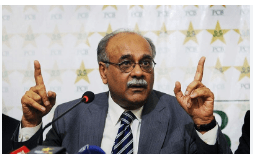
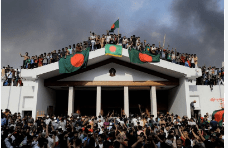
This text presents a discussion of the Israeli-Palestinian conflict, tracing its history from World War I to the present. The conversation analyzes the roles of various actors, including Britain, the United Nations, the US, and different factions within both Israeli and Palestinian societies. The speakers explore the complexities of the conflict, highlighting religious, political, and strategic factors influencing its persistence. Multiple perspectives are offered, including those advocating for a two-state solution, a single secular state, and other potential resolutions. The discussion also touches upon the influence of international powers and media bias in shaping public perception of the conflict.
Understanding the Israeli-Palestinian Conflict: A Study Guide
Quiz
Instructions: Answer each question in 2-3 sentences.
What were the two key promises made during World War I regarding the Middle East, and who made them?
What was the significance of the Balfour Declaration, and what was its limitation?
What was the United Nations partition plan of 1947, and why was it controversial?
Who were Menachem Begin and Yitzhak Shamir, and what was their connection to British records?
How do Evangelical Christians’ beliefs in the United States influence their support for Israel?
What was the result of the 1967 and 1973 wars between Israel and Arab states?
What is the difference in governance between Hamas and the PLO in the Palestinian territories, and how did Hamas gain control of Gaza?
What is the “two-state solution” and how do Israeli scholars see the Israeli government’s commitment to it?
What is the Abraham Accords and how did it relate to the conflict?
What are some of the issues with the current media coverage of the conflict and how does it relate to the speaker’s experience in Pakistan?
Answer Key
During WWI, the British made two key promises: the Balfour Declaration, promising a Jewish homeland in Palestine, and a promise to Sharif Hussain of Mecca, promising him rule over Arabia if he revolted against the Turks. The first was made by Lord Balfour, and the second was made by the British as part of an agreement with Sharif Hussain.
The Balfour Declaration promised a “homeland” for the Jewish people in Palestine. However, it did not explicitly mention the creation of a state. This limitation was a key factor in the later conflict, as it left the exact nature of Jewish settlement unclear.
The UN partition plan of 1947 proposed creating two states, one Jewish (Israel) and one Arab, with Jerusalem designated as an international city. The plan was controversial because both sides opposed the partition. Right-wing Israelis thought they deserved the whole land, while many Arabs considered that it was unfair to give land to the Jews.
Menachem Begin and Yitzhak Shamir were later Prime Ministers of Israel who were labeled as terrorists in British records. This shows that they were involved in violent actions against the British during their rule in Palestine, while later being backed by Americans and Israelis.
Evangelical Christians believe that the return of Jews to Palestine is a necessary step for Jesus’s second coming. This belief leads them to strongly support the existence of the state of Israel, including financially and politically.
In the 1967 war, Israel captured East Jerusalem and other Arab lands. In the 1973 war, Arab states initially made gains but ultimately lost, and American support for Israel continued.
Hamas is a more extremist Islamic political party that gained control of the Gaza Strip after winning elections due to popular dissatisfaction with corruption of the PLO. The PLO is more secular and has pursued a negotiated peace solution with Israel.
The “two-state solution” involves a plan to create two separate states, one for Israelis and one for Palestinians. Israeli scholars view the Israeli government’s commitment to it as unserious and insincere because they have not been actively pursuing a two-state solution for decades.
The Abraham Accords were a series of normalization agreements between Israel and several Arab nations, excluding Palestine. It was a push for peace in the area, but it did not take Palestinian grievances into account.
The speaker feels that media coverage of the conflict in Pakistan is biased and anti-Israel. He sees the media focusing on showing Israel as the aggressor and ignoring or downplaying the initial acts of violence that instigated the conflict and the human rights issues on both sides of the conflict.
Essay Questions
Analyze the historical events and agreements that have contributed to the ongoing Israeli-Palestinian conflict, including the role of international actors.
Compare and contrast the different factions involved in the Israeli-Palestinian conflict, including their goals, ideologies, and methods.
Discuss the impact of religious beliefs and narratives on the Israeli-Palestinian conflict and explain how this contributes to political ideology.
Evaluate the viability of different solutions to the Israeli-Palestinian conflict, including the two-state solution and a single secular state, considering the obstacles for each option.
Explore the role of media and public opinion in shaping the narrative and perceptions of the Israeli-Palestinian conflict, and discuss the implications of this for potential resolutions.
Glossary of Key Terms
Balfour Declaration: A 1917 British statement promising a “national home” for the Jewish people in Palestine. It did not explicitly promise an independent state but had immense impact on Jewish migration to Palestine. Caliphate of Osmania: The Ottoman Empire, a vast Islamic empire that controlled much of the Middle East before its collapse during World War I. Evangelical Christians: A group of Protestant Christians in the United States with strong political views related to the Bible. They heavily support the existence of the state of Israel. Hamas: A Palestinian Sunni-Islamist fundamentalist organization known for its militant activity. It controls the Gaza Strip and has a fundamentalist ideology and a goal of eradicating Israel. Hezbollah: A Shia Islamist political party and militant group in Lebanon with close ties to Iran. They are an adversary of Israel and have been involved in conflicts with them. Irgun (Tak Shamir): A right-wing Jewish paramilitary group in British Mandate Palestine known for its violence against the British, as well as their violence towards Palestinian Arabs. Jewish Agency: An organization that facilitated Jewish immigration to Palestine, including purchasing land. King David Hotel Bombing: A bombing of the British military headquarters in Jerusalem by Irgun, in 1946, with the goal of hurting British infrastructure and influence in the area. Mandate: A legal status for territories controlled by the victors of World War I in the Middle East. Palestine was a British Mandate. Oslo Accords: A series of agreements between Israel and the PLO in the 1990s that aimed to establish a framework for peace negotiations, though these agreements were never fully implemented. PLO (Palestine Liberation Organization): A political organization recognized as the official representative of the Palestinian people that has had negotiations with Israel for peace and a two-state solution. Sharif Hussain of Mecca: The Emir of Mecca who was promised rule over Arabia if he helped the British during World War I. Two-State Solution: The proposal to create two separate states, one for Israelis and one for Palestinians, as a solution to the conflict. United Nations Partition Plan of 1947: A UN proposal to divide Palestine into two states, one Jewish and one Arab, with Jerusalem as an international city. Wahhabis: A branch of Sunni Islam that originated in Arabia and whose ideology is linked to Islamic fundamentalism. Yasser Arafat: Former chairman of the PLO and a leader of the Palestinian national movement. Zionist Movement (Janis Movement): The movement that supported the establishment of a Jewish state in Palestine.
The Israeli-Palestinian Conflict: A Critical Analysis
Okay, here is a detailed briefing document reviewing the main themes and important ideas from the provided text excerpts:
Briefing Document: Analysis of “Pasted Text” Excerpts
Date: October 27, 2023 (Assumed based on current date)
Subject: Analysis of a Discussion on the Israeli-Palestinian Conflict and Related Geopolitical Issues
Source: Excerpts from “Pasted Text” (Assumed to be transcript of a conversation or interview)
Overview:
The provided text is a transcript of what appears to be a conversation between two individuals discussing the Israeli-Palestinian conflict, its historical roots, and the broader geopolitical context. The discussion is wide-ranging, touching upon historical events, political figures, religious influences, media biases, and potential solutions. The tone is conversational, but the speakers express strong opinions and detailed knowledge of the subject matter.
Main Themes & Key Ideas:
Historical Context & Origins:
Breakup of the Ottoman Empire: The discussion starts with the dismantling of the Ottoman Empire after WWI, which led to the British and French mandates in the Middle East, specifically in Palestine, Iraq, Jordan, Syria and Lebanon.
Conflicting Promises: The speakers highlight the conflicting promises made by the British during WWI: the Balfour Declaration (1917) promising a homeland for Jews in Palestine (not a state at this point), and promises to Arab leaders, like Sharif Hussein of Mecca, of an Arab kingdom in exchange for their revolt against the Turks.
Rise of Zionism: The discussion mentions the Zionist movement and its initial divisions between those seeking peaceful co-existence and a more hardline, fascist faction that advocated expelling Arabs.
Post-WWII Partition: The UN partition plan of 1947, which aimed to create separate Jewish and Arab states, is reviewed, along with the opposition and violence that followed, including the assassination of Count Bernadotte, the UN mediator.
Key Quote:“This is that the issue of Palestine had started in the First World War when the Caliphate of Osmania was broken into pieces…During the same war, during the First World War, two types of promises were made, one which is the Belfer Declaration…”
Key Players & Their Roles:
Great Britain: They played a major role due to their mandate over Palestine and the conflicting promises.
The US The US support for Israel is highlighted, with the influence of evangelical Christians (70 million in America) who believe that all the Jews should be in Palestine for Jesus to come back.
The Soviet Union: Support for the Arab side was provided during the Cold War era.
Israeli Right Wing: The discussion focuses on how the right-wing Israelis opposed peace initiatives, including murdering former Israeli Prime Minister, Yitzhak Rabin and that they want the whole region for themselves.
Hamas & PLO: The discussion notes that Hamas won an election, and were given assistance from Israel to break up the PLO’s influence. The PLO has moved away from the idea of an Islamic movement and is more towards a Pan Arab/ National Movement.
Iran & Hezbollah: They have a significant role in supporting Hamas in destabilizing the Middle East.
Arab Nations: Saudi Arabia is highlighted as stating that they would accept Israel if a Palestinian state was also created. They also note that some Arab nations are more open to some kind of compromise with Israel.
Evolution of the Conflict:
Wars & Territorial Shifts: The wars of 1948, 1967, and 1973 are briefly mentioned, showing how Israel expanded its territory and solidified its power.
Gaza & The West Bank: The current situation in Gaza and the West Bank is discussed, with a focus on the living conditions of Palestinians and the presence of Israeli settlers.
Hamas’s Rise & Actions: They have an Islamic program based on destroying Israel and have taken hostage. Their actions are described as “mafia tactics”.
Key Quote:“Now my point is that come on friend, if two states cannot be formed then you should make one state and one should be secular and then there should be a state in which Arabs and Jews should have equal rights.”
Religious Influences:
Role of Religion: The discussion talks about how religion was introduced into the conflict in 1987, when Sheik Ahmed Yasin started his movement, based on the Islamic viewpoint. This increased the importance of religion in the conflict.
Islamic Extremism: They note that some Islamic leaders preach hatred against Israel in mosques which then has a wider impact.
Media Bias & Propaganda:
Media’s Role: The speakers critique media coverage of the conflict, particularly in Pakistan where the media appear to have sided with the Palestinians by only portraying the Israeli actions as atrocities.
Key Quote:“Doctor sir, I was surprised that all our channels were being shown as if Israel has committed some atrocities…So it seems that our media is definitely theirs, so you and I have known for a long time that it has no credibility…”
Potential Solutions & Obstacles:
Two-State Solution: The text indicates that a two-state solution is becoming less likely. Some have said that the Israeli government has never been serious about this.
One Secular State: The speakers propose the idea of a single secular state with equal rights for all, regardless of religion or ethnicity.
Key Quote:“if two states cannot be formed then you should make one state and one should be secular and then there should be a state in which Arabs and Jews should have equal rights.”
Problems with Population The speakers note that if there was a secular state, the Arab population would soon become the majority because they have more children, which is an issue.
Obstacles to Peace: The conversation highlights that there is extremism on both sides and that some groups have the goal of destroying the other party.
Geopolitical Dimensions:
US Interests: The discussion states that the US supports Israel in order to protect their oil interests and billions in the region.
India’s Shift in Policy: The speakers discuss how India, traditionally a supporter of the PLO, is now aligned with Israel. They indicate that this is in part due to hatred towards Pakistan.
China: The speakers note that China has been able to enforce its policies in the Muslim regions within its borders, unlike Israel.
Hamas and Israel’s Actions:
Hamas Attack: The actions of Hamas are deemed terrorist actions, and they should not be justified.
Israel’s Response: The Israeli response is deemed disproportionate and inhuman. They want to wipe out Hamas, even if they kill innocents.
Key Quote:“The way our people have behaved, it is not the real issue of the people, it is those who get into trouble, these belligerent people, the militants…”
Analysis & Implications
The discussion highlights the complex, multi-layered nature of the Israeli-Palestinian conflict, with deep historical roots and competing claims.
The role of religious and political extremism on both sides is a significant barrier to lasting peace.
The influence of external actors, such as the US and other global powers, further complicates the situation.
The speakers are looking for a long-term solution that moves beyond the conflict, and towards an equal society for everyone.
Conclusion:
These excerpts offer a valuable insight into the Israeli-Palestinian conflict from a perspective that is critical of both sides. It provides a glimpse into the historical, political, and religious factors that drive the conflict, while suggesting potential solutions that may be difficult to achieve given the current environment. Further analysis would be needed to fully understand the context of these statements and the underlying motivations of the speakers.
The Israeli-Palestinian Conflict: A Historical Overview
Frequently Asked Questions:
What are the historical roots of the Israeli-Palestinian conflict, according to the source?
The conflict is traced back to the aftermath of World War I, when the Ottoman Caliphate was dismantled. Britain was given a mandate over the Middle East, including Palestine, Iraq, and Jordan, while France gained control of Syria and Lebanon. During the war, two conflicting promises were made: the Balfour Declaration promised a homeland in Palestine for the Jewish people (though not explicitly a state), and the British also promised Arab leaders that they would become rulers of Arabia if they revolted against the Ottoman Turks. These conflicting promises, coupled with increased Jewish immigration to Palestine and the rise of conflicting nationalist movements, set the stage for the ongoing conflict.
How did the creation of Israel and the subsequent wars impact the region?
After World War II, Israel was declared an independent country, leading to increased tensions and conflicts. The 1948 Arab-Israeli War resulted in significant territorial changes, with Israel gaining control over more land and a large displacement of Palestinian Arabs. Subsequent wars in 1967 and 1973 further reshaped the geopolitical landscape. East Jerusalem was initially under Jordanian control, but after 1967, it was occupied by Israel and later annexed. These wars led to the ongoing displacement of Palestinians and solidified the divide in the region.
What is the significance of the two-state solution, and why has it not been achieved?
The two-state solution, involving the creation of an independent Palestinian state alongside Israel, has been a proposed framework for peace. However, this solution has faced obstacles due to several factors. Hardline elements on both sides oppose such a compromise, with some Israeli factions seeking control over the entire region and some Palestinian factions seeking the destruction of the state of Israel. Furthermore, the expansion of Israeli settlements in the West Bank has further complicated the prospect of a viable Palestinian state.
What role have extremist groups played in the conflict?
Extremist factions on both sides of the conflict have fueled tensions and impeded peace efforts. The source mentions that some Israelis did not want any part of a two-state solution while other terrorist acts by individuals on both sides, like the assassination of Prime Minister Yitzhak Rabin, and the rise of groups like Hamas, have further complicated the situation. The rise of religious fundamentalism is cited as a key factor in the escalation of the conflict and the marginalization of moderate voices.
How has the involvement of external powers shaped the conflict?
External powers, particularly the United States and the Soviet Union during the Cold War, have played a significant role in shaping the conflict. The U.S. has provided considerable support to Israel, while the Soviet Union initially backed the Arabs, particularly during the Cold War. The US has continued to support Israel because of their geopolitical and energy interests. More recently Iran has been a supporter of Hamas. The support of American Evangelical Christians has also been a factor. These interventions and biases have further entrenched the conflict.
What are the main issues surrounding the Gaza Strip and its leadership?
The Gaza Strip, initially vacated by Israeli settlers under Ariel Sharon, was taken over by Hamas after the PLO lost the election. The source highlights that Israeli intelligence allegedly provided some assistance to Hamas to undermine the PLO. Gaza is described as a “prison” and faces numerous restrictions. Hamas’s hardline stance has also contributed to the cycle of violence with attacks on Israel as well as a general unwillingness to accept any compromise with Israel.
What are some potential alternatives to the current situation?
The source suggests that if a two-state solution is impossible, the creation of a single, secular state with equal rights for all, regardless of their religion or ethnicity, could be the only solution that would offer lasting peace. The idea is that such a system would remove the current tensions that are rooted in nationalist and religious differences. Other potential solutions offered include the idea that Palestinians should move to other countries and use compensation money to resettle outside of the Palestinian territories.
What is the role of the media, and why should we be critical of it?
The source expresses deep concern about the lack of neutrality in media reporting, particularly in Pakistani media. It accuses some media outlets of biased coverage and the dramatization of events. This calls for a critical view of how the media shapes public opinion, with many outlets lacking investigation and impartiality. The source suggests that the media is not helping to create any type of understanding of the situation.
A Century of Conflict: Palestine and Israel
Okay, here is a detailed timeline and cast of characters based on the provided text:
Timeline of Events
World War I Era (1914-1918):The Ottoman Caliphate is broken up.
Britain gains mandates over Palestine, Iraq, and Jordan; France gains control of Syria and Lebanon.
Balfour Declaration (c. 1917): Lord Balfour promises a “homeland” for the Jewish people in Palestine, without specifying it as a state.
Promise to Arabs (c. 1916): Britain, through figures like Lawrence of Arabia, promises Arab leaders, specifically Sharif Hussein of Mecca, that they would rule all of Arabia in exchange for their revolt against the Turks.
Post-World War I:Sharif Hussein of Mecca does not become the ruler of all Arabia, but rather the Wahhabis gain control of the area and Faisal becomes the King of Iraq.
Jewish immigration to Palestine increases, initially through land purchases and agreements.
Post-World War II:Immigration of Jewish refugees to Palestine surges after the Holocaust.
The Zionist movement splits into factions; one supporting friendship with Arabs, and another, a more fascist wing wanting to expel the Arabs.
November 7, 1947: United Nations announces a partition plan for Palestine, creating separate Jewish and Arab states, with Jerusalem as an international city.
Count Bernadotte’s Assassination: The UN partition plan’s architect, Count Bernadotte is murdered.
King David Hotel Bombing: A bombing is carried out by the Zionist groups, killing British officers, which causes the British to leave.
Founding of Israel: Israel becomes an independent state, with right-wing leaders such as Menachem Begin and Yitzhak Shamir, previously labeled as terrorists by the British, rising to power.
The Soviet Union begins supporting Arab countries; the US supports Israel.
1948 War: Arabs lose the war against Israel and lose territory.
1967 War: Israel attacks Arab nations and captures more territory including East Jerusalem.
1973 War: Arabs attack Israel in a war; initially successful, but American aid enables Israel to win the conflict.
1979: Camp David Accords are signed; Anwar Sadat, the Egyptian President, is later assassinated.
1987: Sheikh Ahmed Yassin establishes Hamas.
1993: Oslo Accords are signed, attempting to establish a two-state solution between Yitzhak Rabin of Israel and Yasser Arafat of Palestine.
Yitzhak Rabin Assassinated: Right-wing Israelis opposed to the two-state solution assassinate Prime Minister Yitzhak Rabin.
Early 2000s:Ariel Sharon withdraws Israeli settlers from Gaza.
Hamas wins the elections in Gaza while the PLO and Mahmoud Abbas retain control in the West Bank.
Israeli intelligence is said to have supported Hamas to weaken the PLO.
2001: The King of Saudi Arabia states that Saudi Arabia would recognize Israel if it would allow the creation of a Palestinian state.
Later Period:Israel fails to seriously commit to a two-state solution, and Israeli settlements in the West Bank grow.
Hamas gains support from Iran and Hezbollah.
Discussions take place regarding building a railway track from India to Europe, that would go through Israel and involve numerous Arab countries.
A tentative rapprochement between Israel and Saudi Arabia is underway.
October 7th (Mentioned Throughout): Hamas launches a large scale attack on Israel, in which 1400 people were killed and 240 or 250 were kidnapped. The author believes that this attack was in retaliation for previous attacks that were not given attention by the media.
Present: Israeli forces are bombing Gaza, aiming to destroy Hamas, with numerous civilian casualties including children.
Cast of Characters
Dr. Ishtiaq Ahmed Sahab: A scholar and expert on international affairs, often sought for his perspective on global events.
Afzal Rehan: The interviewer, a Pakistani journalist or commentator who engages Dr. Ahmed in discussions about international issues.
Lord Balfour: British Foreign Secretary who issued the Balfour Declaration during World War I, promising a “homeland” for Jews in Palestine.
Theodore Herzl: A leader in the Zionist movement
Lawrence of Arabia: A British military officer who played a key role in the Arab revolt against the Ottoman Empire during World War I.
Sharif Hussein of Mecca: Arab leader who was promised kingship over all of Arabia by the British during WWI, but did not achieve this.
Faisal: Became King of Iraq after WWI.
Count Folke Bernadotte: A Swedish diplomat, UN mediator, and architect of the Partition Plan for Palestine who was assassinated.
Menachem Begin: A Zionist leader who was a commander in the Irgun and later became Prime Minister of Israel. He was labeled a terrorist by the British.
Yitzhak Shamir: A Zionist leader and Mossad operative who was a commander in the Lehi and later became Prime Minister of Israel. He was labeled a terrorist by the British.
Evangelical Christians: A Christian group in America, many who believe that the return of Jesus depends on the Jewish people returning to Palestine.
Ariel Sharon: Former Prime Minister of Israel who withdrew settlers from Gaza and known as a right wing figure.
Benjamin Netanyahu: Israeli Prime Minister, considered to be a right-wing figure.
Mahmoud Abbas: President of the Palestinian Authority representing the PLO.
Yasser Arafat: Leader of the Palestine Liberation Organization (PLO), engaged in peace talks with Israel during the Oslo Accords.
Sheikh Ahmed Yassin: Founder of Hamas, an Islamic militant group operating in Palestine.
Yitzhak Rabin: Prime Minister of Israel who signed the Oslo Accords, and was later assassinated by an Israeli right wing extremist.
Anwar Sadat: The President of Egypt who was assassinated after signing the Camp David Accords.
David Cameron: Former Prime Minister of the UK, who called Gaza an “open-air prison.”
Jani Jail Singh: Former President of India who supported Bhindranwale.
Indira Gandhi: Former Prime Minister of India who supported Bhindranwale.
Bhindranwale: A Sikh leader supported by the Indian government who later turned on them.
Usama bin Laden: Al-Qaeda leader who was supported by the Americans and later attacked the US on 9/11.
Narendra Modi: Current Prime Minister of India, whose government is seen as more pro-Israel than previous governments.
Gawal Karr: Founder of RSS, who wrote about the Germans and Jews in 1938/39.
Habib Jalib: A Pakistani poet who wrote a couplet mentioned in the conversation.
Joe Biden: President of the USA, who has a history of publicly supporting Israel.
Let me know if you would like any additional clarification or detail.
The Israeli-Palestinian Conflict: A Historical Overview
The Israel-Palestine conflict is a complex issue with a long history, rooted in competing claims to the same land. Here’s a breakdown of the key points based on the provided sources:
Origins of the Conflict
The conflict’s origins can be traced back to World War I, when the Ottoman Caliphate was broken up [1].
Britain was given control (mandate) over Palestine, Iraq, and Jordan, while France controlled Syria and Lebanon [1].
During the war, Britain made conflicting promises [1]:
The Balfour Declaration (191_) promised a “homeland” for Jews in Palestine [1]. This did not specify a state [1].
Promises to Arabs, via Lawrence of Arabia, encouraged them to revolt against the Turks, with the promise of Arab rule over Arabia [1, 2].
The Rise of Zionism and Jewish Immigration
The Zionist movement sought to establish a Jewish state in Palestine [1].
Initially, Jews bought land in the area, but increased immigration followed the Second World War and the Holocaust [2].
There were two factions within the Zionist movement: one seeking peaceful coexistence with Arabs, the other advocating for a Jewish state by expelling Arabs [2].
Escalation of Conflict and the Partition Plan
Arab resistance against increasing Jewish presence led to violence [2].
The United Nations proposed a partition plan on November 7, 1947, dividing Palestine into two states: one Jewish (Israel) and one Arab, with Jerusalem as an international city [2].
The plan was opposed by both right-wing Israelis and Arabs [2].
The UN plan led to further violence, including the murder of Count Bernardo (the plan’s architect), and attacks by Jewish groups on British targets like the King David Hotel [2, 3].
Key Events and Wars
1948 War: Arab forces were defeated, resulting in Israel gaining more land and displacing many Palestinians [3].
1967 War: Israel captured East Jerusalem [3].
1973 War: Arabs attacked Israel, initially gaining ground but ultimately losing with American support for Israel [3].
The Palestinian Situation
Palestinians live primarily in Gaza and the West Bank [3].
Gaza was under Israeli control until Ariel Sharon withdrew settlers in the early 2000s, leaving the territory to the Palestinians [3].
Hamas won elections in Gaza, while the PLO, led by Mahmoud Abbas, remained dominant in the West Bank [3].
Hamas’s charter calls for the destruction of Israel, whereas the PLO has sought a two-state solution [4].
The Israeli government has been accused of supporting Hamas to weaken the PLO [4].
The expansion of Israeli settlements in the West Bank further complicates the situation [4].
External Influences
The Cold War saw the Soviet Union support the Arabs and the US backing Israel [3].
Evangelical Christians in the US strongly support Israel, believing that all Jews must be in Palestine for Jesus to return [3].
Iran and Hezbollah support Hamas [4, 5].
Saudi Arabia has expressed willingness to normalize relations with Israel if a Palestinian state is created [4].
Failed Peace Efforts
The Oslo Accords offered a framework for a two-state solution, but were undermined by violence, including the assassination of Israeli Prime Minister Yitzhak Rabin [4, 6].
Extremists on both sides oppose a two-state solution, with some Israelis wanting the entire region for themselves [4].
The Camp David Accords in 1979, led to the assassination of Anwar Sadat, President of Egypt [6]
The Abraham Accord was not seen as including the Palestinians, according to the source [7]
Current Perspectives
The sources express the idea that the conflict has been taken over by extremists on both sides [6].
There is a debate over whether a two-state solution is possible [4].
Some believe a single, secular state with equal rights for all is the only viable solution [4, 7, 8].
The actions of Hamas are seen as a terrorist act, though the source notes that the group was also supported by Israeli intelligence [9].
The media in Pakistan has been criticised for biased reporting which focuses on Israeli aggression while ignoring the context of the violence [9].
There is also a point of view that the suffering of Palestinian civilians must be condemned [5, 10].
There is condemnation for Hamas for holding kidnapped civilians as a tactic [5, 7]
The conflict is destabilizing the Middle East and may be linked to a railway plan for the region which was being developed at the G20 [5, 7].
Other factors
The source explains that some people think the issue of Palestine and Kashmir are linked, and that some people are cursed for not supporting Palestinians [10].
The source also talks about people who express grief about the treatment of Muslims in China being punished for their views [11].
The source suggests that the current Indian government’s support for Israel stems from a shift in domestic politics, and an increase in anti-Muslim sentiment in India [12]
This complex history and the various perspectives involved underscore the difficulty in resolving the Israeli-Palestinian conflict. The sources highlight the role of historical events, political maneuvering, religious extremism, and external influences in perpetuating the conflict.
The Two-State Solution: Challenges and Alternatives
The sources discuss the two-state solution in the context of the Israeli-Palestinian conflict, highlighting its historical background, challenges, and varying perspectives [1-10].
Historical Context and the Partition Plan:
The idea of two states emerged with the United Nations Partition Plan of 1947, which proposed dividing Palestine into separate Jewish and Arab states, with Jerusalem as an international city [2].
This plan was opposed by both right-wing Israelis and Arabs [2, 3].
Oslo Accords and Failed Progress:
The Oslo Accords between Israel and the Palestine Liberation Organization (PLO) aimed to establish a framework for a two-state solution [4].
However, progress was undermined by violence, including the assassination of Israeli Prime Minister Yitzhak Rabin, who was working towards the two-state solution [4].
Current Challenges and Obstacles:
The sources indicate that both Israeli and Palestinian extremists oppose the two-state solution [4]. Some Israelis desire the entire region for themselves, and some Palestinians refuse any solution that does not include the destruction of Israel [4-7, 9].
Israeli settlements in the West Bank are considered an obstacle to a two-state solution. There are now 400,000 Israeli settlers in the West Bank, making a contiguous Palestinian state difficult to achieve [4].
The Israeli government is accused of not being serious about a two-state solution, and some Israeli scholars think the government has already decided against it [4].
Hamas, which controls Gaza, has a charter that calls for the destruction of Israel, making a two-state solution difficult [3-5].
The sources note that Hamas was supported by Israeli intelligence to weaken the more moderate PLO [4].
The Abraham Accords are noted as not including the Palestinians, and were therefore not seen as a move towards a two-state solution [8].
Alternative Perspectives and Proposed Solutions:
Some argue that if a two-state solution is not feasible, a single, secular state with equal rights for all (Jews, Muslims, and Christians) should be considered [4, 5].
There is an argument that Palestinians should accept compensation and move to other Arab lands instead of seeking a state in Palestine [9, 10].
Some argue that the large Arab population growth has made it difficult for some Israelis to agree to a two-state solution [9].
External Factors:
Iran and Hezbollah’s support for Hamas is seen as a factor that destabilizes the region and creates more conflict, making a two-state solution more difficult [4, 7].
American support for Israel is also a factor that has been seen as not conducive to a two-state solution. The source mentions that Joe Biden stated that the US would support Israel at any cost [9].
Overall Assessment:
The sources suggest that the two-state solution faces significant challenges due to the opposition of extremists on both sides, expansion of settlements, and the actions of external parties.
There is no consensus among the different parties whether a two-state solution is possible.
The sources raise the possibility of a one-state solution as an alternative, which would require equal rights for all citizens [4, 5, 9].
The sources make clear that there are differing perspectives regarding how to achieve peace [5, 8].
In summary, the sources highlight the complexity of the two-state solution. While it has been the basis for numerous peace efforts, it faces significant hurdles and may not be a viable path to peace without addressing the underlying issues and conflicting interests [1-10].
Religious Extremism and the Israeli-Palestinian Conflict
The sources discuss religious extremism as a significant factor in the Israeli-Palestinian conflict, highlighting how it fuels the conflict and hinders potential resolutions.
Extremism as an Obstacle to Peace
The sources indicate that extremists on both sides of the conflict oppose a two-state solution [1, 2].
Some right-wing Israelis desire the entire region for themselves and do not want a Palestinian state to exist [1]. They have been known to commit acts of violence to disrupt peace efforts, such as the assassination of Israeli Prime Minister Yitzhak Rabin [1, 2].
Hamas, a Palestinian group, has a charter that calls for the destruction of Israel, rejecting any solution that would allow Israel to exist [1, 3].
The conflict has been taken over by extremists on both sides [2].
Extremist groups are willing to use violence and terror tactics, such as kidnapping and killing innocent people, to achieve their goals [4, 5].
Religious Underpinnings of Extremism
The sources highlight the role of religious beliefs in shaping extremist views [2, 6, 7].
Evangelical Christians in the US believe that all Jews must be in Palestine for Jesus to return, which motivates their support for Israel. The source notes that they believe that if the Jews do not believe in Jesus when he returns, they can be killed [3]. This can be seen as an extremist view.
Some religious leaders are depicted as promoting hatred and violence [7, 8]. The source includes a description of Maulvis who curse the enemies of Muslims, asking for the destruction of Israel, Palestine, and the world [7].
The source also notes that some people see the conflict as a religious one, with the rise of the religion of Islam leading to increasing tensions [2].
The source argues that Hamas’s ideology has religious elements. Sheikh Ahmed Yasin, the founder of Hamas, based his ideas on a Muslim pattern [2].
The source explains that since the 1980’s, the importance of religion in the conflict has increased [2].
Hamas and Religious Extremism
Hamas is described as an extremist group, and its Islamic program calls for the destruction of Israel [1].
The source explains that Israeli intelligence supported Hamas in order to weaken the PLO [1].
The group’s actions are described as a terrorist act [9].
Hamas is criticized for using civilians as human shields and for kidnapping people [4, 5].
Israeli Extremism
The sources explain that there are right-wing Israeli groups that also commit violence and oppose peace efforts [1, 2].
The sources note that some Israelis hold racist views, believing that the country should only be for Jews [2].
The Impact of Extremism
Extremism hinders the possibility of a peaceful resolution to the conflict, particularly the two-state solution [1].
It leads to violence and suffering for civilians on both sides [2, 4, 7].
Extremist views also create an environment of hatred and animosity [7, 8].
Alternative View
The sources present an alternative view that a single, secular state with equal rights for all is the only viable solution because religious extremism is a major obstacle [1, 5].
In summary, the sources depict religious extremism as a significant driving force in the Israeli-Palestinian conflict, contributing to violence, hatred, and the breakdown of peace efforts. Extremist groups on both sides use violence and promote ideologies that make peaceful resolutions difficult to achieve.
The Israeli-Palestinian Conflict: A Political Analysis
The sources discuss several political motivations that drive the Israeli-Palestinian conflict, focusing on historical factors, nationalistic aspirations, and the influence of external powers.
Historical and Nationalistic Motivations
The conflict’s roots are traced back to the breakup of the Ottoman Caliphate after World War I, where promises made to both Arabs and Jews created conflicting claims to the same territory [1].
The Balfour Declaration promised a “homeland” for Jews in Palestine, while Arabs were promised rule over Arabia if they revolted against the Turks [1, 2].
These conflicting promises laid the groundwork for future disputes and a sense of nationalistic entitlement among both groups [1, 2].
The Zionist movement sought to establish a Jewish state in Palestine, fueled by a desire for self-determination and a response to the Holocaust [1, 2].
Arab nationalism, on the other hand, aimed to unify the Arab world and resist foreign influence, including the establishment of a Jewish state [2].
The 1947 UN Partition Plan, which proposed separate Jewish and Arab states, was opposed by both sides, reflecting the deep-seated political disagreements [2].
Political Maneuvering and Power Struggles
The sources describe how political leaders, both within and outside the region, have manipulated the conflict for their own purposes.
Great Britain is presented as a key player, making conflicting promises to both sides during World War I to serve their own interests, and then having to deal with the consequences [1, 2].
The sources indicate that the Israeli government has not been serious about the two-state solution, and may be focused on expanding its territory [3].
The Cold War saw the Soviet Union backing the Arabs, while the United States supported Israel, turning the conflict into a proxy battleground [4].
Israeli intelligence is said to have supported Hamas to weaken the PLO, showing how internal political dynamics are also at play [3].
The Abraham Accords, while seemingly a step towards peace, are seen as not addressing the core issues of the Palestinian people, indicating a political move by Israel to strengthen relations with other Arab nations without resolving the Palestinian issue [5].
The sources also suggest that Iran uses Hamas to destabilize the Middle East and disrupt any potential compromise between Israel and Arab states [6].
The sources describe how the US has consistently supported Israel, due to strategic interests in the oil-rich region [7].
The sources indicate that the G20 conference in India was attempting to establish a railway that would serve Israeli economic interests and possibly counteract Chinese influence [5].
Domestic Political Factors
The sources note how domestic political considerations shape the conflict.
In the US, the support of Evangelical Christians for Israel is noted as a major influence on policy [4].
In Israel, right-wing factions oppose any territorial concessions to Palestinians, and they have been willing to use violence to achieve their goals [3].
The sources also note that Indian policy towards the conflict has changed as domestic politics have shifted, with the current government more aligned with Israel and focused on consolidating Hindu votes [8].
The sources also explain how media biases and propaganda in the region impact public opinion and political action [9].
Economic Motivations
The sources note that the US has a vested interest in the region due to its oil resources, which plays a role in their policy of supporting Israel [7].
The sources mention that there are plans for the construction of a railway through the region to promote trade, and that these plans are also intertwined with political goals [5].
Overall Assessment
The sources present the conflict as a complex interplay of historical grievances, nationalistic aspirations, and political maneuvering by various actors.
The actions of both regional and external powers are motivated by a combination of strategic, economic, and domestic political goals.
The sources indicate that these political motivations contribute to the continuation of the conflict and undermine efforts at achieving a peaceful resolution.
The sources note that the conflict has been driven by extremists, and that these extremist views have political and religious dimensions.
Media Bias in the Israeli-Palestinian Conflict
The sources discuss media bias in the context of the Israeli-Palestinian conflict, highlighting how it distorts the narrative, influences public opinion, and exacerbates tensions [1].
Distortion of Facts and Selective Reporting
The sources indicate that media outlets often present a biased view of the conflict, rounding up facts and failing to provide a complete picture of events [1]. For example, the source mentions that Pakistani news channels focused on Israeli atrocities, minimizing the Hamas attacks [1].
The media is criticized for lacking credibility, investigation, and neutrality, suggesting that it is not an objective source of information [1].
The sources note that the media often focuses on the immediate events of the conflict without providing adequate context about the historical background and the political factors that contribute to the violence [1, 2].
The sources suggest that there is a tendency to portray one side as the victim while ignoring or minimizing the suffering of the other side [1].
The media in Pakistan is described as showing a dramatized version of events, even using actors [1].
The sources note that the media ignores facts, such as the fact that the day of the attack was on a day when judges don’t work, or that it is possible there were 5000 rockets, and 1400 people killed [1].
Propaganda and Manipulation of Public Opinion
The sources describe how the media is used as a tool for propaganda, with both sides using it to promote their own narrative and demonize the other [1, 3].
The sources suggest that the media can be used to incite hatred and hostility, which further fuels the conflict [3].
The sources indicate that biased media reporting can manipulate public opinion and make it difficult for people to understand the complexities of the conflict [1].
The sources note that social media is used to insult both sides and that people are insulted for trying to be intelligent [4].
Influence of External Powers
The sources imply that external powers can also influence media bias. For example, the source notes that media bias in Pakistan serves to show Israel in a negative light [1].
The sources also show how media in India has changed, becoming more supportive of Israel, and possibly reflecting political changes in the country [5].
Lack of Context and Nuance
The sources point out that media coverage often lacks context, focusing on the immediate events rather than the underlying causes of the conflict [1, 2].
The sources suggest that the media often fails to present a nuanced view of the conflict, ignoring the complexities and the multiple perspectives involved [1].
Impact of Media Bias
The sources explain that media bias creates an environment where people become entrenched in their own views, making dialogue and reconciliation more difficult [3, 4].
The sources indicate that the biased media coverage can lead to a lack of understanding and empathy for the other side [3].
The source explains that a biased media is an obstacle to peace and a barrier to finding a long term solution [1].
Overall Assessment
The sources present media bias as a significant obstacle to resolving the Israeli-Palestinian conflict.
The sources suggest that media outlets can distort facts, promote propaganda, and incite hatred, which exacerbates the conflict.
The sources imply that the media often fails to provide a comprehensive view of the conflict, hindering the search for a peaceful resolution.
The sources make it clear that the media is not a neutral source of information, and its reports should be viewed critically [1].
A History of the Israeli-Palestinian Conflict
The sources provide a detailed historical context for the Israeli-Palestinian conflict, tracing its origins back to the early 20th century and highlighting key events and political decisions that have shaped the ongoing tensions [1, 2].
The End of the Ottoman Empire and Conflicting Promises
The conflict’s roots lie in the aftermath of World War I, when the Ottoman Caliphate was dismantled [1]. The Middle East was divided, with Britain and France gaining control over various territories [1].
Britain received mandates over Palestine, Iraq, and Jordan, which were formerly provinces of the Ottoman Empire, while France took control of Syria and Lebanon [1].
During the war, two conflicting promises were made [1].
The Balfour Declaration of 1917 pledged British support for a “homeland” for the Jewish people in Palestine, although it did not explicitly promise a state [1]. This declaration was made to Theodore Herzl of the Zionist movement [1].
Separately, the British promised Arab leaders, such as Sharif Hussein of Mecca, that they would become rulers of Arabia if they revolted against the Ottoman Turks [1, 2].
These conflicting promises created a complex situation where both Jews and Arabs felt entitled to the same land [1, 2].
The Rise of Zionism and Arab Resistance
The Zionist movement gained momentum, with Jewish people immigrating to Palestine, initially buying land through agreements [2].
The rise of Arab nationalism led to resistance against the increasing Jewish presence in the region [2].
News of the Holocaust during World War II led to increased Jewish immigration to Palestine, further escalating tensions [2].
Within the Zionist movement, two wings emerged: one that sought friendship with Arabs, and another that advocated for expelling Arabs from the region [2]. This division also contributed to the conflict.
The sources explain that some believed that the Arabs should rule because Islam was the religion of the Arabs, and the prophet was an Arab [2].
The 1947 Partition Plan and the Establishment of Israel
In 1947, the United Nations announced a partition plan, dividing Palestine into two states: one for Jews (Israel) and another for Arabs, with Jerusalem as an international city [2].
The plan allocated 52-56% of the land to Israel, and the remainder to the Arabs [2].
The plan was opposed by both Arabs and right-wing Israelis, and the architect of the plan was assassinated [2, 3].
After the end of World War II, Israel became an independent country [2].
Conflicts erupted as Arabs resisted the establishment of the Jewish state, which resulted in the 1948 Arab-Israeli War [3].
As a result of this war, Israel gained more land and East Jerusalem came under Jordanian control [3].
The sources explain that two Israeli Prime Ministers were considered terrorists by the British, but were backed by the Israeli people and American Jews [3].
Subsequent Wars and Ongoing Conflict
The 1967 war resulted in another Israeli victory, with further expansion of its territory including the capture of East Jerusalem from Jordan [3].
The 1973 war saw initial Arab successes, but the conflict ended with increased American support for Israel [3].
The sources describe the present day situation as being that the Palestinian Arabs live in Gaza and two locations inside the West Bank [3].
Gaza was captured by Ariel Sharon in 2005 or 2006, the settlers were removed, and Gaza was left to the Arabs [3].
The sources explain that Hamas won the elections in Gaza after the PLO was accused of corruption [3].
The Rise of Extremism and the Breakdown of Peace Efforts
The sources note the emergence of religious extremism on both sides of the conflict, particularly after the 1980’s, and how this has made the search for a lasting peace more difficult [4].
The sources discuss how the Oslo Accords led to an agreement between Israel and the PLO, which was disrupted by the assassination of Israeli Prime Minister Yitzhak Rabin by right-wing Israelis [4, 5].
The sources explain that Hamas’s charter calls for the destruction of Israel, which is another barrier to peace [5].
The sources describe how some right-wing Israelis oppose a two-state solution and seek to control the entire region [5].
The sources highlight the support Hamas receives from Iran and Hezbollah, which contributes to the instability of the region [5].
The sources also mention that Israeli Intelligence has helped Hamas in order to weaken the PLO [5].
The sources explain how right-wing Israelis also oppose any concessions to Palestinians, similar to Hamas’s extremism [5].
The Role of External Powers and Shifting Alliances
The sources indicate that the US has consistently supported Israel due to strategic interests in the region and the influence of evangelical Christians [3, 6].
The sources explain that the Soviet Union supported the Arabs during the Cold War, turning the conflict into a proxy battleground [3].
The sources suggest that Saudi Arabia was at one point willing to normalize relations with Israel, but the conflict has been a barrier to that [5].
The sources note that Indian foreign policy has shifted, with the current government aligning more with Israel [7].
Ongoing Issues
The sources describe the challenges faced by Palestinians in the West Bank, with Israeli settlements expanding into the area [5].
The sources discuss the situation in Gaza, and note that it is considered an “open air prison” [8].
The sources highlight the ongoing violence and the use of civilians as human shields [8, 9].
In summary, the sources illustrate that the Israeli-Palestinian conflict is rooted in the complex interplay of historical events, political decisions, and conflicting nationalistic and religious aspirations, that have led to ongoing tensions and violence.
The Balfour Declaration and the Israeli-Palestinian Conflict
The Balfour Declaration of 1917 played a significant role in the Israeli-Palestinian conflict by promising British support for a “homeland” for the Jewish people in Palestine [1]. This declaration, made by Lord Balfour, an English Lord, to Theodore Herzl of the Zionist movement, is considered a foundational element in the complex history of the conflict [1]. However, it did not explicitly promise a state, only a homeland [1].
Here’s how the Balfour Declaration contributed to the conflict:
Conflicting Promises: The Balfour Declaration was made during World War I, at the same time that Britain was making promises to Arab leaders, such as Sharif Hussein of Mecca, that they would become rulers of Arabia if they revolted against the Ottoman Turks [1, 2]. This created conflicting expectations and claims to the same territory, setting the stage for future conflict [1].
Support for Zionism: The declaration legitimized the Zionist movement, which aimed to establish a Jewish homeland in Palestine [2]. This led to increased Jewish immigration to the region and growing tensions with the existing Arab population [2].
Ambiguous Language: The use of the term “homeland” rather than “state” in the declaration created ambiguity and allowed for different interpretations. This ambiguity became a point of contention between the different groups, and also within the British government itself [1].
Escalating Tensions: The Balfour Declaration fueled Arab resistance to Jewish immigration and land acquisition. As the Jewish population grew, so did the tensions and violence in the region. The declaration is seen as a major factor in the displacement of many Arabs in the region [2].
Foundation for Future Conflict: The Balfour Declaration is a crucial point of reference in the history of the conflict. It highlights how the conflicting promises made by Britain set the stage for the ongoing struggle over land and self-determination [1, 2].
In summary, the Balfour Declaration was a pivotal moment in the history of the Israeli-Palestinian conflict. It provided a foundation for the Zionist movement and set in motion a series of events that led to the establishment of Israel and the displacement of Palestinians [1, 2]. The ambiguous wording of the declaration and the conflicting promises made by the British further exacerbated tensions, contributing to the ongoing conflict.
Hussein-McMahon Correspondence and the Arab Perspective
The 1916 Hussein-McMahon Correspondence significantly impacted the Arab perspective by creating expectations of Arab rule over a large territory in exchange for their support against the Ottoman Empire during World War I [1, 2]. This correspondence, along with the Balfour Declaration, created conflicting promises that continue to fuel the Israeli-Palestinian conflict.
Here’s how the Hussein-McMahon Correspondence affected the Arab perspective:
Promise of Arab Sovereignty: In this correspondence, the British promised Sharif Hussein of Mecca that if the Arabs revolted against the Ottoman Turks, they would be made rulers of the whole of Arabia [1, 2]. This promise was made to gain Arab support against the Ottomans during WWI and to weaken the Caliphate [1]. This promise led the Arabs to believe that they would gain independence and control over a vast territory in the Middle East after the war.
Betrayal of Expectations: After the war, the promises made in the Hussein-McMahon Correspondence were not fulfilled. Instead, the region was divided into mandates under British and French control [1]. This betrayal of expectations led to a deep sense of resentment and distrust towards the British and other Western powers among the Arab population.
Conflicting with the Balfour Declaration: The promises made to the Arabs in the Hussein-McMahon Correspondence conflicted with the Balfour Declaration, which pledged British support for a Jewish homeland in Palestine [1]. This created a situation where both Arabs and Jews felt entitled to the same land, further complicating the situation and leading to conflict.
Fueling Arab Nationalism: The failure of the British to honor their promises contributed to the rise of Arab nationalism. The desire for self-determination and independence fueled resistance against Western powers and their control over Arab lands.
Foundation for Future Conflicts: The unfulfilled promises of the Hussein-McMahon Correspondence, coupled with the Balfour Declaration, laid the foundation for future conflicts and instability in the Middle East. The sense of betrayal and injustice continued to shape the Arab perspective and fueled resistance against the establishment of Israel.
In summary, the Hussein-McMahon Correspondence led to the Arabs believing they would rule a large part of the Middle East after WWI [2]. The British, however, failed to keep these promises, which led to the division of the Middle East, and the betrayal of the Arabs’ expectations that continues to shape the Arab perspective today. The conflicting promises made to both Arabs and Jews created the conditions that continue to fuel the Israeli-Palestinian conflict [1].
Broken Promises of the Middle East
During World War I, the British made significant promises to the Arabs in order to gain their support against the Ottoman Empire. These promises, primarily communicated through the 1916 Hussein-McMahon Correspondence, included the following key points:
Promise of Arab Sovereignty: The British promised Sharif Hussein of Mecca that if the Arabs revolted against the Ottoman Turks, they would be made rulers of the whole of Arabia [1, 2]. This promise aimed to secure Arab support against the Ottomans and weaken the Caliphate [1, 2].
Territorial Control: The Arabs were led to believe they would gain independence and control over a vast territory in the Middle East after the war, encompassing much of the Arabian Peninsula [1, 2].
It is important to note that these promises conflicted with the Balfour Declaration of 1917, which pledged British support for a “homeland” for the Jewish people in Palestine [1]. The conflicting promises created a complex situation where both Arabs and Jews felt entitled to the same land, laying the groundwork for future conflicts [1, 2].
The failure of the British to honor the promises made in the Hussein-McMahon Correspondence after World War I led to a deep sense of betrayal and resentment among the Arab population [2]. The region was divided into mandates under British and French control, rather than granting the Arabs the promised sovereignty [1, 2]. This unfulfilled promise also fueled Arab nationalism and resistance against Western powers in the region [2].
The Balfour Declaration and the Israeli-Palestinian Conflict
The Balfour Declaration of 1917 played a crucial role in the Israeli-Palestinian conflict by promising British support for a “homeland” for the Jewish people in Palestine [1]. This declaration, made by Lord Balfour to Theodore Herzl of the Zionist movement, is considered a foundational element in the complex history of the conflict. However, it did not explicitly promise a state, only a homeland [1].
Here’s how the Balfour Declaration contributed to the conflict:
Conflicting Promises: The Balfour Declaration was made during World War I, at the same time that Britain was making promises to Arab leaders, such as Sharif Hussein of Mecca, that they would become rulers of Arabia if they revolted against the Ottoman Turks [1]. This created conflicting expectations and claims to the same territory, setting the stage for future conflict [1, 2].
Support for Zionism: The declaration legitimized the Zionist movement, which aimed to establish a Jewish homeland in Palestine [1]. This led to increased Jewish immigration to the region and growing tensions with the existing Arab population [2].
Ambiguous Language: The use of the term “homeland” rather than “state” in the declaration created ambiguity and allowed for different interpretations [1]. This ambiguity became a point of contention between the different groups.
Escalating Tensions: The Balfour Declaration fueled Arab resistance to Jewish immigration and land acquisition [2]. As the Jewish population grew, so did the tensions and violence in the region [2]. The declaration is seen as a major factor in the displacement of many Arabs in the region.
Foundation for Future Conflict: The Balfour Declaration is a crucial point of reference in the history of the conflict. It highlights how the conflicting promises made by Britain set the stage for the ongoing struggle over land and self-determination [1, 2].
The Balfour Declaration was made in the context of the First World War, during which the British were also making promises to Arabs to revolt against the Turks [1]. The British promised Sharif Hussein of Mecca that if the Arabs revolted against the Ottoman Turks, they would be made rulers of the whole of Arabia [2]. These promises, along with the Balfour Declaration, created conflicting expectations and claims to the same territory [1, 2].
The conflicting promises of the Balfour Declaration and the Hussein-McMahon Correspondence created a situation where both Arabs and Jews felt entitled to the same land [2]. This created the conditions for future conflict.
In summary, the Balfour Declaration was a pivotal moment in the history of the Israeli-Palestinian conflict. It provided a foundation for the Zionist movement and set in motion a series of events that led to the establishment of Israel and the displacement of Palestinians [2]. The ambiguous wording of the declaration and the conflicting promises made by the British further exacerbated tensions, contributing to the ongoing conflict [1, 2].
The 1947 UN Partition Plan and its Consequences
The 1947 UN partition plan significantly impacted Palestine by proposing the division of the region into two states, one for Jews and one for Arabs, with Jerusalem as an international city [1]. This plan was a direct result of escalating tensions and violence between the Arab and Jewish populations in the region [1].
Here’s how the 1947 UN partition plan affected Palestine:
Division of Territory: The plan proposed to divide Palestine into two states: a Jewish state and an Arab state [1]. The Jewish state was allocated approximately 52-56% of the land, while the rest was designated for the Arab state [1].
International Status of Jerusalem: The city of Jerusalem, which is considered sacred by Muslims, Christians, and Jews, was to be given the status of an international city [1]. This was meant to address the competing claims over the city [1].
Rejection by Arabs: The partition plan was met with strong opposition from the Arabs, who viewed it as unfair and a violation of their rights [1]. They did not accept the division of the land and the creation of a Jewish state [1]. The right-wing Israelis also opposed the plan [2].
Escalation of Conflict: The UN partition plan led to increased violence and conflict between Arabs and Jews [1]. The plan was never fully implemented, and instead, the region descended into war [2].
Displacement of Palestinians: The subsequent 1948 Arab-Israeli War resulted in the displacement of a large number of Palestinians from their homes. Many became refugees in neighboring countries [2].
Foundation for Future Conflicts: The partition plan, along with the subsequent war, solidified the basis for the ongoing Israeli-Palestinian conflict [2]. The unresolved issues of land, refugees, and the status of Jerusalem continue to be major points of contention [2].
The partition plan was proposed by the United Nations on November 7, 1947 [1]. Count Bernardo, a cousin of the Swedish King, was the architect of the plan [1]. However, he was later murdered, possibly by Israelis [2]. There was also opposition to the plan by right-wing Israelis, some of whom committed terrorist acts to ensure the British left the region [2]. Two future Israeli prime ministers are considered terrorists in British records [2].
In summary, the 1947 UN partition plan attempted to resolve the conflict by dividing the land into two states. However, the plan was not accepted by the Arabs and led to increased violence, displacement of Palestinians and laid the groundwork for future conflicts [1, 2].
Broken Promises: The Genesis of the Israeli-Palestinian
During World War I, several promises were made regarding the future of Palestine, creating a complex and conflicting situation [1]. These promises involved both the Arabs and the Jewish people, and the failure to fully honor these commitments has significantly fueled the ongoing Israeli-Palestinian conflict [1, 2].
Here’s a breakdown of the key promises:
To the Arabs: Through the 1916 Hussein-McMahon Correspondence, the British promised Sharif Hussein of Mecca that if the Arabs revolted against the Ottoman Turks, they would be made rulers of the whole of Arabia [1, 2]. This promise led the Arabs to believe they would gain independence and control over a vast territory in the Middle East, including Palestine [1]. The Arabs were encouraged to revolt against the Turks with this promise of Arab rule [1].
To the Jewish People: The Balfour Declaration of 1917 pledged British support for a “homeland” for the Jewish people in Palestine [1]. This declaration, made by Lord Balfour to Theodore Herzl of the Zionist movement, aimed to establish a Jewish presence in the region [1]. It is important to note that the Balfour Declaration only promised a “homeland” and not explicitly a state [1].
These promises were made during the First World War, when the British were seeking support against the Ottoman Empire, which controlled much of the Middle East at the time [1]. The conflicting nature of these promises laid the foundation for the Israeli-Palestinian conflict because both Arabs and Jews felt entitled to the same land [1].
The failure to fully honor these promises after the war led to significant resentment and conflict [1, 2]:
The Arabs felt betrayed when the region was divided into mandates under British and French control, rather than granting them the promised sovereignty [1, 2].
The British support for a Jewish homeland in Palestine, as promised in the Balfour Declaration, directly conflicted with Arab aspirations for self-rule, leading to increased tensions and violence in the region [1, 2].
In conclusion, the promises made during World War I regarding Palestine were contradictory and ultimately unfulfilled, leading to long-lasting conflict and instability in the region [1, 2]. The Hussein-McMahon Correspondence promised Arab rule over a large part of the Middle East, while the Balfour Declaration supported the establishment of a Jewish homeland in Palestine. These conflicting promises created a complex and volatile situation that continues to shape the region today [1].
Lawrence of Arabia and the Palestine Conflict
Lawrence of Arabia’s role in the Palestine conflict is indirect but significant, primarily through his involvement in the events of World War I that shaped the region [1]. Here’s a breakdown of his role:
Encouraging Arab Revolt: Lawrence of Arabia, also known as T.E. Lawrence, was instrumental in persuading the Arabs to revolt against the Ottoman Empire during World War I [1]. He worked closely with Arab leaders, including Sharif Hussein of Mecca, to coordinate their efforts against the Turks.
British Promises to Arabs: Lawrence’s efforts were tied to British promises made to the Arabs, specifically through the 1916 Hussein-McMahon Correspondence. These promises suggested that if the Arabs helped defeat the Ottomans, they would be granted control over a large area of the Middle East [1]. The Arabs were promised that they would become rulers of the whole of Arabia [1].
Conflicting Promises: While Lawrence was working with the Arabs and relaying these promises, the British were also making other commitments, including the 1917 Balfour Declaration, which promised support for a Jewish homeland in Palestine [1]. These conflicting promises created a complex and volatile situation.
Post-War Disappointment: The promises made to the Arabs during the war were not fully honored after the war. Instead of granting the Arabs independence and control, the region was divided into mandates under British and French control [1]. This resulted in a deep sense of betrayal and resentment among the Arabs, laying the foundation for future conflict.
Indirect Impact on Palestine: Although Lawrence did not directly play a role in the later conflicts in Palestine, his actions during World War I, specifically his role in the Arab revolt and the British promises made at that time, had a significant indirect impact. The failure to fulfill the promises made to the Arabs contributed to the complex situation in Palestine where both Arabs and Jews felt entitled to the same land.
In summary, while Lawrence of Arabia was not directly involved in the later stages of the Palestine conflict, his role in the Arab revolt against the Ottoman Empire and the associated promises made by the British during World War I contributed to the complex political landscape that ultimately led to the conflict [1]. The British made promises to the Arabs, who were encouraged to revolt against the Turks with the promise of Arab rule [1]. These promises conflicted with the Balfour Declaration and were not honored, which led to Arab resentment [1].
Conflicting Promises: The Genesis of the Israeli-Palestinian
During World War I, several promises were made regarding the future of Palestine, creating a complex and conflicting situation [1, 2]. These promises involved both the Arabs and the Jewish people, and the failure to fully honor these commitments has significantly fueled the ongoing Israeli-Palestinian conflict [1-3].
Here’s a breakdown of the key promises:
To the Arabs: Through the 1916 Hussein-McMahon Correspondence, the British promised Sharif Hussein of Mecca that if the Arabs revolted against the Ottoman Turks, they would be made rulers of the whole of Arabia [1]. This promise led the Arabs to believe they would gain independence and control over a vast territory in the Middle East, including Palestine [1, 2]. The Arabs were encouraged to revolt against the Turks with this promise of Arab rule [1].
To the Jewish People: The Balfour Declaration of 1917 pledged British support for a “homeland” for the Jewish people in Palestine [1]. This declaration, made by Lord Balfour to Theodore Herzl of the Zionist movement, aimed to establish a Jewish presence in the region [1]. It is important to note that the Balfour Declaration only promised a “homeland” and not explicitly a state [1].
These promises were made during the First World War, when the British were seeking support against the Ottoman Empire, which controlled much of the Middle East at the time [1]. The conflicting nature of these promises laid the foundation for the Israeli-Palestinian conflict because both Arabs and Jews felt entitled to the same land [1, 2].
The failure to fully honor these promises after the war led to significant resentment and conflict [1, 2]:
The Arabs felt betrayed when the region was divided into mandates under British and French control, rather than granting them the promised sovereignty [1].
The British support for a Jewish homeland in Palestine, as promised in the Balfour Declaration, directly conflicted with Arab aspirations for self-rule, leading to increased tensions and violence in the region [2].
In conclusion, the promises made during World War I regarding Palestine were contradictory and ultimately unfulfilled, leading to long-lasting conflict and instability in the region [1-3]. The Hussein-McMahon Correspondence promised Arab rule over a large part of the Middle East, while the Balfour Declaration supported the establishment of a Jewish homeland in Palestine [1]. These conflicting promises created a complex and volatile situation that continues to shape the region today [1-3].
British and French Mandates in the Middle East
During World War I, both Britain and France played significant roles in the partitioning of the Ottoman Empire [1]. After the war, the Ottoman Caliphate was broken into pieces, and Britain and France were given mandates over former Ottoman territories [1].
Here’s a breakdown of their roles:
British Mandates: Britain was given mandates over Palestine, Iraq, and Jordan [1]. These territories were previously provinces of the Ottoman Empire [1].
French Mandates: France was given mandates over Syria and Lebanon [1].
Conflicting Promises: During the war, Britain made promises to both Arabs and Jewish people regarding the future of the region [1, 2]. These conflicting promises laid the groundwork for future conflict [2].
Arabs: The British, through the Hussein-McMahon Correspondence in 1916, promised Sharif Hussein of Mecca that if the Arabs revolted against the Ottoman Turks, they would be made rulers of the whole of Arabia [1, 2].
Jewish People: The British, through the Balfour Declaration of 1917, promised support for a “homeland” for the Jewish people in Palestine [1, 2].
Post-War Division: After the war, the region was divided into mandates under British and French control rather than granting Arabs the independence they were promised [1, 2].
Creation of Israel: After World War II, Israel became an independent country in the region, which further complicated the situation [2].
In summary, Britain and France were given mandates over former Ottoman territories after World War I. Britain took control of Palestine, Iraq, and Jordan, while France took control of Syria and Lebanon [1]. The conflicting promises made by the British during the war created a complex and volatile situation that continues to shape the region today [2].
Conflicting Promises: The Genesis of the Israeli-Palestinian
During World War I, several promises were made regarding the future of Palestine, creating a complex and conflicting situation [1, 2]. These promises involved both the Arabs and the Jewish people, and the failure to fully honor these commitments has significantly fueled the ongoing Israeli-Palestinian conflict [1, 2].
Here’s an analysis of the key promises:
To the Arabs: The British, through the 1916 Hussein-McMahon Correspondence, promised Sharif Hussein of Mecca that if the Arabs revolted against the Ottoman Turks, they would be made rulers of the whole of Arabia [1]. This promise led the Arabs to believe they would gain independence and control over a vast territory in the Middle East, including Palestine [1]. The Arabs were encouraged to revolt against the Turks with this promise of Arab rule [1].
To the Jewish People: The Balfour Declaration of 1917 pledged British support for a “homeland” for the Jewish people in Palestine [1]. This declaration, made by Lord Balfour to Theodore Herzl of the Zionist movement, aimed to establish a Jewish presence in the region [1]. It is important to note that the Balfour Declaration only promised a “homeland” and not explicitly a state [1].
These promises were made during the First World War, when the British were seeking support against the Ottoman Empire, which controlled much of the Middle East at the time [1]. The conflicting nature of these promises laid the foundation for the Israeli-Palestinian conflict because both Arabs and Jews felt entitled to the same land [1].
The failure to fully honor these promises after the war led to significant resentment and conflict:
The Arabs felt betrayed when the region was divided into mandates under British and French control, rather than granting them the promised sovereignty [1]. The British were given mandates over Palestine, Iraq, and Jordan, while France was given mandates over Syria and Lebanon [1].
The British support for a Jewish homeland in Palestine, as promised in the Balfour Declaration, directly conflicted with Arab aspirations for self-rule, leading to increased tensions and violence in the region [1].
In conclusion, the promises made during World War I regarding Palestine were contradictory and ultimately unfulfilled, leading to long-lasting conflict and instability in the region [1]. The Hussein-McMahon Correspondence promised Arab rule over a large part of the Middle East, while the Balfour Declaration supported the establishment of a Jewish homeland in Palestine [1]. These conflicting promises created a complex and volatile situation that continues to shape the region today [1]. The conflicting nature of these promises laid the foundation for the Israeli-Palestinian conflict [1].
Competing Narratives of the Creation of Israel
The creation of Israel is surrounded by competing narratives stemming from the conflicting promises made during World War I and the subsequent events in the region [1, 2]. These narratives often highlight differing perspectives on the legitimacy of the state and the rights of the people involved [1-3].
Here’s a breakdown of the competing narratives:
Jewish Narrative:
This narrative emphasizes the historical connection of the Jewish people to the land of Palestine and the desire to establish a homeland after centuries of diaspora [1]. The Balfour Declaration of 1917 is seen as a key validation of this right [1, 2].
The Holocaust during World War II is often cited as further justification for the need for a safe haven for Jews, leading to increased immigration to Palestine [2].
The establishment of Israel is viewed as a fulfillment of historical and religious aspirations, as well as a necessary response to the persecution of Jews throughout history [2].
Arab/Palestinian Narrative:
This narrative emphasizes the long-standing Arab presence in Palestine and the displacement of Palestinians as a result of the creation of Israel [2].
The promises made to Arabs during World War I through the Hussein-McMahon Correspondence are highlighted, which suggested that Arabs would rule the whole of Arabia if they helped the British fight against the Ottoman Turks [1]. This narrative views the British support for a Jewish homeland as a betrayal of those promises [1, 2].
The subsequent displacement of Palestinians, the loss of their land, and the ongoing occupation of Palestinian territories are seen as injustices resulting from the creation of Israel [3, 4].
Some groups within the Arab/Palestinian narrative see the conflict as a national movement rather than an Islamic one, emphasizing that Christians are also included, and it should be a secular state where everyone has equal rights [5].
Conflicting Promises:
The Balfour Declaration of 1917 pledged British support for a “homeland” for the Jewish people in Palestine [1, 2].
The Hussein-McMahon Correspondence in 1916 promised Sharif Hussein of Mecca that if the Arabs revolted against the Ottoman Turks, they would be made rulers of the whole of Arabia, which included Palestine [1].
These conflicting promises created a complex and volatile situation that continues to shape the region today. The failure to fully honor these promises after the war led to significant resentment and conflict [2, 3].
Differing Views on the Partition Plan:
The United Nations proposed a partition plan in 1947, which would have divided Palestine into two states, one for Jews and one for Arabs, while making Jerusalem an international city [2].
This plan was opposed by some Arabs, and also by right wing Israelis [2, 3].
The plan resulted in further conflict and violence, and ultimately, the 1948 Arab-Israeli War led to the displacement of many Palestinians [3].
Role of Extremists:
Both sides have extremist elements that reject any compromise or peaceful solution, which further exacerbates the conflict [4, 5].
Some right-wing Israelis believe that the entire region should be for Jews only and that Arabs should be driven out [5].
Some Palestinian groups, like Hamas, have a stated goal of destroying Israel [4].
International Involvement:
The United States has been a strong supporter of Israel since its creation [3].
The Soviet Union initially supported the Arabs during the Cold War [3].
Other nations, like Iran, have been accused of supporting groups like Hamas, which destabilizes the Middle East [4, 6].
These competing narratives highlight the deep divisions and differing perspectives surrounding the creation of Israel. Each side has its own historical grievances and justifications for its position, making the conflict incredibly complex. The failure to reconcile these competing narratives has been a major impediment to achieving a lasting peace in the region [7]. The situation continues to evolve, with ongoing tensions and conflicts impacting the lives of both Israelis and Palestinians [6].
Religion and the Israeli-Palestinian Conflict
The role of religion has significantly influenced the Israeli-Palestinian conflict, adding layers of complexity and fueling the narratives of both sides [1]. Here’s how religion plays a key role:
Historical and Religious Ties: Both Jewish and Arab populations have deep historical and religious ties to the land of Palestine [1]. For Jews, it’s their ancestral homeland with significant religious sites, and they see the establishment of Israel as a fulfillment of historical and religious aspirations [1, 2]. For Arabs, particularly Muslims, the region is also considered holy, containing sites like Jerusalem, which are sacred to Islam [2]. This overlap of sacred spaces contributes to the ongoing conflict [2].
Conflicting Religious Claims:The core of the conflict is partly due to the fact that both groups feel religiously entitled to the same land [3].
Jerusalem is a particularly contentious issue because it holds significance for Muslims, Christians, and Jews [2]. The city was designated as an international city under the 1947 partition plan, but this was not accepted by all [2].
Religious Extremism:Extremist elements on both sides use religion to justify violence and oppression [1, 4].
Some right-wing Israelis believe that the entire region should be for Jews only, based on their religious interpretations, and they do not want a two-state solution in which an Arab state is also formed [1, 4].
Some Palestinian groups, like Hamas, have a stated goal of destroying Israel, which they frame in religious terms [1, 4, 5].
The rise of Hamas is linked to a shift toward a more religious dimension in the conflict, especially after 1987 when Sheikh Ahmed Yasin emphasized the Islamic dimension of the struggle [1].
Evangelical Christian Support for Israel:Evangelical Christians in America, who number around 70 million, believe that all Jews should be in Palestine for Jesus to return and that if they don’t believe in Jesus, they can be killed [5]. This belief results in political support for Israel in America [5].
Religious Leaders and Their Influence: Religious leaders on both sides have played a role in exacerbating the conflict [6, 7]. Some religious leaders use their platforms to incite hatred and violence against the other side [6, 7]. There are religious leaders in mosques who pray for the destruction of Israel and for the sinking of the ships of their enemies, and they curse the other side [6].
Secular vs. Religious Interpretations of the Conflict:While some Palestinian groups like the PLO, led by Yasser Arafat and Mahmoud Abbas, have framed their struggle as a national movement including Christians and seeking equal rights for all, the rise of religious elements and groups like Hamas have changed the discourse [1].
The rise of Hamas, with its Islamic program focused on destroying Israel, has shifted the conflict toward more religiously charged rhetoric [1, 4].
Some suggest a secular state as an alternative, where Arabs and Jews can have equal rights, but this is not widely accepted [4].
Religion as a Source of Division: The Israeli-Palestinian conflict highlights how religion can be a potent source of division and conflict [6, 8]. Religious differences have been exploited to mobilize support and justify violence and this has resulted in the displacement of innocent people [6].
In conclusion, religion plays a multifaceted and significant role in the Israeli-Palestinian conflict. It serves as a source of historical and spiritual connection, a justification for competing claims to the land, and a catalyst for extremism and violence. The religious dimension of the conflict makes it exceptionally difficult to resolve, as it involves deeply held beliefs and identities, and has become a tool for political and social control [1, 4, 6].
The 1947 UN Partition Plan for Palestine
The United Nations proposed a partition plan for Palestine in 1947 that aimed to divide the territory into two states [1]. According to this plan:
One state was to be for the Jewish people, which was to be established on a portion of the land, with some sources suggesting 52% or 56% of the land being allocated to this new state [1].
The remaining land was to be allocated to the Arabs, creating a separate Arab state [1].
Jerusalem, a city considered sacred by Muslims, Christians, and Jews, was to be given the status of an international city [1].
This partition plan was met with opposition from various groups [1]. Some Arabs opposed the plan, as did right-wing Israelis [1]. The plan ultimately failed to bring peace to the region and was followed by the 1948 Arab-Israeli war and the displacement of many Palestinians [1]. The plan’s architect was Count Bernardo, who was related to the Swedish King [1]. However, he was later murdered [2].
The Israeli-Palestinian Conflict: A Complex History
Several key factors influence the ongoing Israeli-Palestinian conflict, drawing from historical events, political actions, and religious and ideological differences [1-3].
Conflicting Promises and Historical Claims:During World War I, the British made conflicting promises to both Arabs and Jews regarding the future of Palestine. The Hussein-McMahon Correspondence promised Arab rule over a large area including Palestine in exchange for their revolt against the Ottoman Empire [1]. Simultaneously, the Balfour Declaration pledged support for a Jewish “homeland” in Palestine [1]. These conflicting promises created a volatile situation, as both groups felt entitled to the same land [2].
Both the Jewish and Arab populations have deep historical and religious ties to the land, with each side feeling religiously entitled to the same land [3].
The 1947 UN Partition Plan and its Aftermath:
The UN proposed a partition plan in 1947 to divide Palestine into two states, one for Jews and one for Arabs, with Jerusalem as an international city [2]. This plan was rejected by some Arabs and right-wing Israelis [2, 4]. The plan failed and led to the 1948 Arab-Israeli war and the displacement of many Palestinians [2].
The displacement of Palestinians, the loss of their land, and the ongoing occupation of Palestinian territories are considered injustices resulting from the creation of Israel [2].
Extremist Groups and Ideologies:
Extremist elements on both sides contribute to the conflict [2, 4]. Some right-wing Israelis believe that the entire region should be exclusively for Jews, advocating for the removal of Arabs [4]. Some Palestinian groups, like Hamas, have a stated goal of destroying Israel [3].
The rise of Hamas, with its Islamic program focused on destroying Israel, has shifted the conflict toward more religiously charged rhetoric [5].
Religious Influence:
Religion plays a significant role, with both groups having strong religious ties to the land [3]. The city of Jerusalem is particularly contentious, as it holds sacred significance for Muslims, Christians, and Jews [3].
Extremist elements on both sides use religion to justify violence and oppression [3, 5].
Evangelical Christians in America support Israel based on their belief that all Jews must be in Palestine for Jesus to return, leading to strong political backing of Israel [3].
Political and International Factors:
The United States has been a strong supporter of Israel since its creation, while the Soviet Union initially supported the Arabs [3].
Other countries, such as Iran, have been accused of supporting groups like Hamas, which has destabilized the Middle East [3, 6].
Some believe that the conflict is exacerbated by external forces to maintain control and influence in the region [7].
Ongoing Issues and Failed Agreements:
The Israeli government has been accused of not being serious about a two-state solution, and the expansion of Israeli settlements in the West Bank has made a peaceful resolution more difficult [4].
The Oslo Accords, which were intended to lead to a two-state solution, were undermined by the assassination of Israeli Prime Minister Yitzhak Rabin by right-wing Israelis [4].
There have been ongoing issues with the treatment of Palestinians living in Gaza and the West Bank, with some referring to Gaza as an “open-air prison” due to restrictions imposed on the movement of people and goods [8].
Role of Media and Propaganda:
The media has been accused of bias in favor of one side or the other, which can increase tensions and further division [9].
Propaganda and misinformation from both sides further complicate the conflict, as each side has its own narrative of events, which may not be accurate or objective [8, 9].
Internal Conflicts and Leadership:
There are internal divisions within both Israeli and Palestinian societies, with differing views on how to handle the conflict [5, 8]. The PLO, which was once the main representative of the Palestinians, has been accused of corruption, which has contributed to the rise of Hamas [3].
There is a history of internal strife on both sides, with leaders being assassinated by extremists who oppose peace agreements [4, 5].
The Cycle of Violence:
The cycle of violence has been ongoing, with actions and reactions between both sides. There is a sense of retribution, with each side responding to the aggression of the other [6].
The current conflict began with Hamas launching an attack on Israel [9], which was followed by retaliatory attacks by Israel [6].
There is no end in sight as each side appears unwilling to release their own prisoners [6].
These factors combine to create a highly complex and entrenched conflict. Each factor interacts with others, making it difficult to achieve any lasting peace.
Israeli-Palestinian Conflict Resolutions
Several solutions to the Israeli-Palestinian conflict have been proposed, though none have yet led to a lasting peace [1-8]. These solutions often address the core issues of land, security, and the rights of both Israelis and Palestinians. Here are some key proposals:
Two-State Solution:
This is the most widely discussed solution, envisioning an independent Palestinian state alongside the state of Israel [3, 4].
The 1947 UN partition plan was an early attempt to implement a two-state solution, but it was ultimately unsuccessful [2].
The Oslo Accords also aimed to move towards a two-state solution, with agreements between Yitzhak Rabin and Yasser Arafat, but this effort was undermined by the assassination of Rabin by right-wing Israelis [4, 5].
Many obstacles hinder this approach, including the expansion of Israeli settlements in the West Bank, the division of Jerusalem, and the control of Gaza by Hamas [2-4].
Some Israeli scholars say that the Israeli government was never serious about the two-state solution [4].
One-State Solution:
This proposal suggests creating a single, secular state where Arabs and Jews have equal rights [4, 8].
This approach would require a fundamental shift in the political landscape and would face resistance from those who believe in separate states for Jews and Arabs [4].
Some argue that a one-state solution could be more viable if the two-state solution is not achievable [4].
The issue of equal rights and fair representation for both populations would be a critical point of discussion [4, 8].
Concerns about the potential for an Arab majority due to higher birth rates are also a consideration [9].
Regional Integration and Compensation:
This approach suggests that Palestinians could integrate into other Arab countries and be compensated for their losses [9].
The idea is that countries like Egypt and Jordan could accommodate Palestinians, especially if they were given financial incentives [10].
This option is often not favored, because Palestinians want to return to their land [10].
Negotiation and Peace Agreements:
Efforts such as the Camp David Accords in 1979 and the Oslo Accords in the 1990s aimed to establish peace through negotiation and agreements between the parties involved [5].
These agreements often focus on land swaps, security arrangements, and mutual recognition of rights.
However, these efforts are frequently derailed by violence and the actions of extremists [5, 7].
International Involvement and Pressure:
The role of international actors, such as the United Nations, the United States, and the European Union, is seen as important in resolving the conflict [2, 3, 7].
Some argue for increased international pressure on both sides to adhere to international law and human rights standards [10-12].
The United States, with its strong support for Israel, could potentially play a crucial role in brokering peace [9, 10].
Some believe that some outside forces are interested in maintaining the conflict in order to protect their own interests [9].
Addressing Extremism and Promoting Tolerance:
This approach suggests that addressing religious and political extremism on both sides is critical to resolving the conflict [3-7, 13].
Some argue that promoting a more moderate approach from political and religious leaders could be a key to creating the conditions for peace [4, 5, 13].
Some Palestinian leaders have stated that their struggle is national, not religious, and includes Christians, emphasizing equal rights [5].
There is a need for promoting education, understanding, and tolerance between the two sides [13, 14].
It’s worth noting that the conflict is deeply entrenched with many layers of history and ideology [1-5]. The existence of extremist factions on both sides, combined with the complex interplay of religious and political factors, makes it hard to reach a consensus on any solution.
Affiliate Disclosure: This blog may contain affiliate links, which means I may earn a small commission if you click on the link and make a purchase. This comes at no additional cost to you. I only recommend products or services that I believe will add value to my readers. Your support helps keep this blog running and allows me to continue providing you with quality content. Thank you for your support!
The provided text is a rambling discussion touching upon various topics, including the philosophical influences on Christianity, the portrayal of good and evil, and the historical and religious complexities of India. It weaves together diverse threads, such as the role of figures like Karl Marx and Genghis Khan, alongside reflections on religious identity, the Ramayana, and the historical injustices impacting various groups in India. The speaker’s perspective is highly personal and blends historical accounts, religious interpretations, and subjective opinions, resulting in a fragmented and non-linear narrative. The overall effect is a chaotic exploration of several related ideas, rather than a cohesive argument.
Exploring Philosophical and Historical Themes
Quiz
Instructions: Answer each question in 2-3 sentences.
According to the source, what is a common philosophical framework that influenced both Christianity and Marxism?
How does the source describe the relationship between good and evil and their perceived roles?
How did the speaker’s views on the Devil’s role change, and what was the reasoning behind this change?
According to the source, what was the main philosophical issue in the West, and how did Christianity initially attempt to resolve this?
What is the speaker’s critique of the “modernity” that came from the West, and what is it equated with?
What specific issue led to the formation of a group with Muslim female Muftis and Qazis, and how did the speaker play a part in this?
What disagreement existed between the speaker and some Muslims regarding Indian national identity, and what position did the speaker take?
How does the speaker describe Modi’s approach to Hinduism and what is the distinction between this approach and the traditional view of Hindus?
What does the source say about the relationship between Sufi and Hindu philosophy, particularly with figures like Kabir?
Why did the speaker feel disillusioned with the traditional story of the Buddha and what does the speaker see as a fault in Buddha’s search for truth?
Quiz Answer Key
The source states that both Christianity and Marxism were influenced by a framework that sees the world in terms of stark dualities, where forces are not just different but are enemies of each other. This dualistic framework pits two opposing sides against one another.
The source describes good and evil (represented by God and Satan) as enemies, not just different entities, that are locked in perpetual conflict. This view sees them as opposing forces with distinct and adversarial roles.
The speaker initially saw the Devil as an enemy, but later understood the Devil as simply fulfilling a duty assigned to him, implying that evil has a purpose within the larger framework. This perspective redefines the Devil’s role as part of the divine plan.
The main philosophical issue in the West was how to handle political power. Christianity initially resolved this by creating a sharp dualism between soul (good, God) and body (evil, Devil), placing them in opposition to one another.
The speaker critiques Western modernity as “mud,” equating it to a flawed or inadequate understanding that is unoriginal and lacks depth. This implies that the ideas that have come from the West are not to be valued.
A disagreement regarding the constitutional protection of Muslim families led to the formation of this group, which created proper courses and trained women as Muftis and Qazis. The speaker played a part by pointing out inconsistencies in current practices and suggesting solutions.
The disagreement centered on whether Muslims in India should prioritize their Indian or their Muslim identity. The speaker disagreed with Muslims who believed that prioritizing Indian national identity meant one could not be a true Muslim, and instead they suggested that these identities were not mutually exclusive.
The speaker views Modi as breaking down traditional concepts of Hinduism by creating a more inclusive approach, suggesting he has a ‘free-hearted’ attitude. This contrasts with the traditional view of Hindus as being unable to accept diversity.
The source suggests that Sufi and Hindu philosophy are closely aligned and that figures like Kabir embody the common ground between the two. Sufi philosophy is presented as being close to Hindu thought, with shared values.
The speaker is disillusioned with the traditional story of the Buddha because they view his search for truth in the wilderness as an abandonment of his responsibilities to his family and sees that his wife and child are in fact the representation of God, who he abandoned. The traditional story depicts him leaving his loved ones to find a truth or God beyond.
Essay Questions
Analyze the speaker’s critique of dualistic thinking. How does this critique challenge traditional religious and philosophical perspectives?
Explore the role of historical context in shaping the speaker’s understanding of identity. How does the text show the intersection of religion, national identity, and colonial history?
Discuss the speaker’s views on the relationship between different religious traditions. What does the text suggest about the possibility of shared values and mutual respect among religions?
Examine the speaker’s personal interpretation of religious figures and stories (such as Buddha, Ramchandra). How do these reinterpretations challenge conventional understandings and what do they indicate about their own philosophy?
Compare and contrast the speaker’s view of the religious and political landscapes of different regions. How does the speaker use regional differences to illustrate his points about religious practice and identity?
Glossary of Key Terms
Taqwa: A concept in Islam referring to the awareness and fear of God, and a consciousness of one’s responsibility before God. It also means piety, god-fearing or righteousness.
Al-Hadith: The body of traditional accounts of the Prophet Muhammad’s sayings, actions, and approvals. These accounts are used as a guide by Muslims alongside the Quran.
Wahhabis: A reformist movement within Sunni Islam that advocates for a return to what they see as the pure practices of the early Islamic era. Wahhabism is associated with a strict adherence to their interpretation of the Quran and Hadith.
Mufti: An Islamic scholar who is qualified to issue legal opinions or rulings (fatwas) on matters of Islamic law.
Qazi: A judge in a Sharia court who is responsible for ruling on cases according to Islamic law.
Tawheed: The concept of the oneness of God in Islam, and the most important aspect of the Muslim faith.
Sufi: A person who practices Sufism, a mystical form of Islam that emphasizes the importance of spiritual experience and closeness to God through meditation and other spiritual exercises.
Aryans: The term used to refer to the Indo-European peoples who migrated to the Indian subcontinent and Iran and had a profound impact on their cultures. The word ‘Aryan’ also has a racist connotation that has been historically used as a way to establish racial superiority.
Reinterpreting India: Religion, History, and Identity
Okay, here is a detailed briefing document reviewing the main themes and important ideas from the provided text.
Briefing Document: Analysis of “Pasted Text” Excerpts
Overview:
This document analyzes excerpts from a transcribed text discussing a wide range of topics, including religious philosophy, historical narratives, and socio-political dynamics in India. The speaker presents a critical perspective on binary thinking, historical interpretations, and the complexities of identity, particularly concerning religion and culture.
Key Themes and Ideas:
Critique of Binary Thinking:
Dualistic Concepts: The speaker argues that many religious and philosophical traditions, including Christianity, Islam, and even Marxist thought, rely on a fundamental “black and white,” or “good vs. evil” dichotomy. This binary is not just a distinction but an active antagonism.
Examples: God vs. Satan, soul vs. body (in Christianity), and the class struggle in Marxism.
Quote: “In all these constructions there is black and white. These are not just two different colors but they are enemies of each other. In the same way there is God and Satan, both are enemies of each other.”
Consequences: The speaker suggests that this binary thinking leads to a lack of diversity and rigid interpretations, contributing to sectarianism and forced ideologies. This is also seen with the Wahhabi movement, which the speaker sees as lacking diversity.
Reinterpreting Religious Figures and Concepts:
The Devil’s Role: The speaker suggests a re-evaluation of the devil’s role, arguing that the devil is fulfilling a duty assigned by God and should not be considered “bad.”
Quote: “…now I should not call the devil bad, no no, he is doing his duty, well we made him that…”
Tawheed in Upanishads: The speaker praises the concept of Tawheed (oneness of God) in the Upanishads, stating that its definition is more correct there than in other texts.
Buddha and Yashodhara: The speaker expresses discomfort with the story of Buddha leaving his wife and child to seek enlightenment, questioning the idea of finding truth through such abandonment and finding the “real God” in family, instead.
Quote: “God went into his room The real God did exist, she was Yashodhara and he was Rahul, the form of the sweet innocent God is not known to me…”
The Color of Ram: The speaker questions why the image of Ram in temples is often black, suggesting that it may be a pre-Aryan representation of the figure.
Historical and Cultural Analysis of India:
Aryan Invasion Theory: The speaker touches upon the Aryan Invasion theory and its impact on the religious demographics of the subcontinent. They suggest that the “black Hindus” predated the “white” Aryans and were subjugated by them.
Quote: “Well, all the black Hindus are black, it started with the arrival of Aryans. When Aryans started coming, they started getting into trouble, whom we call Aryans.”
North vs. South Indian Hinduism: The speaker emphasizes the significant differences between Hinduism in North and South India, particularly regarding the portrayal of figures like Ravana.
Ravana as a Hero: The speaker notes that Ravana is revered as a hero in South India, contrasting with the North Indian narrative, suggesting a deeper, local narrative beyond the traditional epic depiction.
Quote: “After India got independence, Ramayana was popular in South India. The way it was taught in India was different, yes, the way it was taught here was different…”
Sufism and Hinduism: The speaker describes how Sufi philosophy is close to Hinduism with its inclusivity, highlighting figures like Kabir as examples.
Quote: “well our Sufi philosophy which was in comparison to them also had this same thing Sufi philosophy Bakul Sufi philosophy is the same thing, right, so Aunty was closer to Hindus, if you read Dr. Bhagat Kabir then it feels like our inner talk…”
Political and Social Dynamics:
Government’s Role in Religious Education: The speaker refers to the creation of Muslim women’s organizations to educate and train Muslim women to become Muftis and Qazis, indicating the government’s willingness for such organizations to exist. The speaker notes that this is not a recent phenomena, and was in place before the current BJP government.
Quote: “I think at this time the government is theirs, the government was wanting it from before, okay that government was wanting it but I I believe this, not of BJP, but of you.”
BJP and National Identity: The speaker critiques the BJP’s policy of requiring a national identity above religious identity, especially for Muslims, noting that the BJP sees a conflict between being Indian and Muslim. They juxtapose this with the current prime minister who, they argue, is breaking down Hindu ideas, not solidifying them.
Quote: “He says that you do not have a national identity, therefore you are not a citizen of this place. He made this law. What I have seen is the overall policy of BJP.”
Modi’s Nationalist Approach: The speaker contends that Modi, despite being viewed as a nationalist, has a more inclusive approach that breaks down traditional Hindu rigidities.
Historical Context and the Mongols:
Genghis Khan and the Islamic World: The speaker recounts the interactions between Genghis Khan and the Islamic world, including the stories of Jalaluddin Jalal and Najmuddin Kubra, highlighting the complexity of historical relations and the role of Sufis.
Source: The speaker references the historical text, Tabaqat-e-Nashri, as a primary source for this history.
Conclusion:
The excerpts provide a complex and critical analysis of religious, cultural, and political landscapes. The speaker challenges conventional understandings of religious narratives, historical interpretations, and the relationship between identity and citizenship. The emphasis on challenging binary thinking and re-evaluating historical narratives provides a nuanced and thought-provoking perspective. The speaker offers insight into the socio-political landscape of India through this lens, highlighting the importance of understanding cultural and historical context to fully comprehend these topics.
Divine Duality and the Indian Subcontinent
Frequently Asked Questions
How have philosophical concepts of duality influenced religious thought, and what are some examples?
Philosophical ideas of duality, often represented as opposing forces like black and white, good and evil, or God and Satan, have profoundly shaped religious constructions. These dualistic frameworks, stemming from influences like Plato, Aristotle, and even Marxist thought, create an adversarial relationship between these forces rather than seeing them as complementary aspects of a single entity. For example, Christianity, at one point, posited the soul as God and the body as the devil, resulting in a constant battle between the two. Similarly, Marxism describes a struggle between opposing forces. The Quran also describes a conflict between God and Satan. These concepts can lead to rigid, less nuanced worldviews that lack diversity and internal harmony.
What is the significance of the term “Taqwa” in the context of the discussion about duality?
Taqwa, in this context, represents a state of awareness, mindfulness, and protection provided by God. The speaker argues that both “fur” and “Taqwa” are divine gifts, suggesting that seemingly opposing forces are actually two aspects of the same divine entity. Instead of viewing them as separate and battling entities, this perspective sees them as interconnected and necessary. The speaker views this “Taqwa” as an expression of God and not of an adversarial force.
How does the speaker view the role of the Devil or Satan?
The speaker challenges the traditional view of the Devil as inherently evil. Instead, the Devil is seen as fulfilling a divinely assigned duty. The speaker questions if the Devil should be considered bad since that role was created for him. The devil’s role is part of the larger cosmic order ordained by God. This perspective shifts the understanding of evil away from inherent malice to a functional element within a larger, divinely orchestrated plan.
How does the speaker describe the impact of Western modernity on religious thought?
Western modernity, according to the speaker, reinforced the dualistic thinking that already existed in religious and philosophical discourse. Western thought, like Christianity, also got stuck with the idea of two oppositional concepts. The speaker criticizes both Christian and Marxist philosophy for creating this “either/or” framework that ultimately diminishes diversity and nuances.
What is the speaker’s view on the current political climate in India, specifically concerning the relationship between Hindu and Muslim identities?
The speaker believes that the current Indian government, mirroring a stance previously held by the Congress party, aims to diminish the Muslim identity by prioritizing a national identity over religious affiliation, specifically telling Indian Muslims that they cannot be Muslim if they are also Indian. This conflicts with the speaker’s view that Indian Muslims should not have to give up their religious identity to be seen as fully Indian. They believe that Prime Minister Modi is attempting to break down the rigid caste system and make Hinduism more welcoming to all. They also see Modi as a nationalist Hindu, whose identity allows him to welcome all. The speaker believes the problem is that Hindus haven’t historically been able to accept diversity.
How does the speaker explain the differences between North and South Indian Hinduism, and the role of the Ramayana?
The speaker contrasts North Indian Hinduism, where Ram is seen as the central hero, with South Indian Hinduism, where Ravana, the antagonist in the Ramayana, is often venerated. They explain that many South Indians view Ravana as a hero. This difference stems from the historical displacement of darker-skinned populations by the lighter-skinned Aryans. The speaker also notes the Ramayana was interpreted differently in South India, reinforcing a cultural distinction related to the historical conflicts. They also explain that this difference came after independence. They point to the historical and colonial period and the way colonizers called the native people Indians instead of recognizing their regional and religious differences.
What is the speaker’s perspective on the life of Buddha, particularly the story of him leaving his family?
While admiring Buddha’s search for truth, the speaker expresses concern about Buddha’s decision to leave his wife, Yashodhara, and his child, Rahul, in his quest. They view the act as a form of injustice towards Yashodhara, believing that true God was present in his home through his wife and child. The speaker emphasizes the sacrifice and injustice of Yashodhara as an act against family love. They also explain that the main motivation for this was the sorrow that Buddha experienced from the world, which he wanted to understand and eliminate.
What is the speaker’s understanding of historical events involving Genghis Khan and Sufi leaders?
The speaker recounts a complex historical scenario involving Genghis Khan’s interactions with Sufi leaders during his conquests in Central Asia. Genghis Khan, at one point, sought alliances with Muslims and even sent gifts and emissaries to local leaders. However, his relationships were complex, often marred by betrayal and brutal actions. They share the story of the great Sufi Najmuddin Kubra who defied Genghis Khan, remaining with his followers rather than accepting his protection. The speaker highlights the courage and devotion of Najmuddin and his followers, who showed loyalty and conviction in the face of danger. The speaker notes that this history has been twisted, likely to justify the violence and conquests that followed.
Dualism, Power, and Identity in India
Okay, here’s the timeline and cast of characters based on the provided text:
Timeline of Main Events & Ideas
Ancient Times (Pre-Christian Era):
The development of dualistic thinking, where concepts are framed as opposing forces (e.g., good vs. evil). This concept was present in the philosophies of Plato and Aristotle and also present in religious concepts of God and Satan.
Concepts of ‘Taqwa’ (God-consciousness, piety) and the idea that God gives protection.
Development of some philosophical concepts in the Upanishads, which are considered to have an accurate definition of ‘Tawheed’ (Oneness of God)
Early Christian Era:
Christian philosophy incorporates Platonic and Aristotelian ideas, leading to a dualistic worldview that separates soul (associated with God) and body (associated with the Devil).
A struggle or conflict emerges between the soul and body.
Modern Era (19th-20th Century):
Karl Marx replicates the dualistic conflict in his philosophy, positing conflict between social classes.
The emergence of modern Western thought is described as a kind of “mud”.
The rise of Al-Hadith groups, characterized by a rigid, non-diverse approach to Islamic interpretation.
The development of a Muslim group in response to perceived inequalities.
The creation of training programs and certifications for Muslim religious leaders (Mufti, Qazi), facilitated by government support.
Colonial Period in India:
British colonialists attempted to unify all indigenous people under the label “Indian”, rather than distinct religious identities like “Hindu”. This was based on the assumption that everyone they encountered was Hindu.
The concept of a unified “Hinduism” is developed in written form during the colonial period. The text argues that pre-colonial Hinduism was not a unified concept.
The religious and social structures present in India are divided between North and South, with differences in traditions like the reverence of figures like Ravana.
Conflicts begin between Hindus and Muslims, who previously didn’t identify as unified groups.
Pre-Modern (Early Common Era)
The spread of Buddhism in areas now known as Pakistan, Central Asia and Afghanistan, with evidence of idol worship.
The emergence of Buddha’s teachings focusing on removing sorrow, stemming from eight main causes.
Buddha leaves his family in search of truth and the origin of suffering.
11th Century:
The Mongol expansion begins from Central Asia, led by Genghis Khan.
Muslims at the time are mostly Sunni and Hanafi.
The Mongols conquer many areas of Central Asia.
Diplomatic exchanges between Genghis Khan and the Khwarazmian Empire (Jalaluddin Jalal) are detailed.
Genghis Khan attacks the Khwarazmian Empire after repeated betrayals.
Sufi figure Najmuddin Kubra and his followers refuse to leave their community in the face of Genghis Khan’s attacks, leading to conflict.
Genghis Khan’s sons convert to Islam through Kubra’s follower, Majiduddin.
Post-Independence India:
The Ramayana gained differing levels of popularity in India, being more popular in the North than in the South.
The figure of Ravana is perceived differently in North and South India, being seen as a hero in the South.
The author contends that figures like Rama were historically depicted as black, representing the indigenous populations predating the arrival of white Aryans.
The author states that post-independence South Indian Hinduism differs from North Indian Hinduism.
Contemporary:
The author reflects on the historical and political context of dualistic thinking, and how it affects both religious and political discourse in India.
The author notes the political landscape in India in which some believe that being Muslim is incompatible with being Indian.
The author believes that while the current BJP government seems to have a policy of alienating Muslims, some members of the Congress government before them were similar.
The author speaks of Modi’s attempts to break down traditional caste lines among Hindus and to embrace all people.
Cast of Characters
Plato & Aristotle: Greek philosophers whose ideas influenced early Christian and other philosophical thought, including the concept of dualism and opposing forces.
Karl Marx: 19th-century philosopher and economist who also presented a theory of dualistic conflict, but applied to social classes, rather than soul and body.
God and Satan: Figures from Abrahamic religious traditions used to illustrate the concept of opposing forces, and the idea of God’s plan and agency being present in the perceived “evil” actions of Satan.
Achcha Achcha Qadr: An unnamed figure who preached that all events are predetermined by God, both good and bad.
Modi: A contemporary Indian political figure (likely referring to Narendra Modi) who is said to be attempting to break the concept of Hindu caste, and trying to create an embrace of all people. He is also noted for believing that a “national identity” takes priority over religious identity.
Ravana: A character from the Ramayana, depicted as a villain in many tellings, but revered as a hero in parts of South India.
Buddha: Spiritual leader of the Buddhist tradition who left his family to seek the truth behind suffering.
Yashodhara: Buddha’s wife, who was left behind when he sought enlightenment. The author expresses sympathy for what she underwent.
Rahul: The son of the Buddha, left behind with his mother.
Shri Ramchandra ji (Rama): A major deity in Hinduism, depicted as black in some temples, a fact that puzzles the author. The author notes that Rama may have been black before the arrival of the white Aryan race.
Genghis Khan: 13th-century Mongol leader who expanded the Mongol Empire through conquest.
Jalaluddin Jalal: Ruler of the Khwarazmian Empire who was the target of Genghis Khan’s attacks.
Najmuddin Kubra: A Sufi leader who refused to abandon his community when confronted by Genghis Khan’s armies. He faced the invasion without fighting back, which leads the author to compare his actions to those of his father.
Majiduddin: Follower of Najmuddin Kubra, who was responsible for the conversion of Genghis Khan’s sons to Islam.
Let me know if you have any other questions.
Religious Conflict: A Multifaceted Analysis
Religious conflict is discussed in the sources from multiple angles, including historical, philosophical, and political perspectives. Here’s a breakdown of the key points:
Dualistic Philosophies and Conflict: The sources suggest that many religious and philosophical systems create conflict by positing a dualistic worldview. In these systems, opposing forces are not simply different, but are enemies [1].
Christianity: Initially influenced by Plato and Aristotle, Christianity developed a dualism where the soul is associated with God and the body with the devil, creating an inherent conflict [1, 2].
Marxism: Karl Marx also presented a conflict between two opposing forces [2].
This dualistic approach is not unique to these systems, but is presented as a common thread in many areas of conflict [1].
The Role of Power and Politics: Religious conflicts are often intertwined with the struggle for political power [2].
In the West, Christianity’s handling of political power became a major issue, which then led to further conflict [2].
The sources also reference the way some political groups in India use religious identity as a basis for exclusion and marginalization [3].
Diversity and Forced Unity: The sources also discuss how a lack of diversity or a forced unity can contribute to conflict.
Wahhabism is presented as an example of a system that lacks diversity, with a single, forcibly drawn path [2].
The idea of forcing a single identity onto diverse groups is also discussed [3]. For example, in the colonial period, the British tried to categorize everyone they met in India as “Hindu,” neglecting the diversity that existed [3].
Hinduism and Diversity: The sources make contrasting claims regarding Hinduism and diversity.
One perspective is that Hinduism traditionally had an open-minded approach to diversity, which was disrupted by the colonial period and the imposition of a singular identity [3].
Another perspective is that Hindus had trouble accepting diversity, especially compared to figures like Modi, whom the speaker believes has an open and inclusive approach [3].
Historical Religious Conflicts: The sources mention historical religious conflicts that have shaped the world [4, 5]:
The spread of Islam into previously Buddhist areas [4].
Genghis Khan’s interactions with Muslims, including initial attempts at diplomacy followed by violence and revenge [5].
Conflicts arising from religious and cultural differences between the North and South of India [6].
Internal Divisions Within Religious Groups: The sources note that religious groups are not monolithic, with internal divisions that sometimes lead to conflict [3].
The example is given that Muslims and Hindus were not entirely united during colonial times. [3]
There were and are religious divisions within Hinduism [3, 6].
The Interpretation of Religious Figures and Texts: Different interpretations of religious figures and texts can also contribute to conflict [6].
For instance, the varying interpretations of the Ramayana, where Ravana is seen as a hero in South India but as a villain in other areas of the country [6].
The speaker also questions why Ram is depicted as black in some temples [6, 7].
In summary, the sources suggest that religious conflict arises from a combination of factors, including dualistic philosophies, power struggles, imposed unity, a lack of diversity, historical clashes, internal divisions, and differing interpretations of religious figures and texts.
Political Power, Religion, and National Identity in India
Political power is a recurring theme in the sources, often intertwined with religious and philosophical ideas. Here’s a breakdown of how the sources discuss political power:
Christianity and Political Power: The sources indicate that in the West, a central issue was how to handle political power, and what philosophical basis it should have [1]. The development of Christian theology, with its dualistic view of God and the devil, led to conflict over how to integrate these concepts with worldly governance and power [1].
Religious Identity and Political Exclusion: The sources discuss how political groups use religious identity to exclude and marginalize certain groups [2]. One example is how some political groups in India view Muslims, stating that they cannot be considered both Indian and Muslim simultaneously [2]. This demonstrates how political power can be used to enforce specific national or religious identities, leading to the exclusion of those who don’t conform [2].
Government influence: The sources indicate that governments have taken actions that align with their own agendas [1]. One example is that they trained people and provided certificates to them to do work the government was already wanting [1]. The sources claim that the government was wanting this before, not the current BJP [1].
Colonial Influence: The sources also mention how colonial powers tried to impose a singular identity onto diverse groups [2]. The colonialists categorized everyone they met in India as “Hindu” [2].
Modi’s Actions and National Identity: One source discusses how Modi, a political leader in India, stated that people without a national identity cannot be citizens, thereby linking national identity to citizenship and political power [2]. The source also argues that Modi is breaking the concept of Hindu, and is seen as an inclusive leader [2].
Government policies are being used to promote a national identity: The sources claim that a certain government is stating that if you identify as Muslim, you can’t identify as Indian [2]. The speaker states that they disagree with this idea and that there is no reason why a person cannot be both [2]. The source further explains that the government believes that Indian citizens should not prioritize their religious identity [2].
In summary, the sources portray political power as a force that is deeply connected to religious and philosophical beliefs, often used to enforce specific identities, exclude certain groups, and influence cultural narratives [1, 2].
Cultural Diversity in India: A Historical Analysis
Cultural diversity is a significant theme in the sources, explored through historical, religious, and political lenses. Here’s an analysis of how the sources address cultural diversity:
Clash of Cultures and Imposition of Singular Identities: The sources describe how cultural diversity has been challenged by the imposition of singular identities.
During the colonial period, the British attempted to categorize everyone they encountered in India as “Hindu,” disregarding the existing diversity [1]. This highlights how external powers can try to simplify complex cultural landscapes by imposing a single identity, thereby ignoring or suppressing other identities.
The sources state that some political groups in India are currently trying to impose a singular identity by asserting that one cannot be both Indian and Muslim, further illustrating a tension between national and religious identities [1].
Diversity Within Religious Traditions: The sources emphasize that religious traditions themselves are not monolithic and possess internal diversity.
Within Hinduism, there are different schools of thought and practices, and the sources note the distinctions between Hinduism in North and South India [2].
The sources claim that there were divisions within the Muslim community during the colonial era, and that Hindus were also divided along religious lines [1].
Sufi philosophy, is presented as having parallels to Hindu philosophy, suggesting a synthesis of cultural traditions [1].
The sources mention that some Muslims follow the Hanafi school of thought [3].
Acceptance and Rejection of Diversity: The sources present contrasting viewpoints on the acceptance of diversity.
One perspective is that Hinduism traditionally was open to diversity, which was disrupted by colonial influence [1].
Another perspective is that Hindus historically struggled with accepting diversity, and that figures like Modi have taken a more open approach [1].
The sources also suggest that the concept of ‘Hinduism’ as a single unified identity is a relatively recent idea, imposed during the colonial period, rather than an existing cultural reality [1].
Regional Cultural Differences: The sources also highlight regional cultural differences, especially in India.
The differing views of the Ramayana in North and South India, where Ravana is viewed as a hero in the South and a villain in the North, show how different cultures can have opposing interpretations of the same stories [2].
The speaker notes that South India has a different version of Hinduism than North India, and the way that the Ramayana was taught in South India was different from the way it was taught in North India [2].
Historical Interactions and Cultural Exchange: The sources mention instances of historical interactions that led to cultural exchange and conflict.
The spread of Islam into areas previously dominated by Buddhism resulted in a cultural shift in those regions [4].
The arrival of Aryans in India is described as leading to cultural and social changes, which included pushing out the original black inhabitants [2, 5].
The sources state that there are Aryan races in Iran, as well as in India [5].
In conclusion, the sources present a complex picture of cultural diversity, where it is both a lived reality, with diverse religious traditions and regional variations, as well as a site of conflict where singular identities are imposed and differences are suppressed. The sources emphasize the importance of recognizing diversity and the harm caused by forced unity.
Historical Roots of Religious and Cultural Conflict
Historical analysis is a significant aspect of the sources, providing context for understanding religious, political, and cultural dynamics. Here’s a breakdown of the key historical points and analyses presented:
The Influence of Ancient Philosophers and Religious Texts: The sources trace the influence of ancient philosophers like Plato and Aristotle on the development of Christian theology, noting how their ideas contributed to a dualistic worldview that shaped religious conflict [1]. The sources also reference the Quran and Upanishads, and how different interpretations of these texts contribute to religious understanding [1, 2]. The speaker also references the Ramayana and how it is interpreted differently in various regions of India [2, 3].
The Colonial Period and its Impact on Identity: The colonial period is presented as a turning point in shaping cultural identities in India. The British are described as attempting to impose a single “Hindu” identity on all Indians, which disregarded existing cultural diversity and contributed to the concept of a unified Hindu identity [3, 4]. This is presented as a top-down construction and not an accurate reflection of the cultural landscape at that time. The sources also claim that during the colonial period, Hindus and Muslims were not entirely united [3, 4].
The Aryan Invasion Theory: The arrival of Aryans in India is described as a significant historical event that led to social and cultural changes. According to the sources, the Aryans were white and pushed the original black inhabitants to the margins [3, 5]. It also states that the concept of white and black Hindus started with the arrival of the Aryans [5]. This highlights how the arrival of new groups can lead to conflict and displacement.
The Spread of Islam and its Interactions with Other Cultures: The sources explore the spread of Islam, including its interactions with pre-existing cultures. The sources note that when Muslims arrived in certain areas, they encountered areas that were primarily Buddhist [2]. The sources also discuss Genghis Khan’s interactions with Muslims, initially attempting diplomacy, followed by violence and revenge [6].
The Development of Religious Traditions: The sources provide a timeline for the development of some religious traditions, placing Sikhism in the 16th century [3]. The sources also suggest that the concept of ‘Hinduism’ as a single, unified identity is a relatively recent idea [4].
Internal Divisions within Religious groups: The sources point out that religious groups are not monolithic and have experienced internal divisions throughout history [3, 4]. For example, there were divisions among Muslims during the colonial era, and Hindus were also divided along religious lines [3, 4].
Regional Differences in India: The sources highlight the significance of regional differences in India. The differing views of the Ramayana, where Ravana is seen as a hero in South India but as a villain in other areas of the country, demonstrate how cultural narratives can vary within a single country [3]. The sources also claim that the version of Hinduism practiced in South India is very different from the version in North India [3].
The Evolution of Political Thought: The sources touch upon the evolution of political thought, particularly in the West. It is noted that the development of Christian theology led to conflicts over the integration of religious concepts with worldly governance [7].
In summary, the historical analysis in the sources emphasizes the importance of understanding the past to comprehend present-day conflicts and cultural identities. The sources reveal that historical events, philosophical developments, and colonial influences have significantly shaped the religious, political, and cultural landscape. The sources suggest that many of the identities and conflicts seen today have roots in historical events, and that it’s crucial to take a critical approach to narratives imposed by those in power.
Identity Politics in India: Religion, Nation, and Culture
Identity politics is a complex issue that is explored through various lenses in the sources, including religious, national, and cultural perspectives. Here’s a detailed analysis of how identity politics is addressed in the sources:
Religious Identity and Political Exclusion: The sources highlight how religious identity is used to include and exclude groups from political power [1]. Some political groups in India, for example, assert that a person cannot be both Indian and Muslim, thus creating a conflict between national and religious identity [2]. This demonstrates how political power can be used to enforce specific national or religious identities, leading to the exclusion of those who don’t conform [2]. This also shows how governments can use policies to promote a specific national identity, implying that citizens should prioritize national identity over religious identity [1, 2]. The sources claim that this idea is not new, and that it was also used during the colonial period [2].
National Identity as a Tool for Exclusion: The sources indicate that national identity is also used as a tool for political exclusion [2]. One source notes that a political leader in India stated that individuals without a national identity cannot be citizens [2]. This links national identity to citizenship, using it as a basis to deny political rights and marginalize certain groups. This shows how national identity is not just a cultural concept, but can become a political tool used to control who belongs and who does not [2].
Imposition of Singular Identities: The sources describe how attempts to impose singular identities often disregard existing cultural diversity [2]. For instance, during the colonial period, the British tried to categorize everyone they encountered in India as “Hindu,” ignoring the existing diversity [2]. This action demonstrates how powerful groups can attempt to simplify complex cultural landscapes by imposing a single identity, thus erasing other identities and marginalizing certain populations [2]. The sources also claim that the concept of “Hinduism” as a single unified identity was imposed during the colonial period, and that it is not a true representation of Indian culture [2].
Internal Diversity within Religious and Cultural Groups: The sources emphasize that both religious and cultural groups are diverse, and not monolithic [2, 3]. They note that there are different schools of thought and practices within Hinduism, as well as divisions within the Muslim community [2, 3]. This underscores that identity groups are not homogenous entities, and that oversimplified group categorizations can erase the unique experiences of individuals within those groups [2]. The sources also claim that there is a significant difference between the Hinduism practiced in North India versus South India, and that regional differences also contribute to diversity [2, 3].
The Role of Historical Narratives in Shaping Identity: The sources demonstrate how historical narratives are used to shape and manipulate identity [3]. The differing interpretations of the Ramayana in North and South India highlight how cultural narratives can vary, impacting how individuals identify with certain figures or stories [3]. The sources also suggest that the Aryan invasion theory and the concept of black and white Hindus have contributed to the shaping of cultural identity in India [3, 4]. This shows how historical narratives are not just objective accounts of the past, but can be powerful tools in shaping current identities and power dynamics. The sources also note that many historical events are presented in a way that distorts the truth [3].
Fluidity vs. Rigidity of Identity: The sources highlight the tension between the fluidity of identity and rigid categories [2, 3]. On the one hand, they reveal the diverse ways individuals can identify themselves, and on the other hand, they show how attempts to impose rigid categories can marginalize people and deny them their rights [2, 3]. This tension between fluidity and rigidity is a central aspect of identity politics, and the sources show how these competing forces shape political and cultural landscapes [2].
In summary, the sources reveal that identity politics is a complex and multifaceted issue. It involves the use of religious, national, and cultural identities to include or exclude groups from political power, often through the imposition of singular identities and the manipulation of historical narratives. These sources underscore the importance of recognizing the internal diversity within identity groups and understanding the historical contexts that shape these identities.
Affiliate Disclosure: This blog may contain affiliate links, which means I may earn a small commission if you click on the link and make a purchase. This comes at no additional cost to you. I only recommend products or services that I believe will add value to my readers. Your support helps keep this blog running and allows me to continue providing you with quality content. Thank you for your support!
Military courts in Pakistan recently sentenced 25 individuals involved in the May 9th attacks on military installations. This decision, announced by the ISPR, comes amidst ongoing negotiations between the government and the PTI, raising questions about its political implications. Simultaneously, a judicial commission received a six-month extension to decide on the legality of civilian trials in military courts. Separately, discussions surrounding the Pakistan Cricket Board’s (PCB) Champions Trophy schedule and a potential tri-nation tournament are detailed, along with analysis of the PCB’s evolving relationship with the BCCI and ICC. Finally, concerns are raised regarding potential future Western pressure on Pakistan’s nuclear program, drawing parallels to historical events and highlighting ongoing geopolitical tensions.
Pakistan Political & Security Analysis Study Guide
Quiz
Instructions: Answer each question in 2-3 complete sentences.
What is the significance of the May 9th incidents in the context of the source material?
According to the source, what is the main difference between the initial Supreme Court ruling and the recent military court sentencing regarding the May 9th accused?
What does the source suggest is the reason for the recent military court sentences, given the ongoing political negotiations?
What is the “hybrid model” discussed in the context of the Pakistan Cricket Board (PCB)?
According to the source, what is the potential political consequence of military trials of PTI leaders and what international entity may the PTI appeal to?
Why does the source suggest the military is handling the May 9th cases “in phases?”
What is the importance of the six-month extension granted to the Judicial Commission?
What is the primary fear of the West, particularly Israel, about Pakistan’s nuclear program, according to the source?
Why does the source suggest that the balance of power within the ICC (International Cricket Council) may be shifting away from India?
What is the tri-nation tournament being discussed and what is it intended to address?
Answer Key
The May 9th incidents involved attacks on military and government properties in Pakistan, leading to arrests and military court trials. These incidents are central to the source as they are the basis for the military court sentences that are being debated.
The Supreme Court initially allowed trials but prohibited sentencing until a decision on the legality of military courts for civilians. The recent decision allows the military courts to pronounce sentences, pending a final ruling by the Supreme Court.
The source suggests the sentences are a message of deterrence from the establishment, aimed at Imran Khan and his supporters, who are perceived as continuing attacks on the military and the state. It’s a show of strength that they will not tolerate further disruptions.
The “hybrid model,” in this context, refers to a proposal where matches would be played in different countries, instead of only in Pakistan. This allowed Pakistan to participate in tournaments even when teams such as India would not travel to Pakistan due to security concerns.
Military trials for PTI leaders could lead to further political instability and polarization. The PTI has stated that it may appeal to international courts regarding any punishment handed down in military courts, arguing violations of human rights and due process.
The military is handling the cases in phases to exert calculated pressure and offer measured concessions in an attempt to bring Imran Khan and his party to the negotiating table. The government wants to avoid a full break with Khan.
The six-month extension granted to the Judicial Commission is crucial because the constitutional bench will rule whether trials of civilians can be held in military courts, which will impact the validity of the military court sentencing and cases against the accused.
The West, particularly Israel, fears Pakistan’s nuclear program falling into the hands of radical Islamic groups. They see this as a serious risk, potentially leading to nuclear weapons falling into the hands of groups perceived as militant or hostile.
The source suggests that Bangladesh’s shift in political alignment and the increasing strength and confidence of the Afghan cricket team could reduce India’s influence within the ICC and shift votes in Pakistan’s favor.
The tri-nation tournament is a proposed cricket series between India, Pakistan, and a third country that the PCB is trying to set up, and it is intended to generate additional revenue to offset any losses from India not playing in Pakistan and to slowly mend relations between the nations.
Essay Questions
Instructions: Answer each question with a well-organized, 4-5 paragraph essay, citing specific evidence and making clear references to the source material.
Analyze the complex interplay between the military, the judiciary, and the political establishment as depicted in the source material regarding the May 9th events. Discuss the shifting dynamics and underlying motivations of each.
Evaluate the strategic motivations behind both the recent military court sentences and the extended timeline of the Judicial Commission, considering the current political environment and the ongoing negotiations with the PTI.
Discuss the significance of the sports-related discussions in the source material, particularly regarding the hybrid model, the tri-nation tournament, and shifts in power within the International Cricket Council. What are the underlying political implications of these events?
Using the source as your primary resource, explore and explain the historical and contemporary fears of the West, especially Israel, concerning Pakistan’s nuclear program, and how these fears impact Pakistan’s relationship with the West.
Assess the role of Imran Khan and the PTI in the ongoing political crisis. How does the source portray their actions, and how do their actions seem to impact the decisions and actions of other institutions in Pakistan?
Glossary of Key Terms
ISPR: Inter-Services Public Relations; the media wing of the Pakistani military.
GHQ Rawalpindi: General Headquarters of the Pakistan Army, located in Rawalpindi.
Jinnah House, Lahore: A historical building in Lahore that was attacked during the May 9th incidents.
Mianwali Airbase: An air force base that was also attacked on May 9th.
Field General Court Martial: A type of military court, the results of which were detailed in the source.
PTI: Pakistan Tehreek-e-Insaf, a political party led by Imran Khan.
Civil Disobedience Movement: A form of protest, sometimes involving the refusal to obey certain laws or demands.
Judicial Commission: Refers to an entity that reviews and rules on legal matters; in this case, the specific one with a mandate to rule on the legality of military court trials for civilians.
Hybrid Model (Cricket): A proposal for cricket tournaments where matches are hosted in multiple locations due to political or security concerns.
BCCI: Board of Control for Cricket in India; the governing body for cricket in India.
PCB: Pakistan Cricket Board; the governing body for cricket in Pakistan.
ICC: International Cricket Council; the international governing body for cricket.
Tri-Nation Tournament: A cricket tournament involving three nations.
Mufham/Mujham: Terms used to distinguish between an actual agreement and just talk. Mufham implies actual progress and agreement.
False Flag Operation: An act committed with the intent of disguising the actual source of responsibility.
JIT (Joint Investigation Team): A team comprising members from different agencies to investigate a specific case.
Remittances: Money sent by migrants to their families in their home country.
Pakistan: Politics, Cricket, and Nuclear Concerns
Okay, here is a detailed briefing document summarizing the key themes and ideas from the provided text:
Briefing Document: Analysis of Pakistani Political & Cricket Developments
Date: October 26, 2023 Prepared By: Bard Subject: Analysis of recent political events in Pakistan, including the sentencing of 9th May protestors, and developments in Pakistani cricket, including Champions Trophy preparations, along with discussion of Pakistan’s nuclear program. Sources: Excerpts from “Pasted Text”
I. Overview:
This briefing document analyzes recent developments in Pakistan, particularly concerning the aftermath of the May 9th riots, the ongoing tensions between the government, military establishment and the PTI party led by Imran Khan, and the resolution of the Pakistan Cricket Board’s hybrid model for international tournaments. Additionally, it addresses concerns about Pakistan’s nuclear program in light of potential regional instability. The document highlights a complex interplay of power dynamics, legal processes, and political maneuvering within Pakistan.
II. Key Themes and Ideas:
A. Military Court Sentences and the Aftermath of May 9th Riots:
Sentencing of Rioters: Military courts have sentenced 25 individuals involved in the May 9th attacks on military installations, including the GHQ Rawalpindi, Jinnah House in Lahore, and the Mianwali airbase. Sentences range from 2 to 10 years.
Quote:“Military courts have sentenced 25 accused in a joint hearing on 9 May. Those sentenced include those who attacked GHQ Rawalpindi, Jinnah House, Lahore and Mianwali airbase.”
Right to Appeal: Those convicted have the right to appeal through legal channels.
ISPR Statement: The Inter-Services Public Relations (ISPR) emphasized that this is the first phase of justice and that “true justice will be done only when the masterminds and conspirators of 9 May are punished according to the law.”
Timing and Messaging: These sentences come amidst talks of a truce between the government and PTI (Pakistan Tehreek-e-Insaf) and are seen as a message of strength from the establishment.
Supreme Court’s Role: The legal proceedings were initially stalled by a Supreme Court decision but were then allowed to continue. However, the final decision on civilian trials in military courts remains pending.
Motivation behind the Sentences: The decision to pronounce the sentences is seen as a sign of the establishment showing they are not weak. The argument is made that this is a reaction to the ongoing attacks on the military and Imran Khan’s continued threats.
Comparison with US Capitol Hill Attack: A comparison is drawn with the US Capitol Hill attack, where rioters were swiftly punished, highlighting a perception that Pakistani courts have been slow to act in this case.
Phased Approach: The sentencing is being carried out in phases, which is interpreted as an attempt to signal a warning to Imran Khan and to encourage negotiations, to avoid a full blown conflict with PTI.
PTI’s Response: Imran Khan has termed the sentencing as a violation of human rights and called for international intervention. He claims the May 9th attacks were a “false flag operation.”
Focus on Masterminds: ISPR’s focus on punishing the ‘masterminds’ behind the 9th May violence has led to the implication of PTI’s leadership, including the involvement of General Faiz. The individuals sentenced appear to be foot soldiers not leaders.
B. Political Ramifications and Negotiations:
Power Play: The sentencing is viewed as a demonstration of the establishment’s power and a message not to be taken lightly. The aim is to discourage further attacks against the military.
Negotiation Strategy: The phased approach to sentences is meant to allow a bit of leverage in negotiating with PTI. The military seems to be attempting to “explain” to Khan before resorting to heavier punishment.
Khan’s Threats: Khan’s continued threats and challenges to the establishment are seen as reasons for the harsh approach. This includes threats of further civil disobedience.
Backdoor Channels: It is suggested that the government is using backdoor channels to communicate with PTI, seeking a “Mufham” (understanding) over “Mujham” (confrontation).
Judicial Commission Demands: PTI is demanding the formation of a judicial commission to investigate the May 9th events and the release of their detained members. However, these demands have been undermined by the sentencing.
Potential for Escalation: The situation remains volatile with the potential for escalation if Imran Khan does not de-escalate, including the threat of targeting overseas remittances, which could destabilize the Pakistani economy.
Trial of PTI Leadership: There’s the possibility of the trial of PTI leaders, if investigations reveal they were part of a plan with military officials to undermine the army chief. Specifically there are implications of Imran Khan and General Faiz conspiring against General Asif Munir.
C. The Legal System and the Judiciary:
Military vs. Civilian Courts: The debate over whether civilians should be tried in military courts is a central issue.
Delay and Accusations of Bias: The judicial system was accused of being slow to act, leading to military courts taking over. There have also been allegations of judicial bias.
Constitutional Bench Extension: The Judicial Commission has extended the term of the constitutional bench by six months, raising questions about the judiciary’s independence and efficiency. This bench is set to rule on the constitutionality of the military trials of civilians.
Future of the Military Trials: The Supreme Court’s decision on the legality of military court trials for civilians will determine the long-term fate of those tried in military courts.
Independent Commission Challenges: The formation of a truly independent commission is considered difficult, given the likelihood that its decisions could anger either the establishment or Imran Khan.
D. Cricket and the Champions Trophy:
Hybrid Model Success: The hybrid model for the Champions Trophy, originally proposed by Najam Sethi, has been agreed upon, with Pakistan set to host matches in Pakistan, but without Indian participation due to their objections.
Financial Implications: The Pakistan Cricket Board (PCB) will incur costs for hosting the tournament, but may recoup money if there is a three nation tournament as has been discussed between India and Pakistan and a third unnamed country.
Tri-Nation Tournament: Discussions are underway for a potential Tri-Nation tournament featuring India, Pakistan, and a third country to offset financial losses and ease tensions between the two nations. This is considered a way to break the ice between the two countries.
BCCI Criticism: Jay Shah, the BCCI secretary, is facing criticism in India for agreeing to a hybrid model.
Shifting Dynamics in ICC: There is a view that Pakistan’s role in the International Cricket Council (ICC) may increase due to changing alliances and political situations. Specifically Bangladesh, and possibly Sri Lanka, are seen as potential allies against Indian dominance.
Afghanistan’s Rise: The rise of the Afghanistan cricket team is mentioned, noting that Afghanistan now is independent and is not totally dependent on India.
E. Pakistan’s Nuclear Program Concerns:
Threat Perception: There’s concern about Western and Israeli fears of radical Islamic elements gaining control of Pakistan’s nuclear weapons.
Historical Context: Historical incidents and concerns about Pakistan’s nuclear program from the 1980s onward are highlighted. Israel has a history of worrying about Pakistan’s nuclear bomb and the potential of the program being shared or exported to other countries.
Israeli Position: The Israeli government views preventing militant Islamic regimes from acquiring nuclear weapons as its greatest mission. This is especially directed at Iran and Pakistan.
Potential for Future Pressure: The analysis suggests that after dealing with Iran, the focus of the West and Israel may shift to Pakistan’s nuclear program, with increased pressure to “freeze,” “cap,” and “roll back” its nuclear capabilities.
III. Conclusion:
The briefing document reveals a volatile and complex situation in Pakistan, characterized by high political tensions, legal battles, and strategic maneuvering by various actors. The military establishment’s response to the May 9th riots, coupled with the pending legal decisions and concerns regarding Pakistan’s nuclear program, creates an unstable and uncertain political landscape. The situation in Pakistan is further complicated by the need to stabilize the economy and international cricket events. The coming months are likely to be marked by more negotiations, threats, and potential shifts in power dynamics.
IV. Recommendations:
Monitor Closely: Continue to monitor the political situation in Pakistan closely, paying attention to both internal developments and international pressures.
Analyze Judicial Decisions: Analyze decisions coming from the Supreme Court regarding military courts.
Evaluate International Pressure: Analyze shifts in the international landscape and evaluate international actions concerning Pakistan’s nuclear program.
Assess Economic Impact: Analyze the potential economic impacts of political instability and shifts in international relations and sanctions.
This document provides a comprehensive overview of the current situation. Further updates will be provided as events unfold.
Pakistan: Military Courts, Politics, and Nuclear Concerns
FAQ: Recent Events in Pakistan
Q: What were the sentences handed down by the military courts, and who was targeted?
A: Military courts sentenced 25 individuals in a joint hearing related to the May 9th incidents, which included attacks on the GHQ in Rawalpindi, Jinnah House in Lahore, and the Mianwali airbase. These individuals were sentenced to varying terms, ranging from 2 to 10 years, and two of them reportedly died in custody. The military has stated that this is only the first phase and that they intend to punish the masterminds and conspirators of these attacks as well.
Q: Why did the military courts decide to announce these sentences now, given previous directives?
A: Initially, the Supreme Court had allowed the military courts to conduct trials but had held off on pronouncing sentences. The recent decision to announce the sentences now signals a shift in approach by the establishment and the government. This is interpreted as a message of deterrence to those who believe the government is acting too softly, specifically towards Imran Khan and his supporters who have not ceased attacks on military institutions. It is also seen as an attempt to demonstrate strength after perceived delays in civilian courts.
Q: How has Imran Khan and his party, PTI, reacted to these military court sentences?
A: Imran Khan and PTI leadership have strongly condemned the military court sentences, characterizing them as a violation of human rights and accusing the government of acting as judge, jury, and executioner. PTI has also stated that they plan to pursue the matter in international courts, although it’s unlikely that internal matters will be resolved there. Khan has reiterated claims that the May 9th incidents were a false flag operation and accused the government of not giving an opportunity for justice.
Q: What is the political significance of these sentences within the ongoing negotiations between the government and PTI?
A: These sentences seem to be a calculated move by the establishment to exert pressure on Imran Khan and his party. It is seen as an attempt to bring PTI to the negotiation table by demonstrating a willingness to use stricter measures. The establishment is trying to avoid further instability which would harm both the nation and the military itself, which makes some level of negotiation with PTI necessary. This is also a signal that despite the ongoing dialogues, the government is not willing to be seen as weak.
Q: What role does the Supreme Court play in the military court trials of civilians, and what recent changes have been made?
A: The Supreme Court has the final say regarding whether military courts can try civilians. Initially, the court had allowed the trials but did not allow the pronouncement of sentences. Now that sentences have been given, they will need to be adjudicated in line with the Supreme Court’s rulings on civilian trials in military court settings. The recent six-month extension for the Judicial Commission, which has the authority to rule on these cases, suggests the matter is still very much under review.
Q: What implications do these recent events have on the possibility of a coup attempt?
A: The ISPR press release hints at “hidden hands” behind the May 9th incidents, indicating involvement by certain members of the military, possibly including General Faiz, in a potential conspiracy. There is speculation that a coup was planned with support from both inside and outside the military. If proven, such allegations could lead to the trial of both PTI leaders and involved military officers in military courts, escalating the matter significantly. There have been press conferences from other sides warning that if the founders of PTI are tried in military courts it would be a tragedy.
Q: How did the hybrid model for the Champions Trophy come about, and what are its implications?
A: The hybrid model for the Champions Trophy was devised as a way to manage the strained relationship between the Pakistan Cricket Board (PCB) and the Board of Control for Cricket in India (BCCI). The agreement allows matches to be played in a neutral third country, but it also results in Pakistan experiencing some financial losses due to the cost of hosting matches in another country. It is hoped this could also allow for a future Tri-Nation series that would help alleviate lost funds. This hybrid solution will allow for international cricket to continue without forcing a compromise on either country involved.
Q: Why is there concern about Pakistan’s nuclear program, and what role does Iran play in this equation?
A: There are concerns about Pakistan’s nuclear program based on historical fears of the program falling into the wrong hands, particularly militant Islamic groups. The West and Israel are worried about an Islamic radical regime gaining access to nuclear weapons, and Pakistan is considered a risk due to the presence of such groups and the country’s history of instability. Israel views the situation with Iran as similar to that of Pakistan, therefore a change of regime in Iran is thought to be a precursor to increased Western pressure to restrict and monitor Pakistan’s nuclear capabilities and to prevent exports of Pakistan’s nuclear tech.
Pakistan’s May 9th Crisis: Politics, Justice, and Nuclear
Okay, here’s the timeline and cast of characters based on the provided text:
Timeline of Main Events:
May 9th (Specific Year Not Stated):Attacks occur on GHQ Rawalpindi, Jinnah House (Lahore), and Mianwali airbase. These are attributed to “masterminds and conspirators” and become the center of legal and political wrangling.
Post May 9th:The Muslim League of Nations and the military establishment demand that those guilty of the May 9th incidents be punished swiftly.
Talks begin between the Pakistan Tehreek-e-Insaf (PTI) party and the government.
Imran Khan postpones a planned Civil Disobedience Movement until a later date.
Ongoing:Military courts conduct trials of individuals involved in the May 9th incidents.
The Supreme Court deliberates on the legality of trying civilians in military courts.
The judicial commission is granted a 6-month extension to continue to deliberate on the matter of military courts and it’s Chief Justice remains in post.
The establishment and government engage in a push-and-pull with PTI, trying to bring them to negotiations while also demonstrating a firm hand.
Recent Past (Before May 9th Events)Imran Khan’s previous actions of attacking PTV (Pakistan Television Corporation), and the Parliament are mentioned as parallels to the current attacks on Military institutions.
Recent Past (Before May 9th Events)There was a general feeling that the current judiciary is not independent and influenced by Imran Khan as well as allegations made that Imran Khan’s supporters were planning a “new May” around the 6th of some unspecified month.
May 9th and Following (Recent)Military courts sentence 25 accused individuals involved in the May 9th attacks.
Sentences range from 2 to 10 years imprisonment. Two of the accused died in jail.
This decision overrules previous court decisions not to announce sentences prior to Supreme Court determination of the legality of trying civilians in military courts.
The military maintains that true justice will only be served when the “masterminds and conspirators” are also punished.
The government is attempting to send a strong message to Imran Khan and his supporters that they need to relent.
Imran Khan tweets that the sentences are a violation of human rights. He describes the trial as an example of how he is being made the judge and the jury. He calls for an international investigation of what he terms “the murder of justice.”
The legal bench of the Supreme Court still has yet to make a decision on the legality of trying civilians in military courts which is expected in the next six months.
Ongoing attempts at dialogue between the government and PTI continue with a variety of tactics including public statements and behind-the-scenes maneuvering.
PTI leadership is said to recognize that they have some “approvers” among the people and that this is a sensitive matter for them.
Ongoing *The Pakistani government has asked the US to impose sanctions on it’s own country.
The government believes there may have been a collaboration between Imran Khan and elements of the military in an attempt to force the resignation of the Army Chief (General Asif Munir).
Sports-Related:The Pakistan Cricket Board (PCB) and Board of Control for Cricket in India (BCCI) resolve issues regarding the Champions Trophy, implementing a hybrid formula.
The Champions Trophy schedule is announced, although the location of the final is yet to be determined.
Discussions regarding a tri-nation tournament involving India, Pakistan, and a third country begin as a way to offset financial losses related to the Champions Trophy.
Past Events Mentioned in Context of Nuclear Program:1979: Israel starts letter writing campaign to convince western leaders to clamp down on the Pakistani nuclear program.
1981: Israel bombs a nuclear reactor in Iraq.
1990: Pakistani officials consider transferring nuclear technology to Iran but stop.
1990s: US attempts to pressure Pakistan to “freeze, cap, and roll back” their nuclear program.
Future (Speculative):There is speculation about increased pressure on Pakistan regarding its nuclear program following potential actions against Iran’s nuclear program.
Cast of Characters:
Imran Khan: Leader of Pakistan Tehreek-e-Insaf (PTI). A key figure in the political conflict, seen as the target of the military and government’s recent actions as well as potentially being under investigation for being involved in the May 9th riots. Also said to be potentially responsible for a conspiracy with military officials.
General Asif Munir: Army Chief of Pakistan, potentially the target of a coup attempt.
Najam Sethi: (Sangeet) The individual being interviewed in the source, he appears to have had a past role with PCB as well and is well informed on national issues and political figures.
Syeda Ayesha Nas: The interviewer, also a journalist.
General Faiz: A military officer potentially involved in a conspiracy with Imran Khan to destabilize the Army, but is not currently charged.
Salman Akram Raja: A lawyer and PTI leader, worried about the possibility of civilian trials in military court.
Mohsin Naqvi: Head of the Pakistani Cricket Board and mentioned in relation to discussions about a tri-nation tournament.
Jay Shah: Indian official associated with the BCCI who is being criticized for the agreements about the Champions Trophy and potentially the tri-nation tour.
Margaret Thatcher: Former British Prime Minister, whose timeline is referenced in relation to the Israeli concerns about nuclear weapons in the 80s.
Menam Begin: Former Israeli Prime Minister, whose timeline is referenced in relation to his letter writing campaign trying to prevent Pakistan from gaining nuclear weapons.
Nawaz Sharif: Former Prime Minister of Pakistan. Stopped a Pakistani official from transferring nuclear technology to Iran.
U Nasir: A Pakistani military or civilian official who was stopped from transferring nuclear technology to Iran by Nawaz Sharif.
Colonel Guffy: (Likely a reference to Muammar Gaddafi of Libya.) A figure said to have been the concern of Israel, that he might get his hands on Pakistani nuclear technology.
Netanyahu: Israeli Prime Minister who has made public statements linking Pakistani nuclear weapons with militant Islamic regimes.
BATHAL MU: (Likely a reference to Robert M. Kimmitt ) An American official who threatened sanctions on Pakistan over its nuclear program in 1990.
Chief Justice Manuuddin: Chief Justice of the judicial commission that is investigating whether civilians can be tried in military courts.
Key Themes and Conflicts:
Military vs. Civilian Jurisdiction: A major point of contention is the use of military courts for civilians, and whether that will be upheld by the Supreme Court.
Government vs. Opposition (PTI): The political tension between the government and PTI, with the May 9th attacks as a catalyst.
Establishment vs. Imran Khan: An apparent power struggle between the military establishment and Imran Khan.
Negotiation vs. Coercion: The use of both negotiation tactics and hard-line tactics to force an outcome.
Pakistani Nuclear Program Concerns: The issue of the Pakistani nuclear program and concerns in the West about the possibility of militant Islamic groups gaining control of the weapons.
India Vs Pakistan: The ongoing political tensions between India and Pakistan and how that relates to regional cricket.
Let me know if you have any other questions.
Pakistan’s May 9th Military Sentences
Military courts have recently sentenced 25 accused individuals in a joint hearing related to the events of May 9th [1]. These individuals were involved in attacks on the GHQ Rawalpindi, Jinnah House, Lahore, and Mianwali airbase [1].
Key aspects of the sentences include:
The sentences, which range from 2 to 10 years, were decided by the Field General Court Martial in the first phase [1].
The convicted have the right to appeal and other legal recourses [1].
Two of the accused were killed in Ayala jail [1].
The sentences were announced by ISPR [1, 2].
The timing of these sentences is notable because:
It coincides with ongoing truce talks between the government and Pakistan Tehreek-e-Insaf (PTI) [1].
Imran Khan had postponed the Civil Disobedience Movement until Sunday [1].
A judicial commission has been given a six-month extension [1].
The sentences were announced after the Supreme Court’s decision was changed, allowing verdicts to be given in the 885 military court cases [2]. Initially, the Supreme Court had allowed trials but had not allowed sentences to be pronounced [2].
The reasons behind the decision to pronounce the sentences are complex [2]:
The establishment and government decided on a stricter approach [2].
This is seen as a message to Khan and his supporters who are viewed as having gone too far [2].
The army and its institution have been under attack [2].
The government and establishment want to show they are not soft [2].
There is also a comparison to the US Capitol Hill attack, where those involved were punished quickly, while in Pakistan, the courts have been slow [3]. This has led to the military courts being used for these cases [3].
There are some limitations and further complications in this matter:
The final decision on the sentences will depend on the Supreme Court’s decision regarding the trial of civilians in military courts [2].
There are still about 60 more people awaiting investigation [4].
There is a perception that these punishments are being handed out in phases to send a message to Khan [4].
PTI leadership is not among those punished in this round, which suggests a focus on the foot soldiers [5].
Political ramifications include:
The move is seen as a sign of strength from the establishment [4].
It is intended to show that the establishment’s power should not be underestimated [4].
The sentences contradict demands to release under-trial prisoners and form a commission on May 9 [6].
Khan views the sentences as a violation of human rights and has stated he may seek international intervention [5].
There is a possibility that PTI leaders could face military trials if evidence shows their involvement in a conspiracy with military officers [7, 8].
The overall situation is part of an ongoing negotiation process, with pressure, concessions, and breakdowns in talks expected [9]. The matter remains with the courts, and appeals will go through the legal system, with the Supreme Court’s decision on military courts still pending [10]. The constitutional bench which has to take this decision has been given a six-month extension [10].
Pakistan’s Military Court Sentences: Political Ramifications
The recent military court sentences have significant political ramifications, impacting the relationship between the government, the establishment, and PTI [1, 2].
Key political ramifications:
Show of Strength: The sentences are viewed as a demonstration of determination and strength by the establishment, indicating that they should not be underestimated [3]. This action aims to counter the perception that the establishment is “soft” on dissent and to show they are willing to take a firm stance [2].
Message to Imran Khan and PTI: The sentences are intended as a direct message to Imran Khan and his supporters, who are seen as having gone too far [2]. The establishment aims to deter further attacks on the army and its institutions, sending a signal that such actions will not be tolerated [2]. The phased approach to these punishments is an attempt to communicate with Khan, showing him that the establishment can impose consequences [3].
Undermining PTI Demands: The sentences directly contradict PTI’s demands to release under-trial prisoners and to form a commission to investigate the events of May 9th [4]. This move undermines PTI’s position and weakens their negotiating power [4].
Contradiction and Controversy: The timing of the sentences, amid ongoing truce talks and a postponed civil disobedience movement, raises questions about the government’s motives and whether they are using “backdoors” [1]. The decision to pronounce sentences now is particularly controversial given the earlier decision to withhold sentencing until the Supreme Court’s ruling on the legality of military courts [2].
Human Rights Concerns: Imran Khan has criticized the sentences as a violation of human rights, stating that the accused were judged and sentenced without due process [5]. He has also suggested seeking international intervention, although such efforts are unlikely to succeed [5].
Potential for Further Action: There is a possibility that PTI leaders could face military trials if evidence emerges of their involvement in a conspiracy with military officers [5, 6]. This could further escalate tensions and increase the political ramifications of the May 9th events [6]. There is a perception that the military has held back some evidence and has not concluded investigations in order to maintain leverage [3, 7].
Impact on Negotiations: The sentences are also seen as a negotiating tactic by the establishment, using pressure and concessions to influence PTI’s behavior [8]. The situation is volatile, with potential for breakdowns and resumption of talks [8]. The overall situation is part of an ongoing process, with both sides trying to gain leverage [8].
Impact on Judiciary: The extension of the judicial commission’s term by six months, especially given the debate on whether to allow the incumbent chief justice to remain, indicates the sensitivity of the issue [9]. The future of the military trials depends on the Supreme Court’s pending decision regarding the trial of civilians in military courts [1, 2, 9].
Public Perception: The public perception in G.E. information circles is that there was a coordinated effort between Khan and General Faiz to remove General Asif Munir [10].
International implications: The government’s handling of the May 9th incident is also having international implications, as Khan’s supporters are asking the US to impose sanctions [3].
Overall, the military court sentences have created a complex and volatile political environment, with potential for further escalation and significant long-term implications [3, 5].
Pakistan’s Nuclear Program: History, Threats, and Future
The sources discuss Pakistan’s nuclear program in the context of historical concerns, current geopolitical tensions, and potential future threats. Here’s a breakdown:
Historical Context and Concerns:
Early Development: The development of Pakistan’s nuclear program, often referred to as the “Islamic bomb,” has been a source of concern for the West and Israel since its inception [1].
Israeli Fears: Israel has been particularly worried about Pakistan’s nuclear program since the 1970s. They feared that Pakistan, funded by Libya, might share nuclear technology or weapons with other nations hostile to Israel, such as Libya or Iran [1, 2].
Operation Opera: Israel’s bombing of Iraq’s nuclear reactor in 1981 (Operation Opera) highlighted their determination to prevent nuclear proliferation in the Middle East. At that time, Israel was also concerned that Pakistan was developing an Islamic bomb [1].
Letter Campaign: Israeli Prime Minister Menachem Begin launched a letter-writing campaign in 1979 to convince Western leaders to stop Pakistan’s nuclear program [1, 2].
Past Incidents:
Export Concerns: In the 1990s, there were concerns that Pakistan might export nuclear technology, such as centrifuge technology, to Iran for financial gain, which then Prime Minister Nawaz Sharif stopped [2].
US Concerns: The US was also concerned that Pakistan might share nuclear technology with Iran and Libya [2].
Current Situation:
Nuclear Deterrent: Pakistan has successfully developed and tested nuclear weapons and long-range missiles [3].
Militant Threat: Despite having a tested nuclear program, there are fears among Western powers that Pakistan’s nuclear weapons could fall into the hands of militant Islamic groups, especially given the presence of radical Islamic organizations in the country [3, 4].
Taliban Concerns: There have been concerns that if the Taliban were to take over Islamabad, the nuclear program could be at risk [3].
Western Policy: The West has been concerned that a radical Islamic regime could acquire nuclear weapons. This concern was expressed by Israeli Prime Minister Netanyahu [4].
Potential Future Threats:
Post-Iran Scenario: There is an opinion that after a potential regime change in Iran and the dismantling of Iran’s nuclear program, Pakistan’s nuclear program might become the next target for international pressure [1, 4].
Israeli Perspective: Israel’s Prime Minister has stated that their greatest mission is to prevent militant Islamic regimes from acquiring nuclear weapons, naming both Iran and Pakistan as potential concerns [4].
Potential Action: The sources suggest that Western powers have contingency plans in case Pakistan’s nuclear arsenal is at risk of being taken over by militant groups [3].
Historical Pressure:
Past Demands: In 1990, the US demanded that Pakistan freeze, cap, and roll back its nuclear program. When Pakistan refused, the US imposed sanctions [4].
Overall, the discussion about Pakistan’s nuclear program in the sources revolves around historical fears of proliferation, current concerns about the safety and security of the arsenal, and potential future threats in the context of regional instability and the rise of militant groups.
Champions Trophy Schedule and Indo-Pak Relations
The sources discuss the Champions Trophy schedule, focusing on the resolution of disputes between the Pakistan Cricket Board (PCB) and the Board of Control for Cricket in India (BCCI), and the financial implications for Pakistan [1].
Key points regarding the Champions Trophy schedule:
Hybrid Formula: The hybrid formula that was presented by Najam Sethi, has been successfully implemented for the tournament [1]. This formula was a key point of contention between the PCB and BCCI [1].
Schedule Finalization: The schedule for the Champions Trophy has been finalized, except for the final match [1]. The venue for the final will depend on which teams qualify [1].
Financial Implications for Pakistan:Pakistan has to pay the expenses of hosting the tournament [1].
Some believe that Pakistan got a bad deal by agreeing to host matches while also paying the expenses [1].
To offset the financial losses, there are discussions about organizing a tri-nation tournament involving India, Pakistan, and a third country [2]. This tri-nation tournament is intended to generate more revenue [2].
The idea is that the tri-nation series, if approved, would include more matches between India and Pakistan and could ease tensions [2].
Matches in Neutral Countries: India will not play in Pakistan, and Pakistan will not play in India; instead, both will play in a third country [2].
Potential for Future Changes: If India-Pakistan matches generate significant revenue, there is a possibility that the current agreement to not play in each other’s countries might be revised in the future [2]. There are hopes that improved government-to-government relations could allow for matches in either country in the future [2].
Pakistan’s Satisfaction: Overall, the PCB is satisfied with the outcome, especially regarding the implementation of the hybrid formula [1].
Indian Criticism: In India, the decision is facing criticism, particularly toward Jay Shah for agreeing to the hybrid formula [2].
Additional points related to ICC and regional influence:
ICC Voting Dynamics: Jay Shah’s influence in the ICC used to be based on a voting bloc, that included, Sri Lanka, Afghanistan, and Bangladesh [3].
Bangladesh Shift: Bangladesh is no longer part of the bloc, and is now more likely to support Pakistan, due to the change in their political leadership [3].
Afghanistan’s Growing Independence: Afghanistan’s cricket team has become stronger, increasing their confidence and their influence, and giving them more independence from India [4].
Pakistan’s Growing Influence: Pakistan’s influence in the ICC is growing [4].
In summary, the Champions Trophy schedule has been a contentious issue, but a resolution has been reached through a hybrid formula. While there are financial implications for Pakistan, there are also potential opportunities for future growth and reconciliation between the cricket boards of India and Pakistan.
Pakistan’s Post-May 9th Political Negotiations
The sources discuss the negotiations between the government and Pakistan Tehreek-e-Insaf (PTI) as a complex process characterized by alternating periods of tension and dialogue, with the establishment playing a key role in shaping the dynamics. Here’s a breakdown of the key aspects:
Initial Conflict and Crackdown:
Following the May 9th incidents, the government and establishment adopted a strict stance, demanding punishment for those involved [1, 2].
The military courts were used to try civilians accused of attacking military installations [1].
The government’s actions were seen as a response to perceived attacks on the army and the state, as well as threats from Imran Khan and his supporters [2].
Negotiating Tactics and Underlying Tensions:
The government and establishment have employed a strategy of “talk talk fight fight,” alternating between dialogue and applying pressure [3, 4].
The sentencing of 25 accused individuals by military courts is seen as a show of strength and a message to Imran Khan and PTI not to underestimate the establishment [2, 5].
The phased approach to the punishments is intended as a way of communicating with Imran Khan, demonstrating that the establishment can impose consequences. [5]
The military court sentences are also a negotiating tactic, designed to create pressure, with the potential for concessions to be granted if PTI changes its behavior [4].
The sentences also directly contradict PTI’s demands for the release of under-trial prisoners and the formation of a commission, thus undermining PTI’s negotiating power [6].
The government is accused of using “backdoors” to achieve its objectives, especially when it comes to the judiciary [1].
PTI’s Demands and Actions:
PTI has been demanding the release of its members and the formation of a judicial commission to investigate the May 9th incidents [6].
Imran Khan has called the May 9th events a “false flag operation” and criticized the military court sentences as human rights violations [3].
PTI has also threatened to take the matter to international courts and has asked the US to impose sanctions [3, 7].
PTI’s call for a civil disobedience movement was postponed till Sunday, creating a sense of uncertainty in their political strategy [1].
There are reports that PTI has been engaging with the government through back channels, indicating that they are willing to engage in dialogue [8].
Establishment’s Role and Objectives:
The establishment aims to deter further attacks on the army and its institutions, and to send a signal that such actions will not be tolerated [2].
The establishment is trying to find a way to bring Imran Khan into negotiations, as his continued confrontation is seen as damaging to the country and to the establishment itself [5].
The establishment is carefully managing the situation, keeping some cards in hand, and proceeding cautiously in the national interest. They are using the legal system, while maintaining leverage with ongoing investigations, and are not giving a free hand to military courts [9, 10]
There is also a suggestion that the establishment is aware of the involvement of some of their own military officers, such as General Faiz, in the events of May 9th [3].
Future of the Negotiations:
The talks are expected to be volatile, with potential breakdowns and resumptions [4].
The release of some prisoners, coupled with punishments for others, and ongoing trials in anti-terrorist courts, are all part of a mixed process that will likely continue [4].
The formation of a judicial commission is possible, but will be approached with caution, and may happen in phases, pending the release of prisoners [4, 6].
The extension of the judicial commission’s term suggests that the matter is not likely to be resolved quickly [9].
The Supreme Court’s decision regarding the trial of civilians in military courts will play a crucial role in shaping the future of these negotiations and the military trials [2].
In summary, the government-PTI negotiations are a complex dance between confrontation and dialogue, with the establishment strategically using pressure and concessions. The situation is fluid and uncertain, with potential for further escalation or compromise, and any resolution is likely to take considerable time to emerge.
Affiliate Disclosure: This blog may contain affiliate links, which means I may earn a small commission if you click on the link and make a purchase. This comes at no additional cost to you. I only recommend products or services that I believe will add value to my readers. Your support helps keep this blog running and allows me to continue providing you with quality content. Thank you for your support!
Mub Luqman’s YouTube video discusses Pakistani politics, focusing on Imran Khan’s legal troubles and his alleged attempts to garner support. The speaker speculates on Khan’s strategies and criticizes his actions. The video also highlights the plight of Pakistani youth forced to seek opportunities abroad due to lack of prospects at home and touches upon corruption within law enforcement. The speaker expresses concerns about the influence of social media and its role in political instability. Finally, the video concludes with a call for government action against human trafficking.
Source Material Review: Analysis of Mub Luqman’s Commentary
Quiz
Answer the following questions in 2-3 sentences each:
According to Mub Luqman, what is Imran Khan demanding from the current government?
What does Mub Luqman claim about the “London plan” and Imran Khan’s intentions?
Who does Mub Luqman suggest Imran Khan wanted to conduct a “real Mujra” with and through whom was this to be accomplished?
What are the two main demands that a committee is planning to present to Imran Khan, according to Luqman?
Why are some PTI leaders allegedly unhappy with their own social media team?
According to Luqman, where do the roots of the problematic social media activity lie and how are they exacerbating the situation?
What does Luqman accuse the social media supporters of prioritizing?
What is Mub Luqman’s recommendation to the government regarding social media?
What does Luqman lament about the recent Greek boat tragedy involving young Pakistanis?
According to Luqman, what are the flaws in the handling of the human smuggling case?
Quiz Answer Key
Mub Luqman states that Imran Khan is demanding relief from the current government and the formation of a judicial commission; he is threatening civil disobedience if these demands are not met by Tuesday.
Luqman claims that Imran Khan arrived in Pakistan via a “London plan” and now seeks release from London’s “Muza Karrai” jail. He suggests that Khan is manipulating the situation to his advantage.
Luqman claims Imran Khan wanted to conduct a “real Mujra” with Rawalpindi, using Zulfi Bukhari as his representative, and that Khan was using Asad Qaiser and Umar Ayub for a “fake Mujra” in Islamabad.
The committee plans to demand the production of the fugitives of May 9th and to rein in the social media brigade, according to Luqman.
Some PTI leaders are unhappy with their social media team for allegedly spreading lies, for trolling other leaders, and for their uncontrolled, chaotic actions, which are detrimental to the party.
Luqman believes the problematic social media activity is rooted in London, with YouTubers in Pakistan exacerbating the situation, driven by financial incentives and a disregard for the country’s well-being.
Luqman accuses the social media supporters of prioritizing their own financial gain, specifically the acquisition of dollars, even at the expense of Pakistan’s stability and relationships with other countries.
Luqman urges the government to bring anti-state social media activity within the ambit of the law and to take action before it causes irreparable damage.
Luqman laments the tragedy of young Pakistanis losing hope in their future, feeling compelled to risk their lives seeking opportunities in Europe due to unemployment in their homeland.
According to Luqman, human smuggling cases are not properly handled. He believes that corruption and lack of accountability in the police and FIA enable such crimes to continue.
Essay Questions
Analyze Mub Luqman’s commentary as a reflection of the political landscape in Pakistan. How does his perspective shape his portrayal of Imran Khan and the social media environment?
Critically assess the arguments made by Mub Luqman about the role of social media in shaping political discourse and unrest. What are the implications of his claims for media freedom and accountability?
Discuss the connection between the Greek boat tragedy and the political and economic situation in Pakistan, as suggested by Mub Luqman. What systemic issues do these two events expose?
Evaluate Mub Luqman’s commentary in terms of its credibility and potential biases. Consider the language he uses, the claims he makes, and the evidence he offers.
Explore the complex relationship between political opposition, social media activism, and governmental control, using Mub Luqman’s commentary as a case study. How does this situation play out in Pakistan and what lessons can be learned from it?
Glossary of Key Terms
Bismillah Rehman Rahim: An Arabic phrase that translates to “In the name of God, the Most Gracious, the Most Merciful.” It is commonly used by Muslims to begin their tasks.
Mub Luqman: The name of the commentator/speaker in the provided text.
Imran Khan: A prominent political figure in Pakistan, frequently referenced in the text.
Civil Disobedience: The refusal to comply with certain laws or demands of a government, as a form of political protest.
Judicial Commission: A group of individuals appointed to investigate or examine specific issues, typically legal or judicial in nature.
London Plan: Refers to a purported plan of actions allegedly devised in London, in this case related to the political maneuvering of Imran Khan.
Mujra: A traditional dance form often performed in South Asia, here used metaphorically to refer to political maneuvering or public spectacle.
Rawalpindi: A city in Pakistan, known as the headquarters of the Pakistani military, often carrying political weight in Pakistani discourse.
Asad Qaiser and Umar Ayub: Political figures associated with Imran Khan and mentioned in the text as involved in the “fake Mujra.”
Zulfi Bukhari: A political associate of Imran Khan mentioned as being involved in the “real Mujra” with Rawalpindi.
PTI (Pakistan Tehreek-e-Insaf): A political party in Pakistan, led by Imran Khan.
9th May and 26th May: Dates referenced to as significant dates of political actions that caused unrest.
Social Media Brigade/Trolls: Refers to politically active groups on social media, often accused of spreading misinformation or engaging in online harassment.
Uncle Sam: A colloquial term for the United States government.
IMF (International Monetary Fund): An international organization that provides loans and financial support to countries.
FIA (Federal Investigation Agency): Pakistan’s law enforcement and investigation agency.
Matka Police Station: A specific police station mentioned in relation to a local issue involving human smuggling.
Human Smuggling: The illegal transportation of people across international borders, often for financial gain.
Mub Luqman on Imran Khan and Pakistan’s Political Crisis
Okay, here’s a briefing document summarizing the key themes and ideas from the provided text, incorporating quotes where relevant:
Briefing Document: Analysis of Mub Luqman Channel Excerpt
Date: October 26, 2023 (Assumed based on the tone of the text)
Subject: Analysis of Political Commentary on Imran Khan and PTI in Pakistan
Source: Excerpts from a Mub Luqman Channel broadcast transcript
Overview:
This document analyzes a recent broadcast from the Mub Luqman Channel, which offers a critical and often conspiratorial perspective on the current political situation in Pakistan. The primary focus is on Imran Khan, his party (PTI), and the internal and external pressures they face. The commentary also touches upon related issues like the government’s response to protests, human smuggling, and the role of social media.
Key Themes and Ideas:
Imran Khan’s Predicament and Alleged “Begging” for Relief:
The commentator opens by stating that Imran Khan is “getting real relief from the fake government,” suggesting a reversal of Khan’s previous stance.
He accuses Imran Khan of “begging for relief from the same government” he previously deemed illegitimate, framing this as a humiliation for Khan.
The commentator states, “It is a matter of shame for Imran Khan that the government which he kept calling fake, now he is forced to beg for relief from the same government”.
This “begging” is perceived as a weakness and a contradiction of his prior rhetoric.
Khan’s threat of civil disobedience if not released by Tuesday and a judicial commission is not formed is discussed, along with possible counter arguments, that were purportedly raised against such action.
Internal Divisions within PTI:
The commentary highlights divisions within PTI, particularly regarding Imran Khan’s decisions and strategies.
Shah Mehmood Qureshi is mentioned as someone who has consistently opposed Khan’s decisions. The commentator notes, “Shah Mehmood Qureshi has not been in this party since day one, even now he has opposed the determination of Imran Khan. Like always, even today Imran Khan has not paid heed to any advice.”
There is criticism regarding PTI’s leadership, especially the leadership’s role in recent protests.
There seems to be a division on controlling social media, with some leaders wanting “to rein in the unbridled trolls”. This is opposed by social media actors who think their actions are what has given the party its popularity.
Conspiracy Theories and “London Plan”:
The broadcast weaves a conspiracy theory alleging Imran Khan’s actions are part of a “London plan”.
It claims that Imran Khan went to “Idar through the London plan” and now seeks release from a “London Muza Karrai jail”.
Zulfi Bukhari is reportedly appointed by Khan as his representative to “Rawalpindi in London” to orchestrate this.
The commentator insinuates that Muza Karrai is in collusion with the government.
Legal and Judicial Process:
The commentator expresses the opinion that Khan should be sentenced with “at least life imprisonment” in connection to the 190 million pound case.
He predicts a long, drawn-out legal battle involving appeals to the Islamabad High Court and the Supreme Court, possibly taking years.
There is a belief that the “influence of the new judges will fade away” and the situation will change.
The commentator asserts, “whether Imran Khan makes a fuss with Islamabad or Rawalpindi, the answer is the same, Absolutely Not”
PTI’s Social Media Wing: A Source of Trouble:
The commentator extensively criticizes PTI’s social media wing, calling them a “social media brigade” who lie and are focused on earning dollars.
He accuses them of creating chaos and spreading mischief and blames them for the events on 9th May and 26th November.
He states, “They are sure that now Imran Khan is a dead horse, by mourning over him they will no longer get dollars,” implying that these social media actors are no longer loyal to Khan, and have no interest in him outside of monetary gain.
They are accused of being “anti-state” and need to be controlled by law.
American Sanctions and Richard Grenell:
The commentator suggests a link between American sanctions on Pakistan’s missile program and Imran Khan’s activities.
The arrest of Richard Grenell is also tied into this conspiracy.
He implies that PTI’s social media views Richard Grenell as a “hero” and “last hope” for getting IMF assistance for Pakistan, further solidifying a negative, foreign influence angle to the commentary.
The commentator asserts that PTI’s social media has no real care for Pakistan or Khan but are only interested in “dollars”, and are even willing to sell the country to acquire them.
Human Smuggling and the Greek Boat Accident:
The commentary shifts to address the issue of human smuggling in Pakistan following a tragedy in a Greek boat accident.
The presenter criticizes the government’s actions and lack of control over this, stating, “It is not possible to end human smuggling until the police and FIA stop this heinous crime.”
He notes a large amount of youth, between the ages of 14 and 20, who were on the boat, showing a desparation in the Pakistani population.
He also notes that the main accused in the incident was released and disappeared, showing how corrupt the system is.
Notable Quotes:
“Actually the government was not declared fake in this and after reading this tweet I thought that maybe Imran Khan wants to get rid of the fake government, so then I sent my witch I asked him to find out what the real story is.” – Highlighting the conspiratorial and dramatic tone.
“The lure of the dollar has blinded them to such an extent that they have forgotten the difference between a kingdom and politics.” – Criticizing the social media wings actions.
“They are trying to gauge the impact of Pakistan’s relations with America and Canada. They are preparing the ground work to implement the plans of Uncle Sam.” – Highlighting the foreign influence angle.
“It is a matter of regret that though the government is claiming improvement in the work, but the desperation found in the youth of this country is not being felt.” – Showing the commentator’s feelings on the state of the country.
Conclusion:
The broadcast paints a picture of a chaotic and conflicted political landscape in Pakistan. It portrays Imran Khan as a figure under pressure, facing legal challenges, internal dissent, and accusations of involvement in foreign-backed schemes. The PTI’s social media presence is framed as a dangerous force, driven by financial gain and willing to destabilize the country. Finally, the broadcast touches upon human smuggling to further highlight the issues and despair of a broken system. The overall tone of the commentary is highly critical, conspiratorial, and designed to raise alarm about the current situation.
Imran Khan, PTI, and the State of Pakistan
Frequently Asked Questions
1. What is the central conflict surrounding Imran Khan’s current situation, according to this source?
The source paints a picture of Imran Khan in a precarious position, seemingly caught between his own pronouncements and the political reality he faces. He is depicted as having called the current government “fake,” yet he’s now allegedly seeking relief from them. The source also claims that Khan is threatening civil disobedience if he is not released and a judicial commission isn’t formed, even though some within his own party are advising him against such action. There is a strong implication that Khan is acting based on his own desires, ignoring the advice of key figures within his own party, and pursuing strategies that may not ultimately be in his best interest.
2. What are the “London Plan” and “Mujra” allegations mentioned in the text?
The source claims that Imran Khan’s current situation is tied to a “London Plan” through which he allegedly came to Idar, and he desires release from a London Muza Karrai jail. The “Mujra” allegation, which literally translates to a dance performance, is used metaphorically to suggest that Khan is staging political plays with people in Islamabad. The source then alleges he had a desire for a “real” Mujra with Rawalpindi in London, with Zulfi Bukhari acting as a representative. These claims imply that Khan’s political strategies are not genuine, and are part of a larger, secretive agenda originating from London and using political theater for personal gain.
3. What is the source’s perspective on the legal consequences facing Imran Khan?
The source believes that Imran Khan will likely face a lengthy legal battle, predicting that any punishment will be a long one, potentially amounting to life imprisonment. It notes that appeals to the Islamabad High Court will take at least two and a half years to be heard, and the case could ultimately reach the Supreme Court. The source suggests that, due to the passage of time and the potential changes in the judiciary, by the time the appeals are finalized the political landscape will have changed considerably and may leave Khan with fewer options. The source implies that Khan is pursuing actions that will not help him in his legal situation.
4. What internal divisions within the PTI are highlighted in the source?
The source points to significant internal divisions within PTI. The text highlights that leaders like Shah Mehmood Qureshi have opposed Imran Khan’s strategies, indicating a lack of cohesion. Moreover, the source mentions that many within PTI are not happy about the events of 9 May and 26 May, and are concerned about their social media team’s actions. These divisions stem from disagreements over strategy and a fear of the party’s own social media wing. There appears to be a fracture between those who are loyal to the cause and those who want to protect their political standing.
5. What is the source’s criticism of the PTI’s social media wing?
The source is deeply critical of PTI’s social media wing, accusing it of spreading lies, chaos, and mischief. The text suggests they are motivated by the lure of earning dollars, even at the expense of the country’s interests. The social media wing is accused of instigating riots, fanning issues, and damaging Pakistan’s relations with other countries, implying they are a disruptive influence within the party and the nation. The source also claims that they’re working with “anti-state” elements to implement plans to damage Pakistan and are using political rhetoric to achieve this goal.
6. What specific events are mentioned as causing friction within PTI?
The source mentions the events of 9 May and 26 May as significant points of contention within PTI. The exact nature of these events is not specified in the text, however, it is implied that these incidents led to legal trouble for party members and the PTI leadership, including members who are now critical of the social media wing for its role in inciting these events.
7. How does the source tie the issues related to Imran Khan to larger international developments?
The source attempts to connect Imran Khan’s situation to a broader international narrative, linking it to American sanctions on Pakistan’s missile program and the arrest of Richard Grenell, a former Trump official. This suggests the author sees Khan’s actions as part of a larger geopolitical game. The source implies that PTI’s social media wing is supporting external influences and potentially foreign interests.
8. What social commentary does the source provide on the state of Pakistan?
Beyond the political commentary, the source laments the state of the nation, particularly highlighting the desperation of Pakistani youth who are risking their lives in dangerous migration attempts due to a lack of opportunity and hope at home. The source criticizes the government’s handling of these issues, suggesting a disconnect between government claims of improvement and the realities on the ground. The source implies that human smuggling is a symptom of larger issues of economic hardship and corruption within the country.
Imran Khan’s London Plan: A Political Timeline
Okay, here is the timeline and cast of characters based on the provided text:
Timeline of Events
Recent Past: Imran Khan’s government is referred to as “fake” by him, despite him now appealing to it for relief.
Recent Past: Ali Amin, Salman Akram Raja, explain to Khan the legal and political consequences of civil disobedience.
Recent Past: Shah Mehmood Qureshi opposes Imran Khan’s decision-making.
Recent Past: Imran Khan’s ex-account reveals he may want to get rid of the “fake government.”
Recent Past: Mub Luqman sends his “witch” to find out about the situation surrounding Khan
Recent Past: Luqman’s “witch” informs him about the “London plan” and Khan’s desire to be released from “London Muza Karrai Jail”.
Recent Past: Imran Khan appoints Asad Qaiser and Umar Ayub for a “fake Mujra” in Islamabad.
Recent Past: Imran Khan appoints Zulfi Bukhari as his representative to Rawalpindi, planning a “real Mujra” in London.
Recent Past: There is talk of American sanctions on Pakistan’s missile program and Richard Grenell’s arrest, which some see as connected to Imran Khan’s situation.
Upcoming Sunday: Imran Khan expects to be released if Muza Karrai is sentenced in a 0 million pound case.
Upcoming Tuesday: Imran Khan threatens to start a civil disobedience movement if he is not released and a judicial commission is not formed.
Near Future: If Imran Khan is convicted and sentenced, a lengthy legal battle with appeals through the Islamabad High Court and potentially the Supreme Court is expected to last at least two and a half years.
Ongoing: There is an internal struggle within the PTI concerning the actions of May 9th and May 26th.
Ongoing: There is an internal struggle within PTI concerning their social media wing.
Ongoing: The PTI social media wing is accused of being driven by financial incentives and causing chaos.
Ongoing: There is an outcry over the Greek boat accident, with many Pakistanis involved and mostly the youth of the country being lost.
Ongoing: There are allegations of negligence and corruption in relation to the Greek boat accident, with accused being released on bail and then disappearing.
Upcoming Week: Mub Luqman plans to form a committee with the demands of the fugitives of May 9th being produced, and the social media brigade being reined in.
Cast of Characters
Mub Luqman: The host of the Mub Luqman channel, who provides analysis and commentary on political events. He claims to be getting “real relief” from the government, suggesting he may have had previous issues. He seems critical of Imran Khan and his actions.
Imran Khan: Former Prime Minister of Pakistan. The central figure of many of the events being discussed. He is portrayed as desperate for release and is willing to use civil disobedience as a means to achieve it. He is accused of orchestrating the “London Plan,” a series of actions intended to get him released from jail. He is criticized for not heeding advice and his actions are causing internal conflict within the PTI party.
Ali Amin: One of the people who explained the legal and political consequences of civil disobedience to Imran Khan.
Salman Akram Raja: Another individual who provided legal and political advice to Imran Khan.
Shah Mehmood Qureshi: A member of the PTI party who has consistently opposed some of Imran Khan’s decisions.
Asad Qaiser: PTI member who is implicated in the plan to stage a “fake Mujra” in Islamabad, to be used by Imran Khan to try and facilitate his freedom.
Umar Ayub: PTI member who is also implicated in the plan to stage a “fake Mujra” in Islamabad.
Zulfi Bukhari: Appointed by Imran Khan as his representative in Rawalpindi, allegedly to orchestrate a “real Mujra” in London.
Muza Karrai: Possibly a reference to a person or a location that is involved in some manner with Imran Khan’s imprisonment. He is connected to a 0 million pound case, and there are suggestions that his sentencing will impact Imran Khan’s freedom.
Richard Grenell: Former Special Envoy for the United States. His arrest and the American sanctions on the missile program are being seen as connected to Imran Khan’s situation by some supporters and the PTI social media wing. He is seen as a potential hope by Khan’s supporters for getting IMF funds released to Pakistan.
“Witch”: A figure utilized by Mub Luqman to get inside information on Imran Khan’s “London Plan.”
Sher Afzal Marwat: PTI member who is criticizing the social media wing, seemingly because they are creating problems for the party and also possibly because they are too powerful.
Turban Gandapur: A PTI member, who is accused of “sitting outside and enjoying himself” while party members inside the country are having to bear the brunt of any government backlash. He is a likely target of criticism because of this.
Shivli Fara: PTI member who is in favor of reining in the unbridled trolls.
Barrister Gaur: Accused by the PTI social media wing of being an agent of the ISI.
Let me know if you need any clarification or additional analysis.
Imran Khan’s Impasse: Politics, Social Media, and Alleged
Imran Khan’s recent situation involves several key points, according to the provided source:
Imran Khan is seeking relief from what he previously called a “fake government” [1]. He is now “forced to beg for relief” from this same government [1].
He is threatening civil disobedience if he isn’t released by Tuesday and a judicial commission isn’t formed [1].
There is a claim that Imran Khan’s actions are part of a “London plan,” and that he wants to be released from “London Muza Karrai jail” [1].
The source suggests that Imran Khan is attempting to remove obstacles by using Asad Qaiser and Umar Ayub for a “fake Mujra” with people in Islamabad, while he wanted a “real Mujra” with Rawalpindi in London, with Zulfi Bukhari as his representative to Rawalpindi [1].
The source claims Imran Khan is confident he will be released if Muza Karrai is sentenced in a 190 million pound case by Sunday [1].
The source states that PTI (Imran Khan’s party) members have accepted he should be punished with at least life imprisonment, and that the legal process for appeals could take years [1].
The source claims that whether Imran Khan makes a “fuss with Islamabad or Rawalpindi, the answer is the same, Absolutely Not” [1].
Imran Khan’s social media team is a point of contention, with some within PTI wanting to rein them in because they are seen as liars and causing problems [1]. Some members of the party see the social media wing as the “end of PTI” [1].
The source also claims that Imran Khan’s social media team is aligned with certain YouTubers who are driven by the “lure of the dollar” and are promoting an “anti-state” agenda [1]. The source is warning the government to bring these individuals under the law [1]. The source is making the claim that this group is trying to gauge the impact of Pakistan’s relations with America and Canada [1]. The source goes on to say that these social media people “are preparing the ground work to implement the plans of Uncle Sam.” [1]
Pakistan’s Political Turmoil: Imran Khan and the PTI
The sources describe a state of political turmoil in Pakistan, centered around Imran Khan and his party, PTI, and involving various factions and external influences [1]. Here’s a breakdown of the key issues:
Imran Khan’s precarious position: Imran Khan is depicted as being in a desperate situation, seeking relief from a government he once called “fake” [1]. He is using threats of civil disobedience to try to force his release [1]. This suggests a high degree of political instability and a lack of faith in the current government from a major opposition figure.
Internal divisions within PTI: The sources highlight significant divisions within PTI [1]. Some party members believe Imran Khan should be punished, and they want to control the social media wing of the party [1]. The social media team, which is accused of being dishonest and causing problems, is seen as a major problem and some within the party believe it could lead to “the end of PTI” [1]. This internal strife weakens the party’s overall position and suggests a lack of unity within the opposition.
Accusations of foreign influence: The source claims that Imran Khan’s actions are part of a “London plan,” suggesting external manipulation [1]. The social media team, is also accused of being motivated by money and promoting an “anti-state” agenda [1]. The claim is made that they are “preparing the ground work to implement the plans of Uncle Sam” implying that they are working on behalf of the U.S. The implication of foreign involvement further complicates the political landscape.
Judicial and Legal System: The source indicates a lack of faith in the judicial system, with the claim that appeals against Imran Khan’s punishment could take years, and that political influence may shift as cases work their way through the courts [1]. This suggests a lack of trust in the legal process, which contributes to the overall political instability.
Social Media and Information Warfare: The role of social media is highlighted as a major source of conflict and instability [1]. The PTI’s social media team is seen as a source of lies and problems [1]. There is an active struggle to control the narrative and the spread of information, which fuels political uncertainty.
Government Response: The government is portrayed as facing challenges, particularly from the social media groups. It is warned that the PTI social media wing is spreading chaos and mischief and that it is essential that the government bring these individuals under the law [1]. The government is being challenged by a lack of trust and a population feeling that there is no hope for the future [1].
Overall Political Climate: The source indicates a very volatile political environment in Pakistan. The youth are feeling hopeless, and there is a feeling that there is no hope for the future [1].
In summary, the political turmoil in Pakistan appears to be characterized by deep divisions, mistrust, and accusations of external influence, all exacerbated by the power of social media. The situation appears unstable and unpredictable, with significant consequences for the country’s future.
Social Media’s Destabilizing Influence on Pakistani Politics
Social media’s influence is portrayed as a significant and destabilizing force in the provided source, particularly in the context of Pakistani politics [1]. Here’s a detailed breakdown of its impact:
Disinformation and Propaganda: The source accuses the PTI’s social media wing of spreading lies and causing problems [1]. This highlights the role of social media in disseminating disinformation and propaganda, which can fuel political instability and manipulate public opinion. The source states that people have become accustomed to “earning dollars by waiting,” implying that some social media users are motivated by financial gain rather than genuine political beliefs [1].
Internal Party Conflict: The source claims that some members of PTI are now in favor of “reining in the unbridled trolls” because they are viewed as liars. The social media wing of PTI is said to be the “end of PTI” by some party members. This demonstrates how social media is causing conflict and division within political parties [1].
Foreign Influence: The source suggests that PTI’s social media efforts are linked to foreign influence, particularly from London. The claim is made that some YouTubers are constantly fanning the issue and are driven by the “lure of the dollar” and that they are promoting an “anti-state” agenda. The source also claims that these social media actors are “preparing the ground work to implement the plans of Uncle Sam,” implying they are working on behalf of the U.S. This suggests that social media is being used to advance foreign interests and undermine the state [1].
Fueling unrest and protests: The source claims that the PTI social media team is responsible for taking the party to the events of the 9th of May and the 26th of November. They “made an excuse of hundreds of dead bodies,” and now the “rioters” are asking why bullets were fired. This suggests that social media is being used to incite violence and unrest. The source claims that these individuals are trying to “gauge the impact of Pakistan’s relations with America and Canada,” suggesting that they are using social media to undermine Pakistan’s international relations [1].
Financial incentives: The source claims that the PTI social media team is driven by financial gain, specifically the “lure of the dollar”. This implies that some users are motivated by personal gain rather than genuine political concerns, making them susceptible to manipulation [1].
Government Concern: The source issues a warning to the government, stating that “PTI’s social media has first created a ruckus in Pakistan. The wait has spread chaos and mischief.” The source stresses that this anti-state social media should be brought “within the ambit of law” before the situation gets out of hand [1].
In summary, social media in the context of the provided source is portrayed as a powerful tool that is being used to spread misinformation, create internal conflict, promote foreign agendas, and fuel unrest. The source is concerned that social media is undermining the Pakistani state, and it is warning the government to take action.
Pakistan’s Human Smuggling Crisis
The source discusses a human smuggling crisis in the context of a recent boat accident involving Pakistani migrants [1]. Here’s a breakdown of the key issues:
Desperation and Lack of Hope: The source states that a large number of young Pakistanis, aged 14 to 20, were on a boat that sank off the coast of Greece [1]. This highlights a deep sense of despair among the youth of Pakistan, who believe that they have no future in their own country and that they will be unemployed if they stay [1]. This lack of hope drives them to take extreme risks to seek a better life in Europe [1].
Tragic Consequences: The source notes that the bodies of only five Pakistanis have been found, and the search for other victims has been stopped by Greece [1]. The majority of the passengers on the boat are assumed to have died. The source describes the situation as “unfortunate,” suggesting the tragic scale of the crisis [1].
Government Failure: The source implies that the government is failing to address the root causes of the crisis. Although the government claims to be improving, the source states that “the desperation found in the youth of this country is not being felt” [1]. This indicates a disconnect between government claims and the reality on the ground, and that people are fleeing because of a lack of hope in the future of the country [1].
Smuggling Networks: The source describes a case of human smuggling where a main accused was in jail in Sialkot at the time of the accident [1]. This indicates that smuggling networks are organized and operate with impunity. The source claims that even after being arrested, the accused was released on bail and then disappeared [1]. The source notes that in past cases of human smuggling, “the same thing will happen in this case too” [1]. This lack of accountability enables human smuggling to continue unabated.
Corruption and Impunity: The source indicates that the police and FIA are involved in this “heinous crime” [1]. The source claims that “it is not possible to end human smuggling until the police and FIA stop” patronizing the business [1]. The source notes that the FIR is trying to send two of its inspectors to court, but this action is dismissed by the source who states that “again this matter will cool down in a few days” [1]. The source concludes that “all the accused in this case will be declared innocent,” highlighting a lack of faith in the legal system and its ability to prosecute those responsible for human smuggling [1].
Lack of Accountability: The source claims that human smuggling will not end until the police and FIA are held accountable. The source states that “I do not stop patronizing the business myself,” which indicates that corruption is not just among lower officials, but that those who are charged with stopping human trafficking may also be involved [1].
In summary, the source highlights a human smuggling crisis fueled by despair and a lack of opportunity for young Pakistanis [1]. The situation is exacerbated by corruption, weak law enforcement, and the failure of the government to address the underlying causes of the crisis [1]. The source paints a bleak picture of the human smuggling crisis in Pakistan.
Imran Khan’s Protests in Pakistan
The sources discuss anti-government protests in Pakistan, primarily in the context of Imran Khan’s political maneuvers and the actions of his party, PTI [1]. Here’s a breakdown of the key points:
Imran Khan’s threats of civil disobedience: Imran Khan is described as threatening to start a civil disobedience movement if he is not released by Tuesday and if a judicial commission is not formed [1]. This suggests a strategy of using protests and public pressure to achieve his political goals.
Motivation behind protests: The sources suggest that Imran Khan is using the threat of protests to gain relief from the government [1]. The source also mentions that he is doing this “to destroy his prestige”. This indicates that the protests are not simply organic displays of public anger, but are also being used as a political tool.
Internal opposition within PTI: The source notes that some within the PTI are not happy with the idea of protests. Specifically, political faces within the party are against the actions of 9 May and 26 May [1]. The source also notes that some members of PTI are afraid of their own social media team [1]. This internal division shows that the protests are not universally supported, even within Imran Khan’s own party.
Social media’s role in protests: The source indicates that PTI’s social media team has played a significant role in organizing and inciting protests. It is claimed that this group took PTI to the events of 9th May and 26th November [1]. The social media team is also accused of creating “an excuse of hundreds of dead bodies” and then questioning why bullets were fired [1]. This highlights the power of social media in mobilizing protests and disseminating narratives. The source refers to these protesters as “rioters” and claims they are “biting the plate in which they are eating” [1].
Government concerns: The source notes that the government is concerned about the chaos and mischief that PTI’s social media team has spread through their use of protests and public unrest [1]. The source warns the government that they need to bring this “anti-state social media” under the law [1]. This suggests that the government is aware of the threat posed by these protests and is seeking ways to manage it.
Lack of popular support: The source claims that Imran Khan is now a “dead horse” and that by mourning over him, his supporters “will no longer get dollars”. The source says that they will now promote those who will come from America and Britain, implying a lack of genuine popular support for the protests [1].
In summary, the anti-government protests described in the source are portrayed as a strategic tool used by Imran Khan, and amplified by his social media team, to gain political leverage and challenge the current government. These protests are not without internal opposition and are viewed by the source as being fueled by financial motives, rather than genuine political grievances [1]. The government is shown to be concerned about the destabilizing effect of the protests, and is looking for ways to bring the situation under control [1].
Affiliate Disclosure: This blog may contain affiliate links, which means I may earn a small commission if you click on the link and make a purchase. This comes at no additional cost to you. I only recommend products or services that I believe will add value to my readers. Your support helps keep this blog running and allows me to continue providing you with quality content. Thank you for your support!
A post-coup political discussion in Bangladesh is analyzed, featuring interviews with a former Member of Parliament and a political analyst. The conversation centers on the nature of the recent events—whether a revolution or a coup—and the implications for the future, including constitutional reform and upcoming elections. Disagreements arise regarding the legitimacy of the actions and the potential for meaningful political change. The panelists debate the role of political culture and the necessity of consensus for successful reform, highlighting the challenges of achieving unity amidst deep divisions. Ultimately, the discussion underscores the uncertainty and fragility of the political landscape.
Political Turmoil and the Call for Change: A Study Guide
Quiz
Instructions: Answer the following questions in 2-3 complete sentences each.
What are the main issues being discussed in this broadcast?
What is the significance of the date December 31st, 2024 in the context of the discussion?
Why does Dr. Zahidur Rahman question the use of the word “revolution” in the current context?
What is the core argument made by Barrister Rumin Farhana regarding the current political situation?
What are some examples of the changes in political culture being discussed, and why is this change seen as important?
What is the speakers’ perspective on the possibility of political reform and consensus-building?
What is the debate surrounding the existing constitution of 1972, and why are some calling for its replacement?
What specific concerns are raised about the electoral process and potential manipulation?
According to the speakers, what are the immediate priorities that need to be addressed before or alongside political reforms?
How do the speakers characterize the current state of political discourse and the potential impact of the new movement?
Answer Key
The discussion centers on the issues of dialogue, reform, and revolution declaration in Bangladesh, particularly following recent political upheaval. It addresses the validity of calling the recent events a revolution and how the current political system may or may not change.
December 31st, 2024, is a date mentioned by revolutionaries as a day to gather at Shaheed Minar, suggesting a planned event or declaration that challenges the existing political order. The broadcast mentions it to highlight the planning by opposition forces.
Dr. Rahman questions the use of the word “revolution” because it doesn’t fit the traditional definition of a revolution, and the movement has announced its proclamation five months after the events occurred. He also emphasizes that the changes are not addressing the state system and instead the system is still operating as before.
Barrister Farhana believes that the current political situation is filled with confusion, chaos, and the potential for conflict among political parties. She sees the absence of a clear and transparent path forward and expresses doubts on the long term plan of the opposition movement.
The speakers discuss the need to change the political culture, including moving away from corruption and manipulation. They also express the importance of engaging more talented people in politics to promote improvement in leadership and governance.
The speakers express mixed opinions on political reform and consensus-building. They recognize the need for these changes but also acknowledge that extreme positions and lack of unity may hinder progress, especially if there is a conflict over political parties’ agendas.
The existing 1972 constitution is being debated because it’s seen as insufficient for ensuring good governance. Some propose burying or canceling the constitution, asserting the need for a new political arrangement or a complete change in how the country operates.
There is significant concern over the potential for election manipulation, with a history of vote rigging and unfair practices being brought up. Speakers express the need for transparency and accountability in the electoral process to ensure a fair and democratic election.
Beyond major political reforms, the immediate priorities include ensuring law and order, controlling the prices of goods, and providing safety and security for citizens in their daily lives. These day to day issues are viewed as key to stabilizing the country.
The speakers characterize the current political discourse as filled with division and hatred, stemming from years of political repression. They see the new movement as a catalyst for change, but also recognize the challenges of achieving lasting reform because the interests of all political groups don’t necessarily align.
Essay Questions
Instructions: Answer the following questions in well-structured essays.
Analyze the different perspectives on the events described in the broadcast and evaluate their validity, and the impact of these perspectives on current political landscape.
Discuss the role of political culture in Bangladesh, as presented in the broadcast, and explain how changing this culture is essential for long-term democratic success.
Compare and contrast the views on the possibility of political reform and consensus-building between the various participants in the broadcast. What are the challenges to achieving reform?
Explore the complexities of revolution, as presented in the context of the broadcast. Consider the relationship between political revolution and cultural change.
Analyze the speakers’ concerns over the electoral process in Bangladesh and propose solutions for how to achieve fairer and more democratic elections in the future.
Glossary of Key Terms
Coup d’état: The sudden, illegal seizure of power from a government, often by a small group, and sometimes involving the military.
Revolution: A fundamental and often violent change in the political system, societal structure, and/or culture of a country. In the text, it’s discussed with the different implications the word can mean, i.e., industrial, political, or cultural revolution.
Political Culture: The set of shared beliefs, values, and practices that shape how people in a society engage with politics and government. In this context, it is used to indicate areas of needed reform for Bangladesh.
Interim Government: A temporary government set up to oversee the transition of power, especially during or after times of political upheaval. The interim government is discussed as not canceled even though the current system is considered to be canceled.
Shaheed Minar: A national monument in Bangladesh, often used for political gatherings, especially to pay respects to those who died in past uprisings and movements. The monument is an important location in this text.
Mujibism: A political ideology associated with Sheikh Mujibur Rahman, often seen as the founder of Bangladesh. This term is used in the text in the context of abolishing it as well as the current constitution.
Political Reform: Changes made to the political system aimed at improving governance, accountability, and democratic participation. Reforms in the context of this text include a review of the electoral process.
National Consensus: A broad agreement on critical issues among different political parties and groups, usually reached through dialogue and negotiation. The text emphasizes the difficulty of obtaining national consensus.
Anti-Discrimination Student Movement: A student movement mentioned in the broadcast that is at the forefront of the protests calling for change and are a driving force behind many of the changes being proposed.
Political Settlement: A negotiated agreement or framework designed to resolve a political conflict and establish a new order, which is being discussed in order to determine the future of the country.
Bangladesh’s Crossroads: Revolution, Reform, and the Future
Okay, here’s a detailed briefing document summarizing the key themes and ideas from the provided text:
Briefing Document: Analysis of Political Dialogue, Reform, and Revolution in Bangladesh
Date: October 27, 2024 (Based on the conversation which references a date in December 2024 and the 5 months following a July event)
Subject: Analysis of current political discourse in Bangladesh, focusing on calls for revolution, reform, and the implications for the nation’s future.
Sources: Excerpts from “Pasted Text” (Transcript of a news program featuring Babli Yasmin, Barrister Ruman Farhana, and Dr. Zahidur Rahman).
I. OVERARCHING THEMES
The Nature of Revolution: The central question revolves around what constitutes a “revolution.” The program debates whether the recent events qualify as a revolution or if it is a coup d’état. Dr. Zahidur Rahman emphasizes that true revolutions involve systemic changes, not just regime change, referring to the Chinese and industrial revolutions as examples. He argues that the recent events in Bangladesh do not appear to be a revolution because the aim is to maintain the current political framework, rather than create something new.
Political Reform vs. Revolution: A key tension exists between those advocating for radical change (“revolution”) and those favoring a more incremental approach via political reform, including electoral system reform and the rewriting of the constitution. The debate considers whether a full revolution is necessary or if targeted reforms could achieve desired results. Barrister Ruman Farhana expresses her concerns about chaos and conflict arising from a full revolution.
The Role of Political Culture: The discussion highlights the importance of changing political culture, which is seen as deeply flawed by some participants. There is recognition that long term change can only occur through evolution, not revolution. Dr. Rahman points out how the political system has been corrupted over time, and that the country needs to nurture a better kind of political leadership.
Consensus and Unity: The program emphasizes the need for national consensus on necessary reforms. However, there’s a growing concern that the potential for unity is fracturing due to extremist elements and disagreements within the involved parties.
The Constitution and Systemic Issues: The current constitution is under scrutiny, with some groups aiming to bury it while others believe it can be adapted through amendments. There is a discussion about why a constitution, and even a country with no constitution, can still have good governance depending on how the nation is led. Participants emphasize systemic issues like corruption, electoral manipulation, and extrajudicial killings which exist despite the current constitution.
The Issue of Time and Urgency: Some groups are pushing for immediate elections, while others prefer a period of transition to implement significant reforms. There’s a disagreement as to what would be most beneficial for Bangladesh, especially as the differing political parties seek to advance their own agendas.
II. KEY IDEAS & FACTS
A. The “Proclamation of July” and the December 31st Deadline: * A group associated with the Anti-Discrimination Student Movement and the Citizens’ Committee is pushing for a “Proclamation of July”, five months after the fact. * These groups are calling for a revolution on December 31, 2024, at Shaheed Minar, with the goal of creating a new political arrangement and possibly abolishing the constitution of 1972.
There is debate as to whether this is a real call for revolution or simply a rhetorical tool used by political actors.
Dr. Zahidur Rahman says this is “conflicting with our Chief Advisor in his last speech” and some tried to call the earlier events a “coup d’état” and others tried to call it a revolution.
B. Differing Views on the Nature of Change: * Dr. Rahman says, “We mean revolution very basically… basically you change the way a system works.” * Ruman Farhana states, “I see a lot of confusion ahead. I see chaos ahead. I see conflict between parties ahead.” * Dr. Rahman claims “if there was a revolution, you will come after five months and announce its proclamation and you will bury the constitution of 72 and write a new constitution, we don’t know what else to do”. * Dr Rahman claims, “… the word revolution must be added.”
Ruman Farhana says, “… the system has been challenged… its practice is a change.”
Ruman Farhana notes that “the political parties but they want a quick election… by reforming a thick spot to quickly move towards an election but those who were in the front line of this coup d’état They may be thinking because they want to see Bangladesh in a different way and want to see it in a different way.”
C. The Call for Reforms: * The program mentions six commissions that are supposed to give their reports, followed by a National Consensus Commission that will agree on reforms. This National Consensus Commission will be led by Dr. Yunus. * Specific reform areas mentioned include: * Electoral system reform * Voter list reform * Judiciary reform * Election commission formation * Administration reform
Farhana points out the need for change in the existing political culture, noting the disconnect between political leadership and highly educated citizens. “We can’t think of geniuses among those who will decide the future of people.”
D. Critique of the Existing Political Order: * The program critiques the current system and the actions of the ruling party under Sheikh Hasina, including electoral manipulation and the creation of “an unprecedented system of voting” in the 14th, 18th, and 24th elections, with the 24th “a competition of one’s own party with one’s own party”. * Dr. Rahman asserts, “Hasina has been freed from her case… but she also went to the court, went to the court and came free from the high court. Some means there is room for improvement.” * Ruman points out that “the anger of the people… the politics of eradicating hatred and division, everything has become like a pressure cooker.”
Dr Rahman questions, “… the election was an election…. Hasina has been freed from her case, what did she say, I am free from the case, no one will say anything else, but she also went to the court, went to the court and came free from the high court.”
E. Divisions and Challenges: * The discussion highlights the potential for divisions and conflict, with concerns that “extremist people” are working within both the BNP and the student movement to drive wedges between them.
Dr. Rahman says, “The biggest challenge to reform will be consensus on the national dialogue we are having but when that unity is cracking when we are facing new challenges then consensus is if If not, then how will the reform actually be?”
Ruman says that after the declaration by the government that they are “facilitators”, the student advisors of the government, seem to be disagreeing with this, “because they feel a little less powerful.”
Ruman suggests that the student groups gave “an ultimatum to Mr. Mustafa Sarwar Faruqi from the position of adviser” and they failed.
F. BNP’s Position and Actions: * BNP’s stance is somewhat unclear. They are calling for early elections but also talking about abolishing the current constitution.
BNP is taking steps within their own party to combat corruption and punish party members who commit crimes, with a request to a report to be made that is 168 pages.
Mirza Abbas says of the constitution “when the Constitution written with the blood of martyrs is said to be buried but we feel pain.”
Farhana states, “I don’t know how BNP sees it. I see a lot of confusion ahead.”
G. The Importance of an Ethical Leadership and Citizen Awareness: * Dr. Rahman argues, “Even the best constitution cannot guarantee you good governance unless you have the will and at the end of the day you have to go back to the people which Zaid repeatedly says that if the election process is not manipulated if the process continues then at the end of the day a nation stands in a state.”
Farhana states “Some Patriotism Some Honesty Some Me We Me I’m not utopian that the absolute purest people will find we are here It is not necessary but it is also a little necessary.”
Farhana states that it is up to the voters to be “more aware of the big responsibility here and look at the individual.”
The discussion noted that “in our country there was a time in our country eat seven up coca cola and get vote but not so cheap vote will decide What kind of country will your next generation and your next generation actually live in?”
III. POTENTIAL IMPLICATIONS
Political Instability: The conflicting goals and lack of consensus raise the specter of continued political instability and potential conflict.
Electoral Uncertainty: The future of elections remains unclear as parties have different priorities and ideas about the ideal system.
Risk of Violence: The program touches on the possibility of violent clashes.
Potential for Reform or Stagnation: Whether Bangladesh will achieve significant reform or will be stuck in the current system is up in the air and depends on whether unity can be achieved.
IV. Conclusion The conversation highlights a country at a crossroads, grappling with fundamental questions about its political identity and future. There are a number of voices calling for radical change, but the lack of unity and conflicting goals of the various political actors are creating uncertainty, which could lead to the failure to reach the national consensus that they seek. It is also unclear if they will see any significant reform, in either the short or long term, given the numerous political roadblocks that they are facing. This discussion is a window into the complex realities of a nation seeking political change in an environment where the current system is under scrutiny.
Bangladesh’s July Revolution: Unrest and Reform
Frequently Asked Questions: Bangladesh Political Landscape
What is the significance of the “July Revolution” mentioned, and why is it being proclaimed months after the initial events?
The “July Revolution” refers to a period of political upheaval and protests, including a student movement and civic committee action, that is now being framed by some groups as a full-fledged revolution. This reclassification months after the fact seems to be driven by a need for a more impactful narrative and to assert authority within the post-uprising political space. It’s also used to legitimize calls for radical changes, such as replacing the existing constitution. There’s a sense that those who spearheaded the initial movement, feel a need to solidify their influence, perhaps because of perceived failures or being sidelined by the current interim leadership. The timing is likely influenced by upcoming deadlines for various commission reports and the end of the year, which they see as a point to re-launch efforts.
What are the key debates and disagreements surrounding the nature of the recent political changes in Bangladesh: are they a revolution, a coup, or something else?
There is a clear debate about whether the recent political changes should be characterized as a “revolution” or a “coup d’état”. Some, initially including public intellectuals, called it a revolution from the start while others view it as a coup, a forceful change of leadership. Those who label it a revolution argue that a fundamental shift in the political and social system is underway, necessitating radical change. However, critics argue that simply overthrowing a government does not constitute a revolution, as there hasn’t been a fundamental shift in the system itself. The lack of a clear post-overthrow plan and the focus on immediate power transfer over systemic reform further cloud the situation.
What are the proposed reforms and constitutional changes being discussed, and why are they controversial?
Discussions include replacing the 1972 constitution, forming a new political arrangement, electoral reforms, and judiciary reforms. These are controversial because they represent a radical departure from existing structures and reflect differing views on what changes are necessary and how quickly they should be implemented. Some advocate for complete systemic overhaul, while others prefer a more incremental approach. The proposed scrapping of the 1972 constitution is particularly sensitive due to its historical and symbolic value. There is disagreement regarding which reforms should take priority: institutional reforms versus addressing basic needs and maintaining law and order. These differences in views make it difficult to achieve political consensus.
What is the current political climate like, and what are the major challenges facing Bangladesh in the aftermath of recent events?
The political climate is characterized by confusion, chaos, and conflict among parties. There is a lack of clear direction and a sense of instability, coupled with distrust between various groups. Major challenges include building consensus on reform, establishing a stable and legitimate government, addressing systemic corruption, and ensuring a fair and free election process. The legacy of political manipulation, corruption, and authoritarian tendencies creates significant hurdles. There are conflicting interests among different political factions – some wanting a quick election, others prioritizing reforms first, and still others wanting to establish new political parties. This lack of unity undermines the potential for positive change.
Why are the concepts of “political culture” and “cultural revolution” being discussed in this context, and what do they mean?
The concept of “political culture” is being discussed because the current system is seen as corrupt, ineffective, and resistant to genuine change. There is recognition that simply replacing leaders will not fix the core issues. “Cultural revolution,” drawing a parallel to Mao’s cultural revolution, is invoked as a way to highlight the desire for profound societal changes. However, the speakers also note that culture changes through evolution not revolution and so reforms may be more appropriate. There is a desire to create a new political ethos, based on honesty and the inclusion of talented individuals in politics. This recognition stems from a deep-seated frustration with traditional political practices, with people disliking politics altogether. There is also acknowledgment that cultural change is slow and difficult to engineer through abrupt action.
What role are the students and other activist groups playing in the current political landscape?
Student groups, like the anti-discrimination student movement, played a significant role in the recent protests and are now pushing for radical change. They see themselves as the driving force behind a broader movement for change. However, they have faced criticism from others, who see their efforts as being disconnected from the broader population’s needs. There’s also a perception that they have an inflated sense of their influence and have been increasingly sidelined. They are now trying to regain authority through calls for revolution. Their insistence on a radical overhaul puts them at odds with other political groups, who may favor a more gradual process.
How do differing opinions on the importance and timing of elections contribute to current political tensions?
There are significant disagreements on the timing of elections. Some political parties, like the BNP, want a quick election, while others believe that critical reforms need to be implemented first. This conflict is driven by political expediency: those currently out of power see elections as the best way to regain influence quickly. In contrast, some feel that rushing into elections without systemic reforms would only perpetuate the existing problems and possibly return the country to a similar state of instability. The disagreement also highlights that the various actors aren’t united on their vision and that there are internal strategic divisions.
What are the main obstacles to achieving a stable and democratic Bangladesh, and what solutions are being proposed?
Major obstacles include a lack of political consensus, deeply ingrained corruption and manipulation of the political system, a weak or coopted judiciary, and a culture of distrust. The need for electoral and judicial reforms, and a new constitutional framework are widely acknowledged. Some also call for a political and cultural shift to make politics an honorable pursuit. The proposed solutions include a national dialogue to build consensus, a charter of reforms, and a “gentlemen’s agreement” that any government in power would need to adhere to them. There’s also a recognition that true change will ultimately be determined by the people at the end of the day.
Bangladesh’s July Uprising: A Political Reckoning
Okay, here is a detailed timeline and cast of characters based on the provided text:
Timeline of Events
Pre-July People’s Uprising: The text alludes to an anti-discrimination student movement and a civic committee, suggesting these groups were active before the “July People’s Uprising.” There are references to people being involved in these movements, including some who would become the coordinators of the July Uprising.
July People’s Uprising: A significant event, though its exact nature isn’t detailed, but is referred to as a “coup d’état” by some, and as a “revolution” by others. It involved diverse groups including BNP, Jamaat and “ordinary” and “deprived” people. It culminated in Sheikh Hasina being removed from power.
Post-July Uprising (Months 1-5):The focus shifts to discussions about the nature of the uprising – was it a coup or a revolution?
Talks of a revolutionary government emerge, raising questions about whether existing structures (constitution, laws) will be cancelled.
The constitution of 1972 is mentioned as a possible target for replacement, with a new constitution being written.
The anti-discrimination student movement and the civic committee announce plans to proclaim a new republic, separate from existing systems.
The idea of a new political arrangement and potential reforms becomes prominent.
The Anti-discrimination student movement begins to feel less powerful and less valued by the Chief Advisor.
An ultimatum is given to Mr. Mustafa Sarwar Faruqi from the position of advisor.
Five Months After the Uprising (End of December 2024):A proclamation of revolution is discussed and planned by those who led the July movement.
A specific date of December 31st is mentioned for a gathering at Shaheed Minar, which is called for by Asif Mohammad Sajib Bhuiya, Sargis Alam, Asif Mahmud, and Abdul Hanan Masood.
There are plans to form a revolutionary government and potentially cancel the existing constitution.
There is talk of drafting a new constitution, possibly the one from 1972.
Six commissions are expected to submit reports that are then supposed to go to the National Consensus Commission headed by Dr. Yunus.
There is an underlying struggle over who will take credit for the revolution.
Ongoing Issues and Debates:Discussions about electoral reforms, with the London period seen as important.
Debate about the pace of reform vs. the urgency of elections.
A possible lack of unity between different factions and parties involved in the changes.
Concerns about a potential conflict between those who overthrew Sheikh Hasina and those seeking quick elections.
Concerns about potential instability and conflict between political parties.
Discussion about the need for the new regime to provide basic safety, law and order and price controls for ordinary citizens.
There is talk of a new political arrangement, but its exact details and form remain unclear.
Concerns are raised about extremists within the BNP and within the student groups in the frontline of the coup trying to create division and undermine unity.
There is concern about whether the country will be able to maintain the stability achieved under the post-coup leadership.
There is debate over whether a new constitution is actually needed.
Discussion over the failure of the ruling powers to enact criminal charges against some members of BNP who were expelled for various crimes by the party itself.
The government denies that a recent press release which spoke of the need for political reform had anything to do with the government.
Future Concerns: There is general concern about the lack of a clear vision for the future and whether it will be possible to reform the political culture of Bangladesh.
Mirza Abbas makes a statement: Mirza Abbas states that they feel pain when the constitution written in the blood of martyrs is mentioned as being buried.
Cast of Characters
Babli Yasmin: The host of the program, moderating the discussion about the political events and proposed changes.
Barrister Ruman Farhana: Former Member of Parliament of BNP. She provides insights into the BNP’s perspective on the recent political changes and the proposed new arrangements. She emphasizes the potential for confusion and chaos.
Dr. Zahidur Rahman: Member of the Electoral System Reform Commission and a political analyst. He offers a critical analysis of the post-uprising political landscape, the nature of a revolution and the possible issues and problems with the proposed new arrangements.
Asif Mohammad Sajib Bhuiya: A person calling people to Shaheed Minar on December 31.
Sargis Alam: A person calling people to Shaheed Minar on December 31.
Asif Mahmud: A person calling people to Shaheed Minar on December 31.
Abdul Hanan Masood: A person calling people to Shaheed Minar on December 31.
Nahid Islam: A government advisor, mentioned as having been questioned about the possibility of a revolutionary government.
Sheikh Hasina: The former leader, whose removal from power was the result of the July People’s Uprising, and who is seen as representing a political system that needed to change.
Mao Zedong: Mentioned in reference to the idea of cultural revolutions, and as a comparison with what some see as the needed changes in Bangladesh.
Dr. Yunus: He is mentioned as being the head of the National Consensus Commission.
Chief Advisor: The leader of the government that came to power after Sheikh Hasina’s fall. This person’s views and changing relationship with the student movement are discussed. They referred to the event as a coup in a speech on December 16.
Mustafa Sarwar Faruqi: A government adviser who was given an ultimatum.
Mirza Abbas: BNP Standing Committee member who made a statement about the current constitution.
Key Themes and Concepts
Revolution vs. Coup d’état: The central question throughout the discussion, reflecting different interpretations of the July People’s Uprising.
Constitutional Reform: A major point of discussion is the potential rejection of the current (and 1972) constitution and the development of a new one.
Political Culture: A recurring theme, with concerns about the need to reform the existing political culture and move beyond traditional, potentially corrupt, practices.
Electoral Reform: A crucial issue, with debates about the timing and nature of electoral reforms, and whether reforms can be agreed upon.
Unity and Consensus: The discussion highlights the difficulty of achieving consensus and unity among the various groups involved in the post-uprising landscape.
The Role of the People: The discussion emphasizes the need for reforms to benefit the people and to create a system that is responsive to their needs.
Instability and Uncertainty: There is a great deal of uncertainty about the future and whether the country can avoid instability.
This breakdown should provide a comprehensive overview of the events and characters discussed in the provided text. Let me know if you have any other questions.
Political Reform in Bangladesh
Political reform is a key topic of discussion in the sources, with various perspectives on its necessity, scope, and potential impact. Here’s a breakdown of the key aspects:
1. The Need for Political Reform:
There’s a general consensus that the current political culture in Bangladesh is not ideal [1, 2]. Some view it as a culture that has “gone backward” and is in need of change [2].
The existing system is described as having been “challenged” [1]. Some believe that the political system has been damaged, and needs repair [2].
There is a sense that a change in political culture is necessary [2]. There is also a desire for change from the “I hate politics generation” [3].
Some believe that the country needs a political change [2].
2. What Political Reform Entails:
Some propose a change to the entire political and social system [4]. This includes the possibility of replacing the existing constitution with a new one [4, 5].
Reforms to the electoral system are frequently discussed [1]. This includes the Election Commission, voter lists, and the judiciary [1].
There is talk of a new political arrangement to be created [4].
The idea of a revolutionary government has also been mentioned, which would mean everything including the existing constitution and laws would no longer be in effect [6].
Some call for a change in the way the system works, like the Cultural Revolution in China [2, 4].
3. Different Views on the Pace and Scope of Reform:
Some advocate for quick elections after implementing essential reforms [1].
Others think that focusing on basic reforms may result in more stable politics [2].
Some propose a longer timeframe to allow for debates and new political parties to form [1].
There are conflicting views about whether change should come through revolution or evolution [2, 7]. Some claim culture cannot be changed through revolution [2, 7]
There is a concern that creating excessively high expectations will lead to conflict and mistrust [8].
4. Challenges to Achieving Reform:
Lack of consensus among political parties is a major obstacle [3].
There is a risk of conflicts between parties [4].
The sources note that some “extremist” people within political parties are trying to prevent unity [3].
Some view political parties as not genuinely democratic [9].
The possibility of manipulation of elections is a concern [7, 8].
There is a perception of a lack of accountability from the current government [7, 10].
The source mentions that there are also disagreements about who should be given credit for the changes and who is the leader [11].
5. Specific Reform Proposals:
The idea of a National Consensus Commission to oversee reforms [1].
An agreement among parties to implement certain reforms, regardless of who comes into power [10].
Reforms to address daily concerns of citizens such as law and order and the price of goods [10].
The need for a more independent judiciary [7].
6. The Role of the People:
The importance of voters being aware of their responsibility is mentioned [9].
People should focus on ensuring that the election process is not manipulated [12].
The people ultimately apply pressure, and leaders must listen to them or they will not be re-elected [7].
7. Warnings and Concerns:
There is concern that focusing on elections without addressing underlying problems will not last [2].
There is concern that the current stability could be destroyed [11].
The sources acknowledge that even the best constitution does not guarantee good governance [12].
In summary, the sources highlight a strong desire for political reform in Bangladesh, but also significant challenges to achieving it. There is no single clear path forward and many competing ideas. The sources emphasize that true reform requires consensus, addressing core issues such as the electoral process, and the need for a more honest political culture.
Contesting the “July Revolution”
The sources discuss the “July revolution” as a complex and contested concept, with various interpretations and implications. Here’s a breakdown of the key aspects:
1. The “Proclamation of July” and its Context
The sources refer to a “Proclamation of July” [1]. This proclamation is linked to a movement, possibly a people’s uprising, and is associated with the anti-discrimination student movement and the civic committee [1, 2].
The movement is being framed as a “revolution” [1]. However, the term “revolution” is used in different ways in the sources, with some people disagreeing on whether the events constitute a revolution [1, 2].
The proclamation of the revolution is happening five months after the events that are being called a revolution [1, 2].
There were calls to meet at Shaheed Minar on December 31, associated with the revolutionary movement [1].
Some people associated with the movement are now talking about drafting a new constitution, possibly the constitution of 1972, and forming a revolutionary government [1-3].
The movement has given ultimatums and made demands, such as removing the president, that were not met [4, 5].
2. Differing Interpretations of “Revolution”
Some people, including some public intellectuals, tried to call the events a revolution from the beginning [1]. Others, including some in the sources, see it as a coup d’état [1, 3].
The sources note that the term “revolution” is used broadly to mean different things including political revolution, industrial revolution, and cultural revolution [2, 3].
The sources suggest that a revolution involves a fundamental change in how a system works, citing the Chinese revolution and Mao’s cultural revolution as examples [3, 6].
Some people question whether the events qualify as a revolution, saying that simply overthrowing a dictatorial government is not enough [2].
3. The Goals and Motivations
The movement is associated with the desire to change the existing political system [2, 3]. Some say that the existing system has been challenged [7].
The goals may include canceling the existing constitution and creating a new political arrangement [3].
Some involved in the movement may want to see Bangladesh in a different way [7].
The sources note that the movement leaders feel motivated and believe they were at the forefront of the change, despite not having the support of all the people [4].
4. The Role of Various Groups
The anti-discrimination student movement and the civic committee are associated with the push for the revolution [1, 2].
Various political parties including BNP and Jamaat, as well as ordinary people, were also part of the movement [4].
Some people from the anti-discrimination student movement may feel less powerful now and want to re-assert their authority [4, 5].
There are conflicting goals between the various parties and groups [5, 8].
5. Concerns and Criticisms
There’s skepticism about the idea of announcing a revolution five months after the fact [2].
Some question the feasibility of the revolutionary government [2].
The sources mention a lack of unity among those who are calling for revolution [9].
Some in the sources see a lot of confusion, chaos, and conflict ahead [3].
There is a concern that the movement leaders have a misperception of their level of support [4].
Some see the “July Revolution” as an attempt to claim credit for the changes [5].
6. The Constitution and the New Political Arrangement
The discussion of the July revolution raises questions about the future of the constitution [1].
Some want to bury the 1972 constitution and write a new one, while others argue that the existing constitution could be amended [2, 3, 10].
The idea of a new political settlement is also being discussed [3].
In summary, the sources portray the “July Revolution” as a contested and complex event with a variety of perspectives and interpretations. Some view it as a genuine revolution with the potential for fundamental change, while others see it as a coup or a mismanaged attempt at political reform. The sources highlight the challenges of achieving consensus and implementing lasting change, noting the various groups and conflicting goals involved.
Bangladesh’s Constitutional Crossroads
The sources discuss the idea of a new constitution in the context of the proposed “July Revolution” and broader political reforms in Bangladesh. Here’s a breakdown of the key points:
1. The Push for a New Constitution:
The idea of a new constitution is linked to the “Proclamation of July” [1, 2].
Some involved in the movement are talking about burying the constitution of 1972 and drafting a new one [1, 3].
This is part of a larger discussion about a new political arrangement [3].
The anti-discrimination student movement and civic committee have stated they will proclaim the Republic and have also mentioned a new constitution [2].
The call for a new constitution is tied to a desire to fundamentally change the way the system works [4].
The idea is to make the current constitution irrelevant [5].
2. Arguments Against a New Constitution:
Some argue that the existing constitution could be amended, making a completely new one unnecessary [5].
It’s pointed out that some countries, like Britain and Israel, do not have written constitutions [5].
The sources note that even the “best constitution” does not guarantee good governance [6].
The most important factor is electing a good ruler and implementing a good system [6].
Some think that focusing on a new constitution creates too high expectations [5].
3. The Constitution of 1972:
There is a mention that the constitution of 1972 might be drafted [1].
There is a sentiment that the “grave of Mujibism” will be written along with the constitution [3].
It is mentioned that the current constitution does not mention vote stealing, extrajudicial killings, or corruption [6].
4. The Process of Creating a New Constitution:
The sources indicate that there is a process of agreeing on reforms which will be part of a national dialogue and may result in changes to the constitution [7].
The sources say that a new constitution could be drafted if it is felt necessary [5].
The possibility of keeping parts of the current constitution in force until a new one is in place is also discussed [2].
5. Concerns and Challenges:
There are concerns that the call for a new constitution is part of a larger power grab [1, 2, 8].
Some believe that the push for a new constitution is unrealistic [5].
There is a lack of unity and consensus among the different groups involved [7].
There is concern about the possibility of conflict if there is not an agreement [3].
Some argue that the focus on the constitution is a distraction from the real problems, such as the need for honest leadership [6].
6. The Context of Change
The push for a new constitution is seen as part of a broader change in the political system [4, 9].
The movement is being called a revolution, and involves changes to political culture, and creating a new political system [4].
The sources suggest that there may be an interim government that would be in place while the new constitution is being written [2].
The sources indicate the need for political reform and possibly an electoral system reform before an election [9].
In summary, the sources present a complex picture of the debate surrounding a new constitution in Bangladesh. While some see it as a necessary step towards a new political arrangement and a fundamental change in the system, others are skeptical about its necessity and feasibility, and believe that a new constitution will not solve the real issues unless other reforms happen as well. The discussion is closely linked to the idea of the “July Revolution” and the desire for broader political reform.
Bangladesh’s Political Culture: Crisis and Transformation
The sources discuss political culture in Bangladesh as a key factor influencing the current political climate and the potential for change. Here’s a breakdown of the main points:
1. Current Political Culture
The sources suggest that the existing political culture in Bangladesh is not considered “very good” [1]. It is described as a culture that has developed over the last 50 years [1].
There is a sense that politics has become a “dirty place” [2] and that the country has gone backward [2].
There’s a concern that talented and educated people are not entering politics, and it is seen as unusual for someone from a decent, educated family to enter politics [2].
The sources mention a culture of “hatred and division,” which has created a volatile political environment [3].
The sources mention that there has been a culture of vote rigging, which is viewed as an innovation in the political culture [3, 4].
The sources suggest that there is a culture of corruption, extortion, and land grabbing [3, 5]. There are some steps to address this, such as expelling members involved in such activities, but it is not always followed by legal action [3, 5].
The sources note that democratic attitudes have not been properly developed within the political parties [6].
2. The Need for Change
There is a call for a cultural change and a political change [2].
The sources suggest that a change in political culture is necessary to prevent the country from going backward [2].
Some believe that the current political culture is preventing the possibility of genuine reform [2].
It is argued that the current system does not encourage good governance or honest leadership [6].
There is a desire to see the contribution of talented people increase in politics [7].
It is recognized that change will not happen quickly but will be a long-term process [7].
3. How Political Culture is Changed
The sources argue that political culture changes through evolution, not revolution [8].
It is argued that attempting to fix culture through revolution, such as in Mao’s Cultural Revolution, does not work [2].
The sources indicate that political culture changes over time through the democratic process, with people holding their elected officials accountable [8].
It is suggested that if people don’t want to be manipulated, they need to be more aware of the big responsibility they have as voters [6, 8].
4. Relationship to Current Events
The discussion about the “July Revolution” is connected to the idea of changing the existing political culture [1, 9, 10].
The sources indicate that the changes being discussed, such as a new constitution, are related to changes in political culture and creating a new political system [1, 10].
The sources also suggest that some people involved in the movement may be trying to change the political culture [1].
The current political culture is seen as a reason that there has been a lack of consensus between different parties [6, 7].
There is a view that the political culture has led to a series of crises, including those that happen after an uprising or revolution [5].
5. Potential Obstacles to Change
The sources indicate that there are extremist people within the political parties who are trying to create conflict, which is an obstacle to changing the political culture [7].
The sources point out that conflicts and mistrust are created when there are too many expectations for change [4].
The sources suggest that a lack of democratic attitudes within the political parties is a barrier to progress [6].
6. The Influence of Political Leaders
The sources point out that some leaders have used their power to create new ways of influencing elections [3, 4].
It is also noted that even leaders who are considered heroes may have engaged in corruption [7].
The sources suggest that political leaders have not always been accountable for their actions [5].
In summary, the sources portray political culture in Bangladesh as deeply flawed and in need of significant change. The sources suggest that this change will be gradual, through an evolutionary process, and that the existing political culture is an obstacle to progress. The sources connect the discussion of political culture with the current political climate, including the “July Revolution,” the need for a new political settlement, and the potential for reform. The sources indicate that a change in political culture is needed for any real political change to take place.
Bangladesh Electoral Reform: Challenges and Prospects
The sources discuss electoral reform in Bangladesh as a crucial aspect of the current political discussions, particularly in the context of the proposed “July Revolution” and broader political changes. Here’s a breakdown of the key points:
1. The Need for Electoral Reform:
The sources indicate a consensus that electoral reform is necessary.
The current system is viewed as flawed and in need of change.
There is a recognition that past elections have been manipulated and not free and fair [1, 2].
Some feel that the current election system is part of a broader political culture that needs to be changed.
The sources suggest that electoral reform is necessary to ensure that the next election is credible [3, 4].
2. Specific Areas of Reform:
The sources mention the need to reform the Election Commission (EC) [3].
There is also discussion of the need to reform the voter list [3].
The sources point to the need for a more independent judiciary.
The sources suggest there is a need to address the issue of vote manipulation.
The sources indicate that there are six commissions that are supposed to give reports, which may be used to inform election reforms [3].
The sources mention that the National Consensus Commission, headed by Dr. Yunus, will be used to reform things that are agreed upon.
The sources suggest that a gentlemen’s agreement between political parties about how to conduct elections may be necessary for reform to happen [5].
3. The Connection to Other Reforms:
Electoral reform is seen as part of a broader package of political reforms.
The sources suggest that electoral reform cannot happen in isolation, and is part of the need for a new political arrangement.
The sources suggest that reforms should be done to move towards an election, but that the reforms must be agreed upon [3, 5].
The sources state that some involved in the “July Revolution” want to reform the election system.
The sources suggest that there may be some disagreement regarding the extent of the reforms needed, and some may want to move quickly to elections, while others want to have more time.
4. Challenges to Electoral Reform:
The sources indicate a lack of unity and consensus between political parties, which is a major challenge to reform.
The sources point out that some political parties may be prioritizing their own interests rather than genuine reform [6].
The sources suggest that some political actors are creating conflict and mistrust, which is an obstacle to reform [7].
The sources mention the possibility that some people are trying to manipulate the process of reform to their advantage [8].
The sources indicate that there is some conflict and disagreement between the different groups regarding the timing of elections and the extent of reforms needed [8].
There is a concern that some parties may want to hold elections quickly to gain power and avoid the reforms [3].
The sources point to a history of leaders manipulating the election system [1].
5. The Role of the People:
The sources indicate that ultimately, the people will apply pressure to ensure the reforms happen.
It is suggested that voters need to be more aware of their responsibility when voting.
The sources indicate that if the election process is not manipulated, a nation will be in a stable place [6].
6. The Link to Political Culture:
The sources indicate that the current political culture has led to a flawed election system.
The sources suggest that a change in political culture is necessary for genuine electoral reform.
The sources indicate that the electoral process can be a means of changing political culture over time.
7. The Urgency of Reform:
The sources suggest that some reforms need to be implemented urgently, such as those related to law and order and the safety of daily life.
The sources suggest that some parties want to have elections soon, and therefore the reforms must be made quickly.
In summary, the sources present electoral reform as a crucial issue in Bangladesh’s current political landscape. There is a recognition of the need for change, but also significant challenges to achieving it, including a lack of consensus, conflicting interests, and a problematic political culture. The sources also link electoral reform with broader political and cultural changes that some are hoping to achieve. The sources indicate that some want to reform the election system, but they may have different goals and timelines which makes the reform process more challenging.
Affiliate Disclosure: This blog may contain affiliate links, which means I may earn a small commission if you click on the link and make a purchase. This comes at no additional cost to you. I only recommend products or services that I believe will add value to my readers. Your support helps keep this blog running and allows me to continue providing you with quality content. Thank you for your support!
The text describes a severe crisis in Para Chinar, a border region, where a road closure following a massacre has cut off essential supplies, causing suffering and death. The situation is rooted in long-standing sectarian tensions between Shias and Sunnis, exacerbated by historical grievances and political manipulation dating back to the Zia-ul-Haq regime. A key figure is Maulana Shah Ahmad Noorani, whose legacy and organization continue to play a role in mediating conflict. The author advocates for peace through dialogue and cooperation between Shia and Sunni leaders, criticizing a pattern of government-sponsored repression of the Shia community. Ultimately, the text calls for a peaceful resolution to prevent further bloodshed and suffering in Para Chinar.
Instructions: Answer each question in 2-3 sentences.
What triggered the recent violence in Para Chinar, and what was the immediate result of the event?
What is the significance of the road closures affecting Para Chinar, and why are they particularly detrimental?
How did General Zia-ul-Haq contribute to the sectarian tensions in Pakistan?
How did General Zia-ul-Haq’s policies impact the Deobandi sect, and what were the consequences of this policy?
What was the initial reaction to the implementation of Fiqh Hanafi by the Shia population in Pakistan?
Describe the role of Mufti Jafar Hussain in the Shia resistance movement against Fiqh Hanafi.
What was the outcome of the Shia sit-in at the Secretariat in Islamabad during General Zia-ul-Haq’s rule?
What was the Pakistani government’s response to the Shia protest against the implementation of Fiqh Hanafi?
According to the source, how are current government policies in Para Chinar reminiscent of the policies enacted by Zia-ul-Haq?
What specific solutions does the speaker propose to resolve the ongoing conflict in Para Chinar?
Quiz Answer Key
A rumor spread that Shias were killed near a tomb, which was proven false. This rumor led to the brutal murder of Ahle Sunnat individuals in a caravan, who were innocent civilians.
The road closures are a blockade preventing essential goods like food and medicine from reaching Para Chinar. This is detrimental because it is causing a humanitarian crisis and resulting in unnecessary deaths.
General Zia-ul-Haq created terror groups like Sipah Sahaba and MQM, which he used to suppress political opposition and sow divisions between religious sects in Pakistan.
Zia-ul-Haq promoted the Deobandi sect because they were prominent in the Afghan Jihad. As a result, they gained control of many mosques previously belonging to the Barelvi and Shia sects.
The Shia population strongly opposed the implementation of Fiqh Hanafi, leading to a national movement for Shia rights. The movement aimed at defending their religious rights and identity.
Mufti Jafar Hussain became the leader (Qaid) of the Shia community and successfully led a resistance movement. He played an important role in organizing the Shia community against Zia-ul-Haq’s policies.
The Shia sit-in at the Secretariat in Islamabad, which lasted three days, resulted in the government accepting their demands and avoiding the implementation of Fiqh Hanafi.
The government responded to the Shia protests by attempting to curtail the influence of the Shia and marginalize them by the creation of Sipah Sahaba. This group was given resources and power to control the Shia population.
Government policies in Para Chinar, such as closing off roads and targeting specific individuals, are seen as a repetition of Zia-ul-Haq’s strategy of punishing the Shia community for demanding their rights.
The speaker proposes that the government engage the Shia leadership in Para Chinar, especially Allama Fida Hussain Mujahi, to foster dialogue, and to create a mechanism where each sect punishes their own criminals.
Essay Questions
Analyze the impact of General Zia-ul-Haq’s policies on the religious landscape of Pakistan, particularly in relation to the Shia and Sunni communities. How did his actions lead to the sectarian tensions described in the source?
Compare and contrast the leadership styles of Mufti Jafar Hussain and Allama Fida Hussain Mujahi. How do their approaches reflect the different challenges faced by the Shia community during their respective eras?
Discuss the effectiveness of the strategies employed by the Shia community in Pakistan to advocate for their rights. How did their protests and sit-ins affect government policies, and what long-term consequences resulted?
Evaluate the speaker’s proposed solutions for the Para Chinar conflict. Are these recommendations practical and likely to succeed? What alternative approaches might be more effective?
Explore the role of social media and rumor-spreading in exacerbating sectarian tensions in Para Chinar. How do these phenomena contribute to violence, and what steps can be taken to mitigate their negative impacts?
Glossary
Ahle Sunnat: A term referring to the Sunni branch of Islam.
Shia: A major branch of Islam, distinct from Sunni Islam.
Para Chinar: A town located near the border of Afghanistan that has been the site of sectarian violence.
Deobandi: A Sunni Islamic revivalist movement.
Barelvi: A Sunni Islamic movement, often seen as more traditional.
Sipah Sahaba: A militant organization formed in Pakistan that is associated with sectarian violence.
MQM: A political party in Pakistan, often associated with urban areas and conflicts.
Fiqh Hanafi: A Sunni Islamic school of jurisprudence or law.
Fiqh Ja’faria: The school of Islamic law followed by Shia Muslims.
Zakat: A compulsory form of charity in Islam.
Muharram: The first month of the Islamic calendar.
Rabiul Awwal: The third month of the Islamic calendar
Nizam Mustafa: A slogan promoting the implementation of Islamic law in Pakistan.
Markaz: A center or focal point, often used in a religious or organizational context.
Anjuman Hussainia: A Shia organization or council.
Allama: An honorific title given to a scholar
Jirga: A traditional tribal council or gathering in South Asia.
Zakir: A person who recites stories and narrations, often during Shia religious gatherings.
Khutba: A sermon given in mosques during Friday prayers
Tasu: A term referring to religious bias or prejudice.
Tehreek: A movement or campaign, often for political or social change.
Talib: A student of religious knowledge, especially in a Madrasa
Madrasa: A school or college of Islamic teaching
Chehlam: A Shia religious observance held forty days after the death of a family member.
Mutalba: A demand or request.
Para Chinar Conflict: History, Tensions, and Potential Solutions
Okay, here is a briefing document summarizing the key themes and information from the provided text:
Briefing Document: Para Chinar Conflict and Historical Context
Date: October 26, 2023
Subject: Analysis of the ongoing conflict in Para Chinar, Pakistan, with historical context and potential solutions.
Sources: Excerpts from “Pasted Text” (Provided by the user)
Executive Summary:
This document analyzes a detailed account of the recent conflict in Para Chinar, Pakistan, highlighting its immediate causes, underlying sectarian tensions, historical roots, and potential pathways toward resolution. The text emphasizes a recent incident that triggered a blockade, the complex historical relationship between Shia and Sunni communities in the region, and the role of state policies in exacerbating these conflicts. The document also underscores the potential for peace through engagement with local leadership.
Key Themes and Issues:
Recent Incident & Blockade:
The immediate cause of the current crisis is the brutal killing of Ahle Sunnat (Sunni) individuals in a convoy, falsely rumored to be a retaliation for alleged Shia deaths. This rumor was false, as no Shias were killed.
In response, a road connecting Para Chinar to other cities is blocked by the Ahle Sunnat community which has severe consequences.
The road closure prevents the transport of essential supplies such as food and medicine into Para Chinar, leading to deaths of sick and injured.
Quote: “…in response to this they have closed the road and in my opinion this is worse than a war because every essential thing of Para Chinar is available on a daily basis.”
Sectarian Tensions and Historical Context:
The conflict is situated within the broader context of sectarian tensions between Shia and Sunni Muslims in Pakistan, exacerbated by the policies of past regimes.
The text attributes the rise of sectarian militant groups like Sipah Sahaba to the policies of General Zia-ul-Haq.
Zia’s regime is described as having promoted the Deobandi sect and creating groups to counter Shia influence.
Quote: “Jalal Haq created all the terror groups. Sepoy Sahaba is formed on the orders of Jal Haq.”
The speaker references historical episodes where mosques built by Shias and Barelvis were taken over by Deobandi groups, further intensifying the tensions.
It is mentioned that Zia-ul-Haq used sectarian divisions to undermine political opposition.
The Role of State Policy:
The text suggests a long-standing state policy of “repairing” the Shia community whenever they assert their rights or gain power.
This ‘repair’ policy includes targeting leadership and fundamental social and religious leaders with false accusations, imprisonment, and other methods of oppression.
The state’s actions are criticized as discriminatory and unjust, with accusations that the government punishes the entire Shia community for the actions of individuals.
Quote: “hence From that time onwards, Jaya ul Haq started the treatment and repair of the Shias and from there a formula came to our state administration that whenever the Shias raise their heads and express their existence, the religious community should be brought into the picture for their repair”
The closure of the roads is seen as an extension of this policy, effectively “killing” the Shia community with hunger and lack of access to medical care.
The speaker emphasizes that the government should treat all citizens equally, regardless of sect.
The Shia Movement and Leadership:
The text portrays the Shia community as having become politically active in the 1970s. The establishment of Tehreek-e-Nifaz-e-Fiqh-e-Jafaria (Movement for the Implementation of Ja’fari Jurisprudence) was a reaction to Hanafi Jurisprudence being imposed.
Allama Mufti Jafar Hussain is described as a pivotal leader during this period.
The Shia community engaged in civil disobedience, refusing to pay Zakat to state institutions.
While the speaker concedes the Shia community was not revolutionary at the time, the Iranian Revolution served as a catalyst and inspiration.
Quote: “The Shia population was not as much as it is today. It was small but that small population was very enthusiastic. There were slogans of Tehreek in every street and alley. The Munam was one, Zakir and Maulana were one. The poet and the khatib were one.”
Potential for Peace and Resolution:
The text stresses the importance of engaging with the current Shia leadership in Para Chinar, particularly Allama Fida Hussain Mujahi.
This leader is described as peace-loving, moderate, and committed to cooperation with the Sunni community.
Quote: “…I believe that the state and Ahle Sunnat should also be close to them, should gain their trust, you will not find a more virtuous leadership and a more virtuous centre than them…”
The speaker advocates for a unified approach where both Shia and Sunni communities identify and hand over perpetrators of crimes from their own sects.
There are proposals for joint Shia-Sunni peace initiatives to counter those who are spreading sectarian hatred online and through social media.
The Shia leadership has condemned the recent incident and called for the perpetrators to be punished.
Recommendations:
Immediate Action: The government must immediately address the blockade of Para Chinar and ensure the delivery of essential supplies.
Dialogue: The government and Ahle Sunnat community should initiate sincere and open dialogue with the existing Shia leadership in Para Chinar.
Justice System: The legal system should ensure accountability for the recent incident, without resorting to collective punishment.
Community Policing: Create a system where communities are responsible for handing over criminals within their community.
Address Online Hate: Collaborate on programs to counter online hate speech and sectarianism, targeting those who incite violence.
Long-Term Vision: The government should revise its discriminatory policies against the Shia community and implement measures to ensure equal rights and opportunities for all.
Conclusion:
The situation in Para Chinar is a complex culmination of historical tensions, sectarian violence, and problematic state policies. However, the text also highlights the potential for positive change through engagement with the current leadership and a commitment to equal treatment under the law. This briefing suggests an urgent need for the state to change its current policies and engage in dialogue to avoid a further escalation of violence.
Para Chinar Conflict: Sectarian Tensions and Potential Solutions
requently Asked Questions: Para Chinar Conflict and Sectarian Tensions
What sparked the recent conflict in Para Chinar, and what is the main issue?
The immediate spark was the brutal killing of Ahle Sunnat individuals in a convoy, mistakenly linked to a false rumor of Shia deaths. This act, condemned by Shia leadership, led to the closure of a critical road, severely impacting the supply of essential goods like food and medicine to the Shia-dominated region of Para Chinar. The underlying issue is a history of sectarian tension and violence between Shia and Sunni communities, exploited by external actors.
Why is the closure of the road to Para Chinar so critical, and how is it impacting the community?
The road to Para Chinar is a vital lifeline connecting it to other cities like Pisha and Kohat. Its closure has created a severe humanitarian crisis. Essential supplies like food, medicine, and other daily needs are blocked, leading to the deaths of sick and injured individuals needing urgent medical care. The road is essential for daily commutes and trade, and its obstruction is crippling the community.
How did the policies of Zia-ul-Haq contribute to the current situation in Pakistan?
Zia-ul-Haq’s regime fostered sectarianism by promoting the Deobandi sect (due to their involvement in the Afghan Jihad) over the Barelvi and Shia communities. He also created terror groups like Sipah Sahaba which specifically targetted Shia muslims. His policies led to the capture of Barelvi and Shia mosques by Deobandi groups and he encouraged conflict between sects to maintain power. In general, his rule created an environment where sectarian differences were weaponized and intensified through state support and policy.
What was the significance of the Shia movement led by Mufti Jafar Hussain during Zia-ul-Haq’s rule, and how did it differ from the Iranian Revolution?
Mufti Jafar Hussain led the Shia community in a powerful movement in response to Zia’s policies, specifically opposing the implementation of Hanafi law and the forced deduction of Zakat. The movement was fueled by local circumstances in Pakistan and the zeal of the populace, but despite sympathy, it was not directly connected to the Iranian Revolution and the leadership, including Mufti Jafar, was not revolutionary. The movement did, however, show a degree of Shia resistance to oppressive state policies.
What is the “formula” that the state administration seems to follow when there are Shia uprisings?
According to the source, the state administration has a “formula” that dates back to the time of Zia-ul-Haq. Whenever the Shia population assert themselves, the state seeks to engage the religious community to “repair” or supress them. This often means fostering sectarian conflict or creating conditions for the oppression of the Shia community.
What is the importance of the current Shia leadership in Para Chinar, and why should the state engage with them?
The current Shia leadership in Para Chinar, particularly Allama Fida Hussain Mujahi and the Markaz (central Shia organization), is considered moderate and peace-oriented. They have condemned the recent violence and are open to dialogue. Engaging with this leadership provides an opportunity for a peaceful resolution and for creating unity between Shia and Sunni communities. They are seen as crucial to restoring peace and stability to the region and are considered virtuous, kind, and willing to reach out to the Sunni community, but also vulnerable to strict state policy.
What are some proposed solutions for achieving peace in Para Chinar?
The source suggests a multi-pronged approach. Primarily, the state should engage with the current Shia leadership. Secondly, all local leadership, from Shia to Sunni, should form a unity front. Finally, a plan should be put in place to address criminal acts without blaming and punishing entire communities. This would involve both Shia and Sunni groups ensuring those of their own sects are punished for committing crimes. Finally, there needs to be a response to those who stir up violence on social media, even if they live outside of Pakistan.
What are the dangers of viewing this as solely a sectarian conflict?
Viewing the conflict solely through a sectarian lens ignores the nuances of the situation. A more holistic approach would look at external actors, and the manipulation of the conflict for political gains. By solely focusing on sect, the government risks alienating a community that is willing to engage in dialogue and perpetuates a cycle of violence and distrust.
Sectarian Violence in Pakistan: A Historical and Contemporary Analysis
Okay, here’s the timeline and cast of characters based on the provided text:
Timeline of Events
Pre-Zia ul-Haq Era:Shia communities in Pakistan were relatively disunited and lacked strong leadership. They had small, independent mosques (Imambargahs) and were largely politically inactive.
Zia-ul-Haq Era (1977-1988):1978: Water rights issues emerge.
1978-1979: Zia-ul-Haq imposes martial law, restricting political activity and suppressing dissent. This creates a vacuum that allows for sectarian issues to come to the forefront.
1979: Shia community, previously disunited, rallies behind Allama Mufti Jafar Hussain and forms the Tehreek Nifas Fiqh Jafaria, a political movement. This is in response to the government’s move to implement Hanafi Fiqh laws. The Shia movement gains momentum and energy.
1981-1982: A large Shia convention is held in Islamabad, initially for the Chehlum (40th day commemoration) of a martyr, but morphing into a major protest.
The Shia community in Islamabad stages a sit-in at the Secretariat, demanding exemption from Hanafi Fiqh and protesting the implementation of Zakat deductions from banks. They eventually win concessions from Zia-ul-Haq.
Zia-ul-Haq perceives the Shia movement as a threat, influenced by the recent Islamic Revolution in Iran (although the speaker denies a direct link). He begins to form groups to “repair” the Shia community.
Zia ul-Haq promotes the Deobandi sect, because they were the majority of the Mujahideen, leading to the Deobandi takeover of some Barelvi and Shia mosques.
Sipah-e-Sahaba, MQM, and other terrorist groups are formed on the orders of Zia-ul-Haq.
The state begins a policy of suppressing Shia mobilization. Religious leaders who could control the Shia community are sought.
Post-Zia-ul-Haq Era:The policy of targeting Shia mobilization continues. The tactic of using religious leaders to control Shia influence is used.
Ongoing: Sectarian tensions remain high, with Sunni groups, especially from Deobandi and Ahle Hadith sects, being promoted.
Recent Incident (Approx. 3 Weeks Prior to Speech): A “fanatic” incident takes place where a convoy of Ahle Sunnat people (men, women, and children) are brutally murdered on a road near Para Chinar. This was spurred by a false rumor of Shias being killed, though there was no Shia activity and no deaths on the Shia side. The speaker notes this as a crime and sectarian.
In response to the killings, Ahle Sunnat tribesmen close the only access road to Para Chinar, preventing essential supplies (food, medicine) from entering, leading to suffering and death.
The government is pursuing actions against 72 people from the Para Chinar Shia community who are not involved in the crime or sectarianism. The government is also using this as an opportunity to “repair” the Shia community.
Current: The speaker advocates for a peaceful resolution involving dialogue with Shia leaders, particularly Allama Fida Hussain Mujahi and other community leaders, and cooperation on local security and justice. He suggests collaboration with the local leadership on solutions, rather than punishing the community as a whole. He condemns people who incite sectarian violence online.
Cast of Characters
Zia-ul-Haq: The military dictator of Pakistan from 1977 to 1988. He is portrayed as an oppressive figure who suppressed political opposition, and was responsible for the creation of numerous terrorist groups. He promoted the Deobandi sect and initiated policies to suppress Shia influence and activity, as well as the creation of terrorist groups like Sipah-e-Sahaba. He is a figure who is responsible for fanning the flames of sectarian violence.
Allama Mufti Jafar Hussain: A highly respected Shia religious leader who became the Qaid (leader) of the Shia community in 1979. He led the movement in response to Zia-ul-Haq’s imposition of Hanafi Fiqh. He is described as non-revolutionary, a simple and pure person, with traditional Najafi and Lucknowi religious leanings.
Maulana Shah Ahmed Noorani Barelvi: A highly respected Barelvi leader who had significant political and religious influence. He was the head of the Milli Yak Jati Council, an interfaith group.
Abul Khair Zubair: A professor and doctor, he is the current head of the Milli Yak Jati Council, the successor of Shah Ahmed Noorani Barelvi.
Bahr Kaif: Described as playing a key role in Pakistan, and the current leader of the group founded by Shah Ahmad Noorani.
Allama Fida Hussain Mujahi: The current leader of the Anjuman Hussainia in Para Chinar. He is portrayed as a kind-hearted and peace-loving individual who is actively promoting unity between Shias and Sunnis. The speaker emphasizes his non-sectarian nature and his willingness to work with Sunni leaders. The speaker believes that peace can be achieved through negotiation and cooperation with Allama Fida Hussain Mujahi.
Unnamed “Foolish Person”: The individual who is responsible for the murder of the Ahle Sunnat convoy near Para Chinar. This individual is described as a fanatic.
Key Themes
Sectarianism as a Tool of State Power: The text highlights how the state, particularly during the Zia-ul-Haq era, used sectarian divisions to control dissent and maintain power, which it continues to do.
The Role of Religious Leaders: The importance of both divisive and unifying religious figures is underscored. Individuals like Zia-ul-Haq and unnamed “Muftis” promoted sectarian divisions, while leaders like Mufti Jafar Hussain and Allama Fida Hussain Mujahi sought unity.
The Impact of State Policy: The closure of the road to Para Chinar demonstrates how the state can inflict suffering on entire populations based on sectarian or religious identity. The state’s response to sectarian violence is to punish and seek to control the Shia community.
The Importance of Dialogue and Unity: The speaker advocates for a unified front of Sunnis and Shia, stressing the need for dialogue and cooperation to achieve lasting peace. He highlights the leadership of Allama Fida Hussain Mujahi as a positive example.
The Dangers of Social Media Incitement: The text recognizes that social media can be used to spread misinformation and incite violence. The speaker believes such people should be punished.
The importance of local leadership: The state should work with local leaders to find solutions and prevent sectarian strife.
Let me know if you’d like any clarification or further analysis!
The Para Chinar Conflict
The conflict in Para Chinar is a complex issue with a long history, involving sectarian tensions, political maneuvering, and geographical challenges [1-3]. Here’s a breakdown of the key aspects of the conflict:
Sectarian Divisions and Violence:
The primary conflict is between the Shia and Ahle Sunnat (Sunni) communities in the Para Chinar region [1].
A recent incident involved the brutal murder of Ahle Sunnat people, including women and children, traveling in vehicles [1]. This was reportedly triggered by a false rumor that Shias were killed, leading to an attack on the convoy [1].
This incident is not an isolated event. The text indicates that wars have started often in the past and that there is a history of sectarian violence in the area [1].
The text describes a pattern of sectarian conflict where a dispute over land, transactions or social media rumors can ignite violence between sects [4].
According to the text, some elements within the Pakistani government have a policy of “repairing” Shias when they become too powerful, often by bringing religious communities into the conflict [5, 6]. This approach is seen as a dangerous policy that does not treat all citizens equally [7].
Geographical and Logistical Factors:
Para Chinar is located on the border, with one road leading towards Afghanistan, where Ahle Sunnat tribesmen reside [1].
The other road, which connects Para Chinar with Pisha and Kohat, is also populated by Ahle Sunnat people [1]. This road is crucial for the daily supply of food, medicine, and other essential goods [1].
The road has been closed due to the recent violence, leading to severe shortages of food and medicine [1, 2].
This road closure is described as “worse than a war” because it affects the daily needs of the residents [1].
The closure of the road has resulted in the deaths of injured patients who could not reach medical care [2].
Historically, Shias used a route through Afghanistan to reach Para Chinar, but that route is now closed due to the presence of the Taliban [7].
Historical Context and Political Manipulation:
During the time of Zia-ul-Haq, the Deobandi sect was promoted, and they began to take over Barelvi and Shia mosques [3].
The text asserts that Zia-ul-Haq created many terror groups, including Sipah Sahaba, to suppress political opposition [2].
Zia-ul-Haq is described as having “mixed up the religious sects” and used sectarianism as a tool of political control [8].
The Shia community organized a sit-in in Islamabad to oppose the implementation of Hanafi Fiqh, and they also refused to pay Zakat that was being forcibly deducted from their accounts [8, 9].
The Shia community’s actions against the government were interpreted as a sign of Iranian influence, which further fueled sectarian tensions [5, 9].
The text claims that the state uses the strategy of targeting Shia leadership during periods of sectarian tension [6].
Potential Solutions and the Role of Leadership:
The text emphasizes that the current Shia leadership in Para Chinar, particularly Allama Fida Hussain Mujahi, is committed to peace and unity [10, 11].
Allama Fida Hussain Mujahi is described as a kind-hearted person who has worked to resolve conflicts between Shia and Sunni communities and is not a sectarian warrior [10].
There is a call for the state and the Ahle Sunnat community to engage with the current Shia leadership and gain their trust [11].
A solution is proposed where the local leadership could help create a system to arrest criminals of their own sect [4]. This would ensure that crime is addressed without inflaming sectarian tensions.
The text suggests that a joint Shia-Sunni Jirga should go after those spreading sectarian hatred on social media, regardless of their location [4].
The need for the people of Para Chinar to accept their Markaz (religious center) as a way to resolve issues and for the state to recognize the current Shia leadership as a partner for peace is also presented [4, 12].
The text expresses hope that peace can be established with the help of Allah [12].
In conclusion, the Para Chinar conflict is a multifaceted issue with deep roots in sectarianism, political manipulation, and geographical factors. The text highlights the need for dialogue, trust-building, and a fair approach to justice to resolve the ongoing conflict [1-12].
Sectarian Violence in Para Chinar
Sectarian violence is a major issue in the Para Chinar region, with a history of conflict between the Shia and Ahle Sunnat (Sunni) communities [1]. Here’s a breakdown of the key aspects:
Ongoing Conflict: The sources indicate that sectarian violence is not new to the region, and that conflicts often arise [1]. A recent incident involved the brutal killing of Ahle Sunnat people, including women and children, who were traveling in a convoy [1]. This attack was triggered by a false rumor that Shias had been killed [1].
Triggers for Violence: The sources explain that various factors can ignite sectarian violence, such as disputes over land, business transactions, and rumors spread on social media [2].
Historical Manipulation: According to the text, during the time of Zia-ul-Haq, the Deobandi sect was promoted, which led to them taking over Barelvi and Shia mosques [3]. The sources also state that Zia-ul-Haq created terror groups like Sipah Sahaba to suppress political opposition [4]. The text asserts that Zia-ul-Haq “mixed up the religious sects” and used sectarianism as a tool for political control [5].
Government Influence: The text suggests that the Pakistani government has a policy of “repairing” Shias when they become too powerful, often using religious communities to initiate the conflict [6, 7]. This policy is seen as discriminatory and unjust [8]. The sources state that whenever Shias assert their existence, the government brings religious communities into the picture to suppress them [7].
Consequences of Violence: The closure of the main road to Para Chinar, which is a consequence of the sectarian violence, has led to shortages of food, medicine, and other essential goods [1, 4]. The road closure has also resulted in the deaths of injured patients who could not receive medical care [4].
The sources emphasize the need for a fair approach to justice and to address the core causes of sectarian violence, instead of relying on discriminatory policies that perpetuate conflict [1, 8].
Para Chinar Road Blockade: Sectarian Violence and its Consequences
The road blockade in Para Chinar is a critical issue that has resulted from sectarian violence and has led to severe consequences for the local population [1]. Here’s a breakdown of the key aspects:
Cause of the Blockade: The road blockade was initiated following a violent incident in which members of the Ahle Sunnat community, including women and children, were brutally murdered [1]. This incident was reportedly triggered by a false rumor that Shias had been killed [1]. In response, the road was closed [1].
Significance of the Road: The blocked road is the primary route connecting Para Chinar to Pisha and Kohat, and other cities like Rawalpindi [2]. This route is essential for the daily supply of food, medicine, and other necessities for the residents of Para Chinar [1, 2]. Thousands of people use this road daily for travel [2].
Consequences of the Blockade:Shortages: The blockade has led to a severe shortage of food, medicine, and other essential goods in Para Chinar [1, 2].
Deaths: Injured patients who needed medical treatment have died due to the inability to reach hospitals [2].
Impact on Daily Life: The road closure has significantly disrupted the daily life of the people of Para Chinar because they depend on the road for essential supplies [1]. The text suggests that the road closure is “worse than a war” because of the hardship it imposes on the community [1].
Historical Context: The text suggests that this type of road closure is not new. In the past, Shias used a route through Afghanistan, but this route is also closed due to the presence of the Taliban [3]. There is an implication that the road closure is a tactic used to pressure or punish the Shia community [4].
Government Policy: The text asserts that there is an underlying government policy of “repairing” Shias when they become too powerful, and the road blockade is one of the tactics used to achieve that [3, 5]. This policy is viewed as discriminatory and unjust [4].
Alternative Routes: The text mentions that Shias previously used a route through Afghanistan to travel to and from Para Chinar, but this route is currently closed due to the presence of the Taliban on that side of the border [3, 4].
Call for Action: The text emphasizes that the state needs to solve this problem, as the road closure is harming innocent people, including children, women, and the elderly [4, 6]. It is suggested that the government should not treat any part of the population differently based on sect [4]. The text also calls on the government and Ahle Sunnat leadership to engage with the current Shia leadership of Para Chinar to resolve this situation [6, 7].
Proposed Solutions: The text proposes that a system be set up to arrest criminals of their own sect, so that if a Shia commits a crime, other Shias arrest them and vice versa [8]. The text also suggests that the Markaz (religious center) of Para Chinar should be recognized by all to help resolve issues and ensure the people follow the Markaz leadership [9].
In conclusion, the road blockade is a severe issue that is causing significant hardship for the people of Para Chinar, and it underscores the deep sectarian tensions and political issues at play in the region.
Para Chinar: Shia-Sunni Tensions and the Struggle for Peace
Shia-Sunni tensions are a central issue in the Para Chinar conflict, with a long history of violence and political manipulation, according to the sources [1-3]. Here’s a breakdown of the key aspects of these tensions:
Historical Conflict: The sources indicate that the conflict between Shia and Sunni communities in Para Chinar is not new and that violence between these groups has occurred frequently [1]. A recent incident involved the brutal killing of Ahle Sunnat people, including women and children, which was reportedly triggered by a false rumor that Shias were killed [1]. This event is just one instance in an ongoing pattern of sectarian violence [1].
Triggers for Violence: The sources explain that various factors can ignite sectarian violence, such as disputes over land, business transactions, and rumors spread on social media [1, 4]. These triggers can quickly escalate into broader sectarian conflicts, leading to violence and instability [1].
Political Manipulation: According to the sources, sectarian tensions have been exploited for political gain. During the time of Zia-ul-Haq, the Deobandi sect was promoted, and they began taking over Barelvi and Shia mosques [3]. Zia-ul-Haq is also accused of creating terror groups like Sipah Sahaba to suppress political opposition [2]. The sources state that Zia-ul-Haq “mixed up the religious sects” and used sectarianism as a tool for political control [5]. This historical context underscores how sectarian divisions have been manipulated for political purposes [2, 3].
Government Influence: The sources suggest that the Pakistani government has a policy of “repairing” Shias when they become too powerful, often using religious communities to initiate conflict [6, 7]. This policy is viewed as discriminatory and unjust [7]. The sources claim that whenever Shias assert their existence, the government brings religious communities into the picture to suppress them [7]. The recent road blockade, which has caused severe shortages of food and medicine, is presented as one of the tactics used by the government to weaken the Shia community [1].
Consequences of Tensions: The sectarian tensions and violence have led to severe consequences, including the closure of the main road to Para Chinar. This blockade has resulted in shortages of food, medicine, and other essential goods, causing significant hardship for the local population [1]. The road closure has also led to the deaths of injured patients who could not reach medical care [1].
Current Leadership: Despite the tensions, the sources emphasize that the current Shia leadership in Para Chinar is committed to peace and unity [8]. Allama Fida Hussain Mujahi is described as a kind-hearted person who has worked to resolve conflicts between Shia and Sunni communities and is not a sectarian warrior [8]. There is a call for the state and the Ahle Sunnat community to engage with this leadership and gain their trust [9].
Potential Solutions: The sources propose a system where the local leadership could help create a system to arrest criminals of their own sect. This would ensure that crime is addressed without inflaming sectarian tensions [4]. Additionally, the sources suggest that a joint Shia-Sunni Jirga should go after those spreading sectarian hatred on social media, regardless of their location [4]. It is also proposed that the Markaz (religious center) of Para Chinar should be recognized by all to help resolve issues and ensure people follow the Markaz leadership [10].
In summary, Shia-Sunni tensions in Para Chinar are deeply rooted in historical conflicts, political manipulation, and government policies. These tensions have resulted in violence, road blockades, and severe hardship for the local population. However, the sources also highlight the potential for peace through engagement with the current Shia leadership and by addressing the underlying causes of sectarianism.
Political Solutions for Para Chinar Conflict
Political solutions to the conflict in Para Chinar, as suggested by the sources, revolve around addressing the root causes of sectarian tensions, promoting unity, and ensuring fair governance [1, 2]. Here’s a breakdown of the proposed solutions:
Engage with Current Shia Leadership: The sources emphasize the importance of engaging with the current Shia leadership in Para Chinar, particularly Allama Fida Hussain Mujahi, who is described as a kind-hearted and peace-oriented leader [1]. The text suggests that the government and Ahle Sunnat community should seek to gain their trust and work with them to find solutions [2]. The Shia leadership is seen as a crucial partner for establishing peace and stability in the region.
Recognize the Markaz (Religious Center): The text proposes that the Markaz in Para Chinar should be recognized and accepted by all, as this would help to ensure that people follow the guidance of the leadership [3, 4]. This recognition could play a key role in unifying the community and establishing a framework for resolving disputes.
Establish a System for Arresting Criminals: A key political solution is to establish a system where criminals are apprehended by members of their own sect [3]. This means that if a Shia commits a crime, other Shias should catch and arrest them, and vice-versa for Sunnis. This method is proposed as a way to prevent sectarian tensions from escalating in response to criminal acts, and to maintain a more peaceful environment, by preventing tribal and sectarian conflicts from becoming intertwined with criminal justice.
Combat Sectarianism on Social Media: The sources highlight the role of social media in spreading sectarian hatred and inciting violence [3]. It is proposed that a joint Shia-Sunni Jirga should pursue and address those spreading sectarianism on social media, regardless of their location. This approach recognizes that instigators often reside outside the region, and that their actions need to be confronted to reduce sectarian animosity.
Promote Unity and Cooperation: The text promotes unity and cooperation between Shia and Sunni communities [2, 3]. The sources describe how efforts to organize a conference bringing together Shia and Sunni leaders in Para Chinar were intended to encourage mutual cooperation and unity [2].
Fair Governance and Justice: The sources argue that the government should not discriminate based on sect, but treat all citizens equally [5]. The text suggests that current government policy of “repairing” Shias when they become powerful is unjust [5, 6]. The text advocates for a system where justice is applied equally to all, and where criminals are held accountable regardless of their religious affiliation [5]. The government should be an impartial arbiter, rather than a participant in sectarian conflict [5].
Address Root Causes: The sources indicate that sectarian tensions arise from multiple factors, such as disputes over land, business transactions, and political manipulation [7-9]. Therefore, any lasting solution needs to address these underlying causes.
Include all Communities: The text suggests that any solution must involve all communities, and avoid alienating or excluding any part of the population [1, 2]. This emphasizes the importance of inclusive governance and reconciliation.
Avoid Provocative Actions: The text notes that imposing strict measures on the Shia community, even against those who are considered peaceful, can lead to a more oppressive environment and that “nimturi” (strictness) leads to more extreme reactions from those who are targeted [2]. This suggests that actions must be carefully considered, and that harsh responses to a community can be counter-productive.
In summary, the political solutions proposed in the sources emphasize the need for inclusive governance, fair justice, engagement with community leaders, and a focus on addressing the root causes of sectarian conflict [1, 3]. The solutions involve active efforts to promote cooperation and unity, while also targeting individuals who incite violence and sectarian hatred [2, 3]. These solutions also advocate for a more just system of government that protects all citizens equally [5].
Para Chinar Conflict: Roots and Causes
The conflict in Para Chinar is rooted in a complex interplay of historical, political, and socio-religious factors. The sources and our conversation history point to several key root causes:
Sectarian Tensions: At the heart of the conflict are deep-seated tensions between the Shia and Sunni communities [1, 2]. The text describes a history of violence between these groups, with the most recent incident being the brutal murder of Ahle Sunnat people, reportedly triggered by a false rumor [1]. This incident is presented as part of a recurring cycle of sectarian violence [1].
Political Manipulation: The sources suggest that these sectarian tensions have been deliberately exploited for political purposes [2, 3].
Zia-ul-Haq’s Era: During Zia-ul-Haq’s rule, the Deobandi sect was promoted, leading to the takeover of Barelvi and Shia mosques [4]. Zia-ul-Haq also created terror groups like Sipah Sahaba to suppress political opposition [2]. The text asserts that Zia-ul-Haq deliberately “mixed up the religious sects” and used sectarianism as a tool for political control [3].
Government Policy of “Repairing” Shias: The sources claim that the government has a policy of “repairing” Shias whenever they become powerful, and that they use religious communities to initiate conflict [5, 6]. The road blockade is presented as one of the tactics used by the government to weaken the Shia community [1].
Triggers for Violence: The sources highlight that various factors can ignite sectarian violence [1, 7].
Disputes: These include disputes over land, business transactions, and even rumors spread on social media [1, 7].
Rumors: A false rumor was the catalyst for the recent violence, in which Ahle Sunnat people were murdered, demonstrating how easily misinformation can escalate into conflict [1].
Social Media: The text notes the role of social media in spreading sectarian hatred and inciting violence [7].
Lack of Fair Governance: The sources indicate that the government is not treating all citizens equally [8]. The government’s policy of “repairing” Shias is presented as an example of unfair and discriminatory practices [6, 8]. The text argues that the government should not favor any sect, and should punish criminals regardless of their religious affiliation [8].
Historical Grievances: The text alludes to historical grievances that fuel the conflict, including past actions taken against the Shia community. For example, during Zia-ul-Haq’s time, the Shias had taken actions for which Zia-ul-Haq decided to punish them [2]. The text does not elaborate on the details, but suggests that historical grievances contribute to the current conflict.
Road Blockades: The road blockades themselves, while a consequence of violence, also contribute to the conflict by causing immense hardship on the Shia population, creating further resentment and tension [1].
External Influences: While the text notes that the Shia leadership was not directly linked to the Iranian revolution, there was a perception that the Shias were influenced by it, and that this led to further suppression by the government [5, 9].
Lack of Unity: The sources point out the lack of unity among the various sects and tribes as contributing to the problem, as it creates an environment where conflict can be easily ignited [7].
In summary, the root causes of the conflict in Para Chinar include deep-seated sectarian tensions, political manipulation, government policies that are perceived as unjust, triggers for violence, and a lack of fair governance. These factors have created an environment where violence can easily erupt and where the local population suffers due to the actions of a few and the inequitable policies of the state.
Zia-ul-Haq and Sectarian Tensions in Pakistan
Zia-ul-Haq played a significant role in exacerbating sectarian tensions in Pakistan, according to the sources [1-3]. Here’s a breakdown of his involvement:
Promotion of the Deobandi Sect: During his rule, Zia-ul-Haq promoted the Deobandi sect [1, 2]. This promotion led to Deobandis taking over Barelvi and Shia mosques, increasing sectarian divisions [2].
Creation of Terror Groups: Zia-ul-Haq is accused of creating terrorist groups like Sipah Sahaba [1]. These groups were used to suppress political opposition and further fueled sectarian conflict [1].
Mixing of Religious Sects for Political Control: The sources state that Zia-ul-Haq deliberately “mixed up the religious sects” and used sectarianism as a tool for political control [3]. This manipulation deepened divisions between Shia and Sunni communities [3].
Targeting Shias: The sources indicate that Zia-ul-Haq’s government targeted Shias after they took certain actions, though the specifics of these actions are not detailed [1]. This targeting further intensified sectarian tensions and led to a sense of persecution within the Shia community [1].
Exploitation of Jihadis: Zia-ul-Haq promoted the Deobandi sect because the Jihadis were Deobandi Jihadis [2]. This further empowered the Deobandi sect and led to increased sectarian conflict [2].
Policies Resulting in Shia Resistance: Zia-ul-Haq’s actions, including his imposition of martial law and restrictions on political activities, led to the Shia community organizing and publicly declaring their opposition to the imposition of Hanafi Fiqh, the school of jurisprudence, in 1979 [3]. This resistance showed the power and organization of the Shia community [3].
Anti-Shia Sentiment: According to the sources, Zia-ul-Haq created an environment where anti-Shia sentiment could flourish [4]. This is evident in his reaction to the Shia community’s resistance and his efforts to undermine their influence [4].
Forming Sipah Saba to “Repair” Shias: The sources also claim that Zia-ul-Haq formed Sipah Saba in order to “repair” the Shias, indicating that he viewed the Shia community as a problem that needed to be controlled and suppressed [4]. This policy further intensified sectarian tensions [4].
In summary, Zia-ul-Haq’s policies and actions played a crucial role in creating and intensifying sectarian tensions in Pakistan, particularly between Shia and Sunni communities. He promoted certain sects, created terrorist groups, and deliberately manipulated religious differences for political gain. His rule is viewed as a pivotal point in the history of sectarian conflict in the region, and as a time when the government directly contributed to sectarian divisions [1-3].
Zia-ul-Haq and Pakistan’s Sectarian Violence
Zia-ul-Haq’s actions had a profoundly negative impact on Shia-Sunni relations, significantly worsening sectarian tensions in Pakistan [1, 2]. Here’s how his policies and actions affected these relations, according to the sources:
Promotion of Sectarianism: Zia-ul-Haq actively promoted the Deobandi sect, which led to the takeover of Barelvi and Shia mosques [2]. This created an environment of distrust and resentment between the sects, because the Deobandi sect, which was aligned with the Jihadis of that time, was given preferential treatment [2].
Creation of Terrorist Groups: Zia-ul-Haq is accused of forming terrorist organizations such as Sipah Sahaba [1]. These groups were used to suppress political opponents, but they also targeted Shias, further fueling sectarian violence [1]. The creation of such groups exacerbated the existing tensions between the two communities by legitimizing violence against the Shia community.
Manipulation of Religious Sects for Political Control: The sources state that Zia-ul-Haq deliberately “mixed up the religious sects” and used sectarianism as a tool for political control [3]. This manipulation deepened divisions between the Shia and Sunni communities, as it made sectarian identities more politically salient and created an environment where religious differences were weaponized for political purposes.
Targeting Shias: Zia-ul-Haq’s government targeted Shias after they took certain actions, though the details are not specified in the sources [1, 3]. This targeting intensified sectarian tensions and created a sense of persecution within the Shia community, and led to the Shia community organizing and publicly declaring their opposition to the imposition of Hanafi Fiqh in 1979 [3].
“Repairing” the Shias: The sources claim that Zia-ul-Haq formed Sipah Saba in order to “repair” the Shias, indicating that he viewed the Shia community as a problem that needed to be controlled and suppressed [4]. This policy of “repairing” Shias was not an attempt to bridge divides, but rather an effort to undermine Shia influence and authority, further stoking tensions [5].
Anti-Shia Sentiment: According to the sources, Zia-ul-Haq created an environment where anti-Shia sentiment could flourish [4]. By favoring certain sects and targeting others, Zia-ul-Haq actively fostered an environment where violence and discrimination against the Shia community became more acceptable, and perhaps inevitable.
Policies Resulting in Shia Resistance: Zia-ul-Haq’s policies, including his imposition of martial law and restrictions on political activities, led to the Shia community organizing and publicly declaring their opposition to the imposition of Hanafi Fiqh in 1979 [3]. This resistance further amplified the tensions, creating a more volatile situation.
In summary, Zia-ul-Haq’s actions and policies had a devastating effect on Shia-Sunni relations by creating an environment of fear, distrust, and animosity [1, 2, 4]. He is seen as responsible for actively promoting sectarian divisions and for using these divisions for his own political advantage [1, 3]. His policies led to the creation of terrorist groups, the targeting of Shias, and a general rise in sectarian violence, the effects of which are still felt in the region today [1, 2, 5]. His policies and actions directly undermined any possibility of peaceful co-existence between the Shia and Sunni communities, and his legacy is one of heightened sectarian tensions and conflict [1-3].
Shia Grievances Against Zia-ul-Haq’s Regime
The sources indicate that Shias had several specific grievances against Zia-ul-Haq’s regime, stemming from his policies and actions that were seen as discriminatory and oppressive. Here are the key grievances:
Promotion of the Deobandi Sect and Takeover of Mosques: Zia-ul-Haq’s promotion of the Deobandi sect led to the takeover of Barelvi and Shia mosques [1]. This was a major grievance because it infringed on the Shias’ religious spaces and their right to practice their faith freely [1]. This takeover created resentment and a feeling of being marginalized within their own communities [1].
Creation of Terrorist Groups: The formation of groups like Sipah Sahaba by Zia-ul-Haq is a significant grievance [2]. These groups were not only used to suppress political opposition but also targeted Shias, leading to violence and a sense of insecurity within the community [2, 3]. The creation of these groups made Shias feel like they were being actively targeted and victimized by the state [2, 3].
Targeting of Shias: The sources mention that Zia-ul-Haq’s government targeted Shias after they took certain actions [2, 3]. Although the specifics of these actions are not detailed, the targeting led to a sense of persecution and injustice among Shias, who felt they were being unfairly treated by the government [2, 3].
Policy of “Repairing” Shias: The policy of “repairing” Shias through groups like Sipah Saba was seen as a direct attack on their community and their religious identity [3]. This policy conveyed that the Shias were considered a problem to be controlled and suppressed rather than equal citizens, fostering deep resentment [3].
Imposition of Hanafi Fiqh: Zia-ul-Haq’s attempt to impose Hanafi Fiqh, a school of jurisprudence, was a major point of contention [4]. The Shia community organized and publicly declared their opposition to it in 1979. This move was perceived as an attempt to undermine their religious practices and autonomy, leading to widespread protests and resistance [4].
Suppression of Political Activities: Zia-ul-Haq’s martial law and restrictions on political activities were a significant concern for the Shias as well as others in Pakistan [4]. These restrictions limited their ability to express their grievances through political means and to organize themselves politically [4]. This political suppression was a common experience for all people but also made it harder for Shias to mobilize against the policies they perceived to be unjust [4].
Discrimination and Injustice: More broadly, Shias felt that Zia-ul-Haq’s policies created an environment of discrimination and injustice [5]. They believed that the state was not treating them fairly, and that it was actively working to suppress them and their religious expression [5]. This perception of being second-class citizens fueled their grievances [5].
Disregard for Shia Community: The overall approach of the Zia-ul-Haq government was perceived as one of disregard for the Shia community and its rights [3, 6]. This feeling of being ignored and suppressed contributed to their sense of grievance and fueled their resistance [3, 6].
In summary, Shias had significant grievances against Zia-ul-Haq’s regime due to his policies that promoted sectarianism, suppressed their religious freedom, created an environment of violence, and specifically targeted their community. These grievances stemmed from a perception that the government was not only biased against them but also actively working to undermine their existence and suppress their rights.
Zia-ul-Haq and Pakistan’s Sectarian Violence
Zia-ul-Haq’s regime had a profoundly negative impact on Shia-Sunni relations in Pakistan, significantly worsening sectarian tensions [1, 2]. His policies and actions created an environment of fear, distrust, and animosity between the two communities [1, 3-5].
Here’s how his regime affected these relations, according to the sources:
Promotion of Sectarianism: Zia-ul-Haq actively promoted the Deobandi sect, which led to the takeover of Barelvi and Shia mosques [2]. This created an environment of distrust and resentment between the sects, as the Deobandi sect, aligned with the Jihadis, was given preferential treatment [2]. This created a sense of marginalization among Shias and contributed to sectarian tensions [3].
Creation of Terrorist Groups: Zia-ul-Haq is accused of forming terrorist organizations like Sipah Sahaba [1]. These groups were used to suppress political opponents but also targeted Shias, further fueling sectarian violence [1]. The creation of such groups exacerbated tensions by legitimizing violence against the Shia community [4].
Manipulation of Religious Sects: Zia-ul-Haq deliberately “mixed up the religious sects” and used sectarianism as a tool for political control [3]. This manipulation deepened divisions between Shia and Sunni communities, creating an environment where religious differences were weaponized for political purposes [3].
Targeting Shias: Zia-ul-Haq’s government targeted Shias after they took certain actions, although the specifics aren’t detailed in the sources [1, 3]. This targeting intensified sectarian tensions and created a sense of persecution within the Shia community [3, 6].
Policy of “Repairing” the Shias: The sources claim that Zia-ul-Haq formed Sipah Saba to “repair” the Shias, indicating he viewed the Shia community as a problem to be controlled [4]. This policy was not an attempt to bridge divides but an effort to undermine Shia influence, further stoking tensions [4].
Anti-Shia Sentiment: Zia-ul-Haq created an environment where anti-Shia sentiment could flourish [4, 5]. By favoring certain sects and targeting others, he fostered an environment where violence and discrimination against the Shia community became more acceptable [4].
Policies Resulting in Shia Resistance: Zia-ul-Haq’s policies, such as the imposition of martial law and restrictions on political activities, led to the Shia community organizing and publicly declaring their opposition to the imposition of Hanafi Fiqh in 1979 [3]. This resistance further amplified the tensions [3].
Exploitation of Jihadis: Zia-ul-Haq promoted the Deobandi sect because the Jihadis were Deobandi Jihadis [2]. This further empowered the Deobandi sect and led to increased sectarian conflict [2].
In summary, Zia-ul-Haq’s actions and policies had a devastating effect on Shia-Sunni relations by creating an environment of fear, distrust, and animosity [1, 3-5]. He is seen as responsible for actively promoting sectarian divisions and for using these divisions for his own political advantage [1-3]. His policies led to the creation of terrorist groups, the targeting of Shias, and a general rise in sectarian violence [1, 3-5].
Shia Mobilization Under Zia-ul-Haq
Zia-ul-Haq’s policies had a significant impact on Shia political mobilization in Pakistan, leading to a more organized and assertive Shia community [1, 2]. Here’s how his actions influenced their political mobilization, according to the sources:
Resistance to Hanafi Fiqh: Zia-ul-Haq’s attempt to impose Hanafi Fiqh was a catalyst for Shia political mobilization [1]. In 1979, the Shia community organized and publicly declared their opposition to this policy [1, 2]. This unified stance against the imposition of Hanafi Fiqh demonstrated a new level of cohesion and political awareness within the Shia community [1].
Formation of Unified Leadership: The opposition to Hanafi Fiqh led to the establishment of a unified Shia leadership under Allama Mufti Jafar Hussain [1]. This leadership was crucial in mobilizing the Shia community across Pakistan, and provided a central point for organizing resistance and articulating their demands [1]. This marks a shift from a previously fragmented community [1].
Nationwide Protests: The newly unified Shia community staged a major protest in Islamabad, demanding that Hanafi Fiqh not be imposed on them and that Zakat deductions from banks not be enforced [2]. This sit-in at the Secretariat in Islamabad was a significant display of Shia political strength and unity, and demonstrated their capability to mobilize on a national scale [2].
Increased Political Awareness: The sources state that prior to Zia-ul-Haq’s policies, the Shias were not politically organized, and there was no leadership or unified structure [1]. However, Zia-ul-Haq’s actions created a sense of shared grievance and identity among the Shias, which galvanized them to come together and to take collective political action [1].
Response to Perceived Injustice: Shia political mobilization was fueled by a sense of injustice and discrimination under Zia-ul-Haq’s regime [1, 2]. His policies, such as the promotion of the Deobandi sect and the formation of anti-Shia groups like Sipah Sahaba, were seen as direct attacks on the Shia community, leading to a greater sense of urgency in their political activities [3-5].
Impact of the Iranian Revolution: Although the Shia leadership in Pakistan was not initially revolutionary, the Iranian Revolution did influence the atmosphere [2, 6]. While there was no direct connection or transaction between the two, there was sympathy for the Iranian revolution within the Shia community in Pakistan, and this indirectly contributed to their sense of political possibility [2]. The government and others, however, mistakenly believed that the revolution in Iran was directly linked to the Shia uprising in Pakistan, and this further heightened tensions [6].
Challenging the Martial Law: The Shia protests in Islamabad forced Zia-ul-Haq’s martial law regime to accept their demands, demonstrating the effectiveness of their mobilization and their ability to challenge government policies [2]. This success further encouraged their political involvement and demonstrated the potential of their collective action [2].
Shift to Revolutionary Spirit: While the Shia community in Pakistan was not initially revolutionary, after these events, a revolutionary spirit was born in the youth and a viewpoint related to revolution was established among the people [6].
In summary, Zia-ul-Haq’s policies inadvertently spurred Shia political mobilization by creating a common cause, a shared sense of grievance, and the need to defend their rights [1, 2]. His actions led to the formation of a unified leadership, nationwide protests, and a greater sense of political awareness within the Shia community [1, 2]. This period marked a significant shift from a previously fragmented and politically inactive community to one that was more organized, assertive, and capable of collective political action [1, 2].
The 1979 Shia Convention and Zia-ul-Haq’s Regime
The 1979 Shia convention in Pakistan had a significant impact on Zia-ul-Haq’s policies, primarily by demonstrating the strength and unity of the Shia community and forcing his regime to reconsider its approach towards them [1]. Here’s a breakdown of the key impacts:
Forced Reversal of Policy: The most immediate impact of the 1979 convention was that it forced Zia-ul-Haq’s government to back down from its attempt to impose Hanafi Fiqh [1]. This was a major victory for the Shia community, as they had organized and publicly declared their opposition to this policy [2]. The convention and the subsequent sit-in at the Secretariat in Islamabad led to the government accepting the Shia demands, which was not an easy task, and it demonstrated that the Shia community could effectively challenge the martial law regime [1].
Demonstration of Shia Political Power: The convention showcased the mobilization and organizational capabilities of the Shia community. The fact that thousands and lakhs of people gathered in Islamabad demonstrated their ability to mobilize on a national scale [1]. The sit-in at the Secretariat sent a clear message to Zia-ul-Haq that the Shias were not a passive group that could be ignored [1].
Recognition of Shia Unity: The convention and the organized resistance against the imposition of Hanafi Fiqh highlighted the unity of the Shia community under a newly formed leadership [2]. Before this, the Shia community was described as fragmented with no unified structure [1, 2]. The convention and the leadership of Allama Mufti Jafar Hussain, which formed in 1979, demonstrated that the Shia community could act as a united political force [1, 2].
Shift in Government Perception: Zia-ul-Haq’s regime initially underestimated the Shia community, considering them to be a group that “beat themselves up and become silent” [1]. However, the convention revealed that the Shias were capable of organized resistance and could pose a significant challenge to his authority [1]. The success of the protest forced the government to recognize that the Shias were a considerable political force.
Misinterpretation of Iranian Influence: The timing of the convention, coinciding with the Iranian Revolution, led to the mistaken belief that the Shia uprising in Pakistan was directly linked to the Iranian Revolution [1]. While there was sympathy for the Iranian revolution, the Shia leadership was not revolutionary, and the protests were a reaction to Zia-ul-Haq’s domestic policies [1, 3]. This misinterpretation, however, further heightened tensions and influenced Zia-ul-Haq’s policies towards the Shia community.
Long-Term Impact: The convention marked the beginning of a new era for the Shia community in Pakistan. It instilled a sense of political awareness and revolutionary spirit among the Shia youth, leading to further political mobilization [1, 3]. It also solidified the idea that the Shia community could resist policies they deemed unjust and could demand their rights [1].
In summary, the 1979 Shia convention in Pakistan was a pivotal moment that forced Zia-ul-Haq to recognize the Shia community as a potent political force [1]. The convention led to the reversal of the Hanafi Fiqh policy, demonstrated the Shia community’s unity and mobilization capabilities, and altered the government’s perception of the community. This event also mistakenly linked the Shia movement to the Iranian revolution and had a lasting impact on the Shia community’s political awareness and activism [1, 3].
Para Chinar Road Closure: A Humanitarian Crisis
The road closure in Para Chinar had severe consequences for the local population, as it restricted the flow of essential goods and services [1, 2]. Here’s a breakdown of the key consequences:
Lack of Essential Supplies: The road closure resulted in a severe shortage of food, medicines, and other essential items in Para Chinar [1, 2]. The primary route for these goods passes through an area populated by Ahle Sunnat, and its closure effectively cut off the city from vital supplies [1].
Impact on Healthcare: The closure prevented the transport of medicines and hindered the movement of patients, leading to the deaths of injured individuals who were unable to receive timely treatment [2]. Many injured patients who were brought to the hospital for treatment died because they were not allowed access [2].
Economic Hardship: The road closure disrupted daily life, impacting the movement of people and trade, as the road is usually very busy with thousands of people coming and going [2]. Para Chinar’s daily needs are supplied through this road [1].
Humanitarian Crisis: The combination of food and medicine shortages, along with the inability of the sick and injured to seek treatment, created a significant humanitarian crisis in the area [2, 3]. The situation was described as worse than war, due to the daily need of the people of Para Chinar for essential supplies that are now cut off [1].
Historical Context: The road closure appears to be part of a recurring pattern, with past incidents resulting in similar blockades [4]. The sources claim that this method of cutting off supplies is an old tactic used against the Shia population in Para Chinar [5].
Government Response: The government’s policy of dealing with the Shia population appears to involve collective punishment, with the road closure affecting the entire community, including women, children, the elderly, and the sick [3, 5]. This policy is criticized because it harms innocent civilians [3].
Sectarian Dimensions: The road closure is connected to the underlying sectarian tensions, as the road is controlled by the Ahle Sunnat, and the closure is seen as a means of “teaching a lesson” to the Shia community [1, 5].
Alternative Routes Closed: The traditional alternate route to Para Chinar through Afghanistan is also closed, due to the presence of the Taliban [5]. This makes the community even more isolated and vulnerable.
In summary, the road closure in Para Chinar resulted in a significant humanitarian crisis, characterized by shortages of essential supplies, deaths due to lack of medical care, and economic hardship. The closure is seen as a deliberate act of collective punishment against the Shia community, reflecting deeper sectarian issues. The sources suggest that such actions are a recurring issue in the region.
Para Chinar Road Closure: A Humanitarian Crisis
The road closure in Para Chinar had severe consequences for the local population, as it restricted the flow of essential goods and services [1, 2]. Here’s a breakdown of the key consequences:
Lack of Essential Supplies: The road closure resulted in a severe shortage of food, medicines, and other essential items in Para Chinar [1, 2]. The primary route for these goods passes through an area populated by Ahle Sunnat, and its closure effectively cut off the city from vital supplies [1].
Impact on Healthcare: The closure prevented the transport of medicines and hindered the movement of patients, leading to the deaths of injured individuals who were unable to receive timely treatment [2]. Many injured patients who were brought to the hospital for treatment died because they were not allowed access [2].
Economic Hardship: The road closure disrupted daily life, impacting the movement of people and trade, as the road is usually very busy with thousands of people coming and going [2]. Para Chinar’s daily needs are supplied through this road [1].
Humanitarian Crisis: The combination of food and medicine shortages, along with the inability of the sick and injured to seek treatment, created a significant humanitarian crisis in the area [2, 3]. The situation was described as worse than war, due to the daily need of the people of Para Chinar for essential supplies that are now cut off [1].
Historical Context: The road closure appears to be part of a recurring pattern, with past incidents resulting in similar blockades [4]. The sources claim that this method of cutting off supplies is an old tactic used against the Shia population in Para Chinar [5].
Government Response: The government’s policy of dealing with the Shia population appears to involve collective punishment, with the road closure affecting the entire community, including women, children, the elderly, and the sick [3, 5]. This policy is criticized because it harms innocent civilians [3].
Sectarian Dimensions: The road closure is connected to the underlying sectarian tensions, as the road is controlled by the Ahle Sunnat, and the closure is seen as a means of “teaching a lesson” to the Shia community [1, 5].
Alternative Routes Closed: The traditional alternate route to Para Chinar through Afghanistan is also closed, due to the presence of the Taliban [5]. This makes the community even more isolated and vulnerable.
In summary, the road closure in Para Chinar resulted in a significant humanitarian crisis, characterized by shortages of essential supplies, deaths due to lack of medical care, and economic hardship. The closure is seen as a deliberate act of collective punishment against the Shia community, reflecting deeper sectarian issues. The sources suggest that such actions are a recurring issue in the region.
A Peace Proposal for Para Chinar
The proposed solution for peace in Para Chinar involves several key elements, focusing on dialogue, cooperation, and addressing the root causes of conflict, according to the sources:
Dialogue with Current Shia Leadership: The sources strongly advocate for engaging with the current Shia leadership in Para Chinar, particularly Allama Fida Hussain Mujahi. This leadership is described as virtuous, kind-hearted, and committed to peace [1, 2]. The sources highlight that this leadership has worked to resolve conflicts in the past and is not a proponent of sectarian violence [1].
Building Trust: The state and the Ahle Sunnat community should seek to build trust with the Shia leadership. The sources emphasize that this is an excellent opportunity to work together to achieve peace, and that the current Shia leadership is the most virtuous that could be found [2].
Joint Shia-Sunni Conference: The sources suggest that a conference involving both Shia and Sunni leaders, as well as other tribal leaders, should be organized in Para Chinar to promote mutual cooperation and unity. This conference would bring together all parties to work towards peace [2]. A similar conference was planned in the past but was disrupted by conflict [2].
Acceptance of the Markaz: The solution requires that the people of Para Chinar, including different tribes, accept the leadership of the Markaz in Marbupalli [3, 4]. The Markaz is a central authority that can serve as a point of unity for the Shia community, and that acceptance of this authority is key to finding a path toward peace [3, 4].
Joint Action Against Criminals: The sources propose that both the Shia and Sunni communities should take responsibility for arresting criminals within their respective communities. If a Shia commits a crime, the Shia community should arrest them, and if a Sunni commits a crime, the Sunni community should arrest them. This approach would prevent sectarian conflict and avoid generalizing a crime to an entire community [3].
Addressing External Incitement: The sources also stress the need to address those who incite sectarian violence, particularly those who use social media to spread rumors and hatred. It is proposed that a joint Shia-Sunni Jirga should track down such individuals, whether they are located in Qatar, Iran, or elsewhere, and bring them to justice [3].
Avoiding Collective Punishment: The sources specifically criticize the practice of collectively punishing the entire Shia community for the actions of a few individuals. They argue that such policies, like the road closure, are unjust and counterproductive, as they harm innocent people, including women, children, and the sick [1, 5]. The solution involves treating all citizens as equals and punishing individuals for their own actions, irrespective of their religion [5].
Recognizing Shia Rights: The sources imply the importance of recognizing the rights of the Shia community in Para Chinar, avoiding policies that are seen as deliberately oppressive.
In summary, the proposed solution for peace in Para Chinar is multifaceted. It emphasizes dialogue with the existing Shia leadership, building trust, organizing a joint Shia-Sunni conference, joint action against criminals within each community, addressing external incitement of sectarian violence, and ceasing policies of collective punishment. The core of the solution involves cooperation between Shia and Sunni communities with a focus on justice and mutual respect [3].
Affiliate Disclosure: This blog may contain affiliate links, which means I may earn a small commission if you click on the link and make a purchase. This comes at no additional cost to you. I only recommend products or services that I believe will add value to my readers. Your support helps keep this blog running and allows me to continue providing you with quality content. Thank you for your support!
The text comprises transcripts of various discussions and news reports surrounding the Al-Qadr Trust case and the subsequent conviction of Imran Khan and Bushra Bibi. The conversations involve legal experts, politicians, and journalists debating the legality and fairness of the verdict, exploring the evidence presented, and discussing potential appeals. The core issue centers on allegations of corruption, misuse of authority, and money laundering involving a £190 million settlement. Reactions to the verdict are sharply divided, with some celebrating justice and others denouncing it as politically motivated. The discussions also touch upon broader political implications and the state of Pakistani justice.
Tehreek-e-Insaf (PTI) and the Al-Qadir Trust Case Study Guide
Quiz
Instructions: Answer the following questions in 2-3 sentences each.
What was the primary accusation against Bani PTI in the £190 million reference case?
What was the relationship between Malik Riaz and the Al-Qadir Trust case?
How did the government present the initial agreement for the £190 million to the cabinet? What was controversial about this method?
What was the role of Bushra Bibi in the Al-Qadir Trust?
What specific legal arguments did Faisal Vawda use to support his claim that Bani PTI would be found guilty?
What were the sentences given to Bani PTI and Bushra Bibi, respectively?
What was the court’s decision regarding Al-Qadir University?
What was PTI’s response to the verdict and what course of action did they announce?
How did the stock market react to the announcement of the verdict?
What comparisons were drawn between this case and previous corruption allegations against Nawaz Sharif and his family?
Answer Key:
Bani PTI was accused of receiving a £190 million settlement from the UK’s National Crime Agency (NCA) meant for the Pakistani government, misusing his authority to gain personal benefits, and hiding the truth from the cabinet.
Malik Riaz was a real estate tycoon who allegedly received favorable treatment and land allotments in exchange for transferring the £190 million settlement to the Pakistani government and settling a liability he had with the Supreme Court.
The agreement was presented in a sealed envelope, claiming confidentiality due to a supposed agreement with the UK government. This method was controversial because it bypassed typical cabinet discussion and transparency.
Bushra Bibi, Bani PTI’s wife, served as a trustee of the Al-Qadir Trust and was accused of being complicit in the corruption scheme, potentially using her influence and experience to secure illicit deals.
Faisal Vawda argued that the case was an “open and shut” case due to the clear misuse of authority, lack of cabinet approval for the agreement, and evidence of personal benefit obtained by Bani PTI and Bushra Bibi.
Bani PTI was sentenced to 14 years imprisonment and fined ₹10 lakh, while Bushra Bibi was sentenced to 7 years imprisonment and fined ₹5 lakh.
The court ordered Al-Qadir University to be brought under government control.
PTI denounced the verdict as politically motivated and vowed to challenge it in the High Court. They also announced plans for protests and condemned the government’s actions.
The stock market reacted positively to the verdict, with a significant rise of 1000 points, indicating renewed business confidence in the government’s policies.
Supporters of the verdict drew parallels with allegations against Nawaz Sharif, highlighting the alleged misuse of authority, hidden financial transactions, and acquisition of properties through illicit means in both cases. Critics, however, contested these comparisons and argued for the innocence of Bani PTI.
Essay Questions:
Analyze the arguments presented by both the prosecution and the defense in the £190 million reference case. What evidence was presented by each side? Evaluate the strength of each argument.
Discuss the role of political motivations in the Al-Qadir Trust case. To what extent did political factors influence the investigation, trial, and verdict? Consider the perspectives of both PTI and the government.
Examine the implications of the verdict on the future of PTI and Pakistani politics. How might this case impact public perception of the party and its leadership? Consider potential scenarios for the upcoming elections.
Analyze the portrayal of the Al-Qadir Trust case in the media. How did different media outlets present the case and its key players? Did the media coverage contribute to or challenge existing political narratives?
Explore the potential legal challenges PTI could raise in their appeal against the verdict. What legal arguments might they present to overturn or reduce the sentences? Assess the likelihood of success for their appeal based on legal precedents and the evidence presented.
Glossary of Key Terms:
Al-Qadir Trust: A charitable trust founded by Bani PTI with Bushra Bibi as a trustee.
£190 Million Reference Case: The legal case against Bani PTI and Bushra Bibi concerning the alleged misappropriation of a £190 million settlement from the UK’s NCA.
National Crime Agency (NCA): The UK’s law enforcement agency responsible for tackling serious and organized crime.
Malik Riaz: A Pakistani real estate tycoon implicated in the Al-Qadir Trust case.
Open and Shut Case: A legal case with seemingly overwhelming evidence that points towards a clear verdict.
Misuse of Authority: Using one’s official position for personal gain or to benefit specific individuals.
Cabinet Approval: The process by which a government body approves proposals and decisions before they are implemented.
Sealed Envelope: A method of presenting confidential information, often used in this case to bypass usual transparency procedures.
Conflict of Interest: A situation where an individual’s personal interests could improperly influence their decisions or actions in an official capacity.
Political Victimization: Accusations of using legal proceedings to target political opponents rather than pursuing genuine justice.
High Court Appeal: The legal process of challenging a lower court’s verdict in a higher court.
Stay Order: A court order that temporarily halts a legal proceeding or the enforcement of a judgment.
Prosecution: The legal team responsible for presenting evidence and arguments against the accused in a criminal trial.
Defense: The legal team representing the accused in a criminal trial.
Mujah Kararay: A term used by PTI to describe their planned protests and rallies against the verdict.
Mega Corruption: Large-scale corruption involving significant sums of money and high-ranking officials.
Kickback: A bribe or illicit payment given in exchange for favorable treatment or access to contracts.
Documentary Evidence: Written or recorded materials presented as evidence in a legal case.
Witness Testimony: Oral statements given by individuals with knowledge of the facts related to a case.
Conviction: A legal determination that a person is guilty of a crime.
Acquittal: A legal determination that a person is not guilty of a crime.
Sentence: The punishment imposed by a court on a person convicted of a crime.
Fine: A monetary penalty imposed as part of a criminal sentence.
Imprisonment: A custodial sentence where a person is confined to a prison for a specified period.
Political Bugbear: A persistent political issue or problem that is frequently raised and used to attack opponents.
Narrative: A story or account of events, often used to explain complex situations and influence public opinion.
Public Perception: The way in which the general public views a particular issue, person, or organization.
Briefing Doc: Bani PTI and Bushra Bibi Sentencing in the £190 Million Reference Case
Date: January 17th, 2025
Summary: This briefing doc analyzes the reactions and commentary surrounding the sentencing of Bani PTI (Imran Khan’s wife) and Bushra Bibi in the £190 million reference case. The court found them guilty of corruption and corrupt practices, sentencing Bani PTI to 14 years imprisonment and Bushra Bibi to 7 years. This decision has sparked outrage from PTI supporters who claim political victimization, while government officials and legal experts affirm the court’s just ruling in a high-profile corruption case.
Key Themes and Ideas:
Corruption and Misuse of Authority: The core of the case revolves around allegations that Bani PTI, in collusion with others, misused her husband’s position as Prime Minister to illegally acquire land and funds for the Al-Qadir University Trust. The court found evidence of “corrupt practices” and “misuse of authority” which led to their conviction.
“This is the biggest robbery in Pakistan till date. This cannot be hidden by playing the religion card.”– Senator Faisal Bada
Political Victimization vs. Rule of Law: PTI supporters vehemently claim that the case is politically motivated, intended to target Imran Khan and his family. However, government officials and legal analysts emphasize that the trial was conducted fairly, with ample opportunity for defense, and the decision is based on concrete evidence.
“This is a criminal case which is being investigated. After the investigation is done you can in a reference sent to him by a court, I have tried this for more than a year now.”– Law Minister Azam Nazir Tar
Impact on PTI and Muzakarat: The sentencing has dealt a significant blow to PTI, intensifying the ongoing political turmoil. PTI leaders have announced plans to challenge the verdict in the High Court, while their participation in the Muzakarat (political negotiations) remains uncertain. Some analysts believe this conviction will weaken PTI’s position and bargaining power in the talks.
“This decision will not end the government and PTI. Both of them want Bani of PTI jail. Stay inside, from today this fun will stop. Drama and fun are expected from January 20. They feel disappointed on applying.”– [Source]
Public Perception and Implications: The case and its verdict are deeply polarizing public opinion. While some celebrate the conviction as a victory against corruption, others express concern over the perceived targeting of political opponents. The long-term impact on Pakistan’s political landscape and the fight against corruption remains to be seen.
Important Facts:
Sentences and Fines:Bani PTI: 14 years imprisonment, Rs 10 lakh fine
Bushra Bibi: 7 years imprisonment, Rs 5 lakh fine
Al-Qadir University Trust: The court ordered the university to be brought under government control.
Key Evidence: Documentary evidence, witness testimonies (including from former PTI cabinet members), and financial records presented by the National Accountability Bureau (NAB) solidified the prosecution’s case.
Notable Quotes:
Faisal Chaudhary (PTI Lawyer): “They say that they support today’s decision and today is the darkest day… There is a case that someone was punished for giving benefits, they questioned Hassan Nawaz who bought the property, where did he get 9 billion for that… Today is the best day for Imran Khan, politically considered another means of targeting.”
Sharjeel Memon (PPP Leader): “The ways in which from PTI leader Imran Khan for years he has been raining down on all his opponents, thieves, and trying to create a narrative by calling him a dacoit… Pakistanis were telling the whole public that yes, he is the only honest person in that country.”
Law Minister Azam Nazir Tar: “It is very unfair to link this thing with politics. It is appropriate that the governance of countries should be based on one law. The police work under the law. This is a criminal case in that regard.”
Next Steps:
Monitor PTI’s legal challenge to the verdict in the High Court.
Observe the impact of this sentencing on the political landscape and the Muzakarat process.
Analyze public reaction and expert commentary to gauge the long-term implications for Pakistan’s political system and the fight against corruption.
FAQ: The Al-Qadir Trust Case and Its Implications
What is the Al-Qadir Trust Case?
The Al-Qadir Trust Case, also known as the £190 million case, involves allegations of corruption and illegal land acquisition against former Pakistani Prime Minister Imran Khan and his wife, Bushra Bibi. It revolves around a settlement with the UK’s National Crime Agency where funds recovered from a property tycoon, Malik Riaz, were transferred to Pakistan. The accusation is that Khan and Bibi, through the Al-Qadir Trust (linked to Al-Qadir University), misused their authority to obtain benefits from this settlement and acquire land illegally.
What was the verdict in the case?
A Pakistani court found Imran Khan guilty and sentenced him to 14 years imprisonment and a fine of Rs 10 lakh. Bushra Bibi was sentenced to 7 years imprisonment and a fine of Rs 5 lakh. Additionally, the court ordered the government to take control of Al-Qadir University.
Why is this case considered significant?
This case is considered highly significant due to several factors:
High-Profile Individual: It involves a former Prime Minister and his wife, making it a highly publicized and politically charged case.
Mega Corruption: The alleged financial sum involved (£190 million, approximately Rs 70 billion) marks it as one of the largest corruption scandals in Pakistan’s history.
Political Implications: The verdict has led to heightened political tensions and protests, with PTI supporters alleging political victimization and the government emphasizing the prevalence of law.
What are the main arguments presented by the prosecution?
The prosecution argued that Khan and Bibi misused their authority to benefit personally from the settlement with the UK’s National Crime Agency. They pointed to irregularities in the cabinet’s approval process for the settlement, the transfer of valuable land to Malik Riaz’s sons, and the subsequent acquisition of land for Al-Qadir University as evidence of corrupt practices.
What is the defense’s stance?
Imran Khan and his supporters maintain their innocence and claim that the case is politically motivated. They argue that there is no evidence of personal gain from the settlement and that the procedures followed were within legal bounds. They criticize the prosecution for relying on speculation and political biases instead of concrete evidence.
What is the potential impact of this verdict on Pakistani politics?
The verdict is likely to further escalate political tensions between the current government and PTI. Khan’s supporters have already staged protests, and there are concerns about potential unrest. The case will likely be a focal point in the upcoming elections and could significantly influence the political landscape.
What are the next steps in the legal process?
Imran Khan’s legal team has announced their intention to challenge the verdict in the High Court. They aim to highlight legal flaws in the trial process and contest the evidence presented. The appeals process is likely to be lengthy and drawn out, potentially reaching the Supreme Court.
What is the significance of the public debate surrounding the case?
The public debate surrounding this case reflects the deep polarization within Pakistani society. While some view the verdict as a victory for accountability and justice, others perceive it as an act of political vendetta. The conversation underscores broader concerns about corruption, transparency, and the rule of law in Pakistan.
Bani PTI Corruption Conviction and Sentencing
On December 18, 2022, a Pakistani court reserved its decision in the £190 million case against Bani PTI, postponing the announcement of the verdict three times before finally delivering it. [1, 2] The court found Bani PTI guilty of corruption and corrupt practices and sentenced him to 14 years in prison and a fine of Rs 10 lakh. [1-3] Bushra Bibi, his wife, was also found guilty and sentenced to seven years in prison and a fine of Rs 5 lakh. [1-3] The court ordered Al-Qadir University, which was linked to the case, to be brought under government control. [1, 2]
Several sources stated that the case was considered an “open and shut” case, indicating that the evidence against Bani PTI was strong and a conviction was highly likely. [1, 3-5] The prosecution successfully proved its case, presenting documentary evidence that Bani PTI and Bushra Bibi were involved in corrupt practices. [6-9]
PTI supporters and members reacted with disappointment and outrage, claiming that the decision was politically motivated and that Bani PTI was being targeted. [10-13] They argued that there was no evidence of financial corruption or crime proceeds. [10] They also claimed that the trial was rushed and that justice was not served. [7, 10] Some PTI members, like Faisal Vada, who were previously part of the cabinet, expressed satisfaction with the verdict, stating that the evidence against Bani PTI was clear. [5, 14, 15]
The court’s decision has significant implications for PTI, as it disqualifies Bani PTI from holding public office for 10 years. [16] The case also adds to the growing list of legal challenges faced by PTI and its leadership. [12] PTI has announced that they will challenge the verdict in the High Court, seeking to overturn the conviction and the sentences. [1, 7, 8, 12]
The Al-Qadir Trust Case: Imran Khan’s £190 Million Conviction
The £190 million case, also known as the Al-Qadir Trust case, revolved around allegations that former Prime Minister Imran Khan and his wife, Bushra Bibi, misused their authority during his time in office [1-20]. The case involved a settlement between the UK’s National Crime Agency (NCA) and the Pakistani government regarding funds recovered from a property tycoon, Malik Riaz, in a money laundering investigation [6, 8, 10, 11, 16, 19, 21, 22]. The NCA determined these funds belonged to the Pakistani government and should be returned [6, 10, 11, 16].
Here are the key events and allegations related to the £190 million:
Cabinet Approval and Alleged Misrepresentation: Shahzad Akbar, then an advisor to Imran Khan, negotiated the settlement with the NCA [8, 11, 22]. The agreement was presented to the Pakistani cabinet for approval in a sealed envelope, allegedly without prior discussion or transparency [3, 6, 8, 11, 22, 23]. Several cabinet members later claimed they were unaware of the details and that Imran Khan had pushed for approval without proper deliberation [3, 6, 8, 11, 22, 23].
Transfer of Funds to Malik Riaz: The £190 million, equivalent to approximately 59 billion rupees at the time [10, 22], was initially intended to be deposited into a Pakistani government account [11]. However, the funds were allegedly diverted to an account associated with Malik Riaz, the same individual from whom the NCA had recovered the money [3, 6, 8, 10, 16, 19, 22]. This transfer was allegedly facilitated by Imran Khan and was used to settle part of a Supreme Court fine imposed on Malik Riaz related to the Bahria Town Karachi project [6, 10, 16].
Al-Qadir Trust and Land Acquisition: The prosecution alleged that Imran Khan and Bushra Bibi formed the Al-Qadir Trust and used the diverted funds to acquire hundreds of kanals of land for the trust’s university [2, 4, 5, 9, 10, 16, 24, 25]. Bushra Bibi, a close friend of Fara Gogi (who was allegedly involved in corrupt land dealings during Imran Khan’s tenure), became a trustee of the Al-Qadir Trust [16, 25, 26]. Critics questioned the legitimacy of the trust, the value of the land acquired, and the lack of significant progress in developing the university [2, 4, 5, 9, 10, 16, 24, 25].
Conviction and Sentencing: The court found Imran Khan guilty of corruption and corrupt practices, specifically for misusing his authority to benefit Malik Riaz by directing the £190 million to his account and receiving land in return for the Al-Qadir Trust [2-5, 16, 27]. Imran Khan was sentenced to 14 years in prison and fined Rs 10 lakh [2-5, 15]. Bushra Bibi was also convicted and sentenced to seven years in prison and fined Rs 5 lakh [2-5, 15].
The £190 million case became a significant political controversy in Pakistan, with PTI supporters denouncing the verdict as politically motivated and a conspiracy to target Imran Khan [7, 14, 18, 28]. They argued that there was no evidence of Imran Khan personally benefiting financially from the funds [7, 28]. However, the court’s decision was based on the misuse of authority and the facilitation of a transfer that ultimately benefited Malik Riaz, contradicting the initial intent for the funds to be returned to the Pakistani government.
The Al-Qadir Trust: Corruption and Land Acquisition
The Al-Qadir Trust, central to the £190 million corruption case against former Prime Minister Imran Khan and his wife Bushra Bibi, was allegedly used as a vehicle for illicit financial gain and land acquisition. The trust, with Bushra Bibi as a trustee, was purportedly established for educational purposes, specifically for the development of Al-Qadir University. However, the prosecution in the case successfully argued that the trust was a sham, designed to mask corrupt practices.
Here’s what the sources reveal about the Al-Qadir Trust:
Origins and Purpose: While the stated purpose of the trust was to establish a university focusing on Islamic studies and research, critics questioned its legitimacy and the lack of transparency surrounding its operations. [1-3] The sources don’t offer specific details about the trust’s founding date or its initial structure.
Land Acquisition: The Al-Qadir Trust acquired hundreds of kanals of land, allegedly as part of a quid-pro-quo arrangement with Malik Riaz. [2, 4] The prosecution argued that this land was transferred in exchange for Imran Khan using his authority to direct the £190 million recovered by the NCA to Malik Riaz’s account, effectively settling a portion of a Supreme Court fine imposed on him. [5, 6]
Lack of Progress and Financial Irregularities: Despite the acquisition of valuable land, there was little evidence of substantial progress in developing the university. [3] Some sources mention the existence of a few departments and a limited number of students, suggesting a lack of genuine commitment to the trust’s educational goals. [3, 7] The sources also highlight that the trust lacked a clear source of income and was heavily reliant on external funding, raising concerns about its financial sustainability. [8]
Connection to Fara Gogi: Bushra Bibi’s close friend, Fara Gogi, was implicated in corrupt land dealings during Imran Khan’s tenure as Prime Minister. [9] The prosecution suggested that Gogi’s involvement in land acquisition for the Al-Qadir Trust further pointed towards a pattern of corrupt practices. [10]
Government Control: Following the guilty verdict in the £190 million case, the court ordered the Al-Qadir University to be brought under government control. [11] This action suggests the court’s recognition of the trust’s involvement in illegal activities and its intention to prevent further misuse of the acquired assets.
The Al-Qadir Trust case, as revealed through the sources, highlights the alleged misuse of power, financial irregularities, and lack of transparency that characterized Imran Khan’s administration. The trust’s involvement in the £190 million scandal served as a key piece of evidence in the corruption charges brought against him and Bushra Bibi, ultimately contributing to their convictions.
Imran Khan’s Al-Qadir Trust Corruption Case
The corruption case against former Prime Minister Imran Khan, centered around the Al-Qadir Trust and the misappropriation of £190 million, resulted in his conviction and a 14-year prison sentence. His wife, Bushra Bibi, was also convicted and sentenced to seven years. This case, considered “open and shut” by many observers, exposed a pattern of corrupt practices involving abuse of power, financial irregularities, and a lack of transparency within Imran Khan’s administration.
Here are the key elements of the corruption case:
Cabinet Approval in a “Sealed Envelope”: Shahzad Akbar, then an advisor to Imran Khan, negotiated a settlement with the UK’s National Crime Agency (NCA) to recover £190 million linked to Malik Riaz, a property tycoon. The agreement was presented to the Pakistani cabinet for approval in a sealed envelope, allegedly without prior discussion or disclosure of its contents. This lack of transparency raised immediate concerns about the legitimacy of the deal. Several cabinet members later testified that they were unaware of the details and that Imran Khan had pressured them to approve it without proper scrutiny.
Diversion of Funds to Malik Riaz: The £190 million, intended for the Pakistani government, was instead directed to an account associated with Malik Riaz, the individual from whom the funds were initially recovered. This diversion, allegedly orchestrated by Imran Khan, allowed Riaz to settle a portion of a Supreme Court fine related to his Bahria Town Karachi project. This transfer of funds, contradicting the original purpose of the NCA settlement, formed the basis of the corruption charges.
Al-Qadir Trust as a Vehicle for Personal Gain: The prosecution successfully argued that the Al-Qadir Trust, with Bushra Bibi as a trustee, was established as a front to conceal corrupt activities. The trust acquired hundreds of kanals of land, allegedly as a quid-pro-quo for Imran Khan’s facilitation of the £190 million transfer to Malik Riaz. Despite the acquisition of this valuable land, there was little evidence of actual progress in developing the Al-Qadir University, the trust’s stated purpose.
Connection to Fara Gogi and Land Dealings: The prosecution highlighted Bushra Bibi’s close friendship with Fara Gogi, who was implicated in corrupt land dealings during Imran Khan’s time in office. Gogi’s alleged involvement in the Al-Qadir Trust land acquisitions further solidified the perception of a pattern of corrupt practices benefiting those close to Imran Khan and his wife.
The court’s decision to convict Imran Khan and Bushra Bibi and to place Al-Qadir University under government control reflects the severity of the corruption charges and the compelling evidence presented. The case significantly damaged Imran Khan’s reputation and has fueled ongoing political turmoil in Pakistan. While PTI supporters maintain that the charges are politically motivated, the court’s findings of corrupt practices and misuse of authority have cast a shadow over Imran Khan’s legacy.
Imran Khan’s Conviction: Political Targeting in Pakistan
The corruption case against Imran Khan and his subsequent conviction have ignited accusations of political targeting from PTI supporters. They argue that the charges, trial, and verdict are part of a broader strategy to sideline Imran Khan and damage his political prospects. While the court’s decision was based on evidence of misuse of authority and corrupt practices, the perception of political motivations underlying the case remains a point of contention in Pakistan’s political landscape.
Here’s how the sources and our conversation history support the claims of political targeting:
PTI’s History of Antagonizing Powerful Institutions: Imran Khan’s tenure as Prime Minister was marked by confrontations with Pakistan’s military and intelligence agencies. He openly criticized their interference in politics and resisted attempts to influence his government’s decisions. This antagonism created powerful adversaries who may have had a vested interest in weakening his political standing.
Targeting Through NAB: The National Accountability Bureau (NAB), an anti-corruption body, was widely perceived as being used by previous governments to target political opponents. Imran Khan, during his time in power, utilized NAB to pursue cases against members of the PML-N and PPP, further fueling the perception of its use as a political tool. When the same institution turned its attention towards him and his allies, PTI supporters saw it as a retaliatory measure.
Selective Prosecution and Lack of Accountability for Others: PTI supporters argue that the focus on the Al-Qadir Trust case while ignoring alleged corruption by members of other parties points towards selective prosecution. They highlight cases like those involving Hassan Nawaz (son of former Prime Minister Nawaz Sharif) and the lack of significant legal action against them, despite accusations of financial improprieties. This perceived double standard contributes to the belief that the justice system is being weaponized against Imran Khan and PTI.
Timing of the Case and Trial: The initiation and swift conclusion of the Al-Qadir Trust case occurred after Imran Khan’s removal from office through a vote of no confidence. This timing led PTI supporters to view the case as an attempt to prevent his return to power and discredit him in the eyes of the public. The speed of the trial, compared to the lengthy legal processes often seen in Pakistan, further fueled these suspicions.
PTI’s Narrative of a “Foreign Conspiracy”: Imran Khan has consistently maintained that his removal from office was orchestrated by a foreign conspiracy involving the United States. He has presented the corruption charges against him as an extension of this alleged plot, aiming to punish him for his independent foreign policy stance. This narrative, widely accepted among PTI supporters, reinforces their belief that he is being unfairly targeted for challenging powerful interests.
Suppression of Dissent and Restrictions on PTI: Following Imran Khan’s conviction, there have been reports of crackdowns on PTI rallies, restrictions on media coverage of his case, and arrests of his supporters. These actions are seen by PTI as further attempts to silence dissent and curtail their political activities, contributing to the perception of a broader strategy to suppress the party.
While the corruption charges against Imran Khan were ultimately adjudicated by a court of law, the context in which they emerged, the perceived selective application of accountability, and the subsequent actions against PTI have fueled allegations of political targeting. This situation has intensified political divisions in Pakistan and raised concerns about the fairness and impartiality of the justice system.
The Original Text
It was postponed and the date of 13 January was given It has been done today 17th January at 11:30 The time given for this decision was The case went on for a year to be heard More than 100 cases have been resolved 35 The witness statements have been recorded and henceforth The verdict will be announced shortly. 190 Million Pound Reference Bani PTI and Will Bushra Bibi be punished or will she be acquitted? I decided to go after some time A £190 million bailout will be made The trial was completed in one year and this The decision of the reference may be stated three times Eht sahib the court has given its decision on 18 December 20224 was reserved for giving the verdict for that first 23 December then 6 January and after that Later the date of 13 January was given by Nab on 13 £190 million by November 2023 Arrest of Bani PTI in reference and remained with PTI for 17 days Hussain Ahmed was also investigated in Adala Jail Chaudhry is with us Hussein 1:30 11 The time given was 11:00, but now it’s 11:4 What is being told? When will the verdict be announced? will Yes, look at the court staff It has been stated from the side that at any time It is a safe decision that will be given Because the time mentioned was 11:30 now That has already happened and he has been put in jail if If so, Shoaib Shaheen also reached the court as a lawyer Salman Akram Raja has arrived and Barrister Salman Barrister Gauhar who is also Barrister Gauhar has arrived and he is We also had a brief conversation, he said that The £10 million verdict is out today It will not be postponed, we have come prepared whatever decision comes to be heard It will come today, apart from this he also said that that when justice was decided then Bani PTA was formed You will be in jail, you will be acquitted, you will be released We will go and Barrister Gohar will also be in the room Similarly any other lawyer present in the court There is Salman Akram Raja Shoaib Shaheen and that too The decision has been reached in the court Right now I am a victim of Takhi, the rhythm cannot be heard could because in prison we often see that whenever a lawyer or media goes there then their The process of security is that It is quite long, two to three grades are fine Hussain, Majeed also seeks guidance from you in this matter taking The Senate session is ongoing, the minister’s law Azam Nazir Tara please take care, he is the target Its mechanism of recovery is all that we have recently abhi aaj conclusion places in Islamabad, Lahore and Karachi from the point of view of litigating the case Ministry of Law for Effective Prosecution and justice has training program which is He had started Islamabad and Lahore whatever investigation has been done The officers are of customs and the prosecutors are theirs He is still training for Karachi today Conclusion has been issued and for that Asrat Murat it will be obvious when you investigate officers and prosecutors they would be efficient knowing the laws and Technically, these are my senior lawyers sitting here There has been an investigation in the house because of that Meyer is better because of the prosci The chances of being successful increase a lot All these mayors are being given ji ji Senator Shahadat Awan sahab question question number He said, Jana Chairman sahab, in this I have said this It is said that question number sir question number 24 ji 24 Sir Sir in this I have got this from my CDA asked if you have the attack weapon These are salty plants which we call evasive Species say there is no end to flora and fauna Whether there is a law or not sir its background is this yes sir this is what we are going to do here in f9 There is a park, there is no cutting of trees in it The Supreme Court was prosecuting him which is done with full intention in Karachi Ali Shah is chatting There are so many mawa’s and for this The Sindh government has tried its best like I told you about the department’s presentation and in the briefing When you and I visit the stalls then You will see that the Live Stock Department has We have a complete center here in Korangi In which we have expanded in the last few years In That the vaccine which was imported from outside They used to do about 10 to 15 percent of what our The cost of import was coming on it Vaccines are being made and this will help, Insha Allah Those people who are in the private sector, Our farmers are rich in business They will benefit from it as well to increase yields The department is also in the manner in which The potential of fisheries is being worked upon We have All right ji, here is some big news for you. want to give that in Al Qaid Trust case Acquitted in £190 million case This is the news that has reached us so far, the decision has come PTI has been summoned by the court He has been acquitted, this is a big decision that this was not what I expected said this I was thinking that maybe I would be punished It was being called an open and shut case but here But Bani PTI has been acquitted just now Till then this decision came out 190 million pound reference case verdict You got the news from this Give it to me and let me tell you that Bushra Beeb PTI’s Digar Araki has reached Ad jail Judges who have also reached jail have They too have become adamant about giving the verdict and The decision of this case was heard after some time Clarification Let us be told in this context that he was not acquitted but sentenced to 14 years He was sentenced and sentenced to 14 years PTI has been told £190 million This was the case in which it was stated that Bani PTI has been sentenced to 14 years Initially it was said something else but now it is this that this confirmation has come regarding that Bani PTI was sentenced to 14 years imprisonment So this is a case worth £190 million there is a decision in which you can see that from this Earlier the case was also being called Al Qadir Trust and inside this again this National from Batania Refund of money through crime agency There was a case and this deal was made in it. Ejaz is present with us that is Majeed Tafsi I will give you pride Ejaz please tell me about this force Nar Javed Rana £190 million The decision of the reference has been announced, Bani PTI sentenced to 10 years imprisonment Along with this, a penalty of Rs 10 lakh fine is imposed Bushra Bibi has been sentenced to 16 years imprisonment The sentence was pronounced and five more Tell me again, he was sentenced to 10 years imprisonment Has been Ji Bani PTI sentenced to 14 years imprisonment and 10 lakh rupees Uchhra Biwi has been sentenced to a fine Sentenced to 16 years imprisonment and 5 lakh fine It went well and also in the context of Bushra Bibi tell me once again yes exactly 190 million pounds reference Bani PTI sentenced to 14 years and Rs 10 lakh was sentenced to a fine and the fine was paid If this is not done, then six months’ imprisonment will have to be deducted for this Bushra didi was also sentenced to 10 years’ imprisonment It has been heard that the fine has been imposed and If the fine is not paid then a three I’ll have to serve a month’s imprisonment, okay? Stay with us, our representative is warning you is 190 million pounds reference Ete Saab The court has given its verdict of Rs 190 million 14 years for Bani PTI in pound reference The Ehte Saab court has pronounced the sentence of Bani PTI also sentenced to ₹ lakh fine Bushra Bibi was also sentenced He has been sentenced to seven years’ imprisonment Court fines Bushra Biwi Rs 1 lakh Even if the sentence is pronounced, as it was said today The verdict will be announced on December 18 The decision was reserved and the first date The date for pronouncing the verdict was given on 23 December and then on 6 December The date of January was given and then 13 January The date was given like this for the fourth time today when it was told It was said that the verdict will be announced so now this decision The tradition of the day of Jam came before us The Supreme Court upheld the verdict Even when decisions came through the court, they were called Fridays this day used to be very important now this is that the sentence has been pronounced and that it is said This was going the way Faisal Vada sahab They said it was an open and shut case At that very moment I told him that in this matter you will be punished in the manner prescribed by the court The way a sealed cover was placed in front of the cabinet Parvez Khattak when the envelope was presented Saheb also said this later I had certified that brother, we already knew I did not know what caste his temple was, Shahzad Akbar sahab had brought him inside and then Afterwards you saw that now on this matter The sentence has been pronounced and a fine of 10 lakh rupees has also been imposed This has been done and some more details have also come to light Well, our representative Farooq has come If you are with me, I will ask him, Farooq will you tell me Because Bushra Bibi was also present in the court so was he arrested because he has been sentenced to 10 years in prison When the sentence of imprisonment has been pronounced When the sentence was pronounced, Bani PTI and Bushra Both the wives were present in the court room It was said while giving the verdict on behalf of that the Procu is without any doubt Bani has been successful in proving the case PTI and Bushra Bibi Cup practice The dead have been found, therefore Bani PTI 14 years imprisonment and 10 lakh rupees under Nam 1999 A fine is imposed and Bushra Wife sentenced to 7 years imprisonment and 5 lakh fine The sentence is pronounced by the court Both the accused were formally sentenced Now the court has been given by the jail staff From there Bushra Bibi was taken into custody and kill them in a nice cell can be done well along with al Qadir University is also under government control I have been ordered to take it, yes Of course, along with this, the court which Al Qader University is a warning to the government of Vifa that he should also take it in your fold, it’s ok, i will blow it on you We will find out more details at this time. warn you that £190 million Reference Ehte Saab The court pronounced the verdict Bani PTI has been sentenced to 14 years of imprisonment A fine of Rs 10 lakh has also been imposed It has also been narrated by Bushra Bibi who Elia is his son and he was sentenced to 7 years imprisonment and sentenced to a fine of ₹ lakh It has been narrated and addressed to Al-Qadir University He also gave the order to take it under government custody If it has been decided then it is expected that the decision will be taken today The decision will be announced, the brief has arrived The decision has been issued, now its details We’ll find out later what that is what are the matters like asfaq is concerned with this Earlier, some time ago, I was giving details of a The case ended in a year and the 100th There are about 59 witnesses presented in it. Out of which the statements of 35 were also recorded and They were questioned and after that this decision was taken 18 December and the case were saved Let me also tell you a little history about Where did the case start in December 2019 It was being smuggled that the meeting would take place at This entry had happened when Khattak sahab When I tested, he told me that there Mirza Shahzad Akbar Sahib said this had presented the annual on which someone There was no deliberation and it was accepted Farukh Eza ji had gone and is present with us Let us talk to him further as well, Farukh Majeed please tell me what are the options now It is obvious that an appeal will be taken What else is the reaction in the High Court over this What has come out so far on this decision and Will the Tehri decision also be given today? Yes, absolutely, a statement from the court The decision will be given shortly only the operative part which is the decision was read out by the court in which it was said by the court that The prosecution has proven its worth without any doubt proved his case and formed PTI and Bushra Bibi found dead due to corrupt practice Hence, PTI got NAB amendment 14 years under section 16A of Ordinance 99 He would have been sentenced to imprisonment and a fine of Rs 10 lakhs Along with this Bushra Bibi got 10 years of age Sentenced to imprisonment and fine of Rs. lakh Along with this the Alkad Trust which The case was built on the foundation that this It was said that the deal was worth £190 million. There was an adjustment in return for Al Qadr Along with this the trust’s land was acquired with us workers we will talk like this Sabiq Sadar is present with us right now supreme court bar association man sahab very thank you for joining 190 million The verdict is given in the Pound case Bani PTI sentenced to 14 years and her wife sentenced to 7 years imprisonment with fine are also given if we talk about asaf case Should we talk about Toshakhana Case One or Cipher? Talking about the case, the plea taken in it It was said that the end was in a great hurry It happened and I did not get the time and it was done properly There was no trial but let’s talk about this case So it has been 100 years since this case The witness is going to appear, now if there is a loss PTI goes and challenges this case See what plea she can take in the court PTI has all the pulleys that can be It could be political and other things could also be there can lead to political victimisation One can talk about it, but one thing you like that this case I tried it properly after trying it together it took a year and a half and a year In one and a half year its all and its defense also got full opportunity and the process also gave full evidence, now the thing is that They have to file an appeal against this Malaj Mann has the right to appeal and he You can appeal whatever is lacuna in this But one thing that is Maybe he is a friend who doesn’t understand shame that the spectrum of nab laaj is totally different and he looked at it from different perspectives It is said that someone’s dear friend is in trouble Is he a frontman or someone in front or behind? Misuse of authority such as I have been watching it on TV, I am not into this I am a lawyer but the thing that has come up in this And according to that this is 190 million Approximately 70 billion rupees are earned And that is what the Government of Pakistan He adjusted the property worth Rs. In the times of Saheb and in the times of Mal La Saheb In 2014, the Supreme Court specifically stated that when the State of Pakistan that money he a phrase in full wrote it down to loot the pal and there after to pay the pal If a person says that I did this by dictating If you pay off a man’s debt, then this can’t be justified so good This is the method of misuse of The element of authority is visible The front is good but there are many other things inside One of the factors is that Esan saheb, presented it before the cabinet in a proper manner You might remember that a lot of people have commented on this Zubaida Jalal Sahiba then after that Pravesh Khatak sahab had also certified that Shaikh Rasheed saheb in the cabinet also said There was no discussion on it at all The prince was pure and pure in it Everything that came forward was that he said this The document is a confidential matter And which has an agreement with the UK Government and that amount has to be transferred now did not know that this money which was to be given to Prime Minister minister sahab This money is being presented in the cabinet That National Crime Agency had recovered the money from a London The money has been recovered from Malik Riaz and he is the property of the State of Pakistan and They have to give it to the State of Pakistan ok now if anyone can understand this that all these other things are here in the country there is politics in this if they want If there is such a thing then go and appeal to him View and appeal in do well that means you are saying that if You have the right to file an appeal, and can go to high court in appeal To go to court, yes to go to the high court Yes, we can see Faisal Chaudhary He is outside the court and he is talking to the media are Yaju, please talk to me Yaya sir, please tell me that what does it seem in the case the way in which It was said from PTI that Too much haste and not enough justice were done but their own people who now he is not with them they kept saying that brother this So it already seemed like an open and shut case This will be your thoughts on the case and the Look at the decision, it was an open and shut case, so Because whatever evidence there is in this case came forward and because within this evidence UK Government and NCA National Crime agency was also present within it and the way There was evidence of this, it is being proved It was thought that maybe this case was against Imran Khan and PTI It will prove to be the most serious case for and that’s what we saw i will interrupt you Obviously we are doing live transmission Faisal Chaudhary is talking outside the court Is there any evidence of monetary gun in it? of crime proceeds or financial corruption not a single evidence of Till date Tasa has taken a decision from Moneyl Mutalik or UK court or Pakistani I did not put it on court record earlier Day said that this judge sahib I am looking for the decision of this judge which date There is a hand pick of such a judge who is not a member of the Supreme Court declared that he was fit to be a judge No There was a man picked up who did bad things The one who set an example for Imran Khan Punish your loyalty and your appointment justified what is This is a ridiculous verdict in a ridiculous case We will go everywhere against this decision and this decision is being accepted all over the world We will also present the evidence of the case against this today is a wonderful day again day on the rights of the people of Pakistan Imran Khan was robbed again today Another way to target politically I agree today is an attempt to give Bushra Bibi a try Imran Khan’s demand to be punished for being a Jauza Today is the day that establishes this I hope the justice and order in this country is destroyed There are no urban courts in this country could not protect the basic rights She has given this decision according to the law According to the law, this decision was filed before it should have been a day the manner in which the case was tried When the power goes off in Ayala prison during winter When it happened the judge got up I asked him if you You are on winter vacation so soon after do this but because the punishment Dena Maqsood Faisal Chaudhary was chatting Before this Yaya Farid Mahire Law our Were together let’s go towards them once again yaya You will continue depending on this decision Look at this decision, it is as much evidence as it is Kiss was revealed in this case Look at this, it has multiple stages on which misuse of authority is visible Miss it is a property that the UK government A settlement was reached with the Pakistani The government has evolved and what is inside it Please return this money to the government It is available because UK has also declared this that this money, this government Pakistan makes money but it has a which of the Supreme Court was adjusted The liability was with Malik Riaz saheb And look the most important thing is that Approval was never taken from the cabinet before sending prince Akbar but prince Akbar sahab is the ruler of Pakistan As a representative, please tell me one thing that the way in which you get approval from the cabinet on which azam khan sahab talked that Ji had brought a note that Ji was the cabinet’s A sealed unfold will be presented in front Entry again for approval, again knocked sir After that Zubaida Jalal Sahiba Baqi Sheikh Rashid sahib, all these people said that we I didn’t know what was inside it He said that there is a matter which needs to be approved yes this happens look yes look sir two the first thing is that Shahzad Akbar wanted first before sending to the cabinet that the cabinet decides this She discusses and debates above but First of all, without taking the cabinet into the loop Shehzad has settled with NCA Akbar criticized the behavior of the Government of Pakistan An agreement after pay settlement after doing it, sign it and then It was said in front of the cabinet, look at this It is confidential, you cannot open it You cannot read this, you cannot debate this I can do it because we have already made a deal and then the cabinet was told that If you want to sign it silently then The cabinet was never kept in the loop If this decision is taken then Imran Khan has taken it I did it myself that this money which belonged to the government which was the money of the people of Pakistan The looted money was with the government that day Now it has been given to the Supreme Court Malik was returned to Riyaz’s pocket The cabinet never came in the loop If not before or later then the first is the biggest The allegation is against Imran Khan that being prime minister of pakistan He hid it from his cabinet He hid the public from the government agencies The money is to a private person I returned the money to the person who stole it And this was said by the UK government that this money is from bribery and corruption The first allegation against Khan saheb would be this The second thing is that all this alkad trust was formed and under that Al Qade Trust He became a trustee and after that he got Rs 490 a The canal land is being transferred There is no reason to transfer it There is no logic behind it, nor was his money paid Nothing was given to me then the watch and all this This is a clear cut connection that develops that it misses This is an appropriate case and its verdict has come. You can also give your opinion regarding the decision Second, give this Pakistan Tehreek Insaaf It is obvious that every court I will go and challenge this decision look at this case what it is about PTI people themselves used to say in closed rooms that it is very difficult to avoid it Bani PTI and the manner in which the court heard this case and has left no legal point and Any chance that they asked for Its founder is PTI and its partners are the accused He has not been given that much opportunity, so They have taken a lot of money I tried and during this time I became PTI has put its full emphasis on this judge sahab twice and expressed complete confidence in the court and then but because case two It is a deposit two, it was an open and shut case Absolutely the biggest tikka of Pakistan And there were so many martyrs from his home present in it ranging from his cabinet members to his It was impossible to escape and that is why his own team also the one who is doing muja was saying that Even if the joke is punished, we will continue joking because they could see that every man to one who understands the law and who has studied the case and after this punishment a taser which An atmosphere was being created by PTI It was being made that we did not know any NRO has been taken, today it should also end well senator sir you too are obviously Your community is still a part of the government And there have been and we see many such cases which cannot be proven in any way that is, cases are formed against them But call it such a big mistake, call it a blunder in which his own people were saying that it is open and shut so what can you do on it I will say that it illuminates so much every day The cabinet in front of the cabinet came like that In front of that, this is the method of approval which was adopted in that any he should take the unfolded bag and say yes to this First of all you should take a look at the whole government Starting from Buzdar, there was a market there Who used to get all the transfer postings done? Who was Gogi Gogi? Bushra Bibi was the front man ki bani gala you are the one who calls a lot Hero’s rings got leaked, I am not small A big amount is required even to get NOC from someone You can also contact Tsunami Tree for co-contract. After that you can see the service which is Pisha Mate That means four houses have been built in Punjab in 100 billion rupees. not even one was made there in one and a quarter billion then in the same way You can find any story of this, any such foreign funding You can see the stories of his own hospital Who will listen to the Atiyat, that means you are everywhere This was the job of these people and in this case Because which His wife is Bushra Bibi, he has only one He is an expert when even in his first marriage She was the wife of a government officer there too How to catch the specialty of these deals In this connection and here also he did the same business had started and this Imran Khan He used to support me completely and that was his strength To appoint a minister Who got the chief minister of Punjab removed? This is the kind of deals he did and this Now they have no such solution for punishment in the case This is not an excuse in any High Court This case will be taken again to end the punishment L Right ji, thank you very much your broker Choudhary sahab was present with us at Noon leader and he says that yes, this is good Time ji, the leader of Tehreek Insaaf, talking This is Lin Shibli Faraz saheb, this conversation is for you Let me show you if there was any loss, Imran Khan and Bushra Bibi benefited by a penny The intention was right and the objective was also right But this custom is being made in this country that whoever in this country a person who So much for a serious disease like cancer builds big hospitals which are different It is one of the largest cities in Pakistan He is in the cities, he should be punished for this that he has studied at Al Qader University In which Seeratul Nabi was to be recited Huzoor Research was to be done on Salam’s life and The youth of Pakistan need it It had to happen but no one could commit such a big crime could In this country where there is no law that it is the hand of the law or not And those people who kept looting this country Are Every decision is taken by the leader of Pakistan Tehreek-e-Insaf outside the court after the hearing Before this Faisal is talking to media Choudhary who is a lawyer was talking to this At this time Faraz is chatting and On behalf of Pakistan Tehreek Insaf, The decision of this case on behalf of the lawyer There will be a challenge but our leader is Imran Khan, he is a proven step, we are also a proven step Insha Allah we will take them to other courts We will take whatever type of past cases we want be it a cipher, be it a treasury, be it a Whatever the case may be, the courts have thrown it out thrown away because all these are political cases which From Imran Khan to below him, that party Inshallah the morning is made on the basis of the factors We will definitely prove our point, we are the law and I want to be the master of the law within it we are playing a lot Thank you Bimla Rehman Rahim our country this is alright ji so this You are watching this scene on your television The decisions on the screen are also something from now on If this pamphlet reaches us late, we will also I’ll tell you what’s written in it Are the details written in it and now The decision will be taken in brief and then in detail The decision will be issued and after that the appeal will be heard There will also be a stage which is completely an option will be given to PTI so that it can look into the matter go to a court aalia i.e. high court Turn towards it and if your eyes look at it If you want to get it done then however in this case I would say the case is that there are other people This included those who were made public proclamation have been adjudged as offenders and they Basically, Shamu was not adopted in this case In which Zulfi Bukhari is also Mirza Shahzad Akbar is also there, these people are also included in it and Now that the sentence has been pronounced, Let’s see a little bit about its background let’s go to that £190 million or It was also called the Al Qadi Trust case The allegation made was that Former Prime Minister means the PTI formed by him Ahliya during PTI’s rule By Britain’s National Crime Agency 50 billion sent to Pakistan by the government Billions of rupees in exchange for giving legal status and acquired hundreds of kanal of Malian land and This case is regarding the land for Alkaid University Obviously illegal acquisition and construction Now this was the whole matter and Then it was also alleged that Bani had pertaining to the compensation which is to be obtained by reference He hid the truth from the cabinet and even hid the cabinet misled and the amount is for Tasfia It was discussed under the terms of the article and we are talking about it Let us take the oath of office of the minister Talat Attaar saheb Ata Tar sahab is present with us, the decision has come This was what was anticipated, this was the decision It was being termed an open and shut case From your side to your friends as well Also see this is a history of Pakistan The biggest mega corruption scam is that due to which Inside a crime proceeding which is from the UK crime agency ruled by pakistan handed over the government of Pakistan The money and the government belong to the people of Pakistan Pakistan has sought approval of a sealed envelope Through this the Prime Minister and his family formed a trust Create a trust and give all the money to that person gave the person from whom it was confiscated this is this which marzi kept saying it was an open and shut case and I believe justice prevails And it is also true that this case is political. It was fought on the foundation, it was fought on the media No such evidence was presented in the court which proves that he is innocent Now, as far as the rings are concerned, they are five carat that the house in Lahore was 25 of Zaman Park Crores and all other things were taken The land of Fara Gogi proves all these things shows that they have relationship with that business was transactional with the tycoons and they 8 billion rupees worth of vaccine to provide facilities That community was imposed for caste benefit Was imposed if you date of Pakistan If you look, you will find this type of glaring aid Proclaim which will not be available in any other case what will happen to the offenders the way you did it The name given is Mirza Shahzad Akbar sahab Zulfi Bukhari is there, the rest are above him Now what will happen, some action should be taken against them, let’s see So obviously this is towards theft of property The matter goes towards attachment and legal Processes exist if you are sentenced Even after that they do not come to Pakistan and that law if you don’t face it then obviously it will be late B consequences but in this what Pri Sahab Tell me one more thing, obviously in reference to this Majeed will also come in detail PTI is saying we will await the decision of this case We will also do a challenge but during this time there is another Things are happening Hukum Mujah Karrai and PTI during the committee What is the decision that has come, it is obvious the decision So it has come against PTI, it will have an impact In this Muja Kararay I understand that Muja Never give any deal or NRO This is the same as if a person committed murder And after killing he comes and says that I am Muja’s I am a part of it, my murder has not been accounted for Go and see, the crime was present at its place, the trial was there We are a charter for the betterment of the country for the economy and in this country Doing this to bring stability You wanted to see the one who is against you They say this is a politically motivated case He was not satisfied with this decision either Do you think he might back out? yes, I think they enjoy it I don’t know Kararay and this Tasur at all That a single person should because Conviction in corruption and bribery case so we will do mujra and the other thing is that In Mujah Carracks Today You Can See That Stock The market has also gone up by 1000 points immediately after this means that the business The sentiment is based on the policies of the government If it is with me then I want me to move forward We will grow and Inshallah we will grow but we are still So we want that the condition of life of the people should also be good You better be in the stock market Just look at the inflation since last year, even flour Petrol is also cheaper than 38 per cent If inflation has come at 3.9 per cent then this is the situation Sir, we are moving towards betterment but at this time if we take decisions But please tell me the way in which This was presented in the cabinet at that time Obviously he is quite certified about it now. What Parvez Khadak sahab said there Jalal Sahiba told Sheikh Rashid Sahib quite well Among all the people that the sealed unveil you Because right now he is part of the cabinet How is the cabinet practiced Any document is presented in I served in the cabinet for approval I have been in the cabinet of Punjab and two I have been in the cabinet of loyal people till today In these three tenures till date I have made a profit I did not see it but our law minister Azam Nazirar sahab has a big debate on every issue A walk is an easy conversation, and every matter is discussed There is a thread bare analysis and there is freedom that your views are yours whatever they may be You can give them secret sealed envelopes there. to keep things this way we’ve got three I have never seen this in Kabina’s tenor till date This is the first time that such a case has happened and He wanted to hide something so he did this if there was nothing to hide then why give closed tafa ok so what what is the cabinet on top of it it becomes a responsibility, because at that time If approval is given then the cabinet of the cabinet which was the responsibility of some officials of the cabinet inspite of the opposition the Prime Minister then he got this approved by over ruling everybody The prime minister at that time, who did the whole course by force The responsibility lies with them and they Even if a trust is created, it will prove to be a bribe It would have happened if that trust for Eid had not been formed Why was Shipa’s trust not created? Why didn’t you make a beautiful foundation? why didn’t you make it from Fami Foundation Why didn’t Abrar Ul Haq make Shahzad Rai’s why didn’t so many people make it you do the same kind of work, you trust him only who gave you the money or the one who made it You gave them advantage, so they got their hands dirty They were embroiled in corruption and today they speak of justice it is hairy ok so now further you are saying that it will have no effect on the mujrak or it should not be there aali should not be read and we should move on from Muja Kararay and that Those who were talking, some smuggler was coming, some There was a discussion in the media as well that There should also be an apology through executive order there can be an attack on this decision too They will talk about what if it happens in this too So what’s the matter if someone looks at this If you pardon me then all the jails of Pakistan It should be disclosed that there is a robbery of 80 billion rupees and there is absolutely glaring evidence then that What should I apologize for with that country? How long will the joke continue that who we are is this I will keep forgiving Mujma in every way I don’t see any possibility, good and There was one news, I don’t know that Bushra The wife is there and someone is having fun there too The one whom she is leading has denied it. Mukhra is with Kati and Bushra is with his wife I did not see any character in it and They have their own politics, they can put it aside but Muja Carrax is out of process as of now A written demand was also presented by them A judicial commission has been formed so that We would like you to explain a little bit about that what are you doing who will decide what you The court gave a request to Uzma in this regard I understand that a judicial commission is formed which But now we are here when we have no say in this matter If it is not on 9th May but on 26th November then who will get the commission about the matter and anyway there is a legal commission Commission finding that it is legally binding If it weren’t so, I think that this There is no legitimate demand, however that is my mandate there is no this committee will give it but your I am thinking of you again Muja, see Muja There is a consensus that this country’s SIM is fine To bring stability to this country for the sake of the people of this country We should also talk about the people, shouldn’t we? They are always fighting with each other We want that opposition from others If there is a betterment of the people then I am for that I think he is a good forward Inshallah your situation will get better They do not even accept the mandate, see do not accept the mandate of the House is part of the mandate and does not accept it Acceptance of mandate is part of committees I do not do my role in the 26th Amendment Their public paid homage as soon as the camera was If there is a dam then better people than these are from the media There is no one else in front of the camera and behind the camera there are others well this will tell me one thing that there is mujra you said they should be forwarded that is absolutely correct but take some more something happens on the basis of two things, right If you have any other issue then please tell them I think there will be talks but this corruption case it was an open and shut case so I I understand that justice has become very important ji thank you were doing solo and He has spoken out and this is happening in every way The dead person has become so, he said this It is a case, it will not affect you, read I don’t want any action related to corruption And obviously you see that this is a One basic thing is that if there is a legal requirement are completed and things like these or The way this decision has come, inside it So his own people were saying as an example Faisal Vada sahab who is not with him today But they say that a voice came from there If she comes, I will go and talk to you I will listen but they say I will tell you myself It was given that this is an open ended shed case in this The decision will come for the rest of the people at that time He was part of the cabinet and he was saying that If it is not appropriate then Azam Nazir Taar at this time Sir ji, Vifa’s minister is present with us Law and justice, thank you very much Azam Nazir Mr. Tar, the decision has come at this time. Tar sahab was present with us, he was saying that the justice of the law prevails What is your reaction, what are your thoughts? no this is correct look at us No, everything has been linked to politics There is a criminal case which is being investigated After the investigation is done you can In a reference sent to him by a court, I have tried this for more than a year now It was off shoots i.e. rate is accepted or The issue of jurisdiction is before the High Court Some things were dealt with by the Supreme Court that after all this has happened, everything It is very unfair to link this thing with politics It is appropriate that the governance of countries should be based on one law The police work under the law This is a criminal case in that regard We also understood that it was a criminal case that the regimes of governance, the governments which Obviously you are also a ruler If it is a part then it is under a whole job let’s go that means hack panky is inside it it doesn’t happen this way but who is this in the cabinet the sealed unfolded was presented in a proper manner then his It was approved, then it was all rejected right there The matter started like this in the cabinet Something may not be approved at all There should be and this is perhaps a sign of one’s intentions There is a unique case in which a sealed envelope contains a The document was brought and then it was presented to the cabinet It was said on behalf of Wazir Azam Sahib and his who was the special move of that time Shahzad Akbar Sir said that this is a confidentiality It is an agreement, it is a secret thing which Which has to be authorized by the Government of Pakistan If we do this Maida then it will be 190 million The amount of pounds that money earning proceeds from The NCA has consolidated them as If there has been a settlement, then this amount will be refunded again This is written in the Government of Pakistan Pakistan will get this amount in minutes You will be killed if you are from Pakistan Want to get 190 million pounds for the government If it is there then they would have approved it quickly Approval was taken knowing that this amount The government is not coming to Pakistan but to that country Shahzad Akbar before the Confidence Agreement Sir had already entered and he was doing Mahida We were with NCA under which this 190 It was said that the amount was a million pounds and I I understand that it was not their mistake This is the account of the Supreme Court as stated Because the government had to tell that In which account do they want it It was said that this is the account of the Supreme Court now for all more reason to the next agency then we cannot be accused, he understood that the The government is saying it is right but It is not known whether this is actually a penalty There is an account of Malik Riyas Sahab Settlement of land of Bahria Town Karachi It was good 400 rupees per billion When his installment was fixed in Mume This amount is for the payment of those installments which It was used and the biggest proof of this is that it was ordered here by mistake that when the loyalty of the same Supreme Court came to notice the Government of brought this matter when the Government transformed and when this theft was discovered then loyalty The cabinet decided that this should be investigated and the matter was referred to NAB Also in that cabinet meeting it was It was decided that this was because Pakistan Is it the public’s money to pay the fine to someone? If this money is not sent to tax should be imposed on the people of Pakistan and a The petition was filed in the Supreme Court That request was accepted as loyalty to Pakistan And the Supreme Court returned that money to that account. by taking out all these details from Now when Azam Naj Tar Sahab is saying this Are we the people of Pakistan Tehreek Insaaf that we are We will challenge this decision in the High Court So you think this case is so interesting that despite the challenge, it still worked out like this It will come or else some other decision may come As a student of law from higher court I have read the case and I am in the cabinet It was at that time when this whole case was discussed and Then I also put the reference on top of a stage I have read it in your daily TV as well as in the newspaper. There has been reporting on what witnesses said given statements this is an open and shut case and I don’t think there is much in this Anything more technical or it’s mush kafiya I am not going to comment though because Under our constitutional dispensation These domains are the property of the courts under Article 175. If yes, then they should definitely appeal to this They have the right to go for appeal, this is just my I definitely have a wish that I wish in Pakistan There should be such a system of justice in which there is more justice than Akbar From Bashir to Anwar to Bute to Imran Khan Shahbaz Sharif should be treated equally like everyone else Whatever the treatment here is for five years Appeals are pending and people are in jail People are in the Supreme Court since 2121 years I am waiting for my decisions, if sir refuses then After you have done so much, it is better for him Will this decision today shock him? I don’t think this is a legal thing The issue was good and in my opinion Pakistan So much politics in Tehreek Insaf the Pukhtun leadership is respected then how can they Look, it will come out, then I don’t care about it The government will be in a position to make a 14 issue an order after one year of sentence that he Yes, give this authority to a person and that is the case of the prisoner and If Imran Khan sahab during the whole matter If Imran Khan sahab files mercy petition If you do that, contact Sardar Asaf Ali Zardari saheb. They can do this, I am a law abiding citizen I am a seeker of knowledge more than this I will not comment or if they appeal Do People’s Party with Pakistan then you I am saying that there is no scope for it, it is written on it Isn’t it true that Article 45 has all the rights? The person who is the chief has this authority and in this There are also court rulings that if someone He appeals to them for mercy and they feel that this person is worthy of mercy, then he could have done this Thank you very much and we will talk about it Senator Faisal Bada will join us Was Faisal Vader sahab sure that this case I will be punished and Kerr is quite satisfied with this Faisal had been chatting for a long time Mr Bader, the decision has come and the anticipation The punishment was being done and it has been 14 years year and fine so what do you say about this decision Look at it from the perspective of this it is a great misfortune that Imran Khan sahab stood forward on this issue Where he had never seen any such case before 2018 didn’t work and I told you In fact even yesterday I told you to decorate your show Both of them will have back diplomacy and it was said If it is running then one will get it and not the other It will happen, I said both of them will because it is open And it was a shut case from day one the day it arrived Inside the malus approval cabinet I saw that Din had also told Khan sahab and Khan sahab After saying this I also went to their house and told them who had come to collect the first prize of this crime Where there is a story, open it when the prince by nominating Akbar to form the Government of Sent to negotiate from Pakistan side Even then there was no cabinet approval Well no we knew that it was without approval Mother, if I tell you a crime today, you are gone If I tell the story then the principle is if someone from Pakistan On what basis is he going to behave? Negotiate So the cabinet will give its approval too, right? He was neither elected nor a minister nor anything tha number one number two that the NCA had said This is Pakistan’s money, the third thing is that Transparency International, which is based in the UK, I objected to this and said it was wrong we said this is going wrong and this 46 billion had to be paid to the Supreme Court Suppose if there were 100 billion more then it would have been 56 This was increased to 36 for Pakistan when If it is done justly then there will be an example profit of 100 billion and if you take 10 billion from him then Germany Otherwise, what is the point of us and you making such a decision We have never done this in our life till date got a chance But there is no problem in it or you who are very It is very sad that religious card I brought religion into the picture, I can’t tell the Maulvi If I am a Muslim, there is no heaven or hell And not this drama that you are doing and I regret it that this work is being done by a face which is against the party I was one of the sincere men inside but Fail sahab please tell me when at that time the cabinet were a part of and you also talked about it later when If everything was being reported with so much secrecy then At that time, did you discuss this in the cabinet or At that time you tried to explain it to me because You were also listened to at that time, nothing happened at that time nothing happened at that time and after Witness That day’s headlines are there as well as the cabinet And I explained it to them a lot, they resisted a lot and we were surrounded by three ministers Started first, see which one is good Even when it came into the agenda, it was part of the agenda Was not a part of it by using special power I called you suddenly the agenda came which documents were given to us then the envelope came Then the envelope was not opened and it was said It seemed that the contract was done and no one would do anything about it. There is no discussion going on about the way the approval process is being done. There was a big case too and let me tell you that all these people sitting here today who are saying Which of these is a big mistake The minister was there and he too went there silently and looked have come your Where is my story and this saab in the nab Write your statement and tell me your name The more majority you have, the more ministers you have He was good at that time, compared to other people That means they all have gone and said the same thing We request that our name not be used Ok, but this thing is for Pakistani nation Do you know what this F sir says, whatever you proclaim The rest of the names of the offenders are as follows: did not even get involved in the investigation Now see what will happen to them in this case It is Pakistan’s misfortune that someone We cannot catch him because he creates terror. But he is the chief minister of Gandapur I am talking to some prime minister It is old, forgive it under active order Some Prime Minister should be given to the country and then from time to time If any Prime Minister comes back then he is present Some TM, some BM, some setter, some minister This drama keeps going on in Pakistan because he is out of the country Part Before today till yesterday we were watching Hamid Raza sahab and other PTI members were very happy They were saying that now Bani is going to come out Some meetings were also being cited Then it was being said by executive order Whatever it is, it is possible Then he also presented his written complaint There was a different presentation going on you will remember this tomorrow you will remember this tomorrow Story made up prop propaganda done that we had a wonderful meeting with the Army Chief It happened and one on one happened, both were lies I told him that I was in trouble and difficulty There is a difference of three and a half hours and if he comes then this they propagate they propagate They do drama but they are very fast in it Now you are busy creating lies and deceit Kushan was praising the cheese yesterday and was saying Now you will join that same army in the coming days I should write it down right now that from today onwards we will go after them Tolling will start, so what am I talking about? Manu did not believe in 9 May They used to say that we didn’t do it, it was made on us It’s a drama and it comes on your own channel Gandapur saheb a shirt on Wasi Badami’s show Let’s pretend that my men were not there in the earth I turn them on they crossed the line or else give them this punishment after this Now what do you do, how many open ends after this We have set things, now what does the future look like? Tell me the future of Mujra and Mukra Then I told you that you guys I told all the channels that I am not This must be a joke, this is a drama From today onwards the Mujra will stop, after 20 the trams will stop When you feel dejected about the card then come forward In the coming days, he will do it late at that time The government will do this I am waiting absolutely waiting Both parties are waiting and but You should be very clear, what is the limit The governments of both are negotiating And PTI negotiated jokingly at night The limit for both is that both want that Inside Those who are from PTI also want him to go to jail PCI people are here today who are praying tomorrow were going to announce the decision today and thank you We will fall inside, we will stay in Idar too We will also enjoy the money and I have told you guys I had told him a long time ago that he understood this He can get relief if he goes to higher court will challenge and what they are saying So they should hurry to hear the decision Look, the higher court listened to me I told you a long time ago that You are great, I will talk to you only after 26th November I said and I’m still telling you that It is an open and shut case in higher court There is more secret and open case in any Even a blind person doesn’t need it We are defeated but why are our people I would like him to stay in Bani PTI than what is their benefit this is their benefit that if Bani comes out today then any one of these There will be no doubt that half of these people are him who by holding a press conference against these Khans Even today sitting on chairs and on E90 All those ministers who were with me during that time Nab has come to testify against Imran Khan and other places and in which there is a clause that you will not disclose their names okay and now pti do you understand What will happen next from the side of practical wisdom Because he has great expectations from Muja He had also added hopes from 20 January they have got quite a lot of stuff in that It’s going to be a time of very, very troublesome good for them and I think they Now some things should be done with intelligence and eyes A bandage should be tied and Imran before 2018 If Khan sahab was a thief then when he When I bid farewell to my jamaaya sahiba, at that time He could have gotten millions of dollars no, this means who is this person He came into my life because of whom everything went wrong work hard theft alkad trust money rodrick And Tikkar, a lot of things are open right now there is nothing left besides that then do this when And Begum Sahiba and her children will also benefit from this What happened to Iran Khan sahab’s children But why the sign off from Imran Khan Sahab Did It was Imran Khan sahab’s, so I got trapped, and it went a long way Thank you Senator Faisal D for being with us. Vifa Vajra was present at this time and Azam Nazir is present Mr. Tar had just finished talking to us. And Mr. Telegraph is going to discuss this had brought forward the point that in Britain money Asset reported some investigation citing Laring had started Which also includes the property of Hussain Nawaz Sahab I want to say this openly, but He was cleared after the inquiry investigation were done and when the matter proceeded further The matter reached Bahria Town Malik Riyas Sahab about the family and then there Ultimately that was £190 million Laws that became part of the settlement set in the case that even when the weaving is done then this This is a matter of confidential amounts And there has also been this tradition in the country that this Fatf’s Practices Are the Laws of Money Learning There was also a concept in this that the world Spades surface against the kind of money You remember trying to combat Once upon a time, the banks of Switzerland It was said that he was involved in money laundering There are many havens and many destinations in the world I am in this mamalakandam Is it not the public’s money which is paid as tax? Earning from Aven or through some other means If it is taken out, it should be prevented If you want this 190 million pounds, it was We were to get back the rule of loyalty to the state Account number one in the Bank of Pakistan You say you’ve heard all this The story goes that in a cabinet session I brought a sealed envelope and said that this The prince went on behalf of Akbar Sahib and the minister Azam was on Imran Khan’s side at that time The National Crime Agency in Batania The 190 million pounds is seized And that government is written in Pakistan that it has to be transferred to the ruling party So if we make this a confidential agreement A secret agent will reveal its details If I don’t go then this money will be easily will be transferred and this pre tax pay A decision was taken by the cabinet, although it A few days ago Shahzad Akbar sahab was Agent of Government of Pakistan is there He had already done Mahida and that money Unfortunately, the conversion at that time According to the report, the huge amount is around 59 billion That money belongs to the Supreme Court of Pakistan Through a decision which Malik Riyas Sahib had taken The people of Sindh were paid compensation in the settlement to that account i.e. in that penalty account If it was deposited, then it was Second confirmation again after Supreme Court order When the cabinet decision is taken, When this was seen in the Prime Minister Shahbaz Sahib ordered beyond that The matter was referred to the NAB And also instructions were given to the Attorney General’s Office that he will appear in the Supreme Court on behalf of Wafa file an application for money in that case Is this some settlement of the people of Pakistan Money will not be spent on payment of fines or any such work then beyond that The Supreme Court of Pakistan awarded that amount This is the order after this case is registered And that money, whatever came, was wasted It happened in Wafa’s Pakistan account so that he could serve the people of Pakistan It seems this case is pending for more than a year now. It is run for this, martyrdom was recorded in it Yes Bani Tehreek Insaaf had this right that he would give evidence in his defense All who have just chatted here And he was part of that cabinet on media it would have been better to face it instead He goes to court as a witness The government lawyers who appeared would cross-examine them. So that if he is truthful then it can be proved it would have happened if it was not correct then other The court takes wise e fare but it is their His choice was to give evidence in his explanation As far as I remember, an investigating officer It seems that 30 or 31 times the chances were given that A complete policy is being made on that now has the right to file an appeal and I maintain that the appeal is likely to be This is my experience as a Pakistani citizen in Surat But I wish that our system is just it must have a leg in it There should be consistency like Akbar’s Anwar’s Bashir The timelines in the cases of Ke Booth The policy of first in first out is The same should happen in cases that lawsuits If filed, he should take up his number They should be decided on merit go and besides that I think I have nothing further to comment I would only like to request that in this case because it is Pakistan’s Biggest case of bribery and mega corruption till date It was a big case which was the defense council He fought the case politically He based his case on evidence over merit No, and the judgement also says the same thing The lawyer who was defending the case was neither a proof of innocence nor a proof of innocence. could not produce evidence on behalf of the prosecution Evidence was presented of this bribe and I could not answer the question of corruption This was fought on the political basis of the media But the fight continues even today using the religion card It’s been happening for the past three or four days An unsuccessful attempt is being made to expose this disgusting Hiding crime behind the religion card Now tell me this can be hidden, you are the kingdom They used to take the name of Medina, what kind of justice is this that you had collected a confiscated amount of money which was in Britain given to you by the crime agency from which it was confiscated that you returned it to him and got Rs. 25 Zaman Park’s house worth crores was bought by 5 Took carat rings and 200 kanal land And this husband and wife created a sham trust It was not Edhi’s trust but Chipa’s trust This was not a trust of any selfish institution This trust which is black money did not exist Bribe was taken to make it white It was built to hide for now where can I go It is for Sirat we did this work Please stop this heinous crime Don’t portray corruption as bribery in this way Did you do this for character or religion? You carry the religion card everywhere you go They come and take the name of the state of Madinah but Don’t accept bribe and corruption with patience Add Naz Billah I think this is from him This trend on social media is a big crime It is being said that this happened because of character you are the character, the religion, the Islam, once Keep it aside and answer legally, this is any Not the way to get caught red handed May your crime be proven, may the sealed envelope be proven Let it be proved that he also took bribe There has been corruption as well, a sealed envelope has also arrived You have also confiscated the money which was yours to give This was the trust of the people of Pakistan That money was a trust of the country, you saved it in such a way handed it over to the person from whom it was confiscated Had to catch a fine as a penalty paid the second fine and his After you took the money, I understand that that today justice has become very important Pakistan’s appeal date is a big decision He said that they have achieved it but they have to fight the case legally It will have to be proved that the NCA has The money that was given to the government of Pakistan Pakistan had come to power to prove to you It will have to be done that Pakistan should not rule You have to prove that you’re off I did not take you to the cabinet with the envelope You will have to prove that you have established a sham trust I didn’t make you prove it You must have invested 2 crore rupees in Lahore Taking money from the same property tycoon, Was not made not a five carat ring 200 kanal land was demanded but was not given here Now you have to prove all these things If you also go for appeal then I I understand that religion should not be brought into the picture and Religion considers its heinous crimes as dark acts Do not use this open to hide End Shirt Case Was Open End Shirt From Day One The case was, corruption was proved and along with that Bribery is proven along with its misuse Power misuse of authority is proved by you one by one If you look at the steps of this case then you will find It will be clear cut that legal proceedings will be successful while completing the sentence which has been pronounced, It is completely according to the law, it is on merit it is according to the evidence and you Today we have failed to prove our innocence After that there is so much mega corruption in Pakistan Someone will think 100 times while doing it because you You also delayed ending the case You tried, you made excuses, you made political excuses also gave statements but today it is legal There is a decision and I am hearing it all over the country I am all the leading lawyers in this Regarding the decision, they are saying that this law and these were the judge’s cuts and these If things were proven then the judge gave this decision I am listening to neutral observers I am listening to the analysts, everyone says the same thing If you are doing this then it is mega corruption of bribery The £190 million case is a robbery This is the biggest robbery in Pakistan till date This cannot be hidden by playing the religion card You play the religion card, you play the Brunei card play inside card play whichever card you want This bribery corruption robbery will be proved Now there is no escape from this so be kind and answer it The answer to this question is not religion but merits and Nor is the answer to this that it is because of character We asked you this question, this is the law, you and Let me answer the first two or three questions I will have another meeting after the namaz If I have to go then Ata sahab will be with you Okay, tell me this, you are the minister of law, PTI People are saying that this case is in Islamabad The High Court is a burden of three muscles and this Earlier also in the case of cipher, the government has If the Proter Journal is unable to produce evidence then Do you think that now Imran Khan’s he will get bail and will be released Principles of bail after conviction of case As far as I remember, the sentence is 14 years. Bail is not available as a matter of right The second thing is that after one application for bail A Basic Principal for Conviction Bail The Supreme Court of Pakistan has done it that he says that you have proved the merits of the case No go just floating on the record If there is a very big thing floating right on top If he sees a major legal mistake, he I want to see it and I will not comment more than that I will do it in my opinion this law The decision on the case has come today in three days If there is someone more important than the journalist The decision is already taken after sitting on the tee If you have announced it then it is in your legal capacity How do you see that a decision has already been made He has come and Ula Saheb, I have this question for you because you are fooling the media Will the camera handle this type of action? That’s why I always take precautions I have held on to it and I am still saying it today that when the Islamabad High Court heard the case If they want to see it, they have to decide I am not even sure about what you said A very sweeping statement has been made that The decision was announced and it was Did anybody sit down and tell him how many There is a lump sum on Safat and did anyone say In which fences will this punishment be given? It is speckle, you people have made this speckle I hope you understand the punishment in this case If I tell the law minister that the punishment If it’s not there then you’ll scold me I love the streets Whatever decision comes, keep it in our court and The court is present, you people also said Nawaz Sharif to face all kinds of problems at the time I went to jail and was burnt The basic question is what it is a teacher Idarpalli will not be damaged, court said As much as I have learned in this short time that the court has said that in that case I will take the government, be it Subaai or Markaz, whichever if provincial and central governments will come into it Hundreds of universities are running in the country if yes then why are kids studying there I can’t run it but whatever I did The troublesome thing about this is that in this way the sacred work of training and teaching in this I shouldn’t have linked it like this I am talking about if the government is so There is opposition to his personality till today For Shaukat Khan’s imprisonment or his case Why it did not open, till date no news has been received where there is a color there is a remedy But if there is a crime and action is taken then this When the government later realized that this The money has been diverted in the wrong way and when the revenue records were checked So in those very dates 243 kanal of land which is that which was given to Fara Gogi Sahiba by him Returns as per Income Tax were worth it According to her, she was not so old that she could turn 60 That land worth 50 crores or 43 crores She could buy it so she gave it in return That land was not mentioned in those days This trust was formed in the trust first two There were other trustees, he left and then he Layering was done to land of Zulfi Bukhari sahab It was first transferred from there to the trust and then there is the cost of all the repair work That too was given by Baria town fixtures computers chairs and that too Bairia town gave me a great job but before that the 59 billion rupees went into account which then went to Supreme Court sent it back, these two are connected things among themselves and in the over velminic court was presented and the manner in which the case was dealt with It was done in the cabinet so with this reference I I do not understand as Atta Tar sahab said That is the relation of education and teaching with religion The decision of this case has no bearing on every The case is heard on its merits and its decision based on the merits of the evidence that has come Gawa Han just like I did in the beginning I had the great opportunity to have many of my friends Those who have just talked should go as a witness to the clarification that yes we We were in the cabinet, I read every word Sitting in the cabinet myself, my colleague is with me we are standing, we are trying to solve many issues I am on record that someone else would rule I wanted to decide there This is not legally possible in Convincible If it is not there and our word is accepted then it even if he had said these things there And he thought it was a very good decision This was a joke, it was against the law The country was in my favor, if this was what was supposed to happen then Why don’t you go to court and testify there? His not going to present his defence was also a The prisoners are such that they have nothing to say Tha bur cuff because the case also has to go to the epaulet It was a very complicated matter in the court With Mulk, if you look at the volume I think in about 60 you will find this Arab figures will not be seen anywhere which Ackley is there not saying it in the air This was given to him for Rs. 16 billion It was done and a case was made against Ayane 0 Applicants have applied for Rs. 1 lakh,000 0 lakh rupees to allot the house there or 6 crore rupees deposited and that too government It was said that thousands were lying in the account Shahbaz Sharif who is robbing people of their billions of rupees He ruined the government, that’s on record I am doing court with tha court papers so That money was present in it when he was caught When he went, the Supreme Court transferred him So let’s see what applet will be available in future what decisions do they make as a law as an understander or as a measure of the law But as far as I have read this is an open end shut case very sh a new I want to bring something new to your notice hmm the important thing was the asset recovery unit of Shahzad Akbar saheb which he headed We have got hold of the documents of Inside it is written as recovered amount. This is an asset worth 1990 million pounds The recovery unit has recorded this in the official records. Recovery is shown by Asset Recovery Unit Shad Akbar sahab became the prime minister inside the office of for this thing that corruption should be stopped, corruption should be eradicated and corruption money bribe money It should be recovered now and deposited in the treasury Now he should go to Shad Akbar’s office This 190 million pound is inside the document is shown as the recovered amount The amount of corruption that is in Pakistan Tired of going to government treasury Demands have come up in reference to the Nal Commission if it is not made today but we know your opinion I want to do it but it got rejected I am not a part of that demand Our senior colleague from the committee used to sit there but like I was talking about earlier that there are some things that are only legal within the mechanism itself You can do this while staying inside on May 9th Quoting him he said that on 9 May a Such a commission should be formed to see that the incident How did it happen and how did people reach there and then who did all this The case is pending and is at an advanced stage even if punishments have been given then sub judice There are no fact-finding commissions in matters They are now at an advanced stage in the courts there are some other demands like this which are It is not legally possible to say this now that the courts should release the people Releasing is just another way of releasing and he is the President under Article 45 has the authority that if someone comes to them with mercy We should make an appeal which we call mercy petition If there is any possibility of pardon in anyone’s punishment, finish it completely or completely Besides that I can think of Our legal framework is dispensation in that, anyone other than the court’s decision Rahai is not possible, thank you very much Tired, I was looking into this matter and the He also went and chatted with us in a manner Azam Nazir Tar sahab so he said that this The ball is there, if there is an appeal for mercy later There can’t be an executive order, but If there is an appeal for mercy then Article 45 Under him Sadar-e-Pakistan Sadar-e-Mamlakat this can you please consider the matter if you can pardon the punishment So anyway this decision was given The document is in front of you which is You can see it on the television screen This is the brief decision if I am not mistaken And inside this, sir, write the decision in detail. The verdict will be issued later and the sentence will be 14 years. Bani was sentenced to 7 years imprisonment along with her wife has been sentenced and Al Qadir The university should take that into consideration as well. The order has come from the court Tehreek Insaaf says we are going to Islamabad High Court We will go to court and challenge this decision And it is also said that now this We will decide to take all possible action against the decision. Now we have to see when people like Azam Nazi will do it Tar sahab was saying that if this appeal If they go, they will have to prove it and many more Ata Tarr also said that he has to prove something that it is corruption and to prove innocence I failed in this and all the lawyers are saying According to Ata Taar’s decision today It has been made on merit, sir, so this decision has come It is done and basically its document Those who were with us were saying that not even one Both will be punished Both will be punished Both will be punished and both have been punished Then in the same spirit he is saying this further too Now we are just waiting for 20 January but even from the later situation he no point will include news headlines here 14 years sentence was given to Bani PTI This was a case of 190 million pounds The decision is a shameful decision The political bugle has been orphaned The decision was made in reference to £190 million PTI sentenced to 14 years imprisonment and ₹ lakh fine Basha Biwi was sentenced to 7 years imprisonment ₹ Punishment of fine of up to one lakh rupees for not paying the fine But PTI was made to buy land after 6 months and its owner was his wife Majeed will have to serve 3 months imprisonment in Tisab court Alka University brought under government control Judge Nasir Javed Rana gave the order to take the case Adiya gave the verdict to Bush’s wife 190 million was seized from the court Pound reference decision on December 18 The court had postponed the date thrice but judgement was not given Today is a sad day for that person, that’s why He made this university a Nam university 47 The government dislikes it because If these people have committed corruption then ask questions Brother you want this money from Hassan Nawaz which way PTI’s £190 million gone for reference Omar Ayub announced to challenge the decision It is said in the court date of Pakistan Today is a dark day, the decision has to be made only Shibli is there to target PTI Faraz said there is a need for law and order in the country There is no violence, thieves are free and innocent people are imprisoned There are many cases against Bani PTI We are political, we are rulers of law and order want lawyer Faisal Chaudhary said 190 No evidence in the million pound reference Was it not a rape, the investigation has become a fraud The world will go to every stage against the decision will present a solidarity agreement across the This is a criminal case which is being investigated The court heard the case for more than a year It is not appropriate to link everything to politics Law Minister Azam Nazir Tad says knowingly The government of Pakistan will not get the money again Approval was also taken from the cabinet Minister Talat Ata Taar said it was an open and shut case, justice will be done today This is the dominance of Pakistan’s history This is the biggest mega corruption scandal Hands were stained with corruption, impact of the decision Leader Talal Chaudhary said that Mujah will take action It was difficult for him to survive in this case PTI People also knew what the decision would be Hai Muzzam said what Bani PTI and Bushra The wife will be punished in this case by religious Senator tried to play the card of shame Faisal Wada says that even after going to Ala Adaliya This decision will not end the government and PTI Both of them want Bani of PTI jail Stay inside, from today this fun will stop Drama and fun are expected from January 20 They feel disappointed on applying It must have been a very long time How many taxes have been imposed on this and How much have we put into it There is a shortage of PTI in the assembly of the Senate Arkan’s protest for the release of Bani PTI Slogans raised by PTI members in National Assembly People’s Party tore copies of the agenda Rukun Shazia Marri said in Awan Bani The country is crying about PTI The speaker is not talking about the issues Said PTI members adopt a serious attitude The Senate does not adjourn the session until the end Even in the court of Peer till 4:00 p.m. put it on hold He is referring to the meeting in Gaya Security of Khyber Pakhtoon Khan is in his hands There is a meeting called, I have full authority I am saying on the basis of that meeting In Barrister Ali Gauhar Sahib Gandapur Sir has tried to keep his political views Or political demands should be presented and those We had a discussion but I turned them down It has been said that this is in reference to security This meeting has nothing to do with politics Barrister Gauhar has no connection with Tasur Dia is having conversation at front or back door Hey barrister Gauhar which string should I play on We want to go away from that committee only We will talk about those who were established under the leadership of Omar Ayub The government has been formed as per the translation of the Muzakr Committee Senator Irfan Siddiqui of PTI says We have made the Charter of Demands strict. There is no demand for it to be made A committee has been formed, says Ijazul Haq There is no special mention on either side Want Supreme Court to form Judicial Commission Only a request can be made to the court The government and the opposition cannot decide that Makh Suss judge should be brought into the commission The crime of 9 May has been committed in the court verdict Clean chit was not given, the question is that Where will the trial take place as stated in the 21st amendment Cases of political era in army court Justice Jamal Madu will not play the game Remarks by Vizarat Defai Khwaja Harris Said there is a limit to political activism Attack on princely state is not political activity Justice Hassan Azhar Rizvi said police are It is a crime here to tear the uniform of a Corps Commander Lahore house burnt down Askari camp Justice Jamal said there were attacks on his office If the parliament is attacked then the military Why the trial did not take place? Parliament is the most Is the parliament supreme? Is it an attack on itself? Justice Hasan said she does not consider it an insult There was an attack on the Supreme Court as well and that too was a serious one The Supreme Court should also be included in the postponed till the end Khyber prisoners sentenced by military court 27 criminals from Pakhtoon Khawa court of Qazi Anwar filed an appeal in the appeal Advocate and barrister Server Muzaffar presented the occasion The accused was not given a chance to explain himself fully The legal requirements of the trial were not met Appeal made to Kur Andaga during trial Military was deprived of basic rights It is illegal to conduct trial of a civilian in court The accusation against Malj Mann is illegal and unlawful acquitted from defeat Go and prepare Sparko first Electro-optical satellite launched into space has been done, says Chinese media The satellite was launched from China’s launching center Electro-optical satellite launched in Produced locally in Pakistan which was used for making masks can go The caretaker is available within nine months of setup The site did not work, said the chief of that time Minister sahab, can’t he see it? that university road khuda that month This is how we wasted those 10-12 days we started working again Sindh’s Wazir Transport redlined Tahir’s responsibility in BRT is [ __ ] Sharjeel Memon put the onus on the government, said 9 The work remained closed for a month at that time the high minister did not notice that University Road is the only road It has happened now the car showroom people are saying bridge Make them the Asian Trilateral Travel Bank I have lodged a complaint on the portal saying it is worth two and a half billion Build bridges only for car showroom owners The Red Line will be completed in 2026 but If there is a clash, the reason will not be the government The accused wants the extreme of yellow colour Khan alias Abdullah Mehsud from Karachi Arrested, arms and ammunition recovered According to the translation of Rangers, the accused Taluk Fina was arrested from Ithad Town Khawarij Mufti Noor Wali alias Abu Asim The accused is from the group and further legal action is to be taken was handed over to the police for V Faki cabinet right sizing the institution approved the second stage of any Idar has more than three years of service Stopped from upgrading Idar Inzamam’s opinion on translation and different institutions Approval of third party audit is also given. For this we have good reputation of being a consultant. received service Another good news for Pakistani Mashhad News July to December current account 1 billion 21 Gujarat’s Mali is thriving with millions of dollars Current account in the first six months of 2017-18 increased by Rs 1 billion to Rs 2.5 billion. The entire amount of 7 crore dollar was continuously in the fifth Current account 58 even in the month of December 20224 November 2024: Surplus of 20 million dollars Current account is 68 crore 40 lakh dollars There was a surplus A severe cold wave struck the country and The cheeks of snow falling from the sky in melted The weather made Gilgit Baltistan and Extreme cold in Skardu in Balochistan The status of heat is forbidden and the visit is forbidden as seven Manfi six in Quetta and five in Gilgit Cold winds recorded in Karachi The intensity of cold increased due to walking, including Lahore With cold in the plains of Punjab The fog has settled in the limits of vision The bias motorway has been closed from different locations Did Gaya and Pakistan West Indies first test match The game of the first session will start late, bad The weather has an eye on three in the national team Specialist spinner included, young batsman Mohammad Huraira will make his Test debut Wahid fast bowler Khuram Shahzad included in The series was played on A Sports B is shown You know the headlines from the news right now This much This grease is frozen, it’s greasy, look The kadhai and the pot demanded a lot of rubbing You rubbed it a lot, now it will be easy to clean it without rubbing Max Liquid is three times more Cleaning and to a that my paint cost ₹ lakh and my 4 lakh but how come I bought it for paint He gave the money and bought the paint along with the Tokens If you pay only for the paint then you will save money Master paint will be applied and tokens will be increased Get rid of the expense Pay for paint No Tokens Master Paints No Tokens Jhalak Hand Paints & Foot Beauty Cream for your hands and feet Get perfect glow and smooth softness Jhalak Hand & Foot Beauty cream say it with fingers say it with cut bury Mini Fingers Your Catberry Now With Urgent Beauty Cream for all skin types Give a fresh glow and fair complexion urgently May the beauty cream dissolve in your heart How can this magic be felt did o just take my heart o just chocolate for the dildo O! just tell you welcome back that 190 million 14 years for Bani PTI in pound reference Sentenced to imprisonment and fine of Rs 10 lakh Yes sir, the court has formed PTI Ahliya Bushra Bibi sentenced to 7 years imprisonment and ₹ lakh sentenced to a fine; fine not paid If this is done then Bani PTI will have to undergo another six months. Bushra Bibi sentenced to three months imprisonment Bushra Bibi will get a room from the court Ehat sahab has been arrested by the court Al Qader University brought under government control Eht sahib the court has also given the order to take it The decision states that Bani PTI Found involved in corruption and corrupt practices Bushra Bibi has gone to corruption and corrupt PTI’s Mawat was made in the practices Bani PTI and Bushra Bibi against the decision If an appeal can be filed on the related issue then PTI was bought for £190 million sentenced to 14 years imprisonment and ₹ lakh fine has been heard and the verdict has been announced today Now Bushra Bibi also appeared besides this Chairman PTI Barrister Gauhar was also there were present and now the verdict has been given and That Bani PTI has been sentenced to 14 years imprisonment While his wife Bushra Bibi was sentenced to 7 years imprisonment and sentenced to a fine of Rs. lakh and If this fine is not paid Bani PTI to undergo six months imprisonment And Bushra Bibi gets another 3 months imprisonment Now Bushra Bibi will also get a room from the court Arrested now Eht sahab court gave Al-Qadir University under government control I have ordered to take it, Eht sahab The court’s decision stated that Bani PTI Corruption and Corrupt Practices Mullas have been found in Bushra Bibi’s corruption and PTI’s corrupt practices It is of move and due to this reason, she is now PTI sentenced to 14 years imprisonment and ₹1 lakh fine They will also have to pay a fine while their Ahalya who is Bushra Bibi has been sentenced to 10 years imprisonment and sentenced to a fine of 5 lakh rupees She has been blown away, Ijaz is with us, blown away cautioned Do a £190 million reference today The verdict has been given to PTI has been sentenced and with and pay the fine ok farooq i am trying to contact you Your voice will not reach us I am telling your audience that 190 million pound reference whose verdict was heard Now Bani PTI has been given 14 years of age The sentence has been pronounced while his wife Bushra The wife has been sentenced to seven years’ imprisonment has been narrated and besides this Buthra Biwi A fine of Rs. lakh has also been imposed and Bani PTI sentenced to 10 lakh fine has been pronounced and if the fine is not paid If this is done then Bani PTI will be given 6 months imprisonment will be kept and Bushra Bibi will be kept in Majeed 3 Now Bushra Bibi will be sentenced to one month imprisonment The room has now been arrested from the court While PTI has given 190 million pounds Announcement to challenge the decision of reference It came to light that this was said on behalf of Omar Ayub that today in the court date of Pakistan The decision is due to happen today only for Bani PTI This has been done to target and Shibli Faraz said that there is law and order in the country of Baladev people are imprisoned against Bani PTI All cases are political, we are of law and order Hook wants to refuse while his lawyer Faisal It was said on behalf of Chaudhary that 190 million There was not a single proof in the pound reference nab The investigation is done by Ala, the verdict is fraud If we go to every forum against it then we will get 190 billion Bani PTI and Mushra Biwi in pound case The punishment has been pronounced to Faraq Ejaz once Then tell us who is present with us today what is the court report Yes, today there is an extraordinary security PTI was also in a bad condition and that too here Neither PTI nor the other was present in the court room Bushra Bibi is also present in the court room the court pronounced approximately when it started then after that After the recitation, the verdict was announced Reading of the brief judgment by the judge The verdict given by the court It was said that the prosecution would present its case Bani has been successful in proving PTI And Bushra Bibi was found dead after practice PTI has been sent the NAB ordinance 14 years imprisonment and 10 lakh fine under section 10A is sentenced to a fine and if If the fine is not paid then six months’ imprisonment Bachhra Bibi will also have to serve prison term like this Ten years imprisonment under section 10A of the ordinance and sentenced to a fine of Rs 5 lakhs and If Bushra Biwi does not pay the fine then He will have to serve the additional three months of imprisonment from the side of the court as well as Superintendent Ayala is in jail, he is also afraid ok Farooq stay with us Mahire Lawyer Khalid Ranja sahab joined us Thank you very much your speaker Khalid sahab Bani PTI was imprisoned for 14 years and Bushra Bibi has now been sentenced to seven years’ imprisonment Please tell me what is being said by PTI What do you say that you will challenge the punishment Look at this context as far as the punishment is concerned If it comes to challenge then it is their legal There is a right and appeal is provided within the ordinance and in any case our The criminal law allows The appeal form is available and the appeal right anytime that any state or anybody who Wherever there is justice and law, cannot be withdrawn it is the basic and the fundamental right of the accused in so far as If we talk about their case and even now Some channel had asked me about relief Let us talk about this that from there they can go to the appellate court can one get relief from this or not kindly look at my name khalid ranja aa He is Khalid Ranja not Raja Khalid Mahmud This is Khalid Raja sahab’s picture coming this Please fix it, I am sorry sir, I am sorry for this GP Khalid Raja is doing fine right now Sir, they put up his picture from Lahore well the second thing is if its If you see National Crime running in the background An investigating agency of Joe Batania The agency has raised £190 million, which Bataniya from Pakistan through money laundering He was murdered for that amount It was frozen there and that amount went to Pakistan that is, their law says that the money which Any amount was seized there through lending She should have been returned to that country it is in the account of the government of that country He has to go but Imran Khan sahab Just the prime minister taking advantage of it This is what I did because I was accused of misuse of authority It is said in the Jamra that the amount is from Malik Riaz Sahab They benefit by colluding with facilitate them while delivering To do this, he filed a case against the Supreme Court of Pakistan had imposed a fine of 460 billion there I got that amount canceled and transferred it there and the government which is on Pakistan’s account The money was to come to the Supreme Court It went into Pakistan’s account, said here But it is totally confused that If yes, then that money is in Pakistan only, right? Pakistan Supreme Court which fined That was separate, they had to pay that separately and this £190 million is the government This should have gone to Pakistan’s account The amount was different from what he was fined Lisa He had to pay the fine amount separately But Malik Riaz sahab told them I requested that this amount of mine be deposited here The money was brought through landing which got confused The rule which is being returned to Pakistan This amount should be adjusted there. in the item of fine and it is said that Yes, what benefit did they get from the university The question that they created arises that His Elia Madam, in which capacity is she became its trustee and Imran Khan sahab Imran Khan sahab prime minister of not as Pakistan but as a Become its trustee in the capacity of an individual And becoming a trustee means that your Ownership is visible there, it is your property it becomes apparent to you in return for that What did we get? It was 458 kanal of land The state of the university is such that there But today in four years there are more than 200 students none of his very big ones could go The positive outcome was not visible to the community and Then you see that Fara Gogi Sahiba who is Bushra Bibi’s close friend and Imran Khan sahab’s name is also his It is quoted in many places He was made the 248-kanal conscience of Gala Appearance of crores of rupees cash allotted Bushra Bibi also gave away her jewellery In Surat you have heard the details that Diamond Jwara and that necklace and bangles and These rings, all these details come before the community In this context, if PTI is the king then Khalid saheb is saying that Ahliya who Badni is PTI’s wife, that is some rule She did not hold any position, she was only a trustee Then why was he given such a punishment? Yes, this is important, I will answer this I will give you the section no. A1 and A2 She says that if any individual who Is he a public office holder or someone else? Fard means if a public office holder Imran Khan sahab will be in his ad If anyone is in league with them in help A private person can also join that proceeding commits illegal proceedings or offence participates in what is liable to be Procu under the revent province of lot e ok you are with us in section no a Stay tuned, we will discuss this issue further Waqt Sheikh Waqas Am press conference Tax Service’s Judicial Powers R Win it is directed to another judicial officer be posted in this place Case 1: Rahul Pindi’s case: Suo moto case Number One of 2004 decided on 26 October, in it he writes that Magistrate Magistrate in Circumstances had libre miss conducted himself and Past illegal orders handed over to a senior lawyer in police custody e atmosphere and in A manner on the other side Daniel Chaudhary conversation They are trying to gain popularity and this is what politics is all about gave the frogo I think it should be added for another 6 months from both sides Today, the number of supporters of PTI or Leadership is the first message to them that You don’t have to panic even on 9th May Decisions are to come on the cases of 9 May too will reach a logical conclusion which will be a punishment What happened to this country on this com of the injustice that was done to this country their ajala one by one inshaallah this is complete The community will do calculations and also settle accounts today The first time you saw this Like everyone is a lie Fraud and the way it gives a religious touch to politics was given the fog and in every thing in every thing If we bring this religion then today Al Qadar one of the university He was made a Baniya so that he could read Seerat Nabi there It is taught and perhaps some religious education is given Caste is Al Qader Trust University or Al Qader Alhamdulillah to the university today has been handed over to the government and the government Inshallah she will take him under her fold as well Because this was a sham trust, they had no one There was a source of income and it was a miss for caste mafa Using the authority of Tema and Bringing the Conflict of Interest to a close What he said in an envelope sealed in the cabinet He is in front of you for approval and today Alhamdulillah by the power of Allah He has done justice to his character and delivered both the characters and I It would also be pertinent to say here because their There are various groupings in the party He wanted both of them to be punished and This is according to his wishes and prayers. The blessings of Allah are also due to Him accepted and listened because now Aalima Sahiba had also said that my I wish and pray that Imran Khan sahab should be punished and Bushra Bibi should be punished and Like they have to fulfill all the requirements of law He was punished for doing this, which is irrefutable There was evidence which was according to the law and the law There was evidence which was the dead body which was the documentary Was there any evidence or any other dead body among them a piece of edens pyu disprove it could not prosecute all the cases On top of that even a little bit from these sides to him Had to counter it or do something against it He had to prove himself but he couldn’t do it The prosecutor could not prove his innocence He proved his case completely And to prove it with the law and regulations According to this, they were sentenced to 14 years and 7 years respectively. I have made the entire Pakistani nation listen to me Today I offer my many congratulations to you Thank you Ikhtiyar Wali sahab for this will shed some light Bismillah Rehman Rahim very Thank you first of all I told my friend to add some salt and get the cardamom sowed by the people behind so that May their throats feel fresh, their throats have become sore And congratulations to my community, Pakistani community Congratulations, today it has been proved that it was theft No receipt for goods There is no receipt for stolen goods There would be no use of the goods of corruption that’s not proof of it Whatever happened, he came to Pakistan from London It is the property of the Pakistani nation and is the property of the people of Pakistan and it Malik took the money and put it in Riaz’s account Hundreds of kanal land given to Malik Riaz again taken as a bribe and then a very valuable I don’t know how many carat the rings were No one was willing to take Kerat’s work D Those who collect the goods of Ramas and De Beers Those who used to call others thieves, today they themselves I say that stolen certificates are being received yes today is a day of congratulations to muslim league To the workers also and Mian Nawaz Sharif who said that I will make my decision I leave this time with them to Allah Imran is doing justice Khan, you should see what is Makafat Amal whatever is happening to you today Makafat is amal and Shahbaz Sharif gets clean water Today they used to call me and make me sit in dirty water what is your status where are you Stand up and let the history of Pakistan be written that the person who is most against corruption He used to walk carrying a big flag and used to say His throat would have torn and he himself turned out to be a thief And congratulations to you too Saqib Nisar congratulations to your generations too when you A thief and robber is called Sadiq and Ameen You gave me the title Saqib Nisar The decision will be staring you in the face today Have you ever considered a thief, a robber as honest and The man who gave the title of Amin He messed with Pakistan’s Assas The person who used to tell lies every morning and evening is called Sadiq And Amin used to say Umar Ata Bandiya today Your decisions also make you laugh They must have existed if conscience was alive somewhere But if you had made decisions, then today you would have also Your conscience will not let you sleep but if Press Trust of India holding a conference and busting Akil Janib was told that the court did justice And both the characters are linked to the Kaifer character The court has delivered all the demands of justice We have completed them and currently we are working on the cases of 9th May Decisions are also to come, a message for PTI people You just don’t have to panic and remain calm PTI gave impetus to the politics of plunder If yes, then they have got punishment for that today 190 Bani PTI gets 14 crores in million pound case Sal and Bus Bibi sentenced to 7 years imprisonment It has been narrated and in the dens of Rawalpindi £190 million reference expired Judge Nasir Javed of Asaf Court Islamabad Rana held a meeting and gave his verdict The court awarded ₹10 lakh more to Bani PTI Bibi was also sentenced to a fine of ₹ lakh and the court also said today that the fine For not paying the fine, Bani PTI will get another six months’ imprisonment Jailed and sentenced to nine months imprisonment for Bua Bibi There will be police presence and security on this occasion There was a lot of tension and pressure of security too. Strict arrangements were made for the reference The decision has been postponed thrice and the court The decision was secured last year on 18 December and MKM Rahnama by Mustafa Kamal sahab Join us and let’s chat Sir today the issue of 190 million pounds reference The result came in which PTI was made 14 years old He has been sentenced to imprisonment while his wife Bushra Bibi has been sentenced to seven years imprisonment what is punishment comment We will see when Imran Khan sahab ends his rule So his first press I remember the conference very well He held his first press conference After the removal from power, people were realizing that He will tell his reasons, he will tell all his Tell him about the development projects for four years The economy will tell After he came the whole press Only Fara Gogi was defended in the conference What happened to Gogi Bachari, he is innocent and then after that what we saw on tv On TV, they showed that brother, what In a way Bushra Bibi Sahiba is our She is scolding the staff for the gifts that have arrived why have their photos been taken which are their Why are records kept? Then we saw that That Fara Gogi Sahaba, how did Bushra Together with his wife, he earned all the precious things go and see whoever is in Dubai ITV sold all those things to the businessman But all his proofs came out after that Then it comes to this Al Qadir Trust This is the case where you have the right to a principality The money deposited in the Ka Ke was transferred to the state capital I had to provide the number of a bank account there But this account of the Supreme Court that you have I gave it to you and I will complete this work if you conclusion to this Those who know Imran Khan sahab those people who are his and I tell them his point that maybe I should also do this, they say that Imran Khan sahab is not corrupt, he has money Even if we accept his point in the case of If it goes, I think it will be more Imran Khan is very unlucky for the Bushra Bibi to whom he think that instead of Allah there is probably someone who That Bushra Bibi has given him the title of Uzma Because of the thefts of the same Bushra Bibi, today He has been caught red handed but must Kamal sahab, PTI says that We are being targeted politically We are now challenging this politically We will do revenge, we are being targeted From the government’s side, this is not a big deal for us open and shut i wish it were like this because of millions of people who Those hopes are attached to Imran Khan sahab I wish they would listen to what PTI is saying I wish he could go and prove it There is no shut case in the courts nor in that inside this there is someone who is called that It is not a lacuna as far as it is whatever things have become apparent well then Let them go and prove it, it’s a great thing He will challenge it in the High Court Definitely go and challenge him and prove it That brother, all these things are political There is no evidence of this being victimization If there is any proof then I will give you full details. I am telling you sequencing from the watch brother from and and all from Tahayi to and all from things to this point I It is convincing a system of nature that where But you probably thought that some lady those who have been blessed by the great Allah I have given you status, I have given you closeness, to give rule into their hands and to take power from them Allah has to bring out the Taala of that same lady through this I am telling you that your party the disgrace of the party and your Whatever is in the government is a drain seed and There is a charge of corruption against you which you might not have noticed you may have done it or you yourself but that you were with him which she wanted to do in everything, you had everything You are included in everything So today you will know everything that Allah is Showing you how to provide them with the means God is making you what you are today in this disgrace And you are facing this decision This is the very Archnet and what is being denied Do you understand the impact this decision will have on him? There will be a fight between the government and PTI Fun night, take pity on PTI friends We need our friends from PTI He cannot come and say this jokingly apart from that for the release of brother Imran Khan talk about anything else and they might If there was an option to shut down everyone, brother Do it, leave Imran Khan alone, then he will Maybe we can agree on this as well? Is this possible? The answer is that it is not possible. This is not possible so whatever has to happen It has to be done through court and if this is not possible If this is his point then what kind of jokes are these? night and how they joked at night someone else They can’t talk about anything else isn’t he in a position that anyone else your thing on something else your things on something else Imran Khan sahab should get it decided I will expel you from the party if If such a thing happens then I don’t think that Muja There has to be some result or solution but Mustafa sahab blames PTI government She feels that she is threatening us with political revenge They are targeting from the same government If you will mock then I will mock What else will happen or will PTI back off? Tax I understand that whatever I have seen, which is for political optus and PTI has tried its best and He couldn’t kill me with street power could not convince the government or if he cannot instill much fear then he Definitely it is a procedure of joke It has started from both sides, probably both This thing suited both the parties to the opposition to the government but if you ask this I think this will yield results will not yield any result at all because Their only demand is to release Imran Khan How can the government leave the government in Kath What will happen if Imran Khan leaves the government? When there is nothing else apart from that thing if it is there then how can it be a joke and who it’s a joke ok thank you very much Conversation with Mustafa Kamal Sahib will be back after a break stay together How can my hair be as thick and strong as yours? You should apply onion to your hair like me You will have to put in a lot of effort, yes, but Its New Life Boy Naturally Strong Shampoo It contains onion which goes deep into the hair roots And gives thicker and stronger hair up to five times 10 Group one shot and full shot in the saash too Abundant production of herbs This is the real reason for taking tea hydration I use Ban Skin Institute Super light chanting with ranic acid which is inside Hydrate your skin with 200 gms to get Water Fresh Glow Miracles Another historical institution of Sindh government A new journey, a new beginning for the people of Sub Sindh Great news, Phase 1 of Rae Bhutto’s announcement 91 km long city chairman Bilawal Bhutto From Quy Mabad to Shah Faisal under the leadership of Ifta has been done, Bhutto is doing the same Your destination is easy, fast and safe in Karachi Travel on busy roads or across Sindh This 39 km long four lane road is suitable for trade This road will bring hustle bustle in Karachi’s busy life Convenience created through KPT interchange The journey to the M9 motorway is just 25 minutes to important makama through the six interchanges decided in Easy recipes that are opening new avenues of progress Routes from Korangi Creek Avenue to Super Faster travel on the highway, traffic jam and fuel The lack of standards is evident in life Improvement is certain, new and strong Infrastructure Kamil Sharay Bhutto’s journey It will take you to a new era where time It saves money and also provides a comfortable travel facility sharai bhutto’s takkal sharai bhutto where every The path brings you closer to your destination has been at the forefront in service Sindh of those who have L Chocolate Bus I’m new to coal gut strong teeth I will buy it but grandma what will you do with it Hey, this is what gives my bite the nutrition The machine gets only this calcium boost Give nutrition to your teeth with this Str Paste It is not only nutrition Welcome back Tehreek Insaaf’s lawyer Faisal Chaudhry They say that they support today’s decision and today is the darkest day will go everywhere against the decision and will present the first condemnation agreement against There is a case that someone was punished for giving benefits questioned Hassan Nawaz who bought the property Where did he get 9 billion for that and then 18 billion You will have to answer why you sold it for rupees Today is the best day for Imran Khan political considered another means of targeting I try to support this decision We will go everywhere to protest against the decision There is also a protest against it in the world Will present the first case in which you will get benefit This punishment was given and this money was deposited in State Bank Account There is a profit of more than 20 billion rupees in What Nawaz Sharif’s son earned Property worth billion rupees was purchased This question has not been asked to Nawaz Sharif till date that these 9 billion rupees are with his son Hasan Where will you get this answer from? You will have to answer this. Create a feed and loot the country’s money go and after that you come back after dealing with it and your get the case pardoned and reduce the cost of this money Sat today is a dark day in the history of Pakistan Position leader Umar Ayub says decision Just to target Bani PTI If there is a question then it should be asked about Hassan Nawaz Senator Shibli Faraz says in this country There is no law There is a dark day ahead, that’s why that person is being targeted He built a university 47 The government feels bad because these If people have questioned corruption then ask I want this money from Hassan Nawaz brother. How did we take this thing to Kandan Let’s do it in the superior court People will challenge the thief to go out there is kader university in which The government has suffered a huge loss, right Imran? Khan and Bushra Bibi benefited by a penny What happened is that he is being punished for this Aalima Khanum: Anyone can commit a big crime She says she will challenge the decision in the High Court We knew for a month that they would do it A person like Bani PTI needs to be punished I felt pained by the punishment; I am very sad about this system Bani said what happened today happened earlier in the date It has also been punished because Why was a university established in the High Court? We knew for months that there would be a challenge I have to punish you today, I am very sad for sure I felt very sad about this system when I heard the sentence A personality like Imran Khan was ruling over him I also felt very sad because of what Imran Khan said today What is happening tomorrow should be earlier in the date has been punished because you Why was a university created? This is also a punishment It includes taking over the university What was Imran Khan’s dream is unfortunate It is because Bani PTI is standing at this crossroads have gone, yesterday also Bani PTI and Bushra said this Senator Faisal promises his wife will be punished It is said that NCA had said this money Pakistan has a religious card in this matter A shameful attempt was made to play the government and Both PTI people want Bani PTI He stayed in jail and also went to the High Court This decision will not end from today Mujah Kirat This drama and joke will stop on 20th January did not get the trump card despite hoping They are disappointed It was said that both will be punished Because the cabinet was an open and shut case That day too I had told Khan saheb inside Even when it came into the agenda, it was part of the agenda I was not a part of it, suddenly the agenda came up The envelope was not opened it was said The contract has been done and there is nothing more to it It is very sad that it is happening If this drama brings in the religious card then religion It keeps happening in Pakistan, I had told you that it won’t be fun this is a joke Drama is happening, Muja will stop from today what the government is negotiating and what PTI negotiated a joke at night The thing about both of them is that both of them want that Stay inside Bani PTI and Bada Bibi’s 190 million pound reference jail against The trial was completed in one year, this reference The decision has been made thrice Tajab court will give its verdict on 18 December 2024 had reserved before giving the verdict 23 December, then 6 January, then 13 NAB gave the date of January 13 November £190 billion by 2023 in terms of NAB arrests 17 PTI workers Till the day, the PTI made a lot of investigation NAB has announced a loan of Rs 190 million in December 2023 Pound reference filed in Tisab court More than 100 ended and from the side of Nav 59 Witness Ferris presented in reference In total 35 witnesses’ statements were kept pending and Previous Principles in the Reference Filed Under Secretary Azam Khan Former Chief Minister of KP Parvez Ghatak was among the witnesses in the court Zulfi Bukhari Farhad Shahzadi Mirza Shahzad Akbar Ziaul Mustafa Naseem and six other accused was declared a case against and His property and bank account Munjampalli The question is that no chit was given Where will the trial take place? Said in the 21st amendment It has been said that the cases of political era are against the army Justice Samal Mant will not appear in court Military trial cases of civilians in sports Remarks in the Vizarat of Di Vakil Khawaja Harris said there is a limit to political activism The state’s staff is attacked by the state’s staff Breaking security is not political activity Justice Hassan Azhar Rizvi said police is a police officer Tearing a person’s uniform is a crime here Commander Lahore’s house burnt at Akri Camp Justice Hassan Azar Rizvi said the Supreme There was an attack on the court as well and that too was serious Khwaja should also include the Supreme Court Harris replied here it is about 21 d1 Justice Mohammad Ali Mazhar said crime If the crime is written in the law book If he fits in the Army Act then he will be tried The decision will be made in a military court The case has been written quoting the Attorney General 9th May we will see the accused in the drama Right to appeal conviction in military trial The government refused to give justice Samal Mando Kel resigned from Khawaja Harris that you Which decision of the military trial do you agree with? Khwaja Harris said I am not going to do anything The military does not agree with the decision Supreme Court’s decision regarding the trial Liaquat Hussain case decision of nine judges Are you concerned about your meeting with the Army Chief? What does the government say on the question of Safi Translation of Muzakr Committee by Senator Irfan Siddiqui says barrister Gauhar and Ali Amin Gandapur meets in Pisha There was a discussion on the security situation In a conversation with Eve News he said that PTI demands charter not be presented A committee has been formed to respond to the demand Majeed knows it has been done by Azhar Farooq And tell me what do you know about other things A security related meeting has taken place there is pisha inside them they claim that We had a conversation with one of our muja The series has been started by Ali Gaur sahab Where is the back door, there is a front door, now these are two If they have kept the door open then they should blow it which of these doors does he want to go to if they prefer the back door Then what is the importance of this committee? He has set up a mob committee, that is the same which is in front of us is Imran Khan sahab She is sitting there naming the one whose age is long Ayub Khan sahab is talking to him We are running a charter of demands which The language is very tough, it’s only four seats We have definitely given a little reaction No one cancelled it, we just formed a committee Yes Majeed, a committee has been formed for the whole world He has prepared a response to that After that, they will go to their respective leadership We will go and talk to someone 27 criminals from Khyber Pakhtoon Khan attacked the military In the Court of Appeal against the court sentence Appeal filed Appeal Qazi Anwar Advocate and the colony of Barrister Server Muzaffar Shah have been filed from which the occasion was adopted There is an appeal in the case to condemn the arrest and his trial was conducted in a military court On January 4, the military court sentenced them The accused was not given a chance to give a full explanation The legal requirements of the trial were not met Civilian’s trial in military court Conducting a trial is illegal and unlawful The appeal was condemned during the trial deprived of basic rights Gaya Islamabad High Court formed PTI A look at the prison facilities The High Court removed the objection on the request The registrar’s office had raised objections The court directed the Registrar Office Peer Schedule the request for completion Islamabad High Court Chief Justice Amir Farooq concluded That’s it for now, more news and Keep watching AR for updates News don’t ask from you, ask from you only Siya Gold Beauty Cream tells you that your face is so fair Sia Gold Beauty Cream is available in clear It blooms step by step, it is at the forefront To all Laugh simple happiness above I love simple happiness Pai says a lot Walon’s Chocolate O! Just what you need for shiny hair Sun Sulph Black Shine contains five natural oils With super mix of Vitamin E which will give you Hair up to 24 hours shine on the balcony Shine All The Time with Sun Silk Black Shine This grease is frozen, it’s greasy, look The kadhai and the pot demanded a lot of rubbing You rubbed it a lot, now it will be easy to clean it No-Rubbing, No-Fuss Max Liquid Three Mahi you love me more than ever That’s a lot, oh no crazy girl I have a lot of data Enjoy the Social Extreme offer of Haiy F 4G get 25gb data and 100 onet minutes because YF 4G has lots of data Mahi, you love me a lot, right? I have lot of data or 4G social Enjoy 25GB data with extreme offer 100 off net minutes because yf has 4g very stubborn Lemon Max bar is a comparison of two bars It dissolves less and hence lasts longer and Cleans lots of utensils, wow now cheating I will not eat it, I will only bring Lemon Max bar Lemon Max Bar dissolves less and lasts longer Only those who are not afraid of increasing age are Insurance that drives away illness and weakness Keep you fit and active, it contains essential oils The vitamins and minerals that make it a Complete and complete bajan gaja with 50 years of Global Experience Across More Than 85 Countries Insure the Number One Nutritional Supplement Drink in the World It Hair Removal Cream Just Apply Leave on and remove to get silky smooth skin Skin Nisa Hair Removal Cream says a lot let’s go Say It With Fingers Say It With Catberry Mini Fingers your catberry now with Biscuit Bunty is your soap slow New Life B Super Fast Hand Wash Now J De Mango Soap with Vitamins 100% stronger protection than Zaraasi Use Ajuba Beauty Cream in just 10 seconds New Magical Formula Be New Ra White For Ultimate Fairness Now Go Beyond Glow with new ajuba beauty cream seedhi sadhi Happiness d sap is simple Khushi How can my hair be thick and strong like yours? You should apply onion to your hair like me You will have to put in a lot of effort, yes, but Its New Life Boy Naturally Strong Shampoo It contains onion which goes deep into the hair roots And gives thicker and five times stronger hair 0 in the sash of o those with hearts Chocolate is not for you, ask it from you only Gold Beauty Cream tells you that your face is so fair Clearly Sia Gold Beauty Cream is available in every The simple joy of time is super The golden color of the morning is in the cup of sacrifice of life with Love is a slavery which is from Juba Laugh simple happiness above But two waves of super laughter arose from the friends wave super evenings ka hasta saath Your talk in super nights Super meets step by step, blooms step by step top of the step on the front simple happiness simple happiness Haite see you smiling All these moments mixing the colors of life in hands Drink Vital tea to increase your life How to live deep and strong like me You should apply onion to your hair like me You will have to put in a lot of effort, yes, but Its New Life Boy Naturally Strong Shampoo It contains onion which goes deep into the hair roots And gives thicker and five times stronger hair ₹ 10 in the sash of also o questions Chocolate Bus Create Bonus Tri Star and remove more foam Wash clothes with more stains the most wow what about the bonus when will this paint come off Master is there, Master Weather will last long Restorative paint that keeps your home’s interior clean protects the walls from all effects of storm and cold Mahfooz Master Weather Resistant will last long If PTI thinks that some people will gather together We will make a big crowd of state employees She will not let both of them gather together I am worthless, we never refuse dialogue we can’t do it, the dialogue is we are people Can I deliver it then not sir, this happens every day The protests will not be allowed when They attacked the state, so now If the TI answers the question, then the truth is true Wasim is no more, I don’t look like a mess I’ll catch you in this fire and then Watch the chant on 11th Birta Jumerat at 11:3 PM only ava new Per Spicy Chicken This is the donut that knocks everybody out says the specialist move sabroso Spicy Chicken Donut that of the Ring War Weather Rest Put that will keep your home’s bare walls clean Master is safe from all effects of cold Weather Resistant Tall My choice will always be favorable and successful Because of my right decisions, I am proud of my beauty My verdict for Dew Beauty Cream To reach my goal and win I need was the best health and fitness marhaba honey number the purity of becoming a forest Mithai 12 group one shot and full shot jada Abundant harvest of herbs Uncle, think about it, yes I have thought about it but it is a pant It is not expensive and is light on the pocket for many years If the paint got applied then it got applied Paint Asia Number One Paint Brand Jas Maree Super Power this alley click i but to you by as me Super 14 years sentence was given to PTI It is granted that this was a million pound case The decision is a shameful decision Decision taken on political bugbear orphan is worth £190 million PTI sentenced to 14 years imprisonment and Rs 10 lakh fine Barsha Bibi was sentenced to seven years in prison Imprisonment, fine of Rs 5 lakh, fine paid If they do not comply, Bani PTI will have to face another 6 months of hard labour. The wife will have to serve three more months’ imprisonment Bushra found guilty of PTI corruption The court convicted the wife for the crime Al Qaid University placed under government control Judge Nasir Javed Rana gave the order to take it judgement in Ayala prison mush wife was arrested from Kamara Court £190 million decision reference 18 The court had reserved the case on December 3 The date was given again but the verdict was not announced Was When the verdict was announced to Khan Saheb, Khan Saheb I laughed, we could see the writing on the wall Neither Khan sahab is disappointed nor am I disappointed Vidan Will file an appeal in the High Court for a few days Etemad Inshallah Tala Khan Sahab Surah Ru Tehreek Insaaf will have 190 million pounds Announcement to challenge the reference decision Barrister Gauhar said today’s decision has given us relief It was no surprise when the verdict was announced Bani PTI laughed against the decision soon Lima Khanam says we will go to the High Court He already knew he was going to punish him Today Umar Ayub felt very sad about this system It is said that today is the court date in Pakistan It is a dark day, the decision is only for Bani PTI Shibli Faraz says this is to target Law and order have a strong hold in the country No, thieves are free and innocent people are imprisoned Bani All the cases against PTI are political. want rulers of law and order This is a criminal case which is being investigated The court heard the case for more than a year It is not appropriate to link everything to politics Law Minister Azam Nazir Dar says he knows this The Government of Pakistan will not get the money Yet the cabinet gave approval to the minister Ata Tar said it was an open and shut case today This is Pakistan’s reign of justice The biggest mega corruption scandal to date their hands were stained with corruption The decision should not affect Muzaki Talal Chaudhary said that he will survive in this case It was difficult, even PTI people knew it what decision come yesterday also I told you on your show that we should decorate it Both would have to because it was an open and shut case That day too I saw Khan saheb inside the cabinet who was told when this came on the agenda It was not part of the agenda all of a sudden The agenda arrived but the envelope was not opened It seemed that the contract was done and no one would do anything about it. it doesn’t matter Yesterday also I had said that Bani PTI and Vishra Senator Faisal promises his wife will be punished It is said that NCA had said this money Pakistan has played religious card in this matter A shameful attempt was made to play Ala Adliya This decision will not end even after going to Both the government and PTI want it Bani PTI remained in jail from today Muza Karrai This is a drama and a joke, we will go on 20th January Trump card will not come, they will be disappointed It must have been a very long time How many taxes have been imposed on this and How much have we put into it PTI is in the National Assembly and Senate Arkan’s objection barred the release of PTI Slogans raised by PTI members in National Assembly People’s Party tore copies of the agenda Rukun Shazia Marri said in Awan Bani The country is crying about PTI The speaker is not talking about the issues Said PTI members adopt a serious attitude The Senate does not adjourn the session until the end The hearing has also been postponed till 4 p.m. on Thursday. Gave They go on claiming that our There has been a discussion about our Muja starting one Ali Gaur sahab said that one back has been taken there is a door there is a front door now these two doors if If they have opened it then they should say that Which of these tors does he want to go to? Imran Khan sahab’s nomination is pending and Which is being headed by Umar Ayub Khan We are in talks with him, barrister Gauhar gave Tasur on front or back door Talks are going on with Barrister Gauhar Waje Which door do we want to go to? We will talk to this committee which is headed by Maryu settled in Senator, Translation of Hukum Muzakr Committee Irfan Siddiqui says PTI’s charter of The tongue of demand is strong, we have no demands A committee was formed to ensure that the matter was not justified Ijazul Haq has given it, says both sides Some Nasir Mujahi do not want judicial commission To make the Supreme Court only Government and opposition can make a request It cannot decide whether to appoint a judge for commission be brought into Nomai’s punishment has been proved in the court’s decision Clean chit was not given, the question is that Where will the trial take place as stated in the 21st amendment Cases of political era in army court Justice Jamal Mando will not work against Khali Remarks Vizarat There is a limit to the activity in the princely area The attack was not a political activism, Justice Hassan Asas Rizvi said police personnel’s uniforms were torn It is a crime here that the house of Corps Commander Lahore was burnt Askari Camp Office was attacked Justice Jamal called it an attack on Parliament If it happened then why was there no military trial Is the parliament the most supreme? Parliament itself is not an attack or an insult Justice Hasan said that the Supreme Court There was an attack on him too and that too was serious Include the court also till the end postponed and Pakistan against West Indies Batting continues in the first test in Multan First session played due to bad weather It was not possible to have three in the national team Specialist spinners and a fast bowler included Test of young batsman Mohammad Huraira Barah on sports from debut test series is showing the way Here are the headlines, did you know 190 million pounds In the reference, Bani PTI was sentenced to 14 years imprisonment and A penalty of 10 lakh rupees has been awarded to Tasa The court sentenced Bushra Bibi to 7 years imprisonment and ₹ Sentenced to a fine of one lakh rupees For not paying the fine, Bani PTI will get another six months’ imprisonment And Bushra Bibi was sentenced to nine months’ imprisonment. Basha Bibi will be arrested from the room court This was done thus by the court To take the university under government control The court ruled in its judgment that Tisab It has been said that PTI is corrupt and corrupt Bushra has been found to be a mongrel in her practices BB on corruption and corrupt practices of Bani PTI and of Bani PTI and forum for dispute against the decision of the wife and the elder brother But if you can file an appeal then Bani PTI 190 million pounds against Bush BB Reference’s jail trial completed in one year Hafiz Ehsan saheb has become an expert in law Thank you very much for being with us Time’s 190 million pound case is in the works 14 years for PTI and 7 years for Bua Bibi The jail sentence has been pronounced, says PTI that she will challenge this what do you say about this Quoted from Bismillah Rehman Rahim Pakistan’s criminal justice system if there is any court within it that If punishment is given then it is for the accused or now it is for one conviviality and go and say inside that thing that The lower court did not make the right decision And what about Pakistan and the world all the accused or those who come later It is convincing to appeal and Ultimately if it is difficult even inside the High Court If he was not inside the bench then Pakistan That Supreme Court form is also available Thereafter the Supreme Court of Pakistan The review form is also available but The basic point is that the case Today the Accountability Court has decided that I have decided that those four or five things are big It is important and this is what forms the foundation At this time, the decision which has come today, which section Pakistan’s accountability below nine Whatever the court has said is corrupt or not. Section 9A1 and 9A1 of Practices 2 did exercise is this section 10 or Then section 15 comes under it which Some things automatically trigger that dis Qualification also comes under it if Yours If it comes, you can avail any loan for 10 years. Disqualified to hold public office If what is there is considered then this is a there are things on the basis of which this It can be said that the things that have come today The way inside this trial court, Prime Minister This was a challenge for Minister Former A challenge can come in the court as well when you have something in front of you that The admitted position is that money is earning money The one who was there had gone from Pakistan The law of Britain Crime of Seed Act It is 2002 and he was made four feet below it after four feeds which is one with the understanding that Pakistan’s It will not come under the State of Accounts Came inside the Supreme Court of Pakistan which was a civil liability of Baria town 460 billion in that amount An attempt was made to adjust and Britain had made its entire process Under the Proceeds of Crime Act, Include them in the investigation 2000 rupees of their accounts have been frozen By December 2017, from approximately 10 accounts and Berea Town gave away what was there The option was of a civil liability if If you accept this thing then Your money will be returned to you inside the country and if you contest it If you do this, not only will you get your money back Rather the punishment you will get is that of Bitaniya if it can be done according to the law then when all Things were admitted that money was being laundered from Pakistan Baria Town had him or Malik Riaz Sir or his family accepted him and the money that was deposited in Pakistan’s account he should have come inside who at that time was a Civil liability was the supreme law of Pakistan 460 billion rupees worth of his property inside the court not only against getting it adjusted An attempt was made but the money was transferred from that account Whoever is inside came and went to Pakistan Supreme Court’s account misused It was revealed that the one that had a penny inside it was white I had to get inside Mani’s face, there was Mani inside him The learning money was received and adjustment was made to it was done inside the thing which was later The Supreme Court of Pakistan said that Money Learning money is not in our account It must go to the same place it could come The law of Britain is that the State of should go inside the accounts and that money what was there was provincial government and federal came under the government and Simal Nius Lee is in this process when the trust agent if he was not doing it then one of the cabinet members The name above the minister is Malik Riaz Saheb’s sons own 458 kanal of land transfer and the Government of Pakistan is in those negotiations The asset recovery unit goes to whose cabinet did not even give them the authority to They should go and take action on these things and this And due to all these aspects they were punished Thank you very much Hafiz Ehsan sahab To chat with Ava New, it costs 190 Bani PTI gets 14 crores in million pound case Father-in-law and wife sentenced to 7 years imprisonment was given Prime Minister Rifa Khawaja will take Sialkot Asif don’t do a news conference, don’t lie in the charge So the robbery was going on at that time It was worth £190 million at that time. committing an offence it was not a question not that it is All the money has come out in the case When he was shouting slogans against thief and dacoit we of the people Against this, there is Rs 190 million in the government account The pound which was to be credited was a national crime The agency had seized it from Britannia He sent it and put it in Malik Riyaz’s account It is a very simple case that money is what it is of Pakistani government and Pakistani people and there is a loan account of Malik Riyas he was fined and fined which has been converted into loan This was the judgement of the Supreme Court During the regime, the Sakan Sar and the Account The account that was opened is still in default today In In that, my loan is one or two installments or Rs. 190 million pounds this credit was done which was reverse Done It is a very simple thing, for some it is a puzzle or I don’t know if that money is from Pakistani 190 million pounds belonged to the public which Malik Riyaz this fact went into the account of or this Nobody cares about the reality it may be that it was the money of the national treasury and that Malak went to Riaz’s account and it was passed by the Supreme Court also in which other people like Sak Saad sat happened Whatever tours he had, he was supreme all this in the court Did you calculate what happened against Nawaz Sharif? The case could not be proved inside the court been imprisoned and this is against what Shaukat Khanum said His party is accused of embezzling money I have installed it myself, I have installed it It has $3 million on its balance sheet thrown out of real estate project In and there is no university This is something the media should highlight Kader University is not a university it does not have any charter it is HEC Approval from Higher Education Commission etc. any there application There has been no application till date For the University No, there is no spirituality in it There are two departments in the caste and 300 There are about 350 or so kids there reading and there is 400 acres of land and the trustee which is the lady who is Alia is Imran Khan’s wife and Imran himself khan sahab his trustees first he is gogi She has gone out, I don’t know how long If there is any fight among the people after collecting the goods goods because she has gone away with the goods it here It has been 4 years since this fake university which is known as University Al Qadr University said its been 4 years I went there and found 300 or 400 left at the most. I don’t have much authority, but hundreds I have more than 400 children, you don’t have any seen on tv you should take your child to university There is a rush of children and there is excitement there are two children sitting there Whoever sits there, feels four crows There was no one left to give, no one to give their computer that all the kids used to tell me again and again Are you getting a computer degree? or someone he has dated Having more On top of that, this web is being set up and all It is said that Hassan Nawaz also has no All transactions were done by NCA Investigation was done and Hassan Nawaz was given a clean chit chit was given there was no charge against him If there is any allegation then tell me, there are roads But those who keep running after vehicles PTI people should be held responsible for this Don’t tell me which one is against As Nawaz Co case the way his money came here So their money came here It has never happened in Pakistan that The amount of the estate which is someone’s personal should be put into the account and then it is Four or five ministers have given statements on TV There are four or five ministers in different capacities There are four or five bawda sahabs in me, Fawad Chaudhary Sir we were not told anything The entrance is to the sealed envelope which is why was the sealed envelope brought why was the sealed envelope brought why was it an agenda item if so Item: When the cabinet meeting was being wrapped up It was getting over, brother this too is a It’s an item, people asked what’s in it I did not say give approval give approval Give because an incident is happening The plan was to grab the stolen goods At that time the incident was taking place and his cabinet Took approval from Cho ever in Pakistan The approval of the incident is given by the cabinet No one needed to take anything from Imran Khan also did this which made the whole world a thief says Now I heard it on TV The university which is under government control is going or so called university university then If it is not there then it can lead to some misunderstanding can’t stay It should be a university Or is this money in some government account I went to Sarkar Malik Riaz sahab so forgive me That’s why he doesn’t come to Pakistan Malak Sir, he has got the benefit and his They have defaulted on the account action should be taken against them His recovery so that whatever they did the Supreme Court the amount that has been placed under their responsibility Recovered Let this series of lies in false politics go away Lies must end to make it true It still happens today, it’s a lie 100 years from now still a lie after The ruling class which is called Pakistan’s The public kills them and sends them away or to someone through which they become rulers is it not enough that Allah has I am honored that you have arrived here then you start stealing Start putting your hands in people’s pockets start putting in the throws of pickpockets Do the movements So this is for the whole country for 25 crore people who There is shame and this is the destination And there are countless people who are his voters for those who sing his praises point of thinking that this government money is yours, ours, everyone’s Why is the money in Malik Riaz’s account? one question only one question that malak riyaz’s Why in the account tried to ask some long questions There is no need for just Che’s Malik Riaz Why did it go to the account The money was government’s money and I put my money into it the letter is present and when the letter is there They did not know that this incident was This incident is bound to happen with the money I will repeatedly tell this to the media people as well I will tell everyone that wherever you are there is no debate it happens that he is in the palace of Malag Riyas Why was this government money spent and please explain is it a university or not a university No how much is it not two two two just There is no department there and neither are 400 children He studies there, it has been four years since he going to the university and somewhere else He has taken leave from the university It’s such a big fraud If it goes then they say yak na budh yak On fraud in the name of Natai religion fraud and whatever you do with your opponent What he did is in front of you Mayan Aash now says now he cries strangely that us in prison this is us in prison His mother Maryam Nawaz has died Mian Nawaz Sharif kept telling me that he will be my Someone please make me talk to my wife Di, these are not old things, these are five Four or five years old things This person has committed atrocities He is the best amongst the Pakistani people that The oppression that is happening with the Pakistani people is The person has done this and even today many people are doing this This nation of India is mired in deception this is nausar baaz fadia here fadia And it is a matter of sorrow for us and for 25 crore people. talk that such people reach the position of ruler There are women of the law here in this country There should be a hand of Pakistani people who This decision should be the final decision to be respected by him This sequence must stop We need people like Imran Khan The thieves enter the place through the door and then someone starts looting Some are intelligent, some are gogi, some are strange It is a strange name and the name itself is Sharifa Wale no the name is goga gogi of crime broken ears If not then I request you to come here But my problem is that you are not bothered about anything else If you wish to ask a question then my lord Today’s HIB court decision came after this This is what started as a dialogue will it continue or will it end and Along with this I want ten times that this came It is possible during dialogue order First of all the punishment will be changed There is no issue of active order etc. This is their demand of PTI The prisoner who is under the Mujrak is staying here go but it’s not They must have been punished by the courts I can give them relief if relief is possible So one of them is this The second time you went you met me I am big in the series of Karrai Muja Karta If I am infamous then I should not become more infamous How can I refuse to ask this question? Le Maryam Nawaz and especially on you But don’t let yourself be denied by applying your faith in it did someone tell me i am a duck I am in the team of Muza karti ba shool Rana sunala I am also like the Azam Nazir tar of the respected sir Speaker sahab is a part of that team Someone please tell me that I stopped him from going to Mazara did you do it or did you meet me in some party meeting that which is opposed that I am just saying that these thieves and robbers If something could come out of the mujra that I have Pavlo’s first seizure you are having fun with these people right I am the biggest supporter among political dogs I am a shy dog, but I am a shy dog I keep saying again and again that I will make fun of them Spread these and also those who are dependent There are other forces in Pakistan too bring it in the middle so that it is only once a solution to the whole problem should be found instead Who would deny this dance but I would meet you and then I would go to you that my We did not meet, I told you this only yesterday or the day before He will not meet me later I got to know that we had met, someone was meeting us Greetings! meeting long story sunari gal G pocket shaft for boost if yes then this is me he himself said it PTI people protested against the decision of Mujahideen It will not have any effect on Mujah, may Allah bless him I am happy with who I am and who I am for caste anarchy, for this country, for this For the people of this country do something for interest so that the country obstacles in improving the situation in They are protesting against those who are outside Their people are sitting there doing propaganda Inflation is going down at your place Your debts are getting reduced, inflation is what it is 37 38 it has come down to four three four Your remittance is your civil disobedience I told people that there was no money at home send me what happened four billion dollars which is more Came Fasla I think that technically this The cabinet does not take a decision because The cabinet hasn’t even seen it I am talking about some technicalities I don’t want to tell you anything, just do it like this It was taken that the approval has been done has been done and the second is that the cabinet is Cannot give approval for illegal work If she gives it then the value of that approval There is no one doing any illegal work There is no value of anything except cabinet Whatever authority there is, if it endorses it She does it, it has no value bha sahib Whatever corruption has happened, every single thing of Fara Gogi The name has come in the place, it will come in the coming days Fara Gogi can also be arrested and brought Is I don’t want it, it’s Masru’s property Recovered This whole market should go and ask saheb also and silence is required I went, I don’t know ga maal nakrae la ke to In this case, Gamal is the real culprit There is money in the account, today he is in Dubai There is a plan there in collaboration with the government Whatever he is doing, he is doing that for his building. if it is there then will that also be brought back and this The money will be taken back, I will take it from the media People ask why don’t you take his name First of all, media people should answer I took your name, no, no After that, I did not respond and it appeared on the screen Jio users no one looks like goods after boll harvest did you see the future of any party Whatever the situation, the people of Pakistan decide it. and we are the people of Pakistan Imran Khan is trying to understand what PTI is What is Khan and what are the people around him? There are such people who should be expelled from the party It has been given and he is still doing Kawali There is a gentleman who is earning 190 million tomorrow What’s above the pound is what I’m talking about I am doing what I was doing today for the party very large hud how is it that you know You will go away in such a wrong way 201 of After doing the badra it started and now this series Before them there was no ism What do you think, whoever comes under the influence of Satan Do you care, can you tell me who Nawaz Sharif is? There was an allegation against him for which the Supreme Court he had punished her, right Tell me if any allegation was made against him Yes if someone tells me all these stories then it would be good that what he did There is a network of roads laid across this country Happened she has a daughter who is in the hands of your children instead of teaching them abuses i am what i am Instead of that, whatever he has, no one should give it to him. Teach them to embrace what is in their hands yes she is giving them scholarship giving laptop so that he can go to any maktaba He is the master of any thought without worry The urban people of Pakistan are useful Only Shabaz Sharif can become a responsible citizen has been doing this and is doing your turn even today He has driven around in an economy car she was falling in the ditch, shahbaz sharif told her I reversed it and put it on the road again put on the road to progress He told me that he is the one who is self-made PTI reported from inside that the efforts are being managed. He himself praised the rule of Shabaz Sharif of What can be a bigger certificate than this? This is very kind thank you very much Vajra Dafa Khawaja Asif News Conference and he quoted the decision as saying that during the period of Chaudhary Saki Visar 190 The Million Pound Affair and Shaukat Khanum by removing $3 billion from the balance sheet of Media should highlight real estate should do al-qad university Not a University is Pakistan’s Electro Optical The satellite has been launched into space Chinese media says the satellite was developed by China KG Chavan from Satellite Launch Centre in Khala Long March was sent to the satellite D Carrier Rocket Launched From Joe Madar Eon successfully entered in Pakistan’s first self-created satellite which can be used for such purposes in which the female surveillance may be a bit Sparks says Satellite launch in Pakistan’s offshore journey An important item is stool There is more news but it is time for one Brake what does one get at every step and it blooms at every step at the forefront of the simple happiness above super simple happiness This grease is super frozen, look it’s greasy The kadhai and the pot demanded a lot of rubbing You rubbed it a lot, now it will be easy to clean it No-Rubbing, No-Fuss Max Liquid Three Cleanliness increases and tea becomes even more enjoyable Thakar is now present inside the ₹ Tej Dam get the code by sending it to star 806 star K 100 AB exactly Free my choice is always free, success is inevitable Because of my right decisions, I am proud of my beauty My Verdict for Dew Beauty Cream Say It With Fingers Say It With Catberry Mini Fingers your catberry now with biscuit of the morning listen belly of the cup of life with Speed in the open moment friend it is a story from Juba There’s simple happiness above Super meets step by step, blooms step by step at the forefront of the steps There is simple happiness above It’s simple happiness UP 129 Quality Tests & Checks and DNA Gal Standard for Trust in Barcoding Now no rattle from quality Karshi Tathia only Smile, just the chocolate of the hearted o a lot goes This is another historic new achievement of the Sindh government New thought, new journey, new beginning, people of province Sindh Great news for Rae Bhutto’s Phase One up to 91 km long city chairman Bilawal Shah from Quu Abad under Bhutto’s leadership Sharay Bhutto says Faisal’s Ifta has been done Making your destination easy, fast and safe Be it travelling on the busy roads of Karachi or the This 39 km long area is good for trade in Sindh Lane road in the busy life of Karachi KPT will create ease through this the way from the interchange to the motorway m9 Through six interchanges, covered in just 25 minutes Easy access to important sites which are opening New avenues of progress Korangi Creek Avenue Fast travel from super highway to traffic jam and the visible decrease in fuel consumption Betterment in life is certain, new and strong Hamid Sharai Bhutto’s vision of infrastructure The journey will take you to a new era where It saves time and gives a comfortable travel experience also sharai bhutto’s takkal sharai bhutto where Every path takes you closer to your destination Sindh is leading in providing service Jhalak Hand & Foot Beauty Cream in your hands And your feet get a perfect glow and smoothness Softness Glance Hand and Foot Beauty Cream Sensation rapid action in just 60 seconds It gives relief, I recommend it Daily dosage of Sensodyne Rapid Action Patients who use it come back and tell It Works O Bas Dil Walon Ki Chocolate OOOOO Just add one cup of tapal to it and add another cup of it to it. Tea is a simple pleasure for us every moment The golden color of the super subhaa after the first cup With of life Speed in the open moments, love is a slavery that is from Juba There’s simple happiness above The afternoon was filled with super laughter with friends wave super evenings ka hasta saath Super Come, tell me your story at night Super meets step by step, blooms step by step at the forefront of the steps There’s simple happiness above super simple marriage happiness is golden These moments are very special Let’s add colors to life in all these moments Drink Vital tea, live life with sense Rapid action provides relief in just 60 seconds yes i recommend sensation rapid Daily use of the action is a must for the patient come back and tell me it works Welcome Back Kabina Right Sizing Idar has approved the second stage of Alim Malik is present with us, more than him You will know Alim and Faqi cabinet did right sizing This is phase two, the second stage, please approve it Idar has given the second phase in this Various players including upgradation and Inzamam Your mother is also approved in this One important development is that the cabinet of Wafa The third party audit of various departments has given its approval and it has been decided It has been found that third party audit is a good option Received the services of Aamil Consultants of Fame and to those consultants who are public Private Partnership Authority is through it It will be taken along with this decision also It has been said that the Committee for Rightsizing is for third party consultants who are she will also face the market of Later PO RAS will be decided along with this It has been decided that Pakistan Industrial Technical Assistant Centre His fate was decided a year later It will be seen after one year that this institution what should we do with this should we end this do I have to do right sizing in this also or What will be its future along with this All of Pakistan has been warned To Industrial Technical Assist Center He should himself create a son-in-law for the principles of Kafa Along with this the cabinet also decided that the right sizing committee of the cabinet there is his jelly committee which is involved in all this Review of the implementation of the process It’ll be ok, thank you very much The United Arab Emirates further extended the one-year Confirmation to roll over two billion dollars for State Bank says UE has given Rs 2 billion Dollars are kept in the State Bank of Pakistan The maturity period of these deposits is January 2025 is coming to an end There was another good news for Pakistani Mashhad July to December current account 1 billion 21 Gujarat’s financial year was a billion dollar surplus Current account in the first six months of 2019 stood at Rs 1 billion 39 lakh crore. The entire amount of 7 crore dollar was continuously in the fifth Current account 58 even in the month of December 20224 November 2024: Surplus of 20 million dollars Current account is 68 crore 40 lakh dollars Surplus 1225 from ADB and All India Bank Shoaib is a victim of a billion dollar conspiracy Nizami is present with us, more than him You will know Shoaib ji from ADB and those from World Bank There is funding for different projects A lot of effort is made but when When our turn for Amal Ramat comes, we have the capacity but it is not capable of that Whatever they have properly, it is all Funds can be used for five years Inside, there are about 15 million dollars worth of Financing has been done so far, a lot of it The project which has a budget of 15 crore dollars Project Emergency Assistant Project was ADB’s For him, he has not been able to do anything in two years Physical progress has not been made by Alamy Bank for the Khyber Pass Economic Corridor with 46 billion dollar project signed in 2019 was signed and so far only on top of it One percent of physical progress has been seen While financial progress is not yet visible On one side we are talking about the amount of funding On the other side we do what The implementation is so slow that the funds I am not able to utilize it completely, ok hey thanks a lot You have more news but it’s time to come here have a break O on the chocolate for the people with heart oh i mean for sure this is the same color no yes yes One thing is for sure that this color will be applied once If you go, wait for years for leave Light on the pocket, Nippon pants last for years When I went, Nippon Paint became Asia’s number one paint brand simple happiness simple happiness Hape As if it was a cadre fix stubborn stains aunty surf excel is it new Surf Excel’s Stain Lifter Technology Removes all kinds of stubborn stains Why be afraid of stains, it’s all single and not a glimpse Glimpse for Wining Serum Extra Results Or mix it in any cream and see 10x More Glow Glimpse Whitening Serum Glow do it Jhamke Paw Skin Institute’s new Paw Bright Beauty Face Wash with New Cinemale Give it 4x brightness so you get Ultimate Bright Skin Point Miracles Happen Sensation Rapid Action Just 60 Seconds I relax and after that you can do your I can enjoy my favorite food and drink I recommend Sensation Rapid Action use it daily because it It has an immediate effect, patients come back and tell how it works this grease is frozen He is Greek, look he is studying and asking for a pot I rubbed it a lot, I rubbed it a lot, now I clean it It will be easily removed without any hassle and without any rubbing. Liquid will clean you three times more, Mahi I love you very much oh no crazy girl There is too much data and this is the social extreme of 4G Enjoy 25GB data and Rs 100 off net with this offer Minutes because yf 4g has lot of data Is The golden color of the morning is in the cup of sacrifice with the slogan of life Speed, love in open moments, a story which is from Juba There is simple happiness above It is found at every step and blooms at every step the foremost most There’s simple happiness above sapna is simple happiness sapna Say It With Fingers Say It With Cat Bury Mini Fingers bury your cut now with biscuit sense Rapid action, relief in just 60 seconds and after that you can do whatever you want And you can enjoy the food, I recommend I use Sensan Rapid Action daily Use it carefully as it gives instant effect The patient comes back and tells it Works Welcome Back Wazir Ala Punjab Maryam Check out the Nawaz Scholar Program’s speech You are watching the scene, it is being divided High Minister of Punjab Maryam Nawaz in Talwa Checks are issued under the scholarship program Mizpah Zulfikh Sawal Medical College I request you to come on stage and give your check recovered do so the wait is finally over students You will listen to a mother today. by calling on stage Earlier this and that mother, till today everybody has said Will they give us scholarships? Nobody gave us any By providing scholarships we get access to education Chief after giving merit and training Clapping for the minister from every corner to be should madam i can have you on the stage speech please bismillah rahman Rahim Nare Bal Parliamentarians MNS MPA ministers go astray Karam and my today The Chief Guests of my promising one Children my sons and daughters you on my side Assalam Walekum Walekum to everyone Alarm to you all First of all I am thankful to Allah I thank you that we are gathered here today and To celebrate such a beautiful achievement we are all gathered here and after that I will tell you all the depths of the heart more promising than Congratulations on winning the scholarship Many many congratulations to you and I am yours I congratulate the parents of your house I congratulate those who have such a big achievement that I want to say The boys and kids are sitting a little behind me The sound is coming no and these special children are also sitting It is very nice to see you I liked it You are as happy today as your parents are. I am happy kids Honestly, from the depths of my heart, maybe I am happier than you are today The biggest to date for Pakistan program this is a scholarship program and We chose it and named it promising because in Punjab I knew that There is no dearth of talented kids, so today I very happy right now this girl was sitting here and she told me whispered in my ear we weren’t sure you would When you come to the small town of Okada, I It is said that Okada is not a small town Okada is such a beautiful city and it belongs to my heart and very close to the heart of Nawaz Sharif sahab No person is big or small Things are neither small nor big, now look at this So many Mashallahs in Okada for the promising ones Achievers are sitting here and there Mashallah and now I Who is your education minister Rana Sikandar I also want to congratulate them And Their Rana, you have become a hero Mashallah I like the way it is Rana like my younger brothers for the first time He has become an MP and has become a minister for the first time But he has told that the students of Punjab There is a thirst for money, there is a thirst for money in their hearts Maqam has made a place for itself because it see you look at this Children, I want to share some heartfelt things with you today. I have come to talk about your heart came to hear things I am a minister who is always on the chair Guests always sit on high chairs like of honor but you look at that since We have come here to protect your Rana The education minister is standing behind me He hasn’t sat down for a minute and it looks like he is one of you and you are one of them And I am a child of good morals Sometimes I get frustrated that this work Why didn’t it happen sooner? Even if I scold you, you do it like a good child He keeps quiet and takes the scolding but he works hard works from Hey kids, I made a decision I thought I could have been Rana She tells Sikandar that in all the universities in colleges where this laptop sorry this which There are scholarships, they are going there Give these cheques to the children so that they The fee is payable but I thought that This is how I tell my children who have so many those who have made great achievements who have worked so hard day and night This position has been achieved by hard work He is eligible for scholarship, I tell him I will be deprived of seeing them, of meeting them remain deprived I will go but I have to leave my children, my sons and Girls, I did not know that Honestly he says its too good to be True I didn’t know I would be like this when I will come to you with so much love You will welcome me with so much love and you will establish that relationship with me which a never ending relationship yesterday when I was in Faisalabad a child He said that we had heard that the state is like a mother and today as our Chief Minister We have also seen in the state that mother would be like I have three kids Mehr Nisa and Junaid and I am as proud of his achievements as I am of them. I am as happy as I am with their achievements I celebrate for her as much as I do for them I think I would work as hard for them I’m sure he’s happier than that Yours Good I think about you more than that and this relationship that I have with you This relationship which is between us, our hearts This thing has been decided in the meantime on oath I say this is the most precious thing in my life Sarmaya and I have traveled a lot in the world Scholarships given Mashallah in DG Khan This is my last visit to him on Monday after the scholarships which this one which this one This is the stage when its division will be complete My heart was saddened because it was all I did not sit in the office during the month of January I would have never been with children in a city I would have never been with kids in some city I am and I think I think in 10-11 months this will be mine This love that I have received is my greatest love The biggest achievement is the biggest Achievement but I will not weaken this relationship being I will not give these relationships everyday Inshallah I am becoming a lock with laptops now near you I will come And I have told Rana Sikandar that whatever There are meritorious students and laptops I don’t have the means to buy them all Providing laptops without any hassle is our goal Responsibility Having more Kids I have top of the line laptop which I have selected it for you myself. Rana to Rana please tell someone about that laptop We will bring it and very soon your first shipment will be Laptops are here I think you stay tuned to all laptops And I will come myself and give you laptops, Insha Allah I will thank you look this is a laptop which you will get it right now is this look sit down sit down Please this is the latest laptop from Core i hai inshallah this laptop will be launched very soon will also be in your hands and you can Assignments If you need research I can do it I encourage all of you to do research You should search for the truth and answer your questions The best use of it is studies I should use the laptop, inshallah I will bring the children to wherever I go To travel to and from the university, visit your college Where e-bikes are needed for commuting If yes then insha allah next year Absolutely free 100000 one lakh e bikes which We will give that to our students, Inshallah So that you can also get scholarship from your parents on top of that your just now that girl said that four I have sisters and brothers for my parents It was difficult to bear their burden so I tell you this I want to tell this to your parents too I want to say that Inshallah now this You don’t have to bear the burden because now it’s The responsibility is of your mother Maryam Nawaz Sharif I just received a request from you There is an under pass and boarding If the facility is not available here then I will come to you today. I am going with you with the promise that Insha may allah taala as soon as it is possible this under pass I will get it completed under my supervision And you will see that inshallah lock boarding Facility will also be available very soon at Okada University will be ready inshallah This morning I was having a meeting which was under Construction is our whole intention in which Our Roads program also includes Nearly 700 roads are being built in Punjab At this moment, Mashallah, when I am watching that Was So when I became the Chief Minister, So initially I went to Safe City Lahore I saw there were many young girls She was working and Big When it came to meticulousness, you would have gone and talked about it If you interact, you will get to know The people sitting on the chairs have no relation with the public should be connected in such a way that The message doesn’t reach them because it gets filtered Whatever is there, it should reach them directly Direct contact with the public If I wanted I saw today that they The girls told me that we have no There is no boarding facility, what is this bring bring bring boarding facility If not, I promised him today and The boarding works which began next month It is done and now it is on the verge of completion Alhamdulillah similar facility is available here but we are in ukra university I will make it and want to make another announcement for the children of Kara that we will soon Inshallah Tala Okada Medical in 2025 Inshallah we will give you college also So that the children of Okada can get admission in medical college I don’t have to go far for this, what is this son, take it come bring it take it come on come on You all love my photos so much, you too come come come come sleep sweet naa you are so sweet look here i got a picture Choti is shaking hands with Nawaz Sharif sahab She is big now, Mashallah look at this how Nice to be your loser I got it by the way thank you Oh thank you, you made this yourself, very nice How long did you take to make it, you spent the entire night I have made it, thank you so much, where are you from son? Got more scholarship from Okar today Mashala because okay okay let’s apply I will get it inshallah thank you thank you so much please take this thank you you small Children, thank you so much, son, thank you thank you children please help them don’t fall Come on kids I want to tell you that Mashallah thousands of children are sitting here A child cannot stand up and tell me this That He did not get any scholarship on merit The kid can’t stand up and tell me that While giving scholarship, any minister’s was it recommended by any MNAC MPA or You were asked which political party you belong to and if you belong to PMLN If you belong to then you will get scholarship will get it and if not associated with PMLN If you keep this, you will not get any scholarship from anyone did not question Went Because whichever party you belong to Whatever your political philosophy is You belong to the family but you don’t rule You are my responsibility for Punjab responsibility and that responsibility to me Feeling I have heard so many emotional stories and yesterday the children told me one of them said that My mother had a tumor and that tumor When it resurfaced, my father said that Either you get yourself treated or I get your mother treated If I can continue your training Then he got a scholarship and then a child told me yesterday about the condition of our house I was bad so I had to postpone my training for a year had to suspend his degree I got a scholarship next year so I I am so happy and today the child who said that It was the last animal and my father sold it If my fees were paid I would take the child to the place where he is also sitting here i want to tell him this Now you don’t need to sell your animal It will happen inshallah Tala and I are in the news in front of Allah Tala I am and the boys and kids are listening to me did not listen no no I don’t have any voice Let any child of mine come, let him come My son or my daughter is sitting here. Yes sir I meet hmm thank you thank you oh so sweet one more hey thank you so much thank you I call you I am a trouble son I am here right now I will talk to you again ok ok son sit down i don’t forget No Sit down kids I want to tell you this Everyone may face a shortage of jobs The professions are not the same but the education is He is the biggest social equalizer, have you heard? It may be that someone’s origin is very humble He comes from a very humble background in the background and he stands for a great deal What was the reason if the reason was education then now This promising scholarship is for you My heart is the beginning of the interpretation of dreams wants that even if you don’t have a job and the child who is having an occupation, if he One can go to Lums University fast I can go to hell so now even a child who does not have that kind of occupation can go fast can go in lams can go to waste and without the worry that his Who will pay the fee and who will pay it for his parents If it will be a burden then I want you now that your attention Focus 100% on building your career for my higher education and for my in making the life you have better I will help you to improve your prospects I have dreamt, all children dream All daughters dream, all sons dream and they dream that we We too have reached a better place in life If someone says that this person is successful in life then You all dream, work hard, I will help you I have come with a promise to fulfill your dreams inshallah And you said this scholarship, I thank you. I tell you over and over again, my children don’t say thank you this is what scholarship is I have no God, no favors is this scholarship you have worked hard day and night Through your hard work, through your dedication, through your studies, With your courage, you can create a pile of business You won this scholarship despite being This is your hard earned money from day and night whom I just honored and I want you to raise your head and Take the scholarship by holding your head high among the people Go, I have earned this by my hard work Won a scholarship and these scholarships help you Many children should have been found long ago There are those who remained deprived of education or those whose education remained incomplete or He had to leave his education because he had no business If they were not there, it would mean a lot of loss A lot of loss has been done to me Going from city to city, she is mourning that loss The damage I didn’t do but be I am done with having kids so I have a lot of fun There was a demand that only first year students Why only them, second year children also Scholarships should be available for third year Children should also get scholarships I have decided that this year we Scholarships given to 300 children of Punjab this coming June next year we These scholarships are given to 50000 children Inshallah we will give you second chance and very soon I am also for year and third year children I am bringing some scholarships don’t miss out on education What you guys need right now The song was prepared for me, children performed by these are his words these were who is this who we Staying inside and burning our house I want to tell you this and my No, it’s not a political matter at all Understand that I am like a mother to you for your future, for your condition, for your For the present, I am concerned for you Like a mother to her children There is concern like a state has about its There should be concern for children like a To the Chief Minister for his children There should be concern and every son and daughter of Punjab I am concerned for my daughter you are my side, you are my strength I have my courage, I have my courage and because and why am I saying this yes i am saying this that at 65 now Look at their population in Japan and China. Whatever it is, she is doing it as opposed to that Our youth in Pakistan is 65 The end of the population is 65 Growing so what is this decision of Pakistan This is the flag of Pakistan in my hand No, it’s in your hands to decide You have to raise this flag high, to do so i think you i can’t Function without you I am the only chief minister Sitting in the House chair or in your office Sitting in this I am the 15 crore citizen of this state what is the matter i can’t decide I need your support in this I need your strength, you are my core strength and I want you guys to You all become my stakeholders become my arm, become my strength I need the service of this state at this time to bring progress in this province Of For And you guys, Mashallah, are hardworking and intelligent. You have intelligence, you have knowledge, you are educated Mashallah your thinking, your ability, yours Your enthusiasm, your passion, is my biggest encouragement and this is no longer my courage, now this It’s become my hope It’s the promise that you make I did it to you and you did it to me and I look at you you guys The Architects of Pakistan Be the architects of the future of Pakistan This flag of Pakistan is in your hands It’s invisible but you can feel it of this thing that it’s in your hands is mine My favourite is Milli Nagma I go everywhere and see this I say this country is yours, you are near There are two or three cities for this Children in two or three cities said this He said that you said that this is the country It is yours, you are near it The song he sang for me in response to this I had prepared his words, these were these The country is ours and we are near it It is said that the country is the mother earth Have you heard the word mother or mother earth? It means that this earth is your mother. There is a huge reward for being loyal to your mother It is a huge success, a huge reward is ours just as our affiliation is ours We are with our parents to persuade them we keep on serving them I feel happy and this is my message to all of you as a mother This is an advice, I have seen this in my life that the child who served his parents that and his parents would have agreed with him A child never lacks anything in life into something Today as I stand before you, I am Allah After the grace and kindness of Tala, I am in my Because of the prayers of parents, today he is the Chief sitting in the minister’s chair Even today, when I leave the house, my My mother is not in this world, I am in jail When my mother died she had cancer Now they have to care for my mother and my father he is my father so I am as much as you can be Whether I’m late or in a hurry yes, even today every day before I leave the house Before going to work, I go to my father’s I go near them, I salute them and pray for them leaving the house again and the same way when I get back home I go, no matter how tired I am Also I have some important work when I return home When she enters I go to my room I go to my father’s room before I salute them, take their prayers and then when we sit down to eat at night I always eat with them, I No one keeps my dinners outside Socializing isn’t my everything My father has it and I sit with him When I eat food he asks me that what did you do all day today and you You know, these are the videos of your functions This is my father who is responsible for the functions of the promising ones Sitting at the dining table, he and those who There are videos, enlarge them and zoom in let’s try it and then say The kids loved you so much The more you do for them the less it is Whatever this country is like right now my children There are many flaws in it and it is our dog It is because of them that this country is the way it is We have to fix this, we have to fix it we haven’t spoiled it, we haven’t spoiled it I have to groom myself and now look I am listening to the news Was that they were smuggling on their way to Spain People and boats capsized and many lives were lost went into it 90% of them are from Pakistan I was so sorry to see this and I am so sorry to hear this news Wherever we go my children we are on our own represent the country and this country if we do not take care of the honor of this Nobody has done any good to the country by coming from outside and this country doesn’t need hatred The nation needs unity This country doesn’t need tension, this country needs peace This country doesn’t need any trouble, my Children, this country needs progress This country doesn’t need bad culture, it needs culture We need a community that knows how to talk yes you may have political differences but it must be accompanied by reasoning It should be done with civility if it is for civility and the matter has gone beyond the scope of the argument It went beyond the bounds of logic for me So it’s very easy I’ll stand here and you I should teach everyone to pick up sticks with nails in them Go out and burn everything to ashes Attack your own country and tell lies People’s crazy crazy people, throw them in the gatherings I stand before you and I I’ll tell you my story if you like. If he doesn’t come then you can disregard it but Listen to me and put it in front of you, you will get food It is my responsibility to give thought It’s right, I don’t like what you say Regard me but this is my story Very and now let me inform you that the Court has PTI was bought for £190 million Sentenced to 14 years imprisonment and a fine of Rs 10 lakh I have sentenced my wife to 10 years imprisonment and 5 Al Kade was sentenced to a fine of Rs 1 lakh There is a plan to take the trust under government control as well The order was given on the order of the court Bushra Bibi has been arrested Bani PTI in court to hear verdict Present He was sentenced to 14 years in prison, PTI was told This was a case of 190 million pounds The decision is a shameful decision Political bug is a decision made by an orphan We knew for months that he was going to punish us If the verdict is given to Khan sahab then Khan Sir laughed 190 million pounds reference I have created Tehreek Insaaf with bad name and corrupt Mulas Karar Mushra Bibi also in practices The culprit has been proven for the crime, Aite Sahib Court judge Nasir Javed Rana said that Al Qadr By reading the safe decision related to the trust PTI sentenced to 14 years imprisonment and 10 Bushra Bibi sentenced to a fine of Rs 1 lakh Sentenced to 16 years imprisonment and 5 lakh fine PTI banned for not paying the fine for 6 months and for Bushra Bibi for 3 months Bushra Bibi will have to serve a month’s imprisonment in a room arrested from court Gaya et Saab court ordered Al Qadr University ordered to take it under government custody According to the Tafsi judgment, the prosecution against Bani PTI and Buchra Biwi Your case based on documentary evidence Proved capable of trust against the accused Marbupalli Despite getting the opportunity, there was no concrete answer failed to present a plea Rahe Wani PTI and Bachra Biwi Naib Sentenced under section 10A of the Act Both have the right to appeal against the decision PTI files 190 million pound case Announced to challenge in High Court Diya Chairman PTI Barrister Gauhar says When the verdict was announced Bani laughed not at all disappointed he says this Muzaqr will continue despite the verdict but If the commission is not presented within 7 days then no muzak will be in Al Qader University Trust case The verdict is given when Khan saheb gets the verdict When this was narrated to us, Khan sahab laughed. You could see it on the wall, right Khan sahab? I am sad, I am sad for Khan sahab The message is that despondency is a crime for people Don’t be disheartened, Inshallah taala with these few Etamad will file an appeal in Delhi High Court inshallah tala khan saheb surah ru everyone will be Despite all this, Khan sahab has said today The jokes will continue for seven days if presented There is no commission on this again, Muja Sir’s spirits are high, not because of convention There is faith in the fearful and I am sure that InshaAllah Like a lock, three punishments in five days He was sentenced to 30 years inshallah This punishment also ends in the same way Hoga opposition leader Umar Ayub says today It is the 12th day of Pakistan’s history will appeal to the top court against the verdict He also said that the decision was just If the question is to target PTI then Asking Hassan Nawaz one day that body should be put to test because He made 47 governments a damp university I feel bad because these people If the question is about corruption then you should ask Hasan Nawaz sei, by whom did you take this money we do this thing in pig court We will go and leave, he is a thief roaming around there is Al Qader University in which The government has suffered a huge loss, right Imran? Khan and Bushra Bibi benefited by a penny What happened is that he is being punished for this Aalima Khanum: Anyone can commit a big crime She says she will challenge the decision in the High Court I knew a month ago that I would be sentenced A person like Bani PTI will be punished I felt bad today, I am very sad about this system Bani said what happened today has happened before in history too The punishment has been given because Created a University Why will we have to challenge this in the High Court I knew since months that he has to give punishment today I am definitely very saddened by this situation I felt sad when Imran Khan was pronouncing the sentence A lot of trouble for a person like him Imran Khan said that whatever happens today, happens tomorrow He has already been punished on the previous date This is why you created this university Why is this also included in the punishment that this The university should be taken over a dream of imran khan Talal Chaudhary was the leader of Muslim League Noon says Bani PTI will be punished with NRO the custom of giving has been ended During its conclusion, Bani PTI again Expressed confidence in the court and the judge PTI people also knew what the decision was PTI had said that the impact of the decision is yet to come Mujkuwa is the biggest tavern in Pakistan There were so many martyrs from his home to his Even the members of the cabinet were aware of their survival It was impossible during the Samaat by Bani PTI Twice on this judge and on the court as a whole He has expressed confidence that his team too, which she was saying that muja Even if I am punished, we will continue the joke Because they could see it after the punishment A taser that was being given by PTI An atmosphere was being created from the side that we I don’t know if someone has taken NRO today Let it end, today justice has become prevalent PTI could not prove the minister innocent Lawyer Azam Nazir Tad says the country’s A disgusting thing happened with me, it was an open and shut case PTI now only has the right to appeal Vifa’s minister Talat Ata Tar said after today There is no such big corruption in Pakistan 100 times before doing it He will think that justice had this right He would give evidence in his defense should have gone as a witness to the clarification that His not going is also a prison that his They had nothing to say now right to file an appeal The timelines are first in first out which The policy should be the same in these cases as well If they are so opposed to the government Till date, Shaukat Khanum’s personality is well known For bandish or why his case is not open What happened in the future is applet forums what decisions do you make i have read this is an open end chat case You failed to prove your innocence I have been open ended shirt case since day one today After that there is so much mega corruption in Pakistan While doing this he will think 100 times that he was a lawyer for clarification He could not present any proof of his innocence The evidence presented by Na Prosan Was there any EB who could give him an answer There was no trust of Shapa there was no trust of Shapa Black money was taken as bribe and he was made white was made to hide The appeal said that they have got it but it is a legal case Fighting We will have to go to Karachi where Sharjeel Ina Memon at this time news conference are doing wearing a cloak wearing a mask of truth the people of pakistan it rained for being a fool was throwing dust in the eyes of the people the people of pakistan was trying to tell him that he was a He is an honest man, he is a wise man and In comparison to that, there are as many They are all thieves and robbers the ways in which from PTI leader Imran Khan For years he has been raining down on all his opponents, thieves and Trying to create a narrative by calling him a dacoit Pakistanis were telling the whole public were that Yes he is the only honest person in that country is a person who is involved in some corruption That thing which is not fundamental in Parvari is once Then it became clear to the public that this man is a hawk this person is a liar and this person Throwing dust in the eyes of the public Is The decision which the court gave today regarding NAB Imran Khan and his wife in the case who was sentenced to These are all the things that Imran Khan himself did Chosen Imran Khan himself was in praise of this Nav He used to keep on reciting Tasbi and all his opponents They arrested him through the Nab got all his opponents killed He carried this much caravan through the Nab targeted and to this extent their tolerance the situation was such that when even when Any person on any TV or any media Imran Khan at some rally or procession But did anyone accuse him or oppose him? does if that person had known about it the next day then notices came And the thinking behind this is that not only Siyasi He made the leaders the target of revenge but along with that those political It has also affected the families and clans of the leaders target of revenge Imran Khan was made at the behest of Imran Khan that time’s Namaaz on his stage addressed the leadership of Pakistan Peoples Party In prison Respected Asif Ali Zardari sahab was put in jail I put in Mohtarma Faryal Talpur Sahiba put in jail without any punishment In the same manner as the crime was proven, Pamela N He also put the leadership of and his purpose was that he could see through the nub Rule over this country do this to justice javed iqbal The chairman blackmails them and takes decisions as per his wish Imran Khan’s favorite actions Hawayo Imran Khan today spoke out against his opponent is getting punished for his own mistakes You are getting punishment for your wrongdoings In the decision that has come today, this is It proved to what extent this was bad intention. the person was I would say he was a smart man as well and In international norms it is said that Corporate Criminal This Corporate Criminal through which it enjoyed eating tosha watches stolen in the incident sold watches and lied to people that I lived this moment in Pakistan I found out that the watch was sold to someone else in the country Someone of ours who is a Pakistani Purchased Then he said that with that money I built roads These were blatant lies which then came to light The way Punjab is being affected in the presence of Imran Khan that Fara Gogi saheb was running the government who is there to get money on transfer posting The market of corruption was hot on the basis of which In this way, sitting with Bunny Gala, Punjab Which women used to do the transfer posting Whose friend was she and where is that lady today? It is like Tehreek in Imran Khan’s rule When she came, first of all Fara Gogi was taken out of the country I chased him out so that he could not be caught and then said You even defended him on TV, so what a shame That poor thing didn’t have anyone in her life Whatever she is doing, the case doesn’t stand it was valid and legitimate, then if it was not in reality whatever do it he should go was with him I am going to say something very important today All of you every Pakistani should understand that thing the need of Today Imran Khan has been sentenced to 14 years in prison There was only one person in the whole of Pakistan Went for Aitzaz is there any one person who has done some mockery Is there any public reaction from you that is natural? If it is written then Imran Khan will be punished Despite this, there is one person in the whole of Pakistan He was sentenced to 14 years in prison, no one said anything Khyber Pakht is on the road across Pakistan No one including me came out on the road but in no When he was arrested, the manner in which The terrorism that is spreading across Pakistan The manner in which the Corps Commander’s House was attacked The way it happened that I had to go inside GS They tried to attack there karachi in a fun way Bus burnt in Damage to people’s Imala the manner in which it was delivered Radio Pakistan gets attention in Khyber Pakht The way it was done there Edhi The manner in which the ambulance was seen being cleaned terrorism, this proves that the Imran Khan himself was the mastermind of the whole thing. The reaction that came at that time was just The arrest was minor; the arrest was minor The manner in which the whole of Pakistan reacted to the arrest if terrorism is committed then it Today, people who say that Imran Khan has a mindset I didn’t know that he was poor and he didn’t know anything I did not know about this thing, today it is natural Where did the reaction go? It’s been four or five hours. why is there a man somewhere who has come for punishment The same person who was the leader of PTI did not turn out We entered here too, opening our collars We will go there too and close this road too We will burn this house too today where did you go because you had to give them directions If the person himself is in jail then this thing also today it has become absolutely fine in the nine minutes The only person responsible for this is the convenience of the The one who was his brain child was Imran Khan And that was Imran Khan who ruled the state since 20188 A war has been started against the principality There has been a war against Pakistan since 2018 and that war which is there is different That war is being fought on the social platform Social media is also being fought over media But our stand is against the dignity of our country Main opposition against different governments The way in which one fights against the leader She is hiding from someone on social media it has not happened and after that international The way in which these are facilitated on forums juice of Lobby Israel, the Israel which openly opposed them Israel gave statements in their favor, which openly that his Israel Jerusalem Post in which Articles appeared in their support and then In big meetings at international forums The way in which PTI has made a well thought out move To target Pakistan as part of a conspiracy Tried to do the same against the principality They have started a war, that very war He also tried to fight with the IMF that by sitting with the IMF, Pakistan The debt should be stopped if God shows mercy God forbid if Pakistan defaults People in Pakistan do not get salary Khudan Khasta turned out to be a fan of Pakistan The Fard who started the war against the state This has happened only and only for the benefit of his caste The 120-26 day long dharna is also for this was part of the war against that kingdom in which He blackmailed the state that if I If you are given the order then you people are from Pakistan You people should not pay electricity bills in Pakistan What I am doing is Money Laundering Do not earn money in Pakistan through legal means Send money from Pakistan, do not withdraw money from people It was told that the money was transferred through hawala hundi Send things abroad and through hawala bills Do all this for the war against that kingdom Was part of the war against that same kingdom While issuing it he also said, If an atomic bomb explodes on the Pakistani nation This person was arrested from Pakistan by Pakistanis No one from our community or our people There is no love or affection of any kind even today This person is fighting against the state of Pakistan He is fighting only for his one and only son is for relief and He is seen distributing ikdarm and sweets If so, then this whole thing is proof of that that this person is not sincere with Pakistan Having more Its of 2018 This was a disgusting joke with Pakistan The way in which a thief hides himself from the door Political and Democratic leaders say The way in which this came through the back door person I have been harmed by this evil I ask that some one feat be told about this Whatever he did for Pakistan In the midst of the storms we remember that Parliament was attacked on the same grounds Meanwhile, we remember that Pakistan When the television was attacked, the person who This is being spread in a bright manner on every department of Pakistan. It is not that this is only against one organisation To harm every institution of Pakistan Try to that it has Pakistan trying to harm everyone How come this man is loyal to Pakistan It is possible that this is a corporate criminal and its The whole history is full, this is just one There has been a conviction in the case against him just now There are many such cases which perhaps I didn’t even start what I was going to say when this Punjab police on the eve of court When the time for arrest passed, then it reached its own home Petrol bombs were used from inside the all over the world on our police Someone call me a political leader Tell me whom to arrest at any time The police went and they attacked with petrol bombs. What is the whole Pakistan about its forces? Give me an example from around the world And if someone attacks him, what will happen to him? It is said that if someone is going to arrest you Come, you have to face the courts for bail Leni Hai did not refuse the court’s work I tried to arrest you You attacked that police with petrol bombs And you say that you are a public leader and you You say that you are talking about which public? This crime was forgiven in the world then it goes in the same way that foreign funding case in which according to them if these were okay then good If he was honest then he was in foreign funding case Why were these high officials seeking stay after stay? If his name was clean from the courts then stay should be granted But why were you taking stay from the courts that We should be given a stay and they should not pursue the cases go because you will find a straw in the thief’s beard I knew you did something wrong and you lost some 20 2 The accounts you have are not even declared did the work in Election Commission of Pakistan You have been taking foreign funding and that foreign Funding You are living from India and Israel You will get foreign funding from India and Israel You are waiting in your country, spread the wait You spread terrorism in your country You should tell your youth that they have fallen from morality Teach your youth to behave socially Teach your youth about terrorism through media You can tell them how to use social media People are trolling Idar from this how people are defamed and to Sarra of Idar and to the rest of the people in their Which family is targeted? The leader of the country gives so much strength to his youth the disgusting and filthy things it teaches All these things are proof of this That was the case in the foreign funding case as well The judgement had come but a case was filed against them should have gone on till now in that princely state Pakistan did not and then the way in which Al Qadir Trust for which you were sentenced what did you always do that honestly wearing a mask of You told the public that you are very big You are a social worker, you are a very big social worker. You are an activist, you only talk about goodness you do it for the good that you You have met Shaukat Khanam The hospital which we consider to be a noble The cause was in that Shaukat Khanum Hospital which you You made a board, in that board you and your father Sir, your sister and your entire family are on board he is sitting and then the matter also came up that Shaukat How did you manage to fund Khanum’s work? Invest in various private projects Invested in rail state projects You gambled with him, you made him answer People played this game for cancer patients did you give money or in real estate gave it to you for investment or he gave it away for gambling Money is your character and it is proved from there also Then only this one case of Navbharat happens No, there was a case against Malam Jabba also. of the nub The case was also about KPK’s BRT In the BRT of which under your own rule The Chief Minister Inspection Team present there said That billion rupees worth of kickbacks only and only If you are going then what do you think about Prime Minister, if you speak with your chest puffed up Has there been any kickback during my rule If there is corruption in any project then it court nab f ia everyone please prop him which was the Pesha High Court of Khyber Pakhtunkhwa the judge there This was the judgement of Justice Waqar Sachi Sahib that this should be nabbed and FIA should investigate KP You have taken BIT to the Supreme Court I took a stay order against you No case should be filed and FIA news of KP If you do not even put your hand inside the BRT then you will be so You were an honest man, you were such a wealthy man and But all your other parties can be stolen only from this Why are you honest in the country? Justice Banyal took you and gave stay order I gave it and kept getting stay orders on stay orders so why did you take the stay order? You are honest, you speak, let me inquire Who is a person if he is honest and knowledgeable He will tell some investigation department You cannot look for me and take the car If I go anywhere, a policeman stops me if yes then you will say that I will not search If you say you will not allow a search then what will happen to you? will do In this way you have got rid of every corruption. You took a stay order in the case and that The purpose of getting a stay order means that you do not want to be searched and do not want to be searched the idea is that you are a thief His motive is that you have bad intentions then you can’t fool the public By fooling people in this way, You love the garb of honesty that you are wearing now your day is getting worse All the cases are a very big deal against you it is a cheat I understand I believe that the people of Pakistan should know all this It should mix the fabric of things Don’t see if the opposition is talking he is just wrong Will PTI leader Fara Gogi be killed today? in position to defend Is it the way KP’s BRT or Malam Jabba like lawsuit or foreign funding Like in the case that has come up, Pakistan The public is in this position which is of PTI What is the leader and what is he doing in this position? Defend it Any one can defend on any channel can i do that yes that’s why we placed the order or the way in which you keep yourself honest And the way in which donors say of Toshakhana Those who sell Taif and then lie, this he is in a position to defend exactly like this not in position I think the public needs to open their eyes The public should see that the impersonator The man who is an impersonator has been raining on them for years He is coming fooling his cafeteria reaching the character and The doors of the courts are open for those superiors I will go to court and appeal But the attempt to fool the public The drama that is going on, Aurang, will not continue further If I could I understand it Whatever Imran Khan dug pits for others Tried to defame Allah today That person is disgracing himself in court and who He also has a course in law and he will do his work The court will do its job, they should appeal You should appeal but don’t fool the public Make a Turk card in the playing cards This trump card has great importance every Pauline has a trump card or a trump card It is necessary to keep the card at this time when Khan sahab Khan sahab’s trump card has been punished Or it will not work, see the full story of PTI try this is of In some way or the other, he will target Imran Khan Taken out and Imran Khan Sahaul is asking to get out who is demanding facilities even inside the jail Sahul can still hear Imran Khan from inside the jail He has not supported any politician till date You all have found one thing, tell me Tell him that you have seen the leader’s words, sir I also saw Asif Ali Zardari sahab in jail Oh Madam Fariyal, have you seen Talpur Sahib imprisoned? Look, the PMLN leader is also in jail Have you ever seen anyone inside a jail I am running the whole party from you all I ask you, have you ever seen anyone go to jail? He also looked like a chief minister sitting inside the you are setting up the cabinet too muja I am sorry that he is the darling of many places He is still getting VIP treatment Is And I understand that what you are saying is Their attempt is to play a trump card or such and such card It is complete, it may come in handy as a trump card But I think that Pakistan Courts and laws of Pakistan Will anyone do as per the orders of Pakistanis Trump did not listen to Card This party is PTI, it is punished By the way she kept talking about Mukra and still does Bani will come to Mujra after PTI’s punishment This statement is issued by the government and the party is participating in it. I have seen that Muja’s People’s Party is always in support We want there to be a dialogue should never be closed but The law is there and its implementation continues as well Raheny should thank you On the other hand Vifa’s minister S News conference is being held, 64 billion wasted There are at least six banners from this 64 billion rupees Akwaaba rupees to thousands inside the country Schools could have been established with this Rs 64 billion There are many dispensers and can be a hospital With this Rs 64 billion, thousands of youngsters have been given excellent opportunities. Scholarships for education could be available Pakistan’s money is Pakistani community’s money has been blown up and if it is accused of this theft If caught, punishment is given along with this This is the only time I spend away from the news studio Keep watching ARVA for news and updates New It is found at every step and blooms at every step the foremost most There is simple happiness above pai straight granny happiness is up This grease is frozen, it’s greasy, look The pan and the pot demand a lot of money You rubbed it a lot, now it will be easy to clean it No-Rubbing, No-Fuss Max Liquid Three times more Cleaning a cup and tuber granular you in another cup The golden color of the morning tea after the first cup with the slogan of life Love is a slavery in the speed of moments is from Juba There’s simple happiness above Soup is available step by step, it blooms step by step at the forefront of the There’s simple happiness above super simple happiness When Hap was leaving the house, Aunt angrily said He said listen, sit at home and eat onions cut it but I didn’t just cut my onion The parlor is also open, they are breaking and cutting two onions Onion will not break your hair, let it grow friend New Sun Sulp Onion Shampoo is made from onion Reduces hair breakage by 90% from the first wash wonderful nice no break only sun became this time I can’t follow the match It’s the same every time Magic happens only when everyone is together yes coca cola is sure to win when we meet it opens up If you crave for something sweet, the cafe opens Glimpse Watney Serum for Extra Results Mix it in Jhalak or any cream and Look 10x More Glow Luck Whitening Serum Glow Up The flashes are frozen, it’s greasy, look The kadhai and the pot demanded a lot of rubbing You rubbed it a lot, now it will be easy to clean it No-Rubbing, No-Fuss Max Liquid Three multiple cleaning Hello everyone and thank you for being here Today, I am entitled to as much as I want on this scholarship The same is the friendship of my two special friends. Candy is made for this sweetness which contains Special brown and white sugar and caramel Sweetness is that special sweetness in candy which is very sweet And I am not asking you, ask yourself Saya Gold Beauty Cream said that the face is so fair Clearly Sya Gold Beauty Cream Coke Pick Up Scan and find the code under the button gap call me with code 032 cocacola fee A chance to win match tickets or Coke prizes Get this offer on Sprite as well as Coca Cola The new A Beauty Cream is a victory of faith Magical Formula New Ra wi fur Almet Now go ahead and glow with this new wonder Beauty Cream sir what all have I done in the name of my country One piece of paper is enough to illuminate If you win then Pakistan will win go and show it your strength for the pride of your country The one who becomes strong waves the green flag Makes everyone in the world proud The field becomes the identity of the community, my strength This became my identity which strengthened Pakistan That steel grade 6 bar has a higher strength Tareen Mayar Only then do we win with strength and Every strong part makes the feet stronger Pakistan is our Intro Hello Everyone and Thank You for Being Here today, as much as I am entitled to on this scholarship It is as much the friendship between my two special friends Candy is made for this sweetness in which It is special for brown and white sugar and camel Sweetness is that special sweetness in candy which is very sweet And where will this Jhua (mind) dissolve in my heart? How is this magic did the opus take my heart O I took the chocolate of the dil people just says a lot hain naya gluta bright beauty cream Unlock your beauty, include it in Gluta Thiane With Halic Acid And Amino Peptides that penetrate deep into the skin to brighten it and smooth Skin Beautiful of the osals Chocolate Bus Keep me glowing in the sunshine keep glow end Lovely Serum Cream Its Multi Vitamin Serum Goes deep and reduces blemishes three times Bright Glow Glow & Lovely Serum Cream I mean for sure this is the color no yes yes One thing is for sure that this color will be applied once I went on leave for years Wait, it is light on the pocket, Nipan lasts for years When the paint was applied then it became Asia number one Paint Brand Spicy Chicken This is the donut that knocks everybody out says The Specialist Mood Sabroso Spicy Chicken Doner King of the Ring Say It With Fingers Say It With Cadbury Mini Fingers your catberry now with biscuits Don’t ask me from her, ask me yourself Saya Gold Beauty The cream makes the face so transparent that it is clear Gold Beauty Cream Master Weather Resistant paint that will keep your home clean protecting the British walls from all effects of winter Mahfooz Master Weather Resistant will last long Jhalak Hand & Foot Beauty Cream in your hands And your feet get a perfect glow and smoothness Softness Glance Hand and Foot Beauty Cream My choice is always unique, every success is mine For your beauty with the right decisions My verdict Dew Beauty Cream Original Marhaba Jasha made according to the formula so that Live your life openly, openly, Gie Urgent Beauty Cream of all types Give fresh glow and fair complexion to the skin That’s why I am so beautiful and fair skinned Secret Urgent Beauty Cream It Hair Removal cream just apply, leave and remove And get silky smooth skin n hair removal Cream Naya Gluta Bright Beauty Cream Unlock your beauty, include it in Gluta Than with Hyalur Acid and Amino Peptides that penetrate deep into the skin to brighten it and smooth skin And uncle think about it, yes think, Ryan paints everything It is not expensive and is light on the pocket for years If the paint got applied then it got applied Paint Asia Number One Paint Brand Hail Mary Super Power this ally click i but to you by js mary super Power sentenced to 14 years in prison for PTI This was a case of 190 million pounds The decision is a shameful decision The decision has been taken by the political bug to orphan us I knew for months that he had to punish Khan When the decision was announced to Sahib, Khan Sahib laughed 190 million pounds were spent in reference PTI sentenced to 14 years imprisonment and a fine of Rs 10 lakh Bushra Bibi was sentenced to 10 years imprisonment Punishment of a fine of Rs. lakhs for not paying the fine For doing this, Bani PTI got additional 6 months imprisonment from Bushra The wife will have to serve 3 months more imprisonment Musra Bibi found guilty of PTI corruption I made a request to the court in advance Al-Qadh University brought under government control Judge Nasir Javed gave the order to take it Rana announced the decision in Addala Jail Bibi was arrested from the court room 190 million pound reference decision 18 The court had reserved the case on December 3 gave date but no decision I heard that the verdict was announced to Khan Saheb, then Khan Sir laughed, we could see the writing on the wall I was feeling sad, Khan sahab, neither am I sad I have won a few days and filed an appeal in the High Court Will do mad insha Allah Tala Khan sahab tune honge re saaf 90 million pound reference chairman announces to challenge the decision of PTI Bust Gohar said today’s decision There was no surprise when the verdict was announced Bani laughed and she was not sad at all He says despite this decision Muja will remain in jail but if commission within 7 days But if there is no rift then I felt very sad on account of Bani saying that today Punishment has already been given on date given that why the university today is a sad day that’s why Targeted he made a damp university 47 The government dislikes it because If these people have committed corruption then ask questions I want this money from Hassan Nawaz brother. taking Went to a court hearing in Pakistan Only PTI accepted the decision of dark day Opposition leader Omar is to be targeted Ayub says if you have any question then ask Hassan Nawaz Shibli Faraz says it is needed in the country The thief is free, not the power of law and order And innocent people are imprisoned, meaning PTI All the cases against us are political, we are against the law and Sheikh Makkas wants to follow the rule of law Akram says to the head of the biggest group This high court sentenced him for doing a wrong deed ending at the first court appearance The case is about Rana Sanala’s press conference After this I see no hope Now religious and You will be given both worldly education Wazir Aala will not be taught magic amulets Punjab Maryam Nawaz’s funeral in Okara Title: Girls of Al-Qaeda University Maryam Nawaz says come to us tomorrow too Saw his video today at Al Qaid University Al Qaid University came under my control The first minister took the land as a bribe Azam is the one who was expelled for taking bribe Gaya Tehreek Insaaf had the right to They had to go to give evidence in their defense His name was needed as a witness in defence It is also known that this pressman has nothing to say had nothing, now they have this right that that appeal file Let justice become prevalent today Vifa could not prove PTI’s innocence that Law Minister Azam Nazir Tarr says This open ended relationship with the country did not work PTI had a chat case, now it is just an appeal The minister has the right, this much is what Ata Tar says today After this no one in Pakistan has been as big as this He will think 100 times before doing corruption The biggest corruption scandal of the country till date their hands are stained with corruption The impact of the verdict on Muja Karray spirituality is not taught to the envelope which was once stolen in Pakistan the approval of the incident which is from someone in the cabinet Imran Khan did not need to take this this nausar baaz did the same hai fadiya Minister of Defense declared PTI a free country Diya said to grab the stolen goods PTI’s demand was approved by the cabinet The prisoners should be released through execution order The courts have given the punishment, only the courts can give relief can It’s my fault, Dalal Chaudhary He said it was difficult for him to survive in this case PTI people also knew what the decision was The punishment for giving NRO to PTI is to come Tasur should also end I went to your show yesterday too and told you to decorate both of them because it was an open and shut case That day too I saw Khan saheb inside the cabinet even when this came up on the agenda Was not a part of the agenda, suddenly the agenda came The envelope was not opened it was said that The contract is done and there is no issue with it yes PTI and Bushra Bibi were also said yesterday will be punished, says Senator Faisal Bawda NCA had said that this money belongs to Pakistan There is a need to play religious card in this matter A shameful attempt was made even in the highest court This decision will not end the rule and Both PTI people want water PTI He remained in jail, from today he will be pardoned Trump on January 20 is a drama and a joke They will be disappointed if their card does not arrive Today’s decision proves that PTI is a To what extent does Bani PTI have bad intentions No person is out despite being sentenced Wazir turned out to be the son of Sharjeel Memon, says Bani PTI took revenge on the opposition Bani was targeted by the actions PTI has control over the country through the NAB wanted Punjab rule in his presence Fara Gogi was running PTI with a deliberate intention Attempt to target N under conspiracy that he had canceled his first press conference
Affiliate Disclosure: This blog may contain affiliate links, which means I may earn a small commission if you click on the link and make a purchase. This comes at no additional cost to you. I only recommend products or services that I believe will add value to my readers. Your support helps keep this blog running and allows me to continue providing you with quality content. Thank you for your support!
News reports from ATN Bangla cover diverse events in Bangladesh. These include an upcoming anti-discrimination student movement declaration, unrelated to the interim government; investigations into a secretariat fire and vandalism; political maneuvering and unity calls among opposition parties; road blockades causing public distress; economic analysis focusing on financial sector reforms and corruption; the burial of a political figure; and updates on sports and educational events. The reports also feature human interest stories on exotic bird farming and nursing students.
What is the main goal of the anti-discrimination student movement’s declaration on December 31st?
Why are the student leaders critical of the 1972 constitution?
What is the interim government’s stance on the anti-discrimination student movement’s declaration?
What caused the road blockades in Dhaka, and what groups were primarily involved?
According to the report, what were the primary causes of economic hardship in Bangladesh leading up to 2024?
What specific actions were taken to reform the banking sector after the July revolution?
What were some of the key findings highlighted in the economic white paper about the previous Awami League government?
What is the main focus of the Islami Chhatrashibir’s plans for the next generation?
What are the major reforms being proposed for the country after Sheikh Hasina?
Briefly describe the circumstances surrounding the death of college teacher Raju Ahmed?
Answer Key
The main goal of the anti-discrimination student movement’s declaration is to present a new manifesto for Bangladesh, which prioritizes public expectations and will exclude the 1972 constitution and declare the Awami League irrelevant as a Nazi organization.
The student leaders believe the 1972 constitution does not represent the masses and are calling for the grave of the Mujibwadi 72 constitution to be written from the place where the declaration is issued on December 31.
The interim government claims that the anti-discrimination student movement’s declaration is a private initiative with no government affiliation or involvement. They stated that they neither support nor condemn this private endeavor.
The road blockades in Dhaka were primarily caused by trainee doctors and retired members of the armed forces protesting for increased allowances, causing significant disruption to the city.
The primary causes of economic hardship included high inflation, money laundering, and the looting of the financial sector over the past fifteen years. The economic white paper highlighted government corruption.
After the July revolution, the banking sector was reformed by dissolving the board of directors of 11 banks and launching forensic tests into multiple banks. Ahsan S. Mansoor also took over the responsibility of the governor of Bangladesh Bank.
The economic white paper revealed that during the 15-year Awami League regime, approximately 28 lakh crore rupees were smuggled out of the country through government purchases, 2.5 lakh crore rupees were given in bribes to politicians and bureaucrats, and 75,000 crore rupees were stolen from the stock market and development projects.
The main focus of the Islami Chhatrashibir’s plans is to create a generation based on science and ethics, aiming to achieve what they perceive no previous government has been able to accomplish.
Mission 2030, a set of reforms proposed by former leaders, includes reforms to state institutions and is meant to address questions about the future of Bangladesh. The elected government, when they come to power, is supposed to implement them.
College teacher Raju Ahmed died when his motorcycle hit a tree in the Maheshpur Kalibari Bazar area. He was severely injured and died as a result of the accident.
Essay Questions
Analyze the role and impact of student movements in Bangladesh, drawing on the specific case of the anti-discrimination student movement described in the text. How do these movements relate to national political developments and citizen aspirations?
Assess the economic challenges facing Bangladesh as portrayed in the text. What are the main factors contributing to the economic crisis, and what steps are being taken to address them? What further steps do you think could help solve the problems that are described?
Discuss the interplay between political parties and the interim government in the context of the July revolution and the subsequent declaration plans. To what extent does the interim government appear impartial, and what evidence suggests otherwise?
Evaluate the concept of “reform” as it is discussed in the text. What are the major areas targeted for reform, and what are the different perspectives on the pace and direction of these changes?
Examine the role of media and public opinion in shaping the narrative around the July revolution and its aftermath. How do different sources and actors contribute to this narrative, and what does this suggest about the nature of political discourse in Bangladesh?
Glossary of Key Terms
Anti-discrimination student movement: A student-led movement in Bangladesh that opposes the current regime and aims to create a new manifesto for the country, prioritizing public expectations and excluding the 1972 constitution.
Awami League: A major political party in Bangladesh, described in the text as a “Nazi organization” by the anti-discrimination student movement and accused of corruption and oppression during its time in power.
BNP (Bangladesh Nationalist Party): A significant political party in Bangladesh, positioning itself as part of the “anti-fascist unity” and urging for elections.
Constitution of 1972: The original constitution of Bangladesh, which the anti-discrimination movement seeks to replace, calling it a “grave” and irrelevant.
Interim government: A temporary government in power following the fall of the previous regime (Awami League), in this case tasked with leading the transition to elections.
July revolution: A period of mass protests and upheaval leading to the ousting of the Awami League government, with calls for a new political direction and reforms.
Mujibwadi: A term used to refer to the political ideologies associated with Sheikh Mujibur Rahman, the first president of Bangladesh, and sometimes used pejoratively by those who oppose his legacy.
Mission 2030: A set of proposed reforms for Bangladesh, supposedly already developed by previous leaders, that are supposed to be implemented by the newly elected government.
Shaheed Minar: A national monument in Dhaka symbolizing the martyrs of the Bengali Language Movement. Often a central gathering point for protests and rallies.
Economic white paper: A document published by the government outlining the details of the economic looting and corruption that occurred under the previous regime.convert_to_textConvert to source
Bangladesh in Crisis: Politics, Society, and Economy in Late 2024
Okay, here’s a detailed briefing document summarizing the key themes and information from the provided text:
Briefing Document: Bangladesh Political and Social Landscape – Late 2024
Date: October 26, 2024 (Based on the internal logic of the events described)
Subject: Analysis of political, social, and economic developments in Bangladesh as reported by ATN Bangla News.
Executive Summary:
This briefing document outlines the key events and themes emerging from ATN Bangla news reports. The period is marked by significant political upheaval following the ousting of the Awami League government, a burgeoning student-led anti-discrimination movement, economic instability, and widespread public discontent. Key developments include a planned student declaration challenging the existing constitution, accusations of corruption and mismanagement against the previous government, and ongoing public protests. The interim government is struggling to maintain stability and control information flow.
1. Political Landscape:
Post-Awami League Government: The news reports a recent “mass coup” that led to the fall of the Awami League government. This has created a power vacuum with an “interim government” now in place. The details of the coup itself are not clear, but the new government is described as “so-called” by some, suggesting a lack of legitimacy or widespread support.
Anti-Discrimination Student Movement: A significant development is the rise of a powerful student movement that is explicitly anti-discrimination. This movement, led by figures like Hasnat Abdullah, plans to issue a manifesto on December 31st, which is being touted as a potential “second constitution” for the country, superseding the 1972 constitution. They view the Awami League as a “Nazi organization” and see the 1972 constitution as fundamentally flawed.
Quote: “The anti-discrimination student movement will issue a declaration where priority will be given to fulfilling public expectations by excluding the 72 constitution,”
Quote: “The grave of Mujibwadi 72 constitution will be written from that very place.”
Quote: “Awami League is an irrelevant political party in the context of Bangladesh which does not recognize the masses as human beings and tortures and oppresses them.”
Interim Government’s Stance: The interim government claims to have no involvement in the student movement’s activities, branding the declaration a “private initiative.” This suggests a desire to distance themselves from the radical views of the student movement and potentially avoid any blame if the declaration backfires.
Quote: “The manifesto of the anti-discrimination student movement is a private initiative. Our government has no involvement in this.”
Calls for Unity & Concerns of Division:
The reports indicate concerns from the BNP leadership that some parties are trying to brand the youth movement of the 24, and they urge against actions that create divisions, emphasizing the need for anti-fascist unity.
Quote: “I am not a supporter of the 72 constitution. I am a supporter of the blood of the 71 liberation war. No one should try to brand the movement of 24 towards you. It is better not to say things that the people of the country will not like.”
BNP’s Position: The BNP appears to be positioning itself as a moderate opposition force, calling for elections, while simultaneously criticizing the interim government for its alleged lack of transparency and potentially paving the way for the return of the Awami League. There is an accusation that a Pakshali secretary was appointed despite opposition.
Quote: “Are you going to reform by taking the ghosts under your armpits, the question arises for the nation, are we paving the way to bring back the Awami League.”
Accusations of Political Maneuvering: There are accusations that unnamed parties are trying to exploit the current unrest for political gain and spreading false propaganda.
Information Control: The interim government is clamping down on media access, with accusations of fake press passes at the secretariat. This suggests a fear of criticism and a need to control the narrative of events.
2. Social Unrest:
Public Protests: The reports describe significant public unrest, including road blockades led by trainee doctors and retired soldiers demanding increased allowances. This highlights the general discontent among certain groups within the population.
Quote: “Road blockades in Bangladesh after August have added a different dimension to the demands that are being raised, so the general public is saying that the government should be more strict in alleviating this suffering”
Suffering and Disruption: These protests lead to severe traffic disruptions and public suffering. The reports paint a picture of widespread chaos and inconvenience for the city’s residents.
University Tensions: Incidents like the removal of Sheikh Hasina’s graffiti from university grounds, followed by promises of restoration, shows political undercurrents in educational institutions. The removal of memorials of the July Revolution by university authorities also indicates some tension and disagreement around the recent upheaval.
3. Economic Issues:
Economic Crisis: Bangladesh is facing a severe economic crisis, marked by high inflation, money laundering, and financial sector looting. The report states that the country’s financial sector has been damaged due to irregularities and corruption.
Quote: “2024 high inflation money laundering and a decade and a half of looting of the financial sector is leaving the eventful exit.”
Quote: “Food inflation has been in the double digits since the beginning of the winter season.”
Corruption and Embezzlement: The report cites a shocking amount of funds being embezzled and smuggled out of the country during the Awami League regime. This includes massive amounts from government purchases, bribery, and stock market manipulation. There are mentions of the SLM Group stealing large sums.
Quote: “About 28 lakh crore rupees have been smuggled out of the country in government purchases, politicians and bureaucrats have taken bribes of two and a half lakh crore rupees and three quarter lakh crore rupees have been stolen from the stock market from development projects.”
Quote: “Salam Group alone has stolen about 73 thousand crores of Islami Bank’s total debt, 90 percent of the money of 18 thousand Global Islami Banks from Union Bank”
Reforms Underway: There are efforts underway to reform the financial sector. The new governor of Bangladesh Bank, Ahsan S. Mansoor, is working to reorganize the sector, including dissolving boards of directors of several banks. International task forces have been set up to investigate corruption.
Quote: “International organizations [MUSIC] have formed a task force on financial sector reform to report corruption and looting.”
Defaulted Loans: The amount of defaulted loans has exceeded three lakh crore rupees.
Income Disparity: The income gap between the richest and poorest segments of society has increased drastically.
4. Other Key Points:
BPL (Bangladesh Premier League): The news also covers the start of the 11th season of the BPL, mentioning ticket prices and team preparations, which shows the social impact of sports in the country.
Education: There are reports on educational events, like a nursing graduation ceremony and a seminar on machine learning, and commentary on the education system’s shortcomings. There is a concern that the education system has failed to produce the expected generation. There is also a mention of the efforts by Islami Chhatra Shibir to address this issue.
Quote: “Even though we are not getting the generation that we wanted due to mistakes, we believe that Islami Chhatra Shibir wants to give this nation a generation that no government has ever been able to achieve.”
Art and Culture: There are mentions of celebrations for the birth anniversary of artist Zainul Abedin, an art exhibition, and a memorial event for a poet, which shows the vibrant cultural scene in the country.
Personal Tragedies: The report includes news of a road accident that resulted in the death of a college teacher, which brings a sense of human tragedy to the report.
Emerging Industries: The development of exotic bird farms indicates the entrepreneurial spirit of some individuals.
Conclusion:
The news reports from ATN Bangla paint a picture of a country in turmoil. There is significant political instability, social unrest, and a deep economic crisis. The student-led anti-discrimination movement is a force to watch, and its upcoming declaration could potentially reshape the political landscape. The interim government’s efforts to control information and maintain order, alongside the allegations of wide-spread corruption, further complicate the situation. The path forward for Bangladesh appears uncertain, with significant challenges ahead. This briefing provides the key points from the provided reports for further analysis.
Bangladesh: Politics, Economy, and Society in Transition
FAQ
What is the primary focus of the anti-discrimination student movement in Bangladesh?
The anti-discrimination student movement is primarily focused on challenging the existing political and constitutional framework of Bangladesh. They are specifically aiming to move away from the 1972 constitution, which they view as flawed and not representative of the current needs and aspirations of the people. Their stated goal is to create a new document, potentially called the “second constitution,” that better addresses the public’s expectations. They are also highly critical of the Awami League, labeling it a “Nazi organization” and accusing it of oppression and violence. The movement aims to represent the voices of marginalized groups, including tea and garment workers.
What are the key demands and actions of the anti-discrimination student movement and associated groups?
The movement is planning to issue a manifesto on December 31st, which will outline its vision for Bangladesh and serve as a “documentary proof of hope” for the students. This manifesto will prioritize public expectations and aims to exclude the 1972 constitution. They plan to gather at the Central Shaheed Minar on December 31, bringing together workers, the injured, and families to express their aspirations for the country. Furthermore, they intend to work alongside the National Citizen Committee to channel the new generation’s leadership into new political avenues. They emphasize that they will not operate as political parties but rather as platforms to fulfill people’s aspirations.
What is the interim government’s stance on the anti-discrimination student movement and their proposed manifesto?
The interim government has stated that the anti-discrimination student movement’s manifesto is a private initiative and has no official affiliation with the government. While individual members may support it, the government insists it has no involvement. They also declared that the proposed “second constitution” is being drafted as a private initiative and not as a government project.
How does the BNP (Bangladesh Nationalist Party) view the current political situation and the actions of other groups?
The BNP is urging for anti-fascist unity and cautioning against divisions that could weaken the opposition. They are concerned that certain actions, including those by the 24’s movement, might inadvertently create openings for the Awami League to regain power. The BNP supports elections to restore the people’s rights and are critical of the interim government’s alleged appointments of figures from the previous administration, expressing concerns about the legitimacy of the reform process. The BNP is also wary of individuals and groups who they believe are trying to exploit the political situation for their gain, even potentially “tarnishing” the BNP’s image.
What are the main economic issues facing Bangladesh, and how is the government attempting to address them?
Bangladesh is facing significant economic challenges, including high inflation, widespread money laundering, and a history of financial looting, particularly during the Awami League regime. There has been about 28 lakh crore rupees smuggled out of the country. The interim government has implemented contractionary monetary and fiscal policies and is trying to control inflation through market surveillance. They are also focusing on reforms in the financial sector by reorganizing banks and taking action against those responsible for corruption. Additionally, there’s a focus on improving the banking sector by enforcing discipline and ethics, addressing a massive amount of defaulted loans.
What steps are being taken to address corruption and improve the banking sector?
To combat the financial sector corruption and looting, the government is reorganizing the financial sector with economist Ahsan S. Mansoor appointed as governor of the central bank. This includes dissolving the board of directors of many banks, initiating forensic tests to investigate financial irregularities. Task forces have been created involving international organizations to report corruption and looting. There is also a stated goal of taking control of management of mobile financial services and initiating probes against industrial groups suspected of irregularities. This is done with the hope of restoring depositors’ confidence in the sector.
What is the situation regarding journalism and media access, and are there any restrictions?
There are significant restrictions on journalists’ access to government facilities. The Information and Broadcasting Adviser has declared that most accreditation cards issued at the Secretariat were fake, leading to their cancellation. Journalists have been temporarily barred from entering the Secretariat, and access is now limited and being issued with temporary passes. These actions have caused disruptions to news gathering, further highlighting the tension between media and authorities. The road blockades at Shahbagh and Jahangir gates are connected to the journalists being blocked as well.
What are some other notable events or developments mentioned in the sources besides politics and the economy?
Besides political and economic issues, the sources mention several other developments, including student-led protests and road blockades due to various demands including those of trainee doctors. There’s also coverage of cultural events like the celebration of the birth anniversary of artist Zainul Abedin, and sports events including the beginning of the Bangladesh Premier League (BPL) season. There is also the mention of a growing interest in exotic bird breeding in Tangail among local youths as an entrepreneurial venture. Lastly, a farewell reception for nursing students was held, highlighting the development of healthcare education in the country.
convert_to_textConvert to source
FAQ
What is the primary focus of the anti-discrimination student movement in Bangladesh?
The anti-discrimination student movement is primarily focused on challenging the existing political and constitutional framework of Bangladesh. They are specifically aiming to move away from the 1972 constitution, which they view as flawed and not representative of the current needs and aspirations of the people. Their stated goal is to create a new document, potentially called the “second constitution,” that better addresses the public’s expectations. They are also highly critical of the Awami League, labeling it a “Nazi organization” and accusing it of oppression and violence. The movement aims to represent the voices of marginalized groups, including tea and garment workers.
What are the key demands and actions of the anti-discrimination student movement and associated groups?
The movement is planning to issue a manifesto on December 31st, which will outline its vision for Bangladesh and serve as a “documentary proof of hope” for the students. This manifesto will prioritize public expectations and aims to exclude the 1972 constitution. They plan to gather at the Central Shaheed Minar on December 31, bringing together workers, the injured, and families to express their aspirations for the country. Furthermore, they intend to work alongside the National Citizen Committee to channel the new generation’s leadership into new political avenues. They emphasize that they will not operate as political parties but rather as platforms to fulfill people’s aspirations.
What is the interim government’s stance on the anti-discrimination student movement and their proposed manifesto?
The interim government has stated that the anti-discrimination student movement’s manifesto is a private initiative and has no official affiliation with the government. While individual members may support it, the government insists it has no involvement. They also declared that the proposed “second constitution” is being drafted as a private initiative and not as a government project.
How does the BNP (Bangladesh Nationalist Party) view the current political situation and the actions of other groups?
The BNP is urging for anti-fascist unity and cautioning against divisions that could weaken the opposition. They are concerned that certain actions, including those by the 24’s movement, might inadvertently create openings for the Awami League to regain power. The BNP supports elections to restore the people’s rights and are critical of the interim government’s alleged appointments of figures from the previous administration, expressing concerns about the legitimacy of the reform process. The BNP is also wary of individuals and groups who they believe are trying to exploit the political situation for their gain, even potentially “tarnishing” the BNP’s image.
What are the main economic issues facing Bangladesh, and how is the government attempting to address them?
Bangladesh is facing significant economic challenges, including high inflation, widespread money laundering, and a history of financial looting, particularly during the Awami League regime. There has been about 28 lakh crore rupees smuggled out of the country. The interim government has implemented contractionary monetary and fiscal policies and is trying to control inflation through market surveillance. They are also focusing on reforms in the financial sector by reorganizing banks and taking action against those responsible for corruption. Additionally, there’s a focus on improving the banking sector by enforcing discipline and ethics, addressing a massive amount of defaulted loans.
What steps are being taken to address corruption and improve the banking sector?
To combat the financial sector corruption and looting, the government is reorganizing the financial sector with economist Ahsan S. Mansoor appointed as governor of the central bank. This includes dissolving the board of directors of many banks, initiating forensic tests to investigate financial irregularities. Task forces have been created involving international organizations to report corruption and looting. There is also a stated goal of taking control of management of mobile financial services and initiating probes against industrial groups suspected of irregularities. This is done with the hope of restoring depositors’ confidence in the sector.
What is the situation regarding journalism and media access, and are there any restrictions?
There are significant restrictions on journalists’ access to government facilities. The Information and Broadcasting Adviser has declared that most accreditation cards issued at the Secretariat were fake, leading to their cancellation. Journalists have been temporarily barred from entering the Secretariat, and access is now limited and being issued with temporary passes. These actions have caused disruptions to news gathering, further highlighting the tension between media and authorities. The road blockades at Shahbagh and Jahangir gates are connected to the journalists being blocked as well.
What are some other notable events or developments mentioned in the sources besides politics and the economy?
Besides political and economic issues, the sources mention several other developments, including student-led protests and road blockades due to various demands including those of trainee doctors. There’s also coverage of cultural events like the celebration of the birth anniversary of artist Zainul Abedin, and sports events including the beginning of the Bangladesh Premier League (BPL) season. There is also the mention of a growing interest in exotic bird breeding in Tangail among local youths as an entrepreneurial venture. Lastly, a farewell reception for nursing students was held, highlighting the development of healthcare education in the country.
convert_to_textConvert to source
FAQ
What is the primary focus of the anti-discrimination student movement in Bangladesh?
The anti-discrimination student movement is primarily focused on challenging the existing political and constitutional framework of Bangladesh. They are specifically aiming to move away from the 1972 constitution, which they view as flawed and not representative of the current needs and aspirations of the people. Their stated goal is to create a new document, potentially called the “second constitution,” that better addresses the public’s expectations. They are also highly critical of the Awami League, labeling it a “Nazi organization” and accusing it of oppression and violence. The movement aims to represent the voices of marginalized groups, including tea and garment workers.
What are the key demands and actions of the anti-discrimination student movement and associated groups?
The movement is planning to issue a manifesto on December 31st, which will outline its vision for Bangladesh and serve as a “documentary proof of hope” for the students. This manifesto will prioritize public expectations and aims to exclude the 1972 constitution. They plan to gather at the Central Shaheed Minar on December 31, bringing together workers, the injured, and families to express their aspirations for the country. Furthermore, they intend to work alongside the National Citizen Committee to channel the new generation’s leadership into new political avenues. They emphasize that they will not operate as political parties but rather as platforms to fulfill people’s aspirations.
What is the interim government’s stance on the anti-discrimination student movement and their proposed manifesto?
The interim government has stated that the anti-discrimination student movement’s manifesto is a private initiative and has no official affiliation with the government. While individual members may support it, the government insists it has no involvement. They also declared that the proposed “second constitution” is being drafted as a private initiative and not as a government project.
How does the BNP (Bangladesh Nationalist Party) view the current political situation and the actions of other groups?
The BNP is urging for anti-fascist unity and cautioning against divisions that could weaken the opposition. They are concerned that certain actions, including those by the 24’s movement, might inadvertently create openings for the Awami League to regain power. The BNP supports elections to restore the people’s rights and are critical of the interim government’s alleged appointments of figures from the previous administration, expressing concerns about the legitimacy of the reform process. The BNP is also wary of individuals and groups who they believe are trying to exploit the political situation for their gain, even potentially “tarnishing” the BNP’s image.
What are the main economic issues facing Bangladesh, and how is the government attempting to address them?
Bangladesh is facing significant economic challenges, including high inflation, widespread money laundering, and a history of financial looting, particularly during the Awami League regime. There has been about 28 lakh crore rupees smuggled out of the country. The interim government has implemented contractionary monetary and fiscal policies and is trying to control inflation through market surveillance. They are also focusing on reforms in the financial sector by reorganizing banks and taking action against those responsible for corruption. Additionally, there’s a focus on improving the banking sector by enforcing discipline and ethics, addressing a massive amount of defaulted loans.
What steps are being taken to address corruption and improve the banking sector?
To combat the financial sector corruption and looting, the government is reorganizing the financial sector with economist Ahsan S. Mansoor appointed as governor of the central bank. This includes dissolving the board of directors of many banks, initiating forensic tests to investigate financial irregularities. Task forces have been created involving international organizations to report corruption and looting. There is also a stated goal of taking control of management of mobile financial services and initiating probes against industrial groups suspected of irregularities. This is done with the hope of restoring depositors’ confidence in the sector.
What is the situation regarding journalism and media access, and are there any restrictions?
There are significant restrictions on journalists’ access to government facilities. The Information and Broadcasting Adviser has declared that most accreditation cards issued at the Secretariat were fake, leading to their cancellation. Journalists have been temporarily barred from entering the Secretariat, and access is now limited and being issued with temporary passes. These actions have caused disruptions to news gathering, further highlighting the tension between media and authorities. The road blockades at Shahbagh and Jahangir gates are connected to the journalists being blocked as well.
What are some other notable events or developments mentioned in the sources besides politics and the economy?
Besides political and economic issues, the sources mention several other developments, including student-led protests and road blockades due to various demands including those of trainee doctors. There’s also coverage of cultural events like the celebration of the birth anniversary of artist Zainul Abedin, and sports events including the beginning of the Bangladesh Premier League (BPL) season. There is also the mention of a growing interest in exotic bird breeding in Tangail among local youths as an entrepreneurial venture. Lastly, a farewell reception for nursing students was held, highlighting the development of healthcare education in the country.
Bangladesh: Politics, Economy, and Society in Transition
FAQ
What is the primary focus of the anti-discrimination student movement in Bangladesh?
The anti-discrimination student movement is primarily focused on challenging the existing political and constitutional framework of Bangladesh. They are specifically aiming to move away from the 1972 constitution, which they view as flawed and not representative of the current needs and aspirations of the people. Their stated goal is to create a new document, potentially called the “second constitution,” that better addresses the public’s expectations. They are also highly critical of the Awami League, labeling it a “Nazi organization” and accusing it of oppression and violence. The movement aims to represent the voices of marginalized groups, including tea and garment workers.
What are the key demands and actions of the anti-discrimination student movement and associated groups?
The movement is planning to issue a manifesto on December 31st, which will outline its vision for Bangladesh and serve as a “documentary proof of hope” for the students. This manifesto will prioritize public expectations and aims to exclude the 1972 constitution. They plan to gather at the Central Shaheed Minar on December 31, bringing together workers, the injured, and families to express their aspirations for the country. Furthermore, they intend to work alongside the National Citizen Committee to channel the new generation’s leadership into new political avenues. They emphasize that they will not operate as political parties but rather as platforms to fulfill people’s aspirations.
What is the interim government’s stance on the anti-discrimination student movement and their proposed manifesto?
The interim government has stated that the anti-discrimination student movement’s manifesto is a private initiative and has no official affiliation with the government. While individual members may support it, the government insists it has no involvement. They also declared that the proposed “second constitution” is being drafted as a private initiative and not as a government project.
How does the BNP (Bangladesh Nationalist Party) view the current political situation and the actions of other groups?
The BNP is urging for anti-fascist unity and cautioning against divisions that could weaken the opposition. They are concerned that certain actions, including those by the 24’s movement, might inadvertently create openings for the Awami League to regain power. The BNP supports elections to restore the people’s rights and are critical of the interim government’s alleged appointments of figures from the previous administration, expressing concerns about the legitimacy of the reform process. The BNP is also wary of individuals and groups who they believe are trying to exploit the political situation for their gain, even potentially “tarnishing” the BNP’s image.
What are the main economic issues facing Bangladesh, and how is the government attempting to address them?
Bangladesh is facing significant economic challenges, including high inflation, widespread money laundering, and a history of financial looting, particularly during the Awami League regime. There has been about 28 lakh crore rupees smuggled out of the country. The interim government has implemented contractionary monetary and fiscal policies and is trying to control inflation through market surveillance. They are also focusing on reforms in the financial sector by reorganizing banks and taking action against those responsible for corruption. Additionally, there’s a focus on improving the banking sector by enforcing discipline and ethics, addressing a massive amount of defaulted loans.
What steps are being taken to address corruption and improve the banking sector?
To combat the financial sector corruption and looting, the government is reorganizing the financial sector with economist Ahsan S. Mansoor appointed as governor of the central bank. This includes dissolving the board of directors of many banks, initiating forensic tests to investigate financial irregularities. Task forces have been created involving international organizations to report corruption and looting. There is also a stated goal of taking control of management of mobile financial services and initiating probes against industrial groups suspected of irregularities. This is done with the hope of restoring depositors’ confidence in the sector.
What is the situation regarding journalism and media access, and are there any restrictions?
There are significant restrictions on journalists’ access to government facilities. The Information and Broadcasting Adviser has declared that most accreditation cards issued at the Secretariat were fake, leading to their cancellation. Journalists have been temporarily barred from entering the Secretariat, and access is now limited and being issued with temporary passes. These actions have caused disruptions to news gathering, further highlighting the tension between media and authorities. The road blockades at Shahbagh and Jahangir gates are connected to the journalists being blocked as well.
What are some other notable events or developments mentioned in the sources besides politics and the economy?
Besides political and economic issues, the sources mention several other developments, including student-led protests and road blockades due to various demands including those of trainee doctors. There’s also coverage of cultural events like the celebration of the birth anniversary of artist Zainul Abedin, and sports events including the beginning of the Bangladesh Premier League (BPL) season. There is also the mention of a growing interest in exotic bird breeding in Tangail among local youths as an entrepreneurial venture. Lastly, a farewell reception for nursing students was held, highlighting the development of healthcare education in the country.
Bangladesh’s July Revolution: A Political and Economic Crisis
Okay, here is a detailed timeline and cast of characters based on the provided text:
Timeline of Events
Prior to July/August (Unspecified Date):The Awami League government, described as autocratic, is in power.
A period of “15 years” under Awami League rule has seen significant financial corruption including 28 lakh crore rupees smuggled out of the country, politicians and bureaucrats taking 2.5 lakh crore in bribes, and 0.75 lakh crore stolen from the stock market and development projects
The nation experiences high inflation, money laundering and a decade and a half of financial sector looting.
The 5% of highest earners income is 31 times the lowest earners’ in 2010 and 81 times in 2022.
The banking sector has weakened due to corruption, irregularities and manipulations.
Defaulted loans exceed three lakh crore rupees.
An Anti-Discrimination Student Movement is formed.
July/August (Specific dates unmentioned):Mass coup ousts the Awami League government. An interim government is formed.
August 3: Thousands gather at the Central Shaheed Minar to declare the downfall of the Hasina government. The Anti-Discrimination Student Movement leads a rally at the Central Shaheed Minar and issues a “one-sided declaration” against the “fascist” Hasina government.
A “July Revolution” is referred to.
The Anti-Discrimination Student Movement and the National Citizen Committee become active.
The Anti-Discrimination Student Movement sits abroad in protest of “non-delivery of their demand for the Declaration of Revolution on August 5.”
Mass protests occur in July and August.
Road blockades become a common form of protest.
Graffiti of Sheikh Hasina is removed from the university area.
The memorials to the July Revolution are removed from Dhaka University, in accord with what the university calls “university law”
Department of Films and Publications organizes an exhibition of news from July 1st to August 14th.
Post-Coup (Unspecified Date):Interim government takes power with a chief advisor and various secretaries and advisors.
Financial sector reorganization begins. Ahsan S. Mansoor becomes governor of Bangladesh Bank.
A task force on financial sector reform is formed.
The board of directors of 11 banks are dissolved.
Probes on financial irregularities are launched and the dollar exceeds Rs 123.
Ongoing (through December 2024):Trainee doctors and retired members of the armed forces stage protests.
Road blockades and traffic jams become common in Dhaka.
The government is trying to control inflation through monetary and fiscal policies and market surveillance but the economy has not changed.
Food inflation remains in the double digits.
Foreign reserves have increased to over $24 billion.
The financial sector continues to be plagued by corruption and irregularities.
A debate emerges over the 1972 constitution.
A fire occurs in the Secretariat. An investigation is underway but the report is not being made public.
BNP leaders criticize the interim government’s actions and the appointment of “Pakshali” secretaries.
Fake media accreditation cards are discovered, temporarily limiting journalists’ access to the secretariat.
BPL (Bangladesh Premier League) begins its 11th season.
December 31st:The Anti-Discrimination Student Movement plans to issue a manifesto.
This manifesto will exclude the 1972 constitution.
The manifesto is intended to be a documentary proof of the hopes of the students and “the second constitution of the country.”
The group hopes that tea and garment workers and others will gather at the Central Shaheed Minar.
Family members and wounded persons are encouraged to attend to speak about their aspirations for a new Bangladesh.
The declaration, planned to be released by Yasin Rana, will mark the burial of the “Mujibwadi 72 constitution”
The exhibition of news published in 64 districts since July 1st will continue until December 31st.
Cast of Characters
Hasnat Abdullah: Convener of the Anti-Discrimination Student Movement. Key figure in organizing the December 31st manifesto declaration.
Sargis Alam: Main organizer of the National Citizens Committee.
Shafiqul Alam: Press Secretary of the Interim Government’s Chief Advisor. States that the Anti-Discrimination Student Movement manifesto is a private initiative.
Yasin Rana: To publish the declaration of the “July revolution” on December 31, which the young revolutionaries will call the second constitution of the country
Azad Majumder: Secretary who announces that the fire investigation report will be submitted but not published immediately.
Mirza Abbas: A committee member who urges against creating division within anti-fascist unity and not to disrespect the blood of the 71′ liberation war.
Kamruzzaman Rajib: Reported on and organized a meeting with media journalists
Ruhul Kovid Rizvi: Alleged that opponents of 71 are trying to tarnish the name of BNP.
Nahid Islam: Information and Broadcasting Adviser, reports on the fake media accreditation cards.
Fazle Rabbi: Local Government and Postal and Telecommunication Adviser.
Masarul Haque Muhajir: Reporter who covers the road blockades and protests.
Sharful Alam: Reported on the economy, food inflation, and the financial sector.
Ahsan S. Mansoor: Distinguished economist who takes over as governor of Bangladesh Bank.
Amir Khosru Mahmud Chowdhury: BNP Standing Committee member who said the elected government will fully implement reforms.
Professor Rashidul: University Student Welfare Director
Prof. Jahangir Alam Chowdhury: Dhaka University Registrar
Mostafizur Rahman: CPD Honorary Fellow, commented on the financial sector at the golden jubilee of the Bangladesh Institute of Bangladesh Management BIBM
Abul Haris Chowdhury: (Deceased) Political secretary and freedom fighter, his burial is mentioned in the text.
Manjurul Islam: President of Islami Chhatrashibir.
Dr. Mirza Gali: Assistant professor of Howard University.
Raju Ahmed: College teacher killed in a road accident.
Sohan Khan: Third-year honors student who breeds exotic birds.
Nazmunnahar: Associate director of the Adin Nursing Institute.
Dr. Ashfaqur: Keynote speaker at BUBT seminar.
ABM A Shaukat Ali: BUBT Vice-Chancellor.
Shantinarayan Ghosh: IQSC and BRI director, special guest at BUBT seminar
Niaz Ahmed Khan: Dhaka University Vice-Chancellor
Rafiquddaula Rabbi: (Deceased) Recitalist and organizer, memorialized in Naogaon.
Tamim Iqbal: Captain of Fortune Barisal (BPL).
Ejaz Ahmed: Coach of Durbar Rajshahi (BPL).
Nazmul Abedin Fahim: BCB Director, who announced a new drinking partner for the BPL.
This timeline and character list aim to provide a comprehensive overview of the events and people involved in the situation described in the provided text. Let me know if you have any other questions.convert_to_textConvert to source
Bangladesh Student Movement: Anti-Discrimination and Constitutional Reform
The sources discuss an anti-discrimination student movement in Bangladesh, detailing their activities and goals [1, 2].
Key aspects of the student movement include:
Declaration of a manifesto: The movement plans to issue a manifesto on December 31st, which will be a “documentary proof of the hope of the students” and will prioritize fulfilling public expectations by excluding the 1972 constitution [1]. This declaration is intended to be a “second constitution of the country” [2].
Rejection of the 1972 Constitution: The movement aims to move away from the 1972 constitution, terming it the “grave of Mujibwadi 72 constitution,” [1]. The movement is also against the Awami League, describing it as a Nazi organization that does not recognize the masses as human beings and has engaged in oppression and violence [1].
Gathering at Central Shaheed Minar: The movement is organizing a gathering at the Central Shaheed Minar on December 31st, where tea and garment workers, families, and the wounded will come to speak about their aspirations for Bangladesh [2]. They want to see Bangladesh as a symbol of unity [2].
Non-Political Platform: The anti-discrimination student movement and the National Citizen Committee will not operate as political parties but rather as platforms to fulfill people’s aspirations [2]. These groups will encourage young leaders to join new political parties [2].
July Revolution: The student movement is connected to a July revolution, with plans to publish a declaration of the revolution on December 31st [2].
Government’s Stance: The interim government has stated that the student movement’s manifesto is a private initiative and that the government is not involved [2].
Other relevant points from the sources include:
Accusations of Fascism: The movement views the Awami League government as fascist [1, 2].
Call for Unity: There is a call for anti-fascist unity, with some leaders urging the student movement not to create divisions [3, 4].
Reforms: The movement and other actors are calling for reforms in various sectors including finance, banking and others [5, 6]. The energy of the July-August student movement is called on to regain momentum in the new year [7].
The sources highlight the anti-discrimination student movement as a significant force seeking to bring about change by challenging the current political and constitutional framework in Bangladesh.convert_to_textConvert to source
Bangladesh Premier League Season 11
The sources provide details about the upcoming 11th season of the Bangladesh Premier League (BPL) cricket tournament. Here’s a breakdown of the key information:
Upcoming Season: The 11th season of the BPL is set to begin, with the first match scheduled between Fortune Barisal and Durbar Rajshahi [1].
Teams:The teams mentioned in the sources include: Fortune Barisal, Durbar Rajshahi, Dhaka Capitals, and Rangpur Riders [1].
Rajshahi’s squad is dominated by youngsters, and the coach has faith in them [2].
The defending champions will try to defend their title [2].
Player Perspectives:
Barisal captain Tamim Iqbal emphasizes the importance of playing well on the given day [1].
Durbar Rajshahi coach Ejaz Ahmed notes that any team can win in this format [1].
Tournament Schedule:The teams will play in Mirpur until January 3rd, then in Sylhet on January 6th and Chittagong on January 25th [2].
Ticket Information:Tickets are available at various locations including Madhumati Bank branches and the Gobi Cricket BD website [2].
Ticket prices range from a minimum of Tk 200 to a maximum of Tk 2000 [2].
The Grand Ground Stand tickets are priced at a maximum of Rs 2000, while Pope Gallery tickets are available for Tk 200 [2].
Venue and Arrangements:The academy ground has been covered at the request of the cricketers for privacy [2].
BCB Director Nazmul Abedin Fahim stated that they may open the academy ground to the media if they think it is appropriate [2].
General Expectations:The BPL franchises are having a star-studded party with local and foreign cricketers [2].
A challenging test for any team, the current champions are expected to try to defend their title [2].
In summary, the BPL is presented as a major sporting event in Bangladesh, with high anticipation for the upcoming 11th season. The tournament features a mix of experienced and young players and will be played in multiple cities. The sources suggest that the tournament is being organized with the needs and expectations of the players and fans in mind.convert_to_textConvert to source
Government Neutrality Towards Student Movement Declaration
The interim government’s role in the student movement’s declaration is characterized by non-involvement and neutrality [1, 2]. Here’s a breakdown of their position:
Private Initiative: The interim government has explicitly stated that the manifesto of the anti-discrimination student movement is a private initiative [2]. This means they are not officially endorsing or participating in the creation of the declaration.
No Affiliation: The government emphasizes that it has no affiliation with the student movement’s activities, including their plans to issue a new declaration on December 31st [2].
Distancing from the Constitution Debate: By characterizing the declaration as a private initiative, the government appears to be distancing itself from the constitutional debate initiated by the student movement [2]. This could be a strategy to avoid taking sides on a contentious issue.
No Government Involvement: The government’s stance is that it has no involvement in the student movement’s declaration [1, 2]. The government’s press wing has also stated that the declaration of the July revolution will be published on December 31st, which young revolutionaries will call the second constitution of the country, but this is also a private initiative that the government is not involved in [2].
Support is Private: The interim government acknowledges that some individuals within the government may support the student movement’s declaration, but emphasizes that this support is private and does not reflect the government’s official stance [2].
Focus on Other Issues: The government’s actions and statements indicate that it is more focused on addressing other pressing issues, such as the economic crisis and maintaining law and order [3-6]. This suggests that the interim government wants to maintain a neutral position on the student movement’s declaration so they can focus on other issues.
In summary, the interim government is maintaining a hands-off approach to the student movement’s declaration. They are publicly stating that it’s a private initiative and that they have no official role or affiliation with the movement’s activities [1, 2]. This stance suggests that the government is trying to avoid being drawn into the constitutional debate and to concentrate on its immediate priorities.convert_to_textConvert to source
Student Declaration for Bangladesh
The anti-discrimination student movement plans to issue their declaration on December 31st [1, 2]. This declaration is intended to be a “documentary proof of the hope of the students” [1] and a “second constitution of the country” [2]. The declaration will prioritize fulfilling public expectations by excluding the 1972 constitution [1]. The anti-discrimination student movement plans to gather at the Central Shaheed Minar on December 31st, with family members and the wounded expected to be present to share their aspirations for Bangladesh [2].
Government Neutrality Towards Student Movement Declaration
The interim government’s role in the student movement’s declaration is characterized by non-involvement and neutrality [1]. Here’s a breakdown of their position:
Private Initiative: The interim government has stated that the manifesto of the anti-discrimination student movement is a private initiative [1]. This signifies that they are not officially endorsing or participating in the creation or the release of the declaration [1].
No Affiliation: The government emphasizes that it has no affiliation with the student movement’s activities, including their plans to issue a new declaration on December 31st [1]. This means that the government is not connected to or officially supporting the student movement’s goals or actions.
Distancing from the Constitution Debate: By characterizing the declaration as a private initiative, the government appears to be distancing itself from the constitutional debate initiated by the student movement [1]. The government may be doing this to avoid appearing biased on a contentious issue.
No Government Involvement: The government’s stance is that it has no involvement in the student movement’s declaration [1]. The government’s press wing also stated that the declaration of the July revolution will be published on December 31st, which young revolutionaries will call the second constitution of the country, but this is also a private initiative that the government is not involved in [1].
Support is Private: The interim government acknowledges that some individuals within the government may support the student movement’s declaration, but emphasizes that this support is private and does not reflect the government’s official stance [1]. This indicates that any support from individuals within the government is not an official endorsement of the movement.
Focus on Other Issues: The government’s actions and statements indicate that it is more focused on addressing other pressing issues, such as the economic crisis and maintaining law and order [2-4]. This suggests that the interim government wants to maintain a neutral position on the student movement’s declaration to focus on other priorities [1].
In summary, the interim government is maintaining a hands-off approach to the student movement’s declaration [1]. They are publicly stating that it’s a private initiative and that they have no official role or affiliation with the movement’s activities [1]. This stance suggests that the government is trying to avoid being drawn into the constitutional debate and to concentrate on its immediate priorities.
Government Neutrality Towards Student Movement Declaration
The interim government’s role in the student movement’s declaration is characterized by non-involvement and neutrality [1]. Here’s a breakdown of their position:
Private Initiative: The interim government has stated that the manifesto of the anti-discrimination student movement is a private initiative [1]. This signifies that they are not officially endorsing or participating in the creation or the release of the declaration [1].
No Affiliation: The government emphasizes that it has no affiliation with the student movement’s activities, including their plans to issue a new declaration on December 31st [1]. This means that the government is not connected to or officially supporting the student movement’s goals or actions.
Distancing from the Constitution Debate: By characterizing the declaration as a private initiative, the government appears to be distancing itself from the constitutional debate initiated by the student movement [1]. The government may be doing this to avoid appearing biased on a contentious issue.
No Government Involvement: The government’s stance is that it has no involvement in the student movement’s declaration [1]. The government’s press wing also stated that the declaration of the July revolution will be published on December 31st, which young revolutionaries will call the second constitution of the country, but this is also a private initiative that the government is not involved in [1].
Support is Private: The interim government acknowledges that some individuals within the government may support the student movement’s declaration, but emphasizes that this support is private and does not reflect the government’s official stance [1]. This indicates that any support from individuals within the government is not an official endorsement of the movement.
Focus on Other Issues: The government’s actions and statements indicate that it is more focused on addressing other pressing issues, such as the economic crisis and maintaining law and order [2-4]. This suggests that the interim government wants to maintain a neutral position on the student movement’s declaration to focus on other priorities [1].
In summary, the interim government is maintaining a hands-off approach to the student movement’s declaration [1]. They are publicly stating that it’s a private initiative and that they have no official role or affiliation with the movement’s activities [1]. This stance suggests that the government is trying to avoid being drawn into the constitutional debate and to concentrate on its immediate priorities.
Bangladesh Student Movement: A New Vision
The anti-discrimination student movement has several stated goals, primarily focused on creating a new vision for Bangladesh and addressing perceived injustices [1, 2]. Here’s a breakdown of their key objectives:
Issuing a Declaration: The movement plans to issue a declaration on December 31st, which they see as a “documentary proof of the hope of the students” and a “second constitution of the country” [1, 2]. This suggests a desire to create a foundational document that reflects their vision for Bangladesh.
Excluding the 1972 Constitution: A central goal of the movement is to exclude the 1972 constitution from their vision of the country [1]. They view the 1972 constitution as a symbol of oppression, referring to it as the “grave of Mujibwadi 72 constitution” [1].
Prioritizing Public Expectations: The movement aims to fulfill public expectations [1]. This suggests that the movement seeks to represent the needs and desires of the general population in their vision of Bangladesh.
Rejecting the Awami League: The student movement views the Awami League as an irrelevant political party and a “Nazi organization” [1]. They accuse the Awami League of not recognizing the masses as human beings, and torturing and oppressing them [1]. This indicates a deep-seated opposition to the current political establishment.
Gathering at the Central Shaheed Minar: The movement plans to gather at the Central Shaheed Minar on December 31st, with family members and the wounded expected to be present to share their aspirations for Bangladesh [2]. This emphasizes the importance of involving the broader population in their movement and seeking a national consensus for their aims.
Working as a Platform, not a Political Party: The movement has stated that it will never work as a political party, instead aiming to operate as a platform to fulfill people’s aspirations [2]. This distinction indicates that the movement is not primarily seeking political power, but rather societal change and reform.
Addressing the Aspirations of the Wounded: They seek to give a voice to those who have been wounded, with the wounded expected to speak their longings at the December 31st gathering [2]. This shows a focus on addressing the needs and desires of those who have suffered.
Promoting Unity: The movement aims to see Bangladesh as a symbol of unity, and will seek to create a vision of the country that reflects this ideal [2].
Offering a Platform for New Leadership: The movement seeks to provide a platform for the young generation to take on leadership roles [2]. They believe those who want to lead should go and join a new political party. [2]
In summary, the anti-discrimination student movement aims to fundamentally change the direction of Bangladesh by rejecting the existing political framework and the 1972 constitution, creating a new vision based on public expectations, and emphasizing unity and the needs of those who have suffered.convert_to_textConvert to source
Dhaka University Graffiti Incident
The authorities responded to the removal of Sheikh Hasina’s graffiti by characterizing it as an unintentional mistake [1]. Here’s a more detailed breakdown:
Unintentional Mistake: The authorities at Dhaka University stated that the removal of Sheikh Hasina’s graffiti in the university area was an unintentional mistake. This suggests that they did not intend to remove the graffiti as part of a deliberate effort to erase her image or political significance [1].
Plan to Redo Graffiti: The Dhaka University authorities also said that they would redo the graffiti [1]. This indicates an effort to rectify their mistake, and they intend to restore the artwork.
Removal of July Revolution Memorials: In addition to the graffiti, the university authorities also decided to remove memorials of the July Revolution, stating that this action was in accordance with university law [1].
Preservation of Graffiti: The university authorities have made a decision to preserve graffiti on campus, which includes the graffiti that will be redone and other graffiti as well [1]. They will preserve them in the future under their own responsibility [1].
In summary, the removal of Sheikh Hasina’s graffiti was officially described as an unintentional error, and the authorities plan to reinstate the artwork and preserve it in the future, while also removing other memorials related to the July Revolution [1].
Bangladesh’s 2024 Economic Crisis
In 2024, Bangladesh faced significant economic challenges, including high inflation, money laundering, and a history of financial sector looting [1]. Here’s a detailed breakdown of the economic issues:
High Inflation: Food inflation reached double digits at the beginning of the winter season [1]. Despite an increase in supply, market prices remained high and did not offer relief to the public [1].
Money Laundering: A substantial amount of money, approximately 28 lakh crore rupees, was smuggled out of the country through government purchases during the Awami League regime [1]. This indicates a systemic problem of illicit financial flows.
Financial Sector Looting: The financial sector experienced extensive looting, including approximately two and a half lakh crore rupees taken as bribes by politicians and bureaucrats, and three quarter lakh crore rupees stolen from the stock market from development projects [1]. Additionally, the owner of SLM Group and his associates stole at least 1000 crores from banks, and approximately 2 lakh crores from banks they occupied [2].
Banking Sector Issues: The banking sector was weakened by irregularities, corruption, and various manipulations over the past decade and a half [3]. The amount of defaulted loans exceeded three lakh crore rupees [3].
Income Disparity: The income disparity between the top 5% and the bottom 5% of the population widened significantly, increasing from 31 times in 2010 to 81 times in 2022 [3]. This demonstrates a growing gap between the rich and poor.
Lack of Confidence in the Financial Sector: Due to the financial crisis, policy makers face the challenge of regaining the confidence of depositors [3]. This lack of trust has further destabilized the financial system.
Failed Reforms: Despite attempts by the interim government to control inflation through monetary and fiscal policies, market surveillance and financial sector reforms, the economy did not improve [1]. A task force was formed to report on corruption and looting [2].
Additionally, the central bank was seen as an extension of the Ministry of Finance and political will, which contributed to a loss of $17 billion [3]. The financial sector has become more weak in recent years [3]. Despite some relief from expatriate and export earnings, analysts stated that the economy is in crisis [1, 2]. The value of the dollar also rose past Rs 123 due to probes on financial irregularities [2].
These issues indicate a severe economic crisis in Bangladesh in 2024, marked by high levels of corruption, mismanagement, and a lack of confidence in financial institutions.
Secretariat Fire Investigation
The sources indicate that an investigation was conducted into the fire at the secretariat, but they do not specify the outcome of that investigation. Here’s what the sources do reveal about the investigation:
Investigation Report: An investigation report was prepared regarding the fire at the secretariat [1].
Preliminary Report: A preliminary investigation report was to be submitted on Monday [2]. The head of the investigation committee said that they would hand over the initial report to the chief advisor on Monday [1].
Report Submission: Secretary Azad Majumder stated that the investigation report would be submitted on Monday, but it should not be published [1].
Ongoing Investigation: The investigation was described as ongoing and “very successful at the moment” [1].
Evidence Collection and Testing: The investigation team collected necessary signs, some of which were being tested in the country. Some signs might be sent outside the country for testing if necessary [1].
While the sources confirm that an investigation took place and a preliminary report was prepared, they do not disclose the findings or conclusions of the investigation [1, 2]. The sources also indicate that the report was not intended for public release [1]. Therefore, based solely on the provided sources, the outcome of the secretariat fire investigation remains unknown.
Bangladesh’s Post-Revolution Financial Reforms
Following the July revolution, several economic reforms were implemented in Bangladesh, primarily focused on addressing corruption and stabilizing the financial sector [1]. Here’s a breakdown of the key reforms:
Reorganization of the Financial Sector: The country’s financial sector was reorganized after the July revolution [1].
Appointment of Economist: A distinguished economist, Ahsan S. Mansoor, took over as the governor of the central bank and began reforming the banking sector [1].
Dissolution of Bank Boards: The boards of directors of 11 banks were dissolved [1]. Ten of these banks were owned by individuals who had engaged in corruption [1].
Investigations and Forensic Audits: Probes were launched into financial irregularities, and forensic tests were to be conducted in certain banks [1].
Task Force on Financial Reform: International organizations formed a task force on financial sector reform to report corruption and looting [1].
Focus on Good Financial Governance: The Governor of Bangladesh Bank emphasized that there is no alternative to establishing good financial governance [2]. The need to punish directors and bankers who cooperated in the irregularities was also highlighted [2].
Control of Financial Institutions: There were efforts to take control of the board of directors and management activities of banks, as well as mobile financial service providers. The central bank also started probes against 10 industrial groups [1].
Contractionary Monetary and Fiscal Policy: The interim government attempted to control inflation through contractionary monetary and fiscal policy as well as market surveillance [3].
These reforms aimed to address the systemic issues that had led to widespread corruption and instability in the financial sector. While analysts noted that the situation was not fully under control, they suggested that if the pace of reform activities increased and the political situation normalized, the business and economy would return to speed [1]. However, there is also an understanding that these reforms will not happen suddenly and progress may be gradual [1].
Bangladesh Student Movement’s Demands for Change
The sources highlight the demands and actions of student movements in Bangladesh, particularly the anti-discrimination student movement. Here’s a breakdown of their key demands and activities:
Rejection of the 1972 Constitution: The anti-discrimination student movement seeks to exclude the 1972 constitution [1]. They plan to issue a declaration on December 31, where they will prioritize fulfilling public expectations by setting aside the 1972 constitution [1]. This indicates a fundamental disagreement with the existing constitutional framework and a desire for a new one. The movement leaders are terming this declaration as the “second constitution of the country” [2].
Manifesto for Bangladesh: On December 31, the anti-apartheid student movement will issue a manifesto for Bangladesh [1]. This manifesto is intended as a documentary proof of the students’ hopes [1]. This suggests that the movement is aiming to articulate a vision for the country’s future that addresses the needs and aspirations of the students and the broader population.
Declaration of Revolution: The anti-discrimination students have been demanding the Declaration of Revolution since August 5 [1]. Their declaration is intended as a documentary evidence of the desire created in the people around the revolution [1]. This indicates their intention to bring about a significant change through a revolutionary movement.
Public Participation: The movement aims to involve a wide range of people, including tea and garment workers, and family members of the wounded to gather at the Central Shaheed Minar on December 31 [2]. The wounded will share their longings and aspirations for Bangladesh [2]. This shows an attempt to create a broad-based movement that includes people from different backgrounds.
Focus on People’s Aspirations: The anti-discrimination student movement and the National Citizen Committee will work to fulfill people’s aspirations [2]. These platforms will not work as political parties but will aim to bring about the changes that people desire [2]. This signals a commitment to representing the interests of the people, and an alternative to the existing political parties.
Anti-Fascist Unity: The student movement also seeks to maintain anti-fascist unity [3]. They are calling on other groups, such as the movement of 24, not to create divisions in this unity by claiming their own achievements [3]. This indicates a recognition of the importance of collaboration and a unified front in order to achieve their goals.
Critique of the Awami League: The student movement views the Awami League as an irrelevant political party, calling it a Nazi organization that does not recognize the masses as human beings and tortures and oppresses them [1]. This shows a strong opposition to the ruling party and a desire for a political alternative.
Demands for Change: The movement has been demanding a change in government since August [2]. They aim to bring down the current government [2]. The student movement sees the need to replace the current government in order to fulfill its goals.
In summary, the key demands of the student movements revolve around rejecting the existing political and constitutional framework, articulating a vision for a new Bangladesh, mobilizing broad public participation, and maintaining unity against what they view as fascist forces. The movements are also calling for substantial reforms in the financial sector, and economic equality.
Affiliate Disclosure: This blog may contain affiliate links, which means I may earn a small commission if you click on the link and make a purchase. This comes at no additional cost to you. I only recommend products or services that I believe will add value to my readers. Your support helps keep this blog running and allows me to continue providing you with quality content. Thank you for your support!
Post-election analysis in Pakistan reveals a fragmented political landscape with no single party securing a majority. While the elections were largely peaceful and transparent, concerns remain about internet disruptions affecting voter access. The lack of a clear majority raises concerns about government stability and the influence of unelected forces. Despite this uncertainty, the author expresses optimism about the potential for cooperation among parties and highlights specific victories among their allies.
What is the primary reason that the author believes no party can credibly claim election rigging in the 2024 Pakistani election?
According to the source, what is one negative consequence of no party achieving a simple majority in the election?
What are the three possible governing coalitions the source identifies for the federal government?
Besides the shutdown of internet services, what additional challenges did the election staff face during the 2024 election process, according to this source?
What does the source suggest about the role of “powerful people” in policy making when there is not a strong, stable government?
The author highlights the victory of which two specific candidates as a source of particular joy?
According to the author, what did the Pashtun brothers demonstrate in KP, using a saying by Wali Khan Sahib?
What is the primary reason the author gives for why the N-League did not achieve a simple majority?
What does the author argue is necessary for democracy to move forward in Pakistan, especially in this new political climate?
What does the source say about the potential for a mixed government and its previous performance?
The author believes no party can credibly claim election rigging because the results show victories across different parties including PTI winning in N-League strongholds which suggests a fair, not rigged, process.
A negative consequence of no party achieving a simple majority is the inability to form a strong and vigorous democratic government, which is needed to handle political instability and economic struggles.
The three possible governing coalitions identified are: N-League uniting with PPP, PPP uniting with PTI (less likely), and N-League uniting as many independents as possible.
Besides the internet shutdown, election staff faced difficulties and confusion in delivering election results on time, leading to delays.
When there isn’t a strong government, national policy making is determined by the will of unelected powerful people instead of public aspirations.
The author specifically highlights the victories of Noor Alam Sahib from Central Peshawar and Aun Chaudhry against Raja Salman.
The Pashtun brothers in KP demonstrated their loyalty in friendship, reflecting Wali Khan Sahib’s saying that a Pashtun can be cut off but can’t be left.
The author states that the N-League did not get a simple majority as expected because Nawaz Sharif did not distance himself from family and picked a “player” instead of focusing on a strong public campaign.
The source argues that for democracy to move forward in Pakistan, there needs to be a spirit of tolerance, mutual respect for public mandates, and a focus on the constitution and parliament.
The source states that the previous mixed government, which had been tested for 16 months before the interim setup, was incompetent and not only burdened the N-League but the country’s ruined economy.
Analyze the author’s perspective on the 2024 Pakistani election, discussing both the positive aspects of election transparency and the negative implications of a fractured political landscape. Consider how these views contribute to an understanding of the current political climate in Pakistan.
Evaluate the author’s assessment of potential coalition governments, exploring the possible political implications of each configuration and the likelihood of stability. Discuss the author’s views on the role of “powerful people” in such a landscape.
Discuss the significance of public mandate and the role of tolerance in the author’s vision for Pakistani democracy. To what extent do the election results challenge the prevailing political norms and how the public has voted?
Examine the author’s concern regarding the impact of a weak government on national policy. How does the author describe the dynamics between elected officials, unelected forces, and national interest in the context of a coalition government?
Assess the author’s arguments regarding the N-League’s performance, specifically addressing the reasons for its failure to secure a simple majority and the broader lessons to be learned from the election outcomes.
Election Commission of Pakistan: The independent body responsible for conducting elections in Pakistan. Rigging: The act of manipulating an election to produce a desired outcome that does not reflect the popular vote. Interim Setup: A temporary government formed to oversee the country before a new government is elected, often after a previous government’s term has ended or when a political crisis occurs. Simple Majority: More than half of the total votes or seats in a parliament or assembly, required to form a government. N-League (PML-N): Pakistan Muslim League (Nawaz), a major political party in Pakistan. PTI: Pakistan Tehreek-e-Insaf, another major political party in Pakistan, often referred to as the “independent” party in the text. PPP: Pakistan Peoples Party, a significant political party in Pakistan. Federal Government: The central government of Pakistan, responsible for national matters. Punjab: The most populous province in Pakistan, and a key political battleground. Balochistan: One of the four provinces of Pakistan, known for its distinct political landscape. KP (Khyber Pakhtunkhwa): One of the provinces of Pakistan, with a significant Pashtun population. Hybrid System: A form of government where there is a combination of civilian and non-civilian control (often referring to the military). Public Mandate: The authority given to an elected government or official by the voters. Tolerance: The ability to accept different opinions and beliefs without hostility. Coalition Government: A government formed by multiple political parties that have joined together to achieve a majority.
Okay, here’s a briefing document summarizing the key themes and ideas from the provided text about the 2024 Pakistani elections:
Briefing Document: Analysis of 2024 Pakistan Election Results
Document Source: Excerpts from “Pasted Text” (Analysis of 2024 Pakistan Election)
Date: October 26, 2023
Summary:
This document provides an analysis of the 2024 Pakistani general election results, focusing on the distribution of power among different political parties, the perceived fairness of the election, and the implications for the formation of a stable government. The author, referred to as “Darwish”, offers both positive and negative observations, emphasizing the need for political maturity and cooperation in the face of a fragmented electoral outcome.
The election results indicate a lack of a clear majority for any single party across the provinces. The author notes that “no party will get a simple majority in all the three provinces,” leading to the formation of coalition governments.
The Pakistan Peoples Party (PPP) is expected to form the government in Sindh.
Pakistan Tehreek-e-Insaf (PTI) independents, under the supervision of Barrister Gohar Khan, will likely form a government in Punjab.
Balochistan is anticipated to have a mixed government, similar to the federal level.
The Pakistan Muslim League-Nawaz (N-League) has emerged as the largest party in the new parliament, but lacks a simple majority.
The author sees a high likelihood of the N-League forming a coalition government at the federal level, possibly in alliance with PPP or by bringing in independent members. There is a lower possibility of PPP uniting with PTI.
Perceptions of Election Fairness and Transparency:
Positive Aspect: The author claims that a positive outcome is that no party can make traditional allegations of rigging, as the results made clear that the public was able to vote for the candidate of their choice.
Quote: “The positive side is that after these election results, no party has had the capacity to make traditional allegations of rigging…”
Negative Aspect: The author does highlight that mobile phone and internet service shutdowns on election day caused difficulties for voters and electoral staff, impacting timely results, “they unnecessarily shut down mobile phones and internet services throughout the day which not only Political people but also ordinary voters faced severe difficulties and the votes were thrown away…”
There are accusations from some journalists about election transparency due to delays in result delivery, particularly surrounding the delayed announcement of Nawaz Sharif’s victory, and the author views this as biased because if the same thing had happened to a political opponent it would not have been an issue, implying that the results were credible even if not timely.
The author points out the contradiction that many are claiming that the election was a ‘selection’ while also praising the fact that PTI won easily in N League’s strongholds, “whereas what is the biggest proof of transparency than that PTI has won so freely in Garh Lahore of N League.”
The author is pleased to see several of his friends and well-wishers won during the elections, implying they believe the elections were fair.
Concerns about Political Instability and Economic Challenges:
The lack of a clear majority is seen as a negative development, potentially hindering the formation of a strong and stable government.
The author fears that a weak coalition government would struggle to address the existing political and economic instability, saying, “no party getting a simple majority will not form a strong and vigorous democratic government, which was necessary to handle the political instability and the drowning economy at this time.”
The author also says that a previous mixed government lead by the N-League failed to improve these issues, “The incompetent mixed government that has been tested for sixteen months before the interim setup has not only been borne by the N-League but also the unfortunate country and its ruined economy itself.”
The author argues that the lack of a strong government could empower “unelected powerful forces” to influence national policy. This implies the interference of the military or other non-democratic bodies.
The author says that the “major steps in pure public interest are left stacked” implying that essential policies to help the country may fail.
The author emphasizes the need for political parties and leaders to prioritize national and public interest over personal or party agendas.
He stresses the importance of tolerance, mutual respect for public mandates, and upholding the constitution and parliament.
He suggests that political leaders should follow the example of Western democracies where governments with small majorities can function effectively through mutual respect.
He says, “What is needed is the spirit of tolerance, tolerance and tolerance not only individual but also the public mandate of each other.”
The author calls on all political leaders to show magnanimity to the losers by congratulating each other, and for the winners to focus on winning the hearts of the people through dedicated service instead of leaving the big things.
The election results demonstrate the power of public opinion and unwavering dedication. The author notes how the people of KP supported their candidate.
Quote: “These election results have also made it clear that if you stand with true devotion, the power cannot oust you nor make you sit on the throne of power. There is no authority in front of the public power.”
The author uses Wali Khan’s example of a Pashtun’s loyalty to say that the people of KP showed similar loyalty, “Wali Khan Sahib used to say well that in friendship a Pashtun can be cut off but can’t be left.”
The author believes that those who were voted in are in the position that they should be in, and should not be afraid of speaking their truth, saying this is demonstrated in the cases of the winner Noor Alam from Central Peshawar and Aun Chaudhry.
The author criticizes Nawaz Sharif for not keeping his distance from his brother, son in law and Samadhi, as was suggested to him, and implies that this lack of heed contributed to his less than ideal result, “Nawaz Sharif was told to keep distance from his brother, Samadhi and his son-in-law, but he did not take precautions.”
The author also claims that Nawaz Sharif’s public contact campaign was lacking, “the public contact campaign was also lacking.”
The author paints a complex picture of the 2024 Pakistani elections, highlighting the challenges and opportunities presented by the fractured mandate. While acknowledging the perceived fairness of the elections despite some issues, he emphasizes the urgent need for political maturity, cooperation, and a focus on public service to overcome the country’s political and economic woes. The analysis conveys a sense of hope that Pakistan can navigate its challenges if political leaders prioritize national interests over personal or party gains.
Frequently Asked Questions about the 2024 Pakistan Elections
What is the most significant outcome of the 2024 Pakistani elections in terms of party majority? The most notable outcome is that no single party achieved a simple majority in any of the three major provinces. This has led to a situation where the formation of coalition governments is necessary, with various parties holding significant shares of power across different regions. Specifically, the PPP is expected to lead in Sindh, PTI-backed independents in Punjab, and a mixed government is likely in Balochistan. At the federal level, the N-League is the largest party, but it will need to form a coalition.
Which party emerged as the largest popular party despite not securing a simple majority? The N-League emerged as the largest popular party in the new parliament, despite failing to secure a simple majority as initially expected. This positions them as a key player in forming the federal government, likely through alliances with other parties.
What are the potential coalition scenarios for forming a government at the federal level? There are a few potential coalition scenarios being discussed. The most likely is a coalition between the N-League and the PPP. There is also a possibility, though less probable, of a coalition between the PPP and PTI. However, the N-League is more likely to unite with as many independent candidates as possible to form the government, especially in the center.
What is the “positive” aspect of these election results highlighted by the source? The positive aspect emphasized is that, due to the lack of a clear majority for any single party, it has become difficult for any party to make traditional allegations of widespread rigging. This minimizes the opportunity for widespread, credible challenges to the election’s transparency, although other issues such as the shutdown of mobile phone and internet service during the voting period have drawn criticism.
What is the “negative” aspect of these election results, as identified in the source? The negative aspect is the absence of a clear majority for any party, which makes it unlikely that a strong and stable democratic government will be formed. This is seen as problematic because the country needs a strong government to deal with political instability and the dire economic situation. A weak coalition government may allow unelected powerful forces to unduly influence national policy.
How did the shutdown of mobile and internet services during election day impact the electoral process and perception of transparency? The shutdown of mobile phones and internet services throughout the day caused difficulties for both voters and election staff. Voters faced severe challenges, some were unable to cast votes, and election staff experienced confusion in delivering results on time. This led to some criticism of the election process’s transparency by some media outlets and political actors, although these objections are viewed in the source as potentially disingenuous and based on partisan biases.
According to the source, what does the victory of PTI-backed independent candidates demonstrate about the power of the public? The victory of PTI-backed independent candidates demonstrates the significant power of the public when they are devoted to a cause, suggesting that public support can overcome efforts to control or manipulate election outcomes. It highlights that no authority can overcome the public’s will when they are united and committed. This underscores the idea that genuine devotion can lead to electoral success, regardless of efforts to suppress it.
What is the advice given to political parties and leaders after the elections? The source advises political parties and leaders to embrace a magnanimous attitude, prioritize national and public interest, and accept the results with courage. They should congratulate each other, especially the losers, and make a commitment to hard work, dedication, and public service rather than focusing on power dynamics and division. The message is that, given the fragile democratic landscape, all parties should promote tolerance, compromise, and a commitment to the supremacy of the constitution.
Okay, here is a timeline of the main events and a cast of characters based on the provided text:
Timeline of Events (Based on 2024 Pakistan Elections)
2024 General Elections: Pakistan holds general elections. The Election Commission of Pakistan is commended for conducting peaceful and fair elections.
Fragmented Results: No single party wins a simple majority in any of the three provinces.
Sindh: PPP is expected to form the government.
Punjab: PTI independents are expected to form a government, supervised by Barrister Gohar Khan.
Balochistan: A mixed government, similar to the federal structure, is anticipated.
N-League Emerges as Largest Party: Despite not achieving a majority, the N-League becomes the largest party in the new parliament.
Potential Coalition Governments:N-League + PPP: A potential coalition is discussed as likely, with the possibility of Nawaz Sharif becoming Prime Minister and Asif Zardari becoming President.
N-League + Independents: The N-League is expected to gather as many independents as possible to form the government at the federal level.
PPP + PTI: A less likely coalition scenario is mentioned.
Election Transparency Debates:No party can make traditional claims of rigging due to the transparency of the process.
Objections are raised about the shutdown of mobile and internet services, causing difficulties for voters and electoral staff and impacting the timely delivery of results.
Some journalists raise concerns about election transparency because of the delays in results, especially with the N-League winning.
Despite those concerns, it is noted that PTI freely won in N-League strongholds such as Lahore, indicating fairness.
Criticism of Nawaz Sharif: Nawaz Sharif is criticized for ignoring advice to distance himself from certain family members and for a weak public contact campaign.
Concerns about Weak Coalition Government: The lack of a simple majority for any party is seen as a negative. It is feared that a weak, mixed government will not be able to handle political instability and the struggling economy, as past governments with similar makeups have not succeeded.
Balance of Power Shift: The potential for unelected forces to gain influence in national policy making is expressed.
Call for Cooperation: A call is made for all parties to prioritize national interest and cooperate, regardless of the political outcome. It suggests that despite a difficult outcome, a functioning democracy is possible with tolerance, cooperation, and respect for the public mandate.
Celebration of Individual Victories: Specific victories are celebrated, including those of Noor Alam and Aun Chaudhry.
Nawaz Sharif: Leader of the N-League. Expected to lead the government, potentially as Prime Minister. Criticized for ignoring advice on relationships and lacking in a public contact campaign.
Asif Zardari: A leader of the PPP. Could potentially become President in a coalition government with N-League.
Barrister Gohar Khan: Expected to supervise the PTI independent government in Punjab.
Bilawal: A leader of the PPP. Mentioned in the context of delayed election results, noting that criticism was not the same if it were a win for him, suggesting some bias.
Hafiz Noman: A candidate who was defeated in a race by Latif Khosa, an example of fair election results in N-League strongholds.
Latif Khosa: A winner against Mian Azhar, indicating the surprising nature of some of the results.
Saad Rafique: A candidate who was defeated by K., part of the same point as the above.
Mian Azhar: A candidate who was defeated by Latif Khosa.
K.: Mentioned as the winner against Saad Rafique.
Noor Alam: A winner from Central Peshawar, admired for speaking the truth.
Aun Chaudhry: A winner against Raja Salman, another victory celebrated by the author.
Raja Salman: A candidate defeated by Aun Chaudhry.
Wali Khan Sahib: (Mentioned only as source of a saying): A Pashtun leader quoted on the nature of loyalty.
Ahsan Iqbal: A friend and well-wisher who won in the elections.
Rana Tanveer Hussain: A friend and well-wisher who won in the elections.
Rana Ahmad Ateeq: A friend and well-wisher who won in the elections.
Sardar Ayaz Sadiq: A friend and well-wisher who won in the elections.
Malik Brothers: A group of friends and well-wishers who won in the elections.
Khwaja Imran Nazir: A friend and well-wisher who won in the elections.
Khwaja Salman Rafique: A friend and well-wisher who won in the elections.
Perashraf Rasool: A friend and well-wisher who won in the elections.
Chaudhry Hassan Riaz: A friend and well-wisher who won in the elections.
This timeline and cast of characters should give a detailed overview of the information presented in the text you provided. Let me know if there is anything else I can do.
The 2024 elections in Pakistan resulted in a situation where no single party secured a simple majority in any of the three provinces [1].
Here’s a breakdown of the key aspects:
Provincial Governments:The Pakistan Peoples Party (PPP) is expected to form the government in Sindh [1].
Pakistan Tehreek-e-Insaf (PTI) independents, under the supervision of Barrister Gohar Khan, are expected to form the government in Punjab [1].
A mixed government is likely to be formed in Balochistan [1].
Federal Government:The Pakistan Muslim League-Nawaz (N-League) emerged as the largest popular party in the new parliament, despite not achieving a simple majority [1].
There are possibilities for a mixed government at the federal level, potentially involving the N-League uniting with the PPP [1].
Another less likely option is the PPP uniting with PTI [1].
It is more probable that the N-League will gather as many independent members as possible to form the government [1].
If the N-League and PPP form a government together, it is suggested that Nawaz Sharif would become Prime Minister and Asif Zardari would become President [1].
It is also likely that Nawaz Sharif will combine traditional allies and liberals to form governments in the Federal and Punjab [1].
Transparency and Objections:A positive aspect of the election is that no party was able to make traditional allegations of rigging [2].
Objections were raised regarding the shutdown of mobile and internet services during the election, which caused difficulties for voters and electoral staff and led to confusion in delivering results [2].
Some journalists have questioned the transparency of the elections due to these issues [2].
It was also noted that PTI won freely in the N-League stronghold of Lahore, with opposition candidates also receiving good votes, indicating the election’s fairness [2].
Challenges:The lack of a simple majority for any party could lead to a weak and unstable government, unable to effectively handle the current political and economic instability [3].
This situation could increase the influence of unelected forces in national policy making [3].
To move forward, it will be important for political parties to prioritize the national and public interest and to work together [3].
A spirit of tolerance and respect for the public mandate of each other will be necessary [3].
Other noteworthy points:The election results showed that with true devotion, power cannot remove you, and that public power is supreme [4].
There was happiness expressed at the victory of several individuals, including Noor Alam from Central Peshawar and Aun Chaudhry against Raja Salman [4].
The author was pleased that many of their friends and well-wishers were victorious in these elections, including Ahsan Iqbal and Rana Tanveer Hussain [4].
Despite the situation in KP, the N-League is expected to form the government in Punjab and the federal government [4].
Political parties should congratulate each other, especially the losers, and focus on serving the people [4].
The 2024 elections in Pakistan resulted in a situation where no single party secured a simple majority in any of the three provinces [1].
Here’s a breakdown of the key aspects:
Provincial Governments:The Pakistan Peoples Party (PPP) is expected to form the government in Sindh [1].
Pakistan Tehreek-e-Insaf (PTI) independents, under the supervision of Barrister Gohar Khan, are expected to form the government in Punjab [1].
A mixed government is likely to be formed in Balochistan [1].
Federal Government:The Pakistan Muslim League-Nawaz (N-League) emerged as the largest popular party in the new parliament, despite not achieving a simple majority [1].
There are possibilities for a mixed government at the federal level, potentially involving the N-League uniting with the PPP [1].
Another less likely option is the PPP uniting with PTI [1].
It is more probable that the N-League will gather as many independent members as possible to form the government [1].
If the N-League and PPP form a government together, it is suggested that Nawaz Sharif would become Prime Minister and Asif Zardari would become President [1].
It is also likely that Nawaz Sharif will combine traditional allies and liberals to form governments in the Federal and Punjab [1].
Transparency and Objections:A positive aspect of the election is that no party was able to make traditional allegations of rigging [2].
Objections were raised regarding the shutdown of mobile and internet services during the election, which caused difficulties for voters and electoral staff and led to confusion in delivering results [2].
Some journalists have questioned the transparency of the elections due to these issues [2].
It was also noted that PTI won freely in the N-League stronghold of Lahore, with opposition candidates also receiving good votes, indicating the election’s fairness [2].
Challenges:The lack of a simple majority for any party could lead to a weak and unstable government, unable to effectively handle the current political and economic instability [3].
This situation could increase the influence of unelected forces in national policy making [3].
To move forward, it will be important for political parties to prioritize the national and public interest and to work together [3].
A spirit of tolerance and respect for the public mandate of each other will be necessary [3].
Other noteworthy points:The election results showed that with true devotion, power cannot remove you, and that public power is supreme [4].
There was happiness expressed at the victory of several individuals, including Noor Alam from Central Peshawar and Aun Chaudhry against Raja Salman [4].
The author was pleased that many of their friends and well-wishers were victorious in these elections, including Ahsan Iqbal and Rana Tanveer Hussain [4].
Despite the situation in KP, the N-League is expected to form the government in Punjab and the federal government [4].
Political parties should congratulate each other, especially the losers, and focus on serving the people [4].
The 2024 Pakistan elections have resulted in a situation where no single party achieved a simple majority, necessitating the formation of coalition governments at both the provincial and federal levels [1, 2].
Here’s a breakdown of potential coalition scenarios:
Federal Level:
The Pakistan Muslim League-Nawaz (N-League) is the largest party, and it is likely to form a coalition government [1].
One possibility is that the N-League will unite with the Pakistan Peoples Party (PPP) to form a mixed government [1].
Another, less likely option, is a coalition between the PPP and Pakistan Tehreek-e-Insaf (PTI) [1].
The most probable scenario is that the N-League will gather as many independent members as possible to form the government [1].
If the N-League and PPP form a government together, it is suggested that Nawaz Sharif would become Prime Minister and Asif Zardari would become President [1].
It’s also likely that Nawaz Sharif will combine his traditional allies and liberals to form governments in the Federal and Punjab [1].
Provincial Level:
In Sindh, a PPP government is expected [1].
In Punjab, a PTI-independent government is expected under the supervision of Barrister Gohar Khan [1].
In Balochistan, a mixed government is likely, similar to the federal level [1].
Challenges and Considerations:
The absence of a simple majority for any party may lead to a weak and unstable government, making it difficult to address political and economic challenges [2].
Such a situation could empower unelected forces in national policy making [2].
To succeed, political parties need to prioritize national and public interest, working together with tolerance and mutual respect for each other’s public mandate [2].
The need for a spirit of tolerance and respect is paramount [2].
Historical Context:
The country has experienced an “incompetent mixed government” for sixteen months prior to the interim setup which has been detrimental to the economy [2].
Positive Outlook:
Despite the challenges, there is hope for a functional democracy, with examples from the West showing that even governments with a one-seat majority can complete their term successfully if there is mutual respect [2].
In conclusion, the 2024 elections have paved the way for complex coalition dynamics. The success of these governments will depend on the willingness of different parties to cooperate and prioritize the nation’s interests over party politics [2].
Pakistan’s 2024 Elections: Transparency and Challenges
The 2024 Pakistan elections had some issues related to transparency, according to the sources [1, 2].
Positive aspects: One of the positive sides of the election results is that no party was able to make traditional allegations of rigging while objecting to the transparency of the elections [2]. The fact that PTI won in Lahore, a stronghold of the N-League, with opposition candidates also getting good votes, is considered a sign of transparency [2].
Negative aspects:
Mobile and Internet Shutdown: Objections were raised regarding the unnecessary shutdown of mobile phones and internet services throughout the day, which caused difficulties for voters and electoral staff [2]. This disruption also led to confusion in delivering the election results on time [2].
Journalistic Scrutiny: Some journalists have raised concerns about election transparency because of the delays in announcing the results [2].
Perception of Bias: Some believe that delays in announcing Nawaz Sharif’s victory were a ‘sting’, while similar delays for other candidates would be considered normal [2]. There was also a perception that the elections were a ‘selection’ rather than a true election [2].
Other considerations:
While some people may have had concerns about the election process, it is noted that the winners are not all from PTI, and there are no legal restrictions on independent candidates being part of the newly formed government [2].
In summary, despite some issues with the shutdown of mobile and internet services and concerns raised by some journalists, the 2024 elections did not see widespread allegations of rigging, and the success of opposition candidates in strongholds of other parties indicates a level of fairness [2].
Pakistan’s 2024 Elections: Coalition Politics and Stability
The 2024 Pakistan elections have resulted in a complex political landscape that presents both challenges and opportunities for political stability [1, 2].
Lack of a Simple Majority: A key factor affecting political stability is that no single party secured a simple majority in the elections [1, 2]. This necessitates the formation of coalition governments at both the provincial and federal levels [1, 2]. The absence of a clear majority can lead to a weak and unstable government [3].
Coalition Dynamics:At the federal level, the Pakistan Muslim League-Nawaz (N-League), as the largest party, is likely to lead a coalition government [1].
Possible coalition scenarios include the N-League uniting with the Pakistan Peoples Party (PPP), or the N-League gathering as many independent members as possible [1].
A less likely scenario involves a coalition between the PPP and Pakistan Tehreek-e-Insaf (PTI) [1].
The success of these coalitions will depend on the willingness of different parties to cooperate and prioritize the nation’s interests over party politics [3].
Potential for Instability: The lack of a strong, single-party government could lead to political instability and make it difficult to address the country’s economic and political challenges [3]. This situation might also increase the influence of unelected forces in national policy-making [3].
Need for Cooperation and Tolerance: To overcome these challenges and foster political stability, political parties need to prioritize national and public interest and work together with tolerance and mutual respect for each other’s public mandate [3]. A spirit of tolerance and respect is paramount [3].
Historical Context: The country has experienced an “incompetent mixed government” for sixteen months prior to the interim setup which has been detrimental to the economy, further highlighting the need for a stable and effective government [3].
Positive Outlook: Despite the challenges, there is hope for a functional democracy, with examples from the West showing that even governments with a one-seat majority can complete their term successfully if there is mutual respect [3]. The election results also demonstrated that public power is supreme, and that standing with true devotion cannot be overturned [4].
Public Mandate: All political parties and leaders are urged to have a big heart, recognizing the demands of democracy, congratulating each other, and promising the people that they will work hard, dedicate themselves, and serve them to win their hearts [4].
In conclusion, the 2024 elections in Pakistan have created a complex political situation. The lack of a simple majority has led to the need for coalition governments, which may bring instability. The success of these governments in achieving political stability will depend on the political parties’ commitment to cooperation, tolerance, and public service [3, 4].
The concept of a public mandate is a significant theme in the sources regarding the 2024 Pakistan elections.
Public Power is Supreme: The sources emphasize that there is no authority in front of the public’s power [1]. This is highlighted by the fact that with “true devotion, the power cannot oust you nor make you sit on the throne of power” [1]. The election results have demonstrated that public power is supreme [1].
Respect for the Public Mandate: The sources stress the importance of respecting the public mandate. Political parties are encouraged to prioritize national and public interest and to work together with a spirit of tolerance and respect for each other’s public mandate [1, 2]. It is stated that the real need is for tolerance, not just individually but also for each other’s public mandate [2].
Importance of Public Interest: The sources suggest that major steps in the public interest have been left unaddressed because of a hybrid system [2]. The need to put national and public interest above everything is underscored, and it is important to move forward with mutual trust [2]. The emphasis on public interest is a call for political parties to prioritize the needs and aspirations of the people [2].
Winning the Hearts of the People: Political parties are urged to move beyond large political objectives and instead win the hearts of the people through hard work, dedication, and service [1]. This suggests that the public mandate is not just about winning elections but also about continually earning the trust and support of the people through effective governance and service [1].
Challenges to Public Mandate: The sources also point out that the lack of a simple majority for any party could undermine the public mandate. A weak and unstable coalition government might make it difficult to fulfill public aspirations [2]. The balance of power could shift to unelected forces, resulting in national policy-making being decided by powerful people rather than public aspirations [2].
In summary, the public mandate in the context of the 2024 Pakistan elections, as described in the sources, encompasses the power of the people, the importance of respecting the public’s will, prioritizing public interest, and working to serve the people with dedication. The need for political parties to acknowledge and act on the public mandate is repeatedly emphasized to ensure a stable and effective government.
Following the 2024 Pakistani elections, the political landscape is characterized by the absence of a simple majority for any single party, necessitating the formation of coalition governments [1, 2]. This situation presents various potential coalition scenarios at both the federal and provincial levels [1].
Federal Level Coalitions:
N-League-led Coalition: The Pakistan Muslim League-Nawaz (N-League) has emerged as the largest popular party in the new parliament, making it the most likely candidate to lead the federal government [1].
N-League and PPP: One potential coalition involves the N-League uniting with the Pakistan Peoples Party (PPP) to form a mixed government [1].
N-League and Independents: It is considered more likely that the N-League will unite with as many independent members as possible to form the government [1].
Leadership Considerations: If the N-League and PPP form a government, there is an expectation that Nawaz Sharif would become Prime Minister, and Asif Zardari would become President [1]. It is also likely that Nawaz Sharif will combine his traditional allies and liberals to form governments at the Federal and Punjab level [1].
Less Likely Coalition: A coalition between the PPP and Pakistan Tehreek-e-Insaf (PTI) is considered less probable [1].
Provincial Level Coalitions:
Sindh: A PPP government is expected to be formed in Sindh [1].
Punjab: A PTI-independent government is expected to be formed in Punjab under the supervision of Barrister Gohar Khan [1].
Balochistan: A mixed government, similar to the federal level, is anticipated in Balochistan [1].
Challenges and Considerations:
Weak Government: The lack of a simple majority may result in a weak and unstable government, making it difficult to address political and economic challenges [2].
Influence of Unelected Forces: The absence of a strong, single-party government could lead to increased influence of unelected powerful forces in national policy-making [2].
Need for Cooperation: To overcome these challenges, political parties must prioritize national and public interest, working together with tolerance and mutual respect [2]. A spirit of tolerance and respect is considered paramount [2].
Historical Context
The country has experienced an “incompetent mixed government” for sixteen months before the interim setup, which was detrimental to the economy, further highlighting the need for a stable and effective government [2].
Positive Outlook:
Despite the challenges, there is hope for a functional democracy. Examples from the West show that even governments with a one-seat majority can complete their term successfully if there is mutual respect [2].
In summary, the 2024 Pakistani elections have resulted in a complex political landscape where coalition governments are necessary at both the federal and provincial levels [1, 2]. The success of these coalitions will depend on the political parties’ ability to cooperate and prioritize national interest over party politics [2].convert_to_textConvert to source
Pakistan’s 2024 Election: A Shifting Power Balance
The 2024 elections in Pakistan have significantly impacted the balance of power, primarily due to the lack of any single party securing a simple majority [1-3]. This has led to a complex political landscape requiring coalition governments and potentially shifting influence among different groups [1-3].
Here’s how the election results have affected the balance of power:
No Simple Majority: The most significant impact is that no single party achieved a simple majority in the elections [1-3]. This necessitates the formation of coalition governments at both the federal and provincial levels [1-3]. This lack of a clear majority has weakened the power of any one party, forcing them to negotiate and share power with others [1, 3].
Federal Level:
N-League Emerges as Largest Party: Although it didn’t secure a simple majority, the Pakistan Muslim League-Nawaz (N-League) has emerged as the largest popular party in the new parliament [1]. This positions the N-League to lead the federal government, likely through a coalition [1].
Coalition Scenarios: The N-League is expected to form a coalition either by uniting with the Pakistan Peoples Party (PPP) or by gathering as many independent members as possible [1]. These different coalition possibilities mean the balance of power at the federal level remains fluid and dependent on which parties can agree [1].
Potential for a Mixed Government: There is a possibility that the N-League will unite with the PPP to form a mixed government [1]. This would change the power dynamic between the two parties and potentially create a more balanced distribution of power [1].
Less Likely Coalition: A coalition between the PPP and Pakistan Tehreek-e-Insaf (PTI) is considered less probable [1]. This suggests that the balance of power is likely to rest between the N-League, PPP, and independent members [1].
Leadership Roles: There is an expectation that if the N-League and PPP form a government, Nawaz Sharif would become Prime Minister and Asif Zardari would become President, which would shift the power distribution accordingly [1].
Provincial Level:
Sindh: The PPP is expected to form the government in Sindh [1].
Punjab: A PTI-independent government is expected to be formed in Punjab, under the supervision of Barrister Gohar Khan [1].
Balochistan: A mixed government, similar to the federal level, is anticipated in Balochistan [1].
Shift in Influence:
Rise of Independents: The necessity of forming coalitions with independent members could enhance their influence in the new government, creating a shift in the traditional power dynamic between established political parties [1].
Potential for Instability: The lack of a strong, single-party government could lead to political instability and increase the influence of unelected forces in national policy-making [3]. The balance of power could shift to these forces rather than public aspirations [3].
Public Mandate: The election results have demonstrated that public power is supreme and that standing with true devotion cannot be overturned [3, 4]. There is an emphasis on respect for the public mandate, urging political parties to prioritize national and public interest above their own objectives and work together [3, 4].
In summary, the 2024 elections have created a fragmented political landscape where no single party holds a clear majority, leading to a significant shift in the balance of power in Pakistan. The need for coalition governments, the rise of independent candidates, and the potential influence of unelected forces all contribute to a more complex distribution of power. The success of these new arrangements will depend on the ability of various political actors to cooperate and prioritize the country’s needs [3].
Pakistan’s 2024 Election: A Balanced View
Darwish offers a balanced view of the 2024 election results, highlighting both positive and negative aspects [1].
Positive Aspects
Transparency: A key positive outcome, according to Darwish, is that no party can credibly claim the elections were rigged [1]. This is because no single party was able to achieve a simple majority [1, 2]. The fact that the Pakistan Tehreek-e-Insaf (PTI) won in strongholds of the Pakistan Muslim League-Nawaz (N-League), such as Garh Lahore, is seen as proof of the election’s transparency [1]. Additionally, the fact that opposition candidates, including Hafiz Noman, Latif Khosa, and Saad Rafique, won against established politicians further supports the transparency of the election [1].
No Legal Restrictions on Independents: Darwish notes that there are no legal restrictions preventing independent winners from forming part of the new government [1]. This is seen as a positive aspect of the election results [1].
Negative Aspects
Lack of a Strong Government: The major negative aspect is that no party secured a simple majority [1]. This is seen as a major problem, because it will prevent the formation of a strong and stable democratic government [1, 3]. Such a government is considered necessary to handle the political instability and struggling economy of Pakistan [1, 3]. Darwish criticizes the “incompetent mixed government” that existed before the interim setup for being detrimental to the country and its economy [3].
Influence of Unelected Forces: The absence of a strong, single-party government could lead to an increase in the influence of unelected powerful forces in national policy-making [3]. Darwish states that national policies would be determined by the will of powerful people rather than public aspirations [3].
Delays and Confusion: Darwish acknowledges that the election process was marred by issues including the shutdown of mobile phone and internet services, which caused difficulties for voters and electoral staff [1]. This resulted in confusion and delays in the delivery of election results [1]. Darwish does mention that the delay in announcing Nawaz Sharif’s victory was criticized, but had this delay occurred with any other candidate, it likely would have been praised [1].
Failure to Take Precautions: Darwish criticizes Nawaz Sharif for not distancing himself from family members, which Darwish believed would have been a beneficial precaution [1]. Darwish notes that Nawaz Sharif’s campaign was also lacking and was affected by “dirty people” [1].
In summary, while Darwish acknowledges the transparency of the election as a positive aspect, the potential for a weak coalition government, the influence of unelected forces, and the challenges in the election process are viewed as significant drawbacks [1, 3].convert_to_textConvert to source
Darwish on the 2024 Election Results
Darwish expresses significant concern regarding the lack of a majority party in the 2024 election results [1, 2]. This concern is primarily centered on the potential for a weak and ineffective government [2].
Inability to Form a Strong Government: Darwish states that the absence of a simple majority for any party means that a strong and vigorous democratic government cannot be formed [2]. Such a government is deemed necessary to address the country’s political instability and economic challenges [2].
Influence of Unelected Forces: A key concern is that the lack of a strong, single-party government will lead to an increased influence of unelected powerful forces in national policy-making [2]. Darwish fears that national policy making will be decided by the will of powerful people instead of the public’s aspirations [2].
Weakened National Policy Making: The lack of a strong government will mean that important public interest steps are delayed or left unaddressed [2].
Past Failures: Darwish references the “incompetent mixed government” that existed for sixteen months prior to the interim setup, noting that this government was detrimental to the country and its economy [2]. This past failure highlights Darwish’s concern about the potential for similar issues to arise with another coalition government [2].
Need for Cooperation: Darwish suggests that if all the parties prioritize the public and national interest above their own, a system of checks and balances might allow democracy to move forward [2].
In summary, Darwish is worried that the lack of a majority party will prevent the formation of a stable, effective government, potentially leading to increased influence from unelected forces and a failure to address critical issues facing the country [2].convert_to_textConvert to source
Darwish on Pakistan’s 2024 Election Results
The author, Darwish, has a mixed assessment of the 2024 election results’ impact on governance. While acknowledging some positive aspects, Darwish expresses concerns about the potential for a weak and unstable government [1].
Here’s a breakdown of Darwish’s assessment:
Positive Aspects:
Transparency: Darwish believes the election was transparent because no party secured a simple majority, preventing claims of rigging [1]. The success of PTI in N-League strongholds is cited as proof of this [1].
No Legal Restrictions on Independents: There are no legal barriers preventing independent winners from becoming part of the government [1].
Negative Aspects and Concerns:
Lack of a Strong Government: A major concern is that the absence of a simple majority for any party will hinder the formation of a strong, vigorous democratic government [2]. This type of government is considered essential to tackle political instability and economic challenges [2].
Influence of Unelected Forces: Darwish worries that the lack of a majority government could lead to increased influence from unelected, powerful forces in national policy-making, with decisions being driven by these forces rather than the public’s will [2].
Weakened National Policy Making: Important public interest initiatives will be delayed or ignored due to the weak government [2].
Risk of Repeating Past Failures: Darwish points to the “incompetent mixed government” prior to the interim setup as an example of the potential problems with a coalition government [2].
Need for Cooperation: Darwish suggests that if all parties prioritize the public and national interest, a system of checks and balances might allow democracy to move forward [2]. The author emphasizes that tolerance and respect for each other’s mandates is essential [2].
Other Observations:
N-League as Largest Party: While not securing a simple majority, the N-League has emerged as the largest party, positioning it to lead a coalition government [3].
Coalition Government: A mixed government is likely to be formed, potentially with the N-League uniting with the PPP or independent members [3].
Potential for Instability: The lack of a strong majority government could increase political instability [2].
Public Mandate: The author emphasizes the importance of respecting the public mandate, urging political parties to prioritize the country’s needs and cooperate [4].
In summary, Darwish believes that while the 2024 election was transparent, the lack of a majority party poses a serious challenge to governance in Pakistan. The potential for a weak coalition government, the increased influence of unelected forces, and the failure to address critical issues are all major concerns.
Pakistan’s 2024 Election: A Transparent Process?
Darwish assesses the 2024 election’s transparency positively, highlighting that no party can credibly claim the elections were rigged because no single party secured a simple majority [1]. This outcome is seen as preventing traditional allegations of rigging [1].
Here are the key points of Darwish’s assessment:
No Simple Majority: The fact that no party achieved a simple majority is the biggest proof of transparency [1].
PTI Victory in N-League Strongholds: Darwish points to the fact that the Pakistan Tehreek-e-Insaf (PTI) won in Garh Lahore, a stronghold of the Pakistan Muslim League-Nawaz (N-League), as further evidence of the election’s transparency [1].
Opposition Wins: The success of opposition candidates, like Hafiz Noman, Latif Khosa, and Saad Rafique, against established politicians also supports Darwish’s assessment of the election’s transparency [1].
No Legal Restrictions on Independents: Darwish notes that there are no legal restrictions preventing independent winners from forming part of the new government, further supporting the idea that the election process was fair [1].
Critiques of the Process: Darwish does note that there were issues with the election process, such as the shutdown of mobile phone and internet services, which caused difficulties for voters and electoral staff. However, these problems are not seen as evidence of rigging, but rather as mistakes in the process [1]. Darwish does note that the delay in announcing Nawaz Sharif’s victory was criticized by some, which Darwish notes is hypocritical, as the same delay would have been accepted or praised if it had happened with a different candidate [1].
In summary, while Darwish acknowledges some logistical problems with the election, the author believes that the election was conducted fairly and that the results accurately reflect the public’s will [1].convert_to_textConvert to source
Pakistan’s Post-2024 Political Instability
Darwish expresses several concerns about the resulting government following the 2024 elections, primarily focusing on its potential weakness and instability [1]. Here are the key concerns:
Lack of a Strong Government: The most significant concern is that no single party has secured a simple majority, which makes it impossible to form a strong and vigorous democratic government [1, 2]. Darwish emphasizes that a strong government is necessary to effectively address the political instability and economic challenges facing Pakistan [1].
Influence of Unelected Forces: Darwish is worried that the absence of a strong, single-party government will lead to an increased influence of unelected powerful forces in national policy-making [1]. This could result in decisions being made based on the will of powerful individuals rather than the public’s aspirations [1].
Weakened National Policy Making: According to Darwish, important public interest initiatives will likely be delayed or left unaddressed because of the weak government [1].
Potential for Instability: The author suggests that the lack of a strong majority government could increase political instability [1, 2].
Risk of Repeating Past Failures: Darwish references the “incompetent mixed government” that existed for sixteen months before the interim setup, noting that this government was detrimental to the country and its economy. This past experience raises concerns that a similar coalition government could lead to the same problems [1].
Need for Cooperation: Darwish states that it is imperative for all political parties and leaders to have a big heart considering the intuitive demands of democracy, to have courage, and congratulate each other on their victories [3]. Darwish suggests that if all parties prioritize the public and national interest above their own, a system of checks and balances might allow democracy to move forward [1]. The author emphasizes that tolerance and respect for each other’s mandates is essential [1].
In summary, Darwish’s main concern is that the lack of a majority party will result in a weak, unstable government that is susceptible to the influence of unelected forces. This is seen as a significant impediment to addressing the country’s political and economic challenges [1].convert_to_textConvert to source
Darwish on the 2024 Pakistani Elections
Darwish has several positive assessments of the 2024 election, despite concerns about the resulting government.
Here are the key positive points from Darwish’s perspective:
Transparency: Darwish believes that the elections were transparent. The fact that no single party secured a simple majority is seen as the biggest proof of this, preventing traditional allegations of rigging [1]. Darwish states, “after these election results, no party has had the capacity to make traditional allegations of rigging while objecting to the transparency of the elections” [1].
PTI Victory in N-League Strongholds: Darwish highlights that the success of the Pakistan Tehreek-e-Insaf (PTI) in Garh Lahore, a traditional stronghold of the Pakistan Muslim League-Nawaz (N-League), is further evidence of the election’s transparency [1].
Success of Opposition Candidates: Darwish also notes the success of various opposition candidates as evidence of a free and fair election, pointing to the fact that opposition candidates like Hafiz Noman, Latif Khosa, and Saad Rafique won against established politicians [1].
No Legal Restrictions on Independents: Darwish observes that there are no legal restrictions preventing independent winners from becoming part of the new government, which supports the idea that the election process was fair [1].
Public Power: Darwish believes the election results show that true devotion to the public cannot be defeated by any power, stating that “there is no authority in front of the public power” [2].
Personal Victories: Darwish is also pleased that many of his friends and well-wishers have won in the elections [2].
In summary, Darwish’s positive assessment of the 2024 election centers on its perceived transparency and fairness, which is attributed to the fact that no party won a clear majority, the success of opposition candidates, and the lack of restrictions on independent winners.
Darwish on the 2024 Election: A Weak Government
Darwish’s primary concern regarding the 2024 election outcome is the inability to form a strong and stable government due to the lack of a simple majority for any single party [1]. This concern stems from a number of interrelated issues:
Weak Government: Darwish believes that without a majority, it is not possible to create a vigorous and effective democratic government, which is necessary to tackle the country’s political and economic problems [1]. The absence of a strong majority is seen as a major obstacle to effective governance [1].
Increased Influence of Unelected Forces: The lack of a majority government raises concerns that unelected powerful forces will have greater influence on national policy making [1]. This is seen as a threat to public aspirations, with decisions being dictated by these forces rather than the public’s will [1].
Impeded Policy Making: Darwish fears that crucial steps for the public good will be delayed or ignored because the government is weak [1].
Risk of Repeating Past Failures: Darwish references a previous “incompetent mixed government” to highlight the potential for similar problems with the new coalition government [1].
Political Instability: The lack of a strong majority government is seen as a potential cause of increased political instability [2, 3].
In essence, Darwish’s primary concern is that the lack of a majority will result in a weak and unstable government, making it difficult to address the country’s pressing issues and increasing the influence of unelected forces [1]. While Darwish acknowledges the transparency of the election, this concern about the resulting government is the most significant [2, 3].
Darwish on the 2024 Election
Darwish’s main criticism of the 2024 election outcome is the failure of any single party to secure a simple majority, which is seen as preventing the formation of a strong and stable government [1, 2]. This primary concern is tied to several related issues:
Weak and Ineffective Government: Without a majority, Darwish believes it will be impossible to establish a “strong and vigorous democratic government” [2]. This is a major impediment to effectively addressing the political and economic crises facing the country [2].
Increased Influence of Unelected Forces: Darwish is concerned that the lack of a majority will lead to unelected powerful forces exerting greater influence on national policy-making [2]. This could mean that decisions are made according to the will of these powerful entities, rather than in accordance with the public’s aspirations [2].
Impeded Policy Making: The weak government will likely be unable to effectively implement crucial policies that are in the public interest [2].
Risk of Repeating Past Failures: Darwish points to a previous “incompetent mixed government” as a cautionary tale, suggesting that the new coalition government may encounter similar problems and ineffectiveness [2].
Political Instability: Darwish also suggests that the lack of a strong majority government could increase political instability [2].
In short, while Darwish acknowledges the transparency of the election, his primary criticism is that the lack of a majority will result in a weak, unstable, and ineffective government that is susceptible to the influence of unelected forces [1, 2]. This outcome is seen as detrimental to the country’s ability to address its many challenges [2].convert_to_textConvert to source
Pakistan 2024 Election Analysis
Darwish highlights both positive and negative aspects of the 2024 election results.
Positive Aspects:
Transparency: The primary positive aspect of the election results is the perceived transparency of the process [1, 2]. The fact that no single party achieved a simple majority is considered the biggest proof of transparency, making it difficult for any party to make credible allegations of rigging [2, 3].
PTI Success: The success of the Pakistan Tehreek-e-Insaf (PTI) in Garh Lahore, a stronghold of the Pakistan Muslim League-Nawaz (N-League), is cited as evidence of the election’s fairness [2].
Opposition Wins: The victory of various opposition candidates against established politicians is also seen as a sign of a free and fair election [2].
No Legal Restrictions on Independents: There are no legal restrictions on the independent candidates who won, allowing them to become part of the newly formed government [2].
Public Power: The election results demonstrate the power of public devotion, showing that no other power can stand against it [4].
Personal Victories: Darwish expresses joy at the success of his friends and well-wishers in the election [4].
Negative Aspects:
Lack of Majority: The most significant negative aspect is that no party secured a simple majority, which is expected to lead to a weak and unstable government [1-3].
Weak Government: The lack of a majority is seen as preventing the formation of a strong and effective democratic government, which is necessary to tackle the country’s political and economic problems [3]. This is the main criticism of the election outcome [2, 3].
Increased Influence of Unelected Forces: Darwish is concerned that the lack of a majority will increase the influence of unelected powerful forces in national policy-making [3].
Impeded Policy Making: The weak government is expected to struggle with implementing crucial policies in the public interest [3].
Risk of Repeating Past Failures: Darwish is concerned that the new government may encounter similar problems to a previous “incompetent mixed government,” and the unstable political climate may be detrimental to the country and its economy [3].
Potential for Instability: The lack of a strong majority government is seen as a potential cause of increased political instability [3].
Process Issues: Although not directly tied to the election results themselves, Darwish acknowledges issues with the election process, such as the shutdown of mobile phone and internet services, which caused difficulties for voters and electoral staff [2].
In summary, while Darwish acknowledges the election’s transparency as a significant positive, the primary concern is the inability to form a strong, stable government due to the lack of a simple majority, which is expected to lead to several negative consequences.
Pakistan Election Analysis: Transparency and Concerns
While Darwish expresses an overall positive view of the election’s transparency, there are some concerns regarding fairness and transparency raised in the sources:
Mobile Phone and Internet Shutdown: Darwish notes that the unnecessary shutdown of mobile phone and internet services throughout the day caused severe difficulties for both political figures and ordinary voters [1]. This action is seen as problematic and led to confusion in delivering the election results on time [1]. This is the main criticism about the process itself that Darwish raises [1].
Delayed Results: The delay in delivering the election results led to “mischievous Azhan journalists” raising questions about the transparency of the election [1]. Darwish notes that if Nawaz Sharif’s victory had been announced late, it would have been seen as a negative, whereas if a delay had happened with a Bilawal victory, it would have been perceived as acceptable [1].
Allegations of “Selection”: Before the election, there were claims raised that it would be a selection rather than an election [1].
Despite these concerns, Darwish highlights some aspects of the results that support the transparency of the election [1]:
Lack of Majority: Darwish sees the fact that no party obtained a simple majority as the most significant proof of the election’s transparency, as it prevented traditional allegations of rigging [1].
PTI Victory in N-League Strongholds: The fact that the PTI won in Garh Lahore, a traditional stronghold of the N-League, is further evidence of the election’s fairness [1].
Opposition Success: The success of opposition candidates against established politicians is also considered a sign of a free and fair election [1].
In summary, while Darwish believes the election was largely transparent, the shutdown of mobile and internet services, the delay in results, and previous allegations of a “selection” are noted as potential issues that could impact the perception of the election’s fairness [1]. However, the election results themselves, particularly the lack of a majority for any single party, and the success of the opposition are seen by Darwish as a proof of transparency [1].
Darwish on Post-Election Tolerance in Pakistan
Darwish emphasizes the critical need for political tolerance following the 2024 election, particularly given the lack of a simple majority for any single party [1]. Here’s a breakdown of Darwish’s view:
Essential for a Functioning Democracy: Darwish believes that a spirit of tolerance is essential for the vehicle of democracy to move forward [1]. This is necessary because the election results have created a situation where no single party has a clear mandate.
Tolerance Among Leaders: Darwish stresses the need for leaders to demonstrate tolerance, stating that they should “move forward by trusting each other” [1]. This suggests that political leaders must be willing to work together, despite their differences, for the good of the country.
Tolerance for the Public Mandate: It’s important that political figures respect not only each other but also the public mandate that each has received [1]. This means accepting the legitimacy of the election results and the representation of different political viewpoints, even those in opposition.
Overcoming Personal Interests: Darwish believes that national and public interests must come before personal interests and that political leaders should prioritize the supremacy of the constitution and parliament [1]. This is a call for politicians to look beyond their individual ambitions and focus on the broader needs of the country.
Learning from Western Democracies: Darwish points out that Western democracies can function effectively with narrow majorities, highlighting the importance of the spirit of tolerance, referencing how “democrats with a majority of only one seat can complete their term happily” [1]. This suggests that a lack of a large majority should not be an impediment to effective governance if there is a willingness to compromise and cooperate.
Moving Forward with Unity: Darwish calls on all political parties and leaders to “have a big heart” and congratulate each other on their victories [2]. He also calls on the winners to commit to serving the people and winning their hearts through hard work, dedication, and service [2]. This is a call for unity and cooperation, even in victory and defeat.
Acknowledge and Respect Each Other’s Victory: Darwish asks politicians to show courage and congratulate each other, even the losers, and he asks them to promise the winners to “win the hearts of the people through hard work, dedication and service”, suggesting they should rise above political rivalry [2].
In summary, Darwish’s view is that political tolerance is not just a desirable trait but a necessity for Pakistan to move forward after the 2024 election. He believes that the lack of a majority necessitates cooperation, respect, and a focus on the public good over personal interests [1, 2]. He also argues that such tolerance is essential to build a stable government and a healthy democracy.convert_to_textConvert to source
Darwish Celebrates 2024 Election Victories
Darwish personally celebrated the victories of several individuals in the 2024 elections [1]. These include:
Noor Alam Sahib from Central Peshawar [1]. Darwish was particularly happy about this victory because Noor Alam Sahib spoke his truth [1].
Aun Chaudhry against Raja Salman [1]. This is described as the second big joy for Darwish [1].
His Friends and Well-wishers: Darwish was happy that almost all his friends and well-wishers emerged victorious in these elections. He specifically names several individuals, including:
Ahsan Iqbal [1]
Rana Tanveer Hussain [1]
Rana Ahmad Ateeq [1]
Sardar Ayaz Sadiq [1]
Malik Brothers [1]
Khwaja Imran Nazir [1]
Khwaja Salman Rafique [1]
Perashraf Rasool [1]
Chaudhry Hassan Riaz [1]
Darwish’s personal celebrations highlight his joy in the success of those who he believes stood with “true devotion” [1]. The victory of Noor Alam Sahib is particularly important to him due to his truth-speaking, and Aun Chaudhry’s victory is also a significant personal joy [1]. Darwish’s happiness at the success of his friends and well-wishers underscores the personal significance he places on these election outcomes [1].convert_to_textConvert to source
The Perils of Minority Government
The main concern regarding the lack of a majority government, as highlighted by Darwish, is that it will lead to a weak and unstable government, hindering the country’s ability to address its numerous challenges [1]. This primary concern has several related aspects:
Inability to form a strong government: The absence of a simple majority is seen as a major impediment to establishing a “strong and vigorous democratic government” [1]. This is crucial for effectively addressing the current political and economic instability [1].
Increased influence of unelected forces: Darwish fears that the power vacuum created by the lack of a majority will lead to “unelected powerful forces” exerting greater influence on national policy making [1]. This means that major policy decisions would be made according to the will of these entities, instead of the aspirations of the public [1].
Impeded policy-making: A weak government will struggle to implement policies that are in the public interest [1].
Risk of Repeating Past Failures: Darwish uses the example of a previous “incompetent mixed government” to suggest that the new coalition government may face similar problems and ineffectiveness [1].
Potential for political instability: Darwish suggests that a lack of a strong majority government could increase political instability [1].
Darwish views the failure of any party to secure a simple majority as the most significant downside of the election results. While he acknowledges the transparency of the election, this lack of a clear mandate is viewed as detrimental to the country’s prospects for effective governance and stability [1, 2]. He stresses that the resulting government will likely be weak, ineffective, and susceptible to outside influence [1].
Darwish on the 2024 Pakistani Election
Darwish’s overall assessment of the 2024 election is mixed, with both positive and negative aspects. While he acknowledges the election’s transparency, his primary concern is the lack of a simple majority for any party, which he believes will lead to a weak and unstable government [1, 2].
Here’s a breakdown of Darwish’s assessment:
Positive aspects:
Transparency: Darwish views the election as largely transparent, noting that no party has the capacity to make credible allegations of rigging due to the absence of a clear majority [1]. He points to the fact that the PTI won in Garh Lahore, a traditional stronghold of the N-League, as a proof of transparency, as well as the success of various opposition candidates [1].
Public Power: The election results demonstrate the power of public devotion, showing that no other power can stand against it [1].
Personal Victories: Darwish expresses joy at the success of his friends and well-wishers in the election [1, 3]. He celebrates the victories of Noor Alam Sahib and Aun Chaudhry in particular [3].
Negative aspects:
Lack of Majority: The most significant negative aspect is that no party secured a simple majority, which is expected to lead to a weak and unstable government [2]. This lack of a majority is viewed as the main obstacle to forming a strong and effective democratic government that is needed to handle the political instability and economic crisis [2].
Increased Influence of Unelected Forces: Darwish is concerned that the lack of a majority will increase the influence of unelected powerful forces in national policy-making [2].
Impeded Policy Making: The weak government is expected to struggle with implementing crucial policies in the public interest [2].
Risk of Repeating Past Failures: Darwish is concerned that the new government may encounter similar problems to a previous “incompetent mixed government,” and the unstable political climate may be detrimental to the country and its economy [2].
Potential for Instability: The lack of a strong majority government is seen as a potential cause of increased political instability [2].
Process Issues: While not directly tied to the election results themselves, Darwish acknowledges issues with the election process, such as the shutdown of mobile phone and internet services, which caused difficulties for voters and electoral staff [1]. He also points out the delays in the results [1].
Need for Political Tolerance: Darwish stresses that the lack of a majority necessitates a spirit of tolerance, where leaders put the national interest above their own, respect the public mandate, and cooperate to move forward [2]. He believes this is essential for a functioning democracy, as seen in Western democracies with small majorities [2].
In summary, while Darwish acknowledges the election’s transparency as a significant positive, the primary concern is the inability to form a strong, stable government due to the lack of a simple majority. This is expected to lead to a weak and ineffective government, and increased influence of unelected forces, and will make it difficult to implement important policies [2]. He believes that only through political tolerance and cooperation can the country overcome this challenge [2].
Pakistan’s 2024 Coalition Government Prospects
Based on the provided sources, several key factors are influencing the potential formation of coalition governments following the 2024 elections in Pakistan:
Lack of a Simple Majority: The most significant factor is that no single party has secured a simple majority in the elections [1-3]. This necessitates the formation of coalition governments [1]. This is seen as the most significant downside of the election results by Darwish, because it leads to weak governments and political instability [3].
Party Positions and Potential Alliances:
N-League as the Largest Party: The N-League has emerged as the largest popular party in the new parliament, making it a central player in any coalition discussions [1].
Potential N-League-PPP Alliance: There is a possibility that the N-League and PPP (Pakistan Peoples Party) may unite to form a mixed government [1]. This alliance is considered likely by the source, which suggests that the N-League will attempt to unite with as many independent people as possible to form a government [1].
Less Likely PPP-PTI Alliance: The source notes a possibility, but deems it less likely, that PPP will unite with PTI [1].
N-League Forming Government with Traditional Allies and Liberals: It is most likely that the N-League will try to form governments by uniting with its traditional allies and liberals [1].
Regional Considerations:
PPP in Sindh: The PPP is expected to form the government in Sindh [1].
PTI in Punjab: PTI is expected to form a government in Punjab, potentially under the supervision of Barrister Gohar Khan [1].
Mixed Government in Balochistan: Balochistan is expected to have a mixed government, similar to the federal level [1].
Power Dynamics and Leadership:
Potential Prime Minister and President: If the N-League and PPP form a government, it is likely that Nawaz Sharif would become Prime Minister, and Asif Zardari would become President [1].
Influence of Independent Candidates: The sources note that independent candidates have won, and that these candidates can be part of newly formed governments, further complicating the process of coalition formation [2].
The Need for Cooperation:
Political Tolerance: Darwish stresses the need for political tolerance, as the lack of a majority necessitates that leaders move forward by trusting each other and putting the country’s interests first [3].
Public Interest Above Personal Interests: Darwish suggests that national and public interest must be prioritized over personal interests for a stable government to form [3].
In summary, the formation of coalition governments will be driven by the lack of a simple majority, the need to balance the competing interests of different political parties, the regional distribution of power, the potential leadership dynamics and the need for cooperation and political tolerance among the various actors.convert_to_textConvert to source
Communication Blackouts and Election Integrity
The sources indicate that the shutdown of mobile phone and internet services during the 2024 election caused significant difficulties for both voters and electoral staff, raising concerns about transparency [1]. Here’s a breakdown of the key impacts:
Difficulties for Voters: The shutdown of mobile and internet services created severe difficulties for ordinary voters [1]. The specific nature of these difficulties are not described in detail in the sources, but it can be inferred that lack of communication may have hindered voters’ ability to find polling locations, confirm voting information, and coordinate transportation to polling locations, among other issues.
Difficulties for Electoral Staff: Electoral staff also faced confusion in delivering the election results on time because of the communication blackouts [1]. The lack of communication tools likely complicated the process of tabulating votes and transmitting the results, which led to delays.
Concerns about Transparency: The shutdown of mobile phone and internet services is criticized as an unnecessary measure, and raised questions about the election’s transparency. The delays in announcing results, partially attributable to the communication shutdowns, led some journalists to question the integrity of the election, even though Darwish believes the election was transparent [1].
Disruption of the Process: The shutdowns are seen as a disruptive factor that contributed to the chaos and confusion surrounding the election, and suggests that these measures may have negatively impacted voter turnout, and created an environment that made it more difficult to verify results [1].
In summary, the shutdown of mobile phone and internet services during the election caused significant disruptions and difficulties for both voters and electoral staff, which then led to questions about the transparency of the election process. While Darwish believes the election was transparent, he acknowledges the negative impact of these shutdowns on the election process itself [1].convert_to_textConvert to source
Pakistan’s 2024 Election: A Shifting Power Balance
The 2024 election results have significantly impacted the balance of power in Pakistan, primarily by preventing any single party from securing a simple majority [1, 2]. This outcome has led to a complex political landscape with the following key shifts:
Weakening of Traditional Power Structures: The election results have weakened the traditional dominance of major parties, like the N-League, that were not able to secure a simple majority [1, 2]. This is highlighted by the fact that the N-League did not achieve a simple majority, despite being expected to, and that PTI was able to win in Lahore, a traditional stronghold for the N-League [1, 3]. The need for coalition governments means that the power of any one party is diminished, which contrasts with previous elections where single parties were able to secure a majority and form a government on their own [1].
Rise of Coalition Politics: The lack of a simple majority for any party has made coalition governments a necessity, which will result in a more fragmented distribution of power [1, 2]. The need to form alliances between different political parties means that policy-making will now be subject to negotiation and compromise, affecting the ability of any one party to implement its agenda [1]. The sources suggest a potential alliance between the N-League and PPP, as well as the possibility that the N-League will try to bring together traditional allies and independent members [1]. This contrasts with a scenario where a single party has a clear mandate.
Increased Influence of Unelected Forces: Due to the lack of a strong, stable government with a clear majority, there is a concern that unelected powerful forces will have a greater influence on national policy making [2]. This is a direct result of the political instability, which leaves a power vacuum that these forces can fill [2].
Regional Power Dynamics: The election results have also impacted the balance of power at the regional level. The PPP is expected to form the government in Sindh, while PTI is expected to form the government in Punjab, and a mixed government is expected in Balochistan [1]. These regional distributions of power will likely affect the dynamics of the federal government, as these regional parties seek to advance their interests [1].
Emphasis on Political Tolerance and Cooperation: The need for coalition governments also means that political parties and leaders will need to show a greater degree of political tolerance and cooperation [2]. This is particularly emphasized by Darwish who believes that leaders must prioritize national interest over personal interests, and move forward by respecting the public mandate and trusting each other [2].
Shift in Public Perception of Political Power: The election results have shown that public devotion is a powerful force that cannot be ignored [4]. The success of candidates who stood by their principles demonstrates the ability of the public to sway power [4]. This is reflected in the fact that no single party was able to win a clear majority despite expectations [1].
In summary, the 2024 elections have led to a more diffused and complex balance of power in Pakistan [1, 2]. No single party has a clear mandate, necessitating the formation of coalition governments, with the associated compromises and power-sharing arrangements. The potential for unelected forces to exert greater influence, coupled with the need for political tolerance and cooperation, represent a significant shift from the previous status quo [2].
Darwish on the 2024 Pakistani Election
Darwish has both positive and negative assessments of the 2024 election results, focusing on the implications for transparency, government stability, and political dynamics.
Here’s a breakdown of his views:
Positive Assessment:
Transparency and Lack of Rigging: Darwish believes that the election was largely transparent because no party secured a simple majority [1]. This outcome makes it difficult for any party to claim rigging, as it suggests that the public’s will was reflected in the results [1]. He argues that this lack of a clear majority serves as evidence that the election was not manipulated [1].
PTI Victory in N-League Stronghold: The fact that PTI won in Garh Lahore, a traditional stronghold of the N-League, is seen as further evidence of the election’s transparency and fairness [1]. This victory highlights that the election was not rigged and that the public could express their preferences freely [1].
Opposition Success: Darwish also points out that various opposition candidates were successful in the election, winning against established politicians [1]. These victories further support the idea that the election was fair and impartial [1].
Public Power: Darwish notes that the election results demonstrate the strength of public devotion and that no other power can stand against it [2].
Personal Victories: Darwish expresses personal joy at the success of his friends and well-wishers in the election, which he views as a positive aspect of the democratic process [2]. He is particularly happy about the victories of Noor Alam Sahib and Aun Chaudhry [2].
Negative Assessment:
Lack of a Simple Majority and Weak Government: Darwish sees the fact that no party obtained a simple majority as a major downside [3]. He believes this will prevent the formation of a strong and vigorous democratic government, which is necessary to address the country’s political instability and economic issues [3]. He argues that a weak coalition government will be unable to handle the country’s problems effectively [3].
Increased Influence of Unelected Forces: The absence of a strong, stable government is a concern for Darwish because he thinks it will lead to an increase in the influence of unelected powerful forces in national policy making, with policy decisions being made by powerful people rather than the public [3].
Failed Hybrid System: Darwish believes that the previous mixed government, tested for 16 months before the interim setup, has demonstrated the weakness of a hybrid system, which makes a strong government less likely [3].
Concerns About the Process: Although Darwish believes the election was transparent overall, he acknowledges that the shutdown of mobile phones and internet services created severe difficulties for both voters and electoral staff and led to questions about the process [1]. The confusion and delays caused by the shutdowns created an environment in which some were able to question the integrity of the election [1].
N-League’s Mistakes: Darwish notes that the N-League failed to take precautions by not keeping a distance from family members and that they made poor decisions in their candidate selection and public contact campaign [1].
In summary, Darwish is encouraged by the perceived transparency and fairness of the election, as evidenced by the lack of a simple majority and the success of opposition candidates. However, he is concerned that the lack of a simple majority will lead to a weak coalition government and increase the influence of unelected forces. He is also concerned about the disruption and difficulties caused by the shutdown of mobile and internet services during the election.
Affiliate Disclosure: This blog may contain affiliate links, which means I may earn a small commission if you click on the link and make a purchase. This comes at no additional cost to you. I only recommend products or services that I believe will add value to my readers. Your support helps keep this blog running and allows me to continue providing you with quality content. Thank you for your support!
This interview discusses interpretations of Islamic texts, particularly the Quran and Hadith, focusing on disagreements among contemporary scholars regarding their application to modern issues. Engineer Muhammad Ali Mirza critiques the views of Muhammad Ghamdi, another scholar, highlighting discrepancies in their understanding of fundamental Islamic beliefs and practices. The conversation also addresses the role of religious scholars in society, examining their influence on political events and social issues within Pakistan. Specific controversies concerning religious interpretations of haram and halal, women’s rights, and the treatment of minority groups are debated, emphasizing the tension between traditional interpretations and modern societal challenges. The interview concludes by examining the role of religious leaders in political discourse and the responsibility of the state to uphold the rule of law and protect all citizens.
The two major sources of Islamic teachings are the Qur’an and the Hadith, which are the recorded sayings and actions of the Prophet Muhammad.
New translations and commentaries continue to be written because people believe previous ones were either misunderstood, incorrect, or that new insights and interpretations are needed due to new problems arising.
The things that are “frozen” in Islamic belief include the nature of Allah, the attributes of the Prophet Muhammad, the end of prophethood, the position of angels, and the concept of previous prophets.
Ijtihad is the process of independent legal reasoning, and disagreements are acceptable in matters of ijtihad. There is an open-ended aspect of Islam that allows for interpretations based on the Qur’an and Sunnah to resolve new issues.
The Arabic language, due to the Qur’an, has remained largely fixed since the time of revelation, with only new words being added to the dictionary, allowing for consistent interpretations across time.
The initial form of revelation received by Prophet Muhammad was through good dreams and then visions. These dreams were described as the fortieth part of prophethood and hinted at his future mission.
In the context of Pakistan, the term “non-state actors” refers to groups that operate outside the control of the government and may engage in violence or disruptive activities. The author specifically rejects the idea that the Ahl al-Hadith sect are non-state actors.
The three modes of supplication are: what is asked for will be granted, some other suffering will be removed in its place, or it will be saved for the Day of Resurrection.
Allah’s knowledge of the future is a complete understanding of what will happen, but this knowledge does not mean a person is forced to act in a predetermined way. Fate is like a teacher’s foreknowledge of a failing student; the teacher’s knowledge doesn’t cause the failure.
The author suggests the biggest Taghut within the Muslim community is the acceptance of teachings of elders that contradict the Qur’an and Sunnah, as well as the worship of deceased saints.
Instructions: Answer each question using the source material provided. Develop well-structured and detailed arguments with evidence drawn directly from the text.
Analyze the speaker’s critique of religious traditionalism and innovation, especially regarding interpretation of sacred texts. How does the speaker balance the need for adherence to core beliefs with the need for engagement with contemporary issues?
Discuss the role of ijtihad (independent reasoning) as presented in the text, and its significance in the interpretation of Islamic teachings. How does the speaker believe that ijtihad should be used to approach modern issues within the Muslim community?
Explore the relationship between science and faith as it is discussed in the text. How does the speaker differentiate between areas of knowledge that are “frozen” and those that can be influenced by scientific findings?
How does the speaker portray the causes of extremism within Pakistan, and what role do state actors play? Include specific examples from the text in your response.
Consider the speaker’s stance on free will and destiny. How does the speaker interpret the concept of predestination within Islamic beliefs, and how does it influence individual accountability?
Glossary of Key Terms
Ahl al-Hadith: A movement within Sunni Islam that emphasizes strict adherence to the Qur’an and the Hadith (prophetic traditions).
Banu Umayyad: A historical Islamic caliphate that has been criticized for its actions and policies by some Muslims.
Deoband: A Sunni Islamic school of thought that originated in India.
Hadith: The recorded sayings, actions, and approvals of the Prophet Muhammad, forming a major source of Islamic law and practice.
Ijtihad: Independent legal reasoning or the process of making a legal decision based on Islamic texts, used when no explicit ruling is found in the Qur’an or Hadith.
Imam Mahdi: A future Islamic leader who, according to some Islamic traditions, will restore justice and peace to the world.
Jihad: The struggle, both internal (spiritual) and external (military, social) to adhere to Islamic teachings.
Loh Mahfooz: The preserved tablet, believed in Islam to be where Allah has recorded everything that has happened and will happen in the universe.
Makruh: Something that is disliked in Islam, but not forbidden (haram).
Maulvi: A Muslim religious scholar or cleric.
Miraj: The Prophet Muhammad’s miraculous night journey from Mecca to Jerusalem and his ascension to heaven.
Mukhawa Banu Umayyah: The people who are loyal to the Banu Umayyah.
Qadiani/Ahmadi: A religious movement founded in India in the 19th century, considered non-Muslim by many mainstream Muslims.
Qur’an: The central religious text of Islam, believed by Muslims to be the literal word of God as revealed to the Prophet Muhammad.
Rifa-ul-Ideen: The act of raising the hands during prayer.
Sahih Asnaad Ahadith: A hadith that has been reliably transmitted, with a clear and unbroken chain of narrators.
Salaf: The earliest generations of Muslims, considered by some Muslims as exemplary models of Islamic conduct.
Shirk: The act of associating partners with God, which is considered the greatest sin in Islam.
Sunnah: The traditions and practices of the Prophet Muhammad, providing a model for Muslim behavior.
Tafsir: The exegesis or interpretation of the Qur’an.
Taghut: Literally meaning “tyrant” or “false god,” referring to anything that is worshipped instead of or alongside Allah.
TLP (Tehreek-e-Labbaik Pakistan): A political party in Pakistan known for its religious conservatism and focus on the issue of blasphemy.
Ummah: The worldwide community of Muslims.
Islamic Discourse in Pakistan
Briefing Document: Analysis of “Pasted Text”
Introduction:
This document analyzes a transcribed discussion, presumably from a video or podcast, featuring an individual named Nooral and a guest, Engineer Muhammad Ali Mirza. The discussion revolves around various socio-political, economic, and religious issues, primarily within the context of Islam in Pakistan. The text presents a critical examination of religious interpretations, contemporary issues facing the Muslim community, and the role of religious and political figures in Pakistan. It offers strong opinions and criticisms, as well as some possible solutions.
Key Themes & Ideas:
Critique of Religious Interpretation and Innovation (Bid’ah):
New Interpretations are Questioned: Mirza critiques the continuous creation of new translations and commentaries of the Quran and Hadith. He questions whether earlier interpretations were wrong, suggesting that new versions are often attempts to insert personal biases.
“What belongs to Allah, he told that he has made it easy to understand, then that book has been there for 1400 years and it has been more than 100 years that its translations are available in our local languages, but every new arrival Why is there a need to write a new translation and a new commentary?”
Core Beliefs vs. Modern Issues: He differentiates between fundamental religious beliefs and interpretations of modern issues. He argues that while core beliefs are frozen and unchanging, modern issues require Ijtihad (independent reasoning) in light of the Quran and Sunnah.
“That is why commentaries are written when new misleading beliefs and ideas are introduced in the Ummah…In the new era, people try to put an optimal solution in front of the public in the light of the Qur’an and Sunnah.”
Issue of Disagreement: Disagreements, he argues, often stem from interpretations, not translation of text. He notes that the Arabic language, due to the Quran, has been preserved, aiding in a universal meaning despite diverse translators and audiences.
“The problem of disagreement, that there is a disagreement despite the translations, is basically a disagreement due to interpretations. There is no real disagreement due to the translations”
Rejection of ‘Nothing is Haram’: The speaker criticizes the approach of making permissible things haram, such as the initial restriction of images, which some scholars eventually softened their stance on over time. He points to this as a tendency of those who hold to an overly strict interpretation of the religion.
The Nature of Revelation and Prophethood:
Ghamdi’s Views Challenged: Mirza strongly disagrees with the views of a person named Ghamdi, specifically regarding the beginning of revelation to the Prophet Muhammad. Ghamdi’s interpretations are labeled as contradictory to the Quran, Bukhari, and Muslim sources.
“So this Mr. Ghamdi who is saying these things is not supportive of the Qur’an or Bukhari or Muslim.”
Emphasis on the Sunnah: He stresses the importance of following the Sunnah of the Prophet, calling it a parallel source to the Quran. He clarifies that the Hadith are the record of the Sunnah, and their authenticity is important.
“The Sunnah is not denied by Ghamdi Sahib…it is good to look carefully at the source, what is the source of Sunnah, then Hadith is only Hadith, in the date of Aj, this is it”
Science, Religion, and Modernity:
Limits of Science: Mirza asserts that science should not be used to question or undermine fixed religious beliefs related to divine beings (Angels, Jinn, etc.). Science focuses on physical knowledge, not the metaphysical.
“The things that are told through the sources are completely fixed, there is no need to do any destructive tests in them.”
Evolution and Creation: He challenges the idea that humans evolved directly from animals, suggesting that God’s intervention is integral to human existence. He sees scientific discoveries as part of man’s evolution of thought and capacity, not a contradiction of religion.
“No, if God’s intervention is believed to be behind it, evolution is not that man has become from animals, it is not like that, man has evolved. Our ancestors did not know that they used buoyancy in this physical world.”
Acceptance of Scientific Progress: The speaker acknowledges progress in various fields and says credit should be given where credit is due. He references blood groups, discoveries of scientists, and modern technological developments.
Halal and Haram, and Ethical Conduct:
Critique of Liberal Interpretations: He criticizes scholars who attempt to make significant changes to the concept of halal and haram, especially the idea of fewer things being prohibited, arguing that they are diminishing respect for religious law and increasing disrespect towards religion.
Exceptions in Catastrophic Circumstances: The speaker notes that Islam allows for the violation of some rules (such as eating haram) under extreme circumstances (like life-threatening situations). He differentiates such allowances from the rule.
Bribery as a Necessity vs. Sin: He differentiates the one who receives a bribe and the one who is forced to pay. According to his view, the giver is not a sinner while the receiver is, if there is no other choice and it is to meet a basic need.
Sectarianism, Extremism, and the State’s Role:
Subcontinental Extremism: The speaker highlights that a more rigid form of Islam is seen in the sub-continent compared to other areas of the world like Saudi Arabia and Europe.
“No Mumtaz Qadiris are born there, although all the prominent Qadiris have gone there, that is, people of the same sect have gone there. They lose their faith when they go there because the rule of law is there”
Military-Religious Alliance: He criticizes the historical alliance between religious figures and the military establishment in Pakistan, which he believes has been a cause of extremism and social problems.
The Creation of Extremist Groups: He claims that the government created militant groups in the past for political reasons, which eventually turned against the state. He names groups like the Taliban as examples of how the government’s policies have backfired.
The TLP (Tehreek-e-Labbaik Pakistan) Movement: He presents the TLP not just as a movement about the finality of Prophethood, but as an anti-Qadiani movement. He criticizes their selective application of religious edicts, focusing only on the Qadiani sect, while ignoring other sects.
Critique of Clerics: He criticizes the hypocrisy of some religious leaders who speak against certain activities, while continuing to take money from the same source. He points to the books they are promoting which contain things that are not appropriate to the religion.
Failure of State Institutions: He criticizes the government for not being able to get statements from religious hardliners in regards to extreme acts of violence and the need for the state to establish a counter-narrative.
The Palestine Conflict and Global Muslim Solidarity:
Moral Responsibility: He emphasizes that Muslims should show moral support for the Palestinian cause, recognizing their suffering.
“The biggest thing we can do is to morally support them, raise their voices on social media platforms, even non-Muslims are protesting and protesting”
Inaction of Leaders: The inaction of Muslim rulers in regards to the genocide of Palestinians was critiqued. He speaks to how the movement in their support began through non-muslims and not the rulers.
Limited Impact of Boycotts: He argues that selective boycotts of Western products (like KFC and McDonald’s) are ineffective and often harm local Muslim workers. He asks how these businesses will pay their employees and if they will provide the same salaries.
Fate, Free Will, and Divine Will:
Destiny and Accountability: He says that there is a difference between knowledge of Allah and compulsion. While Allah has knowledge of what we will do, he has not forced us to act in that way. People are held accountable for actions, not what was predestined for them.
The Purpose of Creation: The speaker notes that we were created to reach a relationship with God. He believes that we were brought into creation to be able to live in Paradise with God.
Credit Where Credit Is Due:
Acknowledging Contributions: The speaker emphasizes the need to give credit where it’s due, irrespective of religious or political affiliation. This applies to scientific discoveries, societal progress, and the contributions of individuals.
“Credit should be given to whomever is due”
Pakistan Army: He believes that the Pakistani army has kept the country together and should be given credit for it.
Democracy: He says that the modern form of the caliphate is Islamic democracy and it should decide what is halal and haram.
Women’s Rights and Societal Roles:Challenging Misconceptions: He challenges misconceptions about women being weak minded, as they hold important positions in education, science, and other sectors.
“Their confidence is lost. It is mentioned in the Qur’an that she cannot express herself properly during a dispute. This is a reality.”
Islam and Justice: He notes that while there is justice in Islam, there is no equality between men and women. He mentions that men and women are different physically.
Notable Quotes:
“It is the favor of the books on the Ummah that they make you travel 1200 years in one jump, what Sunnah was done 1200 years ago, which was brought in the form of hadith in the written record, this is a great blessing”
“You people should eat the donations of books from which you are leaving Lahore with a sit-in. These books should be printed here.”
“Allah already knew by His expert knowledge that it would happen, not that Allah said it would do it. It is not like that.”
“If you enter Paradise, those deeds will become easy for you.”
Conclusion:
The provided text reveals a complex and critical perspective on religion and society in Pakistan. It is a call for more nuanced interpretation of Islamic texts, critical engagement with modern issues, a rejection of religious extremism, a demand for fairness and justice, and an acknowledgement of the progress made by humanity, while retaining a strong sense of faith and religious values. It is a critique of current leadership and a call for new ways of thinking. The speaker uses the interview to express his opinions on the state of affairs in his country and the world, as well as those who have made negative impacts on the religious path.
Islamic Interpretation, Reform, and Societal Issues in Pakistan
FAQ: Understanding Religious Interpretation, Societal Issues, and Reform
Why are new translations and interpretations of the Quran and Hadith continuously emerging, even though these texts have existed for centuries? New interpretations arise because while the core beliefs and ideas of Islam remain constant, new challenges and misleading beliefs emerge within the Ummah. These require contextualization and solutions based on the Quran and Sunnah. The Arabic language of the Quran remains fixed, ensuring that its core message is consistent, but interpretations evolve as scholars address new issues and attempt to provide relevant guidance in the light of changing times.
What are some examples of how interpretations of religious texts can lead to differing views and even conflict within the Muslim community? Differing interpretations frequently lead to disagreements, particularly when it comes to modern jurisprudence and issues like the permissibility of images, music, or specific practices. For example, the issue of pictures has seen differing opinions, from complete prohibition to permissibility depending on the intent. The problem is not with the Quran itself, but in the way the texts are interpreted by different scholars, sometimes inserting their own biases or agendas. There is also disagreement on the definition of “Sunnah” and its sources.
How does the speaker differentiate between “frozen” beliefs and ideas, and those that are open to interpretation within Islam? The speaker explains that the core beliefs and ideas about God, the Prophet (PBUH), the end of prophethood, angels, and previous prophets are considered fixed. However, issues related to modern jurisprudence and new challenges are open to interpretation through Ijtihad (independent reasoning), while always being guided by the Quran and Sunnah. These new issues have to be addressed with fresh eyes.
What role do “Sunnah” and “Hadith” play in Islamic understanding, and how is their interpretation debated? The Sunnah, which is the practice of the Prophet (PBUH), is a critical source of guidance alongside the Quran. Hadith are the recorded sayings and actions of the Prophet. However, the understanding of what constitutes Sunnah and how Hadith are interpreted leads to disputes. Some argue that Sunnah is derived solely from the Hadith, while others emphasize the importance of consensus among the community on established practices, or that some traditions are not well sourced historically.
What are some examples of how the speaker believes religious extremism and violence are fueled in Pakistan, and how does it relate to the state? The speaker argues that the establishment (military and intelligence agencies) has exploited religious groups for political gains, fostering an alliance with some religious leaders to defame political opponents. This has created a system where hardline groups such as TLP are able to take the law into their hands, using issues like the protection of the end of Prophethood, and a state-sanctioned intolerance of groups like the Qadianis. The state has failed to establish a counter narrative or reign in this violence, and also continues to support or give a platform to conservative clerics while ignoring or suppressing more progressive ones. The influence of foreign powers via funding of proxy wars in the region and the state’s use of groups for its own agendas have contributed significantly to the problem.
How does the speaker address the concept of “fate” or “destiny” (Qadar) in Islam, and how does it relate to free will? The speaker clarifies that fate in Islam refers to God’s perfect knowledge of the future, not predetermination. Humans have free will and are accountable for their actions. The fact that God knows what someone will choose does not negate their ability to make that choice. God created man with free will. One chooses to do good or bad, and it is only after such choices that destiny comes into being. God doesn’t bind people to either direction. This idea reconciles the concept of a fully knowledgeable God with human free will and agency.
What does the speaker say is the role of Muslims in addressing global crises like the situation in Palestine? The speaker emphasizes the importance of moral support, raising voices on social media, and supporting established organizations that are active on the ground. He believes that boycotting specific products isn’t an effective way of achieving goals, and that prayer and supplication (dua) for oppressed Muslims is obligatory, as per Hadith. However, even prayer is not intended to mean that everything asked for will happen; God might grant something different that is more beneficial. Instead of focusing on consumer boycotts, Muslims should focus on the systemic problems that allow such crises to occur.
What is the speaker’s perspective on the contributions of different groups (religious, scientific, political) to society, and how does he view the concept of credit? The speaker believes that credit should be given where it is due, regardless of any differences or disagreements one may have with the source. He acknowledges the contributions of scientists like Einstein and Newton as well as religious scholars, even while being critical of some of their views. The speaker believes that credit must be extended to any entity, be they Pakistani military, politicians, scientists etc, when credit is due, even if they have previously engaged in wrongdoing, as long as they are trying to reform. He recognizes the contributions of others to human progress.
Interpretations of Islam: A Dialogue
Timeline of Main Events & Topics Discussed
This timeline is not a chronological narrative, but rather a sequence of topics and events as they were discussed in the text.
The Nature of Religious Interpretation: The discussion begins by addressing the core sources of Islam, the Quran and Hadith, and questions why new interpretations and commentaries are constantly being produced, even though existing translations are widely available. The discussion focuses on the difference between fixed, core beliefs, and issues of modern application and jurisprudence.
The Issue of Images: The topic of image creation is used as an example of how differing interpretations arise, noting that even respected scholars have differing opinions on their permissibility outside of idolatrous contexts. This highlights how interpretations evolve with the times, but core beliefs remain fixed.
The Role of Ijtihad: Ijtihad, or independent legal reasoning, is introduced as a necessary practice to address new issues in light of the Quran and Sunnah. However, disagreements due to differing interpretations are acknowledged.
The Fixed Nature of Arabic: The discussion highlights the unique status of the Arabic language due to its use in the Quran. It is argued to have remained unchanged, ensuring accurate translation. It is noted that people may misinterpret and insert their own ideas in translations.
Divergent Views on Revelation: The text notes differing opinions surrounding the beginning of the revelation to the Prophet Muhammad (PBUH) and questions interpretations of events like Miraj, highlighting how some scholars are presenting different views based on new interpretations of events.
The Start of Prophethood: The text talks about the start of Prophethood for the Prophet Muhammad (PBUH) including the use of his dreams as a guide and the role of his wife Khadija as his support and a source of nourishment for him during his revelations.
The Importance of Sunnah: The importance of the Sunnah (the practices of the Prophet) as a parallel source of religious guidance alongside the Quran is affirmed. It criticizes those who try to differentiate between Sunnah and Hadith.
Rifa-ul-Ideen: This is mentioned as an example of something people may or may not do.
The Role of Scholars: The discussion examines how scholars can often go into “denial mode” when new concepts arise.
The Issue of Breastfeeding: The text discusses differing views on how many times someone must breastfeed in order to establish a mother/child relationship. The text suggests it may have been exaggerated.
Scientific Advancements and Islam: The discussion covers a range of scientific advancements and how they are reconciled with Islam, acknowledging the contributions of people like Newton, Gale, Einstein, and Stephen Hawking and also stating that a person such as Khadim Rizvi is of the same importance. It also talks about the discovery of blood groups as an advancement that was extremely helpful to humanity, noting that it was known by God and provided to man.
The Permissibility of certain actions in Islam: The text discusses some of the things that some people may consider haram but also discusses that in some cases actions deemed haram may be permissible in certain situations.
Misinterpretations and Extremism: The text touches on how some groups, like the TLP, are misusing religious concepts. They also discuss how some scholars create problems when they try to use modern science to disprove core religious tenets.
Sectarianism and Violence: The conversation moves to the issue of sectarianism and violence within Pakistan, exploring the Sunni-Shia conflict, the rise of groups like the Taliban, and incidents of religiously motivated killings. The text notes that such issues are less prevalent outside of Pakistan.
The Mumtaz Qadri Case: The case of Mumtaz Qadri is referenced as a major event where the state asserted its authority by executing the man.
The Qadiani Issue: The legal status of Qadianis as non-Muslims in Pakistan is discussed, as well as the discrimination and violence they face. The role of the TLP in perpetuating violence against Qadianis is highlighted.
The Issue of Sacrifice: The text discusses differing views on the topic of sacrifice and which groups are not permitted to perform it.
The Role of the Military: The military establishment and its alliance with certain religious groups are criticized, stating this alliance was used to achieve their own means.
The Situation in Palestine: The discussion shifts to the conflict in Palestine, with a call to action for Muslims to support the cause morally and through social media. The use of boycotts is mentioned, and the limits of boycotting products and services are addressed.
The Role of Prayer and Supplication: The importance of prayer is affirmed, and it is clarified that the purpose of prayer is not always for needs to be granted, but rather that Muslims pray for other Muslims.
The Issue of Predestination (Qadar): The complex topic of predestination and freewill is discussed and the text states that while some things may be predetermined, it is not fixed for everything.
The Importance of Giving Credit: A discussion occurs regarding the necessity to give credit to people who deserve it including people who have developed things such as traffic laws, science, and medicine. The need to give credit to the Pakistani army and politicians is also mentioned as well as the fact that they should be appreciated as assets.
The Modern Application of Caliphate: The text addresses the issue of the Caliphate, stating that some people are using it as a way to get political power.
The Role of Women in Society: The discussion addresses the status of women in society, including references to education and social capabilities and stating that the Islamic view of a woman is that she is the queen of the house and should be supported by a man.
The Concept of Taghut: The text talks about Taghut and how they exist today, stating that they are the people who have left Tawheed, left the teachings of the Messenger of Allah, and followed the teachings of elders instead.
The Speakers Views: The speaker states that he has been the subject of murder attempts because he has exposed certain clerics that have betrayed the Messenger of Allah.
Cast of Characters
Here are the principal people mentioned in the text, with brief bios based on the information provided:
Nooral: The host/speaker of the discussion. He frames the conversation and asks questions of the other speaker.
Engineer Muhammad Ali Mirza: A scholar whom the discussion host has come to interview and discuss opinions with.
Maulana Maududi: A learned scholar, whose open-mindedness is cited in relation to image permissibility.
Dr. Asrar Sahib: A scholar, mentioned alongside Maulana Maududi regarding their views on the image issue.
Dr. Tahir-ul-Qadri Sahib: A scholar with whom the speakers have “a million differences,” but whose thinking is described as open on the matter of images.
Ghamdi Sahib: A scholar whose views are debated and criticized throughout the discussion, particularly concerning the start of revelation, the Sunnah, Halal and Haram, and the permissibility of many actions.
Hubble: The astronomer who discovered the expanding universe.
Einstein: A renowned physicist whose theories are used as an example of scientific progress, and who is also used as an example of a man who apologized for his incorrect theories and the host hopes that Ghamdi will do the same.
Stephen Hawking: Another modern scientist who is held in high esteem and used as an example of a modern scientific advancement.
Khadim Rizvi Sahib: A religious leader. He is presented as sincere to his cause, though the speaker strongly disagrees with his beliefs and ideas. He is also presented as being comparable to Stephen Hawking.
Saad Rizvi Sahib: Another religious leader who is described as soft natured compared to Khadim Rizvi.
Yusuf Al-Qardawi: A scholar known for having liberal views.
Mr. Eidi: A person who was taking care of abandoned children, but was met with objection due to new ideas he was presenting.
Newton: A renowned physicist.
Gale: A modern scientist who is mentioned alongside Newton as a modern scientific advancement.
Azrael: The angel of death.
Hazrat Khidr: A mysterious figure mentioned in Islamic scripture as having great knowledge.
Hazrat Ali: A companion of the Prophet Muhammad who narrated one of the hadiths mentioned.
Al-Khwarizmi: Mentioned as someone who has contributed the word Algebra to the world.
Karl Marx: A philosopher and economist, mentioned as someone whose contribution should be acknowledged where it is due.
Dr. Iqbal: A poet that is mentioned as being the ideal type of Muslim.
Abraham Lincoln: Former US president who is given credit for the end of slavery.
Mumtaz Qadri: A man who killed someone and was later executed by the state.
Baba Jani Ilyas Qadri: The disciple of Mumtaz Qadri who says that the law should not be taken into ones own hands.
Aamir Barelvi: Someone who is also not convinced that the law should be taken into one’s own hands.
Sahil Nadeem Sahib: Someone who has made accusations against others for not being able to help liberate Palestine. He also apparently bought a car on the speaker’s request.
Nawaz Sharif: The former Prime Minister of Pakistan, who is given credit for killing Mumtaz Qadri.
Mullah Ali: Used as an example of someone who read Qur’at Nazla but whose wishes did not come true.
Chishti Rasoolullah Thanvi Rasoolullah: These are terms or figures mentioned in the context of sectarian disputes and are to be condemned.
Imam Kaaba: Described as cowardly because they have not mentioned the name of Israel in their prayers.
Taqi Usmani, Maulana Tariq Jameel, and Mufti Muneebur Rahman: These scholars are mentioned as agreeing that the law should not be taken into ones own hands.
Let me know if you need further clarification or analysis!
Quranic Interpretation: A Spectrum of Understanding
The sources emphasize that while the Quran itself is considered fixed, its interpretations are diverse and can lead to disagreements [1, 2]. Here’s a breakdown of key points regarding Quranic interpretations:
The Quran as a Fixed Text: The Quran is believed to be unchanged in its original Arabic form, and its translations are generally considered consistent in meaning [2, 3]. The Arabic language, due to the Quran, has remained largely fixed in terms of the words and prepositions used 1400 years ago when the Quran was revealed [2]. Even modern translation tools like Google Translate can provide consistent translations of Quranic verses [3].
Tafsir and the Need for Interpretation: Despite the fixed nature of the Quranic text, interpretations (Tafsir) are necessary to apply its teachings to new situations and address emerging issues [1, 2]. Commentaries are written to explain the Quran in the context of new misleading beliefs and ideas [2]. The need for ongoing interpretation is due to the fact that new problems arise over time that must be evaluated in light of the Quran and Sunnah [1, 2].
Sources of Disagreement: Disagreements often stem from varying interpretations of the Quran rather than from inconsistencies in the translations themselves [2]. People may insert their own ideas into the Tafsir, leading to differing conclusions [3].
Ijtihad as a Tool:Ijtihad, or independent reasoning, is used to derive solutions based on the Quran and Sunnah [2]. This process acknowledges that there can be differences of opinion in matters of interpretation [2].
Basic Beliefs are Fixed: While interpretations of specific verses or issues may change, the core beliefs and ideas, such as the nature of God, the Prophet Muhammad, and the existence of angels, are considered fixed [2, 3].
Misleading Interpretations: The sources note that some interpretations can be misleading, leading people astray [3]. There is a concern that some individuals and groups are using their own interpretations to promote division and violence [1, 3].
The Danger of Ignoring Context: The sources imply that interpretations should not be made without a full understanding of the Quran and Sunnah and the context of the verses [4, 5]. The importance of established, reliable sources of knowledge and interpretation is emphasized [4].
The Role of Scholars: The role of scholars is to provide guidance in understanding and interpreting the Quran [1, 2]. However, some scholars are criticized for being too cautious while others are considered too liberal [6, 7]. There is an emphasis on following the teachings of the Quran and Sunnah rather than blindly following elders [1, 2, 8]. It is also noted that scholars may go into a denial mode when new things come out [7, 9].
Examples of Differing Interpretations: The sources present several examples of differing interpretations:
The permissibility of images [2]
The beginning of revelation [3]
The concept of breastfeeding relationships [7, 10]
Halal and haram issues [6]
The concept of Taghut [8]
In summary, the sources emphasize that while the Quran is a fixed text, its interpretations are diverse and can be a source of both guidance and disagreement [1-3]. Understanding the context, relying on established sources, and engaging in independent reasoning (Ijtihad) are important aspects of Quranic interpretation [2]. The sources also caution against misleading interpretations and the dangers of using the Quran to promote extremism or sectarianism [3, 6, 11].
Religious Extremism in Pakistan
The sources discuss religious extremism in the context of specific actions and beliefs, primarily within the Muslim community in Pakistan, but also with some references to global events. Here’s a breakdown of the key points:
Root Causes of Extremism:
Misinterpretations of Religious Texts: Extremism often stems from misinterpretations of the Quran and Sunnah [1, 2]. Some individuals and groups insert their own ideas into Tafsir, leading to distorted understandings of religious teachings [3].
Blind Following of Elders: Some religious groups follow the teachings of elders instead of the Quran and the Sunnah [4].
Sectarianism and Division: Sectarianism contributes to extremism, with different Islamic sects (such as Deobandis, Ahl al-Hadith, Shias, and Barelvis) issuing fatwas against each other and promoting conflict [5-7].
Political Manipulation: Extremist groups are sometimes used by political and military establishments for their own purposes [8]. These groups are often manipulated to defame political leaders or pursue other agendas [8].
Lack of Understanding of Islamic Teachings: Extremist actions often stem from a lack of understanding of Islamic teachings and are sometimes caused by political motivations and establishment actions [9, 10].
Socioeconomic Factors: Extremist groups sometimes recruit from marginalized populations who are easily manipulated with promises of an “Islamic system” [9].
Manifestations of Extremism:
Violence and Intolerance: Extremism manifests in acts of violence, including the killing of individuals accused of blasphemy, attacks on religious minorities (like Christians, Qadianis), and sectarian violence [5, 11]. These acts are frequently based on misinterpretations of religious texts.
The Misuse of the Concept of Jihad: Some groups use the concept of Jihad to justify violence, often with ulterior motives [8].
Targeting of Minorities: There is a specific concern that some groups are using the concept of the “end of Prophethood” to target other Muslims and non-Muslims, particularly Qadianis [5].
Taking the Law into One’s Own Hands: Extremists take the law into their own hands, ignoring the need for due process within a legal framework [9, 10]. The sources emphasize that all major scholars agree that there will be a state, there will be courts, and the law should not be taken into one’s hands [9].
The Role of Emotion: Extremists exploit emotion, often in the name of religion, to incite violence [10].
Specific Groups and Incidents:
Mumtaz Qadri: The case of Mumtaz Qadri, who killed a governor for alleged blasphemy, is mentioned as a significant event that highlighted the problem of religious extremism in Pakistan [10].
Tehreek-e-Labbaik Pakistan (TLP): TLP is identified as a group that uses the issue of the “end of Prophethood” to target Qadianis and other groups [6, 12]. The sources also state that TLP is an anti-Qadiani movement and not a movement for the end of Prophethood [6].
The Taliban: The Taliban is referenced as an example of an extremist group that turned against the state after being initially supported by it [12].
ISIS: ISIS is mentioned as a big hardliner group that is almost finished [9].
Lal Masjid Incident: The incident at Lal Masjid is mentioned as another event that fueled religious extremism [12].
Critique of the Status Quo:
Failure of State Institutions: The sources criticize the failure of state institutions to address religious extremism effectively, specifically their inability to create counter-narratives and to bring religious leaders on board [10].
Use of Mummy-Daddy Scholars: The sources note that the state often uses statements from “mummy-daddy” type scholars who are not credible and do not address the root issues of religious extremism [5, 10].
Role of the Establishment: The sources critique the role of the military and political establishment in fostering extremism for their own gain [8, 9].
Countering Extremism:
Promoting True Understanding: The sources emphasize the importance of promoting a true understanding of the Quran and Sunnah [1, 2].
Counter-Narratives: There is a call for a counter-narrative against extremism to be created and propagated through the media and through courageous scholars who are willing to speak out [10].
The Rule of Law: The importance of adhering to the rule of law is highlighted [10].
Education: There is a need to educate people and expose the misinterpretations and manipulations used by extremist groups [10].
Holding Extremists Accountable: The sources suggest that stricter punishments and legal actions should be used to deter extremist violence and create a sense of terror against religious extremism [10].
Global Context:
Extremism is a Sub-Continent Phenomenon: The sources suggest that the kind of extreme religious violence seen in Pakistan and the sub-continent is not common in other parts of the world, especially in places with a rule of law [8].
In summary, the sources portray religious extremism as a complex issue with deep roots in misinterpretations of religious texts, sectarianism, political manipulation, and the failure of state institutions. The sources suggest that countering extremism requires promoting a true understanding of Islam, enforcing the rule of law, creating counter-narratives, and addressing the underlying social and political issues that contribute to extremism.
Islam, Modernity, and Pakistan
The sources address a variety of modern issues, often within the context of religious and societal debates in Pakistan, but also touching on global concerns. Here’s a breakdown of these issues:
Interpretation of Religious Texts:
The Need for Modern Interpretations: The sources discuss the ongoing need for Tafsir (interpretation) of the Quran to address new issues and beliefs [1, 2]. This is because, while the Quran and Sunnah are considered fixed, new problems arise over time requiring solutions in the light of these sources [2].
Disagreements in Interpretation: Disagreements often arise from differing interpretations of the Quran, rather than from the translations themselves. Some people insert their own ideas into Tafsir, leading to conflict and division [2, 3].
The Role of Ijtihad:Ijtihad, independent reasoning based on the Quran and Sunnah, is presented as a tool for finding solutions to modern problems [2].
Science and Religion:
Science and Fixed Religious Beliefs: The sources discuss the relationship between science and religion, emphasizing that while science progresses, certain core beliefs in Islam are considered fixed [3]. Scientific knowledge should not be used to question or undermine established religious beliefs [3].
Evolution: The idea of evolution is discussed in the context of both physical and mental development. The sources note that while scientific understanding evolves, this does not contradict the religious view of human creation [4].
Scientific Progress: The sources acknowledge scientific advancements, such as the discovery of blood groups, and credit them to Allah. The sources also acknowledge the contributions of scientists like Newton, Einstein, and Stephen Hawking [5-7].
Social Issues:
Women’s Rights: The sources address the rights of women in Islam. It is mentioned that Islam gives women the status of “queen of the house” and that men have the responsibility to provide for them [8]. However, it is also noted that in some societies, women are treated as commodities and their rights are not respected [8]. The idea of equality versus justice in the context of gender is also raised [9].
Extremism and Violence: The sources detail how religious extremism leads to violence and intolerance, such as the killing of individuals accused of blasphemy, attacks on religious minorities, and sectarian violence [10].
Sectarianism: The sources highlight sectarian divisions within Islam and the resulting conflicts [11-13]. These divisions can lead to violence, with different sects issuing fatwas against each other [12].
Modern Technology: There is an implicit discussion about modern technology, such as social media and digital platforms. These technologies are used for both good and bad; to spread religious teachings and to organize protests [14, 15].
The Family System: The sources note that in some societies the family system is breaking down due to lack of justice, leading to a decline in birth rates and other societal problems [8].
Political and Economic Issues:
The Role of the Establishment: The sources critique the role of the military and political establishment in fostering extremism and using religious groups for political gain [11]. There is also a criticism of the state for not creating counter-narratives against extremism [16].
Corruption: Corruption is mentioned as a significant problem, especially in the context of bribery [17].
Economic Boycotts: The effectiveness of boycotts against certain products is questioned. The sources note that while people may want to take a stand, boycotting does not necessarily create real change, and it can even harm local businesses and people [15].
The Caliphate: Some people are calling for a caliphate, as opposed to democracy, as a solution to modern problems [9]. The sources suggest Islamic democracy may be a modern form of caliphate [9].
Religious Practices:
Halal and Haram: The sources discuss the concepts of halal (permissible) and haram (forbidden) in Islam and how these are often interpreted differently [6, 17]. For example, the sources discuss the prohibition of alcohol [6].
Prayer and Supplication: The importance of prayer and supplication is emphasized, especially in times of crisis. The sources also discuss the different ways in which supplications are accepted by God [18, 19].
The Concept of Fate (Destiny): The sources delve into the concept of fate (Qadar) in Islam and discuss the relationship between divine will and human agency [19-21]. It is emphasized that Allah’s knowledge of the future does not mean that He forces actions on people.
Global Events
Conflicts in Palestine: The sources reference the conflict in Palestine, calling the events a “genocide” [14]. The sources also discuss the need for Muslims to support those suffering around the world through moral support, raising voices, and donating to credible NGOs [14, 19].
In summary, the sources discuss modern issues within the context of religious interpretation, science, societal problems, and global events. The sources emphasize that many of these issues are complex, requiring a combination of religious understanding, critical thinking, and a commitment to justice and human rights to address them effectively. The sources also suggest that many of the problems in Pakistani society are caused by misinterpretations of religion and the exploitation of religious beliefs by political and military establishments.
Pakistan’s Military-Religious Nexus
The sources discuss political influence in several ways, primarily focusing on how political and military establishments in Pakistan manipulate religious groups and ideas for their own purposes [1, 2]. Here’s a breakdown of the key points regarding political influence:
Manipulation of Religious Groups:
Using Religious Extremists: Political and military establishments have been known to use religious extremist groups to defame political leaders [1]. These groups are often supported and then abandoned, creating further instability [2].
Exploiting Sectarianism: The sources indicate that sectarian divisions are exploited by political actors to further their own agendas [1]. This manipulation can lead to violence and conflict within society.
Creating and Supporting Extremist Organizations: The sources describe how some organizations were given prominence and how the spirit of Jihad was instilled in them by the establishment, which led to violence and terrorism. The Taliban was created by the establishment and then turned against the state [2].
The Maulvi-Military Alliance: There is a critique of the “Maulvi-military alliance,” where religious leaders are used by the military for political gain. This alliance has been responsible for much of the religious extremism in Pakistan.
Funding and Support: The sources suggest that some extremist groups receive funding and support from outside actors, which further exacerbates instability [3].
State Failure and Control:
Lack of Counter-Narratives: The sources criticize the failure of state institutions to create effective counter-narratives against extremism and to engage with religious leaders who are not considered “mummy-daddy” types [4, 5].
Inability to Enforce Law: The state has failed to enforce laws and hold extremists accountable, which has allowed extremist groups to flourish.
Failure to Protect Citizens: The state has failed to protect the rights and lives of all citizens, including religious minorities [5].
Focusing on the Wrong People: The government engages with “Mummy-Daddy type” scholars, who are not the right people to address the root issues of religious extremism [4].
Political Agendas:
Undermining Democracy: Some political actors are calling for a caliphate as opposed to democracy [6]. This is seen as a way of undermining the democratic system.
Using Religion for Political Power: The sources suggest that religious groups and political actors exploit religious sentiments to increase their political power [2].
FATF and Corruption: The sources mention that Pakistan did not understand the seriousness of the Financial Action Task Force (FATF) requirements, suggesting a lack of seriousness in addressing corruption, which implies political mismanagement [1].
Historical Context:
Zia-ul-Haq Era: The sources mention that the seeds of religious extremism were sown during the Zia-ul-Haq era, with the state promoting certain religious ideologies and using religious groups for political purposes [1, 5].
Proxy Wars: The proxy wars between Saudi Arabia and Iran are mentioned as contributing to sectarian divisions and extremism in Pakistan [1].
Specific Examples:
Mumtaz Qadri: The case of Mumtaz Qadri is presented as an example of how religious extremism has been exploited for political reasons.
The TLP: The Tehreek-e-Labbaik Pakistan (TLP) is mentioned as a group that has been used for political purposes and has engaged in violence and hate speech [5, 7].
Khadim Rizvi: Khadim Rizvi is described as a sincere, but misguided leader, who was nevertheless used for political purposes by the establishment [2].
Consequences of Political Influence:
Breakdown of Law and Order: The sources indicate that political manipulation of religious groups has led to a breakdown of law and order [4, 5].
Religious Extremism: Political influence has fueled religious extremism and intolerance within society.
Unresolved Issues: The sources suggest that unless the issues of political influence and manipulation are addressed, violence and conflict will continue to occur in Pakistan [4].
In summary, the sources depict a situation where political and military establishments in Pakistan have significantly influenced the religious landscape, often using religious groups and ideas for political gain [1, 2]. This has resulted in the exploitation of religious sentiments, sectarian divisions, and the rise of extremist groups. The sources suggest that addressing these issues requires holding the establishment accountable, creating counter-narratives, and promoting a better understanding of Islamic teachings [5].
Interpreting the Quran: A Source of Unity and Division
The sources highlight a significant debate surrounding Quranic interpretations, emphasizing that differing understandings of the Quran are a major source of conflict and discussion [1, 2]. Here’s an analysis of this debate:
The Need for Interpretation (Tafsir): The sources indicate that while the Quran and Hadith are considered the fundamental and unchanging sources of Islam, the need for their interpretation is ongoing because new issues and challenges arise over time [1]. This need for interpretation, known as Tafsir, is driven by the desire to apply the timeless teachings of the Quran to contemporary situations [1, 2].
Sources of Disagreement:
Interpretations vs. Translations: The sources clarify that disagreements are mainly due to differing interpretations of the Quran, not the translations themselves [2]. The Arabic language of the Quran has remained relatively fixed, and translations are generally consistent [2]. However, individuals and groups may read the same verses and arrive at different understandings [2].
Personal Bias in Interpretation: The sources point out that some people insert their own biases and agendas into their interpretations of the Quran, leading to distorted understandings [3]. This can lead to people being misled and can create divisions within the community [3].
The Role of Ijtihad:
Independent Reasoning: The sources discuss Ijtihad, which is the process of independent reasoning based on the Quran and Sunnah [2]. It is presented as a necessary tool for finding solutions to modern problems [2].
Potential for Disagreement: The sources note that Ijtihad can lead to differences of opinion, which is acceptable, but the fundamental beliefs should remain consistent [2]. The beauty of Islam is that it allows for open ended interpretations in areas that are not fixed [2].
Fixed vs. Flexible Aspects of Religion:
Core Beliefs: The sources stress that certain core beliefs and ideas in Islam are considered fixed and should not be subject to reinterpretation [2]. These fixed beliefs include the oneness of God, the prophethood of Muhammad, and the existence of angels [2].
Modern Issues: The interpretation of modern issues is considered to be flexible [2]. This means that the core beliefs are not subject to debate, but issues such as modern jurisprudence are subject to interpretation [2].
Examples of Interpretative Debates:
The Issue of Pictures: The sources mention that the issue of images used for worship was a matter of debate, with some scholars taking a more lenient view [2].
The Beginning of Revelation: There are different opinions about the beginning of revelation to the Prophet Muhammad [3].
Scientific Issues: Scientific knowledge should not be used to undermine the fixed beliefs in the Quran [3].
The Danger of Misinterpretation:
Misleading Beliefs: New and misleading beliefs and ideas are introduced into the Ummah (Muslim community) through faulty interpretations, necessitating the writing of new commentaries [2].
Extremism: Misinterpretations of religious texts can lead to extremist views and actions [1]. The sources also suggest that some groups use interpretations of the Quran to justify their own political goals and agendas [4].
The Importance of Understanding:
The Need for Clear Understanding: The sources argue that the Quran is clear and easy to understand [1]. However, some people insert their own ideas into the Tafsir (interpretation), which can lead to people going astray [3].
The Quran as a Guide: The Quran is presented as a guide, not something that is meant to mislead [3]. It is those who seek to go astray who use the Quran in a misleading way [3].
The Role of Scholars:
Guidance: Scholars are needed to provide guidance in interpreting the Quran, but some scholars create problems and divisions [1].
Denial Mode: Some scholars initially deny new ideas or practices, only to later accept them [5, 6].
Liberal vs. Conservative Scholars: There is a tension between conservative and liberal scholars who interpret the texts differently [6, 7].
In summary, the debate surrounding Quranic interpretations is central to the discussions in the sources. It highlights the tension between the fixed nature of core religious beliefs and the need for flexible interpretations to address new challenges and issues. The debate also underscores the importance of approaching the Quran with sincerity, avoiding personal bias, and relying on sound scholarly reasoning. The sources suggest that misinterpretations can lead to division, extremism, and violence, making it critical to engage with the Quran in a careful and thoughtful manner.
The Ongoing Need for New Quranic Commentaries
The speaker explains the ongoing need for new Quranic commentaries (Tafsir) by highlighting that while the Quran and Hadith are the fundamental and unchanging sources of Islam, new issues and misleading beliefs continually arise, necessitating fresh interpretations to provide relevant guidance [1, 2]. Here’s a more detailed explanation:
Emergence of New Issues: The speaker emphasizes that as time passes, new challenges and problems emerge within the Ummah (Muslim community) [2]. These new issues require interpretation of the Quran and Sunnah to find appropriate solutions. The Quran was revealed 1400 years ago and since then, many new problems have arisen.
Addressing Misleading Beliefs: The speaker indicates that new commentaries become necessary when misleading beliefs and ideas are introduced into the community [2]. These misleading interpretations can distort the true meaning of the Quran, causing confusion and division among people.
Application to Modern Context: The speaker stresses that new interpretations are needed to apply the timeless teachings of the Quran to the modern context [2]. This involves adapting the principles of Islam to contemporary issues, which requires new commentaries and interpretations that make sense in the current era.
The Nature of Interpretation: The speaker explains that the Arabic language of the Quran is relatively fixed, and translations are generally consistent [2]. Disagreements arise due to differing interpretations of the text, where individuals may insert their biases, agendas, and personal opinions [3]. This necessitates new commentaries to provide a range of views and perspectives based on sound methodology and scholarship.
Ijtihad and Its Role: The speaker references Ijtihad, which is the process of independent reasoning based on the Quran and Sunnah, as a means to find solutions to new problems [2]. Because Ijtihad can lead to differences of opinion, new commentaries are needed to present a variety of perspectives that arise from this process, even though the core beliefs of Islam are not subject to change [2].
The Quran as a Guide: The speaker also notes that the Quran is a guide and is not meant to mislead anyone, but some people use it in a misleading way to justify their own agendas [3]. Therefore, commentaries are needed to clarify the true intent of the Quran and prevent it from being distorted for personal gain.
Fixed vs. Flexible Elements: The speaker distinguishes between the fixed and flexible aspects of religion, noting that the core beliefs and ideas related to God, prophets and angels are frozen, while modern issues require Ijtihad [2, 3]. New commentaries are required to address these modern issues while remaining within the framework of core Islamic principles.
Not Due to Translation Issues: The speaker clarifies that the need for new commentaries is not due to issues with translations of the Quran, but because the core meaning of the verses is often distorted [2, 3]. The Arabic language of the Quran has been preserved, and translations are generally consistent. It is the interpretation that often causes disagreement.
Scholarly Responsibility: The speaker also highlights the role of scholars, noting that while they are needed to provide guidance in interpreting the Quran, some have created problems and divisions by promoting misleading interpretations [1, 4, 5]. Therefore, the speaker believes that new commentaries are needed to correct these misleading ideas and to offer alternative viewpoints based on sound understanding of the Quran and Sunnah.
In summary, the speaker emphasizes that new Quranic commentaries are not a reflection of the inadequacy of the original text, but are rather a necessity due to the ever-changing nature of human experience, the constant emergence of new issues, and the ongoing need to combat misinterpretations and provide relevant guidance to the Muslim community [1, 2]. The speaker implies that these new commentaries should be based on sound scholarly reasoning, while maintaining a firm grounding in the Quran and Sunnah.
Ijtihad in Islamic Jurisprudence
The speaker views ijtihad as a necessary and beneficial practice in Islamic jurisprudence, while also acknowledging its potential for disagreement and the need to apply it carefully [1, 2]. Here’s a breakdown of the speaker’s views on the role of ijtihad:
Necessity for Modern Issues: The speaker indicates that ijtihad is essential for addressing new problems and challenges that arise over time [1, 2]. Because the Quran and Sunnah are fixed, ijtihad is a tool that allows for the application of these religious principles to modern situations that were not explicitly addressed in the original texts [2].
Independent Reasoning: The speaker defines ijtihad as the process of independent reasoning based on the Quran and Sunnah [2]. This means that qualified scholars can engage in a process of interpretation and deduction to derive legal rulings on new issues. This process is not arbitrary but must be rooted in the primary sources of Islamic law.
Acceptable Disagreement: The speaker notes that ijtihad can lead to differences of opinion [2]. The speaker believes that such differences are acceptable, so long as they are within the framework of core Islamic beliefs and are not based on personal bias. The speaker also states that the beauty of Islam is that it allows for open-ended interpretations in areas that are not fixed [2].
Complementary to Fixed Beliefs: The speaker makes it clear that ijtihad applies to modern issues and not to the core beliefs and ideas of Islam, which are considered fixed and not subject to reinterpretation [2, 3]. These core beliefs include the oneness of God, the prophethood of Muhammad, and the existence of angels [2].
Guidance within Boundaries: The speaker indicates that ijtihad is a mechanism for providing guidance, but it must always be rooted in the Quran and Sunnah and is not meant to change the fundamental principles of Islam [1, 2]. The speaker emphasizes that the purpose of ijtihad is to find solutions that are in harmony with the teachings of Islam, rather than to contradict or undermine them.
Addressing Misleading Interpretations: The speaker also implies that ijtihad plays a role in countering misleading interpretations of the Quran. By providing new perspectives rooted in sound reasoning, scholars can address issues that have been misrepresented or misunderstood by other individuals or groups [1, 2].
Open-endedness: The speaker views the open-ended nature of ijtihad as a positive aspect of Islam, allowing for a dynamic and evolving understanding of religious law while remaining true to its foundational principles [2].
In summary, the speaker sees ijtihad as an important tool for adapting Islamic law to modern issues. The speaker believes that while core beliefs are fixed, ijtihad enables the application of religious teachings to new and changing circumstances and that while differences of opinion may arise, it is essential that they remain grounded in the Quran and Sunnah and not in personal bias.
Immutable Foundations, Flexible Applications: Islam and
The speaker characterizes the relationship between religious texts and contemporary issues as one where the religious texts provide a fixed foundation, and contemporary issues require interpretation and application of those foundational principles [1, 2]. Here’s a detailed look at how the speaker describes this relationship:
Fixed Core Beliefs: The speaker emphasizes that core religious beliefs and ideas, such as the nature of God, the prophethood of Muhammad, and the existence of angels, are considered fixed and are not subject to change or reinterpretation [2]. These are seen as immutable truths that provide a stable basis for all religious understanding [2, 3].
Quran and Sunnah as Foundational Sources: The Quran and Sunnah (the teachings and practices of the Prophet Muhammad) are presented as the primary and unchanging sources of guidance for Muslims [1, 2]. The speaker notes that the Arabic language of the Quran is relatively fixed, and translations are generally consistent, highlighting the stability of these texts [2].
Contemporary Issues Require Interpretation: The speaker explains that while the religious texts are fixed, new problems and challenges continually arise in contemporary life that require interpretation and application of the foundational principles in the texts [1, 2]. This is where the role of ijtihad becomes crucial [2].
Ijtihad as a Tool for Application:Ijtihad, the process of independent legal reasoning based on the Quran and Sunnah, is presented as a tool for applying these texts to modern issues [2]. It is a way to derive rulings on new matters that were not explicitly addressed in the original texts, while remaining within the framework of the core beliefs [2].
Flexibility within Fixed Boundaries: The speaker stresses that the core beliefs of Islam are not open to reinterpretation, yet there is flexibility in how those beliefs are applied to contemporary issues [2]. This implies that while the fundamental teachings remain constant, their application to specific circumstances is flexible and requires ongoing scholarly effort.
Addressing Misleading Beliefs: The speaker notes that the need for new interpretations arises not only from new problems but also from the emergence of misleading beliefs and ideas within the Muslim community [1, 2]. New commentaries (Tafsir) are written to clarify misunderstandings and counter the distortions of the religious texts [1, 2].
Interpretations and Disagreements: The speaker clarifies that differences of opinion do not usually arise due to different translations of the Quran, but due to differing interpretations of the texts [2]. This is because individuals insert their own biases and personal opinions into the interpretation, requiring more work by scholars to offer sound interpretations [1, 2].
The Quran as a Guide: The speaker describes the Quran as a guide that is not meant to mislead anyone [3]. Misinterpretations that lead people astray happen when people insert their own meanings into the tafsir (commentary) of the Quran [3].
In summary, the speaker views the relationship between religious texts and contemporary issues as a dynamic one where unchanging religious texts provide the foundation and ijtihad provides the necessary flexibility to address the changing nature of human experience [2]. This relationship requires ongoing scholarly effort to apply the foundational principles of Islam to new contexts while safeguarding against misinterpretations [1, 2].
Quranic Commentary: Necessity and Risk
The speaker has nuanced views on the proliferation of new Quranic translations and commentaries, acknowledging their necessity while also expressing concern about potential misinterpretations. Here’s a detailed breakdown of the speaker’s perspective:
Need for New Commentaries Due to New Issues and Misinterpretations: The speaker explains that new commentaries (Tafsir) are needed when new misleading beliefs and ideas are introduced into the Ummah (Muslim community) [1, 2]. The speaker notes that although the Quran has been available for 1400 years and translations exist in local languages for over 100 years, new commentaries are still necessary [1]. This is because new issues and challenges continually arise, requiring fresh interpretations of the Quran and Sunnah to provide relevant guidance [1, 2].
Translations are Generally Consistent: The speaker points out that the Arabic language of the Quran is relatively fixed and that translations are generally consistent [2]. The speaker notes that while the Arabic language of the Quran is fixed, new words will be added to the dictionary [2]. The speaker also mentions that Google Translate can accurately translate Quranic verses, indicating that the core meanings of the text are generally consistent across different languages [2, 3].
Disagreements Arise from Interpretations, Not Translations: The speaker emphasizes that disagreements do not usually stem from different translations but from differing interpretations of the text [2]. People insert their own biases, agendas, and personal opinions into the tafsir, which can lead to conflicting views and misrepresentations of the Quran’s meaning [2, 3]. The speaker notes that people may be dishonest by inserting their own matters into the tafsir [3].
Purpose of Commentaries: The speaker views commentaries as a way to provide an optimal solution to new issues in light of the Quran and Sunnah [2]. Commentaries are also needed to counter misleading beliefs that have been introduced into the Muslim community [2]. The speaker highlights that the Quran is a guide, not meant to mislead, but people do use it to go astray [3].
The Risk of Misinterpretation: The speaker is concerned that some people use new translations and commentaries to insert their own ideas and mislead others [3]. The speaker believes that some individuals and groups promote new interpretations that suit their agendas, rather than providing accurate and unbiased understandings of the text [2]. Some people try to make permissible things impermissible through their interpretations [2].
Core Beliefs are Fixed: The speaker distinguishes between the fixed and flexible aspects of religion [1]. Core beliefs and ideas related to God, prophets, and angels are considered fixed and not subject to reinterpretation [2]. However, modern issues require ijtihad (independent legal reasoning), which can lead to differing interpretations that are meant to be applied within the framework of these core beliefs [1, 2].
Ijtihad and Open-Endedness: The speaker notes that Islam allows for open-ended interpretations in areas that are not fixed [2]. Ijtihad can lead to different opinions, and new commentaries will reflect these differences [2].
Scholarly Responsibility: The speaker implies that those creating new commentaries have a responsibility to provide sound interpretations of the Quran that are based on solid scholarship and rooted in the Quran and Sunnah [1, 2]. The speaker acknowledges that many scholars have provided guidance, but that some have created problems and divisions through misleading interpretations [1].
In summary, the speaker sees the proliferation of new Quranic translations and commentaries as a necessary but potentially problematic phenomenon. The speaker believes that new commentaries are needed to address new issues and to correct misleading interpretations, but is also concerned about the potential for misinterpretation and distortion of the Quranic text. The speaker’s emphasis is on ensuring that new translations and commentaries are rooted in sound scholarship, adhere to the core beliefs of Islam, and avoid the insertion of personal biases and agendas.
Ijtihad: Adapting Islamic Law to Modern Issues
The speaker views ijtihad as a crucial and beneficial practice in Islamic jurisprudence, essential for addressing contemporary issues while staying true to the core tenets of Islam [1, 2]. Here’s a breakdown of the speaker’s perspective:
Necessity for Modern Issues: The speaker indicates that ijtihad is vital for addressing new problems and challenges that arise over time [1, 2]. Since the Quran and Sunnah are considered fixed, ijtihad allows for the application of these religious principles to modern situations not explicitly covered in the original texts [1, 2].
Independent Reasoning: The speaker describes ijtihad as a process of independent reasoning based on the Quran and Sunnah [2]. This signifies that qualified scholars can interpret and deduce legal rulings on new issues, a process that should be rooted in the primary sources of Islamic law, and not be arbitrary [1, 2].
Acceptable Disagreement: The speaker recognizes that ijtihad can lead to differences of opinion [2]. These differences are considered acceptable as long as they are within the framework of core Islamic beliefs and not based on personal bias [2]. The speaker sees this open-endedness as a positive aspect of Islam [2]. The speaker states that disagreements arise from interpretations, not translations of the Quran [2].
Complementary to Fixed Beliefs:Ijtihad is applied to modern issues and not to the core beliefs of Islam which are considered fixed and not subject to reinterpretation [2]. These core beliefs include the nature of God, the prophethood of Muhammad, and the existence of angels [2, 3].
Guidance within Boundaries: The speaker clarifies that ijtihad is a tool for guidance, but it must always be rooted in the Quran and Sunnah [2]. It is not meant to change the fundamental principles of Islam [2]. The purpose of ijtihad is to find solutions that align with Islamic teachings, rather than contradict them [2].
Addressing Misleading Interpretations: The speaker suggests that ijtihad helps counter misleading interpretations of the Quran [2]. By providing new perspectives rooted in sound reasoning, scholars can address issues that have been misrepresented or misunderstood [2]. The speaker notes that people may be dishonest by inserting their own matters into the tafsir, and that some people try to make permissible things impermissible through their interpretations [3, 4].
Dynamic Understanding: The speaker sees ijtihad as facilitating a dynamic and evolving understanding of religious law [2]. This approach enables Islam to remain relevant and adaptable to the changing circumstances of the world, while adhering to its foundational principles [2].
In summary, the speaker considers ijtihad a critical mechanism for adapting Islamic law to contemporary issues, within the boundaries set by core Islamic beliefs [1, 2]. The speaker believes that while core beliefs are fixed, ijtihad enables the application of religious teachings to new and changing circumstances [2]. The speaker also emphasizes the need to ground interpretations in the Quran and Sunnah and not in personal bias. [2].
Religious Extremism in Pakistan
According to the speaker, several factors contribute to religious extremism in Pakistan [1]. These include:
The Maulvi-Military Alliance: The speaker asserts that a key factor is the alliance between religious leaders (Maulvis) and the military establishment [1]. This alliance is seen as using religious sentiments for political gain, often to defame political opponents [1]. The military establishment has used religious figures for their own purposes, fostering an environment where religious extremism can flourish [1].
Exploitation of Religious Sentiments: The speaker notes that religious sentiments are often exploited by various groups for their own purposes [1, 2]. Political and military actors manipulate religious feelings to rally support for their agendas, exacerbating societal divisions [1]. This manipulation can create an environment where extremist views are normalized and violence becomes more likely.
Sectarianism: The speaker discusses how the military establishment promoted certain sects, like Deoband, which led to violence and the killing of Shias [1, 2]. This sectarian division has been a long-standing issue, with different groups clashing and contributing to religious extremism.
Lack of Rule of Law: According to the speaker, the absence of a strong rule of law in Pakistan allows extremist elements to operate with impunity [1]. When individuals and groups know that they will not be held accountable for their actions, they are more likely to engage in violence and other forms of extremism.
Influence of Extremist Groups: The speaker points out the influence of groups like the Taliban and TLP (Tehreek-e-Labbaik Pakistan) [2, 3]. These groups, despite their differing views, often exploit religious sentiments to achieve their objectives. Some of these groups have been used by the establishment while others have sincere followers who believe they are working for an Islamic system [2, 3]. However, they are also seen as being funded by foreign entities [3].
Failure of State Institutions: The speaker criticizes state institutions for failing to address religious extremism effectively [3, 4]. The speaker notes that the state has not launched a counter-narrative to extremist ideologies, and instead seeks statements from “mummy-daddy” scholars who do not address the root of the problem [4]. The state has also not been able to control extremist elements, leading to a cycle of violence and impunity [3, 4].
Misinterpretation of Religious Texts: The speaker suggests that some interpretations of religious texts contribute to extremism [5, 6]. The speaker explains that the Quran and Sunnah provide a fixed foundation, but when individuals and groups insert their own biased interpretations into these texts, it can lead to the proliferation of extremism [5, 6].
Use of Religious Slogans for Political Gain: The speaker mentions how groups use religious slogans and causes, such as the “end of Prophethood,” as a pretext for violence and to achieve their own political goals [2]. This manipulation of religious sentiments is viewed as a key factor that exacerbates religious extremism [2].
In summary, the speaker attributes religious extremism in Pakistan to a complex interplay of factors, including the manipulation of religion by political and military actors, the absence of a strong rule of law, the influence of extremist groups, state institutional failures, and the misinterpretation of religious texts.
Islamic Viewpoints and Societal Impacts in Pakistan
Differing Islamic viewpoints in Pakistan have significant societal impacts, contributing to division, conflict, and challenges to the rule of law [1, 2]. Here are some of the key effects, according to the speaker:
Sectarian Violence: The speaker notes that differing interpretations and viewpoints lead to sectarian violence [3, 4]. The speaker highlights that the promotion of certain sects by the military establishment has led to violence and the killing of Shias [3, 4]. This demonstrates how differing viewpoints are not just academic debates but have real, violent consequences in Pakistani society.
Extremism: The speaker explains that varying interpretations of religious texts and beliefs contribute to religious extremism [1, 2]. Misinterpretations of the Quran and Sunnah, combined with personal biases, can lead to the proliferation of extremist views [1, 2]. The speaker also notes that some people try to make permissible things impermissible through their interpretations [2]. This extremism is not confined to a single group, and is seen across a range of groups with differing views and practices [5].
Erosion of the Rule of Law: The speaker argues that a lack of adherence to the rule of law allows extremist elements to act with impunity [3]. When people believe they can take the law into their own hands, it leads to a breakdown in social order [6]. This is further exacerbated by groups that exploit religious sentiments to achieve their own goals [4]. The speaker notes that even though there is consensus among scholars that the law should not be taken into one’s own hands, this message does not reach the common people [6].
Social Division: The speaker indicates that differing viewpoints lead to social division and a lack of unity [3]. When groups focus on their differences, it leads to conflict and animosity and makes it difficult to address larger issues like corruption and injustice [3, 5, 6]. The speaker also notes that some groups use religious slogans and causes, such as the “end of Prophethood”, as a pretext for violence [4].
Exploitation of Religious Sentiments: The speaker points out that political and military actors often manipulate religious sentiments for their own purposes, leading to further societal division [3]. This exploitation can foster an environment where extremist views are normalized and violence is more likely [3]. This manipulation has been used to defame political leaders, using religious figures to achieve political goals, thereby deepening the divisions within the society [3].
Challenges to Modernization: The speaker notes how some interpretations of Islam hinder progress and modernization [2, 7]. There is a tension between traditional interpretations and modern approaches to jurisprudence, and the speaker highlights that many scholars initially resist new concepts only to later accept them [7, 8]. The speaker also notes that there is also a resistance to science, and that some people will reject scientific fact because they conflict with religious beliefs [9, 10].
Disrespect for Other Religions: The speaker discusses the issue of disrespect and violence towards other religious communities, such as Christians and Qadianis [5, 11]. This demonstrates that some groups use their interpretations of Islamic texts to justify discrimination and violence against those with different religious viewpoints [5, 12]. The speaker also notes that despite the fact that the state is responsible for protecting all citizens, regardless of their religion, this does not always happen [5].
In summary, differing Islamic viewpoints in Pakistan have a wide range of negative societal impacts, including sectarian violence, extremism, erosion of the rule of law, social division, exploitation of religious sentiments, challenges to modernization, and disrespect for other religions. These issues are complex and are intertwined with political, historical, and social factors, creating significant challenges for Pakistani society [3, 5, 12].
History in Contemporary Islamic Discourse
Historical events and figures play a significant role in contemporary Islamic debates, often serving as points of reference, contention, and justification for various viewpoints. Here’s how the sources illustrate this:
Use of Historical Precedent: The speaker notes that when new misleading beliefs and ideas are introduced, people look to the past for guidance, trying to provide solutions in light of the Quran and Sunnah [1]. However, this often involves interpreting historical events and figures in different ways [1, 2]. The speaker mentions that there are differing opinions about the beginning of the revelation to the Prophet, and that some scholars present completely different pictures of it, which can lead to differing beliefs [2].
Figures as Points of Reference: The speaker references numerous historical figures, such as Maulana Maududi, Dr. Asrar, and Dr. Tahir-ul-Qadri to demonstrate different viewpoints on specific topics like the issue of images [1]. These figures are used to exemplify diverse interpretations within Islamic thought. The speaker also mentions Einstein and Stephen Hawking as examples of individuals who contributed greatly to scientific knowledge, and uses them to discuss how knowledge evolves over time [3, 4]. The speaker mentions Khadim Rizvi as a figure who was sincere but who also contributed to extremism [4, 5].
The Prophet Muhammad’s Example: The life and practices of the Prophet Muhammad, particularly as recorded in the Hadith, are central to many Islamic debates [6-8]. The speaker discusses the beginning of the revelation to the Prophet, noting that it is reported in Bukhari and Muslim that it began with good dreams [6]. The speaker also discusses the concept of Sunnah, which is defined as the practices of the Prophet which have been transferred by consensus in a practical way [3]. The speaker also uses the example of the Prophet and his family to explain the concept of breast feeding and the status of foster relations [7].
The Early Caliphate and Interpretations of History: The actions and policies of the early Caliphate are also points of debate. The speaker uses the example of the Banu Umayyad to show how historical narratives can be manipulated to defend certain political positions [3]. They also note that some groups bring false and undocumented traditions of history to defend the Banu Umayyad, which shows how history can be manipulated to make certain points [3]. The speaker notes that the caliphate was broken even though some had recited Qur’at Nazla over it [9].
The Role of Scholars: The speaker indicates that scholars play a critical role in interpreting and transmitting historical religious knowledge [1, 10]. The speaker also references the work of scholars in the past and how they arrived at specific conclusions. The speaker argues that even though there have been interpretations of the Quran for 1400 years, new interpretations are written when new misleading beliefs arise [1, 10]. The speaker criticizes some scholars for introducing their own interpretations, and for not being able to explain basic concepts of Islam to the people [10-12]. The speaker also notes that scholars go into a “denial mode” when new concepts come out, and that they often forbid things before making them permissible later on [13].
Historical Events as Justification: The speaker explains how historical events are used to justify certain actions, such as violence or discrimination. The speaker refers to the period of Zia-ul-Haq, noting that this period was responsible for the creation of much religious extremism in Pakistan [14, 15]. The speaker also refers to the Shia-Sunni conflict and how certain sects were supported which led to the killing of Shias [14]. The speaker uses the example of Mumtaz Qadri, who killed someone in the name of religion [5, 11]. The speaker uses these examples to show how historical events and figures influence contemporary attitudes and beliefs.
Evolution of Understanding: The speaker indicates that there is an evolution of understanding, such as the acceptance of the concept of blood groups, which was not known for a long time, and they suggest that some things are understood by people at certain times in history, and that knowledge evolves over time [16, 17]. The speaker notes that things like traffic laws, which did not exist in the past, are also part of an evolution of societal development [18].
Distortions of History: The speaker explains how some groups use distorted historical narratives to promote division and conflict. The speaker discusses how groups manipulate historical narratives to defend their positions, showing how interpretations of historical events can be used to justify certain actions and beliefs [3, 19].
In summary, the speaker demonstrates that historical events and figures are not simply relics of the past, but are actively used and reinterpreted in contemporary Islamic debates, influencing everything from legal rulings to social attitudes and political action. These historical references can either foster understanding or fuel division, depending on how they are used and understood.
Affiliate Disclosure: This blog may contain affiliate links, which means I may earn a small commission if you click on the link and make a purchase. This comes at no additional cost to you. I only recommend products or services that I believe will add value to my readers. Your support helps keep this blog running and allows me to continue providing you with quality content. Thank you for your support!