Category: Najam Sethi

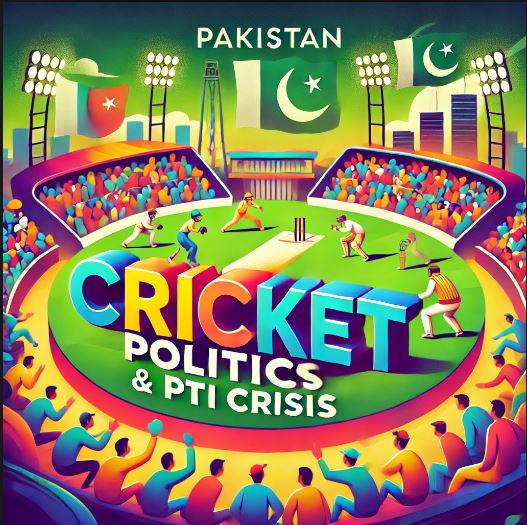
  • Pakistan Cricket Politics & PTI Crisis

    Pakistan Cricket Politics & PTI Crisis

    FAQ: Pakistani Politics and the Future of Cricket

    1. What is the current situation with the upcoming Cricket Champions Trophy and Pakistan’s participation?

    Pakistan is facing challenges regarding its participation in the Champions Trophy due to India’s reluctance to play in Pakistan, citing security concerns. While a hybrid model, with some matches played in Pakistan and others in a neutral venue, was accepted for the Asia Cup, Pakistan is pushing for equal treatment. Pakistan argues that if India is unwilling to play in Pakistan, then future ICC events hosted by India should also adopt a hybrid model with some matches played outside India.

    29-
    Theory Women’s Tee Dress

    2. What is Pakistan’s proposed solution to the Champions Trophy hosting dilemma?

    Pakistan proposes a reciprocal hybrid model. If India insists on a hybrid model for the Champions Trophy in Pakistan, then future ICC events hosted in India should also follow a hybrid model. This would ensure fairness and avoid a two-tiered system within ICC events.

    30-
    Ray-Ban Women’s RB4098 Jackie Ohh Ii Butterfly Sunglasses

    3. What are the financial implications of the Champions Trophy standoff?

    The primary broadcaster for the Champions Trophy, an Indian company, has stated that if India and Pakistan do not play, the financial viability of the tournament will be severely impacted. This puts pressure on the ICC to find a solution that satisfies both India and Pakistan.

    30-
    BUXOM Full-On Plumping Lip Cream, Hydrating Lip Plumper Gloss with Peptides & Hyaluronic Acid, High-Shine Tinted Formula for Fuller, Softer Lips, Cruelty-Free

    4. What is the situation with political unrest in Pakistan and how does it relate to the Pakistan Tehreek-e-Insaf (PTI)?

    Following events on November 24th, there are allegations of excessive force used against PTI supporters, with claims of injuries and deaths. PTI leaders are calling for an investigation into the incidents.

    30-
    DAE Cactus Fruit 3-In-1 Styling Cream & Taming Wand – Tame Flyaways, Smooth Frizz, Style Edges (0.6 oz.)

    5. What is the role of Bushra Bibi (wife of Imran Khan) and Pervez Khattak (senior PTI leader) in the current political climate?

    Both Bushra Bibi and Pervez Khattak are seen as influential figures within the PTI and capable of controlling and directing the party’s supporters. Their potential arrest and isolation are being viewed as a tactic to weaken the PTI’s ability to mobilize protests.

    30-
    m-61 Hydraboost Cream | Hydrating Face Moisturizer with Hyaluronic Acid, Vitamin B5, Vitamin E & Peptides | Nourishes, Plumps & Repairs Skin | For All Skin Types, 1.7 Fl Oz

    6. Is there a possibility of the PTI being banned and what are the implications?

    Resolutions to ban the PTI have been discussed, but many believe a ban would be counterproductive. It could galvanize PTI supporters and further escalate tensions. Additionally, the effectiveness of such a ban is questioned, as previous attempts to restrict political parties through symbols have had little impact.

    30-
    Liquid I.V.® Hydration Multiplier Sugar-Free – White Peach | Electrolyte Powder Drink Mix | 1 Pack (14 Servings)

    7. What are the potential consequences of imposing Governor’s Rule in Khyber Pakhtunkhwa (KP)?

    Imposing Governor’s Rule in KP, a province where PTI holds significant influence, is seen as a risky move. It could backfire by further alienating PTI supporters and triggering larger-scale protests, potentially even targeting the Governor’s House. Furthermore, such a move may face legal challenges and lack of support from other political parties.

    30-
    Patchology On The Fly Travel Skincare Kit, Travel-Friendly Hydrating Skin Essentials, Includes 2 Pairs of Eye Patches, 2 Hydrating Face Mask Sheets & 1 Lip Mask, Christmas Gifts & Stocking Stuffers

    8. What is the significance of Aseefa Bhutto Zardari’s comments on Imran Khan’s safety?

    Aseefa Bhutto Zardari, a prominent figure in the Pakistan Peoples Party (PPP), raising concerns about Imran Khan’s safety on an international platform suggests the PPP is positioning itself as a potential alternative to the current government. It also signals a potential willingness to work with Imran Khan in the future, creating a point of friction within the ruling coalition.

    30-
    EltaMD UV Daily SPF 40 Tinted Face Sunscreen Moisturizer, Tinted Moisturizer for Face with SPF, Great for Dry, Combination, and Normal Skin

    Analysis: A Political and Sporting Landscape

    Quiz

    Short Answer Questions

    1. What is the “hybrid model” being discussed in the context of the cricket Champions Trophy, and why is it causing tension between India and Pakistan?
    2. What are the arguments presented for and against holding the Champions Trophy in Pakistan? What are the potential financial implications for the ICC if India and Pakistan do not play?
    3. According to the speaker, how does the political climate in Pakistan affect the potential hosting of the Champions Trophy? What evidence do they provide to support their claim?
    4. What specific claims are being made by the Pakistan Tehreek Insaaf (PTI) regarding the events of November 24th? What evidence do they present to support their allegations?
    5. How does the speaker analyze the potential impact of Governor’s Rule in KP? What are the potential benefits and disadvantages they highlight?
    6. What is the significance of Bushra Bibi and Gandapur in the current political situation, according to the speaker’s analysis?
    7. Why does the speaker believe that banning PTI would be ineffective? What historical example do they cite to support their viewpoint?
    8. What is the significance of Asifa Bhutto Zardari’s statement about the threat to Imran Khan’s life, and how does the speaker interpret the People’s Party’s motives?
    9. According to the speaker, how has the political dynamic between Imran Khan and the establishment shifted since November 24th?
    10. In the speaker’s view, what is the likely future of the political situation in Pakistan, and what role might the People’s Party play?

    30-
    medicube Mini Booster Pro Pink | Affordable At-Home Facial Skin Care Tool for Beginners – Portable Glow Booster for Glass Skin, Boosting Absorption, Korean Skin Care for Teens

    Answer Key

    1. The “hybrid model” proposes holding some Champions Trophy matches in Pakistan and others in a neutral country, likely due to India’s reluctance to play in Pakistan. This causes tension as Pakistan insists on hosting all games or implementing the hybrid model for future tournaments in India as well, seeking reciprocal treatment.
    2. Arguments for holding the Champions Trophy in Pakistan cite contractual obligations, Pakistan’s right to host, and the potential for generating revenue. Arguments against it focus on security concerns and potential civil unrest. The ICC faces significant financial losses from broadcasting rights if India and Pakistan do not participate.
    3. The speaker argues that the current political climate in Pakistan, characterized by potential civil unrest and the PTI’s challenges against the government, makes hosting the Champions Trophy difficult. They point to the PTI’s claims of violence against their supporters as evidence of instability.
    4. PTI alleges excessive force used against their supporters on November 24th, claiming over 5000 arrests, hundreds injured by bullets, and 12 deaths. They claim to possess evidence, including witness testimonies and medical records, to support these allegations.
    5. The speaker suggests Governor’s Rule in KP would give the administration greater control over potential PTI protests and disrupt their mobilization efforts. However, they also point out potential disadvantages, including public backlash, bureaucratic resistance, and legal challenges, arguing that it might ultimately prove ineffective and unsustainable.
    6. Bushra Bibi and Gandapur are identified as crucial figures for PTI due to their influence over supporters and potential to persuade Imran Khan towards a more moderate approach. Their detention, the speaker argues, aims to limit PTI’s mobilization capacity while maintaining channels for negotiation.
    7. The speaker believes banning PTI would be counterproductive, arguing that it would not diminish popular support and could even bolster their appeal as victims of political oppression. They cite the example of the ban on Jamaat-e-Islami, which failed to significantly impact their electoral performance.
    8. Asifa Bhutto Zardari’s statement is interpreted as a strategic move by the People’s Party to signal their potential willingness to work with Imran Khan if the opportunity arises. By expressing concern for his safety, they subtly distance themselves from the government’s hardline stance and position themselves as potential allies.
    9. The speaker observes that the power dynamic has shifted since November 24th, with the establishment appearing stronger and Imran Khan’s position weakened due to the crackdown on PTI. Despite this shift, the speaker believes Khan might eventually re-emerge and return to the political scene.
    10. The speaker predicts that the political landscape will eventually transition away from street protests and back into the parliamentary arena. They foresee the People’s Party potentially playing a pivotal role in this transition, positioning themselves as a more palatable alternative to the PML-N for accommodating Imran Khan and his supporters.

    30-
    A mysterious young man takes a job with a wealthy family. Will they learn of his true identity before his sinister plans destroy everything they love?

    Essay Questions

    1. Analyze the arguments for and against the “hybrid model” in the context of the Champions Trophy. Consider the perspectives of Pakistan, India, and the ICC, and discuss the potential implications of each proposed solution.
    2. Evaluate the speaker’s claims about the political situation in Pakistan. To what extent do you agree or disagree with their assessment of the events of November 24th and the potential impact of Governor’s Rule in KP?
    3. Explore the significance of the “safe passage” reportedly granted to Bushra Bibi and Gandapur. Analyze the speaker’s interpretation of this event, and consider its potential implications for the ongoing power struggle between PTI and the government.
    4. Discuss the potential motives behind Asifa Bhutto Zardari’s statement about the threat to Imran Khan’s life. Analyze the speaker’s interpretation of the People’s Party’s strategy, and evaluate its potential effectiveness in the current political climate.
    5. Based on the speaker’s analysis, predict the future of Pakistani politics. Consider the potential for Imran Khan’s return, the role of the establishment, and the possible realignment of political forces.

    30-
    Amazon Essentials Disney | Marvel | Star Wars | Frozen | Princess Girls and Toddlers’ Mix-and-Match Outfit Sets, Multipacks

    Glossary

    • Hybrid Model: A proposed format for hosting the Champions Trophy where some matches are held in Pakistan and others in a neutral country.
    • Champions Trophy: A prestigious international cricket tournament organized by the ICC.
    • ICC: The International Cricket Council, the governing body for cricket worldwide.
    • PTI: Pakistan Tehreek-e-Insaf, a political party led by Imran Khan.
    • Governor’s Rule: A constitutional provision in Pakistan that allows the federal government to assume direct control of a province under specific circumstances.
    • KP: Khyber Pakhtunkhwa, a province in Pakistan where PTI holds a majority in the provincial assembly.
    • Establishment: A term often used in Pakistan to refer to the powerful military and intelligence apparatus.
    • Safe Passage: The act of granting someone permission and protection to travel through a dangerous or contested area.
    • People’s Party: Pakistan Peoples Party, a major political party in Pakistan.
    • Noon League: Pakistan Muslim League-Nawaz, a major political party in Pakistan.
    • BCCI: Board of Control for Cricket in India.
    • ACC: Asian Cricket Council.

    Pakistani Politics & the Future of Cricket: A Deep Dive

    Source 1: “Pasted Text” (Transcript of a Pakistani Political Commentary Show)

    I. The Fate of the Champions Trophy: A Hybrid Model Emerges

    This section analyzes the ongoing debate regarding the location of the upcoming Champions Trophy. With India refusing to play in Pakistan due to security concerns, and Pakistan rejecting a full hybrid model that would see them play most of their matches abroad, a potential solution is presented: a reciprocal hybrid model. This model would require India to also play some of its matches in future ICC tournaments at neutral venues if Pakistan is forced to do so for this tournament.

    30-
    Bluey Advent Calendar Pack Toys for Girls and Boys, 24 Days of Surprises, Kids 2025 Advent Calendar w/Accessories, Stickers & Mini Christmas Tree

    II. Political Turmoil: Analyzing Claims of Violence & Repression

    This section delves into allegations by Pakistan Tehreek-e-Insaf (PTI) regarding state-sanctioned violence against their supporters on November 24th. The commentator analyzes the validity of these claims, scrutinizing evidence and urging for thorough investigations using available footage from safe city cameras.

    III. The Potential for Governor’s Rule & a PTI Ban

    This segment examines the potential consequences of imposing Governor’s rule in Khyber Pakhtunkhwa (KP) and a nationwide ban on PTI. The commentator argues that such actions would be ultimately counterproductive, potentially galvanizing public support for PTI and facing legal challenges. He emphasizes the importance of provincial autonomy and predicts a lack of support from the Pakistan People’s Party (PPP) for such measures.

    IV. Shifting Power Dynamics & the Role of Key PTI Figures

    This part explores the changing political landscape following the events of November 24th. The commentator posits a shift in power dynamics, with the establishment gaining strength and Imran Khan experiencing a relative weakening. He discusses the importance of figures like Bushra Bibi and Pervez Khattak for PTI and speculates on the possibility of their detention and isolation as a means to exert control and facilitate negotiations.

    V. Asif Zardari’s Strategic Maneuvering & Potential PPP-PTI Alliance

    This section focuses on Asif Zardari’s political maneuvering and the potential for an alliance between PPP and PTI. The commentator highlights Asif’s deliberate choice of Aseefa Bhutto Zardari to voice concerns regarding threats to Imran Khan’s life, interpreting it as a strategic move to distance PPP from the current government’s policies and position themselves as a potential ally for PTI in future political scenarios.

    30-
    Learning Journey International LLC Play & Learn – Stacking Cubes – STEM Toddler Toys & Gifts for Boys & Girls Ages 12 Months and Up – Mind Building Developmental Learning Toy, Multi (100257)

    Briefing Doc: Pakistani Politics and Cricket Controversy

    Main Themes:

    • Political turmoil in Pakistan: This source focuses heavily on the ongoing conflict between the PTI (Pakistan Tehreek-e-Insaf) and the ruling government. The PTI alleges excessive force and human rights violations during protests, demanding an independent inquiry. The government denies these claims.
    • The future of the Champions Trophy: A significant portion of the discussion centers around the upcoming Champions Trophy and the conflict surrounding India’s participation in Pakistan. Financial and political factors are intertwined with proposed solutions like the ‘hybrid model’ and potential venue changes.

    30-
    The Children’s Place Boys’ 100% Cotton Long Sleeve Top and Pants,2 Piece Pajama Set

    Key Ideas and Facts:

    Political Situation:

    • PTI claims: The PTI alleges that over 5,000 of their supporters were arrested before November 24th, with hundreds suffering bullet injuries and 12 fatalities. They cite evidence from medical professionals and demand an independent inquiry.
    • Government’s response: The government dismisses these claims, stating they used appropriate force to control riots. They challenge the PTI to provide concrete evidence and suggest the Safe City camera footage could be examined.
    • PTI’s future: The discussion explores the possibility of banning the PTI, implementing Governor’s rule in KP (Khyber Pakhtunkhwa), and the potential consequences of such actions.
    • Possible reconciliation: The source hints at potential back-channel negotiations and the possibility of Imran Khan returning to the political scene in the future. Asif Ali Zardari’s daughter, Aseefa Bhutto Zardari, expressing concern over threats to Imran Khan’s life, is interpreted as the PPP (Pakistan People’s Party) potentially positioning itself as a mediator.
    01
    Rainbow Dreams: A Coloring Journey for Kids Paperback – October 11, 2025

    Cricket Controversy:

    • The Champions Trophy dispute: The core issue is India’s reluctance to play in Pakistan due to security concerns.
    • The ‘hybrid model’: This proposes holding some Champions Trophy matches in Pakistan and others in a neutral venue like Dubai or Sri Lanka. The source suggests a counter-proposal: applying the hybrid model reciprocally to future ICC events in India, ensuring fairness.
    • Financial implications: The source highlights the financial pressure on the ICC due to the potential loss of broadcast revenue if India-Pakistan matches don’t take place.
    • Possible outcomes: The source discusses possible scenarios like the Champions Trophy being shifted to another country, Pakistan refusing to play, or a negotiated agreement through the reciprocal hybrid model.
    01
    SpotMyUV UV Detection Stickers for Sunscreen with Patented Dermatrue SPF Sensing Technology, Know When to Reapply Sunscreen to Help Prevent Sunburn, 16 Count

    Important Quotes:

    • Omar Ayub (PTI): “They fired bullets of destruction. They have an agenda to destroy everything, destroy everything. This is not a political party, this is a fad.”
    • Najam Sethi (Analyst): “If India and ICC do not accept my point, then we will not play… then this champion trophy will be shifted.”
    • Najam Sethi (Analyst): “The Indian government gets hurt when India comes and plays with Pakistan… If Pakistan doesn’t play in India then they don’t have any problem.”
    02
    Luxury Gold Plated Elegant Textured Alloy Design with Irregular Pearl Earrings For Women,3D & Movable,Nice Gift Box Included,14k Gold Plated Melting Rock Alloy Stainless steel Stud Earrings for Women

    Analysis:

    The source provides a detailed insight into the current political landscape of Pakistan and the complexities surrounding the Champions Trophy. It offers multiple perspectives, analyzing potential scenarios and their implications. The tone is speculative, relying heavily on insider information and predictions based on the speaker’s experience and understanding of the political players involved.

    Note: The source appears to be a transcript from a talk show or similar format. The informal language and conversational style should be considered when assessing the validity of the information presented.

    Here are the central political and sporting conflicts discussed in the sources:

    03
    Locket Necklace Holds Pictures Alphabet Initial Letter Love Heart Lockets Photo Memory Locket Necklaces Birthday Gifts
    • The central sporting conflict revolves around the upcoming Cricket Champions Trophy and Pakistan’s participation in it. Pakistan is demanding reciprocal treatment from the International Cricket Council (ICC) and India. [1, 2] Pakistan argues that if India is allowed to host some of its matches in the Champions Trophy outside of India in a “hybrid model” due to security concerns about playing in Pakistan, then Pakistan should be granted the same concession for future ICC events held in India. [1, 2]
    • Pakistan believes that the ICC’s acceptance of India’s “hybrid model” sets a dangerous precedent of unequal treatment. They argue that the ICC should either require India to play all its matches in Pakistan or enforce the same “hybrid model” for future ICC events in India. [1, 2] Pakistan believes its stance is strengthened by the fact that they won the Champions Trophy in the past on their own terms and that respecting international relations requires reciprocal treatment. [2]
    • The sources suggest that the financial implications of India and Pakistan not playing each other are significant, putting pressure on the ICC and broadcasters. [3] It’s noted that the broadcaster, an Indian company with global rights, has threatened financial penalties if Pakistan pulls out of the tournament. [3]
    • The central political conflict discussed involves the aftermath of events on November 24th, with Pakistan Tehreek Insaaf (PTI) and the current government clashing over the use of force and the treatment of PTI supporters. PTI claims that their supporters were subjected to excessive force, including the use of snipers and live ammunition, resulting in injuries and deaths. [4] They demand an investigation into the events. [5]
    • The government denies PTI’s claims, stating that no snipers were used and that any force applied was in response to PTI’s actions. [5] They argue that PTI is exaggerating the situation and that their demands for an inquiry are politically motivated. [5]
    • There are discussions about potential actions against PTI, including a ban on the party and the imposition of Governor’s Rule in Khyber Pakhtunkhwa (KP). [6, 7] The sources debate the effectiveness and potential consequences of such actions, with concerns raised about backlash from the public and the judiciary. [7, 8]
    • The role of key figures like Bushra Bibi (Imran Khan’s wife) and Pervez Elahi (former Chief Minister of Punjab) is also discussed, particularly regarding their potential influence on the situation and the possibility of negotiations. [4, 6, 8]
    • The People’s Party’s position is analyzed, noting their potential as a mediating force between PTI and the government. [9, 10] Asifa Bhutto’s statements about threats to Imran Khan’s life are interpreted as a signal of the People’s Party’s willingness to accommodate PTI in future political arrangements. [9, 10]

    04
    Compatible with Aolon Curve Smart Watch Band, 22mm Women, Soft Silicone Glitter Clear Sport Strap Compatible with Aolon Curve 2.01″ Inches Smart Watch

    These conflicts highlight the deep political and sporting divisions within Pakistan and the challenges faced in navigating these complex issues.

    Power dynamics heavily influence decision-making, particularly in the context of international relations and politics, as evidenced by the sources.

    • The sources, which analyze the dynamics between the International Cricket Council (ICC), the Board of Control for Cricket in India (BCCI), and the Pakistan Cricket Board (PCB), illustrate how financial power and political influence can dictate the terms of engagement and shape outcomes. [1, 2]
    • The BCCI, due to its financial strength stemming from lucrative broadcasting deals and strong domestic cricket, holds significant sway within the ICC. [1, 2] This allows them to influence decisions in their favor, such as potentially determining the venue for the Champions Trophy. [1, 2]
    • The sources suggest that the BCCI leverages its position to exert pressure on other boards, many of whom are financially dependent on matches against India. [1] This creates a situation where these boards are more likely to side with India, even if it goes against the interests of other nations like Pakistan. [1, 3]
    • The sources further highlight the political dimension, with the Indian government’s stance on playing against Pakistan impacting the BCCI’s decisions. [4] The Indian government’s reluctance to engage with Pakistan on the cricket field, stemming from political tensions, restricts the BCCI’s freedom of action and ultimately shapes the ICC’s choices regarding tournament venues and formats. [4]
    • The sources propose that Pakistan could utilize a “hybrid model” for hosting the Champions Trophy, with some matches being played in a neutral country like Bangladesh to accommodate India’s concerns, while ensuring Pakistan retains some hosting rights. [5, 6] This model aims to address the power imbalance by advocating for reciprocal treatment: if India benefits from a hybrid model in Pakistan, future ICC events in India should also adopt a similar format. [5, 6]
    • The sources suggest that this strategy could force the ICC to acknowledge and address the unequal treatment of nations, potentially leading to a more equitable decision-making process within the organization. [6] By demanding reciprocity and highlighting the financial implications of India’s potential non-participation, Pakistan could leverage its position and gain an advantage in the negotiations. [4, 6]

    05
    White Gold Plated White & Pink Cubic Zirconia Dangle Earrings for Women Daily Evening Parties Wear Lightweight Jewelry Earring Gift for Her

    In essence, the sources demonstrate how power dynamics, driven by financial clout and political influence, significantly impact decision-making processes, particularly in international sporting events like the Champions Trophy. They highlight how these power imbalances can be challenged through strategic negotiation and a push for greater reciprocity and fairness.

    Here is a breakdown of potential consequences based on the outcomes discussed in the sources:

    Potential Outcomes and Their Consequences

    • Pakistan stands firm on its demand for reciprocal hybrid model treatment: [1-3]
    • Positive Consequences for Pakistan:Levels the playing field with India. Pakistan would gain an advantage by ensuring that future ICC events in India also follow a hybrid model, reducing India’s leverage over Pakistan in cricketing matters. [3]
    • Strengthens Pakistan’s position in the ICC. By forcing a reciprocal arrangement, Pakistan asserts its independence and challenges India’s dominance in the ICC. [3, 4]
    • Potential for Pakistan to win the Champions Trophy on its own terms. This outcome allows Pakistan to maintain its stance and potentially achieve a favorable outcome in the tournament. [4]
    • Negative Consequences:Possible rejection by India and the ICC. India, with its financial clout and influence within the ICC, might resist the proposal. [3, 5]
    • Risk of the Champions Trophy being shifted to another country. This would result in financial losses for the ICC and potentially harm Pakistan’s cricketing reputation. [6]
    • Potential legal challenges from India. India could dispute the decision and initiate legal action against the ICC. [3]
    • Pakistan accepts a limited hybrid model: [1, 2, 7]
    • Consequences:Loss of bargaining power for future ICC events. Pakistan concedes to India’s demands, setting a precedent for future tournaments. [2, 3]
    • Perception of Pakistan surrendering to India’s pressure. Accepting a limited hybrid model without reciprocal terms weakens Pakistan’s position. [2]
    • Pakistan refuses to play in the Champions Trophy: [6]
    • Consequences:Financial losses for the ICC. The absence of India-Pakistan matches significantly reduces the tournament’s appeal and revenue. [5]
    • Damage to Pakistan’s cricketing relationships. This action could strain ties with the ICC and other cricket boards.
    • Potential for the Champions Trophy to be postponed or shifted. The ICC might be forced to reschedule or relocate the tournament. [6]
    06
    Gold Plated White Cubic Zirconia Leaf-Shaped Hoop Earrings for Women Wedding Bridal Daily Evening Parties Wear Lightweight Jewelry Earring Gift for Her

    Additional Points

    • The source highlights the power dynamics within the ICC, emphasizing the financial influence of the BCCI and India’s ability to sway decisions in its favor. [5, 8]
    • The speaker suggests that Pakistan’s successful implementation of the PSL has provided it with greater financial independence and leverage. [1]
    • The analysis emphasizes the need for Pakistan to act strategically, capitalizing on any opportunity to secure reciprocal treatment and avoid being subjected to unequal terms by the ICC. [3, 4]

    The source presents a nuanced view of the situation, emphasizing the complexities of international cricket politics and the financial stakes involved. The potential consequences outlined above provide a framework for understanding the possible outcomes and their implications for Pakistan’s cricketing future.

    07
    White Gold Plated Cubic Zirconia Flower Shape Pearl Stud Earrings for Women Wedding Bridal Daily Evening Parties Wear Lightweight Jewelry Earring Gift for Her

    A Look at Pakistan Cricket: Politics, Finances, and the Champions Trophy

    The sources provide a glimpse into the current state of Pakistan cricket, highlighting the intricate interplay between politics, finance, and international relations. The impending Champions Trophy serves as a focal point, with Pakistan demanding equitable treatment from the ICC and India.

    • At the heart of this discussion lies the “hybrid model,” which allows India to play some of its Champions Trophy matches outside of Pakistan due to security concerns. The sources argue that accepting this model without a reciprocal arrangement for future ICC events held in India would perpetuate an imbalance of power. [1-4]
    • The sources emphasize that this isn’t just about cricket – it’s about national pride and respect on the international stage. Pakistan, having won the Champions Trophy in the past, seeks to maintain its cricketing integrity and avoid being perceived as bowing to pressure. [4]
    • The financial implications of this situation are significant, with broadcasters and the ICC heavily reliant on the viewership and revenue generated by India-Pakistan matches. This reality puts Pakistan in a position to negotiate, as their absence from the tournament could lead to substantial financial losses. [5, 6]

    The sources paint a picture of a complex landscape where Pakistan faces a crucial decision:

    • Option 1: Stand Firm on Reciprocal Hybrid Model: This path, while upholding principles of fairness, carries the risk of India and the ICC rejecting the proposal, potentially resulting in the Champions Trophy being shifted to another country. [4]
    • Option 2: Accept a Limited Hybrid Model: This would involve conceding to India’s demands, risking the perception of Pakistan surrendering to pressure and setting a precedent for future tournaments. [3]
    • Option 3: Refuse to Play in the Champions Trophy: This drastic step, though impactful, could damage Pakistan’s relationships with the ICC and other cricket boards, potentially leading to further isolation and financial consequences. [5]

    The sources suggest that the success of the Pakistan Super League (PSL) has given Pakistan more financial independence and leverage in these negotiations. [2] This development provides them with a stronger platform to advocate for their interests and resist being subjected to unequal treatment.

    08
    Car Charger Adapter, 5 Port QC3.0 Fast Charging Car Cigarette Lighter USB Charger, Compatible with iPhone, Android, Samsung, iPad Pro, and More (Black)

    The conversation history emphasizes the role of power dynamics, underscoring the influence wielded by the BCCI due to its financial strength. This power allows them to influence decisions within the ICC, often to the detriment of other boards, particularly those financially dependent on matches against India. [5, 7, 8]

    The analysis presented in the sources suggests that Pakistan must adopt a strategic approach. This approach involves leveraging its newfound financial independence, highlighting the financial risks associated with India’s potential non-participation, and advocating for reciprocal treatment to ensure a more balanced and equitable cricketing future. [2, 4, 6]

    09
    Womens 2 Piece Swimsuit Suit Highs Waisted Trigonometry Tie Side Bathing Suits for Women XS-L HYB523C

    A Divided PTI: Internal Conflicts and Political Maneuvering

    The sources depict a Pakistan Tehreek-e-Insaf (PTI) grappling with internal discord and facing political challenges. While not explicitly stating “disarray,” the conversations reveal a party navigating complex power dynamics and struggling to maintain a unified front.

    • The sources suggest a rift within the PTI, with some members openly criticizing party leadership, particularly Bushra Bibi, wife of former Prime Minister Imran Khan. [1] These internal conflicts raise questions about the party’s cohesion and its ability to present a united front against its political opponents.
    • Adding to this internal tension, the sources highlight varying accounts regarding the events of November 24th, specifically concerning the number of PTI supporters injured or killed during protests. [2] This discrepancy in information, with PTI officials claiming higher figures than independent sources, indicates possible attempts to manipulate the narrative and exploit the situation for political gain.
    • The sources further depict a PTI caught between a desire to protest and a need to negotiate. [3] They illustrate the dilemma of a party seeking to mobilize its base while also recognizing the potential consequences of escalating confrontations with the government. This delicate balancing act underscores the precarious position the PTI finds itself in.
    • The sources also reveal external pressures impacting the PTI’s stability. [4] They describe how the current government, led by Shahbaz Sharif, is actively seeking to restrict the PTI’s political activities, potentially through bans or limitations on public gatherings. This external pressure further complicates the PTI’s ability to operate effectively and maintain its influence.

    The sources, while focused on cricket politics, indirectly provide insights into the broader political landscape in Pakistan. The PTI’s struggles are contextualized within a broader environment of political tension and power struggles, where maneuvering and strategic alliances are essential for survival.

    10
    2 PCS Universal Adjustable SpannerMulti-functional Double-ended Auto Adjust Quick Tool for Home Repair and Mechanic Work,Silvery

    Champions Trophy: A Stage for Cricket and Politics

    The sources, while primarily focused on the political landscape in Pakistan, provide a compelling look at the upcoming Champions Trophy tournament and the complex dynamics surrounding its potential hosting in Pakistan. The conversation centers on the “hybrid model” proposed to accommodate India’s reluctance to play in Pakistan due to security concerns.

    The sources emphasize the significance of this event, extending beyond mere sport. For Pakistan, hosting the Champions Trophy is a matter of national pride and international recognition. Successfully navigating the challenges and securing hosting rights, potentially through the hybrid model, would represent a significant victory.

    Here’s a closer look at the key elements surrounding the Champions Trophy discussion:

    • Hybrid Model: This concept lies at the heart of the debate. The sources suggest that Pakistan is willing to accept this model, with some matches played in a neutral country like Bangladesh to address India’s concerns. However, Pakistan insists on reciprocity – if India benefits from this model in Pakistan, future ICC events held in India should also adopt a similar format. This demand for equality aims to prevent a situation where Pakistan is subjected to different standards than India.
    • Power Dynamics: The sources repeatedly underscore the uneven power distribution within the ICC. The BCCI, fueled by its financial might derived from lucrative broadcasting deals and strong domestic cricket, holds significant influence. This allows them to exert pressure on other boards, many of whom are financially dependent on matches against India. This power dynamic creates a scenario where decisions often favor India, potentially sidelining the interests of other nations like Pakistan.
    • Financial Stakes: The sources acknowledge the substantial financial implications tied to the Champions Trophy. India-Pakistan matches are highly sought after by broadcasters and contribute significantly to the tournament’s revenue. Pakistan can leverage this reality to negotiate, as their absence could lead to significant financial losses for the ICC.
    • National Pride: The sources highlight that for Pakistan, the Champions Trophy is not just about cricket. It’s about asserting their position on the world stage and resisting perceived pressure from India. Winning the tournament on their own terms would be a symbolic victory, demonstrating their resilience and cricketing prowess.

    1-
    Gear up for Labor Day Weekend with Kyle Richards

    The sources suggest several potential outcomes for Pakistan regarding the Champions Trophy:

    1. Stand firm and demand a reciprocal hybrid model: This approach, though principled, carries risks. India and the ICC, influenced by the BCCI, might reject the proposal, leading to the tournament being moved to another country.
    2. Accept a limited hybrid model without reciprocity: This option would be seen as a concession to India, potentially weakening Pakistan’s position within the ICC and setting a precedent for future events.
    3. Refuse to participate in the Champions Trophy: This extreme step, while making a statement, could lead to financial losses for Pakistan, damage relationships with the ICC and other cricket boards, and potentially lead to further isolation within the cricketing world.

    The sources advocate for Pakistan to adopt a strategic and assertive approach. By highlighting the financial risks associated with India’s potential non-participation and demanding reciprocal treatment, Pakistan can leverage its position and potentially secure a more favorable outcome.

    2-
    Shop the latest deals

    The Champions Trophy, as depicted in the sources, represents more than just a cricket tournament. It’s a platform where political tensions, financial interests, and national pride intersect, making for a complex and fascinating case study in international relations.

    Analyzing Pakistan’s Political Turmoil

    The sources offer a detailed account of the current political climate in Pakistan, highlighting a landscape marked by political tension, internal divisions, and the maneuvering of various political actors. Although the focus is mainly on the impact of these events on the cricketing world, the sources provide valuable insight into the broader political struggles unfolding in the nation.

    • PTI Facing Internal & External Pressures: The sources portray a Pakistan Tehreek-e-Insaf (PTI) party grappling with internal disagreements and facing external pressure from the ruling government. The conversation reveals concerns over the influence of Bushra Bibi, Imran Khan’s wife, within the party, suggesting possible internal rifts and challenges to leadership. This internal discord is compounded by the government’s active efforts to limit PTI’s activities, potentially through bans or restrictions, further hindering their ability to function effectively. [1-5]
    • Controversial Events of November 24th: The sources describe the events of November 24th, a significant turning point in the PTI’s political journey. The conversation highlights conflicting narratives regarding the severity of the protests and the number of PTI supporters injured or killed, suggesting attempts to control the narrative and utilize the situation for political gain. [6, 7] The sources also reveal differing perspectives on the role of key figures like Bushra Bibi and Gandapur, with some arguing for their detention to maintain control and others suggesting their importance in negotiating with Imran Khan. [3, 6] This uncertainty surrounding the events and the roles of key figures further underscores the political turmoil and the challenges the PTI faces. [3]
    • Shift in Power Dynamics: The sources describe a notable shift in the balance of power following the events of November 24th. They suggest a change from a situation where Imran Khan held significant influence to one where the establishment now wields more power. This shift in dynamics has altered the political landscape, impacting the PTI’s ability to operate freely and influencing negotiations with the government. [8]
    • People’s Party Positioning for Future Influence: The sources highlight the People’s Party’s strategic maneuvering within this volatile political climate. They suggest that the People’s Party, by distancing itself from the government’s actions and expressing concern over the treatment of Imran Khan, is positioning itself for potential future alliances. This strategy is evident in Asifa Bhutto’s public statements, which create space for potential collaboration with PTI should the political situation shift. [8, 9] This calculated approach underscores the fluidity of political alliances in Pakistan and the importance of maintaining options in an unpredictable environment.

    The sources, while focused on cricket-related issues, paint a vivid picture of a nation embroiled in political turmoil. The PTI’s internal conflicts, the government’s attempts to restrict their activities, and the People’s Party’s strategic positioning all contribute to an atmosphere of uncertainty and tension. This analysis reveals the complexity of Pakistani politics and highlights the continuous struggle for power and influence among various political actors.

    3-
    Get Ready for My Summer Skincare Routine w Vanessa Simmons

    Analyzing Pakistan’s Political Turmoil

    The sources offer a detailed account of the current political climate in Pakistan, highlighting a landscape marked by political tension, internal divisions, and the maneuvering of various political actors. Although the focus is mainly on the impact of these events on the cricketing world, the sources provide valuable insight into the broader political struggles unfolding in the nation.

    • PTI Facing Internal & External Pressures: The sources portray a Pakistan Tehreek-e-Insaf (PTI) party grappling with internal disagreements and facing external pressure from the ruling government. The conversation reveals concerns over the influence of Bushra Bibi, Imran Khan’s wife, within the party, suggesting possible internal rifts and challenges to leadership. This internal discord is compounded by the government’s active efforts to limit PTI’s activities, potentially through bans or restrictions, further hindering their ability to function effectively. [1-5]
    • Controversial Events of November 24th: The sources describe the events of November 24th, a significant turning point in the PTI’s political journey. The conversation highlights conflicting narratives regarding the severity of the protests and the number of PTI supporters injured or killed, suggesting attempts to control the narrative and utilize the situation for political gain. [6, 7] The sources also reveal differing perspectives on the role of key figures like Bushra Bibi and Gandapur, with some arguing for their detention to maintain control and others suggesting their importance in negotiating with Imran Khan. [3, 6] This uncertainty surrounding the events and the roles of key figures further underscores the political turmoil and the challenges the PTI faces. [3]
    • Shift in Power Dynamics: The sources describe a notable shift in the balance of power following the events of November 24th. They suggest a change from a situation where Imran Khan held significant influence to one where the establishment now wields more power. This shift in dynamics has altered the political landscape, impacting the PTI’s ability to operate freely and influencing negotiations with the government. [8]
    • People’s Party Positioning for Future Influence: The sources highlight the People’s Party’s strategic maneuvering within this volatile political climate. They suggest that the People’s Party, by distancing itself from the government’s actions and expressing concern over the treatment of Imran Khan, is positioning itself for potential future alliances. This strategy is evident in Asifa Bhutto’s public statements, which create space for potential collaboration with PTI should the political situation shift. [8, 9] This calculated approach underscores the fluidity of political alliances in Pakistan and the importance of maintaining options in an unpredictable environment.

    The sources, while focused on cricket-related issues, paint a vivid picture of a nation embroiled in political turmoil. The PTI’s internal conflicts, the government’s attempts to restrict their activities, and the People’s Party’s strategic positioning all contribute to an atmosphere of uncertainty and tension. This analysis reveals the complexity of Pakistani politics and highlights the continuous struggle for power and influence among various political actors.

    4-
    Easy Outfit Tricks and Ideas

    Examining Concerns Around Bushra Bibi’s Safety

    The sources, while discussing Pakistani politics and the PTI’s current challenges, touch upon the issue of a potential threat to Bushra Bibi’s life. This concern, voiced by Asifa Bhutto of the People’s Party, adds another layer of complexity to the already turbulent political situation.

    Here’s a breakdown of the information presented in the sources:

    • Asifa Bhutto’s Statement: The sources emphasize that Asifa Bhutto, daughter of former President Asif Ali Zardari, publicly expressed concerns about a threat to Bushra Bibi’s safety [1]. This statement, made to an international news outlet, Al-Arabiya, holds significance due to its public nature and the potential for international attention.
    • Strategic Messaging: The sources suggest that Asifa Bhutto’s statement may be part of a broader political strategy employed by the People’s Party [1]. They argue that by voicing concern for Bushra Bibi, the People’s Party aims to distance itself from the ruling government’s actions and potentially create an opening for future collaboration with PTI. This calculated approach indicates the fluidity of political alliances in Pakistan.
    • Lack of Specificity: The sources do not provide details about the nature of the threat to Bushra Bibi, its origin, or the evidence supporting it. This lack of concrete information raises questions about the validity of the claim and whether it is based on credible intelligence or is a political maneuver.

    It is important to note that the sources do not offer definitive proof of an actual threat against Bushra Bibi. The information presented is primarily focused on the political implications of Asifa Bhutto’s statement rather than confirming the existence of a threat. Further investigation and independent verification would be necessary to determine the credibility and severity of any potential danger to Bushra Bibi’s safety.

    5-
    Back to School Backpack Essentials

    Detailed Summaries of Each Source Page

    Here are the summaries of each page of the provided source, focusing on the key points and information presented:

    Page 1:

    • The speaker introduces the topic of the conversation, which will focus on current events in Pakistan, including the political situation of Pakistan Tehreek-e-Insaf (PTI), the controversy surrounding the Champions Trophy, and other significant news.
    • The speaker highlights concerns regarding PTI’s internal disarray due to a lack of clarity and direction from party leadership.
    • Allegations made by Omar Ayub, a PTI leader, during a press conference are mentioned as requiring further investigation.
    • The speaker expresses uncertainty about the future of the Champions Trophy, acknowledging both Pakistan and India’s interest in the tournament’s outcome.
    • The speaker also mentions predictions made in a previous conversation, particularly those related to Faisal Vavda and Asifa Bhutto.
    • The speaker acknowledges the importance of cricket in Pakistan, recognizing it as a source of national interest and a respite from political turmoil.

    6-
    Mama’s Still Got It with Lala Kent Featuring Michelle Lally

    Page 2:

    • The conversation shifts focus to cricket and the Champions Trophy, acknowledging the widespread interest in the sport, even amidst political tensions.
    • The speaker expresses confusion regarding the actions of PCB Chairman Mohsin Naqvi, questioning his sudden trip to Dubai and the subsequent adjournment of the ICC meeting.
    • The speaker claims to have insight into the potential outcomes of the Champions Trophy debate based on their past experience and negotiations with Jay Shah, head of the BCCI.
    • The speaker recalls their involvement in negotiating the Asia Cup hosting arrangement, highlighting the challenges faced in securing Pakistan’s right to host matches.

    7-
    Shop the latest deals

    Page 3:

    • The speaker details the challenges of convincing other Asian cricket boards, particularly India, to agree to a hybrid model for the Asia Cup, where some matches would be held in Pakistan.
    • The speaker recounts their efforts in convincing the Indian media and ICC officials to accept a partial hosting arrangement for Pakistan, ultimately leading to a compromise where some matches were played in Pakistan and others in neutral venues.
    • The speaker emphasizes the acceptance of the hybrid model for the Asia Cup and questions whether Pakistan should now accept a similar arrangement for the Champions Trophy.
    • The speaker highlights the contrasting positions of Pakistan and India regarding the hybrid model, with Pakistan demanding a reciprocal arrangement for future ICC events held in India.

    8-
    Work From Home Office Essentials

    Page 4:

    • The speaker continues to outline the arguments surrounding the Champions Trophy hosting debate. They mention Pakistan’s strong stance, rooted in their contractual agreement with the ICC and the government’s position that they will not play under a hybrid model unless it’s reciprocal.
    • The speaker dismisses India’s concerns about security and civil unrest in Pakistan, arguing that similar issues exist in other countries.
    • The speaker discusses the potential for voting within the ICC on the hybrid model, predicting that some Asian countries, influenced by India’s pressure, might not openly support Pakistan.
    • The speaker highlights the potential deadlock in negotiations between India and Pakistan, leaving the ICC in a challenging position.

    9-
    BAGSMART Carry On Luggage 22x14x9 Airline Approved with TSA Lock,20 Inch Lightweight Luggage with Spinner Wheels,100% PC Hard Shell Carry On Suitcases for Men Women,Off White

    Page 5:

    • The speaker emphasizes the financial consequences for the ICC if India and Pakistan do not participate in the Champions Trophy, particularly due to the potential loss of revenue from broadcasting deals.
    • The speaker predicts that the ICC will likely propose a compromise formula, driven by financial interests and the desire to ensure India-Pakistan matches.
    • The speaker acknowledges the BCCI’s significant influence within the ICC, stemming from its financial power and control over broadcasting rights.
    • The speaker suggests that the BCCI uses its influence to secure favorable outcomes for India, often at the expense of other boards who are financially dependent on matches against India.

    10-
    Best Amazon Daily Deals

    Page 6:

    • The speaker recounts a previous meeting with Jay Shah and ICC officials where they proposed a reciprocal hybrid model, emphasizing the benefits for both India and Pakistan in future ICC events.
    • The speaker suggests that a hybrid model, with matches played in Bangladesh, could be a viable solution for Pakistan’s matches in the Champions Trophy, addressing India’s security concerns while ensuring Pakistan’s participation.
    • The speaker criticizes the previous PCB Chairman, Jaka Ashraf, for accepting a limited hybrid model without securing reciprocity for future events in India.
    • The speaker argues that Pakistan should leverage its position and demand a reciprocal arrangement for the hybrid model, ensuring equality and fairness within the ICC.

    11-
    Keurig K-Mini Single Serve Coffee Maker, Black

    Page 7:

    • The speaker reiterates their proposal for a reciprocal hybrid model, where future ICC events in India would also adopt a similar arrangement if Pakistan agrees to it for the Champions Trophy.
    • The speaker emphasizes the importance of securing a written guarantee from the ICC that India would be penalized for not adhering to the agreed-upon hybrid model in future events.
    • The speaker suggests that this approach could potentially force India to reconsider its position and agree to a reciprocal arrangement, preventing a two-tier system within the ICC.
    • The speaker predicts that a vote within the ICC on this proposal could favor Pakistan, forcing India to accept the hybrid model for future events.

    12-
    Coolife Expandable Suitcase Luggage set PC ABS TSA Lock Spinner Carry on 3 Piece Sets (blue)

    Page 8:

    • The speaker highlights the potential benefits for Pakistan if they successfully secure a reciprocal hybrid model, asserting their independence and establishing a precedent for fair treatment within the ICC.
    • The speaker argues that this approach would be beneficial for cricket as a whole, ensuring a level playing field and promoting a sense of respect and equality among member boards.
    • The speaker suggests that the BCCI might be willing to accept this arrangement as a “goodwill gesture,” potentially easing pressure from the Indian government.
    • The speaker highlights the conflicting interests of the Indian government and the BCCI, with the government potentially opposing matches against Pakistan while the BCCI prioritizes financial gains from these high-profile encounters.

    13-
    Amazon Fire HD 10 tablet, built for relaxation, 10.1″ vibrant Full HD screen, octa-core processor, 3 GB RAM, latest model (2023 release), 32 GB, Black

    Page 9:

    • The speaker continues to analyze the potential outcomes of the Champions Trophy debate, suggesting that the Indian government might not object to Pakistan not playing in India as long as the BCCI benefits financially from hosting other matches.
    • The speaker expresses confidence in the viability of the reciprocal hybrid model as a solution, urging the PCB Chairman to adopt a firm stance and negotiate effectively.
    • The speaker also mentions other potential outcomes, including the possibility of the Champions Trophy being postponed or moved to another country, though emphasizing the financial losses associated with these options.

    14-
    Keurig K-Mini Single Serve Coffee Maker, Studio Gray, 6 to 12 oz. Brew Sizes

    Page 10:

    • The conversation shifts back to the political situation in Pakistan, focusing on the events of November 24th and the claims made by PTI regarding the number of supporters injured or killed during protests.
    • The speaker questions the validity of some PTI claims, suggesting that they may be exaggerating figures for political gain and urging for independent verification of the information.
    • The speaker analyzes the government’s response to the protests, highlighting their use of force and attempts to discredit PTI.
    • The speaker also discusses the potential for a judicial inquiry into the events of November 24th, acknowledging the challenges in obtaining accurate information and the possibility of political interference.

    15-
    Waterpik Aquarius Water Flosser Professional For Teeth, Gums, Braces, Dental Care, Electric Power With 10 Settings, 7 Tips For Multiple Users And Needs, ADA Accepted, White WP-660, Packaging May Vary

    Page 11:

    • The speaker continues to discuss the events of November 24th, specifically addressing the claims made by PTI regarding the alleged firing on the car of PTI leaders.
    • The speaker dismisses these claims as “nonsense,” asserting that no firing took place and that the PTI leaders were given safe passage.
    • The speaker calls for an investigation into the use of weapons during the protests, suggesting that footage from safe city cameras could provide evidence.
    • The speaker also criticizes the government’s rhetoric and calls for a more constructive approach to resolving the political standoff.

    16-
    Amazon Brand – Solimo Coffee Pods, Assorted pack (French, Dark, Colombian), Compatible with Keurig 2.0 K-Cup Brewers, 100 Count

    Page 12:

    • The speaker criticizes PTI’s demands for a committee or judicial commission to investigate the events of November 24th, suggesting that these are political tactics rather than genuine attempts to seek justice.
    • The speaker expresses skepticism about the effectiveness of such inquiries, highlighting the challenges in accessing sensitive information and the potential for political bias.
    • The speaker argues that the government should focus on addressing the root causes of the political unrest instead of resorting to bans or restrictions on PTI’s activities.
    • The speaker emphasizes the importance of dialogue and compromise in resolving political differences, urging both sides to find a peaceful solution.

    17-
    CREATMO US Men’s Faux Leather Jacket Motorcycle Jacket Waterproof Windproof PU Moto Vintage Bomber Hoodie with Removable Hood

    Page 13:

    • The speaker analyzes a statement made by Prime Minister Shahbaz Sharif regarding PTI’s actions, highlighting the government’s hardline stance and their attempts to portray PTI as a threat to national security.
    • The speaker suggests that this rhetoric is aimed at further isolating PTI and justifying the government’s crackdown on their activities.
    • The speaker discusses the potential for banning PTI, acknowledging the disadvantages and the likelihood that such a move would backfire by generating sympathy for the party.
    • The speaker also criticizes the government’s focus on Governor’s Rule, arguing that it is an ineffective solution and would likely face legal challenges.

    18-
    Ninja Air Fryer Pro 4-in-1 with 5 QT Capacity, Air Fry, Roast, Reheat, Dehydrate, Air Crisp Technology with 400F for hot, crispy results in just minutes, Nonstick Basket & Crisper Plate, Grey, AF141

    Page 14:

    • The speaker continues to discuss the possibility of Bushra Bibi’s arrest, suggesting that it might be a strategic move by the government to control her influence and potentially use her as a bargaining chip in negotiations with Imran Khan.
    • The speaker argues that Bushra Bibi’s detention could backfire, generating further sympathy for PTI and potentially leading to more unrest.
    • The speaker highlights the importance of Bushra Bibi and Gandapur in controlling PTI’s supporters and potentially influencing Imran Khan’s decisions, suggesting that their detention could escalate the situation.
    • The speaker also discusses the potential for restrictions on PTI’s activities, acknowledging the government’s attempts to limit their freedom of movement and assembly.

    19-
    Oral-B iO Deep Clean Rechargeable Electric Powered Toothbrush, Black with iO Series 3 Limited, 2 Brush Heads and Travel Case – Pressure Sensor to Protect Gums – 3 Cleaning Settings – 2 Minute Timer

    Page 15:

    • The speaker analyzes resolutions passed in various assemblies regarding the potential banning of PTI, dismissing them as political maneuvering and emphasizing the ineffectiveness of such bans.
    • The speaker argues that banning PTI would not address the underlying issues and would likely strengthen the party’s support base.
    • The speaker highlights the negative consequences of Governor’s Rule, arguing that it would face legal challenges, create further unrest in KP province, and alienate the People’s Party, who are strong advocates for provincial autonomy.
    • The speaker predicts that the government’s attempts to suppress PTI will ultimately fail, suggesting that dialogue and compromise are the only viable solutions to the political crisis.

    20-
    Washing Machine Cleaner Descaler 24 Pack – Deep Cleaning Tablets For HE Front Loader & Top Load Washer, Septic Safe Eco-Friendly Deodorizer, Clean Inside Drum and Laundry Tub Seal – 12 Month Supply

    Page 16:

    • The speaker continues to discuss the potential consequences of Governor’s Rule, highlighting the risks of alienating the bureaucracy and provoking further protests and unrest in KP province.
    • The speaker argues that Governor’s Rule would be ineffective in suppressing PTI’s activities and would likely backfire by strengthening their support base.
    • The speaker suggests that the judiciary would likely challenge the legality of Governor’s Rule, further complicating the situation.
    • The speaker emphasizes the importance of addressing the underlying issues fueling the political unrest, arguing that suppression and restrictions will only exacerbate the situation.

    21-
    Roku Streaming Stick 4K | Portable Roku Streaming Device 4K/HDR/Dolby Vision, Roku Voice Remote, Free & Live TV

    Page 17:

    • The speaker summarizes their predictions regarding the political situation, suggesting that Bushra Bibi might be detained but not formally arrested, and that Imran Khan will eventually return to prominence after a period of negotiation and compromise.
    • The speaker highlights the shift in power dynamics following the events of November 24th, suggesting that the establishment now holds more influence than Imran Khan.
    • The speaker analyzes Asifa Bhutto’s statement regarding the threat to Bushra Bibi’s life, suggesting that it could be a strategic move by the People’s Party to position themselves for future collaboration with PTI.
    • The speaker emphasizes the fluidity of political alliances in Pakistan, highlighting the People’s Party’s attempts to distance themselves from the government’s actions and maintain their options for future political maneuvering.

    22-
    SAMSUNG T7 Portable SSD, 4TB External Solid State Drive, Speeds Up to 1,050MB/s, USB 3.2 Gen 2, Reliable Storage for Gaming, Students, Professionals, MU-PC4T0T/AM, Gray

    Page 18:

    • The speaker continues to analyze the motivations behind Asifa Bhutto’s statement, suggesting that it is a deliberate attempt to create space for potential collaboration with PTI.
    • The speaker highlights the People’s Party’s strategic positioning within the political landscape, seeking to capitalize on the current instability and potentially form a new alliance with PTI.
    • The speaker contrasts the People’s Party’s approach with that of the ruling Noon League, suggesting that the People’s Party is more open to negotiation and compromise.
    • The speaker concludes by emphasizing the dynamic nature of Pakistani politics and the constant maneuvering of different actors seeking power and influence.
    • The discussion centers around the upcoming Cricket World Cup and the uncertainty of Pakistan’s participation due to India’s reluctance to play in Pakistan.
    • A “hybrid model” is being considered, where Pakistan’s matches would be held in a neutral venue, while India’s would be held in India. However, Pakistan prefers to host all its matches, as agreed upon in the original contract.
    • The ICC is facing pressure, especially from broadcasters, as matches between India and Pakistan are crucial for revenue.
    • The financial implications are significant, with the broadcaster threatening reduced payments if India-Pakistan matches don’t occur. Many ICC member countries are financially dependent on India’s participation.
    • Najam Sethi proposes a reciprocal hybrid model: If India’s matches involving Pakistan are played in a neutral venue for this World Cup, Pakistan would reciprocate when India hosts future tournaments. This was suggested previously and received positive initial feedback.
    • Hybrid Model Dispute: A disagreement exists regarding a “hybrid model” for cricket matches involving Pakistan and India. Pakistan proposes accepting the hybrid model for upcoming World Cup matches if India reciprocates in future ICC events hosted by India. This means Pakistan would play some matches in India if India also plays some matches at neutral venues when hosting Pakistan.
    • Neutral Venue Options: If India refuses the hybrid model, Pakistan suggests their World Cup matches in India could be moved to Bangladesh. This is presented as a financially beneficial solution for Bangladesh.
    • Pakistan’s Stance: Pakistan’s position is that any rules applied to them for hosting matches should also apply to India when they host. They are willing to play at neutral venues for some matches if India does the same in the future.
    • ICC’s Role: Pakistan wants the ICC to guarantee that any agreement regarding the hybrid model will be enforced and that penalties will be levied against India if they back out of the agreement. They believe this will force India to accept the reciprocal arrangement.
    • Potential Outcomes: Pakistan believes they have leverage due to upcoming tournaments they are hosting and feels confident a vote on this issue within the ICC would favor their position. They see this as a win for Pakistan and for cricket as a whole.
    • Thousands of PTI supporters were allegedly arrested and injured, some fatally, before and during protests around November 24th. PTI claims to have evidence, while the government disputes the figures.
    • There are conflicting accounts regarding an incident involving firing on the car of Bura B and Gandapur. The government claims they were provided safe passage, while PTI alleges they were attacked.
    • PTI demands an inquiry or judicial commission into the government’s actions against protesters, alleging excessive force and use of inappropriate weaponry. The government appears reluctant.
    • There are calls to ban PTI, similar to a resolution passed in the Balochistan Assembly. However, it’s argued that such a ban would be ineffective and potentially counterproductive.
    • Debate surrounds the possibility of Governor’s rule, with differing opinions on its potential benefits and drawbacks. The current governor’s actions are being closely watched.
    • The ban on PTI has not diminished their popular support and has not significantly impacted them politically.
    • Governor’s rule is unlikely to be imposed, as it is believed to have more disadvantages than advantages, including potential internal resistance and bureaucratic pushback.
    • The judiciary is unlikely to support Governor’s rule, viewing it as unconstitutional and a politically motivated maneuver. The People’s Party is also expected to oppose it due to their stance on provincial autonomy.
    • Asifa Bhutto’s statements about threats to Imran Khan’s life are interpreted as a strategic move by the People’s Party to distance themselves from the PML-N and position themselves as a potential political ally for Imran Khan in the future.
    • The People’s Party is attempting to create political space for themselves and exert pressure on the government, similar to how Maulana Fazl-ur-Rehman previously positioned himself.

    23-
    SAMSUNG T5 EVO Portable SSD 4TB, USB 3.2 Gen 1 External Solid State Drive, Seq. Read Speeds Up to 460MB/s for Gaming and Content Creation, MU-PH4T0S/AM, Black

    Here is a comprehensive response to your query regarding the key disagreements regarding the Champions Trophy, based on the information provided in the sources:

    • Disagreement over the Hybrid Model: The sources indicate a disagreement between Pakistan and India regarding the hybrid model for the Champions Trophy. Pakistan initially proposed the hybrid model for the Asia Cup, suggesting that matches involving India be held in a neutral venue due to India’s unwillingness to play in Pakistan [1]. India eventually accepted this model for the Asia Cup, with India’s matches being held in Dubai or Sri Lanka and the remaining matches in Pakistan [2]. However, when it came to the Champions Trophy, Pakistan objected to the hybrid model, arguing that if India wanted a hybrid model, it should be applied equally to both countries [2, 3]. Pakistan proposed that its matches in India during ICC events also be held in a neutral venue, such as Bangladesh [4]. This proposal was met with resistance from India, likely due to concerns about losing hosting rights and potential revenue [4, 5].
    • Financial Implications and Broadcaster Pressure: The sources reveal that the disagreements are heavily influenced by financial considerations. The Indian broadcaster, holding global rights, has reportedly threatened to reduce payments if India-Pakistan matches don’t occur, putting pressure on the ICC to ensure these matches take place [6]. This financial pressure gives India leverage, as many cricket boards rely on revenue generated from matches involving India [6].
    • Governmental Influence and Political Tensions: The sources suggest that governmental influence and political tensions between India and Pakistan are significant factors in the disagreements. India cites security concerns and civil unrest in Pakistan as reasons for not playing there [3]. The sources also highlight that the Indian government is particularly sensitive about India playing in Pakistan, viewing it as a foreign policy issue [5]. This governmental stance adds another layer of complexity to the situation.

    24-
    SAMSUNG T7 Portable SSD, 2TB External Solid State Drive, Speeds Up to 1,050MB/s, USB 3.2 Gen 2, Reliable Storage for Gaming, Students, Professionals, MU-PC2T0T/AM, Gray

    Possible Resolution and Pakistan’s Position: The sources suggest that Pakistan is pushing for a reciprocal hybrid model where matches involving either India in Pakistan or Pakistan in India are held in neutral venues [4, 7]. This approach aims to ensure fairness and equality while addressing security and political concerns. Pakistan believes that this proposal, if accepted by the ICC, could provide a way out of the deadlock and lead to a successful Champions Trophy [5, 7].

    The sources depict the International Cricket Council (ICC) as a key player in the Champions Trophy dispute, stuck mediating between the strong stances of India and Pakistan.

    • The ICC is responsible for making the final decision on the tournament’s format and venue. [1]
    • While the sources suggest that India holds considerable sway within the ICC due to its financial clout, the organization aims to reach a resolution that benefits all stakeholders, including broadcasters and participating nations. [2, 3]
    • The sources highlight the ICC’s role in facilitating dialogue between India and Pakistan, encouraging them to find common ground. [2]
    • It is expected that the ICC will consider Pakistan’s proposal for a reciprocal hybrid model and potentially put it to a vote among member boards. [4, 5]

    The sources indicate that the ICC faces a challenging task. The organization must balance the interests of various stakeholders, including:

    • The financial implications of the tournament, particularly the broadcaster’s demand for India-Pakistan matches. [2]
    • The need to maintain the integrity and fairness of the competition. [5]
    • The importance of upholding the ICC’s own rules and regulations. [5, 6]

    The sources imply that the ICC’s decision will have significant implications for the future of international cricket. A fair and balanced outcome could help ease tensions and pave the way for more consistent engagement between India and Pakistan. However, failure to reach a satisfactory resolution could exacerbate existing conflicts and further fracture the cricketing world. [3, 5]

    While the sources discuss the disagreements and potential resolutions surrounding the Champions Trophy, they do not explicitly state the outcome of the ICC meeting.

    • The sources mention that the ICC meeting was adjourned after a short duration and postponed until the following day. [1, 2]
    • The discussion revolves around the events leading up to the meeting and potential solutions, but there is no information on what transpired in the meeting itself or any decisions made.

    To learn about the meeting’s outcome, you would need to consult additional sources that cover developments after the initial postponement.

    25-
    All-new Amazon Echo Spot (2024 release), Smart alarm clock with vibrant sound + Alexa, Black

    Allegations Against Pakistan Tehreek-e-Insaf (PTI)

    The sources, primarily a conversation between Syed Anaz and Najam Sethi, outline various allegations made against the PTI, particularly in the context of the events surrounding November 24th. These allegations come from PTI members themselves and paint a picture of alleged government suppression and violence against the party.

    • Excessive Arrests: Omar Ayub, a PTI leader, claims over 5,000 party members were arrested before November 24th. [1] This suggests a targeted crackdown on PTI in the lead-up to the events.
    • Violence and Casualties: The sources cite allegations from PTI of shootings, with “hundreds” hit by bullets and 12 confirmed deaths. [1] They claim to have evidence of these casualties. Additionally, they mention interviews on BBC with a doctor who reported an unprecedented number of surgeries performed, further supporting the claim of violence. [1]
    • Use of Military-Grade Weapons: The PTI accuses the government of using weapons meant for combating terrorism against its members, including snipers. [2] They argue that the use of such weaponry against civilians protesting or engaging in political activity is disproportionate and unjustified.
    • Suppression of Evidence: PTI challenges the government to release footage from Safe City cameras to prove or disprove the allegations of violence. [2] This implies that the government may be withholding evidence that could shed light on the events and potentially expose their actions.

    The sources present these allegations as serious concerns raised by PTI, demanding an inquiry or judicial commission to investigate the events of November 24th. [2] They highlight the need for transparency and accountability from the government in addressing these allegations.

    26-
    Dr. Martens Women’s Voss Ii Sandal

    Proposed Solution: Reciprocal Hybrid Model

    The sources point to a proposed solution to the Champions Trophy venue issue centered around a reciprocal hybrid model. This concept, put forth by Najam Sethi, stems from Pakistan’s objection to the one-sided application of the hybrid model for the Asia Cup, where India’s matches were held in neutral venues while Pakistan hosted the rest.

    Here’s the breakdown of the proposed solution:

    • Equal Application of the Hybrid Model: Pakistan argues that the hybrid model, if used, should apply to both countries equally. This means that not only should Pakistan’s matches in India during ICC events be held in a neutral venue, but also India’s matches in Pakistan should follow the same principle. [1-3]
    • Neutral Venues for Both India and Pakistan Matches: The sources suggest Bangladesh as a possible neutral venue for Pakistan’s matches in ICC events held in India. This is due to its geographical proximity, making travel for Pakistan relatively easier. [2]
    • ICC Guarantee and Penalties: Pakistan emphasizes the need for the ICC to provide a guarantee that the reciprocal hybrid model will be enforced for future tournaments. They also call for penalties against India if they refuse to comply at the last minute. This ensures that the agreement is not simply for the upcoming Champions Trophy but sets a precedent for future ICC events. [3]

    This proposed solution aims to achieve several objectives:

    • Fairness and Reciprocity: The reciprocal hybrid model addresses Pakistan’s concerns about the unequal application of the hybrid model, ensuring fairness and equal treatment for both countries. [1, 3]
    • Addressing Security and Political Concerns: By holding matches in neutral venues, the proposal seeks to alleviate India’s security concerns regarding playing in Pakistan, while simultaneously acknowledging Pakistan’s stance on not playing in India under the current political climate. [2, 3]
    • Financial Viability: The proposal attempts to balance the financial interests of the ICC and the broadcaster by ensuring the high-revenue-generating India-Pakistan matches take place, even if not on either country’s soil. [4, 5]
    • Shifting the Burden to the ICC: By making the ICC responsible for enforcing the reciprocal hybrid model and imposing penalties, the proposal aims to reduce the direct conflict between India and Pakistan. [3]

    Sethi expresses confidence that this proposal, if presented strongly by Pakistan, could force India and the ICC to accept it. He believes it could lead to Pakistan gaining a strategic advantage, showcasing their firm stance and commitment to fairness. [3, 5] However, it’s important to note that the sources do not provide information on whether this proposal was formally presented at the ICC meeting or the response it elicited.

    27-
    Double Buckle Cloud Sandals

    Pakistan’s Stance on the Hybrid Model

    The sources, mainly focusing on Najam Sethi’s perspective, indicate a complex and evolving stance of the Pakistani government on the hybrid model. While not explicitly stating the official government position, the conversation reveals the following:

    • Initial Support for the Hybrid Model: During the Asia Cup negotiations, Pakistan, under Sethi’s leadership, proposed the hybrid model as a solution to India’s reluctance to play in Pakistan [1, 2]. This suggests an initial acceptance of the model as a way to ensure the tournament’s viability.
    • Shifting Position and Demand for Reciprocity: Following the Asia Cup, where India’s matches were held in neutral venues while Pakistan hosted others, Pakistan’s stance shifted. They objected to the one-sided application of the hybrid model for the Champions Trophy [3, 4]. The sources highlight Pakistan’s demand for reciprocity – if India wants its matches in Pakistan played at neutral venues, the same should apply to Pakistan’s matches in India during ICC events [4, 5].
    • Leveraging the Hybrid Model for Strategic Advantage: Sethi suggests that Pakistan should use the hybrid model as a bargaining chip, pushing for its reciprocal application to gain an advantage in negotiations with India and the ICC [5]. This indicates a view that the hybrid model, while initially seen as a compromise, could be used to level the playing field and assert Pakistan’s position.
    • Focus on Fairness and Equality: The sources emphasize Pakistan’s focus on fairness and equality in the application of the hybrid model. They argue that a one-sided model undermines the integrity of the competition and creates an imbalance in favor of India [5].
    • Linking the Hybrid Model with Future ICC Events: Pakistan’s proposal is not limited to the Champions Trophy. They advocate for the inclusion of the reciprocal hybrid model in future ICC tournament contracts, ensuring its long-term implementation [5, 6].

    Based on Sethi’s statements, the Pakistani government’s stance appears to have evolved from accepting the hybrid model as a necessary compromise to leveraging it as a tool for achieving fairness and reciprocity in international cricket. The sources suggest a strong belief that the reciprocal hybrid model is crucial for protecting Pakistan’s interests and ensuring a level playing field in future tournaments.

    28-
    Coach Tabby Shoulder Bag 20, Vivid Pink

    Arguments For and Against Governor’s Rule in KP

    The sources, primarily a discussion between Syed Anaz and Najam Sethi, touch upon the potential imposition of Governor’s Rule in Khyber Pakhtunkhwa (KP) and outline arguments both for and against it. The context revolves around the political climate following events on November 24th, involving protests and clashes related to PTI.

    Arguments for Governor’s Rule:

    • Controlling PTI’s Mobilization: Sethi suggests that Governor’s Rule could limit PTI’s ability to mobilize large-scale protests or marches. [1] The administration, under the Governor’s control, might be less supportive of such actions, potentially curbing PTI’s political activities. This argument implies that Governor’s Rule could be used to maintain order and prevent disruptions caused by PTI’s mobilization efforts.

    Arguments against Governor’s Rule:

    • Public Backlash and Resistance: The sources highlight that the mood in KP is largely against PTI, and potentially against other major parties like PMLN and PPP. [2] Imposing Governor’s Rule in this environment could further inflame public sentiment, leading to increased resistance, protests, and potentially violent backlash against the government.
    • Bureaucratic Challenges and Non-Compliance: Sethi notes that the KP bureaucracy is largely sympathetic to PTI and Imran Khan. [2] Governor’s Rule might face significant challenges in enforcing its authority, as the bureaucracy, including the police, might be reluctant to comply with directives that go against PTI’s interests.
    • Legal and Constitutional Challenges: The sources point out that Governor’s Rule is likely to face legal challenges in court. [2] They argue that the judiciary tends to view Governor’s Rule negatively, seeing it as a politically motivated maneuver rather than a legitimate constitutional measure. This suggests that Governor’s Rule might be deemed unconstitutional and ultimately overturned by the courts.
    • Lack of Support for Provincial Autonomy Infringement: The discussion highlights that the People’s Party, with its emphasis on provincial autonomy, is unlikely to support Governor’s Rule. [2] They fear setting a precedent that could be used against them in Sindh. This implies that imposing Governor’s Rule in KP would face opposition not only from PTI but potentially from other political parties concerned about safeguarding provincial autonomy.

    29-
    Theory Women’s Tee Dress

    Overall Assessment:

    Sethi concludes that, based on these factors, Governor’s Rule is likely not a viable option. The potential disadvantages, including public backlash, bureaucratic resistance, legal challenges, and political opposition, outweigh the limited benefits of curbing PTI’s mobilization. The sources suggest that the government should explore alternative strategies to address the political situation in KP without resorting to Governor’s Rule, which is perceived as a heavy-handed and potentially counterproductive measure.

    Proposed Solution for Cricket Match Dispute: Reciprocal Hybrid Model and Venue Options

    The sources, focusing on a conversation between Syed Anaz and Najam Sethi, offer insights into potential solutions for the ongoing dispute surrounding India-Pakistan cricket matches, particularly within the context of the upcoming Champions Trophy. While the specific outcome of the ICC meeting regarding the tournament isn’t stated, the sources highlight proposed solutions and potential strategies.

    Reciprocal Hybrid Model:

    One prominent solution revolves around the concept of a “reciprocal hybrid model” for ICC tournaments [1, 2]. This idea stems from Pakistan’s dissatisfaction with the one-sided hybrid model implemented during the Asia Cup, where India’s matches were held in neutral venues, while Pakistan hosted the remaining games [3, 4].

    • Under this proposal, if India insists on its matches in Pakistan being played at neutral venues, Pakistan demands the same treatment for its matches scheduled in India during ICC events [1, 2, 5]. This ensures equal application of the hybrid model, addressing Pakistan’s concerns about fairness and reciprocity.
    • The sources propose Bangladesh as a potential neutral venue for Pakistan’s matches in ICC tournaments hosted by India [2]. Bangladesh’s proximity is cited as a key advantage, making travel more convenient for the Pakistani team and fans.

    30-
    Ray-Ban Women’s RB4098 Jackie Ohh Ii Butterfly Sunglasses

    Guarantees and Enforcement:

    Pakistan also emphasizes the need for robust guarantees and enforcement mechanisms for the reciprocal hybrid model [5]. This includes:

    • ICC Guarantee: A formal guarantee from the ICC that the reciprocal hybrid model will be applied in future tournaments, ensuring it’s not a one-off arrangement for the Champions Trophy.
    • Penalties for Non-Compliance: Clear penalties for India if they back out of the agreement at the last minute. This safeguards Pakistan’s interests and deters potential breaches of the agreement.

    30-
    BUXOM Full-On Plumping Lip Cream, Hydrating Lip Plumper Gloss with Peptides & Hyaluronic Acid, High-Shine Tinted Formula for Fuller, Softer Lips, Cruelty-Free

    Leveraging the Proposal for Strategic Advantage:

    Sethi suggests that Pakistan can use this proposal as leverage in negotiations with the ICC and India [5]. By taking a firm stance and demanding fairness, Pakistan could gain a strategic advantage and demonstrate its commitment to a level playing field in international cricket.

    Alternative Venues:

    Apart from the reciprocal hybrid model, the sources mention alternative venues as potential solutions, though less extensively:

    • Dubai and Sri Lanka: These locations have been suggested as possible neutral venues for the Champions Trophy if the hybrid model isn’t adopted [6]. Both have hosted ICC tournaments in the past, making them logistically viable options.

    Postponement:

    While not favored, the sources acknowledge the possibility of postponing the Champions Trophy if the venue dispute remains unresolved [6]. This would be a last resort, considering the potential financial losses for the ICC and the disruption to the cricketing calendar.

    Key Considerations:

    The sources present these potential solutions alongside various considerations influencing the decision-making process:

    • Financial Implications: The financial impact on the ICC, broadcasters, and participating nations is a significant factor in venue selection. India-Pakistan matches generate substantial revenue, making their inclusion crucial for the tournament’s commercial success.
    • Political Climate: The strained political relationship between India and Pakistan undoubtedly plays a role in the venue discussions. Security concerns and governmental restrictions on travel and sporting engagements add complexity to the situation.
    • ICC’s Role: The ICC’s ability to enforce agreements and ensure fairness is paramount. The success of any proposed solution hinges on the ICC’s willingness to take a strong stance and ensure equitable treatment for both India and Pakistan.

    The sources provide a glimpse into the complexities of the venue dispute and highlight potential solutions that could address the concerns of both India and Pakistan. However, it’s crucial to remember that the conversation represents one perspective, and further developments and official statements from the ICC and the respective cricket boards are needed to fully understand the situation’s trajectory.

    30-
    DAE Cactus Fruit 3-In-1 Styling Cream & Taming Wand – Tame Flyaways, Smooth Frizz, Style Edges (0.6 oz.)

    Potential Consequences of Resolving the Cricket Dispute

    The resolution of the cricket dispute between India and Pakistan, particularly concerning the venue for their matches in ICC tournaments, carries several potential consequences, as highlighted in the sources and previous conversation. These consequences extend beyond the immediate outcome of the Champions Trophy and have implications for future tournaments, the financial health of international cricket, and the broader relationship between the two nations.

    Impact on Future ICC Tournaments and the Hybrid Model

    • Establishing a Precedent: The chosen resolution for the Champions Trophy will likely set a precedent for future ICC tournaments. If the reciprocal hybrid model is adopted and successfully implemented, it could become the standard approach for handling India-Pakistan matches, ensuring fairness and a level playing field.
    • Strengthening or Weakening the ICC’s Authority: The ICC’s handling of this dispute will significantly impact its perceived authority and effectiveness. A firm stance that upholds fairness and enforces agreements would strengthen the ICC’s position as a governing body. Conversely, a weak or biased resolution could undermine its credibility and embolden nations to disregard its decisions in the future.

    Financial Ramifications for International Cricket

    • Revenue Generation and Broadcast Deals: India-Pakistan matches are among the most lucrative in cricket, attracting massive viewership and generating substantial revenue for the ICC, broadcasters, and participating nations. The dispute’s resolution will directly affect these financial aspects.
    • Positive Outcome: A solution that guarantees India-Pakistan matches, whether through the hybrid model or neutral venues, would safeguard this revenue stream and benefit the financial health of international cricket.
    • Negative Outcome: If the dispute leads to Pakistan’s withdrawal from the Champions Trophy or the cancellation of India-Pakistan matches in future tournaments, the financial losses would be significant. Broadcasters might renegotiate deals, and the overall value of ICC events could diminish.

    Implications for India-Pakistan Relations

    • Potential for Goodwill or Further Strain: While cricket itself cannot resolve deep-rooted political issues, the handling of this dispute could have symbolic implications for the India-Pakistan relationship.
    • Opportunity for Positive Gesture: A mutually agreeable solution that prioritizes fairness and respects both nations’ concerns could be perceived as a positive gesture, fostering goodwill and potentially paving the way for dialogue in other areas.
    • Risk of Heightened Tensions: A contentious or one-sided resolution could further strain relations, fueling animosity and making future cooperation more difficult.

    Additional Considerations

    • Impact on Pakistani Cricket: The outcome will directly affect Pakistan’s ability to host and participate in international tournaments. A favorable resolution, ensuring Pakistan’s participation in ICC events on equal terms, would boost Pakistani cricket and help develop the sport within the country.
    • Public Sentiment in Both Nations: The resolution will likely evoke strong reactions from cricket fans and the general public in both India and Pakistan. This could influence public opinion and potentially impact political discourse in both countries.

    It’s important to acknowledge that these potential consequences are based on analysis of the sources provided and the previous conversation. The actual outcome and its full implications might vary depending on factors not explicitly discussed, such as unforeseen political developments or shifts in the stances of the ICC, BCCI, or the PCB.

    30-
    m-61 Hydraboost Cream | Hydrating Face Moisturizer with Hyaluronic Acid, Vitamin B5, Vitamin E & Peptides | Nourishes, Plumps & Repairs Skin | For All Skin Types, 1.7 Fl Oz

    Jay Shah’s Role in the Champions Trophy Dispute: A Pakistani Perspective

    The sources, recounting a conversation between Syed Anaz and Najam Sethi, offer a Pakistani perspective on the Champions Trophy venue dispute and the perceived role of Jay Shah, the BCCI Secretary and influential figure in the ICC. While the sources don’t reveal specific actions taken by Shah regarding the Champions Trophy, they portray him as a key player whose stance and influence significantly impact the situation.

    • Control over ICC and Asian Cricket: Sethi asserts that Shah effectively controls the ICC due to the BCCI’s financial dominance and influence over other cricket boards, particularly in Asia. He suggests that even without formally becoming the ICC chairman, Shah’s position within the BCCI grants him significant sway over ICC decisions. [1]
    • Resistance to the Hybrid Model for Pakistan: Sethi recalls past negotiations with Shah regarding the hybrid model during his own tenure as PCB chairman. He claims Shah initially rejected the concept for the Asia Cup, preferring to hold all matches in a neutral venue rather than having some in Pakistan. [2, 3] Sethi implies that Shah’s reluctance stemmed from a desire to protect India’s interests and maintain control over hosting rights for major tournaments. [4]
    • Potential for Continued Opposition to Reciprocity: Sethi speculates that Shah might resist the proposed reciprocal hybrid model for the Champions Trophy and future ICC tournaments. He believes Shah would prefer to maintain the status quo, where India’s matches are always played in India or neutral venues, giving them a perceived advantage. [1, 5]
    • Influence on ICC’s Financial Decisions: The sources highlight the ICC’s dependence on revenue generated from India-Pakistan matches, primarily driven by the Indian broadcast market. [1] Sethi suggests that Shah, representing the BCCI, could leverage this financial influence to pressure the ICC into adopting decisions favorable to India, potentially at the expense of Pakistan’s interests.

    Interpreting Sethi’s Perspective:

    It’s important to note that Sethi’s statements about Shah’s role are presented without direct evidence or confirmation from other sources. His perspective might be influenced by his own experiences negotiating with Shah and the broader political context surrounding India-Pakistan cricket relations.

    Additional Insights from Previous Conversation:

    • The previous conversation about potential consequences of the dispute’s resolution further underscores Shah’s potential influence. The discussion highlights the ICC’s need to balance financial considerations with fairness and the risk of its authority being undermined if it’s perceived as favoring one nation over another. Shah’s position within the BCCI and his potential control over the ICC’s financial levers make him a crucial figure in this balancing act.

    Need for Further Information:

    To fully understand Shah’s role in the Champions Trophy dispute, it’s necessary to consider information from additional sources, including official statements from the ICC, the BCCI, and Shah himself. The sources provided offer a valuable but limited Pakistani perspective, and further research is needed to gain a more comprehensive understanding of the situation.

    While the sources do not explicitly state the ICC’s final decision regarding the Champions Trophy, they provide extensive discussion about the factors influencing the decision-making process and the various perspectives involved.

    • Lack of Definitive Outcome: The provided excerpts from “Pasted Text” primarily focus on a conversation between Syed Anaz and Najam Sethi about potential solutions and strategic considerations surrounding the Champions Trophy venue dispute. They do not disclose the actual outcome of the ICC meeting or any official announcements regarding the tournament’s fate. [1-10]
    • Emphasis on Potential Solutions and Strategies: The conversation heavily emphasizes potential solutions, particularly the “reciprocal hybrid model,” and Pakistan’s negotiating strategies. Sethi, drawing from his past experience, outlines how Pakistan could leverage this model to ensure fairness and reciprocity in ICC tournaments. However, the discussion remains speculative and doesn’t confirm whether the ICC ultimately adopted or rejected this proposal. [1-10]
    • Focus on Influencing Factors: The sources highlight various factors that likely influenced the ICC’s decision, including the financial implications of India-Pakistan matches, the political sensitivities surrounding the dispute, and the pressure exerted by powerful figures like Jay Shah. However, they stop short of revealing the ICC’s final judgment based on these considerations. [1-10]

    Conclusion:

    Based on the information provided in the sources, the ICC’s decision regarding the Champions Trophy remains undisclosed. The conversation between Syed Anaz and Najam Sethi provides valuable insights into the factors at play and potential solutions discussed, but it lacks concrete details about the ICC’s final determination. To ascertain the actual outcome, it would be necessary to consult additional sources, such as official statements from the ICC, the BCCI, or the PCB.

    30-
    Liquid I.V.® Hydration Multiplier Sugar-Free – White Peach | Electrolyte Powder Drink Mix | 1 Pack (14 Servings)

    Political Implications of PTI’s Actions: A Pakistani Perspective

    The sources, featuring a discussion between Syed Anaz and Najam Sethi, primarily center on the Champions Trophy venue dispute and offer limited direct insights into the broader political implications of PTI’s actions. However, they provide glimpses into the political landscape in Pakistan and the potential consequences of PTI’s strategies, particularly in the context of their confrontational approach towards the government.

    • Public Sentiment and Potential for Unrest: Sethi notes that public sentiment in Khyber Pakhtunkhwa (KP), a PTI stronghold, is currently against the party. He suggests that this disillusionment stems from PTI’s actions, potentially referring to their protests and calls for street mobilization. This negative sentiment could pose challenges for PTI’s future political prospects and potentially lead to further unrest if the party continues its confrontational tactics.
    • Government Response and Crackdown: The sources describe the government’s response to PTI’s protests, including allegations of excessive force, arrests, and the potential imposition of Governor’s Rule in KP. Sethi analyzes the government’s motives and the potential implications of these actions, suggesting that the government aims to curtail PTI’s influence and prevent further mobilization. He also speculates on the effectiveness and legality of these measures, highlighting the potential for legal challenges and the possibility of further inflaming public anger.
    • Impact on Political Stability and Dialogue: The sources indirectly touch upon the broader political implications of PTI’s actions and the government’s response. The confrontational dynamics between the two sides contribute to political instability and hinder potential dialogue or compromise. Sethi’s analysis of the situation suggests that both PTI and the government are engaged in a power struggle, with potential consequences for the functioning of democratic processes in Pakistan.

    Connecting to Previous Conversation:

    • The previous discussions about the Champions Trophy dispute highlight the broader context of political tension between India and Pakistan. This tension, reflected in the cricket world, likely spills over into other areas, influencing domestic politics and shaping the actions of political parties like PTI.

    Limitations of the Sources:

    It’s crucial to recognize that the sources primarily focus on a specific conversation and offer a limited perspective on the political implications of PTI’s actions. The analysis presented is primarily Sethi’s interpretation of the situation, and other political analysts or stakeholders might hold differing views. To gain a more comprehensive understanding, it would be beneficial to consult additional sources, including statements from PTI leaders, government officials, and independent political commentators.

    Need for Further Context:

    The sources lack specific details about the particular PTI actions being discussed. To fully grasp the political implications, it’s essential to understand the specific events or policies that have sparked controversy and shaped public perception. Further research and analysis are necessary to connect these actions to the broader political landscape in Pakistan and assess their long-term consequences.

    30-
    Patchology On The Fly Travel Skincare Kit, Travel-Friendly Hydrating Skin Essentials, Includes 2 Pairs of Eye Patches, 2 Hydrating Face Mask Sheets & 1 Lip Mask, Christmas Gifts & Stocking Stuffers

    Potential Consequences of a PTI Ban in Pakistan: A Speculative Analysis

    The sources, primarily focused on the Champions Trophy dispute and other political matters, don’t explicitly discuss a potential PTI ban or its consequences. However, Sethi’s analysis of the political landscape in Pakistan, particularly regarding PTI’s confrontational approach and the government’s crackdown, offers some insights that could be extrapolated to speculate on the potential fallout of such a ban.

    • Exacerbated Public Anger and Unrest: Sethi points out that public sentiment in KP, a PTI stronghold, is already turning against the party. Banning PTI could further alienate its supporters and fuel resentment against the government, potentially leading to more intense protests, civil disobedience, and even violence. The sources highlight previous instances of unrest in KP, suggesting a pre-existing potential for escalation.
    • Increased Political Polarization: A PTI ban would likely deepen the existing political polarization in Pakistan. It could be perceived as an undemocratic move to silence opposition, pushing PTI supporters further away from mainstream politics and potentially encouraging more radical or extremist viewpoints. This polarization could make dialogue, compromise, and constructive political engagement even more challenging.
    • Legal Challenges and Questions of Legitimacy: Sethi emphasizes the potential legal ramifications of the government’s actions, particularly regarding the imposition of Governor’s Rule in KP. He suggests that such measures could face legal challenges and be deemed unconstitutional, further undermining the government’s legitimacy and fueling accusations of authoritarianism. A PTI ban would likely face similar legal scrutiny and could be challenged in court, prolonging the political conflict and raising questions about the rule of law in Pakistan.
    • International Criticism and Reputational Damage: Banning a major political party like PTI could attract international criticism and damage Pakistan’s reputation on the global stage. It could be viewed as a suppression of democratic rights and freedom of expression, potentially harming Pakistan’s relationships with other countries and impacting its standing in international organizations.
    • Limited Effectiveness in Curbing PTI’s Influence: While a ban might temporarily restrict PTI’s formal political activities, it’s unlikely to completely eradicate the party’s influence or quell its support base. PTI could potentially operate underground or find alternative ways to mobilize its followers, potentially through social media or other informal channels. The ban could also backfire, turning PTI into a martyr and further strengthening its narrative of victimhood and resistance.

    Important Considerations:

    • Speculative Nature of the Analysis: It’s crucial to emphasize that the sources do not directly address a PTI ban, and this analysis is based on extrapolations from Sethi’s broader commentary on Pakistani politics. The actual consequences of a ban could differ significantly depending on various factors, including the specific circumstances surrounding the ban, the public’s reaction, and the international community’s response.
    • Need for Broader Context: Understanding the potential consequences requires considering the broader political landscape in Pakistan, the specific actions and rhetoric of PTI that might lead to a ban, and the government’s overall approach to dealing with political dissent. A more comprehensive assessment necessitates information beyond the provided sources.
    • Importance of Diverse Perspectives: This analysis primarily reflects Sethi’s perspective, which might be influenced by his own political affiliations or biases. Consulting additional sources, including statements from PTI leaders, government officials, and independent political analysts, would provide a more balanced and nuanced understanding of the potential consequences of a PTI ban.

    30-
    EltaMD UV Daily SPF 40 Tinted Face Sunscreen Moisturizer, Tinted Moisturizer for Face with SPF, Great for Dry, Combination, and Normal Skin

    Arguments For and Against Governor’s Rule in KP:

    The sources offer a nuanced discussion of the potential imposition of Governor’s Rule in Khyber Pakhtunkhwa (KP), analyzing both the perceived benefits and drawbacks from Najam Sethi’s perspective.

    Arguments in Favor of Governor’s Rule:

    • Controlling PTI’s Mobilization: Sethi suggests that Governor’s Rule could effectively limit PTI’s ability to mobilize supporters for protests or other disruptive actions. By transferring administrative control to the Governor, the government could potentially hinder PTI’s logistical capabilities and prevent large-scale gatherings. [1] This is particularly relevant in the context of the government’s concerns about PTI’s calls for street mobilization and potential unrest. [1, 2]
    • Preventing Further Unrest: The government’s rationale for considering Governor’s Rule stems from a desire to maintain order and prevent further escalation of protests or violence. [1] The sources highlight the volatile situation in KP, with allegations of excessive force used against PTI supporters and the potential for continued unrest. [1, 2] Governor’s Rule is presented as a way to stabilize the situation and restore control.

    Arguments Against Governor’s Rule:

    • Ineffectiveness in Curbing PTI’s Influence: Sethi argues that while Governor’s Rule might temporarily disrupt PTI’s organized activities, it won’t eliminate the party’s influence or diminish its support base. He suggests that PTI could operate through informal channels, like social media, or even gain sympathy as a perceived victim of government oppression. [3] This viewpoint aligns with the broader discussion about the potential ineffectiveness of banning political parties.
    • Exacerbating Public Anger and Backlash: Imposing Governor’s Rule could further alienate PTI supporters and intensify anti-government sentiment in KP. [3] Sethi highlights the already existing negative sentiment towards PTI in the region and warns that Governor’s Rule could backfire, leading to more resistance and protests, potentially targeting the Governor’s House itself. [3]
    • Legal Challenges and Constitutional Concerns: Sethi emphasizes the potential legal and constitutional hurdles associated with Governor’s Rule. [3] He cites past instances where the judiciary viewed Governor’s Rule unfavorably, perceiving it as a political maneuver rather than a legitimate administrative measure. [3] This legal uncertainty could lead to prolonged court battles, further destabilizing the political landscape.
    • Lack of Support for Limiting Provincial Autonomy: The sources suggest that imposing Governor’s Rule could be seen as an infringement on provincial autonomy, a principle that the People’s Party, another major political force, strongly advocates for. [3] Sethi speculates that the People’s Party would likely oppose Governor’s Rule based on this principle, further complicating the government’s efforts to implement it. [3]

    Conclusion:

    The sources present a complex picture of the potential consequences of Governor’s Rule in KP. While it’s presented as a tool for controlling PTI and preventing unrest, Sethi argues that its effectiveness is questionable and warns of potential negative consequences like further instability, public backlash, and legal challenges. The discussion highlights the delicate political situation in Pakistan and the government’s difficult choices in navigating dissent and maintaining order.

    30-
    medicube Mini Booster Pro Pink | Affordable At-Home Facial Skin Care Tool for Beginners – Portable Glow Booster for Glass Skin, Boosting Absorption, Korean Skin Care for Teens

    Allegations Against PTI: Unpacking the Claims

    The sources, primarily a conversation between Syed Anaz and Najam Sethi, focus heavily on the Champions Trophy venue dispute and don’t explicitly detail specific allegations against PTI in a broader context. However, within the discussion of the political climate surrounding PTI’s actions, several accusations emerge:

    • Violent Protests and Destruction: The sources mention PTI protests leading up to November 24th and the government’s subsequent response. Shahbaz Sharif, characterized as a “fun player” in politics by Sethi, is quoted accusing PTI of destructive behavior, stating they “fired bullets of destruction” and have an agenda to “destroy everything.” [1] This statement, though lacking specific details, paints PTI as a force of chaos and instability.
    • Exaggerated Claims of Casualties and Arrests: Sethi casts doubt on PTI’s claims regarding the scale of violence and arrests during their protests. He contrasts PTI’s assertions of 5000 arrests and numerous bullet injuries, including 12 martyrs, with his own understanding, suggesting the numbers are inflated for political gain. He encourages media investigation into PTI’s claims, specifically urging them to examine Safe City camera footage for evidence. [2, 3]
    • Staging Incidents for Publicity: Sethi dismisses the alleged firing on the car of “Bura B and Gandapur Saheb,” asserting it was staged for publicity. He claims there was an “understanding” beforehand and points to their safe passage as evidence that no real threat existed. He further suggests Bushra Bibi’s participation was calculated to garner attention and fuel controversy. [2-4]
    • Manipulating Public Sentiment: The sources describe a political landscape where PTI is accused of exploiting public sentiment for political ends. Sethi suggests PTI’s calls for protests and potential unrest are designed to generate sympathy and portray themselves as victims of government oppression. He specifically highlights the potential for unrest in KP, where public sentiment is already turning against PTI, and warns of their ability to mobilize supporters through emotional appeals. [5, 6]

    Important Considerations:

    • Sethi’s Perspective: It’s crucial to recognize that the allegations against PTI are presented from Sethi’s viewpoint. He positions himself as an experienced political analyst who can discern PTI’s strategies and motives. However, his interpretations could be influenced by his own political leanings.
    • Lack of Specific Evidence: The sources offer limited concrete evidence to substantiate the allegations against PTI. Sethi relies heavily on his analysis and understanding of political dynamics, encouraging further investigation but not presenting conclusive proof.
    • Need for Multiple Perspectives: To fully understand the accusations against PTI, it’s essential to consider other viewpoints, including PTI’s own statements and independent assessments of their actions. The provided sources offer a glimpse into one perspective on the political landscape but lack a comprehensive overview.

    30-
    A mysterious young man takes a job with a wealthy family. Will they learn of his true identity before his sinister plans destroy everything they love?

    BCCI’s Influence in the Cricket Dispute: Money, Power, and Control

    The sources, primarily a discussion between Syed Anaz and Najam Sethi about the Champions Trophy venue dispute, highlight the significant role the Board of Control for Cricket in India (BCCI) plays in international cricket, particularly in influencing decisions within the International Cricket Council (ICC).

    Financial Dominance: Sethi repeatedly emphasizes the BCCI’s financial clout as a key factor in its power. He states, “BCCI is inside, whether the Chairman is there or not, ICC is in control, okay, there is money, right” [1]. This financial dominance stems from India’s massive cricket fanbase and lucrative broadcasting rights. The sources note that the broadcaster for the Champions Trophy is Indian, holding global rights, and that the BCCI generates substantial revenue from full-house stadiums during matches held in India [1, 2]. This financial power translates into influence over other cricketing boards, particularly those struggling financially. Sethi explains, “the rest of the boards except for Australia and Pakistan and England, the rest of the boards are poor, their condition is bad…if India does not play with them then they cannot sail their boat because Money comes in on the matches of India” [3]. This creates a situation where the BCCI can pressure other boards to align with its interests.

    Political Influence within the ICC: Sethi asserts that the BCCI effectively controls the ICC, regardless of who holds the chairmanship. He suggests that Jai Shah, the head of the ACC and likely future ICC chairman, already wields significant influence within the ICC [1]. This control, according to Sethi, allows the BCCI to sway decisions in its favor, often using its financial leverage to secure votes from other boards [1].

    Impact on the Hybrid Model Proposal: The sources highlight how the BCCI’s influence affects the proposed hybrid model for the Champions Trophy, where some matches would be held in Pakistan and others in a neutral venue. Sethi recounts his negotiations with Jai Shah, revealing that the BCCI initially rejected the model for the Asia Cup, preferring to hold all matches outside Pakistan [4]. He suggests that Shah was reluctant to accept any model that involved playing matches in Pakistan, potentially due to political pressure from the Indian government. Sethi argues that the BCCI’s stance stems from a desire to protect its revenue streams, as matches held in neutral venues like Dubai would likely generate more revenue than those in Pakistan [2].

    Potential for Exploiting the Hybrid Model: While Sethi advocates for the hybrid model as a compromise, he also expresses concerns that the BCCI could exploit it to its advantage. He proposes that the ICC should impose the same hybrid model on future tournaments held in India if the BCCI refuses to play in Pakistan for the Champions Trophy [5]. This reciprocal arrangement, he believes, would ensure fairness and prevent the BCCI from dictating terms unilaterally.

    The Indian Government’s Role: The sources also touch upon the Indian government’s role in influencing the BCCI’s stance on playing in Pakistan. Sethi notes that the Indian government is hesitant to allow the BCCI to engage in matches with Pakistan due to political sensitivities [2]. This suggests a complex interplay between the BCCI, the Indian government, and the ICC in determining the future of cricket relations between India and Pakistan.

    30-
    Amazon Essentials Disney | Marvel | Star Wars | Frozen | Princess Girls and Toddlers’ Mix-and-Match Outfit Sets, Multipacks

    By Amjad Izhar
    Contact: amjad.izhar@gmail.com
    https://amjadizhar.blog

  • Trump’s Gaza Plan and Pakistan’s Dilemma

    Trump’s Gaza Plan and Pakistan’s Dilemma

    The YouTube transcript features a discussion focusing on the critical situation surrounding a 20-point Gaza peace plan proposed by former President Donald Trump, which has reportedly been rejected or heavily reserved by key players. Specifically, the conversation highlights how Pakistan’s Foreign Minister, Ishaq Dar, confirmed that the current draft is not the one eight nations had initially agreed upon, suggesting it is an Israeli-driven proposal that Trump adopted. The speakers express concern that Hamas will likely not fully accept or reject the ultimatum, which they believe places Trump in a difficult position regarding a potential renewed bombing campaign by Israel. Furthermore, the discussion touches on Pakistan’s delicate diplomatic challenges in navigating the crisis while maintaining relations with the U.S. and China, and addresses a domestic controversy involving an unauthorized person’s presence in a Pakistani delegation to the UN General Assembly, exposing a lack of government coordination.

    Trump’s Controversial Gaza Peace Plan

    The discussion of the Gaza peace plan, referred to in the sources as “President Trump’s 20-point agenda,” “offer,” or “agreement” (मोहदा), centers on intense conflict over the draft text, ultimatums given to Hamas, and disagreements among involved nations.

    The Controversial Draft and Credibility Crisis

    A major point of contention involves the specific text of the peace proposal:

    • The Israeli Draft: The current draft circulating is understood to be the “Israeli draft,” and Israel insists that this specific draft must be accepted without alteration. Israel has already indicated there is no further room for adjustments.
    • The Changed Agreement: The eight nations involved (including Pakistan) had previously established and submitted their own “counter draft” to the American side. However, sources suggest that Donald Trump changed the original draft on which the eight nations had initially agreed. Trump instead took the Israeli draft, effectively dismissing the draft proposed by the eight nations.
    • Trump’s Assertions vs. Reality: Trump claimed that the current draft was OK’d or signed by the eight nations. However, Pakistan’s Foreign Minister and Isaak Dar confirmed that this is not the draft they agreed upon. This alteration has been noted to damage Trump’s credibility among these eight nations.
    • The Position of the Eight Nations: These countries are currently expressing that the draft contains “flaws” and requires discussion, rather than outright rejecting it. It is suggested that their status before Trump is compromised, as he dismissed their efforts, and they may be careful not to anger him. Their current written stances might be intended for “domestic consumption” or to preserve their honor.

    Hamas’s Response and Trump’s Ultimatum

    The plan faces an immediate crisis regarding acceptance by Hamas:

    • The Deadline: Hamas was initially given 72 hours to respond. That time has passed, and they have since been given an ultimatum by President Trump via his Truth Social platform. Trump set a deadline for Sunday evening at 6:00 PM Washington D.C. time. If a response is not received by then, Trump warned that “all hell will break out,” leading to unprecedented consequences.
    • Expected Response: Hamas has not yet given an official response, though sources indicate they are seeking “revisions”. It is widely expected that Hamas will neither fully reject nor fully accept the plan, but will attempt to buy time by raising objections and indicating a willingness to talk.
    • Hamas’s Core Objection (Weapons): A fundamental issue is that Hamas will “never agree” to surrender its weapons at the initial stage of the negotiations, as this step typically occurs much later. If Hamas were to surrender its arms, they would be left entirely at the mercy of Israel.
    • Trump’s Dilemma: If Hamas signals readiness to talk despite reservations, Trump must decide whether to engage in further discussions (which would postpone the “drama”) or to reject their conditional acceptance.
    • Israel’s Stance on Two-State Solution: Israel has reportedly announced that the concept of a “Two-State Solution… is not happening”.

    Future Outlook and Escalation Fears

    The situation is described as moving into a “very dangerous area”.

    • Failure and Renewed Conflict: The current Israeli draft is predicted not to work, as nobody is accepting it.
    • Potential for Bombing: The fear is that if Trump rejects Hamas’s attempt to negotiate over reservations, he will instruct Israel to restart the bombing campaign. There is a strong possibility that Israel will start bombing again, potentially conducting “a round or of bombing,” based on the belief that Hamas is currently weak and must be eliminated.
    • Trump’s Risk: The sources suggest that Donald Trump is currently “in trouble,” having made a commitment to Israel to initiate conflict if Hamas fails to comply.

    Trump’s Gaza Peace Plan Actions and Consequences

    Donald Trump’s actions, as detailed in the sources regarding the Gaza peace plan (referred to as the “20-point agenda” or “offer”), have been characterized by dramatic ultimatums, controversial changes to the proposed agreement, and resulting damage to his credibility among certain nations.

    Here is a discussion of his key actions and their consequences:

    1. Changing the Draft and Damaging Credibility

    A central action taken by Donald Trump involved fundamentally altering the peace proposal after receiving input from involved nations:

    • Dismissal of Counter-Draft: Eight involved nations (including Pakistan) had submitted their own “counter draft” to the American side. However, the sources indicate that Donald Trump changed the original draft that these eight nations had initially agreed upon.
    • Adopting the Israeli Draft: Instead of the draft submitted by the eight nations, Trump took the “Israeli draft,” effectively choosing Israel’s version over the efforts of the other countries.
    • Credibility Crisis: This action is noted to have damaged Trump’s credibility among the eight nations. Pakistan’s Foreign Minister and Isaak Dar confirmed that the circulating draft is not the one they agreed upon.
    • False Assertion: Despite the countries denying involvement, Trump asserted on the same day that the current draft had been “OK’d” or signed by the eight nations.

    2. Issuing an Ultimatum to Hamas

    Following the initial 72-hour deadline for Hamas to respond to the proposal, Trump escalated the situation by issuing a public ultimatum:

    • Expressing Impatience: Trump appeared desperate (बेसबरे दिखाई दे रहे हैं) in a tweet on his Truth Social platform.
    • Setting a Deadline: He issued an ultimatum requiring Hamas to respond by Sunday evening at 6:00 PM Washington D.C. time.
    • Threat of Escalation: Trump warned that if Hamas failed to respond by the deadline, “all hell will break out,” leading to consequences “never seen before”.

    3. Making a Commitment to Israel

    Trump’s diplomatic maneuvers have placed him in a difficult position due to a prior agreement with Israel:

    • Committing to Conflict: Trump has made a commitment to Israel that if Hamas refuses to comply with the plan, Israel can proceed to start a war or “restart the bombing campaign” (बमारमेंट फिर से शुरू कर दे).
    • Risk of Bombing: Should Trump reject a conditional acceptance from Hamas, the sources suggest he will instruct Israel to resume bombing.

    4. Future Decisions and Trust Issues

    Trump faces a critical decision regarding Hamas’s anticipated response:

    • The Negotiation Dilemma: It is expected that Hamas will neither fully reject nor fully accept the plan, but will express reservations while indicating a willingness to talk. Trump must then decide whether to engage in further discussions (which would postpone the “drama”) or reject their conditional acceptance.
    • Being “In Trouble”: Sources suggest that Donald Trump is currently “in trouble” because of the commitment he made to Israel.
    • Lack of Trust: It is advised that Donald Trump cannot be trusted (“डॉनल्ड ट्रंप को आप ट्रस्ट नहीं कर सकते”), as he may be praising a nation today and then “dump” them the next day.

    The Contested Israeli Gaza Peace Draft

    The discussion of the “Israeli draft” revolves around its controversial origin, its content, and the widespread rejection or reservation it has generated among key international actors.

    Origin and Adoption of the Draft

    The current document circulating as part of the Gaza peace plan is explicitly identified as the “Israeli draft”.

    • Replacement of Consensus: This draft was adopted after Donald Trump decided to change the initial agreement. Trump dismissed a previously created “counter draft” that had been submitted to the American side by eight nations (including Pakistan). Instead, Trump took the Israeli draft.
    • Trump’s Credibility: Trump’s adoption of the Israeli version, replacing the one the eight nations had tentatively agreed upon, resulted in a loss of credibility for Trump among those eight nations. Pakistan’s Foreign Minister and Isaak Dar confirmed that the circulating document is not the draft they agreed upon.

    Israeli Demands and Lack of Flexibility

    Israel is taking an unyielding stance regarding the acceptance of this specific text:

    • No Adjustments Allowed: Israel insists that the draft currently circulating is the definitive draft and that “no further room for adjustments” exists. Israel wants only what they demand to happen.
    • Stance on Two-State Solution: In connection with this proposal, Israel has announced that the “Two-State Solution… is not happening,” a statement conveyed to their audience in Hebrew.

    International Reception and Prediction

    The Israeli draft has met significant resistance globally:

    • Widespread Rejection: Global commentary suggests that because this is the Israeli draft, “nobody is accepting it”.
    • Reservations: Although nations are not outright rejecting it, they are indicating that the draft contains “flaws” and requires discussion. However, Israel is not prepared to accept discussion over the draft.
    • Failure Prediction: It is predicted that this draft “will not work” and will eventually fail (“ये ड्राफ्ट चलेगा नहीं”).

    The adoption of the Israeli draft is noted as a key turning point where the eight involved nations realized that their efforts were dismissed, as Trump effectively told them, “go away… the Israeli draft will run”.

    Pakistan’s Difficult Geopolitical Balancing Act

    Pakistan faces a “very serious tricky situation” and a “Very Difficult Situation” characterized by diplomatic compromise, severe geopolitical threats, and the necessity of performing a complex balancing act between global and regional powers.

    The Diplomatic Predicament Regarding the Gaza Plan

    Pakistan, as one of the eight nations involved in the initial peace discussions, has found itself in a compromising position after President Trump changed the terms of the agreement:

    • Ignored Counter-Draft: The eight nations, including Pakistan, had collectively prepared and submitted a “counter draft” to the American side. However, Donald Trump changed the original draft, ignored their contribution, and instead adopted the “Israeli draft”.
    • Confirmation of Disagreement: Pakistan’s Foreign Minister and Isaak Dar confirmed that the circulating draft is not the one they agreed upon. Isaak Dar specifically noted that the submission of their draft was confirmed to the American side.
    • Compromised Status: The action of dismissing their draft led to a loss of credibility for Trump among the eight nations. Conversely, these nations now have “no status” before Trump.
    • Fear of Retaliation: Due to Trump’s actions, the eight nations are now in “trouble” and cannot afford to anger him.
    • Strategy for Honor: To maintain their honor and address domestic concerns, Pakistani officials are deciding to “write down their stance” that the draft is flawed and not the one they agreed upon. This effort is partly for “domestic consumption” or “to save their skin”.

    Geopolitical and Security Challenges

    Pakistan’s predicament is exacerbated by serious external threats and diplomatic necessities in the region:

    • Direct Threats: Pakistan faces immediate security concerns, specifically a threat from India and a threat from Afghanistan.
    • Need for US Support: The situation is deemed difficult because if the US (America) does not support Pakistan in this difficult time, Pakistan will be in “even more bigger trouble”.
    • Balancing Act: Pakistan must handle a delicate strategic balancing act:
    • It needs to keep America on its side.
    • It must also keep China on its side.
    • It needs to prevent India from advancing.
    • It must build a collective agenda with Muslim countries so that those nations do not feel deserted.

    Requirement for Caution

    Given the volatility of the situation, the sources emphasize the need for caution and maturity:

    • It is advised that Pakistan “Should Trade Very Carefully Over Here” and “will have to proceed very carefully” (बड़े केयरफुली चलना पड़ेगा).
    • A key difficulty in dealing with the US administration is that Donald Trump “cannot be trusted,” as he might praise a nation today and then “dump” them the next day.
    • It is noted that the current governmental approach may not be mature enough, suggesting the government is “not hands-on”, and the entire situation requires “great maturity”.

    Pakistan Government Coordination and Transparency Failures

    The sources discuss internal government issues within Pakistan primarily by using the “Shama Junejo fiasco” as a case study to highlight problems with coordination, transparency, crisis management, and governmental maturity.

    Lack of Coordination and Conflicting Lists

    The sources detail a major breakdown in coordination regarding the delegation sent to the UN General Assembly (UNGA) session:

    • Conflicting Lists: There was a significant discrepancy between lists generated by different parts of the government.
    • Foreign Office Denial: The Foreign Minister, Isaak Dar, stated that the individual (Shama Junejo) was not included in the Letter of Credence that he signed, which officially documents the delegation going to the UNGA.
    • Prime Minister’s Entourage: However, it was claimed that the individual was on the “PM entourage list” (पीएम एंड टू राज), which typically includes companions, staff, and speechwriters. Isaak Dar indicated that who accompanies the Prime Minister in his entourage is the Prime Minister’s responsibility.
    • Responsibility Confusion: This situation led to officials looking at one another, suggesting a lack of clarity regarding who had the authority and final say over the UN delegation list. It was noted that the Foreign Office usually sends the final list, adding and subtracting stakeholders.

    Poor Crisis Management and Transparency

    The government’s handling of the error, reportedly related to the individual’s background concerning Israel, was criticized for lacking transparency and maturity:

    • Denial by Foreign Office: The Foreign Office issued a statement claiming they did not know the person and were unaware of her inclusion, despite the fact that their own system (the Ambassador/Defense Attaché stationed there) handles the final list preparations.
    • Hiding the Mistake: This denial was seen as an attempt to “hide” the situation instead of being straightforward.
    • Lack of Ownership: The government was criticized for taking the person along but then “not owning” the decision (ओन नहीं कर रहे) after criticism arose.
    • Suggested Smart Handling: It was suggested that the error could have been handled smartly—for instance, by issuing a one-liner statement saying, “Yes, we asked for the credentials… We think she is a useful asset“.

    Maturity and Operational Concerns

    The consequences of this internal breakdown suggested deeper flaws in the current governance style:

    • Lack of Maturity: The entire episode requires “great maturity,” and the current governmental approach may not possess it.
    • Not “Hands-On”: The fiasco leads to the conclusion that the government is “not hands-on”.
    • Lack of Coordination and Transparency: The incident clearly shows that the “coordination is not right” and there is a lack of transparency within the government.
    • Missing SOPs: Separately, there is a noted administrative flaw in that Standard Operating Procedures (SOPs) have not been issued regarding the use of social media, leading to ill-advised tweets that may need to be deleted later.

    सिर साहब सिचुएशन खासी संगीन हो रही है या संगीनी की तरफ जा रही है हमने कल प्रेसिडेंट ट्रंप के जो 20 पॉइंट एजेंडा था या एजेंडा था या ऑफर थी या जो भी मोहदा हुआ बातचीत हुई उसके ऊपर डिटेल में बात की और 72 घंटे का वक्त दिया गया था कि हमास इसके ऊपर रिसोंड करें आपने कल बताया ऑफिशियली उन्होंने कोई जवाब नहीं दिया तो अभी तक नहीं आया ऑफिशियली बट कुछ सोर्सेस ये बता रहे हैं कि कुछ रिवीजंस हमास को चाहिए ऐसे में अचानक प्रेसिडेंट ट्रंप की तरफ से डेस्पिरेशन में एक ट्वीट उनके ट्रुथ सोशल प्लेटफार्म पे आता है जिसमें वो बेसबरे दिखाई दे रहे हैं और वो धाड़ रहे हैं और उन्होंने अल्टीमेटम दे दिया है संडे इवनिंग का वक्त भी बाकायदा उन्होंने बताया कि 6:00 बजे वाशिंगटन डीसी के टाइम के मुताबिक अगर आपने जवाब ना दिया तो ऑल हेल विल ब्रेक आउट और ऐसा होगा जो इससे पहले कभी किसी ने नहीं देखा मीनवाइल वो यह भी कहते हैं कि यह मुहदा दीगर मुालिक इस पर साइन कर चुके हैं हालांकि कतर के वज़र आजम की तरफ से भी रिजर्वेशन शो की गई और पाकिस्तान के वज़र खारजा भी बता रहे हैं कि ये वो नहीं है जो हमसे एग्री किया गया तो इस धमकी की क्या हैसियत है फिर देखिए सिचुएशन बहुत अब खतरनाक एरिया में जा रही है कल के प्रोग्राम में मैंने यह कहा था कि हमास टोटली आउटराइट इसको रिजेक्ट नहीं करेगा ना ही एक्सेप्ट करेगा और वो टाइम गेन करने की कोशिश करेगा कुछ ऑब्जेक्शंस लगाएगा हम और फिर ये बात को आगे बढ़ाएगा हम मगर मैंने आपसे यह कहा था कि इजराइल ने ऑलरेडी इंडिकेट कर दिया है और डोनाल्ड ट्रंप ने भी कि इसमें और कोई गुंजाइश नहीं है हम तो अब वही हुआ अब इसको 48 घंटे से ज्यादा हो गए हैं जब से ये बात चली है मंडे से शुरू हुआ है और मंडे से फ्राइडे तो अब तो काफी अरसा हो गया और 72 आवर्स तो उस वक्त थे तो अब फिर और इनको 72 आवर्स मिल गए हैं संडे की जो बात कर रहे हैं तो जाहिर है कि डोनाल्ड ट्रंप भी इस वक्त एक मुश्किल का सामना वो भी प्रॉब्लम है कि अगर हमस नहीं करता जी या लिख के दे देता है कि ये ये चीज के ऊपर हम आपसे डिस्कस करना चाहते हैं हम आउटराइट रिजेक्ट नहीं कर रहे ना ही आउटराइट एक्सेप्ट कर रहे हैं जिसका ये मतलब है कि वी डोंट एक्सेप्ट इट बट वी रेडी टू टॉक तो क्या डॉन्ड ट्रंप जो है वो फिर रेडी टू टॉक होगा या नहीं होगा तो अगर रेडी टू टॉक होगा तो फिर तो ये सारा जो ड्रामा है ये मुल्तवी हो जाएगा फिर वो टॉक शुरू हो जाएंगी वो कतर ये वो एवरीथिंग विल गेट इन्वॉल्वड तो अब डॉन्ड ट्रंप ने ये फैसला करना है कि हमास का जो भी जवाब आता है उसको कैसे एक्सेप्ट करना है और मेरा ये ख्याल है हमास इसको एक्सेप्ट नहीं करेगा ना रिजेक्ट करेगा अब देखिए आगे जाके क्या होता है हम मगर डोनल्ड ट्रंप ने ये कह दिया है कि यस और नो करो हम अब मैं समझता हूं डॉन्ड ट्रंप इज़ इन ट्रबल हमास इज़ नॉट इन ट्रबल डॉन्ड ट्रंप इज़ इन ट्रबल डॉनल्ड ट्रंप ने इस किस्म की कमिटमेंट कर दी है इजराइल को हम और कि अगर उन्होंने ना माना तो फिर जाइए आप जंग कर दें बमारमेंट फिर से शुरू कर दे हां ठीक जी अच्छा अब सुरते हाल ये है कि कोई भी इस वक्त तैयार नहीं है कहने के लिए हमास भी नहीं और बाकी वो आठ मुालिक हैं कि हम इसको रिजेक्ट करते हैं सब यही कहेंगे कि इसमें कुछ खामियां हैं और हम इसको डिस्कस करना चाहेंगे हम मगर इजराइल इस बात को मानने के लिए तैयार नहीं है वो कहते हैं यही ड्राफ्ट है जो कल के प्रोग्राम में मैंने आपको बताया कि इन्होंने तब्दील कर दिया ओरिजिनल ड्राफ्ट जिसके ऊपर अंगूठा लगवाया था इन्होंने ये आठ मालिक का और आज इसाक डार साहब ने भी कंफर्म कर दिया है इस बात को और और इजराइल यही चाहता है कि बस जो हम कहते हैं वही हो और ये जो ड्राफ्ट इस वक्त है ये इजराइली ड्राफ्ट है ये वो ड्राफ्ट नहीं है जो कि इनके जिसके ऊपर इत्तेफाक हुआ था सो अब डॉन्ड ट्रंप तो ने बदल दिया ना तो एक तो उसकी क्रेडिबिलिटी ये आठ मुालिक के सामने और गिर गई है के आपने हमसे कुछ कहा हमने इत्तेफाक किया और अब आपने जाके चेंज कर दिया और अब आप ही हमें कह रहे हैं कि इसके ऊपर हम इत्तेफाक करें फिर से और यहां तक कि डॉनल्ड ट्रंप ने आज ही फिर कहा है कि ये जो ड्राफ्ट है इसके ऊपर आठ मुालिक ने ओके कर दिया साइन कर चुके हैं साइन कर चुके हैं हालांकि वो ये कह रहे हैं कि हमने उसके ऊपर नहीं किया हमने उसके ऊपर नहीं किया क्योंकि वो आप तो सामने आया ही नहीं हमारे हम तो वो किया था तो यह पहले दरार जो है यह तो आ चुकी है अब मैं समझता हूं डोनल्ड ट्रंप के लिए भी प्रॉब्लम है कि अब वो क्या करेंगे और इसी तरीके के साथ यह जो आठ मुालिक है इनके लिए भी प्रॉब्लम है आज जो सिचुएशन हुई है वो ये कि इसाक डार साहब ने बात की और कहा जी हमने तो ड्राफ्ट बना लिया था और अपना कमेंट कर दिया था इसाक डार साहब का एक्सैक्टली क्या कहना था सुनते हैं जुमे को रात को जब हम मैं वहां से निकल रहा था तो यह फाइनल जो ड्राफ्ट बना आठ मुल्कों की तरह जो ड्राफ्ट बना फैसला हुआ कि जी अब इसको दूसरी तरफ एस पर अंडरस्टैंडिंग हम भेज दे कि जी हमारा ये ड्राफ्ट है एज अ काउंटर ड्राफ्ट टू यू अगले दिन क्योंकि आठ घंटे 9 घंटे का सफर था तो मुझे कंफर्म कर दिया गया कि अमेरिकन साइड को ड्राफ्ट मिल गया है ये सैटरडे का दिन यही एक रास्ता था कि जहां यूनाइटेड नेशन फेल हो गया जहां सिक्योरिटी काउंसिल फेल हो गई जहां अरब मुालिक खुद फेल हो गए जॉइंटली जहां ओआईसी फेल हो गई जो इस्लामी तंजीम 57 मुल्क की है सेकंड लार्जेस्ट मल्टीलटरल फोरम तो फिर क्या क्या रास्ता था तो अगर आप इसक डार साहब का बयान सुने तो आपको क्लियर नजर आ रहा है कि ये मुश्किल इनके लिए मुश्किलात पैदा हो गई हैं क्योंकि ट्रंप ने जाके कुछ और कर दिया है उसने इजराइल का ड्राफ्ट ले लिया इनका ड्राफ्ट नहीं लिया अब इनमें प्रॉब्लम ये बनी अब ये क्या करें ट्रंप के साथ टक्कर तो ले नहीं सकते तो इन्होंने ये फैसला किया है कि हम अपना जो अब मौकफ है वो जरा लिख दें कहीं बेसिकली ये डोमेस्टिक कंसम्पशन के लिए कुछ और कर लें ये नहीं कि डोमेस्टिक कंसम्पशन के लिए अपने आप को बचाने के लिए तो अब ये कि हम लगा देते हैं अपना मौकफ जो कि उन्होंने पार्लियामेंट के अंदर भी बात कर ली है मगर उसकी अब कोई अहमियत नहीं होगी ये सिर्फ अपने आप को टू सेव देयर स्किन उसने जो कम काम करवाना था करवा लिया इन्होंने अपना ड्राफ्ट दे दिया उसने कहा जाओ जाओ ये इजराइल का ड्राफ्ट चलेगा तो अब ये क्या करेंगे बेचारे तो आई फील सॉरी बिकॉज़ दे हैव नो चॉइस बट वज़र आजम ने जिस तरह से ट्वीट करके अप्रिशिएट कर दिया इस तरह से ट्वीट करके ये भी तो कह सकते हैं कि ये हमारा ड्राफ्ट नहीं है और हम एग्री नहीं करते नहीं तो उन्होंने वो कह दिया ना अपने स्टेटमेंट में कि हमने इस ड्राफ्ट ये हमारा ड्राफ्ट नहीं है मगर आप कैरी ऑन करें कुछ पॉइंट्स हैं जिसके ऊपर हम डिसएग्री करते हैं मगर देखा जाएगा इन्होंने गोल करने की बात की है अपनी इज्जत बरकरार रखने के लिए इन्होंने थोड़ा सा अब एक बयान बना दिया है कि ये वो नहीं है क्योंकि ये जो है इसके ऊपर तो बड़ी तनकीद हो रही है ना तो इसको कैसे मकित लेंगे आठ के आठ यह नहीं कर सकते तो इसलिए अपने लिए गुंजाइश छोड़ी है कह दे कि जी मसला है इसमें यह है वो है वो है तो मगर जो अगला जो इशू है कि अब जो ट्रंप ने तो इधर तो क्लियर हो गई कि इन लोगों की कोई हैसियत नहीं है ट्रंप के आगे उसने इजराइल का ड्राफ्ट लिया इनके ड्राफ्ट की छुट्टी करा दी जी कल के प्रोग्राम में मैंने आपको बताया था कि इनका जो ड्राफ्ट था उसके ऊपर इजराइल ने और जड कृष्णा ने बैठ के स्टीव ने ठीक-ठूक करके उसको ये दे दिया ये तो अब अंगूठा वाले लग गए हैं सारे और ये कर भी कुछ नहीं सकते ट्रंप को नाराज नहीं कर सकते सो इसीलिए इन्होंने ये जी हमने अपनी वेबसाइट पे लगा दिए सो मैं समझता हूं ये पहली जो क्राइसिस आई है इधर आई है एंड दे आर ऑल इन ट्रबल ये मैं आपको बता दूं सो आई थिंक पाकिस्तान शुड ट्रेड वेरी केयरफुली ओवर हियर नंबर वन नंबर टू अब ट्रंप क्या करेगा हम अब अगर जो अभी जो मैंने जहां से बात शुरू की आज अब अगर वही होता है जो मैं कह रहा हूं कि हमास जो है वो कहेगा कि हम रिजेक्ट नहीं करते एक्सेप्ट ही नहीं करते हमारे कुछ तहफजात हैं इसके ऊपर बात करें हमारे साथ तो क्या वो रास्ता ट्रंप करेगा या ट्रंप कहेगा रिजेक्टेड और इजराइल को कहेगा शुरू कर दो बमबारी तो मैं समझता हूं कि वी आर हेडेड इन दैट डायरेक्शन क्योंकि मैंने कहा था कि इजराइल ने अनाउंस कर दिया है कि जो ये जो ये पॉइंट्स मेक कर रहे हैं ना इसके साथ-साथ कि जी टू स्टेट सलूशन तो फला उसने कह दिया ये है ही नहीं जी उसने अपने अपनी ऑडियंस को हब्रू के अंदर जो कल लेक्चर दिया है उसमें यही कहा है और उसमें जो सारी दुनिया के अंदर जो त्सरे हो रहे हैं कि इसके अंदर ये इजराइल का ड्राफ्ट है ये किसी और का नहीं है तो इसलिए इसको नोबडी इज़ एक्सेप्टिंग इट सो मेरा ख्याल है कि ये ड्राफ्ट चलेगा नहीं और ऐन मुमकिन है कि अगले राउंड में इज़राइल विल स्टार्ट बोमिंग अगेन हम दिस इज़ व्हाट आई फेयर और मैंने पहले कल भी कहा था कि इजराइल ने ईरान के ऊपर भी उसको भी टारगेट किए हुए हैं तो ये मुमकिन है कि एक राउंड और ऑफ बॉमिंग होगी उसके बाद फिर ये मामला जो है इसको फिर उठाएंगे उनका ये ख्याल है कि हमास कमजोर है इस वक्त इसको खत्म करना है और कल के प्रोग्राम में मैंने आपसे कहा था कि हथ कभी भी हमास अग्री नहीं करेगा हथियार गिराने के लिए यह आखरी स्टेज होती है पहली स्टेज नहीं होती तो यह तो पहली स्टेज में चाहते हैं यह होगा नहीं उसकी वजह यह है कि उनको ट्रस्ट नहीं करते इनको ट्रस्ट नहीं करते आज वो हथियार गिरा देता है जी और अब चले जाते हैं सारे बाहर छोड़ के हम तो इजराइल कहता है ठीक है अब हमने ले लिया सब कुछ खत्म हुई बात अब हमारा मकसद तो क्या कर लेंगे हम फिर तो लड़ भी नहीं सकते तो यू तो दे विल बी एट द मर्स ऑफ़ इजराइल कंप्लीटली तो दे विल नेवर एग्री टू दिस हम हम मगर उनके पीछे ईरान खड़ा है उनके पीछे और कोई मुस्लिम मुालिक नहीं खड़ा उनके पीछे ईरान खड़ा है ईरान को डिस्ट्रॉय करना पड़ेगा उसको रोकना पड़ेगा सो आई थिंक जो मुझे जो लग रहा है मुझे खतरा मुझे नजर आ रहा है कि पाकिस्तान खड़ा कहां होगा मैं आपको बता दूं के बाकी किसी मुस्लिम मुल्क में जो पब्लिक ओपिनियन है वो अभी बाहर सड़कों पे नहीं आया अगेंस्ट दे देम्स वो सारी मोनार्कीस हैं वहां तवकको भी नहीं है हमारी यहां सिचुएशन इस डिफरेंट आवर गवर्नमेंट शुड बी वैरी केयरफुल इस वक्त सारी दुनिया में इरप्शन हो रहे हैं प्रो पैलेस्टाइन मगर बात ये है कि पाकिस्तान के लिए ऑप्शंस क्या हैं इस वक्त उनको थ्रेट है फ्रॉम इंडिया थ्रेट है फ्रॉम अफगानिस्तान और अगर अमेरिका उनका साथ पाकिस्तान का साथ नहीं देता इस मुश्किल वक्त में तो देन वी आर इन इवन मोर बिगर ट्रबल सो वी आर इन अ वेरी सीरियस ट्रिकी सिचुएशन एक तरफ अमेरिका को अपने साथ रखना है चाइना को अपने साथ रखना है इंडिया को आने नहीं देना उधर मुस्लिम मुालिक के साथ इकट्ठा एजेंडा बनाना है ताकि वो ये ना समझे कि उनको डिजर्ट करके इट्स अ वेरी ट्रिकी गेम एंड आई थिंक इसके अंदर ज्यादा सोच विचार होनी चाहिए और ये जो फियास्को हुआ है मैं इसलिए कह रहा हूं इसका हवाला दे रहा हूं ये जो शमाने जनेजो का जो फियास्को हुआ है उससे ऐसे लगता है कि दे आर गवर्नमेंट इज नॉट हैंड्स ऑन इनका अभी भी एटीट्यूड जो है वो इट्स अ लिटल कि हां हो जाएगा कर लेंगे अब ये पता चला है शमा जनेजो की बात कि जी वो तो प्राइम मिनिस्टर साहब के लिस्ट में थी फॉरेन ऑफिस की लिस्ट में थी नहीं ये क्या कह रहे हैं साकदार साहब सुने सुन तो ले जरा कैसे क्या एक दूसरे की तरफ देख रहे हैं जो डेलीगेशन जाता है यूएनजी में ऑफिशियल डेलीगेशन उसके लिए वजीर खार खारजा लेटर ऑफ क्रेडेंस इशू करता है वो लेटर मैंने साइन किया है उसमें ये नाम नहीं था ये जो फरमा रहे हैं एक होता है पीएम एंड टू राज उसमें उनके बैले भी हैं उनके मुलाजमीन भी हैं उनके स्पीच राइटर्स भी हैं उसमें उनका नाम था मैं सिर्फ ये अर्ज कर रहा हूं कि लेटर ऑफ क्रेडेंस में उस उस खातून का नाम नहीं था नाम नहीं था मतलब ये है कि मुझे नहीं पता प्राइम मिनिस्टर की ऑन टू राज है वो प्राइम मिनिस्टर को पूछे कि वो उनके साथ जो गए हैं वो उसकी लिस्ट वही करते हैं तो मतलब है कि चलो उन पूछो मेनु ना पूछो मैं ओके नहीं अच्छा अब बात यह है कि प्राइम मिनिस्टर साहब बेचारे क्या करेंगे प्राइम मिनिस्टर की ऑन टू राज जो है ना वो सारी की सारी यूएन नहीं जाती अच्छा ये कहना कि वो तो उनकी लिस्ट में है प्राइम मिनिस्टर की लिस्ट में है ऑन टू राज की जो यूएन की लिस्ट है वो मैंने बनाई थी तो फिर अगर आपकी यूएन की लिस्ट थी तो उसमें ये ये साहिबा कहां से उठ के आ गई उस लिस्ट में तो बिल्कुल आपकी बात पे ही तकिया कर लेना चाहिए ये वो हम सोचते थे अगेन सलीमुल्लाह से कलीमुल्लाह वो हुआ कि डिफेंस मिनिस्ट्री से इधर फॉरेन मिनिस्ट्री फॉरेन मिनिस्ट्री से प्राइम मिनिस्ट्री एंड देन पीछे का ये अपनी तरफ से स्मार्ट हो रहे थे हम बस इससे ज्यादा मेरे से मत पूछे अच्छा अच्छा तो अगर इतना ऐतराज आया था तो इसको स्मार्टली कैसे हैंडल किया जा सकता था क्या रिस्पांस देना चाहिए था वन लाइनर दे शुड हैव सेड यस हमने वी हैव आस्क्ड फॉर क्रेडेंशियल्स ऑफ़ अ वी थिंक ही इज़ अ यूज़फुल एसेट कहते हैं मान जाते हैं ना कि हमारे एसाससा अच्छा नहीं माने ना अभी तक डिनाई कर रहे हैं फॉरेन ऑफिस कैन यू इमेजिन कि फॉरेन ऑफिस ने बयान दे दिया हम तो जानते ही नहीं है हमें पता ही नहीं है जी यार ये कैसे आपका एंबेसडर हम उसके वहां डिफेंस अटैची है उन्होंने ये सारी जो जिन जो यूएन में जाना था वो वही बनाते हैं ना फाइनल लिस्ट वो बेसिकली फॉरेन ऑफिस भेजता है उसके अंदर ऐड सब्ट्रैक्ट होता है मुख्तलिफ स्टेक होल्डर्स हैं वो डाल देते हैं तो ये सीधी सी बात करते क्यों छुपाने की कोशिश की है और अब वह खातून के साथ जो हो रही है उसको सारे गालियां दे रहे हैं और इन कोई मारने के लिए तैयार नहीं कर रहे साथ लेके गए हैं लेकिन ओन नहीं कर रहे तो ये बिल्कुल ये दिस शोज़ के गवर्नमेंट जो है वो इट्स नॉट कोऑर्डिनेशन ठीक नहीं है ट्रांसपेरेंसी नहीं है इनसे गलती हो गई है यार सीधी सी बात है इनको पता ही नहीं था कि खातून के बैकग्राउंड में वो क्या उनका अपोजिशन रही है व इजराइल एंड सो ऑन यार सोशल मीडिया का इस्तेमाल कैसे करना इस हवाले से कोई एसओपीस भी नहीं जारी किए गए कि आप ऐसे ट्वीट्स ना करें जो बाद में आपको डिलीट वैच्योर हम सो अनदर थिंग जो इसहाक डार साहब ने मेंशन की हम इस शो में अक्सर बात करते आए हैं ग्रेटर इसराइल के मामले पे भी और अब्राहम अकॉर्ड्स के मामले पे भी डिस्कस करते आए हैं और जब यह पैक्ट हुआ तो आपने कनेक्ट भी किया डॉट्स को कि मामला कहां तक जा सकता है अब इसमें यह इशू आ गया इजराइल एंड हमास वाला हमारे वजीरे आजम यूएनजीए इजलास में शिरकत के बाद लंदन गए लंदन से वो पाकिस्तान वापस आ चुके हैं और पार्लियामेंट को वो बताएंगे पाक सऊदी दफाई मुहदे के हवाले से आपने उस पे भी प्रेडिक्ट किया था कि कितनी डिटेल्स आ सकती हैं मीनवाइल इसहाक डार साहब डिटेल नहीं मिलनी जी आपने प्रेडिक्ट किया था अब इसहाक डार साहब कह रहे हैं कि वज़र आजम बताएंगे तफसीलात इस मामले की सो अनदर थिंग जो उन्होंने कहा कि सऊदी अरब के बाद कई अरब और दीगर मुस्लिम मुालिक भी दफाई मोहदे का हिस्सा बनना चाहते हैं जिसके बाद ये एक नया नेटो तर्ज का इत्तहाद बन जाएगा इस पे भी आप इजारे ख्याल कर चुके हैं लेकिन इसहाक डार साहब के इस इरादे के बाद आप क्या समझते हैं सवाल ही पैदा नहीं होता नेटो कुछ और चीज है ये कुछ और चीज है सो इसलिए मैं इस पे ज्यादा डिटेल नहीं जाना चाहता ये होगा नहीं ये नेटो शेड कोई नहीं बनना हम् और पाकिस्तान को बड़े केयरफुली चलना पड़ेगा डॉनल्ड ट्रंप को आप ट्रस्ट नहीं कर सकते डॉनल्ड ट्रंप कैन डंप यू टुडे आज वह तारीफ़ें कर रहा है आपकी कल आपको डंप इनको पता है आई थिंक इट्स अ वेरी डिफिकल्ट सिचुएशन फॉर पाकिस्तान बड़ी मैच्योरिटी है इससे ज्यादा मैं ना ही कहूं तो बेहतर

    جناب، صورتحال کافی سنگین ہوتی جا رہی ہے یا سنگینی کی طرف جا رہی ہے۔ کل، ہم نے صدر ٹرمپ کے 20 نکاتی ایجنڈے، پیشکش، یا جو بھی مسئلہ تھا اس پر تفصیل سے بات کی۔ حماس کو اس کا جواب دینے کے لیے 72 گھنٹے کا وقت دیا گیا تھا۔ آپ نے کل ہمیں بتایا کہ انہوں نے سرکاری طور پر کوئی جواب نہیں دیا، اور یہ ابھی تک سرکاری طور پر نہیں آیا ہے، لیکن بعض ذرائع کہہ رہے ہیں کہ حماس کو کچھ نظر ثانی کی ضرورت ہے۔ ایسے میں اچانک ان کے سوشل پلیٹ فارم پر صدر ٹرمپ کی مایوسی میں ایک ٹوئٹ آتی ہے، جس میں وہ بے چین نظر آرہے ہیں اور وہ غصے میں ہیں اور انہوں نے الٹی میٹم دے دیا ہے۔ انہوں نے واضح طور پر اتوار کی شام 6:00 بجے واشنگٹن ڈی سی کے وقت کا بھی ذکر کیا، اگر آپ نے جواب نہیں دیا تو سب جہنم ٹوٹ جائے گا، اور کچھ ایسا ہوگا جو پہلے کسی نے نہیں دیکھا ہوگا۔ اس دوران ان کا یہ بھی کہنا ہے کہ اس معاملے پر دوسرے ممالک نے دستخط کیے ہیں۔ تاہم قطر کے وزیر اعظم کی جانب سے بھی تحفظات ظاہر کیے گئے اور پاکستان کے وزیر خارجہ بھی کہہ رہے ہیں کہ یہ وہ نہیں جس پر ہم سے اتفاق ہوا تھا تو اس دھمکی کی کیا حیثیت ہے؟ پھر دیکھیں حالات اب بہت خطرناک علاقے میں جا رہے ہیں۔ کل کے پروگرام میں میں نے کہا تھا کہ حماس اس کو مکمل طور پر نہ تو مسترد کرے گی اور نہ ہی قبول کرے گی اور وقت حاصل کرنے کی کوشش کرے گی، کچھ اعتراضات اٹھائے گی اور پھر معاملے کو آگے لے جائے گی۔ لیکن میں نے آپ کو بتایا تھا کہ اسرائیل پہلے ہی اشارہ دے چکا ہے اور ڈونلڈ ٹرمپ نے بھی کہ اس میں مزید گنجائش نہیں ہے۔ اب وہی ہوا ہے۔ اس معاملے کو شروع ہوئے 48 گھنٹے سے زیادہ کا عرصہ گزر چکا ہے۔ یہ پیر سے شروع ہوا اور پیر سے جمعہ تک، اس لیے اب کافی عرصہ ہو گیا ہے۔ اس وقت 72 گھنٹے تھے تو اب دوبارہ 72 گھنٹے مل گئے ہیں اور وہ اتوار کی بات کر رہے ہیں۔ اس لیے ظاہر ہے کہ ڈونلڈ ٹرمپ کو بھی اس وقت پریشانی کا سامنا ہے۔ یہ بھی ایک مسئلہ ہے کہ اگر حماس ایسا نہیں کرتی یا تحریری طور پر بتاتی ہے کہ ہم آپ سے اس موضوع پر بات کرنا چاہتے ہیں۔ ہاں، ہم اسے نہ تو صاف رد کر رہے ہیں اور نہ ہی اسے صریحاً قبول کر رہے ہیں، جس کا مطلب ہے کہ ہم اسے نہیں مانتے لیکن کیا ہم بات کرنے کے لیے تیار ہیں، تو کیا ڈونلڈ ٹرمپ بات کرنے کے لیے تیار ہوں گے یا نہیں، پھر اگر وہ بات کرنے کے لیے تیار ہیں تو یہ سارا ڈرامہ ملتوی ہو جائے گا، پھر وہ مذاکرات شروع ہو جائیں گے، قطر، سب کچھ شامل ہو جائے گا، اس لیے اب ڈونلڈ ٹرمپ کو فیصلہ کرنا ہے کہ حماس کی طرف سے جو بھی ردعمل آئے گا اسے قبول نہیں کریں گے، اب حماس کی طرف سے کوئی ردعمل سامنے نہیں آئے گا۔ دیکھتے ہیں مستقبل میں کیا ہوتا ہے، لیکن ڈونلڈ ٹرمپ نے کہا ہے کہ ہاں یا ناں کرنا چاہیے، اب مجھے لگتا ہے کہ ڈونلڈ ٹرمپ مشکل میں ہیں، حماس مشکل میں نہیں، ڈونلڈ ٹرمپ مشکل میں ہیں، ڈونلڈ ٹرمپ نے اسرائیل سے اس قسم کے وعدے کیے ہیں کہ اگر وہ نہ مانے تو آگے بڑھیں اور جنگ شروع کریں، دوبارہ بمباری شروع کریں، ہاں، ٹھیک ہے، اب صورتحال یہ ہے کہ اس وقت کوئی کہنے کو تیار نہیں۔ حماس اور باقی آٹھ مصداق بھی نہیں کہیں گے کہ ہم اسے مسترد کرتے ہیں، سب کہیں گے کہ اس میں کچھ خامیاں ہیں اور ہم اس پر بات کرنا چاہتے ہیں، لیکن اسرائیل یہ ماننے کو تیار نہیں، وہ کہتے ہیں کہ یہ وہ مسودہ ہے، جو میں نے کل کے پروگرام میں آپ کو بتایا تھا کہ انہوں نے وہ اصل مسودہ تبدیل کر دیا ہے جس پر انہوں نے انگوٹھے کے نشان لگائے تھے، اور آج ان آٹھوں صاحبان نے اس کی تصدیق کی ہے یا اسرائیل نے بھی اس کی تصدیق کی ہے۔ چاہتے ہیں کہ صرف وہی کیا جائے جو ہم کہتے ہیں، اور یہ مسودہ جو اس وقت موجود ہے وہ اسرائیلی مسودہ ہے، یہ وہ مسودہ نہیں ہے جس پر انہوں نے اتفاق کیا تھا، اس لیے اب ڈونلڈ ٹرمپ نے اسے تبدیل کر دیا ہے، اس لیے ان آٹھوں کے سامنے اس کی ساکھ مزید گر گئی ہے کہ آپ نے ہمیں کچھ کہا، ہم نے اتفاق کیا اور اب آپ نے جا کر اسے تبدیل کر دیا اور اب آپ ہم سے کہہ رہے ہیں کہ ڈونلڈ ٹرمپ نے پھر اس پر اتفاق کیا ہے یا پھر آٹھوں نے اس پر اتفاق کیا ہے۔ اس پر انہوں نے منظوری دے دی، اس پر دستخط کر دیے، حالانکہ وہ کہہ رہے ہیں کہ ہم نے اس پر کچھ نہیں کیا، ہم نے اس پر کچھ نہیں کیا کیونکہ وہ شخص سامنے بھی نہیں آیا، ہم نے ایسا کیا، اس لیے یہ دراڑ آچکی ہے، اب مجھے لگتا ہے کہ ڈونلڈ ٹرمپ کے لیے بھی یہ مسئلہ ہے کہ وہ اب کیا کریں گے اور اسی طرح ان آٹھ ممالک کے لیے بھی مسئلہ ہے، آج میں نے کہا کہ ڈار صاحب نے جو صورت حال تیار کی تھی، وہ ہوا اور میں نے کہا۔ ڈرافٹ کیا تھا اور اپنے تاثرات بھی دیے تھے، آئیے سنتے ہیں کہ اسحاق ڈار صاحب کا کیا کہنا تھا، جمعہ کی رات جب ہم وہاں سے روانہ ہو رہے تھے تو یہ فائنل ڈرافٹ بن گیا، جو ڈرافٹ آٹھ ممالک کی طرح بنایا گیا تھا، فیصلہ ہوا کہ اب ہم اسے یہ سمجھ کر دوسری طرف بھیج دیں کہ یہ ہمارا ڈرافٹ ہے بطور جوابی ڈرافٹ آپ کو، اگلے دن کیونکہ تصدیق کرنے میں مجھے آٹھ گھنٹے کا سفر تھا، اس لیے امریکی طرف سے آٹھ گھنٹے کا سفر تھا۔ ہفتے کے روز یہ واحد راستہ تھا کہ جہاں اقوام متحدہ ناکام ہو گئی، جہاں سلامتی کونسل ناکام ہو گئی وہیں خود عرب ممالک مشترکہ طور پر ناکام ہو گئے جہاں او آئی سی جو کہ 57 ممالک کی اسلامی تنظیم ہے اور دوسرا بڑا کثیر الجہتی فورم ہے، ناکام ہو گیا، تو پھر آپشن کیا تھے؟ اگر آپ اسحاق ڈار صاحب کا بیان سنیں تو صاف نظر آتا ہے کہ ان کے لیے یہ مسئلہ اس لیے پیدا ہوا ہے کہ ٹرمپ جا کر کچھ اور کر گئے، اسرائیل کا ڈرافٹ لے گئے اور ان کا ڈرافٹ نہیں لیا، اب ان کے لیے مسئلہ کھڑا ہو گیا ہے، اب وہ کیا کریں، ٹرمپ کا مقابلہ نہیں کر سکتے، اس لیے انھوں نے فیصلہ کیا ہے کہ ہم اپنا یہ بنیادی موقف کہیں اور لکھ دیں۔

    ملک میں رائے عامہ ابھی تک ان کے خلاف سڑکوں پر نہیں نکلی۔ یہ سب بادشاہتیں ہیں، وہاں کوئی امید نہیں ہے۔ یہاں ہماری صورتحال مختلف ہے۔ ہماری حکومت کو بہت ہوشیار رہنا چاہیے۔ اس وقت پوری دنیا میں دھماکے ہو رہے ہیں، فلسطین کے حامی۔ لیکن بات یہ ہے کہ پاکستان کے پاس آپشنز کیا ہیں؟ اس وقت انہیں بھارت سے خطرہ ہے، افغانستان سے خطرہ ہے اور اگر اس مشکل وقت میں امریکہ نے پاکستان کا ساتھ نہ دیا تو ہم اس سے بھی بڑی مصیبت میں ہیں۔ لہذا ہم ایک بہت سنگین، مشکل صورتحال میں ہیں۔ ایک طرف ہمیں امریکہ کو اپنے ساتھ رکھنا ہے، چین کو اپنے ساتھ رکھنا ہے، ہندوستان کو نہیں آنے دینا ہے۔ دوسری طرف ہمیں مسلم نسلی گروہوں کے ساتھ ایک مشترکہ ایجنڈا بنانا ہو گا تاکہ وہ یہ نہ سوچیں کہ وہ ویران ہو چکے ہیں۔ یہ ایک بہت ہی مشکل کھیل ہے، اور میرے خیال میں اس کے پیچھے مزید سوچنا چاہیے۔ میں یہ اس خرابی کی وجہ سے کہہ رہا ہوں جو ہوا ہے، میں اس کا حوالہ دے رہا ہوں۔ شام جنیجو کی اس ناکامی سے ایسا لگتا ہے کہ ان کی حکومت قابو میں نہیں ہے۔ لیکن ان کا رویہ پھر بھی یہی ہے کہ یہ تھوڑی ہے کہ ہاں یہ ہو جائے گا، ہم کر لیں گے۔ اب شمع جنیجو کے بارے میں یہ بات سامنے آئی ہے کہ وہ وزیراعظم کی فہرست میں شامل تھیں، وہ دفتر خارجہ کی فہرست میں نہیں تھیں۔ کیا کہہ رہے ہو،،،،،،،،،،،،،،،،،،،،،،،،،،،،،،،،،،،،،،،،،،،،،،،،،،،،،،،،،،،،،،،،،،،،،،،،،،،،،،،،،، جو وفد اقوام متحدہ میں جاتا ہے، سرکاری وفد کے لیے وزیر اسناد کا لیٹر جاری کرتا ہے، میں نے اس خط پر دستخط کیے ہیں، اس میں یہ نام نہیں تھا۔ وہ جو کہہ رہا ہے کہ ایک پی ایم اور دو راج ہے، اس میں اس کی نوکرانیاں بھی ہیں، اس کے ملازم بھی ہیں، اس کے اسپیچ رائٹر بھی ہیں، اس میں اس کا نام تھا۔ میں صرف یہ عرض کر رہا ہوں کہ سند میں اس خاتون کا نام نہیں تھا۔ نام نہیں تھا، اس کا مطلب ہے کہ مجھے وزیر اعظم کے دو راج کے بارے میں علم نہیں، وہ وزیر اعظم سے پوچھیں کہ وہ اپنے ساتھ جانے والوں کی فہرست بناتے ہیں، تو اس کا مطلب ہے کہ چلو ان سے پوچھیں، میں ان سے نہیں پوچھ رہا، میں ٹھیک نہیں کہہ رہا، اب بات یہ ہے کہ غریب وزیر اعظم کیا کرے گا؟ وزیراعظم کی فہرست میں شامل تمام افراد اقوام متحدہ میں نہیں جاتے۔ ٹھیک ہے، یہ کہنا کہ وہ اس کی فہرست میں ہیں، وہ وزیر اعظم کی فہرست میں ہیں۔ دوسری طرف اقوام متحدہ کی فہرست میری طرف سے تیار کی گئی تھی۔ تو، اگر یہ آپ کی اقوام متحدہ کی فہرست تھی، تو اس فہرست میں یہ خاتون کہاں سے آئی؟ مجھے یقینی طور پر آپ کی بات پر بھروسہ کرنا چاہیے۔ ہم سوچتے تھے کہ سلیم اللہ سے کلیم اللہ تک پھر ایسا ہوا کہ وزارت دفاع سے وزارت خارجہ، وزارت خارجہ سے وزیر اعظم اور پھر واپس اپنے طور پر سمارٹ ہو رہے ہیں۔ ہم مجھ سے اس سے زیادہ نہیں پوچھتے۔ ٹھیک ہے، اگر اتنا اعتراض تھا تو ہوشیاری سے کیسے نمٹا جا سکتا تھا۔ کیا جواب دینا چاہیے تھا؟ ایک ون لائنر۔ انہیں کہنا چاہیے تھا کہ ہاں ہم نے ایک شخص کی اسناد مانگی ہیں۔ ہمارے خیال میں وہ ایک مفید اثاثہ ہے۔ وہ کہتے ہیں، وہ متفق ہیں، ٹھیک ہے؟ وہ نہیں مانے، اب تک دفتر خارجہ انکار کر رہا ہے۔ کیا آپ سوچ سکتے ہیں کہ دفتر خارجہ نے جو بیان دیا، ہمیں بالکل نہیں معلوم، دوست، یہ آپ کا سفیر کیسا ہے، میں وہاں اس کا دفاعی اتاشی ہوں، وہ ان تمام لوگوں کی فائنل لسٹ بناتا ہے جنہیں اقوام متحدہ جانا تھا، وہ بنیادی طور پر دفتر خارجہ کو بھیجتا ہے، اس میں ایک اشتہار کا موضوع ہے، مختلف اسٹیک ہولڈرز ہیں، انہوں نے یہ بات کرنے کی کوشش کی، اتنی سادہ سی بات کرنے کی کوشش کیوں کی؟ اب وہ گالیاں دے رہے ہیں جو خاتون کے ساتھ ہو رہا ہے اور وہ اسے مارنے کی تیاری نہیں کر رہے، وہ اسے ساتھ لے گئے ہیں لیکن اسے اندر نہیں لے رہے، تو یہ بالکل ہے، اس شو کی حکومت، یہ کوآرڈینیشن نہیں، کوئی شفافیت نہیں، ان سے غلطی ہو گئی، یار، یہ تو سیدھی سی بات ہے، انہیں نہیں معلوم تھا کہ خاتون کے پس منظر میں کیا ہے، سوشل میڈیا پر اس کی مخالفت، اسرائیل کے دوست اور سوشل میڈیا پر اس کے استعمال کے بارے میں کیا کہا جا رہا ہے۔ آپ ایسی ٹویٹس نہ کریں جو آپ بعد میں ڈیلیٹ کر دیں، دھیان رہے، ہم نے تو ایک اور بات جس کا اسحاق ڈار سر نے ذکر کیا کہ اس شو میں ہم نے اکثر گریٹر اسرائیل اور ابراہیم معاہدے کے معاملے پر بات کی ہے۔ جب اس معاہدے پر دستخط ہوئے تو آپ نے نقطوں کو جوڑ دیا کہ یہ معاملہ کس حد تک جا سکتا ہے۔ اب اسرائیل اور حماس کا یہ معاملہ سامنے آیا ہے۔ ہمارے وزیر اعظم یو این جی اے کے اجلاس میں شرکت کے بعد لندن چلے گئے۔ وہ لندن سے پاکستان واپس پہنچ گئے ہیں اور پارلیمنٹ کو بریفنگ دیں گے۔ پاک سعودی ڈیفنس ایشو کے حوالے سے آپ نے اندازہ بھی لگایا تھا کہ کتنی تفصیلات سامنے آسکتی ہیں۔ مختصر یہ کہ اسحاق ڈار صاحب، آپ نے پیش گوئی کی تھی کہ تفصیلات دستیاب نہیں ہوں گی۔ اب اسحاق ڈار صاحب کہہ رہے ہیں کہ وزیراعظم اس معاملے کی تفصیلات بتائیں گے۔ چنانچہ ایک اور بات جو انہوں نے کہی وہ یہ کہ سعودی عرب کے بعد کئی عرب اور دیگر مسلم ممالک بھی دفاعی معاہدے کا حصہ بننا چاہتے ہیں جس کے بعد یہ نیٹو طرز کا نیا اتحاد بن جائے گا۔ آپ نے اس پر بھی کچھ سوچا ہے، لیکن اسحاق ڈار صاحب کے اس ارادے کے بعد آپ کا کیا خیال ہے، سوال ہی پیدا نہیں ہوتا، نیٹو کچھ اور ہے، یہ کچھ اور ہے، اسی لیے میں اس پر زیادہ تفصیل میں نہیں جانا چاہتا، ایسا نہیں ہوگا، یہ نیٹو شیڈ نہیں بنے گا، ہمیں اور پاکستان کو بہت احتیاط سے آگے بڑھنا ہوگا، آج وہ ڈونلڈ ٹرمپ ہے، آپ ڈونلڈ ٹرمپ پر اعتماد نہیں کر سکتے، آج وہ ڈونالڈ ٹرمپ آپ پر اعتماد کر سکتے ہیں۔ کیا آپ کو ڈمپ کر سکتے ہیں، وہ جانتے ہیں، میرے خیال میں پاکستان کے لیے یہ بہت مشکل صورتحال ہے، بہت میچورٹی ہے، اس سے زیادہ نہ کہوں تو بہتر ہوگا۔

  • Pakistan: Military Justice, Politics, and Nuclear Concerns by Najam Sethi – Study Notes

    Pakistan: Military Justice, Politics, and Nuclear Concerns by Najam Sethi – Study Notes

    Military courts in Pakistan recently sentenced 25 individuals involved in the May 9th attacks on military installations. This decision, announced by the ISPR, comes amidst ongoing negotiations between the government and the PTI, raising questions about its political implications. Simultaneously, a judicial commission received a six-month extension to decide on the legality of civilian trials in military courts. Separately, discussions surrounding the Pakistan Cricket Board’s (PCB) Champions Trophy schedule and a potential tri-nation tournament are detailed, along with analysis of the PCB’s evolving relationship with the BCCI and ICC. Finally, concerns are raised regarding potential future Western pressure on Pakistan’s nuclear program, drawing parallels to historical events and highlighting ongoing geopolitical tensions.

    Pakistan Political & Security Analysis Study Guide

    Quiz

    Instructions: Answer each question in 2-3 complete sentences.

    1. What is the significance of the May 9th incidents in the context of the source material?
    2. According to the source, what is the main difference between the initial Supreme Court ruling and the recent military court sentencing regarding the May 9th accused?
    3. What does the source suggest is the reason for the recent military court sentences, given the ongoing political negotiations?
    4. What is the “hybrid model” discussed in the context of the Pakistan Cricket Board (PCB)?
    5. According to the source, what is the potential political consequence of military trials of PTI leaders and what international entity may the PTI appeal to?
    6. Why does the source suggest the military is handling the May 9th cases “in phases?”
    7. What is the importance of the six-month extension granted to the Judicial Commission?
    8. What is the primary fear of the West, particularly Israel, about Pakistan’s nuclear program, according to the source?
    9. Why does the source suggest that the balance of power within the ICC (International Cricket Council) may be shifting away from India?
    10. What is the tri-nation tournament being discussed and what is it intended to address?

    Answer Key

    1. The May 9th incidents involved attacks on military and government properties in Pakistan, leading to arrests and military court trials. These incidents are central to the source as they are the basis for the military court sentences that are being debated.
    2. The Supreme Court initially allowed trials but prohibited sentencing until a decision on the legality of military courts for civilians. The recent decision allows the military courts to pronounce sentences, pending a final ruling by the Supreme Court.
    3. The source suggests the sentences are a message of deterrence from the establishment, aimed at Imran Khan and his supporters, who are perceived as continuing attacks on the military and the state. It’s a show of strength that they will not tolerate further disruptions.
    4. The “hybrid model,” in this context, refers to a proposal where matches would be played in different countries, instead of only in Pakistan. This allowed Pakistan to participate in tournaments even when teams such as India would not travel to Pakistan due to security concerns.
    5. Military trials for PTI leaders could lead to further political instability and polarization. The PTI has stated that it may appeal to international courts regarding any punishment handed down in military courts, arguing violations of human rights and due process.
    6. The military is handling the cases in phases to exert calculated pressure and offer measured concessions in an attempt to bring Imran Khan and his party to the negotiating table. The government wants to avoid a full break with Khan.
    7. The six-month extension granted to the Judicial Commission is crucial because the constitutional bench will rule whether trials of civilians can be held in military courts, which will impact the validity of the military court sentencing and cases against the accused.
    8. The West, particularly Israel, fears Pakistan’s nuclear program falling into the hands of radical Islamic groups. They see this as a serious risk, potentially leading to nuclear weapons falling into the hands of groups perceived as militant or hostile.
    9. The source suggests that Bangladesh’s shift in political alignment and the increasing strength and confidence of the Afghan cricket team could reduce India’s influence within the ICC and shift votes in Pakistan’s favor.
    10. The tri-nation tournament is a proposed cricket series between India, Pakistan, and a third country that the PCB is trying to set up, and it is intended to generate additional revenue to offset any losses from India not playing in Pakistan and to slowly mend relations between the nations.

    Essay Questions

    Instructions: Answer each question with a well-organized, 4-5 paragraph essay, citing specific evidence and making clear references to the source material.

    1. Analyze the complex interplay between the military, the judiciary, and the political establishment as depicted in the source material regarding the May 9th events. Discuss the shifting dynamics and underlying motivations of each.
    2. Evaluate the strategic motivations behind both the recent military court sentences and the extended timeline of the Judicial Commission, considering the current political environment and the ongoing negotiations with the PTI.
    3. Discuss the significance of the sports-related discussions in the source material, particularly regarding the hybrid model, the tri-nation tournament, and shifts in power within the International Cricket Council. What are the underlying political implications of these events?
    4. Using the source as your primary resource, explore and explain the historical and contemporary fears of the West, especially Israel, concerning Pakistan’s nuclear program, and how these fears impact Pakistan’s relationship with the West.
    5. Assess the role of Imran Khan and the PTI in the ongoing political crisis. How does the source portray their actions, and how do their actions seem to impact the decisions and actions of other institutions in Pakistan?

    Glossary of Key Terms

    • ISPR: Inter-Services Public Relations; the media wing of the Pakistani military.
    • GHQ Rawalpindi: General Headquarters of the Pakistan Army, located in Rawalpindi.
    • Jinnah House, Lahore: A historical building in Lahore that was attacked during the May 9th incidents.
    • Mianwali Airbase: An air force base that was also attacked on May 9th.
    • Field General Court Martial: A type of military court, the results of which were detailed in the source.
    • PTI: Pakistan Tehreek-e-Insaf, a political party led by Imran Khan.
    • Civil Disobedience Movement: A form of protest, sometimes involving the refusal to obey certain laws or demands.
    • Judicial Commission: Refers to an entity that reviews and rules on legal matters; in this case, the specific one with a mandate to rule on the legality of military court trials for civilians.
    • Hybrid Model (Cricket): A proposal for cricket tournaments where matches are hosted in multiple locations due to political or security concerns.
    • BCCI: Board of Control for Cricket in India; the governing body for cricket in India.
    • PCB: Pakistan Cricket Board; the governing body for cricket in Pakistan.
    • ICC: International Cricket Council; the international governing body for cricket.
    • Tri-Nation Tournament: A cricket tournament involving three nations.
    • Mufham/Mujham: Terms used to distinguish between an actual agreement and just talk. Mufham implies actual progress and agreement.
    • False Flag Operation: An act committed with the intent of disguising the actual source of responsibility.
    • JIT (Joint Investigation Team): A team comprising members from different agencies to investigate a specific case.
    • Remittances: Money sent by migrants to their families in their home country.

    Pakistan: Politics, Cricket, and Nuclear Concerns

    Okay, here is a detailed briefing document summarizing the key themes and ideas from the provided text:

    Briefing Document: Analysis of Pakistani Political & Cricket Developments

    Date: October 26, 2023 Prepared By: Bard Subject: Analysis of recent political events in Pakistan, including the sentencing of 9th May protestors, and developments in Pakistani cricket, including Champions Trophy preparations, along with discussion of Pakistan’s nuclear program. Sources: Excerpts from “Pasted Text”

    I. Overview:

    This briefing document analyzes recent developments in Pakistan, particularly concerning the aftermath of the May 9th riots, the ongoing tensions between the government, military establishment and the PTI party led by Imran Khan, and the resolution of the Pakistan Cricket Board’s hybrid model for international tournaments. Additionally, it addresses concerns about Pakistan’s nuclear program in light of potential regional instability. The document highlights a complex interplay of power dynamics, legal processes, and political maneuvering within Pakistan.

    II. Key Themes and Ideas:

    A. Military Court Sentences and the Aftermath of May 9th Riots:

    • Sentencing of Rioters: Military courts have sentenced 25 individuals involved in the May 9th attacks on military installations, including the GHQ Rawalpindi, Jinnah House in Lahore, and the Mianwali airbase. Sentences range from 2 to 10 years.
    • Quote: “Military courts have sentenced 25 accused in a joint hearing on 9 May. Those sentenced include those who attacked GHQ Rawalpindi, Jinnah House, Lahore and Mianwali airbase.”
    • Right to Appeal: Those convicted have the right to appeal through legal channels.
    • ISPR Statement: The Inter-Services Public Relations (ISPR) emphasized that this is the first phase of justice and that “true justice will be done only when the masterminds and conspirators of 9 May are punished according to the law.”
    • Timing and Messaging: These sentences come amidst talks of a truce between the government and PTI (Pakistan Tehreek-e-Insaf) and are seen as a message of strength from the establishment.
    • Supreme Court’s Role: The legal proceedings were initially stalled by a Supreme Court decision but were then allowed to continue. However, the final decision on civilian trials in military courts remains pending.
    • Motivation behind the Sentences: The decision to pronounce the sentences is seen as a sign of the establishment showing they are not weak. The argument is made that this is a reaction to the ongoing attacks on the military and Imran Khan’s continued threats.
    • Comparison with US Capitol Hill Attack: A comparison is drawn with the US Capitol Hill attack, where rioters were swiftly punished, highlighting a perception that Pakistani courts have been slow to act in this case.
    • Phased Approach: The sentencing is being carried out in phases, which is interpreted as an attempt to signal a warning to Imran Khan and to encourage negotiations, to avoid a full blown conflict with PTI.
    • PTI’s Response: Imran Khan has termed the sentencing as a violation of human rights and called for international intervention. He claims the May 9th attacks were a “false flag operation.”
    • Focus on Masterminds: ISPR’s focus on punishing the ‘masterminds’ behind the 9th May violence has led to the implication of PTI’s leadership, including the involvement of General Faiz. The individuals sentenced appear to be foot soldiers not leaders.

    B. Political Ramifications and Negotiations:

    • Power Play: The sentencing is viewed as a demonstration of the establishment’s power and a message not to be taken lightly. The aim is to discourage further attacks against the military.
    • Negotiation Strategy: The phased approach to sentences is meant to allow a bit of leverage in negotiating with PTI. The military seems to be attempting to “explain” to Khan before resorting to heavier punishment.
    • Khan’s Threats: Khan’s continued threats and challenges to the establishment are seen as reasons for the harsh approach. This includes threats of further civil disobedience.
    • Backdoor Channels: It is suggested that the government is using backdoor channels to communicate with PTI, seeking a “Mufham” (understanding) over “Mujham” (confrontation).
    • Judicial Commission Demands: PTI is demanding the formation of a judicial commission to investigate the May 9th events and the release of their detained members. However, these demands have been undermined by the sentencing.
    • Potential for Escalation: The situation remains volatile with the potential for escalation if Imran Khan does not de-escalate, including the threat of targeting overseas remittances, which could destabilize the Pakistani economy.
    • Trial of PTI Leadership: There’s the possibility of the trial of PTI leaders, if investigations reveal they were part of a plan with military officials to undermine the army chief. Specifically there are implications of Imran Khan and General Faiz conspiring against General Asif Munir.

    C. The Legal System and the Judiciary:

    • Military vs. Civilian Courts: The debate over whether civilians should be tried in military courts is a central issue.
    • Delay and Accusations of Bias: The judicial system was accused of being slow to act, leading to military courts taking over. There have also been allegations of judicial bias.
    • Constitutional Bench Extension: The Judicial Commission has extended the term of the constitutional bench by six months, raising questions about the judiciary’s independence and efficiency. This bench is set to rule on the constitutionality of the military trials of civilians.
    • Future of the Military Trials: The Supreme Court’s decision on the legality of military court trials for civilians will determine the long-term fate of those tried in military courts.
    • Independent Commission Challenges: The formation of a truly independent commission is considered difficult, given the likelihood that its decisions could anger either the establishment or Imran Khan.

    D. Cricket and the Champions Trophy:

    • Hybrid Model Success: The hybrid model for the Champions Trophy, originally proposed by Najam Sethi, has been agreed upon, with Pakistan set to host matches in Pakistan, but without Indian participation due to their objections.
    • Financial Implications: The Pakistan Cricket Board (PCB) will incur costs for hosting the tournament, but may recoup money if there is a three nation tournament as has been discussed between India and Pakistan and a third unnamed country.
    • Tri-Nation Tournament: Discussions are underway for a potential Tri-Nation tournament featuring India, Pakistan, and a third country to offset financial losses and ease tensions between the two nations. This is considered a way to break the ice between the two countries.
    • BCCI Criticism: Jay Shah, the BCCI secretary, is facing criticism in India for agreeing to a hybrid model.
    • Shifting Dynamics in ICC: There is a view that Pakistan’s role in the International Cricket Council (ICC) may increase due to changing alliances and political situations. Specifically Bangladesh, and possibly Sri Lanka, are seen as potential allies against Indian dominance.
    • Afghanistan’s Rise: The rise of the Afghanistan cricket team is mentioned, noting that Afghanistan now is independent and is not totally dependent on India.

    E. Pakistan’s Nuclear Program Concerns:

    • Threat Perception: There’s concern about Western and Israeli fears of radical Islamic elements gaining control of Pakistan’s nuclear weapons.
    • Historical Context: Historical incidents and concerns about Pakistan’s nuclear program from the 1980s onward are highlighted. Israel has a history of worrying about Pakistan’s nuclear bomb and the potential of the program being shared or exported to other countries.
    • Israeli Position: The Israeli government views preventing militant Islamic regimes from acquiring nuclear weapons as its greatest mission. This is especially directed at Iran and Pakistan.
    • Potential for Future Pressure: The analysis suggests that after dealing with Iran, the focus of the West and Israel may shift to Pakistan’s nuclear program, with increased pressure to “freeze,” “cap,” and “roll back” its nuclear capabilities.

    III. Conclusion:

    The briefing document reveals a volatile and complex situation in Pakistan, characterized by high political tensions, legal battles, and strategic maneuvering by various actors. The military establishment’s response to the May 9th riots, coupled with the pending legal decisions and concerns regarding Pakistan’s nuclear program, creates an unstable and uncertain political landscape. The situation in Pakistan is further complicated by the need to stabilize the economy and international cricket events. The coming months are likely to be marked by more negotiations, threats, and potential shifts in power dynamics.

    IV. Recommendations:

    • Monitor Closely: Continue to monitor the political situation in Pakistan closely, paying attention to both internal developments and international pressures.
    • Analyze Judicial Decisions: Analyze decisions coming from the Supreme Court regarding military courts.
    • Evaluate International Pressure: Analyze shifts in the international landscape and evaluate international actions concerning Pakistan’s nuclear program.
    • Assess Economic Impact: Analyze the potential economic impacts of political instability and shifts in international relations and sanctions.

    This document provides a comprehensive overview of the current situation. Further updates will be provided as events unfold.

    Pakistan: Military Courts, Politics, and Nuclear Concerns

    FAQ: Recent Events in Pakistan

    • Q: What were the sentences handed down by the military courts, and who was targeted?
    • A: Military courts sentenced 25 individuals in a joint hearing related to the May 9th incidents, which included attacks on the GHQ in Rawalpindi, Jinnah House in Lahore, and the Mianwali airbase. These individuals were sentenced to varying terms, ranging from 2 to 10 years, and two of them reportedly died in custody. The military has stated that this is only the first phase and that they intend to punish the masterminds and conspirators of these attacks as well.
    • Q: Why did the military courts decide to announce these sentences now, given previous directives?
    • A: Initially, the Supreme Court had allowed the military courts to conduct trials but had held off on pronouncing sentences. The recent decision to announce the sentences now signals a shift in approach by the establishment and the government. This is interpreted as a message of deterrence to those who believe the government is acting too softly, specifically towards Imran Khan and his supporters who have not ceased attacks on military institutions. It is also seen as an attempt to demonstrate strength after perceived delays in civilian courts.
    • Q: How has Imran Khan and his party, PTI, reacted to these military court sentences?
    • A: Imran Khan and PTI leadership have strongly condemned the military court sentences, characterizing them as a violation of human rights and accusing the government of acting as judge, jury, and executioner. PTI has also stated that they plan to pursue the matter in international courts, although it’s unlikely that internal matters will be resolved there. Khan has reiterated claims that the May 9th incidents were a false flag operation and accused the government of not giving an opportunity for justice.
    • Q: What is the political significance of these sentences within the ongoing negotiations between the government and PTI?
    • A: These sentences seem to be a calculated move by the establishment to exert pressure on Imran Khan and his party. It is seen as an attempt to bring PTI to the negotiation table by demonstrating a willingness to use stricter measures. The establishment is trying to avoid further instability which would harm both the nation and the military itself, which makes some level of negotiation with PTI necessary. This is also a signal that despite the ongoing dialogues, the government is not willing to be seen as weak.
    • Q: What role does the Supreme Court play in the military court trials of civilians, and what recent changes have been made?
    • A: The Supreme Court has the final say regarding whether military courts can try civilians. Initially, the court had allowed the trials but did not allow the pronouncement of sentences. Now that sentences have been given, they will need to be adjudicated in line with the Supreme Court’s rulings on civilian trials in military court settings. The recent six-month extension for the Judicial Commission, which has the authority to rule on these cases, suggests the matter is still very much under review.
    • Q: What implications do these recent events have on the possibility of a coup attempt?
    • A: The ISPR press release hints at “hidden hands” behind the May 9th incidents, indicating involvement by certain members of the military, possibly including General Faiz, in a potential conspiracy. There is speculation that a coup was planned with support from both inside and outside the military. If proven, such allegations could lead to the trial of both PTI leaders and involved military officers in military courts, escalating the matter significantly. There have been press conferences from other sides warning that if the founders of PTI are tried in military courts it would be a tragedy.
    • Q: How did the hybrid model for the Champions Trophy come about, and what are its implications?
    • A: The hybrid model for the Champions Trophy was devised as a way to manage the strained relationship between the Pakistan Cricket Board (PCB) and the Board of Control for Cricket in India (BCCI). The agreement allows matches to be played in a neutral third country, but it also results in Pakistan experiencing some financial losses due to the cost of hosting matches in another country. It is hoped this could also allow for a future Tri-Nation series that would help alleviate lost funds. This hybrid solution will allow for international cricket to continue without forcing a compromise on either country involved.
    • Q: Why is there concern about Pakistan’s nuclear program, and what role does Iran play in this equation?
    • A: There are concerns about Pakistan’s nuclear program based on historical fears of the program falling into the wrong hands, particularly militant Islamic groups. The West and Israel are worried about an Islamic radical regime gaining access to nuclear weapons, and Pakistan is considered a risk due to the presence of such groups and the country’s history of instability. Israel views the situation with Iran as similar to that of Pakistan, therefore a change of regime in Iran is thought to be a precursor to increased Western pressure to restrict and monitor Pakistan’s nuclear capabilities and to prevent exports of Pakistan’s nuclear tech.

    Pakistan’s May 9th Crisis: Politics, Justice, and Nuclear

    Okay, here’s the timeline and cast of characters based on the provided text:

    Timeline of Main Events:

    • May 9th (Specific Year Not Stated):Attacks occur on GHQ Rawalpindi, Jinnah House (Lahore), and Mianwali airbase. These are attributed to “masterminds and conspirators” and become the center of legal and political wrangling.
    • Post May 9th:The Muslim League of Nations and the military establishment demand that those guilty of the May 9th incidents be punished swiftly.
    • Talks begin between the Pakistan Tehreek-e-Insaf (PTI) party and the government.
    • Imran Khan postpones a planned Civil Disobedience Movement until a later date.
    • Ongoing:Military courts conduct trials of individuals involved in the May 9th incidents.
    • The Supreme Court deliberates on the legality of trying civilians in military courts.
    • The judicial commission is granted a 6-month extension to continue to deliberate on the matter of military courts and it’s Chief Justice remains in post.
    • The establishment and government engage in a push-and-pull with PTI, trying to bring them to negotiations while also demonstrating a firm hand.
    • Recent Past (Before May 9th Events)Imran Khan’s previous actions of attacking PTV (Pakistan Television Corporation), and the Parliament are mentioned as parallels to the current attacks on Military institutions.
    • Recent Past (Before May 9th Events)There was a general feeling that the current judiciary is not independent and influenced by Imran Khan as well as allegations made that Imran Khan’s supporters were planning a “new May” around the 6th of some unspecified month.
    • May 9th and Following (Recent)Military courts sentence 25 accused individuals involved in the May 9th attacks.
    • Sentences range from 2 to 10 years imprisonment. Two of the accused died in jail.
    • This decision overrules previous court decisions not to announce sentences prior to Supreme Court determination of the legality of trying civilians in military courts.
    • The military maintains that true justice will only be served when the “masterminds and conspirators” are also punished.
    • The government is attempting to send a strong message to Imran Khan and his supporters that they need to relent.
    • Imran Khan tweets that the sentences are a violation of human rights. He describes the trial as an example of how he is being made the judge and the jury. He calls for an international investigation of what he terms “the murder of justice.”
    • The legal bench of the Supreme Court still has yet to make a decision on the legality of trying civilians in military courts which is expected in the next six months.
    • Ongoing attempts at dialogue between the government and PTI continue with a variety of tactics including public statements and behind-the-scenes maneuvering.
    • PTI leadership is said to recognize that they have some “approvers” among the people and that this is a sensitive matter for them.
    • Ongoing *The Pakistani government has asked the US to impose sanctions on it’s own country.
    • The government believes there may have been a collaboration between Imran Khan and elements of the military in an attempt to force the resignation of the Army Chief (General Asif Munir).
    • Sports-Related:The Pakistan Cricket Board (PCB) and Board of Control for Cricket in India (BCCI) resolve issues regarding the Champions Trophy, implementing a hybrid formula.
    • The Champions Trophy schedule is announced, although the location of the final is yet to be determined.
    • Discussions regarding a tri-nation tournament involving India, Pakistan, and a third country begin as a way to offset financial losses related to the Champions Trophy.
    • Past Events Mentioned in Context of Nuclear Program:1979: Israel starts letter writing campaign to convince western leaders to clamp down on the Pakistani nuclear program.
    • 1981: Israel bombs a nuclear reactor in Iraq.
    • 1990: Pakistani officials consider transferring nuclear technology to Iran but stop.
    • 1990s: US attempts to pressure Pakistan to “freeze, cap, and roll back” their nuclear program.
    • Future (Speculative):There is speculation about increased pressure on Pakistan regarding its nuclear program following potential actions against Iran’s nuclear program.

    Cast of Characters:

    • Imran Khan: Leader of Pakistan Tehreek-e-Insaf (PTI). A key figure in the political conflict, seen as the target of the military and government’s recent actions as well as potentially being under investigation for being involved in the May 9th riots. Also said to be potentially responsible for a conspiracy with military officials.
    • General Asif Munir: Army Chief of Pakistan, potentially the target of a coup attempt.
    • Najam Sethi: (Sangeet) The individual being interviewed in the source, he appears to have had a past role with PCB as well and is well informed on national issues and political figures.
    • Syeda Ayesha Nas: The interviewer, also a journalist.
    • General Faiz: A military officer potentially involved in a conspiracy with Imran Khan to destabilize the Army, but is not currently charged.
    • Salman Akram Raja: A lawyer and PTI leader, worried about the possibility of civilian trials in military court.
    • Mohsin Naqvi: Head of the Pakistani Cricket Board and mentioned in relation to discussions about a tri-nation tournament.
    • Jay Shah: Indian official associated with the BCCI who is being criticized for the agreements about the Champions Trophy and potentially the tri-nation tour.
    • Margaret Thatcher: Former British Prime Minister, whose timeline is referenced in relation to the Israeli concerns about nuclear weapons in the 80s.
    • Menam Begin: Former Israeli Prime Minister, whose timeline is referenced in relation to his letter writing campaign trying to prevent Pakistan from gaining nuclear weapons.
    • Nawaz Sharif: Former Prime Minister of Pakistan. Stopped a Pakistani official from transferring nuclear technology to Iran.
    • U Nasir: A Pakistani military or civilian official who was stopped from transferring nuclear technology to Iran by Nawaz Sharif.
    • Colonel Guffy: (Likely a reference to Muammar Gaddafi of Libya.) A figure said to have been the concern of Israel, that he might get his hands on Pakistani nuclear technology.
    • Netanyahu: Israeli Prime Minister who has made public statements linking Pakistani nuclear weapons with militant Islamic regimes.
    • BATHAL MU: (Likely a reference to Robert M. Kimmitt ) An American official who threatened sanctions on Pakistan over its nuclear program in 1990.
    • Chief Justice Manuuddin: Chief Justice of the judicial commission that is investigating whether civilians can be tried in military courts.

    Key Themes and Conflicts:

    • Military vs. Civilian Jurisdiction: A major point of contention is the use of military courts for civilians, and whether that will be upheld by the Supreme Court.
    • Government vs. Opposition (PTI): The political tension between the government and PTI, with the May 9th attacks as a catalyst.
    • Establishment vs. Imran Khan: An apparent power struggle between the military establishment and Imran Khan.
    • Negotiation vs. Coercion: The use of both negotiation tactics and hard-line tactics to force an outcome.
    • Pakistani Nuclear Program Concerns: The issue of the Pakistani nuclear program and concerns in the West about the possibility of militant Islamic groups gaining control of the weapons.
    • India Vs Pakistan: The ongoing political tensions between India and Pakistan and how that relates to regional cricket.

    Let me know if you have any other questions.

    Pakistan’s May 9th Military Sentences

    Military courts have recently sentenced 25 accused individuals in a joint hearing related to the events of May 9th [1]. These individuals were involved in attacks on the GHQ Rawalpindi, Jinnah House, Lahore, and Mianwali airbase [1].

    Key aspects of the sentences include:

    • The sentences, which range from 2 to 10 years, were decided by the Field General Court Martial in the first phase [1].
    • The convicted have the right to appeal and other legal recourses [1].
    • Two of the accused were killed in Ayala jail [1].
    • The sentences were announced by ISPR [1, 2].

    The timing of these sentences is notable because:

    • It coincides with ongoing truce talks between the government and Pakistan Tehreek-e-Insaf (PTI) [1].
    • Imran Khan had postponed the Civil Disobedience Movement until Sunday [1].
    • A judicial commission has been given a six-month extension [1].
    • The sentences were announced after the Supreme Court’s decision was changed, allowing verdicts to be given in the 885 military court cases [2]. Initially, the Supreme Court had allowed trials but had not allowed sentences to be pronounced [2].

    The reasons behind the decision to pronounce the sentences are complex [2]:

    • The establishment and government decided on a stricter approach [2].
    • This is seen as a message to Khan and his supporters who are viewed as having gone too far [2].
    • The army and its institution have been under attack [2].
    • The government and establishment want to show they are not soft [2].

    There is also a comparison to the US Capitol Hill attack, where those involved were punished quickly, while in Pakistan, the courts have been slow [3]. This has led to the military courts being used for these cases [3].

    There are some limitations and further complications in this matter:

    • The final decision on the sentences will depend on the Supreme Court’s decision regarding the trial of civilians in military courts [2].
    • There are still about 60 more people awaiting investigation [4].
    • There is a perception that these punishments are being handed out in phases to send a message to Khan [4].
    • PTI leadership is not among those punished in this round, which suggests a focus on the foot soldiers [5].

    Political ramifications include:

    • The move is seen as a sign of strength from the establishment [4].
    • It is intended to show that the establishment’s power should not be underestimated [4].
    • The sentences contradict demands to release under-trial prisoners and form a commission on May 9 [6].
    • Khan views the sentences as a violation of human rights and has stated he may seek international intervention [5].
    • There is a possibility that PTI leaders could face military trials if evidence shows their involvement in a conspiracy with military officers [7, 8].

    The overall situation is part of an ongoing negotiation process, with pressure, concessions, and breakdowns in talks expected [9]. The matter remains with the courts, and appeals will go through the legal system, with the Supreme Court’s decision on military courts still pending [10]. The constitutional bench which has to take this decision has been given a six-month extension [10].

    Pakistan’s Military Court Sentences: Political Ramifications

    The recent military court sentences have significant political ramifications, impacting the relationship between the government, the establishment, and PTI [1, 2].

    Key political ramifications:

    • Show of Strength: The sentences are viewed as a demonstration of determination and strength by the establishment, indicating that they should not be underestimated [3]. This action aims to counter the perception that the establishment is “soft” on dissent and to show they are willing to take a firm stance [2].
    • Message to Imran Khan and PTI: The sentences are intended as a direct message to Imran Khan and his supporters, who are seen as having gone too far [2]. The establishment aims to deter further attacks on the army and its institutions, sending a signal that such actions will not be tolerated [2]. The phased approach to these punishments is an attempt to communicate with Khan, showing him that the establishment can impose consequences [3].
    • Undermining PTI Demands: The sentences directly contradict PTI’s demands to release under-trial prisoners and to form a commission to investigate the events of May 9th [4]. This move undermines PTI’s position and weakens their negotiating power [4].
    • Contradiction and Controversy: The timing of the sentences, amid ongoing truce talks and a postponed civil disobedience movement, raises questions about the government’s motives and whether they are using “backdoors” [1]. The decision to pronounce sentences now is particularly controversial given the earlier decision to withhold sentencing until the Supreme Court’s ruling on the legality of military courts [2].
    • Human Rights Concerns: Imran Khan has criticized the sentences as a violation of human rights, stating that the accused were judged and sentenced without due process [5]. He has also suggested seeking international intervention, although such efforts are unlikely to succeed [5].
    • Potential for Further Action: There is a possibility that PTI leaders could face military trials if evidence emerges of their involvement in a conspiracy with military officers [5, 6]. This could further escalate tensions and increase the political ramifications of the May 9th events [6]. There is a perception that the military has held back some evidence and has not concluded investigations in order to maintain leverage [3, 7].
    • Impact on Negotiations: The sentences are also seen as a negotiating tactic by the establishment, using pressure and concessions to influence PTI’s behavior [8]. The situation is volatile, with potential for breakdowns and resumption of talks [8]. The overall situation is part of an ongoing process, with both sides trying to gain leverage [8].
    • Impact on Judiciary: The extension of the judicial commission’s term by six months, especially given the debate on whether to allow the incumbent chief justice to remain, indicates the sensitivity of the issue [9]. The future of the military trials depends on the Supreme Court’s pending decision regarding the trial of civilians in military courts [1, 2, 9].
    • Public Perception: The public perception in G.E. information circles is that there was a coordinated effort between Khan and General Faiz to remove General Asif Munir [10].
    • International implications: The government’s handling of the May 9th incident is also having international implications, as Khan’s supporters are asking the US to impose sanctions [3].

    Overall, the military court sentences have created a complex and volatile political environment, with potential for further escalation and significant long-term implications [3, 5].

    Pakistan’s Nuclear Program: History, Threats, and Future

    The sources discuss Pakistan’s nuclear program in the context of historical concerns, current geopolitical tensions, and potential future threats. Here’s a breakdown:

    Historical Context and Concerns:

    • Early Development: The development of Pakistan’s nuclear program, often referred to as the “Islamic bomb,” has been a source of concern for the West and Israel since its inception [1].
    • Israeli Fears: Israel has been particularly worried about Pakistan’s nuclear program since the 1970s. They feared that Pakistan, funded by Libya, might share nuclear technology or weapons with other nations hostile to Israel, such as Libya or Iran [1, 2].
    • Operation Opera: Israel’s bombing of Iraq’s nuclear reactor in 1981 (Operation Opera) highlighted their determination to prevent nuclear proliferation in the Middle East. At that time, Israel was also concerned that Pakistan was developing an Islamic bomb [1].
    • Letter Campaign: Israeli Prime Minister Menachem Begin launched a letter-writing campaign in 1979 to convince Western leaders to stop Pakistan’s nuclear program [1, 2].

    Past Incidents:

    • Export Concerns: In the 1990s, there were concerns that Pakistan might export nuclear technology, such as centrifuge technology, to Iran for financial gain, which then Prime Minister Nawaz Sharif stopped [2].
    • US Concerns: The US was also concerned that Pakistan might share nuclear technology with Iran and Libya [2].

    Current Situation:

    • Nuclear Deterrent: Pakistan has successfully developed and tested nuclear weapons and long-range missiles [3].
    • Militant Threat: Despite having a tested nuclear program, there are fears among Western powers that Pakistan’s nuclear weapons could fall into the hands of militant Islamic groups, especially given the presence of radical Islamic organizations in the country [3, 4].
    • Taliban Concerns: There have been concerns that if the Taliban were to take over Islamabad, the nuclear program could be at risk [3].
    • Western Policy: The West has been concerned that a radical Islamic regime could acquire nuclear weapons. This concern was expressed by Israeli Prime Minister Netanyahu [4].

    Potential Future Threats:

    • Post-Iran Scenario: There is an opinion that after a potential regime change in Iran and the dismantling of Iran’s nuclear program, Pakistan’s nuclear program might become the next target for international pressure [1, 4].
    • Israeli Perspective: Israel’s Prime Minister has stated that their greatest mission is to prevent militant Islamic regimes from acquiring nuclear weapons, naming both Iran and Pakistan as potential concerns [4].
    • Potential Action: The sources suggest that Western powers have contingency plans in case Pakistan’s nuclear arsenal is at risk of being taken over by militant groups [3].

    Historical Pressure:

    • Past Demands: In 1990, the US demanded that Pakistan freeze, cap, and roll back its nuclear program. When Pakistan refused, the US imposed sanctions [4].

    Overall, the discussion about Pakistan’s nuclear program in the sources revolves around historical fears of proliferation, current concerns about the safety and security of the arsenal, and potential future threats in the context of regional instability and the rise of militant groups.

    Champions Trophy Schedule and Indo-Pak Relations

    The sources discuss the Champions Trophy schedule, focusing on the resolution of disputes between the Pakistan Cricket Board (PCB) and the Board of Control for Cricket in India (BCCI), and the financial implications for Pakistan [1].

    Key points regarding the Champions Trophy schedule:

    • Hybrid Formula: The hybrid formula that was presented by Najam Sethi, has been successfully implemented for the tournament [1]. This formula was a key point of contention between the PCB and BCCI [1].
    • Schedule Finalization: The schedule for the Champions Trophy has been finalized, except for the final match [1]. The venue for the final will depend on which teams qualify [1].
    • Financial Implications for Pakistan:Pakistan has to pay the expenses of hosting the tournament [1].
    • Some believe that Pakistan got a bad deal by agreeing to host matches while also paying the expenses [1].
    • To offset the financial losses, there are discussions about organizing a tri-nation tournament involving India, Pakistan, and a third country [2]. This tri-nation tournament is intended to generate more revenue [2].
    • The idea is that the tri-nation series, if approved, would include more matches between India and Pakistan and could ease tensions [2].
    • Matches in Neutral Countries: India will not play in Pakistan, and Pakistan will not play in India; instead, both will play in a third country [2].
    • Potential for Future Changes: If India-Pakistan matches generate significant revenue, there is a possibility that the current agreement to not play in each other’s countries might be revised in the future [2]. There are hopes that improved government-to-government relations could allow for matches in either country in the future [2].
    • Pakistan’s Satisfaction: Overall, the PCB is satisfied with the outcome, especially regarding the implementation of the hybrid formula [1].
    • Indian Criticism: In India, the decision is facing criticism, particularly toward Jay Shah for agreeing to the hybrid formula [2].

    Additional points related to ICC and regional influence:

    • ICC Voting Dynamics: Jay Shah’s influence in the ICC used to be based on a voting bloc, that included, Sri Lanka, Afghanistan, and Bangladesh [3].
    • Bangladesh Shift: Bangladesh is no longer part of the bloc, and is now more likely to support Pakistan, due to the change in their political leadership [3].
    • Afghanistan’s Growing Independence: Afghanistan’s cricket team has become stronger, increasing their confidence and their influence, and giving them more independence from India [4].
    • Pakistan’s Growing Influence: Pakistan’s influence in the ICC is growing [4].

    In summary, the Champions Trophy schedule has been a contentious issue, but a resolution has been reached through a hybrid formula. While there are financial implications for Pakistan, there are also potential opportunities for future growth and reconciliation between the cricket boards of India and Pakistan.

    Pakistan’s Post-May 9th Political Negotiations

    The sources discuss the negotiations between the government and Pakistan Tehreek-e-Insaf (PTI) as a complex process characterized by alternating periods of tension and dialogue, with the establishment playing a key role in shaping the dynamics. Here’s a breakdown of the key aspects:

    Initial Conflict and Crackdown:

    • Following the May 9th incidents, the government and establishment adopted a strict stance, demanding punishment for those involved [1, 2].
    • The military courts were used to try civilians accused of attacking military installations [1].
    • The government’s actions were seen as a response to perceived attacks on the army and the state, as well as threats from Imran Khan and his supporters [2].

    Negotiating Tactics and Underlying Tensions:

    • The government and establishment have employed a strategy of “talk talk fight fight,” alternating between dialogue and applying pressure [3, 4].
    • The sentencing of 25 accused individuals by military courts is seen as a show of strength and a message to Imran Khan and PTI not to underestimate the establishment [2, 5].
    • The phased approach to the punishments is intended as a way of communicating with Imran Khan, demonstrating that the establishment can impose consequences. [5]
    • The military court sentences are also a negotiating tactic, designed to create pressure, with the potential for concessions to be granted if PTI changes its behavior [4].
    • The sentences also directly contradict PTI’s demands for the release of under-trial prisoners and the formation of a commission, thus undermining PTI’s negotiating power [6].
    • The government is accused of using “backdoors” to achieve its objectives, especially when it comes to the judiciary [1].

    PTI’s Demands and Actions:

    • PTI has been demanding the release of its members and the formation of a judicial commission to investigate the May 9th incidents [6].
    • Imran Khan has called the May 9th events a “false flag operation” and criticized the military court sentences as human rights violations [3].
    • PTI has also threatened to take the matter to international courts and has asked the US to impose sanctions [3, 7].
    • PTI’s call for a civil disobedience movement was postponed till Sunday, creating a sense of uncertainty in their political strategy [1].
    • There are reports that PTI has been engaging with the government through back channels, indicating that they are willing to engage in dialogue [8].

    Establishment’s Role and Objectives:

    • The establishment aims to deter further attacks on the army and its institutions, and to send a signal that such actions will not be tolerated [2].
    • The establishment is trying to find a way to bring Imran Khan into negotiations, as his continued confrontation is seen as damaging to the country and to the establishment itself [5].
    • The establishment is carefully managing the situation, keeping some cards in hand, and proceeding cautiously in the national interest. They are using the legal system, while maintaining leverage with ongoing investigations, and are not giving a free hand to military courts [9, 10]
    • There is also a suggestion that the establishment is aware of the involvement of some of their own military officers, such as General Faiz, in the events of May 9th [3].

    Future of the Negotiations:

    • The talks are expected to be volatile, with potential breakdowns and resumptions [4].
    • The release of some prisoners, coupled with punishments for others, and ongoing trials in anti-terrorist courts, are all part of a mixed process that will likely continue [4].
    • The formation of a judicial commission is possible, but will be approached with caution, and may happen in phases, pending the release of prisoners [4, 6].
    • The extension of the judicial commission’s term suggests that the matter is not likely to be resolved quickly [9].
    • The Supreme Court’s decision regarding the trial of civilians in military courts will play a crucial role in shaping the future of these negotiations and the military trials [2].

    In summary, the government-PTI negotiations are a complex dance between confrontation and dialogue, with the establishment strategically using pressure and concessions. The situation is fluid and uncertain, with potential for further escalation or compromise, and any resolution is likely to take considerable time to emerge.

    By Amjad Izhar
    Contact: amjad.izhar@gmail.com
    https://amjadizhar.blog

  • Pakistan: Military Justice, Politics, and Nuclear Concerns by Najam Sethi – Study Notes

    Pakistan: Military Justice, Politics, and Nuclear Concerns by Najam Sethi – Study Notes

    Military courts in Pakistan recently sentenced 25 individuals involved in the May 9th attacks on military installations. This decision, announced by the ISPR, comes amidst ongoing negotiations between the government and the PTI, raising questions about its political implications. Simultaneously, a judicial commission received a six-month extension to decide on the legality of civilian trials in military courts. Separately, discussions surrounding the Pakistan Cricket Board’s (PCB) Champions Trophy schedule and a potential tri-nation tournament are detailed, along with analysis of the PCB’s evolving relationship with the BCCI and ICC. Finally, concerns are raised regarding potential future Western pressure on Pakistan’s nuclear program, drawing parallels to historical events and highlighting ongoing geopolitical tensions.

    Pakistan Political & Security Analysis Study Guide

    Quiz

    Instructions: Answer each question in 2-3 complete sentences.

    1. What is the significance of the May 9th incidents in the context of the source material?
    2. According to the source, what is the main difference between the initial Supreme Court ruling and the recent military court sentencing regarding the May 9th accused?
    3. What does the source suggest is the reason for the recent military court sentences, given the ongoing political negotiations?
    4. What is the “hybrid model” discussed in the context of the Pakistan Cricket Board (PCB)?
    5. According to the source, what is the potential political consequence of military trials of PTI leaders and what international entity may the PTI appeal to?
    6. Why does the source suggest the military is handling the May 9th cases “in phases?”
    7. What is the importance of the six-month extension granted to the Judicial Commission?
    8. What is the primary fear of the West, particularly Israel, about Pakistan’s nuclear program, according to the source?
    9. Why does the source suggest that the balance of power within the ICC (International Cricket Council) may be shifting away from India?
    10. What is the tri-nation tournament being discussed and what is it intended to address?

    Answer Key

    1. The May 9th incidents involved attacks on military and government properties in Pakistan, leading to arrests and military court trials. These incidents are central to the source as they are the basis for the military court sentences that are being debated.
    2. The Supreme Court initially allowed trials but prohibited sentencing until a decision on the legality of military courts for civilians. The recent decision allows the military courts to pronounce sentences, pending a final ruling by the Supreme Court.
    3. The source suggests the sentences are a message of deterrence from the establishment, aimed at Imran Khan and his supporters, who are perceived as continuing attacks on the military and the state. It’s a show of strength that they will not tolerate further disruptions.
    4. The “hybrid model,” in this context, refers to a proposal where matches would be played in different countries, instead of only in Pakistan. This allowed Pakistan to participate in tournaments even when teams such as India would not travel to Pakistan due to security concerns.
    5. Military trials for PTI leaders could lead to further political instability and polarization. The PTI has stated that it may appeal to international courts regarding any punishment handed down in military courts, arguing violations of human rights and due process.
    6. The military is handling the cases in phases to exert calculated pressure and offer measured concessions in an attempt to bring Imran Khan and his party to the negotiating table. The government wants to avoid a full break with Khan.
    7. The six-month extension granted to the Judicial Commission is crucial because the constitutional bench will rule whether trials of civilians can be held in military courts, which will impact the validity of the military court sentencing and cases against the accused.
    8. The West, particularly Israel, fears Pakistan’s nuclear program falling into the hands of radical Islamic groups. They see this as a serious risk, potentially leading to nuclear weapons falling into the hands of groups perceived as militant or hostile.
    9. The source suggests that Bangladesh’s shift in political alignment and the increasing strength and confidence of the Afghan cricket team could reduce India’s influence within the ICC and shift votes in Pakistan’s favor.
    10. The tri-nation tournament is a proposed cricket series between India, Pakistan, and a third country that the PCB is trying to set up, and it is intended to generate additional revenue to offset any losses from India not playing in Pakistan and to slowly mend relations between the nations.

    Essay Questions

    Instructions: Answer each question with a well-organized, 4-5 paragraph essay, citing specific evidence and making clear references to the source material.

    1. Analyze the complex interplay between the military, the judiciary, and the political establishment as depicted in the source material regarding the May 9th events. Discuss the shifting dynamics and underlying motivations of each.
    2. Evaluate the strategic motivations behind both the recent military court sentences and the extended timeline of the Judicial Commission, considering the current political environment and the ongoing negotiations with the PTI.
    3. Discuss the significance of the sports-related discussions in the source material, particularly regarding the hybrid model, the tri-nation tournament, and shifts in power within the International Cricket Council. What are the underlying political implications of these events?
    4. Using the source as your primary resource, explore and explain the historical and contemporary fears of the West, especially Israel, concerning Pakistan’s nuclear program, and how these fears impact Pakistan’s relationship with the West.
    5. Assess the role of Imran Khan and the PTI in the ongoing political crisis. How does the source portray their actions, and how do their actions seem to impact the decisions and actions of other institutions in Pakistan?

    Glossary of Key Terms

    • ISPR: Inter-Services Public Relations; the media wing of the Pakistani military.
    • GHQ Rawalpindi: General Headquarters of the Pakistan Army, located in Rawalpindi.
    • Jinnah House, Lahore: A historical building in Lahore that was attacked during the May 9th incidents.
    • Mianwali Airbase: An air force base that was also attacked on May 9th.
    • Field General Court Martial: A type of military court, the results of which were detailed in the source.
    • PTI: Pakistan Tehreek-e-Insaf, a political party led by Imran Khan.
    • Civil Disobedience Movement: A form of protest, sometimes involving the refusal to obey certain laws or demands.
    • Judicial Commission: Refers to an entity that reviews and rules on legal matters; in this case, the specific one with a mandate to rule on the legality of military court trials for civilians.
    • Hybrid Model (Cricket): A proposal for cricket tournaments where matches are hosted in multiple locations due to political or security concerns.
    • BCCI: Board of Control for Cricket in India; the governing body for cricket in India.
    • PCB: Pakistan Cricket Board; the governing body for cricket in Pakistan.
    • ICC: International Cricket Council; the international governing body for cricket.
    • Tri-Nation Tournament: A cricket tournament involving three nations.
    • Mufham/Mujham: Terms used to distinguish between an actual agreement and just talk. Mufham implies actual progress and agreement.
    • False Flag Operation: An act committed with the intent of disguising the actual source of responsibility.
    • JIT (Joint Investigation Team): A team comprising members from different agencies to investigate a specific case.
    • Remittances: Money sent by migrants to their families in their home country.

    Pakistan: Politics, Cricket, and Nuclear Concerns

    Okay, here is a detailed briefing document summarizing the key themes and ideas from the provided text:

    Briefing Document: Analysis of Pakistani Political & Cricket Developments

    Date: October 26, 2023 Prepared By: Bard Subject: Analysis of recent political events in Pakistan, including the sentencing of 9th May protestors, and developments in Pakistani cricket, including Champions Trophy preparations, along with discussion of Pakistan’s nuclear program. Sources: Excerpts from “Pasted Text”

    I. Overview:

    This briefing document analyzes recent developments in Pakistan, particularly concerning the aftermath of the May 9th riots, the ongoing tensions between the government, military establishment and the PTI party led by Imran Khan, and the resolution of the Pakistan Cricket Board’s hybrid model for international tournaments. Additionally, it addresses concerns about Pakistan’s nuclear program in light of potential regional instability. The document highlights a complex interplay of power dynamics, legal processes, and political maneuvering within Pakistan.

    II. Key Themes and Ideas:

    A. Military Court Sentences and the Aftermath of May 9th Riots:

    • Sentencing of Rioters: Military courts have sentenced 25 individuals involved in the May 9th attacks on military installations, including the GHQ Rawalpindi, Jinnah House in Lahore, and the Mianwali airbase. Sentences range from 2 to 10 years.
    • Quote: “Military courts have sentenced 25 accused in a joint hearing on 9 May. Those sentenced include those who attacked GHQ Rawalpindi, Jinnah House, Lahore and Mianwali airbase.”
    • Right to Appeal: Those convicted have the right to appeal through legal channels.
    • ISPR Statement: The Inter-Services Public Relations (ISPR) emphasized that this is the first phase of justice and that “true justice will be done only when the masterminds and conspirators of 9 May are punished according to the law.”
    • Timing and Messaging: These sentences come amidst talks of a truce between the government and PTI (Pakistan Tehreek-e-Insaf) and are seen as a message of strength from the establishment.
    • Supreme Court’s Role: The legal proceedings were initially stalled by a Supreme Court decision but were then allowed to continue. However, the final decision on civilian trials in military courts remains pending.
    • Motivation behind the Sentences: The decision to pronounce the sentences is seen as a sign of the establishment showing they are not weak. The argument is made that this is a reaction to the ongoing attacks on the military and Imran Khan’s continued threats.
    • Comparison with US Capitol Hill Attack: A comparison is drawn with the US Capitol Hill attack, where rioters were swiftly punished, highlighting a perception that Pakistani courts have been slow to act in this case.
    • Phased Approach: The sentencing is being carried out in phases, which is interpreted as an attempt to signal a warning to Imran Khan and to encourage negotiations, to avoid a full blown conflict with PTI.
    • PTI’s Response: Imran Khan has termed the sentencing as a violation of human rights and called for international intervention. He claims the May 9th attacks were a “false flag operation.”
    • Focus on Masterminds: ISPR’s focus on punishing the ‘masterminds’ behind the 9th May violence has led to the implication of PTI’s leadership, including the involvement of General Faiz. The individuals sentenced appear to be foot soldiers not leaders.

    B. Political Ramifications and Negotiations:

    • Power Play: The sentencing is viewed as a demonstration of the establishment’s power and a message not to be taken lightly. The aim is to discourage further attacks against the military.
    • Negotiation Strategy: The phased approach to sentences is meant to allow a bit of leverage in negotiating with PTI. The military seems to be attempting to “explain” to Khan before resorting to heavier punishment.
    • Khan’s Threats: Khan’s continued threats and challenges to the establishment are seen as reasons for the harsh approach. This includes threats of further civil disobedience.
    • Backdoor Channels: It is suggested that the government is using backdoor channels to communicate with PTI, seeking a “Mufham” (understanding) over “Mujham” (confrontation).
    • Judicial Commission Demands: PTI is demanding the formation of a judicial commission to investigate the May 9th events and the release of their detained members. However, these demands have been undermined by the sentencing.
    • Potential for Escalation: The situation remains volatile with the potential for escalation if Imran Khan does not de-escalate, including the threat of targeting overseas remittances, which could destabilize the Pakistani economy.
    • Trial of PTI Leadership: There’s the possibility of the trial of PTI leaders, if investigations reveal they were part of a plan with military officials to undermine the army chief. Specifically there are implications of Imran Khan and General Faiz conspiring against General Asif Munir.

    C. The Legal System and the Judiciary:

    • Military vs. Civilian Courts: The debate over whether civilians should be tried in military courts is a central issue.
    • Delay and Accusations of Bias: The judicial system was accused of being slow to act, leading to military courts taking over. There have also been allegations of judicial bias.
    • Constitutional Bench Extension: The Judicial Commission has extended the term of the constitutional bench by six months, raising questions about the judiciary’s independence and efficiency. This bench is set to rule on the constitutionality of the military trials of civilians.
    • Future of the Military Trials: The Supreme Court’s decision on the legality of military court trials for civilians will determine the long-term fate of those tried in military courts.
    • Independent Commission Challenges: The formation of a truly independent commission is considered difficult, given the likelihood that its decisions could anger either the establishment or Imran Khan.

    D. Cricket and the Champions Trophy:

    • Hybrid Model Success: The hybrid model for the Champions Trophy, originally proposed by Najam Sethi, has been agreed upon, with Pakistan set to host matches in Pakistan, but without Indian participation due to their objections.
    • Financial Implications: The Pakistan Cricket Board (PCB) will incur costs for hosting the tournament, but may recoup money if there is a three nation tournament as has been discussed between India and Pakistan and a third unnamed country.
    • Tri-Nation Tournament: Discussions are underway for a potential Tri-Nation tournament featuring India, Pakistan, and a third country to offset financial losses and ease tensions between the two nations. This is considered a way to break the ice between the two countries.
    • BCCI Criticism: Jay Shah, the BCCI secretary, is facing criticism in India for agreeing to a hybrid model.
    • Shifting Dynamics in ICC: There is a view that Pakistan’s role in the International Cricket Council (ICC) may increase due to changing alliances and political situations. Specifically Bangladesh, and possibly Sri Lanka, are seen as potential allies against Indian dominance.
    • Afghanistan’s Rise: The rise of the Afghanistan cricket team is mentioned, noting that Afghanistan now is independent and is not totally dependent on India.

    E. Pakistan’s Nuclear Program Concerns:

    • Threat Perception: There’s concern about Western and Israeli fears of radical Islamic elements gaining control of Pakistan’s nuclear weapons.
    • Historical Context: Historical incidents and concerns about Pakistan’s nuclear program from the 1980s onward are highlighted. Israel has a history of worrying about Pakistan’s nuclear bomb and the potential of the program being shared or exported to other countries.
    • Israeli Position: The Israeli government views preventing militant Islamic regimes from acquiring nuclear weapons as its greatest mission. This is especially directed at Iran and Pakistan.
    • Potential for Future Pressure: The analysis suggests that after dealing with Iran, the focus of the West and Israel may shift to Pakistan’s nuclear program, with increased pressure to “freeze,” “cap,” and “roll back” its nuclear capabilities.

    III. Conclusion:

    The briefing document reveals a volatile and complex situation in Pakistan, characterized by high political tensions, legal battles, and strategic maneuvering by various actors. The military establishment’s response to the May 9th riots, coupled with the pending legal decisions and concerns regarding Pakistan’s nuclear program, creates an unstable and uncertain political landscape. The situation in Pakistan is further complicated by the need to stabilize the economy and international cricket events. The coming months are likely to be marked by more negotiations, threats, and potential shifts in power dynamics.

    IV. Recommendations:

    • Monitor Closely: Continue to monitor the political situation in Pakistan closely, paying attention to both internal developments and international pressures.
    • Analyze Judicial Decisions: Analyze decisions coming from the Supreme Court regarding military courts.
    • Evaluate International Pressure: Analyze shifts in the international landscape and evaluate international actions concerning Pakistan’s nuclear program.
    • Assess Economic Impact: Analyze the potential economic impacts of political instability and shifts in international relations and sanctions.

    This document provides a comprehensive overview of the current situation. Further updates will be provided as events unfold.

    Pakistan: Military Courts, Politics, and Nuclear Concerns

    FAQ: Recent Events in Pakistan

    • Q: What were the sentences handed down by the military courts, and who was targeted?
    • A: Military courts sentenced 25 individuals in a joint hearing related to the May 9th incidents, which included attacks on the GHQ in Rawalpindi, Jinnah House in Lahore, and the Mianwali airbase. These individuals were sentenced to varying terms, ranging from 2 to 10 years, and two of them reportedly died in custody. The military has stated that this is only the first phase and that they intend to punish the masterminds and conspirators of these attacks as well.
    • Q: Why did the military courts decide to announce these sentences now, given previous directives?
    • A: Initially, the Supreme Court had allowed the military courts to conduct trials but had held off on pronouncing sentences. The recent decision to announce the sentences now signals a shift in approach by the establishment and the government. This is interpreted as a message of deterrence to those who believe the government is acting too softly, specifically towards Imran Khan and his supporters who have not ceased attacks on military institutions. It is also seen as an attempt to demonstrate strength after perceived delays in civilian courts.
    • Q: How has Imran Khan and his party, PTI, reacted to these military court sentences?
    • A: Imran Khan and PTI leadership have strongly condemned the military court sentences, characterizing them as a violation of human rights and accusing the government of acting as judge, jury, and executioner. PTI has also stated that they plan to pursue the matter in international courts, although it’s unlikely that internal matters will be resolved there. Khan has reiterated claims that the May 9th incidents were a false flag operation and accused the government of not giving an opportunity for justice.
    • Q: What is the political significance of these sentences within the ongoing negotiations between the government and PTI?
    • A: These sentences seem to be a calculated move by the establishment to exert pressure on Imran Khan and his party. It is seen as an attempt to bring PTI to the negotiation table by demonstrating a willingness to use stricter measures. The establishment is trying to avoid further instability which would harm both the nation and the military itself, which makes some level of negotiation with PTI necessary. This is also a signal that despite the ongoing dialogues, the government is not willing to be seen as weak.
    • Q: What role does the Supreme Court play in the military court trials of civilians, and what recent changes have been made?
    • A: The Supreme Court has the final say regarding whether military courts can try civilians. Initially, the court had allowed the trials but did not allow the pronouncement of sentences. Now that sentences have been given, they will need to be adjudicated in line with the Supreme Court’s rulings on civilian trials in military court settings. The recent six-month extension for the Judicial Commission, which has the authority to rule on these cases, suggests the matter is still very much under review.
    • Q: What implications do these recent events have on the possibility of a coup attempt?
    • A: The ISPR press release hints at “hidden hands” behind the May 9th incidents, indicating involvement by certain members of the military, possibly including General Faiz, in a potential conspiracy. There is speculation that a coup was planned with support from both inside and outside the military. If proven, such allegations could lead to the trial of both PTI leaders and involved military officers in military courts, escalating the matter significantly. There have been press conferences from other sides warning that if the founders of PTI are tried in military courts it would be a tragedy.
    • Q: How did the hybrid model for the Champions Trophy come about, and what are its implications?
    • A: The hybrid model for the Champions Trophy was devised as a way to manage the strained relationship between the Pakistan Cricket Board (PCB) and the Board of Control for Cricket in India (BCCI). The agreement allows matches to be played in a neutral third country, but it also results in Pakistan experiencing some financial losses due to the cost of hosting matches in another country. It is hoped this could also allow for a future Tri-Nation series that would help alleviate lost funds. This hybrid solution will allow for international cricket to continue without forcing a compromise on either country involved.
    • Q: Why is there concern about Pakistan’s nuclear program, and what role does Iran play in this equation?
    • A: There are concerns about Pakistan’s nuclear program based on historical fears of the program falling into the wrong hands, particularly militant Islamic groups. The West and Israel are worried about an Islamic radical regime gaining access to nuclear weapons, and Pakistan is considered a risk due to the presence of such groups and the country’s history of instability. Israel views the situation with Iran as similar to that of Pakistan, therefore a change of regime in Iran is thought to be a precursor to increased Western pressure to restrict and monitor Pakistan’s nuclear capabilities and to prevent exports of Pakistan’s nuclear tech.

    Pakistan’s May 9th Crisis: Politics, Justice, and Nuclear

    Okay, here’s the timeline and cast of characters based on the provided text:

    Timeline of Main Events:

    • May 9th (Specific Year Not Stated):Attacks occur on GHQ Rawalpindi, Jinnah House (Lahore), and Mianwali airbase. These are attributed to “masterminds and conspirators” and become the center of legal and political wrangling.
    • Post May 9th:The Muslim League of Nations and the military establishment demand that those guilty of the May 9th incidents be punished swiftly.
    • Talks begin between the Pakistan Tehreek-e-Insaf (PTI) party and the government.
    • Imran Khan postpones a planned Civil Disobedience Movement until a later date.
    • Ongoing:Military courts conduct trials of individuals involved in the May 9th incidents.
    • The Supreme Court deliberates on the legality of trying civilians in military courts.
    • The judicial commission is granted a 6-month extension to continue to deliberate on the matter of military courts and it’s Chief Justice remains in post.
    • The establishment and government engage in a push-and-pull with PTI, trying to bring them to negotiations while also demonstrating a firm hand.
    • Recent Past (Before May 9th Events)Imran Khan’s previous actions of attacking PTV (Pakistan Television Corporation), and the Parliament are mentioned as parallels to the current attacks on Military institutions.
    • Recent Past (Before May 9th Events)There was a general feeling that the current judiciary is not independent and influenced by Imran Khan as well as allegations made that Imran Khan’s supporters were planning a “new May” around the 6th of some unspecified month.
    • May 9th and Following (Recent)Military courts sentence 25 accused individuals involved in the May 9th attacks.
    • Sentences range from 2 to 10 years imprisonment. Two of the accused died in jail.
    • This decision overrules previous court decisions not to announce sentences prior to Supreme Court determination of the legality of trying civilians in military courts.
    • The military maintains that true justice will only be served when the “masterminds and conspirators” are also punished.
    • The government is attempting to send a strong message to Imran Khan and his supporters that they need to relent.
    • Imran Khan tweets that the sentences are a violation of human rights. He describes the trial as an example of how he is being made the judge and the jury. He calls for an international investigation of what he terms “the murder of justice.”
    • The legal bench of the Supreme Court still has yet to make a decision on the legality of trying civilians in military courts which is expected in the next six months.
    • Ongoing attempts at dialogue between the government and PTI continue with a variety of tactics including public statements and behind-the-scenes maneuvering.
    • PTI leadership is said to recognize that they have some “approvers” among the people and that this is a sensitive matter for them.
    • Ongoing *The Pakistani government has asked the US to impose sanctions on it’s own country.
    • The government believes there may have been a collaboration between Imran Khan and elements of the military in an attempt to force the resignation of the Army Chief (General Asif Munir).
    • Sports-Related:The Pakistan Cricket Board (PCB) and Board of Control for Cricket in India (BCCI) resolve issues regarding the Champions Trophy, implementing a hybrid formula.
    • The Champions Trophy schedule is announced, although the location of the final is yet to be determined.
    • Discussions regarding a tri-nation tournament involving India, Pakistan, and a third country begin as a way to offset financial losses related to the Champions Trophy.
    • Past Events Mentioned in Context of Nuclear Program:1979: Israel starts letter writing campaign to convince western leaders to clamp down on the Pakistani nuclear program.
    • 1981: Israel bombs a nuclear reactor in Iraq.
    • 1990: Pakistani officials consider transferring nuclear technology to Iran but stop.
    • 1990s: US attempts to pressure Pakistan to “freeze, cap, and roll back” their nuclear program.
    • Future (Speculative):There is speculation about increased pressure on Pakistan regarding its nuclear program following potential actions against Iran’s nuclear program.

    Cast of Characters:

    • Imran Khan: Leader of Pakistan Tehreek-e-Insaf (PTI). A key figure in the political conflict, seen as the target of the military and government’s recent actions as well as potentially being under investigation for being involved in the May 9th riots. Also said to be potentially responsible for a conspiracy with military officials.
    • General Asif Munir: Army Chief of Pakistan, potentially the target of a coup attempt.
    • Najam Sethi: (Sangeet) The individual being interviewed in the source, he appears to have had a past role with PCB as well and is well informed on national issues and political figures.
    • Syeda Ayesha Nas: The interviewer, also a journalist.
    • General Faiz: A military officer potentially involved in a conspiracy with Imran Khan to destabilize the Army, but is not currently charged.
    • Salman Akram Raja: A lawyer and PTI leader, worried about the possibility of civilian trials in military court.
    • Mohsin Naqvi: Head of the Pakistani Cricket Board and mentioned in relation to discussions about a tri-nation tournament.
    • Jay Shah: Indian official associated with the BCCI who is being criticized for the agreements about the Champions Trophy and potentially the tri-nation tour.
    • Margaret Thatcher: Former British Prime Minister, whose timeline is referenced in relation to the Israeli concerns about nuclear weapons in the 80s.
    • Menam Begin: Former Israeli Prime Minister, whose timeline is referenced in relation to his letter writing campaign trying to prevent Pakistan from gaining nuclear weapons.
    • Nawaz Sharif: Former Prime Minister of Pakistan. Stopped a Pakistani official from transferring nuclear technology to Iran.
    • U Nasir: A Pakistani military or civilian official who was stopped from transferring nuclear technology to Iran by Nawaz Sharif.
    • Colonel Guffy: (Likely a reference to Muammar Gaddafi of Libya.) A figure said to have been the concern of Israel, that he might get his hands on Pakistani nuclear technology.
    • Netanyahu: Israeli Prime Minister who has made public statements linking Pakistani nuclear weapons with militant Islamic regimes.
    • BATHAL MU: (Likely a reference to Robert M. Kimmitt ) An American official who threatened sanctions on Pakistan over its nuclear program in 1990.
    • Chief Justice Manuuddin: Chief Justice of the judicial commission that is investigating whether civilians can be tried in military courts.

    Key Themes and Conflicts:

    • Military vs. Civilian Jurisdiction: A major point of contention is the use of military courts for civilians, and whether that will be upheld by the Supreme Court.
    • Government vs. Opposition (PTI): The political tension between the government and PTI, with the May 9th attacks as a catalyst.
    • Establishment vs. Imran Khan: An apparent power struggle between the military establishment and Imran Khan.
    • Negotiation vs. Coercion: The use of both negotiation tactics and hard-line tactics to force an outcome.
    • Pakistani Nuclear Program Concerns: The issue of the Pakistani nuclear program and concerns in the West about the possibility of militant Islamic groups gaining control of the weapons.
    • India Vs Pakistan: The ongoing political tensions between India and Pakistan and how that relates to regional cricket.

    Let me know if you have any other questions.

    Pakistan’s May 9th Military Sentences

    Military courts have recently sentenced 25 accused individuals in a joint hearing related to the events of May 9th [1]. These individuals were involved in attacks on the GHQ Rawalpindi, Jinnah House, Lahore, and Mianwali airbase [1].

    Key aspects of the sentences include:

    • The sentences, which range from 2 to 10 years, were decided by the Field General Court Martial in the first phase [1].
    • The convicted have the right to appeal and other legal recourses [1].
    • Two of the accused were killed in Ayala jail [1].
    • The sentences were announced by ISPR [1, 2].

    The timing of these sentences is notable because:

    • It coincides with ongoing truce talks between the government and Pakistan Tehreek-e-Insaf (PTI) [1].
    • Imran Khan had postponed the Civil Disobedience Movement until Sunday [1].
    • A judicial commission has been given a six-month extension [1].
    • The sentences were announced after the Supreme Court’s decision was changed, allowing verdicts to be given in the 885 military court cases [2]. Initially, the Supreme Court had allowed trials but had not allowed sentences to be pronounced [2].

    The reasons behind the decision to pronounce the sentences are complex [2]:

    • The establishment and government decided on a stricter approach [2].
    • This is seen as a message to Khan and his supporters who are viewed as having gone too far [2].
    • The army and its institution have been under attack [2].
    • The government and establishment want to show they are not soft [2].

    There is also a comparison to the US Capitol Hill attack, where those involved were punished quickly, while in Pakistan, the courts have been slow [3]. This has led to the military courts being used for these cases [3].

    There are some limitations and further complications in this matter:

    • The final decision on the sentences will depend on the Supreme Court’s decision regarding the trial of civilians in military courts [2].
    • There are still about 60 more people awaiting investigation [4].
    • There is a perception that these punishments are being handed out in phases to send a message to Khan [4].
    • PTI leadership is not among those punished in this round, which suggests a focus on the foot soldiers [5].

    Political ramifications include:

    • The move is seen as a sign of strength from the establishment [4].
    • It is intended to show that the establishment’s power should not be underestimated [4].
    • The sentences contradict demands to release under-trial prisoners and form a commission on May 9 [6].
    • Khan views the sentences as a violation of human rights and has stated he may seek international intervention [5].
    • There is a possibility that PTI leaders could face military trials if evidence shows their involvement in a conspiracy with military officers [7, 8].

    The overall situation is part of an ongoing negotiation process, with pressure, concessions, and breakdowns in talks expected [9]. The matter remains with the courts, and appeals will go through the legal system, with the Supreme Court’s decision on military courts still pending [10]. The constitutional bench which has to take this decision has been given a six-month extension [10].

    Pakistan’s Military Court Sentences: Political Ramifications

    The recent military court sentences have significant political ramifications, impacting the relationship between the government, the establishment, and PTI [1, 2].

    Key political ramifications:

    • Show of Strength: The sentences are viewed as a demonstration of determination and strength by the establishment, indicating that they should not be underestimated [3]. This action aims to counter the perception that the establishment is “soft” on dissent and to show they are willing to take a firm stance [2].
    • Message to Imran Khan and PTI: The sentences are intended as a direct message to Imran Khan and his supporters, who are seen as having gone too far [2]. The establishment aims to deter further attacks on the army and its institutions, sending a signal that such actions will not be tolerated [2]. The phased approach to these punishments is an attempt to communicate with Khan, showing him that the establishment can impose consequences [3].
    • Undermining PTI Demands: The sentences directly contradict PTI’s demands to release under-trial prisoners and to form a commission to investigate the events of May 9th [4]. This move undermines PTI’s position and weakens their negotiating power [4].
    • Contradiction and Controversy: The timing of the sentences, amid ongoing truce talks and a postponed civil disobedience movement, raises questions about the government’s motives and whether they are using “backdoors” [1]. The decision to pronounce sentences now is particularly controversial given the earlier decision to withhold sentencing until the Supreme Court’s ruling on the legality of military courts [2].
    • Human Rights Concerns: Imran Khan has criticized the sentences as a violation of human rights, stating that the accused were judged and sentenced without due process [5]. He has also suggested seeking international intervention, although such efforts are unlikely to succeed [5].
    • Potential for Further Action: There is a possibility that PTI leaders could face military trials if evidence emerges of their involvement in a conspiracy with military officers [5, 6]. This could further escalate tensions and increase the political ramifications of the May 9th events [6]. There is a perception that the military has held back some evidence and has not concluded investigations in order to maintain leverage [3, 7].
    • Impact on Negotiations: The sentences are also seen as a negotiating tactic by the establishment, using pressure and concessions to influence PTI’s behavior [8]. The situation is volatile, with potential for breakdowns and resumption of talks [8]. The overall situation is part of an ongoing process, with both sides trying to gain leverage [8].
    • Impact on Judiciary: The extension of the judicial commission’s term by six months, especially given the debate on whether to allow the incumbent chief justice to remain, indicates the sensitivity of the issue [9]. The future of the military trials depends on the Supreme Court’s pending decision regarding the trial of civilians in military courts [1, 2, 9].
    • Public Perception: The public perception in G.E. information circles is that there was a coordinated effort between Khan and General Faiz to remove General Asif Munir [10].
    • International implications: The government’s handling of the May 9th incident is also having international implications, as Khan’s supporters are asking the US to impose sanctions [3].

    Overall, the military court sentences have created a complex and volatile political environment, with potential for further escalation and significant long-term implications [3, 5].

    Pakistan’s Nuclear Program: History, Threats, and Future

    The sources discuss Pakistan’s nuclear program in the context of historical concerns, current geopolitical tensions, and potential future threats. Here’s a breakdown:

    Historical Context and Concerns:

    • Early Development: The development of Pakistan’s nuclear program, often referred to as the “Islamic bomb,” has been a source of concern for the West and Israel since its inception [1].
    • Israeli Fears: Israel has been particularly worried about Pakistan’s nuclear program since the 1970s. They feared that Pakistan, funded by Libya, might share nuclear technology or weapons with other nations hostile to Israel, such as Libya or Iran [1, 2].
    • Operation Opera: Israel’s bombing of Iraq’s nuclear reactor in 1981 (Operation Opera) highlighted their determination to prevent nuclear proliferation in the Middle East. At that time, Israel was also concerned that Pakistan was developing an Islamic bomb [1].
    • Letter Campaign: Israeli Prime Minister Menachem Begin launched a letter-writing campaign in 1979 to convince Western leaders to stop Pakistan’s nuclear program [1, 2].

    Past Incidents:

    • Export Concerns: In the 1990s, there were concerns that Pakistan might export nuclear technology, such as centrifuge technology, to Iran for financial gain, which then Prime Minister Nawaz Sharif stopped [2].
    • US Concerns: The US was also concerned that Pakistan might share nuclear technology with Iran and Libya [2].

    Current Situation:

    • Nuclear Deterrent: Pakistan has successfully developed and tested nuclear weapons and long-range missiles [3].
    • Militant Threat: Despite having a tested nuclear program, there are fears among Western powers that Pakistan’s nuclear weapons could fall into the hands of militant Islamic groups, especially given the presence of radical Islamic organizations in the country [3, 4].
    • Taliban Concerns: There have been concerns that if the Taliban were to take over Islamabad, the nuclear program could be at risk [3].
    • Western Policy: The West has been concerned that a radical Islamic regime could acquire nuclear weapons. This concern was expressed by Israeli Prime Minister Netanyahu [4].

    Potential Future Threats:

    • Post-Iran Scenario: There is an opinion that after a potential regime change in Iran and the dismantling of Iran’s nuclear program, Pakistan’s nuclear program might become the next target for international pressure [1, 4].
    • Israeli Perspective: Israel’s Prime Minister has stated that their greatest mission is to prevent militant Islamic regimes from acquiring nuclear weapons, naming both Iran and Pakistan as potential concerns [4].
    • Potential Action: The sources suggest that Western powers have contingency plans in case Pakistan’s nuclear arsenal is at risk of being taken over by militant groups [3].

    Historical Pressure:

    • Past Demands: In 1990, the US demanded that Pakistan freeze, cap, and roll back its nuclear program. When Pakistan refused, the US imposed sanctions [4].

    Overall, the discussion about Pakistan’s nuclear program in the sources revolves around historical fears of proliferation, current concerns about the safety and security of the arsenal, and potential future threats in the context of regional instability and the rise of militant groups.

    Champions Trophy Schedule and Indo-Pak Relations

    The sources discuss the Champions Trophy schedule, focusing on the resolution of disputes between the Pakistan Cricket Board (PCB) and the Board of Control for Cricket in India (BCCI), and the financial implications for Pakistan [1].

    Key points regarding the Champions Trophy schedule:

    • Hybrid Formula: The hybrid formula that was presented by Najam Sethi, has been successfully implemented for the tournament [1]. This formula was a key point of contention between the PCB and BCCI [1].
    • Schedule Finalization: The schedule for the Champions Trophy has been finalized, except for the final match [1]. The venue for the final will depend on which teams qualify [1].
    • Financial Implications for Pakistan:Pakistan has to pay the expenses of hosting the tournament [1].
    • Some believe that Pakistan got a bad deal by agreeing to host matches while also paying the expenses [1].
    • To offset the financial losses, there are discussions about organizing a tri-nation tournament involving India, Pakistan, and a third country [2]. This tri-nation tournament is intended to generate more revenue [2].
    • The idea is that the tri-nation series, if approved, would include more matches between India and Pakistan and could ease tensions [2].
    • Matches in Neutral Countries: India will not play in Pakistan, and Pakistan will not play in India; instead, both will play in a third country [2].
    • Potential for Future Changes: If India-Pakistan matches generate significant revenue, there is a possibility that the current agreement to not play in each other’s countries might be revised in the future [2]. There are hopes that improved government-to-government relations could allow for matches in either country in the future [2].
    • Pakistan’s Satisfaction: Overall, the PCB is satisfied with the outcome, especially regarding the implementation of the hybrid formula [1].
    • Indian Criticism: In India, the decision is facing criticism, particularly toward Jay Shah for agreeing to the hybrid formula [2].

    Additional points related to ICC and regional influence:

    • ICC Voting Dynamics: Jay Shah’s influence in the ICC used to be based on a voting bloc, that included, Sri Lanka, Afghanistan, and Bangladesh [3].
    • Bangladesh Shift: Bangladesh is no longer part of the bloc, and is now more likely to support Pakistan, due to the change in their political leadership [3].
    • Afghanistan’s Growing Independence: Afghanistan’s cricket team has become stronger, increasing their confidence and their influence, and giving them more independence from India [4].
    • Pakistan’s Growing Influence: Pakistan’s influence in the ICC is growing [4].

    In summary, the Champions Trophy schedule has been a contentious issue, but a resolution has been reached through a hybrid formula. While there are financial implications for Pakistan, there are also potential opportunities for future growth and reconciliation between the cricket boards of India and Pakistan.

    Pakistan’s Post-May 9th Political Negotiations

    The sources discuss the negotiations between the government and Pakistan Tehreek-e-Insaf (PTI) as a complex process characterized by alternating periods of tension and dialogue, with the establishment playing a key role in shaping the dynamics. Here’s a breakdown of the key aspects:

    Initial Conflict and Crackdown:

    • Following the May 9th incidents, the government and establishment adopted a strict stance, demanding punishment for those involved [1, 2].
    • The military courts were used to try civilians accused of attacking military installations [1].
    • The government’s actions were seen as a response to perceived attacks on the army and the state, as well as threats from Imran Khan and his supporters [2].

    Negotiating Tactics and Underlying Tensions:

    • The government and establishment have employed a strategy of “talk talk fight fight,” alternating between dialogue and applying pressure [3, 4].
    • The sentencing of 25 accused individuals by military courts is seen as a show of strength and a message to Imran Khan and PTI not to underestimate the establishment [2, 5].
    • The phased approach to the punishments is intended as a way of communicating with Imran Khan, demonstrating that the establishment can impose consequences. [5]
    • The military court sentences are also a negotiating tactic, designed to create pressure, with the potential for concessions to be granted if PTI changes its behavior [4].
    • The sentences also directly contradict PTI’s demands for the release of under-trial prisoners and the formation of a commission, thus undermining PTI’s negotiating power [6].
    • The government is accused of using “backdoors” to achieve its objectives, especially when it comes to the judiciary [1].

    PTI’s Demands and Actions:

    • PTI has been demanding the release of its members and the formation of a judicial commission to investigate the May 9th incidents [6].
    • Imran Khan has called the May 9th events a “false flag operation” and criticized the military court sentences as human rights violations [3].
    • PTI has also threatened to take the matter to international courts and has asked the US to impose sanctions [3, 7].
    • PTI’s call for a civil disobedience movement was postponed till Sunday, creating a sense of uncertainty in their political strategy [1].
    • There are reports that PTI has been engaging with the government through back channels, indicating that they are willing to engage in dialogue [8].

    Establishment’s Role and Objectives:

    • The establishment aims to deter further attacks on the army and its institutions, and to send a signal that such actions will not be tolerated [2].
    • The establishment is trying to find a way to bring Imran Khan into negotiations, as his continued confrontation is seen as damaging to the country and to the establishment itself [5].
    • The establishment is carefully managing the situation, keeping some cards in hand, and proceeding cautiously in the national interest. They are using the legal system, while maintaining leverage with ongoing investigations, and are not giving a free hand to military courts [9, 10]
    • There is also a suggestion that the establishment is aware of the involvement of some of their own military officers, such as General Faiz, in the events of May 9th [3].

    Future of the Negotiations:

    • The talks are expected to be volatile, with potential breakdowns and resumptions [4].
    • The release of some prisoners, coupled with punishments for others, and ongoing trials in anti-terrorist courts, are all part of a mixed process that will likely continue [4].
    • The formation of a judicial commission is possible, but will be approached with caution, and may happen in phases, pending the release of prisoners [4, 6].
    • The extension of the judicial commission’s term suggests that the matter is not likely to be resolved quickly [9].
    • The Supreme Court’s decision regarding the trial of civilians in military courts will play a crucial role in shaping the future of these negotiations and the military trials [2].

    In summary, the government-PTI negotiations are a complex dance between confrontation and dialogue, with the establishment strategically using pressure and concessions. The situation is fluid and uncertain, with potential for further escalation or compromise, and any resolution is likely to take considerable time to emerge.

    By Amjad Izhar
    Contact: amjad.izhar@gmail.com
    https://amjadizhar.blog

  • Pakistan Cricket Politics & PTI Crisis

    Pakistan Cricket Politics & PTI Crisis

    FAQ: Pakistani Politics and the Future of Cricket

    1. What is the current situation with the upcoming Cricket Champions Trophy and Pakistan’s participation?

    Pakistan is facing challenges regarding its participation in the Champions Trophy due to India’s reluctance to play in Pakistan, citing security concerns. While a hybrid model, with some matches played in Pakistan and others in a neutral venue, was accepted for the Asia Cup, Pakistan is pushing for equal treatment. Pakistan argues that if India is unwilling to play in Pakistan, then future ICC events hosted by India should also adopt a hybrid model with some matches played outside India.

    2. What is Pakistan’s proposed solution to the Champions Trophy hosting dilemma?

    Pakistan proposes a reciprocal hybrid model. If India insists on a hybrid model for the Champions Trophy in Pakistan, then future ICC events hosted in India should also follow a hybrid model. This would ensure fairness and avoid a two-tiered system within ICC events.

    3. What are the financial implications of the Champions Trophy standoff?

    The primary broadcaster for the Champions Trophy, an Indian company, has stated that if India and Pakistan do not play, the financial viability of the tournament will be severely impacted. This puts pressure on the ICC to find a solution that satisfies both India and Pakistan.

    4. What is the situation with political unrest in Pakistan and how does it relate to the Pakistan Tehreek-e-Insaf (PTI)?

    Following events on November 24th, there are allegations of excessive force used against PTI supporters, with claims of injuries and deaths. PTI leaders are calling for an investigation into the incidents.

    5. What is the role of Bushra Bibi (wife of Imran Khan) and Pervez Khattak (senior PTI leader) in the current political climate?

    Both Bushra Bibi and Pervez Khattak are seen as influential figures within the PTI and capable of controlling and directing the party’s supporters. Their potential arrest and isolation are being viewed as a tactic to weaken the PTI’s ability to mobilize protests.

    6. Is there a possibility of the PTI being banned and what are the implications?

    Resolutions to ban the PTI have been discussed, but many believe a ban would be counterproductive. It could galvanize PTI supporters and further escalate tensions. Additionally, the effectiveness of such a ban is questioned, as previous attempts to restrict political parties through symbols have had little impact.

    7. What are the potential consequences of imposing Governor’s Rule in Khyber Pakhtunkhwa (KP)?

    Imposing Governor’s Rule in KP, a province where PTI holds significant influence, is seen as a risky move. It could backfire by further alienating PTI supporters and triggering larger-scale protests, potentially even targeting the Governor’s House. Furthermore, such a move may face legal challenges and lack of support from other political parties.

    8. What is the significance of Aseefa Bhutto Zardari’s comments on Imran Khan’s safety?

    Aseefa Bhutto Zardari, a prominent figure in the Pakistan Peoples Party (PPP), raising concerns about Imran Khan’s safety on an international platform suggests the PPP is positioning itself as a potential alternative to the current government. It also signals a potential willingness to work with Imran Khan in the future, creating a point of friction within the ruling coalition.

    Analysis: A Political and Sporting Landscape

    Quiz

    Short Answer Questions

    1. What is the “hybrid model” being discussed in the context of the cricket Champions Trophy, and why is it causing tension between India and Pakistan?
    2. What are the arguments presented for and against holding the Champions Trophy in Pakistan? What are the potential financial implications for the ICC if India and Pakistan do not play?
    3. According to the speaker, how does the political climate in Pakistan affect the potential hosting of the Champions Trophy? What evidence do they provide to support their claim?
    4. What specific claims are being made by the Pakistan Tehreek Insaaf (PTI) regarding the events of November 24th? What evidence do they present to support their allegations?
    5. How does the speaker analyze the potential impact of Governor’s Rule in KP? What are the potential benefits and disadvantages they highlight?
    6. What is the significance of Bushra Bibi and Gandapur in the current political situation, according to the speaker’s analysis?
    7. Why does the speaker believe that banning PTI would be ineffective? What historical example do they cite to support their viewpoint?
    8. What is the significance of Asifa Bhutto Zardari’s statement about the threat to Imran Khan’s life, and how does the speaker interpret the People’s Party’s motives?
    9. According to the speaker, how has the political dynamic between Imran Khan and the establishment shifted since November 24th?
    10. In the speaker’s view, what is the likely future of the political situation in Pakistan, and what role might the People’s Party play?

    Answer Key

    1. The “hybrid model” proposes holding some Champions Trophy matches in Pakistan and others in a neutral country, likely due to India’s reluctance to play in Pakistan. This causes tension as Pakistan insists on hosting all games or implementing the hybrid model for future tournaments in India as well, seeking reciprocal treatment.
    2. Arguments for holding the Champions Trophy in Pakistan cite contractual obligations, Pakistan’s right to host, and the potential for generating revenue. Arguments against it focus on security concerns and potential civil unrest. The ICC faces significant financial losses from broadcasting rights if India and Pakistan do not participate.
    3. The speaker argues that the current political climate in Pakistan, characterized by potential civil unrest and the PTI’s challenges against the government, makes hosting the Champions Trophy difficult. They point to the PTI’s claims of violence against their supporters as evidence of instability.
    4. PTI alleges excessive force used against their supporters on November 24th, claiming over 5000 arrests, hundreds injured by bullets, and 12 deaths. They claim to possess evidence, including witness testimonies and medical records, to support these allegations.
    5. The speaker suggests Governor’s Rule in KP would give the administration greater control over potential PTI protests and disrupt their mobilization efforts. However, they also point out potential disadvantages, including public backlash, bureaucratic resistance, and legal challenges, arguing that it might ultimately prove ineffective and unsustainable.
    6. Bushra Bibi and Gandapur are identified as crucial figures for PTI due to their influence over supporters and potential to persuade Imran Khan towards a more moderate approach. Their detention, the speaker argues, aims to limit PTI’s mobilization capacity while maintaining channels for negotiation.
    7. The speaker believes banning PTI would be counterproductive, arguing that it would not diminish popular support and could even bolster their appeal as victims of political oppression. They cite the example of the ban on Jamaat-e-Islami, which failed to significantly impact their electoral performance.
    8. Asifa Bhutto Zardari’s statement is interpreted as a strategic move by the People’s Party to signal their potential willingness to work with Imran Khan if the opportunity arises. By expressing concern for his safety, they subtly distance themselves from the government’s hardline stance and position themselves as potential allies.
    9. The speaker observes that the power dynamic has shifted since November 24th, with the establishment appearing stronger and Imran Khan’s position weakened due to the crackdown on PTI. Despite this shift, the speaker believes Khan might eventually re-emerge and return to the political scene.
    10. The speaker predicts that the political landscape will eventually transition away from street protests and back into the parliamentary arena. They foresee the People’s Party potentially playing a pivotal role in this transition, positioning themselves as a more palatable alternative to the PML-N for accommodating Imran Khan and his supporters.

    Essay Questions

    1. Analyze the arguments for and against the “hybrid model” in the context of the Champions Trophy. Consider the perspectives of Pakistan, India, and the ICC, and discuss the potential implications of each proposed solution.
    2. Evaluate the speaker’s claims about the political situation in Pakistan. To what extent do you agree or disagree with their assessment of the events of November 24th and the potential impact of Governor’s Rule in KP?
    3. Explore the significance of the “safe passage” reportedly granted to Bushra Bibi and Gandapur. Analyze the speaker’s interpretation of this event, and consider its potential implications for the ongoing power struggle between PTI and the government.
    4. Discuss the potential motives behind Asifa Bhutto Zardari’s statement about the threat to Imran Khan’s life. Analyze the speaker’s interpretation of the People’s Party’s strategy, and evaluate its potential effectiveness in the current political climate.
    5. Based on the speaker’s analysis, predict the future of Pakistani politics. Consider the potential for Imran Khan’s return, the role of the establishment, and the possible realignment of political forces.

    Glossary

    • Hybrid Model: A proposed format for hosting the Champions Trophy where some matches are held in Pakistan and others in a neutral country.
    • Champions Trophy: A prestigious international cricket tournament organized by the ICC.
    • ICC: The International Cricket Council, the governing body for cricket worldwide.
    • PTI: Pakistan Tehreek-e-Insaf, a political party led by Imran Khan.
    • Governor’s Rule: A constitutional provision in Pakistan that allows the federal government to assume direct control of a province under specific circumstances.
    • KP: Khyber Pakhtunkhwa, a province in Pakistan where PTI holds a majority in the provincial assembly.
    • Establishment: A term often used in Pakistan to refer to the powerful military and intelligence apparatus.
    • Safe Passage: The act of granting someone permission and protection to travel through a dangerous or contested area.
    • People’s Party: Pakistan Peoples Party, a major political party in Pakistan.
    • Noon League: Pakistan Muslim League-Nawaz, a major political party in Pakistan.
    • BCCI: Board of Control for Cricket in India.
    • ACC: Asian Cricket Council.

    Pakistani Politics & the Future of Cricket: A Deep Dive

    Source 1: “Pasted Text” (Transcript of a Pakistani Political Commentary Show)

    I. The Fate of the Champions Trophy: A Hybrid Model Emerges

    This section analyzes the ongoing debate regarding the location of the upcoming Champions Trophy. With India refusing to play in Pakistan due to security concerns, and Pakistan rejecting a full hybrid model that would see them play most of their matches abroad, a potential solution is presented: a reciprocal hybrid model. This model would require India to also play some of its matches in future ICC tournaments at neutral venues if Pakistan is forced to do so for this tournament.

    II. Political Turmoil: Analyzing Claims of Violence & Repression

    This section delves into allegations by Pakistan Tehreek-e-Insaf (PTI) regarding state-sanctioned violence against their supporters on November 24th. The commentator analyzes the validity of these claims, scrutinizing evidence and urging for thorough investigations using available footage from safe city cameras.

    III. The Potential for Governor’s Rule & a PTI Ban

    This segment examines the potential consequences of imposing Governor’s rule in Khyber Pakhtunkhwa (KP) and a nationwide ban on PTI. The commentator argues that such actions would be ultimately counterproductive, potentially galvanizing public support for PTI and facing legal challenges. He emphasizes the importance of provincial autonomy and predicts a lack of support from the Pakistan People’s Party (PPP) for such measures.

    IV. Shifting Power Dynamics & the Role of Key PTI Figures

    This part explores the changing political landscape following the events of November 24th. The commentator posits a shift in power dynamics, with the establishment gaining strength and Imran Khan experiencing a relative weakening. He discusses the importance of figures like Bushra Bibi and Pervez Khattak for PTI and speculates on the possibility of their detention and isolation as a means to exert control and facilitate negotiations.

    V. Asif Zardari’s Strategic Maneuvering & Potential PPP-PTI Alliance

    This section focuses on Asif Zardari’s political maneuvering and the potential for an alliance between PPP and PTI. The commentator highlights Asif’s deliberate choice of Aseefa Bhutto Zardari to voice concerns regarding threats to Imran Khan’s life, interpreting it as a strategic move to distance PPP from the current government’s policies and position themselves as a potential ally for PTI in future political scenarios.

    Briefing Doc: Pakistani Politics and Cricket Controversy

    Main Themes:

    • Political turmoil in Pakistan: This source focuses heavily on the ongoing conflict between the PTI (Pakistan Tehreek-e-Insaf) and the ruling government. The PTI alleges excessive force and human rights violations during protests, demanding an independent inquiry. The government denies these claims.
    • The future of the Champions Trophy: A significant portion of the discussion centers around the upcoming Champions Trophy and the conflict surrounding India’s participation in Pakistan. Financial and political factors are intertwined with proposed solutions like the ‘hybrid model’ and potential venue changes.

    Key Ideas and Facts:

    Political Situation:

    • PTI claims: The PTI alleges that over 5,000 of their supporters were arrested before November 24th, with hundreds suffering bullet injuries and 12 fatalities. They cite evidence from medical professionals and demand an independent inquiry.
    • Government’s response: The government dismisses these claims, stating they used appropriate force to control riots. They challenge the PTI to provide concrete evidence and suggest the Safe City camera footage could be examined.
    • PTI’s future: The discussion explores the possibility of banning the PTI, implementing Governor’s rule in KP (Khyber Pakhtunkhwa), and the potential consequences of such actions.
    • Possible reconciliation: The source hints at potential back-channel negotiations and the possibility of Imran Khan returning to the political scene in the future. Asif Ali Zardari’s daughter, Aseefa Bhutto Zardari, expressing concern over threats to Imran Khan’s life, is interpreted as the PPP (Pakistan People’s Party) potentially positioning itself as a mediator.

    Cricket Controversy:

    • The Champions Trophy dispute: The core issue is India’s reluctance to play in Pakistan due to security concerns.
    • The ‘hybrid model’: This proposes holding some Champions Trophy matches in Pakistan and others in a neutral venue like Dubai or Sri Lanka. The source suggests a counter-proposal: applying the hybrid model reciprocally to future ICC events in India, ensuring fairness.
    • Financial implications: The source highlights the financial pressure on the ICC due to the potential loss of broadcast revenue if India-Pakistan matches don’t take place.
    • Possible outcomes: The source discusses possible scenarios like the Champions Trophy being shifted to another country, Pakistan refusing to play, or a negotiated agreement through the reciprocal hybrid model.

    Important Quotes:

    • Omar Ayub (PTI): “They fired bullets of destruction. They have an agenda to destroy everything, destroy everything. This is not a political party, this is a fad.”
    • Najam Sethi (Analyst): “If India and ICC do not accept my point, then we will not play… then this champion trophy will be shifted.”
    • Najam Sethi (Analyst): “The Indian government gets hurt when India comes and plays with Pakistan… If Pakistan doesn’t play in India then they don’t have any problem.”

    Analysis:

    The source provides a detailed insight into the current political landscape of Pakistan and the complexities surrounding the Champions Trophy. It offers multiple perspectives, analyzing potential scenarios and their implications. The tone is speculative, relying heavily on insider information and predictions based on the speaker’s experience and understanding of the political players involved.

    Note: The source appears to be a transcript from a talk show or similar format. The informal language and conversational style should be considered when assessing the validity of the information presented.

    Here are the central political and sporting conflicts discussed in the sources:

    • The central sporting conflict revolves around the upcoming Cricket Champions Trophy and Pakistan’s participation in it. Pakistan is demanding reciprocal treatment from the International Cricket Council (ICC) and India. [1, 2] Pakistan argues that if India is allowed to host some of its matches in the Champions Trophy outside of India in a “hybrid model” due to security concerns about playing in Pakistan, then Pakistan should be granted the same concession for future ICC events held in India. [1, 2]
    • Pakistan believes that the ICC’s acceptance of India’s “hybrid model” sets a dangerous precedent of unequal treatment. They argue that the ICC should either require India to play all its matches in Pakistan or enforce the same “hybrid model” for future ICC events in India. [1, 2] Pakistan believes its stance is strengthened by the fact that they won the Champions Trophy in the past on their own terms and that respecting international relations requires reciprocal treatment. [2]
    • The sources suggest that the financial implications of India and Pakistan not playing each other are significant, putting pressure on the ICC and broadcasters. [3] It’s noted that the broadcaster, an Indian company with global rights, has threatened financial penalties if Pakistan pulls out of the tournament. [3]
    • The central political conflict discussed involves the aftermath of events on November 24th, with Pakistan Tehreek Insaaf (PTI) and the current government clashing over the use of force and the treatment of PTI supporters. PTI claims that their supporters were subjected to excessive force, including the use of snipers and live ammunition, resulting in injuries and deaths. [4] They demand an investigation into the events. [5]
    • The government denies PTI’s claims, stating that no snipers were used and that any force applied was in response to PTI’s actions. [5] They argue that PTI is exaggerating the situation and that their demands for an inquiry are politically motivated. [5]
    • There are discussions about potential actions against PTI, including a ban on the party and the imposition of Governor’s Rule in Khyber Pakhtunkhwa (KP). [6, 7] The sources debate the effectiveness and potential consequences of such actions, with concerns raised about backlash from the public and the judiciary. [7, 8]
    • The role of key figures like Bushra Bibi (Imran Khan’s wife) and Pervez Elahi (former Chief Minister of Punjab) is also discussed, particularly regarding their potential influence on the situation and the possibility of negotiations. [4, 6, 8]
    • The People’s Party’s position is analyzed, noting their potential as a mediating force between PTI and the government. [9, 10] Asifa Bhutto’s statements about threats to Imran Khan’s life are interpreted as a signal of the People’s Party’s willingness to accommodate PTI in future political arrangements. [9, 10]

    These conflicts highlight the deep political and sporting divisions within Pakistan and the challenges faced in navigating these complex issues.

    Power dynamics heavily influence decision-making, particularly in the context of international relations and politics, as evidenced by the sources.

    • The sources, which analyze the dynamics between the International Cricket Council (ICC), the Board of Control for Cricket in India (BCCI), and the Pakistan Cricket Board (PCB), illustrate how financial power and political influence can dictate the terms of engagement and shape outcomes. [1, 2]
    • The BCCI, due to its financial strength stemming from lucrative broadcasting deals and strong domestic cricket, holds significant sway within the ICC. [1, 2] This allows them to influence decisions in their favor, such as potentially determining the venue for the Champions Trophy. [1, 2]
    • The sources suggest that the BCCI leverages its position to exert pressure on other boards, many of whom are financially dependent on matches against India. [1] This creates a situation where these boards are more likely to side with India, even if it goes against the interests of other nations like Pakistan. [1, 3]
    • The sources further highlight the political dimension, with the Indian government’s stance on playing against Pakistan impacting the BCCI’s decisions. [4] The Indian government’s reluctance to engage with Pakistan on the cricket field, stemming from political tensions, restricts the BCCI’s freedom of action and ultimately shapes the ICC’s choices regarding tournament venues and formats. [4]
    • The sources propose that Pakistan could utilize a “hybrid model” for hosting the Champions Trophy, with some matches being played in a neutral country like Bangladesh to accommodate India’s concerns, while ensuring Pakistan retains some hosting rights. [5, 6] This model aims to address the power imbalance by advocating for reciprocal treatment: if India benefits from a hybrid model in Pakistan, future ICC events in India should also adopt a similar format. [5, 6]
    • The sources suggest that this strategy could force the ICC to acknowledge and address the unequal treatment of nations, potentially leading to a more equitable decision-making process within the organization. [6] By demanding reciprocity and highlighting the financial implications of India’s potential non-participation, Pakistan could leverage its position and gain an advantage in the negotiations. [4, 6]

    In essence, the sources demonstrate how power dynamics, driven by financial clout and political influence, significantly impact decision-making processes, particularly in international sporting events like the Champions Trophy. They highlight how these power imbalances can be challenged through strategic negotiation and a push for greater reciprocity and fairness.

    Here is a breakdown of potential consequences based on the outcomes discussed in the sources:

    Potential Outcomes and Their Consequences

    • Pakistan stands firm on its demand for reciprocal hybrid model treatment: [1-3]
    • Positive Consequences for Pakistan:Levels the playing field with India. Pakistan would gain an advantage by ensuring that future ICC events in India also follow a hybrid model, reducing India’s leverage over Pakistan in cricketing matters. [3]
    • Strengthens Pakistan’s position in the ICC. By forcing a reciprocal arrangement, Pakistan asserts its independence and challenges India’s dominance in the ICC. [3, 4]
    • Potential for Pakistan to win the Champions Trophy on its own terms. This outcome allows Pakistan to maintain its stance and potentially achieve a favorable outcome in the tournament. [4]
    • Negative Consequences:Possible rejection by India and the ICC. India, with its financial clout and influence within the ICC, might resist the proposal. [3, 5]
    • Risk of the Champions Trophy being shifted to another country. This would result in financial losses for the ICC and potentially harm Pakistan’s cricketing reputation. [6]
    • Potential legal challenges from India. India could dispute the decision and initiate legal action against the ICC. [3]
    • Pakistan accepts a limited hybrid model: [1, 2, 7]
    • Consequences:Loss of bargaining power for future ICC events. Pakistan concedes to India’s demands, setting a precedent for future tournaments. [2, 3]
    • Perception of Pakistan surrendering to India’s pressure. Accepting a limited hybrid model without reciprocal terms weakens Pakistan’s position. [2]
    • Pakistan refuses to play in the Champions Trophy: [6]
    • Consequences:Financial losses for the ICC. The absence of India-Pakistan matches significantly reduces the tournament’s appeal and revenue. [5]
    • Damage to Pakistan’s cricketing relationships. This action could strain ties with the ICC and other cricket boards.
    • Potential for the Champions Trophy to be postponed or shifted. The ICC might be forced to reschedule or relocate the tournament. [6]

    Additional Points

    • The source highlights the power dynamics within the ICC, emphasizing the financial influence of the BCCI and India’s ability to sway decisions in its favor. [5, 8]
    • The speaker suggests that Pakistan’s successful implementation of the PSL has provided it with greater financial independence and leverage. [1]
    • The analysis emphasizes the need for Pakistan to act strategically, capitalizing on any opportunity to secure reciprocal treatment and avoid being subjected to unequal terms by the ICC. [3, 4]

    The source presents a nuanced view of the situation, emphasizing the complexities of international cricket politics and the financial stakes involved. The potential consequences outlined above provide a framework for understanding the possible outcomes and their implications for Pakistan’s cricketing future.

    A Look at Pakistan Cricket: Politics, Finances, and the Champions Trophy

    The sources provide a glimpse into the current state of Pakistan cricket, highlighting the intricate interplay between politics, finance, and international relations. The impending Champions Trophy serves as a focal point, with Pakistan demanding equitable treatment from the ICC and India.

    • At the heart of this discussion lies the “hybrid model,” which allows India to play some of its Champions Trophy matches outside of Pakistan due to security concerns. The sources argue that accepting this model without a reciprocal arrangement for future ICC events held in India would perpetuate an imbalance of power. [1-4]
    • The sources emphasize that this isn’t just about cricket – it’s about national pride and respect on the international stage. Pakistan, having won the Champions Trophy in the past, seeks to maintain its cricketing integrity and avoid being perceived as bowing to pressure. [4]
    • The financial implications of this situation are significant, with broadcasters and the ICC heavily reliant on the viewership and revenue generated by India-Pakistan matches. This reality puts Pakistan in a position to negotiate, as their absence from the tournament could lead to substantial financial losses. [5, 6]

    The sources paint a picture of a complex landscape where Pakistan faces a crucial decision:

    • Option 1: Stand Firm on Reciprocal Hybrid Model: This path, while upholding principles of fairness, carries the risk of India and the ICC rejecting the proposal, potentially resulting in the Champions Trophy being shifted to another country. [4]
    • Option 2: Accept a Limited Hybrid Model: This would involve conceding to India’s demands, risking the perception of Pakistan surrendering to pressure and setting a precedent for future tournaments. [3]
    • Option 3: Refuse to Play in the Champions Trophy: This drastic step, though impactful, could damage Pakistan’s relationships with the ICC and other cricket boards, potentially leading to further isolation and financial consequences. [5]

    The sources suggest that the success of the Pakistan Super League (PSL) has given Pakistan more financial independence and leverage in these negotiations. [2] This development provides them with a stronger platform to advocate for their interests and resist being subjected to unequal treatment.

    The conversation history emphasizes the role of power dynamics, underscoring the influence wielded by the BCCI due to its financial strength. This power allows them to influence decisions within the ICC, often to the detriment of other boards, particularly those financially dependent on matches against India. [5, 7, 8]

    The analysis presented in the sources suggests that Pakistan must adopt a strategic approach. This approach involves leveraging its newfound financial independence, highlighting the financial risks associated with India’s potential non-participation, and advocating for reciprocal treatment to ensure a more balanced and equitable cricketing future. [2, 4, 6]

    A Divided PTI: Internal Conflicts and Political Maneuvering

    The sources depict a Pakistan Tehreek-e-Insaf (PTI) grappling with internal discord and facing political challenges. While not explicitly stating “disarray,” the conversations reveal a party navigating complex power dynamics and struggling to maintain a unified front.

    • The sources suggest a rift within the PTI, with some members openly criticizing party leadership, particularly Bushra Bibi, wife of former Prime Minister Imran Khan. [1] These internal conflicts raise questions about the party’s cohesion and its ability to present a united front against its political opponents.
    • Adding to this internal tension, the sources highlight varying accounts regarding the events of November 24th, specifically concerning the number of PTI supporters injured or killed during protests. [2] This discrepancy in information, with PTI officials claiming higher figures than independent sources, indicates possible attempts to manipulate the narrative and exploit the situation for political gain.
    • The sources further depict a PTI caught between a desire to protest and a need to negotiate. [3] They illustrate the dilemma of a party seeking to mobilize its base while also recognizing the potential consequences of escalating confrontations with the government. This delicate balancing act underscores the precarious position the PTI finds itself in.
    • The sources also reveal external pressures impacting the PTI’s stability. [4] They describe how the current government, led by Shahbaz Sharif, is actively seeking to restrict the PTI’s political activities, potentially through bans or limitations on public gatherings. This external pressure further complicates the PTI’s ability to operate effectively and maintain its influence.

    The sources, while focused on cricket politics, indirectly provide insights into the broader political landscape in Pakistan. The PTI’s struggles are contextualized within a broader environment of political tension and power struggles, where maneuvering and strategic alliances are essential for survival.

    Champions Trophy: A Stage for Cricket and Politics

    The sources, while primarily focused on the political landscape in Pakistan, provide a compelling look at the upcoming Champions Trophy tournament and the complex dynamics surrounding its potential hosting in Pakistan. The conversation centers on the “hybrid model” proposed to accommodate India’s reluctance to play in Pakistan due to security concerns.

    The sources emphasize the significance of this event, extending beyond mere sport. For Pakistan, hosting the Champions Trophy is a matter of national pride and international recognition. Successfully navigating the challenges and securing hosting rights, potentially through the hybrid model, would represent a significant victory.

    Here’s a closer look at the key elements surrounding the Champions Trophy discussion:

    • Hybrid Model: This concept lies at the heart of the debate. The sources suggest that Pakistan is willing to accept this model, with some matches played in a neutral country like Bangladesh to address India’s concerns. However, Pakistan insists on reciprocity – if India benefits from this model in Pakistan, future ICC events held in India should also adopt a similar format. This demand for equality aims to prevent a situation where Pakistan is subjected to different standards than India.
    • Power Dynamics: The sources repeatedly underscore the uneven power distribution within the ICC. The BCCI, fueled by its financial might derived from lucrative broadcasting deals and strong domestic cricket, holds significant influence. This allows them to exert pressure on other boards, many of whom are financially dependent on matches against India. This power dynamic creates a scenario where decisions often favor India, potentially sidelining the interests of other nations like Pakistan.
    • Financial Stakes: The sources acknowledge the substantial financial implications tied to the Champions Trophy. India-Pakistan matches are highly sought after by broadcasters and contribute significantly to the tournament’s revenue. Pakistan can leverage this reality to negotiate, as their absence could lead to significant financial losses for the ICC.
    • National Pride: The sources highlight that for Pakistan, the Champions Trophy is not just about cricket. It’s about asserting their position on the world stage and resisting perceived pressure from India. Winning the tournament on their own terms would be a symbolic victory, demonstrating their resilience and cricketing prowess.

    The sources suggest several potential outcomes for Pakistan regarding the Champions Trophy:

    1. Stand firm and demand a reciprocal hybrid model: This approach, though principled, carries risks. India and the ICC, influenced by the BCCI, might reject the proposal, leading to the tournament being moved to another country.
    2. Accept a limited hybrid model without reciprocity: This option would be seen as a concession to India, potentially weakening Pakistan’s position within the ICC and setting a precedent for future events.
    3. Refuse to participate in the Champions Trophy: This extreme step, while making a statement, could lead to financial losses for Pakistan, damage relationships with the ICC and other cricket boards, and potentially lead to further isolation within the cricketing world.

    The sources advocate for Pakistan to adopt a strategic and assertive approach. By highlighting the financial risks associated with India’s potential non-participation and demanding reciprocal treatment, Pakistan can leverage its position and potentially secure a more favorable outcome.

    The Champions Trophy, as depicted in the sources, represents more than just a cricket tournament. It’s a platform where political tensions, financial interests, and national pride intersect, making for a complex and fascinating case study in international relations.

    Analyzing Pakistan’s Political Turmoil

    The sources offer a detailed account of the current political climate in Pakistan, highlighting a landscape marked by political tension, internal divisions, and the maneuvering of various political actors. Although the focus is mainly on the impact of these events on the cricketing world, the sources provide valuable insight into the broader political struggles unfolding in the nation.

    • PTI Facing Internal & External Pressures: The sources portray a Pakistan Tehreek-e-Insaf (PTI) party grappling with internal disagreements and facing external pressure from the ruling government. The conversation reveals concerns over the influence of Bushra Bibi, Imran Khan’s wife, within the party, suggesting possible internal rifts and challenges to leadership. This internal discord is compounded by the government’s active efforts to limit PTI’s activities, potentially through bans or restrictions, further hindering their ability to function effectively. [1-5]
    • Controversial Events of November 24th: The sources describe the events of November 24th, a significant turning point in the PTI’s political journey. The conversation highlights conflicting narratives regarding the severity of the protests and the number of PTI supporters injured or killed, suggesting attempts to control the narrative and utilize the situation for political gain. [6, 7] The sources also reveal differing perspectives on the role of key figures like Bushra Bibi and Gandapur, with some arguing for their detention to maintain control and others suggesting their importance in negotiating with Imran Khan. [3, 6] This uncertainty surrounding the events and the roles of key figures further underscores the political turmoil and the challenges the PTI faces. [3]
    • Shift in Power Dynamics: The sources describe a notable shift in the balance of power following the events of November 24th. They suggest a change from a situation where Imran Khan held significant influence to one where the establishment now wields more power. This shift in dynamics has altered the political landscape, impacting the PTI’s ability to operate freely and influencing negotiations with the government. [8]
    • People’s Party Positioning for Future Influence: The sources highlight the People’s Party’s strategic maneuvering within this volatile political climate. They suggest that the People’s Party, by distancing itself from the government’s actions and expressing concern over the treatment of Imran Khan, is positioning itself for potential future alliances. This strategy is evident in Asifa Bhutto’s public statements, which create space for potential collaboration with PTI should the political situation shift. [8, 9] This calculated approach underscores the fluidity of political alliances in Pakistan and the importance of maintaining options in an unpredictable environment.

    The sources, while focused on cricket-related issues, paint a vivid picture of a nation embroiled in political turmoil. The PTI’s internal conflicts, the government’s attempts to restrict their activities, and the People’s Party’s strategic positioning all contribute to an atmosphere of uncertainty and tension. This analysis reveals the complexity of Pakistani politics and highlights the continuous struggle for power and influence among various political actors.

    Analyzing Pakistan’s Political Turmoil

    The sources offer a detailed account of the current political climate in Pakistan, highlighting a landscape marked by political tension, internal divisions, and the maneuvering of various political actors. Although the focus is mainly on the impact of these events on the cricketing world, the sources provide valuable insight into the broader political struggles unfolding in the nation.

    • PTI Facing Internal & External Pressures: The sources portray a Pakistan Tehreek-e-Insaf (PTI) party grappling with internal disagreements and facing external pressure from the ruling government. The conversation reveals concerns over the influence of Bushra Bibi, Imran Khan’s wife, within the party, suggesting possible internal rifts and challenges to leadership. This internal discord is compounded by the government’s active efforts to limit PTI’s activities, potentially through bans or restrictions, further hindering their ability to function effectively. [1-5]
    • Controversial Events of November 24th: The sources describe the events of November 24th, a significant turning point in the PTI’s political journey. The conversation highlights conflicting narratives regarding the severity of the protests and the number of PTI supporters injured or killed, suggesting attempts to control the narrative and utilize the situation for political gain. [6, 7] The sources also reveal differing perspectives on the role of key figures like Bushra Bibi and Gandapur, with some arguing for their detention to maintain control and others suggesting their importance in negotiating with Imran Khan. [3, 6] This uncertainty surrounding the events and the roles of key figures further underscores the political turmoil and the challenges the PTI faces. [3]
    • Shift in Power Dynamics: The sources describe a notable shift in the balance of power following the events of November 24th. They suggest a change from a situation where Imran Khan held significant influence to one where the establishment now wields more power. This shift in dynamics has altered the political landscape, impacting the PTI’s ability to operate freely and influencing negotiations with the government. [8]
    • People’s Party Positioning for Future Influence: The sources highlight the People’s Party’s strategic maneuvering within this volatile political climate. They suggest that the People’s Party, by distancing itself from the government’s actions and expressing concern over the treatment of Imran Khan, is positioning itself for potential future alliances. This strategy is evident in Asifa Bhutto’s public statements, which create space for potential collaboration with PTI should the political situation shift. [8, 9] This calculated approach underscores the fluidity of political alliances in Pakistan and the importance of maintaining options in an unpredictable environment.

    The sources, while focused on cricket-related issues, paint a vivid picture of a nation embroiled in political turmoil. The PTI’s internal conflicts, the government’s attempts to restrict their activities, and the People’s Party’s strategic positioning all contribute to an atmosphere of uncertainty and tension. This analysis reveals the complexity of Pakistani politics and highlights the continuous struggle for power and influence among various political actors.

    Examining Concerns Around Bushra Bibi’s Safety

    The sources, while discussing Pakistani politics and the PTI’s current challenges, touch upon the issue of a potential threat to Bushra Bibi’s life. This concern, voiced by Asifa Bhutto of the People’s Party, adds another layer of complexity to the already turbulent political situation.

    Here’s a breakdown of the information presented in the sources:

    • Asifa Bhutto’s Statement: The sources emphasize that Asifa Bhutto, daughter of former President Asif Ali Zardari, publicly expressed concerns about a threat to Bushra Bibi’s safety [1]. This statement, made to an international news outlet, Al-Arabiya, holds significance due to its public nature and the potential for international attention.
    • Strategic Messaging: The sources suggest that Asifa Bhutto’s statement may be part of a broader political strategy employed by the People’s Party [1]. They argue that by voicing concern for Bushra Bibi, the People’s Party aims to distance itself from the ruling government’s actions and potentially create an opening for future collaboration with PTI. This calculated approach indicates the fluidity of political alliances in Pakistan.
    • Lack of Specificity: The sources do not provide details about the nature of the threat to Bushra Bibi, its origin, or the evidence supporting it. This lack of concrete information raises questions about the validity of the claim and whether it is based on credible intelligence or is a political maneuver.

    It is important to note that the sources do not offer definitive proof of an actual threat against Bushra Bibi. The information presented is primarily focused on the political implications of Asifa Bhutto’s statement rather than confirming the existence of a threat. Further investigation and independent verification would be necessary to determine the credibility and severity of any potential danger to Bushra Bibi’s safety.

    Detailed Summaries of Each Source Page

    Here are the summaries of each page of the provided source, focusing on the key points and information presented:

    Page 1:

    • The speaker introduces the topic of the conversation, which will focus on current events in Pakistan, including the political situation of Pakistan Tehreek-e-Insaf (PTI), the controversy surrounding the Champions Trophy, and other significant news.
    • The speaker highlights concerns regarding PTI’s internal disarray due to a lack of clarity and direction from party leadership.
    • Allegations made by Omar Ayub, a PTI leader, during a press conference are mentioned as requiring further investigation.
    • The speaker expresses uncertainty about the future of the Champions Trophy, acknowledging both Pakistan and India’s interest in the tournament’s outcome.
    • The speaker also mentions predictions made in a previous conversation, particularly those related to Faisal Vavda and Asifa Bhutto.
    • The speaker acknowledges the importance of cricket in Pakistan, recognizing it as a source of national interest and a respite from political turmoil.

    Page 2:

    • The conversation shifts focus to cricket and the Champions Trophy, acknowledging the widespread interest in the sport, even amidst political tensions.
    • The speaker expresses confusion regarding the actions of PCB Chairman Mohsin Naqvi, questioning his sudden trip to Dubai and the subsequent adjournment of the ICC meeting.
    • The speaker claims to have insight into the potential outcomes of the Champions Trophy debate based on their past experience and negotiations with Jay Shah, head of the BCCI.
    • The speaker recalls their involvement in negotiating the Asia Cup hosting arrangement, highlighting the challenges faced in securing Pakistan’s right to host matches.

    Page 3:

    • The speaker details the challenges of convincing other Asian cricket boards, particularly India, to agree to a hybrid model for the Asia Cup, where some matches would be held in Pakistan.
    • The speaker recounts their efforts in convincing the Indian media and ICC officials to accept a partial hosting arrangement for Pakistan, ultimately leading to a compromise where some matches were played in Pakistan and others in neutral venues.
    • The speaker emphasizes the acceptance of the hybrid model for the Asia Cup and questions whether Pakistan should now accept a similar arrangement for the Champions Trophy.
    • The speaker highlights the contrasting positions of Pakistan and India regarding the hybrid model, with Pakistan demanding a reciprocal arrangement for future ICC events held in India.

    Page 4:

    • The speaker continues to outline the arguments surrounding the Champions Trophy hosting debate. They mention Pakistan’s strong stance, rooted in their contractual agreement with the ICC and the government’s position that they will not play under a hybrid model unless it’s reciprocal.
    • The speaker dismisses India’s concerns about security and civil unrest in Pakistan, arguing that similar issues exist in other countries.
    • The speaker discusses the potential for voting within the ICC on the hybrid model, predicting that some Asian countries, influenced by India’s pressure, might not openly support Pakistan.
    • The speaker highlights the potential deadlock in negotiations between India and Pakistan, leaving the ICC in a challenging position.

    Page 5:

    • The speaker emphasizes the financial consequences for the ICC if India and Pakistan do not participate in the Champions Trophy, particularly due to the potential loss of revenue from broadcasting deals.
    • The speaker predicts that the ICC will likely propose a compromise formula, driven by financial interests and the desire to ensure India-Pakistan matches.
    • The speaker acknowledges the BCCI’s significant influence within the ICC, stemming from its financial power and control over broadcasting rights.
    • The speaker suggests that the BCCI uses its influence to secure favorable outcomes for India, often at the expense of other boards who are financially dependent on matches against India.

    Page 6:

    • The speaker recounts a previous meeting with Jay Shah and ICC officials where they proposed a reciprocal hybrid model, emphasizing the benefits for both India and Pakistan in future ICC events.
    • The speaker suggests that a hybrid model, with matches played in Bangladesh, could be a viable solution for Pakistan’s matches in the Champions Trophy, addressing India’s security concerns while ensuring Pakistan’s participation.
    • The speaker criticizes the previous PCB Chairman, Jaka Ashraf, for accepting a limited hybrid model without securing reciprocity for future events in India.
    • The speaker argues that Pakistan should leverage its position and demand a reciprocal arrangement for the hybrid model, ensuring equality and fairness within the ICC.

    Page 7:

    • The speaker reiterates their proposal for a reciprocal hybrid model, where future ICC events in India would also adopt a similar arrangement if Pakistan agrees to it for the Champions Trophy.
    • The speaker emphasizes the importance of securing a written guarantee from the ICC that India would be penalized for not adhering to the agreed-upon hybrid model in future events.
    • The speaker suggests that this approach could potentially force India to reconsider its position and agree to a reciprocal arrangement, preventing a two-tier system within the ICC.
    • The speaker predicts that a vote within the ICC on this proposal could favor Pakistan, forcing India to accept the hybrid model for future events.

    Page 8:

    • The speaker highlights the potential benefits for Pakistan if they successfully secure a reciprocal hybrid model, asserting their independence and establishing a precedent for fair treatment within the ICC.
    • The speaker argues that this approach would be beneficial for cricket as a whole, ensuring a level playing field and promoting a sense of respect and equality among member boards.
    • The speaker suggests that the BCCI might be willing to accept this arrangement as a “goodwill gesture,” potentially easing pressure from the Indian government.
    • The speaker highlights the conflicting interests of the Indian government and the BCCI, with the government potentially opposing matches against Pakistan while the BCCI prioritizes financial gains from these high-profile encounters.

    Page 9:

    • The speaker continues to analyze the potential outcomes of the Champions Trophy debate, suggesting that the Indian government might not object to Pakistan not playing in India as long as the BCCI benefits financially from hosting other matches.
    • The speaker expresses confidence in the viability of the reciprocal hybrid model as a solution, urging the PCB Chairman to adopt a firm stance and negotiate effectively.
    • The speaker also mentions other potential outcomes, including the possibility of the Champions Trophy being postponed or moved to another country, though emphasizing the financial losses associated with these options.

    Page 10:

    • The conversation shifts back to the political situation in Pakistan, focusing on the events of November 24th and the claims made by PTI regarding the number of supporters injured or killed during protests.
    • The speaker questions the validity of some PTI claims, suggesting that they may be exaggerating figures for political gain and urging for independent verification of the information.
    • The speaker analyzes the government’s response to the protests, highlighting their use of force and attempts to discredit PTI.
    • The speaker also discusses the potential for a judicial inquiry into the events of November 24th, acknowledging the challenges in obtaining accurate information and the possibility of political interference.

    Page 11:

    • The speaker continues to discuss the events of November 24th, specifically addressing the claims made by PTI regarding the alleged firing on the car of PTI leaders.
    • The speaker dismisses these claims as “nonsense,” asserting that no firing took place and that the PTI leaders were given safe passage.
    • The speaker calls for an investigation into the use of weapons during the protests, suggesting that footage from safe city cameras could provide evidence.
    • The speaker also criticizes the government’s rhetoric and calls for a more constructive approach to resolving the political standoff.

    Page 12:

    • The speaker criticizes PTI’s demands for a committee or judicial commission to investigate the events of November 24th, suggesting that these are political tactics rather than genuine attempts to seek justice.
    • The speaker expresses skepticism about the effectiveness of such inquiries, highlighting the challenges in accessing sensitive information and the potential for political bias.
    • The speaker argues that the government should focus on addressing the root causes of the political unrest instead of resorting to bans or restrictions on PTI’s activities.
    • The speaker emphasizes the importance of dialogue and compromise in resolving political differences, urging both sides to find a peaceful solution.

    Page 13:

    • The speaker analyzes a statement made by Prime Minister Shahbaz Sharif regarding PTI’s actions, highlighting the government’s hardline stance and their attempts to portray PTI as a threat to national security.
    • The speaker suggests that this rhetoric is aimed at further isolating PTI and justifying the government’s crackdown on their activities.
    • The speaker discusses the potential for banning PTI, acknowledging the disadvantages and the likelihood that such a move would backfire by generating sympathy for the party.
    • The speaker also criticizes the government’s focus on Governor’s Rule, arguing that it is an ineffective solution and would likely face legal challenges.

    Page 14:

    • The speaker continues to discuss the possibility of Bushra Bibi’s arrest, suggesting that it might be a strategic move by the government to control her influence and potentially use her as a bargaining chip in negotiations with Imran Khan.
    • The speaker argues that Bushra Bibi’s detention could backfire, generating further sympathy for PTI and potentially leading to more unrest.
    • The speaker highlights the importance of Bushra Bibi and Gandapur in controlling PTI’s supporters and potentially influencing Imran Khan’s decisions, suggesting that their detention could escalate the situation.
    • The speaker also discusses the potential for restrictions on PTI’s activities, acknowledging the government’s attempts to limit their freedom of movement and assembly.

    Page 15:

    • The speaker analyzes resolutions passed in various assemblies regarding the potential banning of PTI, dismissing them as political maneuvering and emphasizing the ineffectiveness of such bans.
    • The speaker argues that banning PTI would not address the underlying issues and would likely strengthen the party’s support base.
    • The speaker highlights the negative consequences of Governor’s Rule, arguing that it would face legal challenges, create further unrest in KP province, and alienate the People’s Party, who are strong advocates for provincial autonomy.
    • The speaker predicts that the government’s attempts to suppress PTI will ultimately fail, suggesting that dialogue and compromise are the only viable solutions to the political crisis.

    Page 16:

    • The speaker continues to discuss the potential consequences of Governor’s Rule, highlighting the risks of alienating the bureaucracy and provoking further protests and unrest in KP province.
    • The speaker argues that Governor’s Rule would be ineffective in suppressing PTI’s activities and would likely backfire by strengthening their support base.
    • The speaker suggests that the judiciary would likely challenge the legality of Governor’s Rule, further complicating the situation.
    • The speaker emphasizes the importance of addressing the underlying issues fueling the political unrest, arguing that suppression and restrictions will only exacerbate the situation.

    Page 17:

    • The speaker summarizes their predictions regarding the political situation, suggesting that Bushra Bibi might be detained but not formally arrested, and that Imran Khan will eventually return to prominence after a period of negotiation and compromise.
    • The speaker highlights the shift in power dynamics following the events of November 24th, suggesting that the establishment now holds more influence than Imran Khan.
    • The speaker analyzes Asifa Bhutto’s statement regarding the threat to Bushra Bibi’s life, suggesting that it could be a strategic move by the People’s Party to position themselves for future collaboration with PTI.
    • The speaker emphasizes the fluidity of political alliances in Pakistan, highlighting the People’s Party’s attempts to distance themselves from the government’s actions and maintain their options for future political maneuvering.

    Page 18:

    • The speaker continues to analyze the motivations behind Asifa Bhutto’s statement, suggesting that it is a deliberate attempt to create space for potential collaboration with PTI.
    • The speaker highlights the People’s Party’s strategic positioning within the political landscape, seeking to capitalize on the current instability and potentially form a new alliance with PTI.
    • The speaker contrasts the People’s Party’s approach with that of the ruling Noon League, suggesting that the People’s Party is more open to negotiation and compromise.
    • The speaker concludes by emphasizing the dynamic nature of Pakistani politics and the constant maneuvering of different actors seeking power and influence.
    • The discussion centers around the upcoming Cricket World Cup and the uncertainty of Pakistan’s participation due to India’s reluctance to play in Pakistan.
    • A “hybrid model” is being considered, where Pakistan’s matches would be held in a neutral venue, while India’s would be held in India. However, Pakistan prefers to host all its matches, as agreed upon in the original contract.
    • The ICC is facing pressure, especially from broadcasters, as matches between India and Pakistan are crucial for revenue.
    • The financial implications are significant, with the broadcaster threatening reduced payments if India-Pakistan matches don’t occur. Many ICC member countries are financially dependent on India’s participation.
    • Najam Sethi proposes a reciprocal hybrid model: If India’s matches involving Pakistan are played in a neutral venue for this World Cup, Pakistan would reciprocate when India hosts future tournaments. This was suggested previously and received positive initial feedback.
    • Hybrid Model Dispute: A disagreement exists regarding a “hybrid model” for cricket matches involving Pakistan and India. Pakistan proposes accepting the hybrid model for upcoming World Cup matches if India reciprocates in future ICC events hosted by India. This means Pakistan would play some matches in India if India also plays some matches at neutral venues when hosting Pakistan.
    • Neutral Venue Options: If India refuses the hybrid model, Pakistan suggests their World Cup matches in India could be moved to Bangladesh. This is presented as a financially beneficial solution for Bangladesh.
    • Pakistan’s Stance: Pakistan’s position is that any rules applied to them for hosting matches should also apply to India when they host. They are willing to play at neutral venues for some matches if India does the same in the future.
    • ICC’s Role: Pakistan wants the ICC to guarantee that any agreement regarding the hybrid model will be enforced and that penalties will be levied against India if they back out of the agreement. They believe this will force India to accept the reciprocal arrangement.
    • Potential Outcomes: Pakistan believes they have leverage due to upcoming tournaments they are hosting and feels confident a vote on this issue within the ICC would favor their position. They see this as a win for Pakistan and for cricket as a whole.
    • Thousands of PTI supporters were allegedly arrested and injured, some fatally, before and during protests around November 24th. PTI claims to have evidence, while the government disputes the figures.
    • There are conflicting accounts regarding an incident involving firing on the car of Bura B and Gandapur. The government claims they were provided safe passage, while PTI alleges they were attacked.
    • PTI demands an inquiry or judicial commission into the government’s actions against protesters, alleging excessive force and use of inappropriate weaponry. The government appears reluctant.
    • There are calls to ban PTI, similar to a resolution passed in the Balochistan Assembly. However, it’s argued that such a ban would be ineffective and potentially counterproductive.
    • Debate surrounds the possibility of Governor’s rule, with differing opinions on its potential benefits and drawbacks. The current governor’s actions are being closely watched.
    • The ban on PTI has not diminished their popular support and has not significantly impacted them politically.
    • Governor’s rule is unlikely to be imposed, as it is believed to have more disadvantages than advantages, including potential internal resistance and bureaucratic pushback.
    • The judiciary is unlikely to support Governor’s rule, viewing it as unconstitutional and a politically motivated maneuver. The People’s Party is also expected to oppose it due to their stance on provincial autonomy.
    • Asifa Bhutto’s statements about threats to Imran Khan’s life are interpreted as a strategic move by the People’s Party to distance themselves from the PML-N and position themselves as a potential political ally for Imran Khan in the future.
    • The People’s Party is attempting to create political space for themselves and exert pressure on the government, similar to how Maulana Fazl-ur-Rehman previously positioned himself.

    Here is a comprehensive response to your query regarding the key disagreements regarding the Champions Trophy, based on the information provided in the sources:

    • Disagreement over the Hybrid Model: The sources indicate a disagreement between Pakistan and India regarding the hybrid model for the Champions Trophy. Pakistan initially proposed the hybrid model for the Asia Cup, suggesting that matches involving India be held in a neutral venue due to India’s unwillingness to play in Pakistan [1]. India eventually accepted this model for the Asia Cup, with India’s matches being held in Dubai or Sri Lanka and the remaining matches in Pakistan [2]. However, when it came to the Champions Trophy, Pakistan objected to the hybrid model, arguing that if India wanted a hybrid model, it should be applied equally to both countries [2, 3]. Pakistan proposed that its matches in India during ICC events also be held in a neutral venue, such as Bangladesh [4]. This proposal was met with resistance from India, likely due to concerns about losing hosting rights and potential revenue [4, 5].
    • Financial Implications and Broadcaster Pressure: The sources reveal that the disagreements are heavily influenced by financial considerations. The Indian broadcaster, holding global rights, has reportedly threatened to reduce payments if India-Pakistan matches don’t occur, putting pressure on the ICC to ensure these matches take place [6]. This financial pressure gives India leverage, as many cricket boards rely on revenue generated from matches involving India [6].
    • Governmental Influence and Political Tensions: The sources suggest that governmental influence and political tensions between India and Pakistan are significant factors in the disagreements. India cites security concerns and civil unrest in Pakistan as reasons for not playing there [3]. The sources also highlight that the Indian government is particularly sensitive about India playing in Pakistan, viewing it as a foreign policy issue [5]. This governmental stance adds another layer of complexity to the situation.

    Possible Resolution and Pakistan’s Position: The sources suggest that Pakistan is pushing for a reciprocal hybrid model where matches involving either India in Pakistan or Pakistan in India are held in neutral venues [4, 7]. This approach aims to ensure fairness and equality while addressing security and political concerns. Pakistan believes that this proposal, if accepted by the ICC, could provide a way out of the deadlock and lead to a successful Champions Trophy [5, 7].

    The sources depict the International Cricket Council (ICC) as a key player in the Champions Trophy dispute, stuck mediating between the strong stances of India and Pakistan.

    • The ICC is responsible for making the final decision on the tournament’s format and venue. [1]
    • While the sources suggest that India holds considerable sway within the ICC due to its financial clout, the organization aims to reach a resolution that benefits all stakeholders, including broadcasters and participating nations. [2, 3]
    • The sources highlight the ICC’s role in facilitating dialogue between India and Pakistan, encouraging them to find common ground. [2]
    • It is expected that the ICC will consider Pakistan’s proposal for a reciprocal hybrid model and potentially put it to a vote among member boards. [4, 5]

    The sources indicate that the ICC faces a challenging task. The organization must balance the interests of various stakeholders, including:

    • The financial implications of the tournament, particularly the broadcaster’s demand for India-Pakistan matches. [2]
    • The need to maintain the integrity and fairness of the competition. [5]
    • The importance of upholding the ICC’s own rules and regulations. [5, 6]

    The sources imply that the ICC’s decision will have significant implications for the future of international cricket. A fair and balanced outcome could help ease tensions and pave the way for more consistent engagement between India and Pakistan. However, failure to reach a satisfactory resolution could exacerbate existing conflicts and further fracture the cricketing world. [3, 5]

    While the sources discuss the disagreements and potential resolutions surrounding the Champions Trophy, they do not explicitly state the outcome of the ICC meeting.

    • The sources mention that the ICC meeting was adjourned after a short duration and postponed until the following day. [1, 2]
    • The discussion revolves around the events leading up to the meeting and potential solutions, but there is no information on what transpired in the meeting itself or any decisions made.

    To learn about the meeting’s outcome, you would need to consult additional sources that cover developments after the initial postponement.

    Allegations Against Pakistan Tehreek-e-Insaf (PTI)

    The sources, primarily a conversation between Syed Anaz and Najam Sethi, outline various allegations made against the PTI, particularly in the context of the events surrounding November 24th. These allegations come from PTI members themselves and paint a picture of alleged government suppression and violence against the party.

    • Excessive Arrests: Omar Ayub, a PTI leader, claims over 5,000 party members were arrested before November 24th. [1] This suggests a targeted crackdown on PTI in the lead-up to the events.
    • Violence and Casualties: The sources cite allegations from PTI of shootings, with “hundreds” hit by bullets and 12 confirmed deaths. [1] They claim to have evidence of these casualties. Additionally, they mention interviews on BBC with a doctor who reported an unprecedented number of surgeries performed, further supporting the claim of violence. [1]
    • Use of Military-Grade Weapons: The PTI accuses the government of using weapons meant for combating terrorism against its members, including snipers. [2] They argue that the use of such weaponry against civilians protesting or engaging in political activity is disproportionate and unjustified.
    • Suppression of Evidence: PTI challenges the government to release footage from Safe City cameras to prove or disprove the allegations of violence. [2] This implies that the government may be withholding evidence that could shed light on the events and potentially expose their actions.

    The sources present these allegations as serious concerns raised by PTI, demanding an inquiry or judicial commission to investigate the events of November 24th. [2] They highlight the need for transparency and accountability from the government in addressing these allegations.

    Proposed Solution: Reciprocal Hybrid Model

    The sources point to a proposed solution to the Champions Trophy venue issue centered around a reciprocal hybrid model. This concept, put forth by Najam Sethi, stems from Pakistan’s objection to the one-sided application of the hybrid model for the Asia Cup, where India’s matches were held in neutral venues while Pakistan hosted the rest.

    Here’s the breakdown of the proposed solution:

    • Equal Application of the Hybrid Model: Pakistan argues that the hybrid model, if used, should apply to both countries equally. This means that not only should Pakistan’s matches in India during ICC events be held in a neutral venue, but also India’s matches in Pakistan should follow the same principle. [1-3]
    • Neutral Venues for Both India and Pakistan Matches: The sources suggest Bangladesh as a possible neutral venue for Pakistan’s matches in ICC events held in India. This is due to its geographical proximity, making travel for Pakistan relatively easier. [2]
    • ICC Guarantee and Penalties: Pakistan emphasizes the need for the ICC to provide a guarantee that the reciprocal hybrid model will be enforced for future tournaments. They also call for penalties against India if they refuse to comply at the last minute. This ensures that the agreement is not simply for the upcoming Champions Trophy but sets a precedent for future ICC events. [3]

    This proposed solution aims to achieve several objectives:

    • Fairness and Reciprocity: The reciprocal hybrid model addresses Pakistan’s concerns about the unequal application of the hybrid model, ensuring fairness and equal treatment for both countries. [1, 3]
    • Addressing Security and Political Concerns: By holding matches in neutral venues, the proposal seeks to alleviate India’s security concerns regarding playing in Pakistan, while simultaneously acknowledging Pakistan’s stance on not playing in India under the current political climate. [2, 3]
    • Financial Viability: The proposal attempts to balance the financial interests of the ICC and the broadcaster by ensuring the high-revenue-generating India-Pakistan matches take place, even if not on either country’s soil. [4, 5]
    • Shifting the Burden to the ICC: By making the ICC responsible for enforcing the reciprocal hybrid model and imposing penalties, the proposal aims to reduce the direct conflict between India and Pakistan. [3]

    Sethi expresses confidence that this proposal, if presented strongly by Pakistan, could force India and the ICC to accept it. He believes it could lead to Pakistan gaining a strategic advantage, showcasing their firm stance and commitment to fairness. [3, 5] However, it’s important to note that the sources do not provide information on whether this proposal was formally presented at the ICC meeting or the response it elicited.

    Pakistan’s Stance on the Hybrid Model

    The sources, mainly focusing on Najam Sethi’s perspective, indicate a complex and evolving stance of the Pakistani government on the hybrid model. While not explicitly stating the official government position, the conversation reveals the following:

    • Initial Support for the Hybrid Model: During the Asia Cup negotiations, Pakistan, under Sethi’s leadership, proposed the hybrid model as a solution to India’s reluctance to play in Pakistan [1, 2]. This suggests an initial acceptance of the model as a way to ensure the tournament’s viability.
    • Shifting Position and Demand for Reciprocity: Following the Asia Cup, where India’s matches were held in neutral venues while Pakistan hosted others, Pakistan’s stance shifted. They objected to the one-sided application of the hybrid model for the Champions Trophy [3, 4]. The sources highlight Pakistan’s demand for reciprocity – if India wants its matches in Pakistan played at neutral venues, the same should apply to Pakistan’s matches in India during ICC events [4, 5].
    • Leveraging the Hybrid Model for Strategic Advantage: Sethi suggests that Pakistan should use the hybrid model as a bargaining chip, pushing for its reciprocal application to gain an advantage in negotiations with India and the ICC [5]. This indicates a view that the hybrid model, while initially seen as a compromise, could be used to level the playing field and assert Pakistan’s position.
    • Focus on Fairness and Equality: The sources emphasize Pakistan’s focus on fairness and equality in the application of the hybrid model. They argue that a one-sided model undermines the integrity of the competition and creates an imbalance in favor of India [5].
    • Linking the Hybrid Model with Future ICC Events: Pakistan’s proposal is not limited to the Champions Trophy. They advocate for the inclusion of the reciprocal hybrid model in future ICC tournament contracts, ensuring its long-term implementation [5, 6].

    Based on Sethi’s statements, the Pakistani government’s stance appears to have evolved from accepting the hybrid model as a necessary compromise to leveraging it as a tool for achieving fairness and reciprocity in international cricket. The sources suggest a strong belief that the reciprocal hybrid model is crucial for protecting Pakistan’s interests and ensuring a level playing field in future tournaments.

    Arguments For and Against Governor’s Rule in KP

    The sources, primarily a discussion between Syed Anaz and Najam Sethi, touch upon the potential imposition of Governor’s Rule in Khyber Pakhtunkhwa (KP) and outline arguments both for and against it. The context revolves around the political climate following events on November 24th, involving protests and clashes related to PTI.

    Arguments for Governor’s Rule:

    • Controlling PTI’s Mobilization: Sethi suggests that Governor’s Rule could limit PTI’s ability to mobilize large-scale protests or marches. [1] The administration, under the Governor’s control, might be less supportive of such actions, potentially curbing PTI’s political activities. This argument implies that Governor’s Rule could be used to maintain order and prevent disruptions caused by PTI’s mobilization efforts.

    Arguments against Governor’s Rule:

    • Public Backlash and Resistance: The sources highlight that the mood in KP is largely against PTI, and potentially against other major parties like PMLN and PPP. [2] Imposing Governor’s Rule in this environment could further inflame public sentiment, leading to increased resistance, protests, and potentially violent backlash against the government.
    • Bureaucratic Challenges and Non-Compliance: Sethi notes that the KP bureaucracy is largely sympathetic to PTI and Imran Khan. [2] Governor’s Rule might face significant challenges in enforcing its authority, as the bureaucracy, including the police, might be reluctant to comply with directives that go against PTI’s interests.
    • Legal and Constitutional Challenges: The sources point out that Governor’s Rule is likely to face legal challenges in court. [2] They argue that the judiciary tends to view Governor’s Rule negatively, seeing it as a politically motivated maneuver rather than a legitimate constitutional measure. This suggests that Governor’s Rule might be deemed unconstitutional and ultimately overturned by the courts.
    • Lack of Support for Provincial Autonomy Infringement: The discussion highlights that the People’s Party, with its emphasis on provincial autonomy, is unlikely to support Governor’s Rule. [2] They fear setting a precedent that could be used against them in Sindh. This implies that imposing Governor’s Rule in KP would face opposition not only from PTI but potentially from other political parties concerned about safeguarding provincial autonomy.

    Overall Assessment:

    Sethi concludes that, based on these factors, Governor’s Rule is likely not a viable option. The potential disadvantages, including public backlash, bureaucratic resistance, legal challenges, and political opposition, outweigh the limited benefits of curbing PTI’s mobilization. The sources suggest that the government should explore alternative strategies to address the political situation in KP without resorting to Governor’s Rule, which is perceived as a heavy-handed and potentially counterproductive measure.

    Proposed Solution for Cricket Match Dispute: Reciprocal Hybrid Model and Venue Options

    The sources, focusing on a conversation between Syed Anaz and Najam Sethi, offer insights into potential solutions for the ongoing dispute surrounding India-Pakistan cricket matches, particularly within the context of the upcoming Champions Trophy. While the specific outcome of the ICC meeting regarding the tournament isn’t stated, the sources highlight proposed solutions and potential strategies.

    Reciprocal Hybrid Model:

    One prominent solution revolves around the concept of a “reciprocal hybrid model” for ICC tournaments [1, 2]. This idea stems from Pakistan’s dissatisfaction with the one-sided hybrid model implemented during the Asia Cup, where India’s matches were held in neutral venues, while Pakistan hosted the remaining games [3, 4].

    • Under this proposal, if India insists on its matches in Pakistan being played at neutral venues, Pakistan demands the same treatment for its matches scheduled in India during ICC events [1, 2, 5]. This ensures equal application of the hybrid model, addressing Pakistan’s concerns about fairness and reciprocity.
    • The sources propose Bangladesh as a potential neutral venue for Pakistan’s matches in ICC tournaments hosted by India [2]. Bangladesh’s proximity is cited as a key advantage, making travel more convenient for the Pakistani team and fans.

    Guarantees and Enforcement:

    Pakistan also emphasizes the need for robust guarantees and enforcement mechanisms for the reciprocal hybrid model [5]. This includes:

    • ICC Guarantee: A formal guarantee from the ICC that the reciprocal hybrid model will be applied in future tournaments, ensuring it’s not a one-off arrangement for the Champions Trophy.
    • Penalties for Non-Compliance: Clear penalties for India if they back out of the agreement at the last minute. This safeguards Pakistan’s interests and deters potential breaches of the agreement.

    Leveraging the Proposal for Strategic Advantage:

    Sethi suggests that Pakistan can use this proposal as leverage in negotiations with the ICC and India [5]. By taking a firm stance and demanding fairness, Pakistan could gain a strategic advantage and demonstrate its commitment to a level playing field in international cricket.

    Alternative Venues:

    Apart from the reciprocal hybrid model, the sources mention alternative venues as potential solutions, though less extensively:

    • Dubai and Sri Lanka: These locations have been suggested as possible neutral venues for the Champions Trophy if the hybrid model isn’t adopted [6]. Both have hosted ICC tournaments in the past, making them logistically viable options.

    Postponement:

    While not favored, the sources acknowledge the possibility of postponing the Champions Trophy if the venue dispute remains unresolved [6]. This would be a last resort, considering the potential financial losses for the ICC and the disruption to the cricketing calendar.

    Key Considerations:

    The sources present these potential solutions alongside various considerations influencing the decision-making process:

    • Financial Implications: The financial impact on the ICC, broadcasters, and participating nations is a significant factor in venue selection. India-Pakistan matches generate substantial revenue, making their inclusion crucial for the tournament’s commercial success.
    • Political Climate: The strained political relationship between India and Pakistan undoubtedly plays a role in the venue discussions. Security concerns and governmental restrictions on travel and sporting engagements add complexity to the situation.
    • ICC’s Role: The ICC’s ability to enforce agreements and ensure fairness is paramount. The success of any proposed solution hinges on the ICC’s willingness to take a strong stance and ensure equitable treatment for both India and Pakistan.

    The sources provide a glimpse into the complexities of the venue dispute and highlight potential solutions that could address the concerns of both India and Pakistan. However, it’s crucial to remember that the conversation represents one perspective, and further developments and official statements from the ICC and the respective cricket boards are needed to fully understand the situation’s trajectory.

    Potential Consequences of Resolving the Cricket Dispute

    The resolution of the cricket dispute between India and Pakistan, particularly concerning the venue for their matches in ICC tournaments, carries several potential consequences, as highlighted in the sources and previous conversation. These consequences extend beyond the immediate outcome of the Champions Trophy and have implications for future tournaments, the financial health of international cricket, and the broader relationship between the two nations.

    Impact on Future ICC Tournaments and the Hybrid Model

    • Establishing a Precedent: The chosen resolution for the Champions Trophy will likely set a precedent for future ICC tournaments. If the reciprocal hybrid model is adopted and successfully implemented, it could become the standard approach for handling India-Pakistan matches, ensuring fairness and a level playing field.
    • Strengthening or Weakening the ICC’s Authority: The ICC’s handling of this dispute will significantly impact its perceived authority and effectiveness. A firm stance that upholds fairness and enforces agreements would strengthen the ICC’s position as a governing body. Conversely, a weak or biased resolution could undermine its credibility and embolden nations to disregard its decisions in the future.

    Financial Ramifications for International Cricket

    • Revenue Generation and Broadcast Deals: India-Pakistan matches are among the most lucrative in cricket, attracting massive viewership and generating substantial revenue for the ICC, broadcasters, and participating nations. The dispute’s resolution will directly affect these financial aspects.
    • Positive Outcome: A solution that guarantees India-Pakistan matches, whether through the hybrid model or neutral venues, would safeguard this revenue stream and benefit the financial health of international cricket.
    • Negative Outcome: If the dispute leads to Pakistan’s withdrawal from the Champions Trophy or the cancellation of India-Pakistan matches in future tournaments, the financial losses would be significant. Broadcasters might renegotiate deals, and the overall value of ICC events could diminish.

    Implications for India-Pakistan Relations

    • Potential for Goodwill or Further Strain: While cricket itself cannot resolve deep-rooted political issues, the handling of this dispute could have symbolic implications for the India-Pakistan relationship.
    • Opportunity for Positive Gesture: A mutually agreeable solution that prioritizes fairness and respects both nations’ concerns could be perceived as a positive gesture, fostering goodwill and potentially paving the way for dialogue in other areas.
    • Risk of Heightened Tensions: A contentious or one-sided resolution could further strain relations, fueling animosity and making future cooperation more difficult.

    Additional Considerations

    • Impact on Pakistani Cricket: The outcome will directly affect Pakistan’s ability to host and participate in international tournaments. A favorable resolution, ensuring Pakistan’s participation in ICC events on equal terms, would boost Pakistani cricket and help develop the sport within the country.
    • Public Sentiment in Both Nations: The resolution will likely evoke strong reactions from cricket fans and the general public in both India and Pakistan. This could influence public opinion and potentially impact political discourse in both countries.

    It’s important to acknowledge that these potential consequences are based on analysis of the sources provided and the previous conversation. The actual outcome and its full implications might vary depending on factors not explicitly discussed, such as unforeseen political developments or shifts in the stances of the ICC, BCCI, or the PCB.

    Jay Shah’s Role in the Champions Trophy Dispute: A Pakistani Perspective

    The sources, recounting a conversation between Syed Anaz and Najam Sethi, offer a Pakistani perspective on the Champions Trophy venue dispute and the perceived role of Jay Shah, the BCCI Secretary and influential figure in the ICC. While the sources don’t reveal specific actions taken by Shah regarding the Champions Trophy, they portray him as a key player whose stance and influence significantly impact the situation.

    • Control over ICC and Asian Cricket: Sethi asserts that Shah effectively controls the ICC due to the BCCI’s financial dominance and influence over other cricket boards, particularly in Asia. He suggests that even without formally becoming the ICC chairman, Shah’s position within the BCCI grants him significant sway over ICC decisions. [1]
    • Resistance to the Hybrid Model for Pakistan: Sethi recalls past negotiations with Shah regarding the hybrid model during his own tenure as PCB chairman. He claims Shah initially rejected the concept for the Asia Cup, preferring to hold all matches in a neutral venue rather than having some in Pakistan. [2, 3] Sethi implies that Shah’s reluctance stemmed from a desire to protect India’s interests and maintain control over hosting rights for major tournaments. [4]
    • Potential for Continued Opposition to Reciprocity: Sethi speculates that Shah might resist the proposed reciprocal hybrid model for the Champions Trophy and future ICC tournaments. He believes Shah would prefer to maintain the status quo, where India’s matches are always played in India or neutral venues, giving them a perceived advantage. [1, 5]
    • Influence on ICC’s Financial Decisions: The sources highlight the ICC’s dependence on revenue generated from India-Pakistan matches, primarily driven by the Indian broadcast market. [1] Sethi suggests that Shah, representing the BCCI, could leverage this financial influence to pressure the ICC into adopting decisions favorable to India, potentially at the expense of Pakistan’s interests.

    Interpreting Sethi’s Perspective:

    It’s important to note that Sethi’s statements about Shah’s role are presented without direct evidence or confirmation from other sources. His perspective might be influenced by his own experiences negotiating with Shah and the broader political context surrounding India-Pakistan cricket relations.

    Additional Insights from Previous Conversation:

    • The previous conversation about potential consequences of the dispute’s resolution further underscores Shah’s potential influence. The discussion highlights the ICC’s need to balance financial considerations with fairness and the risk of its authority being undermined if it’s perceived as favoring one nation over another. Shah’s position within the BCCI and his potential control over the ICC’s financial levers make him a crucial figure in this balancing act.

    Need for Further Information:

    To fully understand Shah’s role in the Champions Trophy dispute, it’s necessary to consider information from additional sources, including official statements from the ICC, the BCCI, and Shah himself. The sources provided offer a valuable but limited Pakistani perspective, and further research is needed to gain a more comprehensive understanding of the situation.

    While the sources do not explicitly state the ICC’s final decision regarding the Champions Trophy, they provide extensive discussion about the factors influencing the decision-making process and the various perspectives involved.

    • Lack of Definitive Outcome: The provided excerpts from “Pasted Text” primarily focus on a conversation between Syed Anaz and Najam Sethi about potential solutions and strategic considerations surrounding the Champions Trophy venue dispute. They do not disclose the actual outcome of the ICC meeting or any official announcements regarding the tournament’s fate. [1-10]
    • Emphasis on Potential Solutions and Strategies: The conversation heavily emphasizes potential solutions, particularly the “reciprocal hybrid model,” and Pakistan’s negotiating strategies. Sethi, drawing from his past experience, outlines how Pakistan could leverage this model to ensure fairness and reciprocity in ICC tournaments. However, the discussion remains speculative and doesn’t confirm whether the ICC ultimately adopted or rejected this proposal. [1-10]
    • Focus on Influencing Factors: The sources highlight various factors that likely influenced the ICC’s decision, including the financial implications of India-Pakistan matches, the political sensitivities surrounding the dispute, and the pressure exerted by powerful figures like Jay Shah. However, they stop short of revealing the ICC’s final judgment based on these considerations. [1-10]

    Conclusion:

    Based on the information provided in the sources, the ICC’s decision regarding the Champions Trophy remains undisclosed. The conversation between Syed Anaz and Najam Sethi provides valuable insights into the factors at play and potential solutions discussed, but it lacks concrete details about the ICC’s final determination. To ascertain the actual outcome, it would be necessary to consult additional sources, such as official statements from the ICC, the BCCI, or the PCB.

    Political Implications of PTI’s Actions: A Pakistani Perspective

    The sources, featuring a discussion between Syed Anaz and Najam Sethi, primarily center on the Champions Trophy venue dispute and offer limited direct insights into the broader political implications of PTI’s actions. However, they provide glimpses into the political landscape in Pakistan and the potential consequences of PTI’s strategies, particularly in the context of their confrontational approach towards the government.

    • Public Sentiment and Potential for Unrest: Sethi notes that public sentiment in Khyber Pakhtunkhwa (KP), a PTI stronghold, is currently against the party. He suggests that this disillusionment stems from PTI’s actions, potentially referring to their protests and calls for street mobilization. This negative sentiment could pose challenges for PTI’s future political prospects and potentially lead to further unrest if the party continues its confrontational tactics.
    • Government Response and Crackdown: The sources describe the government’s response to PTI’s protests, including allegations of excessive force, arrests, and the potential imposition of Governor’s Rule in KP. Sethi analyzes the government’s motives and the potential implications of these actions, suggesting that the government aims to curtail PTI’s influence and prevent further mobilization. He also speculates on the effectiveness and legality of these measures, highlighting the potential for legal challenges and the possibility of further inflaming public anger.
    • Impact on Political Stability and Dialogue: The sources indirectly touch upon the broader political implications of PTI’s actions and the government’s response. The confrontational dynamics between the two sides contribute to political instability and hinder potential dialogue or compromise. Sethi’s analysis of the situation suggests that both PTI and the government are engaged in a power struggle, with potential consequences for the functioning of democratic processes in Pakistan.

    Connecting to Previous Conversation:

    • The previous discussions about the Champions Trophy dispute highlight the broader context of political tension between India and Pakistan. This tension, reflected in the cricket world, likely spills over into other areas, influencing domestic politics and shaping the actions of political parties like PTI.

    Limitations of the Sources:

    It’s crucial to recognize that the sources primarily focus on a specific conversation and offer a limited perspective on the political implications of PTI’s actions. The analysis presented is primarily Sethi’s interpretation of the situation, and other political analysts or stakeholders might hold differing views. To gain a more comprehensive understanding, it would be beneficial to consult additional sources, including statements from PTI leaders, government officials, and independent political commentators.

    Need for Further Context:

    The sources lack specific details about the particular PTI actions being discussed. To fully grasp the political implications, it’s essential to understand the specific events or policies that have sparked controversy and shaped public perception. Further research and analysis are necessary to connect these actions to the broader political landscape in Pakistan and assess their long-term consequences.

    Potential Consequences of a PTI Ban in Pakistan: A Speculative Analysis

    The sources, primarily focused on the Champions Trophy dispute and other political matters, don’t explicitly discuss a potential PTI ban or its consequences. However, Sethi’s analysis of the political landscape in Pakistan, particularly regarding PTI’s confrontational approach and the government’s crackdown, offers some insights that could be extrapolated to speculate on the potential fallout of such a ban.

    • Exacerbated Public Anger and Unrest: Sethi points out that public sentiment in KP, a PTI stronghold, is already turning against the party. Banning PTI could further alienate its supporters and fuel resentment against the government, potentially leading to more intense protests, civil disobedience, and even violence. The sources highlight previous instances of unrest in KP, suggesting a pre-existing potential for escalation.
    • Increased Political Polarization: A PTI ban would likely deepen the existing political polarization in Pakistan. It could be perceived as an undemocratic move to silence opposition, pushing PTI supporters further away from mainstream politics and potentially encouraging more radical or extremist viewpoints. This polarization could make dialogue, compromise, and constructive political engagement even more challenging.
    • Legal Challenges and Questions of Legitimacy: Sethi emphasizes the potential legal ramifications of the government’s actions, particularly regarding the imposition of Governor’s Rule in KP. He suggests that such measures could face legal challenges and be deemed unconstitutional, further undermining the government’s legitimacy and fueling accusations of authoritarianism. A PTI ban would likely face similar legal scrutiny and could be challenged in court, prolonging the political conflict and raising questions about the rule of law in Pakistan.
    • International Criticism and Reputational Damage: Banning a major political party like PTI could attract international criticism and damage Pakistan’s reputation on the global stage. It could be viewed as a suppression of democratic rights and freedom of expression, potentially harming Pakistan’s relationships with other countries and impacting its standing in international organizations.
    • Limited Effectiveness in Curbing PTI’s Influence: While a ban might temporarily restrict PTI’s formal political activities, it’s unlikely to completely eradicate the party’s influence or quell its support base. PTI could potentially operate underground or find alternative ways to mobilize its followers, potentially through social media or other informal channels. The ban could also backfire, turning PTI into a martyr and further strengthening its narrative of victimhood and resistance.

    Important Considerations:

    • Speculative Nature of the Analysis: It’s crucial to emphasize that the sources do not directly address a PTI ban, and this analysis is based on extrapolations from Sethi’s broader commentary on Pakistani politics. The actual consequences of a ban could differ significantly depending on various factors, including the specific circumstances surrounding the ban, the public’s reaction, and the international community’s response.
    • Need for Broader Context: Understanding the potential consequences requires considering the broader political landscape in Pakistan, the specific actions and rhetoric of PTI that might lead to a ban, and the government’s overall approach to dealing with political dissent. A more comprehensive assessment necessitates information beyond the provided sources.
    • Importance of Diverse Perspectives: This analysis primarily reflects Sethi’s perspective, which might be influenced by his own political affiliations or biases. Consulting additional sources, including statements from PTI leaders, government officials, and independent political analysts, would provide a more balanced and nuanced understanding of the potential consequences of a PTI ban.

    Arguments For and Against Governor’s Rule in KP:

    The sources offer a nuanced discussion of the potential imposition of Governor’s Rule in Khyber Pakhtunkhwa (KP), analyzing both the perceived benefits and drawbacks from Najam Sethi’s perspective.

    Arguments in Favor of Governor’s Rule:

    • Controlling PTI’s Mobilization: Sethi suggests that Governor’s Rule could effectively limit PTI’s ability to mobilize supporters for protests or other disruptive actions. By transferring administrative control to the Governor, the government could potentially hinder PTI’s logistical capabilities and prevent large-scale gatherings. [1] This is particularly relevant in the context of the government’s concerns about PTI’s calls for street mobilization and potential unrest. [1, 2]
    • Preventing Further Unrest: The government’s rationale for considering Governor’s Rule stems from a desire to maintain order and prevent further escalation of protests or violence. [1] The sources highlight the volatile situation in KP, with allegations of excessive force used against PTI supporters and the potential for continued unrest. [1, 2] Governor’s Rule is presented as a way to stabilize the situation and restore control.

    Arguments Against Governor’s Rule:

    • Ineffectiveness in Curbing PTI’s Influence: Sethi argues that while Governor’s Rule might temporarily disrupt PTI’s organized activities, it won’t eliminate the party’s influence or diminish its support base. He suggests that PTI could operate through informal channels, like social media, or even gain sympathy as a perceived victim of government oppression. [3] This viewpoint aligns with the broader discussion about the potential ineffectiveness of banning political parties.
    • Exacerbating Public Anger and Backlash: Imposing Governor’s Rule could further alienate PTI supporters and intensify anti-government sentiment in KP. [3] Sethi highlights the already existing negative sentiment towards PTI in the region and warns that Governor’s Rule could backfire, leading to more resistance and protests, potentially targeting the Governor’s House itself. [3]
    • Legal Challenges and Constitutional Concerns: Sethi emphasizes the potential legal and constitutional hurdles associated with Governor’s Rule. [3] He cites past instances where the judiciary viewed Governor’s Rule unfavorably, perceiving it as a political maneuver rather than a legitimate administrative measure. [3] This legal uncertainty could lead to prolonged court battles, further destabilizing the political landscape.
    • Lack of Support for Limiting Provincial Autonomy: The sources suggest that imposing Governor’s Rule could be seen as an infringement on provincial autonomy, a principle that the People’s Party, another major political force, strongly advocates for. [3] Sethi speculates that the People’s Party would likely oppose Governor’s Rule based on this principle, further complicating the government’s efforts to implement it. [3]

    Conclusion:

    The sources present a complex picture of the potential consequences of Governor’s Rule in KP. While it’s presented as a tool for controlling PTI and preventing unrest, Sethi argues that its effectiveness is questionable and warns of potential negative consequences like further instability, public backlash, and legal challenges. The discussion highlights the delicate political situation in Pakistan and the government’s difficult choices in navigating dissent and maintaining order.

    Allegations Against PTI: Unpacking the Claims

    The sources, primarily a conversation between Syed Anaz and Najam Sethi, focus heavily on the Champions Trophy venue dispute and don’t explicitly detail specific allegations against PTI in a broader context. However, within the discussion of the political climate surrounding PTI’s actions, several accusations emerge:

    • Violent Protests and Destruction: The sources mention PTI protests leading up to November 24th and the government’s subsequent response. Shahbaz Sharif, characterized as a “fun player” in politics by Sethi, is quoted accusing PTI of destructive behavior, stating they “fired bullets of destruction” and have an agenda to “destroy everything.” [1] This statement, though lacking specific details, paints PTI as a force of chaos and instability.
    • Exaggerated Claims of Casualties and Arrests: Sethi casts doubt on PTI’s claims regarding the scale of violence and arrests during their protests. He contrasts PTI’s assertions of 5000 arrests and numerous bullet injuries, including 12 martyrs, with his own understanding, suggesting the numbers are inflated for political gain. He encourages media investigation into PTI’s claims, specifically urging them to examine Safe City camera footage for evidence. [2, 3]
    • Staging Incidents for Publicity: Sethi dismisses the alleged firing on the car of “Bura B and Gandapur Saheb,” asserting it was staged for publicity. He claims there was an “understanding” beforehand and points to their safe passage as evidence that no real threat existed. He further suggests Bushra Bibi’s participation was calculated to garner attention and fuel controversy. [2-4]
    • Manipulating Public Sentiment: The sources describe a political landscape where PTI is accused of exploiting public sentiment for political ends. Sethi suggests PTI’s calls for protests and potential unrest are designed to generate sympathy and portray themselves as victims of government oppression. He specifically highlights the potential for unrest in KP, where public sentiment is already turning against PTI, and warns of their ability to mobilize supporters through emotional appeals. [5, 6]

    Important Considerations:

    • Sethi’s Perspective: It’s crucial to recognize that the allegations against PTI are presented from Sethi’s viewpoint. He positions himself as an experienced political analyst who can discern PTI’s strategies and motives. However, his interpretations could be influenced by his own political leanings.
    • Lack of Specific Evidence: The sources offer limited concrete evidence to substantiate the allegations against PTI. Sethi relies heavily on his analysis and understanding of political dynamics, encouraging further investigation but not presenting conclusive proof.
    • Need for Multiple Perspectives: To fully understand the accusations against PTI, it’s essential to consider other viewpoints, including PTI’s own statements and independent assessments of their actions. The provided sources offer a glimpse into one perspective on the political landscape but lack a comprehensive overview.

    BCCI’s Influence in the Cricket Dispute: Money, Power, and Control

    The sources, primarily a discussion between Syed Anaz and Najam Sethi about the Champions Trophy venue dispute, highlight the significant role the Board of Control for Cricket in India (BCCI) plays in international cricket, particularly in influencing decisions within the International Cricket Council (ICC).

    Financial Dominance: Sethi repeatedly emphasizes the BCCI’s financial clout as a key factor in its power. He states, “BCCI is inside, whether the Chairman is there or not, ICC is in control, okay, there is money, right” [1]. This financial dominance stems from India’s massive cricket fanbase and lucrative broadcasting rights. The sources note that the broadcaster for the Champions Trophy is Indian, holding global rights, and that the BCCI generates substantial revenue from full-house stadiums during matches held in India [1, 2]. This financial power translates into influence over other cricketing boards, particularly those struggling financially. Sethi explains, “the rest of the boards except for Australia and Pakistan and England, the rest of the boards are poor, their condition is bad…if India does not play with them then they cannot sail their boat because Money comes in on the matches of India” [3]. This creates a situation where the BCCI can pressure other boards to align with its interests.

    Political Influence within the ICC: Sethi asserts that the BCCI effectively controls the ICC, regardless of who holds the chairmanship. He suggests that Jai Shah, the head of the ACC and likely future ICC chairman, already wields significant influence within the ICC [1]. This control, according to Sethi, allows the BCCI to sway decisions in its favor, often using its financial leverage to secure votes from other boards [1].

    Impact on the Hybrid Model Proposal: The sources highlight how the BCCI’s influence affects the proposed hybrid model for the Champions Trophy, where some matches would be held in Pakistan and others in a neutral venue. Sethi recounts his negotiations with Jai Shah, revealing that the BCCI initially rejected the model for the Asia Cup, preferring to hold all matches outside Pakistan [4]. He suggests that Shah was reluctant to accept any model that involved playing matches in Pakistan, potentially due to political pressure from the Indian government. Sethi argues that the BCCI’s stance stems from a desire to protect its revenue streams, as matches held in neutral venues like Dubai would likely generate more revenue than those in Pakistan [2].

    Potential for Exploiting the Hybrid Model: While Sethi advocates for the hybrid model as a compromise, he also expresses concerns that the BCCI could exploit it to its advantage. He proposes that the ICC should impose the same hybrid model on future tournaments held in India if the BCCI refuses to play in Pakistan for the Champions Trophy [5]. This reciprocal arrangement, he believes, would ensure fairness and prevent the BCCI from dictating terms unilaterally.

    The Indian Government’s Role: The sources also touch upon the Indian government’s role in influencing the BCCI’s stance on playing in Pakistan. Sethi notes that the Indian government is hesitant to allow the BCCI to engage in matches with Pakistan due to political sensitivities [2]. This suggests a complex interplay between the BCCI, the Indian government, and the ICC in determining the future of cricket relations between India and Pakistan.

    By Amjad Izhar
    Contact: amjad.izhar@gmail.com
    https://amjadizhar.blog