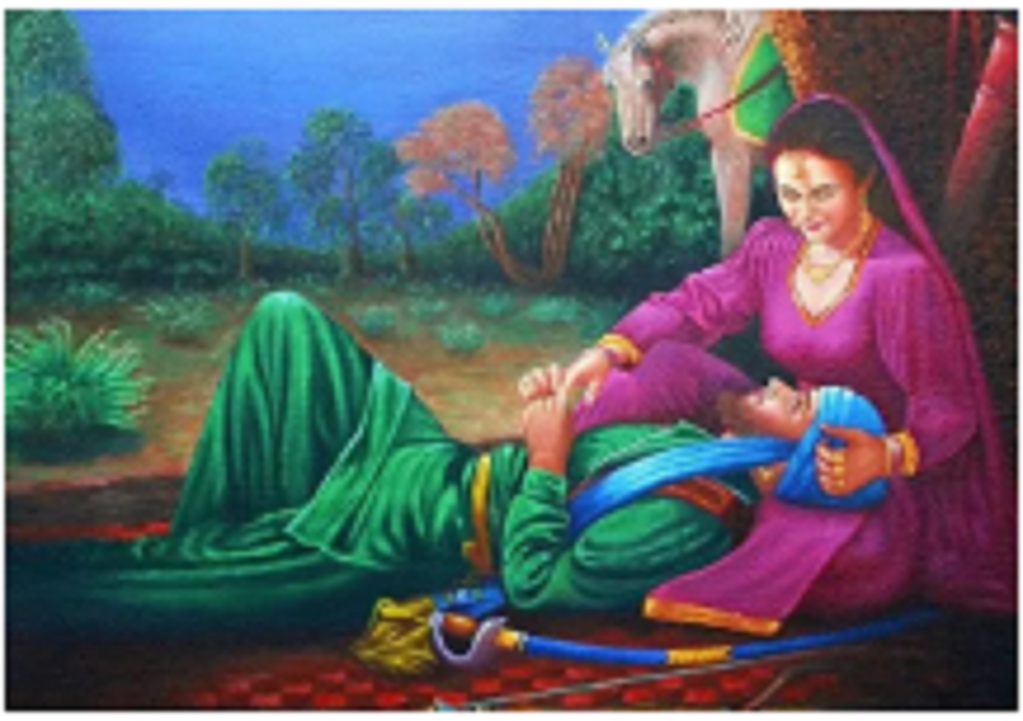
The Veracity of Legends: Investigating the Historical Authenticity of Iconic Tragic Romances from South Asia and the Middle East
This report undertakes a comprehensive examination of six prominent tragic romances from South Asia and the Middle East: Heer Ranjha, Sohni Mahiwal, Sassi Pannu, Shireen Farhad, Laila Majnun, and Mirza Sahiba. The central inquiry revolves around discerning whether these narratives are rooted in verifiable historical events or are primarily works of fiction. The investigation reveals that the question of “true story or fiction” is rarely a simple dichotomy. Instead, these legends occupy a complex spectrum of authenticity, ranging from narratives inspired by historical figures, though heavily fictionalized, to deeply embedded oral traditions that have acquired layers of perceived historicity over centuries. Furthermore, some narratives function primarily as literary or allegorical creations. This nuanced understanding is crucial for a comprehensive assessment of their enduring cultural significance.
The initial review of these narratives indicates a common pattern: while some stories may have a historical kernel, their widespread popularity and development into enduring legends often involve significant embellishment and adaptation. The presence of physical markers, such as tombs or ruins, frequently reinforces a belief in their historicity, even when detailed narrative elements lack concrete factual verification. Consequently, the “truth” of these stories often resides in their profound cultural, social, and symbolic resonance, rather than in strict empirical accuracy.
The following table provides a concise overview of the findings for each legend:
| Story Name | Primary Origin (Oral/Literary) | Earliest Documented Period | Key Figures (Historical/Fictional) | Historical Authenticity Assessment | Key Evidence/Scholarly Consensus |
| Heer Ranjha | Oral, then Literary | Late 15th Century CE | Heer (Izzat Bibi), Ranjha (Miyan Murad Bakhsh) – Folkloric figures with perceived historicity | Unverifiable Folklore with Perceived Historical Basis | Oral legend pre-17th century; Damodar Gulati (17th C) claimed eyewitness; Waris Shah (18th C) popularized; Tomb in Jhang (1471 AD plaque) reinforces cultural belief, but scholarly analysis focuses on cultural impact, not factual verification. |
| Sohni Mahiwal | Oral, then Literary | Sindhi: 10th Century CE; Punjabi: 18th Century CE | Sohni, Izzat Baig (Mahiwal) – Folkloric figures | Unverifiable Folklore with Regional Variations | Divergent Sindhi (Soomra dynasty) and Punjabi (18th C) origins; “mixture of fiction, belief and some facts”; Tomb in Shahdadpur, Sindh, serves as cultural site; scholarly focus is on cultural/Sufi interpretations. |
| Sassi Pannu | Oral, then Literary | 12th Century CE | Sassi, Punnu – Folkloric figures | Unverifiable Folklore, heavily appropriated for identity | Popularized by Shah Abdul Latif (18th C); associated with 12th-century Bhambore ruins; shrine exists; scholarly analysis highlights political/cultural instrumentalization, not factual proof. |
| Shireen Farhad | Historical figures, then Literary | 6th Century AD (Historical figures); 12th Century AD (Farhad legend) | Shirin (Armenian princess), Khosrow Parviz (Persian King) – Historical; Farhad – Fictional | Based on Historical Figures, Heavily Fictionalized | Shirin and Khosrow were real 6th-century monarchs; Farhad is a later literary/folkloric invention (Nizami Ganjavi, 12th C); Firdausi (13th C) barely mentions Farhad. |
| Laila Majnun | Oral (7th C Arabia), then Literary | 7th Century CE | Qays ibn al-Mulawwah (Majnun), Layla bint Mahdi – Semi-historical/Archetypal | Semi-Historical Archetype, Mystically Transformed | Attributed to 7th-century Arabian poet Qays; early anecdotes exist; Nizami Ganjavi (12th C) immortalized; specific dates/locations cited but narrative heavily shaped by Sufi mysticism. |
| Mirza Sahiba | Oral, then Literary | Pre-17th Century CE | Mirza, Sahiban – Folkloric figures | Unverifiable Folklore, serving as social commentary | Pilu (17th C) first recorded; set in Jhang; scholarly analysis focuses on its reflection of tribal feuds, misogyny, and patriarchal structures, not historical verification. |
II. Introduction: Folklore, History, and the Quest for Truth
Tragic romances, often referred to as Qissas in the context of South Asian and Middle Eastern literary traditions, represent a significant cultural phenomenon. These narratives are characterized by universal themes of forbidden love, formidable societal opposition, and frequently, a poignant, often fatal, conclusion for the protagonists. Their enduring popularity across diverse cultures has led to comparisons with global archetypes, such as Shakespeare’s Romeo and Juliet.1 The widespread appeal of these stories underscores their deep resonance with fundamental human experiences of passion, sacrifice, and adversity.
The relationship between oral tradition, literary adaptation, and historical fact in these narratives is complex and fluid. Typically, these tales originate as oral traditions, passed down through generations, allowing for considerable fluidity and adaptation over time. As these narratives gain prominence, they are often formalized and canonized by celebrated poets and writers. This process of literary inscription frequently blurs the lines between verifiable fact and imaginative fiction. The act of committing an oral tale to written form can imbue it with a perceived historicity, even if the original oral accounts were not strictly factual. This transformation highlights how cultural memory and narrative construction can reshape perceptions of truth.
This report undertakes a detailed investigation into the historical basis, or lack thereof, for six iconic tragic romances: Heer Ranjha, Sohni Mahiwal, Sassi Pannu, Shireen Farhad, Laila Majnun, and Mirza Sahiba. The objective extends beyond a simplistic binary of “true or false” to explore the multifaceted nature of their “authenticity” within their respective cultural and historical contexts. The analysis delves into their origins, literary evolution, claims of historicity, and the scholarly perspectives that illuminate their cultural functions and enduring relevance.
III. Case Studies: Unraveling the Legends
This section provides an in-depth analysis of each tragic romance, examining its narrative, origins, claims of historicity, scholarly interpretations, and cultural significance.
A. Heer Ranjha: The Punjabi Epic of Unfated Love
The narrative of Heer Ranjha is a classical Punjabi folk tragedy, deeply embedded in the cultural fabric of the Punjab region. The story centers on the profound love between Heer Sial, a woman of exceptional beauty from a wealthy Sial clan family, and Dheedo Ranjha, the youngest son of a chieftain from the Ranjha clan, known for his enchanting flute playing.1 Their idyllic romance is met with fierce opposition from Heer’s family, leading to forced separation and her marriage to another man. The tale culminates in their tragic, simultaneous demise by poison, a poignant end that has resonated through centuries.1
The origins of the Heer Ranjha narrative trace back to a “preexisting oral legend,” traditionally believed to date from the “Late 15th century”.1 This oral tradition formed the bedrock upon which later literary versions were built. The earliest known Punjabi rendition was composed by Damodar Gulati in the “early 17th century” (1600s), during the reign of Emperor Akbar.1 Damodar’s claim to be an “eyewitness” to the events is generally understood as a poetic trope, a common literary device used to lend authenticity to a narrative, rather than a literal assertion of factual presence. Notably, Damodar himself dated the events to “1472 CE”.1 The widespread recognition of the tale prior to Damodar’s formalization is evidenced by allusions to it in the works of his contemporaries, such as Shah Hussain (1538–1599) and Bhai Gurdas (1551–1636).1 The most celebrated and influential version, however, is the epic poem by Waris Shah, re-narrated in “1766”.1 Beyond Punjabi, the narrative also found expression in other languages; the earliest known Persian versions emerged between 1575 and 1579, and Hindi versions were narrated as early as the 1520s-50s.1
Claims of historicity for Heer Ranjha are deeply ingrained in popular belief. The story is widely “believed to be a real account story of two lovers” who lived during the “Lodhi Dynasty” in the 15th century.3 Specific names, such as Heer (Izzat Bibi) and Ranjha (Miyan Murad Bakhsh), are often associated with the characters, lending a sense of concrete historical identity.1 A physical manifestation of this belief is the “15th-century historic monument and presumed mausoleum” known as the Tomb of Heer Ranjha, located in Jhang, Punjab, Pakistan.6 A plaque at this tomb reportedly indicates “876 AH” as the year of their death, which corresponds to “1471 AD”.6
Despite these claims and the existence of a physical tomb, scholarly analysis consistently refers to Heer Ranjha as a “folk tale” or “legendary qissa”.1 Academic documents often state that they “do not offer a scholarly analysis of its historical authenticity,” focusing instead on the narrative’s cultural impact and literary evolution.3 The Waris Shah rendition of ‘Heer’ is noted for its ability to uncover the “historicity or social and cultural embedments during the 18th century Punjab,” suggesting that the poem serves as a reflection of the societal conditions and values of its time, rather than a literal historical chronicle.4 Some critics propose that Waris Shah’s own “unsuccessful love for a girl named Bhagbari” may have influenced biographical elements within his rendition, further blurring the boundaries between historical fact and authorial interpretation.4 Furthermore, the narrative has been analyzed for its “patriarchal closures” and the romanticized portrayal of Heer, which arguably “suppresses the historical i.e. the real woman who remains oppressed” under societal structures.7
The evolution of the Heer Ranjha narrative illustrates a common pattern in folklore: an oral tradition, existing for centuries, gains literary form through the works of poets like Damodar Gulati and Waris Shah. With this formalization, claims of historicity, such as specific dates and names, and the establishment of physical markers like a tomb, emerge. This suggests that the desire for a historical foundation often accompanies the popularization of a compelling narrative, even in the absence of concrete, verifiable evidence. The “truth” of Heer Ranjha, in this context, becomes less about empirical facts and more about its embeddedness in cultural belief and its association with a specific historical period and geographical setting, such as 15th-century Jhang during the Lodhi Dynasty. The identification of “real names” for the characters further contributes to this perception of historical grounding.
The continuous re-narration and adaptation of Heer Ranjha across centuries and diverse cultural expressions—including Punjabi, Persian, and Hindi literary versions, numerous films, and Sufi interpretations—underscore that its enduring significance transcends mere factual historical accuracy. The narrative functions as a versatile cultural and spiritual canvas, allowing for the exploration of profound themes such as love, societal constraints, the divine quest, and even modern feminist critiques.1 Waris Shah’s version, for instance, explicitly states that the story carries a “deeper meaning, referring to the unrelenting quest that man has towards God,” imbuing it with Sufi mystical interpretations.1 Its comparison to Shakespeare’s
Romeo and Juliet highlights its universal appeal as a tragic romance.1 The story’s adaptability is further demonstrated by its reinterpretation during British rule, where its reading presented a “dilemma for Muslims” and led to new understandings of Islamic tradition.9 This demonstrates that the enduring power of the narrative lies in its capacity to embody universal human experiences and to serve as a vehicle for diverse cultural, philosophical, and social discussions across generations, rather than its literal historical account. Its authenticity is thus cultural and emotional, rather than strictly empirical.
B. Sohni Mahiwal: The Tragic Crossing of the Chenab
The story of Sohni Mahiwal is a poignant tale of star-crossed lovers, deeply rooted in the folklore of both Punjab and Sindh. Sohni, a young potter’s daughter, falls passionately in love with Izzat Baig, a wealthy merchant from Bukhara. Izzat Baig, smitten by Sohni, foregoes his return to Bukhara and takes up the humble job of a buffalo herder, earning him the name “Mahiwal”.10 Despite Sohni’s forced marriage to another man, the lovers maintain their clandestine meetings, with Sohni swimming across the Chenab River each night aided by an earthen pot. The tragedy reaches its climax when Sohni’s jealous sister-in-law replaces her sturdy, baked pot with an unbaked one, causing Sohni to drown in the river. Overcome with grief, Mahiwal plunges into the river to save her and also perishes, reuniting them in death.10
The narrative is described as a “famous 18th century folk tale from Punjab”.10 However, it is also recognized as a “classical Punjabi–Sindhi folk tragedy,” with a distinct Sindhi version, known as Suhni Mehar, believed to have originated during the “Soomra dynasty period in the 10th century”.12 This Sindhi version is documented in the texts of Shah Abdul Karim Bulri and Shah Jo Risalo.12 The Punjabi rendition, conversely, is set in the “18th century (late Mughal period)” in Gujrat.12 The story gained widespread popularity in poetic form through the works of Punjabi poet Syed Fazal Shah (1827–1890) 10, while Shah Abdul Latif Bhittai composed the Sindhi version.12
Claims of historicity for Sohni Mahiwal suggest a blend of factual elements with fictional embellishments, described as a “mixture of fiction, belief and some facts”.10 A “Tomb of Sohni” exists in Shahdadpur, Sindh, serving as a site of pilgrimage and remembrance, where both Sohni and later Mahiwal are believed to be buried.12 The narrative also specifies clans (Samita, Nagamro, Kumhar) and original names (Suhni, Mehar/Saahar, Izzat Baig), lending a superficial air of historical specificity.12
Despite these elements, scholarly analyses generally do not offer a detailed “scholarly analysis of its historical authenticity”.10 Academic discourse primarily focuses on its status as a “folk story” 15 and its pervasive cultural impact. For instance, Anem Syed’s thesis aims to “re-packaging an Indian cultural folk story” into animation for cultural heritage preservation, rather than verifying its historicity.15 Scholarly discussions often explore the story’s Sufi interpretations, where the lovers’ devotion and tragic end symbolize the soul’s longing for union with God, and modern critiques that highlight themes of classism and misogyny embedded within the tale.14
The existence of distinct Sindhi (10th century, Soomra dynasty) and Punjabi (18th century, late Mughal period) versions of Sohni Mahiwal, each associated with different historical periods and geographical settings (Sindh and the Indus River versus Punjab and the Chenab River), signifies that while the core narrative possesses immense power, its specific historical grounding is fluid and localized. This divergence suggests that the story is not a rigid historical account but a flexible narrative framework that has traveled across regions and been re-rooted in different cultural landscapes. Each adaptation has imbued the tale with local flavor and a localized “origin” to enhance its resonance for the respective audience. This characteristic underscores how folklore can be a dynamic cultural product, absorbing and reflecting the identities of diverse communities over time, rather than a fixed historical record. The “truth” of Sohni Mahiwal, in this context, lies in its cultural utility in varied regional settings.
The continued popularity and adaptation of Sohni Mahiwal, including its profound Sufi interpretations where love is seen as a path to divine union, and its use in modern critiques of classism and misogyny, demonstrate that its “authenticity” is primarily symbolic and thematic. The tomb in Shahdadpur, while a physical marker, functions more as a site of pilgrimage and remembrance for the idea of eternal love and sacrifice, rather than concrete proof of specific historical individuals and events.12 The story’s enduring appeal, its adaptation into films, television, and popular songs, and its significant impact on Sufi thought, where suffering and separation are viewed as “necessary steps toward enlightenment and ultimate union with the divine,” all point to its allegorical power.14 This reinforces the understanding that for many folk tales, their “truth” is not empirical but existential, cultural, and spiritual, providing meaning and identity even if the specific events are not historically verifiable.
C. Sassi Pannu: The Desert’s Enduring Lament
Sassi Pannu is a renowned Sindhi, Balochi, and Punjabi tragic folktale. The narrative begins with Sassi, born to aristocratic Hindu parents in the 12th-century Sindh town of Bhambore. Astrologers predict she will be a “curse” to the family’s honor, leading her parents to abandon her in a wooden box in the River Indus. She is discovered and raised by a poor washerman.16 Sassi grows into a woman of extraordinary beauty and falls in love with Punnu, the handsome son of a Baloch tribal chief from Kech, Balochistan. Despite familial opposition, they marry. However, Punnu’s brothers, disapproving of the match, kidnap him after intoxicating him. Upon waking to find Punnu gone, a distraught Sassi embarks on a perilous, barefoot journey through the desert to find him. Exhausted and dying of thirst, she encounters a shepherd who attempts to assault her. Sassi prays for salvation, and the land splits open, swallowing her. Punnu, learning of her fate on his return journey, laments the same prayer and is also swallowed by the earth, reuniting them in death. A legendary grave is said to exist in this valley.16
The tale is consistently described as a “famous Sindhi folktale about a 12th century girl”.16 Its earliest literary mentions are found in the texts of Qazi Qadan and later in Karim Jo Risalo of Shah Abdul Karim of Bulri.18 The folklore gained widespread popularity through the 18th-century Sufi saint, Shah Abdul Latif, who frequently wove the Sassi-Punnu narrative into his evocative Sindhi poetry.16 Later, the classical Punjabi poet Hashim Shah, born in 1745, retold the story in Punjabi.16
Claims of historicity are often tied to specific geographical locations. The story is set in the “Sindh town of Bhambore,” whose ancient ruins are still visible today.16 A shrine dedicated to Sassi and Punnu is believed to exist “72 miles from Sindh’s capital, Karachi” 17, or 45 miles from Karachi 16, with the “legendary grave still exist[ing] in this valley”.18 Punnu is identified with the historical lineage of “Jam Aali or Ari, a Baloch ruler of Kech, Balochistan”.18
However, scholarly analyses of Sassi Pannu generally “do not offer information on historical authenticity, scholarly analysis, historical records, archaeological evidence, or cultural academic consensus”.16 While archaeological excavations at Miri Qalat (associated with Sassi Punnu Fort) reveal signs of ancient settlements dating back to the Indus Valley Civilization (2500-1900 BCE) and later periods, these findings primarily establish the historical
site of the legend, not the factual veracity of the specific events or characters of Sassi and Punnu themselves.20 The site is described as “closely associated with the legendary love story,” implying a cultural link rather than direct historical proof of the narrative’s details. Academic commentary predominantly focuses on the story’s profound cultural and political interpretations, such as its instrumentalization by G.M. Syed for Sindhi nationalism and its subsequent nationalization by Z.A. Bhutto.16
The extensive political appropriation of the Sassi Pannu narrative by Sindhi nationalists, such as G.M. Syed, and subsequently by Pakistani nationalists, including Z.A. Bhutto, General Zia, and Benazir Bhutto, vividly illustrates how folklore, irrespective of its historical veracity, can be instrumentalized to construct and reinforce national or regional identities.16 Syed, for instance, used Shah Abdul Latif’s weaving of Sassi-Punnu into poetry to shape the idea of Sindh as a “land of Sufis” and religious tolerance, making Sassi a symbol of the “historic spirituality, bravery and selflessness of the Sindhi people”.16 Later, Bhutto nationalized this idea, promoting Sassi as a Pakistani symbol through state television, radio, and film.16 This dynamic demonstrates that the “truth” of the story, in this context, becomes its utility in shaping collective consciousness and serving political agendas, rather than its factual accuracy.
The contrasting interpretations of Sassi, evolving from a symbol of sacrifice and spiritual romance to being cursed as a “woman of bad character” due to the rise of religious militancy, reveal that the meaning and “truth” of a folk tale are not static.10 Instead, they are continually contested and reshaped by prevailing social, religious, and political forces. This dynamic process highlights that the “truth” of a folk tale is not inherent or fixed but is a product of its reception and interpretation within a specific cultural and historical moment. The narrative serves as a battleground for competing ideologies and values, reflecting societal anxieties or shifts in moral frameworks. This demonstrates the living nature of folklore, not merely as a historical relic, but as an active participant in contemporary cultural debates.
D. Shireen Farhad: Love, Rivalry, and the Mountain’s Sacrifice
The story of Shireen Farhad is a prominent ancient romance from the Middle East and the Islamic world. The core narrative revolves around the love between the Persian prince Khosrow and the Armenian princess Shirin.21 A pivotal element of the tale involves Farhad, a skilled sculptor, who falls obsessively in love with Shirin, thereby becoming a rival to Khosrow. To rid himself of Farhad, Khosrow challenges him to carve a monumental staircase through a mountain, promising Shirin’s hand in marriage if he succeeds. Farhad undertakes this seemingly impossible task with immense dedication. The tragedy unfolds when Khosrow deceitfully sends a messenger to falsely inform Farhad of Shirin’s death, leading the heartbroken sculptor to commit suicide.21 In various versions, Shirin later marries Khosrow, and their story often culminates in her death by his side or a self-sacrificial act upon his demise.21
The story is explicitly stated to be “based on the real life of the Persian prince Khosrow and the Armenian princess Shirin, who lived in the 6th century AD”.21 Shirin was indeed a “Christian princess from Armenia” who became the “wife of the Sassanid Persian king Khosrow Parviz,” a powerful historical emperor.21 The earliest historical source mentioning Shirin is the
Ecclesiastical history of Evagrius Scholasticus, where she is referred to as “Sira” around 592/593 AD, a name likely derived from the Armenian word “Sirun” (Beauty).21 The Farhad legend, however, has “Parthian origins” and was “well known in Persian literature long before Nezami”.23 Firdausi’s monumental epic, the
Shahnamah (Book of Kings), written around 1226 AD, includes the love story of Shirin and Khosrow, but in his version, Farhad plays only a “minor part” or is not mentioned at all.22 Firdausi is believed to have drawn from lost written histories, oral traditions, and existing folk tales.22 The 12th-century Persian poet Nizami Ganjavi is credited as the “first great poet to weave the Farhad legend into the love story of Shirin and Khusrau” in his epic
Khusrau Shirin, composed in 1191. This work is considered the “first full-length treatment of the story” and significantly influenced subsequent Persian love poetry.21
The case of Shireen Farhad vividly illustrates the process of fictionalization built around historical figures. While Shirin and Khosrow were indeed real 6th-century monarchs, the romantic narrative, particularly the character of Farhad and the dramatic events involving him, is a later literary and folkloric invention, primarily formalized by Nizami in the 12th century.21 Academic analysis confirms that the story is a “blend of scarce historical facts, rich oral traditions, folk tales, and literary interpretations that evolved over centuries”.22 The absence of Farhad in Firdausi’s earlier
Shahnamah, and the explicit statement that “The character of Farhad developed in a folk story,” underscore that while historical figures existed, the romantic narrative as it is widely known, especially with the love triangle and Farhad’s tragic fate, is a literary embellishment.22 This demonstrates that compelling historical figures can become anchors for fictional narratives, where the “truth” is not about factual events but about the emotional and symbolic power of the story. The legend is “based on” real life, yet the
story itself is a profound literary creation.
The evolution of the Shireen Farhad narrative, particularly the shifting portrayal of Farhad from a minor figure to a central hero in later adaptations (such as in Turkish literature) and a symbol of struggle (as interpreted by Iqbal), highlights how literary adaptations reflect and shape cultural values.22 The story’s enduring popularity across diverse regions—including Persia, Turkey, and India—and its frequent comparison to Shakespeare’s
Romeo and Juliet underscore its universal appeal as a tragic romance.2 This sustained resonance suggests that the “truth” of Shireen Farhad lies in its adaptability to different cultural contexts and its capacity to embody various thematic concerns—from romantic love and rivalry to social commentary on labor and class. The story’s universal appeal allows it to be retold and reinterpreted, maintaining its relevance across centuries. This indicates that the enduring power of such narratives stems from their symbolic depth and their ability to resonate with evolving societal values, rather than their strict adherence to historical facts. They function as profound cultural mirrors.
E. Laila Majnun: The Archetype of Divine Madness
The story of Laila Majnun is an enduring archetype of obsessive love and spiritual longing, deeply embedded in the literary and cultural traditions of the Middle East and South Asia. The narrative centers on Qays ibn al-Mulawwah, a young man who falls intensely and obsessively in love with Layla bint Mahdi. Due to rigid social conventions and class disparities, Layla’s family vehemently opposes their union and arranges her marriage to another man. Qays, driven to profound madness by unrequited love, earns the epithet “Majnun,” meaning “madman” or “one possessed by love,” and spends his days wandering the desert, composing heart-wrenching poetry dedicated to Layla.8 The lovers are tragically never united in life, both succumbing to heartbreak and dying separately, often near each other’s graves.8
The love story is widely “believed to have originated in 7th-century Arabia”.8 It is attributed to the “7th-century Arabian poet Qays ibn al-Mulawwah” himself.26 Early anecdotes and oral reports concerning Majnun are documented in classical Arabic texts such as
Kitab al-Aghani and Ibn Qutaybah’s Al-Shi’r wa-l-Shu’ara’.28 The most famous and influential version, however, was immortalized by the 12th-century Persian poet Nizami Ganjavi in his epic poem
Laila Majnu, written in 1188 CE. This work is widely regarded as the “first literary processing of the legend,” solidifying its place in the literary canons of the Arab and Persian worlds.8 The tale subsequently found immense popularity in the folklore and culture of the Indian subcontinent through oral traditions, Sufi poetry, and regional adaptations.8
Claims of historicity present Qays ibn al-Mulawwah and Layla bint Mahdi as specific individuals from the 7th century. Layla is stated to have been born around 648 AD in Najd, and Majnun was reportedly found dead in 688 AD near Layla’s grave.28 The modern town of “Layla,” the capital of Al-Aflaj province in Saudi Arabia, is said to be named after her and was visited by the Persian poet Nasir Khusraw (1009–1106 CE), who described it accurately.28 Despite these specific historical details, Nizami’s heroes are often described as “semi-imaginary-semi-historical characters”.29
Scholarly analysis confirms that while specific historical details are cited, the narrative is largely considered to have “anecdotal origins”.28 Nizami’s portrayal of the lovers was informed by “both secular and mystical sources”.28 Crucially, “Mystics contrived many stories about Majnun to illustrate technical mystical concepts such as fanaa (annihilation), divānagi (love-madness), self-sacrifice, etc.”.28 This indicates a deliberate shaping of the narrative for profound spiritual purposes. The provided academic summaries explicitly state that they “do not provide a detailed scholarly analysis of the historical authenticity”.26
The description of Laila and Majnun as “semi-imaginary-semi-historical characters” 29, alongside the citation of specific dates and locations (7th century Arabia, Layla’s town, Majnun’s death date), suggests a foundation in anecdotal history rather than fully verifiable historical accounts. The presence of such historical-sounding details, coupled with the “semi-historical” designation, implies a degree of historical inspiration but not strict factual reporting. The earliest accounts being in “anecdotal forms” further supports this understanding.28 This pattern points to a common trajectory for legendary figures: a kernel of historical truth, perhaps real people and events, becomes amplified and reshaped by oral tradition and literary imagination. The “truth” in this context is found in the
existence of such figures and their association with a powerful love, rather than the precise details of their lives. This indicates that the historical authenticity of such figures is often secondary to their cultural and symbolic utility, allowing the narrative to become a vehicle for exploring universal themes, even if the specific characters are composites of fact and legend.
The profound influence of Laila Majnun on Sufi mysticism, where Majnun’s madness is interpreted as divine love and his devotion to Layla represents the soul’s longing for union with God, demonstrates how a tragic romance can transcend its literal narrative to become a powerful spiritual allegory.8 This transformation highlights that the “truth” of the story lies in its capacity to convey profound philosophical and religious concepts, making it “true” in a spiritual rather than empirical sense. The evolution of the narrative from anecdotal reports to a Sufi masterpiece signifies a deliberate reinterpretation. The “madness” of Majnun, which might be literally perceived as a mental affliction, is reframed as a heightened state of spiritual devotion. This transformation reveals a deep cultural process where narratives are imbued with deeper symbolic meaning, making them “true” not as historical events, but as profound expressions of human spiritual experience.
F. Mirza Sahiba: A Tale of Betrayal and Consequence
Mirza Sahiba is a classical Punjabi folk tragedy, widely celebrated in the region. The core narrative features Mirza, the son of a Kharal Jatt chief from Danabad, and Sahiban, the beautiful daughter of a Sial Jatt chief from Khewa, Jhang District.32 Their love leads them to elope against their parents’ wishes. During their flight, Mirza pauses under a jand tree to rest and falls asleep. Sahiban, fearing the inevitable bloodshed that would ensue if Mirza confronted her pursuing brothers, makes the fateful decision to break his arrows. When her brothers arrive, they find Mirza defenseless and kill him. Overwhelmed by grief and the consequence of her actions, Sahiban takes her own life by stabbing herself with an arrow.32
The folk tale’s origins are traditionally dated to “pre-17th century”.32 It was first formally “recorded in literary form by the 17th-century poet Pilu,” who lived during the “16th century in Punjab”.32 Mirza Sahiba is recognized as one of the “four popular tragic romances of the Punjab,” alongside Heer Ranjha, Sohni Mahiwal, and Sassi Punnu.1
Claims of historicity are primarily tied to geographical settings and tribal affiliations. The story is set in “Khewa, a town in the Jhang District,” which was Sahiban’s ancestral village, while Mirza hailed from “Danabad”.32 The mention of specific clans, such as Kharal Jatt and Sial Jatt, suggests a grounding in historical tribal structures and rivalries prevalent in the region.32 A “fresco illustrating Mirza being killed by Sahiban’s brothers,” dating from 1971 and located at Palkiana Sahib near Tarn Taran, serves as visual cultural evidence of the story’s deep integration into regional consciousness.32
However, the provided academic sources explicitly state that they “do not provide detailed information on the historical authenticity, scholarly analysis, specific historical records, archaeological evidence, or cultural academic consensus” for Mirza Sahiba.32 Scholarly and poetic interpretations instead focus on the narrative’s profound cultural impact and its reflection of societal dynamics. For instance, scholars like Sohail Abid discuss the story’s impact on “tribal feuds” and its perceived link to “extensive female infanticide,” indicating its reflection of real societal issues rather than its factual events.33 Literary analyses often critique its “misogynist” aspects, as articulated by poet Amarjit Chandan, and offer feminist reinterpretations, such as Paul Kaur’s re-evaluation of Sahiban’s agency, focusing on the story’s themes and its societal reflection.33 Social-historian Ishwar Gaur considers folklore a “vital source for history,” suggesting its value lies in revealing social structures and philosophical thought of a given era.33
The scholarly and poetic interpretations of Mirza Sahiba, particularly the discussions by Sohail Abid on tribal feuds and female infanticide, Amarjit Chandan on misogyny, and Paul Kaur’s feminist re-evaluation, reveal that regardless of its historical veracity, the narrative functions as a powerful lens through which to examine and critique societal norms, patriarchal structures, and their consequences in Punjab.33 The “truth” of the story, in this context, lies in its ability to reflect and comment on real social issues. The fact that scholars and poets utilize this narrative to discuss tangible societal problems implies a perceived “truth” in its embodiment of human behavior and societal structures. This indicates that the narrative’s enduring power stems from its capacity to serve as a cultural mirror, where the tragic outcome and the characters’ actions are seen as illustrating real social dynamics and their often-devastating consequences. This highlights that folklore’s “authenticity” can be found in its sociological relevance, providing insights into historical social conditions and ongoing cultural debates, even if the specific events are not factually verifiable.
The persistent blaming of Sahiban for the tragedy (“Sahiban is blamed for being partial to her brothers,” 33) despite modern re-evaluations, such as Paul Kaur’s argument that Mirza is the “architect” of their death, demonstrates the deep entrenchment of patriarchal narratives within cultural memory and the ongoing struggle to reframe them.33 This clear contradiction in interpretation, showing a shift from traditional blame to modern feminist critique, illustrates that the “truth” of a folk tale is not fixed but is a site of continuous re-negotiation. The persistence of the “blame Sahiban” narrative, even as contemporary scholars strive to “set her free,” exemplifies the deep-rooted nature of patriarchal interpretations in folklore. The story acts as a cultural template for understanding gender roles and consequences, and its reinterpretation reflects societal progress or resistance to it. This showcases how folklore is a dynamic cultural text, constantly being read and re-read through contemporary lenses. Its “authenticity” is tied to its enduring power to provoke discussion and reflect changing societal norms, even if the original events are unverified.
IV. Comparative Analysis and Conclusion
Common Patterns in the Historicity of These Legends
A comparative analysis of these six tragic romances reveals several recurring patterns regarding their historicity and cultural function:
- Oral Origins as Foundation: A significant commonality is that most of these narratives—Heer Ranjha, Sohni Mahiwal, Sassi Pannu, Mirza Sahiba, and Laila Majnun—originated as pre-existing oral legends.1 They evolved over centuries through oral tradition before being formally documented. This inherent fluidity of oral transmission allows for constant adaptation and embellishment, making precise historical verification of specific events or dialogues exceptionally challenging.
- Literary Formalization and Canonization: The act of being committed to writing by celebrated poets marks a crucial stage in the life of these legends. Figures like Damodar Gulati, Waris Shah, Syed Fazal Shah, Shah Abdul Latif, Pilu, and Nizami Ganjavi elevated these tales from local folklore to literary masterpieces, often solidifying a particular version as canonical.1 This formalization process frequently introduced or reinforced elements of perceived historicity, such as specific dates, names, locations, or the establishment of associated tombs.
- Blend of Fact and Fiction: The “truth” of these stories is rarely a simple binary of entirely factual or entirely fictional.
- Shireen Farhad stands out as being based on historical figures (Shirin and Khosrow, 6th-century monarchs).21 However, the romantic narrative, particularly the dramatic subplots involving Farhad, is largely a
literary construct and folkloric invention that developed later.21 This illustrates how historical personages can serve as anchors for fictional narratives. - Heer Ranjha, Sohni Mahiwal, Sassi Pannu, and Mirza Sahiba are deeply embedded folklores with associated historical periods and locations, often accompanied by physical markers like tombs or ruins.6 Yet, concrete historical or archaeological evidence for the specific events or individuals as depicted in the narratives is frequently lacking or subject to scholarly debate. Academic analysis tends to focus more on their cultural and sociological impact rather than empirical verification.3
- Laila Majnun occupies a “semi-historical” space 29, likely inspired by real individuals from 7th-century Arabia but profoundly transmuted through anecdotal and mystical interpretations, evolving into a powerful archetype.28
- Cultural Appropriation and Reinterpretation: A defining characteristic of these narratives is their continuous reinterpretation across different cultures, languages, and historical periods to serve diverse purposes:
- Sufi Mysticism: Laila Majnun and Heer Ranjha, in particular, have been reinterpreted as allegories for the soul’s quest for divine union, where the lovers’ suffering becomes a path to spiritual enlightenment.1
- Nationalism and Identity: Sassi Pannu was instrumentalized by both Sindhi and later Pakistani nationalists to construct and reinforce regional and national identities, highlighting themes of sacrifice and selflessness.16
- Social Commentary: Mirza Sahiba and Sohni Mahiwal are frequently used to critique patriarchal norms, classism, and broader societal injustices, reflecting contemporary social concerns.14
- Universal Themes: The enduring popularity of these stories often stems from their capacity to embody universal human experiences of love, loss, sacrifice, and rebellion, making them relatable across time and space.1
The Role of Folklore in Preserving Cultural Identity Versus Factual Historical Accuracy
These narratives function less as precise historical documents and more as vital cultural touchstones. They serve to transmit values, moral lessons, and collective memory across generations. Their “truth” is often symbolic, emotional, or allegorical, rather than empirically verifiable. The continuous adaptation and reinterpretation of these tales demonstrate their living nature, reflecting and responding to changing societal concerns and beliefs. This adaptability allows them to remain relevant and meaningful to successive generations, even as the historical context shifts. The cultural authenticity of these stories lies in their ability to resonate deeply within a community, providing a shared heritage and a framework for understanding human experience, irrespective of the factual accuracy of their specific events.
The comparative analysis reveals that the “truth” of these legends is not static but dynamic, shifting from historical inspiration to symbolic meaning, and from fixed narrative to adaptable social commentary. This fluidity is a defining characteristic of enduring folklore, allowing it to remain relevant and “true” across generations and changing societal contexts. The observations from each case study—the blend of oral tradition, literary adaptation, claims of historicity, and diverse cultural interpretations—collectively indicate that if “truth” were solely historical accuracy, these stories would either fade into obscurity or be rigidly preserved. Instead, they are continuously retold and reinterpreted, demonstrating their capacity to hold multiple meanings, reflect evolving societal values, and serve various cultural functions. This leads to the understanding that folklore’s authenticity is often measured by its cultural impact and symbolic depth, rather than strict empirical verification. The stories are “true” because they continue to resonate and provide meaning to the cultures that cherish them.
The following table illustrates the literary evolution and key authors/adaptations for each story, further highlighting their dynamic nature as cultural artifacts:
| Story Name | Earliest Known Version/Author | Most Famous Version/Author | Notable Adaptations (e.g., films, other poets, Sufi interpretations) |
| Heer Ranjha | Oral legend (Late 15th C); Damodar Gulati (Punjabi, early 17th C) | Waris Shah (Punjabi, 1766) | Persian versions (Hayat Jan Baqi Kolabi, 1575-79); Hindi versions (Hari Das Haria, 1520s-50s); Numerous Pakistani & Indian films; Sufi mystical interpretations. |
| Sohni Mahiwal | Sindhi: Shah Abdul Karim Bulri (10th C); Punjabi: Oral (18th C) | Syed Fazal Shah (Punjabi, 19th C); Shah Abdul Latif Bhittai (Sindhi) | Part of “Seven Queens of Sindh”; Pakistani pop culture (films, TV, Coke Studio); Sufi interpretations; modern critiques of classism/misogyny. |
| Sassi Pannu | Qazi Qadan (early mention); Oral (12th C) | Shah Abdul Latif (Sindhi, 18th C); Hashim Shah (Punjabi, 18th C) | Part of “Seven Queens of Sindh”; Instrumentalized for Sindhi & Pakistani nationalism; Dramatized on TV/radio, films; Subject to shifting interpretations (e.g., religious militancy). |
| Shireen Farhad | Historical figures (6th C); Firdausi’s Shahnamah (13th C, minor Farhad) | Nizami Ganjavi (Persian, 1191) | Numerous Persian, Turkish, Indic literary imitations; Punjabi Qisse, Bengali Kissa; Films; Farhad as symbol of struggle (Iqbal); Compared to Romeo and Juliet. |
| Laila Majnun | Oral (7th C Arabia, attributed to Qays ibn al-Mulawwah); Early anecdotes (Kitab al-Aghani) | Nizami Ganjavi (Persian, 1188) | Amir Khusrow, Maktabi Shirazi; Films, plays, songs in Urdu, Hindi, Punjabi, Persian; Profound Sufi mystical allegory (divine love, soul’s quest for God); Compared to Romeo and Juliet. |
| Mirza Sahiba | Oral (pre-17th C) | Pilu (Punjabi, 17th C) | Numerous films (silent, Hindi, Punjabi, modern retellings); Used for social commentary on tribal feuds, female infanticide, misogyny, patriarchal structures; Feminist reinterpretations. |
Final Assessment: A Nuanced Conclusion
In conclusion, the question of whether Heer Ranjha, Sohni Mahiwal, Sassi Pannu, Shireen Farhad, Laila Majnun, and Mirza Sahiba are “true stories or only fiction” cannot be answered with a simple binary. These narratives exist on a complex continuum, blending elements of historical inspiration, deeply ingrained folklore, and literary invention.
- Shireen Farhad is the closest to having a historical basis for its central figures, Shirin and Khosrow, who were real 6th-century monarchs. However, the dramatic romantic narrative, particularly the character of Farhad and his tragic subplot, is largely a later literary and folkloric creation.
- Heer Ranjha, Sohni Mahiwal, Sassi Pannu, and Mirza Sahiba are profoundly ingrained folk legends. While they are often associated with specific historical periods, geographical locations, and even physical markers like tombs or ruins, detailed historical or archaeological evidence to corroborate the specific events or individuals as depicted in the narratives is generally lacking or debated. These stories primarily serve as cultural mirrors, reflecting and commenting on societal norms, values, and human experiences rather than functioning as literal historical records.
- Laila Majnun stands as a powerful archetype, likely inspired by real individuals from 7th-century Arabia, but profoundly shaped and transformed by anecdotal accounts and, most significantly, by mystical and literary interpretations. It has evolved into a potent symbol of divine love and the soul’s spiritual quest.
The enduring power and “truth” of these legends lie not in their empirical verifiability, but in their profound cultural, social, and spiritual resonance. They are “true” in the sense that they mean something profound to the cultures that cherish them. Their capacity to reflect universal human experiences of love, loss, sacrifice, and rebellion, coupled with their adaptability to new interpretations across centuries, ensures their continued relevance and vitality in the collective consciousness. They serve as a testament to the human need for narrative, offering moral guidance, cultural identity, and spiritual reflection, transcending the boundaries between fact and imagination.
V. References
1
3
Works cited
- Heer Ranjha – Wikipedia, accessed July 7, 2025, https://en.wikipedia.org/wiki/Heer_Ranjha
- THEMATIC AFFINITIES OF “KHOSROW AND SHIRIN” AND “ROMEO AND JULIET”, accessed July 7, 2025, https://rrlinguistics.ru/en/journal/article/1172/
- Heer-Ranjha: A Folk Tale from Pakistan Translated by … – CORE, accessed July 7, 2025, https://core.ac.uk/download/pdf/291839138.pdf
- Discursive Exploration of Historicity of Ancient Punjab in Heer by …, accessed July 7, 2025, https://gssrjournal.com/jadmin/Auther/31rvIolA2LALJouq9hkR/3oekRB3rYn.pdf
- Heer-Ranjha – MAP Academy, accessed July 7, 2025, https://mapacademy.io/glossary/heer-ranjha/
- Tomb of Heer Ranjha – Wikipedia, accessed July 7, 2025, https://en.wikipedia.org/wiki/Tomb_of_Heer_Ranjha
- MEDIEVAL PATRIARCHAL MINDSET IN WARIS SHAH’S HEER EPIC – rjelal, accessed July 7, 2025, http://www.rjelal.com/8.1.20/99-104%20SUKHDEV%20SINGH%20DHANJU.pdf
- Laila and Majnu: Love story | by Zain Ul Abdeen – Medium, accessed July 7, 2025, https://medium.com/@zain_ul_abdeen/laila-and-majnu-love-story-48599b088dde
- Modernity, R e – I s l a m i z a t i o n and Waris Shah’s H e e r – Scholarly Publications Leiden University, accessed July 7, 2025, https://scholarlypublications.universiteitleiden.nl/access/item%3A2723812/view
- Sohni Mahiwal | PDF | Pakistani Folklore | Punjab – Scribd, accessed July 7, 2025, https://fr.scribd.com/document/629303972/Sohni-Mahiwal
- Sohni Mahiwal – Folkloristan, accessed July 7, 2025, https://www.folkloristan.com/post/sohni-mahiwal
- Sohni Mahiwal – Wikipedia, accessed July 7, 2025, https://en.wikipedia.org/wiki/Sohni_Mahiwal
- Sohni Mahiwal | PDF | Pakistani Folklore | Pakistan – Scribd, accessed July 7, 2025, https://www.scribd.com/doc/49935387/Sohni-Mahiwal
- Critical Essay – Sohni Mahiwal | PDF | Religion And Belief | Poetry – Scribd, accessed July 7, 2025, https://www.scribd.com/document/484892913/Critical-Essay-Sohni-Mahiwal
- “SOHNI MAHIWAL Preserving South Asian Cultural Heritage …, accessed July 7, 2025, https://repository.rit.edu/theses/9625/
- SMOKERS’ CORNER: THE EVOLUTION OF SASSI – Newspaper …, accessed July 7, 2025, https://www.dawn.com/news/1437295
- The State, Sassi And Mian Mithu – NayaDaur, accessed July 7, 2025, https://nayadaur.tv/09-Oct-2019/the-state-sassi-and-mian-mithu
- Sassui Punnhun – Wikipedia, accessed July 7, 2025, https://en.wikipedia.org/wiki/Sassui_Punnhun
- Historical Love Stories – Sassi Punnu | PDF | Pakistani Folklore | Sindh – Scribd, accessed July 7, 2025, https://www.scribd.com/document/225426552/Historical-Love-Stories-Sassi-Punnu
- Sassi Punnu Fort – Wikipedia, accessed July 7, 2025, https://en.wikipedia.org/wiki/Sassi_Punnu_Fort
- Before Romeo and Juliet there was Khosrow and Shirin – PeopleOfAr, accessed July 7, 2025, https://www.peopleofar.com/2015/11/08/before-romeo-and-juliet-there-was-khosrow-and-shirin/
- Shirin Farhad – Pakistan Space, accessed July 7, 2025, https://pakistanspace.tripod.com/khurram/shirinfarhad.htm
- Farhad (Persian literature) – Wikipedia, accessed July 7, 2025, https://en.wikipedia.org/wiki/Farhad_(Persian_literature)
- Khosrow and Shirin – Wikipedia, accessed July 7, 2025, https://en.wikipedia.org/wiki/Khosrow_and_Shirin
- Husrev u Shirin-Farhad u Shirin Masnavis and Ferhad as the Primary Hero in Turkish Literature – ResearchGate, accessed July 7, 2025, https://www.researchgate.net/publication/357138934_Husrev_u_Shirin-Farhad_u_Shirin_Masnavis_and_Ferhad_as_the_Primary_Hero_in_Turkish_Literature
- Layla and Majnun: an epic love story – art by fari, accessed July 7, 2025, https://artbyfari.com/2025/01/16/layla-and-majnun/
- The Story of Layla and Majnun: The Idealization of Love – UMS – University Musical Society, accessed July 7, 2025, https://ums.org/2016/09/23/the-story-of-layla-and-majnun-the-idealization-of-love/
- Layla and Majnun – Wikipedia, accessed July 7, 2025, https://en.wikipedia.org/wiki/Layla_and_Majnun
- Layla and Majnun (Nizami Ganjavi poem) – Wikipedia, accessed July 7, 2025, https://en.wikipedia.org/wiki/Layla_and_Majnun_(Nizami_Ganjavi_poem)
- Ja’far Baisunghuri | “Laila and Majnun at School”, Folio from a Khamsa (Quintet) of Nizami of Ganja | The Metropolitan Museum of Art, accessed July 7, 2025, https://www.metmuseum.org/art/collection/search/455041
- medium.com, accessed July 7, 2025, https://medium.com/@zain_ul_abdeen/laila-and-majnun-love-story-48599b088dde
- Mirza Sahiban – Wikipedia, accessed July 7, 2025, https://en.wikipedia.org/wiki/Mirza_Sahiban
- Mirza Sahiban – Khudabadi Sonara Community Group, accessed July 7, 2025, https://khudabadisonara.in/mirza-sahiban/
- Tales from the Khamseh of Nizami, accessed July 7, 2025, https://franpritchett.com/00ghalib/texts/txt_chelkowski_1975_nizami.pdf
Mirza Sahiban (1947) | Dustedoff, accessed July 7, 2025, https://madhulikaliddle.com/2013/03/30/mirza-sahiban-1947/

By Amjad Izhar
Contact: amjad.izhar@gmail.com
https://amjadizhar.blog
Affiliate Disclosure: This blog may contain affiliate links, which means I may earn a small commission if you click on the link and make a purchase. This comes at no additional cost to you. I only recommend products or services that I believe will add value to my readers. Your support helps keep this blog running and allows me to continue providing you with quality content. Thank you for your support!
