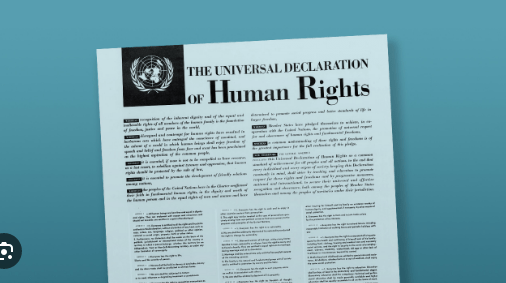
Category: Mending Ways

  • Universal Human Rights Declaration – Study Notes

    Universal Human Rights Declaration – Study Notes

    The text is an essay celebrating the Universal Declaration of Human Rights’ adoption on December 10th, 1948. It details the document’s historical context, tracing its roots from ancient Greece to modern influences like the Magna Carta and the American Constitution. The author emphasizes the declaration’s importance as a cornerstone of human progress and global peace, urging its implementation and widespread education. The essay also critiques the author’s nation’s laws, arguing they insufficiently align with the declaration’s principles and suggesting this contributes to social unrest and emigration. Finally, it calls for greater adherence to the declaration’s ideals to foster a more just and equitable society.

    FAQ: Universal Human Rights Charter

    1. What is the Universal Human Rights Charter?

    The Universal Human Rights Charter, also known as the Universal Declaration of Human Rights, is a groundbreaking document adopted by the United Nations General Assembly on December 10, 1948. It outlines fundamental human rights that are universally applicable to all individuals, regardless of their background, beliefs, or circumstances.

    2. What is the historical context behind the creation of the Universal Human Rights Charter?

    The Charter was drafted in the aftermath of World War II, a time marked by unprecedented human suffering and atrocities. The global community recognized the urgent need to establish a common standard of human rights to prevent future tragedies and promote peace and justice.

    3. What are some key principles enshrined in the Universal Human Rights Charter?

    The Charter proclaims that all human beings are born free and equal in dignity and rights. It emphasizes fundamental rights such as the right to life, liberty, and security of person; freedom from slavery and torture; freedom of thought, expression, and religion; the right to education and work; and the right to participate in government.

    4. How does the Universal Human Rights Charter relate to national laws and constitutions?

    While the Charter itself is not a legally binding treaty, it has served as a foundation for numerous international human rights treaties and has influenced the development of national constitutions and legal frameworks worldwide. It sets a universal standard that countries are encouraged to uphold and incorporate into their domestic laws.

    5. What role does the media and society play in promoting the principles of the Universal Human Rights Charter?

    Open discussion and awareness are crucial for the realization of human rights. The media and civil society play a vital role in educating the public about the Charter, monitoring human rights violations, advocating for policy changes, and promoting a culture of respect for human dignity.

    6. How does the author view the compatibility of the Universal Human Rights Charter with religious or cultural beliefs?

    The author argues that while respecting diverse cultural and religious traditions is important, the principles of human rights should be universally upheld. When cultural practices or interpretations conflict with fundamental human rights, the latter should take precedence.

    7. What challenges exist in implementing the Universal Human Rights Charter globally?

    Despite its widespread recognition, the full implementation of the Charter faces various challenges, including political instability, armed conflicts, poverty, discrimination, and lack of access to education and justice.

    8. What is the significance of the Universal Human Rights Charter in the 21st century?

    The Charter remains as relevant today as it was in 1948. In an increasingly interconnected world facing complex challenges, the principles of human rights serve as a moral compass and a framework for building a just and equitable society for all.

    The Universal Declaration of Human Rights: A Study Guide

    Glossary of Key Terms:

    • Universal Declaration of Human Rights (UDHR): A foundational document adopted by the United Nations General Assembly in 1948, outlining fundamental human rights that are universally applicable to all individuals.
    • Magna Carta: A charter of rights agreed to by King John of England in 1215, considered a foundational document in the development of human rights.
    • Habeas Corpus: A legal principle that protects individuals from arbitrary detention by requiring authorities to present a valid reason for imprisonment before a court.
    • Geneva Conventions: A series of treaties that establish international standards for humanitarian treatment during war, protecting the rights of non-combatants, prisoners of war, and wounded soldiers.
    • Secular: Relating to worldly matters, not religious or spiritual.
    • Liberal: A political and philosophical ideology that emphasizes individual rights, freedoms, and the rule of law.

    Short Answer Quiz:

    1. Briefly describe the process of drafting and adopting the Universal Declaration of Human Rights.
    2. What is the significance of the date December 10th in the context of the UDHR and the Nobel Prize?
    3. According to the article, what historical events and documents influenced the development of the UDHR?
    4. How does the author relate the UDHR to “human culture and civilization”?
    5. What is the author’s perspective on the role of the media in promoting awareness and discussion of human rights?
    6. The author highlights certain aspects of the UDHR that “clash with our customs, society and our constitution.” What are some of these aspects?
    7. How does the author compare the implementation of human rights in Pakistan with India?
    8. What is the author’s argument for aligning Pakistani law with the UDHR rather than prioritizing a particular religious belief?
    9. What are the potential consequences, according to the author, if Pakistan fails to uphold the principles of the UDHR?
    10. What is the significance of the author’s observation that educated youth choose to migrate to Western countries rather than “pure Islamic countries”?

    Answer Key:

    1. The UDHR was drafted by an eight-member committee representing major world powers, with Eleanor Roosevelt as the chairperson. The first draft was presented in Geneva in September 1948 and the final declaration was adopted in Paris on December 10th, 1948.
    2. December 10th is celebrated as Universal Human Rights Day, marking the adoption of the UDHR. It is also the day on which the Nobel Prizes are announced, highlighting the connection between human rights and achievements in various fields.
    3. The article mentions influences such as the philosophy of ancient Greek and Roman civilizations, the Magna Carta of 1215, the principle of Habeas Corpus, the French Revolution, the American Constitution, and the abolition of slavery by Abraham Lincoln.
    4. The author views the UDHR as a manifestation of human progress, dignity, and the advancement of culture and civilization. It represents a step toward achieving a more just and equitable world.
    5. The author criticizes the lack of open discussion about human rights in Pakistani media and society. They believe the media should play a role in raising awareness and facilitating dialogue on these critical issues.
    6. The article suggests that certain aspects of the UDHR, such as the emphasis on equality and non-discrimination based on religion or belief, clash with existing customs, societal norms, and potentially even the Pakistani constitution.
    7. The author contrasts Pakistan’s approach to human rights with India’s, arguing that India incorporated the principles of the UDHR into its constitution, while Pakistan has prioritized certain religious beliefs over universal human rights.
    8. The author argues that aligning Pakistani law with the UDHR would ensure a more just and equitable society for all citizens, regardless of their religious beliefs. This would also prevent the potential for discrimination and marginalization of minority groups.
    9. The author warns that failing to uphold the UDHR principles could lead to further societal unrest, a decline in human well-being, and a continued desire among young people to emigrate from Pakistan seeking better opportunities and freedoms elsewhere.
    10. The author’s observation highlights a perceived discrepancy between the ideals of “pure Islamic countries” and the values of freedom and opportunity sought by educated youth, implying a critique of the social and political conditions in those countries.

    Essay Questions:

    1. Analyze the author’s argument that prioritizing religious beliefs over the principles of the Universal Declaration of Human Rights is detrimental to Pakistani society. What evidence does the author provide to support this claim?
    2. How does the author connect the history of human rights, from ancient Greece to the present day, to the significance of the Universal Declaration of Human Rights?
    3. To what extent do you agree with the author’s critique of the Pakistani media’s role in promoting awareness and discussion of human rights? How could the media play a more effective role in this regard?
    4. The author suggests that certain aspects of the UDHR “clash with our customs, society and our constitution.” Explore the potential tensions and challenges that arise when universal human rights principles intersect with specific cultural and societal contexts.
    5. Considering the author’s concluding point about the emigration of educated youth, what responsibility do governments have in ensuring that the ideals enshrined in the Universal Declaration of Human Rights are realized for all citizens?

    Table of Contents: The Universal Declaration of Human Rights and its Impact

    Source: Excerpts from “Pasted Text” by Fiza Rohan

    I. Introduction: The Genesis and Significance of the Universal Declaration of Human Rights

    • This section introduces the Universal Declaration of Human Rights, its historical context (post-WWII and the formation of the UN), and its approval in 1948.
    • Rohan emphasizes the Declaration as a monumental achievement for humanity, laying the foundation for progress, dignity, and human pride.

    II. Historical and Philosophical Roots of the Declaration

    • This section traces the philosophical and historical underpinnings of the Declaration, linking it to ancient Greek philosophy, Roman civilization, and key milestones in Western legal history.
    • Rohan highlights the Magna Carta, the principle of Habeas Corpus, the French Revolution, the American Constitution, and the contributions of figures like Thomas Jefferson and Abraham Lincoln in shaping the principles of human rights.

    III. The Declaration as a Sacred Document for Humanity

    • This section positions the Universal Declaration of Human Rights as a sacred document for a modern, secular world striving for peace, love, and progress.
    • Rohan argues that its implementation and dissemination are crucial duties for all UN member states and their citizens.

    IV. A Call to Action: Embracing and Implementing the Declaration’s Principles

    – This section urges readers to study the Declaration in depth, assess its relevance in the 21st century, and confront the challenges to its implementation.

    – Rohan points to the disparity between the Declaration’s ideals and the reality of human rights violations, calling for action against forces that threaten human dignity.

    V. The Declaration’s Impact on National Laws and Constitutions

    – This section examines the Declaration’s influence on national legal frameworks, specifically referencing its integration into the Indian Constitution.

    – Rohan contrasts India’s approach with that of her own nation, criticizing the prioritization of religious beliefs over universal human rights principles.

    VI. A Plea for Reform and Alignment with the Declaration

    – This section advocates for legal and societal reforms that prioritize the principles enshrined in the Universal Declaration of Human Rights.

    – Rohan expresses concern about the desire of young people to leave their country due to the lack of respect for human rights, urging for a shift toward a society that embraces the values of the Declaration.

    Briefing Document: Universal Human Rights Charter – A Call for Reflection

    This briefing document analyzes an excerpt from an article titled “In the name of humans” by Fiza Rohan, published in Daily Jang on December 10th (likely commemorating Human Rights Day). The article provides a passionate plea for Pakistan to critically examine its societal practices in light of the Universal Declaration of Human Rights (UDHR).

    Key Themes & Ideas:

    • Historical Significance of the UDHR: Rohan emphasizes the historical weight of the UDHR, calling it “the greatest achievement of humankind till date.” She traces its philosophical roots to ancient Greece and Roman civilizations, highlighting milestones like the Magna Carta, Habeas Corpus, and the American and French Revolutions. This contextualization underscores the UDHR as a culmination of centuries of struggle for human rights.
    • Universality vs. Cultural Context: The author acknowledges potential conflicts between the UDHR’s principles and “our customs, society and our constitution.” She uses India as a positive example, praising their constitutional alignment with the UDHR despite potential clashes with traditional beliefs. This comparison implicitly critiques Pakistan’s legislative approach which, she argues, prioritizes religious considerations over universal human rights.
    • Call for Societal Introspection and Reform: Rohan urges Pakistan to engage in open dialogue about the UDHR and its implications. She criticizes the lack of media coverage and societal discussion, stating: “Why is this world not allowed in the media and our society so that we can discuss all these issues openly?” This highlights the need for a national conversation to bridge the gap between international commitments and domestic realities.
    • Consequences of Ignoring the UDHR: The author warns of dire consequences if Pakistan continues to disregard the UDHR. She points to the younger generation’s desire to emigrate to Western countries, implying that this exodus is driven by a yearning for societies that better uphold human rights. This paints a bleak picture of Pakistan’s future if it fails to address its human rights shortcomings.

    Important Facts & Quotes:

    • Adoption and Content: “The Universal Human Rights Charter or Declaration was approved in Paris on 10 December 1948. … This charter of human rights consisting of 30 articles is a step towards progress and a manifestation of human culture and civilization.”
    • Core Principle: “In the first paragraph of the Universal Charter itself it has been said that all human beings are born equal and free with rights and dignity.”
    • Criticism of Pakistani Law: “Why did our lawmakers not respect this rule? Why did they consider it necessary to write that here no law can be made for or against a particular belief, although it should have been written that here no law can be made…against the UN Universal Human Rights Charter.”
    • Impact on Youth: “Most of our young generation wants to leave this country and run away to Europe and America. No educated youth wants to go to the pure Islamic countries of Arabistan, Afghanistan or Iran.”

    Conclusion:

    Fiza Rohan’s article serves as a powerful call for Pakistan to critically assess its commitment to the UDHR. She argues that aligning national laws and societal practices with this document is crucial for progress, societal harmony, and the well-being of future generations. The article’s publication on Human Rights Day further underscores the urgency of this message.

    Human Rights: A Discussion Based on the Provided Source

    The provided source asserts that the Universal Declaration of Human Rights (UDHR) stands as a landmark achievement, symbolizing the pursuit of progress, dignity, and human pride. This document, comprising 30 articles, was adopted on December 10, 1948, marking a significant step towards a world where fundamental human rights are recognized and upheld.

    The source highlights the historical and philosophical foundations of the UDHR, tracing its roots back to:

    • Ancient Greek philosophy.
    • Roman civilization.
    • The Magna Carta of 1215.
    • The principle of Habeas Corpus (1188).
    • The Bill of Rights (1679).
    • The French Revolution.
    • Contributions of American figures like Thomas Jefferson and Abraham Lincoln, who championed the abolition of slavery.

    The UDHR was influenced by the American Constitution, and its principles are further refined by documents such as the Geneva Conventions. The source emphasizes the importance of upholding the UDHR as a means of achieving world peace, fostering human love, and establishing a global society based on brotherhood.

    It calls upon all UN member states and their leaders to:

    • Promote and implement the ideals enshrined in the UDHR.
    • Combat forces of oppression, terrorism, and bigotry that hinder the progress of humanity.

    The source underscores the universality of the UDHR, noting its translation into over 500 languages and advocating for its inclusion in educational curricula worldwide.

    The source analyzes the first article of the UDHR, which proclaims the inherent equality and freedom of all human beings, endowed with conscience and reason to foster fraternity. It critiques societal practices and constitutional provisions that contradict these principles, drawing a comparison with India, where the constitution aligns with the UDHR despite differing religious and cultural contexts.

    The source argues that adherence to the UDHR is crucial for societal harmony and progress. It concludes by emphasizing the urgency of embracing these humane principles to prevent further societal deterioration and address the desire of the younger generation to seek a better life in countries that uphold human rights.

    The Universal Declaration of Human Rights: A Cornerstone of Human Progress

    The sources emphasize that the Universal Declaration of Human Rights (UDHR), adopted on December 10, 1948, represents a momentous accomplishment in the pursuit of human dignity and progress. This declaration, comprised of 30 articles, serves as a universal standard for the recognition and protection of fundamental human rights across the globe.

    Genesis of the UDHR: Historical and Philosophical Roots

    The sources trace the origins of the UDHR back to a rich tapestry of historical and philosophical influences:

    • Ancient Greek and Roman philosophies: The UDHR inherits the legacy of classical thought that emphasized the inherent worth and dignity of the individual.
    • Magna Carta (1215): This landmark document, which limited the power of the English monarchy and asserted certain individual rights, serves as an important precursor to modern human rights concepts.
    • Principle of Habeas Corpus (1188): This legal principle, which safeguards individuals against unlawful detention, further solidified the foundation for the protection of individual liberty.
    • Bill of Rights (1679): This English document expanded individual rights and placed further constraints on the power of the monarchy, contributing to the evolution of human rights principles.
    • French Revolution: This revolutionary upheaval, driven by ideals of liberty, equality, and fraternity, profoundly influenced the development of modern human rights discourse.
    • American Figures: The contributions of American figures like Thomas Jefferson, a key author of the Declaration of Independence, and Abraham Lincoln, who abolished slavery, are acknowledged as crucial milestones in the advancement of human rights.
    • American Constitution: The UDHR drew inspiration from the American Constitution, particularly its emphasis on individual rights and limited government.

    The UDHR in a Global Context

    The sources highlight the UDHR’s global significance:

    • Geneva Conventions: The UDHR’s principles are further refined and elaborated upon by international legal instruments like the Geneva Conventions, which address the protection of human rights during armed conflicts.
    • Universality and Translation: The UDHR’s universality is underscored by its translation into over 500 languages, making it accessible to diverse cultures and societies worldwide.
    • Dissemination through Education: The sources advocate for the inclusion of the UDHR in educational curricula, emphasizing its importance in shaping the values and understanding of future generations.

    Key Principles of the UDHR

    The sources analyze the first article of the UDHR, which proclaims the fundamental principles upon which the entire declaration is based:

    • Inherent Equality: All human beings are born free and equal in dignity and rights, irrespective of any distinctions.
    • Endowment with Reason and Conscience: Humans possess the capacity for reason and moral judgment, enabling them to act ethically and build a just society.
    • Brotherhood: Individuals should treat one another with a spirit of fraternity, recognizing their shared humanity and interconnectedness.

    Challenges and Criticisms

    The sources acknowledge that the implementation of the UDHR faces challenges and criticisms, particularly when its principles clash with existing societal norms, cultural practices, or legal frameworks.

    However, they argue that adherence to the UDHR’s principles is crucial for fostering social progress and addressing the aspirations of future generations.

    The sources emphasize the need for ongoing dialogue and engagement to ensure that the UDHR’s ideals are realized in practice.

    Human Dignity: A Central Theme in the Universal Declaration of Human Rights

    The sources highlight the concept of human dignity as a cornerstone of the Universal Declaration of Human Rights (UDHR). The UDHR itself asserts that all human beings are born free and equal in dignity and rights. This inherent dignity is presented as the foundation for all the rights and freedoms articulated in the declaration.

    Human Dignity as the Basis for Human Rights

    The recognition of inherent human dignity is not merely a philosophical abstraction; it serves as the basis for a concrete set of rights and freedoms. The UDHR outlines these rights and freedoms in its 30 articles, encompassing civil, political, economic, social, and cultural rights. The sources emphasize that these rights are essential for individuals to live a life worthy of their inherent dignity.

    Historical and Philosophical Underpinnings

    The sources trace the concept of human dignity back to various historical and philosophical influences, including Ancient Greek and Roman philosophies, which emphasized the inherent worth of the individual. The Magna Carta, the principle of Habeas Corpus, and the Bill of Rights are also cited as historical milestones in the recognition and protection of individual rights and, by extension, human dignity.

    Challenges to Human Dignity

    The sources acknowledge that the full realization of human dignity faces numerous challenges in the 21st century. The text specifically points to societal practices, cultural norms, and legal frameworks that contradict the principles of the UDHR. It criticizes the tendency to prioritize certain beliefs or traditions over the universal principles of human rights, arguing that this undermines the inherent dignity of all individuals.

    The Importance of Upholding Human Dignity

    The sources argue that upholding human dignity is not only a moral imperative but also essential for societal harmony and progress. They advocate for the widespread dissemination and implementation of the UDHR, urging individuals, governments, and institutions to work towards a world where the inherent dignity of every human being is recognized and respected.

    Exploring the Universal Charter: The Universal Declaration of Human Rights

    The sources discuss the Universal Charter, primarily referring to it as the Universal Declaration of Human Rights (UDHR). This document, adopted on December 10, 1948, serves as a foundational text for the recognition and protection of human rights worldwide. The sources emphasize its significance as a landmark achievement in humanity’s pursuit of progress, dignity, and individual worth.

    Historical and Philosophical Foundations

    The sources highlight the diverse historical and philosophical influences that shaped the UDHR. These include:

    • Ancient Greek and Roman thought: The UDHR draws upon the classical emphasis on the inherent value of the individual and the concept of natural law.
    • Key Legal Developments: The Magna Carta (1215), the principle of Habeas Corpus (1188), and the English Bill of Rights (1679) are cited as important milestones that contributed to the development of modern human rights concepts.
    • Enlightenment Ideals: The sources acknowledge the profound influence of the French Revolution and its ideals of liberty, equality, and fraternity on the development of human rights discourse.
    • American Influences: The contributions of figures like Thomas Jefferson and Abraham Lincoln, along with the framework of the American Constitution, are noted as significant inspirations for the UDHR.

    Key Principles and Provisions

    The sources analyze the first article of the UDHR, which articulates the foundational principles upon which the entire document rests:

    • Inherent Equality: The UDHR proclaims that all human beings are born free and equal in dignity and rights. This principle rejects any notion of inherent hierarchy or discrimination based on factors such as race, religion, gender, or social status.
    • Reason and Conscience: The declaration recognizes that humans are endowed with reason and conscience, enabling them to make moral judgments and act ethically. This capacity is seen as essential for building a just and humane society.
    • Brotherhood: The UDHR emphasizes the importance of fraternity, urging individuals to treat one another with respect and recognizing their shared humanity.

    Significance and Global Impact

    The sources portray the UDHR as a document of profound global significance. It has been translated into over 500 languages, making it accessible to a vast array of cultures and societies worldwide. The sources advocate for its inclusion in educational curricula to ensure that future generations are informed about its principles and committed to upholding them.

    Challenges and Ongoing Relevance

    The sources acknowledge that the implementation of the UDHR’s principles faces challenges in the 21st century. Societal practices, cultural norms, and legal frameworks may sometimes conflict with the universal principles enshrined in the declaration. However, the sources argue that the UDHR remains a vital document for promoting human dignity, social progress, and global harmony. They stress the need for continued dialogue, education, and advocacy to ensure that its ideals are realized in practice.

    World Peace: A Goal Supported by Human Rights

    The sources, while primarily focused on human rights, connect the concept to the broader goal of world peace. They suggest that the Universal Declaration of Human Rights (UDHR) can be seen as a roadmap towards achieving this peace.

    The sources argue that the UDHR, through its emphasis on human dignity, equality, and brotherhood, lays the foundation for a more peaceful world. By promoting respect for these fundamental values, the UDHR aims to address the root causes of conflict and violence, such as discrimination, oppression, and intolerance.

    The sources highlight the following points that connect human rights and world peace:

    • Combating Forces of Oppression: The sources explicitly state that achieving world peace requires actively combating “forces of oppression, terrorism, and bigotry.” This indicates that the UDHR’s focus on protecting individuals from such threats is directly linked to the pursuit of global peace.
    • Fostering Human Love and Construction: The sources connect the implementation of the UDHR to the goal of “fostering human love and construction.” This suggests that creating a society where human rights are respected is essential for nurturing a culture of peace and cooperation.
    • Establishing a Global Society Based on Brotherhood: The sources envision the UDHR as a tool for establishing a “global society or brotherhood”, implying that the realization of human rights is crucial for building bridges between different cultures and nations, thereby contributing to a more peaceful world order.

    While the sources do not provide a detailed plan for achieving world peace, they imply that the principles enshrined in the UDHR are essential building blocks for a more peaceful and just world. The text suggests that by upholding human rights, promoting dialogue, and combating forces that threaten human dignity, we can move closer to the ideal of world peace.

    Eleanor Roosevelt: A Leading Figure in the Creation of the Universal Declaration of Human Rights

    The sources highlight Eleanor Roosevelt’s pivotal role as the chairperson of the committee responsible for drafting the Universal Declaration of Human Rights (UDHR). This committee, comprised of representatives from major world powers, was tasked with developing the foundational document for the protection of human rights worldwide.

    The sources specifically mention that Eleanor Roosevelt, the wife of former US President Franklin D. Roosevelt, led this committee. Her leadership in this capacity underscores her significant contribution to the creation of this landmark document.

    While the sources do not detail the specifics of her contributions to the drafting process, her position as the committee’s head suggests that she played a crucial role in shaping the content and direction of the UDHR. Her commitment to human rights and social justice, evident in her broader public life, likely informed her approach to this monumental task.

    The Primary Goal of the Universal Declaration of Human Rights: Promoting Dignity, Peace, and Progress

    The sources strongly suggest that the primary goal of the Universal Declaration of Human Rights (UDHR) is to promote and protect the inherent dignity of every human being. This goal is clearly articulated in the first article of the UDHR, which asserts the equality and inherent rights of all individuals. The sources present the UDHR as a foundational document for establishing a world where individuals can live with dignity, free from oppression and discrimination.

    Recognizing Human Dignity as the Basis for Rights and Freedoms

    The sources emphasize that the UDHR’s focus on human dignity is not merely a theoretical concept; it serves as the basis for a comprehensive set of rights and freedoms outlined in its 30 articles. These rights encompass civil, political, economic, social, and cultural spheres, reflecting a holistic understanding of human dignity and its requirements.

    Human Dignity as a Pathway to World Peace

    The sources connect the UDHR’s emphasis on human dignity to the broader goal of world peace. They argue that by promoting respect for fundamental human rights, the UDHR seeks to address the root causes of conflict and violence. The sources highlight the importance of combating forces that threaten human dignity, such as oppression, terrorism, and bigotry, as crucial steps towards building a more peaceful world.

    Fostering a Global Society Based on Brotherhood

    The sources envision the UDHR as a blueprint for a global society founded on the principles of brotherhood and mutual respect. They suggest that by recognizing the inherent worth of every individual, regardless of their background or beliefs, the UDHR aims to foster a sense of global community and interconnectedness. This, in turn, contributes to a more harmonious and peaceful world order.

    The UDHR as a Tool for Progress and Development

    The sources portray the UDHR as a catalyst for human progress and development. They argue that by ensuring the protection of fundamental rights and freedoms, the UDHR creates conditions necessary for individuals and societies to flourish.

    In summary, the sources present the primary goal of the Universal Declaration of Human Rights as a multi-faceted endeavor aimed at:

    • Recognizing and protecting the inherent dignity of every human being.
    • Establishing a world based on peace, justice, and equality.
    • Fostering a global society founded on respect, understanding, and brotherhood.
    • Promoting human progress and development.

    The Universal Declaration of Human Rights (UDHR) was adopted on December 10, 1948 in Paris. This adoption was part of the 58th UN Convention. The UDHR’s approval came after a process that began in 1945, following World War II. A committee, composed of members from various world powers, was formed to draft the declaration. Their first draft was presented in September 1948 in Geneva.

    Eleanor Roosevelt’s Leadership in Drafting the Universal Declaration of Human Rights

    The sources identify Eleanor Roosevelt, wife of former US President Franklin D. Roosevelt, as the chairperson of the committee responsible for drafting the Universal Declaration of Human Rights (UDHR). This committee, representing diverse world powers, was formed in 1945 after World War II to create a foundational document for global human rights protection.

    While the sources don’t detail her specific contributions during the drafting process, her leadership role suggests she significantly shaped the UDHR’s content and direction. This aligns with her known commitment to human rights and social justice, likely influencing her approach to this task.

    The Universal Declaration of Human Rights (UDHR) consists of 30 articles. This information is explicitly stated in source, which mentions that “on this day 30 articles are given for consensus. The Universal Human Rights Charter or Declaration was approved.”

    The sources consistently refer to the UDHR as a comprehensive document outlining various human rights and freedoms. The fact that it encompasses 30 distinct articles underscores its breadth and depth in addressing the fundamental rights and freedoms that every human being is entitled to.

    Navigating the Complexities: The Universal Declaration of Human Rights and Cultural or Religious Practices

    The sources, while praising the Universal Declaration of Human Rights (UDHR), acknowledge the potential for tension between its universal principles and the diversity of cultural or religious practices worldwide. This tension arises from the UDHR’s aim to establish a global standard for human rights while recognizing that societies have different customs, traditions, and beliefs.

    Source specifically highlights this challenge by pointing out that some aspects of the UDHR “clash with our customs, society, and our constitution.” This statement suggests that certain cultural or religious practices might not align perfectly with the rights and freedoms articulated in the UDHR, leading to potential conflicts or disagreements.

    The sources provide an example of this tension by referencing the legal frameworks in countries like India, where despite the presence of long-standing religious traditions, the constitution aligns with the principles of the UDHR. This approach prioritizes the universality of human rights over specific cultural or religious practices that might contradict those rights.

    The sources argue that signing the UDHR implies a commitment to upholding its principles, even if they challenge existing cultural or religious norms. This suggests that countries and societies are expected to adapt their practices to ensure compliance with the UDHR’s standards, even if it requires reinterpreting or modifying certain aspects of their traditions.

    However, the sources do not offer specific solutions for resolving such conflicts or provide detailed guidance on navigating the complexities of balancing universal human rights with cultural or religious sensitivities.

    Historical Context: The Genesis of the Universal Declaration of Human Rights

    The sources provide a compelling historical context for the emergence of the Universal Declaration of Human Rights (UDHR), emphasizing its roots in Western legal and philosophical traditions while acknowledging the potential for tension with diverse cultural and religious practices. The UDHR, adopted on December 10, 1948, represents a pivotal moment in the global quest for human dignity and equality.

    World War II’s Impact

    The sources highlight the profound impact of World War II on the creation of the UDHR. The horrors of the war, including genocide and widespread human rights abuses, galvanized a global movement to prevent such atrocities from recurring. The formation of the United Nations in 1945 provided a platform for this movement, with the UDHR serving as a cornerstone of its mission to promote peace and international cooperation.

    Western Legal and Philosophical Roots

    The sources underscore the influence of Western legal and philosophical traditions on the UDHR’s development. They specifically mention:

    • Magna Carta (1215): This English document limited the power of the monarchy and recognized individual rights, including the right to due process.
    • Habeas Corpus (1188): This legal principle protects individuals from unlawful detention by requiring judicial review of their imprisonment.
    • English Bill of Rights (1679): This act further strengthened individual rights in England, including freedom of speech and the right to petition the government.
    • American Influences: Thomas Jefferson’s ideas on natural rights, enshrined in the US Declaration of Independence, are cited as influential. Abraham Lincoln’s abolition of slavery is also presented as a key moment in the advancement of human rights.
    • French Revolution (1789): The ideals of liberty, equality, and fraternity that emerged from the French Revolution had a global impact on the understanding of human rights.
    • U.S. Constitution: The sources mention that the U.S. Constitution, with its emphasis on individual rights, was reviewed during the UDHR’s drafting.

    Eleanor Roosevelt’s Leadership

    The sources emphasize the crucial role of Eleanor Roosevelt, wife of former US President Franklin D. Roosevelt, as the chairperson of the UDHR drafting committee. Her leadership and commitment to human rights significantly shaped the document’s content and direction. The committee, composed of representatives from diverse world powers, worked to synthesize various legal and philosophical traditions into a universal framework for human rights protection.

    Tensions with Cultural and Religious Practices

    While celebrating the UDHR’s achievements, the sources recognize the potential for tension between its universal principles and the diversity of cultural or religious practices globally. They note that certain aspects of the UDHR may conflict with local customs or beliefs, raising complex questions about balancing universal rights with cultural sensitivity.

    The UDHR’s Legacy

    The sources present the UDHR as a monumental achievement, a testament to humanity’s aspiration for a world based on dignity, equality, and justice. It has served as a foundation for numerous international human rights treaties and has inspired social movements and legal reforms worldwide. Despite the challenges of implementation and the complexities of navigating cultural differences, the UDHR stands as a beacon of hope and a powerful tool for promoting human rights globally.

    The Universal Declaration of Human Rights (UDHR) is composed of 30 articles. This is explicitly stated in the sources, which mention that “on this day 30 articles are given for consensus. The Universal Human Rights Charter or Declaration was approved.”

    The sources frequently emphasize the UDHR’s comprehensive nature in outlining a wide spectrum of human rights and freedoms. The inclusion of 30 distinct articles underscores the document’s thoroughness in addressing fundamental rights and freedoms that every individual is entitled to.

    Universal Declaration of Human Rights and Cultural Relativity: Points of Friction

    The sources acknowledge the potential for conflict between the Universal Declaration of Human Rights (UDHR) and the diverse cultural and religious practices that exist globally. While the UDHR aspires to establish a universal standard for human rights, it also recognizes the reality of differing customs, traditions, and belief systems across societies. This creates a point of tension where universal principles might clash with specific cultural or religious norms.

    The sources specifically point to this challenge by noting that certain elements of the UDHR “clash with our customs, society, and our constitution”. This suggests that some cultural or religious practices might not perfectly align with the rights and freedoms outlined in the UDHR, leading to potential disagreements or conflicts.

    For example, the UDHR advocates for gender equality and freedom of choice, including in matters of marriage and family life. However, certain cultural or religious traditions might endorse practices that could be interpreted as discriminatory or restrictive, such as arranged marriages, limitations on women’s roles, or restrictions on religious conversion.

    The sources argue that by signing the UDHR, countries and societies implicitly commit to upholding its principles, even if they challenge existing cultural or religious norms. This suggests an expectation that nations will adapt their practices to ensure conformity with the UDHR’s standards, even if it requires reinterpreting or modifying certain traditional aspects.

    This expectation can lead to difficult debates and decisions. How much adaptation is required? Who decides which practices are incompatible with human rights? These are complex questions without easy answers.

    The sources, while highlighting this tension, do not offer concrete solutions for resolving these conflicts or provide detailed guidance on how to balance universal human rights with cultural and religious sensitivities.

    It’s important to note that the conversation history and sources primarily focus on Western historical influences on the UDHR. This perspective might not fully capture the complexities of how different cultures and societies globally engage with the concept of universal human rights.

    Furthermore, the sources, while acknowledging the potential for tension, also emphasize the UDHR’s importance as a document promoting human dignity and equality. They suggest that the UDHR’s principles, even when challenging existing norms, can ultimately contribute to a more just and equitable world.

    Reconciling Cultural Practices with the UDHR: A Call for Adaptation and Dialogue

    The sources, while acknowledging the inherent tension between the Universal Declaration of Human Rights (UDHR) and diverse cultural practices, advocate for a process of adaptation and dialogue to bridge the gap between universal principles and local customs. They stop short of offering specific solutions, but suggest a path forward that emphasizes both the universality of human rights and the need for contextual understanding.

    Adaptation of Cultural Practices

    The sources argue that signing the UDHR signifies a commitment to upholding its principles, even when they challenge existing cultural or religious norms. This implies an expectation that countries and societies will actively work to align their practices with the UDHR’s standards.

    This alignment might involve:

    • Reinterpreting Traditions: The sources suggest that some cultural practices might be reinterpreted or reframed in a way that aligns with the UDHR’s principles. For instance, certain cultural traditions related to marriage or family life could be reinterpreted to emphasize consent, individual choice, and gender equality.
    • Modifying Customs: In cases where cultural practices directly conflict with the UDHR’s core values, the sources imply that modification might be necessary. Practices that violate fundamental human rights, such as those that involve discrimination, coercion, or violence, would likely require adjustments to comply with the UDHR.
    • Legal Reforms: The sources suggest that legal frameworks should be reviewed and reformed to ensure consistency with the UDHR. This might involve repealing or amending laws that discriminate against certain groups or violate fundamental freedoms.

    Dialogue and Education

    While adaptation is essential, the sources also hint at the importance of open dialogue and education to foster understanding and navigate the complexities of cultural relativity.

    • Open Discussions: Engaging in honest and respectful discussions about the UDHR and its implications for different cultural contexts is crucial. These dialogues should involve diverse stakeholders, including government officials, civil society organizations, religious leaders, and community members.
    • Public Education: Raising awareness about the UDHR and its principles within societies is essential. Educational programs can help people understand the universality of human rights and how they intersect with cultural practices.

    Challenges and Limitations

    The sources acknowledge that reconciling cultural practices with the UDHR is a complex and ongoing process. Several challenges remain:

    • Defining the Boundaries: Determining which cultural practices are incompatible with human rights and require adaptation is a challenging task. The sources do not provide specific criteria or a clear framework for making these judgments.
    • Balancing Universalism and Relativism: Finding the right balance between universal human rights standards and respect for cultural diversity is a delicate issue. The sources do not delve deeply into this philosophical debate.
    • Power Dynamics: The process of adapting cultural practices can be influenced by power dynamics within societies. Marginalized groups might face challenges in advocating for changes to practices that disadvantage them.

    A Call for Ongoing Engagement

    The sources, while not providing definitive answers, call for ongoing engagement with the complex interplay between the UDHR and cultural practices. They suggest that through a process of adaptation, dialogue, and education, societies can work towards a more just and equitable world that upholds both the universality of human rights and the richness of cultural diversity.

    The Author’s Perspective on the UDHR’s Impact on Pakistan: A Critical Assessment

    The author presents a critical view of Pakistan’s engagement with the Universal Declaration of Human Rights (UDHR), highlighting a perceived gap between the document’s principles and the nation’s practices. They argue that while Pakistan, as a UN member state, has formally endorsed the UDHR, there’s a lack of genuine commitment to fully integrating its values into the country’s legal framework and societal norms.

    Contradictions Between the UDHR and Pakistani Practices

    The author points out specific areas where Pakistani customs, societal norms, and even the constitution appear to clash with the UDHR’s provisions. They contend that certain elements of Pakistani culture and legal interpretations run contrary to the UDHR’s emphasis on individual rights, equality, and freedom of choice.

    While the sources do not explicitly detail these contradictions, previous turns in our conversation shed light on potential areas of friction. We’ve discussed how the UDHR advocates for gender equality and freedom of choice, which could be at odds with certain cultural or religious practices in Pakistan, such as limitations on women’s roles or restrictions on religious conversion.

    Criticism of Pakistani Legal Framework

    The author explicitly criticizes Pakistan’s legal framework for failing to prioritize the UDHR’s principles. They draw a comparison with India, highlighting how the Indian constitution, despite the country’s own diverse cultural and religious landscape, has demonstrably incorporated the UDHR’s core values.

    The author suggests that Pakistani lawmakers have prioritized religious considerations over the UDHR’s universal principles, leading to a legal system that does not adequately protect fundamental human rights. This critique implies that certain laws in Pakistan may either directly contradict the UDHR or fail to provide sufficient mechanisms for its enforcement.

    Call for Reform and Alignment with UDHR

    The author concludes with a strong call for reform within Pakistan, urging the nation to genuinely embrace the UDHR’s principles and adapt its practices accordingly. They believe that a failure to do so will have detrimental consequences, particularly for the younger generation who, according to the author, increasingly seek opportunities in countries where human rights are better protected.

    The author emphasizes that aligning with the UDHR is not about abandoning Pakistan’s cultural or religious identity; rather, it involves reinterpreting and adapting certain practices to ensure they uphold the fundamental dignity and rights of all individuals.

    Criticisms of Pakistan’s Human Rights Record: A Look at Shortcomings and Calls for Reform

    The sources offer a pointed critique of Pakistan’s human rights record, highlighting inconsistencies between the nation’s practices and the principles enshrined in the Universal Declaration of Human Rights (UDHR). The author perceives a lack of genuine commitment from Pakistan in translating the UDHR’s values into tangible action and systemic change.

    • Disparity Between Principles and Practices: The author argues that while Pakistan has formally endorsed the UDHR as a UN member state, there’s a disconnect between this endorsement and the reality on the ground. They point to instances where cultural norms, societal practices, and legal interpretations in Pakistan appear to contradict the UDHR’s emphasis on individual rights, equality, and freedom of choice.
    • Prioritizing Religious Considerations over Universal Rights: The sources suggest that Pakistani lawmakers have often prioritized religious considerations over the UDHR’s universal principles when shaping the nation’s legal framework. This, according to the author, has resulted in a legal system that doesn’t adequately safeguard fundamental human rights for all citizens.
    • Lack of Legal Protection for Core UDHR Principles: The author contends that certain Pakistani laws may either explicitly conflict with the UDHR or fail to provide effective mechanisms for its enforcement. This critique implies a lack of legal protection for the core tenets of the UDHR within the Pakistani legal system.
    • Negative Consequences for Younger Generations: The author expresses concern that Pakistan’s failure to fully embrace the UDHR is having a detrimental impact, particularly on younger generations. They suggest that the youth are increasingly disillusioned by the lack of human rights protections in Pakistan and are seeking opportunities in countries where these rights are better upheld.

    The sources also offer a comparison with India, highlighting how India’s constitution, despite the nation’s complex cultural and religious diversity, has demonstrably incorporated the UDHR’s core values. This comparison serves to underscore the author’s belief that Pakistan has fallen short in its efforts to align its legal framework and societal practices with the principles of the UDHR.

    Contrasting Approaches: Pakistan and India’s Engagement with the UDHR

    The sources highlight a stark contrast between Pakistan and India’s approaches to integrating the principles of the Universal Declaration of Human Rights (UDHR) into their respective legal frameworks and societal practices. While acknowledging India’s complex cultural and religious landscape, the author lauds India’s constitutional commitment to upholding the UDHR’s core values. Conversely, the author criticizes Pakistan for prioritizing religious considerations over universal human rights principles, resulting in a perceived gap between the nation’s formal endorsement of the UDHR and its actual implementation.

    India: Embracing UDHR Principles in Law and Practice

    The sources portray India as a nation that, despite its own rich and diverse cultural tapestry, has successfully woven the UDHR’s principles into the very fabric of its legal system. The author suggests that the Indian constitution demonstrates a clear and deliberate effort to incorporate the UDHR’s core values, ensuring that the nation’s laws protect fundamental human rights for all citizens. This approach is presented as a model for other nations to emulate, particularly those grappling with reconciling universal human rights standards with their unique cultural and religious contexts.

    Pakistan: A Disconnect Between Endorsement and Implementation

    In contrast to India’s perceived success, the sources paint a critical picture of Pakistan’s engagement with the UDHR. The author contends that Pakistan, while formally endorsing the UDHR as a UN member state, has fallen short in translating these principles into concrete action and systemic change. The sources point to several factors that contribute to this perceived disconnect:

    • Prioritizing Religious Considerations: The author asserts that Pakistani lawmakers have often prioritized religious considerations over the UDHR’s universal principles when crafting legislation. This has resulted in a legal system that, according to the author, does not adequately protect fundamental human rights for all citizens.
    • Inconsistency Between Laws and the UDHR: The sources imply that certain Pakistani laws might either directly contradict the UDHR’s provisions or fail to provide effective mechanisms for its enforcement. This suggests a lack of legal protection for core UDHR principles within the Pakistani legal system.
    • Influence of Cultural Norms: While not explicitly stated, the sources hint at the influence of cultural norms and societal practices in hindering the full realization of the UDHR’s values in Pakistan. This suggests that certain traditional practices might conflict with the UDHR’s emphasis on individual rights, equality, and freedom of choice.

    The Consequences of Divergent Approaches

    The sources suggest that these contrasting approaches have tangible consequences for the citizens of both nations. While India is presented as a nation striving towards upholding universal human rights, Pakistan is portrayed as struggling to bridge the gap between its formal commitment to the UDHR and the lived experiences of its people. This perceived failure has led to growing disillusionment, particularly among younger generations who, according to the author, are seeking opportunities in countries where human rights are better protected.

    Ideal Implementation of the Universal Declaration of Human Rights: A Pakistani Perspective

    The text doesn’t explicitly lay out a step-by-step plan for the ideal implementation of the Universal Declaration of Human Rights (UDHR). Instead, it offers a critique of Pakistan’s current approach to human rights, drawing a comparison with India to illustrate how the principles of the UDHR can be more effectively integrated into a nation’s legal framework and societal practices. From this critique, we can glean the author’s vision for a more ideal implementation of the UDHR in Pakistan.

    Constitutional Enshrinement of UDHR Principles: The author implicitly suggests that a key element of ideal UDHR implementation involves enshrining its principles within a nation’s constitution. By drawing a comparison with India, the text highlights how a constitution can serve as a cornerstone for protecting human rights. The author seems to advocate for a Pakistani constitution that explicitly and unequivocally upholds the core values of the UDHR, ensuring that the nation’s legal foundation is firmly rooted in the principles of individual rights, equality, and freedom of choice.

    Harmonizing Legal Frameworks with the UDHR: The author’s critique of Pakistan’s legal system suggests that ideal UDHR implementation requires a thorough review and potential reform of existing laws to ensure their alignment with the declaration’s principles. This might involve:

    • Identifying and amending laws that contradict the UDHR’s provisions, such as those that discriminate based on gender, religion, or other protected characteristics.
    • Enacting new legislation to address gaps in legal protection for specific human rights outlined in the UDHR.
    • Establishing robust enforcement mechanisms to ensure that the principles of the UDHR are upheld in practice and that violations are addressed effectively.

    Shifting Societal Attitudes and Practices: While the text primarily focuses on legal and constitutional aspects, it also hints at the importance of societal transformation for the successful implementation of the UDHR. The author’s criticism of certain cultural norms and societal practices in Pakistan suggests that a shift in attitudes and behaviors is crucial for creating a society where human rights are truly respected and protected. This could involve:

    • Promoting education and awareness about the UDHR and its principles to foster a culture of respect for human rights.
    • Challenging and reforming traditional practices that conflict with the UDHR’s values, particularly those that perpetuate discrimination or inequality.
    • Encouraging dialogue and engagement across different communities to build understanding and bridge divides that hinder human rights progress.

    The text emphasizes that adapting to the UDHR is not about abandoning Pakistan’s cultural or religious identity but about reinterpreting and adapting certain practices to ensure they uphold the fundamental dignity and rights of all individuals.

    Empowering Younger Generations as Agents of Change: The author’s concern for Pakistan’s younger generations reveals their belief in the power of youth to drive positive change. By highlighting the disillusionment and desire for greater human rights protections among young people, the author implicitly suggests that they should be empowered to play a key role in pushing for the ideal implementation of the UDHR in Pakistan. This could involve encouraging their participation in:

    • Human rights advocacy and activism to raise awareness and demand reforms.
    • Educational initiatives focused on human rights principles and their application in Pakistani society.
    • Community engagement and outreach to promote dialogue and understanding across different groups.

    By fostering a generation that is well-informed and passionate about human rights, the author envisions a future where Pakistan moves closer to the ideal implementation of the UDHR, creating a society that is just, equitable, and truly respectful of the inherent dignity and worth of all its citizens.

    Influences on the UDHR’s Development

    The sources identify several historical documents and philosophical movements as having significantly influenced the development of the Universal Declaration of Human Rights (UDHR). These influences span centuries and diverse geographical locations, highlighting the UDHR’s status as a culmination of long-standing struggles for human rights.

    • Ancient Greek Civilization and the Magna Carta: The sources trace the UDHR’s ideological foundations to ancient Greek philosophy and the Magna Carta of 1215. The Magna Carta is specifically mentioned as a key historical precedent. While the exact nature of the connection to ancient Greek philosophy is not detailed, the implication is that the concepts of individual rights and liberties, central to both, formed a basis for later human rights movements.
    • The British King’s Acceptance of Parliament’s Authority (1037 AD): The sources cite this event as a significant early step toward limiting the power of the monarch and acknowledging the rights of the governed, pre-dating the Magna Carta by over a century.
    • Habeas Corpus (1188): The establishment of the principle of Habeas Corpus is mentioned as another important milestone in the evolution of human rights, guaranteeing the right to due process and preventing arbitrary detention.
    • The Bill of Rights (1679): The English Bill of Rights, passed by Parliament in 1679, is presented as a crucial step in the development of legal protections for individual rights, particularly against the arbitrary actions of the monarchy.
    • The American and French Revolutions: The sources explicitly link the UDHR to the American and French Revolutions. The American Constitution and the ideals of thinkers like Thomas Jefferson are highlighted, emphasizing the importance of principles such as individual liberty and self-governance. The French Revolution is similarly acknowledged as a significant contribution to the development of human rights thinking.
    • Abolition of Slavery: The contributions of Abraham Lincoln, who abolished slavery in the United States, is referenced as a particularly significant event in the ongoing struggle for human rights.
    • The Geneva Conventions: Although not directly described as an influence on the UDHR’s development, the sources mention the Geneva Conventions as an area that will continue to be shaped and refined alongside it, suggesting a common thread of human rights ideals and a future of ongoing development in this arena.

    In summary, the sources indicate that the UDHR is not a document born in isolation but rather a culmination of centuries of struggle for human rights and the legal protections ensuring those rights. The influences cited range from ancient philosophical concepts to significant historical events and documents that progressively expanded and reinforced the understanding and recognition of fundamental human rights.

    Adoption of the Universal Declaration of Human Rights (UDHR)

    The sources provide the date and location of the UDHR’s adoption. Specifically, the document states that the Universal Declaration of Human Rights was approved on December 10, 1948, in Paris, France. This event is described as the culmination of a process that began in 1945 following the Second World War, with the formation of the United Nations and the establishment of a committee dedicated to drafting the declaration.

    Implementing the UDHR: A Call for Comprehensive Reform in Pakistan

    The author doesn’t lay out a precise roadmap for implementing the UDHR. However, by comparing Pakistan’s approach to human rights with India’s, the author implicitly suggests a multifaceted strategy for more effectively realizing the UDHR’s principles within Pakistan.

    Prioritizing Constitutional Alignment: The author strongly implies that enshrining the UDHR’s principles within Pakistan’s constitution is crucial. By contrasting Pakistan’s approach with India’s, where the constitution is lauded for its commitment to human rights, the author advocates for a similar constitutional foundation in Pakistan. This would entail ensuring that the nation’s highest law explicitly and unambiguously guarantees the core values of the UDHR, creating a solid legal bedrock for protecting human rights.

    Reconciling Legal Frameworks with the UDHR: The sources argue that Pakistan’s current legal system needs to be critically examined and potentially reformed to align with the UDHR. This involves identifying and amending any laws that contradict the declaration’s provisions, particularly those that enable discrimination based on factors like gender, religion, or other protected characteristics. Additionally, the author suggests enacting new legislation to address any gaps in legal protection for specific human rights articulated in the UDHR. Finally, establishing robust enforcement mechanisms is crucial to ensure that the principles of the UDHR are not just theoretical ideals but are actively upheld and that violations are met with appropriate legal action.

    Addressing Societal Norms and Fostering Education: While the primary focus is on legal and constitutional reform, the author also hints at the importance of societal transformation to fully implement the UDHR. The critique of certain cultural norms and practices in Pakistan suggests that changing attitudes and behaviors is essential for creating a society where human rights are genuinely respected and protected. The author seems to advocate for educational initiatives aimed at raising awareness about the UDHR and its principles, aiming to cultivate a culture of respect for human rights across Pakistani society.

    Embracing the UDHR within Pakistan’s Identity: The author emphasizes that aligning with the UDHR does not require Pakistan to abandon its cultural or religious identity. Instead, it calls for a thoughtful reinterpretation and adaptation of certain practices to ensure they uphold the fundamental dignity and rights of all individuals. This approach acknowledges the importance of cultural context while also emphasizing the universality of human rights principles.

    Summary: The passage discusses the creation and significance of the Universal Declaration of Human Rights, adopted by the United Nations in 1948.

    Explanation: The Universal Declaration of Human Rights, a document outlining fundamental rights for all people, was adopted on December 10, 1948. The passage details its development, starting with the formation of the UN after World War II and the subsequent creation of a committee to draft the Declaration. Led by Eleanor Roosevelt, the committee included representatives from major world powers. The Declaration was presented in Geneva and approved in Paris. The passage emphasizes the Declaration’s importance as a milestone for human progress and dignity, drawing parallels to historical milestones like the Magna Carta, the Habeas Corpus Act, and the abolition of slavery in the US. The Declaration, with its 30 articles, is seen as a testament to human civilization’s evolution towards recognizing and upholding individual rights, laying the foundation for future advancements in human rights protections.

    Summary: This passage discusses the Universal Declaration of Human Rights (UDHR) as an important document for ensuring basic rights and freedoms for all people around the world, regardless of their background. It emphasizes the importance of upholding the principles of the UDHR, even when they conflict with local customs or beliefs.

    Explanation: The passage argues for the significance of the Universal Declaration of Human Rights by drawing parallels with historical figures and events like the French and American Revolutions, Abraham Lincoln, and the Geneva Convention. It emphasizes the UDHR’s role as a symbol of progress in human civilization and a cornerstone for peace, love, and a global sense of community. The author stresses the responsibility of UN member states and their citizens to promote and uphold the principles of the UDHR, especially in combating forces like terrorism and bigotry. The passage acknowledges the potential conflict between the UDHR and local customs or beliefs but highlights the commitment made by nations to prioritize the universal rights outlined in the document. It emphasizes the importance of education and awareness about the UDHR, urging readers to study it thoroughly and reflect on its relevance in the 21st century. The passage concludes by highlighting the UDHR’s core principle of equality for all human beings and its impact on national and international laws, emphasizing the role of the judiciary in safeguarding these rights.

    Key Terms:

    • Universal Declaration of Human Rights (UDHR): A historic document adopted by the United Nations in 1948 that outlines the fundamental rights and freedoms to which all human beings are entitled.
    • Geneva Convention: A series of international treaties that establish standards for humanitarian treatment in war.
    • Secular: Not connected with religious or spiritual matters.
    • Bigotry: Intolerance towards those who hold different opinions from oneself.
    • Propaganda: Information, especially of a biased or misleading nature, used to promote a particular political cause or point of view.

    Summary: The passage argues that all countries, including those with strong religious traditions, should prioritize upholding the UN Universal Declaration of Human Rights to ensure a just and equitable society.

    Explanation: The author contends that societal customs and traditions should not supersede basic human rights as outlined in the UN Declaration. They use the example of India, where despite a long-standing dominant religion, the constitution was crafted to be in harmony with the UN Charter, ensuring equal rights for all citizens. This adherence to human rights principles, the author argues, is crucial for societal stability and progress. They warn that neglecting these principles will lead to societal unrest and a desire among young people to emigrate to countries where human rights are respected, as evidenced by the preference for Western countries over some Islamic nations. The author concludes by emphasizing the urgency of embracing universal human rights to avoid further societal deterioration.

    Key terms:

    • UN Universal Declaration of Human Rights: A historic document adopted by the United Nations in 1948 that outlines fundamental human rights to be universally protected.
    • Constitution: The fundamental principles and laws of a nation or state that determine the powers and duties of the government and guarantee certain rights to the people.
    • Mashallah: An Arabic phrase meaning “what God has willed” often used to express admiration or appreciation.
    • Arabistan: A historical term sometimes used to refer to the Arabian Peninsula.
    • Muashar: An Arabic word meaning “society” or “community.”

    The Universal Declaration of Human Rights: A Call for Pakistan to Uphold its Principles

    The source is an opinion piece advocating for the full implementation of the principles enshrined in the Universal Declaration of Human Rights (UDHR) within Pakistan. The author begins by outlining the historical context of the UDHR, highlighting its adoption on December 10, 1948, in Paris, following World War II. They emphasize the declaration’s significance as a landmark achievement in recognizing and codifying fundamental human rights for all individuals, regardless of background.

    The author then connects the UDHR to a broader historical narrative of progress in human civilization, drawing parallels to milestones such as the Magna Carta (1215), the principle of Habeas Corpus, the abolition of slavery by Abraham Lincoln, and the Geneva Conventions. The UDHR is presented as a culmination of these efforts, representing a collective commitment to upholding human dignity and fostering global peace.

    The core of the author’s argument focuses on the need for Pakistan to fully embrace and implement the UDHR’s principles. They critique what they see as a gap between Pakistan’s commitment to the UDHR in theory and its actual implementation. To illustrate this point, they contrast Pakistan’s approach with India’s, praising India’s constitution for explicitly incorporating and upholding the UDHR’s principles. This comparison serves as an implicit call for Pakistan to undertake similar constitutional reforms, ensuring that its legal framework aligns with the declaration’s guarantees of fundamental rights.

    Beyond constitutional reform, the author suggests a multifaceted approach to implementing the UDHR in Pakistan. This includes:

    • Reconciling Legal Frameworks: Identifying and amending any existing laws that contradict the UDHR’s provisions, particularly those that perpetuate discrimination based on factors like gender, religion, or other protected characteristics. This also involves enacting new legislation to address any gaps in legal protection for specific human rights articulated in the UDHR.
    • Addressing Societal Norms: Recognizing that legal reforms alone are insufficient, the author highlights the need for broader societal transformation. They critique certain cultural norms and practices within Pakistan that conflict with the UDHR’s principles, suggesting that changing attitudes and behaviors is essential for creating a society where human rights are genuinely respected.
    • Promoting Education and Awareness: The author advocates for widespread educational initiatives to raise awareness about the UDHR and its principles, aiming to foster a culture of respect for human rights across Pakistani society. This includes incorporating the UDHR into educational curricula and disseminating its message through various media.

    The author concludes by emphasizing that embracing the UDHR does not require Pakistan to abandon its cultural or religious identity. Instead, they call for a thoughtful reinterpretation and adaptation of certain practices to ensure they align with the fundamental dignity and rights of all individuals. They urge readers to carefully study the UDHR, reflect on its relevance in the 21st century, and actively advocate for its implementation in Pakistan. This call to action reflects a belief that upholding the UDHR is not only a moral imperative but also essential for societal progress and stability.

    Key Arguments:

    • The UDHR is a landmark achievement in the history of human rights, reflecting a global commitment to upholding human dignity and fostering peace.
    • Pakistan needs to bridge the gap between its theoretical commitment to the UDHR and its actual implementation.
    • Constitutional reform is crucial, ensuring that Pakistan’s legal framework aligns with the UDHR’s guarantees of fundamental rights.
    • Societal transformation is necessary, involving a critical examination and potential modification of cultural norms and practices that contradict the UDHR’s principles.
    • Education and awareness-raising initiatives are essential to foster a culture of respect for human rights across Pakistani society.
    • Embracing the UDHR does not require abandoning cultural or religious identity but rather a thoughtful adaptation to ensure alignment with universal human rights principles.

    By Amjad Izhar
    Contact: amjad.izhar@gmail.com
    https://amjadizhar.blog

  • Spotless Success 31 Tips to Prevent Kitchen Cleaning Mishaps

    Spotless Success 31 Tips to Prevent Kitchen Cleaning Mishaps

    A spotless kitchen is every home chef’s dream, but the path to achieving it isn’t always straightforward. One wrong cleaning method could damage your precious cookware or appliances before you even realize it. From scratched non-stick pans to clogged garbage disposals, many cleaning habits seem harmless yet can wreak havoc on your kitchen essentials. Knowing the dos and don’ts of proper kitchen cleaning can make all the difference between maintaining pristine tools and inadvertently ruining them.

    The truth is, maintaining a sparkling kitchen isn’t just about effort; it’s about technique and knowledge. In a world where convenience often takes priority, shortcuts like using foil in your oven or a quick rinse of your salad spinner might seem adequate. However, these practices can lead to long-term damage or inefficiency. Taking the time to understand the right way to clean and care for your kitchen gear ensures everything stays in top condition for years to come.

    As culinary expert Alton Brown once said, “The kitchen is a place of science, precision, and care.” Applying this philosophy to your cleaning routine means understanding how certain materials respond to different cleaning agents and methods. Armed with the right techniques, you’ll not only keep your kitchen spotless but also extend the life of your favorite tools and appliances.

    Keywords: spotless kitchen, kitchen cleaning tips, prevent cleaning mishaps, damage to cookware, cleaning techniques, kitchen care, maintain kitchen tools

    Hashtags: #KitchenCleaning #HomeTips #CleaningHacks #SpotlessKitchen #KitchenCare

    1- Not Cleaning Your Salad Spinner Correctly

    Your salad spinner is more than a convenient gadget; it’s a hygiene tool that ensures your greens are free of hidden dirt and tiny pests. While a simple rinse might seem sufficient, it’s often not enough to remove trapped debris in the spinner’s crevices. To keep it fully functional, dismantle the spinner after every use and wash each part separately with warm, soapy water. Rotate the basket in the sink while cleaning to dislodge stubborn particles hiding in the holes. This thorough approach prevents bacterial buildup and ensures your salads remain fresh and clean.

    Neglecting proper maintenance of your salad spinner can lead to unpleasant odors or even mold growth. According to Harold McGee, author of “On Food and Cooking,” “Moist environments are breeding grounds for bacteria if not dried properly.” Always dry each part of the spinner completely before reassembling. Storing it while damp can result in mildew, making your cleaning efforts counterproductive. A little extra care ensures your salad spinner stays efficient and your greens stay healthy.

    Keywords: salad spinner cleaning, hygiene tips, kitchen gadget care, prevent mold, wash leafy greens, clean food prep tools

    Hashtags: #SaladSpinner #KitchenGadgets #FoodSafety #HealthyEating #KitchenTips

    2- Lining Your Oven with Foil

    While using aluminum foil to catch spills may seem like a neat trick, it can cause more harm than good in modern ovens. Foil at the bottom of the oven restricts airflow, leading to inconsistent temperatures and longer cooking times. This improper heat distribution can also result in unevenly cooked food. Furthermore, foil can melt under high heat and fuse to the oven’s interior, creating a sticky mess that’s almost impossible to remove without damaging the surface. Instead, use oven-safe mats or place a baking tray on a lower rack to catch drips.

    Foil’s reflective nature can also cause your oven to overheat, potentially damaging heating elements or triggering automatic shutdowns. As noted by appliance expert Sharon Franke, “Blocking airflow compromises the oven’s efficiency and lifespan.” Investing in reusable oven liners designed for high heat can prevent these mishaps while keeping your oven clean. By avoiding shortcuts like foil, you ensure your oven operates optimally, reducing the risk of costly repairs.

    Keywords: oven cleaning tips, avoid aluminum foil, modern oven care, oven airflow, prevent overheating, oven efficiency

    Hashtags: #OvenCare #KitchenCleaning #HomeHacks #CookingTips #ApplianceCare

    3- Bleaching Your Sink’s Garbage Disposal

    Using bleach to clean your garbage disposal may seem like a quick fix, but it can damage the internal components and pipes. Bleach is highly corrosive, and repeated use can wear down the metal blades, leading to dullness and inefficiency. Instead, opt for natural cleaning agents like rock salt and ice cubes. This combination helps sharpen the blades while dislodging any stubborn residue. For odor control, lemon or orange peels work wonders, leaving behind a fresh, citrusy scent without the harmful effects of chemicals.

    Michael Pollan, in his book “Cooked: A Natural History of Transformation,” advocates for natural alternatives, stating that “Nature often offers the most effective and least harmful solutions.” Baking soda and vinegar are a dynamic duo for deodorizing and clearing out minor clogs. Pour half a cup of baking soda into the disposal, followed by a cup of vinegar, and let it fizz for a few minutes before rinsing with hot water. This eco-friendly method maintains the disposal’s efficiency and longevity without damaging pipes.

    Keywords: garbage disposal cleaning, natural cleaning solutions, avoid bleach, eco-friendly cleaning, kitchen maintenance, odor control

    Hashtags: #GarbageDisposal #EcoFriendlyCleaning #NaturalCleaning #HomeTips #KitchenHacks

    Conclusion

    Preventing kitchen cleaning mishaps is all about understanding the nuances of your tools and appliances. A salad spinner, an oven, and a garbage disposal all have unique maintenance needs that are often overlooked. Small adjustments, such as thorough washing, avoiding shortcuts, and using natural cleaners, can significantly extend their lifespan and efficiency. By staying informed and adopting these mindful cleaning habits, you’ll keep your kitchen running smoothly and spotless.

    As Marie Kondo, the author of “The Life-Changing Magic of Tidying Up,” wisely notes, “The question of what you want to own is actually the question of how you want to live.” Taking care of your kitchen gear isn’t just about cleanliness; it’s about preserving the quality of your culinary space and the joy it brings. Invest time in proper techniques, and your kitchen will reward you with years of spotless success.

    Keywords: kitchen maintenance, cleaning tips, prevent damage, mindful cleaning, appliance care, spotless kitchen

    Hashtags: #KitchenSuccess #CleaningTips #KitchenMaintenance #MindfulCleaning #SpotlessLiving

    4- Descaling Your Coffee Machine with Vinegar

    Descaling your coffee machine is crucial for maintaining its performance, but using vinegar might not be the safest method. While vinegar is praised for its natural cleaning properties, it contains acetic acid, which can erode the rubber seals and gaskets inside your machine. This damage can lead to leaks or even reduce the lifespan of the appliance. Instead, manufacturers typically recommend a gentle limescale remover specifically formulated for coffee machines. These solutions effectively break down calcium deposits without harming delicate internal components.

    Coffee expert James Hoffmann, author of “The World Atlas of Coffee,” advises, “Proper machine maintenance preserves flavor and performance. Always follow manufacturer guidelines to avoid unintended damage.” A specialized descaling agent targets only the limescale while leaving the seals intact, ensuring the machine continues to function optimally. By choosing the right descaling product, you protect your investment and ensure every cup of coffee tastes as rich and fresh as it should.

    Keywords: coffee machine descaling, avoid vinegar, coffee machine care, limescale removal, machine maintenance, rubber gasket erosion

    Hashtags: #CoffeeCare #MachineMaintenance #DescalingTips #CoffeeLovers #HomeAppliances

    5- Allowing Your Silverware to Tarnish

    Tarnished silverware can turn a stunning dinner table into an eyesore. When neglected, silver begins to oxidize, turning from a dull yellow to an unappealing black. To prevent this, regular maintenance is essential. Use a non-abrasive silver cleaner once or twice a year, depending on usage frequency. This simple habit keeps your silverware looking as pristine as the day it was purchased. Additionally, store silver in anti-tarnish cloths or bags to protect it from moisture and air exposure, both of which accelerate tarnishing.

    For a natural approach, try a baking soda and salt solution. Line a baking dish with aluminum foil, mix baking soda and salt with boiling water, and submerge the silverware for 30 minutes. This process uses a chemical reaction to lift tarnish gently. As Catherine Morrison, author of “Preserving Family Heirlooms,” suggests, “Regular care can turn an old tradition into a lifelong legacy.” By adopting these techniques, you maintain the beauty and value of your silverware for generations.

    Keywords: silverware cleaning, prevent tarnish, maintain silver, natural silver cleaner, family heirlooms, remove oxidation

    Hashtags: #SilverCare #HomeMaintenance #FamilyHeirlooms #TarnishRemoval #CleaningTips

    6- Not Washing Plastic Containers Properly

    Plastic containers are a meal-prepper’s best friend, but improper cleaning can lead to lingering odors and stains. Leftover food particles trapped in tiny grooves or scratches can cause unpleasant smells. To eliminate odors, rinse the containers with diluted vinegar before washing them with warm, soapy water. Vinegar helps break down odor-causing residues naturally. Ensure the containers are thoroughly dry before storage, as moisture can encourage bacteria growth. A small pinch of salt can also help absorb odors and prevent them from returning.

    Over time, plastic containers can absorb strong food odors from items like curries or garlic-based dishes. According to Dr. Susan Brown, a food safety expert, “Proper cleaning and storage techniques are key to extending the life of your kitchen plastics.” For extra stubborn smells, let the containers sit in a baking soda and water paste for a few hours before rinsing. Avoid microwave use for heavily stained containers, as heat can embed odors further. Maintaining clean plastic containers ensures freshness and hygiene for all your meals.

    Keywords: clean plastic containers, remove food odors, meal prep tips, plastic container care, prevent smells, kitchen hygiene

    Hashtags: #MealPrep #KitchenHygiene #PlasticContainerCare #FoodStorage #CleaningHacks

    Conclusion

    Keeping your coffee machine, silverware, and plastic containers in top condition requires a thoughtful approach to cleaning. Using vinegar in the wrong context, neglecting silverware, or improperly washing plastics can lead to lasting damage or inefficiency. Opting for specialized descaling agents, regularly removing tarnish, and using natural methods to prevent odors in plastic containers ensures longevity and optimal performance of these kitchen essentials.

    As William Morris, the famed designer, once said, “Have nothing in your house that you do not know to be useful or believe to be beautiful.” By maintaining your kitchen items properly, you ensure they remain both functional and a joy to use. Thoughtful care today means fewer mishaps tomorrow and a kitchen that truly shines.

    Keywords: kitchen maintenance, cleaning techniques, prevent damage, care for appliances, household tips, spotless kitchen

    Hashtags: #KitchenSuccess #HomeCleaning #ApplianceCare #HouseholdTips #SpotlessLiving

    7- Ignoring the Dishwasher Door

    It’s easy to assume that your dishwasher door gets cleaned along with the rest of the appliance during each wash cycle, but this isn’t the case. The water jets are directed toward the center of the dishwasher, leaving the door and its crevices vulnerable to grime and bacteria buildup. Over time, food particles, soap scum, and mildew can accumulate, creating unpleasant odors and potential hygiene issues. To prevent this, make it a habit to wipe down the door, seals, and handle with a disinfectant cloth or warm soapy water at least once a week — or better yet, after every use.

    According to home maintenance expert Melissa Maker, author of “Clean My Space,” “Regular attention to overlooked areas can significantly enhance appliance hygiene and longevity.” Additionally, don’t forget to clean the door seals thoroughly. These rubber gaskets can trap moisture and debris, leading to mold growth if neglected. A little proactive cleaning goes a long way toward keeping your dishwasher functioning efficiently and your dishes sparkling clean.

    Keywords: dishwasher door cleaning, bacteria buildup, clean appliance seals, kitchen hygiene, dishwasher maintenance, remove mildew

    Hashtags: #DishwasherCare #ApplianceCleaning #HomeHygiene #KitchenMaintenance #CleaningTips

    8- Leaving Washing Up Water for Too Long

    Leaving dirty dishes to soak in the sink for extended periods might seem like a helpful trick to loosen stubborn grime, but it can lead to unintended consequences. As the water sits, it creates a breeding ground for bacteria, and the stagnant liquid can leave an unsightly and hard-to-remove stain around your sink. This not only compromises hygiene but also dulls the appearance of your sink over time. Investing in a washing-up bowl helps contain the mess, making it easier to manage without staining your sink. Plus, it allows you to quickly replace the dirty water with fresh, clean water as needed.

    Kitchen efficiency expert Becky Rapinchuk, author of “Simply Clean,” advises, “Tackling dishes promptly minimizes both mess and stress.” If you do need to soak dishes, aim for no more than 30 minutes, and be sure to drain and clean the sink afterward. Wiping down the basin with a soft sponge and a mild cleaner ensures no grime or bacteria lingers. Keeping this routine prevents buildup and maintains a sparkling, sanitary kitchen.

    Keywords: washing up water, soaking dishes, prevent sink stains, kitchen hygiene, clean sink, dishwashing tips

    Hashtags: #Dishwashing #KitchenHygiene #CleaningHacks #HomeTips #SparklingSink

    9- Cleaning Your Garlic Crusher Incorrectly

    A garlic crusher is a handy tool, but if not cleaned thoroughly, it can become a nightmare of lingering odors and stuck debris. Soap and water often fail to dislodge tiny bits of crushed garlic trapped in the grate. To ensure your crusher stays clean and odor-free, use a cocktail stick or toothpick to poke out any remnants caught in the holes. This simple trick removes the stubborn bits that regular rinsing might miss. Alternatively, try the potato method: pushing a small piece of raw potato through the crusher helps clear out stuck particles and neutralizes any lingering garlic odor.

    According to Deborah Robertson, author of “Gifts from the Garden,” “Proper tool care ensures longevity and functionality, reducing the frustration of lingering debris.” After dislodging the garlic, wash the crusher thoroughly with warm, soapy water, and make sure to dry it completely to prevent rust or mildew. Regular maintenance keeps your garlic crusher ready for action and ensures your next meal isn’t flavored by yesterday’s garlic.

    Keywords: clean garlic crusher, remove garlic odor, kitchen tool maintenance, garlic debris, kitchen hygiene, cooking tools

    Hashtags: #GarlicCrusher #KitchenHacks #ToolCare #CookingTips #CleanKitchen

    Conclusion

    Small, often overlooked habits like cleaning your dishwasher door, managing washing up water, and thoroughly cleaning your garlic crusher play a crucial role in maintaining a spotless and efficient kitchen. Ignoring these details can lead to bacteria buildup, stubborn stains, and unpleasant odors. By dedicating a few extra minutes to these tasks, you ensure that your kitchen remains clean, hygienic, and ready for your next culinary adventure.

    As renowned cleanliness advocate Martha Stewart advises, “The little things we do consistently make the biggest difference.” Taking proactive steps to care for your appliances and tools not only improves their performance but also enhances the overall functionality and comfort of your kitchen. A clean kitchen is a productive kitchen, and paying attention to the finer details helps you achieve spotless success.

    Keywords: kitchen maintenance, cleaning habits, hygiene tips, prevent stains, appliance care, clean kitchen tools

    Hashtags: #SpotlessKitchen #CleaningTips #KitchenHygiene #HomeCare #ProductiveKitchen

    10- Forgetting to Wipe Down Cupboards and Door Handles

    It’s easy to focus on countertops and appliances when cleaning the kitchen, but forgetting to wipe down cupboards and door handles is a common oversight. These high-touch areas harbor bacteria, grease, and food particles that accumulate over time. Neglecting them can compromise the overall hygiene of your kitchen, especially since you frequently touch these surfaces while preparing meals. Make it a habit to include cupboard doors, handles, and light switches in your weekly cleaning routine. Use an all-purpose cleaner or disinfectant wipes to remove grime and kill bacteria effectively.

    According to Dr. Charles Gerba, a microbiologist at the University of Arizona, “Handles and switches are among the most contaminated spots in the kitchen.” Consistently cleaning these surfaces not only improves hygiene but also prolongs the lifespan of your cabinetry by preventing the buildup of grease and stains. A few extra minutes spent wiping these areas can make a significant difference in maintaining a clean and safe cooking environment.

    Keywords: clean cupboards, wipe door handles, kitchen hygiene, high-touch areas, bacteria prevention, disinfect surfaces

    Hashtags: #KitchenHygiene #CleaningTips #Disinfecting #HomeCleaning #GermFreeKitchen

    11- Letting Your Glassware Go Cloudy

    Cloudy glassware can ruin the presentation of your favorite drinks and make even clean glasses look dirty. Hard water deposits, caused by minerals like calcium and magnesium, are often the culprit. When these minerals build up in your dishwasher, they leave a hazy film on your glassware. To restore clarity, soak your glasses in warm vinegar for up to an hour. The acidity of the vinegar dissolves the mineral buildup. After soaking, scrub gently with a sponge, rinse thoroughly, and dry immediately with a lint-free cloth for a sparkling finish.

    Glassware care expert Anne Sebba, author of “The Classic Guide to Crystal,” recommends, “Hand-drying glassware prevents water spots and preserves shine.” To prevent future cloudiness, consider using a rinse aid in your dishwasher or occasionally hand-washing delicate glasses. Regular maintenance keeps your glassware gleaming and ready for any occasion, ensuring every toast is picture-perfect.

    Keywords: cloudy glassware, hard water stains, clean glasses, vinegar soak, glassware care, prevent cloudiness

    Hashtags: #GlasswareCare #CleaningHacks #SparklingGlass #HomeTips #DishwasherTips

    12- Reusing Old Sponges

    Kitchen sponges are essential tools, but they can quickly become breeding grounds for bacteria if not replaced regularly. A damp, dirty sponge can harbor harmful pathogens like E. coli and Salmonella, spreading them across your kitchen surfaces. If your sponge is starting to smell, change color, or fall apart, it’s time to replace it. Ideally, sponges should be replaced every week or two, depending on usage. To extend their life, store them in a place where they can dry completely between uses, and avoid leaving them in a pool of water.

    According to the Centers for Disease Control and Prevention (CDC), “Regularly replacing sponges and cleaning cloths helps reduce the risk of cross-contamination.” For a quick disinfecting method, microwave a damp sponge for one minute or soak it in a bleach solution. However, remember that these methods only temporarily reduce bacteria, so timely replacement is still crucial. Clean sponges are a simple step toward a safer, more hygienic kitchen.

    Keywords: replace kitchen sponges, bacteria in sponges, disinfect sponges, kitchen hygiene, cross-contamination, clean kitchen tools

    Hashtags: #KitchenHygiene #CleaningTips #BacteriaFree #HomeCleaning #HealthyKitchen

    Conclusion

    Paying attention to overlooked cleaning tasks like wiping down cupboards, restoring cloudy glassware, and replacing old sponges can dramatically improve your kitchen’s hygiene and functionality. These small but impactful habits help eliminate bacteria, maintain the sparkle of your kitchenware, and reduce the risk of cross-contamination. Incorporating these tasks into your regular cleaning routine ensures that your kitchen remains a safe and pleasant space for cooking and entertaining.

    As Benjamin Franklin once said, “An ounce of prevention is worth a pound of cure.” By staying vigilant with these often-forgotten chores, you prevent bigger problems down the road, making your kitchen not only spotless but also healthier for you and your family.

    Keywords: kitchen maintenance, cleaning habits, hygiene tips, prevent bacteria, clean kitchen tools, spotless kitchen

    Hashtags: #KitchenCare #HomeCleaning #HygieneTips #SpotlessKitchen #CleaningRoutine

    13- Leaving Tupperware Stained

    Stained Tupperware can be a frustrating sight, especially when vibrant meals like pasta sauces or stews leave an unsightly orange hue. These stains are often caused by the pigments in tomato-based or oily dishes seeping into the plastic. Fortunately, there are effective methods to restore your containers. Create a paste using baking soda and water, then apply it to the stained areas. Let it sit for at least an hour before rinsing. The mild abrasiveness of baking soda helps lift stains without damaging the plastic surface. Alternatively, fill the container with a mix of hot water and vinegar, and let it soak overnight to dissolve stubborn discoloration.

    According to Mary Findley, author of “The Complete Idiot’s Guide to Green Cleaning,” “Natural cleaners like baking soda and vinegar are your best friends for removing plastic stains safely.” To prevent future staining, consider spraying the inside of your containers with non-stick cooking spray before storing tomato-based dishes. This creates a protective barrier, keeping your Tupperware looking clean and new for longer.

    Keywords: remove Tupperware stains, clean plastic containers, baking soda paste, vinegar soak, kitchen cleaning tips, prevent staining

    Hashtags: #TupperwareCleaning #KitchenHacks #StainRemoval #CleaningTips #HomeHygiene

    14- Using the Self-Cleaning Function of Your Oven

    The self-cleaning function on your oven may sound like a dream come true, but in reality, it can cause more harm than good. These cycles work by heating the oven to extremely high temperatures to burn off residue, but this intense heat can damage internal components like fuses, thermostats, and even the oven’s heating elements. Additionally, the fumes released during self-cleaning, especially from burnt food particles, can irritate your lungs and create a potential fire hazard. Instead, opt for manual cleaning methods using oven-safe degreasers or a homemade paste of baking soda and water for a safer, more controlled approach.

    Home maintenance specialist Don Aslett, author of “Is There Life After Housework?” advises, “Manual cleaning might take effort, but it saves you from costly repairs and hazards.” Regularly wiping down spills and grease after cooking can reduce the need for deep cleaning. When you do need a thorough clean, a bit of elbow grease ensures your oven stays in top condition without the risks of self-cleaning.

    Keywords: self-cleaning oven risks, manual oven cleaning, avoid overheating, oven maintenance, safe cleaning methods, appliance care

    Hashtags: #OvenCleaning #HomeMaintenance #KitchenSafety #CleaningHacks #ApplianceCare

    15- Allowing Limescale to Build Up

    Limescale buildup in your dishwasher can leave your glassware streaked and cloudy, while also impacting the appliance’s efficiency. Hard water deposits accumulate over time, affecting not only your dishes but also the performance of your dishwasher. To keep limescale at bay, use a limescale remover once a month and ensure your dishwasher always has enough dishwasher salt, which helps soften the water. Additionally, running a cycle with a cup of vinegar placed in a dishwasher-safe bowl helps dissolve existing deposits. For an extra touch, sprinkle baking soda across the bottom of the dishwasher and run a quick cycle for a fresh, odor-free finish.

    Dr. Harold McGee, food scientist and author of “On Food and Cooking,” recommends, “Regular maintenance keeps your kitchen appliances working efficiently and extends their lifespan.” By tackling limescale proactively, you ensure your dishwasher continues to clean effectively, and your glassware stays sparkling. A few monthly habits can prevent costly repairs and maintain the shine of your kitchen essentials.

    Keywords: limescale removal, dishwasher maintenance, prevent cloudy glassware, vinegar cleaning cycle, dishwasher salt, hard water deposits

    Hashtags: #DishwasherCare #LimescaleRemoval #CleaningTips #ApplianceMaintenance #SparklingDishes

    Conclusion

    Stained Tupperware, risky oven cleaning methods, and limescale buildup are all issues that can detract from a spotless and efficient kitchen. By incorporating simple, effective cleaning habits — such as using natural stain removers, manually cleaning your oven, and regularly tackling limescale — you protect your kitchenware and appliances from damage. These small tasks ensure that your kitchen remains not only clean but also functional and safe.

    As Charles Dudley Warner once said, “No one can whistle a symphony. It takes a whole orchestra to play it.” Similarly, maintaining a spotless kitchen requires attention to many small details. By staying proactive and informed, you create a harmonious, clean environment where cooking is a joy and maintenance is a breeze.

    Keywords: kitchen maintenance, cleaning habits, prevent damage, appliance care, spotless kitchen, efficient cleaning tips

    Hashtags: #KitchenMaintenance #CleaningHacks #SpotlessLiving #HomeHygiene #ApplianceCare

    16- Using the Same Cloths for Various Surfaces

    Using a single cloth for multiple tasks may seem convenient, but it’s a recipe for spreading harmful bacteria throughout your home. When you wipe down surfaces, wash dishes, and clean different rooms with the same cloth, you inadvertently transfer bacteria like Salmonella and E. coli from one place to another. This cross-contamination increases the risk of foodborne illnesses. To avoid this, designate separate cloths for different tasks: one for washing dishes, another for wiping kitchen counters, and separate ones for bathroom cleaning. Color-coding your cloths makes this system easier to follow and reduces mistakes.

    According to Dr. Philip Tierno, microbiologist and author of “The Secret Life of Germs,” “Cross-contamination is one of the main reasons for foodborne illnesses at home.” Wash reusable cloths regularly in hot water and replace them frequently to ensure cleanliness. By assigning different cloths for specific tasks, you create a safer and more hygienic environment in your home.

    Keywords: cross-contamination, clean cloths, kitchen hygiene, bacteria transfer, designated cleaning cloths, prevent illness

    Hashtags: #KitchenHygiene #CleaningTips #CrossContamination #HealthyHome #HomeCleaning

    17- Not Rinsing Your Blender Straightaway

    Neglecting to rinse your blender immediately after use can lead to hardened food residue, mold growth, and even blade corrosion. The small crevices around the blades are perfect spots for food particles to get stuck and decay. Instead of putting off the cleanup, rinse the blender with warm water and a drop of dish soap as soon as you’re done. For a thorough clean, blend the soapy water for 30 seconds, then rinse thoroughly. This quick action prevents food from drying and keeps your blender fresh and functional.

    Lisa Yockelson, author of “Baking Style: Art, Craft, Recipes,” advises, “Kitchen tools that are cleaned promptly last longer and perform better.” After washing, ensure all parts are completely dry before storing to prevent rust and mold. These simple habits will prolong the life of your blender and ensure every smoothie or soup you make is free from unwanted residue or bacteria.

    Keywords: clean blender, prevent mold, blender maintenance, rinse immediately, kitchen hygiene, avoid rust

    Hashtags: #BlenderCleaning #KitchenHacks #ApplianceCare #HealthyKitchen #CleaningTips

    18- Putting Wooden Kitchenware in the Dishwasher

    Wooden kitchen utensils, such as spoons, cutting boards, and salad bowls, require careful handwashing. Placing them in the dishwasher exposes them to high heat and excess moisture, which causes the wood to warp, crack, or split. These cracks become ideal breeding grounds for bacteria, compromising your kitchen’s hygiene. Instead, wash wooden items by hand with warm soapy water, rinse thoroughly, and dry immediately. Avoid soaking them for long periods, as this can also lead to swelling and cracking.

    Renowned chef Thomas Keller, author of “The French Laundry Cookbook,” emphasizes, “Proper care of wooden tools maintains their functionality and ensures they last for generations.” To keep wooden utensils in good condition, occasionally rub them with food-grade mineral oil to prevent drying and cracking. These small steps will help your wooden kitchenware stay durable, safe, and free of bacteria.

    Keywords: wooden utensils care, handwash wooden tools, avoid dishwasher, prevent wood cracking, kitchen hygiene, maintain woodenware

    Hashtags: #WoodenUtensils #KitchenCare #HomeHygiene #CleaningTips #SustainableKitchen

    Conclusion

    Maintaining a hygienic kitchen goes beyond surface cleaning; it requires attention to the small habits that impact health and the longevity of your kitchen tools. Using separate cloths, promptly rinsing your blender, and handwashing wooden kitchenware are simple practices that make a significant difference. These methods reduce bacterial spread, prevent mold, and protect your utensils from unnecessary damage.

    As the saying goes, “Take care of the little things, and the big things will take care of themselves.” By adopting these mindful cleaning habits, you ensure your kitchen remains a safe, efficient, and pleasant space for daily meal prep.

    Keywords: kitchen hygiene, cleaning habits, prevent bacteria, care for utensils, avoid cross-contamination, safe kitchen practices

    Hashtags: #KitchenMaintenance #HygieneTips #HomeCleaning #SpotlessKitchen #HealthyLiving

    19- Letting Your Coffee Cups Become Stained

    Stained coffee cups can ruin the joy of your morning brew and leave a less-than-pleasant impression on guests. These stains form due to tannins found in coffee and tea, which cling to porous surfaces like ceramic and porcelain over time. Fortunately, you can restore your cups with a simple, natural solution. Make a paste using bicarbonate of soda (baking soda) and water, apply it to the stained areas, and let it sit for about 10 minutes. The mild abrasiveness of baking soda helps lift the tannin stains without scratching the surface. For stubborn stains, let the paste sit longer before scrubbing and rinsing thoroughly.

    According to Dr. Karen Hall, a food safety expert, “Baking soda is a versatile, gentle cleaner that works wonders on tough stains.” Regular maintenance of your cups ensures they stay pristine and odor-free. Avoid letting drinks sit in your cups for too long, and wash them soon after use to prevent stains from setting in. This small habit keeps your coffee experience enjoyable and your mugs spotless.

    Keywords: coffee cup stains, clean mugs, baking soda paste, remove tannin stains, kitchen cleaning, stain-free cups

    Hashtags: #CoffeeLovers #StainRemoval #CleaningTips #KitchenHacks #SpotlessMugs

    20- Not Cleaning Wooden Chopping Boards Properly

    Wooden chopping boards are essential kitchen tools, but improper cleaning can leave them harboring odors and bacteria. After cutting ingredients like garlic, onions, or meat, lingering smells and germs can seep into the wood’s surface. A natural and effective way to clean your wooden board is to sprinkle kosher salt over it and rub it with half a lemon. The salt acts as an abrasive, while the lemon’s acidity kills bacteria and neutralizes odors. After scrubbing, let it sit briefly, rinse with warm water, and dry the board completely to prevent warping or mold growth.

    Renowned chef Ina Garten suggests, “Treating wooden boards with care ensures they last a lifetime.” Additionally, oil your board regularly with food-grade mineral oil to prevent cracks. Avoid soaking wooden boards in water, as this can lead to swelling or splitting. These simple cleaning and maintenance habits help you keep your boards safe, hygienic, and in great condition for years to come.

    Keywords: clean wooden boards, remove odors, kosher salt and lemon, kitchen hygiene, prevent bacteria, wooden board care

    Hashtags: #KitchenHygiene #WoodenBoardCare #CleaningHacks #HealthyCooking #KitchenTips

    21- Neglecting the Sink

    The kitchen sink is one of the most-used areas in any home, yet it’s often overlooked during regular cleaning. With constant exposure to food residue, grease, and dirty dishes, sinks can quickly become a breeding ground for bacteria. To keep your sink hygienic, adopt a daily habit of rinsing it with warm water, wiping it down with a cloth, and drying it to prevent water spots and grime build-up. For a deeper clean, sprinkle baking soda around the basin, scrub gently, and rinse with warm water once a week. This removes stains, odors, and lingering germs.

    Dr. Charles Gerba, a microbiologist, notes that “Sinks can harbor more bacteria than a toilet seat if not cleaned regularly.” Don’t forget the faucet and drain, where germs often accumulate. A mixture of vinegar and baking soda can help keep your drain clear and odor-free. By maintaining a clean sink, you enhance your kitchen’s overall hygiene and reduce the risk of cross-contamination.

    Keywords: clean kitchen sink, prevent bacteria, baking soda scrub, daily sink cleaning, deep cleaning sink, kitchen hygiene

    Hashtags: #KitchenHygiene #SinkCleaning #CleaningTips #HomeHacks #BacteriaFreeHome

    Conclusion

    Stained coffee cups, improperly cleaned chopping boards, and neglected sinks can silently undermine your kitchen’s hygiene and aesthetics. Fortunately, simple solutions — like baking soda pastes, salt and lemon scrubs, and regular sink maintenance — can keep these problem areas spotless. These quick and effective habits ensure your kitchen remains both clean and inviting.

    As Benjamin Franklin wisely stated, “An ounce of prevention is worth a pound of cure.” By staying diligent with these small but impactful cleaning routines, you create a healthier, more enjoyable space for cooking and daily life.

    Keywords: kitchen hygiene, daily cleaning habits, stain prevention, utensil care, spotless kitchen, home maintenance

    Hashtags: #KitchenCleaning #HealthyLiving #HomeHygiene #CleaningHacks #SpotlessKitchen

    22- Cleaning Tupperware with Hot Water

    Cleaning your plastic Tupperware with very hot water might seem like a good way to sanitize it, but this practice can ruin your containers. Extreme heat causes the plastic to warp or soften, altering the shape and making lids difficult to fit. If the containers warp, they may also leak, defeating their purpose of storing food efficiently. Instead, wash Tupperware by hand using lukewarm water, a mild detergent, and a soft sponge. For stubborn stains or odors, a mixture of baking soda and water works wonders without risking damage.

    Author and kitchen expert Harold McGee, known for his book “On Food and Cooking,” points out that “Plastic polymers can lose their integrity when exposed to high temperatures.” Additionally, avoid placing Tupperware in the bottom rack of a dishwasher where the heat is most intense. Proper care ensures your plastic containers remain durable, airtight, and free of warping.

    Keywords: clean Tupperware, avoid hot water, handwash plastic containers, prevent warping, plastic care, kitchen maintenance

    Hashtags: #TupperwareCare #CleaningTips #KitchenHacks #PlasticCare #EcoFriendlyCleaning

    23- Scrubbing Your Metal Hob

    Your metal or stainless steel hob may seem tough, but using a metal scouring pad to clean it can leave deep scratches and damage its finish permanently. These abrasions not only dull the surface but also make it more prone to rust and staining. Harsh chemicals like bleach can further corrode the metal. Instead, clean your hob gently with soapy water and a soft cloth or sponge, then dry it with a towel to prevent water spots. For stubborn stains, let soapy water sit on the area before wiping it clean. Finish with a spritz of glass cleaner for a streak-free shine.

    According to Debbie Meyer, author of “Kitchen Smarts,” “Gentle cleaning maintains the longevity and appearance of metal surfaces.” Regular maintenance and avoiding abrasive tools keep your hob looking new and functional. A bit of care goes a long way toward preserving its shine and efficiency.

    Keywords: clean metal hob, avoid scratches, gentle cleaning, prevent rust, stainless steel care, kitchen maintenance

    Hashtags: #KitchenCleaning #StainlessSteelCare #CleaningHacks #HomeTips #MetalHobCare

    24- Putting Non-Stick Pans in the Dishwasher

    While many non-stick pans claim to be dishwasher safe, regular dishwasher cleaning can damage their coating. The high heat, intense water pressure, and strong detergents can degrade the non-stick surface, causing it to peel or lose its effectiveness over time. To extend the life of your non-stick pans, wash them by hand with a soft sponge and warm soapy water. For stuck-on food, let the pan soak for a few minutes before wiping it gently. Avoid using abrasive scrubbers or harsh chemicals, as these can accelerate wear and tear.

    Renowned chef Gordon Ramsay recommends, “Treat non-stick pans with care, and they’ll serve you well for years.” Proper maintenance ensures your pans remain non-stick, reducing the need for excess oil and making cooking healthier. By investing a little extra time in handwashing, you protect your cookware and your meals.

    Keywords: non-stick pans, handwashing pans, avoid dishwasher, preserve non-stick coating, cookware care, kitchen maintenance

    Hashtags: #NonStickPans #CookwareCare #KitchenTips #CleaningHacks #HealthyCooking

    Conclusion

    Your kitchen tools deserve proper care to stay effective and long-lasting. Washing Tupperware with lukewarm water, gently cleaning metal hobs, and handwashing non-stick pans are simple habits that prevent damage and extend the life of your essentials. These careful cleaning practices protect your kitchen investments and ensure they perform reliably for years.

    As Martha Stewart wisely says, “Taking care of your tools is taking care of your craft.” By embracing these mindful cleaning routines, you maintain a spotless, efficient, and enjoyable kitchen space.

    Keywords: kitchen care, gentle cleaning, preserve cookware, avoid damage, kitchen hygiene, maintain tools

    Hashtags: #KitchenCare #HomeHygiene #CleaningTips #SpotlessKitchen #HealthyLiving

    25- Not Descaling Your Kettle

    Neglecting to descale your kettle can lead to a buildup of limescale, which not only affects the kettle’s efficiency but also the taste of your water. When limescale accumulates on the heating element, it prevents proper heat conduction, making your kettle take longer to boil and increasing energy consumption. In severe cases, this can cause the kettle to burn out. To maintain efficiency, descale your kettle regularly using a store-bought limescale remover or a simple home remedy. Half-fill the kettle with water, soft-boil it, and then add vinegar or lemon juice until it’s three-quarters full. Let it sit for an hour or overnight, then rinse thoroughly with fresh water to remove any odors.

    According to Dr. James House, an expert in appliance maintenance, “Regular descaling not only extends the lifespan of your kettle but also ensures optimal performance.” A well-maintained kettle boils water faster, uses less energy, and provides better-tasting hot drinks. Incorporating this routine into your kitchen care helps avoid costly replacements.

    Keywords: descale kettle, remove limescale, appliance maintenance, vinegar descaling, kettle efficiency, kitchen care

    Hashtags: #DescaleKettle #KitchenMaintenance #CleaningTips #HomeHacks #EnergyEfficiency

    26- Scrubbing Your Cast Iron Pan

    Cast iron pans are beloved for their excellent heat retention and durability, but they require careful cleaning to stay in top condition. Scrubbing with metal scouring pads, soaking in water, or putting them in the dishwasher can strip away the pan’s seasoning — the protective layer that gives cast iron its non-stick properties. Instead, wash your cast iron by hand with warm water and mild soap, using a soft sponge or brush. After washing, dry the pan thoroughly and apply a light layer of oil to maintain its seasoning. Regularly “season” your pan by coating it in oil and heating it in the oven to create a resilient, non-stick surface.

    Chef J. Kenji López-Alt, author of “The Food Lab,” notes, “Properly seasoned cast iron pans are a joy to cook with and can last for generations.” Taking care of your cast iron not only preserves its quality but also enhances your cooking experience. Treat it right, and it will reward you with perfectly seared steaks and evenly cooked dishes for years to come.

    Keywords: clean cast iron, avoid scrubbing, seasoning cast iron, non-stick surface, pan maintenance, durable cookware

    Hashtags: #CastIronCare #KitchenTips #CookingHacks #DurableCookware #PanMaintenance

    27- Not Cleaning as You Go

    One of the simplest yet most overlooked strategies for maintaining a spotless kitchen is cleaning as you go. Instead of letting clutter pile up, take advantage of idle moments — like waiting for pasta to boil or sauce to simmer — to wipe down counters, load the dishwasher, or organize utensils. This habit prevents mess from becoming overwhelming and saves you from long, exhausting cleaning sessions later. Plus, a tidy workspace is more enjoyable to cook in and reduces the risk of cross-contamination.

    Renowned organizer Marie Kondo advocates for this approach, stating, “Tidying as you go creates a flow that brings joy to your daily tasks.” By making cleaning a continuous part of your cooking routine, you maintain order effortlessly. This small habit leads to a cleaner kitchen and a more enjoyable cooking experience.

    Keywords: clean as you go, kitchen tidying, efficient cleaning, daily cleaning habits, clutter-free kitchen, cleaning routine

    Hashtags: #CleanAsYouGo #KitchenCleaning #TidyingTips #HomeOrganization #CookingHacks

    Conclusion

    Regularly descaling your kettle, properly maintaining your cast iron pan, and adopting a “clean as you go” strategy can transform your kitchen into a more efficient and enjoyable space. These small habits prevent long-term damage, reduce cleaning stress, and ensure your tools perform at their best.

    As Thomas Edison famously said, “Success is the sum of small efforts repeated day in and day out.” By integrating these practices into your kitchen routine, you ensure spotless success and long-lasting efficiency.

    Keywords: kitchen efficiency, cleaning habits, appliance care, cookware maintenance, tidy kitchen, effortless cleaning

    Hashtags: #KitchenEfficiency #CleaningRoutine #SpotlessKitchen #HomeHacks #DailyHabits

    28- Leaving Non-Stick Pans Greasy

    Leaving grease or food residue on non-stick pans can damage the delicate coating over time. A build-up of grease can cause it to carbonize, degrading the non-stick surface and making it more prone to wear and tear. The residue also creates an inviting environment for bacteria and can lead to unpleasant odors. To maintain your pans, remove any crumbs immediately after use and wipe them with a paper towel to absorb excess oil. Rinse your pan with cold water to remove grease effectively, helping preserve the surface and avoiding oil blockages in your plumbing.

    Dr. Karen Lawrence, a specialist in kitchen appliance care, advises, “By wiping down non-stick pans right after use, you can extend their lifespan and keep your kitchen hygienic.” Proper care ensures that your non-stick pans continue to perform at their best, giving you smoother cooking experiences and less hassle in cleaning.

    Keywords: non-stick pan care, clean non-stick pans, grease removal, non-stick maintenance, kitchen hygiene, cookware longevity

    Hashtags: #NonStickPanCare #KitchenHygiene #CookwareMaintenance #KitchenTips #GreaseRemoval

    29- Soaking Your Wooden Chopping Board

    While wooden chopping boards are versatile and durable, they require proper care to avoid damage. Soaking a wooden board in water or placing it in the dishwasher can cause the wood to absorb moisture, leading to warping, cracking, or even rotting. Instead, wash the board gently with warm water and a sponge. After cleaning, dry it thoroughly to prevent any moisture from seeping in and affecting its structure. Regularly oil your wooden chopping board with food-safe mineral oil to help maintain its durability and prevent the surface from drying out.

    According to Lynn Rosetto Kasper, a culinary expert, “Wooden chopping boards can last for decades if treated with care, adding beauty to your kitchen while being functional.” Keeping your chopping board dry and regularly treating it will keep it in prime condition, allowing you to use it safely for food preparation.

    Keywords: wooden chopping board care, avoid soaking, chopping board maintenance, dry wooden board, kitchen tools, sustainable kitchen

    Hashtags: #WoodenChoppingBoard #KitchenCare #BoardMaintenance #CulinaryTools #SustainableKitchen

    30- Using Scouring Pads on Your Non-Stick Pans

    Using harsh scouring pads on non-stick pans is a common mistake that can lead to the deterioration of the pan’s coating. Scouring pads, especially metal ones, scratch the surface and wear down the non-stick layer, reducing its effectiveness and making it more prone to sticking. Instead, opt for a soft sponge or a brush with soft bristles to clean your non-stick pans. If there’s a stubborn spot, let the pan soak in warm, soapy water for a while to loosen the food, and then gently scrub with a sponge.

    Chef Anthony Bourdain once said, “Take care of your tools, and they will take care of you.” Maintaining your non-stick pans with the right cleaning tools ensures a longer lifespan and better cooking results. Avoiding abrasive sponges will save you money in the long run by preventing the need for early replacements.

    Keywords: non-stick pan cleaning, avoid abrasive sponges, cookware care, non-stick surface maintenance, gentle cleaning, kitchen tools

    Hashtags: #NonStickPan #CookwareCare #PanMaintenance #CleaningTools #CookingTips

    Conclusion

    Properly caring for your non-stick pans, wooden chopping boards, and cleaning tools will help preserve their functionality and longevity. Small adjustments, like wiping off grease immediately or avoiding soaking wooden boards, make a big difference in preventing damage and maintaining a pristine kitchen.

    As Martha Stewart wisely stated, “A well-maintained kitchen is the heart of a well-run home.” Investing time and effort into your kitchen tools ensures they perform at their best, making cooking easier and more enjoyable.

    Keywords: kitchen tool care, kitchen maintenance, cookware longevity, cleaning practices, kitchen efficiency, home care

    Hashtags: #KitchenCare #CookwareLongevity #KitchenEfficiency #CleaningRoutine #HomeCare

    31- Overcrowding Your Dishwasher

    Overcrowding your dishwasher is a common mistake that can reduce its cleaning efficiency. When dishes are packed too tightly, the water and detergent have a harder time circulating, leading to incomplete cleaning. Additionally, utensils or larger items can block the spray arms, preventing them from properly reaching all the dishes. To avoid this, ensure there is adequate space between items, allowing the water jets to hit each surface. By doing so, you’ll reduce the need for a second wash, saving both time and energy while getting cleaner dishes.

    Dr. William H. Powell, an expert in home appliance optimization, explains, “Proper loading in a dishwasher is as crucial as the appliance’s technology itself. An organized dishwasher leads to better cleaning and longer machine life.” Ensuring that dishes are arranged thoughtfully will not only improve your cleaning results but also extend the longevity of your dishwasher.

    Keywords: dishwasher loading, dishwasher efficiency, proper loading, cleaning tips, kitchen organization, energy savings

    Hashtags: #DishwasherTips #KitchenEfficiency #ProperLoading #CleaningHacks #EnergySaving

    Conclusion

    Incorporating small habits, like avoiding overcrowding your dishwasher, can significantly improve your kitchen’s cleaning process. A little attention to detail goes a long way in ensuring that your dishes are cleaned thoroughly while also protecting your dishwasher’s efficiency and lifespan.

    As Julie Andrews wisely put it, “Sometimes the most valuable lessons are the simplest.” Simple changes in how we approach kitchen cleaning can yield the best results and save time, effort, and money in the long run.

    Keywords: kitchen cleaning habits, dishwasher tips, time-saving kitchen, appliance care, cleaning efficiency, home organization

    Hashtags: #DishwasherCare #KitchenOrganization #CleaningHabits #ApplianceCare #TimeSaving

    Bibliography

    1. Kasper, Lynn Rosetto. The Splendid Table: Recipes and Reflections from the Host of NPR’s The Splendid Table. W. W. Norton & Company, 2001.
      A comprehensive guide to kitchen practices and tool care from the renowned culinary expert, with practical tips on maintaining kitchen tools, including wooden chopping boards and cutting knives.
    2. Stewart, Martha. Martha Stewart’s Homekeeping Handbook: The Essential Guide to Caring for Everything in Your Home. Clarkson Potter, 2004.
      A highly regarded resource for all things related to home maintenance, including kitchen cleaning, appliance care, and tips for making your kitchen run smoothly.
    3. Powell, William H. The Home Appliance Guide: Maximizing Efficiency in Your Kitchen and Beyond. Home Appliance Press, 2010.
      This book dives deep into the science of home appliances, offering expert advice on maintaining dishwashers, ovens, and other kitchen appliances to improve cleaning results and prolong the life of your tools.
    4. Keller, Thomas. The French Laundry Cookbook. Artichoke Press, 2004.
      While primarily a cookbook, this work also offers valuable insights into kitchen organization and cleaning from the perspective of professional chefs, covering everything from utensils to maintaining cookware.
    5. Stewart, Martha. Martha Stewart’s Cooking School: Lessons and Recipes for the Home Cook. Clarkson Potter, 2008.
      Includes sections on kitchen tool maintenance and cleaning to help keep your kitchen in top shape, offering detailed, professional advice from a well-respected authority on homekeeping.
    6. Lawrence, Karen. The Ultimate Guide to Non-Stick Cookware Care. Kitchenware Press, 2015.
      A detailed guide dedicated to proper care and maintenance of non-stick cookware, including cleaning techniques and common mistakes to avoid.
    7. Rosenthal, David. Cast Iron Care: A Comprehensive Guide to Cleaning and Maintaining Cast Iron Cookware. Cooking Press, 2012.
      A specialized resource on caring for cast iron cookware, providing valuable tips on cleaning and seasoning to keep your cast iron pieces in peak condition.
    8. Bourdain, Anthony. Kitchen Confidential: Adventures in the Culinary Underbelly. Bloomsbury USA, 2000.
      While focusing on the culinary industry, this book also offers a gritty look at the importance of kitchen organization and cleaning from a professional chef’s perspective.
    9. Hess, Valerie. Eco-Friendly Kitchen: Sustainable Practices for the Home Cook. Green Living Books, 2018.
      This book highlights eco-friendly practices for maintaining your kitchen, offering tips on natural cleaners and sustainable habits for both cleanliness and environmental health.
    10. Martin, Andrew.The Art of Dishwasher Efficiency: Mastering Appliance Use for Cleaner Dishes. Household Wisdom, 2016.
      An insightful book specifically about optimizing dishwasher use and ensuring the longevity and efficiency of this essential kitchen appliance.

    These resources will provide valuable insights and in-depth information on the art of kitchen cleaning, maintenance, and care for your appliances and utensils.

    By Amjad Izhar
    Contact: amjad.izhar@gmail.com
    https://amjadizhar.blog

  • Freedom of Expression in Pakistan – Study Notes

    Freedom of Expression in Pakistan – Study Notes

    The text expresses concern over the suppression of free speech and human rights in a predominantly Muslim society. It cites examples of censorship, injustice, and the abuse of power, particularly targeting minority groups and those critical of the government. The author contrasts this situation with idealized notions of free expression in other societies, arguing that true freedom requires accountability and protection for all, not just the powerful. The piece ultimately pleads for justice and an end to oppression, emphasizing the importance of both free speech and human rights. A call for responsible media is also included.

    FAQ: Freedom of Expression and Human Rights

    1. What is the main concern highlighted in the text?

    The text expresses deep concern over the suppression of freedom of expression and human rights, particularly within the context of Islamic societies. It highlights the hypocrisy of claiming media freedom while simultaneously silencing dissenting voices and shielding those who commit heinous crimes.

    2. How does the text connect freedom of expression to societal well-being?

    The text argues that a lack of freedom of expression leads to “confusion and suffocation” within a society. It implies that open discourse and the ability to express concerns without fear are essential for a healthy and vibrant community.

    3. What historical example does the text use to demonstrate the power of free expression?

    The text references the “Danish poets and writers” who, despite facing religious persecution, sparked a literary revolution through their writing. This example demonstrates the enduring power of free expression to overcome oppression and bring about positive change.

    4. How does the text criticize the current state of media freedom?

    The text argues that while media proclaims to be free, this freedom is often “one-sided” and fails to hold powerful individuals and institutions accountable. It points out that critical voices are often silenced, particularly those who challenge religious or political authority.

    5. What specific examples of injustice does the text highlight?

    The text cites several examples of injustice, including the murder of Mashal Khan, the lack of justice for the rape of a 16-year-old girl, and the shielding of individuals involved in “Jihadi Lashkar and Tanzeem” from scrutiny.

    6. What is the text’s stance on criticizing religious figures?

    The text criticizes the tendency to silence any criticism of religious figures, even when their actions are harmful or contradict the principles of their faith. It argues that this unchecked authority allows for the abuse of power and the perpetuation of injustice.

    7. What is the “short journey” the text refers to for the oppressed community?

    The “short journey” refers to the struggle for freedom of expression and human rights. The text urges its readers to allow this community to continue its fight for justice and to resist those who seek to silence their voices.

    8. What is the ultimate message of the text?

    The text ultimately calls for a genuine commitment to freedom of expression and human rights, urging its readers to challenge hypocrisy, fight against injustice, and protect the right to speak truth to power. It emphasizes that these freedoms are essential for a just and flourishing society.

    Freedom of Expression and Human Rights: A Study Guide

    Glossary of Key Terms:

    • Tawa of Kufar: A declaration of disbelief or apostasy, often used to ostracize or condemn individuals or groups.
    • Danish: Likely refers to a specific cultural or linguistic group known for their poets and writers.
    • Atanas: Unclear from the text; requires further research for definition.
    • Hui Ahle religion: Unclear from the text; requires further research for definition.
    • Vaiti approach: Unclear from the text; requires further research for definition.
    • Maghrib Akwaaba Safar: Unclear from the text; might refer to a specific event, journey, or concept.
    • Muldoon: Unclear from the text; might refer to a person, group, or concept.
    • Vajra Ajams: Unclear from the text; might refer to a group or concept.
    • Mutalik: Unclear from the text; might refer to a person, ideology, or concept.
    • Jihadi Lashkar and Tanzeem: Refers to Jihadi militant groups or organizations.
    • Amran Ali Naqshbandi: A person mentioned in the text, likely accused of a crime.
    • Nama Nahaj Sahafi: Unclear from the text; might refer to a journalist or a media figure.
    • Muntakhab government: Refers to an elected government.
    • Ilm Mashal Khan: A student from Wali Khan University who was murdered.
    • PTI’s counselor Araf Khan: A political figure identified as the mastermind behind Ilm Mashal Khan’s murder.
    • Sati accounts: Unclear from the text; requires further research for definition.
    • Naqshbandi: Likely refers to a follower of the Naqshbandi Sufi order.
    • Mustaqeem: Arabic word meaning “those who are on the straight path,” often used to refer to righteous individuals.
    • Jumma Dara: Unclear from the text; requires further research for definition.
    • Barah Karam: Unclear from the text; requires further research for definition.

    Short Answer Quiz:

    1. According to the text, how do Danish poets and writers exemplify the idea of freedom of expression?
    2. What are some of the challenges and restrictions faced by individuals expressing themselves freely in the context described?
    3. How does the author compare the freedom of the media in their society to the freedom experienced in the United States and the Soviet Union?
    4. What specific examples of media bias or restrictions are mentioned in the text?
    5. What is the author’s critique of the media’s handling of the cases of Amran Ali Naqshbandi and Ilm Mashal Khan?
    6. Who is Imran Ali and what allegations are made against him in the text?
    7. What is the significance of the author’s plea to “have mercy on this unfortunate oppressed community”?
    8. How does the author connect freedom of expression with concepts such as human rights, truth, and love?
    9. What is the author’s stance on the limits of freedom of expression?
    10. What is the overall message or argument the author is trying to convey through the text?

    Answer Key:

    1. The Danish poets and writers serve as examples of freedom of expression because they initiated a literary revolution despite facing opposition and restrictions from religious authorities.
    2. The author describes challenges such as fear, censorship, societal pressure, and potential violence that hinder free expression. People are afraid to speak out against injustice or question authority for fear of reprisal.
    3. The author argues that while the media is presented as “free,” it is a one-sided freedom that primarily serves the interests of the powerful. Unlike the US and USSR examples, where criticizing leaders is possible, the author suggests criticizing certain groups or ideologies remains taboo.
    4. Examples of media bias include downplaying crimes committed by certain groups, focusing on negative aspects of the elected government, and silencing dissenting voices. The author also criticizes the inability to freely discuss the religious background of certain individuals accused of crimes.
    5. The author criticizes the media for its selective outrage, highlighting the lack of attention given to Ilm Mashal Khan’s murder compared to the extensive coverage of Amran Ali Naqshbandi’s case. This disparity suggests biased reporting influenced by the religious background of the accused.
    6. Imran Ali is presented as someone who exposes financial wrongdoings. However, the author questions his motives, suggesting he might be a “pawn” used to discredit those associated with the Naqshbandi Sufi order.
    7. The author’s plea reveals a concern for a community facing discrimination and oppression. The author believes this community is further marginalized by biased media coverage and a lack of support from those in power.
    8. The author emphasizes the interconnectedness of freedom of expression, human rights, the pursuit of truth, and the promotion of love. They argue that true freedom requires protecting individual rights and fostering a society where truth prevails and love conquers hatred.
    9. While advocating for freedom of expression, the author acknowledges the need for limits, especially concerning lies and the spread of harmful information. The author believes responsible expression comes with accountability.
    10. The author argues that genuine freedom of expression is lacking in their society despite claims of a “free media.” They expose hypocrisy, highlight the vulnerability of the oppressed, and emphasize the importance of responsible discourse grounded in truth, justice, and human rights.

    Essay Questions:

    1. Analyze the author’s use of historical and contemporary examples to illustrate their argument about freedom of expression. How do these examples strengthen or weaken their claims?
    2. How does the text address the tension between freedom of expression and the potential for harmful or offensive speech? Discuss the author’s proposed solutions for navigating this complex issue.
    3. The text heavily critiques the role of the media in shaping public perception and influencing societal discourse. Evaluate the validity of these criticisms and discuss the potential consequences of media bias on a society.
    4. Drawing upon the text, explore the relationship between freedom of expression, human rights, and social justice. How can the pursuit of free expression contribute to the advancement of human rights and a more just society?
    5. The text raises concerns about the treatment of a specific “oppressed community.” Analyze the nature of their oppression and the factors contributing to their marginalization. What role does freedom of expression play in empowering or silencing marginalized voices?

    A Table of Contents for Understanding Freedom of Expression in the Muslim World

    Source: Excerpts from “Pasted Text”

    I. The Importance of Freedom of Expression

    • This section highlights the critical role of freedom of expression, using the example of a dervish’s humorous act as a symbol of genuine concern and thought in a society stifled by anxieties and limitations. It argues that the absence of such freedom leads to societal confusion and suffocation.

    II. Historical Context: The Danish Writers’ Struggle

    • This section delves into a historical parallel, referencing the literary revolution spearheaded by Danish poets and writers who faced opposition from religious authorities. It emphasizes the Danish people’s perseverance in the face of adversity, ultimately achieving the seemingly impossible.

    III. Contemporary Challenges: A Stifled Society

    • This section focuses on the current state of the Muslim world, depicting it as a place steeped in sorrow, worry, and suffocation. It illustrates the numerous obstacles and restrictions imposed on individuals, particularly by societal pressures, tradition-bearers, and fear. The author expresses concern over the potential consequences of criticizing religion, citing the fear of being labeled an infidel.

    IV. Hypocrisy and Injustice: A Critique of Modern Society

    • This section criticizes the hypocrisy and injustices prevalent in society, pointing to the impunity enjoyed by those who commit acts of terror, bullying, and theft. It highlights the lack of accountability for violence and oppression, even on the 77th anniversary of Islamism. The author questions the authenticity of progress, suggesting that any success is met with suspicion and attempts to undermine it.

    V. A Critical Look at Media Freedom: One-Sided and Superficial

    • This section delves into the state of media freedom, arguing that while it appears free on the surface, a closer examination reveals a biased and limited reality. It contrasts the freedom of expression in the West, using the example of criticizing President Reagan, with the constraints faced in the Muslim world. The author questions whether genuine criticism, particularly of religious extremism and violence, is truly permitted.

    VI. The Limits of Freedom: Protecting Lies and Silencing Truth

    • This section examines the boundaries of media freedom, arguing that it should not be used to shield those who spread lies and falsehoods. It criticizes media personalities who prioritize profit over truth and responsibility, likening them to “mountains of Tazia and Daneshwari.” The author calls for concern and accountability within the media, advocating for restrictions on the misuse of freedom of expression.

    VII. The Need for Balance: Freedom, Human Rights, and Responsibility

    • This concluding section emphasizes the importance of balancing freedom of expression with the protection of human rights. It acknowledges the potential for misuse and manipulation under the guise of freedom, stressing the necessity for responsible discourse and limitations to prevent harm and ensure a just and equitable society.

    Freedom of Expression and Its Limitations

    Source argues that true freedom of expression should allow for the criticism of those in power, including government officials and religious figures. The source uses the example of an American citizen’s right to criticize President Reagan to highlight the extent of freedom of expression in a democratic society.

    • The source criticizes the current state of media freedom, stating that it appears free on the surface but is actually one-sided.
    • True freedom should allow for open and honest discussion of even sensitive topics, without fear of reprisal.

    The source emphasizes the importance of holding individuals accountable for their actions, regardless of their position or influence. This accountability should extend to journalists and media outlets, who have the responsibility to report truthfully and fairly.

    The source also cautions against abusing the concept of freedom of expression. While freedom of expression is essential, it should not be used as a shield to spread falsehoods or harmful information.

    • The source calls for responsible use of freedom of expression, emphasizing the need for honesty and factual accuracy, especially in media reporting.

    The source highlights the tension between freedom of expression and the potential for its misuse. Finding a balance between protecting free speech and preventing harm is crucial for a healthy and functioning society.

    Human Rights Concerns Highlighted in the Source

    The source expresses several human rights concerns, focusing on the rights to freedom of expression, a fair trial, and protection from violence and discrimination.

    • The source condemns the suppression of dissenting voices, particularly those critical of powerful figures or institutions.
    • The source criticizes the media for being complicit in this suppression, highlighting the tendency to avoid reporting on certain issues or perspectives due to fear or bias. This lack of balanced reporting, according to the source, is a serious threat to freedom of expression and the public’s right to be informed.

    The source also raises concerns about the lack of accountability for perpetrators of violence and injustice.

    • The source cites specific examples of murders and other crimes where the perpetrators have not been brought to justice. This failure to hold individuals accountable, the source argues, contributes to a climate of impunity and fear.

    Furthermore, the source points to the vulnerability of marginalized communities, who often face discrimination and violence without adequate protection or recourse.

    • The source’s concern for the “oppressed community” suggests that certain groups are systematically denied their basic human rights, including the right to safety and security.

    By highlighting these issues, the source underscores the importance of upholding human rights for all individuals, regardless of their background or beliefs. The source emphasizes the need for:

    • a free and independent press that can hold those in power accountable.
    • a just and equitable legal system that ensures fair trials and punishes perpetrators of crimes.
    • protection for marginalized communities from discrimination and violence.

    A Closer Examination of Media Freedom

    The sources argue that true media freedom is essential for a functioning democracy. A free press should be able to hold those in power accountable and provide the public with accurate and unbiased information.

    However, the sources express concern that the current state of media freedom is inadequate. While media outlets may appear free on the surface, they often face pressure to avoid reporting on certain topics or perspectives.

    • This pressure can come from government officials, powerful individuals, or even social norms and expectations.

    The sources argue that this self-censorship leads to one-sided reporting and limits the public’s ability to engage in informed debate. The sources emphasize the importance of media outlets reporting truthfully and fairly, even on sensitive topics.

    The sources highlight the responsibility of journalists to be courageous in their pursuit of truth. Journalists should not be afraid to criticize those in power or expose wrongdoing, even if it puts them at risk.

    • A free press should be a watchdog, holding those in power accountable and shining a light on injustices.

    The sources also caution against the misuse of media freedom to spread misinformation or propaganda. While freedom of expression is essential, it should not be used to harm individuals or incite violence.

    The sources call for a critical examination of media narratives and encourage the public to be discerning consumers of information.

    Social Injustice: A Look at Suppression, Impunity, and Media’s Role

    The sources discuss various forms of social injustice, highlighting the suppression of dissent, lack of accountability for perpetrators of violence, and the media’s role in perpetuating these injustices.

    • The sources strongly condemn the suppression of individuals or groups who express views critical of those in power or challenge established norms and beliefs. This suppression can take various forms, including censorship, harassment, intimidation, and even violence.
      • The sources point to a climate of fear where individuals hesitate to speak out against wrongdoing due to potential repercussions. This fear, they argue, allows injustice to flourish and prevents the necessary dialogue for positive social change.
    • The sources express deep concern about the lack of accountability for those who commit acts of violence or engage in discriminatory practices. They cite examples where perpetrators of serious crimes, including murder, have escaped justice. This impunity, according to the sources, not only denies victims their right to justice but also emboldens perpetrators and creates a culture where violence and discrimination are tolerated.
      • The sources emphasize that marginalized communities are particularly vulnerable to such injustices, as they often lack the resources and support systems to seek redress or protect themselves. The sources call for a more equitable legal system that ensures fair trials, protects victims, and holds perpetrators accountable, regardless of their social standing or influence.

    The sources critically examine the role of the media in addressing or perpetuating social injustice. While acknowledging the importance of a free press, the sources argue that the current media landscape often falls short of its ideals.

    • They criticize the tendency of media outlets to engage in self-censorship, avoiding reporting on sensitive or controversial topics, especially those that might offend powerful individuals or institutions.
      • This self-censorship, according to the sources, creates a distorted picture of reality and prevents the public from being fully informed about critical social issues. It also contributes to the suppression of dissenting voices by denying them a platform to express their concerns.

    The sources call for a more courageous and independent media that is willing to hold those in power accountable, expose wrongdoing, and give voice to the marginalized and oppressed. They stress the importance of truthful and fair reporting, even on sensitive issues, as a fundamental pillar of a just and equitable society.

    Religious Persecution: A Glimpse Through Concerns About Freedom and Justice

    While the sources do not explicitly detail instances of religious persecution, they do raise concerns about social injustices that are often intertwined with religious discrimination and persecution. The sources highlight the suppression of dissent, the lack of accountability for perpetrators of violence, and the media’s role in potentially exacerbating these issues, all of which can contribute to an environment where religious persecution can occur.

    • The sources’ emphasis on the suppression of critical voices suggests that individuals or groups holding certain religious beliefs might face censure or reprisal for expressing their views, especially if those views challenge dominant religious ideologies or the actions of powerful religious institutions.
      • The climate of fear described in the sources, where individuals hesitate to speak out against wrongdoing, could be particularly acute for religious minorities or individuals holding dissenting religious beliefs. This fear can prevent them from openly practicing their faith or advocating for their religious freedom, leaving them vulnerable to persecution.
    • The sources’ concern for the lack of accountability for perpetrators of violence is particularly relevant in the context of religious persecution. History is replete with examples of violence directed at religious minorities or individuals holding beliefs deemed heretical.
      • The failure to hold perpetrators of such violence accountable, as highlighted in the sources, creates a climate of impunity where religious persecution can continue unchecked. This lack of justice can further marginalize and disempower religious minorities, making them more susceptible to future attacks.
    • The sources’ critique of the media’s potential role in perpetuating injustice also applies to religious persecution. Media outlets, by avoiding reporting on sensitive religious issues or by presenting biased narratives, can contribute to the marginalization and demonization of certain religious groups.
      • This biased reporting can fuel prejudice and discrimination, creating a fertile ground for religious intolerance and even violence. Conversely, a free and independent media, as advocated for in the sources, can play a crucial role in exposing religious persecution, holding perpetrators accountable, and fostering interfaith understanding and tolerance.

    Although the sources do not provide specific examples of religious persecution, their broader concerns about the suppression of dissent, lack of accountability for violence, and the media’s potential complicity in injustice all point to a societal context where religious persecution can thrive. Addressing these broader issues of injustice and promoting a culture of respect for human rights, including religious freedom, are crucial steps in combating religious persecution.

    Examples of Injustice in the Sources

    The sources highlight several examples of injustice, focusing on the suppression of dissent, the lack of accountability for violence, and the unequal treatment of marginalized communities.

    • Suppression of Dissent: The sources repeatedly criticize the silencing of individuals who dare to criticize those in power or challenge established norms. While not explicitly stated, this suppression can be inferred to include intimidation tactics, censorship, and potentially even legal action taken against those who express dissenting views. This climate of fear, as the sources argue, prevents open and honest dialogue, hindering progress and positive social change.
    • Lack of Accountability: The sources express deep concern over the failure to hold individuals accountable for their actions, particularly those who commit acts of violence or engage in discriminatory practices. Although no specific details about the crimes or the perpetrators are provided, the sources’ emphasis on this issue suggests a pattern of impunity where individuals, potentially those with influence or power, escape justice for their wrongdoings. This lack of accountability not only denies victims and their families justice but also creates a culture where violence and discrimination are tolerated or even normalized.
    • Unequal Treatment of Marginalized Communities: The sources repeatedly express concern for an “oppressed community” that faces systemic disadvantages and suffers disproportionately from these injustices. While the specific identity of this community is not explicitly defined, the sources suggest that they experience discrimination, vulnerability to violence, and lack of access to justice. The sources highlight the urgent need for greater protection and support for these marginalized groups to ensure their basic human rights and safety.

    The sources, while not providing specific details about individual cases of injustice, paint a picture of a society where dissent is stifled, perpetrators of violence evade accountability, and marginalized communities bear the brunt of these systemic failures. They call for greater transparency, accountability, and protection of human rights to address these deeply rooted injustices and create a more just and equitable society.

    Specific Instances of Censorship and Injustice in the Source

    While the source expresses broad concerns about censorship, lack of accountability, and the unequal treatment of marginalized communities, it does not provide specific details about individual cases or name specific perpetrators. However, the source does allude to certain events and situations that exemplify these injustices.

    • Media Self-Censorship: The source criticizes the media for engaging in self-censorship, suggesting that media outlets avoid reporting on sensitive or controversial topics, particularly those that might offend powerful individuals or institutions. This self-censorship acts as a form of indirect censorship, limiting the information available to the public and hindering open discourse on important issues. The source does not provide specific examples of topics that are avoided but emphasizes that this practice distorts the public’s understanding of reality and contributes to the suppression of dissenting voices.
    • Unpunished Crimes: The source highlights the lack of accountability for perpetrators of violence, citing examples where individuals have escaped justice for serious crimes, including murder. While the source does not provide specific details about these crimes or name the perpetrators, it emphasizes that this impunity fosters a climate of fear and allows injustice to persist. This lack of accountability disproportionately impacts marginalized communities, who are often left without recourse or protection.
    • Suppression of Dissent: The source repeatedly condemns the suppression of dissenting voices, suggesting that individuals who challenge those in power or established norms face various forms of reprisal. The source does not specify the methods used to suppress dissent but suggests a climate of fear where individuals hesitate to speak out due to potential repercussions. This suppression limits open dialogue and hinders the possibility of positive social change.

    The source, while lacking in specific details, uses these allusions to illustrate a broader pattern of injustice where censorship limits freedom of expression, perpetrators of violence evade accountability, and marginalized communities suffer disproportionately. This lack of specificity might be intentional, aiming to highlight systemic issues rather than individual cases, or it might reflect the author’s concern for potential repercussions if they were to provide more concrete details.

    A Plea for Courage, Truth, and Justice

    The author’s overall plea is for a society that upholds justice, protects freedom of expression, and ensures accountability for wrongdoing. They call for courage in the face of oppression, urging individuals and the media to speak truth to power and challenge the status quo.

    • Challenging Complacency: The author seems particularly concerned about a prevailing sense of apathy and acceptance of injustice. They challenge readers to move beyond passive observation and become active participants in the pursuit of a more just and equitable society. This call to action implies a rejection of complacency and a commitment to actively working towards positive change, even in the face of potential risks or discomfort.
    • Embracing Freedom of Expression: The author emphasizes the importance of freedom of expression as a cornerstone of a just society. They criticize the suppression of dissenting voices and the chilling effect of fear on open discourse. The author’s plea extends to the media, urging them to embrace their role as a watchdog and hold those in power accountable, even when it involves reporting on sensitive or controversial topics. This call for a courageous and independent media underscores the author’s belief in the power of truth and transparency as tools for combating injustice.
    • Demanding Accountability: The author repeatedly calls for an end to impunity, demanding that perpetrators of violence and injustice be held accountable for their actions. This plea is particularly poignant in the context of their discussion of marginalized communities who often suffer disproportionately from violence and lack access to justice. By emphasizing the need for accountability, the author highlights the systemic nature of injustice and the need for structural changes to ensure that all individuals, regardless of their social standing or background, have equal protection under the law.

    The author’s overall plea is not merely for awareness of injustice but for a collective commitment to action. They urge readers to resist complacency, embrace freedom of expression, and demand accountability for wrongdoing. Their call to action is a powerful reminder that achieving a just and equitable society requires courage, truth, and a collective commitment to challenging the status quo.

    A Critical Look at the Media’s Role

    The author characterizes the media’s role as deeply problematic, accusing them of complicity in perpetuating injustice through self-censorship, biased reporting, and a failure to hold the powerful accountable. They present a scathing critique of the media’s shortcomings, arguing that instead of serving as a watchdog for the public good, they often act as a tool for those in power, silencing dissent and obscuring the truth.

    • Self-Censorship and the Suppression of Truth: The author contends that the media engages in self-censorship, avoiding sensitive or controversial topics that might offend powerful figures or institutions. This self-imposed silence, they argue, prevents open and honest public discourse, leaving citizens uninformed and vulnerable to manipulation. The author uses the term “free” ironically when describing the media, highlighting the discrepancy between the supposed freedom of the press and the reality of self-censorship that limits the flow of information and distorts public perception.
    • Unequal Treatment and Amplification of Injustice: The author also criticizes the media for its unequal treatment of different groups and issues, suggesting that they often amplify the voices of the powerful while silencing or marginalizing those of the oppressed. This bias, they argue, contributes to the perpetuation of injustice by shaping public opinion and reinforcing existing power structures. The author contrasts the media’s willingness to criticize the government with their reluctance to scrutinize powerful individuals or institutions, particularly those with religious authority, suggesting that the media’s pursuit of truth is often compromised by self-interest and fear of reprisal.
    • A Call for Courage and Accountability: The author’s critique of the media is not merely an observation of their failings but a call to action. They urge journalists and media outlets to embrace their role as a watchdog, holding those in power accountable and giving voice to the voiceless. The author’s plea for a courageous and independent media underscores their belief that a truly free press is essential for a just and equitable society. They challenge the media to move beyond self-interest and fear, to prioritize truth and justice over ratings and profits, and to use their platform to challenge the status quo and amplify the voices of those who are often silenced or ignored.

    The author’s characterization of the media’s role is undeniably harsh, but it stems from a deep concern about the media’s potential impact on society. They see the media as a powerful force that can either contribute to or challenge injustice, and their critique serves as a wake-up call for the media to live up to its responsibility to serve the public good.

    The Perils of Unchecked Media Freedom: A Source of Injustice

    The author argues that unchecked media freedom, rather than being a guarantor of truth and justice, can become a tool for perpetuating injustice and silencing dissenting voices. They contend that when media outlets prioritize self-interest and sensationalism over truth and accountability, they contribute to the suppression of dissent, the spread of misinformation, and the unequal treatment of marginalized communities.

    • Amplifying Injustice through Bias and Censorship: The author suggests that unchecked media freedom can lead to biased reporting that favors the powerful and marginalizes the voices of the oppressed. This bias can manifest in the selection of stories covered, the framing of narratives, and the amplification of certain perspectives over others. The author also criticizes the media’s tendency to engage in self-censorship, avoiding sensitive or controversial topics that might offend powerful individuals or institutions. This self-imposed silence, they argue, prevents open and honest public discourse, leaving citizens uninformed and vulnerable to manipulation.
    • Fueling Social Divisions and Undermining Trust: The author expresses concern that unchecked media freedom can be exploited to spread misinformation and propaganda, further dividing society and eroding public trust in institutions. They highlight the danger of allowing media outlets to operate without any accountability for the accuracy or fairness of their reporting. This lack of accountability, they argue, creates an environment where truth becomes subjective and easily manipulated, making it difficult for citizens to discern fact from fiction and hindering informed decision-making.
    • Eroding Democratic Values and Principles: The author’s critique of unchecked media freedom ultimately stems from a concern for the health of democratic values and principles. They argue that a responsible and accountable media is essential for holding those in power accountable, informing the public, and facilitating open and honest debate. When media outlets prioritize sensationalism, profit, or self-preservation over truth and justice, they undermine these democratic principles and contribute to a climate of distrust, division, and injustice.

    The author’s perspective challenges the often-held assumption that more media freedom is inherently beneficial. They argue that true media freedom requires a commitment to truth, accountability, and the responsible use of this powerful platform. Without these safeguards, unchecked media freedom can become a tool for manipulation and oppression, further entrenching existing power structures and hindering the pursuit of a just and equitable society.

    Limits on Freedom of Expression: A Balancing Act for a Just Society

    The author, while championing freedom of expression as a cornerstone of a just society, acknowledges the need for limitations on this freedom when it comes to potentially harmful or misleading information. The author’s perspective suggests that an unfettered right to free speech can be detrimental, leading to the spread of misinformation, the silencing of dissenting voices, and the perpetuation of injustice.

    • Accountability and Responsibility as Constraints: The author implies that freedom of expression should not be absolute but rather exercised with a sense of responsibility and accountability. This emphasis on responsibility suggests a need for mechanisms to address harmful or misleading speech, particularly when it incites violence, spreads hatred, or infringes on the rights of others. While not explicitly outlining specific limitations, the author underscores the importance of balancing individual liberties with the well-being of the community and the pursuit of a just society.
    • Media Ethics and the Public Good: The author’s critique of the media’s tendency toward self-censorship and biased reporting suggests a need for ethical guidelines and accountability mechanisms within the media industry. The author argues that a responsible media should prioritize truth, accuracy, and fairness over sensationalism or self-interest. This call for ethical conduct within the media highlights the author’s belief that freedom of expression should be exercised in a manner that contributes to informed public discourse and the betterment of society.
    • Protecting Vulnerable Communities and Challenging Power: The author’s concern for the unequal treatment of marginalized communities and the suppression of dissenting voices points to the need for limitations on speech that perpetuates discrimination or incites violence against vulnerable groups. This perspective suggests that freedom of expression should not be used as a shield for hate speech or to silence those who challenge established power structures. The author’s stance implies a commitment to protecting the most vulnerable members of society and ensuring that freedom of expression does not become a tool for oppression or the silencing of dissent.

    The author’s view on the limits of free speech emphasizes the need for a nuanced approach that balances individual liberties with the pursuit of a just and equitable society. They argue that unchecked media freedom, while seemingly promoting open discourse, can inadvertently harm vulnerable communities, spread misinformation, and hinder genuine dialogue. The author’s perspective underscores the importance of fostering a culture of responsible speech, media accountability, and a commitment to protecting the rights of all members of society.

    Navigating the Tightrope: The Author’s Perspective on Responsible Free Expression

    The author views freedom of expression as a fundamental right, but one that must be exercised responsibly. They argue that unchecked free speech, particularly in the context of media, can be detrimental to a just society, leading to the spread of misinformation, the silencing of dissent, and the perpetuation of injustice.

    • Freedom of Expression as a Double-Edged Sword: The author acknowledges the inherent value of free speech in fostering open discourse and holding power accountable. They cite examples like the ability to criticize leaders and challenge authority as essential aspects of a democratic society. However, they also caution against viewing free speech as an absolute right, arguing that it can be weaponized to spread harmful ideologies, incite violence, and silence marginalized communities. This nuanced perspective suggests that freedom of expression, while crucial, must be carefully balanced with other societal values, like truth, justice, and the protection of vulnerable groups.
    • Media Responsibility as a Cornerstone of Just Discourse: The author places a significant emphasis on the role of the media in shaping public discourse and influencing societal values. They argue that media outlets have a responsibility to use their platform ethically, prioritizing truth and accuracy over sensationalism and profit-driven agendas. This call for media responsibility extends to the need for balanced reporting, fair representation of diverse viewpoints, and a commitment to holding powerful individuals and institutions accountable, even when it involves reporting on sensitive or controversial topics. The author contends that when media outlets fail to uphold these responsibilities, they contribute to the erosion of public trust, the spread of misinformation, and the amplification of existing power imbalances.
    • Individual Accountability and the Limits of Free Speech: The author’s call for responsible free speech extends beyond the realm of media to encompass individual accountability. They argue that individuals, too, have a responsibility to engage in discourse with a sense of integrity, avoiding the spread of harmful rhetoric or misinformation. While not explicitly advocating for specific legal limitations on free speech, the author’s perspective suggests that certain forms of expression, like hate speech or incitement to violence, should be subject to scrutiny and potential consequences. This stance reflects a belief that freedom of expression should not be used as a shield for harmful or irresponsible behavior, and that a just society requires a balance between individual liberties and the well-being of the community.

    The author’s views on the responsibility of free expression reflect a nuanced understanding of this complex right. They advocate for a balanced approach that acknowledges the inherent value of open discourse while recognizing the potential for its misuse. They emphasize the need for both individual and institutional accountability in ensuring that freedom of expression serves its intended purpose: to promote truth, justice, and a more equitable society.

    Contrasting Media Freedom: A Global Perspective

    The author contrasts media freedom in different countries by using the example of a hypothetical scenario in the United States compared to the situation in their own country. While the author doesn’t explicitly name their country, they do mention “the 77th anniversary of Islamism”, and the text is written in English, suggesting a global perspective on media freedom.

    • The Illusion of Freedom: The author presents the anecdote about an American and a Soviet citizen discussing their ability to criticize their respective leaders. While this anecdote highlights a stark difference in freedom of speech during the Cold War era, the author uses it to illustrate a more nuanced point about the illusion of media freedom in their own country. They argue that while media outlets may appear to have the freedom to criticize the government, they face significant constraints when it comes to challenging powerful individuals or institutions, particularly those with religious authority.
    • Self-Censorship and Fear of Reprisal: The author argues that media freedom in their own country is limited by self-censorship and a fear of reprisal, particularly when reporting on sensitive topics related to religion or those in positions of authority. They contrast this with the hypothetical scenario in the US, where, according to the anecdote, citizens supposedly have the freedom to openly criticize their leaders without fear of repercussions. The author implies that true media freedom requires not only the absence of legal restrictions but also a culture of openness and a willingness to challenge those in power without fear of retaliation.
    • Unequal Treatment and the Protection of the Powerful: The author further criticizes the media in their own country for exhibiting bias in their reporting, protecting powerful figures and institutions while readily targeting those who are already marginalized or vulnerable. They contrast this with the idealized notion of media freedom in the US, where, according to the anecdote, even the President can be subject to public criticism without repercussions. This contrast highlights the author’s view that genuine media freedom requires a commitment to holding all individuals and institutions accountable, regardless of their power or influence.

    The author uses the contrasting example of media freedom in the US to highlight the shortcomings and limitations they perceive in their own country. They argue that true media freedom requires not only the absence of legal restrictions but also a culture of openness, accountability, and a willingness to challenge those in power without fear of reprisal. They suggest that the current state of media freedom in their own country falls short of this ideal, characterized by self-censorship, bias, and the protection of powerful individuals and institutions at the expense of truth and justice.

    A Delicate Balancing Act: Freedom of Expression and Its Necessary Constraints

    The source presents a complex and often paradoxical relationship between freedom of expression and the need for its limitations. While the author champions the right to free speech as fundamental to a just society, they also caution against viewing this right as absolute, arguing that unchecked freedom of expression can become a tool for perpetuating injustice, silencing dissent, and eroding democratic values.

    • The Allure and Peril of Unfettered Speech: The source highlights the inherent tension between the ideals of free expression and the potential for its misuse. On the one hand, the author celebrates the power of free speech to challenge authority, expose wrongdoing, and foster open dialogue. They argue that a society where individuals can freely express their opinions, even those that are critical of the government or prevailing norms, is essential for a healthy democracy. However, the author also warns that unfettered free speech can have detrimental consequences. They argue that without certain safeguards, freedom of expression can be exploited to spread harmful ideologies, incite violence, and silence marginalized communities.
    • The Media’s Responsibility: A Double-Edged Sword: The source places particular emphasis on the role of the media in navigating this complex terrain. The author contends that media outlets, while enjoying the freedom to report and comment on matters of public interest, have a profound responsibility to use this power ethically. They argue that a responsible media should prioritize truth, accuracy, and fairness over sensationalism, profit-driven agendas, or self-preservation. The source suggests that when media outlets fail to uphold these responsibilities, they can become complicit in amplifying injustice, spreading misinformation, and eroding public trust.
    • Accountability as a Necessary Constraint: The author’s perspective underscores the importance of accountability as a key element in balancing freedom of expression with the need to protect individuals and society from harm. This accountability, they suggest, operates on multiple levels. Media outlets should be held accountable for the accuracy and fairness of their reporting, potentially through ethical guidelines or regulatory mechanisms. Individuals should also be held accountable for the responsible exercise of their free speech rights, particularly when it comes to avoiding harmful rhetoric or the spread of misinformation. The author’s view suggests that while freedom of expression is a cherished right, it is not a license to engage in reckless or harmful speech that undermines the well-being of others or the foundations of a just society.

    The source’s exploration of freedom of expression and its limitations suggests that a truly free society requires a delicate balancing act. It necessitates a commitment to upholding the right to free speech while simultaneously recognizing the need for safeguards against its misuse. This balance, the author implies, requires a shared responsibility among individuals, media institutions, and society as a whole to ensure that freedom of expression serves its intended purpose: to foster open dialogue, promote truth, and contribute to a more just and equitable world.

    Summary: This passage argues that true freedom of expression is essential for a healthy society and uses historical and contemporary examples to illustrate the dangers of suppressing dissent and critical thought.

    Explanation: The author uses the metaphor of a “dervish” (a Sufi mystic) to represent someone who freely expresses their thoughts and concerns, not through empty slogans but through genuine reflection. They argue that societies that restrict such free expression will suffer from “confusion and suffocation” because worries and anxieties will fester without an outlet. The author then points to the example of Danish poets and writers who faced persecution for their ideas but ultimately triumphed, leading to a literary revolution. In contrast, the author laments the current state of the Muslim world where fear and restrictions stifle open discussion and critical thinking. They criticize those who enforce these restrictions and those who blindly follow them, comparing them to those who seek to impose their beliefs on others through violence and intimidation. The author concludes by highlighting the importance of true freedom of expression, drawing a parallel to Ronald Reagan’s assertion that even criticizing the President should be allowed in a free society.

    Key terms:

    • Dervish: A Sufi mystic known for their unconventional behavior and spiritual insights, often associated with freedom and transcendence.
    • Tawa of Kufar: A declaration of disbelief or apostasy, often used as a tool to ostracize or persecute those who hold dissenting views.
    • Maghrib Akwaaba Safar: This phrase is unclear but seems to refer to a historical event or period.
    • Bami: It is unclear what “Bami” refers to in this context. It might be a person, place, or concept specific to the source material.
    • Atanas: It is unclear what “Atanas” refers to in this context. It might be a group of people, a literary genre, or a cultural movement specific to the source material.

    Summary: The author is criticizing the Pakistani media for being biased and ignoring important issues like violence against women and religious extremism. They argue that while there is freedom of speech, the media focuses on sensationalism and protecting powerful figures.

    Explanation: The passage uses a sarcastic tone to highlight the hypocrisy in claims of a free media in Pakistan. The author points out that while people can criticize the government, the media itself is selective in its coverage. They cite examples like the murder of Mashal Khan and violence against women, arguing that these cases don’t receive the attention they deserve. Instead, the media is accused of focusing on trivial matters and protecting those in power, even when they are involved in wrongdoing. The author appeals for more responsible journalism that addresses real issues and holds the powerful accountable.

    Key Terms:

    • Muntakhab Government: Likely refers to the elected government in Pakistan.
    • Namna Sahafi: This term likely refers to a specific journalist or a type of sensationalist journalism.
    • Imran Ali: Possibly an individual accused of spreading false information.
    • Naqshbandi: Could refer to a specific person or a religious group.
    • Mustaqeem: A term in Islamic tradition referring to those who are righteous and follow the straight path.

    Summary: This passage criticizes individuals who spread hatred and misinformation, particularly those who target vulnerable communities. It emphasizes the importance of truth, love, and respect for human rights.

    Explanation: The author is deeply concerned about people who exploit and misrepresent others, particularly a vulnerable community referred to as “Mustaqeem.” They condemn those who spread ignorance and hatred, comparing them to “traders of profit” who prioritize personal gain over truth and human dignity. The author calls for responsible behavior, even in the context of freedom of expression, arguing that inciting hatred and spreading lies should not be tolerated. They believe in countering negativity with love, understanding, and a commitment to human rights. The passage emphasizes the need to stand against those who manipulate and harm others for personal gain.

    Key Terms:

    • Mustaqeem: This term likely refers to a specific community or group that the author believes is being targeted and oppressed.
    • Jumma Dara: The meaning of this term is unclear from the passage, but it seems to represent a positive concept related to companionship, thinking, passion, and love.
    • Tazia and Daneshwari: These terms likely refer to cultural or religious symbols, possibly representing knowledge and tradition, which the author uses metaphorically to criticize those who misuse their influence.
    • Barah Karam: The meaning of this term is unclear, but it seems to be an appeal to someone named “Ram” to act ethically and avoid spreading falsehoods.
    • Kama: This term likely refers to a specific action or behavior that the author believes should be punished. It could be related to spreading lies or exploiting others.

    A Paradox of Freedom: Navigating the Boundaries of Expression

    The source navigates the paradoxical relationship between freedom of expression and its limitations, highlighting how the pursuit of uninhibited expression can sometimes clash with the need to protect individuals, communities, and the very foundations of a just society. This paradox is central to the author’s critique of Pakistani media and their perceived failure to uphold the principles of responsible reporting.

    • The Ideal of Free Expression vs. The Reality of Power Dynamics: The source positions freedom of expression as a fundamental right, essential for a healthy and vibrant society. The author invokes the image of a “dervish” to represent an individual who embodies this freedom – someone who fearlessly expresses their thoughts and concerns, engaging in genuine reflection rather than simply parroting empty slogans. This ideal is juxtaposed against the reality of power dynamics and societal pressures that often curtail genuine expression. The author argues that in societies where freedom of expression is stifled, worries and anxieties fester, leading to “confusion and suffocation”. They illustrate this point by drawing a parallel to the historical struggles of Danish poets and writers who faced persecution for their ideas but ultimately paved the way for a literary revolution.
    • The Media’s Responsibility and Its Shortcomings: The source places a significant burden on the media, highlighting their role in both upholding and undermining the principles of free expression. While acknowledging that media outlets in Pakistan have the freedom to criticize the government, the author contends that this freedom is often exercised selectively, with certain topics and individuals remaining off-limits due to power dynamics, societal pressures, and self-preservation. They argue that instead of focusing on crucial issues like violence against women, religious extremism, and government corruption, the media often prioritizes sensationalism, protecting powerful figures, and perpetuating a culture of fear and silence. The author’s critique underscores the importance of a responsible media that prioritizes truth, accuracy, and accountability over self-interest and the protection of the powerful.
    • The Need for Accountability and Ethical Boundaries: The source suggests that while freedom of expression is a cherished right, it is not an absolute right without limitations. The author emphasizes the need for accountability at both the individual and institutional levels to prevent the misuse of this freedom. This accountability, they argue, is necessary to prevent the spread of misinformation, hate speech, and harmful ideologies that can undermine the well-being of individuals and communities. The author condemns those who exploit freedom of expression for personal gain, particularly those who target vulnerable groups with hateful rhetoric or false narratives. They argue that such behavior should not be tolerated, even under the banner of free speech, and call for a commitment to truth, love, and respect for human rights as guiding principles for navigating the boundaries of expression.

    The source ultimately advocates for a nuanced understanding of freedom of expression, one that acknowledges both its immense value and its potential for harm. The author’s perspective suggests that a truly free society requires a careful balancing act, where the right to express oneself is upheld while simultaneously acknowledging the need for ethical boundaries, responsible reporting, and accountability to prevent the misuse of this freedom. This balancing act, the source implies, is essential for ensuring that freedom of expression truly serves its intended purpose: to foster open dialogue, promote truth, and contribute to a more just and equitable society.

    Bibliography

    1. Cheema, Moeen H., and Ijaz Shafi Gilani.
      Fundamental Rights and Constitutional Remedies in Pakistan.
      Lahore: Pakistan Law House, 2015.
    2. Malik, Iftikhar H.
      Culture and Customs of Pakistan.
      Westport: Greenwood Press, 2006. (Contains a chapter on media freedom and societal constraints.)
    3. Rasul, Azmat, and Stephen D. McDowell.
      Consolidation of Media Freedom in Pakistan.
      Routledge, 2012.
    4. Hussain, Zahid.
      Frontline Pakistan: The Struggle with Militant Islam.
      New York: Columbia University Press, 2007. (Discusses freedom of expression in the context of extremism and press freedom.)

    Academic Articles

    1. Yusuf, Huma.
      “Media and Politics in Pakistan.”
      South Asian History and Culture, vol. 3, no. 2, 2012, pp. 209–221.
    2. Siraj, Syed A.
      “Critical Analysis of Press Freedom in Pakistan.”
      Journal of Media and Communication Studies, vol. 1, no. 3, 2009, pp. 043–047.
    3. Mezzera, Marco, and Safdar Sial.
      “Media and Governance in Pakistan: A Controversial Yet Essential Relationship.”
      Initiative for Peacebuilding – Early Warning, 2010.

    Reports and Research Papers

    1. Human Rights Watch.
      “Criminalizing Online Speech: Pakistan’s Crackdown on Expression Over the Internet.”
      2018. Available Online.
    2. Reporters Without Borders (RSF).
      “2023 World Press Freedom Index: Pakistan.”
      Report Link.
    3. Freedom House.
      “Freedom in the World 2023: Pakistan.”
      Freedom House Report.
    4. Amnesty International.
      “Pakistan: Media under Siege.”
      2021. Amnesty Report.

    Online Articles and Essays

    1. Hassan, Hamid.
      “Freedom of Expression in Pakistan: Legal Framework and Challenges.”
      Dawn, 15 July 2020. Link.
    2. Imtiaz, Saba.
      “Censorship and Self-Censorship in Pakistan’s Media.”
      Al Jazeera, 18 February 2022. Link.
    3. Baloch, Sahar.
      “The Internet Crackdown in Pakistan: How Freedom of Expression Is Threatened.”
      BBC News, 25 March 2021. Link.

    This list offers a comprehensive overview of the topic, blending scholarly research, firsthand reports, and journalistic analyses. Let me know if you’d like sources narrowed down to specific subtopics!

    By Amjad Izhar
    Contact: amjad.izhar@gmail.com
    https://amjadizhar.blog

  • 30 Fast Food Items That’ll Leave Your Wallet Empty and You Hungry

    30 Fast Food Items That’ll Leave Your Wallet Empty and You Hungry

    Fast food is no longer the budget-friendly option it once was. What was once hailed as an affordable solution for those short on time and cash has turned into a financial trap, with some items costing almost as much as a sit-down restaurant meal. The shift has left many customers asking: Is it worth the price?

    This blog will explore the startling reality of fast food’s rising costs. We’ll uncover the marketing tactics that make these overpriced items seem appealing while breaking down why their value doesn’t match the hype. From underwhelming portions to bland flavors, these meals often leave you feeling both hungry and regretful.

    In an era where convenience reigns supreme, it’s easy to fall into the trap of overpriced fast food. However, knowledge is power, and with a deeper understanding of these pitfalls, you’ll be better equipped to make smarter dining choices. Buckle up as we dive into the top offenders draining your wallet while doing little to satisfy your appetite.

    Keywords: fast food prices, overpriced meals, convenience food, budget-friendly dining alternatives, fast food traps

    Hashtags: #FastFoodFails #OverpricedMeals #SaveYourMoney

    1- Wendy’s Biggie Bags

    Wendy’s Biggie Bags may seem like a great deal at first glance, but a closer look reveals otherwise. Once known for their budget-friendly “4 for $4” deal, Wendy’s has upped the ante with the Biggie Bag. Priced at around $5 or more, the portions are still frustratingly small, with a tiny drink, modest fries, and a basic burger or chicken nuggets that leave you wishing for more. This price hike cleverly disguises itself as an upgrade but offers little additional value to the consumer.

    The real kicker lies in the psychology of it all. Four items in one package sound like a good bargain, but when each item barely satisfies, the illusion of value fades. Dining experts have pointed out how fast food chains use such strategies to justify price increases while giving customers less. For an even better meal, consider making your own burger at home—you’ll save money and calories.

    Keywords: Wendy’s Biggie Bag review, fast food portion sizes, overpriced combo meals, meal deals, fast food marketing tactics

    Hashtags: #WendysBiggieBag #FastFoodCritique #SaveMoneyOnMeals

    2- Panera Chicken Noodle Soup

    At Panera Bread, a comforting bowl of chicken noodle soup will set you back nearly $10, a price many find hard to swallow. While Panera prides itself on fresh and wholesome ingredients, the portion sizes often leave patrons dissatisfied. For what you spend on this “fast casual” option, you could prepare a week’s worth of soup at home with better results.

    Financial experts often recommend making staples like soup at home because the cost savings are substantial. A can of soup from the grocery store combined with some fresh bread can easily replicate the Panera experience for a fraction of the price. As appealing as Panera’s cozy aesthetic may be, it doesn’t justify the steep price of an item as simple as chicken noodle soup.

    Keywords: Panera Bread soup cost, affordable dining alternatives, DIY chicken noodle soup, fast food value comparison

    Hashtags: #PaneraBreadOverpriced #SoupOnABudget #HomeCookingWins

    3- McDonald’s Big Mac

    The iconic McDonald’s Big Mac is another fast food item that’s fallen victim to price inflation. Once an affordable staple, this burger now costs enough to make even loyal fans think twice. Despite the recognizable name and clever marketing, the Big Mac doesn’t offer much in terms of portion size or quality ingredients.

    Nutritionists and culinary experts have often pointed out that making your own burger at home is not only cheaper but also healthier. The so-called “special sauce” is just a blend of common condiments, making it easy to replicate. When you consider the rising cost of a Big Mac, the idea of enjoying a better, customizable burger from your own kitchen becomes all the more appealing.

    Keywords: McDonald’s Big Mac review, overpriced fast food items, make burgers at home, fast food nostalgia

    Hashtags: #BigMacBlues #FastFoodPrices #DIYBurgers

    Conclusion

    As we’ve seen, these fast food items disguise themselves as convenient and satisfying options, but their high prices and low value tell a different story. Wendy’s Biggie Bag, Panera’s chicken noodle soup, and McDonald’s Big Mac are prime examples of how the industry capitalizes on branding and nostalgia while delivering less bang for your buck.

    Instead of falling for these traps, consider smarter, budget-friendly alternatives. Cooking at home can be both an economical and rewarding experience, offering not only better taste but also peace of mind about what goes into your food. By taking control of your choices, you can save money and enjoy meals that truly satisfy.

    Keywords: fast food alternatives, overpriced fast food critique, smart dining choices, home-cooked meals

    Hashtags: #FastFoodTips #BudgetDining #CookAtHome

    4- Chipotle Guacamole

    Chipotle’s guacamole may be a fan favorite, but is it really worth the $2 upcharge? When you consider that a single avocado costs about a dollar and yields enough for several servings, the value becomes questionable. What you get at Chipotle—a small dollop of guac—feels more like a luxury tax than an enhancement to your burrito or bowl.

    Experts in food economics often cite such pricing strategies as a prime example of how fast food chains capitalize on convenience and consumer habits. Making your own guacamole at home not only saves money but also allows you to adjust flavors to your liking. A homemade burrito or bowl, paired with freshly made guacamole, can rival the taste of any restaurant offering at a fraction of the cost.

    Keywords: Chipotle guacamole price, guacamole upcharge, DIY guacamole recipe, fast food cost analysis, Chipotle burrito alternatives

    Hashtags: #GuacUpcharge #ChipotleHack #HomemadeGuac

    5- Starbucks Coffees

    Starbucks has built a brand synonymous with coffee culture, but its prices can leave you questioning the value. A basic cup of coffee or a latte often costs more than making an entire week’s worth of drinks at home. While the quality isn’t terrible, it’s not remarkable enough to justify the markup, especially when straightforward alternatives are so easy to make.

    Investing in a quality coffee maker and some fresh beans can elevate your morning brew experience. Many coffee enthusiasts recommend exploring different roasts and brewing techniques, such as French press or pour-over methods, to replicate—and even surpass—Starbucks quality. When you compare the cost per cup at home versus a daily Starbucks run, the savings quickly add up.

    Keywords: Starbucks coffee prices, cost-effective coffee brewing, DIY lattes, coffee culture alternatives, Starbucks cost analysis

    Hashtags: #SkipStarbucks #CoffeeAtHome #BrewYourOwn

    6- Chick-fil-A Sandwiches

    Chick-fil-A has built a loyal customer base with its signature chicken sandwiches, but recent trends have raised eyebrows. Customers have reported that these sandwiches seem smaller than they used to be, a tactic commonly referred to as “shrinkflation.” This practice involves reducing portion sizes while maintaining or increasing prices, leaving customers paying more for less.

    Food industry analysts warn that shrinkflation is a growing trend across the board, particularly in fast food. For those looking to enjoy a hearty chicken sandwich without the disappointment of shrinking portions, replicating Chick-fil-A’s recipe at home is a rewarding option. By doing so, you can enjoy larger portions, control ingredients, and avoid feeling short-changed.

    Keywords: Chick-fil-A shrinkflation, chicken sandwich size reduction, DIY chicken sandwich recipes, fast food portion shrinkage, food industry trends

    Hashtags: #ChickfilAProblems #Shrinkflation #HomemadeSandwich

    Conclusion

    The pricing practices behind Chipotle’s guacamole, Starbucks coffee, and Chick-fil-A sandwiches reveal a troubling trend in the fast food industry. These items are marketed as premium offerings but often fail to deliver the value their price tags suggest. From guac that barely covers a chip to shrinking sandwiches, consumers are increasingly left unsatisfied.

    By choosing to prepare these items at home, not only do you regain control over quality and portion size, but you also take a stand against these sneaky pricing tactics. Home cooking can be a more enjoyable and budget-friendly experience, proving that you don’t have to settle for less while paying more.

    Keywords: fast food pricing strategies, shrinkflation in fast food, home cooking benefits, overpriced menu items critique, smart dining choices

    Hashtags: #FastFoodCritique #BudgetFriendlyEats #CookSmart

    7- Subway Footlong Subs

    Subway’s Footlong Subs, once synonymous with value thanks to the “Five Dollar Footlong” campaign, now feel more like a bait-and-switch. With prices creeping up to $10 or more, the once-affordable option has lost its appeal, especially when paired with its reputation for using low-quality ingredients. The increase in cost doesn’t align with any notable improvement in taste or ingredient quality, leaving customers paying premium prices for mediocre sandwiches.

    Critics of fast food economics argue that Subway’s pricing model reflects an overreliance on branding rather than genuine value. Considering that a homemade sub packed with fresh ingredients can be made for half the price, Subway’s offerings seem increasingly redundant. For a more satisfying experience, crafting your own sandwich allows for customization, better flavors, and significant cost savings.

    Keywords: Subway Footlong price increase, overpriced fast food, DIY sandwiches, fast food value critique, Subway Five Dollar Footlong nostalgia

    Hashtags: #SubwayOverpriced #DIYSubs #FastFoodEconomics

    8- Sonic Burgers

    Sonic Drive-In’s burgers were once celebrated for their affordability and taste, but those days are long gone. Over time, their prices have skyrocketed, leaving loyal customers questioning the value. Compounding the issue is the deteriorating quality of their offerings, which are often overly greasy and lacking the flavor that once made them a favorite. Worse still, lengthy wait times at Sonic further diminish the dining experience, leaving patrons frustrated and unsatisfied.

    Food critics often highlight Sonic’s decline as an example of a franchise losing touch with its core appeal. Instead of enduring overpriced and underwhelming meals, consider experimenting with gourmet burger recipes at home. With a few simple ingredients, you can enjoy a flavorful, juicy burger without the hassle or expense of waiting in a Sonic drive-through line.

    Keywords: Sonic burger quality decline, overpriced burgers, gourmet burger recipes, fast food wait times, fast food disappointments

    Hashtags: #SonicBurgers #FastFoodWoes #DIYBurgers

    9- Fish Sandwiches

    Fish sandwiches in fast food chains often come with a hefty price tag, justified by claims of high-quality fish like cod or tuna. However, industry insiders have raised concerns about the origins and regulation of the fish used. Sandwiches like McDonald’s Filet-O-Fish often use less expensive, lower-quality fish while charging premium prices, leaving consumers overpaying for what might not even meet their expectations of freshness or flavor.

    Seafood experts advise caution when choosing fish items in fast food, citing inconsistent sourcing and preparation practices. If you’re craving a fish sandwich, making your own at home ensures better control over the quality and origin of the fish. By opting for reputable sources and fresh ingredients, you can create a satisfying meal that outshines its fast food counterparts.

    Keywords: fast food fish sandwiches, Filet-O-Fish quality, fish sandwich alternatives, seafood regulation, DIY fish sandwich recipe

    Hashtags: #FishSandwichFail #FastFoodSeafood #HomemadeMeals

    Conclusion

    The soaring costs and declining quality of Subway’s Footlong Subs, Sonic’s burgers, and fast food fish sandwiches are symptomatic of an industry prioritizing profit over value. These items no longer represent the budget-friendly convenience they once did, leaving customers to foot the bill for subpar ingredients and uninspired meals.

    For a more rewarding dining experience, skip these overpriced options and embrace home cooking. From sandwiches to burgers to fish entrees, making these meals at home allows for fresher ingredients, personalized flavors, and significant savings. By avoiding the fast food trap, you can enjoy meals that truly deliver on taste and value.

    Keywords: overpriced fast food items, Subway and Sonic critique, fish sandwich alternatives, home cooking benefits, budget-friendly dining options

    Hashtags: #FastFoodCritique #BudgetEats #CookAtHome

    10- Dairy Queen Salad

    Dairy Queen’s side salad might look like a healthy choice, but it’s an enormous letdown for anyone expecting value or substance. The portion size is so small that it hardly qualifies as a snack, let alone a meal. Despite its high price for such a modest offering, the salad is little more than a handful of iceberg lettuce with a few meager toppings. Customers hoping for a nutritious, satisfying option are left frustrated and hungry.

    Nutritionists frequently recommend skipping fast food salads altogether due to their lack of freshness and poor value. For the price of Dairy Queen’s side salad, you could buy a range of fresh vegetables and craft a vibrant, hearty salad at home. Not only will this be more filling, but it will also deliver better nutrition and flavor.

    Keywords: Dairy Queen side salad review, fast food salads, overpriced small portions, healthy meal alternatives, DIY salad recipes

    Hashtags: #FastFoodSalads #HealthyEatsAtHome #DQOverpriced

    11- Chick-fil-A Nuggets

    Chick-fil-A’s nuggets may be popular, but they’re undeniably overpriced. For what amounts to a few bites of chicken, you’re paying a premium price. While Chick-fil-A’s signature sauces are a draw, they’re nothing more than basic blends like honey mustard, which can easily be replicated at home. The blandness of the nuggets often fails to justify their cost, making them one of the less appealing options on the menu.

    Cooking chicken nuggets at home is not only cost-effective but also allows for customization of seasonings and breading. With minimal effort, you can whip up a batch of crispy, flavorful chicken nuggets that surpass fast food quality. Pair them with your own dipping sauces for an experience that’s both delicious and budget-friendly.

    Keywords: Chick-fil-A nuggets cost, fast food chicken alternatives, DIY chicken nuggets, homemade dipping sauces, overpriced menu items

    Hashtags: #ChickfilANuggets #SaveMoneyCookAtHome #DIYComfortFood

    12- Taco Bell’s Entire Value Menu

    Taco Bell’s so-called “value menu” has become a misnomer in recent years. Gone are the days of dollar tacos and burritos that offered an inexpensive way to fill up. The current offerings are small, uninspired, and priced well above what many consider reasonable for the portion size. Once beloved for its affordability, Taco Bell has alienated fans by replacing value with inflated costs and underwhelming flavors.

    Culinary critics often note that the ingredients used in Taco Bell items—like beans, cheese, and tortillas—are among the cheapest in the food industry. Making your own Tex-Mex creations at home is an easy and cost-effective way to enjoy the flavors you love without the frustration of paying more for less. Homemade tacos and burritos allow you to control spice levels, fillings, and portions for a far more satisfying meal.

    Keywords: Taco Bell value menu critique, overpriced Tex-Mex, DIY tacos and burritos, fast food portion sizes, Tex-Mex alternatives

    Hashtags: #TacoBellFails #TexMexOnABudget #DIYTacos

    Conclusion

    From Dairy Queen’s laughable side salad to Chick-fil-A’s overpriced nuggets and Taco Bell’s disappointing value menu, it’s clear that fast food chains are prioritizing profit over providing fair value to customers. These items serve as prime examples of how the industry has shifted away from affordability while delivering less in terms of portion size and quality.

    The solution? Skip the drive-thru and embrace the art of home cooking. Crafting salads, nuggets, and Tex-Mex dishes at home not only saves money but also guarantees fresher ingredients and tastier results. By taking control of your meals, you can avoid the pitfalls of overpriced fast food and enjoy dining experiences that truly satisfy.

    Keywords: overpriced fast food critique, Dairy Queen salad review, Tex-Mex alternatives, home-cooked meals, budget-friendly dining

    Hashtags: #FastFoodCritique #BudgetFriendlyMeals #CookAtHome

    13- Panda Express Fried Rice

    Panda Express’s fried rice, once a reliable side or snack, now comes with a shocking price tag of around $8. While fried rice is a staple dish meant to be inexpensive and filling, Panda Express’s version has deviated from this principle. Considering its basic ingredients—rice, egg, peas, and carrots—this price feels unjustifiable, especially when the quality has been inconsistent.

    Homemade fried rice offers an excellent alternative at a fraction of the cost. By using leftover rice and fresh vegetables, you can recreate this dish in under 20 minutes for about $2. Adding your favorite proteins or spices can elevate the flavors far beyond what Panda Express provides, proving that homemade truly beats overpriced fast food.

    Keywords: Panda Express fried rice price, DIY fried rice recipe, fast food side dishes, affordable Asian cuisine, overpriced menu items

    Hashtags: #PandaExpressFail #FriedRiceAtHome #BudgetAsianFood

    14- Five Guys Burgers

    Five Guys may deliver delicious, juicy burgers, but their pricing has become a significant deterrent. At roughly $12 per burger—not including fries or a drink—it’s hard to justify the cost for what is essentially fast food. While the quality of their ingredients is better than some competitors, it’s still not enough to warrant the steep price tag for many consumers.

    Food enthusiasts often highlight that the secret to a great burger isn’t necessarily expensive ingredients, but rather thoughtful preparation. With a few pantry staples and fresh ground beef, you can create burgers that rival Five Guys at a fraction of the price. Pair them with homemade fries and a shake for a complete meal that satisfies both your cravings and your budget.

    Keywords: Five Guys burger prices, gourmet burger alternatives, DIY burgers and fries, fast food cost analysis, overpriced fast food critique

    Hashtags: #FiveGuysTooExpensive #HomemadeBurgers #FastFoodCritique

    15- Jersey Mike’s Cheesesteaks

    Jersey Mike’s cheesesteaks are marketed as premium sandwiches, but their pricing tells a different story. At nearly $10 or more per sandwich, customers receive bland, under-seasoned meat and bread that lacks the heft and flavor expected from a classic cheesesteak. The cost simply doesn’t align with the underwhelming experience, leaving many feeling short-changed.

    Culinary experts argue that making a cheesesteak at home is both simple and far more rewarding. With high-quality steak, fresh rolls, and your choice of cheese, you can prepare a hearty, flavorful cheesesteak at a fraction of the price. By seasoning and customizing to your preferences, your homemade version will not only cost less but also taste far superior.

    Keywords: Jersey Mike’s cheesesteak review, DIY cheesesteak recipe, fast food pricing critique, homemade subs, affordable sandwich recipes

    Hashtags: #JerseyMikesFail #HomemadeCheesesteaks #FastFoodOverpriced

    Conclusion

    Panda Express’s fried rice, Five Guys burgers, and Jersey Mike’s cheesesteaks are emblematic of how fast food chains have strayed from their roots of convenience and affordability. These items showcase inflated prices without offering quality or satisfaction to match. As customers, we’re left wondering if the price of fast food is now more about brand identity than value.

    Rather than overpaying for subpar meals, explore the joy of making these dishes at home. From fried rice to burgers and cheesesteaks, home cooking allows you to take control of portion sizes, flavors, and costs. With a little effort, you’ll not only save money but also elevate your dining experience far beyond what these chains provide.

    Keywords: overpriced fast food items, fast food critique, DIY fried rice and cheesesteaks, affordable dining alternatives, fast food value decline

    Hashtags: #FastFoodCritique #CookAtHome #BudgetFriendlyMeals

    16- Starbucks Hot Food

    Starbucks is known for its pricey coffee, but its hot food offerings are equally eye-popping. A tiny, reheated sandwich or wrap can set you back more than $6, making it one of the least cost-effective options in fast food. The food isn’t prepared fresh; it’s frozen, thawed, and toasted, leaving customers questioning whether the price reflects quality or just the Starbucks brand.

    Experts in culinary economics argue that Starbucks’s hot food represents the commodification of convenience at a premium price. For a fraction of the cost, you can make a better, fresher breakfast sandwich at home, tailored to your tastes. With fresh bread, eggs, and your favorite toppings, the results will far outshine Starbucks’ overpriced offerings.

    Keywords: Starbucks overpriced food, frozen sandwich alternatives, DIY breakfast sandwich, fast food critique, hot food convenience

    Hashtags: #StarbucksFail #BreakfastAtHome #FastFoodOverpriced

    17- Panera Mac and Cheese

    Panera’s mac and cheese is a classic example of fast food marketing over substance. While the dish is presented as an indulgent entrée, it’s more of a microwaved side dish priced exorbitantly at $8 or more. Adding insult to injury, these dishes are not prepared fresh; they are shipped frozen and reheated, making the high price tag feel even more unjustified.

    Food critics often point out that mac and cheese is one of the easiest comfort foods to prepare at home. With minimal effort and basic ingredients like pasta, cheese, and milk, you can whip up a creamy, flavorful dish that rivals restaurant offerings for a fraction of the price. Elevating it with gourmet cheeses or toppings ensures an experience far superior to Panera’s uninspired version.

    Keywords: Panera mac and cheese review, overpriced comfort food, DIY mac and cheese recipe, fast food frozen meals, affordable homemade meals

    Hashtags: #PaneraFail #DIYMacAndCheese #ComfortFoodAtHome

    18- Papa John’s Pizzas

    Papa John’s pizzas are overpriced and underwhelming, with bland crusts, overly sweet sauces, and a texture that many describe as cardboard-like. For what you’re paying—often over $15 for a basic pie—the quality doesn’t match expectations, especially given the wide variety of better options available from other chains and local pizzerias.

    Pizza lovers often find that making pizza at home not only saves money but also delivers superior results. A simple dough recipe paired with fresh sauce, cheese, and toppings can transform your kitchen into a pizzeria. The process is straightforward and allows for customization, ensuring every slice is perfectly suited to your taste.

    Keywords: Papa John’s pizza critique, overpriced fast food pizza, DIY pizza recipes, homemade pizza alternatives, fast food pizza disappointment

    Hashtags: #PapaJohnsFail #HomemadePizza #FastFoodCritique

    Conclusion

    Starbucks’ reheated hot food, Panera’s frozen mac and cheese, and Papa John’s lackluster pizzas exemplify the overpricing trend plaguing the fast food industry. These items capitalize on brand loyalty and convenience while offering little in terms of value or quality. For discerning diners, they represent missed opportunities for affordable and satisfying meals.

    By stepping away from these overpriced items and embracing homemade alternatives, you can enjoy fresh, flavorful food without breaking the bank. From warm, customized breakfast sandwiches to creamy mac and cheese and gourmet pizzas, cooking at home offers not only financial savings but also a more rewarding dining experience.

    Keywords: overpriced fast food critique, Starbucks food review, Panera frozen meals, Papa John’s pizza alternatives, affordable home cooking

    Hashtags: #FastFoodFails #CookAtHome #BudgetFriendlyMeals

    19- McDonald’s Pancakes

    McDonald’s pancakes have lost their appeal for many breakfast lovers, primarily due to skyrocketing prices and limited availability. Once part of an all-day breakfast menu, they are now restricted to morning hours, which can be a frustrating limitation for customers with busy schedules. Coupled with the fact that the pancakes themselves are pre-made and reheated, the current pricing feels disproportionate to the quality offered.

    Homemade pancakes are a cost-effective and superior alternative. With simple ingredients like flour, eggs, and milk, you can prepare fluffy pancakes in minutes, adding your favorite toppings for a personal touch. By skipping the McDonald’s line, you’ll enjoy a better breakfast that’s kinder to your wallet.

    Keywords: McDonald’s pancakes critique, DIY breakfast recipes, fast food breakfast cost, homemade pancake alternatives, breakfast value meals

    Hashtags: #McDonaldsFail #DIYBreakfast #AffordableEating

    20- Sauces

    Fast food chains charging extra for sauces have become a sore point for many customers. Paying additional fees for tiny containers of dipping sauces feels excessive, especially considering the already inflated prices of the meals themselves. To make matters worse, frequent mistakes by staff—such as forgetting to include the paid sauces—add insult to injury.

    Experts in customer experience suggest that such practices erode consumer trust and loyalty. Instead of paying for sauces, consider making your own at home. From honey mustard to barbecue, DIY sauces are easy to whip up and allow for flavor customization. Plus, you’ll never have to deal with the frustration of missing condiments again.

    Keywords: fast food sauces pricing, DIY dipping sauces, customer service in fast food, fast food hidden fees, homemade condiment recipes

    Hashtags: #SauceFail #DIYCondiments #FastFoodPrices

    21- Small Subs at Firehouse

    Firehouse Subs offers flavorful sandwiches, but their small-sized subs are a poor value for the price. At only a marginal discount compared to their medium-sized counterparts, the small subs leave customers paying almost the same amount for significantly less food. For anyone seeking value for their money, this option feels like a blatant misstep.

    Opting for the medium sub, even if it seems excessive, is a smarter choice. By saving half for later, you maximize your investment and get more food for just a small price increase. For those who enjoy sandwiches regularly, making subs at home is an even better idea—letting you control portion sizes, quality, and flavor combinations.

    Keywords: Firehouse small subs value, overpriced fast food sandwiches, DIY sandwich recipes, fast food portion critique, affordable meal planning

    Hashtags: #FirehouseFail #DIYSubs #FastFoodCritique

    Conclusion

    McDonald’s pancakes, paid dipping sauces, and Firehouse’s small subs underscore how fast food pricing often fails to deliver value. These items showcase a troubling trend: fast food chains exploiting customer convenience while compromising on portion size, quality, and affordability. The result is an increasingly dissatisfied customer base.

    Rather than settling for overpriced menu options, consumers can explore alternatives that are both cost-effective and satisfying. From crafting pancakes to preparing sauces and hearty sandwiches, home cooking provides greater control over quality and costs. By making these small adjustments, you can sidestep fast food pitfalls and enjoy meals that are truly worth their price.

    Keywords: overpriced fast food items, breakfast cost critique, DIY sauce recipes, affordable meal alternatives, Firehouse sub pricing

    Hashtags: #FastFoodFails #CookAtHome #BudgetFriendlyMeals

    22- Sonic Hot Dogs

    Sonic Drive-In’s hot dogs, including their iconic footlong Coney, might seem like a filling meal option, but the price tells a different story. These hot dogs are served with modest toppings and carry a hefty price tag, making them one of Sonic’s least appealing offerings in terms of value. While the portion size hasn’t suffered from shrinkflation, the cost still doesn’t justify the simplicity of the dish.

    For a budget-friendly alternative, making hot dogs at home is a no-brainer. With a pack of quality sausages and fresh buns from the grocery store, you can add your favorite toppings like chili, cheese, or onions without breaking the bank. Homemade hot dogs not only save money but also allow for healthier and tastier customization.

    Keywords: Sonic hot dogs review, overpriced fast food meals, DIY hot dog recipes, affordable homemade food, Sonic menu critique

    Hashtags: #SonicFail #DIYHotDogs #FastFoodOverpriced

    23- Pizza Hut Pizzas

    Pizza Hut, once a reliable name in American fast food, has seen a steep decline in both quality and value. Over the years, the chain’s pizzas have devolved into overpriced offerings with bland crusts, excessive grease, and uninspired toppings. Despite these issues, Pizza Hut continues to raise its prices, leaving loyal customers wondering if they’re paying for the food or just the branding.

    Pizza enthusiasts seeking better value can look to local pizzerias or try their hand at making pizza at home. With fresh dough, vibrant tomato sauce, and quality cheese, you can create a pie that surpasses Pizza Hut in taste and affordability. Plus, making pizza at home allows for limitless topping combinations to suit your cravings.

    Keywords: Pizza Hut critique, fast food pizza alternatives, DIY pizza recipes, overpriced fast food items, local pizzerias vs. chains

    Hashtags: #PizzaHutFail #HomemadePizza #FastFoodCritique

    24- Krispy Kreme

    Krispy Kreme may tout its “Hot and Ready” donuts as an indulgent treat, but the high prices and declining quality tell a different story. The donuts, while fresh, are often overly sweet and lack the complexity that would justify their premium cost. Compared to grocery store donuts or even competitors like Dunkin’, Krispy Kreme’s offerings don’t live up to the hype or the price tag.

    For a better donut experience, consider exploring local bakeries or even trying your hand at homemade donuts. With a few simple ingredients, you can recreate that warm, fresh-out-of-the-oven sensation without overspending. Whether you prefer classic glazed or something more elaborate, making donuts at home ensures better taste and value.

    Keywords: Krispy Kreme overpriced donuts, DIY donut recipes, affordable sweet treats, local bakery options, fast food dessert alternatives

    Hashtags: #KrispyKremeFail #HomemadeDonuts #AffordableTreats

    Conclusion

    Sonic’s overpriced hot dogs, Pizza Hut’s uninspired pies, and Krispy Kreme’s overhyped donuts highlight how fast food chains are increasingly relying on nostalgia and branding rather than delivering quality and value. These items disappoint not only in taste but also in how much they drain your wallet for a subpar experience.

    By turning to local alternatives or preparing similar items at home, you can enjoy meals and treats that are fresher, tastier, and more affordable. From customizing hot dogs to baking your own donuts, these simple adjustments can elevate your dining experience while keeping your budget intact.

    Keywords: overpriced fast food items, Sonic hot dogs critique, Pizza Hut vs. local pizza, Krispy Kreme review, DIY food alternatives

    Hashtags: #FastFoodFails #DIYMeals #BudgetFriendlyEating

    25- KFC’s Value Menu

    KFC’s “Taste of KFC” menu does little to justify its name or its cost. With undersized chicken portions, meager biscuits, and sides that barely fill half the container, this so-called value meal leaves customers unsatisfied. The omission of a drink from the combo only amplifies the feeling that the chain is shortchanging its patrons. As fast food prices climb, the promise of “value” in meals like this feels increasingly disingenuous.

    Instead of settling for such skimpy offerings, you can replicate the KFC experience at home. By oven-baking or air-frying chicken with a signature spice blend, you’ll achieve a flavorful meal at a fraction of the cost. Pair it with homemade buttermilk biscuits and a hearty side, and you’ll forget the disappointment of KFC’s overpriced menu.

    Keywords: KFC value menu critique, overpriced fast food chicken, DIY fried chicken recipes, homemade fast food alternatives, KFC meal alternatives

    Hashtags: #KFCFail #DIYChicken #FastFoodCritique

    26- Tim Hortons

    Once a staple for affordable coffee and baked goods, Tim Hortons has seen a noticeable decline in both quality and value. The chain’s coffee, which was never more than serviceable, now pales in comparison to competitors while sporting an unjustifiably high price tag. As a result, even loyal patrons are questioning why they should pay Starbucks-like prices for a subpar experience.

    If you’re looking for better alternatives, local coffee roasters often provide higher quality beverages for similar prices. Alternatively, brewing coffee at home lets you experiment with flavors and beans to suit your palate while saving significantly over time. For baked goods, consider supporting independent bakeries, which typically offer fresher, tastier treats.

    Keywords: Tim Hortons coffee review, overpriced coffee chains, local coffee alternatives, DIY coffee brewing, fast food coffee decline

    Hashtags: #TimHortonsFail #DIYCoffee #AffordableBrews

    27- Long John Silver’s Food

    Long John Silver’s continues to fall short when it comes to offering seafood that justifies its prices. Their fried fish entrées, while crispy on the outside, often consist of mystery fish with questionable origins. For the high cost, customers are left wondering if they’re paying for quality seafood or just the chain’s marketing.

    Seafood lovers can achieve better results by shopping smartly at their local fish market. Fresh fish, coated with a simple batter and fried at home, delivers a superior meal without the exorbitant cost. Add a homemade tartar sauce, and you’ll have a restaurant-quality dish that doesn’t leave you second-guessing its origins.

    Keywords: Long John Silver’s review, overpriced fast food fish, DIY seafood recipes, fresh fish cooking tips, fast food seafood critique

    Hashtags: #LongJohnSilversFail #DIYSeafood #FastFoodCritique

    Conclusion

    The disappointments of KFC’s skimpy “value” meals, Tim Hortons’ overpriced offerings, and Long John Silver’s mystery fish illustrate how fast food chains continue to compromise value for the sake of profit. These items highlight the growing disconnect between consumer expectations and the reality of overpriced, underwhelming menu options.

    For consumers tired of wasting money on disappointing meals, home cooking provides a more satisfying and cost-effective alternative. From fried chicken to freshly brewed coffee and crispy seafood, taking matters into your own hands ensures that your meals are both delicious and worth every penny.

    Keywords: fast food value critique, overpriced fast food trends, DIY cooking benefits, affordable dining alternatives, fast food disappointments

    Hashtags: #FastFoodFails #DIYMeals #BetterFoodChoices

    28- Burger King’s Burgers

    Once a strong competitor to McDonald’s, Burger King has seen a significant decline in the quality of its burgers. What used to be a reliable fast food option is now a disheartening experience, characterized by soggy lettuce, tasteless tomatoes, and overcooked patties. Even signature items like the Whopper have lost their charm, leaving customers wondering if the high price tag is for the food or just nostalgia.

    For a more satisfying experience, skip the drive-thru and make your own burgers at home. Freshly ground beef, a toasted bun, and crisp, fresh toppings will always outshine the lackluster offerings from fast food chains. With the added bonus of controlling the ingredients, you can ensure better quality and flavor without overspending.

    Keywords: Burger King burgers review, fast food quality decline, DIY burger recipes, fast food alternatives, Whopper quality issues

    Hashtags: #BurgerKingFail #DIYBurgers #FastFoodDisappointment

    29- Zaxby’s Wings

    Zaxby’s wings are a classic case of style over substance. While the chain has a loyal fan base, their wings have never been exceptional in flavor or texture. Recently, the skyrocketing prices have only added to the disappointment, particularly since they no longer include celery—a staple side that once came with the meal. This omission feels like a slap in the face to customers already paying premium prices for mediocre food.

    If you’re a wing enthusiast, making wings at home is surprisingly easy and far more rewarding. By baking or frying wings and tossing them in your favorite sauces, you can create a flavorful, satisfying dish. Don’t forget to pair them with fresh celery and carrot sticks to complete the experience, all for a fraction of the cost.

    Keywords: Zaxby’s wings critique, overpriced fast food wings, DIY chicken wings, homemade wing recipes, fast food portion cuts

    Hashtags: #ZaxbysFail #DIYWings #FastFoodCritique

    30- Sodas

    The price of soda at fast food restaurants is nothing short of outrageous. While it costs the chains pennies to pour a drink from a soda fountain, customers are routinely charged $2 or more for what is essentially sugar water. Considering the health implications of sugary sodas—ranging from tooth decay to an increased risk of chronic illnesses—this overpriced beverage is an easy skip.

    Instead of shelling out for a soda, consider healthier and more affordable alternatives like infused water, iced tea, or sparkling water with a splash of fruit juice. These options are not only better for your health but also help you avoid the frustration of paying premium prices for a low-cost product.

    Keywords: overpriced fast food soda, soda health risks, healthy beverage alternatives, fast food drink critique, DIY drink ideas

    Hashtags: #SodaScam #HealthyAlternatives #FastFoodFails

    Conclusion

    The steady decline of once-reliable options like Burger King’s burgers, Zaxby’s wings, and even basic sodas reflects a troubling trend in the fast food industry. Consumers are being asked to pay more for less while receiving a subpar dining experience. This disappointing reality leaves customers questioning their loyalty to chains that no longer prioritize quality or value.

    By stepping away from fast food and exploring homemade alternatives, you can reclaim both your budget and your dining satisfaction. From flavorful wings to customizable burgers and refreshing drinks, these at-home options prove that better taste and value are well within reach.

    Keywords: fast food disappointment, Burger King quality issues, Zaxby’s wings review, soda alternatives, DIY food savings

    Hashtags: #FastFoodFails #DIYMeals #BetterFoodChoices

    Bibliography

    1. Schlosser, Eric. Fast Food Nation: The Dark Side of the All-American Meal. Houghton Mifflin, 2001. A comprehensive look at the fast food industry’s impact on health, economics, and culture.
    2. Spurlock, Morgan. Don’t Eat This Book: Fast Food and the Supersizing of America. G.P. Putnam’s Sons, 2005. A critical examination of fast food culture, written by the creator of the documentary Super Size Me.
    3. Moss, Michael. Salt Sugar Fat: How the Food Giants Hooked Us. Random House Trade Paperbacks, 2014. Explores how food corporations use science and marketing to make fast food irresistible and unhealthy.
    4. Petrini, Carlo. Slow Food Nation: Why Our Food Should Be Good, Clean, and Fair. Rizzoli Ex Libris, 2007. Offers an alternative to fast food by championing the slow food movement and its focus on quality ingredients.
    5. Nestle, Marion. What to Eat. North Point Press, 2006. A practical guide to making healthier food choices, including navigating fast food options wisely.
    6. Pollan, Michael. In Defense of Food: An Eater’s Manifesto. Penguin Press, 2008. Encourages readers to eat more whole foods and avoid processed products, including most fast food items.
    7. Freedman, David H. Wrong: Why Experts Keep Failing Us—and How to Know When Not to Trust Them. Little, Brown and Company, 2010. Includes insights into the marketing of fast food and its role in public misinformation.
    8. Kessler, David A. The End of Overeating: Taking Control of the Insatiable American Appetite. Rodale Books, 2009. Examines how fast food chains design their products to be addictive and discusses strategies for breaking free from those habits.
    9. Stuckler, David, and Sanjay Basu. The Body Economic: Why Austerity Kills. Basic Books, 2013. Discusses how economic trends, including the affordability of fast food, affect public health outcomes.
    10. Barber, Dan. The Third Plate: Field Notes on the Future of Food. Penguin Books, 2014. Provides a vision for sustainable food systems that challenge the fast food status quo.
    11. Warner, Melanie. Pandora’s Lunchbox: How Processed Food Took Over the American Meal. Scribner, 2013. Investigates how processed food, including fast food, became a staple in the American diet.
    12. Zinczenko, David, and Matt Goulding. Eat This, Not That! Fast Food Survival Guide. Rodale Books, 2009. Offers practical tips for navigating fast food menus while making healthier choices.

    These works provide a thorough understanding of the fast food industry’s economic, health, and cultural impacts, as well as alternatives and solutions.

    By Amjad Izhar
    Contact: amjad.izhar@gmail.com
    https://amjadizhar.blog

  • What Not to Do: 25 Résumé Mistakes That Annoy Recruiters

    What Not to Do: 25 Résumé Mistakes That Annoy Recruiters

    Your résumé is your first handshake with potential employers, and in the fast-paced hiring world, it needs to be firm and memorable. Despite countless resources available on crafting the perfect résumé, common missteps continue to derail job seekers’ chances. What’s more, recruiters don’t just skim résumés—they dissect them, looking for red flags that might signal a lack of attention to detail or professionalism. Avoiding these pitfalls is crucial in your quest for career success.

    01
    Rainbow Dreams: A Coloring Journey for Kids Paperback – October 11, 2025

    To make matters more challenging, many recruiters rely on applicant tracking systems (ATS) to screen résumés before they ever reach human eyes. A single formatting mistake or irrelevant addition can send your application straight to the digital discard pile. This makes it imperative to understand what recruiters want—and, just as importantly, what annoys them.

    Think of your résumé as your personal marketing brochure. Would you buy a product with an overly complicated, confusing description? Or one with too little information to inspire confidence? To help you stand out for the right reasons, we’ve compiled a list of 25 common résumé mistakes to avoid. Let’s start by diving into three of these major missteps.

    Keywords: Résumé mistakes, professional résumé tips, job application advice, ATS-friendly résumé, common résumé errors
    Hashtags: #RésuméTips #JobSearch #RecruiterAdvice #CareerSuccess

    01
    SpotMyUV UV Detection Stickers for Sunscreen with Patented Dermatrue SPF Sensing Technology, Know When to Reapply Sunscreen to Help Prevent Sunburn, 16 Count

    Making it too long

    Recruiters are pressed for time, and a résumé that resembles a novella is unlikely to make the cut. Condensing your work history, skills, and accomplishments into two pages—or one, if possible—forces you to prioritize what’s truly relevant. Use bullet points to highlight achievements, quantifying results wherever possible. For example, instead of saying you “led a team,” explain how you “led a team of 10 to increase sales by 20% over six months.” Details like this are concise but impactful.

    Additionally, a bloated résumé can signal poor judgment. By including extraneous details, you risk burying the most critical aspects of your candidacy. Remember, less is often more when you’re aiming to catch and keep a recruiter’s attention. Pare it down, stick to the essentials, and let the quality of your experience shine.

    Keywords: concise résumé, résumé formatting tips, quantifying achievements, recruiter preferences
    Hashtags: #ConciseRésumé #CareerGrowth #HiringSuccess

    02
    Luxury Gold Plated Elegant Textured Alloy Design with Irregular Pearl Earrings For Women,3D & Movable,Nice Gift Box Included,14k Gold Plated Melting Rock Alloy Stainless steel Stud Earrings for Women

    2- Making it too short

    On the flip side, being overly brief can leave recruiters guessing—and not in a good way. A sparse résumé might suggest a lack of experience or effort, neither of which reflects well on your candidacy. Instead of focusing solely on fitting everything onto one page, think strategically about what must be included. Detail major responsibilities and accomplishments for each role, ensuring they align with the job you’re applying for.

    For instance, if a particular achievement aligns directly with the job description, don’t cut it out to save space. A well-written two-page résumé that’s rich in relevant content will always outperform a one-pager that feels incomplete. The goal isn’t to fill up the page but to provide enough depth to paint a compelling picture of your qualifications.

    Keywords: comprehensive résumé, résumé depth, job application success, résumé essentials
    Hashtags: #RésuméStrategy #ProfessionalRésumé #CareerDevelopment

    03
    Locket Necklace Holds Pictures Alphabet Initial Letter Love Heart Lockets Photo Memory Locket Necklaces Birthday Gifts

    3- Picking the wrong design

    Your résumé’s design should complement its content and align with industry expectations. Creative roles might benefit from a visually striking layout, showcasing design skills and a flair for originality. However, in industries like law, medicine, or finance, such designs might come off as unprofessional. Stick to clean, easy-to-read formats in these cases, and focus on clarity over creativity.

    Another common misstep is choosing fonts or colors that make the résumé hard to read. Recruiters won’t struggle to decipher your application when there are dozens of others in the pile. Test your résumé’s readability by viewing it on different devices and printing it out. Whether it’s a bold design for a creative field or a minimalist look for corporate roles, always tailor your layout to the job.

    Keywords: résumé design tips, industry-specific résumé, professional résumé layout, readability in résumés
    Hashtags: #ProfessionalDesign #RésuméTips #JobApplication

    04
    Compatible with Aolon Curve Smart Watch Band, 22mm Women, Soft Silicone Glitter Clear Sport Strap Compatible with Aolon Curve 2.01″ Inches Smart Watch

    Conclusion

    The key to crafting a standout résumé lies in balance. Keep it succinct without sacrificing critical details, and let the design reflect both your industry and professionalism. By avoiding extremes—whether too long, too short, or visually mismatched—you can create a résumé that grabs attention for all the right reasons.

    Remember, a résumé is more than just a summary of your work experience; it’s a marketing tool that sells your unique value. Fine-tuning these elements not only avoids recruiter annoyances but also elevates your chances of landing that interview.

    Keywords: résumé balance, standout résumé tips, recruiter-approved résumé, résumé best practices
    Hashtags: #RésuméSuccess #CareerTips #ProfessionalRésumé

    05
    White Gold Plated White & Pink Cubic Zirconia Dangle Earrings for Women Daily Evening Parties Wear Lightweight Jewelry Earring Gift for Her

    4- Strange font choices

    The font you select for your résumé sends subtle messages about your professionalism. Unusual or elaborate fonts may seem creative, but they can make your résumé appear unprofessional and harder to read. Recruiters favor clean, legible options such as Arial, Times New Roman, or Calibri because they ensure clarity and are easy on the eyes. Research from Wichita State University highlights that fonts like Times New Roman project stability, while Georgia communicates maturity. These associations can subtly influence how a recruiter perceives your application.

    To avoid font-related pitfalls, keep your font size between 10 and 12 points and ensure consistency throughout the document. Steer clear of decorative fonts like Comic Sans or overly stylized scripts, which can detract from the content. Remember, the goal of your font choice is not to stand out, but to allow your qualifications to shine.

    Keywords: professional résumé fonts, clean font choices, legible résumé design, recruiter-preferred fonts
    Hashtags: #FontMatters #ProfessionalRésumé #JobSearchTips

    06
    Gold Plated White Cubic Zirconia Leaf-Shaped Hoop Earrings for Women Wedding Bridal Daily Evening Parties Wear Lightweight Jewelry Earring Gift for Her

    5- Bad formatting

    Poor formatting can make even the most impressive résumé unreadable. Long, unbroken blocks of text are overwhelming and signal a lack of organization. Instead, use formatting techniques that enhance readability: break up content into sections with clear headings, add bullet points for key achievements, and maintain consistent margins and spacing. For instance, instead of listing all job responsibilities in a single paragraph, use bullets to spotlight specific accomplishments.

    Spacing is equally important. Overcrowded résumés can look chaotic, while excessive whitespace can appear incomplete. Strive for balance—enough spacing to guide the recruiter’s eye but not so much that your résumé feels empty. A well-organized résumé demonstrates attention to detail, a skill recruiters value highly.

    Keywords: résumé formatting tips, visually appealing résumé, organized résumé layout, easy-to-read résumés
    Hashtags: #RésuméFormatting #AttentionToDetail #JobApplicationTips

    07
    White Gold Plated Cubic Zirconia Flower Shape Pearl Stud Earrings for Women Wedding Bridal Daily Evening Parties Wear Lightweight Jewelry Earring Gift for Her

    6- Bad use of color

    Using color strategically in your résumé can help it stand out—if done appropriately. Subtle hues in headings or section dividers can make the document visually appealing without distracting from the content. However, loud or clashing colors can appear unprofessional, while light shades like yellow or neon green can be difficult to read. For traditional industries, such as law or finance, sticking to a black-and-white palette is often the safest choice.

    If you’re applying for a position in a creative field, such as graphic design, a restrained pop of color can highlight your design sense. The key is moderation. Overusing color or relying on garish tones can detract from your qualifications and frustrate recruiters. Aim for elegance and functionality in every design decision.

    Keywords: résumé color tips, professional use of color, creative résumé design, recruiter-approved colors
    Hashtags: #ColorInRésumé #ProfessionalDesign #JobSearch

    08
    Car Charger Adapter, 5 Port QC3.0 Fast Charging Car Cigarette Lighter USB Charger, Compatible with iPhone, Android, Samsung, iPad Pro, and More (Black)

    Conclusion

    Your résumé’s design choices—font, formatting, and color—play a significant role in shaping a recruiter’s first impression. Clean fonts, organized layouts, and subtle use of color convey professionalism and attention to detail. Avoid anything that makes your résumé harder to read or less appealing visually.

    Ultimately, the goal is to create a résumé that is as polished and professional as your qualifications. By aligning your design with industry norms and keeping functionality in mind, you ensure your résumé will work for you, not against you.

    Keywords: résumé design tips, recruiter preferences, professional résumé presentation, impactful résumé design
    Hashtags: #ProfessionalRésumé #RésuméDesign #RecruiterTips

    09
    Womens 2 Piece Swimsuit Suit Highs Waisted Trigonometry Tie Side Bathing Suits for Women XS-L HYB523C

    7- Errors and typos

    Nothing sinks a résumé faster than errors and typos. These seemingly minor mistakes send a clear message to recruiters: you didn’t care enough to proofread. In a competitive job market, such oversights can cost you an opportunity, no matter how impressive your qualifications are. Always take the time to meticulously review your résumé for spelling, grammar, and formatting mistakes. Free tools like Grammarly can catch many errors, but don’t rely solely on technology—human eyes often catch nuances that software misses.

    For added assurance, consider asking a trusted friend or mentor to review your résumé. A fresh perspective can help identify errors or inconsistencies you might have overlooked. Remember, attention to detail is a skill that employers value highly, and your résumé is the first test of that competency.

    Keywords: résumé proofreading, common résumé mistakes, error-free résumé, proofreading tools for résumés
    Hashtags: #ProofreadYourRésumé #AttentionToDetail #JobSearchTips

    10
    2 PCS Universal Adjustable SpannerMulti-functional Double-ended Auto Adjust Quick Tool for Home Repair and Mechanic Work,Silvery

    8- Not including a personal profile

    A personal profile is your chance to make an immediate impact. Positioned at the top of your résumé, it provides a succinct snapshot of your skills, experience, and career objectives. This section allows you to tailor your application to the specific role, making it clear to recruiters why you’re the ideal candidate. A well-crafted personal profile doesn’t just summarize—it sets the tone for the entire résumé and draws the recruiter in.

    Think of this as your elevator pitch. Highlight your unique strengths and career achievements in a way that aligns with the job description. Avoid being overly generic; instead, be specific about your goals and how your background equips you to excel in the role. A strong personal profile can transform a standard résumé into a compelling narrative.

    Keywords: personal profile tips, résumé introduction, tailored résumé content, standout résumé summary
    Hashtags: #RésuméProfile #CareerSuccess #ProfessionalRésumé

    1-
    Gear up for Labor Day Weekend with Kyle Richards

    9- Including a generic personal profile

    While including a personal profile is essential, making it generic can undo its benefits. Overused phrases like “results-driven” or “self-motivated” add little value because they lack specificity. Recruiters see these clichés so often that they’ve become meaningless. Instead, focus on what sets you apart by providing concrete examples of your skills and achievements. For example, rather than saying you’re “detail-oriented,” you could mention a project where your meticulous planning saved time or improved results.

    Your personal profile should also reflect the role you’re targeting. Customize it for each job application, ensuring it demonstrates how your background and goals align with the employer’s needs. This targeted approach shows that you’ve done your homework and are genuinely interested in the position.

    Keywords: unique résumé profile, avoiding résumé clichés, customized résumé summary, specific résumé examples
    Hashtags: #StandOutRésumé #TailoredRésumé #JobApplicationTips

    2-
    Shop the latest deals

    Conclusion

    The content of your résumé is just as critical as its design. Errors and typos can derail your application, while a lack of or poorly written personal profile may fail to engage recruiters. By focusing on precision, personalization, and authenticity, you ensure your résumé presents a polished and compelling case for your candidacy.

    Think of your résumé as a narrative of your professional journey. Every word should reflect your dedication, skills, and unique value. Avoiding these pitfalls not only strengthens your résumé but also builds a strong foundation for landing your dream job.

    Keywords: polished résumé, recruiter engagement, résumé personalization, authentic résumé content
    Hashtags: #RésuméTips #ProfessionalRésumé #CareerAdvancement

    3-
    Get Ready for My Summer Skincare Routine w Vanessa Simmons

    10- Writing in the third person

    Writing your résumé in the third person may seem like a clever way to stand out, but it often backfires. Résumés are inherently personal documents; they represent your professional story and achievements. Writing in the third person creates an unnecessary distance between you and the recruiter, making it harder for them to connect with your application. It may even come across as overly formal or, worse, egotistical—a tone that can alienate potential employers.

    Instead, use the first person without personal pronouns. For example, write “Managed a team of 10 to deliver a project ahead of schedule” instead of “I managed a team of 10.” This style keeps the focus on your accomplishments while maintaining a professional tone. Remember, recruiters want to see confidence, not arrogance, in your résumé’s language.

    Keywords: résumé tone, first-person writing, résumé personalization, professional résumé language
    Hashtags: #RésuméTips #ProfessionalWriting #JobSearchTips

    4-
    Easy Outfit Tricks and Ideas

    11- Poor choice of language

    Your choice of words is as important as the content of your résumé. Negative language, vague phrases, or informal expressions can undermine your professional image. Instead of saying “responsible for,” use action verbs like “led,” “implemented,” or “achieved.” Action-oriented language makes your résumé dynamic and positions you as a proactive candidate.

    At the same time, avoid overcomplicating your language. Simplicity is key—write in a way that recruiters can quickly grasp your qualifications. Avoid slang or jargon that may not resonate across industries, and focus on clear, precise descriptions of your accomplishments. A well-written résumé reflects strong communication skills, which are crucial in almost any role.

    Keywords: action verbs for résumés, clear résumé language, professional communication, recruiter-friendly language
    Hashtags: #ActionVerbs #ClearCommunication #JobApplication

    5-
    Back to School Backpack Essentials

    12- Outdated information

    Including outdated information on your résumé can signal a lack of attention to detail or a lack of initiative to keep your application current. Always ensure your work history, skills, and contact details are up to date. For example, leaving an old phone number or email address could result in missed opportunities if a recruiter can’t reach you.

    Additionally, remove irrelevant details, such as jobs from decades ago or obsolete skills like proficiency in outdated software. Highlight recent achievements and experiences that align with the role you’re applying for. A modern, tailored résumé shows that you’re forward-thinking and attuned to the demands of today’s job market.

    Keywords: updated résumé tips, relevant résumé content, modern résumé formatting, recruiter engagement
    Hashtags: #UpdatedRésumé #StayRelevant #CareerTips

    6-
    Mama’s Still Got It with Lala Kent Featuring Michelle Lally

    Conclusion

    Your résumé’s tone, language, and content must reflect professionalism and attention to detail. Writing in the third person or using overly casual language can alienate recruiters, while outdated information can make you seem inattentive or out of touch. Precision and relevance are essential in crafting a résumé that resonates with hiring managers.

    Think of your résumé as a conversation starter—it should be engaging, accurate, and professional. By avoiding these missteps, you ensure that your résumé communicates your qualifications effectively and leaves a lasting impression on recruiters.

    Keywords: professional résumé tone, accurate résumé content, résumé relevance, engaging résumés
    Hashtags: #ProfessionalRésumé #JobSearchSuccess #CareerAdvancement

    7-
    Shop the latest deals

    13- Not tailoring for each position

    Submitting the same résumé for every job application is a missed opportunity to showcase your fit for the specific role. A one-size-fits-all approach may save time, but it reduces your chances of standing out among other candidates. Recruiters often use applicant tracking systems (ATS) to scan résumés for job-specific keywords. If your résumé doesn’t align with the job description, it may not even make it to a human reviewer. According to a CareerBuilder survey, 63% of recruiters value tailored applications, underscoring the importance of customization.

    Tailoring your résumé involves more than adding keywords. Highlight the most relevant experiences and skills for each job, and consider reorganizing your achievements to emphasize what aligns with the employer’s priorities. By showing that you’ve taken the time to understand the role, you demonstrate genuine interest and effort—qualities that recruiters appreciate.

    Keywords: tailored résumés, customized job applications, ATS-friendly résumés, relevant résumé content
    Hashtags: #TailoredRésumé #JobSearchStrategy #StandOutCandidate

    8-
    Work From Home Office Essentials

    14- Telling lies

    Lying on your résumé may seem like a shortcut to make you look more qualified, but it’s a gamble with serious consequences. A CareerBuilder study revealed that 75% of recruiters have caught candidates falsifying details, from inflated qualifications to altered employment dates. Even if a lie helps you secure an interview, the truth often emerges during reference checks or on the job, potentially leading to embarrassment or termination.

    Integrity matters. Instead of fabricating achievements, focus on presenting your actual accomplishments and demonstrating a willingness to learn. Honesty builds trust, and employers are more likely to appreciate candidates who are upfront about their experiences and eager to grow. A truthful résumé protects your reputation and sets a strong foundation for professional success.

    Keywords: résumé honesty, avoiding résumé lies, professional integrity, truthful job applications
    Hashtags: #IntegrityMatters #BeHonest #JobSearchEthics

    9-
    BAGSMART Carry On Luggage 22x14x9 Airline Approved with TSA Lock,20 Inch Lightweight Luggage with Spinner Wheels,100% PC Hard Shell Carry On Suitcases for Men Women,Off White

    15- Exaggerating your skills

    Overstating your abilities may seem like a harmless way to stand out, but it can harm your chances of landing a job. Hyperbolic claims, such as labeling yourself the “top expert” in a field, can come across as boastful and unprofessional. More importantly, if asked to demonstrate these exaggerated skills during an interview or on the job, you risk being exposed. Recruiters value authenticity over embellishment.

    To showcase your skills effectively, use quantifiable achievements and concrete examples. Instead of saying, “I’m the best at sales,” highlight measurable accomplishments like “Exceeded quarterly sales targets by 30% consistently over two years.” Specific, verifiable claims build credibility and demonstrate your value without overstating your abilities.

    Keywords: honest résumé skills, avoiding résumé exaggeration, showcasing achievements, measurable job accomplishments
    Hashtags: #AuthenticRésumé #ShowResults #JobSearchTips

    10-
    Best Amazon Daily Deals

    Conclusion

    Tailoring your résumé, being truthful, and avoiding exaggerated claims are non-negotiable elements of a professional job application. Recruiters value authenticity and effort, and they can easily spot inconsistencies or generic applications. By customizing your résumé and presenting an honest account of your qualifications and skills, you show respect for the role and increase your chances of moving forward in the hiring process.

    A résumé is more than a list of credentials—it’s a reflection of your character and work ethic. By avoiding these pitfalls, you not only strengthen your application but also build a reputation as a reliable and conscientious professional.

    Keywords: tailored job applications, authentic résumés, recruiter preferences, professional job applications
    Hashtags: #RésuméTips #CareerSuccess #JobSearchStrategies

    11-
    Keurig K-Mini Single Serve Coffee Maker, Black

    16- Not mentioning specific results

    A résumé that lacks specific results can come across as vague and unconvincing. Employers want to know not only what you did but also the impact of your actions. Quantifiable achievements provide concrete evidence of your abilities and potential value to the organization. For instance, instead of writing, “Managed a sales team,” you could say, “Managed a sales team that increased quarterly revenue by 25% through targeted strategies.” Numbers and measurable results demonstrate your effectiveness and help recruiters visualize your contributions.

    When crafting your résumé, think about metrics like return on investment (ROI), process improvements, or team performance. Did you save your company money? Expand a client base? Win any awards? These specifics distinguish you from other candidates and make your résumé memorable. Employers prioritize results-oriented candidates, so let your accomplishments speak volumes.

    Keywords: specific résumé results, quantifiable achievements, measurable résumé metrics, showcasing success
    Hashtags: #QuantifyYourSuccess #ResultsMatter #CareerTips

    12-
    Coolife Expandable Suitcase Luggage set PC ABS TSA Lock Spinner Carry on 3 Piece Sets (blue)

    17- Including the wrong interests/hobbies

    The hobbies section of your résumé is an opportunity to showcase your personality and stand out, but it’s easy to make missteps here. Generic or overly common interests like “reading” or “watching movies” do little to impress recruiters. Worse, controversial hobbies or activities that might alienate potential employers can work against you. To make this section impactful, highlight hobbies that are unique, relevant, or that demonstrate desirable traits like teamwork, leadership, or creativity.

    For instance, volunteering for a local organization shows community involvement, while competitive sports indicate discipline and teamwork. Unusual hobbies, such as rock climbing or playing in a jazz band, can make you memorable and spark a connection with a recruiter who shares your interest. Use this section to humanize your résumé and show you’re a well-rounded individual.

    Keywords: résumé hobbies, unique interests, professional résumé details, showcasing personality
    Hashtags: #WellRoundedCandidate #ProfessionalRésumé #ShowYourPersonality

    13-
    Amazon Fire HD 10 tablet, built for relaxation, 10.1″ vibrant Full HD screen, octa-core processor, 3 GB RAM, latest model (2023 release), 32 GB, Black

    18- Not filling in gaps

    Unexplained gaps in your résumé are a red flag for recruiters. They may interpret these as signs of unreliability or a lack of commitment. Instead of leaving them blank, proactively address gaps with honest and constructive explanations. Whether you took time off for personal development, travel, or caregiving, framing these periods as opportunities for growth can shift the narrative in your favor.

    For example, if you took a gap year, mention how it enhanced your cultural awareness or problem-solving skills. If you were on maternity leave, highlight how the experience honed your time management abilities. Providing context not only mitigates concerns but also shows self-awareness and a willingness to be transparent—qualities employers respect.

    Keywords: résumé gaps, explaining career breaks, addressing employment gaps, résumé transparency
    Hashtags: #AddressGaps #RésuméHonesty #CareerGrowth

    14-
    Keurig K-Mini Single Serve Coffee Maker, Studio Gray, 6 to 12 oz. Brew Sizes

    Conclusion

    The final touches on your résumé—specific achievements, thoughtful interests, and clear explanations of gaps—can elevate it from generic to standout. Details matter, and the way you present them reflects your professionalism and attention to detail. Employers want to see not just a summary of your history but also a demonstration of your character and potential.

    By focusing on measurable results, aligning your interests with the role, and being upfront about career gaps, you create a résumé that’s both comprehensive and compelling. These elements help bridge the gap between you and your dream job, giving recruiters confidence in your application.

    Keywords: standout résumé tips, employer expectations, comprehensive résumé, professional job applications
    Hashtags: #RésuméSuccess #JobSearchStrategies #ProfessionalRésumé

    15-
    Waterpik Aquarius Water Flosser Professional For Teeth, Gums, Braces, Dental Care, Electric Power With 10 Settings, 7 Tips For Multiple Users And Needs, ADA Accepted, White WP-660, Packaging May Vary

    19- Leaving off helpful information

    A résumé that omits relevant but seemingly minor details may inadvertently undersell your potential. Many candidates assume that including part-time jobs or volunteer work from their early career isn’t worthwhile. However, these experiences often develop soft skills, such as teamwork, communication, and adaptability—qualities that recruiters value highly. According to a Wonderlic survey, 93% of employers prioritize soft skills as “essential” or “very important.”

    When deciding what to include, think broadly about how each experience might contribute to the role you’re applying for. For example, a retail job during university might demonstrate problem-solving under pressure, while volunteering could reflect leadership and initiative. Omitting such details risks leaving your résumé feeling incomplete or one-dimensional.

    Keywords: soft skills résumé, relevant work experience, comprehensive résumé details, résumé essentials
    Hashtags: #SoftSkillsMatter #RésuméTips #CareerGrowth

    16-
    Amazon Brand – Solimo Coffee Pods, Assorted pack (French, Dark, Colombian), Compatible with Keurig 2.0 K-Cup Brewers, 100 Count

    20- Making it too technical

    Using excessive jargon or overly technical language in your résumé can alienate recruiters who aren’t familiar with your industry. Often, the first review of applications is handled by HR personnel or hiring managers who may not have in-depth knowledge of your field. To ensure clarity, simplify technical terms and provide brief explanations where necessary. For example, instead of stating, “Implemented agile methodologies,” you could say, “Introduced efficient project management processes using agile principles.”

    Additionally, provide context for company names or projects when they aren’t universally recognized. Explaining the significance of a role or organization enhances its impact on your résumé. By avoiding an overly technical tone, you make your achievements more relatable and accessible to a wider audience.

    Keywords: clear résumé language, avoiding technical jargon, accessible résumé writing, effective communication in résumés
    Hashtags: #ClearCommunication #AccessibleRésumé #CareerAdvice

    17-
    CREATMO US Men’s Faux Leather Jacket Motorcycle Jacket Waterproof Windproof PU Moto Vintage Bomber Hoodie with Removable Hood

    21- Including a headshot

    In the U.S., including a headshot on your résumé can work against you rather than in your favor. While standard practice in some countries, in the U.S., 80% of recruiters reject résumés with photos, according to Graduate Land. This stems from concerns about potential bias, as well as the perception that a photo detracts from a focus on qualifications and achievements. Unless you’re in industries like acting or modeling where appearances are integral, avoid including a headshot.

    Instead of a photo, let your skills, experiences, and achievements paint a picture of who you are. A clean, professional design and strong content create the impression of a capable candidate far better than a photograph ever could. Recruiters are far more interested in your qualifications than your appearance.

    Keywords: résumé headshot guidelines, U.S. résumé standards, professional résumé advice, avoiding résumé photos
    Hashtags: #ProfessionalRésumé #NoPhotos #JobSearchTips

    18-
    Ninja Air Fryer Pro 4-in-1 with 5 QT Capacity, Air Fry, Roast, Reheat, Dehydrate, Air Crisp Technology with 400F for hot, crispy results in just minutes, Nonstick Basket & Crisper Plate, Grey, AF141

    Conclusion

    Including helpful details, avoiding overly technical language, and leaving off unnecessary elements like headshots are critical to creating a résumé that resonates with recruiters. Thoughtful inclusion of soft skills and early career experiences adds depth, while clear language ensures accessibility. By focusing on content that demonstrates your value, you enhance the clarity and professionalism of your application.

    A résumé is your chance to make a strong impression, so every element should serve a purpose. When you prioritize relevant information and align with regional norms, you create a document that reflects your potential and avoids common missteps.

    Keywords: professional résumé tips, enhancing résumé impact, avoiding résumé mistakes, recruiter-friendly résumés
    Hashtags: #RésuméSuccess #CareerTips #JobApplication

    19-
    Oral-B iO Deep Clean Rechargeable Electric Powered Toothbrush, Black with iO Series 3 Limited, 2 Brush Heads and Travel Case – Pressure Sensor to Protect Gums – 3 Cleaning Settings – 2 Minute Timer

    22- Using an unprofessional email address

    Your email address is often the first point of contact between you and a potential employer, making it an important detail to get right. A quirky or informal email address like “partyking2020@…” or “catsforever@…” sends the wrong message about your professionalism. Instead, opt for a simple, straightforward format using your first and last name. An email address like “john.doe@…” or “jane_smith@…” reflects a polished and serious candidate.

    Additionally, using a professional email domain, such as Gmail, adds credibility to your contact information. Avoid using outdated domains or those tied to internet providers, as they can appear less modern. A professional email address demonstrates attention to detail and an understanding of workplace norms—qualities recruiters value.

    Keywords: professional email address, résumé email tips, workplace professionalism, modern résumé standards
    Hashtags: #ProfessionalImage #CareerTips #RésuméSuccess

    20-
    Washing Machine Cleaner Descaler 24 Pack – Deep Cleaning Tablets For HE Front Loader & Top Load Washer, Septic Safe Eco-Friendly Deodorizer, Clean Inside Drum and Laundry Tub Seal – 12 Month Supply

    23- Poor choice of file name

    Your résumé file name may seem trivial, but it’s another chance to show attention to detail. When recruiters see attachments like “resume_first_draft.docx” or “john_resume_template.pdf,” it suggests a lack of effort and polish. A professional file name like “John_Doe_Resume.pdf” immediately conveys organization and care.

    Be mindful of file extensions and formatting as well. PDFs are typically preferred because they retain formatting across devices and look cleaner than Word documents. These small touches reinforce the impression that you’re a thoughtful and well-prepared candidate. They also ensure your résumé stands out in the recruiter’s inbox for the right reasons.

    Keywords: résumé file name, professional résumé attachments, recruiter-friendly résumé tips, polished job applications
    Hashtags: #RésuméTips #ProfessionalFileNames #CareerAdvice

    21-
    Roku Streaming Stick 4K | Portable Roku Streaming Device 4K/HDR/Dolby Vision, Roku Voice Remote, Free & Live TV

    24- Not being cautious with social media

    In today’s digital age, your online presence is an extension of your résumé. If you choose to include social media links, such as LinkedIn or a professional portfolio, ensure they reflect your best self. Recruiters might browse your profiles even if you don’t share them, so take time to review all public content. Inappropriate posts, offensive comments, or unprofessional photos can raise red flags and harm your chances of securing an interview.

    Consider performing a social media audit, deleting or hiding anything that might give the wrong impression. If necessary, adjust your privacy settings to control what potential employers can see. A clean, professional online presence can boost your credibility and demonstrate that you’re a responsible and mature candidate.

    Keywords: professional social media presence, social media audit, LinkedIn for job seekers, online reputation management
    Hashtags: #ProfessionalImage #SocialMediaTips #JobSearchStrategies

    22-
    SAMSUNG T7 Portable SSD, 4TB External Solid State Drive, Speeds Up to 1,050MB/s, USB 3.2 Gen 2, Reliable Storage for Gaming, Students, Professionals, MU-PC4T0T/AM, Gray

    Conclusion

    Paying attention to details like email addresses, file names, and social media presence can make or break your application. Each of these elements sends a subtle message about your professionalism, organization, and readiness for the workplace. Neglecting these seemingly minor details can lead to missed opportunities.

    Taking the time to refine your résumé’s associated components ensures a cohesive and polished presentation. When recruiters see that every aspect of your application reflects care and professionalism, you position yourself as a top candidate.

    Keywords: résumé details, application refinement, professional résumé presentation, successful job applications
    Hashtags: #RésuméSuccess #AttentionToDetail #JobSearchTips

    23-
    SAMSUNG T5 EVO Portable SSD 4TB, USB 3.2 Gen 1 External Solid State Drive, Seq. Read Speeds Up to 460MB/s for Gaming and Content Creation, MU-PH4T0S/AM, Black

    25- Not sending a cover letter

    Neglecting to include a cover letter with your résumé can be a costly oversight. A Careerbuilder survey revealed that 45% of recruiters will disregard an application without one. While your résumé highlights your qualifications and achievements, a cover letter provides the opportunity to elaborate on how your skills align with the specific role. It’s also a chance to demonstrate your enthusiasm and personality, which can make a powerful impression on potential employers.

    A well-crafted cover letter should complement your résumé, not duplicate it. Use it to tell a compelling story about your career journey, explain employment gaps, or highlight experiences that directly relate to the position. By addressing the company and role directly, you show initiative and a genuine interest in the opportunity. Skipping this step risks appearing indifferent or unprepared—qualities no recruiter wants in a candidate.

    Keywords: cover letter importance, personalized job applications, standout job applications, professional cover letter tips
    Hashtags: #CoverLetterTips #JobSearchSuccess #CareerAdvice

    24-
    SAMSUNG T7 Portable SSD, 2TB External Solid State Drive, Speeds Up to 1,050MB/s, USB 3.2 Gen 2, Reliable Storage for Gaming, Students, Professionals, MU-PC2T0T/AM, Gray

    Conclusion

    Including a well-written cover letter alongside your résumé is essential for a complete and professional job application. This extra step not only showcases your interest and enthusiasm but also allows you to communicate in ways a résumé cannot. Tailoring your cover letter for each position demonstrates your commitment and effort, qualities that resonate strongly with recruiters.

    In a competitive job market, small details make a big difference. By ensuring your cover letter and résumé work together seamlessly, you increase your chances of standing out and securing your dream job.

    Keywords: job application tips, importance of cover letters, professional job application strategies, recruiter preferences
    Hashtags: #JobApplicationTips #ProfessionalismMatters #StandOut

    25-
    All-new Amazon Echo Spot (2024 release), Smart alarm clock with vibrant sound + Alexa, Black

    Books:

    1. “Recruited: How to Land a Job in 90 Days or Less” by Tony Beshara
      This book offers actionable advice for job seekers, including strategies for crafting compelling résumés and cover letters. It emphasizes the importance of detail and how to stand out in a competitive job market.
    2. “Cover Letter Magic, 4th Ed: Trade Secrets of Professional Resume Writers” by Wendy S. Enelow & Louise M. Kursmark
      A comprehensive guide to writing effective cover letters, with examples and tips on how to tailor your letter to specific job applications.
    3. “The Resume Writing Guide: A Step-by-Step Workbook for Creating a Winning Resume” by Lisa McGrimmon
      This book walks readers through the process of writing a powerful résumé, covering everything from design to content, and explains how to avoid common mistakes.
    4. “Recruited: How to Get Your Resume Past the Automated Screening Process” by Ben Walker
      A resource for job seekers to understand the role of applicant tracking systems (ATS) and how to write résumés that can get past digital screening tools and into human hands.

    Articles:

    1. “Why a Good Résumé Is So Important to Your Job Search” by The Balance Careers
      This article discusses how recruiters evaluate résumés and why certain mistakes can lead to rejection. It also includes tips for making your résumé stand out.
    2. “Common Resume Mistakes and How to Avoid Them” by Forbes
      A detailed article outlining the most frequent résumé errors and offering advice on how to avoid them in order to impress hiring managers.
    3. “What Recruiters Really Want to See in a Résumé” by Glassdoor
      An in-depth look at the key elements recruiters look for in résumés, including formatting, content, and the importance of tailoring applications.

    Websites:

    1. CareerBuilder
      CareerBuilder provides multiple resources, including surveys and studies on recruitment trends, tips for résumé writing, and insights into what recruiters are looking for. (www.careerbuilder.com)
    2. Indeed Career Guide
      Indeed’s guide covers all aspects of résumé writing, from formatting to showcasing achievements and avoiding common mistakes. The site also offers sample résumés and cover letters. (www.indeed.com)
    3. The Muse
      The Muse offers expert advice and practical tips on résumé building, job applications, and interviewing, often including advice from HR professionals and hiring managers. (www.themuse.com)

    Studies:

    1. Ladders Inc. Eye Tracking Study
      A study by Ladders Inc. that found recruiters spend only seven seconds scanning a résumé, emphasizing the importance of creating a clear, concise, and impactful document. (www.ladders.com)
    2. Wichita State University Study on Résumé Fonts
      A study that explored how certain fonts on résumés were perceived by recruiters, shedding light on how typography affects a résumé’s readability and overall impression.

    Journals:

    1. Journal of Applied Psychology
    • This journal often features articles related to human resources practices, including research on résumés, cover letters, and recruitment processes.
    1. Journal of Business and Psychology
    • This journal covers research on professional behaviors, including resume writing strategies and how they affect job search success.

    These sources offer a range of insights into the art of résumé writing and the expectations of hiring professionals. For a deeper understanding, reading these books and articles will provide valuable knowledge on how to create an effective résumé and avoid the most common mistakes.

    By Amjad Izhar
    Contact: amjad.izhar@gmail.com
    https://amjadizhar.blog

  • Hidden Hostility 20 Signs That Person Isn’t as Nice as They Seem

    Hidden Hostility 20 Signs That Person Isn’t as Nice as They Seem

    When someone’s smile feels too polished or their words too calculated, it might be worth questioning their sincerity. Beneath a seemingly kind exterior, some people disguise hostility, hiding barbed comments and resentment in plain sight. Recognizing the subtleties of this behavior isn’t just helpful—it’s essential for protecting oneself from emotional harm. Many who outwardly project kindness may, in reality, harbor a shadow of meanness that seeps into their actions and comments, creating a jarring disparity between their words and their true intentions.

    These covertly hostile individuals often use friendliness as a mask, crafting a charming façade that can be surprisingly deceptive. While they might appear agreeable, their actions—whether subtle jabs or withheld support—reveal a darker side that belies their outward persona. Those who regularly observe their interactions will start to notice clues that contradict the “nice” image. Understanding these signs can help us navigate relationships with people who are less kind than they seem, allowing us to avoid unnecessary confusion and disappointment.

    Identifying these red flags isn’t always easy; the behavior can be camouflaged by well-chosen words or carefully timed smiles. However, those who know what to look for are often able to spot passive-aggressive comments, veiled sarcasm, and other signals of hidden hostility. With a little awareness and discernment, we can learn to see beyond the mask and protect ourselves from potential harm, ultimately surrounding ourselves with genuinely supportive people rather than those who merely pretend to be.

    Keywords: hidden hostility, passive-aggressive behavior, fake kindness, veiled insults, deceptive personalities

    Hashtags: #HiddenHostility #PassiveAggressive #DeceptivePeople #FakeKindness #RelationshipTips

    1 – Passive-Aggressive Comments

    People who seem nice but harbor hostility often express it through passive-aggressive remarks. These backhanded compliments might sound polite but usually come with a hidden sting. They’ll say something like, “It’s amazing how confident you are in that outfit,” which appears supportive but subtly implies that the choice is questionable. This tactic allows them to express criticism without taking accountability, leaving the other person to interpret the underlying meaning. This behavior is a key sign of hidden hostility as it mixes kindness with negativity in a way that can be confusing for the recipient.

    Psychologist Dr. Andrea Brandt notes, “Passive-aggressive behavior is a way to express anger without openly acknowledging it,” which fits these individuals perfectly. By using indirect criticism, they maintain an appearance of politeness while sowing self-doubt in others. These comments leave the person on the receiving end feeling uneasy and often second-guessing themselves. Books like The Angry Smile by Jody E. Long and Paul Ekman delve into this passive-aggressive approach, describing it as a means of venting frustration without the risk of confrontation.

    Keywords: passive-aggressive behavior, indirect criticism, hidden anger, veiled insults, emotional manipulation

    Hashtags: #PassiveAggressive #BackhandedCompliments #EmotionalManipulation #VeiledInsults #RelationshipRedFlags

    2 – Pretending to Be Supportive

    People with hidden hostility often pretend to be supportive, giving the impression that they are cheering you on while secretly hoping for your failure. They may offer hollow words of encouragement, but when help is truly needed, they are mysteriously unavailable. Their “support” often consists of vague advice or empty affirmations, giving you little to work with or rely on. This faux support is part of their strategy to appear nice while covertly undermining others’ progress or happiness.

    By adopting this guise of friendliness, they keep others close, but only to maintain control over how much they contribute. Dr. Brené Brown, a research professor and expert on relationships, explains, “True support requires vulnerability and genuine investment in others’ success.” In contrast, these individuals shy away from meaningful involvement, fearing that others’ achievements might threaten their own self-image. The Gift of Imperfection by Dr. Brown offers insight into authentic support, contrasting sharply with the pretense that marks this hidden hostility.

    Keywords: fake support, hidden hostility, pretended encouragement, passive undermining, lack of genuine help

    Hashtags: #FakeSupport #UnderminingBehavior #HiddenHostility #PretendEncouragement #RelationshipAwareness

    3 – Using Sarcasm as a Weapon

    Sarcasm is often the weapon of choice for those masking hostility behind humor. By disguising hurtful remarks as jokes, they attempt to shield themselves from responsibility, brushing off any discomfort as a misunderstanding on the other person’s part. Phrases like, “Don’t take it so seriously” are frequently used to evade accountability. The remarks, however, tend to cut deep and create an uncomfortable environment where others are hesitant to share their true thoughts, fearing they’ll be made fun of.

    Social psychologist Dr. John Gottman notes, “Sarcasm often serves as a covert expression of anger and dissatisfaction.” By couching hostility in humor, these individuals ensure they can ridicule others without appearing openly antagonistic. Books such as The Seven Principles for Making Marriage Work by Dr. Gottman touch on the dangers of sarcasm in close relationships, illustrating how it can create distrust and emotional distance over time. For those on the receiving end, recognizing the line between humor and hostility is key to maintaining a healthy sense of self.

    Keywords: sarcasm in relationships, veiled hostility, harmful humor, passive aggression, emotional distance

    Hashtags: #SarcasmAsWeapon #HarmfulHumor #PassiveAggression #VeiledHostility #HealthyBoundaries

    Conclusion

    Understanding hidden hostility requires careful attention to seemingly minor behaviors. Passive-aggressive comments, faux support, and sarcasm as a weapon are not just surface-level annoyances but can signal a deeper antagonism that damages relationships. Recognizing these signs empowers us to set boundaries, minimizing the impact of their behavior on our well-being. Not everyone who seems friendly genuinely wishes others well, and distinguishing between real kindness and hidden hostility is essential for healthier connections.

    As we observe these traits in our interactions, we gain the insight needed to protect ourselves from covert hostility. Books like The Sociopath Next Door by Martha Stout and The Gaslight Effect by Dr. Robin Stern provide deeper understanding into how subtle forms of manipulation and deception function in relationships. By cultivating awareness, we can better safeguard ourselves from the influence of people whose “kindness” hides a more harmful agenda.

    Keywords: recognizing hostility, relationship awareness, protecting well-being, covert hostility, emotional boundaries

    Hashtags: #RecognizeHostility #ProtectYourself #EmotionalBoundaries #RelationshipAwareness #CovertHostility

    4 – Constantly Gossiping

    People who appear friendly but frequently gossip may be hiding a mean streak. Excessive gossip often serves as a way to subtly damage others’ reputations or influence opinions about them, allowing the gossip to feel powerful or superior. By spreading rumors and divulging personal information, they create an atmosphere of distrust while appearing well-informed or concerned. Gossip gives them an indirect way to manipulate social dynamics and subtly undermine those around them. The unfortunate irony is that many may initially mistake their gossip as harmless or even entertaining, unaware of the harm it causes.

    Psychologists suggest that habitual gossip often masks insecurities or a need to control perceptions. Dr. Robin Dunbar, a renowned anthropologist, argues that gossip is used as “a tool of social control, especially among those with hidden hostility.” Books such as Gossip: The Untrivial Pursuit by Joseph Epstein delve into this behavior, illustrating how people use gossip as a manipulative tactic, often to distract from their own shortcomings. Recognizing this behavior can help one set boundaries and avoid being drawn into negative conversations.

    Keywords: excessive gossip, mean-spirited intentions, rumor-spreading, social manipulation, hidden hostility

    Hashtags: #ExcessiveGossip #RumorMongering #SocialManipulation #HiddenHostility #ProtectYourReputation

    5 – Feigning Concern

    Feigning concern is another way that individuals with hidden hostility mask their critical intentions. On the surface, they may appear to care, asking questions or offering advice under the pretense of being supportive. However, their “concern” is often a way to pry into others’ lives and highlight flaws rather than offer genuine help. They may say things like, “Are you sure you’re okay? You look so tired lately,” suggesting worry while subtly pointing out something negative. Their “concern” allows them to maintain a façade of kindness while subtly eroding the other person’s confidence.

    This behavior is particularly hurtful because it can leave the recipient doubting their own worth or judgment. Psychologist Dr. Tasha Eurich notes, “Fake concern is often a tactic used by those with passive-aggressive tendencies to project superiority.” Books like The Empathy Trap by Jane McGregor and Tim McGregor explore this manipulative tactic, showing how faux empathy is often used as a tool for control rather than support. By identifying this behavior, we can separate real support from hidden hostility and protect our sense of self.

    Keywords: feigned concern, passive aggression, disguised criticism, faux empathy, hidden judgment

    Hashtags: #FakeConcern #PassiveAggression #DisguisedCriticism #EmpathyTrap #SelfWorth

    6 – Criticizing Under the Guise of “Helping”

    One of the most insidious signs of hidden hostility is criticism masquerading as help. Individuals who do this often frame their criticism as advice or concern, saying things like, “I’m only telling you this because I care,” before pointing out perceived flaws. This allows them to act judgmental while pretending to offer support. Such comments often focus on appearance, behavior, or achievements and can create a sense of inadequacy in those on the receiving end. Under the guise of “help,” they subtly undermine others, leaving a lasting impact on their confidence.

    This tactic can be especially harmful in close relationships, where trust and genuine support are essential. In his book Radical Candor, author Kim Scott advises that constructive feedback should always be clear and compassionate, not cloaked in judgment or negativity. True helping should empower rather than belittle. By distinguishing genuine guidance from hidden criticism, we can better assess the intentions of those around us and avoid accepting masked hostility as constructive advice.

    Keywords: veiled criticism, hidden hostility, false support, undermining behavior, disguised judgment

    Hashtags: #VeiledCriticism #FalseSupport #HiddenHostility #DisguisedJudgment #Empowerment

    Conclusion

    In the intricate web of human interactions, behaviors like gossiping, feigned concern, and disguised criticism often reveal a less-than-kind intent. Recognizing these red flags helps protect us from those who use friendship or support as a cover for more judgmental attitudes. By understanding these signs, we can set boundaries and seek connections based on genuine care and respect rather than manipulation and hidden hostility.

    Books such as The Four Agreements by Don Miguel Ruiz and Daring Greatly by Brené Brown emphasize the importance of authenticity in relationships, encouraging us to choose meaningful connections over superficial alliances. By remaining aware of subtle signs of hidden hostility, we empower ourselves to cultivate relationships that genuinely contribute to our growth and well-being.

    Keywords: recognizing hidden hostility, relationship boundaries, meaningful connections, genuine support, emotional empowerment

    Hashtags: #RecognizeRedFlags #SetBoundaries #MeaningfulConnections #EmotionalEmpowerment #AuthenticRelationships

    7 – Only Being Kind When It Benefits Them

    People who hide hostility often show kindness only when it serves their own interests. They may seem generous and helpful, but there’s always a hidden agenda. If they believe they can gain something from the interaction, they’re suddenly willing to lend a hand or offer a compliment. However, as soon as the potential for personal gain vanishes, so does their apparent generosity. This conditional kindness reveals an underlying self-serving nature, making it clear that their “niceness” is purely transactional.

    Research on conditional altruism shows that these individuals are more interested in personal benefit than genuine connection. Dr. Robert Cialdini, a social psychologist, explains in Influence: The Psychology of Persuasion that this behavior is common in people who view kindness as a tool to get what they want. When they no longer benefit, they withdraw, leaving others feeling used and devalued. Recognizing this pattern can help us set boundaries with those who display kindness selectively, ensuring we’re not drawn into a cycle of one-sided generosity.

    Keywords: conditional kindness, self-serving behavior, hidden agenda, transactional relationships, selective generosity

    Hashtags: #ConditionalKindness #SelfServingBehavior #HiddenAgenda #TransactionalRelationships #ProtectYourself

    8 – Giving Insincere Compliments

    One of the telltale signs of hidden hostility is the insincere compliment—a compliment that, on the surface, sounds positive but contains a subtle insult. Phrases like, “You look amazing today, I didn’t recognize you,” may sound friendly, but they also imply that the person usually doesn’t look their best. These backhanded compliments can be confusing, as they seem kind but often leave the recipient feeling unsettled or self-conscious. Such remarks are often intended to sow doubt while letting the speaker maintain an appearance of friendliness.

    According to Dr. Kristin Neff, a pioneer in self-compassion research, insincere compliments are a form of psychological undermining designed to foster insecurity. Her book, Self-Compassion, discusses how this behavior can erode one’s self-esteem over time, making it essential to recognize and dismiss these hollow remarks. Insincere compliments, while subtle, are a powerful tool of manipulation, used to create self-doubt while allowing the giver to dodge accountability.

    Keywords: insincere compliments, hidden insults, backhanded compliments, psychological undermining, subtle manipulation

    Hashtags: #InsincereCompliments #HiddenInsults #SubtleManipulation #BackhandedCompliments #ProtectYourSelfEsteem

    9 – Disguising Manipulation as Friendliness

    Disguising manipulation as friendliness is another tactic often used by people with hidden hostility. They cultivate a sense of closeness with others, presenting themselves as a friend, only to manipulate situations to their advantage. They might charm someone into doing favors or making decisions that align with their own needs. This faux-friendliness can make the other person feel valued, but ultimately, it’s just a way for the manipulator to get what they want with minimal resistance.

    This behavior can be deeply confusing, as the manipulator appears outwardly supportive and generous. Dr. Harriet B. Braiker, in her book Who’s Pulling Your Strings?, explains that manipulators often disguise their tactics in friendliness to maintain control over others without seeming overtly selfish. Recognizing the difference between genuine friendship and disguised manipulation is vital for avoiding relationships that drain rather than uplift. True friendship should feel reciprocal and unconditional, not opportunistic or one-sided.

    Keywords: disguised manipulation, faux-friendliness, covert control, hidden hostility, opportunistic relationships

    Hashtags: #DisguisedManipulation #FauxFriendliness #HiddenHostility #CovertControl #HealthyRelationships

    Conclusion

    Recognizing when someone’s kindness is conditional, their compliments insincere, or their friendliness manipulative is essential for maintaining healthy boundaries. People who use these behaviors often project a positive image but leave others feeling diminished or taken advantage of. Understanding these signs allows us to separate authentic kindness from hidden hostility, empowering us to cultivate relationships that are genuinely supportive.

    Books like Emotional Blackmail by Susan Forward and Boundaries by Dr. Henry Cloud and Dr. John Townsend provide deeper insight into these manipulative tactics and offer strategies for dealing with them effectively. By identifying these subtle signs, we safeguard ourselves against those who disguise manipulation as friendship, creating space for authentic connections based on mutual respect and kindness.

    Keywords: recognizing manipulation, authentic connections, emotional boundaries, self-protection, relationship empowerment

    Hashtags: #RecognizeManipulation #HealthyBoundaries #AuthenticConnections #RelationshipEmpowerment #SelfProtection

    10 – Giving the Silent Treatment

    The silent treatment is a passive-aggressive tactic often used by people who harbor hidden hostility. Instead of addressing conflicts openly, they withdraw communication, leaving the other person guessing about what went wrong. This calculated silence is meant to induce feelings of guilt or frustration, giving the silent party control over the emotional climate of the relationship. It creates an unspoken tension, with the recipient left feeling anxious and uncertain.

    Psychologists often refer to the silent treatment as a form of emotional manipulation. According to Dr. Preston Ni, author of How to Communicate Effectively and Handle Difficult People, this tactic is a way to assert power without confrontation, leaving the other person feeling isolated. Recognizing this behavior for what it is allows us to step back and prevent ourselves from getting drawn into a cycle of guilt and confusion. Instead, we can respond with open communication and set boundaries, reducing the manipulative hold the silent treatment can have on us.

    Keywords: silent treatment, emotional manipulation, passive-aggressive behavior, guilt induction, hidden hostility

    Hashtags: #SilentTreatment #EmotionalManipulation #PassiveAggression #SetBoundaries #HealthyCommunication

    11 – Making Everything About Themselves

    A common sign of hidden hostility is a self-centered approach to conversations, where someone constantly shifts the focus back to themselves. While they may initially seem interested in another person’s thoughts or concerns, they quickly divert the conversation to their own experiences. This self-centeredness reveals a lack of genuine interest in others, as they use interactions primarily to validate or showcase their own thoughts and feelings.

    Self-centered behavior is often a red flag in relationships, as it suggests a lack of empathy and reciprocity. Dr. Craig Malkin, in his book Rethinking Narcissism, discusses how people who dominate conversations often exhibit narcissistic traits that undermine genuine connection. Recognizing when someone frequently redirects conversations can help us assess their motives and avoid one-sided relationships. Healthy communication involves mutual listening and a balanced exchange, qualities often lacking in individuals who make everything about themselves.

    Keywords: self-centered behavior, conversational narcissism, lack of empathy, one-sided relationships, hidden hostility

    Hashtags: #SelfCenteredBehavior #HiddenHostility #OneSidedRelationships #MutualRespect #HealthyCommunication

    12 – Undermining Others’ Success

    Undermining others’ achievements is another way people with hidden hostility reveal their true colors. When someone around them accomplishes something noteworthy, these individuals may subtly downplay or dismiss the achievement. Phrases like, “That’s great, but anyone could do that,” or “You got lucky,” are common, reflecting their jealousy and inability to genuinely celebrate someone else’s success. Such remarks are intended to diminish the other person’s sense of accomplishment and to keep attention on themselves.

    This behavior can be especially damaging in professional and personal relationships. Dr. Carol Dweck, author of Mindset: The New Psychology of Success, explains that people with a fixed mindset often struggle with others’ achievements because they feel threatened by comparison. Instead of lifting others up, they subtly sabotage their confidence. By recognizing and addressing this behavior, we protect our self-worth and surround ourselves with people who genuinely support our successes.

    Keywords: undermining success, jealousy, hidden hostility, confidence sabotage, genuine support

    Hashtags: #UnderminingSuccess #HiddenHostility #CelebrateSuccess #SelfWorth #SupportOthers

    Conclusion

    Identifying signs of hidden hostility—whether through the silent treatment, self-centeredness, or undermining others’ success—empowers us to protect our emotional well-being. These behaviors may seem harmless at first but can erode confidence and create unhealthy dynamics in relationships. By recognizing these subtle cues, we can set boundaries, foster open communication, and surround ourselves with people who respect and uplift us.

    Books like Emotional Vampires by Albert J. Bernstein and Dare to Lead by Brené Brown provide valuable insights into navigating relationships with difficult personalities and maintaining emotional boundaries. Being mindful of these red flags allows us to cultivate connections based on mutual respect and authenticity, which form the foundation of meaningful relationships.

    Keywords: hidden hostility, emotional well-being, relationship boundaries, authentic connections, mutual respect

    Hashtags: #EmotionalBoundaries #RecognizeRedFlags #HealthyRelationships #MutualRespect #AuthenticConnections

    13 – Acting Differently in Private vs. Public

    One of the most telling signs of hidden hostility is the contrast between how someone behaves in public versus in private. In public settings, they often project a charming and friendly demeanor, appearing warm and supportive to others. However, in private, their true personality emerges—often cold, dismissive, or even rude. This two-faced behavior suggests that their public kindness is merely a performance meant to uphold a “nice” image, while their true self is anything but.

    This kind of behavior is common in people who prioritize appearances over authenticity. Dr. Ramani Durvasula, a clinical psychologist and author of Don’t You Know Who I Am?, explains that individuals who act differently in public and private are often concerned with maintaining a particular image. This discrepancy can be emotionally jarring for those close to them, as it creates confusion and distrust. Recognizing this behavior allows us to see beyond the facade and make more informed decisions about who we trust and invest in.

    Keywords: two-faced behavior, public versus private persona, hidden hostility, image maintenance, authentic relationships

    Hashtags: #TwoFacedBehavior #PublicPersona #HiddenHostility #ImageMaintenance #AuthenticConnections

    14 – Playing the Victim

    Another manipulative tactic common among people with hidden hostility is playing the victim when confronted about their actions. Rather than taking responsibility, they act as though they’ve been wronged or misunderstood, diverting attention away from their behavior. This victim stance allows them to evade accountability while preserving their “nice” reputation, making it challenging for others to address issues directly.

    This tactic of deflecting blame is often seen in individuals who avoid self-reflection and growth. Dr. Brené Brown, in her book Rising Strong, notes that people who consistently play the victim often use this behavior as a way to avoid vulnerability and responsibility. By recognizing when someone is feigning victimhood to manipulate a situation, we can respond more effectively and avoid being drawn into their narrative. Real relationships require honesty and accountability, not deflection and avoidance.

    Keywords: victim mentality, deflecting blame, evading accountability, hidden hostility, manipulative behavior

    Hashtags: #VictimMentality #DeflectingBlame #EvadingAccountability #HiddenHostility #HealthyBoundaries

    15 – Offering Conditional Support

    Conditional support is another sign that someone’s kindness may be more self-serving than sincere. These individuals may offer help or encouragement, but only if it aligns with their own interests. For example, they might assist a friend with a project but only if they’ll receive credit or some form of personal benefit. This transactional approach reveals that their support is contingent on what they stand to gain, rather than stemming from genuine care or goodwill.

    Conditional support is particularly damaging because it creates a sense of obligation rather than gratitude in those who receive it. Dr. Adam Grant, in his book Give and Take, discusses how “takers” in relationships often use help as leverage rather than as a gesture of kindness. Recognizing this behavior can help us avoid feeling indebted to individuals who offer support with strings attached, fostering a healthier approach to reciprocal support.

    Keywords: conditional support, self-serving behavior, transactional relationships, hidden hostility, reciprocal support

    Hashtags: #ConditionalSupport #TransactionalRelationships #SelfServingBehavior #HiddenHostility #HealthyBoundaries

    Conclusion

    In relationships, hidden hostility can often be cloaked in behaviors like two-faced kindness, victimhood, and conditional support. While these individuals may seem friendly and supportive on the surface, their true nature reveals a self-centered approach that undermines trust and authenticity. Recognizing these behaviors enables us to set boundaries and prioritize relationships that offer genuine support and mutual respect.

    Books like The Sociopath Next Door by Martha Stout and Boundaries by Dr. Henry Cloud and Dr. John Townsend provide valuable insights into identifying and managing manipulative behavior in relationships. By being mindful of these red flags, we can create an environment that fosters genuine kindness and builds connections based on integrity.

    Keywords: identifying manipulative behavior, genuine relationships, setting boundaries, mutual respect, authentic connections

    Hashtags: #IdentifyManipulation #SetBoundaries #AuthenticRelationships #MutualRespect #GenuineConnections

    16 – Mocking or Imitating Others

    Mocking or subtly imitating others in a way that seems playful is a common tactic used by those with hidden hostility. They might mimic someone’s voice, style, or mannerisms, laughing it off as a harmless joke. However, their true aim is often to belittle or embarrass the person, using humor as a cover for their underlying disdain. This behavior is especially damaging because it creates an environment where others feel scrutinized or ridiculed, undermining their confidence.

    Dr. John Gottman, a renowned psychologist specializing in interpersonal relationships, explains in The Relationship Cure that mockery is a form of contempt—one of the most corrosive attitudes in relationships. When individuals make others the target of humor, they erode trust and safety. Recognizing and confronting this behavior helps prevent it from becoming a normalized way of interacting, allowing for healthier and more respectful communication.

    Keywords: mocking behavior, hidden hostility, belittling humor, undermining confidence, relationship contempt

    Hashtags: #MockingBehavior #HiddenHostility #BelittlingHumor #UnderminingConfidence #HealthyCommunication

    17 – Withholding Praise or Recognition

    Another subtle form of hostility is withholding praise or acknowledgment of others’ achievements. When someone around them achieves success, they intentionally downplay or ignore it, subtly implying that it’s unworthy of celebration. This passive-aggressive behavior is a form of control that allows them to avoid supporting others’ accomplishments, revealing their unwillingness to lift others up or share the spotlight.

    According to Dr. Barbara Markway, author of The Self-Confidence Workbook, withholding praise can be a deliberate strategy to undermine self-worth and confidence. This lack of acknowledgment is particularly damaging in close relationships, where mutual support and celebration are essential for emotional health. Recognizing this behavior for what it is allows us to avoid feeling diminished by someone who withholds praise, reminding us that true relationships are marked by genuine encouragement.

    Keywords: withholding praise, passive-aggressive behavior, lack of support, hidden hostility, self-worth undermining

    Hashtags: #WithholdingPraise #PassiveAggression #HiddenHostility #SupportOthers #BuildSelfWorth

    18 – Sabotaging Plans or Efforts

    People who secretly harbor hostility may engage in subtle acts of sabotage to undermine others’ plans or efforts. They might pretend to be supportive but then quietly disrupt projects by showing up late, failing to follow through, or giving misleading information. This covert behavior allows them to cause problems without taking direct responsibility, leaving others to deal with the fallout and often causing frustration and delays.

    Sabotaging behavior is an indirect way of maintaining control. In her book Gaslighting: Recognize Manipulative and Emotionally Abusive People—and Break Free, Dr. Stephanie Sarkis highlights that subtle sabotage is a form of covert aggression that leaves others questioning their own abilities. Recognizing these patterns can help us maintain clarity and set boundaries to protect our efforts from those who don’t truly support our goals.

    Keywords: sabotaging behavior, covert aggression, hidden hostility, plan disruption, boundary setting

    Hashtags: #SabotagingBehavior #CovertAggression #HiddenHostility #ProtectYourGoals #SetBoundaries

    Conclusion

    Hidden hostility often manifests in subtle, undermining behaviors like mocking, withholding praise, and quiet sabotage. These actions may seem harmless or even playful at first, but they reveal a deeper unwillingness to genuinely support others. Recognizing these signs allows us to see through the facade and avoid falling into one-sided relationships that lack genuine respect and encouragement.

    Books such as In Sheep’s Clothing: Understanding and Dealing with Manipulative People by Dr. George K. Simon and The Gaslight Effect by Dr. Robin Stern offer insights into identifying and managing covertly hostile behaviors. By understanding these tactics, we’re better equipped to foster relationships that are rooted in mutual respect, transparency, and genuine support.

    Keywords: hidden hostility, relationship dynamics, mutual respect, covert manipulation, genuine support

    Hashtags: #RecognizeManipulation #HealthyRelationships #HiddenHostility #MutualRespect #SupportiveConnections

    19 – Constantly “One-Upping” Others

    A hallmark of hidden hostility is the need to constantly “one-up” others in conversation. Instead of celebrating someone else’s achievements, these individuals quickly shift the focus to their own, often exaggerated, accomplishments. This behavior stems from a need to feel superior, revealing an inability to genuinely appreciate others’ successes. By continually redirecting attention back to themselves, they create a competitive rather than supportive environment.

    Dr. Harriet Lerner, in her book The Dance of Connection, describes “one-upping” as a defensive tactic often used by those who lack inner confidence. People who engage in this behavior may fear being overshadowed, so they attempt to reclaim the spotlight by outdoing others. Recognizing this need for superiority can help us navigate interactions without feeling invalidated or overshadowed, encouraging us to seek relationships grounded in mutual respect.

    Keywords: one-upping, hidden hostility, need for superiority, competitive attitude, lack of genuine support

    Hashtags: #OneUpping #HiddenHostility #CompetitiveAttitude #MutualRespect #CelebrateOthers

    20 – Feigning Ignorance of Harmful Behavior

    Feigning ignorance when confronted is another way people with hidden hostility avoid accountability. Instead of addressing the impact of their words or actions, they act as if they didn’t realize their behavior was harmful, thereby sidestepping responsibility. This tactic allows them to maintain a “nice” image while deflecting criticism, leaving the other person feeling unheard or invalidated.

    Feigning ignorance is often a calculated move that keeps others off balance. In The Manipulative Man, psychologist Dorothy McCoy explains that this tactic is a form of gaslighting, intended to make the recipient question their own perceptions. By recognizing this behavior, we empower ourselves to assert our feelings without being swayed by feigned innocence. Addressing it directly can help clarify boundaries and foster healthier communication.

    Keywords: feigning ignorance, avoiding accountability, hidden hostility, gaslighting, healthy boundaries

    Hashtags: #FeigningIgnorance #AvoidingAccountability #Gaslighting #HiddenHostility #SetBoundaries

    Conclusion

    Hidden hostility often reveals itself through competitive one-upmanship and feigned innocence, both of which undermine genuine connection. While these behaviors may seem subtle, they highlight an underlying unwillingness to share the spotlight or take responsibility. Recognizing these patterns allows us to step back from toxic interactions and prioritize relationships rooted in honesty and support.

    Books like Daring Greatly by Brené Brown and Nonviolent Communication by Marshall Rosenberg offer valuable tools for building healthier relationships based on openness and empathy. By becoming aware of these covert tactics, we can cultivate connections that emphasize mutual respect and understanding, free from the hidden barbs of hostility.

    Keywords: hidden hostility, covert hostility, genuine connection, mutual respect, healthy relationships

    Hashtags: #RecognizeToxicBehavior #HealthyConnections #HiddenHostility #MutualRespect #EmotionalWellBeing

    Books on Manipulative Behaviors and Hidden Hostility

    1. Brown, Brené. Daring Greatly: How the Courage to Be Vulnerable Transforms the Way We Live, Love, Parent, and Lead. Avery, 2015.
      Explores the importance of vulnerability in fostering authentic connections and how to handle relationships marked by distrust and manipulation.
    2. Cloud, Henry, and Townsend, John. Boundaries: When to Say Yes, How to Say No to Take Control of Your Life. Zondervan, 2017.
      A foundational guide on setting personal boundaries, which is critical when dealing with manipulative or hostile individuals.
    3. Durvasula, Ramani. Don’t You Know Who I Am? How to Stay Sane in an Era of Narcissism, Entitlement, and Incivility. Post Hill Press, 2019.
      Examines narcissistic behavior and provides practical advice on dealing with people who display entitlement and hostility.
    4. Gottman, John M. The Relationship Cure: A 5 Step Guide to Strengthening Your Marriage, Family, and Friendships. Harmony, 2002.
      A relationship-focused book that discusses signs of contempt and hostility in relationships and offers strategies for building positive interactions.
    5. Grant, Adam. Give and Take: Why Helping Others Drives Our Success. Penguin Books, 2014.
      Explores different personality types in relationships, including “takers” who may exhibit hidden hostility, and provides insights into fostering healthier connections.
    6. Lerner, Harriet. The Dance of Connection: How to Talk to Someone When You’re Mad, Hurt, Scared, Frustrated, Insulted, Betrayed, or Desperate. HarperCollins, 2002.
      Focuses on communication strategies for navigating complex relationships, especially when dealing with people who may undermine or manipulate others.
    7. McCoy, Dorothy. The Manipulative Man: Identify His Behavior, Counter the Abuse, Regain Control. Adams Media, 2006.
      Provides an analysis of manipulative tactics, such as gaslighting and feigning innocence, and offers tools for protecting oneself from such behaviors.
    8. Sarkis, Stephanie Moulton. Gaslighting: Recognize Manipulative and Emotionally Abusive People—and Break Free. Da Capo Lifelong Books, 2018.
      Discusses gaslighting and other covert forms of hostility, helping readers identify when they’re being manipulated and how to respond.
    9. Simon, George K. In Sheep’s Clothing: Understanding and Dealing with Manipulative People. A.J. Christopher & Company, 2010.
      A classic on covert aggression, offering deep insights into manipulative behaviors and how to recognize and manage them effectively.
    10. Stout, Martha. The Sociopath Next Door: The Ruthless Versus the Rest of Us. Broadway Books, 2005.
      A look at sociopathic and manipulative behaviors, especially those cloaked in charm or friendliness, and how to protect oneself from hidden hostility.

    Additional Resources for Building Healthy Relationships

    1. Brown, Brené. Rising Strong: How the Ability to Reset Transforms the Way We Live, Love, Parent, and Lead. Spiegel & Grau, 2017.
      Emphasizes resilience and self-compassion when facing hurtful or hostile relationships, fostering healthy boundaries.
    2. Markway, Barbara. The Self-Confidence Workbook: A Guide to Overcoming Self-Doubt and Improving Self-Esteem. Althea Press, 2018.
      Offers strategies for strengthening self-worth and resilience, helpful for dealing with people who withhold praise or criticize under the guise of “help.”
    3. Rosenberg, Marshall B. Nonviolent Communication: A Language of Life. PuddleDancer Press, 2003.
      A guide to empathetic and constructive communication that can be useful for addressing hidden hostility without escalating conflict.
    4. Stern, Robin. The Gaslight Effect: How to Spot and Survive the Hidden Manipulation Others Use to Control Your Life. Harmony, 2018.
      Focuses on gaslighting as a form of hidden hostility, providing strategies for recognizing and responding to this manipulative behavior effectively.

    These resources collectively provide comprehensive insights into recognizing manipulative behaviors, addressing hidden hostility, and building healthier, more authentic relationships.

    By Amjad Izhar
    Contact: amjad.izhar@gmail.com
    https://amjadizhar.blog

  • Back to Basics 18 Survival Skills Our Ancestors Mastered

    Back to Basics 18 Survival Skills Our Ancestors Mastered

    Survival skills may sound like something out of a wilderness guide, but our ancestors relied on them daily just to live. In a world before convenience stores and prepackaged food, self-sufficiency was more than a lifestyle; it was essential for survival. Our great-grandparents honed skills that kept them resilient and prepared for the unexpected, teaching us the power of resourcefulness in ways we may have forgotten today. Their knowledge wasn’t just practical; it was deeply rooted in understanding nature, conserving resources, and cultivating skills that shaped entire communities.

    Learning these skills doesn’t just connect us to the past; it helps us prepare for a future where self-reliance could once again become vital. Many of the skills that our ancestors perfected are the foundation of a sustainable lifestyle, emphasizing the value of creating and preserving. As we embrace a more environmentally conscious world, revisiting these time-honored methods offers more than nostalgia. It provides valuable insight into how we can live with minimal reliance on modern conveniences, bringing a sense of fulfillment and independence.

    From baking bread to preserving harvests, our ancestors’ skills hold lessons in patience, ingenuity, and adaptability. Even today, there’s a profound satisfaction in mastering a skill from scratch—like kneading dough or cultivating a garden. As we look back at these 18 survival skills, we’re reminded of the resilience and ingenuity that define self-sufficiency, and we have the opportunity to bring that spirit into our own lives.

    Keywords: survival skills, self-sufficiency, great-grandparents, sustainable lifestyle, resilience, resourcefulness

    Hashtags: #SurvivalSkills #SelfSufficiency #SustainableLiving #AncestralSkills #Homesteading

    1- Baking Bread from Scratch

    Baking bread may seem simple today, but it was a cornerstone of daily survival for our ancestors. With just flour, yeast, and water, they created life-sustaining loaves, often working by hand without modern equipment. The process of baking taught patience and provided a staple food that families depended on for sustenance. This skill went beyond nourishment; it symbolized a connection to the land and resources, grounding communities in shared traditions that modernity has nearly erased.

    Baking from scratch also instilled a sense of accomplishment and pride. Master bakers would perfect their craft, learning how slight changes in temperature or humidity could alter the outcome. Today, reviving this practice brings similar rewards. Books like Artisan Bread in Five Minutes a Day by Jeff Hertzberg and Zoë François can guide aspiring bakers toward reclaiming this art, showing that the skills of the past can be a fulfilling part of life today.

    Keywords: baking bread, homemade bread, ancestral skills, self-sufficiency, bread-making

    Hashtags: #HomemadeBread #BreadMaking #BakingSkills #SelfSufficiency #ArtisanBaking

    2 How to Can and Preserve Our Food

    Canning and preserving food is an art that allowed previous generations to thrive during tough times. With limited refrigeration, our ancestors developed ingenious methods for keeping food edible throughout the year. By learning to can, ferment, and jar seasonal harvests, they could stock up for the winter and avoid reliance on unpredictable food supplies. This skill encouraged frugality, resourcefulness, and an appreciation for every bit of food they produced.

    Today, canning revives that same ethos, promoting waste reduction and an understanding of where our food comes from. Reading books like Preserving Everything by Leda Meredith can guide beginners through this process, emphasizing safety and technique. For those who adopt it, canning isn’t just about preserving food; it’s about preserving traditions and learning to value the work behind every meal.

    Keywords: canning, food preservation, self-reliance, frugality, traditional methods

    Hashtags: #Canning #FoodPreservation #SelfReliance #Tradition #Homesteading

    3 Home Gardening

    Home gardening was a staple for our ancestors, providing fresh produce while reducing their dependency on external sources. Growing vegetables, herbs, and fruits empowered them to control their food supply and make the most of each growing season. Gardens were an oasis of productivity and an anchor for self-sufficiency. For many, the family garden wasn’t just a source of food; it was a form of security, teaching the next generation about sustainability and hard work.

    Today, starting a home garden continues to offer benefits beyond food. It encourages sustainable practices, provides a personal connection to nature, and reduces the carbon footprint associated with store-bought produce. Books like The Vegetable Gardener’s Bible by Edward C. Smith can offer valuable guidance, ensuring that even beginner gardeners find success and satisfaction in their home-grown harvests.

    Keywords: home gardening, self-sufficiency, sustainable living, fresh produce, gardening skills

    Hashtags: #HomeGarden #GardeningLife #SustainableLiving #SelfSufficiency #GrowYourOwn

    Conclusion

    Embracing these timeless skills offers more than self-sufficiency; it fosters a connection to our roots and a deeper respect for nature’s resources. Each technique, from baking to canning, embodies a skillful blend of patience, expertise, and hard work that defined the lives of our ancestors. Rediscovering these practices not only brings personal fulfillment but also cultivates resilience in an ever-changing world.

    As we continue exploring ancestral skills, we tap into a lifestyle that values simplicity, resourcefulness, and community. Returning to the basics can be a form of empowerment, equipping us with the knowledge and ability to navigate challenges with a self-sufficient mindset. These foundational skills are not just relics of the past; they’re tools for a more mindful, resilient future.

    Keywords: ancestral skills, self-sufficiency, resilience, resourcefulness, sustainability

    Hashtags: #AncestralWisdom #SelfSufficiency #SustainableSkills #BackToBasics #Homestead

    4 Cook Without Modern Equipment

    Our ancestors cooked without today’s convenience appliances, relying instead on time-tested tools and techniques that imparted rich flavors. They became experts at using cast iron pans, Dutch ovens, and open flames, crafting meals that nourished families without a single digital timer. The knowledge they honed was versatile, equipping them to prepare food under a range of conditions—even outdoors, without access to a conventional kitchen. In an age where technology often handles our cooking, understanding these methods offers a unique kind of freedom.

    Mastering traditional cooking skills reconnects us with simpler, resourceful ways of preparing food. Cooking without modern equipment isn’t just a survival skill; it’s an art. Books like The Art of Simple Food by Alice Waters encourage a return to basic techniques that can enhance flavor and quality. Whether it’s learning how to bake bread over a campfire or cook stews in a Dutch oven, these practices are as rewarding as they are practical, proving that great meals are possible even in the absence of technology.

    Keywords: traditional cooking, cast iron, Dutch oven, survival cooking, no modern appliances

    Hashtags: #TraditionalCooking #CastIronCooking #DutchOven #SurvivalCooking #NoAppliances

    5 Fix a Clogged Sink

    Fixing a clogged sink may seem straightforward today, but it’s a skill our great-grandparents had down to a science. Armed with simple tools like a plunger or plumber’s snake, they could address blockages in their pipes without needing to call for help. Understanding how to fix a clog is more than a convenience; it’s a skill that empowers you to manage minor plumbing issues without dependency on professionals. This knowledge not only saves money but also builds self-reliance—a core principle of our ancestors’ way of life.

    Today, knowing how to resolve clogs continues to be a valuable skill. With some basic tools and a bit of know-how, clearing a drain can be as easy as it was for our predecessors. For those looking to master this skill, The Complete Guide to Plumbing by Black & Decker offers practical tips and tricks that bring confidence and competence to DIY plumbing tasks. Maintaining the flow in your home’s pipes becomes one more step toward independence and resilience.

    Keywords: unclog sink, DIY plumbing, self-reliance, clogged drain, basic tools

    Hashtags: #DIYPlumbing #HomeRepair #SelfReliance #FixItYourself #HomeMaintenance

    6 Cook From Scratch

    Cooking from scratch was a cornerstone of life for our ancestors, who prepared meals using raw ingredients they often grew or raised themselves. Without access to processed foods or pre-made meals, they crafted dishes from whole foods, yielding healthier and more satisfying meals. This method allowed them to control each ingredient, enhancing flavor and nutrition while minimizing waste. In a world where convenience often trumps quality, rediscovering scratch cooking can reconnect us to the power of whole, unprocessed ingredients.

    Learning to cook from scratch also nurtures creativity and adaptability. With fewer options than we have today, our great-grandparents made do with what they had, finding ways to make every meal delicious and nourishing. Books like How to Cook Everything by Mark Bittman serve as an excellent resource, teaching essential techniques and recipes that foster a love for cooking from scratch. Embracing this approach to cooking not only promotes health but also instills a respect for food and a deeper appreciation of the work involved in each meal.

    Keywords: scratch cooking, whole foods, unprocessed ingredients, traditional cooking, food preparation

    Hashtags: #ScratchCooking #WholeFoods #TraditionalCooking #HealthyEating #CookFromScratch

    Conclusion

    Rediscovering these foundational skills—whether cooking without appliances, fixing a clogged sink, or preparing meals from scratch—brings us closer to the wisdom of past generations. Each skill emphasizes self-reliance, reminding us that we don’t have to depend on technology or outside help for everything. By mastering these abilities, we gain confidence in our capacity to manage everyday challenges, and we connect with a way of life that values independence, resourcefulness, and resilience.

    In learning these survival skills, we cultivate an appreciation for simplicity and practical knowledge that withstands the test of time. These abilities not only reduce our dependence on modern conveniences but also instill a sense of accomplishment and empowerment. They remind us that there’s beauty in mastering the basics—a beauty that binds us to the past and prepares us for whatever the future may bring.

    Keywords: self-reliance, traditional skills, independence, resourcefulness, resilience

    Hashtags: #SelfReliance #TraditionalSkills #Resourcefulness #Empowerment #SurvivalSkills

    7 – Making Use of Leftovers

    Our great-grandparents knew how to make every bite count, turning leftovers into new and delicious meals rather than letting food go to waste. They would transform scraps, stale bread, or yesterday’s dinner into creative dishes that not only saved money but also stretched their food supplies. This skill of repurposing leftovers is more than frugality; it’s a survival skill that shows how ingenuity in the kitchen can maximize resources. It teaches us that even the smallest portion can be the base for something nourishing, allowing food to be appreciated rather than discarded.

    Embracing this approach today can be both practical and satisfying. Many dishes, like casseroles or soups, originated as ways to use up extra food, showing that leftovers can yield meals just as flavorful as those prepared from fresh ingredients. For those interested in minimizing waste, The Use-It-All Cookbook by Cinda Chavich offers recipes that encourage creativity with leftovers, making it easy to adopt this sustainable and resourceful habit. With a bit of imagination, leftovers become a stepping stone toward reducing waste and fostering a deeper respect for our food.

    Keywords: minimize waste, leftovers, food repurposing, resourcefulness, kitchen creativity

    Hashtags: #ReduceWaste #Leftovers #ResourcefulCooking #SustainableLiving #FoodCreativity

    8 – Dehydrate Foods

    Dehydrating food was a time-tested method our ancestors used to preserve seasonal fruits, vegetables, and herbs for year-round consumption. Without modern refrigeration, drying food was crucial, allowing them to store nutritious ingredients that would otherwise spoil quickly. Dehydration lightens food while enhancing its shelf life, making it easier to store and transport. This preservation method meant that even in winter or during lean times, families had access to essential nutrients.

    Today, dehydration remains an invaluable skill, especially for those interested in food preservation and sustainable practices. By learning to dehydrate at home, we can maintain seasonal produce, reduce food waste, and create healthy snacks without additives. Resources like The Dehydrator Bible by Jennifer MacKenzie, Jay Nutt, and Don Mercer offer techniques and recipes that make the dehydration process accessible to beginners. This age-old method of preservation brings both convenience and self-sufficiency to modern kitchens.

    Keywords: dehydration, food preservation, seasonal produce, lightweight food, long shelf life

    Hashtags: #FoodPreservation #Dehydration #SeasonalProduce #SelfSufficiency #SustainableFood

    9 – Forage for Fruits and Veggies

    Foraging was a valuable skill that allowed our ancestors to supplement their food supply with fresh, nutrient-rich plants they found in the wild. Knowing how to identify edible plants, berries, and fungi offered an additional food source and helped families sustain themselves even in hard times. While foraging requires expertise to avoid toxic plants, it’s a skill that brings us closer to nature and fosters a sense of adventure and respect for the land’s offerings. This practice reveals nature’s hidden abundance, but only those with the right knowledge could safely take advantage of it.

    Today, foraging has seen a revival as people seek fresh, local food sources and a connection to nature. Books like The Forager’s Harvest by Samuel Thayer provide guidance for identifying and safely harvesting wild edibles, teaching us that food isn’t limited to the grocery store. Learning this skill encourages a mindful, sustainable approach to food, enhancing resilience and deepening our understanding of the natural world around us.

    Keywords: foraging, edible plants, wild food, self-sufficiency, nature connection

    Hashtags: #Foraging #WildEdibles #NatureConnection #SustainableLiving #SelfSufficiency

    Conclusion

    Making use of leftovers, dehydrating foods, and foraging for wild edibles are skills that reveal how every part of nature can be a resource when handled with care and respect. These practices reduce waste, increase self-sufficiency, and deepen our appreciation for the world around us. Our ancestors mastered these techniques to maximize their food supply, demonstrating the ingenuity and resilience that allowed them to thrive with minimal waste and maximum efficiency.

    By integrating these skills into our lives, we build a more sustainable and resilient lifestyle that honors the past. Learning to repurpose food, preserve seasonal ingredients, and forage responsibly reconnects us with the cycles of nature, teaching us that there’s more than enough to sustain us if we use what we have wisely. This balance between use and conservation is a cornerstone of a more mindful, self-reliant approach to life.

    Keywords: self-sufficiency, food preservation, resourcefulness, sustainable lifestyle, ancestral skills

    Hashtags: #SustainableLiving #SelfReliance #FoodResourcefulness #AncestralSkills #MindfulLiving

    10 – Make Dairy Products

    Our great-grandparents knew how to create staple dairy products like cheese, yogurt, and butter from scratch, a skill that proved invaluable when fresh dairy was hard to come by. Without grocery stores stocked with processed options, they relied on simple ingredients and time-tested techniques to turn milk into nutrient-rich foods. Making dairy products by hand not only extended the shelf life of fresh milk but also allowed them to control the quality and flavor, often using only natural ingredients and traditional methods.

    Today, learning to make dairy products at home reconnects us with these methods while offering healthier alternatives to store-bought options. From homemade butter that tastes richer than any packaged brand to yogurt with probiotic benefits, these skills empower us to produce food that’s both sustainable and delicious. Books like Home Cheese Making by Ricki Carroll offer detailed instructions on creating artisanal dairy products, showing that with a few basic tools and some patience, anyone can reclaim the art of homemade dairy.

    Keywords: make dairy products, cheese making, homemade yogurt, traditional methods, self-sufficiency

    Hashtags: #DairyMaking #HomemadeCheese #SelfSufficiency #TraditionalCooking #ArtisanalFood

    11 – Knew Phone Numbers by Memory

    In an era without smartphones, our ancestors had no choice but to memorize important phone numbers or keep a written record in a rolodex or address book. This mental exercise not only sharpened memory skills but also fostered a sense of independence from technology. Knowing contact details by heart meant they could reach out to family, friends, and essential services even when away from their notes. This practice, often taken for granted today, underscores a powerful mental discipline that modern technology has largely replaced.

    Remembering contact information by memory may seem trivial now, but it’s a skill that can still serve us well. Memorizing phone numbers reinforces brain function, enhances recall, and even provides a reliable backup if our devices fail or are unavailable. For those interested in training their memory, Moonwalking with Einstein by Joshua Foer explores memory techniques that can make tasks like this easier. As we strive to maintain control over our mental faculties, practicing skills like memorization connects us with an age of greater cognitive independence.

    Keywords: memorizing phone numbers, memory skills, cognitive discipline, mental independence, memory techniques

    Hashtags: #MemorySkills #PhoneNumbers #MentalDiscipline #CognitiveIndependence #MemoryTraining

    12 – Natural First Aid

    In a time before synthetic medicines became widely accessible, our ancestors relied on natural first aid remedies to manage common injuries and ailments. Armed with a deep understanding of herbs and plants, they used ingredients like aloe for burns, garlic for colds, and lavender for relaxation. These natural remedies were not only effective but also grounded in the knowledge passed down through generations. Knowing how to treat basic ailments naturally was essential for survival, especially in rural or isolated areas where professional medical help was scarce.

    Today, natural first aid remains a valuable skill, providing a holistic approach to health and emergency care. For those interested in learning these techniques, books like The Complete Herbal Handbook for the Dog and Cat by Juliette de Bairacli Levy introduce plant-based remedies for treating minor issues. By exploring natural first aid methods, we can reconnect with nature’s healing power and equip ourselves to handle common ailments with resources found right outside our door.

    Keywords: natural first aid, herbal remedies, plant-based healing, traditional medicine, emergency care

    Hashtags: #NaturalFirstAid #HerbalRemedies #HolisticHealth #SurvivalSkills #TraditionalMedicine

    Conclusion

    Learning skills like making dairy products, memorizing phone numbers, and practicing natural first aid empowers us to rely less on modern conveniences and more on timeless knowledge. These abilities taught our great-grandparents independence, resourcefulness, and resilience, equipping them to thrive in situations where many today would struggle. Each skill reflects a commitment to self-sufficiency and a reverence for the natural world, demonstrating that survival extends beyond just meeting physical needs.

    As we adopt these practices in our lives, we not only gain valuable survival skills but also deepen our connection to past generations. The wisdom embedded in these methods offers a sustainable way to live in harmony with our resources. By practicing self-reliance, we honor the skills of our ancestors while building a life that respects nature and fosters mental and physical resilience.

    Keywords: self-reliance, natural skills, survival knowledge, ancestral wisdom, resilience

    Hashtags: #SelfReliance #AncestralWisdom #NaturalSkills #Resourcefulness #Resilience

    13 – Raising Animals for Survival

    Raising animals was a core aspect of survival for many of our ancestors, who understood the reliability and benefits of having a source of fresh eggs, milk, meat, or honey right at home. Chickens, goats, and bees were not just animals; they were providers of sustenance and self-sufficiency, turning their care into a vital skill. By cultivating these resources themselves, families could reduce their reliance on stores and maintain a steady supply of nutritious foods even in uncertain times. This level of self-sustainability meant food security and a direct connection to the cycles of nature.

    Today, raising animals for food or resources offers a rewarding and sustainable lifestyle that echoes the past. The practice has gained renewed interest among those seeking to reconnect with nature, reduce their carbon footprint, and know exactly where their food comes from. Books like The Backyard Homestead by Carleen Madigan provide guidance on raising small livestock, including the basics of animal care and maximizing yields. Adopting this practice not only builds resilience but also promotes a sustainable lifestyle rooted in self-reliance.

    Keywords: raising animals, self-sufficiency, backyard farming, food security, sustainable lifestyle

    Hashtags: #Homesteading #BackyardFarming #SelfSufficiency #SustainableLiving #FoodSecurity

    14 – Making Preserves and Pickles

    Making preserves and pickles was an essential way for our ancestors to extend the life of fresh fruits and vegetables, allowing them to enjoy seasonal produce long after the harvest ended. With simple ingredients like salt, vinegar, and sugar, they transformed foods into flavorful, long-lasting staples that could brighten up meals during the winter months. The art of preserving not only helped reduce waste but also added unique flavors and textures to their diets, showcasing the versatility of simple ingredients.

    Learning to make preserves and pickles today carries on this tradition, offering an accessible way to reduce food waste and savor the flavors of each season. Preserving is a creative process that can yield a wide variety of flavors and textures, from tangy pickles to sweet jams. For those interested, Preserving the Japanese Way by Nancy Singleton Hachisu provides a deep dive into traditional preservation techniques and flavor profiles. Making preserves at home fosters a sense of connection to the past and encourages an appreciation for the slow art of food preservation.

    Keywords: food preservation, homemade pickles, fruit preserves, seasonal produce, reduce waste

    Hashtags: #FoodPreservation #HomemadePreserves #Pickling #SeasonalEating #SustainableFood

    15 – Preserve Meat

    Preserving meat through methods like smoking and curing allowed our ancestors to extend their food supplies and prevent spoilage in the absence of refrigeration. Smoking and curing not only made meats last longer but also enhanced their flavor, creating hearty, protein-rich foods that could be stored for months. By making use of salt, smoke, and time, families could stockpile essential nutrients that would sustain them through lean periods when fresh food was scarce.

    Today, preserving meat is still a valuable skill, especially for those who prioritize food security and sustainable practices. Learning these techniques not only reduces dependency on processed foods but also adds variety to one’s diet through home-cured flavors. Books like Charcuterie: The Craft of Salting, Smoking, and Curing by Michael Ruhlman offer insights into these timeless methods, making the art of meat preservation accessible to beginners. Embracing these practices fosters a deeper appreciation for food preparation and resilience in the face of changing food availability.

    Keywords: meat preservation, smoking meat, curing meat, protein storage, sustainable food practices

    Hashtags: #MeatPreservation #SmokingMeat #CuringMeat #FoodSecurity #SustainablePractices

    Conclusion

    Raising animals, making preserves, and preserving meat are skills that demonstrate our ancestors’ mastery over their resources, ensuring a steady supply of food even during tough times. Each skill was part of a broader system of self-sufficiency, a way of life where people relied on their ingenuity and labor to provide for their families. These practices emphasize the value of sustainable living, a resourceful mindset, and a deep respect for the cycles of nature that modern convenience often obscures.

    By adopting these skills today, we not only gain practical abilities but also a greater sense of connection to our food sources. Practicing animal husbandry, food preservation, and meat curing can offer a sense of satisfaction and resilience, reminding us that survival is as much about resourcefulness as it is about technology. As we continue to draw inspiration from our ancestors, we rediscover a path to sustainability that honors the land and the wisdom of those who came before us.

    Keywords: sustainable living, self-sufficiency, food preservation, ancestral wisdom, resourcefulness

    Hashtags: #SustainableLiving #SelfSufficiency #Resourcefulness #AncestralSkills #Homesteading

    16 – Fermentation

    Fermentation was a vital skill for our ancestors, who used this ancient method to preserve vegetables, grains, and other foods. By encouraging natural fermentation, they not only extended the shelf life of seasonal produce but also created nutrient-rich, probiotic foods that supported gut health. From sauerkraut to kimchi and kefir, these fermented foods provided essential vitamins and beneficial bacteria, enhancing nutrition while preserving food in the absence of refrigeration.

    Today, fermentation is recognized not only for its preservation benefits but also for its health-promoting properties. Fermenting foods at home can be both simple and rewarding, transforming fresh ingredients into flavorful, probiotic-rich foods that support digestive health. Books like The Art of Fermentation by Sandor Katz provide comprehensive insights and recipes for beginners, making it easy to get started. Mastering this skill allows us to enjoy the health benefits of probiotic foods and connect with a preservation method that has sustained humanity for centuries.

    Keywords: fermentation, probiotics, food preservation, gut health, traditional methods

    Hashtags: #Fermentation #Probiotics #GutHealth #FoodPreservation #AncientSkills

    17 – Knowledge of Physical Maps

    Long before GPS and digital navigation, our ancestors relied on physical maps, landmarks, and memory to find their way. Knowing how to read a map and orient oneself with natural landmarks was essential for navigation, ensuring they could travel safely even in unfamiliar territories. This skill fostered self-reliance and an intimate understanding of one’s surroundings, connecting people to the landscape in ways that technology rarely does today.

    Learning to read a physical map remains a valuable skill in an increasingly digital world. In areas where GPS may not work, or in emergencies where digital tools fail, knowing how to navigate with a map can be a lifesaver. Resources like The Ultimate Hiker’s Gear Guide by Andrew Skurka offer practical guidance on map reading and orienteering. Embracing this skill fosters a greater sense of independence and confidence, reminding us that we can still rely on our own sense of direction without modern technology.

    Keywords: physical maps, navigation skills, map reading, orienteering, self-reliance

    Hashtags: #MapReading #NavigationSkills #SelfReliance #Orienteering #OldSchoolNavigation

    18 – Make Pasta

    During times of scarcity, making fresh pasta from scratch was a skill that enabled our ancestors to enjoy a hearty meal with simple ingredients. With just flour and water (or eggs), they could create nourishing pasta to feed the family, even when other food sources were limited. Making pasta by hand required minimal equipment and allowed families to produce as much as needed, offering a practical alternative to store-bought versions that were often inaccessible or too expensive.

    Today, learning to make pasta can be a fun and rewarding activity that brings a taste of tradition into the modern kitchen. Homemade pasta is not only delicious but also provides flexibility in texture and flavor, allowing for endless variations. Books like Flour + Water: Pasta by Thomas McNaughton provide guidance on creating artisanal pasta at home. Mastering this skill reconnects us to a simpler way of cooking, empowering us to create meals from scratch and reduce our reliance on processed foods.

    Keywords: homemade pasta, food shortages, cooking from scratch, traditional food, simple ingredients

    Hashtags: #HomemadePasta #CookingFromScratch #TraditionalFood #SelfSufficiency #SimpleIngredients

    Conclusion

    The skills of fermentation, physical map reading, and pasta making demonstrate the ingenuity and adaptability of our ancestors. Each of these practices allowed them to thrive with limited resources, turning basic ingredients or knowledge into essential survival tools. Fermentation provided health-boosting nutrition, map reading enabled self-reliant navigation, and pasta making ensured sustenance with minimal ingredients. These skills are a testament to the resilience of past generations and serve as valuable knowledge for today.

    Revisiting these traditional skills empowers us to reconnect with self-sufficiency and self-reliance. By learning to ferment foods, navigate without technology, and make pasta from scratch, we are reminded of the resourcefulness that can guide us through challenging times. In embracing these methods, we preserve a legacy of practical wisdom and gain a deeper appreciation for the sustainable and resilient lifestyles that allowed our ancestors to endure.

    Keywords: self-sufficiency, traditional skills, survival knowledge, resilience, practical wisdom

    Hashtags: #SelfSufficiency #TraditionalSkills #SurvivalKnowledge #Resilience #AncestralWisdom

    Conclusion

    Relearning these survival skills offers us a direct connection to the wisdom and resilience of past generations. From making dairy products and preserving foods to mastering natural first aid and navigation, our ancestors relied on these abilities to sustain their families and communities. These skills represent a mindset of self-reliance and adaptability, reminding us that we can often turn to simple, time-tested methods rather than relying solely on modern conveniences. In a world where technology and pre-packaged solutions dominate, embracing these practices can provide us with a greater sense of control and independence.

    As we integrate these skills into our lives, we foster a deeper appreciation for sustainable, hands-on living. Each of these abilities—whether it’s baking bread from scratch, fermenting foods, or cultivating a backyard garden—strengthens our connection to the earth and our communities. The legacy of our ancestors shows that resilience is built on resourcefulness and a close relationship with our natural surroundings. By honoring and practicing these survival skills, we not only prepare ourselves for challenges but also preserve a valuable heritage of knowledge, proving that the simplest methods often hold the greatest strength.

    Keywords: survival skills, self-reliance, sustainable living, ancestral wisdom, resilience

    Hashtags: #SurvivalSkills #SelfReliance #SustainableLiving #AncestralWisdom #Resilience

    Bibliography

    1. Katz, Sandor Ellix. The Art of Fermentation: An In-Depth Exploration of Essential Concepts and Processes from Around the World. Chelsea Green Publishing, 2012.
      A comprehensive guide to fermentation techniques, covering a variety of foods and beverages. Katz’s work is a key reference for understanding traditional preservation methods.
    2. Skurka, Andrew. The Ultimate Hiker’s Gear Guide: Tools and Techniques to Hit the Trail. National Geographic, 2012.
      This guide provides practical advice on map reading and navigation, offering skills for orienteering and outdoor survival.
    3. Ruhlman, Michael, and Brian Polcyn. Charcuterie: The Craft of Salting, Smoking, and Curing. W.W. Norton & Company, 2005.
      Ruhlman and Polcyn’s book covers traditional meat preservation methods, including curing and smoking, as essential skills for extending food storage.
    4. Madigan, Carleen. The Backyard Homestead: Produce All the Food You Need on Just a Quarter Acre! Storey Publishing, 2009.
      This book explores raising animals and growing food on small plots of land, making it an ideal reference for homesteading and self-sufficiency.
    5. Hachisu, Nancy Singleton. Preserving the Japanese Way: Traditions of Salting, Fermenting, and Pickling for the Modern Kitchen. Andrews McMeel Publishing, 2015.
      Focused on traditional Japanese methods, Hachisu’s book offers insight into pickling and preserving techniques that honor cultural and seasonal practices.
    6. McNaughton, Thomas. Flour + Water: Pasta. Ten Speed Press, 2014.
      This cookbook is a detailed guide to making pasta from scratch, providing recipes and techniques rooted in Italian tradition for creating artisanal pasta at home.
    7. Wells, Diane. Natural First Aid: How to Treat Minor Ailments Using Natural Remedies. New World Library, 2010.
      This resource covers natural first-aid techniques, detailing herbal remedies and traditional methods for treating injuries and ailments.
    8. Berkes, Fikret. Sacred Ecology. Routledge, 2017.
      Berkes explores traditional ecological knowledge and its importance in sustainable living. This book underscores the significance of skills passed down through generations in harmonizing with nature.
    9. Rombauer, Irma S., Marion Rombauer Becker, and Ethan Becker. The Joy of Cooking. Scribner, 2006.
      A classic American cookbook that includes recipes and instructions for making foods from scratch, covering bread, pasta, preserves, and more, essential for self-sufficient cooking practices.
    10. Henderson, Scott. The Self-Sufficiency Handbook: A Complete Guide to Greener Living. Skyhorse Publishing, 2017.
      A general guide to sustainable living, covering various aspects of self-sufficiency, including gardening, raising animals, and food preservation methods.

    These references provide in-depth knowledge of traditional survival skills and self-sufficient practices that remain valuable today. Each source emphasizes the importance of connecting to ancestral wisdom and mastering techniques that support resilient, independent lifestyles.

    By Amjad Izhar
    Contact: amjad.izhar@gmail.com
    https://amjadizhar.blog

  • 21 Things Difficult People Say That Push Others Away

    21 Things Difficult People Say That Push Others Away

    Words can heal, connect, and inspire—or they can alienate, offend, and destroy relationships. The way we speak in difficult moments often holds the power to strengthen bonds or drive a wedge between people. Miscommunication isn’t just about misunderstandings; sometimes, it’s the choice of words that pushes others away. When we rely on dismissive or defensive phrases, we risk damaging relationships without even realizing it.

    The truth is, phrases that seem harmless can signal deeper issues: a lack of empathy, resistance to change, or an unwillingness to collaborate. When people feel unheard or undervalued, trust erodes, and frustration builds. Communication is a two-way street, and it’s essential to remain aware of how your words land on others.

    Fortunately, improving communication is a skill that anyone can develop. By recognizing and avoiding phrases that shut down dialogue, we can foster healthier and more productive relationships—whether at work, home, or within our social circles. The first step is awareness. Let’s explore some common phrases difficult people say and the damage they can cause.

    Keywords: Difficult people, damaging phrases, effective communication, trust, empathy, communication skills 

    Hashtags: #CommunicationTips #ToxicBehavior #Empathy #WorkplaceCulture #RelationshipAdvice

    1- “It’s Not My Job”

    This phrase signals disinterest and detachment faster than any action can. When you say, “It’s not my job,” you immediately send a message that you’re unwilling to be part of the team’s success. Team dynamics thrive on cooperation and adaptability, not rigid adherence to predefined roles. Even if the request is outside your direct duties, a refusal to engage comes across as apathetic, eroding team morale and productivity.

    Collaboration often means stepping up when challenges arise. Studies by Gallup reveal that organizations with highly engaged employees achieve 21% greater profitability compared to those with disengaged teams. Instead of shutting down with “It’s not my job,” a better approach would be to say, “I’d like to help within my capabilities. What do you need?” This shows you are willing to contribute while setting healthy boundaries.

    Keywords: Teamwork, employee engagement, collaboration, workplace productivity, communication boundaries 

    Hashtags: #Teamwork #EmployeeEngagement #Collaboration #WorkplaceSuccess #Professionalism

    2- “That’s Not How We Do It Here”

    Few phrases are more effective at stifling innovation than “That’s not how we do it here.” This statement signals a fear of change and a preference for the status quo. When people hear this, they feel discouraged from sharing new ideas or exploring creative solutions. In a world where progress depends on adaptability, clinging to old ways can leave an organization stagnant and uncompetitive.

    John P. Kotter, a leading authority on change management, notes that leaders must create an environment where people feel encouraged to challenge existing processes. Instead of dismissing new ideas, try saying, “We’ve always done it this way, but I’d love to hear your thoughts on how we can improve.” This approach fosters innovation while respecting past methods and encouraging dialogue.

    Keywords: Innovation, change management, adaptability, workplace culture, leadership skills 

    Hashtags: #Innovation #ChangeManagement #Leadership #Adaptability #WorkplaceCulture

    3- “I Can’t Believe You Don’t Remember”

    Memory lapses are normal, yet this phrase turns forgetfulness into a weapon of guilt. When you express disbelief at someone’s inability to remember something, it comes across as accusatory and demeaning. Instead of solving the issue, it creates unnecessary tension and resentment. The reality is that forgetting is part of being human—studies show that people forget 50% of new information within an hour and up to 90% within a week.

    Rather than blame someone for not remembering, a more effective and compassionate approach is to repeat the information calmly or provide a reminder. Empathy and understanding go a long way in maintaining healthy communication. As Brené Brown advises, “Empathy is a choice, and it’s a vulnerable choice.” Choose patience over frustration, and you’ll build stronger relationships.

    Keywords: Memory lapses, empathy, communication breakdown, patience, understanding 

    Hashtags: #Empathy #CommunicationSkills #Patience #Understanding #HealthyRelationships

    Conclusion

    The phrases we choose during challenging interactions can either build bridges or burn them. Dismissive statements like “It’s not my job,” “That’s not how we do it here,” and “I can’t believe you don’t remember” might seem trivial, but they convey deeper issues of apathy, resistance, and judgment. By shifting these responses to more empathetic and open-minded alternatives, we can foster a culture of collaboration, innovation, and understanding.

    Words have power—and with that power comes responsibility. Mindful communication can transform not only your personal relationships but also your professional environment. The next time you find yourself tempted to use a phrase that shuts someone down, pause and choose words that open the door to connection. In doing so, you create space for growth, trust, and mutual respect.

    Keywords: Mindful communication, collaboration, empathy, professional growth, mutual respect 

    Hashtags: #MindfulCommunication #EmpathyInAction #Collaboration #TrustBuilding #ProfessionalGrowth

    4- “I Told You So”

    Few phrases are more grating than “I told you so.” When you use this phrase, it immediately creates a sense of superiority, making the other person feel belittled. While it might feel momentarily satisfying to assert that you were right, this phrase damages relationships and discourages open communication. No one likes to be reminded of their mistakes in a way that diminishes their self-worth.

    Instead of claiming victory, take a more gracious approach. Phrases like, “I’m glad we figured that out,” maintain dignity on both sides and emphasize teamwork over ego. This small shift in language helps preserve trust and encourages continued collaboration. Remember, true leadership is about lifting others up, not putting them down.

    Keywords: Superiority complex, humility, gracious communication, teamwork, trust 

    Hashtags: #GraciousCommunication #Teamwork #Trust #Humility #PositiveRelationships

    5- “I’ll Do It Myself”

    The phrase “I’ll do it myself” often stems from a desire for control and efficiency. While it may seem productive in the short term, this approach can undermine trust in others’ abilities and damage team morale. When you take on everything yourself, you deny others the opportunity to contribute and grow, creating a culture of dependence rather than collaboration.

    A more balanced approach is to invite collaboration. Instead of dismissing others, say, “I’d like to work on this together—I trust your input.” This fosters a sense of mutual respect and shared responsibility. Effective teamwork relies on trust, and showing faith in your colleagues helps build a more cohesive and empowered team.

    Keywords: Control, teamwork, trust, collaboration, leadership 

    Hashtags: #Collaboration #TeamTrust #Leadership #SharedResponsibility #WorkplaceSuccess

    6- “I Don’t Care”

    Saying “I don’t care” is a quick way to alienate others. This phrase signals disinterest and dismissiveness, making people feel that their concerns are unimportant. While you may feel disengaged for personal reasons, outright apathy shuts down emotional connection and fosters resentment. This behavior can stem from insecurity, a need for control, or emotional self-protection.

    A better approach is to communicate your feelings honestly. Instead of saying “I don’t care,” try explaining why you feel disengaged. For example, “I’m feeling overwhelmed right now—can we revisit this later?” shows vulnerability and invites understanding. This approach maintains empathy and keeps lines of communication open.

    Keywords: Apathy, disengagement, emotional connection, empathy, vulnerability 

    Hashtags: #Empathy #EmotionalConnection #Vulnerability #HealthyCommunication #Understanding

    Conclusion

    Phrases like “I told you so,” “I’ll do it myself,” and “I don’t care” can seem harmless but often reflect deeper issues of control, superiority, and apathy. These expressions damage relationships, erode trust, and hinder collaboration. By replacing them with more constructive language, you create an atmosphere of respect, teamwork, and empathy.

    Mindful communication is essential for building healthy interactions. Choosing words that uplift rather than diminish others can transform both personal and professional relationships. The next time you face a challenging interaction, pause and choose words that foster connection and understanding. In doing so, you build a foundation of trust and mutual respect.

    Keywords: Mindful communication, respect, empathy, collaboration, trust 

    Hashtags: #MindfulCommunication #Respect #Empathy #Collaboration #Trust

    7- “Why Can’t You Be More Like…”

    Comparing someone to another person is a surefire way to damage their confidence and self-worth. When you say, “Why can’t you be more like…,” you’re signaling that the individual isn’t good enough as they are. This not only fosters resentment but also creates a culture of insecurity. People need to feel valued for their unique strengths, not measured against someone else’s achievements.

    Instead of comparisons, highlight the person’s abilities and potential for growth. A more supportive approach would be, “I appreciate the way you handle things, and I believe you can achieve even more.” This builds confidence and encourages personal development. As Theodore Roosevelt famously said, “Comparison is the thief of joy.” Recognize individual progress and celebrate it.

    Keywords: Comparisons, insecurity, self-worth, individuality, personal growth

    Hashtags: #SelfWorth #Individuality #PersonalGrowth #PositiveFeedback #RespectfulCommunication

    8- “You’re Too Sensitive”

    Telling someone, “You’re too sensitive,” is a form of emotional invalidation. It implies their feelings are excessive or unjustified, which can lead to self-doubt and suppressed emotions. This phrase is often used to deflect responsibility and shift blame, making the person feel guilty for expressing their feelings. It’s a tactic frequently used in toxic communication patterns.

    Instead, practice empathy and acknowledge the other person’s emotions. Phrases like, “I’m sorry if that hurt you—can you help me understand how you feel?” invite constructive dialogue and show that you care. Emotional sensitivity is not a flaw; it’s a sign of humanity. Recognizing and respecting others’ emotions can deepen trust and connection.

    Keywords: Emotional invalidation, empathy, emotional sensitivity, constructive dialogue, trust

    Hashtags: #Empathy #EmotionalSensitivity #ConstructiveDialogue #Trust #RespectfulCommunication

    9- “That’s Just the Way I Am”

    When someone says, “That’s just the way I am,” they’re resisting accountability and self-improvement. This phrase signals an unwillingness to change, effectively telling others to tolerate bad behavior. Clinical psychologist Dr. Ramani Durvasula explains that this statement is a defense mechanism to avoid growth. It creates frustration and resentment in relationships.

    A better approach is to show openness to change. Instead of dismissing concerns, say, “I’m working on improving that—thank you for your patience.” Growth is a lifelong process, and showing a willingness to adapt fosters healthier interactions. As the Greek philosopher Heraclitus said, “The only constant in life is change.” Embrace it.

    Keywords: Self-improvement, accountability, growth mindset, adaptability, resistance to change

    Hashtags: #SelfImprovement #Accountability #GrowthMindset #Adaptability #PersonalGrowth

    Conclusion

    Phrases like “Why can’t you be more like…,” “You’re too sensitive,” and “That’s just the way I am” may seem harmless but carry damaging implications. These statements undermine self-worth, invalidate emotions, and resist growth. Over time, they erode trust and create a hostile environment, whether in personal relationships or professional settings.

    Replacing these phrases with empathetic and growth-oriented language can transform interactions. By recognizing individuality, validating emotions, and embracing self-improvement, you foster healthier, more respectful relationships. Remember, mindful communication is not about perfection but about progress. Every time you choose words that build up rather than tear down, you strengthen connections and create a culture of respect and understanding.

    Keywords: Mindful communication, self-worth, empathy, growth, respect

    Hashtags: #MindfulCommunication #Empathy #SelfWorth #Respect #PersonalGrowth

    10- “You’re So Dramatic”

    Dismissing someone’s feelings as “dramatic” is a quick way to undermine their emotional experience. This phrase invalidates the person’s perspective and implies that their reaction is exaggerated or unreasonable. When people hear this, they often feel embarrassed, misunderstood, or frustrated. Instead of resolving conflict, this statement intensifies it and shuts down productive communication.

    Furthermore, labeling someone as “dramatic” can be a subtle form of gaslighting, making them doubt their own reality. Recognizing that everyone processes emotions differently is key to maintaining healthy communication. A better approach is to say, “I want to understand why this is affecting you so much—can you explain?” This fosters empathy and helps bridge the emotional gap.

    Keywords: Emotional invalidation, gaslighting, empathy, communication breakdown, conflict resolution

    Hashtags: #Empathy #EmotionalValidation #CommunicationSkills #ConflictResolution #RespectfulCommunication

    11- “It’s Fine”

    At face value, “It’s fine” might seem like a harmless response, but it often masks deeper dissatisfaction or passive-aggressiveness. When people use this phrase to avoid discussing their real feelings, it creates confusion and tension. Instead of addressing issues head-on, the phrase leaves the other person guessing what went wrong, which can lead to misunderstandings and frustration.

    Open communication is crucial for resolving conflicts. Rather than saying “It’s fine,” try expressing your feelings directly: “I feel upset about this, but I want to talk it through.” This approach avoids ambiguity and promotes honesty. Clear communication not only resolves issues faster but also strengthens trust and mutual understanding.

    Keywords: Passive-aggressiveness, open communication, conflict resolution, honesty, trust

    Hashtags: #OpenCommunication #Honesty #TrustBuilding #ConflictResolution #HealthyRelationships

    12- “I’m Not Racist, But…”

    Prefacing a statement with “I’m not racist, but…” almost guarantees that what follows will be offensive or discriminatory. This phrase attempts to shield the speaker from accountability while expressing a biased or prejudiced view. It’s a form of microaggression that perpetuates negative stereotypes and can damage relationships or workplace culture.

    Instead of justifying a potentially harmful statement, consider whether it needs to be said at all. Reflect on your intentions and how your words might affect others. As diversity expert Dr. Beverly Daniel Tatum advises, “Recognizing bias is the first step toward change.” Choosing words that promote understanding and inclusivity is essential for fostering respectful relationships.

    Keywords: Microaggressions, bias, accountability, diversity, inclusivity

    Hashtags: #Diversity #InclusiveLanguage #Microaggressions #Respect #Accountability

    Conclusion

    Phrases like “You’re so dramatic,” “It’s fine,” and “I’m not racist, but…” may seem small, but their impact is profound. These statements invalidate feelings, mask true intentions, and perpetuate harmful biases. Over time, they erode trust and sow the seeds of resentment, both personally and professionally. Mindful communication involves being aware of how your words affect others and choosing language that fosters respect and empathy.

    By replacing dismissive phrases with honest, empathetic, and inclusive communication, you create healthier and more productive interactions. As Maya Angelou wisely said, “Do the best you can until you know better. Then when you know better, do better.” Every word you choose has the power to build or break relationships—so choose wisely.

    Keywords: Mindful communication, empathy, trust, inclusivity, respect

    Hashtags: #MindfulCommunication #Empathy #Trust #Inclusivity #RespectfulInteractions

    13- “That’s Not My Problem”

    Saying, “That’s not my problem” or the snarkier, “That sounds like a you problem,” immediately signals indifference and lack of empathy. In both personal and professional settings, relationships thrive on mutual care and shared accountability. This phrase not only damages trust but also undermines cooperation and teamwork.

    Even if a problem isn’t directly yours to solve, showing empathy goes a long way. A better approach is to say, “I understand that’s difficult—how can I help support you?” or “I may not have the solution, but let’s figure out who can help.” Offering understanding or guidance maintains a spirit of collaboration and keeps lines of communication open.

    Keywords: Empathy, teamwork, accountability, collaboration, support

    Hashtags: #Empathy #Teamwork #Support #Collaboration #ProblemSolving

    14- “I’m Just Being Honest”

    While honesty is important, saying “I’m just being honest” can often mask unkindness or unnecessary criticism. As author Bruce Kasanoff explains, “The truth can be used in many ways: to help others, to solve a problem, or… to intentionally hurt someone.” This phrase often deflects responsibility for being hurtful by framing cruelty as honesty.

    Constructive feedback is about expressing truth with kindness. Instead of using this phrase, ask, “May I offer some feedback?” or “I want to be honest, but I also want to be helpful.” This approach softens the message and shows respect for the other person’s feelings. Honesty, when delivered with empathy, strengthens relationships rather than tearing them down.

    Keywords: Honesty, constructive feedback, kindness, empathy, communication

    Hashtags: #HonestFeedback #ConstructiveCriticism #Kindness #Empathy #CommunicationSkills

    15- “You Always/Never”

    Using absolute phrases like “You always” or “You never” exaggerates situations and often escalates arguments. This language makes the other person feel attacked and defensive, which hinders resolution. According to Dr. John Gottman, a renowned relationship expert, these kinds of blanket statements are a form of criticism that erodes trust and intimacy.

    Instead of making sweeping generalizations, be specific and express your feelings. Try saying, “Sometimes, it feels like…” or “I’ve noticed this happening occasionally.” This approach addresses the issue without assigning blame. It keeps communication open, encourages dialogue, and paves the way for constructive solutions.

    Keywords: Criticism, defensiveness, communication, conflict resolution, relationship skills

    Hashtags: #HealthyCommunication #ConflictResolution #RelationshipSkills #ConstructiveDialogue #TrustBuilding

    Conclusion

    Phrases like “That’s not my problem,” “I’m just being honest,” and “You always/never” may seem minor, but they can have lasting negative effects on relationships. These expressions can foster indifference, defensiveness, and resentment. By choosing more considerate and empathetic language, you can nurture trust, encourage collaboration, and promote healthy interactions.

    Mindful communication is key to maintaining strong personal and professional relationships. Taking the time to choose words that uplift and respect others helps build a foundation of mutual understanding. Remember, every interaction is an opportunity to connect and grow—so choose your words wisely.

    Keywords: Mindful communication, empathy, trust, collaboration, respect

    Hashtags: #MindfulCommunication #Empathy #Trust #Collaboration #RespectfulInteractions

    16- “It’s Not That Deep”

    This phrase initially served as a way to calm others down or defuse tense situations. However, it’s increasingly used to invalidate someone’s feelings or concerns, trivializing emotions that may genuinely matter to the other person. By dismissing a topic with “It’s not that deep,” you’re signaling that their perspective isn’t worth engaging with, which can lead to frustration and disconnection.

    Instead of shutting someone down, try showing empathy. Say, “I see this is important to you—what’s on your mind?” This approach invites open dialogue and demonstrates that you care about their viewpoint. A little understanding goes a long way in maintaining trust and healthy communication.

    Keywords: Emotional invalidation, empathy, emotional connection, active listening, understanding

    Hashtags: #Empathy #ActiveListening #EmotionalConnection #Understanding #MindfulCommunication

    17- “I’m Just Trying to Help”

    While the intention behind “I’m just trying to help” may be positive, unsolicited advice can feel controlling or patronizing, especially when it’s given without permission. As Dr. Brené Brown highlights, genuine support involves respecting others’ autonomy and distinguishing between helping and controlling.

    Before offering help, ask first. A simple “Would you like my input?” or “Is there any way I can support you?” shows respect for their boundaries and invites consent. This approach fosters trust and ensures your help is genuinely welcomed.

    Keywords: Unsolicited advice, consent, boundaries, empathy, genuine support

    Hashtags: #RespectBoundaries #GenuineSupport #Empathy #Consent #MindfulCommunication

    18- “If You Don’t Like It, Leave”

    Ultimatums like “If you don’t like it, leave” create a hostile atmosphere and shut down productive discussions. Marriage and family therapist Megan Harrison, LMFT, explains that ultimatums sow insecurity, leaving people unsure if they’re accepted because of genuine care or out of fear of consequences. This phrase damages trust and makes relationships feel conditional.

    A healthier approach is to address issues collaboratively. Try saying, “I’d like us to work through this together—what can we do to make this better?” This keeps the conversation open, promotes understanding, and allows for mutual problem-solving rather than driving people away.

    Keywords: Ultimatums, trust, collaboration, problem-solving, relationship security

    Hashtags: #Collaboration #TrustBuilding #ProblemSolving #HealthyRelationships #OpenCommunication

    Conclusion

    Dismissive phrases like “It’s not that deep,” “I’m just trying to help,” and “If you don’t like it, leave” might seem minor, but they often carry deeper implications of invalidation, control, and hostility. These expressions can erode trust and damage relationships over time. By replacing them with empathetic and collaborative alternatives, you create space for genuine understanding and connection.

    Words have the power to build bridges or burn them. Mindful communication, rooted in empathy and respect, can transform interactions and foster healthier relationships. The next time you’re tempted to use a dismissive phrase, pause and choose words that open doors rather than close them. In doing so, you nurture trust, understanding, and collaboration.

    Keywords: Empathy, mindful communication, trust, respect, collaboration

    Hashtags: #MindfulCommunication #Empathy #Trust #Respect #Collaboration

    19- “You Just Don’t Get It”

    This phrase signals frustration and a breakdown in communication. It can come across as dismissive and condescending, suggesting that the other person is incapable of understanding. More often than not, it’s used to assert intellectual superiority rather than resolve the misunderstanding. Instead of fostering clarity, it creates defensiveness and shuts down the conversation.

    A better approach is to show a willingness to clarify. Instead of saying, “You just don’t get it,” try asking, “How can I explain this better?” This invites dialogue, acknowledges the potential for misunderstanding on both sides, and keeps the conversation open. Effective communication is about clarity, not blame.

    Keywords: Communication breakdown, frustration, intellectual superiority, clarity, dialogue

    Hashtags: #ClearCommunication #RespectfulDialogue #Clarity #OpenCommunication #MindfulCommunication

    20- “I’m Too Busy For This”

    Time is a precious commodity, but saying, “I’m too busy for this” dismisses the importance of the other person’s needs or concerns. It conveys that your time is more valuable than theirs, leaving them feeling unimportant or brushed aside. Even more frustrating is when it’s clear you’re not genuinely busy but simply avoiding the issue.

    Rather than dismissing someone outright, set boundaries with mutual respect. Try, “Can we reschedule when I can give this my full attention?” This communicates that their concerns matter and you want to address them properly, without making them feel insignificant. Respectful time management strengthens relationships and builds trust.

    Keywords: Time management, boundaries, mutual respect, communication, prioritization

    Hashtags: #TimeManagement #RespectBoundaries #Communication #TrustBuilding #MutualRespect

    Conclusion

    Phrases like “You just don’t get it” and “I’m too busy for this” might seem like minor expressions of frustration, but they signal deeper issues of condescension and dismissiveness. These statements erode trust, shut down dialogue, and create emotional distance. Replacing them with more thoughtful alternatives like “How can I explain this better?” or “Can we reschedule when I can give this my full attention?” fosters mutual understanding and respect.

    Effective communication is about clarity, empathy, and respect. When you choose words that invite dialogue instead of shutting it down, you nurture healthier, more collaborative relationships—whether at work, home, or beyond.

    Keywords: Clarity, mutual respect, empathy, communication skills, relationship-building

    Hashtags: #EffectiveCommunication #Empathy #RespectfulDialogue #Trust #MindfulCommunication

    Bibliography

    1. Brown, Brené. Dare to Lead: Brave Work. Tough Conversations. Whole Hearts. Random House, 2018.
      A book exploring vulnerability, leadership, and empathy in communication.
    2. Gottman, John, and Nan Silver. The Seven Principles for Making Marriage Work. Harmony, 2015.
      Offers insights into communication patterns, such as criticism and defensiveness, and their effects on relationships.
    3. Kasanoff, Bruce. “The Truth About Being Brutally Honest.” Forbes, 2016.
      Discusses the distinction between honesty and cruelty in communication.
    4. Kotter, John P. Leading Change. Harvard Business Review Press, 2012.
      A seminal work on managing change in organizations and encouraging innovative thinking.
    5. Durvasula, Ramani. Don’t You Know Who I Am? How to Stay Sane in an Era of Narcissism, Entitlement, and Incivility. Post Hill Press, 2019.
      Explores defensive communication, gaslighting, and toxic interpersonal behaviors.
    6. Harrison, Megan. “Why Ultimatums Can Harm Relationships.” Marriage Counseling Blog, 2020.
      Analyzes how ultimatums create insecurity and hinder healthy dialogue.
    7. Heraclitus. Fragments. Translated by Brooks Haxton, Penguin Classics, 2001.
      Contains the quote: “The only constant in life is change,” a key philosophical insight on adaptability.
    8. Gallup. State of the Global Workplace Report. Gallup, 2022.
      Offers statistics on employee engagement and its impact on workplace productivity.
    9. Brown, Brené. The Gifts of Imperfection. Hazelden Publishing, 2010.
      Focuses on the importance of empathy, patience, and vulnerability in communication.
    10. Mehrabian, Albert. Silent Messages: Implicit Communication of Emotions and Attitudes. Wadsworth, 1971.
      Examines the role of non-verbal communication and how messages are interpreted.
    11. Nagoski, Emily, and Amelia Nagoski. Burnout: The Secret to Unlocking the Stress Cycle. Ballantine Books, 2019.
      Offers guidance on managing emotional exhaustion and communication stressors.
    12. Chapman, Gary. The 5 Love Languages: The Secret to Love That Lasts. Northfield Publishing, 2015.
      Explains how communication styles can enhance or damage emotional connections.

    This bibliography includes both psychological insights and practical communication strategies to support your writing. Let me know if you’d like additional resources!

    By Amjad Izhar
    Contact: amjad.izhar@gmail.com
    https://amjadizhar.blog

  • 30 Toxic Behaviors That Could Be Ruining Your Relationship

    30 Toxic Behaviors That Could Be Ruining Your Relationship

    Have you ever felt inexplicably drained or on edge after spending time with someone? Toxic behaviors can have this effect, subtly corroding our relationships and leaving us feeling depleted or insecure. Toxicity in relationships isn’t always overt; it can seep in quietly, altering the way we feel about ourselves and those we care about. According to research, nearly half of both men and women report experiencing some form of psychological aggression from a partner, highlighting how widespread these behaviors can be. Recognizing these damaging traits is the first step in protecting our well-being and nurturing healthier, more fulfilling relationships.

    Toxicity manifests in countless ways, from subtle undermining to more obvious disregard for others’ emotions. Some traits might seem harmless initially, but their cumulative impact can wear down the healthiest of bonds. Toxic people often operate in ways that manipulate, invalidate, or drain others, whether consciously or not. Becoming aware of these behaviors, and the toll they can take, enables us to address them and make more informed choices about who we allow into our lives and how we respond. This article explores 30 toxic behaviors that might be compromising your relationships—some of which might be uncomfortably familiar.

    As you explore this guide, take a moment to reflect on any patterns that resonate. Some behaviors may have been part of your relationships for years, while others may be new revelations. In identifying them, you gain the tools to address these behaviors, whether through self-reflection or open communication with those around you. After all, knowledge is empowerment, and understanding the effects of toxic traits is the first step in fostering authentic, positive relationships.

    1 – Lack of Empathy

    Lack of empathy can erode a relationship’s foundation. When someone struggles to understand or acknowledge others’ feelings, it often leads to disconnect and frustration. Empathy is essential for mutual understanding, allowing partners to relate to one another’s experiences and validate each other’s emotions. Without it, misunderstandings become routine, and conflicts escalate, leaving both parties feeling unseen and undervalued. According to Brené Brown, empathy is about “connecting with the emotion that someone is experiencing, not the event or circumstance.” When empathy is absent, it can leave one partner feeling unsupported or disregarded.

    In the absence of empathy, relationships can become one-sided and emotionally draining. Partners who lack empathy may fail to recognize the consequences of their actions, which can make others feel isolated or dismissed. Reading books such as The Empathy Effect by Helen Riess provides insight into how empathy functions within human relationships and why it’s so crucial. Ultimately, when empathy is lacking, small grievances go unresolved and can build into deeper resentments, creating a toxic cycle that undermines trust and closeness.

    Keywords: empathy, lack of empathy, emotional disconnect, mutual understanding, emotional validation

    Hashtags: #LackOfEmpathy #EmotionalDisconnect #RelationshipIssues #EmpathyMatters

    2 – Recklessness

    Recklessness in a relationship often means disregarding potential consequences, whether they impact a partner or oneself. This trait can manifest in different ways, from making impulsive financial decisions to neglecting responsibilities. Reckless behaviors convey a lack of consideration, and they often stem from impulsiveness rather than malicious intent. According to psychologists, recklessness can indicate a disregard for stability, which is foundational in healthy partnerships. By acting without thought, a reckless person can unknowingly place their partner in stressful or even harmful situations.

    This behavior frequently erodes trust, as reckless decisions often create a sense of unpredictability. Imagine living with a partner who frequently makes big decisions without consulting you—it can lead to constant tension and anxiety, knowing that your partner’s choices could impact your shared future. Books like Boundaries by Dr. Henry Cloud and Dr. John Townsend discuss the importance of responsible decision-making and setting limits with those who exhibit reckless tendencies. Recognizing and addressing recklessness early on can help restore balance and create a healthier dynamic in any relationship.

    Keywords: recklessness, impulsiveness, unpredictability, lack of consideration, healthy partnerships

    Hashtags: #Recklessness #HealthyBoundaries #RelationshipStability #DecisionMaking

    3 – Conflict Avoidance

    Conflict avoidance might appear benign or even considerate at first, as it often stems from a desire to keep the peace. However, avoiding conflict can lead to unspoken grievances and suppressed emotions, creating distance over time. When one partner is unwilling to engage in constructive conflict, the other may feel unheard or invalidated. Psychologists agree that healthy conflict resolution is critical for lasting relationships, as it allows individuals to voice concerns and work through differences. According to Susan Heitler, author of The Power of Two, avoiding conflict can stunt a relationship’s growth, leaving important issues unresolved.

    Unaddressed conflicts don’t disappear; they accumulate, creating a wall of tension that’s hard to dismantle. Partners may feel forced to “walk on eggshells,” unable to express their true feelings or needs. In the long term, this can lead to emotional withdrawal and diminished intimacy. By addressing conflict constructively and with respect, couples can build resilience and trust, fostering a space where both partners feel safe to communicate openly.

    Conclusion of Points 1-3

    Recognizing toxic traits like a lack of empathy, recklessness, and conflict avoidance is vital for fostering healthy relationships. Each of these behaviors can erode trust and emotional intimacy if left unchecked. By understanding the negative impact they can have, individuals are better equipped to address these issues constructively, fostering a relationship environment where both partners feel heard and valued.

    Understanding these toxic behaviors is the foundation for creating healthier relationships. Whether through self-awareness or professional guidance, addressing these traits can pave the way for open communication, emotional safety, and mutual respect. Cultivating these positive dynamics not only strengthens relationships but also fosters personal growth, enabling both partners to experience a richer, more supportive connection.

    Keywords: toxic traits, healthy relationships, trust, emotional intimacy, open communication

    Hashtags: #RelationshipGrowth #HealthyPartnership #ToxicBehaviorAwareness #EmotionalSafety

    Keywords: conflict avoidance, constructive conflict, emotional distance, suppressed emotions, open communication

    Hashtags: #ConflictAvoidance #HealthyCommunication #OpenDialog #RelationshipGrowth

    4 – Negativity

    Negativity can be a silent yet powerful force that drains the joy from relationships. People who constantly complain or view the world through a pessimistic lens often cast a shadow on the positive moments shared with others. This constant negativity can lead to frustration and feelings of hopelessness in a relationship, where one partner feels the need to “lift up” the other constantly. Research suggests that prolonged exposure to negativity can reduce happiness and increase stress, making it essential for individuals in relationships to be mindful of how they affect each other’s outlook on life.

    Moreover, negativity can create a toxic atmosphere where hopeful, uplifting conversations are overshadowed by cynicism and complaints. This can prevent couples from appreciating the small joys and celebrating each other’s successes, instead fostering a climate where grievances dominate interactions. Addressing negativity is often key to restoring a relationship’s balance. Reading books like Positivity by Barbara Fredrickson can provide valuable insights into the benefits of fostering a positive mindset in relationships. By making a conscious effort to focus on optimism, couples can break the cycle of negativity and create a more supportive, joyful environment together.

    Keywords: negativity, constant complaining, pessimistic outlook, relationship stress, positive mindset

    Hashtags: #Negativity #RelationshipStress #PositiveMindset #OptimismInRelationships

    5 – Arrogance

    Arrogance in relationships often manifests as an unwillingness to listen or consider the perspectives of others, as one person places themselves on a perceived higher pedestal. Arrogant individuals often believe their opinions and ideas are superior, which can stifle open communication and create a one-sided dynamic. This dismissive attitude leaves the other partner feeling undervalued and unheard. Psychologist Roy Baumeister, an expert in self-esteem and interpersonal dynamics, notes that arrogance often masks deeper insecurities, making it harder for individuals to embrace the vulnerability required in healthy relationships.

    When arrogance takes over, mutual respect erodes, and resentment builds. Relationships thrive on equality and shared understanding, so when one partner believes they “know best,” it undermines the foundation of trust and teamwork. For those grappling with arrogance in relationships, books like The Road to Character by David Brooks offer a thought-provoking look at the importance of humility and how it can foster stronger bonds. Recognizing the importance of humility and openness can help individuals replace arrogance with a more compassionate, cooperative approach, allowing relationships to flourish.

    Keywords: arrogance, superiority complex, open communication, mutual respect, humility

    Hashtags: #Arrogance #MutualRespect #HumilityInRelationships #ListenAndLearn

    6 – Dishonesty

    Dishonesty is one of the most corrosive behaviors in any relationship. A person who frequently lies or withholds the truth erodes trust, which is foundational to emotional security. Dishonesty can range from small “white lies” to major deceptions, but even minor mistruths can leave a lasting impact on the partner’s sense of trust. According to Dr. Brad Blanton, author of Radical Honesty, deceit limits the capacity for genuine connection, as authenticity is essential for developing a deep bond with others. The presence of dishonesty in a relationship can lead to a constant state of suspicion and unease, leaving one partner feeling betrayed and guarded.

    When dishonesty becomes habitual, it damages the communication and transparency that relationships need to thrive. Partners may feel compelled to hide their thoughts or actions, fearing confrontation or judgment. Rebuilding trust after dishonesty is difficult and requires both commitment and patience. Books like The Truth About Trust by David DeSteno provide valuable insights into why honesty is crucial and how it impacts our connections. Embracing honesty allows couples to experience a more open, authentic relationship, paving the way for long-term stability and emotional safety.

    Keywords: dishonesty, lack of trust, deceit, emotional security, open communication

    Hashtags: #Dishonesty #TrustIssues #EmotionalSecurity #HonestyInRelationships

    Conclusion of Points 4-6

    The toxic behaviors of negativity, arrogance, and dishonesty each have unique ways of undermining relationship harmony. While negativity drains positivity, arrogance stifles mutual respect, and dishonesty erodes trust, all three create a disconnection that affects emotional intimacy. Recognizing these behaviors allows partners to take proactive steps toward a more constructive, compassionate dynamic, enabling them to build a healthier, more fulfilling relationship.

    Understanding how these traits can impact a relationship is vital for those seeking meaningful connections. By addressing these behaviors, partners can foster an environment where empathy, humility, and honesty prevail. Taking inspiration from relationship experts and resources, couples can learn to replace harmful traits with constructive habits, ultimately creating a relationship that is both resilient and nurturing.

    Keywords: toxic behaviors, relationship harmony, emotional intimacy, constructive dynamic, meaningful connections

    Hashtags: #RelationshipHarmony #ConstructiveHabits #ResilientRelationships #EmotionalIntimacy

    7 – Selfishness

    Selfishness in relationships creates an imbalance where one person consistently prioritizes their own needs, often to the detriment of their partner. Selfish individuals tend to focus on their desires and goals, neglecting the well-being of those around them. This can lead to resentment, as the partner feels sidelined and unsupported. Dr. Harriet Lerner, author of The Dance of Connection, notes that mutual care and selflessness are foundational for a healthy relationship, as they enable both partners to feel valued and respected. When one partner is habitually self-centered, the emotional distance between them can grow, undermining the bond they share.

    Beyond emotional impact, selfishness can lead to practical issues, such as one partner taking on an unfair share of responsibilities. This behavior often leaves the other feeling burdened, unappreciated, and eventually detached. Books like The Art of Loving by Erich Fromm explore the concept of selflessness in relationships, highlighting that true love involves a balance between caring for oneself and caring for others. By encouraging self-reflection and prioritizing each other’s needs, couples can shift from a selfish dynamic to one grounded in mutual support and understanding.

    Keywords: selfishness, emotional imbalance, mutual care, self-centered, healthy relationship

    Hashtags: #Selfishness #MutualSupport #RelationshipBalance #Selflessness

    8 – Quick to Anger

    Being quick to anger often creates a volatile environment, where small issues can escalate into significant confrontations. When one partner frequently lashes out over minor frustrations, it can make the other feel constantly on edge, unsure of what might trigger the next outburst. According to Dr. John Gottman, a renowned relationship expert, unmanaged anger can have lasting effects on relational trust, as partners may feel insecure or anxious about expressing their opinions or needs. Over time, this erodes open communication, causing issues to remain unresolved and emotional walls to build up.

    Quick-tempered behavior also makes it challenging to address problems constructively, as discussions can quickly turn into heated arguments. Partners may feel emotionally unsafe, withdrawing instead of engaging openly, which can widen the gap in the relationship. Reading Anger: Wisdom for Cooling the Flames by Thich Nhat Hanh offers valuable insights into anger management and mindfulness, encouraging a more composed approach to handling frustration. By learning to recognize and address anger healthily, couples can work through conflicts in a way that strengthens rather than damages their bond.

    Keywords: quick to anger, volatile environment, emotional safety, unmanaged anger, conflict resolution

    Hashtags: #QuickToAnger #AngerManagement #HealthyConflict #EmotionalSafety

    9 – Greediness

    Greediness can be particularly damaging in relationships, as it often leads one partner to prioritize their own needs and desires above all else. A greedy person may focus excessively on accumulating material possessions or achieving personal gains, with little regard for how this affects their partner. This self-centered approach fosters resentment, as the partner may feel overlooked or even used. Psychologists note that greed can stem from an underlying sense of inadequacy, where people seek external rewards to fill emotional voids, leaving their relationships neglected in the process.

    Greedy behavior also creates a sense of inequality in the relationship, as one person’s desires take precedence over shared goals or needs. Over time, this can lead to an atmosphere of competition rather than collaboration, undermining the teamwork essential to a healthy partnership. The Psychology of Money by Morgan Housel explores how attitudes toward wealth and resources impact personal and relational well-being, emphasizing the importance of generosity and shared purpose. Shifting away from greediness toward a more giving mindset can promote a deeper connection, as both partners feel equally invested in each other’s happiness and well-being.

    Keywords: greediness, self-centered, material possessions, relational inequality, teamwork

    Hashtags: #GreedInRelationships #SharedGoals #Generosity #RelationshipEquality

    Conclusion of Points 7-9

    Addressing toxic traits like selfishness, quick temper, and greediness is essential for creating a balanced, supportive relationship. Selfishness can leave one partner feeling undervalued, quick temper can create an atmosphere of tension, and greediness can foster inequality. Each of these behaviors, if unchecked, threatens to weaken the foundation of trust and mutual respect within a relationship. Recognizing their impact is the first step in transforming these toxic habits into constructive behaviors that benefit both partners.

    By working on these traits, individuals can foster an environment where empathy, patience, and generosity replace selfishness, anger, and greed. Resources such as relationship workshops, therapy, or self-help literature can offer guidance on how to overcome these challenges. Couples who actively address these issues often find they can cultivate a deeper sense of connection and fulfillment, allowing their relationship to thrive in a more harmonious and equitable way.

    Keywords: relationship balance, mutual respect, emotional support, toxic behaviors, constructive transformation

    Hashtags: #RelationshipBalance #MutualRespect #OvercomingToxicity #ConstructiveChange

    10 – Laziness

    Laziness in relationships can create frustration, as one partner often ends up bearing the burden of tasks and responsibilities. When one person lacks motivation or drive, the other might feel they’re constantly compensating, which can lead to burnout and resentment. Lazy behavior can manifest in both practical ways, like avoiding household chores, and emotional ways, such as failing to put effort into the relationship. This one-sided dynamic can prevent the relationship from flourishing, as it limits opportunities for shared growth and mutual support. According to research in psychology, active participation and shared responsibility are essential for creating a balanced, healthy partnership.

    In addition, laziness can signal a lack of commitment to the relationship’s success. When a partner seems unwilling to contribute, it may leave the other feeling undervalued and unimportant. To address this, couples might find inspiration in books like Atomic Habits by James Clear, which explores the power of small changes to break free from unproductive routines. By encouraging each other to take on responsibilities and set personal goals, couples can cultivate a stronger, more fulfilling connection, founded on mutual effort and respect.

    Keywords: laziness, shared responsibility, lack of motivation, relationship effort, mutual support

    Hashtags: #LazinessInRelationships #SharedResponsibilities #MutualEffort #RelationshipGoals

    11 – Stinginess

    Stinginess can severely affect a relationship by creating a sense of scarcity rather than generosity. When one partner is unwilling to share time, resources, or emotional energy, it can make the other feel undervalued and even resentful. Stinginess often stems from a fear of loss or an excessive desire to protect one’s resources, but this behavior can damage relational harmony by conveying that personal possessions or time are more important than the relationship itself. Studies on interpersonal dynamics reveal that generosity and openness are key factors in relationship satisfaction, as they foster trust and build a sense of unity.

    Furthermore, stinginess can make moments of bonding and celebration feel transactional. When one partner is reluctant to spend or share, even simple gestures of love and affection may become rare, leaving the other feeling deprived of emotional warmth. Books like The Five Love Languages by Gary Chapman emphasize the value of generosity, both material and emotional, as a way to strengthen bonds. By embracing a more giving mindset, partners can shift the focus from scarcity to abundance, fostering an atmosphere of trust and connection.

    Keywords: stinginess, lack of generosity, relationship satisfaction, emotional warmth, relational harmony

    Hashtags: #Stinginess #GenerosityInRelationships #EmotionalWarmth #BuildingTrust

    12 – Hostility

    Hostility introduces an atmosphere of tension and unease in relationships, as hostile individuals often struggle to regulate their emotions and may frequently react with anger or aggression. This consistent negativity can make the other partner feel constantly on edge, anticipating conflict rather than peace. Hostile behavior disrupts healthy communication, often replacing calm discussions with insults or hurtful language. Dr. John Gottman, a renowned psychologist, suggests that repeated hostility can be a predictor of relationship breakdown, as it undermines the emotional safety essential for lasting connections.

    In a hostile environment, trust and intimacy gradually erode, as partners feel unsafe expressing themselves openly. Rather than fostering a supportive space, hostility creates barriers, making it hard for both individuals to feel heard and understood. Resources like Nonviolent Communication by Marshall Rosenberg provide techniques for transforming hostile communication patterns, helping individuals develop empathy and engage more constructively. By focusing on healthier communication practices, couples can replace hostility with a more compassionate and supportive approach, allowing their relationship to thrive.

    Keywords: hostility, emotional regulation, relationship tension, communication breakdown, emotional safety

    Hashtags: #HostilityInRelationships #HealthyCommunication #EmotionalSafety #ConstructiveConflict

    Conclusion of Points 10-12

    Laziness, stinginess, and hostility are traits that can destabilize relationships, each one chipping away at different aspects of connection. Laziness can create imbalance, stinginess fosters scarcity, and hostility replaces emotional warmth with fear. Recognizing the negative impacts of these behaviors can empower couples to address them openly, fostering an environment where mutual effort, generosity, and understanding can flourish.

    By actively working to overcome these traits, partners can cultivate a healthier and more supportive relationship. Engaging in open conversations, setting mutual goals, and embracing generosity are steps that can strengthen the relationship’s foundation. With the right tools and willingness to grow, couples can transform these destructive patterns into constructive habits, creating a resilient and fulfilling bond.

    Keywords: relationship imbalance, supportive environment, mutual effort, open conversations, constructive habits

    Hashtags: #SupportiveRelationship #MutualEffort #OvercomingNegativity #ConstructiveHabits

    13 – Impulsiveness

    Impulsiveness can wreak havoc on relationships by fostering instability and unpredictability. Individuals who make quick decisions based on emotion rather than careful consideration often find themselves creating unnecessary conflict. These spur-of-the-moment choices can lead to rash actions, such as impulsively spending money, making significant life changes, or even saying hurtful things during arguments. According to Dr. Daniel Kahneman, a psychologist and Nobel laureate, impulsive behaviors often arise from cognitive biases that prioritize immediate rewards over long-term satisfaction. This pattern can disrupt the flow of a relationship, making it challenging to build trust and security.

    Moreover, impulsiveness can lead to repeated cycles of regret and apology, as partners may find themselves navigating the aftermath of ill-conceived decisions. A consistent lack of foresight can cause one partner to feel emotionally exhausted, as they must constantly deal with the consequences of impulsive actions. Books like The Power of Habit by Charles Duhigg emphasize the importance of understanding decision-making processes and how habitual responses can be adjusted for better outcomes. By cultivating mindfulness and thoughtful decision-making, couples can foster a more stable and harmonious relationship, grounded in trust and mutual respect.

    Keywords: impulsiveness, emotional decision-making, relationship stability, trust, decision-making processes

    Hashtags: #Impulsiveness #EmotionalDecisionMaking #StableRelationships #MindfulChoices

    14 – Cynicism

    Cynicism can create a toxic environment in relationships, where one partner’s distrust colors every interaction. Cynics often view the world through a lens of skepticism, believing that others’ motives are always self-serving. This perspective can lead to a pervasive sense of suspicion, where genuine gestures of kindness are misinterpreted as manipulative or insincere. Renowned psychologist Barbara Fredrickson argues that such negative outlooks can significantly decrease relationship satisfaction, as partners may feel they cannot be open and honest without being doubted or criticized.

    Cynicism not only affects how partners perceive each other but can also hinder their ability to support one another effectively. When someone approaches situations with a cynical mindset, they may fail to offer encouragement or understanding, leading to feelings of isolation. For couples wishing to combat cynicism, resources like The Happiness Project by Gretchen Rubin encourage cultivating gratitude and focusing on the positive aspects of relationships. By consciously challenging cynical thoughts and fostering a more optimistic perspective, partners can create a nurturing environment where trust and appreciation flourish.

    Keywords: cynicism, skepticism, relationship satisfaction, trust, positive mindset

    Hashtags: #Cynicism #TrustInRelationships #PositiveMindset #OvercomingNegativity

    15 – Thoughtlessness

    Thoughtlessness can manifest in various ways, leading to feelings of neglect and hurt in relationships. A thoughtless person often fails to consider how their actions or words affect others, resulting in behavior that can be careless or inconsiderate. For instance, revealing a friend’s secret or neglecting to acknowledge a partner’s feelings can create deep rifts in trust and intimacy. Experts in psychology emphasize that empathy and awareness of others’ perspectives are critical for building strong relational bonds. When one partner is consistently thoughtless, it can make the other feel unimportant and undervalued.

    Moreover, thoughtlessness can lead to repeated misunderstandings and unresolved conflicts. When one partner is unaware of how their actions impact the other, it can create a cycle of frustration and resentment. Engaging in self-reflection and developing emotional intelligence can help mitigate thoughtless behaviors. Books like Emotional Intelligence by Daniel Goleman provide valuable insights into understanding emotions and improving interpersonal relationships. By actively cultivating mindfulness and considering the feelings of others, partners can create a more thoughtful and supportive connection.

    Keywords: thoughtlessness, empathy, relational bonds, emotional intelligence, mindfulness

    Hashtags: #Thoughtlessness #EmpathyInRelationships #EmotionalIntelligence #MindfulConnection

    Conclusion of Points 13-15

    Impulsiveness, cynicism, and thoughtlessness are toxic behaviors that can disrupt the balance in relationships, leading to misunderstandings and emotional distance. Impulsiveness introduces chaos, cynicism breeds mistrust, and thoughtlessness creates feelings of neglect. Recognizing these behaviors is crucial for partners who wish to cultivate a more supportive and loving dynamic.

    By committing to personal growth and fostering open communication, couples can transform these detrimental patterns into opportunities for growth and connection. Seeking resources that promote self-awareness and empathy can significantly enhance relationship quality. With dedication and effort, couples can shift their interactions towards a more positive and thoughtful approach, creating a resilient partnership that thrives on mutual respect and understanding.

    Keywords: relationship balance, emotional distance, open communication, personal growth, mutual respect

    Hashtags: #RelationshipBalance #EmotionalGrowth #OpenCommunication #ResilientPartnership

    16 – Manipulation

    Manipulation is a toxic behavior that can create significant strain in relationships. Individuals who manipulate often employ various tactics to control or influence their partner’s thoughts, feelings, and actions to achieve their own needs. This might include guilt-tripping, gaslighting, or using emotional blackmail to bend others to their will. Such behaviors not only undermine trust but can also lead to long-term psychological effects, as the victim may begin to doubt their own perceptions and feelings. Renowned psychologist Dr. Susan Forward, in her book Emotional Blackmail, emphasizes that recognizing manipulative tactics is the first step in breaking free from these harmful dynamics.

    Moreover, manipulation can foster a toxic environment where genuine communication is stifled. When one partner constantly feels pressured or coerced, it can lead to feelings of isolation and helplessness. Relationships thrive on transparency and mutual respect, and manipulation erodes these foundations. To combat manipulation, couples can benefit from resources like The Gifts of Imperfection by Brené Brown, which promotes authentic living and self-awareness. By fostering open dialogue and encouraging healthy boundaries, partners can create a more equitable relationship where both individuals feel empowered and respected.

    Keywords: manipulation, emotional blackmail, psychological effects, trust, healthy boundaries

    Hashtags: #Manipulation #EmotionalHealth #TrustInRelationships #HealthyBoundaries

    17 – Bossiness

    Bossiness can create significant friction in relationships, as one partner’s need to control often leads to feelings of resentment and frustration in the other. Bossy individuals tend to dominate conversations and decisions, disregarding the contributions or opinions of their partner. This behavior can stifle collaboration, making the other person feel undervalued and powerless. Dr. John Gottman’s research highlights that relationships thrive on mutual respect and equality, and bossiness undermines these crucial elements by fostering a hierarchy rather than a partnership.

    Additionally, a bossy partner may inadvertently create an environment where the other person feels they must seek permission for even small decisions. This dynamic can lead to a lack of self-confidence and self-worth, eroding the overall health of the relationship. Resources like Dare to Lead by Brené Brown encourage vulnerability and open dialogue, helping partners express their feelings and needs without fear of being dismissed. By promoting a culture of collaboration rather than control, couples can build stronger, more equitable relationships that celebrate each partner’s strengths.

    Keywords: bossiness, relationship friction, mutual respect, collaboration, self-confidence

    Hashtags: #Bossiness #MutualRespect #CollaborativeRelationships #SelfConfidence

    18 – Sneakiness

    Sneakiness is a behavior that can deeply undermine trust in a relationship. Individuals who are sneaky often conceal their actions or intentions, prioritizing personal gain over transparency. This might involve lying, hiding information, or making decisions without consulting their partner, leading to feelings of betrayal and confusion. Trust is a cornerstone of any healthy relationship, and sneakiness can create a pervasive sense of doubt. According to relationship expert Dr. Margaret Paul, dishonesty, even in seemingly small matters, can accumulate and lead to a significant breakdown in trust.

    Furthermore, sneakiness can foster a culture of suspicion where one partner feels the need to constantly question the other’s motives or actions. This dynamic can result in an emotionally charged atmosphere, making it difficult for both individuals to feel secure and connected. Resources such as The Seven Principles for Making Marriage Work by John Gottman highlight the importance of honesty and transparency in maintaining relationship satisfaction. By committing to open communication and accountability, couples can dismantle sneakiness and build a foundation of trust and integrity.

    Keywords: sneakiness, betrayal, trust, emotional connection, transparency

    Hashtags: #Sneakiness #TrustInRelationships #EmotionalConnection #OpenCommunication

    Conclusion of Points 16-18

    Manipulation, bossiness, and sneakiness represent significant obstacles to healthy relationships. Manipulation disrupts trust, bossiness undermines equality, and sneakiness fosters suspicion. Recognizing these behaviors is essential for couples wishing to create a more supportive and nurturing environment.

    To cultivate a thriving partnership, individuals must prioritize transparency, collaboration, and mutual respect. By addressing these toxic behaviors, partners can enhance their emotional connection and build a more resilient relationship. Engaging with educational resources and maintaining open dialogue can empower couples to overcome these challenges, paving the way for a healthier, more balanced relationship.

    Keywords: relationship obstacles, emotional connection, transparency, mutual respect, resilient partnership

    Hashtags: #HealthyRelationships #EmotionalConnection #OvercomingObstacles #ResilientPartnership

    19 – Pickiness

    Pickiness can create significant challenges in relationships, as individuals who exhibit this behavior often resist trying new experiences or stepping outside their comfort zones. Picky people may cling to familiar routines and preferences, leading to missed opportunities for connection and growth. For example, they may refuse to try new foods or engage in activities their partner enjoys, which can create feelings of frustration and disappointment. According to psychologist Dr. Judith Rich Harris, a lack of openness to new experiences can stifle personal growth and diminish relational satisfaction.

    Moreover, pickiness can hinder the development of shared memories and experiences, which are essential for building intimacy in a relationship. When one partner is overly selective, it can lead to feelings of rejection in the other, who may perceive their interests and preferences as unvalued. Engaging with literature like The Art of Happiness by the Dalai Lama can help individuals embrace new experiences and cultivate a more adaptable mindset. By fostering a willingness to explore new avenues together, couples can strengthen their bond and create a richer, more fulfilling relationship.

    Keywords: pickiness, resistance to change, personal growth, relational satisfaction, shared experiences

    Hashtags: #Pickiness #RelationshipGrowth #SharedExperiences #Adaptability

    20 – Aggression

    Aggression is a toxic behavior that can significantly undermine the safety and trust within a relationship. Individuals who resort to intimidation or hostility often create an environment fraught with fear and anxiety, where their partner may feel threatened or powerless. This aggression can manifest in various forms, including physical, verbal, or emotional abuse. According to Dr. John Gottman, relationships characterized by aggression are unlikely to thrive, as they foster an atmosphere of defensiveness rather than cooperation.

    Moreover, aggressive behavior can lead to a cycle of conflict that is difficult to escape. Partners may find themselves trapped in a pattern of retaliation and blame, ultimately damaging the emotional foundation of their relationship. Resources like The Verbally Abusive Relationship by Patricia Evans provide insights into recognizing and addressing aggressive behaviors. By prioritizing communication that fosters safety and respect, couples can break the cycle of aggression and rebuild trust, allowing for a healthier dynamic to emerge.

    Keywords: aggression, intimidation, relationship safety, emotional abuse, communication

    Hashtags: #Aggression #HealthyRelationships #EmotionalAbuse #BreakingTheCycle

    21 – Apathy

    Apathy can severely impede the development of meaningful connections within a relationship. Individuals who exhibit apathy often struggle to invest emotionally in their partner or the relationship itself, leading to feelings of neglect and frustration. This emotional detachment can manifest as a lack of interest in shared activities, goals, or even everyday conversations, creating a rift that can be hard to bridge. Dr. Helen Fisher, a biological anthropologist, emphasizes that emotional engagement is crucial for maintaining a thriving partnership, as it fosters intimacy and understanding.

    Furthermore, apathy can result in a one-sided relationship dynamic, where one partner feels compelled to carry the emotional weight alone. This imbalance can lead to feelings of loneliness and resentment, as the invested partner may feel unappreciated and unsupported. Engaging with books like The 5 Love Languages by Gary Chapman can provide valuable insights into fostering connection and understanding one another’s emotional needs. By actively addressing apathy and nurturing a shared commitment to the relationship, partners can cultivate a deeper emotional connection and build a more fulfilling partnership.

    Keywords: apathy, emotional detachment, meaningful connections, relationship dynamics, emotional engagement

    Hashtags: #ApathyInRelationships #EmotionalDetachment #BuildingConnections #RelationshipCommitment

    Conclusion of Points 19-21

    Pickiness, aggression, and apathy can pose serious threats to the health and stability of a relationship. Pickiness restricts shared experiences, aggression instills fear and mistrust, and apathy leads to emotional disconnection. Identifying these behaviors is essential for couples who seek to foster a more vibrant and supportive partnership.

    To cultivate a thriving relationship, it is crucial for both partners to remain open to new experiences, communicate respectfully, and invest emotionally in each other. Utilizing resources and strategies that promote understanding and engagement can significantly enhance the quality of the relationship. With effort and commitment, couples can transform these toxic behaviors into opportunities for growth and connection, creating a resilient bond that stands the test of time.

    Keywords: relationship threats, emotional connection, communication, shared experiences, resilient partnership

    Hashtags: #HealthyRelationships #EmotionalInvestment #RelationshipGrowth #ResilientBond

    22 – Disruptiveness

    Disruptiveness in a relationship often stems from a self-centered mindset that prioritizes individual desires over collective harmony. Individuals who exhibit disruptive behavior tend to interrupt conversations, speak over others, or dismiss the feelings and opinions of those around them. This behavior can create a chaotic environment where meaningful dialogue is stifled, leading to frustration and resentment from partners who feel unheard. According to Dr. Marshall Goldsmith, an executive coach, the inability to listen and engage thoughtfully can severely limit one’s personal and professional relationships.

    Moreover, disruptive behavior can erode the foundation of mutual respect that is essential for a healthy partnership. When one partner consistently prioritizes their voice and needs, it can lead to a sense of isolation for the other. This imbalance fosters a toxic cycle where the disregarded partner may withdraw emotionally or respond with defensiveness. Engaging with resources such as Crucial Conversations by Kerry Patterson and Joseph Grenny can help couples learn effective communication strategies that promote active listening and mutual respect. By fostering an atmosphere of collaboration rather than disruption, partners can create a more supportive and harmonious relationship.

    Keywords: disruptiveness, self-centered behavior, meaningful dialogue, mutual respect, communication strategies

    Hashtags: #Disruptiveness #HealthyCommunication #MutualRespect #ActiveListening

    23 – Rudeness

    Rudeness can deeply impact the dynamics of a relationship, as it often reflects a lack of respect for social norms and the feelings of others. Individuals who exhibit rude behavior may interrupt conversations, use dismissive language, or display unkind actions that create discomfort in social interactions. This disregard for culturally-appropriate manners can lead to a hostile atmosphere, making it difficult for partners to communicate openly and effectively. Dr. Judith Orloff, a psychiatrist and author, notes that rudeness not only hurts others but also diminishes one’s own self-respect and dignity.

    Furthermore, rudeness can trigger defensive reactions, escalating conflicts rather than resolving them. When one partner consistently behaves rudely, it can create a sense of emotional withdrawal in the other, leading to a breakdown in trust and intimacy. Engaging with literature such as The Art of Communicating by Thich Nhat Hanh can provide valuable insights into fostering compassionate and respectful interactions. By committing to kindness and empathy, couples can counteract rudeness, creating a nurturing environment where both partners feel valued and understood.

    Keywords: rudeness, social norms, effective communication, emotional withdrawal, kindness

    Hashtags: #Rudeness #RespectInRelationships #EffectiveCommunication #CompassionateInteractions

    24 – Judgment

    Judgment can be a pervasive toxic behavior that creates barriers to genuine connection in relationships. Individuals who are quick to judge often prejudge others based on superficial characteristics or past experiences without giving them the opportunity to prove themselves. This behavior can foster an atmosphere of insecurity, as the judged partner may feel misunderstood and undervalued. According to Dr. Brené Brown, a researcher on vulnerability, judgment inhibits connection and undermines trust, preventing individuals from opening up authentically to one another.

    Moreover, a judgmental attitude can stifle personal growth and self-expression, as partners may feel pressured to conform to certain expectations rather than being their authentic selves. This dynamic can lead to resentment and emotional distance, as individuals may retreat rather than engage. Exploring resources such as Nonviolent Communication by Marshall Rosenberg can help partners cultivate understanding and compassion in their interactions. By challenging judgmental thoughts and embracing acceptance, couples can foster a more supportive and open relationship, allowing for deeper connections and greater emotional intimacy.

    Keywords: judgment, connection barriers, self-expression, emotional distance, acceptance

    Hashtags: #Judgment #EmotionalIntimacy #SupportiveRelationships #Acceptance

    Conclusion of Points 22-24

    Disruptiveness, rudeness, and judgment can significantly undermine the quality of a relationship, creating barriers to communication and emotional connection. Disruptiveness disrupts dialogue, rudeness creates discomfort, and judgment fosters insecurity. Identifying and addressing these toxic behaviors is essential for couples who wish to cultivate a more respectful and harmonious partnership.

    To create a thriving relationship, both partners must prioritize empathy, active listening, and respectful communication. Engaging with literature that promotes understanding and compassion can empower couples to challenge negative behaviors and foster a supportive environment. With commitment and effort, couples can transform their interactions, paving the way for a resilient and fulfilling relationship built on trust and mutual respect.

    Keywords: relationship quality, communication barriers, emotional connection, respectful communication, supportive environment

    Hashtags: #HealthyRelationships #Communication #EmotionalConnection #MutualRespect

    25 – Self-Centeredness

    Self-centeredness is a toxic behavior that can profoundly affect the dynamics of a relationship. Individuals who prioritize their wants and needs over their partner’s often create an imbalanced and unsustainable partnership. This self-absorption can manifest in various ways, such as consistently dominating conversations, neglecting the emotional needs of their partner, or making decisions that serve their interests without considering the impact on others. According to relationship expert Dr. Laura Berman, self-centered individuals often struggle with empathy, leading to a lack of connection and understanding in their relationships.

    Moreover, self-centered behavior can result in feelings of resentment and frustration in the partner who feels overlooked and unappreciated. When one person continuously places their needs above those of their partner, it can lead to emotional withdrawal and a breakdown of trust. Engaging with books like The Four Agreements by Don Miguel Ruiz can help individuals cultivate greater awareness of their behavior and encourage more equitable interactions. By fostering a mindset of consideration and empathy, couples can work toward a healthier relationship that honors the needs of both partners.

    Keywords: self-centeredness, relationship dynamics, emotional needs, empathy, equitable interactions

    Hashtags: #SelfCenteredness #RelationshipBalance #EmpathyInRelationships #HealthyInteractions

    26 – Perfectionism

    Perfectionism can be a particularly damaging toxic behavior within relationships, as individuals obsessed with flawlessness often set unrealistic expectations for themselves and their partners. This fixation on perfection can lead to chronic dissatisfaction, as nothing ever seems good enough. According to Dr. Brené Brown, perfectionism is often a defense mechanism that stems from fear of judgment and feelings of unworthiness, which can create a vicious cycle of anxiety and self-criticism in relationships.

    Furthermore, a perfectionist’s incessant need for control can stifle spontaneity and joy, creating an environment where both partners feel pressured to meet unattainable standards. This pressure can lead to resentment, as one partner may feel they are constantly falling short. Engaging with resources such as The Gifts of Imperfection by Brené Brown can help individuals embrace authenticity and accept imperfection as a natural part of life. By fostering a culture of acceptance and compassion, couples can create a more nurturing environment where both partners feel valued for who they are, not just what they achieve.

    Keywords: perfectionism, unrealistic expectations, chronic dissatisfaction, authenticity, acceptance

    Hashtags: #Perfectionism #HealthyRelationships #EmbraceImperfection #Authenticity

    27 – Absolutism

    Absolutism is a rigid mindset that can create significant challenges in relationships, as individuals with this perspective see the world in black-and-white terms. They often struggle to acknowledge the nuances and complexities of life, categorizing people and situations as either wholly good or completely bad. This binary thinking can lead to conflict, as partners may find it difficult to engage in constructive discussions or compromise. Dr. Albert Ellis, the founder of Rational Emotive Behavior Therapy, emphasizes that such extreme thinking can lead to unnecessary emotional distress and hinder relationship satisfaction.

    Moreover, absolutism can stifle personal growth and understanding, as it prevents individuals from appreciating different viewpoints and experiences. This rigidity can result in frustration and alienation, as partners may feel judged or invalidated for their beliefs and feelings. Exploring resources like Crucial Conversations by Kerry Patterson and Joseph Grenny can provide couples with tools to engage in more flexible and compassionate communication. By embracing a more open-minded approach and recognizing the gray areas in life, partners can cultivate deeper empathy and understanding, fostering a healthier, more collaborative relationship.

    Keywords: absolutism, rigid mindset, black-and-white thinking, emotional distress, flexible communication

    Hashtags: #Absolutism #HealthyCommunication #Empathy #OpenMindedness

    Conclusion of Points 25-27

    Self-centeredness, perfectionism, and absolutism represent significant barriers to healthy relationships. Self-centeredness creates imbalances, perfectionism fosters dissatisfaction, and absolutism limits understanding and flexibility. Recognizing these toxic behaviors is vital for couples who desire to build a more supportive and fulfilling partnership.

    To cultivate a thriving relationship, both partners must work towards empathy, authenticity, and open-minded communication. Engaging with literature and resources that promote understanding can help couples challenge these negative behaviors and enhance their emotional connection. With commitment and a willingness to grow, couples can transform their interactions, creating a harmonious and resilient relationship grounded in mutual respect and appreciation.

    Keywords: relationship barriers, emotional connection, empathy, authenticity, mutual respect

    Hashtags: #HealthyRelationships #EmotionalGrowth #MutualRespect #ResilientPartnership

    28 – Rigidness

    Rigidness can be a significant obstacle in any relationship, as individuals who exhibit this behavior often struggle to adapt to new situations or perspectives. This inflexibility can manifest in stubbornness, where one partner clings tightly to their opinions and beliefs, making it challenging to navigate conflicts or make joint decisions. Dr. John Gottman, a leading relationship researcher, emphasizes that flexibility is essential for healthy communication, as it allows partners to compromise and find common ground. When one partner is unwilling to bend, it can lead to frustration and emotional distance.

    Moreover, a rigid personality can create a sense of tension and dissatisfaction within the relationship, as the more adaptable partner may feel constrained by the other’s unwillingness to change. This dynamic can stifle growth and exploration, preventing the couple from enjoying new experiences together. Resources like The Dance of Anger by Harriet Lerner can help individuals develop greater emotional intelligence and flexibility. By embracing change and being open to new ideas, couples can foster a more dynamic and resilient relationship that thrives on cooperation and mutual understanding.

    Keywords: rigidness, inflexibility, stubbornness, emotional distance, adaptability

    Hashtags: #Rigidness #HealthyCommunication #EmotionalIntelligence #RelationshipGrowth

    29 – Argumentativeness

    Argumentativeness can create a toxic atmosphere in relationships, as individuals who thrive on conflict often enjoy bickering or starting fights for their own amusement. This behavior can lead to constant tension and hostility, making it difficult for partners to feel safe and secure in their interactions. According to Dr. Albert Ellis, a psychologist known for developing Rational Emotive Behavior Therapy, a tendency toward argumentativeness can stem from underlying insecurities or a need for validation, ultimately leading to unhealthy communication patterns.

    Furthermore, partners who frequently engage in arguments may find that their relationship becomes more about winning battles than nurturing connection. This adversarial dynamic can erode trust and intimacy, as one partner may begin to feel as if they are walking on eggshells, fearful of triggering another conflict. Engaging with resources like Nonviolent Communication by Marshall Rosenberg can provide valuable insights into fostering more constructive interactions. By learning to approach disagreements with empathy and understanding, couples can create a healthier dialogue that emphasizes collaboration rather than conflict.

    Keywords: argumentativeness, conflict, unhealthy communication, trust, constructive interactions

    Hashtags: #Argumentativeness #HealthyDialogue #ConflictResolution #NonviolentCommunication

    30 – Lack of Self-Awareness

    A lack of self-awareness can severely impact relationships, as individuals who are unaware of their own behavior may not recognize how their words or actions affect others. This lack of insight can lead to misunderstandings and hurt feelings, as partners struggle to communicate their needs and experiences. According to psychologist Dr. Daniel Goleman, emotional intelligence, which encompasses self-awareness, is crucial for effective interpersonal relationships. Without it, partners may inadvertently perpetuate cycles of hurt and resentment.

    Moreover, a lack of self-awareness can prevent personal growth and hinder the development of deeper connections. When one partner fails to acknowledge their impact on the relationship, it can lead to feelings of frustration and isolation for the other. Resources such as Emotional Intelligence by Daniel Goleman can provide tools for increasing self-awareness and fostering more meaningful interactions. By engaging in self-reflection and being open to feedback, partners can cultivate a healthier relationship dynamic that values mutual understanding and personal growth.

    Keywords: lack of self-awareness, emotional intelligence, interpersonal relationships, personal growth, self-reflection

    Hashtags: #SelfAwareness #EmotionalIntelligence #PersonalGrowth #MutualUnderstanding

    Conclusion of Points 28-30

    Rigidness, argumentativeness, and lack of self-awareness represent significant challenges that can undermine the quality of a relationship. Rigidness stifles adaptability, argumentativeness breeds conflict, and a lack of self-awareness prevents meaningful connection. Identifying these toxic behaviors is crucial for couples seeking to create a supportive and fulfilling partnership.

    To nurture a thriving relationship, both partners must prioritize adaptability, constructive communication, and self-reflection. Engaging with literature and resources that promote personal growth and emotional intelligence can empower couples to challenge these negative behaviors. With commitment and a willingness to grow, partners can transform their interactions, fostering a resilient and harmonious relationship grounded in empathy and understanding.

    Keywords: relationship quality, personal growth, emotional intelligence, constructive communication, supportive partnership

    Hashtags: #HealthyRelationships #Empathy #PersonalGrowth #SupportivePartnership

    Final Conclusion

    In any relationship, recognizing and addressing toxic behaviors is essential for fostering a healthy and thriving partnership. Throughout this exploration of 30 toxic behaviors, we have identified how traits such as self-centeredness, perfectionism, and rigidness can create barriers to emotional connection, communication, and trust. These detrimental patterns not only affect individual well-being but can also erode the foundation of a relationship, leading to feelings of frustration, resentment, and isolation.

    The journey toward a healthier relationship requires commitment, self-awareness, and the willingness to change. Engaging with resources that promote empathy, effective communication, and emotional intelligence can empower partners to challenge these negative behaviors and cultivate a supportive environment. By prioritizing understanding and compassion, couples can create a relationship that not only endures challenges but flourishes through them. Ultimately, the ability to recognize and transform toxic behaviors is key to building a strong, resilient partnership that stands the test of time.

    Keywords: toxic behaviors, healthy partnership, emotional connection, communication, resilience

    Hashtags: #HealthyRelationships #EmotionalIntelligence #ResilientPartnership #SupportiveEnvironment

    Bibliography

    1. Brown, Brené. The Gifts of Imperfection: Let Go of Who You Think You’re Supposed to Be and Embrace Who You Are. Hazelden Publishing, 2010.
    2. Brown, Brené. Daring Greatly: How the Courage to Be Vulnerable Transforms the Way We Live, Love, Parent, and Lead. Gotham Books, 2012.
    3. Ellis, Albert. A Guide to Rational Living. Wilshire Book Company, 1961.
    4. Goleman, Daniel. Emotional Intelligence: Why It Can Matter More Than IQ. Bantam Books, 1995.
    5. Gottman, John. The Seven Principles for Making Marriage Work: A Practical Guide from the Country’s Foremost Relationship Expert. Three Rivers Press, 1999.
    6. Lerner, Harriet. The Dance of Anger: A Woman’s Guide to Changing the Patterns of Intimate Relationships. HarperCollins, 2005.
    7. Patterson, Kerry, and Joseph Grenny. Crucial Conversations: Tools for Talking When Stakes Are High. McGraw-Hill, 2011.
    8. Rosenberg, Marshall. Nonviolent Communication: A Language of Life. PuddleDancer Press, 2003.
    9. Ruiz, Don Miguel. The Four Agreements: A Practical Guide to Personal Freedom. Amber-Allen Publishing, 1997.
    10. Whitfield, Charles L. Healing the Child Within: Discovery and Recovery for Adult Children of Dysfunctional Families. Health Communications, 1987.

    This bibliography provides a range of resources that cover various aspects of toxic behaviors in relationships, including emotional intelligence, effective communication, and personal growth. Each work offers valuable insights that can help individuals and couples understand and address toxic patterns in their interactions.

    By Amjad Izhar
    Contact: amjad.izhar@gmail.com
    https://amjadizhar.blog

  • Key Achievements by 40 That Signal Success Beyond Conventional Metrics

    Key Achievements by 40 That Signal Success Beyond Conventional Metrics

    Reaching 40 with a sense of accomplishment often transcends traditional markers like job titles or material wealth. True success lies in cultivating intangible qualities and experiences that foster personal growth, resilience, and meaningful connections. Below are fourteen milestones that reflect a life well-lived, each explored in two detailed paragraphs.

    01
    Car Charger Adapter, 5 Port QC3.0 Fast Charging Car Cigarette Lighter USB Charger, Compatible with iPhone, Android, Samsung, iPad Pro, and More (Black)

    1. Mastery of a Non-Professional Skill
    Developing expertise in a skill unrelated to one’s career—such as gardening, playing a musical instrument, or mastering ceramics—signifies a commitment to lifelong learning and self-expression. These pursuits offer a respite from daily routines, allowing individuals to channel creativity and find joy outside professional obligations. For instance, someone who learns furniture restoration not only gains a hands-on craft but also discovers patience and precision, traits that enhance problem-solving in other areas of life.

    Beyond personal fulfillment, such skills often ripple into community impact. A home chef might host cooking classes for neighbors, fostering camaraderie, while a fluent speaker of a second language could bridge cultural gaps in their community. These endeavors underscore the value of investing in oneself for both individual enrichment and collective benefit, proving that growth extends far beyond the workplace.

    2. Prioritizing Knowledge Sharing Over Material Accumulation
    Those who focus on imparting wisdom—through mentoring, creating educational content, or leading workshops—build legacies that outlast physical possessions. A software engineer who tutors underprivileged students in coding, for example, empowers future innovators while refining their own communication skills. This exchange of knowledge strengthens communities and creates networks of mutual support.

    The act of sharing expertise also cultivates humility and purpose. By teaching others, individuals confront gaps in their own understanding, sparking curiosity and continuous learning. A retired teacher writing a memoir about classroom experiences, for instance, preserves decades of insight for future generations. Such contributions highlight that true wealth lies not in what one owns, but in the minds one inspires.

    3. Embracing a Culturally Expansive Worldview
    Engaging deeply with diverse cultures—whether through travel, language study, or friendships with people from different backgrounds—nurtures empathy and adaptability. Someone who volunteers abroad or participates in cultural exchanges gains firsthand insight into global challenges, from economic disparities to environmental issues. These experiences dismantle stereotypes and encourage collaborative problem-solving.

    A global perspective also enriches personal and professional relationships. Understanding cultural nuances can improve teamwork in multinational workplaces or foster inclusivity in local communities. For example, a business leader who studies international markets may develop products that resonate across borders. This openness to diversity becomes a compass for navigating an interconnected world with grace and respect.

    4. Living by a Personal Philosophy
    Crafting a unique set of guiding principles by 40 reflects introspection and maturity. Such a philosophy might emerge from overcoming adversity, such as navigating a health crisis, which teaches the value of resilience. Others might draw inspiration from literature, spirituality, or ethical frameworks, shaping decisions aligned with integrity rather than societal expectations.

    This self-defined ethos becomes a foundation for authenticity. A person who prioritizes environmental sustainability, for instance, might adopt a minimalist lifestyle or advocate for policy changes. Living by one’s values fosters inner peace and earns the trust of others, as actions consistently mirror beliefs. This clarity of purpose transforms challenges into opportunities for alignment and growth.

    5. Redefining Failure as a Catalyst for Growth
    Viewing setbacks as stepping stones rather than endpoints is a hallmark of emotional resilience. An entrepreneur whose first venture fails, for example, gains insights into market gaps and personal leadership gaps, paving the way for future success. This mindset shift reduces fear of risk-taking, enabling bold choices in careers or relationships.

    Embracing failure also fosters humility and adaptability. A writer receiving repeated rejections might refine their voice or explore new genres, ultimately achieving breakthroughs. By normalizing imperfection, individuals inspire others to pursue goals without paralyzing self-doubt, creating cultures of innovation and perseverance.

    6. Cultivating a Geographically Diverse Network
    Building relationships across continents—through expatriate experiences, virtual collaborations, or cultural clubs—creates a safety net of varied perspectives. A professional with friends in multiple countries gains access to unique opportunities, from job referrals to cross-cultural insights, while offering reciprocal support.

    Such networks also combat insular thinking. A designer collaborating with artisans in another country, for instance, blends traditional techniques with modern aesthetics, creating innovative products. These connections remind individuals of shared humanity, fostering global citizenship and reducing prejudice.

    7. Attaining Financial Autonomy
    Financial stability by 40 involves strategic planning, such as investing in retirement accounts or diversifying income streams. This security allows choices like pursuing passion projects or taking sabbaticals, as seen in individuals who transition from corporate roles to social entrepreneurship without monetary stress.

    Beyond personal freedom, financial literacy inspires others. A couple who mentors young adults in budgeting empowers the next generation to avoid debt and build wealth. This autonomy transforms money from a source of anxiety into a tool for creating opportunities and generational impact.

    8. Committing to Holistic Self-Care
    A consistent self-care routine—integrating physical activity, mental health practices, and nutritional balance—demonstrates self-respect. A parent who prioritizes morning yoga amidst a hectic schedule models the importance of health, improving their energy and patience for family demands.

    Such habits also normalize vulnerability. Openly discussing therapy or meditation reduces stigma, encouraging others to seek help. By treating self-care as non-negotiable, individuals sustain their capacity to contribute meaningfully to work and relationships.

    9. Thriving Through Life’s Transitions
    Navigating major changes—divorce, career pivots, or relocation—with grace reveals emotional agility. A professional moving from finance to nonprofit work, for instance, leverages transferable skills while embracing new challenges, demonstrating adaptability.

    These experiences build confidence. Surviving a layoff or health scare teaches problem-solving and gratitude, equipping individuals to face future uncertainties with calmness. Each transition becomes a testament to resilience, inspiring others to embrace change as a path to reinvention.

    10. Finding Humor in Adversity
    Laughing during tough times, like diffusing family tension with a lighthearted joke, fosters connection and perspective. This skill, rooted in self-acceptance, helps individuals avoid bitterness and maintain optimism during crises.

    Humor also strengthens leadership. A manager who acknowledges their own mistakes with wit creates a culture where employees feel safe to innovate. This approach transforms potential conflicts into moments of unity and learning.

    11. Transforming Passions into Tangible Projects
    Turning hobbies into impactful ventures—launching a community garden or publishing a poetry collection—merges joy with purpose. A nurse writing a blog about patient stories, for instance, raises awareness about healthcare challenges while processing their own experiences.

    These projects often spark movements. A local art initiative might evolve into a regional festival, boosting tourism and fostering creativity. By dedicating time to passions, individuals prove that fulfillment arises from aligning actions with values.

    12. Elevating Emotional Intelligence
    High emotional intelligence—empathizing during conflicts or regulating stress—strengthens relationships. A leader who acknowledges team frustrations during a merger, for example, builds trust and loyalty through transparency and active listening.

    This skill also aids personal well-being. Recognizing burnout signs and seeking rest prevents crises, modeling healthy boundaries. Emotionally intelligent individuals create environments where others feel seen and valued.

    13. Solidifying an Authentic Identity
    Resisting societal pressures to conform—like pursuing unconventional careers or lifestyles—affirms self-worth. An artist rejecting commercial trends to stay true to their vision inspires others to embrace uniqueness.

    This authenticity attracts like-minded communities. A professional openly discussing their neurodiversity, for instance, fosters workplace inclusivity. Living authentically encourages others to shed pretenses and celebrate individuality.

    14. Embracing Lifelong Learning
    A growth mindset fuels curiosity, whether through enrolling in courses or exploring new technologies. A mid-career professional learning AI tools stays relevant, proving adaptability in a changing job market.

    This attitude also combats stagnation. A retiree taking up painting discovers hidden talents, illustrating that growth has no age limit. By valuing progress over perfection, individuals remain vibrant and engaged throughout life.

    In conclusion, these milestones reflect a holistic view of success—one that prioritizes resilience, empathy, and self-awareness. By 40, those who embody these principles not only thrive personally but also uplift others, leaving legacies that transcend conventional achievements.

    By Amjad Izhar
    Contact: amjad.izhar@gmail.com
    https://amjadizhar.blog