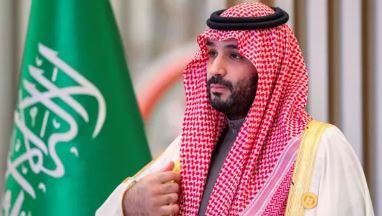
Category: MBS Muhammad Bin Salman

  • MBS Mohammed bin Salman: A Portrait of Power

    MBS Mohammed bin Salman: A Portrait of Power

    This text profiles Mohammed bin Salman (MBS), the Crown Prince of Saudi Arabia, exploring his rapid ascent to power, controversial policies, and complex relationship with the West. His ambitious reforms, including social liberalization and economic diversification (Vision 2030), are juxtaposed with authoritarian actions such as the war in Yemen, the suppression of dissent, and the murder of Jamal Khashoggi. The narrative highlights MBS’s calculated charm offensive aimed at securing Western support while simultaneously pursuing independent foreign policy initiatives. The sources ultimately examine the inherent tensions between MBS’s modernizing vision and his autocratic methods, questioning his long-term stability and the future of Saudi Arabia under his rule. The text also reveals concerns about his impulsiveness and the potential for instability.

    The Rise of MBS: A Study Guide

    Short Answer Quiz

    Instructions: Answer each question in 2-3 complete sentences.

    1. What was unusual about King Salman’s appointment of his son Mohammed bin Salman (MBS) to key government positions?
    2. What were some of the major social and economic challenges facing Saudi Arabia that MBS sought to address?
    3. What motivated MBS to launch the military intervention in Yemen?
    4. How did the US-Saudi relationship shift under the Obama administration, and what was the specific source of tension?
    5. How did MBS successfully secure the position of Crown Prince, replacing Mohammed bin Nayef (MBN)?
    6. What significant reforms did MBS introduce in Saudi Arabia after becoming Crown Prince?
    7. Why did MBS initiate his “Vision 2030” economic plan, and what are its key goals?
    8. How did MBS address the issue of corruption in Saudi Arabia, and what was the consequence of this action?
    9. What motivated MBS to impose a blockade on Qatar, and what actions did his government take against this neighbor?
    10. What was the significance of the murder of Jamal Khashoggi, and what impact did it have on MBS’s image and relationship with the West?

    Answer Key

    1. MBS, the King’s favorite son, was appointed Minister of Defense and the Economy at only 30 years old, despite having no prior government experience. This was highly unusual as power was typically passed between established members of the House of Saud, not to someone so young and inexperienced.
    2. Saudi Arabia faced a large, young population that was increasingly connected to the world, with high expectations. Additionally, the country’s economy was overly reliant on oil revenue, which was falling, and the kingdom was facing a looming financial crisis.
    3. MBS’s intervention in Yemen was motivated by the fear of Iranian-backed Houthi rebels gaining control of the country, which he saw as a direct threat to Saudi Arabia’s security and stability. He also wanted to establish himself as a strong leader.
    4. The US-Saudi relationship shifted as the US became less reliant on Saudi oil and Obama pursued a nuclear deal with Iran, which was viewed by the Saudis as a betrayal of their interests and a disregard for their concerns. The lack of consultation was a major point of contention.
    5. MBS, through persistent effort, convinced his father to allow him to meet with Trump in Washington. Once MBN was out of favor with the US, MBS was able to convince the king to displace his cousin and appoint him as the heir apparent.
    6. MBS introduced reforms such as abolishing the religious police, granting women the right to drive, allowing public concerts and cinemas, and seeking to return to a moderate Islam, representing a significant break from the Kingdom’s conservative past.
    7. “Vision 2030” was initiated due to the kingdom’s over-reliance on oil, with the plan to diversify its economy and reduce dependence on oil revenues by modernizing infrastructure, attracting foreign investment, and creating new industries and jobs.
    8. MBS initiated a purge of businessmen and princes under the guise of fighting corruption, forcing them to hand over significant portions of their wealth and property. While this brought billions into the country’s coffers, it scared off many Western investors due to its arbitrary nature.
    9. MBS imposed a blockade on Qatar because he accused the country of supporting Islamist enemies, the Muslim Brotherhood, and of being too friendly with Iran. He also viewed Al Jazeera, the Qatari news network, as a threat.
    10. The murder of Jamal Khashoggi was significant because it was linked to MBS’s inner circle, severely tarnishing his reformist image and highlighting his authoritarian tendencies. It also led to increased scrutiny of Saudi Arabia’s human rights record and strained relations with the West.

    Essay Questions

    Instructions: Answer each question in a well-organized essay that demonstrates your understanding of the source material.

    1. Analyze the factors contributing to Mohammed bin Salman’s rise to power, including his family background, political skills, and the geopolitical context of the region.
    2. Evaluate the effectiveness of MBS’s Vision 2030 plan in addressing the economic and social challenges facing Saudi Arabia, considering both its intended goals and its practical limitations.
    3. Discuss the complex relationship between Saudi Arabia and the United States, exploring how it has evolved under different administrations and the challenges and opportunities it presents.
    4. Examine the contradictory aspects of MBS’s rule, focusing on his image as both a reformer and an authoritarian, and how these conflicting aspects impact his domestic and international standing.
    5. Assess the overall impact of MBS’s leadership on Saudi Arabia and the wider Middle East, considering both his reforms and his more controversial actions, and predicting the long-term consequences of his actions.

    Glossary of Key Terms

    • House of Saud: The ruling royal family of Saudi Arabia.
    • Wahhabism: A strict, puritanical form of Sunni Islam that is the dominant religious tradition in Saudi Arabia.
    • Mutawa: The religious police in Saudi Arabia, who were previously responsible for enforcing strict social and religious norms.
    • Arab Spring: A series of pro-democracy uprisings across the Arab world that began in 2010.
    • Houthis: A Shia rebel group in Yemen backed by Iran, who are in conflict with the Saudi-led coalition.
    • Ayatollah Khamenei: The Supreme Leader of Iran, the highest religious and political authority in the country.
    • Vision 2030: A strategic plan initiated by MBS to diversify Saudi Arabia’s economy and reduce its dependence on oil.
    • Aramco: The Saudi Arabian national petroleum and natural gas company, one of the world’s largest corporations.
    • NEOM: A planned futuristic city in northwestern Saudi Arabia, intended to be a hub for technological innovation and sustainable living.
    • Muslim Brotherhood: A transnational Islamist organization that promotes political Islam.
    • Al Jazeera: A Qatari state-funded news organization.
    • Jamal Khashoggi: A Saudi journalist and dissident who was assassinated in the Saudi consulate in Istanbul in 2018.
    • Mohammed bin Nayef (MBN): The former Crown Prince of Saudi Arabia, ousted by MBS.

    Mohammed bin Salman: A Study in Contradictions

    Okay, here is a detailed briefing document reviewing the main themes and important ideas from the provided text.

    Briefing Document: Mohammed bin Salman – A Study in Contradictions

    Executive Summary:

    This document examines the rise of Mohammed bin Salman (MBS), Crown Prince of Saudi Arabia, through the lens of his actions, ambitions, and the international response to his leadership. The source material portrays a complex figure: a young, ambitious reformer attempting to modernize his nation, yet simultaneously an authoritarian ruler who employs brutal tactics to consolidate power and suppress dissent. MBS is presented as a leader seeking to reshape Saudi Arabia’s economy, society, and international standing, but his methods are often impulsive, contradictory, and ultimately raise serious concerns about human rights and regional stability.

    Key Themes and Ideas:

    1. MBS as a Transformative Figure:
    • Ambition for Reform: MBS is portrayed as driven by a desire to transform Saudi Arabia, recognizing the need for economic diversification beyond oil and a more modern society. He is seen advocating for changes that would appeal to Saudi youth and Western audiences, such as allowing concerts, cinemas, and women driving.
    • Vision 2030: This ambitious economic plan is central to his vision, aimed at ending the kingdom’s reliance on oil revenues. He envisions large scale projects to diversify the economy, attract foreign investment and create jobs for young Saudis. “All the success factors are in place to create something great in Saudi Arabia.”
    • Appealing to the West: MBS actively seeks to position himself as a key ally of the West, both economically and in the fight against terrorism. He understands the power of Western relationships and goes on charm offensives to achieve this. “He knew exactly which buttons to push and what message to present in order to charm others. It’s a skill.”
    1. Authoritarian Tendencies and Repression:
    • Consolidation of Power: MBS is depicted as ruthless in his pursuit of power, sidelining rivals, including his cousin, the former Crown Prince Mohammed bin Nayef (MBN). “Despite appearances and all the marks of respect, his cousin is forced to cede his place to him.”
    • Suppression of Dissent: Despite advocating for reforms, MBS is shown to brutally suppress any form of political opposition. This includes arresting clerics, activists, and critics, severely curtailing freedom of speech. “The political climate in our country is very bleak. It is the worst since the foundation of Saudi Arabia. We have the greatest number of political prisoners, the largest political executions.”
    • Corruption Purge: The “corruption purge” of 2017, in which hundreds of wealthy businessmen and princes were detained and forced to relinquish assets, demonstrates his willingness to use extreme measures to consolidate wealth and control. “This brings 100 billion dollars into MBS’s coffers, but this extraordinary purge scares the Western investors it needs to seduce.”
    • Yemen War: MBS’s decision to intervene militarily in Yemen is portrayed as a bold but ultimately costly and unsuccessful undertaking. This highlights his impulsiveness and willingness to take risks, but it is also characterized as causing a humanitarian crisis. “The war can’t be won militarily against the Houthis… One has to think of other ways, negotiation, patronage.”
    1. International Relations and Challenges:
    • Complex Relationship with the West: While seeking to be an indispensable Western ally, MBS is portrayed as feeling betrayed by the Obama administration’s nuclear deal with Iran. His need for Western weapons and investment creates a reliance, but he is also willing to threaten to turn to China and Russia. The Khashoggi murder further strains this relationship. “A text message received from MBS after Jamal’s killing and murder said that he was disappointed in the way the West was immediately blaming him, that he would look elsewhere for allies and friends in the East, meaning China and Russia.”
    • Regional Rivalry with Iran: The conflict with Iran is a central element, with MBS viewing Iran as an existential threat to Saudi Arabia. This rivalry informs his actions in Yemen and fuels tensions across the region. “He’s compared Ayatollah Khamenei to Hitler. He sees Iran as a revolutionary state that will not stop until the regime in Saudi Arabia is destroyed.”
    • Khashoggi Murder Fallout: The killing of Jamal Khashoggi in the Saudi consulate in Istanbul emerges as a pivotal moment, severely damaging MBS’s international image and revealing the extent of his ruthlessness. “The real break in the story came some weeks later when we were the first to report that the CIA, the main intelligence agency in the US, had done their assessment of the situation, drawing on their sources, experts, and knowledge, and determined that this was almost certainly an operation directed by Mohammed bin Salman.”
    1. Contradictions and Paradoxes:
    • Modernizer vs. Despot: MBS’s public image as a modernizer is in direct conflict with his authoritarian actions. This creates a duality that is difficult for Western observers to reconcile. “MBS is a reflection of their own weaknesses and of their loss of influence in the world. One that reveals their own flaws, their cynicism, and their mercantile nature.”
    • Impulsive Yet Calculating: MBS is described as both impulsive and strategic. He takes bold decisions, such as the war in Yemen and the Qatar blockade, yet carefully calculates how to charm foreign leaders and garner support. “People think I’m impulsive and unpredictable,” “yet they receive me with full honors.”
    • Economic Reforms vs. Repression: While aiming to modernize the Saudi economy, MBS creates an environment of fear that is not conducive to foreign investment and innovation. The corruption purge, in particular, undermines his efforts to attract Western capital. “If he doesn’t deliver the economic promises, then he’ll have no legitimacy in Saudi Arabia.”

    Conclusion:

    Mohammed bin Salman is a complex and contradictory figure. He has a vision to modernize Saudi Arabia but the methods he is using are those of a ruthless autocrat who won’t tolerate any dissent. He is an incredibly important player on the global stage, but it is as yet unclear whether his reforms will succeed and whether he can reconcile his ambition with his repressive tendencies. MBS is a product of a country that is in a state of tremendous change and the long-term stability of the Saudi regime is dependent on his success. The text underscores the precariousness of MBS’s position and the uncertainty surrounding the future of Saudi Arabia. His fate, and that of his nation, is entwined with the choices he makes, the international response to his actions, and his ability to manage his many contradictions.

    Mohammed bin Salman: Power, Reform, and Controversy in Saudi Arabia

    Frequently Asked Questions about Mohammed bin Salman (MBS) and Saudi Arabia

    1. Who is Mohammed bin Salman (MBS) and what is his significance? Mohammed bin Salman, often referred to as MBS, is the Crown Prince of Saudi Arabia. At the age of 34, he holds significant power in a country that possesses the world’s largest oil reserves, wields considerable influence over the global economy, and houses the Muslim holy sites. MBS has positioned himself as a key partner in the fight against terrorism and the biggest client for the Western world’s arms industry. He is carrying out reforms that aim to transform his country and attract foreign investment, making him an indispensable figure on the global stage whose future is entwined with many nations.
    2. What were the key factors that contributed to MBS’s rise to power? MBS’s ascent was rapid and strategic. His father, King Salman, unexpectedly appointed him as Minister of Defense and the Economy at a young age, despite his lack of government experience. This appointment, along with his status as the king’s favorite son, enabled him to rapidly gain influence. He surrounded himself with dedicated advisors, leveraged his youth, and was able to present himself as a bold and decisive leader, in contrast to the older generation of Saudi leaders. He effectively used the influence of the United States, particularly the Trump administration, to consolidate his position, ultimately becoming the Crown Prince, bypassing the previous heir.
    3. What are the main reforms MBS is undertaking in Saudi Arabia, and what are his motivations? MBS has initiated a series of significant reforms aimed at modernizing Saudi Arabia. These include the abolishment of the religious police, granting women the right to drive and choose not to wear the veil, and allowing public concerts and cinemas. His motivations are twofold: to address the growing frustrations of a young population under 30, who feel stifled by religious restrictions, and to project a more progressive image to the Western world. Economically, he aims to reduce the kingdom’s dependence on oil, which makes up 80% of the country’s revenue, by encouraging foreign investment and diversifying the economy. These reforms are both about his legacy but also about the survival of the country.
    4. How has MBS dealt with internal opposition, and what is the impact on political freedoms? While MBS has introduced social reforms, he has also become increasingly authoritarian, stifling political dissent. He has arrested numerous religious clerics, human rights activists, and prominent feminists to consolidate his power and suppress any resistance to his reforms. This suppression has resulted in a bleak political climate, with a large number of political prisoners and executions. Despite changes to social freedoms, the underlying political structure has become increasingly repressive.
    5. What is Saudi Arabia’s role in the conflict in Yemen and what have been the consequences? MBS, as Minister of Defense, initiated military intervention in Yemen in 2015, aimed at countering the Houthi rebels, backed by Iran. This war has become a costly and protracted conflict, causing significant loss of life, displacement, and famine. While it was initially popular, it has increasingly bogged down Saudi Arabia, further straining the country’s resources and damaging its international reputation. The conflict also exposes Saudi Arabia to retaliatory missile attacks from the Houthis.
    6. How have MBS’s actions impacted Saudi Arabia’s relationship with the West, particularly the United States? MBS initially found a strong ally in the Trump administration, which was keen to challenge Obama’s Iran policy. However, his actions, including the Yemen war and the Khashoggi murder, have strained relations with the West. While the West relies on Saudi Arabia for oil and as a counter-terrorism partner, it also faces growing pressure from public opinion due to human rights concerns. MBS’s behavior has revealed the West’s dependence on Saudi Arabia despite clear evidence of human rights abuses.
    7. What is “Vision 2030” and what are the main challenges to its success? “Vision 2030” is MBS’s ambitious plan to modernize and diversify the Saudi Arabian economy, reducing its dependence on oil revenue. This plan involves attracting foreign investment, developing infrastructure, and creating new industries and jobs. Key projects include giant industrial and tourist cities, and initiatives aimed at fostering economic growth. However, challenges to this success include Western investor skepticism, a sluggish bureaucracy, and the volatile geopolitical situation. The reliance on foreign investment, while also alienating investors through aggressive actions, makes the plan precarious.
    8. What are some of the most controversial actions MBS has taken, and what are the implications? MBS has engaged in several controversial actions, including the detention of prominent businessmen and princes, the blockade of Qatar, and the kidnapping of the Lebanese Prime Minister, Saad Hariri. These incidents, along with the murder of Jamal Khashoggi, have tarnished his international reputation. He has demonstrated a willingness to use his power to suppress dissent, intimidate rivals, and consolidate his authority. His actions have raised questions about his leadership style and the true nature of his reforms, portraying him as both a modernizer and a despot.

    Mohammed bin Salman: A Rise to Power

    Mohammed bin Salman (MBS) rose to power in Saudi Arabia through a series of strategic moves, taking advantage of his father’s position and implementing bold reforms.

    • Early Appointments and Influence: MBS’s father, Salman, became King in 2015 and quickly appointed MBS as Minister of Defense and the Economy despite his young age (30) and lack of government experience. This appointment was intriguing, especially to the new US ambassador.
    • Strategic Positioning: MBS was seen as an asset due to his youth, in a time when the House of Saud was facing challenges. He surrounded himself with dedicated advisors, such as Ali Shihabi, a Harvard graduate, to help him implement change. MBS recognized the need for a strong leader to effect change in Saudi Arabia.
    • Military Action in Yemen: In March 2015, MBS ordered military action in Yemen against the Houthis, a move that was seen as both bold and popular. Although the war became a protracted conflict, it helped to establish MBS as a strong leader, even though it also led to criticism and strained relationships with allies.
    • Cultivating Relationships: MBS worked to build relationships with key figures in the US administration, especially after Donald Trump became president. He was able to charm many, including Steve Bannon, who felt that MBS was “the guy” despite his impulsiveness. MBS’s visit to Washington was considered a “rite of passage”.
    • Removal of Rivals: Through a series of strategic moves, MBS managed to displace his cousin, Mohammed bin Nayef (MBN), as Crown Prince in June 2017. MBN was placed under house arrest, and MBS was appointed heir to the throne. King Salman took a back seat, effectively handing power to MBS.
    • Reforms and Consolidating Power: MBS initiated a series of reforms including abolishing the religious police, granting women the right to drive, and allowing public concerts and cinemas. While these reforms were popular, MBS also consolidated his power by suppressing dissent, arresting clerics, and imprisoning human rights activists.
    • Economic Vision: MBS launched Vision 2030 to modernize the Saudi economy and reduce its dependence on oil. This included attracting foreign investment through projects such as NEOM, a city of the future. However, MBS’s methods, including a corruption purge that targeted wealthy businessmen and princes, also scared off some Western investors.
    • International Relations: Despite the positive image he attempted to create with reforms, MBS faced international scrutiny and criticism for the murder of Jamal Khashoggi. Despite the scandal, MBS was protected by the Trump administration, and he also explored other alliances with the East.
    • Authoritarian Rule: MBS is described as an authoritarian figure who uses his power to control his country and suppress any political dissent. He has been accused of creating an “interesting form of dictatorship”. Though he presents himself as a reformer, he is also maintaining and expanding on the old ways of a repressive system.

    MBS’s rise to power can be characterized by a combination of calculated political moves, a willingness to challenge tradition, and a focus on projecting an image of strength and reform.

    Modernizing Saudi Arabia Under MBS

    Saudi Arabia has undergone significant reforms under the leadership of Mohammed bin Salman (MBS), encompassing social, religious, and economic changes. These reforms are aimed at modernizing the kingdom, addressing the needs of a young population, and diversifying the economy.

    Social and Religious Reforms:

    • Restriction of Religious Police: MBS abolished the religious police (Mutawa), who previously enforced strict social norms.
    • Women’s Rights:Women were granted the right to drive.
    • Women were given the choice to not wear the veil.
    • MBS emphasized the integration of men and women in society.
    • Cultural Openness: Public concerts and cinemas, previously banned, were allowed. This move aimed to provide entertainment and cultural experiences for the population.
    • Shifting Religious Landscape: MBS has promoted a move towards a more moderate Islam, which is open to the world. This shift challenges the powerful religious establishment that was previously a pillar of the monarchy.

    Motivations Behind the Reforms:

    • Addressing Youth Concerns: With a large portion of the population under 30, MBS aims to provide opportunities for the youth who feel restricted by old traditions. The reforms are intended to offer a “breath of oxygen” to this generation.
    • Image Improvement: The reforms are also aimed at presenting a better image to the Western world, particularly at a time when the kingdom’s reputation was suffering. The focus on women’s rights was strategic, given the high level of importance of those issues in the West.
    • Economic Necessity: The kingdom’s financial situation is precarious, with declining oil prices and a need to diversify the economy. The reforms are linked to attracting foreign investment and creating a modern, productive economy.

    Economic Reforms and Vision 2030:

    • Economic Diversification: MBS launched Vision 2030, a plan to modernize the Saudi economy and reduce its reliance on oil.
    • Foreign Investment: A key goal is to attract foreign investment to develop infrastructure, businesses, and create jobs.
    • Mega-Projects: MBS has proposed large-scale projects such as NEOM, a futuristic city on the Red Sea, aimed at attracting investors and driving economic growth.
    • Aramco Privatization: Partial privatization of the oil company Aramco was intended to generate billions for the kingdom.
    • Austerity Measures: In response to financial challenges, the government has introduced austerity measures, including reducing subsidies and introducing taxes.
    • Addressing Elite Entitlement: A purge of wealthy businessmen and princes was carried out, officially to combat corruption and recover funds. This was also seen as a way to address what was termed “elite entitlement”.

    Challenges and Contradictions:

    • Authoritarianism: While implementing social reforms, MBS has been accused of increasing repression, suppressing political dissent, and arresting activists. This creates a contradiction between his image as a reformer and his authoritarian practices.
    • Skepticism: Despite the ambitious plans, there is skepticism from investors and others about the feasibility of some of the projects and the sustainability of the reforms.
    • Stalled Progress: Some of the reforms have faced resistance, with civil servants being slow to implement changes. The economic goals are also hampered by the global perception of MBS’s heavy handed rule.

    MBS’s reforms are presented as a transformative effort to modernize Saudi Arabia, but they are coupled with a consolidation of power and suppression of dissent. These reforms are driven by a mix of social, economic, and political factors, all aimed at ensuring the survival and prosperity of the Saudi kingdom and the House of Saud. The success of these reforms depends on balancing the need for modernization with the challenges of political stability and international relations.

    The Yemen War and Mohammed bin Salman

    The war in Yemen is a significant event in Mohammed bin Salman’s (MBS) rise to power and is an important aspect of Saudi Arabia’s foreign policy. Here’s a breakdown of the key points:

    • Initiation of the War: In March 2015, just two months after becoming defense minister, MBS ordered military intervention in Yemen. The capital, Sanaa, had been taken by Houthi rebels, who were supported by Iran.
    • Motivations for Intervention:
    • Countering Iranian Influence: The Saudi regime viewed the Houthis as proxies of their regional rival, Iran. They felt besieged by Iran’s expanding presence in other countries such as Iraq, Syria and Lebanon.
    • Asserting Regional Power: MBS wanted to demonstrate his strength and will, distinguishing himself from previous Saudi leaders who had been cautious. He aimed to establish himself as a strong leader who would not hesitate to defend Saudi interests.
    • Popular Support: The war initially garnered popular support within Saudi Arabia, boosting MBS’s image as a decisive leader.
    • Military Campaign:
    • Aerial Bombing: The Saudi-led coalition launched an aerial bombing campaign without informing their US allies.
    • Military Spending: Saudi Arabia has one of the largest military budgets in the world and has invested heavily in Western arms, which it used in the conflict.
    • Protracted Conflict: The war has become a drawn-out and bloody conflict, with no clear end in sight. It has been described as a “ruinous conflict”.
    • Guerrilla Warfare: The Saudi military has struggled to defeat the Houthi rebels, and it has become evident that a military victory may not be possible.
    • Houthi Retaliation: The Houthis have retaliated by targeting Saudi Arabia with missiles.
    • Impact on Saudi Arabia:
    • Financial Strain: The war has been costly, contributing to the kingdom’s financial difficulties as it has spent a lot of money on weapons and military supplies.
    • Damage to Reputation: The conflict has led to a decline in Saudi Arabia’s international reputation, as Western public opinion has been shocked by the use of Western weapons in a conflict causing massive suffering, including refugees, famine and loss of life.
    • Strained Alliances: The war has strained relations with Western allies, particularly the US, who have been careful not to get involved offensively. The US has focused on a peaceful resolution and offered technical support, instead of military support.
    • Perceived abandonment: MBS has felt let down by the lack of support from his allies, particularly after the US signed a nuclear agreement with Iran. He feels that the US has not consulted them.
    • MBS’s Perspective:
    • Iran as an Enemy: MBS views Iran as an existential threat, comparing Ayatollah Khamenei to Hitler. He sees Iran as a revolutionary state that will not stop until the regime in Saudi Arabia is destroyed.
    • Confidence in Military: Initially, MBS was confident that the war could be won quickly. However, this has not turned out to be the case.
    • Disappointment with the West: MBS has expressed disappointment with the West’s reaction to the conflict, and has indicated that he would look to the East for allies.
    • Negotiation and Diplomacy:
    • Calls for Peaceful Settlement: Some, including an unnamed ambassador, have urged MBS to seek a negotiated solution and to explore other options beyond military action.
    • Emphasis on patronage: The ambassador argued that negotiation and patronage are alternatives to military action, but the prince does not seem to fully accept this argument.

    In summary, the Yemen war was initiated by MBS to counter Iranian influence and assert Saudi power in the region. However, the conflict has become a protracted and costly war, damaging Saudi Arabia’s reputation and straining its relationships with key allies. Despite calls for negotiation, MBS continues to view Iran as a major threat and remains determined to pursue Saudi’s interests in the region. The war has also served as a way for MBS to project a strong image, even though it has not achieved a clear victory.

    Saudi Arabia’s Vision 2030: Economic Diversification

    Economic diversification is a key component of Mohammed bin Salman’s (MBS) Vision 2030 plan for Saudi Arabia, aimed at reducing the kingdom’s reliance on oil and creating a more sustainable and modern economy.

    Motivations for Diversification:

    • Declining Oil Revenues: Saudi Arabia’s economy is heavily dependent on oil, which accounts for 80% of its revenues. With collapsing oil prices and decreasing Western demand, the kingdom faces a significant financial challenge. The sources also suggest that the reserves will be depleted in a few decades.
    • Need for a Productive Economy: MBS recognizes that the country needs a modern and productive economy to move away from its dependence on oil.
    • Unsustainable Economic Model: The current economic model is unsustainable, with a majority of citizens employed by the government, often in unproductive jobs. Additionally, citizens do not pay taxes or for utilities, such as water and electricity, which is putting a strain on the kingdom’s finances.

    Key Aspects of Vision 2030:

    • Attracting Foreign Investment: MBS seeks to attract foreign investment to develop infrastructure, business
    • es, and create jobs. This is a crucial component of his plan to modernize Saudi Arabia and make it less dependent on oil.
    • Mega-Projects: To attract investors, MBS has proposed a series of large-scale projects, including the largest expanse of solar panels in the world, a tourist city, a giant industrial city, and NEOM, a futuristic city on the Red Sea. These projects are intended to create new industries and employment opportunities.
    • Aramco Privatization: The partial privatization of the oil company Aramco is intended to bring billions into the kingdom’s coffers. However, this plan has been met with skepticism from investors.
    • Modernization: MBS’s plan is to open up Saudi Arabia to the Western world and modernity.

    Challenges to Economic Diversification:

    • Skepticism from Investors: Despite the ambitious plans, potential investors remain skeptical, noting that the lavish conferences and communication efforts do not necessarily translate into concrete results.
    • Slow Implementation: The implementation of reforms has been slow, with civil servants dragging their feet.
    • Financial Pressures: The state coffers are emptying, highlighting the urgency of the need for diversification.
    • Authoritarian Methods: MBS’s methods, including a corruption purge that targeted wealthy businessmen and princes, have scared off some Western investors. The detention of Prince Alwaleed, a world class economic player, sent a message that the business climate was unpredictable.
    • Geopolitical Issues: The ongoing conflict in Yemen and strained relations with Iran also contribute to investor hesitancy.

    Austerity Measures:

    • Reduced Subsidies: In response to financial challenges, the government has introduced austerity measures, including reducing subsidies.
    • New Taxes: The government has also introduced taxes for the first time.

    Overall Goal:

    • Survival of the Dynasty: The economic reforms are not just about modernization but also about ensuring the survival of the dynasty. MBS understands that he needs to deliver economic promises to maintain his legitimacy in Saudi Arabia.

    In summary, economic diversification is a crucial element of MBS’s Vision 2030, driven by the need to reduce reliance on oil and modernize the Saudi economy. While the plan includes ambitious projects and reforms, it faces challenges related to investor skepticism, implementation delays, and the perception of MBS’s authoritarian rule. Success depends on attracting foreign investment and creating a sustainable economic model that can replace the current dependence on oil revenues.

    Mohammed bin Salman’s Foreign Policy

    Mohammed bin Salman’s (MBS) approach to international relations is complex, marked by a desire to assert Saudi Arabia’s power, secure its interests, and navigate a changing global landscape. Here’s an overview of his key relationships and strategies based on the sources:

    Relationship with the United States:

    • Historical Ally: Saudi Arabia has long been a key ally of the US, particularly due to its oil reserves and its role as a partner in the fight against terrorism.
    • Strained Relations: However, the relationship has become strained under MBS.
    • Obama’s Disengagement: MBS felt let down by President Obama’s disengagement from the Middle East and the signing of the nuclear agreement with Iran without consulting Saudi Arabia.
    • Perception of Abandonment: MBS felt that the US was not fully committed to helping them in the war in Yemen. He believes the US always says “You want to fight Iran until the last American,” and he has asserted that Saudi Arabia will act independently.
    • Trump’s Support: MBS was initially pleased by the election of Donald Trump, who opposed Obama’s Iranian policy. MBS saw Trump as a businessman who wanted to “get on with it,” which aligned with his own sense of urgency.
    • Seeking Alternatives: After the Khashoggi murder, MBS expressed disappointment with the West’s reaction and indicated that he would look for allies in the East, specifically China and Russia.
    • Transactional Relationship: The relationship is heavily influenced by economic and security interests. Saudi Arabia is the Western world’s arms industry’s biggest client, paying top dollar for its weapons. The US has also been careful not to get involved in any offensive way in the war in Yemen but has provided technical assistance.
    • Pushback: MBS has demonstrated a willingness to push back against the US, as evidenced by his response to President Obama’s concerns about human rights. During a meeting, he suggested the US President take a course in Saudi law.

    Relationship with Iran:

    • Regional Rivalry: Iran is Saudi Arabia’s main regional rival. MBS views Iran as an existential threat, comparing Ayatollah Khamenei to Hitler. He sees Iran as a revolutionary state that will not stop until the Saudi regime is destroyed.
    • Proxy Conflicts: The conflict in Yemen is a proxy war between Saudi Arabia and Iran, with the Houthis being backed by Iran.
    • Accusations of Interference: The Saudi regime accuses Iran of interfering in the region through its presence in Iraq, Syria, Lebanon, and Yemen.
    • Negotiation Avoidance: MBS seems reluctant to negotiate with Iran, instead focusing on confronting them militarily.

    Relationship with Other Countries:

    • Qatar: MBS initiated a land and air blockade of Qatar, accusing it of supporting his Islamist enemies, the Muslim Brotherhood, and of having ties with Iran, as well as giving airtime on Al Jazeera to his opponents. This action demonstrates his intolerance for perceived opposition.
    • Lebanon: MBS kidnapped the Lebanese Prime Minister Saad Hariri, forcing him to resign from Riyadh because he was perceived as too easy on Hezbollah, an Iranian-backed militia.. However, after international pressure, he was forced to release Hariri.
    • Western Allies: MBS has sought to build relationships with Western allies, particularly in Europe. He undertook a charm offensive, visiting Silicon Valley, Hollywood, London, and Paris to promote himself and his reforms.
    • China and Russia: Following the Khashoggi affair, MBS signaled a willingness to look for allies in the East, given that he felt abandoned by the West. This suggests a potential shift in Saudi Arabia’s geopolitical alignment.

    Key Themes in MBS’s International Relations:

    • Asserting Power: MBS is focused on asserting Saudi Arabia’s power and influence in the region, breaking from the cautious approach of previous leaders.
    • Defense of National Interests: MBS is determined to defend what he sees as Saudi Arabia’s national interests, particularly regarding the threat from Iran and its proxies.
    • Transactional Approach: MBS views international relations through a transactional lens, focusing on economic and security interests. He is willing to spend large sums of money on weapons and is open to shifting alliances based on his perceived needs.
    • Image Management: MBS invests heavily in public relations and lobbying to manage his image in the West, but is also willing to take actions that damage that image if he deems it necessary.
    • Frustration with the West: The sources reveal MBS’s frustration with what he sees as a lack of support from the West, especially the United States. This disappointment has led him to consider alternative alliances.
    • Unpredictability: MBS has been characterized as impulsive and unpredictable, which can be a source of concern for his allies. His actions such as the Yemen war, the Qatar blockade and the kidnapping of Saad Hariri illustrate this characteristic.

    In conclusion, MBS’s approach to international relations is defined by his desire to project power, defend against perceived threats, and promote Saudi Arabia’s economic and security interests. While maintaining ties with traditional Western allies, particularly the US, MBS has shown a willingness to pursue independent action and explore alternative alliances, reflecting a more assertive and less predictable foreign policy. The sources suggest that while he desires to be seen as a key partner of the West, he is also willing to challenge their expectations and perceived interests.

    Mohammad bin Salman: Prince With Two Faces

    By Amjad Izhar
    Contact: amjad.izhar@gmail.com
    https://amjadizhar.blog

  • Saudi Arabia’s Role in Gaza Ceasefire Agreement by Ibrahim Al-Nahaas – Al-Riyaaz

    Saudi Arabia’s Role in Gaza Ceasefire Agreement by Ibrahim Al-Nahaas – Al-Riyaaz

    Saudi Arabia’s leadership played a crucial role in brokering a ceasefire in the Gaza Strip in January 2025, ending a fifteen-month conflict that began in October 2023. This accomplishment stemmed from significant diplomatic efforts, including Arab-Islamic summits convened by Saudi Arabia. The agreement aims to achieve a lasting peace, including the establishment of an independent Palestinian state with East Jerusalem as its capital. The Saudi government emphasizes the importance of adhering to the ceasefire and addressing the underlying issues of the conflict to secure Palestinian rights. This success is viewed as a testament to Saudi Arabia’s commitment to the Palestinian cause.

    Saudi Arabia’s Role in the 2025 Gaza Ceasefire Agreement

    Study Guide

    Short Answer Questions:

    1. What specific event does the source text primarily focus on, and when did it occur?
    2. According to the source, what motivated Saudi Arabia’s involvement in addressing the conflict?
    3. How did Saudi Arabia attempt to unify the Arab and Islamic world in response to the conflict? What were two specific actions taken?
    4. What role did other countries or organizations play in the eventual ceasefire agreement, as acknowledged by the source?
    5. Beyond the immediate ceasefire, what long-term goal does the source emphasize for the Palestinian people?
    6. What specific casualty figures are cited in the source regarding the conflict?
    7. How does the source characterize Saudi Arabia’s approach to the Palestinian cause compared to “other societies”?
    8. What historical context is provided to highlight the long-standing nature of the Palestinian issue?
    9. How does the source depict the leadership style and actions of King Salman bin Abdulaziz Al Saud and Crown Prince Mohammed bin Salman?
    10. What is the main argument or message that the source aims to convey to the reader?

    Answer Key:

    1. The source text focuses on the agreement to stop the Israeli aggression on the Gaza Strip, which occurred in January 2025.
    2. Saudi Arabia’s involvement was motivated by its commitment to the Palestinian cause, based on its Arab and Islamic values, and its belief in human rights and dignity.
    3. Saudi Arabia hosted two Arab-Islamic summit conferences, one in November 2023 and another in November 2024, to unify the Arab and Islamic world in response to the conflict.
    4. The source acknowledges the efforts of Qatar, Egypt, and the United States in achieving the ceasefire agreement.
    5. Beyond the ceasefire, the source emphasizes the long-term goal of establishing an independent Palestinian state with East Jerusalem as its capital.
    6. The source cites over 45,000 martyrs and more than 100,000 wounded as casualties of the conflict.
    7. The source contrasts Saudi Arabia’s genuine support for the Palestinian cause with “other societies” that exploit Arab and Islamic issues for political gains.
    8. The source highlights the historical context of the Palestinian struggle, mentioning that it has been ongoing for eight decades.
    9. The source depicts King Salman and Crown Prince Mohammed bin Salman as wise, competent, and deeply committed to the Palestinian cause.
    10. The main message of the source is to highlight Saudi Arabia’s leadership role in achieving the 2025 Gaza ceasefire agreement and its ongoing commitment to the Palestinian cause.

    Essay Questions:

    1. Analyze the source’s portrayal of Saudi Arabia’s role in the 2025 Gaza ceasefire. To what extent is this portrayal objective and balanced? Consider potential biases or omissions.
    2. Discuss the source’s emphasis on the “centrality of the Palestinian cause” at various levels. What is the significance of this framing, and what implications does it have for international relations and diplomacy?
    3. Evaluate the effectiveness of Saudi Arabia’s approach to resolving the conflict, as described in the source. What were the strengths and limitations of its strategy?
    4. Compare and contrast the roles and interests of the different international actors mentioned in the source, including Qatar, Egypt, and the United States. How did their involvement contribute to or complicate the situation?
    5. Based on the information provided in the source, what are the prospects for a lasting peace between Israel and Palestine? What challenges and opportunities do you foresee in the future?

    Glossary of Key Terms:

    • Aggression: In this context, refers to the Israeli military actions against the Gaza Strip.
    • Ceasefire Agreement: A formal agreement to stop fighting or hostilities.
    • Centrality of the Palestinian Cause: The idea that the Palestinian issue is of paramount importance in Arab, Islamic, and international affairs.
    • Custodian of the Two Holy Mosques: An honorific title used by the King of Saudi Arabia, signifying his role as protector of the holy cities of Mecca and Medina.
    • Gaza Strip: A Palestinian territory located on the eastern coast of the Mediterranean Sea.
    • Independent Palestinian State: The goal of establishing a sovereign and independent state for the Palestinian people.
    • Israeli Occupation: Refers to Israel’s control over Palestinian territories since the 1967 Six-Day War.
    • Martyrs: Individuals who have died in the conflict, often used to emphasize their sacrifice.
    • Summit Conference: A high-level meeting of leaders to discuss important issues.
    • 1967 Borders: The boundary lines that existed between Israel and the Palestinian territories before the Six-Day War.

    Briefing Document: Saudi Arabia’s Role in the 2025 Gaza Ceasefire Agreement

    This briefing document analyzes the main themes and key facts presented in the provided excerpt regarding the cessation of hostilities in the Gaza Strip in January 2025. The source, which appears to be an official statement or commentary originating from Saudi Arabia, emphasizes the instrumental role of the Kingdom in achieving the ceasefire.

    Main Themes:

    1. Saudi Leadership in Arab-Islamic Unity: The source consistently highlights the pivotal role of Saudi Arabia, under the leadership of King Salman and Crown Prince Mohammed bin Salman, in unifying Arab and Islamic efforts to address the Israeli aggression in Gaza. This unity, demonstrated through two Arab-Islamic summits in 2023 and 2024, is presented as a crucial factor leading to the ceasefire agreement.
    2. “The agreement to stop the Israeli aggression on the Gaza Strip…represents a genuine fruit of the joint Arab and Islamic work led by the Kingdom of Saudi Arabia”
    3. Centrality of the Palestinian Cause: The document underscores the importance of the Palestinian issue for Saudi Arabia, both regionally and internationally. It frames the Kingdom’s efforts as a defense of Palestinian rights and a pursuit of justice for the Palestinian people.
    4. “The wise leadership in the Kingdom of Saudi Arabia emphasizes the centrality of the Palestinian cause at all Arab, Islamic and international levels”
    5. Ceasefire as a Stepping Stone: While celebrating the end of hostilities, the source emphasizes that the agreement is only the first step towards a more comprehensive solution. The ultimate goal remains the establishment of an independent Palestinian state with East Jerusalem as its capital.
    6. “The Kingdom stresses the importance of building on this agreement to address the basis of the conflict by enabling the brotherly Palestinian people to obtain their rights, foremost of which is the establishment of their independent Palestinian state on the 1967 borders with East Jerusalem as its capital.”

    Key Facts and Information:

    • Timeline: The Israeli aggression on Gaza began on October 7, 2023, and lasted for fifteen months, culminating in the ceasefire agreement on January 15, 2025.
    • Casualties: The conflict resulted in a heavy toll, with over 45,000 martyrs and more than 100,000 wounded.
    • Diplomatic Efforts: Saudi Arabia convened two Arab-Islamic summits, in November 2023 and November 2024, to galvanize support for the Palestinian cause and pressure Israel to cease its aggression.
    • International Collaboration: The source acknowledges the efforts of Qatar, Egypt, and the United States in facilitating the ceasefire agreement.

    Analysis:

    The document presents a narrative that underscores Saudi Arabia’s leading role in achieving the ceasefire agreement in Gaza. It emphasizes the Kingdom’s commitment to the Palestinian cause and portrays the agreement as a victory for Arab-Islamic unity. However, it’s important to note that this is a single perspective and further research into various sources is necessary for a more nuanced understanding of the events and the various actors involved.

    FAQ: The 2025 Gaza Ceasefire Agreement

    1. What event marked a significant step towards peace in the Israeli-Palestinian conflict in January 2025?

    The signing of the ceasefire agreement on January 15, 2025, brought an end to the fifteen-month Israeli aggression on the Gaza Strip, which began on October 7, 2023. This agreement represents a critical milestone in the pursuit of peace in the region.

    2. What role did Saudi Arabia play in achieving the ceasefire?

    Saudi Arabia played a pivotal leadership role in achieving the ceasefire. The Kingdom spearheaded joint Arab and Islamic efforts, convening two Arab-Islamic summits in November 2023 and 2024 to unify support for the Palestinian cause and advocate for an end to the aggression on Gaza. Their diplomatic efforts, combined with their long-standing support for the Palestinian people, were instrumental in reaching the agreement.

    3. What are the key terms of the ceasefire agreement?

    The agreement mandates a complete cessation of hostilities, a withdrawal of Israeli forces from the Gaza Strip, and the return of displaced Palestinians to their homes. It also emphasizes the need for a lasting solution based on enabling the Palestinian people to obtain their rights, including the establishment of an independent Palestinian state.

    4. What are the hopes for the future following this agreement?

    The agreement is seen as a foundation for addressing the root causes of the conflict. It is hoped that it will lead to a permanent end to the violence and pave the way for the establishment of an independent Palestinian state with East Jerusalem as its capital.

    5. What were the human costs of the conflict in Gaza?

    The brutal conflict that lasted for over fifteen months resulted in a tragic loss of life, with over 45,000 martyrs and more than 100,000 wounded. The ceasefire agreement aims to prevent further suffering and loss.

    6. How does Saudi Arabia view its role in supporting the Palestinian cause?

    Saudi Arabia considers supporting the Palestinian cause as a core principle rooted in its Arab and Islamic values. The Kingdom believes in upholding human rights and dignity and seeks to achieve a just and lasting solution through diplomacy and international cooperation.

    7. What other countries played a role in brokering the ceasefire?

    The State of Qatar, the Arab Republic of Egypt, and the United States of America also played significant roles in mediating and facilitating the ceasefire agreement. Their collaborative efforts contributed to the success of the peace process.

    8. What is the overall message emphasized in the aftermath of the ceasefire?

    The agreement underscores the importance of unity and collaboration among Arab and Islamic nations in supporting the Palestinian cause. It also highlights the need for a comprehensive and enduring solution that ensures the rights and dignity of the Palestinian people and leads to a peaceful future for the region.

    Saudi Arabia’s Role in Ending Gaza Conflict

    The agreement to stop the Israeli aggression on the Gaza Strip in January 2025 represents a genuine fruit of the joint Arab and Islamic work led by the Kingdom of Saudi Arabia [1]. The Kingdom of Saudi Arabia worked alongside Arab and Islamic countries to stop the Israeli aggression on the Gaza Strip that began on October 7, 2023, and lasted for fifteen months [1]. Saudi Arabia’s leadership in defending the Palestinian cause and stopping the aggression against the Palestinian people escalated since the beginning of the Israeli aggression on the Gaza Strip [1]. Saudi Arabia hosted two Arab-Islamic summits, one on November 11, 2023, and another on November 11, 2024, to reaffirm the centrality of the Palestinian cause, stop the Israeli aggression on the Gaza Strip, and demand the lifting of injustice against the Palestinian people [1]. The efforts of Saudi Arabia and other Arab and Islamic countries resulted in an agreement to stop the Israeli aggression on the Gaza Strip on January 15, 2025 [1]. The agreement is a great achievement for Saudi Arabia, which reaffirms the necessity of defending the Palestinian cause until the establishment of an independent Palestinian state with East Jerusalem as its capital [1].

    Saudi Arabia Welcomes Gaza Ceasefire Agreement

    The agreement to stop the Israeli aggression on the Gaza Strip, which lasted fifteen months starting from October 7, 2023, was reached on January 15, 2025. [1] The Kingdom of Saudi Arabia welcomed the ceasefire agreement in the Gaza Strip and expressed appreciation for the efforts made by the State of Qatar, the Arab Republic of Egypt, and the United States of America to reach the agreement. [1] The Kingdom stressed the necessity of adhering to the agreement, stopping the Israeli aggression on Gaza, the complete withdrawal of the Israeli occupation forces from the Strip and all other Palestinian and Arab territories, and the return of the displaced to their areas. [1] The Kingdom also stressed the importance of building on this agreement to address the basis of the conflict by enabling the Palestinian people to obtain their rights, foremost of which is the establishment of their independent Palestinian state on the 1967 borders with East Jerusalem as its capital. [1] The agreement is hoped to permanently end the war, which has claimed more than 45 thousand martyrs and more than 100 thousand wounded. [1]

    Palestinian Statehood: A 2025 Agreement

    The establishment of an independent Palestinian state with East Jerusalem as its capital is a key goal of the agreement to stop the Israeli aggression on the Gaza Strip in January 2025. [1] The agreement, reached with Saudi Arabia leading the joint Arab and Islamic work, is a step towards achieving this goal. [1] The agreement is hoped to build on the ceasefire and address the basis of the conflict by enabling the Palestinian people to obtain their rights, foremost of which is the establishment of their independent Palestinian state on the 1967 borders with East Jerusalem as its capital. [1]

    Arab-Islamic Unity and the Gaza Truce

    The agreement to stop the Israeli aggression on the Gaza Strip in January 2025 is a result of the unity of Arab and Islamic countries [1, 2]. The agreement, led by Saudi Arabia, is a demonstration of the joint Arab and Islamic work to defend the Palestinian cause [1, 2]. The first Arab-Islamic summit, held on November 11, 2023, was able to unify the ranks, words, and Arab and Islamic efforts in defending the Palestinian cause at all international and global levels [1].

    Ending Israeli Aggression in Gaza

    The agreement to stop Israeli aggression on the Gaza Strip was reached on January 15, 2025, after fifteen months of aggression that began on October 7, 2023 [1]. The Israeli aggression resulted in more than 45,000 martyrs and more than 100,000 wounded [1]. Saudi Arabia, along with other Arab and Islamic countries, worked to stop the Israeli aggression and achieve a ceasefire [1]. The agreement that resulted from these efforts stresses the necessity of adhering to the agreement and stopping the Israeli aggression on Gaza [1]. The agreement also calls for the complete withdrawal of the Israeli occupation forces from the Strip and all other Palestinian and Arab territories, as well as the return of the displaced to their areas [1].

    The Original Text

    The agreement to stop the Israeli aggression on the Gaza Strip in January 2025 represents a genuine fruit of the joint Arab and Islamic work led by the Kingdom of Saudi Arabia and its wise leadership – may God protect it – with all wisdom and competence, and will continue until the establishment of an independent Palestinian state with East Jerusalem as its capital..

    On January 15, 2025, the agreement to stop the Israeli aggression on the Gaza Strip was completed, which lasted for fifteen months starting from October 7, 2023. With the signing of this agreement, which stops the Israeli crimes and immoral against the Gaza Strip and its sons from the Palestinian people, the great political efforts made by the Kingdom of Saudi Arabia in order to serve the Palestinian cause, and to demand the lifting of injustice and the cessation of aggression against the sons of the honorable Palestinian people throughout its history extending for eight decades until the present time, are recalled once again. Yes, if the records of history bear witness to the honor and pride of the Kingdom of Saudi Arabia for its great stance in supporting the Palestinian cause and advocating and backing the Palestinian people at all political, diplomatic, economic, material, financial and humanitarian levels, then the records of the present and future will bear witness to the chivalry, loyalty, sincerity and magnanimity of the Kingdom of Saudi Arabia towards supporting the Palestinian cause and the constant endeavor to support and back the sons of the Palestinian people, based on the wise directives of the Custodian of the Two Holy Mosques, King Salman bin Abdulaziz Al Saud, and His Highness the Crown Prince, Prince Mohammed bin Salman bin Abdulaziz Al Saud – may God protect them. Yes, while the wise leadership in the Kingdom of Saudi Arabia emphasizes the centrality of the Palestinian cause at all Arab, Islamic and international levels.

    it has been extremely keen on the necessity of stopping the successive Israeli attacks on the Palestinian people in all Palestinian territories, and the level of this keenness has escalated since the beginning of the Israeli aggression on the Gaza Strip on October 7, 2023. In its constant endeavor to maintain the centrality of the Palestinian cause in international politics and stop the Israeli aggression on the Gaza Strip, the wise leadership in the Kingdom of Saudi Arabia invited the leaders of Arab and Islamic countries to a summit conference to discuss the Israeli attacks on the Gaza Strip. In response to the generous invitation of the Custodian of the Two Holy Mosques, King Salman bin Abdulaziz Al Saud – may God protect him – the extraordinary Arab-Islamic summit was held on November 11, 2023, one month after the beginning of the Israeli attacks on the Gaza Strip on October 7, 2023. This summit was able to unify the ranks, words and Arab and Islamic efforts in defending the Palestinian cause at all international and global levels.

    In confirmation of the Kingdom of Saudi Arabia’s leadership in defending the Palestinian cause and stopping the aggression against the honorable Palestinian people, the wise leadership in the Kingdom of Saudi Arabia called for a second Arab-Islamic summit on November 11, 2024 to reaffirm the centrality of the Palestinian cause and the necessity of stopping the Israeli aggression on the Gaza Strip, and to demand the lifting of injustice against its sons from the Palestinian people. Yes, these are great efforts made by the wise leadership in the Kingdom of Saudi Arabia, and it has harnessed great capabilities and resources, believing in the justice of the Palestinian cause and the right of the Palestinian people to reside in their state and live in it with dignity like other peoples who have obtained their full rights.

    If these hopes and future aspirations are what the Kingdom of Saudi Arabia is working on and emphasizing in all international and global forums, then its great efforts, in conjunction with Arab and Islamic countries, have resulted in an agreement to stop the Israeli aggression on the Gaza Strip on January 15, 2025. Yes, the Kingdom of Saudi Arabia is making great efforts to defend the Palestinian cause based on the authenticity of its Arab and Islamic values, and its belief in constructive and sublime principles that are fully compatible with the rules of international law that preserve human rights and dignity. This is what distinguishes it from other societies that employ Arab and Islamic issues to achieve political gains aimed at serving a party, doctrine, or sect. If the agreement to stop the Israeli aggression on the Gaza Strip represents a great achievement credited to the joint Arab and Islamic work led by the Kingdom of Saudi Arabia, then this great achievement reaffirms once again the necessity of constantly striving to defend the Palestinian cause until the establishment of an independent Palestinian state with East Jerusalem as its capital. This is what was keen on and confirmed by the statement issued on January 15, 2025 by the Ministry of Foreign Affairs of the Kingdom of Saudi Arabia, which stated the following:

    “The Ministry of Foreign Affairs expresses the Kingdom of Saudi Arabia’s welcome of the ceasefire agreement in the Gaza Strip, and appreciates the efforts made by the State of Qatar, the Arab Republic of Egypt, and the United States of America in this regard. The Kingdom stresses the necessity of adhering to the agreement and stopping the Israeli aggression on Gaza, and the complete withdrawal of the Israeli occupation forces from the Strip and all other Palestinian and Arab territories, and the return of the displaced to their areas. It also stresses the importance of building on this agreement to address the basis of the conflict by enabling the brotherly Palestinian people to obtain their rights, foremost of which is the establishment of their independent Palestinian state on the 1967 borders with East Jerusalem as its capital. The Kingdom hopes that this agreement will permanently end this brutal Israeli war that has claimed more than 45 thousand martyrs, and more than 100 thousand wounded.”.

    In conclusion, it is important to say that the agreement to stop the Israeli aggression on the Gaza Strip in January 2025 represents an authentic fruit of the joint Arab and Islamic work led by the Kingdom of Saudi Arabia and its wise leadership – may God protect it – with all wisdom and competence, and will continue until the establishment of an independent Palestinian state with East Jerusalem as its capital. Yes, the unity of ranks, words and position – Arab and Islamic – towards the Palestinian issue

    By Amjad Izhar
    Contact: amjad.izhar@gmail.com
    https://amjadizhar.blog

  • MBS Mohammed bin Salman: A Portrait of Power

    MBS Mohammed bin Salman: A Portrait of Power

    This text profiles Mohammed bin Salman (MBS), the Crown Prince of Saudi Arabia, exploring his rapid ascent to power, controversial policies, and complex relationship with the West. His ambitious reforms, including social liberalization and economic diversification (Vision 2030), are juxtaposed with authoritarian actions such as the war in Yemen, the suppression of dissent, and the murder of Jamal Khashoggi. The narrative highlights MBS’s calculated charm offensive aimed at securing Western support while simultaneously pursuing independent foreign policy initiatives. The sources ultimately examine the inherent tensions between MBS’s modernizing vision and his autocratic methods, questioning his long-term stability and the future of Saudi Arabia under his rule. The text also reveals concerns about his impulsiveness and the potential for instability.

    The Rise of MBS: A Study Guide

    Short Answer Quiz

    Instructions: Answer each question in 2-3 complete sentences.

    1. What was unusual about King Salman’s appointment of his son Mohammed bin Salman (MBS) to key government positions?
    2. What were some of the major social and economic challenges facing Saudi Arabia that MBS sought to address?
    3. What motivated MBS to launch the military intervention in Yemen?
    4. How did the US-Saudi relationship shift under the Obama administration, and what was the specific source of tension?
    5. How did MBS successfully secure the position of Crown Prince, replacing Mohammed bin Nayef (MBN)?
    6. What significant reforms did MBS introduce in Saudi Arabia after becoming Crown Prince?
    7. Why did MBS initiate his “Vision 2030” economic plan, and what are its key goals?
    8. How did MBS address the issue of corruption in Saudi Arabia, and what was the consequence of this action?
    9. What motivated MBS to impose a blockade on Qatar, and what actions did his government take against this neighbor?
    10. What was the significance of the murder of Jamal Khashoggi, and what impact did it have on MBS’s image and relationship with the West?

    Answer Key

    1. MBS, the King’s favorite son, was appointed Minister of Defense and the Economy at only 30 years old, despite having no prior government experience. This was highly unusual as power was typically passed between established members of the House of Saud, not to someone so young and inexperienced.
    2. Saudi Arabia faced a large, young population that was increasingly connected to the world, with high expectations. Additionally, the country’s economy was overly reliant on oil revenue, which was falling, and the kingdom was facing a looming financial crisis.
    3. MBS’s intervention in Yemen was motivated by the fear of Iranian-backed Houthi rebels gaining control of the country, which he saw as a direct threat to Saudi Arabia’s security and stability. He also wanted to establish himself as a strong leader.
    4. The US-Saudi relationship shifted as the US became less reliant on Saudi oil and Obama pursued a nuclear deal with Iran, which was viewed by the Saudis as a betrayal of their interests and a disregard for their concerns. The lack of consultation was a major point of contention.
    5. MBS, through persistent effort, convinced his father to allow him to meet with Trump in Washington. Once MBN was out of favor with the US, MBS was able to convince the king to displace his cousin and appoint him as the heir apparent.
    6. MBS introduced reforms such as abolishing the religious police, granting women the right to drive, allowing public concerts and cinemas, and seeking to return to a moderate Islam, representing a significant break from the Kingdom’s conservative past.
    7. “Vision 2030” was initiated due to the kingdom’s over-reliance on oil, with the plan to diversify its economy and reduce dependence on oil revenues by modernizing infrastructure, attracting foreign investment, and creating new industries and jobs.
    8. MBS initiated a purge of businessmen and princes under the guise of fighting corruption, forcing them to hand over significant portions of their wealth and property. While this brought billions into the country’s coffers, it scared off many Western investors due to its arbitrary nature.
    9. MBS imposed a blockade on Qatar because he accused the country of supporting Islamist enemies, the Muslim Brotherhood, and of being too friendly with Iran. He also viewed Al Jazeera, the Qatari news network, as a threat.
    10. The murder of Jamal Khashoggi was significant because it was linked to MBS’s inner circle, severely tarnishing his reformist image and highlighting his authoritarian tendencies. It also led to increased scrutiny of Saudi Arabia’s human rights record and strained relations with the West.

    Essay Questions

    Instructions: Answer each question in a well-organized essay that demonstrates your understanding of the source material.

    1. Analyze the factors contributing to Mohammed bin Salman’s rise to power, including his family background, political skills, and the geopolitical context of the region.
    2. Evaluate the effectiveness of MBS’s Vision 2030 plan in addressing the economic and social challenges facing Saudi Arabia, considering both its intended goals and its practical limitations.
    3. Discuss the complex relationship between Saudi Arabia and the United States, exploring how it has evolved under different administrations and the challenges and opportunities it presents.
    4. Examine the contradictory aspects of MBS’s rule, focusing on his image as both a reformer and an authoritarian, and how these conflicting aspects impact his domestic and international standing.
    5. Assess the overall impact of MBS’s leadership on Saudi Arabia and the wider Middle East, considering both his reforms and his more controversial actions, and predicting the long-term consequences of his actions.

    Glossary of Key Terms

    • House of Saud: The ruling royal family of Saudi Arabia.
    • Wahhabism: A strict, puritanical form of Sunni Islam that is the dominant religious tradition in Saudi Arabia.
    • Mutawa: The religious police in Saudi Arabia, who were previously responsible for enforcing strict social and religious norms.
    • Arab Spring: A series of pro-democracy uprisings across the Arab world that began in 2010.
    • Houthis: A Shia rebel group in Yemen backed by Iran, who are in conflict with the Saudi-led coalition.
    • Ayatollah Khamenei: The Supreme Leader of Iran, the highest religious and political authority in the country.
    • Vision 2030: A strategic plan initiated by MBS to diversify Saudi Arabia’s economy and reduce its dependence on oil.
    • Aramco: The Saudi Arabian national petroleum and natural gas company, one of the world’s largest corporations.
    • NEOM: A planned futuristic city in northwestern Saudi Arabia, intended to be a hub for technological innovation and sustainable living.
    • Muslim Brotherhood: A transnational Islamist organization that promotes political Islam.
    • Al Jazeera: A Qatari state-funded news organization.
    • Jamal Khashoggi: A Saudi journalist and dissident who was assassinated in the Saudi consulate in Istanbul in 2018.
    • Mohammed bin Nayef (MBN): The former Crown Prince of Saudi Arabia, ousted by MBS.

    Mohammed bin Salman: A Study in Contradictions

    Okay, here is a detailed briefing document reviewing the main themes and important ideas from the provided text.

    Briefing Document: Mohammed bin Salman – A Study in Contradictions

    Executive Summary:

    This document examines the rise of Mohammed bin Salman (MBS), Crown Prince of Saudi Arabia, through the lens of his actions, ambitions, and the international response to his leadership. The source material portrays a complex figure: a young, ambitious reformer attempting to modernize his nation, yet simultaneously an authoritarian ruler who employs brutal tactics to consolidate power and suppress dissent. MBS is presented as a leader seeking to reshape Saudi Arabia’s economy, society, and international standing, but his methods are often impulsive, contradictory, and ultimately raise serious concerns about human rights and regional stability.

    Key Themes and Ideas:

    1. MBS as a Transformative Figure:
    • Ambition for Reform: MBS is portrayed as driven by a desire to transform Saudi Arabia, recognizing the need for economic diversification beyond oil and a more modern society. He is seen advocating for changes that would appeal to Saudi youth and Western audiences, such as allowing concerts, cinemas, and women driving.
    • Vision 2030: This ambitious economic plan is central to his vision, aimed at ending the kingdom’s reliance on oil revenues. He envisions large scale projects to diversify the economy, attract foreign investment and create jobs for young Saudis. “All the success factors are in place to create something great in Saudi Arabia.”
    • Appealing to the West: MBS actively seeks to position himself as a key ally of the West, both economically and in the fight against terrorism. He understands the power of Western relationships and goes on charm offensives to achieve this. “He knew exactly which buttons to push and what message to present in order to charm others. It’s a skill.”
    1. Authoritarian Tendencies and Repression:
    • Consolidation of Power: MBS is depicted as ruthless in his pursuit of power, sidelining rivals, including his cousin, the former Crown Prince Mohammed bin Nayef (MBN). “Despite appearances and all the marks of respect, his cousin is forced to cede his place to him.”
    • Suppression of Dissent: Despite advocating for reforms, MBS is shown to brutally suppress any form of political opposition. This includes arresting clerics, activists, and critics, severely curtailing freedom of speech. “The political climate in our country is very bleak. It is the worst since the foundation of Saudi Arabia. We have the greatest number of political prisoners, the largest political executions.”
    • Corruption Purge: The “corruption purge” of 2017, in which hundreds of wealthy businessmen and princes were detained and forced to relinquish assets, demonstrates his willingness to use extreme measures to consolidate wealth and control. “This brings 100 billion dollars into MBS’s coffers, but this extraordinary purge scares the Western investors it needs to seduce.”
    • Yemen War: MBS’s decision to intervene militarily in Yemen is portrayed as a bold but ultimately costly and unsuccessful undertaking. This highlights his impulsiveness and willingness to take risks, but it is also characterized as causing a humanitarian crisis. “The war can’t be won militarily against the Houthis… One has to think of other ways, negotiation, patronage.”
    1. International Relations and Challenges:
    • Complex Relationship with the West: While seeking to be an indispensable Western ally, MBS is portrayed as feeling betrayed by the Obama administration’s nuclear deal with Iran. His need for Western weapons and investment creates a reliance, but he is also willing to threaten to turn to China and Russia. The Khashoggi murder further strains this relationship. “A text message received from MBS after Jamal’s killing and murder said that he was disappointed in the way the West was immediately blaming him, that he would look elsewhere for allies and friends in the East, meaning China and Russia.”
    • Regional Rivalry with Iran: The conflict with Iran is a central element, with MBS viewing Iran as an existential threat to Saudi Arabia. This rivalry informs his actions in Yemen and fuels tensions across the region. “He’s compared Ayatollah Khamenei to Hitler. He sees Iran as a revolutionary state that will not stop until the regime in Saudi Arabia is destroyed.”
    • Khashoggi Murder Fallout: The killing of Jamal Khashoggi in the Saudi consulate in Istanbul emerges as a pivotal moment, severely damaging MBS’s international image and revealing the extent of his ruthlessness. “The real break in the story came some weeks later when we were the first to report that the CIA, the main intelligence agency in the US, had done their assessment of the situation, drawing on their sources, experts, and knowledge, and determined that this was almost certainly an operation directed by Mohammed bin Salman.”
    1. Contradictions and Paradoxes:
    • Modernizer vs. Despot: MBS’s public image as a modernizer is in direct conflict with his authoritarian actions. This creates a duality that is difficult for Western observers to reconcile. “MBS is a reflection of their own weaknesses and of their loss of influence in the world. One that reveals their own flaws, their cynicism, and their mercantile nature.”
    • Impulsive Yet Calculating: MBS is described as both impulsive and strategic. He takes bold decisions, such as the war in Yemen and the Qatar blockade, yet carefully calculates how to charm foreign leaders and garner support. “People think I’m impulsive and unpredictable,” “yet they receive me with full honors.”
    • Economic Reforms vs. Repression: While aiming to modernize the Saudi economy, MBS creates an environment of fear that is not conducive to foreign investment and innovation. The corruption purge, in particular, undermines his efforts to attract Western capital. “If he doesn’t deliver the economic promises, then he’ll have no legitimacy in Saudi Arabia.”

    Conclusion:

    Mohammed bin Salman is a complex and contradictory figure. He has a vision to modernize Saudi Arabia but the methods he is using are those of a ruthless autocrat who won’t tolerate any dissent. He is an incredibly important player on the global stage, but it is as yet unclear whether his reforms will succeed and whether he can reconcile his ambition with his repressive tendencies. MBS is a product of a country that is in a state of tremendous change and the long-term stability of the Saudi regime is dependent on his success. The text underscores the precariousness of MBS’s position and the uncertainty surrounding the future of Saudi Arabia. His fate, and that of his nation, is entwined with the choices he makes, the international response to his actions, and his ability to manage his many contradictions.

    Mohammed bin Salman: Power, Reform, and Controversy in Saudi Arabia

    Frequently Asked Questions about Mohammed bin Salman (MBS) and Saudi Arabia

    1. Who is Mohammed bin Salman (MBS) and what is his significance? Mohammed bin Salman, often referred to as MBS, is the Crown Prince of Saudi Arabia. At the age of 34, he holds significant power in a country that possesses the world’s largest oil reserves, wields considerable influence over the global economy, and houses the Muslim holy sites. MBS has positioned himself as a key partner in the fight against terrorism and the biggest client for the Western world’s arms industry. He is carrying out reforms that aim to transform his country and attract foreign investment, making him an indispensable figure on the global stage whose future is entwined with many nations.
    2. What were the key factors that contributed to MBS’s rise to power? MBS’s ascent was rapid and strategic. His father, King Salman, unexpectedly appointed him as Minister of Defense and the Economy at a young age, despite his lack of government experience. This appointment, along with his status as the king’s favorite son, enabled him to rapidly gain influence. He surrounded himself with dedicated advisors, leveraged his youth, and was able to present himself as a bold and decisive leader, in contrast to the older generation of Saudi leaders. He effectively used the influence of the United States, particularly the Trump administration, to consolidate his position, ultimately becoming the Crown Prince, bypassing the previous heir.
    3. What are the main reforms MBS is undertaking in Saudi Arabia, and what are his motivations? MBS has initiated a series of significant reforms aimed at modernizing Saudi Arabia. These include the abolishment of the religious police, granting women the right to drive and choose not to wear the veil, and allowing public concerts and cinemas. His motivations are twofold: to address the growing frustrations of a young population under 30, who feel stifled by religious restrictions, and to project a more progressive image to the Western world. Economically, he aims to reduce the kingdom’s dependence on oil, which makes up 80% of the country’s revenue, by encouraging foreign investment and diversifying the economy. These reforms are both about his legacy but also about the survival of the country.
    4. How has MBS dealt with internal opposition, and what is the impact on political freedoms? While MBS has introduced social reforms, he has also become increasingly authoritarian, stifling political dissent. He has arrested numerous religious clerics, human rights activists, and prominent feminists to consolidate his power and suppress any resistance to his reforms. This suppression has resulted in a bleak political climate, with a large number of political prisoners and executions. Despite changes to social freedoms, the underlying political structure has become increasingly repressive.
    5. What is Saudi Arabia’s role in the conflict in Yemen and what have been the consequences? MBS, as Minister of Defense, initiated military intervention in Yemen in 2015, aimed at countering the Houthi rebels, backed by Iran. This war has become a costly and protracted conflict, causing significant loss of life, displacement, and famine. While it was initially popular, it has increasingly bogged down Saudi Arabia, further straining the country’s resources and damaging its international reputation. The conflict also exposes Saudi Arabia to retaliatory missile attacks from the Houthis.
    6. How have MBS’s actions impacted Saudi Arabia’s relationship with the West, particularly the United States? MBS initially found a strong ally in the Trump administration, which was keen to challenge Obama’s Iran policy. However, his actions, including the Yemen war and the Khashoggi murder, have strained relations with the West. While the West relies on Saudi Arabia for oil and as a counter-terrorism partner, it also faces growing pressure from public opinion due to human rights concerns. MBS’s behavior has revealed the West’s dependence on Saudi Arabia despite clear evidence of human rights abuses.
    7. What is “Vision 2030” and what are the main challenges to its success? “Vision 2030” is MBS’s ambitious plan to modernize and diversify the Saudi Arabian economy, reducing its dependence on oil revenue. This plan involves attracting foreign investment, developing infrastructure, and creating new industries and jobs. Key projects include giant industrial and tourist cities, and initiatives aimed at fostering economic growth. However, challenges to this success include Western investor skepticism, a sluggish bureaucracy, and the volatile geopolitical situation. The reliance on foreign investment, while also alienating investors through aggressive actions, makes the plan precarious.
    8. What are some of the most controversial actions MBS has taken, and what are the implications? MBS has engaged in several controversial actions, including the detention of prominent businessmen and princes, the blockade of Qatar, and the kidnapping of the Lebanese Prime Minister, Saad Hariri. These incidents, along with the murder of Jamal Khashoggi, have tarnished his international reputation. He has demonstrated a willingness to use his power to suppress dissent, intimidate rivals, and consolidate his authority. His actions have raised questions about his leadership style and the true nature of his reforms, portraying him as both a modernizer and a despot.

    Mohammed bin Salman: A Rise to Power

    Mohammed bin Salman (MBS) rose to power in Saudi Arabia through a series of strategic moves, taking advantage of his father’s position and implementing bold reforms.

    • Early Appointments and Influence: MBS’s father, Salman, became King in 2015 and quickly appointed MBS as Minister of Defense and the Economy despite his young age (30) and lack of government experience. This appointment was intriguing, especially to the new US ambassador.
    • Strategic Positioning: MBS was seen as an asset due to his youth, in a time when the House of Saud was facing challenges. He surrounded himself with dedicated advisors, such as Ali Shihabi, a Harvard graduate, to help him implement change. MBS recognized the need for a strong leader to effect change in Saudi Arabia.
    • Military Action in Yemen: In March 2015, MBS ordered military action in Yemen against the Houthis, a move that was seen as both bold and popular. Although the war became a protracted conflict, it helped to establish MBS as a strong leader, even though it also led to criticism and strained relationships with allies.
    • Cultivating Relationships: MBS worked to build relationships with key figures in the US administration, especially after Donald Trump became president. He was able to charm many, including Steve Bannon, who felt that MBS was “the guy” despite his impulsiveness. MBS’s visit to Washington was considered a “rite of passage”.
    • Removal of Rivals: Through a series of strategic moves, MBS managed to displace his cousin, Mohammed bin Nayef (MBN), as Crown Prince in June 2017. MBN was placed under house arrest, and MBS was appointed heir to the throne. King Salman took a back seat, effectively handing power to MBS.
    • Reforms and Consolidating Power: MBS initiated a series of reforms including abolishing the religious police, granting women the right to drive, and allowing public concerts and cinemas. While these reforms were popular, MBS also consolidated his power by suppressing dissent, arresting clerics, and imprisoning human rights activists.
    • Economic Vision: MBS launched Vision 2030 to modernize the Saudi economy and reduce its dependence on oil. This included attracting foreign investment through projects such as NEOM, a city of the future. However, MBS’s methods, including a corruption purge that targeted wealthy businessmen and princes, also scared off some Western investors.
    • International Relations: Despite the positive image he attempted to create with reforms, MBS faced international scrutiny and criticism for the murder of Jamal Khashoggi. Despite the scandal, MBS was protected by the Trump administration, and he also explored other alliances with the East.
    • Authoritarian Rule: MBS is described as an authoritarian figure who uses his power to control his country and suppress any political dissent. He has been accused of creating an “interesting form of dictatorship”. Though he presents himself as a reformer, he is also maintaining and expanding on the old ways of a repressive system.

    MBS’s rise to power can be characterized by a combination of calculated political moves, a willingness to challenge tradition, and a focus on projecting an image of strength and reform.

    Modernizing Saudi Arabia Under MBS

    Saudi Arabia has undergone significant reforms under the leadership of Mohammed bin Salman (MBS), encompassing social, religious, and economic changes. These reforms are aimed at modernizing the kingdom, addressing the needs of a young population, and diversifying the economy.

    Social and Religious Reforms:

    • Restriction of Religious Police: MBS abolished the religious police (Mutawa), who previously enforced strict social norms.
    • Women’s Rights:Women were granted the right to drive.
    • Women were given the choice to not wear the veil.
    • MBS emphasized the integration of men and women in society.
    • Cultural Openness: Public concerts and cinemas, previously banned, were allowed. This move aimed to provide entertainment and cultural experiences for the population.
    • Shifting Religious Landscape: MBS has promoted a move towards a more moderate Islam, which is open to the world. This shift challenges the powerful religious establishment that was previously a pillar of the monarchy.

    Motivations Behind the Reforms:

    • Addressing Youth Concerns: With a large portion of the population under 30, MBS aims to provide opportunities for the youth who feel restricted by old traditions. The reforms are intended to offer a “breath of oxygen” to this generation.
    • Image Improvement: The reforms are also aimed at presenting a better image to the Western world, particularly at a time when the kingdom’s reputation was suffering. The focus on women’s rights was strategic, given the high level of importance of those issues in the West.
    • Economic Necessity: The kingdom’s financial situation is precarious, with declining oil prices and a need to diversify the economy. The reforms are linked to attracting foreign investment and creating a modern, productive economy.

    Economic Reforms and Vision 2030:

    • Economic Diversification: MBS launched Vision 2030, a plan to modernize the Saudi economy and reduce its reliance on oil.
    • Foreign Investment: A key goal is to attract foreign investment to develop infrastructure, businesses, and create jobs.
    • Mega-Projects: MBS has proposed large-scale projects such as NEOM, a futuristic city on the Red Sea, aimed at attracting investors and driving economic growth.
    • Aramco Privatization: Partial privatization of the oil company Aramco was intended to generate billions for the kingdom.
    • Austerity Measures: In response to financial challenges, the government has introduced austerity measures, including reducing subsidies and introducing taxes.
    • Addressing Elite Entitlement: A purge of wealthy businessmen and princes was carried out, officially to combat corruption and recover funds. This was also seen as a way to address what was termed “elite entitlement”.

    Challenges and Contradictions:

    • Authoritarianism: While implementing social reforms, MBS has been accused of increasing repression, suppressing political dissent, and arresting activists. This creates a contradiction between his image as a reformer and his authoritarian practices.
    • Skepticism: Despite the ambitious plans, there is skepticism from investors and others about the feasibility of some of the projects and the sustainability of the reforms.
    • Stalled Progress: Some of the reforms have faced resistance, with civil servants being slow to implement changes. The economic goals are also hampered by the global perception of MBS’s heavy handed rule.

    MBS’s reforms are presented as a transformative effort to modernize Saudi Arabia, but they are coupled with a consolidation of power and suppression of dissent. These reforms are driven by a mix of social, economic, and political factors, all aimed at ensuring the survival and prosperity of the Saudi kingdom and the House of Saud. The success of these reforms depends on balancing the need for modernization with the challenges of political stability and international relations.

    The Yemen War and Mohammed bin Salman

    The war in Yemen is a significant event in Mohammed bin Salman’s (MBS) rise to power and is an important aspect of Saudi Arabia’s foreign policy. Here’s a breakdown of the key points:

    • Initiation of the War: In March 2015, just two months after becoming defense minister, MBS ordered military intervention in Yemen. The capital, Sanaa, had been taken by Houthi rebels, who were supported by Iran.
    • Motivations for Intervention:
    • Countering Iranian Influence: The Saudi regime viewed the Houthis as proxies of their regional rival, Iran. They felt besieged by Iran’s expanding presence in other countries such as Iraq, Syria and Lebanon.
    • Asserting Regional Power: MBS wanted to demonstrate his strength and will, distinguishing himself from previous Saudi leaders who had been cautious. He aimed to establish himself as a strong leader who would not hesitate to defend Saudi interests.
    • Popular Support: The war initially garnered popular support within Saudi Arabia, boosting MBS’s image as a decisive leader.
    • Military Campaign:
    • Aerial Bombing: The Saudi-led coalition launched an aerial bombing campaign without informing their US allies.
    • Military Spending: Saudi Arabia has one of the largest military budgets in the world and has invested heavily in Western arms, which it used in the conflict.
    • Protracted Conflict: The war has become a drawn-out and bloody conflict, with no clear end in sight. It has been described as a “ruinous conflict”.
    • Guerrilla Warfare: The Saudi military has struggled to defeat the Houthi rebels, and it has become evident that a military victory may not be possible.
    • Houthi Retaliation: The Houthis have retaliated by targeting Saudi Arabia with missiles.
    • Impact on Saudi Arabia:
    • Financial Strain: The war has been costly, contributing to the kingdom’s financial difficulties as it has spent a lot of money on weapons and military supplies.
    • Damage to Reputation: The conflict has led to a decline in Saudi Arabia’s international reputation, as Western public opinion has been shocked by the use of Western weapons in a conflict causing massive suffering, including refugees, famine and loss of life.
    • Strained Alliances: The war has strained relations with Western allies, particularly the US, who have been careful not to get involved offensively. The US has focused on a peaceful resolution and offered technical support, instead of military support.
    • Perceived abandonment: MBS has felt let down by the lack of support from his allies, particularly after the US signed a nuclear agreement with Iran. He feels that the US has not consulted them.
    • MBS’s Perspective:
    • Iran as an Enemy: MBS views Iran as an existential threat, comparing Ayatollah Khamenei to Hitler. He sees Iran as a revolutionary state that will not stop until the regime in Saudi Arabia is destroyed.
    • Confidence in Military: Initially, MBS was confident that the war could be won quickly. However, this has not turned out to be the case.
    • Disappointment with the West: MBS has expressed disappointment with the West’s reaction to the conflict, and has indicated that he would look to the East for allies.
    • Negotiation and Diplomacy:
    • Calls for Peaceful Settlement: Some, including an unnamed ambassador, have urged MBS to seek a negotiated solution and to explore other options beyond military action.
    • Emphasis on patronage: The ambassador argued that negotiation and patronage are alternatives to military action, but the prince does not seem to fully accept this argument.

    In summary, the Yemen war was initiated by MBS to counter Iranian influence and assert Saudi power in the region. However, the conflict has become a protracted and costly war, damaging Saudi Arabia’s reputation and straining its relationships with key allies. Despite calls for negotiation, MBS continues to view Iran as a major threat and remains determined to pursue Saudi’s interests in the region. The war has also served as a way for MBS to project a strong image, even though it has not achieved a clear victory.

    Saudi Arabia’s Vision 2030: Economic Diversification

    Economic diversification is a key component of Mohammed bin Salman’s (MBS) Vision 2030 plan for Saudi Arabia, aimed at reducing the kingdom’s reliance on oil and creating a more sustainable and modern economy.

    Motivations for Diversification:

    • Declining Oil Revenues: Saudi Arabia’s economy is heavily dependent on oil, which accounts for 80% of its revenues. With collapsing oil prices and decreasing Western demand, the kingdom faces a significant financial challenge. The sources also suggest that the reserves will be depleted in a few decades.
    • Need for a Productive Economy: MBS recognizes that the country needs a modern and productive economy to move away from its dependence on oil.
    • Unsustainable Economic Model: The current economic model is unsustainable, with a majority of citizens employed by the government, often in unproductive jobs. Additionally, citizens do not pay taxes or for utilities, such as water and electricity, which is putting a strain on the kingdom’s finances.

    Key Aspects of Vision 2030:

    • Attracting Foreign Investment: MBS seeks to attract foreign investment to develop infrastructure, business
    • es, and create jobs. This is a crucial component of his plan to modernize Saudi Arabia and make it less dependent on oil.
    • Mega-Projects: To attract investors, MBS has proposed a series of large-scale projects, including the largest expanse of solar panels in the world, a tourist city, a giant industrial city, and NEOM, a futuristic city on the Red Sea. These projects are intended to create new industries and employment opportunities.
    • Aramco Privatization: The partial privatization of the oil company Aramco is intended to bring billions into the kingdom’s coffers. However, this plan has been met with skepticism from investors.
    • Modernization: MBS’s plan is to open up Saudi Arabia to the Western world and modernity.

    Challenges to Economic Diversification:

    • Skepticism from Investors: Despite the ambitious plans, potential investors remain skeptical, noting that the lavish conferences and communication efforts do not necessarily translate into concrete results.
    • Slow Implementation: The implementation of reforms has been slow, with civil servants dragging their feet.
    • Financial Pressures: The state coffers are emptying, highlighting the urgency of the need for diversification.
    • Authoritarian Methods: MBS’s methods, including a corruption purge that targeted wealthy businessmen and princes, have scared off some Western investors. The detention of Prince Alwaleed, a world class economic player, sent a message that the business climate was unpredictable.
    • Geopolitical Issues: The ongoing conflict in Yemen and strained relations with Iran also contribute to investor hesitancy.

    Austerity Measures:

    • Reduced Subsidies: In response to financial challenges, the government has introduced austerity measures, including reducing subsidies.
    • New Taxes: The government has also introduced taxes for the first time.

    Overall Goal:

    • Survival of the Dynasty: The economic reforms are not just about modernization but also about ensuring the survival of the dynasty. MBS understands that he needs to deliver economic promises to maintain his legitimacy in Saudi Arabia.

    In summary, economic diversification is a crucial element of MBS’s Vision 2030, driven by the need to reduce reliance on oil and modernize the Saudi economy. While the plan includes ambitious projects and reforms, it faces challenges related to investor skepticism, implementation delays, and the perception of MBS’s authoritarian rule. Success depends on attracting foreign investment and creating a sustainable economic model that can replace the current dependence on oil revenues.

    Mohammed bin Salman’s Foreign Policy

    Mohammed bin Salman’s (MBS) approach to international relations is complex, marked by a desire to assert Saudi Arabia’s power, secure its interests, and navigate a changing global landscape. Here’s an overview of his key relationships and strategies based on the sources:

    Relationship with the United States:

    • Historical Ally: Saudi Arabia has long been a key ally of the US, particularly due to its oil reserves and its role as a partner in the fight against terrorism.
    • Strained Relations: However, the relationship has become strained under MBS.
    • Obama’s Disengagement: MBS felt let down by President Obama’s disengagement from the Middle East and the signing of the nuclear agreement with Iran without consulting Saudi Arabia.
    • Perception of Abandonment: MBS felt that the US was not fully committed to helping them in the war in Yemen. He believes the US always says “You want to fight Iran until the last American,” and he has asserted that Saudi Arabia will act independently.
    • Trump’s Support: MBS was initially pleased by the election of Donald Trump, who opposed Obama’s Iranian policy. MBS saw Trump as a businessman who wanted to “get on with it,” which aligned with his own sense of urgency.
    • Seeking Alternatives: After the Khashoggi murder, MBS expressed disappointment with the West’s reaction and indicated that he would look for allies in the East, specifically China and Russia.
    • Transactional Relationship: The relationship is heavily influenced by economic and security interests. Saudi Arabia is the Western world’s arms industry’s biggest client, paying top dollar for its weapons. The US has also been careful not to get involved in any offensive way in the war in Yemen but has provided technical assistance.
    • Pushback: MBS has demonstrated a willingness to push back against the US, as evidenced by his response to President Obama’s concerns about human rights. During a meeting, he suggested the US President take a course in Saudi law.

    Relationship with Iran:

    • Regional Rivalry: Iran is Saudi Arabia’s main regional rival. MBS views Iran as an existential threat, comparing Ayatollah Khamenei to Hitler. He sees Iran as a revolutionary state that will not stop until the Saudi regime is destroyed.
    • Proxy Conflicts: The conflict in Yemen is a proxy war between Saudi Arabia and Iran, with the Houthis being backed by Iran.
    • Accusations of Interference: The Saudi regime accuses Iran of interfering in the region through its presence in Iraq, Syria, Lebanon, and Yemen.
    • Negotiation Avoidance: MBS seems reluctant to negotiate with Iran, instead focusing on confronting them militarily.

    Relationship with Other Countries:

    • Qatar: MBS initiated a land and air blockade of Qatar, accusing it of supporting his Islamist enemies, the Muslim Brotherhood, and of having ties with Iran, as well as giving airtime on Al Jazeera to his opponents. This action demonstrates his intolerance for perceived opposition.
    • Lebanon: MBS kidnapped the Lebanese Prime Minister Saad Hariri, forcing him to resign from Riyadh because he was perceived as too easy on Hezbollah, an Iranian-backed militia.. However, after international pressure, he was forced to release Hariri.
    • Western Allies: MBS has sought to build relationships with Western allies, particularly in Europe. He undertook a charm offensive, visiting Silicon Valley, Hollywood, London, and Paris to promote himself and his reforms.
    • China and Russia: Following the Khashoggi affair, MBS signaled a willingness to look for allies in the East, given that he felt abandoned by the West. This suggests a potential shift in Saudi Arabia’s geopolitical alignment.

    Key Themes in MBS’s International Relations:

    • Asserting Power: MBS is focused on asserting Saudi Arabia’s power and influence in the region, breaking from the cautious approach of previous leaders.
    • Defense of National Interests: MBS is determined to defend what he sees as Saudi Arabia’s national interests, particularly regarding the threat from Iran and its proxies.
    • Transactional Approach: MBS views international relations through a transactional lens, focusing on economic and security interests. He is willing to spend large sums of money on weapons and is open to shifting alliances based on his perceived needs.
    • Image Management: MBS invests heavily in public relations and lobbying to manage his image in the West, but is also willing to take actions that damage that image if he deems it necessary.
    • Frustration with the West: The sources reveal MBS’s frustration with what he sees as a lack of support from the West, especially the United States. This disappointment has led him to consider alternative alliances.
    • Unpredictability: MBS has been characterized as impulsive and unpredictable, which can be a source of concern for his allies. His actions such as the Yemen war, the Qatar blockade and the kidnapping of Saad Hariri illustrate this characteristic.

    In conclusion, MBS’s approach to international relations is defined by his desire to project power, defend against perceived threats, and promote Saudi Arabia’s economic and security interests. While maintaining ties with traditional Western allies, particularly the US, MBS has shown a willingness to pursue independent action and explore alternative alliances, reflecting a more assertive and less predictable foreign policy. The sources suggest that while he desires to be seen as a key partner of the West, he is also willing to challenge their expectations and perceived interests.

    Mohammad bin Salman: Prince With Two Faces

    By Amjad Izhar
    Contact: amjad.izhar@gmail.com
    https://amjadizhar.blog

  • Saudi Arabia’s Role in Gaza Ceasefire Agreement by Ibrahim Al-Nahaas – Al-Riyaaz

    Saudi Arabia’s Role in Gaza Ceasefire Agreement by Ibrahim Al-Nahaas – Al-Riyaaz

    Saudi Arabia’s leadership played a crucial role in brokering a ceasefire in the Gaza Strip in January 2025, ending a fifteen-month conflict that began in October 2023. This accomplishment stemmed from significant diplomatic efforts, including Arab-Islamic summits convened by Saudi Arabia. The agreement aims to achieve a lasting peace, including the establishment of an independent Palestinian state with East Jerusalem as its capital. The Saudi government emphasizes the importance of adhering to the ceasefire and addressing the underlying issues of the conflict to secure Palestinian rights. This success is viewed as a testament to Saudi Arabia’s commitment to the Palestinian cause.

    Saudi Arabia’s Role in the 2025 Gaza Ceasefire Agreement

    Study Guide

    Short Answer Questions:

    1. What specific event does the source text primarily focus on, and when did it occur?
    2. According to the source, what motivated Saudi Arabia’s involvement in addressing the conflict?
    3. How did Saudi Arabia attempt to unify the Arab and Islamic world in response to the conflict? What were two specific actions taken?
    4. What role did other countries or organizations play in the eventual ceasefire agreement, as acknowledged by the source?
    5. Beyond the immediate ceasefire, what long-term goal does the source emphasize for the Palestinian people?
    6. What specific casualty figures are cited in the source regarding the conflict?
    7. How does the source characterize Saudi Arabia’s approach to the Palestinian cause compared to “other societies”?
    8. What historical context is provided to highlight the long-standing nature of the Palestinian issue?
    9. How does the source depict the leadership style and actions of King Salman bin Abdulaziz Al Saud and Crown Prince Mohammed bin Salman?
    10. What is the main argument or message that the source aims to convey to the reader?

    Answer Key:

    1. The source text focuses on the agreement to stop the Israeli aggression on the Gaza Strip, which occurred in January 2025.
    2. Saudi Arabia’s involvement was motivated by its commitment to the Palestinian cause, based on its Arab and Islamic values, and its belief in human rights and dignity.
    3. Saudi Arabia hosted two Arab-Islamic summit conferences, one in November 2023 and another in November 2024, to unify the Arab and Islamic world in response to the conflict.
    4. The source acknowledges the efforts of Qatar, Egypt, and the United States in achieving the ceasefire agreement.
    5. Beyond the ceasefire, the source emphasizes the long-term goal of establishing an independent Palestinian state with East Jerusalem as its capital.
    6. The source cites over 45,000 martyrs and more than 100,000 wounded as casualties of the conflict.
    7. The source contrasts Saudi Arabia’s genuine support for the Palestinian cause with “other societies” that exploit Arab and Islamic issues for political gains.
    8. The source highlights the historical context of the Palestinian struggle, mentioning that it has been ongoing for eight decades.
    9. The source depicts King Salman and Crown Prince Mohammed bin Salman as wise, competent, and deeply committed to the Palestinian cause.
    10. The main message of the source is to highlight Saudi Arabia’s leadership role in achieving the 2025 Gaza ceasefire agreement and its ongoing commitment to the Palestinian cause.

    Essay Questions:

    1. Analyze the source’s portrayal of Saudi Arabia’s role in the 2025 Gaza ceasefire. To what extent is this portrayal objective and balanced? Consider potential biases or omissions.
    2. Discuss the source’s emphasis on the “centrality of the Palestinian cause” at various levels. What is the significance of this framing, and what implications does it have for international relations and diplomacy?
    3. Evaluate the effectiveness of Saudi Arabia’s approach to resolving the conflict, as described in the source. What were the strengths and limitations of its strategy?
    4. Compare and contrast the roles and interests of the different international actors mentioned in the source, including Qatar, Egypt, and the United States. How did their involvement contribute to or complicate the situation?
    5. Based on the information provided in the source, what are the prospects for a lasting peace between Israel and Palestine? What challenges and opportunities do you foresee in the future?

    Glossary of Key Terms:

    • Aggression: In this context, refers to the Israeli military actions against the Gaza Strip.
    • Ceasefire Agreement: A formal agreement to stop fighting or hostilities.
    • Centrality of the Palestinian Cause: The idea that the Palestinian issue is of paramount importance in Arab, Islamic, and international affairs.
    • Custodian of the Two Holy Mosques: An honorific title used by the King of Saudi Arabia, signifying his role as protector of the holy cities of Mecca and Medina.
    • Gaza Strip: A Palestinian territory located on the eastern coast of the Mediterranean Sea.
    • Independent Palestinian State: The goal of establishing a sovereign and independent state for the Palestinian people.
    • Israeli Occupation: Refers to Israel’s control over Palestinian territories since the 1967 Six-Day War.
    • Martyrs: Individuals who have died in the conflict, often used to emphasize their sacrifice.
    • Summit Conference: A high-level meeting of leaders to discuss important issues.
    • 1967 Borders: The boundary lines that existed between Israel and the Palestinian territories before the Six-Day War.

    Briefing Document: Saudi Arabia’s Role in the 2025 Gaza Ceasefire Agreement

    This briefing document analyzes the main themes and key facts presented in the provided excerpt regarding the cessation of hostilities in the Gaza Strip in January 2025. The source, which appears to be an official statement or commentary originating from Saudi Arabia, emphasizes the instrumental role of the Kingdom in achieving the ceasefire.

    Main Themes:

    1. Saudi Leadership in Arab-Islamic Unity: The source consistently highlights the pivotal role of Saudi Arabia, under the leadership of King Salman and Crown Prince Mohammed bin Salman, in unifying Arab and Islamic efforts to address the Israeli aggression in Gaza. This unity, demonstrated through two Arab-Islamic summits in 2023 and 2024, is presented as a crucial factor leading to the ceasefire agreement.
    2. “The agreement to stop the Israeli aggression on the Gaza Strip…represents a genuine fruit of the joint Arab and Islamic work led by the Kingdom of Saudi Arabia”
    3. Centrality of the Palestinian Cause: The document underscores the importance of the Palestinian issue for Saudi Arabia, both regionally and internationally. It frames the Kingdom’s efforts as a defense of Palestinian rights and a pursuit of justice for the Palestinian people.
    4. “The wise leadership in the Kingdom of Saudi Arabia emphasizes the centrality of the Palestinian cause at all Arab, Islamic and international levels”
    5. Ceasefire as a Stepping Stone: While celebrating the end of hostilities, the source emphasizes that the agreement is only the first step towards a more comprehensive solution. The ultimate goal remains the establishment of an independent Palestinian state with East Jerusalem as its capital.
    6. “The Kingdom stresses the importance of building on this agreement to address the basis of the conflict by enabling the brotherly Palestinian people to obtain their rights, foremost of which is the establishment of their independent Palestinian state on the 1967 borders with East Jerusalem as its capital.”

    Key Facts and Information:

    • Timeline: The Israeli aggression on Gaza began on October 7, 2023, and lasted for fifteen months, culminating in the ceasefire agreement on January 15, 2025.
    • Casualties: The conflict resulted in a heavy toll, with over 45,000 martyrs and more than 100,000 wounded.
    • Diplomatic Efforts: Saudi Arabia convened two Arab-Islamic summits, in November 2023 and November 2024, to galvanize support for the Palestinian cause and pressure Israel to cease its aggression.
    • International Collaboration: The source acknowledges the efforts of Qatar, Egypt, and the United States in facilitating the ceasefire agreement.

    Analysis:

    The document presents a narrative that underscores Saudi Arabia’s leading role in achieving the ceasefire agreement in Gaza. It emphasizes the Kingdom’s commitment to the Palestinian cause and portrays the agreement as a victory for Arab-Islamic unity. However, it’s important to note that this is a single perspective and further research into various sources is necessary for a more nuanced understanding of the events and the various actors involved.

    FAQ: The 2025 Gaza Ceasefire Agreement

    1. What event marked a significant step towards peace in the Israeli-Palestinian conflict in January 2025?

    The signing of the ceasefire agreement on January 15, 2025, brought an end to the fifteen-month Israeli aggression on the Gaza Strip, which began on October 7, 2023. This agreement represents a critical milestone in the pursuit of peace in the region.

    2. What role did Saudi Arabia play in achieving the ceasefire?

    Saudi Arabia played a pivotal leadership role in achieving the ceasefire. The Kingdom spearheaded joint Arab and Islamic efforts, convening two Arab-Islamic summits in November 2023 and 2024 to unify support for the Palestinian cause and advocate for an end to the aggression on Gaza. Their diplomatic efforts, combined with their long-standing support for the Palestinian people, were instrumental in reaching the agreement.

    3. What are the key terms of the ceasefire agreement?

    The agreement mandates a complete cessation of hostilities, a withdrawal of Israeli forces from the Gaza Strip, and the return of displaced Palestinians to their homes. It also emphasizes the need for a lasting solution based on enabling the Palestinian people to obtain their rights, including the establishment of an independent Palestinian state.

    4. What are the hopes for the future following this agreement?

    The agreement is seen as a foundation for addressing the root causes of the conflict. It is hoped that it will lead to a permanent end to the violence and pave the way for the establishment of an independent Palestinian state with East Jerusalem as its capital.

    5. What were the human costs of the conflict in Gaza?

    The brutal conflict that lasted for over fifteen months resulted in a tragic loss of life, with over 45,000 martyrs and more than 100,000 wounded. The ceasefire agreement aims to prevent further suffering and loss.

    6. How does Saudi Arabia view its role in supporting the Palestinian cause?

    Saudi Arabia considers supporting the Palestinian cause as a core principle rooted in its Arab and Islamic values. The Kingdom believes in upholding human rights and dignity and seeks to achieve a just and lasting solution through diplomacy and international cooperation.

    7. What other countries played a role in brokering the ceasefire?

    The State of Qatar, the Arab Republic of Egypt, and the United States of America also played significant roles in mediating and facilitating the ceasefire agreement. Their collaborative efforts contributed to the success of the peace process.

    8. What is the overall message emphasized in the aftermath of the ceasefire?

    The agreement underscores the importance of unity and collaboration among Arab and Islamic nations in supporting the Palestinian cause. It also highlights the need for a comprehensive and enduring solution that ensures the rights and dignity of the Palestinian people and leads to a peaceful future for the region.

    Saudi Arabia’s Role in Ending Gaza Conflict

    The agreement to stop the Israeli aggression on the Gaza Strip in January 2025 represents a genuine fruit of the joint Arab and Islamic work led by the Kingdom of Saudi Arabia [1]. The Kingdom of Saudi Arabia worked alongside Arab and Islamic countries to stop the Israeli aggression on the Gaza Strip that began on October 7, 2023, and lasted for fifteen months [1]. Saudi Arabia’s leadership in defending the Palestinian cause and stopping the aggression against the Palestinian people escalated since the beginning of the Israeli aggression on the Gaza Strip [1]. Saudi Arabia hosted two Arab-Islamic summits, one on November 11, 2023, and another on November 11, 2024, to reaffirm the centrality of the Palestinian cause, stop the Israeli aggression on the Gaza Strip, and demand the lifting of injustice against the Palestinian people [1]. The efforts of Saudi Arabia and other Arab and Islamic countries resulted in an agreement to stop the Israeli aggression on the Gaza Strip on January 15, 2025 [1]. The agreement is a great achievement for Saudi Arabia, which reaffirms the necessity of defending the Palestinian cause until the establishment of an independent Palestinian state with East Jerusalem as its capital [1].

    Saudi Arabia Welcomes Gaza Ceasefire Agreement

    The agreement to stop the Israeli aggression on the Gaza Strip, which lasted fifteen months starting from October 7, 2023, was reached on January 15, 2025. [1] The Kingdom of Saudi Arabia welcomed the ceasefire agreement in the Gaza Strip and expressed appreciation for the efforts made by the State of Qatar, the Arab Republic of Egypt, and the United States of America to reach the agreement. [1] The Kingdom stressed the necessity of adhering to the agreement, stopping the Israeli aggression on Gaza, the complete withdrawal of the Israeli occupation forces from the Strip and all other Palestinian and Arab territories, and the return of the displaced to their areas. [1] The Kingdom also stressed the importance of building on this agreement to address the basis of the conflict by enabling the Palestinian people to obtain their rights, foremost of which is the establishment of their independent Palestinian state on the 1967 borders with East Jerusalem as its capital. [1] The agreement is hoped to permanently end the war, which has claimed more than 45 thousand martyrs and more than 100 thousand wounded. [1]

    Palestinian Statehood: A 2025 Agreement

    The establishment of an independent Palestinian state with East Jerusalem as its capital is a key goal of the agreement to stop the Israeli aggression on the Gaza Strip in January 2025. [1] The agreement, reached with Saudi Arabia leading the joint Arab and Islamic work, is a step towards achieving this goal. [1] The agreement is hoped to build on the ceasefire and address the basis of the conflict by enabling the Palestinian people to obtain their rights, foremost of which is the establishment of their independent Palestinian state on the 1967 borders with East Jerusalem as its capital. [1]

    Arab-Islamic Unity and the Gaza Truce

    The agreement to stop the Israeli aggression on the Gaza Strip in January 2025 is a result of the unity of Arab and Islamic countries [1, 2]. The agreement, led by Saudi Arabia, is a demonstration of the joint Arab and Islamic work to defend the Palestinian cause [1, 2]. The first Arab-Islamic summit, held on November 11, 2023, was able to unify the ranks, words, and Arab and Islamic efforts in defending the Palestinian cause at all international and global levels [1].

    Ending Israeli Aggression in Gaza

    The agreement to stop Israeli aggression on the Gaza Strip was reached on January 15, 2025, after fifteen months of aggression that began on October 7, 2023 [1]. The Israeli aggression resulted in more than 45,000 martyrs and more than 100,000 wounded [1]. Saudi Arabia, along with other Arab and Islamic countries, worked to stop the Israeli aggression and achieve a ceasefire [1]. The agreement that resulted from these efforts stresses the necessity of adhering to the agreement and stopping the Israeli aggression on Gaza [1]. The agreement also calls for the complete withdrawal of the Israeli occupation forces from the Strip and all other Palestinian and Arab territories, as well as the return of the displaced to their areas [1].

    The Original Text

    The agreement to stop the Israeli aggression on the Gaza Strip in January 2025 represents a genuine fruit of the joint Arab and Islamic work led by the Kingdom of Saudi Arabia and its wise leadership – may God protect it – with all wisdom and competence, and will continue until the establishment of an independent Palestinian state with East Jerusalem as its capital..

    On January 15, 2025, the agreement to stop the Israeli aggression on the Gaza Strip was completed, which lasted for fifteen months starting from October 7, 2023. With the signing of this agreement, which stops the Israeli crimes and immoral against the Gaza Strip and its sons from the Palestinian people, the great political efforts made by the Kingdom of Saudi Arabia in order to serve the Palestinian cause, and to demand the lifting of injustice and the cessation of aggression against the sons of the honorable Palestinian people throughout its history extending for eight decades until the present time, are recalled once again. Yes, if the records of history bear witness to the honor and pride of the Kingdom of Saudi Arabia for its great stance in supporting the Palestinian cause and advocating and backing the Palestinian people at all political, diplomatic, economic, material, financial and humanitarian levels, then the records of the present and future will bear witness to the chivalry, loyalty, sincerity and magnanimity of the Kingdom of Saudi Arabia towards supporting the Palestinian cause and the constant endeavor to support and back the sons of the Palestinian people, based on the wise directives of the Custodian of the Two Holy Mosques, King Salman bin Abdulaziz Al Saud, and His Highness the Crown Prince, Prince Mohammed bin Salman bin Abdulaziz Al Saud – may God protect them. Yes, while the wise leadership in the Kingdom of Saudi Arabia emphasizes the centrality of the Palestinian cause at all Arab, Islamic and international levels.

    it has been extremely keen on the necessity of stopping the successive Israeli attacks on the Palestinian people in all Palestinian territories, and the level of this keenness has escalated since the beginning of the Israeli aggression on the Gaza Strip on October 7, 2023. In its constant endeavor to maintain the centrality of the Palestinian cause in international politics and stop the Israeli aggression on the Gaza Strip, the wise leadership in the Kingdom of Saudi Arabia invited the leaders of Arab and Islamic countries to a summit conference to discuss the Israeli attacks on the Gaza Strip. In response to the generous invitation of the Custodian of the Two Holy Mosques, King Salman bin Abdulaziz Al Saud – may God protect him – the extraordinary Arab-Islamic summit was held on November 11, 2023, one month after the beginning of the Israeli attacks on the Gaza Strip on October 7, 2023. This summit was able to unify the ranks, words and Arab and Islamic efforts in defending the Palestinian cause at all international and global levels.

    In confirmation of the Kingdom of Saudi Arabia’s leadership in defending the Palestinian cause and stopping the aggression against the honorable Palestinian people, the wise leadership in the Kingdom of Saudi Arabia called for a second Arab-Islamic summit on November 11, 2024 to reaffirm the centrality of the Palestinian cause and the necessity of stopping the Israeli aggression on the Gaza Strip, and to demand the lifting of injustice against its sons from the Palestinian people. Yes, these are great efforts made by the wise leadership in the Kingdom of Saudi Arabia, and it has harnessed great capabilities and resources, believing in the justice of the Palestinian cause and the right of the Palestinian people to reside in their state and live in it with dignity like other peoples who have obtained their full rights.

    If these hopes and future aspirations are what the Kingdom of Saudi Arabia is working on and emphasizing in all international and global forums, then its great efforts, in conjunction with Arab and Islamic countries, have resulted in an agreement to stop the Israeli aggression on the Gaza Strip on January 15, 2025. Yes, the Kingdom of Saudi Arabia is making great efforts to defend the Palestinian cause based on the authenticity of its Arab and Islamic values, and its belief in constructive and sublime principles that are fully compatible with the rules of international law that preserve human rights and dignity. This is what distinguishes it from other societies that employ Arab and Islamic issues to achieve political gains aimed at serving a party, doctrine, or sect. If the agreement to stop the Israeli aggression on the Gaza Strip represents a great achievement credited to the joint Arab and Islamic work led by the Kingdom of Saudi Arabia, then this great achievement reaffirms once again the necessity of constantly striving to defend the Palestinian cause until the establishment of an independent Palestinian state with East Jerusalem as its capital. This is what was keen on and confirmed by the statement issued on January 15, 2025 by the Ministry of Foreign Affairs of the Kingdom of Saudi Arabia, which stated the following:

    “The Ministry of Foreign Affairs expresses the Kingdom of Saudi Arabia’s welcome of the ceasefire agreement in the Gaza Strip, and appreciates the efforts made by the State of Qatar, the Arab Republic of Egypt, and the United States of America in this regard. The Kingdom stresses the necessity of adhering to the agreement and stopping the Israeli aggression on Gaza, and the complete withdrawal of the Israeli occupation forces from the Strip and all other Palestinian and Arab territories, and the return of the displaced to their areas. It also stresses the importance of building on this agreement to address the basis of the conflict by enabling the brotherly Palestinian people to obtain their rights, foremost of which is the establishment of their independent Palestinian state on the 1967 borders with East Jerusalem as its capital. The Kingdom hopes that this agreement will permanently end this brutal Israeli war that has claimed more than 45 thousand martyrs, and more than 100 thousand wounded.”.

    In conclusion, it is important to say that the agreement to stop the Israeli aggression on the Gaza Strip in January 2025 represents an authentic fruit of the joint Arab and Islamic work led by the Kingdom of Saudi Arabia and its wise leadership – may God protect it – with all wisdom and competence, and will continue until the establishment of an independent Palestinian state with East Jerusalem as its capital. Yes, the unity of ranks, words and position – Arab and Islamic – towards the Palestinian issue

    By Amjad Izhar
    Contact: amjad.izhar@gmail.com
    https://amjadizhar.blog