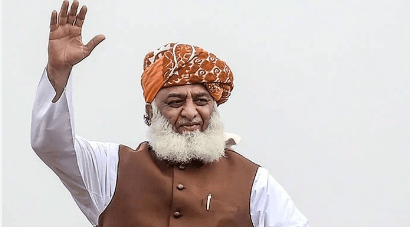
Maulana Fazlur Rehman, a prominent Pakistani religious and political figure, criticizes the 2023 election results, alleging rigging and advocating for street protests. He recounts past political alliances and maneuvers, including his involvement in the no-confidence motion against Imran Khan’s government. The text also discusses the political landscape in Pakistan, highlighting the tensions between different political parties and the potential for instability. It emphasizes the need for constitutional means of addressing grievances and expresses concern over the consequences of continued political unrest. Finally, the text points to the potential damage to Pakistan’s global reputation and the urgent need to resolve the political crisis.

Jamiat Ulemae Islam Study Guide
Quiz
Instructions: Answer the following questions in 2-3 sentences each.
- What is the historical connection between Jamiat Ulemae Islam and Jamiat Ulamae Hind?
- What is Maulana Mufti Mehmood’s view on democracy, as described in the text?
- According to the text, what is Maulana Fazlur Rehman’s attitude toward protest and democratic politics?
- What claim does Maulana Fazlur Rehman make regarding the 2018 elections?
- What was Maulana Fazlur Rehman’s position on the no-confidence vote against Imran Khan’s government?
- According to the text, what did Maulana Fazlur Rehman allege about Generals Bajwa and Faiz Hameed?
- How does the text criticize Maulana Fazlur Rehman’s statements about the no-confidence vote and constitutional processes?
- What is the author’s view of Maulana Fazlur Rehman’s allegations of rigging in the 2024 election?
- What does the text suggest about the current political situation in KP?
- According to the text, what is the author’s view on forming a national government?
Quiz Answer Key
- Jamiat Ulemae Islam is described as the Pakistani chapter or face of Jamiat Ulamae Hind, indicating a close historical and organizational link between the two groups. Jamiat Ulamae Hind has a history of public political struggle alongside Congress.
- Maulana Mufti Mehmood believed that democracy should be embraced regardless of its origin, whether from the East or West, or from the top or bottom; he was firmly committed to democratic principles and rejected dictatorship.
- Maulana Fazlur Rehman is portrayed as a dynamic political figure who is comfortable with both protest politics and democratic participation. The text indicates he uses both methods to achieve his goals.
- Maulana Fazlur Rehman claimed that the 2018 elections were rigged and that his party should take to the streets to protest instead of participating in the assemblies. This implies a rejection of the election outcome.
- Maulana Fazlur Rehman states that he was not in favor of the no-confidence vote against Imran Khan’s government, but that he sacrificed his opinion for his friends, suggesting political maneuvering and internal coalition pressures.
- Maulana Fazlur Rehman alleged that General Bajwa and General Faiz Hameed instructed political parties to bring a movement against Imran Khan’s government, claiming that the generals directed the political opposition.
- The text criticizes Maulana Fazlur Rehman for speaking out against the constitutional method of removing the government. It questions why he would pursue protests instead of the constitutional option.
- The author finds it inconsistent that Maulana Fazlur Rehman claims the 2024 election was rigged when his party won seven seats. They point out the discrepancy in this claim and the results, highlighting the weakness of his accusations.
- The text notes that no party has a clear majority in KP. It indicates that this lack of majority makes it difficult for any party to form a government on its own, putting KP at the mercy of political alliances.
- The text suggests that forming a national government by including PTI is impractical and shameful. It indicates the government should be formed by two out of the three major parties.
Essay Questions
Instructions: Answer each of the following in a well-organized essay with a clear thesis, supporting evidence, and conclusion.
- Analyze the political strategies of Maulana Fazlur Rehman, as portrayed in the text. How does he use both protest and democratic politics, and what does this reveal about his political objectives?
- Explore the author’s criticism of Maulana Fazlur Rehman’s accusations of election rigging. In what ways does the author find inconsistencies in Maulana’s claims, and what does this reveal about the author’s own political perspective?
- Discuss the broader implications of the text regarding the relationship between the military establishment and political parties in Pakistan. How does the text portray the influence of the military on political outcomes, and what does this suggest about the state of Pakistani democracy?
- Evaluate the author’s view on the current political situation in Pakistan. What does the author consider the root causes of instability, and what does the text suggest is needed for political reform?
- Consider the various perspectives presented in the text regarding the formation of a government. What are the competing interests, and what does this reveal about the challenges of political coalition building in Pakistan?
Glossary of Key Terms
Jamiat Ulemae Islam (JUI): A Pakistani political party with a religious background. It is the focus of the text.
Jamiat Ulamae Hind: An Indian organization with close ties to Jamiat Ulemae Islam, historically associated with public political engagement alongside Congress.
Maulana Mufti Mehmood: A former leader within JUI, remembered for his belief in democracy from all sources.
Maulana Fazlur Rehman: The current leader of JUI, a dynamic political figure who uses both protest and democratic means.
Establishment: A term often used in Pakistan to refer to the military and intelligence apparatus, believed to exert influence on the country’s politics.
PTI: Pakistan Tehreek-e-Insaf, the political party previously led by Imran Khan, which was the focus of Maulana Fazlur Rehman’s critique in the text.
N-League: Pakistan Muslim League (Nawaz), one of the major political parties in Pakistan, often in a political rivalry with PTI.
PP: Pakistan Peoples Party, another major political party in Pakistan, involved in political alliances.
PDM: Pakistan Democratic Movement, an alliance of opposition parties formed against Imran Khan’s government.
KP: Khyber Pakhtunkhwa, a province in Pakistan, whose political dynamics are discussed in the text.convert_to_textConvert to source
Pakistan’s Political Turmoil: JUI and the 2023 Elections
Okay, here’s a briefing document summarizing the key themes and ideas from the provided text:
Briefing Document: Analysis of Jamiat Ulemae Islam and Current Pakistani Political Landscape
Date: October 26, 2023 (Assumed current date)
Subject: Analysis of Jamiat Ulemae Islam, Maulana Fazlur Rehman’s recent actions and statements, and the broader political turmoil in Pakistan post-election.
Introduction:
This document analyzes the provided text, focusing on the political actions and statements of Jamiat Ulemae Islam (JUI), particularly its leader Maulana Fazlur Rehman, within the context of recent Pakistani elections and the country’s ongoing political and economic instability. The text highlights JUI’s historical ties, Maulana Fazlur Rehman’s recent accusations and political maneuvering, and the broader political challenges facing Pakistan.
Key Themes and Ideas:
- JUI’s Historical Context and Ideology:
- Affiliation with Jamiat Ulamae Hind: The text establishes that JUI is the Pakistani chapter of Jamiat Ulamae Hind, a group historically aligned with the Indian National Congress. This highlights a tradition of “public politics full of struggle” and an anti-establishment stance.
- Commitment to Democracy (in principle): The text notes that Maulana Mufti Mehmood, a previous leader, emphasized commitment to democracy, stating, “democracy should come from East or West. Come from top or bottom, our commitment is to democracy. We cannot accept dictatorship at any cost.” This highlights the contradiction between this stated commitment and current actions.
- Maulana Fazlur Rehman: A Dynamic and Controversial Figure:
- Dynamic Leader: Maulana Fazlur Rehman is described as “most dynamic, reason-serving, and undermining,” and is acknowledged for his street power, possessing “the taste of protest politics as much as they do democratic politics.”
- Accusations of Election Rigging: He immediately claimed the 2018 elections were rigged, advocating for street protests over parliamentary engagement. He is now repeating these accusations in relation to the recent elections.
- Quote: “It was the Maulana who immediately after the 2018 elections, hinting at them as rigged, and gave full emphasis. That we should stand on the streets instead of sitting in the assemblies.”
- Quote: “Today Maulana Fazlur Rehman is angry again, but he is angry over the recent election results. He says that the entire election has been stolen.”
- Claims of Military Interference: A major claim made by Maulana is that “General Bajwa and General Faiz Hameed gave instructions to political parties to bring a movement against Imran’s government.”
- Inconsistencies and Contradictions: The author points out contradictions in Maulana’s statements. For example, while advocating street protests now, he claims to have been against the no-confidence movement against Imran Khan, despite the fact it would have been a peaceful option for removing the government. He is also criticized for aligning with those he previously called a “Jewish agent”.
- The Current Political Crisis:
- Widespread Accusations of Rigged Elections: Maulana’s claims of widespread rigging are presented as a major factor driving current political instability.
- Quote: “You are saying that there is a bigger rig in 2024 than 2018 what kind of rig is this in which your party has won seven national assembly seats and PTI has come close to hundred.”
- Challenges to Parliament’s Legitimacy: Maulana questions the legitimacy of the current parliament, claiming that decisions are being made elsewhere, indicating an assertion of the influence of the military or other non-elected entities.
- Quote: “This parliament will not work. It has no status and importance. Decisions in Parliament. And policies will come from somewhere else.”
- Call for Protests: Maulana is advocating for street protests until the “future establishment will have nothing to do with domestic politics.”
- Unstable Political Landscape: The text emphasizes the difficulty of forming a stable government. No single party has a clear majority, requiring alliances and negotiations.
- Possible Political Solutions: The text includes speculation about possible governing coalitions and the need to “satisfy Aba and the party” which refers to navigating the demands of political leaders and their parties.
- Broader National Issues:
- Economic Misery and Political Instability: The text concludes that “economic misery and political instability are written in the fate of this unfortunate country,” and that internal hatred and political instability are the root of Pakistan’s troubles.
- Erosion of Democratic Processes: The writer expresses concern that Pakistan’s electoral processes have become a “joke” on the world stage due to these claims.
- Quote: “Today our election has become a joke in the whole world including America and the European Union”.
- Need for Constitutional Solutions: There’s a call for resolving election disputes through proper legal channels, not street protests.
- Quote: “Either prove your allegations in the courts or else stop this hate filled propaganda.”
Analysis and Implications:
The document portrays a highly volatile political climate in Pakistan, with deep divisions and widespread distrust in electoral processes and institutions. Maulana Fazlur Rehman’s actions, while presented as principled opposition, are also critiqued for inconsistency and potential to destabilize the country further. The document highlights that a significant portion of Pakistan’s political issues comes down to the political elites’ need to maintain power, and that those needs are creating instability.
Conclusion:
This situation calls for:
- Transparency in the electoral process: Thorough investigation of rigging allegations.
- Political leadership: Leaders to work together to bring stability rather than pursuing confrontational tactics.
- Respect for legal and constitutional processes: Disputes should be resolved within the law, not on the streets.
- National Unity: Focus on addressing the root causes of political and economic instability in Pakistan.
This briefing document is meant to provide an overview of the provided text. Further research and information are needed to fully understand the complexity of Pakistan’s current situation.convert_to_textConvert to source
Pakistani Politics: JUI, Elections, and Instability
FAQ: Pakistani Politics, JUI, and Recent Elections
- What is the relationship between Jamiat Ulemae Islam (JUI) and Jamiat Ulmae Hind?
- Jamiat Ulemae Islam (JUI) is essentially the Pakistani chapter or extension of Jamiat Ulmae Hind. Historically, Jamiat Ulmae Hind has been involved in public politics alongside the Indian National Congress, often admiring and respecting the scholars affiliated with the Congress, even when they exhibited anti-establishment sentiments.
- How is Maulana Fazlur Rehman, the current leader of JUI, viewed within Pakistani religious politics?
- Maulana Fazlur Rehman is considered a highly dynamic, resourceful, and influential figure in Pakistani religious politics. He is known for his strong street power, his ability to mobilize protests, and his willingness to challenge the establishment. He is seen as someone who is equally adept at protest politics and democratic engagement.
- What is Maulana Fazlur Rehman’s stance on the 2018 and 2024 elections in Pakistan?
- Maulana Fazlur Rehman has consistently alleged that both the 2018 and 2024 elections were rigged. Immediately after the 2018 elections, he advocated for street protests rather than participating in the assemblies. He has made similar allegations about the 2024 elections, calling them “stolen” and suggesting that the parliament is illegitimate, vowing to protest until the establishment stops meddling in domestic politics.
- What controversial claim did Maulana Fazlur Rehman make regarding the no-confidence vote against Imran Khan’s government?
- Maulana Fazlur Rehman claimed that he was not in favor of the no-confidence vote against Imran Khan’s government. He asserted that he only participated as a “sacrifice” for his political allies and that retired Generals Bajwa and Faiz Hameed instructed political parties to remove Imran Khan’s government, suggesting a form of establishment interference. This claim is controversial and has been disputed by both generals.
- How does the author of the article perceive Maulana Fazlur Rehman’s approach to resolving political issues?
- The author questions Maulana Fazlur Rehman’s logic of rejecting the constitutional method to remove a government in favor of potentially disruptive street protests. They also criticize him for not using the no-confidence vote to bring down Imran Khan’s government despite having been vocal in his opposition to it, which he himself claims was a sacrifice. The author questions his integrity and suggests he is being inconsistent by not speaking against Imran’s party who he has previously called a “Jewish agent.”
- What is the author’s opinion on the current state of Pakistani politics?
- The author believes that Pakistan is trapped in a cycle of economic misery and political instability. They attribute this instability to deep-seated hatred and suggest that the ongoing noise of election rigging, coupled with a lack of evidence in courts, will lead to further instability. They fear a protest movement may destabilize the country further and urge political actors to focus on constitutional methods and reconciliation instead of resorting to agitational politics.
- What solution is the author advocating for the current political deadlock after the 2024 elections?
- The author is suggesting that a national government be formed by two of the three major parties, likely referring to the Pakistan Muslim League-N (N-League) and the Pakistan People’s Party (PPP), while acknowledging the unpopularity of this idea, as it would exclude the Pakistan Tehreek-e-Insaf (PTI) party. The author also proposed that Bilawal Bhutto be made Prime Minister and Shahbaz Sharif the Chairman of Senate to satisfy their parties. They feel this alliance would be the only path to stability, with or without the PTI. They ultimately believe this should be the accepted mandate in Balochistan.
- How do the international community and Pakistan’s reputation factor into the discussion?
- The author notes that the controversies surrounding the Pakistani elections have turned the country into a “joke” in the eyes of international observers like the US and the EU, undermining the credibility of any new government. This has become a problem since the previous government had been overthrown over concerns of election rigging. The author highlights the paradox of Imran Khan seeking help from the US, a country he previously criticized, which he feels degrades their international standing. They believe protests and further agitation in this climate will shake the country to its core.
convert_to_textConvert to source
Pakistani Politics: JUI, Elections, and the Establishment
Okay, here’s the timeline and cast of characters based on the provided text:
Timeline of Events
- Pre-2018: Jamiat Ulemae Islam (JUI), as a Pakistani chapter of Jamiat Ulmae Hind, engaged in public politics alongside the Congress party. They held pro-democracy views and respected scholars who opposed the establishment.
- Unspecified Time: Maulana Mufti Mehmood asserts commitment to democracy from any source and rejects dictatorship.
- 2013: Maulana Fazlur Rehman (leader of JUI) suggests forming an allied government by breaking an existing alliance in Khyber Pakhtunkhwa (KP) with Nawaz Sharif.
- 2018 Elections: Maulana Fazlur Rehman immediately declares the election rigged, calling for street protests instead of participating in the assemblies.
- Post 2018: General Bajwa and General Faiz Hameed allegedly instructed political parties, including Maulana Fazlur Rehman to bring a no-confidence movement against Imran Khan’s government. They instruct these parties to do it within the system.
- Unspecified Time: Maulana Fazlur Rehman says he was not in favor of the no confidence movement against PTI, but sacrificed his opinion for his friends.
- 2024 Elections: Maulana Fazlur Rehman claims the election was stolen and vows to protest in the streets, stating parliament has no importance because decisions are made elsewhere. He claims the establishment will have to disassociate from domestic politics for any peace to be found.
- Post 2024: The text asserts that Maulana Fazlur Rehman has made a contradictory statement about being against the no-confidence movement.
- Post 2024: An unnamed writer claims JUI has won seven national assembly seats and PTI has won nearly 100 in a rigged election, raising questions about the claim of rigging.
- Post 2024: The text suggests a potential N-League and PP alliance forming the government, with a suggestion to appoint Shahbaz Sharif as Chairman Senate and Bilawal Bhutto Zardari as Prime Minister.
- Post 2024: Concerns arise about the potential for protest movements causing political instability. The writer advises to use courts to prove rigging claims rather than inciting protests.
Cast of Characters
- Maulana Mufti Mehmood: A deceased scholar and politician associated with Jamiat Ulemae Islam. Known for his pro-democracy stance and opposition to dictatorship.
- Maulana Fazlur Rehman: The current leader of Jamiat Ulemae Islam. Known for his dynamic leadership, protest politics, and willingness to challenge the establishment. He has recently accused the establishment of interference in elections and for directing political parties to do a no confidence movement.
- Nawaz Sharif: A prominent Pakistani politician, mentioned in relation to a past alliance offer by Maulana Fazlur Rehman. He is also mentioned as declining a ministry of greatness.
- General Bajwa: A retired general, alleged by Maulana Fazlur Rehman to have instructed political parties to initiate a no-confidence movement against Imran Khan’s government.
- General Faiz Hameed: A retired general, alleged by Maulana Fazlur Rehman to have instructed political parties to initiate a no-confidence movement against Imran Khan’s government.
- Imran Khan: A former Pakistani Prime Minister. The text refers to a no-confidence movement against his government that Maulana Fazlur Rehman opposed. Also, mentioned as appealing to America for help.
- Shehbaz Sharif: A prominent Pakistani politician, suggested for appointment as Chairman of the Senate.
- Bilawal Bhutto Zardari: A prominent Pakistani politician, suggested as a potential Prime Minister.
- “The Former Player”: A reference to Imran Khan, who is described as pushing himself to America for help.
- “The Author”: An unnamed person who questions Maulana Fazlur Rehman’s statements and motives.
This timeline and cast of characters provide a summary of the key events and individuals discussed in the provided text, highlighting the tensions and power struggles within Pakistani politics.convert_to_textConvert to source
Pakistan’s Post-Election Political Crisis
Pakistani politics are currently marked by significant instability and disputes, particularly surrounding recent election results [1, 2]. Here’s a breakdown of the key issues and figures, according to the sources:
- Jamiat Ulemae Islam (JUI): This party is described as a Pakistani chapter of Jamiat Ulmae Hind, which has historically been aligned with the Congress party and known for its anti-establishment stance [3].
- Maulana Fazlur Rehman: He is a prominent figure in religious politics in Pakistan and is seen as dynamic and influential [4]. He believes in both protest and democratic politics and has been critical of election results [1, 4].
- Allegations of Rigging: Maulana Fazlur Rehman has claimed that the 2024 elections were rigged, similar to his claims about the 2018 elections [1, 4, 5]. He has called for street protests and stated that the current parliament is illegitimate [1].
- Contradictory Stances: Maulana Fazlur Rehman has made claims about being against the no-confidence movement against the PTI government, despite his actions [1]. He stated that Generals Bajwa and Faiz Hameed instructed political parties to bring a movement against Imran’s government [1]. These claims have put him in a difficult position [6].
- He is now in a situation where he is not speaking out against a party he previously called a “Jewish agent” [7].
- Other Political Parties:
- Jamaat-e-Islami: This party is mentioned alongside Maulana Fazlur Rehman as part of the current religious political landscape [4].
- Pakistan Tehreek-e-Insaf (PTI): Despite claims of rigging, PTI has won a significant number of seats [5]. They are seen by some as being pushed to seek help from the same America they once blamed [2].
- Pakistan Muslim League-Nawaz (N-League): The N-League is trying to bring their point on record and wants Shahbaz to be made Chairman of the Senate [8]. They may be in a position to form a government with Pakistan Peoples Party (PP) [8].
- Pakistan Peoples Party (PP): The PP is in a position to potentially form a government with the N-League [8]. Bilawal may be appointed as Prime Minister [8].
- Role of the Military Establishment:
- The military establishment is said to have been involved in domestic politics, allegedly giving instructions to political parties [1]. This involvement is seen by some as a key cause of political instability [1].
- There is condemnation of acts that someone did for their own interests or to bring a loved one before election 2018 [6].
- Election Disputes and Instability:
- The 2024 election is being questioned, with accusations of rigging [1, 5]. These disputes are contributing to the political instability [2].
- The current political climate is seen as a joke worldwide [2]. There are concerns about the government’s global reputation and credibility [2].
- There is a call for evidence of rigging to be presented in courts [2].
- The country is facing economic misery and political instability [2].
- Possible Government Formation:
- The formation of a national government, including PTI, is considered impractical [8].
- A coalition government is likely to be formed by two out of the three major parties, such as N-League and PP [8].
The sources emphasize the need for a constitutional approach to resolving political issues and a rejection of unconstitutional protests [7]. There’s also concern over the consequences of continued political agitation and the need to address the root causes of the country’s problems [2].convert_to_textConvert to source
Pakistani Election Rigging Claims and Fallout
Claims of election rigging are a significant point of contention in Pakistani politics, particularly surrounding the 2018 and 2024 elections [1, 2]. Here’s a breakdown of the key aspects of these claims, according to the sources:
- Maulana Fazlur Rehman’s Allegations:
- Maulana Fazlur Rehman has been at the forefront of these accusations, claiming that both the 2018 and 2024 elections were rigged [1, 2]. He has stated that the entire 2024 election was stolen [2].
- Following the 2018 elections, he immediately hinted at them being rigged [1].
- In response to the alleged rigging, he has called for street protests, stating that the current parliament is illegitimate and has no status [2]. He believes that decisions are being made outside of the parliament [2].
- Comparison to 2018:
- Maulana Fazlur Rehman claims that the rigging in 2024 is even more extensive than it was in 2018 [3].
- However, despite these claims, his party won seven national assembly seats in the 2024 election, while PTI won close to a hundred seats [3].
- Calls for Evidence and Constitutional Process:
- There are calls for those alleging rigging to provide evidence in court rather than engaging in what is described as “hate-filled propaganda” [4].
- The sources question whether it is correct to adopt unconstitutional protest routes instead of constitutional methods to address election grievances [5].
- There is an emphasis on the importance of a constitutional approach to resolving political issues [5].
- Impact of Rigging Claims:
- These claims are contributing to the ongoing political instability in the country [4].
- The situation is described as a joke in the eyes of the international community, including the United States and the European Union, which damages the country’s global reputation and credibility [4].
- Contradictions and Questions:
- Maulana Fazlur Rehman’s stance is questioned due to his past actions and statements, such as his claims about being against the no-confidence movement against the PTI government [2].
- The source suggests that if there was an opportunity to remove a government peacefully, why would he favor a violent street protest [6]?
- The source questions his silence regarding the party he previously called a “Jewish agent” [5].
In summary, the claims of election rigging are a major source of conflict and instability in Pakistan [4]. Maulana Fazlur Rehman is a key figure making these allegations, but there is debate about the validity of these claims and whether they are being used to justify unconstitutional actions [2, 5]. There is a strong push for evidence to be presented in court and for adherence to constitutional processes [4, 5].
Fazlur Rehman: Politics and Protests in Pakistan
Maulana Fazlur Rehman is a prominent and influential figure in Pakistani religious politics [1]. Here’s a detailed look at his role and actions, according to the sources:
- Political Affiliations and Ideologies:
- Maulana Fazlur Rehman is a leader within Jamiat Ulemae Islam (JUI), which is described as the Pakistani chapter of Jamiat Ulmae Hind [2]. Jamiat Ulmae Hind has a history of public political engagement, often aligning with the Congress party [2]. They are noted for their anti-establishment views [2].
- He is seen as a dynamic and influential figure within the current religious political landscape [1].
- Maulana Fazlur Rehman believes in both protest and democratic politics, using both to achieve his aims [1].
- He has stated that his commitment is to democracy and he does not support dictatorship [2].
- Claims of Election Rigging:
- Maulana Fazlur Rehman has been a vocal critic of election results, claiming that both the 2018 and 2024 elections were rigged [1, 3]. He has stated that the entire 2024 election was stolen [3].
- He has called for street protests in response to the alleged rigging [3]. He has also stated that the current parliament is illegitimate and lacks importance [3].
- Contradictory Stances and Actions:
- Maulana Fazlur Rehman has made claims about being against the no-confidence movement against the PTI government, despite his actions [3].
- He has claimed that Generals Bajwa and Faiz Hameed instructed political parties to bring a movement against Imran’s government [3].
- The sources question his stance because, if he was against the no-confidence movement, why would he favor violent street protests [4]?
- The sources also point out that he is now silent regarding a party he previously called a “Jewish agent” [5].
- Political Influence and Impact:
- Maulana Fazlur Rehman is described as being at the forefront of religious politics and undermining the establishment [1]. He is said to have significant street power, which other political figures acknowledge [1].
- He is said to have a taste for both protest politics and democratic politics [1].
- He is considered a key figure in the ongoing political instability in Pakistan [6].
- Current Political Position:
- Maulana Fazlur Rehman is currently angry about the 2024 election results and is protesting against the alleged rigging [3].
- His party won seven national assembly seats in the 2024 election, while the PTI won close to a hundred [6].
In summary, Maulana Fazlur Rehman is a significant political figure in Pakistan known for his strong views, protest tactics, and accusations of election rigging. The sources highlight contradictions in his actions and statements, raising questions about his true motives and impact on the country’s political landscape. He is seen as a dynamic, influential figure, with a history of both democratic politics and street protests.convert_to_textConvert to source
Pakistan’s Political Instability
Political instability in Pakistan is a significant issue, stemming from various factors, including disputed election results, the role of the military establishment, and the actions of key political figures. Here’s a breakdown of the key elements contributing to this instability, according to the sources:
- Disputed Election Results:
- Both the 2018 and 2024 elections are marked by significant allegations of rigging, with Maulana Fazlur Rehman being a key figure in these accusations [1, 2]. He has stated that the entire 2024 election was stolen [2].
- These allegations have led to calls for street protests and a rejection of the current parliament’s legitimacy, as it is seen as a result of a rigged election [2]. The political climate has been described as a joke in the eyes of the international community [3].
- The 2024 election results have resulted in a situation where no party has a simple majority to form a government [4].
- Role of the Military Establishment:
- The military establishment is seen as a destabilizing force, with allegations that they interfered in domestic politics and instructed political parties to act against the government [2, 5].
- There is condemnation of actions taken by the military establishment for personal gain or to influence the outcome of the 2018 elections [5]. This alleged involvement of the military in politics is seen as a source of disorder [3].
- Key Political Figures and Their Actions:
- Maulana Fazlur Rehman’s contradictory stances and actions have added to the instability. He has claimed to be against the no-confidence movement against the PTI government, despite his actions [2]. He is now not speaking out against a party he previously called a “Jewish agent” [6]. He is also a key figure in the calls for protests [2].
- He is described as a dynamic and influential figure, with a history of both democratic politics and street protests [1, 5].
- Other political figures are also contributing to the instability as they attempt to form a government. For example, the N-League is seeking to bring their point on record and put Shahbaz in a position of power while also trying to put Bilawal as Prime Minister [7].
- Lack of Constitutional Process:
- There is a strong call for constitutional processes to be followed to resolve political issues [6]. There is criticism against using unconstitutional protest routes to address election grievances [6].
- The sources suggest that these grievances should be addressed in court, rather than through protests and “hate-filled propaganda” [3, 6].
- Consequences of Instability:
- The country is facing economic misery and political instability [3]. The ongoing political turmoil is damaging the country’s global reputation and credibility [3].
- The political situation has become a joke in the eyes of the international community, including the United States and the European Union [3].
- Possible Government Formations:
- The formation of a national government, including PTI, is seen as impractical [7].
- A coalition government is likely to be formed by two out of the three major parties, such as N-League and PP [7].
In summary, political instability in Pakistan is fueled by disputed elections, the alleged involvement of the military in politics, contradictory actions by political figures, and a lack of adherence to constitutional processes. The situation is impacting the country’s economy and global reputation. There is a strong emphasis on resolving these issues through legal and constitutional means rather than through protests.
Pakistani Protest Movements and Political Instability
Protest movements are a significant aspect of the political landscape in Pakistan, often arising in response to perceived injustices or grievances, particularly concerning election results and government legitimacy. Here’s a breakdown of protest movements, according to the sources:
- Response to Election Rigging:
- Maulana Fazlur Rehman is a key figure who has called for street protests, asserting that both the 2018 and 2024 elections were rigged [1, 2]. He claims the entire 2024 election was stolen, leading him to declare the current parliament illegitimate [2].
- He believes that decisions and policies are being made outside of the parliament, which is one reason he believes street protests are necessary [2].
- After the 2018 elections, Maulana Fazlur Rehman immediately hinted that they were rigged and advocated for street action instead of engaging with the assemblies [1].
- The sources suggest that these claims of rigging contribute to political instability [3].
- Maulana Fazlur Rehman’s Stance:
- Maulana Fazlur Rehman is described as having a “taste” for protest politics, and he believes he has as much expertise in protest politics as he does in democratic politics [1].
- His call for protests is questioned because he also claimed that he was not in favor of the no-confidence movement against the PTI government [2]. This has led to a question of why he would prefer violent street protests when there was an opportunity to remove a government peacefully [4].
- He has also stated that he sacrificed his opinion for his friends, suggesting a level of political maneuvering behind the calls for protests [2].
- Concerns About Unconstitutional Methods:
- The sources question whether it is correct to adopt unconstitutional protest routes rather than following a constitutional method to address political grievances [5].
- There is a call for those alleging rigging to present evidence in court rather than engaging in “hate-filled propaganda” through protests [3, 5].
- The sources emphasize the importance of using constitutional methods to resolve political disputes [5].
- Potential Consequences of Protests:
- The sources suggest that if protest movements start, the country could face further instability [3].
- The potential for violence and “bloodbathing” during these protests is mentioned, emphasizing the risk associated with such actions [4].
- It’s also noted that ongoing political turmoil is damaging the country’s global reputation [3].
- Historical Context:
- Jamiat Ulemae Islam, the party of Maulana Fazlur Rehman, has a history of public political struggle [6]. This party’s history suggests that it aligns with an anti-establishment view that supports protest movements [6].
- Other Political Actors:
- Other political figures are using the current political instability to bring their own points on record. For example, the N-League is seeking to bring their point on record and put Shahbaz in a position of power while also trying to put Bilawal as Prime Minister [7]. This shows the complex political landscape around the current protest movements.
In summary, protest movements in Pakistan are often a reaction to election disputes and perceived government illegitimacy. Maulana Fazlur Rehman is a central figure in these movements, though his motives and actions are questioned in the sources. There are strong concerns that these movements undermine constitutional processes and could lead to further instability and violence. The sources call for constitutional methods to resolve political disputes and for evidence to be presented in court rather than resorting to street protests.
Fazlur Rehman’s Shifting Political Stances
Maulana Fazlur Rehman’s political stances have shown significant shifts and contradictions, particularly concerning his views on elections, government legitimacy, and alliances [1-3]. Here’s an analysis of these changes:
- Claims of Election Rigging:Maulana Fazlur Rehman has been a consistent critic of election results, claiming that both the 2018 and 2024 elections were rigged [1, 4]. He has stated that the entire 2024 election was stolen and that the current parliament is illegitimate [1].
- He has used these claims to justify calls for street protests, advocating for action outside the established political system [1]. He believes that decisions and policies are being made outside of the parliament [1].
- Contradictory Stances on No-Confidence Movement:Despite his strong stance against the current government and his history of street protests, Maulana Fazlur Rehman has claimed that he was not in favor of the no-confidence movement against the PTI government [1]. This is contradictory because he was, at the same time, advocating for street protests [2].
- He stated that he “sacrificed” his opinion for his friends, implying that his actions were influenced by political considerations [1].
- Accusations Against the Military Establishment:Maulana Fazlur Rehman has stated that Generals Bajwa and Faiz Hameed instructed political parties to bring a movement against Imran’s government [1]. This accusation puts him in a difficult position, because it raises questions about his motivations and actions [2].
- The sources question the timeline of his claims, noting that General Faiz was not in ISI at the time [2]. Additionally, they question why he would favor violent street protests if he had the option to remove the government peacefully and democratically [2].
- Shift in Stance on Political Opponents:The sources note that Maulana Fazlur Rehman is currently silent regarding a party that he previously called a “Jewish agent” [3]. This shift in stance further illustrates the contradictions in his political positions.
- Use of Both Democratic and Protest Politics:Maulana Fazlur Rehman is described as having a “taste” for both protest and democratic politics [4]. This means he is willing to use both methods to achieve his aims [4]. He is comfortable engaging in street protests while also being involved in parliamentary politics.
- Call for Constitutional Methods:Despite his history of using protests to oppose the government, the sources also suggest that political grievances should be addressed in court [3]. The sources emphasize the importance of using constitutional methods to resolve political disputes [3].
- There is a strong call for those alleging rigging to present evidence in court rather than engaging in “hate-filled propaganda” through protests [3].
- Current Political Position:He is currently angry about the 2024 election results and is protesting the alleged rigging [1]. However, the sources note that his party only won seven national assembly seats while the PTI won close to a hundred, making his claims of rigging questionable [5].
In summary, Maulana Fazlur Rehman’s political stances are characterized by contradictions and shifts. He is a vocal critic of election results and a proponent of street protests, yet he claims to have been against the no-confidence movement and suggests he was influenced by other political actors. His shifting stances highlight the complex and often contradictory nature of Pakistani politics. The sources emphasize the need to follow constitutional processes rather than relying on protests.convert_to_textConvert to source
Fazlur Rehman’s Rejection of Pakistani Elections
Maulana Fazlur Rehman has been a vocal critic of both the 2018 and 2024 elections, alleging widespread rigging and questioning the legitimacy of the outcomes [1, 2]. Here’s a breakdown of his responses to each election, according to the sources:
2018 Elections:
- Immediately after the 2018 elections, Maulana Fazlur Rehman hinted that the elections were rigged [2]. He didn’t accept the results of the election.
- Instead of engaging with the assemblies, he advocated for street protests [2]. This shows that he was immediately against the results of the election and wanted to take action outside the political system.
2024 Elections:
- Maulana Fazlur Rehman has stated that the entire 2024 election was stolen [1]. He has gone so far as to say that this parliament has no status or importance.
- He has again called for street protests against the alleged rigging [1]. He believes that decisions in parliament will be made elsewhere [1].
- He has stated that he will protest until the establishment is removed from domestic politics [1].
- According to the sources, his claims of rigging are questionable since his party won only seven national assembly seats, while the PTI won close to a hundred [3].
Overall Response:
- Maulana Fazlur Rehman’s response to both elections has been consistent in that he has called for street protests and rejected the legitimacy of the outcomes [1, 2].
- He believes that he has a “taste” for protest politics, and he believes he has as much expertise in protest politics as he does in democratic politics [2].
- His actions are questioned in the sources because he also claimed he was not in favor of the no-confidence movement against the PTI government. This has led to questions regarding why he would prefer violent street protests when there was an opportunity to remove a government peacefully [1, 4].
- The sources emphasize the importance of using constitutional methods to resolve political disputes rather than resorting to street protests [4, 5].
convert_to_textConvert to source
Fazlur Rehman’s Election Fraud Allegations
Maulana Fazlur Rehman has made strong accusations regarding the 2018 and 2024 elections, claiming both were rigged and illegitimate [1, 2]. Here’s a breakdown of his specific accusations:
- 2018 Elections:
- Maulana Fazlur Rehman immediately hinted that the 2018 elections were rigged [1]. He did not accept the results of the election.
- Instead of engaging with the assemblies, he advocated for street protests [1]. He wanted to take action outside the political system because he believed the results were not legitimate.
- 2024 Elections:
- Maulana Fazlur Rehman has stated that the entire 2024 election was stolen [2]. He has gone so far as to say that this parliament has no status or importance [2].
- He has again called for street protests against the alleged rigging [2]. He believes that decisions in parliament will be made elsewhere [2].
- He has stated that he will protest until the establishment is removed from domestic politics [2].
Maulana Fazlur Rehman’s accusations about both elections are similar in that he claims they were rigged and illegitimate. His response to both has been to reject the results and call for street protests [1, 2]. The sources, however, suggest that his claims of rigging in the 2024 election are questionable considering that his party won only seven national assembly seats, while the PTI won close to a hundred [3].convert_to_textConvert to source
Fazlur Rehman’s Election Fraud Allegations
Maulana Fazlur Rehman has made strong accusations regarding the 2018 and 2024 elections, claiming both were rigged and illegitimate [1, 2]. Here’s a breakdown of his specific accusations:
- 2018 Elections:
- Maulana Fazlur Rehman immediately hinted that the 2018 elections were rigged [1]. He did not accept the results of the election.
- Instead of engaging with the assemblies, he advocated for street protests [1]. He wanted to take action outside the political system because he believed the results were not legitimate.
- 2024 Elections:
- Maulana Fazlur Rehman has stated that the entire 2024 election was stolen [2]. He has gone so far as to say that this parliament has no status or importance [2].
- He has again called for street protests against the alleged rigging [2]. He believes that decisions in parliament will be made elsewhere [2].
- He has stated that he will protest until the establishment is removed from domestic politics [2].
Maulana Fazlur Rehman’s accusations about both elections are similar in that he claims they were rigged and illegitimate. His response to both has been to reject the results and call for street protests [1, 2]. The sources, however, suggest that his claims of rigging in the 2024 election are questionable considering that his party won only seven national assembly seats, while the PTI won close to a hundred [3].
Pakistan Election Protests: Risks and Consequences
Continued election-related protests, particularly those led by figures like Maulana Fazlur Rehman, carry significant potential consequences, according to the sources:
- Political Instability: The sources suggest that if protest movements start, the country could face further instability [1]. Maulana Fazlur Rehman’s rejection of election results and calls for street protests can exacerbate existing political tensions, leading to a more volatile political climate [2, 3].
- Violence and “Bloodbathing”: The potential for violence and “bloodbathing” during these protests is mentioned [4]. The sources emphasize that resorting to street protests as a means of addressing election grievances could lead to clashes and unrest [4].
- Undermining Constitutional Processes: The sources question the legitimacy of adopting unconstitutional protest routes rather than following a constitutional method to address political grievances [5]. The sources emphasize that resorting to street protests could undermine the established legal and constitutional frameworks for addressing electoral disputes [5].
- Damage to Global Reputation: The sources indicate that ongoing political turmoil and election disputes are damaging the country’s global reputation [1]. The sources note that the perception of election rigging makes the country a “joke” on the international stage, and it is damaging the credibility of the government [1].
- Questionable Legitimacy of the Government: Maulana Fazlur Rehman has claimed that the 2024 election was stolen and that this parliament has no status or importance [3]. This can lead to the questioning of the legitimacy of the government both domestically and internationally.
- Disruption of Normal Political Processes: Maulana Fazlur Rehman believes that decisions in parliament will be made elsewhere [3]. This suggests that the parliament’s ability to function effectively will be limited due to the ongoing protests and that normal political processes may be disrupted [3].
In summary, the sources suggest that continued election-related protests can lead to a range of negative consequences, including political instability, violence, and damage to the country’s reputation. The sources emphasize the importance of following constitutional methods to resolve political disputes and avoid the potential for further turmoil. The sources stress the need for evidence of rigging to be presented in court rather than resorting to street protests [1].
Pakistan’s Post-Election Government Formation
The sources discuss a few potential government formations, highlighting the challenges and political maneuvering involved in forming a stable government:
- A Coalition Government of Two Out of Three Major Parties: The sources suggest that the most likely government formation will result from two of the three major parties coming together [1]. It is specifically mentioned that the N-League and PP (Pakistan Peoples Party) may form a coalition, which seems to be the most likely scenario [1].
- National Government Including PTI: The sources mention that some are suggesting a national government that includes PTI (Pakistan Tehreek-e-Insaf), but this is considered “impractical and shameful” [1]. This indicates that such a broad coalition is unlikely, due to political disagreements and a lack of trust among the parties [1].
- Shahbaz Sharif as Chairman of the Senate and Bilawal Bhutto as Prime Minister: There is a suggestion that Shahbaz Sharif be made the Chairman of the Senate while Bilawal Bhutto be made the Prime Minister. This is seen as a way to satisfy various factions within the N-League and PP and to ensure the support of powerful figures [1].
- The Current Political Landscape: The sources indicate that none of the major parties have a simple majority, making a coalition government necessary [2]. The sources also note that in the Khyber Pakhtunkhwa province, no single party is in a position to form a government with a simple majority [2].
The sources suggest that the political climate is unstable and that forming a stable government is challenging due to the election results and the ongoing tensions. The potential for protest and political maneuvering among the parties adds to the complexity of the situation.
Fazlur Rehman’s Shifting Political Stances
Maulana Fazlur Rehman’s political stances have shown significant evolution and contradictions, particularly concerning his views on elections, government legitimacy, alliances, and the role of protests. Here’s a detailed look at his shifting positions:
- Rejection of Election Results: Maulana Fazlur Rehman has consistently rejected the results of both the 2018 and 2024 elections, claiming widespread rigging [1, 2]. He has called the 2024 election “stolen” and declared the current parliament illegitimate [2]. Immediately after the 2018 elections, he hinted that the elections were rigged and advocated for street protests instead of engaging with the assemblies [1].
- Preference for Street Protests: Following both the 2018 and 2024 elections, Maulana Fazlur Rehman has favored street protests over traditional political engagement [1, 2]. He has said that decisions and policies are being made outside of parliament and that the parliament itself has no status [2]. He believes he has a “taste” for protest politics and as much expertise in it as he does in democratic politics [1].
- Contradictions on No-Confidence Movement: Despite his strong opposition to the government and preference for street protests, Maulana Fazlur Rehman has claimed that he was not in favor of the no-confidence movement against the PTI government [2]. He stated he “sacrificed” his opinion for his friends, suggesting his actions were influenced by political considerations [2]. This contradicts his preference for street protests.
- Accusations Against the Military Establishment: Maulana Fazlur Rehman has accused Generals Bajwa and Faiz Hameed of instructing political parties to bring a movement against Imran’s government [2]. This accusation puts him in a difficult position because the sources note that General Faiz was not in ISI at the time and questions his motivation for choosing street protests when there was an opportunity to remove the government peacefully [3].
- Shifting Stance on Political Opponents: The sources note that Maulana Fazlur Rehman is currently silent about a party he previously called a “Jewish agent,” further highlighting the contradictions in his political positions [4]. This shift in his stance on political opponents demonstrates his evolving and sometimes inconsistent positions.
- Advocating Constitutional Methods: Despite his history of using protests, the sources also emphasize the need to follow constitutional processes to resolve political disputes [4]. The sources call for evidence of rigging to be presented in court rather than resorting to street protests [5]. This shift towards constitutional methods indicates a possible evolution in his thinking or a strategic adjustment in his approach.
- Current Political Position: Maulana Fazlur Rehman is currently protesting the results of the 2024 election, claiming the entire election was stolen. He insists he will continue protesting until the establishment is removed from domestic politics [2]. However, his claims of rigging are questioned in the sources due to his party winning only seven national assembly seats compared to the PTI, which won close to a hundred [6].
In summary, Maulana Fazlur Rehman’s political stances have been marked by a willingness to use both street protests and democratic processes, and his positions have shifted and evolved over time, sometimes revealing contradictions and strategic realignments. His responses to election results, his accusations against the military establishment, and his shifting stance on political opponents demonstrate the complex and often inconsistent nature of his political positions. He has consistently rejected election results when they don’t favor his party, advocating for street protests while simultaneously claiming he was against a no-confidence movement, all while at times calling for constitutional methods, and while sometimes attacking and sometimes staying silent about his political rivals.convert_to_textConvert to source
Fazlur Rehman and the Pakistani Military
The sources portray a complex and at times contradictory relationship between Maulana Fazlur Rehman and the military establishment, marked by accusations, shifting alliances, and a struggle for political influence:
- Accusations of Military Interference: Maulana Fazlur Rehman has directly accused Generals Bajwa and Faiz Hameed of instructing political parties to bring a movement against Imran Khan’s government [1]. He claims these generals directed political parties to act against the PTI government, with General Faiz allegedly saying that any action should be done “within the system” [1]. This accusation suggests that the military has a significant influence on domestic politics.
- Contradictions in Stance: Despite his accusations, Maulana Fazlur Rehman also claimed that he was not in favor of the no-confidence movement against the PTI government, stating he sacrificed his opinion for his friends [1]. This is notable because the no-confidence movement was a constitutional way of removing a government, while he simultaneously favored street protests, which could have resulted in violence [2]. This contradiction shows a complex stance where he is critical of the military, but also seemingly willing to work with them and against the interests of his own party.
- Questionable Motives: The sources question the validity of Maulana’s accusations against the generals, because General Faiz was not in ISI at the time [2]. This suggests that his claims may not be credible and are politically motivated [2].
- Ongoing Conflict with the “Establishment”: Maulana Fazlur Rehman has stated that he will continue protesting until the establishment is removed from domestic politics [1]. The term “establishment” often refers to the military and intelligence agencies. This statement implies that he believes the military is improperly involved in political affairs and that this involvement is a central reason for his continued protests and claims of election rigging.
- Challenging the Military’s Influence: By accusing the military of manipulating political events and demanding their removal from domestic politics, Maulana Fazlur Rehman is openly challenging their influence [1]. His demand for the military to stay out of domestic politics is a clear attempt to push back against what he perceives as their overreach into civilian governance.
- Past Alliances: While he is currently critical of the military, the sources also note his past alliance with them when he claims he was asked to participate in a no-confidence vote against Imran Khan, which he was against [1]. This suggests that his relationship with the military has been transactional and strategic rather than consistently adversarial.
- Impact on Government Legitimacy: Maulana Fazlur Rehman believes that decisions in parliament are being made elsewhere and that the parliament itself is not important [1]. This indicates his belief that the military is a hidden power influencing the government. This implies that he does not believe that the government has any legitimacy.
In summary, the sources depict Maulana Fazlur Rehman’s relationship with the military as one of both accusation and dependence. While he accuses the military of manipulating political events, his claims are questioned. His call for the military to be removed from domestic politics contrasts with his own actions, highlighting the complex dynamics between him and the military establishment. The relationship is characterized by strategic maneuvering, shifting alliances, and an ongoing struggle for power and influence.
Fazlur Rehman’s Actions and Their Consequences
Maulana Fazlur Rehman’s actions, characterized by his rejection of election results, accusations against the military, and calls for street protests, carry several potential consequences according to the sources:
- Political Instability: Maulana Fazlur Rehman’s persistent rejection of election results and calls for protests contribute to political instability [1]. He claims the 2024 election was “stolen” and that the current parliament is illegitimate [1]. By not recognizing the legitimacy of the government, he is directly undermining the democratic process [1]. His belief that decisions are being made outside of parliament further exacerbates this instability [1]. The sources note that the country is already facing economic misery and political instability, and Maulana’s actions risk making this situation worse [2].
- Erosion of Trust in Democratic Processes: By consistently claiming election rigging and advocating for street protests, Maulana Fazlur Rehman erodes public trust in the democratic system [1]. The sources suggest that he favors street politics as much as democratic politics, which indicates he may not believe in using democratic processes [3]. His rejection of the current parliament and his insistence that the “establishment” is controlling domestic politics further undermines the legitimacy of democratic institutions [1].
- Risk of Violence and Chaos: Maulana Fazlur Rehman’s call for street protests carries the risk of violence and chaos. The sources mention that his protests could have led to “bloodbathing” [4]. The potential for such unrest further destabilizes the country and distracts from addressing other challenges. The sources also caution that “the country’s balls will shake” if the protest movement starts in this way [2].
- Weakened Government Legitimacy: Maulana Fazlur Rehman’s actions also weaken the legitimacy of any government that is formed. He has directly called the parliament illegitimate and claimed that decisions are being made elsewhere, implying that the government is not truly in charge [1]. This undermines the government’s ability to function effectively and gain public trust [1]. The sources question how a government established in such an atmosphere will be viewed globally, particularly if that government was believed to have been involved in overthrowing a previous government [2].
- International Perception: The sources note that the election has become a “joke” in the eyes of the international community [2]. The perception of a rigged election undermines the country’s global reputation and credibility, which may have negative consequences for international relations and economic partnerships [2]. The sources specifically mention that America and the European Union are aware of the election issues, which could lead to less global support [2].
- Potential for a Divided Opposition: Maulana Fazlur Rehman’s actions also have the potential to divide the opposition. He has historically attacked his political rivals, but his current stance reveals an inconsistent position toward those same rivals, leading to internal conflicts. His actions create an unpredictable political landscape where it’s difficult to form a unified opposition to address the country’s challenges.
- Disregard for Constitutional Methods: The sources highlight the contradiction in Maulana’s actions by asking whether it is correct to use constitutional means to remove a government or take the unconstitutional route of protest [5]. His preference for street protests over constitutional methods of resolving grievances is questioned in the sources [5]. The sources suggest that instead of protesting, allegations should be proven in the courts, demonstrating a preference for constitutional processes [2].
- Undermining His Own Credibility: Maulana Fazlur Rehman’s inconsistent stance and accusations are portrayed in the sources as questionable and self-serving. His past and present actions are sometimes contradictory, suggesting a lack of genuine commitment to the democratic process. He is accused in the sources of using the “weed” to have fun and using contradictory positions to attack others.
In summary, Maulana Fazlur Rehman’s actions, characterized by rejecting election results and favoring street protests over democratic processes, threaten to further destabilize the country, erode trust in democratic institutions, and create a risk of violence. His actions undermine the legitimacy of the government both domestically and internationally.
Fazlur Rehman Accuses Pakistani Generals of Political Interference
Maulana Fazlur Rehman has made significant accusations against Pakistani generals, specifically Generals Bajwa and Faiz Hameed, alleging their interference in domestic politics [1].
Specifically, Maulana Fazlur Rehman has accused these generals of [1]:
- Instructing political parties to initiate a movement against Imran Khan’s government. This accusation suggests that the military was actively involved in manipulating the political landscape and directing actions against the then-current government [1].
- General Faiz Hameed allegedly told political parties that they could do whatever they needed to do to bring down the PTI government, but that they needed to do it while staying within the system [1].
These accusations highlight Maulana Fazlur Rehman’s belief that the military establishment is deeply involved in domestic politics, influencing political outcomes [1]. The sources question the credibility of these accusations, noting that General Faiz was not in ISI at the time [2]. In spite of his claims of military interference, Maulana Fazlur Rehman has stated that he was not in favor of the no-confidence movement against the PTI government [1]. This contradiction in his position is noted in the sources, questioning the sincerity of his claims [2, 3].
The accusations against the generals are a significant part of Maulana Fazlur Rehman’s broader narrative of a rigged election and an illegitimate government, demonstrating his ongoing conflict with what he refers to as the “establishment” [1, 4]. His stated goal is to remove the military from domestic politics, highlighting a clear challenge to their perceived overreach into civilian governance [1].
Maulana Fazlur Rehman’s Political Strategies
The sources characterize Maulana Fazlur Rehman’s political approach as complex, contradictory, and driven by a desire for power and influence, often employing both democratic and confrontational methods [1]. Here’s a breakdown of his approach based on the sources:
- Use of Street Power and Protests: Maulana Fazlur Rehman is portrayed as someone who believes in the power of street protests [1]. He has shown a willingness to take to the streets to achieve his political goals and has used this approach repeatedly [1, 2]. After the 2018 elections, which he claimed were rigged, he advocated for protests instead of participating in assemblies [1]. He is currently using this approach to protest the results of the 2024 election, which he also claims were rigged [2].
- Rejection of Democratic Processes: While he engages in democratic politics, Maulana Fazlur Rehman has also shown a willingness to undermine democratic institutions. He has stated that the current parliament is illegitimate [2] and that decisions are being made elsewhere, implying that the actual power lies outside of the democratic institutions [2]. This indicates a lack of faith in the democratic system and a preference for other means to achieve his goals [1, 2]. The sources suggest that he is not committed to using constitutional means to resolve grievances [3].
- Accusatory and Confrontational: Maulana Fazlur Rehman is quick to accuse his opponents and the military establishment of wrongdoing [2]. He has accused Generals Bajwa and Faiz Hameed of instructing political parties to move against Imran Khan’s government [2]. He has also stated that the 2024 election was stolen [2]. These accusations suggest a confrontational approach to politics and a tendency to blame others for political setbacks.
- Opportunistic and Inconsistent: Maulana Fazlur Rehman’s political stances are often inconsistent and opportunistic. For example, despite accusing the military of interference, he admitted that he was against the no-confidence vote against Imran Khan, suggesting that he is willing to work with the military when it suits him [2]. He also previously referred to a political rival as a “Jewish agent” and now avoids criticizing the same rival [3]. This suggests a pragmatic approach to politics, where he will shift his position to align with his goals and where his actions are not based on principle [3].
- Ambition and Desire for Influence: Maulana Fazlur Rehman is portrayed as a dynamic political figure seeking to maximize his influence. The sources note that he is at the forefront of religious politics [1]. His willingness to protest, form alliances, and challenge the establishment indicates a desire for political relevance and power [1, 2]. He is willing to take on even the most powerful “political gurus” [1].
- Emphasis on Personal Interests: The sources imply that Maulana Fazlur Rehman’s actions are motivated by his personal political interests. His willingness to support a no-confidence vote against Imran Khan, despite his own opposition, and his accusations of a rigged election, all point to a self-serving approach to politics [2, 3]. He has also been accused of using the situation for his own amusement and not acting on principle [3].
In summary, Maulana Fazlur Rehman’s political approach is characterized by a mix of democratic engagement and confrontational tactics. He uses street protests, accusations, and strategic alliances to further his goals. His actions are often inconsistent and seem to be motivated by a desire for political power and influence. He appears to prioritize his own political advantage over democratic norms or consistent ideological positions.
Fazlur Rehman and Pakistan’s Political Instability
Maulana Fazlur Rehman plays a significant role in Pakistan’s political instability, primarily through his actions and rhetoric that challenge the legitimacy of the electoral process and the current government [1]. His actions and statements contribute to a volatile political landscape, as described in the sources and our conversation history:
- Rejection of Election Results: Maulana Fazlur Rehman has consistently rejected the results of the recent elections, claiming they were “stolen” [1]. This rejection undermines the democratic process and contributes to a climate of distrust in the electoral system [2]. He has stated that the current parliament has no status or importance [1].
- Accusations Against the Military: He has accused Generals Bajwa and Faiz Hameed of instructing political parties to bring down Imran Khan’s government, alleging that they manipulated the political landscape [1]. These accusations, although questioned by the sources [3], further destabilize the political system and raise questions about the military’s role in civilian governance [1]. This narrative of military interference reinforces his claim that the current government is illegitimate [1].
- Advocacy for Street Protests: Instead of pursuing constitutional means to address grievances, Maulana Fazlur Rehman favors street protests [2]. He has stated he will protest until it’s decided that the future establishment will have nothing to do with domestic politics [1]. The sources note that such protests have the potential for violence and chaos, exacerbating political instability [3, 4]. The sources point out a contradiction in his actions, given his stated opposition to the no-confidence vote against the PTI government, while simultaneously favoring street protests [1].
- Erosion of Trust in Democratic Institutions: By rejecting election results and advocating for street protests, Maulana Fazlur Rehman contributes to the erosion of public trust in democratic institutions. His rhetoric suggests that he believes decisions are being made outside of the parliament, undermining its legitimacy and fostering a sense of distrust in the entire political system [1].
- Weakened Government Legitimacy: Maulana Fazlur Rehman’s claims that the parliament is illegitimate and decisions are being made elsewhere directly undermine the authority and legitimacy of the current government [1]. This makes it difficult for the government to function effectively and gain public trust, which is essential for stability.
- Divisive Politics: Maulana Fazlur Rehman’s actions are also portrayed as self-serving and inconsistent. His past and present actions are sometimes contradictory, suggesting a lack of genuine commitment to the democratic process. This can further divide the political landscape and create an unpredictable political environment. The sources also note that he previously attacked his political rivals, but now he has taken a different position, leading to internal conflicts [5].
In summary, Maulana Fazlur Rehman’s role in Pakistan’s political instability stems from his rejection of electoral outcomes, his accusations against the military, and his preference for street protests over democratic means. These actions undermine the legitimacy of the government and democratic institutions, while also risking violence and further division in an already fragile political environment [4]. The sources suggest that his actions are not just a response to political events but are a contributing factor to the instability within the country [4].
Fazlur Rehman’s Protests: A Threat to Pakistan
The author assesses the potential consequences of Maulana Fazlur Rehman’s protests as significantly destabilizing for Pakistan, suggesting they could lead to further chaos and a decline in the country’s international standing [1]. Here’s a detailed breakdown of the potential consequences, according to the sources:
- Political Instability: The author emphasizes that the protests will exacerbate political instability in an already troubled country [1, 2]. The author states that the country “cannot afford the politics of unfortunate agitation” [2]. This implies that the country is already in a precarious position and further protests will push it closer to chaos.
- Erosion of Democratic Processes: Maulana Fazlur Rehman’s protests are seen as a challenge to the constitutional method of addressing grievances [3]. By rejecting the current parliament and favoring street action, he is undermining democratic norms and institutions [3, 4]. The author questions whether Maulana is committed to using constitutional methods to remove any government [3].
- Risk of Violence: The author hints that the protests could lead to violence and disorder, stating that if the protest movement starts, “the country’s balls will shake” [1]. This suggests that the author believes that such protests have the potential to become violent, further destabilizing the political landscape.
- Damage to International Reputation: The author expresses concern that the current election has become “a joke in the whole world” [1], which is damaging to Pakistan’s global reputation. The author notes that in this environment of distrust, the new government’s global reputation and credibility will be significantly diminished [1].
- Hindrance to Economic Recovery: The author suggests that the country’s economic misery and political instability are intertwined [1]. By engaging in protests that worsen political instability, Maulana Fazlur Rehman is indirectly hindering the country’s economic recovery. The author also notes that the protests are coming at a time when the country cannot afford such political agitation [2].
- Undermining Government Legitimacy: By claiming that the election was rigged and the parliament is illegitimate, Maulana Fazlur Rehman is directly undermining the authority of the government [1, 4]. The author notes that in this atmosphere, the government’s legitimacy and credibility will be severely impacted [1].
- Reinforcement of Divisive Politics: The author notes that Maulana Fazlur Rehman’s actions are part of the “roots of our hatred” [1]. This suggests that his actions contribute to the existing divisions and animosity in the country, making it more difficult to establish a stable and unified political system. The author also notes that the country is already facing “economic misery and political instability” [1].
In summary, the author assesses the potential consequences of Maulana Fazlur Rehman’s protests as severely detrimental to Pakistan, leading to political instability, violence, and international condemnation, while also undermining democratic processes and hindering economic recovery. The author views these protests as a significant threat to the country’s stability and future prospects.convert_to_textConvert to source
Fazlur Rehman and the Imran Khan No-Confidence Motion
According to the sources, Maulana Fazlur Rehman played a complex and somewhat contradictory role in the no-confidence motion against Imran Khan [1, 2]. Here’s a breakdown of his involvement:
- Initial Opposition to the No-Confidence Motion: Despite his confrontational approach to politics, Maulana Fazlur Rehman has stated that he was not in favor of the no-confidence motion against Imran Khan’s government [1]. This suggests he was initially reluctant to participate in the effort to remove Khan through parliamentary means.
- Sacrificing his Opinion: Maulana Fazlur Rehman claims that he sacrificed his personal opinion for his political allies [1]. This indicates that he was pressured by other political actors to support the no-confidence motion, even though he was personally against it. This highlights his role as a political player who is willing to set aside his own preferences to align with his allies.
- Accusations of Military Influence: Maulana Fazlur Rehman has accused Generals Bajwa and Faiz Hameed of instructing political parties to bring a movement against Imran Khan’s government [1]. He alleges that the military was actively involved in orchestrating the no-confidence vote [1]. This claim suggests that he believes external forces were driving the effort to remove Khan, rather than a purely democratic process.
- Contradictory Actions: Maulana Fazlur Rehman’s stated opposition to the no-confidence motion contradicts his general political behavior of engaging in protest movements. The sources also point out that when given the opportunity to remove Imran Khan peacefully and democratically, he says he was not in favor of it [3]. This inconsistency highlights the opportunistic nature of his political actions.
- Potential Manipulation: The author questions Maulana Fazlur Rehman’s account of his involvement, suggesting he may be misrepresenting his role [3]. The author questions the timing of General Faiz’s placement, and also questions why Maulana would prefer street protests when a democratic means of removing the government was available [3]. The author also implies that Maulana may be using the situation for his own benefit [2].
In summary, Maulana Fazlur Rehman’s role in the no-confidence motion against Imran Khan appears to be one of reluctant participation, driven more by the influence of his allies than by his own preference. He claims that he went along with it despite being against it. His accusations of military interference and his own contradictory actions suggest that his involvement in the no-confidence motion was complex and potentially self-serving. He was willing to set aside his personal opinions for the sake of his political allies, but his contradictory behavior has been noted by the sources.convert_to_textConvert to source
Fazlur Rehman and Pakistan’s Political Instability
The author assesses Maulana Fazlur Rehman’s actions with a critical and skeptical perspective, highlighting contradictions and questioning his motives [1, 2]. The author views his behavior as a significant contributor to political instability in Pakistan [3]. Here’s a breakdown of the author’s assessment:
- Contradictory Stance: The author points out several contradictions in Maulana Fazlur Rehman’s actions and statements [1, 2]. For instance, despite claiming to be against the no-confidence motion against Imran Khan, he participated in it, citing pressure from his allies [4]. The author questions why he would prefer street protests over a peaceful, democratic solution [1]. The author also notes that he has shifted his positions regarding political rivals [2].
- Opportunistic Behavior: The author suggests that Maulana Fazlur Rehman’s actions are often driven by self-interest rather than a commitment to democratic principles [1, 2]. His willingness to participate in the no-confidence vote, despite his reservations, indicates a willingness to align with political expediency [4]. The author also questions whether Maulana is misrepresenting the situation for his own benefit [1].
- Undermining Democratic Processes: The author is critical of Maulana Fazlur Rehman’s preference for street protests over constitutional means of addressing grievances [2]. By rejecting the current parliament and advocating for protests, the author suggests that he is undermining democratic institutions [4]. The author notes that this behavior damages the country’s international reputation [5].
- Destabilizing Force: The author views Maulana Fazlur Rehman’s actions as a significant source of political instability in Pakistan [3, 5]. The author believes that his rejection of election results and calls for street protests exacerbate the existing political tensions and could lead to violence [5]. The author believes that “this country cannot afford the politics of unfortunate agitation” [3].
- Questioning Claims of Rigging: The author challenges Maulana Fazlur Rehman’s claims of widespread rigging in the 2024 elections, noting that his party won seven national assembly seats, while another party won close to one hundred [3]. The author sees these claims as a way to undermine the legitimacy of the electoral process [4].
- Inconsistent Rhetoric: The author also highlights the inconsistencies in Maulana’s rhetoric, noting his past attacks on political opponents and his current alliances, which are seen as contradictory [2]. The author points out that he used to call his political rivals “Jewish agents” but is now working with them, suggesting a lack of principles [2].
- Negative Impact on the Country: Overall, the author assesses that Maulana Fazlur Rehman’s actions have a negative impact on Pakistan, contributing to political instability, eroding trust in democratic processes, and potentially leading to violence [3, 5]. The author sees his actions as harmful to the country’s stability and future prospects [3]. The author also notes that the country is already facing “economic misery and political instability”, and Maulana’s actions will only make it worse [5].
In summary, the author’s assessment of Maulana Fazlur Rehman’s actions is largely negative, portraying him as an opportunistic political player whose actions contribute to political instability and undermine democratic processes. The author finds contradictions in his behavior and questions his motives, viewing his actions as harmful to Pakistan’s political landscape.convert_to_textConvert to source
Fazlur Rehman’s Destabilizing Rhetoric
The author characterizes Maulana Fazlur Rehman’s recent statements on election results as angry, accusatory, and destabilizing [1]. Here’s a breakdown of the author’s assessment:
- Rejection of Election Results: Maulana Fazlur Rehman is described as being “angry again” over the recent election results, claiming that the entire election was “stolen” [1]. He is not accepting the results of the election and believes it was rigged [1, 2].
- Call for Protests: Maulana Fazlur Rehman is calling for protests on the streets against the alleged rigging [1]. He believes the current parliament is illegitimate and has no status or importance [1]. This is seen as a direct challenge to the democratic process and a threat to political stability [1].
- Accusations of External Interference: Maulana Fazlur Rehman alleges that decisions and policies are being made outside of parliament [1]. This implies that he believes the government is not truly in control, and that there is some other entity in charge [1].
- Undermining the System: The author notes that Maulana’s claims and calls for protests are undermining the legitimacy of the current political system and that he is not using the constitutional method to remove the government [3].
- Contradictory Claims of Rigging: The author questions Maulana’s claim that the 2024 elections were more rigged than the 2018 elections, given that his party won seven national assembly seats while another party won nearly one hundred [2]. This suggests that the author views Maulana’s claims of rigging as suspect and possibly self-serving [2].
- Comparison to Past Actions: The author notes that Maulana’s current rhetoric is consistent with his past actions, including his past challenges to election results and his preference for street protests [3, 4]. This puts his current statements in the context of his long history of challenging the political system.
- Destabilizing Impact: The author believes that Maulana’s statements and calls for protests are harmful and could have serious consequences for Pakistan, further destabilizing the country and damaging its international reputation [2, 5].
- Inconsistent Positions: The author highlights the inconsistency between Maulana’s claim that he is against a no-confidence vote and his current stance. [1, 3, 6] The author also notes that Maulana has previously called his current allies “Jewish agents” which makes his current political activity seem opportunistic [3].
In summary, the author characterizes Maulana Fazlur Rehman’s recent statements on election results as a continuation of his confrontational political style, marked by accusations of rigging, rejection of democratic processes, and calls for destabilizing protests. The author views these statements with skepticism and sees them as detrimental to the country’s stability and reputation [1, 2, 5]. The author also points out contradictions and inconsistencies in his statements and actions [2, 3, 6].
Fazlur Rehman and Pakistan’s Instability
Maulana Fazlur Rehman is portrayed as a significant contributor to political instability in Pakistan, according to the sources [1-3] and our conversation history. Here’s a breakdown of his role:
- Challenging Election Results: Maulana Fazlur Rehman consistently challenges election results, claiming they are rigged and stolen [1]. He rejects the current parliament’s legitimacy and calls for street protests, which directly undermines the democratic process [1]. The author notes that his recent statements are marked by anger and accusations [1]. The author also questions Maulana’s claims about the 2024 election being more rigged than 2018, noting that his party won seven national assembly seats [2].
- Preference for Street Protests: Rather than using constitutional means to address grievances, Maulana Fazlur Rehman prefers to mobilize his supporters for street protests [1, 4]. The author questions his motives in doing this when a democratic option was available, suggesting a preference for political disruption over stability [5].
- Undermining Democratic Institutions: By rejecting the parliament and calling for protests, Maulana is actively undermining the country’s democratic institutions [1]. The author suggests that such behavior damages the country’s international reputation and stability [3]. He states that the parliament has no status or importance [1].
- Inconsistent Political Stance: The author highlights contradictions in Maulana’s political positions [5, 6]. For instance, he claims he was not in favor of the no-confidence motion against Imran Khan, but he still participated in it [1, 5]. The author questions his willingness to shift positions for political expediency [5]. Additionally, the author highlights the inconsistency between Maulana’s past rhetoric where he called his political opponents “Jewish agents” and his current political alliances [6].
- Destabilizing Force: The author believes that Maulana’s actions are a major source of political instability in Pakistan [2, 3]. His rhetoric and actions have the potential to cause unrest, which will be difficult for the government to manage. The author also notes that the country is already facing “economic misery and political instability” and that Maulana’s actions only make it worse [3]. The author notes that if protest movements begin in this way, “the country’s balls will shake” [3].
- Creating Divisions: The author suggests that Maulana’s actions and rhetoric further polarize the political landscape and deepen the divisions within society [3].
- Risk of Violence: By rejecting the democratic process and calling for street protests, there is a risk that his actions will lead to violence and bloodshed [5].
- Self-Serving Actions: The author questions the motivation behind Maulana’s actions, suggesting that he is acting out of self-interest rather than a commitment to democratic principles [2, 5, 6]. For example, the author questions the claim that the 2024 election was more rigged than the 2018 election given that his party won 7 seats while another party won close to 100 [2]. The author notes that Maulana’s history of political opportunism suggests that his actions are driven by self-interest rather than a commitment to democratic principles [5, 6].
In summary, Maulana Fazlur Rehman is depicted as a key figure contributing to Pakistan’s political instability through his rejection of election results, preference for street protests over constitutional methods, inconsistent political stances, and actions that undermine democratic institutions [1-6]. The author portrays his actions as opportunistic, self-serving, and detrimental to the country’s stability and international reputation [2, 3, 5, 6].
Fazlur Rehman and Pakistan’s Instability
Maulana Fazlur Rehman is portrayed as a significant contributor to political instability in Pakistan, according to the sources [1-3] and our conversation history. Here’s a breakdown of his role:
- Challenging Election Results: Maulana Fazlur Rehman consistently challenges election results, claiming they are rigged and stolen [1]. He rejects the current parliament’s legitimacy and calls for street protests, which directly undermines the democratic process [1]. The author notes that his recent statements are marked by anger and accusations [1]. The author also questions Maulana’s claims about the 2024 election being more rigged than 2018, noting that his party won seven national assembly seats [2].
- Preference for Street Protests: Rather than using constitutional means to address grievances, Maulana Fazlur Rehman prefers to mobilize his supporters for street protests [1, 4]. The author questions his motives in doing this when a democratic option was available, suggesting a preference for political disruption over stability [5].
- Undermining Democratic Institutions: By rejecting the parliament and calling for protests, Maulana is actively undermining the country’s democratic institutions [1]. The author suggests that such behavior damages the country’s international reputation and stability [3]. He states that the parliament has no status or importance [1].
- Inconsistent Political Stance: The author highlights contradictions in Maulana’s political positions [5, 6]. For instance, he claims he was not in favor of the no-confidence motion against Imran Khan, but he still participated in it [1, 5]. The author questions his willingness to shift positions for political expediency [5]. Additionally, the author highlights the inconsistency between Maulana’s past rhetoric where he called his political opponents “Jewish agents” and his current political alliances [6].
- Destabilizing Force: The author believes that Maulana’s actions are a major source of political instability in Pakistan [2, 3]. His rhetoric and actions have the potential to cause unrest, which will be difficult for the government to manage. The author also notes that the country is already facing “economic misery and political instability” and that Maulana’s actions only make it worse [3]. The author notes that if protest movements begin in this way, “the country’s balls will shake” [3].
- Creating Divisions: The author suggests that Maulana’s actions and rhetoric further polarize the political landscape and deepen the divisions within society [3].
- Risk of Violence: By rejecting the democratic process and calling for street protests, there is a risk that his actions will lead to violence and bloodshed [5].
- Self-Serving Actions: The author questions the motivation behind Maulana’s actions, suggesting that he is acting out of self-interest rather than a commitment to democratic principles [2, 5, 6]. For example, the author questions the claim that the 2024 election was more rigged than the 2018 election given that his party won 7 seats while another party won close to 100 [2]. The author notes that Maulana’s history of political opportunism suggests that his actions are driven by self-interest rather than a commitment to democratic principles [5, 6].
In summary, Maulana Fazlur Rehman is depicted as a key figure contributing to Pakistan’s political instability through his rejection of election results, preference for street protests over constitutional methods, inconsistent political stances, and actions that undermine democratic institutions [1-6]. The author portrays his actions as opportunistic, self-serving, and detrimental to the country’s stability and international reputation [2, 3, 5, 6].
Fazlur Rehman’s Political Motivations
Based on the provided sources and our conversation history, several key factors drive Maulana Fazlur Rehman’s political actions:
- Personal Political Ambition and Opportunism: Maulana Fazlur Rehman appears to be motivated by a desire to maintain his political influence and is willing to align himself with different political forces to achieve his goals [1, 2]. The author implies that he is manipulating the current situation for his own benefit, suggesting his actions are driven by political expediency rather than principle [2, 3]. His participation in the no-confidence vote against Imran Khan despite claiming to be against it highlights this [2].
- Rejection of Democratic Processes: Maulana Fazlur Rehman frequently rejects democratic processes and institutions, particularly when he disagrees with election results [2]. He prefers street protests and agitation over constitutional methods, viewing the current parliament as illegitimate [2]. This is seen by the author as undermining the democratic system [2, 4]. He has called the current parliament illegitimate and has no status or importance.
- Distrust of the Establishment: Maulana Fazlur Rehman distrusts the current establishment and believes decisions are made outside of parliament [2]. He accuses the military of interfering in political processes, citing claims that Generals Bajwa and Faiz Hameed instructed political parties to bring a movement against Imran Khan’s government [2]. This distrust fuels his calls for protests and his rejection of the current political system.
- Contradictory and Inconsistent Stances: Maulana Fazlur Rehman’s political positions and actions are often inconsistent and contradictory. He publicly stated he was not in favor of the no-confidence motion against Imran Khan, yet he participated in it [2]. He has shifted his position on political rivals, even those he previously called “Jewish agents” [3]. This inconsistency suggests that his actions are driven by political expediency rather than firm principles [3].
- History of Protest Politics: Maulana Fazlur Rehman has a history of engaging in protest politics, indicating a belief in the power of street demonstrations to achieve political goals [1]. He has a “taste for protest politics” and his call for protests after the 2024 election results is consistent with his past actions [1, 2].
- Reaction to Perceived Rigging: Maulana Fazlur Rehman’s actions are driven by his perception of rigged elections [2]. He claims the 2024 elections were “stolen,” justifying his calls to protest and reject the current parliament [2]. However, the author questions this claim and points out that Maulana’s party did win some seats [5].
- Influence of Political Allies: Maulana’s claim that he was “not in favor of no confidence against PTI” suggests that he is susceptible to the influence of his political allies. He “sacrificed [his] opinion for [his] friends” [2]. This shows he is willing to go against his own stated preferences for his political allies.
In summary, Maulana Fazlur Rehman’s political actions are driven by a combination of personal ambition, a rejection of democratic processes, distrust of the establishment, a history of protest politics, reactions to perceived electoral rigging, and the influence of his political allies. He is portrayed as an opportunistic political player whose actions are often inconsistent and driven by self-interest [1-3].
Fazlur Rehman and Pakistan’s Instability
Maulana Fazlur Rehman is portrayed as a significant contributor to political instability in Pakistan, according to the sources and our conversation history. Here’s a breakdown of his role:
- Challenging Election Results: Maulana Fazlur Rehman consistently challenges election results, claiming they are rigged and stolen [1, 2]. He rejects the current parliament’s legitimacy and calls for street protests, which directly undermines the democratic process [2]. The author notes that his recent statements are marked by anger and accusations [2].
- Preference for Street Protests: Rather than using constitutional means to address grievances, Maulana Fazlur Rehman prefers to mobilize his supporters for street protests [1, 2]. The author questions his motives in doing this when a democratic option was available, suggesting a preference for political disruption over stability [2, 3].
- Undermining Democratic Institutions: By rejecting the parliament and calling for protests, Maulana is actively undermining the country’s democratic institutions [2]. The author suggests that such behavior damages the country’s international reputation and stability [4].
- Inconsistent Political Stance: The author highlights contradictions in Maulana’s political positions. For instance, he claims he was not in favor of the no-confidence motion against Imran Khan, but he still participated in it [2]. The author questions his willingness to shift positions for political expediency [2, 3, 5]. Additionally, the author highlights the inconsistency between Maulana’s past rhetoric where he called his political opponents “Jewish agents” and his current political alliances [5].
- Destabilizing Force: The author believes that Maulana’s actions are a major source of political instability in Pakistan [2, 4]. His rhetoric and actions have the potential to cause unrest, which will be difficult for the government to manage. The author also notes that the country is already facing “economic misery and political instability” and that Maulana’s actions only make it worse [4].
- Creating Divisions: The author suggests that Maulana’s actions and rhetoric further polarize the political landscape and deepen the divisions within society [4].
- Risk of Violence: By rejecting the democratic process and calling for street protests, there is a risk that his actions will lead to violence and bloodshed [3].
- Self-Serving Actions: The author questions the motivation behind Maulana’s actions, suggesting that he is acting out of self-interest rather than a commitment to democratic principles [1]. For example, the author questions the claim that the 2024 election was more rigged than the 2018 election given that his party won 7 seats while another party won close to 100 [6].
In summary, Maulana Fazlur Rehman is depicted as a key figure contributing to Pakistan’s political instability through his rejection of election results, preference for street protests over constitutional methods, inconsistent political stances, and actions that undermine democratic institutions. The author portrays his actions as opportunistic, self-serving, and detrimental to the country’s stability and international reputation.
Fazlur Rehman’s Protests: A Threat to Pakistan
The author assesses the potential consequences of Maulana Fazlur Rehman’s protests as significantly detrimental to Pakistan’s stability and international reputation [1]. Here’s a breakdown of the author’s assessment:
- Undermining Democratic Processes: The author views Maulana’s protests as a rejection of democratic processes and institutions [2]. By calling the parliament illegitimate and opting for street protests rather than using constitutional means to address grievances, Maulana is undermining the very system he claims to want to fix [2, 3]. The author questions whether it is right to take an unconstitutional route when there are constitutional methods available [3].
- Risk of Violence and Bloodshed: The author implies that Maulana’s call for street protests carries a high risk of violence and bloodshed [1, 4]. This is a significant concern as such unrest would further destabilize the country.
- Damage to International Reputation: The author believes that Maulana’s actions, particularly his claims of election rigging, are making Pakistan a “joke in the whole world” [1]. The author notes that the country’s electoral process has become a joke in the eyes of America and the European Union [1]. This damage to Pakistan’s international credibility could have long-term consequences.
- Worsening Political Instability: The author emphasizes that Pakistan is already facing “economic misery and political instability” and that Maulana’s actions will exacerbate the situation [1]. The author suggests that Maulana’s protests are a major source of political instability and further destabilize the country.
- Disruption of Governance: The author suggests that the protests are likely to disrupt governance and make it difficult for any government to function effectively [2]. The author believes that Maulana’s actions could “shake the country’s balls” [1].
- Fueling Hatred and Division: The author criticizes Maulana for engaging in “hate-filled propaganda” and suggests that his actions are likely to further divide society and increase political polarization [1].
- Opportunistic and Self-Serving: The author implies that Maulana’s motives are not genuine, suggesting that he is acting out of self-interest rather than a commitment to democratic principles. The author questions the motivation behind Maulana’s actions, suggesting that he is acting out of self-interest rather than a commitment to democratic principles [3, 5].
In summary, the author views Maulana Fazlur Rehman’s protests as having severe negative consequences, including undermining democratic processes, risking violence, damaging international reputation, exacerbating political instability, disrupting governance, fueling hatred, and being driven by self-serving motives. The author sees these protests as a threat to the country’s stability and credibility [1].convert_to_textConvert to source
Fazlur Rehman’s Role in the Pakistan No-Confidence Motion
According to the sources, Maulana Fazlur Rehman played a role in the no-confidence motion against Imran Khan, though the author presents a somewhat contradictory picture of his involvement. Here’s a breakdown of his role:
- Reluctant Participant: Maulana Fazlur Rehman claims that he was not in favor of the no-confidence motion against Imran Khan [1]. He states that he “sacrificed” his opinion for his friends [1]. However, he did participate in it [1, 2].
- Accusations of External Pressure: Maulana claims that General Bajwa and General Faiz Hameed instructed political parties to bring a movement against Imran Khan’s government [1]. He also alleges that General Faiz Hameed said that whatever had to be done should be done by staying within the system [1].
- Contradictory Stance: The author finds Maulana’s claim of being against the no-confidence motion, while still participating in it, to be contradictory. The author questions why Maulana would participate in a movement he did not support, especially if he was willing to protest on the streets rather than remove the government peacefully [3].
- Political Expediency: The author suggests that Maulana’s participation was likely driven by political expediency and a desire to maintain alliances, rather than any genuine conviction [2]. The author implies that Maulana was afraid of being seen as saving the player if he didn’t participate [1].
- Questionable Timing: The author casts doubt on Maulana’s claims about General Faiz Hameed’s involvement, noting that General Faiz was not in ISI at the time, but in Peshawar [3]. The author implies that Maulana’s claims about the timeline of events do not add up.
- Undermining democratic processes: The author notes that Maulana’s participation in the no-confidence motion against Imran Khan was an example of him undermining democratic processes [3]. The author suggests that Maulana is acting out of self-interest rather than a commitment to democratic principles [2].
- Motivation: The author raises questions about the motivation behind Maulana’s actions, suggesting that he is acting out of self-interest rather than a commitment to democratic principles [2]. The author questions his willingness to shift positions for political expediency.
In summary, while Maulana Fazlur Rehman claims to have been against the no-confidence motion, he still participated in it, allegedly under pressure from certain generals [1]. The author views his participation as contradictory, driven by political expediency, and not entirely genuine, further highlighting his role as a destabilizing force in Pakistani politics. The author casts doubt on the validity of Maulana’s claims, further noting that the timeline of events doesn’t add up [2, 3].convert_to_textConvert to source
Fazlur Rehman’s Claims of Election Rigging
According to the sources, Maulana Fazlur Rehman viewed the 2018 elections as rigged. Specifically, the sources indicate the following about his views on the 2018 elections:
- Claims of Rigging: Immediately after the 2018 elections, Maulana Fazlur Rehman hinted that the elections were rigged [1]. He did not accept the results and instead believed the elections were fraudulent [1].
- Advocacy for Street Protests: As a result of his belief that the elections were rigged, Maulana Fazlur Rehman emphasized the need to protest on the streets rather than sit in the assemblies [1]. This suggests that he did not see the elected government or parliament as legitimate, and preferred extra-parliamentary means of expressing dissent [1].
- Comparison to 2024 Elections: In the context of the 2024 election, Maulana Fazlur Rehman claimed that the 2024 election was even more rigged than the 2018 election [2]. However, the author questions the validity of this claim, as Maulana’s party won seven national assembly seats in the 2024 elections, while another party won close to 100 [2].
- Inconsistency: The author questions the authenticity of his claims about election rigging, given that Maulana’s party won seats in the 2024 election while another party won close to 100. The author points out the inconsistencies between his claims and the election results [2].
In summary, Maulana Fazlur Rehman viewed the 2018 elections as illegitimate due to rigging, which led him to advocate for street protests. His claims about the 2018 election are a recurring theme in the sources and are presented as a key part of his political strategy and behavior [1]. The author implies that Maulana’s claims are not always consistent, particularly when compared with his own party’s success in the 2024 elections [2].
Fazlur Rehman’s Role in the Imran Khan No-Confidence Motion
According to the sources, Maulana Fazlur Rehman played a role in the no-confidence motion against Imran Khan, though his involvement is presented as somewhat contradictory and questionable by the author [1, 2]. Here’s a detailed breakdown of his role:
- Claimed Reluctance: Maulana Fazlur Rehman claims that he was not in favor of the no-confidence motion against Imran Khan [1]. He states that he “sacrificed” his opinion for his friends, suggesting he participated against his will [1]. However, despite his alleged reluctance, he did participate in the motion [1, 2].
- Accusations of External Pressure: Maulana claims that General Bajwa and General Faiz Hameed instructed political parties to bring a movement against Imran Khan’s government [1]. He further alleges that General Faiz Hameed said that any action should be done by staying within the system [1, 2].
- Contradictory Stance: The author finds Maulana’s claim of being against the no-confidence motion while still participating in it to be highly contradictory [2]. The author questions why Maulana would participate in a movement he did not support, especially when he had previously advocated for street protests instead of working through established political structures [2, 3]. The author notes that Maulana had the opportunity to remove the government “peacefully and democratically” yet claims he wasn’t in favor of it [2].
- Political Expediency: The author suggests that Maulana’s participation was likely driven by political expediency and a desire to maintain alliances [2]. The author implies that Maulana was afraid of being seen as “saving the player” if he did not participate [1]. This suggests his actions were motivated by self-interest and political maneuvering rather than genuine conviction [2].
- Questionable Timing and Claims: The author casts doubt on Maulana’s claims about General Faiz Hameed’s involvement, noting that General Faiz was not in ISI at the time, but in Peshawar [2]. This discrepancy raises doubts about the accuracy of Maulana’s account of the events [2].
- Undermining Democratic Processes: The author notes that Maulana’s participation in the no-confidence motion against Imran Khan was an example of him undermining democratic processes [2]. The author suggests that Maulana is acting out of self-interest rather than a commitment to democratic principles [2, 4]. The author has also highlighted that Maulana prefers street protests over using constitutional methods, which he views as a negative for democracy [1, 3, 4].
- Motivation: The author questions the motivation behind Maulana’s actions, suggesting that he is acting out of self-interest rather than a commitment to democratic principles [2]. The author questions his willingness to shift positions for political expediency [2, 4]. The author’s analysis implies that Maulana’s involvement was not based on principle but rather on political opportunism [2].
In summary, while Maulana Fazlur Rehman claims to have been against the no-confidence motion, he still participated in it, allegedly under pressure from certain generals [1]. The author views his participation as contradictory, driven by political expediency, and not entirely genuine [2], further highlighting his role as a destabilizing force in Pakistani politics. The author raises doubts about the validity of Maulana’s claims, noting that the timeline of events does not add up [2].convert_to_textConvert to source
Jamiat Ulemae Islam: A Political History
Based on the sources, here’s what can be said about the political history of Jamiat Ulemae Islam:
- Connection to Jamiat Ulmae Hind: Jamiat Ulemae Islam (JUI) is not just a part of a larger movement, but it is considered the Pakistani chapter or face of Jamiat Ulmae Hind [1]. This establishes a historical link between the two organizations.
- Historical Alliance with Congress: Jamiat Ulmae Hind has a history of engaging in public politics and struggle alongside the Congress party in India [1]. They have historically been fond of Congress scholars and viewed their anti-establishment behavior as a matter of honor [1].
- Commitment to Democracy: Maulana Mufti Mehmood, a prominent figure in JUI, emphasized the party’s commitment to democracy, stating that democracy is acceptable regardless of its origin and that they would not accept dictatorship under any circumstances [1]. This indicates a historical stance in favor of democratic principles.
- Maulana Fazlur Rehman’s Leadership: Maulana Fazlur Rehman is currently a leading figure in JUI and is considered a dynamic leader within religious politics in Pakistan [2]. He is seen as someone who can challenge the establishment, and it is believed that he has a strong grasp of both protest politics and democratic politics [2].
- Protest Politics: The sources suggest that JUI, under the leadership of Maulana Fazlur Rehman, has a history of using protest politics as a means to express dissent and make their voice heard [2, 3]. For example, following the 2018 elections, Maulana Fazlur Rehman advocated for street protests due to his belief that the elections were rigged [2].
- Involvement in No-Confidence Motion: Despite claiming to be against it, Maulana Fazlur Rehman and JUI participated in the no-confidence motion against Imran Khan, allegedly under pressure from certain generals. The author questions the motives behind his participation, suggesting that it was driven by political expediency [3].
- Claims of Election Rigging: Maulana Fazlur Rehman and JUI have consistently claimed that elections have been rigged, including the 2018 and 2024 elections [2, 3]. They believe that these elections were not free and fair, leading to further political instability.
- Critiques of the Political System: Maulana Fazlur Rehman and JUI have been critical of the current political system, suggesting that decisions and policies are made outside the parliament [3]. They advocate for a system where the establishment has no involvement in domestic politics.
- Flexibility in Alliances: JUI, under Maulana Fazlur Rehman, has shown flexibility in forming alliances, for example suggesting an allied government by breaking an alliance with Nawaz Sharif in KP in 2013 [2].
In summary, Jamiat Ulemae Islam has a history rooted in its connection with Jamiat Ulmae Hind, a group that historically supported democratic principles and was allied with Congress. The party, under the leadership of figures like Maulana Mufti Mehmood and currently Maulana Fazlur Rehman, has shown a commitment to democracy but also a willingness to engage in protest politics when they believe the democratic process has been compromised. The party has been critical of the establishment and has consistently raised concerns about the fairness of elections. The sources suggest that JUI, while committed to democracy in principle, may engage in political maneuvering and prioritize alliances, and may be willing to shift positions for political expediency.convert_to_textConvert to source

By Amjad Izhar
Contact: amjad.izhar@gmail.com
https://amjadizhar.blog
Affiliate Disclosure: This blog may contain affiliate links, which means I may earn a small commission if you click on the link and make a purchase. This comes at no additional cost to you. I only recommend products or services that I believe will add value to my readers. Your support helps keep this blog running and allows me to continue providing you with quality content. Thank you for your support!
