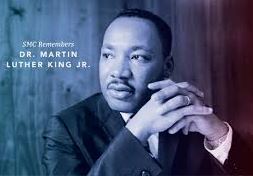
Category: Martin Luther King, Jr

  • The Mountaintop: Martin Luther King, Jr.’s Life and Legacy

    The Mountaintop: Martin Luther King, Jr.’s Life and Legacy

    This collection of texts provides a detailed overview of the life and work of Martin Luther King, Jr., a central figure in the American civil rights movement. It covers his early life in the vibrant Sweet Auburn neighborhood of Atlanta, his education at Morehouse College and theological seminaries, and his influential role as a minister and activist. The sources highlight key campaigns and events he was involved in, such as the Montgomery bus boycott, the desegregation efforts in Albany, Georgia, the confrontations in Birmingham, and the historic March on Washington. The texts also touch upon the broader context of the era, including the challenges of segregation, the rise of Black Power philosophy, the impact of the Vietnam War, and his eventual focus on the Poor People’s Campaign before his assassination in Memphis.

    Podcast
    01
    The Mountaintop: Martin Luther King, Jr.’s Life and Legacy

    The American Civil Rights Movement

    Drawing on the information provided in the sources, the Civil Rights Movement was a pivotal period in American history dedicated to ending racial segregation and discrimination, primarily affecting black Americans.

    Here’s a discussion of key aspects of the movement as presented in the sources:

    • Context: Despite generations having passed since the Civil War, a significant portion of the population, based on their color, remained isolated, poor, and faced severely limited opportunities. Much of American society, including housing in better areas, integrated schools and churches, downtown restaurants, lunch counters, theaters, and public libraries, was off limits to the black community across the country, including in Atlanta. The Supreme Court’s 1898 Plessy v. Ferguson decision had legitimized “separate but equal” facilities, which reformers fought against for decades.
    • Early Activism and Influences: Martin Luther King, Jr.’s father was involved in the Atlanta Civic and Political League and the Atlanta Baptist Ministers Union, which worked to register black voters and support other civic causes. King Sr. was also a leading figure in the Atlanta branch of the NAACP, which won a legal battle for equalizing white and black teachers’ salaries. Young Martin Luther King, Jr. was taught about the history of slavery and segregation by his mother, who emphasized his inherent equality and importance. A train trip where blacks had to congregate in a segregated car reinforced in him the affront of segregation to black dignity. Benjamin Mays, a prominent black educator and President of Morehouse College, challenged students like King to fight for the rights of the poor and disenfranchised and to use their knowledge for the dignity of the black community. Mays, who had spoken with Mohandas Gandhi, influenced King with his personal bearing and philosophical beliefs. King was influenced by Mohandas Gandhi’s philosophy of nonviolent protest, or “Soul Force,” which Gandhi developed in South Africa to challenge the social and political order. Gandhi had successfully changed some laws in South Africa through this method before returning to India in 1915.
    • Key Figures and Organizations:
    • Martin Luther King, Jr.: He became a central figure in the movement. He was the son and grandson of preachers. He served as pastor of Dexter Baptist Church and later co-pastor with his father at Ebenezer Baptist Church. King was active in civic causes and the NAACP. His social and political influence grew as a pastor.
    • E. D. Nixon: A long-time social activist and Pullman porter, Nixon was deeply influenced by labor leader A. Philip Randolph’s message that Negroes had a right to freedom. Nixon was determined to fight for freedom. He was instrumental in the Montgomery Bus Boycott and chose King to lead it because he needed “somebody I could win with”.
    • Rosa Parks: A black seamstress and active NAACP member, her arrest in December 1955 for refusing to give up her seat on a bus sparked the Montgomery Bus Boycott.
    • A. Philip Randolph: Labor leader who organized black Pullman porters. He also discussed staging a large demonstration in Washington with Bayard Rustin in late 1962.
    • Southern Christian Leadership Conference (SCLC): Formed in January/February 1957 by King and other black leaders to fight segregation and achieve civil rights. King became its first president. Unlike the NAACP, SCLC focused on grass-roots protest and action-oriented nonviolent confrontation tactics. It fostered a mass movement based on Christian tenets of love and understanding. SCLC leaders rallied communities using nonviolent methods like marches, boycotts, and sit-ins.
    • Student Nonviolent Coordinating Committee (SNCC): Emerged from a meeting of student sit-in leaders and civil rights figures like Ella Baker in Raleigh, North Carolina. SNCC members were involved in voter registration efforts, particularly in Albany, Georgia, and Mississippi. Later, under Stokely Carmichael, SNCC’s leadership shifted and diverged from King’s nonviolent ideals, moving towards “Black Power”.
    • Congress of Racial Equality (CORE): A civil rights organization that organized the first “Freedom Ride” through the South to protest segregated bus facilities. James Farmer led CORE.
    • National Association for the Advancement of Colored People (NAACP): Focused efforts on legal challenges, voter registration drives, and other constitutional efforts. Roy Wilkins was a leader of the NAACP.
    • Urban League: Whitney Young Jr. was a leader of the Urban League.
    • Major Campaigns and Events:
    • Montgomery Bus Boycott (1955-1956): Triggered by Rosa Parks’ arrest. King was chosen to lead the boycott. He addressed the community with purpose, stating they were American citizens determined to apply their citizenship fully. He declared they would work until justice ran down like water. King appealed for nonviolent responses to aggression, urging participants not to curse back, push back, or strike back if attacked, but to pray for the oppressor and use moral and spiritual force. The boycott was a call to action and a catalyst, bringing national attention to King. The U.S. Supreme Court ruled bus segregation illegal on November 13, 1956, and Montgomery buses were desegregated on December 21, 1956. The victory was a strong affirmation of self-worth for Montgomery’s black population.
    • Integration of Little Rock Central High School (1957): A major battle following the Brown v. Board of Education decision which struck down “separate but equal” schools. King sent a wire to President Eisenhower warning that federal inaction would set back integration by 50 years. Federal intervention tested the limits of the Brown decision and paved the way for the national movement with police protection.
    • Sit-ins (beginning 1960): Began in Greensboro, North Carolina. Students challenged segregation ordinances in over a hundred cities, North and South. King encouraged students to be willing to “fill the jails,” seeing the movement as an opportunity for people to act and become involved locally.
    • Freedom Rides (1961): CORE began these rides through the South to test the Supreme Court’s Boynton v. Virginia ruling banning segregation in interstate travel facilities. Riders faced violence. King urged them to continue following nonviolence, calling it “our most creative way to break loose from the paralyzing shackles of segregation” and emphasizing suffering in a righteous cause. The rides forced the Kennedy administration to ban segregation in facilities under Interstate Commerce Commission jurisdiction.
    • Albany Movement (1961-1962): SNCC workers initiated organizing efforts. A coalition of black organizations formed the Albany Movement to end all forms of segregation and discrimination. They employed direct action, nonviolent tactics. Thousands were arrested, including King. King appealed to President Kennedy for intervention, but Kennedy did not arrange a meeting, wanting the protests to end. From this experience, King learned that his efforts were too diffuse and that it was more strategic to attack a single aspect of entrenched policies rather than attempt to desegregate the city entirely. He realized that winning against a political power structure is difficult without votes, but possible against an economic power structure by impacting profit and loss. Despite setbacks, thousands of black citizens were added to voting rolls, and some segregation ordinances were repealed. The movement in Albany also saw the rise of “Freedom Songs”.
    • Birmingham Campaign (“Project C”) (1963): King and SCLC aimed to gain national attention in Birmingham, which had a rigid segregation system. Birmingham was chosen because King knew action there would provoke intense trouble, creating a “crisis to bargain with”. It was a carefully planned nonviolent direct action strategy to confront segregation. George Wallace was inaugurated as Alabama governor in January 1963, declaring “Segregation now! Segregation tomorrow! Segregation forever!”. Protests began in early April 1963, including sit-ins, marches, and boycotts. Police Commissioner Eugene “Bull” Connor used force against demonstrators. While arrested in Birmingham, King wrote his “Letter from a Birmingham Jail,” defending direct action and explaining the pain of segregation. An agreement was reached in May 1963 to desegregate stores, restaurants, and schools. The vivid contrast of police dogs and fire hoses used against protesters gained worldwide publicity and moved President Kennedy to work on civil rights legislation.
    • March on Washington for Jobs and Freedom (1963): Planned by leaders from various civil rights organizations and unions. The goals included addressing economic inequities and pressing for a civil rights bill. On August 28, 1963, over 200,000 people gathered, the largest reform demonstration in American history. King delivered his “I Have a Dream” speech. The event was covered by national television. Following the march, King and other leaders met with President Kennedy to discuss the pending civil rights bill. Kennedy issued a statement acknowledging the public awareness of the need to move forward on civil rights objectives.
    • Civil Rights Act of 1964: The confrontation with Wallace and events in Birmingham forced the Kennedy administration to take action. After President Kennedy’s assassination in November 1963, President Lyndon Johnson took office. Johnson was determined to pass the civil rights bill without compromise and saw the cause as winnable. Vice President Hubert Humphrey played a key role in convincing Senate Minority Leader Everett Dirksen and other Republicans to support the bill, overcoming Southern Democratic opposition. Johnson signed the historic legislation on July 2, 1964, with King and other civil rights leaders present.
    • St. Augustine Protests (1964): Civil rights campaigns targeted segregated public facilities catering to tourists. The city had white militants and police aligned with them, including Sheriff L.O. Davis, who cavorted with Klan members. Protests involved clashes at the beach and opposing rallies. A federal judge ordered businesses to begin desegregation, and a biracial committee was formed, though white members later resigned.
    • Freedom Summer (1964): A campaign in the Deep South, focusing on Mississippi, to register black voters. Thousands of activists, including white college students from the North, participated. Mississippi had the lowest percentage of black registered voters. The campaign faced violence, including the murder of three civil rights workers, James Chaney, Andrew Goodman, and Michael Schwerner. King traveled to Mississippi amidst threats and spoke to encourage people. Despite violence, the project encouraged people to come out for change.
    • Selma Voting Rights Campaign (1965): Focused on the low number of black registered voters in Selma, Alabama. Local efforts were aided by SNCC, but faced resistance from Sheriff Jim Clark. King arrived in Selma in January 1965. President Johnson encouraged King to highlight instances of voting rights denial on television to gain national support for a voting rights bill. Protests led to arrests, including King’s. Violence occurred, including the forced march of children and the fatal shooting of Jimmie Lee Jackson by police. Jackson’s death spurred the decision to march from Selma to Montgomery. The first march on March 7, 1965, became known as “Bloody Sunday” when state troopers attacked marchers on the Edmund Pettus Bridge. Televised images of the violence led hundreds to travel to Alabama to join the protest.
    • Voting Rights Act of 1965: On March 15, 1965, President Johnson addressed Congress and the nation, calling for legislation to eliminate illegal barriers to voting and embracing the civil rights movement’s cause. Johnson became exasperated with Governor Wallace’s deception regarding the crisis. The legislation passed.
    • Shift to the North and Economic Issues (starting 1965-1966): Following the Voting Rights Act, rioting broke out in cities like Watts, Los Angeles (1965). Ghettos across the country experienced riots as demands for change met fierce resistance. King decided to broaden the movement to focus on poverty and economic independence, targeting Chicago.
    • Chicago Freedom Movement (1966): King and SCLC moved into a Chicago tenement to highlight ghetto living conditions. They planned marches and boycotts demanding an end to discrimination in housing, employment, and schools. King challenged Mayor Richard J. Daley and the entrenched political structure. King’s demands echoed Martin Luther’s act of posting his theses. King met with youth gangs to urge nonviolence. Marches in white neighborhoods faced violence. While an agreement on open housing was reached with Daley, it lacked guarantees and demonstrated resistance to racial equality when it threatened property rights. The experience highlighted the difficulties in the North.
    • Meredith March Against Fear (1966): After James Meredith was shot while marching, King, Stokely Carmichael, and Floyd McKissick resumed the march. It helped register thousands of voters. During this march, Stokely Carmichael popularized the phrase “Black Power”.
    • “Black Power” and Shifting Dynamics (late 1960s): The rise of Black Power advocates like Stokely Carmichael challenged King’s nonviolent approach. Carmichael argued that blacks were born free and were fighting against white supremacy, not just for integration, and that whites could not give blacks freedom. He urged blacks to stop trying to prove themselves to whites and demanded that white people overcome their racism or be moved over. This perspective marked a divergence from King’s ideals. Malcolm X had also criticized King’s nonviolent strategy earlier, arguing against nonviolence and the idea of integration.
    • Vietnam War Opposition: King began publicly asserting his opposition to the Vietnam War, viewing it as immoral and a diversion of funds from antipoverty programs. This stance strained his relationship with President Johnson and fractured his national support, with some civil rights leaders criticizing him for merging the movements.
    • Poor People’s Campaign (announced 1967): Facing nationwide riots and the rise of Black Power, King decided to focus on economic inequality and poverty. He announced a campaign bringing poor people of all races (African Americans, Indians, Puerto Ricans, poor whites) to Washington, D.C., to demand jobs or income. It was planned as a sustained act of civil disobedience, not a single event like the 1963 March on Washington. The campaign aimed to channel frustration into constructive action and compel the government to aid the economically deprived, seeking an “Economic Bill of Rights”.
    • Memphis (1968): Facing an injunction, King gave a speech on April 3, 1968, saying he had “been to the mountaintop” and seen the “promised land,” though he might not get there with them.
    • Tactics and Philosophy: The movement widely employed nonviolent direct action, including marches, boycotts, sit-ins, and demonstrations. This was inspired by Gandhi’s philosophy. Nonviolent methods were seen as a creative way to break segregation and a path to suffering virtuously for a righteous cause. Filling the jails was seen as a fulfillment of a dream. The movement also used legal challenges and voter registration drives. Music, specifically “Freedom Songs,” became an important dimension of the movement.
    • Challenges and Resistance: The movement faced fierce resistance, including violence, arrests, police brutality (dogs, fire hoses), and intimidation from groups like the Ku Klux Klan and white vigilantes. The Plessy v. Ferguson decision and Jim Crow laws institutionalized segregation. State and local officials actively worked to prevent black citizens from exercising their rights, especially voting, through formal methods like poll taxes and literacy tests, and through violence. The FBI under J. Edgar Hoover also shadowed King, viewing him with suspicion. Internal tensions arose regarding tactics, particularly between King and more radical factions.
    • Impact: The movement, through its actions and suffering, brought national and worldwide publicity to the injustices of segregation. It led to significant federal intervention and the passage of landmark legislation such as the Civil Rights Act of 1964 and the Voting Rights Act of 1965. These efforts demonstrated that urgent change was necessary, just, and possible. The movement also raised expectations, leading to increased demands for change and contributing to the urban unrest of the late 1960s.

    The Civil Rights Movement, as depicted in the sources, was a complex struggle involving strategic nonviolent confrontation, significant personal sacrifice, evolving goals, and challenges from external resistance and internal disagreements, ultimately leading to crucial legislative victories and increased awareness of systemic inequalities. As C.T. Vivian noted, “No one who is involved in a struggle for freedom and justice dies in vain”.

    King’s Philosophy of Nonviolent Resistance

    Based on the sources, nonviolent protest was a central tenet of Martin Luther King Jr.’s philosophy and a core strategy of the Civil Rights Movement. King believed that nonviolent resistance was one of the most potent weapons available to oppressed people in their quest for social justice. This approach was not seen as passive, but rather as an active strike against evil by the power of love. King was convinced that such nonviolent resistance was both courageous and morally consistent.

    Origins and Influences on King’s Nonviolent Philosophy:

    • King’s nonviolent philosophy was significantly influenced by Mohandas Gandhi’s concept of “Soul Force”—nonviolent resistance of conquering through love.
    • Gandhi’s philosophy involved challenging the social and political order through nonviolent protest, including boycotts, refusing to pay taxes, and large-scale noncooperation.
    • King was struck by the power unleashed by nonviolent protest as he read about Gandhi’s life and philosophy.
    • He received his first exposure to Gandhi’s ideas from American pacifist A. J. Muste at Crozer. While initially skeptical about adapting these techniques in the American South, hearing Mordecai Johnson speak admiringly of Gandhi’s tactics in 1950 solidified his understanding. Johnson described it as active, loud, disruptive noncooperation.
    • King began to see that tactics like boycotts, strikes, and protest marches, grounded in a spirit of justice and love for the oppressor, might actually be effective in challenging racial barriers.
    • He later wrote that Gandhi, by breaking the cycle of hatred, elevated the love ethic of Christ into an effective social force. King stated that the “Gandhian philosophy of nonviolence … is the only logical and moral approach to the solution of the race problem in the United States.”.
    • The sources also mention the central teachings of Jesus, specifically brotherly love and the Golden Rule, as principles articulated by King in his speech “The Negro and the Constitution”.
    • King’s wallet at the time of his death contained a handwritten note with a quote from Gandhi: “In the midst of death, life persists… . In the midst of darkness, light persists.”.

    Application and Strategy in the Civil Rights Movement:

    • The Southern Christian Leadership Conference (SCLC), co-founded and led by King, fostered a mass movement based on Christian tenets of love and understanding, using tactics of nonviolent confrontation. They challenged power through marches, boycotts, and sit-ins.
    • In the Montgomery Bus Boycott, King appealed to black citizens for nonviolent responses to aggressive assaults, distributing pamphlets that suggested, “If cursed, do not curse back. If pushed, do not push back. If struck, do not strike back, but evidence … goodwill at all times.”. If attacked, they were advised not to fight back but to “pray for the oppressor and use moral and spiritual force to carry on the struggle for justice.”. When his home was bombed during the boycott, King urged the crowd that had gathered to disperse, emphasizing, “We cannot solve this problem through retaliatory violence… We must meet violence with nonviolence.”.
    • The Sit-In Movement, which began in Greensboro, North Carolina, and spread throughout the country, involved students challenging segregated lunch counters and other facilities. King encouraged students involved in the sit-in movement to be willing to “fill the jails”, seeing the movement as an opportunity for people to act and become involved.
    • The Freedom Rides, initiated by CORE, tested the desegregation of interstate travel facilities. When initial riders were attacked, Nashville student protesters, led by Diane Nash, decided to continue the rides, convinced that if the nonviolent Freedom Riders were stopped by violence, it would cut short the future of the movement.
    • In Albany, Georgia, SNCC workers and the Albany Movement aimed to end all forms of segregation using nonviolent tactics like sit-ins, boycotts, legal actions, marches, and mass demonstrations. Police Chief Laurie Pritchett attempted to counter King’s nonviolence with nonviolence of his own, arresting demonstrators quietly and avoiding brutality to prevent public relations mistakes and deny the movement images of violent repression.
    • In Birmingham, King and the SCLC planned “Project C” (for confrontation), a strategy of nonviolent direct action including peaceful demonstrations, economic boycotts, and national appeals. They carefully planned the campaign, recruiting volunteers willing to go to jail and conducting workshops in nonviolent techniques. They defied a court injunction against protests, accepting inevitable arrest and jail time. King defended the tactic of direct action and the right to defy unjust laws. The use of dogs and fire hoses against protesters exposed the violence of segregation to the nation, proving the efficacy of King’s strategy of nonviolent confrontation and contributing to the passage of the Civil Rights Act of 1964.
    • The March on Washington for Jobs and Freedom was intentionally organized to be peaceful, with authorities and organizers working together to ensure nonviolence.
    • In Selma, Alabama, King and others engaged in nonviolent voter registration efforts. Sheriff Jim Clark, known for his tough tactics, became a predictable foil for King’s nonviolent approach. Demonstrators, including schoolchildren, were jailed. The brutal attack on marchers during the march to Montgomery, known as “Bloody Sunday,” highlighted the violence faced by nonviolent protesters.
    • In Chicago, King applied nonviolent methods to challenge discrimination in housing, employment, and schools. Despite facing violent mobs, the discipline of the marchers, including gang members acting as marshals, remained impressive. King marveled that gang members, despite injuries, did not retaliate with violence.

    Challenges and Criticisms:

    • King faced criticism and challenges to his nonviolent approach, notably from advocates of “Black Power” like Stokely Carmichael and Malcolm X.
    • Malcolm X was particularly critical, arguing that African Americans could not achieve freedom nonviolently and that black people should not turn their backs on physical assaults but resist forcefully.
    • Stokely Carmichael, who became chairman of SNCC, argued that the movement was fighting against white supremacy, not just for integration, and that white people cannot grant freedom; they can only stop denying it. Carmichael’s declaration of “Black Power” was seen by King as an “unfortunate choice of words” and inimical to his nonviolent approach.
    • King worried about the implications of black separatism and the willingness of some to resort to physical violence, although he saw “Black Power” as potentially a positive step in accumulating economic and political power.
    • Despite their philosophical differences, Carmichael personally admired King, noting that people loved King and saw him “like God”.
    • The Memphis sanitation strike march, which King joined to support the poorest workers, erupted in violence initiated by police, leading to injuries, arrests, and a death. This showed the difficulty of maintaining nonviolence in the face of aggressive opposition.
    • The assassination of King, a preacher of nonviolence, tragically provoked widespread rioting and violence in cities across the country.

    Effectiveness and Impact:

    • Nonviolent protest was instrumental in gaining national attention for the Civil Rights Movement.
    • The Birmingham campaign’s success, partly due to the violent reaction of authorities to nonviolent demonstrators, demonstrated that urgent change was necessary and possible, leading President Kennedy to work on civil rights legislation that became the Civil Rights Act of 1964.
    • The Selma campaign, culminating in “Bloody Sunday,” pressured President Johnson to propose and Congress to pass the Voting Rights Act.
    • The victory in the Montgomery Bus Boycott was described as a strong affirmation of self-worth for the black population.
    • King described the Birmingham events as marking the “nonviolent movement coming of age,” demonstrating the ability to fill jails as a fulfillment of a dream.
    • Nonviolent noncooperation aimed to hurt occupiers economically and overwhelm military might through the sheer numbers of resisters, eventually leading the opposition to consider violence useless.

    In essence, nonviolent protest, drawing inspiration from Gandhi and Christian teachings, was King’s strategic and moral compass for the Civil Rights Movement. It was a deliberate, active method of confrontation designed to expose injustice, challenge the status quo, and compel change, despite facing significant violence and internal disagreements.

    The Reality of Racial Segregation

    Based on the sources, racial segregation was a deeply ingrained system in American society, particularly in the South, that isolated, impoverished, and limited the opportunities of black Americans based solely on the color of their skin. It created a condition of enforced inferiority and stood defiantly in the way of progress for the black race.

    Legal Basis and Challenges:

    • The practice of segregation was legitimized in 1898 by the Supreme Court’s Plessy v. Ferguson decision, which upheld the doctrine of “separate but equal” accommodations, initially for railroads. This decision required blacks and whites to be separated on public conveyances like buses and trains.
    • Reformers battled against the Plessy v. Ferguson decision for a long time.
    • In 1954, the Supreme Court’s decision in Brown v. Board of Education finally struck down the doctrine of “separate but equal” in public education, stating that separate educational facilities are inherently unequal. Although this decision did not immediately abolish segregation in other public areas, it declared permissive or mandatory segregation in 21 states unconstitutional and was considered a giant step toward desegregation.

    Manifestations of Segregation:

    Segregation affected nearly every aspect of life for black Americans:

    • Housing: It was impossible for black individuals to live in the better-developed sections of town. In Chicago, 800,000 black citizens were tightly segregated in tenement housing, paying inflated rents for substandard buildings. Efforts to challenge housing discrimination in Chicago through an “open housing campaign” faced violent reactions and resistance from white residents and realtors.
    • Schools and Churches: Schools and churches had either white or black congregations.
    • Public Facilities: Downtown restaurants and lunch counters in department stores were off-limits to black individuals. Theaters, public libraries, public parks, restrooms, and department store fitting rooms were segregated.
    • Transportation: Blacks were separated from whites on buses and trains. In Montgomery, black passengers had to pay at the front, exit, and re-enter through the back door, and could not sit in the first four rows reserved for whites. If white sections were full, a white passenger could take any other seat, requiring a black person in that row to stand up. City regulations prohibited blacks and whites from sitting next to each other on buses.
    • Other Public Places: Signs reading “Whites Only” were common at water fountains, swimming pools, elevators, and other public places. For example, the YMCA built a segregated pool for black children. After integration ordinances were put in place in Albany, Georgia, the city sold its municipal swimming pool to a private individual so it would not be subject to integration.
    • Employment: Segregation affected job opportunities and fair hiring practices.
    • Voting Rights: Despite paying taxes, blacks in many cases did not have the right to vote. Methods of intimidation like poll taxes and literacy tests were used to prevent black adults from registering to vote.

    Experiences Under Segregation:

    • Living under segregation meant daily indignities, both large and small.
    • Martin Luther King, Jr. experienced segregation from a young age, being cursed by a bus driver for attempting to sit in seats reserved for whites. He recognized, even as a child, that the social system was overpowering and unfair. He remembered being denied access to public parks, lunch counters, movie theaters, and the best schools.
    • Segregation caused feelings of anger and humiliation.
    • In his “Letter from a Birmingham Jail,” King described the long suffering and humiliation that black people had endured, including codified hatred embedded in segregation laws. He spoke of having to explain to his daughter why she couldn’t go to an amusement park or to his son why white people treated colored people meanly. He mentioned the humiliation of constantly seeing “white” and “colored” signs, being called racial slurs, and feeling a “degenerating sense of ‘nobodiness’”.
    • Birmingham, Alabama, was described by King as the most segregated city in the nation, a stronghold of the KKK, with a police force fiercely opposed to protesters.

    Challenges to Segregation:

    The Civil Rights Movement employed various tactics to challenge segregation:

    • Legal Actions: The NAACP concentrated on legal challenges, such as the Brown v. Board of Education case. A federal court suit challenged bus segregation in Montgomery, leading to the Supreme Court declaring it unconstitutional.
    • Nonviolent Protest and Direct Action: Tactics included boycotts (like the Montgomery Bus Boycott), sit-ins (like the lunch counter sit-ins), marches, and mass demonstrations. These actions aimed to challenge power and expose the injustices of segregation.
    • Filling Jails: King encouraged protesters to be willing to “fill the jails” as a tactic to express themselves and become involved in the struggle.

    Despite these efforts, resistance to desegregation was strong, sometimes involving violence from white individuals and law enforcement. However, these confrontations often brought national attention to the cause and were instrumental in achieving significant legislative changes like the Civil Rights Act of 1964, which outlawed segregation in public accommodations, employment, and education.

    The Life and Legacy of Martin Luther King, Jr.

    Martin Luther King, Jr. was a pivotal figure in the American Civil Rights Movement, known for his powerful oratory and unwavering commitment to nonviolent protest against racial segregation and injustice.

    Born Michael King, Jr. in Atlanta, Georgia, on January 15, 1929, he was the second child and first son of Michael King, Sr. and Alberta Christine Williams King. The family later changed their name to “Martin Luther” after the sixteenth-century German religious leader. Preaching was deeply ingrained in his family, as his father, brother, grandfather, and great-grandfather on his mother’s side were all preachers. His father, Martin Luther King, Sr., known as “Daddy King,” was a dynamic speaker and influential pastor at Ebenezer Baptist Church, who publicly challenged unjust prejudices and social conventions holding back the black race. His mother, Alberta Williams King, discussed the history of slavery and segregation with him, teaching him that his life mattered as much as anyone else’s.

    King attended Booker T. Washington High School and was admitted to Morehouse College at the age of 15, leaving after the eleventh grade. At Morehouse, a prominent black institution, he was significantly influenced by President Benjamin Mays, who encouraged students to fight for the rights of the poor and disenfranchised and use their education for the dignity of the black community. King experienced the pain of segregation firsthand on a bus trip returning from a speaking contest in Dublin, Georgia, which made him the angriest he had ever been. In contrast, a summer working in Simsbury, Connecticut, showed him a lack of discrimination outside the South.

    During his junior year at Morehouse, at age 17, King decided to become a minister, describing it as an “inner urge to serve humanity”. He sought a “rational” approach to ministry, aiming to be a “respectable force for ideas, even social protest”. He was ordained as a minister in February 1948, his final year at Morehouse, and became an associate pastor at Ebenezer. He graduated from Morehouse in June 1948 with a degree in sociology.

    King continued his education at Crozer Theological Seminary in Pennsylvania and later Boston University, where he received his Ph.D. in Systematic Theology in June 1955. At both institutions, he was deeply influenced by the philosophy of nonviolent protest, particularly that of Mohandas Gandhi. He came to believe that nonviolent resistance was an active strike against evil, both courageous and morally consistent. King wrote that Gandhi elevated “the love ethic of Christ to an effective social force” and that Gandhian nonviolence was the “only logical and moral approach to the solution of the race problem in the United States”.

    In 1954, King became the pastor of the Dexter Avenue Baptist Church in Montgomery, Alabama. He observed that Montgomery’s 50,000 black citizens lived in a state of “enforced inferiority,” with segregation impacting housing, schooling, and daily life, evidenced by common “whites only” signs. King was quickly involved in challenging segregation, with Dexter Avenue Baptist Church becoming a significant contributor to the NAACP.

    King’s involvement in the Montgomery Bus Boycott, which began on December 5, 1955, following Rosa Parks’s arrest for refusing to give up her seat, marked a turning point in his life and the Civil Rights Movement. Black leaders, including E. D. Nixon and Jo Ann Robinson, saw Parks’s arrest as an opportunity to challenge bus segregation and convinced King to lead the boycott due to his oratorical skills. The boycott was highly successful, with black citizens refusing to ride the buses. Addressing a crowd, King spoke of their determination as American citizens to fight for justice, using language from the Book of Amos. The boycott brought King national attention. Facing white hatred and an arrest during the boycott, King emphasized nonviolence and meeting hate with love. The U.S. Supreme Court ruled bus segregation illegal in November 1956, and Montgomery buses were desegregated the following month. The victory instilled a strong affirmation of self-worth in the black community.

    Building on the momentum from Montgomery, King and other black leaders formed the Southern Christian Leadership Conference (SCLC) in 1957 to fight segregation and achieve civil rights. Unlike the NAACP’s focus on legal challenges, the SCLC was action-oriented, utilizing nonviolent tactics like marches, boycotts, and sit-ins. King became the SCLC’s first president.

    King was involved in numerous key events and campaigns throughout the Civil Rights Movement. He delivered his first major national address on voting rights at the Lincoln Memorial in May 1957. He sent a wire to President Eisenhower regarding the desegregation crisis in Little Rock, warning of setbacks if strong action wasn’t taken. In 1959, he resigned from his pastorate at Dexter to dedicate himself fully to the civil rights struggle. He supported the student sit-in movement that began in 1960, encouraging participants to be willing to “fill the jails” as a form of protest. He himself was arrested during an Atlanta sit-in, stating the goal was to bring desegregation to the city’s conscience.

    Following violence against the Freedom Riders in 1961, King returned to Montgomery, praising the riders’ courage and condemning the violence. He joined the Albany Movement in Georgia, where he was jailed. This campaign highlighted new challenges, including facing a police chief who avoided tactics that generated national sympathy for the movement and introduced the element of FBI surveillance driven by Cold War fears.

    In 1963, King and the SCLC planned the Birmingham campaign as a turning point in the movement. Facing Police Commissioner Eugene “Bull” Connor, known for his fierce opposition to protesters and ties to the KKK, King was arrested for demonstrating without a permit and wrote his influential “Letter from a Birmingham Jail”. The campaign, though met with resistance, gained national exposure and was the first time they could “literally fill the jails,” fulfilling a dream.

    King was a central figure in the March on Washington for Jobs and Freedom in August 1963, delivering his iconic “I Have a Dream” speech on the steps of the Lincoln Memorial. The speech passionately articulated a vision of a nation where people would be judged by their character, not their skin color. After the march, King and other leaders met with President Kennedy to discuss pending civil rights legislation. King called Kennedy’s subsequent address on civil rights the “most earnest, human and profound appeal for understanding and justice that any President has uttered since the first days of the Republic”. Shortly after the March on Washington, four young girls were killed in the bombing of the 16th Street Baptist Church in Birmingham, a church targeted by the KKK. King delivered a powerful eulogy for the children, calling them martyrs and urging people to work against the system that produced their murderers. King described the summer of 1963 as the “first offensive in history launched by the Negroes along a broad front,” a “simultaneous, massive assault against segregation”.

    Following President Kennedy’s assassination in November 1963, King felt that the tragedy might ironically speed up civil rights gains under the new president, Lyndon B. Johnson. He met with President Johnson, who, despite the challenges, was determined to pass civil rights legislation. King attended the signing ceremony for the Civil Rights Act of 1964, which outlawed segregation in public accommodations, employment, and education.

    In 1964, King was awarded the Nobel Peace Prize at the age of 35, the youngest recipient at the time. He accepted the award on behalf of the civil rights movement and those who risked their lives for the cause, expressing belief in dignity, equality, and freedom through nonviolent good will.

    King turned his attention to voting rights, targeting Selma, Alabama, for a campaign in 1965, where few black adults were registered voters due to intimidation tactics. President Johnson called King, emphasizing the need to expose the denial of voting rights to the nation through publicity to help pass a voting rights bill. King was arrested during demonstrations in Selma.

    Seeking to broaden the movement’s focus to economic inequality, King initiated the Chicago Freedom Movement in 1966. He moved into a tenement to highlight poor living conditions and led marches demanding an end to discrimination in housing, employment, and schools. He also launched “Operation Breadbasket,” a campaign to boycott companies that did not offer employment to black individuals. While in Chicago, he joined the Meredith March in Mississippi after James Meredith was shot, a march that helped register thousands of black voters. During this march, Stokely Carmichael popularized the term “Black Power,” a concept inimical to King’s nonviolent approach.

    King also became increasingly vocal in his opposition to the Vietnam War, a stance that strained his relationship with President Johnson and drew criticism from some fellow civil rights leaders. He delivered his notable “Beyond Vietnam” speech in 1967.

    In response to nationwide urban riots and the rise of the Black Power movement, King planned the “Poor People’s Campaign” in late 1967, aiming to bring poor individuals of all races to Washington, D.C., to demand jobs or income. His final campaign was in support of striking sanitation workers in Memphis, Tennessee, in 1968. On April 3, 1968, he delivered his last speech, “I’ve Been to the Mountaintop,” acknowledging the difficult days ahead but expressing a vision of reaching the “promised land”.

    Martin Luther King, Jr. was shot and killed on April 4, 1968, while on the balcony of the Lorraine Motel in Memphis, where he was supporting the sanitation workers’ strike. He died at age 39. James Earl Ray was apprehended and confessed, but conspiracy theories regarding his death persist.

    King is remembered as a visionary leader, an inspiring speaker, and a man of great courage who used nonviolent resistance to challenge segregation and injustice. His commitment to fighting for basic rights and opportunities for black Americans and his belief in the power of love and justice continue to inspire.

    Key Martin Luther King Jr. Civil Rights Events

    Based on the sources provided, several key Civil Rights events stand out in the life and work of Martin Luther King Jr.:

    • Montgomery Bus Boycott (1955-1956) The Montgomery Bus Boycott began on December 5, 1955, following the arrest of Rosa Parks, a seamstress, for refusing to give up her seat on a bus to a white passenger, violating local segregation laws. Black leaders, including E. D. Nixon and Jo Ann Robinson, saw Parks’s arrest as an opportunity to challenge the city’s segregated bus system. Nixon and others convinced King, a powerful orator and relative newcomer, to lead a meeting at Dexter Avenue Baptist Church, aiming to put him in a position where he would lead the boycott. King and Coretta watched on the first morning of the boycott as buses passed with almost no passengers, showing that Montgomery’s black citizens had responded beyond expectations. King addressed a large crowd, stating, “We are here this evening—for serious business”. He spoke of their determination as American citizens to apply their citizenship to its fullest meaning. Throughout the boycott, King and other leaders distributed pamphlets urging black citizens to respond nonviolently to aggression from whites. Facing white hatred and an arrest during the boycott, King became a focus of national attention. The U.S. Supreme Court ruled bus segregation illegal on November 13, 1956. Montgomery buses were desegregated on December 21, 1956. The victory instilled a strong affirmation of self-worth in much of Montgomery’s black population.
    • Formation of the Southern Christian Leadership Conference (SCLC) (1957) In January 1957, King met with black leaders in Atlanta to plan an organization that would maintain the momentum gained from the bus boycott. They formed and King became president of the Southern Christian Leadership Conference (SCLC) to fight segregation and achieve civil rights. Unlike the NAACP, which focused on legal challenges, the SCLC was action-oriented, using tactics like marches, boycotts, and sit-ins to challenge segregation in the South.
    • Prayer Pilgrimage for Freedom (1957) On May 17, 1957, King traveled to Washington, D.C., to participate with other civil rights leaders in a “Prayer Pilgrimage”. Here, he delivered his first major national address, calling for black voting rights, speaking to a crowd estimated by some at over 20,000 on the steps of the Lincoln Memorial.
    • Little Rock School Crisis (1957) In the fall of 1957, Little Rock, Arkansas, became the scene of a major battle over the Brown v. Board of Education decision to desegregate schools. On September 9, King sent a wire to President Eisenhower warning that failure of the federal government to take strong action would set back integration by 50 years.
    • Support for the Student Sit-in Movement (1960) When the student sit-in movement began in February 1960 in Greensboro, North Carolina, challenging segregation ordinances, King supported the students. At a meeting attended by students from several states, King told them they must be willing to “fill the jails” as a form of protest. He saw the movement as an opportunity for people to act and become involved locally. On October 20, 1960, King joined students in a sit-in at Rich’s Department Store in Atlanta and was arrested and jailed along with 13 others. He stated the demonstration’s object was to bring the issue of desegregation “into the conscience of Atlanta”.
    • Freedom Rides (1961) The Freedom Rides were organized by CORE to test the enforcement of the Supreme Court ruling in Boynton v. Virginia (1960) that segregation in interstate travel facilities was illegal. Facing violence against the Freedom Riders, Martin Luther King returned to Montgomery on Sunday, May 21. About 50 federal agents escorted him from the airport. In a speech that evening, King thanked CORE, praised the courage of the riders, and condemned the violence, comparing it to Hitler’s Germany. He warned that if the federal government did not act, the situation could degenerate into chaos. He pledged that he and his organization would not sit idly by while black citizens faced lawlessness and injustice. The Freedom Riders’ efforts forced the Kennedy administration to direct the Interstate Commerce Commission to ban segregation in facilities under its jurisdiction.
    • Albany Movement (1961-1962) King and Ralph Abernathy arrived in Albany, Georgia, on December 15, 1961, joining a movement challenging segregation. The next day, King joined a march and was jailed along with nearly 200 black citizens. Albany Police Chief Laurie Pritchett avoided overreacting in ways that had generated national sympathy for the movement in other cities. King sent a wire to President Kennedy about the jailing of religious leaders who were fasting, stating they hoped to “arouse the conscience of this nation to the gross violations of human dignity and civil rights, which are the rule in Albany and surrounding counties”. Kennedy did not arrange the meeting in Washington that King requested, despite seven U.S. Senators encouraging White House intervention. The Albany campaign highlighted the challenge of a police chief who prevented dramatic confrontations and also introduced FBI surveillance due to Cold War fears. King later reflected that their efforts in Albany were too diffuse, attempting to desegregate the city in all respects rather than focusing on a single issue.
    • Birmingham Campaign (1963) King and the SCLC planned a campaign in Birmingham, Alabama, knowing it would likely provoke intense trouble and could gain national attention. Their plan, “Project C” (for confrontation), involved nonviolent direct action, boycotts, and appeals for justice, hinging on the reaction of Police Commissioner Eugene “Bull” Connor. In early April 1963, King and the SCLC, along with local leaders like Fred Shuttlesworth, began sit-ins, marches, and a boycott of downtown merchants. On April 12, 1963, King was arrested for demonstrating without a permit. While jailed, he wrote his influential “Letter from a Birmingham Jail”. In the letter, he defended direct action, the right to defy unjust laws, and described the suffering and humiliation endured by black Americans. He articulated why the movement found it difficult to wait for change, using powerful examples of the impact of segregation on families. The campaign included “D-Day” on May 2, where over 1,000 children and teenagers were arrested. The next day, police used dogs and fire hoses against young protesters in Kelly Ingram Park, gaining worldwide publicity. King was upbeat about the national exposure and the success at Birmingham, stating it marked the nonviolent movement “coming of age” and that it was the first time they could “literally to fill the jails,” fulfilling a dream. The vivid contrast between the protesters and the police actions, especially with dogs and fire hoses, was seen globally. These events moved President Kennedy to work on broad civil rights legislation.
    • March on Washington for Jobs and Freedom (1963) Following the events in Birmingham and President Kennedy’s national address on civil rights, King prepared for the biggest demonstration yet. The “March on Washington for Jobs and Freedom” was planned to stress economic inequities and press for civil rights legislation. On August 28, 1963, over 200,000 people gathered around the Lincoln Memorial. King was the final speaker and delivered his famous “I Have a Dream” speech, articulating a vision of a nation where people would be judged by their character. After the march, King and other leaders met with President Kennedy at the White House to discuss the pending civil rights bill.
    • 16th Street Baptist Church Bombing (1963) Shortly after the March on Washington, the 16th Street Baptist Church in Birmingham was bombed, killing four young girls. This church had been a central location for planning civil rights activities.
    • Civil Rights Act of 1964 (1964) Following President Kennedy’s assassination, Lyndon B. Johnson became president and was determined to pass the civil rights bill. Johnson, who saw the civil rights cause as just and winnable, instructed his aides to work with Congress to ensure its passage. With concerted efforts and bipartisan support, the legislation passed. King attended the signing ceremony of the Civil Rights Act of 1964 at the White House on July 2, 1964. This act outlawed segregation in public accommodations, employment, and education.
    • Selma Voting Rights Campaign (1965) In 1965, King turned his attention to voting rights, focusing on Selma, Alabama, where few black adults were registered due to intimidation. After local efforts were met with resistance, including Sheriff Jim Clark openly turning away black applicants, the Voters League appealed to King. King arrived in Selma in January 1965 and was physically attacked upon signing into his hotel. President Johnson called King, emphasizing the need to expose the denial of voting rights to the nation through publicity to help pass a voting rights bill. King mobilized demonstrations, urging people to be willing to “go to jail by the thousands” and demanding the ballot. Protesters were beaten and arrested, but their continued efforts gained national attention. After a night march to Marion, Alabama, where Jimmie Lee Jackson was shot and killed trying to protect his mother, SCLC members discussed a march to Montgomery. At Jackson’s memorial service, King announced the march would begin on March 7. This march became known as “Bloody Sunday” after state troopers attacked the marchers on the Edmund Pettus Bridge. President Johnson responded by speaking to Congress, embracing the aims of the movement and calling for a voting rights bill. He declared that denying the right to vote was “wrong—deadly wrong” and that the struggle for human rights must be “our cause too”. He ended his speech saying, “And we shall overcome”. The Selma struggle’s impact helped propel the passage of the Voting Rights Act of 1965.
    • Chicago Freedom Movement (1966) Seeking to broaden the movement’s focus to economic inequality, King initiated the Chicago Freedom Movement in 1966. On January 26, 1966, King and aides moved into a tenement apartment in Chicago to highlight poor living conditions. The campaign aimed to end discrimination in housing, employment, and schools. Demands were posted on the door of Mayor Richard J. Daley’s office. King also launched “Operation Breadbasket” in Chicago, a campaign targeting companies for fair employment practices. The Chicago campaign demonstrated the difficulties of challenging deeply entrenched issues like housing discrimination in Northern cities. While an agreement was reached with city officials and real estate agents, it contained no guarantees or timetable, illustrating resistance to changes that threatened property rights.
    • Meredith March Against Fear (1966) After James Meredith was shot and wounded during his “March Against Fear” in Mississippi, King joined Floyd McKissick and Stokely Carmichael to continue the march. It was during this march that Stokely Carmichael popularized the term “Black Power,” a phrase inimical to King’s nonviolent approach, forcing King to confront and combat the concept.
    • Opposition to the Vietnam War (1967) In 1967, King became more vocal in his opposition to the Vietnam War, a stance that drew criticism from some. He delivered his notable “Beyond Vietnam” speech on April 4, 1967.
    • Poor People’s Campaign (1967-1968) In response to urban riots and the rise of Black Power, King and his advisors began planning the “Poor People’s Campaign” in late 1967, aiming to focus on economic inequalities and poverty. On December 4, 1967, King announced the campaign, stating it would bring poor individuals of all races to Washington, D.C., to demand jobs or income.
    • Memphis Sanitation Strike (1968) King’s final campaign supported striking sanitation workers in Memphis, Tennessee. On April 3, 1968, the evening before his death, King delivered his last speech, “I’ve Been to the Mountaintop,” at the Masonic Temple in Memphis. He spoke about the difficult days ahead but expressed his vision of reaching the “promised land”.

    By Amjad Izhar
    Contact: amjad.izhar@gmail.com
    https://amjadizhar.blog

  • The Mountaintop: Martin Luther King, Jr.’s Life and Legacy

    The Mountaintop: Martin Luther King, Jr.’s Life and Legacy

    This collection of texts provides a detailed overview of the life and work of Martin Luther King, Jr., a central figure in the American civil rights movement. It covers his early life in the vibrant Sweet Auburn neighborhood of Atlanta, his education at Morehouse College and theological seminaries, and his influential role as a minister and activist. The sources highlight key campaigns and events he was involved in, such as the Montgomery bus boycott, the desegregation efforts in Albany, Georgia, the confrontations in Birmingham, and the historic March on Washington. The texts also touch upon the broader context of the era, including the challenges of segregation, the rise of Black Power philosophy, the impact of the Vietnam War, and his eventual focus on the Poor People’s Campaign before his assassination in Memphis.

    Podcast

    01
    The Mountaintop: Martin Luther King, Jr.’s Life and Legacy

    The American Civil Rights Movement

    Drawing on the information provided in the sources, the Civil Rights Movement was a pivotal period in American history dedicated to ending racial segregation and discrimination, primarily affecting black Americans.

    Here’s a discussion of key aspects of the movement as presented in the sources:

    • Context: Despite generations having passed since the Civil War, a significant portion of the population, based on their color, remained isolated, poor, and faced severely limited opportunities. Much of American society, including housing in better areas, integrated schools and churches, downtown restaurants, lunch counters, theaters, and public libraries, was off limits to the black community across the country, including in Atlanta. The Supreme Court’s 1898 Plessy v. Ferguson decision had legitimized “separate but equal” facilities, which reformers fought against for decades.
    • Early Activism and Influences: Martin Luther King, Jr.’s father was involved in the Atlanta Civic and Political League and the Atlanta Baptist Ministers Union, which worked to register black voters and support other civic causes. King Sr. was also a leading figure in the Atlanta branch of the NAACP, which won a legal battle for equalizing white and black teachers’ salaries. Young Martin Luther King, Jr. was taught about the history of slavery and segregation by his mother, who emphasized his inherent equality and importance. A train trip where blacks had to congregate in a segregated car reinforced in him the affront of segregation to black dignity. Benjamin Mays, a prominent black educator and President of Morehouse College, challenged students like King to fight for the rights of the poor and disenfranchised and to use their knowledge for the dignity of the black community. Mays, who had spoken with Mohandas Gandhi, influenced King with his personal bearing and philosophical beliefs. King was influenced by Mohandas Gandhi’s philosophy of nonviolent protest, or “Soul Force,” which Gandhi developed in South Africa to challenge the social and political order. Gandhi had successfully changed some laws in South Africa through this method before returning to India in 1915.
    • Key Figures and Organizations:
    • Martin Luther King, Jr.: He became a central figure in the movement. He was the son and grandson of preachers. He served as pastor of Dexter Baptist Church and later co-pastor with his father at Ebenezer Baptist Church. King was active in civic causes and the NAACP. His social and political influence grew as a pastor.
    • E. D. Nixon: A long-time social activist and Pullman porter, Nixon was deeply influenced by labor leader A. Philip Randolph’s message that Negroes had a right to freedom. Nixon was determined to fight for freedom. He was instrumental in the Montgomery Bus Boycott and chose King to lead it because he needed “somebody I could win with”.
    • Rosa Parks: A black seamstress and active NAACP member, her arrest in December 1955 for refusing to give up her seat on a bus sparked the Montgomery Bus Boycott.
    • A. Philip Randolph: Labor leader who organized black Pullman porters. He also discussed staging a large demonstration in Washington with Bayard Rustin in late 1962.
    • Southern Christian Leadership Conference (SCLC): Formed in January/February 1957 by King and other black leaders to fight segregation and achieve civil rights. King became its first president. Unlike the NAACP, SCLC focused on grass-roots protest and action-oriented nonviolent confrontation tactics. It fostered a mass movement based on Christian tenets of love and understanding. SCLC leaders rallied communities using nonviolent methods like marches, boycotts, and sit-ins.
    • Student Nonviolent Coordinating Committee (SNCC): Emerged from a meeting of student sit-in leaders and civil rights figures like Ella Baker in Raleigh, North Carolina. SNCC members were involved in voter registration efforts, particularly in Albany, Georgia, and Mississippi. Later, under Stokely Carmichael, SNCC’s leadership shifted and diverged from King’s nonviolent ideals, moving towards “Black Power”.
    • Congress of Racial Equality (CORE): A civil rights organization that organized the first “Freedom Ride” through the South to protest segregated bus facilities. James Farmer led CORE.
    • National Association for the Advancement of Colored People (NAACP): Focused efforts on legal challenges, voter registration drives, and other constitutional efforts. Roy Wilkins was a leader of the NAACP.
    • Urban League: Whitney Young Jr. was a leader of the Urban League.
    • Major Campaigns and Events:
    • Montgomery Bus Boycott (1955-1956): Triggered by Rosa Parks’ arrest. King was chosen to lead the boycott. He addressed the community with purpose, stating they were American citizens determined to apply their citizenship fully. He declared they would work until justice ran down like water. King appealed for nonviolent responses to aggression, urging participants not to curse back, push back, or strike back if attacked, but to pray for the oppressor and use moral and spiritual force. The boycott was a call to action and a catalyst, bringing national attention to King. The U.S. Supreme Court ruled bus segregation illegal on November 13, 1956, and Montgomery buses were desegregated on December 21, 1956. The victory was a strong affirmation of self-worth for Montgomery’s black population.
    • Integration of Little Rock Central High School (1957): A major battle following the Brown v. Board of Education decision which struck down “separate but equal” schools. King sent a wire to President Eisenhower warning that federal inaction would set back integration by 50 years. Federal intervention tested the limits of the Brown decision and paved the way for the national movement with police protection.
    • Sit-ins (beginning 1960): Began in Greensboro, North Carolina. Students challenged segregation ordinances in over a hundred cities, North and South. King encouraged students to be willing to “fill the jails,” seeing the movement as an opportunity for people to act and become involved locally.
    • Freedom Rides (1961): CORE began these rides through the South to test the Supreme Court’s Boynton v. Virginia ruling banning segregation in interstate travel facilities. Riders faced violence. King urged them to continue following nonviolence, calling it “our most creative way to break loose from the paralyzing shackles of segregation” and emphasizing suffering in a righteous cause. The rides forced the Kennedy administration to ban segregation in facilities under Interstate Commerce Commission jurisdiction.
    • Albany Movement (1961-1962): SNCC workers initiated organizing efforts. A coalition of black organizations formed the Albany Movement to end all forms of segregation and discrimination. They employed direct action, nonviolent tactics. Thousands were arrested, including King. King appealed to President Kennedy for intervention, but Kennedy did not arrange a meeting, wanting the protests to end. From this experience, King learned that his efforts were too diffuse and that it was more strategic to attack a single aspect of entrenched policies rather than attempt to desegregate the city entirely. He realized that winning against a political power structure is difficult without votes, but possible against an economic power structure by impacting profit and loss. Despite setbacks, thousands of black citizens were added to voting rolls, and some segregation ordinances were repealed. The movement in Albany also saw the rise of “Freedom Songs”.
    • Birmingham Campaign (“Project C”) (1963): King and SCLC aimed to gain national attention in Birmingham, which had a rigid segregation system. Birmingham was chosen because King knew action there would provoke intense trouble, creating a “crisis to bargain with”. It was a carefully planned nonviolent direct action strategy to confront segregation. George Wallace was inaugurated as Alabama governor in January 1963, declaring “Segregation now! Segregation tomorrow! Segregation forever!”. Protests began in early April 1963, including sit-ins, marches, and boycotts. Police Commissioner Eugene “Bull” Connor used force against demonstrators. While arrested in Birmingham, King wrote his “Letter from a Birmingham Jail,” defending direct action and explaining the pain of segregation. An agreement was reached in May 1963 to desegregate stores, restaurants, and schools. The vivid contrast of police dogs and fire hoses used against protesters gained worldwide publicity and moved President Kennedy to work on civil rights legislation.
    • March on Washington for Jobs and Freedom (1963): Planned by leaders from various civil rights organizations and unions. The goals included addressing economic inequities and pressing for a civil rights bill. On August 28, 1963, over 200,000 people gathered, the largest reform demonstration in American history. King delivered his “I Have a Dream” speech. The event was covered by national television. Following the march, King and other leaders met with President Kennedy to discuss the pending civil rights bill. Kennedy issued a statement acknowledging the public awareness of the need to move forward on civil rights objectives.
    • Civil Rights Act of 1964: The confrontation with Wallace and events in Birmingham forced the Kennedy administration to take action. After President Kennedy’s assassination in November 1963, President Lyndon Johnson took office. Johnson was determined to pass the civil rights bill without compromise and saw the cause as winnable. Vice President Hubert Humphrey played a key role in convincing Senate Minority Leader Everett Dirksen and other Republicans to support the bill, overcoming Southern Democratic opposition. Johnson signed the historic legislation on July 2, 1964, with King and other civil rights leaders present.
    • St. Augustine Protests (1964): Civil rights campaigns targeted segregated public facilities catering to tourists. The city had white militants and police aligned with them, including Sheriff L.O. Davis, who cavorted with Klan members. Protests involved clashes at the beach and opposing rallies. A federal judge ordered businesses to begin desegregation, and a biracial committee was formed, though white members later resigned.
    • Freedom Summer (1964): A campaign in the Deep South, focusing on Mississippi, to register black voters. Thousands of activists, including white college students from the North, participated. Mississippi had the lowest percentage of black registered voters. The campaign faced violence, including the murder of three civil rights workers, James Chaney, Andrew Goodman, and Michael Schwerner. King traveled to Mississippi amidst threats and spoke to encourage people. Despite violence, the project encouraged people to come out for change.
    • Selma Voting Rights Campaign (1965): Focused on the low number of black registered voters in Selma, Alabama. Local efforts were aided by SNCC, but faced resistance from Sheriff Jim Clark. King arrived in Selma in January 1965. President Johnson encouraged King to highlight instances of voting rights denial on television to gain national support for a voting rights bill. Protests led to arrests, including King’s. Violence occurred, including the forced march of children and the fatal shooting of Jimmie Lee Jackson by police. Jackson’s death spurred the decision to march from Selma to Montgomery. The first march on March 7, 1965, became known as “Bloody Sunday” when state troopers attacked marchers on the Edmund Pettus Bridge. Televised images of the violence led hundreds to travel to Alabama to join the protest.
    • Voting Rights Act of 1965: On March 15, 1965, President Johnson addressed Congress and the nation, calling for legislation to eliminate illegal barriers to voting and embracing the civil rights movement’s cause. Johnson became exasperated with Governor Wallace’s deception regarding the crisis. The legislation passed.
    • Shift to the North and Economic Issues (starting 1965-1966): Following the Voting Rights Act, rioting broke out in cities like Watts, Los Angeles (1965). Ghettos across the country experienced riots as demands for change met fierce resistance. King decided to broaden the movement to focus on poverty and economic independence, targeting Chicago.
    • Chicago Freedom Movement (1966): King and SCLC moved into a Chicago tenement to highlight ghetto living conditions. They planned marches and boycotts demanding an end to discrimination in housing, employment, and schools. King challenged Mayor Richard J. Daley and the entrenched political structure. King’s demands echoed Martin Luther’s act of posting his theses. King met with youth gangs to urge nonviolence. Marches in white neighborhoods faced violence. While an agreement on open housing was reached with Daley, it lacked guarantees and demonstrated resistance to racial equality when it threatened property rights. The experience highlighted the difficulties in the North.
    • Meredith March Against Fear (1966): After James Meredith was shot while marching, King, Stokely Carmichael, and Floyd McKissick resumed the march. It helped register thousands of voters. During this march, Stokely Carmichael popularized the phrase “Black Power”.
    • “Black Power” and Shifting Dynamics (late 1960s): The rise of Black Power advocates like Stokely Carmichael challenged King’s nonviolent approach. Carmichael argued that blacks were born free and were fighting against white supremacy, not just for integration, and that whites could not give blacks freedom. He urged blacks to stop trying to prove themselves to whites and demanded that white people overcome their racism or be moved over. This perspective marked a divergence from King’s ideals. Malcolm X had also criticized King’s nonviolent strategy earlier, arguing against nonviolence and the idea of integration.
    • Vietnam War Opposition: King began publicly asserting his opposition to the Vietnam War, viewing it as immoral and a diversion of funds from antipoverty programs. This stance strained his relationship with President Johnson and fractured his national support, with some civil rights leaders criticizing him for merging the movements.
    • Poor People’s Campaign (announced 1967): Facing nationwide riots and the rise of Black Power, King decided to focus on economic inequality and poverty. He announced a campaign bringing poor people of all races (African Americans, Indians, Puerto Ricans, poor whites) to Washington, D.C., to demand jobs or income. It was planned as a sustained act of civil disobedience, not a single event like the 1963 March on Washington. The campaign aimed to channel frustration into constructive action and compel the government to aid the economically deprived, seeking an “Economic Bill of Rights”.
    • Memphis (1968): Facing an injunction, King gave a speech on April 3, 1968, saying he had “been to the mountaintop” and seen the “promised land,” though he might not get there with them.
    • Tactics and Philosophy: The movement widely employed nonviolent direct action, including marches, boycotts, sit-ins, and demonstrations. This was inspired by Gandhi’s philosophy. Nonviolent methods were seen as a creative way to break segregation and a path to suffering virtuously for a righteous cause. Filling the jails was seen as a fulfillment of a dream. The movement also used legal challenges and voter registration drives. Music, specifically “Freedom Songs,” became an important dimension of the movement.
    • Challenges and Resistance: The movement faced fierce resistance, including violence, arrests, police brutality (dogs, fire hoses), and intimidation from groups like the Ku Klux Klan and white vigilantes. The Plessy v. Ferguson decision and Jim Crow laws institutionalized segregation. State and local officials actively worked to prevent black citizens from exercising their rights, especially voting, through formal methods like poll taxes and literacy tests, and through violence. The FBI under J. Edgar Hoover also shadowed King, viewing him with suspicion. Internal tensions arose regarding tactics, particularly between King and more radical factions.
    • Impact: The movement, through its actions and suffering, brought national and worldwide publicity to the injustices of segregation. It led to significant federal intervention and the passage of landmark legislation such as the Civil Rights Act of 1964 and the Voting Rights Act of 1965. These efforts demonstrated that urgent change was necessary, just, and possible. The movement also raised expectations, leading to increased demands for change and contributing to the urban unrest of the late 1960s.

    The Civil Rights Movement, as depicted in the sources, was a complex struggle involving strategic nonviolent confrontation, significant personal sacrifice, evolving goals, and challenges from external resistance and internal disagreements, ultimately leading to crucial legislative victories and increased awareness of systemic inequalities. As C.T. Vivian noted, “No one who is involved in a struggle for freedom and justice dies in vain”.

    King’s Philosophy of Nonviolent Resistance

    Based on the sources, nonviolent protest was a central tenet of Martin Luther King Jr.’s philosophy and a core strategy of the Civil Rights Movement. King believed that nonviolent resistance was one of the most potent weapons available to oppressed people in their quest for social justice. This approach was not seen as passive, but rather as an active strike against evil by the power of love. King was convinced that such nonviolent resistance was both courageous and morally consistent.

    Origins and Influences on King’s Nonviolent Philosophy:

    • King’s nonviolent philosophy was significantly influenced by Mohandas Gandhi’s concept of “Soul Force”—nonviolent resistance of conquering through love.
    • Gandhi’s philosophy involved challenging the social and political order through nonviolent protest, including boycotts, refusing to pay taxes, and large-scale noncooperation.
    • King was struck by the power unleashed by nonviolent protest as he read about Gandhi’s life and philosophy.
    • He received his first exposure to Gandhi’s ideas from American pacifist A. J. Muste at Crozer. While initially skeptical about adapting these techniques in the American South, hearing Mordecai Johnson speak admiringly of Gandhi’s tactics in 1950 solidified his understanding. Johnson described it as active, loud, disruptive noncooperation.
    • King began to see that tactics like boycotts, strikes, and protest marches, grounded in a spirit of justice and love for the oppressor, might actually be effective in challenging racial barriers.
    • He later wrote that Gandhi, by breaking the cycle of hatred, elevated the love ethic of Christ into an effective social force. King stated that the “Gandhian philosophy of nonviolence … is the only logical and moral approach to the solution of the race problem in the United States.”.
    • The sources also mention the central teachings of Jesus, specifically brotherly love and the Golden Rule, as principles articulated by King in his speech “The Negro and the Constitution”.
    • King’s wallet at the time of his death contained a handwritten note with a quote from Gandhi: “In the midst of death, life persists… . In the midst of darkness, light persists.”.

    Application and Strategy in the Civil Rights Movement:

    • The Southern Christian Leadership Conference (SCLC), co-founded and led by King, fostered a mass movement based on Christian tenets of love and understanding, using tactics of nonviolent confrontation. They challenged power through marches, boycotts, and sit-ins.
    • In the Montgomery Bus Boycott, King appealed to black citizens for nonviolent responses to aggressive assaults, distributing pamphlets that suggested, “If cursed, do not curse back. If pushed, do not push back. If struck, do not strike back, but evidence … goodwill at all times.”. If attacked, they were advised not to fight back but to “pray for the oppressor and use moral and spiritual force to carry on the struggle for justice.”. When his home was bombed during the boycott, King urged the crowd that had gathered to disperse, emphasizing, “We cannot solve this problem through retaliatory violence… We must meet violence with nonviolence.”.
    • The Sit-In Movement, which began in Greensboro, North Carolina, and spread throughout the country, involved students challenging segregated lunch counters and other facilities. King encouraged students involved in the sit-in movement to be willing to “fill the jails”, seeing the movement as an opportunity for people to act and become involved.
    • The Freedom Rides, initiated by CORE, tested the desegregation of interstate travel facilities. When initial riders were attacked, Nashville student protesters, led by Diane Nash, decided to continue the rides, convinced that if the nonviolent Freedom Riders were stopped by violence, it would cut short the future of the movement.
    • In Albany, Georgia, SNCC workers and the Albany Movement aimed to end all forms of segregation using nonviolent tactics like sit-ins, boycotts, legal actions, marches, and mass demonstrations. Police Chief Laurie Pritchett attempted to counter King’s nonviolence with nonviolence of his own, arresting demonstrators quietly and avoiding brutality to prevent public relations mistakes and deny the movement images of violent repression.
    • In Birmingham, King and the SCLC planned “Project C” (for confrontation), a strategy of nonviolent direct action including peaceful demonstrations, economic boycotts, and national appeals. They carefully planned the campaign, recruiting volunteers willing to go to jail and conducting workshops in nonviolent techniques. They defied a court injunction against protests, accepting inevitable arrest and jail time. King defended the tactic of direct action and the right to defy unjust laws. The use of dogs and fire hoses against protesters exposed the violence of segregation to the nation, proving the efficacy of King’s strategy of nonviolent confrontation and contributing to the passage of the Civil Rights Act of 1964.
    • The March on Washington for Jobs and Freedom was intentionally organized to be peaceful, with authorities and organizers working together to ensure nonviolence.
    • In Selma, Alabama, King and others engaged in nonviolent voter registration efforts. Sheriff Jim Clark, known for his tough tactics, became a predictable foil for King’s nonviolent approach. Demonstrators, including schoolchildren, were jailed. The brutal attack on marchers during the march to Montgomery, known as “Bloody Sunday,” highlighted the violence faced by nonviolent protesters.
    • In Chicago, King applied nonviolent methods to challenge discrimination in housing, employment, and schools. Despite facing violent mobs, the discipline of the marchers, including gang members acting as marshals, remained impressive. King marveled that gang members, despite injuries, did not retaliate with violence.

    Challenges and Criticisms:

    • King faced criticism and challenges to his nonviolent approach, notably from advocates of “Black Power” like Stokely Carmichael and Malcolm X.
    • Malcolm X was particularly critical, arguing that African Americans could not achieve freedom nonviolently and that black people should not turn their backs on physical assaults but resist forcefully.
    • Stokely Carmichael, who became chairman of SNCC, argued that the movement was fighting against white supremacy, not just for integration, and that white people cannot grant freedom; they can only stop denying it. Carmichael’s declaration of “Black Power” was seen by King as an “unfortunate choice of words” and inimical to his nonviolent approach.
    • King worried about the implications of black separatism and the willingness of some to resort to physical violence, although he saw “Black Power” as potentially a positive step in accumulating economic and political power.
    • Despite their philosophical differences, Carmichael personally admired King, noting that people loved King and saw him “like God”.
    • The Memphis sanitation strike march, which King joined to support the poorest workers, erupted in violence initiated by police, leading to injuries, arrests, and a death. This showed the difficulty of maintaining nonviolence in the face of aggressive opposition.
    • The assassination of King, a preacher of nonviolence, tragically provoked widespread rioting and violence in cities across the country.

    Effectiveness and Impact:

    • Nonviolent protest was instrumental in gaining national attention for the Civil Rights Movement.
    • The Birmingham campaign’s success, partly due to the violent reaction of authorities to nonviolent demonstrators, demonstrated that urgent change was necessary and possible, leading President Kennedy to work on civil rights legislation that became the Civil Rights Act of 1964.
    • The Selma campaign, culminating in “Bloody Sunday,” pressured President Johnson to propose and Congress to pass the Voting Rights Act.
    • The victory in the Montgomery Bus Boycott was described as a strong affirmation of self-worth for the black population.
    • King described the Birmingham events as marking the “nonviolent movement coming of age,” demonstrating the ability to fill jails as a fulfillment of a dream.
    • Nonviolent noncooperation aimed to hurt occupiers economically and overwhelm military might through the sheer numbers of resisters, eventually leading the opposition to consider violence useless.

    In essence, nonviolent protest, drawing inspiration from Gandhi and Christian teachings, was King’s strategic and moral compass for the Civil Rights Movement. It was a deliberate, active method of confrontation designed to expose injustice, challenge the status quo, and compel change, despite facing significant violence and internal disagreements.

    The Reality of Racial Segregation

    Based on the sources, racial segregation was a deeply ingrained system in American society, particularly in the South, that isolated, impoverished, and limited the opportunities of black Americans based solely on the color of their skin. It created a condition of enforced inferiority and stood defiantly in the way of progress for the black race.

    Legal Basis and Challenges:

    • The practice of segregation was legitimized in 1898 by the Supreme Court’s Plessy v. Ferguson decision, which upheld the doctrine of “separate but equal” accommodations, initially for railroads. This decision required blacks and whites to be separated on public conveyances like buses and trains.
    • Reformers battled against the Plessy v. Ferguson decision for a long time.
    • In 1954, the Supreme Court’s decision in Brown v. Board of Education finally struck down the doctrine of “separate but equal” in public education, stating that separate educational facilities are inherently unequal. Although this decision did not immediately abolish segregation in other public areas, it declared permissive or mandatory segregation in 21 states unconstitutional and was considered a giant step toward desegregation.

    Manifestations of Segregation:

    Segregation affected nearly every aspect of life for black Americans:

    • Housing: It was impossible for black individuals to live in the better-developed sections of town. In Chicago, 800,000 black citizens were tightly segregated in tenement housing, paying inflated rents for substandard buildings. Efforts to challenge housing discrimination in Chicago through an “open housing campaign” faced violent reactions and resistance from white residents and realtors.
    • Schools and Churches: Schools and churches had either white or black congregations.
    • Public Facilities: Downtown restaurants and lunch counters in department stores were off-limits to black individuals. Theaters, public libraries, public parks, restrooms, and department store fitting rooms were segregated.
    • Transportation: Blacks were separated from whites on buses and trains. In Montgomery, black passengers had to pay at the front, exit, and re-enter through the back door, and could not sit in the first four rows reserved for whites. If white sections were full, a white passenger could take any other seat, requiring a black person in that row to stand up. City regulations prohibited blacks and whites from sitting next to each other on buses.
    • Other Public Places: Signs reading “Whites Only” were common at water fountains, swimming pools, elevators, and other public places. For example, the YMCA built a segregated pool for black children. After integration ordinances were put in place in Albany, Georgia, the city sold its municipal swimming pool to a private individual so it would not be subject to integration.
    • Employment: Segregation affected job opportunities and fair hiring practices.
    • Voting Rights: Despite paying taxes, blacks in many cases did not have the right to vote. Methods of intimidation like poll taxes and literacy tests were used to prevent black adults from registering to vote.

    Experiences Under Segregation:

    • Living under segregation meant daily indignities, both large and small.
    • Martin Luther King, Jr. experienced segregation from a young age, being cursed by a bus driver for attempting to sit in seats reserved for whites. He recognized, even as a child, that the social system was overpowering and unfair. He remembered being denied access to public parks, lunch counters, movie theaters, and the best schools.
    • Segregation caused feelings of anger and humiliation.
    • In his “Letter from a Birmingham Jail,” King described the long suffering and humiliation that black people had endured, including codified hatred embedded in segregation laws. He spoke of having to explain to his daughter why she couldn’t go to an amusement park or to his son why white people treated colored people meanly. He mentioned the humiliation of constantly seeing “white” and “colored” signs, being called racial slurs, and feeling a “degenerating sense of ‘nobodiness’”.
    • Birmingham, Alabama, was described by King as the most segregated city in the nation, a stronghold of the KKK, with a police force fiercely opposed to protesters.

    Challenges to Segregation:

    The Civil Rights Movement employed various tactics to challenge segregation:

    • Legal Actions: The NAACP concentrated on legal challenges, such as the Brown v. Board of Education case. A federal court suit challenged bus segregation in Montgomery, leading to the Supreme Court declaring it unconstitutional.
    • Nonviolent Protest and Direct Action: Tactics included boycotts (like the Montgomery Bus Boycott), sit-ins (like the lunch counter sit-ins), marches, and mass demonstrations. These actions aimed to challenge power and expose the injustices of segregation.
    • Filling Jails: King encouraged protesters to be willing to “fill the jails” as a tactic to express themselves and become involved in the struggle.

    Despite these efforts, resistance to desegregation was strong, sometimes involving violence from white individuals and law enforcement. However, these confrontations often brought national attention to the cause and were instrumental in achieving significant legislative changes like the Civil Rights Act of 1964, which outlawed segregation in public accommodations, employment, and education.

    The Life and Legacy of Martin Luther King, Jr.

    Martin Luther King, Jr. was a pivotal figure in the American Civil Rights Movement, known for his powerful oratory and unwavering commitment to nonviolent protest against racial segregation and injustice.

    Born Michael King, Jr. in Atlanta, Georgia, on January 15, 1929, he was the second child and first son of Michael King, Sr. and Alberta Christine Williams King. The family later changed their name to “Martin Luther” after the sixteenth-century German religious leader. Preaching was deeply ingrained in his family, as his father, brother, grandfather, and great-grandfather on his mother’s side were all preachers. His father, Martin Luther King, Sr., known as “Daddy King,” was a dynamic speaker and influential pastor at Ebenezer Baptist Church, who publicly challenged unjust prejudices and social conventions holding back the black race. His mother, Alberta Williams King, discussed the history of slavery and segregation with him, teaching him that his life mattered as much as anyone else’s.

    King attended Booker T. Washington High School and was admitted to Morehouse College at the age of 15, leaving after the eleventh grade. At Morehouse, a prominent black institution, he was significantly influenced by President Benjamin Mays, who encouraged students to fight for the rights of the poor and disenfranchised and use their education for the dignity of the black community. King experienced the pain of segregation firsthand on a bus trip returning from a speaking contest in Dublin, Georgia, which made him the angriest he had ever been. In contrast, a summer working in Simsbury, Connecticut, showed him a lack of discrimination outside the South.

    During his junior year at Morehouse, at age 17, King decided to become a minister, describing it as an “inner urge to serve humanity”. He sought a “rational” approach to ministry, aiming to be a “respectable force for ideas, even social protest”. He was ordained as a minister in February 1948, his final year at Morehouse, and became an associate pastor at Ebenezer. He graduated from Morehouse in June 1948 with a degree in sociology.

    King continued his education at Crozer Theological Seminary in Pennsylvania and later Boston University, where he received his Ph.D. in Systematic Theology in June 1955. At both institutions, he was deeply influenced by the philosophy of nonviolent protest, particularly that of Mohandas Gandhi. He came to believe that nonviolent resistance was an active strike against evil, both courageous and morally consistent. King wrote that Gandhi elevated “the love ethic of Christ to an effective social force” and that Gandhian nonviolence was the “only logical and moral approach to the solution of the race problem in the United States”.

    In 1954, King became the pastor of the Dexter Avenue Baptist Church in Montgomery, Alabama. He observed that Montgomery’s 50,000 black citizens lived in a state of “enforced inferiority,” with segregation impacting housing, schooling, and daily life, evidenced by common “whites only” signs. King was quickly involved in challenging segregation, with Dexter Avenue Baptist Church becoming a significant contributor to the NAACP.

    King’s involvement in the Montgomery Bus Boycott, which began on December 5, 1955, following Rosa Parks’s arrest for refusing to give up her seat, marked a turning point in his life and the Civil Rights Movement. Black leaders, including E. D. Nixon and Jo Ann Robinson, saw Parks’s arrest as an opportunity to challenge bus segregation and convinced King to lead the boycott due to his oratorical skills. The boycott was highly successful, with black citizens refusing to ride the buses. Addressing a crowd, King spoke of their determination as American citizens to fight for justice, using language from the Book of Amos. The boycott brought King national attention. Facing white hatred and an arrest during the boycott, King emphasized nonviolence and meeting hate with love. The U.S. Supreme Court ruled bus segregation illegal in November 1956, and Montgomery buses were desegregated the following month. The victory instilled a strong affirmation of self-worth in the black community.

    Building on the momentum from Montgomery, King and other black leaders formed the Southern Christian Leadership Conference (SCLC) in 1957 to fight segregation and achieve civil rights. Unlike the NAACP’s focus on legal challenges, the SCLC was action-oriented, utilizing nonviolent tactics like marches, boycotts, and sit-ins. King became the SCLC’s first president.

    King was involved in numerous key events and campaigns throughout the Civil Rights Movement. He delivered his first major national address on voting rights at the Lincoln Memorial in May 1957. He sent a wire to President Eisenhower regarding the desegregation crisis in Little Rock, warning of setbacks if strong action wasn’t taken. In 1959, he resigned from his pastorate at Dexter to dedicate himself fully to the civil rights struggle. He supported the student sit-in movement that began in 1960, encouraging participants to be willing to “fill the jails” as a form of protest. He himself was arrested during an Atlanta sit-in, stating the goal was to bring desegregation to the city’s conscience.

    Following violence against the Freedom Riders in 1961, King returned to Montgomery, praising the riders’ courage and condemning the violence. He joined the Albany Movement in Georgia, where he was jailed. This campaign highlighted new challenges, including facing a police chief who avoided tactics that generated national sympathy for the movement and introduced the element of FBI surveillance driven by Cold War fears.

    In 1963, King and the SCLC planned the Birmingham campaign as a turning point in the movement. Facing Police Commissioner Eugene “Bull” Connor, known for his fierce opposition to protesters and ties to the KKK, King was arrested for demonstrating without a permit and wrote his influential “Letter from a Birmingham Jail”. The campaign, though met with resistance, gained national exposure and was the first time they could “literally fill the jails,” fulfilling a dream.

    King was a central figure in the March on Washington for Jobs and Freedom in August 1963, delivering his iconic “I Have a Dream” speech on the steps of the Lincoln Memorial. The speech passionately articulated a vision of a nation where people would be judged by their character, not their skin color. After the march, King and other leaders met with President Kennedy to discuss pending civil rights legislation. King called Kennedy’s subsequent address on civil rights the “most earnest, human and profound appeal for understanding and justice that any President has uttered since the first days of the Republic”. Shortly after the March on Washington, four young girls were killed in the bombing of the 16th Street Baptist Church in Birmingham, a church targeted by the KKK. King delivered a powerful eulogy for the children, calling them martyrs and urging people to work against the system that produced their murderers. King described the summer of 1963 as the “first offensive in history launched by the Negroes along a broad front,” a “simultaneous, massive assault against segregation”.

    Following President Kennedy’s assassination in November 1963, King felt that the tragedy might ironically speed up civil rights gains under the new president, Lyndon B. Johnson. He met with President Johnson, who, despite the challenges, was determined to pass civil rights legislation. King attended the signing ceremony for the Civil Rights Act of 1964, which outlawed segregation in public accommodations, employment, and education.

    In 1964, King was awarded the Nobel Peace Prize at the age of 35, the youngest recipient at the time. He accepted the award on behalf of the civil rights movement and those who risked their lives for the cause, expressing belief in dignity, equality, and freedom through nonviolent good will.

    King turned his attention to voting rights, targeting Selma, Alabama, for a campaign in 1965, where few black adults were registered voters due to intimidation tactics. President Johnson called King, emphasizing the need to expose the denial of voting rights to the nation through publicity to help pass a voting rights bill. King was arrested during demonstrations in Selma.

    Seeking to broaden the movement’s focus to economic inequality, King initiated the Chicago Freedom Movement in 1966. He moved into a tenement to highlight poor living conditions and led marches demanding an end to discrimination in housing, employment, and schools. He also launched “Operation Breadbasket,” a campaign to boycott companies that did not offer employment to black individuals. While in Chicago, he joined the Meredith March in Mississippi after James Meredith was shot, a march that helped register thousands of black voters. During this march, Stokely Carmichael popularized the term “Black Power,” a concept inimical to King’s nonviolent approach.

    King also became increasingly vocal in his opposition to the Vietnam War, a stance that strained his relationship with President Johnson and drew criticism from some fellow civil rights leaders. He delivered his notable “Beyond Vietnam” speech in 1967.

    In response to nationwide urban riots and the rise of the Black Power movement, King planned the “Poor People’s Campaign” in late 1967, aiming to bring poor individuals of all races to Washington, D.C., to demand jobs or income. His final campaign was in support of striking sanitation workers in Memphis, Tennessee, in 1968. On April 3, 1968, he delivered his last speech, “I’ve Been to the Mountaintop,” acknowledging the difficult days ahead but expressing a vision of reaching the “promised land”.

    Martin Luther King, Jr. was shot and killed on April 4, 1968, while on the balcony of the Lorraine Motel in Memphis, where he was supporting the sanitation workers’ strike. He died at age 39. James Earl Ray was apprehended and confessed, but conspiracy theories regarding his death persist.

    King is remembered as a visionary leader, an inspiring speaker, and a man of great courage who used nonviolent resistance to challenge segregation and injustice. His commitment to fighting for basic rights and opportunities for black Americans and his belief in the power of love and justice continue to inspire.

    Key Martin Luther King Jr. Civil Rights Events

    Based on the sources provided, several key Civil Rights events stand out in the life and work of Martin Luther King Jr.:

    • Montgomery Bus Boycott (1955-1956) The Montgomery Bus Boycott began on December 5, 1955, following the arrest of Rosa Parks, a seamstress, for refusing to give up her seat on a bus to a white passenger, violating local segregation laws. Black leaders, including E. D. Nixon and Jo Ann Robinson, saw Parks’s arrest as an opportunity to challenge the city’s segregated bus system. Nixon and others convinced King, a powerful orator and relative newcomer, to lead a meeting at Dexter Avenue Baptist Church, aiming to put him in a position where he would lead the boycott. King and Coretta watched on the first morning of the boycott as buses passed with almost no passengers, showing that Montgomery’s black citizens had responded beyond expectations. King addressed a large crowd, stating, “We are here this evening—for serious business”. He spoke of their determination as American citizens to apply their citizenship to its fullest meaning. Throughout the boycott, King and other leaders distributed pamphlets urging black citizens to respond nonviolently to aggression from whites. Facing white hatred and an arrest during the boycott, King became a focus of national attention. The U.S. Supreme Court ruled bus segregation illegal on November 13, 1956. Montgomery buses were desegregated on December 21, 1956. The victory instilled a strong affirmation of self-worth in much of Montgomery’s black population.
    • Formation of the Southern Christian Leadership Conference (SCLC) (1957) In January 1957, King met with black leaders in Atlanta to plan an organization that would maintain the momentum gained from the bus boycott. They formed and King became president of the Southern Christian Leadership Conference (SCLC) to fight segregation and achieve civil rights. Unlike the NAACP, which focused on legal challenges, the SCLC was action-oriented, using tactics like marches, boycotts, and sit-ins to challenge segregation in the South.
    • Prayer Pilgrimage for Freedom (1957) On May 17, 1957, King traveled to Washington, D.C., to participate with other civil rights leaders in a “Prayer Pilgrimage”. Here, he delivered his first major national address, calling for black voting rights, speaking to a crowd estimated by some at over 20,000 on the steps of the Lincoln Memorial.
    • Little Rock School Crisis (1957) In the fall of 1957, Little Rock, Arkansas, became the scene of a major battle over the Brown v. Board of Education decision to desegregate schools. On September 9, King sent a wire to President Eisenhower warning that failure of the federal government to take strong action would set back integration by 50 years.
    • Support for the Student Sit-in Movement (1960) When the student sit-in movement began in February 1960 in Greensboro, North Carolina, challenging segregation ordinances, King supported the students. At a meeting attended by students from several states, King told them they must be willing to “fill the jails” as a form of protest. He saw the movement as an opportunity for people to act and become involved locally. On October 20, 1960, King joined students in a sit-in at Rich’s Department Store in Atlanta and was arrested and jailed along with 13 others. He stated the demonstration’s object was to bring the issue of desegregation “into the conscience of Atlanta”.
    • Freedom Rides (1961) The Freedom Rides were organized by CORE to test the enforcement of the Supreme Court ruling in Boynton v. Virginia (1960) that segregation in interstate travel facilities was illegal. Facing violence against the Freedom Riders, Martin Luther King returned to Montgomery on Sunday, May 21. About 50 federal agents escorted him from the airport. In a speech that evening, King thanked CORE, praised the courage of the riders, and condemned the violence, comparing it to Hitler’s Germany. He warned that if the federal government did not act, the situation could degenerate into chaos. He pledged that he and his organization would not sit idly by while black citizens faced lawlessness and injustice. The Freedom Riders’ efforts forced the Kennedy administration to direct the Interstate Commerce Commission to ban segregation in facilities under its jurisdiction.
    • Albany Movement (1961-1962) King and Ralph Abernathy arrived in Albany, Georgia, on December 15, 1961, joining a movement challenging segregation. The next day, King joined a march and was jailed along with nearly 200 black citizens. Albany Police Chief Laurie Pritchett avoided overreacting in ways that had generated national sympathy for the movement in other cities. King sent a wire to President Kennedy about the jailing of religious leaders who were fasting, stating they hoped to “arouse the conscience of this nation to the gross violations of human dignity and civil rights, which are the rule in Albany and surrounding counties”. Kennedy did not arrange the meeting in Washington that King requested, despite seven U.S. Senators encouraging White House intervention. The Albany campaign highlighted the challenge of a police chief who prevented dramatic confrontations and also introduced FBI surveillance due to Cold War fears. King later reflected that their efforts in Albany were too diffuse, attempting to desegregate the city in all respects rather than focusing on a single issue.
    • Birmingham Campaign (1963) King and the SCLC planned a campaign in Birmingham, Alabama, knowing it would likely provoke intense trouble and could gain national attention. Their plan, “Project C” (for confrontation), involved nonviolent direct action, boycotts, and appeals for justice, hinging on the reaction of Police Commissioner Eugene “Bull” Connor. In early April 1963, King and the SCLC, along with local leaders like Fred Shuttlesworth, began sit-ins, marches, and a boycott of downtown merchants. On April 12, 1963, King was arrested for demonstrating without a permit. While jailed, he wrote his influential “Letter from a Birmingham Jail”. In the letter, he defended direct action, the right to defy unjust laws, and described the suffering and humiliation endured by black Americans. He articulated why the movement found it difficult to wait for change, using powerful examples of the impact of segregation on families. The campaign included “D-Day” on May 2, where over 1,000 children and teenagers were arrested. The next day, police used dogs and fire hoses against young protesters in Kelly Ingram Park, gaining worldwide publicity. King was upbeat about the national exposure and the success at Birmingham, stating it marked the nonviolent movement “coming of age” and that it was the first time they could “literally to fill the jails,” fulfilling a dream. The vivid contrast between the protesters and the police actions, especially with dogs and fire hoses, was seen globally. These events moved President Kennedy to work on broad civil rights legislation.
    • March on Washington for Jobs and Freedom (1963) Following the events in Birmingham and President Kennedy’s national address on civil rights, King prepared for the biggest demonstration yet. The “March on Washington for Jobs and Freedom” was planned to stress economic inequities and press for civil rights legislation. On August 28, 1963, over 200,000 people gathered around the Lincoln Memorial. King was the final speaker and delivered his famous “I Have a Dream” speech, articulating a vision of a nation where people would be judged by their character. After the march, King and other leaders met with President Kennedy at the White House to discuss the pending civil rights bill.
    • 16th Street Baptist Church Bombing (1963) Shortly after the March on Washington, the 16th Street Baptist Church in Birmingham was bombed, killing four young girls. This church had been a central location for planning civil rights activities.
    • Civil Rights Act of 1964 (1964) Following President Kennedy’s assassination, Lyndon B. Johnson became president and was determined to pass the civil rights bill. Johnson, who saw the civil rights cause as just and winnable, instructed his aides to work with Congress to ensure its passage. With concerted efforts and bipartisan support, the legislation passed. King attended the signing ceremony of the Civil Rights Act of 1964 at the White House on July 2, 1964. This act outlawed segregation in public accommodations, employment, and education.
    • Selma Voting Rights Campaign (1965) In 1965, King turned his attention to voting rights, focusing on Selma, Alabama, where few black adults were registered due to intimidation. After local efforts were met with resistance, including Sheriff Jim Clark openly turning away black applicants, the Voters League appealed to King. King arrived in Selma in January 1965 and was physically attacked upon signing into his hotel. President Johnson called King, emphasizing the need to expose the denial of voting rights to the nation through publicity to help pass a voting rights bill. King mobilized demonstrations, urging people to be willing to “go to jail by the thousands” and demanding the ballot. Protesters were beaten and arrested, but their continued efforts gained national attention. After a night march to Marion, Alabama, where Jimmie Lee Jackson was shot and killed trying to protect his mother, SCLC members discussed a march to Montgomery. At Jackson’s memorial service, King announced the march would begin on March 7. This march became known as “Bloody Sunday” after state troopers attacked the marchers on the Edmund Pettus Bridge. President Johnson responded by speaking to Congress, embracing the aims of the movement and calling for a voting rights bill. He declared that denying the right to vote was “wrong—deadly wrong” and that the struggle for human rights must be “our cause too”. He ended his speech saying, “And we shall overcome”. The Selma struggle’s impact helped propel the passage of the Voting Rights Act of 1965.
    • Chicago Freedom Movement (1966) Seeking to broaden the movement’s focus to economic inequality, King initiated the Chicago Freedom Movement in 1966. On January 26, 1966, King and aides moved into a tenement apartment in Chicago to highlight poor living conditions. The campaign aimed to end discrimination in housing, employment, and schools. Demands were posted on the door of Mayor Richard J. Daley’s office. King also launched “Operation Breadbasket” in Chicago, a campaign targeting companies for fair employment practices. The Chicago campaign demonstrated the difficulties of challenging deeply entrenched issues like housing discrimination in Northern cities. While an agreement was reached with city officials and real estate agents, it contained no guarantees or timetable, illustrating resistance to changes that threatened property rights.
    • Meredith March Against Fear (1966) After James Meredith was shot and wounded during his “March Against Fear” in Mississippi, King joined Floyd McKissick and Stokely Carmichael to continue the march. It was during this march that Stokely Carmichael popularized the term “Black Power,” a phrase inimical to King’s nonviolent approach, forcing King to confront and combat the concept.
    • Opposition to the Vietnam War (1967) In 1967, King became more vocal in his opposition to the Vietnam War, a stance that drew criticism from some. He delivered his notable “Beyond Vietnam” speech on April 4, 1967.
    • Poor People’s Campaign (1967-1968) In response to urban riots and the rise of Black Power, King and his advisors began planning the “Poor People’s Campaign” in late 1967, aiming to focus on economic inequalities and poverty. On December 4, 1967, King announced the campaign, stating it would bring poor individuals of all races to Washington, D.C., to demand jobs or income.
    • Memphis Sanitation Strike (1968) King’s final campaign supported striking sanitation workers in Memphis, Tennessee. On April 3, 1968, the evening before his death, King delivered his last speech, “I’ve Been to the Mountaintop,” at the Masonic Temple in Memphis. He spoke about the difficult days ahead but expressed his vision of reaching the “promised land”.

    By Amjad Izhar
    Contact: amjad.izhar@gmail.com
    https://amjadizhar.blog